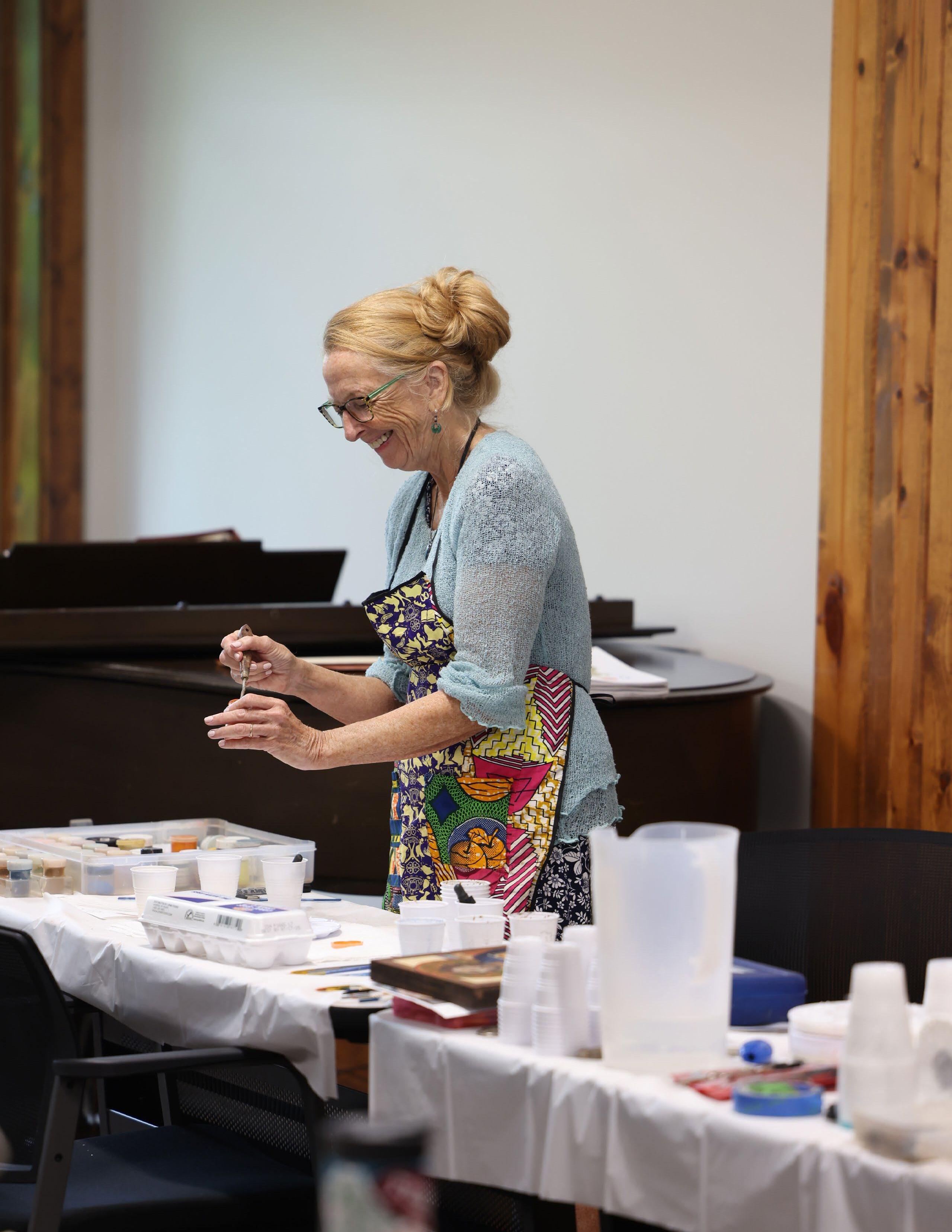
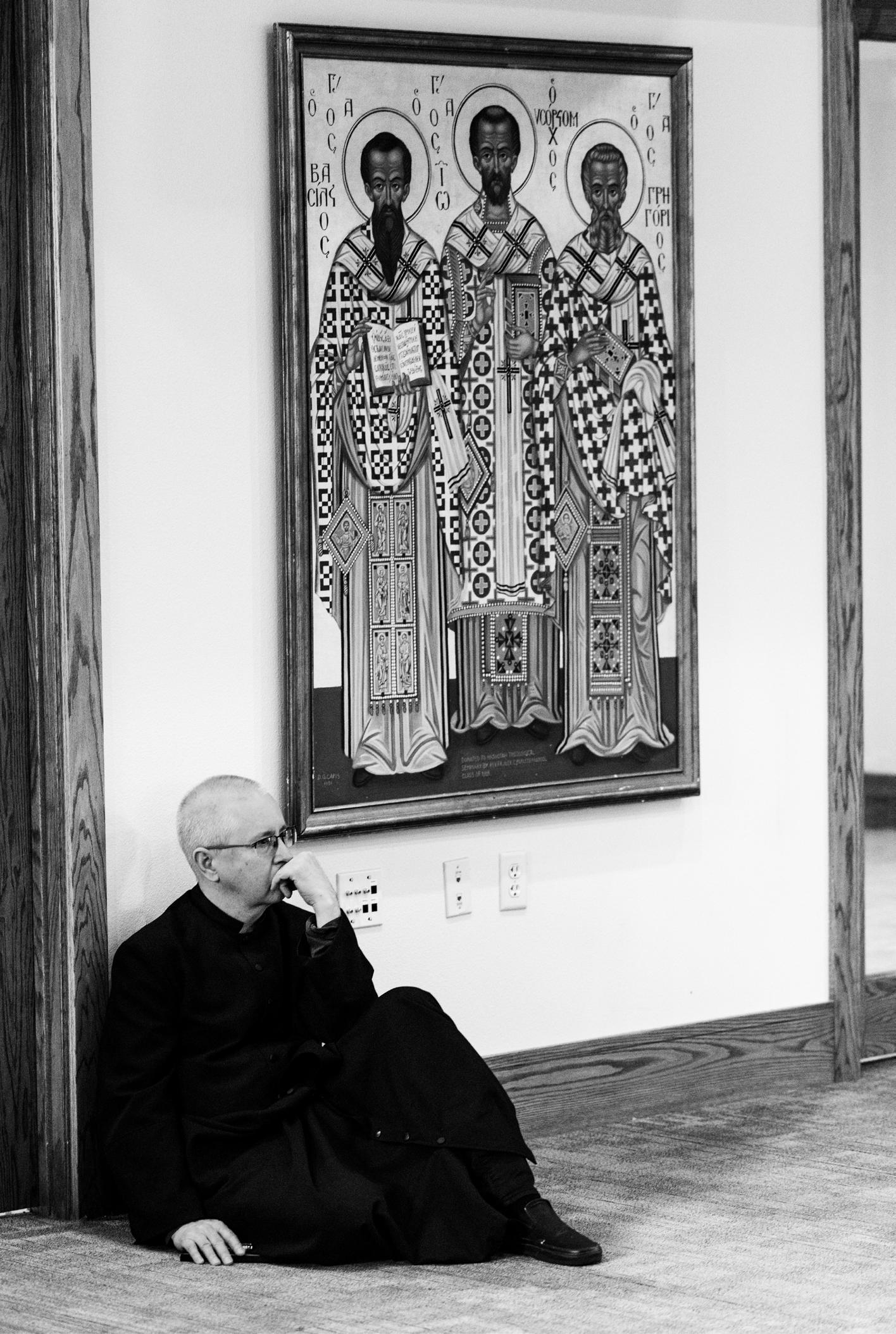
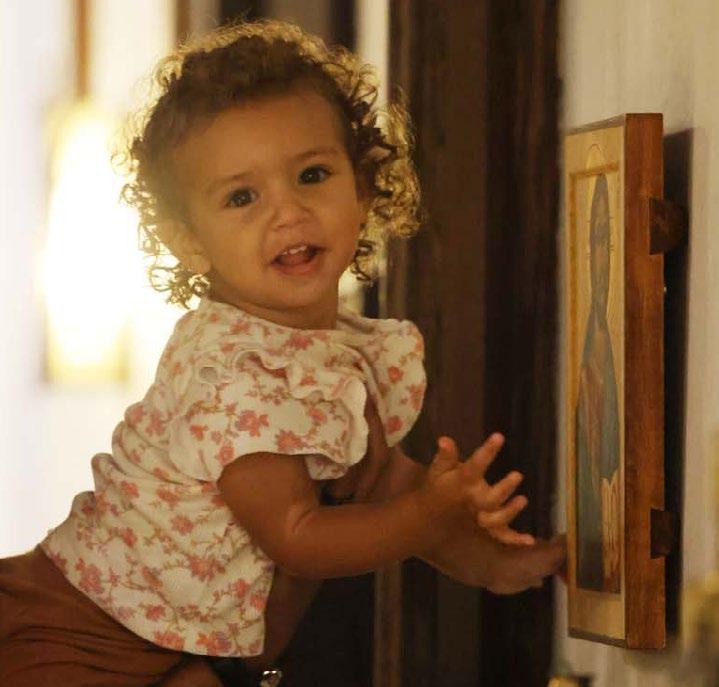
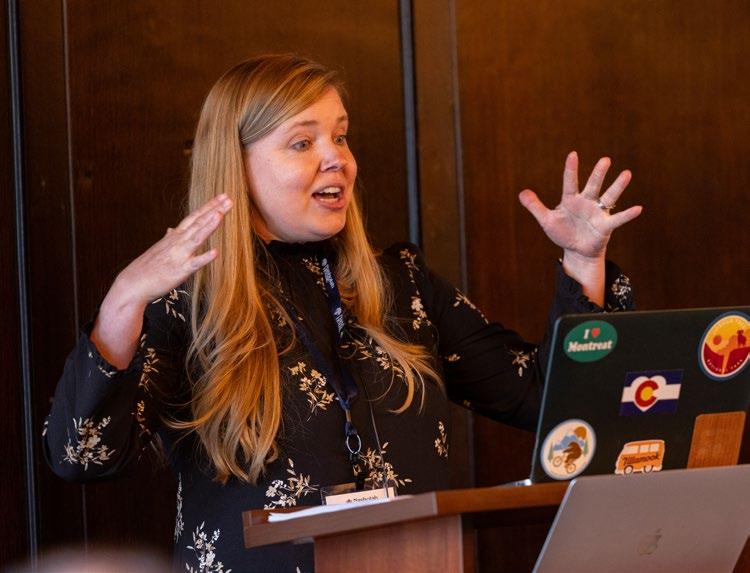
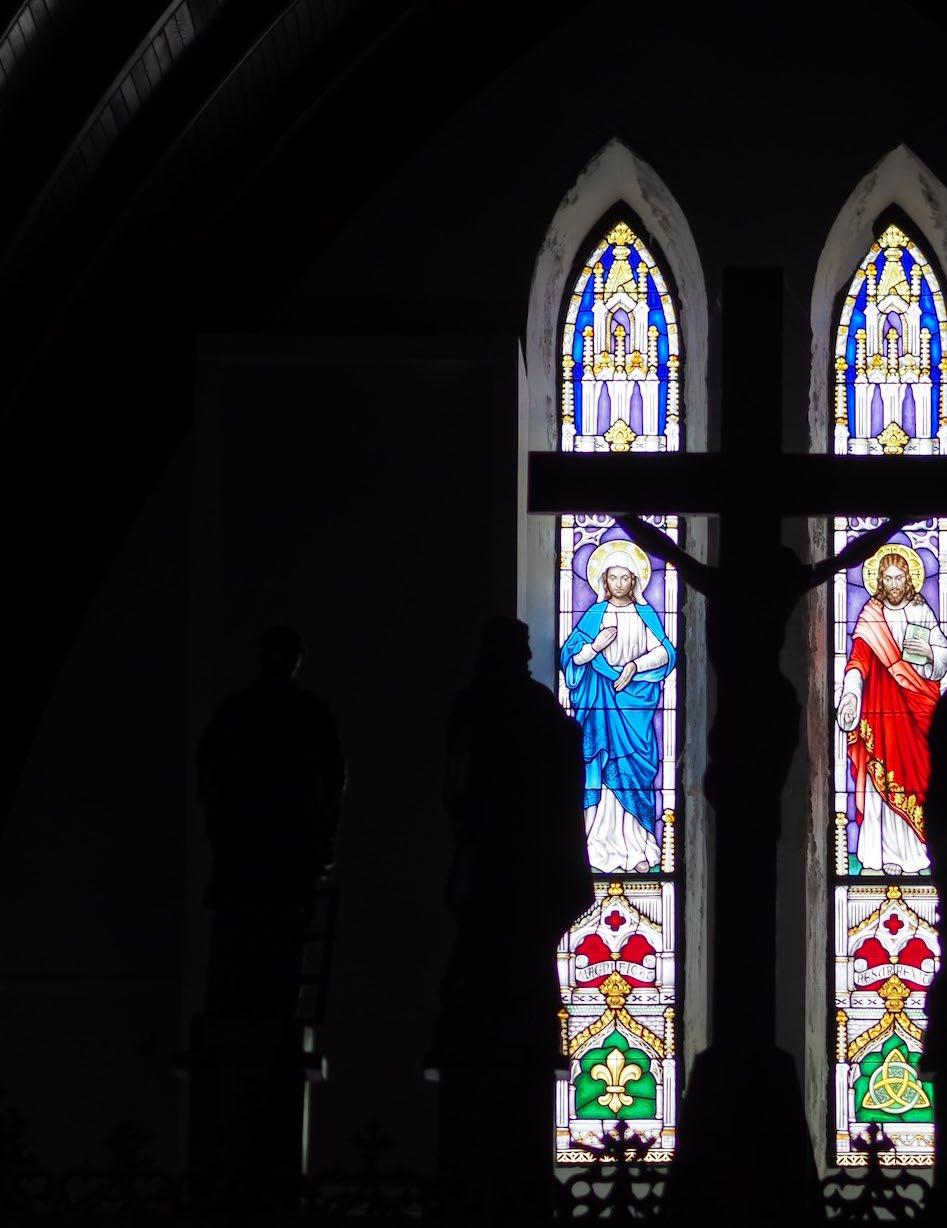
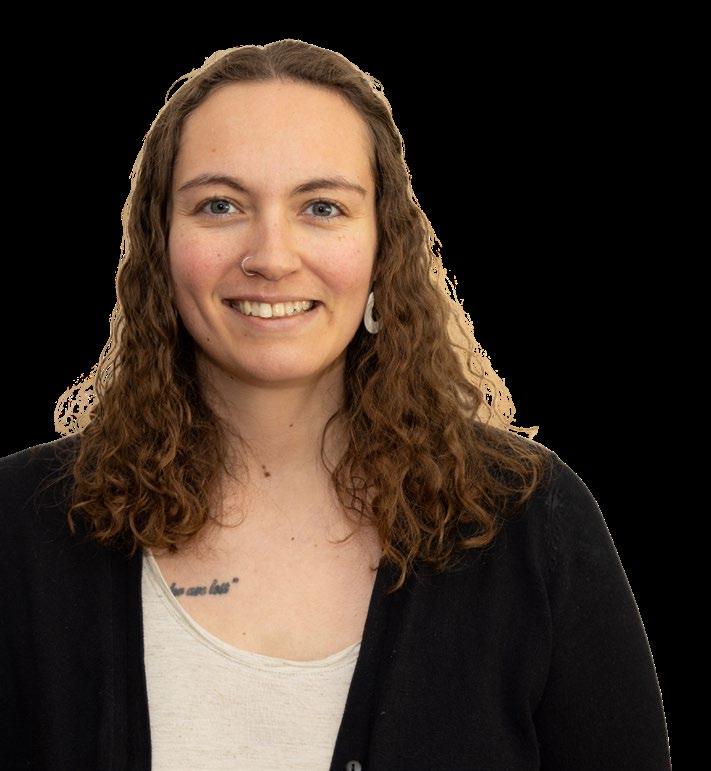
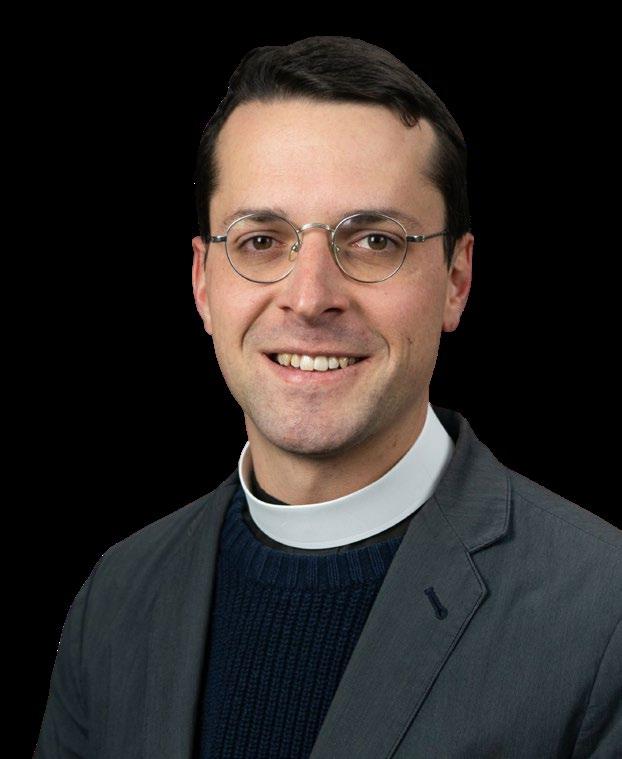
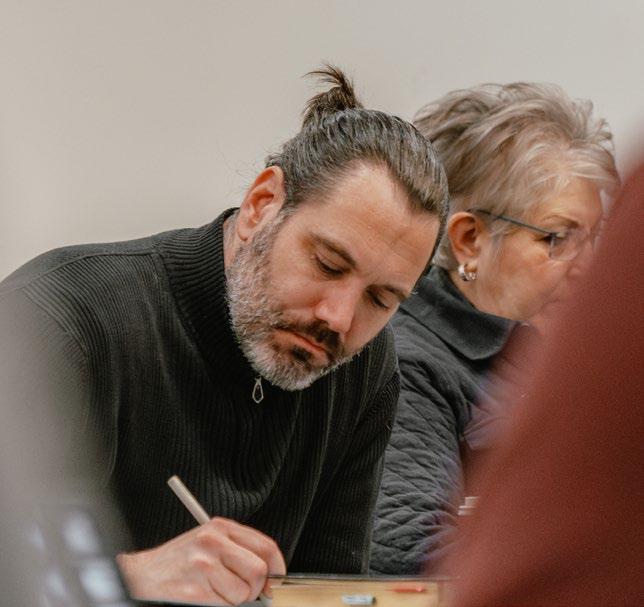
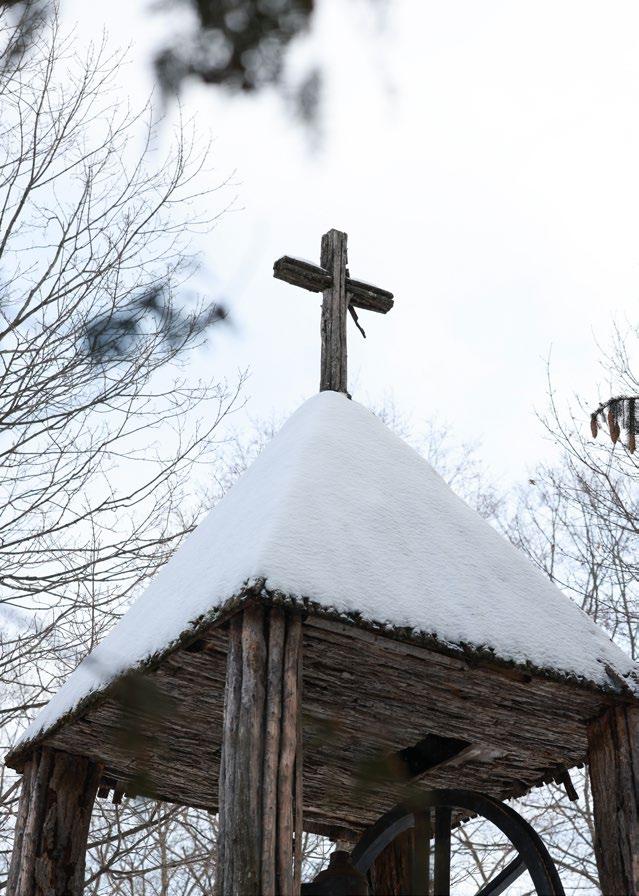
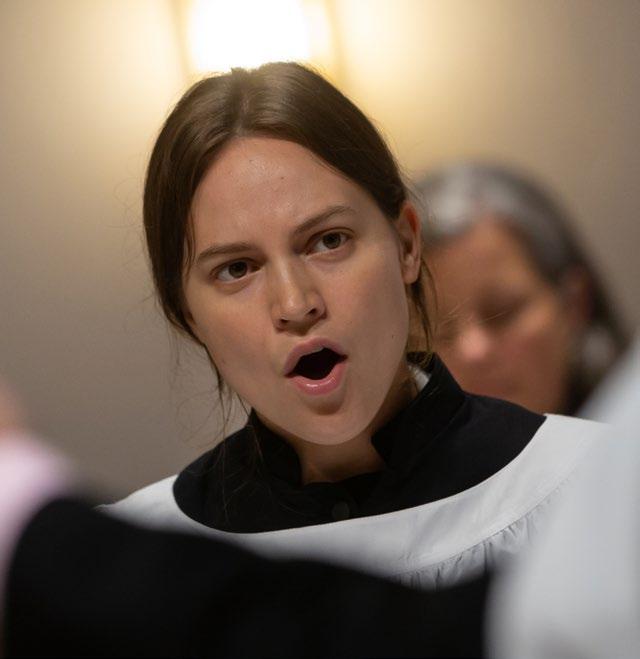
Christine Hales led a track focused on Byzantine-style icon writing during an iconography retreat this summer at Nashotah House. Participants, which included both beginners and experienced iconographers, used traditional materials of egg tempera, natural pigments, and gold leaf gilding to complete their own icon over the course of a week.
Photo: Zach Buscher
Remembering Dr. Sherwood
News in Brief
Alumni Spotlight
Craig Reardon Named Director of Frances Donaldson Library
Teamwork Bolsters Admissions
Graduate Spotlight
Alumni Day & Commencement
Recap
The Dean’s Valediction
Bishops for Global Anglicanism
DeKoven’s Call to Nashotah
Alumni Updates
Remembering Bishop Dabney
Smith
Faculty Updates
Bishops for Global Anglicanism
Three alumni were consecrated this year as diocesan bishops in Canada and Africa. Dr. Garwood Anderson reflects on how Nashotah House prepares leaders for world-wide ministry.
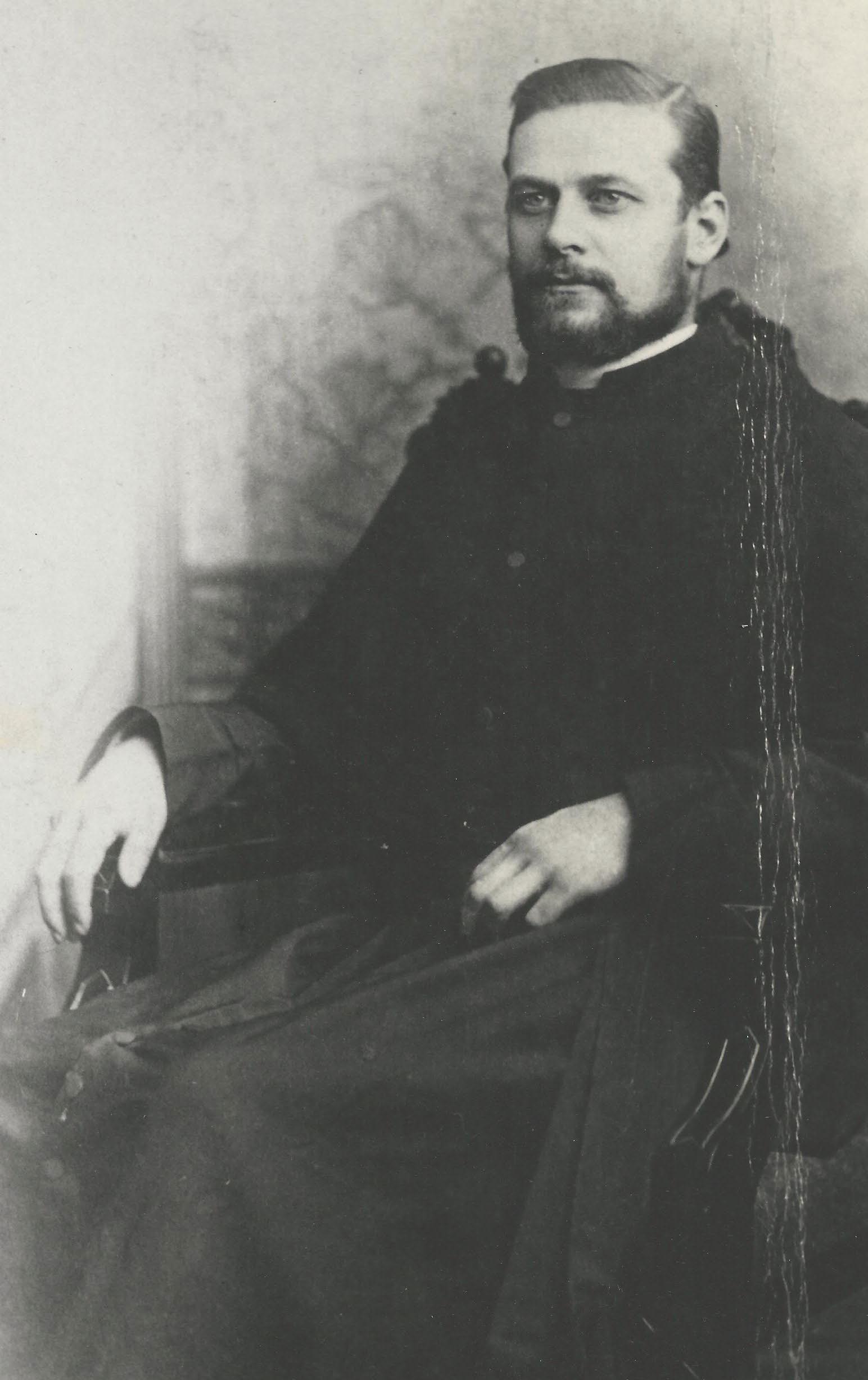
DeKoven’s Call to Nashotah John Magerus examines letters that shed light on James DeKoven’s decision to accept a position as church history professor at Nashotah House.
Founded in 1842, Nashotah House exists to form persons for ministry in the breadth of the Catholic
Prayer Fuels Mission A spotlight on 2014 graduate Fr. Clint Wilson, Rector of the fastgrowing St. Francis in the Fields in Harrods Creek, Kentucky.
Read Bishop Nashotah
Read about the legacy of Bishop Donald J. Parsons at Nashotah House on page 8.
For more than 20 years, Dr. Sherwood served as the Director of the Frances Donaldson Library and as Associate Professor of Ascetical Theology at Nashotah House. He passed away on February 16, 2025, following a brief illness. The following is a eulogy given by the Rev. Dr. Tom Holtzen, Professor of Historical and Systematic Theology, on February 22 in the Chapel of St. Mary the Virgin.
Remembering Dr. Sherwood N
By the Rev. Dr. Tom Holtzen
o eulogy can sum up all that a person is. That task is made more difficult the more private a person is. David was an intensely private person. It was not so much that he bristled at being put into a box as that he never let his true opinions be known on things like culture, the Church, or politics. There is a deep spiritual wisdom in that. His impeccable manners made him almost indefinable. But that was part of his charm, his elusive charm. It was why he was so well-liked and admired by all. His kind and caring nature made him a friend to everyone he knew.
Being reserved in nature, David never spoke very much about himself. He was happy to let someone else be the center of attention. When he did speak, what he said was worth hearing. His words were wise and measured.
About once a semester, he would make a joke in a faculty meeting that left the faculty in stitches. He had a subtle sense of sarcasm.
Upon visiting my office, he remarked it was so full of books that it might crash down three floors and end up in the Dean’s office. Then, there was that PowerPoint slide in Ascetical Theology about sin, with a picture of Krispy Kreme donuts as its background. This was not without reason. There was a time in David’s
life when if he bought a dozen Krispy Kreme donuts, he would eat the whole box. This, of course, was before his rule of life included the statement that he would not eat anything with “brown eyes,” and well before he became a vegetarian and then a vegan.
While he did not speak much, except when teaching, he had a way with words. His master’s degree in English from Baylor showed through in his love for language. He liked the words “fuss” and “fussy,” and surely today, he would ask, “What’s all the fuss about?” If there were a crisis, like when his best friend, Nick, broke his arm and needed to go to the hospital, he would speak of it as “inconvenient.” He would call something that lacked credit in his eyes “disreputable.” He also used some memorable phrases. When he got cranked up, he would say in a schoolmaster’s tone: “Now see here! Now see here!” When he disagreed with someone, he would say: “I just wish they would go away, I really do!” Even on those rare occasions when he was very angry with someone, there seemed to be a distinct lack of malice toward them.
I first met David when he came to Nashotah House as a student to complete a Master of Theological Studies degree in 2003. He transferred in three master’s-level classes on Christian spirituality that he had taken at Creighton University. Spirituality was his area of interest. In June 2004, he moved to Nashotah House to take the Director of the Library job. I remember David as a student in the Historical Theology classes I taught. However, I thought of him
Dr. Sherwood listening to the Rev. Dr. Malcolm Guite give a lecture in Adams Hall in the summer of 2023. | Photo: The Rev. Parker Asplin
more as a colleague, since I had only come to Nashotah House two years earlier. We formed that bond new colleagues do, who are learning the ropes of a new job together. As the only two faculty trained at the House, we continued to follow the old customs like
crossing ourselves at the words of the House Prayer, “Bless all who are trained here,” and trying to keep the Greater Silence from the end of Evensong to the beginning of Morning Prayer. Over the years, our shared training and collegial bond grew into a lasting friendship.
David served as the Director of the Frances Donaldson Library at Nashotah House. He modernized the library by implementing an automated checkout system. Many may not know that the old card catalog used two classification systems: the older Dew ey Decimal system and the newer Library of Congress system. Research was difficult because books were sometimes listed by author, sometimes by title, and sometimes by the Dewey system, or sometimes by the Library of Congress classification. Thankfully, David retired the old card catalog and replaced it with a computerized system that used the Library of Congress classification. This meant that each of the 50,000 library volumes had to be given a barcode and several new electronic records, and that the Dewey volumes had to be given new call numbers. It was a Herculean task. David and his diligent staff completed it over about three years.
While serving as Director of the Library at the House, David also completed his DMin thesis on Aelred of Rievaulx in 2012. This served him well, when, besides running the library, he began teaching Ascetical Theology after Fr. Arnold Klukas retired. It was in teaching spirituality that he shone as a person. There are a couple of reasons for this, I think.
At Nashotah House, David’s life took a new direction by living out
the place’s lay monastic ideal of a consecrated life. He was at home with the ascetic ideal. At one point, he tried to own only 100 things. This phase of his spiritual life did not last. Yet his small apartment, almost like a monastic cell, with its pulldown Murphy bed, did not allow David to have many possessions. He modeled the simple religious life of devotion to God. He was regular in daily prayer and chapel attendance, even on the weekends. He had a little book of prayers he had collected from reading the Anglican divines, like Lancelot Andrewes, Jeremy Taylor, George Herbert, or John Henry Newman, that he would pray from at Chapter. He served as a spiritual director for many students over the years. He taught students how to do spiritual exercises like those of Ignatius or practices like lectio divina. He was deeply concerned about the spiritual life of the Nashotah community. David seemed to flourish at Nashotah House by being able to live daily what he taught in the classroom.
Serving as Professor of Ascetical Theology allowed David to share his love of the great variety of Christian spiritualities. He knew God spoke to people in various ways, as Scripture shows. He also knew that people used different spiritual practices and ways of praying to seek God’s presence. He taught students different forms of prayer, like contemplative or
centering prayer. He encouraged students to try different ways of praying until they found one that could be practiced daily.
At Morning Prayer, the day after David died, we recited the verse: “I have made a covenant with my chosen one; I have sworn an oath to David my servant” (Ps 89:3). Then at Evensong, we sang: “I have found David my servant; with my holy oil have I anointed him.” (Ps 89:20). Of course, these verses of Psalm 89, one of the great Messianic Psalms, refer to King David as a type of Christ. Yet, given David’s death, I think most of us understood them as God speaking to us: God has kept his covenant with our David, and he has anointed him with the saving oil of the Holy Spirit. That subtle literary allusion would not have been lost on our David.
We will all miss David in our own way. We will miss seeing David fresh from teaching a class with a smile on his face and a Diet Coke in his hand. Although his Yorkie dog, Lucy, died some months ago, we will miss seeing David while wearing that Tilley-style sunhat walking Lucy around campus. We will miss his steady, unassuming example of a holy life. Personally, I will miss that ever-so-slight smile when I called him Dr. Sherwood. Mostly, however, I will miss going into his office for a chat, for advice, or sharing each other’s prayer requests for family members. He was a friend to all who knew him. May his soul, and all the souls of the faithfully departed, through the mercy of God, rest in peace. And let light perpetual shine upon him.
News in Brief
Nashotah House unveils new logo, visual identity
Nashotah House is pleased to announce a new visual identity that reflects its history and reinforces its identity as “The Mission.”
The refreshed brand includes a new logo featuring the Preaching Cross framed by the Cloister archway and a new color palette.
“Our previous logo and brand have served us well. And as our seminary continues to grow in mission and reach, we need a visual identity that reflects who we are today and where we’re headed, even as we continue to build on the firm foundation laid in the past,” said Dean Dr. Lauren Whitnah.
Core components of the Nashotah House brand will remain the same, including:
• Our name: Nashotah House Theological Seminary remains unchanged. Responding to feedback from staff and external audiences, “Theological Seminary” is more prominently featured in the new logo.
• Our seal: The traditional seal will continue to be a key part of our visual identity and is not being retired.
Nashotah House engaged a focus group of alumni, students, staff, faculty, board members, and donors to audit the previous brand and help establish goals for our new visual identity.
Through those discussions, the
symbol of the Preaching Cross emerged as a foundational part of the seminary’s identity.
Dedicated in 1884 with Michael the Bell, the cross marks the original site of the Altar of the Red Chapel, standing at the location of the celebration of the first Holy Eucharist at Nashotah House. It recalls the missionary work of our founders and evokes Nashotah House’s moniker as “The Mission,” a place set apart for the spread of the gospel of Jesus Christ to the western frontier.
“Our new logo pays homage to our roots, but it also points to our future. Amid a changing frontier, our mission remains as relevant today as ever,” Whitnah said. “It is our steadfast belief that seminarians who are grounded in the good news of Jesus Christ, rooted in the great traditions of the Church, habituated in the practice of daily prayer, and shaped by life in community are those best equipped to lead the Church in a changing world. This is our legacy, and it will remain our work for generations to come.”
Matriculation Fall 2025
Eleven residential students and their families joined the Nashotah House community this fall. These new students matriculated on August 28 in St. Mary’s Chapel. Join us in praying for the junior class, for their studies, their families, and their formation for ministry.
Breck Conference to focus on the theology of Martin Thornton
Nashotah House will host the 2026 James Lloyd Breck Conference on Monasticism and the Church on campus June 17-19, 2026. The conference theme is The “Monastic Mountain” in the Parish: Investigations in the Theology of Martin Thornton.
In his Pastoral Theology: A Reorientation, Anglican theologian Martin Thornton (d. 1986) put forward his “Remnant Thesis,” writing, “The Remnant, far from being an amputated segment—the clique detached from the whole—is at the centre of the parochial organism and of power extending beyond it.” He then goes on to say that as “we survey the history of the Church from the fifth century to the sixteenth century this monastic mountain can hardly be overlooked: this fact either condemns its whole structure during three parts of its history, or it goes a long way to justify the Remnant hypothesis.” Though Thornton’s overall theological vision is rich and nuanced, at many points it is dependent on monasticism and monastic theology.
The 2026 Breck Conference seeks to investigate Thornton’s pastoral and parochial theology to see how he integrated Christian monasticism into his thinking and how that thinking can help to revitalize the Church and her parishes today.
Registration is now open at nashotah.edu/breck.
Prayer fuels mission AT ST. FRANCIS IN THE FIELDS
By Lauren Anderson-Cripps
Few Episcopal churches have experienced the kind of growth St. Francis in the Fields has enjoyed recently.
Average Sunday attendance at the Louisville-area parish is up from 287 to 454 over the past five years, placing it in the top 1% of fastest-growing churches in the Episcopal Church. It is also among 3% of Episcopal parishes nationally with attendance over 250, and one of just 49 Episcopal parishes in the U.S. with attendance exceeding 400.
Looking at multiple metrics of health, the parish is thriving. It welcomed 65 new members and celebrated nine baptisms and 24 confirmations last year; its pastoral care team is 65 members – both lay and clergy – strong; its finances are sound.
Most importantly, prayer has taken up a central place in the life of the parish, says its Rector, the Rev. Clint Wilson. Beginning last year, the church committed to holding Morning and Evening Prayer every weekday in its chapel.
“The vocation of prayer is the most generative part of the work we do at St. Francis in the Fields, and that really fuels our imagination
for growth – growth that is not generated simply by principles of sociology or patterns pulled from the business world, as helpful as those things may be sometimes. Growth is really grown out of the seedbed of communion with God in prayer,” said Fr. Clint, a 2014 graduate of Nashotah House.
focus on prayer became core to the church’s work and was reinforced through conferences, small groups, retreats, vestry book studies, and, ultimately, the launch of the Daily Office.
The parish has long enjoyed a reputation for its commitment to scripture, its traditional music program, and for its track record of producing lay and ordained leaders. Following a transition in leadership, however, the parish experienced a season of decline in the five years leading up to the call of Fr. Clint and his wife, Theresa, in 2020.
“When we arrived, we entered into a season of discernment and trying to ask good questions about what God might be calling us to,” Fr. Clint said. “We knew it was a parish that was really committed to faithfulness and scripture and prayer and leadership development and forming people within the story of scripture, so that was all really energizing.”
As a result of that discernment, a
“A commitment to prayer has been the white-hot center of our growth,” Fr. Clint said. “Out of everything else that we do, it’s not a program among other programs, but really it’s the center.”
He attributes his time at Nashotah House to cultivating the discipline of and love for prayer.
“Most fundamentally, the centrality of prayer and the Offices was most formative (at Nashotah House),” he said. “Marinating within the communal life, the Benedictine rhythms of ministry and community, was deeply formative and continues to really shape the vision of ministry that we try to inhabit here in Louisville and at St. Francis in the Fields.”
The Daily Office has also been a vehicle for leadership development within the church, allowing parishioners to discern their call to lay and ordained leadership.
“The Anglican tradition is really
rooted in three things: the centrality of the Eucharist, the centrality of the Daily Office, and of personal and family devotion,” Fr. Clint said. “So, those three things are central to what we do, and the Offices have become for us a pathway for people to explore their own call as Christian leaders.”
St. Francis in the Fields served as the sending parish for two recent Nashotah House graduates: the Rev. Elizabeth Garfield, ‘23, who serves as Associate Rector at St. John the Divine in Houston; and the Rev. Garrett Puccetti, ‘24, who is Resident Priest at the Cathedral Church of St. Luke in Orlando. Three parishioners are currently studying in Nashotah House’s hybrid-distance program, two of them discerning orders.
Another source of vitality for the parish is the Louisville Bridge Fellows Program, a leadership development program now in its third year under Theresa’s direction. Having previously served as executive director of the Nashville Fellows Program, Theresa launched the Louisville program with its inaugural cohort in 2023. The ninemonth program, which is hosted by the parish, is designed for recent college graduates who desire to invest in the city through leadership in the church, their places of work, and the community. Fellows work in their field as they receive professional and spiritual mentorship, take seminary-level classes, and live with host families. Louisville fellows currently serve in St. Francis in the Fields’ youth group.
“We’re trying to create a culture and to cultivate leaders who will move into the city, and not only will they
be future vestry leaders, but they will be future civic leaders, entrepreneurs, business leaders, nonprofit leaders, and such,” Fr. Clint said.
“The goal is that fellows stay and invest in the city for the long-term, understanding how their faith impacts their vocation,” said Theresa.
Nashotah House and the Louisville Fellows Program enjoy a cooperative partnership, through which fellows can receive six credits of coursework toward a Master of Divinity, Master of Pastoral Ministry, or a Master of Theological Studies at the House, and receive a 20% tuition scholarship toward their studies. Nashotah House’s New Testament professor, the Rev. Dr. Paul Wheatley, and Associate Dean of Academic Affairs, Dr. Jim Watkins, both serve as instructors for the Louisville Fellows Program.
With a particular focus on church unity, the fellowship program culminates in a pilgrimage to England.
“Focusing on church unity in the midst of an increasingly polarized
culture is something that we really want to do,” said Theresa. “It’s a gospel mandate, it’s all over the New Testament, it’s how the ‘world will know who we are,’ and yet you look at us and we’re so divided. So, we are intentional to read texts and to have our fellows taught by people from different Christian traditions, such that they’re developing a love for the church at large.”
That’s also a priority for the parish.
“One of the things we’re trying to do is ask what it looks like for us to raise up leaders who can navigate cultural differences, who can help generate communion across difference, who can walk together with others with whom they might disagree on a number of issues, and yet nevertheless are rooted in the creed,” said Fr. Clint. “We’re joyfully orthodox, and we’re not showing up trying to be culture warriors; we’re trying to be fully orthodox and to cultivate a community that embodies what we might call the ‘cohering power of hope.’”
Fr. Wilson and Theresa Wilson pictured at Nashotah House’s Forming Future Leaders for the Church Conference in 2024.
Craig Reardon appointed Director of Frances Donaldson Library
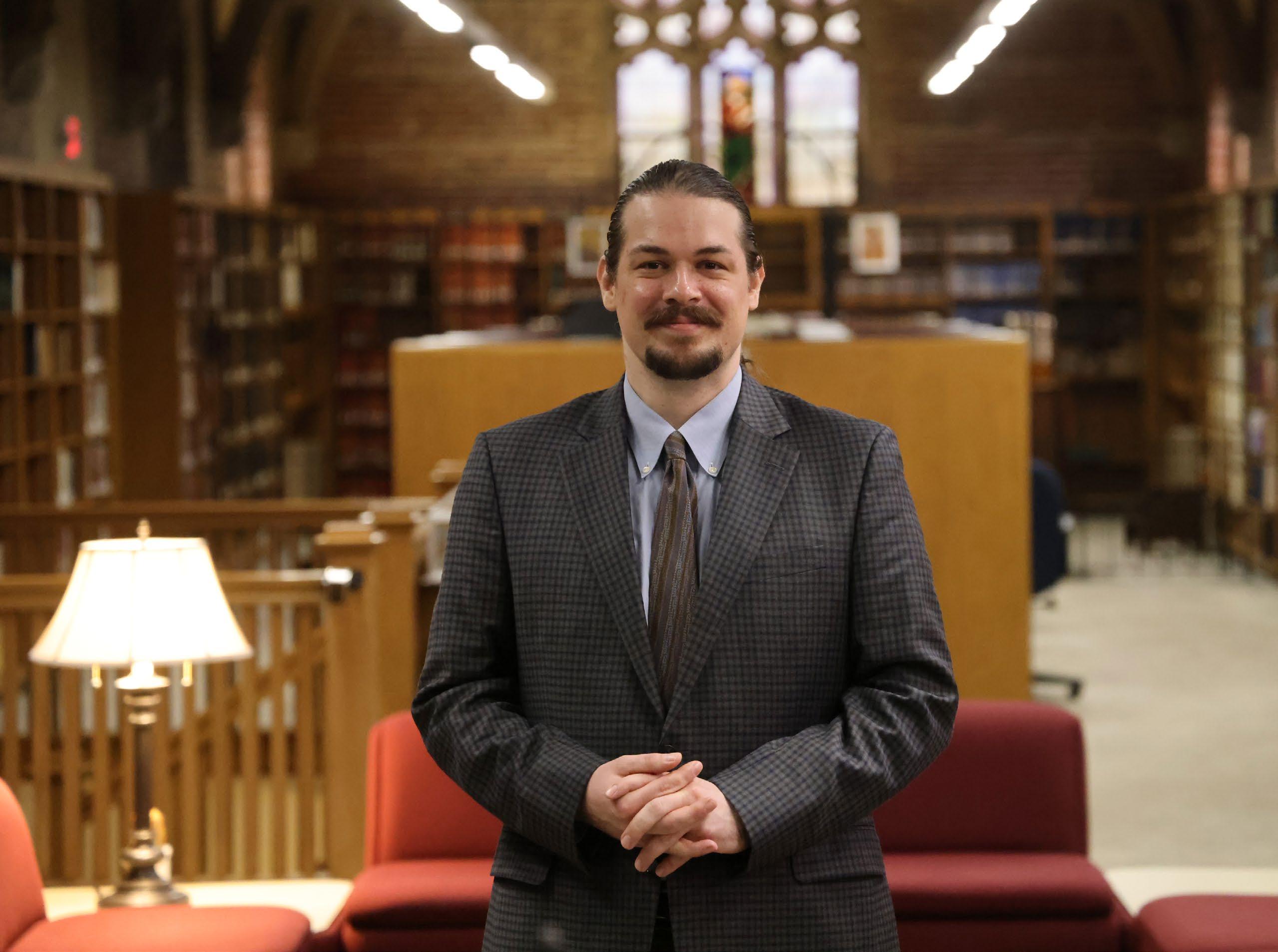
Craig Reardon joined the Frances Donaldson Library in 2023 as electronic services librarian under the leadership of Dr. David Sherwood. Reardon, who holds a Master of Arts and Master of Library and Information Science from the University of New York at Albany, has also been working part-time over the past three years toward a Master of Divinity from Nashotah House. Following Dr. Sherwood’s passing, Reardon was appointed Director of the Library in the summer of 2025.
In this interview with The Missioner, Mr. Reardon discusses his professional background, his path to Nashotah House, and how his work and studies support one another.
Congratulations on your appointment as Director of the Frances Donaldson Library! You’ve been on staff at the library for a few years now. What initially drew you to Nashotah House?
Reardon: I had heard about the House being a center of Anglo-Catholic worship and thought in the States. As I was drawn to Anglicanism specifically
because of the Anglo-Catholic tradition, I was very interested in Nashotah House and had wondered about studying here at some point. That possibility, though, appeared distant as I pursued an MA in English Literature and an MLIS at SUNY Albany. By the time I completed those degrees in 2022, I had been in school for quite awhile, and I didn’t anticipate pur-
suing another degree anytime soon. So when I was contacted about the position in the library I was curious but cautious. Speaking with Dr. Sherwood about the position and the House further intrigued me, and when I came out for my interview and visit I was very quickly committed to coming out here. Tell us about how you first became interested in library science and your educational/professional path up to this point.
I spent a lot of time in the library when I was an undergraduate at UConn—the Homer Babbidge Library is glorious and is worth a trip to campus just to admire their collection—and while spending time there I began to be curious about how everything was arranged, how the collection was developed, and what librarians did. I was at UConn during a particular golden time and had several classes in undergrad where we went to the library and met with subject librarians and were introduced to advanced research methods. In retrospect, a lot of my interest may have been initiated there.
But there is the more practical side, which is that I saw many of my friends going off to PhD programs and then vaulting into the buzzsaw of the academic job market. That seemed unpleasant, and not the kind of thing that I ought to bet a life on. The more I thought about what I wanted my life to be and how I wanted to live, librarianship seemed like the obvious choice. It also builds off the natural character of my mind; I’ve deep and broad interests but have never been very good at doing the kind of research of the sort prized by contemporary academia, although that is slowly beginning to shift.
My first library job was as a graduate student intern at the New York State Library in the division of library development. That’s a quirky area where the state library distributes grants and funds from the state legislature to fund public library development projects and programs. A lot of what I learned there has helped me in thinking about libraries from a director’s perspective, about both the actual structure of the space and the public-facing programming. I stopped working there at the beginning of the pandemic and shortly thereafter got a job at a small public library just outside Albany. Seeing the public side of the library world was really, really exciting and interesting. I quickly became quite dedicated to my role there and figured I would spend my career in public librarianship, although I recognized that my reading habits weren’t particularly well-suited for public librarianship. Shortly after I started working for the public library I was recruited to work for The Flow Chart Foundation. Flow Chart is a literary non-profit
About Craig Reardon
Education
BA, University of Connecticut; MA and MLIS, State University of New York at Albany
Hometown
Bolton, Connecticut
Favorite novels
Wuthering Heights by Emily Brontë, The Recognitions by William Gaddis, and Septology by Jon Fosse. But I’m mostly a poetry person, and a few of my favorite poets are Emily Dickinson, John Ashbery, and Geoffrey Hill.
Hobbies
Read, write, visit art museums, listen to music, wander around the woods
Favorite spot on campus
The library, of course, particularly the ancient philosophy and medieval philosophy corner. But outside of the library I like the sundial near the Red Chapel.
Favorite book in our Rare Book Collection
That’s difficult to choose! The New Englander in me has always been fascinated by Puritanism and especially the early American instantiation, so I like our 1789 edition of Jonathan Edwards’ A History of the Work of Redemption. But we have many books in that collection that are quite rare and unusual, such as several polyglot bibles that were evidently all the rage during a certain era of Biblical scholarship during the Reformation.
Photo: Lucas Mann
that promotes the work of the American poet John Ashbery and the arts more broadly. Ashbery has been one of my favorite poets since I was a teenager, so falling into that position was just a dream. I worked there as the archivist/librarian, doing a lot of cataloging, collection maintenance, and promoting the collection. That work involved shepherding a specialized and small collection that appealed to a fairly narrow set of scholars and researchers and so has paid off hugely in my work at the House. I was also an archival intern at the Hart Cluett Museum in Troy, New York, which gave me a lot of valuable experience working with various archival material.
You’ve been simultaneously working at the library and taking classes as a residential student. How have you managed to balance the role as staff and student? How have those two roles complemented each other?
As noted earlier, I’ve been in college almost continuously for 14 years, so I’ve become quite adept at balancing work and schooling. For the entirety of my education I’ve worked either full or almost full time. This situation at the House is almost easier since everything I’m doing is related to each other. (And the commute is very short).
One of the best parts about taking classes and working here is that I know the curriculum very well, so
I know what the faculty are interested in and what they teach in their courses. This helps me in collection development in enormous ways—books on St. Augustine, the Gospel of Mark, and Syriac Christianity, for instance, are almost guaranteed to be utilized by faculty and students because of our faculty’s research interests and how they teach their courses. Similarly, having the experience of taking the courses lets me know what kind of research assistance students will need to complete their assignments. Has anything in particular surprised you about the library as you’ve spent time there?
Dr. Sherwood described the library to me as a “little gem” during my interview and that is really true. The House has been blessed with some really dedicated and insightful librarians, who have developed the collection carefully and comprehensively. Although on the face of it we’re quite narrowly defined, the library’s collection is sufficiently broad to encourage and support a wide range of research projects and approaches. I’m constantly surprised by some of the material previous librarians have acquired. It displays a lot of thoughtful consideration about the scope and remit of theology and how the library supports the study of theology at Nashotah House.
What’s a current project you’re working on at the library?
We have several large, ongoing projects. Some of the projects are dry library maintenance tasks, like getting into a good schedule for auditing the collection and revising the library’s policies and procedures handbook. Others are more exciting. One task I’ve been working on since I started at the House, albeit rather slowly, is making our rare books and archives more accessible to researchers. This means updating records, creating new pathways for users to discover these materials, and generally promoting their use.
What’s your favorite part of the day at Nashotah House?
Certainly the chapel services. Both Mass in the morning and Evensong in the evening give a shape and structure to the day that is just lovely. Those services remind everyone here of why we are here, of what we are doing.
By including Nashotah House in your will, you help ensure future generations of seminarians have access to formation for ministry in the Anglican tradition.
You may do so by using this wording:
“I give to Nashotah House, a theological seminary located in Nashotah, Wisconsin, or its successor organization, the sum of $ ______ or ___% of my estate to be used for its general support and charitable purposes without restriction.”
If you would like to discuss your giving, contact the Office of the Dean at dean@nashotah.edu or 262-646-6512.
TEAMWORK BOLSTERS ADMISSIONS
Admissions Counselor Mandi Kern and Recruiter Fr.
Sam Cripps work together to draw new students to the House. They recently sat down with Dr. Jim Watkins, Associate Dean of Academic Affairs, to discuss their complementary roles in the admissions process.
Watkins: Tell us a little about yourself outside of your work here.
Kern: I’m local to Lake Country. I was born and raised in Waukesha. I have three kids who are 7, 4, and 2, and we attend Zion Episcopal Church in Oconomowoc. The rector there just happens to be Fr. Scott Seefeldt, who is a son of the House.
Cripps: In my full-time work, I’m the rector of the Episcopal Church of St. John the Baptist in Wausau, Wisconsin. I’m married to my wife, Lauren, and we have an almost 2-year-old son, Woody.
Why don’t we begin by you telling us briefly about your role on the admissions team.
Cripps: As Admissions Recruiter, I reach out to dioceses, parishes, and prospective students and encourage them to apply and then attend Nashotah House.
Kern: I’m the Admissions Counselor, and my job is similar to Fr. Sam in that I also connect with prospective students about Nashotah House, but I also do a lot of behind-the-scenes work in the admissions office, such as processing applications, receiving and uploading transcripts to applications, sending applications for review and keeping track of our admissions numbers.
Cripps: Mandi’s working with folks who are already in the pipeline. My job is to develop new relationships across the church, new pipelines with people who haven’t considered us as a as an option for theological education.
What stands out to you about your interactions with prospective students and what they’re looking for in a seminary today?
Kern: Prospective students really appreciate Nashotah House’s commitment to community. I hear from people fairly often who are already at another seminary that’s fully remote, and sometimes they don’t feel like they’re really getting all the benefits they could from seminary, which is part of what leads them to us. And, even if they aren’t ready to uproot their life and come be a full residential student, they tend to appreciate the fact that we have our hybrid students on campus two to four times a year and that they get to participate in things like chapel, classes, and meals with their peers, which is not something I’ve heard of a lot of other seminaries offering the way that we do.
Cripps: If you’re going to prepare to do challenging work, it’s good to be challenged in preparation for challenging work. So, while other seminaries have pared down their programs, both in credit hours and community expectations, Nashotah House’s expectations have remained the same. The bar has remained high. Those who are pursuing excellence in ministry, those who are pursuing the hard work, both lay and ordained in Christ’s Church, they want to have that challenging formation. I think that that’s something that’s really compelling to prospective students and those preparing for ministry.
We’re in the middle of Experience Nashotah right now as we speak. What is your favorite part about introducing prospective students to our campus and community life?
Kern: We can describe what our community is like, and I do a lot, but it’s different to actually be here and be a part of it. I’m not a student, obviously, but I just love being here. This is a really great community. I go to work and I love being at work, which is not something everyone can say. I think having prospective students come here and get to really experience what it’s like to be a student, it’s just something you can’t relay with words. It’s something you have to experience to really fully understand. I’ve already heard from a couple of our participants today about how they really enjoy the fact that our faculty and staff all join students at meals. They get to sit and talk with the faculty about class or about life or about anything, which is a rare thing.
shotah, have gone up over the past year. What do you attribute that increase to?
EXPERIENCE NASHOTAH
A three-day event, held twice annually, that introduces prospective students to Nashotah House, including classes, chapel, meals, and our community life.
Cripps: I think people are seeing the wages of a theological education without theological formation, which is that ministers of the church are equipped with head knowledge, but aren’t necessarily equipped with that sort of muscle memory to love and serve that is needed for fruitful ministry. I think that has been a big draw to Nashotah House. Also, on a macro level, as things get difficult in our national life, people turn to church. And as people turn to church, people see the benefits of church that exist outside of hard times in our national life and see ministry as a really attractive way to serve the world.
Cripps: Ditto to everything Mandi said. The unique thing about our life together is our life together. In other institutions, you’re going to know your faculty in the classroom, maybe in academic advising meetings, but here, you get to know faculty through meals and walks and talks, and then those relationships actually don’t end after your time as a student. I’ve been graduated from Nashotah House for three years now and our faculty continue to be resources and mentors and friends to me.
Can you say more about how our faculty have helped you?
Cripps: Our faculty here teach, but many of them are also parish priests or have been parish priests. When I’m struggling in parish ministry, I call them, and I have a listening and understanding ear, and am given constructive advice on how to address it. As I’ve pursued further theological studies, our faculty have advised me and helped me through the application process. As I’ve had questions on my dissertation, I’ve even sent excerpts that they’ve read. And it doesn’t feel transactional; it feels familial in a way that I think is unique to our campus. Because how can you not feel that way about someone who you lived with and ate with and prayed with for three years?
Over the past year, participation in our two key recruitment offerings, our online information sessions and Experience Na-
Kern: A couple of our participants at Experience Nashotah that are here right now are friends of current students, who encouraged them to come. Our current students and alumni are some of our best recruiters.
Those who are reading this are people who care deeply about this place and are invested in it. They might be wondering how they can help us with our recruiting. What would you say to those people about how they can support the House?
Cripps: I’ll repeat what Mandi said: You all are our best recruiters. When I talk to people who are applying, oftentimes they say, “My priest is a son of the House” or “My priest was a daughter of the House.” If you want to support our work, tell bishops and rectors and prospective students about Nashotah House. Encourage them to talk to us.
Kern: I’d add that our Visiting Student program is a really good starting point for a lot of people who might go on to pursue a degree (more information at nashotah.edu/visiting-student). Most of our Visiting Students come in the summer, but they’re welcome in any term, and the program allows you to take a class for credit or for audit without being committed to a degree program. And especially in the summer, we offer unique electives and we bring in some wonderful visiting faculty to teach those classes. It’s a great experience to not only try out the classes, but also to be a part of the community as you stay on campus, attend chapel, meals, and classes.
Scan for more info.
Equipped & energized to lead
Nashotah House alumni played an important role in drawing Bill Pardy to the Anglican tradition.
Now a Nashotah graduate and ordained priest himself, he has a passion to reach the next generation with the Gospel of Jesus.
Tell us a little about your being drawn to ministry. When did you first sense a call?
Pardy: A youth pastor was the first to point out what I couldn’t yet see, that God might be calling me to serve in ministry. I was a “church bus kid” who tagged along because I enjoyed church. My family introduced me to church but did not really stick around in my teen years. In my late teens I drifted away entirely. Fifteen years later, desperate for a better life, I stumbled into a small, evangelical, non-denominational congregation close to my home in Bradenton, where I grew up. They had solid discipleship and recovery programs and also demonstrated support to single parents. As I grew, I found myself helping with groups and leading youth ministry. As lives changed around me, I couldn’t help but wonder if the “God has a call on your life” would still be open. It wasn’t dramatic or flashy, just a steady sense that God was inviting me into this work. This was also affirmed by my pastors and the elders.
Nashotah House alumni have played an important role in your own faith story and ministry journey. Could you highlight some of those connections and how they influenced you?
As I reentered academia later in life, I was praying that someone would help me grow, a “father-like” friend to guide me into being a better man. That’s when I met Fr. Bryan O’Carroll (‘11), who oversaw the campus ministry chapel. His first name was “Father”—prayer answered! He shared his own process of discernment. We connected over our similar stories and single-parent past. Fr. Bryan invited me to lead campus ministry programs for the Episcopal Diocese of Southwest
The Rev. William Pardy
Master of Ministry, ‘25 Missioner for Church Planting and New Initiatives, Episcopal Diocese of Southwest Florida
Florida, where I began assisting him vocationally. In that role I also met Fr. David Bumsted (‘13) and Fr. Roy Allison (‘12). They encouraged me in my vocation and nudged me toward discernment. The first Anglican service I ever attended was Fr. Bumsted’s ordination. This is where I decided I wanted to move toward liturgical worship. Their witness and ministry showed me what faithful formation and humble service look like, and it set the course for my own journey to Nashotah House.
Describe your new role with the Episcopal Diocese of Southwest Florida. How do you see your new role advancing the mission of the diocese?
As Missioner for Church Planting and New Initiatives, I lead two key efforts: building up the Church of the Apostles as an Associated Worshiping Community and strengthening Episcopal campus ministries at University of South Florida and State College of Florida. With over 15 years working in ministry, child welfare, and substance-abuse treatment in Manatee County, I’ve learned to build bridges in unexpected places. I’m
optimistic about “connecting the dots” between community needs and the mission church I’ll oversee. I’m ready to hit the pavement, meet people where they are, and invite them into life-giving relationships with Christ. My days will include overseeing Sunday liturgies, training lay teams, developing discipleship programs for all ages, and partnering with Bishop Douglas Scharf and the diocesan council on strategies to move Church of the Apostles toward full missionary status. I’ll also work in tandem with the youth and young adult committees, and spend time each week on campuses, building up student leaders, maintaining records, and leading worship.
What energizes you about the work of helping build and grow a church plant?
What energizes me most is knowing that, in a world drifting further from God, Christian faith can anchor people in a tradition that is life-giving and stable. In an increasingly polarized culture, I see Church of the Apostles as a beacon of consistency, stability, and meaning. The local parish is still the place where the extraordinary power of God is made plain (2 Cor 4:7), a source of blessing and peace for those near and far (BCP p. 100). As a pastor, priest, and teacher, I want to foster nurturing love, humble service, and care. With God’s help, this will lead persons to life-changing encounters with Christ through baptism, blessing, and the celebration of union with Him in His body and blood.
Being a new Anglican (confirmed 2015) fuels my excitement to inspire a fresh generation of believers. I want to connect people’s inherent desire for God with the sacred richness of our Catholic faith, its liturgy, its reverence, and its enthusiasm. I believe that when people experience worship shaped by beauty and truth, they’ll want to know the Jesus we proclaim. We’re entering a generation that has largely missed the gospel; it’s an honor to help build and grow a new community and to share the Good News.
Based on your ministry experience so far, what makes you hopeful for the future of the church?
What makes me hopeful is that I’ve seen the same grace that rescued me at work in others. I serve alongside people whose lives are being quietly transformed: young parents finding strength in recovery groups, students discovering purpose in campus worship, families drawn together by simple acts of care. Those
aren’t just programs; they’re proof that Jesus is alive and at work today, and that the “gates of hell” won’t overcome what He’s begun.
My own story reminds me how far God will go to reach a heart. I was a man bound by mistakes and doubt, and yet His grace found me anyway and still does, every day. If He can do that for me, there’s nothing beyond His power to redeem, restore, and renew His Church. That certainty fuels my faith in the days ahead: love that is true, relentless love will carry us forward. I’m convinced the Church is God’s living plan for our redemption. He’s already at work saving us through Christ, and the Church will endure. It pains me to hear anyone suggest otherwise.
How do you feel Nashotah House equipped you for a life of ministry?
Every course at Nashotah House pointed me back to pastoral ministry and mission. Liturgy classes showed me how worship shapes and sustains a congregation. Theological and biblical studies armed me with a clear understanding of Scripture and doctrine. The clear message we get from scripture is that God in His love wants to save people and the world. And handson practice, whether serving at the altar or visiting parishioners, taught me how to care for real people in real need. Beyond academic rigor, Nashotah House grounded me in a deeper sense of the sacred and rooted my identity firmly in the Episcopal tradition. That formation gives me confidence to step into the life of a parish, knowing I carry both the heritage and the heart of this Church. It’s vital to me and to the wider Church that Nashotah House remain an integral part of the Episcopal Church.
Alumni Day 2025
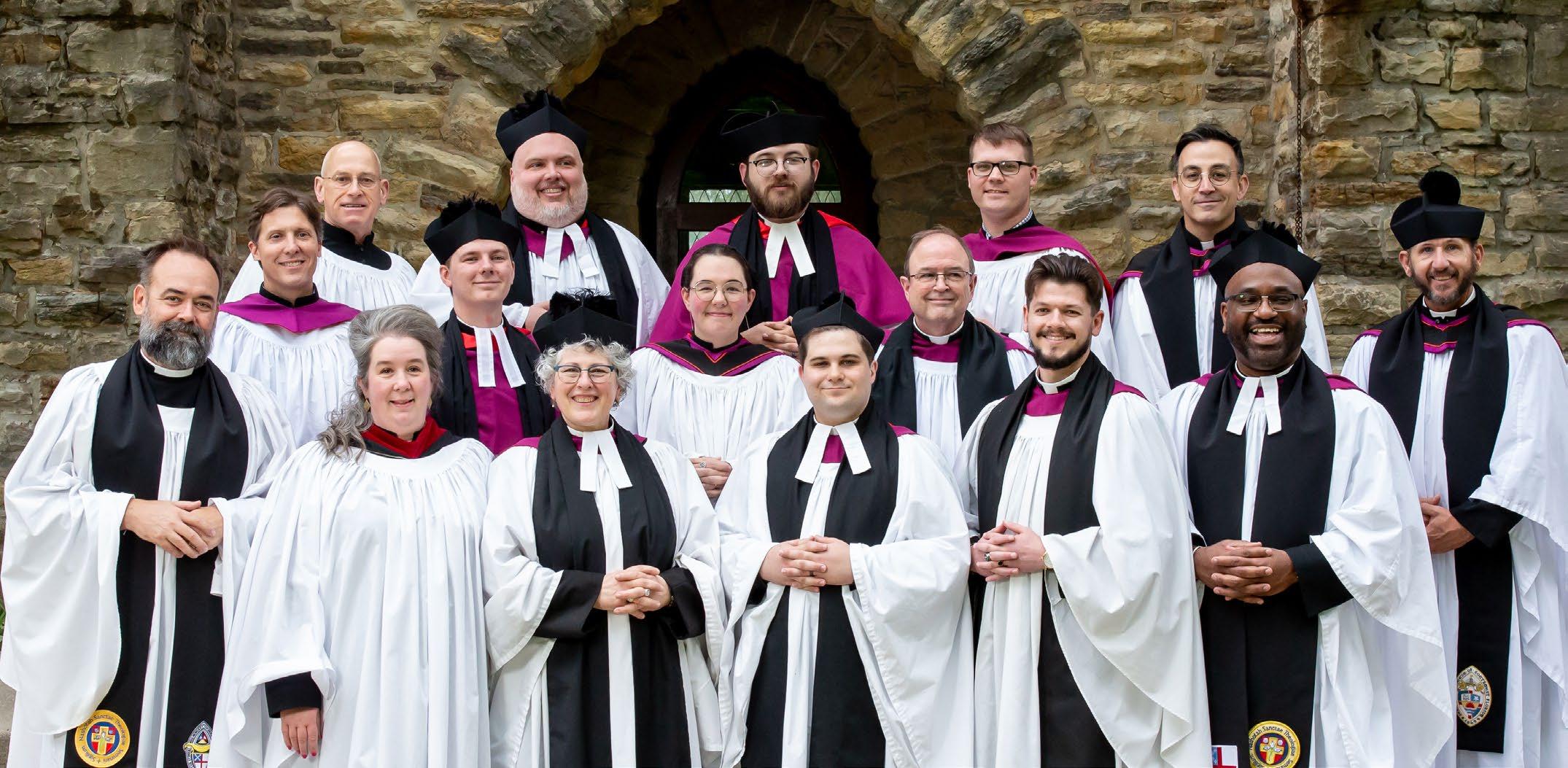
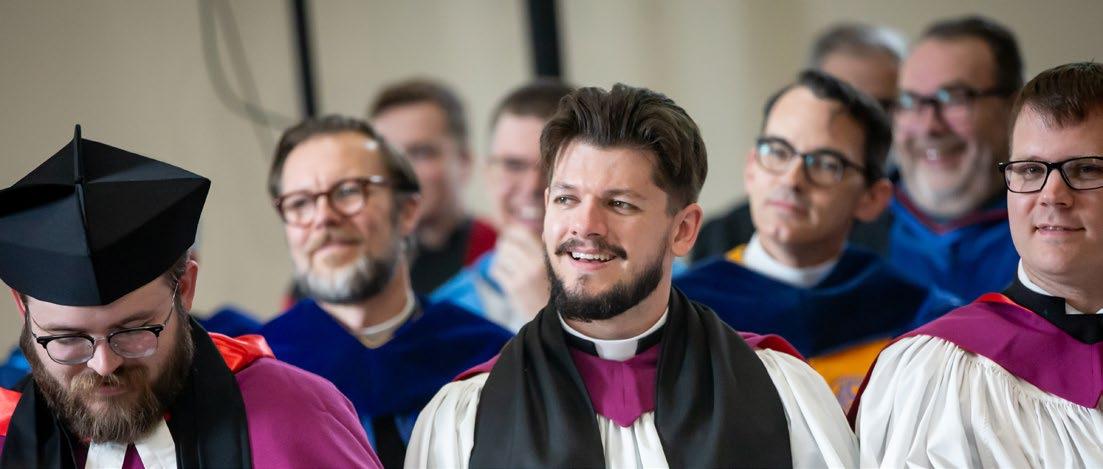
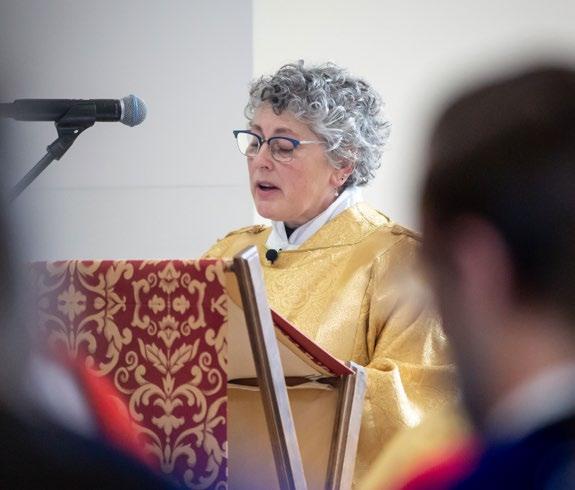
Many alumni returned to their alma mater for Alumni Day on May 21. Those celebrating significant anniversaries—spanning 10 to 55 years—were recognized during our annual luncheon, and members of our alumni association, Floreat Nashotah, gathered for their inaugural meeting. The Rev. Roy Allison, ‘12, preached and the Rev. Ben Hankinson, ‘14, celebrated Mass.
Photos by Zach Buscher
Celebrating the Class of 2025
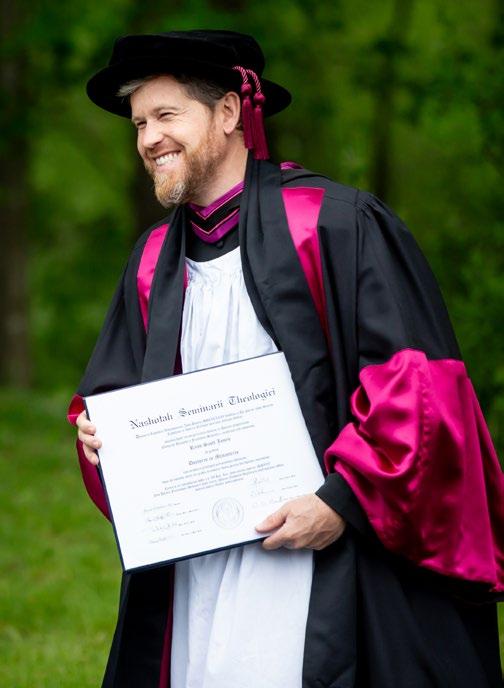
(In alphabetical order) Master of Divinity: Wesny Marc Abner Dubic, Jacob James Hootman, Johnny Louis Lawrence III, Jennifer Lynn McCombe, Tyler Leighton Ryder, Joshua A. Wilson, Billy Eugene Wint, David Andrew Yow| Master of Pastoral Ministry: J. Scott Eddlemon | Master of Theological Studies: Guy Martin Delcambre, Anthony Kevin Isley, Elizabeth Audrey Ji, Yossi Sarid| Master of Ministry: Joshua Michael Bloom, William Goehl Pardy | Master of Sacred Theology: Timothy Scott Frickenschmidt, Jeffrey Allan Stubbs | Diploma in Anglican Studies: Darin Nicholas Metz, Joy Johnsey Wint | Diploma in Advanced Theological Studies: Erin M Diericx, James McArthur Hairston, Peter Daniel Spychalla | Doctor of Ministry: John Peter Boonzaaijer, Ryan Scott Jones
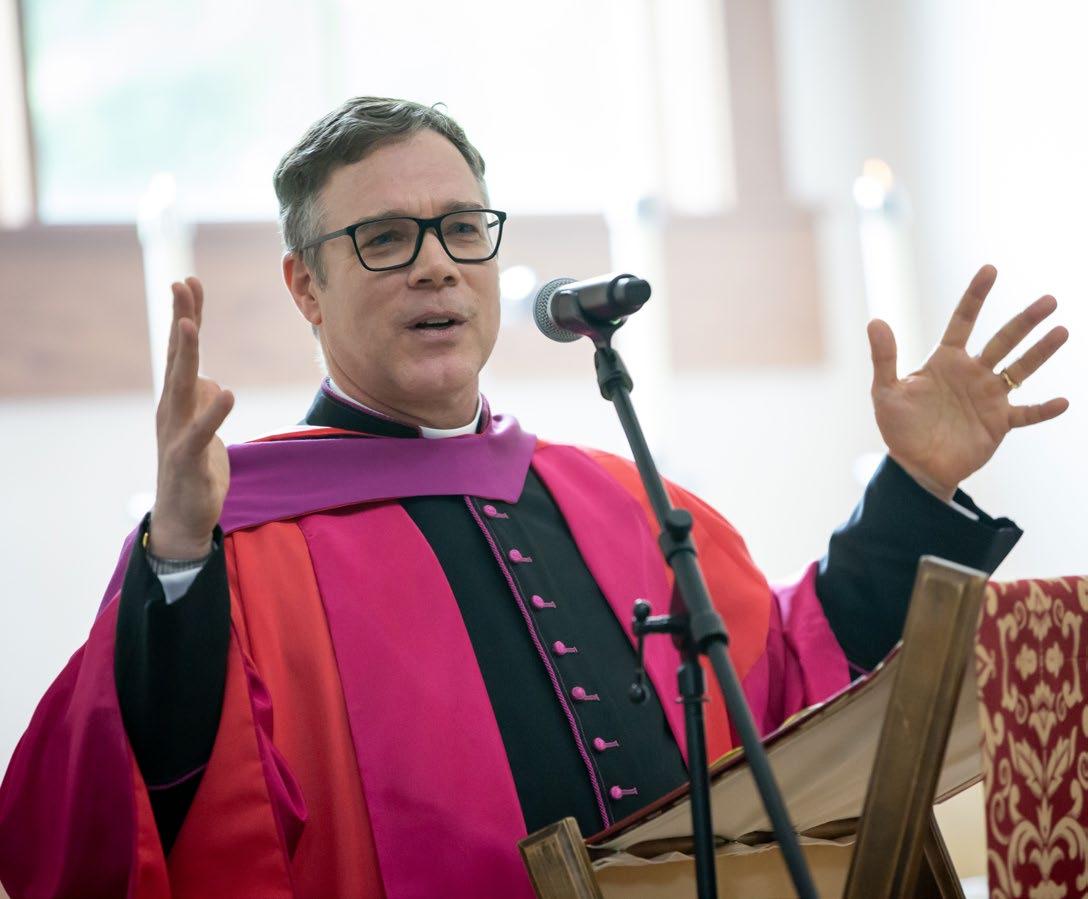
Nashotah House awarded degrees to 24 graduates during Commencement on May 22, 2025, in Adams Hall. Also during the exercises, an honorary Doctor of Humane Letters was conferred to G. Thomas Graves III and a Doctor of Ministry to the Rt. Rev. Robert P. Price. Price, who is Bishop Coadjutor of the Diocese of Dallas, delivered the Commencement address.
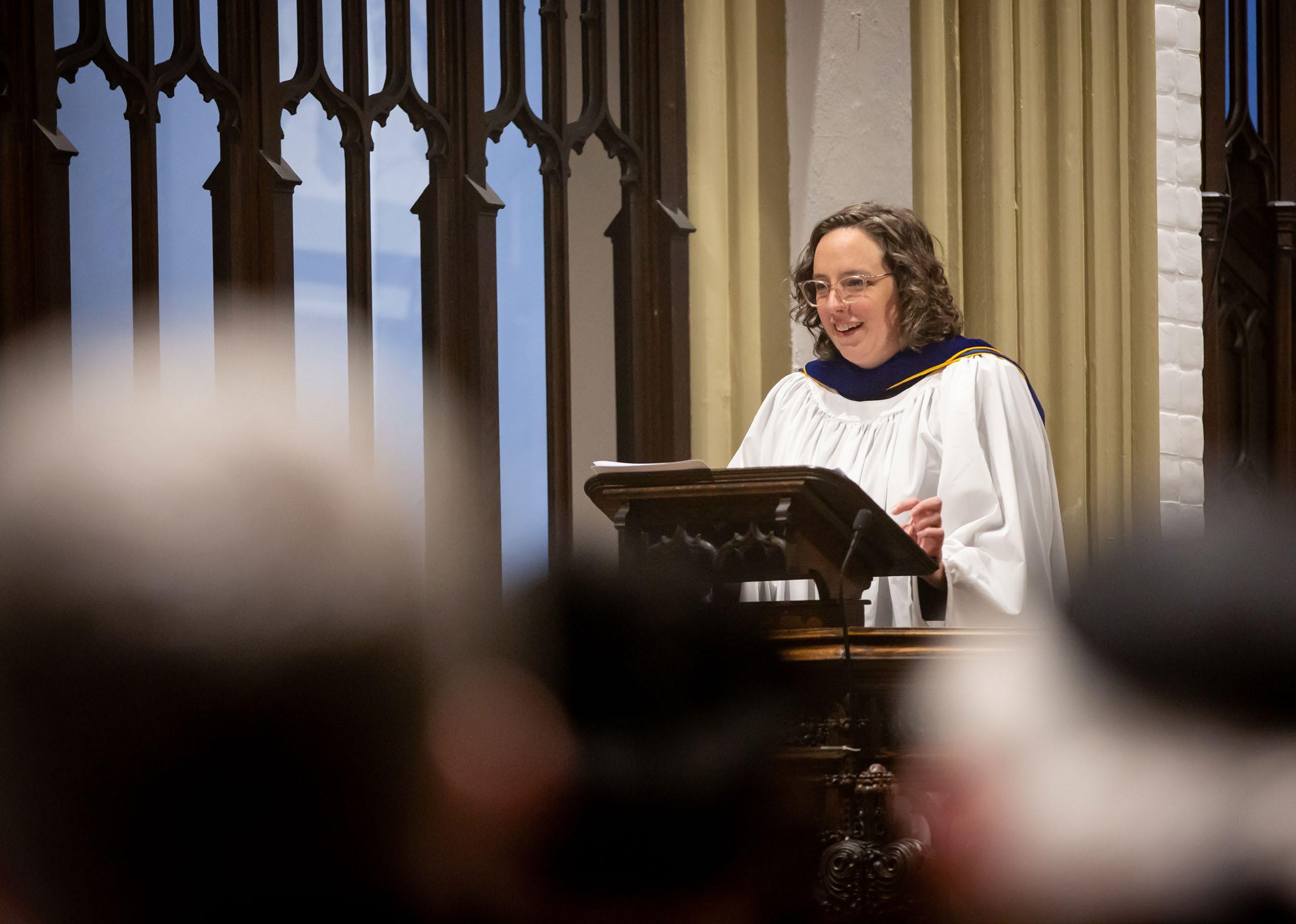
VALEDICTION TO THE CLASS OF 2025
Declare how much God has done for you
By Dr. Lauren Whitnah
The following Valediction was delivered by Dean Lauren Whitnah to the Class of 2025 on Commencement Day, May 22, 2025, in the Chapel of St. Mary the Virgin. The readings included Psalm 74, Wisdom 14:27-15:3, and Luke 8:26-39.
Well, it’s nice that we get a particularly dramatic gospel story in our lectionary today. Graduating students, you are going out with a bang! Demons and torments and swine rushing down a hill to drown in a lake: there is a lot going on here.
One of my hopes for you is that your ministry is markedly less dramatic than this. And yet, I think there are practical takeaways for you in your ministry from this gospel reading.
When I started drafting my inaugural Dean’s Charge in August, having been on the job only two weeks,
I was not entirely sure what a Dean’s Charge was— it’s an unusual genre—nor how to write one, but I’ve been thinking about it since August, and so here you go. You’re getting the valedictory charge in three parts. I have not yet inflicted a three-point homily on you this year, so I am going to take advantage of one last opportunity to do so as I offer three charges from our lectionary.
Charge one: do not underestimate the powers of darkness.
In our gospel for today, as so often in Scripture, the darkness is profound and the powers of darkness are strong. The man Jesus meets in the country of the Gerasenes had demons, plural, and Luke tells us that “for a long time he had worn no clothes, and he had not lived in a house but among the tombs.” Wholly disconnected from society, degraded and humiliated, he has also experienced the physical, emotional, and mental agony of being, as Luke says, “bound with chains and shackles.” Physical restraint is
a key contributor to trauma, one of the markers that distinguishes trauma from mere distress. He also experiences the profound suffering of superhuman strength as he breaks the chains and the demons drive him out into the desert. This is a picture of pandemonium, of terrifying chaos contained in one human person. When Jesus asks the man his name, he is unable to answer this simple question. The demons have such ascendancy that he has lost his own name and his own self; he does not know who he is. The demons cause profound, dehumanizing harm to the human person here. They cause profound harm to the natural world as well, when at Jesus’s command they enter the swine who rush into the lake and are drowned.
The powers and principalities are real, they are malevolent, and they are bent on the destruction of God’s good creation, particularly on the destruction of the human person. It is a grave error to underestimate them. Do not, as you leave this place, underestimate the powers of darkness and their capacity to do grave harm to the human person.
Yet it is an even graver error to underestimate the power and goodness of God. My second charge to you, then, is to remember that the power and the goodness of God are stronger than all the forces of darkness. Seek God and receive the goodness of God. Luke says that “when Jesus had stepped out on land, there met him a man from the city who had demons.” Despite the demons, the man goes right up to Jesus on the beach, seeking him out. And the demons who had wreaked such destruction for years do not triumph. Jesus casts them out. He restores the man to health and wholeness, to sanity and to community, and he does it fully and conspicuously.
Luke says “The people went out to see what had happened, and they came to Jesus and found the man from whom the demons had gone, sitting at the feet of Jesus, clothed and in his right mind.” Because Jesus casts out the demons, sitting at the feet of Jesus supplants raving through the tombs. Peaceful stillness replaces frantic turmoil. Dignity replaces nakedness. Soundness and clarity of mind replace dehumanization and tumult. Closeness to Jesus, peace, dignity, soundness of mind: these are all good things with which Jesus provides the man. The power of the goodness of God is stronger than all the powers of darkness.
And the third charge is that you, too, declare how much God has done for you. After he has been healed, the man desires to go with Jesus, but Jesus forbids it. Luke says that “the man from whom the demons had gone begged that he might be with
Where
do you see the goodness
and power of
life?
God
in
your
Keep track of that. Pay attention to it. Say it out loud.
him, but Jesus sent him away, saying, ‘Return to your home, and declare how much God has done for you.”’ Now, this is one of the parts of this story that I find hard to understand. Jesus has already done what the demons request: they want to be sent into the pigs, and he agrees. He has also done what the people request: they ask him to go away, and he complies. Yet when the man whom Jesus had healed begs Jesus to stay with him, Jesus refuses.
This special healing, this very particular individual action and marker of care for this man does not mean that the man gets what he wants. What Jesus wants from him is proclamation. You know that saying attributed to St. Francis: “preach the Gospel, and if necessary, use words.” Well, St. Francis almost certainly never said that or anything like it—sorry to burst your bubble, but it’s what medievalists do best and what makes us so much fun at parties. Seriously, though, the danger of a quote like that, apart from its ahistoricity, is that it lures us into imagining that we don’t have to say anything. But of course we do! Throughout Scripture, starting right at the beginning of Genesis, God acts through speaking. So as creatures created in his image, it is fitting that proclamation is at the heart of what we do. Witnessing to the goodness of God requires going out and speaking.
And the man Jesus heals does it. Luke says: “he went away, proclaiming throughout the whole city how much Jesus had done for him.” He is not exhorted to post memes on social media! Nor to advance a sophisticated logical argument for the existence of God, nor to threaten, shame, or scold people about their behavior. He is exhorted to proclaim what God has done for him. That prepositional phrase matters! What has God done for you? Where do you see the goodness and power of God in your life? Keep track of that. Pay attention to it. Say it out loud.
So, friends, as you go out from this place, do not underestimate the powers of darkness. Even more, remember the power and goodness of God. And finally, “declare how much God has done for you.”
Go in peace to love and serve the Lord.
Bishops for Global Anglicanism
Equipped for ministry at Nashotah House, three international alumni were consecrated as bishops this year
By Dr. Garwood Anderson
When, over the months of July and August, new residential students arrive on campus to begin their new adventure as seminarians, we don’t know what to expect. They don’t know what to expect. We do know that, for a special few, what lies ahead is not only unknown but an enormous step of faith.
A small number of residential students come from other countries, other parts of the world, other climates, other cultures, and for whom English is not usually their first (or second or third) language. Over the years, Nashotah House has trained students from Malawi, Tanzania, Zimbabwe, Nigeria, Kenya, Myanmar, Solomon Islands and, nearer to home, Canada and Mexico.
While some of us know the experience of leaving home, family, and familiar surroundings for tertiary education, few of us have crossed borders, even oceans and hemispheres to enter an intense program of graduate study. Floridians and Texans wonder if they can manage the Wisconsin winters. Imagine if your home was much nearer the equator!
Imagine a January in Wisconsin if “below zero” (Celsius) had only meant temperatures merely below freezing, and you had never experienced such a thing. It is not unusual to see one of our southern-hemisphere international students in a winter coat and stocking cap in early September. At least that first September. Having braved a proper winter, they are old hands a year later.
These are the small things. Add to it strange culture and idioms of language, often unfamiliar liturgical practices, loneliness and self-doubt, not to mention the intellectual challenge of graduate courses in theology, biblical languages, and history. Of course, even U.S. students feel this. Language can be especially challenging. When an international student struggling with English seems slow to catch on, we all do well to remember that, working in their second, third or fourth language, they are almost certainly the most linguistically adept in the classroom!
Pedagogy is also often quite different. I recall teaching at an African seminary and being interrupted halfway through the first day by a student: “Professor Anderson, you keep asking us what we think. You do not
understand that we are taught that we are not yet entitled to our own opinions. This is why we are listening to you!” Now imagine you are being asked to write research papers and to argue for a thesis, if not novel, at least controverted. Why?
Why would students, many of them already in Holy Orders — most already with bachelor’s or beyond in theological studies — why would they go through all this trouble and subject themselves, and often their families, to this sort of stress? There could be several answers, but the most common is that they have already shown themselves to be among the most promising future leaders in their province. They come for yet more rigorous training to serve the Church.
It is not a surprise that, upon completion of their Nashotah House studies, they will often assume roles of great responsibility in the church and become among those who are charting the course for the future of global Anglicanism. It is Nashotah House’s solemn privilege in this way to be an instrument in God’s plan for the world.
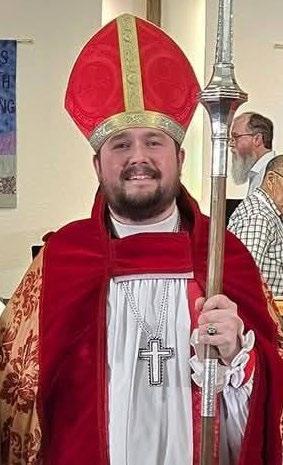
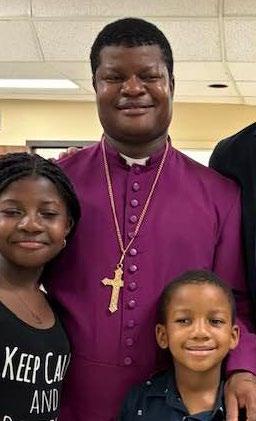
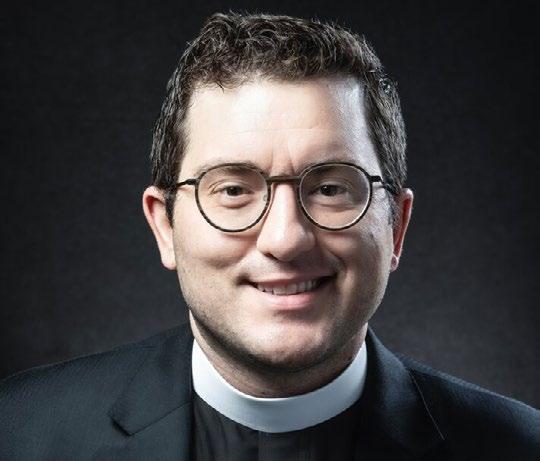
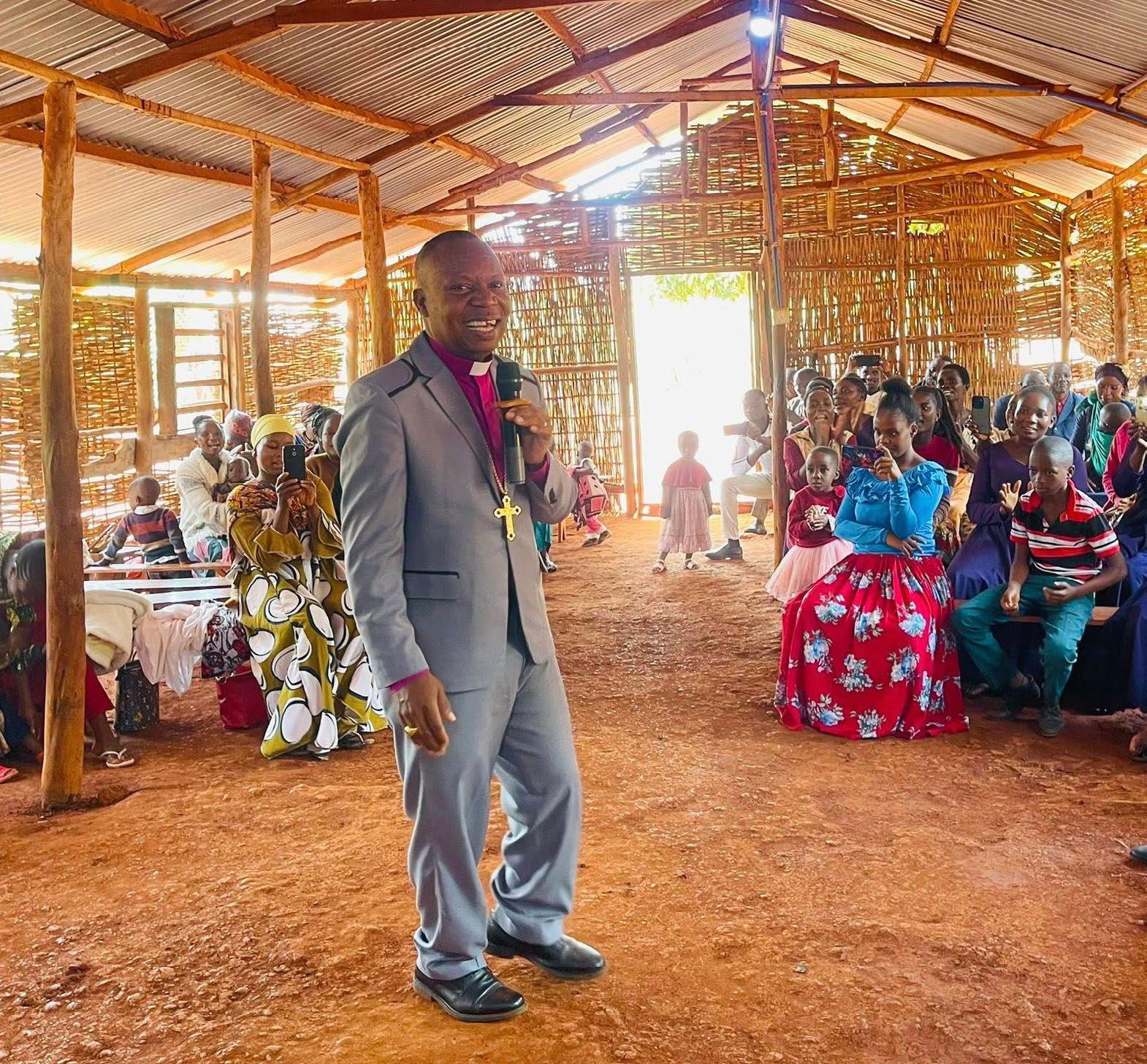
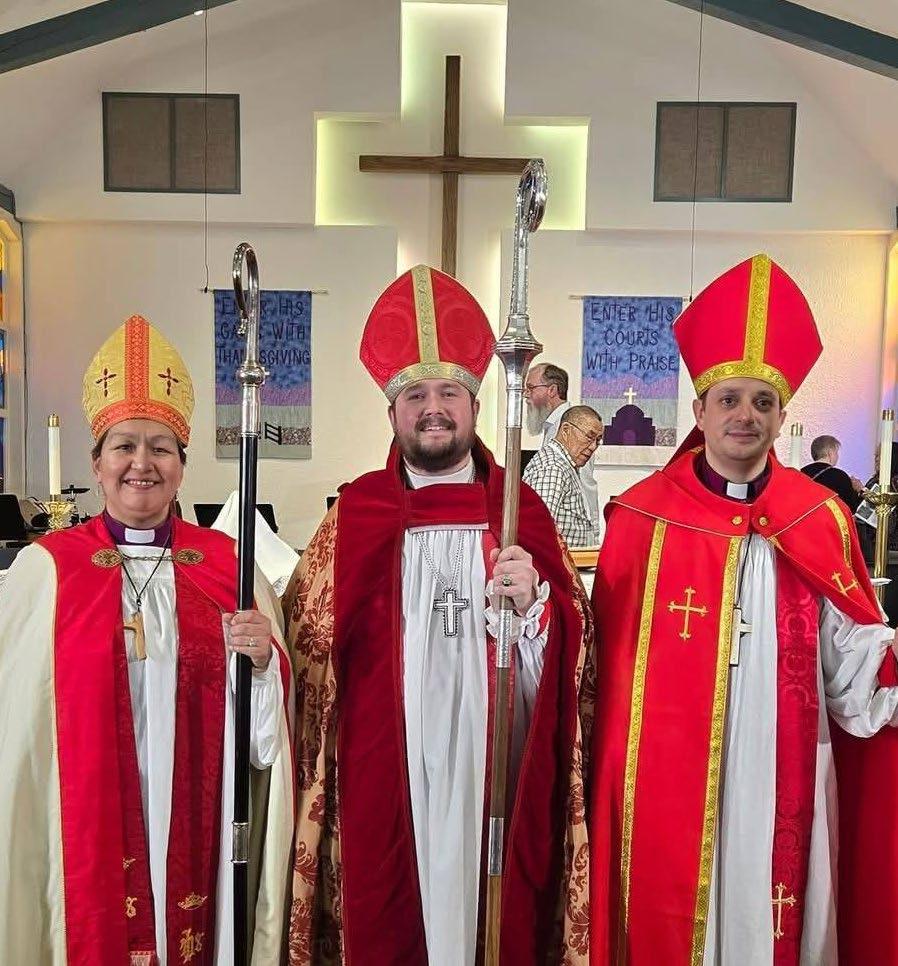
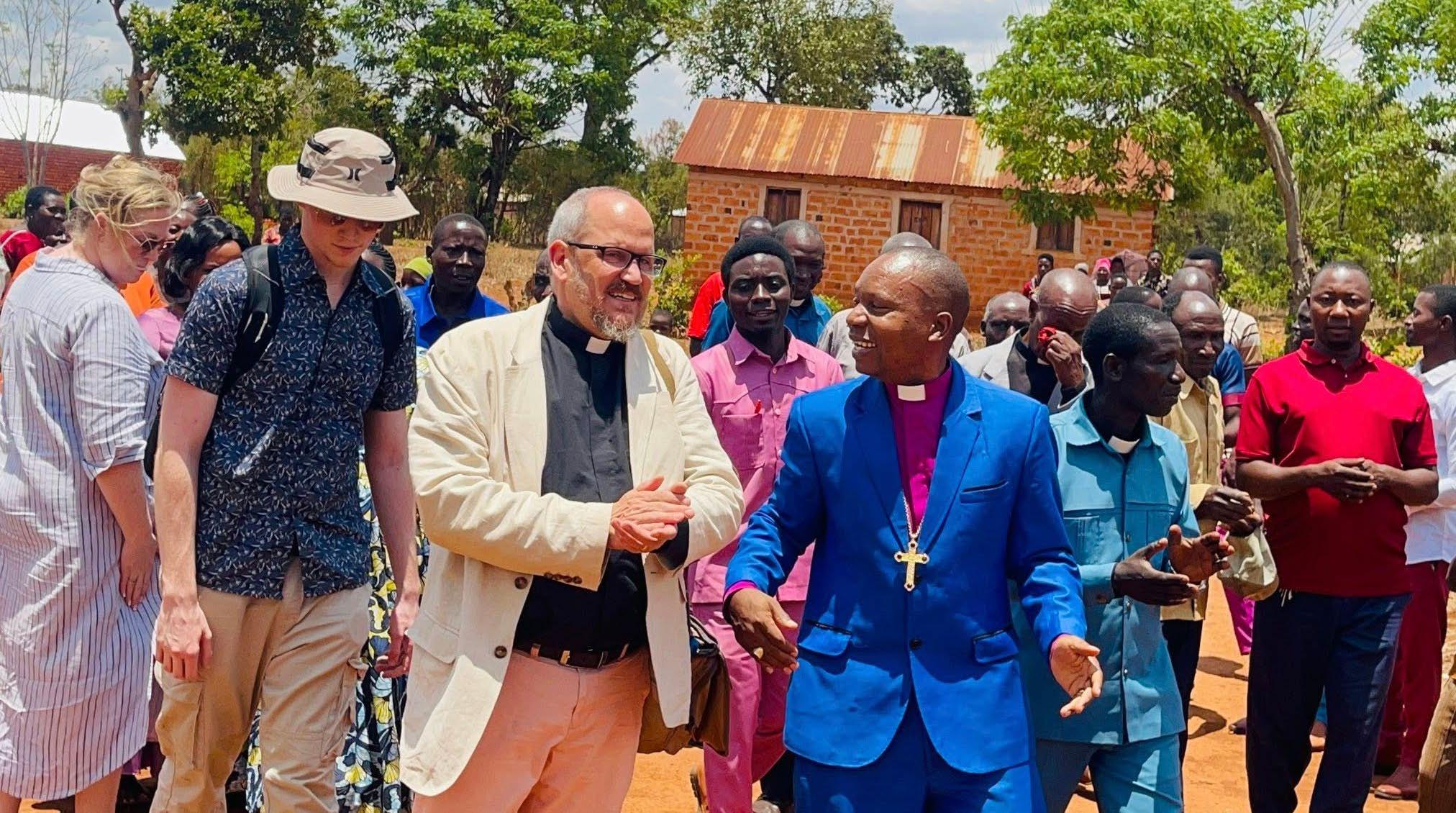
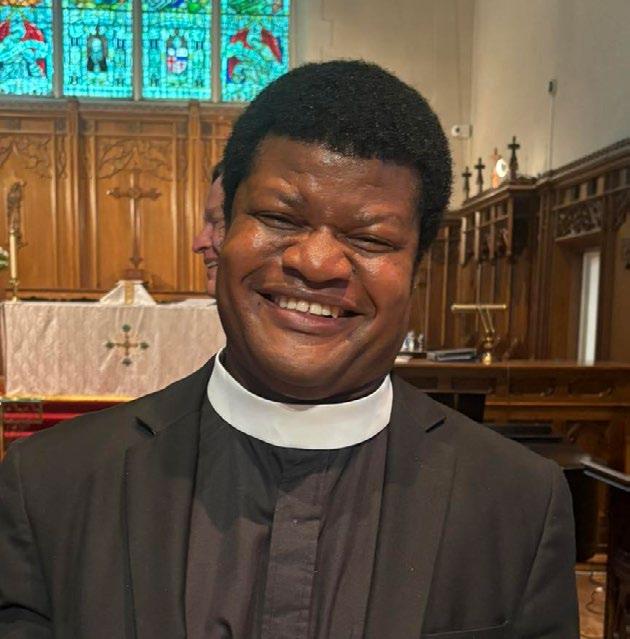
Top left: The Rt. Rev. Daudi Ndahana, ‘09
Top right: The Rt. Rev. Naboth Manzongo, ‘17
Above: The Rt. Rev. Alex Pryor, ‘14
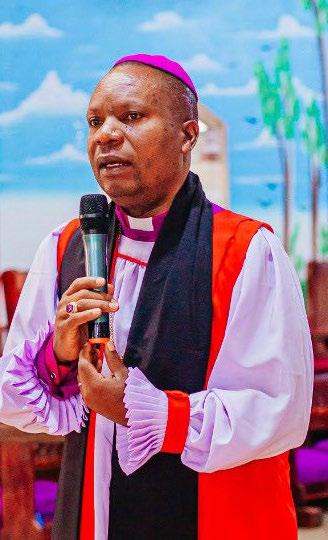
We are extraordinarily proud that, from May to September 2025, three relatively recent Nashotah House graduates have been elected and consecrated as bishops across the Anglican Communion. We celebrate them and now pray for them as they assume the weight and opportunity of their new ministries.
THE RT. REV. NABOTH MANZONGO, from the Diocese of Harare, Zimbabwe, earned the Master of Theological Studies in 2017. Notably bright and affable, he wrote a thesis on the application of Pauline household codes (directives to husbands, wives, children, slaves, and masters) to his African context, asking questions about cultural particularity and abiding norms for healthy families. For his season of study at Nashotah House, Naboth joined with three other students from Zimbabwe, who all continue in fruitful ministry around
the globe. In late 2018, “Baba” (“Fr.” for Zimbabweans) Manzongo moved to Dryden, Ontario, where he served as priest at St. Luke’s parish. On May 31, he was elected the 14th Bishop of Rupert’s Land and was consecrated to that role on September 13, becoming the first African-born bishop in the Anglican Church of Canada. Bishop Manzongo oversees a diocese of 65 parishes and three missions stretching from western Ontario to southern Manitoba, headquartered in Winnipeg, including some of the earliest churches in western Canada.
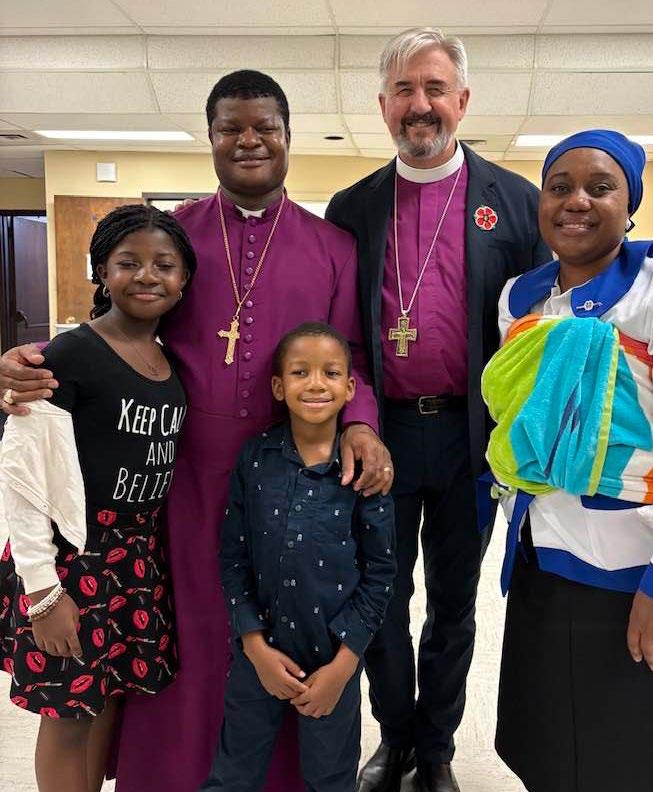
THE RT. REV. DAUDI NDAHANA, from Tanzania, earned the Master of Theological Studies in 2009. He returned to Tanzania to serve his home diocese following his studies. On September 25, he was elected Bishop of the Diocese of Kibondo, Tanzania, being consecrated as the second bishop of that diocese on October 5. Bishop Ndahana served in a variety of capacities in his home diocese, including as youth pastor, as Dean of Lake Tanganyika Theological College, as parish priest of St. Maria’s and of St. Stephen’s Churches, and as Diocesan Secretary (equivalent to
The Rev. Joel Prather (left), who attended Nashotah House with the Rt. Rev. Daudi Ndahana, visited Tanzania to attend Ndahana’s consecration in October.
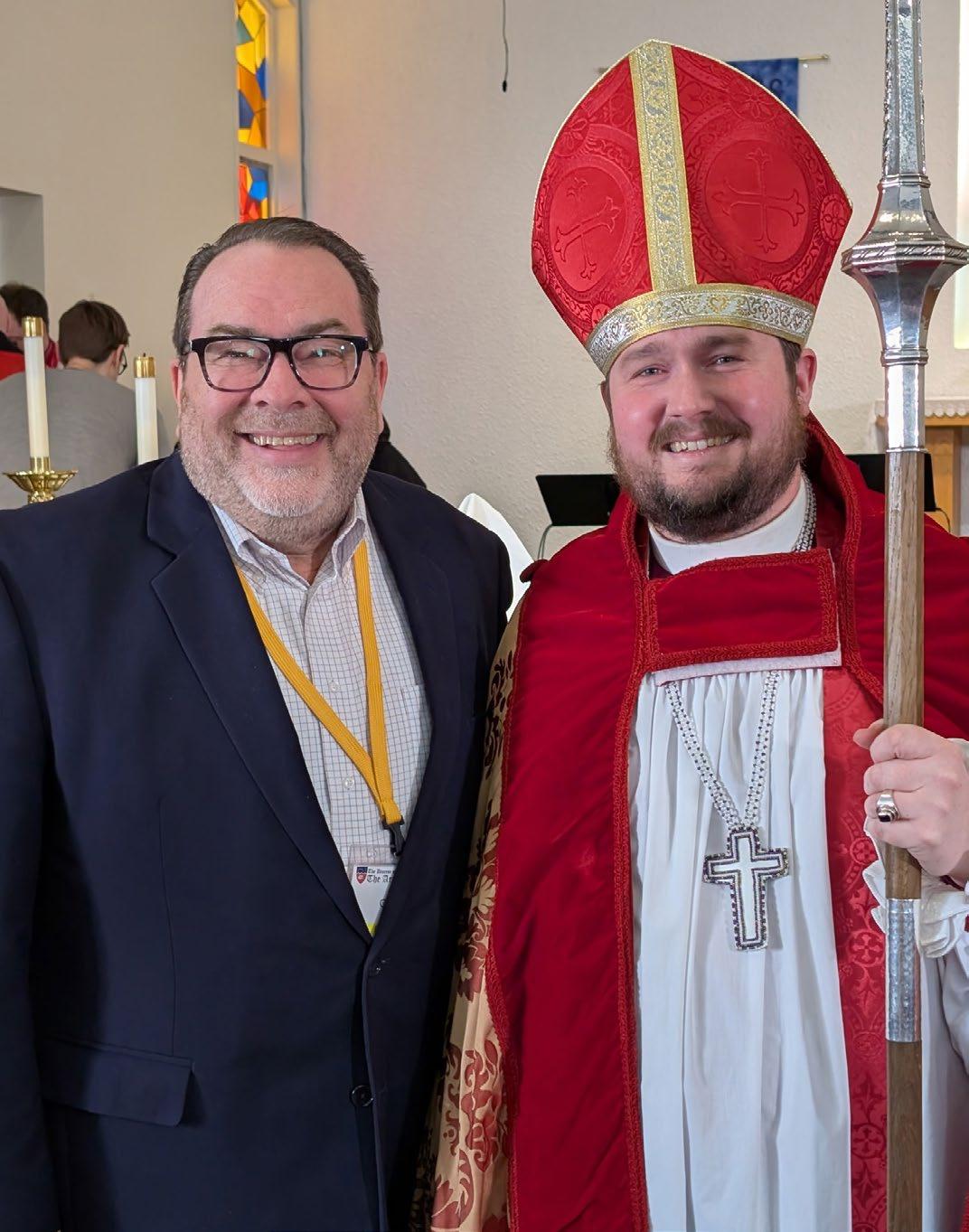
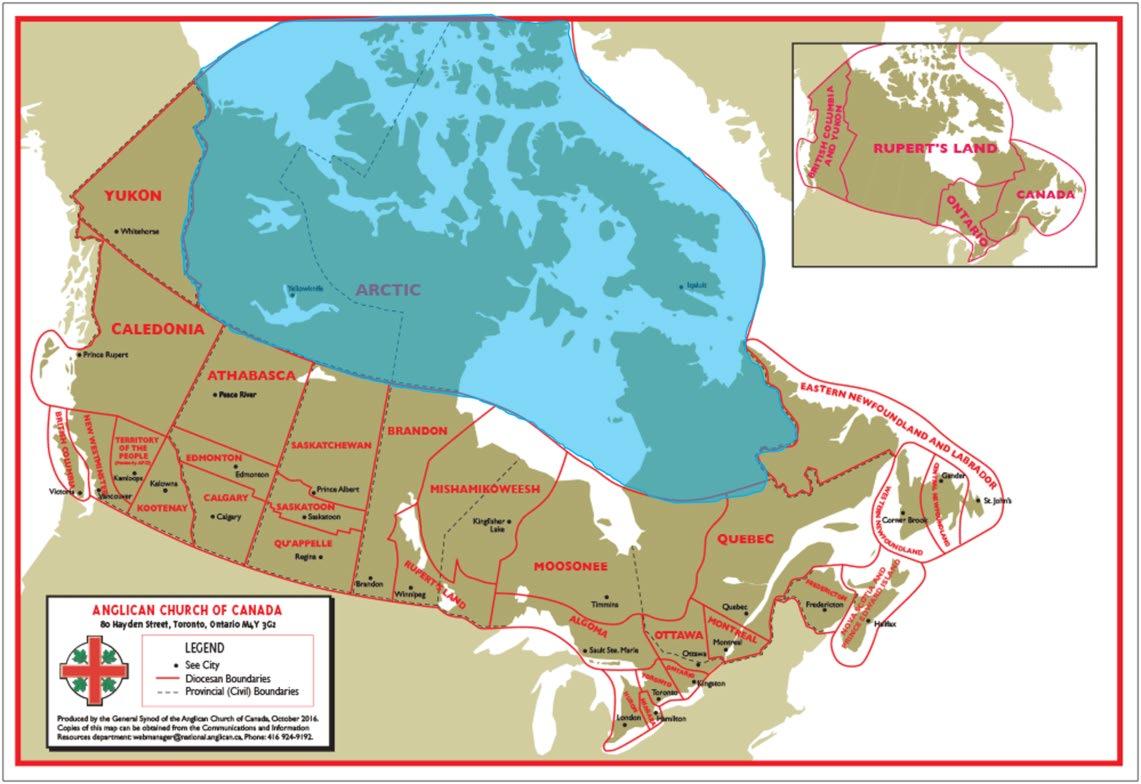
Dr. Garwood Anderson attended the Rt. Rev. Alex Pryor’s consecration, which took place in Edmonton during the far-flung diocese’s synod (diocesan map below).
Canon to the Ordinary). As diocesan bishop, Ndahana not only oversees 47 parishes along with many mission congregations, he gives oversight to innovative and practical ministries, including the theological college, the diocesan secondary school, a wide-ranging holistic community development program, and a new health center that is currently under construction. Bishop Ndahana is married (Olivia, head of the diocesan Mothers’ Union) and they have seven children, ranging from married with children to two recently adopted babies.
Reflecting on his experience at Nashotah House, Bishop Daudi is especially grateful for the foundation he received in theology, especially from the teaching of Fr. Thomas Holtzen, our Professor Historical and Systematic Theology.
THE RT. REV. ALEX PRYOR is surely the most familiar of our recent alumni consecrated as bishops. Alex began his MDiv. at Nashotah House (class of 2014) as a fresh graduate of Memorial University of Newfoundland, where he studied music. Pryor’s vision of returning to rural Canada to serve as a parish priest was interrupted by a season of intense service at Nashotah. An organ prodigy, he became the seminary’s assisting organist and then succeeded Canon Joseph Kucharski on the faculty as Instructor of Church Music and Director of Music and Worship for St. Mary’s Chapel. But through seasons of transition, he also proved himself invaluable in countless de facto roles, assisting community life, helping with marketing, supporting admissions, and much more.
With that can-do spirit, he left Nashotah House in 2019 to serve first as the Rector of St. John’s Anglican Church in Fort Smith in the Diocese of Arctic. It came as no surprise to those who knew him that he would soon apply his entrepreneurial spirit to the role of Executive Archdeacon in 2022. His able and multi-faceted service would prove him and excellent candidate for diocesan bishop. Pryor was elected bishop of the Di-
ocese of the Arctic on May 9 and consecrated on May 11, along with two other suffragan bishops, on the occasion of the synod of the far-flung diocese held in Edmonton. With the aid of three suffragan bishops, Bishop Pryor overseas one of the largest geographical dioceses in the world, with 47 parishes spread among eight deaneries, from the very northwest of the Northwest Territories to the far reaches of northern Quebec.
2025 would prove an eventful year for the Pryor family as Bishop Pryor’s wife, Kristina, gave birth to twins, Elizabeth and Katherine, joining older siblings, Theo and Lorelai, to make a full Pryor household!
We don’t know what future awaits late-summer-arriving eager and anxious students. What we do know is that God has plans and purposes for them and for his Church. And he has a blessing upon this seminary to participate in plans yet unknown.
DeKoven’s call to Nashotah
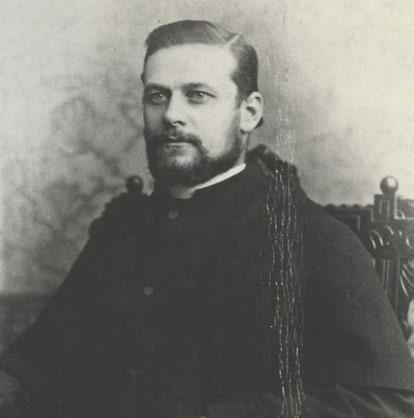
The year 1854 was a most significant one in the life of James DeKoven. In this year he finished his studies at the General Theological Seminary in New York City, was ordained a deacon at his home church in Middletown, Connecticut, and moved to Wisconsin. Very little is known about the exact motivation behind this move, except for information contained in three letters he wrote to his good friend and fellow seminarian, John Henry Hobart Brown. They have never been published before. In an unusual decision for the time, DeKoven had traveled to Wisconsin to check out possible employment at Nashotah House. On this same trip he visited family members in Chicago. The following excerpt is taken from Chapter 4, “Mission to Wisconsin,” in the recently published work James DeKoven, Biography of a Famous Yet Forgotten Man by John E. Magerus. The following abridged excerpt is published with the permission of Wipf and Stock Publishers.
James DeKoven in the Northwest
On May 18, 1854, James DeKoven was in Chicago, staying at the home of his oldest sister, Elizabeth, and her husband, Thomas Dyer. He began a letter to his good friend John Henry Hobart Brown with this statement, “I received your kind letter the night before last on my return from Nashotah & hasten to answer.” Prior to writing this letter, DeKoven had traveled to Nashotah, Wisconsin, from Chicago, and provides impressions of this visit to his good friend and classmate.
This letter is the only written evidence that exists of DeKoven’s impending decision to come to Wisconsin and accept a position at the seminary in Nashotah, “I wish you could have been with me at Nashotah. I am sure you would have enjoyed it.” We also learn from this letter that DeKoven had been suffering with some eye problems and explains his poor handwriting due to this condition (“for I have quite a weak eye”). He tells Hobart that he had begun the letter two days earlier, but had to put off continuing it until his eyesight improved.
In general, James DeKoven did not deal well with the stress of the end-of-year academic activities, the examinations, and assignments. He had studied and read to the point that he had damaged his eyes. He was a dedicated student and his efforts resulted in his graduating first in his class at General in July 1854. However, at the end of his senior year he was granted a leave of absence from his classes. The following comment is from the annual report of the seminary’s dean, Professor Mahan:
The routine of study has been interrupted, however, to a greater extent than usual,
by sickness and other causes, which have rendered it necessary to excuse several of the most diligent of the Students from the customary examination at the end of the year.
On page 17 of the same report, there is this notation under the heading, “Leave of Absence granted: On the 11th of April to James DeKoven of the Senior Class at the end of the session, on account of infirm health.” This explains why DeKoven could be in Illinois before the end of the academic year and why he was suffering from some inconvenience due to his eyesight. DeKoven benefited from this dispensation to travel to Chicago and visit the mission school established by Bishop Kemper at Nashotah.
Why did James DeKoven come to Wisconsin to explore his future? He was ending a successful academic career at the General Theological Seminary, and looked forward to a future as a promising scholar and preacher. He also had good connections within the ecclesiastical organization of the established Episcopal Church. According to Morgan Dix in his preface to the DeKoven Sermons published in 1880, at the time of his diaconate ordination James had offers in New York for positions in two parishes. Pope repeats Dix’s statement almost verbatim in his biography of DeKoven published 19 years later, “He declined a call to a charming parish in Brooklyn, and another to an attractive work at Lower Red Hook, on the Hudson...” James’s older brother Henry was rector at St. Paul’s Church in Red Hook at the time and had arranged a position for his brother in a neighboring community. No name is given for the “charming parish in Brooklyn” mentioned by both authors.
DeKoven’s interest in coming to Nashotah was a
natural consequence of his studies at the General Theological Seminary and the missionary movement that existed in the Protestant Episcopal Church at the time. In 1835, the General Convention of the Episcopal Church had decided to consecrate missionary bishops for the evangelization of the Western Territories of the expanding country. Jackson Kemper, who early in his career had demonstrated an interest in preaching to the un-churched in remote areas of Pennsylvania, was chosen to be the first bishop. His missionary diocese covered what was called the Northwest Territory and included the states of Indiana, Missouri, Wisconsin, Minnesota, and Nebraska. His efforts to attract ordained priests as well as seminarians to this “wilderness” area led him to undertake creative efforts in recruitment. Kemper was on the Board of Trustees of General, and in 1840 had turned to the students of this seminary with his idea of establishing a school and mission in Wisconsin.
In his diary, Bishop Kemper recounts his first meeting with four interested seminary students:
January 20, 1841, New York — Were four students, Hobart, Breck, Adams, and Miles. I saw them last night. They are ready to go to Wisconsin, or any other place, under or with me to open a Christian school and preach the Gospel. The prospect is highly promising and the step very important. May God for Christ’s sake give it His blessing. I am to see them again the 21st.
In subsequent meetings, the bishop and the four students outlined the details of the project they were to undertake. They chose as head of their mission, Rev. Richard F. Cadle, who was already in Wisconsin, and established the requirements for their successful work. One of Bishop Kemper’s main responsibilities, in addition to finding financing for this enterprise, was to obtain a release from the diocesan bishop of each of the young participants to go. He outlined the decisions made by these worthy “apostles” in a statement included in his diary entry for February 11:
Messrs. Wm. Adams, J. Lloyd Breck., J. H. Hobart and James W. Miles, Members of the Senior Class of the General Theological Seminary, have after due reflection, determined with the consent of their respective diocesans, to devote themselves, as soon as they have received Holy Orders, to the Territory of Wisconsin, in the hope that they may be the humble instruments, under God, of evangelizing a portion of that interesting, beautiful and healthy country. In order that they may strengthen and animate
each others’ minds, amidst their arduous and trying duties and often unite in prayer for the blessings of the Great Head of the Church, they will have a common residence, where they can impart to the children of the neighborhood all the advantages of a thorough Christian education from whence they can go forth to preach the glad tidings of Salvation. To carry this design into successful operation, it is highly desirable to be in possession of funds to purchase lands, erect plain buildings, stock a small farm, and supply the establishment with necessary furniture and books. Deeply interested in the success of the undertaking, believing it may be productive of much good in the church of the Adorable Redeemer, and convinced of the sincerity and devotion of the parties concerned, I trust that the requisite aid will be cheerfully afforded by those who wish well to the Zion of our God.
With this statement as a guide, three of the students did undertake the work of missionaries in Wisconsin; the fourth, James Miles, was not released by his bishop, Christopher E. Gadsden of South Carolina. The three did travel to the West in the summer of 1841, Hobart going alone to be followed by Adams and Breck traveling together.
The story of this missionary enterprise was published in 1873 and was written by Rev. John H. Egar, a colleague of these men at Nashotah. Egar accurately described how they first established residence at Prairieville, now called Waukesha, about twenty miles west of Milwaukee. Following a money-raising appeal in the summer of 1842, the men were able to purchase a sizable tract of land, twenty miles farther to the west on the Nashotah Lakes. On Thursday, September 1, 1842, they formally established their Mission with a public religious service. Here they began to put into effect the five principles they had outlined in the early discussions of their organization. The members of their group were to remain unmarried as long as they were associated with the institution. They were to yield implicit and full obedience to the rules and regulations of the group. Theirs was to be a community with possessions held in common and the Catholic principles of the Church were to be their guide. They also were committed to preaching from place to place on circuits to be determined by the bishop.
These early years in establishing Nashotah were filled with challenges, successes, and failures. They were dedicated preachers and on December 30, 1841, they published their first report of their missionary efforts. They traveled extensively throughout the
region, preaching, baptizing and conducting religious services. Their work at Nashotah involved building and agriculture. Because of their early efforts, other young men were attracted to this Christian outpost. A school was established “for general education, with a Divinity department for such as proposed to enter the ministry; the pupils to support themselves, in whole or in part by labor while pursuing their studies.” The lack of adequate financing was a perennial problem and appeals seldom brought in enough money to cover the costs of the effort. The harshness of the climate took its toll on the members of the community, for not all were equally capable of the hard work of farming and living in the rugged conditions of the buildings that they constructed.
The idealism of the early participants in this missionary experiment soon gave way to the reality of the differences and challenges of pioneer life when compared to the culture of the East. Bishop Kemper continued his annual visits to New York and the General Theological Seminary, where he preached the necessity of bringing the Catholic religion to the frontier. In the beginning, the first members of the brotherhood had hoped that each year a number of graduates of the seminary would volunteer to participate in the enterprise. In fact, only one other clergyman from New York came to join the group, and he only remained a year. Egar described the situation most clearly:
To gentlemen born and bred, men of university education, the hardships of pioneer life were particularly trying, and the triple labor, not only of carrying on an arduous mission, but also of establishing a school without adequate means, and at the same time of breaking up a farm, and reducing it to cultivation, together with the necessity of doing their own housekeeping, cooking and domestic work might very well weary the most devoted enthusiasm.
By 1850, it became clear that the primary focus of Nashotah had evolved to become one of theological education. James Breck resigned his presidency and Rev. A. D. Cole was chosen to lead the work of the mission. This was the fledging seminary which attracted James DeKoven in 1854 and which he visited in May of that year. The Nashotah of 1854, while still more rugged and primitive than similar Eastern establishments, was becoming more suited to his background than the earlier version as described by Egar. The story of Nashotah was well known among the students at General, so James DeKoven was well acquainted with the life he was entering. In the same
year that DeKoven made his exploratory visit, the first permanent stone and brick structures were built on the campus. The Episcopal Church in Wisconsin had been organized into a diocese and the population of the state, which entered the union in 1848, had grown rapidly.
The Hobart Brown Letters
Three letters from James DeKoven to Hobart Brown relate to his visit and decision to accept a position at Nashotah. In the first letter, mentioned at the start of this chapter, he writes of his visit there in May 1854 and shares his impressions with his seminary friend:
I wish you could have been with me at Nashotah. I am sure you would have enjoyed it. Dr. Adams is a man of very great talent. His conversation was truly delightful and instructive. I should very much have liked to have heard his instructions in Theology.
DeKoven feels that Adams compares most favorably with their professors at General and even surpasses them. He tells Hobart of others he met at Nashotah, including Bishop Kemper. Even a bit of ecclesiastical gossip is shared and an observation by a mutual friend is added,
I had a very interesting letter from Locke in which he describes the way in which the French clergy preach. Could we emulate them it would take away much of the dryness which I think of as characteristic of our clergy. They always learn their sermons by heart.
Religious matters and improvement are never far from DeKoven’s thoughts.
By the time of the next letter to Hobart Brown, dated August 1, 1854, from Middletown, James DeKoven had returned home and had decided on his future, “I have absolutely accepted the call to Nashotah on condition that they raise me a salary of $250 . . .” He expresses certainty that this condition will be met, but just in case it isn’t, he refers to a possible position at Janesville that Hobart had mentioned to him. He seems to still question his decision of accepting a teaching position when compared to parish work. He also mentions the prospect of a Wisconsin winter as not being inspiring. DeKoven wrote this letter on Tuesday and mentions that his ordination to the diaconate would take place on the following Sunday at the church in Middletown. He mentions that he will be leaving for the West in two or three weeks.
The final letter in this series is a quick note written
on Saturday, August 19, from Middletown. DeKoven announces his intention to leave for New York City on the following Tuesday en route for Nashotah. He plans on spending two or three days at the seminary there and then will go on to his brother’s home in Red Hook for ten days. He arranges to meet Hobart because, as he says, “I am very anxious to see you & have a great talk with you.”
Although James DeKoven does express some hesitancy about taking a position at Nashotah, he does not seem particularly worried about the move to the West. This was probably not the typical reaction of the average young man born and educated in the culture of New England. In many ways, this may reflect the particular experiences of DeKoven and his family.
The DeKoven Family in Chicago
When DeKoven visited Nashotah in 1854, he was dealing with a comfortable situation: one brother, two sisters, two brothers-in-law, and four of his nephews were living nearby in Chicago. His sister Elizabeth had lived in Chicago since 1834 and was well-known in the social life of the city. Close to the time of this marriage, their father had purchased a large tract of land in Illinois that remained in the family until their mother’s death in 1874. In 1839, Cornelia DeKoven married Julius Wadsworth, who had invested in Chicago and land in Wisconsin. In 1844, widowed Elizabeth married her second husband, Thomas Dyer, who was president of the Chicago Board of Trade and would become mayor of Chicago in 1856. In the same year, Frances (Franny) married Judge Hugh T. Dickey of the Cook County Superior Court. These family members provided a welcoming environment for James as he began his professional career.
The technological development of the United States also contributed to the ease with which James DeKoven could adjust to his new home. The new telegraphic network in the West revolutionized communication. By 1854, the telegraph had been available in Chicago for six years, making contact with the East fast and reliable. The telegraph also played an important role in the expansion of railroads.
Beginning on January 24, 1853, it had become possible to travel by train from New York City to Chicago. Prior to this date, the link between these two cities was haphazard at best, taking at least two weeks to complete if all went well. Earlier settlers made their way west via the Erie Canal, ship travel on the Great Lakes, stage coaches, and limited-distance railroads. The direct route available with the completion of
the Toledo, Norwalk, and Cleveland Railroad still took almost two days to complete. The expansion of railroads played a significant role in the growth and importance of Chicago. Three of DeKoven’s brothersin-law, as well as his younger brother John, were actively involved in the development of this industry. Both Julius Wadsworth and Hugh T. Dickey were life-long members of the board of directors of the Chicago, Milwaukee, and St. Paul Railroad.
James DeKoven traveled extensively by railroad. He made at least two trips each year to New York and Connecticut. It was also the preferred means of travel between Nashotah and Milwaukee. The railroad that linked Milwaukee with points west had been opened in 1852 with a station near Nashotah. During his years at Racine College, DeKoven often traveled to Milwaukee and Chicago for meetings. There was a train station, Racine Junction, located near the college. However, the rail link between Milwaukee and Chicago was late in development since passenger boat service on Lake Michigan was frequent and relatively convenient. As the railroads expanded, so did the frequency of the visits he made and those from people from around the country who visited him.
James DeKoven arrived at Nashotah on September 15, 1854, to take up his work as an instructor at the Seminary. Two months later, on November 15, he made this entry in a now-lost diary, “My Parish School opened today. Thank God! May he bless it and make it succeed.” In addition to his duties as tutor in ecclesiastical history, he had been given responsibility for the Church of St. John Chrysostom in the village of Delafield, about two miles south of Nashotah. There is no documentation relating to this decision to name DeKoven rector of this lovely little church and parish. Although other instructors at the seminary had preaching responsibilities, none of the other priests or deacons had the charge of a parish and school.
John E. Magerus is a former professor and administrator at the University of Wisconsin–La Crosse. Since his retirement, he has actively pursued his passion for history. He first volunteered at the Racine County Heritage Museum and then spent eight years as archivist at the DeKoven Center in Racine, Wisconsin. This archival work led to the research and writing of a biography of James DeKoven published in February 2025.
ALUMNI UPDATES
Ordinations
THE REV. ERICA ANDERSEN (‘24), priesthood, May 31, 2025, St. Andrew’s, McKinney, TX; diaconate, November 16, 2024, St. Matthew’s Cathedral, Dallas, TX
THE REV. MONICA COAKLEY (‘23), priesthood, March 1, 2025, Luminous Parish, Franklin, TN
THE REV. ERIC CHIN (Master of Pastoral Ministry student), diaconate, February 13, 2025, Immanuel Anglican Church, Austin, TX
THE REV. WES DUBIC (‘25), priesthood, June 8, 2025, Cathedral Church of St. Luke, Orlando, FL; diaconate, November 16, 2024, Cathedral Church of St. Luke, Orlando, FL
THE REV. SCOTT EDDLEMON (‘25), diaconate, May 21, 2025, Holy Apostles Church, Pewaukee, WI
THE REV. ANDY GOLLA (‘23), priesthood, August 30, 2025, The Episcopal Church of the Epiphany, Richardson, TX; diaconate, November 16, 2024, St. Matthew’s Cathedral, Dallas, TX
THE REV. JACOB HOOTMAN (‘25), priesthood, August 25, 2025, St. John’s Anglican Church, Fort Worth, TX; diaconate, February 24, 2025, St. Michael’s Anglican Church, Delafield, WI
THE REV. MARIE KIRK-CLUNAN (‘15), priesthood, February 15, 2025, Church of the Holy Apostles, Virginia Beach, VA
THE REV. JOHNNY LAWRENCE (‘25), priesthood, December 21, 2024, St. James the Great Anglican Church, Smith’s Station, AL
THE REV. JENNIFER MCCOMBE (‘25), priesthood, June 28, 2025, All Saints’ Cathedral, Milwaukee, WI; diaconate, November 9, 2024, All Saints’ Cathedral, Milwaukee, WI
THE REV. MATTHEW PHILLIPS (‘24), priesthood, November 9, 2024, All Saints’ Cathedral, Milwaukee, WI
THE REV. LEIGHTON RYDER (‘25), priesthood, May 21, 2025, St. John’s Northwestern Academy, Delafield, WI
THE REV. BILLY WINT (‘25), diaconate, March 29, 2025, Holy Apostles Anglican, Pewaukee, WI
THE REV. ANDREW YOW (‘25), priesthood, June 24, 2025, Church of the Redeemer, Sarasota, FL; diaconate, December 7, 2024, Cathedral Church of St. Peter, St. Petersburg, FL
Calls
THE REV. ROY ALLISON (‘12), Rector, Grace Episcopal Church, Hinsdale, IL
THE REV. ERICA ANDERSEN (‘24), Vicar, St. John the Apostle Episcopal Church, Pottsboro, TX
THE REV. ROBERT ARMIDON (‘21), Priest in Charge, Church of the Holy Cross in Warrensburg, NY
THE REV. TYLER BEEN (‘22), Assistant Priest, St. Augustine of Canterbury, Vero Beach, FL
THE REV. SAMUEL CRIPPS (‘22), Digital Missioner, Episcopal Diocese of Wisconsin
THE REV. ANDREW CRUZ LILLEGARD (‘18), Rector, St. Thomas Church, Menasha, WI
THE REV. GUY DELCAMBRE (‘25), Associate Pastor of Arts & Pastoral Care, All Saints, Dallas, TX
THE REV. WES DUBIC (‘25), Priest Assistant, St. James Episcopal Church, Ormond Beach, FL
THE REV. ANDY GOLLA (‘23), Curate & Director of Youth Ministry, Episcopal Church of the Epiphany, Richardson, TX
THE REV. JACOB HOOTMAN (‘25), Curate, St. John’s Church, Fort Worth, TX
THE REV. BEN JEFFERIES (‘14), Home-Hospice Chaplain, Preceptor Home Health & Hospice, Germantown, WI
THE REV. JONATHAN KANARY (‘11), Canon for Spiritual Formation & Discipleship, St. Peter’s Anglican Cathedral, Tallahassee, FL
THE VERY REV. MATTHEW KEMP (‘13), Vicar, St. John’s Episcopal Church and Redeemer Lutheran Church, Centralia, IL
THE REV. MARIE KIRK-CLUNAN (‘15), Priest and Co-Pastor, Church of the Holy Apostles, Virginia Beach, VA
THE REV. JOHNNY LAWRENCE (‘25), Priest-in-Charge, St. John’s Cathedral, Quincy, IL
THE REV. JENNIFER McCOMBE (‘25), Associate Priest, Zion Episcopal Church, Oconomowoc, WI
THE RT. REV. NABOTH MANZONGO (‘17), Bishop of the Diocese of Rupert’s Land in the Anglican Church in Southern Manitoba and Northwestern Ontario
THE RT. REV. DAUDI NDAHANA (‘09), Bishop of the Diocese of Kibondo in the Anglican Church of Tanzania
THE REV. DR. ELIZABETH PAPAZOGLAKIS (‘20), Priest-in-Charge, St. James on the Lake, Kemp, TX
THE REV. DR. THOMAS “TOM” PAPAZOGLAKIS (‘02, ‘21), Priest-inCharge, St. Matthias Church, Athens, TX
THE REV. WILLIAM PARDY (‘25), Missioner for Church Planting and New Initiatives, Diocese of Southwest Florida
THE REV. MATTHEW PHILLIPS (‘24), Associate Rector, Christ Church Episcopal, Whitefish Bay, WI
THE REV. TRAVIS PROVINCE (‘22), Rector, St. Matthias’ Church, Dallas, TX
THE RT. REV. ALEXANDER PRYOR (‘14), Bishop of the Diocese of The Arctic, Anglican Church of Canada
THE REV. BRAMWELL RICHARDS (‘18), serves in the Northern Highlands Benefice in northwest Wisconsin, leading Zoom-based Anglican Rosary twice a week. Contact him at dcnbramwell@outlook.com if you are interested in attending. He also serves as Director at the Bruce Area Library in Bruce, WI.
THE REV. LEIGHTON RYDER (‘25), Chaplain, Aurora Health Care, Milwaukee, WI
THE REV. CHARLESTON WILSON (‘13), Rector of Church of the Redeemer (Sarasota), was appointed by Presiding Bishop Sean Rowe to the Board of Trustees of the American Friends of the Anglican Centre in Rome.
JOSHUA WILSON (‘25), Pastoral Resident & Youth Ministry, St. Paul’s Episcopal Church, Murfreesboro, TN
THE REV. DALE VAN WORMER (‘19), Rector-Elect, St. Mary’s Episcopal Church, Amityville, NY
THE REV. CAMERON WALKER (‘24), Curate, Cathedral of the Incarnation, Garden City, NY
THE REV. ANDREW YOW (‘25), Curate, Church of the Redeemer, Sarasota, FL
Publications
THE REV. DR. JOHN D. ALEXANDER (STM, ‘04) published The Church of England and the Second World War: Ethical Traditions in Anglican Public Theology with Brill. The book analyzes how historic Christian ethical traditions influenced the Church of England’s contributions to British pre-war and wartime public policy debates.
THE REV. DR. CHRISTOPHER KEOUGH (‘93) published Requiescat in Pace, a historical walking tour of the Nashotah House Cemetery. Copies are available at the Welcome Center or directly from the author at keoughpriest@gmail.com.
Notifications of Deaths
THE REV. CANON MARTHA BRADLEY (‘86), 93, on September 26, 2024
DR. HALBERT DANIEL EDWARDS, 84, on August 9, 2024
THE MOST REV. LOUIS FALK (‘62), 89, on January 23, 2025
THE REV. JAMES P. FRINK (‘59), 95, on July 24, 2024
THE REV. HARRINGTON M. GORDON JR. (‘55), 95, on March 21, 2025
THE RT. REV. RICHARD GREIN (‘59), 92, on October 8, 2024
THE REV. PETER INGEMAN (‘87), 85, on July 3, 2025
THE REV. WILLIAM MOORHEAD (‘66), 82, on October 8, 2024
DR. JAMES ARTHUR PATRICK III, former Associate Professor in Ethics, 90, on March 3, 2024
THE VERY REV. DR. WILLIAM H. PETERSEN, 84, former Professor of Church History, on June 5, 2025
THE REV. CANON H.B.W. (BERNIE) SCHROEDER (‘09), 78, on August 31, 2025
MR. ALLYNE LEVOIT SMITH JR., 70, on June 20, 2025.
The Rt. Rev. Dabney Tyler Smith, the retired Episcopal Bishop of the Diocese of Southwest Florida, died on October 26, 2024, from complications associated with Acute Myeloid Leukemia. He was 70 years old.
Bishop Smith served as an Episcopal priest from 1987 to 2006 and Episcopal Bishop from 2006 until his last official church visitation at St. Mark’s Episcopal Church, Haines City, on Sunday, October 20, 2024.
Dabney Smith was born December 7, 1953, to the Rev. Dorsey G. Smith, Jr. and Dorothy Leach Smith in Brownwood, Texas. He earned a bachelor’s degree from the University of South Florida and a Master of Divinity from Nashotah House in 1987.
He was ordained to the priesthood by the Rt. Rev. William H. Folwell in 1987. In 1989, Bishop Smith and his family accepted a call to St. Michael’s and All Angels in South Bend, Indiana. In 1998, Bishop Smith accepted a call to Holy Trinity, Melbourne, Florida. In 1999, he completed his Doctor of Ministry from Seabury Western Theological Seminary with a focus on congregational development. In 2004, he accepted a call to Trinity Church in New Orleans Garden District. At Trinity he gained experience as the rector of a corporate church and oversaw aid and reconstruction efforts in the aftermath of Hurricane Katrina. Bishop Smith was elected fifth bishop of the Diocese of Southwest Florida in 2006 and was consecrated bishop on March 10, 2007. Bishop Smith lovingly served Southwest Florida until his
retirement in December 2022. He is remembered for his passion for the health of congregations, pastoral care of clergy, development of leaders, the establishment of diocesan-wide endowment programs, support of Episcopal schools, and the establishment of DaySpring Episcopal Center’s master plan.
In 2015, he was one of four bishops to be nominated to become the 27th Presiding Bishop and Primate of the Episcopal Church USA. During the months leading up to the election, Bishop Smith said, “We are given the blessing and the gift of living for others with God’s love. I am excited for the ministry of the Episcopal Church in the living ministry of reconciliation. I believe it is God’s desire and our purpose.”
During his tenure in Southwest Florida, Bishop Smith served on the Nashotah House Board of Directors.
Following retirement in 2022, Bishop Smith accepted an invitation from the Rt. Rev. Mark Stevenson to serve as Visiting Bishop in the Diocese of Virginia. After relocating to Orlando, Bishop Smith was appointed in January 2024 by the
Rt. Rev. Justin Holcomb to Assisting Bishop in the Diocese of Central Florida.
Throughout his life, he had a passion for spending time with his family, reading historical biographies, and composing and playing music with his friends. Upon retirement he enjoyed recording the songs he had written over the years in his home studio.
Bishop Smith was preceded in death by his beloved wife of 36 years, Mary Ellen Krieg Smith, and his brother, David L. Smith.
He is survived by wife Mary Wallis Smith; two daughters, Rev. Ashton (Joseph) Williston and Alicia (Jeffrey) Caputo; son, Dabney (Janet) Smith II; step-daughter, Megan (Mark) Riherd; step-son, Ben Wallis; eleven grandchildren, ranging in age from 20 to 2; brother, Dorsey Smith; two sisters, Deborah Ryniker and Donna Hille; sisters-in-law, Alison Smith and Kathleen Smith; brothers-in-law, Doug Ryniker and Richard Hille; and numerous nieces, nephews, and cousins.
Obituary and photo are courtesy Dignity Memorial.
The Rt. Rev. Dabney Tyler Smith (‘87)
FACULTY NEWS
Publications
GARWOOD ANDERSON, PhD, Donald J. Parsons Distinguished Professor of Biblical Interpretation
“Field Notes for Episcopalians on the 80 Percent.” The Living Church’s Covenant Journal. January 17, 2025.
“A Word About Mere Christian Hermeneutics.” The Living Church’s Covenant Journal. August 13, 2025.
THE REV. HANS BOERSMA, PhD, Chair, Order of St. Benedict Servants of Christ Endowed Professorship in Ascetical Theology
“Participatory Metaphysics and Creation out of God.” Heythrop Journal 66 (2025): 253–74.
“Architecture and Metaphysics: Sacramental Ontology in Maximus the Confessor.” Crux 60/2 (2024): 16–24.
“Justification.” In Re-formed Catholic Anglicanism. Ed. Charles F. Camlin, Charles D. Erlandson, and Joshua L. Harper, Anglican Way Institute, 2024.
“Hierarchical Power.” In Reformed Catholic Anglicanism Ed. Charles F. Camlin, Charles D. Erlandson, and Joshua L. Harper, Anglican Way Institute, 2024.
“Deification in Maximus the Confessor: Reading as Hopeful Pedagogical Practice.” In Habits of Hope: Educational Practices for a Weary World. Ed. Todd C. Ream, Jerry Pattengale, and Christopher J. Devers. IVP Academic, 2024.
“Panopticon Control: Our Creaturely Rejection of a Theophanizing God.” Touchstone: A Journal of Mere Christianity 38/2 (March/April 2025): 19–21.
“No Method but Christ.” First Things 350 (February 2025).
THE REV. THOMAS HOLTZEN, PhD, Professor of Historical and Systematic Theology
“God’s Presence.” In Wisdom, Knowledge and Faith: Exploring Theology in the Episcopal Church. Edited by Robert MacSwain and Kelli Joyce. Church Publishing, forthcoming.
“Supersessionism in the Anglican Tradition.” In Anglican Views of Supersessionism. Wipf and Stock, forthcoming.
Review of Eugene R. Schlesinger. Ruptured Bodies: A Theology of the Church Divided In Scottish Journal of Theology, 2025.
Review of Philip Hobday. Richard Hooker: Theological Method and Anglican Identity. In Journal of Theological Studies, 75, 2 (October 2024).
THE REV. GREG PETERS, PhD, Servants of Christ Research Professor of Monastic Studies and Ascetical Theology
Anglican Spirituality: An Introduction. Cascade Books, 2024.
“The ‘Reanimation Principle’ of Edward Bouverie Pusey: The Re-Establishment of Monasticism in the Church of England,” Anglican and Episcopal History 94.3, 2025.
THE REV. PAUL WHEATLEY, PhD, Assistant Professor of New Testament and Greek
“Astrologers, Priests, and Kings.” The Living Church’s Covenant Journal. January 2, 2025.
“Consider the Birds of Prey.” The Living Church’s Covenant Journal. March 5, 2025.
“Preaching in the Green Growing Season.” The Living Church’s Covenant Journal. June 24, 2025.
LAUREN WHITNAH, PhD, Dean
“The Cult of St Oswald in 12thCentury Durham.” In Liturgy, Literature, and History: Oswald of Northumbria and the Cult of Saints in the Middle Ages. Ed. Johanna Dale, 2025.
Fr. Peters publishes Anglican Spirituality: An Introduction
The Rev. Dr. Greg Peters, the Servants of Christ Research Professor of Monastic Studies and Ascetical Theology at Nashotah House, published his book, Anglican Spirituality: An Introduction, with Cascade Books in November 2024.
The book lays out a concise vision for how Anglican Christians can become faithful disciples of Jesus Christ. Emphasizing the importance of the threefold rule of Daily Office, Holy Eucharist, and private devotion, the book shows how Anglican spirituality is rooted in the Book of Common Prayer and the Holy Scriptures.
The book began as a series of lectures for Anglican priests and lay people in Fr. Peters’ diocese. He decided there was enough material to make a book suited for those who are new to Anglicanism or simply interested in Anglican theology and history.
Anglican Spirituality is available for purchase at wipfandstock. com and Amazon.
Speaking Engagements & Podcast Appearances
ANDERSON
Led a retreat, teaching from Paul’s letter to the Philippians, for the InterVarsity graduate student ministry from UWMadison and the Milwaukee area, hosted at Nashotah House, October 25-26, 2024.
Led the Clergy Leadership Day of the Episcopal Diocese of Dallas in a study of the Gospel of Luke in preparation for Lectionary Year C, November 8, 2024.
Led a weekend retreat and preached at St. John’s Episcopal Church, Tulsa, OK, March 21-23, 2025.
Assisted tour host, Fr. Mark Michael, on the The Living Church Foundation’s Turkey Pilgrimage, lecturing on the historical background to biblical sites in Asia Minor, May 30 - June 11, 2025.
Guest Bible teacher for the Great God of Wonders Conference at the Cedar Bay Retreat Center in the Upper Peninsula of Michigan, June 2127, 2025.
Lectured on Christian Citizenship: Insights from the New Testament and Early Christianity for the Upper House “Questions of Faith” series at the University of Wisconsin — Oshkosh, August 13, 2025. A subsequent podcast expanded on the lecture.
BOERSMA
“Symbolic Mystagogy: Maximus the Confessor.” Three retreat talks for Retreat for Sons of the Holy Cross. Langley, BC. May 30–31, 2025.
“Immaterialism: A Cappadocian Proposal.” North American Patristics Society in Chicago, IL, May 24, 2025.
“Deification as Participation.” North American Patristics Society in Chicago, IL, May 23, 2025.
“The Bible of the Poor.” Catechesis for Christ Church, Waco, TX. February 2, 2025.
“Why, Why, and Why?” Guest sermon for Christ Church, Waco, TX. February 2, 2025.
“Theophanic Love.” One-day retreat with colleagues from Baylor University. Waco, TX, January 31, 2025.
“Sacramental Participation.” Four clergy retreat lectures for the Anglican Diocese of Fort Worth, TX, January 27–30, 2025.
“Participatory Metaphysics and Creation out of God.” Session of the Platonism and Neoplatonism Unit at the AAR Annual Convention in San Diego, CA, November 23, 2024.
“A Metaphysic of Love: God beyond Being.” Respondent: Luke Togni. Online Symposium of the Dionysius Circle on Dionysius and Maximus. October 12, 2024.
Speaking Engagements & Podcast Appearances
PETERS
“Myself for Ourselves: Asceticism as Sacrifice” at the “‘To Be Human’: Anglicans Consider Ourselves, Our Souls, Our Bodies” Conference at St. Luke’s Anglican Church, Hilton Head - February 27-March 1, 2025
“What is a Monastic Theologian? Theological Anthropology and the Doing of Theology,” at Pusey House, Oxford on May 21, 2025
“Evelyn Underhill and the Monastic Tradition,” at Pusey House, Oxford on October 2, 2025
“Anglican Spirituality” on Young Anglican on December 18, 2024
“Anglican Spirituality” on The Sacramentalists on January 28, 2025
“Anglican Spirituality” on Anglican Ascetic on July 29, 2025
Fr. Bott and family serve in Solomon Islands
While on sabbatical during the Fall 2025 term, the Rev. Dr. Travis Bott and his family are spending the months of October through December in the Solomon Islands, where they are partnering with Nashotah House alumni the Rev. Alister Rihumana and the Rev. Jack Waneuma (both class of 2024). Their plans include teaching at the local seminary, preaching, and helping launch an apologetics/discipleship program for teens, among other initiatives.
Please pray for Fr. Bott, Jill, and their four children, Stephen, Peter, Elisabeth, and Andrew, as they serve abroad.
WHEATLEY
Co-hosted a conference with two Scripture faculty at Sacred Heart Seminary and School of Theology, on Biblical Interpretation
Co-chaired a task force at the Catholic Biblical Association of America annual meeting at Loyola University-Chicago, discussing baptism in Paul’s letters
Gave an invited paper at Loyola University-Chicago’s New Testament and Early Christianity colloquium on baptism in Mark 7, currently under review for publication
Led the Louisville Fellows at St. Francis in the Fields Episcopal Church through a course on the Introduction to the New Testament over Zoom
Guest preached at St. David of Wales in Denton, TX; St. Francis in the Fields in Louisville, KY; Good Shepherd in Cedar Hill, TX
GEOFFREY WILLIAMS, DMA,
Assistant Professor of Church Music
Dr. Williams was granted a sabbatical in the spring of 2025, during which he toured extensively with New York Polyphony internationally in Austria, Germany, and Mexico, with domestic performances in New Mexico, California, Georgia, Alabama, New York, and Oklahoma.
New York Polyphony released its tenth album, “Sky of My Heart” (BIS Records, Sweden), in June 2025, which has already received high praise from BBC Music and Early Music America.
Dr. Williams appeared as a guest lecturer and clinician at the Madison Bach Musicians Chamber Workshop and as Director of the Ensemble Singing Intensive at Amherst Early Music Festival.
Dr. Williams’ vocal ensemble, New York Polyphony, recognized by Gramophone Magazine
New York Polyphony’s 2015 recording of Palestrina’s landmark Missa Papae Marcelli, featured on “Roma Aeterna,” was chosen by Gramophone Magazine as the top solo ensemble performance in the publication’s July 2025 “guide to the greatest recordings.”
“(W)hat distinguishes them is the ‘locked-in’ quality they achieve ... which characterises the best chamber music performance. And in climactic passages such as the end of the Credo, that ‘Stimmung’ opens out in remarkable fashion. It’s a strong contender for top choice,” the magazine said.
ALUMNI DAY | MAY 20, 2026
Return to your alma mater
You are invited to Alumni Day! Connect with sons and daughters of the House from throughout the generations, worship in St. Mary’s Chapel, and celebrate the Class of 2026.
Registration coming soon
Nashotah House Theological Seminary
2777 Mission Road
Nashotah, WI 53058-9793
Winter 2026 Courses
Scan the code or visit nashotah.edu/winter-2026 to learn more and apply.
Residential Week: January 12–16, 2026
ANGLICAN AND EPISCOPAL CHURCH HISTORY
The Rev. Dr. Cal Lane (Nashotah House)
INTRODUCTION TO BIBLICAL INTERPRETATION
Dr. Garwood Anderson and the Rev. Dr. Travis Bott (Nashotah House)
MORAL THEOLOGY
The Rev. Dr. Stewart Clem (Aquinas Institute of Theology)
Residential Week: January 19–23, 2026
THE PRAYER BOOK TRADITION
The Rev. Gavin Dunbar (St. John’s Church, Savannah)
The Rev. Jonathan Jameson (St. John’s Church, Savannah)
Dr. Drew Keane (Georgia Southern University)
This course is hosted at St. John’s Church, Savannah, Georgia