
SKYWAYS TO GOD’S OWN COUNTRY: A Sustainable eVTOL Strategy for Kerala Tourism

By Adarsh Premnath, June 2025
Executive Summary
The integration of Advanced Air Mobility (AAM) which includes electric vertical take-off and landing (eVTOL) technology presents a transformative opportunity for the tourism sector in Kerala, India. Known for its backwaters, lush landscapes, and rich cultural heritage, Kerala stands to benefit from the innovative mobility solutions that AAM can offer. This paper explores the technological, infrastructural, and regulatory challenges & opportunities associated with implementing eVTOL systems and provides recommendations for integrating this novel technology into Kerala's tourism strategy.
1. Introduction
Kerala, often referred to as "God's Own Country," is one of India's premier tourist destinations, renowned for its natural beauty, wellness tourism, and cultural richness. However, geographical constraints and infrastructural limitations sometimes hinder seamless connectivity, especially to remote areas. The adoption of eVTOL technology could address these challenges by offering fast, eco-friendly, and efficient transportation.
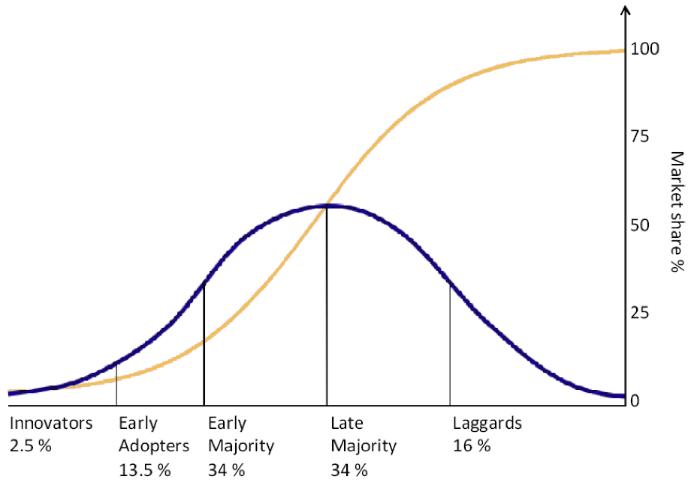
The current literature focus on urban area daily commute, my research is trying to fill the gap of focused use of AAM in tourism from a business perspective. Tourism sector has higher probability of finding early adopters in the technology adoption life cycle (TALC) (Li et al., 2024) To the best of our knowledge, my article is the first to survey the recent research & analysis on advanced air mobility (AAM) predominantly from a sustainable tourism development perspective.
From a methodology perspective, for this commercial analysis, we have taken heuristic approach. It refers to a practical, experience-based method for problem-solving or decision-making that aims for a good enough solution, rather than a perfect one
2. Overview of eVTOL Technology
eVTOL is a vertical take-off & landing capable aircraft using distributed electric propulsion (DEP: more than two lift/thrust units) to hover, fly, take off & land (DGCA Vertiport Rules, 2024) Their advantages include reduced noise pollution, zero carbon emissions during flight, and minimal infrastructure requirements compared to traditional aviation.
2 1 AAM Ecosystem
The services, technology, and infrastructure that enable the safe and effective operation of air travel are collectively referred to as the "Air Mobility Ecosystem." For all parties involved in the ecosystem government organisations, business leaders, and consumers there are several opportunities and challenges. Assuring safety and security, creating regulatory frameworks to control emerging technology, and resolving social and environmental issues are some of the main obstacles. But there are also a lot of advantages to the air mobility ecosystem, including as shorter travel times, easier access to far-flung locations, and lower emissions and traffic (Al-Rubaye et al., 2023)
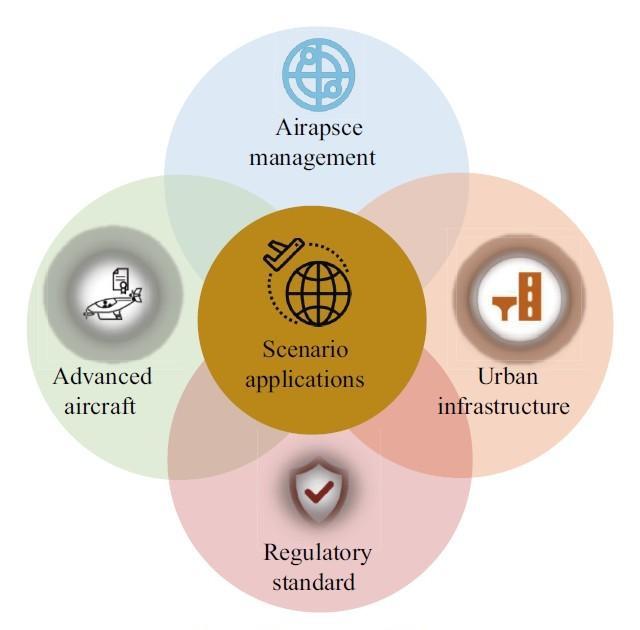
Vertiport Infrastructure: For eVTOLs, vertiports are the equivalent of airports. The smooth transition between air and ground transportation is the goal of these infrastructures. They might have amenities including waiting rooms for passengers, maintenance facilities, and charging stations (Al-Rubaye et al., 2023).
Infrastructure & Safety: eVTOLs need dependable and easily accessible infrastructure for charging. Vertiports, flight path & other public spaces can serve as charging stations. Existing aviation infrastructure including airport, helipad, air traffic communication system etc. will give the framework, so that we don’t have to reinvent the wheel (DGCA Vertiport Rules, 2024)
For AAM vehicles to travel across airspace safely and effectively, air traffic management systems are required (Al-Rubaye et al., 2023). To guarantee that AAM vehicles are in safe working condition and to detect and resolve any possible safety concerns, they will need to undergo routine maintenance &
inspection. The certification and operating guidelines for AAM vehicles established by regulatory agencies are directly related to the interdependence of AAM's social, safety, and regulatory concerns.
2.2 The eVTOL product considered for the analysis.
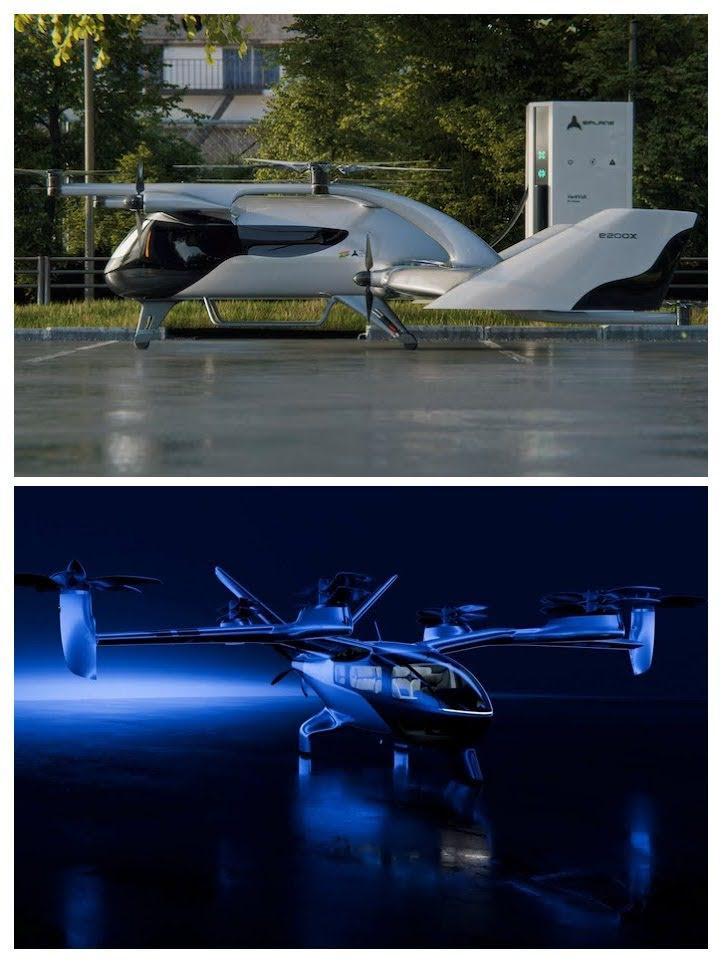
The eVTOLs come in a variety of forms, but they can be broadly categorised into four types: tilt-rotor (wing), compound, multi-rotor, and tail-sitter (Li et al., 2024). The aircrafts under consideration are e200x of the eplane company which is a compound type & Shunya of Sarla aviation which comes under tiltrotor (wing) type. For this study we consider the indigenous OEMs designed, manufactured and certified (in process) in India. Indigenous OEMs are considered keeping factors for future scenarios like selfreliance, commercial viability, future cost advantage for export market.
3. Experience the bird’s eye view
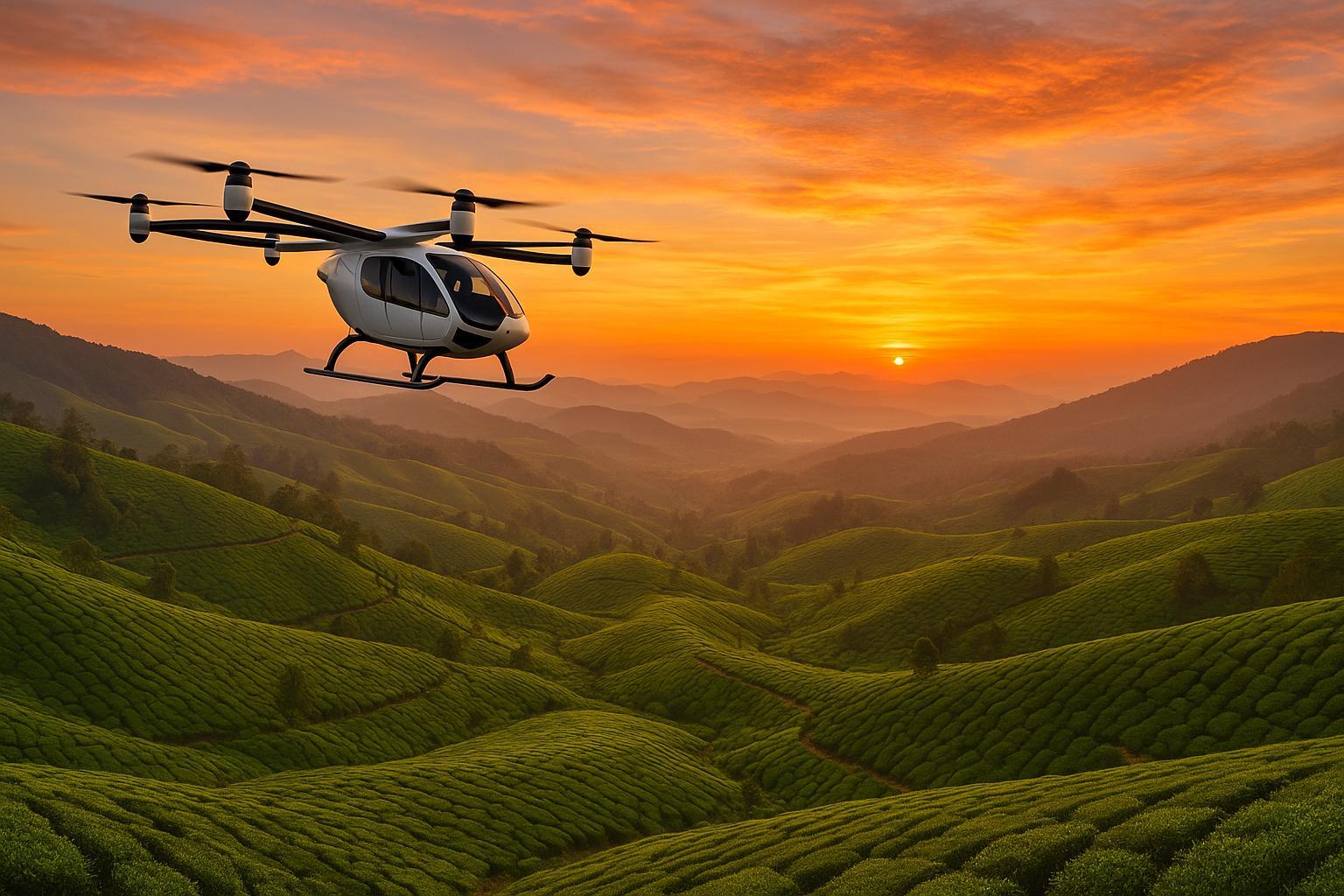
Kerala's has diverse geography ranges from hill stations like Munnar to coastal regions and backwaters Advanced Air Mobility (eVTOLs) can offer panoramic views of Kerala’s scenic beauty, adding a new dimension to the tourist experience. Additionally, the same topography poses unique transportation challenges, eVTOLs can provide quick access to these varied destinations, reduce travel time, and offer tourists a novel and luxurious travel experience.
The tourism sector stands to benefit the most and the quickest from the rise of companies utilising sustainable mobility innovation Creation of new business opportunities, from aerial tour operators to infrastructure development, contributing to Kerala’s economy. This will pave the way for urban commute using eVTOLs in Kerala.
4. Regulatory Framework

Regulations pertaining to airspace, infrastructure, eVTOL type certification, and operation are still in the early stages of development. Air traffic management regulations, vertiports, and special standards for aircraft, initial and continuous airworthiness have not yet been publicly published, despite the fact that eVTOL technology has been developed for a number of years (Xiang et al., 2024)
For eVTOLs to be integrated into current transportation systems, interoperability standards must be developed. This covers the creation of airspace management systems, data exchange guidelines, and communication methods (Xiang et al., 2024)
4.1 Regulations in India
The Director General of Civil Aviation, DGCA is the civil aviation authority of India responsible for regulation. DGCA has issued two advisory circulars, AEAC No. 01 of 2024 and Vertiport Design &
Operations Guidelines, based on ICAO Circular 328. The DGCA specifies the airworthiness requirements and certification procedure for Advanced Air Mobility (AAM) eVTOLs up to 5,700 kg MTOW (maximum take-off weight). General design, flight, structures, systems, and ongoing airworthiness are all covered by the criteria. To promote international interoperability, the DGCA is also bringing its framework into compliance with EASA's SC-VTOL requirements and ICAO's Annex 8/19/14 (DGCAAircraft Type Certification Rules, 2024).

Figure 5 Source: https://www.linkedin.com/pulse/why-aviation-law-important-law-academy-nyc-xuasc/
It is recommended that operators and manufacturers prepare vertiport licenses, apply for flight trials under Drone Rules 2021 DGCA'sAircraft Engineering Directorate is authorized for Design Organisation Approval (DOA) and Production Organisation Approval (POA) for eVTOLs in India It has also constituted six internal working groups specifically for framing rules and developing regulatory norms for eVTOL operations in India (DGCA Vertiport Rules, 2024) The eplane company is the first private Indian company to receive Design Organisation Approval (DoA) from India's DGCA for an electric aircraft (The Eplane Co, 2025)
As per DGCA, existing airport can function as vertiport. This makes it feasible for Cochin International Airport Limited (CIAL) to act as the primary vertiport. (DGCA Vertiport Rules, 2024). The Cochin International Airport is world’s first airport to run entirely on solar energy making it net carbon neutral (CIAL, 2025). From a “well to wings” perspective in carbon accounting, eVTOL offers an unprecedented travel experience in a carbon neutral manner. Establishing vertiports, charging stations, and maintenance facilities will require significant investment and planning. But this if incorporated into the existing airport network (4 in Kerala) can significantly reduce the initial capex.
5. International OEMs and Certification
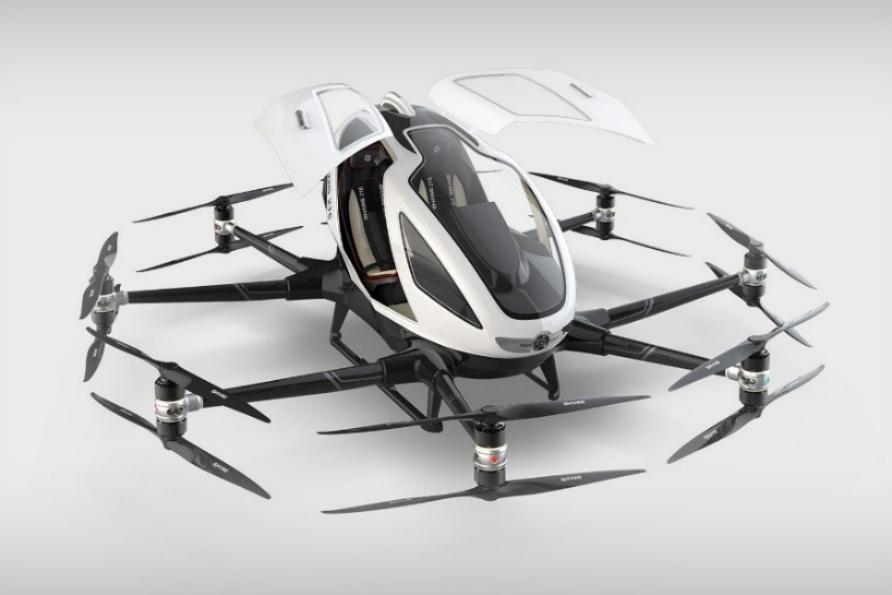
EHang, a Chinese company, is the world’s first eVTOL to get commercial operations certification. Civil Aviation Administration of China issued it for its EH216-S autonomous two-seat vehicle, which is used for low-altitude tourism and urban sightseeing flights in Guangzhou and Hefei, demonstrating the potential of eVTOL in the tourism sector (Charles Alcock, 2025) Joby Aviation (Joby Aviation Certification, 2025) & Archer Aviation (Archer Aviation Certification, 2025), both from US are in their advanced certification.
6. Public acceptance
https://evtol.news/ehang-216/
Ensuring public confidence in the safety and reliability of eVTOL technology is critical for widespread adoption. 83% of respondents were in favour of the introduction of AAM, and 71% of them are likely to use at least one service, according to a 2021 EASA study on the societal acceptance of urban air mobility in Europe. However, they were also worried about a number of potential problems, including safety, security, noise, and the effect on wildlife (Xiang et al., 2024)
7 Technology adoption lifecycle Source: (Li et al., 2024)
Without the need for substantial ground infrastructure, eVTOLs may readily access isolated and ecologically sensitive locations in contrast to ground transit options like scenic buses and railroads. Because of this characteristic, it is especially well-suited for use in scenic locations and natural reserves where environmental preservation is prioritised Safety, sustainability and cost effectiveness are the other general factors from a user acceptance perspective (Suo et al., 2024)
6.1 Carbon Savings
For accessing the potential early market size, we apply the technology adoption lifecycle (TALC, Fig. 7) into the tourist number into Munnar. Total tourist arrival at Munnar 17 lakh (Tourism Department Govt of Kerala, 2023)
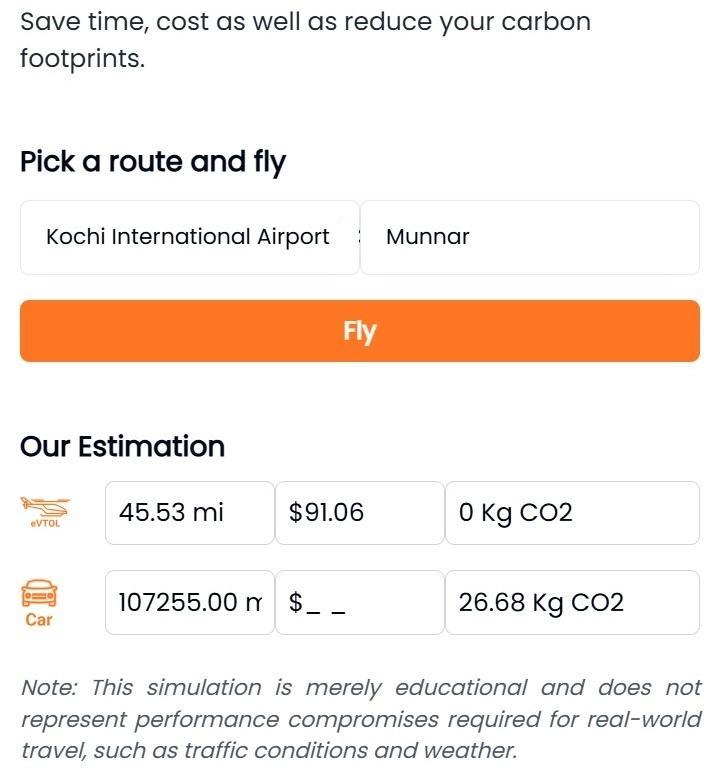
Considering 2.5% of them as innovators as per TALC & applying the assumptions of the breakeven point, we have potentially 35 trips/day as potential market size. Conservatively, if we add only 30% of them to be actual users, we end up with 10 trips per day (Premnath, 2025a). For the environmentally conscious tourists, mitigating 26.7 kg of CO2 (For one way trip Fig. 8) is a motivating factor.
7. Commercial viability: Break even analysis
8 CO2 savings simulation. Source: evtol.travel
The proposed business model leverages aircraft leasing to minimize capital costs and enhance operational flexibility for eVTOL services in Kerala tourism. The route connects Cochin International Airport to Munnar, targeting premium, time-sensitive travellers with four-passenger flights. Operating 300 days a year, accounting for maintenance and downtimes, this model provides a framework to assess revenue potential, utilization, and ROI for sustainable air mobility in the region.
Parameter
Monthly Lease Fee (per aircraft)
Annual Lease Cost (per aircraft)
OPEX per Trip
Value
₹12 –15 lakh
₹1.44 –1.8 crore
₹3,300 – ₹5,500 Revenue per Trip
₹10,000 – ₹12,000
Gross Profit per Trip ₹4,500 – ₹8,700
Trips per Aircraft (annual) 3,000 (10 trips/day × 30 days × 10 mo)
Annual Gross Profit (per aircraft) ₹1.62 – ₹3.13 crore
Break-even Period 5.5 – 13.3 months
Note: Base estimates taken from publicly available data, others derived from self-calculation The numbers considered & assumptions are detailed in the reference (Premnath, 2025b)