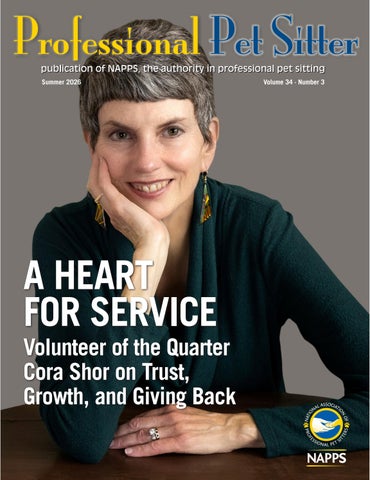

A HEART FOR SERVICE
Volunteer of the Quarter
Cora Shor on Trust, Growth, and Giving Back


The mission of the Professional Pet Sitter is to provide tools for members to enhance their business, help them expand their knowledge of professional pet sitting, and communicate association news and events.
Copyright 2026. The Professional Pet Sitter is published four times a year in January, April, July and October by NAPPS. Headquarters: P.O. Box 362, Huron, OH 44839. Periodical mailing privilege pending at Mt. Laurel, NJ and additional mailing offices. Postmaster: send change of address to the Professional Pet Sitter c/o NAPPS Headquarters, P.O. Box 362, Huron, OH 44839. The Professional Pet Sitter is free to National Association of Professional Pet Sitters, Inc. members. No part of this publication may be reproduced without written permission of the publisher. Editorial offices: P.O. Box 362, Huron, OH 44839





of
Pet Sitters, Inc.
Box 362
OH 44839
Phone: (856) 439-0324 • Fax: (856) 439-0525
Email: NAPPS@petsitters.org • www.petsitters.org


By Amy Abern
Erin Wisneski, Executive Editor
Cathe Delaney, Managing Editor
Making the Doggone Right Choices
Microchips Only Work if the Information is Current
A Simple Client Check-in that Can Strengthen
JPlease send all letters to the editor: NAPPS@petsitters.org
Eminutes, the groups switch to new handlers and dogs.
Lost Pet Preparedness and Build Trust
very professional pet sitter knows the scenario: a slipped leash, an open door, a moment of distraction. Even the most attentive care can’t eliminate every risk, and when a pet goes missing, identification becomes everything.
You already know microchips are one of the most reliable tools for reuniting lost pets with their families. But there’s an important registry update your clients may have missed, and a simple conversation opportunity that’s easy to overlook in the day-to-day flow of running a pet care business.
ohn made a bad decision. The 16-year-old boy bought some marijuana from an undercover cop. As a result, John is living at the Illinois Youth Center (IYC) Chicago, a juvenile detention facility for the next six months. John is not a hardened criminal. And maybe if he hadn’t been caught this early in the game, he might still be on the streets, perhaps now stealing to buying larger quantities of marijuana—maybe even cocaine or crack.
The Part Most Clients Forget
All the participants are anxious to spend time with Rou, the pit bull. One boy commented on how Rou resembled his American Staffordshire terrier. It was surprising to hear him refer to his dog with the official breed title. “That’s because we’ve seen all these different guys fight and we know who the best ones are,” he says.
with Safe Humane, call 312-409-4790. Fore more information on Best Friends, visit their Web site at www.bestfriends.org n
Letters should include your name, address, and daytime telephone number. Letters may be edited for length or clarity. Submissions may be mailed or emailed as a word document.
But landing in IYC is perhaps the best thing that could have happened to John and the other 12-17-year-olds like him. They’re receiving the discipline, training, counseling, education and programs they’ll need to reinvent themselves once they’ve completed their stay, via a program called Lifetime Bonds.
A microchip is only as effective as the information connected to it.
And this offers the perfect segue to talk about dogfighting. “Do you think the dogs like fighting?” asks Triptow. Most of the boys nod. “Do you think the dogs like being stroked?” All the
That’s the piece that slips through the cracks. Clients get their pet chipped (often years ago) and never think about it again. Phone numbers change, people move, email addresses go dormant, and the registration just sits there, quietly outdated.
For professional pet sitters, this is a natural and genuinely helpful conversation to have during onboarding or annual check-ins. A simple question, “Is your pet’s microchip registration still current?”, can prompt a client to check something they haven’t thought about in years. That’s not overstepping. That’s exactly the kind of proactive care that sets professional pet sitters apart.
Created by Best Friends Safe Humane, this program targets youth who have been involved in illegal activities. Each week, a group of dog handlers and their dogs visit the teens.
Professional Pet Sitter is published quarterly by the National Association of Professional Pet Sitters (NAPPS), a nonprofit organization, and is available through membership subscription. No portion of the magazine may be reprinted without the written consent of the National Association of Professional Pet Sitters. The letters and advertisements contained in this magazine do not necessarily reflect the opinions of the association. NAPPS is not liable for validity or correctness of any claim, express or implied, made in advertisements or writings of this magazine.
MEMBERSHIP SERVICES
Important Update: 24PetWatch Registry Has Moved
...if you don’t like getting hurt and the dog doesn’t like getting hurt, do you really think the into a situation like fighting where they most certainly will get hurt?
NAPPS Headquarters P.O. Box 362 Huron, OH 44839 Phone: (856) 439-0324
If you or your clients use the 24PetWatch Registry, here’s something worth passing along: it has officially transitioned to PetPlace, which is now the primary home of the registry platform. Pet parents can still access their existing microchip information and accounts; they simply need to log in using their email address and reset their password if necessary.
The teams teach the young men the proper way to approach a dog, a few commands and a chance to socialize with the dog. By receiving the immediate gratification of a happy wagging tail, friendly lick on the hand, or the roll-over request for a belly rub, these youngsters begin to realize— sometimes for the first time in their lives—that
Fax: (856) 439-0525
Email: NAPPS@petsitters.org www.petsitters.org
Cathe Delaney Administrative Director cdelaney@petsitters.org
Roger King Social Media Contact rogerkingbits@gmail.com
these young men knowledge and skills they can use to positive advantage for the dogs they and their friends or family members encounter in the streets, especially dogs viewed as ‘fighting dogs,’” she says.
boys nod. “Do you like the feeling of being hurt when someone hits you?” All the boys shake their head. “Do you think dogs like the feeling of being hurt, like when another dog bites them?” Tentative shakes all around. “So think about it—if you don’t like getting hurt and the dog doesn’t like getting hurt, do you really think the dogs like going into a will get hurt?” Definite head shakes all around.
The 24PetWatch Registry itself is not disappearing. Both brands are part of the same family of services and continue supporting lost pet recovery efforts. But if clients haven’t logged in recently, now is a good time to encourage them to verify that their information is still accurate and accessible.
A Small Touchpoint That Adds Real Value
Changing Beliefs Is The First Step
Adding a microchip check-in to your client onboarding process simply requires an extra question. You might also consider:
The young men could hardly wait for the bell to ring, signaling it’s time for the Lifetime Bonds program, or, as they call it, “Dog-Play Time.”
• Confirming emergency contact information is current at the start of each service period
The teens have only participated in the Lifetime Bonds program for two months, but already, changes in thought, attitude and behavior are evident. Nikki Robinson, Assistant Superintendent/Programs IYC Chicago, observes the boys not only look forward to the sessions because they’re enjoyable, but that they really “get” why the program is important.
• Encouraging visible ID tags as a complement to microchip registration
Business Insurers of the Carolinas PO Box 2536, Chapel Hill, NC 27515-2536 Phone: (800) 962-4611 ext. 224 www.petsitterinsurance.com For Dishonesty Bond and/or General Liability Insurance
The National Group Insurance Exchange 3210 Doolittle Dr., Northbrook, IL 60062
Phone: (800) 955-0418 Fax: (847) 559-9499
• Keeping a note of microchip numbers in client records when available
How You Can Help
• Having local emergency vet and shelter contact information easily on hand
These small habits reinforce what clients already trust about you: that you think ahead, you’re prepared, and their pet’s safety is never an afterthought.
The group breaks into five smaller groups and begins each session by learning how to approach a friendly dog. One by one, the boys take turns holding out the backs of their hands for the dogs to sniff, then gently petting the dogs on the side. Then the boys hold treats in their hand while asking the dogs to sit and lie down, then give the treats—and give and receive more love. After 20
Best Friends Safe Humane relies on donations and in-kind services from local businesses and individuals. If you’d like to make a donation to the Safe Humane Lifetime Bonds program, send a check payable to: Safe Humane P.O. Box 7342 Chicago, IL 60680-7342. If you’d like to learn more about volunteer opportunities
Email: tngie@aol.com www.wwins.com Contact: Alan Leafman For Dental and Health Insurance
Microchips work best when everything connected to them is current. As the person clients trust with their pet’s day-to-day care, you’re in a natural position to help make sure that’s actually the case. n
For pet sitting questions contact: www.petsitters.org
Setting the Record Straight on Professional Pet Care
Looking Beyond Platform Features to Understand What Truly Defines Quality, Accountability, and Trust
When misinformation shapes perception, leadership has a responsibility to respond with clarity, professionalism, and truth. Recently, a widely shared checklist from a national pet care platform made claims about what pet parents should expect from care providers. At first glance, it may seem helpful. But many of those claims present an incomplete picture of what professional pet care actually looks like.

My initial reaction was frustration. Not because competition exists (that’s part of any industry), but because the comparison wasn’t accurate. It suggested that features like background checks, GPS tracking, or communication tools are exclusive to platforms. The reality is many professional pet sitters already use these tools, often with more customization and accountability. More importantly, those features don’t define quality care. Pet care is built on trust. When a client invites someone into their home to care for their animals, it’s one of the most personal decisions they can make. That trust deserves clear, honest information.
When pet parents are given incomplete comparisons, it creates confusion. That can lead to decisions based on convenience rather than quality, without fully understanding the differences in training, accountability, and responsibility.
Professional pet sitters operate as business owners. We invest in training, certifications, insurance, and continuing education, and we are trained in pet first aid and CPR. That means we understand behavior, recognize risk, and know how to respond when something goes wrong. We also build relationships with our pet parents and the pets we care for, which is one of the most important distinctions in this profession. We take the time to get to know each pet, their routines, triggers, health needs, and environment. It isn’t just about completing a task. It’s about consistency, familiarity, and trust developed over time.
Gig-based platforms prioritize speed and availability, connecting pet parents with whoever is available in the moment. That model may work for convenience, but it doesn’t always provide the depth of care that comes from an established relationship. And when something goes wrong, that difference matters. In my own experience, I’ve seen how critical training and preparedness are. Whether it’s administering medication, handling an injury, or responding to a behavioral issue, those moments require knowledge, experience, and confidence.
Professional pet sitters are also accountable in ways many pet parents may not realize. We carry insurance, we use contracts, and we conduct thorough intakes, asking detailed questions about the pet and the home environment, because we’re responsible for both. That level of diligence is part of a professional standard that NAPPS actively supports and promotes. Through certification programs, continuing education, and ethical guidelines, we’re committed to helping pet sitters grow in their knowledge and professionalism.
Through platforms, services are being marketed as faster, easier, and more affordable. And those qualities are appealing. But when it comes to caring for an animal, quality should never be reduced to a checklist. When using platforms, pet parents should understand what they’re comparing—inquire about a sitter’s experience, their training, and be sure to check references.
For professional pet sitters, my message is simple: stay confident in your value. Focus on educating your clients, communicating what you do and why it matters. Tell your pet parents to look beyond the features for someone who knows their pet, prepares for the unexpected, and treats their pet as a responsibility, not just a booking.
Gary A. Cimmino
By
Communicating Your Value as a Professional Pet Sitter
How to Respond with Confidence When Clients Ask: ‘Why Choose You Over an App?’
At some point, almost every professional pet sitter hears the question:
“Why shouldn’t I just use an app like Wag or Rover?”
It’s a fair question. Platforms do a great job marketing simple, easy-tounderstand features like background checks, GPS tracking, and on-demand booking. The problem is that those checklists can make it seem like those features tell the whole story or that they’re exclusive. They’re not.
And this is where your role comes in. You don’t need to argue or criticize. You just need to clarify.
Professional pet sitting is about more than features. It’s about outcomes. While platforms focus on tools, professional pet sitters deliver something deeper: personalized care, consistency, and a relationship with the pet over time. That difference has a direct impact on the pet’s experience: lower stress, better behavior, and safer care.
It also changes how you communicate your value. Instead of trying to match features point-for-point, shift the conversation to what actually matters.
For example, when clients mention background checks, it’s helpful to acknowledge them and then expand the picture. Yes, platforms may offer basic screening. But many professional pet sitters carry their own insurance,
What to Say When Clients Ask: ‘Why Not Use an App?’
When clients ask how you compare, keep your response simple and confident:
“That’s a great question. Some platforms highlight certain features, but many professional pet sitters offer those same tools along with personalized care, consistency, and a relationship with your pet over time.”
Or more directly:
“The biggest difference is that your pet is cared for by someone who knows them, not just someone who’s available.”
The shift: You’re not selling a service. You’re offering a relationship.
Professional pet care is built on trust, familiarity, and relationships that help pets feel safe, comfortable, and understood.
provide references, and build long-term relationships with pet parents. As Kristin Holzapfel, owner of Pampered Pupperinos & Pals and 2026 NAPPS
Business of the Year recipient, points out, it’s also important to help pet parents understand the difference between true pet business insurance and platform guarantees. Trust isn’t built through a one-time check. It’s built through accountability over time.
The same goes for things like GPS tracking or report cards. Many pet sitting professionals already provide updates, photos, and detailed communication. The real value isn’t the tool; it’s the level of insight. A professional pet sitter can notice changes in behavior, appetite, or routine that an automated update simply can’t capture.
Where the difference becomes even clearer is in consistency. Platforms are designed for convenience and availability in the moment. Professional pet care is built on familiarity. Your client’s pet sees the same person, someone who understands their personality, their triggers, and their routine.
That familiarity isn’t just “nice to have.” It reduces risk.
NAPPS member Kara Biery shared an example that illustrates this perfectly. When a dog slipped out the front door, multiple sitters who already knew the dog were able to respond quickly and safely. That kind of coordinated response doesn’t happen through a one-off booking. It comes from an established relationship and a connected team.
NAPPS member Cindy Vet highlighted another important point: accountability. As a solo sitter, she emphasizes clear communication, transparency, and taking ownership of her work. Pet parents know exactly who is coming into their home, and over time, that consistency builds trust. In her experience, that trust shows up when new clients say they’ve already heard of her before reaching out. That kind of reputation isn’t built through a platform. It’s built through professionalism and presence in the community.
Platforms facilitate transactions. Professional pet sitters build relationships. Over time, that relationship leads to better outcomes for the pet and more peace of mind for the pet parent.
As Holzapfel advises, the key is to keep it professional and focus on your niche and your value within your community. There will always be cheaper options. That’s not the competition. Your role is to communicate what makes your care different and why it matters.
When these questions come up, they’re not a threat. They’re an opportunity to educate, clarify, and reinforce the value of what you do every day. Because when clients understand the difference, the decision becomes much clearer. n
By Erin
Create Social Media Content that Builds Trust
Why Consistency and Authenticity Matter More Than Polished Posts When Marketing Your Pet Care Business Online
For many professional pet sitters, social media feels like another task on an already overwhelming to-do list. What should you post? How often? Which platform matters most?
But underneath those questions is usually a deeper one that’s harder to say out loud: Is any of this actually worth it, and am I interesting enough to pull it off?
Here’s the thing: you probably are and just don’t realize it yet.
According to social media and community management professional Kristen Taylor, the content that builds the most trust for local pet care businesses isn’t the most polished or heavily edited. It’s the most consistent and most authentic.
“Start by focusing less on ‘What should I post today?’ and more on ‘What do I want people to feel, know, or do after seeing my content?’” Taylor said.
That mindset shift, from filling a calendar to building a relationship, can completely change how pet sitters approach marketing online.
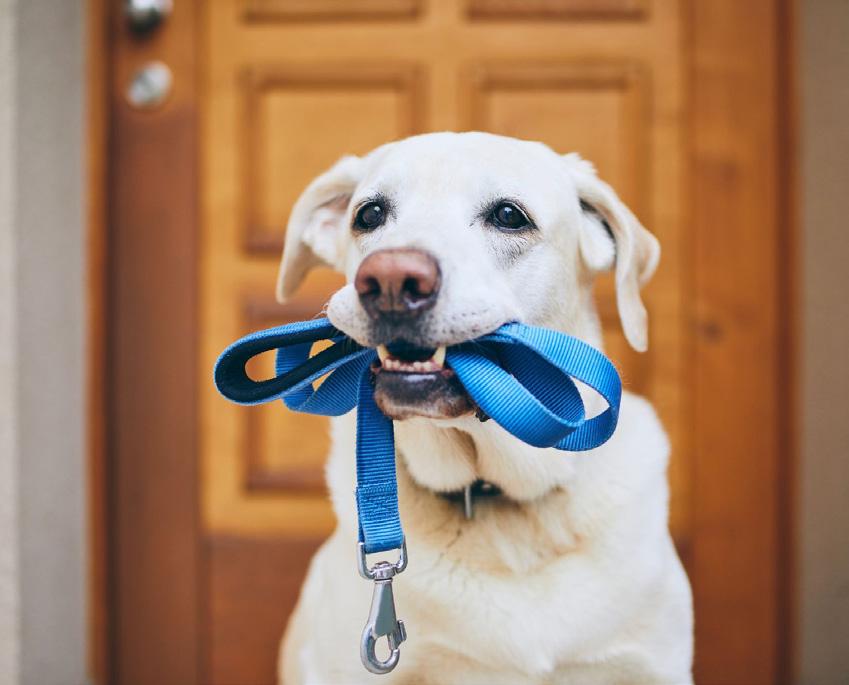
Sometimes the best content is just real life with pets.
Why Trust Matters More Than Virality
Pet parents are choosing someone to care for a family member, not just purchasing a service. For that reason, successful social media content often has less to do with promotion and more to do with reassurance, consistency, and familiarity.
And here’s the insight that reframes everything: what feels like “just another Tuesday” to you is often exactly what a potential client needs to see.
A photo of a tired golden retriever waiting by the door. A quick note about how you handled a last-minute schedule change. How you talk about a nervous cat warming up to you by day three. These moments are ordinary to you. But to someone deciding whether they can trust a stranger with their pet, they’re everything.
“What feels routine to you may actually be reassuring and valuable to potential clients,” Taylor explained. “Consistency in those authentic moments builds familiarity and trust over time.”
Taylor added that intentional content helps potential clients picture what it would feel like to trust you with their pets. That means showing more than availability or pricing and giving people a window into your personality,
communication style, professionalism, and genuine care. Ultimately, you are building a relationship with your audience long before someone sends an inquiry. For professional pet sitters, that means focusing on authentic, everyday moments rather than overly polished marketing campaigns.
Four Types of Content That Help Build Connection
To make content creation feel more manageable, Taylor suggested rotating through a handful of consistent content themes instead of constantly trying to invent something new.
A balanced content strategy might include:
1. Relatable Content: Posts that help pet parents feel emotionally connected, such as funny pet moments, relatable routines, or stories about the realities of pet ownership.
2. Educational Content: Helpful tips that demonstrate your knowledge and experience. Think seasonal pet safety reminders, leash safety, medication tips, or how to prepare pets for travel.
3. Authority Content: Content that reinforces professionalism and credibility, like certifications, continuing education, or client testimonials.
4. Community Content: Posts that strengthen local visibility and relationships. This can include partnerships with local businesses,
TIPS OF THE TRADE
participation in community events, or highlighting pet-friendly places in your area. (Bonus: this type of content is a great way to grow your referral network.)
“Different content types serve different purposes, and together they help potential clients move from ‘I found this account’ to ‘I trust this person with my pet,’” Taylor said. “People want to feel confident not only in your skills, but also in your energy and communication style.”
You Do Not Need to Be on Every Platform
One of the most common sources of stress for business owners is feeling pressure to maintain a presence everywhere. Taylor said don’t spread yourself too thin.
For most professional pet sitters, she recommends Instagram and Facebook, which tend to provide the strongest opportunities for local engagement, referrals, and visual storytelling. For example, a professional pet sitter might find more traction in a local Facebook group or neighborhood page than chasing followers on Instagram Reels, and that’s perfectly fine.
Pro Tip: A Sample Content Plan
One of the easiest ways to reduce social media overwhelm is to stop reinventing your content every day. Instead, create a few recurring content themes you can rotate consistently throughout the week.
Try building your schedule around categories like:
1. Pet Care Tips & Education: Share seasonal safety reminders, medication tips, training insights, or common pet care questions.
2. Behind-the-Scenes Moments: Give followers a glimpse into your daily routine, pet visits, supplies, scheduling systems, or walk prep.
3. Client Stories & Testimonials: Happy pets, positive experiences, and feedback that reinforces your reliability.
4. Local & Community Content: Feature local pet-friendly businesses, community events, parks, rescues, or partnerships in your area. (Great for your referral network, too.)
5. Your Personality & Values: Let people get to know the person behind the business through stories, routines, humor, or your approach to care.
Creating a simple schedule can help make content creation feel far more manageable.
Example Weekly Structure:
Monday: Pet Care Tip
Wednesday: Client Testimonial
Friday: Behind-the-Scenes Post
Repeatable themes create structure, reduce decision fatigue, and make it possible to stay consistent without feeling overwhelmed. You don’t have to post every day. You just have to keep showing up.
The best platform is ultimately the one you can maintain consistently while reaching the audience most likely to hire you. Taylor recommended focusing on platforms where:
Your local audience already spends time. Where are potential clients in your area most active? Check local Facebook groups and neighborhood pages.
You naturally enjoy creating content. If posting feels miserable, consistency becomes impossible. Choose formats and platforms that feel sustainable, not punishing.
Your content format works naturally. Not everyone wants to film and edit videos. That’s okay. Some pet sitters are more comfortable taking photos during walks or writing short educational posts. The goal is to communicate your personality and professionalism in a way that feels authentic to you.
You can realistically engage, not just post. Social media works best when it feels like a community, not a billboard. Responding to comments, answering messages, and showing genuine personality all help build trust.
“Consistency and authenticity will outperform burnout every time,” Taylor said.
Building Connection, Not Just Followers
Taylor said many small business owners misunderstand what success on social media looks like, which can lead to discouragement and burnout. For professional pet sitters, the goal is not to impress the entire internet.
“You do not need a massive following to have an effective social media presence,” she said. The goal “is to become the trusted, familiar name someone remembers when they need help caring for their pet.”
Part of building trust on social media involves rethinking calls to action. Many business owners worry that encouraging engagement will feel overly promotional or sales driven.
Instead of pushing for a sale, Taylor recommends using conversational prompts that encourage natural interaction. When people feel included in a conversation rather than targeted by a pitch, they are far more likely to remember your business when they need help.
Examples include:
1. “Have a pet with a quirky routine? I’d love to hear about it.”
2. “Save this for your next pet emergency checklist.”
3. “Tag a fellow pet parent who would relate.”
These prompts create connection while keeping future business opportunities open. The goal is to stay top of mind so that when someone needs a pet sitter, your name is the one they think of first.
Lastly, Taylor emphasized that consistency and authenticity matter far more than posting constantly or trying to become someone you’re not online.
“If your content consistently makes people feel informed, comfortable, and connected to you,” Taylor said, “your social media is already doing its job successfully.” n
About the Expert
Kristen Taylor is a social media and community management professional with more than a decade of experience creating engaging digital content and building online communities. She was a featured speaker at the 2026 National Association of Professional Pet Sitters conference. Visit her website to learn more.

By Erin Wisneski
Summer Heat Changes the Rules of Pet Care What You Should Know About Preventing Heat Exhaustion
and Protecting High-Risk Pets
Heat exhaustion rarely announces itself. It doesn’t usually happen during an obvious emergency. It happens on a Tuesday afternoon walk that started out fine, or in a home that felt comfortable in the morning but warmed up by noon, or during a car ride that ran a little longer than planned. For professional pet sitters managing multiple visits and tight schedules, that’s exactly what makes it dangerous.
As temperatures climb, so does the responsibility to build heat awareness into every part of your day, not just the moments that feel risky.
Why Pets Overheat Faster Than You Might Expect
You already know that dogs cool themselves primarily through panting and that cats have limited ability to regulate body temperature compared to humans. What’s easy to forget is how quickly that system gets overwhelmed, especially in high humidity, where panting becomes far less effective, or in pets that are already working harder than usual just to breathe.

Recognizing subtle signs of heat stress early can help prevent emergencies before they escalate.
Brachycephalic breeds like Bulldogs and Pugs, senior pets, puppies and kittens, overweight animals, and pets with underlying health conditions are at elevated risk. But, in the right conditions, any pet can overheat faster than their behavior will let on. By the time the signs are obvious, things have often already progressed further than they appear.
Knowing What to Look For
Early signs of heat exhaustion can seem mild enough to dismiss, which is why it’s worth taking them seriously the moment they appear.
Watch for excessive panting or drooling, lethargy or weakness, bright red or pale gums, vomiting or diarrhea, and disorientation or unsteadiness. If a pet begins to collapse, has difficulty breathing, or becomes unresponsive, that’s a medical emergency that requires immediate action.
The window between “seems off” and “in serious trouble” can be shorter than most people expect.
Where Risk Hides in Everyday Care
The most important mindset shift for summer pet care is recognizing that a crisis can develop during ordinary moments.
A midday walk on hot pavement. An extended outdoor play session that started in the shade. A home with poor ventilation that heats up gradually
while you’re focused on the pet. High humidity at temperatures that don’t feel extreme. A route that was perfectly comfortable at 8 in the morning, and is genuinely unsafe by the afternoon.
Conditions change faster than schedules do. Part of professional summer care is building in the flexibility to respond to that reality, even when it means adjusting a plan mid-visit.
Responding When You See the Signs
If you suspect heat exhaustion, move immediately. Get the pet to a cooler environment, offer small amounts of water without forcing it, and begin cooling gradually using cool (not ice-cold) water on the belly, paws, and neck. Avoid ice baths, which can cause shock and actually slow the cooling process.
Then contact the pet parent and a veterinarian as soon as possible. Even if a pet seems to stabilize, heat-related conditions can continue to progress internally. Your role isn’t to diagnose; it’s to recognize the risk, act quickly, and communicate clearly so the right people can take over.
Document everything: what you observed, when, what you did, and who you contacted. That record matters both for the pet’s care and for your professionalism as a sitter.
TIPS OF THE TRADE
Build Heat Safety Into Your Practice
Responding well to a heat emergency is important. Preventing one is better, and that starts before the visit even begins.
Consider setting clear expectations with clients about how you handle extreme heat, including what circumstances would prompt you to shorten or modify a walk. Proactive communication goes a long way: a quick message letting a client know you adjusted the route or moved a walk earlier because of the heat isn’t just good service, it’s the kind of transparent, thoughtful care that builds long-term trust.
Scheduling midday walks earlier or later when possible, checking pavement temperature before heading out, and knowing which pets on your roster are higher risk are all small habits that add up to meaningfully safer summers for pets in your care and for your peace of mind.
Summer care requires awareness, flexibility, and a willingness to make the safer call even when it’s the less convenient one. Heat exhaustion is preventable, but only when it’s taken seriously before anything goes wrong.
At the end of the day, great pet care isn’t just about showing up. It’s about knowing when to slow down, reassess, and choose the option that puts the pet first. n
Prevention Strategies
How to Reduce Heat Risk During Summer Care
1. Adjust timing: Schedule walks early in the morning or later in the evening
2. Test the pavement: If it’s too hot for your hand, it’s too hot for paws
3. Limit duration: Shorter, slower walks are safer in high heat
4. Provide constant access to water: Refresh bowls frequently
5. Prioritize shade and airflow: Keep pets in cool, ventilated spaces
6. Avoid overexertion: Skip high-energy play during peak heat
7. Know the pet: Adjust based on age, breed, and health history
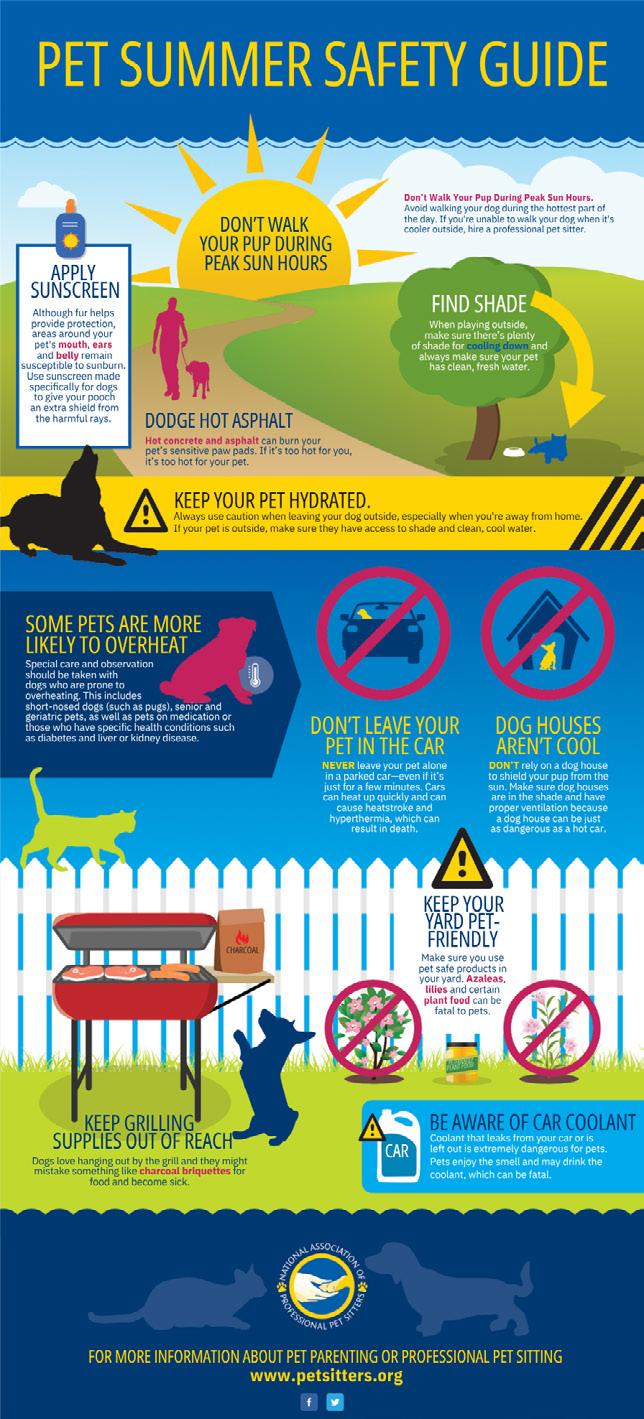
Pet Summer Safety Guide graphic: Find this resource in your NAPPS toolbox and share with your clients.
By Erin
Real Claims, Real Risks
Recent Liability and Workers’ Compensation Claims from the Pet Care Industry
Even experienced pet sitters can encounter situations that escalate quickly. From medication mistakes to dog bites and workplace injuries, these real-world claims highlight how everyday moments can turn into costly incidents.
While every situation is different, reviewing actual claims can help pet care professionals think proactively about safety protocols, supervision, communication, training, and insurance coverage.
The following examples represent recent general liability and workers’ compensation claims involving pet care businesses.
General Liability Claims
A pet sitter was attempting to administer medication using a pill popper when the tip detached and was swallowed by the cat. The cat required veterinary treatment. Total Vet Cost: $2,368
During a walk, a dog grabbed the shirt of a passerby, causing the individual to fall and sustain injuries. Total Incurred Including Defense Expenses: $182,631
A pet sitter administered the wrong insulin dosage to a client’s cat, requiring emergency veterinary care. Total Vet Cost: $2,919
While staying in a pet sitter’s home, a dog suffered a broken leg attempting to jump downstairs. Total Paid: $9,336
Dogs were left unsupervised after instructions were given to keep them outside during the day. Property damage occurred, and one dog became ill.
Total Paid in Damages and Vet Bills: $5,216.27
A dog in a pet sitter’s care bit a child who required hospital treatment. Total Paid: $43,147
A dog suffered an eye injury while in a pet sitter’s care and ultimately lost the eye following surgery. Total Paid: $7,500
After six days in a pet sitter’s care, a dog returned home lethargic and underweight, requiring veterinary treatment. Total Paid: $12,257
Workers’ Compensation Claims
An employee attempting to separate two fighting dogs suffered a bite injury to the wrist. Total Paid: $690
An employee’s arm became tangled in a dog leash, resulting in a fracture. Total Paid: $25,397
An employee was bitten on the hand while attempting to give a dog a treat. Total Paid: $2,031
Key Takeaway
Many claims arise from routine moments: medication administration, leash handling, supervision decisions, and animal interactions. Consistent safety protocols, clear communication, staff training, and appropriate insurance coverage all play a role in reducing risk. n
Meet the Expert
Keith Pearsall, CIC, CWCA, of Business Insurers of the Carolinas, specializes in insurance solutions for service-based businesses, including pet sitting and pet care companies. With more than 36 years of experience in the insurance industry, he works closely with business owners to help them understand their risk exposures and choose coverage that aligns with how their operations actually run.
Test Your Knowledge and Earn CEUs!
Take the NAPPS Professional Pet Sitter Test to earn renewal CEUS. Answers can be found in this issue. Be sure to email your answers to cdelaney@petsitters.org and include the subject line: Summer 2026 Issue Quiz.
1. According to the article on behavior-aware pet care, what is one of the core principles
Jeanne Crockett emphasizes when working with animals?
A. Maintaining strict obedience routines
B. Allowing dogs space to make choices
C. Limiting sensory exploration during visits
D. Using shorter leashes to improve control
2. According to Business Strategist Rolonda Hernandez, what is one number every pet sitter should understand when evaluating their business?
A. Total annual bookings
B. Client retention percentage
C. Real profit margin
D. Average revenue per client
3. According to the article on microchip preparedness, what is the most commonly overlooked aspect of microchipping a pet?
A. Choosing the right chip brand
B. Keeping registration information current
C. Scheduling annual chip scans at the vet
D. Registering with multiple databases
4. According to Dr. Susie Hansley, what is the real issue behind burnout in pet sitting?
A. Taking on too many clients
B. Lack of vacation time
C. Stress accumulation without recovery

D. Poor time management skills
5. According to the article on communicating your value as a professional pet sitter, what is one major advantage professional pet sitters provide over app-based platforms?
A. Lower pricing for repeat visits
B. More automated reporting tools
C. Personalized relationships and consistency of care
D. Access to a wider client base







The Real Cause of Burnout in Pet Sitting How Pet Sitters Can Manage
Pet care is built on compassion, but it also comes with constant demands.
Schedule changes, emergencies, emotional clients, aging pets, and the pressure to always show up can quietly take a toll over time. If you’ve ever felt like you’re “handling it” until suddenly you’re not, you’re not alone.
According to Stress Resilience Expert Dr. Susie Hansley, the issue isn’t stress itself. It’s what happens when that stress never fully leaves our system.
Stress Isn’t the Problem— Stress Accumulation Is
Let’s start with a shift that might feel surprising: stress isn’t bad.
“Stress is a basic biological function,” Dr. Hansley explained. “We need it not just to protect ourselves and survive, but to perform under pressure.”
That means the pressure you feel when you’re juggling a busy schedule, managing a reactive dog, or trying to make your next appointment on time is not failure. It’s your body doing exactly what it’s designed to do.
Dr. Hansley said the real issue is “we don’t complete the stress cycle the way we’re designed to.”
When that happens, our bodies stay in a constant state of urgency.
“We’re getting things done,” she explained, “but we’re doing it using cortisol… like, ‘I have to, I must, I should.’”
Sound familiar? That constant push, the feeling that you can’t slow down, can’t drop anything, and can’t breathe, isn’t resilience. It’s accumulation. And in pet care, it adds up fast.
Dr. Hansley said we’re not just managing tasks. We are:
• Caring for animals we’ve built relationships with
• Supporting anxious or emotional clients
• Handling unpredictable situations
• Running a business, often on our own
Understanding the Stress Cycle
So, what’s supposed to happen instead?
Stress Before It Builds Up

“When we reset our stress, everyone else calms down, too.”
3. Action (we deal with the situation)
4. Completion (our body returns to safety)
“We’re supposed to escape the threat and then get back to being safe,” she explained. “However, our society has taught us to skip that last step and keep pushing through.”
Dr. Hansley breaks stress down into a simple, natural cycle:
1. A trigger (we’re running late, a dog conflict, a difficult client message)
2. A biological response (adrenaline, cortisol, energy)
Animals don’t have this problem, Dr. Hansley said, giving the example of two dogs that almost get into a fight. They tense up, assess the situation, then walk away and shake it off. Humans, on the other hand, move on to the next task while still carrying the stress from the last one.
The solution isn’t always “take a day off” or “reduce your workload.”
“Not only is that not realistic for most pet sitters, it’s not actually effective,” she said.
Dr. Hansley said that the more effective thing is to do what our pets do: Notice the stress in real time—and then shake it off so it doesn’t build.
“The sooner we notice we’re triggered, the sooner we can interrupt it,” she said, encouraging people to start simple:
• Notice your tells: Tight shoulders. Shallow breathing. Irritability. Snapping at someone. “Start noticing when you’re feeling annoyed. That’s a trigger.”
• Name what you’re feeling. Even something as simple as: “I’m feeling overwhelmed right now.” When you name what’s happening, it starts to decrease the cortisol and calms you down.
• Use your body to reset:
• Breathe in… and exhale twice as long
• Shake out your hands or body
• Pause for 10–20 seconds
• Try a quick grounding technique. One example she shared is a simple “finger rub,” gently rubbing your fingers together. “It generates oxytocin… which actually helps flush out cortisol,” she explained.
• Complete the moment, even after it passes. If something stressful just happened, like breaking up a dog conflict, take a second after. “Say to yourself, ‘That was stressful, but everything is okay now,’” she suggested. That’s the equivalent of the dog shaking it off.
Small Resets Make a Meaningful Difference
What does a small reset look like in real life? Let’s take running late, something we’ve all experienced, for example.
The immediate thought is: “I have to get there on time.” From there, stress builds quickly. Our body tightens, our mind races, and we start rushing, which only adds more pressure.
A more effective approach starts with simply noticing what’s happening: “I’m stressed because I’m running late.”
According to Dr. Hansley, that moment of awareness creates space. Take a breath and a few seconds to reset your body, then decide what’s within your control. In most cases, it’s something simple, like sending a quick message to let your client know you’re running behind.
The result? Less stress, safer decisions, and clearer communication. As Dr. Hansley explained, once we calm our body, we can think clearly and respond rather than react.
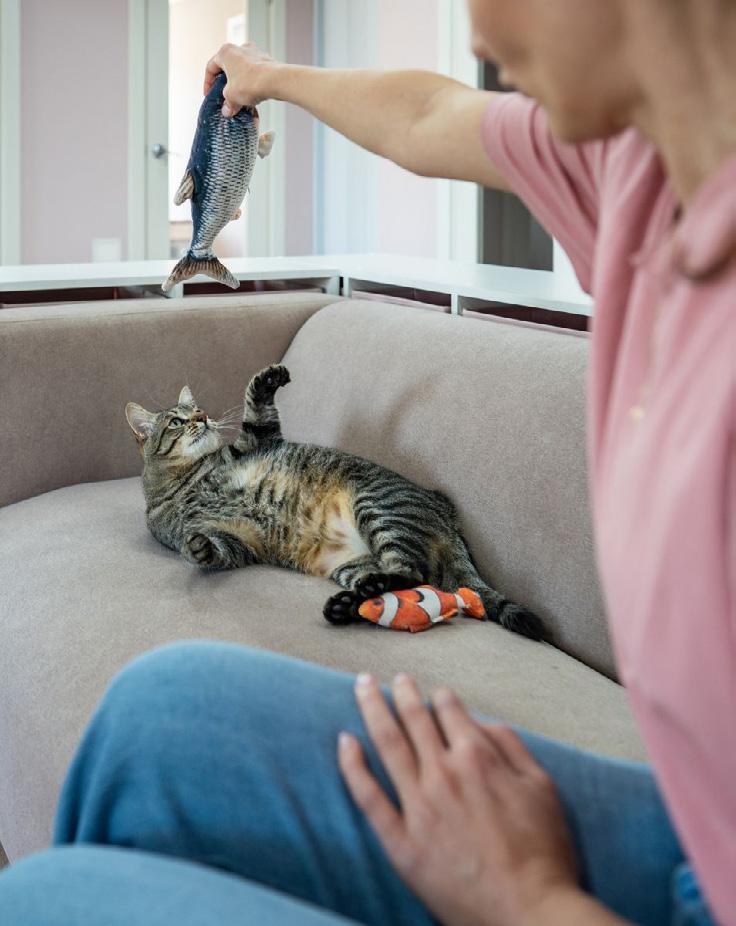
In pet care, moments of calm and connection benefit both the animals in our care and ourselves.
Resilience in Practice
This might be the most important mindset shift in the entire conversation. Most people think resilience means pushing through, but it’s not. Dr. Hansley explained, “Resilience is giving yourself a pause to recover.”
Without that pause, we’re not making clear decisions; we are reacting.
“When we’re triggered, we’re not thinking well, we’re not communicating well,” she explained. “Humans and animals can sense that.”
In pet care, that has real consequences. It affects how we handle situations, how we communicate with clients, and how safe and calm the environment feels for the animals in our care.
That’s why this isn’t just personal. It’s professional.
Sustainable Care Starts with You
Burnout doesn’t usually happen all at once. It’s the result of stress that never had a chance to leave. And over time, it impacts everything from how we communicate and make decisions to how we show up for clients and feel about our work overall.
Dr. Hansley puts it simply: “We tend to think others can’t tell when we’re triggered, stressed, or anxious. But they can sense it. And so, we want to recognize that at any moment, we’re subtly impacting others without realizing it. However, when we reset our stress, everyone else calms down, too. We’ve seen this with animals, and it applies everywhere.”
Stress spreads. But so does calm. And while many of these tools can be used in the moment,
one of the most powerful (and often overlooked) ways to release stress is through connection.
In a profession that often involves working solo, it’s easy to carry everything ourselves. But that’s not how we’re wired to function, Dr. Hansley explained. We’re “pack” animals, and connection plays a critical role in how our bodies process and release stress.
According to Dr. Hansley, ”your “pack” doesn’t have to be formal or complicated. It might be a fellow pet sitter who understands the day-to-day realities of the job or an online community where you can share experiences and feel less alone.
Sometimes, it’s as simple as talking things out loud, even to the pets in your care. The act of expressing what we’re feeling helps shift us out of our head and into a more regulated state. Connection isn’t just emotional support, Dr. Hansley said. It’s a biological tool that helps our body recover more effectively than trying to handle everything internally, on our own.
Final Thought
Dr. Hansley leaves us with this: start small, start once a day, and let it build.
“We don’t need to eliminate stress—we’re designed to handle stress. The key is to notice it when it comes up and then move through it. The good news? It doesn’t take very long to do. Practice noticing when you’re feeling tight, annoyed, or anxious, then name it: ‘I’m feeling anxious,’ ‘I’m feeling stressed,’ ‘I’m feeling overwhelmed,’ ‘I’m feeling frustrated.’ Then take a few breaths or do the finger rub. Noticing your stress and releasing it as little as once per day will make a huge impact over time.”
In a profession built on care, our ability to care for ourselves isn’t separate from our work. It’s what makes the work sustainable. n
About Dr. Susie Hansley
Dr. Susie Hansley, Ph.D., is a stress resilience expert, speaker, and founder of Smart Stress Solutions who delivers science-based tools to help individuals and teams reduce burnout, build emotional intelligence, and thrive. She was a featured speaker at the 2026 National Association of Professional Pet Sitters conference. To learn more about fast stress resets, grab Dr. Hansley’s free video “The 78-Second Reset.” Find additional resources on her website

Notice Triggers & Interrupt Stress in Real Time
Step 1:
Notice the Trigger (Your
“Tells”)
Stress often shows up before we consciously realize it. The sooner we notice it, the sooner we can interrupt it. Look for:
Tight shoulders, clenched jaw, shallow breathing
Feeling rushed, behind, or overwhelmed
• Snapping, irritability, or low patience
A sudden shift in mood or energy
Step 2:
Name What You’re Feeling
Naming the emotion helps calm our bodies and reduce stress in the moment. Say it (in your head or out loud):
• “I’m feeling anxious.”
“I’m frustrated.”
“I’m overwhelmed.”
Step 3:
Reset Your Body (30-60 Seconds)
Inhale… then exhale twice as long (2–3 times)
Shake out your hands or shoulders
• Try a quick grounding technique (like gently rubbing your fingers together)
Step 4:
Close the Loop
Once the moment passes, take one second to tell yourself: “That was stressful, but it’s over now.” This is how we complete the stress cycle instead of carrying it into the next visit.
Why This Matters
Stress isn’t the problem. Unreleased stress is. Catching it early keeps it from building into burnout.
Connection is a Stress Management Tool, Not a Luxury
In a profession where you’re often working solo, it’s easy to internalize everything. But isolation isn’t just emotionally draining; it’s physiologically counterproductive. Humans are wired for connection and, according to Dr. Hansley, that connection plays a direct role in how our bodies process and release stress, which means a support network isn’t a nice-to-have. It’s part of the job.
Your support network doesn’t need to be formal. It might be a fellow pet sitter who understands the reality of a double-booked Saturday, an online community where you can vent without explanation, or even talking through a tough visit out loud — yes, to the dog.
Expressing what we’re feeling helps shift the body out of a stress state more effectively than staying silent and soldiering on. Connection isn’t just emotional support. It’s a biological reset, one that’s available to you more often than you might think.
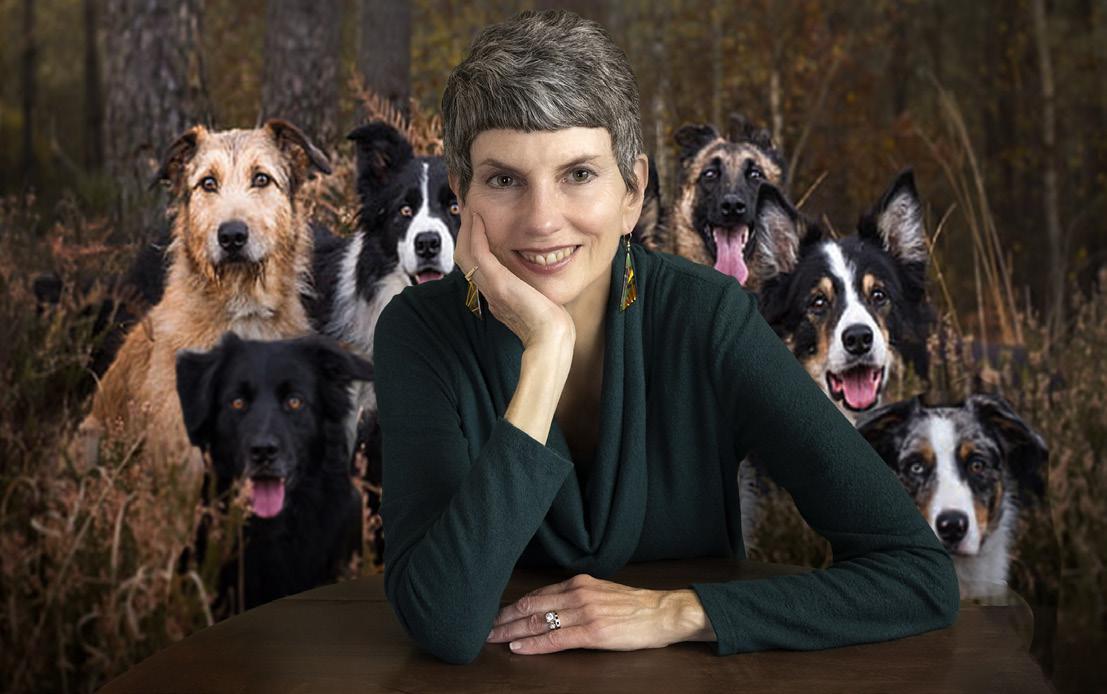
CLeading With Purpose in Professional Pet Care
NAPPS Volunteer of the Quarter Cora Shor Elevates Pet Sitting through Trust, Education, and Service
By Erin Wisneski
ora Shor doesn’t just show up. She steps up. In doing so, she offers a clear example of what it means to build a stronger, more professional pet sitting business.
Whether she’s supporting fellow pet sitters, volunteering her time, or continuing her own professional education, Cora brings a level of care and commitment that sets her apart. A solo pet sitter by trade, she’s also an advocate for professionalism in the industry, a lifelong learner, and a volunteer who leads by example.
For her dedication and contributions, Cora has been named NAPPS Volunteer of the Quarter.
From Nursing to Pet Sitting: A Natural Transition
Cora’s path to professional pet sitting is rooted in a lifetime of care. After working as a registered nurse for more than four decades, she brought that same attention to detail, compassion, and professionalism into her work with animals.
“I’ve always loved cats and dogs,” she said. “Being able to use my previous skills in a new way has made this the most rewarding job I’ve ever had.”
After stepping away from nursing, Cora began researching how to build a pet sitting business the right way. That search led her to NAPPS.
“I was like a sponge,” she said. “I wanted to increase my knowledge beyond my own experience, and NAPPS has been my go-to support since starting my business.”
Today, she offers drop-in visits for cats, hourly sitting for dogs and dog walks, as well as boarding, daycare, and limited overnight care, always with a focus on consistency, communication, and trust.
Raising the Bar for Professional Pet Sitting
Cora is passionate about elevating standards within the pet sitting industry, especially at the local level. As a founding member of the
Verde Valley Professional Pet Sitters Network, she collaborates with other pet care providers while encouraging a more professional approach.
“Many pet sitters aren’t part of a professional organization or keeping up with continuing education,” she explained, adding that she saw this missing piece as an opportunity to lead. “I try to bring the conversation to a higher, more professional standard. That includes talking about education, certifications, and the value we bring to our clients.”
In an industry where standards can vary widely, that commitment helps distinguish professional pet sitters from hobbyists and gig-based services.
Building Trust with Pets and Their People
For Cora, trust is the foundation of everything she does, and it starts long before the first visit.
“I want clients to feel confident before we even meet,” she said. That begins with clear, thoughtful communication and continues with a deep understanding of each pet’s routine and needs.
The initial connection carries into a thoughtful intake process, where she takes time to learn not just the basics, but how each pet behaves in their own environment. From routines and preferences to triggers and comfort levels, those early conversations help her build a clear picture. “I try to keep everything as close to the pet’s normal routine as possible.”
Cora also provides regular updates so pet parents stay informed and reassured while they’re away. That consistency and attention to detail create a professional experience built on transparency, reliability, and peace of mind.
A Volunteer Who Steps Up
Like many NAPPS volunteers, Cora didn’t set out to lead. She simply stepped in where help was needed.
She began on the NAPPS Membership Committee, where her reliability
Cora Shor, NAPPS Volunteer of the Quarter
5 Lessons from Cora
1. Never Stop Learning
Continuing education isn’t optional. It’s what sets professional pet sitters apart. Seek out webinars, certifications, and resources that help you grow your knowledge and confidence.
2. Professionalism Is Your Competitive Edge
Training, certification, and insurance matter, even if clients don’t always recognize it right away. Take the time to explain your value. It builds trust and elevates the entire profession.
3. Connection Fuels Growth
Working solo doesn’t mean working alone. Engaging with organizations like NAPPS and connecting with fellow professionals can provide support, insight, and opportunities you won’t find on your own.
4. Clear Expectations Build Stronger Client Relationships
Set the tone early with clear communication. When clients understand what to expect from the start, it saves time, reduces stress, and builds long-term trust.
5. Lead by Example
Whether it’s in your business or your community, raising standards starts with your own actions. Show up, stay engaged, and be willing to share what you’ve learned with others.
and engagement quickly stood out. Soon after, she moved into a co-chair role and most recently was named chairperson of the committee. Cora has also taken on additional responsibilities across the organization, including serving on the NAPPS Nominations Committee.
“I love being part of a team,” she said. “As a sole proprietor, volunteering helps me stay connected, learn more, and give back.”
For many solo pet sitters, that connection can be the difference between simply running a business and truly growing one.
Cora also contributed to the 2025 Conference Committee, helping ensure a successful event in her home state of Arizona. Her willingness to contribute and take on new challenges is a key reason she was selected for this recognition.
Turning Challenges into Opportunities
Like many in the industry, Cora has faced challenges, especially when it comes to helping potential clients understand the value of professional pet care.
“Some clients don’t immediately see the value of training, certification, or insurance,” she said. Rather than backing down, she sees education as part of the job and part of elevating the profession. “I take the time to explain what those things mean and why they matter. That often leads to a breakthrough.”
That persistence, combined with confidence in her knowledge and skills, has helped her build a strong and growing business.
Advice for Fellow Pet Sitters
Cora is always willing to share what she’s learned, and her message is consistent: keep growing.
“Education is key,” she said. “Don’t be afraid to keep learning and building on what you already know.”
She also emphasized the importance of connection. Working as a solo pet sitter can feel isolating at times, which is why being part of a professional community like NAPPS can make such a difference.
“Connecting with other pet sitters who are also committed to professionalism is incredibly valuable,” she said. “You can learn so much just by sharing experiences and supporting each other.”
Cora encourages fellow pet sitters to take full advantage of the resources available to them, especially webinars and on-demand learning opportunities. And when it comes to client relationships, she keeps it simple:
“Be clear about expectations from the very beginning,” she advised.
More Than a Career. It’s a Calling
Pet sitting is more than just a business for Cora. It’s a deeply fulfilling chapter in her life.
“Being able to be my own boss for the first time, while doing something I love, has been incredibly rewarding,” she said.
Whether she’s caring for pets, mentoring others, or volunteering her time at her local Humane Society and NAPPS, she brings the same level of dedication to everything she does. That’s exactly what makes her such a valuable part of the NAPPS community.
Cora embodies what it means to be a NAPPS volunteer: committed, thoughtful, and always willing to step up. Her work not only strengthens the organization. It reinforces what’s possible when pet sitters commit to professionalism, continued learning, and supporting one another. n
More About Cora Shor
Business: Solo pet sitter offering drop-in visits for cats and dogs, dog boarding and daycare, and limited overnight care
Location: Verde Valley, Arizona
Background: Worked as a registered nurse for more than 40 years before transitioning into professional pet sitting
For Cora Shor, professional pet care starts with trust, consistency, and understanding each pet’s individual needs.
NAPPS Involvement: Member for nearly six years; served on the Membership Committee (including as co-chair), Nominations Committee, and 2025 Conference Committee
Community Engagement: Founding member of the Verde Valley Professional Pet Sitters Network; volunteers regularly at a local humane society
Special Approach: Focuses on maintaining pets’ routines, clear client communication, and providing consistent, reliable care
Favorite Part of the Job: Building trust with both pets and their owners and creating a sense of peace of mind for clients while they’re away
Marketing Tip: Build relationships locally. Networking, referrals, and word-of-mouth continue to be some of the most effective ways to grow a pet sitting business
Fun Fact: Her first path was music, but she later changed direction and built a decades-long career in nursing.
Philosophy: Professionalism, education, and connection are key to building a strong business and elevating the pet sitting industry
How Slowing Down Can Transform Pet Sitting A Behavior-Aware Approach Helps Pet Sitters Better Understand Animals and Improve Outcomes
By Erin Wisneski
For years, professional pet sitting has been built around reliability and routine. Show up on time. Feed the pet. Walk the dog. Clean the litter box. Send the update. Move on to the next visit.
But increasingly, experienced pet sitters are realizing something important: what happens between those tasks may matter just as much, if not more.
A growing number of professionals are shifting toward a behavior-aware approach focused on observation and understanding how animals experience their environment. At the center of that shift is a simple but powerful idea: When you slow down, you start to see what you’ve been missing.
Slowing down and allowing dogs to explore their environment can reveal important behavioral and physical insights that might otherwise go unnoticed.

Jeanne Crockett has built her business around that principle. What began as a task-oriented service has evolved into something much deeper, which supports pets while providing meaningful insight to the people who love them.
From Completing Tasks to Understanding the Animal
Like many pet sitters, Crockett started her business focused on doing a good job and doing it efficiently.
“I was very task-focused,” she said. “Feed, walk, clean, move on.” But then, “I started to notice what was happening in between those tasks. The hesitation before a dog moved forward. The way they held their body. The choices they were making.”
That awareness came from doing less and paying closer attention. However, the biggest impact didn’t come from her day-to-day business strategy. It came from a dog.
Crockett’s German Shepherd, Davy Crockett, was intelligent, capable... and reactive . During adolescence, his behavior escalated to the point that he and Jeanne were asked to leave a training program after an incident with another dog.
She began working with reactive dog specialists, including Janet Finlay of England. Crockett began to see meaningful changes in Davy’s behavior and overall well-being. He slept better. He was calmer. He became easier to live with.
That success led her deeper into behavior-focused learning, eventually bringing her to ACE Free Work, developed by Sarah Fisher, another expert in the field of reactivity. (Crockett credits Finlay and Fisher with helping shape her understanding and approach to behavior-aware care.)
“ACE showed me what Davy was experiencing,” she said. “It helped me
notice things I had completely missed, even after walking him multiple times a day for years.”
One of those insights? A subtle physical imbalance affecting his movement, something that, once addressed, improved his comfort and mobility. That moment reinforced a key idea: You can’t support what you don’t see.
The Problem: Fast-Paced Visits Lead to Missed Signals
In a busy pet sitting schedule, speed often becomes the priority. But when we move quickly, we often miss the early signals animals are constantly giving us. Subtle posture changes. Hesitation. Shifts in movement. Behavioral “whispers” that, if ignored, can escalate into more obvious issues such as reactivity, anxiety, or even physical discomfort.
Crockett puts it simply:
“As pet sitters, we see animals every day. We’re in their homes. We see where they sleep, how they move, how they interact with their environment. We have a broader lens than most trainers.”
That access is a unique advantage. But it only becomes valuable if we slow down enough to use it. At the core of a behavior-aware approach are three principles:
• Reduce Pressure: “When we’re moving quickly or giving a lot of direction, we’re adding more input to a dog that may already be overwhelmed,” Jeanne explained. Slowing down allows the animal to process instead of react.
• Observe Without Intervening: Instead of immediately correcting or directing behavior, the focus shifts to watching. How does the dog move?
Where do they hesitate? What do they choose?
• Allow Autonomy: “Dogs that are given space to make choices don’t just react. They pause, they explore, they decide. And that builds confidence over time.” This is where the relationship deepens, and you move from managing behavior to understanding it.
ACE Free Work: A Practical Model for Observation
One of the most effective tools Crockett uses to deepen observation is ACE Free Work. A space is set up using everyday items—towels, boxes, snuffle mats, textures, and treats. The dog is then allowed to move freely through the environment without commands, corrections, or pressure.
“The dog is totally relaxed, so they can show you how they feel,” Crockett explained.
As they move, patterns begin to emerge: Do they favor one side? Do they avoid certain movements? Do they consistently choose certain textures or stations?
These observations can reveal both behavioral and physical insights that might otherwise go unnoticed during routine visits. Sessions are short, often just 15–18 minutes, but the information gained can be significant.
What Happens When Dogs Are Given Choices?
One of the most powerful examples of this approach comes from a dog named Eleanor.
An eight-year-old American Pit Bull Terrier, Eleanor came from a traumatic background and carried what Crockett describes as a “defeated” presence.
“She had this ‘I won’t bother anyone’ approach,” she said. “Low energy, very withdrawn.”
Crockett began working with Eleanor through regular visits, but it wasn’t until she introduced ACE Free Work that things began to change. Within just a few sessions, Eleanor started engaging. Over time, she became more relaxed, her posture improved and she began greeting her owner with excitement.
“These little changes are significant wins,” Crockett said. “ACE Free Work replaced her struggles with a sense of peace.”
In another case, Crockett cared for a dog who needed to be walked three times a day, and struggled to maintain position while urinating, shifting multiple times during the process. His coat also had an unusual texture along his spine and tail, which Jeanne described as “zingy.”
“As a sitter, I can’t say ‘your dog is in pain,’” Crockett explained. “But I can say, ‘I observed this, and it might be worth checking.’”
That distinction matters. It positions the pet sitter as a knowledgeable observer while still advocating for the pet’s well-being.
Shifting from task-oriented care to behavior-aware care helps pets experience increased confidence, greater calmness and reduced stress and reactivity. At the same time, pet sitters get a clear point of differentiation in a crowded market, along with opportunities to expand services.
“It really changes the level of care you’re providing,” Crockett said. “It’s not just about what you did; it’s about what you saw and understood.”
When you slow down, observe, and allow animals the space to communicate, you open the door to truly understand them. n
About the Expert
Jeanne Crockett is the owner of Crockett’s Critter Care in North Carolina and the first ACE Free Work Trainer in the state. A professional pet sitter since 2009, she specializes in behavior-aware animal care. She was a featured speaker at the 2026 National Association of Professional Pet Sitters conference.
5 Ways to Start Observing More Intentionally (This Week!)
You don’t need to overhaul your business to begin incorporating a behavior-aware approach. Start small:
1. Add 60–90 seconds of stillness at the start of each visit: Before jumping into tasks, pause. Let the dog approach you, observe their body language, and notice their initial state.
2. Watch movement, not just behavior: Pay attention to gait, speed, and posture. Are they favoring one side? Moving stiffly? Hesitating?
3. Track patterns, not one-off moments: One behavior may not mean much. Repeated patterns—especially across multiple visits—are where insight lives.
4. Use neutral language with clients: Instead of diagnosing, report observations: “I noticed he shifted positions multiple times while urinating; might be worth checking with your vet.”
5. Build observation into your notes: Even one sentence per visit (“seemed hesitant at doorway today”) creates a valuable record over time.
How to Communicate Observations to Clients (Without Overstepping)
One of the biggest concerns pet sitters have is how to share what they’re noticing. Here’s a framework that keeps communication professional and helpful:
• Stick to what you see, not what you think it means
Instead of: “Your dog is in pain.”
Say: “I noticed he shifted positions several times while urinating.”
• Use patterns to strengthen your message
“I’ve observed this over the past few visits…”
• Offer gentle next steps
“It may be worth mentioning to your veterinarian.”
• Keep tone neutral and supportive
Avoid alarmist language. Focus on care, not concern.
• Document and follow up
If appropriate, check in: “Just wanted to see if you were able to get that checked out.”
This approach builds trust while reinforcing your role as a thoughtful, professional caregiver.
Stop Running Your Business in Survival Mode
How Structures, Boundaries and
CEO
Time Can Transform Pet Care Businesses
By Erin Wisneski
Most pet sitting businesses do not struggle because of a lack of effort. They struggle because of a lack of systems.
Pet sitters are some of the hardestworking professionals in the service industry. They answer client messages late at night, manage complicated schedules, handle payments, coordinate visits, and solve emergencies, all while trying to provide exceptional care. Many are fully booked and constantly busy, yet still feel financially strained or stuck, wondering why the business never feels stable.
According to Business Strategist Rolonda Hernandez, that disconnect is more common than many pet sitters realize, and it is not a personal failure.
“I think people are measuring certain things incorrectly,” Hernandez said during a recent interview. “You can do the busy work, but that’s not the same as being profitable.”

Building systems and dedicated CEO time can help pet sitters reduce burnout, strengthen client trust, and create more sustainable businesses.
That distinction matters because many pet sitters assume the solution is simply to work harder. But Hernandez said hustle without structure often creates the exact opposite of sustainability.
“You can hustle your way into burnout,” she said.
For Hernandez, the issue is not passion. Most pet sitters already have that. The challenge is building systems that allow the business to support both the clients and the person running it.
Questions to Ask Yourself This Month
1. What task in my business creates the most repeated frustration?
2. Which service is actually the most profitable after expenses?
3. What would break if I stepped away for three days?
4. Am I making pricing decisions emotionally or strategically?
5. Have I protected CEO time on my calendar this week?
6. What system would reduce stress immediately?
7. Am I building a sustainable business or just staying busy?
“People started this work because they love animals,” she explained. “But after a while, the tasks of running the business can overwhelm the passion part of it.”
And in a service-based industry built on trust, consistency, and emotional labor, that operational pressure adds up quickly.
The Shift: Structured, Not Busy
Too many entrepreneurs normalize exhaustion. They assume being overwhelmed is simply part of business ownership. Constantly doing, responding, solving problems. Hernandez believes that mindset is especially dangerous in caregiving industries.
“We become the hamster on the wheel,” she said.
Part of the problem, she explained, is that burnout is often misunderstood or ignored entirely. Entrepreneurs push through anxiety, exhaustion, and compulsive overworking without recognizing what is happening beneath the surface.
“Our generation was taught to just keep doing,” Hernandez said. “But eventually your brain and body start telling you something is wrong.”
Her solution: stop viewing systems as rigid corporate tools and start seeing them as professional self-care. Structure reduces decision fatigue, protects your time and energy, and reconnects you with the work you love.
Know Your Numbers, But Make It Simple
One of the most important mindset shifts Hernandez said is learning to separate revenue from actual profit.
Many pet sitters look at a full schedule and assume the business must be doing well financially. But being busy and being profitable are not the same thing.
“What’s one number every pet sitter should understand? Real profit margin,” Hernandez said. “Not revenue. Profit.”
She used a simple example: a $40 dog walk sounds solid until you factor in gas, insurance, software, payroll, taxes, and travel time. “Now it’s down to a $12 walk,” she said. “Do you want to pay yourself as a CEO $12 an hour?”
That type of analysis is about awareness, not discouragement. Without understanding the numbers behind each service, it becomes difficult to make strategic decisions about pricing, boundaries, scheduling, staffing, or growth.
“Have your numbers set before the emotion,” Hernandez advised, speaking to something many pet sitters experience. Because the industry is relationship-driven, business owners often make emotional decisions to help clients, avoid conflict, or preserve loyalty. But without clear financial boundaries, sustainability suffers.
Understanding profitability helps business owners make decisions from a perspective of clarity rather than guilt or pressure.
Bottlenecks Are Signals
Another key part of Hernandez’s approach is learning to identify where systems are missing. The things causing the most stress in a business often point to areas that need better structure and processes.
Scheduling confusion. Repeating onboarding steps. Chasing payments. Responding to the same client questions repeatedly. Instead of viewing this type of friction as inevitable, Hernandez encourages business owners to treat these stressors as useful data. Where is time being lost? What tasks are repeatedly creating stress? What would happen if I stepped away for several days? The answers reveal where processes need to be documented, delegated, automated, or improved.
According to Hernandez, the businesses that survive are more structured, and that doesn’t mean removing personality or care from the business. It means creating consistency that protects both the client experience and the business owner’s well-being.
Why CEO Time Matters
One of Hernandez’s strongest recommendations is creating dedicated CEO time every week. Not time spent catching up on messages or squeezing in bookkeeping between client visits. Actual scheduled time devoted to working on the business itself.
“Make it non-negotiable,” Hernandez said. “Put it on your calendar like a client appointment you can’t cancel.”
She said even two to four hours each week can make a significant difference. Use that time to review pricing, analyze profitability, update policies, plan marketing, or document procedures. Without it, Hernandez said businesses stay permanently reactive. She then compared business ownership to raising a child.
“You bring the business to life,” Hernandez said. “You have to spend time with it. See what it likes, what it doesn’t like, understand its ebbs and flows, and learn how to feed it so it can grow.”
That perspective reframes leadership in an important way. Growth does not happen accidentally. It requires intentional attention and regular evaluation. CEO time is where that happens.
Systems Protect Your Clients, Too
In pet care, systems affect not only efficiency but also the quality of care.
Pet sitting is a high-trust profession. Pet parents are trusting you with a living being they deeply love. They expect reliability, professionalism, communication, and emotional presence.
According to Hernandez, a chaotic business environment eventually impacts all those things. Pets are intuitive and respond to human energy. A stressed, distracted, or overwhelmed sitter may unintentionally create tension during visits, walks, or interactions.
“If you’re bringing anxiety into the work, it reflects,” Hernandez said, adding, “When you have a strong system, your stress levels go down. You’re more present with the pets and the families trusting you.”
Systems “protect the trust your clients put in you,” Hernandez said.
From Reactive to Intentional
At the core of Hernandez’s message is a simple but powerful shift: stop following your mood and follow your system instead.
“Motivation is temporary,” she said. “The structure holds.”
There will always be days when pricing reviews or difficult conversations feel uncomfortable. But systems create consistency even when motivation fluctuates. That’s how a pet care business becomes profitable, burnout-resistant and built to last. n
About the Expert
Rolonda Hernandez is a business strategist focused on helping entrepreneurs build sustainable, systemdriven businesses that support long-term growth and reduce burnout. She was a featured speaker at the 2026 National Association of Professional Pet Sitters conference.
Is Your Business Built to Grow?

Take Rolonda’s free Business Readiness Assessment at StrategicAFExperience.com to see exactly where your gaps are and prioritize what needs to come first. It takes about five minutes and gives you a clear picture of where to focus next.
Start Here: 5 Metrics Every Pet Sitter Should Track
1. Real Profit Margin: Revenue alone does not tell you whether a service is sustainable. Factor in gas, insurance, payroll, software, travel time, and cancellations to understand what you are actually earning.
2. Revenue per Service: Which services are generating the strongest return? Your most popular service may not be your most profitable one.
3. Client Retention Rate: How often do clients return and continue to book services? Retention often says more about long-term stability than new client volume.
4. Cancellation Rate: Frequent cancellations can significantly affect profitability and scheduling efficiency. Tracking patterns may help identify where policy adjustments are needed.
5. CEO Hours: How much time each week are you spending working on the business instead of only in it? Protecting even a few hours can dramatically improve long-term growth and decision-making.
NAPPS ABOUT YOUR ASSOCIATION
CONNECT WITH NAPPS
PET LOSS SUPPORT
By Joni Sullivan, Pet Loss Bereavement Specialist
Learning to Live in a Home That Feels Different How Pet Parents and Pet Professionals
Grief is hardest in the quiet moments. The morning walk that doesn’t happen, the bowl you reach for out of habit, the evening that used to end curled up together. Adjusting to a home without your pet isn’t just emotional. It’s practical. And it’s okay to need help with both.
Can Navigate the Quiet After Pet Loss
“Grief is hardest in the quiet moments.”

The third task in Worden’s Grief Tasks addresses exactly this: adjusting to the environment where the deceased pet is absent. For many pet parents, this may be the hardest task of all. If your life revolved around your pet’s life, then what do you do? More often than not, you took care of their needs before your own. If it was a dog, you let them out or took them for a walk. If it was a cat, you scooped their litter. For other pets, you cleaned up their mess from the night before. Then you got their breakfast ready and set it in their place. If you could, you grabbed your coffee and breakfast and ate with them, or at least at the same time. Maybe you played a special game to get the day started off right and burned some energy. When you got home, the evening routine kicked in: walks, litter, dinner, cage clean-up. Then after dinner, relaxing together with TV or a book.
Grief often begins in the moment you reach for something they no longer need.
There will be things you may want to keep: a collar, a tag, their favorite toy to remember them by.
There are also the gently used items you may want to donate. The toys, blankets, and beds that you spent a lot of money on, knowing they would love them, and they never played with or used them.
Then there is the wait pile. Put these items away for a few weeks or months. When you’re ready, make three piles again: keep, donate, and wait. You may find you can let go of some more items, or you are really glad you waited. Do this a few times with the wait items until all items are taken care of. Some of the items you may want to keep if you bring another pet into your home.
If you are a pet professional returning to a home after a pet loss, take time to grieve. Some pets we grieve more than others, but take the time you need for each pet.
You cannot change the environment of the home, but take the time to grieve the pet and say goodbye. If you have an invite to see the pet before they pass, take that opportunity. It can be a healing step for you, the pet, and the pet parent, while helping you begin adjusting to the loss yourself.
Now there is no tail wagging, meowing, or eyes staring as you come in. It’s quiet. As you go for the familiar food bowl, you stop. What do you do?
Change the environment for you. You may want to start new habits, such as taking a walk with a friend. Or go sit outside with a cup of tea at the time you would be walking or feeding your pet. Do something for you. Your pet would want you to.
Before you take all their stuff and throw it away, wait. When you are ready, gather their things and make three piles: keep, donate, and wait.
Joni Sullivan serves on the NAPPS Board of Directors and is co-owner of Joan of Ark Pet Sitting in Rockland, Massachusetts.
Details About NAPPS
Pet Loss Support Group
Each quarter, NAPPS members are invited to participate in interactive Zoom discussions hosted by Joni Sullivan, a pet loss bereavement specialist. Zoom access details will be shared via the private NAPPS Facebook page and broadcast email—so be sure to keep an eye out.
MEMBER BENEFITS
NAPPS IN THE NEWS

Dara is a 10-episode comedy web series produced by NAPPS member Devon Padley (Devon’s Pet Care Co, NH) that tells the story of a pet care business owner’s trials and tribulations while trying to secure the perfect date for the annual NAPPS conference. To read more about it and see how you can support the project, visit their campaign on Seed & Spark.
UPCOMING WEBINARS
Latest NAPPS Certification
Members

Each issue, we salute the NAPPS members who successfully completed the NAPPS certification course. This self-paced program covers topics important to professional pet sitting, including pet care, health, nutrition, the behavior of various species, business development and management, pet safety, and a complete pet first aid course.
Once purchased, participants have six months to complete the course and must earn a score of 75 percent or higher to earn NAPPS Certification. Please join us in congratulating the following members who earned their NAPPS Certification between March 11 and May 31, 2026, demonstrating their dedication to professionalism and continuing education in the pet sitting industry:
• Sheila D. Burke of Posh Pets
• Norma M. Zakroff of Independent Cat Sitter
• Jocelyn R. Coleman of MoMarble Pet Services
Two great learning opportunities are on the horizon for NAPPS members. Add these to your calendar now so you don’t miss out:
Tuesday, Sept. 15, 2026 at 8 p.m. Eastern time:
Member Webinar: Building Stronger, Sticky Income
Presenter: Roger Morgan, pawTree
Time: 8:00 pm EST
Tuesday, Oct. 20, 2026 at 3 p.m. Eastern time:
Member Webinar: Holiday Marketing 101: What to Promote, When to Promote It, and Why
Presenter: Kate McQuillan, Pink Paw Marketing Academy
Full details and registration information will be shared via broadcast email and the private NAPPS Facebook page. Stay tuned!
Turn Your Pet Expert Into Reven
You already recommend prod Now you can


Arizona
Welcome Our New Members
NAPPS welcomes new members who joined between March 11 to May 31, 2026. Here they are in alphabetical order by state:
Eleanor Dziuk, Elies Pet Sitting, LLC, Phoenix
California
Gretchen Goettl, BarkOn! Pet Services, Auburn
Vic Gasser, Don’t Worry Be Waggy, Reseda
Colorado
Buffy Snider, A Safe Space Dog Daycare and Boarding, LLC, Littleton
Nicholas Amos, Papa’s Pet Care, Centennial
Delaware
Vicki Davis, Nanny Tails Pet Sitting, LLC, Milton
District of Columbia
Leeanne Sciolto, Jaunts With Jude Pet Care, LLC, Washington D.C.
Florida
Vanessa Paulino, Finest Sitting, LLC, Saint Cloud
Michelle Demers, Michelle Demers, Green Cove Springs
Illinois
Elaine Russo, Green Leash, LLC, Chicago Denise Ardizzone, Dogs Included!, Arlington Heights
Louisiana
Meghan Hurst, Paw Buddies of Baton Rouge, Baton Rouge
Maine
Kara Nappi, Pet Tails Home Sitting, Biddeford
Taylor Rice, Just Say Yes! Dog Training and Pet Sitting, LLC, Arundel
Maryland
Haley Gamez, Lazy Dog Pet Sitting Services, Saint Inigoes
Massachusetts
Heather Flavin, Special Friends Pet Sitting Services, Worcester
Missouri
Dominique Lenzini, The Everyday Pet, Cottleville
Jennifer Nims, Thunder and Jake’s Claws ‘n Paws, Waynesville
Montana
Michele Shakir, Quality Tyme Pet Care, Billings
New Jersey

Victoria Rosenthal, Just Train Dog Training & Boarding, Branchville
Ruslan Mazurkevich, Paws Imperial, Weehawken
Gabriella Carputo, The Lucky Dog Walker, Nutley
North Carolina
Rebecca Vreeland, Neighborly Leash, Waxhaw
Christine Whitley, Peace of Mind Pet Care, Raleigh
Ohio
Angela Surace, Angela M Surace, LLC, Columbus
Brent Fisher, You Better Walk, Columbus
Oklahoma
Kelli Santone, Best Paw Forward, Tulsa
Oregon
Patricia Collins, Kenton Cat Homestay, Portland
Pennsylvania
Christine Christie, All The Right Stuff Inc., Ambler
Danielle Miller, Spellie Sits Pets, Philadelphia
Tanya Chew, Unify Animal Care, Shinglehouse
South Carolina
Sandra Scyoc, The Basking Spot, Greer
Washington
Stanislav Zimbinskyi, Bark & Ride Adventures, LLC, Sammamish
Wisconsin
Rose Lucas, Larry Lucy’s Mom Dog Walking and Pet Care, LLC, Brookfield