PROCESS BOOK
CONTENT
BRAIN STORM
FINDING ARETHA RESEARCH
TYPE CONCEPTS
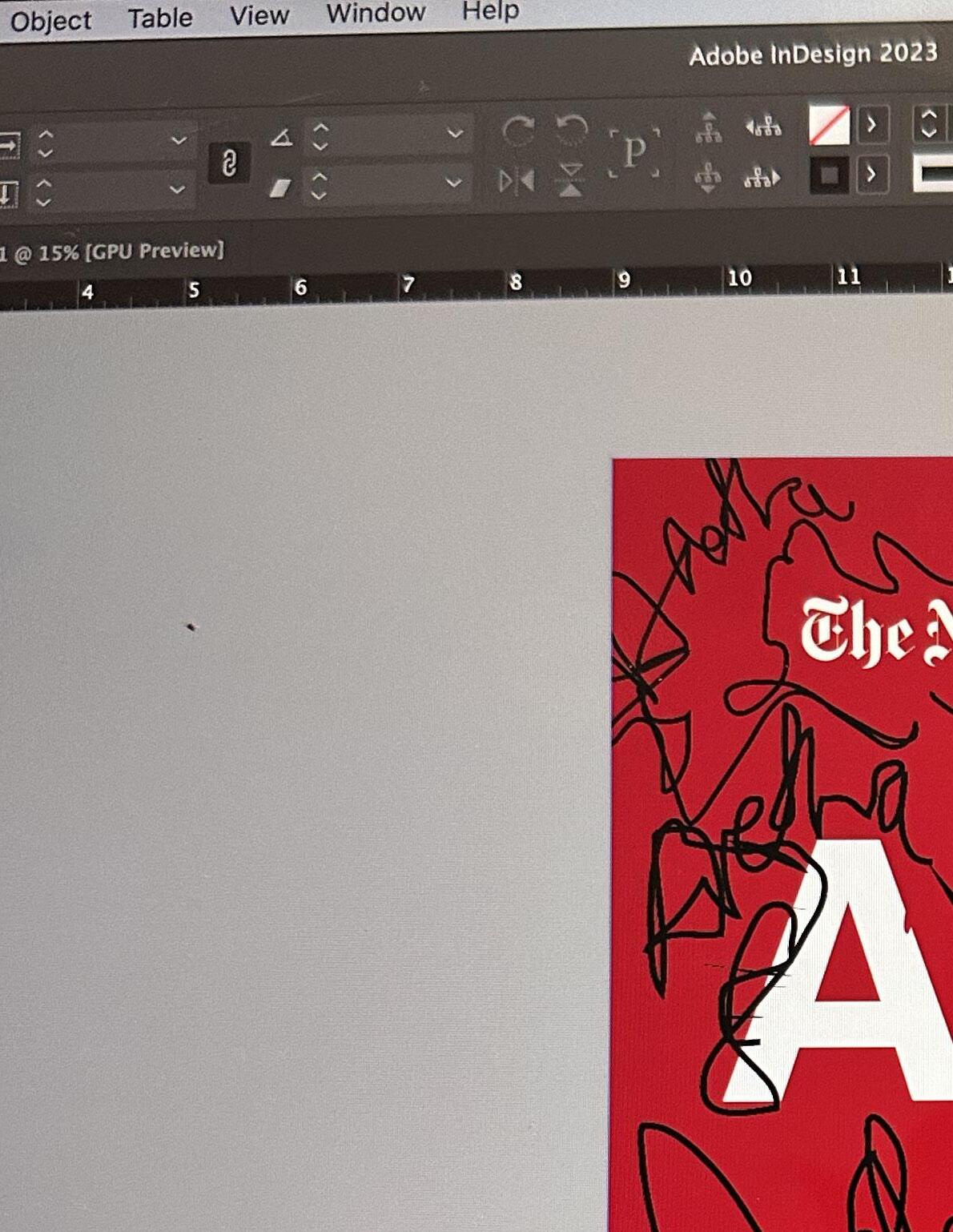
OPENING SPREAD CONCEPTS AND DEVELOPMENTS
TOOLKITS
FULL ARTICLE CONCEPTS
COVER CONCEPTS
FINAL SPREADS
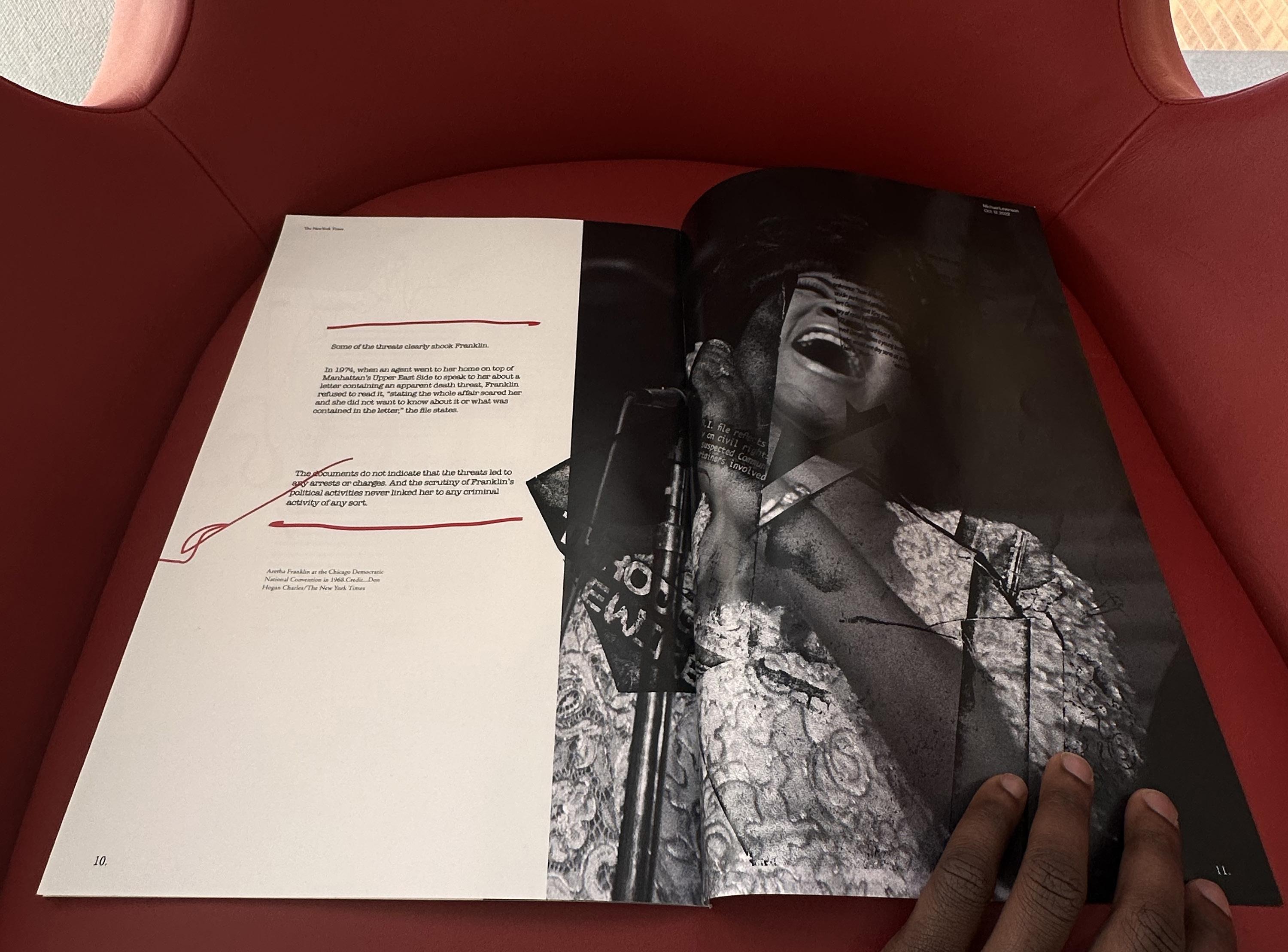
This Project was really about me coming to terms with my design aesthetic while exploring various ideas and bringing them into my final concept. The image behind this text represents my exploration and really also being an empathic designer to allow my design to match the subject matter of the article by New York Times. This article was based on black entertainer and legend, Aretha Franklin and how she was survilled by the FBI.
The Project allowed me to understand the relationship between type, image and subject matter.
 Nana A. Amfo Sackey University of Kansas Spring 23 NYT article process book
BRAIN
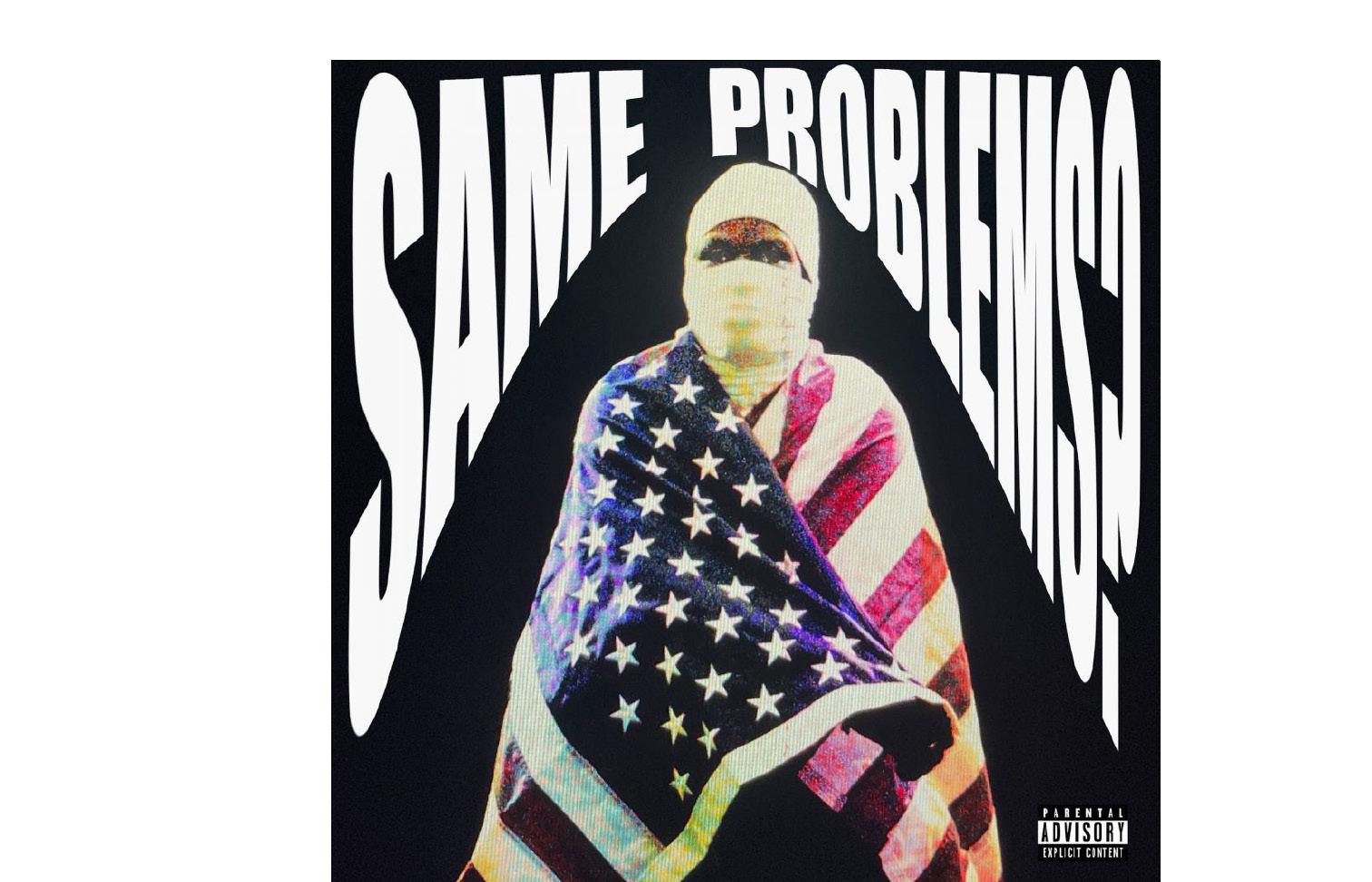
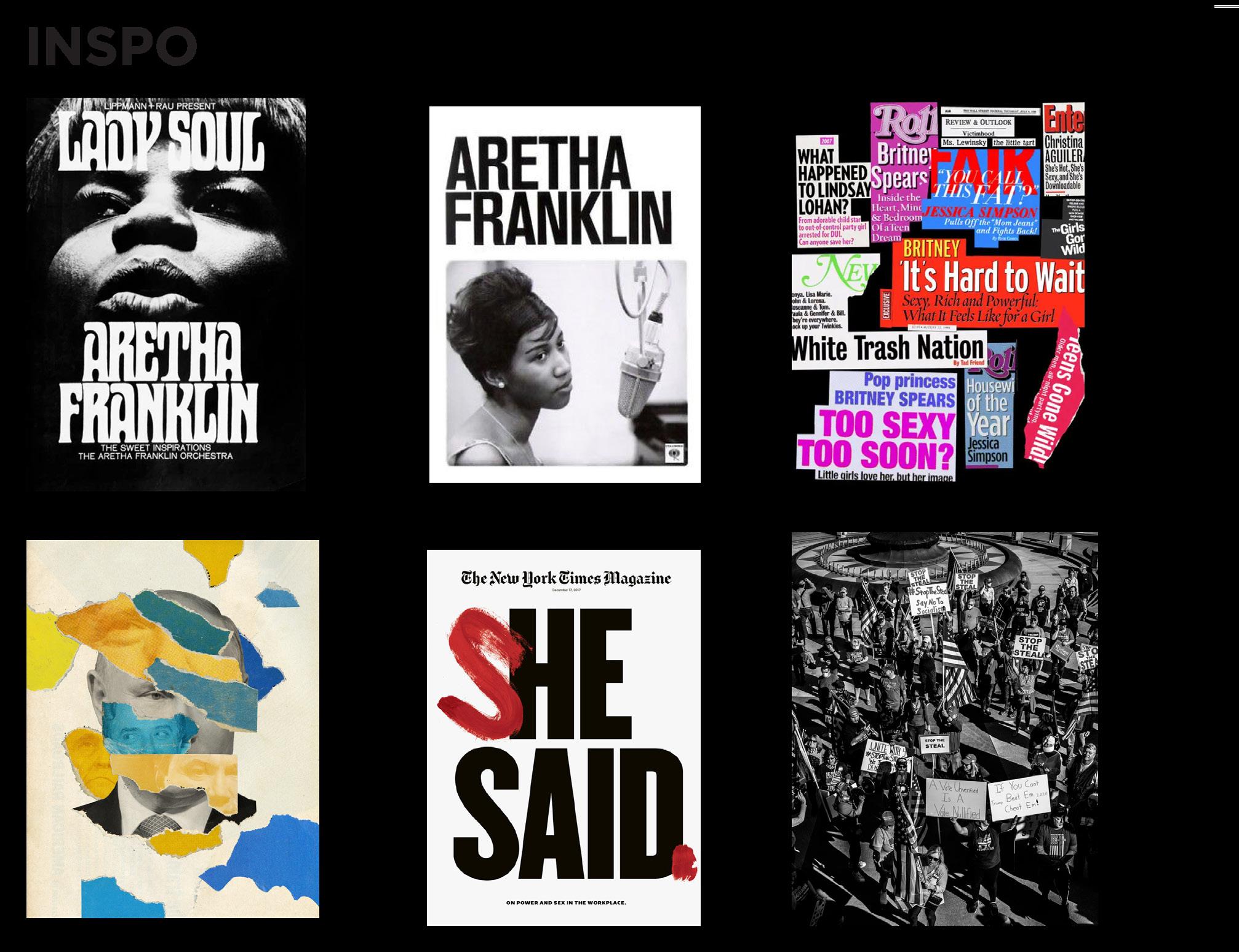
This cloudy mess is my notes on different designers and how they view type faces according to thier style of design. For example Andrew Byrom likes to think and design outside the box therefore making his work very instrumental according to the desired results needed. For each designer I picked 5 words that bet describe them and their work.
Video Review
Andrew Byrom
-Outside the box
-Creative
-Instrumental
-Idealist
-Opportunist
Marian Bantjes
- order
-juxtaposition
-combinations
-unconventional
-open minded
Stefan Sagmeister
-texture
-bold
-emotion
-risky
-smart
Gail Bichler
-Importance
-relation
-referencing
-variation
-brand centered
John Maeda
-Technology
-Eye Candy
-Life inspired
-artistic
-Simple Complexity
STORM and resarch Nana A. Amfo Sackey University of Kansas Spring 23 NYT article process book
FINDING
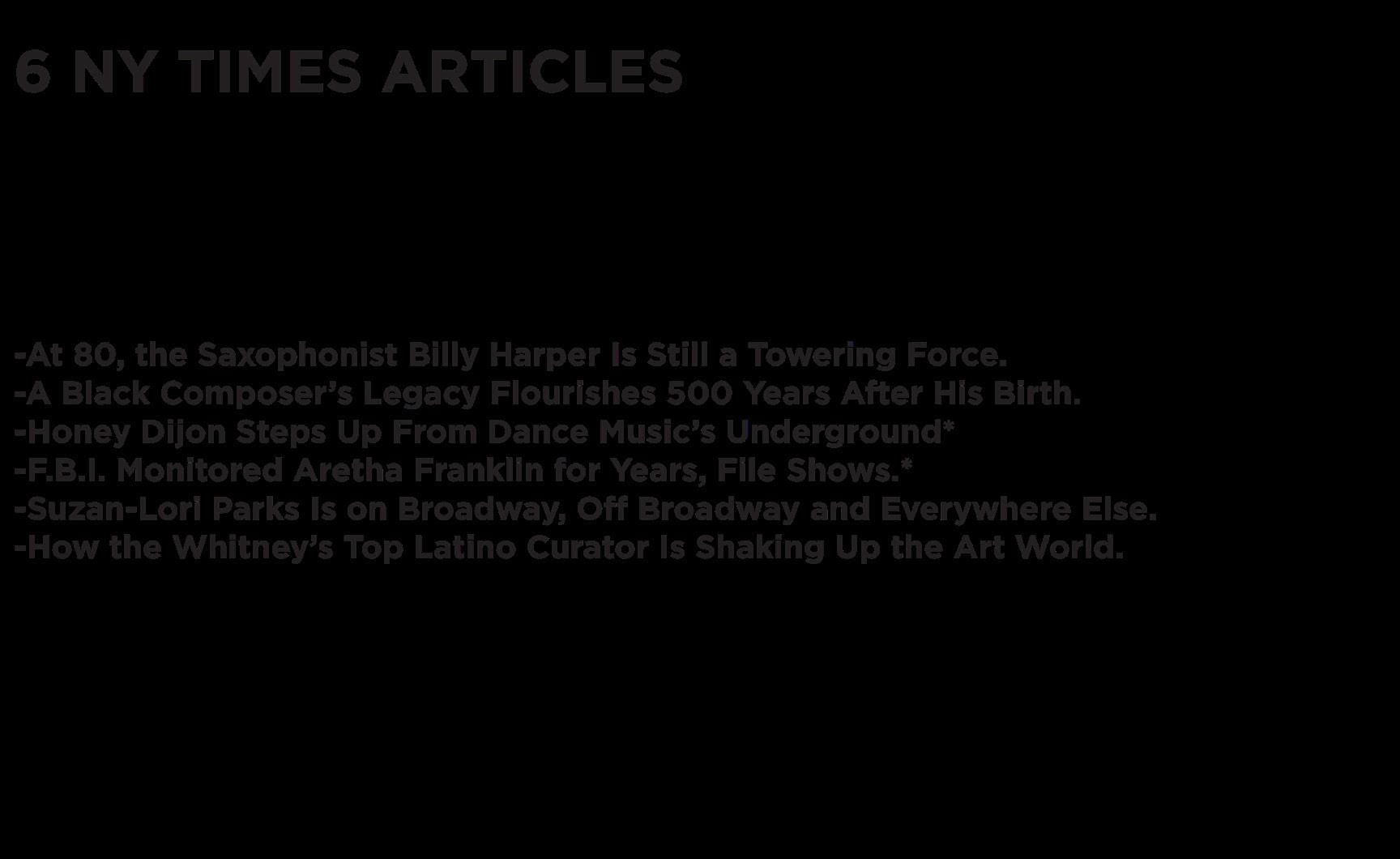
Choosing the right article.
I picked these six articles becuase the topics resonatd with me. I did’not want to pic an article that i could not connect to as an artist but at the same time give myself a challenge.
 Nana A. Amfo Sackey University of Kansas Spring 23 NYT article process book
The article on Aretha Franklyn resonated with me the most because i found it very intriguing at the sametime giving me the opportunity to share a deeper message through my design.
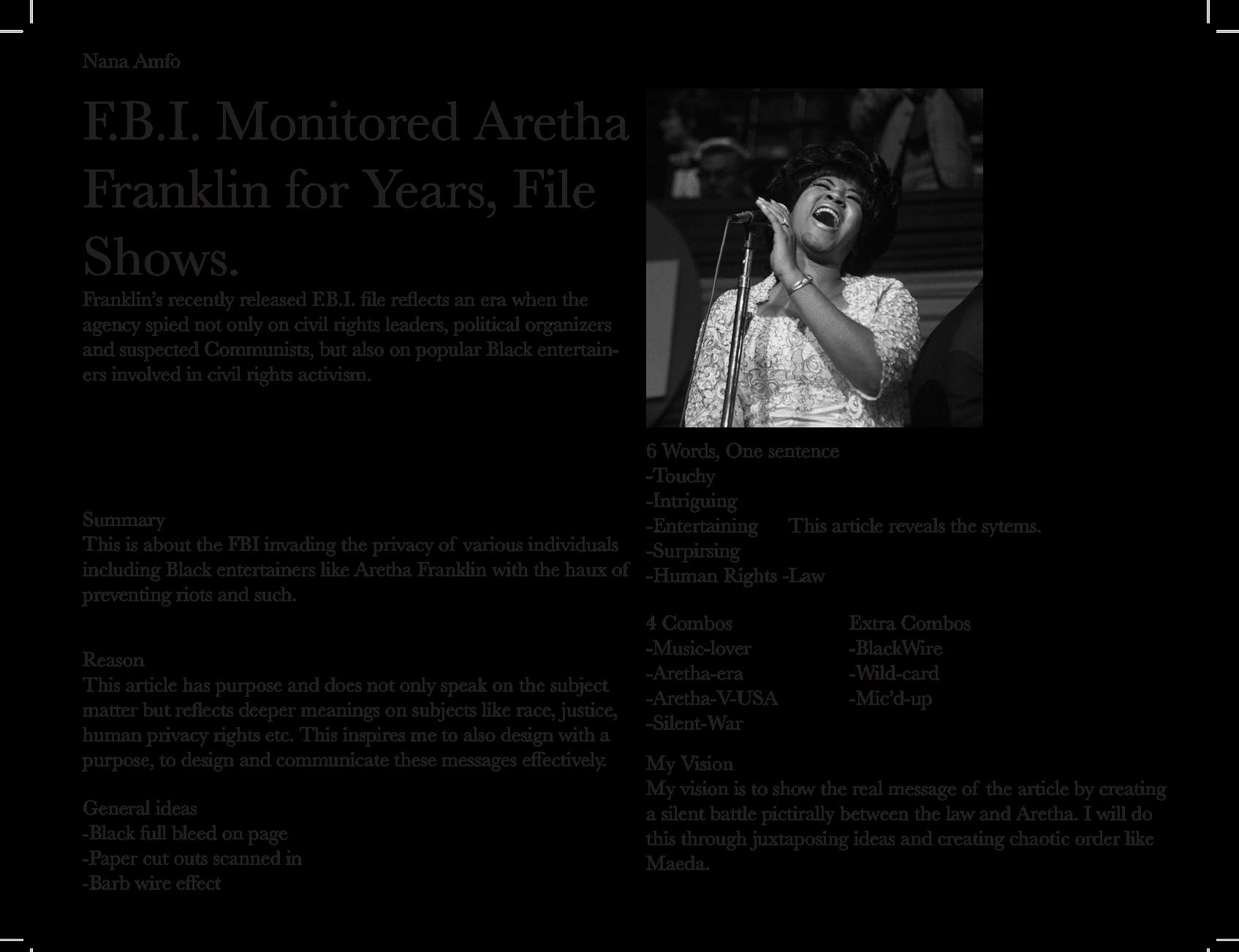
ARETHA article overview
TYPE RESEARCH
Mac Is Not a Typewriter book notes
This book really shows us the ins and outs of basic tools that we take for granted as type designers. For example, how to use tools like the apostrophe, dashes (the various types) such as the en dash and hyphen.
We also learn about important tools for spacing such kerning. This is the space between each letter in a word, some fonts need tighter kerning than others, some others need wider spaces. Some letters like “A” naturally create separation therefore words with “A” and similar situations require to be kerned.
Also regrading lines and how they run subjects like widows, orphans, hyphenations and line breaks are important in how lines are formed and structured to prevent words. According to the book “Avoid more than two hyphenations in a row. Avoid too many hyphenations in any paragraph. Avoid stupid hyphenation. Never hyphenate a heading. Break lines sensibly.” These are all important rules to follow.
Generally the rest of the book speaks in detail on type tools that we believe we already know and elaborates that key features and show they can be used to look aesthetically pleasing while following the rules, indeed Mac is not a typewriter.
1 1 2 3 5
34
8 3 21 1
fibonacci sequence
RESEARCH
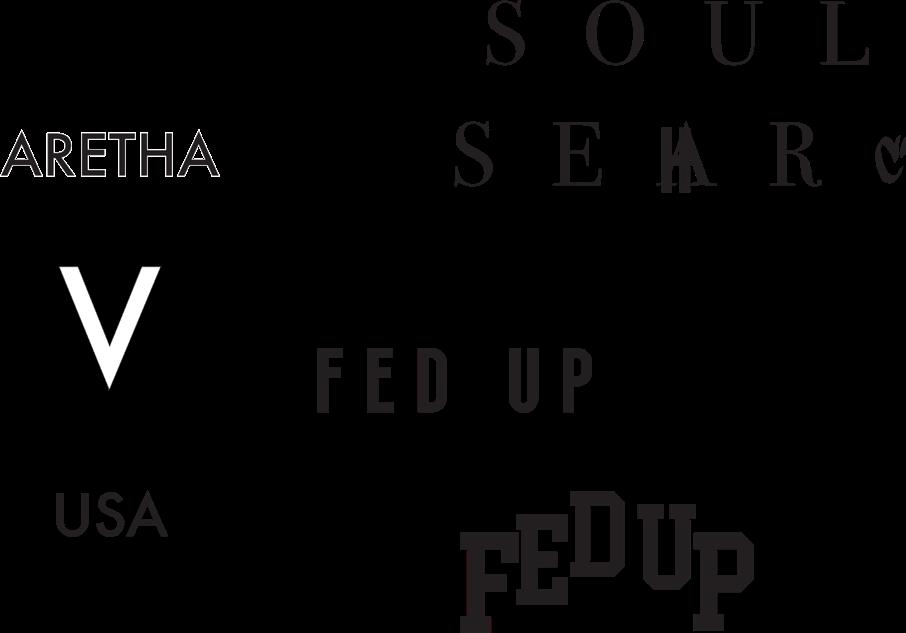
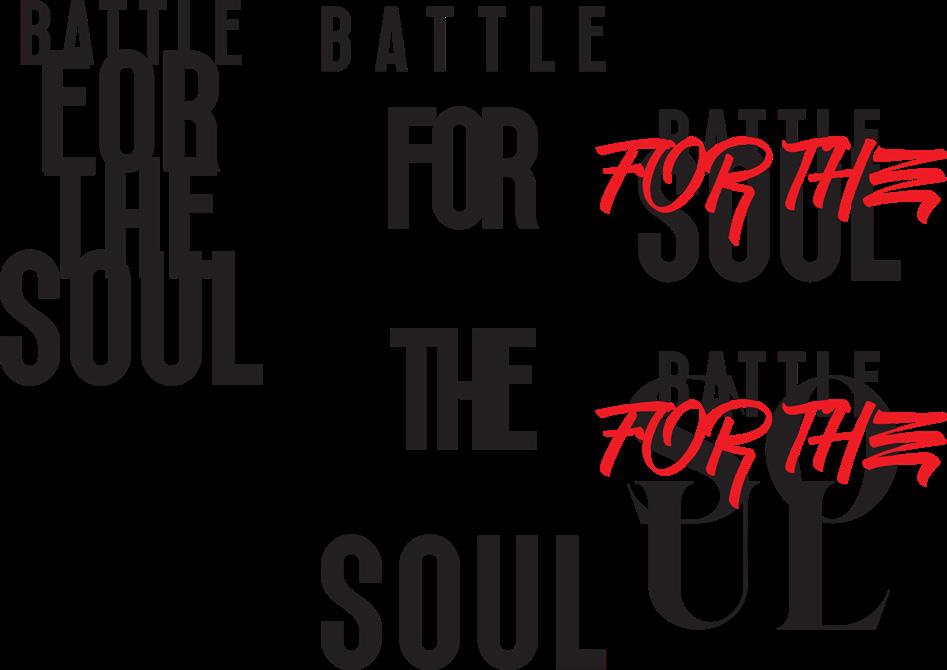
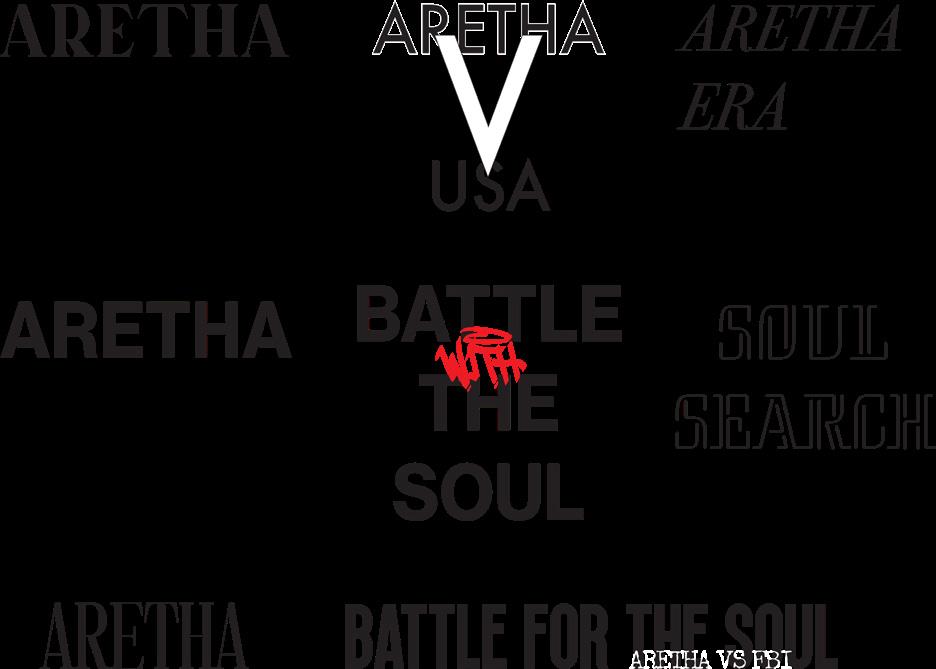
At this stage i explored different type ideas on what to do for my opening spread. I found various typefaces, some worked out some did not. I wanted soemthing that felt very natural, mysterious and urban at the same time. is also explored various ideas of opening spreads to gain inspiration from.
On the next two pages i have indicated my explorations and ideas I thought were worth exploring.

NOTES Nana A. Amfo Sackey University of Kansas Spring 23 NYT article process book
TYPE
 Nana A. Amfo Sackey University of Kansas Spring 23 NYT article process book
Amongst these typefaces i picked out the top 6 which i explored further on various opening spread ideas.
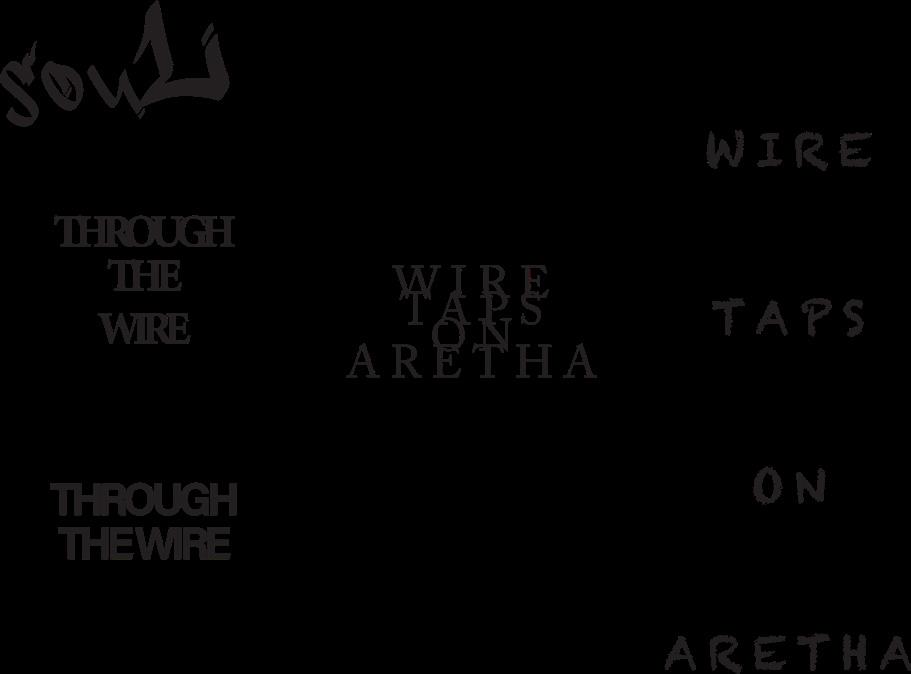
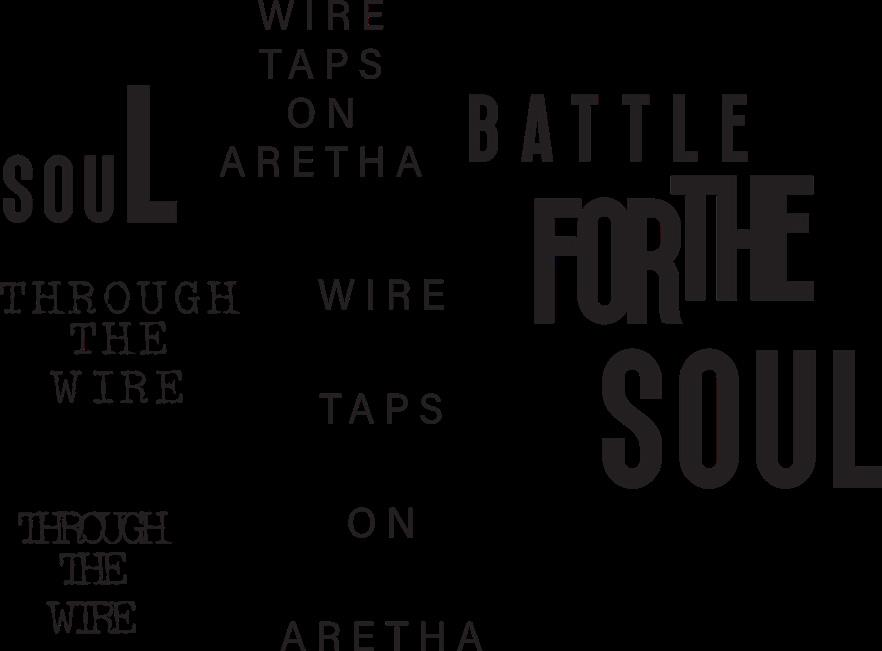
CONCEPTS
OPENING SPREAD
At this stage I was exploring my opening spread ideas, I was aiming for my design to relate with the subject matter while having a relationship with the typogrpahy. I picked out the type concepts of each which were more camptivating and could induge our readers and design enthusiats.
WIRE TAONPS ARETHA
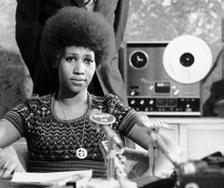
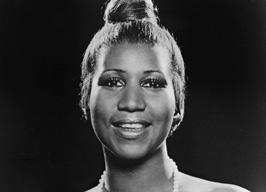
Spread F.B.I. file reflects an era when the agency spied on Aretha. Four days after the assassination of the Rev. Dr. Martin Luther King Jr., the Atlanta field office of the F.B.I. directed a memo to a trusted adviser of J. Edgar Hoover, describing plans for “huge memorial concert” at the Atlanta Braves’ stadium with Aretha Franklin, Sammy Davis Jr., Marlon Brando, Mahalia Jackson and the Supremes. The memo, dated April 8, 1968, informed F.B.I. leadership that some in the group supported “militant Black power” and most were in the “forefront of various civil rights movements.” Citing an unnamed source, it said the concert by “these prominent performers” could create an “emotional spark which could ignite racial disturbance” in Atlanta. The concert never took place, but the memo to Cartha D. DeLoach, a close aide to Hoover, is part of Franklin’s 270-page F.B.I. file, which was released last month, four years after her death in 2018, at age 76. Picking up in 1967 and 1968 through the early 1970s, the F.B.I. was keeping files on almost every major Black figure and particularly anyone who seemed to be, or was suspected of being, involved in civil rights or Black politics,” said Beverly Gage, professor of history and American studies at Yale and the author of a forthcoming biography, “G-Man: J. Edgar Hoover and the Making of the American Century.” Hoover, who molded the F.B.I. as director from 1924 to 1972, was also suspicious of the sweeping cultural changes of the 1960s, Professor Gage said, and he viewed “new forms of culture and dress and music as being symptomatic of national cultural decline.” As result, Franklin fell “into these very broad categories of suspicion that the F.B.I. was gathering intelligence about on a very widespread scale,” Professor Gage said. “Picking up in 1967 and 1968 through the early 1970s, the F.B.I. was keeping files on almost every major Black figure and particularly anyone who seemed to be, or was suspected of being, involved in civil rights or Black politics.” Credit...Don Hogan Charles/ Michael Levenson Oct. 12, 2022 THE NEWYORK TIMES 2 3 Body Text Clarendon URW Four days after the assassination of the Rev. Dr. Martin Luther King Jr., the Atlanta field office of the F.B.I. directed a memo to trusted adviser of J. Edgar Hoover, describing plans for a “huge memorial concert” at the Atlanta Braves’ stadium with Aretha Franklin, Sammy Davis Jr., Marlon Brando, Mahalia Jackson and the Supremes. The memo, dated April 8, 1968, informed F.B.I. leadership that some in the group supported “militant Black power” and most were in the “forefront of various civil rights movements.” Citing an unnamed source, it said the concert by “these prominent performers” could create an “emotional spark which could ignite racial disturbance” in Atlanta. The concert never took place, but the memo to Cartha D. DeLoach, a close aide to Hoover, is part of Franklin’s 270-page F.B.I. file, which was released last month, four years after her death in 2018, at age 76. Picking up in 1967 and 1968 through the early 1970s, the F.B.I. was keeping files on almost every major Black figure and particularly anyone who seemed to be, or was suspected of being, involved in civil rights or Black politics,” said Beverly Gage, a professor of history and American studies at Yale and the author of a forthcoming biography, “G-Man: J. Edgar Hoover and the Making of the American Century.” Hoover, who molded the F.B.I. as director from 1924 to 1972, was also suspicious of the sweeping cultural changes of the 1960s, Professor Gage said, and he viewed “new forms of culture and dress and music as being symptomatic of national cultural decline.” As a result, Franklin fell “into these very broad categories of suspicion that the F.B.I. was gathering intelligence about on very widespread scale,” Professor Gage said. “Picking up in 1967 and 1968 through the early 1970s, the F.B.I. was keeping files on almost every major Black figure and particularly anyone who seemed to be, or was suspected of being, involved in civil rights or Black politics.” F.B.I. file reflects an era when the agency spied on Aretha.
Four days after the assassination of the Rev. Dr. Martin Luther King Jr., the Atlanta field office of the F.B.I. directed memo to trusted adviser of J. Edgar Hoover, describing plans for a “huge memorial concert” at the Atlanta Braves’ stadium with Aretha Franklin, Sammy Davis Jr., Marlon Brando, Mahalia Jackson and the Supremes.The memo, dated April 8, 1968, informed F.B.I. leadership that some in the group supported “militant Black power” and most were in the “forefront of various civil rights movements.” Citing an unnamed source, it said the concert by “these prominent performers” could create an “emotional spark which could ignite racial disturbance” in Atlanta. The concert never took place, but the memo to Cartha D. DeLoach, close aide to Hoover, is part of Franklin’s 270-page F.B.I. file, which was released last month, four years after her death in 2018, at age 76. F.B.I. file reflects an era when the agency spied on Aretha. Michael Levenson Oct. 12, 2022 THE NEWYORK TIMES “Picking up in 1967 and 1968 through the early 1970s, the F.B.I. was keeping files on almost every major Black figure and particularly anyone who seemed to be, or was suspected of being, involved in civil rights or Black politics.”
Four days after the assassination of the Rev. Dr. Martin Luther King Jr., the Atlanta field office of the F.B.I. directed a memo to a trusted adviser of Edgar Hoover, describing plans for a “huge memorial concert” at the Atlanta Braves’ stadium with Aretha Franklin, Sammy Davis Jr., Marlon Brando, Mahalia Jackson and the Supremes.The memo, dated April 8, 1968, informed F.B.I. leadership that some in the group supported “militant Black power” and most were in the “forefront of various civil rights movements.” Citing an unnamed source, it said the concert by “these prominent performers” could create an “emotional spark which could ignite racial disturbance” in Atlanta. The concert never took place, but the memo to Cartha D. DeLoach, a close aide to Hoover, is part of Franklin’s 270-page F.B.I. file, which was released last month, four years after her death in 2018, at age 76. F.B.I. file reflects an era when the agency spied on Aretha. Michael Levenson Oct. 12, 2022 THE NEWYORK TIMES “Picking up in 1967 and 1968 through the early 1970s, the F.B.I. was keeping files on almost every major Black figure and particularly anyone who seemed to be, or was suspected of being, involved in civil rights or Black politics.” Body Text Joanna Sans Nova
toolkit
WIRE TAONPS ARETHA
BATTLE THE SOUL WITH

CONCEPTS Nana A. Amfo Sackey University of Kansas Spring 23 NYT article process book toolkit Spread SOUL SEAR
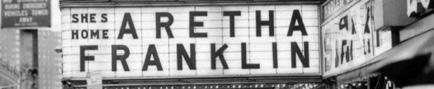
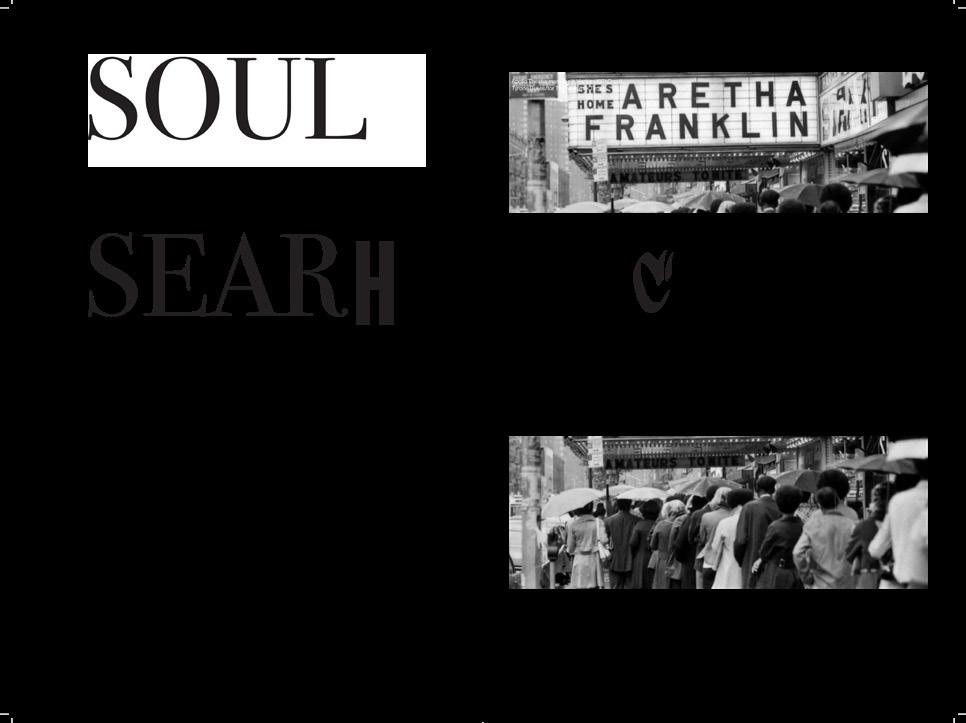
F.B.I. file reflects an era when the agency spied not only on civil rights leaders, political organizers and suspected Communists, but also on popular Black entertainers involved in civil Four days after the assassination of the Rev. Dr. Martin Luther King Jr., the Atlanta field office of the F.B.I. directed memo to trusted adviser of J. Edgar Hoover, describing plans for “huge memorial concert” at the Atlanta Braves’ stadium with Aretha Franklin, Sammy Davis Jr., Marlon Brando, Mahalia Jackson and the Supremes.The memo, dated April 8, 1968, informed F.B.I. leadership that some in the group supported “militant Black power” and most were in the “forefront of various civil rights movements.” Citing an unnamed source, it said the concert by “these prominent performers” could create an “emotional spark which could ignite racial disturbance” in Atlanta. The concert never took place, but the memo to Cartha D. DeLoach, close aide to Hoover, is part of Franklin’s 270-page F.B.I. file, which was released last month, four years after her death in 2018, at age 76. “Picking up in 1967 and 1968 through the early 1970s, the F.B.I. was keeping files on almost every major Black figure and particularly anyone who seemed to be, or was suspected of being, involved in civil rights or Black politics.” Michael Levenson Oct. 12, 2022 THE NEWYORK TIMES V ARETHA USA F.B.I. file reflects an era when the agency spied on Aretha. Michael Levenson Oct. 12, 2022 THE NEWYORK TIMES Apollo Theater marquee in Four days after the assassination of the Rev. Dr. Martin Luther King Jr., the Atlanta field office of the F.B.I. directed a memo to a trusted adviser of J. Edgar Hoover, describing plans for “huge memorial concert” at the Atlanta Braves’ stadium with Aretha Franklin, Sammy Davis Jr., Marlon Brando, Mahalia Jackson and the Supremes.The memo, dated April 8, 1968, informed F.B.I. leadership that some in the group supported “militant Black power” and most were in the “forefront of various civil rights movements.” Citing an unnamed source, it said the concert by “these prominent performers” could create an “emotional spark which could ignite racial disturbance” in Atlanta. The concert never took place, but the memo to Cartha D. DeLoach, a close aide to Hoover, is part of Franklin’s 270-page F.B.I. file, which was released last month, four years after her death in 2018, at age 76. SOUL SEAR
Four days after the assassination of the Rev. Dr. Martin Luther King Jr., the Atlanta field office of the F.B.I. directed memo to a trusted adviser of J. Edgar Hoover, describing plans for “huge memorial concert” at the Atlanta Braves’ stadium with Aretha Franklin, Sammy Davis Jr., Marlon Brando, Mahalia Jackson and the Supremes.The memo, dated April 8, 1968, informed F.B.I. leadership that some in the group supported “militant Black power” and most were in the “forefront of various civil rights movements.” Citing an unnamed source, it said the concert by “these prominent performers” could create an “emotional spark which could ignite racial disturbance” in Atlanta. The concert never took place, but the memo to Cartha D. DeLoach, a close aide to Hoover, is part of Franklin’s 270-page F.B.I. file, which was released last month, four years after her death in 2018, at age 76. THE NEWYORK TIMES BODY COPY [Proxima Nova Extra Condensed regular italic Black and white color scheme to allow the images to blend with the text and give it newspaper theme while playing around with fonts. F.B.I. file reflects an era when the agency spied not only on civil rights leaders, political organizers and suspected Communists, but also on popular Black entertainers involved in civil “Picking up in 1967 and 1968 through the early 1970s, the F.B.I. was keeping files on almost every major Black figure and particularly anyone who seemed to be, or was suspected of being, involved in civil rights or Black politics.” Michael Levenson Oct. 12, 2022 Call Out [Proxima Nova Extra Condensed Semi bold italic with boader. Boarder on title as visual language. Spilt images Author and page numbers stay small and put beside titles. Subhead [Monaco regular
“Picking up in 1967 and 1968 through the early 1970s, the F.B.I. was keeping files on almost every major Black figure and particularly anyone who seemed to be, or was suspected of being, involved in civil rights or Black politics.” Four days after the assassination of the Rev. Dr. Martin Luther King Jr., the Atlanta field office of the F.B.I. directed a memo to a trusted adviser of J. Edgar Hoover, describing plans for a “huge memorial concert” at the Atlanta Braves’ stadium with Aretha Franklin, Sammy Davis Jr., Marlon Brando, Mahalia Jackson and the Supremes.The memo, dated April 8, 1968, informed F.B.I. leadership that some in the group supported “militant Black power” and most were in the “forefront of various civil rights movements.” Citing an unnamed source, it said the concert by “these prominent performers” could create an “emotional spark which could ignite racial disturbance” in Atlanta. The concert never took place, but the memo to Cartha D. DeLoach, close aide to Hoover, is part of Franklin’s 270-page F.B.I. file, which was released last month, four years after her death in 2018, at age 76. Picking up in 1967 and 1968 through the early 1970s, the F.B.I. was keeping files on almost every major Black figure and particularly anyone who seemed to be, or was suspected of being, involved in civil rights or Black politics,” said Beverly Gage, a professor of history and American studies at Yale and the author of a forthcoming biography, “G-Man: J. Edgar Hoover and the Making of the American Century.” Hoover, who molded the F.B.I. as director from 1924 to 1972, was also suspicious of the sweeping cultural changes of the 1960s, Professor Gage said, and he viewed “new forms of culture and dress and music as being symptomatic of national cultural decline.” As result, Franklin fell “into these very broad categories of suspicion that the F.B.I. was gathering intelligence. F.B.I. file reflects an era when the agency spied not only on civil rights leaders, political organizers and suspected Communists, but also on popular Black entertainers involved in civil rights activism. Oct. 12, 2022 (HUAC) in 1947.Credit...Bettmann Getty Images BATTLE THE SOUL WITH F.B.I. file reflects an era when the agency spied not only on civil rights leaders, political organizers and suspected Communists, but also on popular Black entertainers involved in civil rights activism. “Picking up in 1967 and 1968 through the early 1970s, the F.B.I. was keeping files on almost every major Black figure and particularly anyone who seemed to be, or was suspected of being, involved in civil rights or Black politics.” Four days after the assassination of the Rev. Dr. Martin Luther King Jr., the Atlanta field office of the F.B.I. directed a memo to a trusted adviser of J. Edgar Hoover, describing plans for a “huge memorial concert” at the Atlanta Braves’ stadium with Aretha Franklin, Sammy Davis Jr., Marlon Brando, Mahalia Jackson and the Supremes.The memo, dated April 8, 1968, informed F.B.I. leadership that some in the group supported “militant Black power” and most were in the “forefront of various civil rights movements.” Citing an unnamed source, it said the concert by “these prominent performers” could create an “emotional spark which could ignite racial disturbance” in Atlanta. The concert never took place, but the memo to Cartha D. DeLoach, a close aide to Hoover, is part of Franklin’s 270-page F.B.I. file, which was released last month, four years after her death in 2018, at age 76. Picking up in 1967 and 1968 through the early 1970s, the F.B.I. was keeping files on almost every major Black figure and particularly anyone who seemed to be, or was suspected of being, involved in civil rights or Black politics,” said Beverly Gage, a professor of history and American studies at Yale and the author of a forthcoming biography, “G-Man: J. Edgar Hoover and the Making of the American Century.” Hoover, who molded the F.B.I. as director from 1924 to 1972, was also suspicious of the sweeping cultural changes of the 1960s, Professor Gage said, and he being symptomatic of national cultural decline.” As a result, Franklin fell “into these very broad categories of suspicion that the F.B.I. was gathering intelligence. Body Text IBM Plex Sans frame breaker Call out style, simple. leave scribbles to do actions. Bold tittle with scrobble to break and give it an urban feel while mixing the detective touch using the subititle. Images should cover half atleast spread or should be rectangular. Two coloumns at most times. V ARETHA USA Four days after the assassination of the Rev. Dr. Martin Luther King Jr., the Atlanta field office of the F.B.I. directed a memo to a trusted adviser of J. Edgar Hoover, describing plans for a “huge memorial concert” at the Atlanta Braves’ stadium with Aretha Franklin, Sammy Davis Jr., Marlon Brando, Mahalia Jackson and the Supremes.The memo, dated April 8, 1968, informed F.B.I. leadership that some in the group supported “militant Black power” and most were in the “forefront of various civil rights movements.” Citing an unnamed source, it said the concert by “these prominent performers” could create an “emotional spark which could ignite racial disturbance” in Atlanta. The concert never took place, but the memo to Cartha D. DeLoach, a close aide to Hoover, is part of Franklin’s 270-page F.B.I. file, which was released last month, four years after her death in 2018, at age 76. “Picking up in 1967 and 1968 through the early 1970s, the F.B.I. was keeping files on almost every major Black figure and particularly anyone who seemed to be, or was suspected of being, involved in civil rights or Black politics.” F.B.I. file reflects an era when the agency spied on Aretha. Body Text - Sabon LT Pro Black and white color scheme to allow the images to blend with the text. Subhead [Minion Variable Concept 1 line. Call outs always same font. Cut out titles. All images cut at some point. Clean “V” in middle or cut at side of the page.
SPREAD
C H
C H
BAT TLE SOULFOR THE
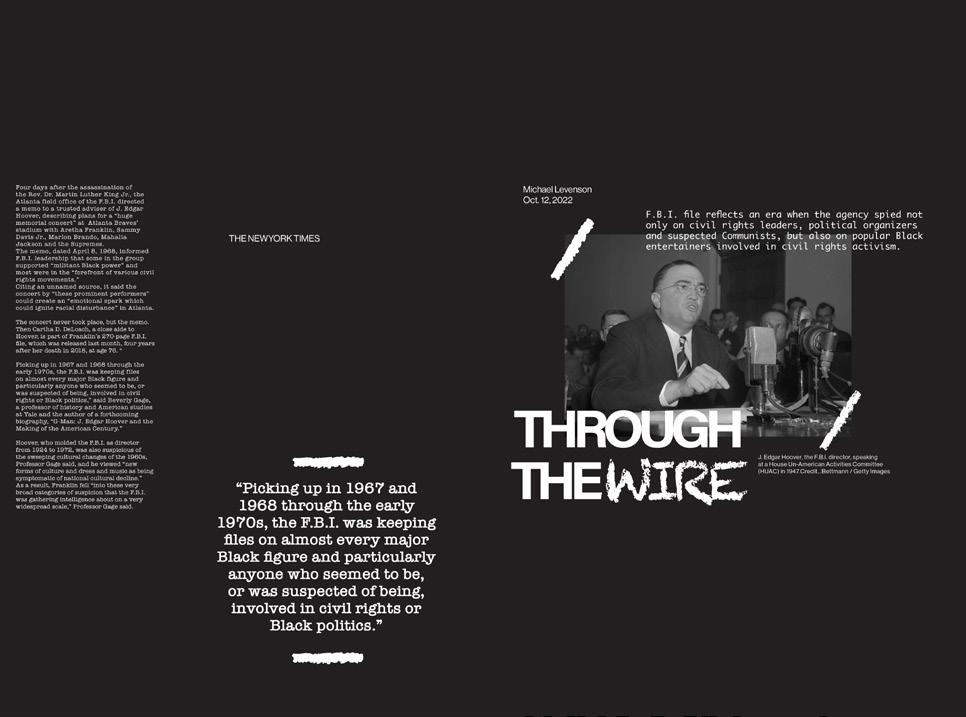
F.B.I. file reflects an era when the agency spied not only on civil rights leaders, political organizers and suspected Communists, but also on popular Black entertainers involved in civil rights activism. pure black pure white C-15 M-100 Y- 100 K-0 Red title can serve as a frame breaker Themes Urban whittey detetive Disturbance black and white red to break the frame. Subs remain simple. Four days after the assassination of the Rev. Dr. Martin Luther King Jr., the Atlanta field office of the F.B.I. directed plans for a “huge memorial concert” at the Atlanta Braves’ stadium with Aretha Franklin, Sammy Davis Jr., Marlon Brando, Mahalia Jackson and the Supremes. The memo, dated April 8, 1968, informed F.B.I. leadership that some in the group supported “militant Black power” and most were in the “forefront of various civil rights movements.” Citing an unnamed source, it said the concert by “these prominent performers” could create an “emotional spark which could ignite racial disturbance” in Atlanta. The concert never took place, but the memo to Cartha D. DeLoach, a close aide to Hoover, is part of Franklin’s 270-page F.B.I. file, which was released last month, four years after her death in 2018, at age 76. “Picking up in 1967 and 1968 through the early 1970s, the F.B.I. was keeping files on almost every major Black figure and particularly anyone who seemed to be, or was suspected of being, involved in civil rights or Black politics.” Body text American typewriter regular Subtitle text and call out Monaco title text Various, can change based on mood. TOOLKIT All images must be black and white and should bleed onto the opposite spread in any manner suitable. one column. should begin paragraphs from might be able to stand on its own. breaker
OPENING SPREAD
Franklin’s recently released F.B.I. file reflects an era when the agency spied not only on civil rights leaders, political organizers and suspected Communists, but also on popular Black entertainers involved in civil rights activism. “Picking up in 1967 and 1968 through the early 1970s, the F.B.I. was keeping files on almost every major Black figure and particularly anyone who seemed to be, or was suspected of being, involved in civil rights or Black politics.” Four days after the assassination of the Rev. Dr. Martin Luther King Jr., the Atlanta field office of the F.B.I. directed memo to a trusted adviser of J. Edgar Hoover, describing plans for a “huge memorial concert” at the Atlanta Braves’ stadium with Aretha Franklin, Sammy Davis Jr., Marlon Brando, Mahalia Jackson and the Supremes. The memo, dated April 8, 1968, informed F.B.I. leadership that some in the group supported “militant Black power” and most were in the “forefront of various civil rights movements.” Citing an unnamed source, it said the concert by “these prominent performers” could create an “emotional spark which could ignite racial disturbance” in Atlanta. The concert never took place, but the memo to Cartha D. DeLoach, a close aide to Hoover, is part of Franklin’s 270page F.B.I. file, which was released last month, four years after her death in 2018, at age 76. Body Text Neue Haas Grotesk Display Pro frame breaker use suitbale columns and full bleed images when you can. Image treatment is fresh images wtih a touch of frame breakers. title can serve as a frame breaker red and balc color scheme.. toolkit Spread Four days after the assassination of the Rev. Dr. Martin Luther King Jr., the Atlanta field office of the F.B.I. directed memo to trusted adviser The memo, dated April 8, 1968, informed F.B.I. leadership that some in the group supported “militant Black power” and most were in the “forefront of various civil rights movements.” The concert never took place, but the memo. Then Cartha D. DeLoach, close aide to Hoover, part of Franklin’s 270-page F.B.I. file, which was released last major Black figure and particularly anyone who seemed to be, or was suspected of being, involved in civil rights or Black politics,” said Beverly Gage, professor of history and American studies at Hoover, who molded the F.B.I. as director from 1924 to 1972, was also suspicious of the sweeping cultural changes of the 1960s, Professor Gage said, and he viewed “new forms of culture and dress and music as about on very widespread scale,” Professor Gage “Picking up in 1967 and 1968 through the early 1970s, the F.B.I. was keeping files on almost every major Black figure and particularly anyone who seemed to be, or was suspected of being, involved in civil rights or Black politics.” Aretha Franklin at the Chicago Democratic National Convention in 1968. Credit...Don Hogan Charles/The New York Times
BAT TLE SOULFOR THE
Franklin’s recently released F.B.I. file reflects an era when the agency spied not only on the civil rights leaders, politica organizers and suspected Communists, but also on popular Black entertainers involved in civil rights activism. THE NEWYORK TIMES By Michael Levenson Oct. 12, 2022 stadium with Aretha Franklin, Sammy Davis Jr., Marlon Brando, Mahalia Jackson and the Supremes. The memo, dated April 8, 1968, informed F.B.I. leadership that some in the group supported “militant Black power” and rights movements.” Citing an unnamed source, it said the concert by “these prominent performers” could create an “emotional spark which could ignite racial disturbance” in Atlanta. The concert never took place, but the memo. Then Cartha D. DeLoach, close aide to Hoover, is part of Franklin’s 270-page F.B.I. from 1924 to 1972, was also suspicious of the sweeping cultural changes of the 1960s, Professor Gage said, and he viewed “new forms of culture and dress and music as being symptomatic of national cultural decline.” As a result, Franklin fell “into these very broad categories of suspicion that the F.B.I. was gathering intelligence about on very widespread scale,” Professor Gage said. Body Text American Typewriter no effect on images, as spread effect. can scan images to give it crampled effect. used on images. Full black bleed on most spreads, American Typewriter Font pure black pure white Red / “Picking up in 1967 and 1968 through the early 1970s, the F.B.I. was keeping files on almost every major Black figure and particularly anyone who seemed to be, or was suspected of being, involved in civil rights or Black politics.” / / F.B.I. file reflects an era when the agency spied not only on civil rights leaders, political organizers and suspected Communists, but also on popular Black entertainers involved in civil rights activism. Marker stroke as visual tool to draw readers attention and to create scribble detective like effect. Call outs in American Typewriter font. Subhead [Monaco regular frame breaker frame breaker
SPREAD CONCEPTS
CONT.
OPENING SPREAD
GRIDLINES AND COLUMNS
These lines allow me to set rules for myself and allowed my body type to be uniformed and begin on the same baseline. The column grid allows your paragrpah styles to also be uniformed when following the grid.
Nana A. Amfo Sackey University of Kansas Spring 23 NYT article process book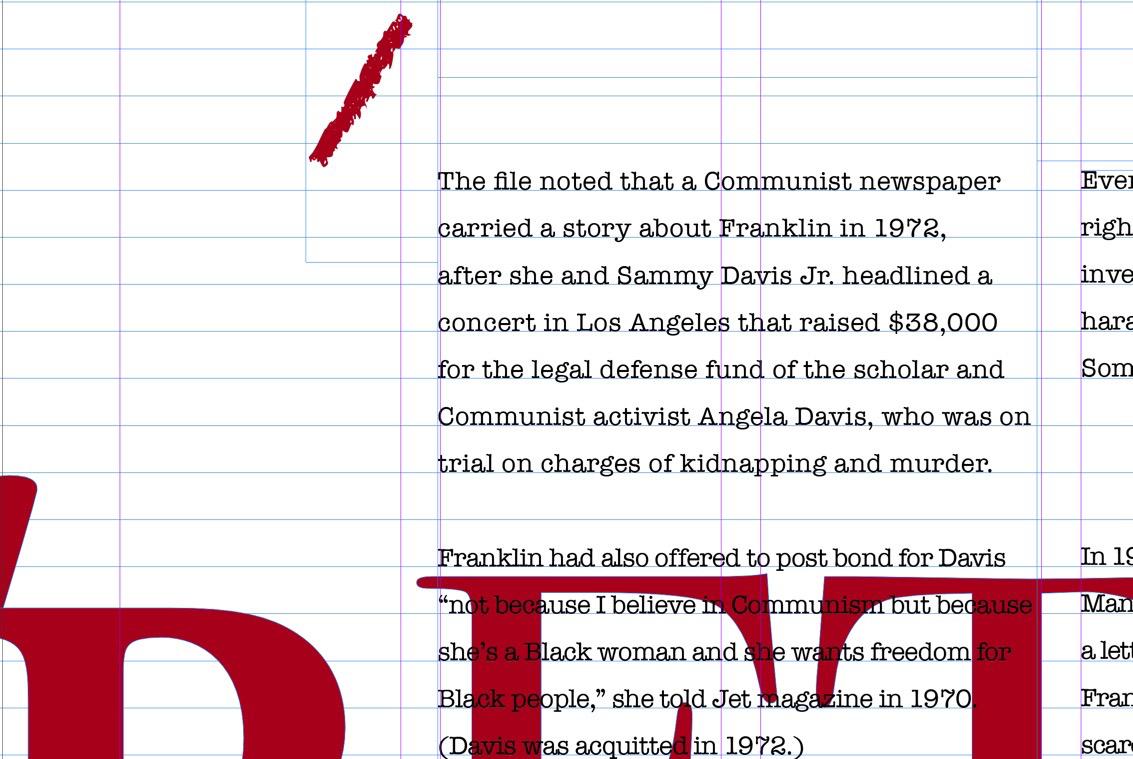
TOP 3
This spread represents the mysteriousness behind the article at the same time is very refined concerning the type usage and has the potential to be developed.
This spread shows uses grid breakers to show a deeper meaning of the article, these line breakers represent freedom.
Just as the spread above this spread too shows uses grid breakers to show a deeper meaning of the article, these line breakers represent freedom. The image used was meant to show power in Aretha’s music.
SPREAD CONCEPTS
Four days after the assassination of the Rev. Dr. Martin Luther King Jr., the Atlanta field office of the F.B.I. directed memo to trusted adviser of J. Edgar Hoover, describing plans for “huge leadership that some in the group supported “militant Black power” and most were in the “forefront of various civil rights movements.” Citing an unnamed source, said the concert The concert never took place, but the memo. Then Cartha D. DeLoach, a close aide to Hoover, is part of Franklin’s 270-page F.B.I. file, which was released last month, four years after her death in 2018, at age 76. seemed to be, or was suspected of being, involved civil rights or Black politics,” said Beverly Gage, professor of history and American studies at Yale and the author of forthcoming biography, to 1972, was also suspicious of the sweeping cultural changes of the 1960s, Professor Gage said, and he viewed “new forms of culture and dress and music as being symptomatic of national cultural decline.” As “Picking up in 1967 and 1968 through the early 1970s, the F.B.I. was keeping files on almost every major Black figure and particularly anyone who seemed to be, or was suspected of being, involved in civil rights or Black politics.” Aretha Franklin at the Chicago Democratic National Convention in 1968. Credit...Don Hogan Charles/The New York Times BAT TLE SOULFOR THE Franklin’s recently released F.B.I. file reflects an era when the agency spied not only on the civil rights leaders, politica organizers and suspected Communists, but also on popular Black entertainers involved in civil rights activism. By Michael Levenson Oct. 12, 2022
FULL ARTICLE
The file, as previously reported by Rolling Stone, reveals that the Federal Bureau of rights movement and what suspected were her links to Black Panthers, Communists and Franklin’s name appears in documents concerning “possible racial violence,” the “Commatter” involving the Black Panther Party, which wanted to enlist her, Roberta Flack or Ike and Tina Turner for one of its events The file reflects an era when the F.B.I. spied not only on civil rights leaders, political orgarights activism like the singer Harry Belafonte and the satirist Dick Gregory, who were “Picking up in 1967 and 1968 through the early 1970s, the F.B.I. was keeping files on almost every major Black figure and particBlack politics,” said Beverly Gage, a professor of history and American studies at Yale the American Century.” Oct. 12, 2022 (HUAC) 1947.Credit...Bettmann Getty Images Picking up in 1967 and 1968 through the early 1970s, the F.B.I. was keeping files on almost every major Black figure and particularly anyone who seemed to be, or was suspected of being, involved in civil rights or Black politics. 5.5. Some of the threats clearly shook Franklin. In 1974, when an agent went to her home on top of Manhattan’s Upper East Side to speak to her about letter containing an apparent death threat, Franklin refused to read it, “stating the whole affair scared her and she did not want to know about it or what was contained in the letter,” the file states. The documents do not indicate that the threats led to any arrests or charges. And the scrutiny of Franklin’s political activities never linked her to any criminal activity of any sort. 10. Aretha Franklin the Chicago Democratic Hogan Charles/The New York Times 11. Michael Levenson Oct. 12, 2022 Hoover, who molded the F.B.I. as director from 1924 to 1972, was also these very broad categories of suspicion that the F.B.I. was gathering intelligence about on very widespread scale,” Professor Gage said.“Young, Gifted and Black.” And Franklin and her father, the Rev. C.L. Franklin, were both close to King, who was target of F.B.I. surveillance. Daphne A. Brooks, a professor in Yale’s African American studies depart-role that Black art plays in revolutionary ideas in this country and what threat that poses to the edifices of power.” The documents convey the F.B.I.’s deep distrust of Franklin’s support Leadership Conference quoted an unnamed “confidential source” who said the leaders of the conference “hate America” and were “pro-Communist.” year 1776 in speaking about the country’s long history of racial injustice. 8. The NewYork Times The file noted that Communist newspaper for the legal defense fund of the scholar and Communist activist Angela Davis, who was on trial on charges of kidnapping and murder. Black people,” she told Jet magazine in 1970. (Davis was acquitted in 1972.) The F.B.I. did not respond to a request for comment on the file. Franklin’s son, KeCalf Franklin, told Rolling Stone: “I’m not really sure Even as the F.B.I. monitored Franklin’s civil rights activities, the file shows the agency also Some of the threats clearly shook Franklin. letter containing an apparent death threat, Franklin refused to read it, “stating the whole affair scared her and she did not want to know about or what was contained in the letter,” the file states. led to any arrests or charges. Franklin’s political activities never linked her to criminal activity. Even as the F.B.I. monitored Franklin’s civil 9. / / Michael Levenson Oct. 12, 2022 Four days after the assassination of the Rev. Dr. Martin Luther King Jr., the Braves’ stadium with Aretha Franklin, Sammy Davis Jr., Marlon Brando, Mahalia Jackson and the Supremes.Citing an unnamed source, said the concert by “these prominent performers” could create an “emotional spark which could ignite racial close aide to Hoover, is part of Franklin’s 270-page F.B.I. file, which was released last month, four years after her death in 2018, at age 76. The NewYork Times 2. F.B.I. file reflects an era when the agency spied not only on civil rights leaders, political organizers and suspected Communists, but also on popular Black entertainers involved in civil rights activism. By Michael Levenson. Oct. 12, 2022 3. Aretha Franklin news conference 1973. Her 270-page F.B.I. file was released last
Opening spread development
F.B.I. file reflects an era when the agency spied not only on civil rights leaders, political organizers and suspected Communists, but also on popular Black entertainers involved in civil rights activism. Four days after the assassination of the Rev. Dr. Martin Luther King Jr., the Atlanta field office of the F.B.I. directed memo to trusted adviser of J. Edgar Hoover, describing plans for a “huge memorial concert” at the Atlanta Braves’ stadium with Aretha Franklin, Sammy Davis Jr., Marlon Brando, Mahalia Jackson and the Supremes. The memo, dated April 8, 1968, informed F.B.I. leadership that some in the group supported “militant Black power” and most were in the “forefront of various civil rights movements.” Citing an unnamed source, it said the concert by “these prominent performers” could create an “emotional spark which could ignite racial disturbance” in Atlanta. The concert never took place, but the memo to Cartha D. DeLoach, a close aide to Hoover, is part of Franklin’s 270page F.B.I. file, which was released last month, four years after her death in 2018, at age 76. By Michael Levenson. Oct. 12, 2022 2. Edgar Hoover, describing plans for “huge memorial concert” at the Atlanta Braves’ stadium with Aretha Franklin, Sammy Davis Jr., Marlon Brando, the group supported “militant Black power” and most were in the “forefront of various civil rights movements.” The concert never took place, but the memo to Cartha D. DeLoach, a close aide to Hoover, is part of Franklin’s 270-page F.B.I. file, which 2. F.B.I. file reflects an era when the agency spied not only on civil rights leaders, political organizers and suspected Communists, but also on popular Black entertainers involved in civil rights activism. By Michael Levenson. Oct. 12, 2022 3. month.Credit...Associated Press
CONCEPTS
FULL ARTICLE
treatment
The columns followed a two column grid allowing my columns to look long but readable.
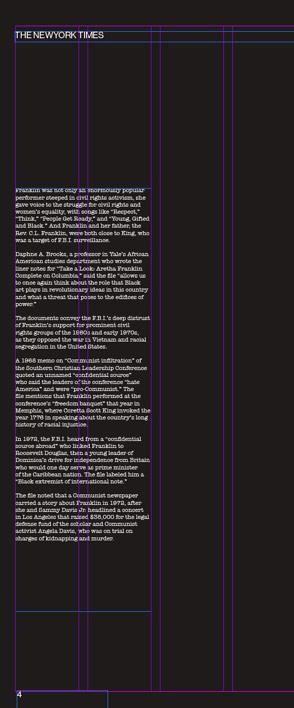
Image treatment.
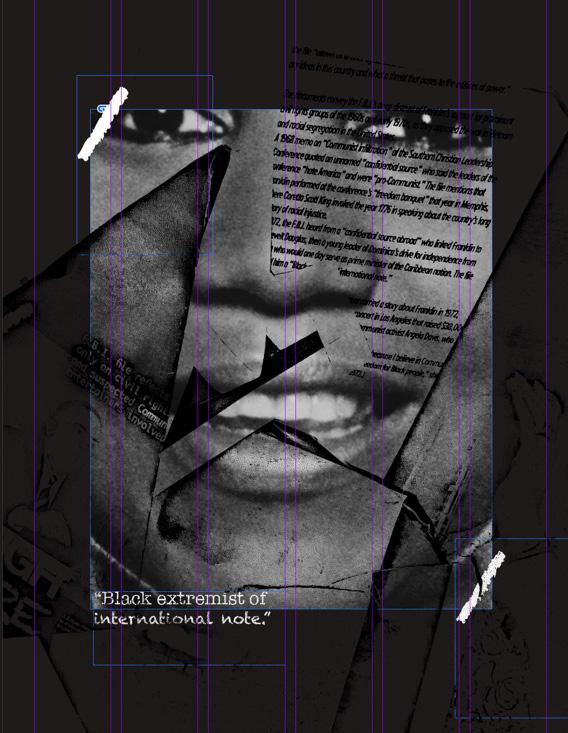
I scanned in printed pages from my article and layed them over images, to add greater effect to my theme.
CONCEPTS
FULL ARTICLE
CONCEPTS
COVER
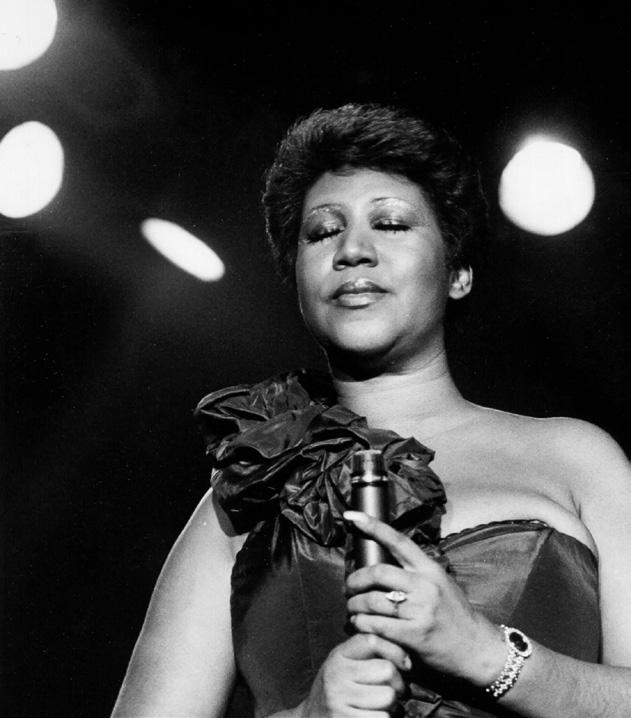
WHY THESE COVERS?
ARE THA


Michael Levenson Oct. 12, 2022 Edited by Nana Amfo
Michael Levenson
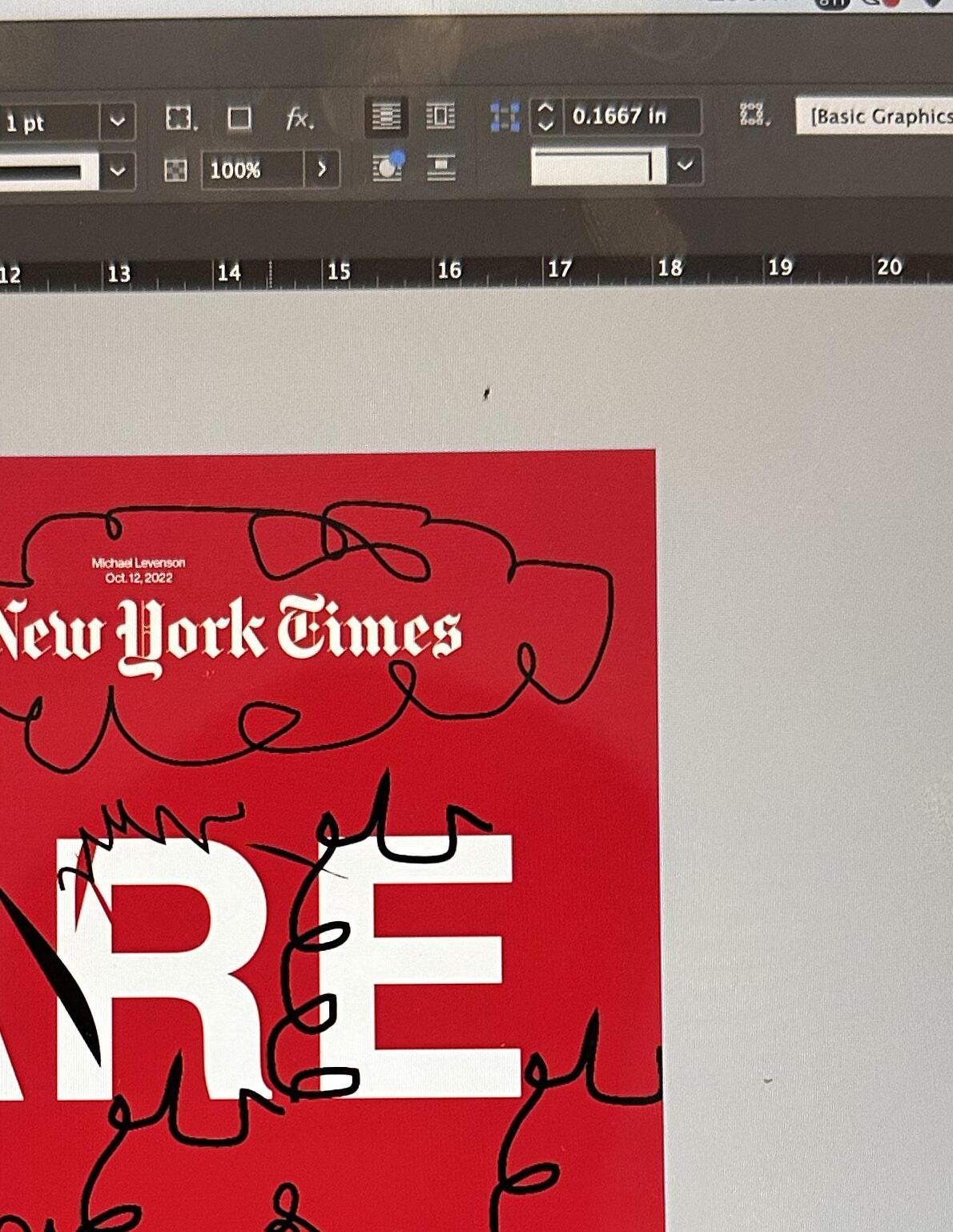
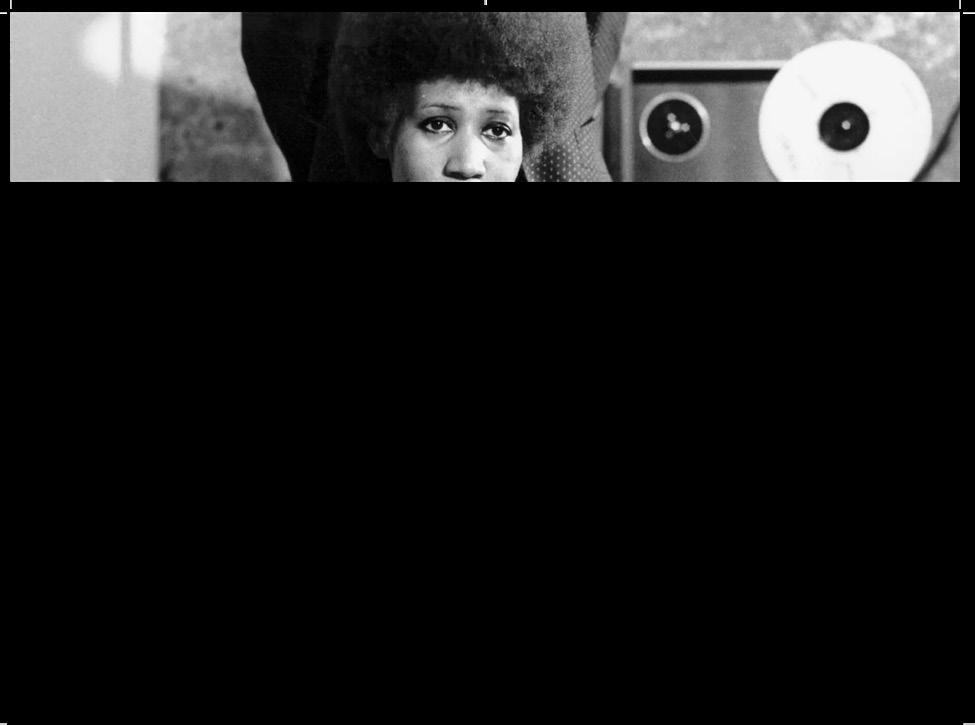
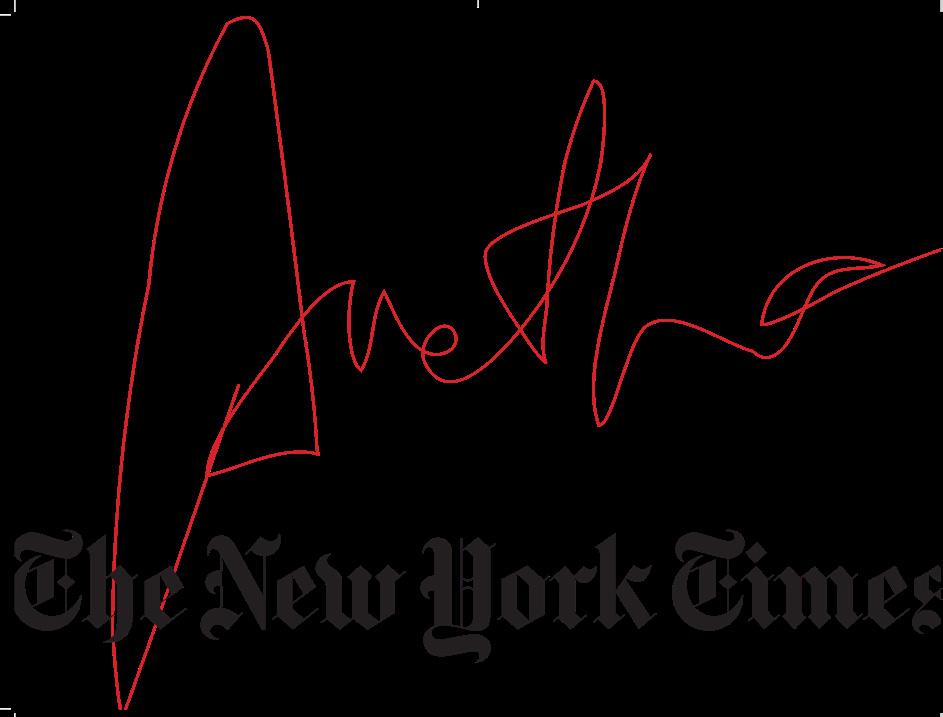
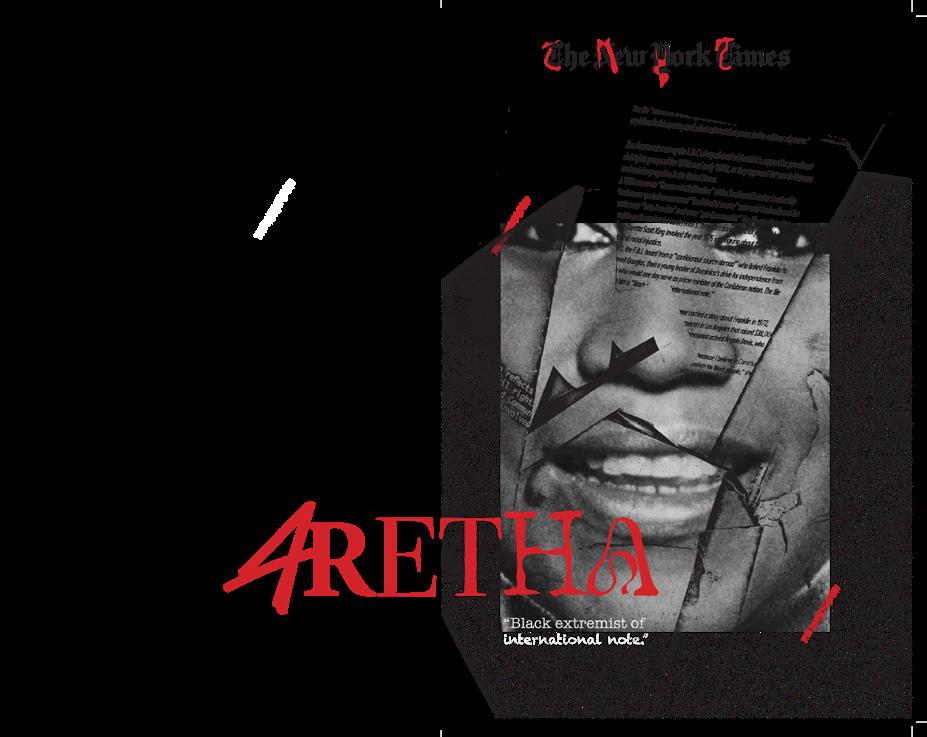
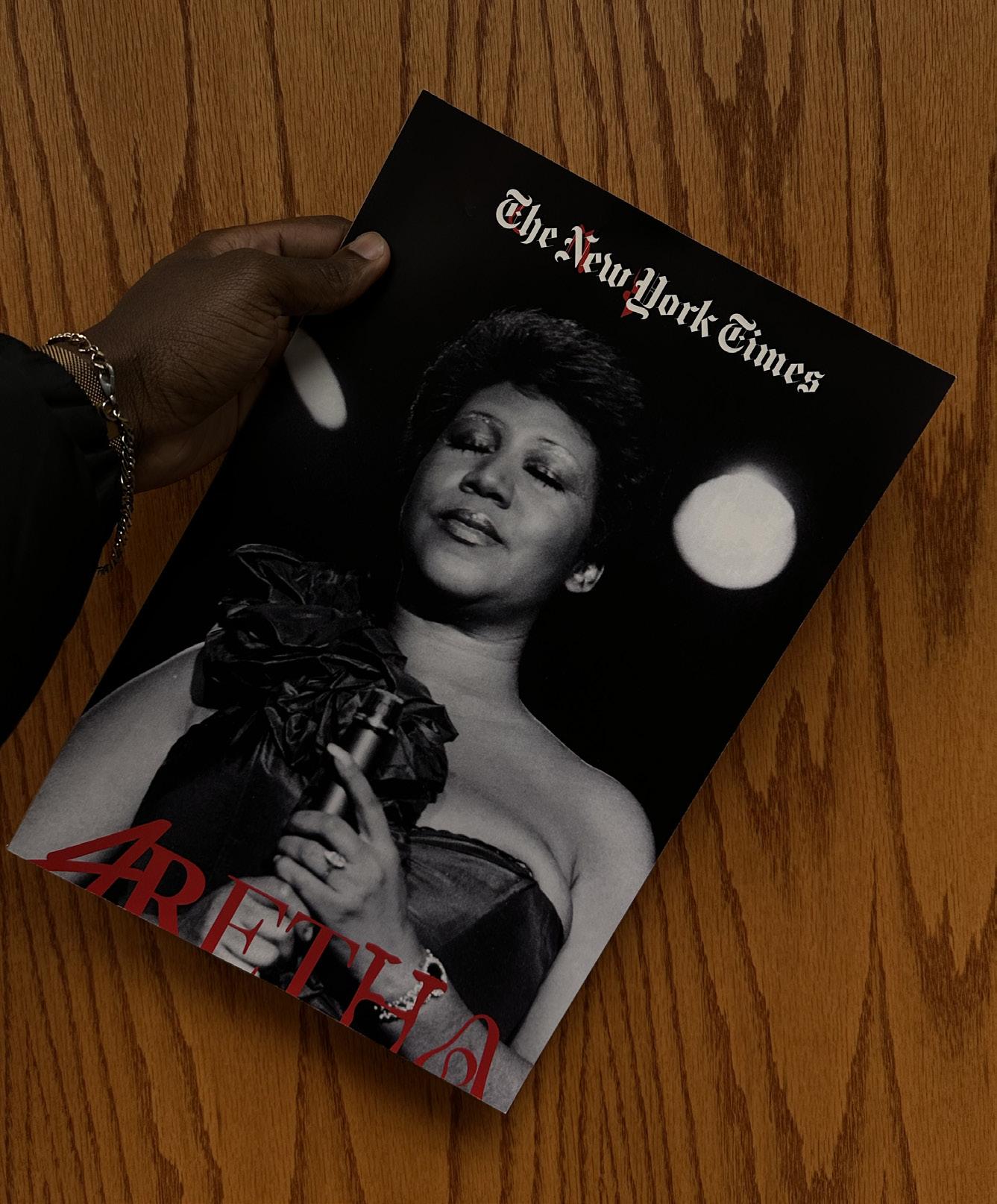
These covers were very experimentative, just as i wanted my work to feel. I wanted individuals to feel the rawness and amatuer nature of the work to effectively convey the detective nature of my themes.
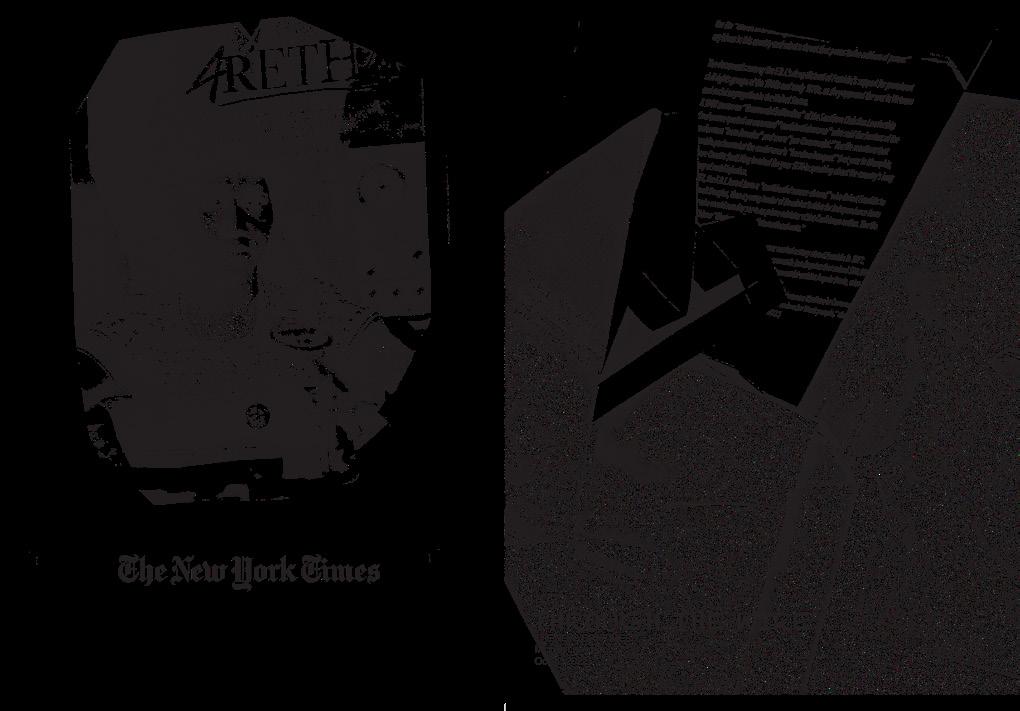
CONCEPTS
I really believe in making my work speak for it self, in conlcusion i hope it did. After going through this process i realize that I will like to make some of my tools in an analogue form and scan in becuase that helps my work alot. I also see the potential in developing my signature ideas to create more variations of signature ideas to allow my work to stand out more. This project really put me outside my comfort zone with my usage of type, therefore allowing me to explore and identify how different typefaces can be used. I am grateful for the project. I am grateful for type and type as design.
FINAL
Chosen cover Oct. 12, 2022
THOUGHTS
TOOLKIT
Themes Urban whittey detetive Disturbance black and white red to break the frame.
title can serve as a frame breaker too in certain cases.
F.B.I. file reflects an era when the agency spied not only on civil rights leaders, political organizers and suspected Communists, but also on popular Black entertainers involved in civil rights activism.
frame breaker
pure black pure white C-15 M-100 Y- 100 K-0 Red
Subs remain simple.
All images must be black and white and should bleed onto the opposite spread in any manner suitable.
Four days after the assassination of the Rev. Dr. Martin Luther King Jr., the Atlanta field office of the F.B.I. directed a memo to a trusted adviser of J. Edgar Hoover, describing plans for a “huge memorial concert” at the Atlanta Braves’ stadium with Aretha Franklin, Sammy Davis Jr., Marlon Brando, Mahalia Jackson and the Supremes.
The memo, dated April 8, 1968, informed F.B.I. leadership that some in the group supported “militant Black power” and most were in the “forefront of various civil rights movements.”
Citing an unnamed source, it said the concert by “these prominent performers” could create an “emotional spark which could ignite racial disturbance” in Atlanta.
The concert never took place, but the memo to Cartha D. DeLoach, a close aide to Hoover, is part of Franklin’s 270-page F.B.I. file, which was released last month, four years after her death in 2018, at age 76.
one column or two columns should begin paragraphs from second column.
breaker
“Picking up in 1967 and 1968 through the early 1970s, the F.B.I. was keeping files on almost every major Black figure and particularly anyone who seemed to be, or was suspected of being, involved in civil rights or Black politics.”
Body text - American typewriter regular Subtitle text and call out - Monaco title text - Various, can change based on mood.
might be able to stand on its own.
FINAL TOOLKIT
This toolkit was very neccassary becuase it helped me set rules for my self and really understand my design choices and keep my work orderly knowing that I have many tools that could get me off track. Therefore this is what kept my work on track.
FINAL
On next pages...
SPREAD
 Michael Levenson Oct. 12, 2022
Edited by Nana Amfo
Michael Levenson Oct. 12, 2022
Edited by Nana Amfo

Four days after the assassination of the Rev. Dr. Martin Luther King Jr., the Atlanta field office of the F.B.I. directed a memo to a trusted adviser of J. Edgar Hoover, describing plans for a “huge memorial concert” at the Atlanta Braves’ stadium with Aretha Franklin, Sammy Davis Jr., Marlon Brando, Mahalia Jackson and the Supremes.
The memo, dated April 8, 1968, informed F.B.I. leadership that some in the group supported “militant Black power” and most were in the “forefront of various civil rights movements.”

Citing an unnamed source, it said the concert by “these prominent performers” could create an “emotional spark which could ignite racial disturbance” in Atlanta.
The concert never took place, but the memo to Cartha D. DeLoach, a close aide to Hoover, is part of Franklin’s 270-page F.B.I. file, which was released last month, four years after her death in 2018, at age 76.
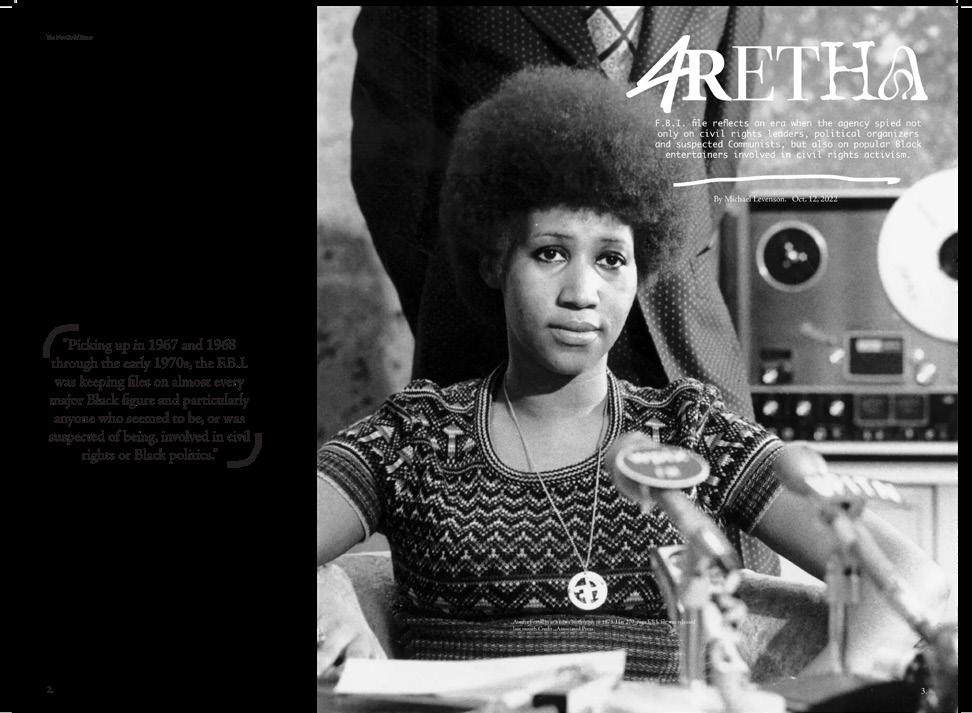
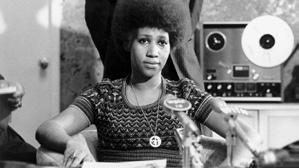
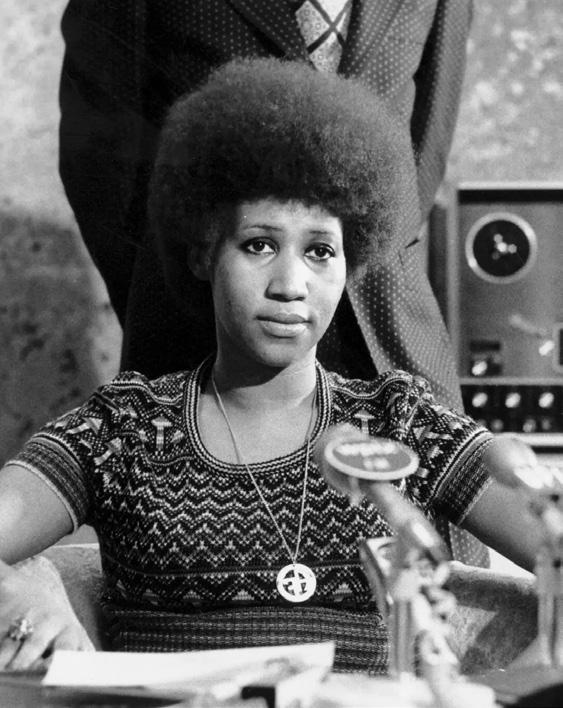
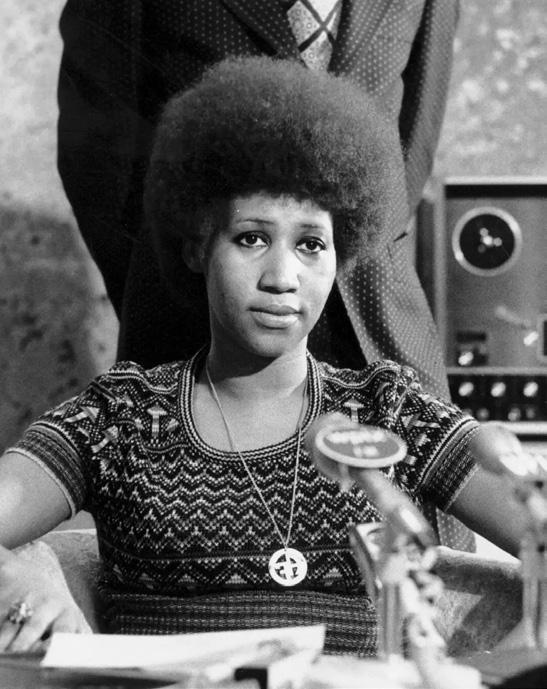
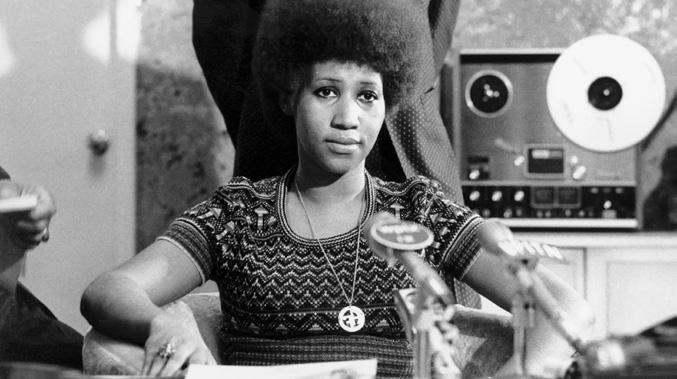
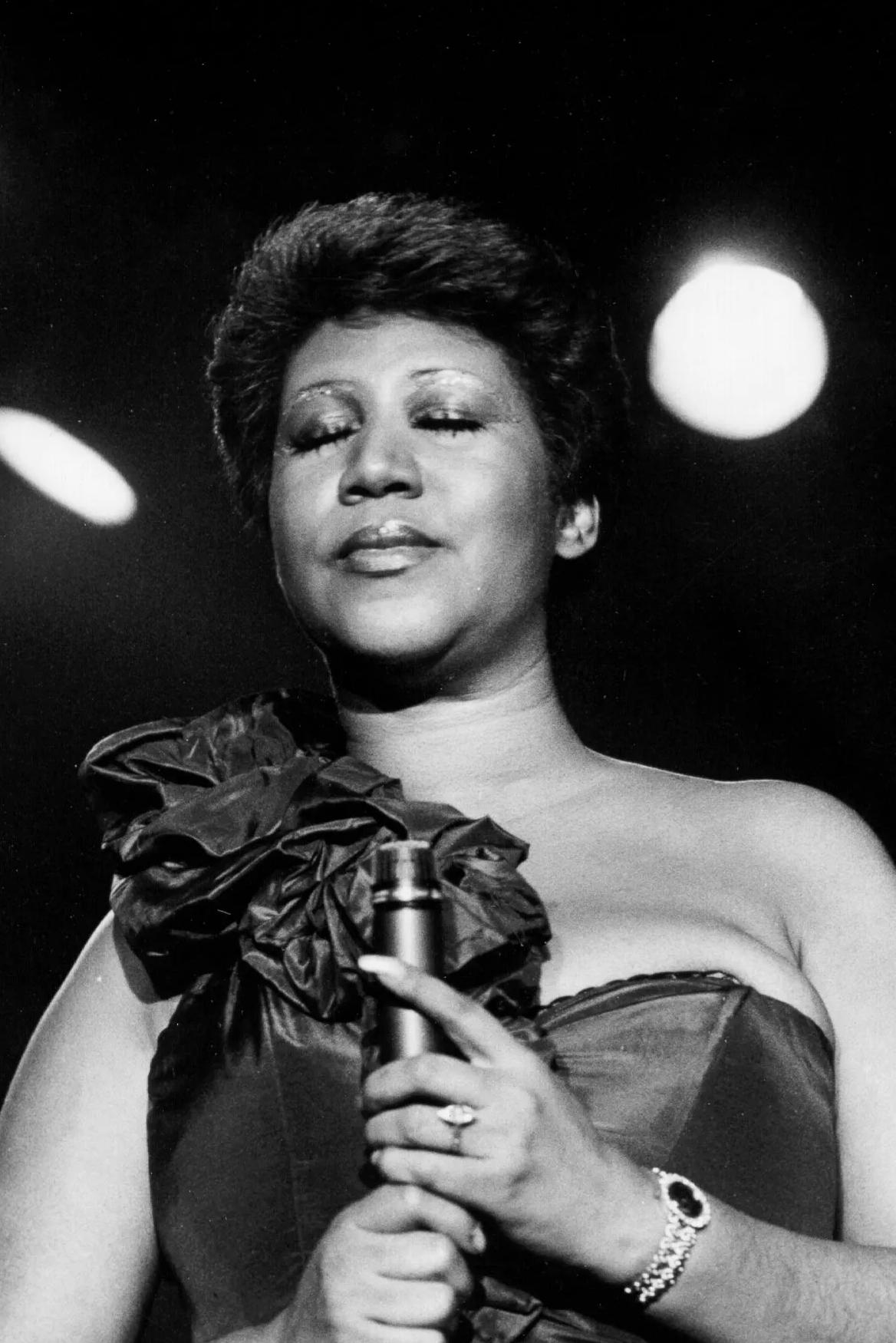
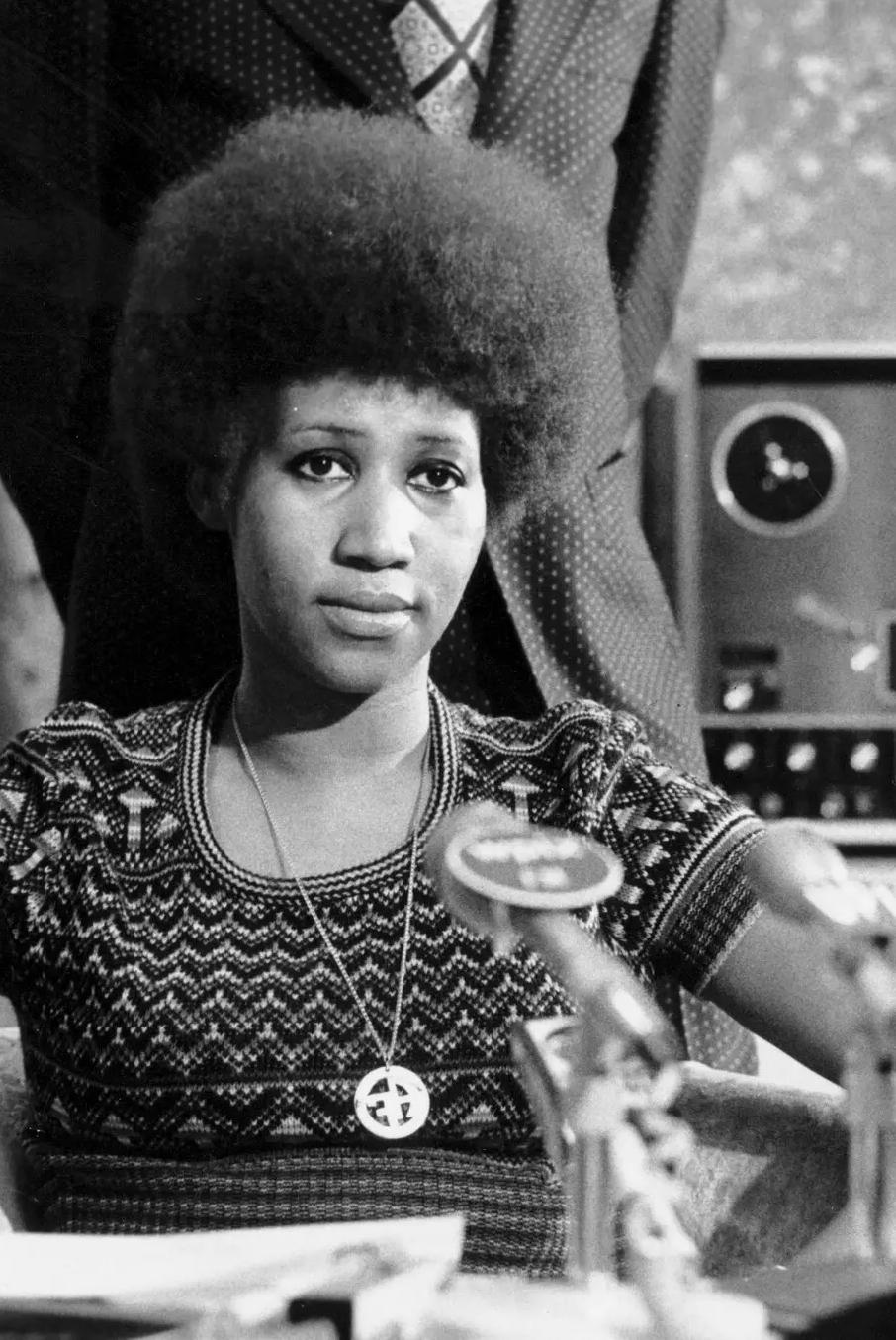
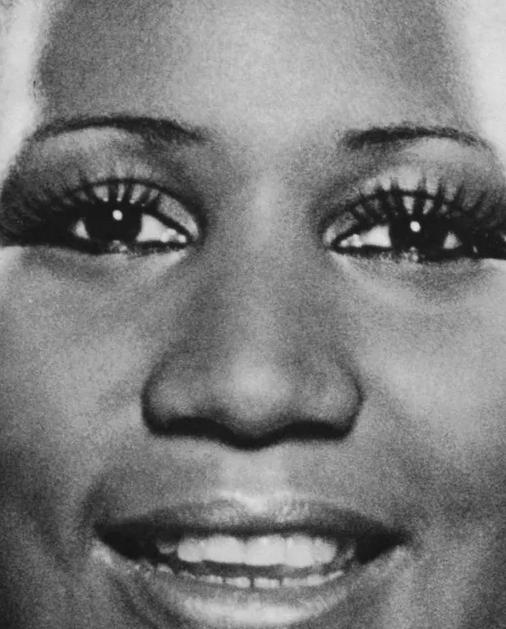
Aretha Franklin at a news conference in 1973. Her 270-page F.B.I. file was released last month.Credit...Associated Press
The NewYork Times 2.
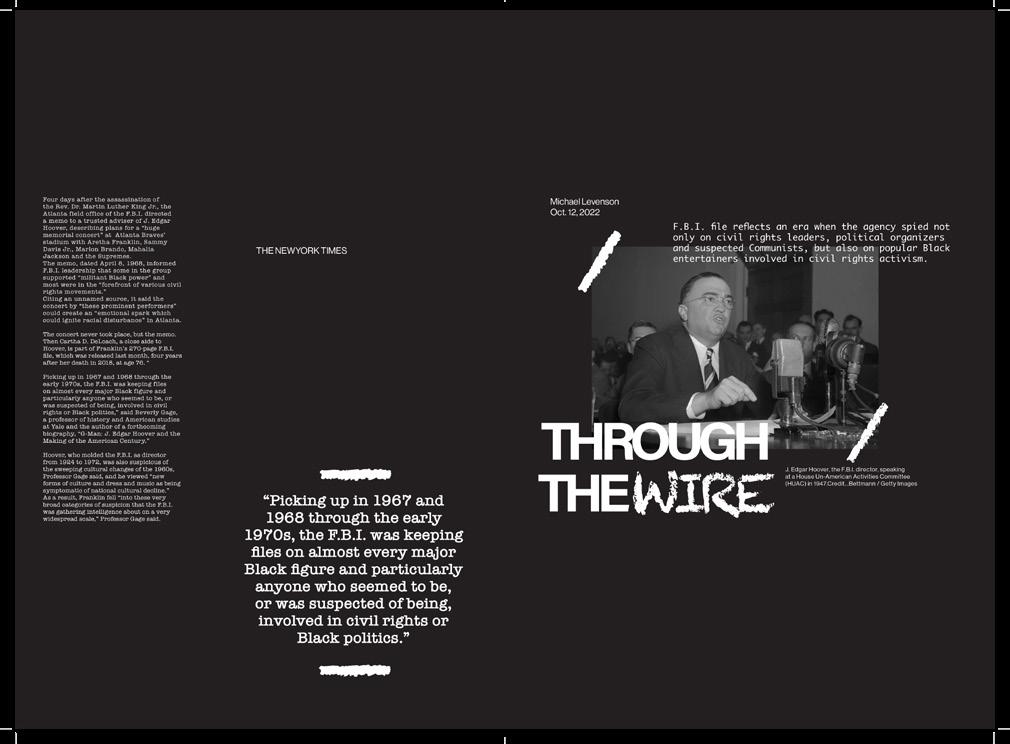
F.B.I. file reflects an era when the agency spied not only on civil rights leaders, political organizers and suspected Communists, but also on popular Black entertainers involved in civil rights activism.
 By Michael Levenson. Oct. 12, 2022
3.
The file, as previously reported by Rolling Stone, reveals that the Federal Bureau of Investigation monitored the giant of soul and gospel music for years, collecting intelligence from sources on her involvement in the civil rights movement and what it suspected were her links to Black Panthers, Communists and those it deemed “Black extremists.”
Franklin’s name appears in documents concerning “possible racial violence,” the “Communist infiltration” of the Southern Christian Leadership Conference and an “extremist matter” involving the Black Panther Party, which wanted to enlist her, Roberta Flack or Ike and Tina Turner for one of its events giving away free food in Los Angeles.
The file reflects an era when the F.B.I. spied not only on civil rights leaders, political organizers and suspected Communists, but also on popular Black entertainers involved in civil rights activism like the singer Harry Belafonte and the satirist Dick Gregory, who were also under F.B.I. scrutiny.
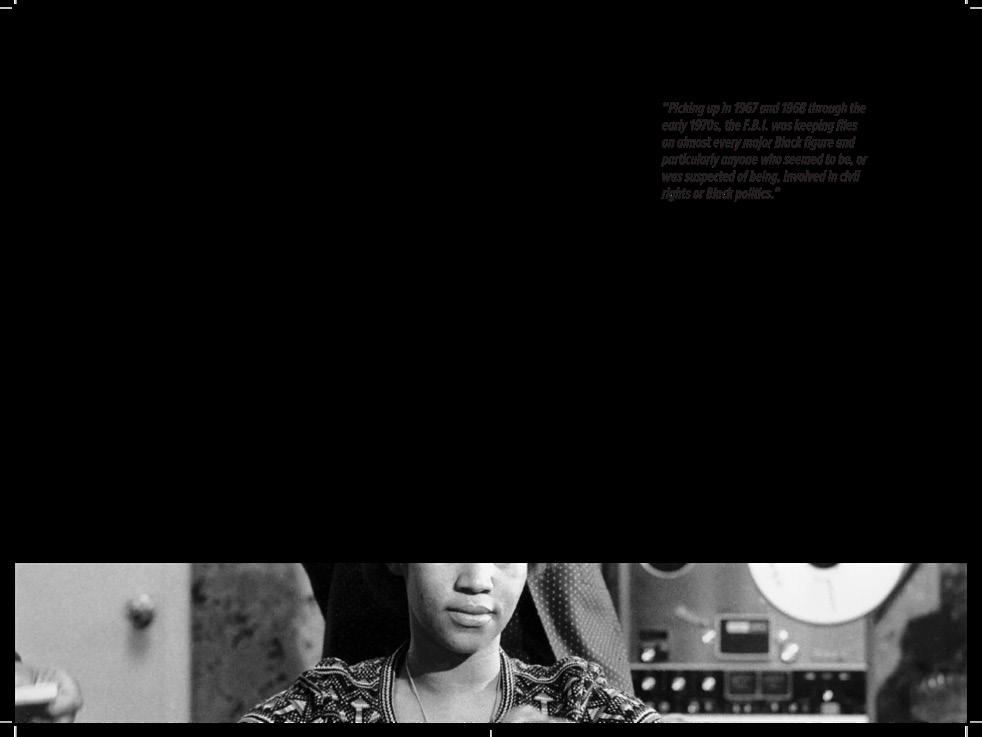
“Picking up in 1967 and 1968 through the early 1970s, the F.B.I. was keeping files on almost every major Black figure and particularly anyone who seemed to be, or was suspected of being, involved in civil rights or Black politics,” said Beverly Gage, a professor of history and American studies at Yale and the author of a forthcoming biography, “G-Man: J. Edgar Hoover and the Making of the American Century.”
The NewYork Times
4.
Picking up in 1967 and 1968 through the early 1970s, the F.B.I. was keeping files on almost every major Black figure and particularly anyone who seemed to be, or was suspected of being, involved in civil rights or Black politics.
Oct. 12,
Michael Levenson
2022
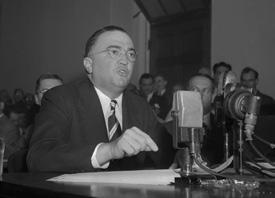
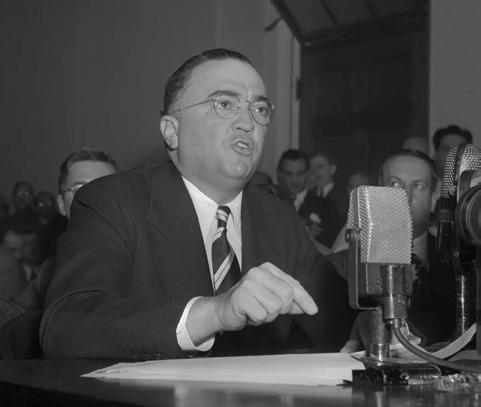
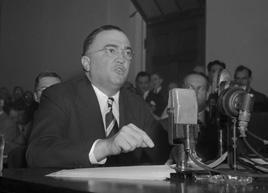
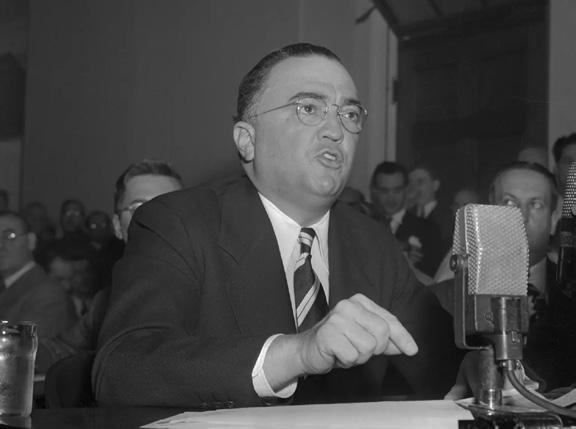
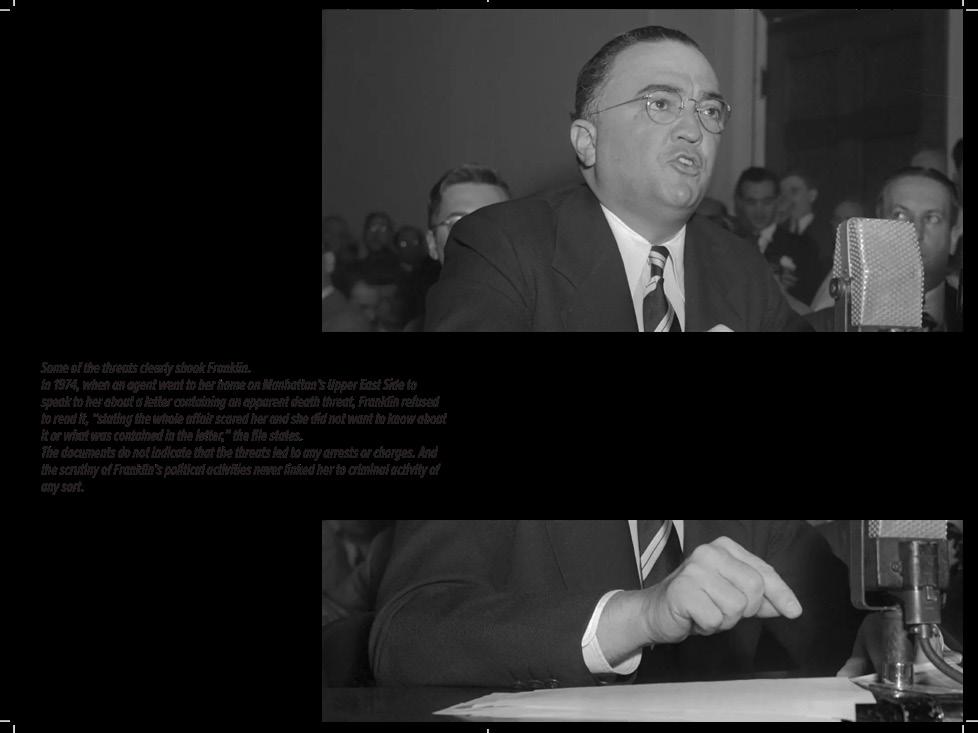
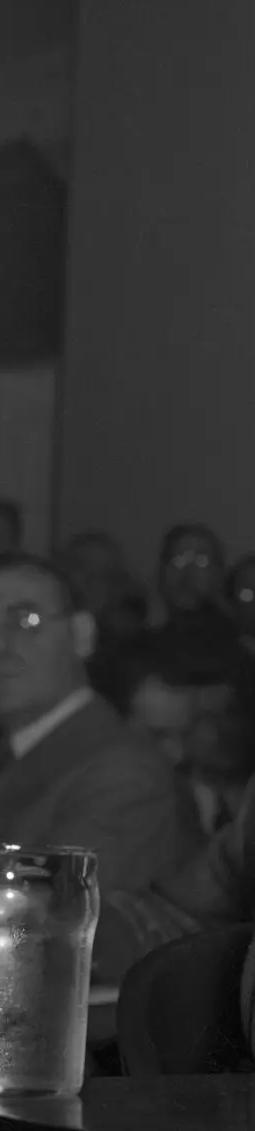
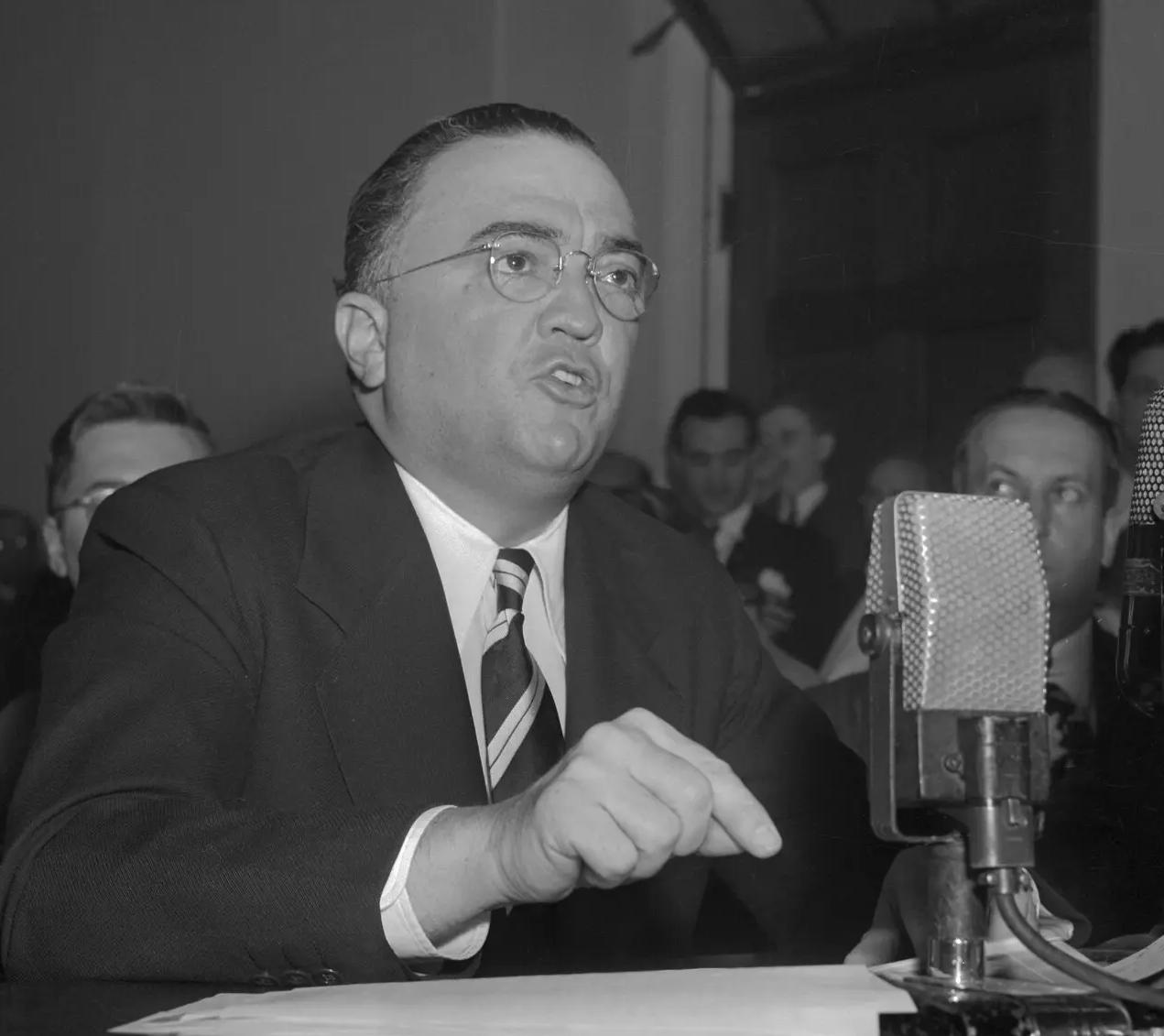
J. Edgar Hoover, the F.B.I. director, speaking at a House Un-American Activities Committee (HUAC) in 1947.Credit...Bettmann / Getty Images
5.5.

ARE Michael Levenson Oct. 12, 2022
THA
Hoover, who molded the F.B.I. as director from 1924 to 1972, was also suspicious of the sweeping cultural changes of the 1960s, Professor Gage said, and he viewed “new forms of culture and dress and music as being symptomatic of a national cultural decline.” As a result, Franklin fell “into these very broad categories of suspicion that the F.B.I. was gathering intelligence about on a very widespread scale,” Professor Gage said.
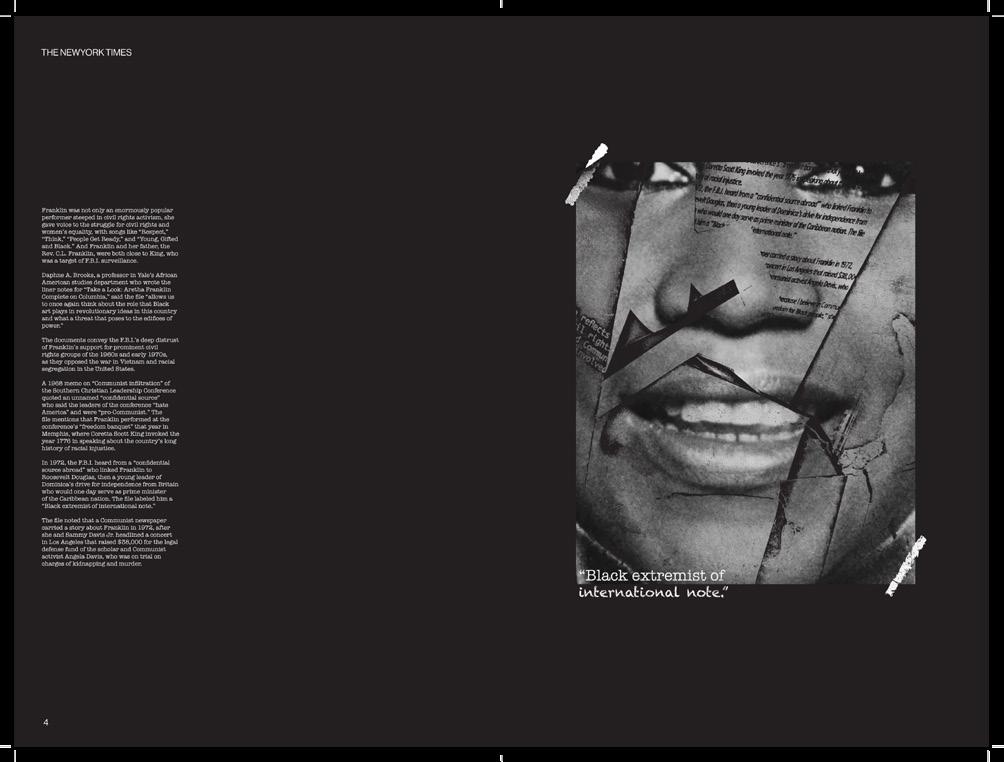
Franklin was not only an enormously popular performer steeped in civil rights activism, she gave voice to the struggle for civil rights and women’s equality, with songs like “Respect,” “Think,” “People Get Ready,” and “Young, Gifted and Black.” And Franklin and her father, the Rev. C.L. Franklin, were both close to King, who was a target of F.B.I. surveillance.
Daphne A. Brooks, a professor in Yale’s African American studies department who wrote the liner notes for “Take a Look: Aretha Franklin Complete on Columbia,” said the file “allows us to once again think about the role that Black art plays in revolutionary ideas in this country and what a threat that poses to the edifices of power.”
The documents convey the F.B.I.’s deep distrust of Franklin’s support for prominent civil rights groups of the 1960s and early 1970s, as they opposed the war in Vietnam and racial segregation in the United States.
A 1968 memo on “Communist infiltration” of the Southern Christian Leadership Conference quoted an unnamed “confidential source” who said the leaders of the conference “hate America” and were “pro-Communist.” The file mentions that Franklin performed at the conference’s “freedom banquet” that year in Memphis, where Coretta Scott King invoked the year 1776 in speaking about the country’s long history of racial injustice.
8.
The NewYork Times
The file noted that a Communist newspaper carried a story about Franklin in 1972, after she and Sammy Davis Jr. headlined a concert in Los Angeles that raised $38,000 for the legal defense fund of the scholar and Communist activist Angela Davis, who was on trial on charges of kidnapping and murder.
Franklin had also offered to post bond for Davis “not because I believe in Communism but because she’s a Black woman and she wants freedom for Black people,” she told Jet magazine in 1970. (Davis was acquitted in 1972.)
The F.B.I. did not respond to a request for comment on the file. Franklin’s son, KeCalf Franklin, told Rolling Stone: “I’m not really sure if my mother was aware that she was being targeted by the F.B.I. and followed. I do know that she had absolutely nothing to hide, though.”
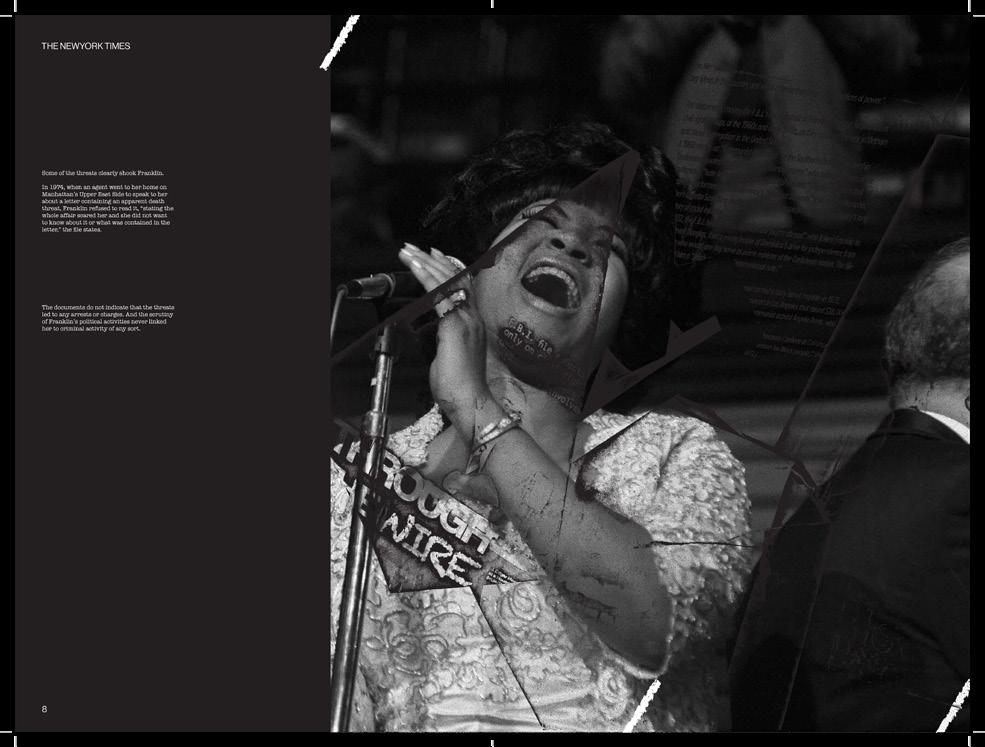
Even as the F.B.I. monitored Franklin’s civil rights activities, the file shows the agency also investigated after she received death threats, harassing phone calls and an extortion letter. Some of the threats clearly shook Franklin.
In 1974, when an agent went to her home on Manhattan’s Upper East Side to speak to her about a letter containing an apparent death threat, Franklin refused to read it, “stating the whole affair scared her and she did not want to know about it or what was contained in the letter,” the file states.
The documents do not indicate that the threats led to any arrests or charges. Franklin’s political activities never linked her to criminal activity. Even as the F.B.I. monitored Franklin’s civil rights activities, the file shows the agency also investigated after she received death threats, harassing phone calls and an extortion letter.
9. / /
Michael Levenson Oct. 12, 2022
Some of the threats clearly shook Franklin.
In 1974, when an agent went to her home on top of Manhattan’s Upper East Side to speak to her about a letter containing an apparent death threat, Franklin refused to read it, “stating the whole affair scared her and she did not want to know about it or what was contained in the letter,” the file states.
The documents do not indicate that the threats led to any arrests or charges. And the scrutiny of Franklin’s political activities never linked her to any criminal activity of any sort.

10.
The NewYork Times
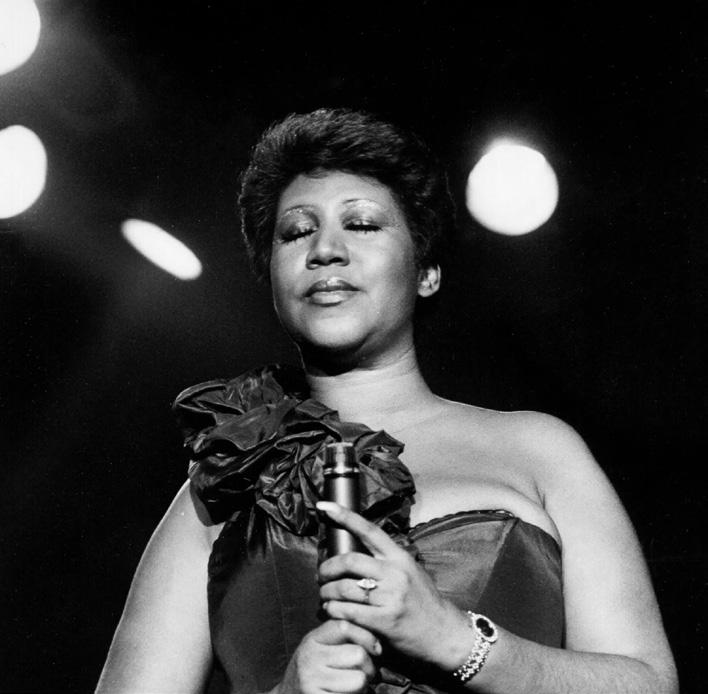
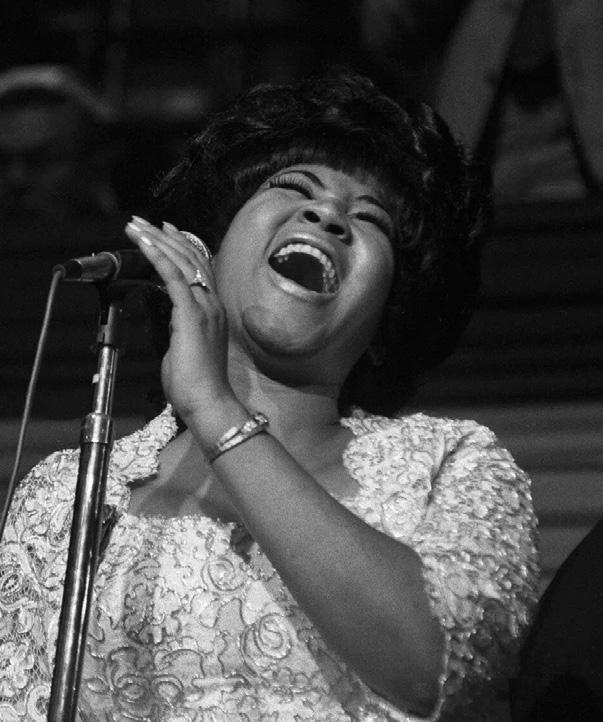
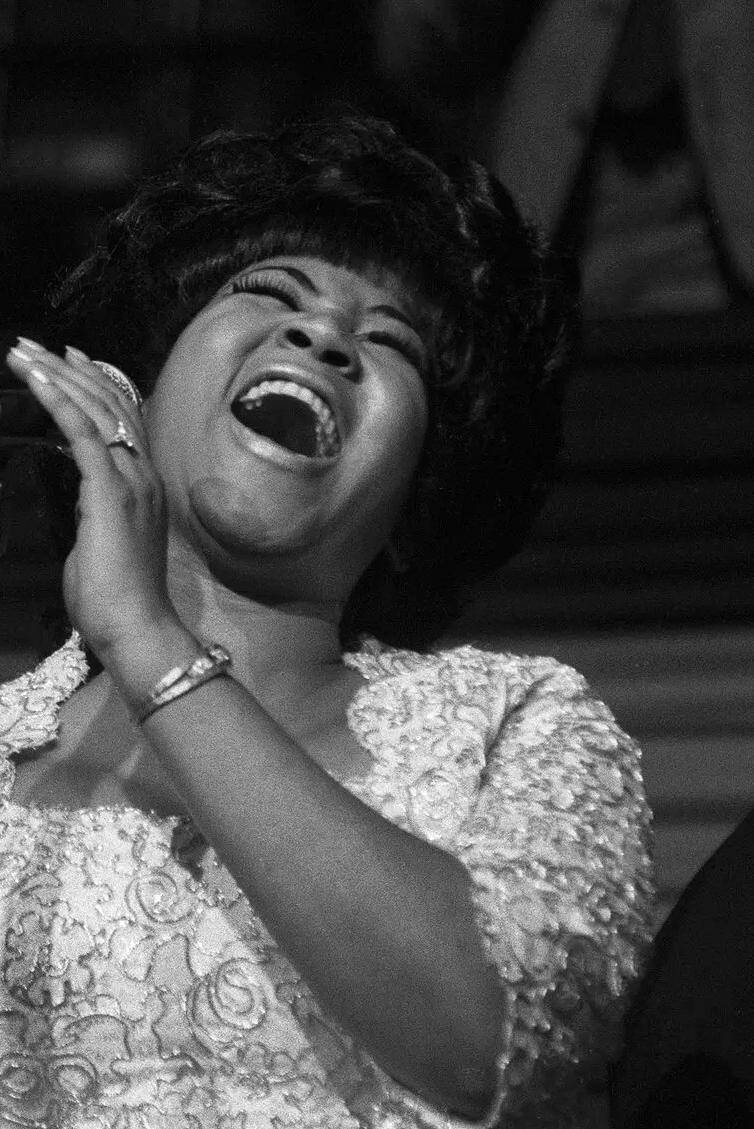
Aretha Franklin at the Chicago Democratic National Convention in 1968.Credit...Don Hogan Charles/The New York Times
11. Michael Levenson Oct. 12, 2022
BEHANCE LINK
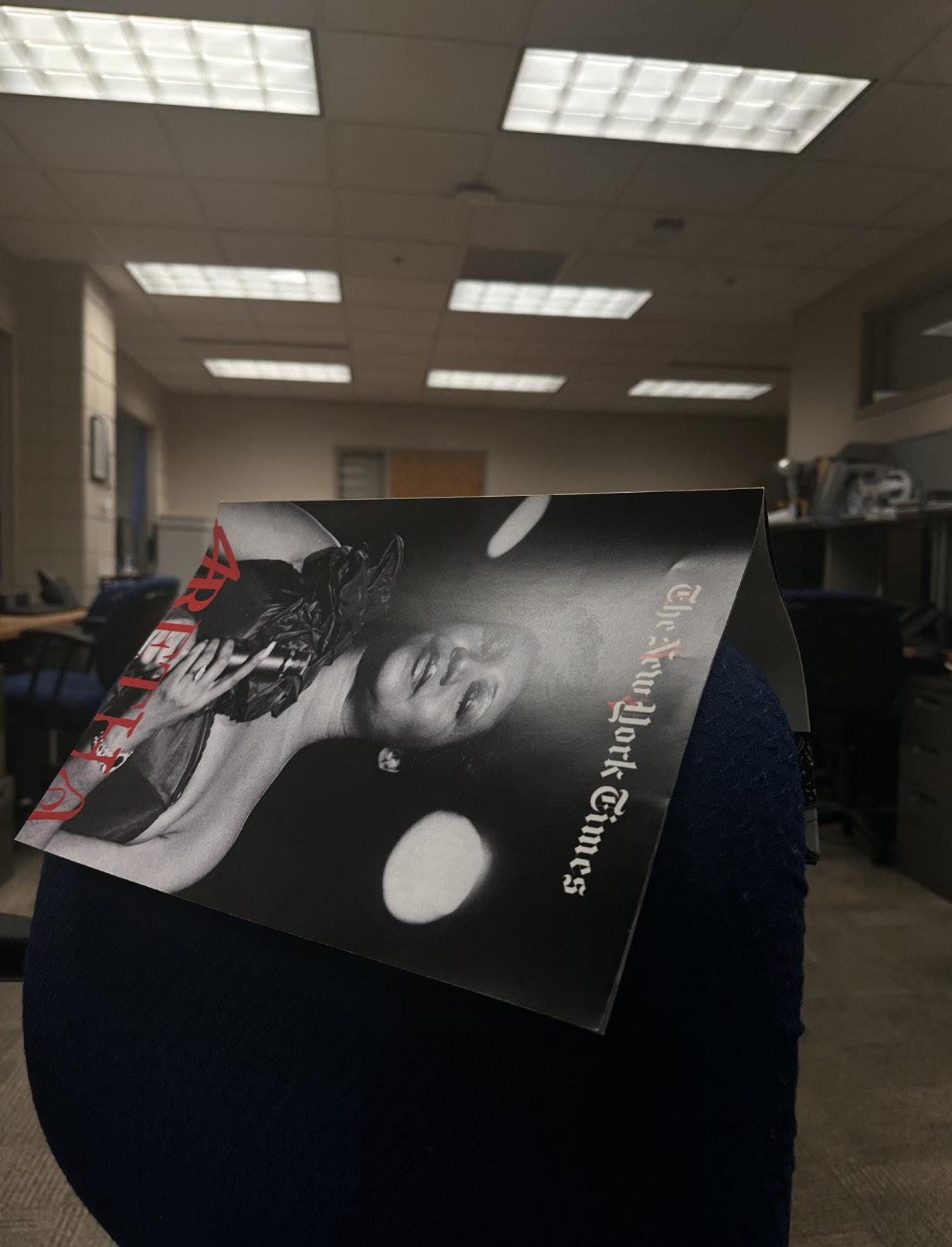
https://www.behance.net/ gallery/164733603/NYT-ArticleDesign-Concept-by-Nana-Amfo
& PHOTOS