Ειδική Έκδοση Ναυτιλία: Το Γεωπολιτικό Υπερόπλο της Ευρώπης
Γεωπολιτικό
8
12
14
16
Juseong
18
Emanuele Grimaldi
20
Research Department - George Moundreas & Company S.A.
94
28
96
22
Green Award Foundation / Chairman Arcadia Shipmanagement / CEO
102
112
Majestic International Cruises Ιnc.
116
Βασίλης
118
Ηλίας Καρυαμπάς Vice President, Business Development Southern Europe, ABS
120
154
156
24
160
122
124 Θεοφανώ
MSc, MBA | CIO, Newport Group, Ammitec BoD Secretary
συγκρούσεων και ανακατατάξεων και μία διαφαινόμενη ενεργειακή κρίση, έχουν επηρεάσει τις διεθνείς ναυτιλιακές δραστηριότητες. Ωστόσο, η ελληνική ναυτιλία έχει αποδείξει την ανθεκτικότητά της και την ικανότητά
Μελίνα
Τραυλού
Πρόεδρος
απέναντι σε
όλα τα κρίσιμα ζητήματα του κλάδου και της
διεθνούς ναυτιλιακής
πολιτικής. Αποτυπώνεται στη διορατικότητα, στις επενδύσεις και
στην ικανότητά μας να
ανταποκρινόμαστε με
συνέπεια, ψυχραιμία και αποφασιστικότητα στις συνεχώς μεταβαλ-
λόμενες διεθνείς συνθήκες.
Fang
Qiu
τη
σύγκλιση και ανάπτυξη υπηρεσιών υψηλής
πλεονεκτήματα των δύο πλευρών. Να επιταχύνουμε την πράσινη
Juseong
Lim
ματική σχέση με την
πάροδο του χρόνου. Τα κορεατικά
Emanuele
Grimaldi
Καθώς ο κλάδος εξελίσσεται, θα χρειαστούν νέες δεξιότητες και συνεχής υποστήριξη. Η
επένδυση στην εκπαίδευση, την ευημερία
και τα δικαιώματά τους δεν είναι προαιρετι-
κή, είναι απαραίτητη.
Η πορεία που έχουμε μπροστά μας είναι αναμφίβολα περίπλοκη, και η διαδρομή μέχρι στιγμής έχει υπάρξει ένα δύσκολο
εγχείρημα. Ωστόσο, η ναυτιλία ανέκαθεν πλοηγούνταν σε συνθήκες
οι αρχές διακυβεύονται, οι συνέπειες εκτείνονται πολύ πέρα από τη
ναυτιλία, επηρεάζοντας τις παγκόσμιες αλυσίδες εφοδιασμού, την
ενεργειακή ασφάλεια και τη διαθεσιμότητα τροφίμων. Οι περιοχές που εξαρτώνται από τις εισαγωγές, ιδίως οι αναπτυσσόμενες οικονομίες,
ιδιαίτερα ευάλωτες σε τέτοιες διαταραχές, οι οποίες μπορούν
στην
της διεθνούς αγοράς, αποτελεί έναν από τους βασικότερους πυλώνες σταθερότητας της παγκόσμιας εφοδιαστικής αλυσίδας. Η θέση αυτή δεν είναι συγκυριακή· είναι
Πόλυς
θέση,
υψηλής ποιότητας
σημαίας αποτελεί ισχυρό εργαλείο διπλωματίας και
εφαρμογή του EU ETS και το υπό διαμόρφωση Net-Zero Framework (NZF) του IMO δημιουργούν σημαντικές
Χαράλαμπος Σημαντώνης
Πρόεδρος
Πρόεδρος
atsimplakis@naftemporiki.gr
ΓΕΩΣΤΡΑΤΗΓΙΚΗ,
Πρόσβαση
ΤΑΛΑΝΤΕΥ ΣΕΙΣ
Lorem ipsum
Handymax / MR2
Panamax / LR1
Aframax
Suezmax / LR3
VLGC / VLEC
HELLENiQ ENERGY:
Jones Act: Η ιερή
Αιφνιδιαστικά, στις 17/3/2026 το
υπουργείο Εθνικής Ασφάλειας (Department of Homeland Security) εξέδωσε απόφαση
περί παραίτησης από την εφαρμογή του Jones Act κατ’ απαίτηση του υπουργείου Πολέμου.
προέβλεπαν (του Βορρά).
ΗΠΑ, συγκλονισμένες από τις ανθρώπινες απώλειες και το οικονομικό κόστος του Α’ Παγκοσμίου Πολέμου, εστράφησαν στον επαναπροσδιορισμό του America First (1918). Για περισσότερες από δύο δεκαετίες προέβησαν σε μια πρωτοφανή επίδειξη διεθνούς απομονωτισμού. Ο εικαζόμενος
Οπαδοί
πρέπει να οδηγήσει σε οριστική κατάργησή του. Ο νόμος έχει διαχρονι-
κά αποτύχει να υλοποιήσει τους λόγους για τους οποίους υιοθετήθηκε. Αφού η ανα-
στολή του γίνεται
λόγους, εσωτερι-
ή εξωτερικούς,- ποιος ο λόγος διατήρησής του σε περιόδους ειρήνης; Ο πρόεδρος
Βιβή
Κολλιοπούλου Πρόεδρος
WISTA HELLAS
Αντώνης
Λάμπρος
σήμερα:
διαφορετικό κίνδυνο. Ο ασφαλιστής του κύτους καλύπτει
(GIIP - Gas
Γιώργος
(Shenzhen)
UBS (Credit Suisse)* Alpha Bank Citi* ING* BNP Paribas CHINA EXIM* KfW ABN AMRO KEXIM* Hamburg Commercial Bank* DNB* Credit Agricole CIB* Nordea* Macquarie OCBC* Aegean
Maritime & Merchants Bank* Iyo Bank*
Το
Laffan (Ras Laffan Industrial
με επιλεκτικό άνοιγμα βάσει εθνικότητας. Μετά από σχεδόν τρεις μήνες κρίσης, το αδιέξοδο παραμένει, παρά τις προσπάθειες
Γιώργος
Τσαφώνιας Research Department
- George Moundreas & Company S.A.
ένα έτος. Το LNG έχει επιβεβαιώσει την πρωτοκαθεδρία του. Πάνω από 1.000
τύπων
θα κινούνται με LNG βρίσκονται υπό κατασκευή, αντιπροσωπεύοντας το 18% του συνόλου,
atsimplakis@naftemporiki.gr
ναυτιλιακή συμμαχία η οποία έχει
έκκληση προς τον ΙΜΟ, εν όψει της συνόδου MEPC 84, ζητώντας συναίνεση
ολοένα και πιο αυστηροί, ενώ οι πιέσεις από χρηματοπιστωτικά ιδρύματα και ναυλωτές αυξάνονται. Η μετάβαση προς τη
βιωσιμότητα δεν είναι
απλώς κανονιστική
συμμόρφωση - είναι
στρατηγική επιλογή.
Επενδύσεις σε εναλλακτικά καύσιμα, όπως
LNG, μεθανόλη και
αμμωνία, καθώς και σε ενεργειακά αποδοτικές τεχνολογίες, διαμορ-
βρίσκεται σε ένα κρίσιμο σταυροδρόμι. Οι προκλήσεις είναι πολλές και σύνθετες, αλλά συνοδεύονται από σημαντικές ευκαιρίες. Η επιτυχία θα εξαρτηθεί από την ικανότητα προσαρμογής, τη στρατηγική διορατικότητα και τη διάθεση για καινοτομία. Οι
εταιρείες που θα καταφέρουν να ισορροπήσουν μεταξύ κινδύνου και ευκαιρίας
Γιώργος
Λάσκαρης
Πυρηνικός φυσικός, πρόεδρος του think tank
Deon Policy Institute, Βοστόνη, ΗΠΑ
Γιάννης Έ. Κοκαράκης
Technical Director
Bureau Veritas
Από το heavy fuel στο data fuel:
την πολυπλοκότητα
ως πλεονέκτημα και όχι ως
ελληνόκτητη ναυτιλία, που διαχει-
ρίζεται έναν από τους
το μηχανοστάσιο του μέλλοντος δεν είναι απλώς τεχνική πρόκληση.
από τη συμμετο-
Regional
Πάνος
Κουρκουντής
Πρόεδρος
MARine TEChnical Managers AssociationMARTECMA
Τεχνικός διευθυντής
Sea Traders S.A.
Framework - NZF) και το αντίστοιχο ευρωπαϊκό (FuelEU), των οποίων οι υπολογισμοί
(World Bank Group,
to Energy-Efficient Shipping).
υπέρ της ανταγωνιστικότητας του υφιστάμενου
στόλου και της τεχνολογίας του. Τα δεδομένα αυτά θα έπρεπε να προβάλλονται, ώστε η
κοινή γνώμη να ενημερώνεται για τις πραγματικές περιβαλλοντικές δυνατότητες της
διαθέσιμης
εάν ενωμένη υποστηρίξει
και συμβάλει ώστε ο ΙΜΟ να επικεντρωθεί
Αντώνης
Τρακάκης
RINA Energy Transition
Solutions Technical Director
απόλυτη καταιγίδα γεωπολιτικής αστάθειας, μετατοπίσεων εμπορικών οδών, αυστηροποίησης των
και
μετάβασης σε καύσιμα χαμηλών εκπομπών άνθρακα. Από την άποψη του ανεφοδιασμού καυσίμων, αυτό το περιβάλλον είναι περίπλοκο αλλά
και γεμάτο ευκαιρίες.
Ανθεκτικότητα σε περιόδους αναταραχής Ο κλάδος των ναυτιλιακών καυσίμων έχει αντιμετωπίσει
χαμηλού θείου (FO/VLSFO), βιοκαύσιμα, LNG είτε αμμωνία, εξαρτάται πρωτίστως
από προετοιμασμένους και άρτια εκπαιδευμένους ανθρώπους.
Ατενίζοντας το μέλλον
Οι προοπτικές της ναυτιλίας παραμένουν
ισχυρές. Οι εμπορικές ροές θα συνεχίσουν
να αναπτύσσονται, αλλά ο ουσιαστικός
μια από τις
πιο μετασχηματιστικές εξελίξεις είναι η
Τεχνολογίες όπως οι μετρη-
μαζικής ροής, τα ηλεκτρονικά Δελτία
Παράδοσης Καυσίμων (Bunker Delivery Notes - BDN), η
ρόλος της ναυτιλίας δεν θα αλλάξει. Αυτό
που θα αλλάξει είναι ο τρόπος με τον οποίο τροφοδοτείται ο κλάδος. Τα ναυτιλιακά καύσιμα βρίσκονται στο επίκεντρο αυτού του μετασχηματισμού. Τα επόμενα χρόνια θα απαιτηθεί συντονι-
Πάνος
Ζαχαριάδης
Carriers Management
«ABS Ammonia Bunkering Advisory»,
εξαγωγής ατμοσφαιρικού CO₂ στον κόσμο, το εργοστάσιο Mammoth της Climeworks στην Ισλανδία, μπορεί να εξάγει μόνο 36.000 τόνους ατμοσφαιρικού CO₂ ετησίως (όσες δηλ.
οι ετήσιες εκπομπές ενός πλοίου). Συνεπώς, η μη διαθεσιμότητα τέτοιου «πράσινου» CO₂ καθιστά την παραγωγή πράσινης μεθανόλης, σε ποσότητες
αν υπάρξει αλλαγή στις απαιτήσεις για ατμοσφαιρικό CO₂) και έτσι θα υπάρχει λίγη πράσινη αμμωνία. Τι θα καίνε λοιπόν
πλοία όταν οι κανονισμοί οδηγήσουν σε
Αναφορές Hydrogeninsight (2022). https://www.hydrogeninsight.com/transport/specialreport-burns-blindness-and-agonizing-deaths-is-it-safe-to-ship-hydrogenderived-ammonia-around-the-world-/2-1-1327957 MIT (2024). Adam Zewe, MIT News, 11 Ιουλίου 2024, https://news.mit. edu/2024/study-finds-health-risks-switching-ships-to-ammonia-fuel-0711. Padappayil (2023). Τοξικότητα αμμωνίας, Rana Prathap Padappayil; Judith Borger. Εθνική Βιβλιοθήκη
11
2023. Wong (2024). Anthony YH Wong et al 2024. Επιπτώσεις
Χρήστος
Σιγάλας
Αναπληρωτής
καθηγητής,
Θαλάσσιων
και
Οικονομικών, Deree
(Circumvent, Comply, Combine, Conceptualize).
ενέργειας (ESD).
για τη μεί-
Οι συσκευές
εξελισσόμενες κανονιστικές και αγοραίες συνθήκες, αξιοποιώντας
μέσω καινοτόμων συμβατικών ρυθμίσε-
ων, οργανώνοντας περιουσιακά στοιχεία σε ολόκληρο τον στόλο και τις συνεργασίες, και μαθαίνοντας συνεχώς να βελτιώνουν αυτούς τους μηχανισμούς με την
(Circumvent, Comply, Combine, Conceptualize).
(αλφαβητικά): Σπύρος Αποστολόπουλος, Director - Marine Broker, Eurorisk SA & μέλος Δ.Σ. HELMEPA
Γιώργος Καλλιάνης, μέλος Δ.Σ. HELMEPA
Capt. Κωνσταντίνος Κανελλόπουλος, Managing Director, Nereus Shipping SA
Χάρης Κοσμάτος, Co-CFO, TEN, Ltd
Άλκηστις Κυριακοπούλου, Chief Business Officer, DeepSea Technologies
Χρυσάνθη Στεφάνου, CEO, Golden Star Ferries & αναπληρωματικό μέλος Δ.Σ. HELMEPA
Σταμάτης Φραδέλος, Vice President Regulatory Affairs, ABS
Αξιοσημείωτο
Έλπη
Πετράκη
Πρόεδρος, WISTA
Ναυτιλίας
η Nautilus Federation με τίτλο «Recruitment and Retention of Seafarers», το 2025, και προέρχονται από
«SOFT SKILLS»
(Management & Leadership).
(Focus on Goals).
(Communication & Influencing).
(Decision-Making).
(Situation Awareness).
(Teamwork).
(Cultural Intelligence).
Υπευθυνότητα (Responsibility).
Οργάνωση (Organization).
Κριτική Σκέψη (Critical Thinking).
Συναισθηματική
(Emotional Intelligence).
International
20.000-25.000.
οι
Σύμφωνα με πρόσφατες στατιστικές, σε
παγκόσμια κλίμακα υπάρχουν 2.000.000 ναυτικοί, οι περισσότεροι των οποίων υπηρετούν
ο κύριος υπουργός, οι οποίες, όπως έχει δηλώσει, ιδιαίτερα για τις
δημόσιες σχολές, θα τεθούν προς ψήφιση
ΝΑΥ ΛΑΓΟ ΡΕΣ
Βασίλης Κορκίδης
άνθρωπος»
εξακολουθεί να ισχύει, υπογραμμίζοντας ότι η
AI λειτουργεί ενισχυτικά και όχι ως υποκατά-
στατο του ανθρώπινου
παράγοντα. Η ναυτιλία
παραμένει ένας κλάδος όπου η λογοδοσία, η ασφάλεια και η επιχειρησιακή κρίση
συνδέονται άμεσα με
τον άνθρωπο. Στο πλαίσιο αυτό, αξίζει να υπενθυμιστεί ότι στην ολομέλεια του European Maritime Skills Forum στις Βρυξέλλες, με τη συμμετοχή πλοιοκτητών, ναυ-
τεργατικών
Ηλίας
Καρυαμπάς
Vice President, Business Development
Southern Europe, ABS
και η αυτοματοποίη-
συνδέονται ουσιαστικά μεταξύ τους, το ναυπηγείο μαθαίνει από
κάθε έργο, αναβαθμίζει
ταχύτερα τις διαδικασίες
του και διαχωρίζει τη
συσσωρευμένη γνώση από τις καθημερινές οδηγίες εργασίας. Χώρες με ισχυρή ναυτική παράδοση, όπως η Ελλάδα, διαθέτουν
AI Governance: Από
CFO,
και για
στρατηγικό σχεδιασμό. Η εξέλιξη αυτή αλλάζει ουσιαστικά τη φύση και τις επιπτώσεις της
της
δημιουργεί τις
προϋποθέσεις ώστε η AI να αναπτυχθεί με
ασφάλεια, συνέπεια και πραγματική, μετρήσιμη επιχειρησιακή αξία. Ο στόχος είναι η
μετάβαση σε ένα επίπεδο ωριμότητας, όπου
οι οργανισμοί κατανοούν και ελέγχουν την έκθεσή τους, αξιοποιώντας τις δυνατότητες
της τεχνητής νοημοσύνης χωρίς να ανα-
λαμβάνουν μη αποδεκτά και μη μετρήσιμα
επίπεδα ρίσκου.
Ωριμότητα, ευθύνη και επίγνωση Η τεχνητή νοημοσύνη ανοίγει σημαντικές
προοπτικές για τη ναυτιλία, αλλά ταυτόχρονα
επηρεάζει τον τρόπο λήψης αποφάσεων και
διαχείρισης της πληροφορίας. Οι οργανι-
Δρ Άννα
Βαζιντάρη
CTO/CISO Eurobulk Ltd, αντιπρόεδρος AMMITEC
από το Section 4 (ISM System), δηλαδή ως προς την πραγματική ενσωμάτωσή του στο SMS. Ο επιθεωρητής ελέγχει αν το πλήρωμα μπορεί να επιδείξει εφαρμογή της πολιτικής, αν τα incident reports περιλαμβάνουν cyber events, αν το Management of Change καλύπτει software updates. Το νέο γλωσσάριο εισάγει τον όρο BYOD, σήμα ότι ο έλεγχος προσωπικών συσκευών εντείνεται. Παράλληλα, το DryBMS υπό το Dry Bulk Centre of Excellence (DBCE), με ιδρυτικά μέλη INTERCARGO, BIMCO, ICS και RightShip, εξελίσσεται σε de facto quality benchmark, με το Element 28 αφιερωμένο στην κυβερνοασφάλεια. Στα container trades, η εμπορική πίεση συντίθεται από δύο μηχανισμούς. Πρώτον, οι charterers (Maersk, MSC, CMA CGM, Hapag-Lloyd) έχουν δικά τους vendor cyber due diligence questionnaires, που λειτουργούν ως de facto pre-qualification: αδυναμία τεκμηρίωσης SOC monitoring, EDR coverage και incident response readiness
Δεύτερον, η BIMCO Cyber Security Clause 2019, ενσωματωμένη ως Clause 27 στο SHIPMAN 2024 (το τυποποιημένο
Θεοφανώ
Σωμαρίπα
MSc, MBA | CIO, Newport GroupAmmitec BoD Secretary
SHUTTERSTOCK
ptsirigotis@naftemporiki.gr
γράμματα, τεχνική υποστήριξη και εκπαίδευση. Σε ευρωπαϊκό
2
ταχύτητα και αξι-
αγορά. Παράλληλα, ενδυναμώνουμε το εγχώριο οικοσύστημα χρησιμοποιώντας το δίκτυο ως μοχλό για την ενίσχυση των Ελλήνων προμηθευτών, δίνοντάς τους
>1,5
1,1
Στον
ptsirigotis@naftemporiki.gr
δίνουμε ιδιαίτερη έμφαση στον ψηφιακό μετασχηματισμό, με αξιοποίηση εργαλείων digital ship design, digital twin και
συστημάτων προσομοίωσης, που επιτρέπουν καλύτερο
έλεγχο του έργου
ΛΙΜΑΝΙΑ
ΘΕΣΣΑΛΟΝΙΚΗ
Xudong,
Ο
ΓΕΩΣΤΡΑΤΗΓΙΚΟ
ΑΛΕΞΑΝΔΡΟΥΠΟΛΗ
Στον
ptsirigotis@naftemporiki.gr
ptsirigotis@naftemporiki.gr
48,000,000 PAGE VIEWS PER MONTH
SHIP PING SUPERW EAPON EUROPE,S G EOPOLITICAL
SHIPPING
SUPERWEAPONEUROPE,S GEOPOLITICAL
OWNERSHIP - PUBLICATION
NAFTEMPORIKI
EDITOR - SHAREHOLDER
George Melissanidis
GENERAL MANAGER
Spyros Ktenas
MANAGEMENT CONSULTANT
Christina Chafousidou
DIRECTOR
Plato Tsoulos
CHIEF EDITOR
Athanasios Adamopoulos
EDITOR IN CHIEF
Panagiotis Kakouris
DESIGN DIRECTOR
Dimitris Nikas
SPECIAL EDITIONS MANAGER
Giannis Sarantopoulos
EDITORS
Aris Assargiotakis, Ioannis Chiotis, Nikolaos Giannakis, Christos Maravelidis, Georgios Psiachos
Even though Greek shipping makes up a large portion of the European shipping industry, accounting for more than 60% of the sector, it has actually been “invisible" to Brussels’ bureaucracy for many decades.
Yet, Greek shipowners have historically been and remain valuable partners with the planet’s largest economies: the US, China, Japan, South Korea, Persian Gulf states, and the list goes on. And this is, of course, not coincidental at all, as Greek shipowners, or “the Greeks,” as they are referred to around the world, undertake to carry food, raw materials, and energy products all over the world to keep it running. They also are Asian shipyards’ top clients, investing hundreds of billions of dollars in new shipbuilding, in turn sustaining the specific industries in these countries.
The figures are astounding: with 5,700 ships in the water and more than 900 new ships of all types currently on order in the world's best shipyards, Greek shipping is recognized worldwide as a leading force in the industry. Greek shipowners, controlling 20% of global shipping, carry one in three oil cargoes worldwide and approximately one in five bulk cargoes, ensuring global energy and food security. This very security is what forced Europe to look into shipping.
Europe was forced by a crisis and a war to “see” shipping, the president of the Union of Greek Shipowners, Ms. Melina Travlos, recently pointed out. Europe was compelled to realize how dependent the continent is on shipping and the shipping industry as a whole.
Of course, the argument must be proven in practice. Greek ships continue to serve the needs of the Old Continent and the entire world in the face of geopolitical tensions. To carry on its vitally significant work, the maritime industry requires a sustainable environment, open seas, and a framework ensuring fair competition.
Maybe now that Europe is realizing what the real challenges are about, it is time to alter its attitude toward shipping and take decisive action to bolster the unique geopolitical edge it provides.
Antonis Tsimplakis
Vasilis Kikilias
Minister of Maritime Affairs and Insular Policy 172
Melina Travlos President, Union of Greek Shipowners 174
Kimberly Ann Guilfoyle
United States Ambassador to the Hellenic Republic 176
Fang Qiu Ambassador of China to Greece
178
Juseong Lim Ambassador of the Republic of Korea to Greece
180
Emanuele Grimaldi
Chairman, International Chamber of Shipping
182
John A. Xylas
Chairman, INTERCARGO; Member of Union of Greek Shipowners Board 184
Polys V. Hajioannou, President, Cyprus Union of Shipowners 186
Elpi Petraki
President, WISTA International; Secretary General, Hellenic Shortsea Shipowners Association 188
George Sp. Alexandratos
President, Hellenic Chamber of Shipping
190
Charalambos Simantonis
President, European Shortsea Network (ESN); President, Hellenic Shortsea Shipowners Association (EENMA)
204
Dorothea Ioannou
CEO, American P&I Club
George Xiradakis
Founder and CEO, XRTC Business Consultants Ltd; President, Hellenic Shipping Financiers
George Tsafonias
Research Department, George Moundreas & Company SA
Elias Kariambas
Vice President, Business Development Southern Europe, ABS
Capt Dimitrios Mattheou
Chairman, Green Award Foundation; CEO, Arcadia Shipmanagement
President, MARTECMA; Technical Director, Sea Traders SA
George Laskaris
Nuclear Physicist; President, Boston-based think tank Deon Policy Institute
Alexander Prokopakis
Executive Director, IBIA
Christos Sigalas
Associate Professor, Department of Maritime
Transport and Supply Chain Management, School of Business and Economics, DereeThe American College of Greece
Antonios Trakakis
Technical Director, RINA Energy Transition Solutions
192
Odysseas Laskaridis
Chief Executive Officer, of Laskaridis Maritime
196
Shipping’s amid geopolitical storms
198
Geopolitical reinvention of the tanker market
210 Μultitier markets
244
Miltiadis Varvitsiotis
CEO and Vice President, Skaramangas Shipyards
248
Panos Xenokostas Chairman and CEO, ONEX Group
252
Gianni Onorato Chief Executive Officer, MSC
212
Greek shipping firms «docking» on bonds
216
Impressive growth of Greek banks
220
Green transition needs new direction
Greece’s two leading ports receive investment boost
Current challenges and prospects of Greek shipping
Shipping enhances Greece’s profile, contributes decisively to development, promotes the well-being of citizens and ensures territorial and social cohesion while being the backbone of global trade and prosperity, despite the challenges it encounters
Minister of Maritime Affairs and Insular Policy
Greek shipping has always been one of Greece’s strongest assets, both geostrategically and economically. Over time, the shipping industry has developed as one of the most thriving sectors of the country’s economy. Shipping boosts the country's reputation while it contributes decisively to growth, advances the welfare of citizens, and ensures territorial and social cohesion. In fact, shipping is at the forefront during this era of great upheavals, as supply chains are tested, energy security gains attention, and the green transition alters the conditions of the global economy. And this means that Greece, being the leading shipping power in the world, must be at the forefront of decisions.
The huge Greek-owned fleet does not merely move goods; it transports energy, food, raw materials, and other goods that millions of people around the world need on a daily basis. It supports the European economy while solidifying Greece's position in a world where the strategic significance of maritime transportation is once again being recognized.
Shipping remains the backbone of international trade and global prosperity, despite the challenges it faces. The unprecedented worldwide pandemic, followed by a succession of geopolitical conflicts and reshuffles, as well as an
The green transition of shipping is essential, of course, but it must be carried out realistically and in accordance with international regulations; it must be technologically neutral, economically viable and socially fair.
impending energy crisis, have all had an impact on international shipping activities. Nonetheless, Greek shipping has demonstrated its resilience and capacity to adapt, endure, and lead while still serving the needs of the global community. It has done so in times of crisis, war, economic turmoil, pandemics, and energy uncertainty. And such success did not occur by chance. It happened because the Greek fleet's power is based on expertise, experience, seamanship, entrepreneurial courage, excellent insight, and global perception. Today, however, challenges are complex. Competition is intensifying, and costs associated with financing and compliance are increasing. Maritime transportation is facing additional hazards as a result of geopolitical tensions. The debate on new fuels, zero- or low-emissions technologies, and refueling infrastructure remains ongoing. At the same time, the shipping industry is being urged to invest now despite the unclear technology landscape.
As the Ministry of Maritime Affairs and Insular Policy, we have a clear stance: the green transition of shipping is essential, of course, but it must be carried out realistically and in accordance with international regulations. It must be technologically neutral, economically viable, and socially fair. Therefore, fragmented regulations that generate unequal
circumstances of competition benefit neither the environment nor the economy.
In this context, Greece firmly supports a transition based on workable solutions: safe and competitive alternative fuels, modern port infrastructure, access to finance, innovation, education, and human resources. Setting lofty objectives is insufficient. We also need to ensure that we have the tools to accomplish them.
Europe now has to make a crucial decision. It must treat European shipping as a strategic industry and boost its competitiveness if it hopes to maintain its position as a powerful maritime power.
It must also protect European knowhow, provide incentives for fleet renewals and green investments, and facilitate the connection between shipping, energy, ports, shipyards, and fuel producers. Above all, Europe must realize that shipping is not a regional policy sector but a key pillar of strategic autonomy.
For Greece, the specific discussion is even more important: our country is located in a geographical point of particular significance, as it is a key hub of the Eastern Mediterranean and the Middle East. Upgrading our ports, enhancing infrastructure, developing the supply chain and energy interconnection, and reviving shipbuilding and repair activity can create a
Vasilis Kikilias
new, strong, and productive model.
Insularity occupies a special place in this model. For Greece, the sea represents more than just a field of economic activity; it is the way in which the country is connected. The sea is the islanders’ everyday life, their access to health, education, work, tourism, and growth. This is exactly why coastal shipping must be supported on its path towards the green transition without the cost of such a transition being passed on to citizens and island societies.
In this context, the organization of the International Shipping Exhibition "Posidonia 2026", which is under the auspices of the Ministry of Maritime Affairs and Insular Policy and the entire Greek maritime community, serves as further evidence of our nation's unwavering connection to the sea and shipping. In the wake of today’s challenges, “Posidonia 2026” is seen as a major international gathering for the shipping of the future. But it means much more for Greece. It provides an opportunity to highlight the power, dependability, and strategic importance of Greek shipping.
This event provides an opportunity for us to present our positions, advocate for realistic solutions, and integrate tradition with innovation. At the same time, the massive participation of major exhibitors and attendance of high-ranking visitors from all over the world will, in turn, highlight the importance and the leading, long-standing role that Greece plays in
global shipping.
In summary, Greek shipping is global but has deep Greek roots. Although it is an extroverted industry, it is intrinsically and timelessly connected to the nation’s national economy and evolution. It may be competitive, but it is based on people, expertise, and values, to the advantage and benefit of Greece, of course. And it is our responsibility to safeguard, bolster, and pass this very edge on to future generations.
The huge Greek fleet does more than merely move commodities; it carries energy, food, raw materials, and products that millions of people need on a daily basis.
Greek shipping moves the world
Shipping, in the current international environment, operates under conditions of increasing geopolitical tensions, while the safe and uninterrupted operation of maritime transport is the sine qua non for the well-being of humanity
Melina Travlos
President, Union of Greek Shipowners
In an era of geopolitical realignments, uncertainty and multiple crises, shipping remains a force for stability, continuity and connection. Shipping moves the world, keeping economies functioning, societies supplied and people connected.
Posidonia brings together in Greece, home to the world’s leading shipping nation, the international maritime community, highlighting the strategic importance of an industry that does not merely transport goods and energy, but safeguards the very functioning of the modern world.
In the current international environment, shipping operates under conditions of increasing geopolitical tension. Threats to freedom of navigation and attacks against merchant vessels and seafarers are no longer isolated incidents. They have become a new reality, testing maritime routes, supply chains, energy security and global economic stability.
The safe and uninterrupted operation of maritime transport is a prerequisite for humanity’s welfare. Shipping carries food, medicines, energy, raw materials and essential goods at a scale and efficiency unmatched by any other system of transport.
For this reason, maritime security is a
Representing almost 20% of global capacity and more than 60% of the EU-controlled fleet, Greek shipping continues to demonstrate its strength, reliability and resilience.
global public good and a collective responsibility. The protection of human life at sea, of merchant vessels and freedom of navigation must be a non-negotiable duty of the international community.
In this challenging environment, Greek shipping, representing almost 20% of global capacity and more than 60% of the EU-controlled fleet, continues to demonstrate its strength, reliability, and resilience.
This leadership is not only measured in numbers. It is reflected in the consistently principled and institutional stance of the Union of Greek Shipowners on all critical issues concerning our sector and international maritime policy. It is reflected in our foresight, our investments and our ability to respond with consistency, composure and determination to constantly changing global conditions.
However, the transition towards decarbonisation requires realism, technological maturity and global alignment. It must not compromise the safety of crews and vessels or the viability of shipping and global supply chains. A truly sustainable transition must be safe, practical and implementable, fair for all parties and operationally effective worldwide.
The recent discussions at IMO MEPC 84 offer the international community a second chance to restore consensus and work towards a realistic, fit-for-purpose and workable global framework for the reduction of greenhouse gas emissions from ships. The ultimate success of this effort requires safe, available, economically viable and scalable alternative fuels worldwide.
Shipping has proven throughout time that it knows how to navigate with resilience, prudence and resolve, even through the most turbulent waters. And it will continue to do so.
At the same time, Greek shipping is at the forefront of the industry’s green transition, with one of the youngest fleets worldwide and the largest alternative-fuel-capable fleet globally. Our investments in new build vessels, innovative technologies, digitization and emission-reducing solutions are continuous and substantial.
Because shipping is a force of vital continuity for the world. In times of crisis, it keeps the routes of cooperation open. In times of uncertainty, it provides stability. In times of transition, it ensures that progress can continue.In this great global mission, Greek shipping continues to lead with purpose and vision. With its seamanship, resilience, and unity, it will continue to connect the world with consistency, vision, and a sense of responsibility for generations to come.
Kimberly Ann Guilfoyle
United States
Ambassador to the Hellenic Republic
Charting a course together: A new era in US-Greece maritime partnership
Greece's entry into the National Guard State Partnership Program, paired with the State of Florida, opens exciting new avenues for collaboration in security, joint training, and infrastructure protection
As the global maritime community gathers in Athens for Posidonia, I am reminded of Greece's enduring legacy as a maritime power, from ancient times to today's modern merchant fleet. This moment offers an important opportunity to reflect on the extraordinary partnership between the United States and Greece in the maritime sector, and to look ahead at the vast potential for our great nations.
The bond between our two nations runs deep, rooted in the shared values of freedom, democracy, and opportunity. Two hundred and fifty years ago, America's Founding Fathers looked to ancient Greece for inspiration as they built a new nation. Today, as we celebrate Freedom 250, the 250th anniversary of American independence, we recognize that our partnership has evolved into one of the most dynamic relationships in the transatlantic space.
Nowhere is this partnership more evident than in the maritime domain. Greece commands the world's largest merchant fleet, while the United States is the world's largest economy and a critical hub for energy exports, technology, and innovation. Together, we are charting a course toward greater prosperity, security, and energy independence for both our nations and the broader region.
Under the leadership of President Donald J. Trump, the United States has called for the restoration of America’s maritime dominance.
Our Greek partners have answered this
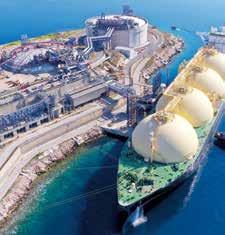
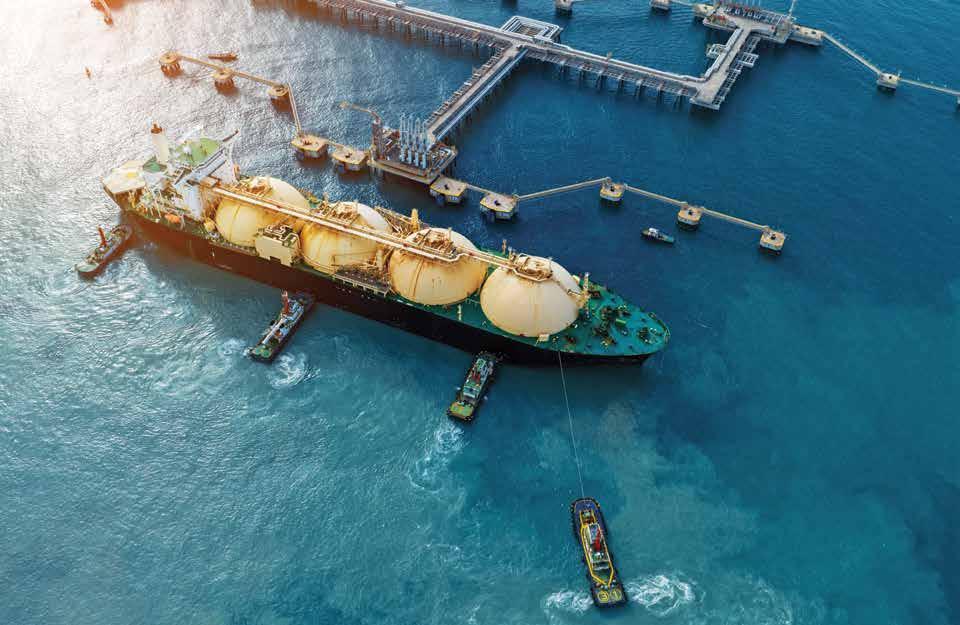
Greek-owned LNG carriers are essential partners in transporting American energy abundance to markets across Europe and beyond.
call with enthusiasm and commitment.
In February, I was honored to witness the signing of a groundbreaking shipbuilding agreement between Greek and South Korean companies at the Department of Transportation in Washington, DC to invest in revitalizing a U.S. shipyard. Like-minded partnerships like this will revitalize the American shipping industry, creating jobs and economic opportunities across the Atlantic and Pacific while strengthening U.S. and Greek industrial capacity.
Greek shipowners and shipbuilders are bringing their legendary expertise, capital, and know-how to American shores. These strategic partnerships demonstrate what can be achieved when two great maritime nations work together with a shared vision. U.S. businesses have no greater champion than the Trump Administration, and I am committed to facilitating even more deals that benefit both our economies.
Energy security is national security, and the maritime sector plays an indispensable role in delivering American energy to our partners around the world. At the Partnership for Transatlantic Energy Cooperation Ministerial last November, which brought the largest-ever U.S. official delegation to
Greece, we witnessed the signing of the first-ever long-term commercial agreement linking American liquefied natural gas suppliers to this region for decades to come.
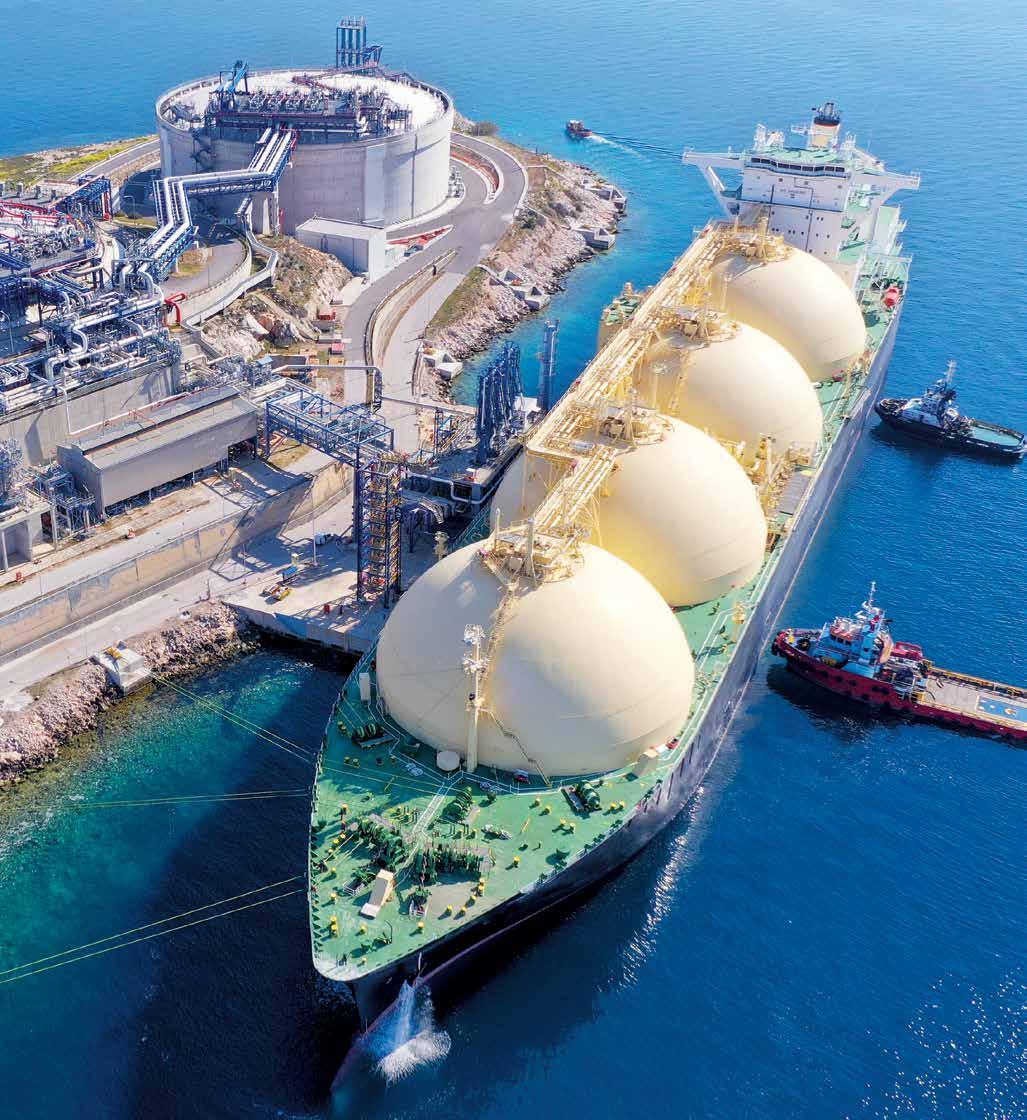
Greek-owned LNG carriers are essential partners in transporting American energy abundance to markets across Europe and beyond.
This cooperation strengthens energy security, reduces dependence on unreliable suppliers, and supports economic growth throughout the region.
Last fall, I joined Prime Minister Mitsotakis and President Zelenskyy for the historic signing of an agreement that brought American energy through the Vertical Corridor into Ukraine, when it was desperately needed. Greek maritime expertise made this delivery from sea to land possible.
Maritime security is equally critical to our partnership. Greece's entry into the National Guard State Partnership Program, paired with the great State of Florida, opens exciting new avenues for collaboration in maritime security, joint training, and infrastructure protection.
The Port of Piraeus recently implemented advanced U.S. scanning technology that will enhance safety and transparency, ensuring that this critical gateway remains secure and that sensitive data does not fall into the hands of unscrupulous actors. These investments protect the integrity of global supply chains that depend on Greek maritime leadership.
Looking ahead, the opportunities are boundless. The United States and Greece are also working together on artificial intelligence applications for shipping, infrastructure development, and securing supply chains for critical minerals, all areas where maritime cooperation will be essential.
When Americans and Greeks stand together, united by shared values and common purpose, there is no limit to what we can achieve.
The foundation of our relationship is the incredibly dynamic Greek diaspora community in the United States, including the many successful Greek-American families who have built maritime companies that connect our nations.
As we gather for Posidonia, let us celebrate what we have accomplished and commit ourselves to even greater collaboration. Together, we are not just navigating today's challenges, we are charting tomorrow's opportunities.
Hoisting the sails of China and Greece's timeless wisdom
In today's complex international environment, as all countries are in the same boat, it is only by unity, cooperation, and solidarity that we will be able to overcome problems while maintaining peace and growth
The sea, with its vast and inclusive spirit, embraces continents and unites the world. Turning to the sea as a lever for prosperity is a converging choice for both China and Greece, two cradles of civilization in the East and the West. The brilliant launch of the Posidonia 2026 Exhibition offers an important platform for knowledge exchange, mutual learning and strengthening cooperation in the field of the global maritime economy.
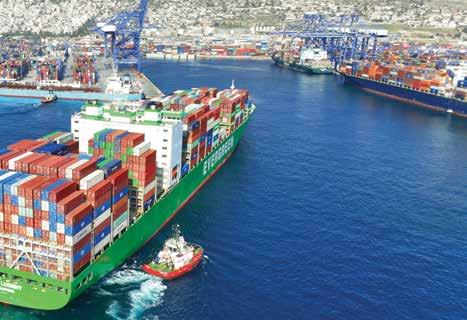
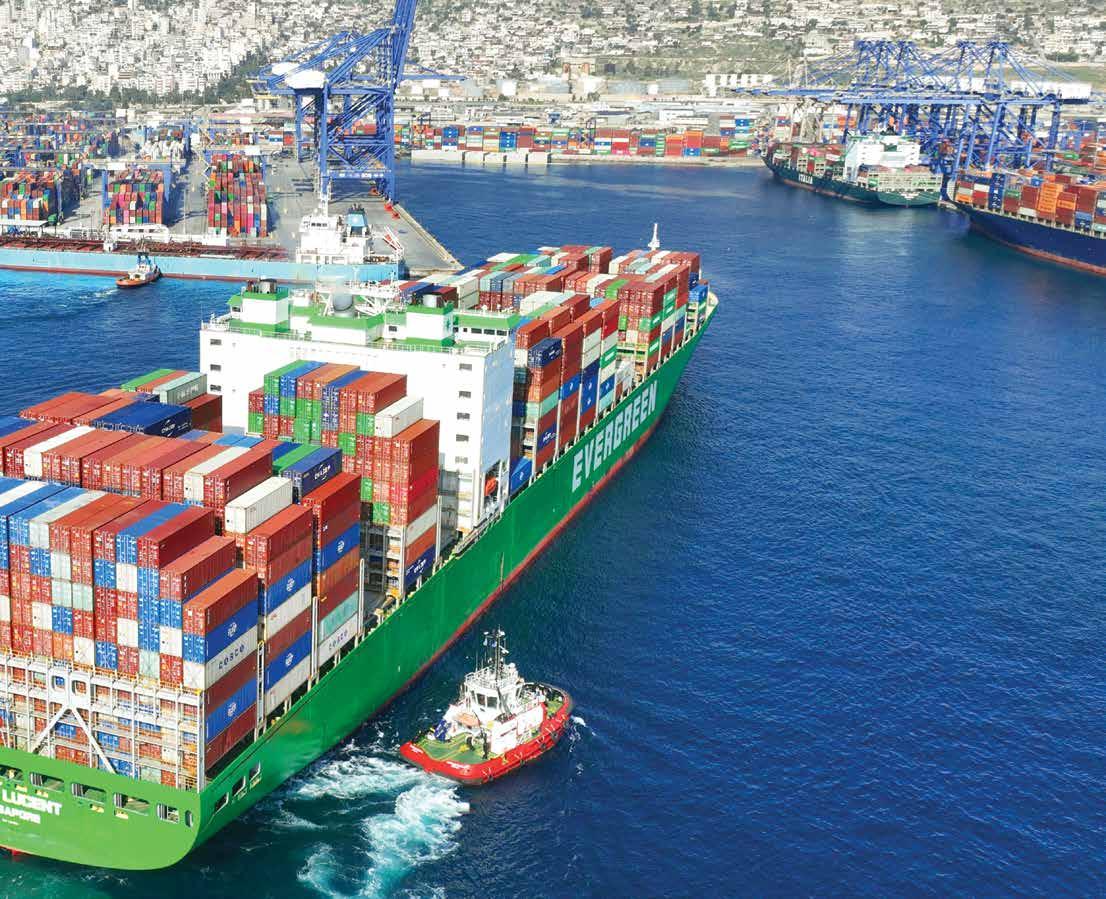
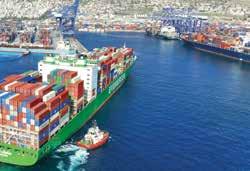
China and Greece are sincere friends and reliable partners, with their relationship governed by mutual respect, trust and mutual support. The successful cooperation in the Port of Piraeus is a typical example of mutual benefit, both for the two countries and for China-Europe cooperation under the "One Belt, One Road" Initiative. Within a decade, annual container handling skyrocketed from 680,000 to 5.6 million TEU, propelling port to 25th place in the world. Chinese investments, worth several billion euros, have created tens of thousands of jobs and significantly boosted public revenues, bringing tangible benefits to the Greek people.
At this critical juncture - the start of China's 15th Five-Year Plan and the 20th anniversary of the China-Greece comprehensive strategic partnership - the two countries are called upon to draw wisdom from their ancient civilizations, seize the new opportunities created by China's qualitative development, and further deepen their cooperation in the maritime economy, contributing to the building of a "community with a shared future for the sea."
To this effect, we must:
Jointly and consistently handle our cooperation in the Port of Piraeus, bolstering Greece's role as a strategic logistics hub in the Eastern Mediterranean and a vital trade gateway between Europe and Asia;
With peaceful development as our guide, let us sail together toward a common destiny for all humanity, and establish a world of lasting peace and prosperity.
Promote the convergence and development of high value-added services in shipping, such as financing, insurance and arbitration, leveraging the comparative advantages of both sides;
Accelerate the green transition of shipping, enhancing the implementation of clean energy solutions and the creation of international green maritime corridors;
Explore the expansion and integration of the industrial and value chains in the shipbuilding and repair industry, developing new paradigms for mutually beneficial cooperation;
Intensify joint research and the exchange of technological achievements in the areas
of marine environment protection and smart maritime governance.
In ancient Greek mythology, Poseidon controlled the seas and protected sailors. In today's complex international environment, every country is in the same boat. Only by unity, cooperation, and solidarity will we be able to overcome problems while maintaining peace and growth. Let us use the favorable breeze of this year's Poseidonia to hoist the sails of China and Greece's timeless wisdom, and with peaceful development as our guide, let us sail together toward a common destiny for all humanity, and establish a world of lasting peace and prosperity.
Fang Qiu Ambassador of China to Greece
Greece-Korea relationships defined by strategic depth and continuity
Built on trust, solidarity and complementary strengths, Korea’s partnership with Greece will continue to advance steadily in a rapidly changing global environment
The Republic of Korea and the Hellenic Republic occupy unique and complementary positions in the global maritime landscape. As peninsular nations whose histories and economic structures have been shaped by the sea, both countries share a deep understanding of the strategic importance of maritime industries. This common foundation has played an important role in fostering a stable and forward-looking partnership, built upon historical ties and an evolving economic relationship that continues to deepen over time.
The roots of this relationship can be traced back to the Korean War in 1950. Despite having just emerged from its own civil war, Greece made the decision to send more than 10,000 troops to support the Republic of Korea. This contribution played a significant role in helping Korea defend its sovereignty and uphold the values of freedom and democracy. The Korean people continue to remember with deep appreciation the sacrifice and solidarity shown by Greece, and this shared history remains a fundamental pillar of bilateral relations today.
This trust and solidarity naturally extended into the industrial sphere. In the early 1970s, when Korea’s shipbuilding industry was still in its infancy, the late Honorary Chairman of Hyundai Group, Chung Ju-yung, approached Greek shipowner George Livanos to request an order for ship construction.
At the time, Korea lacked even basic shipbuilding infrastructure. Nevertheless, Mr. Livanos placed his trust in Korea’s potential and Chairman Chung’s vision, becoming the first international client of Korea’s shipbuilding industry. This decision marked a critical turning point that laid the foundation for Korea’s emergence as a glob-
Both countries are well positioned to further deepen their engagement and to shape together the future of the maritime industry.
al shipbuilding leader. Greece, as the world’s leading shipping nation, and Korea, as a global leader in shipbuilding, have developed a highly complementary relationship over time. Korean shipyards have consistently delivered high-quality vessels that meet the evolving demands of the global market, while Greek shipowners have strengthened their position in the global shipping industry. This relationship has evolved beyond a purely commercial exchange into a long-term and stable industrial partnership that continues to grow in both scale and substance.
Looking ahead, there is a need to broaden this engagement beyond commercial shipping into a wider range of maritime domains. In particular, there is strong potential to expand into the defence sector, including coast guard vessels, naval ships, and submarines.
By combining Korea’s advanced technological capabilities with Greece’s extensive operational experience in maritime affairs, both countries can generate meaningful outcomes in enhancing maritime security and industrial competitiveness, while also contributing to broader regional stability and peace.
At the same time, the maritime industry is undergoing a profound transformation. Decarbonization, digitalization, and evolving energy dynamics are reshaping how ships are designed, built, and operated. In
this context, Korea’s strengths in green and smart shipping systems, and digital maritime solutions align closely with the needs of Greek shipowners navigating increasingly complex regulatory and market environments. This alignment is expected to deliver tangible benefits while supporting the transition toward greater sustainability.
Beyond shipbuilding and shipping, new opportunities are also emerging in maritime-based energy infrastructure. Greece is increasingly positioning itself as a key hub in the ‘Vertical Gas Corridor’, linking the Eastern Mediterranean with the Balkans and contributing to Europe’s energy security. In this context, cooperation opportunities are expanding in areas such as LNG infrastructure, subsea cables, and maritime energy transport.
As Greece continues to strengthen its role as a maritime logistics and energy hub connecting Europe and the Mediterranean, Korea can engage not only as a technology provider but also as a long-term and strategic partner.
This year, 2026, marks the 65th anniversary of diplomatic relations between Korea and Greece. Over the decades, while much has changed, maritime ties between the two countries have evolved into a relationship defined by strategic depth and continuity. Built on trust, solidarity, and complementary strengths, this partnership will continue to advance steadily in a rapidly changing global environment. Looking ahead, both countries are well positioned to further deepen their engagement and to shape together the future of the maritime industry.
Juseong Lim Ambassador of the Republic of Korea to Greece
Emanuele
Grimaldi
Chairman, International Chamber of Shipping
A maritime odyssey: Εnvironmental transition amidst geopolitical tensions
For centuries, Greek seafarers have understood that navigating narrow straits demands both skill and resolve.
Today, global shipping finds itself in a similarly precarious passage caught between mounting geopolitical tensions and the urgent imperative of environmental transformation. Since assuming my role as Chairman of the International Chamber of Shipping in 2022, I have witnessed firsthand how this convergence of pressures is reshaping our industry.
With international cooperation, clear regulatory frameworks and sustained investment in both technology and people, our industry will not only overcome current challenges but will also emerge stronger Freedom of navigation must remain non-negotiable - it is the cornerstone of int'l trade and a principle that underpins decades of economic development.
Shipping remains the silent force behind the global economy, transporting around 90 percent of world trade. Its role is often overlooked precisely because it is so reliable.
Yet in countries like Greece, its significance is deeply understood. The Greek fleet continues to exemplify maritime leadership, combining scale, expertise and a tradition that stretches back to antiquity. This heritage is not merely symbolic, it is foundational to the resilience and adaptability that define shipping today.
However, the environment in which we operate has rarely been more complex.
Geopolitical instability has disrupted key maritime corridors, increasing risks for vessels and the seafarers who crew them. Attacks on merchant shipping and threats to critical trade routes have forced costly diversions and introduced uncertainty into global supply chains. These are not abstract challenges; they have real consequences for economies, for businesses, and above all for the safety of those at sea. Freedom of navigation must remain non-negotiable. It is a cornerstone of international trade and a principle that underpins decades of economic development. Protecting
embracing new technologies. For instance, the Grimaldi Group recently commissioned nine (9) dual-fuel methanol vessels, due to be delivered between 2028 and 2030. These vessels will also be equipped with air lubrication systems which increase efficiency, lower fuel consumption, and cut emissions. In many respects, industry ambition is moving ahead of regulation. But ambition alone is not enough. Without clear and consistent policy signals, the path forward remains uncertain.
it requires renewed cooperation among governments and an unwavering commitment to international law. The safety of seafarers, who are simply civilian professionals performing essential work, must be safeguarded at all times. Any erosion of these principles risks destabilising not only shipping, but also the global economy itself.
Despite these pressures, shipping continues to deliver. This resilience is not accidental. It is built on decades of investment, innovation and a robust international regulatory framework that enables ships to operate seamlessly across borders. Preserving this framework is critical, particularly at a time when fragmentation and unilateral measures threaten to undermine its effectiveness.
At the same time, the industry is confronting a transformation that is arguably without precedent: the transition to net zero emissions. We remain committed to pursuing the ambition established within the 2023 IMO Strategy on Reduction of GHG Emissions from Ships. This is not simply a small adjustment, it is a fundamental shift in how ships are powered and how energy is produced, transported, and consumed globally.
Encouragingly, progress is already underway. Shipowners are investing in more efficient vessels, exploring alternative fuels and
The challenge is particularly acute when it comes to fuels. Zero and near-zero emission alternatives are not yet available at the scale required, and their cost remains significantly higher than conventional options. This creates a difficult environment for long-term investment decisions. What is needed is a coordinated global approach that provides clarity and reduces risk. Shipping is, by nature, a global industry. Fragmented regional regulations risk distorting competition, increasing complexity and ultimately raising costs for consumers. The International Maritime Organization must remain at the centre of efforts to establish a unified and effective regulatory framework. Only through global alignment can we ensure both environmental progress and economic stability. Infrastructure will also play a decisive role. Ports must evolve into energy hubs capable of supporting new fuels and technologies. Projects like the CEM-Hubs initiative that bring together governments, energy producers and the maritime sector demonstrate the power of collaboration in accelerating this transition. Greece, with its strategic position and maritime expertise, is well placed to be central in this space, and we are very glad that they have taken such a leading role in the initiative. Amid all these changes, we must not lose sight of the people who make global trade possible. Seafarers have shown extraordinary dedication in recent years, often working under challenging and dangerous conditions. As the industry evolves, they will require new skills and ongoing support. Investing in their training, welfare and rights is not optional, it is essential. The path ahead is undoubtedly complex, and the journey so far been an undertaking. Yet shipping has always navigated uncertainty. It has adapted to shifting tides, embraced innovation and continued to serve as the backbone of global trade. With strong international cooperation, clear regulatory frameworks and sustained investment in both technology and people, our industry will not only overcome current challenges but emerge stronger. Like Odysseus, we are navigating a difficult journey. But with experience, resilience and a shared commitment to progress, global shipping will continue to move the world forward!
John A. Xylas Chairman, INTERCARGO
Protecting seafarers, securing navigation in an increasingly volatile world
Safety at sea is inseparable from the wellbeing of those who serve it, and we must continue to advocate for practical, realistic solutions that protect our people and support safe navigation
In recent months, escalating geopolitical tensions - particularly in the Middle East and the Strait of Hormuz - have once again brought into sharp focus the vulnerability of global shipping.
Attacks on merchant vessels, including bulk carriers, and the tragic loss of seafarers' lives serve as a stark reminder that those who enable global trade are increasingly exposed to risks far beyond their control.
At the heart of this crisis lies a simple but fundamental principle: seafarers must never become targets of geopolitical conflict. Their safety and wellbeing must remain the industry's overriding priority.
Seafarers today operate under extraordinary pressure. Beyond the immediate physical dangers posed by security incidents, there is a growing mental and emotional burden associated with prolonged exposure to high-risk environments.
Fatigue, stress, and uncertainty - often compounded by restricted movement, delayed crew changes, and limited access to medical care - are becoming defining features of life at sea in certain regions. These challenges affect not only those onboard, but also shore-based personnel managing operations in increasingly complex and volatile conditions.
The human element has always been central to safe shipping. Today, it is more critical than ever. Supporting seafarers' mental health, ensuring access to medical care, facilitating repatriation, and maintaining fair treatment and connectivity are not secondary considerations - they are essen-
Behind every vessel operating under heightened risk are seafarers-and families-who bear the human cost of instability, a reality that must never be overlooked.
tial components of maritime safety. At the same time, navigational safety itself is being tested. Disruptions in key maritime corridors such as the Strait of Hormuz have far-reaching implications. Freedom of navigation and the right to innocent passage - cornerstones of international maritime law - must be upheld. When these principles are compromised, the consequences extend well beyond shipping, affecting global supply chains, energy security, and food availability. Import-dependent regions, particularly developing economies, are especially vulnerable to such disruptions, which can lead to higher costs, reduced agricultural output, and increased economic instability.
The shipping industry has responded with resilience and responsibility. Organisations like INTERCARGO have been actively supporting their members by providing timely information from reliable sources, promoting the industry's Best Management Practices, vigilance and the measures in
place by the international security forces. We have called upon flag States, classification societies, and vetting bodies to exercise flexibility, particularly regarding inspections and operational constraints in affected areas.
Collaboration with seafarer welfare organisations and charities has also been strengthened to ensure that crews have access to the support they need.
At the same time, broader industry initiatives and frameworks have rightly highlighted the importance of strengthening access to medical and mental health support for seafarers.
However, it is equally important to remain grounded in operational realities. Seafarers already face significant demands, and any additional expectations - however well-intentioned - must be carefully balanced against the need to reduce administrative burdens and avoid cognitive overload. Thoughtful and targeted digitization can play a positive role, provided it is used to simplify processes and support crews, rather than add further complexity.
However, industry efforts alone are not sufficient. This is not a crisis of shipping's making. The responsibility to resolve such situations lies primarily with governments and the international community, including the initiatives of the International Maritime Organization (IMO).
Coordinated global action is essential to restore stability, ensure the protection of seafarers, and safeguard the continuity of maritime trade.
Ultimately, safety at sea is inseparable from the wellbeing of those who serve it. As an industry, we must continue to advocate for practical, realistic solutions that protect our people and support safe navigation. Behind every vessel operating under heightened risk are seafarers - and families - who bear the human cost of instability, a reality that must never be overlooked. Only through collective action, strong international cooperation, and a renewed commitment to fundamental maritime principles can we ensure that global shipping remains safe, resilient, and capable of serving the world's needs in uncertain times.
Cyprus Shipping 2026: Priorities, challenges and the vision of Cyprus Union of Shipowners
As geopolitical developments and corresponding restrictive regulations pose new challenges for the industry, shipping remains a cornerstone of Europe’s resilience and a vital pillar for Cyprus
Polys V. Hajioannou,
President, Cyprus Union of Shipowners
The year 2026 finds Cyprus shipping in a period of significant transformation, where global developments create both challenges and important opportunities. In this environment, the Cyprus Union of Shipowners (CUS) remains firmly committed to its strategic mission: strengthening Cyprus as an international maritime centre, upgrading and reinforcing the Cyprus flag with new vessels, and cultivating the next generation of maritime professionals.
The CUS has played a decisive role in the growth of the Cyprus Registry. Through targeted initiatives, international outreach and close cooperation with the government and the Shipping Deputy Ministry, it has encouraged shipowners and shipping companies - particularly from Greece - to register more vessels under the Cyprus flag. A tangible result of this sustained effort has been the steady increase in the Cyprus fleet, confirming the strong momentum of Cyprus shipping.
Cooperation with the state was further enhanced through the establishment of the Shipowners Advisory Committee, in accordance with the law governing the Shipping Deputy Ministry, by the Shipping Deputy Minister, Ms. Marina Hadjimanolis. The Committee comprises eight (8) distinguished and internationally recognised shipowners, elected as members, each with a significant number of vessels registered under the Cyprus flag. They act as direct advisors on all matters concerning Cyprus-flagged ships and contribute substantially to shaping a national maritime strategy that reflects the real needs of the industry. This initiative represents an important step in amplifying the voice of Cyprus shipping and ensuring that policy decisions are grounded
A strong flag translates into a strong voice in Europe and worldwide, enhancing the standing and influence of the Republic of Cyprus.
in technical reality and market conditions.
At the same time, Cyprus enjoys key advantages that reinforce its position on the global maritime stage: its geostrategic location, its European identity and its highly skilled human capital. The international recognition of the Cyprus flag serves as a powerful tool of diplomacy and a safeguard of our statehood. A strong flag translates into a strong voice in Europe and worldwide, enhancing the standing and influence of the Republic of Cyprus. Nevertheless, the shipping industry is facing increasing environmental requirements and regulatory pressures. The implementation of the EU ETS and the IMO’s developing Net Zero Framework (NZF) present significant challenges, including the risk of market fragmentation and double burden on shipowners, while the transition to new fuels requires substantial investment in technology and infrastructure.
In this context, the CUS has called for the postponement of the NZF to allow sufficient time for meaningful dialogue and the development of a framework that is both environmentally effective and economically viable. At the same time, it closely monitors developments at the IMO, strengthens cooperation among its members and international associations, and promotes a unified, technically sound position for the sector, with particular emphasis on the practical implementation of new requirements and the need to account for the
specific characteristics of tramp shipping. Within this complex landscape, the Union actively participates in national and European discussions ahead of decisions that will critically affect European shipping, energy security, environmental policy and the strategic autonomy of both the European Union and Cyprus.
As geopolitical developments and related restrictive measures create new challenges for the sector, shipping remains a cornerstone of Europe’s resilience and a vital pillar for Cyprus. For this reason, our aim is to contribute to the adoption of measures that are effective, proportionate and internationally coordinated, avoiding unintended consequences that could weaken European shipping and undermine its competitiveness.
Against this backdrop, the priorities of the Cyprus Union of Shipowners for 2026 focus on strengthening member representation through structured dialogue with the Government, the EU and the IMO; promoting sustainable development through realistic investment in research and innovation; and cultivating the next generation of maritime professionals through school outreach, participation in educational initiatives and the provision of scholarships for studies at maritime academies and universities.
The Cyprus Union of Shipowners will continue to work with consistency, unity and vision to ensure that Cyprus shipping remains competitive and internationally recognised. Through close cooperation with the state and the global maritime community, Cyprus can maintain and further enhance its momentum on the international maritime stage, contributing meaningfully to the country’s economy, society and national standing.
Approaches to entice young people into the maritime sector
The Nautilus Federation's extensive study is revealing, demonstrating new approaches to the search and attraction of human resources, as well as the retention of older workers in the field
Elpi Petraki
President, WISTA International; Secretary General, Hellenic Shortsea Shipowners Association
The global maritime industry is currently facing a critical shortage of qualified and highly skilled human capital - a challenge which, if left unaddressed, may eventually threaten the smooth and efficient functioning of the sector itself. The industry is fully aware, and openly acknowledges, that it is experiencing an ongoing "crisis" in both attracting and retaining talented professionals. This has been a persistent issue worldwide for several years, but it became even more pronounced in the aftermath of the pandemic. Moreover, I firmly believe that the crises generated by external factors affecting our industry - such as geopolitical instability, armed conflicts, and an increasingly fragile global health environment - will further exacerbate the problem.
Beyond geopolitical developments, however, significant pressure also arises from the growing demands of the green transition - including an expanding framework of regulations, certifications, and inspections - as well as from the exponential integration of technology into the daily operation of vessels, which necessitates continuous retraining and professional upskilling.
Two fundamental questions must therefore be answered if we are to reverse both the declining trend in new entrants and the gradual departure of experienced professionals from our industry:
What are the factors that attract new talent to a maritime career, particularly from underrepresented groups such as women?
What are the factors that encourage existing maritime professionals to remain within the sector, given the immense added value they offer through their experience and proven expertise?
According to the comprehensive findings of the large-scale study conducted by the Nautilus Federation in 2025, entitled "Recruitment and Retention of Seafarers," three
Our sailors handle challenges with remarkable poise, commitment to duty, and professionalism.
principal categories of factors influence the attraction and retention of seafarers:
The importance of job satisfaction, career progression, and favourable working conditions.
The degree of respect, inclusion, and commitment demonstrated by employers.
The provision of adequate communication facilities and connectivity.
In light of these findings, the study outlines a number of clear and actionable solutions, the most significant of which include:
Improving onboard living conditions.
Addressing issues that generate stress and psychological pressure.
Promoting a culture of respect and a healthy work-life balance.
Encouraging women and individuals from all social backgrounds to pursue maritime careers.
Providing structured career development programmes and opportunities for lifelong learning and professional training.
Supporting international initiatives aimed at addressing the global shortage of seafarers through stronger cooperation between the shipping industry, governments, and relevant organizations.
In my view, one particularly important - yet often overlooked - dimension of the issue is that the maritime industry does not sufficiently seek talent from broader labour pools capable of providing individuals who, with the appropriate training, could become fully
productive and highly effective professionals. There is untapped human potential available; what is required is the willingness to move beyond traditional recruitment stereotypes and to develop new strategies for talent identification and attraction.
For example, the industry could actively explore regions where human capital remains underutilized and redirect such talent toward sectors and geographical areas facing acute labour shortages. Shipping is uniquely positioned to adopt such an approach, precisely because it is a fully globalized industry operating on an international scale and possesses both the infrastructure and expertise required to train people according to its operational needs.
One particularly significant reservoir of untapped talent is women, who already possess qualifications equal to those of men, yet are not approached in a sufficiently targeted and effective manner to consider shipping as a professional career path. WISTA International systematically monitors this issue and, in collaboration with the International Maritime Organization, conducts the IMO-WISTA Women in Maritime Survey every three years - an initiative which also reflects the IMO's strong commitment to this matter.
The findings of the latest survey revealed a decline in the representation of women serving onboard vessels: only 2,223 women compared to 211,750 active seafarers, representing a mere 1% of the global workforce at sea. This finding may be interpreted in two ways. On the one hand, it clearly demonstrates that women do not currently perceive seafaring as an attractive professional option. On the other hand, however, it reveals a hidden opportunity: with the right strategies and targeted outreach, we can reverse this trend by presenting maritime careers as professionally rewarding, secure in terms of career progression, and financially attractive.
Shipping amid global instability: Strengths, strategic mission
Greek shipping, with its long-standing presence at the top of the international market, is one of the main pillars of stability in the global supply chain
George Sp. Alexandratos
President, Hellenic Chamber of Shipping
Iwould like to express my sincere thanks and congratulations to Naftemporiki for inviting me as President of the Hellenic Chamber of Shipping to share my views, and for their consistent, well-researched reporting on the shipping industry. By regularly featuring maritime affairs, and in light of an international event such as Posidonia 2026, the newspaper's actions indicate that shipping is now occupying its rightful space in the public debate within national and international media.
Global shipping is no longer just in a period of change; it is at a historic turning point. Volatility isn't the exception anymore, it is the new norm. Geopolitical tensions, energy upheavals, and shifts in global trade balances are creating an environment of constant pressure, but also great opportunities.
The ongoing conflict in Ukraine, rising tensions in the Middle East, and the precarious state of vital sea lanes like the Strait of Hormuz are fundamentally reshaping the
Greece is presented with a historic opportunity to further strengthen its position as a global shipping hub.
geoeconomic significance of shipping. With a substantial portion of the world's energy transiting these routes, any disruption can rapidly trigger a global economic shock. Shipping plays a pivotal role in this dynamic, serving as a crucial element in stabilizing international trade.
In this environment, Greece is not just a shipping power. It is a world-class hub. Greek shipping, with its long-standing presence at the top of the international market, is one of the main pillars of stability in the global supply chain.
This position is not a coincidence; it is the result of history, know-how and strategic adaptability.
As an institutional pillar in this process, the Hellenic Chamber of Shipping boasts a 90-year legacy and represents roughly 22,000 members involved in all facets of shipping. As an institutional advisor to the state, it strives to continuously contribute to policy formulation, to strengthen dialogue, and to bridge the public and private sectors. This role is not just typical, but essential and constantly evolving.
The strength of Greek shipping is also based on something even deeper: the spirit of understanding and cooperation between the state, the Ministry of Shipping, shipping associations, agencies and the maritime
community. This stable institutional partnership constitutes a comparative advantage that allows the industry to rapidly and effectively adapt to international developments.
In times of crisis, the role of shipping becomes absolutely crucial. Shipping sustains global trade during disruptions in landbased chains, threats to energy flows, and market destabilization. It operates quietly, but decisively, as a mechanism of global cohesion.
And this demonstrates a fundamental truth: shipping is not just an economic activity; it is a factor of international stability.
At the same time, Greece is presented with a historic opportunity to further strengthen its position as a global shipping hub. The country’s power is not limited to its fleet; it extends to an increasingly complex ecosystem of services, technology, education, and maritime knowledge.
However, this perspective requires something deeper than strategies and indicators. It requires social connection. Shipping cannot remain distant from society. We must knock on every door of the Greek territory. We must inform, explain, and inspire, demonstrating that shipping is an integral part of every product, action, and aspect of daily life.
This approach will foster a new generation that comprehends, embraces, and perpetuates it.
Shipping is not a closed industry. It is a vast ecosystem with over 100 professions, from seafaring and engineering to finance, law, and digital technology. It is a living organism that is constantly evolving.
In a world that is changing violently and unpredictably, Greece is not merely tasked with maintaining its powerful position. It is rather called upon to reinforce and elevate its standing to an even higher strategic level.
Shipping, ultimately, is not just about trade. It is power, stability, and the invisible force that holds the world together. And Greek shipping is not just present. It is the protagonist!
Two key considerations for the future of shortsea shipping
The diverging or even contradicting EU and IMO regulations sustain a "multi-tier" shipping, while the lack of specialized financial tools is hampering shortsea shipping in dynamically entering the green transition trajectory on an equal footing
Charalambos Simantonis
President, European Shortsea Network (ESN);
President, Hellenic Shortsea Shipowners Association (EENMA)
Many people like to refer to Europe as the "floating continent" since it possesses the world's largest maritime sector, with over 90,000 kilometers of coastline, extensive island and archipelagic areas, and interconnected regional seas that provide natural supply chain corridors. We, the maritime people, refer to water transport as the "blood donor" of Europe since it actually maintains life in its world by carrying commodities, fuel, and people; in other words, Europe's economic geography is intrinsically marine.
In recent years, water transport has formally taken its proper place in Europe's multimodal transport chain, as well as in the EU's policies. From the Draghi Report to recent strategies, water transport, namely shortsea shipping, has been a critical pillar in Europe's planning and activities to shift freight from the road to the maritime network while reducing carbon footprint and increasing competitiveness.
Last March, the European Commission adopted targeted strategies for the EU's port and maritime industry, listing specific objectives: enhancing competitiveness, promoting sustainability, contributing to the decarbonization effort, and actively participating in enhancing safety and resilience in the broader Union's waterborne transport sector, with a focus on shipping, ports, and the shipbuilding industry.
The Hellenic Shortsea Shipowners Association (EENMA), as well as the European Shortsea Network (ESN) -- the network that supports overall shortsea shipping in Europe, and of which Greece has held the presidency for two years directly participating in the formulation of legislation and decision-making -- welcome these strategies with enthusiasm, expressing contentment with the preceding consultation with
The “Fit for 55” framework, the ETS, and FuelEU Maritime are all putting significant strain on shortsea shipping, particularly as alternativee fuels are still insufficient.
the parties directly involved in the sector. This process ensured that the views and challenges faced by shipping professionals were incorporated into the final proposals, including those submitted by EENMA and ESN.
However, we feel that policymakers should pay more attention to certain issues and considerations. We consider two things to be critical: firstly, the diverging or even contradicting EU and IMO regulations that sustain "multi-tier" shipping, and secondly, the lack of specialized financial tools to assist shortsea shipping in dynamically entering the green transition trajectory on an equal footing.
Furthermore, the green transition cannot rely solely on regulatory burdens. Recognizing the severity of the problem and the difficulty it poses to its operation, EENMA commissioned IOBE (Foundation for Economic and Industrial Research) last year to conduct a study on the patterns and economic implications of shortsea shipping in Greece. According to the study's conclusions, the entire cost of complying with the measures in 2030 is anticipated to be 225 million euros, with the ETS extension accounting for the majority of the costs.
Shortsea shipping operators are expected to lose some 140 million euros in income from less traffic in 2030, after deducting the amounts corresponding to the additional levies. Implementing the recommendations will result in a demand reduction of up to 17 percent by 2030, with negative repercussions on GDP and employment.
Owing to the high average age of ships, shortsea shipping must either renew its fleet or move forward with modifying ships to comply with the new environmental rules. However, full implementation of the measures in the "Fit for 55" package of measures is projected to result in major consequences for the industry's operation, competitiveness, and eventual survival. The “Fit for 55” framework, the ETS, and FuelEU Maritime are all putting significant strain on shortsea shipping, particularly as alternative fuels are still insufficient.
At this point, it should be strongly stressed that shortsea shipping is not opposed to green transition policies, fleet modernization, or other activities that promote sustainable growth and the future of our planet. On the contrary, we believe that these policies are positive, but their implementation is complex and demanding, relying primarily on member state cooperation, support from small and medium-sized shipping companies for the green transition, and the development of port and energy infrastructure.
It is critical for the competitiveness, sustainability, and resilience of shipping, on which Europe depends for its own path to the green transition, to evolve from dominant issues in public debate to specific actions with a timetable and adequate funding. The current facts are compelling us to transition from planning to action.
Alimia Group: Investing in 37 ships within five years
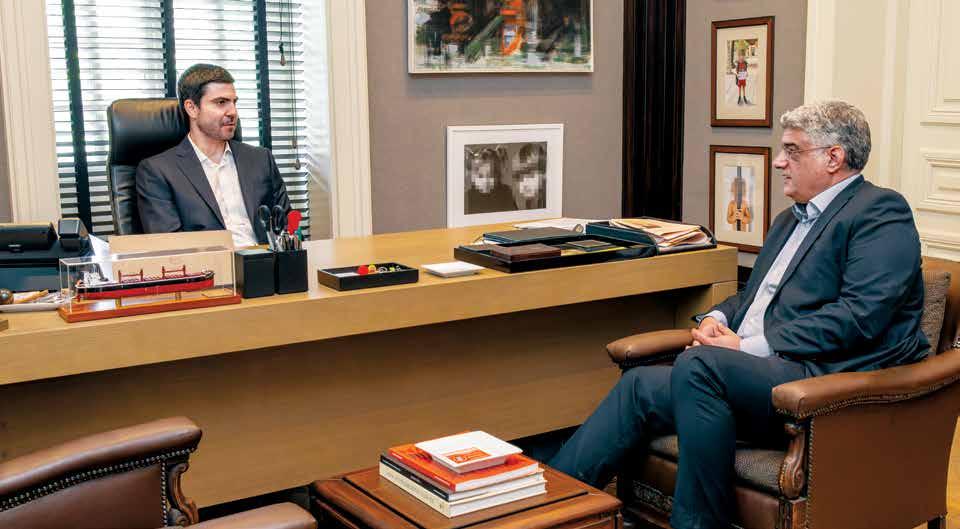
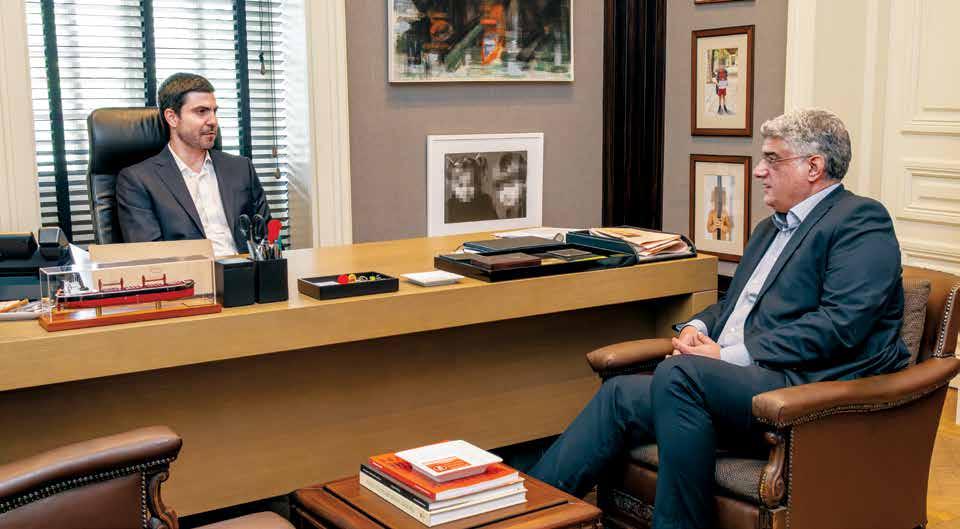
Laskaridis Maritime CEO Odysseas Laskaridis speaks exclusively to “N” about their focus on newbuildings, entry into tankers, the business risk of shipping, the choice of shipyards, and their next steps
Interview by Antonis Tsimplakis atsimplakis@naftemporiki.gr
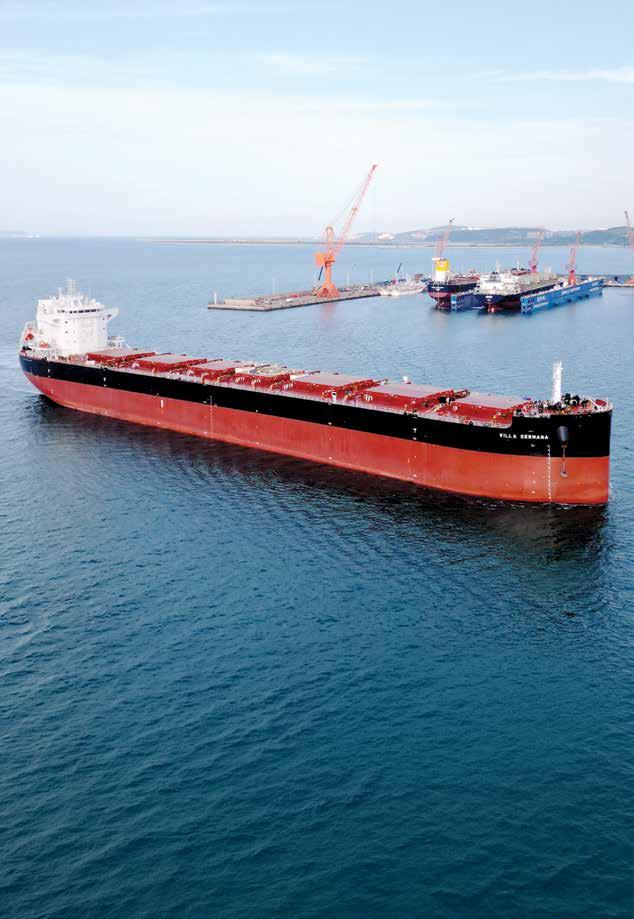
Within the span of five years, the Alimia Group has built a modern fleet comprising both bulk carriers and tankers, investing primarily in newbuild orders. With Odysseas Laskaridis at the helm, the Group now counts a fleet of 37 vessels, including those on order, of which 34 are newbuilds. Notably, Laskaridis Maritime, which manages the Group’s dry bulk fleet, operates one of the most modern fleets globally, with 27 vessels and an average age of three years.
In an interview with Naftemporiki, the Chief Executive Officer of Laskaridis Maritime, Mr Odysseas Laskaridis, explains that the focus on newbuild vessels is largely driven by fuel consumption. Compared with ships delivered just a few years ago, consumption levels are approximately 25% lower. “This was one of the primary reasons we continued to invest,” Mr Laskaridis notes.
Regarding the company’s entry into the tanker segment, Mr Laskaridis explains that this move reflects the family’s broader investment philosophy of diversification. On this basis, the Group initially invested in product tankers, specifically LR2 and MR2 vessels, and has more recently entered the crude segment through orders for VLCCs-so-called supertankers-capable of carrying around 300,000 tonnes of cargo. At the initial stage, these tankers will be managed by third-party managers; however, as he underlines to “N”, the intention is for in-house management to follow in due course.
Mr Laskaridis does not shy away from addressing the element of business risk inherent in shipping. As he candidly reveals to “N” in relation to the Group’s investments in bulk carriers: “We had set ourselves
a ceiling on vessel prices, above which we would not invest. That ceiling, however, we exceeded. Whether that proves right or wrong will be seen in the future.”
With regard to the selection of shipyards, Mr Laskaridis explains: “In our current operations, we have chosen to work exclusively with Chinese shipyards.” The Group has maintained a close relationship with Jinglu Penglai for approximately fifteen years. “We started working with them at the very beginning of their venture, and this has helped build a relationship of mutual respect,” he notes. At the
same time, Laskaridis Maritime was the first Greek company to place its trust in Hengli during the yard’s “revival”-“something they value highly,” Mr Laskaridis emphasises.
Reflecting on the course of the new shipping company and his own role in the venture, Mr Laskaridis also refers to his father, Mr Athanasios Laskaridis: “There has been something else very important in our new company, which may sound self-evident, but anyone who has worked in a family business knows that it is not. That is the trust and absolute freedom of action I have been given by my father.”
As for the next day, Mr Laskaridis underlines: “After five years, I can say that we have shaped an organisation with our own identity and direction, and we have laid the foundations for the future.”
Mr. Laskaridis, how was the decision made for the large-scale investment in bulk carriers that the group carried out within a very short period of time, resulting in it now controlling one of the most modern fleets in the world?
We began our new venture in 2021 in a somewhat unconventional way; we had no office, no team, and no clearly defined plan following our sale at Lavinia.
One investment led to the next, and almost before we realized it, we had ordered a considerable number of vessels and subsequently had to build a team to manage them.
We began our investments on the back of positive underlying market momentum, with vessel prices below USD 30 million offering attractive entry levels for newbuilding ultramax and kamsarmax bulk carriers. We had set for ourselves a sort of price ceiling above
Odysseas Laskaridis: We have formed an organization reflecting our own identity and orientation and have laid the foundations for the future.
which we would not invest-one that we ultimately exceeded. Whether that was the right decision remains to be seen.
Our bulk carrier fleet consists of ultramax, kamsarmax and capesize vessels. 90% of our fleet comprises of newbuilding vessels. The difference in fuel consumption between new vessels and those delivered just a few years ago is substantial-around 25% lower-and this was a decisive factor in our continued investment.
The group has been dynamically expanding into the tanker sector as well, a field in which the family did not previously have a strong presence. What led you to this decision?
As a family, we have always had and maintain up to today diversified business activities. We followed
the same approach in our new shipping venture. We operate three ship repair yards in Panama, in Spain and a logistics company in Uruguay, and similarly, we decided to diversify across vessel types.
We began with LR2 tankers, the workhorse of the tanker market, then invested in MR2 vessels, and a few months ago made a small entry into larger vessels with VLCCs. We are building a modern eco fleet composed exclusively of newbuildings, which we believe will provide us with a competitive advantage.
Initially our tanker fleet will be managed by third-party managers, however we intend to bring management in-house in the near future.
Relationships with shipyards: how the company selects its partners?
Over the years we have developed strong relation-
“In the bulk carrier sector, we stick to a clear strategy with an emphasis on index-linked charters," emphasizes Mr. Odysseas Laskaridis.
ships with several shipyards. Historically the vast majority of the family bulker fleet has been built in China, and we continued with this strategy in our current establishment for both bulkers and tankers. Nonetheless, prior to my involvement, we also built numerous vessels in Korea and Japan, as well as reefer vessels in Ukraine.
One of the most challenging issues facing shipping is about crews.
Our relationship with Jinglu Penglai is particularly noteworthy, having built nearly 40 vessels together over the past 15 years. We partnered with them from the early stages of their development, building a relationship based on mutual respect. Similarly, in recent years we have developed a very close cooperation with Hengli. We were the first Greek shipowners to place trust in Hengli during the shipyard’s “revival” - something they value highly. Beyond our confidence in them, we provided positive recommendations to peers, recognizing at an early stage their strong potential and ambitious plans. It is important for us to have open communication and the ability to express views freely at all levels. The perception among Greek shipowners regarding Chinese shipyards and their quality has improved significantly in recent years.
Spot market or period charters: when and why?
In the bulk carrier sector, we follow a clear strategy focused on index-linked charters. Our vessels are exposed to a daily fluctuating spot market index,
"In our current activity, we have chosen to cooperate exclusively with Chinese shipyards," stressed Mr. Odysseas Laskaridis.
while we retain the ability-through Forward Freight Agreements-to lock in fixed rates for varying periods, from one month to several years.
This approach provides us with exposure to the spot market without the complexity and additional risks associated with voyage charters. At the same time, our analysis suggests that consistent outperformance over the long term is difficult, or at least that’s what we believe. Admittedly, this is a less exciting chartering approach as it lacks the excitement of individual voyage fixtures. As a younger professional, I tend to be optimistic about the market direction so we don’t “lock in” the rates from spot to period too often, but experience is gradually teaching me that markets do not move only upwards.
With the tankers, such approach is less common, so initially we have opted for period charters. This reflects our intention to pursue a more balanced and conservative strategy, particularly given the high value of our newbuilding vessels.
Is the market, as it stands today, more suitable for a wait-and-see approach, investments, or asset sales?
We are currently in a market environment characterized by relatively high prices across almost all vessel types. It is difficult to give a concise answer on whether to buy, hold or sell, as it ultimately depends on one’s strategy, how their capital is deployed, their
We
currently are in a special situation with relatively high ship prices for almost all types of vessels.
current liquidity and their risk profile. Shipping is a fundamentally cyclical business, and therefore timing your investments is particularly important.
However, it is hard to always correctly time such investments, which is part of what makes shipping such an interesting business.
Our company primarily focuses on the acquisition of newbuildings. Shipyards worldwide are operating at high capacity with limited expansion capability, driving vessel prices upwards.
There has been a surge of orders in containerships and tankers at shipyards that traditionally built bulk carriers, altering the shipbuilding landscape. Additionally, new orders placed today will have a delivery date in 2029/2030, which is quite far out.
It is important to note that new vessels now incorporate Tier III engines, scrubbers, eco-saving devices, and generally more advanced specifications. These factors need to be taken into consideration when analyzing price levels.
In bulk carriers, particularly kamsarmax vessels, prices are high but not prohibitive. In previous cycles we have witnessed higher prices for less advanced
vessels, so investment at current levels would not be unreasonable. In contrast, capesize vessels are at historically high price levels taking into account the freight market over the last few years. If you buy a vessel at today’s price with bank financing, to breakeven, you need a rate which exceeds USD 23,000 per day. Such levels have not been consistently sustained over the past 15 years.
In tankers, prices are also at historical highs. However, the situation differs from bulk carriers, as current freight markets can support these valuations. Both spot and time charter rates are strong, reducing investment risk, particularly when securing employment for newbuildings.
MR2 vessels have a relatively reasonable orderbook-to-fleet ratio. LR2 vessels have a high one; however, it was widely expected that in 2026 there would be a market collapse as a significant number of vessels would enter the market, whereas the exact opposite occurred.
VLCCs also had a reasonable ratio up until a few months ago. However, the strength in the freight market together with the large capacity availability of Hengli have led to an increase in the number of vessels on order.
Group Investments abroad: ship repair yards and logistics
Besides the vessels owned by Alimia Group, we
control three ship repair yards located in Santander (Spain), Las Palmas (Spain), and Panama City (Panama). All three are strategically located and the sector has experienced strong growth over the past five years.
The majority of markets are performing well, shipowners are maintaining their vessels in good condition, and the implementation of new regulations have all contributed positively to the results.
In Uruguay, we control Christophersen Group, a diversified logistics group with origins dating back to 1892 as a port agency. Through strategic investments in terminals, storage facilities, and rail transport, it has evolved into one of the country’s leading logistics groups.
Green transition and shipping
Our strategy is clear: investments in modern vessels with significantly lower fuel consumption-on average about 25% less than previous-generation ships. Regarding alternative fuels, given the absence of a clearly established solution, we are not prepared at this stage to assume the risk of investing in vessel types that may not be viable in the near future.
The issue of seafarers and the recruitment of crews today. How difficult is it to secure them? What procedures do you follow?
One of the most significant challenges facing the
New ship fuel use is enormously different compared to ships delivered a few years ago.
shipping industry today is crew availability. There is a substantial shortage and intense competition among companies. The procedures we follow are straightforward and focus on the human element. What does a seafarer primarily want in order to be satisfied with a company? To be paid on time-a requirement that may sound obvious, but is not always the case. They also want to feel that they are part of a living, functioning organization.
We achieve this through the open communication we strive to maintain with our seafarers, both on a professional and personal level. We also have a significant advantage: we have a very modern fleet with new vessels.
Family company vs. new venture
I have been working in shipping for 16 years and have had the opportunity of experiencing two different family professional environments.
I began my career in 2010, joining our established family business which had strong foundations from before I was even born and which featured significant family involvement. My focus was on understanding
the organization, adapting, and finding my role within an already efficient structure. The timing was ideal, as I joined during the company’s expansion into dry bulk, allowing me to contribute from an early stage to its commercial development.
Five years ago, following a family restructuring, we proceeded to establish a new venture from scratch. There were no vessels, no office, no team, and no processes. Of course, there was one very important element-capital. Another equally important factor in our new company which may sound obvious but anyone who has worked within a family business knows it is not, was the trust and complete freedom of action granted to me by my father.
We started with new ideas, new systems, and new people, focusing on how we could create a pleasant working environment and carry out our work in an efficient and well-organized manner. We developed processes with future requirements in mind. We have placed particular emphasis on recruitment interviews, as over the past four years we have been hiring one executive per month.
The growth has been rapid and demanding. Within a short period of time, we were called upon to manage both the establishment of the company and the continuous expansion of the fleet. After five years, I can say that we have formed an organization with its own identity and direction, and we have laid solid foundations for the future.
Odysseas Laskaridis, CEO of Laskaridis Maritime, pictured here while being interviewed by Antonis Tsimplakis, head of N’s maritime reporting section.
SHIPPING’S AMID GEOPOLITICAL STORMS
While the duration of the conflict is anyone’s guess at this point, one should keep in mind that even if peace is achieved by summer, there is little assurance that it will be a lasting one
By Eva Tzima
If someone believed that world trade had witnessed more than its fair share of disruption during the first half of the decade, and that 2026 would mark the return to some normalcy for markets, the first four months of 2026 have proven them wrong. The US/Israel attacks on 28 February have detonated an unprecedented chain of events in the energy arena, with the consequent closure of the Hormuz Strait, and the significant damage to Middle East energy infrastructure causing in the words of the head of the International Energy Agency (IEA) ‘the worst energy crisis in history’.
At the time of writing (May 6), peace negotiations have gone back and forth multiple times, with oil benchmarks continuing to move close to $100/barrel, despite the record release of emergency reserves by IEA countries in the beginning of March, and the temporary sanction waivers given by the U.S. for both Iranian and Russian oil stranded at sea in March, with the latter being extended into April and May as well.
Strong freight rate performance during periods of high disruption is not an uncommon event in the shipping industry, and the war in the Middle East has not been an exception. In the case of tankers specifically, rates have been pushed to all-time highs in several routes, as major importing nations in Asia, which normally depend for more than 85% of their crude and oil product needs on flows moving through Hormuz, have turned to Atlantic barrels to cover for the loss, prolonging voyage times. Additional support to freight rates and to the positive momentum the sector had been enjoying, was also achieved as several tankers got trapped inside the Persian Gulf. This effectively squeezed deadweight supply even more, after the several sanctions packages enforced in the past years have effectively blacklisted around 16% of the tanker fleet, excluding it from conventional trading.
Within the gas carrier sector, the performance of LNG and LPG carriers has been rather contrasting. With more than 20% of the world's LNG passing through Hormuz from the Persian Gulf, and Iranian
Eva Tzima Head of Research & Valuations, Cass Technava Maritime.
attacks in March wiping out 17% of Qatar’s export capacity, rates for the segment initially skyrocketed as Asian buyers, who consume more than 80% of the region’s LNG, started diverting to the US to cover for the loss. Following the initial volatility and the March ratehighs though, freight rate performance started easing into the adjusted flows from the US and curbed by the fast growing LNG fleet that begun feeling the impact from Qatar-related and other newbuilding orders continuing to be delivered and inevitably competing in the spot market. LPG profitability on the other hand, while initially displaying a muted response to Middle East flows blockage, has eventually taken off amidst continued Asian petrochemical feedstock
BALTIC EXCHANGE INDICES PERFORMANCE
appetite and significant congestion at the Panama Canal, where demand for slots by US-originating LNG carriers surged, increasing waiting times for LPG vessels and forcing them in several cases to reroute around the Cape of Good Hope.
In contrast to spiking March rates in the rest of the market, both dry sectors initially showed a sideways/ negative response to the Middle East conflict. With rates eventually adjusting to account for the more expensive bunkers, profitability on the dry bulk front eventually started recovering in April and kept a positive momentum until the first days of May. Most of the support though came from healthy appetite for grains combined with even longer distances. Indeed, on top of still avoiding Suez Canal crossings, an even greater number of vessels started bypassing the Panama Canal, as the transit economics of the sector became nearly prohibitive amidst higher waiting times and spiking canal slot costs.
Unlike bulkers, containerships have failed to capitalize as much due to the recent disruption. While
sector indices overall responded positively to tensions in the Middle East and consequent rerouting combined with congestion particularly in Asian ports, rates still faced a ceiling on the back of fast increasing TEU availability. Indicatively, the sector has seen a 10% growth in capacity in the past 12 months alone.
While there is no doubt that shipping has so far benefitted overall from the war in the Middle East, the prolongation of disrupted Hormuz traffic that will enable energy prices to remain elevated for much longer, is bound to weigh on consumer demand for most commodities and eventually freight rates. Refineries in
IMF - 2026 GROWTH % OUTLOOK REVISIONS
Strong freight rate performance during periods of high disruption is not uncommon in the shipping industry, and the war in the Middle East has not been an exception.
Europe and Asia were reported limiting runs up until the beginning of May, adding to shortages of products like jet fuel and diesel, and effectively guaranteeing costly prices for longer. Headline inflation has already spiked across the US and the Eurozone, while major organizations tracking growth, have already dropped their expectations for the world economy this year even if the duration is limited to a few months. Even if peace has been achieved by summer though, there is little assurance that it will be a lasting one, with the possibility that Iran will continue to push back on US's efforts to maintain its military and diplomatic footprint in the Middle East, remaining very high. Even more importantly, events already triggered by the war, like UAE's OPEC exit, China's official pushback on additional US sanctions to Chinese refineries, and the faster strategic alignment of BRICS countries in the face of US rampant strategic overreach, are laying the ground for additional trade disruption ahead, squeezing the chances of a meaningful consumer relief from the high cost of commodities as a result
OF THE TANKER MARKET
Ioannis Papadimitriou is a Lead Freight Analyst for Vortexa.
Over the past four years, tanker markets have been reshaped by geopolitical shocks, with freight volatility increasingly driven by inefficiencies rather than pure cycles.
By Ioannis Papadimitriou
The Russian invasion of Ukraine triggered a major reconfiguration of crude and product flows, extending voyage distances and tightening effective fleet supply. This was compounded by disruptions such as the Houthi attacks in the Red Sea, which altered routing, increasing vessel supply requirements.
Outside geopolitics, shifts in new refining capacity, crude oil production growth, particularly in the Americas, and infrastructure developments have reinforced longer-haul trade patterns. More recently, constraints around the Strait of Hormuz have added further uncertainty. Overall the market is characterised by structurally longer distances due to fragmented trade flows and a multi-tiered segmented fleet especially in the crude market.
Longer routes, tighter fleet
The first major shift followed the Russian invasion of Ukraine, following EU and US bans on Russian oil that triggered a fundamental reshuffling of crude and product flows during the start of 2023. Russian crude moved east toward China and India, while Europe increased reliance on the Atlantic Basin. In products, middle distillates saw the largest disruption: Russian diesel was redirected to more distant markets such as West Africa and Brazil, while Europe turned toward the Middle East, India, and the US. The breakdown of the short-haul Russia–Northwest Europe trade forced longer-haul movements both out of Russia and into Europe.
A second disruption came from the Houthi
attacks in the Red Sea during the start of 2024. While origin–destination patterns remained broadly intact, routing shifted materially. Clean products were most affected, as Europe’s dependence on middle distillates—particularly jet fuel from the Middle East and India—left limited alternatives. East–West flows, already growing, were rerouted via the Cape of Good Hope, effectively doubling voyage distances. This dynamic persists despite a recent easing in attacks
in the Bab el-Mandeb strait. The result was a sharp uplift in clean tanker earnings relative to crude, at times making VLCC clean trades viable. Conversely, in crude, Europe reduced Middle East exposure, consolidating Suezmax employment in the Atlantic alongside Aframaxes.
Longer voyage distances, which have tightened effective fleet supply, are one form of geopolitically driven inefficiencies—but not the only one. The expansion of the dark fleet, shaped by sanctions policy, has also constrained the mainstream or Tier-1 crude tanker market. Fleet segregation following the Russian invasion of Ukraine which was followed by tighter sanction enforcement in 2025 accelerated the migration of older vessels into non-compliant trades, reducing mainstream tanker availability. By early 2026, only around 60% of Suezmaxes and 55% of
Μ/Ο
Lorem ipsum Source:
DIAGRAM 3.
DARK FLEET CUMULATIVE ENTRANTS BY VESSEL CLASS (VESSEL COUNT, LHS) VS SHARE OF TOTAL ACTIVE FLEET (%, RHS)
Aframax/LR2s were operating within the mainstream fleet.
Tanker flows in the Americas
Shifting refinery configurations, terminal expansions, and production growth have further reshaped flows, particularly in the Americas. For Aframaxes, Mexico’s push for self-sufficiency reduced short-haul exports to the US Gulf, which in 2026 is partly offset by increased Venezuelan heavy barrels following the easing of OFAC restrictions, both events supported longer distances. Meanwhile, Canada’s TMX expansion since May 2024 had already created new long-haul Aframax employment toward the US West Coast and Asia.
For Suezmaxes and VLCCs, demand growth has
been driven by rising exports from the East Coast of South America. Crude exports from Guyana, Brazil, and Argentina have nearly doubled over five years, reaching 3.5 mbd in 2026, with 60% and 27% directed to Asia and Europe, respectively. Geopolitical pressure on India to diversify away from Russian crude in the second half of 2025 has also reinforced demand for these Atlantic Basin barrels. The cumulative result of higher Americas to Asia flows has meant
tonne-miles for crude tankers out of the Americas has doubled since 2021.
On the clean product side, the start-up of Mexico’s Dos Bocas refinery has supported MR demand. Although US Gulf exports to Mexico have declined by over 20% from their 2022 peak, flows to South America’s West Coast have increased, driven by stronger transport and power demand. At the same time, refinery closures on the US West Coast, notably Valero Benicia (170kbd) and P66 Los Angeles (139kbd) refineries have increased import reliance from Northeast Asia and the Caribbean, including re-exports of US products via the Caribbean. This has resulted in a net increase in MR tonne-miles of around 30% over the past five years.
Rates threatened by Strait of Hormuz
More recently, tensions between the United States and Iran and the resulting disruption in the Strait of Hormuz have once again rewritten tanker flows. Supply constraints in Asia have triggered a sharp shift of Atlantic Basin barrels into the Pacific, tightening vessel availability and sustaining rate volatility. However, a prolonged closure of transits throughout the summer would be structurally negative: lost Middle East volumes cannot be fully replaced, leading to higher prices, demand destruction, and reduced seaborne trade. Our estimates suggest a sustained disruption of transits in the following months could reduce VLCC tonne-mile demand by ~20% and clean tanker demand by ~7%, indicating that longer Atlantic–Pacific routes cannot fully offset lost Middle East employment. While constrained logistics had brought vessel availability into focus for trading decisions a prolonged supply shock would shift attention toward cargo availability.
Structurally stronger tanker demand
Looking ahead, uncertainty remains high, but several trends are evident. A normalisation of flows through the Strait of Hormuz would restore Middle East exports and ease routing inefficiencies. However, Asian buyers are unlikely to revert to pre-crisis reliance on regional supply.
Even with a reopening, a full resolution between the United States and Iran appears unlikely, leaving
a fragile backdrop. As a result, Asian importers are expected to maintain diversified sourcing, retaining elevated exposure to Atlantic Basin barrels.
This is reinforced by oil supply growth trends. Following the easing of OFAC restrictions, Venezuelan barrels have begun to re-enter mainstream trade. Plans are in place to restore exports to around 2.5 mbd by 2035, while the current shortage of heavy barrels could accelerate infrastructure recovery.
The East Coast of South America—particularly Brazil, Guyana, and Argentina—is set to drive further export growth, supported by new FPSOs and expanding infrastructure. Argentina’s transition toward deepwater export capacity will enable larger vessels and could intensify competition with US shale. In total, regional production could rise by roughly 2.5 mbd until 2030, largely serving European and Asian markets and favouring longer-haul trades.
Elsewhere, spare capacity and new supply growth prospects remain limited, with the main exceptions being Saudi Arabia and the United Arab Emirates. The latter’s move away from strict OPEC quotas introduces flexibility, potentially allowing export increases of up to 1.5 mbd. From 2027, depending on the oil supply background and oil price levels. Overall, this reinforces the shift toward non-OPEC-driven supply growth.
Apart from the prospect of growth for compliant supplies, buyer behaviour on grades subject to sanctions could act as a swing factor for mainstream freight. Demand from countries such as India for sanctioned barrels could influence freight dynamics in a post-conflict environment. As discussed earlier prior to the US-Iran conflict, tight sanctions created logistical strain in the dark fleet, supporting mainstream freight. With waivers easing dark fleet constraints, the need to pull vessels in from mainstream fleet is less incentivised, while buyers have resumed lifting Russian cargoes, reducing mainstream tanker demand.
In clean products, the refining landscape is also poised to shift. While recent years reflected net capacity declines, 2026 is expected to bring over 1 mbd of net new additions. Importantly, closures have been concentrated west of Suez, while new capacity is emerging east of Suez—particularly in Asia Pacific and the Middle East.
This imbalance points to structurally longer product flows, especially east-to-west. For shipping, this supports sustained tonne-mile demand, with
DIAGRAM 4. SCENARIO ANALYSIS ON VLCC TONNE-MILE FOR MAINSTREAM CRUDΕ (Billions)
Loss from West of Hormuz
Gain on SAEC-Asia (East Coast of South America)
Gain on GOM-Asia (Golf of Mexico)
Gain on Waf-Asia (West Africa) Gain on Yanbu-Asia
of total West of Hormuz VLCC tonne-miles lost-18% of global VLCC tm demand
DIAGRAM 5. NET REFINING CAPACITY DUE TO PERMANENT CLOSURES OR ADDITIONS (kbd)
larger vessels on long-haul routes and smaller tankers serving regional distribution, particularly in infrastructure-constrained ports such as the Mediterranean. For this to materialise, however, a normalisation of transit through Hormuz would be required; in the opposite scenario, flow patterns will stay as is in the new reality post the US-Iran war, from west-to-east instead.
Against this backdrop, while geopolitical inefficiencies remain highly uncertain and dependent on evolving policy enforcement, they are unlikely to dissipate completely any time soon. What is more important is that, even if some of these inefficiencies fade, the market is increasingly shifting into a structurally supportive environment for tonne-miles. Oil production is increasingly growing in the Americas, while demand remains in Europe and Asia, which naturally creates longer voyages. At the same time, changes in refining locations are reinforcing these longer routes.
The result is a world in which longer-haul trade routes are becoming embedded in the system, supporting sustained tanker employment even outside periods of geopolitical disruption
The collapse of the short-haul trade between Russia and NW Europe compelled longer-haul travel.
Marine insurance today: Beyond the policy
When markets are under stress, when ships face danger, and when global trade is tested, the task is to support the ability for commerce to continue safely and responsibly
CEO, American P&I Club
For most people, insurance is invisible - until something goes wrong. In shipping, however, insurance is not simply a financial product. It is the mechanism that often gives peace of mind in our everyday lives and from a big picture perspective, enables global trade to function. Insurance is not peripheral to maritime trade; it is one of the essential pieces of infrastructure on which trade depends. Ports, ships, waterways and cargoes are all visible. Insurance is not. But it is the invisible architecture that makes the visible system work.
It does not however, operate in a vacuum, and it is sometimes targeted through misconceptions. This became especially clear in recent weeks, as conflict involving Iran created real disruption in the Strait of Hormuz. Almost immediately, headlines focused not only on military developments or oil prices, but on something far less visible: war-risk insurance. Headlines read about insurers withdrawing coverage, blaming the stand still of ships on a lack of insurance.
From the insurance perspective, this moment is a powerful reminder that maritime insurance sits at the very center of the global economy. Every day, roughly 90 percent of world trade by volume moves by sea. Yet none of those ships can operate without the confidence that if something goes wrongan accident, a pollution event, a cargo loss, an injury, or even an act of war - there is a framework in place to address and absorb the consequences.
The public often imagines that "shipping insurance" is one simple policy. In reality, it is a complex ecosystem made up of different types of cover, each designed for a different risk.
The hull insurer covers damage to the ship itself. Cargo insurers cover the goods being transported. Protection and Indemnity Clubs, well known as P&I Clubs, cover
Without insurance, ships cannot trade.
Charterers require it. Banks require it. Port authorities require it. The entire legal and commercial framework of global shipping depends on its very existence.
the shipowner's liabilities to third parties: pollution, collision liabilities, damage to docks and ports, cargo claims, injuries to crew or passengers, and many other types of damage exposures. Essentially, the cover provided by P&I Clubs could be described as a safety net for society. Its purpose is to protect the shipowner through an infrastructure of financial security protecting all others in the vast maritime chain of global trade. When it comes to war risks however, while it does provide an excess cover, in its primary form of base cover for shipowner liability, it excludes liabilities arising out of war.
This is where an entirely separate policy for damages arising out of war comes into play, the war risks policy. It exists separately because the risks of conflict are too large and too unpredictable to be absorbed in the same way as ordinary marine liabilities. They are actually, very independent of ordinary marine risk.
The current crisis in the Middle East has highlighted the unique nature of war-risk insurance. Standard marine policies typically exclude acts of war. That exclusion exists because war is not actuarially predictable in the way that an engine failure or a navigational mistake might be.
A missile strike, a mine, or a drone attack cannot be modeled the way standard marine risks can be. However, the marine insurance industry understands the necessity to provide solutions, and this comes through a logical approach of low cost specialized annual war policies in peace time, subject to cancellation and repricing for trading in areas of war conflict when and where the war risks arise.
As a result, shipowners who intend to trade in conflict zones must declare the trade, often on a voyage-by-voyage basis and obtain cover based on rates subject to specific periods of time. When tensions rise in a region such as the Strait of Hormuz, underwriters reassess the exposure constantly. Premiums can naturally increase dramatically. That does not mean that insurers are acting irrationally or abandoning the market. Rather, it reflects the reality that insurance only works when the risk can be measured and capacity sustainable. In fact what happened in the Strait reflected exactly how it is meant to work.
While this is not the first time the world endures a period of regional conflict and turmoil, the current environment of uncertainty and tension is arguably intensified by technological advancement, creating risks perhaps not fully anticipated in the past. Geopolitical tensions are rising, intelligence and surveillance resources are at heightened capabilities, and the use of drones and remotely enabled weapons of war have perhaps now taken us into unchartered territory. Strategic chokepoints are under
Dorothea Ioannou
greater pressure and can easily develop into points of leverage in global conflict. Cyber risks are growing simultaneously, and the maritime industry faces a more volatile operating environment than at any time in recent decades.
In that environment, the role of marine insurers becomes even more important. The responsibility is not only to provide cover, but to bring stability and predictability to an unpredictable world. When markets are under stress, when ships face danger, and when global trade is tested, the task is to support the ability for commerce to continue safely and responsibly.
That is ultimately what maritime insurance is really about: not merely paying claims but keeping the world moving. In the Strait of Hormuz, however, the real hindrance to movement was not the availability or price of insurance.
It was the risk to the people on board - and the decisions taken by shipowners in response to that risk. A narrow, highly strategic chokepoint under heightened military tension creates a very specific kind of exposure. Vessels are constrained in their maneuverability. They are visible, predictable, and, in a worst-case scenario, vulnerable to sudden attack, whether through missiles, drones, mines, or other war like threats.
At such a point the question is not about insurability, it is about risk assessment from a fundamental perspective. Should the voyage be undertaken at all? Shipowners are not simply balancing premiums against freight rates. They are weighing their duty of care to their crews. They are assessing whether it is responsible to ask seafarers to transit an active conflict zone. Even where war-risk insurance is available, owners may still choose not to sail. This is not because the risk cannot be transferred financially,
but because based on their own risk assessment, it cannot be justified operationally, for safety reasons and/or, in some instances ethically.
This distinction is critical because it reframes how we understand the role of insurance. Marine insurance is extraordinarily effective at absorbing financial risk. Through a layered system of primary cover, pooling arrangements, and global reinsurance, even very large losses can be managed.
A vessel can be replaced. Cargo can be compensated. Liabilities can be paid. But insurance has limits. It cannot eliminate danger. It cannot guarantee safety. And it cannot compel human beings to accept risks that fall outside the bounds of their own assessment of reasonable risk parameters.
In extreme conditions, insurance remains necessary - but in times of real danger, it is not the hinging factor. This is not to diminish the importance of insurance. Quite the opposite. Without insurance, ships cannot trade. Charterers require it. Banks require it. Port authorities require it. The entire legal and commercial framework of global shipping depends on its very existence. It is, in every sense, a most necessary but quite invisible infrastructure.
But what recent events demonstrate is that this infrastructure operates within a broader system-one in which human
judgment ultimately defines the boundaries of what is possible. In the Strait of Hormuz, that boundary was not set by underwriters. It was set by shipowners deciding where the responsibility to their people outweighed their willingness to take risk.
There is also a broader implication for how the industry may evolve. Historically, disruptions of this kind have been treated as temporary shocks. Markets react quickly, premiums rise, capacity tightens, but once tensions ease, conditions tend to normalize. Competition returns, pricing softens, and the system resets.
It is possible though, that this historic adjustment could be challenged. Within the current environment, the line between peace and conflict might become less clearly defined. In such an environment, both operational and financial responses may become more structural and insurance markets may take longer to recalibrate to account for a higher and riskier baseline level of geopolitical factors into their models, reflecting a world in which disruption is not an outlier, but part of the operating environment. In effect, the market may develop a longer memory.
However this develops, insurance of course, remains central to global trade. Without it, the system cannot function. It does not, however, on its own, guarantee that ships will sail.
In moments of acute tension, however, the decisive factor is safety, both the reality of the threat and the judgment of those responsible for human life at sea. Ultimately, shipping is not just about ships, cargo, trade and capital.
It is about people. And when the risk to those people becomes too great, no level of insurance, however sophisticated or well-capitalized, can substitute for the decision not to take that risk at all.
Ιnsurance of course, remains central to global trade. Without it, the system cannot function. It does not, however, on its own, guarantee that ships will sail.
Τhe maritime industry faces a more volatile operating environment than at any other time in recent decades.
HORMUZ
CRISIS 2026 IMPACT ON SHIPPING MARKETS AND ENERGY SUFFICIENCY
After almost 60 days of crisis, the standoff in the Persian Gulf persists, despite deescalation efforts by Iran, which has submitted proposals to open the waterway, while the US continues to impose sanctions
By Maria Bertzeletou
Senior Market Analyst, The Signal Group
The Strait of Hormuz, the most important energy hub in the world, was essentially closed off by the IRGC (Islamic Revolutionary Guard Corps) on February 28, 2026, in response to US-Israeli bombings on Iran. Since April 13, the US blockade of Iranian ports has created a "dual" closure. The Strait, which normally handled around 20% of the world's seaborne oil and LNG trade, is currently operating at less than 10% of normal traffic (5%-7%).
With ramifications stretching far beyond crude pricing to include markets for natural gas, containers, fertilizers, and food security, the crisis has been characterized as the largest disruption to global energy flows since the oil crisis of the 1970s. Prior to the conflict, the average number of ships passing through the Strait of Hormuz was approximately 125 per day, but since March that number has fallen to less than 10 ships per day.
A significant transit development for the tanker charter market occurred before the end of April. On April 28, a Japanese-owned VLCC successfully transited the Strait after obtaining Iranian permission, confirming that it is not entirely blocked but rather operates under a selective access policy depending on country and diplomatic status.
Selective blocking
The Strait is actually not officially closed off but rather operates under a limited access policy. Ships from nations that have diplomatic ties with Iran, including
►
Maria Bertzeletou
“125 ships per day
Chinese ships and "shadow" ships, can pass through with permission. It is estimated that around 26 ships from the Iranian "shadow" fleet were able to get over the blockade.
Western route
The East-West Pipeline in Saudi Arabia is operating at its maximum capacity of 7.0 million barrels per day, with exports through the port of Yanbu reaching 5.0 million barrels per day. The United Arab Emirates is diverting production through the Abu Dhabi-Fujairah crude oil pipeline. The flow of oil has shifted from east to west, via the Red Sea, rerouting oil tankers, including very large Chinese supertankers, to load from Yanbu.
However, this is only a relief valve, not a complete solution: Iran targeted the pipeline in April, cutting flow by roughly 700,000 bpd, while Fujairah was also hit by Iranian drones. The Red Sea route also exposes ships to potential danger from Houthi rebels, although no attacks have been reported there since the conflict began.
LNG freight market
Since late February, only two cargoes of liquefied natural gas have passed through the Strait of Hormuz, perhaps the gravest statistic of the entire crisis. There are no alternative routes for Qatari and UAE natural gas to global markets. As much as 93% of Qatari and 96% of UAE LNG exports pass exclusively through the Strait.
On March 18, an Iranian attack on the Ras Laffan Industrial City complex caused a 17% reduction in Qatar's liquefied natural gas production capacity, with the damage estimated to require 3 to 5 years to be fully restored. As a result, LNG prices in the spot market in Asia rose by over 140%, while India's imports from Qatar plummeted by 92%.
Higher rates
Despite the collapse in flows, short-term LNG freight rates remain in a clearly stronger position than two months ago. Even though risks remain, 2026 could turn out to be a strong year for the freight market. This apparent contradiction is explained by specific developments. Ships bound for Qatari routes to Asia were released and redeployed to US-Europe exports. At the same time, any available transport on the direct charter market is valued at particularly high levels due to scarcity. In addition, long-term contracts subject to force majeure free up additional capacity for the same market.
Critical replenishment period
The crisis is compounded by natural gas reserves at 30% of capacity after a particularly
harsh winter in 2025-26. Europe managed to buy Russian LNG before the April 25 ban, but this option is not available any more. The winter stockpiling period is now underway, and every week of delay comes at a cost.
Analysts at the Oxford Institute for Energy Studies estimate that a year of closure could reduce global LNG supply by 15% compared to 2024 levels, a gap that no amount of US natural gas can fully cover in the short term.
Container freight market
The closure of the Strait of Hormuz is a major disruption to container shipping in the Persian Gulf, but it has not yet developed into a
shock on the scale of the Red Sea crisis, as the Strait handles only 2%-3% of global volumes. However, more than 100 container ships are estimated to be stranded in the Gulf, while the Jebel Ali port in Dubai, with a capacity of 15.5 million containers per year and a key role for the Middle East, East Africa and South Asia, has effectively frozen, while seizures of ships affiliated with Western companies are pushing war premiums higher and reducing the willingness to sail.
The fertilizer crisis
Dry bulk transits through the Strait have plunged by 90%, with approximately 290 cargo ships stranded in the Persian Gulf. Notably, the Baltic freight market indicators do not show a dramatic increase due to limited capesize presence in the region, but the biggest risk is not freight rates; it is fertilizers.
The threat to food security
The Persian Gulf accounts for almost half of the world's urea production and 30% of ammonia, with one-third of global fertilizer exports passing through the Strait. The price of urea has already jumped 50% since the start of the war.
Saudi Arabia and the United Arab Emirates are directing oil for exports to the Red Sea.
travelled through the Strait of Hormuz before the war.
of Qatar's liquefied natural gas exports go through Hormuz
The crisis has reached its most critical moment: farmers are currently buying fertilizers for the summer harvest. If an adequate supply is not ensured at affordable prices, the effects on yields will not be immediately visible but will be reflected in the 2026-2027 harvests.
According to estimates from the International Trade Centre (ITC), dependence on Gulf nitrogen fertilizers is particularly high in countries such as Kenya, Uganda, South Africa, Thailand and Sri Lanka. The impact will be most acute in sub-Saharan Africa and South Asia, where production is dependent on rain and farmers are vulnerable to input costs. Alternative suppliers, Egypt with potential exports of $1.6 billion and Algeria with $1.3 billion, can fill some of the gap, but not right away.
Energy crisis
According to energy analysts, the crisis in the Persian Gulf has turned energy into the main risk factor for the global economy, as oil supply from the region is estimated to have dropped by about 60% since the beginning of the crisis, putting strong pressure on international prices. Analysts warn that, if the disruption is
prolonged, oil could remain at very high levels, with Barclays raising its forecast for Brent to $100 a barrel without ruling out a rise to $110 in the event of a prolonged crisis. This development adds to concerns about new inflationary pressure, more expensive fuels and a burden on the costs of transport, industry and food.
Europe: Dual vulnerability
The European Central Bank has postponed planned interest rate cuts, revising inflation forecasts up and growth down. Economists warn of a high risk of a technical recession if the Hormuz blockade extends into the sum-
mer, just as the crucial winter replenishment period begins. In Britain, the inflation rate is expected to exceed 5% this year.
Convergence of crises
We are at a point where multiple crises are converging at once. The Strait of Hormuz is operating at 5%-7% of normal traffic, with selective opening based on nationality.
After almost 60 days of crisis, the impasse remains, despite deescalation efforts by Iran, which has already submitted proposals to open the waterway, while the United States continues to exert intense economic pressure through sanctions.
At the same time, the United States and Venezuela are boosting oil exports to Asia, covering part of the losses from the Persian Gulf and buying time in the market. If the crisis is prolonged, it could cause further energy tension and a significant hike in oil prices, although the prevailing scenario remains a partial and controlled opening of the Strait of Hormuz for Asian shipowners, with exports from the Gulf of America (formerly Gulf of Mexico) further strengthening by the end of the first half of the year
“Less than 10 ships per day transit the Strait
of Hormuz during the crisis.
LNG prices in the spot market in Asia skyrocketed more than 140%, while India's imports from Qatar plunged 92%.
of the UΑΕ’s LNG passes exclusively through the Strait of Hormuz
At a time when geopolitical instability is redrawing the global shipping map, all key markets, from tankers, LNG and LPG carriers to containerships and bulk carriers, are moving at varying speeds but under a common denominator: the explosive growth of tonne-miles, rerouting and structural volatility.
Particularly tankers, but also LNG carriers, are recording extremely high freight rates due to energy security concerns brought on by the closure of the Strait of Hormuz. However, tanker rates have been at very high levels since 2025, even before the Persian Gulf crisis and the Iran war.
Containerships remain at historically high levels but with a clear tendency to normalize, while bulk carriers are balancing at a mid-cycle phase. The result is a market where fundamentals coexist, but are often overshadowed by geopolitics.
Specifically, 2026 has so far been marked by solid but inconsistent fundamentals. Freight rates for tankers are still quite high; even at a two-year charter rate, VLCCs have made over $100,000 per day. In the spot market, they have recorded rates even over $500,000 for trips from the Gulf.
Beyond the Gulf, this dynamic persists in all tanker categories, albeit to a lesser extent. The causes include sanctions, flow reorganization, and longer trip distances. While demand for crude tankers is predicted to rise by 1.5%-2.5% in 2026, the market is also seeing a tightening of supply. This year, the spot market has reported charter prices for suezmaxes and aframaxes at over $300,000 and $200,000 per day, respectively.
With regard to containerships, the picture is more complicated than a simple "decline." Owing to continuous flow disturbances (Red Sea, African bypasses), freight prices are still at historically high levels as compared to pre-COVID statistics, despite the large orderbook (nearly 4.6 million TEUs in 2025). According to projections, 2026 will be mostly stable with sporadic rises of 10% to 20% during peak periods. However, listed companies appear more cautious for 2026 due to oversupply and a return to normal routes. This confirms that the market remains high, but in a normalization phase.
In bulk carriers, the market is relatively balanced. A return to more “normal” seasonality levels, combined with new ton-mile demand from regions such as West Africa, is supporting freight rates. There are no extreme spikes, but neither is there a collapse, reflecting a mature phase of the cycle.
In LNG carriers, the picture is starkly divided. On the one hand, geopolitical tensions have resulted in exploding freight rates, which can be even over
MULTI TIER MA RKETS
The main sea transport markets are moving at varying rates, as the crisis that broke out in February in the Persian Gulf affects each of them in a different way
Antonis Tsimplakis atsimplakis@naftemporiki.gr
$260,000 per day during peak periods. On the other hand, fundamentals point to a growing risk of oversupply.
Over 100 newbuild LNG carriers are expected to be delivered in the next two years, while 35 new orders were already recorded in the first quarter of the year. At the same time, average freight rates in 2025 ($25,000-40,500/day) highlight the market’s volatility level.
In LPG carriers, the market remains more stable, supported by US exports and Asian imports, but without the extreme fluctuations of LNG.
In the capital markets, the differentiations between segments are clear. Listed tanker companies continue to show strong returns, reflecting high spot earnings, with profits reaching even up to 80% since the beginning of the year.
In contrast, containership companies are operating with decreased profitability expectations, despite the fact that current freight rates are still high. Bulk carrier firms are moving in a neutral direction, whereas LNG companies are stable due to long-term contracts and little exposure to spot markets.
The companies themselves are giving a clear direction for the next phase of the cycle. In containerships, demand is expected to slow to 2%-4% in 2026 (from ~5% in 2025), with a parallel increase in capacity and supply. In tankers, the market is expected to remain strong in 2026, but with a possible weakening after 2027-2028. In LNG, the increase in ship supply creates scenarios for a softer market after 2026.
Ship values track freight prices, but with a temporal lag. Secondhand tanker prices remain high due to strong cash flows and limited selling willingness.
In fact, under certain conditions, it now appears to be proportionally more profitable to order a tanker than to buy on the secondary market. Of course, the value of assets is also affected by the aggressive policy of South Korea’s Sinokor Maritime, which, in collaboration with the Aponte family of MSC have started a rally to acquire VLCCs and suezmaxes, offering a premium that even reached 15% over the market.
In containerships, values are starting to correct, although they remain above historical average levels. In LNG carriers, newbuild prices are at historic highs due to new technologies and limited slots, while the secondary market is extremely limited.
Overall, 2026 is neither a “bear” nor a “bull” year for shipping; it is a year of transition. Markets remain high, but expectations are shifting. The geopolitical crisis continues to cause overperformance, but fundamentals, especially fleet supply, are likely to regain control. An it is this combination that will determine the next shipping cycle
The bond market is becoming one of the most important sources of shipping financing, with several Greek-listed companies in recent years seeking capital not only from traditional banks but also from fixed-income markets in Athens, Scandinavia, and the international private placements market linked to Wall Street.
Shipping businesses are increasingly using bonds to diversify their funding sources, prolong maturities, refinance pricier or rigid borrowing, and ensure greater flexibility in their investment choices. In fact, as Nikos Papanestis, Head of Greece at Transport Capital, tells "N," the goal is to optimize and diversify financing sources, with many companies remaining active in the bond market as an alternative to traditional banking and leasing financing.
Scandinavian market
On the Nordic front, Oslo has emerged as a natural port for such bond issues. Euronext Oslo Børs describes its market as a leader in the energy, shipping, and maritime transport sectors.
The OSLO Shipping Index includes a broad range of quality shipping businesses and related listed companies, providing investors with a wide range of options.
This specialization, combined with the speed of execution and the long tradition of the market in high-yield shipping bonds, explains why more and more Greek names are "docking" in Scandinavia.
The most recent such move came from shipowner Angeliki Frangou, as Navios South American Logistics raised $400 million through a senior secured bond maturing in 2030 and with a coupon of 8.875%, with the funds used to refinance existing debt.
Another similar move came from Nikolas Pateras of Contships Logistics as the company made its debut in the Nordic bond market in January 2025, raising $100 million through five-year sustainability-linked bonds with a 9% coupon. Information published on the company's website indicates that international institutional investors participated in the transaction.
Diana Shipping, led by Director and CEO Semiramis Paliou, was one of the first Greek shipping companies to knock on the door of the Scandinavian market, as early as 2018, for a $100-million bond issue. In 2024, the company returned to the same market for a new five-year $150 million bond issue with a yield of 8.75%, used to repay a previous bond of $125 million maturing in 2026.
The company stated that the specific issue was part of a broader refinancing and capital management plan. Diana Shipping reported in 2021 that its second $125-million bond issue was largely oversubscribed. Symeon Palios, the company's founder, recently stated that “the types of financing have multipliedbonds, leasing, warrants - providing companies with broader access to capital with greater flexibility.”
GREEK SHIPPING FIRMS
'DOCKING' ON BONDS
Many Greek shipping companies are turning to bonds as a new source of funding, primarily targeting the Athens and Scandinavian markets, but also eyeing other foreign markets
By Georgios Fokianos gfokianos@naftemporiki.gr
Another case characteristic of Greek shipowners' adoption of the Scandinavian model is the move by Performance Shipping, owned by Aliki Paliou. The company raised $100 million in July 2025 using Nordic bonds with a fixed interest rate of 9.875% maturing in 2029. This issue was followed by a $50-million tap issue in January 2026, bringing the total to $150 million.
The fact that this extra placement was completed at a premium (103%) suggests that investors were actively interested in the company's bonds.
Following suit, Seanergy Maritime, owned by Stamatis Tsantanis, recently arranged a series of investment meetings via Norwegian banks with fixed-income investors in the Northern European bond market.
The company reported it was considering going ahead with a four-year senior unsecured bond issue of $100 million, contingent upon a number of factors, including market conditions and use of the funds for general corporate objectives, such as ship purchases and debt refinancing.
The Greek corporate bond market
While Scandinavia provides a flexible, shipping-specific market for high-yield bonds, Athens is now emerging as a distinct avenue for raising capital from the Greek investment base, especially individuals.
The latest evidence of this came in in February 2026, when Marinakis Group’s Capital Clean Energy Carriers issued a €250-million bond with a 3.75% coupon maturing in 2033.
The bond became the 23rd to be traded on the Euronext Athens (EXAE) Greek corporate bond market, and the public offering exceeded €438 million. EXAE highlighted that it was the first corporate bond on this market in 2026, while the company said that it was their third successful bond issue in the Greek market following the 2021 and 2022 issues.
According to analysts, the case of Capital is indicative of the role the Greek capital market can play for listed shipping companies with a strong brand name and a clear investment history.
The EXAE does not directly compete with Oslo or international securities for large investors; instead, it offers access to local capital, exposure to Greek investors, and a lower interest rate when investor confidence is high.
The EXAE does not compete directly with Oslo or
“Costamare raised €100 million through a bond issue on Euronext Athens (EXAE), making it the first company to issue bonds on Greece's capital market since 2021.
international securities issuance for large investors (e.g., the 144A/Reg S market); instead, it offers access to domestic capital, exposure to the Greek investment public, and a lower interest rate when investor confidence is high.
Capital Clean Energy Carriers' coupon of 3.75% demonstrates this distinction.
The Greek market had already paved the way in 2021, when Costamare became the first Greek shipping company to opt for the EXAE to issue a €100-million bond.
Safe Bulkers followed suit a year later also with a €100-million bond issue with a coupon of 2.95% maturing in 2027.
At the same time, the then Capital Product Partners (now Capital Clean Energy Carriers) completed a second bond issue of 100 million euros on the EXAE with a seven-year maturity and a coupon of 4.40%, confirming that the bond financing tool had now been established in the Greek market as a recurring source of capital for shipping companies.
It is worth noting that, according to Mr. Papanes-
tis, public bonds for shipping companies are usually unsecured and without gradual repayment of capital, i.e., with a bullet structure, and are mainly used to diversify companies’ financing base.
“To successfully support a bond issue, a convincing investment story is usually required: a modern and efficient fleet, low-consumption or alternative fuel ships, and, most importantly, long-term charters that offer the general investment public greater visibility and a sense of security.”
The international "chessboard"
On the other side of the Atlantic, the Wall Street board remains vital for listed Greek shipping companies, not so much through retail bond offerings but through the institutional investor market, usually with Rule 144A/Reg S structures.
This allows the sale of securities to “qualified institutional buyers” in the United States and the sale of securities outside of the United States (internationally) without registration with the U.S. Securities and Exchange Commission (SEC).
The most recent example is Giannis Coustas’ Danaos Corporation, which in October 2025 announced and subsequently issued a $500-million bond in senior notes maturing in 2032 with an interest rate of 6.875%.
The company stated that the proceeds would be used for the repayment of existing credit facilities and general corporate purposes.
The Danaos Corporation case demonstrates that Greek shipping companies listed on the NYSE or Nasdaq can leverage the US investment landscape for larger, more “institutional” issuances. Unlike Athens or Oslo, the US market provides access to a deeper pool of capital but also under more demanding terms.
Beyond Greek names, this trend is global. The French giant CMA CGM completed a 2025 issue of €600 million senior secured bonds maturing in 2031, which were listed on the Luxembourg Stock Exchange and offered under a Rule 144A/Reg S structure. Also, SFL Corporation issued a $150-million bond in 2025 with a 7.75% coupon maturing in 2030, while Teekay LNG has repeatedly used the Norwegian market for refinancing debt and general corporate purposes.
Notably, the “green” transition and sustainability take their place in the bond issuance, with Taiwan’s Evergreen Marine seeking to raise up to $500 million from green bonds to finance its dual-fuel containership newbuildings, showing that bonds do not cover only refinancing but also green fleet investments.
At the same time, Japan’s shipping company Mitsui O.S.K. Lines (MOL) issued the first "blue bond" in 2025, raising $150 million for projects pertaining to the marine environment and the sustainable blue economy
The Oslo Stock Exchange (1), Wall Street (2) and Athens (3) have their "honor" in order for Greek shipowners to issue bonds to raise funds.
New approaches to shipping investment finance
Recent capital raises confirm that Greek shipping not only maintains access to liquidity but also plays a leading role in shaping new financing standards at a global level
George Xiradakis
Founder and CEO, XRTC Business Consultants
Ltd; President, Hellenic Shipping Financiers
Greek shipping has long been one of the most dynamic and adaptable sectors of the global economy. In recent years, however, the financing environment has changed radically, as stricter banking regulations, the increased importance of ESG criteria, and the entry of new sources of capital have pushed Greek shipping companies to redefine the way they finance their activities.
Rather than relying solely on traditional bank lending, modern strategies are characterized by flexibility, diversification, and strong exploitation of market cycles. Currently, the most common method is to establish a hybrid capital structure that combines bank loans, leasing agreements, equity, and, in some cases, access to capital markets. This lowers reliance on a single source of funding and increases negotiating power, resulting in a cheaper total cost of capital and greater resilience in times of volatility.
The importance of bank lending remains high, but its structure has evolved. Greek banks are steadily expanding their exposure in shipping finance, with their portfolios growing significantly in recent years and recording strong annual growth. At the same time, lending is now more targeted, with stricter criteria and a stronger link to sustainability and cash flows.
Greek shipowners are still particularly successful at taking advantage of shipping cycles. They buy ships during periods of low prices, refinance when values increase, and sell when the market is at high levels. This strategy also directly affects financing, as the increase in the value of assets leads to better lending terms or the release of capital through refinancing.
One of the most common techniques is sale-and-leaseback, where the shipping company sells the ship and then leases it
In a hybrid capital scheme, bank loans, leasing agreements, equity, and, in some cases, access to capital markets are combined.
back, while retaining operational control. This practice allows for immediate liquidity release without interrupting the operation of the ship and has been particularly enhanced by Asian funds, which appear more flexible than traditional banks.
The financing of Greek shipping has a strong international character. Shipping companies raise funds from European banks, Asian financial institutions, and international capital markets, creating an environment of competition between financiers that leads to more favorable terms.
Sustainability has now become a key factor in accessing capital. Banks and investors are placing increasing importance on the environmental performance of fleets, leading to the development of financial instruments such as sustainability-linked loans and green bonds. Shipowners investing in energy-efficient ships gain a clear advantage in terms of cost and availability of financing.
The bond market
The US shipping bond market has experienced considerable declines in recent years. Since 2015, there has only been one successful US shipping IPO: ZIM in January 2021. The main reasons that have driven many shipping companies out of the US market are the time-consuming and expensive process, reduced analytical coverage as several US banks have reduced or abandoned coverage of shipping stocks, and investor caution, especially towards smaller companies with low liquidity.
The gap is now largely filled by the Oslo
market (Euronext Growth Oslo) which is an extremely popular and active financing channel for shipping companies, including many of Greek interests.
The listing and bond issuance processes on Euronext Growth Oslo are often faster and less costly than those on the US capital markets. The specific market offers access to highly liquid capital aimed at international clients and investors.
Several Greek shipping companies have shown great interest in Euronext Growth Oslo, including the following:
Contships Logistics became the first privately-owned Greek shipping company to enter the Nordic bond market, successfully raising a $100-million unsecured sustainability-linked bond with a 9% coupon. The company carried out two subsequent issues of $75 million and $25 million, respectively. Navios Maritime Partners LP, listed on the NYSE, completed the issuance of a fiveyear, $300-million senior unsecured bond maturing in October 2025 at an annual interest rate of 7.75%. The company intends to apply for a listing on the Oslo stock exchange (Euronext Oslo Børs), thereby increasing its international footprint in capital markets.
Diana Shipping, listed on the NYSE, issued a $150-million bond with an interest rate of 8.75% maturing in 2029.
Capital Tankers moved forward with an IPO in Euronext Growth Oslo market, followed by a successful completion of a private placement of NOK 4.8 billion, equivalent to approximately $500 million, which is the largest shipping company listing by Western interests in the last two decades. This is the 11th listing on Euronext in 2026, as well as the sixth international listing this year. The placement was subscribed by more than 900 investors, including a special allocation for private investors, which
amounted to over 500 subscriptions.
The Athens Stock Exchange has also joined the shipping bond market. The first shipping bond was issued by Costamare in 2021, which raised 100 million euros, followed by CPLP Shipping Holdings, a subsidiary of the Capital Maritime group, in 2021 with a bond of 150 million euros and Safe Bulkers in 2022 with a bond of 100 million euros. The recent impressive issue by Capital Clean Energy Carriers of a bond of 250 million euros was met with particularly strong demand from investors. This issue, the company's largest to date, confirms the market's confidence in shipping and the maturation of the Greek corporate bond market as an alternative source of financing.
Chinese products
A multitude of financial products are also offered by China. Chinese financing now seems to be a key part of the strategy of Greek shipping companies, as it offers capital stability, higher repayment flexibility and closer relationships with the shipyards where the new ships will be built.
At the same time, cash-flow-based financing structures are becoming increasingly popular. Long-term charter contracts are used as collateral for obtaining loans, reducing the risk for financiers and allowing better lending terms.
Free Trade Zone Offshore Bonds (FTZ Bonds) are the Asian equivalent of Oslo’s maritime bonds, combining lower financing costs, a green direction, and close links with Chinese shipyards and banks, making them an increasingly vital tool for modern maritime financial planning.
The FTZ Bonds market in China has been growing rapidly in recent years, becoming a new international financing mechanism for shipping and energy companies. These bonds are issued within special Free Trade Zones (FTZs), such as Hainan, Qianhai (Shenzhen) and the Shanghai Pilot Free Trade Zone, under a flexible regulatory framework that allows foreign capital to be raised without the strict approvals of the central Chinese supervision.
FTZ Offshore Bonds are issued primarily in foreign currency (USD, CNH or EUR)
and are aimed at international institutional investors, such as funds, insurance companies, and shipping banks. They are traded on the Shanghai Stock Exchange International Board or through offshore platforms in Hong Kong and Singapore. The funds raised are used for international projects, shipbuilding, green energy investments, and/or refinancing foreign loans.
Another major transaction is Costamare's newbuilding of 12 containerships valued at $1.32 billion in Chinese shipyards. The deal is financed by Chinese banks in Chinese Yuan Renminbi (CNH) and also regards chartering of the ships to China’s Cosco.
This strategy is part of Costamare's overall approach to diversifying its sources of capital, as Chinese banks offer more favorable terms and greater willingness to undertake maritime projects, especially when ships are built in China.
Adjustment
Modern shipping finance is characterized by a balance between traditional and new capital structure tools. Traditional bank financing continues to be a fundamental pillar of the industry, while at the same time the main objective of shipping companies is to optimize their balance sheet and reduce the cost of borrowing. Strong liquidity has led some shipping companies to fully deleverage, however the increase in new shipbuilding is creating a renewed demand for borrowing.
At the same time, many companies choose to refinance loans through leasing for fear that the latter may incur additional operating costs, such as port fees or other charges related to the operation of ships.
Overall, the modern approach to financing is characterized by continuous adaptation, a combination of tools and strategic exploitation of market conditions. Recent capital raises - whether through banks, bonds or international stock exchanges - confirm that Greek shipping not only maintains access to liquidity, but also plays a leading role in shaping new financing standards at a global level. However, the most pressing issue remains the risk posed by the new geopolitical risks that are widely affecting the shipping industry.
In this fluid environment, shipping companies are called upon to balance between maintaining their financial soundness and the need to invest in new technology ships and green solutions. The ability to adapt, diversification of funding sources and strategic risk management will be the determining factors for the sustainable development of Greek-owned shipping in the coming years.
One of the most common techniques is sale-and-leaseback, where the shipping company sells the ship and then leases it back, while retaining operational control.
Shipping companies are called upon to balance between maintaining their financial soundness and the need to invest in new technology ships and green solutions.
IMPRESSIVE GROWTH OF GREEK BANKS
By Ted Petropoulos
This year's Petrofin Bank Research, newly released, is noteworthy on multiple fronts and marks several new records.
The total Greek shipping portfolio across all banks increased from $54bn in 2024 to $60bn at end 2025, representing a growth of 11.39%. Graph 1 illustrates the evolution of total Greek ship finance from $36bn in 2005 to year end 2025.
The market reached its historical peak in 2008 at $71bn, before declining sharply following the Lehman Brothers collapse and the ensuing global financial crisis. The contraction continued until 2020, when the total portfolio hit a low of $50bn, after which a steady recovery began, culminating in the $60bn recorded in 2025. During this period, numerous shipping banks exited the sector-most notably RBS, which had been one of the largest lenders until 2008. Several European banks followed suit, leaving behind sizeable portfolios that could not be replaced by new entrants.
Graph 2 ranks all banks by the size of their Greek loan portfolios. For the first time, three Greek banks
occupy the top three positions, with one more ranking fifth. In 2025, Greek banks expanded their drawn loans by 18.92% and their committed but undrawn loans by an exceptional 87.83%, driven primarily by financing commitments for Greek owners' newbuilding strategies. Overall, the combined drawn and committed portfolios of Greek banks grew by an unprecedented 33.56%.
Graph 3 presents the breakdown of Greek banks' drawn portfolios. Notably, Eurobank holds the largest drawn portfolio, closely followed by Piraeus Bank.
Graph 4 highlights the rising share of Greek banks in total Greek ship finance: from 15% in 2016 to
24% in 2020, 31% in 2023, and an impressive 48% in 2025.
The question arises as to how Greek banks have been able to grow so massively both in their drawn and committed but undrawn portfolios.
Several factors explain the remarkable expansion of Greek banks portfolios. The most important is that Greek banks have demonstrated long-term commitment and sector expertise, thus, earning the trust of owners, especially the medium and smaller operators who value consistent support across market cycles.
Furthermore, the improved credit rating of Greek banks and of Greece itself have enabled Greek banks to offer attractive loan margins and loan fees. Additionally, Greek banks started to offer large facilities per client for vessels and fleets and especially for newbuildings. As such, Greek owners had an opportunity to borrow not only from the major international banks, but also from Greek banks which invariably provided loans on their own books and not via syndications or joint deals.
Lastly, Greek banks developed
Source: Petrofin
FIGURE 1. EVOLUTION OF GREEK SHIPPING BANK PORTFOLIOS (IN US$BN)
Yearly Bank Exposure
Ted Petropoulos: Greek banks have demonstrated long-term commitment and sector expertise.
FIGURE 2. ALL BANKS RANKED (US$ MILLION)
FIGURE 3. GREEK BANKS - ANNUAL GROWTH BETWEEN 2024 AND 2025 IN DRAWN LOANS (US$ MILLION)
4. GREEK BANKS SHARE OF TOTAL GREEK SHIP FINANCE (US$ BILLION)
services and further sources of income for their clients involving FX, interest hedging, private banking, investment products, real estate lending, hotel lending, as well as the use of the banks' retail, deposits and various products.
The above are additional areas of each bank's services added to the overall yield earned per Greek client by Greek banks.
Enhanced liquidity of Greek owners
It should be noted that the liquidity of Greek owners grew substantially over the last decade and particularly during the strong tanker market from 2022 onwards. This liquidity fuelled the greater use of investment products, enhanced the interest in acquisitions amongst the public companies and provided greater comfort to banks.
Shipping for Greece together with tourism represent the country's two key industries and Greek banks have developed a solid understanding of shipping. Their lending model, characterised by moderate
loan to value ratios, holding company guarantees and minimum liquidity covenants, has proven both prudent and competitive.
In 2025, non Greek banks, in terms of drawn and committed but undrawn loans dropped to $34.8bn from $39.9bn in 2024. This represents a fall of 13% yoy. Within the above totals, international banks with a Greek presence expanded their drawn portfolio by 13.16%, whereas those without a Greek presence contracted by 2.1%. Interestingly, both groups reduced their committed but undrawn figures by 25% yoy, signifying a slowdown in their momentum. Credia bank grew by 134% yoy, which is an exceptionally
strong performance from a small loan portfolio.
Greek ship finance is not solely based on bilateral lending by banks but also takes advantage of leaseback and facilities provided by credit funds, as well as use of export finance. In all the above, Greeks have also used successfully alternative sources of capital and, often, these compete effectively with both Greek and International banks, based primarily on higher loans to values and longer loan profiles, but at a higher overall cost.
Although Greek banks have currently the advantage in terms of potential growth, it is seen that international banks are seeking ways to counter Greek dominance by focusing in areas of comparative advantage, e.g. fleet loans, acquisitions, very large loan amounts, syndications and sale and leaseback transactions.
All in all, ship finance has developed in owners' favour despite geopolitical upheavals, financial uncertainty and international trade issues, supported by robust shipping markets, rising vessel values and strong owners' liquidity.
Source: Petrofin
Source: Petrofin
FIGURE
Building the fleet of the next decade
The “future-proof” ship is the one that combines optimal energy efficiency, strong CII/EEXI performance, dual-fuel capability or easy future conversion, digital operational monitoring, and commercial competitiveness with controlled risk
George Tsafonias
Research Department, George Moundreas & Company SA
The past few years have definitely been a turning point for the shipbuilding industry, as the sector recorded a significant volume of new orders in 2024, a milestone year, before entering a more measured, albeit historically high, pace in 2025. What distinguishes the current cycle from previous periods of intense activity is not only its scale but also its nature, as, for the first time, the renewal of the aging fleet combined with green upgrading has become a structural feature of the shipbuilding landscape rather than just a theoretical pursuit.
Shipbuilding is currently a strategically competitive industry centered on the idea of flexibility.
Shipowners are called upon to invest in ships that will operate efficiently over the next decade, meet stricter emissions regulations, and maintain commercial flexibility in a market dominated by alternative fuels with no clear winner yet.
The “future-proof" ship is therefore not necessarily the most technologically radical, but rather the one that combines optimal energy efficiency, strong CII/EEXI performance, dual-fuel capability or easy future conversion, digital operational monitoring, and commercial competitiveness with controlled risk.
With the regulatory framework still in the works, the “fleet of the next decade” is inextricably linked to alternative fuels. Orders for ships that could run on alternative fuels made up 44% of all orders in 2024, but by 2025, that number had dropped to 36%. The figures for the first quarter of 2026 show 163 such orders, i.e., a mere 28% of overall orders, demonstrating that the green transition is now progressing at a more moderate pace.
This decline does not indicate a reversal of the trend. The drop is mainly because there are more orders for new tankers that use traditional fuels, and also because the discussion about the IMO Net-Zero Framework has
Fuel type is not the only factor determining the next generation of ships, as more than 45% of the world's tonnage is already equipped with various energy saving technologies.
been pushed back by a year, which delays important regulations and creates more uncertainty. Shipowners remain cautious, seeking a clearer picture of the true cost of compliance and the future availability of alternative fuels. Within the broader fuel debate, LNG has confirmed its primacy. Over 1000 LNG-powered ships of all types are under construction, representing 18% of the total, not including the number of LNG-ready ships that will require future conversion. LNG and methanol remain the dominant alternative fuels, appearing in over 22% of new contracts.
However, fuel is not the only factor determining the next generation of ships. More than 45% of the world's tonnage is already equipped with various energy-saving technologies, while an estimated 31% of the fleet is already equipped with scrubber systems.
The containership segment has undoubtedly emerged as a key driver of the green transition.
Overall, 630 alternative fuel containerships are on order, accounting for some 40% of the total green orderbook regardless of type. Large liner operators, such as MSC and CMA CGM, have chosen LNG for 467 of those ships, while others such as Evergreen have split their ship orders between LNG and methanol. In contrast, Maersk and ONE have shifted their preferences toward the latter. Methanol containership orders amount to 141 units out of a total of 249 merchant ships of all types, a figure that reflects growing concerns about the availability and cost of green meth-
anol on a large scale. Prematurely dismissing green methanol, however, would be a mistake.
The Chinese variable
Any analysis of the future fleet must take into account the positioning of China, whose longterm national energy strategy focuses primarily on green hydrogen derivatives. In addition, China has been established for several years as the number one shipbuilding power in the world, attracting approximately 75% of new orders worldwide. Chinese shipyards are the leading players in the building of tankers and bulk carriers, while in recent years they have turned dynamically to more high-end ship types, threatening the technical advantage of South Korea, which is the stronghold in the building of technologically complex, high-value ships such as gas carriers and the growing LCO2 segment.
Structural conclusions
Overall, this situation leads to a fleet renewal cycle that is characterized by adaptability rather than certainty. Many contracts include “green upgrade” clauses, allowing for later conversions when the regulatory picture becomes clearer -- a rational choice in an environment where fuel economics remain inherently uncertain. Complementary technologies, such as wind propulsion systems, are also on the rise, signaling that energy efficiency systems are now being integrated as complementary technologies rather than stand-alone solutions.
The merchant fleet of the next decade will be characterized by diversity. LNG will be the dominant transition path, methanol will maintain a significant position in liner transport, and biofuels will target the existing fleet, while ammonia and hydrogen will remain as long-term solutions, still seeking suitable commercial ground. What will certainly not be the case is a fleet oriented around a single option.
GREEN TRANSITION NEEDS NEW DIRECTION
Reaching an agreement on the next day of shipping, the Net-Zero Framework, at the International Maritime Organization level seems exceedingly challenging
Antonis Tsimblakis atsimplakis@naftemporiki.gr
The landscape for the much sought-after agreement that will lead to a global institutional framework for the green transition of the shipping industry remains unclear.
The first agreement, reached in April 2025, codenamed "Net-Zero Framework," between the European Union and other countries, at the level of the International Maritime Organization (IMO), was adopted essentially without taking into account the documented positions of the shipping industry, which have two main axes: supporting the green transition by all means while maintaining the sustainability of the sector in order for shipping to continue to literally move the world.
The agreement, which seemed indisputable at the time and was expected to be adopted in October 2025, ran into a "reef." The US opposed the measure at all levels, warning of strong countermeasures for any countries that voted for it, which led to the postponement of the discussion, with the agreement stating it would be revisited in October 2026.
However, at the end of April, at the preparatory meeting of the IMO Marine Environment Protection Committee (MPEC 84), the differences did not seem to have diminished. It was decided that more time and consideration were needed for the NZF and the related proposals, and, therefore, discussions would continue at the level of working groups. This work will be taken forward through two working groups,
ISWG-GHG 22 and ISWG-GHG 23, with a view to bringing it back to the Marine Environment Protection Committee towards the end of the year.
Greece's position
Despite the fact that the EU is a supporter of the NZF, Greece, according to what the Minister of Shipping and Island Policy Vasilis Kikilias has stated, is keeping its distance. The minister underscored the importance of realism in shaping European policies at the international level. “We cannot discuss a complete withdrawal from fossil fuels in 2050, when the average European family is currently facing inflation, high prices, and an energy crisis,” he said, pointing out that the alternative fuels currently available barely cover 0.5% of global demand.
The minister points out that policies that fail to consider the real conditions of the market and society have negative consequences, and if such a burden is imposed on shipping, it will be passed on to state economies, causing massive inflation, an increase in
energy and goods prices, and a significant burden on citizens' daily lives.
A similar position has been outlined by the Union of Greek Shipowners (UGS), with president Melina Travlos stating, among other things, "We remain unwavering in our commitment to decarbonizing our sector. Ambition, however, must be based on realism. The Net-Zero Framework plan is an inappropriate solution, as evidenced by the lack of support from major, influential states, which account for a significant portion of global tonnage and whose opinions are critical.
She added, "We therefore call on Member States to work towards a global, realistic and workable solution, which will ensure a fair and equitable energy transition, prioritizing security and providing the necessary stability for long-term investments."
The framework
The Net-Zero Framework has two main components. The first is the Global Fuel Standard (GFS), while the second is the financial one that involves pricing fossil fuels and setting up a fund under the IMO to manage the revenues.
The second part, specifically the financial component, was the primary trigger for the US reaction. Red lines for the US include the imposition of a tax on fuels such as liquefied natural gas, which until a few years ago was considered at least a transition fuel,
Following the deferral of the discussion at the IMO, the much sought-after agreement will be put back on the table in October 2026. ►
and substantial investments have been made in both shipping and infrastructure, as well as the establishment of a fund.
Consequences
According to a report by the School of Naval Architecture and Marine Engineering (SNAME) at the National Technical University of Athens (NTUA), there is a structural mismatch at the global level between the binding targets pursued by the proposal for the net-zero emissions framework (NZF) in shipping and the readiness of alternative fuels.
According to the paper, among other things, the NFZ would result in extremely high expenses for the worldwide shipping industry - roughly $300 billion by 2035.
The report highlights the need for a readjusted, gradual, and technologically inclusive framework, which will better serve both climate goals and global trade stability.
In particular, the NTUA study points out that the current NZF in practice mainly promotes synthetic fuels that are not currently available at scale, without adequately recognizing the role of transition fuels and energy efficiency technologies in achieving large-scale emission reductions.
As a result of this divergence, the framework could create strong incentives for ships to comply through financial payments rather than through actual fuel use or energy efficiency improvements, which, according to the report, would lead to very high costs for the global shipping industry, in the order of $300 billion by 2035.
Instead, according to the NTUA, a more resilient
“We cannot discuss complete withdrawal from fossil fuels by 2050, when the average European family is currently facing inflation, high prices, and an energy crisis,” says Vasilis Kikilias, Greece’s Minister for Shipping.
framework is required that prioritizes emissions reductions in the short term through all available means, which would allow alternative solutions to be developed at scale according to the proven readiness of both industry and the broader energy system.
Alternative proposals
Numerous other recommendations, some of which have the backing of the shipping sector, have been made in the framework of discussions. A typical example is the broad shipping alliance, which has appealed to the IMO, in view of the MEPC 84 session, requesting consensus and substantial consideration of alternative proposals to the roadmap for the decarbonization of shipping, the Net-Zero Framework.
The message of the initiative is clear, emphasizing that shipping remains committed to decarbonization but believes that the transition cannot proceed without a global, functional and widely accepted regulatory framework.
The alliance includes three of the largest registries in the world, namely, the registries of Liberia, Panama and the Marshall Islands; two leading classification societies, Bureau Veritas and RINA; as well as major national and regional shipowner associations. The
joint statement was also signed by a number of Greek shipping groups, in particular: Anna Angelicousis Group (Alpha Bulkers Shipmanagement, Alpha Gas, Pantheon Tankers Management); Maria Angelicousis Group (Maran Tankers Management, Maran Dry Management, Maran Gas Maritime, Maran Shuttle Tankers); Ioannis Coustas Group (Danaos Corporation); Adamantios Laimos Group (Unisea); Peter Livanos Group (GasLog); George Economou Group (TMS); Dimitris Prokopiou Group (Centrofin Management, Marine Trust, Trust Bulkers); George Prokopiou Group (Dynagas/Dynacom Tankers Management, Sea Traders, Triton Tankers, Prominence Maritime); Tsakos Group of Companies; and Yannis Hadjipateras Group (Dorian LPG).
The joint statement underlines that shipping, which carries around 80% of global trade and accounts for around 3% of global greenhouse gas emissions, fully supports the goal of net zero emissions by or around 2050. However, the signatories point out that achieving this goal requires a coordinated and stable global framework, not fragmented or contested regulatory approaches.
The signatories reaffirm that the IMO must remain the sole global regulator of international shipping. Only an internationally harmonized mechanism can, they emphasize, ensure a level playing field for shipowners, fuel producers, and investors, who are called upon to support trillions of dollars of investment in new ships, alternative fuels, and refueling infrastructure. They caution that failing to do so could lead to market distortions, higher prices for businesses and consumers, ultimately delaying the desired transition
Shipping carries about 80% of global trade yet contributes roughly 3% of global greenhouse gas emissions.
Laying the foundations of an adaptive maritime ecosystem
The shipping industry is currently at a critical turning point with regard to new technologies and their impact on both the shipbuilding industry and ship operations
Elias Kariambas Vice President, Business Development
Southern Europe, ABS
The pressure to modernize the global shipping fleet continues to intensify, but with uncertainty both from technology and regulatory perspectives. Digital technologies, automation, and data analytics are moving from experiments to everyday tools.
We have been hearing about 'going digital' in shipping and shipbuilding for more than a decade, perhaps longer. But unlike decarbonization, there is no single mandate, no fixed end-state, no moment when we can say the task has been achieved.
Ships themselves are becoming more software-defined, from the engine room to the bridge to the shore-based control center. And a noteworthy shift is also happening in shipyards.
In many facilities, we are now seeing the early architecture of what we might call the smart digital shipyard: a single digital thread running from concept design through basic and detail design, into production, commissioning, and then operations.
A production-grade 3D model does not just make for impressive visuals; it drives work instructions, training, workflow management, inspection - and now, in 2026 - a rapid expansion of the discussion around automation and robotics, especially free-roaming robotics, and humanoid ones in particular.
The same dataset that defines a structural member can later feed the digital twin that informs condition monitoring and maintenance. When it connects design,
We can design ships and fleets from the ground up, data-ready, with virtual digital twins built into their core.
data, and automation, a yard stops behaving like a one-off project shop and starts behaving more like a product company. It learns from each project. It updates its processes more quickly, and it separates the learning from the work instructions.
Maritime nations like Greece have long traditions of seafaring and strong training cultures. They have academies and training centers with deep experience in advanced vessel operations. At ABS, we see ourselves as a connector in this space. Our global footprint and relationships with owners, yards, regulators, and academies give us both a vantage point and a responsibility to help bring the right people together.
ABS intends to deepen that role, particularly as technologies like advanced robotics and autonomy move from theory into practice. These developments will demand a new blend of maritime and technological competence, and the education system needs to be ready for that.
No single organization - no yard, owner, class society, government, or academy - can manage this transition alone. The challenges are too complex, the technologies too diverse, and the timelines too compressed. What we are seeing instead is the emergence of ecosystems. Yards are partnering with international shipbuilders, equipment manufacturers, and automation suppliers to accelerate digital shipyard capabilities. Owners are working with software companies, connectivity providers, and data analysts to integrate fleet-wide digital solutions. Governments, regulators, and classification societies are collaborating to
turn emerging practices into clear rules, guidance, and verification methods that enable innovation rather than blocking it.
There is real uncertainty around this inflection point in the industry, but we do not have to wait. We can invest in digital design and model-based engineering. We can pursue smart production and modularization in the yard. We can design vessels and fleets to be data-ready from the start, with meaningful digital twins as part of their DNA. We can use operational analytics to improve efficiency, safety, and emissions performance for the ships we already have. We can adopt targeted autonomy and advanced automation where they clearly add value, while maintaining a strong safety culture. And we can strengthen the pipeline of mariners and technologists by investing in maritime education at home and by embracing international cooperation.
If we do that, we move toward a more adaptive maritime system: yards that can reconfigure quickly and build complex vessels with confidence; fleets that can shift routes or roles with minimal friction; supply chains that are more visible and resilient; and people - mariners, engineers, technologists, and educators - who are equipped to lead in a software-defined, data-driven industry.
The opportunity technology offers is ours to grasp. When combined with the right skills and a collaborative mindset, the industry is positioned to push performance past the next inflection point, to higher levels of efficiency and safety.
Shaping the future in a changing world
As risk management is now a key decision-making function, shipping firms should include geopolitical data in their strategies
Capt Dimitrios Mattheou
Chairman, Green Award Foundation; CEO, Arcadia Shipmanagement
Global shipping is going through one of its most defining phases in recent history. In a fast-changing world, the industry must reinvent its position, increase its resilience, and take the lead in transitioning to a more sustainable and technologically advanced future. In recent years, shipping has been at the center of multiple crises: pandemics, geopolitical tensions, energy instability, and growing environmental demands. However, through these challenges, it has once again demonstrated its strategic importance to the global economy, ensuring the flow of trade and the stability of supply chains.
Geopolitical instability as the new norm
The era of predictability has ended. Geopolitical events have a direct impact on maritime shipping, resulting in new routes, hazards, and costs. Sea route security is not a given, spanning from the Black Sea to the Middle East and from the Suez Canal to the Indo-Pacific. Shipping businesses are being urged to incorporate geopolitical information into their strategic planning. Risk management is no longer a support function but rather a critical component of decision-making. Flexibility, diversification, and rapid adaptability are emerging as significant competitive advantages.
From obligation to opportunity
The requirement to reduce greenhouse gas emissions has become a central pillar of shipping strategy. Regulations are becoming increasingly stringent, while pressures from financial institutions and charterers are increasing. The transition to sustainability is not just about regulatory compliance - it’s a strategic choice. Investments in alternative fuels, such as LNG, methanol and ammonia, as well as energy-efficient technologies, are shaping the new landscape. Investments in new fuels and technology are critical, but they raise an
Investments in new fuels and technology are critical, but who will build the ships of tomorrow?
important question: Who will build the ships of tomorrow?
Today, Europe -particularly Greecehas a robust maritime industry but a limited shipbuilding production base. Dependence on Asian shipyards for new ship building raises strategic risks, both economic and geopolitical. The green transition cannot be realized without an appropriate industrial policy. The establishment of new shipbuilding facilities in Greece represents not only an economic opportunity but also a national necessity. However, there is still uncertainty over what will be the dominant fuel of the future. Which technologies will prevail? In this environment, investment flexibility and technological neutrality are critical strategic choices.
Digital transformation and AI
Digitization is fundamentally changing the way shipping operates. Real-time data collection and analysis, the use of artificial intelligence, and process automation are creating new openings for optimizing performance and reducing costs. New technologies are being applied in various areas, including predicting failures, optimizing routes, managing fuel, and enhancing safety. At the same time, cybersecurity is developing as a key problem, since greater connectivity introduces new threats. By switching from empirical to data-driven decision-making, businesses who make early investments in digital transformation will have a major competitive edge.
Emphasis on the human element
Notwithstanding technical advancements, shipping remains a highly human-centered industry. One of the most pressing issues in
the near future will be the shortage of specialized staff, both at sea and on land. Education and ongoing training are crucial for adapting to new requirements. While office executives must integrate technical expertise with strategic thinking, seafarers are expected to oversee increasingly complicated systems.
Financing the New Era
Access to capital is a critical factor in implementing the transition. Traditional sources of financing are evolving, while new players are entering the market. ESG now directly influences investment decisions. Companies that integrate sustainability into their strategy enjoy better financing terms and increased market confidence.
Resilience and strategic adaptation
The concept of resilience is taking on a new dimension. Resilience is not only about the ability to deal with crises but also about preparing for an uncertain future. Shipping companies must devise comprehensive strategies that integrate risk management, technological innovation, and sustainability. Long-term sustainability can be further enhanced through diversification of activities, collaboration and the development of new services.
The role of Greek shipping
Greek shipping maintains a global leadership position, serving as a backbone of the national economy and a vital stabilizing force in international trade. In an environment of constant change, Greece possesses the potential to play a leading role in shaping the future of shipping. The experience, know-how and business flexibility of Greek shipowners are strong advantages. The challenge lies in leveraging these advantages in combination with investments in innovation, education and sustainability.
Conclusions: Navigating the future
Shipping is at a critical juncture, and while the challenges are many and complex, they are balanced by tremendous opportunities. The industry’s success will depend on adaptability, strategic foresight and a willingness to innovate. Companies that can successfully balance risk and opportunity will influence the industry's future. In this context, events such as Posidonia are not simply market meeting points but platforms for dialogue, exchange of ideas and formulation of strategies. The future of shipping is being shaped today through the decisions and actions of all stakeholders involved. The sea has always been a symbol of challenge and opportunity. Today, we must approach it with vision, responsibility, and courage more than ever.
Ammonia use on ships: Challenges and risks
The most serious concern with ammonia is that it is extremely toxic even at low concentrations as this chemical is caustic and hygroscopic, and readily binds to moisture in human tissues
Several ships, including container and bulk carriers, are currently on order and will be delivered in 2026 and 2027, ready to use ammonia as a dual fuel. Despite the significant risk involved in using ammonia, several companies, particularly of Asian interests, appear to be adopting it as an alternative fuel. One may wonder what is the reason behind this? Is there a simpler explanation? Let's start from the beginning.
The main solution currently being promoted to free shipping and the planet as a whole from carbon emissions is green fuels, namely green hydrogen, green ammonia and green methanol. The latter two are produced from green hydrogen, which derives from water electrolysis using renewable sources of electricity. Given that hydrogen is very difficult to use on ships, other liquid fuels are produced from it, such as ammonia and methanol. As one might expect, if hydrogen is green, then the ammonia it produces will be green as well -- but not necessarily the methanol that is also produced from it, which, in addition, needs carbon dioxide from the atmosphere to be green.
Ammonia (NH3) is synthesized from hydrogen by the incorporation of nitrogen. Nitrogen is extracted from the atmosphere by wet air distillation or by an oxidative process involving the combustion of air, followed by the recovery of the residual nitrogen. Ammonia has a considerable advantage over hydrogen as it can be stored as a liquid at a more manageable temperature of -340C, compared to the -2530C required by hydrogen. Furthermore, as a hydrogen carrier, liquid ammonia has a greater hydrogen storage capacity per cubic meter compared to liquid hydrogen.
Ammonia is lethal to humans even at low concentrations in the air, and any release into water can cause severe environmen-
Despite the significant risk involved in using ammonia, several companies, particularly of Asian interests, appear to be adopting it as an alternative fuel.
tal harm. To achieve equivalent energy efficiency to conventional fuels, the size of ammonia tanks must be approximately 2.5 to 3 times larger than those used for conventional liquid fuels.
One of the most serious environmental concerns with ships powered by ammonia is the release of nitrogen oxides (NOx) when it is burned. Instead of CO₂, we could end up with nitrogen oxides, which have a 300 times greater global warming potential (GWP) than CO₂ and are lethal to breathe.
A study by a multidisciplinary team of researchers from MIT and elsewhere warned that using ammonia as a marine fuel could further degrade air quality and lead to devastating public health impacts unless it is adopted alongside new, tougher emissions regulations. The study shows that, under current legislation, switching the global fleet to ammonia fuel could cause up to 600,000 additional premature deaths every year!
The ammonia supply chain and regula-
tions have not yet been established. Developing the supply chain will be a huge challenge owing to ammonia’s enormous toxicity (see below). Ammonia can be stored either under pressure or under refrigerated conditions, which can vary in temperature and pressure. The supply vessels and the ship receiving the ammonia may have various combinations of pressurized, semi-refrigerated or fully refrigerated tanks for ammonia storage. Special equipment, such as heat exchangers, vapor recovery systems and compressors, along with detailed refueling procedures, are required to ensure safety during operation.
Additional concerns about using ammonia as fuel include: (a) it can cause cracks in most steels; (b) it needs to be kept at -340C to stay liquid; (c) it releases NOx when burned; (d) it can explode if the concentration is between 15%-33% in the air; and (e) there are no regulations in place for its use.
Additional concerns regarding practical application of ammonia as fuel include the following: (a) its tendency to cause cracking in most steels; (b) the requirement of a temperature of -340C to maintain its liquid state; (c) the release of NOx during combustion; (d) its explosive nature in the concentration range of 15%-33% in the air; and, (e) the absence of a regulatory framework.
Above all, however, the most serious concern with ammonia is that it is extremely toxic even at low concentrations. This chemical is caustic and hygroscopic, and readily binds to moisture in human tissues such as the eyes, mouth, lungs, throat, or skin. Exposure limits vary among regulatory authorities. However, even low concentrations in the air, such as 30 parts per million (ppm) - which can result from small leaks or even normal engine room operation - can lead to respiratory problems if a person is exposed for more than 15 minutes. A senior
executive with a major Japanese shipping firm which has ordered ships using ammonia as dual fuel, was asked as to how they intended to cope with this issue, and the response was simply that “no one will be permitted in the engine room!”
Eye and throat irritation can happen at 100 ppm, while levels between 500 ppm and 700 ppm (0.05% and 0.07%) can be deadly, causing burns to the mouth, skin, lungs, and eyes, which may lead to blindness. The chance of death goes up a lot at 700 ppm and higher, as just one breath can cause burning and swelling in the respiratory tract, leading to suffocation (Padappayil 2023). The American Bureau of Shipping’s guidelines for the required personal protective equipment when receiving ammonia on board ship are characteristic (image).
In terms of the environmental risk involved when ammonia leaks - for instance, after a collision at sea that causes a tank to rupture - and especially if it comes into contact with water, it reacts with conden-
"ABS Ammonia Bunkering Advisory", June 2024: Operators handling ammonia are to be provided with chemical-resistant gastight protective clothing, boots and gloves to a recognized standard.
sation in the air to form a heavy, toxic mist that does not dissipate. An ammonia gas cloud is extremely difficult to deal with at sea because, whereas a port or industrial area can be evacuated to avoid an ammonia leak cloud, this is almost impossible to do aboard a ship at sea. A serious ammonia leak would also be devastating beneath the waves. Ammonia dissolves in water to form ammonium hydroxide, which is extremely toxic to marine life. A concentration of just
one part per million (1 ppm!) of ammonia in water is enough to kill many marine organisms. A sinking ship with ammonia tanks could potentially sterilize many cubic kilometers of ocean.
Given the above, one may wonder how is it possible to talk about ammonia as ship fuel? The reason might be methanol and, to be more specific, the anticipated shortage of green methanol in the supply chain both now and in the future. Green methanol, according to regulations, requires the extraction of CO₂ from the atmosphere, which is added to green hydrogen. This process is very difficult and expensive, with minimal amounts of atmospheric CO₂ absorption. It should be noted that the largest atmospheric CO₂ extraction plant in the world, Climeworks’ Mammoth plant in Iceland, can only extract 36,000 tons of atmospheric CO₂ per year (i.e. the annual emissions of a ship). Therefore, the unavailability of such “green” CO₂ makes the production of green methanol, in significant quantities, an illusory dream.
Meanwhile, green hydrogen will neither be available in sufficient quantities for shipping needs due to the enormous amount of renewable energy required to electrolyze water -- equal to the entire global renewable energy production for shipping alone. That is why currently only 0.3% of the hydrogen produced on the planet is green. Therefore, there will be no green methanol (unless the atmospheric CO₂ requirement is modified) and there will be little green ammonia. So, what will ships use when regulations make conventional fuels more expensive? The answer is probably gray ammonia and gray methanol, i.e. produced from gray hydrogen -- which is produced from natural gas. But again, gray fuels have a much larger carbon footprint than today's conventional liquid fuels.
Ammonia is lethal to humans even at low concentrations in the air, and any release into water can cause severe environmental harm.
The new engine room: From heavy to data fuel
The ship's modern engine room is evolving into an energy center, a data hub and a critical pillar of the ship's commercial strategy, while the engine itself is now a platform that can use fuels...from the future
John E. Kokarakis
Technical Director, Bureau Veritas
If someone were to return to a large engine room today after an absence of just two decades, they would hardly recognize it: the same fundamental physics, but a completely different “ecology” of fuels, sensors, automation and digital systems. The transition of shipping to a zero -- or near-zero -- carbon balance is fundamentally redesigning the engine and the space that houses it. The engine room ceases to be just an “engine room” and evolves into an energy center, data hub and a critical pillar of the ship’s commercial strategy. The classic two-stroke HFO engine, using one dominant fuel and with only minor variations, is gradually giving way to a multi-fuel “platform”. Major manufacturers are developing engine ranges that can operate on LNG, methanol, LPG, ammonia, and even biofuels, either from day one or with relatively predictable retrofits over the life of the ship.
Industry estimates agree that by the mid2030s the majority of new orders will be for dual-fuel or multi-fuel engines. This fundamentally changes the design philosophy:
The engine room does not "belong" to a fuel, but is designed to be able to change fuel once or twice during the life cycle of the ship, remaining commercially relevant;
Fuel systems are required to manage completely different properties: toxicity in the case of ammonia, cryogenic temperatures for LNG, lower energy density and the need for larger tanks in the case of methanol or biofuels;
Engines and auxiliary installations must withstand increased corrosivity, varying pressures and temperatures, as well as new lubricants, without sacrificing reliability.
The concept of a "future-ready" engine thus becomes central to the investment decision: the shipowner is not just buying an engine, but a platform that can accompany
By the mid2030s, the majority of new orders will be for dual-fuel or multi-fuel engines.
it, with fuels that are not yet fully mature commercially or regulation-wise.
New fuels, new layout in the engine room
The transition to alternative fuels is not a matter of merely changing an engine block. It requires a rearrangement of the entire engine room and often the ship's overall energy architecture.
LNG brings cryogenic tanks, gasifiers, gas delivery systems and extensive leak detection networks. Ammonia, in addition to its low energy density, requires not only new materials and coatings, but also leak containment zones, enhanced ventilation and strict personnel access restrictions. Methanol and biofuels are more “friendly” in terms of logistics, but require larger storage volumes and smart energy management, especially when combined with electric propulsion.
The modern engine room designer does not simply install a main engine and some auxiliary machinery. They compose an energy ecosystem with a 20-30 year timeframe that must endure not only technical wear and tear, but also the unpredictability of which fuels will dominate markets and regulations.
Hybrid propulsion and the "electric" engine room
Alongside new fuels, electric propulsion is making a dynamic entry into the engine room. Hybrid configurations, which combine conventional diesel or dual-fuel engines with electric motors, power converters and batteries, are gaining ground on ships operating in ECA (Emission Control Areas), on complex sailing profiles or in ports with
strict pollution and noise limits.
Advances in batteries and, in the medium term, fuel cells provide higher energy density, faster charging, and better integration with propulsion systems. In the engine room, this translates into:
High voltage areas with increased thermal control, arc flash protection and fire safety requirements;
Complex power management systems (PMS) that dynamically distribute loads between engines, generators, batteries and possibly fuel cells;
Gradual shift of technical specialization towards electricians, automation engineers and data engineers, without of course substituting classical naval engineering.
The image of the engine room increasingly resembles a high-tech "electrical power room" rather than the noisy underbelly of an old cargo ship.
The reemergence of nuclear energy
Within this mosaic, nuclear power is returning as a substantial -- albeit long-term -- discussion. Not with the huge reactors of the past but with small modular reactors (SMRs), and new naval nuclear devices, which promise practically zero CO₂ emissions at the point of use, extremely high energy density and enormous autonomy without refueling.
Although widespread commercial application is still a long way off, research and industrial programs are examining SMR ship concepts for long-haul lines and spe-
cial-purpose vessels. For the engine room, this means:
Replacement of the traditional engine room by a nuclear “island” with shielding, passive and active safety systems, specialized ventilation and continuous radioactivity monitoring;
Propulsion via steam turbines or through electricity generation and electric motors, reinforcing the already strong trend towards large-scale electric propulsion;
Certification, operation and crew training requirements equivalent to the onshore nuclear industry, with very strict safety protocols.
For Greek-owned shipping, nuclear propulsion may not be an immediate commercial option but it certainly is a strategic field involving participation in research and pilot projects, drafting regulations through relationships with classification societies and organizations, and timely understanding of the business opportunities or risks that will arise thereof.
Autonomous, unmanned, data-driven engine rooms
The idea of UMS (Unmanned Machinery Space), an engine room with a central con-
trol room and extensive automations that is occasionally empty of people, has been around for a long time. The next step is the ‘almost entirely unmanned’ engine room, especially on ships with toxic, cryogenic or, in the future, nuclear fuels, where minimizing crew exposure will be a critical safety parameter.
Modern engine rooms are filled with pressure, temperature, vibration, gas and consumption sensors in all critical subsystems. Control rooms, which are generally located outside of the main engine room, integrate information and allow automation systems to take corrective measures autonomously, in addition to monitoring. The engine room is becoming one of the ship's most “data-intensive” areas: digital twins, predictive maintenance, and fleet analytics platforms allow for continuous optimization of operations, documented compliance with indicators, such as CII and early detection of faults.
The engineer of the future is evolving into a systems and data manager. They would need to simultaneously understand mechanical, electrical, automation, cyber-security and data analysis systems, so that they could leverage complexity as an advantage rather than a risk.
The role of Greek-owned shipping
For Greek-owned shipping, managing one of the largest and most complex fleets in the world, the engine room of the future is not just a technical challenge. It is an area where a leadership role can be exercised: from participating in pilot projects for alternative fuels and hybrid/electric devices, to contributing to laying out safety and training standards for more autonomous and, possibly nuclear-powered ships in the future. Ultimately, the engine room is no longer a “hidden” space deep within the ship. It is becoming a central factor of competitiveness: fuel choices, level of automation, digital maturity and preparation for radically new technologies – from ammonia and methanol to nuclear power – will determine not only naval architecture but also which shipping companies will be at the forefront of the markets of the future.
Modern engine room designers compose an energy ecosystem with a 20- to 30-year timeframe.
The idea of an unmanned engine room with a central control room and extensive automation has been around for a long time.
Innovative retrofit solutions improve global fleet efficiency
Eco retrofits are not merely an environmental alternative but also a business strategy, as they are directly linked to lower operating costs, and enhanced appeal to charterers
Lefteris Koukoulopoulos
Regional Decarbonization Specialist, DNV Maritime
While international choices on the ultimate regulatory framework are still being developed, the debate over the shift to lower-emission shipping is in full force. In this context, ship energy efficiency is becoming the most accessible means of reducing the worldwide fleet's environmental impact.
The recent postponement of the International Maritime Organization's (IMO) decision to establish a global regulatory framework to reduce greenhouse gas emissions, combined with a significant increase in marine fuel prices, has acted as a market catalyst, reviving investments in measures and technologies to improve ship energy efficiency. This has led to a dynamic revival of investments in technologies and measures to improve ship energy efficiency. Regardless of the outcome of the IMO consultations, it is undeniable that a ship will reap greater benefits in both the short and long term by utilizing less fuel.
Beyond the obvious short-term benefits of energy efficiency, such as reduced emissions, fuel savings and compliance with environmental regulations, improving energy efficiency can also play a key role in accelerating the adoption of zero-carbon fuels. Reduced fuel usage significantly lowers the additional and high cost of these fuels when they are eventually more widely adopted, improving the sustainability of the business model and encouraging more investment in the future.
Eco retrofits are no longer only an environmental alternative; they are also a business strategy, as they are directly linked to lower operating costs (OPEX), enhanced appeal to charterers, and a higher ship valuation in the secondary market.
According to the latest issue of DNV’s annual report, Maritime Forecast, in 2025, energy efficiency can deliver fuel savings
A variety of of energy efficiency strategies are already being put into practice nowadays, and they are producing considerable reductions in emissions.
and emissions reductions of up to 16% by 2050. This is a significant amount, equivalent to zeroing out the carbon dioxide emissions of 55,000 of the world’s smallest ships or 2,500 of the largest ships.
Nowadays, a variety of energy-saving strategies are already being put into practice, and they are producing considerable reductions in emissions. These measures can be grouped into five main categories: operational, propulsion and hull, mechanical, energy consumers and energy harvesting.
Operational measures such as just-intime arrival, performance monitoring and optimization of loading processes are considered the so-called “low-cost - high-performance" measures. Many shipowners are already utilizing them, benefiting from the rapid development of digital systems installed on ships.
Similarly, energy-saving devices in the propeller area, as well as advanced low-friction coatings, show remarkable results with relatively low investment costs. In the field of mechanical systems, higher-cost solutions, such as shaft generators and waste heat recovery systems, also offer significant energy and operational benefits.
Variable frequency drives (VFDs) and LED lighting are two easy ways to lower energy use. For large users, such as central water pumps or engine room fans, frequency drives (VFDs) are comparatively simple to install and are already offered as standard choices by many shipyards.
At the same time, innovative energy
harvesting/collecting technologies, such as wind-assisted propulsion systems, are attracting strong interest across the entire shipping market. As of April 2026, 122 ships were already equipped with such technologies, while a further 80 ships were on the orderbook.
While most energy efficiency measures can deliver measurable emission reductions, it is crucial to accurately determine the actual impact of each one of them under real-world operating conditions. Significant work has already been done by independent, third-party bodies, such as DNV, to reliably measure and quantify the results of energy efficiency measures.
This is an ongoing process that is expected to be intensified in the coming years through the collection of more data and further collaboration among stakeholders across the shipping value chain, including shipowners, shipyards, manufacturers, and classification societies. The proper implementation of this approach ensures that shipowners can invest in energy efficiency solutions with increasing confidence in their real benefit.
By recognizing the importance of energy efficiency early on, DNV last year published the study “Energy Efficiency Measures and Technologies,” which includes more than 40 different measures, evaluated in terms of their suitability for different types and sizes of ships, the amount of investment required, and their impact on compliance with environmental regulations. Furthermore, the combination of various interventions is analyzed, evaluating both technical viability and if the total benefit is equal to, less than, or greater than the sum of the individual interventions.
Green fuels obsession: A constraint on the maritime industry
To achieve the emissions reduction target, energy-saving systems, CO2 capture technologies, low-friction antifouling coatings, hull air lubrication systems, wind energy utilization, just-in-time arrival, and slow steaming, are just a few examples
Panos Kourkountis
President, MARine TEChnical Managers Association (MARTECMA); Technical Director, Sea Traders SA
It is fair to question whether the debate over environmental laws for shipping will ever come to a conclusion. The International Maritime Organization (IMO) did not provide a clear direction for the Net Zero Framework (NZF) at its most recent meeting, which took place from April 27 to May 1, 2026. IMO member states will continue to negotiate a regulation with significant geopolitical ramifications in the upcoming months, both informally and in IMO committees and working groups.
The lack of alternative fuels, which are encouraged by the NZF and regional laws like the European FuelEU Maritime, is causing shipping to come to a halt. In actuality, these restrictions put a high price on sea transport, which would lower its competitiveness and possibly jeopardize the sustainability of certain trade networks, despite their purported environmental benefits.
Global shipping seems split and wary in the face of this circumstance. Everyone is in agreement that the IMO needs to reframe its environmental objectives to be more practical and independent of geopolitical expediencies.
Adopting genuine environmentally friendly practices is the only way shipping can gain. A variety of operational and technical strategies can already lower the carbon footprint of ships.
However, there is no consensus in favor of significant environmental remedies, either because of political constraints or because complicated technical suggestions are difficult to comprehend, which hinders the shipping industry's ability to implement effective strategies for reducing its carbon footprint.
Reducing emissions is an essential step towards achieving zero emissions, and given the current facts, it must be the primary environmental objective. Defining each goal also
Offering alternative fuels and the Carbon Footprint Index (GFI) as the sole means of compliance diminishes the true environmental objective.
establishes the methods for achieving it.
For instance, appropriate nutrition, diet, and exercise are suggested as means if the objective is excellent health. Obviously, no method should be disregarded to accomplish the objective. In actuality, it is likely to have unfavorable effects if someone goes too far and makes one of the means the aim (e.g., only exercise), as this can lead to imbalances in nutrition and overall health.
Similarly, alternative fuels are simply one of several shipping options. Energy-saving systems, CO₂ capture technologies, low-friction antifouling coatings, hull air lubrication systems, wind energy utilization, voyage optimization (just-in-time arrival), speed reduction (slow steaming), and more are just a few examples. If the environment is genuinely a top priority, all of these methods should be considered.
Offering alternative fuels and the Carbon Footprint Index (GFI) as the sole means of compliance diminishes the true environmental purpose. While shipping is trapped in geopolitical confrontations, the discussion shifts to which GFIs to adopt, rather than focusing on comprehensive strategies that address the broader environmental
impacts of shipping.
Currently, low-carbon fuels cannot be considered a viable, sustainable, and practical solution for either shipping or the environment.
If such fuels were actually sustainable environmental solutions, they would have been adopted first by companies that do not necessitate the construction of large supply infrastructure. Even if hydrogen, ammonia, and methanol were produced solely for fuel, they could only replace 0.02 percent of current fossil fuel consumption. At the same time, the amount of green electricity required to develop alternative fuels for shipping alone is equivalent to around 136 percent of current worldwide electricity generation from solar and wind sources. The statistics are relentless!
Reducing emissions should be the sole goal of any effective legislation. Such regulation could set emissions caps per transport project (CO2/ton-mile), allowing each ship to choose the most appropriate way to comply.
A framework like this would allow rational planning based on the sustainability and actual environmental performance of available technologies, without distortions in favor of specific solutions.
Along with indicators like EEOI, AER, and the Carbon Intensity Indicator (CII), the IMO already collects data on emissions and consumption. Compliance is optional, notwithstanding the limitations.
The CII could become the key tool, replacing both international and regional regulations.
It is sometimes claimed that commercial ship charterers would not desire consumption limits; however, this cannot be a valid justification for selecting the proper environmental legislation. Furthermore, indicators like the CII are not entirely reliable.
Regulations like the Net Zero Framework
Those unfamiliar with ship technology will undoubtedly be surprised by the percentages of emissions reduction that current methods can achieve without using alternative fuels.
(NZF) and the related European one (FuelEU), however, exhibit even less precision because their calculations are based on broad assumptions about the GFI index's value, which actually yields different values for the IMO and for Europe. Moreover, neither the FuelEU nor the NZF consider energy optimization of energy efficiency. Conversely, by rewarding energy waste, they generate perverse incentives because the more alternative fuels one uses, the more «rights» one creates, regardless of the amount of work done!
It should be noted that carbon footprint indicators (CII) are targeted at emissions and can be made adequately accurate with the right adjustments.
Those unfamiliar with ship technology will undoubtedly be surprised by the percentages of emissions reduction that current methods can achieve without using alternative fuels. A recent study by the American Bureau of Shipping (ABS) found that, by 2040-2042, a mandatory implementation of the CII could reduce emissions by 59%63%, depending on the type of ship.
These outcomes are predicated on the current fleet, with typical renewal rates and use of current technology, and they are consistent
with the IMO's most ambitious objectives. Since a CII-based approach does not necessitate the long-term and uncertain building of infrastructure for the production and distribution of alternative fuels, emissions reduction can start right now. Moreover, neither depreciation nor early retirement are applied to the current fleet, which is incapable of using alternative fuels.
The World Bank's "Keys to Energy-Efficient Shipping" report, released a few months earlier, draws similar results.
The report shows that:
Energy efficiency can cut emissions by up to 40 percent;
250 million tons of emissions can be reduced at no cost; and,
Savings of up to $220 billion per year can be achieved.
The report concludes with the reasonable question, "Why is the IMO seeking expen-
sive environmental measures instead of immediately adopting the solutions already available?”
The competitiveness of the current fleet and its technology is strongly supported by the findings of multiple studies as well as the technical data of the ships. This information should be disseminated so that the public is made aware of the true environmental potential of the existing technology. Shipping will profit considerably if it works together to ensure that the IMO prioritizes the environment and what is realistically feasible.
The sustainability of global trade and shipping in the immediate future relies exclusively on existing technologies and available fuels.
Insistence on the GFI framework overlooks the questionable environmental impacts of alternative fuels and requires a transition that is technically and economically impossible to achieve within the next few decades, which discourages any realistic expectation of immediate global implementation.
This is not a mere failure of the IMO but a deeper weakness in the face of geopolitical pressures; it is a development that threatens to divert shipping from its essential environmental objectives.
A World Bank report concludes with the reasonable question, «Why is the IMO seeking expensive environmental measures instead of immediately adopting the solutions already available?»
Nuclear power at sea: Shifting from theory to practice
Nuclear energy is gradually resurfacing as a viable option for shipping and the broader marine energy landscape, not as a technological fad but as a specific need such as energy security
George Laskaris
Nuclear Physicist; President, Boston-based think tank Deon Policy Institute
Global shipping faces the tough challenge of drastically reducing emissions without undermining its role as a critical infrastructure for global trade. According to UNCTAD (UN Conference on Trade and Development), more than 80 percent of goods traded worldwide are transported by sea, with the volume of cargo transported annually totaling approximately 13 billion tons. At the start of 2025, the global commerce fleet numbered some 112,500 ships over 100 GT, forming an economy of tremendous strategic significance.
Historically, the building of larger ships for the transport of bulk cargo, crude oil, and containers, as well as marine transport optimization, have considerably lowered the cost per unit of cargo, allowing for today's form of globalization. At the same time, they have established the energy reality of the last 70 years, as shipping is an industry that cannot be simply electrified, unlike road transport, and requires enormous volumes of dependable and relatively inexpensive energy, which is typically found in the usage of hydrocarbons.
To date, discussions for shipping decarbonization have primarily centered on alternative fuels such as green ammonia, methanol, biofuels, hydrogen, and technologies that improve the energy efficiency of internal combustion engines. All of these alternative energy sources may play a role in the future. However, as the debate progresses from paper exercises to real-world application requirements in the field, it becomes evident that the energy transition in shipping requires more than just replacing one fuel with another. It is a question of scale, dependability, infrastructure, and energy density.
In this context, nuclear energy is progressively resurfacing as a viable option
Nuclear power at sea has arguably undergone the most significant development in recent months, expanding beyond technology.
for shipping and the broader marine energy landscape. The resurgence of nuclear energy is not due to a technological fad but to specific needs such as energy security, which is regaining traction, particularly after the oil crisis, as a result of the ban on passage through the Strait of Hormuz, the growing need for clean and stable electrical power, and the need to decarbonize activities that cannot be met solely by conventional renewable solutions.
The discussion concerns both the propulsion of seagoing ships and floating or coastal power plants capable of meeting the energy requirements of, among other things, ports, islands, offshore facilities, industrial zones, and data centers.
The debate about nuclear power at sea has arguably undergone the most significant development in recent months, expanding beyond technology. It is entering the areas of regulation, safety, and industrial readiness. In January 2026, the International Maritime Organization's Sub-Committee on Ship Design and Construction (SDC) agreed to work on revising the Code of Safety for Nuclear-Equipped Merchant Ships and the applicable SOLAS rules. This is a critical advancement, as the current framework has not been updated since 1981.
The revision does not suggest that the development of nuclear energy in ships will occur rapidly or without strict regulations. It does, however, imply that the global community acknowledges the necessity for a modern, technologically neutral, and safe international framework.
The discussion on floating nuclear power plants (FNPs) is also gaining momentum. This model differs from the classic image of a nuclear-powered merchant ship. It can refer to stationary or semi-mobile power generation units situated in a regulated environment, with controlled operation, a designated point of interconnection with the land, and a more defined framework for supervision, security, and safety. This technology may be an appropriate energy choice for island systems, remote areas, energy-intensive port activities, and offshore infrastructure.
All of the above developments are particularly important to Greece. The country enjoys one of the world's strongest maritime sectors, is located in a strategic geographical location in the Eastern Mediterranean, is made up of an island system with complex energy requirements, and has numerous developing port infrastructures and an industrial base that requires stable and relatively cheap energy.
Thus, Greece has every reason to systematically monitor worldwide developments and actively participate in technical and regulatory forums in order to develop the required know-how in a timely manner for the upcoming new era.
Nuclear energy at sea is still in its early stages of commercialization. However, it is currently the subject of extensive worldwide regulatory, technical, and industrial preparation. The next decade will reveal whether it will be a complementary tool in the maritime energy transition or a unique energy choice with restricted application.
Greece, in any event, cannot afford to be left out of this debate. Understanding new energy technology is not merely a theoretical concern for a nation with such strong ties to the sea. It is rather a matter of strategic reparation.
Shipping’s current and future outlook: A bunkering perspective
The global fleet is gradually moving from a single dominant fuel to a diversified mix including biofuels, LNG, methanol and eventually hydrogen-based solutions
Alexander Prokopakis
Executive Director, IBIA
Posidonia brings the global maritime community to Greece, a true international gathering that has grown tremendously in scale, relevance and influence, like IBIA over the years. It is a reminder of the unique role Greek shipping plays in world trade: a fleet that moves more than 80 percent of the planet’s energy, raw materials and consumer goods.
Shipping is often described as the backbone of global trade. Yet, beneath every voyage and every supply chain lies a critical enabler that rarely appears in the headlines: marine energy. Without bunkers (traditional or alternative) no ship moves, no cargo flows, and no economy functions. As IBIA - the International Bunker Industry Association often states, marine energy is the “last mile” of global shipping. It is also the first point of vulnerability when markets are disrupted, and the first indicator of how the industry is evolving.
Today, the global shipping sector is navigating a perfect storm of geopolitical instability, shifting trade routes, tightening regulation, and a historic transition to low-carbon fuels. From a bunkering perspective, this landscape is complex but also full of opportunity.
Resilience in times of disruption
The bunker industry has faced every major disruption of recent decades, including pandemics, financial crises, sanctions, regional conflicts, refinery outages, supply chain shocks, and most recently, disruptions to strategic maritime corridors. In each case, the market adapted with remarkable speed, redirecting supply, managing risk, and ensuring ships could continue operating.
This resilience is not accidental. It stems from an industry built on global networks, technical expertise, and continuous coordination. IBIA plays a central role in this ecosys-
The shift to new fuels will require thousands of crew and operators to learn new safety protocols, understand new risks, and adopt new systems.
tem: bringing together suppliers, traders, ports, shipowners, charterers, surveyors, advisors and regulators from more than 70 countries to ensure that bunkering remains safe, reliable, and transparent-especially when markets are strained.
Μultifuels future
The energy transition is redefining the future of bunkering. The global fleet is gradually moving from a single dominant fuel to a diversified mix including biofuels, LNG, methanol and eventually hydrogen-based solutions. This shift is essential to meet the IMO’s ambition for significantly reduced greenhouse gas emissions in the coming decades.
However, the path is far from straightforward. Alternative fuels introduce new safety requirements, operational complexities, and logistical challenges. Today, only a limited number of ports can support next-generation fuels, and global production volumes remain well below required levels. Shipowners face difficult investment decisions, while suppliers navigate evolving regional regulations.
As a fuel-agnostic association, IBIA focuses on practicality, safety, and readiness. The future will not be defined by a single solution, but by a portfolio of fuels aligned with vessel types, trading patterns, and available infrastructure.
Digitalisation and transparency
One of the most transformative developments in the bunker sector is digitalisation. Technologies such as mass flow meters, electronic BDNs, blockchain-based documentation, real-time monitoring, and advanced analytics
are enhancing accuracy, reducing disputes, and strengthening trust.
These tools are now essential. As the energy mix becomes more complex and regulatory reporting deepens, digital systems will support emissions compliance, quality assurance, and supply chain transparency. IBIA continues to advocate for global harmonisation of digital standards, recognising transparency as a core component.
People at the centre of the transition
Regardless of fuel or technology, one element remains constant: the expertise of seafarers and shore-based professionals. The shift to new fuels will require thousands of crew and operators to learn new safety protocols, understand new risks, and adopt new systems.
IBIA emphasises training, knowledge-sharing, and competency frameworks. Safe bunkering, whether of FO/VLSFO (Fuel Oil/ Very Low Sulphur Fuel Oil), biofuels, LNG or ammonia, depends first and foremost on prepared, well-trained people.
Looking ahead
The outlook for shipping remains robust. Trade flows will continue to evolve, but shipping’s essential role will not change. What will change is the way the industry is powered. Bunkers stand at the centre of this transformation.
The coming years demand coordinated action: investment in new fuel infrastructure, regulatory alignment, digital innovation, and continuous upskilling of the workforce. As the global voice of the marine energy sector, IBIA will remain at the forefront, promoting safety, transparency, and collaboration to ensure that shipping remains reliable, resilient, and ready for the future.
Marine energy may be the “last mile” of the supply chain, but it is the first building block of a sustainable maritime future.
Strategies to sail through shipping decarb regulations
The “4C” strategies provide actionable guidance for decision makers in the maritime shipping industry, enabling them to navigate disruptive regulatory changes while transforming compliance requirements into strategic opportunities
Christos Sigalas
Associate Professor, Department of Maritime Transport and Supply Chain Management, School of Business and Economics, DereeThe American College of Greece
The global maritime shipping industry stands at a critical juncture in its decarbonization journey. While negotiations at the IMO over a global “Net-Zero Framework” remain unresolved, regulatory actions are already reshaping the sector. The IMO’s short-term measures (CII and EEXI), in force since 2023, are tightening operational efficiency standards across the global fleet. At the same time, the shift toward low- and zero-carbon fuels is increasingly seen as inevitable, despite geopolitical resistance. Meanwhile, the European Union has moved faster and further. Shipping entered the EU Emissions Trading System in 2024, followed by FuelEU Maritime in 2025, creating a parallel and stricter regulatory regime for vessels trading with Europe. The direction is clear: decarbonization is no longer a distant ambition but an immediate operational reality. For shipping companies, the question is no longer whether to act, but how to strategically respond to decarbonization regulations.
A timely academic study offers a useful framework for understanding how firms respond to regulatory shocks, which can be directly applied to shipping decarbonization policies. The so-called 4Cs taxonomy outlines four strategic responses: Circumvent, Comply, Combine, and Conceptualize.
Circumvent
Shipping companies can implement the Circumvent strategy by installing energy-saving devices (ESDs) on their vessels. These retrofit technologies are energy- and propulsion-efficiency enhancements designed to reduce fuel consumption. ESDs on vessels can be grouped into six main categories that target different parts of the propulsion and resistance system:
1. Propeller-based solutions, such as propeller boss cap fins, high-efficiency propellers,
For shipping companies, the question is no longer whether to act, but how to strategically respond to decarbonization regulations.
and ducted propellers, improve propulsion efficiency by recovering energy losses from swirl and cavitation and optimizing thrust generation.
2. Flow conditioning devices, such as Mewis Duct, are designed to improve water flow into and out of the propeller, reducing wake losses and enhancing overall propulsive efficiency.
3. Rudder optimization devices, such as twisted rudders, rudder bulbs, and fin systems, further improve efficiency by recovering rotational energy from the propeller slipstream and reducing steering resistance.
4. Hull form and resistance-reduction devices, including bulbous bow optimization, stern flaps and trim optimization devices as well as other hull appendages that reduce drag, focus on lowering hydrodynamic drag
along the vessel’s hull.
5. Wind-assisted propulsion technologies, such as rotor sails, rigid sails, and kite systems provide supplementary thrust from renewable wind energy.
6. Energy recovery and auxiliary systems, including waste heat recovery units, shaft generators, air lubrication systems, and limited use of solar panels, help reduce fuel consumption by recovering wasted energy or lowering onboard power demand.
The Circumvent strategy is best suited to companies with sufficient financial capacity, including strong shareholder backing and access to debt financing, to support the investment required for retrofitting ESDs.
Comply
Companies that prioritize strategic conformity over the pursuit of technical legitimacy, and possess strong dynamic capabilities, particularly in sensing and interpreting emerging technological developments, are best positioned to pursue the Comply strategy. In the shipping context, this involves proactively aligning fleet investment decisions with future regulatory requirements rather than optimizing around short-term compliance. Specifically, companies adopting this approach would move beyond conventional fuels such as very low sulfur fuel oil and marine gas oil, as well as transitional fuels including fossil Liquefied Natural Gas (LNG), bio-LNG, Liquefied Petroleum Gas, and methanol. Instead, they would focus on vessels capable of operating on fuels expected to dominate future compliance regimes, such as green methanol (e-methanol or bio-methanol), green ammonia, green hydrogen, and advanced biofuels including biodiesel and hydrotreated vegetable oil.
Combine
The Combine strategy represents a hybrid
approach that balances short-term efficiency gains with long-term decarbonization goals. It involves simultaneously investing in ESDs for the least CO2-efficient vessels while securing access to low- and zero-carbon fuels through strategic partnerships with fuel suppliers and trading houses. This approach is best suited to companies with both strong tangible resources, such as financial capacity, and intangible assets, including established relationships with fuel traders and oil majors. It also requires advanced dynamic capabilities, particularly the ability to seize opportunities and reconfigure resources effectively. Firms adopting this strategy typically follow a form of pragmatic isomorphism, aligning with proven, workable industry practices to manage risk while transitioning toward compliance.
Conceptualize
The Conceptualize strategy represents a highly innovative approach whereby a shipping company retrofits some of its vessels with ESDs, while transferring the associated costs to charterers. In return, the company secures long-term charter agreements that may include profit-sharing mechanisms, allowing charterers to benefit from cost savings generated by reduced fuel consumption and emissions. At the same time, the remainder of the fleet can be upgraded with engines capable of using low- and zero-carbon fuels, again financed by charterers, or through newbuilding orders backed by long-term charter contracts. This structure enables the firm to modernize its fleet without bearing the full financial burden. This strategy is particularly suited to firms capable of leveraging both tangible and intangible resources, especially strong customer partnerships, and advanced dynamic capabilities, notably sensing opportunities in evolving regulatory and market conditions, seizing them through innovative contractual arrangements, orchestrating assets across the fleet and partnerships, and continuously learning to refine these mechanisms over time. Overall, the strategy reflects a combination of symbolic compliance and substantive adaptation: while the companies visibly align with regulatory expectations, they simultaneously transform internal processes and resource configurations in a novel way, enhancing legitimacy while minimizing direct capital expenditure.
Overall, the “4C” strategies provide actionable guidance for decision makers in the maritime shipping industry, enabling them to navigate disruptive regulatory changes while transforming compliance requirements into strategic opportunities.
The so-called 4Cs taxonomy outlines four strategic responses: Circumvent, Comply, Combine, and Conceptualize.
The direction is clear: decarbonization is no longer a distant ambition but an immediate operational reality.
Shipping energy transition: The expanding role of batteries
Batteries are now an integral part of maritime transition, leading to a review of ship energy architecture, while novel concepts highlight their significant role in the design of next-generation ships
Antonios Trakakis
Technical Director, RINA Energy Transition Solutions
As the shipping industry accelerates its decarb transition, batteries are emerging as a crucial component of future energy planning.
From a technology that until recently was considered to have a limited scope of application, batteries have now evolved into a strategic aspect directly influencing ship design and operation.
This shift is driven by a combination of factors, including regulatory requirements and the increasing cost of greenhouse gas emissions, urging shipowners to seek greater operational flexibility. At the same time, battery technology has advanced tremendously, with cost savings and performance enhancements constantly broadening the spectrum of applications. As a result, a clear trend is gradually emerging in the market: batteries are no longer a fancy solution but an integral part of the shipping transition.
Their role is not restricted to lowering emissions, especially while a ship is in port.
Batteries necessitate a more thorough examination of ship energy architecture. As they are no longer integrated as a complementary system, through a detailed analysis of the operational profile and energy requirements for each type of ship, batteries can become part of the overall energy design of the vessel.
When batteries are integrated with the proper design, they bring multiple benefits. At a functional level, batteries allow for smoother and more efficient operation of the engines (e.g., by absorbing power fluctuations such as in adverse weather), improving overall energy efficiency, and reducing maintenance requirements. At the same time, the use of batteries supports the optimization of energy management by storing excess energy during periods of low-speed sailing, including the capacity to be charged from shore, where infrastructure is available. They also serve as a direct backup power source, improving ship
At a functional level, batteries allow for smoother and more efficient operation of the engines, improving overall energy efficiency, and reducing maintenance requirements.
safety and lowering the risk of a blackout or loss of operational control. These benefits have a combined effect, enhancing the overall performance of the ship.
The extent to which the foregoing advantages can be utilized varies depending on the type of ship and its operational profile. Batteries have already established themselves as a mature technological solution in the shortsea shipping sector, particularly in ferries. Fixed routes and frequent port calls facilitate the management of charging cycles and energy usage, enabling hybrid or pure electric operations in some cases. In the cruise industry, batteries are mainly used as part of hybrid systems to control variations in energy loads and improve the ship's operating flexibility. In both cases, the use of batteries is becoming increasingly attractive, combining environmental benefits with cost savings.
In ocean-going shipping, the application of batteries is more complex but equally important. Innovative ideas, on which RINA is also working, highlight the role batteries can play in the design of new-generation vessels. In such applications, batteries are not used as the main means of propulsion but to reduce dependence on electric motors and optimize the ship’s overall energy efficiency. The proposal allows the main engine that produces the propulsion power to also generate the required power for the ship's electrical loads both at sea and in port. This reduces overall fuel consumption and emissions of all types of pollutants, as well as the cost of maintaining
electric motors. The batteries can be charged by the main engine and provide a critical level of operational reserve, ensuring that the ship maintains the required power and maneuverability in the event of system break or failure while facilitating decarbonization on board.
The growing potential of batteries is directly linked to technological developments and the resulting improvement in their economic performance. Costs have dropped significantly, a development that is due, among other things, to the adoption of LFP (Lithium Iron Phosphate) batteries but also to the increased competition from large international manufacturers. At the same time, modern technology ensures that system performance has improved, resulting in longer life and a broader range of available solutions. Consequently, an increasing number of applications are becoming economically viable, and the perception of high costs is rapidly diminishing.
However, their successful integration still presents challenges. The viability of each investment must be carefully assessed, particularly with regard to the payback period and battery life cycle.
Factors such as available space directly influence the design of systems, while safety issues, mainly fire protection and the existence of backup systems, remain critical.
In this context, classification societies and technical partners play a crucial role. Through design support, approval processes, and certification, they help ensure that battery systems are efficient, safe, and fully compliant with regulatory requirements, from the initial design stage to the delivery and operation of the ships.
Batteries will become increasingly important in the next few years. In a setting where the future energy mix of shipping remains uncertain, batteries offer the necessary flexibility, allowing ships to adapt to the various emerging energy solutions.
Skaramangas: On the way to an integrated shipping and industrial hub
In an interview with "N," Skaramangas Shipyards CEO and vice president, Miltiadis Varvitsiotis, underlined that Europe’s shipbuilding autonomy needs a “made in EU” clause in green ship financing programs
Interview by Paris Tsirigotis ptsirigotis@naftemporiki.gr
Armed conflicts are now catalyzing the redrawing of European shipbuilding policy, highlighting the need for strategic autonomy in a sector where Europe only accounts for 5% of global production.
In an environment of constant crises - from the COVID-19 pandemic to war tensions - dependence on Asian shipyards is emerging as a critical risk, while the debate over "made in EU" clauses and targeted financing is taking on the character of an urgent political priority.
In this new landscape, Greece and its important infrastructures such as the Skaramangas Shipyards are attempting to reposition themselves, claiming a role in a European shipbuilding reconstruction that can no longer remain theoretical.
Speaking to "N," Miltiadis Varvitsiotis, CEO and vice president of Skaramangas Shipyards, said that "every geopolitical upheaval that rearranges sea routes creates new balances and, inevitably, favors shipyards that are geographically close to the areas of activity."
"For us,” he added, “this is not a cyclical opening but a window of opportunity that requires strategic exploitation," underlining that enhancing infrastructure and building credibility are prerequisites for Greek shipyards to take advantage of the current state of the global market.
Varvitsiotis, a former minister and MP, also noted that "the absence of a "made in EU" clause in the financing programs for green ships constitutes a missed opportunity for European shipbuilding," emphasizing that, although Greek shipowners have the largest commercial fleet in the world, European
shipyards remain outside the main volume of newbuilding orders.
As Mr. Varvitsiotis notes, linking financing to shipbuilding within the EU is feasible and necessary, provided that there is the required political will to bolster European shipbuilding autonomy.
The full text of the interview follows:
Are current geopolitical developments accelerating the need for European shipbuilding autonomy?
“Every geopolitical upheaval that rearranges sea routes tends to strengthen shipyards that are geographically close to the new centers of activity, while the Eastern Mediterranean functions de facto as a natural hub.
Europe accounts for only 5% of shipbuilding, and the industry cannot progress without access to European funds.
We have to be honest about the causes of this situation. The shipyards of the East - Korea, China, and Japan - are dominant, not just because of lower costs. They possess decades of experience in building the world's largest ships and have achieved delivery times that are extremely difficult to compete with. That is their real structural advantage.
However, geopolitical instability alters the situation: the pandemic, the crisis in the Red Sea, and the war in Ukraine demonstrate that relying on a single geographic region for critical industrial capabilities incurs a significant strategic cost. Such a situation creates the need for political will that has been lacking for years.”
What was the impact of Middle East developments and the Strait of Hormuz conflict on demand for shipbuilding services in the Eastern Mediterranean?
“Any geopolitical upheaval that rearranges routes is rewarding to shipyards that geographically border the region. The Eastern Mediterranean is a natural hub. However, it is important to note that the large shipyards in the Gulf, which traditionally handled a significant portion of the region's repairs, are not currently operating as they once did. In addition,
Miltiadis Varvitsiotis: We need a cluster - shipyards, defense industry, shipbuilding, academic know-how - that operates in a coordinated manner.
with the Strait blocked, demand for oil from sources closer to the Mediterranean is increasing. This means a growing number of shipowners are turning to the Mediterranean for repairs, maintenance and technical support. For us, this is not a random opening - it is an opportunity that we must strategically exploit, upgrading infrastructure and building credibility in the international market now, while the window is open.”
Rising fuel and raw material prices are creating new costs for shipping. Does this scenario translate into increased activity for shipyards or a deferral of investments?
“For shipyards, the issue is more specific: rising energy prices directly impact our operating costs, primarily through electricity, which is a major expense in an industrial facility the size of Skaramangas. This is a real pressure that we have to manage. However, I would not say that the general increase in raw material costs translates into a deferral of shipbuilding activity - this is not a permanent situation, and ship-
Relying on one geographic region for critical industrial capabilities has high strategic costs.
owners know this. Decisions on repairs and upgrades are dictated more by operational needs and regulatory obligations and less by short-term price fluctuations.”
Is there realistic scope for establishing a "European map" of incentives that would encourage Greek shipowners to build or repair ships within the EU?
"Given that Greek shipowners own the largest commercial fleet in the world, it is currently impossible to be served by European shipyards. However, if even a part of these orders came here, the impact would be measurable. However, I regret to note that in the green ship financing programs planned by the EU, there is no "made in EU" clause - that is, the financing should include an obligation to build within Europe. This is a missed opportu-
nity. Apostolos Tzitzikostas, the EU Commissioner for Sustainable Transport and Tourism, has already formulated this proposal, but it has yet to receive acceptance. This is exactly the direction that we must push toward collectively - shipyards, shipowners, and governments - because without such a tool, European shipbuilding autonomy will remain a wish."
How feasible is in practice the proposal for a European construction clause in financed ships, and what would the outcome mean for Greece?
"If Europe truly wants to achieve strategic autonomy, financing for new ships must include a European construction clause. For Greece, this means that ships financed by European funds or guaranteed loans must be built in European shipyards. This is not unprecedented - the EU already applies similar clauses in other sectors, e.g., the defense industry. The EU has the tools but needs the political will."
Can the new EU strategies for ports, shipping, and shipbuilding create immediate work for Greek
“Our vision for Skaramangas is to evolve into the ‘home of the entire maritime services industry,’" Mr. Miltiadis Varvitsiotis tells "N".
shipyards, or are they part of a long-term plan?
“Let’s be honest: European planning is moving at a slow pace. Over the next 15 years, more than 160 billion euros will be allocated to defense programs, including the building of ships and submarines. But these funds must reach the shipyards through specific projects, not through bureaucratic labyrinths. For Skaramangas, a link to defense programs-submarines, frigates-is the most realistic path to immediate results.”
What is the role of Skaramangas Shipyards in the new European industrial landscape that is emerging in shipping?
"Our vision is for Skaramangas to evolve into the 'home of the entire maritime services industry'-not just a ship repair or building yard, but an integrated maritime and industrial hub that will combine repairs, new shipbuilding, green technologies, defense programs, technical support and training. At a European level, we have a unique shipbuilding infrastructure in the Eastern Mediterranean with great potential and a dual, commercial and defense, orientation."
In light of the green transition, in which sectors do you see the greatest growth potential for the shipyard?
“Three axes are clear. Firstly, LNG: upgrading our infrastructure and the necessary tank certifications will enable Skaramangas to become the only Greek shipyard that can accommodate and service LNG carriers, and Greek shipowners hold a significant
The large Persian Gulf shipyards are not currently available in the way they used to be.
share in this type of ships. Secondly, retrofit: ships that must comply with the new IMO environmental standards need a technical upgrade here and now. Thirdly, we are focusing on high-value megayachts, which is a market that continues to grow. We don’t want just to repair ships - we want to make them cleaner, more efficient and more resilient to the demands of the coming decades.”
The strengthening of the defense dimension of shipyards is making a dynamic comeback. How much can Skaramangas contribute to the strategic autonomy of the country and the EU?
"Skaramangas Shipyards was, is and will be one of the largest industrial infrastructures in the country and a vital asset for national defense. Today we are repairing a submarine, we are in discussions for the modernization of MEKO and we are participating in the 214 submarine upgrade program in collaboration with Thyssenkrupp Marine Systems. At the same time, Naval Group's proposal for the construction of FDI frigates in Greece demonstrates that international houses recognize our potential. Belharra was built entirely outside of Greece. This must not be repeated."
How can today's Greece reclaim a significant share of the global shipbuilding market?
"A growing number of shipowners are turning to the Mediterranean for repairs, maintenance and technical support," explains the CEO and vice president of Skaramangas Shipyards, Miltiadis Varvitsiotis.
"We need to focus on three key areas simultaneously: financing, establishing an institutional framework, and fostering collaborations." Shipbuilding needs access to European funds to further develop. If we do not immediately prioritize the development of the shipbuilding sector, we will not quickly achieve results for greater domestic participation. We need a cluster - shipyards, defense industry, shipbuilding, and academic know-how - that operates in a coordinated manner. The Greek shipping community is ready to increase the number of ships it brings to Greece for repairs, and this is the foundation on which we are building up."
What was the overall picture of Skaramangas Shipyards' activities in 2025, and how does it affect the shipyard's repositioning in international markets?
"Within two years-starting in the commercial sector literally from scratch, since the last commercial ship to visit the facilities was in 2010-we repaired more than 100 ships, not because the times were favorable but because we invested in human resources, restored critical infrastructure, and adopted a management philosophy of speed, quality, and transparency. The range of ships - from suezmax tankers and megayachts to container vessels, bulk carriers, RoRo, cruise ships, and even submarines - demonstrates our technical capacity and multidimensional expertise. This performance is not only an operational achievement; it is the best advertisement we could do in the international market. The market does not forgive uncertainty but rewards reliability."
Greece, a transatlantic hub for shipbuilding, energy & defense
The chairman and CEO of ONEX Group, Panos Xenokostas, tells "N" about the strategic pillars for the future of the shipyards in Elefsina and Syros, expounding on the group's transformation through continuous investment and collaborations
Interview by Paris Tsirigotis ptsirigotis@naftemporiki.gr
With assets worth over 1.5 billion euros, Greece’s ONEX Shipyards & Technologies Group is emerging as an international player, which, through the establishment of strategic alliances (Hanwha and DFC) and an investment plan of 1.1 billion euros by 2030, is transforming Greece into a transatlantic hub for shipbuilding, energy, and railway construction, focusing on the expertise and enthusiasm of Greek workers.
Speaking to "Naftemporiki," the chairman and CEO of ONEX Group and president of the Hellenic Shipyards Association, Panos Xenokostas, emphasizes that the group’s "main bet is a complete transformation of the shipyards into an international hub for energy, defense, and technology, going beyond the traditional boundaries of shipbuilding and repair."
In an interview with “N,” Mr. Xenokostas explains the new production model of the group's shipyards following two strategic deals signed with the Hanwha Group and outlines the plans for the shipyard’s transformation with a horizon of 2030, pointing out that the group’s planning is determined by “geopolitical developments, our relationship with the Development Finance Corporation, and the nature of our group.”
Mr. Xenokostas, in less than a month you signed two strategic agreements with the Hanwha Group -- one with Hanwha Power Systems in Washington and another with Hanwha Ocean in Seoul. To what extent are these partnerships changing the production model of Greek shipyards, and what are the initial results?
These two agreements with the Hanwha Group, one of the world's leading technology giants, are not
just commercial partnerships but the ‘passport’ of Greek shipyards for the next day of global shipping. The two deals will allow us to radically change our production model, introducing innovative practices, which are being implemented for the first time in Greece:
Firstly, we are introducing the One-Stop-Shop model, which regards the creation of a comprehensive framework for energy upgrades based on liquefied natural gas (LNG). Shipowners can now serve all of their needs in one place: from design and technology procurement to the final installation of low-emission systems.
Secondly, the Construction and Support Center. Our cooperation is expanding into the defense sector, with the Elefsina shipyard becoming a center for the building and support of ships and submarines for both the Greek and allied fleets (NATO). This means that in addition to providing repairs, we also ensure operational readiness at a strategic level.
Thirdly, the geopolitical scope is expanding. The Greek shipbuilding industry is no longer limited to the domestic market but now serves the wider regions of the Mediterranean, the Black Sea and Southeastern Europe.
Lastly, the ONEX Group, with the energy and defense solutions it can offer, is now becoming an international player. The expansion into the American market, through our strategic ties, is not only about investments but also means international sales and the global spread of Greek know-how. The initial tangible results include the installation of specialized equipment production units within the shipyards. Thus, critical components, which were imported from Asia, will now be manufactured in Greece, strengthening the country's position in the supply chain of the green and defense industries.
The shift to LNG ships and low-emissions technologies is creating new markets. To what extent are Greek shipyards set to compete globally?
The readiness of our shipyards is now an operational reality, not a theory. Through strategic partnerships, we move from the adaptation phase to a leading position in the wider region. Our strategy is based on three pillars:
1
Filling the technological gap that existed for almost three decades: The strategic agreement with Hanwha turns this lack into a competitive
Panos Xenokostas: Through the ONEX-Hanwha collaboration, Korean know-how meets the markets of Europe and the US, transforming Greece into a global hub of defense support and industrial innovation.
advantage, as we introduce cutting-edge know-how for LNG and ammonia combustion systems to our shipyards.
2
Turnkey solutions: Our shipyards can offer complete “package solutions” for existing fleets that require complex energy upgrades, as well as for the building of new, modern ships.
3
Our philosophy is based on Archimedes’ dictum: “Give me a place to stand and I will move the world.” We leverage the opportunities and trust we have earned as a solid foundation to apply engineering and innovation, moving the “mountains” of inertia of past decades.
At the same time, ONEX aims to function as a strategic hub for the green transition in the Mediterranean, transforming our shipyards into a One-StopShop and reducing the need to send vessels to the Far East.
Greek shipyards are now claiming an active role in a global market worth billions, with solutions introduced for the first time in the history of the industry. What we are asking for is what we did in Syros and Elefsina: “Give us a chance, and we will rewrite history”.
How do you leverage Hanwha's global supplier network, and what does this mean for cost reductions, construction times, and the overall competitiveness of the shipyards?
Traditionally, the Greek shipbuilding industry faced high procurement costs and long delays in the supply chain. Access to Hanwha’s global network radically changes ONEX’s competitiveness. Now, through economies of scale, we ensure better prices on critical materials and speed and reliability, which is a game changer for the global market. At the same
Our deals with the Hanwha Group serve as the Greek shipyards' gateway to the future of global shipping.
time, we strengthen the domestic ecosystem by using the network as a lever to strengthen Greek suppliers, providing them with access to international projects. We are creating a sustainable, extroverted ecosystem, which is not afraid of international competition but seeks it. ONEX Group did not just regenerate two shipyards; it regenerated the industry as a whole. We created a new economic reality because today hundreds of small and medium-sized enterprises gain access to international high-tech projects.
Given the acquisition of Philly Shipyard by Hanwha Group, what is Greece's role in shaping a transatlantic shipbuilding chain, and how does this development affect your investment plans?
The acquisition of Philly Shipyard by Hanwha Group justifies our choice to build this bridge of cooperation, strengthening Greece’s position as a central hub in an emerging transatlantic shipbuilding chain connecting Asia, Europe and America.
We have proceeded with a radical revision of our investment plans, as we have already exceeded our initial target of 1.0 billion euros in assets before the end of 2026.
Our valuation today exceeds 1.5 billion euros, with extremely low debt. Based on this momentum, we designed a new investment plan of 1.1 billion euros by 2030, with the aim of the group’s assets reaching 5.0 billion euros.
Now, the plan will be reviewed annually as our
growth expands beyond shipbuilding to sectors such as port infrastructure, shipping and energy solutions. Through the ONEX-Hanwha partnership, Korean know-how meets the markets of Europe and the US, transforming Greece into a global hub of defense support and industrial leadership.
The commencement of building the first modern tugboats in Elefsina marks the return to production. What are the next steps, and what are the main technical advantages of these vessels?
Starting to build the first modern tugboats at ONEX Shipyards is not simply a return to production but proof that Greece can once again lead the international shipbuilding scene, combining Greek craftsmanship with cutting-edge technology. The new vessels feature technological superiority; they are designed with the highest standards of pulling power and flexibility.
They incorporate low-emissions systems, responding to future environmental requirements. ONEX has invested in every stage of the production process, ensuring quality and cost control.
At the same time, it offers customized solutions by adapting the technical characteristics to the specialized needs of each port and customer, ensuring maximum efficiency with flexibility and support throughout the life cycle.
Tugboat building is only the beginning of a broader production line, which will supply not only the Greek market but also the major shipping hubs of the Mediterranean and the Middle East. Our objective is to create a strong brand for Greece in shipbuilding so that when an operator is looking for the most reliable and modern tug in the world, their first thought will be ONEX Shipyards.
Mr. Xenokostas underlines that “the ONEX Group did not simply revive the two shipyards (in the photo the group's shipyard facilities in Elefsina); it regenerated the industry as a whole, providing hundreds of SMEs with access to international high-tech projects."
The project for the National Rolling Stock Support Center and the connection with the Thriasio Freight Center open up a new field of activity. How are shipbuilding, logistics and railways connected to this model?
This project, which is the heart of our vision for Greece as a strategic hub, integrates shipbuilding with logistics and railways, creating a complete industrial ecosystem. We offer combined transport (intermodalism), as Elefsina is directly connected to Thriasio, allowing commodities to be transferred from ships to trains and subsequently reach Europe in record times.
Going beyond the limits of maintenance, we are aggressively branching out into the construction and retrofitting of new trains and locomotives, with the vision of producing "Made in Greece" trains by ONEX, which will be the mainstay of the European railway network. We wish to leave a strong industrial footprint in the railways, comparable to what we are building in shipping.
The railway industry represents a collective commitment from our team, driven by their shared desire to succeed. With technical intelligence and passion, our shipyard workers are ready to transform this new
What we are asking for is what we realized in Syros and Elefsina: “Give us a chance and we will rewrite history.”
challenge into another success. Together with the National Rolling Stock Support Center, we are leveraging the heavy infrastructure of our shipyards to offer industrial support, filling a giant gap of decades in the domestic market and boosting national self-sufficiency. Greek logistics is being upgraded to logistics 4.0 with the catalytic shipbuilding excellence of ONEX, as we transform our shipyards into a gateway of high added value.
With investments of over 650 million euros and the support of the Development Finance Corporation, what is the next big bet for ONEX, and how do Middle Eastern geopolitical developments impact your plans?
The main challenge is the complete transformation of the group’s shipyards into an international energy, defense and technology hub, going beyond the traditional boundaries of shipbuilding and repair. We
THE POWER OF ONEX GROUP value of assets
>1,5 BILLION EUROS
1,1
BILLION EUROS
value of investment plans by 2030
are investing 1.1 billion euros by 2030, transforming our vision for the new era into a tangible business reality. Our planning is determined by geopolitical developments, our relationship with DFC, and the very nature of our group determine:
The ONEX Group has financial strength with assets under ownership and management of over 1.5 billion euros, as well as low debt, which allows us to invest with flexibility.
Our constantly evolving collaboration with the US’ DFC guarantees the group’s transatlantic reach and constitutes a pillar for the energy shielding of the wider region.
ONEX's DNA is inextricably linked to crisis and change management. Since 2004, we have been transforming Greek and international volatility into business routine, facing every crisis not as an obstacle but as a field of action.
Through geopolitical challenges, ONEX is making Greece a safe harbor and our shipyards a central pillar of support for allied fleets and the energy supply chain. By transforming uncertainty into operational readiness, we are leading developments. We are changing the course of history and making Greece a major global force that shapes the future.
According to Mr. Xenokostas, the ONEX Group shipyards (in the photo the group's shipyard facilities on Syros Island) can offer integrated solutions for existing fleets that require complex energy upgrades, as well as for building new, modern ships.
Enhancing competitiveness: A bet for Greek cruises
Speaking to “N,” MSC CEO Gianni Onorato outlines the challenges and prospects of Greece’s cruise industry, highlighting the need for a coordinated national framework
by Paris Tsirigotis ptsirigotis@naftemporiki.gr
The cruise sector in Greece is entering a phase of adjustment in 2026, with the first signs of a slowdown contradicting the international picture of steady growth. In an environment of increased costs, new environmental regulations and geopolitical uncertainty, MSC Cruises CEO Gianni Onorato, speaking to "N," outlines the challenges and prospects for the Greek market. In fact, he conveys a clear message: the challenge for Greece is not only to manage the current situation but also to bolster its competitiveness through strategic planning and investments.
Greece in MSC's strategy
Mr. Onorato notes that Greece is a "strategic area of activity, especially in homeporting" for the MSC group, noting that MSC Cruises and Explora Journeys will make over 450 calls to more than 20 Greek ports and islands this year, with activity continuing throughout the year. “This scale of activity reflects our confidence in Greece as a cruise destination,” he notes, emphasizing the company’s strategic positioning in the country.
However, the market picture is not one-dimensional. Despite the dynamic presence of cruise companies, the head of MSC recognizes that the slowdown recorded in the Greek market deserves careful examination.
“If there is any slowdown in demand in the sector this year, it would be worth investigating whether it is linked to the introduction of the new cruise fee,” he states, hinting that the increase in costs may be already affecting cruise companies’ decisions.
With regard to energy costs, the head of MSC Cruises appears cautious but clear. “We continue to closely monitor developments in the fuel market,” he notes, emphasizing that the impact “depend on a number of factors, such as itineraries and ship type.”
At the same time, he highlights the group’s hedging strategy, explaining that the company adopts a strong and long-term approach to their planning, while investments in energy efficiency technologies and the shift to alternative fuels enhance their flexibility and “strengthen our resilience and ability to adapt to market challenges.”
He places particular emphasis on the issue of Greece's competitiveness, which he directly links to the need for strategic planning. "In order for Greece to improve competitiveness, it would be beneficial to have a coordinated national framework for cruising," he notes, emphasizing that "a holistic strategy could align tourism policy, maritime planning and port development under a common, long-term vision."
Infrastructure and new destinations
At the same time, Onorato highlights the infrastructure deficit, noting that “many ports do not have adequate support networks, while some remain inaccessible during the off-peak period." He also underlines that revenues from the cruise fee “should be reinvested transparently in port infrastructure and services," such as transport connections and passenger management systems. In the same context, he refers to the high concentration of activity, noting that “55% of cruise activity in Greece is concentrated in three ports," which emphasizes the necessity of
geographical expansion. “We seek to contribute to the development of new, emerging destinations,” he points out, citing Syros Island as an example, where “following a successful start last year, the company will make approximately 30 approaches this year."
Piraeus homeporting hub
He emphasizes that the port of Piraeus is a "key homeport" with considerable opportunities but also limitations. "Effective cooperation is critical, and we particularly value the long-standing partnership between MSC Cruises and the Piraeus Port Authority," he says, noting that the firm now offers seven-day cruises departing from the Port of Piraeus with the "MSC Sinfonia."
He adds that as of December 2027, Explora Journeys plans to include approaches in the late autumn and winter seasons, “further strengthening our presence in Greece throughout the year."
While acknowledging that "the implementation of such infrastructure is not simple," he also applauds the development of shore-based ship power supply infrastructure, pointing out that where these are installed, it is crucial that the relevant charges must be transparent and competitive and, in any event, should not exceed the cost of existing energy supplies.
The head of MSC also describes as particularly critical the effective and seamless management of crew changes on cruise ships docking in Piraeus, encouraging “the port to proceed with further optimization of the relevant procedures, as well as the strengthening of border control capabilities, in order to ensure smooth and efficient operation as a port of embarkation and disembarkation.”
The future
Mr. Onorato concludes by setting the standard for the industry's future. “The winners will be those who offer safety and high-quality hospitality,” he emphasizes, underlining that Greece enjoys strong comparative advantages. However, he insists that these must be exploited through “cooperation, coordinated planning and investments” so that cruising can become one of the most sustainable and stable pillars of regional development in the country.
Gianni Onorato: MSC Cruises and Explora Journeys will make over 450 calls this year to more than 20 Greek ports and islands.
Interview
PIRAEUS
GREECE’ S T WO LE ADING PORTS
With major investment projects and the enhancement of cargo flows at the forefront, the ports of Piraeus and Thessaloniki are redefining Greece's role on the international transport map, operating as strategic hubs for the Eastern Mediterranean and SE Europe
Paris Tsirigotis ptsirigotis@naftemporiki.gr
In an era of heightened geopolitical tensions and commercial reshuffles, Greece’s two major ports, Piraeus and Thessaloniki, are recording strong performance and are moving forward with large-scale investment programs, confirming their transition into cutting-edge logistics hubs of increased geoeconomic significance.
Speeding up investments
The Piraeus Port Authority (PPA), the company that manages,
operates and develops the Piraeus Harbor, has been able to sustain and bolster the momentum of the nation's top port, despite its exposure to geopolitical turmoil.
The port’s operation is directly linked to developments in the Eastern Mediterranean and the international port industry, which makes it particularly vulnerable to changes in the external environment. However, even in a period of increased tariffs and intensifying geopolitical tensions, its cargo traffic volume and overall activity remain on a positive trajectory, confirming its pivotal role in the Eastern Mediterranean.
Numbers
The port’s resilience is clearly reflected in PPA’s financial figures, with total revenues in 2025 rising to 250.8 million euros from 230.9 million euros in 2024.
The increase is attributed primarily to boosting cargo and tourism activities, with cruises recording a strong increase to 37.9 million euros in 2025 from 30.4 million euros a year earlier, confirming Piraeus’ further consolidation as a key homeport. In contrast, in the same period, coastal shipping fell to 9.0 million euros from 12.5 million euros.
The concession of piers II and III, which form the primary revenue pillar, remains critical, with an increase of 90.5 million euros in 2025 from 81.7 million euros in 2024. The Container Terminal also reported higher revenues of 58.5 million euros from 50.0 million.
THESSALONIKI
RECEIVE INVESTMENT BOOST
The remaining sectors present a mixed picture, with shipbuilding and repair at 14.8 million euros from 15.9 million euros and automobile traffic at 25.6 million euros from 27.1 million euros, while other activities saw a little increase to 14.5 million euros.
A major investment program that is being implemented more quickly and changing the way the port operates is the driving force behind the improvement in the port’s financial performance.
The overall value of mandatory investments for the initial period amounts to 293.8 million euros, while together with the subsequent phases and voluntary investments, a multi-level development plan is being mapped out. Already, by the end of 2025, the contracted amount has reached 380.7 million euros, with an actual investment of 320 million euros, of which 96.2 million euros worth of projects have been completed and 210 million euros worth of projects are in progress.
With a budget of 136.28 million euros, a crucial component is the extension of the passenger port with a new cruise terminal, which is anticipated to improve Piraeus' standing in the international cruise industry.
At the same time, the upgrade of the shipbuilding and repair zone, a 55-million-euro project, is progressing in two phases, with the floating tanks already completed and the infrastructure in Perama being upgraded.
In addition, critical infrastructure projects are under way, including the development of a logistics center and the procurement
of modern equipment, while the port’s dredging is also underway, expected to be completed in 2026.
Human resources
To meet market demands and specific customer needs, PPA continuously invests in infrastructure, service development and human resources. Currently, the port employs a total of 1,058 people, 100% of whom are part of the company's workforce. PPA organizes its employees into specialized business units, leveraging their expertise to meet the evolving needs of global shipping and trade. The workforce consists of company employees as well as self-employed individuals.
According to Su Xudong, CEO of PPA S.A., the port's progress indicates "Piraeus' stability and ability to respond to an international environment with several challenges," with an emphasis on the green transition plan and the adoption of sustainable development practices.
Overall, the combined performance of revenues and investments confirms that Piraeus is evolving into an increasingly strong transport and logistics hub, enhancing its position not only in the Eastern Mediterranean but also on the European and international port maps.
A performance record
The Port of Thessaloniki (ThPA S.A.) is about to embark on a trajectory of major upgrading and geoeconomic repositioning, mirroring the Piraeus dynamics on a different scale and phase.
Through strategic investments with an eye to the future, the Thessaloniki port is emerging as a key gateway for the Balkans and Southeastern Europe.
Financial results in 2025 support this trend, with record revenues of 107.4 million euros (+6.7%), a strong increase in operating profitability (EBITDA) of 13.1% to 48.2 million euros, and net profits of 30.8 million euros, up 9.7% compared to a year earlier.
improves its interconnection with major international markets, particularly the Far East, and paves the way for more competitive transport rates and schedules.
Long-standing challenges
At the same time, container traffic rose by 9.1%, reflecting increasing trade activity despite pressures on the international supply chain. Container traffic (TEUs) reached 617,000, having significantly increased by 51,000 TEUs (+9.1%) compared to 2024, recording an upward trend. Traffic in the Conventional Sector reached 2.8 million tons, down by 398,000 tons (-12.5%) compared to a year earlier, as a result of broader trends in this market in the Balkan Peninsula.
The Port of Thessaloniki is consolidating its role as a developing regional logistics hub with an enhanced geoeconomic footprint, thanks to strong liquidity, investments totaling 89.6 million euros since 2018, and the extension of Pier 6.
Transformation
These results support the overall story of the port's change, with the management highlighting that the rise in income is directly connected to more cargo being handled and the ongoing improvements to the port's facilities as Pier 6 gets closer to completion.
In an interview with "N," Dr. Ioannis Tsaras, CEO of ThPA S.A., expounds on a multi-level plan for the port's transformation, with the expansion of Pier 6 as the focal point. He notes that the biggest project in the port's history is in full swing, with construction moving forward as planned and the revised timeline indicating that it will be finished in 37 to 39 months.
The specific project is considered a landmark investment that will make a difference in Thessaloniki by making it technically possible to handle up to 1.5 million TEUs, essentially more than doubling the port's capacity. However, Dr. Tsaras emphasizes that the real challenge is not only the completion of the project but also its full operational utilization. “The optimal utilization of the investment remains inextricably linked to the port’s connectivity,” he notes, highlighting the decisive role of road and rail connection projects.
In addition, he stressed that progress in rail connectivity and the promotion of the Western Thessaloniki Suburban Line are critical parameters for the transformation of the port into a fully functional intermodal hub. Without these infrastructures, the doubling up of handling capacity would not necessarily translate into a corresponding increase in freight traffic.
In this regard, Dr. Tsaras emphasizes Pier 6 as the driving force behind Thessaloniki's evolution as a major Southeastern European hub. The port gains deepsea port features by being able to serve new-generation vessels (ULCVs), which
At the same time, the head of ThPA emphasizes the persistent barriers to expanding the port's potential, noting bureaucratic roadblocks and delays in the building of vital infrastructure. As he explained, the incomplete road connection with the PATHE motorway and the gradual development of the railway line are seen as limiting the port's operational breadth and its ability to provide integrated logistics solutions.
Beyond heavy infrastructure, the port's strategy also extends to digital and environmental transformation. Dr. Tsaras underlined that the adoption of Smart Port technologies and enhancing green infrastructure are key axes for improving efficiency and reducing the environmental footprint, aligning the port with modern European sustainability requirements.
Particular importance is also attached to the port - city interaction. “The port is not being developed in isolation from Thessaloniki city but together with it," he emphasized, noting that boosting the port's competitiveness acts as a growth lever for the entire local and regional economy, increasing the region’s investment attractiveness and extroversion.
In the same vein, positive prospects are also emerging in the cruise sector, with Dr. Tsaras expressing optimism for the establishment of Thessaloniki as a homeporting destination. The combination of an international airport, contemporary port infrastructure, hotel development, and a strong cultural footprint results in a comprehensive and competitive tourism product that may attract international companies. Overall, the port of Thessaloniki is a critical turning point as it is undergoing a significant transformation, evolving from a regional port to a vital hub of the European transport network, the port management remarks. Pier 6 functions as an emblematic project that will define the future, while its success will largely depend on the synchronization of interconnection infrastructure.
Thessaloniki has the potential to become a major gateway to the Balkans and Central Europe if these crucial initiatives move forward at the necessary rate, significantly enhancing Greece's geoeconomic position on the European and global transportation map
million euros budget for a new cruise terminal in Piraeus.
million euros total revenue reported by PPA in 2025, up from 230.9 million euros in 2024.
net profit increase reported by ThPA in 2025.
increase in revenue posted by ThPA in 2025.
Su Xudong: Piraeus can effectively respond to a highly challenging global setting.
Ioannis Tsaras:
The expansion of Pier 6 is the largest project in the history of the port of Thessaloniki.