





This eBook is designed for Federally Qualified Health Centers (FQHCs) and FQHC partners who are interested in learning about, and leveraging, opportunities for Medicare reimbursement.

Resources within this eBook are updated in accordance with the latest Centers for Medicare & Medicaid Services (CMS) guidelines, while the links remain the same.

Bookmark this eBook in your web browser for convenient access!


Not sure where to start?
Use this table of contents to guide you:
Why Medicare?
• Page 7: FQHC Payment Guide
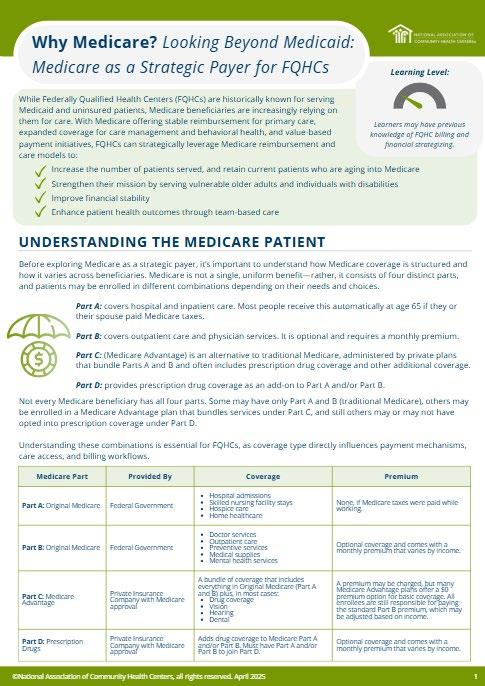
• Page 9: Why Medicare? Looking Beyond Medicaid: Medicare as a Strategic Payer for FQHCs
• Page 10: Medicare Billing Lingo, Defined!
Wellness, Prevention, & Education
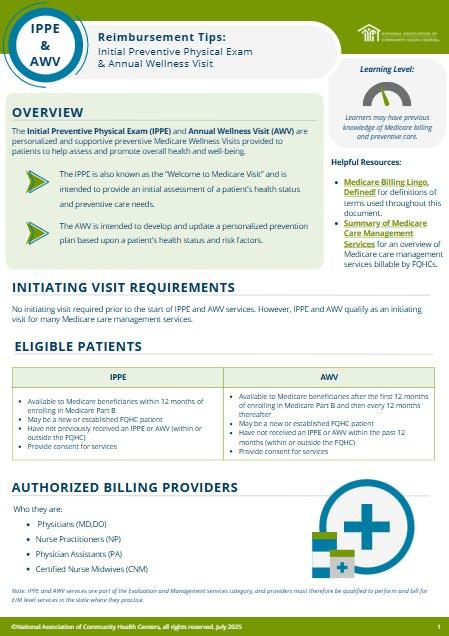
• Page 13: Initial Preventive Physical Exam & Annual Wellness Visits
• Page 14: Reimbursement Tips: Advance Care Planning
• Page 15: Reimbursement Tips: Diabetes SelfManagement Training & Medical Nutritional Therapy
• Page 16: Reimbursement Tips: Tobacco Cessation
Telehealth & Virtual Communication
• Page 18: Reimbursement Tips: Extended FQHC Telehealth Services
• Page 19: Reimbursement Tips: Mental Health Telehealth
• Page 20: Reimbursement Tips: Virtual Communication Services
Care Management Bundled Services
• Page 22: Medicare Care Management for FQHCs: Operational and Billing Essentials
• Page 23: Summary of Medicare Care Management Services
• Page 24: Reimbursement Tips: Chronic Care Management, Complex Chronic Care Management & Principal Care Management

• Page 25: CCM Return on Investment Calculator (download)
• Page 26: Reimbursement Tips: Transitional Care Management
• Page 27: Reimbursement Tips: Chronic Pain Management
• Page 28: Reimbursement Tips: Behavioral Health Integration
• Page 29: Reimbursement Tips: Psychiatric Collaborative Care Management
• Page 30: Reimbursement Tips: Community Health Integration
• Page 31: Reimbursement Tips: Principal Illness Navigation
• Page 32: Reimbursement Tips: Remote Physiologic Monitoring & Remote Therapeutic Monitoring
• Page 33: Sliding Coinsurance for Medicare Care Management
• Page 35: Reimbursement Tips: Advanced Primary Care Management
• Page 36: Reimbursement Tips: Program of All-Inclusive Care for the Elderly


FQHCs can strategically leverage Medicare reimbursement and care models to:
Increase the size of their patient population served, and retain their current aging population
Strengthen their mission by serving vulnerable older adults and individuals with disabilities
Improve financial stability
Enhance population health outcomes through teambased care and opportunities for reimbursement led by care team members other than the provider

Start by considering the primary payment mechanisms available to FQHCs across Medicare, Medicaid, commercial payers, and self-pay patients.

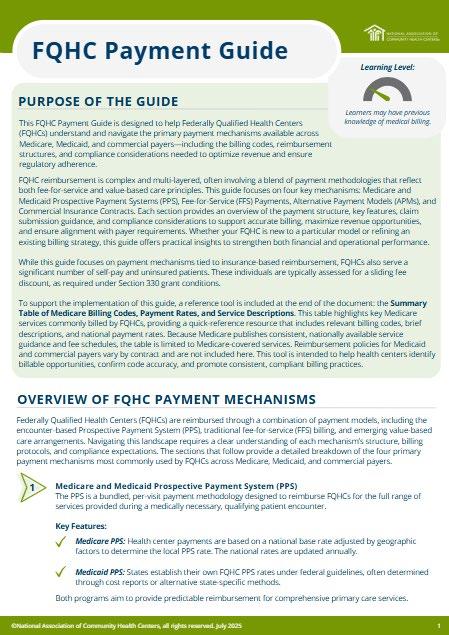


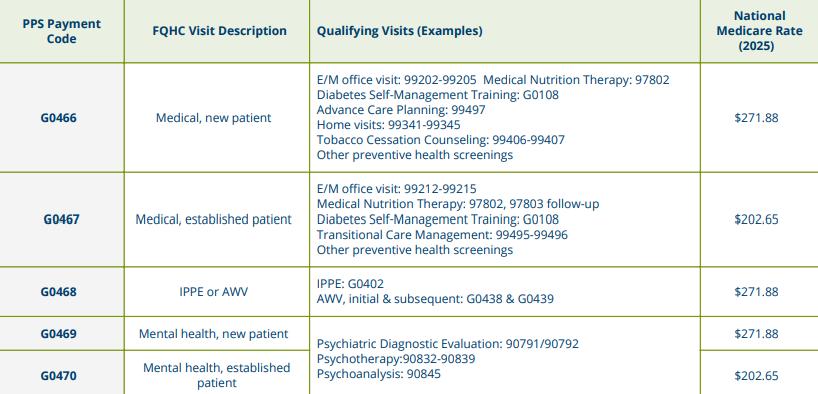
The FQHC Payment Guide also includes a summary table of Medicare billing codes, payment rates, and service descriptions.



Provides an overview of how Medicare coverage is structured, why FQHCs should strategically leverage reimbursement and care models, and a summary of key differences across payers. Ideal for FQHCs building familiarity with Medicare and its opportunities.



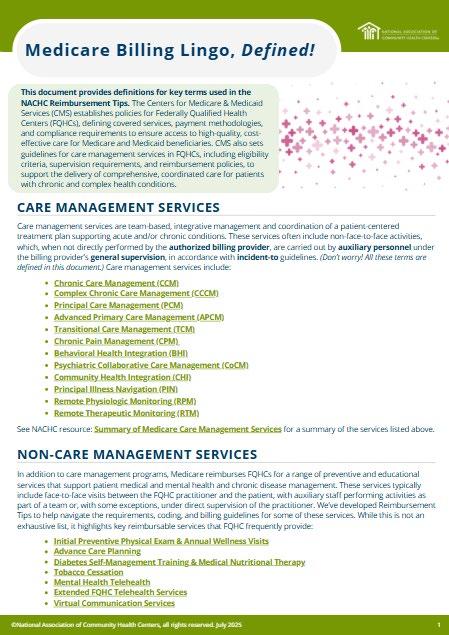

For a reference list of terms and definitions used throughout NACHC’s Medicare reimbursement resources, see Medicare Billing Lingo, Defined!
Medicare services reimbursed at the Prospective Payment System (PPS) rate focused on patient wellness, disease prevention, and education.


Initial Preventive Physical Exams (IPPE) and Annual Wellness Visits (AWV) are personalized and supportive preventive Medicare Wellness Visits provided to patients to help assess and promote overall health and well-being.

Medicare Wellness Visits are an important opportunity to:
Improve patient outcomes:
Detect potential health risks early
Enhance care coordination
Identify and close care gaps
Reduce hospitalizations
Encourage patients to engage in preventive and wellness care
Increase health center revenue:
Increase visit volumes
Optimize reimbursement through Medicare’s PPS
Identify patients for other needed services, including chronic care management
Support quality incentive payments within valuebased care models
This Reimbursement Tip Sheet provides FQHCs with simplified, easy-to-understand instructions for providing and billing Medicare for Medicare Wellness Visits.
Available here



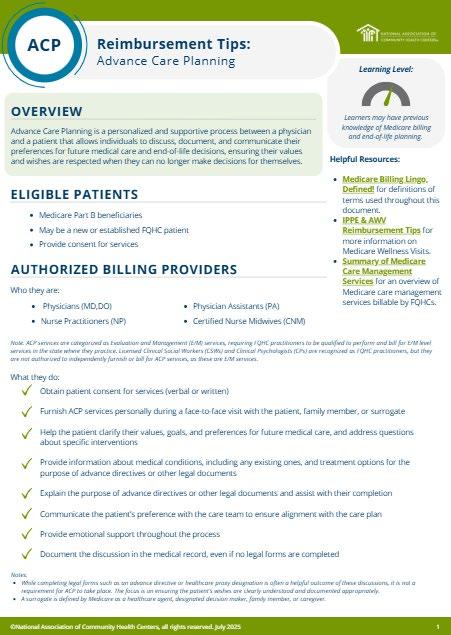

Advance Care Planning is a personalized and supportive process between a physician and a patient that allows individuals to discuss, document, and communicate their preferences for future medical care and end-of-life decisions, ensuring their values and wishes are respected when they can no longer make decisions for themselves.
Reimbursement Tip Sheet Available here
Diabetes Self-Management Training (DSMT) and Medical Nutrition Therapy (MNT) are Diabetes Self-Management Education and Support (DSMES) services provided to patients with diabetes to establish the foundation of care, skills, and behaviors needed to self-manage their diabetes so that they can improve their health and quality of life.
Reimbursement Tip Sheet Available here

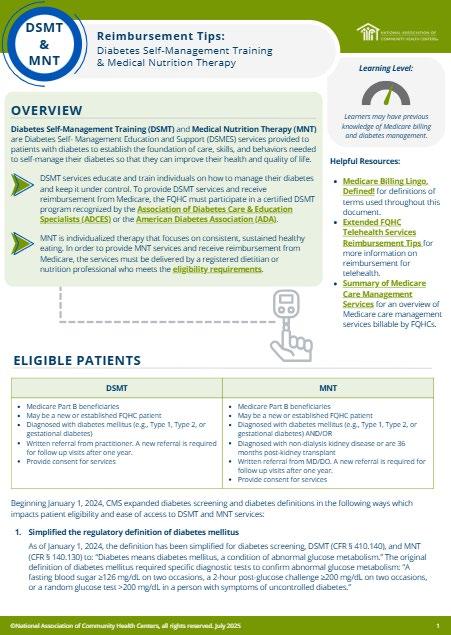

Tobacco cessation counseling services are personalized and supportive behavioral change interventions provided to patients who struggle with nicotine dependence and/or the toxic effects of tobacco and nicotine. Tobacco cessation counseling is a Medicare medical preventive visit for which FQHCs can receive full PPS reimbursement.
Reimbursement Tip Sheet Available here

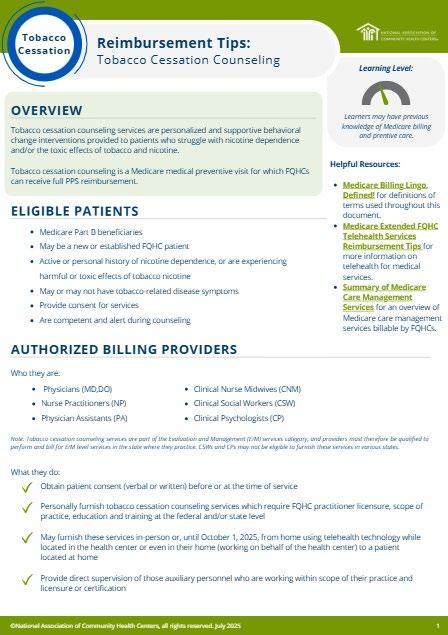

Medicare telehealth services have expanded access to care, allowing FQHC patients to connect with providers remotely for behavioral health, medical and preventive services, and more.
While some flexibilities remain temporary, this section outlines billing options for key FQHC virtual care services under current Medicare policy.

Eligible Medicare Part B telehealth visits are reimbursable when they involve the use of interactive audio-visual or audio-only telecommunications technology permitting two-way, real-time communication between the qualified provider and patient. Any of these services may also be furnished in-person.
Reimbursement Tip Sheet Available here


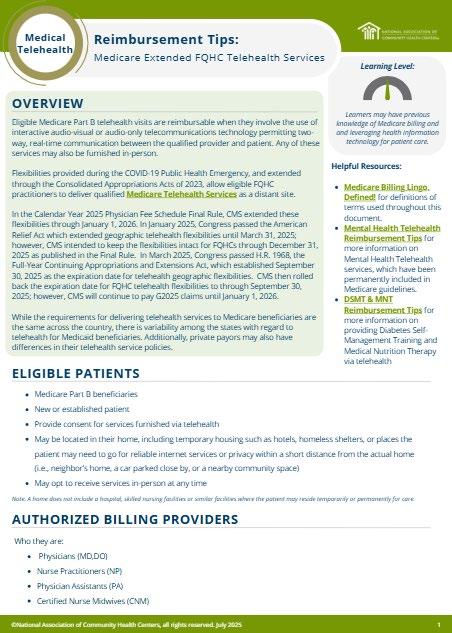


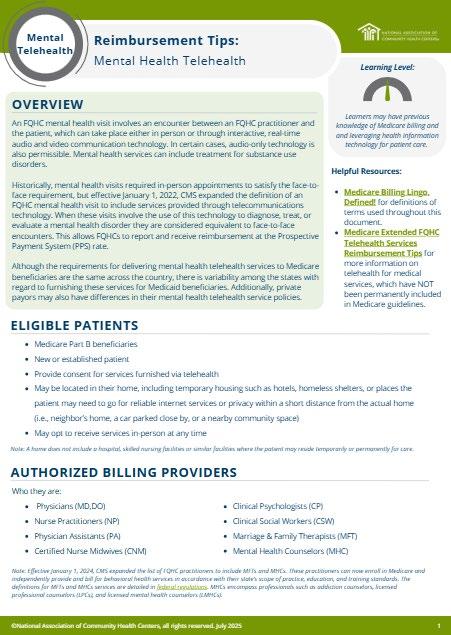
An FQHC mental health visit involves an encounter between an FQHC practitioner and the patient, which can take place either in person or time audio and video communication technology. In certain cases, audio-only technology is also permissible.
Reimbursement Tip Sheet Available here

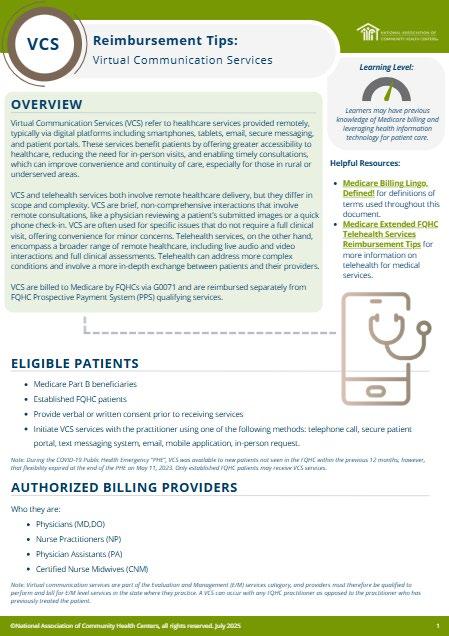
Virtual Communication Services (VCS) refer to healthcare services provided remotely, typically via digital platforms including smartphones, tablets, email, secure messaging, and patient portals. These services benefit patients by offering greater accessibility to healthcare, reducing the need for in-person visits, and enabling timely consultations, which can improve convenience and continuity of care, especially for those in rural or underserved areas.
Reimbursement Tip Sheet Available here
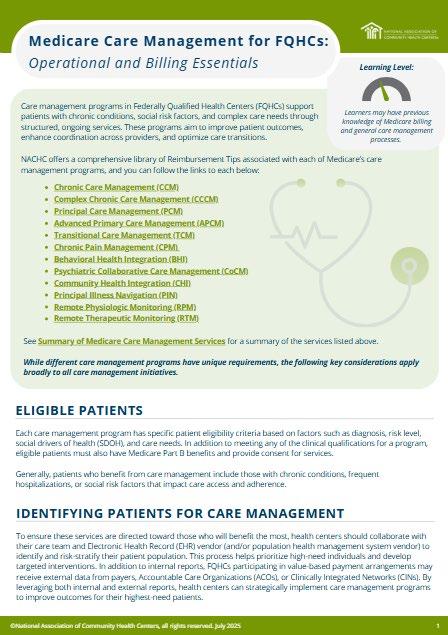
Care management programs support patients with chronic conditions, social risk factors, and complex care needs through structured, ongoing services.
These programs aim to improve patient outcomes, enhance coordination across providers, and optimize care transitions.

Provides an overview of key considerations that apply broadly across all Medicare care management programs. Ideal for health centers considering, or beginning, to offer care management services. Available here


Available here
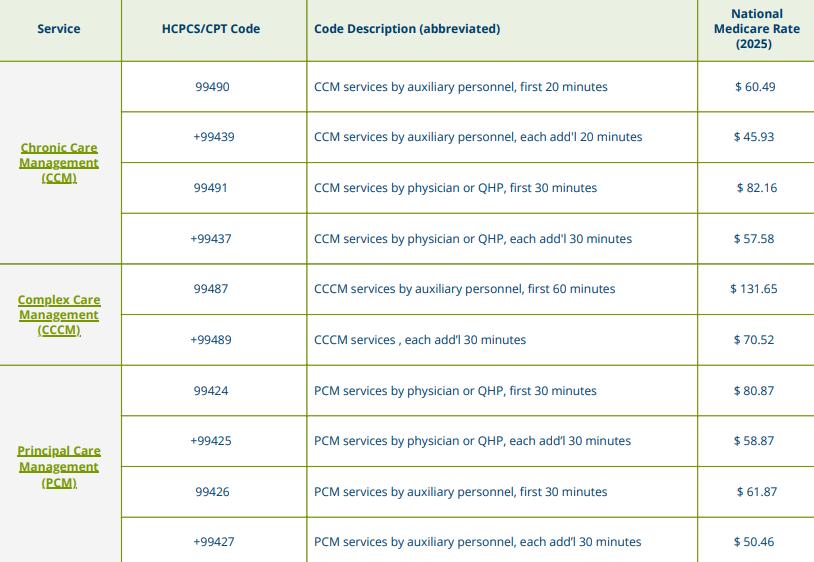
Provides an at-a-glace comparison of Medicare care management opportunities. Ideal for health centers deciding which services are the best fit for their patient population needs and their staffing model.
Summary Includes:
Description of each service
Eligible patients
Authorized billing providers
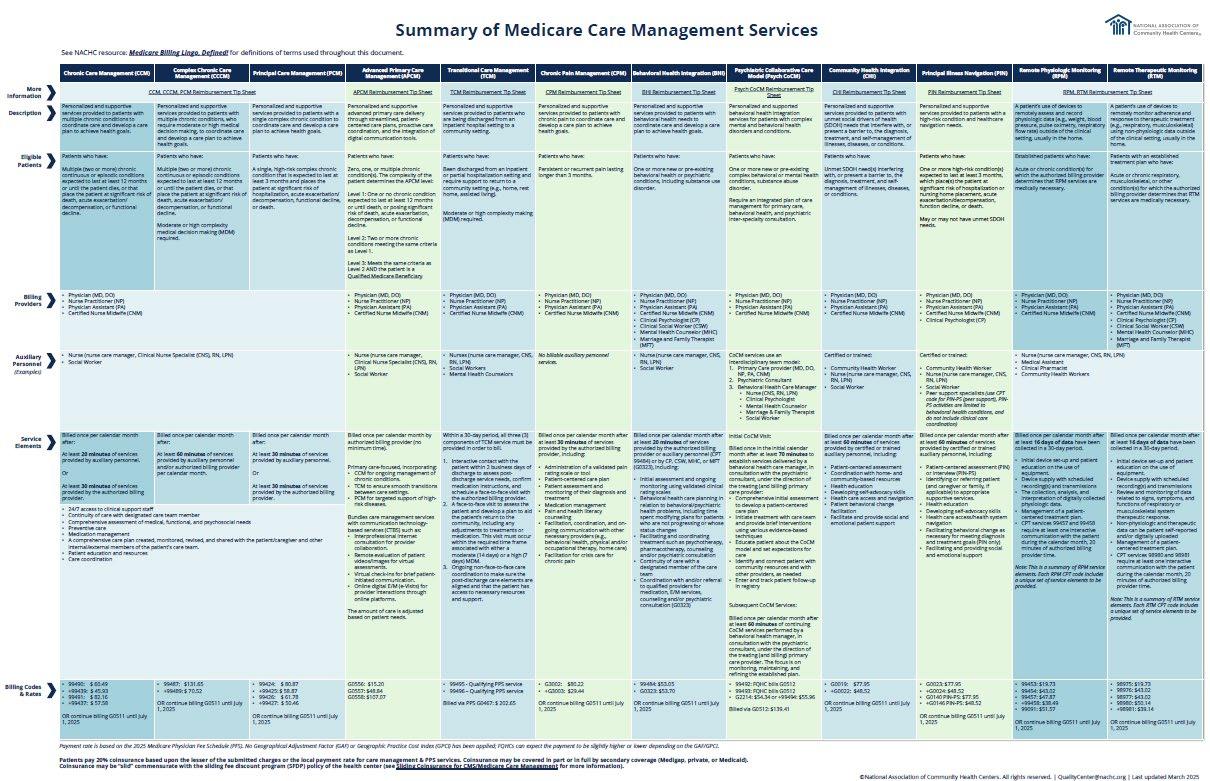
Examples of auxiliary personnel
Service elements

Billing codes and rates
• Chronic Care Management (CCM)
• Complex Chronic Care Management (CCCM)
• Principal Care Management (PCM)

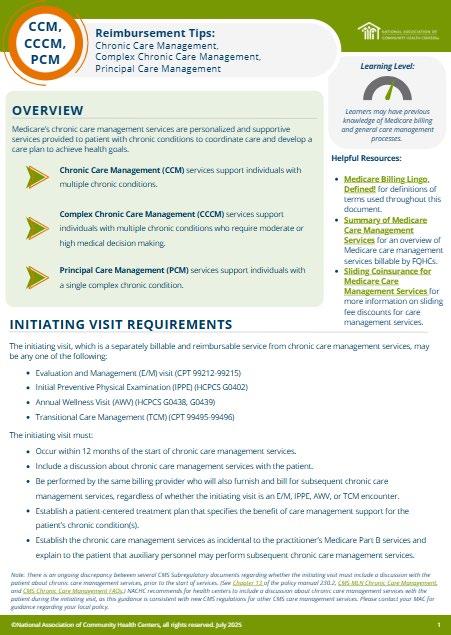
Medicare’s chronic care management services are personalized and supportive services provided to patients with chronic conditions to coordinate care and develop a care plan to achieve health goals.
Reimbursement Tip Sheet
Available here

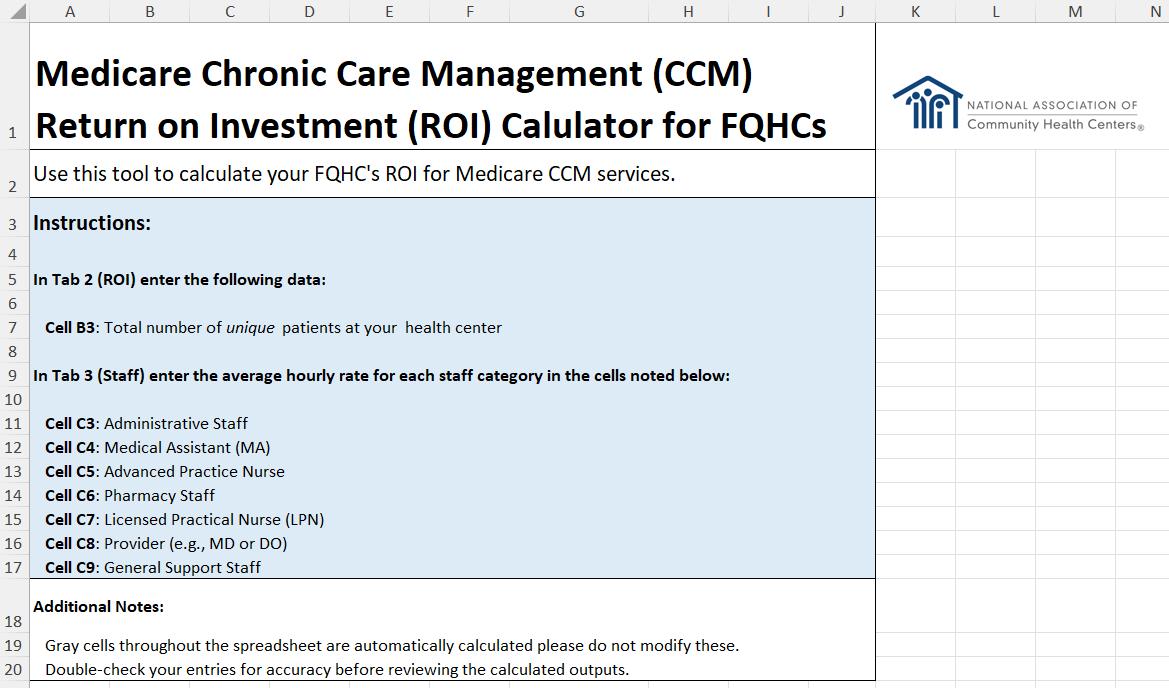

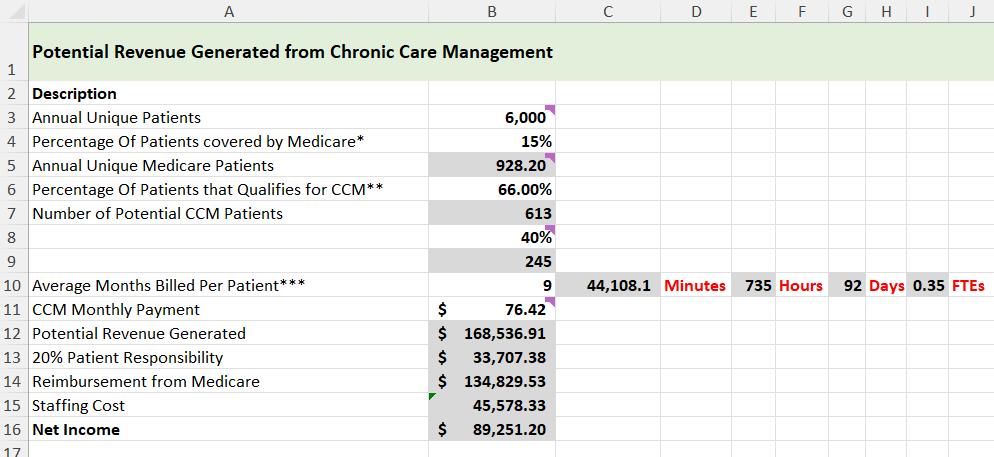

Use this tool to calculate your FQHC’s ROI for providing CCM services. Available here (download)
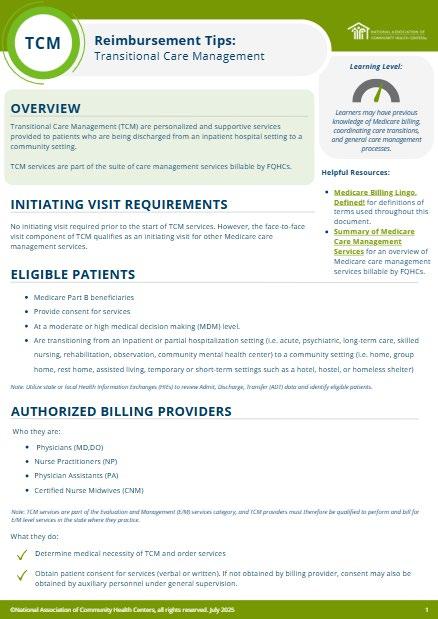
Transitional Care Management (TCM) are personalized and supportive services provided to patients who are being discharged from an inpatient hospital setting to a community setting.
Reimbursement Tip Sheet Available here


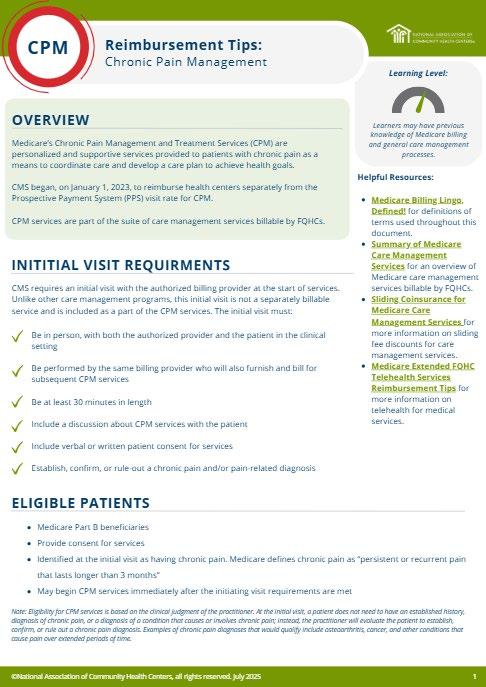

Medicare’s Chronic Pain Management and Treatment Services (CPM) are personalized and supportive services provided to patients with chronic pain as a means to coordinate care and develop a care plan to achieve health goals.
Reimbursement Tip Sheet Available here

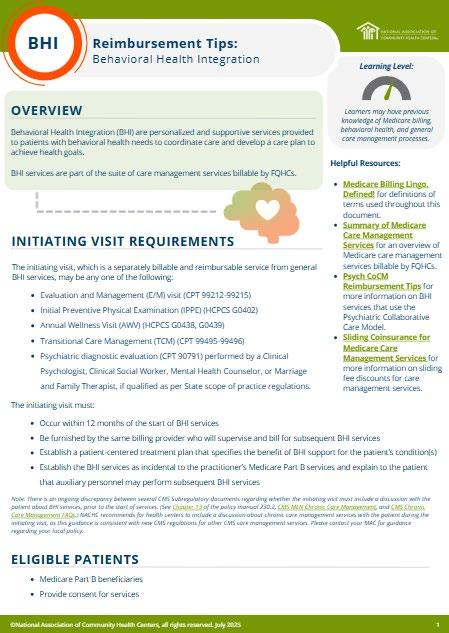
Behavioral Health Integration (BHI) are personalized and supportive services provided to patients with behavioral health needs to coordinate care and develop a care plan to achieve health goals.
Reimbursement Tip Sheet Available here




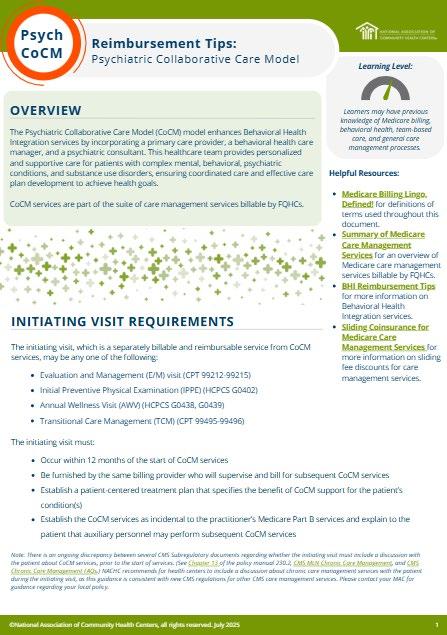
The Psychiatric Collaborative Care Model behavioral health integration services (see NACHC Reimbursement Tips for BHI) by incorporating a primary care provider, a behavioral health care manager, and a psychiatric consultant. This healthcare team provides personalized and supportive care for patients with complex mental, behavioral, psychiatric conditions, and substance use disorders, ensuring coordinated care and effective care plan development to achieve health goals.
Reimbursement Tip Sheet Available here
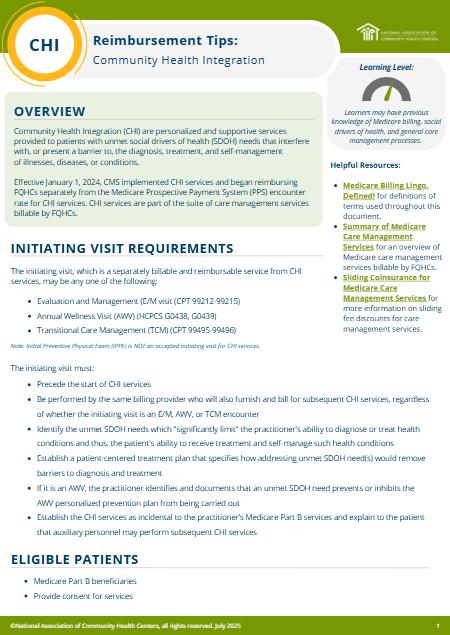
Community Health Integration (CHI) are personalized and supportive services provided to patients with unmet social drivers of health (SDOH) needs that interfere with, or present a barrier to, the diagnosis, treatment, and self-management of illnesses, diseases, or conditions.
Reimbursement Tip Sheet Available here



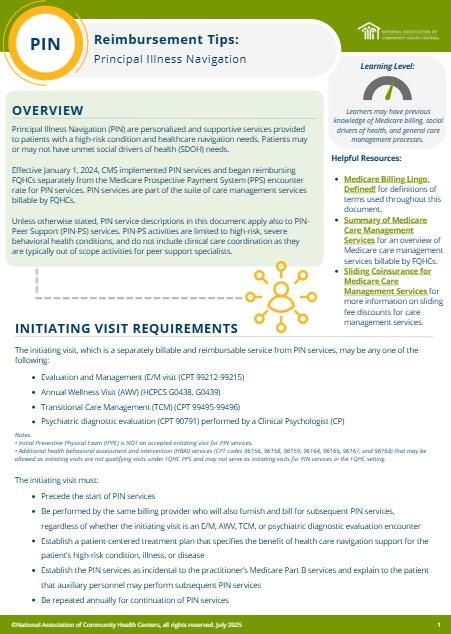

Principal Illness Navigation (PIN) are personalized and supportive services provided to patients with a high-risk condition and healthcare navigation needs. Patients may or may not have unmet social drivers of health (SDOH) needs.
Reimbursement Tip Sheet Available here
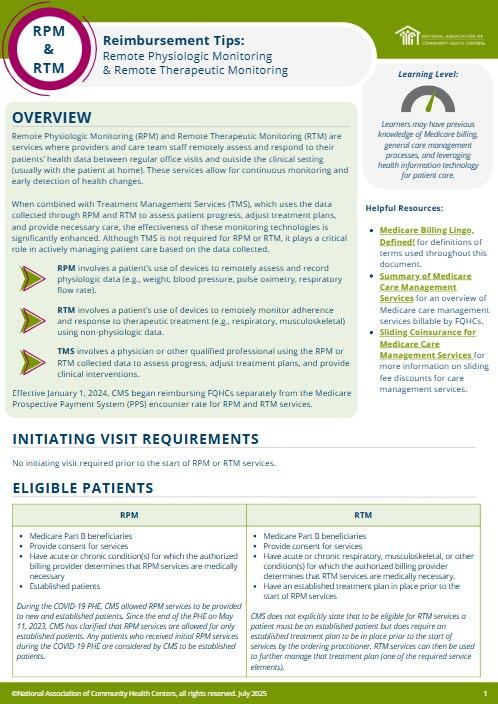
Remote Physiologic Monitoring (RPM) and Remote Therapeutic Monitoring (RTM) are services where providers and care team staff remotely assess and respond to their patients’ health data between regular office visits and outside the clinical setting (usually with the patient at home). These services allow for continuous monitoring and early detection of health changes.
Reimbursement Tip Sheet Available here

For Medicare Care Management Services, patients pay 20% coinsurance based upon the lesser of the submitted charges or the local payment rate for the service codes. Coinsurance may be covered in part or in full by secondary coverage. Coinsurance may be “slid” commensurate with the sliding fee discount program policy of the health center.
See Sliding Coinsurance for Medicare Care Management
For an example of how Medicare services can work together to support a patient, view these two short videos:
1. Meet Maria!
2. Layering the Cake


Bundled services combine a set of specified care services into a single, predetermined payment.
These programs aim to enhance coordination across providers, improve care efficiency, reduce administrative burden, and improve patient outcomes.

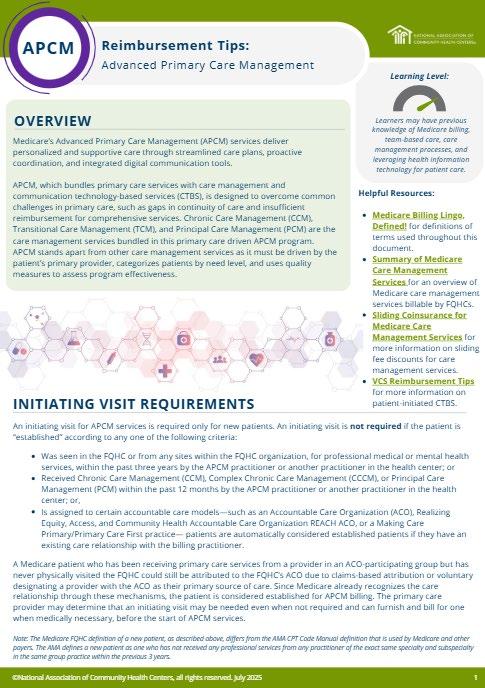

Medicare’s Advanced Primary Care Management (APCM) services deliver personalized and supportive care through streamlined care plans, proactive coordination, and integrated digital communication tools.
Supports FQHCs working within value-based care models!
Reimbursement Tip Sheet Available here


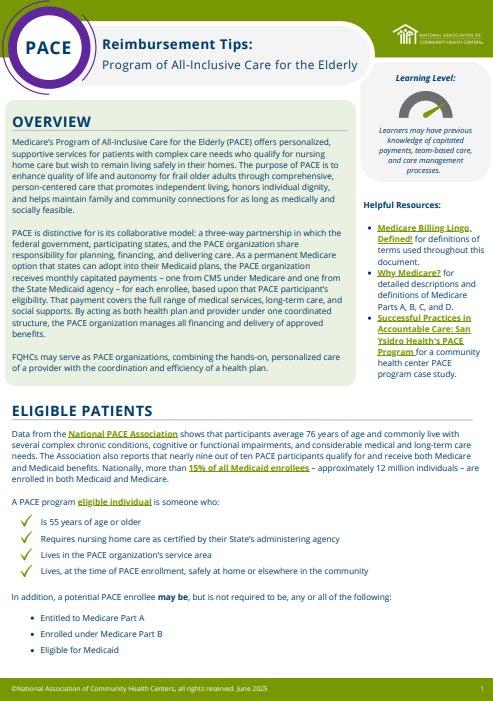
Medicare’s Program of All-Inclusive Care for the Elderly (PACE) offers personalized, supportive services for patients with complex care needs who qualify for nursing home care but wish to remain living safely in their homes. The purpose of PACE is to enhance quality of life and autonomy for frail older adults through comprehensive, person-centered care that promotes independent living, honors individual dignity, and helps maintain family and community connections for as long as medically and socially feasible.
Reimbursement Tip Sheet Available here