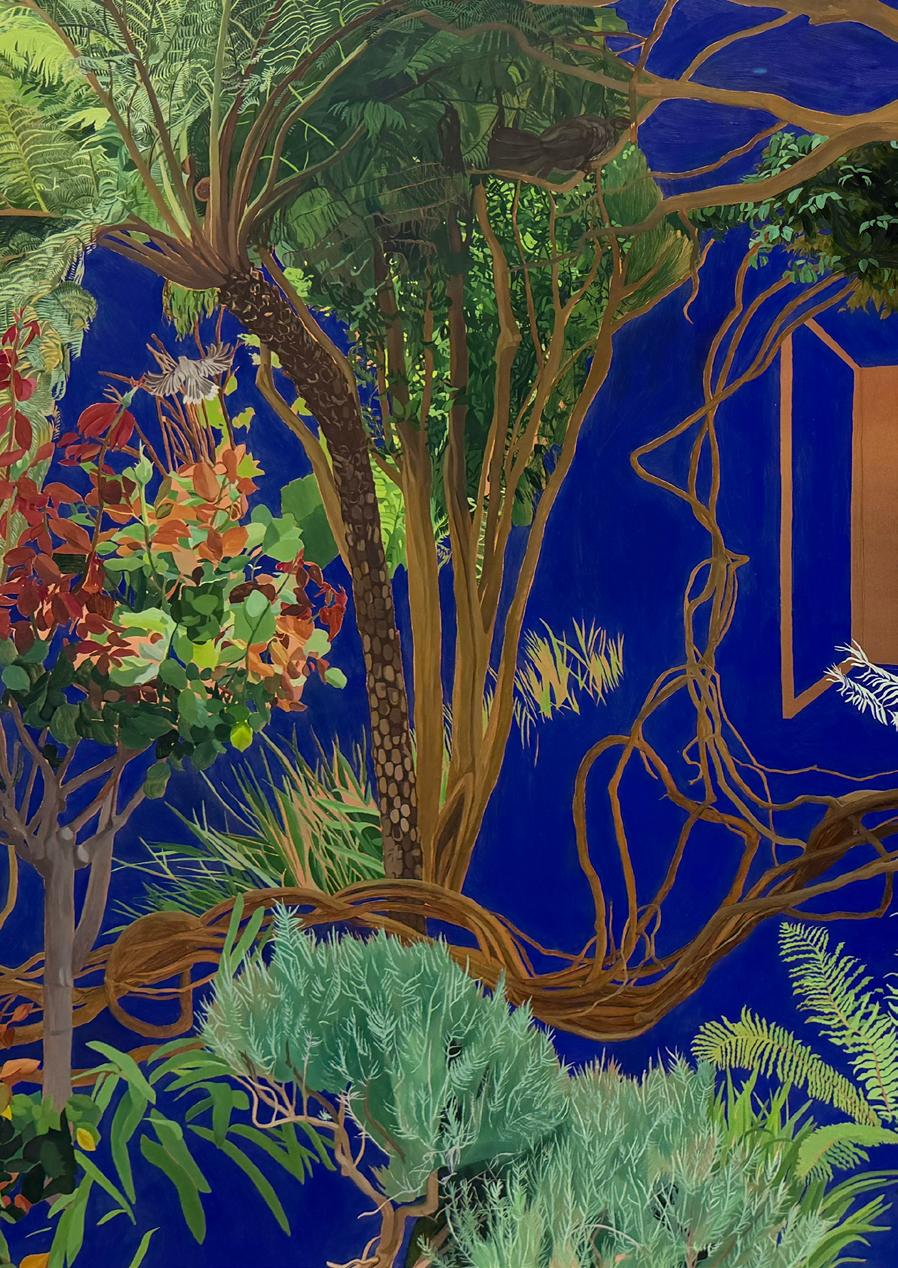
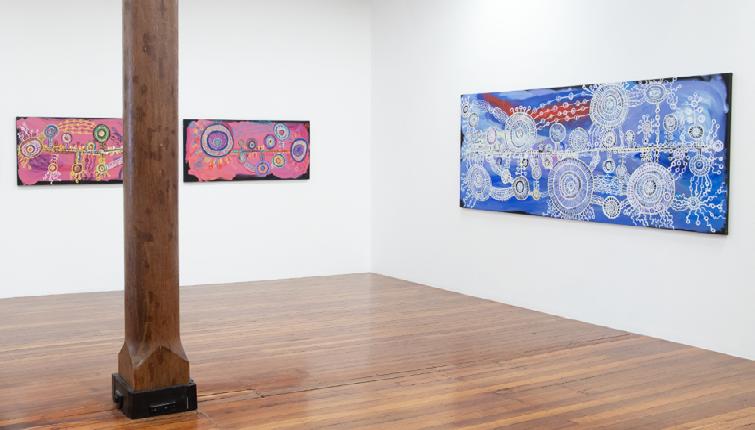
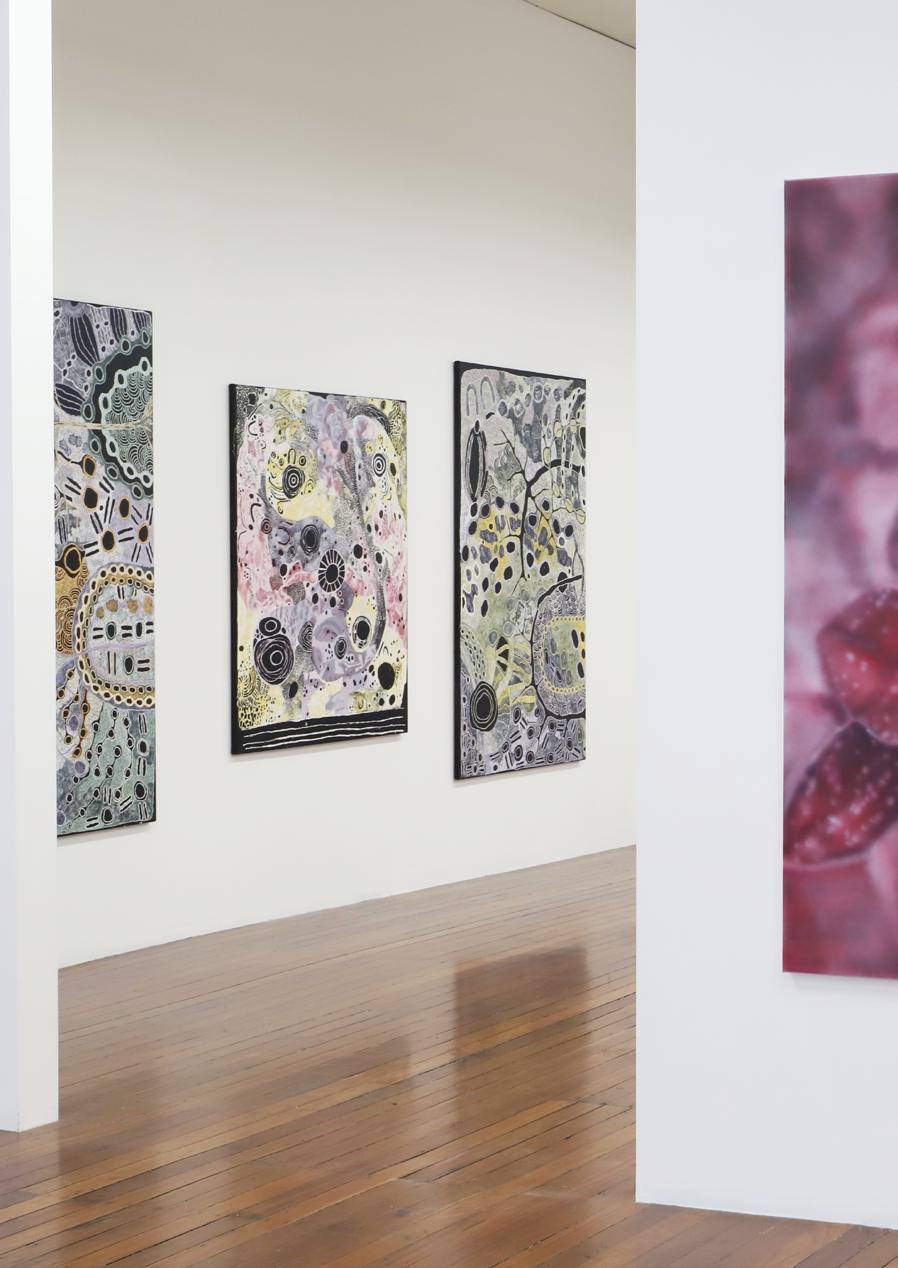
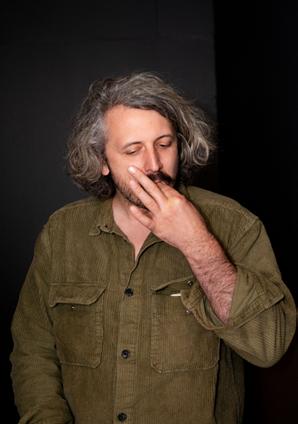
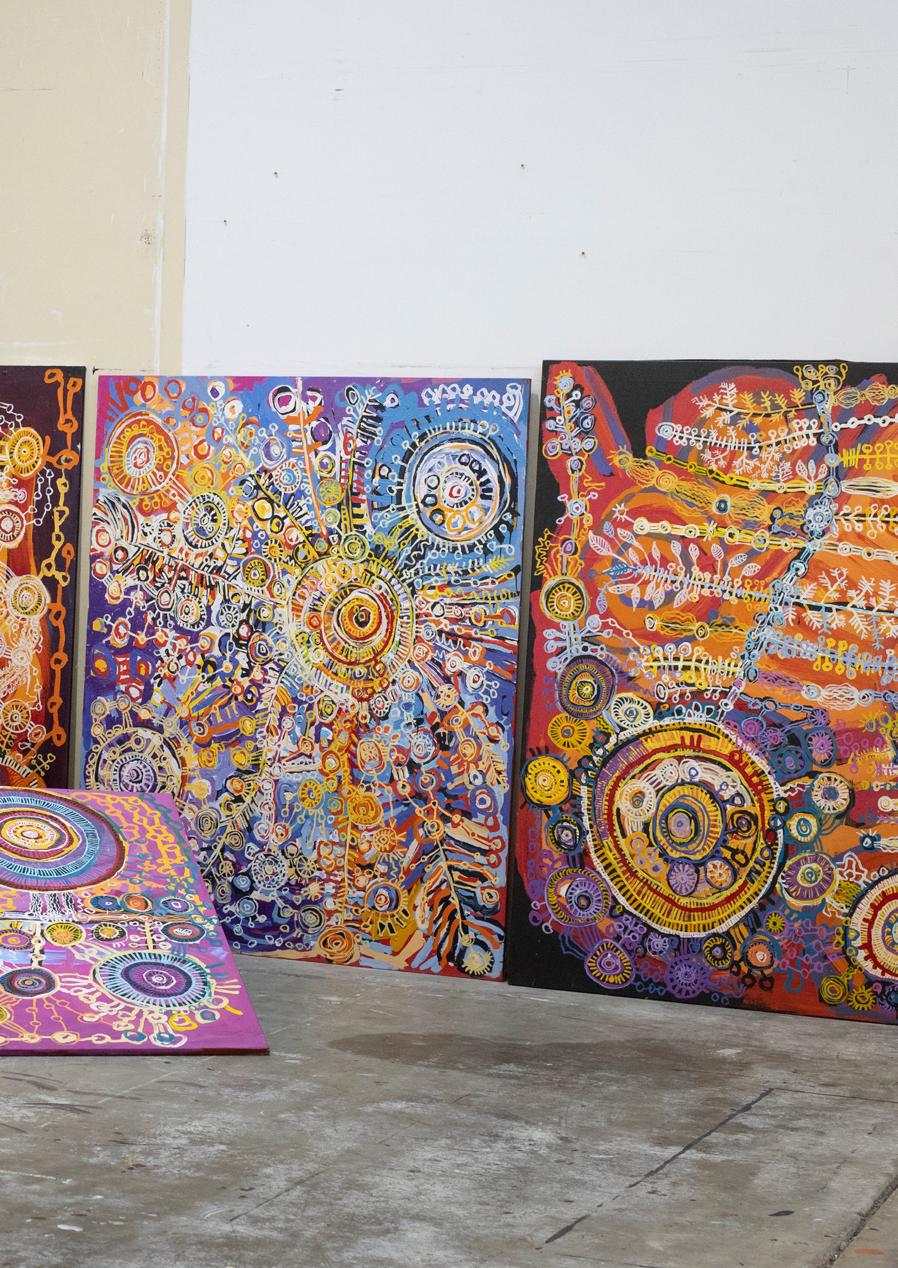
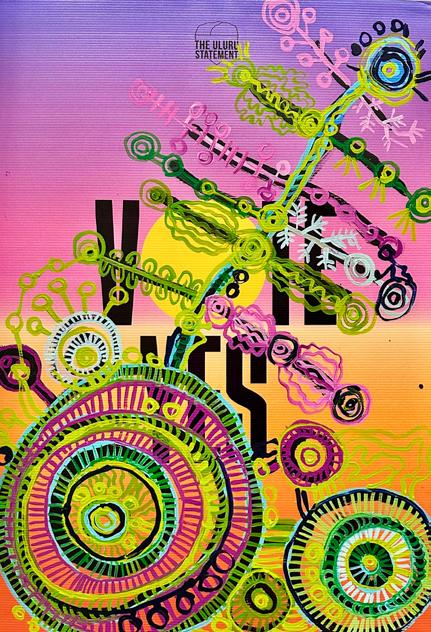
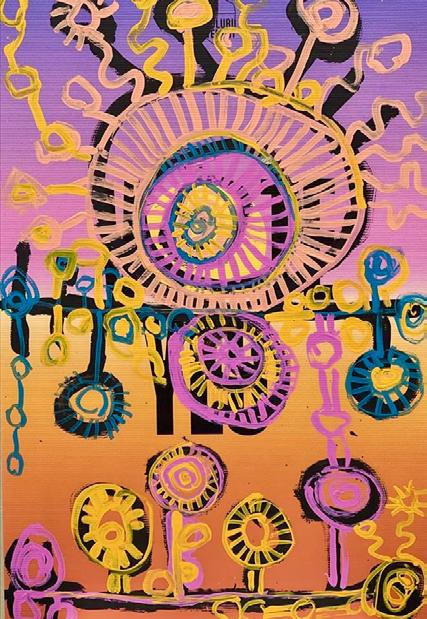
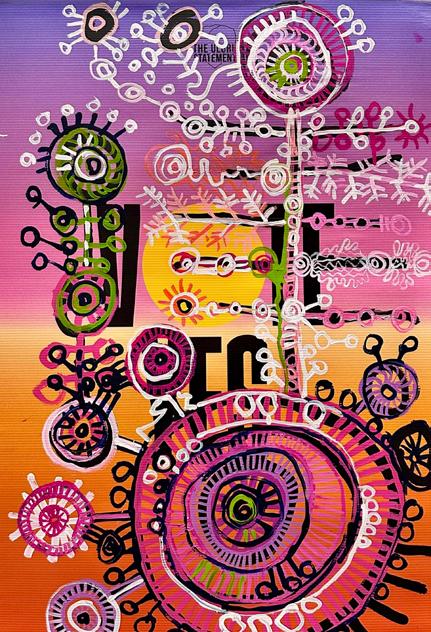
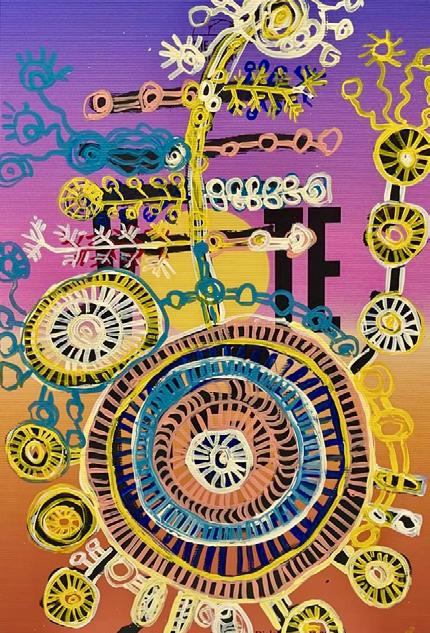
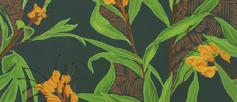
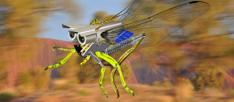
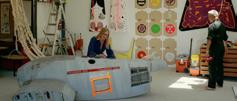
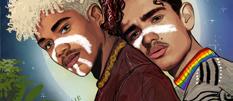
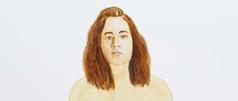
Mason Kimber / Fiona Lowry / Mimili Maku Arts artists Umatji Tjapalyi, Emma Singer, Betty Campbell, and Pauline Wangin / Dylan Mooney / Thea Anamara Perkins / Joan Ross
Marilyn Russell / Darrell Sibosado / Sally Scales / Vipoo Srivilasa / James Tylor / Kate Vassallo
Natasha Walsh / Christopher Zanko / Louise Zhang
86.5
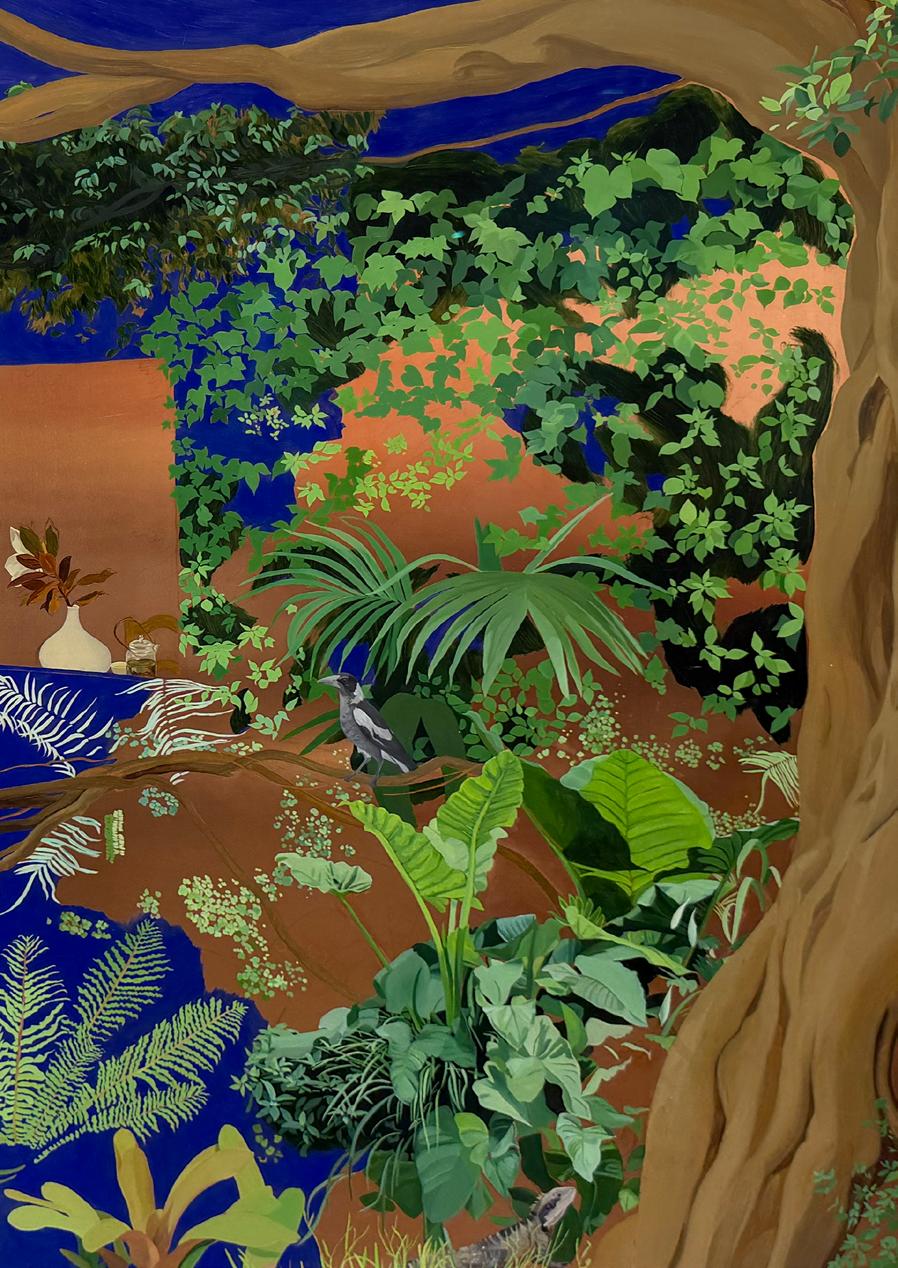
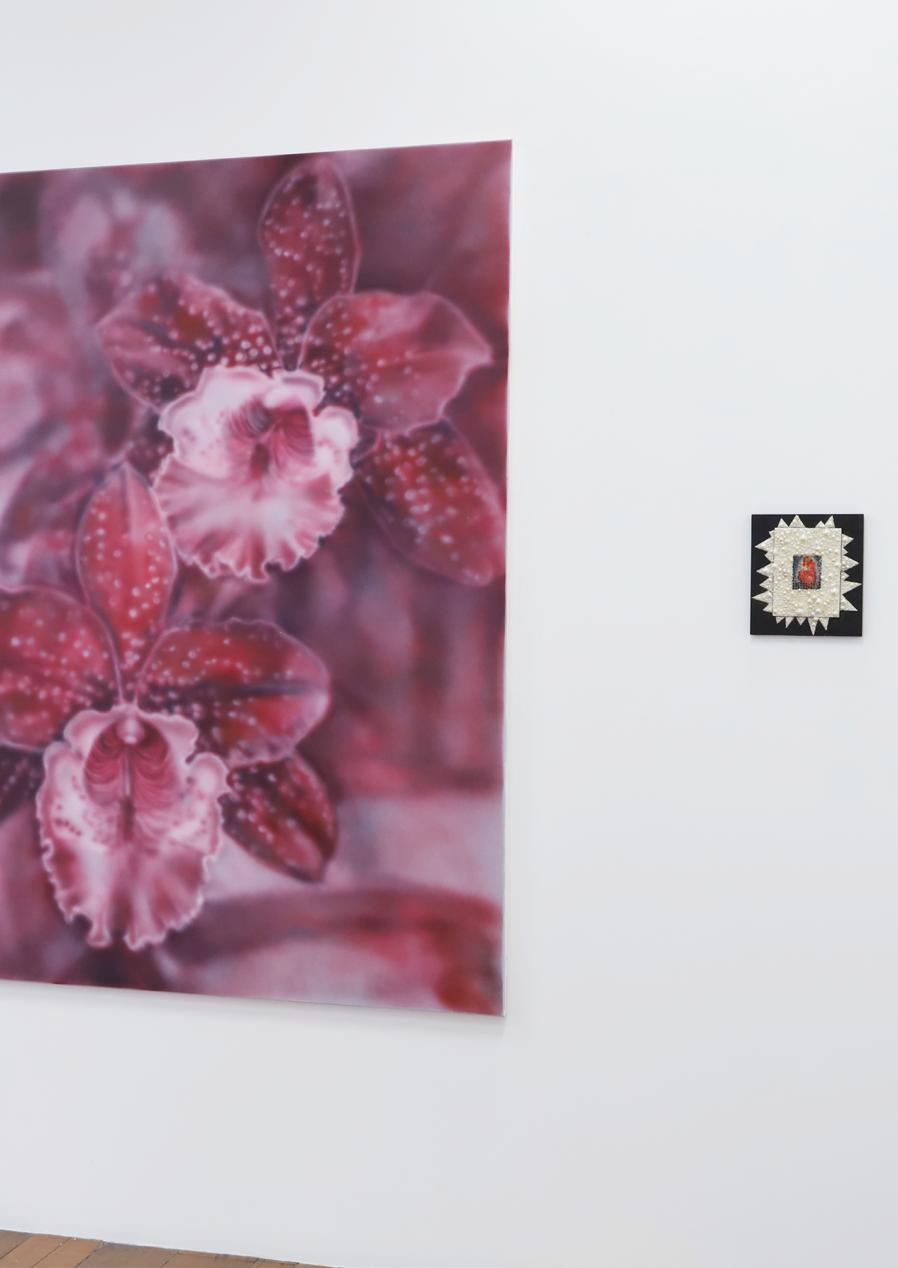
Natasha Walsh
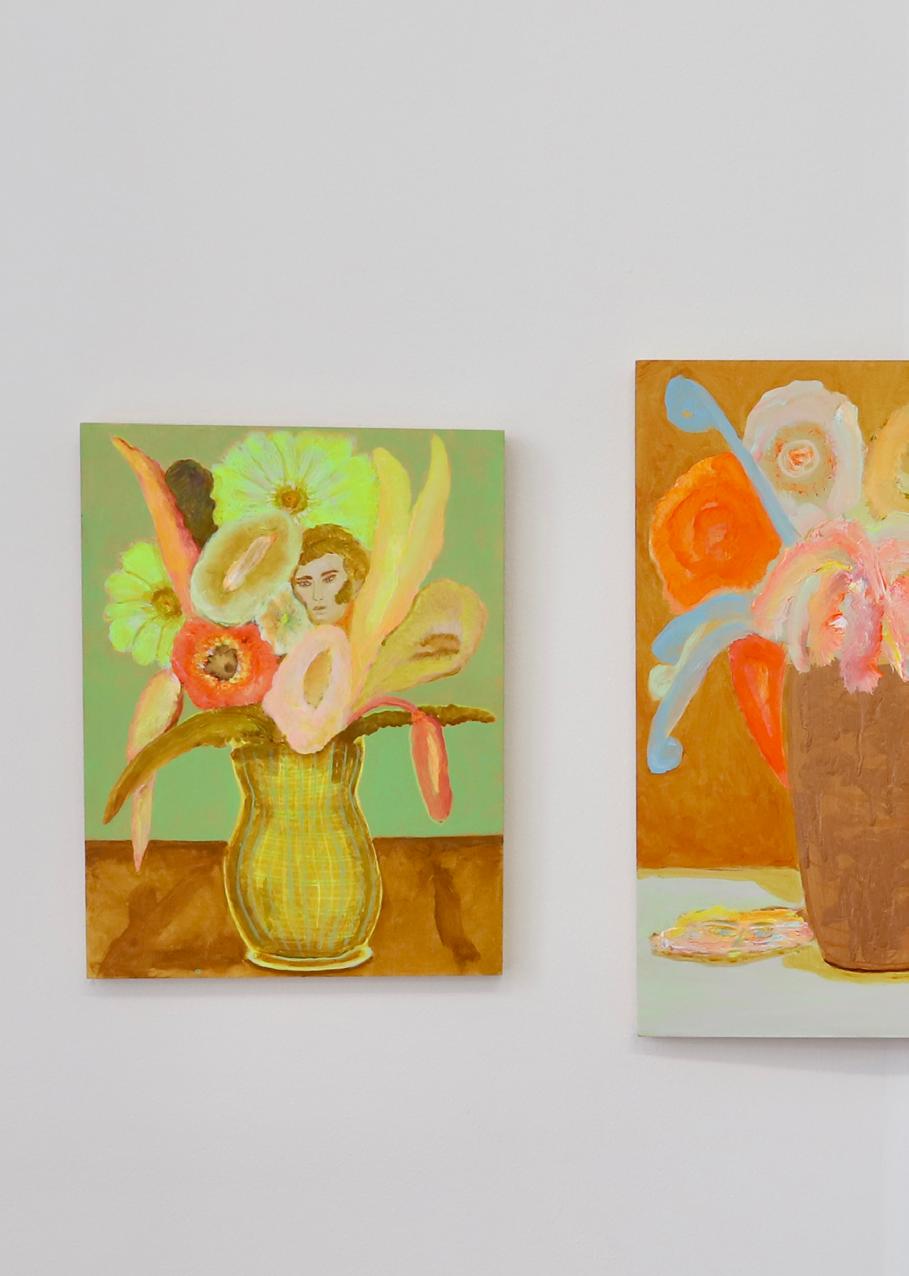
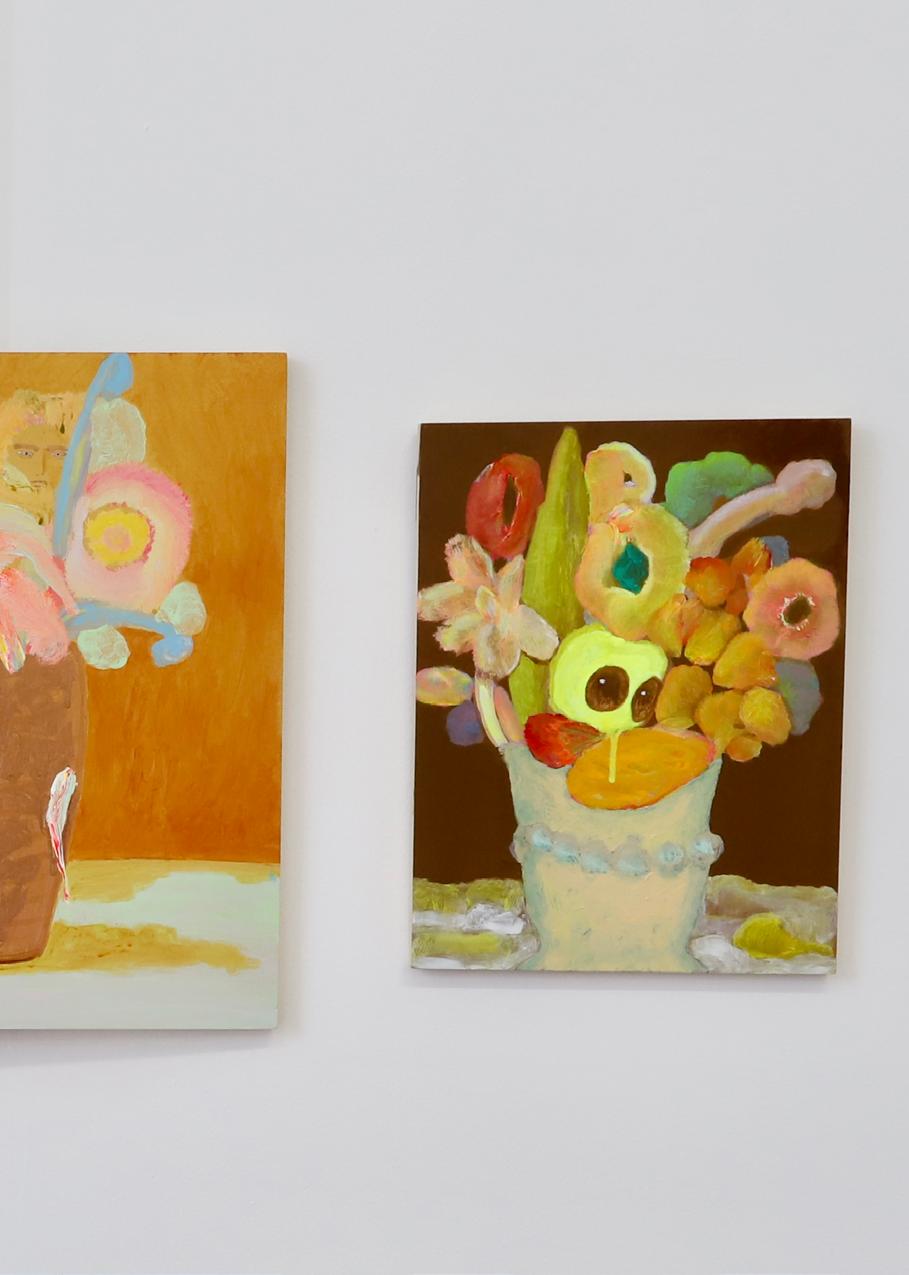
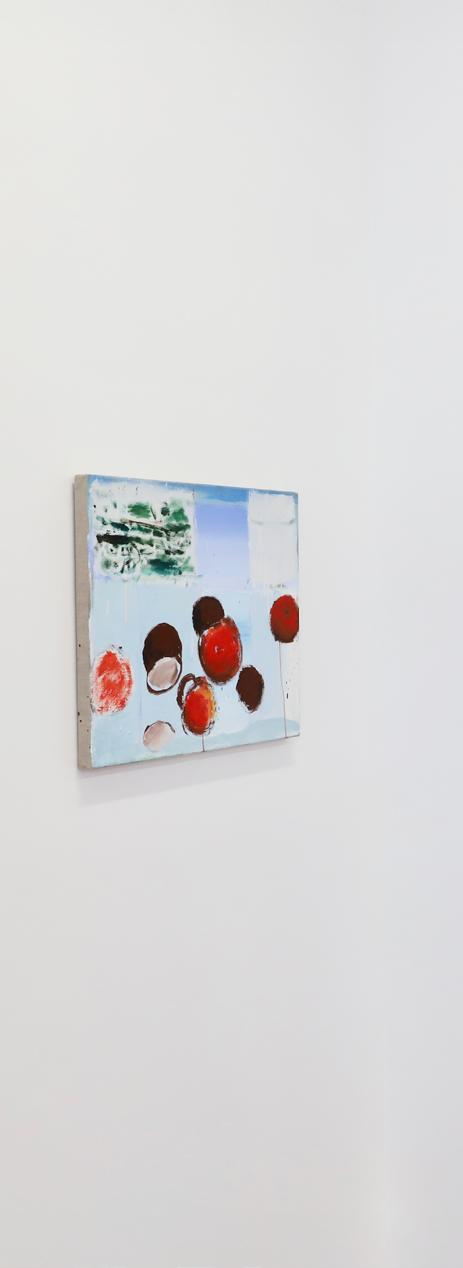
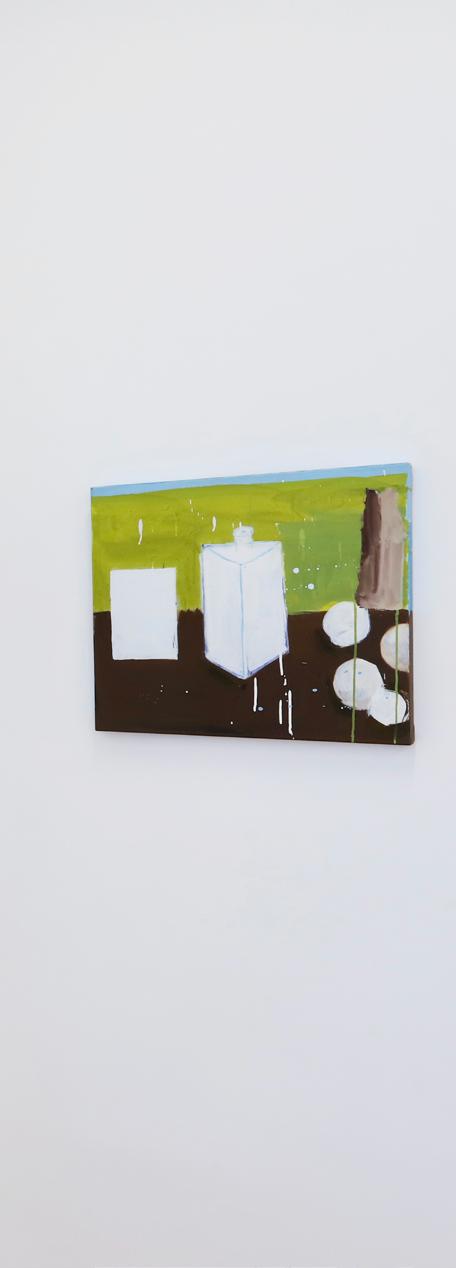
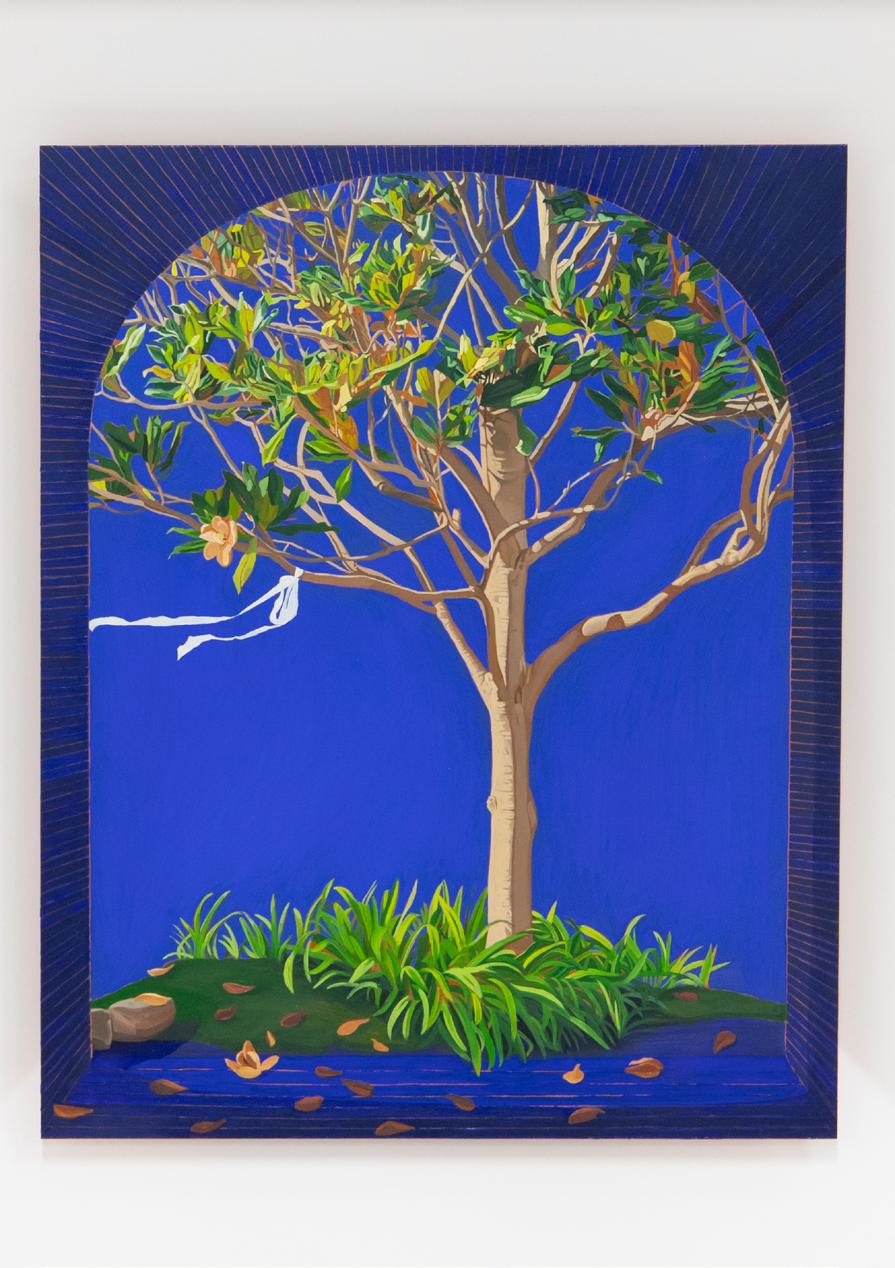
Cornucopia, 2026 oil and pigment on copper
x 100 cm
Kate Vassallo
Mimili
Claire
Cordeiro
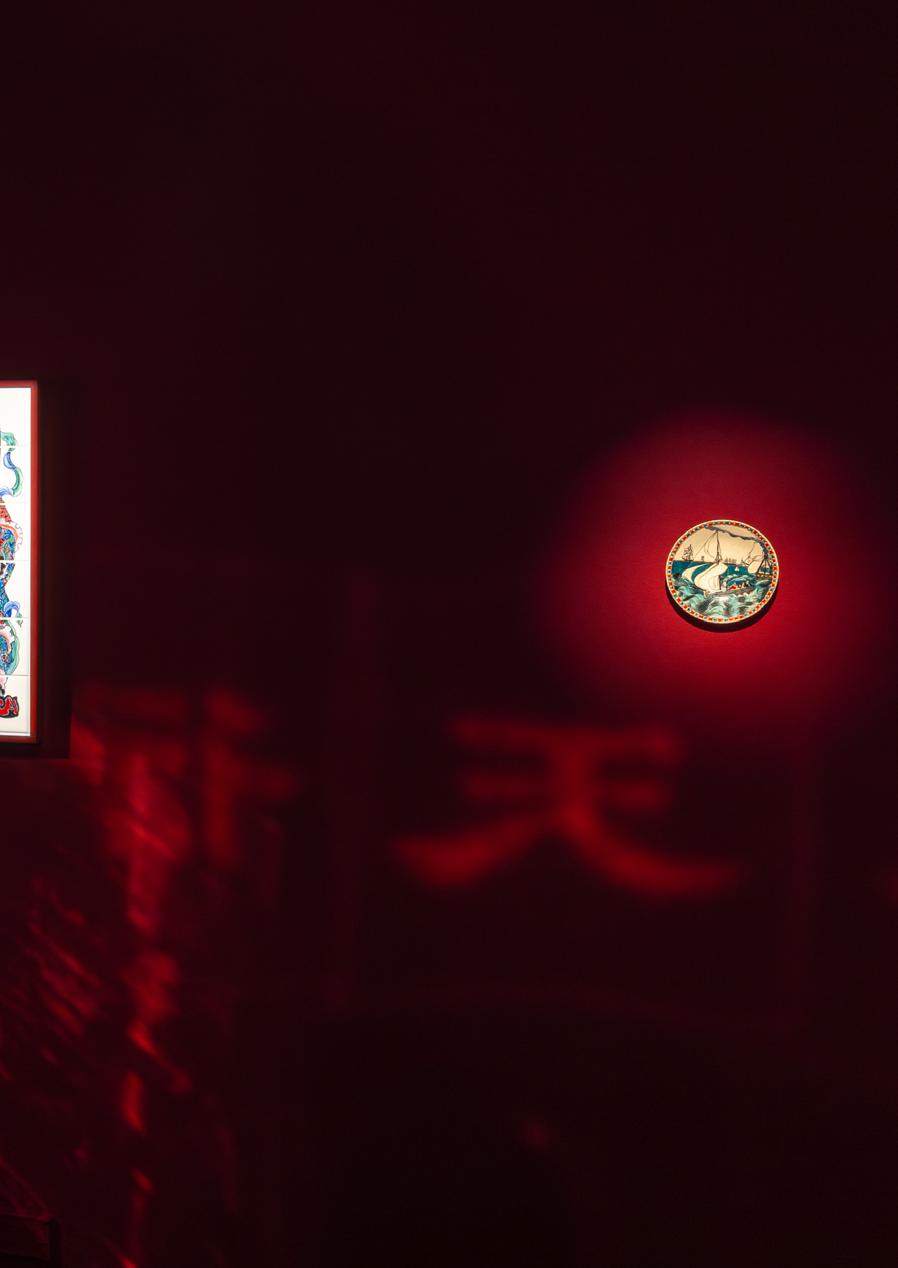
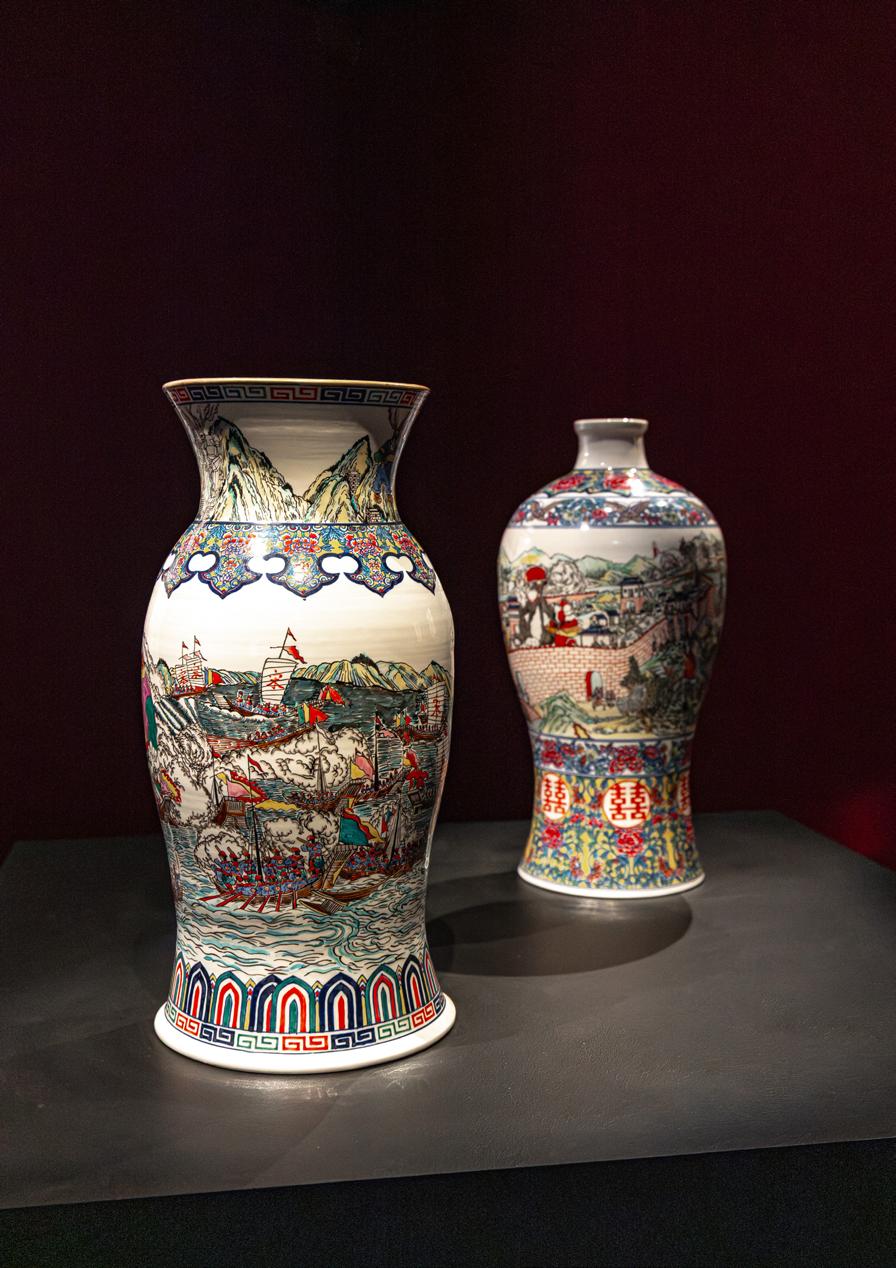
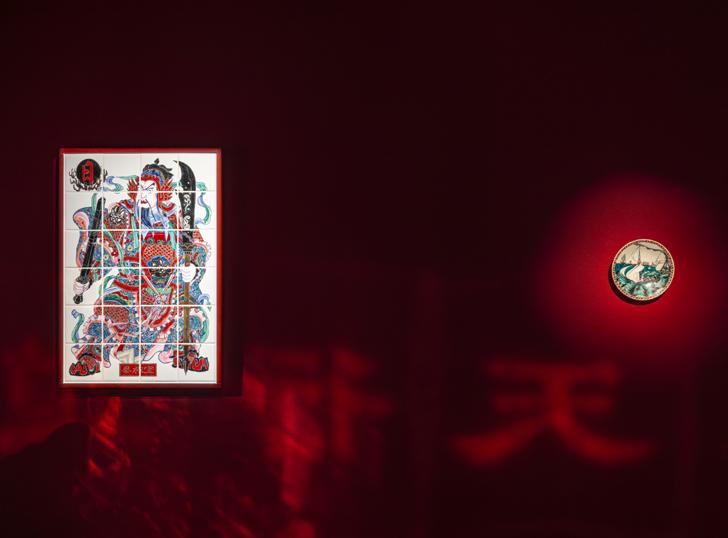
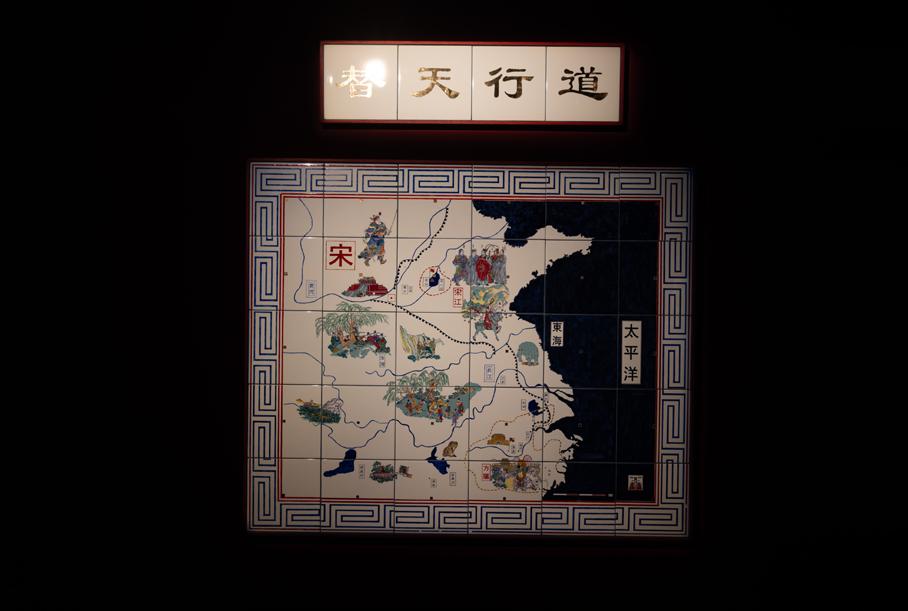
Casey Chen: Merciful
Navigation
Joan Ross: I give you a mountain
Vipoo Srivilasa: If We're Being Honest
Darrell Sibosado: Manawan
Tom
Sally
Sally Scales
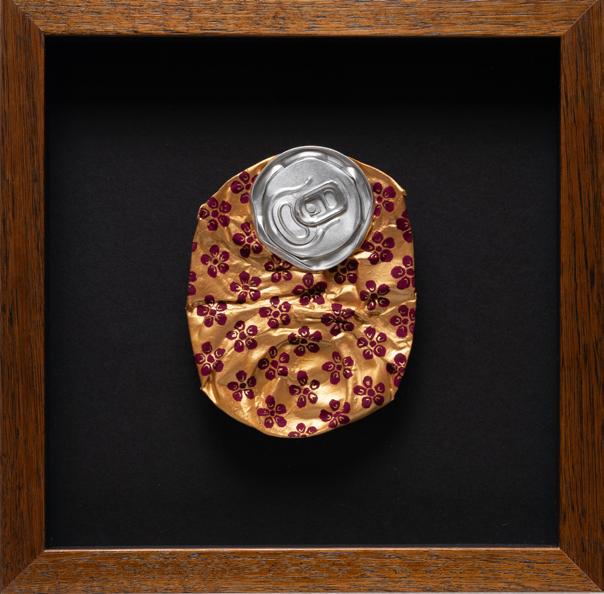
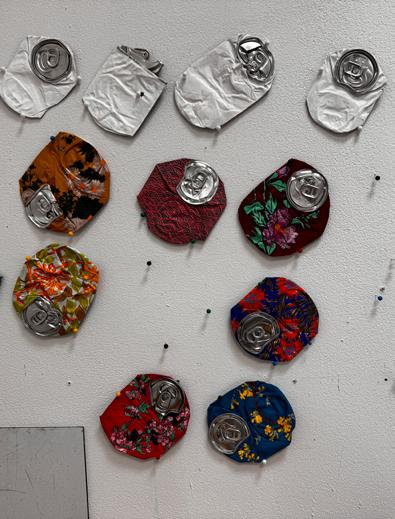
Claire Healy & Sean Cordeiro 偽客 (Sakura), 2026
acrylic gouache on repurposed aluminium can 26 x 26 cm
CONTRIBUTORS
N.Smith
Laura Couttie
Sophie Gerhard
Caine Chennatt
PUBLISHING COORDINATOR
Rosy Leake
COVER ARTWORK
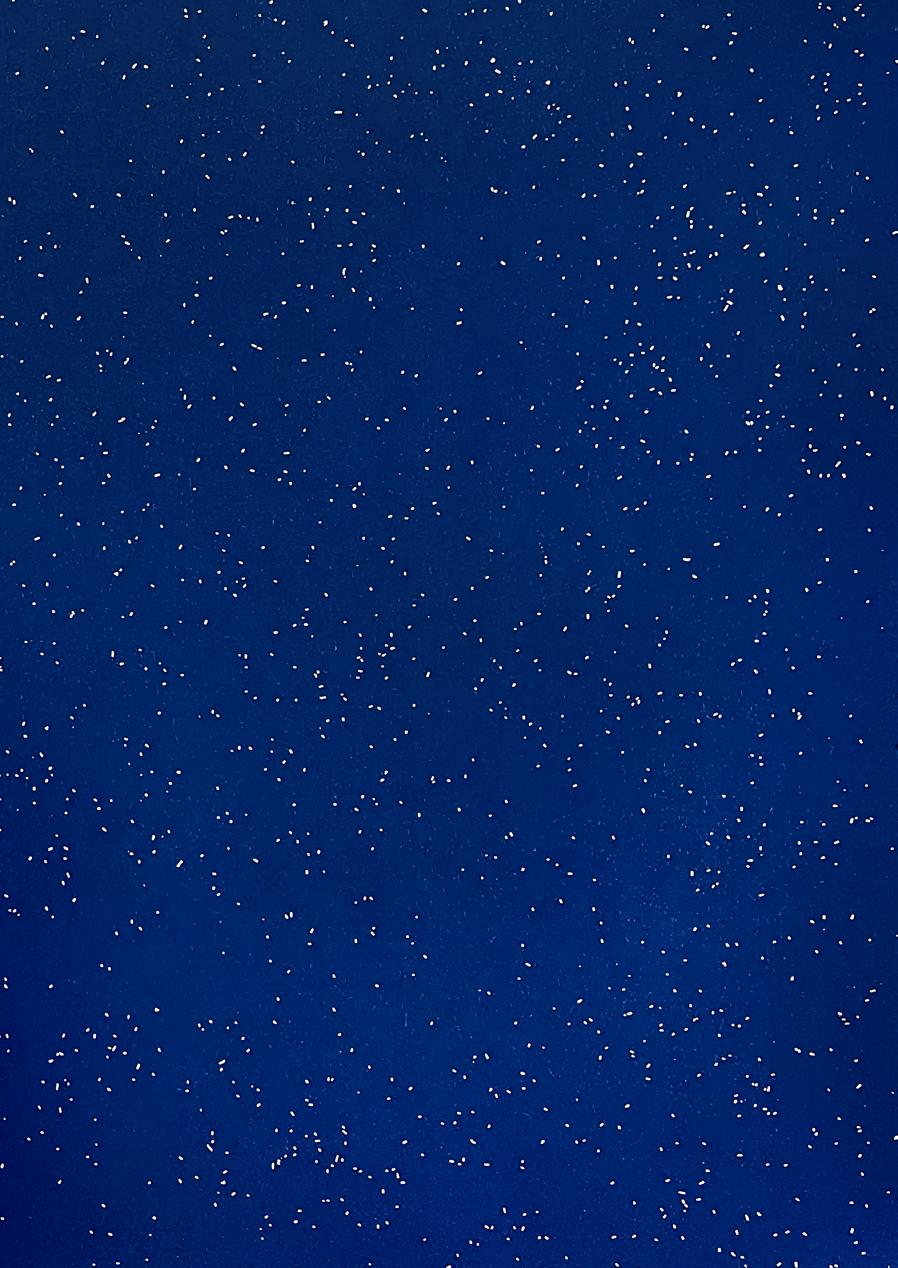
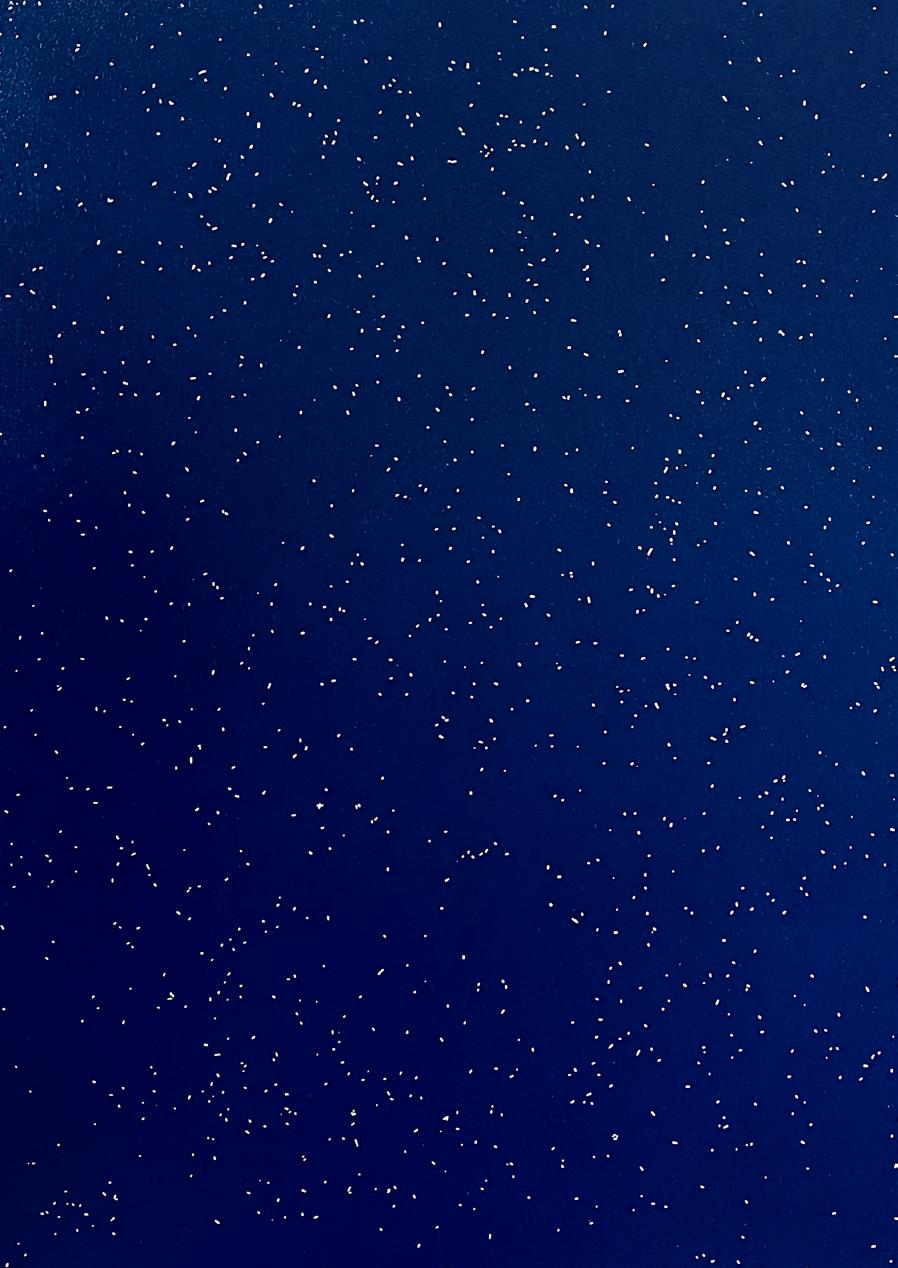
Tom Blake constellations (leaves on the sea) (detail), 2025 cyanotype, artist-made brass frame 41 x 31 cm
Letter from the Director.
Winter 2026
Five years ago, I opened the doors to N.Smith Gallery with little certainty about where the journey would lead.
What began as a simple ambition, to support artists and share their work with the public, has grown into something far larger than I could have imagined. Along the way, we’ve presented exhibitions across Australia and internationally, placed works into signifcant public and private collections, launched this publication and NSG Shop, and built a community of artists, collectors, writers, curators, and friends who continue to shape the gallery every day.
While milestones are worth celebrating, what I value most are the relationships behind them. The trust artists place in us. The belief collectors show when they choose to live with a work. The generosity of the many people who contribute their time, knowledge, and care to making a gallery more than simply a place where art is shown.
This Winter edition arrives during a particularly meaningful year as we celebrate the gallery’s ffth anniversary. It feels ftting that Tom Blake appears on our cover. Tom has been part of the gallery since the very beginning, one of our founding artists and someone whose practice has evolved alongside the gallery itself. Over the past fve years, it has been a privilege to watch
his work continue to deepen and reach new audiences. His commitment to his practice, his generosity, and his constant curiosity embody so much of what makes working with artists such a rewarding endeavour.
Across this issue, you’ll fnd stories from across the gallery’s program and community. Together they refect the breadth of contemporary Australian art today, and the many voices, perspectives, and experiences that make it such a rich feld to work within.
As I refect on the past fve years, I fnd myself feeling grateful. Grateful to the artists who have trusted us with their work, to the collectors who have supported those practices, to our collaborators and colleagues, and to the remarkable team, past and present, who have helped build the gallery day by day.
The gallery has changed enormously since that frst day. The ambition, however, remains much the same.
Thank you for being part of the journey so far.
Warmest,
Nick Founder & Director N.Smith Gallery IG: @nw.smith
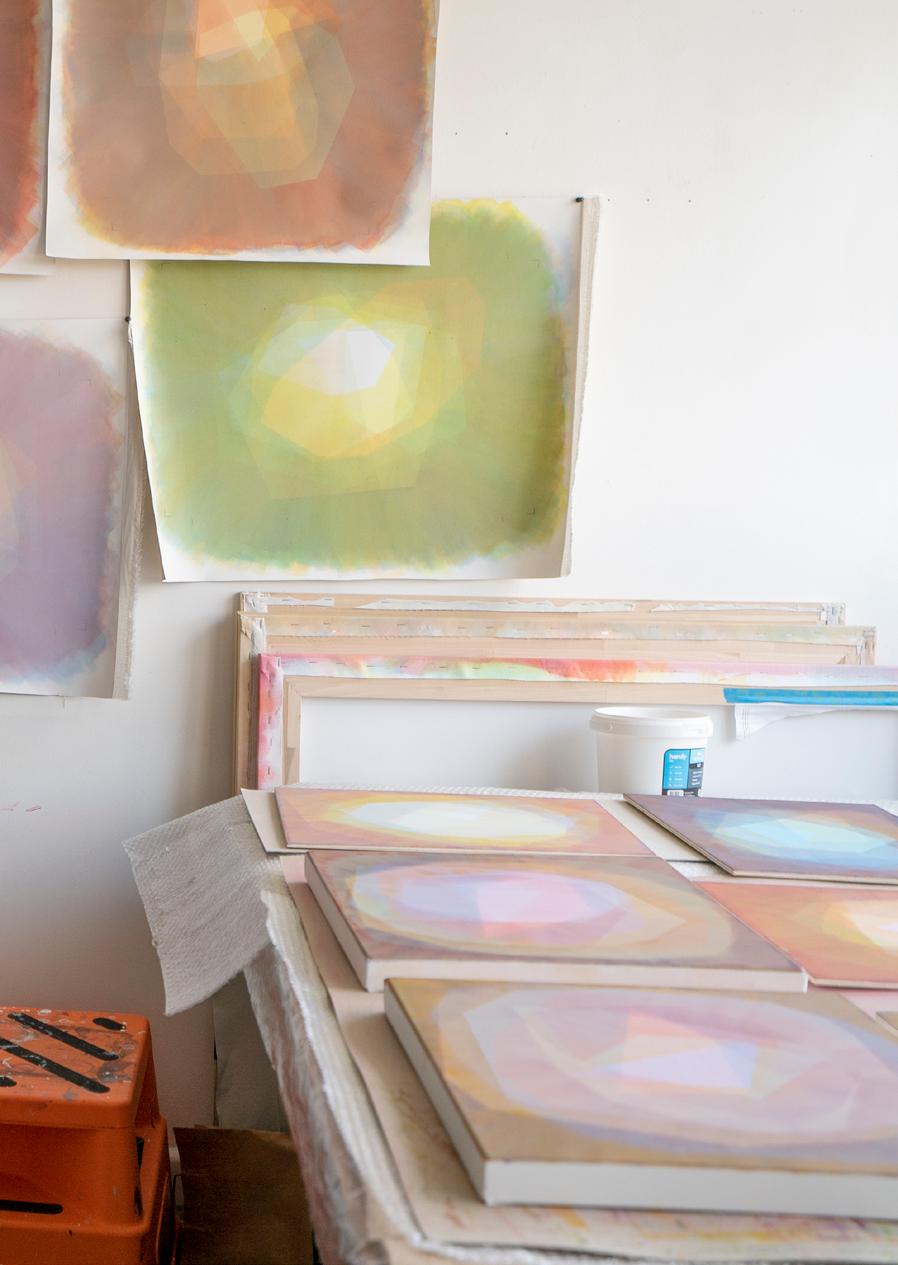
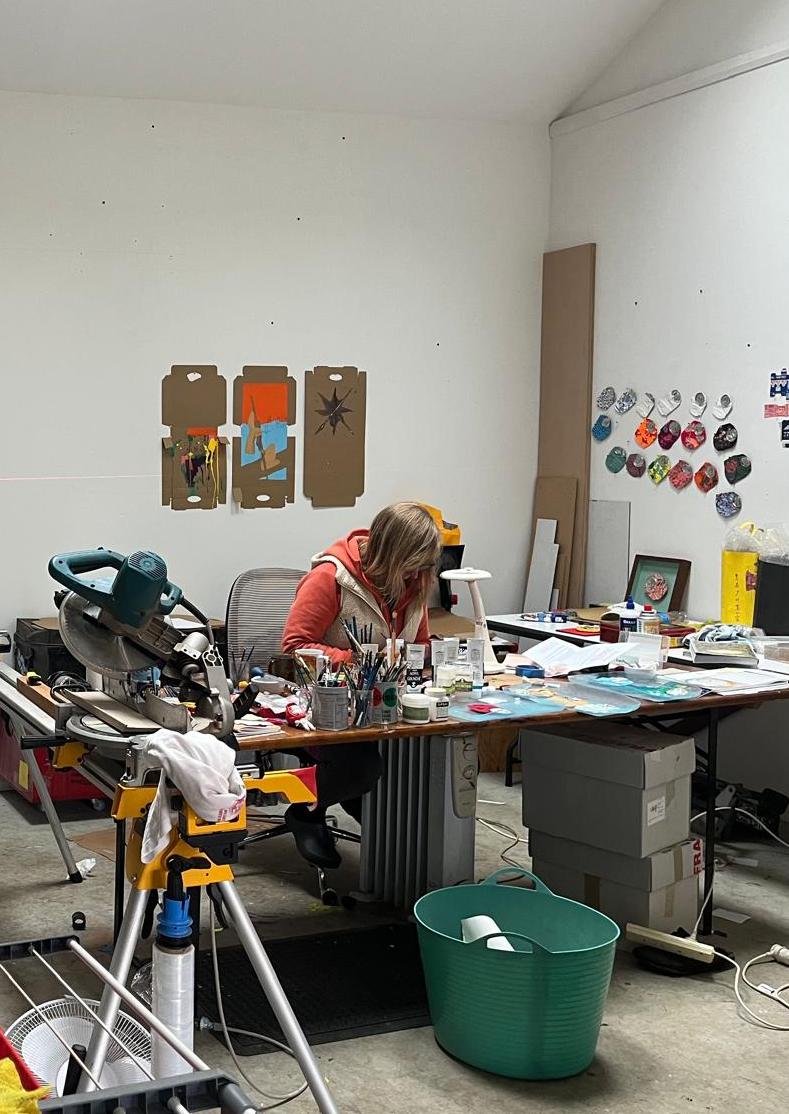
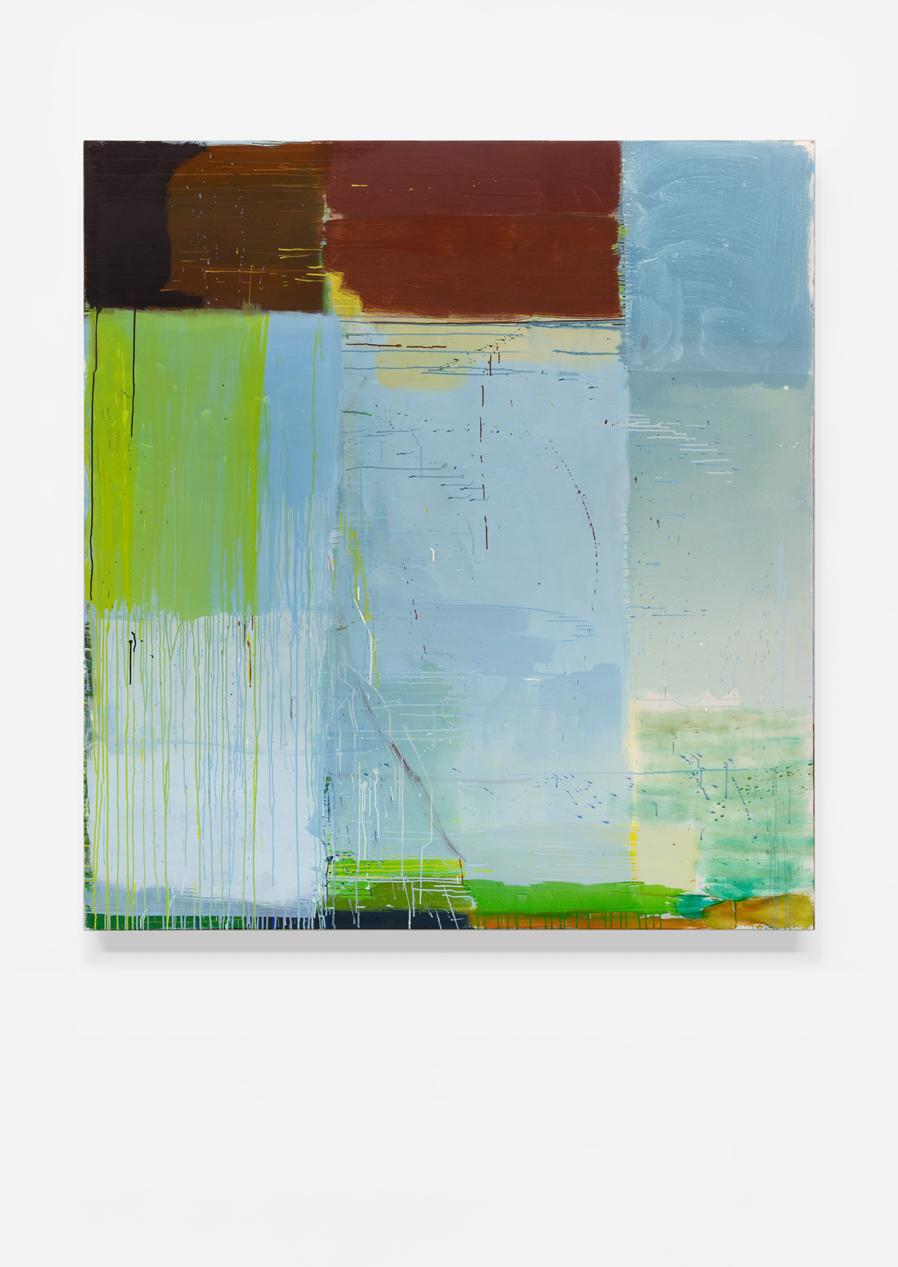
IN THE STUDIO KATE VASSALLO.
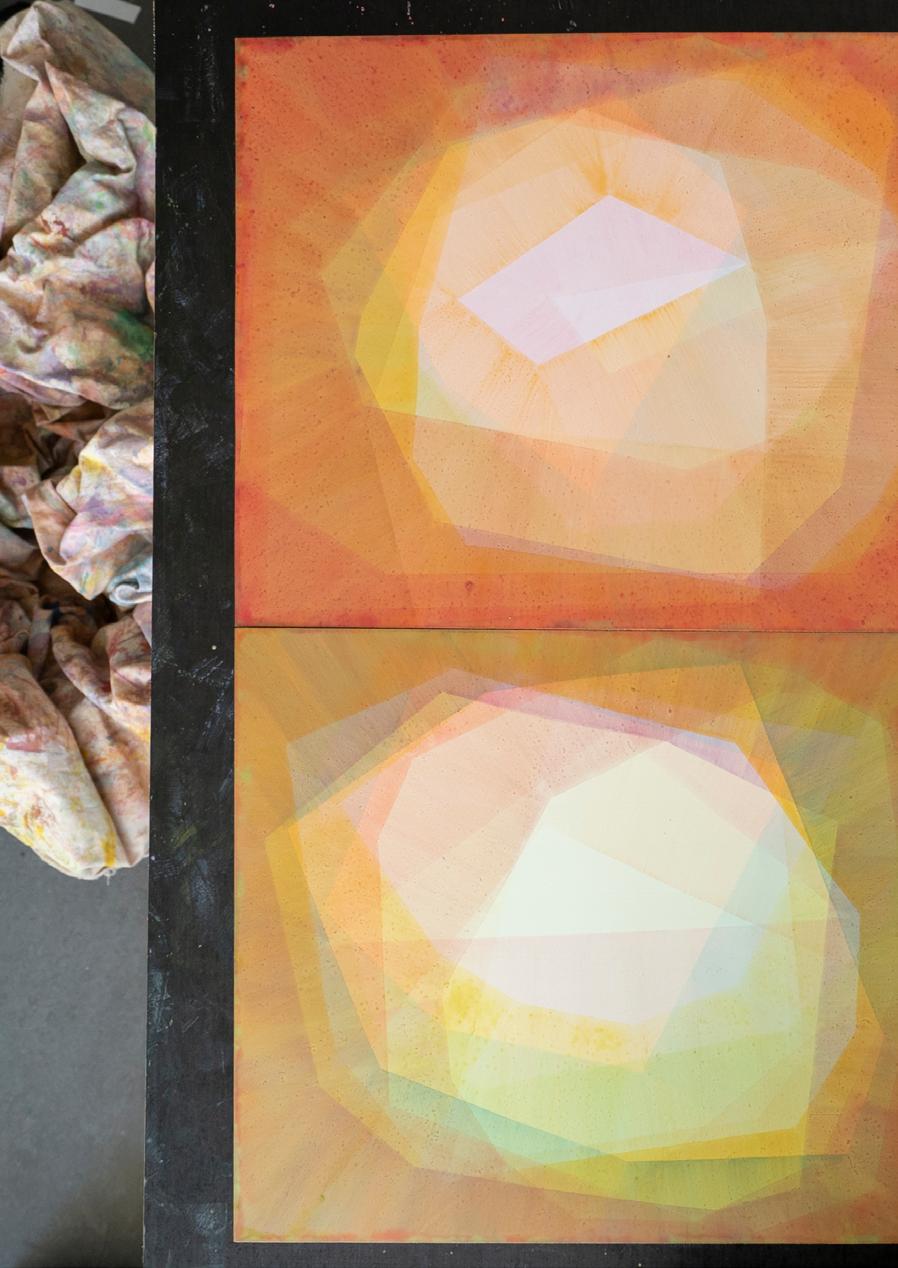
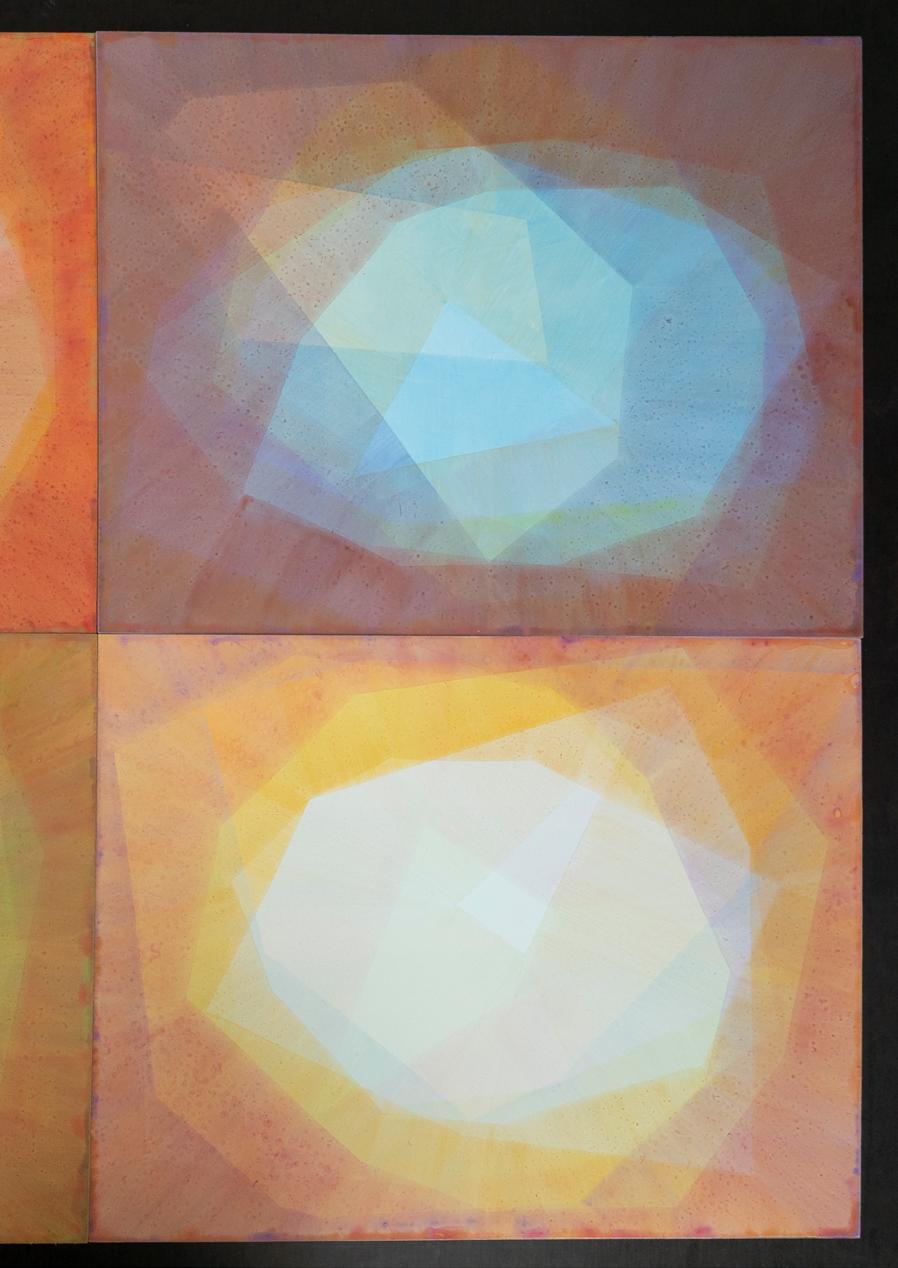
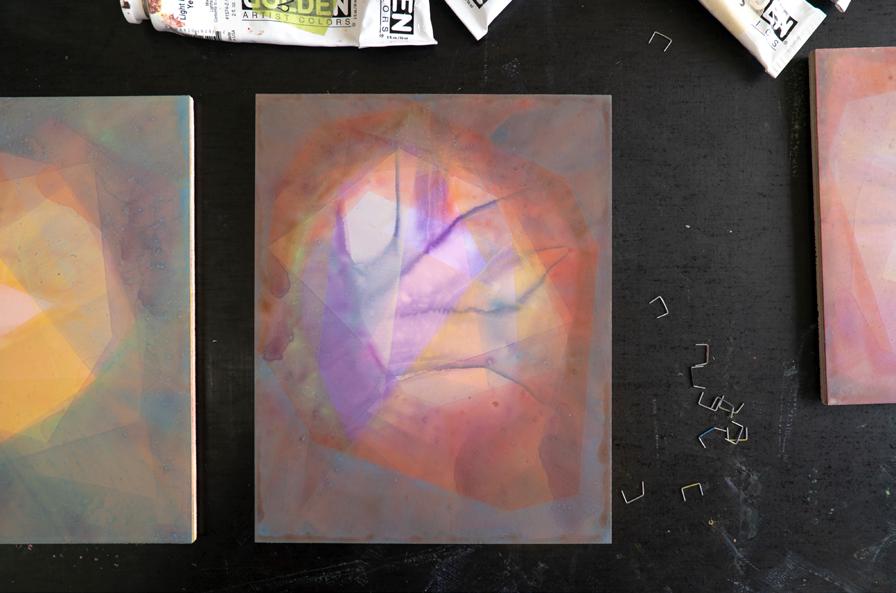
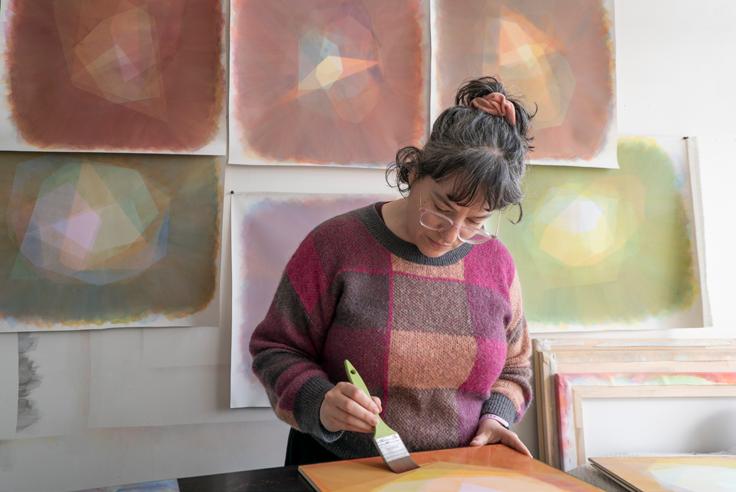
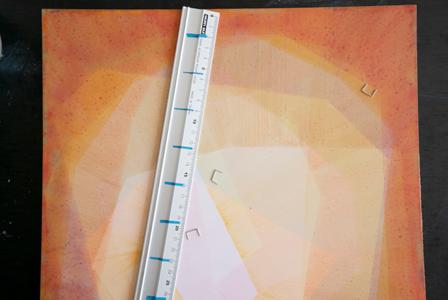
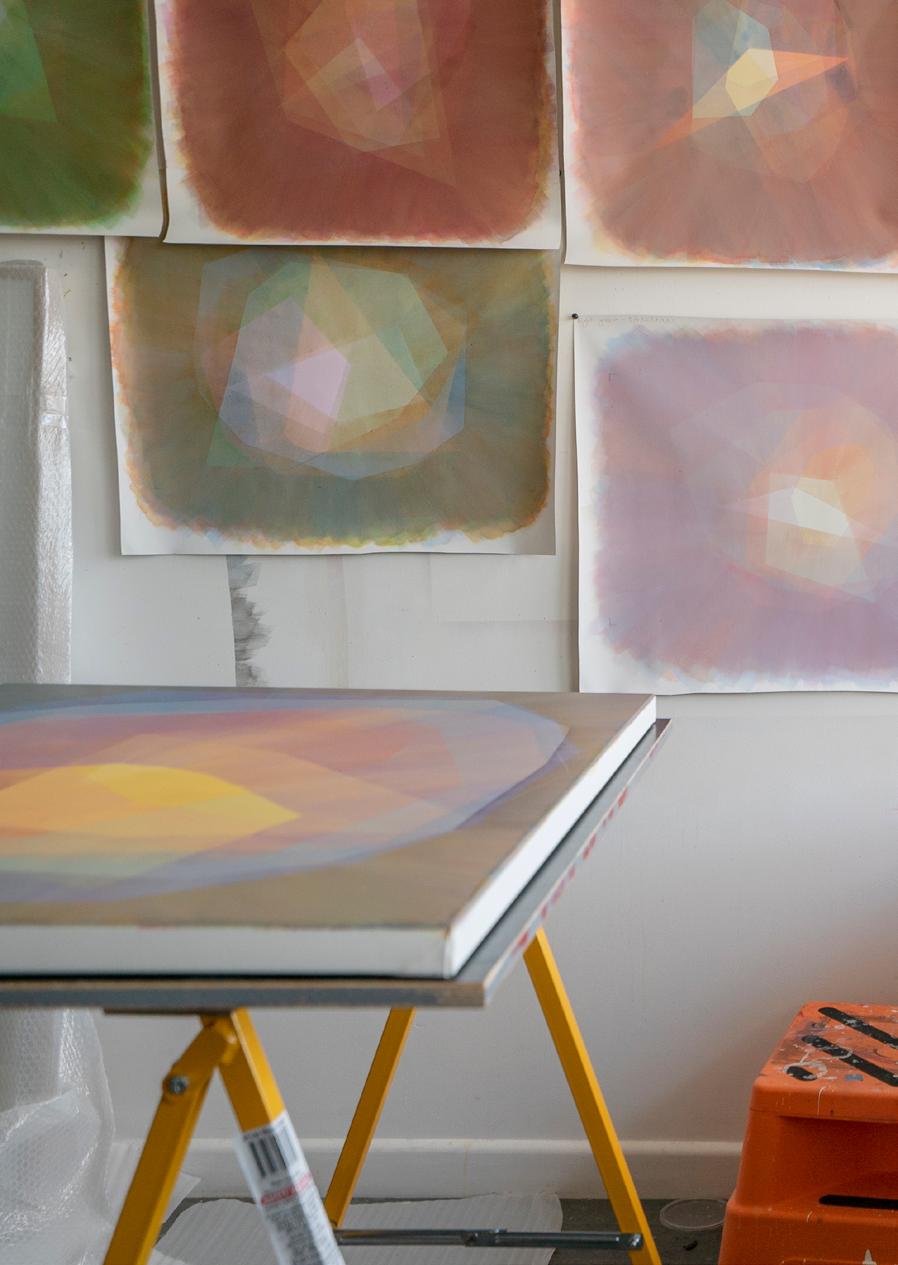
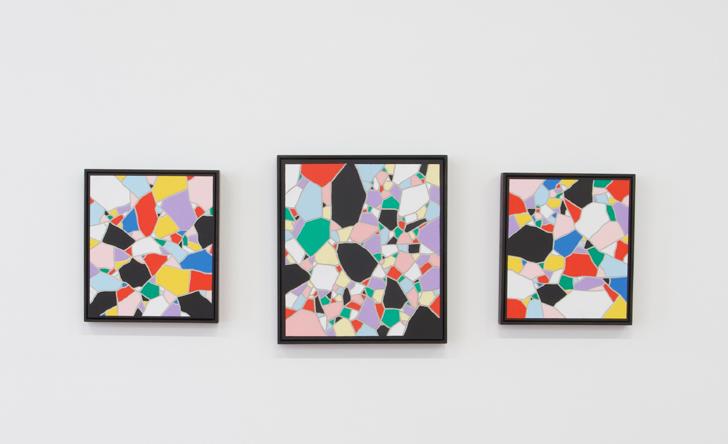
"When developing this body of work, I’ve been considering the connection my practice has to Modernism. My process-based approach to abstraction is rooted in the foundations laid out by artists of the 1960s and 70s. At this time, artists like Bruce Nauman, On Kawara, Yvonne Rainer, Sol LeWitt and Lee Ufan made works focusing on repeated and methodical frameworks within their art. Practitioners like Anne Teresa De Keersmaeker and Kerrie Poliness continue to operate in this space. I see my practice as a continuation of these ideas. In developing the Soft Modulation series, this was the frst time I was responding directly to this time period. These works were informed by the mid-century architecture of 33 Alfred Street near Circular Quay, specifcally historic mosaics within the original interiors. In thinking about how to approach these works through this mid-century lens, I wanted to focus on a more muted approach to layering colour. Drawing specifc colours from reference imagery, I wanted the works to feel hazy in their fnished state."
Kate Vassallo's solo exhibition Soft Modulation runs until 25 July, 2026 at N.Smith Gallery.
PORTFOLIO AIDAN HARTSHORN.
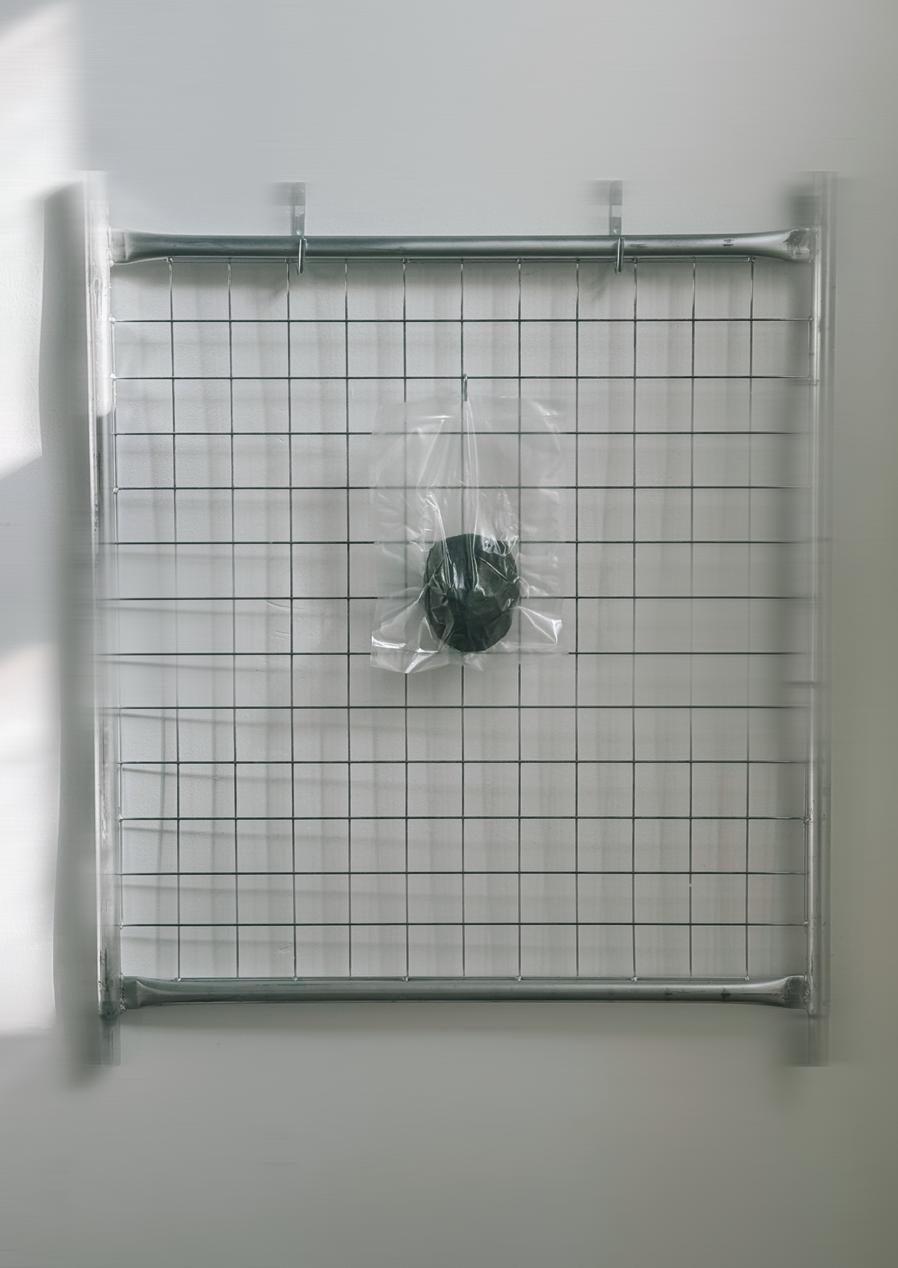
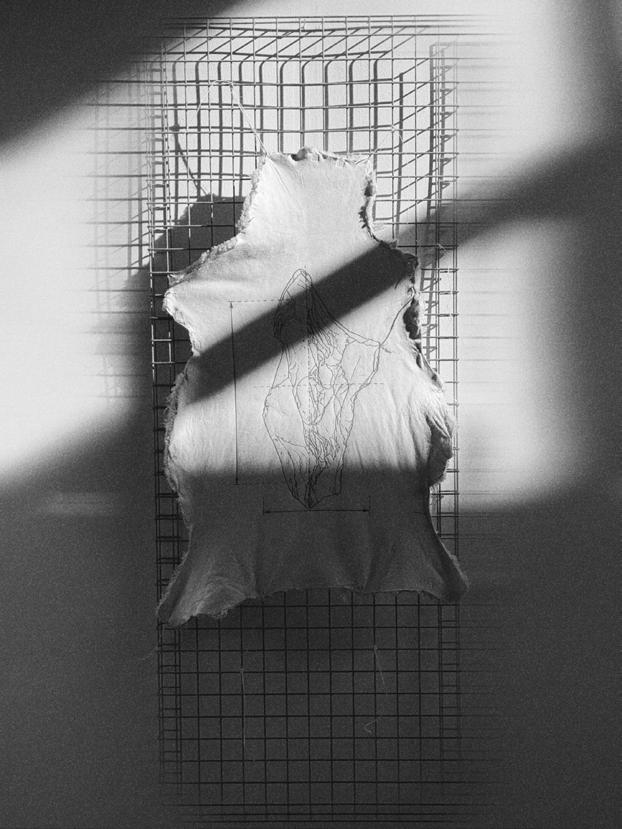
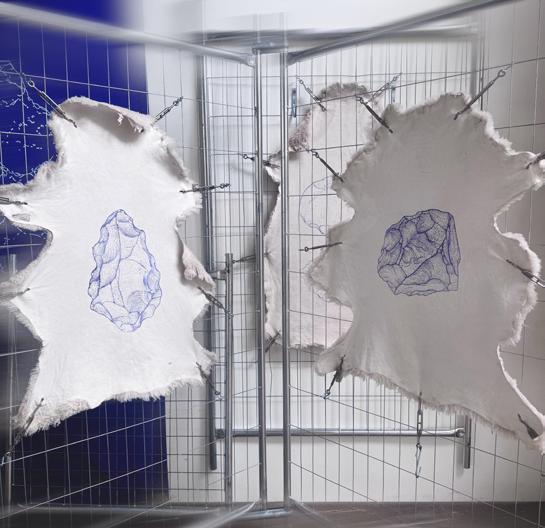
Ahead of his solo exhibition at the gallery in August, we take a look inside Aidan Hartshorn's studio and portfolio of recent works, including an ambitious body of work critiquing the procedures of institutional collection and storage of ancestral and cultural material.
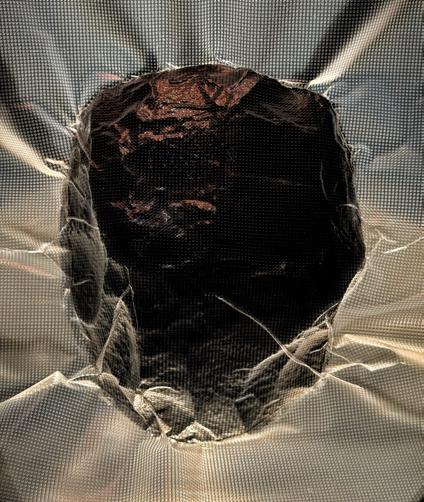
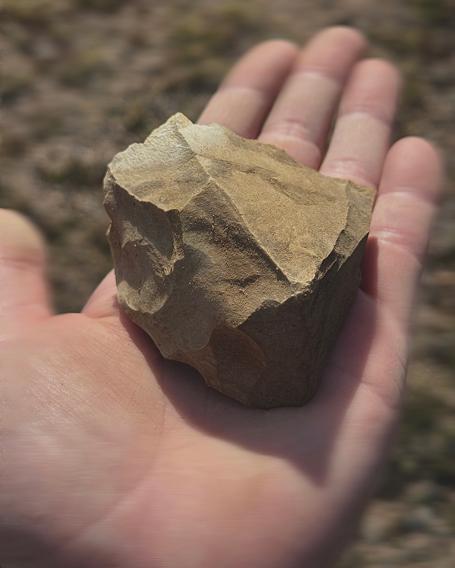
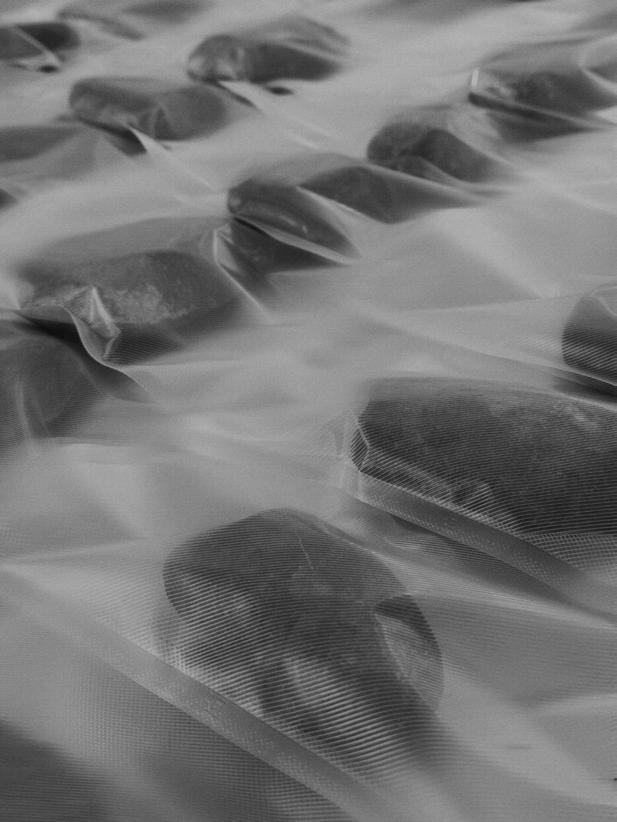
Working with stone located across Wolgal/Wiradjuri Country, Hartshorn vacuum seals each stone while referring to the ethnographic practice used to package Aboriginal “artefacts” uncovered during excavation works for construction of infrastructure.
Utilising contemporary worked stone as substitutes for ancestral cultural artefacts, Hartshorn critiques the ways his ancestral inheritance and other material has been removed from Country, catalogued, and contained within institutional collections.
His installation for the gallery challenges systems that reduce living cultures to archival objects, asserting instead that cultural knowledge from these removed belongings remain inseparable from Country, ongoing custodianship and continued practices.
Aidan Hartshorn's solo exhibition opens 6 – 24 August, 2026 at N.Smith Gallery.
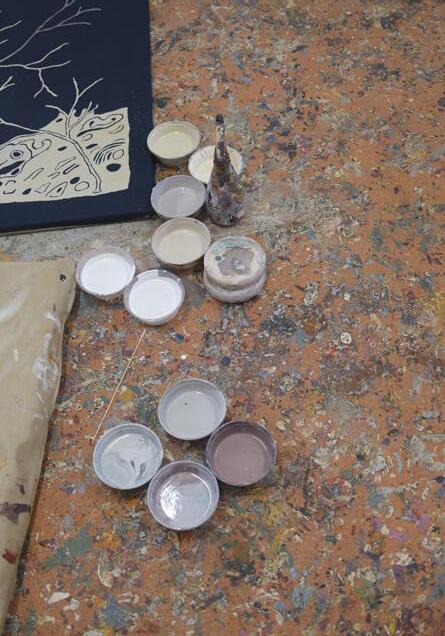
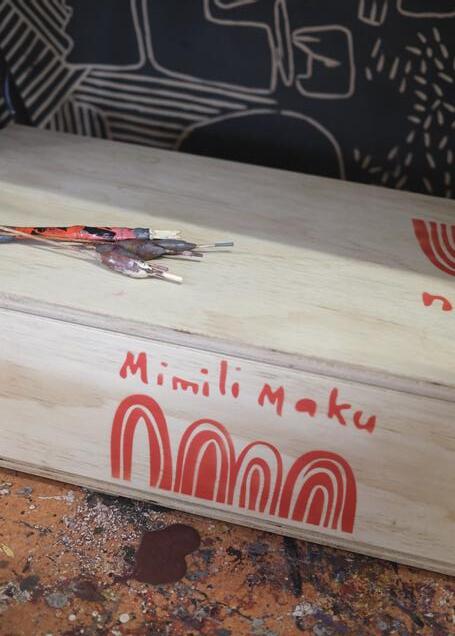
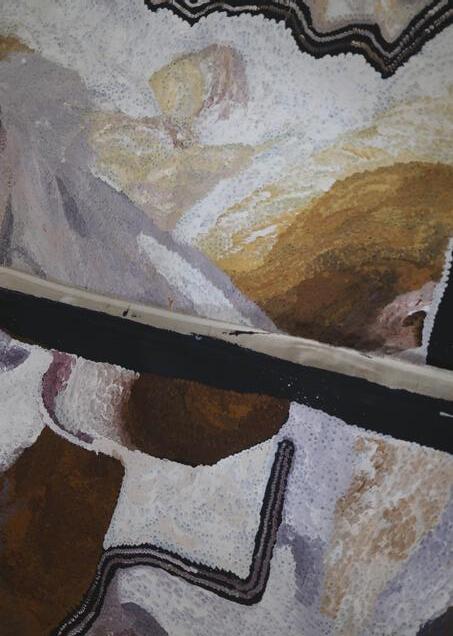
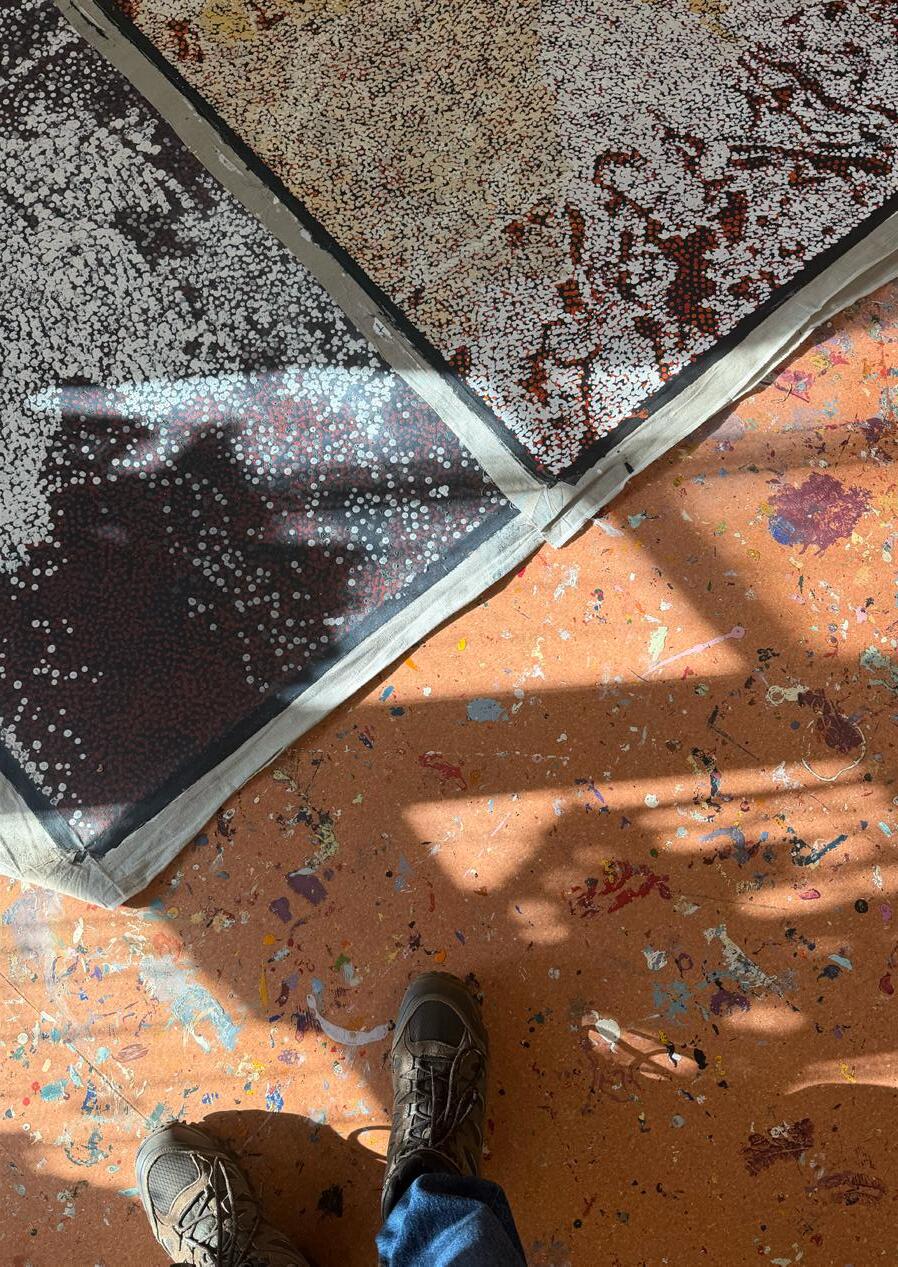
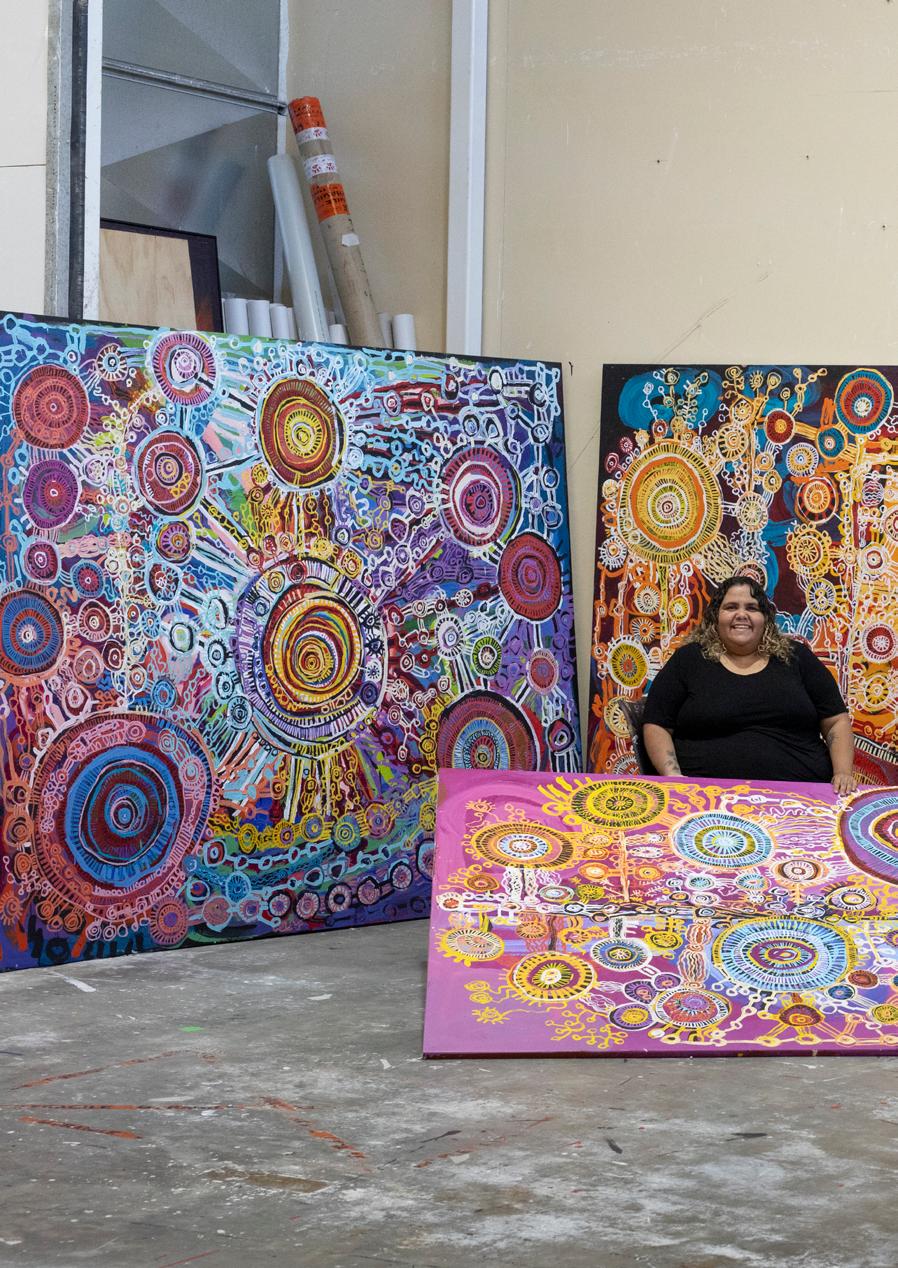
ON COUNTRY MIMILI MAKU ARTS.
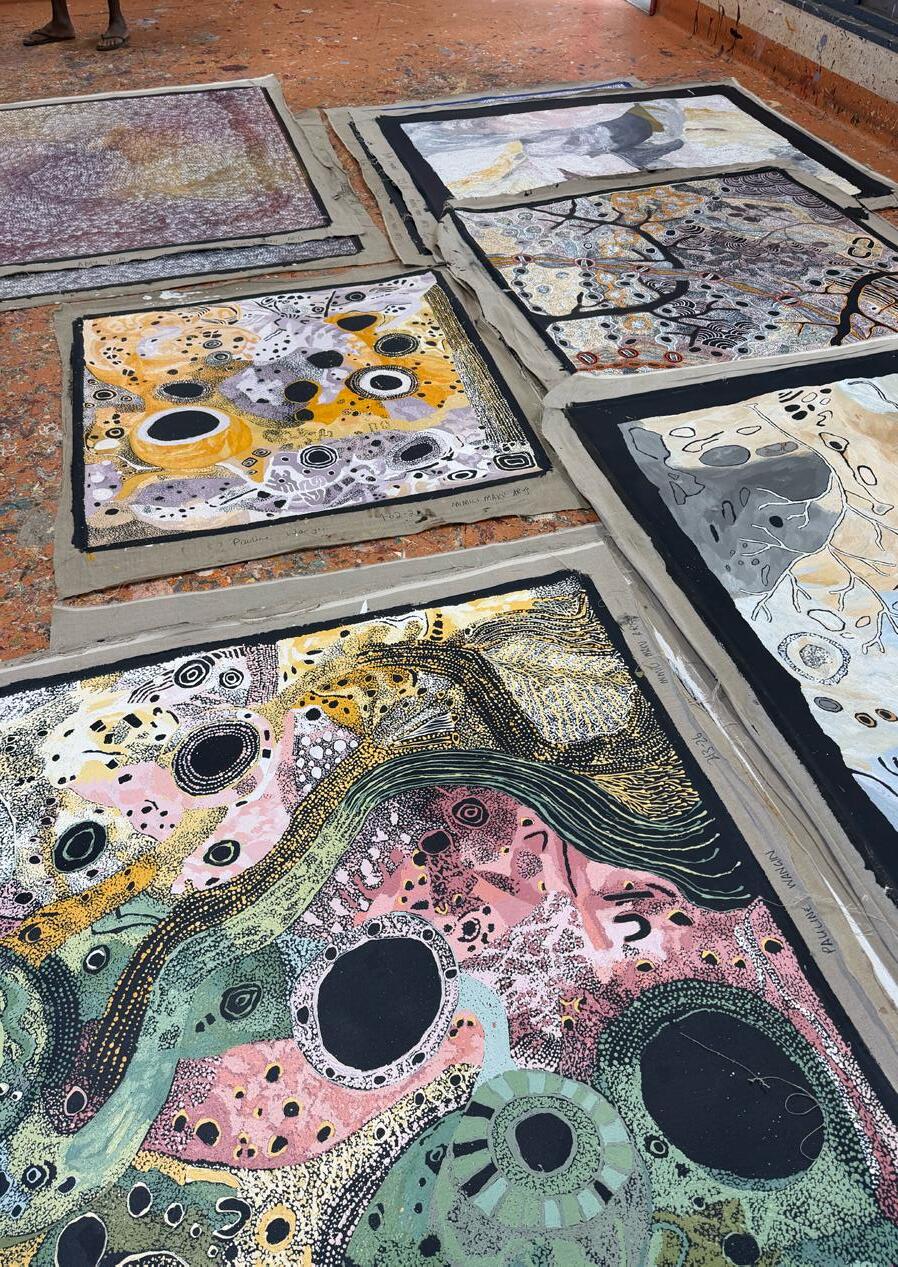
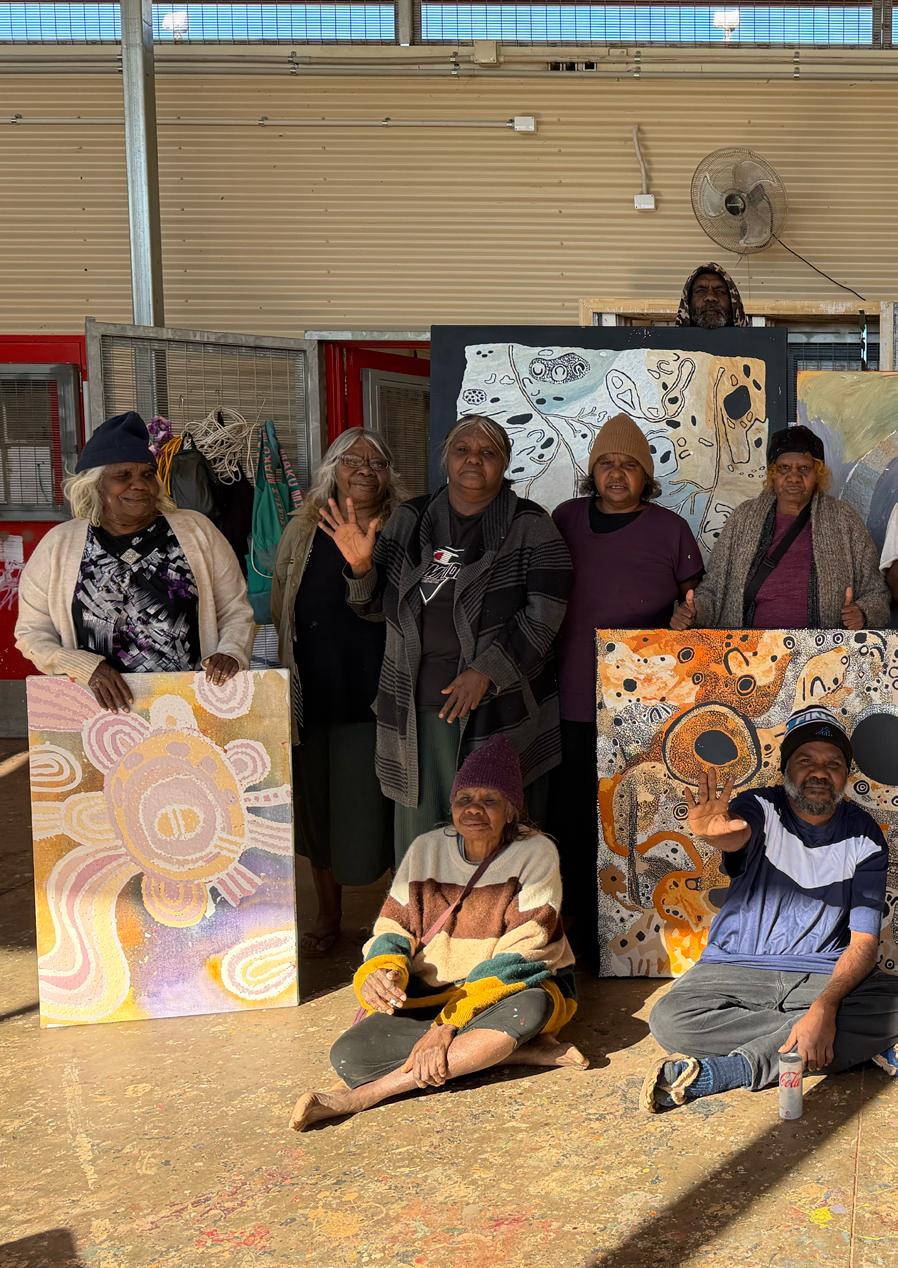
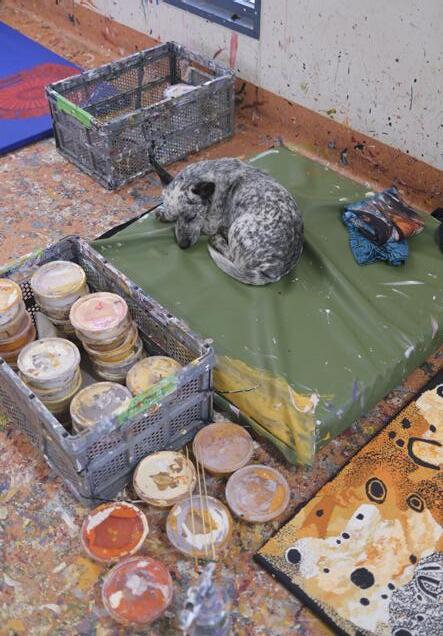
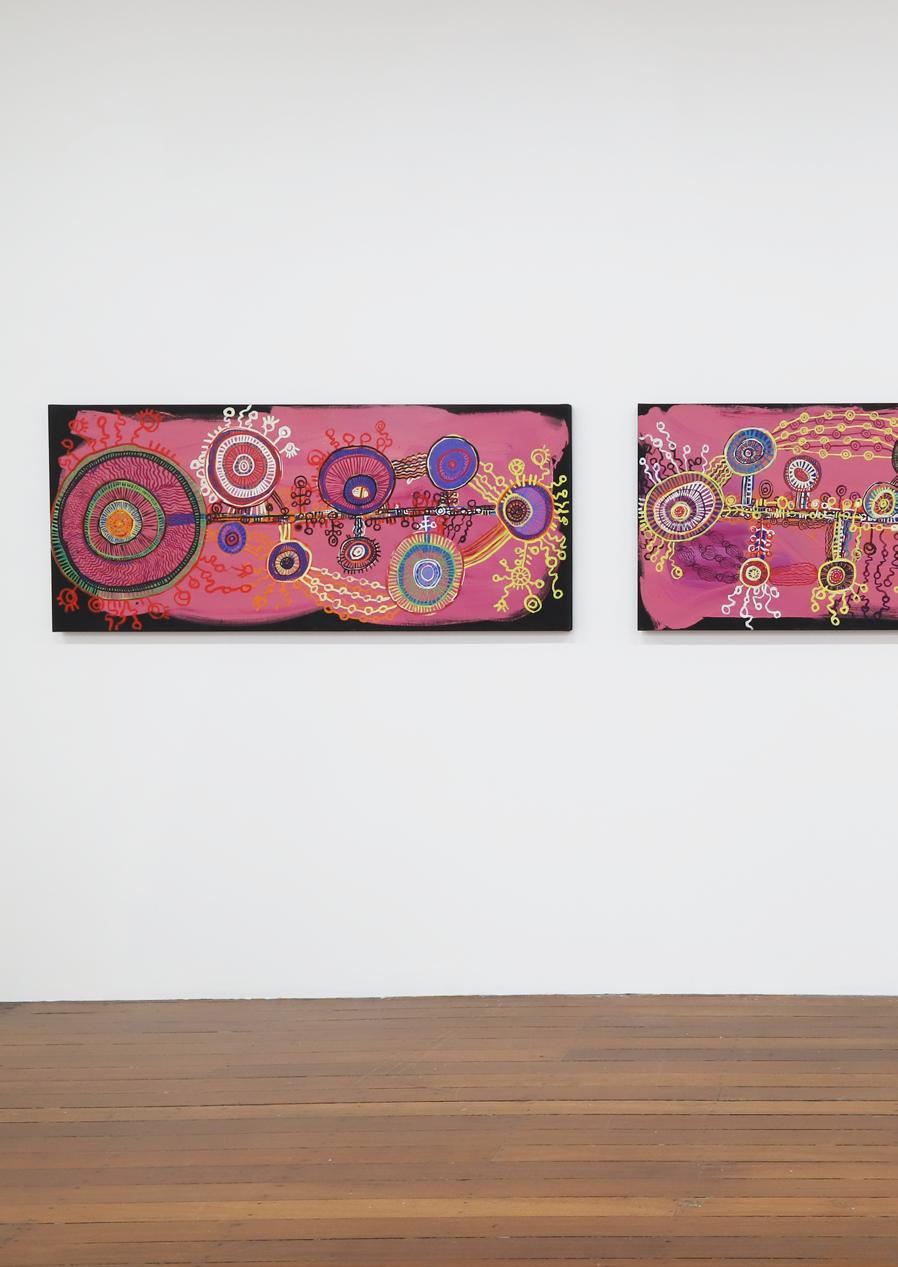
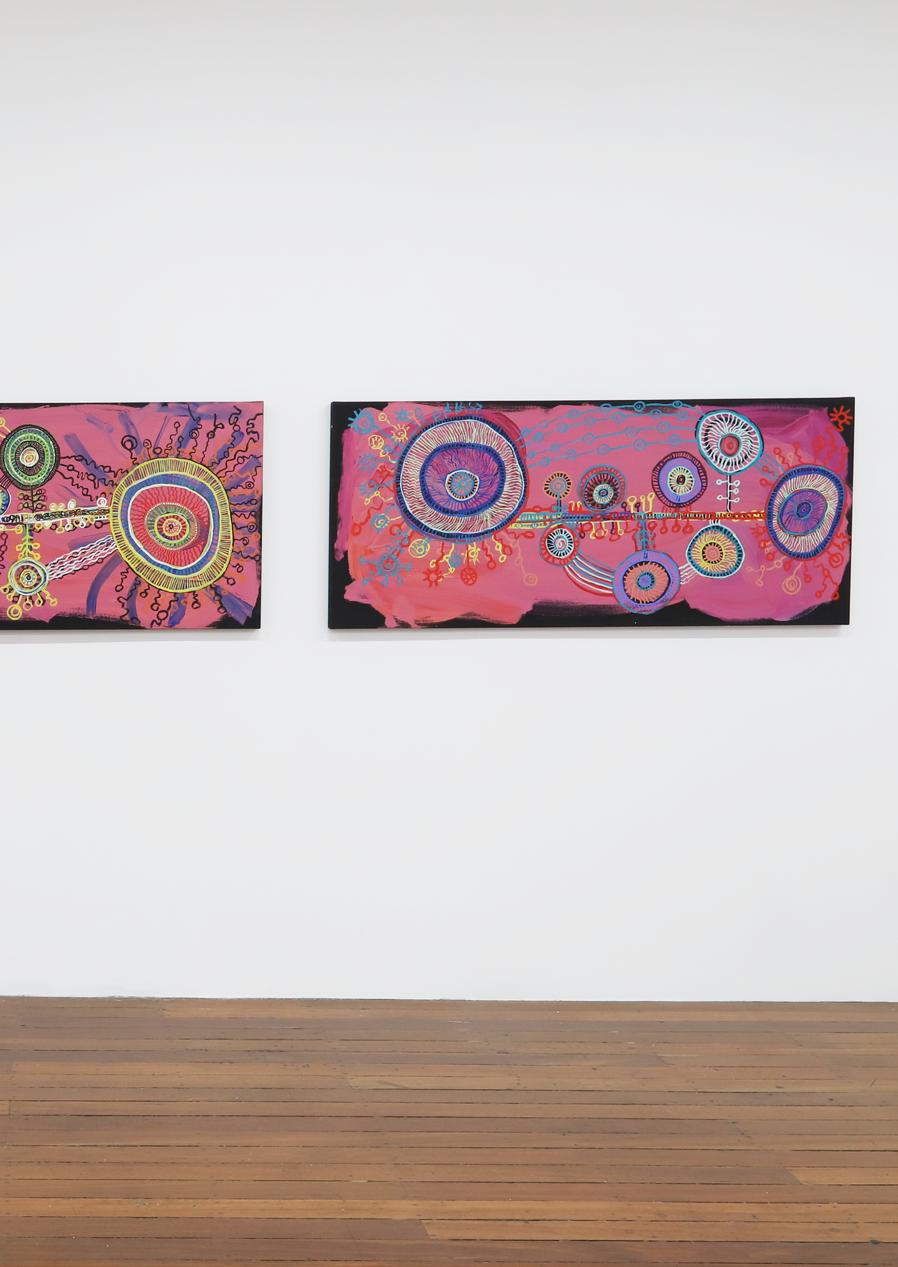
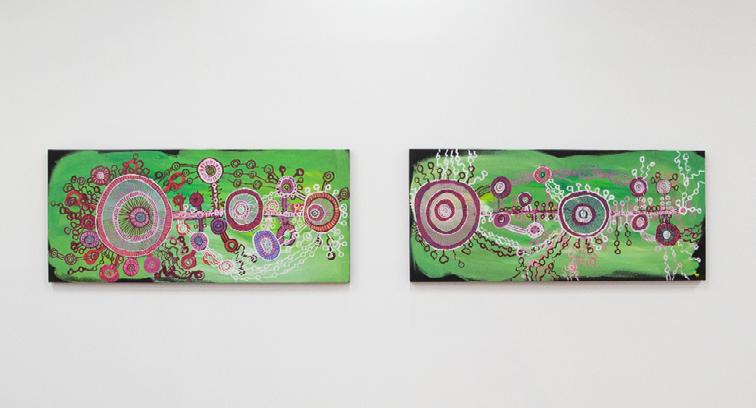
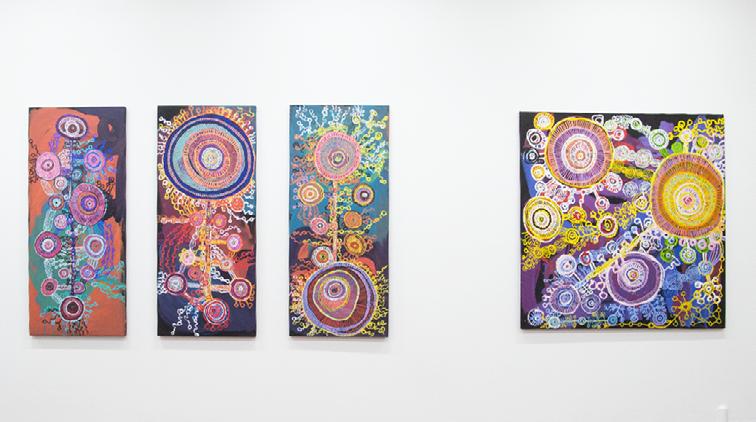
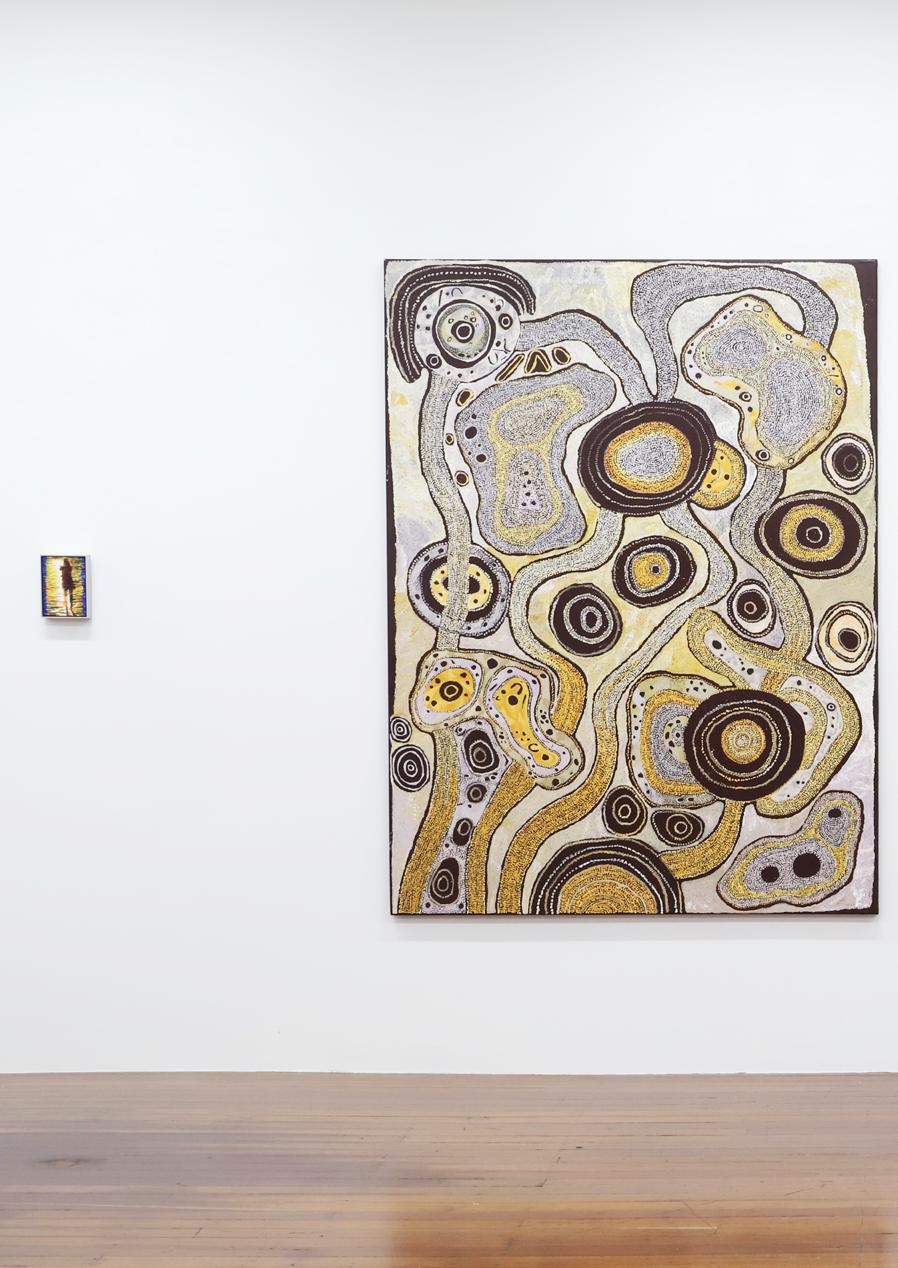
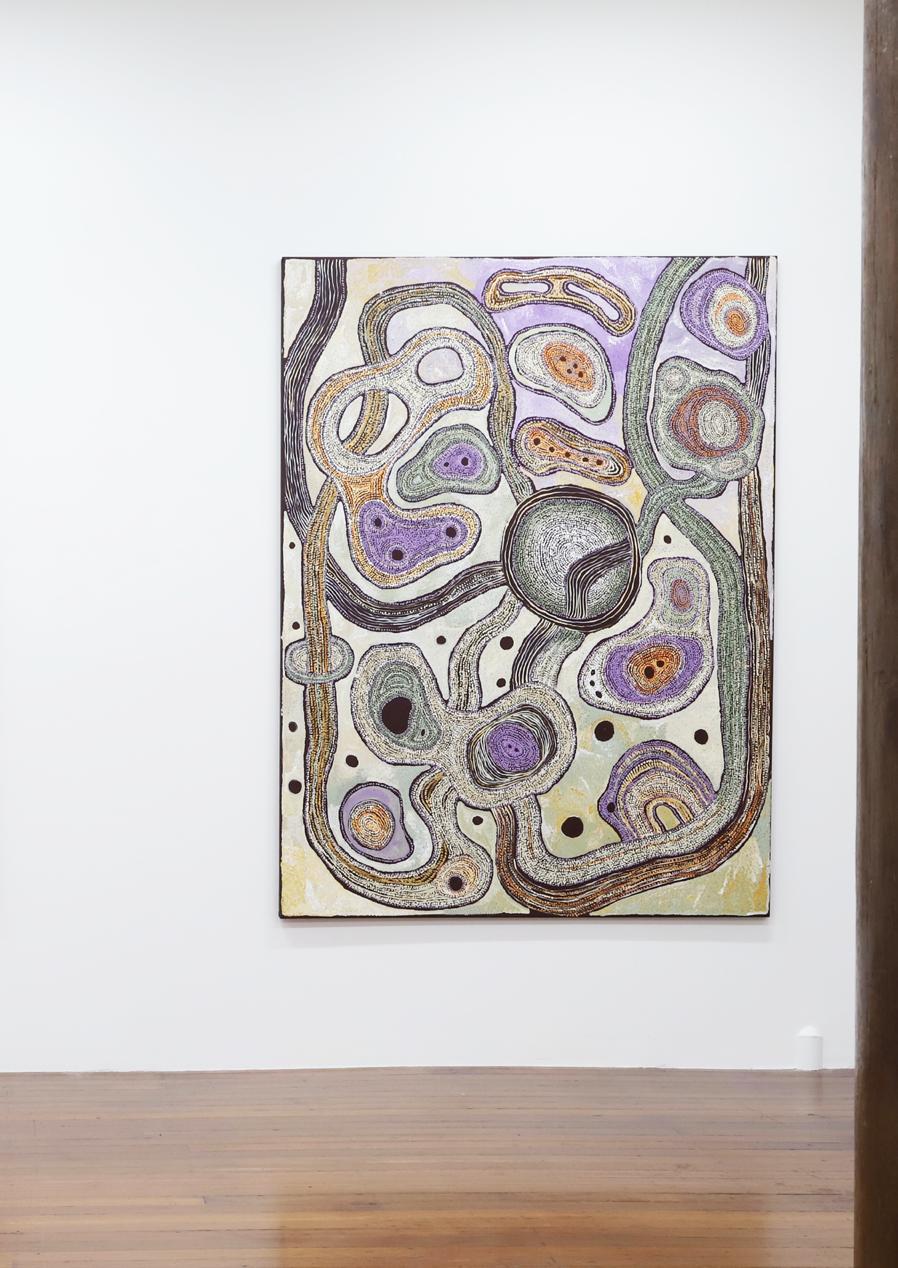
Mimili Maku Arts is a vibrant contemporary art studio and cultural centre founded and governed by a strong board of Aṉangu directors. The art centre is located in the Mimili Community on the Aṉangu Pitjantjatjara Yankunytjatjara (APY) Lands. The centre is a thriving cultural space, connecting cultural leaders of our community with the contemporary art world. Their mission is to support future generations of Aṉangu to continue living on country whilst being able to access a culturally affrming income through artmaking.
N.Smith Gallery is proud to present works by artists from Mimili Maku Arts, including Tuppy Ngintja Goodwin and Umatji Tjapalyi.
Mimili
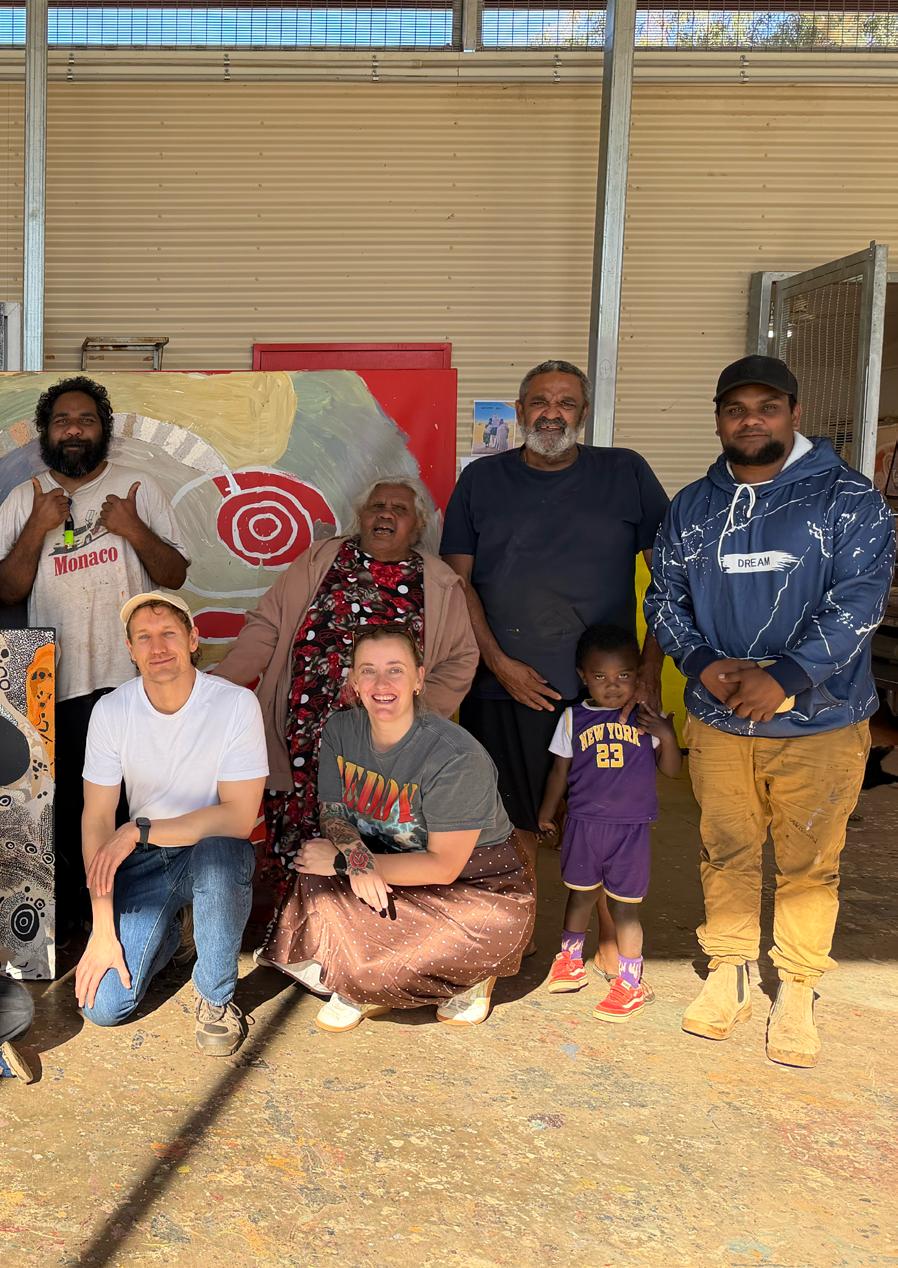
artists welcoming Nick Smith and Erin Vink to their studio in Mimili Community. From left – back row: Mark Doolan, middle row: Puna Yanima, Julie Yangkie, Rhonda Young, Betty Mula, Pauline Wangin, Shane Dodd, Tuppy Goodwin, Robert Fielding, Arnold Dodd, front row: Betty Pumani, Neville Goodwin, Nick Smith, Erin Vink, Levi Fielding.
IN THE STUDIO CLAIRE HEALY &
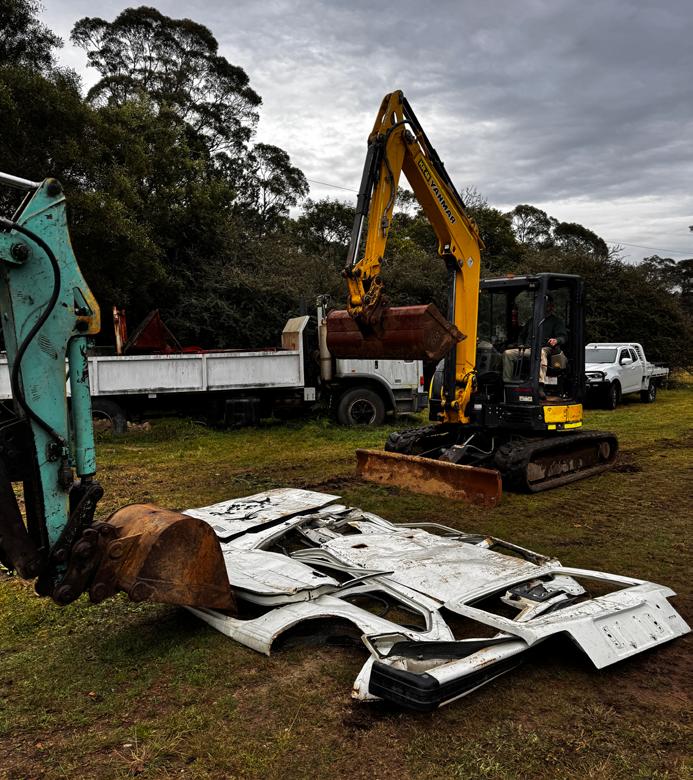
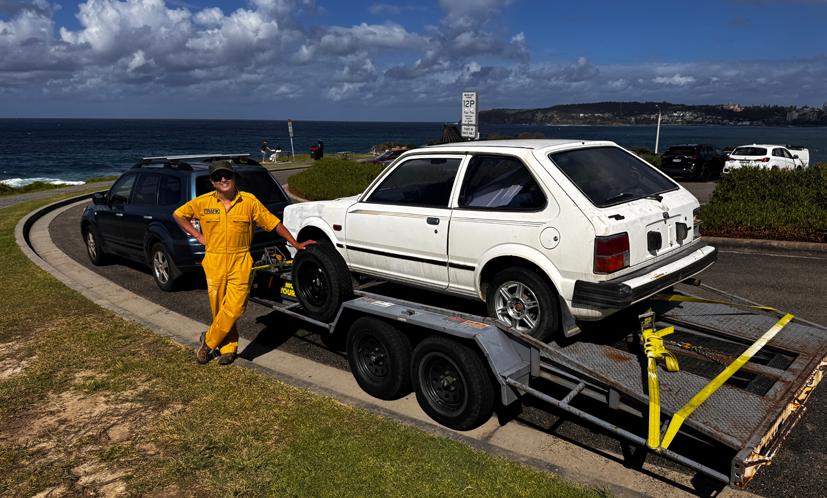
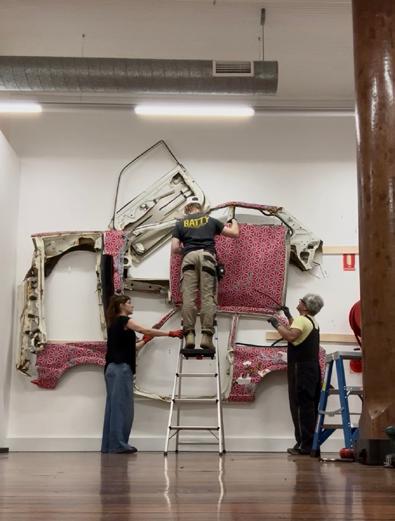
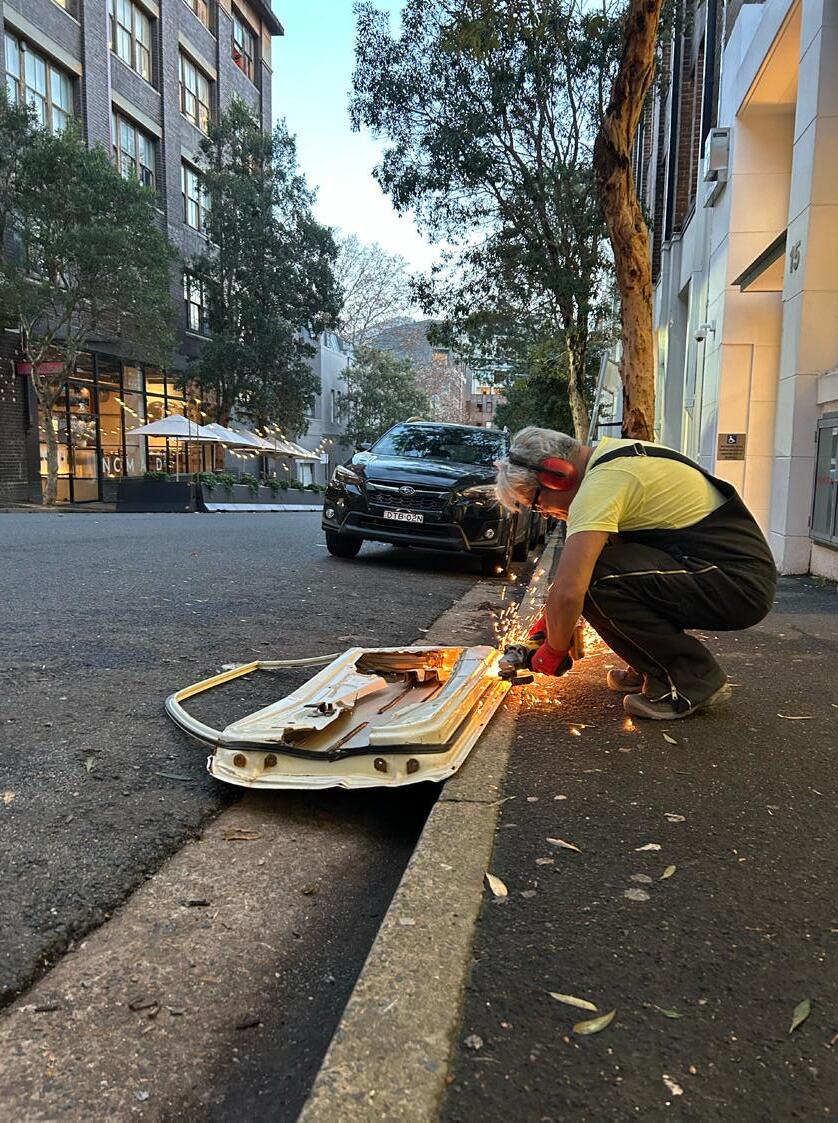
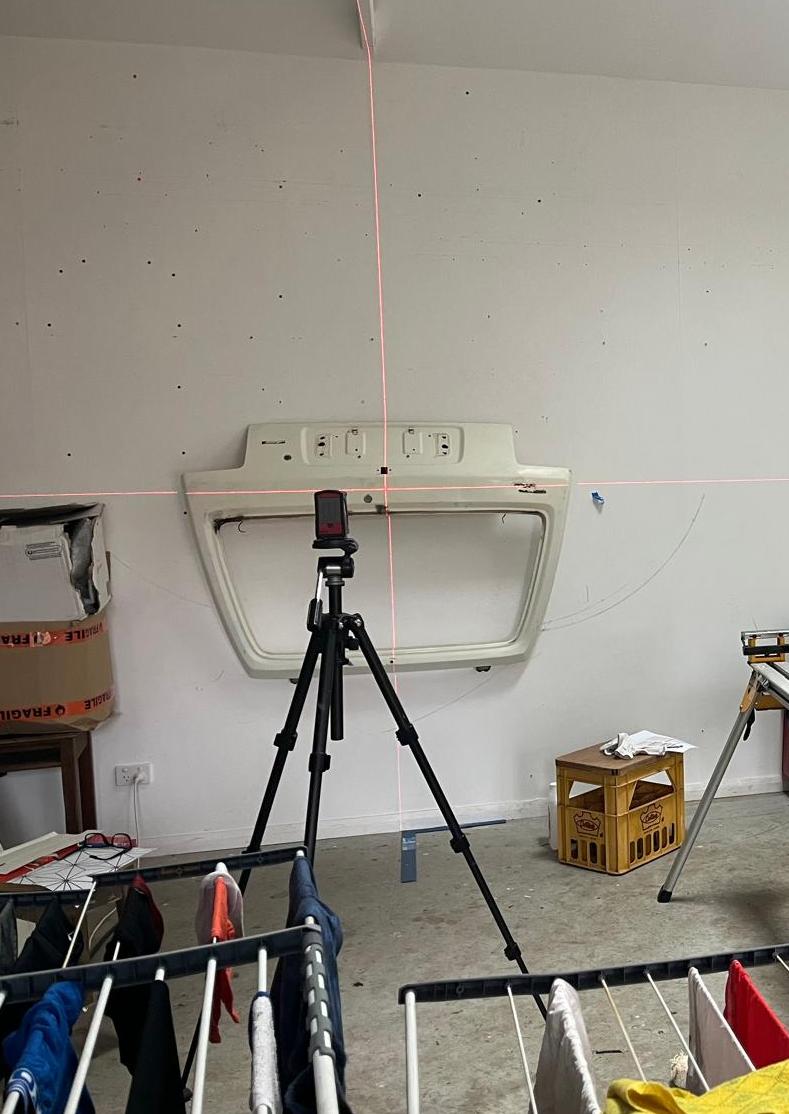
The Village Idiom brings together new works by Claire Healy & Sean Cordeiro that emerge from everyday life and their encounters with the landscape surrounding their Blackheath studio.
Moving between the natural and the manmade, the exhibition considers how objects, pathways, and language shape the ways we observe and inhabit the world.
Across the exhibition, discarded metallic forms are overlaid with motifs drawn from fora and ornament, where traces of human presence and the cycles of growth and decay intersect. What emerges is a meditation on perception and rediscovery, where objects become vessels for refection and the boundaries between observer and environment remain in constant fux.
The Village Idiom runs until25 July, 2026 at N.Smith Gallery.
SEAN CORDEIRO: THE VILLAGE IDIOM
Christopher Zanko THE TRAPS
5 Mar – 4 Apr
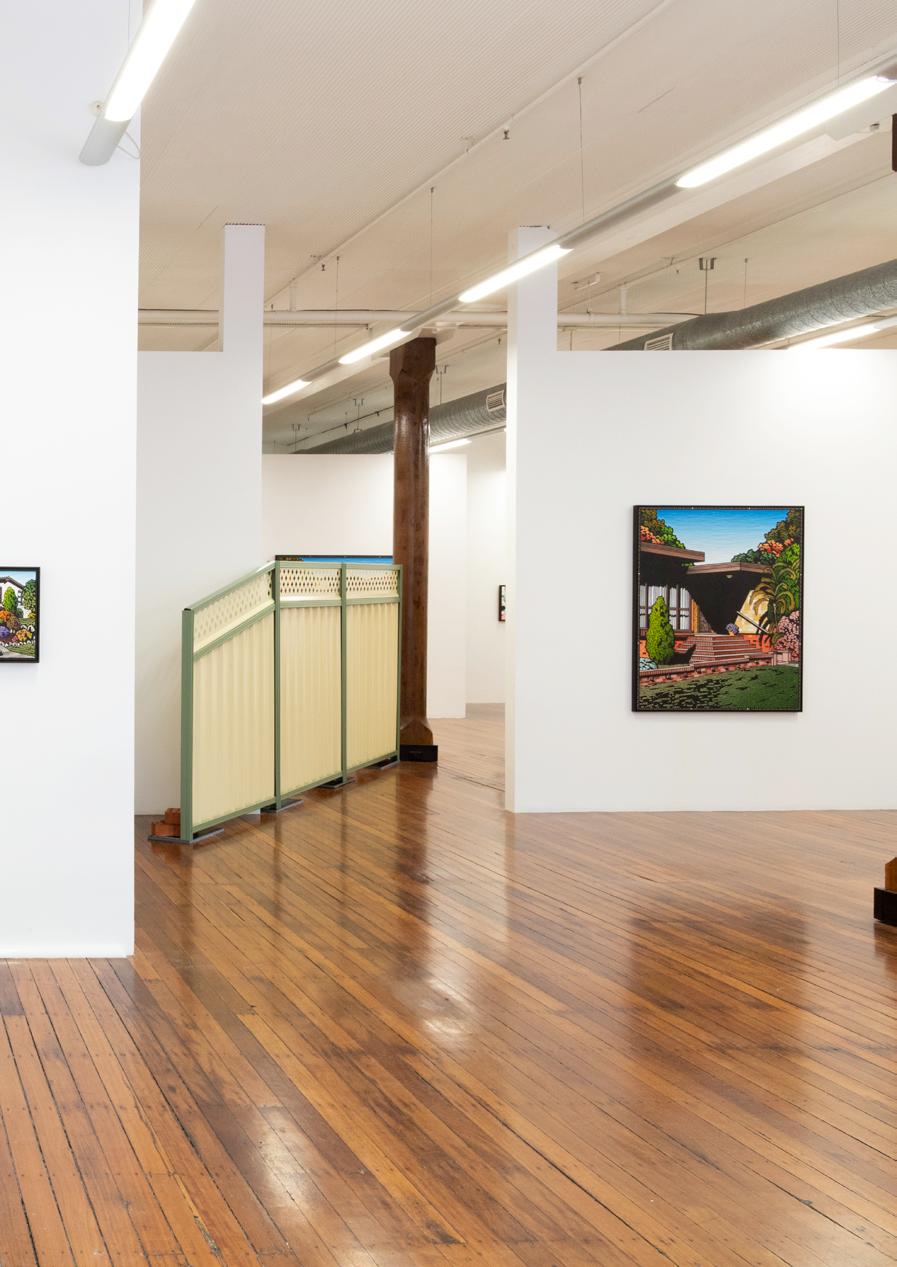
Installation view — THE TRAPS. N.Smith Gallery, Sydney.
Words by Sophie Gerhard
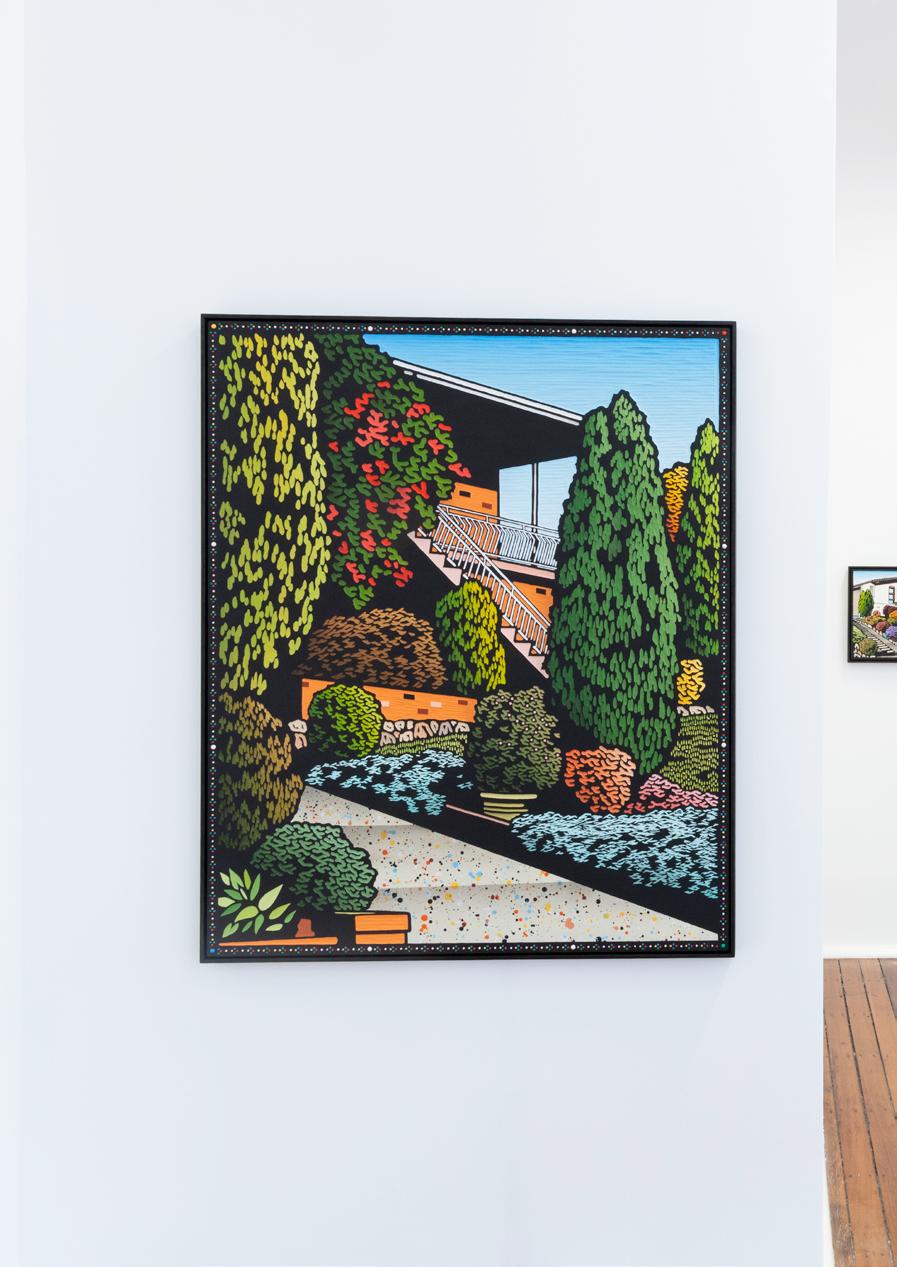
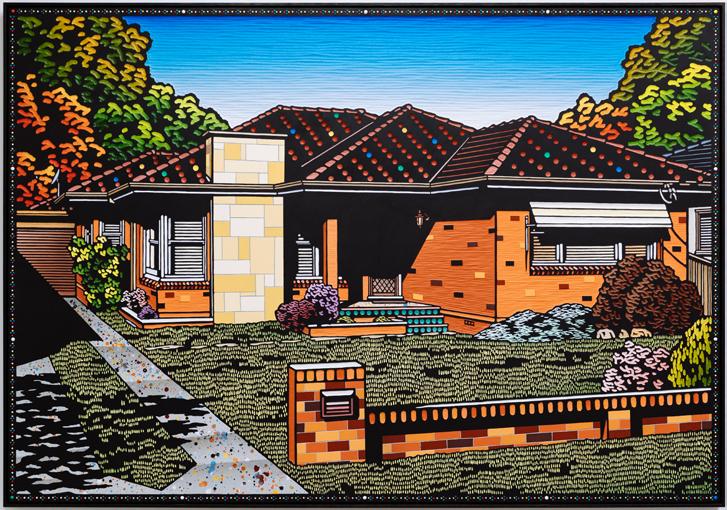
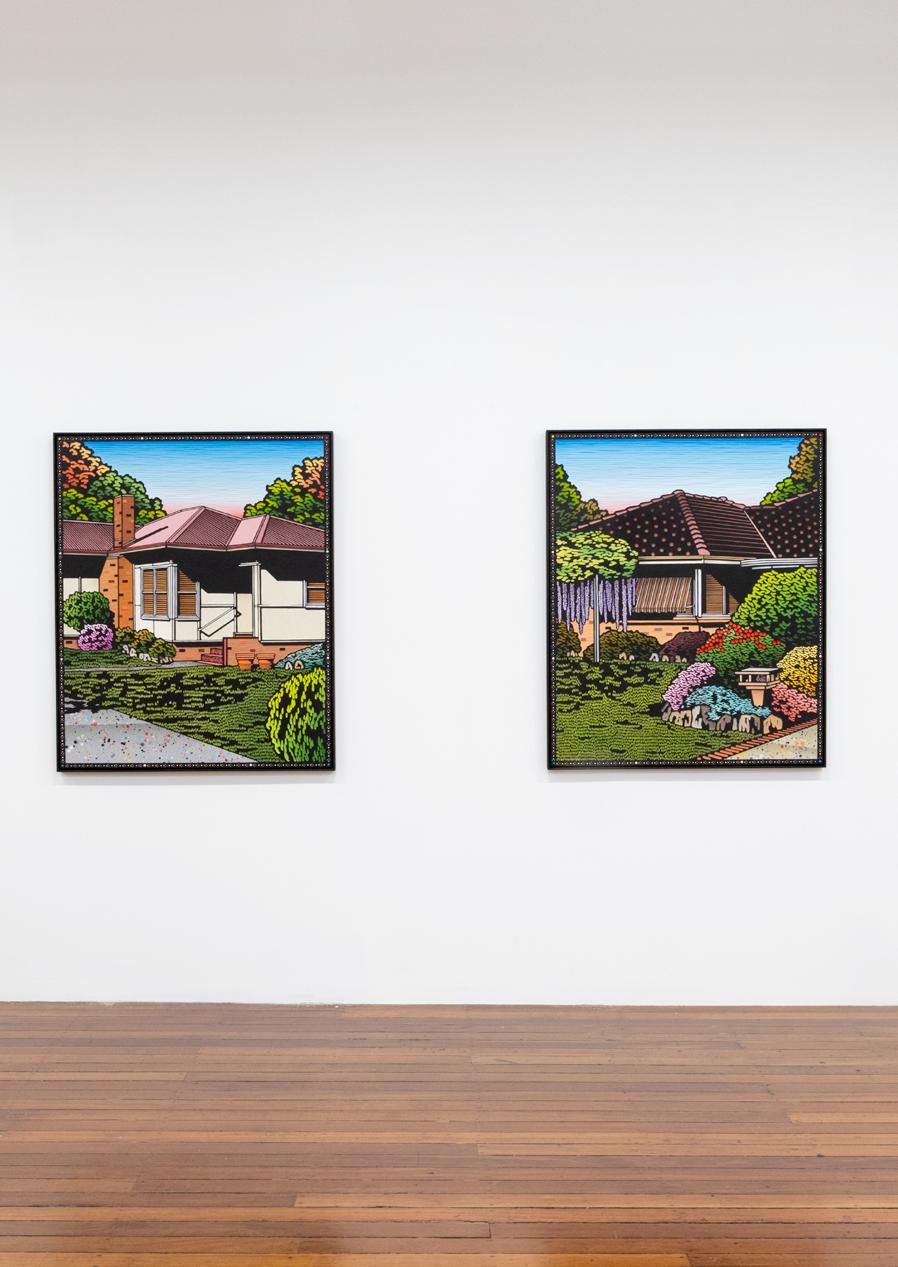
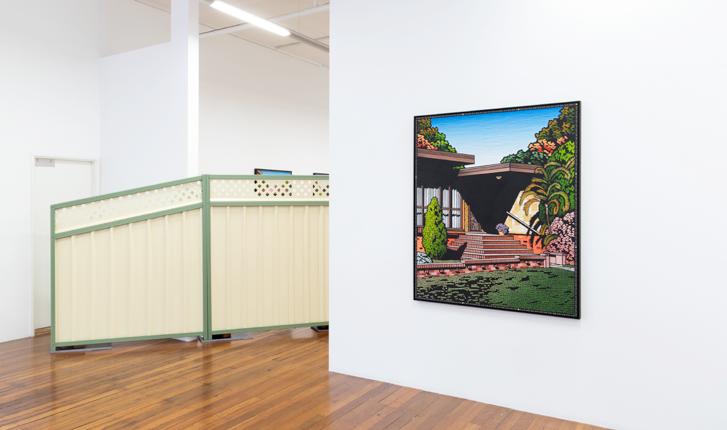
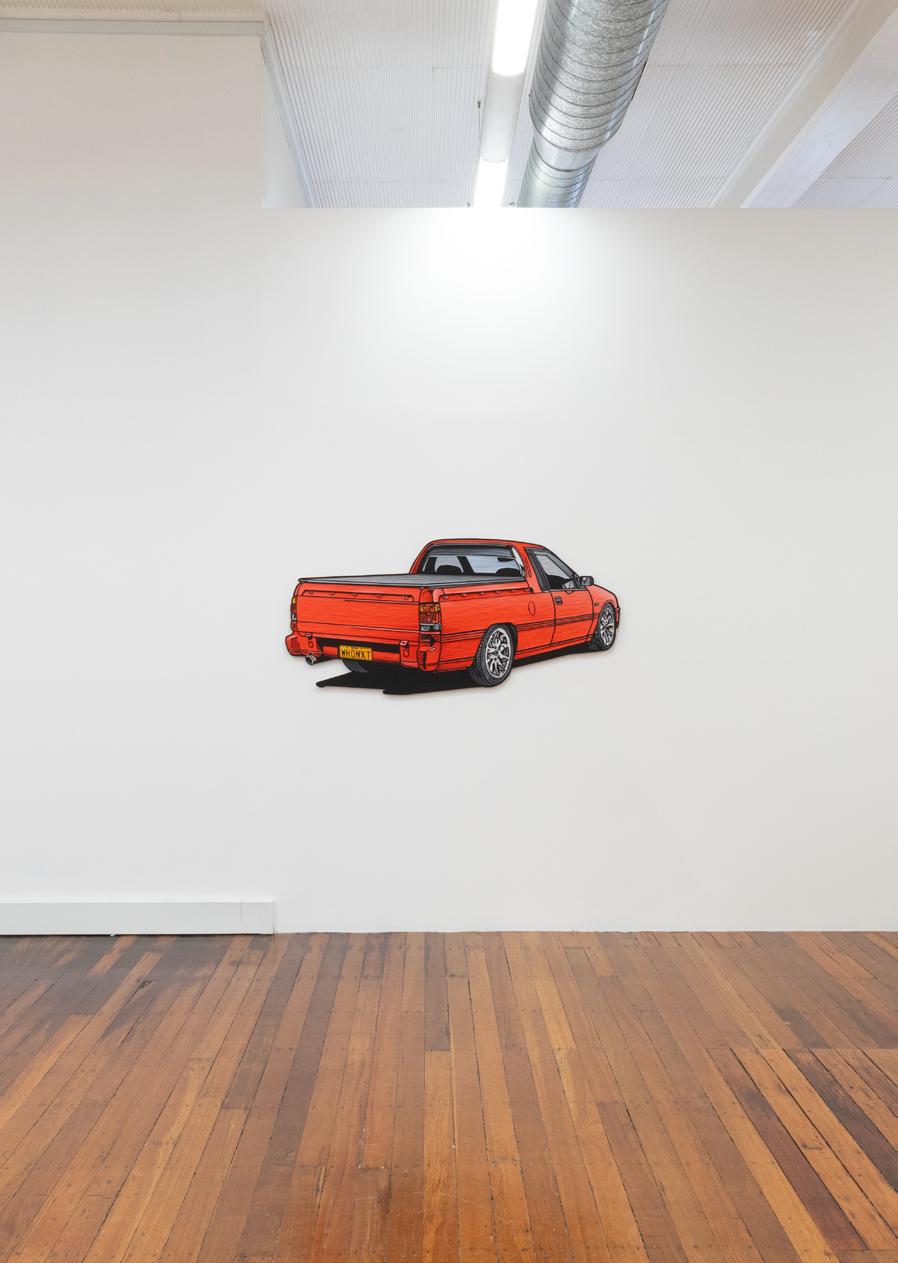
There’s a particular kind of peace in Christopher Zanko’s paintings. It sits somewhere in their ordinariness – their devotion to the everyday. Concrete driveways, striped shutters and overgrown shrubs, the classic red Holden with its personalised numberplate. These places are not spectacular. They are the houses we drive past without looking. The weary streets many of us grew up on. Yet, in Zanko’s paintings, they become luminous. Familiar and immediately recognisable, yet untethered from a specifc place. In their fdelity, they slip into Australia’s collective memory, becoming symbols to observe, mould and project our own ideas and images upon.
THE TRAPS marks Zanko’s frst major solo exhibition in Sydney, bringing together a new body of work that consolidates and extends his longstanding engagement with the suburban vernacular. Like his paintings, the traps, as a colloquialism, is widely recognised, belonging to no single suburb or generation. Around the traps. You know the place.
Like many Australians, my childhood home resembled those depicted by Zanko. An unextraordinary split-level brick house located in (what was in the 90s) a small town in the Illawarra on the South Coast of New South Wales. My parents bought the house for $120,000 back in 1985, back when the ‘Australian Dream’ of home ownership in a quiet neighbourhood was within reach for working class families. This once achievable aspiration held a narrative of settlement and security – young couples moving out of the city for a quieter life, migrant families making new beginnings, second and third generations rehearsing ideas of belonging. These are the neighbourhoods Zanko depicts, and what he captures, in their purest essence, is the architecture of optimism.
The area I grew up in has since grown exponentially. Paddocks and parklands have been developed out of recognition and
the places that shaped my early years have been replaced and repurposed. It is precisely this tension between memory and change, between the endurance of the built environment and its temporariness, that Zanko grasps so well. The mid-twentieth century red-brick and prefab houses that defne Zanko’s subject matter are disappearing at pace, particularly around the area Zanko works and where I grew up. Built quickly and cheaply to house the migrants who arrived after the Second World War to work in the local coal mines and steelworks – they were never built to last. The materiality of Zanko’s images is a balm for this loss. The act of carving into wood is, as he has described it, like writing your name in cement. A self-confessed ratbag in his younger years, Zanko was a teenager during the area’s economic downturn of the early 2000s, when much of the region's industrial backbone – the steelworks, the coal infrastructure, the printery, buildings that had defned the Illawarra for generations – went quiet or closed entirely. He and his friends would tag the buildings that were slipping into obsolescence. Even back then, the urge was the same: to inscribe presence into a changing landscape.
Zanko’s process is meticulous and time-consuming. He began his training at West Wollongong TAFE, where he became interested in printing with linoleum – a material as embedded in suburban domestic life as the houses he would come to depict. After graduating, without studio access, he moved away from the printing press but kept the discipline of carving—the slow removal of material that became his signature approach. Zanko’s images are incised with architectural precision, their forms built through removal before they are returned in layers of saturated colour.
For THE TRAPS, his process has become even more pronounced. The works are tighter, the shadows and black outlines bolder and more assertive. These houses hold their ground. The works begin with real references from Zanko's locality before he subtly dismantles their specifcity, quietly shuffing and recombining elements until the source becomes unverifable. He calls this a
Christopher Zanko
NOWHERE FAST, 2026
acrylic on carved woodblock, acrylic rhinestones
122 x 176 cm
‘fctionalising’ of the image: a real home, intimately known by its inhabitants, becomes just ambiguous enough that it could be anywhere, or belong to anyone. This refects something true about the suburbs themselves. Australian suburbia has been shaped over decades by the lives and cultures of those who have come, made their mark and left again. Iron lacework and terrazzo tiling installed by European Australians decorate fbro houses from the 1950s while ceramic pots and neat rows of clipped bamboo line the pathways of streets populated by Asian Australian communities. In loosening his grip on the specifc, Zanko makes room for all of it.
Installation view — THE TRAPS. N.Smith Gallery, Sydney.
And while the nostalgic suburban image presents something picture-perfect and ideal, Zanko is the frst to admit that a darker presence moves through any honest conversation about suburbia. The Australian Dream of home ownership and peaceful family living is built on unspoken costs – colonisation and displacement sit beneath these quiet streets. It's a mythology that crumbles under scrutiny. But there's another kind of darkness too, one that doesn't require historical analysis to feel. In his portrayal of the quiet and mundane, Zanko leaves space for this – for the stories that don’t make it past the front door. There is an eeriness in the total stillness of his images, in the complete absence of human life. These streets could be Pleasantville; a world so composed it curdles. The large blocks of shadow that interrupt the gaze and block the whole picture are the works’ most unsettling element. While the houses and gardens hold perfectly still, these shadows seem capable of movement – the sun casting its arc across the same roofines and driveways, day after day, in a rhythm that is at once deeply comforting and faintly menacing.
In every painting, Zanko holds us at the boundary – the footpath, the driveway, the front fence – and for all their warmth of colour and the intimacy of their rendering, the doors remain closed. We are kept at the distance of a neighbour. It's this withholding that keeps the work from tipping into sentimentality. Zanko paints suburbia as it actually operates – outward-facing, composed, legible only to a point. What happens after the front door closes is none of your business. In refusing to populate these scenes, to offer a fgure on the porch or a child’s bike left out on the lawn, Zanko resists the easy emotional cue and leaves only structure, both architectural and psychological, for the viewer to furnish themselves.
However, Zanko doesn't let you steep in this unease for long. His exhibition design for THE TRAPS carries the same lightness as his paintings. The gallery is cut through with lengths of Colourbond fencing – the iconic corrugated metal that defnes so many Australian properties – which dissolves the white cube's
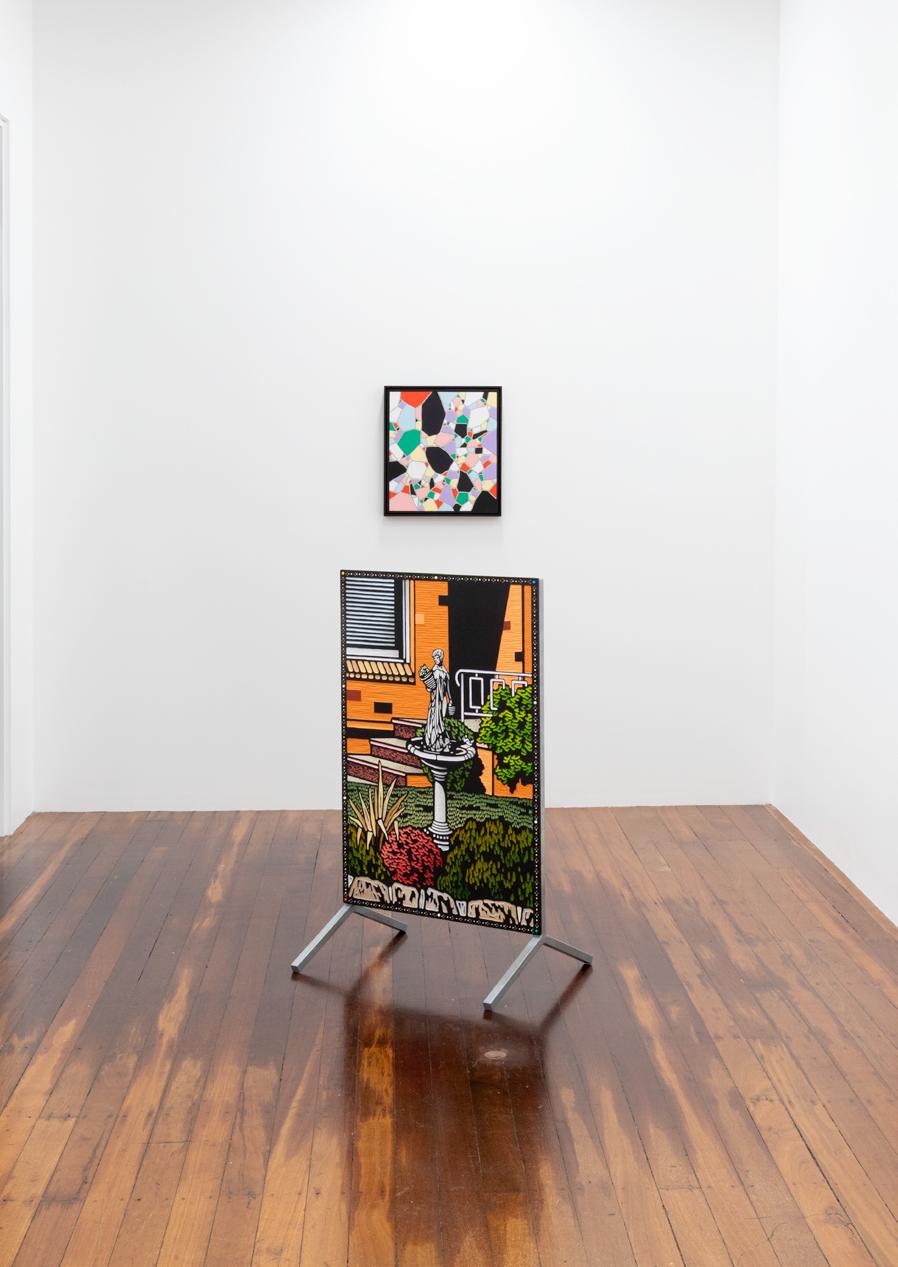
pretensions. Among the paintings sits Suburban Opera, a work housed in a metal sandwich board frame, the kind you'd fnd outside a suburban deli, now standing on the gallery foor. The painting itself – a modest house with an improbable Grecian fountain in its front garden – glimmers with a cheekiness that sits perfectly between sincerity and satire. These curatorial gestures are deliberate and unpretentious. If Richard Serra used industrial materials to reconfgure your relationship to space, Zanko uses the familiar detritus of Australian everyday life to do something similar, with just a little less reverence.
In a country where the built environment is in a state of constant fux, that act of making – slow, deliberate, carved into wood –feels less like preservation and more like a kind of insistence. THE TRAPS is not a love letter to the suburbs, but a record. Honest, unhurried, and a declaration that the ordinary deserves our attention
Installation view — THE TRAPS. N.Smith Gallery, Sydney.
—
Installation view
Holding Pattern, River Hug. N.Smith Gallery, Sydney.
Anderson Holding Pattern, River Hug 9 Apr – 2 May
Sally
Words by Laura Couttie
Dear Sally,
I read your email on my phone as I hold my ten-week-old son, his small warm body curled into mine. His head rests just below my chin so that with only a slight movement I can brush my lips across the downy hair on his head and plant gentle kisses. It is hard to believe that mere months ago he was curled up inside my body, held in the warm cocoon of my womb.
Your invitation to write a text for your exhibition Holding Patterns, River Hug is prescient because I have been thinking a lot about the ways that motherhood has shifted (is still shifting) my relationship to myself, my work, the world. I desire, with a feverish curiosity, to know how other mothers navigate these spaces.
Leslie Jamison writes in Splinters, her memoir about navigating early motherhood, of her attempt at “crafting a self that understood work and motherhood as forces that could feed rather than starve each other.” (p. 56)
In your paintings, I recognise an intimate and poetic exploration of what is means to be a woman, a mother, and an artist.
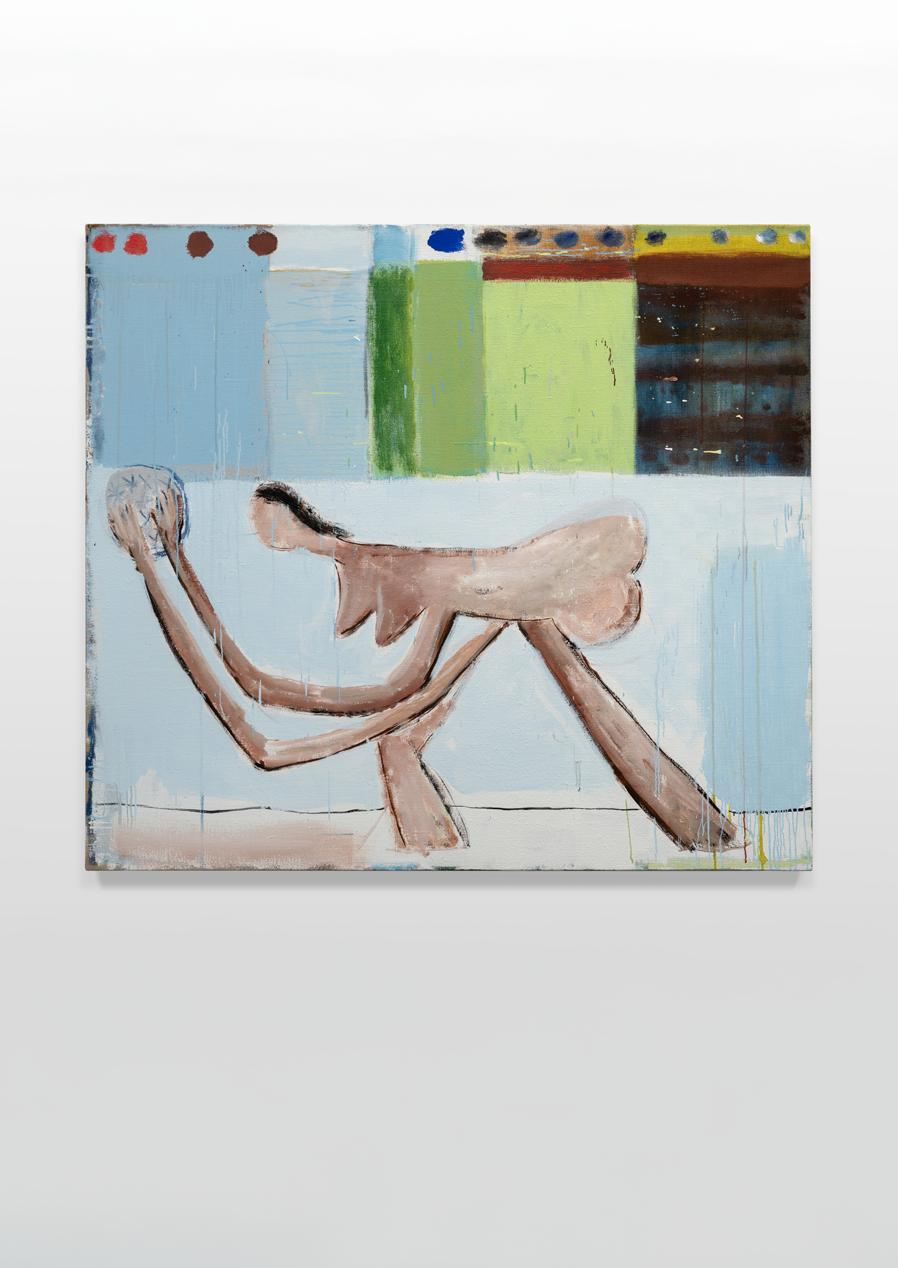
Sally Anderson
PP's woman holding with quilt sky, 2025
acrylic on linen
137 x 153 cm
I am writing this text on my phone while holding my son. He prefers to be held… but don’t we all. The image of mother and child (mother holding child) has been represented time and again throughout art and image making.
I recently read the book The Baby on the Fire Escape by Julie Phillips, in which she writes that “Creativity thrives on physical sensations and strong feelings. Mothering, too, begins, if not in pregnancy or childbirth—neither one a requirement or a given—then in the sensuous or comforting touch of parent and child.” (p. 21)
Sally, I think of the photo you shared with me of you embracing your son in the river at Brunswick Heads.
How do we create and recreate patterns of holding and being held?
To hold: (verb) meaning ‘to keep, tend, foster, cherish, watch over’. Also, ‘to have as one’s own’ (a room of one’s own / a child of one’s own).
Installation views — Holding Pattern, River Hug. N.Smith Gallery, Sydney.
I am often these days sitting inside on the couch or bed, facing the windows as I hold or feed my baby. I think of all the other mothers who are doing the same in their own homes and I feel connected to a powerful lineage. I watch the world go by outside my home, distorted through the sheer curtains: trees swaying in the breeze, people walking along the street. My windows face west: the arrival of the afternoon sun and the chatter of children heading home from school herald the winding down of another day.
Sometimes we don’t leave the house at all. Domestic spaces take on new meaning when you are bound to them.
Louise Bourgeois made her series of paintings titled Femme Maison (translating literally to ‘woman house’) in 1946-47 when she was raising three young sons. I see the mothering artist held within the domestic space; but also, perhaps, the mother as home, holding those who reside within.
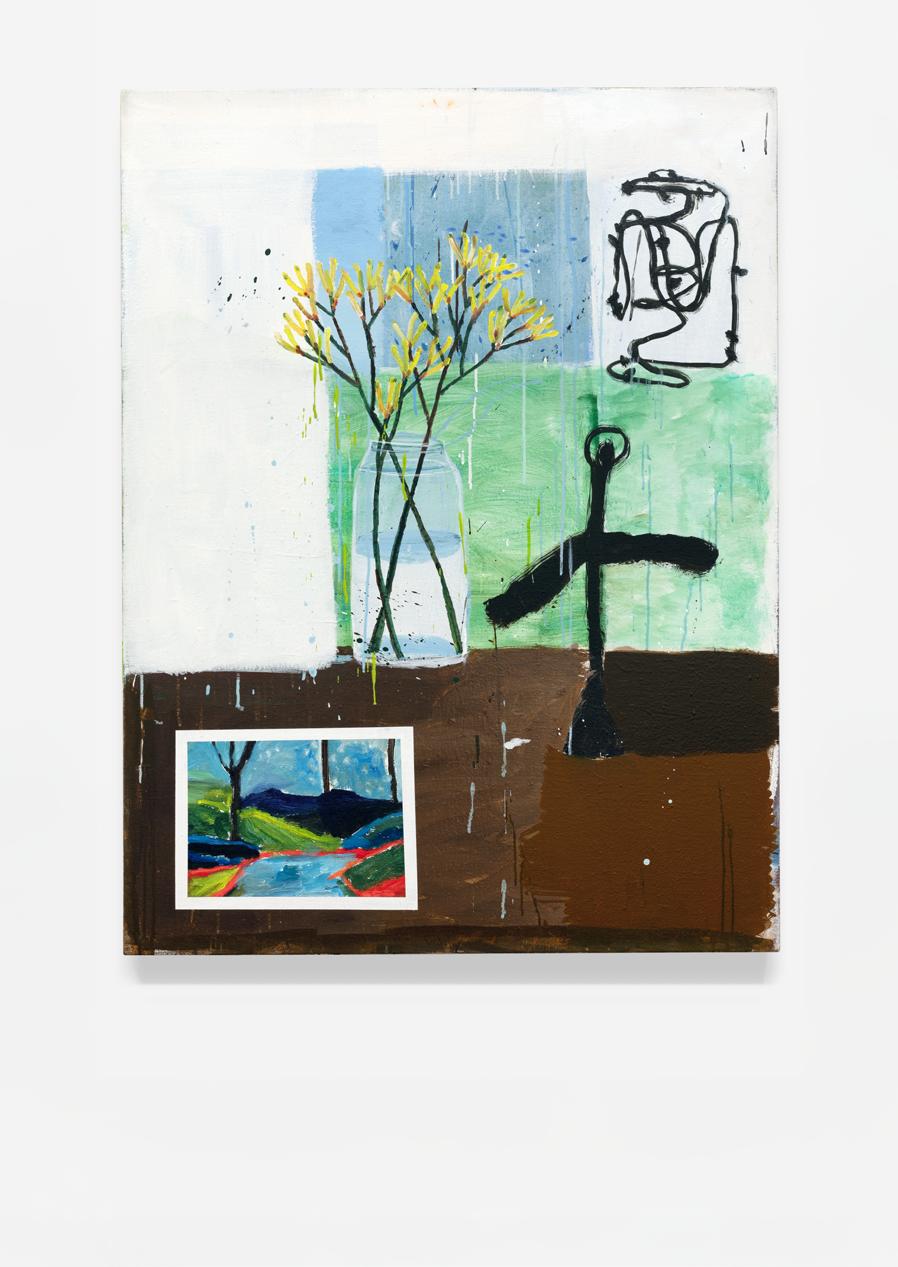
Sally, I see you in these works. Self as the abstract, elongated female form referencing Picasso’s bather, itself an allusion to the ‘frst’ woman, Eve – reaching out for the ball or the forbidden fruit. I also see you in the arrangements of cut fowers in vases, the pieces of fruit placed carefully in bowls, the collection of ceramic vessels – these everyday objects that you chose to keep in your domestic space and to reproduce in your paintings.
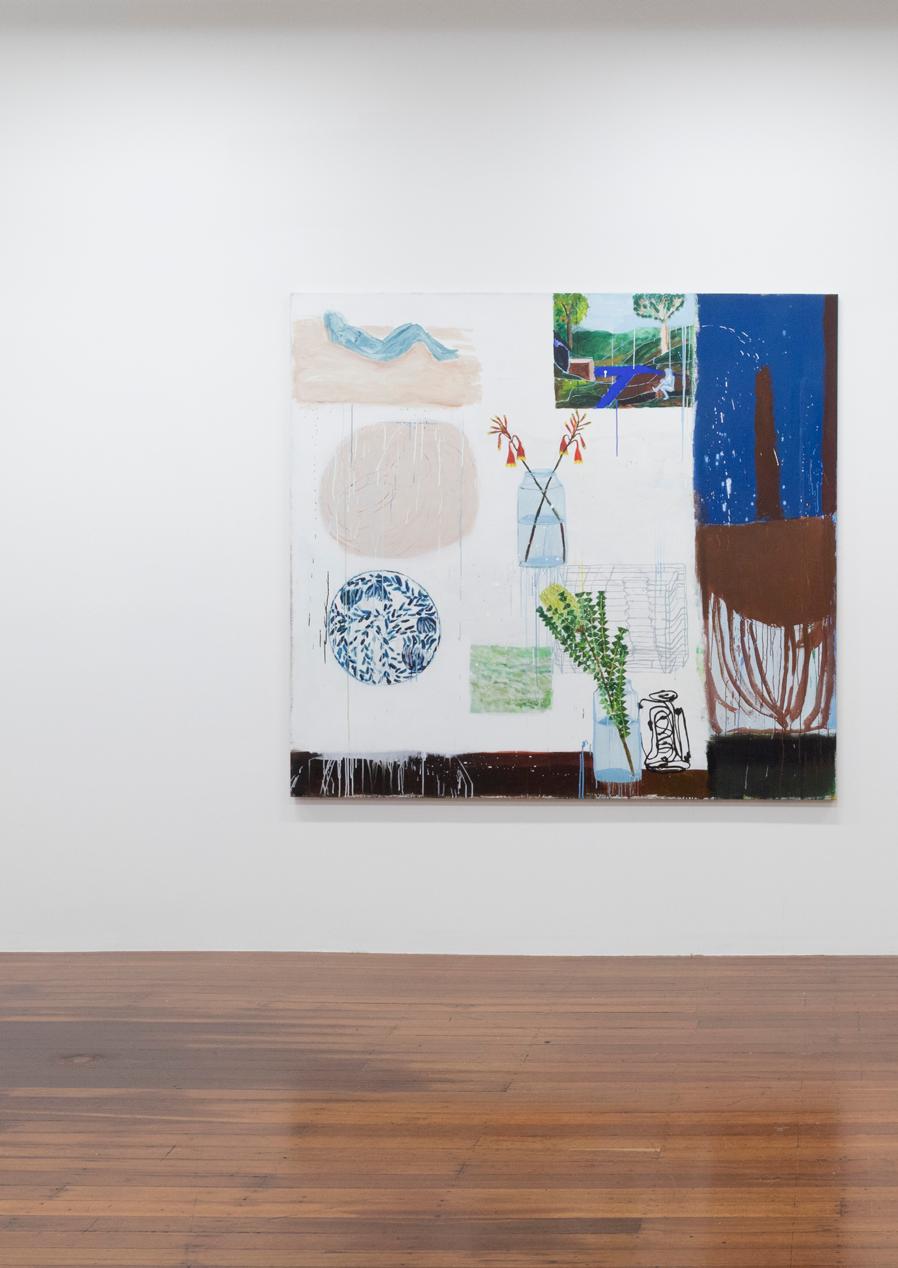
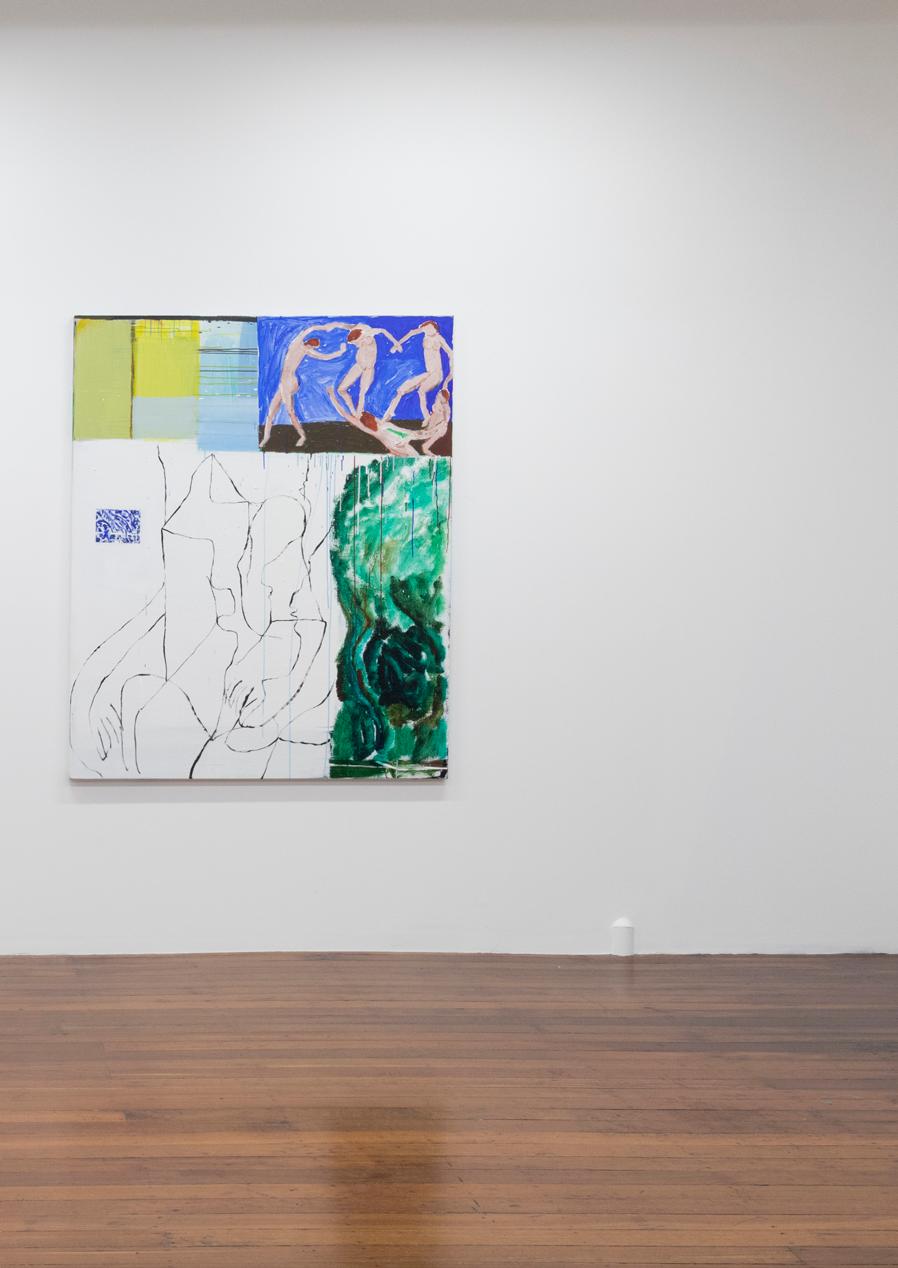
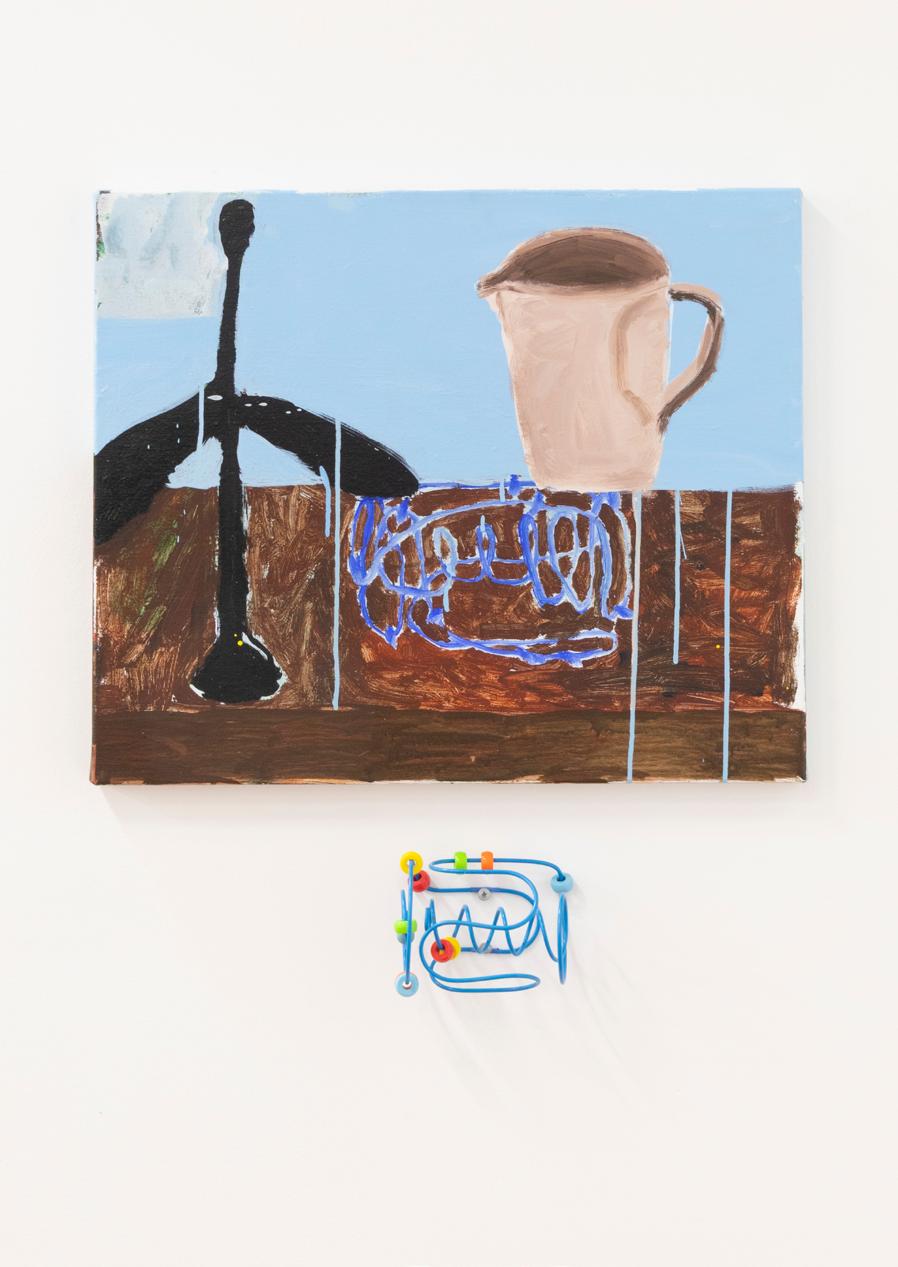
You say you see your paintings as patchwork quilts. On your canvases, images of domestic mundanity and the artistic are collaged together: a dish rack, a child’s bead maze, a handmade ceramic vessel; your son’s drawings alongside paintings by Picasso, Matisse and Olley. Familiar images repeat and cycle through your paintings in different arrangements, building your own visual lexicon.
Patchworking is an ancient form of needlework that involves stitching smaller pieces of fabric together to create a larger pattern; traditionally made by women from the textile scraps of everyday domestic life. A quilt is also something that holds you and keeps you warm, and your paintings do this too.
Sally Anderson
River hug quilt pattern, 2026
acrylic on polycotton
198 x 183 cm
Installation view featuring
Paris bead maze, AK's River Wife, jug, 2026, acrylic on polycotton, 50 x 60 cm.
It is 1am and I am rocking my baby, trying to lull him back to sleep. My days and nights have taken on a different shape, blurring into each other, marked not by the rise and fall of the sun but the threehourly sleep/feed cycle dictated by the small human I am holding. I track time passing not only in weeks but in grams, as my tiny boy grows.
What makes up a life?
There is the mundanity, the cyclical rhythms of the everyday. Within this there are rituals that we create –morning coffee in a handmade mug, a bedtime bath – and there is beauty and tender moments to be found, memories to be made.
The titles of your paintings contain sometimes cryptic references to the people, places and things that infuence and appear in your works. Lists of coded annotations, like jottings in the ‘notes’ app on my phone, act as memory triggers revealing a life full of creativity and love.
Dear Sally,
I am fnishing this text as my baby wriggles and squirms beside me in the bed. He is now ffteen weeks old and has grown and learnt so much in the time it has taken me to write this.
I am learning that to be a mother is to never be truly alone. The act of creation is not solitary, not uninterrupted; often taking place not in a room of one’s own, but amongst the chaotic, messy space of the home. It is a choreography (see Henri Matisse’s dancers) between the role of mother and the role of artist (or writer).
Sally, your paintings articulate so beautifully the experiences of mothering and artmaking, and the ways that each informs, supports, and inspires the other. I am only just embarking on this journey of motherhood. As your journey continues to evolve, I hope that you fnd spaces to be held in your creative practice, just as your art provides a space for others to be seen and held.
With love,
Laura Couttie
Sally Anderson
AK's river wife, kangaroo paw, Paris bead maze, Augie's BT landscape, 2026
acrylic on canvas
122 x 102 cm
7 – 30 May
The Interior II brings together a group of represented artists whose practices move through the space of the interior, both as a physical environment and as a psychological condition. Here, the interior is not fxed, but shaped by memory, perception, and lived experience.
Across the exhibition, rooms dissolve into fragments, surfaces hold traces of gesture, and light becomes a structuring force, revealing as much as it conceals. The works move between intimacy and distance, where the familiar is unsettled and re-formed through each artist’s distinct approach.
As a continuation of the frst iteration, The Interior II extends this dialogue, drawing connections across practices while allowing each to remain singular. What emerges is a quiet tension between presence and absence, where the interior is not simply depicted, but continuously reimagined.
Left:
Sally Anderson
Apple and eggs with Tweed view, 2025
acrylic on linen
50 x 60 cm
Right:
Sally Anderson
Absent apples and MO vessel, 2025
acrylic on linen
50 x 60 cm
Top: Carly Dodd, all 2025, linen, polyester flling and cotton yarn.
Above: Christopher Zanko, all 2026, acrylic on wood relief carving.
Opposite: Natasha Walsh, The window opening onto the Magnolia, 2025, oil & pigment on copper, 41 x 32.5 cm (plate).
Sally Scales New Works.
7 – 30 May
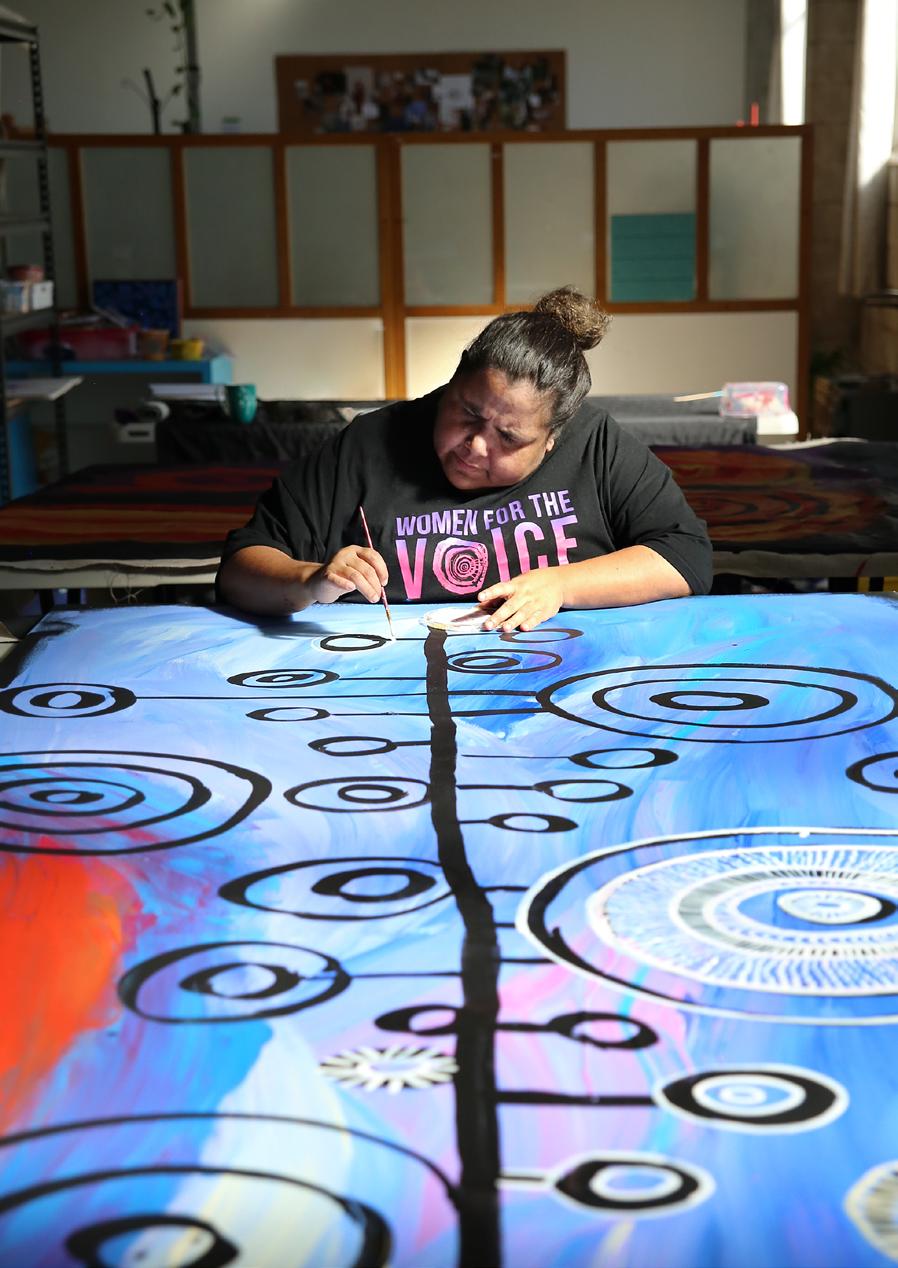
In this exhibition, Sally Scales brings together a powerful body of work shaped by Country, memory, and the enduring presence of Tjukurpa.
'This show is really special to me – it feels like I'm stepping into a whole new chapter as an artist. Each piece is an opportunity to push further experimenting with colour, movement, and texture while staying connected to where I come from. I'm looking forward to seeing where this journey takes me.'
Drawing deeply from her Pitjantjatjara heritage, Scales paints with instinctive rhythm and remarkable sensitivity, translating ancestral knowledge into luminous felds of colour, movement, and form. Each work carries a profound sense of place, holding story, spirit, and connection with quiet strength.
Above: Sally Scales in her studio, Tarntanya/Adelaide.
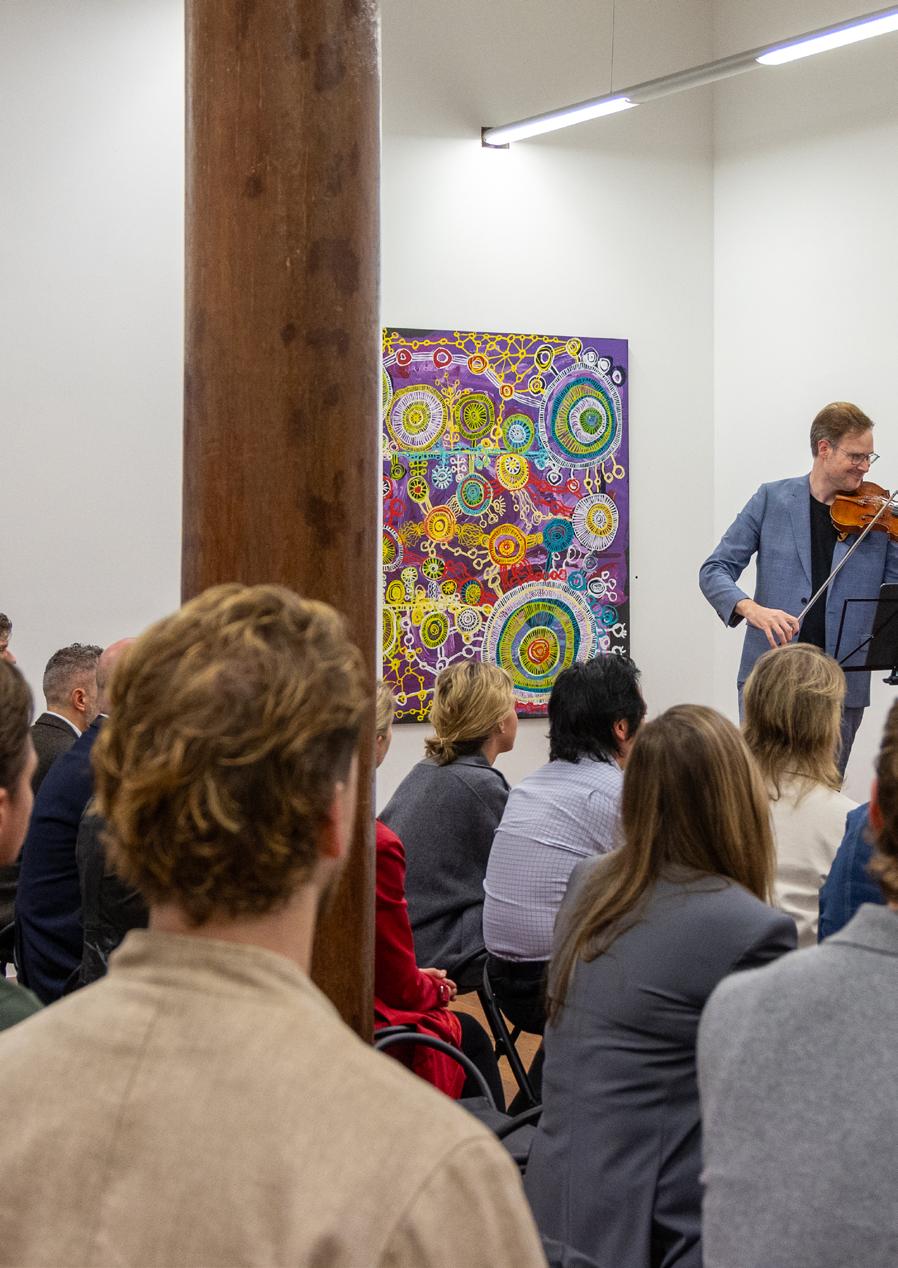
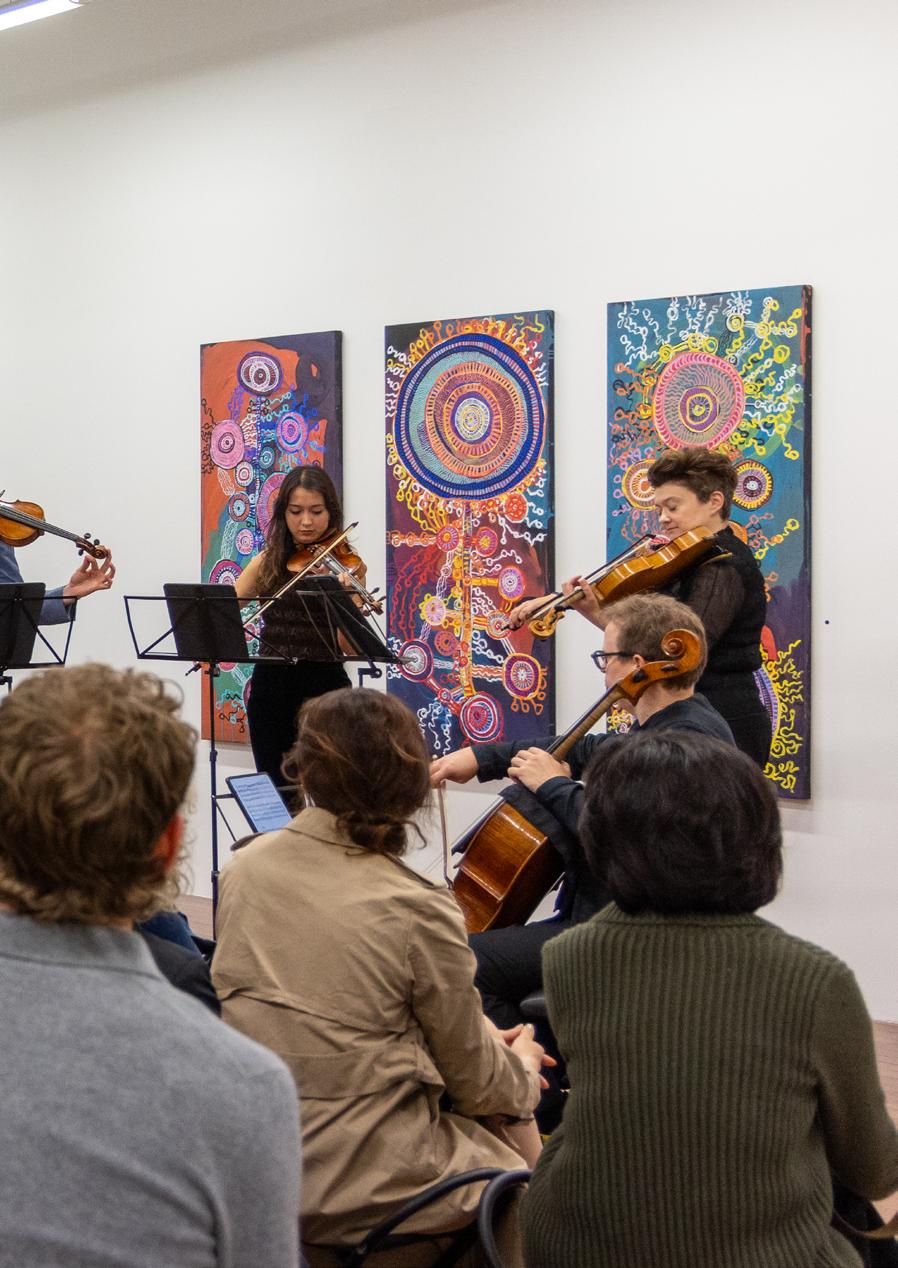
Performance by members of the Australian Chamber Orchestra, N.Smith
Gallery, Sydney.
Photo by Jonathan Cohen. Courtesy of the Australian Chamber Orchestra.
Under the Same
Constellation
3 –27 Jun
"Under the Same Constellation brings together artists in a collective exhibition marking the gallery’s ffth year. Spanning painting, sculpture, photography, and works on paper, the exhibition refects the breadth of practices that have shaped the programme since its inception."
– N. Smith
Holly Anderson Study for The Bridge, 2025 oil on panel 18 x 13 cm
Like stars held within a shared feld, each artist maintains a distinct position while contributing to a larger constellation of ideas, histories, and perspectives. Seen together, these works trace both individual trajectories and the evolving identity of the gallery itself, grounded in long-term artist relationships and a commitment to sustained dialogue.
This exhibition is both a moment of refection and a point of departure. It acknowledges the artists, collectors, and community who have shaped the gallery’s frst fve years while looking ahead to what continues to unfold.
Exhibited artists include: Holly Anderson, Sally Anderson, Tom Blake, Joshua Charadia, Casey Chen, Claire Healy & Sean Cordeiro, Savannah Jarvis, Mason Kimber, Fiona Lowry, Dylan Mooney, Thea Anamara Perkins, Joan Ross, Vipoo Srivilasa, Mimili Maku Arts artists Umatji Tjapalyi, Emma Singer, Betty Campbell, and Pauline Wangin, Marilyn Russell, James Tylor, Natasha Walsh, Christopher Zanko, Louise Zhang, and Kate Vassallo.
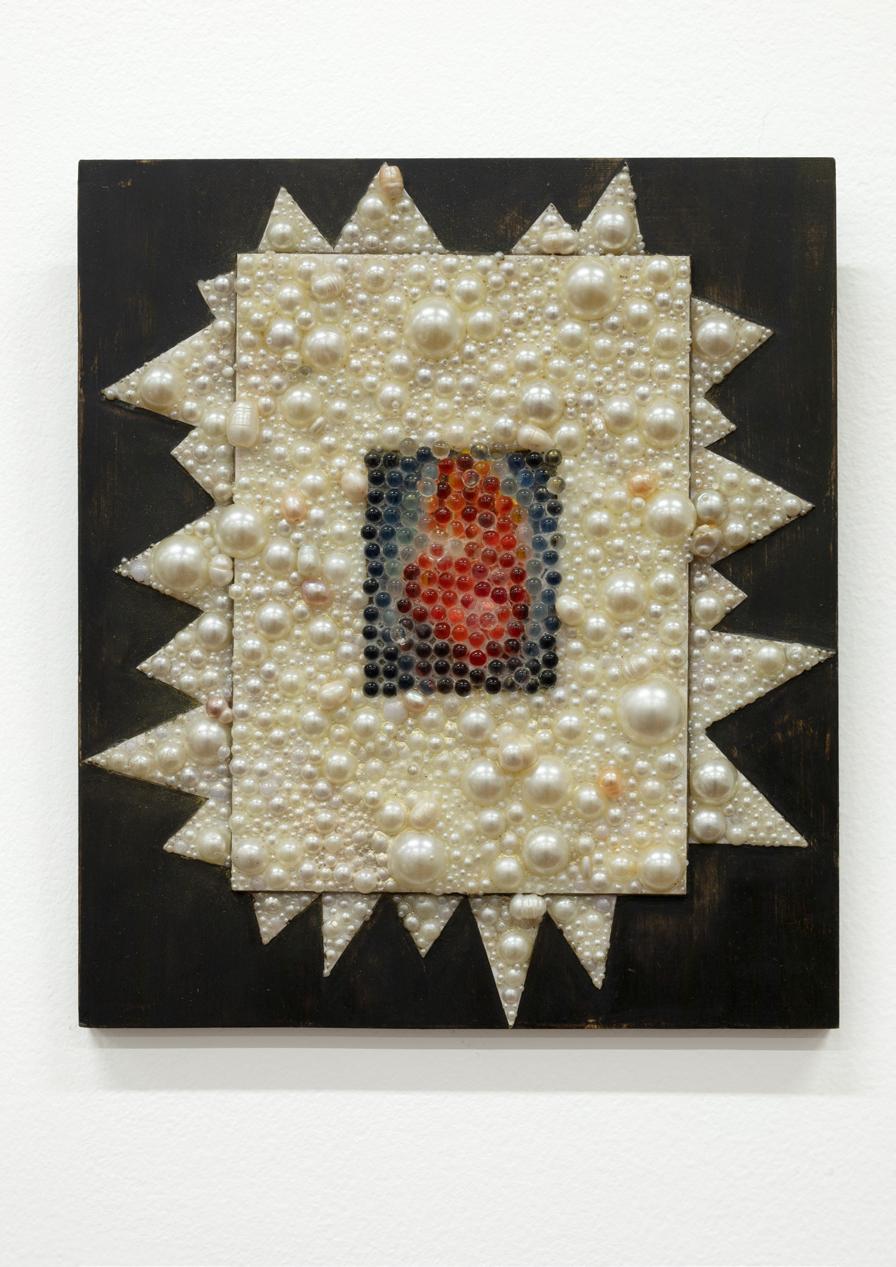
Savannah Jarvis
It Can Be Diffcult to See the Stars, 2026 oil, glass, acrylic pearl, freshwater pearl on canvas board and pine
40.5 x 21 cm
Installation view — Under the Same Constellation. N.Smith Gallery, Sydney.
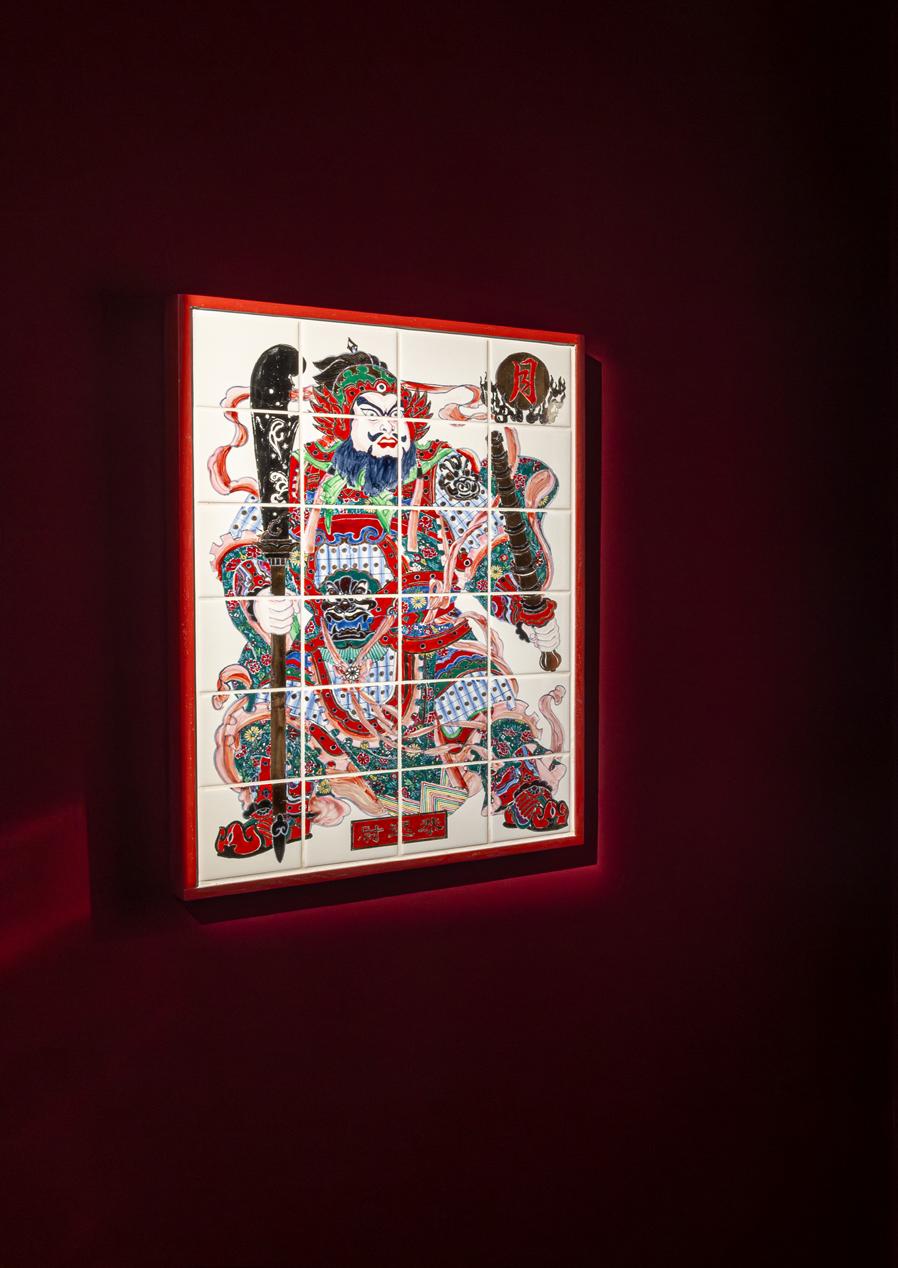
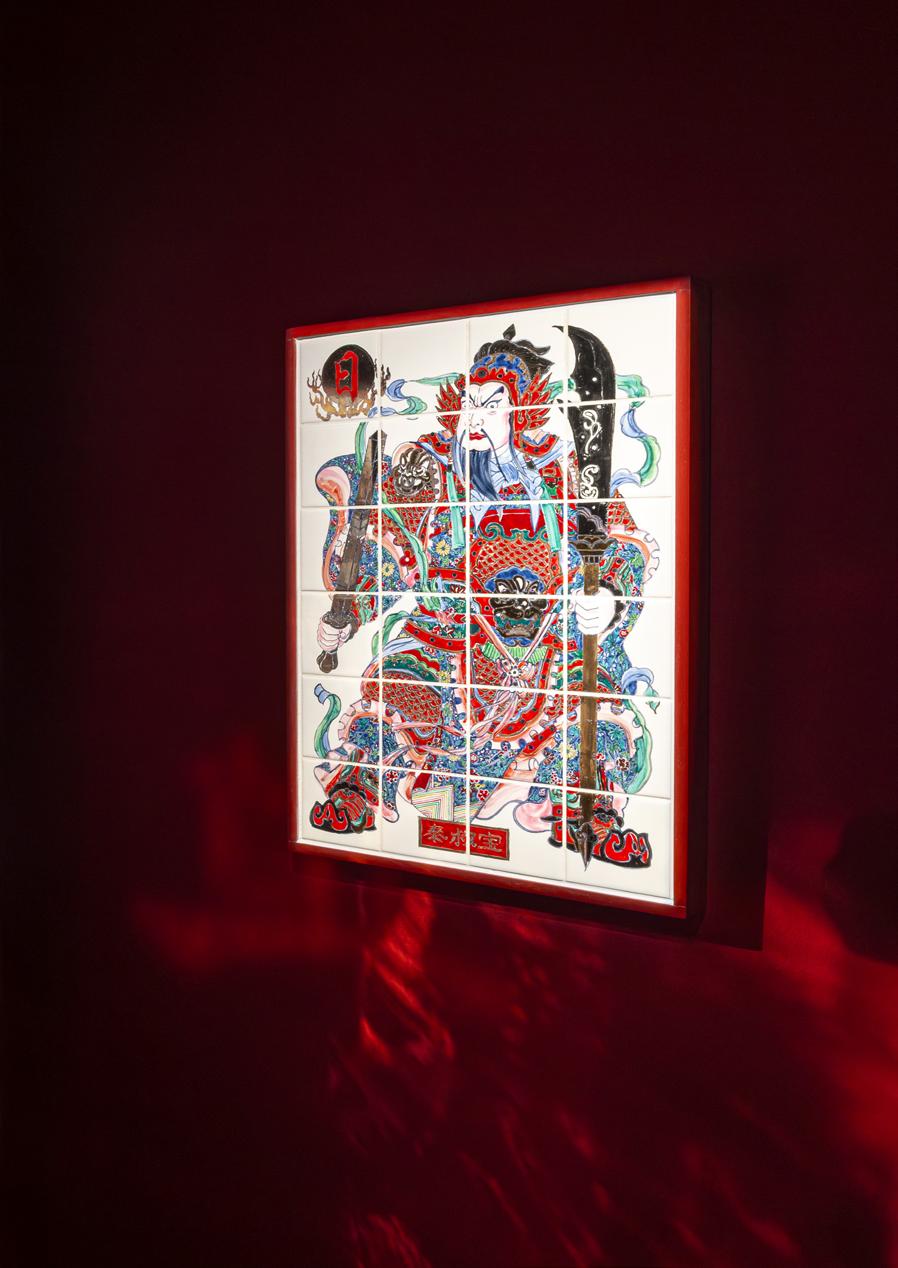
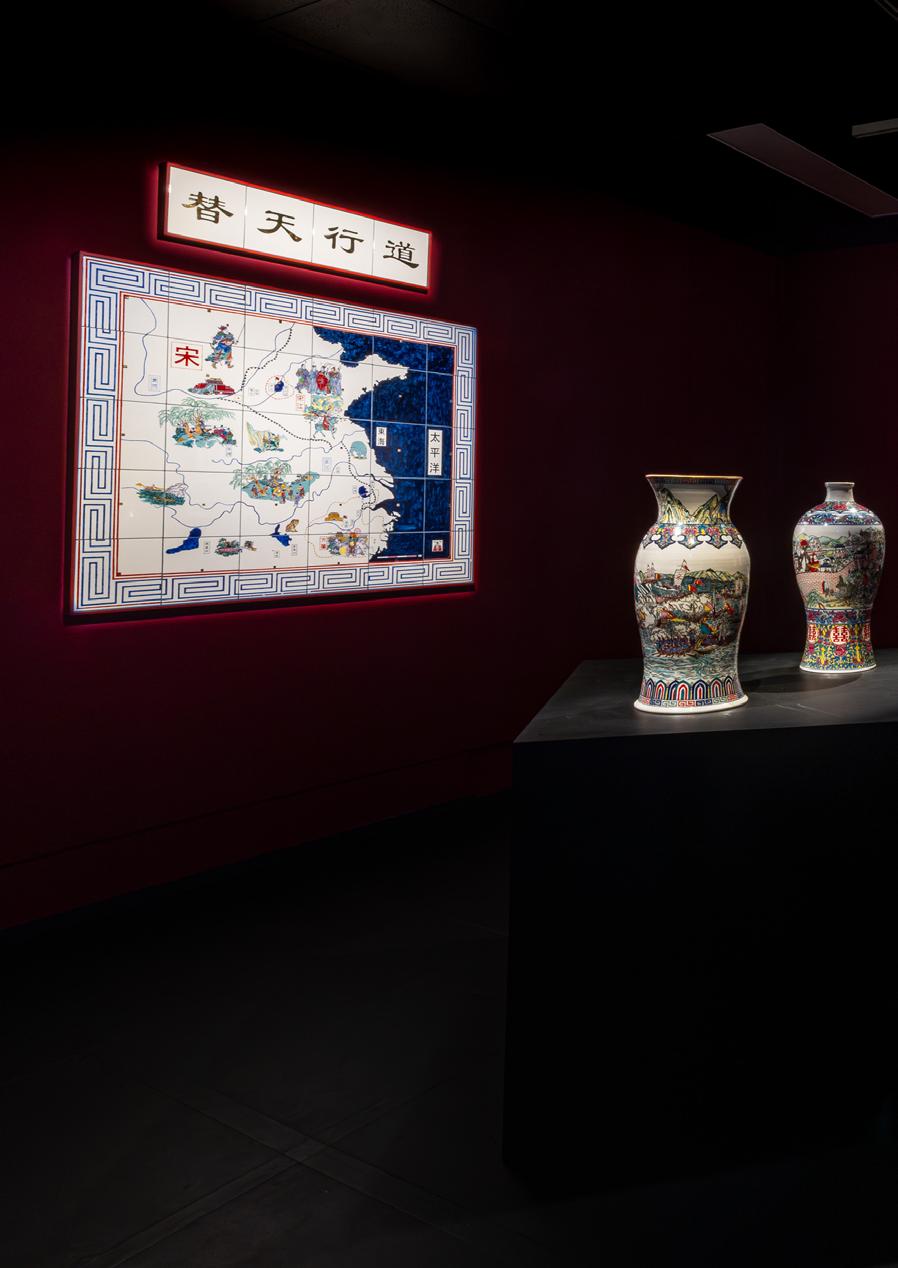
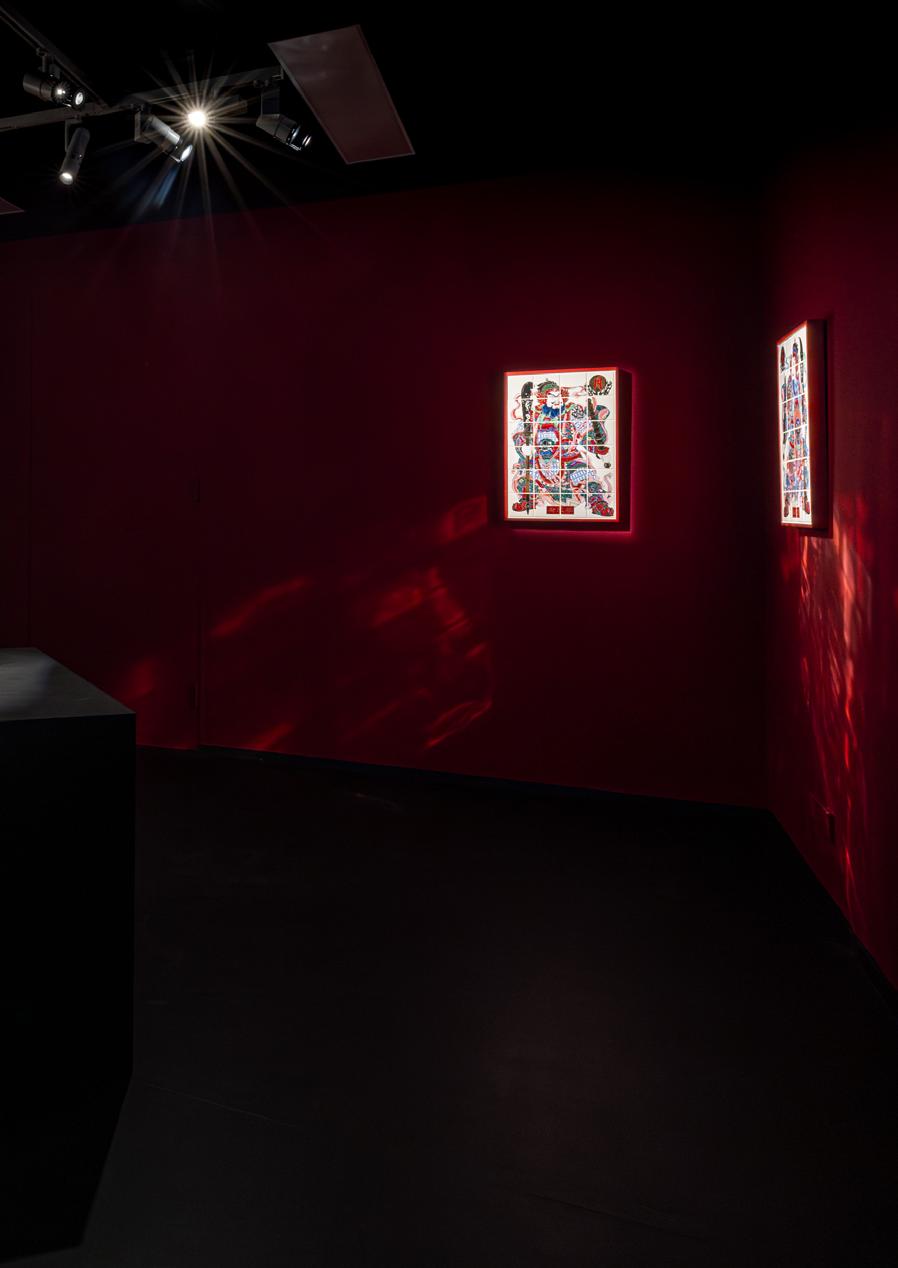
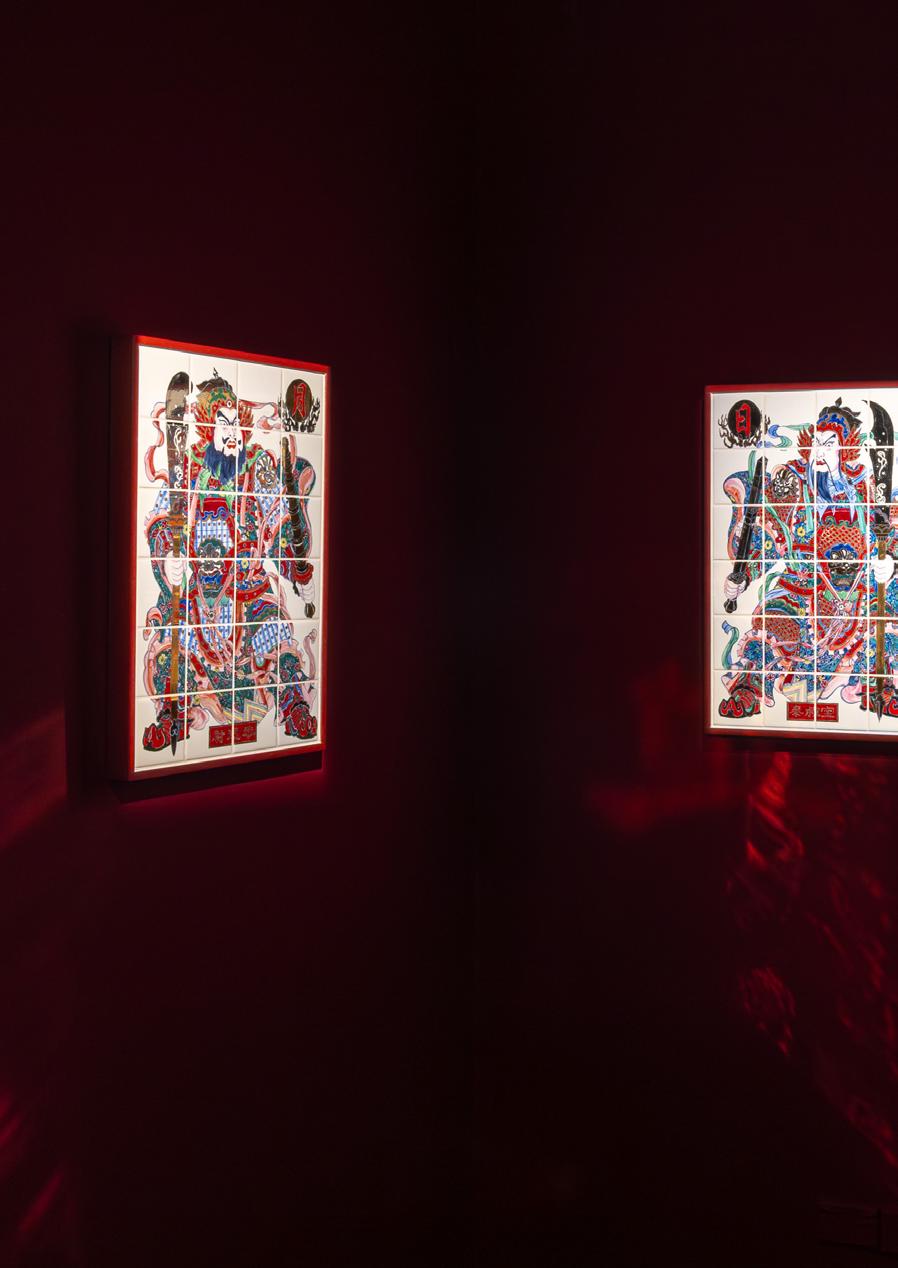
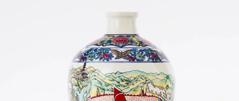
Casey’s ceramics practice references historical illustrations drawn from an eclectic mix of folklore, mythology, classical literature, and contemporary pop culture. Blending childhood nostalgia with long-standing East Asian ceramic traditions, his works move fuidly between the historical and the contemporary, creating a visual language that feels at once playful, layered, and deeply personal. Through hand-thrown vessels and intricately painted surfaces, Casey pays homage to the enduring history of porcelain craftsmanship while reimagining its place within contemporary culture.
The eponymously titled main work of Chen's exhibition at Mosman Art Gallery, Merciful Navigation, is an allegorical map illustrating the landscape of a fctional Song Dynasty China (early 12th century CE) in turmoil from armed uprisings by historical rebels Song Jiang and Fang La.
Drawing equal parts inspiration from historical, pictorial maps, Chinese folk religion and Hanna Barbera cartoons: Merciful Navigation is a body of work that revisits the archetypal tales from Chinese literature and seeks to resolve them with my understanding of pop-cultural analogues more familiar to us in an irreverent but earnest mashup. Chen aims to pay homage to the rich and enduring history of porcelain craft while subverting the expectations of the audience towards the conventions of the medium.
The real life exploits of these outlaws have been lionised within folk tales and later adapted into the Ming Dynasty novel, The Water Margin – one of the four classics of Chinese literature. The stories and characters are
frmly entrenched within the Chinese cultural canon and familiar and well beloved within that society. The plaque with golden lettering spells ‘conducting justice on behalf of Heaven’ – or ‘the will of heaven’ – a popular slogan among peasant uprisings that have sought to overthrow and delegitimise unpopular governments throughout Chinese history. The work illustrates an imagined retelling of The Water Margin but features the same locations of the story, but with a pop-cultural spanner thrown into the works.
h of these delimits a particular facet visible in Bacon’s paintings. These rubrics overlap, but there is a logic to their sequence—the ‘logic of sensation’ that is the subtitle of the book and the horizon of Deleuze’s analysis. I admire the structure of that book as much as I do Deleuze’s analysis of the paintings.
Joan Ross I give you a mountain
Art Gallery of South Australia
Touring 2026 – 2027
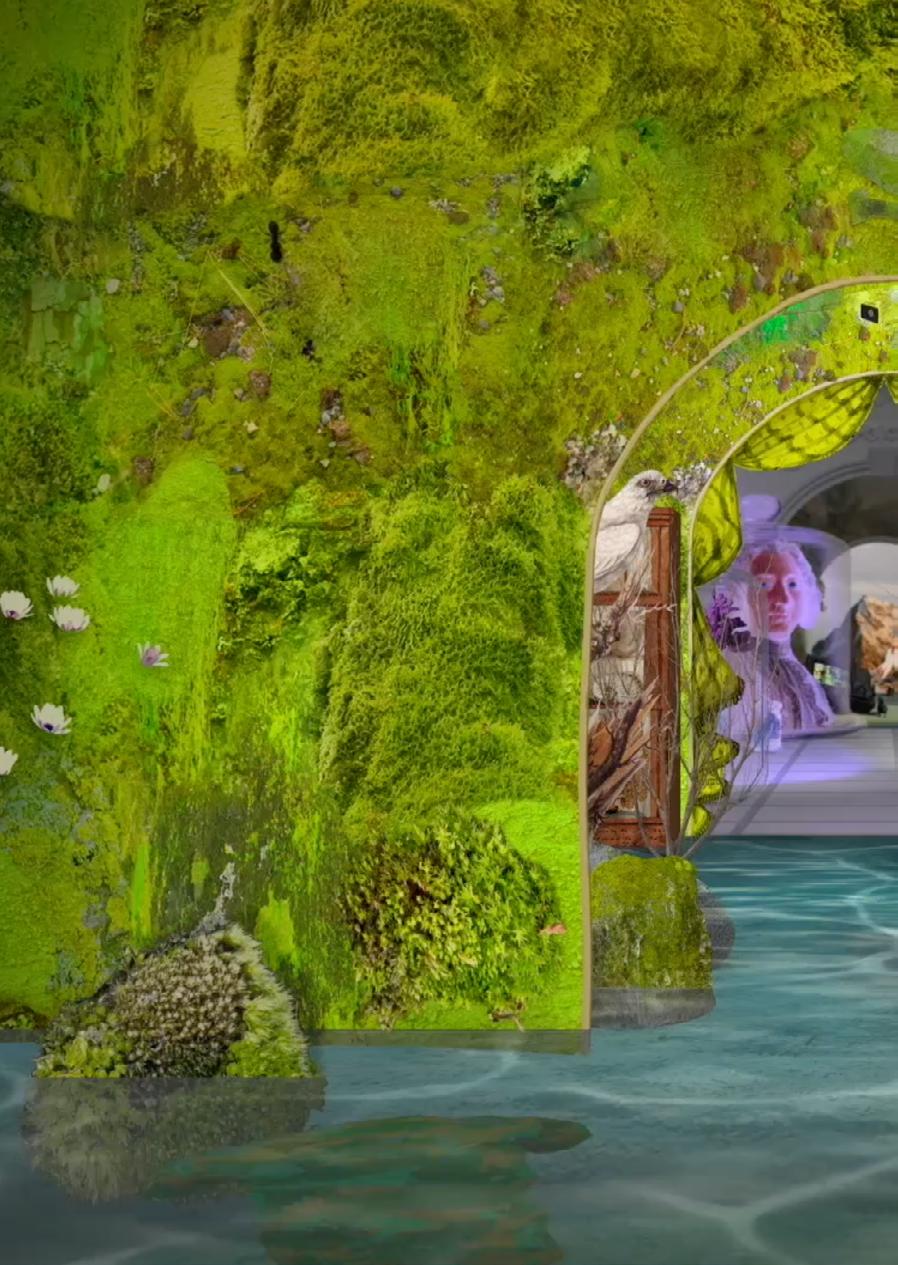
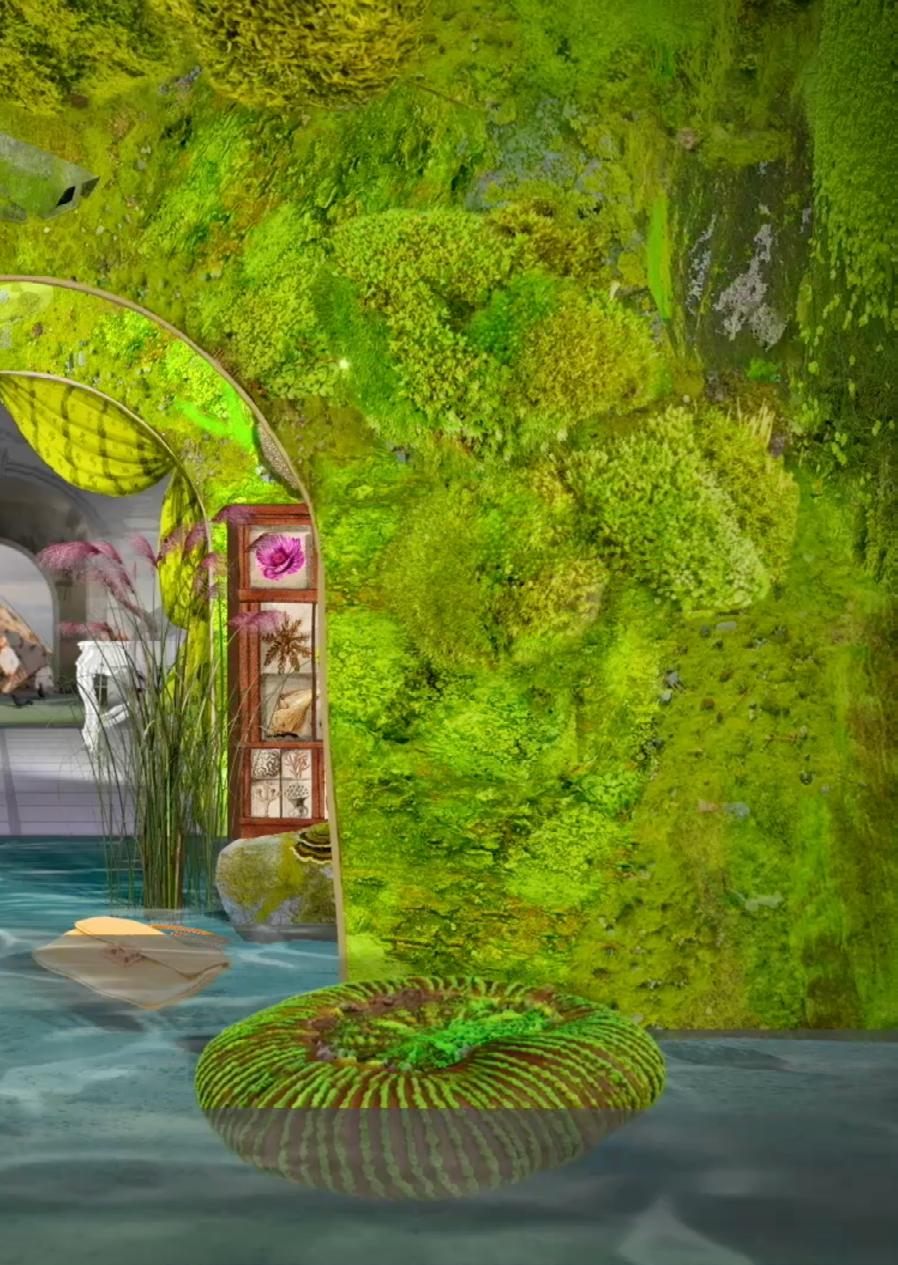
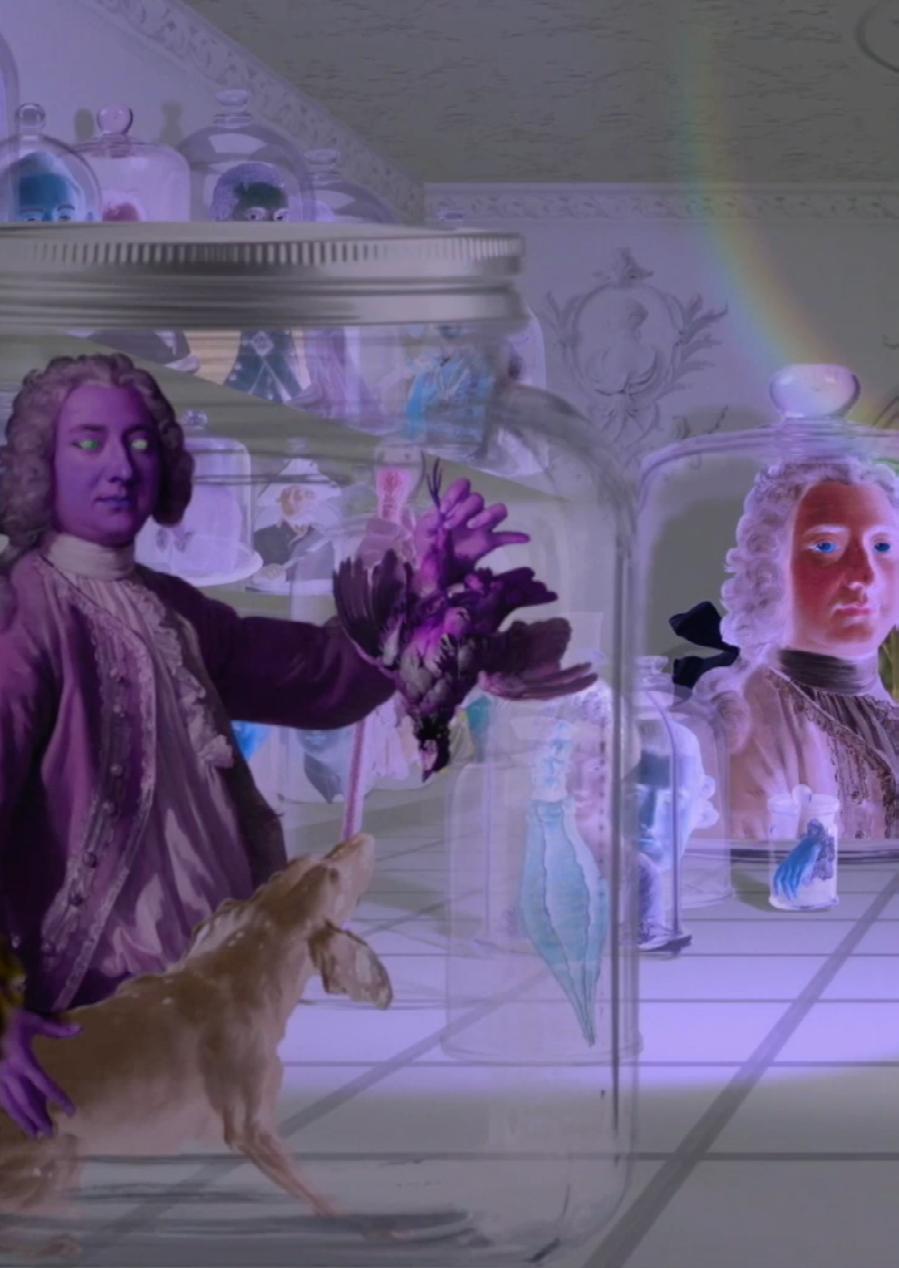
Joan Ross invites you on an animated journey through a cabinet of curiosities in this expansive projection on the façade of the Art Gallery of South Australia (AGSA). Explore the Leverian Museum, a place that once held animal specimens, antiquities and ethnographic objects sourced on voyages by Captain James Cook. Collaging 18th century watercolour illustrations of the original artefacts by Sarah Stone, I give you a mountain reimagines the impact of colonialism on our planet, charting a dangerous course from a verdant paradise to desert dystopia.
Ross's work is featured in AGSA's Screen Wavelength programme which tours moving image works of art from the Art Gallery of South Australia’s time-based media collection. This focused yet signifcant collection of works by Australian and international artists illustrates this medium’s dynamism and the diverse nature of acquisitions within the AGSA’s collection. Wavelength draws on past and contemporary approaches to time-based media art that share stories from across our world that are connected through the theme of water. The exhibition is presented with MML and Country Arts SA.
Tour Itinerary:
Walkway Gallery, Bordertown, 13 Feb – 25 April 2026
Signal Point Experience Centre, Goolwa, 4 July – 30 Aug 2026
Middleback Art Centre, Whyalla, 12 Sept – 8 Nov 2026
Murray Bridge Regional Gallery, 28 Nov 2026 – 31 Jan 2027
Nautilus Art Centre, Port Lincoln, 4 June – 4 July 2027
Joan Ross
I give you a mountain [animation], 2018 high-defnition video with sound animation and sound: Josh Raymond
6 min 30 sec
edition of 10 + 2 AP
Dark Mofo 2026, Hobart/Nipaluna
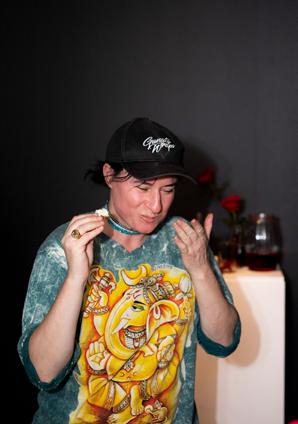
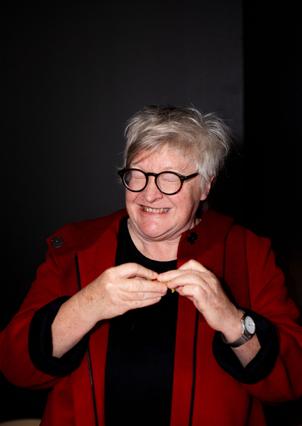
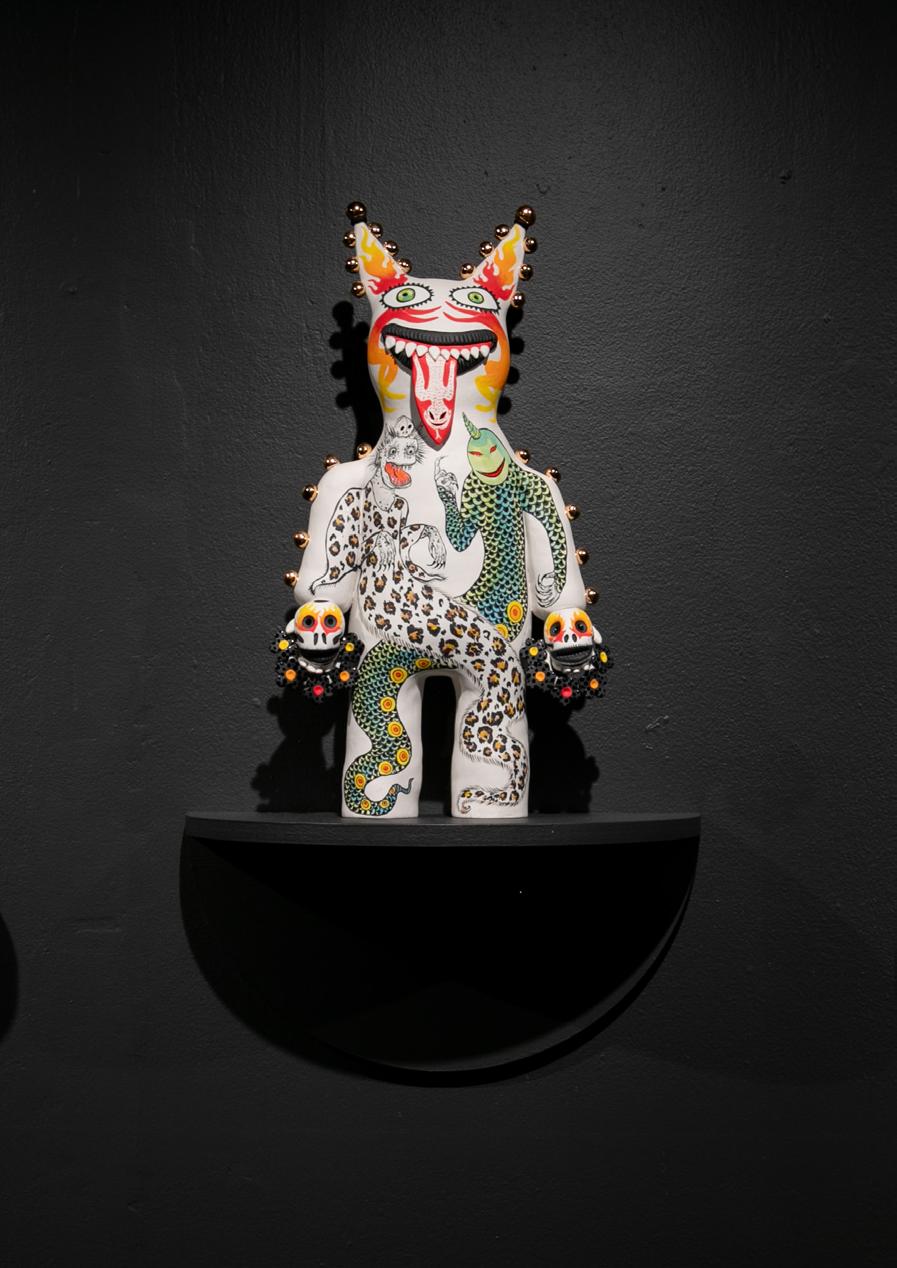
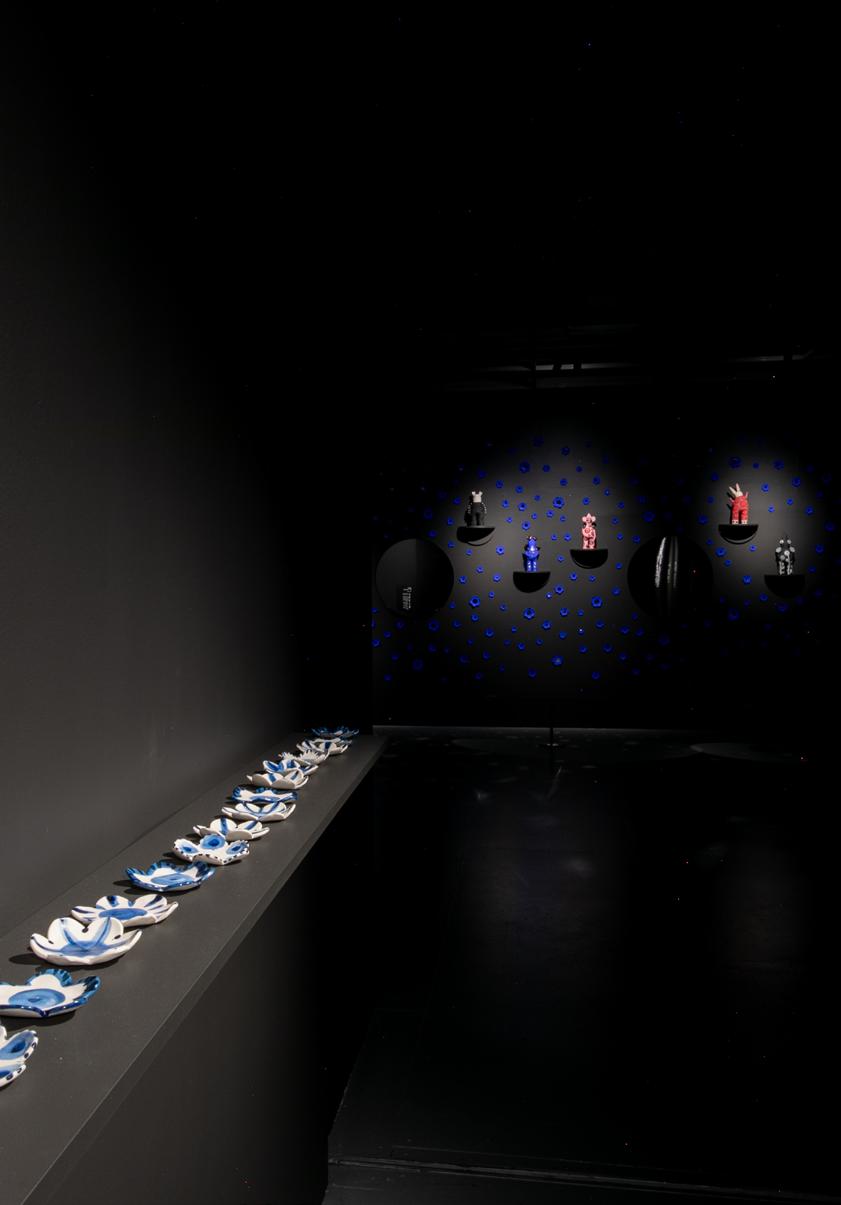
If We're Being Honest invites audiences into a tactile realm of clay, sound, and ritual, where making, offering, and confessing reveal what the subconscious longs to surface. Presented across a series of participatory gatherings at the gallery, the work transforms ceramic practice into a collective act of refection, connection, and release.
Created by Thai-Australian artist Vipoo Srivilasa, the project draws on the artist’s distinctive visual language of vibrant ceramics, storytelling, and community engagement. Through hands-on making and shared experiences, participants are encouraged to explore vulnerability, generosity, and the hidden narratives that shape individual and collective identities.
Balancing playfulness with introspection, If We're Being Honest proposes honesty as a creative and restorative act. Through clay, conversation, and communal participation, Vipoo invites audiences to consider what emerges when we allow our inner worlds to be seen, heard, and shared.
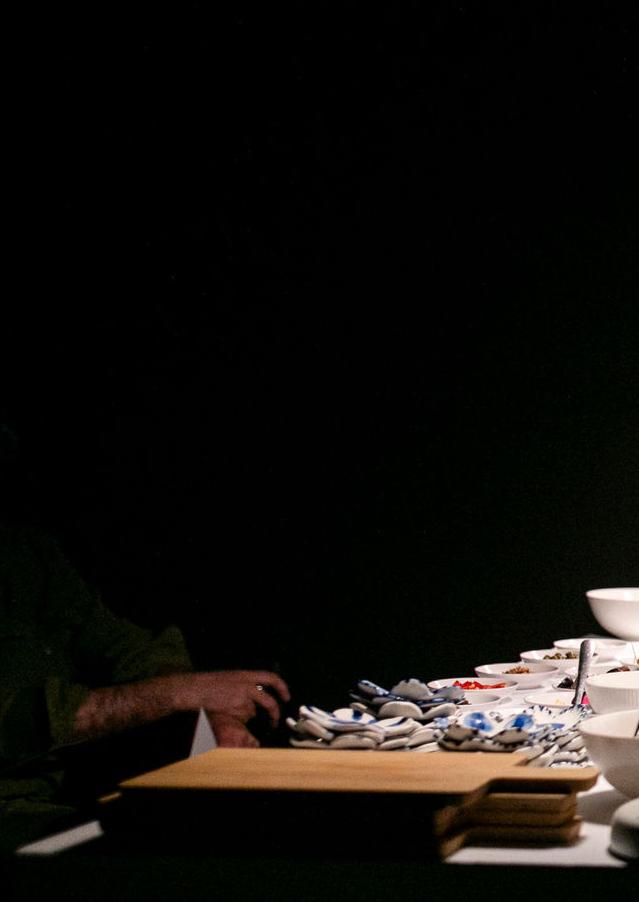
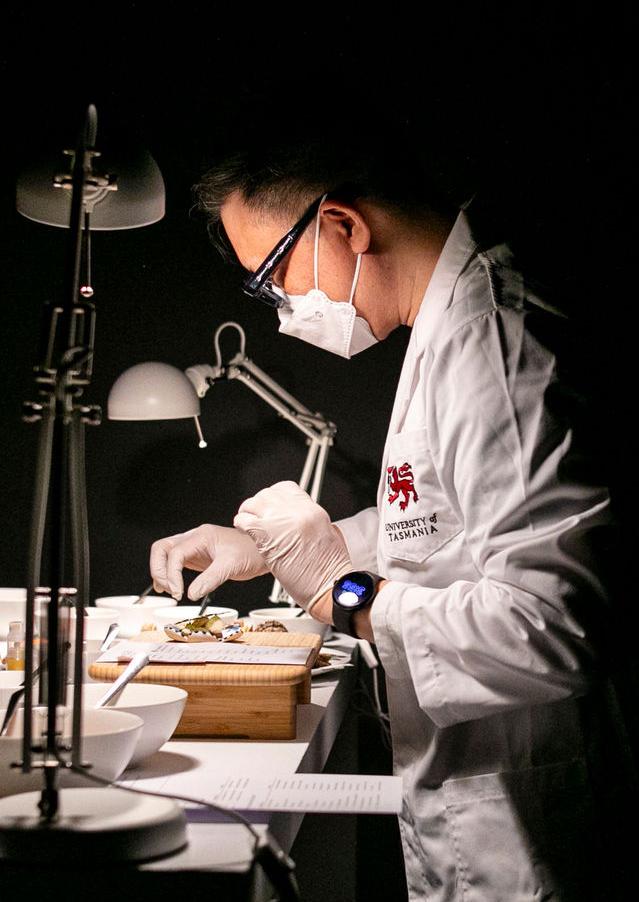
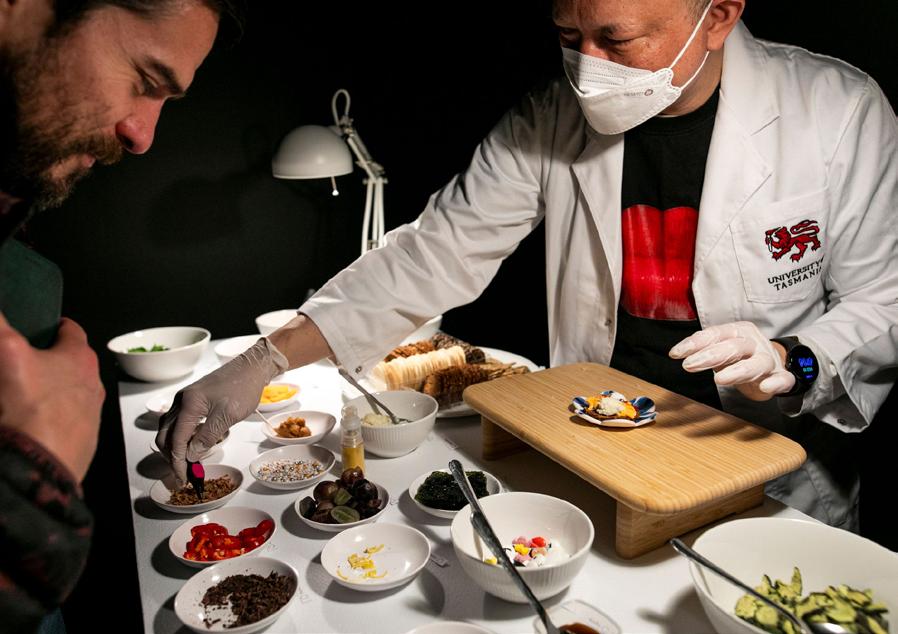
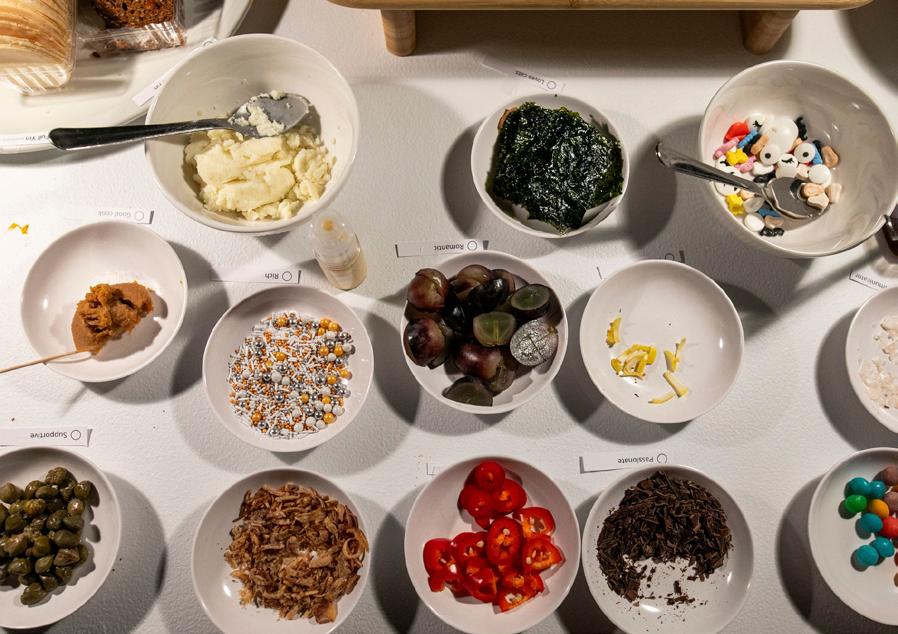
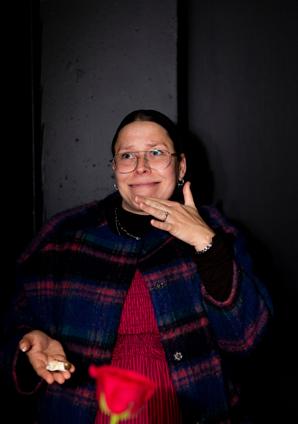
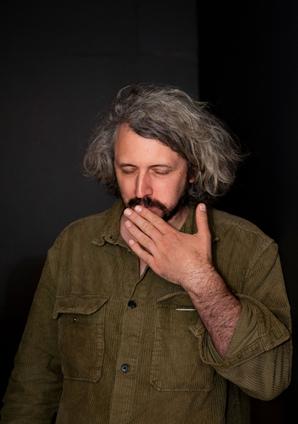
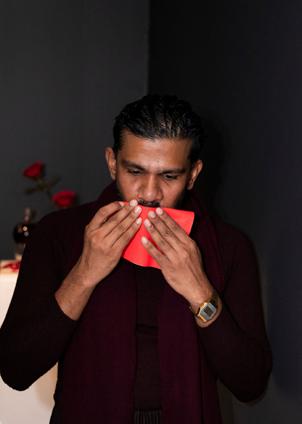
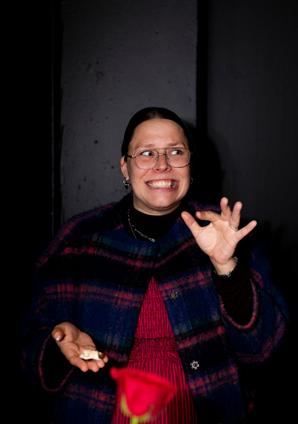
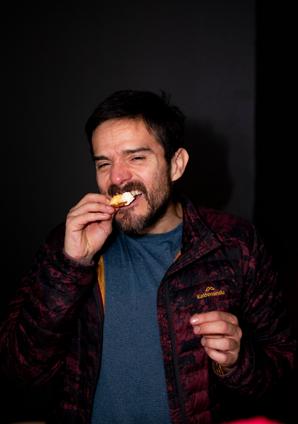
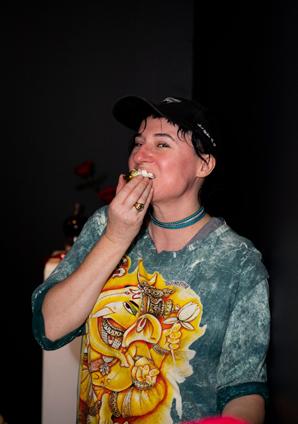
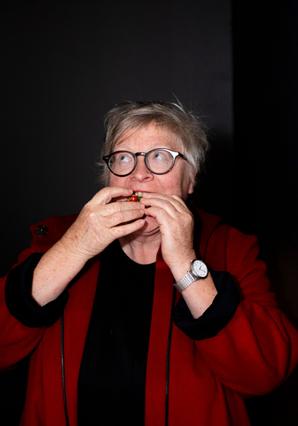
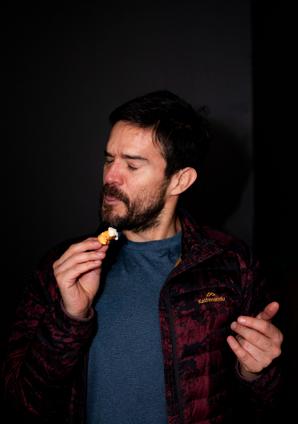
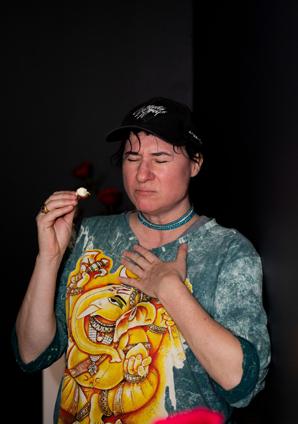
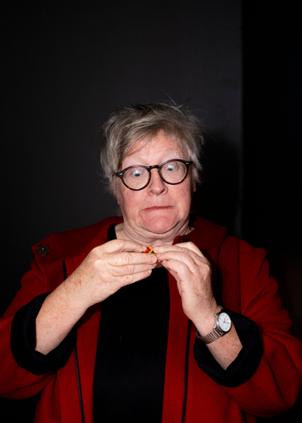
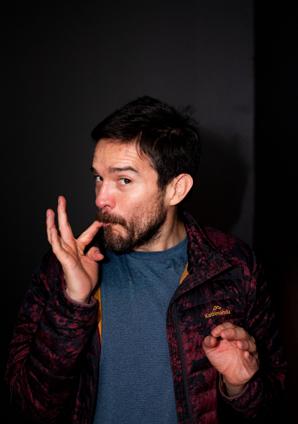
One of the activities was an interactive LoveLAB performance, which offered participants the chance to refect on the ingredients that make up their love language and, in turn, discover how good or bad love tastes. Because love often arrives unexpectedly, 40 audience members were invited to participate in Srivilasa’s LoveLAB. As love comes in many favours, each participant received a unique dish refecting their tastes and choices in love, served on Srivilasa’s handmade ceramic dishes.
Vipoo Srivilasa: If We're Being Honest was included in Dark Mofo 2026 at Plimsoll Gallery, University of Tasmania.
Performance and installation views – Vipoo Srivilasa: If We're Being Honest.
Photos by Cassie Sullivan.
I hope you heal from the things you don't talk about
Essay by Caine Chennatt
There's an internet video that circulated a year or two ago which showed strangers offering bouquets of fowers to other strangers, sometimes with a handwritten note: I hope you heal from the things you don't talk about. Edited as they were for ‘likes’, their reactions still stayed with me. Not because people reading the note were surprised, but because so many already knew exactly what the note meant. We are perceived by what we say and perhaps, shaped more by what we choose not to say. Cultural conventions, or the fear of being misunderstood, quietly limit what we voice. These words don’t disappear, they settle into the body, the breath, the way we move through a room, the way we hold.
What if we were being honest? This was one of my entryways into the beautiful, layered, and incredibly inviting works by Vipoo Srivilasa, though, there are many ways in. I met Vipoo at the Asia Pacifc Triennial in Meanjin Brisbane in 2022. What most people notice frst in his sculptures are an unapologetically honest joy: colour, story, and generosity. I know this depth of joy is only possible alongside an equal capacity to hold grief. You’d be right to point out that in this world of polycrisis caused by a series of injustices against humanity, life, and the planet, many struggle to permission joy at all. Vipoo is clear about how his practice exists in relationship to the serious work happening elsewhere, not in opposition to it: "Without their work, mine wouldn't make any sense. We each contribute something diRerent to the conversation."
This interconnectedness is evident in how audience participation has been a consistent clay binding all of Vipoo's practice. As a counterweight to working alone in the studio for long stretches, it becomes a way of connecting without surrendering agency entirely. Providing a platform for others becomes its own form of meaning, truth, and a bid for connection. At a previous show, children responded to this invitation by writing at length about not seeing their grandmothers during Covid. "Maybe normally the kids, they speak, but no one listens."
This invitation to participate is renewed throughout this exhibition. With a nudge to reconnect to each of the senses, honesty is the hope here, even if anonymously. Scent: You’re invited to make an offering stating your hope. Scent accompanies ritual because it moves through the body before the mind intervenes. Jasmine, Vipoo has said, always brings him back to Thailand, back to home. Three deities correspond to
what people most consistently seek. "The fortune teller, it just answers three things. Work, love and health. That's it." The Work deity (The Prosperity Giver) carries gold and silver coins; a small fgure at the top offers a reminder: when we die, we take nothing. What do we want, and what have we learned to want?
Voice: This room invites forgiveness of each other and ourselves through voice memos. Confessions are witnessed by The Guardian of Reckoning and other deities: the ones who remain when someone has gone, when a conversation can no longer be had. This takes me to the Gestalt therapy practice of the empty chair, speaking to an imagined someone (or a younger you) sitting across from you. "If no one is in the room at all, sometimes it just feels meaningless. But if there’s someone there to witness your braveness, it just makes such a difference.” When we think about mortality, what’s certain, rather than where we might end up, is that the people who love and care for us will miss us. What would you say if you were being honest?
Touch: To make without seeing is to suspend judgement. The hands carry memory that doesn't pass through conscious thought, surfacing only when the corrective loop of sight is suspended. Vipoo's best discoveries emerge not from deadlines but from play, from what if. And still, after twenty-fve years, the kiln humbles him. "When I think I'm a master of ceramic art, next thing I know it’s exploding in the kiln. It just puts you back in your place.” Can you make happiness, or is happiness found in the act of making?
Taste is immediate. The photographs embody participants’ experiences of Love Lab, an event which playfully explores the relationship between love and taste. It reminds me of a myth: the four-eyed creature, so whole, happy, and powerful that a god split it apart, scattering its halves across the world, doomed to fnd each other. In Vipoo’s Love deity (The Love Bringer) the eyes multiply, for love that extends to community, to the stranger, to the planet, and to all forms of connection.
Sight: In the age of GPS and air travel, the hardest place to go is within. The installation asks visitors to draw themselves, through the help of three mirrors which refect a past, now, and twenty-fve years from now. The self is layered, and almost always a little unreliable with what has been, what is, and what might yet be. The last time Vipoo presented work at the Plimsoll Gallery was when he graduated from here in 1999, a student looking at this space, wondering: when am I going to get there? Within the gallery is an invitation into that same movement: tentative, attentive, alive to what might be found if we stop performing and start listening. None of them ask you to arrive with answers, but perhaps with the question: what if we’re being honest?
Darrell Sibosado: Manawan
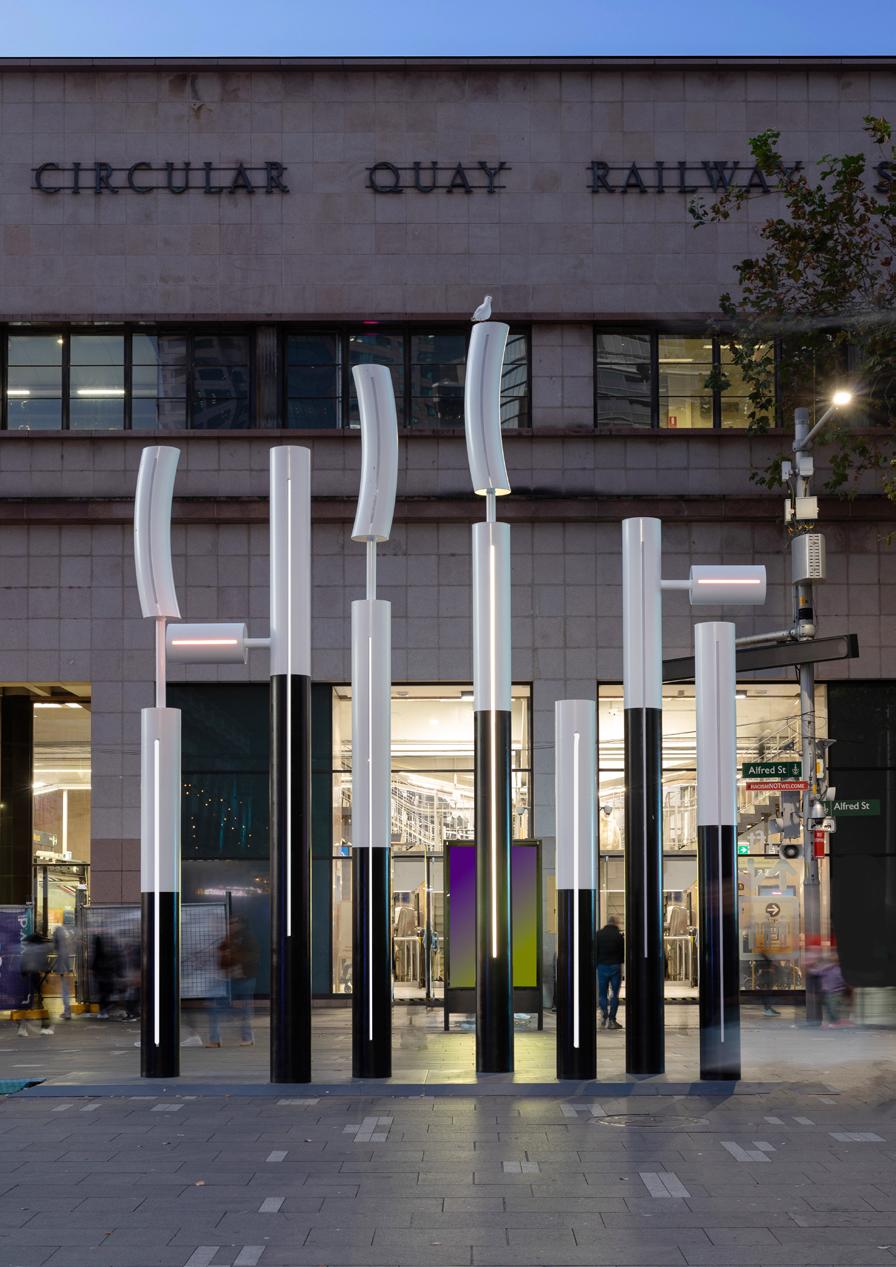
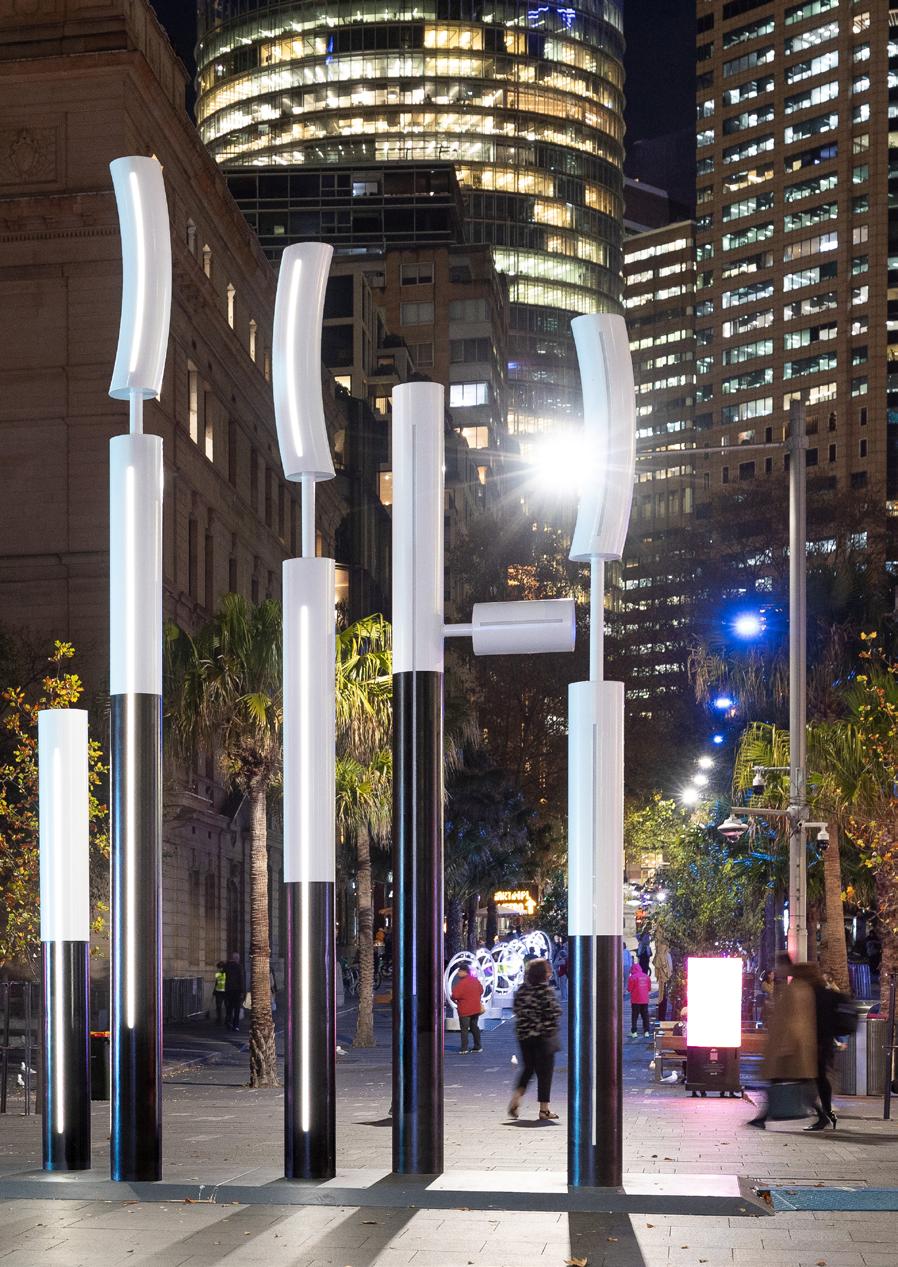
Installation views – Darrell Sibosado: Manawan. Photos by Jessica Maurer.
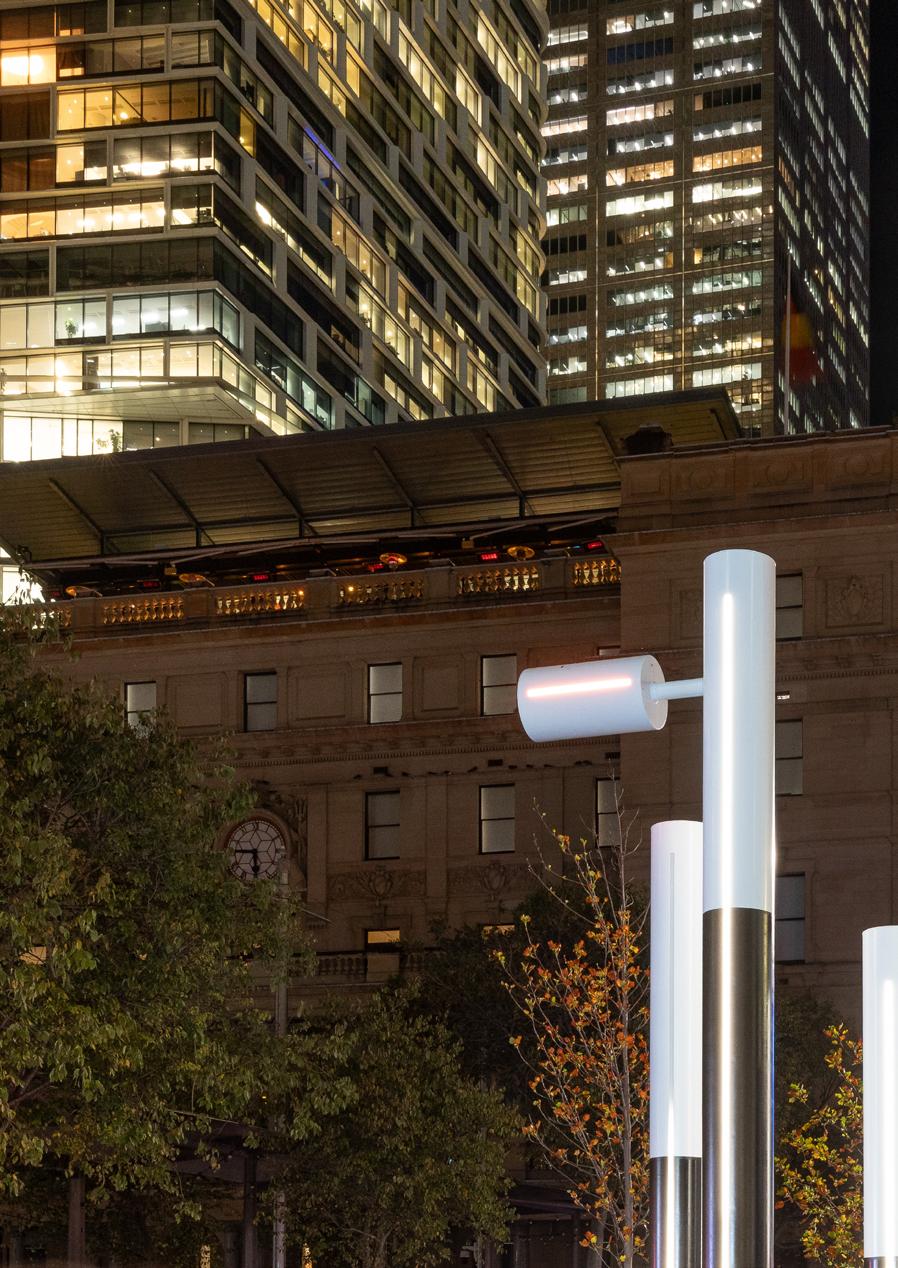
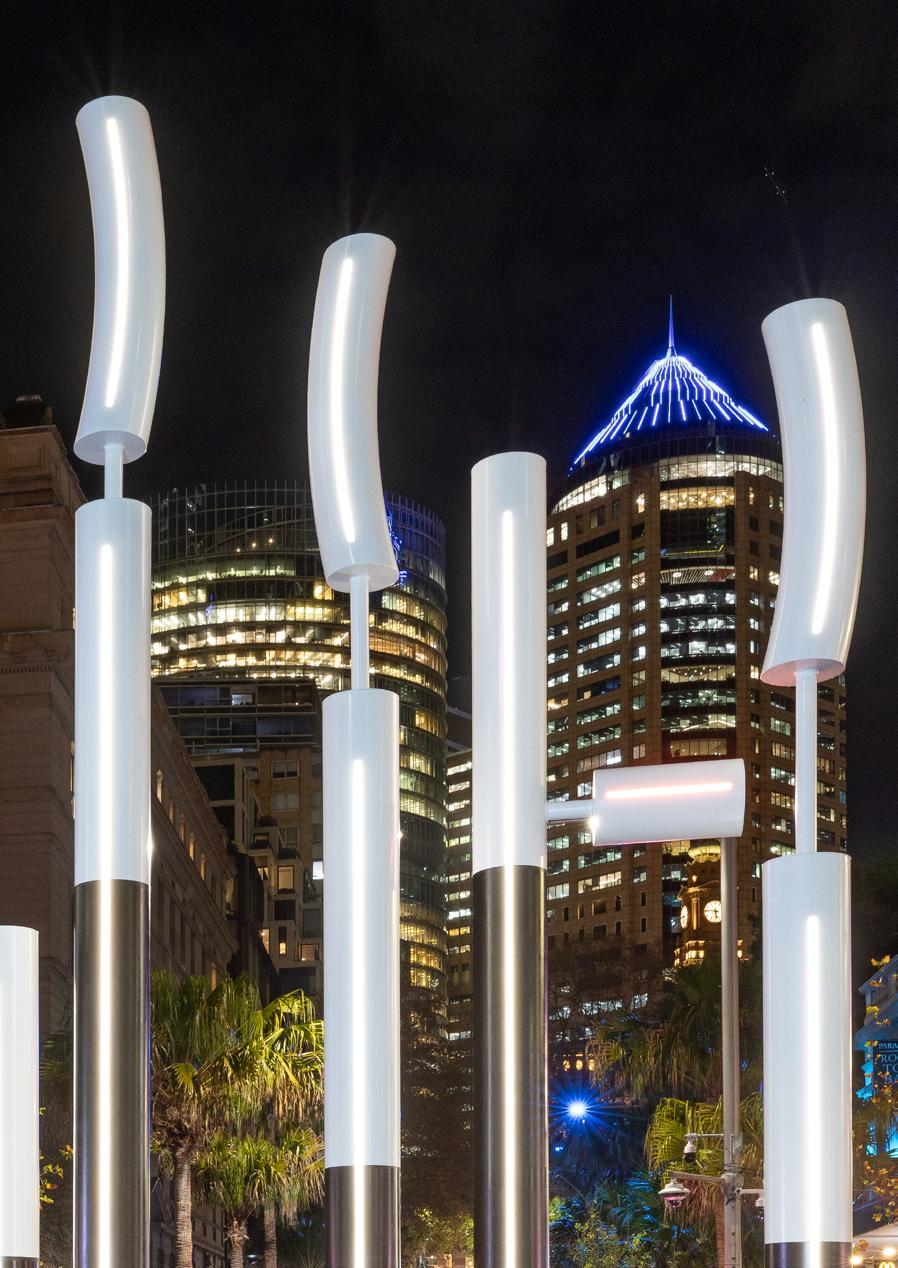
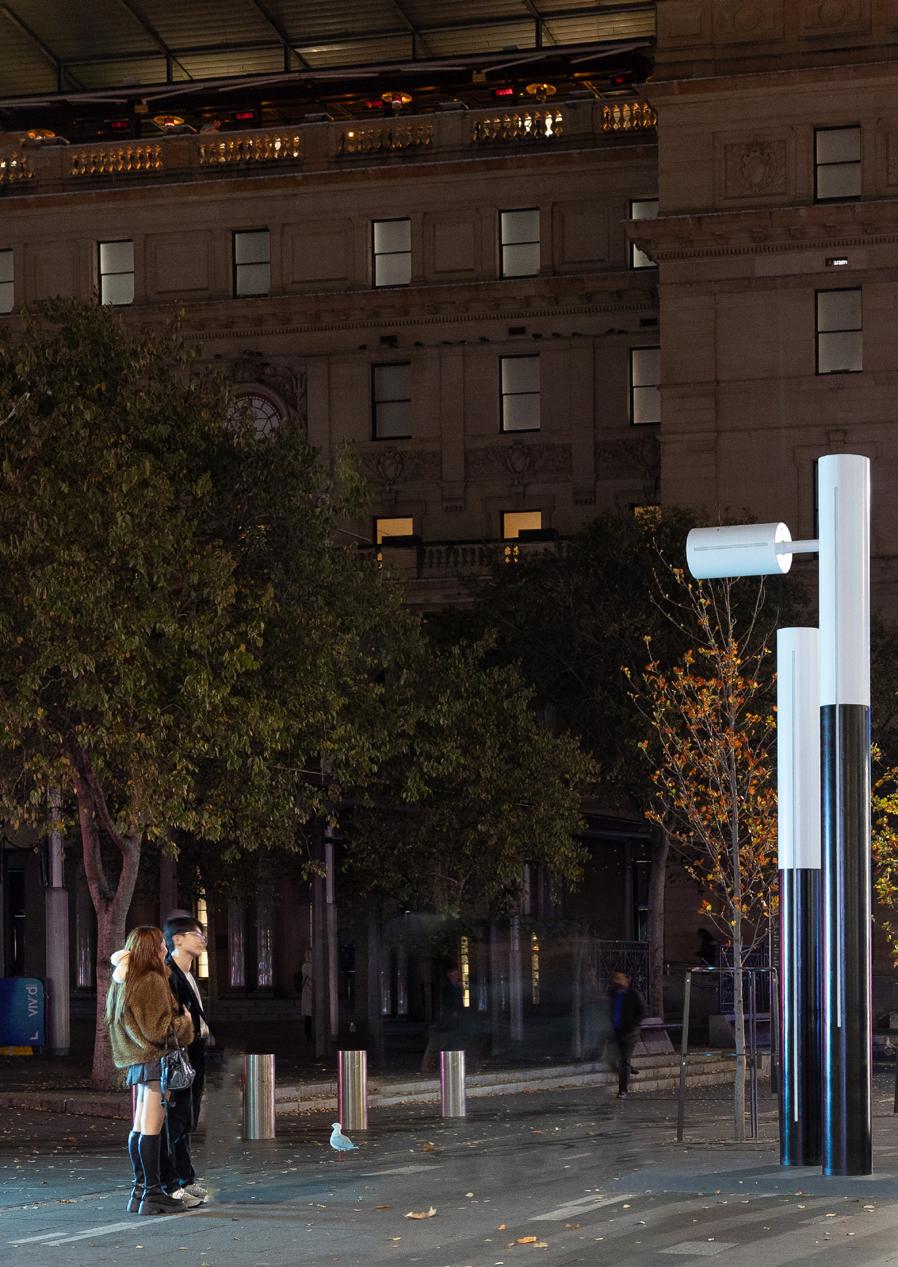
Manawan is an ode to Bardi Jawi Country in Western Australia’s Kimberley region. Created by Bard artist Darrell Sibosado, the installation refects on the deep ecological, cultural, and medicinal signifcance of the Manawan tree for Bard and Jawi peoples, traditionally used for shelter, tools, and weapons, and sustained through cool-season cultural burning practices.
Installed between Circular Quay and The Rocks for Vivid Sydney 2026, Manawan forms a forest of seven steel poles each illuminated by vertical bands of light that glow day and night, reimagining the towering tropical gum trees, known as woolybutts, that shape the landscape and cultural life of the north.
Shining across all angles, Manawan radiates with a restorative presence, its generous light symbolising the life force and healing energy held within the trees, the land, and Country. Through the work, Darrell reiterates that Aboriginal culture is a living, adaptive culture that commands presence and power in contemporary art and society.
IN FOCUS.
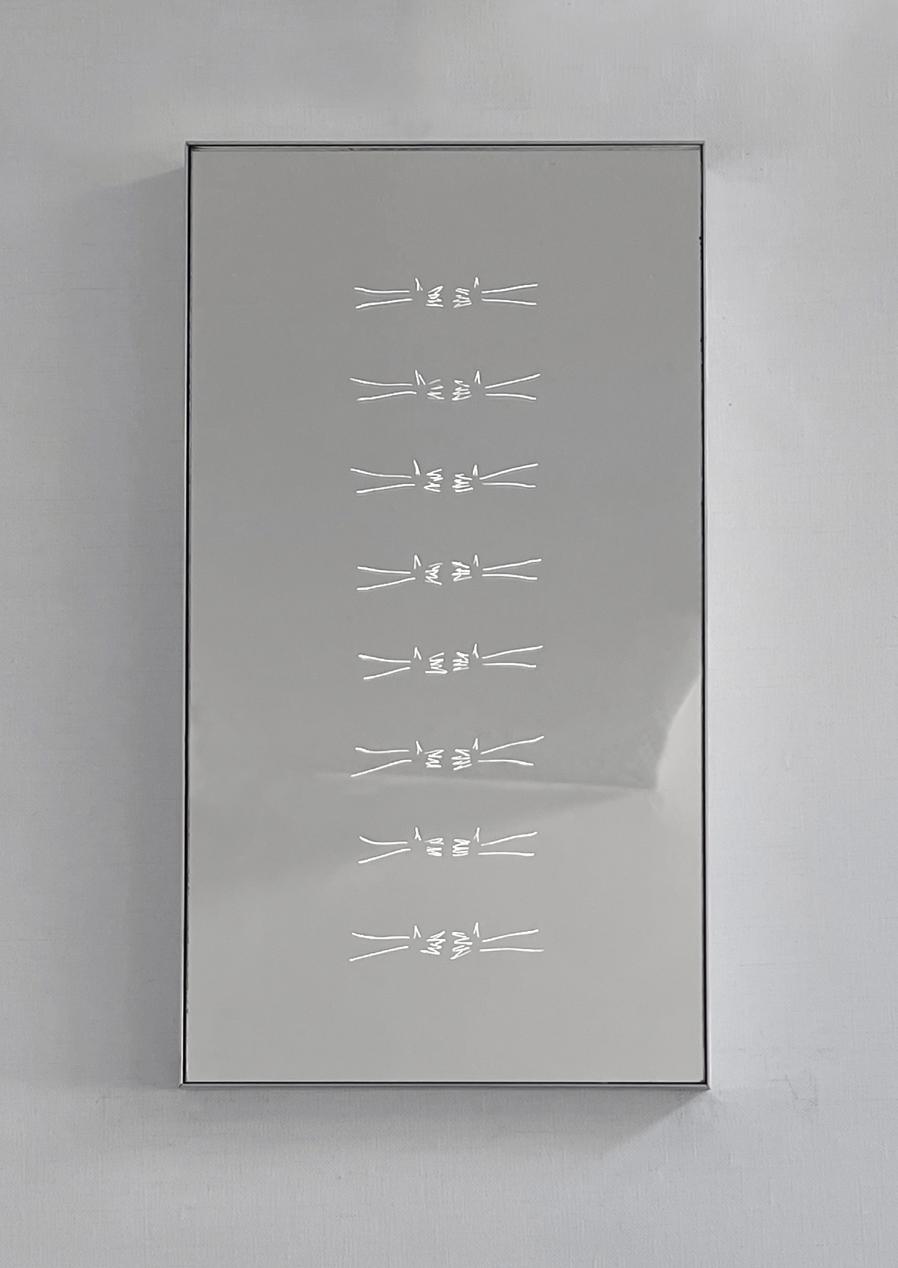
Tom Blake
leafng, holding, 2025
hand etched de-silvered mirror, light box, artist made aluminium frame
41 x 21 cm
Poetry, derived from the Greek poiesis meaning “to craft”, is the arrangement of words around their aesthetic, rhythmic and musical qualities. An art form used to express or conjure emotion through language, it is both beholden to defned structures, and fuid within the amorphousness of its being. We can take Tom Blake’s leafng, holding, 2025 as a poem; a monorhyme octave repeating, refecting and wrapping continuously around itself. Hands abutting hands, stretching, hugging, ripping apart. Fingers leafng idly, holding space, rhythm and meter. Blake’s hand-etched marks are careful and considered in their delicate looseness, but what might they be telling us; what is their arrangement crafting, or conjuring?
Exhibited in his solo exhibition index of a stream at N.Smith Gallery, 2025, this work was developed by Blake during an 8-week residency at Treasure Hill Artist Village in Taipei, as part of PICA’s International Studio Residency Program. One aspect of the residency and the projects that followed was a series of poems written by acclaimed flmmaker Tsai Ming-liang in response to Blake’s work. One of these poems reads,
I wake up in the morning, make coffee and sweep the foor (我早上醒來 煮咖啡 掃地)
In response to a body of work refecting on fragmentation, repetition, opacity and function, the poems mirror Blake’s interest in notational gestures within architectural and choreographic frameworks. Daily routines and tasks might repeat for weeks, months, years, but no two movements can ever be entirely the same; they are variations, nuanced by the subtleties of chance. Within leafng, holding, repetition of form, line, and space creates a score-like instructional prompt, the detail of a singular feeting gesture – an outstretched hand – elevated; given weight and focus. Are we to read these gestures, act them, repeat them, or simply observe them? It is as much about the potential for response as it is about surrendering control over what that response might conjure.
Words by Rosy Leake
FEATURED MUSEUM ACQUISITION.
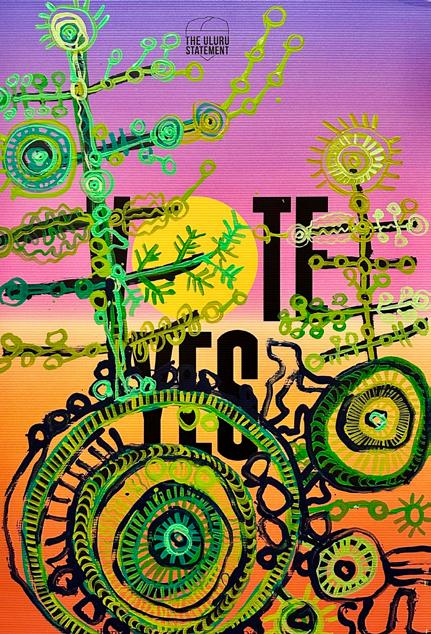
Institution: National Library of Australia
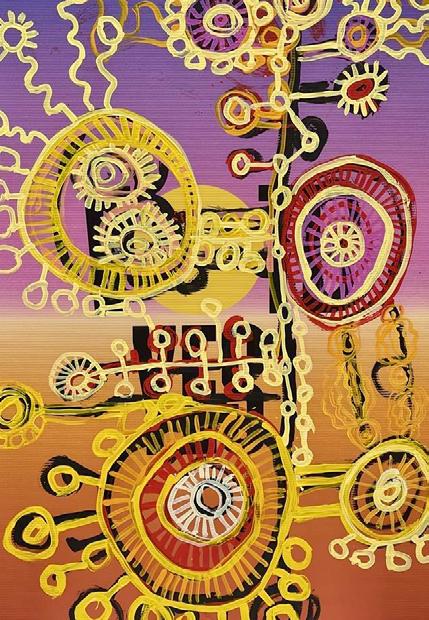
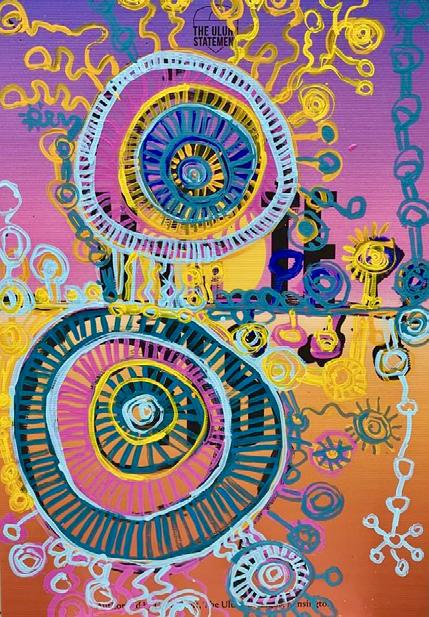
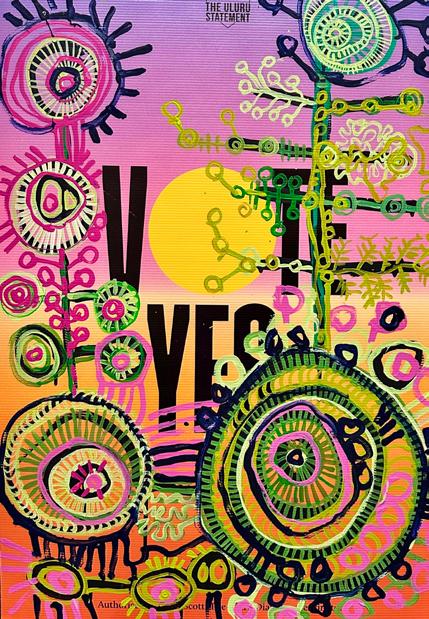
Work: Vote YES, 2024
Artist: Sally Scales
Scan to shop online
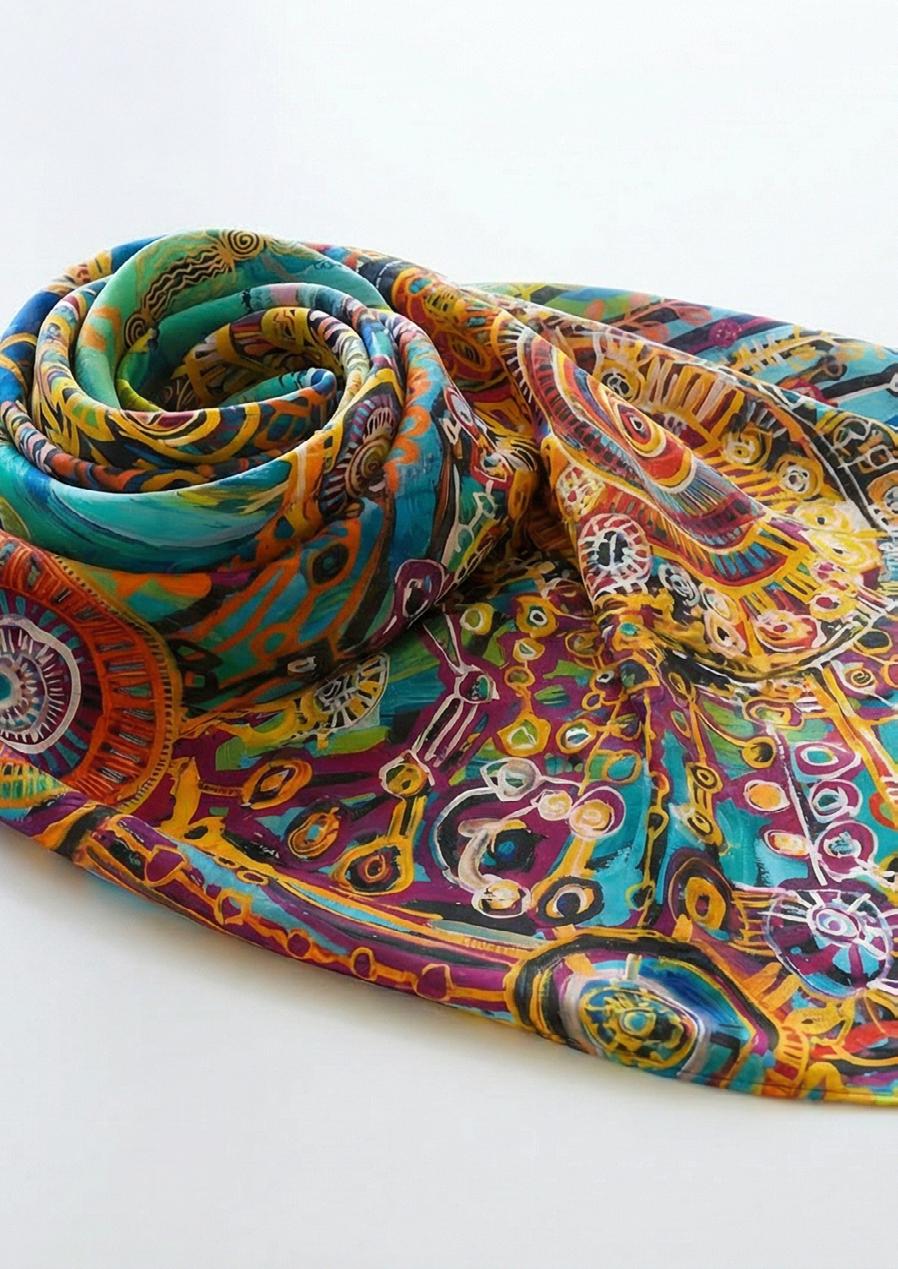
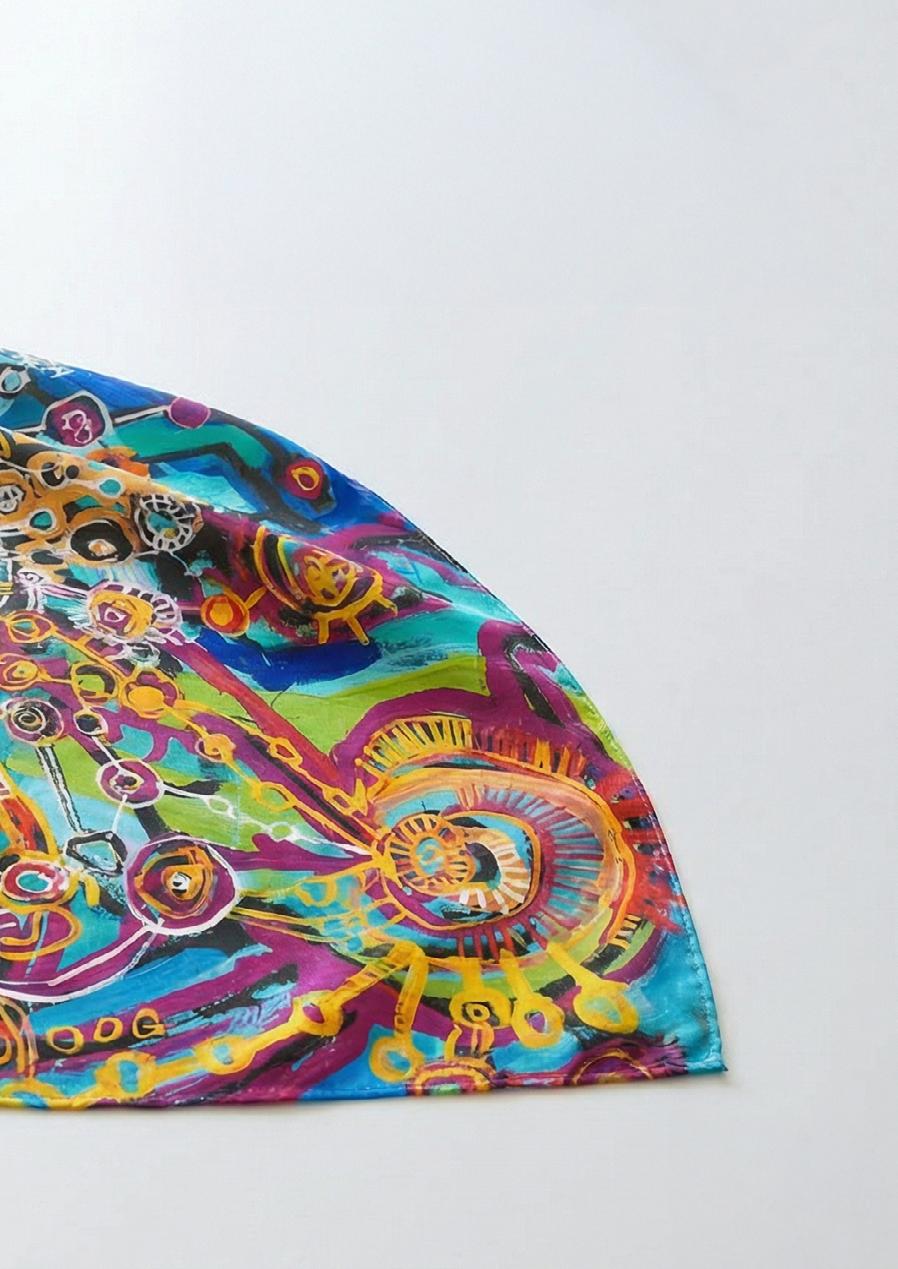
Sally Scales scarf.
NSG Shop.
Discover NSG Shop – a platform with a range of items perfect for any arts lover.
Whether you’re looking for the perfect gift or something to inspire your own curiosity, browse through our exclusive books, prints, and collectibles.
With worldwide shipping on all items, explore in person at the gallery or browse online.
NSG EXHIBITION GUIDE.
N S W
The National Indigenous Art Fair
The Cutaway, Sydney 3 - 5 July 2026
Claire Healy & Sean Cordeiro: The Village
Idiom
N.Smith Gallery until 25 July
Kate Vassallo: Soft Modulation
N.Smith Gallery until 25 July
Casey Chen: Merciful
Navigation Mosman Art Gallery until 9 Aug
Christopher Zanko in Edge City
Wollongong Art Gallery until 18 Oct
Dylan Mooney at Redland Art Gallery until 25 Aug
Joan Ross Museum of Contemporary Art Australia until 8 Nov
Claire Healy & Sean Cordeiro in New Religion
Ngununggula until 18 Oct
High Colour
Dylan Mooney
Art Gallery of NSW until 9 Aug
And Still I Rise Kyra Mancktelow
Art Gallery of NSW until 10 Jan 2027
V I C
Louise Zhang: You are forgiven (Lotus)
National Gallery of Victoria until 20 Dec
NGV Triennial
National Gallery of Victoria 13 Dec 2026 - 11 Apr 2027
S A
James Tylor: Turrangka...in the shadows
Art Gallery of South Australia until 1 Nov
AGSA Screen Wavelength Art Gallery of South Australia until 4 Jul 2027
Q L D
Vipoo Srivilasa: Express Yourself
QAGOMA Children's Art Centre, until13 Sep
Snap Blak: James Tylor QAGOMA until 13 Sep
TAS
Vipoo Srivilasa: If We're Being Honest is Dark Mofo, Plimsoll Gallery until 25 July
NATIONAL
Archibald 2025 Touring Nationally until 13 Sept
INTERNATIONAL
Exposition générale Fondation Cartier pour l’art contemporain, Paris unti 23 Aug
Joshua Charadia
Only a thin membrane between us (detail), 2026 oil on board