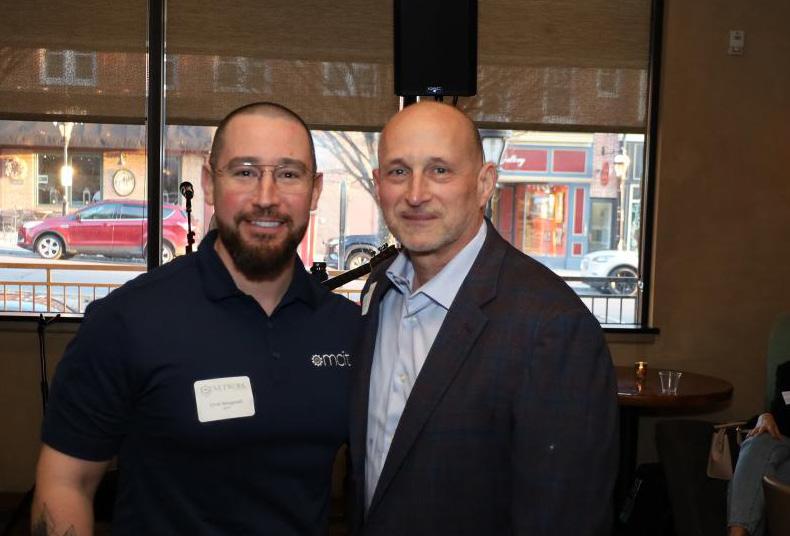
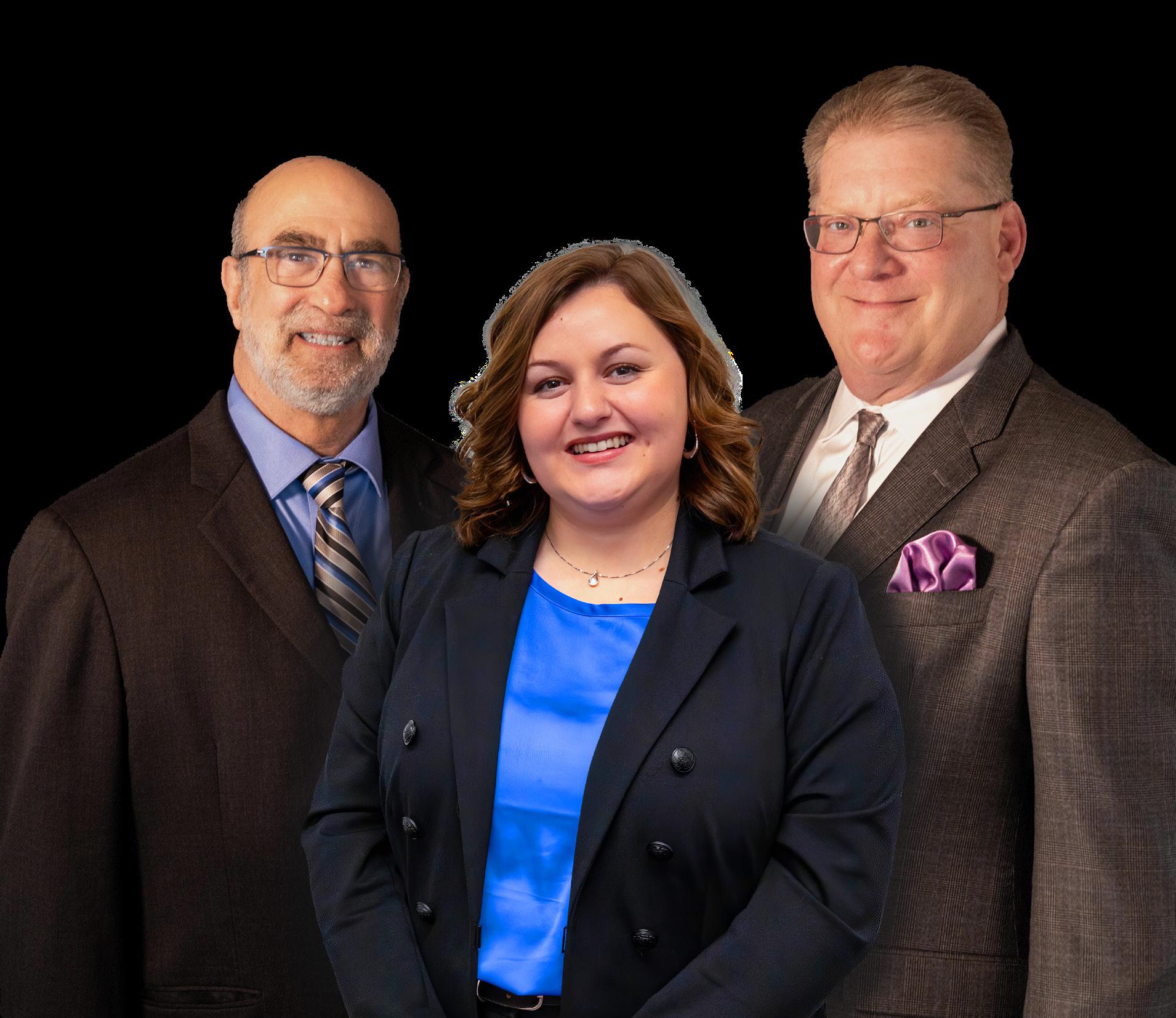
The partners of NETWORK MAGAZINE™ proudly present the latest edition of the Lehigh Valley's first ever, high end, business leader driven B2B magazine. Our goal is to continually present our readers relevant content to build your organization, from the region's top business leaders and experts on today’s industry news and trends.
Our leading contributors will continue to change quarterly, sharing information that stays fresh and current. The opinions, tips, and insights on how to best navigate business pitfalls are all provided by the Lehigh Valley's best thought leaders. Our writers are un-censored giving you profound insight from their years of experience from their given field of expertise.
To learn more about how you can become a part of NETWORK MAGAZINE™ as a Contributor or an Advertiser, please contact Ray Bridgeman: ray@mynetworkmag.com
PUBLISHERS
Ray Bridgeman & Chris Morganelli
ART DIRECTOR Casey Damrose
EDITORIAL DIRECTOR Ray Bridgeman
EDITORIAL ASSOCIATE
COVER PHOTO Legends Cigar Bar
EVENT PHOTOS Kate Lynn of K8 Pics
For advertising inquiry and rates please contact Ray Bridgeman
Today’s workplace demands more than compliance. With foresight and strategy, FLB builds employment law solutions designed to protect what you’ve built — your people, your culture and your business. Our Employment Law and Labor Relations services include:
• Day-to-day counseling & advice • HR policies
• Labor/management relations • Litigation defense
• Management & staff training
FLB BUILDS STRONGER WORKPLACES. YOU BUILD WHAT’S NEXT.
DEI is Not Dead
(But the Rules Have Changed)
JOSHUA L. HANEY, EMPLOYMENT LAW & LABOR RELATIONS ATTORNEY, FITZPATRICK LENTZ & BUBBA
It is no secret that the legal landscape for human resources compliance has changed drastically in recent years. Some of the more notable developments have resulted from President Trump's Executive Orders, which sought to eliminate workplace diversity, equity, and inclusion (DEI) initiatives. Federal government officials and agencies continue to issue statements and guidance on DEI programs and initiatives, while some state governments have been pushing back. For many employers, this has led to confusion and uncertainty.
Given the changing federal enforcement landscape, it is important for employers to:
• Understand what is legally permitted vs. what is prohibited
• Review current policies for compliance purposes, and
• Maintain company values.
DEI: Permitted vs. Prohibited
By way of background, the Trump administration issued several Executive Orders and memoranda that changed the landscape of DEI programs and rights of employers, including, but not limited to:
• Executive Order 14151 (1/20/25) – An order claiming to end “illegal DEI” in government agencies, grants, and contracts.
• Executive Order 14173 (1/21/25) – An order elaborating that "diversity, equity, and inclusion' (DEI) or 'diversity, equity, inclusion, and accessibility' (DEIA)... can violate the civil rights laws of this Nation."
• Office of the Attorney General Memorandum (2/5/25) – A memorandum directing the Department of Justice’s Civil Rights Division to “investigate, eliminate, and penalize illegal DEI and DEIA [diversity, equity, inclusion, and accessibility] preferences, mandates, policies, programs, and activities in the private sector and in educational institutions that receive federal funds.”
• Executive Order 14298 (3/26/26) – An order banning federal contractors from participating in “racially discriminatory DEI activities.”
Federal agencies, such as the Equal Employment Opportunity Commission (EEOC) and the Department of Justice (DOJ), have also provided guidance to help employers ensure compliance.
While "illegal DEI" remains a vague term, the following are strictly prohibited because they violate anti-discrimination laws when they relate to gender, race, religion, and other traits protected under the law:
• Quotas and metrics
• Exclusionary groups and programs
• Using discriminatory characteristics as deciding factors for employment decisions
• Using incentives to give advantages based on race, gender, etc.
Scrutiny of DEI initiatives continue to grow at the federal level, even as the underlying laws remain largely unchanged.
What to DO with DEI
In response to these Executive Orders, guidance, and scrutiny, employers have taken various actions to mitigate risk. Some employers made major shifts in internal policies and cut DEI initiatives altogether. At the same time, other companies have merely re-branded DEI programs to maintain their diversity goals.
What should your company be doing regarding DEI? The answer changes on a company-to-company basis. Many employers have determined that certain non-prohibited DEI initiatives are fundamental to or supportive of their particular business objectives, while other employers believe less in the benefits of those initiatives and worry more about noncompliance risk.
At a minimum, all employers should:
• Stay informed – Employers and HR professionals should stay up to date on any new Executive Orders, administrative guidance, and court decisions to ensure compliance with the law. This is particularly important considering the bounds of these Executive Orders are still being tested in the courts, which may further alter an employer's rights under the law.
• Review your DEI practices – Employers should perform a comprehensive review of their internal policies to ensure their current practices comply with existing Executive Orders and guidance. Given recent developments, this is particularly important for employers who perform work for the federal
government. Businesses should also review any programs and opportunities provided to employees to ensure participation criteria are not unlawful. When reviewing policies, HR leaders should be mindful of how programs are structured and communicated, ensuring they are compliant, clearly defined, and defensible.
Consider consulting with an experienced employment law attorney who stays up to date on federal legislation and guidance. They can provide you with reliable advice and assist in your audit of internal policies and practices to help ensure compliance as new developments arise.
Compliance and Culture: You Don’t Have to Choose
Despite the series of Executive Orders attempting to eliminate DEI, employers do not have to abandon their diversity goals in order to remain compliant with evolving Executive Orders and legal guidance. Diversity can be good or necessary for business.
Employers and businesses should focus on creating fair, inclusive, and opportunity-driven workplace practices that are rooted in business objectives, employee engagement, and lawful decision-making. Employers who align their initiatives with clearly defined policies, consistent application, and compliance oversight can continue fostering strong workplace cultures while mitigating legal risk.
The Changing Landscape of Buy-Sell Arrangements After Connelly
CHRISTOPHER R. GRAY, NORRIS MCLAUGHLIN
Many corporations, partnerships, and limited liability companies have adopted buy/sell agreements that address transactions and transfers upon the occurrence of specifically defined events. Often, buy/ sell agreements address what happens when an owner (a member, shareholder, or partner) becomes disabled, divorces a spouse, files for bankruptcy, or separates from the company. Additionally, buy/sell agreements usually restrict an owner from transferring an interest without first obtaining the entity's consent or offering the interest to the other owners. However, a buy/sell agreement's principal purpose is to specify the terms for the transfer of an owner's interest upon the owner's death. Typically, the agreement identifies the potential buyer(s) of a deceased owner’s interest, the value of the interest, and the purchase method (promissory note, loan, or cash).
Life insurance is often sold to fund buy/sell obligations on account of the death of an owner because it provides income tax-free proceeds at the exact moment when cash is required. Buy/sell arrangements funded with life insurance fall into two general categories:
• Redemption Agreements
With a Redemption Agreement, an entity owns life insurance policies on the life of each owner. When the owner passes, the entity purchases or redeems the deceased owner's interests.
• Cross-Purchase Agreements
In a cross-purchase arrangement, each owner purchases policies on all other owners. When an owner dies, the remaining owners collect the proceeds of the policies insuring the deceased owner’s life and use those proceeds to purchase the deceased owner's interest. The remaining owners receive some tax benefits with this type of arrangement. However, as the number of owners increases, the arrangement becomes difficult to manage, as the total number of policies required rapidly increases. As a result, it has been common for entities with more than 2 owners to enter into Redemption arrangements.
Planners have often questioned the effect of life insurance proceeds on the entity's value for transfer tax purposes. The value of an entity must increase upon receiving life insurance proceeds, because the company has received an influx of cash. However, planners assumed that the increase in the entity's value would be offset by the entity's obligation to use the insurance proceeds to purchase the deceased owner’s interest. The insurance proceeds would flow into the entity and flow out to the estate of the deceased owner. In a recent United States Supreme Court case, that assumption was proved wrong.
In the 2024 case Connelly v. Commissioner, the U.S. Supreme Court held that insurance proceeds increased the value of the entity without a deduction for the purchase of the deceased owner’s interest. The result was that the deceased owner’s estate was larger and had a
significantly greater estate tax liability. The ruling in Connelly directly overrules Estate of Blount v. Commissioner, a 2005 Federal Circuit Court of Appeals case that concluded insurance proceeds should not be included in the value of an entity where the proceeds are used to redeem a deceased owner’s interest.
Interestingly, the buy/sell agreement in Connelly determined the entity's value either by the annual agreement of the two owners or by averaging two or more appraisals. In Connelly, the owners did neither. Instead, they agreed to a value for the interest that was very close to the insurance proceeds received by the entity. Although the U.S. Supreme Court did not mention the failure to follow the agreement as a factor in reaching its decision, one cannot help but question whether it was a factor in overruling Blount and including the insurance proceeds in the entity’s value.
So now what?
Many entities with Redemption Buy-Sell Agreements now face the prospect of paying transfer tax on the entity’s insurance proceeds. These entity owners should consult with their counsel and advisors, because there are ways to remedy this situation. The first, and perhaps the most obvious, step is to remove the insurance from within the entity. How these proceeds are removed depends on the intersection of the type of insurance policy and the type of entity. Nevertheless, there are two basic methods: distribution from the entity to an owner (e.g., dividends, partnership distributions, etc.) or sale of the policy by the entity to the other shareholders. To alleviate the multiple-owner problem, entity-owned life insurance can be sold or transferred to a specially-drafted Trust or Partnership that will own all the policies and distribute death benefit proceeds according to the Trust or Partnership Agreement, allowing the remaining owners to purchase the deceased owner’s interest. When moving insurance policies, care must be taken to comply with exceptions to the Transfer-for-Value Rule (IRC §101). Violating the Rule causes death benefit proceeds to be taxed as ordinary income.
Connelly has changed the buy-sell landscape, making Redemptionbased arrangements less desirable. For new entities, trusts and insurance partnerships can be used to address the multiple-policy problem. However, for existing Redemption arrangements, owners must consider the best way to move policies from the entity without violating the Transfer-for-Value Rule.
Christopher R. Gray is a Member of Norris McLaughlin, P.A. in the firm’s Allentown office, practicing Taxation and Estate Planning and Administration & Wealth Preservation. In addition, Christopher is experienced in corporate matters, business transactions, exempt organizations, health care governance, and elder law.
Empowering Women at Every Stage: Inside the Women’s Health Center at Tower Place
CARLY KUCHOVA, LEHIGH VALLEY HEALTH NETWORK
PART OF JEFFERSON
Women are the backbone of our community – their health and wellbeing strengthen families, workplaces, and everyone around them. Yet for far too long, women’s health care has been fragmented, inconvenient, or simply not designed with real lives in mind. Lehigh Valley Health Network (LVHN), part of Jefferson Health, is changing that with the Women’s Health Center at Tower Place – a first-of-its-kind facility in the region that brings comprehensive, specialized care for women together under one roof, supported by thoughtful amenities, innovative programs, and more than 125 years of commitment to women’s health.
Located in Bethlehem, Pa., the Women’s Health Center is more than a medical facility. It is a space intentionally designed for women –where comfort, convenience, and compassion meet advanced clinical expertise. Whether you’re navigating pregnancy, managing a heart condition, rehabbing your pelvic floor, seeking preventive care, or simply prioritizing your well-being, the Women’s Health Center offers a seamless, supportive experience tailored to your needs.
A new model of care designed for women
LVHN has evolved from an era when women’s health care was limited or inaccessible into a regional leader. The Women’s Health Center reflects that progress: a modern facility focused on personalized, coordinated care.
What truly sets it apart is not only its breadth of services but also how care is delivered. Recognizing the complexity of women's lives, LVHN designed a space that reduces stress and increases access through meaningful amenities, including:
• On-site childcare (Kids Club): A reservation-based service at no additional cost during appointments. Supervised by early childhood professionals, it provides a safe, engaging environment for children from 4 weeks to age 12 – removing a common barrier to care.
• A welcoming café: Whether you’re grabbing a coffee before an appointment or taking a moment to relax, the on-site café adds comfort and ease to your visit.
• A calming environment: Thoughtful design elements – including a beautiful mural and spacious waiting areas – and small touches – like aromatherapy packets that are available upon request –help create a sense of ease.
• Centralized services: Instead of traveling to multiple offices, women have access to multiple specialties in one location, reducing travel and making care more efficient and coordinated.
Comprehensive women’s health services for every stage of life
The Women’s Health Center delivers a full spectrum of women’s health services, ensuring that patients receive coordinated support throughout every phase of life.
Breast health services
Advanced screening and diagnostic services include mammography, ultrasound, personalized risk assessments, and access to specialists for further evaluation and treatment. A high-risk breast clinic provides proactive care for women with elevated risk factors, offering genetic counseling, customized screening plans, and ongoing monitoring to support early detection.
Gynecology
From adolescence through menopause and beyond, the gynecology team’s focus on personalized care ensures that every woman receives guidance tailored to her unique needs and goals. Services include:
• Annual exams and preventive screenings
• Family planning, including contraception and fertility care
• Menstrual health management
• Menopause care
• Minimally invasive surgical consults
• Evaluation and treatment of gynecologic conditions
• Sexual health support
Obstetrics and midwifery
The Women’s Health Center supports women throughout pregnancy with:
• Prenatal care
• Labor and delivery planning
• Postpartum support
• CenteringPregnancy® prenatal care program
A collaborative model ensures patients receive care aligned with their preferences, whether midwife-led or medically complex.
Maternal Fetal Medicine
For high-risk pregnancies, specialists provide advanced diagnostics, monitoring, and coordinated care plans, ensuring both mother and baby receive expert attention and support throughout pregnancy. This level of expertise ensures that even the most complex pregnancies are managed with precision and compassion.
Female pelvic medicine and reconstructive surgery (Urogynecology)
With a focus on restoring comfort, function, and confidence, the urogynecology team provides specialized care for pelvic floor conditions, including:
• Urinary incontinence
• Pelvic organ prolapse
• Pelvic pain
• Surgical and non-surgical treatments
Women’s Heart and Vascular Center
Recognizing that heart disease often presents itself differently in women than in men, the Women’s Heart and Vascular Center is dedicated to addressing these unique needs through:
• Preventive screenings
• Risk assessments
• Diagnostic testing
• Treatment for cardiovascular conditions
• Education and lifestyle support
The focus on early detection and personalized care empowers women to take control of their heart health.
Women’s rehabilitation services
Recovery from injury, surgery, childbirth, or chronic conditions requires specialized support that the Women’s Health Center’s rehabilitation services provide through:
• Physical therapy
• Pelvic floor therapy
• Postpartum rehabilitation
• Musculoskeletal care
Esthetics
Complementing clinical care, the Women’s Health Center’s esthetic services – which include skin care treatments, cosmetic services, and personalized consultations – support its holistic approach to health, recognizing that confidence and self-image are integral to overall wellness.
A patient-centered experience
What distinguishes the Women’s Health Center is its commitment to truly patient-centered care. Every aspect – from design to clinical delivery – is built around women’s lived experiences.
Clinicians take time to understand each patient's goals, concerns, and lifestyle, creating personalized care plans. With multiple specialties under one roof, patients benefit from faster referrals, better communication, collaborative treatment planning, and fewer logistical challenges.
Making care easier to prioritize
Whether you’re focusing on preventive care, managing a health condition, or seeking support during a major life transition, the Women's Health Center is here to walk with you – every step of the way. To learn more or to schedule an appointment, visit LVHN.org/ WHC.
women are at the center of everything we do.
Women are the backbone of our community – their health and well-being strengthen families, workplaces and everyone around them. Yet for far too long, women’s health care has been fragmented, inconvenient or simply not designed for the realities of their lives.
That changes now.
A first-of-its-kind in the region, Women’s Health Center at Tower Place is redefining women’s health care by bringing comprehensive, specialized care under one roof with thoughtful amenities – like a café and on-site child care – to remove barriers and help you prioritize … you.
Women’s Health Center at Tower Place 1420 Eighth Ave., Bethlehem LVHN.org/WHC
Expert Care, Restored Confidence: Comprehensive Oral & Maxillofacial Surgery at St. Luke’s
ST. LUKE’S ORAL & MAXILLOFACIAL SURGERY
(OMS)
Oral health plays a critical role in overall well-being, affecting everything from how we eat and speak to our confidence and comfort. At St. Luke’s Oral & Maxillofacial Surgery (OMS), patients receive expert, compassionate care designed to support both functional health and quality of life.
Highly skilled surgical specialists combine advanced expertise, modern technology, and a patient-centered approach to deliver a wide range of procedures that restore smiles and rebuild confidence. The team prioritizes clear communication and individualized treatment planning, ensuring patients feel informed and supported at every stage of care. With convenient locations in Allentown, Bethlehem, Easton, and Stroudsburg, expert oral surgery care is always close to home.
Expertise Across a Full Range of Oral & Maxillofacial Services
Wisdom Teeth
Wisdom teeth removal is one of the most common oral surgery procedures, often necessary due to overcrowding or pain. The average mouth is designed to hold 28 teeth, and when 32 attempt to emerge, discomfort and complications can occur. Removing wisdom teeth can help prevent future issues and improve long-term oral health.
At St. Luke’s OMS, experienced oral surgeons provide expert care for wisdom teeth extractions, ensuring a safe and comfortable experience. Elizabeth Hulse of Allentown was initially nervous about the procedure but recalls her experience positively.
"I was pretty apprehensive to have that done, but the doctors really assured me, and the staff was wonderful, super kind, and always welcoming," she said. "They calmed my nerves, which made the procedure pretty easy."
The wisdom teeth extraction process begins with a comprehensive evaluation to assess the position of the wisdom teeth, followed by a personalized treatment plan. In-office sedation is offered for added comfort, and minimally invasive techniques are used to support a smoother and faster recovery.
Dental Implants
St. Luke’s OMS specializes in dental implant surgery, offering permanent, natural-looking solutions for missing teeth or dental trauma. Using state-of-the-art technology, the skilled surgical team delivers durable results designed to function and feel like natural teeth.
Single-tooth implants replace individual missing teeth with secure crowns. Full arch dental implants provide a permanent, natural-looking set of teeth that restore your ability to eat, speak, and smile again with confidence. With as few as four strategically placed implants, surgeons
can replace an entire arch of teeth—often in as little as 24 hours—with a solution that is more stable and comfortable than traditional dentures.
Dental implants help patients reclaim their smiles and confidence, allowing them to return to the activities they enjoy. Joe S. described the impact of his treatment simply and powerfully:
"I can laugh again, I speak with more confidence, and I can sing again. These are things I had given up on, but St. Luke's OMS gave them back to me."
Dental Trauma & Facial Injuries
The oral and maxillofacial surgeons at St. Luke’s OMS treat complex dental trauma and facial injuries. Using advanced surgical techniques, the team restores both function and appearance following injuries caused by accidents, sports incidents, or other trauma.
Facial trauma surgery may involve repairing fractures of the jaw, cheekbones, or eye sockets, as well as addressing dental alignment issues and soft tissue injuries. When trauma results in tooth loss, surgeons can incorporate dental implants into the recovery plan to restore both form and function.
High Quality, Personalized Care
Care at St. Luke’s OMS is supported by the strength and excellence of St. Luke’s University Health Network, recently ranked #1 in quality, safety, and patient experience by the U.S. Department of Health and Human Services— ahead of nationally recognized institutions such as Houston Methodist and Mayo Clinic. This distinction, based on publicly reported government data, reflects the network’s commitment to exceptional patient care.
For our patients, that means personalized treatment plans backed by the resources, expertise, and coordinated care of a nationally recognized health system without losing the individual attention you deserve.
To learn more or request a consultation, visit stlukesoms.com or call 610-865-8077.
Joe S., patient of St. Luke’s OMS
There can only be one #1.
The U.S. Department of Health and Human Services has ranked St. Luke’s as one of the three highest‑performing health systems in the nation for quality, safety and patient experience – affirming St. Luke’s leadership among the country’s largest and best‑known health care providers. Excellence isn’t claimed. It’s earned.
St. Luke’s, leading the way.
accounting & finance
Your Rental Property is Bleeding Cash. Now What?
A lot of rental owners are quietly asking the same question: “DidIbuyabaddeal?”
Maybe.Maybenot.
The rental market has become less forgiving. Higher interest rates, insurance increases, contractor pricing, repairs, turnover, and vacancy risk have squeezed properties that might have worked easily a few years ago. A long-term rental can still be a good investment, but it may not feel good while you are feeding it cash every month.
That is when owners usually split into two camps.
One group panics. They assume the property is a failure because it is not producing cash flow today.
The other group hides behind the phrase, “It is a long-term hold,” and stops looking closely.
Both reactions can be expensive.
Tax strategy will not turn a bad property into a good one. It will not lower your interest rate, replace a roof, or make a tenant pay on time. But when a property is already cash flow tight, tax reporting needs to be sharp. There is less room for lazy numbers.
The first place to look is the purchase itself.
Most owners think the tax work starts when the first rent check arrives. It actually starts at closing. The purchase price must be allocated between land and building. Land is not depreciable. The building is. That allocation affects depreciation every year you own the property.
This is not paperwork trivia. If too much of the purchase price is allocated to land, the property may produce less depreciation than it should. If the allocation is unsupported, the owner may be uncomfortable defending it later. Either way, a casual year-one decision can follow the property for decades.
Build the tax story early: settlement statement, purchase agreement, appraisal or assessment support, loan documents, placed-in-service date, inspection report, and allocation support. That is the foundation for the depreciation schedule.
The second place to look is what happened after closing.
This is where rental owners create their own mess. They spend $20,000 getting a unit ready, hand over receipts, and ask, “Can we just expense it?”
Maybe.Maybenot.
A repair keeps the property operating. An improvement makes the property better, restores a major component, or adapts it to a new use. Patching a roof is not replacing the roof. Painting between tenants is not the same as renovating a property before it is first available for rent. Those details matter.
Trying to expense everything is not always the win owners think it is.
If rental losses are limited, a bigger loss may not reduce this year’s tax bill. It may become a suspended loss carried forward. That does not make the loss worthless, but it does mean “more deductions” is not always the same as “more money back.”
That matters for higher-income professionals who own rentals on the side. They may show a rental loss but receive little or no current tax benefit from it. The loss may help later, but it may not help when the property is short on cash today.
The question is not: “Can I write this off?”
The question is: “Am I recovering the right costs at the right time?”
That is where the real strategy lives.
A rental owner with tight cash flow does not need generic deduction hunting. They need a tax map of the property: what is land, what is
STEFANO TAVELLA, CPA, TAVELLA GROUP, LLC
building, what is personal property, what is a land improvement, what must be recovered slowly, and what may be recovered sooner.
Not every rental needs a formal study. But when a property was recently purchased, renovated, converted to rental use, or acquired with meaningful site improvements, the default depreciation schedule
The goal is not to manufacture deductions. The goal is to ensure the tax treatment reflects the property's economics.
In this market, that may be one of the few levers an owner still controls.
Health Care Made Simple.
Many Privately Held Companies
The Two Quiet Math Problems in
JOEL GILLEY AND CHARLIE THIEL, PROMUS FINANCIAL
Onebelongstothepeoplewhogottheownerhere.Theotherbelongs to the owner. Both are quietly losing ground in the same way — and botharesolvedbythesamekindofengineering.
Two scenes play out in nearly every privately held company. Different cast. Same arithmetic.
Scene one. The owner is closing the books on a good year — twentyeight years in. His accountant tells him what the year did for his personal retirement: a 401(k) contribution at the IRS limit plus a small profit-sharing piece. About $35,000 in personal wealth this year on $750,000 of income. Most years, he is told, look like this.
Scene two. The VP of Operations has been there for fifteen years. He runs the floor, knows the customers, and holds the institutional memory. He earns about 200 grand — a 401(k) and a piece of the bonus pool. A recruiter called him last week with something different: restricted stock he can vest into, a deferred bonus tied to multi-year performance, and a retention package that the owner has not been shown how to build. He is not unhappy. But now he knows what is on the other side of the table.
Two different people. Two quiet math problems. Both solved by engineered compensation architecture — and both still sitting unaddressed in many privately held companies.
Path one: the executives who got the owner here
The standard mix — 401(k), bonus pool, good place to work — was engineered for the average employee. For the two to twenty senior leaders carrying enterprise value, the IRS limits are a ceiling that caps tax-deferred savings at roughly 12% for someone earning $200,000, 8% for someone earning $300,000, and 6% for someone earning
$400,000. Public companies fill that gap with performance-based equity. Privately held companies either fill it with nothing, or the owner feels compelled to share ownership, whether they want to or not.
There is a category of compensation engineering — Executive Compensation & Retention Engineering for Privately Held Companies — built to solve exactly that. Deferred compensation structures work above the 401(k) ceiling, vest over multi-year service periods, and tie senior leaders' financial futures to the company's long-term success. The structure is tax-efficient on both sides of the table.
Done right, deferred compensation is not a perk. It is enterprise value engineered into a written promise.
Path two: the owner whose own number is the smallest in the room
Most owners have spent decades pouring profits back into their business. What they have built outside it — in their personal name — is often a fraction of their peers. The 401(k) and profit-sharing plan was engineered for the average worker, not the person at the top.
A Defined Benefit plan, layered on top of the existing plan architecture, changes the math considerably. For an owner in their 50s or 60s, the actuarial math favors them by design. Annual deductible contributions can increase from the current plan's limit to the low to mid-six figures. The company gets the deduction. The owner gets the contribution. The existing 401(k) for employees does not change.
A Defined Benefit plan is not a universal solution. It may not fit companies with many highly compensated employees, or those with a demographic mismatch — a younger owner with an older workforce, for example. The right answer depends on the actuarial geometry of the actual people in the building.
The diagnostic
Both paths start the same way. An analysis will map what the company currently provides, what's available, and the distance between the two. For most owners, it's the first time that picture has been laid out in one place, in context.
The gap is almost always larger than they expected. The cost of addressing it is almost always smaller.
An executive compensation program is the most honest document a leader writes about their team — and about themselves.
About the Authors
JoelGilleyisFounderandPresident,andCharlieThielisManagingDirector, of Promus Financial — an Allentown-based firm that engineers executive compensation and retention systems for privately held companies that want to recruit, retain, reward, and transition leadership without diluting ownershiporlosingcontrol.PromusistheLatinwordforsteward.
accounting & finance
Innovation at 250: Benjamin Franklin’s Entrepreneurial Spirit Lives On
KIMBERLY METZ, DIRECTOR OF MARKETING, BEN FRANKLIN TECHNOLOGY PARTNERS OF NORTHEASTERN PENNSYLVANIA
America’s 250th anniversary is more than a historic milestone. It is also a reminder that entrepreneurship, innovation, and practical problemsolving have shaped the nation since its earliest days.
Few figures embody that spirit more than Benjamin Franklin.
Franklin is remembered as an inventor, diplomat, and scientist, but he was also one of America’s earliest and most influential entrepreneurs. Long before the term “startup ecosystem” existed, Franklin was building businesses, creating networks, solving problems, and helping shape the economic foundation of a growing nation.
His first major success came through the printing industry. As the publisher of Poor Richard's Almanac and The Pennsylvania Gazette, Franklin built one of colonial America’s most influential media enterprises. He understood the power of communication long before modern marketing or mass media existed.
Franklin’s entrepreneurial vision extended far beyond publishing. He helped establish one of America’s first subscription libraries, recognizing that shared access to knowledge could strengthen communities and economic opportunity. He played a major role in founding what would become the University of Pennsylvania, believing practical education and innovation were essential to society’s future growth. He also helped organize one of the nation’s first volunteer fire companies, proving that entrepreneurship and civic responsibility could work hand in hand.
Even Franklin’s inventions reflected an entrepreneurial mindset. The lightning rod, bifocal lenses, and the Franklin stove were practical innovations designed to improve everyday life. He believed innovation should serve the public good. More than two centuries later, that same spirit continues in the state Franklin called home.
Ben Franklin Technology Partners was named in honor of Benjamin Franklin when the Commonwealth established the statewide program more than 40 years ago. The name reflects Franklin’s enduring connection to Pennsylvania and his belief that innovation,
entrepreneurship, education, and practical problem-solving could strengthen both communities and the economy.
Ben Franklin Northeast, headquartered in Bethlehem, continues that mission by helping refresh, retain, and reimagine the economy through startup support, manufacturing innovation, and investment in emerging technologies.
“The entrepreneurial spirit that helped build Pennsylvania is still driving innovation across our 21-county region today,” says Angelo Valletta, President & CEO of Ben Franklin Northeast. “From life sciences and advanced manufacturing to energy and robotics, we’re seeing companies develop technologies that have the potential to shape industries for decades to come.”
The companies within the Ben Franklin Northeast portfolio reflect the same qualities Franklin championed centuries ago: curiosity, experimentation, resilience, and practical problem-solving. More than 200 active portfolio companies are currently developing new technologies, products, and solutions, each driven by founders and teams working to solve problems in bold and inventive ways:
• Mussel Polymers (Bethlehem), inspired by natural underwater adhesives created by mollusks, produces ultra-strong, environmentally safe glues that bond exceptionally well in wet and underwater environments.
• CatapalloVR (Reading) produces interactive virtual reality modules for neurodivergent audiences. Their educational content includes modules about social, occupational, and emotional regulation skills.
• FLX Solutions (Bethlehem) builds FLX BOT, a small, modular, snake-like robot designed for maintenance and inspection tasks in hard-to-reach or confined industrial spaces.
• CoStream Technologies, Inc. (Berwick) develops cloud-based software and cybersecurity solutions for municipal water and wastewater systems. Their platform helps protect critical water infrastructure from cyber threats.
• LifeAire (Reading) engineers patented medical-grade air purification systems that eliminate up to 99.99% of airborne pathogens and contaminants in healthcare and laboratory environments.
• Mosqitter (East Stroudsburg), the most recent winner of Ben Franklin Northeast’s Venture Idol pitch competition, offers highly effective, chemical-free mosquito control systems for indoor and outdoor use.
• AWG Contracting (Wilkes-Barre) specializes in atmospheric generation technology designed to provide safe drinking supplies in remote and resource-limited environments.
• Verne (Muncy) delivers behind-the-meter power generation systems designed to provide rapid, reliable power for industrial users.
• iDEAL Semiconductor (Bethlehem) develops silicon-based, power semiconductors that handle higher voltages increasingly demanded by servers, AI computers, and electric vehicles.
From Franklin’s print shop to today’s tech startups and advanced manufacturing facilities, innovation continues to create opportunity, strengthen communities, and shape the next generation of American industry and innovation. And Ben Franklin Northeast proudly supports these incredible Pennsylvanian endeavors.
Franklin Technology Partners of Northeastern Pennsylvania has built an ecosystem that fosters innovation and drives entrepreneurial success by providing investment capital and business support services to technology startups and established manufacturers. We support companies to:
accounting & finance
Why your Payments Partnership needs to offer more than just a promise?
MICHAEL LICHTENBERGER, GROUP CHIEF EXECUTIVE OF SHERWOOD MANAGEMENT GROUP LLC AND enTRUST PAYMENTS NETWORK
The payments industry continues to evolve rapidly, shaped by new technologies, shifting consumer expectations, and the growing need for businesses to manage revenue faster and more accurately. Your payment partner really needs to know your business to make a difference.
Payment processing already spans across several specialized market segments—Commercial Payments, Embedded Payments in Treasury, Automotive Commerce, Banking-as-a-Service [BaaS], Retail and Ecommerce, Healthcare, and Payments for the Skilled Trades. Each segment represents a unique set of operational challenges and financial workflows, and the trend today is toward specific market segments with tailored, context-specific payment solutions.
Understanding Market Segmentation Structures in Payments Processing
Payment Processing is built on the idea that accepting credit cards is no longer a one-size-fits-all function. Different industries have different revenue cycles, regulatory environments, customer behaviors, and operational pressures. By organizing service capabilities into distinct segments, the payments partner can focus on the nuances that define each market.
Here’s how existing segments contribute to a broader payment’s ecosystem:
• Commercial Payments B2B organizations often deal with complex invoicing, extended payment terms, and multi-step approval processes. This segment focuses on helping businesses streamline accounts receivable, reduce friction in payables, and improve working-capital visibility.
• Embedded Payments: Treasury CFOs and Controllers have real-time expectations for immediate visibility into their cash positions and for reconciliation reporting directly into their ERP and Operations Systems.
• Automotive Commerce Dealerships, service centers, and aftermarket providers operate in a hybrid environment where digital and in-person transactions intersect. Payment workflows must support everything from service department checkouts to online vehicle reservations.
• Banking-as-a-Service (BaaS) Businesses are under pressure to modernize their treasury and payment offerings. This segment expands payment capabilities into their digital channels, enabling them to meet customer expectations for speed and convenience.
• Retail & Ecommerce Merchants today must unify in-store, online, and mobile experiences. This segment focuses on Omni-channel payment acceptance, fraud mitigation, and the operational tools needed to support high-volume consumer transactions, often with the card not present.
• Healthcare Medical practices and healthcare systems face rising administrative burdens and patient expectations for transparency. This segment addresses patient billing, revenuecycle management, secure collections, and the financial workflows that support clinical operations.
• Skilled Trades Contractors and field-based professionals need payment tools that work wherever the job takes them. From material costs and labor to job completion, Trades payments are more than just collecting on an invoice.
Across all business types, owners and CFOs are facing similar pressures:
• Merchants fear unfunded chargebacks and disputes
• Customers and business owners are equally risk-averse
• Customers expect faster, more flexible payment options
• Revenue cycles are becoming more digitized
• Financial leaders want clearer visibility into cash flow
• Operational teams need tools that reduce manual work
• Businesses want to consolidate financial processes
If focusing on a cross-section of market segments, does your payments partner provide foundational payment and treasury capabilities? Can they support the specialized needs of your specific market segment? Do they truly understand your clientele and payment environment for risk management?
Key Contributions to Revenue and Treasury Management
A Unified Approach to Revenue Flow. While each industry has unique requirements, the underlying financial goals are similar: accelerate receivables, reduce friction, and improve liquidity. Focusing on these core functions creates a consistent foundation that other operating units can build upon.
Market Segment Financial Intelligence By supporting multiple industries, your payments partner will gain visibility into broader payment trends. These insights align with emerging patterns—such as shifts in consumer behavior, regulatory changes, and new technology adoption—and apply best practices.
Operational Alignment throughout the Enterprise By centralizing certain payment and treasury capabilities, you benefit from a shared infrastructure, compliance frameworks, and financial tools. This reduces complexity for businesses that operate across multiple segments or evolve over time.
What Does All of This Mean?
Market segmentation reflects a larger movement within the payments industry: the shift toward a specialized enterprise supports a shared financial and treasury function. Businesses increasingly expect their payment partners to understand their industry, anticipate their needs, and provide tools that integrate seamlessly into their operations. Of course, their conversations with you should start with risk management and loss mitigation.
• More tailored solutions built on a stronger financial foundation
• Greater consistency across payment workflows with data security
• Access to shared innovations developed across the Enterprise
• A clearer path to modernizing revenue operations
• Improved treasury function without the risk
As the payments landscape continues to evolve, payment processing is integral to financial management. It's much more than “…what’syour rate?”
Michael Lichtenberger is the Group Chief Executive of Sherwood Management Group LLC and enTrust Payments Network. The company was foundedin2004andoperatesintheGreaterLehighValleyandtheNortheast/ Mid-Atlantic Regions. We are an operating partner with Priority Commerce [NASDAQ:PRTH]
leadership YOUR AI STRATEGY HAS A PEOPLE PROBLEM
ERIC BARTOSZ, President & Chief Results Officer, BAR40 Fractional Solutions
If you did a word association exercise with a group of CEOs and asked them to fill in the blank before “intelligence,” most would say “artificial.” No surprise: AI dominates the headlines and draws most of the conversational oxygen in any industry today.
What I find equally interesting is emotional intelligence and the direct correlation between AI’s rise and the urgency around EQ in forwardthinking organizations.
The World Economic Forum’s 2025 Future of Jobs report, drawing on input from over 1,000 employers representing more than 14 million workers, offers a useful starting point. A striking 86% of employers believe AI will completely change how their businesses operate, and 41% are already planning to reduce their workforce in areas where tasks can be automated.
Teams are getting smaller, tasks are being reassigned, and the people left are expected to handle work that’s more complicated, more uncertain, and more uniquely human than before. Judgment, trust, and the ability to read people’s emotions and reactions can’t be automated. These skills require a human touch, which is why emotional intelligence is fast becoming a critical leadership competency.
Research by TalentSmart found EQ to be the single strongest predictor of performance, accounting for 58% of success across all job types, with 90% of top performers scoring high in emotional intelligence.
Daniel Goleman’s research in the Harvard Business Review echoes this: nearly 90% of the skills that distinguish star senior leaders from average ones are EQ-related, not cognitive.
When a team of three can now do what a team of nine did just a few years ago, the difference between a good team and a great one comes down to how members communicate, handle conflict, give and receive feedback, manage their emotions, and stay focused when priorities shift.
The WEF data backs this up. Between now and 2030, the fastestgrowing skills include resilience, flexibility, agility, creative thinking, leadership, social influence, empathy, and active listening. These aren’t “soft skills”; they’re prerequisites for any successful AI strategy.
And here’s the gap: McKinsey’s 2025 workplace research found that while 92% of companies plan to increase AI investment over the next three years, only 1% of leaders consider their organization mature in its AI deployment. The bottleneck isn’t technology, it’s people. Sixty-three percent of employers in the WEF survey identified skills gaps as the single largest barrier to business transformation, and those gaps won’t be closed with software.
Recognizing the opportunity is one thing; executing on it is another. Here are five starting moves that can be rolled out with low friction or cost.
Assess. Most companies have a good handle on sales numbers and engineering progress, but when it comes to EQ, they’re flying blind. Engage a partner who can deliver baseline assessments and identify the people and teams that need the most focus.
Normalize EQ. For the next quarter, add one EQ topic to the group meeting agenda each month. For example, empathy in June, selfregulation in July, and conflict navigation in August. Focusing on one topic at a time leads to more meaningful conversations and heightens awareness.
Be consistent. Make EQ a standing item on the leadership agenda. Pair every AI rollout with a human-skills rollout. If you’re deploying a new tool or agentic workflow, build a parallel track for the human side: how the team will communicate about the change, how managers will coach through the transition, and how roles will evolve.
Formalize it. Rewrite your promotion criteria. If performance reviews still weigh technical output over how someone leads, influences, and develops others, your system is telling the organization that EQ doesn’t matter. Fix the scorecard, and behavior will follow.
Set the culture. As an MBA professor, I often talk about the signals ownership and leadership teams send, and how those signals shape culture for better or worse. What truly differentiates a company in a market where AI is everywhere isn’t the AI itself; every business will have access to it. The difference will be the people using it: their judgment, their relationships, and the culture they build together.
As AI becomes the baseline for how every organization operates, the defining competitive edge will be the people. For companies that pair cutting-edge tech with EQ-powered teams, the results will be gamechanging.
Eric Bartosz is the founder and CEO of BAR40 Fractional Solutions, where heleadsthefirm’sfractionalexecutiveengagementsandSHRM-accreditedEQ trainingandcertificationprograms.HeisanadjunctMBAprofessoratDeSales University and Muhlenberg College, a Forbes Business Council contributor, andbestsellingauthorofAchievingPersonalExcellence.
KATELYN MACK | CEO, LINC
When Retention Is the Strategy, Childcare Matters NETWORK MAGAZINE'S EXECUTIVE EDGE WITH
Across industries, many organizations are quietly adopting a “low hire, low fire” approach to talent. With economic uncertainty lingering and the true cost of replacing experienced employees becoming clearer by the day, companies are hiring cautiously and doing everything they can to avoid unnecessary turnover. That reality shifts the strategic question from How do we attract talent? to How do we retain the peoplewecannotaffordtolose?
Retention, not hiring velocity, has become the defining workforce challenge of this moment.
What drives retention? Many will start with pay. Of course, compensation matters. However, decades of workforce research show that once pay is fair and competitive, compensation alone rarely determines whether a worker stays. In fact, only a small share of workers – one in eight – leave a job primarily because of pay. More commonly, people change jobs because of poor management, a lack of flexibility, or an inability to integrate work with life responsibilities.
This pattern holds across sectors. McKinsey & Company’s research on frontline workers shows that meaningful work, schedule reliability, autonomy, and supportive management consistently outrank pay as predictors of retention, particularly in healthcare, education, manufacturing, and service industries.
At LINC, we encourage employers to think about retention through five core drivers:
1. Fair, predictable compensation
2. Schedule flexibility and autonomy
3. Opportunities for growth and advancement
4. A culture of trust, belonging, and respect
5. Support for life outside of work
The fifth driver, support for life outside of work, can be vague. But for working parents, it is anything but abstract. Childcare is the number one cost for working families living paycheck to paycheck. Therefore, when it comes to attrition, caregivers naturally ask themselves, "Can I reliablycareformyfamilyandkeepmyjob?"
Is addressing childcare needs a retention driver? The data is unequivocal: yes.
Caregiving pressures, especially access to affordable childcare, are among the leading reasons people leave the workforce altogether. According to Catalyst, a nonprofit focused on women at work, caregiving was the number-one reason women exited the workforce in 2025, cited by 42 percent of women who left, compared with just 17 percent who cited pay as a main factor. That distinction matters. These are not employees shopping for better offers; they are being forced out by structural barriers.
Furthermore, a KinderCare survey cited in a 2024 report by KPMG “found that 72% of respondents say that if they knew they would always have quality childcare coverage, they would be able to focus better on their work."
The cost of underinvestment in childcare amounts to $6.65 billion in lost earnings, productivity, and revenue in Pennsylvania, according to Investments in Caring PA, an initiative of the Pennsylvania Early Learning Investment Commission. Despite this, American workers' access to employer-sponsored childcare is low. According to the Bureau of Labor Statistics, as of March 2023, only 13% of full-time and 6% of part-time private industry workers have access to employerprovided childcare benefits.
It is not that employers do not want to help. Most Pennsylvania employers are interested in helping working families address childcare needs, but 70 percent don’t know about available resources or how to get started.
In the past year, the policy landscape around employer-supported childcare has shifted, creating new possibilities for working families if employers act.
In 2026, the federal Employer-Provided Child Care Credit (I.R.C. § 45F) was significantly expanded, making employer-supported childcare more accessible and financially attractive.
For organizations operating in the current low-hire environment, this matters. Replacing an experienced employee routinely costs 50 to 200 percent of their annual salary. By contrast, investments in flexibility, caregiving support, and retention infrastructure now carry meaningful federal incentives that reduce financial risk.
At LINC, we see the strongest results when employers stop treating childcare as a fringe benefit and start recognizing it for what it is: workforce infrastructure. Like transportation, technology, or training, it determines whether employees can show up consistently and envision a future with their organization.
The Lehigh Valley has long prided itself on hard work, generosity, and strong family values. The opportunity before us is to align those values with strategy. Fostering a strong, resilient workforce rests on our community’s ability to ensure childcare needs are met for all families, including working families.
Support your employees by removing barriers to full workforce participation for caregivers in your organization. The time is now.
LINC is a Lehigh Valley-based nonprofit that envisions communities and workplaces where everyone feels welcome, gets rooted, and thrives. LINC partnerswithemployerstoattractandretaintalentfromdiversebackgrounds from all over the world. To learn more, visit www.linc-lv.org. Compliance note: Consult your tax advisor before committing funds to ensure eligibility, documentation, and alignment with forthcoming IRS guidance. The IRS is expectedtoreleaseadditionalguidanceontheenhancedcredit.
Where Purpose Meets Practice
REV. JAMES GREENFIELD, DESALES UNIVERSITY
Soft Skills Getting Harder to Learn
The job-finding juggernaut Indeed.com recently offered key distinctions between the all-important hard and soft skills necessary for workplace success. Career coach Jaime Birt clarified hard skills as the more technical aptitudes and behaviors, such as data mining, statistical analysis, and campaign management. Soft skills, on the other hand, include critical thinking, empathy, integrity, and problem-solving. In light of the value and urgency of the latter set, its descriptor might land as inaccurate and incomplete.
According to the Bethlehem-based National Association of Colleges and Employers' (NACE) 2025 Job Outlook , employers most value problem-solving, teamwork, written communication, and initiative when reviewing candidates’ resumes. In a similar NACE survey, new college graduates and employers agreed on the importance of soft skills in the professional workplace. However, they disagreed about the new hires' proficiency in these competencies. In terms of communication, for example, the employers rated their hirees as 25% less proficient than the recent grads graded themselves.
This data poses a challenge for colleges and the students graduating from them.
Now, more than ever, our nation needs strong women and men with integrity and empathy who can solve complex problems and think critically about their complex causes. While few, if any, universities host courses exclusively on these essentials, most schools have built their curricula to ensure students learn them. As the chair of the Lehigh Valley Association of Independent Colleges—Cedar Crest College,
DeSales University, Lafayette College, Lehigh University, Moravian University, and Muhlenberg College, and president of DeSales, I am confident our six schools equip our students with the all-important skills, ill-named as soft.
Each of our core curricula offers a dynamic set of practical liberal arts classes that help our learners better understand their humanity, their responsibility for it, and the threats to its flourishing. Courses that teach about the power and importance of truth, beauty, and goodness are hardly softball requirements; rather, they challenge developing minds to understand how humane responses to harsh realities can soften their hardened consequences. From ethics to economics, and from literature to theology, classes in the humanities facilitate exploration and discovery, cultivate creativity, and inspire imagination through focused discussions, rigorous analysis, and intensive reading and writing. In an age of seemingly autocratic digital living tied more to screen time than time spent relating, such engagement is critical. And, college campuses are rich places where this occurs consistently.
At DeSales University, the recently adopted Connections Curriculum , our new general education course of study for all undergraduates, requires a number of reading- and writing-intensive classes, as well as philosophy, theology, and literature courses, to help students deepen their written communication and critical thinking skills. With more students choosing healthcare and business majors, which aligns with national trends, DeSales has a responsibility to equip our students with those skills that make them hirable in the hypercompetitive job market.
NACE's study reported a significant change in employers' hiring habits. The once-strong trend of recruiting college graduates with industryspecific majors might be coming to an end. Only 25% of employers now claim they hire majors that exclusively match the work of their company, illustrating a strong interest in skills that extend beyond the immediate focus of the hiring firm. Significantly, more than half agreed that they hire both industry-specific majors and those unrelated to the nature of the work with the new employer.
With prospective employers open to hiring graduates with diverse majors, young learners can open their minds, ease some anxiety, and appreciate the value of courses they may otherwise regard as soft. Additionally, they can spend time outside the classroom in activities and clubs where the skills cultivated in the humanities are applied in real relationships on teams that solve problems, build community, and address social ills.
The extracurricular activities of yesteryear, such as student government, community service, intramural athletics, and various campus clubs, now cluster into a professionalized field within higher education, commonly conceptualized across behavioral, emotional, cognitive, and social engagement. A 2020 Ohio State University study found that participation in these activities was associated with positive outcomes in academic performance, cognitive development, wellbeing, leadership, and multicultural awareness.
Moreover, Jason King Beirne, in his upcoming book The Soul of CatholicHigherEducation , demonstrates the impact of Catholic higher
education by examining differences between graduates of Catholic and secular colleges and universities. Key findings, among others, included results on ethics and community contributions. Catholic graduates are 22% more likely to say aspects of morality are “extremely relevant” in decision-making. They are 16% more likely to agree that their college experience shaped how they make moral and ethical decisions and 21% more likely to say their curriculum encouraged discussions on ethics. Catholic graduates are 20% more likely to have volunteered in the last six months and to have volunteered 50% more hours than secular graduates.
Challenges in higher education abound, and administrators, faculty, and students encounter and respond to them daily. No one response is sufficient, but the best responses are fueled by the soft skills that will serve far beyond our campuses and well into the boardrooms, C-suites, and front lines of American life.
Rev.JamesJ.Greenfield,OSFS,Ed.D.,isPresidentofDeSalesUniversityand arecognizedleaderinhighereducation,organizationalleadership,andhuman development. He writes on leadership, culture, workforce development, and theevolvingroleofuniversitiesinshapingthefutureofbusinessandsociety.
Antonia Trigiani
Jeff Barber Kim Saraka
NETWORK MAGAZINE TECH TALK FOR SMBS
With Eric DiFulvio, Chief Agentic Officer, MCIT
Building a Business AI Operating System
Here's a conversation I have all the time now. I ask a business owner where they're at with AI, and the answer is usually some version of three things. Either they're dabbling with it themselves and not sure they're doing it right. Or they don't know where to start. Or, the most common one, they're sure their employees are already using it, but they couldn't tell you what or how.
That last one is worth a closer look, because here's what you usually find. Someone in sales is using ChatGPT on their own. Marketing bought a writing tool. Somebody added a chatbot to the website because a vendor talked them into it. The bookkeeper found an app that summarizes invoices. Five tools,
five logins, five monthly charges, and not one of them knows anything about your business or each other.
Nobody sat down and decided to adopt AI that way. It just crept in, one person and one tool at a time. And I get it, the pressure is real, and people are trying to keep up. But that's not a strategy. It's clutter. Each of those tools speaks in its own voice, knows nothing about your customers, and opens one more door where your company data can walk out. I call this AI sprawl, and most businesses have it whether they realize it or not.
So let me give you a different way to think about it.
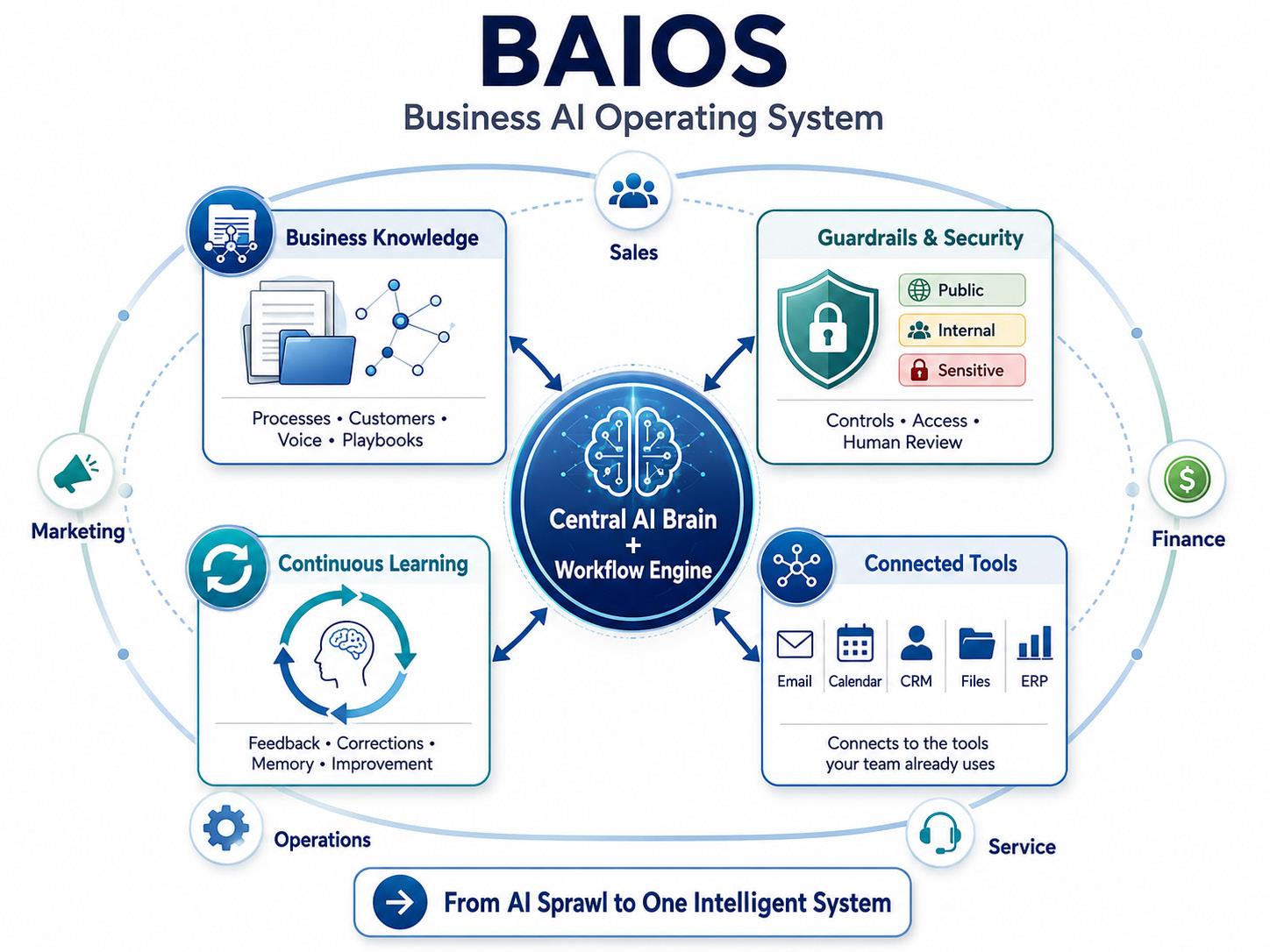
Instead of a pile of disconnected apps, picture one central AI that runs underneath everything, acting as the brain and the hands at the same time. Everything else connects through it. We call this a Business AI Operating System or BAIOS. If you've heard the term BIOS on a computer, that's the foundational layer all the hardware runs on. This is the same idea, just for the AI inside your business. One foundation, and everything else sits on top of it.
Now, what does it actually take to build one? A few things, and the order matters.
First, it must know your business. This is the part most people skip. A generic chatbot is like a contractor you must re-explain everything to every single time. A real operating system is more like an employee who already knows how you work, who your customers are, and how your processes run. That knowledge, your voice, and your playbook have to actually live inside it.
Otherwise, you just have an expensive autocomplete.
Second, and this is the one I care most about because we come from the security side, you put the guardrails up before the AI touches anything sensitive. Sort your data into three buckets. The public stuff that's already out in the world. The internal stuff that's yours but not dangerous. And the sensitive stuff, customer records, financials, anything regulated. You let the AI work freely on the public bucket today and keep it away from the sensitive one until the real protections are in place. This is exactly why one operating system beats five scattered tools. You're defending one perimeter instead of five.
Third, it has to reach into the tools your team already uses. Email, calendar, the CRM, and your file storage. The whole point is that the AI works inside the actual work, not off to the side in a window you must remember to open.
And fourth, it has to learn and stick. Every time someone corrects it, it should get sharper. Most AI tools forget everything the second you close the tab. A real system holds onto what it learns, so it gets more useful the longer it works for you, instead of resetting every session.
So why does this work better? A few reasons.
There's no sprawl. One voice, one place your company knowledge lives, one security boundary, and a clear rule for
when a new tool is actually worth adding instead of piling more on.
It makes your people better instead of replacing them, and the research backs this up. A Harvard Business School working paper from 2025 examined nearly every U.S. job posting and found that after ChatGPT launched, demand for roles where AI makes workers better grew by 20 percent, while postings for purely automatable roles dropped by 13 percent. The goal was never a smaller team. It's a more effective one.
And it compounds. This is the part people miss. A pile of five tools is worth about the same next year as it is today. A system that has spent a year learning your business is worth more every month.
One last thing, because this is where people get in trouble. You don't build this by flipping a switch and turning the AI loose. You build it the way you'd train a good new hire. You start with the safe, repetitive work, and you watch it. You make sure it runs right every time, with a person in the loop, before you ever step back. Then you expand. Slow on the sensitive stuff, fast on the safe stuff, and you never let the AI get ahead of the guardrails.
If any of this sounds familiar, if you've got a few AI tools running right now and none of them talk to each other, that might be worth a quiet thought this week. Not a fire drill. Just something to sit with.
Get Ready, 5th Annual Do It For Dom Music Fest!
RAY BRIDGEMAN, PRESIDENT, DO
IT FOR DOM-FOCUS FOUNDATION
Where does the time go? We are getting ready for the 5th Annual Do It For Dom Music Festival, taking place July 12th at the Steel Pub in Bethlehem. The event is dedicated to raising awareness, funding cancer research and support organizations, and, of course, celebrating the vision Dom created.
For those who may not know our story:
On June 14th, 2021, we lost Dominic Bridgeman to cancer. While undergoing treatment in the hospital, Dom came up with the concept for this foundation.
“Dad, I know what I want to do with my life when I beat this thing and get out of the hospital. I want to find a way to help others and their families who are going through this — encourage people to get early and regular check-ups and motivate those going through this journey.”
So, we took over where he left off.
Organizations that have benefited over the past five years include Star Treatments, Pediatric Cancer Foundation of the Lehigh Valley, The V Foundation, Angel 34, Battle Borne, Movember, the American Cancer Society, and Cancer Support Community Greater Lehigh Valley.
After losing Dom, I got serious about my own health, scheduling a physical and those sometimes not-so-pleasant preventive tests. I joked with my doctor, “Okay, you can get off my a## — literally. I scheduled the colonoscopy, and I’m only two years late.”
His response?
“No, Ray. They changed the recommended age to 45. You’re actually seven years late.”
What I expected to be a routine colonoscopy turned into a polyp removal, complications, a stay in the ICU, and the frightening wait for biopsy results. Then came the call:
“It’s not cancer, but it likely would have become cancer in the future.”
Seven years late for a routine preventive test. That experience could have turned out very differently if I had kept putting it off or had taken the test on time.
A few years later, while talking with friends and family, I wondered: Is anyone really listening?
Then, a day or two before one of our events, I received a call from a colleague apologizing that they couldn't attend. He said:
“Last year, I listened to Dom’s story and his mission, and your experience. Long story short — after a check-up and some treatment, today I am cancer-free.”
That moment reminded me exactly why we continue doing this.
If Dom were here today, he would tell you not to put off those exams and tests. Cancer is not always preventable, but it is often beatable — especially when caught early.
Key Cancer Survival Statistics When Caught Early
Breast cancer: When detected early and in the localized stage, the five-year relative survival rate is over 99%.
Lung cancer: Patients diagnosed at stage I have a 57%–63% chance of surviving five years or more, compared to only 3%–4% when diagnosed at Stage IV.
Common cancers: For eight common cancers — bladder, bowel, breast, cervical, womb, melanoma, ovarian, and testicular — about 80% of patients survive at least 10 years when diagnosed at Stage I or II.
What remains clear is this: we cannot find a cure without continued research, and research requires funding.
Find a cause or organization you believe in and support it however you can — through donations, volunteering, or simply spreading awareness.
I hope to see you at the Do It For Dom Music Festival on July 12th at the Steel Pub, 320 E. First Street, Bethlehem, PA. We have a great lineup featuring Tim Harakal, Lilly Moss, Emo Class Reunion, and RadioOne, along with a silent auction.
Please come out and support us. And if you cannot attend, please consider donating so that one day no other family has to go through this.
As Dom would say to both new friends and lifelong friends alike: “Love & Appreciate You So Much!”
Traditional surveillance can leave threats unnoticed until it’s too late. AI-powered video analytics helps security teams detect suspicious behavior in real time, reduce false alarms, and strengthen perimeter security before incidents escalate. TWG Security delivers intelligent, integrated security solutions designed to help organizations move from reactive monitoring to proactive protection. twgsecurity.com
Schedule your safety consultation today.
NETWORK MAGAZINE FITNESS TALK FOR THE BUSY
PROFESSIONALS
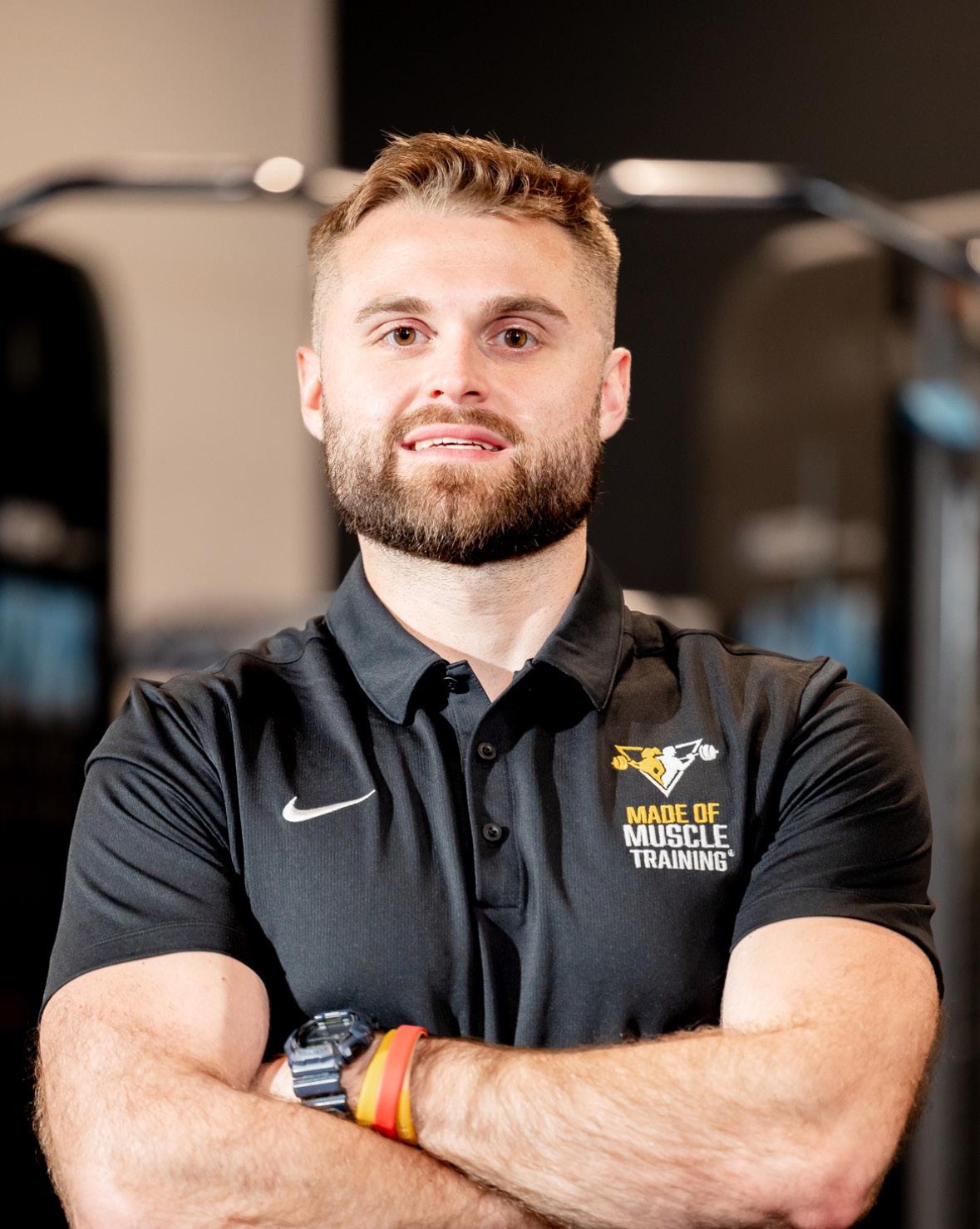
RYAN DRURY, CEO, MADE OF MUSCLE TRAINING®
Summer Body Training
Maintenance: Do Not Fall Off Track
Busy professionals know the truth: Summer doesn't slow down. Work accelerates, travel ramps up, family schedules explode, and suddenly the routines that kept your body sharp all spring start slipping through the cracks. The good news is that maintaining your summer body isn't about perfection—it’s about consistency, strategy, and protecting the habits that support your performance.
This season, think of your wellness like your career: you don’t need more hours, you need smarter systems. Below is a blueprint designed for high achievers who want to stay strong, energized, and confident without sacrificing productivity or precious summer downtime.
1. Micro Workouts: The Busy Professional’s Secret Weapon
Long workouts are great—when you have time. But summer schedules rarely cooperate. Micro workouts (5–12 minutes) keep your metabolism active and your body conditioned.
• High Intensity Bursts — 60 seconds of squats, lunges, or pushups between meetings
• Desk Mobility — shoulder rolls, hip openers, and spinal twists to counter long sitting
• Stair Intervals — 3–5 minutes of stair climbing for a quick cardio spike
These short sessions compound over the week, delivering real results without requiring a gym bag or commute.
2. Nutrition That Works Even When You’re On the Move
Summer eating can derail even the most disciplined professional. The key is to pre-decide your nutrition before hunger and convenience take over.
• Protein First Plates — stabilize energy and reduce cravings
• Portable Smart Snacks — nuts, Greek yogurt, jerky, fruit, or protein bars
• Hydration Strategy — aim for 80–100 oz daily, especially in heat
When your schedule is unpredictable, your nutrition shouldn’t be.
3. Protect Your Sleep Like a Business Asset
Sleep is the foundation of body maintenance—and the first thing busy professionals sacrifice. Poor sleep increases cravings, slows metabolism, and reduces workout motivation.
• Wind Down Rituals — 20 minutes of reading, stretching, or journaling
• Tech Curfew — screens off 45 minutes before bed
• Travel Sleep Rules — keep bedtime consistent within a 60-minute window
Treat sleep like a meeting with your future self—one you don’t cancel.
4. Build Accountability Into Your Calendar
Professionals live by their calendars. If wellness isn’t scheduled, it won’t happen.
• Non-Negotiable Appointments — workouts, meal prep, and recovery time
• Habit Tracking — visual progress keeps motivation high
• Partner or Trainer Check Ins — external accountability increases follow through by 65%
Your calendar is your most powerful fitness tool — use it intentionally.
5. Embrace the “Good Enough” Mindset
Summer isn’t the time for extreme routines. It’s the time for sustainable consistency.
• A 10-minute workout is better than none
• A balanced meal is better than skipping and overeating later
• A short walk is better than staying sedentary
Professionals thrive when they let go of perfection and commit to progress.
Your summer body isn’t built in one intense month — it’s maintained through small, strategic decisions made daily. When you protect your habits, you protect your energy, confidence, and performance. Stay consistent, stay intentional, and you won’t fall off track.
Reach out to Ryan Drury, Owner, Made of Muscle Training®, to stay in shape during the Summer!
The Logistics of Luxury: Moving West Coast Fruit Across the Country
KIM MCCULLOUGH, OWNER, CELLAR BEAST WINEHOUSE
Luxury in wine is often associated with vineyard names, oak programs, and aging potential. What consumers rarely see is the operational discipline required to protect fruit before it ever reaches the crush pad.
At Cellar Beast, we source grapes from premier AVAs across Washington, Oregon, and California. That means our fruit travels nearly 2,500 miles before it is processed. For many, that distance sounds like risk. For us, it is a system built on precision. The difference between compromise and craftsmanship is logistics.
Harvest Is a Moving Target
We do not make picking decisions remotely. After years of working with our growers, we have established clear benchmarks for Brix, pH, phenolic ripeness, nitrogen levels, and overall vine balance. These numbers guide us, but harvest is never purely mathematical. There is still art involved.
Because our fruit will spend three to four days in refrigerated transit, we often make the pick call slightly earlier than ideal if we were crushing on site. The goal is not to pick at perfection. The goal is to have the fruit arrive at perfection.
That requires forecasting weather shifts, monitoring ripening curves, and staying in constant communication with vineyard managers.
Occasionally, we must reject or delay a shipment if numbers are off. That is disruptive for everyone involved, including us. But protecting quality always outweighs convenience.
Engineering the Journey
Once harvested, the fruit moves quickly. We use team drivers running straight through to minimize transit time. Trucks are temperaturecontrolled to maintain cold chain integrity throughout the journey.
Over time, we have refined the system further. We incorporate venting pipes into shipping boxes to prevent heat buildup and spoilage during transit. At the vineyard, we apply a protective enzyme, B Nature, to help suppress wild yeast and unwanted bacterial activity before fermentation begins.
These are not dramatic measures. They are quiet, preventative safeguards.
Luxury is rarely loud. It is controlled.
When the fruit arrives at our Pennsylvania facility, it is processed immediately. No staging. No delays. The transition from truck to crush pad is choreographed because the integrity of the fruit depends on it.
Relationships Before Risk
The success of this model is rooted in relationships. Each year, our team travels west to walk the vineyards. We stand in Candy Mountain evaluating berry size and skin thickness. We walk the cobblestones of The Rocks District, discussing how Syrah responded to heat spikes. We review canopy management decisions on Red Mountain and talk nitrogen adjustments in Yakima.
Those conversations matter. When we ask a grower to pick three days earlier than instinct might suggest, that trust is already built. When weather forces a pivot, the communication lines are open. In 2022, an early frost in the Willamette Valley significantly affected our Pinot Noir sourcing. Rather than compromise quality, we shifted to Santa Maria, California. The decision required agility and long-standing relationships. It was not ideal. It was necessary.
Strategic sourcing is not about avoiding risk. It is about managing it with discipline.
The Business Case for Precision
From a leadership standpoint, cross-country fruit sourcing demands operational rigor. Harvest windows are narrow. Transportation schedules must align with fermentation tank availability. Labor planning must match truck arrival times. A single disruption can ripple across the entire production calendar.
But the payoff is control. By sourcing from distinct AVAs such as Candy Mountain, Red Mountain, The Rocks District, and select sites in California, we build a portfolio defined by site specificity rather than geographic convenience. We are not limited by local growing conditions. We select vineyards based on character and consistency. The logistical complexity is intentional. It allows us to deliver wines that express some of the most respected vineyard sites in the country, while maintaining the stylistic discipline that defines Cellar Beast.
Luxury Is a System
There is a misconception that luxury wine is about indulgence. In reality, it is about restraint and precision. It is about knowing when to pick early so the fruit arrives on time. It is about installing venting
systems in shipping containers to protect clusters from unseen heat. It is about rejecting fruit when numbers are not aligned, even when schedules are tight. It is about building a supply chain as carefully as you build a blend.
At Cellar Beast, we do not view distance as a liability. We view it as a responsibility. If we choose to work with extraordinary vineyards thousands of miles away, then we must match that ambition with equal discipline.
Because in the end, luxury is not defined by how far fruit travels. It is defined by how carefully it is handled along the way.
The best cigars don’t ask for your attention. They earn it.
A good selection isn’t about chasing the strongest smoke in the room. It’s about matching the cigar to the evening in front of you — the company, the pace, the mood you’re after.
This quarter’s three are all carried at Legends, and each belongs to a different kind of night.
One is brand new, forged from a setback and built on gratitude.
One is a boutique discovery with old-world soul.
One is an easy, elegant collaboration made for warm evenings and good company.
None of them overreaches. That's the point.
A.J. Fernandez Amar
Body: Medium to Full Best Moment: A long evening, when the conversation turns honest
Some cigars carry a story you can taste.
Amar is A.J. Fernandez’s newest release, created after a fire tore through his factory in Nicaragua. Rather than retreat, he built a cigar in tribute to the people who stood beside him. The lid of the box reads “Gold Is Tested By Fire.” The name means “to love” in Spanish and “moon” in Arabic — a nod to his Cuban and Lebanese roots.
The smoke lives up to the sentiment. A rich Habano wrapper over Nicaraguan tobacco opens with cedar and warm spice, then settles into cocoa, coffee, and a measured black pepper. A creaminess underneath keeps it from ever turning sharp.
This is a cigar with weight to it — not in strength, but in intention.
A structured bourbon or an aged rum holds its own here. It rewards the smoker who isn’t in a hurry.
EGM
Blecos
Body: Medium Best Moment: An unhurried hour — morning coffee or an evening aperitif
EGM is a quieter name on the shelf, and that’s exactly its appeal.
A boutique house with European sensibility, EGM hand-rolls its Dominican puros in small batches. The Blecos takes its name from Havana’s Malecón and its shape from the classic Cuban 109 — a tapered, dropped head that signals the care that went into it before you ever light it.
The profile is composed and creamy. Cedar and a soft sweetness lead, almond rounds the middle, and the final third deepens into dark chocolate and roasted nuts. The draw is effortless from the first inch to the last.
It runs about an hour, and it never asks for more than that.
This is the cigar for the smoker who likes to find something before everyone else does.
Espresso early in the day. A light aperitif when the evening starts.
Trinidad Tommy Bahama Island Collection
Body: Medium Best Moment: Warm evenings and relaxed company — the centerpiece of a good gathering
If the Amar is reflective and the Blecos is refined, this one is pure ease.
The Island Collection is a collaboration between Trinidad and Tommy Bahama, blended by A.J. Fernandez and Rafael Nodal. It was built for exactly the kind of evening it sounds like — unhurried, sociable, a little indulgent.
A silky Habano wrapper carries cedar, cream, and vanilla, with a tropical sweetness and a touch of cocoa that keeps it interesting without ever working too hard. Medium-bodied and smooth from light to finish, it’s approachable enough for a newer smoker and polished enough for a seasoned one.
This is the cigar you hand to the table. Easy for a newcomer, satisfying for a regular.
It pairs naturally with rum — a daiquiri, a wellmade mojito — or simply a cold drink and good conversation.
As the evenings warm and the calendar fills, this is the one we expect to see most.
The Legends Standard
Three cigars. Three different evenings. One shared idea. The right cigar doesn’t compete with the moment. It completes it.
Strength was never the point. Fit was. The cigar should match the company, the setting, and the pace you’ve chosen for the night.
Choose the one that suits the moment in front of you.