Kiawah River Announces East Meadows, Marking the Community’s Latest Expansion
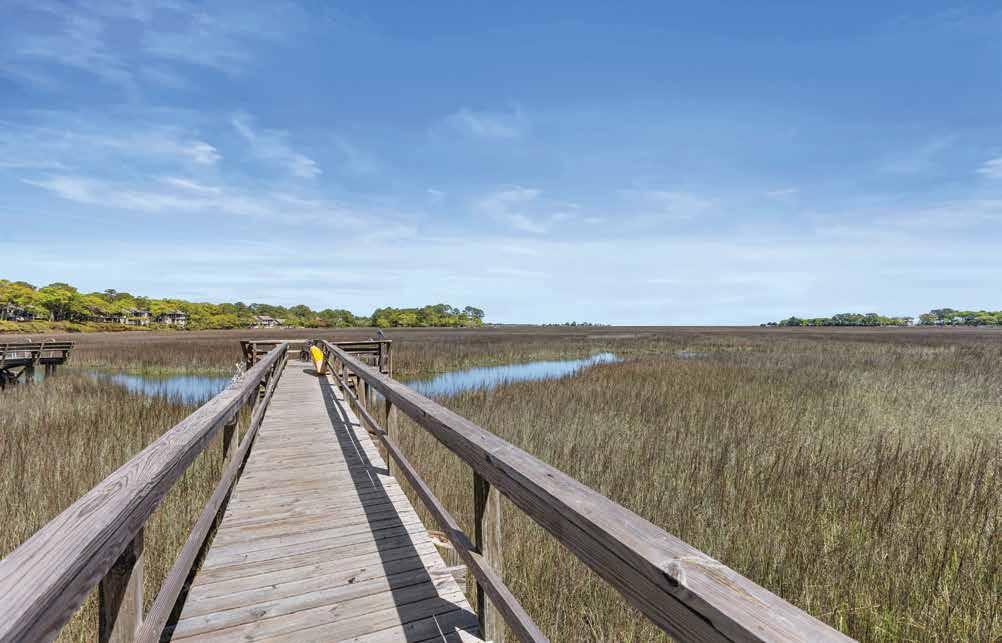
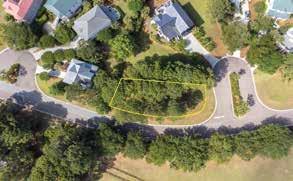
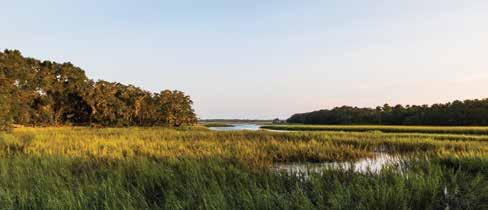
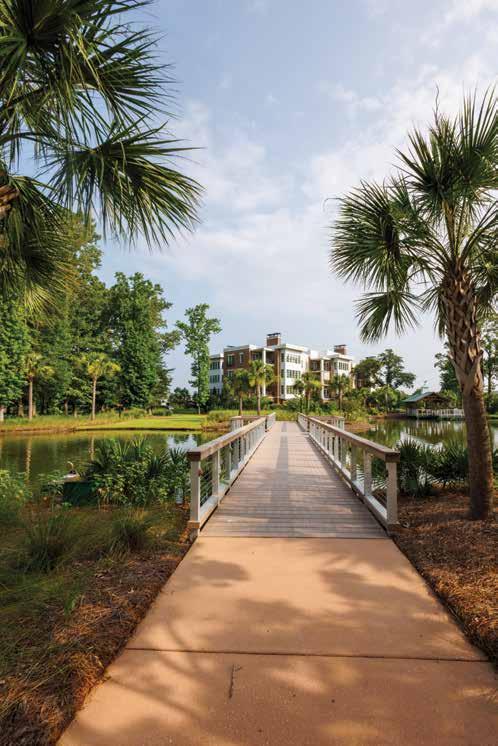
Kiawah River is pleased to announce a new chapter of expansion in East Meadows, Kiawah River’s newest neighborhood, with a limited collection of homesites set along maritime forests, ponds, tidal creeks and riverfront landscape.
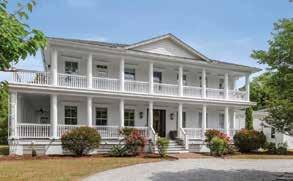
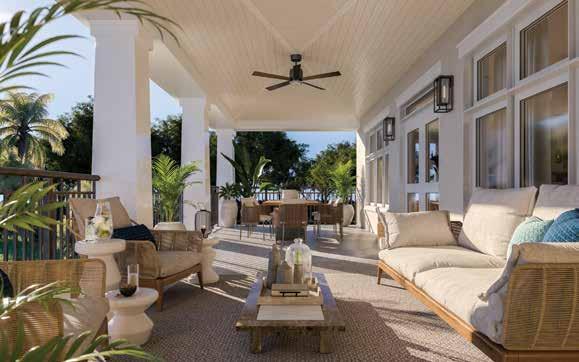
East Meadows joins Kiawah River’s existing Jack Island enclaves to provide more space for custom home creations with generously scaled settings that allow for the epitome of Lowcountry living. With an acclaimed builder’s guild deeply versed in Sea Island architecture, each East Meadows lot offers generous building setbacks, many with views to the water, and each home will reflect a thoughtful approach to design rooted in place. The use of time-honored local materials and a design philosophy grounded in simple forms, natural textures and enduring craftsmanship results in homes that balance crafted comfort, elevated design and longterm sustainability.
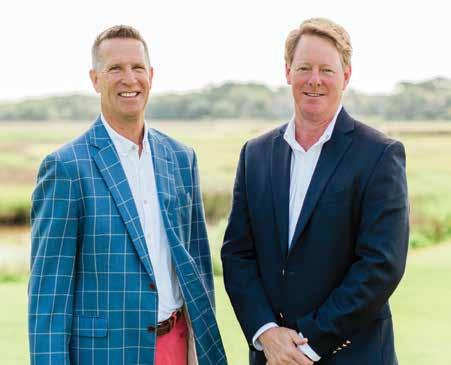
“The expansion of East Meadows presents a rare opportunity to create a custom home designed to last a lifetime, set among sweeping oak trees, a thriving natural landscape and unmatched waterfront views and community amenities,” said Chris Drury, vice president, director of sales at Kiawah River. “This next chapter at Kiawah River will pair timeless architecture and a true sense of privacy, curated for buyers who value quality and a serene way of life.”
East Meadows will serve as a premier setting for life along the water within a vibrant community. At Kiawah River, residents enjoy a lifestyle deeply rooted in nature and shaped by a robust collection of amenities that encourage both connection and recreation, from community gardens to wildlife stewardship programs that reinforce a shared commitment to
the environment. Daily life is complemented by a range of active and social offerings, including tennis and pickleball courts, scenic walking and biking trails, and gathering spaces that bring neighbors together, creating a well-rounded, outdoor-oriented way of living that feels both intentional and effortlessly integrated into the surrounding landscape.
With access to The Spring House, a riverfront swim and fitness amenity, and close proximity to Kiawah River Farm’s The Goatery, elevated staycations at The Dunlin, Auberge Collection, marsh-side meals at Linnette’s, farm-fresh produce at Rosebank Farms and luxurious spa treatments at Aster Spa, opportunities for an elevated lifestyle, riverside dining, gathering and outdoor enjoyment can be found at every turn within Kiawah River.
To learn more about life at Kiawah River’s East Meadows, visit kiawahriver.com/east-meadows.
Well-Attended Kiawah Conversations Are Proven Success
BY THERESA STRATFORD | For The Island Connection
An initiative called Kiawah Conversations that began on Kiawah Island in January has been successful, according to Mayor Bradley Belt and Kiawah Island Town Council Member Madeleine Kaye. Kiawah Conversations is an educational program for the Sea Island community, which informs the public of the area’s regional environmental concerns and will focus exclusively on issues of resiliency, sustainability, wildlife and the environment.
At the Kiawah Island Town Council meeting on May 5, Belt acknowledged Kaye’s effort in getting Kiawah Conversations off the ground and delivering successful programs each time.
“They are very well attended and very educational,” he said.
Kaye responded, “I think it reflects the community’s genuine interest in the environment and appreciation of the fact that where we live is such a special place.”
She shared that the events have been standing room only. So far, Kiawah Conversations has provided programs on alligators, turtles, shorebirds, dolphin strand feeding, composting and recycling.
In March, Kiawah Conversations toured the recycling center in North Charleston. Kaye said they will soon offer another recycling program, but this time it will be at the town hall. “It’s important that they come here and explain how the recycling program works in Charleston County, because there are some items that were recyclable in other places that some of us may have lived, but are not recyclable here,” she said.
There will be a program on native plants in October, and an update on the manufactured wire reef project. Kaye announced that they also plan to present on forever chemicals, wildlife updates, turtle updates, seagrass baskets, etc.
Upon announcing Kiawah Conversations in January, Kaye said, “Kiawah’s Town Council knows how fortunate we are to have the resources, the staff and the community support to identify and enact aggressive sustainability initiatives. We just passed a comprehensive plan with resiliency as a core element, recognizing the need to adapt and thrive in shifting environmental conditions and stresses. We are working to cement Kiawah’s place as a leader in ecotourism. I’m hoping that Kiawah Conversations will enhance those processes.”
Kiawah Conversations is free to the public, although registration for the programs is required. There have been two per month, and they will continue that, depending on speaker availability. Most of the programs take place at the Kiawah Island Town Hall. Check the Kiawah Island Town website for upcoming programs at kiawahisland.gov.
“Our environmental and sustainability issues are shared by our friends on Seabrook and Johns Island, who are invited to Kiawah Conversations. If we share our analyses, research and project updates, we enhance our chance of successful outcomes,” she added.
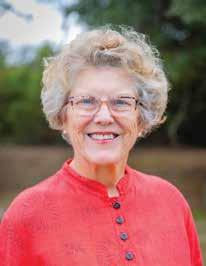
Photo provided by Kiawah River.
For The Island Connection
Madeleine Kaye

PUBLISHERS OF:
The Island Eye News
The Island Connection SiP Magazine
Christian Senger Assistant Publisher
Theresa Stratford Editor tmmart89@gmail.com
Stacey Nichols Graphic Designer Advertising advertising@mylonews.com
Lynn Pierotti Consultant lynn@luckydognews.com
Contributors
Jennifer Wilson Elisabeth St. John
Theresa Stratford Jeff Davis
Future submission deadline: June 3 for the June 12 issue
PUBLISHED BY
Lucky Dog Publishing of South Carolina, LLC P.O. Box 837
Sullivan’s Island, South Carolina 29482 843-886-NEWS
For more information, check out LuckyDogNews.com
Want to share this paper with a friend? Digital flipbooks of each print issue can be found at LuckyDogNews.com.
Op-eds and letters to the editor do not necessarily reflect the opinions of Lucky Dog Publishing or its staff.
Old Island Eye, Island Connection Issues Available
First Baby Bobcats Found on Kiawah Island
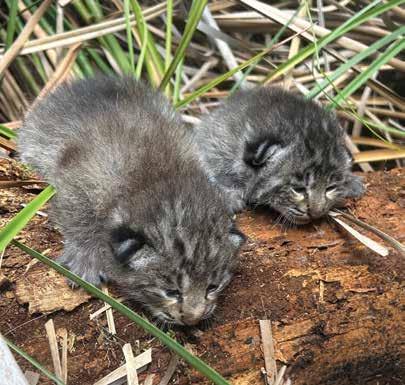
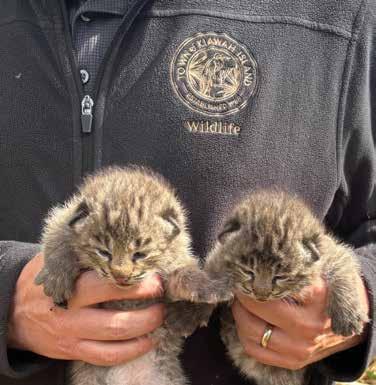
Kiawah Island Town biologists found the first bobcat den of the year on April 28. They also found two 10-day-old kittens, one male and one female, in the den, which was located at The Preserve. The mother had originally been collared on February 5, 2022, in The Preserve and weighed 12.15 pounds.
She was again collared on January 13, 2026, in The Preserve, and weighed 17.6 pounds at that time. Town Biologist Jim Jordan said, “Successful kitten recruitment is vital to the continued recovery of Kiawah’s bobcat population, which declined dramatically in recent years due to the use of second-generation anticoagulant rodenticides (SGAs).”
Kiawah Island Town Council Member Madeleine Kaye said in January that the Town is working to bring back the Bobcat Guardian program.
The Bobcat Guardian program was enacted by the Town in 2020 to combat the decreasing bobcat population. This voluntary program is a community-wide pledge to participate in a commitment to banning the use of SGAs on
Town of Kiawah Island
Ways and Means Committee
Tuesday, June 2, 10 a.m.
Kiawah Island Town Hall
Town Council
Tuesday, June 2, 1 p.m.
Kiawah Island Town Hall
Planning Commision
Wednesday, June 3, 2 p.m.
Kiawah Island Town Hall
Infrastructure and Public Works Committee
Thursday, June 4, 10 a.m.
Kiawah Island Town Hall
Arts & Cultural Events Council
Thursday, June 4, 2 p.m.
Kiawah Island Town Hall
individual properties. The Town asks that residents pledge to tell their pest control provider: “I do not authorize the use of second-generation anticoagulant rodenticides (Brodifacoum, Bromadiolone, Difenacoum, and Difethialone) on my property and I want you to use alternative methods.” Or, they can pledge, “I personally commit not to use the above products on my property.”
After the successful implementation of the Bobcat Guardian program in 2020, bobcat numbers stabilized and started to increase.
Bobcats are important to Kiawah Island because they are the top predator here and provide vital natural control for the island’s deer and rodent populations. Fewer bobcats mean more deer and more rodents, as well. The rise in deer numbers forced the Town to implement a deer management program to control deer numbers for the first time in history in 2021.
Help protect Kiawah bobcats by taking the Bobcat Guardian pledge. Visit savekiawahbobcats.com to learn more.
Town of Seabrook Island
Community Facilities & Infrastructure Committee - Special Called Meeting
Tuesday, June 9, 1 p.m.
Seabrook Island Town Hall
Planning Commission
Wednesday, June 10, 1:30 p.m.
Seabrook Island Town Hall
Environment & Wildlife Committee
Thursday, June 11, 10 a.m.
Seabrook Island Town Hall
Public Safety Committee
Tuesday, June 16, 10 a.m.
Seabrook Island Town Hall
Discretionary Grants Committee
Wednesday, June 17, 10 a.m.
Seabrook Island Town Hall
K iawah iSland Town h all 4475 Betsy Kerrison Parkway Kiawah Island, S.C. 29455 843-768-9166
SeabrooK iSland Town h all 2001 Seabrook Island Road Seabrook Island, S.C. 29455 843-768-9121 info@townofseabrookisland.org
JohnS iSland c ouncil
Meetings are held at the Berkeley Electric Co-op located at 3351 Maybank Highway, Johns Island, S.C. 29455
Chairman Christina Gammons White
charle STon c oun T y c ouncil 4045 Bridge View Drive N. Charleston, S.C. 29405 843-958-4700
ciT y of charle STon 75 Calhoun St. Charleston, S.C. 29401 843-724-3745
For The Island Connection
Photos by The Town of Kiawah Island.
Bobcat Bash Celebrates Conservation and Community
BY JENNIFER WILSON | For The Island Connection
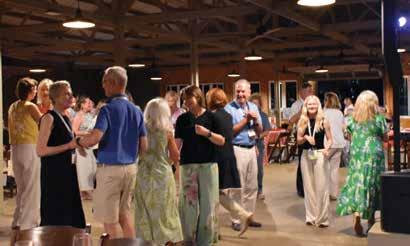
We are still smiling after an unforgettable evening at this year’s Bobcat Bash, held on May 7, where friends, neighbors, conservation supporters and community leaders came together to celebrate and support the landscapes that define our Sea Islands.
Set against the stunning views of the Kiawah River and marsh at Mingo Point, the evening captured everything that makes our Sea Islands so special: community, connection and a deep appreciation for the natural beauty that surrounds us. Guests gathered to enjoy great food, lively conversation and the kind of atmosphere that can only be created when people come together around a shared purpose.
Throughout the evening, Conservancy of the Sea Islands staff hosted tables sharing stories from the field and highlighting the organization’s ongoing mission to protect the lands, waters, wildlife and natural character of our Sea Islands. Guests had the opportunity to learn more about land conservation initiatives; restoration and enhancement efforts; research and field work; outreach and volunteer programs; and the collaborative partnerships that help preserve the places, habitats and ecosystems that make our Sea Islands so unique.
servation is deeply connected to community. Every protected marsh, maritime forest and wildlife corridor helps maintain the beauty, resilience and sense of place that generations of families, residents and visitors treasure across our Sea Islands.
The Conservancy’s own Collie Farah kept the excitement going throughout the evening as
bolically adopt bobcats in support of habitat conservation and research efforts. The adoptions sparked conversations, smiles and a shared appreciation for the wild spaces that bobcats and countless other species depend on throughout our Sea Islands.
As dinner concluded and the evening’s fundraising festivities came to a close, the energy shifted from heartfelt storytelling and celebration to a full dance floor celebration. Emerald Empire Band brought guests to their feet as friends, neighbors and supporters danced late into the night. It was a joyful ending to a night centered around conservation, connection and community spirit.
emcee, leading guests through spirited rounds of Heads or Tails, raffle drawings and an enthusiastic Paddles Up fundraising moment that showcased the incredible generosity and enthusiasm of the crowd.
Most importantly, proceeds from the Bobcat Bash directly support the Conservancy of the Sea Islands’ mission to protect and preserve the lands, waters, wildlife and natural beauty of our Sea Islands for generations to come. Thanks to the generosity of attendees, sponsors, volunteers and supporters, the Conservancy can continue advancing conservation efforts that help ensure our Sea Islands remain healthy, connected and thriving.
More than just a celebration, this year’s Bobcat Bash served as an important reminder that con-
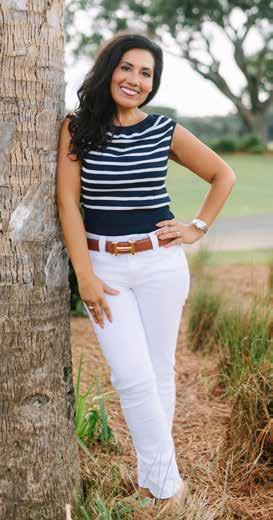


One of the evening’s most memorable highlights was the opportunity for guests to sym-
We are deeply grateful to everyone who joined us for this year’s Bobcat Bash. Together, we are helping protect the places we love across our Sea Islands.
Buyers here aren’t just purchasing property - they’re investing in a lifestyle. From quiet coastal mornings to days shaped by nature, it’s the way of life that goes beyond square footage.
As a full-time resident on Seabrook Island, I understand what makes our island communities so special
The result? Stronger interest, more competitive offers, and a more seamless path to closing.
Contact me today for a confidential property evaluation, and see what price you can get for your home with the right story told.

Photo by Conservancy of the Sea Islands
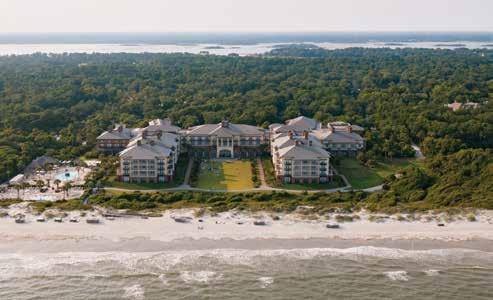
May 3, 1976: Kiawah Golf Resort Opened
For The Island Connection
May 3 marked 50 years since the Kiawah Island Golf Resort officially opened. On that day, the Kiawah Island Inn, a golf course and a tennis club opened.
The original Kiawah Island Inn featured two swimming pools, the Charleston Gallery and Jasmine Porch restaurant, as well as the Topsider Lounge. The inaugural 18-hole golf course was Cougar Point.
The golf resort is now home to five championship golf courses: The Ocean Course, Osprey Point, Oak Point, Turtle Point and Cougar Point. The Kiawah Island Golf Resort also owns The Sanctuary hotel.
For more information, visit kiawahresort.com.

The Sanctuary at Kiawah Island Golf Resort Credit: KIGR
Small Gardens, Big Impact: Celebrating Gardening for Wildlife Month
BY JENNIFER WILSON | For The Island Connection
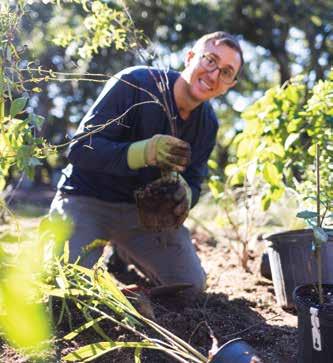
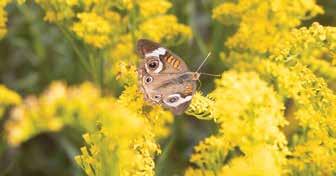
May is Gardening for Wildlife Month, a time to celebrate the connection between people, plants and the wildlife that makes our outdoor spaces come alive. It is also a reminder that even small choices in our yards, neighborhoods and community spaces can make a meaningful difference for the health of our environment.
Here in our Sea Islands, creating wildlife-friendly spaces is one of the many ways we can help protect the natural beauty and ecological health of the places we love most. Birds, butterflies, bees and other wildlife all depend on healthy, connected habitats — and our landscapes can help provide them.
At Conservancy of the Sea Islands, restoration and enhancement initiatives focus on strengthening these natural connections throughout our communities. From planting native species and building pollinator gardens to creating rain gardens and removing invasive plants, these efforts help restore balance to local ecosystems while preserving the natural character of our Sea Islands.
Native plants play an especially important role because they are naturally adapted to our region’s climate and conditions. They provide food and shelter for pollinators and wildlife while often requiring less water and maintenance than non-native landscaping. Adding native plants to a yard or community space is one of the simplest ways to support local habitats.
Removing invasive species is just as important. Invasive plants can spread quickly, crowd out native vegetation and reduce the diversity that
wildlife depend on. Replacing invasive plants with native species helps restore healthier habitats and creates stronger ecosystems over time.
Pollinator gardens are another beautiful way to make a difference. Filled with native flowering plants, these gardens provide important food sources for bees, butterflies, hummingbirds and other pollinators that play a vital role in keeping ecosystems healthy.
Rain gardens also offer both beauty and function. Designed to capture stormwater runoff, they help reduce flooding, improve water quality and keep pollutants from flowing into nearby marshes and waterways — something especially important in coastal communities like ours.
Gardening for wildlife does not require a complete landscape overhaul. Small changes — planting a few native flowers, reducing pesticide use, removing invasive plants or adding pollinator-friendly spaces — can collectively have a lasting impact across our Sea Islands.
This Gardening for Wildlife Month, Conservancy of the Sea Islands encourages everyone to look for simple ways to make outdoor spaces more wildlife-friendly. Together, we can help create healthier habitats while protecting the natural beauty that makes our Sea Islands so special.
To learn more about native plants and how to create wildlife-friendly landscapes in our region, visit the Conservancy of the Sea Islands’ Plant Native website at conservancyoftheseaislands.org/ plant-native.





Credit: Conservancy of the Sea Islands
Credit: Conservancy of the Sea Islands
AROUND THE ISLANDS
MAY 22 - JUNE 7
WHAT: Spoleto Festival USA
WHERE: Various
WHEN: May 22 - June 7
MORE INFO: Spoleto Festival USA returns with more than 110 performances across opera, dance, theater, music, jazz and community programs.
WHAT: Piccolo Spoleto
WHERE: Various
WHEN: May 22 - June 7
MORE INFO: Coinciding with Spoleto Festival USA, produced by the City of Charleston Office of Cultural Affairs.
SATURDAY, MAY 30
WHAT: Outdoor Barre Workout
WHERE: Andell Inn, 300 Farm Lake View Rd., Kiawah Island
WHEN: 11:30 a.m.
MORE INFO: Join a fun outdoor barre workout for women of all ages. It’ll be a workout focused on strengthening, tightening and toning the full body while enjoying the ocean breeze and watching gators swim in the pond. Bring a mat and a set of light weights (1-3lbs). Don’t worry if you don’t have anything, they’ll have extras.
MONDAY, JUNE 1
WHAT: Farmers Market
WHERE: Freshfields Village WHEN: 3 p.m. – 7 p.m.
MORE INFO: A seasonal favorite that grows each year, the Freshfields Village Farmers Market brings together local vendors offering fresh produce, prepared foods and artisan goods that fill the Village Green for the evening.
TUESDAY, JUNE 2
WHAT: The Untold Story of Porgy & Bess WHERE: Gaillard Center, 95 Calhoun St., Charleston
WHEN: 4 p.m. - 5:30 p.m.
MORE INFO: A one-night-only exploration of the little-known history behind Porgy & Bess. This special evening features excerpts from the forthcoming documentary “When Porgy Came Home” by Lauren Waring Douglas, live musical performances, and a panel discussion hosted by WCBD-TV anchor Carolyn Murray.
FRIDAY, JUNE 5
WHAT: Food Truck Friday
WHERE: Kiawah Island Town Hall, 4475 Betsy Kerrison Pkwy., Johns Island
WHEN: 11 a.m. - 3 p.m.
Our community calendar keeps you updated on local events. From festivals to workshops to family-friendly gatherings. Stay connected and never miss out on the excitement.
MORE INFO: The Town of Kiawah Island will host another edition of the Food Truck Friday series, bringing flavorful foods and diverse selections.
WHAT: Music on the Green
WHERE: Freshfields Village
WHEN: 6 p.m. – 9 p.m.
MORE INFO: Free, family-friendly featuring Blackwater Band. Guests are encouraged to bring blankets and chairs.
WHAT: Moonlight Mixer
WHERE: Folly Beach Pier
WHEN: 7 p.m.- 10 p.m.
MORE INFO: Celebrate summertime with some dancing on the Folly Beach Pier on select Friday evenings this summer. Each night will feature tunes from a DJ or live band.
MONDAY, JUNE 8
WHAT: Carolina Children’s Charity 3rd Annual Golf Tournament
WHERE: Daniel Island Club, 600 Island Park Dr., Daniel Island
WHEN: 10 a.m.
MORE INFO: Players will enjoy a day of golf and on-course activities in support of the organization’s mission to help Lowcountry children with birth defects and childhood diseases. The tournament will be played on the Ralston Creek Course with a 10 a.m. shotgun start. An after-party will follow, where some of the children and families served by the charity will be in attendance. In conjunction with the event, supporters can also participate in an online silent auction.
WHAT: Farmers Market
WHERE: Freshfields Village
WHEN: 3 p.m. – 7 p.m.
MORE INFO: A seasonal favorite that grows each year, the Freshfields Village Farmers Market brings together local vendors offering fresh produce, prepared foods and artisan goods that fill the Village Green for the evening.
THURSDAY, JUNE 11
WHAT: Jazz Night at Porch Bar
WHERE: Andell Inn, 300 Farm Lake View Rd., Kiawah Island
WHEN: 6 p.m. – 8 p.m.
MORE INFO: Stop by the Porch Bar at the Andell Inn every second and fourth Thursday of the month from for a Jazz Night featuring a local group.

An Amazing Week of Respect and Admiration for Our Lowcountry
BY ELISABETH ST. JOHN | For The Island Connection
Conservancy of the Sea Islands started Earth Week with programs and activities open to everyone, on the islands or off, highlighting native plants, wildlife, marine life and spaces.
The Conservancy and its partner, the South Carolina Aquarium, along with many dedicated volunteers, cleaned house with an island-wide litter sweep beginning at Mingo Point on Saturday, April 18. Monday saw three bluebird walks, and Tuesday’s visit was to the Naturally Kiawah demonstration garden in Night Heron Park. The garden reflects a vision for what’s possible in landscape design with Morgan Farah, Conservancy of the Sea Islands’ horticulturalist, helping to interpret how native plants can enhance biodiversity, conserve water and transform yards into more sustainable, natural spaces where pollinators, birds and wildlife thrive.
Each season, migratory songbirds, including vibrant species like the Painted Bunting, arrive along the coast of South Carolina from Central and South America to breed. They settle into dense shrubs and maritime hammocks across the Sea Islands, where they build nests and raise their young. The berries, blossoms and caterpillars supported by native plants provide essential nourishment during this critical time, when the energy demands of nesting and feeding chicks are at their highest. By sustaining these food sources, native landscapes help ensure these migratory birds can successfully reproduce and return year after year. Irrigated grass lawns are sterile to birds and wildlife, consisting of only one non-native grass and often containing pesticides. Hence, native plants, with the bugs, flowers and seeds they produce, are hugely important.
uously for 5,500 miles.
LLT Sea Islands Program Director Natalie Olson and President and CEO Matt Williams gave brief presentations on the 2025 local land protection accomplishments. Some 40% of Wadmalaw Island is under preservation or conservation easements, compared to only 9% of Johns Island. The budget for the work the LLT plans to do in 2026 on the Angel Oak Park Preserve and other lands that need to be kept from development into housing tracts with an estimated nine car trips per house and the consequent increase in traffic congestion, is $16.5 million. They have raised $9 million, and Boeing has just graciously pledged $1 million. “This is an incredible opportunity for corporate and private support,” Williams added.
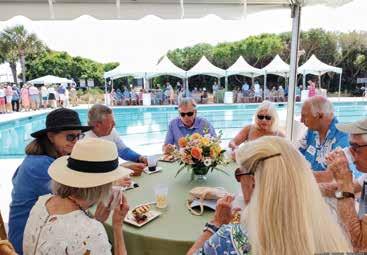
A tour of St. Christopher Camp and Conference Center was also a feature that week. This property is a pure and natural space of some 300 acres, lovingly maintained to embrace its naturalness, on the sunset side of Seabrook Island. It’s how beach life was before gentrification, and the camp is a joy for the many groups and school children to experience marine life at its best.
Friday morning of Earth Week, the Lowcountry Land Trust (LLT) invited some of its trustees and the conservation-minded mayor of Kiawah, Bradley Belt, on a boat tour to Bird Key in the Kiawah River. Just across from Rhett’s Bluff, oystercatchers were hard at work making their lunch on oyster beds revealed by the lowered tide. Stunning antics of dolphins frolicking delighted the passengers of the boat captained by conservationist, former LLT trustee and newly installed mayor of Awendaw, Chris Crolley. Crolley is also the founder of Coastal Expeditions. As the tide was rising, thousands of birds perched on tiny strips of sandbar to rest and catch fiddler crabs and clams. A positive indication of the health of the estuary is the birds feeding on living oyster beds, Crolley explained, and shared that birds instinctually return to their birthplace to nest. Since many of these nesting places are sandbars, not high-ground islands above water at high tides, they truly are shifting sands. If a bird cannot find its home, it may well perish. Therefore, many of these sandbars are protected and are off limits for people intent on beach parties.
Education is such a large part of preservation. People are curious and don’t understand that their curiosity may disturb a flock that has just flown contin-
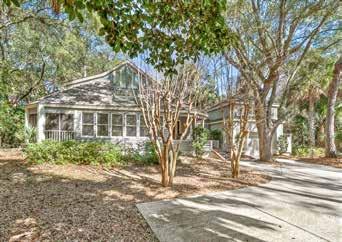
Conservancy of the Sea Islands has protected nearly 4,000 acres across 86 properties throughout the Sea Islands. This includes 67 properties totaling 3,371 acres on Kiawah Island, encompassing a significant portion of the marshes and lands along both sides of the Kiawah River, along with 11 properties (17.80 acres) on Seabrook Island and eight properties (508.59 acres) on Johns Island.
On Johns Island, The Gathering Ground: A Conservancy of the Sea Islands Preserve is emerging as a living classroom, research site and gathering place where people can engage with nature, learn from it and connect with the culture of our Sea Islands. More than 100 acres along Betsy Kerrison Parkway are now permanently protected and are being shaped into this connected landscape that supports wildlife while welcoming the public. Installation of trail systems and the new Sweetgrass Pavilion for this area are currently in the works.
On Friday afternoon, the Earth Week celebration culminated with the Conservancy of the Sea Islands’ annual Earth Week celebration at Night Heron Park. While visitors enjoyed music, kettle corn, hair tinsel, face painting and putt-putt golf, some 40 diverse vendors showcased their significant services and wares. Everything from Gigi’s painted oyster shell jewelry and Audrey Strauss’ newly published Native Plants of Kiawah Island: A Collection of Watercolors was on display. Keeper of the Wild rehabilitators, Samantha and Chris Freyer, showed baby opossums and an incubator full of baby raccoons that were rescued only the day before. They intubated and hydrated each baby, still too newborn to tolerate the formula she will be feeding them every three hours for the next six weeks.
The next table showed a gargantuan whale backbone segment and shared marine life and dolphin education. Kiawah Island Shorebird Stewards and Seabrook Island Birders showed pictures of their work and expertise. Crosswind’s Farm Mobile Petting Zoo attracted fond tactile attention.
Kiawah Island also held a 50th birthday party on Saturday, April 25. A long queue of friends formed outside the Sandcastle in anticipation of the celebration sponsored by the Kiawah Island Community Association, and it was a very festive experience.
Happy 50th Birthday, Kiawah, and long live the collaboration, admiration and respect between nature and humans on our Sea Islands!

Kiawah River Goatery
The Kiawah Island Garden Club visited the Kiawah River Goatery on April 30. They were greeted by Missy Farkouh, owner of The Goatery, and some much-needed rain. Members took shelter under a shed roof to wait out the rain, but there were no complaints, as it was very welcome after a months-long drought. When the rain lessened, they were given towels and treated to a lovely snack of goat cheese, crackers and wine, under the oaks. The sweet cheese mixtures were sweetened by fruit and local honey from Edisto Gold Honey hives. The hives stay on the property and pollinate the fields and trees. The beekeeper, Mark Connelly, comes and takes care of the hives. The savory cheeses were flavored with local herbs. Because farming is seasonal, the Goatery freeze-dries some of the milk into a powder from which they make soaps and lotions. The added honey is a natural antiseptic. Honey from tree resin lasts longer than that from wildflowers. The farm is perfectly described as “the land of milk and honey.”
The whole farm is called regenerative with no chemicals used at all. Regenerative farming uses the principle of letting the animals work together to regenerate the soil. Farkouh is a certified cheese maker, trained at Penn State. She has also taken courses in Italy, most recently in Gorgonzola in the Italian Alps.
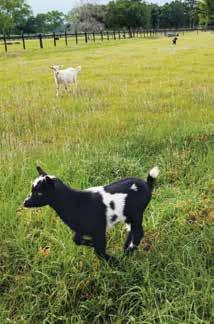
There is one sheep that thinks she is a goat, but is trained not to eat their food, only that which is put out for her. Sheep and goats have different nutrient needs and all thrive on the farm. The goats also graze and even love leaves of trees, especially wax myrtles and pines. They are kept away from oaks as they contain too much tannin, which affects the taste of the milk and cheese. One large goat stood on its hind legs to reach the lower leaves on a large tree.
There are 120 goats of various types, including Lamanchas, Alpines and the long-eared Nubians. Many babies had been born recently and entertained everyone with their antics and youthful enthusiasm. The nursing goats are
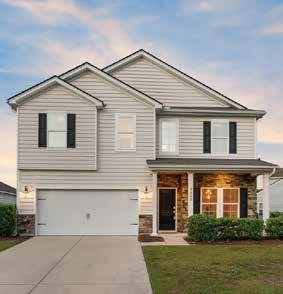
$600,000


not milked until the babies are weaned and all are given seasonal breaks from being milked. There are many employees and volunteers, but the goats are only milked by trained employees in the strictly sterile surroundings of the milking sheds. The Goatery utilizes pharmaceutical-grade refrigeration to keep the supply of milk and the resulting cheese. All of the goats have names reflecting their markings or personalities, even the babies. The babies receive their training and discipline from their mothers, and the humans don’t interfere.
There is also a movable hen house holding 150 ISA brown chickens on the property. The color of the chicken determines the color of the eggs. The hens keep themselves scrupulously clean as long as they are healthy. They are trained to hurry into the hen house at sunset or at any time of perceived danger, such as an eagle that lives nearby. The hen house is moved periodically to fertilize the fields, which is part of regenerative farming. The hens receive special feed and, of course, eat dropped seeds and insects. There is no fly or mosquito problem when hens are roaming an area. Farkouh recounted many stories of the animals, and especially loves when children come to the farm with their questions.
There are several large pigs on the farm. The fields where the animals roam are huge, but Farkouh can call the pigs to her, as well as the goats. They are all well-trained and come on the run. The goats are very curious and affectionate, especially the young ones. They come to visitors for scratches, and a good massage can mesmerize them as it does any dog or cat. Of course, visitors need to keep an eye on what the goats are trying to nibble, which could be your clothes.
The Goatery offers tours through their website, thegoateryatkiawahriver.com. The Kiawah Island Garden Club is planning many similarly interesting and entertaining activities for the coming year.
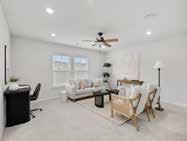



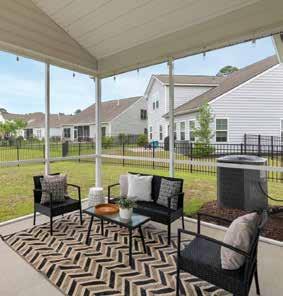
5060 Catfish Loop, John’s Island
BD, 2.5 BA, 2,804 sq ft
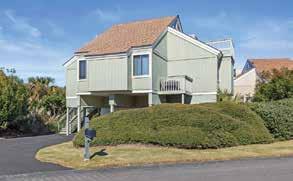
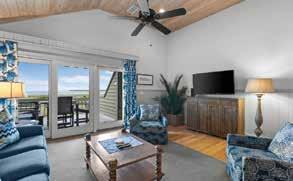
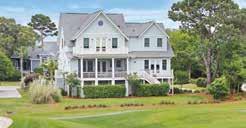
5060 Catfish Loop offers more than just a home—it offers a lifestyle. Set on a peaceful pond lot in St. John’s Lake, this like-new home features bright, open living spaces designed for both entertaining and everyday comfort. The downstairs primary suite provides a private retreat, while the fenced backyard, walkable neighborhood, pool, and lake access make outdoor living easy year-round. Just minutes from downtown Charleston, Kiawah, and Seabrook, this is a home designed for making lasting memories.



















First Loggerhead Sea Turtle Nests of 2026 Found on Edisto
For The Island Connection
South Carolina’s 2026 sea turtle nesting season is officially underway, with the first two loggerhead sea turtle nests of the year reported at Edisto Beach State Park and the Cape Romain National Wildlife Refuge.
The nests were located by trained specialists conducting early morning beach patrols under the South Carolina Department of Natural Resources (SCDNR). The discoveries mark the beginning of another busy nesting season for the statewide network of more than 1,500 volunteers and biologists who patrol South Carolina’s beaches each year to locate, document and protect sea turtle nests through October.
Both nests were left in situ — meaning they remain undisturbed in their original location — so the number of eggs laid is currently unknown.
“Sea turtle nesting season is one of the most anticipated times of year along our coast,” said SCDNR biologist Michelle Pate, who oversees the agency’s sea turtle nesting program. “As turtles begin arriving on our beaches to nest, we ask residents and visitors alike to help protect them by turning off beachfront lighting at night.”
Loggerhead sea turtles, the species responsible for the vast majority of South Carolina nests each year, are listed as threatened under the Endangered Species Act. While annual nest totals naturally fluctuate due to the turtles’ cyclical nesting behavior, long-term nesting trends across the southeastern United States remain encouraging following decades of conservation efforts.
Female loggerheads do not nest every year, and during active nesting seasons, they may lay several nests approximately two weeks apart while consuming little to no food during the process.
South Carolina Loggerhead Sea Turtle Nest Numbers
• 2019: 8,775 (highest on record)
• 2020: 5,551
• 2021: 5,638
• 2022: 7,968
• 2023: 6,597
• 2024: 4,812
• 2025: 3,902
Four species of sea turtles may nest on South Carolina beaches: loggerheads, green turtles, Kemp’s ridleys and leatherbacks. All are protected under both federal and state law.
Loggerhead sea turtle clutches average approximately 120 eggs and typically hatch after about 60 days of incubation.
Sea Turtle Nesting Season Reminders
• Sea turtle nesting season in South Carolina runs from May 1 through October 31.
• Keep beaches dark at night by turning off beachfront lighting and avoiding flash photography or phone lights near nesting turtles and hatchlings.
• Always observe sea turtles from a respectful distance and never disturb turtles or marked nests.
• Keep beaches clean and remove trash, furniture and obstacles that may impede nesting turtles or hatchlings.
• Boat cautiously, particularly in tidal creeks and nearshore waters where sea turtles frequently feed.
• Report sick, injured, stranded or dead sea turtles, as well as nest disturbances, to SCDNR at 1-800-922-5431.
• If a sea turtle is accidentally hooked while fishing, contact SCDNR immediately for assistance.
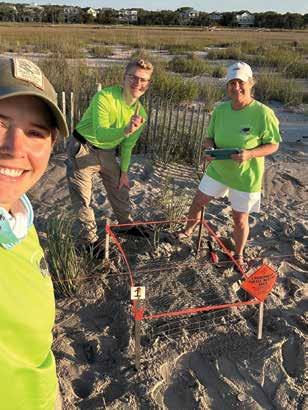


Leah Schwartzentruber, Edisto Beach State Park sea turtle specialist, Edisto Learning Center animal care specialist and Edisto Beach State Park volunteer. Photo by Leah Schwartzentruber
TIDE CHART

Derby Party Fundraiser Benefits Summer Camps
BY ELISABETH ST. JOHN | For The Island Connection
When school is out, children with disabilities often lack meaningful activities to participate in over the summer months. The Charleston Area Therapeutic Riding (CATR) program at Johns Island Summer Camps, which assists children and veterans with disabilities, begins in June. Camps run for five to six weeks and focus on eight students per session. Each camp period will teach riding skills, maintaining and grooming a horse, plant identification and art and crafts skills. By learning how to ride and care for their horse, the participant not only becomes physically stronger but also gains confidence and builds friendships.
JUNE 7 1:29 A.M., 2:29 P.M. 8:26 A.M., 8:00 P.M.
JUNE 8 2:26 A.M., 3:28 P.M. 9:27 A.M., 9:03 P.M.

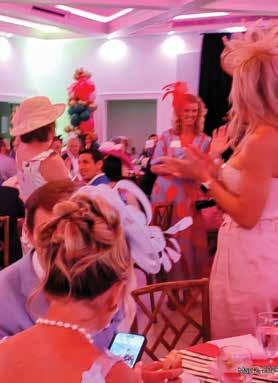
Funding for this and the many therapeutic riding programs at CATR was the reason behind the Derby Party held on May 2 at the lovely Waverly venue at 94 Stuart Street in Charleston. Bets were placed on the horses running in the Kentucky Derby, and the nervous, lucky winners then generously donated the proceeds back to the CATR program. The auctions, both silent and live, became animated and saw arms and paddles raised in competition. Tantalizing trips, jewelry and even a horse halter worn by a Derby winner, invited strong bidding. Generous sponsors purchased whole tables and donated prizes to be auctioned off. The sponsor list includes island business names, like Kiawah Partners, the Seabrook Island Club, Hege’s Restaurant, Royal Tern, J. McLaughlin and many Charleston businesses, as well as multiple generous and thoughtful individual residents of the Charleston area.
Men and women alike dressed to the hilt, representative of what the Churchill Downs crowd might be wearing. Charleston-style bowties and blazers, and stunning dresses and hats drew smiles wherever your glance fell. Suzanne Sortor, who also volunteers with Keeper of the Wild, was chosen as sporting the best hat and received a bottle of bourbon personalized to commemorate the honor. For $100, a rose could be bought that would give one lesson to a student. All 500 beautiful roses from the Charleston Flower Market found new homes with generous donors.
“With your support, CATR will continue to flourish into the future,” read the last line of the program. In the business of changing lives for 35 years, there is no doubt that grateful families and thoughtful supporters will ensure the viability of the programs for the next 35 years.
For more information on the CATR camps, visit catr-program.org.
Kiawah Alliance Will Bring Key Stakeholders Together
BY THERESA STRATFORD For The Island Connection
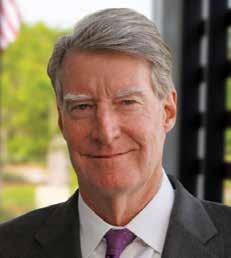
In an effort to hear the voices of key stakeholders of Kiawah Island, Mayor Bradley Belt announced the development of the Kiawah Alliance at the Town Council meeting on May 5. The purpose of the Kiawah Alliance is to bring those key stakeholders together to discuss issues that are truly cross-cutting.
The Kiawah Alliance will not be a decision-making entity, but instead it will serve as a forum to discuss the issues facing Kiawah Island. The hope, according to Belt, is that it will lend itself to be a memorandum of understanding for agreements.
They met for the first time on May 20 to discuss how the Kiawah Alliance will operate going forward. Belt suggested that an example of an issue that stakeholders may need a “say” in is the stormwater management situation. He also mentioned the issues with beach operations and the dune system when different ownership is at play.
The idea for the Kiawah Alliance was initiated as part of the planning commission’s comprehensive plan, which is otherwise known as KiawahNext.
“We want to create a more structured mechanism for enhanced coordination, planning, policy development, advocacy and relationship management among Kiawah’s key stakeholders,” Belt said. “The recommendation was based, at least in part, on the recognition that some of the challenges facing the Kiawah community in the future cannot be wholly or effectively addressed by the Town or any one stakeholder interest but rather require collaboration and coordination among multiple key stakeholders, particularly in light of Kiawah’s unique governance structure.”
The public meeting on May 20 helped to ascertain interest in the establishment of the Kiawah Alliance. They discussed its potential composition, how it might be structured and operate, what the objectives and desired outcomes might be and they identified some of the issues that would be appropriately considered by such an entity.
The Kiawah Alliance will help with regional advocacy, traffic issues, island access, redevelopment coordination and emergency management.
The Kiawah Island Community Association, the Kiawah Island Golf Resort, Kiawah Partners and Edens were on the docket to share remarks. Other regional groups, like utility and public safety entities, as well as governmental bodies, were also on the agenda to contribute.
Potential future agenda items include: a redevelopment task force, a central communications channel, staffing issues, infrastructure issues, disaster response and public safety roles.
For more information and for upcoming meeting times, visit kiawahisland.gov. The meetings are open to the public.
The Kiawah Art Guild Glows
BY ELISABETH ST. JOHN | For The Island Connection
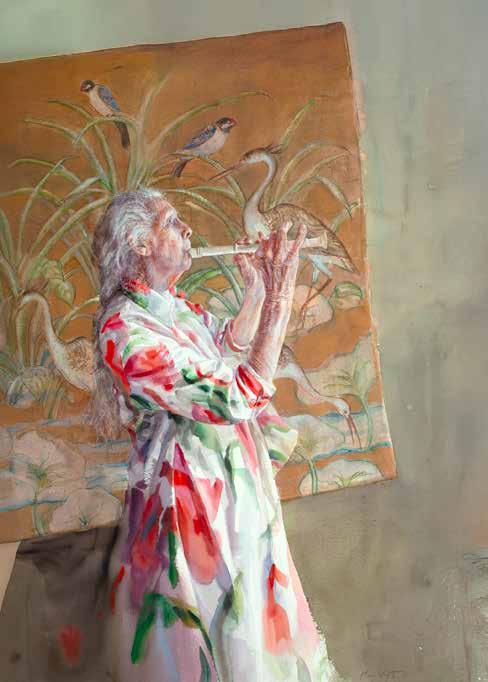
Dr.Jose Rafols, a Kiawah Art Guild member and a member of the Seabrook Artist Guild, was a rock star of the Treasures of Seabrook award this week. From 54 entries and 300 votes, Rafols was one of three awardees of the People’s Choice Award at the Seabrook Island Real Estate gallery. The People’s Choice Award went to the painting, Three Little Maids from School Are We. The title is a metaphor for a melody from Mikado, an opera written by Gilbert and Sullivan.
Dr. Lori Rafols, Jose’s wife, is an avid wildlife photographer, and picked just the right time to let the camera shutter capture a shorebird Red Knot threesome grazing for nourishment on the beach. Her capture on film presented the basis for her husband’s painting.
The Kiawah Art Guild gathered on May 11 for a workshop with Beverly Lee Cohen, a textural acrylic abstract artist, who demonstrated her techniques and work with members who were interested in exploring this avenue in their artwork. A New Member Coffee event in May was the last official gathering for the 2026 Spring season.
With many members traveling or hosting families over the summer, independent study and exploring new techniques will give members a fresh perspective for the fall meeting on October 5. The Kiawah Art Guild schedule for the fall includes a fall workshop on November 4, featuring international artist Karen Hewitt Hagan. Owner of The Gallery at Sweetgrass at Wild Dunes, a cancer survivor and a native of nearby Florence, Hagan’s work is included in the permanent art collection of The Sanctuary Hotel. Her contagious lust for life bubbles over in a quote incorporated into her website: “If I were marooned in just one place on earth, I’d want it to be Charleston. It’s nirvana here…funky, very close-knit among the artists. We all collaborate a lot, share models and paint together. That’s inspiring in itself, but to get to do that in a city that is filled with such stunning light and beauty is way beyond what anyone could hope for.”
Hagan will show and demonstrate techniques she employs in abstracting landscapes in acrylic and oil mediums. The creations from these events will be shared and available for purchase at an art exhibit and sale on October 17 at Kiawah Town Hall, followed by the amazing, not-to-be-missed Holiday Artist Preview at The Sandcastle on November 13 and 14. Embracing the holiday season, everyone is invited to attend the December 2 Open House Exhibition, which will feature art pieces from each and all the Kiawah Artist Guild members.
Check out the Kiawah Art Guild at kiawahartguild.org.
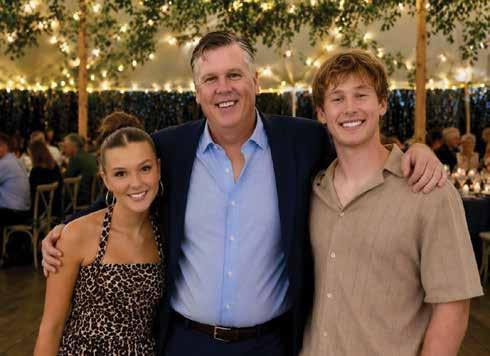


Kiawah Island Mayor Bradley Belt
Storytelling Through Wildlife Photography with Russell Graves
BY JEFF DAVIS | For The Island Connection
At the Seabrook Island Photography Club’s May 21 meeting, club members and guests were lucky enough to enjoy an insightful talk from award-winning West Texas “rural renaissance man” Russell Graves. Graves is a photographer who has had over a million words published, authored six books and has had thousands of images published in magazines and advertisements, including hundreds of magazine covers. The club gained an appreciation of Graves’s ability to connect people and places through his written, spoken and photographic stories.
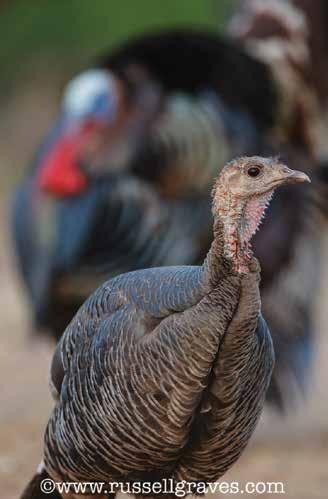
He walked club members through a mindset shift involving thinking like a movie director and consciously building a photo essay rather than simply going out and taking random photos. Thinking intentionally and proactively building a shot list are key steps towards having the necessary graphic elements to really tell a story about our subjects. A mixture of wide establishing shots placing the subject in its environment, medium shots where the subject is the hero in the frame and tight zoomed-in shots focusing on the details of the animal’s natural design drives interest and a graphical narrative. Graves reminded us that photo essays can be a long-term living body of work
WARRIOR SURF FOUNDATION CHARITY GOLF CLASSIC
THURSDAY, JUNE 25, 2026
on a single subject, which can help us and our viewers learn a lot about a single subject. This more expansive framework can do much more to help us hone both our photography and non-verbal storytelling skills, rather than simply popping off three shots for an Instagram post. That was somewhat of an a-ha moment for me personally.
Graves is unabashedly obsessed with wild turkeys and much of his talk focused on a photo essay he has built around these birds, documenting all of the strutting, jockeying, fighting and gobbling that goes into the mating game for his local turkey population. It made for both great informative examples and many entertaining stories.
The Seabrook Island Photography Club aims to provide a wide variety of instructional content via its speaker programs, generously supported largely by the Town of Seabrook Island’s discretionary grants. Most of their programs are aimed at photographers of all levels, and Graves’s presentation was a great example. Graves didn’t utter a single technical photographic term during his talk, but club members all walked away with lessons they can apply out in the field. Please visit seabrookphotographyclub.com for more information.
Credit: Photo by Russell Graves
Seabrook Island Artist Guild Artist of the Month, Mary Salvo
For The Island Connection
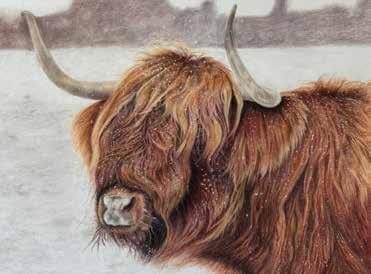
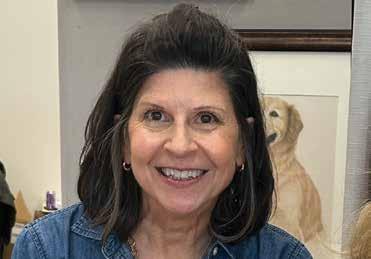
To those who know Mary Salvo best, it’s not surprising that her artistic focus centers on creatures that roam, soar and quietly inhabit the Lowcountry. Friends affectionately call her the wildlife whisperer, a title earned through her gentle presence and uncanny ability to connect with animals of every kind. As an artist and Seabrook Island resident, Salvo feels deeply connected with the environment around her and sees inspiration everywhere she looks.
Her journey to Seabrook began nearly 30 years ago, when she and her husband, Joe Salvo, made the island their home. Their son, Joseph, who was raised on Seabrook Island, always enjoyed celebrating his July 4th birthday at our annual island-wide fireworks display.
Salvo’s love of art traces back to her childhood in Connecticut. She fondly recalls many Christmas mornings when art supplies of all kinds were hidden under the tree. After opening, she carefully placed them all together, ready for the next moment of free time to experiment and create.
Throughout high school, she was guided by a gifted art teacher who recognized her abilities early and encouraged her as she immersed herself in learning each medium available. One of her vivid memories from those years is a charcoal portrait she created of one of her favorite musicians of that time, Bruce Springsteen, in 1978. Exhibitions and accolades during those
high school years encouraged her to continue her art studies while also attending Salve Regina University in Newport, Rhode Island.
Life, however, had its own plans. A career in real estate and the joys of raising a family took center stage, and art was set aside for a time. However, creativity has a way of calling back. About 10 years ago, while spending time in Florida during her son’s athletic training, Salvo felt the familiar call. She joined the Sarasota Art Center and began drawing again. Since returning to her art, she has become known for her wildlife and custom pet commissions, infused with the emotion, personality and presence of its subject. Her work doesn’t simply depict animals; it honors them. Whether focusing on capturing the soulful gaze of a family pet or the startled stare of a deer just emerging from amidst the trees, Salvo’s goal is to bring dignity, tenderness and precision to each of her portraits.
As a member of the Seabrook Island Artist Guild, Salvo is honored to have her recent pastel work, entitled “Mama,” recognized at the Treasures of Seabrook Island exhibit at the Seabrook Island Real Estate office. This piece reflects her deep connection to the Island’s natural world and her ability to express that connection into art that is meaningful to her and the community.
Please come and enjoy Salvo’s artistic work in the Lakehouse during June. A reception will take place on June 2, from 4:30 p.m. to 6 p.m.
Seabrook Island’s Sea Turtle Season is Here
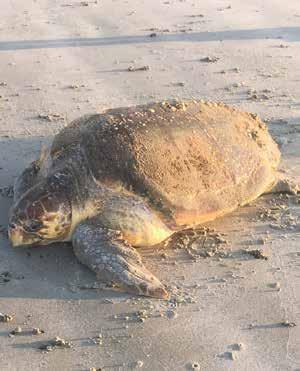
Sea turtles nest on South Carolina beaches every year. The season officially began on May 1 and will run through October. There are seven species of sea turtles, but the loggerhead is the primary nesting turtle on our beaches. These large turtles weigh up to 300 to 400 pounds and crawl up onto the beach at night to lay their eggs. They dig a hole in the sand, and after laying an average of 120 eggs, cover the nest and head back to the ocean. They do not return to the beach to check on their nests. Checking the nests is one of the duties of the Seabrook Island Turtle Patrol (SITP).
The SITP consists of over 100 volunteers who walk the beach every morning looking for new nests. This year, Seabrook’s first nest was laid on May 13. Nests are numbered and marked with an orange sign on a white pole. They are protected by 5-foot by 5-foot metal screens to help deter predators. The incubation period lasts about two months and can continue through October. During this period, members of the SITP carefully monitor the nests to ensure the eggs are safe and, ultimately, to look for evidence of hatching. The nests typically hatch over a several-night period when the baby turtles emerge and scramble back to the ocean using moonlight as a guide. After hatching, the SITP will carefully inventory the nests to document the success and report their findings to the South Carolina Department of Natural Resources (SCDNR).
nest, but otherwise, they are happy to talk to you and answer any questions you may have.
SITP is licensed by the SCDNR. The volunteers are quite visible with their colorful T-shirts. Please allow them to work if they are busy with a
QUALITY MATTERS
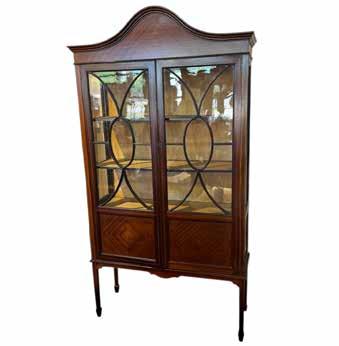
GEORGIAN STYLE MAHOGANY DISPLAY CABINET
RETAIL PRICE: $2,500 | BLUE MOON PRICE: $860
Dimensions: 72" H (at tallest point/middle) x 37" L x 15" W
Origin: England | Condition: Very Good Time Period: Georgian Era, Circa 1780-1820 Shop the Warehouse
843-801-6777

Loggerheads are a threatened species and protected under Federal and State Laws. There are many dangers facing this species, but everyone can help ensure that ongoing efforts to conserve and protect them will be successful by following these best practices:
• Light out on the beach from 10 p.m. through sunrise. If you need a flashlight on the beach, shield it with a red lens. Bright lights can distract and disorient both nesting turtles and hatchlings.
• Stay away from nests and out of the dunes.
• Fill in any holes and level any sand structures. Small hatchlings in particular can become stuck in them.
• Remove all equipment, trash and food you bring to the beach. Equipment can entrap large and small turtles and trash and food can be dangerous if eaten and can attract predators.
• No plastic items on the beach. Plastic bags and wrappers are a particular problem since they look like jellyfish in the water – a major food source for sea turtles.
• If you see a nesting turtle or emerging hatchling, keep your distance and notify SITP at 843-310-4280.
The SITP is supported financially by the Seabrook Island Property Owners Association, the Town of Seabrook and public donations. More information can be found on their website at siturtlepatrol.com.
For The Island Connection
Credit: Photo by Joe Ficarra.