See

Murray High students built a house Page 8
Cathy Gilmore balances Ph.D. and college water polo Page 18
By Shaun Delliskave | s.delliskave@mycityjournals.com
Installed after the war and dedicated in 1923, a surplus cannon and bronze plaque connect Murray to the battlefields of France—and to the 12 men who never returned.
At the center of Murray Cemetery, where Vine Street meanders by and the city gives way to rows of headstones, a century-old artillery piece rests in place. Its steel is weathered, its wooden wheels fixed. It has not moved in decades.
The gun—a Driggs-Seabury rapid-fire field piece manufactured in 1900—was never fired in World War I. By the time American forces entered the conflict in 1917, it was already outdated, surpassed by newer artillery that would define the war’s industrial scale.
But in Murray, the cannon serves a different purpose.
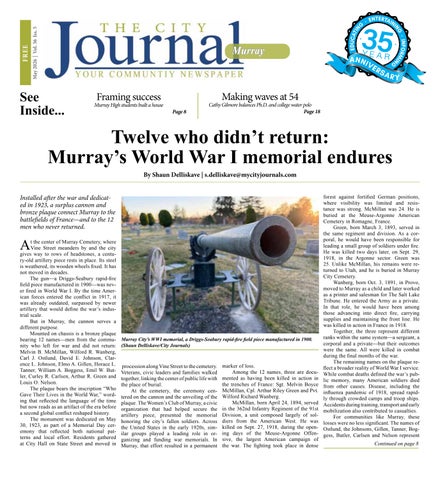
Mounted on chassis is a bronze plaque bearing 12 names—men from the community who left for war and did not return: Melvin B. McMillan, Wilford R. Wanberg, Carl J. Ostlund, David E. Johnson, Clarence L. Johnson, Elmo A. Gillen, Horace L. Tanner, William A. Boggess, Emil W. Butler, Curley R. Carlsen, Arthur R. Green and Louis O. Nelson.
The plaque bears the inscription “Who Gave Their Lives in the World War,” wording that reflected the language of the time but now reads as an artifact of the era before a second global conflict reshaped history.
The monument was dedicated on May 30, 1923, as part of a Memorial Day ceremony that reflected both national patterns and local effort. Residents gathered at City Hall on State Street and moved in

forest against fortified German positions, where visibility was limited and resistance was strong. McMillan was 24. He is buried at the Meuse-Argonne American Cemetery in Romagne, France.
Green, born March 3, 1893, served in the same regiment and division. As a corporal, he would have been responsible for leading a small group of soldiers under fire. He was killed two days later, on Sept. 29, 1918, in the Argonne sector. Green was 25. Unlike McMillan, his remains were returned to Utah, and he is buried in Murray City Cemetery.
Wanberg, born Oct. 3, 1891, in Provo, moved to Murray as a child and later worked as a printer and salesman for The Salt Lake Tribune. He entered the Army as a private. In that role, he would have been among those advancing into direct fire, carrying supplies and maintaining the front line. He was killed in action in France in 1918.
Together, the three represent different ranks within the same system—a sergeant, a corporal and a private—but their outcomes were the same. All were killed in combat during the final months of the war.
procession along Vine Street to the cemetery. Veterans, civic leaders and families walked together, linking the center of public life with the place of burial.
At the cemetery, the ceremony centered on the cannon and the unveiling of the plaque. The Women’s Club of Murray, a civic organization that had helped secure the artillery piece, presented the memorial honoring the city’s fallen soldiers. Across the United States in the early 1920s, similar groups played a leading role in organizing and funding war memorials. In Murray, that effort resulted in a permanent
marker of loss.
Among the 12 names, three are documented as having been killed in action in the trenches of France: Sgt. Melvin Boyce McMillan, Cpl. Arthur Riley Green and Pvt. Wilford Richard Wanberg.
McMillan, born April 24, 1894, served in the 362nd Infantry Regiment of the 91st Division, a unit composed largely of soldiers from the American West. He was killed on Sept. 27, 1918, during the opening days of the Meuse-Argonne Offensive, the largest American campaign of the war. The fighting took place in dense
The remaining names on the plaque reflect a broader reality of World War I service. While combat deaths defined the war’s public memory, many American soldiers died from other causes. Disease, including the influenza pandemic of 1918, spread rapidly through crowded camps and troop ships. Accidents during training, transport and early mobilization also contributed to casualties.
For communities like Murray, these losses were no less significant. The names of Ostlund, the Johnsons, Gillen, Tanner, Boggess, Butler, Carlsen and Nelson represent
Continued on page 8













Common Ground will be a column of rotating viewpoints that highlight specific feelings across the political spectrum, and it will always end with possible ways to come together.
Thousands of Utahns put down their phones from their doomscrolling and rage-baiting, to create vulgar poster boards and attend the No King rallies. Because Salt Lake City found it acceptable to shut down blocks of State Street, I watched the crowd waving their signs and chanting as they made their way to the State Capitol.
It was the weekend, and I wanted to be home. I had no desire to sit behind a police roadblock, watching people chanting and waving their signs. But I was working that day, or at least trying to work.
This was the end of a 60-hour work week for me, making sure we covered expenses and payroll for my business, trying to eke out just enough for me to get my bills covered. Then a question took over, a question that nearly every middle-aged, middle-income man finds themselves asking, “What am I doing here? Why am I working so hard?”
Could it be that I’m working so hard just to pay the bills of others?
Look at the facts. The national debt is $40 trillion. The Utah State Budget is over $31 billion. Salt Lake County increased property taxes by 14.65%, with a budget of over $2 billion.
How did we get here?
Let’s look close to home. Let’s start with Salt Lake County. We have a nine-member council, with five republicans, four democrats and a Democratic mayor.
Collectively (8-1), the council approved a $2 billion budget that significantly raised property taxes.
Earlier this year, Salt Lake County Council Members tried to cut the budget, proposing the shuttering of a county-operated senior center and child care facility. Then, all those who have had their hands out for
MURRAY TEAM
The Murray Journal is a monthly publication distributed directly to residents via the USPS as well as locations throughout Murray. The views and opinions expressed in display advertisements do not necessarily reflect or represent the views and opinions held by Loyal Perch Media or the City Journals. This publication may not be reproduced in whole or in part without the express written consent of the owner.
© 2026 Loyal Perch Media, Inc.
John J. Walker Common Ground
years popped out of the cookie-jar, insisting they keep getting their subsidized child care or, in some instances, their jobs.
I watched the parents argue for continued services at below market rates, as if society and the taxpayers were somehow responsible for providing them with subsidized child care.
The same tiny violins were played throughout the legislative session earlier this year, with state legislators lined up to bring bills that would stick the Utah taxpayers with subsidizing or paying more money for child care, more money for property tax deferment/credits and more money for down payments for first-time home buyers, paying more money for Medicaid, more money for the homeless, more money for Title 1 schools, mental health treatments and food pantries.
Have we lost our conservative way of life here in Utah? Are we slowly drifting away from our base and sliding into the pit that California has become?
How much more can we afford? For me the answer is none.
Common Ground: In my late 20s, I asked a friend a question. What is the difference between a Republican and a Democrat? I will never forget his answer, “If you are a Republican in your 20s, you don’t have a heart; if you’re a Democrat in your 30s, you don’t have a brain.” At the time, it made sense; now that I’m in my 40s, it makes a whole lot less sense.
I like to think most of us have brains and hearts, all at the same time.
PUBLISHER
Bryan Scott | bryan.s@thecityjournals.com
EDITOR
Travis Barton | travis.b@thecityjournals.com
ADVERTISING EXECUTIVES
Mieka Sawatzki | mieka.s@thecityjournals.com
Ryan Casper | ryan.c@thecityjournals.com
Marc Davis | marc.d@thecityjournals.com
CLIENT SERVICES
Lydia Rice | lydia.r@thecityjournals.com 385-557-1022
Big expenses for the general population are best paid for by taxes, such as the military or highways. I am happy to pay my share of taxes to build roads and bridges. I surely don’t want to pay fees at a toll booth.
Sometimes having a monopoly makes sense. I guess the city could stop collecting trash and each home could pay a company to pick up the trash from their home. But I would imagine that would be less efficient and more expensive.
I’m curious to know what residents feel is the purpose of local, county and state government. I think most would agree on roads, bridges, trash pick-up, dumps, water infrastructure and more. But how do we really feel about child care, senior centers, golf courses, zoos, museums, and theaters?
My fear is that when the economy is prospering, we vote yes on these expenses, but now that cost of living has increased and people are struggling more, we are less likely to support these governmental expenses. l
Last month, the City Journals launched Common Ground. The column will tackle typically divisive political topics, with a focus to bring the community together. It’s our goal to help community members better understand how their neighbors feel.
We had a large response from readers. With over 100 emails, several mailed letters and phone calls, we consider month one a success. Peri submitted her opinion about local immigration legislation that was proposed during the 2026 legislative session earlier this year. The responses were largely favorable for the Common Ground article, with both supporting and dissenting comments on Peri’s first
submission. Unfortunately, we had some readers who simply were not interested in hearing how their neighbors felt.
The general tone of the dissenting readers was that Peri did not distinguish between legal and illegal immigrants. One commenter wrote, “First, let’s address the elephant in the room. Kinder’s commentary never used the words illegal immigrants…But illegal immigration is the issue the Utah legislature is trying to address.”
Other dissenting views included the large amounts of tax money spent each year supporting and aiding illegal immigrants.
Those who supported Peri’s comments were appreciative of having their views represented, they also commented about how immigration is the “American Way,” a nation built by immigrants. From a workforce perspective, they said our economy needs immigrants and their willingness to take less desirable jobs at lower wages. Others supported immigration from the perspective that fertility rates in the United States are decreasing and our economy is essentially centered on population growth.
Where people did agree was that Congress needs to work together to create effective policies around immigration on a national level, and that those laws need to be consistently enforced and adhered to from administration to administration. One reader wrote, “This is the key to solving our immigration dilemma.”
Hopefully, this fall as we select candidates to represent Utah in Congress, we all remember that we need Congress to fix the immigration issue.
— Bryan Scott
CIRCULATION COORDINATOR
Lindsay Andreasen | lindsay.a@thecityjournals.com Rack locations are also available on our website.
EDITORIAL & AD DESIGN
Stacey LaMont Ty Gorton
MURRAY CITY JOURNAL
9500 South 500 West, Suite 205 Sandy, UT 84070
PHONE: 801-254-5974
MISSION STATEMENT
Our mission is to inform and entertain our community while promoting a strong local economy via relevant content presented across a synergetic network of print and digital media.
& Distributed by

ired of nagging joint pain dictating your life?
The good news: joint replacement surgery has made significant advancements in recent years. Forget the daunting tales of long hospital stays and arduous recoveries. Surgery today is all about quicker recovery, less pain, and a faster return to the activities you love. This isn’t just about fixing a joint; it’s about reclaiming your freedom, and CommonSpirit is at the forefront of this transformation.
What’s driving this revolution? Minimally invasive techniques. Imagine surgery with smaller incisions and less disruption to your muscles and tissues. This “less is more” approach translates directly into less post-operative pain, reduced blood loss, and significantly shorter hospital stays.
“Joint replacement surgery once meant a long, difficult recovery. Now, thanks to minimally invasive techniques, patients are getting back on their feet and regaining their independence far more quickly, significantly improving their quality of life,” said Michael Blatter, an orthopedic surgeon at Holy Cross Hospital – Davis.
This means you can get back to golfing, gardening, playing with grandkids with renewed vigor.
But the journey to rapid recovery begins even
before surgery. We believe in empowering our patients, and that’s why pre-operative education is a cornerstone of our approach. Our comprehensive classes walk you through every step, covering everything from physical therapy exercises and navigating stairs to home safety. We emphasize two crucial rules: no falls and no infections. Patients consistently tell us they feel better prepared and more confident heading into surgery, which dramatically improves their outcomes.
Our commitment to your well-being extends with Enhanced Recovery After Surgery (ERAS) protocols. This isn’t just about the surgery itself; it’s a carefully coordinated care pathway. ERAS focuses on preparing your body for a smoother recovery through optimized nutrition, multimodal pain management that reduces reliance on opioids, and getting you up and moving just hours after surgery. It all works together to reduce complications, enhance your comfort, and get you home safely and sooner.
And speaking of cutting-edge, robot-assisted surgery has become a game-changer. While a surgeon is always in control, robotic systems provide unparalleled precision, allowing for less invasive procedures, greater accuracy in implant
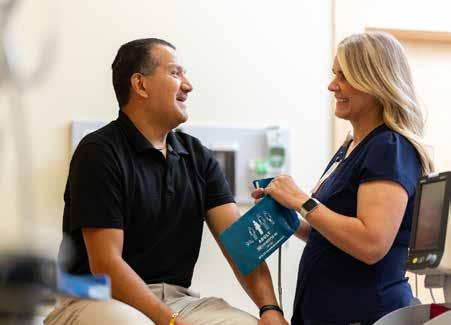

placement, and ultimately, quicker recovery times. This advanced technology ensures your joint replacement is tailored with remarkable exactness.
“Many joint replacement procedures can now be done same day. And with our current techniques and technologies, we are able to facilitate a quicker recovery and healing process for joint replacement. Our patients are able to get back to the activities they enjoy more quickly. For many of our patients, joint replacement is a game changer,” said Dr. Kevin Sagers, an orthopedic surgeon at Holy Cross Hospital – Jordan Valley.
At CommonSpirit, we understand that living with joint pain can feel limiting. But with these modern advancements, the path to renewed mobility and a significantly improved quality of life is clearer and more accessible than ever. We’re dedicated to providing not just exceptional medical care, but a supportive and empowering experience that truly makes a difference. If you’re ready to explore how modern joint replacement can transform your life, we invite you to discover the CommonSpirit difference – where your rapid recovery is our priority.
For more information or to find a provider visit mountain.commonspirit.org


Learn more about the services, care providers and mission-driven work of the Holy Cross hospitals and CommonSpirit Health at www.holycrossutah.org.

At CommonSpirit Health, we make the healing presence of God known in our world by improving the health of the people we serve, especially those who are vulnerable, while we advance social justice for all.
CONTENT
When minutes
count, count on our emergency care. Get to know us before you need us.
When you need emergency care fast, the closest emergency room is a smart thing to know. You never know the level of care you’ll need when an emergency happens and choosing the right ER can make all the difference. And a hospital ER comes with the confidence of additional services right on-site.
CommonSpirit Holy Cross Hospital – Salt Lake has been awarded Chest Pain Center Accreditation from the American College of Cardiology (ACC). Facilities that achieve accreditation meet or exceed an array of stringent criteria for evaluating, diagnosing and treating patients who may be experiencing a heart attack.
Find emergency care close to you at mountain.commonspirit.org.
The road to the LPGA Tour begins with the Epson Tour, and again this month, 132 of the best female golfers on the planet will reconvene for the Copper Rock Championship May 14-16 in Hurricane, Utah. Golfers will compete for $250,000 in prize money and points in the season-long Epson Tour standings.
There were 15 players who gained LPGA status during last year’s Epson Tour season, and 13 of them finished in the top 30 at Copper Rock in 2025. Champion Gina Kim won twice on the Epson last season and is now playing on the LPGA Tour.
Exemptions this year went to four golfers:
Navy Hubbs is a junior at Salem Hills High School who has verbally committed to Boise State University. She started playing golf at the age of 12 and quickly developed a passion for the game. Since then, she has enjoyed competing in both local and national tournaments, gaining valuable experience and continually challenging herself against strong competition.
Hubbs is known for her calm presence on the course and the strong work ethic she brings to improving her game. She approaches competition with focus and determination while enjoying the process of learning and growing as a golfer and developing friendships with others on and off the course.
Maria Jose “MJ” Barragan is a standout collegiate golfer for Brigham Young University, known for her consistency, competitiveness and upward trajectory on the women’s golf scene. A native of Morelia, Mexico, Barragan has quickly become one of BYU’s most impactful players, combining sharp scoring with a calm mindset under pressure. She owns a career-low 18-hole score of 68 (4-under) and a lowest 54-hole score of 210 (−6), achieved at the 2024 Red Raider Invitational where she claimed her best finish with a victory. Barragan has also



Utah golf, recognized for her competitive excellence and advocacy for women’s golf. An inaugural member of the women’s golf team at Dixie State University (now Utah Tech), she was a two-time PacWest Conference Champion, Conference Player of the Year and an All-American.
She competed professionally on the Cactus Tour and is a seven-time Utah PGA Women’s Player of the Year (2019-25), a four-time Women’s Utah PGA Match Play Champion, and the 2025 Utah Section Assistant Professional of the Year. Her career includes numerous Utah Section victories, multiple top-10 finishes in both men’s and women’s events, and an overall championship at The Copper Club Open.
posted strong rounds in key events including the opening rounds of the 2025 San Diego State Classic and the 2025 Dr. Donnis Thompson Invitational, and she played a pivotal role in BYU’s 2025 USF Invitational win with a 72-73-69 (214) performance.
Off the course, Barragan is equally distinguished. She’s majoring in pre-business and has earned recognition for her academic achievements, being named to the 2025 CSC Academic All-District team. In amateur golf, she finished runner-up at the 2025 Women’s Mexico Amateur in a dramatic playoff and represented Mexico at the Pan American Games in Paraguay, showcasing her talent on the international stage.
Gabby Barker is a professional golfer known for her resilience, consistency and purpose-driven approach to the game.
A standout junior and collegiate competitor, Barker built her foundation through

years of high-level tournament play before turning professional and committing fully to the grind of tour golf. Since turning pro, Barker has competed across multiple professional circuits, including the Epson Tour and various mini tours, steadily gaining experience at the highest levels of women’s golf.
Her career has been shaped by perseverance, adaptability and a deep belief in long-term growth — both on and off the course. In addition to her competitive career, Barker is the first female Native American professional golfer, a milestone she carries with pride and responsibility. She uses her platform to inspire younger athletes, advocate for representation in golf, and share the realities of pursuing a professional sports career.
Haley Sturgeon is an accomplished golf professional and respected leader in

There are always so many things to enjoy during and around the Copper Rock Championship. On Tuesday, May 12, RAM Aerospace presents the 2026 RAM Women’s Business Luncheon. The theme is “Rising Together: Personal Growth and Professional Influence.” Keynote speaker is Stephanie Palmer, Director of Radio Sales for KSL NewsRadio, FM 100.3, The Arrow and the KSL Sports Zone. Whitney Harris, Director of People and Culture at RAM Aviation, will join in that discussion. The luncheon will run from 11:15 a.m. to 1 p.m.
A free Junior Clinic will be held on Championship Saturday, May 16, at noon. Signups for the clinic and RSVP for the luncheon can be made at Copperrockchampionship.com. There will also be a free photo booth on Championship Saturday, and food trucks will be onsite including Corn Dog Company and Chicharos Tacos.
To get tickets to the tournament go to Copperrockchampionship.com and choose from General Admission, Club 17 or Copper Rock Club tickets, and the website details those options.
Copper Rock is located at 1567 W. Copper Rock Parkway in Hurricane.


The latest Murray High student-built home showcases craftsmanship, career training and the lasting impact of a retiring teacher.
By Julie Slama j.slama@mycityjournals.com
After two years from framing to finishing work, students in Murray High School’s construction program are preparing to unveil their latest project, a two-story home at 64 W. Woodrow St. The community is invited to tour the house during an open house from noon to 6 p.m. on Thursday, May 21.
Designed with modern features and efficiency, the 3,600-square-foot home, which sits on just under a quarter acre of land, includes three bedrooms, two full bathrooms, a walkout basement with full 9-foot walls and a three-car garage equipped with an electric car plug-in.
Visitors can see the home’s highlights starting with walking into the home through 8-foot doors with 9-foot vaulted ceiling into a spacious great room with the kitchen featuring walnut cabinets and granite countertops. Off the great room is the master bedroom with a large window overlooking a finish grade yard, three-tone paint and a walk-in closet. The bathroom features a walk-in shower with three shower heads. Down the hall is a storage nook in the mudroom and laundry room leading to the garage.
The funds from the home’s sale, which has not had a price set as of press deadline, will fund the program’s next build on a bordering lot.
The project, which began in fall 2024, has involved about 80 students the past two years. The first year primarily focused on exterior work such as framing, windows, exterior doors and more, said skilled and technology education teacher Quinn Drury. Year two included sheetrock, insulation, painting and trim work. Exterior concrete work spanned both years.
“It’s hands-on experience, which is invaluable for students,” he said. “Our kids are sought after. Several of them have been awarded the CTE (career and technical education) scholarships at SLCC (Salt Lake Community College).”
Drury said students in the program earn 20 hours of concurrent enrollment credit, a semester of college, while still in high school. With grades of a C or better, they’re eligible for the full-tuition scholarship.
“All 80 of our kids would be eligible for the scholarship if they want it,” Drury said, adding several students opt to study in construction management programs
at Utah State University and Weber State University. “We have good, capable kids. They get in, they work hard and they’re excited to learn and to grow.”
Some of those same students have recently demonstrated their techniques in the recent Skills USA competitions in carpentry, cabinetry and job skills demonstration. At the state contest, senior Damion Day and junior Preston Marshall placed in the top five in carpentry and cabinetry, respectively, while seniors Alex Finken and Leland Marse were finalists in the job skill demonstration. Senior Wayne Mower won the job skill demonstration at the regionals in February and placed at state.
“These kids placed well under harsh circumstances as they didn’t have a shop to prep in and had online school for three weeks before the competition,” said Drury, referring to the school’s recent fire which resulted in school being taught online. “Still, they represented Murray High School really well.”
The latest home is not only a showcase
of students’ skills, but also a legacy for Drury, who has been dedicated to building futures. He plans to retire at the end of the school year.
During his three-decade career, Drury has overseen the construction of about a dozen homes. He also has directed several community projects including three warming huts built for the 2002 Olympics, a home for the Other Side Village, a garage for Habitat for Humanity and the school’s snack shack and nail tech center.
His students also have made wooden toys for Primary Children’s Hospital patients and Murray High’s childcare as well as created items to sell at Festival of Trees.
Drury decided to teach because “awesome teachers inspired me” from growing up to those at Snow College and Utah State University. He said he wants to make that same impact on his students.
“Being able to help kids find success is the best part,” he said. “There is a lot of success to be made in the trades and these kids have a very promising future.” l

continued from front page

men whose service ended far from home, under circumstances that were not always visible or widely recorded. Some may have died of wounds, others of illness or complications tied to military service.
Taken together, the 12 names reflect the full spectrum of wartime loss—combat, disease and accident—during a conflict that reached beyond the battlefield.
The Driggs-Seabury Model 1898 field gun represented an early step toward modern artillery, but by the time the United States entered World War I in 1917, it had been overtaken by faster, more advanced designs. The war on the Western Front demanded artillery that could fire rapidly, accurately and repeatedly without needing to be repositioned after each shot—capabilities perfected in newer systems like the French 75mm gun. Compared to these, the Model 1898 had a less efficient recoil system, slower rate of fire, and more limited range and targeting precision. As a result, the U.S. military chose to equip its forces with modern artillery, often adopting allied designs already proven in combat, while older guns like this one were relegated to training, storage, or, eventually, memorial use.
The cannon itself arrived in Murray as part of a national program in the early 1920s. Following the war, the U.S. War Department distributed surplus and decommissioned artillery to cities and towns across the country for memorial use. Larger cities often received captured German guns. Smaller communities, including Murray, were typically allocated older American-made pieces.
The Driggs-Seabury gun installed in Murray was one of those. Though it had never been used in World War I, it became a focal point for remembrance—a visible, physical object tied to the names it accompanied.
More than a century later, the monument remains in place. The details of the 1923 ceremony have faded from common memory, and the procession route is no longer observed. But the cannon and the plaque continue to mark the site. Twelve names. One community. l
Candace Tippetts leads Murray’s growing theater program with a focus on community, access and audience appeal.
By Shaun Delliskave s.delliskave@mycityjournals.com
WhenCandace Tippetts first stepped into directing, it wasn’t part of a long-laid plan. It was, as she describes it, “baptism by fire.”
“I had never directed before,” Tippetts said. “We had just started rehearsals…and she said, ‘OK, it’s your show now.’”
That unexpected moment in the 1980s launched what has become a decades-long career in theater—one that now places Tippetts at the center of Murray City’s evolving cultural arts scene as its Artistic Director.
Tippetts, who has been involved in theater for nearly 40 years, began as an actor before moving into directing. Her path was shaped not by formal academic training in theater, but by experience and passion. With a background in marketing and work as a certified paralegal, she said her career in the arts has always been driven by love for the craft.
“I love the whole process,” she said. “Producing, directing, watching actors grow—it’s what I love, and I’ll continue to do it until I can’t anymore.”
Her role with Murray City Cultural Arts is a relatively new one. The position of Artistic Director was created as the city expanded its theater offerings, particularly with the addition of the renovated Murray Theater on State Street. Tippetts was hired to oversee productions across both the indoor theater and the outdoor amphitheater.
“I oversee all the theater productions,” she said. “I hire directors, help set the schedule, pick the shows, attend auditions and oversee rehearsal processes.”
The job requires balancing artistic vision with logistical realities. Each production involves coordinating multiple roles— from directors and choreographers to set designers and stage managers—while working within budget constraints and venue limitations.
“Financial is always difficult,” Tippetts said. “I can have great ideas, but if it doesn’t work in the budget, then it’s challenging.”
Choosing which shows to produce is another complex task. Tippetts considers factors such as cast size, venue capacity and community appeal. The smaller State Street Theater, for example, lends itself to productions with six to 10 performers, while the amphitheater can accommodate larger, more elaborate shows.
“You want to pick shows that people want to come see,” she said. “Especially as we’re establishing a new theater space, you need to pick shows that people know.”
At the same time, she aims to introduce new experiences. This year’s lineup includes “Charlie and the Chocolate Factory,” which Tippetts said will be the first community theater production of the Broadway version in Utah.
The season also reflects her interest in expanding opportunities for performers of all ages. One upcoming production, “You’re a Good Man, Charlie Brown,” features a cast of older adult actors—an intentional choice.
“There’s not a lot of theater opportunities for people as they get older,” she said. “This gives them another chance to have that experience.”
Beyond productions, Tippetts is also launching a new theater camp for junior high and high school students. The twoweek program will give participants hands-on experience in all aspects of theater, from acting and directing to set building and lighting.
“They’ll write their own scripts, build their own sets and go through the whole process,” she said.
With convenient meal sites, the program helps kids stay energized while school is out.
By Julie Slama j.slama@mycityjournals.com
Families in Murray will have access to free meals for children this summer, thanks to the Murray School District’s Child Nutrition Program.
The program is designed to support families and ensure that no child goes without nutritious meals while school is out for the summer, said Gwen Haycock, general manager of the District’s Child Nutrition Program.
“We offer the same type of menu during the summer as the regular school year,” she said. “In Murray School District, the summer meals program is free to anyone 18 and younger. We have several serving sites through the District.”
Meals will be served at the following locations: Liberty Elementary School, 140 W. 6100 South; Parkside Elementary School, 5175 S. Parkside Drive; Viewmont Elementary School, 745 W. Anderson Ave.; Hillcrest Junior High, 178 E. 5300 South; as well as the Fireclay Apartments (in the park-
ing lot at 4450 South in the Brickgate complex) and Hunters Woods Apartments, 4924 Murray Blvd.
Breakfast will be available at school locations from 9 a.m. to 10 a.m. and at lunch, from noon to 1 p.m., running from Monday, June 1 through Friday, July 30. Breakfast and lunch at the apartment complexes will be available between 9 a.m. to 11 a.m. Meals will not be served on June 15, July 3 and July 24.
Families can view menus online at murrayschools.nutrislice.com/. The six-week rotating menu provides milk, fruits and vegetables daily while juice is available on Tuesday and Thursday.
“We run this program to help the households in need,” said Haycock, who said it meets the requirements from the Utah State Board of Education as well as the federal government. “It is a great program.”l
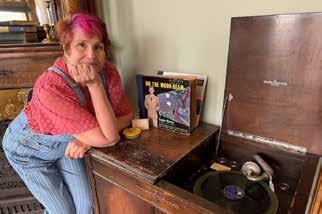
Murray City Artistic Director Candace Tippetts. (Shaun Delliskave/City Journals)
The goal is to make theater more accessible, both in cost and opportunity. At $60 for two weeks, the camp is designed to be affordable while providing comprehensive training.
As Murray’s theater program grows, Tippetts sees her role as helping build both audiences and community connections. Many attendees, she noted, are visiting Murray for performances for the first time.
“People are coming from all over,” she said. “You want to continue to choose shows that bring people in and fill the theater spaces.”
For Tippetts, the reward lies not only in the final performance, but in the transformation that happens along the way.
“I love to see the growth in actors and backstage people,” she said. “And it’s also very enjoyable to watch an audience light up and enjoy a performance.”
More information on Murray’s inaugural theater camp can be found online at www.murray.utah.gov. l
Summer meals will be available to anyone 18 and younger from June 1 through July 30 at several Murray locations. (Julie Slama/City Journals)


















MAYOR’S OFFICE
Brett A. Hales -Mayor mayor@murray.utah.gov
801-264-2600
10 East 4800 South, Murray, Utah 84107
FREQUENTLY REQUESTED NUMBERS
Grant Elementary 801-264-7416
Heritage Center (Senior Programming) 801-264-2635
Hillcrest Jr. High 801-264-7442
Horizon Elementary 801-264-7420
Liberty Elementary ...... 801-264-7424
Longview Elementary .... 801-264-7428
Ken Price Ball Park. . . . . . . 801-262-8282
Miss Murray Competition (Lindsey D. Smith) 801-699-2288
McMillan Elementary 801-264-7430
Murray Area Chamber of Commerce. 801-263-2632
Murray Arts Advisory Board ......... 801-264-2614
Murray Boys & Girls Club
There are moments in our lives when we’re reminded just how much we rely on one another. Not in big, loud ways, but in the quiet, frightening moments. The moments when something goes wrong, when fear creeps in, when we don’t quite know what to do next. And then… help arrives. For many of us, that help comes in the form of an Emergency Medical Services (EMS) provider.
I’ve spent some time lately thinking about that. About the men and women who show up, day or night, rain or shine, ready to take care of complete strangers as if they were their own family. No hesitation. No complaints. Instead, they bring compassion, skill, and a willingness to serve.
That’s why Murray City will be recognizing Emergency Medical Services Week from May 17–23, 2026. It’s a small window of time to honor something significant that happens every single day.
When you talk to our EMS providers, you will soon realize they don’t do it for the recognition. They do it because they care deeply for their fellow man. They do it to make a difference. They do it because, somewhere along the way, they felt called to help people in their most vulnerable moments.
And that’s not easy work.
They see people on some of their hardest days. Each of them carries stories, some joyful, some heartbreaking. They make split-second decisions that can change the course of someone’s life. That kind of responsibility takes a special kind of person.
I’ve always believed that most people are good. Truly good. And our EMS teams prove that every single day.
We’ll be kicking off the week with our annual Pancake Breakfast at Fire Station 81 on May 16. It’s a simple thing that has been happening for generations: good food, good company, and a simple chance for all of us to come together and to say thank you.
I’ve learned over the years that gratitude has a way of changing us. It softens us. It reminds us what matters. It brings us a little closer together. And in a world that can feel a bit overwhelming at times, those small connections matter more than ever.
So during this week, I’d ask you to take a moment. If you see an EMS provider, thank them. If you know one, reach out. If you have a story where someone helped you or your family, share it. Those stories matter. They remind us of the good that’s all around us.
We are blessed to live in a community where people show up for each other.
I see it every day.
Let’s continue to take care of one another.
Let’s be kind.
Let’s be patient.
Let’s look out for our neighbors.
And let’s never forget the people who are always ready to answer the call when we need them most.
I love this community. I really do.
—Brett Hales, Mayor of Murray
801-268-1335
Murray City Cemetery 801-264-2637
Murray Community Education 801-264-7414
Murray High School 801-264-7460
Murray Museum ........ 801-264-2589
Murray Parks and Recreation Office 801-264-2614
Murray Parkway Golf Course 801-262-4653
Murray Park
Aquatics Pool ........... 801 290-4190
Mick Riley Golf Course (SL County) 801-266-8185
Parkside Elementary 801-264-7434
Riverview Jr. High 801-264-7446
Salt Lake County Parks and Recreation 801-468-2560
Salt Lake County
Ice Center .............. 801-270-7280
The Park Center ......... 801-284-4200
Viewmont Elementary ... 801-264-7438
We’re excited to invite you to our All-Access Week, where we’re opening our doors and offering a full lineup of FREE events for the entire community to enjoy. Whether you’re a movie lover, music fan, or just looking for a fun night out, there’s something for everyone.
Here’s what we’ve got planned:
MOVIES ON THE BIG SCREEN – MAY 4-6TH
Sit back, relax, and enjoy a selection of crowd-favorite films in our theater—completely free!
Star Wars V, Space Balls – May 8 & 6
Coco – May 5 & 6
TRIVIA NIGHT – MAY 7TH
Bring your friends, test your knowledge, and compete for bragging rights & prizes in a lively night of trivia fun.
LIVE CLASSIC ROCK CONCERT – MAY 8TH
Experience a live performance from the Flashback Brothers, featuring timeless classic rock hits you know and love.
MURRAY HAS TALENT SHOW – MAY 9TH
Cheer on local performers as they take the stage to showcase their incredible talents. You won’t want to miss this celebration of our community!
This is our way of saying thank you and bringing everyone together for a week full of entertainment, connection, and fun. Check out our events lineup at murraytix.com

10 East 6150 South, Murray, Utah 84107 | 801-264-2635 murray.utah.gov/140/Senior-Recreation-Center seniorrec@murray.utah.gov mcreg.com
Monday-Friday 8:00 a.m. – 4:30 p.m.
Thursday 8:00 a.m. – 9:30 p.m.
Closed Saturday and Sunday
Check our website for any changes in programs.
Daily Lunch
Date: Tuesday through Friday
Time: 11:30 a.m. – noon
Cost: Cost is $6; prior registration not required
Ceramics
Date: Tuesday and Thursday
Time: 9:00 a.m. – noon
Cost: $2 each class plus cost of supplies
Grief Support
Date: Friday, May 8 and 22
Time: 10:30 a.m. – 11:30 a.m.
Cost: Free
Ask a Nurse: Dehydration
Date: Friday, May 15
Time: 10:00 a.m. – 11:30 a.m.
Cost: Free
Vital Aging: Creative Expression for Emotion Regulation
Date: Friday, May 22
Time: 1:00 p.m. – 2:00 p.m.
Cost: Free
Nutrition: Boost Your Mood with Food
Date: Tuesday, Jun. 2
Time: 10:30 a.m. – 11:30 p.m.
Cost: Free
Science: The Immune System
Date: Thursday, Jun. 4
Time: 10:30 a.m. – 11:30 a.m.
Cost: Free
Beginning Line Dance Instruction
Date: Tuesdays
Time: 1:15 p.m. – 1:45 p.m.
Cost: $5 for the month; register now
Thursday Evening Social Dance
Live Music provided by Tony Summerhays
Date: Thursdays
Time: 7:00 p.m. – 9:30 p.m.
Cost: $5
FITNESS: Daily Fitness Classes – check our current newsletter for the schedule and fees
Bingo
Date: Wednesdays and Fridays
Time: 12:45 p.m. – 2:45 p.m.
Cost: Free, donations are appreciated
Bridge Lessons
Date: Mondays
Time: 1:00 p.m. – 3:00 p.m.
Cost: Free

Chess
Date: Thursdays
Time: 12:30 p.m. – 3:30 p.m.
Cost: Free
Chinese Mahjong Tile Game
Date: Tuesdays
Time: 12:30 p.m. – 3:00 p.m.
Cost: Free
Mexican Train Dominos Game
Date: Thursdays
Time: 12:15 p.m. – 3:00 p.m.
Cost: Free
Monday Movies and Munchies
Date: Mondays
Time: 1:00 p.m. – 4:00 p.m.
Cost: Free
Haircuts
Date: Wednesdays
Time: 10:00 a.m. – 12:30 p.m.
Cost: $12; advance appointment required
Book Club Review: How to Age Disgracefully by Clare Pooley
Date: Tuesday, Jun. 2
Time: 1:00 p.m. – 3:00 p.m.
Cost: Free
Thursday Quilters
Date: 2nd and 4th Thursdays each month
Time: 12:30 p.m. – 2:00 p.m.
Cost: Free









Saturday, May 9




























Murray City has not implemented mandatory watering restrictions at this time However, as part of statewide drought response efforts, the City is ollowing state guidance and asking residents to use water wisely








Delay lawn watering until May (grass is typically dormant through April)
Water no more than 2 days per week
Water during early morning or late evening only (avoid 10 AM – 6 PM)
Use a cycle-and-soak approach to prevent runoff
Adjust irrigation weekly based on weather, not a fixed schedule
Check systems regularly for leaks, overspray, and broken heads
Murray City’s water system is different from most of Utah State conservation guidance is largely driven by surface water conditions (snowpack, reservoirs, and impacts to systems like the Great Salt Lake) which is why recommendations tend to be more aggressive
Murray, however, does not use surface water The City’s drinking water supply comes entirely from local groundwater aquifers This provides a more stable, drought-resistant source and allows the City to meet demand even in dry years
That said, groundwater is not unlimited Efficient use is still necessary to protect long-term aquifer health, reduce pumping demands, and maintain system reliability
Groundwater is not unlimited Efficient use helps Most lawns are overwatered Cutting back (when done correctly) will still maintain healthy turf For weekly watering updates and conservation tips, follow Murray City Public Works on social media or visit the website https://www.murray.utah.gov/255/Water-Conservation
If conditions worsen, additional measures may be required If that happens, we’ll be direct about it



Former leader Doug Hill also awarded Lifetime Achievement Award.
By Shaun Delliskave s.delliskave@mycityjournals.com
Murray City’s Parks and Recreation Department has been recognized as the 2026 Outstanding Department by the Utah Recreation and Parks Association, an honor city leaders say reflects years of steady investment, community support and a commitment to high-quality public services.
“Murray City’s recognition for the 2026 Outstanding Department award from URPA was awarded by a combination of factors including facility expansion, strong community support and consistently high-quality programming and maintenance,” Murray Chief Administrative Officer Kim Sorenson, who previously served as the city’s Parks and Recreation director, said.
Among the most visible changes in recent years has been the expansion of cultural and recreational facilities, including the Murray Theater, Armory and Murray Museum. Sorenson said these additions demonstrate a broader commitment to enhancing community life while reflecting support from both residents and elected officials.
“The addition of facilities such as the Theater, Armory and Murray Museum demonstrated a commitment to expanding cultural and recreational opportunities for the public,” he said.
Beyond new construction, Sorenson emphasized the breadth and quality of programming offered throughout the city as a defining strength. Murray’s recreation system, he noted, is designed to serve residents of all ages and backgrounds.
“Murray stands out across the state for the amount and quality of its programming, ensuring that residents of all ages, income levels and interests have meaningful ways to engage,” he said.
While new amenities often draw attention, Sorenson said the day-to-day work of maintaining parks, trails and facilities is equally critical—and largely unseen.


“What many residents may not realize is that this is a seven-day-a-week operation, requiring ongoing attention, repairs and maintenance,” he said. “Staff work continuously to ensure that parks, trails and recreation facilities remain clean, safe and welcoming.”
He added that proactive maintenance plays a key role in preserving public assets and preventing more costly repairs in the future.
The award, Sorenson said, reflects longterm growth rather than any single initiative. He credited both past and present city leadership, as well as department staff, for building a system that has evolved alongside community needs.
“The award acknowledges the long-term dedication to developing high-quality programs and enhancing facilities to better serve Murray residents,” he said. “Credit is due to both current and former elected officials, as well as past and present employees.”
Rather than highlighting a single program or event, Sorenson pointed to the department’s overall structure and culture as what sets Murray apart. The system encompasses multiple divisions, including parks, recreation, cultural arts, the cemetery, golf course, senior center and theater.
“It’s that culture of pride, care and dedication that really sets Murray apart,” he said.
Community input also plays a central role in shaping the department’s direction.
Sorenson said the city relies on both longterm planning tools—such as the 2020 Parks and Recreation Master Plan—and ongoing public feedback to guide decisions.
“The department consistently surveys users and residents to ensure that their priorities align with the services and opportunities being offered,” he said.
The recognition also comes as the city reflects on the legacy of longtime Parks and Recreation leader Doug Hill, who was recently honored with a Lifetime Achievement Award. Sorenson described Hill as a “visionary” whose influence is still visible throughout the city, from major facilities to community traditions.
Looking ahead, Sorenson said Murray is working to balance maintaining existing assets while planning for future growth. One tool sup-
Former Murray Parks and Rec Director Doug Hill was awarded a Lifetime Achievement award by URPA. Kim Sorenson, who succeeded him, stands right. (Photo courtesy of Murray City)
porting that effort is a parks impact fee tied to new development, which helps fund land acquisition and expanded recreation opportunities.
“Murray has worked towards a thoughtful balance between maintaining its existing parks and planning for future growth by staying both proactive and forward focused,” he said.
Future plans include continued investment in programming and a broader vision for a more vibrant downtown.
“The goal is to create a space where people want to gather, recreate and spend time, enhancing both community connection and overall quality of life,” Sorenson said. l

Pets











Murray Chamber of Commerce event raises funds for local charities while connecting local leaders.
By Shaun Delliskave s.delliskave@mycityjournals.com
With bids rising, plates circulating and a steady stream of attendees filling the Murray Armory, Flavors of Murray gala, on April 4, blended food and fundraising into one of the Murray Area Chamber of Commerce’s most visible community events of the year—highlighting local businesses while generating support for programs like the Murray Children’s Pantry.
For the Chamber of Commerce, the annual Flavors of Murray gala has become a showcase not only of the city’s culinary scene, but of the businesses and individuals who drive its civic life.
“The Flavors of Murray gala continues to exceed expectations not just in funds raised, but in community engagement, awareness and long-term impact,” said Kristen Latimer, vice chair of the Chamber board.
The total raised this year aligned with projections, but organizers pointed to the auction and broader participation as indicators of something more significant: sustained investment from Chamber members and local businesses in community causes.
“What matters more is that the event created meaningful momentum for the Murray Children’s Pantry and other Chamber-supported initiatives,” Latimer said.
Throughout the evening, Chamber-member businesses were not just sponsors, they were participants. Restaurants served as ambassadors of Murray’s food scene, while other businesses contributed auction items, sponsorships and volunteer support. The result was a tightly woven network of local involvement, with proceeds directed toward addressing immediate needs in the community.
A majority of funds raised, including those generated through the gala’s auction, will support the Murray Children’s Pantry, a program focused on providing food to local children and families facing insecurity. Additional funds will be distributed through Chamber Foundation initiatives that support youth programs, small business engagement and community outreach. At press time, the Chamber Foundation had no final number as it was still receiving funds.
“These funds help ensure consistent access to food for local children and families facing insecurity,” Latimer said. “Every dollar is intentionally stewarded to balance urgent needs with long-term
community development.”
In addition to the Pantry, donations were also promised to the Murray Fire Depart ment, Murray Youth Community Council and the Murray City Downtown District.
For Chamber leadership, the gala is structured to highlight that connection.
“We evaluate impact through several key lenses: community awareness, engage ment levels, partnerships formed and sus tained involvement after the event,” Latimer said.
“The enthusiasm from participating chefs, local businesses and attendees made it clear that this event has become something the community looks forward to and rallies around,” she said.
Participating restaurants were selected based on their reputation, culinary quali ty and demonstrated commitment to giving back. Awards presented during the evening— determined through guest feedback and panel evaluation—recognized not only excellence in food, but the role these businesses play in the broader community.
Best Flavor was awarded to Sacred En ergy Café (296 E. 4500 South), while Hidden Oak Creamery (370 S. 300 East) received hon ors for Most Innovative. The Judges’ Choice award went to Creole & Sliders (2285 S. Main St.), recognizing standout execution among this year’s participating restaurants.

While the gala provides opportunities for networking, Chamber leaders emphasize that those connections are tied directly to outcomes.
“When local businesses engage with causes like the Murray Children’s Pantry, it leads to sustained support, increased resources and broader awareness,” Latimer said.
According to the Chamber, over time, those efforts have translated into measurable results. The Murray Children’s Pantry has seen increased visibility, stronger donor relationships and more consistent year-round support—outcomes organizers attribute in part to events like Flavors of Murray.
“The event has helped cultivate a culture of giving in Murray, where businesses and residents alike feel a sense of ownership in supporting their neighbors,” Latimer said.
As the Chamber looks ahead, plans for the gala include expanding accessibility and creating more opportunities for direct engagement between attendees and the causes supported.
At its core, however, the formula remains unchanged: local businesses, local residents and a shared investment in the community.
“It is about building a stronger, more connected community,” Latimer said. l

The fourth-generation Murray resident is honored for downtown revitalization work.
By Shaun Delliskave s.delliskave@mycityjournals.com
Ina city where history and redevelopment increasingly meet along State Street, one local business owner has quietly spent the past several years working to ensure downtown Murray’s small businesses remain part of the conversation.
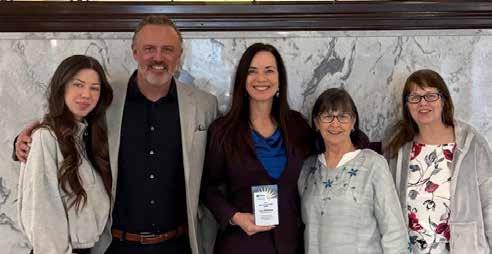
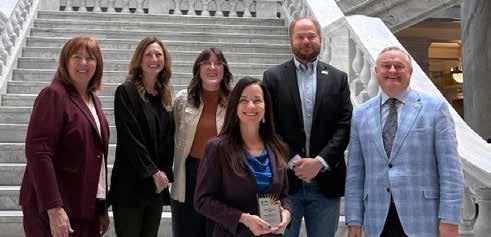
That work recently earned Jenn Kikel-Lynn the Spirit of Main Street Award, presented through Utah’s Main Street program in recognition of her efforts advocating for downtown Murray businesses.
For Kikel-Lynn, the recognition came as a surprise.
“I’m not driven by recognition—I’m driven by connections and relationships,” she said in a recent interview. “What it means to me is that my consistent effort to push to get resources for downtown Murray businesses is being recognized not only at the local level but also at the state level, which is amazing.”
A fourth-generation Murray resident and local business owner, Kikel-Lynn said her motivation for advocating for the city’s historic commercial district is deeply personal.
“My parents were both entrepreneurs with a business location in the downtown Murray area in the 1970s. It’s in my blood to be an advocate for all things Murray,” Kikel-Lynn said.
That perspective helped inspire her to launch Murray’s local Main Street program, a nonprofit initiative focused on strengthening the city’s historic business district through economic development, collaboration and community engagement.
The national Main Street America program began in 1980 as a model to help cities revitalize historic downtown districts. Utah’s statewide coordinating program was established in 1992 and moved under the Governor’s Office in 2021. Communities that
participate work through a framework that emphasizes economic development, preservation of historic character and support for local businesses.
Kikel-Lynn started Murray’s local program in 2024 as a Tier 1 initiative. Within a short time, the program advanced to Tier 2 status, with plans to pursue national accreditation in the coming years.
“I saw a need, found a solution and created the nonprofit specifically for these downtown businesses,” she said. “I’m proud of myself for seeing the need and not hesitating as I started the program and found incredible community members to join together.”
Much of the work remains volunteer-driven. Kikel-Lynn coordinates committees focused on events and initiatives designed to bring downtown businesses together and draw residents into the area.
One of the most visible efforts came last spring when the Murray City Downtown District hosted its first Downtown Block Party, drawing local vendors, businesses and residents together for a community celebration; an event that will be repeated this June.
“As a committee, we planned this with minimal time with the support of city officials, and it was rewarding to see so many businesses and community members attend,” she said.
Kikel-Lynn said she insisted the event focus exclusively on Murray-based businesses.
“I was firm on only allowing Murray businesses,” she said. “That brought a level of local support to rally around small business.”
While events help bring attention to the district, Kikel-Lynn believes the long-term success of downtown Murray depends on collaboration among business owners, property owners and the community.
“A downtown is walkability,” she said. “It’s restaurants, services, theaters, shops, offices and gathering spaces—the everyday places that make life convenient and enjoyable.”
She also notes that downtown Murray extends beyond the storefronts most visible from State Street.
“It includes the side streets and the businesses many people drive past without realizing they’re part of something bigger,” she said.
Through the Main Street program, she has worked to connect business owners who previously had little organized representation.
“For the first time, the Main Street program is bringing all of these businesses together,” she said. “No organization has been solely focused on uniting and advocating for them like this before.”
In March, Kikel-Lynn was elected to the board of Preservation Utah, a nonprofit that champions the protection, restoration, and celebration of our Utah’s historic architecture and places.
Earlier this year, Kikel-Lynn traveled to Washington, D.C., to participate in “Day on the Hill,” an advocacy event organized through Main Street America.
The event brought together more than 70 advocates from communities across the country to discuss federal support for business district revitalization. Kikel-Lynn was the only participant representing a Utah Main Street community.
“The Main Street program hasn’t had representation from Utah before,” she said. “They were very grateful that I was there not only representing Murray but also the state of Utah.”
The trip was voluntary and self-funded, but Kikel-Lynn said she believed the opportunity to advocate for local businesses at the national level was important.
Participants met with members of Congress to discuss the Capacity Building for Business District Pilot Program, legislation aimed at directing resources and technical assistance to local business districts that may lack access to federal grant programs.
The proposal would amend a section of the Public Works and Economic Development Act of 1965 to support revitalization efforts in designated Main Street districts.
Because Murray now participates in the Main Street program, Kikel-Lynn said the city could benefit from future funding opportunities if such amendments move forward.
During the visit, she met with several members of Utah’s congressional delegation, including Sen. Mike Lee and Rep. Blake Moore, along with staff members representing Sen. John Curtis, Rep. Celeste Maloy, Rep. Mike Kennedy and Rep. Burgess Owens.
“What an honor to have one-on-one conversations in their offices talking about being a business owner and also founder of a Main Street program,” she said.
Kikel-Lynn believes her dual role as a business owner and downtown advocate gives her a practical perspective when discussing economic development.
“As a business owner, I understand the real-life side of economic development—payroll, leases, risk, cash flow and what it takes to survive and grow,” she said. “I look at sustainability and long-term viability, not just shortterm wins.”
At the same time, she said her work with the Main Street program focuses on strengthening the identity and character of Murray’s historic district.
“As a downtown advocate, I focus on place-based growth—supporting small businesses, preserving historic character and strengthening property values and community pride.”
As redevelopment projects and infrastructure improvements continue in Murray, Kikel-Lynn said many business owners are eager to remain engaged and ensure they remain part of the city’s future.
“I’m seeing downtown Murray businesses want to get more involved and not feel forgotten during the construction and redevelopment,” she said.
Through continued events, collaboration and advocacy, she hopes the community will continue to support the businesses that form the foundation of the city’s downtown.
“I’ve been able to get to know the owners, the renters, the employees and the stories behind these businesses,” she said. “They’re all incredibly important. They’re the foundation, and I’m just trying to make sure they feel heard.” l
Between studying for her Ph.D. and raising a family, Cathy Gilmore trains and competes with the University of Utah club water polo team.
By Shaun Delliskave
s.delliskave@mycityjournals.com
At 54, Cathy Gilmore has decided— quite casually, it seems—to ignore the conventional menu of midlife activities (gardening, maybe yoga, a firm commitment to saying “no” to things) and instead order the academic and athletic equivalent of everything, everywhere, all at once. She is earning a Ph.D. She is playing collegiate water polo. These are each, individually, full-time personality traits. She is doing both. Concurrently. On purpose.
“I may be 54,” she said, “but I’ll be 54 with a Ph.D. and I’ll be 54 and doing something that I really love and I’ll be swimming again.”
This is not theoretical. This is happening. By day, Gilmore is a third-year doctoral student in American history at the University of Utah, preparing for comprehensive exams—an academic ritual designed to gently introduce scholars to the concept of existential dread. By night, she is in a pool, competing in collegiate water polo against opponents who, statistically speaking, could have been toddlers when she last considered doing this. And yet there she is, not as a mascot, not as a novelty, but as a rostered player, swimming, defending and generally refusing to behave in an age-appropriate manner.
Gilmore did not arrive at this moment in a straight line. There was no master plan that included footnotes, chlorine and a sudden reentry into collegiate athletics. There was, instead, a life—one that looked, for a long time, fairly recognizable. She graduated in the 1990s, got married, raised four daughters and did what many people do: she adjusted.
Along the way, she developed an interest that sounds, at first, like the kind of thing you casually mention at a dinner party and then immediately pivot away from: genealogy. Family history. Old records. Except in her case, it didn’t stay casual.
“I became really interested in family history and genealogy,” she said. “I really wanted to learn more about the historical context of where my ancestors were living and what their lives are like.”
A hobby became a project. A project became a profession. And somewhere in that progression, a question began to form: What if I went back?
So in 2020, she did. Master’s degree first. Then, because moderation is not her brand, a Ph.D.

with a focus on families, women and the everyday lives that rarely make it into textbooks.
“My approach to history is not necessarily like the big names and dates,” she said. “But how everyday people kind of lived out their lives.”
Meanwhile—water polo.
Gilmore had played in high school, coached for a time, and then stepped away for about 25 years. Most people would call that a completed chapter. One of her daughters had a different idea.
“She’s like, ‘Mom, you should really come and play,’” Gilmore said.
Gilmore’s first instinct was hesitation.
“I thought, what am I doing?” she said. “I didn’t want to be a liability….I didn’t want to be like a novelty on the team.”
She showed up anyway.
The early practices were not easy. Nor was putting on a swimsuit which is cut far more different than in the 1990s.
“The first week I think I cramped up… I got a Charley horse in my calf at every practice,” she said.
There are easier ways to rediscover yourself than repeatedly negotiating with your own hamstrings. She chose not to pursue them.
Instead, she kept going. Which is how she found herself on a collegiate roster, in a sport that is not especially known for its gentleness, surrounded by teammates who could plausibly be her students.
This raises an obvious question: How did that go?
“They’ve been so amazing and really kind and supportive,” she said. “They just treat me like… everyone else.”
she added.
What she lacks in speed, she offsets with experience.
“I’m a little bit smarter…a little bit more patient,” she said.
None of this is happening in isolation. Gilmore is also working about 20 hours a week as part of her doctoral funding, teaching, researching and grading. She is reading—constantly. At one point, she notes she has roughly 150 books to get through, which is either an exaggeration or a cry for help.
“In my spare hours I’m just always reading or grading papers,” she said.
Her days are tightly structured: school, work, family, practice. Somewhere in there, rest.
“Between like 4 and 7… I just focus on my family,” she said.
Her family has adapted with her— watching games online, showing up when they can, adjusting to a household where “mom” is also a student-athlete.
“It’s been really hard,” she said. “But I don’t have any regrets.”
Returning to school later in life has changed how she sees both her work and herself.
“I think finding your identity is a lifelong endeavor,” she said. “We change over time…it’s important to listen to what we want, not just when we’re 22, but when we’re 52.”
Her time in the pool may not last long.
“This might be my only season,” she said.
But the experience has already shifted something.
“It has opened the door for me to
know that I can do these kinds of things,” she said.
There is no formula here, no neat takeaway. Just a set of choices, repeated daily.
“It’s so hard,” she said. “You definitely have to make some choices… but I’m glad that I did it.”
Eventually, this chapter will end for Gilmore. She literally has other chapters to write (her articles have appeared in the Utah Historical Quarterly) in her quest to become a full-fledged professor of history. l

Games are held at he Grant Park fields at 6150 South just off Main Street.
By Shaun Delliskave s.delliskave@mycityjournals.com
Murray Liberty Little League opened its 2026 season with a ceremonial first pitch from Murray Police Chief Craig Burnett, a former league outfielder and coach. League president Christy Baker said participation has surged, with the program doubling in size from last year. Baker attributed the growth to a renewed sense of nostalgia drawing families back to the sport. National trends reflect the shift, as Major League Baseball reports a 19% increase in interest. The season’s strong start signals renewed community enthusiasm. Those interested in joining or learning more can visit Murray Liberty Little League’s social media pages. l







While nobody was hurt, the auditorium and construction shop cleanup and upgrades continue following the Feb. 20 fire.
By Julie Slama j.slama@mycityjournals.com
ore than one month after a fire at Murray High School, the auditorium remains closed for cleaning and restoration and construction students are not back in their shop.
However, classes resumed in person March 16 after three weeks of remote learning and the school library reopened March 30. While the main gymnasium and new wing under construction were not damaged, smoke and water damage from sprinklers across the building led to an extensive cleanup effort that shut down the school entirely.
The fire began shortly before 8 a.m., Feb. 20 in the construction shop, where 30-year teacher Quinn Drury said an equipment malfunction sparked a chain reaction inside the dust collection system.
“I had two really good kids working on a sander on a project before school,” he said. “The sander burned and that can happen when you cut too deep. When I checked the sander, the sandpaper inside it had separated. Normally, when it separates, it will go to the outside and kick off the machine. But something that’s never happened before happened and it overlapped, making it extra thick and it dug extra deep and burned extra hot. Then embers along with probably a little bit of paper and sawdust ended up going into the dust collection system. It was a freak thing that happened.”
Drury, who evacuated the five students in the shop, said he tried to extinguish the fire, but it spread beyond reach.

single book in the library and clean them off because there’s a residue that settles on them. When smoke goes through the HVAC system, it settled everywhere so that forced us to pivot to online learning.”
Perry said it’s not ideal as students don’t have the handson connectivity with their teachers.
“It’s not something we prefer, but it’s nice to know that Murray is ahead of the curve; we’ve got the digital infrastructure in place to be able to pull it off quickly and effectively,” he said.
While most classes went online, some construction students were able to continue working on the home they’re building. However, when classes resumed in-person for the rest of the school, the construction class used a classroom to prepare for a state woodworking exam earlier than usual while waiting for their shop to be reopened.
“I started fixing the sander, but then I saw all this smoke in the shop. I used seven or eight different extinguishers trying to get the fire out, but once it’s up in the duct system, there’s no way to put it out with an extinguisher,” he said. “It would go out and then just come right back.”
Smoke traveled to the second floor, where it alerted Principal Quinn Linde and the school resource officer. After checking the shop, the officer called the fire department as the entire school evacuated.
No one was injured. A few hand saws and the dust collector were destroyed. With the widespread smoke and water sprinkler damage, Murray School District spokesman Doug Perry said it forced a full school closure.
“Every single ceiling tile had to be replaced throughout the entire school,” he said. “They had to go through every



“It’s a bit harder as they haven’t had all the experience yet, but they’re doing a good job preparing for it,” Drury said. “In May, when we usually do the state testing, we’ll be working on their projects because we’ve lost six weeks.”
Perry did not have an estimated cost of the cleanup and restoration, which he said should be covered by insurance and the State Risk Management Department.
By fall, a new dust collection system, which will include fire mitigation systems such as spark arrestors and inline sprinklers to prevent similar incidents, should be installed.
After the incident, Drury and Perry said they learned this type of fire has happened at other area high schools. Drury said Alpine School District has loaned Murray High portable dust collectors until the new system is installed.
Although disruptive, officials say the outcome could have been far worse.
“They caught it early and acted fast,” Perry said. “We’re thankful for that.” l








Viewmont Elementary’s Heather Preece pens a bilingual children’s book about standing up to exclusion.
By Julie Slama j.slama@mycityjournals.com
Viewmont Elementary school counselor Heather Preece has spent years helping kids find their place. Now, she’s written a story to empower them to do it themselves.
Her debut children’s book, “The Day I Outsmarted the Sparkle Sisters,” transforms the sting of being left out into a fun yet powerful lesson about inclusion and resiliency.
For Preece, the story isn’t just fiction, it’s personal.
As a student, she remembers being excluded and the courage it took to change that.
“One of the strategies that worked for me when I wasn’t part of the cliques was to find other people who also were alone and make up a fun game to play together; they became my best friends,” she said. “My mom was the person who taught me to get out and have fun and include others.”
She also remembers she was just starting her career working at an elementary when a student showed up at recess using a telephone cord rather than a jump rope.
That same creativity can be found in her book when the Sparkle Sisters, a pair of glittery exclusive girls, controlled the classroom’s only jump rope. After trying several options, the main character creates her own solution, not by exclusion, but inclusion. She and her classmates tie shoelaces, bows and other objects together to create a second jump rope.
“I wanted to encourage taking a look around for other people who also are feeling left out and being creative to find a solution,” Preece said. “I intentionally wrote the story in

Are you a business leader?
At no cost, the ElevateHERTM Challenge is easy to accept and will benefit your company.
Join businesses across Utah in our mission to elevate the stature of women’s leadership. Take the ElevateHERTM Challenge and stand with other businesses as we pledge to elevate women in senior leadership positions, in boardrooms, on management teams and on politcal ballots.

For the first time as a published author and earning enthusiastic applause from Viewmont Elementary second graders, school counselor Heather Preece reads her book, “The Day I Outsmarted the Sparkle Sisters.” (Julie Slama/City Journals)
first person. I want children to read these empowering phrases in their voices.”
Her background in social work shapes that approach.
“I don’t find a lot of books on covert meanness and social aggression,” she said.
So, she wrote the book, which will “help girls at my school and has empowered my own daughters to recognize it.”
In fact, she wrote the story soon after her oldest was born 15 years ago.
“As a kid when my elementary teacher asked what I wanted to be when I grew up, I always said, ‘I want to write kids’ books.’ But it wasn’t until I was rocking and feeding
my daughter when I wrote some stories down on paper in a notebook,” she said.
Occasionally, she’d take the notebooks out and work on them. She shared stories with an online writing group and got positive feedback. Through multiple jobs, graduate school and raising a family, she’d send off the story but got about 30 rejections from agents and publishers.
“I had overwhelming positive feedback. Most wanted more work, not just one story,” she said, but wasn’t ready to share her other stories tucked away in the notebook.
Eventually, she found the right fit with Lawley Publishing, a publisher which shared her vision and her commitment to accessibility.
“They agreed to publish it in both English and Spanish and release it at the same time. That was important to me. I wanted to show up for that community, too,” she said.
Preece grew up in Kearns, having many Spanish-speaking classmates and friends. She enrolled in Spanish in junior high, then continued to practice it as an adult to be able to have conversations with students and their families at Viewmont.
She also wanted to make sure the book is more than storytelling. On the publisher’s website, there are free bilingual downloads of worksheets and activities designed to spark discussion and reflection.
Preece cried tears of joy when she first held her book and now is excited about the May 12 launch date and its impact. For her, the book is more than a story. It’s an extension of the work she does every day, helping kids feel seen, included and empowered.
“I’ve personally learned is you got to put yourself out there if you want to do something to make the world better,” she said. “I want to get the message out there so kids can be creative, resilient and inclusive.” l

LEARN MORE: www.wliut.com/elevateher-challenge
Like many communities across the country, Salt Lake County has felt the impact of the opioid crisis. In recent years, hundreds of people have died from opioid-related overdoses with fentanyl playing a significant role. It has affected families, strained our healthcare and public safety systems, and left too many people searching for a path forward. Opioids have devastated countless lives.
Several years ago, states and local governments across the nation took legal action against pharmaceutical manufacturers, distributors and retailers for the role they played in fueling the opioid epidemic. Those cases resulted in national settlements totaling more than $50 billion.
Starting in 2021, Salt Lake County expects to receive over $91 million from multiple settlements to help combat the opioid crisis locally. The funds will be distributed over a 17-year period.
Unlike traditional tax dollars, these funds are specifically designated for addressing the opioid crisis and must be used for
Salt Lake County Councilmember District 3

evidence-based strategies and programs that support prevention, treatment and recovery.
There are formal agreements in place restricting how these funds can be spent, but counties are responsible for determining how to allocate them. In Salt Lake County, the council works closely with the mayor’s office and a specialized opioid task force to evaluate and prioritize programs. Our goal is to invest in solutions that reduce reliance on the criminal justice system and create better long-term outcomes for those struggling with substance use disorders.
Last week, my colleagues and I approved a set of targeted programs designed to address this crisis in meaningful and measurable ways. These investments focus on what we know works and were shaped by input from public health experts, first responders and community organizations.
First, we are investing in prevention and education. This includes expanding schoolbased programs that help young people avoid substance use in the first place.
Second, we are strengthening treatment and recovery services. We approved funding to expand access to evidence-based care, including Medication-Assisted Treatment (MAT), as well as recovery support such as peer mentoring, housing assistance and connection to employment services to help prevent relapse.
Third, we are supporting life-saving efforts. This includes increasing access to naloxone, a medication that can reverse overdoses, and funding outreach programs that connect individuals to services before a crisis turns fatal.
These efforts are part of a long-term
strategy to address both the root causes and ongoing impacts of opioid misuse in our community. To improve outcomes, we are also strengthening coordination across systems. This includes better data sharing and tracking how people move through law enforcement, jails, courts and other community programs. This will help us identify opportunities to intervene earlier, connect people to treatment and reduce repeat offenses.
To ensure transparency and accountability, a public-facing dashboard will begin to roll out starting June 2026.
The opioid crisis did not happen overnight, and it will not be solved overnight. But this funding from the lawsuit settlement provides an important opportunity to respond more effectively and more compassionately. We are committed to using these resources responsibly to save lives, support recovery and strengthen Salt Lake County for years to come. This is about turning accountability into action and making sure these funds lead to real and measurable change.
During Child Abuse Prevention Month event, residents encouraged to help victims.
By Shaun Delliskave s.delliskave@mycityjournals.com
Volunteersmoved methodically on a gray April evening, pressing thin metal stems into the soil near the large Murray mural’s flower bed at the corner of 5300 South and State Street. One by one, blue pinwheels began to turn in the wind—468 in total—each representing a reported case of abuse in Murray.
The display marked the start of Child Abuse Prevention Month, an annual observance intended to draw attention to abuse and the systems designed to respond to it. The effort was organized by the Murray Exchange Club in partnership with the Murray Area Chamber of Commerce, with support from Murray City and the Murray School District.
Approximately 45 volunteers attended the installation, forming small groups that spaced the pinwheels evenly across the flower bed and surrounding grass. Traffic moved noisily nearby as drivers slowed, some turning their heads toward the growing field of blue.
At the center of the event was Alissa Black, a victim advocate with the Murray City Police Department who has served in the role for more than 15 years. Black’s work includes assisting victims with court accompaniment, connecting individuals to counseling resources, and coordinating protective services.
“The number is not abstract,” Black said of the 468 pinwheels. “Each one represents a case—domestic abuse, child abuse or another form of violence reported here in Murray.”
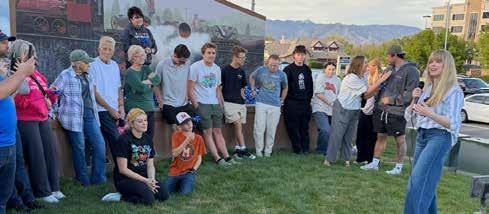
According to Black, victim advocates in Murray provided personal advocacy services to more than 1,900 victims of crime in 2018. Domestic violence cases accounted for approximately 55% of that caseload. In many of those cases, she said, children were present when police responded.
“The long-term effects of domestic violence can be catastrophic without appropriate aid and attention,” Black said.
Advocates in the program serve both primary and secondary victims of violent crime, offering assistance that can extend beyond immediate crisis response. Without the program, Black said, many victims would have limited access to resources or guidance through legal and recovery processes.
For those seeking assistance, Black said her office can be reached at 801-284-4201 or 801-284-4203.
Black also pointed to broader trends. In Utah, she said, approximately one in seven in-
dividuals experience sexual abuse, compared to one in nine nationally. Some cases, she added, are not reported until decades later.
“Disclosure can take years,” she said. “Sometimes 30 years or more.”
Also present at the event was Deondra Brown, a pianist known for performing with The 5 Browns. Brown, who has spoken publicly about her own experience as a survivor of sexual abuse, addressed volunteers gathered at the display.
“Each one of us can make sure abuse victims are cared for and can find trust,” Brown said. “By planting the pinwheels, we are saying we are going to prevent child abuse. Kids should not feel that they are on their own.”
The pinwheel has become a national symbol of child abuse prevention, often used in April to represent both awareness and the idea of a safe, supported childhood. In Murray, organizers said the decision to install 468
pinwheels was intended to ground that symbolism in local data.
For Black and others involved, the display serves both as recognition of reported cases and as a call for continued vigilance.
“Awareness is one step,” Black said. “What matters is what comes after—how a community responds.”
In Utah, the statewide 24-hour LINKLine, operated by the Utah Domestic Violence Coalition, connects individuals to confidential support, including shelter, counseling, transportation and advocacy services. The hotline can be reached at 1-800-8975465 and operates around the clock.
For those who suspect child abuse or neglect, the Utah Division of Child and Family Services maintains a 24-hour intake line at 1-855-323-3237, where reports can be made and assistance initiated. l
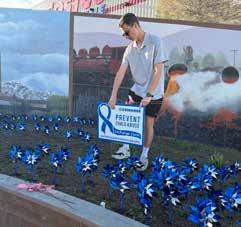
When astronaut Neil Armstrong took those first steps on the moon, I had just celebrated my first birthday. I don’t remember either event, but the entire world held its breath as it watched Apollo 11 land, while I shoved my hands into a birthday cake.
That moon mission used less technology than your bathroom scale. It was basically human calculations, a slide rule and a Rand McNally paper map that guided those astronauts on the first lunar road trip.
We were told that space was the final frontier; space was the future. We learned that, like age and teenagers, space isn’t forgiving.
As a Murray High School senior, my home ec advisor wheeled a TV into the classroom to watch the Space Shuttle Challenger carry the first teacher, Christa McAuliffe, into space. We were speechless when the shuttle blew up at 46,000 feet. In February 2003, I watched the Space Shuttle Columbia disaster unfold as the spacecraft disintegrated on re-entry.
To say I was apprehensive watching the Artemis II mission launch to the moon would be an astronomical understatement.
On April 1, NASA perched the Orion space capsule atop a 300-foot rocket, one of the most powerful ever built. It launched a team of four astronauts 250,000 miles away from Earth, the farthest humans have ever traveled, discounting alien abductions, of course.
Unlike the catapulted station wagon that

somehow got us to the moon during Apollo missions, Orion uses autonomous navigation and extreme precision, carrying astronauts beyond low-Earth orbit for the first time in more than 50 years, traveling at speeds up to 25,000 mph.
It was the 10th manned moon exploration, or for conspiracy theorists, the 10th “faked” moon mission. The entire adventure was livestreamed so we could travel together.
Space exploration is equal parts wonder, technology and angst. During the 10-day moon trip, I endured galactic levels of anxiety. Launch sent my blood pressure soaring. My jaw clenched while they circled the moon on April 6, and my internal organs somersaulted during splashdown on April 10.
I was hyperaware that dreams explode and rockets fall apart.
Apollo missions were built on bravery, and America was racing to beat Russians to the moon. Now, Artemis is an international collaboration, one that should remind us we only sur-

vive this wild ride by working together.
In Greek mythology, Artemis is Apollo’s twin sister and goddess of the moon. It is an apt comparison: while the first moon missions had bro energy, the Artemis program continues the story in a wiser, more thoughtful way.
Women play key roles in the Artemis program. Besides the first female to fly on a moon mission, there are female science officers, mission leads and launch directors. In fact, for the first time in NASA’s history, the current astronaut class has more women than men.
If I could do math while enduring crushing g-forces and the stomach-dropping sensation of freefall, I would definitely have been in the space program. Instead, I appreciate the life of an astronaut from the comfort of my recliner.
Apollo gave us “One giant leap,” Challenger dropped us to our knees and Artemis refocused our gaze. These missions remind us to look to the stars, but also look to our beautiful, blue planet. We only have each other. We should start acting like it.
As I approach my next birthday, one I hope I remember, I raise a glass to the dreamers, the heroes, to the brilliant engineers in mission control and the fearless astronauts who explore new paths. It reminds us that even when the story goes wrong, we need to keep looking up.
Peri Kinder is an award-winning columnist and journalist who has written for The City Journals since 2004. She can be reached at peri.k@thecityjournals.com