
Former geophysicist continues his evolution as he renames established Millcreek restaurant
With Rawtopia being renamed to Omar’s comes new tapas-style dishes and live music events.
This entirely organic, gluten-free, seed oil-free and dairy-free restaurant has seen several iterations since owner Omar Abou-Ismail opened shop over 20 years ago. Originally, the Millcreek eatery had a fully raw vegan menu, hence the name Rawtopia. As Abou-Ismail learned and the business grew, he said, “I found out that it’s not sustainable to be raw vegan and people who do care about the climate may also want to eat animal products. That’s OK and can still be done in a sustainable way. I want to create a place for everyone.” Since 2017, the menu has highlighted grass-fed bison, and wildcaught cod and salmon, although the name Rawtopia stuck around for almost another decade. A change was overdue.
By Anna Nielsen | a.nielsen@mycityjournals.com
“We’ve outgrown the name. People think of raw food as a salad place, not a legit restaurant. I hope to get more recognition that the gourmet food we make is more than just healthy, it’s delicious. We sometimes struggle because of the niche. I will lose my business if we don’t adapt,” Abou-Ismail said. Along with the new name, Omar’s, the owner is also adding lamb and tapas-style plates, revamp ing the interior, and hosting more events like live music.
Abou-Ismail is no stranger to adapting,





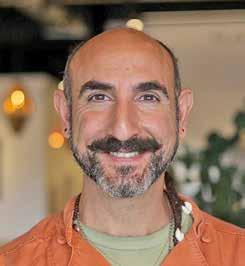
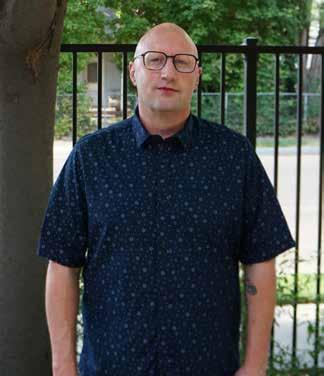
Chef Omar Abou-Ismail. (Photo Courtesy Sean Bartholomew)









DUST MITES POLLEN PET DANDER BACTERIA

COMMON GROUND
Utah’s future belongs to the brave
Common Ground will be a column of rotating viewpoints that highlight specific feelings across the political spectrum, and it will always end with possible ways to come together.
Bravery is a Utah value. It’s right up there with toxic positivity and passive aggression. Many of us have brave ancestors who left their homes and walked hundreds of miles to the Salt Lake Valley, pulling a handcart full of kids who kept asking, “Are we there yet?” That takes courage.
In the face of religious persecution, the pioneers built communities, orchards, temples, schools and arts programs because they were not afraid to do hard things.
It’s time for that type of bravery again. We need to speak our hearts and our truths, and not be led by political partisanship. We need to vote for the people who stand for us, not profit from us.
It’s not just Democrats who believe federal leadership has been catastrophic. It’s not just Democrats who are disappointed in our state’s leadership. Look at the primary election where Republicans voted out three prominent legislators: that took courage. It took people voting their conscience, not just swallowing the party line.
MILLCREEK TEAM
The Millcreek Journal is a monthly publication distributed directly to residents via the USPS as well as locations throughout Millcreek. The views and opinions expressed in display advertisements do not necessarily reflect or represent the views and opinions held by Loyal Perch Media or the City Journals. This publication may not be reproduced in whole or in part without the express written consent of the owner.
© 2026 Loyal Perch Media, Inc.
Bravery means standing for what’s right, even in the face of opposition. It means we choose communities over conflicts and the future over fear. Courage puts people first. It shows we care about people who want healthcare, food, housing, education and inclusion. Those aren’t elite desires. Those are human needs.
The people of Utah want to take back their power. We’re tired of seeing state leaders making shady deals, getting backroom payoffs and pushing legislation that benefits their personal bottom line. How many property developers do we need on Capitol Hill? Good grief!
Bravery means leading differently. Instead of voting along straight party lines (even if your family has been a one-party family for decades), what if we voted for the people we believe have the power to change the status quo?
PUBLISHER
Bryan Scott | bryan.s@thecityjournals.com
EDITOR
Travis Barton | travis.b@thecityjournals.com
ADVERTISING EXECUTIVES
Mieka Sawatzki | mieka.s@thecityjournals.com
Marc Davis | marc.d@thecityjournals.com
Steve Hession | steve.h@mycityjournals.com
CLIENT SERVICES
Lydia Rice | lydia.r@thecityjournals.com 385-557-1022
Real leaders are courageous; they lead with compassion and understand that empathy isn’t a dirty word. They don’t represent one party; they represent their constituents.
The people who showed up to protest ICE detention facilities or resource-draining data centers weren’t just Democrats. They were Republicans and independent voters who don’t want what these politicians are selling. We have Topaz in our backyard. What bigger reminder do we need that history cannot repeat itself here?
Bravery means we believe in each other. We’re not Democrats, Republicans, Libertarians, Reformists or Constitutionalists. We are Utahns. Our brand is kindness and optimism. We build communities, we serve the disadvantaged, we teach the uneducated and we offer open hearts to the stranger.
That’s who we are. That’s who we’ve always been.
Common Ground: No matter our political affiliation, we
CIRCULATION
Lindsay Andreasen | lindsay.a@thecityjournals.com Rack locations are also available on our website.
EDITORIAL & AD DESIGN
Stacey LaMont
Lynne Burns Ty Gorton
MILLCREEK CITY JOURNAL
9500 S Sandy Parkway, Suite 205 Sandy, UT 84070
need to become bridge builders. We need to reach out to neighbors and family members, even those who don’t agree with our political views.
Lawmakers need to build, not destroy. Create laws and messaging that resonate with people from every political background. This is a red state economically, but a blue state at heart. Just look at our programs built to help people, to assist someone’s journey as they get back on their feet. Utah has a worldwide reputation for service and volunteerism.
We should promote conversations that bring people together with respect and understanding. We should ensure people have the opportunity to express their views without censure or disdain. If our current leaders can’t do that, it’s time to make an abrupt change.
If the primary election taught us anything, it’s that Utahns want a voice. It takes courage to change course. It takes all of us to lead the way.
PHONE: 801-254-5974 MISSION
Our mission is to inform and entertain our community while promoting a strong local economy via relevant content presented across a synergetic network of print and digital media.
Published, & Distributed by

Peri Kinder
Common Ground






















The secret ingredient behind Orson Gygi’s success
The local company is more than just a kitchen store.
By Peri Kinder peri.k@thecityjournals.com
If Orson Gygi walked into his kitchen supply store today, he would be shocked by its size and scope. Gygi started his business in 1945, providing kitchen equipment to local restaurant owners. His kids went door to door, selling knives, squeeze bottles and other products to make cooking a little easier.
Located at 3500 S. 300 West, the Orson Gygi Company has grown into a trusted culinary resource. Although its store now spans 38,000 square feet and offers more than 25,000 products, including the 800,000 pounds of chocolate it sells annually to local and national customers, it has remained a community-based, family-owned business.
Heather Smith is Gygi’s great-granddaughter and vice president of the company. Her father, Brad McDonald, is Gygi’s grandson who operates under the loose title of “president and janitorial services.”
“We’ve been very fortunate to be such a name in the community. I think people think we’re a lot bigger than we are. But we’re a family-owned small business that loves the community,” Smith said. “This is our heart and soul. I hope that when people shop and walk in the doors, that’s what they feel. They feel they’ve got a friend in the kitchen and they have someone they can turn to.”
Orson Gygi Company celebrated its 80th anniversary in 2025, but it almost didn’t make it past the 90s. In 1998, a devastating fire destroyed the building, resulting in a $2.5-million loss. Gygi had passed away more than a decade before the disaster and his children didn’t want to rebuild and start over.
The Granite School District Board of Education
That’s when McDonald stepped up. He was determined to reopen the company to reaffirm its dedication to the customers and employees.
“I had just gotten involved in the business less than six months before [the fire],” McDonald said. “Of course, I’d grown up in this environment, and I had seen all the loyal customers that considered us an institution. I kind of threw a fit.”
After a family discussion, it was decided that McDonald would take over. Even though he had worked as a general contractor for 20 years, he was willing to change careers and lead the business because he had witnessed the dedication his family had put into it, along with the customers’ devotion.
After the fire, Orson Gygi Company shifted its focus. While still providing equipment for restaurants and professional chefs, it also began catering to residential cooks and bakers looking for quality products.
At the time, the Food Network was blowing up and people realized that cooking didn’t have to be a chore but could be something creative and fun. The store became a one-stop shop for specialty cookware, baking pans, cookie sheets, utensils, party supplies, pantry staples, grills, griddles, mixers and hundreds of other products.
Hiring knowledgeable employees has helped the business set itself apart from its competitors. The 30 staff members are experts in the food industry, understanding all elements of baking, cooking, candy making and grilling.
The company, now in its fourth generation of ownership, continues to evolve, offering demonstrations and hands-on cooking classes, hosting a blog with recipes and tips and finding new ways to introduce people to the love of baking. For more information, visit Gygi.com.
“The best part about this is we get all walks of life that come through here,” Smith said. “Whether it’s a sweet
did NOT raise taxes last fiscal year The proposed rate increase was not approved by the State. If you saw an increase in your taxes related to Granite, it was likely due to changes in your property’s value
The proposed budget for next fiscal year includes a tax increase intended to address decreases in state revenue and new unfunded mandates.
In the last two years, Granite has cut over $7 million in operational costs and shifted more funding towards the classroom and school level.
The intent of this tax increase is to reduce class sizes and maintain comparable levels of service due to funding cuts at the legislative level.

lady who’s been making chocolates for 60 years or someone who is 15 years old and wants to make suckers. We have professionals, we have home chefs, we have beginners, we have pros. It’s fun to see them walk the aisles together because there’s a place for everyone.” l
Granite’s 2026–27 budget priorities include:
Reduced K-2 class sizes. Funding to address new state requirements for special education, preschool, and English language learners
Instructional support for teachers graniteschools.org/budgetdevelopment/ customerservice@graniteschools org
Granite Board of Education:


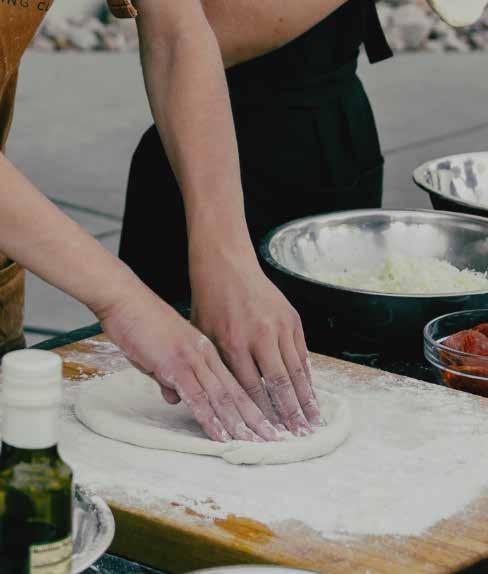
Orson Gygi’s popular pizza classes teach dough basics and flavor pairing techniques, using the Gozney outdoor pizza oven. (Photo courtesy of Orson Gygi)
Granite
Nicole McDermott, Kris Nguyen, Julie Jackson, Clarke Nelson, Connie Burgess, Kim Chandler, Karyn Winder
Communications professor turns restauranteur bringing his family’s Lebanese cuisine to Millcreek
Newly opened café offers falafels, skewers, baba ghanoush, soups and salads along with Lebanese coffee and sweets.
By Jolene Croasmun j.croasmun@mycityjournals.com
If you are like many people who are looking for delicious and fresh food and crave a more international flare, well, Millcreek has just the place. Verona Cafe Lebanese Kitchen offers casual dining with traditional Lebanese cuisine.
Ra’ed and Lina Zayyat are the owners of Verona Cafe Lebanese Kitchen. “At the Lebanese kitchen we have a menu of wraps, sandwiches and a variety of plates to choose from,” Zayyat said.
“I was an adjunct associate professor and taught communications at the University of Utah,” Zayyat said. Once the U lost the funds in November, Zayyat left his position. “Somebody showed me the location here and I went to my wife and asked her, ‘Why don’t we change her kitchen address from home to 3007 E. 3300 South and instead of feeding family and grandkids you are going to feed a much bigger family,’” Zayyat said. It only took a few days to convince his wife Lina and now her kitchen is at the Verona Cafe.
Zayyat is from Lebanon. “I have been in the United States since 1974. I went to USU for a couple of years then I moved to the Salt Lake Valley and finished my bachelors, masters and doctorate in international business and international relations,” Zayyat said.
Zayyat met his wife Lina through friends a few years ago. Lina is from Beirut. “She
is an amazing cook at home and people love her food. Now we cook home food for the neighborhood,” Zayyat said. The people in the community have shown such great appreciation for the new restaurant.
“It’s an experience, Lebanese food is very well known. This menu is built to represent the folklore of Lebanese people. On Saturdays we make grandma meals like stews,” Zayyat said. Breakfast is also available on Saturdays.
Verona Cafe’s menu includes falafels, skewers, baba ghanoush, soups, salads and many other choices. There is a selection of Lebanese drinks including ahweh, a Lebanese coffee and some unforgettable pistachio chocolate cake or ba’lawa (baklava) for those with a sweet tooth.
The quaint and cozy cafe offers seating for 18 guests with a comfortable family dining experience where you can take out or dine in and get reacquainted with your neighbors.
“This is our home, people are visiting with us. We see our guests as family. In Lebanese culture we greet guests with coffee in a small cup and we sit down in our living room like in an individual’s home,” Zayyat said. This is the same feeling you get when dining in Verona Cafe.
“This is the first time for me to cook at a restaurant,” Lina said. “I am happy, so happy! I love cooking. I moved my kitchen from our home to here and the family is getting bigger.”
A grand opening for Verona Cafe Lebanese Kitchen was held in July and included a ribbon cutting with the mayor and city officials from Millcreek. Verona Cafe Lebanese Kitchen is open Monday through Friday noon to 9 p.m. and Saturdays from 10 a.m. to 9 p.m. l


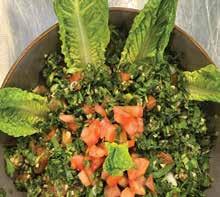


Welcome to our realm of casual dining splendor at Verona Cafe, where Lebanese traditions unfold with Chef Lina’s touch and flair. We invite you to embark on a culinary journey, where each offering is a meticulously crafted tribute to the art of casual Lebanese hospitality. We have strived for perfection, and now we are honored to share with you the finest flavors that pay tribute to the renowned culinary traditions of Lebanon. Come on in and immerse yourself in our uniquely crafted and unforgettable casual dining experience. We promise that every bite is a celebration of gastronomic excellence.
Carryout & Reservations available




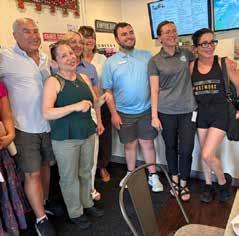
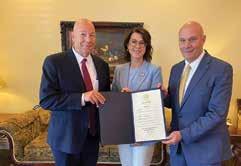
Grand opening for Verona Cafe Lebanese Kitchen in Millcreek included a ribbon cutting from Millcreek city officials. Pictured left to right Ra’ed Zayyat, Lina Zayyat, Millcreek Mayor Cheri Jackson, Nicole Handy, Mike Winder, Elise Summers and guest at the July grand opening. (John S. Brown/Millcreek)
Utah’s most infamous restaurant: ‘The Coon Chicken Inn’
Its fried chicken drew diners, but its branding made history—and continues to define its legacy.
By Shaun Delliskave s.delliskave@mycityjournals.com
Few restaurants in Utah history have left behind a legacy as enduring—or as controversial—as the Coon Chicken Inn.
Ask a food historian about the Salt Lake City restaurant today, and chances are they won’t begin by describing its fried chicken. Instead, they’ll talk about its name, its unforgettable front entrance, and how it has become one of America’s best-known examples of racist advertising.
That distinction has earned the former Utah restaurant a place in the collections of the Smithsonian Institution and the Jim Crow Museum of Racist Memorabilia, where its menus, postcards, advertisements and promotional items are preserved—not as celebrations of the business, but as artifacts that help explain a troubling chapter of American history.
When the restaurant opened on Highland Drive in 1925, owner Maxon Lester Graham was tapping into two powerful trends: America’s growing love affair with roadside dining
and the era’s widespread acceptance of racial caricatures in advertising.
The restaurant’s marketing left little to the imagination.
Customers entered through the mouth of a giant caricature of a smiling Black man wearing a red railroad porter cap. The same exaggerated image appeared everywhere— from menus and postcards to matchbooks, china and roadside signs. Even the restaurant’s name employed a racial slur that was commonly used during the Jim Crow era.
It was impossible to overlook.
Ironically, while the building became famous across the West, relatively little attention was paid to what was actually being served inside.
By all accounts, the food itself was solid American comfort fare. Fried chicken was the specialty, accompanied by mashed potatoes, biscuits, gravy, chicken pot pie, sandwiches, seafood, steaks and homemade desserts. Families filled the dining room, motorists stopped while traveling through Salt Lake City, and the restaurant became popular enough to inspire additional locations in Seattle and Portland.
Yet unlike other regional restaurant chains remembered for recipes or signature dishes, the restaurant became known
primarily for its branding.
The Jim Crow Museum at Ferris State University describes the restaurant as one of the most recognizable examples of commercialized racial stereotyping in American business. The museum notes that every aspect of the operation—from the architecture to the advertising—was built around imagery intended to amuse white audiences by portraying African Americans through degrading stereotypes.
Likewise, the Smithsonian Institution has preserved original menus, promotional materials and business records from the restaurant as historical evidence of how racism became intertwined with everyday American commerce during the early 20th century. Rather than celebrating the restaurant, the collections provide researchers with insight into how discriminatory imagery was normalized in advertising and popular culture.
It is a reminder that restaurants can reflect much more than culinary trends.
During the 1920s, roadside restaurants often competed through eye-catching architecture. Giant coffee pots, castles, windmills and whimsical buildings sprang up across the country to attract motorists. The restaurant followed that formula—but chose imagery
that modern audiences recognize as offensive. Historical accounts suggest that many patrons of the era thought little about the restaurant’s branding. According to Jim Crow Museum, some Black employees reportedly even worked in the restaurant despite its theme, illustrating the complicated social realities of the period. What was once considered acceptable commercial advertising has since become a powerful lesson in how cultural attitudes evolve.
The Salt Lake City restaurant closed in 1957, and the building was eventually demolished. Today, motorists traveling Highland Drive pass the site without realizing they are driving by what was once one of Utah’s most recognizable restaurants.
Its fried chicken has long since faded from memory.
Its name has not.
Today, the Coon Chicken Inn survives primarily in museums, history books and university archives, where it serves as a reminder that food establishments are often remembered for more than what they served. In this case, Utah’s most infamous restaurant is recalled less for its recipes than for the marketing that made it famous—and for the lessons it continues to teach nearly a century later. l
Back to School Tips
Back-to-School Health Boost: A Parent’s Guide to a Thriving School Year
AS SUMMER ENDS, the return of backpacks, homework, and early mornings signals a critical time for parents. Prioritizing health now can lay a strong foundation for a child’s successful, healthy, and happy school year.
“The back-to-school transition can be a shock to a child’s system,” explains Dr. Jared Lambert, a CommonSpirit family medicine physician in West Jordan. “They face new schedules, germs, and academic pressures. Proactive health measures are crucial to ease this adjustment and prevent illness or burnout.”
Here are key areas parents should focus on:
1. Reclaim Sleep Schedules, One Bedtime at a Time
Summer often brings later bedtimes. However, adequate sleep is vital for a child’s health and academic performance. “Lack of sleep affects concentration, mood, and immunity,” warns Dr. Natividad Rodriguez, a CommonSpirit family physician in Layton. “Start gradually adjusting bedtimes now, even by 15 minutes each night.” Aim for 9-12 hours of sleep for elementary students, fostering a calming routine with baths or reading.
2. Power Up with Nutritious Fuel
A well-balanced diet fuels both body and mind. “Focus on lean proteins, whole grains, fruits, and vegetables,” advises Dr. Trystan Blake, a CommonSpirit family physician in Salt Lake City. “A protein- and fiber-rich breakfast sustains them through morning lessons.” Involve children in packing healthy lunches and encourage consistent hydration with a reusable water bottle.
3. Build a Strong Immune Shield
Schools are germ hotbeds. Beyond regular handwashing, ensure your child’s vaccinations are current. “A pre-school physical is ideal for reviewing vaccination schedules and addressing health concerns,” notes Dr. Lambert. “Also, remind them about covering coughs and sneezes, and not sharing water bottles or food.” Sleep and nutrition also boost immunity.
4. Tend to Their Emotional Well-being
The start of school can bring excitement and anxiety. New teachers, classmates, and routines can be overwhelming. “It’s vi-
tal to check in about how they’re feeling,” emphasizes Dr. Rodriguez. “Create a safe space to discuss worries about friends or schoolwork. Reassure them that these feelings are normal and you’re there to support them.” Encourage open communication, validate emotions, and teach coping strategies like deep breathing.
5. Move Their Bodies, Boost Their Minds
Ensure children get at least 60 minutes of moderate-to-vigorous physical activity daily. “Physical activity impacts cognitive function and stress reduction,” Dr. Blake observes. “Active children are often more focused and resilient.” The back-to-school season doesn’t have to be a scramble. By addressing these health aspects proactively, you can equip your child for a year of learning, growth, and vibrant health. A little planning now leads to great success.
For more information or to find a provider visit mountain.commonspirit.org



Local cheese expert wins trip to explore France’s Comté region
Cheesemonger and South Salt Lake resident, Michael Oliver, talks about travel, his love of cheese and eating with intention.
By Anna Nielsen a.nielsen@mycityjournals.com
In September, Michael Oliver will set off to Europe, meeting with the Comté Association, conducting a press tour, and perusing the Comté region of France. Oliver is head of cheese sales at Heber Valley Cheese and was named winner of the 13th annual Comté Scholarship for American Cheese Society Certified Cheese Professionals, receiving as his prize this trip to explore Comté cheese and its culture firsthand.
In the 12th annual competition, Oliver had been runner-up. He was glad he applied again, and thrilled by winning with his essay titled “Cheese Glitter and Good Taste: The Sparkle Behind Comté’s Appeal.”
“I can’t wait to experience the culture of the Jura Mountains, seeing cheese makers, aging caves, cheese shops, farms, etc.,” said Oliver, who has worked in the food industry since childhood. “I started working at the restaurant my parents owned at like 9. At 21, starting to realize where food was coming from, I moved to San Francisco. I worked in lots of ‘smart dining’ restaurants—casual, but with fine dining aspects. Lots of farm to table restaurants,” Oliver said.
He recounts one opportunity that had a butterfly effect on his journey into the cheese world. Working at a wine salon in San Francisco, studying for the sommelier exam, “The manager brought in a glass of red and a piece of Comté cheese. Tasting it blew my mind. We talked about terroir, which I never knew what that was. I thought that he was just meaning terror, so this
flipped the switch for me,” Oliver said. Terroir (pronounced terwahr) is a French term for the influence of a region’s soil, climate and topography on the flavor and character of wine.
Years later, along his sobriety journey, Oliver discovered Harmons’ cheese island and realized his wine knowledge translated to cheese. He began working at Harmons, and was encouraged to become certified through the American Cheese Society. “I got a fantastic education there, able to taste constantly hundreds of different cheeses. I fell in love,” Oliver said. He joined study groups, but nervously backed out of the certification exam each year.
His seven-year career with Harmons introduced him to Heber Valley Artisan Cheese, where he has worked since 2023. In 2024, Oliver rejoined a study group, took the test, passed and cried out of relief afterward, having built up the fear of failure for nearly a decade.
Finally a Certified Cheese Professional, Oliver remarked how transformative this was and continues, “I love the industry I work in. I love the opportunity to be able to change people’s lives with food and beverage. I love the journey that I’m on, because food is part of your memory and memories are craveable. It’s all tied together, and I get to help facilitate stuff like that.”
Oliver also encourages everyone to go on their own food journey, discovering where their food comes from through research, or first hand through tours, like Heber Valley Artisan Cheese offers at their facilities.
“I wish everyone really knew how important small farms are and how we’re losing them,” Oliver concluded. “Heber used to have over 100 dairies there, as a dairy valley founded by the Swiss. Now, only two are left, the rest have been bought out. Small dairy farms hardly exist anymore. There’s huge importance to really knowing your food, and to do that I think you


1-303-643-1000 (TTY: 711).
should deeply taste everything, tasting and eating with more intention. When you do that, you’re thinking of the farms, you’re thinking of what you’re putting in your body.” l

minutes count, count on our
care. Get to know us before you need us.
When you need emergency care fast, the closest emergency room is a smart thing to know. You never know the level of care you’ll need when an emergency happens and choosing the right ER can make all the difference. And a hospital ER comes with the confidence of additional services right on-site.
CommonSpirit Holy Cross Hospital – Salt Lake has been awarded Chest Pain Center Accreditation from the American College of Cardiology (ACC). Facilities that achieve accreditation meet or exceed an array of stringent criteria for evaluating, diagnosing and treating patients who may be experiencing a heart attack.
Find emergency care close to you at mountain.commonspirit.org
Local cheesemonger Michael Oliver and a sticker from Heber Valley Artisan Cheese. (Anna Nielsen/City Journals)





Larkin Mortuary’s dedication to the Utah community is deeply rooted in its history and family values. For over 140 years, spanning seven generations, the Larkin family has proudly served Utah families in their time of need. This commitment extends beyond providing funeral services; Larkin Mortuary actively engages with the community by hosting events and giving back through various service initiatives such as the annual Memorial Day Program, golf tournament, Trunk or Treat and Live Nativity.
Ice cream entrepreneur has the competition licked
Hidden Oak Gourmet Creamery takes ice cream to the next level.
By Peri Kinder peri.k@thecityjournals.com
Jeff the Ice Cream Guy has a particular set of skills. For instance, he can convince you that sweet corn, green chili and ice cream belong in the same sentence, and he’ll have you coming back for more.
As the founder of Hidden Oak Gourmet Creamery, Jeff spent years curating interesting ice cream flavors for a sophisticated take on Utah’s favorite dessert. His signature flavor, strawberry basil, made him a favorite at farmers markets, where his unusual combinations garnered a lot of attention. He attracts the type of person who craves something a little less vanilla.
“Our ice cream definitely stops people in their tracks,” he said.
It all started after a trip to Europe, where Jeff and his kids enjoyed deliciously rich ice cream. When they returned to the States, they found all the ice cream options to be boring. They decided to recreate the experience in their own kitchen.
His artisanal French-style ice cream is made from scratch, steeped with local herbs and other fresh ingredients, and cooked in a sous vide. He sold his first batch of ice cream on Oct. 8, 2022 and built a commercial kitchen seven months later.
Now his ice cream can be found in several local grocery stores, including The Store in Holladay and Salt Lake, and he has a shop at the Salt Lake City co-working space Church & State on 370 S. 300 East.
The journey hasn’t been easy. The Taylorsville resident figures he’s lost $10,000 worth of
ice cream over the last four years due to recipe disasters or equipment breakdowns. He said it’s been a whirlwind of experiences to get to the place he is now, with ups and downs, bumps and bruises.
“You just have to keep fighting through the fight, and you know that eventually, if you have faith in the product, and you keep fighting, someone will be like, ‘Wow, that ice cream is amazing,’ and it makes it worth it. But there have been so many times that I needed to walk away for a day. Like, I’m gonna go find a place to cry in the corner.”
His perseverance paid off as Hidden Oak was awarded the 2026 Best of State trophy for Best Artisan Ice Cream. Jeff and his three daughters have all contributed to the company’s success. He said good food should be the center of every celebration and believes ice cream should be unforgettable.
Jeff also creates individualized ice cream flavors for celebrations like weddings or birthdays. He wants Hidden Oak to be part of a family’s big events, creating memorable taste experiences and fun stories.
Never one to rest on his laurels, Jeff is experimenting with new flavors for summer, including a watermelon sorbet with cucumber-coconut cream and a wild berry shortcake with honey caramel. He also partnered with Heat Street to create a papaya pineapple habanero hot sauce caramel that he serves on vanilla ice cream.
“Making the ice cream, I have to be focused, I have to be dialed in. So when things are going wrong, I head down to the kitchen and make some ice cream, and it just brings the joy,” Jeff said. “You just deal with the hard things, take the ones you love, go after your own mountains and the universe is your opportunity.” l
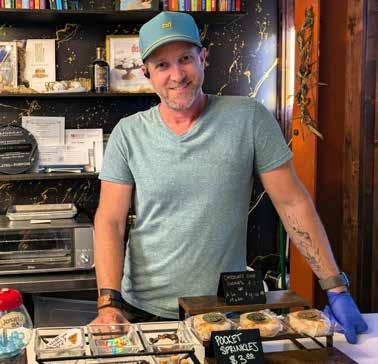
Jeff the Ice Cream Guy turns an ice cream-making hobby into a unique business with Hidden Oak Gourmet Creamery. (Peri Kinder/ City Journals)
The road to Utah’s best tamales apparently leads to a parking lot
While saving for a full-sized food truck, Itzel Erandi has built a devoted fan base from a crimson van parked beside a gas station, one tamale at a time.
By Shaun Delliskave s.delliskave@mycityjournals.com
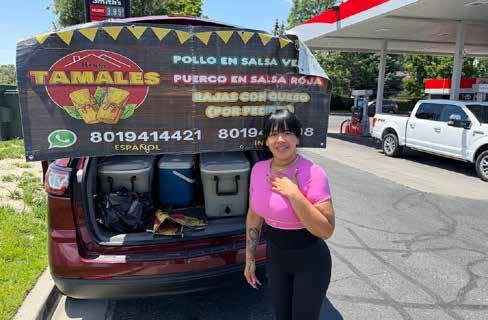
It’s not every day that a parking lot becomes a culinary destination. Yet on Sundays, while some Utahns are searching for brunch reservations, others are searching for a crimson van near a grocery store. Why? Because House Tamales is rumored to serve the best tamales in Utah. Whether that’s officially recognized by any governing body of tamale experts remains unclear, but the growing crowds around owner Itzel Erandi’s van suggest the public has already reached a verdict.
On most Sundays, Wednesdays and Fridays, customers begin lining up near the Smith’s Marketplace at 845 E. 4500 South, drawn by the aroma of fresh tamales and the promise of a meal worth planning a weekend around. What started as a simple idea has grown into one of the valley’s most beloved mobile food businesses.
Behind House Tamales is Itzel Erandi, a native of Michoacán, Mexico, who has lived in the United States for the past seven years with her husband and three children.
The story behind the tamales begins long before the crimson van.
“I learned how to make tamales from my mother back in Michoacán,” Erandi said. “To this day, I believe that her seasoning is what makes these tamales so special. There is something magical about a mother’s cooking.”
That family tradition remains at the heart of every tamale she sells.
Unlike many food businesses that begin with elaborate business plans and spreadsheets, House Tamales was born from something much simpler.
“The idea of selling tamales from my truck came naturally,” she said. “It wasn’t

something I planned, it simply came to me one day. I just knew that I wanted people to experience and enjoy the tamales that mean so much to my family and me.”
Fortunately for Utah tamale lovers, she acted on that impulse.
What customers may not realize is the amount of work hidden inside every tamale. While many people are sleeping, Erandi is already hard at work preparing the next day’s batch.
“My work begins early and requires many hours of preparation,” she explained.
Her day starts at 6 a.m. by boiling meats before preparing both red and green sauces and shredding the meat. Around 7 p.m., she begins assembling tamales and works until approximately 9:30 p.m.
If that sounds like a long day, she’s not finished.
The next morning starts at 4 a.m., when she begins cooking the tamales. While they steam, she prepares what she describes as her special “magical” green sauce before packing everything and heading out to
serve customers.
That’s right. While many of us are debating whether we have enough energy to hit the snooze button one more time, Erandi has already started cooking hundreds of tamales.
The effort appears to be paying off.
“Knowing that so many people love my tamales brings me great satisfaction and happiness,” she said. “I am deeply grateful to every customer who supports my business.”
The business currently operates three days each week, with Sundays proving especially popular.
“Thanks to God, the three days each week that we sell are successful for us, and Sundays are especially busy,” she said.
Ask Erandi about her favorite item on the menu and she doesn’t hesitate.
“Personally, my favorite tamales are the chicken tamales with green sauce,” she said, “and it seems that many of my customers agree.”
Given the growing crowds surrounding
the crimson van, those customers appear to know exactly what they’re talking about.
For now, House Tamales continues serving customers from its mobile setup, but Erandi has bigger ambitions.
“Looking toward the future, my dream is to own and operate a larger food truck, one that will allow me to serve more customers while providing a safer and more comfortable experience for everyone,” she said.
Until then, customers can continue finding House Tamales in the parking lot, where a family recipe, a lot of hard work, and a little bit of “magical” green sauce have created one of Utah’s tastiest success stories.
And if you happen to see a line forming beside a crimson van on a Sunday morning, don’t worry—you haven’t stumbled upon a secret society.
You’ve just found the tamales.
For the most up-to-date schedule and locations, customers are encouraged to visit House Tamales’ Facebook page. l



Itzel Erandi is building her dream one tamale at a time. Fans of House Tamales say the journey starts with some of the best tamales in Utah. (Shaun Delliskave/City Journals)
Tamales are made fresh daily and sell out by the afternoon. (Photo courtesy of House Tamales)
By Jolene Croasmun j.croasmun@mycityjournals.com
You have seen them on social media but now tiny homes are showing up in your neighbor’s backyard. Utah just recently passed a bill that allows accessory dwelling units (ADU) or detached ADUs on qualifying properties.
A Millcreek resident using a pseudonym, Linda Costa to protect her identity said, “I have thought of the idea for years, and I like the idea of a small footprint especially with climate change. I have looked into other small homes but did not have much luck as far as timing and financing. I have been thinking lately about what I planned for getting older. My daughter and her boyfriend would like to buy my house, and I would like to live near them when the time comes that they have kids,” Costa said. Costa stated that she would use the tiny home as a short-term rental at first then segway it as her retirement home.
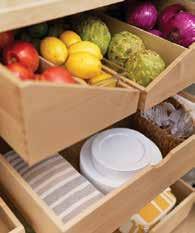
Costa’s tiny home is about 300 square feet but feels larger due to the vaulted ceilings and many windows. Inside there is a full kitchen with cabinets, sink, a microwave, oven and range, a dishwasher, refrigerator and it has a stackable washer and dryer. There is also an air conditioning/ heating unit in the home.
The floors are mostly laminate. The bathroom is spacious with a full-size shower and plenty of room to turn around. There, of course, is a sink and toilet too. The living room and bedroom are one in the same. “I will get a Murphy bed and a little table that folds and some shelves for storage,” Costa said.
These figures are within the recommended northern Utah insulation values.
“Parking is being provided by the homeowner, and I will eventually add a separate driveway for the renters,” Costa said.
Costa said she spoke to her close neighbors before putting the tiny home on her property and no one expressed any concerns about it. One neighbor was indifferent to the idea and mostly curious about the tiny home.
“The company, Nest Tiny Homes has been great to work with and have followed through with all they said they would do,”
Costa plans to rent out the tiny home as a short-term rental for six weeks to three months. The tenant would pay one payment per month which includes all utilities.
“The company I worked with got all of the permits taken care of for the tiny home. They dug up the land and plumbed the water and sewage system which uses the main house’s lines,” added Costa. “The water, power and gas are on the same meter as the main house but there is a separate hot water heater for the tiny home.”
If you are wondering how insulated the tiny homes are for our unpredictable Utah weather, this Nest Tiny Home has an R-21 rating for the walls and the ceiling is R-38.


“We are a one-stop shop, we handle construction, design and bring ideas to life,” said project manager Mike Rutz. Rutz works for Nest Tiny Homes. “We have 10 models on our website that we consider our stock plans, none of these are spec homes. They -
“We have clients come in and have an image in their minds and we have designers and engineers that we work with and help us create and customize the ADU if they don’t
“Utah just recently passed a bill thatone owning a single property can build an ADU in the neighborhood if they want one.”


home or main home,” added Rutz. “Instead of a retirement home, many are adding a tiny home to the backyard.”
“The owner occupies either the tiny


“Each property needs a certain percentage of permeable space for your detached ADU. Every county is different and in Salt Lake County you need 23% of permeable space on your property,” Rutz said.
“Right now Nest Tiny Homes is building a 1,700-square-foot tiny home in Bountiful. That’s 1,300 feet of living space and 500 for the two-car garage,” Rutz said.
“In Clinton, Utah, the owner has a quarter of an acre and we are building a 750-squarefoot home with two bedrooms and a large layout. Most are one-story homes,” Rutz said. “Occasionally, we will build a garage with an apartment on top. We are very flexible and open.” Rutz said that there are height restrictions that have to be submitted to the city for approval.
Nest Tiny Homes has been in business for four years in Utah. “People do not know this is an option,” Rutz said. “It is still looked at as a cool experiment on Instagram but it is serving a huge purpose and solution for many people.”
“The average home cost in Salt Lake is 650K. How can people fresh out of college can afford that?” Rutz asked. “The solution for them, build a tiny home in the backyard and when their family grows they take over the main home,” Rutz said. “Then Mom and Dad move into the tiny home.”


Tiny homes and other ADUs are an option to help with the housing crisis. Nest Tiny Homes are just one of several companies available to those looking at ADUs. Many offer financial options to assist with building a tiny home. l
Skyline introduces a familiar face in football
Marcus Mailei departs, but replacement Brandon Matich re-emerges after a medical hiatus that forced his resignation at East to coach at a school familiar to him.
By Brian Shaw b.shaw@mycityjournals.com
The Skyline Eagles football team had a 9-4 record and reached the quarterfinals of the 4A state playoffs under Marcus Mailei.
It was the first winning season the Eagles have had since 2021, and yet Mailei, the former Weber State Wildcat standout and Super Bowl champion with the NFL’s New Orleans Saints departed Skyline during the offseason after two years at the school.
His replacement? Brandon Matich. He spent 15 seasons at East High School as their head coach before stepping down from the position in June 2025, and had a 138-60 record there, winning two state titles in 2015 and 2016.
But, once you get the itch to coach, it never leaves you. Having attended to medical concerns that necessitated his resignation at East, coach Matich decided to get off the proverbial leopard, so to speak, and climb into the nest of the Skyline Eagles.
Actually, Matich is climbing back into the nest. He started his coaching career at Skyline

helping linebackers back in 1997 under Hall of Fame head coach Roger DuPaix.
From there, Matich was an assistant at several schools before taking his first head coaching position at Park City in 2006. He led the Miners to a 10-1 record in year one and coached them through four winning seasons before stepping down and accepting the same position at East, the same job his
grandfather held for decades.
After having stayed at East as head coach for 15 years, returning to Skyline, the school where he began his career, brings everything full circle for Matich, who certainly has had his ups and downs from a personal standpoint. He suffered a traumatic brain injury about two decades ago in a waterskiing accident at Lake Powell and had another medical
episode in 2019.
By 2025, the lingering effects of that accident were too much for Matich, who was forced to step down at East just two weeks before the start of summer practices.
At Skyline, Matich inherits a roster that lost more than 20 kids to graduation from that 9-4 team. On the Eagles sideline, he’ll play all the Salt Lake City schools his East teams played, and then some now that Cottonwood, Juan Diego Catholic and Murray have joined Class 4A Region 10.
Skyline opens with Stansbury at home Aug. 14, followed by a rivalry game at Olympus for “The Rock” Aug. 21. On Aug. 28, the Eagles host Lone Peak in a regional telecast before they open region play Sept. 4 at Juan Diego.
Matich’s boys will then play at home against Skyridge on Sept. 11 in another regionally televised, nonleague showdown and will remain in their home stadium for a quick turnaround against Jordan, Sept. 17.
On Sept. 25, the Eagles will travel to Cottonwood to take on the new-look Colts under former Granger offensive coordinator Mike Ward before Skyline and Matich host his former employer, the East Leopards, Oct. 2.
Skyline will then close out the regular season with another rivalry showdown at Highland Oct. 9 and wrap up 2026-27 with a home game against Murray on Oct. 14. l



Skyline football will have a new, but familiar face to lead the team this year. (File photo City Journals)
WasteLess Solutions works to reduce food waste and expand access
Nonprofit rescues surplus food and reduces waste through community partnerships.
By Shaun Delliskave s.delliskave@mycityjournals.com
Asconcerns about food waste and food insecurity continue to grow nationwide, a local nonprofit is working to address both issues at once. WasteLess Solutions, led by CEO Alexx Goeller, operates at the intersection of surplus recovery, community partnerships and public education, with a mission focused on reducing waste while improving access to usable food.
“At our core, WasteLess Solutions is tackling a culture of overproduction and overconsumption which leads to an enormous amount of food waste,” Goeller said. “Roughly 30-40% of the U.S. food supply is thrown away each year.”
The organization works directly with food donors—such as restaurants, grocers and event providers—to recover surplus food that would otherwise be discarded. That food is then redistributed, often within hours, to nonprofit partners and community organizations serving populations experiencing food insecurity.
“We are focusing on both ends of the issue, preventing food waste at the source through education, and redirecting surplus edible food to communities experiencing food insecurity,” Goeller said.
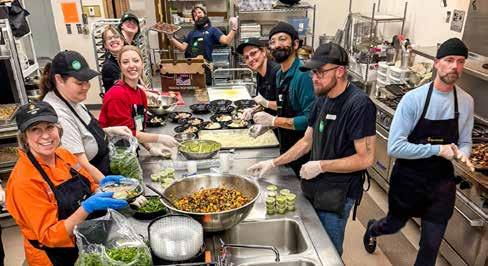
While the concept of food rescue may appear simple, Goeller emphasized that the day-to-day operations are complex and time-sensitive. “The biggest challenge that we face with food rescue is logistically moving large quantities of highly perishable food quickly and safely,” she said. “Timing is crucial and it requires consistent and frequent coordination between donors, volunteers and receiving agencies.”
WasteLess Solutions relies on a network of volunteers—many based in and around


Murray—to carry out these rescues. Volunteers pick up food donations and transport them directly to partner organizations, often during narrow time windows to ensure freshness and safety.
“Reliance on volunteers does come with some unpredictability,” Goeller said. “To manage that, we maintain a large volunteer base and are working on building stronger backup systems for last-minute changes.”
Despite those challenges, she said engagement has remained strong. “Many volunteers feel a passionate connection to our mission and stick with specific routes long-term,” she said.
A key part of the organization’s approach is its partnership model. Rather than distributing food independently in all cases, WasteLess Solutions works with established nonprofits that already serve specific populations, allowing for more targeted and appropriate distribution.
“A lot of that balance comes down to effective partnerships and relationship management,” Goeller said. “We work closely with other nonprofit organizations that already serve specific communities and understand their needs.”
She pointed to one example where a juice donation was directed to a partner serving individuals without teeth, illustrating how coordination can align food supply with specific needs.
In addition to these partnerships, the organization has begun operating its own mobile markets in the area. These markets allow individuals to select food items directly, rather than receiving pre-packaged distributions.
“When they arrive, there is a large selection of food which allows people to select exactly what they need,” Goeller said. “That program is new for us and has been extremely successful.”
WasteLess Solutions measures its impact through a combination of data and community feedback. While pounds of food rescued and people served remain important benchmarks, Goeller said the organization also evaluates partnership strength, volunteer engagement and program quality.
“Quality of programming is just as important as quantity,” she said, noting that ensuring the food is both usable and valuable to recipients is a central focus.
The organization also works to address misconceptions about rescued food. “A common misconception is that rescued food comes from the garbage or is unsafe in some way,” Goeller said. “In reality, the food is high-quality and perfectly edible.”
Beyond redistribution, WasteLess Solutions incorporates education into its mission, working with businesses and community members to reduce waste before it occurs. This includes guidance on event planning, waste reduction strategies and reporting tools that help organizations track their impact.
“We don’t just redistribute food, we are actively helping businesses and consumers reduce surplus in the first place,” Goeller said.
Looking ahead, Goeller said broader systemic changes could further support efforts like those underway in Murray. “Standardizing date labeling and strengthening food donation policies would make a significant difference,” she said, pointing to confusion around “best by” and “use by” labels as a major contributor to unnecessary waste.
While systemic change may take time, WasteLess Solutions continues to operate at the intersection of environmental sustainability and community need—working to ensure that food that might otherwise be discarded finds its way to those who can use it. l

WasteLess Solutions volunteers prepare meals from surplus recovered food. (Photo courtesy of Alexx Goeller)
Best post-hike food spots in Salt Lake and Davis County
Enjoy a great hike, then stop by one of these places for fantastic bites.
By Peri Kinder peri.k@thecityjournals.com
What pairs with mountain views and waterfalls? A hearty breakfast or scrumptious lunch. There’s nothing like a good meal after hiking trails in the Wasatch Range or Oquirrh Mountains and local restaurants offer everything from juicy ribs to savory crepes. Here are a few options to try after your next hiking adventure.
Eggs In the City, 2795 S. 2300 East, Millcreek
With its outdoor seating and diverse menu, Eggs in the City is the perfect spot to enjoy brunch after exploring Millcreek Canyon. The restaurant offers several versions of eggs Benedict and breakfast burritos, and a fried

chicken-n-waffle dish topped with a hot honey sauce. See the full menu at eggsinthecityslc.square.site.
Porcupine Pub & Grille, 3698 Fort Union Blvd., Cottonwood Heights
For nearly 30 years, Porcupine Pub & Grille has been a favorite place to eat for hikers visiting the Cottonwood Canyons. This local eatery has an extensive breakfast, brunch and lunch menu that includes huge portions of everything from pancakes to pizza. Visit porcupinepub.com for more info.
Smokin’ Bones BBQ, 364 S. 200 West, Bountiful
A morning spent on the Mueller Park Trail in Bountiful can leave you with a big appetite. Luckily, Smokin’ Bones BBQ will whet your whistle with some of the best slowsmoked meats in the county. Brisket burgers, meat platters or the BBQ Navajo taco are local favorites at this family-owned restaurant. Learn more at smokinbonesbbqut.com.
The Cotton Bottom, 2820 E. 6200 South, Holladay
Come hungry to this post-hiking staple, located near Big Cottonwood Canyon. With its dive-bar vibes and hearty servings, The Cotton Bottom is a local’s choice for garlic burgers, fresh-cut fries, Greek salads and loaded hot dogs. Go to thecottonbottom.com to see the menu.
Garage Grill, 12547 Herriman Autorow, Herriman and 1122 Draper Parkway, Draper
Whether you’re hiking Ghost Falls in Draper or exploring Butterfield Canyon in the Oquirrhs, Garage Grill’s two locations have you covered. Along with its
famous Sunday brunch and delicious lunch specials, the auto-themed restaurant features a rotating display of fast cars and a full selection of Salt Flats beer and spirits. Check out thegaragegrill.com.
Weller’s Bistro, 197 N. Main Street, Layton
Hike the Adams Canyon Trail, then find this Layton favorite where homemade German cuisine and beer top the menu. Its bratwurst plate, warm German potato salad, goulash and schnitzel are delicious tributes to the restaurant’s heritage. It’s also the place to go for German pilsner, Hefeweizen and the German-imported beer of the month. Learn more at wellersbistro.com.
Lone Star Taqueria, 2265 Fort Union Blvd., Cottonwood Heights
A hike to Donut Falls isn’t complete until you’ve stopped by Lone Star Taqueria for fresh fish tacos. Open for lunch and dinner, the Mexican food hotspot uses homemade tortillas and chips, hosts a spicy salsa bar and offers fresh guacamole. Parking can be a bit tight, but the wait is worth it.
Annie’s Cafe, 74 W. 500 South, Bountiful
The Bonneville Shoreline Trail offers iconic views of Davis County and Annie’s Cafe provides meals that feel iconic in their own way. With a variety of crepes, from Philly cheese steak to peaches and cream, every member of your hiking party will find a favorite. It also provides gluten-free options. If burgers or sandwiches are more your thing, Annie’s has those, too. View the menu at anniescafeut.com. l

Après redefines mountain living with a collection of boutique luxury residences designed for the rhythm of modern life. Expansive rooftop amenities, wellnessfocused spaces, refined interiors, and immediate access to the Wasatch mountains creates a living experience unlike anything else on the east bench.

Finish off your hike to Lake Blanche with breakfast, brunch or lunch at local eateries along the Wasatch Range. (Adobe Stock)
From one breakfast cafe to a Utah restaurant empire
What started as an East Coast-style cafe has become a 10-restaurant operation serving thousands.
By Peri Kinder peri.k@thecityjournals.com
Paul Willey has become something of a restaurant magnate in Utah. He and his siblings are celebrating the 15th anniversary of Penny Ann’s Cafe, but he owns 10 restaurants across three brands in Salt Lake and Davis County, employing more than 300 people.
The original Penny Ann’s opened its downtown Salt Lake City cafe in 2011 and the family has added four additional locations since then. Willey is CEO; his brother Warren Willey serves as head chef; his sister Cindy Pulley is the service manager and Penny Ann (the restaurant’s namesake) is in charge of customer relations, which includes greeting guests and chatting with regulars.
Penny Ann’s started after the family migrated from Upstate New York. They wanted to bring an East Coast diner to Utah, complete with burrito-style omelets, a breakfast counter and a welcoming atmosphere.
“You just come in, have a seat whether it’s at the counter, in a booth, or at a table, and enjoy some homemade comfort food,” Willey said. “People in Utah appreciate the value.”
Best Breakfast in Utah for 11 years in a row.
“We’re a Utah chain. We’re proud to be this Utah story, coming in as transplants and being embraced by the Utah community,” he said. “It’s kind of amazing.”
In the summer of 2019, Willey participated in the Goldman Sachs 10,000 Small Business Program. As part of the curriculum, he developed a growth plan for Penny Ann’s, but it got him thinking about other opportunities to branch out.
He soon became a partner in Mr. Charlie’s Chicken restaurants and in October 2022, he learned the owners of Moochie’s Cheesesteaks, Don MacDonald and Joanna Rendi, were looking to retire. They wanted to sell their business to another East Coast family. Willey was all in, calling it “a natural fit.”
“The regional manager with Moochie’s stayed on with us. He’s been with the company now for almost 15 years. That’s a testament to the culture that Joanna and Don built at Moochie’s. We wanted to keep that same culture,” Willey said.
restaurant locations: Five Penny Anne Cafes, three Moochie’s Cheesesteaks and two Mr. Charlie’s Chicken restaurants. Willey will add to those numbers when Moochie’s and Mr. Charlie’s open at the Salt Lake International Airport this fall.
“We’re always a work in progress. We’re always striving to improve. I always take reviews personally,” he said. “I always scour our Google reviews, but I always appreciate it when guests reach out directly to give us feedback.”
Willey said although the business has grown to include new restaurants, the company’s values are the same across all brands. Service, teamwork, respect, integrity and passion are what keep him and his family serving thousands of customers each year, working to create the best service and food options for people in Utah.
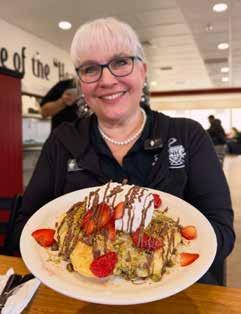
Along with their flagship hot cakes, Penny Ann’s menu includes items like banana bread French toast and strawberry chocolate Dubai hot cakes. The diner has earned Best of Utah and Best of State awards, including
He’s kept most things the same, but updated some menu items, including the addition of fresh mozzarella to the roast beef or Italian deli sandwiches. He also added the Utah Philly, a local take on a classic burger that stays true to the Moochie’s brand.
The family created a management company called PAC Foods to oversee the 10
“My philosophy with managing restaurants is that it’s about the people,” Willey said. “If you take care of your core management team, they will take care of your guests. We want to make sure that we’re listening to our team and getting feedback from them on how we can improve and how we can be better. We are never resting on our laurels.”
For location and menu information, visit pennyannscafe.com, mrcharlies.com and moochiescheesesteak.com. l


Cindy Pulley, holding the strawberry chocolate Dubai hot cakes, is Penny Ann’s service manager and the face of the restaurant on social media. (Photo courtesy of Paul Willey)
Readers share their family favorites.
By Peri Kinder peri.k@thecityjournals.com
Written on yellowed 3x5 cards, typed on a Smith Corona or posted into a shared doc, family recipes have a way of enduring. It could be a grandmother’s meatloaf, a dad’s barbecue sauce or a great-aunt’s potato salad, but these dishes are handed down through generations, creating a feeling of legacy and connection.
Murray resident Paula Sageser has a recipe for dinner rolls, passed down from her grandmother and mother, that is a frequent request for family holiday gatherings. Her sister taught her how to make the rolls and she’s passed the knowledge on to her niece.
“Some of the steps require making judgment calls, like using enough flour to make a cake batter consistency before letting it rise, or adding enough flour for a biscuit dough texture,” she said. “Over the years, I’ve experimented with making the rolls a little bit healthier by substituting applesauce or bananas for the Crisco. They are a big hit, and I always make a double batch so people have leftovers to take home.”
For Lynda Smart Brown, her family favorite is a hot-batter, chocolate fudge cake recipe made in a pan that’s more than 75 years old. The cake is a birthday tradition that is now shared with a fourth generation of Brown’s family.
Brown’s mom started making the cake decades ago, from a recipe she got from a woman in Louisiana. The aluminum pan she
Well-loved recipes last for generations


baked the cake in has also been handed down and Brown said the pan will be the only thing her kids will fight over when she dies.
“I have never used a boxed cake mix. I only make cakes from scratch and it is usually this one,” Brown said. “I just make it from memory at this point, as we’ve been doing this for almost 65 years.”
Jennafer Martin’s parents both worked out of the home when she was growing up. Her mother loved to cook and bake but didn’t always have time to make things from scratch.
For special occasions, Martin’s mom made what she called “Goo Bars.”
“They were brownies with chocolate chips, nuts, mini marshmallows and raisins mixed in them,” Martin said. “They were aptly named because they were gooey deliciousness. We liked them even more than cake because they were unique and made
Readers’ Favorite Recipes
Paula Sageser’s Dinner Rolls
1 qt. sweet milk
1 c. Crisco (or 1/2 c. Crisco and substitute 1/2 c. unsweetened applesauce)
1 c. sugar
Bring milk, Crisco and sugar to a boil, stirring frequently to keep from scorching. Cool to lukewarm (about 30 minutes). When using applesauce, add it while the mixture is cooling.
Add two packets of dry active yeast
Add enough all-purpose flour to create a dough with cake-batter consistency. Cover with a cloth and let sit for two hours to rise.
Add 1-1/2 tsp. baking powder 1 TBSP. salt
Add flour until it has the consistency of biscuit dough. Generously flour a flat surface and knead in more flour until the dough is not too sticky to roll out and handle. Roll out what you want to bake at a time and refrigerate the rest until needed. Cut with a 3-inch biscuit cutter and place on a greased baking sheet or no-stick baking mat.
Bake at 400 degrees for 15-20 minutes, until golden brown on top. Watch the first batch and adjust time and temperature as needed. When doing a double batch, lower the temperature of later batches to 385 degrees.

with love.”
Elif Ekin, owner of Salt Lake’s Khave Cafe, never had junk food in the house while she was growing up, but she could trade two of her mom’s chocolate chip cookies for pretzel sticks or Doritos.
The recipe originated from Ekin’s great-grandmother and was originally sugar cookies. Ekin’s grandmother added chocolate chips to the recipe, using big chunks of chocolate. Ekin’s mom, Janice Ekin, added her own variations as the favorite cookie continued to evolve.
The dough was so good, Ekin would often sneak bites when her mom wasn’t looking. Eventually, her mom started scooping a dollop of dough into a coffee cup for Ekin, to keep enough dough for cookies.
“I have kept up that tradition with all the
Jennafer’s Goo Bars
1 box brownie mix
½ c. each: chocolate chips, raisins and mini marshmallows
½ c. nuts, optional
Prepare brownie mix as directed. Stir in additional ingredients and bake as directed. Enjoy!
Ekin’s
1 c. butter or margarine
2 c. sugar (all white or a mixture of white and brown)
2 eggs
1 tsp. vanilla
1 tsp. baking soda stirred into 1 c. plain yogurt and set aside
4 c. flour
1 12-oz. bag of chocolate chips
Cream butter and sugar; add eggs and vanilla. Add chocolate chips to the flour. Add flour and chips alternately with the yogurt mixture. Mix well. Drop on a greased cookie sheet. Bake at 350 degrees for about 12 minutes. Variations: Use raisins instead of chocolate chips. Use lemon yogurt instead of plain.
For Chocolate Chip Cookie cake: add 1/4 cup more yogurt and spread dough in a 9x12 inch pan, instead of dropping for cookies. Bake at 350 degrees for about 20 25 minutes.
kids and give them a big spoonful of batter in a coffee mug every time I make chocolate chip cookies,” she said. “Over the years, I’ve viewed the recipe as being flexible. [I’ll] use different yogurt flavors, such as lemon coconut yogurt, and add some dry coconut; use apple yogurt with added cinnamon and raisins instead of chocolate chips…I still have friends from elementary school who tell me they remember Mom’s chocolate chip cookies.” l
Lynda Brown’s Chocolate Cake
½ c. buttermilk
1/2 tsp. baking soda (will be added to buttermilk)
Blend 2 c. flour and 2 c. sugar
2 eggs, whipped
1 tsp. vanilla
2 cubes of butter
4 TBSP. cocoa
1 c. hot water
Mix the soda into the buttermilk. In a saucepan, melt butter and stir in cocoa. Add hot water and blend until smooth. Lower the heat and slowly mix in the flour and sugar mixture, using a beater to get it smooth. Add two eggs, mix well. Add the buttermilk and soda mixture. Blend in smoothly. Beat with a beater for a short time, only until folded in. Pour into a cake pan that has been buttered and floured. Bake at 350 degrees for 25-30 minutes or until done.
Chocolate Frosting
4 TBSP. cocoa
1 stick butter
1 tsp. vanilla
3 c. powdered sugar
¼ cup milk or buttermilk
Melt butter and cocoa together in the saucepan. Add the milk and vanilla. Slowly add the powdered sugar until well blended and beat with a beater until the batter is glossy.
Quickly frost the cake, which can still be warm. The fudge-like frosting will set up fast.
Sprinkle with walnuts, if desired.
Lynda Smart Brown’s daughter, Laura, and granddaughter, Lucy, enjoy the family’s favorite chocolate cake, baked in an aluminum pan that’s become an heirloom. (Photo courtesy of Lynda Brown)
Paula Sageser’s family roll recipe has been passed down through generations. (Photo courtesy of Paula Sageser)
Elif Ekin’s mom would give her a big scoop of cookie dough so she could use the rest of the batter for cookies. (Photo courtesy of Elif Ekin)
Chocolate Chip Cookies
2026 SPJ winners for the City Journals/Business Journal
(Society of Professional Journalists)
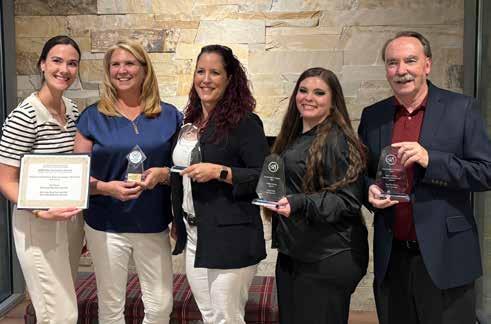
The City Journals and the Salt Lake Business Journal, sister publications under Loyal Perch Media, captured multiple awards at the prestigious state and regional excellence in journalism competitions for the Society of Professional Journalists. Below is a list of those winners.
Utah Society of Professional Journalists Awards
Travis Barton, Stacey LaMont, Cassie Goff
2026’s Public Service Award (Voters Guide)
Tom Haraldsen
2026’s Roy B. Gibson Freedom of Information Award
Peri Kinder
Writing and Reporting - Division B: Humor / lifestyle column (1st Place)
“Time to face the music”
Judges comments: “Time to face the music” is a well crafted and enjoyable read that made this judge laugh out loud while sympathizing with the writer’s music teacher, dog and husband, who have to endure her music lessons. This entry, along with others presented by her in this competition, clearly show that Peri Kinder is a talented writer.
Cassie Goff
Writing and Reporting - Division B: Best newspaper reporter (1st Place)
Cassie Goff writes to celebrate, inform and build community
“Recapping 20 years of Cottonwood Heights history”
“No more bribing the pet to go the the vet: Mobile Veterinary Options brings the vet to the pet”
“Plans for future growth within Cottonwood Heights are in the works”
“Updates from the 2025 Legislative Session”
Judges comments : “When Cassie Goff is having fun writing, her community is having fun reading. She’s a journalistic gift to her community, infusing her coverage with a bit of her own pizazz and personality without outshining or dimming her town’s sparkle. She finds the meaningful tales/details amid the seemingly mundane minutiae of daily life, whether she’s handling bread-and-butter news coverage or feature stories.”
Jet Burnham
Writing and Reporting - Division B:
Continuing coverage (2nd Place)
“The issue of cellphones in schools”
“Parents call on community to create phone-free schools”
“High school students call for cellphone education”
“Read all about it! Books are making a comeback”
Giovanni Radtke
Writing and Reporting - Division B:
Health and Science (2nd Place)
“University of Utah Student Media
“How the U’s Long COVID Clinic ‘Streamlines’ Patient Care”
Mimi Darley Dutton
Writing and Reporting - Division B:
Homelessness and Housing (3rd Place)
“Pros and cons of Draper’s $1 million median home price”
Shaun Delliskave
Shaun Delliskave Headlines
Design and Graphics: Headline writing (3rd Place)
“A lot to lose: Murray trades City Hall parking for development”
“Murray benches tax hike, sends in the reserves”
“From $300 dreams to $1,000 realities—barbecue ain’t for the faint of heartburn”
Salt Lake Business Journal
Design and Graphics: Best newspaper - Division B (3rd Place)
Shaun Delliskave
Writing and Reporting - Division B: Criminal justice (Honorable Mention)
“Investigators still seek clues in 1978 disappearance of pregnant Murray nurse”
Julie Slama
Writing and Reporting - Division B: Health and Science (Honorable Mention)
“Out of this world: Hillcrest High’s eco-friendly pesticide experiment reaches ISS”
Tom Haraldsen
Writing and Reporting - Division B: Sports deadline reporting (Honorable Mention)
“Major leaguers score cash for homers at South Jordan event”
Top of the Rockies Excellence in Journalism Awards
Becky Ginos
Education News – (3rd place)
“75 years of history — Bountiful Elementary to be replaced by new building”
Rebecca Olds
Sports News – (3rd place)
“Building a stronger future for female high school athletes in Utah”

Rebecca Olds
Feature: Short form – (3rd place)
“A fighter, a writer, an avid skier and an optimist — nothing stops Harriet”
Cassie Goff
Special Topic/Section – (3rd place) “SLC’s Tattoo Convention draws worldwide talent”
Julie Slama
Sports Feature – (1st place)
“Utah Sports Hall of Fame coach hits home run for equality”
Judge’s comment: “Excellent feature reporting that dives into the coach’s background and motivation for coaching as well as challenges she faced in her life and career. Helped round out her story and makes for a great feature.”
Peri Kinder
Personal/Humor Column – (1st place) “Life and Laughter”
Judge’s comment: “An engaging voice, humor and small things we all have encountered. As a respite from a too heavy world, Life and Laughter is the kind of break we all deserve.”

Cassie Goff and Tom Haraldsen. (Emma Leishman/Utah Alumni Relations)
Rebecca Olds, Peri Kinder, Stacey LaMont, Cassie Goff and Tom Haraldsen. (City Journals)

What


Salt Lake?
Utah leaders have set a goal to raise the Great Salt Lake by seven feet to 4,198 feet above sea level by the time Utah hosts the 2034 Winter Olympics.
It will be a monumental task to save and dedicate the additional 800,000 acre feet of water needed

each year — that’s twice the amount of water used in homes and on yards in the Great Salt Lake Basin — especially with this year’s record-low snowpack and extreme drought.
Utah newsrooms who have banded together to cover the lake as the Great Salt Lake Collaborative will
cover all of the developments by politicians, philanthropists, residents, businesses, farmers and industries.
Take this quick eight-question survey so we can report on what matters to you. We want to know what questions you have, your hopes and fears and how the lake affects you.
Questions? Contact me at info@ greatsaltlakenews.org.
This article is published through the Great Salt Lake Collaborative with funding from Love the Lake, an initiative of the nonprofit Great Salt Lake Alliance. Editorial decisions are made independently by the Collaborative and partner newsrooms.








Story by Heather May | Great Salt Lake Collaborative
Photos courtesy The Salt Lake Tribune
A food tour of Utah’s dedicated gluten-free establishments
In the Salt Lake Valley alone, over a dozen gf businesses can be found.
By Anna Nielsen a.nielsen@mycityjournals.com
There’s no need to make a pilgrimage to Denver, Portland or Europe to find gluten-free (gf) eateries these days. Utah’s gf scene is growing. Whether you have celiac disease, gluten sensitivity or are just interested in trying some good food that happens to be gf, options abound.
Omar’s, formerly Rawtopia, sits near the mouth of Millcreek Canyon at 3961 Wasatch Blvd. The establishment boasts a unique drink selection, including spicy hemp-milk chai, and incredibly creamy dishes (despite being dairyfree), like a sunflower and almond hummus. The made-from-scratch menu caught the attention of Martha Stewart a few years back.
Everything offered is fully gf, dairy-free (df), seed-oil-free, organic and locally sourced where possible, with plenty of raw and vegan options, but the variety goes far beyond the typical salads and bowls. An extensive menu features flavor-packed chili cheese fries; coconut curry rice; berry cheesecake (coconut cashew cheese, that is); mango key lime pie and more. Portions of the high-fiber foods are filling and you’ll leave satiated, but not overstuffed.
If you seek out the sugary stuff, though, the bakeries on the list are your best bet.
Mrs. Hewitt’s Bakery often sells out of their more popular items (especially eclairs). Go early to get your hands on some! Founded by husband-and-wife duo Kimberly and Doug Hewitt in 2016 after his celiac diagnosis, the gf baking company has products (of which many are also vegan) in over 500 stores in Utah and ships to the East Coast, too.
Inside the Paris-inspired café, musettedriven melodies play, transporting you out of industrial surroundings in West Valley (3703 Parkway Blvd.). A fantastically French menu ranges from various crepes to tarts, eclairs and artisan breads. American indulgences aplenty appear on the menu, as well: giant cookies; hoagies, French dip, and grilled cheese sandwiches; cupcakes; brownies; and dinner rolls.
Good Food Gluten Free Bakery also sells out early and is tucked away in an

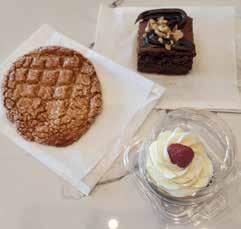

industrial area, the Granary District, at 423 W. 800 South, Suite A113. Entering, you are faced with impossible decisions filling the displays. A revolving selection always includes yummy loaves of sweet bread in flavors like lemon, zucchini, poppyseed and pumpkin; and various scones; sometimes featuring doughnuts, frosted animal cookies or cinnamon rolls. There is no seating, so perhaps plan to enjoy your purchases on a walk around town or a picnic.
Across Salt Lake, Avenue Bakery on Fourth (376 E. 4th Ave.) has a range of gf breads, muffin tops, gourmet cupcakes and cinnamon rolls, along with rotating daily fresh pastries, hoagies, grab and go meals and local kombucha. There’s a satellite location of the original Avenue Bakery in American Fork (which is not a dedicated gf facility, but offers some gf items), and their goods are all prepared at the original American Fork bakery, “in a separate kitchen using separate tools and equipment to prevent cross-contamination,” says staff. The SLC shop opened in 2024, combining the gf versions of sweets that the first Avenue Bakery became known for with an existing gift shop called Avenues on Fourth.
At 432 S. 900 East, Raw Eddy’s headquarters, a.k.a. the Dopamine Space, has a vibrantly pink and orange interior and smells like fresh cookies. In addition to being vegan, gf, plant-based and soy-free (and supposedly made by the light of a disco ball), these snack cookies are distinguished by their atypical shape, like big gumdrops, and by being stuffed with superfood ingredients like ashwagandha. Raw Eddy’s high-protein snacks are available at their storefront, markets, online, and in 40-plus stores around Utah.
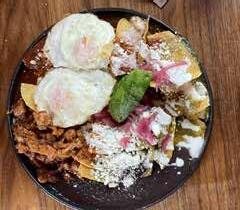
Contento Café on 2280 S. West Temple has been hard to get a seat at this year, so make a reservation before you build any weekend brunch plans around it. A modern gf, seed-oil free Mexican restaurant with authentic classics like chilaquiles, tacos, nachos, tostadas, mole, churros, flan and large gf breakfast burritos served all day,
this trendy spot is usually bustling.
Ten minutes down the street on 47 W. Fireclay Ave. in Murray, Fueled Coffee is an unexpected, newly-opened find. The specialty coffee roasters started as a coffee cart and grew over the last decade until finding its brick-andmortar home this year. Now with a second location coming to Syracuse, husband-and-wife co-owners Moriah and Austin Best share their journey online, including Moriah’s diagnoses of celiac and lupus, which inspired her to “create a space dedicated to those with allergies.” The rotating variety of baked goods might include lemon cake, banana chip muffins, mini-doughnuts, ultra-chocolatey brownies and sweet and savory toasts on any given day.
Zest Kitchen & Bar, both vegan and gf, is a true downtown option at 275 S. 200 West. Breakfast choices like fluffy French toast and pancakes stand out here. The organic menu spans global cultural cuisines with smash burgers, grilled “cheeses,” Philly “cheese” tofu, breakfast pizza, shakshuka, Reuben sandwiches and pastas.
Also downtown, coffee shop and café Hallowed Grounds, 370 S. 300 East, has a more limited menu for dining. Still, their sandwiches shine. Stop in for a “brekky sandy,” which is toast topped with avocado, feta, fried egg, balsamic drizzle and red onion; or one covered in Norwegian smoked salmon, capers and cream cheese. Enjoy a dog-friendly third space with light streaming through the revamped interior of Church and State, stained glass windows towering above while you wait. Other toasts, desserts like alfajores (South American sandwich cookies), and sometimes a gooey cosmic brownie are available, too.
Topping off the list are shops like Good Grains Gluten Free Bakery, which may be located in Heber, but graces the Downtown Farmers Market as a booth sometimes. Fellow vendor, Sauced Up Salsa, is also fully gf. At different markets/events around the state, Sweet Crumbs and other cottage bakeries can be found, many fulfilling weekly orders and finding customers through the Gluten Free Utah Facebook group.
Outside of the Salt Lake Valley, dedicated gf places appear everywhere: Sweet Cake in Ogden; The Breakfast Truck in Logan; cottage bakery The Vanilla Bird in Brigham City; Mountain Wellness Kitchen in Heber; Luna’s Kitchen in Park City; The Happy Chick (food truck) in Northern Utah: Hearty Beet café, HB Beverage Co., Go Go GF Farm Stand, and Find Your Fit Bakery in St. George; Locals, Chicken Boy, Ambrosial Bakery and Konala in Provo; and Bismarck Donut in Orem. Events like Gluten Free Food Truck Nights and gf markets also serve the gf community. You can order online directly from further fully gf local bakeries like Good Hope in Springville, or pick up their cookies and df brownies at Quench It! locations throughout Utah. Mom’s Place, based in Spanish Fork, carries gluten-free mixes for breads, desserts, and meals online, and distributes to stores in-state and across the country. There are plenty more local gf companies to uncover each year at the Gluten Free World Expo in Sandy, like Grandpa’s Kitchen, Hugz Snacks, Lakanto, Clean Monday Meals, Nasty Snax, Keto Chow, Gusto Brazil and others.
Honorable mentions (restaurants that are not entirely dedicated, but have a majority gf menu): Arempas, SpudToddos and Dairy Keen. To find even more gf spots worldwide, apps like Find Me GF, Atly and Gluten Advisor come in handy. l

Raw Eddy’s gumdrop-shaped fudge brownie bites are sold at the Wheeler Farm Farmers Market, Downtown Farmers Market, and their downtown headquarters. (Photo Raw Eddy’s)
A plate of Contento’s chilaquiles in SSL. (Anna Nielsen/City Journals)
A thick stack of French toast topped with berries at Zest downtown. (Anna Nielsen/City Journals)
Peanut butter cookie, brownie and cupcake from Mrs. Hewitt’s in WVC. (Anna Nielsen/ City Journals)
Berry coconut cashew cheesecake and key lime mango pie at Omar’s in Millcreek. (Anna Nielsen/City Journals)
Companies Championing Women artist discovers strength in expression
Katrina Berg uses bright, happy colors to bring light when life gets hard.
By Becky Ginos becky.g@thecityjournals.com
For Katrina Berg, her art means much more than what is on the canvas. It’s the meaning behind it that truly feeds her soul.
“I started painting just on my own and found so much healing from childhood sexual abuse,” said Berg. “It really started to help me be my best self.”
Berg never went to art school — in fact, her path was in architecture. “I grew up in Southern California and I always liked drawing, but my house was a very clean house and art is messy,” she said. “I’m just assuming that’s why I ended up spending more time building with Legos.”
Because she liked building, Berg said, she was drawn to architecture. “Everyone just assumed I’d be an architect, so in high school I took a lot of architecture and drafting classes and I loved those.”
Berg graduated from BYU and in 2004 graduated from UNLV in architecture. “I felt like things were really going in the right direction,” she said. “I did study abroad in Italy and that just solidified my love of creating and art and design.”
After getting married and having her first child, Berg found she needed to paint just to start processing some of the things that had happened to her. “I was also assaulted in college,” she said. “I think when you finally become a partner with somebody in life, all these problems that you’ve been carrying around like a suitcase your whole life, they become really apparent.”
Berg said it was really important that she start working through them. “Painting and drawing was definitely that for me. It helped me heal while I was painting and creating.”
As her art collection grew, Berg said she started going to art shows along the Wasatch Front. “That’s really where my artwork started to take off because people would collect my art and they would tell me what the art did for them. That’s when I realized that the art wasn’t just for me — it was for other people.”
Berg said she still tried to express what she felt like God was telling her to share with others. “My work is really focused on bringing the outside in and helping people heal from nature and realize the beauty that has been created around them.”
Her art is made up of happy colors. “That helps sustain us when life gets hard,” she said. “For me, I needed to focus on the light. I had this book of stained glass pieces


“Dream a little dream of me” oil on wood named after the song by Ella Fitzgerald and Louis Armstrong. (Photo courtesy Katrina Berg)
and I started painting what I saw in the book and realized that I really loved the reflection of light. It kind of helps us see ourselves and the world around us.”
Berg only paints on wood. “It can be a
little different for artists because it tends to be more heavy,” she said. “I paint on really smooth surfaces and the paint does shine just like a stained glass piece, and so you’ve got little pieces of candy color reflecting right back at you. It just came right from my soul.”
Berg’s work will be featured at the Companies Championing Women event Aug. 27. “What I love about their mission is supporting and creating better environments for women,” she said. “That’s something I find near and dear to my heart. I felt like women needed more support just because a lot of us, just like me, we have other things going on in our lives. Whether it’s children that are a priority or a spouse, I feel like women tend to wear so many more hats.”
They select one of her paintings and create an image of it that will be broken up into a mosaic and it becomes each of the awards for the event, said Berg. “So each of the companies that receive an award, they’ll have a little piece of that artwork and then when it’s displayed together on the wall, it’s just one big picture (image).”
Berg hasn’t asked to be paid for the artwork. “It’s an honor just to participate and support them.”
For more information about Katrina Berg and her candy-colored studio art visit katrinaberg.com. l









The Most Important Meeting of the Week Happens at Your Kitchen Table
Not long ago, I sat near a family at a local restaurant and noticed something that has stuck with me. Four people shared one table, but nobody shared a word. Every face was lit by a phone. I don’t share this to judge them — I suspect every one of us has been that family at some point. Between work, school, practices, and the constant hum of notifications, it’s entirely possible to spend a whole evening in the same room with the people we love and never actually connect with them.
As a member of the Salt Lake County Council, I spend a lot of time thinking about what makes our communities strong — safe neighborhoods, good parks, responsible budgets. But the truth is that the strength of Salt Lake County doesn’t begin in a council chamber. It begins in living rooms, around dinner tables, and in the front seats of cars driving home from school.
And right now, our kids need that strength more than ever. Young people across our county and state are reporting
Aimee Winder Newton
Salt Lake County
Councilmember District 3

rising levels of anxiety, loneliness, and depression. Parents feel the weight of it, too. Many are working hard just to keep up, quietly wondering whether they’re doing enough for their children.
Here’s the encouraging part: what children need most isn’t complicated, and it isn’t expensive. It doesn’t require a perfect home or a perfect parent. It requires presence.
Strong families aren’t built in grand gestures. They’re built in small, ordinary moments — a real conversation on the drive home, a teenager flopping onto the
couch to unload about their day, a dinner where the phones stay in another room long enough for everyone to laugh or vent or tell a story. Individually, these moments seem almost too small to matter. Stacked together over years, they become the foundation a child stands on.
The research backs this up in striking ways. Utah youth who share at least one meal a week with their family are 45% less likely to feel depressed, 70% less likely to vape, and 54% less likely to consider suicide. Read those numbers again. No county program, however well designed, can compete with the protective power of a family that regularly sits down and eats together. And the effect compounds — the more meals shared each week, the more protection our kids carry with them. Data shows kids do better in school and they engage in less risky behaviors. Family dinners, with phones put away, have so much power.
If there’s one practical step I’d encourage every household in Salt Lake County to try, it’s carving out screen-free time
Our writers share their favorite foods
For our special August food edition where we are emphasizing a buffet of culinary stories, we decided to share several of our writers’ favorite dishes. Enjoy!
Collette Hayes – Brigham City Peach Crumble
This is one of our family’s all-time favorite summertime desserts. One bite of a Brigham City peach delivers the pure taste of summer. These peaches are especially sweet because northern Utah has warm, sunny days and cool, crisp nights. Every year between late August to mid-September, my mom, who is now in her 90s, and I drive about an hour from Salt Lake City along Utah’s Fruit Way, on Highway 89, to visit local family farm stands. This has been our family tradition for 50 years. We load the 4Runner with fresh produce, especially Brigham City peaches, to make homemade ice cream, jams, jellies, spicy peach salsa, and our favorite desserts, including Brigham City Peach Crumble.
Pat in Pan Pie Crust
1 ½ cups flour
1 ½ teaspoons sugar
1 teaspoon salt
½ cup oil
2 tablespoons cold milk
In a medium bowl, combine all ingredients and mix well. This pie crust dough does not require rolling out. Pat the dough into the bottom and sides of a deep 9-inch pie dish.
Filling
2 1/2 pounds of fresh peaches, peeled, pitted, and sliced (about 6 medium peaches)
¼ cup flour
½ cup granulated sugar
1/8 teaspoon salt
1 tablespoon lemon juice
½ teaspoon pure vanilla extract
In a medium bowl, combine all ingredients and mix well. Scoop the mixture into the crust-lined pie dish. Crumble Topping
2/3 cups flour
2/3 cups rolled oats
½ cup cold, unsalted butter
½ cup dark brown sugar
1 teaspoon cinnamon
¼ teaspoon nutmeg
In a medium bowl, mix all ingredients until crumbly. Sprinkle the topping over the peach filling.
Bake at 350 degrees for 45 to 50 minutes or until light brown and bubbling. Serve warm. Top with vanilla bean ice cream and fresh sliced strawberries.
Anna Nielsen – Gluten-free orange chicken
My favorite food is the gluten-free orange chicken my fiancé makes. I went gluten free when we first started dating due to my celiac diagnosis, and he has worked on perfecting this dish over the four years that we’ve been together to get an accurate replication of the gluten-free dish. This is the original recipe he based his version on: www.mamaknowsglutenfree.com/gluten-free-orange-chicken/, but he omits vinegar and adds various vegetables and alterations. Being gluten free and having such extreme sensitivity to cross-contamination makes eating difficult and sometimes terrifying for me because I have the potential to get so sick, but he takes

together. Technology brings real benefits, but it also competes for our attention in ways we don’t always notice. When every meal, car ride, and quiet evening is interrupted by a device, the openings for conversation slowly close.
Connection rarely arrives on schedule. When my own kids were teenagers, their moment to open up was almost always late at night, just as I was ready to collapse into bed. They’d knock on the door and settle at the foot of the bed to talk. I was exhausted — but I learned that those unplanned moments were the ones that mattered most. Our job as parents and grandparents is simply to be available when they come.
Families looking for practical ideas can find free resources at strongfamilies. utah.gov. But honestly, you don’t need a website to start. Tonight, put the phones in a drawer, sit down together, and ask a real question. Then listen. Kids don’t need us to be perfect. They need us to be present. In Salt Lake County, that may be the best investment any of us can make.
my stress away with the way he takes care of me in that realm so patiently, careful to get everything right.
Amanda Hemmert - Seth’s Elise’s “Award Winning Chili” made by Elise
This recipe is incredibly allergen friendly, as it was created by mom, who at the time of this recipe’s creation in 2011-ish, had several severe allergies. My mom submitted it to a church chili cookoff, where my dad got credit for it because he brought the dish in. I thought this was hilarious, and when my mom wrote the recipe card, I snuck into the kitchen, grabbed the card, and scratched out her name on the card and wrote my dad’s name in instead. Best prank I ever pulled. My mom laughed when she saw it and wrote her name at the end and decided to keep the prank her 8-year-old daughter had left her.
I love this recipe because it feeds a crowd easily, and you can freeze it, then thaw it and cook it on the stove until hot.
Ingredients
1 lb. hamburger
1 medium onion, chopped
3 cans pinto beans
2 cans kidney beans
½ jar salsa
1 28 oz. can crushed tomatoes
1 14.5 oz. can diced tomatoes
½ teaspoon garlic powder
1 teaspoon ground cumin
½ teaspoon ground pepper
1 teaspoon salt
1 tablespoon chili powder
1 teaspoon dried basil
A dash of smoked paprika
Instructions
Sauté the hamburger and the onion in a pan until the onions are soft and the meat is fully cooked. Drain most of the fat before dumping the mixture into a crockpot. Add all the other ingredients into the same crockpot. Cook on high for 3-4 hours. l
Gluten-free orange chicken
The Magic Starts When the Kids Stay Home
Every couple should take a child-free Disneyland vacation. Without kids, you can focus on what really matters: blaming each other for choosing the wrong line. You can also notice how many adults willingly wear matching T-shirts and mouse ears.
When my husband and I celebrated his birthday at the Happiest Place on Earth, it was chaotic, exhilarating and crowded, but at least it was expensive.
Our plan was to hit both Disney parks in one day. We had a detailed itinerary, a portable phone charger and high expectations that lasted until we got to the parking lot. It was our first hour-long wait, but not the last. Luckily, we didn’t have kids whining in the backseat. That was my department.
Once we got into Disneyland, we used the park’s app to jump into the first line with a less-than-45-minute wait. It was the Jungle Cruise, where the jokes are as old as Disney itself.
Tom talks to anyone, so as we snaked through the line, he’d connect with people based on their ballcaps.
“Hey, you’re a Dodgers fan!” he’d say.
“Yep.”
“That’s great. We’re Giants fans, but we love Ohtani.”
The Dodgers fan would nod and we’d wind through the maze until we met up with
Peri Kinder Life and Laughter

him again for another short, baseball-themed conversation. By the fifth pass, Tom had exhausted every baseball topic he knew and the stranger pretended he didn’t see us.
Avoiding eye contact is my starting point, so it didn’t affect me, but my extroverted husband spent an inordinate amount of time trying to understand why his new best friend was ghosting him.
“We met him 40 minutes ago,” I reminded him.
“Was it something I said?” he asked.
“Probably.”
Being without kids, we didn’t have to set foot in Fantasyland, which is basically a 10-acre stroller park filled with exhausted parents and overstimulated toddlers begging for $45 Cinderella bubble wands.
Instead, we got drenched on Tiana’s Bayou (which will always be Splash Mountain) and endured a 75-minute wait at Guardians of the Galaxy, along with 15,000 high school graduates. Apparently,
teenagers like to celebrate graduation by standing in long lines.
After paying an extra $30 for the Star Wars Experience, we headed to the Incredicoaster at California Adventure. Looking around, we realized we were the oldest people in line, right before we were shot into the sky and bounced around like a tennis shoe in the washing machine.
We couldn’t ride Space Mountain, which closed every 20 minutes (I’m assuming to hose down the seats), but we survived other high-speed rides without severe whiplash or needing EMS assistance.
We agreed there were too many kids roaming the area. Maybe Disneyland could create an adults-only park featuring Mickey’s Pub Crawl where you can pay $20 to get into a bar fight with Pluto.
Donald Duck’s Anger Management Arena or Minnie’s Marriage Counseling could hit the spot after spending the day with your significant other arguing about whether the Disneyland Railroad is worth the time. It’s not.
Disneyland is built on storytelling, which I love, but after hours in line, no one cares why the mansion is haunted, no one cares who stole the treasure. No one is paying attention to the elaborate backstory. We just want to ride, scream for 90 seconds and move on.

I suggest you never take your kids to Disneyland. For one thing, it’s cheaper. For another, you don’t have to negotiate with the child who wants a smoked turkey leg while everyone else wants pizza.
Child-free Disneyland allows you to hold hands with your partner as you zip, tumble and catapult through the air. That’s the real magic.
Peri Kinder is an award-winning columnist and journalist who has written for The City Journals since 2004. She also hosts the Life & Laughter podcast. Peri can be reached at peri.k@thecityjournals.com.

Konstantin Yolshin - stock.adobe.com