
Property tax increase included in Midvale’s 2027 budget proposal
By Giovanni Radtke | g.radtke@mycityjournals.com
The proposed property tax would impose an additional $60.80 per year on a home valued at $492,000.
Midvale’s draft budget for 2027 includes a property tax increase to fund first responders, with public hearings for the proposed levy scheduled in June and August.
The City Council adopted the tentative budget for the 2027 fiscal year on May 5. Under the budget proposal, property taxes would increase $60.80 per year on a home worth $492,000, adding an additional $848,964 to the city’s public safety fund, according to a staff report.
Midvale lawmakers created the public safety fund last year, which added a new real estate tax to cover rising police spend-


ing. The safety fund’s proposed 2027 budget is roughly $15.1 million, with most of its revenue coming from a transfer from the city’s general fund.
The tax increase will help Midvale maintain the fire department’s emergency services and keep five police officers on staff. The levy is also intended to offset the loss of a $500,000 state grant for Midvale’s homeless shelter, according to the Proposed Property Tax Impact Schedule.
“While any tax increase is difficult, dedicating this funding to public safety provides a stable and predictable revenue source for one of the city’s most essential services, while helping preserve general fund capacity for transportation, maintenance, community development and core administrative operations,” City Manager Matt Dahl wrote in the spending proposal.
Property taxes make up 15% of the revenue in Midvale’s general fund. The fund’s main cash flow is sales tax at 63%, which, according to Dahl, puts the budget at the mercy of unpredictable fluctuations in consumer spending.
“To address this imbalance over time, the tentative budget reclassifies an existing vacant position into an Economic Development Manager,” the city manager wrote. “This position will focus on strengthening Midvale’s economy, supporting business growth and expanding the city’s future sales tax base in a thoughtful and sustainable way.”
Town halls on the property tax increase will be held on June 2, June 16 and Aug. 11. The council will vote on finalizing the 2027 budget once the August public hearing is closed. l
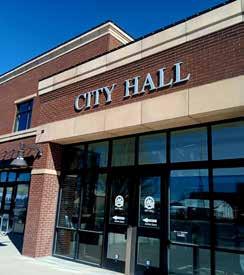





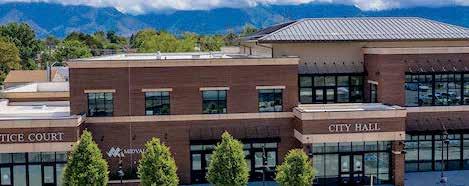
Midvale City Hall. (Giovanni Radtke/City Journals)




COMMON GROUND
Play Nice in the Sandbox
Common Ground will be a column of rotating viewpoints that highlight specific feelings across the political spectrum, and it will always end with possible ways to come together.
There once was a giant sandbox where everyone could play together. It had dump trucks, shovels, sandcastle molds and one corner filled with cigarette butts from the high school teens.
Big Brother (BB) controlled the sandbox. He carried a clipboard and whistle, and discouraged others from playing. Although it belonged to the entire community, BB would chase people away, saying, “That’s just the rules,” which he had made himself, of course.
But Little Brother (LB) wanted to play. He tried to convince BB to give him just a small part of the sandbox to build sculptures with his friends. “What about this spot?” he asked.
BB clutched his clipboard to his chest and gasped. “That’s a very important place. That’s my transportation corridor. You can’t have it.”
Every spot LB suggested, BB drew a new line in the sand and explained why it just wasn’t feasible. That spot was BB’s economic area, and another spot was an important waterway. Soon, all that was left was the ashtray corner, but BB wanted control over that, too.
LB went to find Mom (who represents voters, the judiciary and common sense). She explained to BB that the sandbox belonged to everyone and LB could have his share.
BB was furious and started throwing sand at Mom, calling her a bully. “You’re destroying the integrity of the sandbox!”
Peri Kinder Common Ground
he screamed. Then he spent the rest of the summer planning to steal back LB’s share.
Instead of a sandbox, we’re dealing with voting maps. Gerrymandering has shaped Utah’s leadership for decades, especially in creating congressional districts that look more like a sliced pizza than an equally divided constituency.
We can’t bury our heads in the sand and expect the majority leadership in our state to treat us fairly. In 2018, Utah voters tried to redraw the sandbox lines, approving a ballot initiative that would create an independent redistricting committee to create voting maps to avoid gerrymandering.
But Gov. Cox signed a different map into law that split Salt Lake County into four districts that could easily be controlled by Republicans. The new map ignored the committee’s recommendations, which would give Democrats a possibility of winning a Congressional seat.
Utah’s League of Women Voters filed a lawsuit, claiming the new map was a bunch of baloney. They won that case in 2024 when the Utah Supreme Court ruled that legislators could not override the voice of the people. But the majority leadership has been fighting for its maps
and sand toys ever since, trying to overturn the Court’s decision.
Common Ground: Gerrymandering should be illegal in every state because it skews voters’ rights and stacks the deck for whoever the majority party may be. Maybe instead of lawmakers crafting the voting maps, independent commissions can be tasked with creating fair districts for all states.
We’re told that every vote counts, but that’s not the case in gerrymandered states, on both sides of the aisle. Voters feel frustrated and unheard. I think we can agree our system is broken. Majority leaders in states, both Red and Blue, draw the voting maps, create the rules and decide which demographics get representation.
Could Utah take the high road and fix the system? Could we become a beacon of guidance and inspiration for the country in a time that feels heavy and dark? It’s a nice idea, we just need brave leaders willing to adopt meaningful change.
A diverse range of opinions creates effective solutions. Instead of one group deciding the laws, it strengthens our democracy to include voices from differing beliefs and experiences.
Gerrymandering eliminates divergent voices, creating a system of inbred and insipid decisions. That doesn’t sound like fair representation; that sounds like a power grab, no matter the party.
May Follow Up From Readers
In May, John J. Walker’s Common Ground article, “I can’t afford YOUR tax bill,” sparked a flurry of replies, including one from reader Christine. “I would agree that paying for infrastructure is important and it’s tough when your paycheck doesn’t go very far for all your hard-worked hours. I would disagree, however, about the derogatory generalization of Democrats being the brainless, doom-scrolling, rage-bating, vulgarity-writing party.”
Some commenters said they want their tax dollars spent on things like zoos, parks, and museums, and felt Mr. Walker’s column was “negative and angry.” Others felt people earning over $1 million should pay more into the system.
Readers expressed appreciation for the Common Ground concept, with the focus of bringing the community together, even when we disagree. However, reader Laura felt the tone of Mr. Walker’s op-ed didn’t fit that description. “I don’t see how the rudeness expressed in this article could achieve that goal,” she wrote.
A reader named Tyler summed up a prevailing sentiment when he wrote, “I think the [Common Ground] approach and voice is exactly what our community needs. I firmly believe that informing on political issues is a much-needed thing. I hope that the continued success of the column helps bring our community closer together!”
— City Journals Columnist Peri Kinder
MIDVALE TEAM
The Midvale Journal is a monthly publication distributed directly to residents via the USPS as well as locations throughout Midvale. The views and opinions expressed in display advertisements do not necessarily reflect or represent the views and opinions held by Loyal Perch Media or the City Journals. This publication may not be reproduced in whole or in part without the express written consent of the owner.
© 2026 Loyal Perch Media, Inc.
EDUCATING,
PUBLISHER
Bryan Scott | bryan.s@thecityjournals.com
EDITOR
Travis Barton | travis.b@thecityjournals.com
ADVERTISING EXECUTIVES
Mieka Sawatzki | mieka.s@thecityjournals.com
Ryan Casper | ryan.c@thecityjournals.com
Marc Davis | marc.d@thecityjournals.com
CLIENT SERVICES
Lydia Rice | lydia.r@thecityjournals.com 385-557-1022
CIRCULATION COORDINATOR
Lindsay Andreasen | lindsay.a@thecityjournals.com Rack locations are also available on our website.
EDITORIAL & AD DESIGN
Stacey LaMont Ty Gorton
MIDVALE CITY JOURNAL
9500 South 500 West, Suite 205 Sandy, UT 84070
PHONE: 801-254-5974
MISSION
Our mission is to inform and entertain our community while promoting a strong local economy via relevant content presented across a synergetic network of print and digital media.
Designed, Published, & Distributed by



65 and rolling across America on one wheel
While most people celebrate turning 65 with cake, Kent Griffiths is celebrating by riding an electric unicycle across America to raise scholarship money for Hillcrest High students.
By Julie Slama j.slama@mycityjournals.com
On May 2, Hillcrest High alumnus Kent Griffiths turned 65.
The Sandy resident celebrated by starting an epic cross country journey — not as a motorist nor cyclist and not even on foot. He is riding from California to Virginia on an electric unicycle, one of the first people to do so.
It wasn’t surprising to his former childhood neighbor, Craig Conder, who remembered watching him make 60 jumps skydiving for his 60th birthday. Both adventures help raise funds for Hillcrest High Alumni Association’s scholarship fund.
“I was someone who squeaked by with bad grades, but I had my breaks,” said the 1979 graduate, who added those came from the U.S. Army and later, his employer.
Griffiths’ daughter, he said, thrived at Hillcrest and now is studying medicine,
but that raised the concern about those who need a hand-up, so he devoted both epic adventures to raising funds for scholarships.
“I get to have this experience of a lifetime, but I also get to make it about somebody else. That’s the motivator for me,” he said. “It doesn’t matter where help comes from as long as it comes at the right time.”
Less than one week after starting his trip, Griffiths reached the Utah border. While he carefully planned and tested his equipment, he misjudged one thing.
“I severely underestimated the importance of lotion on my hands,” he said. “Even with leather gloves on, several of my fingertips are painfully split from the cold dry air. I’m buying some hand lotion tonight for sure.”
Griffiths reported all his “electronic gadgetry has pretty well worked as expected” although the rain hurt the range on his electric unicycle.
He already had met engaging people a man walking cross country as well as another who rides his unicycle while announcing acrobatic airshows — however, Griffiths learned crossing vast, empty miles can become monotonous.
“I also learned that you can mess with the heads of passing motorists on an electric unicycle when you pretend you are holding an invisible steering wheel and you swerve
at them; anything to relieve the boredom,” he said.
Griffiths said the journey itself is part athletic feat, part social experiment and part, a rolling adventure documentary. He plans to ride about 125 to 150 miles per day through 11 states. He expects to be on the road by 9 a.m. to 5 p.m., 30 to 45 days, deciding his route as he rolls along.
Unlike traditional cyclists, Griffiths rides standing or seated atop a single oversized electric wheel, which weighs about 135 pounds with gear attached. The unicycle can travel more than 100 miles on a charge under ideal conditions.
Preparing for the ride has become a preoccupation the past year. Griffiths trained on rides throughout Utah, including a 75mile dress rehearsal around Kamas while carrying his full backpack. He researched charging stations, weather patterns, repair tools and route routes.
He even consulted with Steve Maupin, who was the first to electric cycle across the states. Maupin’s stories and advice shaped much of Griffiths’ preparation, including his equipment list.
“He taught me both what to do and what not to do,” he said.
Griffiths trimmed unnecessary weight from his gear, right down to choosing a manual toothbrush over an electric one. He debated every item that made the final cut.
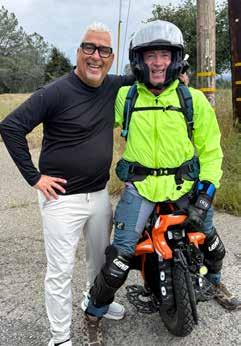
Hillcrest alumnus Kent Griffiths, seen on the electric unicycle, is on a cross-country fundraising adventure and had met fellow unicyclist Michael Temby during his first week. (Photo courtesy of Kent Griffiths)
homage” to her.
He wants to experience America at a slower pace, connecting with people faceto-face instead of through social media and political arguments.






“I’ve put about every thought I can into minimizing weight,” Griffiths said, saying he chose electrical tape over duct tape for repairs for that reason.
His packing list includes items from tools (Allen wrenches, screwdrivers, pliers, tire sealant) to a two-pound drone to document the trip to a couple changes of clothing. He’s also carrying stickers with a QR code directing curious strangers to his fundraising website.
The website, “One Wheel, One Mission” (www.1wheel1mission.com), allows followers to track his GPS location and daily blog posts. He plans to upload videos and reflections from the road each night as long as he has internet access.
He wants to meet people across the country, not just “complete the mission.”
“I hope to be reinforced that people do inherently want to help when they see a stranger,” he said.
Griffiths expects plenty of opportunities for conversation while riding through small towns. On his agenda in Utah are scenic stops in Capitol Reef and Arches national parks.
He is riding in honor of family members. His unicycle is named Rex, after his late cousin who died a few months ago, as well as a derivative from the cycle’s model name Oryx. In honor of his mother, who was a lifelong fan of the television western, “Gunsmoke” Griffiths intends to scatter her ashes in Dodge City as “a sort of
“If we can get off the internet and talk to people face to face in coffee shops and restaurants, we can accomplish a lot more than arguing with strangers on the internet,” Griffiths said.
Along the route, friends and family will be supporting him from afar. His girlfriend, Susan, helped design and organize the website and drove him to California for the start of his trip. Friends volunteered to mow his lawn, take care of his cats and ship unicycle parts if something breaks. Others across the country have offered him hospitality.
Griffiths said his biggest challenge won’t be physical endurance.
“Barring sickness or injury, I don’t have any doubts I can do this,” he said before he left. “What I want to discover about myself is that I can enjoy every day for what it is. I want to be present for the experience, to take in the scenery and see the splendor of the places I’ve never been. I’ll get to see them in a way that maybe three people have, which is just me and nothing in front of me except perhaps my 360 camera. Can I do that and enjoy it? That’s going to be what I find out about myself.”
As a skydiver, an Army veteran and former marathoner, Griffiths likely will continue to roll along eastward on America’s back roads — perhaps pretending to steer a nonexistent steering wheel to confuse drivers — while raising money so future Hillcrest Huskies can chase dreams of their own. l
Longview students spin reading into gold
After weeks spent reading “Rump” together, students met bestselling author Liesl Shurtliff, who inspired young readers with her tales and writing lessons.
By Julie Slama j.slama@mycityjournals.com
When bestselling children’s author
Liesl Shurtliff walked into Longview Elementary, she wasn’t arriving as a stranger. For weeks, students had been immersed in her world of fairy tales through the schoolwide reading on her novel, “Rump: The (Fairly) True Tale of Rumpelstiltskin.”
When Shurtliff came for a 45-minute assembly, most students had finished the book, entered school contests inspired by it and discussed the story in classrooms.
“Liesl travels all over the country doing these presentations on fairy tales and on writing to students, so I wanted her to come to our school,” said Caitlin DeMass, Shurtliff’s younger sister, who was the driving force behind the visit. “It’s best when kids know who she is.”
Shurtliff agrees the schoolwide reading effort transformed the visit into something meaningful.
“If students don’t know my work, I’m just a random person coming to visit,” she said. “When they’ve read my books, my visit is more impactful. There’s something powerful about reading a book together — experiencing the same story, talking about it and seeing how you might have experienced the same story differently than someone else because of
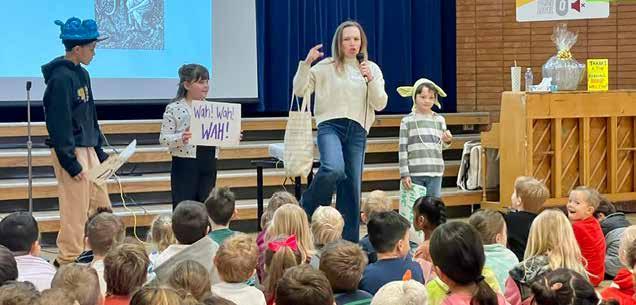
With the help of Longview students, bestselling children’s author Liesl Shurtliff shares the tale of “Rumpelstiltskin,” which was the base for her novel, “Rump: The (Fairly) True Tale of Rumpelstiltskin.” (Photo courtesy of Caitlin DeMass)
your own experience and point of view.”
To prepare for her visit, Longview launched a “One Book, One School” reading program. The PTA supplied classrooms with copies of “Rump” and families purchased books and donated extras, so every student had access.
Teacher Mike Okumura said it resulted in students connecting more to the author.
“We could read and talk to the kids about the story and then actually meet the person who wrote the book,” he said. “When she came, the kids could ask questions about the book.”
The monthlong reading became a celebration. Students who read entered prize drawings, with winners receiving copies of Shurtliff’s other fairy tales, including “Red,” “Jack” and “Grump.” Many also participated in lunchroom activities as well as writing and art contests, all
inspired by the story. Contest winners attended a snack and chat session with Shurtliff.
During the assembly, Shurtliff spoke about the origins of fairy tales, the Brothers Grimm and the evolution of storytelling traditions. With Shurtliff’s direction, students reenacted the tale of “Rumpelstiltskin,” with DeMass’ second-grade son being picked by his teacher to portray the main character.
“My sons loved having her here,” DeMass said. “It was cool they got to see their aunt; they felt like little celebrities.”
Shurtliff told students she spends hours only writing, revising and editing.
“I want them to know the best writers edit the most,” she said. “Sometimes students realize professional writers need to revise and edit just as they do with their assignments.”
Shurtliff showed students her marked-
up manuscript pages; “Rump” went through six major revisions before publication.
“You never want your reader to be confused or bored,” she said. “I tell them to have grit; I want them to understand the satisfaction of working hard at something.”
That perseverance shaped Shurtliff’s journey. As a Sandy native who thrived under Brian Bentley’s theatre program at Hillcrest High in Midvale, the 2000 graduate studied performing arts at Brigham Young University before moving to New York with dreams of Broadway. After marriage and motherhood, she turned to writing.
“I made a creative switch to writing and I’m not sorry,” she said. “I did a lot of character study at BYU in my musical theater days: it translates well to novel writing.”
As a girl, Shurtliff loved “Grimm’s Fairy Tales.”
“She wore out the copy our grandmother gave her; the cover fell off,” DeMass said. The fascination inspired her first novel, “Rump.” Shurtliff was intrigued by the fairy tale villain and began asking questions: “Who was he? Why was his name so important? What if he wasn’t the villain?”
While living briefly in Utah in 2010-11, she wrote the book.
Today, Shurtliff lives in a Chicago suburb and visits about 15 schools each year in person, along with dozens more virtually. She continues to write fairy tales and is exploring writing an adult novel.
After Shurtliff’s visit to Longview, DeMass said her books in the school library continue to circulate and students are inspired to read more of her work, including “The Time Castaway” series. l
Oak Street water well gets emergency replacement
The well supplies around 16% of the water to residents in western Midvale.
By Giovanni Radtke g.radtke@mycityjournals.com
The Midvale City Council unanimously approved an emergency task order April 21 to replace a well pump supplying water to the suburb’s west side, as the city faces a drought going into the summer months.
The Oak Street well’s urgent need for a new pump, motor and electric inverter was discovered during an inspection and cleaning of the aquifer by Widdison Well Services. The groundwater management firm found that the pump and its components have never been replaced since the well’s installation over 50 years ago.
“The typical service life for this type of equipment is 20 years. So, what was in there far exceeded its expected lifespan,” Jerimie Thorne, deputy director of Public Works, said to the council moments before the unanimous vote.
Midvale’s 2020 drinking water master plan suggested upgrading Oak Street’s pump
to take advantage of all the water available to the city. Currently, the well provides about 16% of the west side’s water supply during the summer when usage sees an uptick, according to a staff report sent to the city council.
“The work is ready to proceed immediately, and the replacement is critical to complete before the seasonal demand hits us,” Thorne said.
Utah had its lowest snowpack on record this winter. As of April 1, the snow water equivalent is at its lowest in every major basin statewide, according to a water outlook report from the Natural Resources Conservation Service.
Midvale’s main water supplier, the Jordan Valley Water Conservancy District, declared a level 2 drought in April. The district proposed decreasing the water supplied to Midvale by 10%. It has also asked all residents to refrain from watering their lawns until May 15.
The city will allocate $400,000 to fix the Oak Street well, as outlined in an emergency procurement memorandum.
Now that the project has been authorized, the well will likely be fixed in 120 days, per the engineering services agreement. l
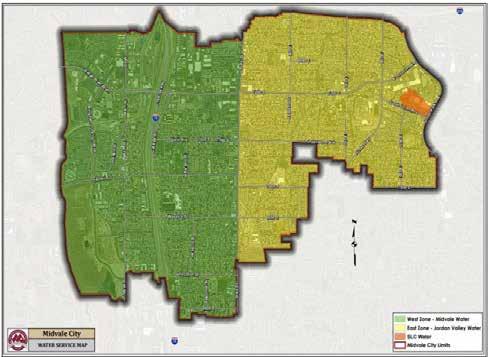
Water service map. (Courtesy of Midvale)
Popular concert series returns to Midvale City Park
Nine free concerts are scheduled each Friday in June and July.
By Peri Kinder peri.k@thecityjournals.com
The Midvale Summer Concert Series is a long-standing tradition that brings the community together to experience live music in a family-friendly setting at the outdoor stage in Midvale City Park (455 W. 7500 South).
Every Friday at 7 p.m., in June and July, the free concert series will feature a mix of musical genres, including 23rd Army Band of the Utah National Guard, a string quartet, a 1980’s tribute band, Americana and folk groups, and crowd favorite James Romero y Los Amigos Three Generations.
“James is a Midvale fixture; he’s been doing concerts for years,” said Midvale Arts Council Executive Director Lauren Richards. “He brings in a huge crowd for some Latin-flavor-inspired rock and pop covers. There’s even a big mural of James Romero on the side of the [Midvale] senior center.”

Started nearly 15 years ago, the summer concerts not only allow local artists to find an audience but also encourage residents to listen to different styles of music they might not otherwise hear. While trees provide shade, attendees are asked to provide their own food and seating.
“They tried bringing in food trucks a few years ago and they’ve decided we’re just going to stick with the concert,” she said. “We hope people will bring their camp chairs, their picnic blankets, bring their snacks, and bring a picnic to make a good night of it.”
The schedule for the 2026 Summer Concert Series is as follows:
• June 5: Bridging Betty (Americana/ Folk)

• June 12: Salt City String Quartet (classical, pop covers)
• June 19: Sock Hop (50s)
• June 26: Channel Z (80s)
• July 3: 3rd Army Band (Army Orchestra)
• July 10: Suburban Cowboys (country)
• July 17: James Romero y Los Amigos Three Generations (Latin flavor)
• July 24: The Walker Brothers (Midvale tradition)
• July 31: Exit Strategy (Modern Covers) For more information, visit midvalearts. com/summer-concert-series.
“It’s just fun to be at the park. It’s such a beautiful park, with the big trees providing shade. It feels like you’re part of the community,” Richards said. “It’s just a great way to spend a Friday evening, to come and hear fun local bands, let your kids run around and hang out with your neighbors and have a good time.”l








Midvale City Park (455 W. 7500 South) is the venue for the Midvale Summer Concert Series that runs every Friday night in June and July. (Photo courtesy of Midvale Arts Council)
Los Muros on Main returns Saturday, June 13
The Midvale City Mural Festival celebrates its fifth year.
By Peri Kinder peri.k@thecityjournals.com
Talented muralists from across the country will add their vibrant art to the walls of local businesses during Midvale’s Los Muros on Main Mural Festival. On Saturday, June 13, from 4-9 p.m., the Midvale Main Arts & Culture District (7505 S. Holden St.) will become a living canvas for eight muralists as visitors enjoy an evening of art and community.
The free event combines music, culture, food and art to celebrate the diversity of Midvale and encourage exploration of the city’s Historic Main Street. Visitors can take a frontrow seat to watch the muralists complete their projects.
“We will have multiple interactions between the community and the artists throughout the week of the festival,” said Midvale City’s RDA program manager Aubrey Christensen. “We also have Craft Lake City coming to do a workshop about murals on Tuesday before the festival.”
For the fifth anniversary of Los Muros on Main, the festival is initiating a rotating wall where eight artists will paint over six murals

created in 2022. The rotation of art is intended to keep the district fresh and exciting, and change the experience of visiting the area.
This year’s artists include Claudio Picasso, known for his designs based on stone sculpture; Gregory Shilling, with his dynamic focus on nature; Nigel Sussman, who creates complex illustrations; and Shane Grammer, with a talent for powerful, visual storytelling.
“Every year we get more and more high-caliber artists and it becomes harder and harder to choose who is selected,” Christensen said. “It’s a great problem to have. I think it has

leveled up the style and the talent that we have coming to Main Street.”
The festival’s Beer Garden offers a place to enjoy a drink while watching nearby artists. It also features outdoor games like Kan Jam, Spikeball and cornhole. A rotating series of bands and musicians will provide live music throughout the festival, with the performances adding a fun backdrop to the event.
Visitors are encouraged to visit shops and eateries on Midvale’s Historic Main Street, and dozens of vendors will be on site with handmade goods, unique gifts and original artwork.
Along with restaurants like The Bambino and Señor Pollo Mexican Grill, the food truck plaza on the north side of Midvale City Hall will feature several trucks offering local and international cuisine. The plaza also has a shade structure to take a break from the heat.
The food truck plaza will also be open on Tuesday, June 9, from 5-7 p.m. for the mural workshop.
“There will be a lot going on with socializing, and the artists should be out painting. There will be a really cool workshop going on that people can go and learn more about the process of creating murals,” she said. “I’m really excited to see if we get increased attendance this year. People can really hang out and enjoy themselves.”
Los Muros on Main has grown in popularity over the last five years, with first-year attendance numbers coming in at 1,500 and an expected 6,000-plus visitors this year. For more information, visit engagemidvale.com.
“We’ll have release times once we get things solidified with the artists about when they’re supposed to be at their walls,” Christensen said. “So if you want to see the process and talk to an artist about what inspires them, or how they go from a sketch to having this huge mural on a wall, look out for those times when they can go and communicate with artists directly at their wall. It’s something that’s a really cool thing to do.” l

Bright murals and live music are the focus of the fifth Los Muros on Main: Midvale City Mural Festival. (Photo courtesy of Midvale City)




MIDVALE CITY DIRECTORY
City Hall
801-567-7200
Finance/Utilities 801-567-7200
Court 801-567-7265
City Attorney’s O ce 801-567-7250
City Recorder/Human Resources 801-567-7228
Community Development 801-567-7211
Public Works 801-567-7235
Ace Disposal/Recycling 801-363-9995
Midvale Historical Museum 801-567-7285
Midvale Senior Center ....................... 385-468-3350
SL County Animal Services .............. 385-468-7387
Communications ................................. 801-567-7230
MIDVALE CITY ELECTED OFFICIALS
Mayor - Dustin Gettel
Email: Dgettel@midvaleut.gov
CITY COUNCIL
District 1 - Bonnie Billings
Email: Bbillings@midvaleut.gov
District 2 - Paul Glover
Email: Pglover@midvaleut.gov
District 3 - Heidi Robinson
Email: Hrobinson@midvaleut.gov
District 4 - Bryant Brown
Email: Bbrown@midvaleut.gov
District 5 - Denece Mikolash
Email: Dmikolash@midvaleut.gov
WHO TO CALL FOR…
Water Bills ............................................... 801-567-7200
Ordering A New Trash Can 801-567-7202
Permits 801-567-7214
Court ........................................................ 801-567-7265
Paying For Tra c School 801-567-7202
Business Licensing 801-567-7213
Cemetery ................................................ 801-567-7235
Planning and Zoning 801-567-7238
Code Enforcement 801-567-7208
Building Inspections........................... 801-567-7214
Graffiti 385-468-9769
PUBLIC SAFETY & EMERGENCY CONTACTS
EMERGENCY 911
Police Dispatch ..................................... 801-840-4000
Fire Dispatch ......................................... 801-940-4000
Uni ed Police Department
> Midvale Precinct 385-468-9350
Public Works 801-567-7235
Rocky Mountain Power 877-508-5088
In The Middle of Everything
City Hall – 7505 South Holden Street • Midvale, UT 84047


Midvale Monthly with Mayor Gettel
CITY NEWSLETTER
Property Taxes 101 and the FY2027 Tentative Budget
Every June, the Midvale City Council begins the process of adopting the City budget for the coming year. It’s one of the most important responsibilities we have because it determines how we maintain services, invest in infrastructure, and continue supporting the community we all call home.
Property taxes are a major part of that conversation, and they can also be one of the most misunderstood topics in local government. My goal is to help make the process a little easier to understand and explain why Midvale is discussing a proposed property tax adjustment this year.
Understanding the FY2027 Tentative Budget
The Fiscal Year 2027 tentative budget was presented to the City Council on May 5 and May 19. The budget is considered tentative because several important numbers are still pending. For example, Salt Lake County does not release the Certi ed Tax Rate until early June.
Transparency matters to us, and resident input is an important part of this process. Midvale City will host two open houses where residents can ask questions, learn more about the budget, and provide feedback: June 2 at 6:00 p.m. and June 16 at 6:00 p.m. at Midvale City Hall. The nal budget is scheduled for adoption during the Truth in Taxation Hearing on August 11, 2026, at 7:00 p.m.


According to the tentative budget, Midvale is experiencing a $153,000 reduction in state mitigation grant funding that has historically helped support police services. Without replacing that funding, the City could face reductions in police sta ng and services.
In addition, the cost of contracted police services is projected to increase by 2.92% for Fiscal Year 2027. To help maintain current service levels, the tentative budget includes a proposed public safety property tax adjustment estimated at about $34 annually ($2.83 monthly) for the average household.
We understand residents and families are already feeling nancial pressures. Before considering any tax adjustment, the City worked to reduce spending in other areas of the budget to help minimize the impact on residents while continuing to protect essential services.
Where Does Midvale City’s Money Come From?
So, if your property tax bill changes, it does not always mean the City increased taxes. Changes in property values, voter-approved bonds, school district rates, and other taxing entities can all a ect your bill.
2. Primary residences are taxed di erently than secondary or business properties.
In Utah, residents pay taxes on 45% of the market value of their primary home, whether it’s a house, condo, or apartment. Secondary homes, rental properties, and commercial properties are taxed on 100% of their value.
3. Both residents and businesses contribute to the property tax system.
Property taxes are shared across residential and commercial properties throughout the city. That means shifts in property values can a ect how the tax burden is distributed:
• If commercial property values decrease, residential properties may carry a slightly larger share.
• If residential values decrease, businesses may carry a larger share.
4. Midvale City receives only a small portion of your property tax bill.

Cities operate much like a household or business. We rely on several sources of revenue to provide the services residents use every day. Midvale’s primary funding sources include:
1. Property taxes
2. Sales and other taxes
3. Fees and nes
4. State funding

Sometimes those funding sources change. Costs increase. State funding is reduced. Infrastructure ages. Public safety costs rise. When that happens, cities must either nd another way to fund those services or reduce them. That’s why conversations about property taxes matter.
Four Things to Know About Property Taxes
1. Rising property values do not automatically mean the City collects more money.
This is one of the biggest misconceptions about property taxes.
Under Utah’s certi ed tax rate system, Midvale generally receives the same amount of property tax revenue from existing properties each year unless the City Council votes to increase it through a public process. For example, if the City collects $200,000 one year, the certi ed tax rate is adjusted so the City would collect roughly that same amount the next year from existing properties, even if property values increase.
If property values across the city rise, the tax rate goes down. If property values fall, the tax rate goes up. The goal is to keep the overall amount collected relatively stable.
Many residents are surprised to learn that Midvale City receives only about 10% of the total property tax bill.
The rest supports other agencies and services, including:
• Canyons School District
• Salt Lake County
• Salt Lake County Library
• Uni ed Fire Service Area
• South Salt Lake Valley Mosquito Abatement District
• Other local service agencies








In The Middle of Everything
Midvale City Public Works Director Glen Kennedy Retires
We eat, drink, ush, drive, and walk on Public Works every day The sign of a good system is that you don’t notice that it’s there. The fact that you don’t know much about our retiring Director Glen Kennedy might be his greatest success.
Kennedy has spent the last eight years oiling the machine of Midvale Public Works, from mapping out every inch of the water and sewer system, to designing a better system for employees. His team made sure water owed to your tap, snow stayed o your roads, city vehicles kept running, and the parks stayed cared for. They handle nearly anything else that holds daily life together

“It’s a large job to coordinate all of those e orts,” Matt Dahl, Midvale’s City Manager said. “We have a highly trained and motivated sta , increasing their training, getting certi ed. All of that is to make sure that when you turn that tap on, you get that clean water.”
Kennedy has also been the rst one on the phone during
MAYOR’S MESSAGE CONTINUED
You can view your property tax information and see where your taxes go by visiting: SaltLakeCounty.gov/Property-Tax/Notice-of-valuation. All you need is your address. Updated notices are typically available in July and include information about proposed rate changes and upcoming public hearings.
What Does Midvale City Pay For?
Midvale City serves more than 37,000 residents every day. The City budget helps fund services and infrastructure that keep our community safe, connected, and functioning, including:
• Police services
• Roads and sidewalks
• Clean water
• Sewer and stormwater systems
• Parks and trails
• Sanitation and streetlighting
• Animal services
any emergency. Blizzards, broken pipes, ooded streets: He was the rst one making calls to get things xed. He coordinated crews, made quick decisions, and kept things moving until the problem was solved. It was the kind of work that no one notices when it goes right.
In between the crises, he created Midvale’s rst water and sewer master plans, giving the city a roadmap for taking care of its pipes and water systems for decades ahead.

The people who worked alongside him say that what set Kennedy apart wasn’t the plans or the projects. It was how he showed up for the people around him.
Two managers, Levi McNeill and Roland Garcia, have a combined 32 years of service in Midvale. They echoed the sentiment that Kennedy wasn’t just a “man behind a desk.” He got along well with everybody and appreciated the work they did. He will be missed,” McNeill said. “He’s de nitely for the people; he’s helped me grow in my career,” Garcia added.
That loyalty ran both ways. When something mattered to his people, it mattered to Kennedy. He pushed hard for a new
• Community programs and events
• Government operations
• And much more
These are the services many of us rely on every single day, often without thinking about them until they’re needed.
As your mayor, I believe residents deserve clear information about how City nances work and how decisions are made. We know every dollar matters to families and businesses, and we take that responsibility seriously. Midvale will continue working to balance responsible budgeting with maintaining the essential services our community depends on.
I look forward to your questions and input as we move through this process. Please plan to join us at one of our upcoming open houses on June 2 or June 16 at 6:00 p.m. at Midvale City Hall. These are open conversations, and we want to hear from you directly.

Public Works building, vehicle shop, and storage center — a long-overdue upgrade that will give crews what they need to take better care of the city and the people who live in it.
Jerimie Thorne, who will step into the director’s role after serving as Kennedy’s deputy, has worked alongside him for 15 years across South Jordan and Midvale. “He’s always been amenable to listening to new ideas,” Thorne said, “and to not just being a boss but helping people grow — open to ideas that might be just as good or better than his own.”
Glen Kennedy retired on June 11. Now, for the rst time in a long time, his phone will stay silent. You might nd him out on the ice with a shing line dropped in, or in the eld on a hunting trip, trading city calls for the sound of the wind. He’s looking forward to being home more, present in a way the job never quite allowed, and to slow Saturday nights out with his wife, two proud foodies with nowhere else to be.
The water is still running. The roads are clear. You probably didn’t notice, and that’s exactly how he wants it.

JUNE 2026 CITY NEWSLETTER
MIDVALE. UTAH. GOV
Employee Spotlight: Kate Andrus
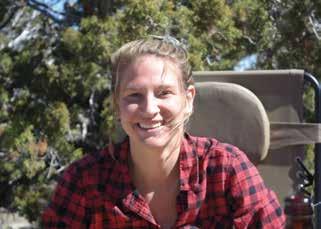
When you walk down Midvale Main Street you are seeing the fruits of the Redevelopment Agency (RDA), and the work of Kate Andrus. From the new hanging streetlights, the food truck plaza and the yearly events, Andrus is behind the success that has continued the transformation from blight to vibrant.
“She’ll always get it done and she’ll get it done well,” Nate Rockwood, Midvale’s Assistant City Manager said. “She really takes a lot of care and puts a lot of detail and e ort into making sure it’s done right.”
Andrus came to Midvale by way of the Peace Corps, a master’s degree in International Development, and a stint coordinating volunteers for Ragnar races — a background that might seem far from city government, but makes perfect sense when you understand what drives her.
“I’m actually in a position where I’m working one-on-one with people in the community,” Andrus said. “I want Main Street to be something that the community can be proud of — something that’s theirs and they can claim.”
The RDA team takes care of the three project areas: Midvale Main, Bingham Junction, and Jordan Blu s. Each area needs special attention in di erent ways.
“Kate is very good at taking a vague concept and turning it into an actual plan that gets things done,” Rockwood said. “Her position is key in making sure development stays on track and authentic.”
City growth is inevitable, but not at the community’s expense. Andrus’ makes sure that it means something when it arrives, and that it’s something positive for the residents. The RDA is committed to making the neighborhoods places where people belong and feel proud of.
That’s the work underneath the work. The grant programs and development agreements are just the tools.
Making eir Mark: e 2025-2026 Midvale Youth Council
The Midvale Youth Council is an opportunity for local juniors and seniors to get to know their community and local government from the inside out. They learn project and budget management, see how Public Works takes care of residents on a daily basis, learn how the City Council and Mayor make policy, and connect with state government leaders.
Instead of sitting in a classroom, they learn by doing. This year, they completed service projects like hygiene kits for The Road Home, and made personalized Valentines in English and Spanish for the Senior Center.
“They also practiced public speaking exercises; talking to council has been a really good practice,” Midvale City’s Uplift Coordinator, Vanessa Guevara, said. “We were able to talk to UFA (United Fire Authority) about how they respond to emergencies. One of their calls is actually rescuing ducks as opposed to rescuing cats.”
The youth also met with UPD (Uni ed Police Department) and got to see the equipment they carry each day.
These experiences carry their minds to their place in the community. They learn how they can contribute as residents, and also open their eyes to future careers.
Shatakshi Sinha, Midvale Youth Council 20252026 Secretary was excited by what she learned. “I didn’t realize how much I didn’t know about the city that I live in,” she said. ”I have found so many new things to appreciate — police o cers, re ghters, public works o cers— and I have learned how they truly work together to keep our societies running. I am really glad I joined Midvale Youth Council!”
Each youth council has their own experiences and grows in their own way. We are so proud

—Redevelopment Agency of Midvale City, Director
RDA Program Manager Aubrey Christensen sees that work up close every day. “She’s that sound mind behind everything,” Christensen said. “Kate has been an integral part of getting our events up and going.”
Drawing on her experience with Ragnar, she brought a practical knowledge of event logistics and community outreach to each event. “All of our events have gotten better,” Christensen said.
The events are more than just a good time. They are one of the most direct ways the RDA team connects with the people they serve. “We bring a lot of really positive, community-driven energy,” Christensen said. “The loans, the grants, the opportunities we o er open up a friendlier door and allow people to feel a little more comfortable working with a government agency.”
When she nally does step away from it all, Andrus goes looking for a trail. She hikes, camps, and hauls her spouse and two little kids into the Uintas every chance she gets — dry camping, no amenities, exactly the way she likes it. In the spring and fall it’s southern Utah. When the stress of the job piles up, she cross-stitches. “It’s cathartic,” she said.
Whether she’s on a trail with her kids or at a table with a business owner trying to get more customers in the door, Andrus brings the same thing: she shows up, she listens, and she gets to work.
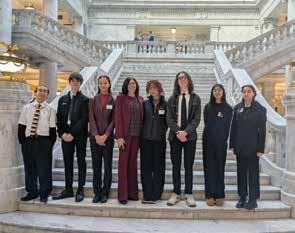
of this year’s group and we can’t wait to see what they do next.
“It was just such a pleasure to see so many kids take leadership, “ Guevara said. “Every cohort has been di erent in their own way. All of it’s wonderful. It’s a testament for the community here in Midvale City.”
Congratulations to our outgoing members!
Laila Quiroz
Dylan Martin
Parthi Rajesh Balaji
Haroon Javid
Vitalia Sun
Jasmine Martinez
Vishnith Ashok
Genesis Varas
Emma Brown
Sameep Shrestha
Jordan Cervantes
Shatakshi Sinha
Mariel Orellana
Talia Funk
Harith Sathish
Keerthana Perla
Jimena Olvera Gasga
Samhita Chavakula
Frida Bustos
Bhavya Rai
Jaswitha Jadapalli
Ishanth Sooram

HOSA students urge peers to disconnect and reconnect
The student-led “Reboot Reality” campaign encourages classmates to put away phones and engage more with classmates and activities.
By Julie Slama j.slama@mycityjournals.com
Agroup of Hillcrest High students are tak-
ing a stand against excessive screen time.
Members of the school’s Health Occupations Students of America (HOSA) chapter recently visited Brighton High School and Union Middle School to educate students about the effects of too much screen time and to encourage healthier habits.
The students also led awareness activities at Hillcrest during a “detox week,” hoping to inspire classmates to spend less time endlessly scrolling social media and more time connecting with others and participating in real-world activities. They said students, on average, spend three hours per day on social media.
Hillcrest High sophomore Ayushi Patel said the group wanted to focus on younger students because social media addiction often begins early.
“We’ve been trying to promote different ways we can spread awareness about social media addiction and the causes behind it,” she said. “We also are teaching how to prevent

The goal of daycare should not simply be exhaustion, it should be balanced socialization, education, exercise, safety, and fun.
it with future generations, especially among high school and middle school students.”
The “Reboot Reality” team partnered with Zero Fatalities to create and distribute more than 800 bags designed to hold students’ phones to reduce distractions. Each bag included candy, activity suggestions and reminders of ways students could stay engaged without screens.
Hillcrest Reboot Reality team member Benji Rigby said their goal is to help students become more mentally present.
“By bringing awareness of how much time people waste on social media, we want students to be more engaged,” he said. “Statistics show limiting screen time decreases anxiety so students should feel more positive and we’re hoping this also will help build more community amongst students.”
The outreach project is part of a larger effort the students planned to present at the state HOSA competition, where they were to showcase a 21-page portfolio detailing the impact they made in their community. Their message centered on balance, mindfulness and healthier lifestyles.
During Hillcrest’s detox week, the team, including members Leah Simon and Emma Riech, hosted lunchtime activities, contests and educational presentations, including a speaker from Brigham Young University discussing how social media platforms are
What
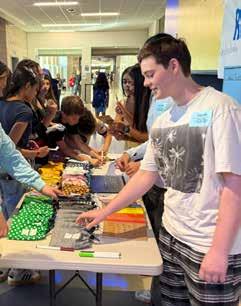
A Hillcrest High HOSA team helps Union Middle students tuck their phones in bags they provided so they get involved in nonscreen activities.
designed to keep users hooked, said Hillcrest sophomore Reeya Sonawale.
Union Middle students responded positively to the high schooler’s campaign.
“It’s a good idea,” said sixth-grader Haylee Groberg. “When you’re on your
phone, it makes your attention spin.”
Classmate McKinzlee Colungo adds: “If you stay on it for too long, then, your eyes and your brain hurts.”
Union student Lehi Norton said less time on phones is better.
“Phones hurt my neck when I look down,” Lehi said. “I use my cell to call or text Mom. I’d rather be outside in nature or scootering.”
Sixth-grader Rey Rico agrees: “Instead of being on your phone, you could do something like draw or go outside. I’d play soccer.”
Hillcrest sophomore Shreya Mehta said she’s already seen behaviors change at her own school.
“Before we made students aware of this initiative, they’d walk the hall, scrolling between classes,” she said. “Now, they’re off their phones, saying hi to each other. We want Union students to use these bags to put their phones in and engage in other hobbies instead of endless scrolling.”
During the lunch visit, many Union students already pledged they’d put down their phones and instead play soccer, volleyball, craft and even do their homework.
Mehta added a new law banning cell phones in schools aligns with the group’s message of reducing distractions, improving student engagement and learning that life beyond the screen can be healthier. l
EDUCATION
MATTERS
When choosing a dog daycare, it’s important to look for more than just a place for your pup to play. You want an environment that prioritizes education, safety, socialization, and exercise.
When many people think about dog daycare, they picture dogs simply running around and playing all day. While play is certainly part of the experience, quality daycare environments should also provide opportunities for dogs to learn healthy social skills and positive play behaviors
Just like people, dogs communicate through body language. In a structured daycare environment, dogs should be encouraged when displaying polite, healthy play behaviors and gently redirected when interactions become too rough, overstimulating, or impolite. Over time, this helps dogs build better social confidence and safer play habits with other dogs.
A good daycare environment also allows dogs the freedom to simply “be dogs.” Barking, playing, wrestling appropriately, exploring, and interacting with their BFFFs (Best Furry Friends Forever) are all natural and important parts of healthy socialization. Dogs thrive when they have safe opportunities to interact, burn energy, and engage their minds in positive ways.
In addition to social play, many daycare environments incorporate enrichment activities throughout the day. These may include
scent-based activities, simple problem-solving exercises, bubbles, splash pads, agility items, or other experiences designed to provide mental stimulation and variety. However, it is equally important that dogs are not constantly overstimulated. Dogs also benefit from time to use their own imagination, create their own games, and naturally interact with their environment and friends.
IF
YOU’RE LOOKING FOR A STRUCTURED
ENVIRONMENT where your dog can socialize, learn positive play behaviors, and make some BFFFs of their own, schedule a Meet & Greet today to see if daycare may be a good fit for your pup. Learn more at: www.dogtopia.com/location-finder
(Julie Slama/City Journals)
Parkinson’s Disease
WBeyond the Tremor: Unveiling the Invisible Struggle of Parkinson’s Disease
HEN YOU THINK OF PARKINSON’S DISEASE, a visible tremor might come to mind. However, the true experience often lies hidden beneath the surface – an “invisible struggle” impacting millions. This article highlights the complexities of Parkinson’s and advancements in care.
A common misconception is that all Parkinson’s patients experience tremors. This isn’t true; up to 20% do not. Additionally, Parkinson’s isn’t just an elderly condition. Young-Onset Parkinson’s Disease (YOPD) affects individuals under 50, with celebrity Michael J. Fox, diagnosed at 29, significantly raising awareness and funding for research.
As Dr. Sunil Rathore, a neurologist at Holy Cross Hospital – Salt Lake, emphasizes, “Many people believe Parkinson’s is solely a motor condition, defined by tremors and rigidity. However, that’s just one piece of a much larger and more complex puzzle. The non-motor symptoms – from sleep disturbances and anxiety to cognitive changes and chronic pain – can often be the most challenging aspects for our patients.”
The Hidden Realities: Non-Motor Symptoms and Daily Impact
The “invisible struggle” of Parkinson’s includes a wide array of non-motor symptoms impacting daily life, often appearing years before motor symptoms. These can include loss of smell (anosmia), REM sleep behavior disorder, constipation, depression, anxiety, cognitive changes, and debilitating fatigue. These realities profoundly affect well-being, turning simple tasks like dressing or driving into immense challenges and leading to social isolation.
Hope on the Horizon: Advancements in Treatment and Research
While there’s no cure, significant advancements are improving symptom management and quality of life. Levodopa remains a cornerstone medication, with ongoing developments to optimize its effectiveness. Advanced therapies like Deep Brain Stimulation (DBS) and focused ultrasound offer new hope by precisely targeting brain areas responsible for motor symptoms. Emerging research explores disease-modifying drugs, gene therapy, and biomarker discovery. The Michael J. Fox Foundation has raised over


$2.5 billion for research, accelerating the search for a cure.
Dr. Rebecca H. Reiser, a neurologist at Holy Cross Hospital – Jordan Valley, states, “The landscape of treatment and support is constantly evolving. We’re seeing incredible progress in understanding the disease at a molecular level, leading to more targeted therapies and a renewed sense of hope for better symptom control and ultimately, a cure. Our goal is to empower patients to live full and meaningful lives.”
Local Expertise and Support Available
Living with Parkinson’s is a journey best not taken alone. Our community offers local support groups, specialized exercise classes, and educational events for patients and caregivers. If you or a loved one are experiencing any concerning symptoms, please consult a provider. Early diagnosis and proactive management are key. For more information, visit: mountain.commonspirit.org.
For more information or to find a provider visit mountain.commonspirit.org


Learn more about the services, care providers and mission-driven work of the Holy Cross hospitals and CommonSpirit Health at www.holycrossutah.org. SPONSORED

At CommonSpirit Health, we make the healing presence of God known in our world by improving the health of the people we serve, especially those who are vulnerable, while we advance social justice for all.
When minutes count, count on our emergency care.
When you need emergency care fast, the closest emergency room is a smart thing to know. You never know the level of care you’ll need when an emergency happens and choosing the right ER can make all the difference. And a hospital ER comes with the confidence of additional services right on-site.
CommonSpirit Holy Cross Hospital – Salt Lake has been awarded Chest Pain Center Accreditation from the American College of Cardiology (ACC). Facilities that achieve accreditation meet or exceed an array of stringent criteria for evaluating, diagnosing and treating patients who may be experiencing a heart attack.
Find emergency care close to you at mountain.commonspirit.org.
Union Middle students tackle real world
From paychecks to parents, eighth-graders get an eye-opening look into adulthood and choices that shape it.
By Julie Slama j.slama@mycityjournals.com
Union Middle eighth-graders recently got a glimpse into their future, trading their usual class schedule to learn about careers, bills, families and responsibilities during the school’s annual Reality Town.
The hands-on simulation transforms part of the school into a mini-city, where students role-played a month of adult life. They arrived with assigned careers, salaries and families, then had to make decisions about housing, transportation, health care, utilities, insurance, groceries and other financial choices.
Before their big day, a team, including school counselor Lynn Nelson, helps the eighth-graders prepare.
“They each get a booklet and we go through it and say, ‘This is a month of your life. You’re going to be 30 years old,’” said Nelson, who has overseen the mock town for 11 years. “We talk about needing to get housing, transportation, insurance and groceries. We go through what it says on their pay stub — how much they make, what the difference between gross and net is, taxes. We hope they get an idea of their future life and start planning.”
On Reality Town day, the Bobcat Den
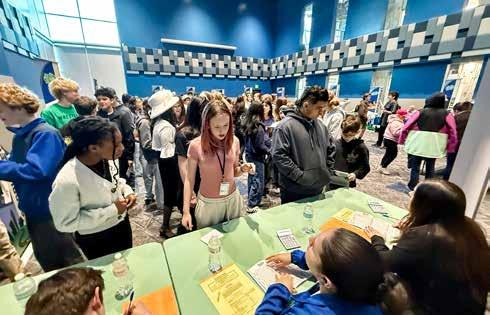
Union Middle School eighth-grade students got a taste of adult life as they rotated through stations to determine housing, transportation, health care and other financial choices. (Julie Slama/City Journals)
was buzzing as students move from booth to booth making real-world decisions with the help of parent volunteers and Hillcrest High School students, who run booths representing everything from banks to entertainment.
Parent Chris Martin volunteered as his daughter, Maya, was participating as a nurse practitioner. She already had an idea about Reality Town, he said, as her older brother, Dylan, learned from it last year.
“He bought a sports car, then he didn’t have enough money for a house, so he joined up with somebody else for housing,” Martin said. “He learned how life patterns can
evolve depending on his wants and needs.”
Eighth-grader Adell Clark was eager to embrace her role as a surgeon with a family.
Adell followed the advice of the counseling team and planned her future. Using her salary of $5,772 per month, along with her husband contributing an additional $500 while still in school, she wanted to make sure ends met while raising two children — George, 5, and Rachel, 3, and caring for their golden retriever named Zeke.
“My priorities are making sure we have healthy food and letting my kids do some activities they want to do. I want to make sure
our family is good on money, that we’re not spending too much, but we’re still having fun,” she said.
To help manage costs, Adell said her family will share a home with another family and buy a minivan.
“The best part is getting to explore and getting a small idea of what it’s going to look like one day, but also to have fun as an eighth grader,” she said.
Seventeen Hillcrest students helped the younger students, but the high school’s workbased coordinator Cher Burbank said Reality Town benefits all students.
“What I love most about students coming over from the high school is they learn a lot more than even the eighth graders learn by being at the booth,” Burbank said. “They learn more about their services at the booth and what it takes to pay for entertainment or utilities or one of the many different things their parents are paying for, so it’s very beneficial for them.”
Burbank, who has helped with 64 Reality Towns over two decades, appreciates Reality Town’s impact.
“I hope they leave with a better picture of the world of work and what we do to provide for our families. It’s a good lesson to learn early on. I hope they learn they will need money to make ends meet through a good career and start focusing on taking classes that will help them,” she said.
For some students, the authenticity of the experience hits home.
“It gives them a reality check,” Nelson said. “Last year, a girl looked at me and asked, ‘Is this what it’s really like to be an adult?’ I said, ‘Absolutely.’” l
Young minds explore and engage during STEM night
Copperview Elementary’s STEM night builds curiosity and sparks imagination and innovation.
By Julie Slama j.slama@mycityjournals.com
Copperview Elementary second-grader
Theo Richards already has big dreams.
The youngster wants to be a scientist and Copperview Elementary’s annual STEM night gave him plenty to explore. He attended alongside his preschool-aged sister, Louisa, and their mother, Lauren Richards, moving from station to station engaging in hands-on learning.
“We’re learning about a pulley and simple machines,” Richards said. “We’re building it so then we can try it out. I’m hoping they get excited about science. We do a lot of building at home with LEGO building kits and we go to the planetarium. Actually,
yesterday we walked into school and he saw the planetarium was coming so he got excited. We’re planning to check out what they and Red Butte brought to learn.”
Along with Canyons School District’s STEAM kits, community partners helped make engagement and learning possible.
Red Butte Gardens educators shared plant-based activities designed to get students thinking in interactive activities.
“We’re here to help kids have handson experiences with different parts of the plant,” educator Morgan Davis said. “We have some fruits, some pollen and different pollinators and a couple of tree rings for kids to look at. A lot of kids don’t get the chance to handle parts of plants super close. They may see them every day, but they don’t often stop to examine them.”
She said it’s important they learn about plants “because they are such a big part of our everyday life. They provide a lot of things that we need and they make a big impact on our environment. We want kids to
get this experience and share it with others.”
Copperview Principal Dan Ashbridge said the night’s good turnout highlights the importance of events which connect families with the school.
“We found that this night tapped into
students’ natural curiosity with hands-on experiments,” he said. “Additionally, this was a great opportunity for parents to meet with Copperview staff as well as other parents. They see the school as the center of the community and want to participate.” l
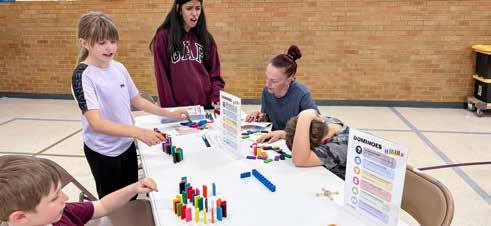
Copperview Elementary’s STEM night offered students and families several hands-on options, including a domino challenge. (Julie Slama/City Journals)
Midvale Elementary connects literacy, dreams and future careers
“Dreams beyond the clouds” allowed students to tie reading, creativity and career exploration together during one month.
By Julie Slama j.slama@mycityjournals.com
What starts as a bedtime story may grow into a lifelong love of reading and even inspire future dreams.
That was a message behind Midvale Elementary’s monthlong celebration of literacy, which brought together Family Literacy Night, Read Across America activities and College and Career Week, all under the theme, “Dreams beyond the clouds.”
“The core idea was bedtime stories are often a child’s first sustained literacy experience,” said Heidi Sanger, Midvale Elementary’s community school facilitator. “So, the theme celebrates the role of families in building literacy through shared reading, storytelling, oral language and imagination skills that support reading success at every grade level.”
Throughout March, students read books to the theme, then participated in
classroom literacy projects. Then they shared those projects with families and engaged in other activities during Family Literacy Night.
For example, kindergartners read “Good Night Moon,” then made moonthemed crafts and identified people in their lives who can read with them. First-graders read “How Dinosaurs Say Goodnight” and focused on bedtime routines, including writing their own booklets, sequencing bedtime routines. Second-graders explored “Peter Pan” and had Neverland-themed literacy activities while third-graders read “Five-minute bedtime stories” and then, focused on writing their own bedtime stories with their families.
Fourth-graders read “Dream Wolf” and wrote personal dream narratives and created poetry while fifth-graders connected the dream theme to future goals projects inspired by “Salt in His Shoes,” the story of Michael Jordan.
“What’s cool is there is always part of every grade level teacher team who help brainstorm ideas for stations and are here at night to interact with families,” Sanger said, adding Tyler Library also helped make reading connections with students.
During Read Across America Day, students enjoyed stories read by volunteers with the marketing and advertising firm,
Penna Powers, which partnered with Midvale Elementary through United Way to support the event.
“A big connection is literacy goes beyond our walls,” she said.
The theme also carried into College and Career Week, with daily dress-up activities, including a career day, where
parents and community volunteers shared about their jobs and students could dress up as their future selves.
“It was not just a bedtime story dream theme; it carried through to College and Career Week,” Sanger said. “It gave kids a lot to know their reading can help to inspire the success of their futures.” l

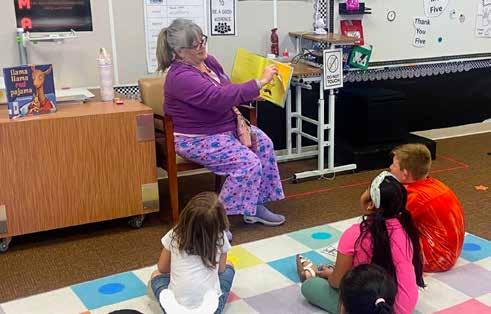
Students listen to a story during Midvale Elementary’s Family Literacy Night. (Photo courtesy of Midvale Elementary)
Dancing through the night as inclusion takes the spotlight
By Julie Slama j.slama@mycityjournals.com
Like most students, Jordan Barlow had dropped off a poster for his date, inviting her to the dance. They dressed up and arrived at Siempre in Draper, where they danced with peers for hours that night.
His favorite song was “A boyfriend” by Justin Bieber.
“I liked the dance part (of the night),” said Barlow, a Life Skills Academy student. His mother, Mandy Barlow, said he and his friends in a hip-hop group choreographed a routine to it.
“They have a really cute dance to it,” she said. “They stole the show.”
March 19 was “A Night Full of Stars,” an all-abilities young adult prom, but one which welcomed all ages. Students in the adult transition programs from Canyons, Granite, Jordan, Alpine as well as some who aren’t enrolled in a program came to boogie down. Peers danced alongside them and even some parents joined in the fun.
Mandy Barlow said the goal was simple: create an experience that was special.

“I didn’t want it to be at a school gym or at a church; I wanted these kids to have a beautiful experience,” she said. “They don’t get the opportunity to go to dances very often, so I wanted them to have a really nice, fun experience.”
Jordan’s mother began planning months in advance, teaming up with Anne Kimble, Sammy’s Buddy program executive director. Together, they combined community connections and volunteers for the event.
“I started reaching out and it all came together,” Mandy Barlow said. “A lot of people wanted to be involved.”


Kimble said the need for an event like this becomes clear after students leave high school.
“Once these kids graduate from high school, they lose so much of the peer and community connection they’ve had,” she said. “They no longer have unified sports. They don’t have inclusive dances and those opportunities to connect with peers of all abilities on a regular basis. One of the needs we see so clearly is that young adults with disabilities often don’t have the consistent opportunities for social connection after they leave high school. They need spaces where they feel a sense of belonging, where they can build real friendship, and where they’re not simply included, but have the chance to be celebrated.”
Local businesses and people donated or discounted their services, making it a special night. Nearby CTEC cosmetology students provided hair styling and even community members donated formal wear. Volunteers, many of them attending Salt Lake Community College, University of Utah and Utah Valley University, helped organize, set up and run the event and danced alongside their peers.
“I love everybody was dancing, there’s no inhibition. Everyone’s happy. Everyone dances with everybody. Everyone’s included,” Mandy Barlow said.
She also appreciated that the DJ knew “not to play it as loud as what maybe he would play like at a high school dance because it can be overwhelming.”
A quiet room was set up, giving dancers a break and some options to make bracelets or color. Some of the young adults opted for cotton candy.
“People loved that and there were some cute cotton candy sculptures,” Mandy Barlow said.
For Kimble, the night showed what intentional inclusion can look like, not just inviting people in, but putting them at the center of the experience.
“I loved seeing these kids participating; they weren’t on the outside looking in. They were at the center of the whole experience, and they were creating memories in
a space that was specifically designed for them to enjoy, to shine,” she said.
The prom also gave many young adults a sense of independence. Some parents opted to step back, allowing participants to enjoy a night that was their own.
“This was the first all-abilities young adult prom we know of which supported young adults, and it created a place for them to connect and gain confidence and also continue developing independence. It allowed these young adults to feel independent and feel ‘This is my night out, my night to shine,’” Kimble said.
She said events such as this dance don’t just impact those who attend; they shape the broader community, helping volunteers and sponsors better understand what true inclusion feels like.
“One of the things I loved about it is how it was equally impactful for the broader community. We loved bringing in sponsors who were so excited to be a part of this, and it allowed us to show how when students of all abilities come together, barriers and misconceptions can fade,” Kimble said. “Peer mentors, volunteers and community members, who hadn’t experienced something like this before, walked away with a deeper understanding of true inclusion, not just as an idea, but something they experienced firsthand. It was joy from start to finish. I truly feel events like this can help shift culture when we prioritize belonging. This was just one night, but I feel like when we provide more opportunities like this, it can carry into everyday life. This all-abilities prom was so much more than a fun night; it was a powerful example of what happens when we intentionally create spaces and opportunities where everyone belongs.”
Mandy Barlow hopes this is just the beginning.
“I can see it getting even bigger next year as more people learned about it, more wanted to be a part of it — and it was amazing,” she said. “The word of the dance spread. In this community, having something adults can go to and have fun — it spreads like wildfire.” l
“A Night Full of Stars” gave older students the opportunity to take the dance floor in an all-abilities prom this spring. (Photo courtesy of Abassb Sesay)
History made: Jordan High student-athletes rewrite the record books
Four student-athletes turn dedication and grit into history with record-breaking seasons.
By Julie Slama j.slama@mycityjournals.com
Records didn’t just fall at Jordan High; they were shattered.
In multiple sports, four student-athletes delivered performances that rewrote the record books, both at school and at the state level. Whether it was a dominant showing from the mound, a relentless run on the mat or lights-out shooting from beyond the arc, these Beetdiggers — junior Kimani Archibeque in softball, junior Nedkary Alvarez in girls wrestling, and junior Bergen Jettie and senior Holden Warnick in basketball — made 2026 a year for the books.
The student-athletes demonstrated dedication, resilience and a commitment to excellence, said Jordan High Assistant Principal Jason Long.
“I’ve been fortunate to watch each of them compete and grow,” he said. “Their athletic success is a product of their work ethic.” Kimani Archibeque – Softball
After recovering from an ACL injury her sophomore year, Archibeque has emerged as a dominant force in softball, setting the 4A state record for strikeouts in an extra innings game. Her journey began at age 5, playing T-ball, eventually growing into a passion as
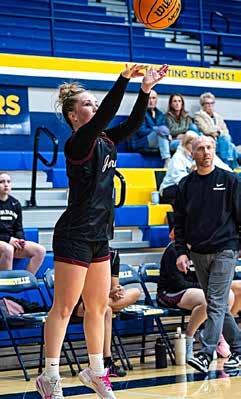
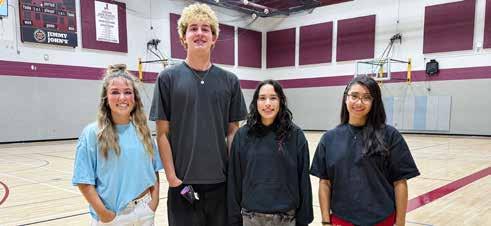
Four Jordan High stand-out student-athletes, Bergen Jettie, Holden Warnick, Nedkary Alvarez and Kimani Archibeque, excelled this year, setting school or state records. (Julie Slama/City Journals)
Archibeque advanced through competitive leagues.
“I started to really love it during coachpitch because it felt more like I was actually playing,” she said.
Now as the team’s pitcher, Archibeque thrives under pressure, embracing the mental challenges of the game.
Her record-setting performance included 28 strikeouts in an extra-inning game against Corner Canyon High. The previous record of 23 strikeouts was set in 2009.
Not realizing it was a historic moment, Archibeque’s game was centered on the field, with her sister catching her pitches.
“Her older sister, she’s our catcher,” said coach Ashley Brey. “They are a fun duo together and work well together and she has two younger sisters who play.”
Archibeque knew she was pitching well that day, but “I was more focused on the game.”
It wasn’t until the next day when she learned she set the strikeout record.
“My teacher asked, ‘How did you do on your game?’ I was like, ‘I did really good, we won.’ Then he asked, ‘Why don’t you brag more?’ I was like, ‘What do you mean?’ Then he said I had set a state record. I thought it was crazy,” Archibeque said.
Brey said she was first in region with 147 strikeouts this season (as of press deadline). With outstanding pitching, the Beetdiggers were set to play in the state playoffs.
“I love how good we’re doing,” Archibeque said. “We’ve won more games this year than probably the last four years combined. It feels good to win.”
Nedkary Alvarez – Girls Wrestling
On the wrestling mat, Alvarez has the second most all-time pins in a season for 4A state for a female with 41 pins and is No. 8 amongst all wrestlers.
Her record number came in her third season wrestling.
“I talked to Mr. Long and said, ‘What can I do? I want to do a sport,’” Alvarez said through translator Carmen Rufener. “He sug-
gested wrestling, but I wasn’t sure because it sounded like hitting. I was scared.”
Although initially hesitant, she quickly found her place.
“I went the first time, and I really liked it,” she said.
Alvarez quickly progressed, from participating in state as a freshman, to placing fifth as a sophomore to second in her weight class as a junior. She already is talking about senior year.
“I overthink things, and that’s why next year, I want to focus a lot on my mental approach,” she said. “I also want to work on my conditioning and learn new movements and more strategies.”
With a small group of about 10 athletes on the team, Alvarez said she’s found her niche.
“The coaches and my friends are the best,” she said.
Bergen Jettie – Girls Basketball
On the court, Jettie has established herself as one of the top shooters in school history. She set a new school record with 65 three-pointers in a season, surpassing the previous mark of 61, and also, hitting a record seven threes in a single game. Jettie averages 16 points per game, while shooting 38% from beyond the arc.
“I love the game of basketball,” she said. “I love the people you meet during it, and the experience you get to have with it.”
Her record-breaking moment for the most threes in a season was against Bonneville. She bettered the record from six to seven when a member of her coaching staff, Emily Moss Vuyk, called a timeout. It was her record that Jettie beat.
“She was like, ‘You just broke it. You did it.’ That was really cool,” Jettie said.
Against Highland, she again broke her coach’s record, setting the bar at 65 threes in a season.
Like WNBA star Caitlin Clark, Jettie believes “the deeper you go, the more fun it is.”
Having started playing with her dad in the backyard, she has played consistently since, even traveling across the country. With offsea-
son practices and then shooting 90 minutes on her own, her goals are to lead the Beetdiggers and better her records next season.
Holden Warnick — Boys Basketball
Warnick has left a lasting legacy on the boys basketball program with school records for career three-pointers (142), single-season threes (71) and single-game threes (nine). A plaque with his record is in the school’s display case.
His love of the game started in third grade, playing in the driveway with his dad and younger brother, then in Jordan’s Bantam youth league.
“I’ve made a lot of friends while I’ve played,” Warnick said. “I love threes more than mid-range.”
His scoring ability and confidence from long range has made him a standout. He looks up to his role model Steph Curry.
“I set a record my junior year, and then I broke it and set two more this year,” Warnick said.
With plans to continue playing in college, he’s proud of his accomplishments: “It’s cool being able to say, ‘I have school records.’”
Long, who served as the school’s athletic director at one time, appreciates their marks at Jordan High, not only in the record book, but amongst their teammates and peers.
“I’m so proud to have these students at Jordan High not only for their talents and achieving these records; moreover, I’ve seen each of them be servant-leaders that have positively impacted our school culture,” he said, adding: “Go Beetdiggers!” l

Kimani Archibeque set the 4A state record in softball for strikeouts in an extra innings game this season. (Photo courtesy of Ashley Brey/Jordan High)
Bergen Jettie set a new school record with 65 three-pointers in a season and also, hitting a record seven threes in a single game, breaking her coach’s records. (Photo courtesy of Jason Long/Jordan High)
Midvale Middle plays in ‘Real March Madness’
Teams celebrate friendship and school pride while competing in school district intramural basketball tournament.
By Julie Slama j.slama@mycityjournals.com
Teammates rushed together in a swirl of hugs as Albion A’s eighth-grade girls claimed Canyons School District’s middle school intramural 3-on-3 basketball championship, capping their middle school careers with a third straight title.
Parents and friends cheered and rushed the court to snap photos of the team with a Hulk-style trophy – one hand gripping the rim and the other palming a basketball – capturing the energy of “The Real March Madness.”
The team said their final run was as much about friendship as continuity in winning.
“We all decided to play together; we play together on the comp team, Brighton Bengals Bantam, outside of school so this is our chance to play together for our school,” eighth-grader Lily Pohlman said.
Her teammate, Jane Kasteler, added: “We want to represent Albion; it’s been a fun three years playing for our school.”
While playing together has translated into strong on-court chemistry, Lexi Frye and her teammates were quick to credit the adults who
coached them.
“Our coaches are supportive,” player Hana Alger said. “They’re always here, wanting the best for us.”
Teammate Harper Misik added: “Our coaches taught us different plays and helped us in practice; they make us better.”
Those coaches include Brooke Harris, Dante Ross, Cory Christianson and “coach Ragdun.”
Even though the girls were excited to capture the title, Lily said it wasn’t the highlight.
“The best part definitely is getting to know each other better. We met in sixth grade, but now we’re not just teammates, we’re good friends,” she said.
Harris, who has coached intramurals for nine years, said making those connections is the heart of the program.
“It’s great to get the kids out, meeting each other and creating the best memories,” she said. “3-on-3 doesn’t take a lot of time as an extracurricular with practicing only once per week, but they’re active, they’re bonding with each other and they’re having fun in the competition.”
This is the second time Harris had the same team win a title in every grade.
The championship also earned the Albion eight-graders a bonus reward. Principal Eric Gardner promised them root beer floats if they




won their third title.
In the eighth-grade division, second place went to Indian Hills A, followed by Mt. Jordan A in third and Eastmont A in fourth.
In sixth-grade girls play, Draper Park A took first, with Albion B in second; Eastmont third; and Mt. Jordan, fourth. The seventh-grade girls bracket was won by Draper Park A, followed by Draper Park B, Midvale and Butler.
A memorable moment came during the sixth-grade boys tournament.
“Both the first- and second-place game and the third- and fourth-place game where
tied when the games ended so it went into sudden victory free throws,” said intramurals coordinator Taylor Hansen. “The first- and second-place game had to go four players deep until a basket was made and the third- and fourth-place game, three players deep.”
That resulted in Eastmont beating out Mt. Jordan for the championship and Draper Park claiming third place over Albion.
In boys seventh grade, Butler B won, followed by Draper Park B, Butler A and Mt. Jordan A. The eighth-grade boys bracket was won by Butler A, followed by Butler B, Albion and Draper Park B. l
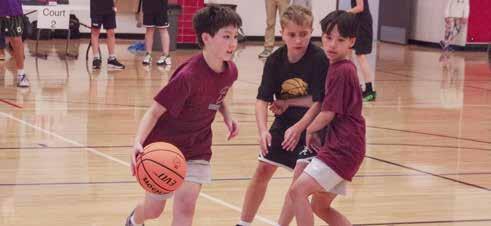



Midvale took on Mt. Jordan during the sixth-grade boys Canyons School District basketball tournament. (Julie Slama/City Journals)
How Abbi Clark measured her high school experience with relationships, not wins
As a unified partner, Hillcrest High’s Abbi Clark says unified sports has taught her lessons in connection and leadership, leading to a lifelong purpose.
By Julie Slama j.slama@mycityjournals.com
As local high schools prepare to send off another graduating class, Hillcrest High senior Abbi Clark leaves behind a lasting impact shaped not only by academics and athletics, but by connection and inclusion.
During her four high school years as a peer tutor and Special Olympics unified partner, Clark has helped build a community where students of all abilities belong and feel seen and, in the process, she has found her own path.
“I knew I wanted to be a teacher, but at Union Middle School, when I started peer tutoring, I started thinking about special education,” she said. “But definitely during my high school years, it’s confirmed this is what I want to do.”
That clarity didn’t happen in one single moment, but years of showing up, walking with students to classrooms, studying with one another, eating lunch and going to school dances together. Clark said it is a natural connection with the students she works with, rooted in trust and understanding.
“I feel I’m able to understand them more and see what they’re getting at most of the time. I have an energy that is calming and they’re able to relax and know I’ll include them and not judge them,” she said.
The camaraderie extends to unified sports, where students with and without intellectual disabilities play side by side as teammates on the field and court. Clark, who also plays on the school’s girls varsity basketball and volleyball teams, said the experience reshaped what sports truly mean.
“In unified sports, it’s not about just the win, it’s about the experience and about the joy of the sport. The result, win or lose, doesn’t really matter as much as the opportunity to learn and play with friends,” she said.
Clark’s perspective has influenced how she plays and how she leads. As both a player and a student who helps run practices, she learned to prioritize patience and selflessness.
“You can’t expect quick results, and you can’t be selfish if you want to do this,” she said.
Unified sports statewide, as well as at Hillcrest, have grown during Clark’s time.
For example, across Utah high schools, unified basketball has grown to more than 250 Utah high school unified teams this year, up from 2023, when Clark was a freshman, when it had skyrocketed to a record 73 teams. Hillcrest grew from two unified teams to four playing soccer and three competing in basketball. Additionally, the high school played a season of flag football and another of track and field.
“We’ve had more teams, more partners and even more community support,” she said, adding Hillcrest’s band, student body officers, Latinos In Action student club, the Husky mascot and other classmates continue to cheer for the unified teams, which has brought smiles to the athletes. “We’ve had classes that come and clap us out as we get on our bus; it makes the kids feel extra special.”
Clark said those moments signify a deeper meaning; it is part of belonging.
“For them, it’s a great place to feel safe, especially in this world where not everybody accepts them. By having a place where they feel accepted and a place where they can succeed, it’s a great thing for them to feel that sense of belonging,” she said.
But Clark is quick to point out she’s learned just as much, if not more, from the students she supports.
“A lot of times, people think that uni-

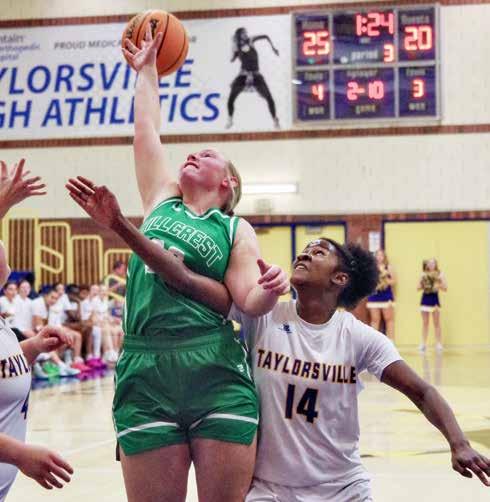
fied sports is all the partners teaching and all the athletes learning, but it’s really the opposite,” she said. “The partners learn a lot about teamwork and about selflessness and patience.”
One of those influences is junior Javier Garcia, a teammate and friend.
“He’s taught me so much about how to live life to the fullest,” Clark said. “He’s so selfless and he loves so deeply.”
Through those friendships, Clark said she’s learned to slow down and appreciate what really matters.
“I’ve learned from doing unified sports, it’s simple actions that are actually influential, and how impactful they are,” she said. “They’re so excited for each other when they score a goal or make a basket. It’s the simple things that mean a lot to them, and those bring a smile to everyone’s faces.”
That mindset has stayed through Clark’s athletic endeavors, serving as the student body secretary and taking concurrent enrollment college classes, all while maintaining a 3.95 GPA.
“It’s about deciding what’s most important and unified is one of my top priorities,” she said. “There’s little I won’t drop to go to unified.”
High
education
Rebecca Remy said Clark is one of the most inclusive peer tutors she has had in her 22 years of teaching.
“She has spearheaded all the unified events and activities,” Remy said. “I don’t ask her to do it; she just does it without taking any credit. She puts her heart into everything. Abbi forms genuine friendships with the students; she is passionate about inclusion and special education kids with disabilities.”
This summer, after graduation, Clark will serve a church mission in Gilbert, Arizona before returning to study special education at Utah Valley University.
Clark, who wants to stay involved with Special Olympics, doesn’t measure her high school experience in wins, but in relationships.
“Unified sports has taught me about living my life to the fullest,” she said. “It’s taught me to love others and how to include everyone. Unified sports has been my highlight, and it’s been my rock through the ups and downs. All the amazing people who are in unified have helped me more than they know. Unified is something I never want to stop doing.” l
Hillcrest
special
teacher
Hillcrest High’s Abbi Clark (center, blue dress) dances at Canyons School District’s unified prom in April 2025. (Julie Slama/City Journals)
In the February 2026 girls’ varsity game at Taylorsville High, Hillcrest’s Abbi Clark battles for the rebound. (Julie Slama/City Journals)
Child abuse prevention starts with strong families
What if the most effective way to protect children isn’t just responding after harm occurs—but preventing that harm in the first place?
That question has guided much of my work over the past three and a half years, after Utah Gov. Spencer Cox asked me to help create Utah’s Office of Families. The mission was simple, but deeply important: strengthen families to improve outcomes for children.
At the beginning, I spent time listening to experts, advocates and families across our state. I wanted to understand what the data showed about strong families and how we could replicate those conditions more consistently.
I also had to acknowledge something personal. I grew up in a stable home with two loving parents. I didn’t experience abuse, food insecurity or instability. As a child, I assumed that was normal and that most homes looked like mine. As an adult, I learned that isn’t the case.
Research on Adverse Childhood Experiences (ACEs) shows a clear pattern—the

more trauma a child experiences, the more challenges they face later in life. Health outcomes, education and employment each can be affected. The data doesn’t just tell a story; it points to a path forward. If we want better outcomes, we must reduce trauma early.
That realization led me to one of the most promising, evidence-based solutions I’ve seen: home visiting programs.
Parenting is hard. For many families— especially those facing economic stress, isolation or past trauma—it can feel overwhelming. Home visiting programs meet parents where they are, literally and figuratively. Trained professionals work directly with families, helping them build emotional
regulation skills, develop healthy coping strategies, and strengthen relationships with their children.
Organizations like Salt Lake County Health Department and Prevent Child Abuse Utah are leading this work in our state. They serve hundreds of families each year, helping parents become the parents they want to be. And the results matter— these programs are proven to reduce child abuse and neglect.
The need is real. In 2025, Utah saw more than 51,000 reports of child abuse or neglect. One in seven children will experience sexual abuse before turning 18. And in the vast majority of cases, the harm comes from someone the child knows and trusts— often a parent or relative.
Those numbers are difficult to hear. But they also reinforce why prevention matters.
Years ago, I had the opportunity to serve on the board of Prevent Child Abuse Utah, where I saw another powerful prevention tool in action: school-based education. Through age-appropriate lessons, elementary students are taught how to recognize,
resist and report abuse. These simple but powerful principles give children something invaluable—a voice. And sometimes, that voice is what keeps them safe.
Thanks to changes in state law and the generosity of donors, these programs are reaching more children than ever before. But access is still not universal. Too many children are missing out on the education that could help protect them.
Prevention doesn’t happen by accident. It happens when communities decide to invest in it.
Strong families are not just a private matter—they are a public priority. When we support parents, teach children and invest in early intervention, we change the trajectory of lives. We reduce suffering before it starts.
Each of us has a role to play. Whether it’s giving, volunteering or simply sharing this work with others, small actions add up to meaningful change.
Because every child deserves to understand their worth, their boundaries and their voice. Every child deserves the chance to grow up safe from harm.





















As teachers pop the champagne and schedule full-body massages, mothers are slowly descending into madness. Summer break stretches ahead like a sunburned, melted-fudgesicle 10K, with lots of family time. So much family time.
As a young mother in the 20th century, summer vacation was a blur of wet towels, lost flip-flops, and popsicle sticks stuck to couch cushions. My daughters spent the days selling Kool-Aid to neighbors, watching hours of PBS’s “Arthur,” and fighting nonstop.
I tried to keep a schedule, but it flew out the window the first day, along with my common sense and sanity. Although we went to parks, pools, hiking trails, libraries, zoos and museums, my daughters were always “sooo bored!” It was like trying to fill a bottomless, thankless pit.
Looking back, I was so lucky. Not because I could spend so much “quality time” with my kids, but because I wasn’t working out of the home. It was absolutely exhausting, but I didn’t have to worry about what my kids would do during the summer.
The school calendar was not created for single mothers, full-time working parents or children who need snacks every five minutes. It was designed for farmers who churn their own butter and rise at dawn to feed chickens.
Today, moms are scrambling to find camps, sitters, daycare and programs to keep
Popsicles and pressure
Peri Kinder Life and Laughter

kids occupied during the summer break because many mothers have full-time jobs and can’t take the summer off.
People rarely ask fathers, “What will your kids do all summer? How will you balance your job and family?” Nope. Everything usually falls to moms, most of whom can’t afford camps or additional daycare costs.
I researched “Summer strategies for working moms” and was given ideas like 1) hire a summer nanny, 2) enroll in pricey camps early, or 3) rent children to an influencer.
Who do they think these mothers are? Kardashians? I added a fourth option: quit your job and live in a van by the river.
When my daughters were little, there were several working moms in the neighborhood and their kids would hang out with us all summer. They were part of the noisy, sticky clan, constantly bickering about who got grass in the blow-up pool.
Now, mothers are anxiously waiting for their lottery numbers to hit or a magical Mary

Poppins character to show up and take control of their unruly children. Barring that, there aren’t a lot of viable options, especially in this economy.
Grandparents and other family members alleviate some of the summer schedule strain, but with about 10 weeks of out-of-school time, mothers often resort to late-night spiraling and stress eating.
It’s not all hopeless. Companies are finally realizing they’ll have happier, healthier, more productive female employees if they offer flexibility.
Progressive CEOs provide summer childcare stipends or offer discounts to local camps. Work-from-home options, summer PTO bonuses, flexible start/end times and early-out Fridays would make a mother’s summer a gajillion times easier, as well as fathers who need
scheduling help for the school break.
Maybe that’s the answer! Instead of asking companies to make things easier for moms, let’s say the dads need help. Businesses will immediately build on-site splash pads, create kid-friendly office spaces and partner with local teams to host summer-long sports camps.
Somewhere along the way, summer break turned into a summer breakdown. Parents aren’t asking for luxury vacations, just a bit of time to sit by the pool, yell at kids to stop yelling and maybe even pop some champagne. We should be able to make that work.
Peri Kinder is an award-winning columnist and journalist who has written for The City Journals since 2004. She also hosts the Life & Laughter podcast. Peri can be reached at peri.k@thecityjournals.com.