
See Inside... Rodeo returns
May 28 kicks off Herriman’s 20th year with pro status Page 12
Repeat champs
How Mountain Ridge is building a wrestling dynasty Page 19
Best Wishes, Chief Carr: Herriman bids a fond farewell to its first chief of police
By Elisa Eames | elisa@mycityjournals.com
After serving as Herriman’s first chief of police for eight years, Troy Carr reflects on the ups and downs while looking forward to new adventures during retirement.
“Howlucky I am to have something that makes saying goodbye so hard,” A. A. Milne said.
At the end of a career spanning nearly 35 years, Herriman City has said its final tearful goodbyes to former Police Chief Troy Carr, who officially stepped down on March 1 after eight years with Herriman. Deputy Chief Cody Stromberg will temporarily assume Carr’s duties while the city searches for its next chief.
“It’s different for me because [Herriman] isn’t just a place I worked,” Carr said. “It’s a place I helped build.” Before the creation of the Herriman Police Department in 2018, the city relied on the Unified Police Department for law enforcement services.
“There was no Herriman City Police Department,” Communications Manager Jonathan La Follette said.
While Carr was serving as the Herriman



From securing enough vehicles for the newly-hired officers to creating a logo and uploading website documents, the logistics of creating a brand-new police force were overwhelming. “We pulled some 16-hour days,” Carr said. “I remember how many nights we spent working late just trying to get graphics done for patches and cars and badges… The amount of details is astounding.”
Trial by fire
Literally hours after Herriman’s untested police department launched, the city was faced with an opportunity to prove itself.
“[There was] an awful tragedy where three young men lost their lives in a car… It was terrible,” Carr said. “But… we handled it without skipping a beat. And that’s a very proud moment for me to know that within hours of taking over, we had the ability to handle such a tragedy.”
Precinct Chief for the UPD in 2018, the city notified the UPD of its intent to withdraw and form its own police department. Carr was sworn in as the city’s first police chief on June
6, 2018. He and other city personnel found themselves with only four months to create a functional police department, essentially from scratch.
Meet us at The Lake Break
Daybreak’s newest destination spot on the lake! Where lake views, good food, brunch vibes, cocktails, and a stylish crowd all come together. From sunny lunches to golden hour drinks, it’s the spot to relax, cele brate, and soak in the atmosphere.
Though the Herriman officers as a group were untried, each individual hired by HPD brought substantial law enforcement experience to the team. “They have gained such ability since then in our technology and our training,
Continued on page 10


Former police chief Troy Carr gives a new police vehicle a test drive in 2018. (Photo courtesy Herriman City)











Join us in celebrating National EMS Week! We would like to take this opportunity to thank you for your dedication and service to our communities. In celebration of National EMS Week, we invite you to join us for a free BBQ.
Thursday, May 25 | 11 a.m. - 2 p.m.
Riverton Hospital Thanks:
• South Jordan City Fire Stations 61, 62, 63, 64
• West Jordan City Fire Stations 52, 53, 54, 55
• Unified Fire Authority Station 103 (Herriman)
• Unified Fire Authority Station 115 (Copperton)
• Unified Fire Authority Station 120 (Riverton)
• Unified Fire Authority Station 121 (Riverton)
• Unified Fire Authority Station 123 (Herriman)
• Unified Fire Authority Station 124 (Riverton)
• Gold Cross Ambulance
• Bluffdale City Fire Stations 91 and 92
• Riverton City Police Department
• Herriman City Police Department
• South Jordan City Police Department
• West Jordan City Police Department









COMMON GROUND
I can’t afford YOUR tax bill
Common Ground will be a column of rotating viewpoints that highlight specific feelings across the political spectrum, and it will always end with possible ways to come together.
Thousands of Utahns put down their phones from their doomscrolling and rage-baiting, to create vulgar poster boards and attend the No King rallies. Because Salt Lake City found it acceptable to shut down blocks of State Street, I watched the crowd waving their signs and chanting as they made their way to the State Capitol.
It was the weekend, and I wanted to be home. I had no desire to sit behind a police roadblock, watching people chanting and waving their signs. But I was working that day, or at least trying to work.
This was the end of a 60-hour work week for me, making sure we covered expenses and payroll for my business, trying to eke out just enough for me to get my bills covered. Then a question took over, a question that nearly every middle-aged, middle-income man finds themselves asking, “What am I doing here? Why am I working so hard?”
Could it be that I’m working so hard just to pay the bills of others?
Look at the facts. The national debt is $40 trillion. The Utah State Budget is over $31 billion. Salt Lake County increased property taxes by 14.65%, with a budget of over $2 billion.
How did we get here?
Let’s look close to home. Let’s start with Salt Lake County. We have a nine-member council, with five republicans, four democrats and a Democratic mayor.
Collectively (8-1), the council approved a $2 billion budget that significantly raised property taxes.
Earlier this year, Salt Lake County Council Members tried to cut the budget, proposing the shuttering of a county-operated senior center and child care facility. Then, all those who have had their hands out for
HERRIMAN TEAM
The Herriman Journal is a monthly publication distributed directly to residents via the USPS as well as locations throughout Herriman. The views and opinions expressed in display advertisements do not necessarily reflect or represent the views and opinions held by Loyal Perch Media or the City Journals. This publication may not be reproduced in whole or in part without the express written consent of the owner.
© 2026 Loyal Perch Media, Inc.
John J. Walker Common Ground
years popped out of the cookie-jar, insisting they keep getting their subsidized child care or, in some instances, their jobs.
I watched the parents argue for continued services at below market rates, as if society and the taxpayers were somehow responsible for providing them with subsidized child care.
The same tiny violins were played throughout the legislative session earlier this year, with state legislators lined up to bring bills that would stick the Utah taxpayers with subsidizing or paying more money for child care, more money for property tax deferment/credits and more money for down payments for first-time home buyers, paying more money for Medicaid, more money for the homeless, more money for Title 1 schools, mental health treatments and food pantries.
Have we lost our conservative way of life here in Utah? Are we slowly drifting away from our base and sliding into the pit that California has become?
How much more can we afford? For me the answer is none.
Common Ground: In my late 20s, I asked a friend a question. What is the difference between a Republican and a Democrat? I will never forget his answer, “If you are a Republican in your 20s, you don’t have a heart; if you’re a Democrat in your 30s, you don’t have a brain.” At the time, it made sense; now that I’m in my 40s, it makes a whole lot less sense.
I like to think most of us have brains and hearts, all at the same time.
PUBLISHER
Bryan Scott | bryan.s@thecityjournals.com
EDITOR
Travis Barton | travis.b@thecityjournals.com
ADVERTISING EXECUTIVES
Mieka Sawatzki | mieka.s@thecityjournals.com
Ryan Casper | ryan.c@thecityjournals.com
Marc Davis | marc.d@thecityjournals.com
CLIENT SERVICES
Lydia Rice | lydia.r@thecityjournals.com 385-557-1022
Big expenses for the general population are best paid for by taxes, such as the military or highways. I am happy to pay my share of taxes to build roads and bridges. I surely don’t want to pay fees at a toll booth.
Sometimes having a monopoly makes sense. I guess the city could stop collecting trash and each home could pay a company to pick up the trash from their home. But I would imagine that would be less efficient and more expensive.
I’m curious to know what residents feel is the purpose of local, county and state government. I think most would agree on roads, bridges, trash pick-up, dumps, water infrastructure and more. But how do we really feel about child care, senior centers, golf courses, zoos, museums, and theaters?
My fear is that when the economy is prospering, we vote yes on these expenses, but now that cost of living has increased and people are struggling more, we are less likely to support these governmental expenses. l
From the Publisher:
Last month, the City Journals launched Common Ground. The column will tackle typically divisive political topics, with a focus to bring the community together. It’s our goal to help community members better understand how their neighbors feel.
We had a large response from readers. With over 100 emails, several mailed letters and phone calls, we consider month one a success. Peri submitted her opinion about local immigration legislation that was proposed during the 2026 legislative session earlier this year. The responses were largely favorable for the Common Ground article, with both supporting and dissenting comments on Peri’s first
submission. Unfortunately, we had some readers who simply were not interested in hearing how their neighbors felt.
The general tone of the dissenting readers was that Peri did not distinguish between legal and illegal immigrants. One commenter wrote, “First, let’s address the elephant in the room. Kinder’s commentary never used the words illegal immigrants…But illegal immigration is the issue the Utah legislature is trying to address.”
Other dissenting views included the large amounts of tax money spent each year supporting and aiding illegal immigrants.
Those who supported Peri’s comments were appreciative of having their views represented, they also commented about how immigration is the “American Way,” a nation built by immigrants. From a workforce perspective, they said our economy needs immigrants and their willingness to take less desirable jobs at lower wages. Others supported immigration from the perspective that fertility rates in the United States are decreasing and our economy is essentially centered on population growth.
Where people did agree was that Congress needs to work together to create effective policies around immigration on a national level, and that those laws need to be consistently enforced and adhered to from administration to administration. One reader wrote, “This is the key to solving our immigration dilemma.”
Hopefully, this fall as we select candidates to represent Utah in Congress, we all remember that we need Congress to fix the immigration issue.
— Bryan Scott
CIRCULATION COORDINATOR
Lindsay Andreasen | lindsay.a@thecityjournals.com Rack locations are also available on our website.
EDITORIAL & AD DESIGN
Stacey LaMont Ty Gorton
HERRIMAN CITY JOURNAL
9500 South 500 West, Suite 205 Sandy, UT 84070
PHONE: 801-254-5974
MISSION STATEMENT
Our mission is to inform and entertain our community while promoting a strong local economy via relevant content presented across a synergetic network of print and digital media.
&

Joint Replacement
TA New Chapter for Pain-Free Living: Modern Joint Replacement at CommonSpirit
ired of nagging joint pain dictating your life?
The good news: joint replacement surgery has made significant advancements in recent years. Forget the daunting tales of long hospital stays and arduous recoveries. Surgery today is all about quicker recovery, less pain, and a faster return to the activities you love. This isn’t just about fixing a joint; it’s about reclaiming your freedom, and CommonSpirit is at the forefront of this transformation.
What’s driving this revolution? Minimally invasive techniques. Imagine surgery with smaller incisions and less disruption to your muscles and tissues. This “less is more” approach translates directly into less post-operative pain, reduced blood loss, and significantly shorter hospital stays.
“Joint replacement surgery once meant a long, difficult recovery. Now, thanks to minimally invasive techniques, patients are getting back on their feet and regaining their independence far more quickly, significantly improving their quality of life,” said Michael Blatter, an orthopedic surgeon at Holy Cross Hospital – Davis.
This means you can get back to golfing, gardening, playing with grandkids with renewed vigor.
But the journey to rapid recovery begins even
before surgery. We believe in empowering our patients, and that’s why pre-operative education is a cornerstone of our approach. Our comprehensive classes walk you through every step, covering everything from physical therapy exercises and navigating stairs to home safety. We emphasize two crucial rules: no falls and no infections. Patients consistently tell us they feel better prepared and more confident heading into surgery, which dramatically improves their outcomes.
Our commitment to your well-being extends with Enhanced Recovery After Surgery (ERAS) protocols. This isn’t just about the surgery itself; it’s a carefully coordinated care pathway. ERAS focuses on preparing your body for a smoother recovery through optimized nutrition, multimodal pain management that reduces reliance on opioids, and getting you up and moving just hours after surgery. It all works together to reduce complications, enhance your comfort, and get you home safely and sooner.
And speaking of cutting-edge, robot-assisted surgery has become a game-changer. While a surgeon is always in control, robotic systems provide unparalleled precision, allowing for less invasive procedures, greater accuracy in implant
Nurture what’s next.
placement, and ultimately, quicker recovery times. This advanced technology ensures your joint replacement is tailored with remarkable exactness.
“Many joint replacement procedures can now be done same day. And with our current techniques and technologies, we are able to facilitate a quicker recovery and healing process for joint replacement. Our patients are able to get back to the activities they enjoy more quickly. For many of our patients, joint replacement is a game changer,” said Dr. Kevin Sagers, an orthopedic surgeon at Holy Cross Hospital – Jordan Valley.
At CommonSpirit, we understand that living with joint pain can feel limiting. But with these modern advancements, the path to renewed mobility and a significantly improved quality of life is clearer and more accessible than ever. We’re dedicated to providing not just exceptional medical care, but a supportive and empowering experience that truly makes a difference. If you’re ready to explore how modern joint replacement can transform your life, we invite you to discover the CommonSpirit difference – where your rapid recovery is our priority.
For more information or to find a provider visit mountain.commonspirit.org


Learn more about the services, care providers and mission-driven work of the Holy Cross hospitals and CommonSpirit Health at www.holycrossutah.org.

At CommonSpirit Health, we make the healing presence of God known in our world by improving the health of the people we serve, especially those who are vulnerable, while we advance social justice for all.

Women go through many changes in their lives. And we believe every milestone matters. Our health care experts can help you face your next phase with confidence – because each chapter deserves to be celebrated.
Find care near you at mountain.commonspirit.org.
Copper Rock golf championship set for May 14-16
The road to the LPGA Tour begins with the Epson Tour, and again this month, 132 of the best female golfers on the planet will reconvene for the Copper Rock Championship May 14-16 in Hurricane, Utah. Golfers will compete for $250,000 in prize money and points in the season-long Epson Tour standings.
There were 15 players who gained LPGA status during last year’s Epson Tour season, and 13 of them finished in the top 30 at Copper Rock in 2025. Champion Gina Kim won twice on the Epson last season and is now playing on the LPGA Tour.
Exemptions this year went to four golfers:
Navy Hubbs is a junior at Salem Hills High School who has verbally committed to Boise State University. She started playing golf at the age of 12 and quickly developed a passion for the game. Since then, she has enjoyed competing in both local and national tournaments, gaining valuable experience and continually challenging herself against strong competition.
Hubbs is known for her calm presence on the course and the strong work ethic she brings to improving her game. She approaches competition with focus and determination while enjoying the process of learning and growing as a golfer and developing friendships with others on and off the course.
Maria Jose “MJ” Barragan is a standout collegiate golfer for Brigham Young University, known for her consistency, competitiveness and upward trajectory on the women’s golf scene. A native of Morelia, Mexico, Barragan has quickly become one of BYU’s most impactful players, combining sharp scoring with a calm mindset under pressure. She owns a career-low 18-hole score of 68 (4-under) and a lowest 54-hole score of 210 (−6), achieved at the 2024 Red Raider Invitational where she claimed her best finish with a victory. Barragan has also



Utah golf, recognized for her competitive excellence and advocacy for women’s golf. An inaugural member of the women’s golf team at Dixie State University (now Utah Tech), she was a two-time PacWest Conference Champion, Conference Player of the Year and an All-American.
She competed professionally on the Cactus Tour and is a seven-time Utah PGA Women’s Player of the Year (2019-25), a four-time Women’s Utah PGA Match Play Champion, and the 2025 Utah Section Assistant Professional of the Year. Her career includes numerous Utah Section victories, multiple top-10 finishes in both men’s and women’s events, and an overall championship at The Copper Club Open.
posted strong rounds in key events including the opening rounds of the 2025 San Diego State Classic and the 2025 Dr. Donnis Thompson Invitational, and she played a pivotal role in BYU’s 2025 USF Invitational win with a 72-73-69 (214) performance.
Off the course, Barragan is equally distinguished. She’s majoring in pre-business and has earned recognition for her academic achievements, being named to the 2025 CSC Academic All-District team. In amateur golf, she finished runner-up at the 2025 Women’s Mexico Amateur in a dramatic playoff and represented Mexico at the Pan American Games in Paraguay, showcasing her talent on the international stage.
Gabby Barker is a professional golfer known for her resilience, consistency and purpose-driven approach to the game.
A standout junior and collegiate competitor, Barker built her foundation through

years of high-level tournament play before turning professional and committing fully to the grind of tour golf. Since turning pro, Barker has competed across multiple professional circuits, including the Epson Tour and various mini tours, steadily gaining experience at the highest levels of women’s golf.
Her career has been shaped by perseverance, adaptability and a deep belief in long-term growth — both on and off the course. In addition to her competitive career, Barker is the first female Native American professional golfer, a milestone she carries with pride and responsibility. She uses her platform to inspire younger athletes, advocate for representation in golf, and share the realities of pursuing a professional sports career.
Haley Sturgeon is an accomplished golf professional and respected leader in

There are always so many things to enjoy during and around the Copper Rock Championship. On Tuesday, May 12, RAM Aerospace presents the 2026 RAM Women’s Business Luncheon. The theme is “Rising Together: Personal Growth and Professional Influence.” Keynote speaker is Stephanie Palmer, Director of Radio Sales for KSL NewsRadio, FM 100.3, The Arrow and the KSL Sports Zone. Whitney Harris, Director of People and Culture at RAM Aviation, will join in that discussion. The luncheon will run from 11:15 a.m. to 1 p.m.
A free Junior Clinic will be held on Championship Saturday, May 16, at noon. Signups for the clinic and RSVP for the luncheon can be made at Copperrockchampionship.com. There will also be a free photo booth on Championship Saturday, and food trucks will be onsite including Corn Dog Company and Chicharos Tacos.
To get tickets to the tournament go to Copperrockchampionship.com and choose from General Admission, Club 17 or Copper Rock Club tickets, and the website details those options.
Copper Rock is located at 1567 W. Copper Rock Parkway in Hurricane. l

2025 Champion Gina Kim (Courtesy Copper Rock)
Young golfers can participate in a free Junior Clinic on Championship Saturday at noon.
Haley Sturgeon Maria Jose “MJ” Barragan Gabby Barker
Navy Hubbs

Triumphing over adversity: Two second-generation war survivors face unexpected challenges while creating unique restaurants in Herriman
South Korea’s Andy Ahn and Vietnam’s Ban Tran came to America to chase their dreams, opening K-COOK STATION and Hi-Tea, respectively.
By Elisa Eames elisa@mycityjournals.com
In 1950, North Korea invaded South Korea, plunging the entire peninsula into three years of devastating war. At least 2.5 million lost their lives, though not all were killed in battle; some simply starved to death. The parents of Herriman resident Andy Ahn were among those who almost succumbed to starvation.
Today, all traces of war are gone, and South Korea is a bustling and modern nation. Ahn was born in Jeollabuk-do, a province known for its superior cuisine, and has always wanted to work with food and open a restaurant.
“Growing up there, I was constantly surrounded by authentic, deeply rooted flavors,” he said. “That experience shaped my understanding of food from an early age. Over time, I developed and refined those traditions into what is now K-COOK STATION.”
A new beginning
Though the war may be part of his heritage, it is not why Ahn left South Korea. He loves America and had wanted to live in the U.S. since childhood.
With his parents still in Korea, he arrived in 2010 and was soon operating a sushi bar in Heber City. He has spent many years working in food quality and operations within the sushi industry.
On an eventful day in 2013, his now-wife, Danielle, who knew some Korean from her time as a missionary in South Korea, happened to stop by Ahn’s restaurant for a free sushi sample, and the two began talking.
“She surprised me by speaking Korean… I was honestly caught off guard, but I quickly said, ‘I’m actually looking for an English teacher. Would you be my teacher? I’ll give you free sushi every day,’” Ahn said with a chuckle. “She smiled and said yes—and that’s how everything began.”
The couple was married the next year, and Ahn kept busy with his sushi bar while his wife later graduated from law school.
But Ahn noticed again and again that Korean food in the U.S. was limited to expensive and slow table-service restaurants. “I kept asking myself, why isn’t there a Korean restaurant that delivers both high quality and speed?” he said. “That question stayed with me for years.”
The roller coaster begins
In 2019, he created a business plan, developed a menu and recipes, and even designed a logo. The inspiration behind the restaurant’s name, K-COOK STATION, is a high-speed train in South Korea called KTX.
“The name represents fast, efficient service without compromising quality,” Ahn said. “It’s where East meets West, everyone is wel-

The customizable Seoul Plate allows customers to mix and match. This plate features fried rice, glass noodles, Beef Bulgogi and Spicy Seoul Chicken. (Photo courtesy Andy Ahn)
come and people connect through food. It’s your destination for Korean flavor, your final stop where you’ve truly arrived.”
In 2020, COVID derailed their plans to open, and in the next four years, there were consistent setbacks, significant delays and issues with contractors and construction.
“The journey was not easy. But we never stopped moving forward. We focused on what we could control—improving the food, refining the system and staying committed to the vision,” Ahn said. “Every challenge became part of building a stronger foundation for the business.”
In 2024, Herriman’s substantial growth, picturesque scenery and small-business opportunities immediately distinguished it as a location. “We were looking for a city that felt modern, growing and full of potential,” Ahn said. “At the same time, the people here are warm and welcoming. It has a rare balance of new energy and genuine community.”
Construction finally began, and the couple moved to Herriman from Sandy last year to be closer to K-COOK STATION, which softopened in December and celebrated its grand opening in February.
More than just a restaurant
“This represents years of persistence and belief in the idea,” Ahn said. “We offer original Korean food with the speed and convenience of modern quick-service dining. We focus on quality, consistency and experience.”
The food at K-COOK STATION is made fresh every day. “We aim to create something that feels both familiar and new at the same time,” Ahn said. “The most rewarding part is seeing customers enjoy the food and return with genuine excitement.”
To take advantage of promotions, discounts and loyalty rewards, the Ahns recommend downloading the restaurant’s mobile app.
In the not-too-distant future, their goal is to grow K-COOK STATION into a national chain, expand signature dishes, like kimbap, into local supermarkets and other locations and perhaps even create kimbap bars to compete with sushi vendors.
“From the food to the atmosphere, we are constantly working to deliver a better experience,” Ahn said. “We are most proud of the fact that we turned an idea into reality despite all the challenges.”
Outside of the restaurant, Ahn is passionate about flight simulation and hopes to earn his pilot’s license. His wife, Danielle, is an attorney for the U.S. Department of Justice, a skilled paraglider and a full-time mother to their 9-month-old son.
“K-COOK STATION is our story and vision for the future,” Ahn said. “It delivers authentic Korean flavors with speed, consistency and modern accessibility. We’re excited to share that with the community and continue growing together.”
Another war
Herriman business owner Ban Tran also understands the far-reaching consequences of armed conflict. North Vietnam’s aggression toward its southern counterpart began in the 1950s and extended to 1975, when the South collapsed under a sweeping invasion by the North. A soldier from the South, Tran’s father endured six harsh years of captivity in North Vietnam after the war.
“During the Reagan Administration, there was a program called the Humanitarian Operation that sponsored Vietnam War prisoners and their families,” Tran said. This program helped thousands of former prisoners from South Vietnam, including Tran and his family, to safely leave their home country and immigrate to the U.S.
Tran’s family arrived in 1995, first living in Buffalo, New York, for six months and then settling permanently in Utah. “We have lived here since,” Tran said. “I have been here for 31 years.”
Embracing a new community
As a student, Tran struggled with the language but ultimately adapted. “I learned English by copying each English word from the teacher’s chalkboard and using an English-Vietnamese dictionary to translate it,” he said.
He later earned a bachelor’s degree in computer science from the University of Utah and opened a Taiwanese boba tea shop in Taylorsville called Ding Tea.
Tran’s wife, Tien Luong, and her family immigrated to Utah from Vietnam in 2009. Tran and Luong met at Ding Tea, where she was a frequent patron. “It was my wife’s favorite place. She was my ‘royal customer,’” Tran joked.
Luong’s mother, Mai Le, and father, Nam Luong, joined the newlyweds in West Valley.
Wanting to share Vietnam’s culture, heritage and food with their adopted community, Luong, Tran and Le decided to open a restaurant, and the search for a location began. “We were looking for a restaurant plus a boba space,” Tran said.
An unexpected opportunity
In 2022, a location on Herriman’s
Rosecrest Road presented itself when the previous occupant, Mr. Fries Man, closed its doors. Tran, Luong and Le quickly saw that the space would meet their needs and that Herriman offered multiple enticements. “Herriman is growing, with a lot of diverse populations moving in,” Tran said. “We thought it would be a great location for us to serve our food to the community.”
Providing authentic boba tea, Chinese food, pho and other Vietnamese offerings, their vision, called Hi-Tea, held its soft opening in February of 2023 and its official opening shortly thereafter.
“I love that Herriman is focused on community connection. We felt so welcome by the people and the mayor, Lorin Palmer,” Tran said. “He brought a lot of people to come and support our business from day one.”
Like K-COOK STATION, Hi-Tea’s menu is entirely home-made. “We eat what we sell to our customers,” Tran said. “I love to see customers’ happy faces when they enjoy our food. My wife loves the flexibility of the schedule to take care of our kids, and my mother-in-law loves cooking and playing with different ingredients.”
A joyful curveball
But, as is frequently the case, the unexpected can disrupt even careful plans. Hands full with their brand-new business, Luong and Tran envisioned having children a few years later when the dust had settled. “We figured it would take us at least two years to have kids. Then life has different plans,” Tran said.
When they discovered their first child would arrive in 2024, they were caught off guard but thrilled. “Now we have three kids,” Tran said. “Two kids and one more due in July. I still don’t know how we overcame it with a restaurant and three kids in three years.”
Extended family from both sides, including Le and Nam, rolled up their sleeves to provide support, and Tran also credits focusing on one thing at a time with keeping the family and Hi-Tea afloat.
When he isn’t helping at the restaurant, he enjoys playing basketball and soccer and also works as a web developer. The family has a small half-acre farm in their West Valley backyard, and Tran is fond of working on it. “I like to live a simpler life,” he said.
He and his family have been looking for affordable housing in Herriman to be closer to Hi-Tea.
“I hope one day I will be in the position of helping less fortunate people,” Tran said. “We offer the best value for our food. Everyone coming in is a good friend. We are happy to serve.”
K-COOK STATION is located at 14711 Marketplace Drive, Unit D. Visit https://www. kcookSTATION.com.
Stop by Hi-Tea at 3338 W. Rosecrest Road, Suite D, reach them at (801) 930-9540 or find them on Instagram. l
Starting and running a successful business part 4: Networking
Unsure if networking can work for you? Local businesswomen Julie DeLong and Alex Mic-Podar demystify the art of simply making friends.
By Elisa Eames elisa@mycityjournals.com
The independence, flexibility and potential financial rewards of owning a business persuade over 5 million U.S. entrepreneurs to take the plunge each year. The founders and owners of Salt Lake-based Backyard Bookkeeper, Backyard Payroll and SPC Strategies, locals Julie DeLong and Alex MicPodar tackle tough questions affecting entrepreneurs today.
DeLong has written several articles for Intuit and Forbes Magazine and was an adjunct professor for the University of Utah. Mic-Podar has started a total of seven businesses and provides coaching and consulting services. She is a board member for multiple nonprofits and was a 2023 recipient of the Utah 40 Over 40 award.
This is the final article in a four-part series about how to start and grow a business. What is networking exactly, and why is it important?
Mic-Podar: Networking is making connections and letting others know you exist. It is not necessarily picking up clients or customers, but it’s making friends who will recommend you to their friends because you’ve made an impression on them.
The word “networking” has “net” in it, and I compare it to a spider building its net. If you connect lots of dots, eventually the right bug will fly into it.
You need to be known in your community. If you are a business-to-consumer company, the right networking places help you meet distributors, fulfillment center owners, etc. If you are a business-to-business company, your potential clients will be in your community, and if people don’t know who you are, they can’t help you grow.
What do I need to understand about networking?
Mic-Podar: First, give more than you receive. Go meet people and become a solution in their lives, a support system, and they will reciprocate by recommending you to their friends and family. You’re the newbie. They don’t know you, so you need to prove yourself.
Second, don’t network to get clients. Lots of people go to a few networking events and give up. Networking takes time. Many from your industry also attend events to fish, not just you. Be the fisher who casts the net and waits for the fish to jump in. Make friends and show them why you’re different and how you give more than your competition.
Third, the idea that networking is not for everyone is a myth! Everything you do is networking. You could simply be going to
a conference to educate yourself, but you’ll miss out if you don’t get to know the person sitting next to you.
When you first open your business, you’re also missing out if you don’t take each client to lunch, spend time getting to know them, or send a thank-you card for choosing you. That is networking, too.
You don’t have to look specifically for “networking events” because you’re networking every day as you run your business. Even if a prospective client went with the competition, it’s your job to make such an impression on them that they’ll remember you a few years later. For business owners, networking is your bread and butter.
DeLong: Networking is a long game. It rarely pays off in the short term. When it does, great! But otherwise, focus on making connections and becoming a person people look to for solutions and ideas, whether or not that results in sales. In the long term, you will create a network in which people provide significant value to each other, and this will eventually result in sales.
How do I get started? How do I find industry-specific events?
Mic-Podar: Easy! If you are not on LinkedIn, get on and find me! Direct message me, tell me what you’re looking for, and I’ll make some introductions. If you’re not on LinkedIn, you’re not serious about your business or career.
Then get an Eventbrite account. Industry-specific networking means attending industry-specific conferences. Utah has a lot of free events where you can get to know others in your industry or meet potential clients. Search your current or target industry on Eventbrite, and you’ll find a lot.
As soon as you start your business, put yourself out there. Offer to help others for free.
At your first event, tell everyone you’re new and would like to know about upcoming events. I guarantee you’ll leave with multiple options to attend each week. As stated in previous articles, you don’t need to spend a lot on marketing. Get leads by gathering business cards at events from relevant people you talk to and including them in email marketing.
This is really the secret of networking: give and ask for support. Everyone was in your shoes or still is, and everyone loves to give advice. Be a good listener, and you’ll make friends quickly. And if you promise to attend something, show up. Be consistent. What if I’m uncomfortable talking to strangers?
Mic-Podar: It’s not “if” you’re uncomfortable with strangers. You will be, so just start. Introduce yourself, and ask questions like, ‘what industry are you in? What brought you to this event? Do you know the organizers?’ Make it about the other person.
If you’re nervous about answering their questions, say something along the lines of “I haven’t practiced my elevator speech yet, but I’ve started a business in this industry.” Give
yourself breathing time, and always always be honest.
With practice, it will be easier because your community is smaller than you think, and with time, you’ll find you already know lots of people at events, and conversation will be easy.
What should I do after I’ve met a contact at an event?
Mic-Podar: I always carry a pen, so when others give me their business cards, I make a small note on the card to help me remember who they are.
After the event, find all the people on LinkedIn whose business cards you collected. Add them and send a message. As soon as they accept your connection request, remind them where you met. Perhaps remind them of any advice they gave and thank them again.
I actually add people to my LinkedIn while I’m still at the event because I’m very visual, and if I see their profile picture, I know exactly what we talked about.
If someone could take your business to the next level or is a potential client, don’t be shy—ask them to lunch. It’s cheaper to buy lunch than spend 10 times that on online advertising and get no leads.
Remember, networking is just relationship building. Always, always move on your leads within 24 hours. If you don’t, they might not remember you.
DeLong: As Alex indicated, it’s extremely important to take notes about each person you meet. While it’s still fresh, write down details and keep them in mind when you follow up. Be someone who notices and remembers, whether it’s a particular milestone your contact is working toward or a recent health challenge for their parent.
The next time you talk to them, ask about the milestone or how their parent is doing. If you genuinely care, you’ll develop deep, meaningful relationships in your business community. How do I network online?
Mic-Podar: As indicated above, online networking starts with LinkedIn. It’s where I do most of my networking. I recognize most of my LinkedIn contacts when I see them at events. We currently have over 600 clients, and more than half are clients because of LinkedIn.
Don’t do any selling or spamming, but it’s important to comment on posts and engage with your contacts’ content. Whether you have a business or not, get on LinkedIn! It can help your business succeed and has answers for your next career move, but you don’t need to pay $60 a month to access benefits. I haven’t paid for the upgrade for years. What are some common mistakes?
Mic-Podar: This is an unpopular opinion, but I don’t advise signing up for paid networking memberships that offer exclusivity. Trust me. In the long run, it’s not worth it. Exclusive clubs will become a waste of time, and you’ll only meet the
same people over and over.
It could be beneficial to use clubs for business advice, but they won’t help you with networking much. You’ll get more clients with Google or social media ads.
DeLong: Many networking groups, even paid ones, allow guests to visit for free at least once. Take advantage of that! This will help you get to know the community and get your name out there without making a risky financial commitment.
Should I join a chamber of commerce?
Mic-Podar: YES. Your local chamber of commerce is NOT an exclusive group promising you’ll be the only one from your industry. It is a club, but every business owner is welcome, and they have the best networking events. My favorite ones are the South Valley Chamber and the Davis County Chamber. I love the people and the members.
DeLong: Chamber events are often great networking opportunities. You don’t usually need to be a member to attend, but your ticket may be a bit pricier. Attend a few events to decide whether the chamber is right for you. What are some other ways to find leads?
Mic-Podar: Think outside the box. Be creative. Talk to vendors at trade shows, home and garden shows, expos or even markets with local makers. If you’re in the business-to-business industry, every vendor is a prospective client or a prospective supplier. Turn any event into a networking opportunity by gathering people’s information and sending them a follow-up email.
Parting thoughts
Mic-Podar: Network, network, network. Build that spider web. You can do it. If I did it, you can, too. I believe in you. To connect with me, find me on LinkedIn as Alexandrina Mic-Podar. Shoot me a message, and if I have time, I’d love to help you set up your LinkedIn. l
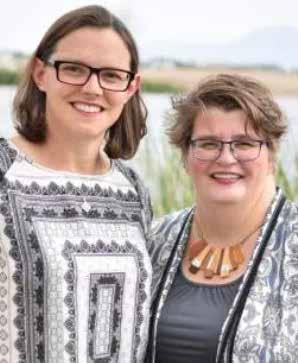
Julie DeLong and Alex Mic-Podar founded Backyard Bookkeeper in 2008. (Photo courtesy Backyard Bookkeeper)
and the things that the officers are capable of now are just astounding. And I am so proud of each one of them,” Carr said.
The former chief also praised Herriman’s civilian staff, such as crossing guards and forensics and animal shelter personnel, who provide critical support for the officers. What makes HPD stand out
In an era where many police forces struggle with multiple vacancies, Carr expressed pride in Herriman’s lack thereof and its low turnover. “That’s not an issue we have here. Our issue is… the mile-long list of applicants when there is a vacancy…,” Carr said. “I have to tell really great candidates that would be starters on other teams that they’ve got to sit on the bench for a minute…”
Carr is also proud of the cultivated partnership between police and the community and of the officers’ personal investment in the city. “[This is what]... makes us so different,” he said. “We have a lot of officers that both live in the city or close to the city… that have the buy-in, [a sense] of ‘this is my community and these are the people that I live with and shop with…’”
An adamant believer in second chances, Carr is wary of police officers wielding power within a community they don’t care about, which can lead to problems, including the mistreatment and neglect of criminals. “Every human being is our family. And sometimes they make a mistake. Our job is not to judge
them,” he said. “Our job is to get them in a position where they can recover…”
The bitter and the sweet
Carr describes the continuous challenge of balancing budgetary concerns and departmental needs. “We carefully consider our budget, and… one of [my] very first… job responsibilities is to be responsible with taxpayers’ money,” he said. “My main role is to make sure that we have the training, the equipment and the personnel to make sure we’re safe out there… I owe it to [the officers] to… get them home to their families.”
One of the most difficult experiences for the whole department was the loss of Herriman’s first K9 officer, Hondo, who was shot and killed apprehending a wanted fugitive on February 13, 2020, in Salt Lake City. “That hit us hard. It was heavy,” Carr said. “We were relatively new as a police department, and I think my biggest chore there was to hold everybody together as we got through that.”
The incident took place as Herriman officers participated in a U.S. Marshals task force to capture the fugitive. Hondo, a 7-year-old Belgian Malinois, had worked with the UPD since 2015 and joined the Herriman force in 2018. Herriman officers held funeral services for Hondo on February 29.
In contrast, Carr also recalls happier memories of his time as chief. “Some of my favorite times are the times I got to spend with the employees,” he said. “We have a tradition… Every time we hire somebody, no matter what role they’re in… we go to lunch








with them, and we learn about them. And it’s important to me to not only know the employee but to know their family and understand [them].”
The final farewell
At an emotional city council meeting on Feb. 25, Herriman officially bid its chief adieu. “Tonight, we have to say goodbye to one of the best men that I’ve ever met,” Mayor Lorin Palmer said tearfully.
“Just to be clear, I’m not dying,” Carr quipped in response. “I’ve just retired.”
Each city council member took a moment to express heartfelt gratitude for Carr’s leadership, mentoring and service.
“I really appreciate the time you’ve taken to help me understand as a new council member more about… policing… and the vision for the police force…,” Councilwoman Terrah Anderson said. “And all the time you take to explain things in a way that a regular person can understand… I appreciate your true love for our city and the way that you served us.”
“What you did was absolutely amazing in the time frame in which it had to be done…,” Herriman’s newest councilman, Matt Basham, said. “It’s been the sky’s the limit for the last eight years, and… you’ve laid [the foundation] for this department for… generations to come…”
“Your true leadership shows in so many different ways… It’s truly unseen to the public a lot of the time…,” Councilman Teddy Hodges said. “[What] you’ve done, and the way you’ve shown up, it’s a true commitment

Take the ElevateHERTM Challenge

Are you a business leader?
At no cost, the ElevateHERTM Challenge is easy to accept and will benefit your company.
Join businesses across Utah in our mission to elevate the stature of women’s leadership. Take the ElevateHERTM Challenge and stand with other businesses as we pledge to elevate women in senior leadership positions, in boardrooms, on management teams and on politcal ballots.

LEARN MORE: www.wliut.com/elevateher-challenge
to your city, your calling and that badge…”
“[It was a ] herculean effort… to set a complete department up… from scratch in… [four] months…,” Councilman Jared Henderson said with emotion. “But that’s just the tip of the iceberg for what you guys have done… you’ve continued to innovate and do things differently… I think every other agency in the state is constantly looking at what you guys are doing… If any of you knew what he’s done for my family… all the… well-wishers… they don’t know the half of it…”
Not one to be left out, City Manager Nathan Cherpeski also offered his thanks to the outgoing chief. “I’ve been around a while, and I’ve worked with a lot of chiefs and some amazing individuals,” he said. “And I would put Chief Carr and the department he created against any department in this country, and I think they would come out on top… It’s been an honor serving with you.”
Palmer also acknowledged the role Carr’s wife has played over the years. “Amy, thank you for your sacrifice, too… thank you for giving him to us every day, for letting him walk out that door…,” Palmer said.
At the conclusion of comments from city personnel, the District Director for U.S. Congressman Burgess Owens, Casey Saxton, presented Carr with a Certificate of Special Congressional Recognition on behalf of Owens to recognize Carr’s years of service and his statewide impact.
“I worked next door in Riverton,” Saxton said. “And I know… Riverton City really leaned on Chief Carr heavily for his advice and expertise and ultimately, partnership. So thank you for your service.”
“We talk a lot about what I did, but really… the men and women of the police department did most of the work and still do. So, my hat’s off to them,” Carr said.
“You’ve left the department in good hands. We’ve got the best… team around…,” Palmer said.
What’s next
Though retirement will bring a much slower pace, Carr has no intention of being idle. He looks forward to an active life and to new experiences with his wife like exploring Utah, other states and the world.
“It will certainly be a reset. I…feel like it’s going to be rolling out of a car while you’re driving down I-15 and standing up and going, ‘Well, now I’m just walking right?’” he said. “But I’ve got a lot of things to look forward to, a lot of things to do…. [I joke] that I’m going to work for my wife. She’s got a whole list of stuff she needs me to do.”
Once a cop, always a cop
“You take home the worry of [your officers’] worries because they… confide in you. You take home the worry of their safety… their needs… the city… your colleagues… our community… and it’s heavy… I’ll look forward to unloading some of that,” he said. “But I’ll always worry about my people. That’ll be something that probably never goes away… It’s been a great city to work in, a great community, and I love you all.” l

Young entrepreneurs participate in ‘Shark Tank’-style competition at Loveland Living Planet Aquarium
Business students from Canyons and Jordan School Districts competed.
By Katherine Weinstein k.weinstein@mycityjournals.com
This year, the South Valley Chamber of Commerce’s “Shark Tank”-style event for high school students took place in front of an actual shark tank. The competition between young entrepreneurs, modeled after the “Shark Tank” reality show on ABC, was held March 18 at Loveland Living Planet Aquarium. Students from Jordan and Canyons School Districts presented their ideas for new businesses before a panel of five judges. The winners received thousands of dollars in prize money.
“Really, there are no losers,” Chamber President and CEO Jay Francis said. He spoke of how the competition showcases the hard work, ingenuity and talent of the younger generation. “This is one of my favorite events,” he added. “You go home after this and think, ‘We’re going to be OK.’”
The South Valley Chamber of Commerce brings together entrepreneurs, small businesses and corporate leaders to foster a strong local economy. “As a chamber, we’re connecting the next generation to the local business community through this event,” Francis said.
The Chamber initiated the competition about 10 years ago. “It’s about encouraging students to be business-minded,” he added. “This is our way of giving back.”
The judges were Sybrina Ely, President and CEO of Kenbry Capital; David Edmunds, owner of Salt Mine Productive Work Space; Jeanette Bennett, CEO and Executive Managing Director of Colliers International; Beth Colosimo, Salt Lake County Regional Development Director; and Heather Nash, general manager of Mountain View Village.
Eleven teams of local high school students, selected by the Chamber’s Small Business Committee, competed live at the event for $9,500 in prize money. Their presentations were judged on personal style, business effectiveness, timeliness and ingenuity.
The students’ ideas ranged from environmentally-friendly fashion designs to AI person-
al assistants to tools for rock climbing. Jayme Jensen, Vice President and Managing Director of the South Valley Chamber commented, “These young entrepreneurs are incredibly impressive, and it’s exciting to see the creativity and initiative they bring to their businesses.”
All of the competitors take courses in business at either Canyons Technical Education Center (CTEC) or the Jordan Academy for Technology & Careers (JATC.) Alta High School and CTEC student Aiden Leon explained that his business concept evolved out of an assignment in his Business Leadership class. Leon pitched his idea for a guided planner and journal to help teens combat stress and burnout called “Burnout to Balance” and won second place in the competition.
First-place winners Abby Elmer and Kellyn Hovi from Herriman High School and JATC, named their proposed earring brand, “KIVI.” According to their pitch, KIVI pierced earrings would consist of hypoallergenic posts with interchangeable charms allowing customers to change their look while their ears are healing from the piercing.
“We just sat down and brainstormed ideas to solve everyday problems,” Elmer said. She and Hovi won the $5,000 grand prize. Both are members of DECA, a nationwide organization that prepares high school students for leadership roles in marketing, finance, hospitality and management.
“I’m super happy,” Hovi said. “Going into this, I didn’t expect it, but I’m so glad we were able to win. I learned a lot about presenting and business through this and met so many new people. I loved it.”


Monday, May 26, 2025 at 10:00 a.m.
The third place winners were Cash Christensen, Kolton Candelaria and Ayson Christensen from Riverton, Herriman and Bingham high schools, respectively. The three students, who also attend JATC, pitched their concept for “Stashed,” a customizable financial planning app for teens.
The panel of judges praised all of the contestants. Ely had some words of advice. “We are so incredibly proud of all of you,” she said. “Don’t quit and keep innovating.”
“Business is an exciting place to be,” Bennett said. “There’s a lot out there to explore.”l





The winners of the South Valley Chamber of Commerce’s “Shark Tank”-style event posed for a group photo with the judges at Loveland Living Planet Aquarium last March. (Katherine Weinstein/City Journals)
Fort Herriman PRCA Rodeo celebrates
By Peri Kinder peri.k@thecityjournals.com
Whenthe Professional Rodeo Cowboys Association gallops into town, fans can expect high-energy excitement as world-class riders and award-winning stock show off their skills. The Fort Herriman PRCA Rodeo on May 28-30 is the first pro event of the year as cowboys, cowgirls and fans alike look forward to the start of the season.
“We have real good bucking horses and bucking bulls, champion calf ropers, team ropers and steer wrestlers, top-ofthe-line barrel racers and breakaway ropers show up to our events,” said Herriman Rodeo Committee Chair Dee Oakeson. “It is a really good production with lots of excitement.”
Oakeson has worked on the rodeo since he moved to Herriman in 1999, when fewer than 2,000 people lived in the city. Now, with a population of more than 65,000, Herriman boasts its well-deserved participation in the PRCA circuit.
While the event has been going on for nearly 30 years, the Fort Herriman Rodeo reached pro status 20 years ago after meeting the rigorous high standards associated with the PRCA, which includes having a certain grade of animal. The purse paid to the cowboys and cowgirls who participate also has to be at a high level.
“We get some awesome athletes that come to Herriman, world champions that come to our rodeo every single year, religiously, and that just increases the production of

our rodeo and increases the actual value of the show that our community gets to see,” said Herriman Event Manager Lorren Mitchell. “We’re getting world champion riders coming to Herriman City, of all places.”
Events include bucking broncs and bulls, calf-roping, barrel racing, steer wrestling and bullfighting, plus family activities like a petting zoo, a mechanical bull and stickhorse races.
Organizing the rodeo takes a concerted effort that begins just weeks after the event is over. Hiring a rodeo clown and an announcer, finding bullfighters, getting contracts in place, connecting with quality rodeo stock organizations and even finding
the right fireworks provider takes months of effort.
Not only does the Herriman Rodeo Committee help organize, run and promote the rodeo, it also raised money to construct the rodeo grounds by hand. The dedicated group of volunteers has helped to build and maintain the rodeo tradition in Herriman, introducing pro events to new generations of residents.
“Our city is built on that Western lifestyle. Herriman, even 20 years ago, had a lot of arenas, a lot of horses. It was very important to residents who are still living here today,” Mitchell said. “The founding families of our city donated our rodeo grounds that we’re still using today… So it’s important to those families and all the volunteers that helped build the arena, and the families that continue to live here, to let [the rodeo] live on.”
Animal welfare and safety are top priorities for rodeo organizers. Mitchell said the PRCA requires the highest levels of animal care during the event, with a vet on site at all times. Stock contractors who provide animals for the rodeo mandate a gold standard of care to keep animals safe.
“I didn’t understand how seriously animal welfare was taken until I got to know the inner workings of the PRCA. It’s a big deal to them,” she said. “They consider the cowboy athletes and they consider the animals athletes.”
Visitors are encouraged to get tickets early as the event tends to sell out. The Fort Herriman PRCA Rodeo will be held at W&M Butterfield Park (6212 Butterfield Park Way), May 28-30. For more information, or to volunteer for the event, visit herriman.gov/rodeo.
“Last year, I think we ended up with 27 national finalists that came to our rodeo,” Oakeson said. “Everything is just fabulous.” l







Small business SECTION

By Peri Kinder
Ranging from $0 to more than $300 for a base license, business licensing fees differ across Salt Lake County.
For entrepreneurs looking to start a company in Salt Lake County, location can shape the cost of opening that business. Licensing fees vary drastically as cities determine costs and define regulations. Fees can fluctuate based on the type of business, number of employees, impact on city services and required inspections.
On one end of the scale is Riverton, which in 2018 became the first city in Utah to eliminate all business licensing fees. The move was orchestrated by the mayor at the time, Trent Staggs, who wanted to let companies know the city was open for business.
“He wanted Riverton to be a business-friendly community,” said Riverton Business Licensing Coordinator Angie Keller. “We’re also very user-friendly when it comes to getting a license. They click on our website and it guides them through the process. I don’t get many phone calls asking for help…I feel like Riverton has gone above and beyond, as far as pointing them in the right direction and giving them all the information they need.”
Draper’s base fee for a commercial license is $82, with additional fees for alcohol or firework sales, sexually-oriented businesses and solicitors. Murray charges $100 for a commercial license with regulatory fees on companies like auto towing, tobacco retailers, tattoo parlors and convalescent homes. Midvale has a base fee of $137 for commercial businesses with add-on charges for industries including bars, hotels, pawn shops and restaurants.
For companies in the county’s newly incorporated areas, including Kearns, Magna and Copperton, the Greater Salt Lake Municipal Services District administers those business licenses. The district charges a $150 base fee for commercial businesses and home-based locations that have customers coming to the home.
On the higher end of the scale, South Jordan charges $337 for a general business license application fee, with additional charges for hotels ($2,700), restaurants ($633), big box stores ($3,331) and entertainment/recreation facilities ($1,727).
Brian Preece serves as South Jordan’s Director of Planning and Economic Development. He said the city’s licensing fee structure wasn’t put together haphazardly, but was based on a feasibility study that determined the cost impact of specific businesses to the city. More fees are placed on businesses that have a higher volume of calls for police or fire services.
“We have a fire inspection for most businesses and that’s part of the [licensing] fees,” Preece said. “Even though Riverton doesn’t have a business licensing fee…it’s being paid for somewhere. The general fund is paying for it.”
South Jordan Public Information Officer Rachael Van Cleave added, “If we weren’t to charge these fees, taxpayer dollars would be subsidizing these costs for businesses. So the fees help to take that off the general taxpayer.”
For home-based businesses, Utah Code states that cities cannot charge a licensing fee unless the business impacts the neighborhood, such as having customers or an unusually high number

of home deliveries. However, several cities, including Taylorsville and South Salt Lake, charge administrative processing fees of $100 and $59, respectively, for home-based businesses.
Riverton requires every home-based business to have a license, but there is no fee. South Jordan does not require home-based businesses to have licenses unless they operate a daycare/preschool or if they have regular clients coming to the home.
“We made the decision to not charge for or even require a home license business,” Preece said. “If somebody wants one, then we’ll get you a license, but you have to go through the regular process, and that’s your choice.”
While getting a business license is certainly an important step in starting a business, it’s not the only step. Business owners need to make sure that the company is registered with the state and, if sales are involved, with the Utah State Tax Commission. Owners must ensure all licenses and inspections are complete before a business license can be issued. Most cities have license approval completed in two weeks or less.
The wide-ranging business licensing fees and processes across the county impact business owners and municipalities differently. For some entrepreneurs, that difference could be the deciding factor on where they ultimately locate their business.
By Mimi Darley Dutton | m.dutton@mycityjournals.com
Sean Wilson has owned a Jazzercise franchise for 30 years, survived a recession and a pandemic, and she perseveres because of her passion for the program and its people.
As the Donna Summer song goes, “She works hard for the money.” In this case, that “she” is Seandra “Sean” Wilson, owner of Jazzercise Riverton Fitness Center, and she just celebrated 30 years in business.
Most of the money Wilson works hard for goes right back into the business. In addition to operating her Jazzercise studio, she also cleans houses. But it’s her passion for the fitness program and the people she’s met along the way that keep her working hard.
“I do it for the love of it. And no matter who you are or what phase of life you’re in, you have to exercise. For me, it’s almost healthcare at this point rather than self-care,” she said.
Rewind to 1989. Wilson was a young mom living in West Valley. “I was seeking out exercise after my first baby. Almost the first minute of the first class, I just knew I wanted to be an instructor.
I started saving something like $5 per paycheck for six years to come up with the $600 franchise fee. (Wilson explained you must purchase a franchise to use the Jazzercise name and choreography.) I was a customer first for six years,” she said. “Back in the day,” she remembers working out to the music of both Michael and Janet Jackson, Prince and others. (Now, it’s music by Pitbull, Usher and Taylor Swift.)
In 1994, Wilson and her family moved to Riverton. “There was no Jazzercise, there weren’t even gyms,” she said. She missed the camaraderie and community she’d found working out in West Valley.
Raised in Los Angeles as a child of character actors, Wilson became active with Riverton Community Theatre. Soon after arriving in Riverton, she had saved enough to establish a franchise and passed various certifications required of all Jazzercise instructors including CPR training, physiology, anatomy and choreography tests. She taught her first classes at Riverton Community Center. “I taught five to eight classes per week all by myself,” Wilson said.

and motivating and I feel better after class. I’m so glad my friend introduced me to Jazzercise,” Jacobson said.



Wilson has been active in the Riverton community from the start. In addition to community theatre, she volunteered with the Miss Riverton Scholarship Competition for 25 years. “It’s an educational process I think all young women should go through, teaching them poise, diction and interview skills,” she said. Only in recent years did she step away from volunteering in that capacity. “We have a lot of grandkids and my priorities shifted,” she said.
Fast forward three decades since her move to Riverton and several locations later to accommodate a growing clientele, Wilson now manages a Jazzercise studio with 25 independent contractor instructors offering nearly 50 classes seven days per week. Her customers range in age from 18-84. Along the way, her daughter Alexis also became an instructor.
Rebecca Parker of Herriman has been a customer for four years. Parker said she had foot surgery last year and gained weight as a result, but since returning to Jazzercise, she’s been able to lose the excess weight while adding muscle. “I feel strong and I think that’s key. This is different than going to a gym, there’s no judgment or competition. Sean and her team make the environment amazing. I feel loved and valued here,” Parker said.
Riverton resident Jill Jacobson has been going to the studio for more than three years. “The instructors are upbeat
Jazzercise was founded 57 years ago by Judi Sheppard Missett. “She invented group fitness. She’s now 82 and still teaches one day a week,” Wilson said. The company is headquartered in Carlsbad, California and has grown to a woman-led global fitness community with 300 studios (like Wilson’s) and 1,200 locations in 16 countries. Missett’s daughter Shanna Nelson currently serves as CEO and Chief Choreographer and Nelson’s daughter Skyla is a third-generation instructor. The program is deeply rooted in dance and designed to support women’s physical and mental well-being with added strength training and jumping to increase bone density. “Jazzercise isn’t stuck in the past. For more than five decades, it is continually renewing itself with current music and exercise science to give strategies to women through life’s stages,” Nelson said in a recent television interview.
Instructors are sent new routines from corporate every month to keep things fresh. Wilson said it can take 15 to 45 minutes just to get choreography down for one new routine. Every class features at least 15 routines designed to work different muscle groups. “When we learn choreography, we also learn the safety features of each movement to show and explain to our customers,” Wilson said. Instructors stand on a stage facing their class, allowing them to cue and demonstrate the moves, meaning they do every movement in a mirror-fashion. When the instructor says “go right” they’re actually going left. “That’s the hardest learning
curve for new instructors,” Wilson said. Wilson’s Jazzercise franchise survived the economic recession of 2008 and the upheaval of Covid, though the latter proved difficult to rebuild from. “Corporate allowed us to do videos from our homes during the pandemic, so I taught classes from my dining room and some instructors taught from their basements,” she said. As a small business owner, Wilson arranges for childcare at the studio, cleans the facility, pays the bills, does taxes and payroll, buys the supplies, schedules instructors for nearly 50 weekly classes, and texts the weekly schedule out to her customers. When necessary, she teaches two classes per day when an instructor calls out sick or has a conflict.
But Wilson’s love and appreciation for Jazzercise has only grown. “It’s not about legwarmers and leotards anymore…it was for a time because that was the trend, but trends change and so do we. Exercise science is so advanced these days. Instead of letting trends dictate how and what we do, it’s science-based. We have a physiologist on staff at corporate who reviews every movement for injury prevention and safety before it’s accepted into choreography,” Wilson said.
Wilson’s customers come from Alpine, Saratoga Springs, Bluffdale, Sandy, Draper, West Jordan, South Jordan, Herriman and Riverton, as far west as Magna and as far east as Cottonwood Heights. “We have more than 100 customers with room for many more,” she said.
The studio is located at 1716 W. 12600 South. If interested in a free trial, call or text 801-828-8694.
Rebecca Parker, Sean Wilson and Jill Jacobson before a class at Jazzercise Riverton Fitness Center. Classes are offered seven days each week with morning, afternoon and evening classes to choose from. Child care is offered during some classes. (Mimi Darley Dutton/City Journals)
Local resources support entrepreneurs
By Peri Kinder | peri.k@thecityjournals.com
Six ways to get help starting or growing your business.
Starting a new business can be a massive undertaking. Creating a business plan, obtaining loans and developing marketing strategies can feel overwhelming. But in Utah, several organizations want you to succeed and offer resources, mentoring and connections to help build a sustainable business. Here are six places to start.
Utah Small Business Development Center. Located at Salt Lake Community College Miller Campus in Sandy and in Kaysville at Davis Technical College, the SBDC offers free business consulting. Whether your business is just an idea or a built-out concept, working with SBDC professionals can increase your chance of success.
SBDC also provides information about financing, customer relations, employee management and business accounting through the Entrepreneur Academy, workshops and training classes. It also hosts networking events to build support so your business can thrive. To learn more, visit utahsbdc.org.
Suazo Business Center . Nearly 10% of Utah businesses are owned by Latino or Hispanic entrepreneurs. Suazo Business Center is often a first step for members of underserved communities to help them build and grow a thriving company. Bilingual consultants offer advising appointments to create an understanding of small business while providing guidance and mentorship.
With locations in Salt Lake and Ogden, Suazo Business Center has classes in Spanish and English to cover topics like QuickBooks, business development, legal structure, accounting and financing. It also has a series of workshops to tackle issues from HR to government contracts. For more information, visit suazocenter.org.
SCORE Utah . With free business mentoring and low-cost educational workshops, SCORE Utah can help expand your network and grow your business. Its online courses allow entrepreneurs to explore all areas of business ownership, including e-commerce, customer service, crisis management and online marketing.
SCORE Academy premium courses offer inexpensive training in grant writing, AI for business or sales, and marketing strategy. Additionally, SCORE will provide a free mentor who will partner with you on your business journey. Mentors give advice and educate business owners to help them feel supported. To learn more, visit score.org/utah.
Utah Microloan Fund . For business owners who might have a low credit score or no access to collateral, the Utah Microloan Fund is a “lender of last resort” that can help entrepreneurs who can’t get traditional business loans. It can offer lending to higher-risk clients because its purpose is about creating impact, not profit.
For 35 years, the organization has funded microloans to help people build their dreams. By providing training and financing to businesses that don’t qualify for traditional funding, the Utah Microloan Fund is a resource for those who have been declined for a bank loan. The microloans are set at a fixed rate, with up to six years for repayment.
Plus, its popular Banking on Women program helps women create a business plan and apply for funding to make it a success. Visit utahmicroloanfund.org/orientation for more information.
Local Chambers of Commerce For advocacy and networking, the local Chamber of Commerce is a great place to connect with like-minded business owners, find opportunities for promotion and get your company involved with volunteer activities.
The Salt Lake Chamber is the biggest in Utah, while the South Valley Chamber represents many communities in Salt Lake County, including Sandy, Draper and Riverton. ChamberWest serves businesses in Taylorsville, West Valley, Kearns and West Jordan, and several smaller chambers serve individual cities, like Murray or South Salt Lake. The Davis Chamber is the primary organization for businesses in Davis County.
There are also specialized chambers, including the Utah Black Chamber, the Utah Hispanic Chamber, the Utah Asian Chamber and the Utah LGBTQ+ Chamber. For a complete list of Chambers of Commerce, visit utahassociationofchambers.com.
Spice Kitchen Incubator . If you have an idea for a food truck or restaurant, but can’t invest in a truck or brickand-mortar location, the Spice Kitchen Incubator is an answer to your prayers. Spice Kitchen provides hands-on learning for refugees and other disadvantaged community members interested in creating a food business.
Part of the incubation program includes access to affordable kitchen space, plus capital, operations development and technical assistance. Graduates of the program include Bhutan House, IndieGo Coffee, Wings on Wheels and Waterwheel Kitchen. To learn more, visit spicekitchenincubator.org.


We are the bridge between businesses and the community in Blu dale, Herriman, and Riverton.

Attend an Event and experience the resources available to help you grow. Become a Member to join a community committed to helping you succeed. Serve and Sponsor to strengthen your connections for even more growth.

Small business owners in Utah have many resources and organizations available to help make their dreams a reality. (Stock photo)
Bluffdale resident named Miss Salt Lake County 2026
Ella Rose Leonelli helps teens for future success.
By Peri Kinder peri.k@thecityjournals.com
The new Miss Salt Lake County is just as comfortable in a field as she is on the stage. Ella Rose Leonelli grew up on a farm in Tooele, where water conservation was top of mind. After attending a SheTech event in high school, she found her passion for environmental engineering, earning her degree from Utah State University.
As Miss Salt Lake County, Leonelli will combine those two worlds with her mission shaped in care, curiosity and a determination to protect the world.
“It was really nice to be able to take what I was passionate about as a child and turn it into a career,” Leonelli said. “Now I’m a full-time employee at an amazing engineering firm in Lehi, AE2S. How lucky am I to have been able to figure out, at such a young age, what I wanted to do?”
Leonelli didn’t start competing for pageant titles until her last year of college. She was looking for a way to give back to
the community when someone suggested pageants, which would allow her to create her own service platform. She had already worked with AmeriCorps and the pageant circuit allowed her to share her passion.
“There are a lot of amazing women who are doing phenomenal work in their communities and towns. These women are the reason that I continued to participate in pageants,” she said. “Getting to know these other women who were passionate about similar things like community service, giving back and being involved, it gave me a sense of community.”
The 23-year-old Bluffdale resident’s platform, Ignite the Future: Preparing the Next Generation for Success, is focused on helping students build skills for growth and achievement. By assisting them with resume building, interview preparation and professional development, Leonelli hopes to inspire youth to build confidence.
“I want to go into the community and engage with these kids at their level, to help them start thinking about it, not pressuring them into having a decision made, but to start thinking about what those next steps are,” she said. “I want to be some-
body they can look up to as a mentor. Part of my community service initiative is that I offer free interview practice, whether that be for scholarships, Sterling scholars or high schoolers interviewing for their first job.”
Not only is Leonelli a scientist, teen mentor and beauty queen, but she is also a talented singer. She performed “Sempre Libera” from the opera “La Traviata” during the Miss Salt Lake County pageant. She also served as Miss Oquirrh Mountain 2025 and will compete at the Miss Utah pageant in June.
She invites any city in the county to reach out to her for upcoming events, school visits, community programs or other gatherings. She can be reached at MissSaltLakeCounty@gmail.com. To learn about her platform, visit her Instagram page @ ignite.the.future.
“I’m passionate about serving my community, I’m passionate about being involved in my community,” Leonelli said. “I want it to be seen through all of Salt Lake County. I want to interact with kids. I want to be somebody they can look up to as a mentor.” l






Ella Rose Leonelli is crowned Miss Salt Lake County during the pageant on March 7. (Photo courtesy Kaitlyn Salazar/SnapshotBy Kaitlyn)
Herriman High artist wins at the All-State High School Art Show
Her painting “Emerald Lens” takes home the Senate Award.
By Peri Kinder peri.k@thecityjournals.com
Herriman High senior and emerging artist, Sadie Henderson, took home one of the biggest awards at the Utah All-State High School Art Show. Her painting, “Emerald Lens,” was chosen by Utah senators to receive the prestigious Senate Award. Along with a $5,000 cash prize, Henderson’s painting will hang at the Utah State Capitol through the next school year.
“Emerald Lens” also won the Lyon Arts Studio Award and the USBE Purchase Award, while Henderson’s painting, “Home of the Heart,” earned her the Utah Watercolor Society Award.
Inspired by Norman Rockwell’s nostalgic paintings, Henderson took a historical approach to her “Emerald Lens” piece, centered around her grandmother’s china cabinet.
“She has all this beautiful green depression glass. I’ve always loved it. It’s my favorite thing,” Henderson said. “My grandma told me stories about the depression glass and how it was a little, small thing that they were trying to do to bolster the economy during the Great Depression…I wanted to connect it with finding hope when there are hard times.”
The Utah All-State High School Art Show is a statewide exhibition that celebrates the talent and creativity of Utah’s young artists. Hosted by the Springville Museum of Art, the show celebrated its 54th year, with more than 100 Utah high schools participating.
“There’s not really another state that does anything like this, on this kind of scope,” said the museum’s head of exhibitions, Allison Pinegar. “It’s like the state championships for visual arts students. There are always sports championships and different things, but this acts as an opportunity to display their talents and skills on a professional level, to a bigger audience.”
Entries are divided into four categories: painting, drawing, 3D and mixed media, photography and digital. A 12-panel jury went through more than 1,000 entries to select the approximately 300 artworks chosen for the exhibition.
Pinegar said Henderson’s work stood out due to its technical execution, attention to detail and her acrylic technique that resembles watercolor.
“To have that limited palette and the restraint she used to make it read kind of monotone, and those thin layers of paint that she builds up, is really interesting,” Pinegar said. “What struck the jurors selecting the Senate Award was that level of skill in connection with her artist statement… It was thoughtful and provocative in terms of how she’s thinking about the world and her experiences, and how it might relate to others. Using symbols, items and objects from her childhood to comment on the larger world was really effective.”
Henderson, a South Jordan resident, earned a scholarship to BYU from its Department of Art, where she starts this fall. She will continue pursuing an art career, either doing design work for companies or creating gallery artwork. Henderson wants her art to inspire people to look for things that generate hope.
“Another thing that I focused on in my artwork is that
Care that Feels
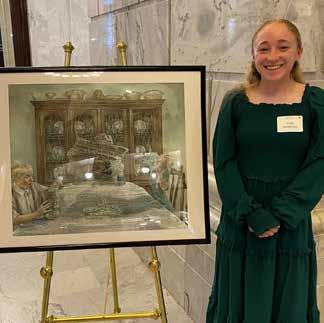
when there were hard times, people tried to do something about it. They didn’t have a wish; they had action,” she said. “I know there’s nothing super big like the Great Depression, but everyone has their bad days. But there are always things to be hopeful about.” l
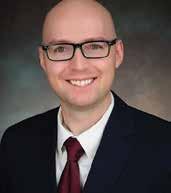
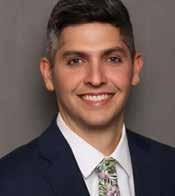




South Jordan resident Sadie Henderson won several awards during the Utah All-State High School Art Show, including three awards for “Emerald Lens.” (Photo courtesy of Henderson)
Inaugural art show held at Advantage Arts Academy
The show featured art projects created through their curriculum.
By Peri Kinder peri.k@thecityjournals.com
Advantage Arts Academy, a K-6 charter school in Herriman, hosted its first art show to display work created by children in all grades. The exhibition demonstrated how students can experiment, create and express ideas through a variety of art mediums.
Based on the Beverly Taylor Sorenson Arts Learning Program, Advantage Arts (6171 W. 11800 South) integrates the study of art into all subject areas. The showcase displayed lessons students had learned throughout the year, all rooted in art. From sculpture to sketching, from painting to embroidery, each medium was incorporated into the curriculum.
“We need to integrate arts with our core subjects,” said BTS Director Jenn Parks. “We use art as the mode for teaching and the mode for learning. If you need to know the content standards in order to complete the artwork, then that’s true art integration.”
First graders studying spiders learned
about the insect’s structure before they could sculpt their own arachnids. Second graders created 3D maps of Utah that included topographical features. Students in fourth grade drew robots then built electrical circuits to light them up.
One class created a collection of seasons, using different watercolor techniques. A group of fourth graders depicted constellations through embroidery.
“They used French knots for the stars and then they embroidered the constellations. We actually have the southern and northern hemispheres’ constellations and they are displayed approximately where they are in the universe,” Parks said.
Along with their class projects, each of the 350+ students submitted their favorite creation from the past year to display at the event. Those submissions were displayed, along with the students’ artist statements.
A series of self-portraits encouraged students to reflect on their place in the world. A mask display allowed students to decorate their masks in ways that reflected their true selves. Sixth graders studying history created self-portraits with a Renaissance theme, while fourth graders made a split self-portrait, with one half defining the things important to them.
“I love it. It is so fun. I’m not gonna lie,” Park said. “I used to be a regular



teacher, but I’ve always been really big with integrating the arts. Now I work with all the grades because I’m not just an art teacher, I’m the BTS person and I have to know all the standards. That’s the way the BTS model actually works. They want you to do side-by-side teaching. So I find ways to collaborate with the teachers on what subject they’re working on.”
Bailey, a sixth-grader, said her assign-
ment was to pour rice onto a paper, and then draw around the rice. That outline became a map for her kingdom where she drew forests, lakes, castles and villages. Ten-year-old McKay explained what he learned from using pastels to paint a piece of pie. “I learned that blending pastels can create a masterpiece.”
For more info about Advantage Arts Academy, visit advantagearts.org. l




A group of sixth grade students at Advantage Arts show off their fantasy-based maps, based on a handful of spilled rice. (Peri Kinder/City Journals)
How Mountain Ridge wrestling became two-time state champions
In five years, the Sentinels went from a team with 13 girls to back-to-back 6A state champions.
By Travis Barton travis.b@thecityjournals.com
Five years ago, the Mountain Ridge girls wrestling team had less members than there are weight classes—13 girls, 14 weight classes.
Now in 2026, it has 32 girls, four individual winners and back-to-back team state championships.
“It’s a testament to the hard work and time that our wrestlers and coaches put into this season,” said head coach Brandon Birch.
The Sentinels capped their season in February with a repeat 6A state title after winning the first last year. If they went under the radar for the 2025 title, then there was a target on their back this year.
“The journey this year was different than last year. Last year we believed in ourselves and knew we could do something special, but it was probably a surprise to a lot of people,” Birch said. “This year we came in as the champs, and we had a good team coming in that was expected to be a contender.”
Growth spurt
Rewind to the year girls wrestling was sanctioned, Mountain Ridge’s last in 5A before joining the 6A ranks in 2021. It was Birch’s first year coaching and of the 13 girls they had, three had wrestling experience.
“We often had to forfeit three to five weight (classes),” he recalled citing inevitable injuries and some wrestlers being the same weight.
Both numbers and experience are increasing. They were two deep at almost every weight this year, Birch said, giving more opportunities to score in tournaments. They also had at least half the team with wrestling experience.
Because it’s a tough sport, it can at times be difficult retaining wrestlers.
“We try to create a great team atmosphere so that girls will want to stay and be a part of something special,” he said. “Having a great team atmosphere does a lot to attract other girls to want to join our team.”
One example might be senior Evalyn Lenahan.
She moved to Utah during junior year having wrestled since her freshman year in Arizona when her best friend and her thought it would be funny to try out.
“I hadn’t found a sport I really loved and after my first wrestling practice I knew the sport was perfect for me and surprisingly I loved everything about it,” Lenahan said.
But she said the relocation took a toll
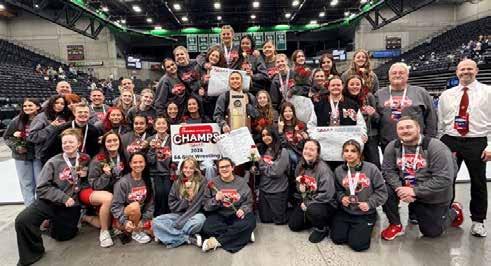
on her mental health and decided to take a break.
Then last summer, she went to a Mountain Ridge wrestling camp.
“The girls were so kind, and I loved the environment that I was in,” she said.
While the culture set the tone for Lenahan, she also appreciated the quality of coaching. “I loved that the coaches really went into detail about specific moves and had us practice over and over until we had it completely down.”
Another transfer arrived in a roundabout way and stayed.
Senior Brooklyn Eagar came via Providence Hall, where she wrestled as a freshman in the 100-pound class and took fifth. Her dad was the coach and her brother was a senior wrestler at the school so she decided to give wrestling a try.
Her sophomore year saw her experiment with a different sport joining the swim team at Mountain Ridge just down the road. But she couldn’t stay away from the mat.
“I just loved the creativeness of wrestling,” she said. “You just have your own unique style in wrestling that works best for you.”
During her time at Providence Hall, she said practices were combined with the girls and boys since the teams were small. She enjoys the “sister camaraderie” that comes from just girls in practice.
“I think that came more in my senior year too, just that more family community with all these wonderful, amazing girls that were on my team,” she said.
Over the hump
Good vibes might be a precursor, but they don’t always guarantee results as the Sentinels began knocking on the door taking fourth (2022) then fifth (2023) then second (2024).
Last year they finally reached the mountain top. Their wrestling experience paid off as Birch said the girls were great leaders who
could now teach the new girls “how to compete, wrestle their best and get mentally prepared for what wrestling brings.”
He cited another big reason: the coaching staff. Jon Eagar, Zan Elder, Jim Birch, Paul Hulet, Ryan Lenahan, Logan Eagar and Miyo Strong are all “fantastic coaches,” he said.
Evalyn Lenhan was quick to note their help and support. “As athletes part of a sport, you spend a lot of time with your coaches and we got so lucky with who chose to be our coaches,” she said.
In 2025, the team had 14 wrestlers place at state with one winner in Olivia Merino, and the team cracked 200 points for the first time finishing with 221 and a 34-point victory.
Both Eagar and Birch pointed to the team’s toughness and conditioning as primary qualities for winning last year. For 2026, the journey was a little different.
They attributed this year’s evolution to their skills and technique. With the quality of the sport improving every year—it’s one of the fastest growing sports in the country— they needed to work smarter, not just harder.
Eager said they improved their takedowns and the moves to set up those takedowns, along with escapes to avoid getting pinned which loses you more points.
They also had to overcome injuries as several title contending wrestlers had to deal with fractured hands or shoulder injuries.
That work paid off, as the 2026 team had four individual champs, five reach the finals and seven more place.
“We knew this was going to test our depth and grit. Our girls responded in a way that was absolutely picture perfect,” Birch said. “For us to step up when we were not at full strength and take state was a perfect end to a great season and showed that our team is learning those base principles our coaches try to teach. I’m just so proud of our girls.”
Eagar, who fell in the semifinals a year
ago to finish third, took home a state title in the 105-pound class. She (along with Olivia Merino and Bella Birch) did so without surrendering a single point all tournament.
“It was really fulfilling,” Eagar said. “I’ve worked really hard, and just seeing all that hard work show was really fun.”
For Lenahan, who will wrestle next year at Southern Virginia, her journey to a state championship in the 135-pound class saw her overcome a struggling mentality. “I would always put myself down and think every other girl out there was better than me.”
But her positive thinking and help from the coaches led to a state tournament where she “felt less nervous and I even felt excited for my really hard matches.”
“When I first won state it felt surreal,” she said. “I was first of all so grateful I had made it that far, but when I got my hand raised on that mat, life did not feel real.”
Birch said Lenahan took state in one of the toughest weight divisions.
“It was fun to watch her realize just how good she was as she went through the season,” he said.
Family and future
Both Lenahan and Eagar said how special it was winning with their dads on the coaching staff.
For Eager, whose older brother was also a coach, it was a family affair. Her younger sister Alayna is a sophomore who also competed this year. Brooklyn Eagar, who plans to serve a mission starting this summer, credited her family extensively for helping reach her goal.
After practice, Eagar’s dad would spend another hour working with her on skill development. They have a mat in their basement where she would practice with her brother, her sister and even her mom at times.
“They were such a big help this year,” Brooklyn said, adding they have a sister in fifth grade who also wrestles.
When Birch started coaching, he set a goal to win a state championship.
“Although winning a title was a goal of mine, winning back-to-back championships is rare and is very hard to do with so many great teams. I’m just thankful I’ve been able to work at, and be a part of something special like this,” he said.
The work doesn’t stop as the sport gets more competitive. But Birch has a strong contingent returning next year that includes: Amelia Jenkins, Faith Bowen, Abbigail Tasini, Tara Zakeri, Kiara Tanaka, Tina Lotulelei, Bella Birch, Maya Strong, Victoria Sousa, Kayda Rowberry, Tori Trewartha, Maddie Martin, Abby Birch, Alauna Begaye, Kassy Farnworth, Brielle Stromberg and Hailey Pender.
“We have a lot of talented girls coming back,” he said, “and I’m looking forward to seeing what they can do.” l
The Mountain Ridge girls wrestling team repeated as 6A state champs in February. (Photo courtesy Brandon Birch)
More than a game: Where inclusion, more than winning, is the focus
Herriman High’s unified basketball team wins state championship and shows how unified sports brings students of all abilities together, onand off-the-court
By Julie Slama j.slama@mycityjournals.com
Ina high school gym, the sounds are familiar balls bouncing, high tops squeaking on the court and teammates cheering.
But unified basketball is not just a game; it’s a space where students of all abilities come together as teammates, playing together on the floor to build friendships, confidence and community through sports. The focus isn’t only on winning, it’s on inclusion, sportsmanship and connection.
At Herriman High, the spirit carried all the way to the biggest moment of the season, as the team beat Juab High in the state

an opportunity for a title.
Jordan senior Alejandro Beltran Lopez played with pride and purpose.
wanted to beat Bingham at state championship (played at America First Field last fall), but it’s OK we lost because being a good sport means
talking, I help with math and ELA (English Language Arts). My whole family loves him.”
At Alta High, senior and peer leadership team member Macey Rockwood sees unified sports as something bigger.
“The goal of PLT is to make the community better, so through unified sports, we can support them,” she said. “Everyone deserves a community.”
Rockwood has refereed and ran the score table at unified tournaments and enjoys helping others succeed.
“It’s satisfying to help others have fun and have a sense of accomplishment,” she said.
For players like Corner Canyon sophomore Mia Lems, the competition still matters, but so does kindness.
“I like to take down the other team,” she said. “I’ve made friends with other teams too. I like to give them handshakes and clap and give high-5s for making good shots.”
Corner Canyon finished as state runners-up in their division at the state championship.

Lems’ teammate, senior Fisher Ghiz, didn’t realize how much unified basketball would change him.
“It has taught me patience; it has taught me how to make friends with those different than me,” Ghiz said. “I used to be shy, but they’re so social, I’ve become more outward. This is awesome. I want to keep playing in college.”
Across Utah, with more than 250 Utah high school unified teams, players emphasize the game has given them friendship, growth and joy.
Hunter High senior Maelie Jorgensen loves “the good environment where everyone has fun playing and being together” while teammate sophomore Bentley Wright said the teammates’ friendships stretch into lunch tables and school dances. On the court, Wright, like Granger High’s freshman Jhanpeer Macha Dias, loves the celebration after a basket that comes with dance moves and cheers.
Murray High’s Parker May loves the game, especially shooting the ball, and playing with friends while teammate senior Hayden Gardner added he loves the confidence his teammates have gained over the season.
Murray High senior Ethan Teusher added: “There is simple joy in spending time together whether we’re playing basketball or a game of Uno.”
Nearby Skyline High finished second in its division at state.
After West Jordan senior Robert West said he hoped his team would practice more early in the season, the Jaguars finished second at state in its division.
West Jordan senior Colton Reid refereed unified basketball last year, but decided to participate this year.
“It’s the greatest thing and something I didn’t want to miss out on,” Reid said. “I’ve made some good friends and great memories playing unified basketball.” l
Herriman High outscored Juab High to win the state unified title. (Photo courtesy Mike Haynes/Jordan Education Foundation)
More Utah insurers cover TMS treatment for teens
TMS therapy has been shown to help teens suffering from depression.
By Peri Kinder peri.k@thecityjournals.com
As a growing number of teens struggle with depression, some insurance companies are now providing coverage for transcranial magnetic stimulation, a technique proving to be more effective than antidepressant medications.
While the FDA initially approved TMS treatment for teens 15 and older in 2024, increased insurance coverage will allow doctors to help their younger patients in a meaningful way.
“It has been remarkable to see people of all ages find relief from depression and begin to enjoy life after treatment with TMS,” said Dr. Tom Rayner, a psychiatrist with NeuroHealth. “It has also been rewarding to watch them get better without the many debilitating side effects that medications can bring.”
NeuroHealth in South Jordan (10437 S. Temple Drive, Ste. 200) uses the NeuroStar TMS nondrug therapy to treat adult patients. As insurers expand TMS coverage to include teens dealing with depression, Rayner hopes to see young patients find lasting results.
TMS uses a magnetic pulse to activate neurons, increasing activity in the brain area to improve symptoms of depression. It is a noninvasive procedure, similar to an MRI. Many patients see results in less than one month of treatment.
Rayner said the treatment is safe with almost no side effects. Compared to the weight gain, sedation, fatigue, nausea and diarrhea that commonly occur with antidepressant use, TMS patients might experience a mild to moderate headache during the first few sessions as the brain gets accustomed to the stimulation.
“Rates of depression and anxiety have increased among all ages, especially among teenagers and youth,” Rayner said. “TMS is specifically indicated for teens and other individuals suffering from major depressive disorder, a condition that contributes to sad or irritable moods, feelings of guilt and worthlessness, poor energy, poor motivation, poor sleep and appetite, loss of hope and even suicidal ideations.”
Insurers that now allow adolescent TMS treatment in Utah are United Healthcare, Aetna, Cigna, BCBS Federal Employee Plan, Regence BCBS and Select Health. Other insurance companies are currently holding reviews, evaluations and evidence assessments to determine if their TMS coverage will be expanded to teens.
The health policy team at NeuroStar, a premier manufacturer and developer of TMS technology, continues to educate insurers across the country that have not yet added adolescent TMS coverage. NeuroStar officials
Insurance coverage expands to include TMS treatment for teens. TMS is a noninvasive therapy that uses magnetic pulses to stimulate nerve cells in the area of the brain that controls mood. (Photo courtesy of NeuroHealth)

said while they can’t provide a specific timeline for expansion, discussions are ongoing and progress is being made.
“Adolescent coverage has already been added to several policies as a direct result of the health policy team’s advocacy efforts,” said NeuroStar Practice Development Manager Jessica Brown. “Some insurers initially expressed hesitancy or indicated they would not move forward with coverage; however, with continued engagement and presentation of clinical evidence, decisions have evolved over time.”
Approval can’t come quickly enough for
families of teens dealing with depression but Rayner is pleased insurance companies are seeing the benefits of TMS and providing assistance to cover the treatment. He advises parents to be proactive in getting their teen into treatment, whether that’s TMS or counseling.
“Don’t wait,” he said. “Get help immediately. TMS, medications or therapy all work more effectively earlier in the course of illness. The longer the treatment is delayed, the more difficult it is to get good treatment responses.”
For more information, visit NeuroHealthUtah.com. l












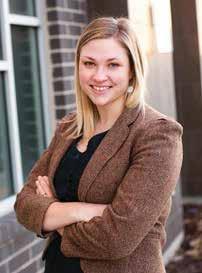

Salt Lake County uses opioid settlement funds to fight addiction
Like many communities across the country, Salt Lake County has felt the impact of the opioid crisis. In recent years, hundreds of people have died from opioid-related overdoses with fentanyl playing a significant role. It has affected families, strained our healthcare and public safety systems, and left too many people searching for a path forward. Opioids have devastated countless lives.
Several years ago, states and local governments across the nation took legal action against pharmaceutical manufacturers, distributors and retailers for the role they played in fueling the opioid epidemic. Those cases


Right now, children in YOUR community are in need of a safe, loving home.

Learn more about why we need more foster parents. openarmsyas.org 801-244-0147

Aimee Winder Newton
Salt Lake County Councilmember District 3

resulted in national settlements totaling more than $50 billion.
Starting in 2021, Salt Lake County expects to receive over $91 million from multiple settlements to help combat the opioid crisis locally. The funds will be distributed over a 17-year period.
Unlike traditional tax dollars, these funds are specifically designated for addressing the opioid crisis and must be used for evidence-based strategies and programs that support prevention, treatment and recovery.
There are formal agreements in place restricting how these funds can be spent, but counties are responsible for determining how to allocate them. In Salt Lake County,
the council works closely with the mayor’s office and a specialized opioid task force to evaluate and prioritize programs. Our goal is to invest in solutions that reduce reliance on the criminal justice system and create better long-term outcomes for those struggling with substance use disorders.
Last week, my colleagues and I approved a set of targeted programs designed to address this crisis in meaningful and measurable ways. These investments focus on what we know works and were shaped by input from public health experts, first responders and community organizations.
First, we are investing in prevention and education. This includes expanding schoolbased programs that help young people avoid substance use in the first place.
Second, we are strengthening treatment and recovery services. We approved funding to expand access to evidence-based care, including Medication-Assisted Treatment (MAT), as well as recovery support such as peer mentoring, housing assistance and connection to employment services to help prevent relapse.
Third, we are supporting life-saving efforts. This includes increasing access to naloxone, a medication that can reverse over-
doses, and funding outreach programs that connect individuals to services before a crisis turns fatal.
These efforts are part of a long-term strategy to address both the root causes and ongoing impacts of opioid misuse in our community. To improve outcomes, we are also strengthening coordination across systems. This includes better data sharing and tracking how people move through law enforcement, jails, courts and other community programs. This will help us identify opportunities to intervene earlier, connect people to treatment and reduce repeat offenses.
To ensure transparency and accountability, a public-facing dashboard will begin to roll out starting June 2026.
The opioid crisis did not happen overnight, and it will not be solved overnight. But this funding from the lawsuit settlement provides an important opportunity to respond more effectively and more compassionately. We are committed to using these resources responsibly to save lives, support recovery and strengthen Salt Lake County for years to come. This is about turning accountability into action and making sure these funds lead to real and measurable change.


Whenastronaut Neil Armstrong took those first steps on the moon, I had just celebrated my first birthday. I don’t remember either event, but the entire world held its breath as it watched Apollo 11 land, while I shoved my hands into a birthday cake.
That moon mission used less technology than your bathroom scale. It was basically human calculations, a slide rule and a Rand McNally paper map that guided those astronauts on the first lunar road trip.
We were told that space was the final frontier; space was the future. We learned that, like age and teenagers, space isn’t forgiving.
As a Murray High School senior, my home ec advisor wheeled a TV into the classroom to watch the Space Shuttle Challenger carry the first teacher, Christa McAuliffe, into space. We were speechless when the shuttle blew up at 46,000 feet. In February 2003, I watched the Space Shuttle Columbia disaster unfold as the spacecraft disintegrated on re-entry.
To say I was apprehensive watching the Artemis II mission launch to the moon would be an astronomical understatement.
On April 1, NASA perched the Orion space capsule atop a 300-foot rocket, one of the most powerful ever built. It launched a team of four astronauts 250,000 miles away from Earth, the farthest humans have ever traveled, discounting alien abductions, of course.
Unlike the catapulted station wagon that
Peri Kinder Life and Laughter
Copy, Moon Joy

somehow got us to the moon during Apollo missions, Orion uses autonomous navigation and extreme precision, carrying astronauts beyond low-Earth orbit for the first time in more than 50 years, traveling at speeds up to 25,000 mph.
It was the 10th manned moon exploration, or for conspiracy theorists, the 10th “faked” moon mission. The entire adventure was livestreamed so we could travel together.
Space exploration is equal parts wonder, technology and angst. During the 10-day moon trip, I endured galactic levels of anxiety. Launch sent my blood pressure soaring. My jaw clenched while they circled the moon on April 6, and my internal organs somersaulted during splashdown on April 10.
I was hyperaware that dreams explode and rockets fall apart.
Apollo missions were built on bravery, and America was racing to beat Russians to the moon. Now, Artemis is an international collaboration, one that should remind us we only sur-

vive this wild ride by working together.
In Greek mythology, Artemis is Apollo’s twin sister and goddess of the moon. It is an apt comparison: while the first moon missions had bro energy, the Artemis program continues the story in a wiser, more thoughtful way.
Women play key roles in the Artemis program. Besides the first female to fly on a moon mission, there are female science officers, mission leads and launch directors. In fact, for the first time in NASA’s history, the current astronaut class has more women than men.
If I could do math while enduring crushing g-forces and the stomach-dropping sensation of freefall, I would definitely have been in the space program. Instead, I appreciate the life of an astronaut from the comfort of my recliner.
Apollo gave us “One giant leap,” Challenger dropped us to our knees and Artemis refocused our gaze. These missions remind us to look to the stars, but also look to our beautiful, blue planet. We only have each other. We should start acting like it.
As I approach my next birthday, one I hope I remember, I raise a glass to the dreamers, the heroes, to the brilliant engineers in mission control and the fearless astronauts who explore new paths. It reminds us that even when the story goes wrong, we need to keep looking up.
Peri Kinder is an award-winning columnist and journalist who has written for The City Journals since 2004. She can be reached at peri.k@thecityjournals.com