Bountiful Davis Arts Center Summerfest
Event celebrates cultures through song and dance Page 13
Davis County eyes property
Land would be used for permanent housing for the homeless Page 15
From one breakfast cafe to a Utah restaurant empire
By Peri Kinder | peri.k@thecityjournals.com
What started as an East Coast-style cafe has become a 10-restaurant operation serving thousands.
Paul Willey has become something of a restaurant magnate in Utah. He and his siblings are celebrating the 15th anniversary of Penny Ann’s Cafe, but he owns 10 restaurants across three brands in Salt Lake and Davis County, employing more than 300 people.
The original Penny Ann’s opened its downtown Salt Lake City cafe in 2011 and the family has added four additional locations since then. Willey is CEO; his brother Warren Willey serves as head chef; his sister Cindy Pulley is the service manager and Penny Ann (the restaurant’s namesake) is in charge of customer relations, which includes greeting guests and chatting with regulars.
Penny Ann’s started after the family migrated from Upstate New York. They wanted to bring an East Coast diner to Utah, complete with burrito-style omelets, a breakfast counter and a welcoming atmosphere.
“You just come in, have a seat whether it’s at the counter, in a booth, or at a table, and enjoy some homemade comfort food,” Willey said. “People in Utah appreciate the value.”
Along with their flagship hot cakes, Penny Ann’s menu includes items like banana bread French toast and strawberry chocolate Dubai hot cakes. The diner has earned Best of Utah and Best of State awards, including Best Breakfast in Utah for 11 years in a row.
“We’re a Utah chain. We’re proud to be this Utah story, coming in as transplants and being embraced by the Utah community,” he said. “It’s kind of amazing.”
In the summer of 2019, Willey participated in the Goldman Sachs 10,000 Small Business Program. As part of the curriculum, he developed a growth plan for Penny Ann’s, but it got him thinking about other opportunities to branch out.
He soon became a partner in Mr. Charlie’s Chicken restaurants and in October 2022, he learned the owners of Moochie’s Cheesesteaks, Don MacDonald and Joanna Rendi, were looking to retire. They wanted to sell their business to another East Coast family. Willey was all in, calling it “a natural fit.”
“The regional manager with Moochie’s stayed on with us. He’s been with the company now for almost 15 years. That’s a testament to the culture that Joanna and




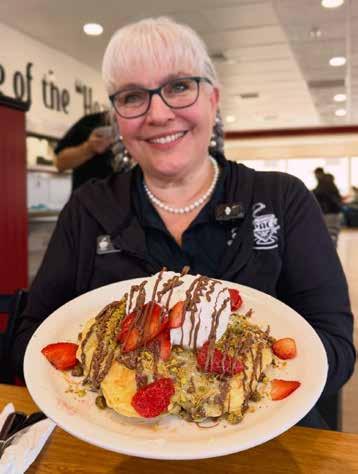









Cindy Pulley, holding the strawberry chocolate Dubai hot cakes, is Penny Ann’s service manager and the face of the restaurant on social media. (Photo courtesy of Paul Willey)
7
Robyn Rowe Walton Attorney at Law
Britten J. Hepworth Attorney at Law



BACK T O SCHOOL
I M M U N I Z A T I O N S
M A D E E A S Y A S 1 - 2 - 3 M A D E E A S Y A S 1 - 2 - 3

K I N D E R G A R T E N
D T a P
P o l i o
M M R
H e p a t i t i s B
H e p a t i t i s A
V a r i c e l l a
R e c o m m e n d e d :
I n f l u e n z a
C O V I D - 1 9
S C H E D U L E O N L I N E :
b i t . l y / d a v i s i m m s
T d a p
V a r i c e l l a
M e n i n g o c o c c a l
H e p a t i t i s B
R e c o m m e n d e d :
H P V

n f l u e n z a
C O V I D - 1 9
7 t h G R A D E Most insurances accepted Assistance available

C A L L A H E A D :
( 8 0 1 ) 5 2 5 - 5 0 2 0
2 2 S . S t a t e S t .
C l e a r f i e l d , U T 8 4 0 1 5
M - F , 9 a m - 5 p m
COMMON GROUND
Utah’s future belongs to the brave
Common Ground will be a column of rotating viewpoints that highlight specific feelings across the political spectrum, and it will always end with possible ways to come together.
Bravery is a Utah value. It’s right up there with toxic positivity and passive aggression. Many of us have brave ancestors who left their homes and walked hundreds of miles to the Salt Lake Valley, pulling a handcart full of kids who kept asking, “Are we there yet?” That takes courage.
In the face of religious persecution, the pioneers built communities, orchards, temples, schools and arts programs because they were not afraid to do hard things.
It’s time for that type of bravery again. We need to speak our hearts and our truths, and not be led by political partisanship. We need to vote for the people who stand for us, not profit from us.
It’s not just Democrats who believe federal leadership has been catastrophic. It’s not just Democrats who are disappointed in our state’s leadership. Look at the primary election where Republicans voted out three prominent legislators: that took courage. It took people voting their conscience, not just swallowing the party line.
Bravery means standing for what’s right, even in the face of opposition. It means we choose communities over conflicts and the future over fear. Courage puts people first. It shows we care about people who want healthcare, food, housing, education and inclusion. Those aren’t elite desires. Those are human needs.
The people of Utah want to take back their power. We’re tired of seeing state leaders making shady deals, getting backroom payoffs and pushing legislation that benefits their personal bottom line. How many property developers do we need on Capitol Hill? Good grief!
Bravery means leading differently. Instead of voting along straight party lines (even if your family has been a one-party family for decades), what if we voted for the people we believe have the power to change the status quo?
Real leaders are courageous; they lead with compassion and understand that empathy isn’t a dirty word. They don’t represent one party; they represent their constituents.
The people who showed up to protest ICE detention facilities or resource-draining data centers weren’t just Democrats. They were Republicans and independent voters who don’t want what these politicians are selling. We have Topaz in our backyard. What bigger reminder do we need that history cannot repeat itself here?
Bravery means we believe in each other. We’re not Democrats, Republicans, Libertarians, Reformists or Constitutionalists. We are Utahns. Our brand is kindness and optimism. We build communities, we serve the disadvantaged, we teach the uneducated and we offer open hearts to the stranger.
That’s who we are. That’s who we’ve always been.
Common Ground: No matter our political affiliation, we
need to become bridge builders. We need to reach out to neighbors and family members, even those who don’t agree with our political views.
Lawmakers need to build, not destroy. Create laws and messaging that resonate with people from every political background. This is a red state economically, but a blue state at heart. Just look at our programs built to help people, to assist someone’s journey as they get back on their feet. Utah has a worldwide reputation for service and volunteerism.
We should promote conversations that bring people together with respect and understanding. We should ensure people have the opportunity to express their views without censure or disdain. If our current leaders can’t do that, it’s time to make an abrupt change.
If the primary election taught us anything, it’s that Utahns want a voice. It takes courage to change course. It takes all of us to lead the way.
THE CITY JOURNAL TEAM
The City Journal is a monthly publication distributed directly to residents via the USPS and our Boutiful office.
The views and opinions expressed in display advertisements do not necessarily reflect or represent the views and opinions held by Loyal Perch Media or the City Journals. This publication may not be reproduced in whole or in part without the express written consent of the owner.
© 2026 Loyal Perch Media, Inc.
PUBLISHER
Bryan Scott | bryan.s@thecityjournals.com
EDITOR
Becky Ginos | becky.g@davisjournal.com
ADVERTISING EXECUTIVES
Marc Davis | marc.d@thecityjournals.com
Steve Hession | steve.h@mycityjournals.com
Mieka Sawatzki | mieka.s@thecityjournals.com
CIRCULATION COORDINATOR
Lindsay Andreasen | lindsay.a@thecityjournals.com
Rack locations are also available on our website.
CLIENT SERVICES
Lydia Rice | lydia.r@thecityjournals.com 385-557-1022
To subscribe to the weekly Davis Journal: subscribe.davisjournal.net
EDITORIAL & AD DESIGN
Stacey LaMont
Lynne Burns
THE CITY JOURNAL
9500 S Sandy Parkway, Suite 205 Sandy, UT 84070
PHONE: 801-254-5974 MISSION
Our mission is to inform and entertain our community while promoting a strong local economy via relevant content presented across a synergetic network of print and digital media.
Published, & Distributed by

Peri Kinder
Common Ground






Culinary Arts program gives students skills to step beyond the kitchen
By Becky Ginos becky.g@thecityjournals.com
Behind any good restaurant food there’s a chef preparing it and they have to learn the skills to make it happen. At Davis Technical College, students in the Culinary Arts program are cooking up delicious dishes and once they complete their training they’ll go out into the world to use their skills.
“The course is set up to start you off in a basic scenario in a kitchen,” said instructor Chef Thomas Chapman. “You’ll learn basic knife skills, cooking techniques, baking, identifying different proteins, vegetables, fish, etc. We do sauce, soups and things like appetizers. So basically setting students up so they can walk into a kitchen and start working with minimal training. Obviously in our industry a lot of it comes from experience.”
Davis Tech also offers electives, said Chapman. “We’ll do advanced baking or advanced proteins, things like that. We also do culinary mathematics as well.”
Chapman said they have 24 students a day. “But they all start on different levels. So we’ll start the students off with an orientation

then another student would start in baking, he said. “So each student is on a different level, basically on a different module.”
The kitchen was renovated last year, Chapman said. “So we got a brand new kitchen and brand new equipment. We’ve got all the stateof-the-art soup kettles, convection ovens, tilt skillets. Everything is pretty much brand new.”
There’s also a cafeteria open to the students and public, he said. “We have food for sale there and some of the food is incorporated from what the students make as well.”
There are three instructors, said Chapman. “Myself, Emily (Smalley), who does most of the baking, and then my boss Trevor (Nelson) who is an instructor also. We pretty much all come from culinary backgrounds. I was in restaurants for about 25 years.”
Chapman said he’s done everything from institutional cooking to hotels. “I started off in Michelin Star fine dining in England. I was French trained in England as well in a similar culinary school that we have here.”
already my plan. I was thinking of going to UVU or SLCC for their culinary programs but since I was in high school I found out I could do courses at Davis Tech for free so that’s how I started there.”
One of the best parts of the program is the teachers, she said. “I really enjoy our teachers, I think they’re amazing.”
Salvador said her favorite thing is making all of the food courses. “Especially the main ones like our classes in soup stocks and sauces. I thought that was a lot of fun. I also had a lot of fun with culinary techniques, which was meat fabrication.”
Fabrication is breaking down the meat, she said. “That’s breaking it apart and separating it into all the different pieces like thighs and drums.”
and then what we call culinary one, which is all the basic things. Then they’ll go off depending on the ratios of each class.”
Maybe they’ll start in culinary one and then one student would start in soups and


Isabelle Salvador has been in the culinary program for about a year. “I’m in my very last class. Davis Tech offered me a job working on their line in their cafe. So I’m thinking of doing that for a while. I’m really excited about that. It seems really fun.”
Salvador, who graduated from high school in May, said she has always liked cooking. “Going into culinary was kind of
Everyone is in a different course, said Salvador. “So you normally aren’t in the same course at the exact same place with another person in the kitchen. I think that’s really cool because it’s like a real kitchen where you’re not going to be doing the exact same thing as everyone else.”
Chapman said what he’s enjoyed the most about the program is seeing the success of the kids. “I have an ex-student that has his own food stand now. Another student is working in a Michelin Star restaurant in Chicago. So that’s the best part of the job, teaching these kids to actually want to do it and advance from it.” l





Culinary
SLCC’s food community cooks & serves
Culinary Arts education has been specifically curated by prestigious chefs not only for future bakers, but for community members looking to heat up their skills.
By Cassie Goff c.goff@mycityjournals.com
“The Culinary Arts Program is truly a hidden gem,” said Basil Chelemes, Professor and Interim Dean of SLCC’s program.
This is where people from around Salt Lake Valley come to learn about all-things food. Typically designed as a two-year program, students learn food industry essentials; everything from food preparation, cost-control, and hospitality service principles to cooking meat and the chemistry behind making a great bread loaf.
“Our greatest focus is to train students to be prepared to enter the workforce as competent employees while learning how to serve their guests with exemplary levels of hospitality,” said Chef Jeffrey Coker, Associate Dean.
SLCC’s Culinary Arts Program offers two dedicated programs which culminate in the Associate of Applied Science degree: Culinary (savory) and Baking (patisserie).
“And the best part, they never go hungry,”” said Coker. “There is plenty of prepared food for them to take home and share with their families.”
Chelemes and Coker have watched a number of alumni continue on to open bakeries, food trucks, and restaurants. For example, Evan Shannon has recently stepped into his new role as Sous Chef at the Twisted Fern in Park City.
“The most relevant lesson I’ve learned through the program…is solutions,” Shannon
Continued from front page
Don built at Moochie’s. We wanted to keep that same culture,” Willey said.
He’s kept most things the same, but updated some menu items, including the addition of fresh mozzarella to the roast beef or Italian deli sandwiches. He also added the Utah Philly, a local take on a classic burger that stays true to the Moochie’s brand.
The family created a management company called PAC Foods to oversee the 10 restaurant locations: Five Penny Anne Cafes, three Moochie’s Cheesesteaks and two Mr. Charlie’s Chicken restaurants. Willey will add to those numbers when Moochie’s and Mr. Charlie’s open at the Salt Lake International Airport this fall.
“We’re always a work in progress. We’re always striving to improve. I always take reviews personally,” he said. “I always scour our Google reviews, but I always
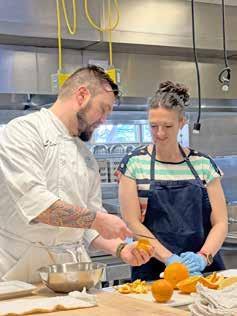
“I rarely consider this work. I get to party with food nearly every day with people I absolutely enjoy. It doesn’t get much better than that,” said Chef Coker. (Photo courtesy Tori Hunter, SLCC Administrative Assistant)
said. “If something goes wrong, or if a recipe isn’t working, find a solution and make it work.”
On the flip side, many students audit courses in the program to begin making a change in their career, advance their certifications, broaden their horizons, or to simply brush up on their skills.
“We have an 81-year-old student in the program,” Chelemes said. “She likes coming to keep active and loves taking the different classes. She loves to be with people and cook.”
Seeing so many students come to the Culinary Arts Program to brush up on and further develop their home cooking skills,
appreciate it when guests reach out directly to give us feedback.”
Willey said although the business has grown to include new restaurants, the company’s values are the same across all brands. Service, teamwork, respect, integrity and passion are what keep him and his family serving thousands of customers each year, working to create the best service and food options for people in Utah.
“My philosophy with managing restaurants is that it’s about the people,” Willey said. “If you take care of your core management team, they will take care of your guests. We want to make sure that we’re listening to our team and getting feedback from them on how we can improve and how we can be better. We are never resting on our laurels.”
For location and menu information, visit pennyannscafe.com, mrcharlies.com and moochiescheesesteak.com. l
Coker, Chelemes, and their fellow faculty decided to develop a course specifically designed for non-degree seeking students.
“When I say they party with food each week, I mean it. They have a great time with the chef and take away some incredible recipes and techniques to incorporate at home!” Coker said.
Students of SLCC’s Culinary Arts Program learn from and work alongside highly trained faculty who have worked as professional and executive chefs. Chelemes has been teaching and working within the food industry for 36 years. Coker himself used to work as the chef of a prestigious county club in Southern California before moving to Utah nearly 10 years ago.
“I learned so much from Chef Keri Karabats,” said alumni Jessie Smith, now Pastry Chef Tournant at St. Regis Resort (Deer Valley). “I have a lot of recipes from her... Every once in a while, when I get a craving for sourdough bread, I get to pull out my sourdough starter… while remembering the amazing memories I have from that class.”
Coker has been emphasizing getting their program on the radar of local high school students.
“We invite the high schools, as well as the family and friends of the students in the course, to the capstone Catering Management course,” he said.” Every week brings a
custom theme and menu concept crafted by each student.”
Coker encourages anyone interested in the program to schedule a time to meet to discuss goals, meet some of the faculty and current students, and take a tour of the building.
“It simply begins with a phone call, text message, or email to learn about the program,” he said.
SLCC’s Culinary Arts Program is taught at the Miller Campus in Sandy (9750 S. 300 West). Their social media can be found on Instagram @SLCC Culinary Institute and Facebook @Jeffrey Coker (slcc culinary institute).
To learn more about the program, visit their SLCC’s Culinary Arts websites at either: www.slcc.edu/culinaryarts or www. slcc.edu/hospitality-management.
Now, any good food article should include some hit recipes and local eatery recs, right?
Shannon’s favorite dish “would have to be gochujang pork buns. Gochujang marinated pork with a sweet and savory gochujang garlic aioli.”
Chelemes’ recommendations include Oquirrh, Monoli’s Greek Small Plates, and Per Noi Trattoria. Coker’s recommendations include The Blind Rabbit, Takahashi, Brabo Pizza, Hearth and Hill Collection, and Itto Sushi. l




Childhood food allergies – confirm the diagnoses then keep life as normal as possible
The immune system is designed to protect the body from viruses and bacterias but in someone with a food allergy it mistakenly treats food, like peanuts or eggs, as if it was a harmful invader.
By Becky Ginos becky.g@thecityjournals.com
Children and adults alike can experience food allergies.
The key is learning to recognize them and find ways to handle them in order to prevent impacting daily life.
“Food allergy happens when the body’s immune system mistakes harmless food for something dangerous,” said Lakeview Hospital Chief Medical Officer Dr. Colleen Swank. “So instead of simply digesting the food, the immune system reacts to it and that reaction can range from being mild, like hives, to a life threatening allergic reaction.”
Think of it like a false alarm, she said. “The immune system is designed to protect us from viruses and bacterias but in someone with a food allergy, it mistakenly treats food like peanuts or eggs as if it was a harmful invader. That causes the body to release chemicals that lead to those symptoms.”
It’s really important to distinguish an allergy from an intolerance, Swank said. “An allergy involves the immune system and can be life-threatening. An intolerance, one of the most common ones would be like lactose intolerance, will cause digestive discomfort but doesn’t involve the immune system and isn’t typically dangerous.”
In the past, doctors recommended that food should be

into a puree would be appropriate.”
The one caveat would be babies that have eczema, significant eczema or a known egg allergy, Swank said. “For those children, I would recommend that they talk to their pediatrician before introducing foods just because there might be some caveats and changes on how the allergenic foods are introduced.”
The nine major food allergies in the U.S., Swank said, are milk, eggs, fish, shellfish, tree nuts, peanuts, wheat, soybeans and sesame is the newest one. “It was just labeled the ninth major allergen for the U.S. in 2023.”
Food allergy symptoms develop within minutes, up to two hours after eating the food, she said. “They can range from mild to life-threatening. Mild symptoms would be itchy mouth or lips. Hives or an itchy rash. Sometimes redness of the skin or sometimes swelling of the lips. Young children who can’t talk to you about these things, they’ll get pale or bluish skin.”
introduced slowly to babies. “We used to recommend that we delay foods, the typical allergenic foods up to one year, even up to three years in kids.”
That changed over the last decade, said Swank. “Our advice is early, safe and consistent exposure of allergenic foods not avoidance. Once a baby is developmentally ready for solids, typically around four to six months, we encourage introducing a variety of foods, including those allergenic foods in safe forms and continuing them regularly as tolerated.”
Another important thing though is that the form matters, she said. “We wouldn’t want to give a baby whole nuts or thick globs of peanut butter because of the choking risk. But using thinned peanut butter, or peanut butter powder mixed
Swank said in mild cases she suggests avoiding the food that parents think caused it. “Then they should seek medical care. If it’s mild and the child is otherwise acting normally then it can wait until they can get a regular appointment with their pediatrician. Obviously, if it’s more severe, especially if the child is really young, then they may need to seek emergency care.”
A local mother with two children who have food intolerances has found ways to deal with them. “We substitute applesauce for egg in some of our baking,” she said. “We’ve also found recipes that are traditionally egg based but you can make without using egg. Egg-free crepes are a favorite. Otherwise, we mostly just avoid foods with allergies.”
“My advice is, confirm it, then understand it,” said Swank. “Plan for it and keep life as normal as possible.” l

Parents should inform the school of their child’s allergies so they can help prevent a reaction during lunchtime. (Adobe Stock)
The rise of the dirty soda: how a Utah staple became a
By Linda Petersen l.petersen@mycityjournals.com
Whatstarted in 2010 as a unique local Utah non-alcoholic drink alternative has exploded into a national phenomenon. The “dirty soda” trend – traditionally a soft drink mixed with flavored syrups, cream and fresh lime juice over pebble ice – originated right here in Utah when Swig owner Nicole Robinson popularized the concept at her St. George drive-thru.
Originally designed to offer a customizable, non-alcoholic beverage option for the local community, dirty sodas found a perfect niche in Utah where much of the local population which belongs to The Church of Jesus Christ of Latter-day Saints, does not consume alcohol, coffee or tea but is known for having a fondness for soda.
Today, those local roots have fueled a $70 million industry. The drinks went globally viral in late 2021 when pop star Olivia Rodrigo posted a photo of herself holding a Swig cup on Instagram, introducing the concept to millions of Gen Z fans overnight. The craze received another massive boost from the cast of the Hulu reality series The Secret Lives of Mormon Wives, where local soda shops served as the backdrop for major dramatic moments.
This momentum propelled Swig from a local favorite to the forefront of the beverage industry, expanding to more than 140 locations across 16 states. In Utah alone, Swig operates 49 locations – including Salt Lake County stores in Sugar House, Millcreek, Sandy, South Jordan, Murray, West Jordan, Taylorsville, Cottonwood Heights, Bluffdale and Draper – with a new location planned for the Salt Lake International Airport.
In Davis County there are multiple locations, including shops in Bountiful, Centerville, Farmington, Kaysville, Layton and Clearfield, ensuring that northern residents never have to

drive far to get their daily custom fix.
Beyond just changing how the community drinks, the success of dirty sodas and the Swig brand has also allowed its founder to give back in a deeply personal way. Inspired by her own battle with breast cancer, Robinson, the drink’s originator, founded the Swig Save the Cups Foundation, which has raised more than $1 million to directly pay the medical bills of women fighting the disease.
The Battle of the Bubbles
While Swig is officially recognized as the original home of the commercial dirty soda –famous for its “Dirty Dr Pepper” and “Life’s a Peach” blends – other Utah chains have carved out major followings for their versions:
Sodalicious: Known for fan-favorites like “Your Mom” (Dr Pepper with coconut and blackberry) and the “Castaway” (Fresca with coconut and fresh lime).
FiiZ Drinks: Another massive Utah-born powerhouse that has built a cult following by offering a sprawling, eclectic menu that includes highly customizable “FiiZ Freeze” blended options and thousands of potential flavor combinations.
The booming success of these homegrown operations and others eventually caught the attention of major national corporations looking to cash in on the phenomenon.



Today, corporate giants have fully capitalized on the craze; Sonic Drive-In now offers “Make it Dirty” customization options at its pumps nationwide, Coffee-Mate has released co-branded dirty soda creamers for grocery store shelves, and Pepsi launched a massive viral “Pilk” (Pepsi and milk) marketing campaign. Even fast-food giant McDonald’s recently rolled out its own nationwide lineup of “crafted sodas,” featuring a Dirty Dr Pepper topped with vanilla cold foam.
Bring the Soda Shop Home
Making custom dirty sodas has become a staple trend for local weddings, showers, family reunions and backyard get togethers. With flavored syrups now readily available at most local grocery stores, hosts love setting up “soda bars” where guests can mix and match their own customized non-alcoholic drinks. However, when doing it yourself keep in mind that assembly order matters to prevent the dairy from curdling when it hits the acidic, carbonated soda. Here is the step-bystep process and some tried and true recipes to create dirty sodas in your own kitchen.
Tried-and-True Recipes
Base quantities: Use 8 oz of soda, 1 Tbsp of each flavor syrup, and whipped cream to taste.
craze
Island Refresher: Sprite + coconut syrup + 1 fresh-squeezed lime wedge.
Tigers Blood: Sprite + coconut syrup + strawberry syrup + whipped cream (optional).
Lions Blood: Sprite + coconut syrup + raspberry syrup + whipped cream (optional).
Root Beer Float: Root beer + vanilla syrup + whipped cream (Note: Use coffee/ Italian syrup, not baking extract!)
Butterbeer: Cream soda + 2 Tbsp caramel or butterscotch syrup + 2 Tbsp heavy cream.
Step-by-Step Assembly Guide
Chill the Glass: Fill a large tumbler or glass completely to the top with pebble ice.
Pour the Base: Pour 8 ounces of your chosen carbonated beverage directly over the ice, leaving roughly 1.5 inches of headspace at the top.
Layer the Syrups: Add 1 to 2 tablespoons of flavored syrup directly into the soda.
Squeeze the Citrus: Squeeze the juice of a fresh lime or lemon wedge straight into the mixture. Drop the wedge into the cup for extra zest.
Float the Cream: Slowly pour 1 tablespoon of half-and-half, heavy cream, or coconut cream directly over the top, allowing it to naturally cascade down through the ice.
Stir and Sip: Use a wide straw to gently stir the drink from the bottom up until the color is uniform, and enjoy! l







Many Utahns are setting up soda bars as part of their family gatherings and celebrations. Courtesy photo/Shane Petersen
Companies Championing Women artist discovers strength in expression
Katrina Berg uses bright, happy colors to bring light when life gets hard.
By Becky Ginos becky.g@thecityjournals.com
For Katrina Berg her art means much more than what is on the canvas. It’s the meaning behind it that truly feeds her soul.
“I started painting just on my own and found so much healing from childhood sexual abuse,” said Berg. “It really started to help me be my best self.”
Berg never went to art school, in fact her path was in architecture. “I grew up in southern California and I always liked drawing but my house was a very clean house and art is messy,” she said. “I’m just assuming that’s why I ended up spending more time building with Legos.”
Because she liked building, Berg said she was drawn to architecture. “Everyone just assumed I’d be an architect so in high school I took a lot of architecture and drafting classes and I loved those.”
Berg graduated from BYU and in 2004 graduated from UNLV in architecture. “I felt like things were really going in the right direction,” she said. “I did study abroad in Italy and that just solidified my love of creating and art and design.”
After getting married and having her first child, Berg found she needed to paint just to start processing some of the things that had happened to her. “I was also assaulted in college,” she said. “I think when you finally become a partner with somebody in life all these problems that you’ve been carrying around like a suitcase your whole life they become really apparent.”
Berg said it was really important that she start working through them. “Painting and drawing was definitely that for me. It helped me heal while I was painting and creating.”
As her art collection grew, Berg said she started going to art shows along the Wasatch Front. “That’s really where my artwork started to take off because people would collect my art and they would tell me what the art did for them. That’s when I realized that the art wasn’t just for me, it was for other people.”
Berg said she still tried to express what she felt like God was telling her to share with others. “My work is really focused on bringing the outside in and helping people heal from nature and realize the beauty that has been created around them.”
Her art is made up of happy colors. “That helps sustain us when life gets hard,” she said. “For me I needed to focus on the light. I had this book of stained glass pieces and I started painting what I saw in the book

“Dream
and realized that I really loved the reflection of light. It kind of helps us see ourselves and the world around us.”
Berg only paints on wood. “It can be a
little different for artists because it tends to be more heavy,” she said. “I paint on really smooth surfaces and the paint does shine just like a stained glass piece and so you’ve got little pieces of candy color reflecting right back at you. It just came right from my soul.”
Berg’s work will be featured at the Companies Championing Women event Aug. 27. “What I love about their mission is supporting and creating better environments for women,” she said. “That’s something I find near and dear to my heart. I felt like women needed more support just because a lot of us, just like me, we have other things going on in our lives. Whether it’s children that are a priority or a spouse, I feel like women tend to wear so many more hats.”
They select one of her paintings and create an image of it that will be broken up into a mosaic and it becomes each of the awards for the event, said Berg. “So each of the companies that receive an award they’ll have a little piece of that artwork and then when it’s displayed together on the wall it’s just one big picture (image).”
Berg hasn’t asked to be paid for the artwork. “It’s an honor just to participate and support them.”
For more information about Katrina Berg and her candy colored studio art visit katrinaberg.com. l

HANDCART DAYS IS SO THANKFUL FOR OUR GENEROUS SPONSORS!




















a little dream of me” oil on wood named after the song by Ella Fitzgerald and Louis Armstrong. (Courtesy Katrina Berg)
Crumbl opens new location, same famous cookies
The bakery is under new ownership and moved to 350 S. 500 West in Bountiful.
By Becky Ginos becky.g@thecityjournals.com
BOUNTIFUL—Madison
Southwick and Maegan Hymas have always wanted to find a way to work together so when the opportunity came up to own the Bountiful and Centerville Crumbl bakeries, along with their husbands Dallin Southwick and Mark Hymas, they jumped at the chance. Along with the new ownership, they changed locations from Bountiful Main Street to 350 S. 500 West, Bountiful.
“The old location was built almost 10 years ago,” said Madison. “The way the cookie business has changed over time it didn’t fit the needs anymore. We’re just excited to go to a new spot where we could build it out in the most ideal way and freshen things up for the community.”
They’re planning on offering sodas as well, Madison said. “So we had to accommodate for a whole new layout.”
The two women said nothing brings their family closer than cookies and working together. “Between us and our family we’re a party of over 36 nieces, nephews and
great grandkids,” said Maegan. “When we’re together we like to eat and visit and cookies just make it sweeter.”
“My husband Mark and I bought some Crumbl bakeries out of state,” she said. “So this one here in Bountiful is extra sweet for us because it’s our own family owned Crumbl.
So we’re not totally new to Crumbl but to this area we are.”
The Crumbl location will be offering a variety of sodas, said Madison. “You can get plain sodas or you can get all the customization flavors and creamers if you want so we’ll have endless options.”
She said they’re going to stick to the cookies everyone knows. “That’s the great thing about Crumbl is people who move out of state can order the same cookies there as they can here, which is comforting.”
“Our cookie line changes every week,” said Maegan. “We do have four flavors that we offer every week consistently but then six that do change and we have different themed weeks, which are fun. So we offer the consistency that you can get the same stuff but also the uniqueness of changing out six different cookies every week.”
Maegan said Crumbl has also upgraded their original chocolate chip cookie. “It’s gotten great reviews. It’s got dark chocolate and milk chocolate together. We also sell minis, so if the big ones don’t suit you, they can start with the minis.”
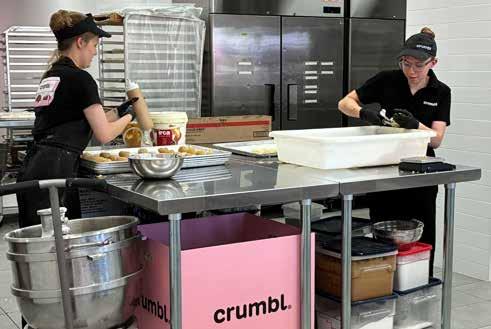
“We have an open kitchen concept,” said Madison. “When you walk in you see the mixers. You see the tables where they’re balling out the dough and they’re pulling out ingredients and decorating them. Nothing is kept behind closed doors. We bake everything fresh.”
There’s no premade cookie mixes or brownie mixes, she said. “Fresh eggs, cream, butter and sugar. Incredible recipes. We’ve got these amazing bakers that are learning how to learn these new recipes every week. Thank you to the community for giving us a chance.” l
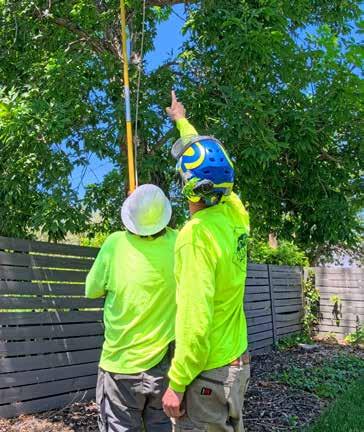
With years of hands-on experience and an ISA Certified Arborist certification, Bernie specializes in power lineclearance—ensuring safety for our crews and your property. He leads with expertise, cares about every detail, and takes pride in doing the job right.


Allison Jackson and Brooklyn Sadler prepare dough for Crumbl cookies at the new location at 350 S. 500 West, Bountiful. Photo by Becky Ginos





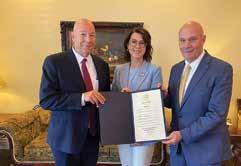
Larkin Mortuary’s dedication to the Utah community is deeply rooted in its history and family values. For over 140 years, spanning seven generations, the Larkin family has proudly served Utah families in their time of need. This commitment extends beyond providing funeral services; Larkin Mortuary actively engages with the community by hosting events and giving back through various service initiatives such as the annual Memorial Day Program, golf tournament, Trunk or Treat and Live Nativity.
LOCAL FAMILY OWNED
& OPERATED Taking Care of your Family’s Needs every step of the way
Larkin Mortuary - Downtown 260 East South Temple Salt Lake City, UT 84111 (801) 363-5781 Larkin Sunset Gardens 1950 East Dimple Dell Road (10600 S) Sandy, UT 84092 (801) 571-2771

Kaysville siblings learn business lessons one ice cream cone at a time
Nobody can resist the nostalgia of the neighborhood ice cream truck.
By Cindi Mansell c.mansell@mycityjournals.com
Formany people, the sound of an ice cream truck brings back memories of hot summer afternoons and neighborhood treats. In Kaysville, one family is bringing that tradition back – while teaching their children what it takes to run a business.
John and Whitney Macfarlane wanted to help their five children find meaningful summer work without sacrificing family vacations or time with friends. Their solution was to launch an old-fashioned ice cream truck – but with a modern twist: the business is entirely owned by the kids.
inventory and operate a small business. “The business is 100% owned by the kids,” Macfarlane said. “They have a loan from me for the truck and the first round of supplies, and they’re responsible for paying it back.”
The experience has taught lessons that extend beyond bookkeeping. The children greet customers, oversee sales and interact with neighbors throughout the community. “It’s been great for them to learn how to greet people, speak up and talk to adults,” Macfarlane said. “The community has really embraced them.”
The family has also been surprised by who their customers are. “The kids love seeing how happy they make people,” Macfarlane said. “They’ve been especially surprised by how many adults flag them down with no kids around.”
Sunset Lawn 2350 East 1300 South Salt Lake City, UT 84108 (801) 582-1582
The Macfarlanes have three 14-year-olds and 12-year-old boy-girl twins. According to John Macfarlane, the children were eager to earn money during the summer, but finding jobs that offered enough flexibility proved difficult.
“We hardly ever see ice cream trucks in Davis County anymore,” Macfarlane said. “The combination of bringing back that nostalgia and teaching our kids how to run a business made this the perfect opportunity.”
Although the parents helped get the business off the ground, ownership belongs to the children. Macfarlane provided a loan to buy the truck and the initial inventory, and the children make monthly payments while learning how to manage finances, track
To operate legally, Macfarlane obtained a Kaysville City business license and completed the city’s required background check. He and his wife never take the truck out unless at least one of the children is onboard to serve customers.
The truck is available for birthday parties, neighborhood events and other gatherings within the Kaysville area, provided organizers expect at least 15 purchases. Otherwise, residents can keep an eye out as the truck makes its rounds through local neighborhoods this summer.
For booking information, contact John Macfarlane at macutak@hotmail.com or through Facebook Messenger. l
The Macfarlane children, Hadley, Bo and Sammy stand in front of their ice cream truck. It’s 100% owned by them. (Courtesy)
Summerfest Art Festival showcases cultures from around the world
Join in the fun as the Bountiful Davis Arts Center’s annual Summerfest comes to Bountiful City Park Aug. 7–8, from noon to 8 p.m. Enjoy 16 performers sharing their cultures through song and dance.
There will also be four cultural workshops led by master artists and cultural practitioners, these hands-on workshops explore the stories, techniques, and traditions behind heritage art forms from around the world.
K-Pop Tiger workshop, blending traditional Korean folk painting (Minhwa) with the bright style of K-pop demon-hunter animation.
Lei making workshop. In Hawaiian, haku lei literally means “weaver of lei.” Haku refers to a technique of weaving or braiding ferns and adding flowers as you braid. Traditionally, white haku leis are worn in Hawaiian weddings and colorful haku leis are worn for other celebratory events like graduations, pageants and luaus.
Champarrado Zoque-Maya Chocolate-Making workshop. This one and a half hour workshop is focused on the ZoqueMaya chocolate-making tradition. This session offers a cultural immersion and a space to reflect on ancestral knowledge and earth-sustaining practices.

Performers share their culture and traditions at a previous Summerfest.
Henna Workshop. Discover the beautiful tradition of henna in this hands-on workshop led by a local artist with more than 20 years of experience.
There will be food trucks and artisan vendors as well as the Art Yard. The Art Yard is a hands-on creative area where children, teens, and families can participate in fun,
Free, family-friendly event Taste, Tour & Ta-Dah!
These events make for the perfect midweek outing for all ages.
By Cindi Mansell c.mansell@mycityjournals.com
Discover the sights, tastes, and sounds of summer at the Utah State University (USU) Botanical Center’s free summer concert series with garden tours and produce tastings.
Visit the Edible Garden, USU Botanical Center, 80 E. 725 South in Kaysville each Wednesday in August. They will kick off the evening with guided garden tours at 6:30 p.m., followed by fresh produce tastings
and live music from 6:45 p.m. to dusk. From vocal ensembles to local bands and DJs, each evening brings something new to enjoy.
Bring your blanket, lawn chairs, shade umbrella, sunscreen, and a picnic cooler (yes, they are allowed) and settle in for a relaxing evening surrounded by the beauty of the gardens and the joy of community connections.
2026 Music Lineup:
Wednesday, Aug. 5; 6:30 p.m. to 8:30 p.m. - Eli & The Second Chance Band
Wednesday, Aug. 12; 6:30 p.m. to 8: 30 p.m. - Northview Jazz Band
Wednesday, Aug.19; 6:30 p.m. to 8:30 p.m. - Lars Yorgason Singers Jazz Ensemble


interactive art activities during Summerfest. For more information and the schedule of performances visit www.bdac.org/ summerfest. l
Wednesday, Aug. 26; 6:30 p.m. to 8: 30 p.m. – Harmonic Winds of Utah & Utah Fig Night*
*The Utah Fig Society will be onsite with information on growing and harvesting figs in Utah.
Admission is free and no registration is needed. Follow the USU Botanical Center Events page on social media for any last-minute updates or cancellations due to weather, illness, or other unexpected changes. Leashed pets are welcome (if friendly).
Made possible by sponsors: Discover Davis, USU Credit Union, and Goldenwest Credit Union. l




A local artist shows off her Henna tattoos from one of four workshops. Photos courtesy/BDAC
Pantry Packs in the Park returns to Bountiful on Aug. 8
By Tom Haraldsen t.haraldsen@mycityjournals.com
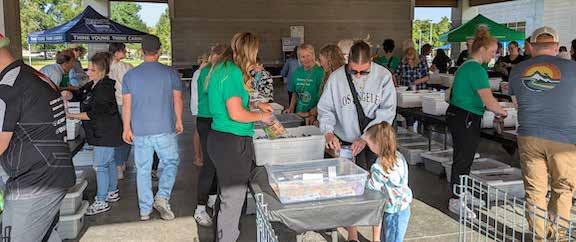
The tradition returns this year on Aug. 8 when the Bountiful Food Pantry holds its second annual Pantry Packs in the Park event. The event in Bountiful City Park will bring together volunteers and family members in the community to assemble the packs of food that are given to students in Davis County who face hunger. The event will include live remote broadcasts from the KSL Greenhouse Show and FM 100. It starts at 8 a.m.
The event is co-sponsored and largely funded through the generosity of the Young Automotive Group’s Young Caring for Our Young, Mountain Ops, AAA, and Totally Hitched Events. The event will include live remote radio broadcasts from the KSL Greenhouse Show and FM 100.
There are games for children to play, face painting, balloon creations by Sammy “T” Clown, two food trucks, and free soda all day provided by Totally Hitched Events.
“Pantry packs are one of the most important ways that we prevent hunger in Davis County,” said Rebekah Anderson, executive director of the pantry. “It’s great to get community members together to assemble these pantry packs and help the important cause of preventing hunger in our children.” Her goal is to complete 6,000 pantry packs that morning.
The pantry packs program continues the pantry’s ongoing mission of providing food for families. During 2025, the pantry distributed more than 2.725 million pounds of food and served more than 102,000 people. Anderson said the need has consistently increased over the past few years, with uncertainty over the economy and job layoffs creating more
Expert Surgical Services
food insecurity.
She also praised the support from the Young Automotive Foundation, which has long supported the pantry pack program
“Young Automotive and its Young Caring program are spectacular partners,” she said. “They do so much for the community, and we’re grateful that they work with us to provide pantry packs for thousands of kids each month.”
Each pack includes two meals, two breakfasts, a drink packet, fruit snacks, granola bars, crackers and a fruit pouch, along with a cheerful “note” expressing love and best wishes
for the student getting the pack. The pantry received cash from multiple donors and contributions from community members to pay for the contents of the packs assembled at the event.
During the 2024-25 school year, the Bountiful Food Pantry distributed over 100,000 pantry packs in Davis County Schools, about 4,000 a week.
Anderson said all of the participants seemed to enjoy their experiences last year, and that Pantry officials plan to hold a similar event next summer. l
Navigating Abdominal, Colorectal, and Breast Surgery: 5 Things You Should Know
FACING THE PROSPECT of abdominal, colorectal or breast surgery can be daunting, bringing with it many questions and concerns. At CommonSpirit General & Colorectal Surgery Davis, we understand these anxieties and are dedicated to providing thoughtful, expert care. Our new clinic, which opened July 1 on the campus of Holy Cross Hospital – Davis features a team of highly-skilled surgeons committed to guiding you through every step of your health journey. Here are five key things to consider when contemplating such an important medical decision.
1. Understand Your Diagnosis Thoroughly
Before any surgical procedure, ensure you have a clear and comprehensive understanding of your diagnosis. Ask your surgeon to explain the condition, its severity, and how surgery will address it. “We believe in empowering our patients with knowledge,” says Dr. Scott Baker. “A well-informed patient is better prepared for a successful outcome.”
2. Explore All Treatment Options
Surgery is often a vital solution, but it’s im-
portant to discuss all available treatment options with your surgeon, including non-surgical alternatives. “We champion a multidisciplinary approach,” notes Dr. Wade Larsen, emphasizing that the best care often involves considering various paths to optimize recovery. “This ensures you make an informed decision tailored to your specific needs.
3. Inquire About Surgical Techniques
Advances in surgical techniques, such as minimally invasive procedures, can offer benefits like faster recovery times and reduced scarring. Don’t hesitate to ask your surgeon about the specific techniques they plan to use and why they are recommended for your case.
4. Discuss Preparation and Recovery
A smooth surgical journey begins long before the operation and extends well into recovery. Inquire about pre-operative instructions, what to expect on the day of surgery, and a detailed recovery plan. Dr. Kirstie Jarrett advises, “We are committed to preserving existing relationships and building new ones, ensuring support and understanding during difficult times, especially through the recovery phase.”
5. Choose an Experienced and Trusted Team
The skill and experience of your surgical team are paramount. Look for surgeons with a proven track record and a compassionate approach. CommonSpirit General & Colorectal
Surgery Davis is proud to welcome three experienced surgeons, providing expert care right here in Layton.
Our Expert Surgical Services Include:
• Hernia Repair
• Gallbladder Removal (Cholecystectomy)
• Appendectomy
• Soft Tissue & Skin Lesion Removal
• Abdominal Surgery
• Colon & Rectal Cancer Management
• Inflammatory Bowel Disease (IBD) Care
• Anorectal Disease Treatment
• Minimally Invasive Procedures (for various conditions)
... And many more comprehensive general and specialized colorectal surgical solutions.


To schedule an appointment: (801) 927-3080
For more information visit: mountain.commonspirit.org
Learn more about the services, care providers and mission-driven work of the Holy Cross hospitals and CommonSpirit Health at www.holycrossutah.org.

At CommonSpirit Health, we make the healing presence of God known in our world by improving the health of the people we serve, especially those who are vulnerable, while we advance social justice for all.
Members of the community helped assemble packs for the Bountiful Food Pantry’s Pantry in the Park event last year. The event is set again this year for Aug. 8. Photo by Tom Haraldsen
County looks to purchase land for permanent supportive/transitional housing project
The county applied for a HUD loan to purchase a five acre property in Clearfield.
By Becky Ginos becky.g@thecityjournals.com
FARMINGTON—Davis
County is moving one step closer to having a permanent housing location for the homeless. On Tuesday, July 28, the commission approved a “real estate purchase contract to acquire vacant land for a permanent supportive housing/transitional housing project pending approval of Davis County’s application for a section 108 loan guarantee from the Department of Housing and Urban Development (HUD).”
The purchase will be paid for using proceeds from the loan for $4.7 million.
“It’s a five acre piece of land north of the Tanner building in Clearfield and west of Workforce Services,” said Community & Economic Development Director Kent Andersen. “We’ll partner with a developer to build a new facility for permanent housing. We want to get upstream of homelessness.”
It’s in cooperation with HUD, he said. “If we don’t get a loan we wouldn’t go forward.”
Andersen said they were looking for an area that was zoned for it and this property is. “We want a location close to services like transportation, workforce services,
mental health services, etc. Transportation is the big one.”
The county asked cities to identify what made sense for permanent, supportive housing, he said. “Clearfield thought there were areas that would work.”
It won’t exceed 60 units, said Andersen. “It’s a collaborative model with the state requirements for Code Blue, which is temporary housing between October and April when temperatures dip below 18 degrees. This is a homeless referral location to permanently house those people.”
It’s the gold star standard for housing the homeless, he said. “It provides a longer stay with services on site that will add a level of care for individuals.”
The past couple of years when the Code Blue requirements were in place, some community members pushed back on locations that were near their neighborhoods. “This is the right area and the community has recognized the importance of having a space. The community as a whole has been incredible.”
Andersen said the county would need to find a developer to partner with. “That has to happen before the linchpin can be pulled. We’ll send out an RFP for developers who are interested.”
There are a lot of moving pieces before the county can have a conversation, he said. “It depends on if the loan comes through.”
If everything comes together, Andersen said he hopes the project will be completed in three years. l
The right ER. Right around the corner. Weber
Campus Emergency Department.
When you need emergency care fast, the closest emergency room is a smart thing to know. CommonSpirit Holy Cross Hospital – Davis offers complete emergency care at our Weber Campus serving as a direct path between feeling scared or uncomfortable and feeling better. Find emergency care close to you at mountain.commonspirit.org.
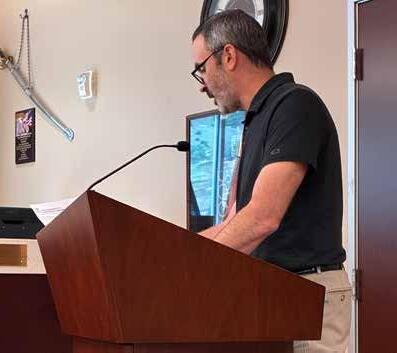
land pending approval of a HUD loan for $4.7 million for a permanent housing project for the homeless.
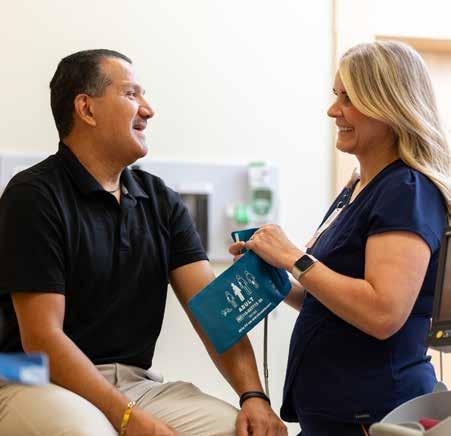
Davis County Community & Economic Development Director Kent Andersen speaks to the commission at a previous meeting. Andersen came before the commission on Tuesday, July 28 to ask for their ratification to purchase
Photo Becky Ginos
New SNAP benefits highlight Bountiful Farmers Market season
The Bountiful Farmers Market is back for the season, featuring SNAP benefits for the first time alongside its familiar mix of local produce, artisan vendors, food trucks, and live entertainment.
By Gail Newbold andersennewbold@gmail.com
Thisseason’s Bountiful Farmers Market promises to be a winning combination of the old and the new.
New this year is the addition of the state supplemental nutritional program (SNAP) that will enable low-income families to use their benefits to purchase fresh produce and any other foods sold at the market, according to Bountiful Parks Director Brock Hill. “I think we will also have more sampling since COVID is so far in our past and things are getting back to normal.
“We’re also going to try to ramp up advertising,” he said. “That will probably include a combination of signage, social media messages, and newsletters.”
Sadly, farmers will be selling less fruit this year due to the late freeze. “There won’t be any peaches, apples or cherries because they all froze,” said Hill. “It will be interesting to see what the farmers will bring. We are assuming it
will be ground fruit like berries, or vegetables or anything grown in a greenhouse.”
Back this season are the many ingredients that have made Bountiful’s farmers market so popular, including the farmers, artisan and food vendors, food trucks, and a picturesque setting with plenty of lawn space and shade trees.
According to Hill, some of the market’s most popular booths include Wild Rose Bread, often with long lines of customers. The cotton candy booth draws folks from all over. There’s a booth that offers pet care supplies that’s very popular. And of course, the local fresh honey and farmers are all favorites.
“I buy the bread at Wild Rose by the handful,” said Hill with a smile. “I buy a lot. I especially love the margarita baguette with fresh basil, parmesan and sun-dried tomatoes. It’s life changing. The owner bakes it out of her home and in the off-season sells it from Touché on Bountiful’s Main Street.”
The market was originally created by a volunteer named Mary Carpenter and was taken over by Bountiful City four years ago. Over the years, it has expanded from three farmers to eight, with roughly five food trucks that rotate throughout the season. The number of vendors has stayed at about 55, not including the farmers, because the area is restricted on space. Approximately one-third of the vendors sell food and the other twothirds sell nonfood items.



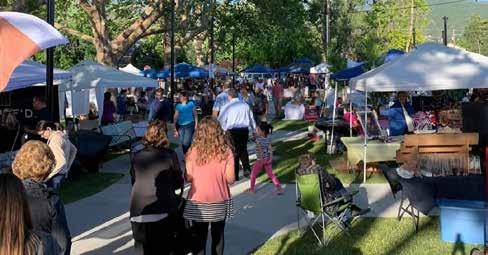
Is it difficult for vendors to get booth space? Hill says there is a registration process, quality controls, and preference given to Bountiful vendors first, then south Davis County vendors. Farmers come from as far as Brigham City. “We’ve tried to allow only local produce to be sold,” said Hill, “but I know some has snuck in in the past.”
The cost to vendors per market day is lower than a lot of other farmers markets at $15 for farmers, $20 for food vendors and
$25 for nonfood vendors. “We’ve always wanted to be fair to the vendors,” said Hill. “And for the most part they love it – the setting, live music onstage, the hometown feel and affordability. It’s a way to supplement their incomes. We worked hard to get the SNAP program this year.”
Opening day for the season was June 25, and the last day of the market is Oct. 15. It runs Thursdays from 4 to 8 p.m. at Bountiful Town Square, 75 E. 200 South. l

The park-like setting of Bountiful Town Square helps make the Bountiful Farmers Market a favorite summer destination. Photo courtesy of Bountiful Farmer’s Market manager, Cassidy Hadlock
From garden to table – creative ways to use fresh zucchini

When gardens mature, the question emerges, What to do with all this Zucchini? Audri Ence has many ideas from main dishes to breads.
By Kerry Angelbuer k.angelbuer@mycityjournals.com
Zucchini grows quickly and produces a lot of blooms and squash. Additionally if one regular size zucchini at the perfect 6-8 inch size is hiding and left in the garden, it can become a boat of a vegetable the next time it’s noticed. Even if a household has no garden, zucchinis could be left on the porch or the food pantry from someone’s bountiful harvest. The question becomes, What to do with all this Zucchini.
Last Summer, Audri Ence’s mother gave her so many zucchinis she lost count and at one point she had eight huge zucchinis. She used them all helping her own family and neighbors eat this very nutritious vegetable. According to Healthline, zucchini is low in calories (1 cup is only a little over 20 calories), yet it hydrates you and fills you up helping you lose weight. A host of vitamins and antioxidants reduces inflammation. The soluble and insoluble fiber supports a healthy gut, absorbs cholesterol, and keeps the bowel moving. It has a low glycemic index (15) making it ideal for those with diabetes or even those with insulin resistance. Replace high carb noodles or rice with “zoodles”
made of spiralized zucchini.
If a zucchini is really hard and large so that it is difficult to cut, one idea is to cut it lengthwise and pull out the seeds and discard them, salt the boat and then fill it with a savory filling that can be eaten along with the zucchini meat. The hard skin can be a bowl of sorts though it can be eaten once cooked. Here is Ence’s favorite stuffed zucchini boat recipe. Her kids love it.
Filling: Cook half a pound of beef or turkey in a skillet. Add ½ teaspoon pepper and 1 teaspoon salt and ½ cup chopped onion and cook until soft. Stir in two minced garlic cloves, a little more than a cup of tomato sauce, 1 tablespoon chili powder, 2 teaspoons cumin, 1 teaspoon sugar, 1 teaspoon oregano, ½ teaspoon ground coriander, 1 15-ounce can of rinsed pinto beans, and 1 cup cheese.
Pour ¾ cup tomato sauce in a casserole pan and place the zucchini boats on top. Cover with foil and cook at 425 degrees for 35 minutes until zucchini is soft. Sprinkle on cilantro and let rest five minutes before serving.
If this recipe doesn’t rock the boat, try cinnamon, chocolate or lemon zucchini bread
“Zucchini doesn’t have its own flavor, it just takes on the flavor of whatever and it’s got a nice texture,” said Ence. Seeds and skin do not have to be removed before grating zucchini if they are not boat size. Sometimes when Ence grates a whole bowl of zucchini to use in recipes, water will settle in the bottom. She likes to mix the moisture back in
before adding it to her bread. Ence is often asked for her lemon zucchini bread recipe. Add one cup oil, ¾ cup plain greek yogurt, 1 tablespoon fresh lemon juice, 2 teaspoons lemon zest, 1 teaspoon vanilla extract, 3 eggs, 2 cups sugar, 1 teaspoon salt, 3 cups flour, 1 teaspoon baking soda, ¼ teaspoon baking powder and 2 cups grated zucchini. Mix until combined.
Top with a lemon crumb containing ½ cup flour, ¼ cup sugar, 1 teaspoon lemon zest and three tablespoons butter.
Cook two standard loaves in lined pans at 350 degrees for 50-60 minutes or large muffins for 30 minutes until they test done. After the bread is cool, lemon glaze (1 cup powdered sugar and 1-2 tablespoons lemon juice) may be added. Don’t use glaze if freezing the loaves. “Zucchini bread freezes really well,” said Ence, “I always wrap it in saran wrap and then put it in a Ziploc bag, then I just take it out still wrapped in the saran wrap and set it on the counter. Within a couple of hours, it’s perfect, and it’s still just as moist, just as flavorful.”
Ence also dices up her zucchini and adds it to the rest of her veggies in her Bolognese sauce. Another excellent main dish that can use several cups of grated zucchini is Texmex zucchini skillet, that can be used as a dip for chips or the filling for tacos and burritos. “There are 100 things to do with zucchini,” said Ence, “My mom has found that you can grate zucchini and can it with pineapple juice, and it tastes like canned pineapple.” l
Meetinghouse to be sold, open house for former ward members set for Aug. 15
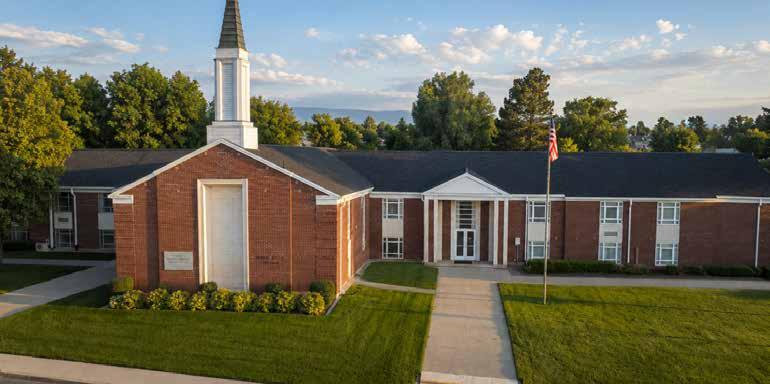
The Church of Jesus Christ of Latter-day Saints has decided to sell the meetinghouse at 102 E. 1400 South, Bountiful. This building has been home to the Bountiful 4th, 20th, and 36th Wards for nearly 70 years.
Neighbors and former members of those wards are invited to an open house to be held on Saturday, Aug. 15, from 10 a.m. to 4 p.m. The open house will include a self-guided walk through, historical displays, member stories, and a light lunch.
Photo courtesy of Troy Burnett
Audri Ence was gifted this armful of yellow zucchini. Photo by Kerry Angelbuer
Know your soil type to water smarter and save water
garden soil – feels soft and crumbly while maintaining a balance between drainage and moisture retention.
By Cindi Mansell c.mansell@mycityjournals.com
Notall soil is created equal – and understanding the difference could help homeowners save both water and money this summer.
According to the Weber Basin Water Conservancy District, knowing your soil type is one of the most important factors in watering lawns and gardens efficiently. Different soils absorb and hold water differently, meaning irrigation schedules should vary depending on what lies beneath the surface.
The three primary soil types found in Utah landscapes are sand, loam and clay. Each responds differently to watering and requires its own irrigation approach.
One of the easiest ways to determine soil type is the “feel test.” A handful of slightly moist soil can reveal a great deal.
Sandy soil feels gritty and falls apart easily. It drains quickly and struggles to retain moisture. Clay soil, on the other hand, feels sticky and dense, forms a tight ribbon when pressed between fingers, and absorbs water very slowly. Loam – considered the ideal
Homeowners can also try the “ribbon test” by rolling moist soil between their fingers. Soil that forms a long ribbon before breaking typically contains a high amount of clay.
For residents seeking a more precise analysis, the Utah State University Analytical Laboratory offers affordable soil testing services. Samples can be dropped off at the USU Extension Davis County Office in Kaysville or mailed directly to the USU campus in Logan.
Testing soil can help homeowners determine nutrient deficiencies and understand the natural composition of their landscape. Davis County soils are commonly alkaline and clay-heavy, conditions that can affect plant growth and watering needs.
Watering schedules should be adjusted according to soil type, officials say.
Sandy soil requires short watering cycles – typically five to 10 minutes at a time – because water drains rapidly before roots can absorb it. More frequent watering is often necessary.
Loam soil allows water to move evenly through the ground while retaining enough moisture to reduce irrigation frequency. Experts recommend applying about one-half



inch of water per irrigation cycle, usually two to three times per week during the hottest months of summer. Splitting watering sessions into shorter cycles throughout the day, a method known as “cycle and soak,” can improve absorption and reduce runoff.
Clay soil absorbs water slowly but retains it for longer periods. To prevent runoff, experts recommend using multiple short watering cycles spaced throughout the day. In most cases, watering clay soil twice a week is sufficient.

landscapes generally require between 1 and 1.5 inches of water per week from June through August. Sandy soil may require watering four to six times weekly using smaller amounts of water, while loam and clay soil typically need fewer watering days with deeper soaking.
Water experts emphasize that efficient irrigation is not about using more water, but about applying it properly. Shorter, well-timed watering cycles help keep moisture in the root zone where plants can use it most effectively. l

Watering guide for different soil types. Courtesy
Renewed-U Anti-Aging and Longevity Medicine
In 2025, LISA BALLANTYNE founded Renewed-U where patients feel heard and supported while addressing internal health and external aging concerns in a natural and balanced way. Her approach combines evidence-informed functional medicine with advanced aesthetic and regener ative therapies to help patients improve energy, confidence, body composition and overall wellness. Tell us more about you.
I am the Naturopathic Doctor behind Renewed-U. My background is in naturopathic and functional med icine, with a focus on longevity, hormone optimization, regenerative medicine and non-surgical aesthetics. I have pursued advanced education in bioidentical hor mone therapy, regenerative injections, medical weight management and non-invasive aesthetic technologies, providing natural-looking outcomes. My goal is to help patients feel stronger, healthier and more confident at every stage of life.
What services do you offer?
We create individualized treatment plans that support healthy aging from the inside out. Our services include bi oidentical hormone replacement ther apy, wellness evaluations, advanced lab testing, pelvic floor support, non-surgical facial rejuvenation, body contouring, RF microneedling, and regenerative joint and pain therapies, including PRP and prolotherapy.
What is your favorite service?
My favorite services we offer at Re newed-U Anti-Aging Medicine & Aesthetics
are bioidentical hormone therapy, regenerative orthopedic injections, and EMSELLA treatments because of the meaningful impact they can have on a patient’s quality of life.
What sets your company apart?

We do more than treat symptoms or focus only on appearance. We take time to understand the underlying factors contributing to aging concerns and overall wellness challenges. We help patients improve how they look and feel. Our care is physician-led and designed to create realistic outcomes. We prioritize long-term wellness while building relationships with our patients and tailoring plans to their goals and lifestyles.
Does your business solve a problem for clients?
We address the underlying causes of symptoms that are often dismissed as “just aging.” Many patients
struggle with fatigue, hormone imbalance, weight gain, low confidence, pelvic floor concerns, pain or changes in their appearance that affect how they feel physically and emotionally. Rather than offering one-size-fits-all solutions, we individualize treatment options designed to improve quality of life.
How do clients choose between you and a competitor?
Many patients come to us after feeling rushed, unheard, or frustrated with one-size-fits-all treatment models. Patients who value a comprehensive, relationship-based approach are drawn to our clinic. Education and realistic outcomes are important parts of how we care for patients. That’s often why patients choose our practice over more traditional medical offices or cosmetic-focused med spas.
What would you like readers to know about your business?
Our goal is to help patients feel supported throughout their health journey. We believe aging isn’t about managing decline, but maintaining vitality for as long as possible. We want patients to feel heard. Helping people understand their health is a central part of how we practice medicine.
We value collaboration with other health and wellness

professionals. We believe patients often achieve the best outcomes when healthcare providers work together, and we partner with practitioners who share a commitment to helping patients live healthier lives.
What is your advice for someone considering doing business with you?
Building trust and creating sustainable results are important factors when choosing a practice for longevity, hormone health, regenerative medicine or aesthetic care. Customers should base their decision on the provider’s experience, philosophy of care and personalization. Does the practice take time to understand goals and health concerns rather than simply treating symptoms?
Are you running any specials?
Yes. Renewed-U Anti-Aging Medicine & Aesthetics is offering a Longevity Kickstart program for patients seeking a starting point to improve their health, energy, body composition and wellness. This includes a consultation, lab evaluation, a personalized plan and a follow-up visit. This program helps patients understand the factors affecting how they feel and creates a practical roadmap to healthier aging and improved quality of life.







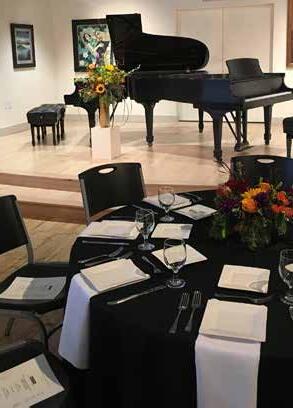

Bring Hope to Bring Hope Families Battling Cancer through the Cancer through the Performing Arts: Performing Get Tickets Today! Today! through




Aug 7 - Sep 5 th th










Four easy recipes for school lunches and after-school snacks
By Megan Fisher | m.fisher@davisjournal.com
Make your kids’ school days something to remember with these four fun and easy to make recipes.
InMarcel Proust’s “In Search of Lost Time,” the simple taste of a Madeleine cookie is enough to flood the narrator with memories from his childhood. Just the right piece of food can turn even the most banal moment into something that you remember for the rest of your life. With the end of summer it comes time for children to return to school and return to school lunches. While lunches provided by the school are healthy and convenient, there are many benefits to sending your child to school with a lunch packed from home, such as the opportunity for the child to learn how to prepare food.
Included here are four recipes that would be perfect for a school lunch or after-school snack, and are not time-consuming or too intensive for little helpers in the kitchen. l
No-bake cocoa cookies
2 cups sugar
5 tablespoon cocoa
½ cup butter (room temperature)
½ milk
1 teaspoon vanilla
3 cups quick oatmeal (not instant)
Hot water as needed
• Pre-measure oatmeal and vanilla and set aside
• Prepare a baking sheet with parchment paper or coat with cooking spray
• In 3-quart saucepan, put sugar, cocoa, butter, and milk
• Cook saucepan mixture over stovetop on medium heat, stirring constantly until mixture boils
• Let boil for six minutes, stirring constantly
• Remove from heat
• Stir in vanilla and oatmeal
• Immediately drop by tablespoons onto the baking sheet.
• Let cool for 30 minutes
If mixture starts to get sugary, add a few drops of hot water and continue stirring until workable again.
Popcorn balls
Makes 15 fist-sized balls
3 gallons popcorn popped
¼ lbs butter
1 cup corn syrup
1 can (14 oz) sweetened condensed milk
2 cups brown sugar
1 teaspoon vanilla
• Mix sugar, butter and corn syrup together in medium saucepan
• Bring to a boil over medium-high heat on stovetop, stirring constantly
• Add milk
• Return to a boil, stirring constantly
• Cook until it reaches the softball stage (228 degrees Fahrenheit), and then remove from heat
• Add vanilla
• Stir in popcorn
• Cool slightly before shaping into balls

Banana chips
Makes about 15 chips
1 banana
2 cups water ½ cup lemon juice
• Set the oven to 200 degrees
• Slice the banana into even chips, about a quarter inch thick. For best results use a fresh and soft banana.
• Mix together the water and lemon juice in a medium-sized bowl
• Soak the banana chips in the water and lemon juice mixture
• Place banana chips on a cooking sprayed baking sheet
• Cook in the 200 degree oven for two and a half hours, flipping the chips over after 30 minutes.
Club sandwich
Makes 1 sandwich
2 slices of sandwich bread
1 slice bacon
1 slice turkey
1 slice ham
2 leaves romaine lettuce
2 tbsp cranberry sauce
4 pickles
2 raw purple onions
3 sliced olives
• Put the sandwich bread on a plate
• Using a dinner knife spread the cranberry sauce over the bottom slice of bread, thin and even
• Cover the cranberry sauce with the romaine lettuce. (No need for mayonnaise or butter.)
• Stack bacon, turkey and ham on the lettuce
• Cover the meat with the onions, pickles and olives
• Place the top slice of bread at the top. If you want to have fun secure with toothpicks and cut in half Serve alongside carrot sticks, grapes, and a juice box.



Create yummy back to school snacks kids will love. (Megan Fisher/City Journals)
Best post-hike food spots in Salt Lake and Davis County
By Peri Kinder peri.k@thecityjournals.com
What pairs with mountain views and waterfalls? A hearty breakfast or scrumptious lunch. There’s nothing like a good meal after hiking trails in the Wasatch Range or Oquirrh Mountains and local restaurants offer everything from juicy ribs to savory crepes. Here are a few options to try after your next hiking adventure.
Smokin’ Bones BBQ, 364 S. 200 West, Bountiful
A morning spent on the Mueller Park Trail in Bountiful can leave you with a big appetite. Luckily, Smokin’ Bones BBQ will whet your whistle with some of the best slowsmoked meats in the county. Brisket burgers, meat platters or the BBQ Navajo taco are local favorites at this family-owned restaurant. Learn more at smokinbonesbbqut.com.
Annie’s Cafe, 74 W. 500 South, Bountiful
The Bonneville Shoreline Trail offers iconic views of Davis County and Annie’s Cafe provides meals that feel iconic in their own way. With a variety of crepes, from Philly cheese steak to peaches and cream, every member of your hiking party will find a favorite. It also provides gluten-free options. If burgers or sandwiches are more your thing, Annie’s has those, too. View the menu at anniescafeut.com.
Weller’s Bistro, 197 N. Main Street, Layton
Hike the Adams Canyon Trail, then find this Layton

favorite where homemade German cuisine and beer top the menu. Its bratwurst plate, warm German potato salad, goulash and schnitzel are delicious tributes to the restaurant’s heritage. It’s also the place to go for German pilsner, Hefeweizen and the German-imported beer of the month. Learn more at wellersbistro.com.
Eggs In the City, 2795 S. 2300 East, Millcreek
With its outdoor seating and diverse menu, Eggs in the City is the perfect spot to enjoy brunch after exploring Millcreek Canyon. The restaurant offers several versions of Eggs Benedict and breakfast burritos, and a fried chicken-n-waffle dish topped with a hot honey sauce. See the full menu at eggsinthecityslc.square.site.
Garage Grill, 12547 Herriman Autorow, Herriman and 1122 Draper Parkway, Draper
Whether you’re hiking Ghost Falls in Draper or exploring Butterfield Canyon in the Oquirrhs, Garage Grill’s two locations have you covered. Along with its famous Sunday Brunch and delicious lunch specials, the auto-themed restaurant features a rotating display of fast cars and a full selection of Salt Flats beer and spirits. Check out thegaragegrill.com.
The Cotton Bottom, 2820 E. 6200 South, Holladay
Come hungry to this post-hiking staple, located near Big Cottonwood Canyon. With its dive-bar vibes and hearty servings, The Cotton Bottom is a local’s choice for garlic burgers, fresh-cut fries, Greek salads and loaded hot dogs. Go to thecottonbottom.com to see the menu.
Porcupine Pub & Grille, 3698 Fort Union Blvd., Cottonwood Heights
For nearly 30 years, Porcupine Pub & Grille has been a favorite place to eat for hikers visiting the Cottonwood Canyons. This local eatery has an extensive breakfast, brunch and lunch menu that includes huge portions of everything from pancakes to pizza. Visit porcupinepub. com for more info.
Lone Star Taqueria, 2265 Fort Union Blvd., Cottonwood Heights
A hike to Donut Falls isn’t complete until you’ve stopped by Lone Star Taqueria for fresh fish tacos. Open for lunch and dinner, the Mexican food hotspot uses homemade tortillas and chips, hosts a spicy salsa bar and offers fresh guacamole. Parking can be a bit tight, but the wait is worth it. l








Do parents need advance notice of book discussions beyond the syllabus
School board considers whether teachers should send a notice to parents before a book is studied in class.
By Becky Ginos becky.g@thecityjournals.com
FARMINGTON—There
has been a lot of discussion in the Davis School District about books/novels with some delicate topics (not sensitive material, that is prohibited) being used in the classroom. In the July 21 school board meeting, there were some differing opinions among board members about what the board and teachers’ role is and what should fall on the parents.
The discussion was centered around a business item, Instructional Materials, and whether language should be added that teachers should send out an email or otherwise let parents know in advance that they will be covering a book that might have some touchy content.
“So this instructional material is a whole novel, ‘The Fault in Our Stars,’ recommended for grades 10 and above,” said Board member Julie Powell. “The original committee that reviewed it, in the notes they suggested that we approve but include a parent warning because there is some kind of risqué content in there and I would highly suggest that. I don’t know if I need to make a motion for that.”
“Well l agree with that,” said Board President Brigit Gerrard. “I had taken note of that and thought a lot about that. I think we could take a motion to approve that and add that wording, right? Mr. (TJ) Strain (Teaching & Learning Department Director) is that something we need to add because it was in the notes?”
“I think this is always a suggestion, good practice, whatever novel is being read,” said Strain. “We’re just trying to get our teachers to just send a note home to say, ‘hey, we’re about to read this,’ whether that’s in a disclosure or the unit they’re on to say ‘The Fault in Our Stars’ is coming up.”
Strain said he didn’t think it needed to be a formal recommendation. “But we continue to recommend that to our teachers just for good practice, just to keep parents in the loop.”
Just to clarify there are no sensitive materials in the book, said Assistant Superintendent Dr. Logan Toone. “Sensitive materials would prohibit it from use in schools. There’s no sensitive materials and an approval with a board directive to include some kind of letter home would be abnormal.”
Typically, those instructional recommendations flow through the process that TJ outlined, he said. “Certainly, that’s the board’s prerogative, but it would be pretty out of the ordinary considering the nature of the board’s role in approving instructional materials.”
“That’s because it is general practice anyway, right?” said Gerrard.
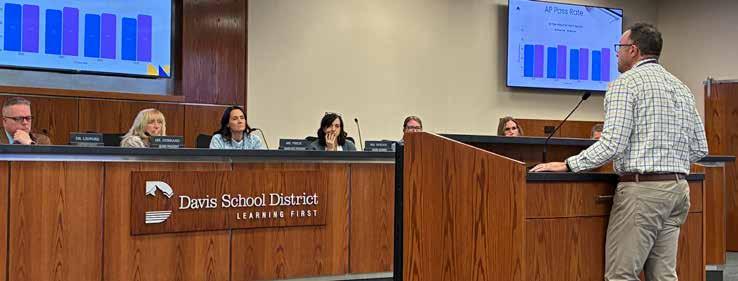
“Yes, usually they either put it in their syllabus or their beginning of the year materials,” said Strain. “I’ve known some teachers that will send an email home just saying, ‘Hey, next month or next week we’re going to start our unit on ‘The Fault of the Stars.’ Here’s what the book is about. Here are some great discussion points that you can have with your student.”
“I think we should just stick with the syllabus,” said board member Michelle Barber. “I keep hearing that it puts it all on the parents to read the syllabus but that’s really who should have the responsibility of looking through this.”
“Me as a parent, if it’s just put in the general syllabus I’m not going to read it,” said Powell. “Chances are I’m not going to read it. But if sometimes a teacher will email me and say ‘Hey, in this book we’re going to be covering this, let me know if you want an alternative.’ That’s the type of thing I think parents would appreciate and that’s what I would encourage because it’s just really micromanaging to read every child’s syllabus.”
Especially in secondary school, she said. “They have like eight classes each and if you have multiple kids (that’s a lot).”


“I think it could be said by us requiring this, then we’re micromanaging, telling teachers that in addition to the syllabus you have to do this, when really it’s up to the parents,” said Board member Emily Price. “I know it’s a lot of work and I agree, especially with secondary students because they have more classes. I feel like our teachers are doing a good job notifying parents.”
“I want to make sure that we’re clear,”
said Superintendent Dr. Dan Linford. “We do expect parents to read syllabuses and we don’t consider it micromanaging to read eight syllabi. If nothing else, read the English. So as an English teacher for seven years, I always communicated home. Most of it was in the syllabus or in the disclosure statements. That’s how teachers are trained.”
Ultimately, the board unanimously approved Instructional Materials. l



Teaching and Learning Director TJ Strain speaks during a June school board meeting. Strain presented information to the board on the business item “Instructional Materials” at the July 21 meeting. Photo by Becky Ginos
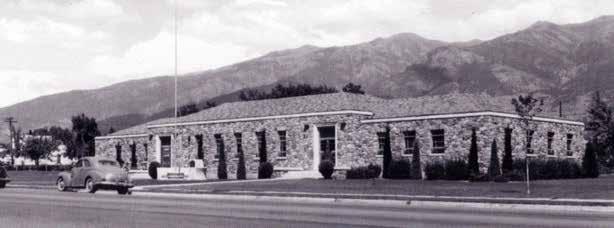
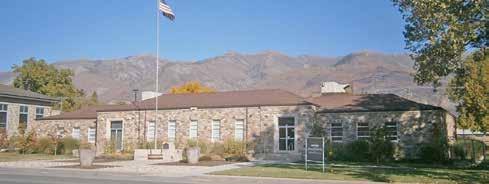
Historic Kaysville City Hall added to ‘Endangered Sites’ list
Preservation Utah’s designation is intended to encourage preservation efforts rather than predict demolition.
By Cindi Mansell c.mansell@mycityjournals.com
The historic Kaysville City Hall and Library Building has been named one of Preservation Utah’s 2026 Most Endangered Places, placing new attention on the uncertain future of one of the city’s most significant historic landmarks.
The designation highlights historic properties across Utah that face threats from neglect, redevelopment, deferred maintenance, or the lack of long-term preservation plans. This year, Preservation Utah added seven new sites to its statewide watch list, including three considered under imminent
threat of loss. While the Kaysville building is not currently classified as facing immediate demolition, preservation advocates say its future remains uncertain.
Built between 1941 and 1944 at a cost of $55,000, the building was designed by Salt Lake City architects Ashton and Evans. Funding for the project was secured during the Great Depression through the Works Progress Administration with assistance from former Utah Gov. Henry H. Blood, a Kaysville native.
For more than seven decades, the building served multiple civic functions, housing Kaysville City Hall, the Davis County Health Department, the Selective Service, and later the Kaysville Library until 2015. It was added to the National Register of Historic Places in 2019 and remains Kaysville’s only non-residential property listed on the register.
The city’s debate over the building’s future began after structural problems and
mold were discovered during a 2017 renovation attempt. Since then, officials have considered several options, including demolition to make way for added downtown parking and public gathering space.
Although earlier city leaders proposed removing the building, public opposition has repeatedly delayed any final action. Kaysville City issued a request for proposals in 2022 seeking preservation and redevelopment ideas, but no long-term plan has been adopted.
Today, the building is largely vacant while city officials continue to evaluate possible uses. Rehabilitation estimates have ranged from approximately $1.2 million to more than $3 million.
According to Preservation Utah, the absence of a funded preservation plan leaves the building vulnerable to future demolition discussions, particularly as downtown development and budget priorities evolve.

“The building represents an important chapter in Kaysville’s civic history,” Preservation Utah notes in its listing. At the beginning of the 20th century, Kaysville was recognized as one of Davis County’s most progressive communities, becoming both the county’s first incorporated city and the first to establish a public library. The City Hall and Library Building remain a physical reminder of that legacy. The building’s fate remains officially undecided as of 2026.
The Kaysville-Fruit Heights Museum of History and Art has been among the strongest advocates for preserving the building and has proposed converting it into a community museum. “Our position has always been that the commitment from city government has to come first, then restoration could be pursued most effectively over time through entities such as Preservation Utah and other philanthropic institutions,” said Museum Chairman Fawn Morgan. She said they continue to actively pursue a home for a Kaysville history and art museum and value their growing cooperation with both Kaysville and Fruit Heights city governments in sharing local history.
“One question worth researching is my understanding that if the purpose or use of a building does not change, it doesn’t have to be brought up to code in the same expensive manner as if the use changed,” said Morgan. “Keeping it as a community arts center would maintain the use established when it held the active LeConte Stewart Art Gallery,” she said and encouraged research into that concept.
Preservation supporters are encouraging residents to stay involved by attending Kaysville City Council meetings and advocating for an adaptive reuse plan that preserves the historic structure. Because the building is listed on the National Register of Historic Places, federal and state historic rehabilitation tax credits could help offset redevelopment costs for qualified income-producing projects.
Preservation Utah, founded in 1966, is the state’s only nonprofit organization dedicated exclusively to historic preservation. Its annual Most Endangered Places list is intended to raise awareness of threatened historic sites while connecting communities with preservation resources and advocacy efforts. l
Kaysville City Hall and Library Building in 1944. The building was placed on “Utah’s Most Endangered Historic Places” listing. (Courtesy)
The secret ingredient behind Orson Gygi’s success
The local company is more than just a kitchen store.
By Peri Kinder peri.k@thecityjournals.com
IfOrson Gygi walked into his kitchen supply store today, he would be shocked by its size and scope. Gygi started his business in 1945, providing kitchen equipment to local restaurant owners. His kids went door to door, selling knives, squeeze bottles and other products to make cooking a little easier.
Located at 3500 S. 300 West, the Orson Gygi Company has grown into a trusted culinary resource. Although its store now spans 38,000 square feet and offers more than 25,000 products, including the 800,000 pounds of chocolate it sells annually to local and national customers, it has remained a community-based, family-owned business.
Heather Smith is Gygi’s great-granddaughter and vice president of the company. Her father, Brad McDonald, is Gygi’s grandson who operates under the loose title of “president and janitorial services.”
“We’ve been very fortunate to be such a name in the community. I think people think we’re a lot bigger than we are. But we’re a family-owned small business that loves the community,” Smith said. “This is our heart and soul. I hope that when people shop and walk in the doors, that’s what they feel. They feel they’ve got a friend in the kitchen and they have someone they can turn to.”
Orson Gygi Company celebrated its 80th anniversary in 2025, but it almost didn’t make it past the 90s. In 1998, a devastating fire destroyed the building, resulting in a $2.5 million loss. Gygi had passed away more than a decade before the disaster and his children didn’t want to rebuild and start over.
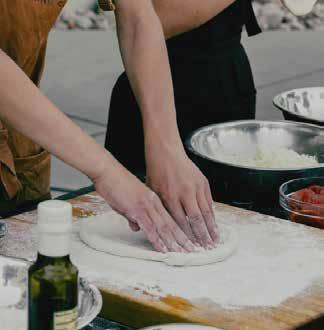
Orson Gygi’s popular pizza classes teach dough basics and flavor pairing techniques, using the Gozney outdoor pizza oven. (Photo courtesy of Orson Gygi)
That’s when McDonald stepped up. He was determined to reopen the company to reaffirm its dedication to the customers and employees.
“I had just gotten involved in the business less than six months before [the fire],” McDonald said. “Of course, I’d grown up in this environment and I had seen all the loyal customers that



considered us an institution. I kind of threw a fit.”
After a family discussion, it was decided that McDonald would take over. Even though he had worked as a general contractor for 20 years, he was willing to change careers and lead the business because he had witnessed the dedication his family had put into it, along with the customers’ devotion.
After the fire, Orson Gygi Company shifted its focus. While still providing equipment for restaurants and professional chefs, it also began catering to residential cooks and bakers looking for quality products.
At the time, the Food Network was blowing up and people realized that cooking didn’t have to be a chore but could be something creative and fun. The store became a one-stop shop for specialty cookware, baking pans, cookie sheets, utensils, party supplies, pantry staples, grills, griddles, mixers and hundreds of other products.
Hiring knowledgeable employees has helped the business set itself apart from its competitors. The 30 staff members are experts in the food industry, understanding all elements of baking, cooking, candy making and grilling.
The company, now in its fourth generation of ownership, continues to evolve, offering demonstrations and hands-on cooking classes, hosting a blog with recipes and tips and finding new ways to introduce people to the love of baking. For more information, visit Gygi.com.
“The best part about this is we get all walks of life that come through here,” Smith said. “Whether it’s a sweet lady who’s been making chocolates for 60 years or someone who is 15 years old and wants to make suckers. We have professionals, we have home chefs, we have beginners, we have pros. It’s fun to see them walk the aisles together because there’s a place for everyone.” l





New Bountiful shop brings vintage finds and local vendors together
Cove is worth a visit.
“My vision for this space absolutely came true,” said owner Leslie Archer with a smile. “It’s basically a shopping village with 16 vendors renting space plus all of my own things for sale.”
said Archer. “I love how I’ve been able to include all these vendors and their talents under one roof and have them all fit together so well.”
Gail Newbold andersennewbold@gmail.com
Fromthe dragon mural splashed on the building’s exterior to the eclectic collec tion of vintage and modern goods inside, it’s quickly apparent the newly opened Vintage
A step inside the brightly lit building reveals an array of beautifully displayed wares with space to browse; not a crowded mish mash of goods as often the case with
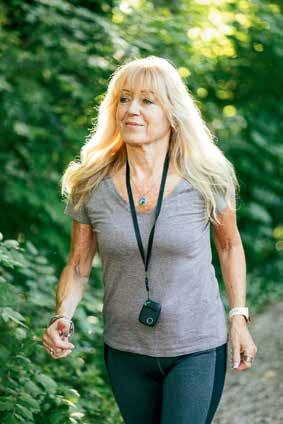


Just one week after opening on July 1, the shop was already enjoying a brisk business, according to Archer, who has a long history of owning vintage shops around the U.S. Her husband David Archer is a tennis pro who worked for tennis clubs building up their youth programs, and is now employed at Eagleridge Tennis Club.
“We’ve literally moved 29 times and been married 34 years,” said Archer who owned shops in Chico, California; Austin, Texas; Sherman, Texas; Florida and North Carolina. Her husband taught tennis and she owned hair salons and vintage stores. “I’m definitely ready to stop moving now. We’re staying here. And I’m not cutting hair anymore. I’m 69 and this is the first time I’m not standing behind a chair. This shop is taking all the time I have.”
Before moving to her current location at 85 N. 200 West, Bountiful, she had a smaller shop at 100 N. 30 West in Bountiful for six months. Her landlord and owner of the dragon building was going to tear it down and build condos but Archer talked him out of it. After explaining her vision for the space, he was onboard.
“I told him what I wanted to do and he started fixing it up – the roof, ventilation, lighting and so forth,” Archer said. “He did so much work for me and is very excited about the results. Eric Engh Gardens is right next door and his shop dovetails so well with mine.” The two businesses share the same hours and are open Monday through Saturday from 10:30 a.m. to 6 p.m.
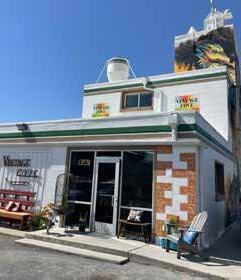
Archer said she’s always loved shopping for vintage goods but also has buyers who supply her with unique goods and beautiful furniture. She also collects items from people wanting to sell things that belonged to their elderly or deceased parents.
Archer has never been forced to take out loans and says she’s become more business savvy over time. Renting space to other vendors will cover her overhead costs and make running the business easier and more fun.
“I handpicked my people and they are all very seasoned,” she said. “I know their work and it’s flowing together so great. Everyone who comes to the shop says it’s so beautiful. People say we so needed this in Bountiful.” l

Owner Leslie Archer stands among the carefully curated displays at Vintage Cove, where 16 vendors offer everything from antique furniture to handmade goods and modern accessories. Photos by Gail Newbold
The colorful dragon mural on the exterior of Vintage Cove, 85 N. 200 West in Bountiful, hints at the eclectic mix of vintage and modern treasures waiting inside.
North Salt Lake takes measures to prevent wildfires
North Salt Lake City Council enters into an agreement with the Utah Cooperative Wildfire System that will help mitigate the risk of wildfires.
By Megan Fisher m.fisher@davisjournal.com
North Salt Lake recently received notice from the Utah Division of Forestry, Fire, and Lands that as of June 1, 2026 they were not participating in a cooperative agreement, titled the Utah Cooperative Wildfire System, with the department. The result would be that the city would be responsible for all costs associated with fighting fires within North Salt Lake boundaries or start within the city boundaries and travel onto public land, requiring a state response.
“This is not an acceptable risk,” said North Salt Lake City Manager, Ken Leetham. In order to rectify this, in a June meeting, North Salt Lake City Council voted to participate in the Utah Cooperative Wildfire System and adopt the Wild Urban Interface Code set by Utah Ordinance 2026-01 passed by the State Legislature in February of 2026. The motion passed unanimously, with strong reservations from council members Heidi Smoot and Suzette Jackson.
The Wild Urban Interface Code (WUI)
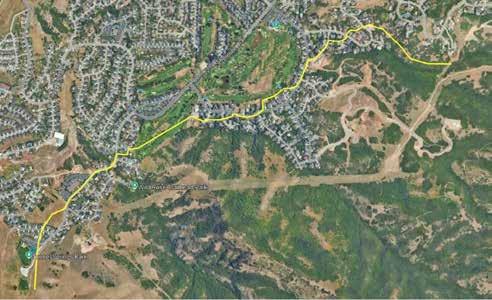
is an ordinance by the state of Utah for, in the language of the law, the governance of “home hardening, fire-safe landscaping, and home and curtilage maintenance to prevent wildland fire storms from penetrating the wild/urban interface.” It does so by looking at high-risk areas and addressing such things as the height of grass, the way that trees and shrubs are pruned, and the materials that are used to construct roofs and windows. The

requirements of the code and the affected areas of North Salt Lake were determined by the Utah Division of Forestry, Fire, and Lands, and not the city.
This raised the hackles of council members Smoot and Jackson, who raised concerns about government overreach and questions about how the areas affected by the WUI code were chosen. Leetham attempted to soothe the concerns, reminding people of the
importance of wildfire mitigation at this time of drought and high temperatures.
“We certainly don’t want to impose fines on people,” said Leetham. “One thing we can control is how we treat our residents who are in the [high risk] category. The state’s not telling us we need to go out and make these people do it, or lien their property if they don’t do it, or do the work ourselves. I think these types of discussions in our city are probably long overdue. We ought to be talking more about fire prevention in all areas of the city. So it is in that spirit that I would approach a homeowner, simply as a way to assist them so that their home is at less risk in the event of a wildfire.”
The city council agreed that the best approach to implementing the code, and wildfire mitigation in general, is through educating the public. A suggestion of a multiyear educational campaign was suggested and accepted by the group.
“I believe our obligation as a city is to identify fire risk and inform people when they are at elevated risk and the reasons why,” said Leetham.
Visit wrap.wildfirerisk.utah.gov to use the Utah Wildfire Risk Tracker tool to get a free report on the risk of wildfire to your property. More information regarding the steps needed to be taken by affected property owners will be provided in the coming weeks. l

A map of North Salt Lake illustrating the area affected by the WUI Code. (Courtesy/NSL)
Utah Main Street program helps revitalize historic downtowns
By Becky Ginos becky.g@thecityjournals.com
BOUNTIFUL—Bountiful
has been selected as one of seven newly designated Tier 1 Promising Communities to become part of the Utah Main Street program that is dedicated to helping communities statewide cultivate economically vibrant downtowns.
“We’re a preservation based economic revitalization program for historic downtowns or neighborhood commercial districts,” said Utah Main Street Manager and Statewide Program Coordinator, Chelsea Gauthier. “Our program is housed within the State Historic Preservation Office at the Department of Cultural and Community Engagement. So we do a lot of community engaged approaches.”
Gauthier said it is a statewide coordination program of the national nonprofit Main Street America. “There’s about 45 other statewide coordination programs doing this work in thousands of communities both rural and urban across the country engaged in this.”
The program has a four point approach
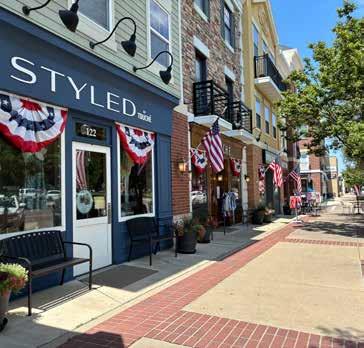
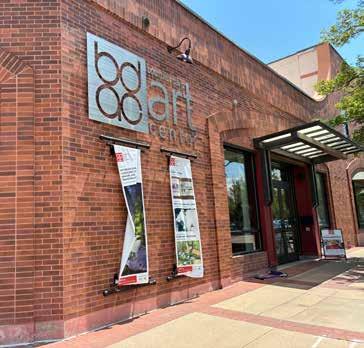
framework, she said. “We go off of it and also tailor things to how we are in Utah and use a really localized approach.”
Initially there was a Main Street
Expert Therapy in Farmington, Utah
program in the state that ran in the early 1990s to mid 2000s, said Gauthier. “Then we came back with a pilot program in 2019 to 2021. Right after that in 2022 is really when the program came back to life in the state of Utah and we’ve grown to have 29 communities throughout the state that we’re working with now so Bountiful is one of our newest additions.”
of the state’s history that is rooted in Bountiful.”



“We initially pitched the Utah Main Street program to the Main Street merchants,” said Carter Radcliffe, community coordinator for the Bountiful Davis Arts Center (BDAC).
“I had pitched Main Street America to Sarina (Ehrgott, executive director) last year. We finally heard back this last month.”
Main Street America really wants to focus on community building, he said. “The community art center is a local part of the community that is really grounded in the community. It was important for us to help with getting funds to help with other community-led revitalizing of Main Street and making it really a cultural hub for the community.”
The art center is working on getting museum accreditation, said Radcliffe. “That is part of our strategic plan over the next three years. We really want to focus on being the artistic hub of Northern Utah and beyond.”
Radcliffe said being a part of the network gives them access to help with planning and organizing different events in the city. “It’s also keeping the spirit of the city and Main Street alive by keeping the local shops that we have and the history of the buildings really present.”
The plaques on Main Street teach people about the buildings that they are in, he said. “Like the art center is one of the first grocery stores on Main Street. So just reminding people
Tier 1 communities are cities that are just getting started, really wanting to start the Main Street journey, said Gauthier. “It might be like how Bountiful is already a successful downtown but you’re really trying to figure out what’s the organizational structure and focus on taking city plans and downtown plans to get to the next step.”
It’s a three tiered process, she said. “Cities can be in Tier 1 anywhere from one year to three years. Tier 2 and 3 are the bulk of our program so there’s a little bit more data that they’re collecting, really getting that organizational structure set up, creating the building capacity to do the community revitalization work.”
In Tier 2 that’s really where there is a ton of technical assistance that the program provides, Gauthier said. “There are some grant opportunities that come up. Both Tier 2 and Tier 3 are nationally recognized, so meeting the standards by Main Street America as well as Utah Main Street. So 2 is affiliate and then hitting Tier 3 is nationally accredited.”
Gauthier said they’re looking at creating a sense of community and that identity in Bountiful’s downtown. “Downtowns have a different, very distinct look and feel to them. So we ask ‘are you telling the story of your downtown and really helping and working with communities to see what makes your downtown different from other places’ downtowns?’ Because each community does have a different local flair.”
It’s a community led movement, she said. “We’re here just to provide and support and help bounce ideas off of each other. We help provide the tools to get there.” l
Bountiful Main Street is filled with shops and small businesses. The city is now part of the Utah Main Street network.
The BDAC building was one of the first grocery stores on Main Street. Photos by Becky Ginos
City presents West Bountiful development concept for public review
By Becky Ginos becky.g@thecityjournals.com
WEST BOUNTIFUL—City
officials met with West Bountiful residents at a public meeting recently to discuss a concept proposal for a development in the southern part of the city. The property is 88.8 acres. The development, called Providence, would have a mix of town homes, condos and single family homes.
“There are two primary property owners,” said City Administrator Duane Huffman. “One property we’ll call the northern property, which is within city limits, is currently owned by Ivory Homes. It’s called Belmont. The property is 85.5 acres.”
They’ve owned it for several years now, he said. “They’ve begun developing small portions on the very eastern boundary of the property so they have I think six platted lots right now and they have another phase that they’re working on that’s already been approved.”
The proposal is for the remaining 88.8 acres, said Huffman. “It’s a mixture of owners. The LLC is called Seddie, LLC. I don’t know exactly how the ownership is broken out there, but they’re not traditional home developers.”
They’re trying to work through what is called the entitlement process and then they would work with more traditional builders to build their subdivision, he said. “They may work with Ivory, they may work with others, I don’t know.”
Ivory’s been thinking about ways to develop their property for several years now, Huffman said. “This other group they’ve had different proposals come and go over the years. It’s been a year or so since they came forward with a serious plan.”
At that point, they got in contact with Ivory and those two kind of started this concept of working on an overall approach to the two properties, he said. “So the city didn’t say ‘hey you two work together.’ They kind of came to that on their own and they came together to the city and said ‘hey, what if we work together on a master concept of all of this?’ So that’s how we got to the part where we are now.”
Why now? Why this? Why is the city even looking at this? Huffman said. “For 20 years, 30 years, 40 years this has been zoned either agricultural, low density, one acre. What’s changed? Has anything changed so much that we should be looking at something else?”
There are three major things that have changed that the city needs to take into consideration, he said. “The first is
housing. There’s no question, especially where in the last 10 years the cost of land, the cost of housing, has significantly outpaced people’s incomes.”
So whereas 20 years ago, the idea of a one acre agricultural lot meant one thing, the idea of a one acre lot now means something totally different, said Huffman. “With all of the development we’ve seen in the last 10 years, none of it’s been agricultural. When we start talking about people’s ability to get a home, it becomes a real challenge.”
The second is local control, he said. “The state could take away the city’s ability to decide exactly what goes in there, and or a major portion of this property could go into another municipality which would significantly limit West Bountiful’s ability to influence what happens there.”
The final one is ownership, Huffman said. “Ownership has changed over the last 20 years and the city is eternally. We will never get out of this. We are eternally caught in between someone’s property rights and the interests of the community.”
Nobody likes the government telling them what they
can do with their land, he said. “We’re all kind of OK with the government telling our neighbors what they can do with their land.”
That’s the balance that the city finds itself in, said Huffman. “We have the community interests and then we also have this idea of property ownership and property rights.”
Almost everybody’s house here used to be somebody else’s farm, he said. “It used to be somebody else’s open space and development has totally progressed because of the property owners who’ve decided to do something different with their land.”
Huffman said the city knows that traffic is a major concern that folks have in that area. “Water is always a concern, storm water and other city services like police and things like that. Those are all things that we’re very aware of.”
This concept is not a city proposal, he said. “This is a concept worked on by the developers with some city input. It’s ultimately going to be up to them to decide how they want to move forward with it.” l










A neighborhood park is part of the area plan. Right now it’s just a concept. The developers haven’t submitted any formal applications. Map courtesy/West Bountiful City


Story by Heather May
Utah leaders have set a goal to raise the Great Salt Lake by seven feet to 4,198 feet above sea level by the time Utah hosts the 2034 Winter Olympics.
It will be a monumental task to save and dedicate the additional 800,000 acre feet of water needed

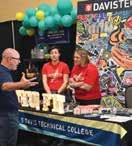



| Great Salt Lake Collaborative Photos courtesy The Salt Lake Tribune
each year — that’s twice the amount of water used in homes and on yards in the Great Salt Lake Basin — especially with this year’s record-low snowpack and extreme drought.
Utah newsrooms who have banded together to cover the lake as the Great Salt Lake Collaborative will
cover all of the developments by politicians, philanthropists, residents, businesses, farmers and industries.
Take this quick eight-question survey so we can report on what matters to you. We want to know what questions you have, your hopes and fears and how the lake affects you.
Questions? Contact me at info@ greatsaltlakenews.org.
This article is published through the Great Salt Lake Collaborative with funding from Love the Lake, an initiative of the nonprofit Great Salt Lake Alliance. Editorial decisions are made independently by the Collaborative and partner newsrooms.


To learn more or to get involved, please visit: davischamberofcommerce com or call 801-593-2200 MEMBERS OF THE CHAMBER ENJOY MANY BENEFITS, INCLUDING: NETWORKING & RELATIONSHIP BUILDING
RIBBON CUTTING & GRAND OPENING COORDINATION
LEGISLATIVE & MILITARY ENGAGEMENT & ADVOCACY
PROFESSIONAL DEVELOPMENT
VISIBILITY & STRATEGIC MARKETING OPPORTUNITIES
BUSINESS & COMMUNITY INVOLVEMENT
ONLINE BUSINESS LISTING MEMBER DISCOUNTS SAVINGS & EXCLUSIVE PERKS
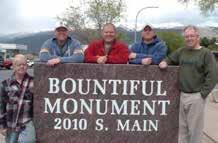



The Magic Starts When the Kids Stay Home
Every couple should take a child-free Disneyland vacation. Without kids, you can focus on what really matters: blaming each other for choosing the wrong line. You can also notice how many adults willingly wear matching T-shirts and mouse ears.
When my husband and I celebrated his birthday at the Happiest Place on Earth, it was chaotic, exhilarating and crowded, but at least it was expensive.
Our plan was to hit both Disney parks in one day. We had a detailed itinerary, a portable phone charger and high expectations that lasted until we got to the parking lot. It was our first hour-long wait, but not the last. Luckily, we didn’t have kids whining in the backseat. That was my department.
Once we got into Disneyland, we used the park’s app to jump into the first line with a less-than-45-minute wait. It was the Jungle Cruise, where the jokes are as old as Disney itself.
Tom talks to anyone, so as we snaked through the line, he’d connect with people based on their ballcaps.
“Hey, you’re a Dodgers fan!” he’d say.
“Yep.”
“That’s great. We’re Giants fans, but we love Ohtani.”
The Dodgers fan would nod and we’d wind through the maze until we met up with
Peri Kinder Life and Laughter

him again for another short, baseball-themed conversation. By the fifth pass, Tom had exhausted every baseball topic he knew and the stranger pretended he didn’t see us.
Avoiding eye contact is my starting point, so it didn’t affect me, but my extroverted husband spent an inordinate amount of time trying to understand why his new best friend was ghosting him.
“We met him 40 minutes ago,” I reminded him.
“Was it something I said?” he asked.
“Probably.”
Being without kids, we didn’t have to set foot in Fantasyland, which is basically a 10-acre stroller park filled with exhausted parents and overstimulated toddlers begging for $45 Cinderella bubble wands.
Instead, we got drenched on Tiana’s Bayou (which will always be Splash Mountain) and endured a 75-minute wait at Guardians of the Galaxy, along with 15,000 high school graduates. Apparently,
teenagers like to celebrate graduation by standing in long lines.
After paying an extra $30 for the Star Wars Experience, we headed to the Incredicoaster at California Adventure. Looking around, we realized we were the oldest people in line, right before we were shot into the sky and bounced around like a tennis shoe in the washing machine.
We couldn’t ride Space Mountain, which closed every 20 minutes (I’m assuming to hose down the seats), but we survived other high-speed rides without severe whiplash or needing EMS assistance.
We agreed there were too many kids roaming the area. Maybe Disneyland could create an adults-only park featuring Mickey’s Pub Crawl where you can pay $20 to get into a bar fight with Pluto.
Donald Duck’s Anger Management Arena or Minnie’s Marriage Counseling could hit the spot after spending the day with your significant other arguing about whether the Disneyland Railroad is worth the time. It’s not.
Disneyland is built on storytelling, which I love, but after hours in line, no one cares why the mansion is haunted, no one cares who stole the treasure. No one is paying attention to the elaborate backstory. We just want to ride, scream for 90 seconds and move on.

I suggest you never take your kids to Disneyland. For one thing, it’s cheaper. For another, you don’t have to negotiate with the child who wants a smoked turkey leg while everyone else wants pizza.
Child-free Disneyland allows you to hold hands with your partner as you zip, tumble and catapult through the air. That’s the real magic.
Peri Kinder is an award-winning columnist and journalist who has written for The City Journals since 2004. She also hosts the Life & Laughter podcast. Peri can be reached at peri.k@thecityjournals.com.

Konstantin Yolshin - stock.adobe.com