Choosing a Reliable Live Sports Odds API for Your Betting Business
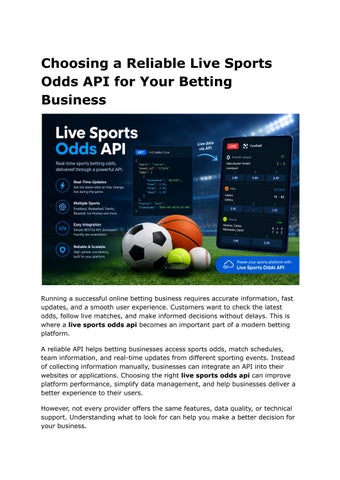
Running a successful online betting business requires accurate information, fast updates, and a smooth user experience. Customers want to check the latest odds, follow live matches, and make informed decisions without delays. This is where a live sports odds api becomes an important part of a modern betting platform. A reliable API helps betting businesses access sports odds, match schedules, team information, and real-time updates from different sporting events. Instead of collecting information manually, businesses can integrate an API into their websites or applications. Choosing the right live sports odds api can improve platform performance, simplify data management, and help businesses deliver a better experience to their users. However, not every provider offers the same features, data quality, or technical support. Understanding what to look for can help you make a better decision for your business.
Why Is Choosing the Right Live Sports Odds API Important? A dependable live sports odds api helps your platform display current information during ongoing sporting events. Users expect odds to change when match conditions change, so outdated information can create confusion and reduce trust. You can explore a live sports odds api solution to understand the features and integration options available for sports betting platforms. When comparing providers, consider these important benefits: ● Accurate information: Access reliable odds and event data. ● Fast updates: Receive changes during live sporting events. ● Better user experience: Display relevant information in an organized format. ● Simplified integration: Connect sports data with your existing platform. ● Business flexibility: Choose services that match your current requirements and future plans. A good sports betting odds api should support your business goals without creating unnecessary technical difficulties. Similarly, a dependable sports odds api should provide consistent data that your website or application can process efficiently.
What Features Should You Check Before Selecting a Provider? Before choosing a live sports odds api, review the provider's main features carefully. A service might offer an attractive price but lack the coverage, update frequency, or documentation your platform needs.
1. Real-Time Odds Updates Live odds can change throughout a match because of goals, wickets, player performance, penalties, and other events. Your platform needs timely information to keep users updated. A quality live sports odds api should explain how frequently odds are refreshed and how quickly changes reach your application. Ask the provider about update intervals, delivery methods, and any limitations during high-traffic events.
A reliable sports betting odds api should also help your development team identify when information was last updated. This makes it easier to manage data freshness and avoid displaying outdated figures.
2. Wide Sports and Event Coverage Different betting businesses serve different audiences. Some focus on cricket, while others provide football, basketball, tennis, or multiple sports. Before purchasing a sports odds api, check whether it covers your preferred sports, leagues, tournaments, and competitions. If your audience follows international cricket or major football leagues, make sure those events are available in the provider's coverage list. A flexible live sports odds api can help your business expand its content when you introduce new competitions. However, confirm that the provider offers the specific markets and events you need rather than relying on general coverage claims.
3. Multiple Odds Markets Odds information can include match winners, totals, handicaps, and other market types, depending on the sport and competition. A suitable sports betting odds api should provide the markets relevant to your business model. Ask whether the available markets differ between pre-match and live events. A comprehensive live sports odds api can make it easier to organize information for different sports. Check whether the API returns consistent market identifiers and clearly explains how unavailable or suspended markets are represented.
4. Reliable Data Delivery Even accurate data becomes less useful when an API frequently experiences interruptions. Your platform should receive information consistently, particularly during popular matches when traffic increases. Ask providers about uptime history, service-level agreements, rate limits, and incident communication. A reliable sports odds api should explain how it handles service interruptions and whether historical performance information is available. Choosing a stable live sports odds api helps your development team plan for unexpected issues and maintain a more dependable user experience.
How Can You Evaluate API Integration and Technical Support? Technical integration is another important factor when selecting a provider. An API should fit your existing technology and allow your developers to connect data without unnecessary complications.
Check the API Documentation Clear documentation explains how to authenticate requests, retrieve events, access odds, and handle errors. It should include practical examples that developers can test before launching the integration. A well-documented live sports odds api saves time during development and makes future maintenance easier. Look for information about supported formats, authentication methods, request limits, and available endpoints. Your chosen sports betting odds api should also explain how updates are delivered, how timestamps work, and how to identify changes in market status.
Ask About Integration Assistance Some providers offer technical support, testing environments, and assistance during implementation. These services can be valuable for businesses without a large development team. Before selecting a sports odds api, ask how quickly the provider responds to technical questions. Find out whether support is included in the subscription or available through a separate plan. A dependable live sports odds api provider should help you understand integration requirements and troubleshoot problems when necessary. Clear communication can reduce delays and help your team maintain the platform more effectively.
Which Security and Performance Factors Matter Most? Security should be part of your API selection process from the beginning. Your business needs to protect access credentials and prevent unauthorized use of its data services. Consider these essential practices: ● Use secure authentication methods supported by the provider.
● ● ● ● ●
Store API keys safely instead of exposing them in public-facing code. Monitor usage to identify unusual request patterns. Follow documented rate limits to prevent avoidable service errors. Use encrypted connections when supported and required. Review the provider's security policies and data-handling practices.
A secure live sports odds api integration reduces the risk of unauthorized access and unnecessary service disruptions. Performance is equally important. Test how quickly your application receives responses under normal and heavy workloads. A sports betting odds api that performs well during quiet periods may behave differently when major tournaments attract large audiences. Testing a sports odds api before launch helps your team identify bottlenecks and determine whether additional caching, monitoring, or infrastructure improvements are needed.
How Much Should You Pay for a Live Sports Odds API? API pricing depends on several factors, including sports coverage, update frequency, request limits, market availability, and support options. Rather than choosing the cheapest live sports odds api, compare the complete value offered by each provider. A low-cost plan may have restrictive request limits or exclude the competitions your users follow. When comparing a sports betting odds api, ask for a clear breakdown of subscription fees, usage limits, additional charges, and upgrade options. Consider these questions before making a decision: ● ● ● ● ●
Does the plan cover all the sports your platform requires? Are live odds included, or are they available only on higher-tier plans? What happens when your application reaches its request limit? Can you upgrade as your user base grows? Is technical support included in the advertised price?
A scalable sports odds api should offer a pricing structure that fits your current needs and allows reasonable business growth. Review the terms carefully before committing to a long-term contract.
What Should You Test Before Making Your Final Selection?
Testing helps you determine whether a provider meets your actual requirements. Avoid relying only on sales presentations or feature lists. Start by requesting a trial or demonstration of the live sports odds api. Connect it to a development environment and test the data your application will use. During testing, check whether the sports betting odds api returns accurate event information, consistent market identifiers, and timely odds updates. Test different sports and competitions to identify coverage gaps. You should also evaluate the sports odds api under realistic workloads. Monitor response times, error rates, and the behavior of your application when data is temporarily unavailable. Create a simple evaluation checklist covering: ● ● ● ● ● ● ● ●
Data accuracy and freshness. Sports and tournament coverage. API response times. Documentation quality. Security and authentication. Technical support availability. Pricing and usage limits. Scalability and service reliability.
Testing these areas makes it easier to compare providers using practical results rather than assumptions.
Frequently Asked Questions What Is a Live Sports Odds API? A live sports odds api allows applications to retrieve sports betting odds and related event information. Depending on the provider, it can deliver pre-match data, live updates, and multiple betting markets.
Why Does a Betting Business Need a Sports Betting Odds API? A sports betting odds api helps businesses display sports data without collecting and updating every detail manually. It can simplify data integration and support a more responsive user experience.
How Do I Choose a Reliable Sports Odds API Provider?
Compare data accuracy, update speed, sports coverage, documentation, security, pricing, and technical support. Test the provider's service before integrating it into your production platform.
Can a Live Sports Odds API Support Multiple Sports? Yes, many providers support several sports, including cricket, football, basketball, and tennis. However, coverage varies, so confirm that your preferred leagues and competitions are included.
Is a Sports Odds API Easy to Integrate? Integration depends on your platform, programming environment, and the provider's documentation. Clear examples, testing tools, and responsive technical support can make the process easier.
How Can I Check Sports Odds API Reliability? Review uptime information, test response times, monitor errors, and evaluate data freshness during live events. Ask the provider about service-level agreements and its approach to handling interruptions.
What Is the Difference Between Live Odds and Pre-Match Odds? Pre-match odds are available before an event begins, while live odds change as the event progresses. A suitable API should clearly identify the type and status of the odds it provides.