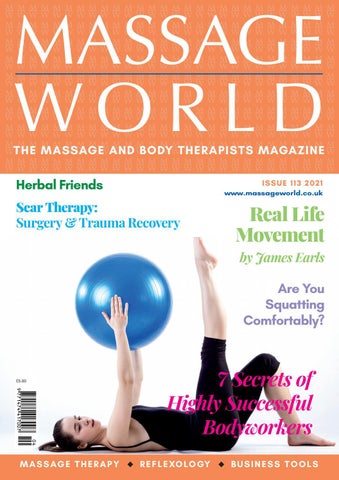
MASSAGE WORLD
M M M W W W M M M W W W M M M W W W M M M W W W M M M W W W M M M W W W M M M W W W M M M W W W M M M WTHE W W M M M W W W
M M M M M M M M M M M M M M M M M M M M M M M M M W W W W W W W W W W W W W W W W W W W W W W W W W M M M M M M M M M M M M M M M M M M M M M M M M M W W W W W W W W W W W W W W W W W W W W W W W W W M M M M M M M M M M M M M M M M M M M M M M M M M W W W W W W W W W W W W W W W W W W W W W W W W W M M M M M M M M M M M M M M M M M M M M M M M M M W W W W W W W W W W W W W W W W W W W W W W W W W M M M M M M M M M M M M M M M M M M M M M M M M M W W W W W W W W W W W W W W W W W W W W W W W W W M M M M M M M M M M M M M M M M M M M M M M M M M W W W W W W W W W W W W W W W W W W W W W W W W W M M M M M M M M M M M M M M M M M M M M M M M M M W W W W W W W W W W W W W W W W W W W W W W W W W M M M M M M M M M M M M M M M M M M M M M M M M M W W W W W W W W W W W W W W W W W W W W W W W W W M M M M M M M M M M M M M M M M M M M M M M M M M W W W W W W AND W W W W W WTHERAPISTS W W W W W W W W W W W W W MASSAGE BODY MAGAZINE M M M M M M M M M M M M M M M M M M M M M M M M M W W W W W W W W W W W W W W W W W W W W W W W W W
Herbal Friends
I S SUE 113 2021 www.massageworld.co.uk
Scar Therapy: Surgery & Trauma Recovery
Real Life Movement by James Earls
Are You Squatting Comfortably?
£5.00
7 Secrets of Highly Successful Bodyworkers
M A S S AG E T H E R A P Y ◆ R E F L E XO LO GY ◆ B U S I N E S S T O O L S MW113 COVER.indd 1
11/08/2021 20:46
MW110 v2.indd22 2 MW111 COVER.indd MW113COVER COVER.indd
28/10/2020 10/02/2021 21:39 11/08/2021 17:44 20:46
welcome editorial by Wendy Kavanagh
EDITOR
Wendy Kavanagh
FEATURES
Earle Abrahamson Pauline Baxter Kate Browne Ruth Duncan Rachel Fairweather EDITOR Madelaine Winzer EDITOR Susan Findlay Wendy Kavanagh FEATURES Julian Baker Emma Gilmore FEATURES Pauline Baxter Pauline Baxter Jane Langston Kate Browne James Earls Ruth Duncan Meghan Mari Rachel Fairweather James Earls Nana Mensah Susan Findlay Rachel Fairweather Greg Morning Emma Gilmore Susan Findlay Emma Holly Giacomo Sandri Til Luchau Susie Johnston Sarah Jane Tepper Meghan Mari Owen NanaLewis Mensah Ian Tennant Nicole NicolePerez Perez Madelaine Winzer Madelaine Winzer Giacomo Sandri Mark Woollard Madelaine Winzer Marina Young
GRAPHIC DESIGN Osborne VictoriaOsborne Osborne GRAPHIC DESIGN Victoria GRAPHIC DESIGN Victoria MEDIAMEDIA SOCIAL Pia Singleton MEDIA COMMUNICATION C J Newbury MEDIA COMMUNICATION C J Newbury
COMMUNICATION PUBLISHERS
C NK J Newbury Publishing
PUBLISHERS NK Publishing PUBLISHERS NK Publishing ADVERTISING
Please call the Massage
World office ADVERTISING Please callPlease the Massage ADVERTISING call the Massage T 020 7387 2308 World office World office T 020 7387 2308 FOUR QUARTERLY ISSUES T 020 7387 2308 UK: £20 UK Student: £15 RestQUARTERLY of World: £40 ISSUES ISSN 1474-4171 FOUR
FOUR QUARTERLY ISSUES
UK: £20 UK: £20 UK Student: £15 UK Student: £15 Rest of World: £40 ISSN 1474-4171 Rest of World: £40 ISSN How to contact1474-4171 us Massage World, The Crypt Centre St Mary Magdalene Church HO W TO CO N TAC Munster Sq, London, NW1 3PL T
How to contact us
Massage World, The Crypt Centre Massage World, The Crypt T/F 020 7387Centre 2308 St Mary Magdalene Church St Mary Magdalene Church E info@massageworld.co.uk Munster Sq, London, NW1 3PL W www.massageworld.co.uk
US
Munster Sq, London, NW1 3PL T/F 020 7387 2308
T/F 020 7387 2308 E DISCLAIMERS info@massageworld.co.uk The publisher has taken all reasonable measures to E info@massageworld.co.uk W ensure www.massageworld.co.uk the accuracy of the information in Massage World W www.massageworld.co.uk and cannot accept responsibility for errors in or omissions from any information given in this or previous editions or for DISCLAIMERS consequences arising thereof. Themeasures Editor may The any publisher has taken all reasonable tonot always DISCLAIMERS agree opinions in Massage World but allow ensure thewith accuracy ofexpressed the information in Massage World The publisher has taken all accept reasonable measures to publication as a matter of interest, should be and cannot responsibility for nothing errors inprinted or omissions ensure the accuracy of the information in inMassage World editions or for fromconstrued as Policy or an Official Announcement unless stated. any information given this or previous No part of this publication may reproduced in any or and cannot accept for errors in orbeomissions anyresponsibility consequences arising thereof. The Editor may not form always by any means whether electronic, mechanical and/or optical agreegiven with opinions expressed Massageor World from any information in this or previousineditions for but allow without the express prior written permission of the publisher. publication as a matter interest, printed should any consequences arising thereof. TheofEditor maynothing not always be construed as Policy or an Official Announcement unless agree with opinions expressed in Massage World but allow PRINTED stated. No part ofBY this publication may be reproduced in any publication as a matter of interest, nothing printed should be formwww.bishops.co.uk or by any means whether electronic, mechanical and/ construed as Policy or an Official Announcement unless stated. or optical without the express prior written permission of the No part of this publication publisher. may be reproduced in any form or
by any means whether electronic, mechanical and/or optical without the express prior written permission of the publisher.
PRINTED BY www.bishops.co.uk
PRINTED BY www.bishops.co.uk
welcome welcome M
illions of people have been staying inside and working from home, highlighting the huge impact our living space has on our lives as we interact editorial by Wendy hat awith wonderful withKavanagh inspiring clients,Summer friends, filled and families through the likes people who show us what it is like to work towards of Zoom and Skype. COVID-19 has caused a mass of anxiety meaningful. England smashed the football getting throughout the world, especially for massage therapists as caring to the finals of thecolour Eurosofand the Great Britain Olympians won s the to the leaves change, there is one touch is integral our industry.
W A
medals across the board. The ebbsmind and–flows life mean they question on everyone’s what’sofnext? We have are plagued with illness and injury, but one thing that keeps been living a week at a time as we wait to see what guidelines will be setsupport out by the Government. them going isnew self-belief and a solid team. And theIt Massage therapists have had toaffected think outside the box when it work has come to remote working. has everything from the way we to our relationships character of someone who succeeds is the same whatever you are Emma Gilmore talks about the differentealt ways can it is more im work from home as massage . you erefore an ea er to find doing;and mental you may fail a few times, but as long asortant t you self-reflect and a to routine that works for you, stay connected to loved ones, eat therapist and what you need take in consideration when doing so. Some massage keep working towards your milestones you will get there. wellto and exercise.their websites and social media platforms, while therapists have taken this time improve
others have taken this time expand theirduring knowledge through with research and online put courses. Massage Therapists havetoabout been hit hard the pandemic the In this issue, the FHT talks alternative approaches to support health andrestrictions wellbeing In this issue Greg Morling gives some new perspectives on research designs that might in place, impacting businesses Massage is definitely in person truly when hands-on therapies are sadlyworldwide. not an option. As bodyworkers, it is served our goalbest to provide re ect t ay thee practitioner or and t e in ell einbetter, e so othey e to foster in out clients clients with support they need to this feel won’t needfocuses to rely on to feelile by a e qualified and issue, Pauline Baxter onus seated chairate ro ne etter. iacomo lains o be to mana e in ammation ratinclients. medicinal s explains the ways in andri e which art can usedtoto learn anatomical terms. massage and what therapists will need consider when y inte treating JameserEarls into the massage treatment. continues his series on real-life movement helping you to understand movement with more clarity. Owen Lewis looks at movement, focusing on the squat and how often It is an uncertain time so try toalso stay positive and enjoy the summer! Our situations are unique, and we face a lot of uncertainty and challenge going forward. It is we unknowingly incorporate movements from the squat in our daily lives. We have essential to take pleasure in the small things and be grateful for what is good in life. Make also new and section Jing Advanced entitled sure introduced you wrap up awarm enjoyfrom reading this new issueMassage of Massage World!the Jing library.
If you are feeling a bit stale and want a new challenge, why not sign up for an Online Massage Competition to showcase your skills.
I can’t wait to see you at the NMC live event in Autumn!
MADELAINE WINZER Freelance writer @md_laine
Download the
Download the Download the Massage World App! Massage World App! Massage World App! Purchase digital copies ofissue each Purchase digital copies ofeach each issue issue Purchase digital copies of Search for for “Massageworld magazine” Search “Massageworld magazine” Search for “Massageworld magazine”
Follow us on Twitter! Follow us on Follow us onTwitter! Twitter! @massageworlduk @massageworlduk
@massageworlduk
ALTOGETHER NATURAL…A SUPREME MEDIUM FOR MASSAGE & BODYWORK
25% offNATURAL…A our retail prices for all professionals ALTOGETHER SUPREME MEDIUM FOR MASSAGE & BODYWORK and students registered online with us
25% info@songbirdnaturals.co.uk off our retail prices for all professionals | www.songbirdnaturals.co.uk and students registered online with us MW110.indd 3
MW113 INSIDE.indd 3
info@songbirdnaturals.co.uk | www.songbirdnaturals.co.uk
28/10/2020 17:44
11/08/2021 20:57
“As a result of the advert, on the CThA Members Forum, I have one new holistic massage therapist who has joined the team and is very much appreciated by the clients” Donna Woodcock Massage Therapist
C
M
Y
CM
MY
CY
MY
K
To find out how the CThA helped Donna and hundreds of other members last year just when they needed it, call a member of the CThA team on: 0845 202 2941or visit our website at: www.ctha.com
Professional help when you need it MW113 INSIDE.indd 4 MW109.indd 4
11/08/2021 20:57 27/07/2020 18:20
news & views
The FHT launched the International Therapist podcast in May 2021 for professional complementary, beauty and sports therapists to feel inspired by others in the industry. Through this podcast, listeners can gain an insight into the lives of prominent figures in the industry, from the reasons they fell in love with therapies to their goals for the future.
In the Virtual Congress series, podcast host and International Therapist Deputy Editor, Leanne Sheill, spoke to a broad range of expert seminar hosts in the lead up to the event which took place in June. Hosting the Virtual Congress online this year meant that for the first time ever, therapists could access interesting and insightful seminars from speakers from the comfort of their own home.
The FHT has been recognising excellence in practice since first launching the FHT Awards in 2011. After the unprecedented year we have all experienced, and the ongoing pandemic, it has never been more important to recognise the many ways professional therapists can make a real difference to the health and wellbeing of others. In this series, the FHT feature stories from past award winners, taking a look at the reasons they were nominated, how they felt on the day of the event and what they have achieved since the award.
EXPERIENCES OF THE PROFESSION DURING THE COVID-19 PANDEMIC The past 18 months has brought many challenges to the professions allied to health care, where close interpersonal contact is a central feature. The committee for NAMMT has been responsible for interpreting and disseminating guidance from Government Agencies to its membership. This has necessitated developing skills using new modes of communication, usually online. Practitioners have faced enormous challenges in terms of emotional and financial pressures, and the need to adapt their practices to comply with restrictions. The customer base for many has been seriously diminished and brought concerns about the financial viability of continuing to work. The working practices for bodyworkers has changed significantly with the added burden and discomfort of wearing PPE. Many have expressed the concern that they ‘may not weather the storm’. During the pandemic the committee has collected data from the membership to keep informed about experiences and concerns. 6
This has taken the form of an annual CPD Audit, newsletter contributions and direct personal emails. Here are a few of members’ comments. ‘I have chosen my health and well-being over being of service to those I have treated for 20 years’. I will have to leave the profession. ‘Covid is still going to be around and if I factor in health and age, it is with a heavy heart that I have decided to retire’. ‘Spending an hour in the heat, wearing a facemask was just too much, it made me feel ill’. This is just a brief overview of members’ concerns and a more detailed account of how the pandemic has affected the massage profession for the immediate future will be forthcoming in the next issue of Massage World.
Pauline Matthews, NAMMT: p.matthews@hillwalks.co.uk
I S S UE 1 1 3 2021
MW113 INSIDE.indd 6
11/08/2021 20:57
news & views Why Not Sponsor a Therapist at NMC21 Massage Hub the platform for professional massage videos dedicated to the massage community in the UK and around the World has decided to Sponsor a team of 4 massage therapists in different categories at this years NMC 2021. This is what the owner of Massage Hub Tamer Morsi had to say “ I participated in the NMC 2018 - just 1 month after I became a qualified therapist just to challenge myself and get assessed by experienced judges to improve my technique, then to my surprise I won 2 awards, which helped me to progress in my career as a therapist quicker than would have expected. Delivering a treatment while a lot of people are watching you is a challenge that will help you to connect with your clients in a much better way. At the NMC 2019, I decided to take on a harder challenge by doing a 4 hands massage with Monica Paslaru. We practiced a lot, and it helped us to come in 1st place, which was incredible, many therapists were inspired by our work. As the owner of Massage Hub, my goal is to help other therapists to improve, and I’ve decided to help them to achieve what I’ve achieved at different championships (including the NMC 2018/ 2019, the European Massage Championship 2019 and the World Championship of Massage 2019). The key for winning a championship is to work hard, practice the routine over and over. Therapists need to dedicate time to practice their own routine and getting other therapists whom they trust to observe and give a feedback, and I’ve decided to help my team with this challenge.”
We are very proud to present our new bespoke 100g EcoTubs, designed in tandem with our packaging company and rigorously tested to ensure the best presentation of our massage waxes. Sturdy, attractive and tactile, we are happy to know that therapists and clients can enjoy the same premium waxes & make ecologically responsible decisions without compromising on quality. The tubs also feature a beautiful vista depicting the Somerset countryside – where it is made. Made from strong cardboard, we have got as close as we could get to a compostable tub, with all the challenges that one has in containing an oil and wax-based product. In the interests of being completely transparent, there is approximately 1.5 g of PVA glue used per tub to seal the bottoms and lids, which is miniscule, and is the final hurdle in the designs to come. We are in the process of testing compostable glue and we are hopeful that something will arrive on the market in the very near future. The PVA does break down, but it takes a long time. However, with the energy used in any form of recycling, we feel this is a price worth paying along the road to biodegradable and compostable packaging. We are 98.5% of the way! Songbird Naturals have been committed to minimising our environmental impact since the company began more than 20 years ago. We began with implementing green packing practices with biofill, cardboard and paper tape used in our parcels, so everything is either biodegradable, compostable or recyclable. Available across our range of waxes, the 100g EcoTubs are leading the way in our plan to be plastic free. In the near future, we will be introducing a selection of other sizes in cardboard as we move towards being plastic-free.
classifiedsclassifiedsclassifiedsclassifiedsclassifieds
sclassifiedsclassifiedsclassifieds
ISS U E 1 1 3 2021
MW113 INSIDE.indd 7
7
11/08/2021 20:58
Scar Therapy Bridging the gap in surgery & trauma recovery BY E M M A H O LLY
8
I S S UE 1 1 3 2021
MW113 INSIDE.indd 8
11/08/2021 20:58
W
ithin specialist medical sectors, including burns and cosmetic surgery, compression garments2 or silicone therapy3 is often recommended and signposting to Manual Lymphatic Drainage (MLD)4 may be given. These are treatments that have been evidenced to help promote healthy scar tissue. However, in the majority of cases, standard post-operative care will include limited advice for the patient on how they can support and promote healthy scar tissue maturation to maximise function and aesthetic results. Signposting to scar therapy is not common. Patients are often left unsure which scar care products, such as creams, oils and gels, compression or silicone products could improve their cosmetic and functional results. Whilst many patients receive physiotherapy after a surgery or trauma, techniques for scar tissue and understanding of fascial biotensegrity are not included on most physiotherapy degree courses. After the majority of surgical procedures, direct scar treatment, the use of therapy devices to promote scar healing, and aftercare advice on self-scar care from a professional is often absent. However, there is awareness within the medical field that scars will benefit from massage and require moisturisation. Unfortunately, the information on pressure and techniques is not consistent. Some hospitals have started to produce handouts, with varying advice and information dependent on the hospital5, but many hospitals or departments are providing no patient advice. If we are to investigate the gap that exists in the knowledge and expertise, it may be prudent to question why it matters in the first place. What is the big deal with a scar anyway? A scar is defined as: “A mark left on the skin or within body tissue where a wound, burn, or sore has not healed completely and fibrous connective tissue has developed.”6 Scar tissue, fibrosis and adhesions are terms to describe the internal complications that can occur after trauma or surgery, externally there are not always visual abnormalities on the superficial scar line to indicate a dysfunctional scar. Symptoms of dysfunctional scars may include pain, pruritus (itching), sensitivity, oedema, reduction in flexibility, palpable fibrous tissue and underlying scar
massagetechnique S CA R T H E R A PY: B R I D G I N G T H E GA P I N S U R G E RY & T R A U M A R E C OV E RY
In abnormal wound healing, abundant macrophages inappropriately release cytokines during the transition between the late inflammatory and proliferation phases. This prolongs inflammation and delays the healing response.” 1 adhesions. Scar assessment tools are currently very focused on burns, and are described in one review paper: “A major limitation of most scar scales is their focus on a relatively narrow group of individual subjective and objective features, while failing to address the overall cosmetic, functional, and psychological sequelae.”7 Some factors will increase the chance of the scar being problematic. If an individual has suffered from a wound infection, this may compromise smooth healing8 and will increase the likelihood of excessive scar formation. Subsequent symptoms such as pain, reduced mobility and thickening of connective tissue may follow. From a fascial perspective, changes to the thickness and functionality of connective tissue at the injury site can lead to global body shifts and changes to movement and loading patterns. These body shifts can cause further dysfunction and lead to pain and further injury, either at or away from the scar. Other factors likely to impact smooth wound healing include co-morbidities, age, radiotherapy and the wound becoming re-injured or re-opened. In addition to creating a physical problem, there are often psychological implications after surgery or trauma leaves a scar. The patient may feel self-conscious or unhappy about their appearance, in some cases the patient
describes that area of their body feeling disconnected. This is more common if the scar remains numb, painful or has altered sensation, a dislike of its feeling means many people may never have touched their scar. Scar therapy is a therapeutic approach to scar tissue post-surgery or trauma, including the treatment of mature scars, with the treatment aim of improving the health of the connective tissue and resolving or minimising associated symptoms. The available literature on scar therapy states: “Massage can help soften and desensitize scars. When combined with stretching, massage can make the scar looser, softer and more comfortable.”9 “There is growing evidence that scar massage leads to clinically relevant improvement not only of pain, itching and pliability of scars, but also of mood and anxiety of patients.”10 I began to specialise in scars and surgery recovery in 2015 after attending a course in Sharon Wheeler’s ScarWork. Over the subsequent years, I have become increasingly aware of the variety of therapeutic approaches that can minimise scar tissue complications, and the lack of information for post-operative or trauma patients. As bodywork therapists, we are well placed to support clients to reach optimal recovery after a surgery or trauma,
IS S U E 1 1 3 2021
MW113 INSIDE.indd 9
9
11/08/2021 20:58
massagetechnique S CA R T H E R A PY: B R I D G I N G T H E GA P I N S U R G E RY & T R A U M A R E C OV E RY
from C-sections to keyhole surgery, joint replacement to cancer, most of us have a client or two who has undergone surgery or injury resulting in scar formation. It is important that individuals who are experiencing problems related to their scars can have access to skilled professionals who can treat the scar tissue dysfunction. A variety of scar therapy approaches are available utilising manual treatment or machines to promote softening of the fibrosis and to stimulate our natural repair process. Each therapeutic approach may differ slightly in techniques and application. More and more, a gentle approach to scar treatment is favoured over more aggressive scar manipulation, which can be very uncomfortable for the patient and may cause inflammation or irritation. Patients with lymphoedema, or at high risk of lymphoedema are better suited to a gentle approach, which is less likely to strain their system. We have evidence to show therapeutic interventions can help reduce a range of scar tissue complications.11 If we know that a variety of approaches including manual techniques, use of therapy devices, creams, oils, gels, silicone and compression, all help reduce scar tissue from becoming dysfunctional, we need to ensure there are sufficient people within our therapeutic community who are able to help signpost and support individuals with ongoing problems. One of the approaches I teach is Sharon Wheeler’s ScarWork, the first clinical study into Sharon Wheeler’s ScarWork has shown promising results in patients after breast cancer surgery12. A further research project is starting soon. More research is needed into the different benefits of manual and mechanical scar therapy approaches to provide clarity in the direction we should be working, and to create treatment protocols. “..applying complementary manual and rehabilitative stimulus to the processes of wound healing facilitates the initiation of the correct cellular processes and, hence, is a fundamental requirement for tissue healing.”13 Soft tissue and structural bodywork therapists can learn to recognise and treat the connective tissue fibrosis that accompanies dysfunctional scar formation. This is complemented by existing soft tissue and structural techniques, and an understanding of the body’s fascial tensegrity. Together this places the soft tissue and structural bodywork therapist in a perfect position to assess and treat the cascading problems scar tissue complications can produce. Combining these skills will minimise symptoms and enhance functional outcomes when seeing clients after trauma or surgery.
If you are interested to learn more about scar tissue and how to support smooth recovery, we have an exclusive special offer for MacPro readers: Save £100 when purchasing the online, self-paced course ‘Understanding Scars’ using discount code “MacPro2107” valid until 15th September 2021. Find out more about this course at www.training.restoretherapy.co.uk
References
1 Huang, Chenyu MD, PhD*,†; Murphy, George F. MD, PhD‡; Akaishi, Satoshi MD, PhD*,§; Ogawa, Rei MD, PhD, FACS* Keloids and Hypertrophic Scars, Plastic and Reconstructive Surgery Global Open: July 2013 - Volume 1 - Issue 4 - p e25 doi: 10.1097/ GOX.0b013e31829c4597 2 Early cessation of pressure garment therapy results in scar contraction and thickening Danielle M De Bruler et al, PLOS one, June 13 2018 3 Review of Silicone Gel Sheeting and Silicone Gel for the Prevention of Hypertrophic Scars and Keloids. Wounds. Hsu KC, Luan CW, Tsai YW., 2017 May 4 Wounds and the Lymphatic System, Wound Source, May 2019 5 Scars and Scar Massage ST George's University Hospitals handout Guys and St Thomas NHS patient information for hand-therapy scar care.pdf Patient information, scar tissue management, East Sussex Healthcare NHS Trust 6 Oxford English dictionary 7 Nguyen TA, Feldstein SI, Shumaker PR, Krakowski AC. A review of scar assessment scales. Semin Cutan Med Surg. 2015 Mar;34(1):28-36. doi: 10.12788/j. sder.2015.0125. PMID: 25922955. 8 Wilgus TA. Inflammation as an orchestrator of cutaneous scar formation: a review of the 9 Model Systems Knowledge Translation Center MSKTC (2011) Wound care and scar management after burn injury. Burns factsheet 10 The Scar Book Formation, Mitigation, Rehabilitation and Prevention. Andrew C Krakowski MD and Peter R Schumaker MD. Wolters Kluwer publishers, page 126 literature. Plast Aesthet Res 2020;7:54. http://dx.doi. org/10.20517/2347-9264.2020.150 The Scar Book Formation, Mitigation, Rehabilitation and Prevention. Andrew C Krakowski MD and Peter R Schumaker MD. Wolters Kluwer publishers, page 126 11 Physical Management of Scar Tissue: A Systematic Review and Meta-Analysis, Carlina Deflorin et al, Journal of Alternative and Complementary Medicine, October 2020 12 An evaluation of a ScarWork service for cancer survivors experiencing adverse effects of surgery and/or radiotherapy, Beverley de Valois et al. European Journal of Integrative Medicine Volume 44, June 2021, 101327 13 Scarwork: A timeline for treatment stimulus in sport, Christopher Swallow, British Journal of Sports Medicine blog, Jan 2021
E M M A H O L LY Emma has been a therapist since 1993. She began specialising in scar tissue and ScarWork in 2015 and teaches and lectures on the subject of scars. Emma has a clinical practice in London’s Harley Street. As a teacher, she has showcased ScarWork within NHS, HCA and Spire Hospitals and for Macmillan Cancer Support. Her charitable work includes organising over 550 treatments for Invictus Games via Help for Heroes and British Athletics since 2017. www.restoretherapy.co.uk emma.holly@restoretherapy.co.uk
10
I S S UE 1 1 3 2021
MW113 INSIDE.indd 10
11/08/2021 20:58
Massag
MassageINSIDE.indd world .indd 1 MW113 11
06/05/2021 20:58 14:45 11/08/2021
Fri 12 Mar – (P1) On line c lass (1 hr ) Mon 15 Mar - (P2 ) Practica l (3 hrs) Mass age At The D es k Fri 26 Mar - (P1) O n line c lass (1 hr) Mon 29 March- (P 2) Practica l (3 hrs)
Headstarting With Corporate Massage
ALL pra ctical train ing will take place at www.kingsmoo More details a vaila rc linic .c o.uk ble at www.aosm.c o.uk
BY PAU LI N E B A X T E R
Recent announcements from the UK Government suggest that from 19th July 2021, England will be ‘released’ from the majority, if not all, of the remaining limitations. I have yet to hear what the remainder of the UK plan to do and by when, but presumably they will be along similar lines. By the time this article goes to print then there will have been many changes, I’m sure.
hatever happens on the 19th July it certainly looks as though businesses are being encouraged to get their employees back into the office and the ‘work at home where you can’ limitation may no longer be encouraged. This could prove to be significant for corporate massage practitioners. As companies begin their phased return to the office, some practitioners have already returned to corporate massage. In many cases, the return involves a ‘hybrid’ way of working, with some work time in the office and some at home. However when each company chooses to return, there is little doubt that there is encouragement to return for several reasons including, boosting the economy and greater human and social interaction. Online platforms have proved invaluable over the last 18 months and they will still have greater ongoing presence compared to prepandemic. However, it is not the same as meeting in person and it is definitely not the same when it comes to massage! Without a doubt, massage is ‘best served’ in person by a professional, fully qualified and fully insured, massage
W
12
practitioner. Said practitioners should also be proactive in attending continued professional training to ensure they are fully aware of any updated industry developments and guidelines, and to enhance their personal knowledge and skills. The pandemic brought the world to a virtual standstill. Now, having journeyed along a steep learning curve, new working protocols have been introduced. Guidelines for massage practitioners are provided by the Government (UK and local), Professional Associations within the industry, and insurance providers. In addition, every massage practitioner has a responsibility to carry out their own risk assessment (RA), even if working within another massage company or clinic (both of whom should have their own RA). Is there anything else to consider when you return to corporate massage? Everyone has changed in some way during the last 18 months whether physically, mentally, emotionally, or spiritually.
I S S UE 1 1 3 2021
MW113 INSIDE.indd 12
11/08/2021 20:59
massagefeature H E A D S TA R T I N G W I T H C O R P O R AT E M A S S AG E
Pre-pandemic, there was a growing awareness of mental health and how this can be influenced by daily life and work/life balance. Lockdown has highlighted this and so there is a greater focus on improving mental health. The corporate world has taken this on board and there are many schemes to support the mental health of their employees. Massage fits incredibly well into this strategy. Seated Acupressure particularly so, as it has the advantage over couch massage of being easy to take to the company, is applied through the clothes, little outlay for the employer and whilst the massage can be relatively short, it is extremely effective. If you haven’t yet been proactive in marketing your corporate massage services, then I suggest you get onto this straight away. Don’t wait until everyone is back in the office before you approach companies as you will probably find that someone else is already providing massage, or there is no budget left to introduce the service. Assuming you have secured the contract to provide Seated Acupressure, are there any changes to the massage itself that could be implemented to increase the resulting benefits/ effectiveness? You may be wondering why you may need to make any changes to the massage. Indeed, you might not need, nor want, to make any changes, other than any adaptations that may be required when taking into account cautions or contraindications relating to you and/or the client. However, it is worth considering so let’s look at the massage itself.
GENER AL ORDER OF WORKING
With a health questionnaire completed for Seated Acupressure and no issues or concerns, here is a possible order of working on a seated client;
◆ Initial contact then warm up the whole of the back ◆ Left shoulder, upper back and arm ◆ Right shoulder, upper back and arm ◆ Lower back (LHS) ◆ Lower back (RHS) ◆ Neck and top of shoulders ◆ Client sits up for stretches and head work ◆ Percussion to finish
a mental health point of view. We have all had to deal with additional stress and have managed the situation in different ways, with varying levels of success. As we continue to emerge from near hibernation, we face a new range of stressors on our mental health. It would be remiss of us as practitioners not to acknowledge the possible increased mental anxiety faced by clients.
AS S E AT E D AC U P R E S S U R E M AS SAG E P R AC T IT I O N E R S , CA N W E H E LP W IT H T H I S? Obviously, you will be working to Covid-19 safe protocols at all times. Some of you may hold a suitable qualification that specifically addresses this aspect, but for those who do not, consider what changes you can make to the massage itself to help ease mental anxiety. The most obvious area to work on is the head as it houses the powerful and influential mind. Most practitioners of Seated Acupressure will include some element of head massage, but often not until at least halfway through the massage, or even at the end. We all know how calming and relaxing a head massage can be so it makes sense to include this nearer the beginning of the massage. I would still always have your initial contact from gently placing your hands on the shoulders of the client, followed by general warming up techniques that work over the whole back. The lack of physical human contact has been devastating to many and this initial, empathetic contact on the back and shoulders is invaluable. From there, I would suggest some soothing head massage techniques before working more specifically on the back, neck and shoulders. With the client in this position you can comfortably work on the neck (stand at the side) and a large portion of the head (stand in front of your client). A mixture of slow,
This is not the only order of working but is one that is widely implemented. To be clear, there is nothing wrong with continuing to work in this way, but for the purpose of this article, let’s assume this is what is being considered. Before suggesting any changes, let’s take a brief look at the impact the last 18 months may have had on your clients from IS S U E 1 1 3 2021
MW113 INSIDE.indd 13
13
11/08/2021 20:59
massagefeature H E A D S TA R T I N G W I T H C O R P O R AT E M A S S AG E
finger petrissage type movements and acupressure on specific points can be incredibly soothing, calming and relaxing. Remember that there are also acupressure points along the neck and occipital ridge which, when worked upon, can significantly help with mental clarity and general relaxation. A very powerful point is GB20 on the gallbladder meridian. The point lies on either side of the neck, approximately mid-way along the occipital ridge. B10 on the bladder meridian is another excellent point on the neck to help improve mental clarity and release tension in the neck. It has the effect of refreshing the mind, almost as if the head has become lighter. This point is located a little below the occipital ridge, on the descending band of the trapezius muscle. The third point to which I want to draw your attention is GV20 (Governing vessel meridian), found on the crown of the head. It can be quite sensitive, which you will note if you massage your own head. These are only some of the points you would work on around the head area and they are very effective. They are often sensitive to pressure so bear this in mind when working on your client. Once your client is sitting upright, the more vigorous head massage techniques can be applied so they feel refreshed, awake and invigorated before returning to their desk. Light hacking and plucking techniques over the head are great ways of invigorating your client.
Light hacking and plucking techniques over the head are great ways of invigorating your client.
If you are qualified in Indian Head Massage then you have a wealth of additional techniques from which to draw. Ultimately, you are providing a massage that is tailored to the needs and requirements of your client, and which is within the boundaries of your qualifications and skills. The resulting situation from the Covid-19 pandemic requires great empathy towards, and understanding of, the needs of your client. Importantly, you must also have empathy and understanding for yourself. You have, after all, been through the same pandemic.
Stay well and massage safely.
PA U L I N E B A X T E R A 10 year background in Health & Fitness Club Management laid the foundation for Pauline’s venture into the world of complementary therapies. Over 22 years later, that journey has been, and continues to be exciting, rewarding and ever-evolving. Notable events include becoming a tutor for Academy of On Site Massage (AOSM) in 2000, director and owner of AOSM in 2006, a regular contributor to industry magazines since 2010, development and growth of additional On Site Massage training, and a judge at the National Massage Championships in 2018 & 2019. www.aosm.co.uk | 0118 391 4313
14
I S S UE 1 1 3 2021
MW113 INSIDE.indd 14
11/08/2021 20:59
Photizo Light Therapy
Bringing natural healing into every home
Non-invasive & simple red light LED treatment for fast natural healing of acute & chronic conditions Ideal for… ○ Acute & chronic wounds ○ Musculoskeletal injuries ○ Pain, soreness and joint stiffness ○ Tissue trauma & bruising ○ Calming and relaxation
£25 off Reader Offer
Discount code: Naturopath-Photizo25
Danetre Health Products Limited
! 01327 310909 " info@danetrehealthproducts.com # PhotizoUk $ PhotizoUk ! PhotizoUk
www.danetrehealthproducts.com
MW113 INSIDE.indd 15
11/08/2021 20:59
Myofascia & Real-Life Movement Part Three
BY JA M E S E A R LS
Does the anatomy you learned help you understand movement? For most of us, the answer is a clear ‘no’. Why is that? If we are trying to improve our client’s life, shouldn’t we understand how they move when they are outside the clinic getting on with life? Obtaining a language to enhance the visual clarity of real-life movement is the main aim of this series. This instalment will provide another tool to appreciate what happens when we move.
16
I S S UE 1 1 3 2021
MW113 INSIDE.indd 16
11/08/2021 20:59
anatomyrefocused MYO FA S C I A & R E A L - L I F E M OV E M E N T - PA R T T H R E E
n the last two articles we explored the relationships between movement direction, joint and muscle orientation. Although the orientation of each overlaps muscle and joints are rarely taught together in one reference or one class. Being able to see how movement and anatomy blend together makes anatomy much easier to learn because we can then understand it. Once we understand anatomy, in contrast to rote memorisation of actions, we can appreciate the greater context in which anatomy operates as musculoskeletal anatomy only makes sense when placed alongside movement. We have already explored some of the problems with textbook anatomy – the way that it teaches concentric actions, often emphasises the movement of the ‘insertion’ toward the ‘origin’, and that it separates the body into systems which are taught in different classes or different chapters with little reference between them. One of the common issues in current remedial approaches, in both bodywork and many movement modalities, is that we have developed assessment and therapeutic interventions based on our understanding of anatomy. I have written of this before – we have tried to understand movement from the position of anatomy and the dissection of the body into individual parts. This reductionist approach has created useful orthopaedic assessments and remedial exercises to analyse separate areas but many of them are based on the limited anatomical model that emphasises open chain, isolated movement. Now, don’t burn those books yet. Orthopaedic style assessments are very useful and very necessary, but they only give a portion of the overall picture of a client’s everyday movement strategy. That fact should be obvious, we don’t reach for a glass with only elbow and shoulder movement. Try it now as you sit in the chair (presumably), reach for that cocktail glass (or coffee mug if it’s not yet 10am).
I
Figure 1: Accepting the body from a tensegrity point of view requires a new model of the anatomy movement. Normal real-life movement is complex and changes tissue across the whole structure – some tissues adapt more than others but each will alter to some degree.
What happened? Did you feel your weight shift in the chair? Did your spine flex or extend, and did it rotate? What else were you aware of? You may be scratching your head and thinking, what is he talking about? Trust me with this process. If we all know the ideas behind the body’s tensegrity (fig. 1) – that everything is connected, that if one part changes, the whole thing changes tension – then we should appreciate that every tissue, to some degree will contribute to everyday, real-life movement. We explored full body reaction to movement in the first of this series. When we made a large sagittal plane movement, most of the joints flexed and extended. Similarly, they adducted, abducted, or side-flexed during frontal plane movement, and they rotated in transverse plane movement. We know that real-life movement does not occur on any one single plane, it is always a combination of all three but knowing the principles will help deepen the understanding of movement. Reallife movement uses contributions from a series of joints and tissues. Real-life movements, such as explored by Owen in the ‘Squat’ article in this issue, are therefore compound movements in contrast to the single-joint orthopaedic assessments. The difference between single joint and compound movement is important because the goal of any good therapist should not be to improve their client’s performance of leg abduction, or internal
rotation of the glenohumeral joint. Our ultimate goal should be to improve the client’s performance and success in the real-world and in the real-world, our clients use real-life, compound, complex movements. Many therapists think that ‘assess, treat, and reassess’ is the formula for success. And thankfully it can be. But is the goal to help every client pass the Thomas Test? If the Thomas Test assesses the length and any change in length of the hip flexors, is Thomas Test position a good example of when the client will want the hip flexors to lengthen as they walk to their car? I would suggest not. In the Thomas Test position (fig. 2), the client is passive, the lumbar spine is flexed, the knee is flexed, and the ankle is passive. During gait, the hip flexors should allow the hip to extend when the body is working against gravity, the lumbar spine and the knee are extended, and the ankle is active. The real-life activity and the test position are almost complete opposite positions to one another. The problem with complex movement is that they are complex. Simplifying that complexity by removing the variables is the aim of standard orthopaedic tests and therein lies their strength as well as their weakness. By isolating the joint and tissues, the therapist gains information about what is going on at that joint. Its range of motion can be measured, its end-feel assessed, and its tissue strength tested. But ISS U E 1 1 3 2021
MW113 INSIDE.indd 17
17
11/08/2021 20:59
anatomyrefocused MYO FA S C I A & R E A L - L I F E M OV E M E N T - PA R T T H R E E
Figure 2 – a. The orthopaedic test known as the Thomas test uses a body position to measure, and then sometimes also stretch the hip flexors.
what do we know about its ability when weightbearing? What about the client’s ability to coordinate movement when other challenged areas of their body are also working? And, if we find an area that appears challenged in any one of those measurements, how do we retrain the client’s proprioception, coordination, and motor control to integrate any changes that might have occurred during the treatment session? Rather than the Thomas Test, let’s take a simple but exaggerated movement that we have done before. Stand in a comfortable position with your feet roughly hip width apart, bring your right hand in front of your face and watch your hand as you take it around and behind you as far as you can comfortably move. Pause at the end of the movement and feel what has happened though your body. Starting from a comfortable standing position, look at your right palm and keep looking at it as you take your hand back and around as far as you can comfortably turn. Pause at the end of the movement and note what movements have happened through your body. Also note the angle to which your hand moved (do this by mentally marking a point just beyond your hand – a doorway or bookshelf for example). Return to neutral and then repeat the exercise but without letting your left foot pronate – did you get as 18
Figure 2 b. In contrast to the spinal and knee flexion position used for the Thomas test, the most common real-life position in which we lengthen the hip flexors is in walking when the spine and knee are both extended.
I S S UE 1 1 3 2021
MW113 INSIDE.indd 18
11/08/2021 20:59
anatomyrefocused MYO FA S C I A & R E A L - L I F E M OV E M E N T - PA R T T H R E E
far? Can you achieve the first range of movement? What happens when you try? Just as with the reach for the cocktail glass above, your whole system reacted and contributed to the movement. If you turned to the right, your spine will have rotated to the right and maybe extended a little; your right hip internally rotated while your left probably externally rotated; your knees had the same reactions as your hips; and your left foot pronated while your right foot supinated. All of this happened unless you have an issue in any of those areas or if you deliberately prevented them from happening. The whole-body tensegrity model implies that the whole body should react during movement but few schools of thought really give us the tools to describe how and why each portion of the body reacts in certain ways. It is not easy to develop the understanding needed to predict what happens through a body as it moves but we have already explored one of the main principles – movement in a predominant plane will cause a matching response through the joints. Remember - movement in the sagittal plane led to flexion and extension, movement in the frontal plane caused side flexions, abductions and adductions, and movement in the transverse plane leads to rotations. Of course, it won’t always be that easy as few movements are single plane but getting a grasp of this now makes understanding real-life movement much easier. What is ‘real-life movement’? Well, it is what we do every time we move but, unlike orthopaedic assessments and many remedial exercises, it has contributions from many joints and tissues. Let’s revisit the hand-watching, rotation exercise again. Repeat the movement and this time, take a note of how far you turn. Come back to the
life actions are compound movements, they use a little bit of range from several tissues. This brings us to the first Principle for this article:
Figure 3. Starting from a comfortable standing position, look at your right palm and keep looking at it as you take your hand back and around as far as you can comfortably turn. Pause at the end of the movement and note what movements have happened through your body. Also note the angle to which your hand moved (do this by mentally marking a point just beyond your hand – a doorway or bookshelf for example). Return to neutral and then repeat the exercise but without letting your left foot pronate – did you get as far? Can you achieve the first range of movement? What happens when you try?
centre and then repeat once more but without letting your left foot pronate. What happened? Did you go as far? Can you try and reach the same position as you reached the first time? What do you feel in your body if you do? Most people will experience a reduced range of hand movement in this position when they cannot pronate the left foot but why is that? The body, in real-life movement, doesn’t move with single-joint strategies, it uses contributions from a sequence of joints. Just as the tensegrity idea would predict, most of our everyday movements move the whole body. Real-
...it won’t always be that easy as few movements are single plane but getting a grasp of this now makes understanding reallife movement much easier.
It can be very useful to differentiate between a global range of movement and a local range of motion. In our movement experience, the rotational reach of the hand had an overall range of movement from the right hand to the left foot and each portion of the body in between contributed something to that global range. We then took away one range of motion, the pronation of the left foot, and it reduced the overall range of movement. The reach of our right hand was lessened by the lack of pronation of the left foot but most of us can compensate for that loss. Try the movement for the last time. While still preventing your left foot from pronating, can you try and achieve the same overall range you achieved in the first, uninhibited movement? Most of us can get very close to it, but what was the cost? Did you feel a compression at the back of your right shoulder, or a stretch at the front, a compression in your spine, a twist of your ribs, a torsion through your pelvis, or a twist in a knee? There are no right answers to this, there is only your body’s response, but most people will have felt at least one of those sensations. Where we felt the sensation is probably where we moved ‘too much’, they are the common areas of compensation for the range that was lost due to the inhibited foot. To describe in a different way, the lack of pronation reduced the overall range of movement which was compensated for by attempting to increase the range of motion within other tissues. Now, imagine you are a client, where are you likely to report a problem to your therapist? Will you tell me all about your quiet, unmoving foot that you are probably unaware of, or complain ISS U E 1 1 3 2021
MW113 INSIDE.indd 19
19
11/08/2021 20:59
anatomyrefocused MYO FA S C I A & R E A L - L I F E M OV E M E N T - PA R T T H R E E
Clients do not always complain about the actual cause of their symptoms, they often complain about the areas that compensate. about the compression of your spine, the strain in your shoulder or the twist of your knee?
information from numerous sources to build a full and proper screening of our clients – we need a full verbal history, we need our senses to alert to non-verbal clues, we need a battery of orthopaedic tests, but we also need the skills to observe full body movements, especially in the performance of meaningful tasks.
With these principles in place, we can now get to the crux of the matter. Clients do not always complain about the actual cause of their symptoms, they often complain about the areas that compensate. We have known that for a long time and the idea of treating the cause, not the symptoms, has been taught by every school I have encountered. With the tensegrity anatomy and the understanding of functional anatomy we can now put more flesh onto the story and become better at finding those areas of greater interest. Functional anatomy, when it is taught properly, shows how the system responds to movement. To appreciate real-life movement, we need to be happy in that world of numerous variables and acknowledge that there may be numerous reasons why our imaginary left foot does not pronate. It could be because of its environment; the shoe might be restrictive or an orthotic is in place. The client might have had a previous history and relearned a movement pattern to avoid aggravating the area but never came back to normal once the problem eased. There could be many reasons why the left foot does not pronate during our sample movement but an orthopaedic test, performed with the client supine and relaxed might not show any restriction. We require
Summary
20
In our next instalment we will further develop our understanding of movement by clarifying and refining our vocabulary.
Real-life movement uses contributions from a number of tissues to achieve an overall range of movement, it is never only one joint. If one joint in the series does not contribute enough range of motion, the overall range of movement will decrease, or another area will compensate by contributing more. It is often the area of compensation that feels the extra strain rather than the site of restriction. There are many reasons why a joint might not move, and these may not show up during an orthopaedic screen as they may relate to motor control habits or environmental differences.
JA M E S E A R L S James has been a dedicated manual therapist for almost 30 years. During the last 20 years he has have specialized in myofascial approaches to bodywork and co-authored ‘Fascial Release for Structural Balance’ and ‘Born to Walk’. While teaching myofascial anatomy around the world he encountered many interesting models and became especially interested in the functional movement work of Gary Gray. After being awarded the highly regarded GIFT Fellowship from the Gray Institute he managed to blend my understanding of myofascial anatomy and functional movement into his second book – ‘Born to Walk’ – which has been translated into numerous languages with an updated second edition released in 2020. His work combines my interests in functional, evolutionary and comparative anatomy to explore the ‘truths of movement’. He firmly believes that by understanding normal, everyday movement we are better able to understand the limitations our clients may experience and thereby develop appropriate, fun and individualised movement practices for them.
I S S UE 1 1 3 2021
MW113 INSIDE.indd 20
11/08/2021 20:59
advertorial
The team at Evolution101 are excited to announce that the Feet, Fascia and Function Summit is back for 2021 on Saturday 20th November at Regent’s College, Regent’s Park, London. The day is dedicated to exploring everything and anything to do with the feet and human movement – essential elements of any good treatment program. If you have been keeping your eye on the latest trends in therapy, you will have noticed the foot getting more increased attention. This well-deserved spotlight onto the functions and dysfunctions of the foot is coming from many areas of science – evolutionary, sports performance, and investigations into ageing, for example, are all showing the importance of healthy and strong feet.
CONFIRMED SPEAKERS: , author of Born to Walk will be launching his new book “Understanding the Human Foot” at the summit. With an emphasis on understanding rather than simply rote learning, James will show how each anatomical system (muscle, bone, & fascia) blend into one to unit and produce the miracle that is a functioning, healthy foot.
, author of Primate Change and Footnotes, who opened our first ever summit in 2018 to great acclaim, will be exploring the mismatch between the modern world we have built and the environment we evolved from and giving some ideas about how that affects us each and every day. More speakers to be announced shortly…
, the ‘Indiana Jones of Running’, author of The Lost Art of Running and founder of Running Reborn, will present his research into beautiful movement. Shane has travelled the world to watch, run with, work and train with the best runners. From those many experiences he has developed his approach to maximising running efficiency.
And if that doesn’t entice you, our world-famous goody bags will be back, overflowing with gifts from our amazing partners and every participant will receive a FREE copy of James’ new book - ‘Understanding the Human Foot’
Each Ticket purchase includes a copy of James Earls new book published early Autumn Understanding the Human Foot – An illustrated guide to form and function for practitioners. www.eventbrite.co.uk/e/feet-fascia-function-summit-2021-tickets-160522279459 Email us with any questions info@evolution101.co.uk
ISS U E 1 1 3 2021
MW113 INSIDE.indd 21
21
11/08/2021 21:00
The Syndrome Syndrome BY J U LI A N B A K E R
t sometimes seems that every presenting problem gets blamed on a muscle or a piece of tissue, with lots of them even having their very own ‘syndromes.’ ITB syndrome, piriformis syndrome, plantar fasciitis, to name but a few. Where do these syndromes and names come from and how can we ever be sure that what we are naming or blaming is really responsible for the problem being presented? What if the structure being named or defined doesn’t exist in isolation in the way that we might think of it? I would suggest that this is the case for many named anatomical areas of the body that are associated with a specific set of issues or problems. Not only are they not really there in the way we think they are, but they are very unlikely to be solely or even mainly responsible for the myriad of misery attributed to them. Anatomical teaching tends to be very regional and selective, emphasising the need to learn the names of things and what they do. This is helpful to some extent gives us important points of reference, but it doesn’t help when thinking about how a body moves as a whole and we need to think a bit wider to get a bigger picture. As far as syndromes go, you can only have one if the area you are talking about has been named. A great example of this is the Iliotibial band or tract - ITB which I mentioned in my previous article on fascia. As well as its own syndrome, there is almost a whole industry around it with tools, stretches, taping techniques, classes
I
22
and exercises all dedicated to helping it, mending it and treating it. Open any anatomy book and you will see that this structure is very clear in its presentation and representation and even dissection pictures will clearly define it: there is no doubt that the ITB really is a thing. The trouble is that we only ever get shown a fraction of the whole picture. The ITB as generally depicted, is a sculpture or remnant of what has been cut away from the rest of the leg. There is certainly a thickening along the lateral side of the thigh and this thickening also extends upwards to the gluteal region and downwards towards the tibia. But isn’t an independent structure at all and the images that show it as such create a completely misleading impression. The ITB is the lateral thickened portion of the fascia lata that wraps the whole of the upper thigh. The rest of the thigh muscles are then held in separate fascial bags, which are connected to the fascia lata on the outside, and which then wrap around the femur
Anterior
R leg
on the inside, much like spokes of a wheel connecting to the centre. Around the knee, the fascia lata does not end with nice tapered finish on the tibia, but instead it blends in to and around all the key elements of the knee, overlapping the inferior patella tendon and becoming part of the crural fascia of the lower leg. From here it blends seamlessly around the tibialis anterior and on to the tibia and, if followed carefully will eventually become part of the interroseus membrane. The fibres of the ITB travel as a weave, transversely as well as vertically and create a strength and tension to the whole of this investing bag and giving stability by attaching the leg muscles to the femur. So the question remains, can it have a syndrome? With so much tissue there, the idea of there being one part of it that creates the problem seems biologically implausible. Loaded areas will create tension and potentially inflammation as well. But if we think of lots of fibres coming in to the area from other places such as all those already mentioned, we could see the lateral knee pain ‘syndrome’ as a collection of other issues. This however is something that will be missed if we only look at the band itself. Pretty much any ‘syndrome’ that you can come up with has the same problem. An individual structure gets isolated and identified as presenting certain symptoms and then a whole series of procedures and Figure 1: The fibres of the fascia lata seen here, travel perpendicular to the frbres of what would be referred to as the ITB. To show an ITB, all supporting tissues would need to be removed.
I S S UE 1 1 3 2021
MW113 INSIDE.indd 22
11/08/2021 21:00
fasciarealised T H E SY N D R O M E SY N D R O M E
A
B C
Figure 2: The leg fascia is a continuous tissue that wraps around the entirety of the lower limb. There are several thickened portions of it, including tissues on the knee such as pes anserinis on the medial knee and the crural fascia on the tibia, but they are all part of one continuous wrapping and cannot function or even exist as individual structures.
treatments spring up to deal with a problem that is from the outset unlikely to be stemming from one place. The psoas is another example of something that has been raised to almost cult like status over the years, with claims that a ‘tight psoas’ can be the cause of any number of issues, physical as well as emotional. This has given rise to people pushing fingers into sensitive and fragile tissues to ‘release’ something that can’t be touched or released and which doesn’t need releasing, in ways that are frankly often alarming and potentially dangerous. I’ll explore what I see psoas as really doing in a future article, but the results that come from working the abdomen probably arise from tissues that are much more interesting and closer to the surface than the psoas. The layers of the abdomen that are created by the muscles and fascia in this area, overlap and wrap from front to back and from upper body to lower in a bandage like arrangement. The interface of these are held in a strong stitched kind of bag that also encases the rectus abdominus, referred to as the lateral raphe, Greek for stitch or seam. It is functional, tight and subject to every force and direction of movement imaginable. Whether one is sitting, standing or lying, these relationships are constantly functioning. Scarring, injury, imbalance or any kind of limitation of movement, anywhere between the shoulders and the knee, will potentially impact on the interfacing qualities of these structures. The psoas by comparison is pretty dull and one dimensional, serving mainly as a stabiliser of the spine and a driver of lymph and is for the most part a very deep muscle. Pressing on the abdomen will get
D
Figure 3
Figure 4. This image of the psoas gives some idea of the depth of the muscle. It is close to the lateral side of the spine and blends across the top of the pelvis, with quadratus lumborum - QL running underneath it. Note also the nerves present in iliacus. a) Psoas major b) Quadratus lumborum c) Iliacus d) (line) superior pelvic line/ilio lumbar ligament
no practitioner anywhere near the psoas, with layers of gut and other tissues, as well as sensitive nerves lying in the way. Gently working the more superficial tissues that are readily accessible is not only more physiologically logical, but much less intrusive and dangerous and at the same time as likely to yield the same if not better results. The list of syndrome imposter syndrome is long and virtually all of them are misleading and unlikely to some degree and miss many more interesting structures in the vicinity. Don’t even get me started on piriformis syndrome! This ‘syndrome syndrome’ is the result of generations of anatomists breaking down the body into sections and refusing to put it back together again. Functional relationships between body systems and structures are ignored and often denied and pain in specific areas is then treated as if it always stems from that particular
place, with the reason it got there is missed or ignored. That medicine teaches its doctors this incomplete and incorrect version of anatomy is shameful enough. That we then perpetuate this system and its subsequent results when teaching manual therapists seems somehow worse. I should add that my swipes at this type of language, by no means implies that I consider hands on work on these area is pointless, but simply that there is always a lot more in the area that is being considered when applying treatments to a syndrome. By focusing too much on one structure, we miss the chance to think and act more holistically and thereby have a better shot at greater recovery. This all ties neatly in with the problem of diagnosis and the treatment of specific diseases or presentations, which I will cover in my next article.
You can find videos and posts about this and lots of other (sometimes contentious) ideas, on my YouTube channel Julian Baker (youtube.com/user/ julianbakerbowen/videos) and Instagram page FunctionalAnatomycpd
J U LIAN BAKER Julian has worked in the top medical schools and universities around the UK, gaining plaudits and praise wherever he has run a class. His approach of shaking up traditional anatomy and reframing it in ways that relate to the field of manual and movement therapies has brought him a world wide following and plaudits from every corner of the anatomical and manual therapy field. His work combines my interests in functional, evolutionary and comparative anatomy to explore the ‘truths of movement’. He firmly believe that by understanding normal, everyday movement we are better able to understand the limitations our clients may experience and thereby develop appropriate, fun and individualised movement practices for them. functionalfascia.com
ISS U E 1 1 3 2021
MW113 INSIDE.indd 23
23
11/08/2021 21:00
The Future of Online Massage Competitions BY M A D E L A I N E W I N Z E R
ecently, I was contacted by Damian Leszczynski, the CEO of the Massage World Cup Community (MWCC). He set up an online massage competition with Kjetil Prestesaeter – it seems to be the thing for practitioners, especially during lockdown over the past 2 years. These competitions involve the Massage Therapists making a semi-professional video of themselves massaging, that then gets posted into the competitions online and scored by judges from around the world. Categories in the competition include Classic Deep Tissue, Medical, Chair, Wellness and Spa – Body, Wellness and Spa – Face, Traditional Thai, Western Freestyle, Asian Freestyle and more.
R
I wanted to find out about these competitions and sent Damian a list of questions that you the reader may be interested in.
24
GOA LS FO R T H I S I N T E RV I E W ◆ Inform the general reader that competitions exist and that they are beneficial for every therapist in the world. ◆ Establish that MWCC is the future of online massage competitions, by having the highest standards and best solutions: • Money prizes • Judge's salary • Educated and licensed judges • Clear information • 18 languages • Solid and fair point system
I S S UE 1 1 3 2021
MW113 INSIDE.indd 24
11/08/2021 21:00
inconversation TH E FUTU R E OF ON LIN E COM PETITIONS
How did your Massage World Cup start?
We had the Norwegian Massage Championship 2020 live, but due to Covid-19 we moved it online as we saw the benefits of online massage competitions. We adjusted the rules, criteria and point system to fit this format, and got very good feedback on this from participants and judges. We then decided to expand internationally. To secure the high quality and credibility of the competition we developed a unique system for educating and licensing professional judges.
What was your inspiration and motivation to start this?
The Norwegian live competition was inspired and supported by IMA (International Massage Association) and its founder Jeppe Tengbjerg. Through this experience, and the following online competition, we saw the transforming effect these events have on the participants. This motivated us to scale up worldwide and try to reach as many therapists as possible. Our slogan: "MWCC is a non-profit organization supporting massage therapists all over the world."
How does a massage competition work?
Some people may think that massage is not a suitable competition activity. This may be a misunderstanding because they focus on the individual therapeutic process taking place in a massage room. A massage competition is comparable to an exam, in that the judges evaluate the technical parts of the massage like flow, technique, planning, safety etc. Participants are given points based on objective criteria, and the judges main focus varies according to the different competition categories.
Why should therapists compete in massage competitions? • •
•
•
•
Inspiration - of seeing great therapists share their skill and enthusiasm. Marketing value - of showcasing yourself and your workplace - on our international platform. Community - being part of a professional movement - bringing the massage business forward. Variation - doing something different and more challenging than your daily clinic work gives you an extra spark of energy. Professionalism - planning and performing a competition program brings out the best in every participant - to the great pleasure and benefit of their clients. The planning and practice heightens your awareness and attention to detail - in your daily work.
What is the Massage World Cup Community? MWCC is a non-profit organization that aims to develop an inspiring community for professional massage therapist, support the massage industry by showcasing amazing skills and performances and be a driving force in bringing massage therapy forward in the global health field. Our main activity is to organize the highest-level massage competitions in the world.
How do you continue to keep evolving and expanding?
We ask for feedback from our participants, judges and council every season, and use this evaluation to fine-tune the management and the content of our competitions. Our goal is to engage therapists all over the world in friendly competitive activity, so we seek to develop partnership with associations and schools internationally.
Why should your participants keep returning season after season?
The competition experience helps therapists develop their skills and awareness, and improve their clinic work. They come back because they want more of this. Some participants really like the lifestyle of competing. They love challenging themselves to reach their highest potential, and to measure themselves against other top-quality therapists. At the end of each year, we add the ranking points from all the seasons together, and celebrate the overall winners. Our ranking system award participants with points even if they don't win, so it is beneficial to participate many times. Finally, our money prizes are quite substantial, especially for participants from low-cost countries, so many therapists see the competition as an extra source of income.
What makes you different from other organizers on the massage competition scene?
We reward winners with substantial money prizes instead of random gifts, out of respect for their dedication and hard work. Our licensed judges receive training and salary, and are therefore truly professional. We have developed our own, unique evaluation and point system that secures every participant a fair and objective score. We are building an international community, and our website is presently translated into 18 languages.
What gives you a competitive edge over other organizers of massage competitions? The founders and administrators of MWCC has lifelong experience from all parts of the massage industry: therapeutic work, clinic ISS U E 1 1 3 2021
MW113 INSIDE.indd 25
25
11/08/2021 21:00
inconversation TH E FUTU R E OF ON LIN E COM PETITIONS
management, teaching, association management and a vast amount of personal education and development. Combined with a professional background in web development and video production, this secures that we meet the technical challenges of the digital media as well as making the competition highly relevant and valuable for our participants.
How does competing in the Massage World Cup open up or support career opportunities for the participants?
Our participants use the participation in the marketing of themselves and their clinics. It helps to build their credibility towards both new and existing clients, especially when they win medals and prizes. Through our website, media channels and personal network we offer our winners exclusive work opportunities in high end spas, clinics and events worldwide. Interacting with other therapists spark new business projects and also exposes the winners to potential students who are interested in their special skills and techniques.
What is your vision for the future of online massage competitions compared to the more traditional live events?
Live events have great social value, and are more intensely exciting because of the time pressure and live audience. Nevertheless, we are sure that online competitions are here to stay and will continue to grow for many reasons: Save time, money and the environment: • Practice and perform in your own time and space. • No need to leave your clients and lose valuable work time. • No transport or accommodation costs. • No pollution from airplanes or other transport. High quality of performances and evaluations: • The participants can record their treatments several times until they are satisfied. • They can choose their own models and practice with them, and avoid a random live model that may not be a good fit for their technique or size. • The judges will see the whole performance of each participant, and avoid the randomness of looking at 1020 live therapists simultaneously. • The judges have all the time they need with each video, and may see it again several times if needed for a more precise evaluation.
What role does technology play in the online competitions?
Firstly, as organizers it is paramount that we have created a solid tech platform. We receive hundreds of videos of several gigabyte each, so we are handling a terabyte of important information every season with no room for errors. Secondly, the online competition experience must be comfortable for our participants and judges. Many of them are not very advanced digitally, and we put a lot of effort into the user experience. Lastly, since the therapists perform on video, camera, lighting and editing are important factors. We have guides and instructions helping the participants overcome any challenges and deliver clear and interesting videos.
What legacy would you like to leave?
We are putting a lot of love and resources into this project so we would like to think that we are raising the quality of the standards and practices of the whole massage competition industry, to the benefit of not only our participants and judges, but also of other organizers. We also believe that our competitions are part of the world-wide acknowledgment and respect for massage as a treatment method for a wide range of health challenges, particularly stress and chronic pain.
High marketing value: • When a performance is practiced, recorded and edited with high quality, the final video product is ready for use in branding as well as in the competition. This saves time and money, and actually gives many therapists a marketing product they would never have made otherwise.
If you would like to enter the Massage World Cup Community online competition go to https://massageworldcup.com or if you would like to know more about massage competitions in general feel free to contact us at info@massageworld.co.uk 26
I S S UE 1 1 3 2021
MW113 INSIDE.indd 26
11/08/2021 21:00
MW113 INSIDE.indd 27
11/08/2021 21:00
The Seven Secrets of Highly Successful Bodyworkers BY R AC H E L FA I R W E AT H E R
With acknowledgements to Steven Covey for his inspirational book: The Seven Habits of Highly Successful People
What makes a really GREAT bodyworker?
D
uring my twenty five year love affair with bodywork I have practised, taught, studied and received massage in many diverse parts of the world including the UK, USA, Europe and Thailand. I have known bodyworkers from many different disciplines and walks of life, from the extreme ends of the “New Age” to the resolutely scientific. I have experienced people working with muscles, bones, auras, Qi, cranial rhythms, Sen lines, meridian lines, manipulating organs, fascia, using movement and stillness. I have seen healing happen through working on the body, off the body and in the deepest layers of the body. From all of this it has become apparent to me that some bodyworkers “make it” – they are successful, happy, have the practice they desire, feel like they are travelling their life path, and are financially content in whatever way that means to them. Others never quite seem to get there, their practises don’t flourish, clients don’t come back to them, they are scraping a living emotionally and financially. So what is the difference? What makes a truly great bodyworker? It seems no single quality alone will suffice. I have seen highly gifted and intuitive therapists burn out rapidly as they become overwhelmed with the 28
practicalities of running a business. I have seen therapists who are successful business people and know their anatomy inside and out but who have no sensitivity of touch or ability to relate to clients. This article attempts to distill the essence of some of those qualities I have observed in the therapists who are living and loving their life and work to the full - the Seven Secrets of Highly Successful Bodyworkers.
Secret One: Enthusiasm “Nothing great was ever achieved without enthusiasm” Emerson “Nothing is so contagious as enthusiasm; it moves stones, it charms brutes. Enthusiasm is the genius of sincerity and truth accomplishes no victories without it” Bulwer-Lytton Great bodyworkers LOVE what they do. They are excited, animated and energised by their work. They love to talk about it, read about it and let others know how great bodywork is. And their enthusiasm doesn’t just stop at the bodywork; they are energetic about all aspects of their practice; how they can make their clinic room the most restful and appealing to their clients, how they can design a great business card or leaflet, how they can find the best clinic or colleagues to work with. Enthusiasm is contagious, your clients want to know that you believe in what you do, they want a piece of what makes you buzz. If you are bored by your work, your clients will know and, lets face it, who wants to be around someone who is jaded . One of my first teachers said to me “I have to constantly find ways to stop myself getting bored with massage”. That is what good massage therapists do- they are fascinated by the body, always finding new ways to achieve better results with their clients, looking for new techniques. If you are still doing the same routine you learned five years ago, chances are you will be bored. So if you are jaded with your treatments, go and get some training, find new ways to work and break out of the box. Find a colleague to swap with and learn some new techniques. Read a great bodywork book. Surf the internet for inspiring bodywork sites. Rediscover your passion for your work and watch your practice grow.
I S S UE 1 1 3 2021
MW113 INSIDE.indd 28
11/08/2021 21:00
advancedcpd T H E S E V E N S E C R E T S O F H I G H LY S U C C E S S F U L B O DY W O R K E R S
Secret Three: Be open to new learning “As for me all I know is that I know nothing” Socrates Successful bodyworkers are always looking for new ways to help their clients like the Amma Fusion techniques shown here.
Secret Two: Perseverance Victory belongs to the most persevering” Napoleon “ I never did anything worth doing by accident, nor did any of my inventions come by accident, they came by work” Edison “ If people knew how hard I worked to get my mastery, it wouldn’t seem so wonderful after all” Michelangelo Like these famous characters, successful bodyworkers know the value of hard work and perseverance. Great therapists “keep on keeping on” when things are not going their way, pick themselves back up after mistakes and failures. No matter how talented you are, building a successful practice takes time, work and perseverance. Don’t expect the phone to just start ringing when you qualify; you need to put in effort and good old fashioned elbow grease to get those clients. Remember the old adage “If you love what you do you’ll never work another day in your life”. So love your vocation, work hard at it and enjoy the journey.
“ To be conscious that you are ignorant is a great step to knowledge” Disraeli The fascinating paradox is that great bodyworkers “know their stuff” yet at the same time are comfortable with “not knowing” and are always striving to learn more. Taoist sages claim that “one who does not know actually knows, and one who knows really does not know”. To be empty, to recognize how little we know is to be abundant. Successful bodyworkers are always open to new learning, and recognise we are always beginners with so much to learn. As the great Tom Myers, author of “Anatomy Trains” said once in class “The higher the mountain of my knowledge, the broader the horizon of my ignorance”. Knowing more helps us realise how much more there is to know. In this way, bodywork becomes a precious jewel that will sustain our interest for life. There is a wonderful story in the book “ Beyond Shiatsu” by the inspirational bodyworker and teacher Ohashi that helps us to understand the importance of always keeping a “beginner’s mind set” “In the 1970s I gave some sessions to the late prima ballerina Margot Fonteyn. After one of them she said she was attending ballet classes for beginners. I asked her “ Why are you- a famous, top ballerina- taking a beginners basic course with 18 year old kids. She said “If I don’t take this class every day, I can tell it in my performance; and if I don’t take this class for 2 days my choreographer can tell and if I don’t take it for 3 days, an experienced audience can tell”. This is the essence of mastery – to always be open to new learning, to seek out inspirational teachers and mentors, to use their experience to give you shortcuts to the success you desire. ISS U E 1 1 3 2021
MW113 INSIDE.indd 29
29
11/08/2021 21:00
advancedcpd T H E S E V E N S E C R E T S O F H I G H LY S U C C E S S F U L B O DY W O R K E R S
Secret Six: Beautiful body mechanics
Beautiful body mechanics lies at the heart of great treatments. Use stances derived from Tai chi so that your massage becomes a dance and moving meditation
Secret Four: Great touch “ Good bodywork is 90% perception and 10% technique: (Christophe Somer; Rolfer) Successful bodyworkers have great touch. Their work has focus, sensitivity and connection. The term “listening touch” coined by Rollin Becker describes this perfectly. Good listening touch is different than knowing lots of techniquesskills are important but if they are carried out with lack of focus and feeling, your work will be ineffective. It doesn’t matter whether you are doing sports massage, relaxation massage, aromatherapy, shiatsu, craniosacral work or Thai massage, the therapists who get good results and retain clients have great touch. This doesn’t mean they were just born with it: like everything else, good touch and sensitivity comes from application, focus and experience. Good teachers will teach you not just technique but how to touch – how it feels to palpate a tight muscle, restricted fascia, stagnant energy or the gentle tide of the cranial rhythm. Receiving bodywork yourself will teach you what feels good and what doesn’t. Cultivate your sense of touch by being fascinated by the body and its hidden rhythms and find yourself a good teacher whose own touch thrills your senses. 30
Secret Five: Outcome orientated treatments Successful bodyworkers are focussed on the outcome of their treatments not just what style or techniques they offer. If a client wants to relax, a good therapist doesn’t just launch into the same old tired routine but digs into their toolbox of techniques and finds what they can use to make this unique individual relax. This may well be entirely different from what will be needed to enable the next client to achieve deep relaxation. At Jing, our advanced clinical massage courses look at how to reduce pain within 1-6 treatments from a combination of advanced techniques including trigger point, myofascial release and stretching. Being outcome orientated builds practices and retains clients as they know exactly what they can expect to achieve from the treatment or series of treatments. Being outcome orientated also relies on good consultation and assessment skills so you know what your client needs and expects.
“The energy is rooted in the feet, developed in the legs, directed by the waist and expressed through the fingers” (Tai chi classics) Employing good body mechanics while you work not only helps you to avoid injury but also enables you to use more sensitive and powerful touch. The equivalent of a secret handshake, we like to joke that good massage therapists are able to spot each other across a crowded room by the grace, composure and sense of focus of their body mechanics. A good massage therapist moves with ease and fluidity, avoiding techniques that place strain on hands, wrists, necks and back. In this way massage becomes a dance and moving meditation, following the principles of tai chi, using breath and energy and from a firm rooted foundation. Good body mechanics relies on several basic principles:
◆ Power of grounding- As expressed in the quote above, Tai Chi Masters understand that power, strength and grace comes ultimately from the connection with the earth. Before you start working, take time to establish a strong energetic connection with the ground through your feet, legs and belly (known as the Hara or Tan Tien in the East). In Traditional Chinese medicine the Hara is the “centre of being” and martial arts emphasise moving from this place to achieve graceful power and strength. A good visual to help establish a strong connection with the ground is by imagining roots extending from the soles of your feet and penetrating all the way down into the centre of the earth. On the in- breath imagine you are drawing up light, warmth and energy into your belly. On the out -breath imagine that energy is shooting up your spine, down your arms and out of your hands. This is a great visualisation to help you work deeper without working harder and encourages you to operate from your legs and belly rather than the upper body and arms. In this way you are able to give a deeper and
I S S UE 1 1 3 2021
MW113 INSIDE.indd 30
11/08/2021 21:00
advancedcpd T H E S E V E N S E C R E T S O F H I G H LY S U C C E S S F U L B O DY W O R K E R S
more sensitive massage without strain. It does however mean that you will develop muscular horse riding thighs from doing massage rather than buff Madonna arms!
◆ Use of the Hara: A good principle of body mechanics is to ensure that your hara points in the direction you are working. Imagine your hara as a strong light attached to your belly that functions to illuminate your workspace. This helps you to avoid twisting your body into uncomfortable positions while massaging.
◆ Use your body weight not muscular strength to work deeper. If your table is at the correct height you should be able to lean into the body to achieve depth rather than pressing and straining with the hands and arms. As Ida Rolf, founder of the deep fascial technique known as Structural Integration said “Strength that has effort in it is not what you need; you need the strength that is the result of ease. (Rolfresearchfoundation.org, 2014)
◆ If your client needs deeper work, avoid the temptation to strain and instead bring yourself back to your breath and hara. Soften your body, shoulders and arms, breathe out and imagine the breath flowing down your arms as you lean into your clients body to achieve depth. This approach also keeps your body in a sate of receptivity where you can sense changes in the tissues. Tight muscles and locked arms reduce our ability to actually feel.
◆ Keep your joints stacked but soft. Avoid techniques that place the hands or wrists in ulnar or radial deviation or cause the elbows to bend excessively. The wrists should be in line with the elbows and the elbows in line with the shoulders. However at the same time, ensure your joints are not locked but have a slight softness within them.
and physically. This can lead to us working harder or faster than we need to and lessen our capacity for listening to the body and using the principle of less is more. Using your own breath as an anchor is a good way to avoid this. Always find the quiet part within yourself by re-connecting with the breath flowing in and out of your belly and by noticing the sensation of the feet against the floor. Keep checking back into your own body and noticing how you feel. A good mantra while you work is “Feet, breath, belly” . This really helps you to remain grounded at all times
◆ Keep your chest and heart area open and avoid the temptation of hunching over or staring at your client’s body. The massage therapist’s quest for X- ray eyes doesn’t help- honest!
Secret Seven: Good interpersonal & listening skills “Too often we underestimate the power of a touch, a smile, a kind word, a listening ear, an honest compliment, or the smallest act of caring, all of which have the potential to turn a life around.”- Leo Buscaglia Whether you are a medical doctor, massage therapist, talk therapist or acupuncturist, a key component of facilitating wellness in your client is this therapeutic relationship or alliance. This refers to the sense of “collaboration,
warmth, and support between the client and therapist”. In other words that warm fuzzy glow you get when you think about a professional who has shown kindness and concern for your wellbeing. Research shows that if you have a good relationship with your doctor for example, this in itself means that you are likely to have an improved healthcare outcome regardless of what treatment you receive. This is just as true for our work with musculo-skeletal pain- studies have shown that positive therapeutic alliance ratings between physical therapists and patients are associated with improvements of outcomes in low back pain and increased treatment satisfaction for clients with musculoskeletal problems. Really? Can our client’s bad back be improving just because they like us? Is being smiley more important than soft tissue release? Research suggests that the interpersonal dynamic is certainly a factor and points to the importance of the practitioner- client bond as part of a competent and truly holistic healing process.
Good bodyworkers have a kindness and concern for their clients and excellent interpersonal and listening skills. Take time to develop these and your treatment outcomes will improve considerably.
R AC H E L FA I R W E AT H E R Rachel is author of the best selling book for passionate massage therapists – ‘Massage Fusion: The Jing Method for the treatment of chronic pain”. She is also the dynamic co-founder and Director of Jing Advanced Massage Training (www.jingmassage.com), a company providing degree level, hands-on and online training for all who are passionate about massage. Come and take part in one of our fun and informative short CPD courses to check out the Jing vibe for yourself! Rachel has over 25 years experience in the industry working as an advanced therapist and trainer, first in New York and now throughout the UK. Due to her extensive experience, undeniable passion and intense dedication, Rachel is a sought after international guest lecturer, writes regularly for professional trade magazines, and has twice received awards for outstanding achievement in her field. Rachel holds a degree in Psychology, a Postgraduate Diploma in Social Work, an AOS in Massage Therapy and is a New York licensed massage therapist.
◆ Feet, Breath, Belly: When we work it is easy to get completely caught up in the task at hand both psychologically
jingmassage.com | 01273 628942 | © Jing Advanced Massage
ISS U E 1 1 3 2021
MW113 INSIDE.indd 31
31
11/08/2021 21:00
bookreviews
Massa is
Oncology Massage, An Integrative Approach To Cancer Care
ce, REVIEW BY SUSAN FINDLAY th e nada ecently I was handed a new Oncology book to on when she review, ‘Oncology Massage, An integrative approach anted a deeper to cancer care’ by Janet Penny & Rebecca L ts. For m Sturgeon, publisher Handspring. any health a n d I hesitated about accepting the request as I have been Initially es a wee using Gayle Macdonalds’ comprehensive and recently revised By providing evidence-based information to those k • A d v i c book as a tutor and oncology massage therapist for about a decade e and tutointerested in the efficacy of oncology massage, this book chemes. S h rials onboth e now. A bit of me thought what could theyo possibly do that would demonstrates and credibility. There hoprofessionalism n l i w to dinimassage of all herbe different and actually add to the field of n e s lf-carearetea lot information. e Could of claims being made most v e rsithat fyleave y o m and ur practic o retrain there be anything else that I hadn’t previously read that would peopleaconfused. By providing supportive information o n e ei a t s o • dvicprofessionals nemore alongside your claims, you will beo taken seriously. s e s e s edial Soffurther educate therapists, teachers andAmedical i a o n n d s. helpThese talike? chapters also use credible academic references. on b oth hands she is th on and on e • Up da a book If a therapist is informed and-knowledgeable thelbenefits ine self-c te informa ialises inI also didn’t want to find myself in a position toforeviewing are t i I did not like or agree with, which added to my hesitation. I was of oncology massage are far reaching. Thankfully this o n on COVI . She is t pleasantly surprised to discover this D • was to be the case; is gradually becoming acceptedg within uidhealth Exnot he clgoing elincare usivoncology es for mas e commuenvironments. ands on this book is a valuable addition to an ever-growing However, the longstanding issue remains sag n i t y Z and Rache othe o that many of well-intentioned institutions, hospices, m s e s he Sport massage library. sio therapists l of Jinghospitals, s witwho s charities are taking onn have not h in a d v spir a n c e assage The challenge I find here in the UK d mAsasa result, of the educational been adequately trained. sub optimal soft tissueational l s •isAthatwmany a g e . lcoming for treatments are being delivered and oncology massage me as a programs are still teaching that cancer is aecontraindication a n d i n spirto get a bad name. Once you start delving into massage. Whilst I agree that, without the correct knowledge, continues
JOIN the JING o n and business going professional support grou p to REC
R
Monday s s
it should not be undertaken, I also think that it should not be deemed a contraindication if a therapist has undergone further education and understands the limitations and modifications which enable them to deliver a well-informed massage. Books like this one will help to dispel some of these long-held beliefs and will continue to act as an ongoing resource.
ing online c
ommunity .
this Oncology Massage book you soon realize the depth of information, knowledge and experience that it contains.
Jing’s got YOu £29.99 month r back! LY SUBSCRIPTI O N 01273 628 94 2 JINGMASSAG E.COM jingmassa ge.com/cp d/j se
Unfortunately, massage has historically had a tendency to claim a long list of benefits which are not supported by evidence, I sometimes refer to this as a massage wish list and whenever I broach the subject of evidenced-based benefits I like to direct my clients and healthcare professionals to research. Penny and Sturgeon dedicate a well laid out chapter on evidence-based and outcome-based practice. They are realistic about the possibilities of what it can and cannot do and I find this refreshing as it dispels some of the myths as well as helping therapist to evaluate what is good research. Most useful when you’re faced with sensationalistic reporting and do not know what to believe.
lf-care-th er
32
I S S UE 1 1 3 2021
MW113 INSIDE.indd 32
Currently there are many good changes that are taking place within our profession and one of them is reflected in the title, ‘an integrative approach’, words like ‘complementary’ and ‘alternative’ are slowly being replaced with ‘integrative’. This adjective encapsulates what an oncology treatment plan should look like, it’s about looking at the full picture for optimal health and pulling on a number of resources for recovery. I recently attended a very well subscribed online conference by the British Society for Integrative Oncology (BSIO) here in the UK, along with another 380 attendees which included medical professionals from many professions, surgeons, GPs, consultants etc, as well as health care professionals and manual therapists from a variety of modalities. It was a great event and will progress the future of all of us working
ing-meth od-online apist-adv anced-cp d-course
11/08/2021 21:00
MW11
massagementor today’s challenges
together. This book by Penny and Sturgeon is part of this new movement and demonstrates an inclusive approach to oncology massage.
Covid-19 Protocols
The book is a joy to read, the layout was not overcrowded with ‘stuff’ and the use of white space makes information easy to find. There are numerous tables that help to deliver important information in a simple format, good use of blocks to share patient stories helping to make it real and a great use of chapter summaries that highlight the information covered.
bookreviews
to what they feel. This requires a well-grounded therapist who is not being distracted by the busyness of life, someone who can be present in what their hands are doing and feeling. According to Berkley University’s science magazine, “Mindfulness means maintaining a moment-by-moment awareness of our thoughts, feelings, bodily sensations, and surrounding environment, through a gentle, nurturing lens.”1
The section that addresses touch therapy measures depth using the Walton Pressure Scale which assigns numbers. I understand the intention of assigning numbers to measure perceived depth is done to encourage an awareness of light versus deep and then assign to it stage of tissue health. However, I differ in my approach to measuring I found each chapter on the different types of medical depth because I shy away from assigning numbers, preferring to approaches (surgery, chemotherapy, radiotherapy, encourage therapists to listen through their hands and to be touch date about all the current policies, procedures. I cannot say this for every PA, but I hormone therapies etc.) to be comprehensive but led. I stress this is my individual opinion and completely understand do know that those sitting as board members of the GCMT (The General Council Susan’s first love is dance, the section about immunotherapy really piqued my that there are other opinions and methods. of assa e era ies layed a si nificant role in ettin information out to all t eir sport, anything to do with interest because this subject is not usually discussed members. the joy of movement. She in the depth that Penny do and while of my students commented they found language easy I was heartened to seeand that Sturgeon so many therapists joined in on the One conversation, trainedthat as a nurse in the Canada it ois a t more costly form of therapy it has a lot more to understand but it still maintained the element of professionalism, e rofession started tal in as a unified ody and o e ot e ind our but soon left the profession when she potential for a successful outcome. I found this book an engaging read, it contained a great dealaof rofessional associations it emer ed as a ody it in uence. t is no came to the UK as she wanted deeper information that I know all therapists will find useful. Would I up to us to support our PA’s in their efforts to petition the government to recognise connection with her clients. For many However, do differ in one area, isn’t a criticism, recommend it? Absolutely, it is ashe must have ininany therapist’s library. the value ofwe higher education within theitprofession. years worked both health and I simply wantcan to you highlight I have So, what do? Thesome good differences. news is, the more education and experience fitness, teaching 20+ classes a week you havesomething the easier itrecently will be forabout you to‘The re-establish yourself. For those therapists and running GP referral schemes. She written Mindful that are it new to the profession, it isform important that you a specialism wanted to make better use of all her Touch’, is not a softly, softly of contact buthave a niche,www.handspringpublishing.com that places you in a position of greater value. Your expert skills will establish you knowledge which led her to retrain as what I refer to as being led by palpation skills instead 1 https://greatergood.berkeley.edu/topic/mindfulness/definition firmly and increase t e need for your ser ices. a Sports Massage and Remedial Soft of the mind. accessed I want to leave you with thoughts of encouragement; we all know how 26/06/2021 Tissue Therapist. Currently she is the important massage is and the thought of a future without it is daunting, both for director of NLSSM and specialises in When I talk about massage, I often use descriptive our clients and ourselves as professionals. I cannot see massage stopping; whilst teaching Oncology Massage. She is the words like ‘melt’, ‘sink’, ‘softly engage’, being ‘tissue we may have to improvise and adapt, we will certainly survive. author of Sports Massage: Hands on led’. When I teach, I redirect therapists away from Guide for Therapists and is the Sports “doing” to a client and ask them instead to “respond” Massage feature writer for Massage World. She volunteers her time as a board member of GCMT. References orona irus And e m act On Out ut n e conomy Office or S U S A N F I N D L AY You can join Mondays National https://www.ons.gov.uk/economy/ Susan’sStatistics”. first love isOns.Gov.Uk, dance, sport,2020, anything to do with the joy of movement. She trained as a nurse in Canada but her soon on left Massage the profession when she for free weekly massage videos grossdomesticproductgdp/articles came to the UK as she wanted a deeper connection with her clients. For many years she worked in both health and fitness, teaching 20+ classes a www.susanfindlay.co.uk coronavirusandtheimpactonoutputintheukeconomy/june2020#:~:text=It%20 week and running GP referral schemes. She wanted to make better use of all her knowledge which led her to retrain as a Sports Massage and Remedial Soft Tissue Therapist. Currently she is the director of NLSSM and specialises in teaching Oncology Massage. She is the author of Sports is%20clear%2C%20that%20the,the%20largest%20recession%20on%20 Massage: Hands on Guide for Therapists and is the Sports Massage feature writer for Massage World. She volunteers her time as a board member record.&text=Furthermore%2C%20Quarter%202%202020%20is,downturn%of GCMT. 20of%202008%20to%202009. “Set Up A Business”. GOV.UK, 2020, https://www.gov.uk/set-up-business. You can join her on Massage Mondays for free weekly massage videos: www.susanfindlay.co.uk Hellicar, Lauren. “Coronavirus: What Support Is Available For Small Businesses And The Self-Employed?”. Simplybusiness.Co.Uk, 2020, https://www.simplybusiness. co.uk/knowledge/articles/2020/06/coronavirus-support-for-small-business/.
10
Issue 110 2020
MW113 INSIDE.indd 33 MW110.indd 10
11/08/2021 21:00 28/10/2020 17:44
bookreviews Fascial fitness. Practical exercises to stay flexible, active, and pain-free in just 20 minutes a week
REVIEW BY EMMA GILMORE
have followed Robert Shleip’s work for many years, he is an inspiration and an expert on all things fascia, committed to sharing his practical knowledge and understanding of fascia in a truly accessible way. This book is no different. He writes in a clear accessible style, for both manual therapists and movement teachers of any modality, as well as for the client. As a researcher and Bodywork practitioner he effectively brings together the two worlds of science and practical knowledge. My particular interest lies in Fascia Informed Bodywork, for physical, emotional, and mental health. When fascial work is applied with practitioner presence, and a safe holding field, our story - held in our physiology can begin to unfold. Our emotional and mental state, which of course are intrinsically linked to our physical body can take up the offer of change, this too is briefly mentioned in the book.
I
Initially, Schleip writes about fascia, introducing the reader to the amazing, dynamic fascial system - our connective tissue. This soft tissue runs through our entirety, surrounding our organs, giving us shape and structure. He talks about the importance of fascia for each and every one of us, as well as in athletic performance. He emphasises the fact that we must move away from the focus on individual muscles, nerves and bones and bring our attention to the fascia to understand chronic injuries and chronic pain. The fascial system is now credited with being our most important sensory organ. The connective tissue sends out signals to the brain the very heart of our consciousness all our body movements are determined by senses in the fascia, if they fail people can no longer control their movements. The focus of fascial training is to optimise performance and allow you to achieve a new personal best, as well as to alleviate pain and stiffness in everyday life. Above all facial training is easy to incorporate into your existing training schedule and it will complement and enrich existing training programs by adding in an important missing element. Fascia training is the final piece of the jigsaw with your personal program will prevent injury, increase stamina, keep you looking youthful and toned – so what’s not to like? By training for just 10 minutes twice a week you can make a difference says Schleip.
34
◆ ◆ ◆ ◆ ◆ ◆ ◆ ◆ ◆
Muscles work more efficiently Recovery time is shorter Performance increases Movement and coordination improve Movements appear more elegant Posture improves Body appears more toned and youthful Improves the condition of your fascia Provides long-term protection against pain and injury
◆ More fun and variety in your training ◆ Training gives you a sense of youth and vitality After describing fascia as the building blocks of life, Schleip explains the components that make up fascia. The fibrous proteins of collagen and elastin are produced by cells, the fibroblasts. However, it is the extracellular MATRIX that makes up the majority of fascia. The matrix is a mixture of fibres and ground substances. The fluid element of the ground substance consists of water and sugar molecules whose job it is to bind various materials and cells together. The matrix plays a crucial role in supplying nutrients to connective tissue cells, and to the organ to which the connective tissue belongs. The matrix Hosts large quantities of immune cells, lymphocytes or fat cells, nerve endings and blood vessels. The water content of the matrix varies depending upon its location. Water is crucial as a medium for cellular metabolism. Consequently, the various techniques used to treat fascia focus on water content and the exchange of fluid, to improve function and performance.
◆ ◆ ◆ ◆
Shape Movement Communication Supply
For each of the 4 functions of fascia, Schleip has developed a full programme of fascia specific exercise and stretch techniques – recommended to optimise the health and function of fascia. These four dimensions of fascial training have also shown to have positive effects on clients psychological and emotional wellbeing. This is explained in more detail below (in the stretch and feel sections). Schleip describes the four functions of fascia & four dimensions of training in more detail:
1. Stretch - basic function: shape. Stimulates the mechanical qualities of fascia as a substance that gives the body shape. It is a natural form of strain that is applied in many kinds of movement, conventional stretching will activate the long
I S S UE 1 1 3 2021
MW113 INSIDE.indd 34
11/08/2021 21:00
bookreviews
Fascial lines. Stretching can extend our range of motion - this includes the muscles and joints. Slow methodical stretching helps prolong duration has significant physiological effects reducing blood pressure-lowering heart rate. That is because when fascial tissue is stretched signals are transmitted to the autonomic nervous system. This reduces activity levels in the sympathetic nervous system, which causes the body to relax. This is essentially the science behind yoga and its ability to calm our minds. Studies have shown that yoga style stretching alleviates pain. 2. Spring - basic function: movement. Suspension or springing exercises such as hopping or skipping. This stimulates the elastic storage capacity of the Fascia, which is important for basic movement functions. This applies to all muscle fibres but especially to tendons. You need to find a sense of ease and land lightly on your feet, to ensure your fascia is working effectively. 3. Revive – basic function: supply. To revive and rejuvenate Fascia you could use self-massage in the form of foam rollers, rubber balls, tennis balls. Pressure is applied into the connective tissue as it would be during a massage, and this triggers a purely mechanical process of fluid exchange in the fascia. The mechanical process pushes out metabolic waste and lymph and then refills itself with fresh fluid. The squeezed-out tissue sucks in fresh fluid from the blood plasma (in the tiny blood vessels nearby). The drained fluid contains harmful metabolic waste and sometimes inflammatory neurotransmitters; therefore one can see the importance of fluid exchange in the fascia. 4. Feel – basic function: communication. Feeling and noticing our movement is extremely important for physical mobility and the brain. This body perception and body self-image are now considered to be fundamentally important. This internal awareness of our body’s movement is gaining importance as it plays a major role in many neurological and physiological illnesses. Embodiment is seen as
This book has taken all recent fascial research and made it completely accessible to movement and bodywork therapists. It has developed a brilliant series of facial fitness. There are further chapters on:
◆ The exercises and how to safely and effectively do them
◆ Fascia, physiotherapy, massage, manual therapy, yoga, Pilates, acupuncture fundamentally important as it describes the close correlation between physical changes in the body and our mental well-being. New important findings show that our posture not only affects how we perceive ourselves but also how we view the world around us. Research shows, our emotional experiences trigger changes to our physicality, as well as biomechanical responses - releasing hormones and neurotransmitters and activating control circuits within a nervous system. It is fascinating that people who have a poor perception of their own moods and feelings experience more pain and physical symptoms with no apparent organic cause. People with poor physical awareness are much more prone to psychological disorders such as anxiety and depression. There are different types of exercises depending on whether you are as Schleip describes a contortionist with soft connective tissue, being highly flexible with low joint stability or a Viking with a firm connective tissue, low flexibility and high stability, or a little bit of both!
◆ Fascial fitness: Healthy eating and lifestyle
◆ Periodise facial training for speed power and injury resilience.
This is a fantastic book that is accessible, informative and useful on a practical level. I would love to see more information on the emotional component mentioned, as this is my area of interest. What I witness in clinic is a lot of trauma and unresolved emotion held within our system that is often the cause of chronic pain, inflammation, illness and injury. Without acknowledging the emotion behind our physical pain, we often fall short in treatment. As I see it, we simply cannot separate the physical body and physical injuries from our emotional, psychological, or mental health. It does not surprise me in the slightest that people with poor physical awareness are much more prone to psychological disorders such as anxiety and depression, as this is a trauma response, to leave one body is a survival strategy when the pain is too unbearable. Maybe next time, I can add a chapter on the emotional impact of injury or how emotions, stress and trauma affect our fascial tissue and physical health.
EMMA GILMORE Emma is Director and Senior Tutor at School of Bodywork which she established in 2009. www.schoolofbodywork.com info@schoolofbodywork.com Emma teaches Fascia Informed Bodywork for physical, emotional, and mental health. She shares her knowledge of how physical and emotional trauma manifests in our body causing pain, discomfort, and pathologies, as well as the potential for transformative change through bodywork. Emma’s awareness of the delicacy as well as the resilience of the human form is always acknowledged and her passion for the benefits of bodywork are enthusiastically transmitted through her national and international teaching in an accessible and engaging way. She is head judge at the National Massage Championships 2021, is a founding member of the Fascia Research Society (FRS) and writes regularly for bodywork publications Massage World & Positive Health online.
ISS U E 1 1 3 2021
MW113 INSIDE.indd 35
35
11/08/2021 21:00
bookreviews The Definitive Guide to Acupuncture Points: A Practical Approach Third Edition
I The Definitive Guide to Acupuncture Points is a musthave reference guide for anyone practicing, studying or teaching acupuncture and acupressure Packed with clear yet comprehensive information and abundantly illustrated throughout, this newly updated and expanded edition contains substantially more information than any other book on the subject. Accessible, lively and highly practical – it’s the only book you’ll need! This book constitutes a complete acupuncture ‘atlas’, illustrating how to best locate and treat up to 400 acupoints throughout the body Divided neatly into two neat parts of ‘Theory’ and ‘Practice’, the first part of the book describes the essence of acupuncture from both a traditional Chinese and Western medical perspective with chapters on needling considerations, the principles of locating acupoints, and myotome, dermatome, viscerotome and sclerotome maps of the body. The second part then guides you methodically through acupuncture points of the 12 main channels/meridians, plus the conception and governor vessels and additional non-channel points. Almost 400 points are described in precise detail with text and colour illustrations to include location, actions, indications and contraindications for each point. Everything you need to know is presented clearly and succinctly for ease of reference. The perfect balance of East and West Honouring the traditional Eastern roots of acupuncture in parallel with more modern approaches of Western medicine, The Definitive Guide to Acupuncture Points is an essential resource for practitioners of all levels and backgrounds seeking to deepen their understanding of working with acupoints.
Full book review in the next issue of MW Available on amazon.com ISBN: 978 1 913088 28 6, PRICE: £19.99; PAGES: 392, FORMAT: 246mm x 189mm, ILLUS: 420 colour, BINDING: Paperback, DUE: 30th September 2021 Published by Lotus Publishing 36
i
Soft Tissue Release: A Practical Handbook for Physical Therapists, Fourth Edition Originally published in 1998, Soft Tissue Release: A Practical Handbook for Physical Therapists was the first ever book to be written on soft tissue release and its reputation as one of the most highly respected textbooks on the subject is as strong today as it was then. Now in its fourth edition, this latest version contains the most up to date information on the role of fascia and even more comprehensive anatomical imagery to illustrate the theory and techniques involved. Soft tissue release (STR) is an effective treatment approach designed to be easily integrated by any therapist working with pain, injury and movement dysfunction. Put simply, STR involves a ‘lock and stretch’ of tissue – but how exactly does it work, what is accepted as ‘best practice’ in terms of application, and how can it be used alongside other tools and techniques? In this highly practical guide, Mary Sanderson shares a comprehensive range of techniques she has found to be the most beneficial during her own successful career as a physical therapist and lecturer. Detailed chapters present the prerequisite theory of how STR works, comprehensive advice on the treatment of over 100 individual muscles and specific guidance on how to modify techniques across different settings. Soft Tissue Release: A Practical Handbook for Physical Therapists is a complete reference guide for students embarking on clinical practice, therapists from all backgrounds wanting to understand more about pain management, or any individual wishing to harness the power of soft tissue release to treat their own pain.
Available on amazon.com ISBN: 978 1 913088 29 3, PRICE: £17.99; PAGES: 128, FORMAT: 246mm x 189mm; ILLUS: 180 colour; BINDING: Paperback, DUE: 3rd September 2021 Published by Lotus Publishing
I S S UE 1 1 3 2021
MW113 INSIDE.indd 36
11/08/2021 21:00
F v o o
TRAINING PROFESSIONAL SOFT TISSUE THERAPISTS
INDUSTRY LEADING TRAINING
in MSK pain and injury assessment, treatment and rehabilitation
UPGRADE YOUR QUALIFICATION TO SOFT TISSUE THERAPY DIPLOMA (BTEC LEVEL 5) ENHANCE YOUR SCOPE OF PRACTICE TO ASSESS, TREAT & REHABILITATE PEOPLE WITH PAIN AND INJURY FROM ALL WALKS OF LIFE We offer full Diploma courses, Upgrade courses for level 3 and 4 therapists and a comprehensive programme of CPD courses For more information visit our website on www.thestschool.co.uk or call us on 01395 271610 or email us on info@thestschool.co.uk
MW113 INSIDE.indd 37
More than just a training provider, The School is a supportive community of professionals 11/08/2021 21:00
38
I S S UE 1 1 3 2021
MW113 INSIDE.indd 38
11/08/2021 21:00
Are you squatting comfortably? Then we’ll begin… BY O W E N LE W I S
ur quest in this article is to explore and explain this humble and common movement pattern, the squat, and so improve our fundamental skill of clinical questioning as we gather information and solve problems. As a practitioner, I am interested in patterns of movement as they help to explain the reason you might come into my clinic. Perhaps, as you lower yourself into the chair the squat-like action results in a slight twist in your pelvis. That explains the counter-rotated mid thorax, which then creates a secondary counter – the cranial torsion that twists the cerebellum tentorium shortening and twisting the neural dural system that in turn twists the sacrum resulting in that all-too-common ache in your lower back. It is traditional to consider each anatomical part before considering the beauty that is the whole system. Here, we aim to perceive these elements from a relative and systemsoriented viewpoint. Considering the whole structure and the process or context, which is movement. As the movement changes so then changes the appearance of the surface phenomena that have temporarily unfolded out of an underlying implicit order that we aim to assess. This is indicative of The Born to Move style: a method of circular, reflective assessment. The concept of tensegrity has taught us much, not least, that we can start our exploration from any point. But we have to start somewhere so let us begin by taking a look at your own, or your client’s feet during a squat. Watch as they fan and fold during a variety of movements to show us, the observer, their order. The ripple of the surface belies the underlying construct of a reality all successful practitioners must accurately assess. For a successful squat into a chair, your client needs to go into dorsiflexion and pronation. An action that, with an adaptable system, will spread, open or fan the foot. This loads their spring ligament (a ligament found
O
ISS U E 1 1 3 2021
MW113 INSIDE.indd 39
39
11/08/2021 21:00
bodymechanics A R E YO U S Q U AT T I N G C O M F O R TA B LY ? T H E N W E ’ L L B E G I N …
deep in the foot) as well as other springy ligaments and myofascia that unite to distribute and absorb this change in weight distribution. Then, as a wonderful demonstration of our evolutionary advantageous ability to recycle potential energy back into kinetic energy, our feet spring back up to return to standing and know it for the first time. All too often, however, us humans lose our advantage (in a variety of ways). Starting as we might in an already dorsiflexed position. Perhaps your client stands with an anteriorly shifted pelvis and anteriorly tilted tibia creating their dorsiflexion and so reducing their potential (energy) by lengthening and thus diluting their springy capacity. Ask this client to go into a squat and you are asking them to go even further into dorsiflexion, asking for greater levels of adaptability. It’s an unfair test, at least it’s unfair when compared to someone who starts in a more neutral position.
40
On the way down this small squat triggers an intricate flow of movements from the 26 bones of the foot, which we label pronation. Pronation: a complex pattern of movement simplified into one word. It is too complex for this text or useful for most clinicians in their everyday work. However, it is important to realise that the calcaneus and talus should both medially tilt. The whole foot should widen like an opening fan around the axis of the second ray. This pronated foot is in an open packed position of adaptability and mobility. Reverse this as they come up out of the squat: and we have the complexity of supination. It helps to remember that the calcaneus and talus are drawn back up to their, hopefully neutral, staring point. The whole foot narrows or folds around the same axis, the second ray, returning to its closed packed position of stability and strength. It would be unfair to assess the position of the tibia and fibula without considering the position of the talus. The talus can be imagined as the tenon that sits in the mortise created by the tibia and fibula, (mortise and tenon are terms any good woodworker would recognise). What would happen then if
the talus is tilted in the frontal plane? A cowboy’s legs mould around his horse on long days in the saddle to result in the characteristic bowleggedness or genu varum. The laterally tilted tibia and fibula, however, tells us nothing of the relative tilt of the talus beneath. If the talus is in a tilted position then dorsiflexion and planta flexion are likely to be limited and a jamming sensation is often reported by our clients. The simplest way to assess the talus is to use a light pinch grip to palpate this bone. Once you know the position of this bone ask for a small squat. It may feel like the talus is drawn posteriorly, even though what is actually occurring is the tibia and fibula is tilting anterior over the talus. The literature on palpation (for example: Lewis and Liebenson 1993) tells us that for accurate palpation the fingers need a reference point. A pinch grip enables the finger to use or ‘find’ the thumb as its reference point. To further this idea, we should consider the talus in reference to its closest other structures. So, we move from the talocrural relationship to the subtalar joint. The subtalar joint describes the relationship of the talus to the calcaneus. From behind the position of the calcaneus in the frontal plane is usually easy to observe. The bone itself might clearly look tilted or you may note the Achilles tendon suddenly doglegs at an angle rather than maintaining its correct vertically alignment. A flexible model of the foot, as opposed to the solid wired together versions, is useful here to see and feel the variations. In standing consider the implications of the talus that is tilted laterally relative to the neutral calcaneus? Or the calcaneus tilted medially relative to the neutral talus? Or the talus is tilted laterally relative to the medially tilted calcaneus? Or the talus is tilted medially relative to the laterally tilted calcaneus? At each of these variations, the subtalar joint is at a sub-optimal starting position.
I S S UE 1 1 3 2021
MW113 INSIDE.indd 40
11/08/2021 21:00
bodymechanics A R E YO U S Q U AT T I N G C O M F O R TA B LY ? T H E N W E ’ L L B E G I N …
With implications for the squat and many other movements. And I still have not yet covered all the various possibilities. Three still remain: the calcaneus and talus are both neutral relative to each other; they could both be tilting medially; or lastly, both tilting laterally. These last three, tell us to look again at the talocrural joint. For, while the relationship between talus and calcaneus is neutral, the relationship between the tibia, fibula and talus in these final three examples are said to be sub-optimal. The flexed, extended, hyperextended, valgus, varus, internal and external rotated starting position of the interrelationship of tibia and femur, better known as the knee, are well explained in other texts. Instead, let us turn to a movement pattern
A reverse screw action often, but not always, tells us something about the foot. Now is the time to remind yourself of the action of your client’s talus now that we have developed the context. We shall leave Kapandji’s ‘joint of pure spin’ (1987) or hip, for another time and move to the pelvic girdle as we continue to understand the everyday squat. The fundamental movement pattern of the pelvis during the squat is simple to describe, or should be. Optimal biomechanics tell us that in the transverse and frontal plane nothing should happen, remaining in neutral. In the sagittal plane the pelvis, when compared to the femur, needs to anteriorly tilt. As the femur tilts posteriorly during the squat. This, I hope, is straightforward, so long as
The fundamental movement pattern of the pelvis during the squat is simple to describe, or should be. relating more to the squat. In 1978 Goodfellow described the screw home mechanics of the knee. The focus here being on the very start of the squatting action. Consider then the first 15% of knee flexion when the tibia should medially rotate, relative to the femur. And in the final 15% of extension to return to standing, the tibia should laterally rotate, relative to the femur. This describes the normal biomechanics expected during this mini squat. All too commonly, in my clinic at least, I find the opposite to be true. It is common to find a reverse screw home mechanism. Lightly palpate the tibia and around the femoral condyles as your client performs this mini squat. If, for example, during the first 15% of knee flexion the tibia fails to go into medial rotation, ask yourself why? An answer may well present itself when we consider that for the tibia to medially rotate the talus must medially tilt, and the calcaneus and so the foot to pronate.
one starts and remains in neutral. Complexity arises when we consider some of the sub-optimal possibilities. Much has been written on pelvic neutral in the sagittal plane but less in the transverse plane, so let us try and readdress the balance here on these pages. Stand up and find your own, or – if you have a willing friend – their anterior superior iliac spine (ASIS). Place a finger on the right and left of this easy-to-find point on the anterior surface of the pelvis. Feel or look down to notice if one finger is anterior compared to the other. For example, you might find that the right ASIS is anterior compared to the left. We would call this a left rotated pelvis. However, it is unlikely that the whole pelvis is in a pure rotation, like a basketball spinning on a finger. More than likely you found a pelvic torsion, which we shall soon explain. If you did not find this then you are in neutral. If your friend has
a neutral pelvis, they are still useful. (Don’t go breaking a friendship over a boring pelvis!) Instead ask this neutral pelvis to turn or twist to the right and left, keeping feet planted on the ground. While you palpate the changing position of their ASISs accordingly. Now move your inquisitive hands to the iliac crest. If you found a right rotated pelvis you’ll feel that the right innominate is posteriorly tilted and the left innominate is anteriorly tilted. This is normal biomechanics, and in the literature is termed a pelvic torsion. Normal for is when turning to the right or left, but clearly sub-optimal for starting or during a squat. Ideally, we all stand in neutral with a slightly nutated sacrum. If nutation and counter-nutation are novel terms for you it’s time for Google. Nutation describes the relative position of the sacrum in a closed-packed or selflocked position of strength for the sacral iliac joint (SIJ). This closedpacked position of the SIJ is akin to the explanation given of supinated feet. A right torsion tells us that the sacrum should also be right rotated. Such that relative to the innominates, one anterior tilted one posteriorly tilted, the sacrum on the right and left are both in relative nutation. This describes the normal biomechanics of a pelvic torsion including the sacral position. A sub-optimal SIJ is in an openpacked position or counter-nutated. While the pelvis may have rotated right the sacrum has remained in the same position. The result is to weaken the whole pelvis structure, non-optimal in standing and the ensuing squat. Standing in this open-packed position asks for more work in the soft tissues to hold these poorly aligned bones stable (force closure). Rather than utilising the closed-packed optimal alignment of the bones (form closure) coupled with force closure. And, yes, if you’re wondering during our workshops we teach the clinically relevant way to assess all this and more. The implications for failing to observe your client’s pelvic ISS U E 1 1 3 2021
MW113 INSIDE.indd 41
41
11/08/2021 21:00
bodymechanics A R E YO U S Q U AT T I N G C O M F O R TA B LY ? T H E N W E ’ L L B E G I N …
The squat is a simple movement pattern common to us all and a wonderful opportunity for the investigative practitioner to explore through this complex system.
position for the squat are significant. If your client stands with an unlocked SIJ then the findings of other tests can be misinterpreted. Fail to assess the SIJ in standing and during a squat test or stork test, and you might well incorrectly decide there is no unlocking of the SIJ. Why? Because the SIJ is already unlocked and simply cannot unlock further. In this scenario, you are now treating someone as though they have optimal biomechanics when the keystone of their human architecture, the sacrum, is actually in a sub-optimal position. This has implication that spiral down to the knees and feet, as we have already discussed, as well as superiorly towards the cranium. Implications continue North of the pelvis and for this, we consider the seminal work of MacIntosh and Bogduck (1991). These brilliantly detailed dissections show us that some of the controllers of pelvic and sacral positions are anchored to the mobile ribs. An interestingly unstable anchorage. For example, the iliocostalis attaches to the innominate. When overactive this muscle tends to anteriorly tilt the innominate, a culprit for pelvic torsion. Whereas the longissimus has the capacity to nutate the sacrum, increasing force closure. This might sound like a good thing until we realise this nutation tends to be at the end range, compressing the lower lumbars and pelvis and contributing to lower back and pelvic girdle pain. This suggests that an overactive longissimus would never be involved in an unlocked SIJ, but this is not the case. Consider, for example, an 42
overactive tensor fascia latae (TFL) that might cause an anterior tilt of the innominate. The longissimus in this example is reacting to the main actor, the TFL. We need to be able to differentiate between actor and reactor in this and indeed in all movement patterns. A skill we shall spend time developing during our next workshop together. Let us consider then the whole pattern of a squat as we twist to sit in the expensive bucket seats of low vehicles as they race us away from a midlife crisis. Or as the rugby player needing the efficient transfer of force through an optimally aligned series of joints to jump during a line-out. Or the waiter with a reverse screw mechanics of the knee that consequently demands more work of his aching feet and so makes vulnerable the unlocked SIJ that, via the erector spinae, contributes to the tingling in his mid-back. The squat is a simple movement pattern common to us all and a wonderful opportunity for the investigative practitioner to explore through this complex system. Curious we find areas of interest, areas of sub-optimal biomechanics, to ask next-level questions, to clinically assess the relevance and take steps towards being able to predict the implications of your manual and movement interventions. This fundamental knowledge and practical skills are necessary to assess any movement pattern, including the humble squat.
In the next issue, we continue to explore common movement patterns as a catalyst to improve fundamental skills for every practitioner. For more information, online courses and to find your next workshop visit borntomove.com
OW EN LEW IS Owen is a highly experienced and educated clinician. An accomplished teacher of many years he has recently teamed up with James Earls to create Born to Move. Born to Move is a comprehensive set of courses that are not confined to any one doctrine but blends and utilises James and Owen’s varied and extensive understanding of the body in movement. Being taught by Owen is to experience simplicity within the complex. Seeds of knowledge watered by a wealth of clinical relevance. Clinically Owen has gained a distinguished reputation. Grounded in his extensive anatomical and biomechancial understanding he works alongside his clients. Taking a principle based framework that allows the discovery of individually tailored, effective solutions to problems and empower change. His diverse interests in art, anatomy, philosophy and movement to ensure his workshops are a pleasurable part of your training. borntomove.com
I S S UE 1 1 3 2021
MW113 INSIDE.indd 42
11/08/2021 21:00
K-LASER THERAPY SIMPLE, SAFE, FAST PROTOCOLS ENHANCE YOUR CLINICAL OUTCOMES EXPAND YOUR TREATMENT OPTIONS
CLINICALLY TESTED ON: OSTEOARTHRITIC PAIN BACK PAIN OR SPASMS FIBROMYALGIA AND SCIATICA
15% OFF ON ALL MODELS UNTIL 15/12/2019
“We highly recommend the K-Laser for any medical team” Kate Rees, Head of Swansea AFC Physiotherapy and Rehabilitation Team
ACUTE SPORTING INJURIES POST-SURGICAL REHABILITATION SOFT TISSUE HEALING 90% of patients reported significant improvement (NHS data) 4 WAVELENGHTS POWERFUL VERSATILE
klaseruk.co.uk info@klaseruk.co.uk MW113 INSIDE.indd 43
11/08/2021 21:00
Herbal Friends Series BY CO R I N A M U E LLE R
Linden Tree Flowers The Lime tree has its symbolic tradition from Ancient Rome and Greece to Slavic Mythology and is mentioned in the Indian Bhagavad Gita. A 2000-year-old Linden Specimen can still be seen in the UK. Even in Christianity, in particular, in Germany and Eastern Europe, where the tree is dedicated to the Holy Walburga, you can find Linden trees assembled at churchyards.(1)
I
ts medicinal use has its root in the European tradition, indication lies in nervous and heart conditions. Ancient usages included epilepsy and convulsion.(2) From anxiety to nervous palpitation, nervous stomach/vomiting, insomnia due to an unsettled mind over to inflamed tissues and cardiovascular complaints, Linden flowers are particularly useful for the heated person, who needs the benefits of the cooling effect. In Ayurvedic terms that would indicate Pitta aggravation. It is a gentle herb for hyperactive and nervous children and fever control support.(3)
Overview
Leaf: Orbicular in shape with a cuspidate tip, dark green above, paler below, from 2.54 inches long with a serrate margin. The tilia Europea has also bracts that are pale green with a long linear shape. Flower: Yellowish/white flower that hangs from a slender stalk in flattened clusters. Each flower has five petals and five sepals. The original five stamens have each developed a cluster and there is a spoonshaped false petal opposite each true one. (4) Qualities: Dry secondary cooling effect, warm Taste: Sweet, pungent
Common name: Linden, Lime tree Tissue state: Irritation, atrophy (M. Wood) Latin name: Tilia x europea – Tilia cordata Plant family: Tiliaceae – Lime family (a hybrid of Tilia cordata and Tilia platyphyllos) Description: Most common are European Lime trees, however, there are other species from North America and Mexico. The tree grows up to 130feet.
44
I S S UE 1 1 3 2021
MW113 INSIDE.indd 44
11/08/2021 21:00
herbalhealth HERBAL FRIENDS SERIES
Folk Tales
Growing up in Germany the Linden Tree was always in sight, I was told it is a tree to rest and restore. Historically, village matters were discussed under the Linden tree(5), to avoid a heated debate. In Germanic mythology the Linden tree was dedicated to the goodness Freya, she held the duties of love, fertility, fortune and truth. Polish and Romanian tradition shows that cutting the wood brings misfortune to the offender and their family. On the other hand, planting a Lime tree close to the family house brings good fortune and security.
Constituents
Volatile oil, mucilage, tannins • The astringent compound can inhibit blood clotting, reduce blood pressure, decrease serum lipid level and has immune-modulating effects.
Phenolic acids •
Powerful antioxidant for prevention of chronic disease.
Flavonoids • •
•
•
Hesperidin Quercetin: Antioxidant, antiinflammatory for heart disease, cancer and blood sugar control Kaempferol: Cardio and neuroprotective, analgesic and anxiolytic Astralagin: Supports the prevention of atherosclerosis formation
Herbal actions
Nervine, anti-spasmodic, diaphoretic, diuretic, mild astringent, tonic
Latest research
Research is minimal for Tilia, but certain compounds have sparked interest for early researches.(6) Flavonoids with antinociceptive and antiinflammatory activities from the leaves of Tilia argentea – Turkish study 2004. The compounds kaempferol-3,7-O-adirhamnoside and quercetin-3,7-Oa-dirhamnoside were isolated from the Silver Linden leaves, to see the antinociceptive and anti-inflammatory properties in the treatment of the common cold and bronchitis. The result showed that 50mg/kg compound combination a positive result in mice, with no side effects in the GIT and no toxicity. Flavonoid Tiliroside present in Tilia species for pain relief A recent in vivo study in 2016, has seen effects in anti-inflammatory and antinociceptive in mice. 100mg/kg of tiliroside was given orally to see the effects on the swelling of paws. The result was 30.6% less pain and 36.9% less swelling.(7)
Contraindications • •
May cause allergies Linden causes a contraindication with iron-rich foods or iron supplements, as it can lower the absorption of iron. Therefore, Linden should be taken separately from food or supplements.
Harvesting Linden flowers can be harvested in June and July when the flower is in full bloom. The dried flowers should be discarded after an annual cycle. Old flowers will develop a narcotic effect and may produce mild intoxication.
Herbal Remedies Lime tree flowers are a wonderful nervine herb, that can be used to calm a nervous and anxious mind and heart. It has sedative actions that calm irritation and heat in the body and mind. With its cooling effect, it acts in all sort of inflammation externally and internally. It is also used for pathological cardiovascular conditions such as High Blood Pressure, Angina Pectoris. Prophylactic against the development of arteriosclerosis and cholesterol buildup. It can also be useful for treating female complaints such as cramps and menorrhagia.(8)
ISS U E 1 1 3 2021
MW113 INSIDE.indd 45
45
11/08/2021 21:01
herbalhealth HERBAL FRIENDS SERIES
Other contraindications for the usage of Tilia according to M. Wood are: • Dark and scanty urine, • mucus in the trachea and lungs(9) External uses: Bark poultice (mixed with milk to make a soothing cream) – for inflamed skin, eg. hives, herpes, shingles, sores.(10) Diaphoretic actions can be used to break a difficult fever with sweating and shivers. For diaphoretic usage, it is best taken in tea form. German tea dosages for fever regulations are 1-2 cups (235-470ml) at bedtime for adults and children over 12 years old. Tincture dosages: 15-30ml per week
MY H E R B A L CO M B OS Blood pressure control: Hawthorn (Crataegus monogyna), Linden (Tilia x), Yarrow (Achillia millifolium)
Disclaimer: This article is for educational purposes only. Please get in touch with a registered Herbalist if you like to find out more about preparation, dosage or Herbs in general. 1.
The Symbolism of the Linden tree. [online] Available at: https://journal-hfb.usabtm.ro/romana/2015/ Lucrari%20PDF/Lucrari%20PDF%2019(2)/41Tenche%20Alina%202.pdf
2.
M. Wood (2008), The Earthwise Herbal – A Complete Guide to Old World Medicinal Plants, North Atlantic Books, Berkeley- California.
3.
A. McIntyre (2005), Herbal Treatment of Children – Western and Ayurvedic Perspective, Elsevier
4.
M. Thomsen and H.Gennat (2009), 4th Edition, Phytotherapy Desk reference, Global Medicine, Australia.
5.
The Symbolism of the Linden tree. [online] Available at: https://journal-hfb.usab-tm.ro/romana/2015/ Lucrari%20PDF/Lucrari%20PDF%2019(2)/41Tenche%20Alina%202.pdf
Nervous tension: Linden (Tilia x), Birch leaves (Betula pendula), Rose (Rosa damascene), Lemonbalm (Melissa officinalis), Lavender (Lavendula angustifolia)
6.
Flavonoids with antinociceptive and anti-inflammatory activities from the leaves pf Tilia argentea (silver linden) (2004) G. Toker et al. [online] Available at: https://www.sciencedirect.com/science/article/abs/pii/ S0378874104003769
7.
A Review on the Dietary Flavonoid Tiliroside (2018). D.Grochowisk, et al. [online] Available at: https:// onlinelibrary.wiley.com/doi/full/10.1111/1541-4337.12389
8.
Hoffmann, D (1986). The new holistic Herbal. 2nd ed. Dorset: Element Books Limited.
9.
M. Wood (2008), The Earthwise Herbal – A Complete Guide to Old World Medicinal Plants, North Atlantic Books, Berkeley- California.
10. Assessment report on Tilia cordata Miller, Tilia platyphyllos Scop., Tilia x Vulgaris Heyne or their mixtures, Ema.europa.eu. (2021). [online] Available at: www.ema.europa.eu/en/documents/herbal-report/finalassessment-report-tilia-cordata-miller-tilia-platyphyllos-scop-tilia-x-vulgaris-heyne-their_en.pdf
Angina pectoris Tea: Hawthorn (Crataegus monogyna), Motherwort (Leonurus cardiac), Lily of the Valley (Convallaria majalis). (D. Hoffmann -12 )
COR INA M U ELLER Corina is a passionate Herbalist, Iridologist and Ayurvedic Massage Therapist. She has studied and worked in the UK, India, Australia and Germany. In her practice, Corina joins Western and Indian tradition to create a unique experience that can suit each individual. Each consultation is tailored for the needs of the person. Corina will take you on a journey to rediscover your body, mind and soul in a new light. Her clinic is based in Surrey and Central London. Instagram: @heal_relax
46
I S S UE 1 1 3 2021
MW113 INSIDE.indd 46
11/08/2021 21:01
◆
JING LIBRARY
◆
The Effects of a Six-Week Course of Online Treatment Using the Jing Method of Clinical Massage on Shoulder Pain in Women After Breast Cancer Surgery
BY S U S I E J O H N S TO N
A B S T R AC T Background Diagnosis of breast cancer has greatly increased in recent years, however the chances of a surviving the disease have improved. More women are therefore surviving and living with the consequences of breast cancer treatment. This study aims to assess the effectiveness of the Jing method of clinical massage in treating arm, neck and shoulder disfunction in women who have undergone surgery for breast cancer, in a programme delivered online to include self-massage, stretch and acupressure. Method A group of 7 women aged 50-63 were recruited via social media and a local cancer charity. The participants had received a range of surgery for the treatment of breast cancer. The Disability of Arm, Shoulder and Hands (DASH) was used during a six-week control period and throughout the treatment period, thus establishing levels of upper limb disability before and after the intervention. The programme was based on the Jing method of clinical massage concentrating on increasing mobility, reducing pain and increasing strength. Participants were given self-care exercise to practice in between sessions. Results All the participants in the study experienced a reduction in their level of disability. Conclusion Further research would be beneficial to explore the implications of this study and to encourage more widespread use of similar programmes to ease upper limb issues, post breast cancer surgery.
The massage therapist’s role in supporting breast cancer survivors In the UK around 55,000 (or one in seven) women are diagnosed with breast cancer every year. (Macmillan Cancer Support, 2020) The good news is that 87% of these women will survive for 5 years or more and this number is increasing steadily due to advances in early detection and treatment (Breast Cancer Now, 2019). This means that happily there are more breast cancer survivors than ever before. The survival rate is something to celebrate and many of us therapists now turn our attention to increasing the quality of life in survival. However, the UK cancer charity Macmillan report that in England 12% of breast cancer patients felt that there was insufficient care offered to them post-treatment. (Macmillan, 2017). Over the pond, a US study found that 90% of women experienced long term unexpected consequences of breast cancer treatment, and reported a range of issues; physical, emotional and psychological. (Lovelace, 2019, p. 1)
IS S U E 1 1 3 2021
MW113 INSIDE.indd 47
47
11/08/2021 21:01
jinglibrary J I N G M E T H O D & B R E A S T CA N C E R
2
1 Breast Cancer surgery and Shoulder Issues Due to the soft tissue structures that are involved in lumpectomy (BCS or breast conserving surgery), mastectomy and lymphectomy, it seems reasonable to consider that breast cancer survivors may have issues with the shoulder girdle and experience ongoing pain and restriction of movement. (FIG 1) Pathologies such as adhesive capsulitis, brachial plexopathy and myofascial dysfunction may all contribute to causing the issues experienced by patients (Ebaugh et al 2011.) (FIG 2) PostMastectomy Pain Syndrome is a condition whereby neuropathic pain is experienced in the axilla, chest or arm and doesn’t ease with the passing of time, it can occur after mastectomy or BCS (Cancer.org 2019). If we accept that women may experience pain and reduced range of motion in the shoulder, then it also seems reasonable to expect to see associated arm and neck pathologies in women post breast cancer surgery. In addition to the surgery we should remember that many of these women will have had chemotherapy and radiotherapy 48
which can cause subcutaneous burns and scarring. Reports of tightness in the breast and axilla region are one of the most common side effects following mastectomy. (Fourie, 2008) Studies also show that reduced shoulder mobility and increased joint pain due to medication are factors following breast cancer surgery (Smoot et al 2010, Ebaugh 2011). Anecdotal evidence indicates that it is not routine for women who have had breast cancer surgery to be offered physiotherapy in the UK although this may depend on where in the country the surgery takes place. Most health boards issue advice on exercises in the form of leaflets or hand-outs. Patients will only be offered hands-on physiotherapy sessions if a serious or disabling complication arises.
The Jing Method of advanced clinical massage Initially this study intended to test the hypothesis that a series of six clinical massage treatments using the hands-on Jing Method as described by Fairweather and Mari in their book “Massage Fusion: The Jing method for the treatment of chronic pain”. (2015) can produce a
quantifiable reduction in pain in the neck and shoulder and an increased range of motion for women who have undergone surgery for breast cancer. A group of 7 participants were recruited via a local cancer support charity and social media. All of the participants were female aged between 50 and 63 and had surgery for breast cancer within the previous 24 months.
Bringing the work online In January and February 2020 participants attended clinic for consultation which included a medical history, orthopaedic assessment on the shoulder and neck and explanation of how to complete the questionnaire. Participants then completed the questionnaire for a six-week control period and submitted them weekly. However, immediately prior to starting the project, the Covid-19 outbreak forced the UK into lockdown and all clinics were shut. Initially I felt that the study would need to be shelved but gradually the idea to move the work online was hatched. I looked at what I would have done if I had a hands-on session with a client, and translated that as closely as possible into a selfhelp programme. Hands on techniques, approaches and protocols outlined in “Massage Fusion” were matched with equivalent self- help strategies including the use of heat, fascial technique, trigger point, acupressure and stretching. Sessions were conducted online via the Zoom, What’s App or FaceTime
I S S UE 1 1 3 2021
MW113 INSIDE.indd 48
11/08/2021 21:01
jinglibrary J I N G M E T H O D & B R E A S T CA N C E R
H- Application of Heat or Cold; using hot water bottles or heat pads on the affected area F- Fascial techniques, the gentle use of dry massage to sink into tissue and ease the fascia M- Muscles; using massage and trigger point therapy to treat muscle pain; applying tennis balls or similar A- Acupressure; applying gentle pressure to specific points to alleviate symptoms programmes depending on which one was more convenient for the participant. Each session lasted 45-50 minutes with ‘homework’ which was discussed and demonstrated and then emailed to the participant at the end of each session. The content of the sessions varied from week to week with the aim of building a ‘toolbox’ of techniques for the participants to use on themselves.
Self help strategies taught The protocols for each week were devised by broadly using the Jing Method of HFMAST. (Fairweather and Mari, 2015). HFMAST is an acronym devised to remind therapists of the order and name of techiques that can be used in the Jing method multi-modal soft tissue approach for treating chronic pain.
3
S- Stretching; a range of active stretches to target specific muscles. T- Teach; teaching self-care activities to perform in between sessions, these are demonstrated and practiced during the session and then emailed to the participant. The Jing Method of treatment falls within the BioPsychoSocial model of therapy, this is an approach that gives equal importance to the biological, psychological and social aspects in attempting to understand and treat illness. (FIG 3) The women in the study had all experienced the biomedical approach of diagnosis of treatment along with the emotional trauma of being diagnosed with a potentially fatal disease, and all that comes along with that. They had varying levels of support from family, spouses and friends, some of
the participants live alone so may need to be more proactive if they wanted to seek support.
The Therapists Role with Home Care Seeing people online for home cares session give us a further opportunity to offer some of the emotional support that is necessary, not taking the place of a talking therapist but by listening and taking physical concerns seriously and offering advice and coaching on how to address pain and mobility issues. Dealing with cancer is a life-long task, even if the prognosis is good and patients are given the ‘all-clear’ the threat of a return is always there. If the therapist offers the opportunity to openly discuss the fear and feelings that the woman has experienced, healing may be quicker or fuller. The development of a therapeutic alliance where both the practitioner and the client take responsibility for the treatment and subsequent healing is advantageous, rather than a client turning up to a therapist hoping to be cured or fixed. Using the approach trialled in this study, the therapist doesn’t actually touch the client but guides the client through treating themselves, with the aim of empowering them to take control of their own healing. While none of the participants had any specific diagnosis of adhesive capsulitis or brachial plexopathy, there were some indications of stiffness and reduced mobility in the rotator cuff muscles in 3 of the participants as assessed in the initial consultation and one experienced numbness and tingling in the arm on the affected side, indicating a possible compression or inflammation which could lead to pectoralis minor syndrome, or other related pathologies. The first half of the programme focused on the neck and pec major and minor muscles. The second half of the self-treatment programme focused more specifically on the rotator cuff muscle group, using mobilising exercises and ISS U E 1 1 3 2021
MW113 INSIDE.indd 49
49
11/08/2021 21:01
jinglibrary J I N G M E T H O D & B R E A S T CA N C E R
Bar Graph to show the difference between the average DASH disability score from weeks 1-7 control period and at week 13 end of treatment.
stretches. The experiences of the study participants echoed the findings of Fourie (2008) that tightness in the breast and axilla is common post-surgery. This raises the question why so little attention is paid to the axilla post operatively?
Results The DASH questionnaires use a disability score to record the level of mobility, the higher the number, the greater the problem. All the participants had a reduction in disability over the course of the sessions, furthermore all the participants said that they enjoyed the sessions and found them valuable. In this study all the participants received the same self-care advice. Even though the results were extremely encouraging, if we were able to offer a bespoke, individualised service it seems reasonable to assume that the results would be even better as we would be responding to specific needs. At the end of the study the range of disability scores was zero to 44.8 with an overall group average of 16.1. The range of reduction in disability was 2.5 to 17.5. The average reduction in disability was 8.1. Bar Graph to show the difference between the average DASH disability 50
score from weeks 1-7 control period and at week 13 end of treatment. This study shows that even a shortterm intervention can reduce disabling painful movements and increase shoulder range of motion. Remote working does not enable the therapist to palpate the soft tissue, so accurate treatment of trigger points is reliant on the palpation skills of the participant. One of the main issues I found during these sessions that participants regularly moved too hard and too fast over soft tissue and had to often be reminded to slow down. Being able to watch the participant practice and perform these moves meant that the therapist is able to ensure good technique. In traditional hands-on treatment the muscle part of the treatment is probably the most significant whereas when teaching self-care it becomes less important, and the precision of the stroke becomes less relevant.
One advantage of this type of remote coaching style of treatment is that during the ‘Lockdown’ period, these clients some of whom were in the ‘extremely vulnerable’ group were able to access some treatment and teaching around their arm, shoulder and neck pain, which they may otherwise be unable to get due to their travel and contact restrictions. The psychological and emotional implications of treating oneself are many and varied; some participants reported feeling in control and empowered, one said that having “me” time was particularly valuable. She expressed sincere gratitude at being part of the study and when it was pointed out to her that she had done the work on herself she seemed genuinely surprised at that and extremely pleased. It may be worth health boards nationally exploring the possibility of offering a programme similar to this routinely for women post operatively, in order to improve the life experience of women going forward and in order to reduce pressure on physiotherapy and other services. Due to the nature of this programme it would be easily transferable to small groups which may be feasibly offered by support groups; the advantages of this is that the cost is low and geographical and travel issues are not a problem, and this is in fact in the pipeline. This study should be really encouraging to therapists and cancer care providers, showing that we can improve the quality of survivorship, even if we can’t get out hands on those in need.
It may be worth health boards nationally exploring the possibility of offering a programme similar to this routinely for women post operatively, in order to improve the life experience of women going forward and in order to reduce pressure on physiotherapy and other services.
I S S UE 1 1 3 2021
MW113 INSIDE.indd 50
11/08/2021 21:01
jinglibrary J I N G M E T H O D & B R E A S T CA N C E R
4
TI PS TO I NTRO D U C E TH I S APPROAC H I NTO YO U R PR ACTIC E •
5
•
•
6 •
7
Reach out to charities who are offering support to people living with and recovering from cancer, so many people are stuck at home dealing with this. Be prepared to get creative, people can use things that they have in their homes, tennis balls, dog toys, oranges and balls of wool were all used instead of spiky massage balls. Instead of resistance bands, people used dressing gown cords, scarves, and pairs of tights. Don’t let lack of massage equipment get in the way of self-care. (FIG 4) The re-connection with the body is paramount, don’t skimp on the breath work and the grounding parts, even if it feels a bit weird doing it in your lounge to a laptop! People go to hard and too fast when treating themselves, there seems to be an idea that it won’t work unless they go in hard! The ‘no pain, no gain’ notion is a hard one to challenge, but gently gently is the way forward with this work I have found.
Sample session •
Breathing and grounding, inviting the client to sit comfortably, focus on their breath and share a few moments together to focus on what is going to happen.(FIG 5) Have the hot water bottle or heat pack positioned on the shoulder or area to offer comfort.
•
Some gentle effleurage and soft fist gentle massage to the upper chest or arms
•
Using a ball or similar, roll over the affected area, pausing at areas of pain or ‘hot spots’
•
Choose 3 acupressure points to focus on, hold each one for a few breaths. (FIG 6)
•
Three stretches that the client can practice whenever they like, nothing too challenging; encourage going to the edge of comfort and waiting and see what happens (FIG 7)
•
Teach the client three things to practice during the week; this can be things you’ve already covered in the session. Follow up with an email with instructions.
•
Finish with another grounding and breathing moment
SUSIE JOHNSON Susie Johnson is passionate about all things massage and is the Director and lead therapist at Swansea based massage clinic www.thebodyorganic.co.uk. She is also the brains behind the ethical vegan massage wax brand that you can find online at https://veganwax.co.uk Susie is fully qualified at BTEC Level 6 in Advanced Clinical and Sports massage with Jing Advanced massage and offers a high level of expertise in treating all types of chronic pain both online and in clinic. This article is based on her experience completing her research dissertation for the degree level course offered by Jing. susie@thebodyorganic.co.uk or via phone at 07817 520729
ISS U E 1 1 3 2021
MW113 INSIDE.indd 51
51
11/08/2021 21:01
BTEC LEVEL 6 PROFESSIONAL DIPLOMA IN ADVANCED CLINICAL AND SPORTS MASSAGE: YEAR 1
This certificate will help you to decrease pain and increase range of motion for your clients by improving your clinical massage and assessment skills. SKILLS YOU WILL LEARN: applied anatomy, advanced clinical and sports massage, trigger
point therapy, myofascial release, soft tissue release, sports techniques, stretching (passive, PNF and AIS), hydrotherapy and shiatsu. You will also gain an in-depth understanding of the treatment of common musculoskeletal pathologies. HANDS-ON AND ONLINE COURSE OPTIONS AVAILABLE.
JING ADVANCED MASSAGE TRAINING 28/29 Bond Street, Brighton BN1 1RD TEL: 01273 628942 EMAIL: info@jingmassage.com
www.jingmassage.com
F t s MW113 INSIDE.indd 52
11/08/2021 21:01
MW112
The perfect textbook for students of complementary therapy up to Levels 2 and 3, nursing, physical therapy, or those studying any course requiring a detailed knowledge of anatomy, physiology and pathology. Designed for use both in the classroom and as a home study resource, it provides all the information necessary to meet or exceed the curriculum requirements of all the major international awarding bodies and incorporates many unique features not found in other texts, including being interspersed throughout with ‘study tips’, ‘in the classroom’, ‘…in a nutshell’, ‘did you know?’ and ‘infoboxes’. ISBN 978 1 913088 05 7, £21.99, 440 pages, 275mm x 212mm, 450 colour illustrations and photographs
Fully illustrated, easy-to-learn fascial exercises for improving mobility and flexibility, treating pain and enhancing sports performance—a newly updated bestseller In this second edition, fascia researcher and Rolfing therapist Dr. Robert Schleip offers readers a series of practical exercises for energetic, pain-free living—and shows how to train your fascia in just 10 minutes twice a week. You can do these exercises at home, squeeze them in between meetings and fit them into the existing fitness regimens. ISBN 978 1 913088 21 7, £18.99, 304 pages, 240mm x 170mm, paperback, 200 colour illustrations and photographs
Written in a clear, no-nonsense style, this is the ideal textbook for students of reflexology up to Levels 2 and 3. Designed for use both in the classroom and as a home study resource, it provides all the information necessary to meet or exceed the curriculum requirements of all the major awarding bodies. The book outlines each body system; includes chapters on hand reflexology and meridian therapy; has revision and multiple choice questions for each chapter; has a study outline at the end of each chapter; features case studies, etc. ISBN 978 1 913088 11 8, £19.99, 312 pages, 275mm x 212mm, paperback, 350 colour illustrations and photographs
Better regulate your own stress response through vagus nerve stimulation and experience a greater zest for life! These simple exercises work by improving the quality of stimulation the vagus nerve receives, enabling the brain to function with a greater level of predictability, safety and protection. This is the first book to present the subject so comprehensively and in a way that is accessible to a general audience. Explore a variety of balance, hearing, sight, breathing and touch exercises and experience for yourself the positive impact of vagal stimulation! ISBN 978 1 913088 17 0, £14.99, 320 pages, 240mm x 170mm, paperback, 200 black and white illustrations and photographs
For more information on these and all other titles published by Lotus Publishing, please see: www.lotuspublishing.co.uk MW112 INSIDE.indd 53 55 MW113
14/05/2021 21:01 17:08 11/08/2021
• Free social media resources • se of our logo for your marketing • Your own mini web page on our site in our directory • Free legal and business support helplines • Highly competitive joining fee.
Who can join
ThinkTree
• Massage and Bodywork practitioners of all kinds • Beauty Therapists • Health and Fitness Professionals • Medical Professionals • Energy Therapists • Mindfulness, Hypnosis, CBT practitioners • Teachers, Coaches and Course Providers •
Join now • • Free online CPD from industry experts • • •
Monthly newsletter and free access to industry leading Holistic Health Magazine • Special Treatment Licence exemption (which could cost up to £2,500) • Save money on insurance, clinic supplies and other products
It’s simple!
www.thinktreehub.com 030 229 0721 info@thinktreehub.com Follow us on
Facebook, Instagram, Twitter and YouTube
• Free session with a wellness coach and more
MW113 INSIDE.indd 54 Naturopath Magazine 03.indd 51
11/08/2021 18:50 21:01 02/08/2021
21 18:50
The N ational M assage Hosted C hampionship
at
RECOGNISING PROFESSIONALISM GLOBALLY
Experience • Live Massage Competition • Networking • Awards Ceremony • Stands & Brands • Demonstrations • Stage Talks • Feedback
Enter today!
REGISTRATION IS NOW OPEN FOR ALL CATEGORIES ADVANCED MASSAGE
FREESTYLE MASSAGE
SPA/WELLNESS MASSAGE
SPA SIGNATURE MASSAGE
EASTERN MASSAGE
CHAIR MASSAGE
ENTER BEFORE 31.08.21 AND USE THE CODE MW2021 TO SAVE 20% GO TO WWW.OLYMPIABEAUTY.CO.UK/THENMC FOLLOW US @THENMCLONDON ON INSTAGRAM & FACEBOOK EVENT SPONSOR
THE NATIONAL MASSAGE CHAMPIONSHIP PARTNERS
SP N E TH ON W ER SO ! A R PI A ST
GOLD SPONSOR
MW113 INSIDE.indd 55
11/08/2021 21:01
56
I S S UE 1 1 3 2021
MW113 INSIDE.indd 56
11/08/2021 21:01
UK market leading equipment for professional therapists
The leading brand supporting the industry for over 20 years Affinity has been proudly supporting therapists, educators and members of professional bodies for over 20 years. Designed by therapists and meticulously crafted to ensure both exceptional comfort and reliable service, our products are renowned worldwide for their quality, strength and durability.
To support educators and students, we offer an affiliate discount scheme – contact us for further information.
Affinity Marlin
Affinity Puma
SPORTS
HOLISTIC
Affinity Classic
SPA
Affinity Deluxe
www.affinityequipment.co.uk • info@affinityequipment.co.uk • 01993 777770
ISS U E 1 1 3 2021
MW113 INSIDE.indd 57
57
11/08/2021 21:01
More details available at www.aosm.co.uk Fri 26 Mar - (P1) On line class (1 hr) Mon 29 March -
UK Lymphology Clinics (P2) Practical (3 hrs) Lymphatic Healthcare and Education T: 0118 391 4313 Advancing training in our ground-breaking therapies to give E: info@aosm.co.uk knowledge and understanding of the lymphatic system for twww.aosm.co.uk ose o ant to confidently e and t eir careers in a ne
dimension!
Gateway Womb &Workshops™ Fertility Massage Therapy
listings
Gateway Workshops™ offering recognised one day diploma A 4 day Spiritual, Practical & Theory course for therapists who’s massage, and also therapyany stage of passionbeauty is to nourish andon-line nurturecomplementary every women through qualifications. their reproductive life. A unique blend of ancient, intuitive and sacred Courses for all levels, CPD courses for therapists, courses for techniques. complete Details:beginners looking to learn massage or beauty, gain a qualification or a total career change. 2018 National and International Courses: Recognised, affordable and insurable training allowing you to use Belgium, Belfast, Ireland, Brighton, Manchester, Bristol, London these therapies professionally to gain an extra income, in a clinic or as T: a mobile therapist. 07713 477511 UK Lymphology Clinics Womb & Fertility M UK Lymphology Clinics Details: E: info@fertilitymassage.co.uk A 4 day Spiritual, Practical & Theor Lymphatic Healthcare and and Education Lymphatic Healthcare Please check our web site for all the courses we offer - regular passion is to nourish and nurture e www.fertilitymassage.co.uk monthlyEducation weekday and weekend options London, UK and Ireland. Advancing training in ouringround-breaking therapies to givetheir reproductive life. A unique ble
courselistings courselistingscourselistingscourse
Details: Breast Cancer Aftercare - Lymphatic Pressure Therapy - Six FTT Beauty Months Training - 55 CPDand points Training Centre FTT Beauty and Training Centre NewWell and unique, this advanced training offers maximum established training centre Warm Well established training centre since 2000,since Warm2000, and friendly eneficial aftercare for reast cancer clients. ncoura in fi e and friendly environment based environment based in Hertfordshire. Closein to Hertfordshire. the M25 and elements recovery for range of motion to restore muscle Closeofto the M25 and M1. Offering a wide range of both M1. Offering a wide range of both Complementary and Beauty connection for mobility and balance, whilst stimulating lymphatic Complementary Courses, Courses, whether it’s anand NVQBeauty Level 2, 3, 4 or CPD whether Fast Track it’s an NVQ return for an overall post-operative improvement. VTCT Accredited Small Fast groups (Max.Accredited 4) allowing forDiploma. more Level 2,Diploma. 3, 4 or CPD Track Small A ro ed. or carin em at etic t era ists confident in t eir personal attention individuals. are tailored to groups (Max. to 4)the allowing for Courses more personal attention to own ability to provide excellent standards of UKLC aftercare! meet individual needs, suitable for beginners and qualified individuals. Courses are tailored to meet individual Mustthe have six months massage training and six months practice. therapists. needs,Integrated suitableMassage for beginners qualified therapists. Lymphatic - One Dayand Attended Course - 12 Details: CPD points Call office for full details on dates and times Encouraging Details:a new approach towards effective lymphatic stimulation. This for two-part course ofon three weeks home study Call office full details dates and times theory and one768559 day practical results in a short powerful therapy T: 01727 /07796268782 application to be integrated into everyday massage. E: enquiry@ftt-beautyandtraining.co.uk “Thank so much for excellent training, I thoroughly enjoyed T: you 01727 768559 /07796268782 www.fttbeautyandtraining.co.uk all as ects of t e course and t e enefits. ou are an E: enquiry@ftt-beautyandtraining.co.uk inspirational teacher.” Please see more details on our website. www.fttbeautyandtraining.co.uk
Advancing training in our ground-breaking therapies to give techniques. knowledge and understanding of for the lymphatic system for knowledge and understanding of the lymphatic system Details: t ose o ant to confidently e and t eir careers in a ne those who want to confidently expand their careers in a new 2018 National and International Co dimension! dimension! Belgium, Belfast, Ireland, Brighton, Details:
www.gatewayworkshops.com Gateway Workshops™
Gateway Workshops™ offering recognised one day diploma massage, Breast Cancer Aftercare - Lymphatic Pressure Therapy - Six
Details:
T: 07713 477511
eauty and also on lementary t era y ualifications. Months Training - line com 55 CPD points Practitioner Training in Hawaiian Breast Cancer Aftercare - Lymphatic Pressure Therapy - Six E: info@fertilitymassage Newfor and advanced training maximumcourses for Courses allunique, levels,thisCPD courses foroffers therapists, www.fertilitymassage.co Months Training - 55 CPD points eneficial aftercare for reast cancer clients. ncoura in fi e Lomi Lomi Massage complete beginners looking to learn massage or beauty, gain a elements of recovery for range of motion to restore muscle
New andDynamic, unique,spiritually this offers maximum Withualification or a total career c Rosalie Samet. andtraining life-changing an advanced e. rich connection for mobility and balance, whilst stimulating lymphatic authentic massage from Hawaii synthesizes ancient withclients. modern in return foraffordable an overall post-operative improvement. VTCT beneficial aftercare for breast cancer Encouraging five Recognised, and insurable training allowing you to use Gateway Workshop A ro12ed. or carin em at etic t era ists confident in t eir exceptional Day Practitioner Training of extra highest UK standard. elements of recovery foran range of motion restore muscle Gateway Workshops™ offering reco these own therapies professionally to gain income, in ato clinic or ability to provide excellent standards of UKLC aftercare! Intensive, Fast Track and for Progressive options. CPD Workshops. eauty and also on line com leme as a mobile therapist. connection mobility andsixbalance, whilst stimulating Must have six months massage training and months practice. for all levels, CPD courses Blend powerful massage skills, energy techniques, Huna Lymphatic Integrated Massage - Onean Day Attended Course - 12 lymphatic return for overall post-operative improvement.Courses Details: complete beginners looking to learn CPD points wisdom and Aloha. Daily massage exchanges, small happy VTCT Approved. For caring, empathetic therapists confident ualification or a total career c an PleaseEncouraging check our web site for all the courses we offer regular a by newFHT approach towards effective lymphatic classes. Accredited and CThA with 2-day Assessment for monthly weekday and weekend options in London, UK and Ireland. of UKLC Recognised, affordable and insurab in their own ability provide excellent standards stimulation. This two-part course to of three weeks home study these therapies professionally to ga Certification theory and one dayMust practicalhave resultssix in a short powerful therapy aftercare! months massage training and six as a mobile therapist. www.gatewayworkshops.com application to be integrated into everyday massage. Details: months practice. Details: “Thank you so much for excellent training, I thoroughly enjoyed FAST TRACK One Module of 4 days each – all as ects of t e course and t e Massage enefits. ou are an Lymphatic Integrated - One Day Attended Course - Please 12 check our web site for all th every month over teacher.” 3 months. monthly weekday and weekend op inspirational CPD points Training in Hawaiian Practitioner Please see more details on our website. Autumn: Oct 10*– 13, Nov 07–10, Dec 05 – 08 www.gatewayworkshop A 4 day Spiritual, Practical & Theory course for therapists who’s a new approach towards effective lymphatic T:Encouraging 07599 985648 INTENSIVE Three Modules of 4 days with one day off between each. Lomi Lomi Massage passion is to nourish and nurture every women through any stage of
courselistingscourselistingscourselistings T: 07599 985648
Gladwell School of Massage UK Lymphology Clinics E: info@theuklc.com Gladwell School of Massage is open to everyone who has an Born to Move interest inHealthcare the healing arts, whether you are a practitioner or Lymphatic and www.theuklc.com Our workshops teach you include the reality of movement, a complete beginner. Our courses Thai Yoga Massage how it Education happens, how to assess it, and how to improve it. We will - the latest and most effective table massage techniques,
Womb & Fertility Massage Therapy
stimulation. This two-part course of three weeks home study
E: info@theuklc.com With Rosalie Samet. Dynamic, spiritually rich and life-changing their reproductive life. A unique blend of powerful ancient, intuitive and sacredTraini Practitioner theory and one day practical in a modern short therapy www.theuklc.com massage from Hawaii synthesizesresults ancient with in T:authentic 01273 730508 Lomi Lomi Massag techniques. application to be integrated everyday massage. exceptional 12 Day Practitioner Training of into highest UK standard. With Rosalie Samet. Dynamic, spir E:Intensive, info@hawaiianmassage.co.uk “Thank youand soProgressive much for options. excellent training, I thoroughly enjoyed Fast Track CPD Workshops. authentic massage from Hawaii sy Details: Bowen Technique exceptional 12 Day Practitioner Tra www.huna-massage.com alltissue aspects oftherapy the course and benefits. soft remedial which is gentle onthe both LIM BlendApowerful massage skills, energy techniques, Huna wisdomYou are an 2018 National and International Courses: Intensive, Fast Track and Progressi practitioner and client while still being powerfully effective. Add inspirational teacher.” and Aloha. Daily massage exchanges, small happy classes. Blend powerful massage skills, ene Bowen to your existing practice, offering it as an alternative to Belgium, Belfast, Ireland, Brighton, Manchester, Bristol, Accredited y and A it day Assessment for ertification Please see more details on our website. andLondon Aloha. Daily massage exchang new and existing clients. Training is rigorous but fun with an
Postural - muscle testing and rehabilitation, Chair each analyse common everyday movements analyse Bowen Advancing training inAssessment ourTechnique ground-breaking therapies toand give Massage, andwith much more. Expert tuition is provided by Daniel oftissue them tensegrity-based A soft remedialinterrelated, therapy which is gentlesystem on both for anatomy. knowledge and understanding of the lymphatic and his daughter Lila (see below), at popular locations in the UK practitioner and client while still being powerfully effective. Add t ose o ant to confidently e or at their retreat home inand t Greece.eir careers in a ne Bowen towill yourput existing practice, offering it as an alternative to anatomy into the context of movement and dimension! newWe and existing clients. Training is rigorous butyou fun immediately with an draw on the latest research to give emphasi s on your practical skills. Download our prospectus one Details: useable tools to make your treatments tailored to the www.gladwellschoolofmassage.com from the website. Join one of the many Part 1 courses on offer needs of the client in front of you. On completion of Breast Canceracross Aftercare the UK.- Lymphatic Pressure Therapy - Six
emphasi s on your practical skills. Download our prospectus one Details: from the website. Join one of the many Part 1 courses on offer FAST TRACK One Module of 4 days each – across the UK. every Details: month over 3 months. T: 07599 985648 E: info@theuklc.com Autumn: 10*–dates. 13, Nov 07–10, Dec 05 – 08 Contact usOct for course www.theuklc.com INTENSIVE Three461812 Modules of 4 days with one day off between each. T: 01373
T: 07713 477511 E: info@fertilitymassage.co.uk www.fertilitymassage.co.uk
the you will have an over-flowing toolbox of Months Training - 55training, CPD points Details: techniques but, more importantly, an understanding of Contact us for course dates. New and unique, this advanced training offers maximum movement that allows you to assess and treat your clients’ eneficial aftercare for reast cancer clients. ncoura in fi e T: 01373 461812 movement patterns. 54 Issue 111 2021 elements of recovery for range of motion to restore muscle E: info@thebowentechnique.com connection forwww.thebowentechnique.com mobility and balance, Each workshop can bewhilst taken stimulating in any orderlymphatic and return for an overall post-operative improvement. VTCT participation in all three qualifies you to attend our full MW111 INSIDE.indd 54 Diploma Integrative Bodywork. A ro ed. or carin eminMassage atFunctional etic t eraand ists confident in t eir Prenatal Training own ability toTraining provide excellent standards of UKLC aftercare! with Comfy Spa Training Company enables you to Details: Must have sixspecialise months trainingOur andPost sixGraduate months practice. inmassage pregnancy massage. course will teach you all the important do’s 8-10 and don’ts along2021 with practical Born to Walk – Bristol October Lymphatic Integrated Massage - One Day Attended Course - 12 skills of how to deliver a beautiful ritual spa treat for mum to be 22-24 October 2021 CPD points and Winchester baby bump. To qualify for training in this unique & beautiful Ruislip 26/27 February 27 March 2022 e. ree P and massa Encouraging acourse all you need is a certificate in A new approach towards & effective lymphatic bellyBorn casting isMove included with this course. to – Winchester 25-28 November 2021 stimulation. This two-part course of three weeks home study Details: Ruislip 11/12 June & 3 July 2022 theory and one day practical results in a short powerful therapy Courses are run throughout the year. Move to Integrate – Ruislipmassage. 24/25 September & 23 application to1be everyday Dayintegrated Course with into pre-course study £160 + vat October 2022 “Thank you soT:much for excellent training, I thoroughly 01782 285545 or 01782 639777enjoyed all as ects of tE:e course and t e enefits. ou are an carol@comfyspatraining.co.uk www.borntomove.com inspirational teacher.” www.comfyspatraining.co.uk Please see more details on our website.
E: info@thebowentechnique.com
Bowen Technique
MW110.indd
A soft tissue remedial therapy which is gentle on both daughter Lila (see below), at popular locations in the UK www.gladwellschoolofmassage.com or at their retreat homepowerfully in Greece. effective. Add practitioner and client while still being Bowen to your existing practice, offering it as an alternative to new and existing clients. Training is rigorous but fun with an www.gladwellschoolofmassage.com emphasi s on your practical skills. Download our prospectus one from the website. Join one of the many Part 1 courses on offer 57 across the UK. Details: Contact us for course dates.
T: 01373 461812 E: info@thebowentechnique.com www.thebowentechnique.com Prenatal Massage Training Training with Comfy Spa Training Company enables you to specialise massage. Our Post Graduate course will I S S UE in1 1 pregnancy 3 2021 teach you all the important do’s and don’ts along with practical skills of how to deliver a beautiful ritual spa treat for mum to be and baby bump. To qualify for training in this unique & beautiful MW113 INSIDE.indd 58 course all you need is a certificate in A P and massa e. ree belly casting is included with this course. 58
and
A it
T: 01273 730508
www.thebowentechnique.com T: 01273 730508 E: info@hawaiianmassa School of Bodywork E: info@hawaiianmassage.co.uk www.huna-massage.com School of Bodywork: Inspiring on-line & in-person courses with Prenatal Massage Training Gateway Workshops™ www.huna-massage.com 10/02/2021 21:41 the experts Training with Comfy Spa Training Company enables you to
Gateway Workshops™ offering recognised one day diploma massage, McTimoney Colleg We have been training chiropractor eauty and also on line com lementary t era y ualifications. graduated many massage therapist McTimoney College of Chiropractic needed additional skills and knowl Courses for all levels, CPD courses for therapists, courses for We more clients. We deliver two progra Chiropractic. • Advanced Bodywork complete beginners looking to learn massage or beauty, gain aOne is suitable for sch graduated many massage therapists who recognised that they Details: t e ee and one is s ecifically de •additional The Vagus Nerve needed skills and knowledge to enable them to e. helpRelease • Scar Tissue ualification or a total career c an Courses are run throughout the year. to change their career. This program more clients. We with deliver two programmes providing a Masters in 1 Day pre-course study £160 + vat a month and through summer scho • Course Women’s Health • Cranial Techniques Recognised, affordable and insurable training allowing you toto continue use to work whilst students Chiropractic. One285545 is suitableor for01782 school leavers and is taught during T:•01782 639777 Pathologies • Scar Tissue Release le ualifications these therapies professionally to gain anisextra a clinic or it t e t e ee and one is s ecifically desi ned for mature learners in income,reinistera E: carol@comfyspatraining.co.uk This is a perfect way to upskill, bui • Rebounding to change their This programme over one weekend as career. a mobile therapist.is taught www.comfyspatraining.co.uk anatomy and physiology to learn m a month and through summer schools in each which allows the practical adjustment skills you • year Unwinding Details:to work whilst training. Both programmes are students to continue ‘I always wanted to be a chiropract Gladwell School of Massage this good!’ re istera le Please ualifications it our t e web eneral iro ractic the ouncil. check site for we offer regular Director School of Bodywork: Training youcourses to be the best in -Details: Gladwell School of Massage is open to everyone who has all an This isinterest a perfect way toarts, upskill, building on your knowledge of in the healing whether you are a practitioner or a monthly andin Ireland. your field. weekday and weekend options in London, UKIntakes January (Manchester an complete beginner. Our courses include Thai Yoga Massage - the specialise in pregnancy massage. Our Post Graduate course will teach you all the important do’s and don’ts along with practical WEBINARS skills of how to deliver a beautiful ritual spa treat for mum to be IN-PERSON WORKSHOPS and baby bump. To qualify for training in this unique & beautiful • Trauma Series • e. Fascia course all you need is a certificate in A P and massa ree Informed Bodywork have been training chiropractors for over 45 years and have belly is included with this course. • casting Fascia Series
anatomy and physiology to learn more about clinical conditions and latest andadjustment most effectiveskills table massage techniques, Postural the practical you need to make a difference. www.schoolofbodywork.com Assessment - muscle testing and rehabilitation, Chair Massage, ‘I always to Expert be a chiropractor – Ibyjust never knew it would be and wanted much more. tuition is provided Daniel and his www.clinicofbodywork.com daughter Lila (see below), at popular locations in the UK or at this good!’
www.gatewayworkshops.com
School ofof Massage T: 07599Gladwell 985648 Gladwell School Massage Gladwell School of Massage is open to everyone who has an Gladwell School of Massage is open to everyone who E: info@theuklc.com interest in the healing arts, whether you are a practitioner or a has an interest the healing arts,Yoga whether you are a complete beginner. Ourin courses include Thai Massage - the www.theuklc.com or a complete beginner. Our courses include latestpractitioner and most effective table massage techniques, Postural Thai Yoga Massage therehabilitation, latest and most effective table Assessment - muscle testing-and Chair Massage, techniques, muscle and massage much more. Expert tuitionPostural is providedAssessment by Daniel and-his daughter Lila and (see below), at popular Chair locations in the UK and or at much testing rehabilitation, Massage, theirmore. retreat Expert home in tuition Greece. is provided by Daniel and his
Accredited y
Details: FAST TRACK One Module of 4 day every month over 3 months. Autumn: Oct 10*– 13, Nov 0 INTENSIVE Three Modules of 4 da
and September (Abingdon)
www.mctimoney-college
their retreat home in Greece.
Details: www.gladwellschoolofmassage.com Intakes in January (Manchester and Abingdon) Practitioner Training in Hawaiian Lomi and September (Abingdon)
Practitioner Training in Hawaiian
Lomi Massage Lomi Lomi Massage
www.mctimoney-college.ac.uk MW109.indd 57
With Rosalie Samet. Dynamic, spiritually rich and life-changing With Rosalie Samet. Dynamic, spiritually rich and life-changing authentic massage from Hawaii synthesizes ancient with authentic massage from Hawaii synthesizes ancient with modern in modern in exceptional 12 Day Practitioner Training of highest UK exceptional standard. 12 Day Practitioner Training of highest UK standard. Intensive, Track and Progressive options. CPD Workshops. Intensive, FastFast Track and Progressive options. CPD Workshops. Blend powerful massage skills,skills, energy techniques, Huna Huna wisdom Blend powerful massage energy techniques, Issue 110 2020 57 wisdom and Aloha. Daily massage exchanges, smallhappy happyclasses. and Aloha. Daily massage exchanges, small classes. Accredited by FHT and CThA with 2-day Assessment for Accredited y and A it day Assessment for ertification Certification Details: 28/10/2020 17:45 Details: FAST TRACK Module of 4each days– each FAST TRACK One One Module of 4 days every–month over 3 every month over 3 months. months. Autumn: 10*– 13, Dec Nov05 07–10, Autumn: Oct 10*–Oct 13, Nov 07–10, – 08 Dec 05 – 08 INTENSIVE Three Modules of 4with daysone with day off between each. INTENSIVE Three Modules of 4 days dayone off between each.
T: 01273 730508 E: T: 01273 730508 info@hawaiianmassage.co.uk E: info@hawaiianmassage.co.uk www.huna-massage.com
www.huna-massage.com
McTimoney College of Chiropractic We have been training chiropractors for over 45 years and have graduated many massage therapists who recognised that they needed additional skills and knowledge to enable 11/08/2021 them to help 21:01 more clients. We deliver two programmes providing a Masters in
Insurance for Health Professionals and your Businesses A pioneering insurance package specifically designed for you
BALENS
Specialist Insurance Brokers
BALENS HEALTH PROFESSIONALS INSURANCE PACKAGES » Professional, Public and Products Liability Cover » Limit of Liability of £4,000,000 or £6,000,000 » Multi Therapy cover for over 3,500 activities (subject to qualifications)
» Cover for working abroad
Offering you one of the widest Insurance covers available in the UK with competitive premiums to match!
(temporary trips abroad excluding USA and/or Canada)
» Legal Protection Cover » Policies also available in Europe
If you are a member of one of our recognised Associate or Training Schools, you will be entitled to a discounted rate Please call or visit our website for further details and benefits
» Policies for Clinics, Training Schools and Business Contents
Telephone: 01684 580771 Web: www.balens.co.uk Email: info@balens.co.uk Balens Ltd is Authorised and Regulated by the Financial Conduct Authority
MW113 3 3 MW111 MW110 COVER.indd COVER v2.indd
11/08/2021 10/02/2021 21:39 28/10/2020 20:46 17:44
MEMBERSHIP AND INSURANCE
THERAPY MAGAZINE
ACCREDITED TRAINING
LOCAL SUPPORT GROUPS
The Federation of Holistic Therapists (FHT) is here to help you and your therapy career flourish, with tailor-made insurance policies, our exclusive members’ magazine, International Therapist, as well as training courses, local support group meetings, special events and the professional recognition that comes from being a member. We also hold the largest Accredited Register of complementary healthcare therapists independently approved
by the Professional Standards Authority. If you meet our criteria, you’ll be listed on it at no additional cost.
Visit fht.org.uk or call us on 023 8062 4350
MW113 COVER.indd 4 4 World.indd 1 MW111 MW110 COVER v2.indd Trade advert 2018 - Massage
to find out more and join us today! 11/08/2021 10/02/2021 21:39 28/10/2020 17:44 15/11/2018 20:46 11:05