MASSAGE MASSAGE W O R L D WORLD
THE MASSAGE AND BODY THERAPISTS MAGAZIN THE MASSAGE AND BODY THERAPISTS MAGAZINE 7Lomi I SSU E 1 2 6 2026 Lomi Hawaiian Touch
I S SU E 1 1 9 2 02
www.massageworld.co.uk
www.massageworld.co.u
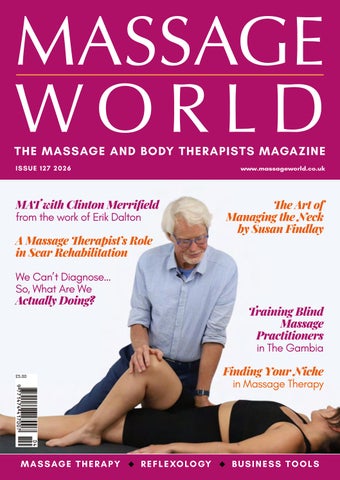
What Placebo andMerrifield Why Does it MAT is with Clinton Matter Massage from theinwork of ErikTherapy Dalton
Soft Tissue Release The Value ofTherapist’s GCMT Problems with A Massage Role
The Art of Managing the Neck by Susan Findlay
Anatomical Position Strengthening the Place of Soft Tissue in Scar Rehabilitation Therapy in UK Health Care
We Can’t Diagnose… Competitive & Therapists Spotlight So, What AreMassage We Therapeutic Massage Actually Doing?
A shared profession, different purposes
Erik Dalton’s Legacy: MAT
Training Blind Massage Practitioners in The Gambia More Than Skin Deep The therapeutic power of red light therapy
£5.00
Finding Your Niche SurvivalinofMassage the MostTherapy Visible
Clinical Cupping
How AI is reshaping the MT landscape
The Emergent Path 2 Does Fascia Hold Memories part Soft tissue therapy as a gateway to creativity
MA AS PY LO LO GY GY ◆ B U SBI U N ESSI N S ETSOSOTL S M SSSAG AGEE TTHHEER RAA P Y ◆ R ERFELFE LXO E XO OOLS
4.8
4.9
Run By Therapists For Therapists, We're The UK's One-StopShop For Your Massage Supplies smile 30 DAY HOME TRIAL
30
DA
Y
SAT
ISF A C TI O N G U A
RA
NT
EE
You Can Be Certain We Will Stand Behind Every Product We Sell!
The UK’s Largest Selection of Massage Supplies!
Expert Table Help From Experienced Therapists: Find Your Perfect Fit!
We Only Stock What We Use Ourselves - Approved Quality.
Join Our Forum of Therapists: fb.com/groups/musclewhisperers
WIN A FREE TABLE EVERY MONTH ON OUR WEBSITE! 01443806590
massagewarehouse.co.uk
@massagewarehouse.uk
editorial by Wendy Kavanagh
welcome M
TOR
TURES
EDITOR EDITOR
Susan RuthFindlay Duncan
FEATURES FEATURES
Balens Earle Abrahamson Sarah SueCatlow Burgess Greg Coughlan Ruth Duncan ErikJames Dalton Earls Ruth Duncan Rachel Fairweather Susan Findlay Susan Findlay Amy HartlLewis Owen Clinton Merrifield Natalie Lenton Sunita PassiO’Flaherty-Hilder Colleen Hannah SunitaPoulton Passi Carole GinaPreen Sanki Mary Sanderson Claire Squire Joanna Shaw Winzer Madelaine Paul Vrenken
PHIC DESIGN GRAPHIC DESIGN
Victoria Osborne
DIA SOCIAL MEDIA Pia Singleton GRAPHIC DESIGN Victoria Osborne MMUNICATION MEDIA
Pia Singleton SOCIAL MEDIA COMMUNICATION C J Newbury PUBLISHERS Publishing COMMUNICATION C NK J Newbury ERTISING ADVERTISING Please call PUBLISHERS NK Publishing Jackie Bristow ADVERTISING Please email T 01963 361 753 info@massageworld.co.uk T for all advertising enquiries
LISHERS MEDIA
R QUARTERLY ISSUES FOUR QUARTERLY ISSUES
UK: £20 UK Student: UK Student: £15 Rest of World: £40 ISSN 1474-4171 of World: FOUR QUARTERLY ISSUES
UK: £20
E info@massageworld.co.uk W www.massageworld.co.uk
DISCLAIMERS The publisher has taken all reasonable measures to ensure the accuracy of the information in Massage World and cannot accept responsibility for errors in or omissions given in this or previous editions or for Efrom any information info@massageworld.co.uk any consequences arising thereof. The Editor may not always W www.massageworld.co.uk agree with opinions expressed in Massage World but allow publication as a matter of interest, nothing printed should be DISCLAIMERS construed as Policy or an Official Announcement unless stated. The publisher has takenmay allbereasonable No part of this publication reproduced measures in any form to or ensure the accuracy the information in Massage World by any means whetherofelectronic, mechanical and/or optical and cannot accept prior responsibility for errorsofinthe orpublisher. omissions without the express written permission from any information given in this or previous editions or for any consequences arising thereof. The Editor may not always agreeBY with opinions expressed in Massage World but PRINTED allow publication as a matter of interest, nothing printed www.bishops.co.uk should be construed as Policy or an Official Announcement unless stated. No part of this publication may be reproduced in any form or by any means whether electronic, mechanical and/or optical without the express prior written permission of the publisher.
HOW TO CONTAC T US
Bishops
By continuing to question, learn, and support one another, we strengthen R U T H D U N CA N not only ourselves as practitioners but also the confidence that the public Guest Editor can place in our profession.
UK Student: £15
Hcontact OofWWorld: TO£40 CO N TAC T US 1474-4171 ow toRest usISSN
NTED BYPRINTED BY
AT
s a profession, need more than we moving need robust he clockswe have changed, andenthusiasm; we are slowly education, thoughtful discussion, and strong representation. towards the longer and warmer days. Spring often feels This issue Massage World brings together that of like of a time to renewal and growth andvoices this edition challenge assumptions, encourage critical thinking, and help move our Massage World will certainly help you grow your knowledge profession forward. and skills. There is an abundance of thought-provoking articles Ruth Duncan, of GCMT, explores what the research us and about aiming toChair inspire and engage your critical thinkingtells skills soft tissue therapy, separating long-held myths from the evidence behind offer insight into different ways that we can promote health. what we can realistically achieve as therapists. Continuing the theme of professional accountability, Sarah Catlow tackles one of the most debated questionsand in manual Colleen O’Flaherty-Hilder discusses aromatherapy stress while therapy: Can we diagnose? It is a subject that continues to generate discussion, and Sarah Sue Burges delves into Kinesthetic Optimum Recovery & Enhancement (K.O.R.E) presents a balanced and thought-provoking perspective. muscle testing. Owen Lewis discusses uncertainty, postural evaluation and the neural/ We system are alsowhile pleased to welcome Joanne article Shaw, the new of CNHC, dural Earle Abrahamson’s looks atChief what Executive we consider what matters whose article, Looking Ahead: Building a Stronger Future for CNHC and Complementary most in Massage Therapy Education. Healthcare, outlines her vision for strengthening professional standards and public confidence the complementary healthcare James Earlsacross discusses fascia, movement and the sector. important aspect of interdependency Beyond the written articles, I recently joined Ruth Duncan andwith Sports Therapy of body systems then we have our therapist spotlight interview Tamer Morsy Association hosts Gary Benson and Matt Phillips for a podcast discussing the future titled ‘Inspired by Change’. Ruth Duncan looks at the fascial system and historical of our profession. We explored the role of GCMT, the importance of credible education thinking that it stores memories. and meaningful CPD, and why raising professional standards ultimately benefits both therapists and the people who place their trust in us. For now, it’s time to chill quite literally! I hope this edition encourages you not only to learn something new, but also to reflect on your own practice. The future of our profession will not be shaped by any one organisation or individual, but by the standards we each choose to uphold every day.
Download the FINDL AY Download theSUSAN Massage World Massage World App!App! Purchase digital copies ofissue each issue Purchasethe digital copies ofWorld each Download Massage App!
Search for “Massageworld Search for “Massageworld Purchase digital copies of each magazine” issue magazine Search for “Massageworld magazine”
Follow us us on Follow onTwitter! Twitter! Follow us on X! @massageworlduk@massageworlduk @massageworlduk
ALTOGETHER NATURAL…A SUPREME MEDIUM FOR MASSAGE & BODYWORK
25% off our retail prices for all professionals and students registered online with us info@songbirdnaturals.co.uk | www.songbirdnaturals.co.uk
contents I S S U E 1 2 7 2 0 26
26
8 ◆
F E AT U R E S
8 We Can’t Diagnose… So, What Are We Actually Doing? Sarah Catlow & Dr Lance Doggart
An age-old question that deserves a clearer answer. Exploring the role of massage therapists, professional boundaries, and what we really offer our clients.
12 Scar Massage Matters: A Massage Therapist’s Role in Scar Rehabilitation Hannah Poulton
A comprehensive look at scar therapy, covering every phase of recovery and how massage can support healing from the earliest stages through long-term rehabilitation.
16 Touch Beyond Sight: Training Blind Massage Practitioners in The Gambia Paul Vrenken Discover how meaningful training and employment opportunities are transforming lives and communities through massage education.
22 When Research Becomes Marketing with References Attached Ruth Duncan & Susan Findlay
A thought-provoking examination of manual therapy research, questioning whether evidence is informing practice—or simply supporting the loudest marketing claims.
22 26 When Your Clients Avoid Movement Clinton Merrifield
Building on the work of Erik Dalton, this article explores why chronic musculoskeletal pain often leads to movement avoidance and how therapists can help clients regain confidence.
30 The Value of Finding Your Niche in Massage Therapy Amy Hartl
Finding your professional niche can transform both your career and your client outcomes. Amy Hartl explains why specialising may be the key to long-term success.
40 Looking Ahead: Building a Stronger Future for CNHC & Complementary Healthcare Joanna Shaw “We have a responsibility to champion high standards, support professional development and help raise public awareness…” An insight into the future direction of CNHC and the wider complementary healthcare profession.
44 The Art of Managing the Neck Susan Findlay
Improve your confidence in treating one of the body’s most complex regions with practical, evidence-informed guidance.
48 Massage Therapy at The Championships, Wimbledon Mary Sanderson
Mary gives us her personal insight into working at the world-famous Wimbledon tennis championship for the last 17 years. A truly inspirational article from the therapist who first published a book on Soft Tissie therapy in the United Kingdom.
52 Is Your Treatment Table a Liability? Greg Coughlan
Your treatment table should work for both you and your clients. Learn how to assess whether your equipment supports comfort, safety, and effective practice.
◆
3 6
R EG U L A R S Editor’s Welcome News & Views
ISSU E 127 2 02 6
5
news & views
ICPMR 2026: 20. International Conference on Physical Medicine and Rehabilitation September 21-22, 2026 in London
Shaping the Future of Therapy and Rehabilitation 25-26th November 2026
International Conference on Physical Medicine and Rehabilitation aims to bring together leading academic scientists, researchers and research scholars to exchange and share their experiences and research results on all aspects of Physical Medicine and Rehabilitation. It also provides a premier interdisciplinary platform for researchers, practitioners and educators to present and discuss the most recent innovations, trends, and concerns as well as practical challenges encountered and solutions adopted in the fields of Physical Medicine and Rehabilitation.
Therapy Show is the UK’s leading event for therapy and rehabilitation professionals, bringing together practitioners from across the sector to learn, connect, and share ideas.
waset.org/physical-medicine-and-rehabilitation-conference-in-september-2026in-london
UNMISSABLE INTEGRATIVE HEALTH EDUCATION – 21st November 2026 Join and soak up the learning… Returning for 2026, our live and ‘in-person’ CPD accredited events are ‘mustattend’ for registered nutritional therapists, integrative health practitioners and complementary and alternative medicine (CAM) professionals. Organised by the team behind IHCAN magazine, experience inspiring, evidence-led sessions – expect fresh insights, powerful networking, and tools you can use straight away. www.ihcansummit.co.uk/
6
I S S U E 1 2 7 2 02 6
Built on a multidisciplinary approach, the event provides a unique platform for physiotherapists, osteopaths, chiropractors, sports therapists, massage therapists, rehabilitation professionals, clinic owners, and allied healthcare practitioners to learn from one another and gain fresh perspectives on patient care. By combining clinical expertise, practical application, www.therapyshow.co.uk/
anatomycrossword Massage World Anatomy Crossword Blind Massage Therapy Clinic has a special meaning in Beijing Write one letter in each white square. Ignore spaces in multi-word answers.
Peng Xuan has been operating a massage clinic in the Chaoyang 1 District of Beijing for nearly 20 years. Like many blind massage 3 therapists in the country, he learned the therapeutic skills in order 4 to earn a living.
2
Blind Massage Therapy Clinic has a special meaning in Beijing
“Our massage is called traditional Chinese medical massage, which Peng Xuan has been operating a massage clinic in the Chaoyang is also known as blind massage. Why do customers like a blind District of Beijing for nearly 20 years. Like many blind massage massage? Firstly, people cannotthe see, so their7 hands therapists in theblind country, he learned therapeutic skills inhave order better touch and sensitivity,” Peng Xuan said. to earn a living. The 9th World Championship in Massage took place in Copenhagen, “Our is called traditional Chinese medical massage, which There aremassage 17.5 million visually impaired people in China, making Denmark, thisas year inmassage. early July. Jeppe is also known blind Why do customers like a blind them the country’s largest disabled group, according to the World Tengbjerg, Founder of the International massage? Firstly, blind Blind Union Asia Pacifi c. people cannot see, so their hands have Massage Association and thePeng World better touch and sensitivity,” Xuan said. Championship in Massage, confirms that Blind masseurs are often thought to be especially skilled, as their There 17.5 million impaired the 9th are edition broke visually all records with people in China, making heightened sensitivity to touch helpsgroup, themaccording fi nd areas them the country’s largest disabled to of thetension World 290 participants from 59 countries without visual cues. Blind Union Asia Pacific.
The Results are in
5
6
8
9
10
11
12
The International Massage Association Blind masseurs are often thought to be especially skilled, as their aims to develop and promote the various heightened sensitivity to touch helps them fi nd areas of tension Massage is usedDown as a therapeutic treatment in Across massage techniques without visual cues. which are practised 3. Bone commonly known as the collarbone (8) 1. The largest muscle inusually the body (7)done over traditional Chinese medicine, by experienced massage therapists 5. The shoulder blade (7) 2. Muscle group primarily responsible for extending the knee clothing and focusing more on therapy than (10) worldwide. The World Championship 7. The muscle commonly known as the six-pack (15) relaxation. 4. The kneecap (7) 10. A broad upper-back muscle that can elevateisthe Massage used as a therapeutic treatment in in Massage is primarily a competition, shoulder (9) 6. The longest bone in the body (5) traditional Chinese medicine, usually done over but at the same time an opportunity for 11. The forearm bone on the thumb side (6) 8. The tendon attaching the calf muscles to the heel (8) “Many young people work at a than desk for a long time, clothing and more on therapy 12. The large superficial muscle forming much of the focusing calf 9. Connective tissue that surrounds and supports muscles massage therapists to find professional (13) (6) relaxation. sitting and standing for a long time, bowing their inspiration and networking. heads for a long time, often staying up late, and not “Many young people workwork at a desk for a long time, resting well. The pressure is relatively high, so By participating in the World sitting and standing for a long time, bowing their there are some pain and fatigue points in the cervical Championship, the massage therapists heads for a long time, often staying up late, and not spine and shoulders. Blind massage can accurately will get the opportunity to strengthen resting well. The work pressure is relatively high, so nd the customer’s pain and fatigue points, thereby and improve their skills. A Diploma will Explore how modern science, embodied andpoints spiritual therefiare some painpractice and fatigue in theunderstanding cervical relieving fatigue and relaxing the pain points,” said spineintegrated and shoulders. Blind massage can accurately be issued for each participant, enabling converge to create a more vision of healing. Peng Xuan. fi nd the customer’s pain and fatigue points, thereby the Massage Therapists to brand their
Science, Spirit and the Body: The Synthesis of Healing 14 – 17 September 2026
business in a new way. Overall Final Winners as follows:
relievingmental fatigue and relaxing the pain points,” said if you work As the world’s largest trauma, health and wellbeing conference, Peng Massage Xuan. World contacted thethis Royal National in a related field or are keen to expand yourhas understanding, annual highlight is Institute of Blind People to get a list of blind clinics not to be missed. Massage World has contacted the Royal National in the United Kingdom so we will keep you updated Institute of Blind People to get a list of blind clinics where you can book a massage with a blind or visually mastersevents.com/oxford-2026/ in the United Kingdom so we will keep you updated practitioner. whereimpaired you can book a massage with a blind or visually
classifiedsclassifiedsclassifiedsclassifiedsclassified Gold: Yuka Someya, Japan
classifiedsclassifiedsclassifiedsclassifiedsclassifieds
Silver: Cengizhan Tatar, Turkey
Bronze: Panuwat Srisamajarn, USA
impaired practitioner.
Enter the 2027 competition here worldchampionship-massage.com/
rnib.org.uk
rnib.org.uk
ssifiedsclassifiedsclassifieds lassifiedsclassifiedsclassifieds •• • • Places available in Peterborough for 2020 Places available in Peterborough for 2020 Details 01733 555476 or
Details 01733 555476 or
I SSU E 1 2 3 2 02 ISSU 4 / 2 5 E 127 2702 6
ISSUE 123 2024/25
77
We Can’t Diagnose… So, What Are We Actually Doing?
Rethinking language, scope, and practice in sports and manual therapy BY SAR AH C ATLOW & DR . L ANCE DOGG ART
The question we don’t always say out loud
If you work in sports therapy or manual therapy, you’ve probably heard it at some point: “You can’t diagnose.” It’s one of those phrases that tends to sit quietly in the background of the profession. It’s rarely unpacked, but it influences how many therapists think about their role. And yet, when you step into a clinic, the reality feels very different. We assess. We interpret. We 8
I S S U E 1 2 7 2 02 6
make decisions. We decide whether to treat, refer, or reassure. So, the question becomes — if that isn’t diagnosis, what is it?
What actually happens in practice
Think about a typical patient consultation. You take a history. You observe movement. You test structures. You rule out anything serious. Gradually, a picture starts to form.
From there, you make decisions: • Is this safe to treat? • What’s the most likely explanation? • What’s the best way forward? That process isn’t guesswork. It’s structured, informed, and built on experience. In many ways, it mirrors what other healthcare professionals would recognise as diagnostic thinking — even if we don’t always describe it that way.
sportstherapy W E C A N ’ T D I AG N O S E … S O, W H AT A R E W E AC T UA L LY D O I N G ?
We’re interpreting how a problem affects movement, function, and performance — and we’re making decisions based on that.
Part of the problem is the word “diagnosis”
The term diagnosis is often closely tied to medical practice — identifying pathology, naming conditions, and confirming findings through tests or imaging. But diagnosis isn’t just one thing. Across healthcare, it can mean:
In other words, we’re not just interested in the label — we’re interested in what the body is doing.
Clinical reasoning: the skill behind the scenes
What underpins all of this is clinical reasoning. This involves:
• Medical diagnosis – identifying disease or pathology
• gathering information
• Working (clinical) diagnosis – guiding immediate decisions
• testing those ideas
• Functional diagnosis – understanding movement and performance Sports therapists are not diagnosing disease — and that distinction matters. But we are developing working explanations for what we see in front of us. We’re interpreting how a problem affects movement, function, and performance — and we’re making decisions based on that.
A different focus: movement, not just pathology
One of the key differences in therapybased professions is where attention is placed. Medical models often focus on what the problem is. Therapy models tend to focus on how the problem is affecting the person. Take low back pain as an example. Many cases are labelled non-specific (Maher et al., 2017). There’s no clear pathological diagnosis, yet the patient still presents with pain and limitation. This is where therapists come in. We look at: • movement patterns • load tolerance • functional limitations • contributing factors
• forming hypotheses • adapting as new information emerges It’s not a fixed decision — it evolves. Croskerry (2009) describes diagnostic reasoning as a dynamic process rather than a single outcome. That reflects what happens in practice. We form an initial idea, test it, and refine it as the patient progresses.
So why the hesitation?
If therapists are clearly engaging in structured decision-making, why is there still discomfort around the word diagnosis? Part of it comes down to: • professional boundaries • historical roles • concerns about stepping outside scope of practice These are important considerations — particularly when it comes to identifying pathology. But avoiding the word altogether can sometimes create confusion, especially when communicating with patients or other professionals.
The challenge of professional identity
Part of the tension around diagnosis also reflects a wider issue within sports and manual
therapy — professional identity. Many therapists work in environments where they regularly communicate with physiotherapists, osteopaths, chiropractors, doctors, strength coaches, and other healthcare professionals. In these settings, the language we use matters. If therapists feel unable to explain their reasoning clearly, it can sometimes undermine confidence in their role or create uncertainty around what they actually contribute to patient care. This becomes particularly important in multidisciplinary settings. Therapists are often expected to justify why they are treating someone, explain risk factors, identify when referral is needed, and provide rationale for rehabilitation decisions. All of this relies on some form of clinical interpretation. The irony is that many therapists already engage in highly skilled reasoning every single day — they simply avoid calling it diagnosis because of the professional sensitivities surrounding the term. There is also a risk that constantly distancing the profession from diagnostic language unintentionally minimises the level of expertise involved in clinical practice. Patients are not simply paying for hands-on treatment. They are paying for decision-making, reassurance, interpretation, communication, and guidance. That does not mean sports therapists should attempt to replace medical professionals or move beyond their scope of practice. In fact, recognising limits and referring appropriately is part of strong clinical reasoning. Perhaps the future of the profession lies not in avoiding the conversation around diagnosis, but in becoming more confident ISSU E 127 2 02 6
9
sportstherapy W E C A N ’ T D I AG N O S E … S O, W H AT A R E W E AC T UA L LY D O I N G ?
Recognising that therapists use clinical and functional reasoning doesn’t blur professional boundaries — it helps define them more clearly.
in explaining exactly what type of reasoning we use, why we use it, and how it supports patient-centred care.
Clarity matters — especially for patients
Patients don’t separate “assessment” from “diagnosis” in the way clinicians do. They want to know: • What’s going on?
• Is it serious? • What can we do about it? Being able to explain your reasoning clearly — without overstepping your role — is a key part of good practice. It’s less about the terminology, and more about clarity and confidence in communication.
A profession built on thinking, not just doing
Sports and manual therapists are not just delivering treatment. They are practitioners who: • interpret presentations • identify risk • adapt interventions • make ongoing clinical decisions That requires more than practical skill — it requires structured, reflective thinking.
to understand your reasoning — and be able to communicate it clearly. Because whether we use the word diagnosis or not… We are still making decisions that shape patient care.
References
Croskerry, P. (2009). A universal model of diagnostic reasoning. Academic Medicine, 84(8), 1022–1028. Maher, C., Underwood, M., & Buchbinder, R. (2017). Non-specific low back pain. The Lancet, 389(10070), 736–747.
Final thoughts
You don’t need to claim a medical diagnosis to be a thoughtful, analytical clinician. But you do need
Moving the conversation forward
SAR AH C ATLOW is a Senior Lecturer and Programme Leader for
• what type of diagnosis we mean
Sports Therapy at Plymouth Marjon University. She is Chair of the Sports Therapy Organisation (STO) and a Council Member of the General Council for Manual Therapies (GCMT). Her work focuses on sports therapy education, clinical reasoning, and professional development within the field.
Perhaps the issue isn’t whether therapists can diagnose. Perhaps it’s about being clearer on: • how we describe our reasoning • how we communicate our role Recognising that therapists use clinical and functional reasoning doesn’t blur professional boundaries — it helps define them more clearly.
10
I S S U E 1 2 7 2 02 6
DR . L ANCE DOG G ART holds a PhD from Liverpool John Moores University and specialises in the biomechanics of injury. His research explores the mechanisms underpinning musculoskeletal dysfunction, with a focus on improving assessment, prevention, and rehabilitation strategies.
Do you want to reach more bodyworkers, massage professionals & students with your brand? Email sales@massageworld.co.uk to recieve the new media kit and find about our other opportunities!
OPPORTUNITIES INCLUDE: NEW WEBSITE | EMAIL | PRINT & DIGITAL MAGAZINE | APP | EVENTS
massageworld.co.uk @massageworldmagazine
/MassageWorldUK
Scar Massage Matters:
A Massage Therapist’s Role in Scar Rehabilitation BY HANNAH P OULTON
Scars are often viewed as a cosmetic issue. Once the wound has healed and the stitches are removed, many patients are discharged with little or no advice about what happens next. Yet for those of us working with the body every day, we know that a scar is rarely “just a scar.” 12
I S S U E 1 2 7 2 02 6
A
scar has the potential to influence movement, breathing, posture, sensation, function, confidence, and quality of life. It can affect how someone moves through the world for months, years, and sometimes decades after surgery or injury. As massage therapists, you are uniquely positioned to identify these issues, support recovery, and help bridge a gap in healthcare that has existed for far too long.
The Forgotten Phase of Recovery
Modern medicine has made incredible advances in surgical techniques, wound closure methods, and survival rates following trauma, cancer treatment, and complex surgery. However, scar rehabilitation continues to be overlooked. Many patients report receiving little or no advice about how to care for their scar once the wound has healed. Others are told that discomfort, tightness, numbness, altered sensation, or movement restrictions are simply something they must learn to live with. Too often, individuals leave hospital believing that because the wound has healed on the surface, the healing process is complete. We know this is far from the truth. Scar tissue continues to remodel for 24 months after surgery (and beyond). During this time, appropriate intervention can help optimise tissue mobility, improve comfort, and support function. Without support, scar tissue may become adhered, restricted, hypersensitive, or contribute to
medicalmatters S C A R M A S S AG E M AT T E R S : A M A S S AG E T H E R A P I S T ’ S R O L E I N S C A R R E H A B I L I TAT I O N
dysfunctional movement patterns throughout the body.
A Scar Is Not Just Skin Deep
Scar formation is a natural and essential part of healing. However, scars rarely affect only the skin. Depending on the depth and location of the surgery or injury, scar tissue may involve: • Skin • Superficial fascia • Deep fascia • Muscle • Tendons • Ligaments • Nerves • Internal connective tissues The body does not function in isolated parts. It functions as an interconnected system. When scar tissue restricts movement in one area, compensatory patterns often develop elsewhere. • A lower abdominal scar may contribute to altered pelvic floor function. • A thoracic surgical scar may influence rib mobility and breathing mechanics. • A breast surgery scar may affect shoulder movement and posture. The location of the scar is important. Equally important is understanding the wider impact it may have on the body’s movement system.
Scar Tissue and Fascial Restrictions
Massage therapists frequently work with clients experiencing tension, stiffness, or persistent discomfort that does not seem to resolve through traditional treatment approaches. Sometimes the missing piece of the puzzle is a scar. Fascia provides continuity throughout the body. It surrounds muscles, organs, nerves, blood vessels, and connective tissues, creating a
dynamic network designed to glide and adapt to movement. When scar tissue forms, normal fascial mobility can be disrupted. This may lead to:
Yet many receive little information about what happens after the wound has healed. Instead, they are often told:
• Reduced tissue glide
“You’ve had surgery.”
• Movement restrictions
“That’s just part of getting older.”
“It’s normal.” “What do you expect?”
• Increased tension in distant structures • Altered force transmission • Protective movement strategies • Persistent discomfort Clients may not associate these symptoms with a surgery they had five, ten, or even twenty years ago. Yet many therapists have seen dramatic changes in movement and comfort after addressing longstanding scar restrictions.
Breathing: The Often Forgotten Casualty
One of the most overlooked consequences of scarring is its effect on breathing. Scars involving the chest wall, abdomen, rib cage, and breast tissue can influence the ability of tissues to expand and move freely. When tissue mobility is reduced, breathing patterns often adapt. Over time, this may contribute to: • Reduced diaphragmatic excursion
For many women, these responses can feel dismissive. The pain, pulling, numbness, bladder symptoms, pelvic floor dysfunction, altered sensation, reduced confidence, or changes in intimacy are very real. While not every symptom is caused by a scar, scars are frequently overlooked as a contributing factor. Women continue to advocate for themselves, often spending years searching for answers that should have been offered as part of routine postoperative care. We can, and must, do better.
The Role of Massage Therapists
Massage therapists have an important role to play within the multidisciplinary rehabilitation journey. With the correct specialist scar training, your role can be to:
• Increased upper chest (apical) breathing
• Assess tissue mobility.
• Rib cage restrictions
• Support normal movement patterns.
• Postural adaptations
• Improve body awareness.
• Increased muscular tension
• Reduce fear around touching scars.
Breathing influences every system within the body. When breathing becomes restricted, movement, recovery, relaxation, and overall wellbeing may also be affected.
• Encourage self-management.
Women’s Health: The Gap We Can No Longer Ignore
Perhaps nowhere is the lack of scar rehabilitation more apparent than in women’s health. Every day, women undergo Caesarean births, hysterectomies, laparoscopic procedures, prolapse surgeries, endometriosis surgery, cancer treatment, and countless other interventions.
• Identify restrictions.
• Signpost when specialist support is needed. • Work within your scope of practice. • Educate clients about the ongoing process of healing. Many clients have never touched their scar. Many have never been shown how to move it. Many have never been told that it is safe to reconnect with this part of their body. The therapeutic impact of providing education, reassurance, and evidenceinformed guidance should never be underestimated. ISSU E 127 2 02 6
13
medicalmatters S C A R M A S S AG E M AT T E R S : A M A S S AG E T H E R A P I S T ’ S R O L E I N S C A R R E H A B I L I TAT I O N
Moving Towards EvidenceBased Scar Care
The scar therapy profession has grown significantly over the last decade, but there remains considerable variation in advice and practice. As therapists, you have a responsibility to ensure your recommendations are guided by current evidence and best practice, clinical reasoning, and patient-centred care. You should focus on: • Tissue mobility • Functional outcomes • Movement restoration • Symptom reduction • Patient education • Use of appropriate outcome measures • Good documentation • Evidence based rehabilitation • Collaborative care While working within your scope of practice and referring on when needed. Having a good support network of different professions around you (especially in private practice), is essential for good patient care.
A Call to Action
Every scar tells a story. For some, it represents survival. For others, motherhood. For others, cancer treatment, trauma, or life-changing surgery. But no one should be left to navigate
14
I S S U E 1 2 7 2 02 6
the consequences of a scar alone. As massage therapists, you are in a privileged position to support people long after the wound has healed. You have the opportunity to improve comfort, movement, confidence, and quality of life. The question is no longer whether scars matter. The question is how many
people are still living with avoidable restrictions because nobody told them that help was available. It is time for all of us working within rehabilitation, manual therapy, and bodywork to become stronger advocates for evidence-based scar care. Because healing does not end when the wound closes.
HANNAH P OULTON is a Women’s Health Physiotherapist, Scar Specialist, PhD Researcher, and the founder of HLP Therapy, an awardwinning specialist clinic dedicated to women’s health, pelvic health, scar therapy, pre- and postnatal rehabilitation, and menopause care. Through HLP Therapy, Hannah and her team deliver specialist scar therapy education to healthcare professionals across the UK and internationally, helping to raise standards of care and improve outcomes for individuals living with scars. Hannah is also the founder of the UK Scar Symposiums, held at the Birmingham NEC, bringing together leading clinicians, researchers, therapists, and industry experts with a shared passion for advancing scar rehabilitation and evidence-based practice. On 1 September 2026, Hannah will launch the Scar Therapy Network (STN), an innovative platform designed to improve access to scar rehabilitation education and support. The Network will include a free patient portal for anyone living with a scar, alongside a dedicated professional community providing education, resources, collaboration, and ongoing professional development for clinicians working within scar therapy. Passionate about improving awareness, education, and access to scar rehabilitation, Hannah continues to advocate for better support for individuals living with the long-term effects of surgery, trauma, cancer treatment, and birth-related scarring. For more information, visit HLP Therapy’s website: www.hlp-therapy.co.uk
Our range of Massage Waxes are handmade using quality Scottish beeswax No spills - nourishing - 100% natural Range of blends to suit every client Free P&P on all orders over £30 Our Massage Wax range offers professional therapists a variety of delicately formulated aromatic blends - one to suit every client! A fantastic alternative to massage oil - with no spills! Leaves skin nourished and hydrated without feeling oily Protects delicate skin, perfect for Baby massage (Be Sensitive) Recyclable packaging • 100% Natural Ingredients.
www.highlandwax.co.uk Highland Wax Company, Foynesfield Cottage, Nairn IV12 5SA 01667 451736
Touch Beyond Sight:
BY PAUL VRENKEN
Training Blind When people think about massage they often think first about Massage Practitioners therapy, technique: anatomy, muscles, trigger points, stretching, posture, or sports in The Gambia recovery. Those things matter, of course. But after many years in this profession, I have come to believe that the real heart of massage lies somewhere deeper.
16
I S S U E 1 2 7 2 02 6
massagereport TO U C H B E YO N D S I G H T
For many of these young people, learning massage is not just an interesting skill or hobby. It can become a real profession and a way to earn income, build confidence, and create independence.
For me, this project was about much more than teaching massage skills. It was about helping people build a future.
Young People with Few Opportunities
assage is about presence. It is about concentration. It is about listening with your hands. And in that sense, some of the most gifted massage practitioners I have worked with are blind or visually impaired. Since 2012, I have educated blind and visually impaired people to become a massage therapist in the Netherlands, Belgium, Spain, Curacao, Bonaire and Aruba. In early 2026, my daughter Angela and I travelled to The Gambia to provide massage training for a group of blind and visually impaired participants. Ten students successfully completed the programme. They passed practical and theoretical exams and demonstrated their work on experienced massage practitioners.
M
One thing that struck me immediately in The Gambia was the age of the participants. The average age of the group was only 23. These were young people with energy, humour, intelligence, and a huge willingness to learn. They arrived every day with enthusiasm and focus even though they had to travel from far. They wanted to know everything: how muscles work, how to stand correctly, how to use their body weight, how to protect their own back, how to communicate with clients, how to find and treat tension in the body, and how to create a professional treatment. What also stood out was the urgency behind their motivation. In many Western countries, people with disabilities often have access to some form of financial support or social security. In The Gambia, that safety net is far more limited. For blind and visually impaired people, finding work can be extremely difficult. There are few opportunities, few employers willing to adapt, and very little structure for long-
term support. That means the stakes are high. For many of these young people, learning massage is not just an interesting skill or hobby. It can become a real profession and a way to earn income, build confidence, and create independence. That urgency created a very special atmosphere in the training room. The students were hungry to learn. They took the work seriously. They practised on each other for hours. They asked thoughtful questions. They had a deep desire from within to learn, improve, and succeed. And they did.
The Special Qualities of Blind Massage Practitioners My work with blind and visually impaired massage practitioners started many years ago. In 2012, I was in Suriname and received a massage from a blind man. I was deeply impressed. He had an extraordinary ability to feel where tension was located in my body. His hands moved slowly and precisely. He seemed to notice small changes in muscle tone and connective tissue that many sighted therapists might miss. That experience stayed with me. It made me wonder whether blind and visually impaired people might ISSU E 127 2 02 6
17
massagereport TO U C H B E YO N D S I G H T
have a natural advantage in massage work. Over the years, I have become convinced that many of them do. Blind practitioners often have a highly developed sense of touch. They can feel muscle knots, tension patterns, asymmetries, temperature differences, and subtle changes in tissue quality very accurately. But perhaps even more important is their ability to concentrate. In a world full of visual distraction, blind practitioners are often fully present with the person on the table. They are not looking around the room. They are not distracted by appearance. They are listening, feeling, sensing, and staying with the body. Once they learn the necessary skills, anatomy, and treatment methods, they can become exceptional therapists. I have also noticed something else: many blind practitioners truly enjoy the work. Massage gives them the chance to help other people in a meaningful way. They get into a flow when they give a treatment. They find themselves doing something that they really can do from within, using their well developed tactile capabilities. It allows them to use their strengths rather than focus on limitations. They are often very thankful and proud of what they can do, and rightly so. The 18
I S S U E 1 2 7 2 02 6
one on the table who receives their treatment, notices this too. Clients often feel deeply touched by the level of care, focus, and commitment they receive.
More Than Anatomy and Technique My own journey in massage began in 2007, when I started a one-year sports massage programme in the Netherlands through the NGS. I immediately started to work as a massage therapist with a local soccer team. In 2012, I completed a higher professional education programme in massage therapy in Belgium. Since then, I have worked with many different clients, including soccer players, professional athletes, home practice clients, and elite teams. I also completed a 400 hour yoga teacher training program and became an instructor of the Athletic Skills Model. Over the years, I worked with players from PSV Eindhoven and with members of the Dutch women’s national football team among others. Those experiences taught me a great deal about physical recovery, performance, injuries, and body awareness. But they also taught me that a healthy state and a good massage
is never only about muscles. So when I teach, I do not only focus on anatomy and techniques. The client is namely very aware of the pressure and flow of the massage, but also of the person behind the table. Before the practical massage training even begins, I provide a ten-week preparation programme. This programme includes lessons on concentration, posture, breathing, stretching, nerve pathways, fascia, yoga, trauma release, and how to move your own body efficiently while working. I believe these things are essential. A massage practitioner who only knows muscles but has no awareness of these themes will often miss something important.
massagereport TO U C H B E YO N D S I G H T
One of the most hopeful parts of the project in The Gambia is that it does not have to end with the training itself.
Many people carry stress, trauma, fear, grief, or exhaustion in their bodies. Massage can help release that. That is why I want students to understand not only what they are touching, but also how they are touching. I want them to understand the importance of calmness, rhythm, breath, intention, and feeling safe in their own body. For blind and visually impaired students, this broader approach often works especially well. Because they rely less on visual information, they often develop a stronger awareness of their own posture, breathing, touch, and movement. They learn to work from feeling rather than from a step by step scheme or copying what they see. That creates a deeper quality in their treatments.
Building Something Sustainable One of the most hopeful parts of the project in The Gambia is that it does not have to end with the training itself. The local organisation Govi has shown a strong willingness to support the graduates further. They are prepared to make a building available that can be divided into several massage treatment rooms. This could
allow the graduates to start offering paid massages to clients. That matters enormously. Training is important, but training without opportunity can become frustrating. People need a place to practise, gain confidence, build experience, and earn income. A shared massage centre could become much more than a workplace. It could become a place of dignity, teamwork, visibility, and hope. It could show the wider community that blind and visually impaired people are capable of professional, meaningful, and valuable work. It could also help challenge stereotypes. Too often, disability is seen only in terms of limitations. But in this work, I have seen strength, intelligence, sensitivity, discipline, humour, resilience, and talent. The students in The Gambia do not want pity. They want opportunity. And when they are given that opportunity, they can surprise people.
Passing On More Than Knowledge Another special part of the project was that my daughter Angela, who is 21 and had just graduated Filosophy at the Utrecht University, joined me in The Gambia as an assistant trainer. ISSU E 127 2 02 6
19
massagereport TO U C H B E YO N D S I G H T
She connected very naturally with the students and was able to guide them with patience, warmth, and clear attention. She has a sensitive nature, sharp insight, and a strong feeling in her hands, which made her very well suited to this work. It helped of course that I took her to yoga and massage from when she was 4. For me personally, it was very meaningful to see her step into this role. Massage is in many ways a traditional craft, passed on from one person to another through practice, observation, and experience. To be able to pass that knowledge on not only to students, but also to my own daughter, felt very special. Seeing her work alongside the students, encourage them, and help them grow gave an extra layer of meaning to the whole project. The part of this work that I love most is passing on a skill that is felt from within, not only knowledge. There is something beautiful about seeing a student discover that they can do more than they thought possible. At first, many students are uncertain. They hesitate. They are afraid of doing something wrong. Then, over time, they begin to trust their hands. They learn where muscles attach. They learn how to find tension. They learn how to stand properly so they do not injure themselves. They learn how to breathe while they work. They learn how to 20
I S S U E 1 2 7 2 02 6
communicate with a client. And slowly, you see them change. They become more confident. They become proud. They begin to see a future. That is the real reward that I felt when I received a massage from a participant on the last day of their training. It touched my soul. Massage can provide relaxation, pain relief, and recovery for the client. But for the practitioner, it can also provide identity, purpose, and independence. That is why I continue doing this work. Not only because I believe blind and visually impaired people can become excellent massage therapists. But because I believe meaningful work can change lives. And sometimes, all it takes is someone who believes in you enough to teach you where to begin.
That is why I continue doing this work. Not only because I believe blind and visually impaired people can become excellent massage therapists. But because I believe meaningful work can change lives.
PAUL VRENKEN is a Dutch massage therapist, trainer, and founder of Triskal (www.triskal.org). He began his massage training in 2007 with a one-year sports massage programme through NGS in the Netherlands and completed higher professional training in massage therapy in Belgium in 2012. Since then, he has worked with professional football players, including players from PSV Eindhoven and the Dutch national team. Since 2012, he has specialised in training blind and visually impaired massage practitioners. His programmes have been recognised by the Dutch UWV for reintegration since 2017, and he has held CRKBO registration since 2020. You can follow him on Instagram, Linkedin and his YouTube channel. If you are willing to support the Gambia project, please contact us.
MASSAGE • SPA • BEAUTY • SALON • PHYSIOTHERAPY • FITNESS
THE UK’S NO.1 STORE FOR ALL MASSAGE ESSENTIALS
NEW ARRIVALS NEW ARRIVALS
NOW AVAILABLE ON NATURALLIVING.CO.UK
NEW ARRIVALS NEW ARRIVALS SHOP THE FULL RANGE ON OUR WEBSITE
BUY NOW, PAY LATER.
ACCESSIBLE VIA OUR WEBSITE OR MANUAL ORDER MASSAGE TABLES, ACCESSORIES & PRODUCTS • CUSTOMISED FURNITURE & SOFT GOODS • SPA & SALON INTERIOR DESIGN • FREE DELIVERY OVER £100 • TRADE ACCOUNTS • PRODUCT WARRANTIES • DEDICATED CUSTOMER SUPPORT• MONTHLY OFFERS • PRODUCTS ADDED EVERY WEEK
NaturalLiving.co.uk | info@naturalliving.co.uk | 0330 828 5769 ISSUE 124 2025
21
When Research Becomes Marketing with References Attached BY RU TH DUNC AN & SUSAN FINDL AY
One of the hardest shifts for modern manual therapists is learning to read research without using it to defend what we already believe. Many of us were trained inside traditions, systems, techniques and explanations that gave us confidence. They helped us make sense of what we felt under our hands and gave clients a clear story about why treatment might help. The problem is not that these stories were always useless. The problem is that many were taught as proven mechanisms when they were often professional traditions, clinical interpretations or marketing claims.
22
I S S U E 1 2 7 2 02 6
researchroom TO U C H B E YO N D S I G H T
R
esearch should help us ask better questions. It should move us from ‘I was taught this works’ to ‘what does the evidence actually show, what does it not show, and how much confidence can I place in this claim?’ That is not antimanual therapy. It is manual therapy becoming more professionally mature. A client feeling better after treatment is clinically valuable, but it does not prove why they improved. Their improvement may relate to the treatment, but it may also relate to time, natural symptom fluctuation, reassurance, feeling listened to, expectation, reduced fear, movement, home care, sleep, medication, stress changes, or other parts of life that shifted at the same time. In manual therapy, there is rarely one clean ingredient. Treatment usually involves touch, communication, consent, pressure, pace, education, confidence, meaning, therapeutic relationship and the client’s own response to care. That is why research construction matters. A strong paper should begin with a clear question, use a design that can answer that question, describe the participants properly, explain what was done in enough detail for someone else to understand it, use suitable outcome measures, report dropouts and adverse responses, and keep the conclusion within the limits of the method. If a paper asks whether a treatment causes improvement, there needs to be a meaningful comparison. If it only shows that a small group improved after receiving an intervention, that may be interesting, but it does not prove causation. The title is often the first warning sign. A title using words such as ‘exploring’, ‘pilot’, ‘feasibility’ or ‘acceptability’ usually signals early-stage work. That can be valuable because not every study is designed to prove effectiveness. Some studies simply ask whether people will take part, whether an intervention is practical, or whether an outcome measure is useful. A title claiming ‘effectiveness’, ‘efficacy’ or ‘treatment for’ needs a stronger design behind it. If a paper claims effectiveness but has a tiny sample, no real control group, no
Manual therapy approaches may be more similar than many therapists want to accept. Different schools may use different language, rituals, protocols and maps, but many handson approaches share common ingredients. blinding and only self-reported outcomes, the title is already more confident than the evidence. A brand or named modality in the title should also make us pause. It does not mean the paper is worthless, but it does mean allegiance bias is built into the question from the start. If research asks whether a named system works, especially when produced within or close to the people who teach, sell or promote that system, the method has to be read carefully. The risk is that the brand becomes the hero before the data have earned that position. This is a wider problem in manual therapy. Too much of the profession has been built around empire modalities, branded systems, trademarked protocols and technique loyalty. These approaches can create community and identity, but they can also narrow thinking. The therapist becomes attached to the method, the method becomes attached to a story, and the story becomes protected by selective evidence. Technique-first research keeps us inside an outdated paradigm. It starts by asking whether a named technique works, then tries to prove the method. A more useful question starts with the person, the presentation, the context and the
outcome. What is the person struggling with? What are we trying to influence: pain intensity, confidence, movement tolerance, sleep, function, participation, quality of life, fear, distress, or something else? What components of care are being offered: touch, education, graded movement, reassurance, pacing, exercise, self-care, or support? Compared with what? For whom? For how long? With what risks? Manual therapy approaches may be more similar than many therapists want to accept. Different schools may use different language, rituals, protocols and maps, but many hands-on approaches share common ingredients. They involve contact, pressure, attention, interaction, sensory input, therapeutic context and a person making sense of what is happening. The client’s response may be influenced less by the brand name and more by dose, preference, safety, expectation, communication, clinical reasoning and the meaning of the encounter. This does not mean technique has no value. Skilled touch remains important, while dose, timing and adaptation can influence the therapeutic experience. But technique is not the whole story, and it should not be the whole explanation. A manual therapy session is not simply a mechanical intervention applied to a faulty part. It is an interaction with a person whose pain and movement are influenced by biology, perception, expectation, previous experience, current state and context. Pathoanatomical reasoning is also being questioned for good reason. Older manual therapy models often focused on finding and correcting a structural fault, a tight muscle, stuck fascia, scar restriction, joint misalignment, trigger point, compressed nerve or abnormal posture. These explanations are attractive because they are simple and easy to market. They give the therapist something to find and the client something to understand. The difficulty is that pain, stiffness and function do not map cleanly onto tissue findings in the way many traditional models suggest. ISSU E 127 2 02 6
23
researchroom TO U C H B E YO N D S I G H T
centred intervention that may support comfort, confidence, body awareness, movement tolerance and engagement with care. The future of manual therapy research is unlikely to belong to the loudest brand or the most dramatic mechanism. It is more likely to belong to research that asks better questions about people, context, outcomes, dose, safety, communication, therapeutic relationship and meaningful change.
References
This is where mechanism claims become a major red flag. If a study measures pain, function or wellbeing, it cannot then confidently claim that fascia was released, adhesions were broken down, the nervous system was regulated, scar tissue was remodelled, toxins were removed, or trauma was released from tissue unless those mechanisms were actually measured. A reported change in symptoms is an outcome. It is not proof of the proposed mechanism. Bias is not an accusation of dishonesty. It is a recognition that research can lean in a particular direction because of how it is designed or interpreted. Selection bias appears when participants are already interested in the approach. Expectation bias appears when participants believe the treatment will help. Allegiance bias appears when the researcher has personal, professional or financial investment in the method. Measurement bias appears when the person delivering treatment also collects the outcomes. Attrition bias appears when people drop out, and the final results mainly reflect those who stayed. Reporting bias appears when positive outcomes are highlighted and weaker findings are given less attention. Cherry picking sits behind much of the problem. It is easy to find a paper that appears to support a preferred belief, especially in manual therapy where many studies are small, mixed 24
I S S U E 1 2 7 2 02 6
or methodologically weak. One positive study can be used in a website, course advert or social media post as if it settles the matter. Meanwhile, the wider evidence, the lack of a control group, the small sample, the short follow-up, or the uncertainty around mechanisms are ignored. That is not evidence-informed practice. It is belief protection. The most common reporting error in manual therapy is overattribution. A person improves after a package of care, then the improvement is credited to a named technique, brand or tissue mechanism. That is too large a leap. If there is no real comparator, we do not know whether the same improvement would have happened with education, exercise, supportive care, another form of touch, or time. Manual therapy does not need to be defended through exaggerated claims about special techniques, branded superiority or tissue correction. It can be discussed as a skilled, responsive, person-
Bialosky, J.E. et al. (2018) ‘Unravelling the mechanisms of manual therapy: modelling an approach’, Journal of Orthopaedic and Sports Physical Therapy, 48(1), pp. 8 to 18. doi:10.2519/jospt.2018.7476. Draper Rodi, J. et al. (2024) ‘Integrated manual therapies: IASP Taskforce viewpoint’, Pain Reports, 9(6), e1192. doi:10.1097/PR9.0000000000001192. Hoffmann, T.C. et al. (2014) ‘Better reporting of interventions: template for intervention description and replication, TIDieR checklist and guide’, BMJ, 348, g1687. doi:10.1136/bmj.g1687. Hopewell, S. et al. (2025) ‘CONSORT 2025 statement: updated guideline for reporting randomised trials’, BMJ, 389, e081123. doi:10.1136/bmj-2024-081123. Kerry, R. et al. (2024) ‘A modern way to teach and practice manual therapy’, Chiropractic & Manual Therapies, 32, 17. doi:10.1186/s12998-024-00537-0. Lavazza, C. et al. (2021) ‘Sham treatment effects in manual therapy trials on back pain patients: a systematic review and pairwise meta analysis’, BMJ Open, 11(5), e045106. doi:10.1136/ bmjopen-2020-045106.
RUTH DUNC AN BSC (HONS ), Vice Chair Scottish Manual Therapists Organisation, Chair General Council for Manual Therapy. Myofascial Release UK and In-Touch Education. www.in-toucheducation.co.uk | info@in-toucheducation.co.uk ….. SUSAN FINDL AY is an oncology massage therapist, teacher, and educator specialising in oncology massage training. She is currently Vice Chair of the General Council for Massage Therapies (GCMT), contributing to the development of professional standards within massage therapy. info@susanfindlay.co.uk
sportstherapy TO U C H B E YO N D S I G H T
Step into the arena, challenge yourself, impress expert judges and discover where your skills can take you. Your championship journey starts here!
10% DISCOUNT Use the code MW10 Code ends 21.09.26
nationalmassagechampionship.com IN PARTNERSHIP WITH
When Your Clients Avoid Movement BY LICENSED M AT EDUC ATOR CLIN TON MERRIFIELD FROM THE WORK OF ERIK DALTON
B
odyworkers know that chronic musculoskeletal pain often follows a pattern. First, an injury causes pain. Clients fear that any movement will aggravate the pain or cause more damage to the area, so they alter their movement patterns and reduce their activity levels. At some point, the injury heals, but for many clients, the pain pattern becomes ingrained, and disability persists. Some clients fall into sedentary lifestyles where a lack of movement further exacerbates their physical condition. Other clients attempt to return to chores, work, exercise routines, and activities they once enjoyed, but encounter challenges. One challenge arises when feelings of anger, grief, and anxiety about the condition increases sensations of pain. Additionally, people living with chronic pain are prone to central sensitization, a broad term referring to nervous system hyperexcitability. Clients might experience hyperalgesia (increased sensitivity to pain) and allodynia (the perception of pain from exposure to non-painful stimuli). Central sensitization may result in defensive muscle spasms, muscle imbalances, and
26
I S S U E 1 2 7 2 02 6
massagefeature M U S CU LO S K E L E TA L PA I N
ongoing compensatory issues. Finally, living with ongoing pain is exhausting, leading to decreased energy levels that make physical activity daunting. In Myoskeletal Alignment Technique (MAT), therapists use graded exposure (GE) stretches to improve flexibility and help clients engage with painful movement barriers. GE stretching reduces the anxiety associated with a particular movement pattern or situation.
Principles of Graded Exposure Stretching
The underlying principle of GE stretching comes from cognitivebehavioral therapy, where gradual contact with anxiety-producing stimuli promotes healing from phobias and anxiety disorders. If a person avoids movement, they inadvertently reinforce their fear. Over time, this avoidance behavior becomes deeply entrenched. GE stretching works by systematically subjecting the person to the feared stimulus in a controlled manner, helping them break the cycle of avoidance and fear reinforcement.
Procedure
To perform a GE stretch, the therapist moves the client’s body to the first mild pain barrier and instructs the client to contact their muscles against the therapist’s resistance for a count of five and then relax. Next, the therapist moves the client’s body to the next mild pain barrier and repeats the sequence. The therapist might repeat the stretch multiple times until the client becomes comfortable with the movement.
client to tilt their pelvis, twist the torso, or move other body areas that aren’t the primary focus of the stretch. Exploring different movements and angles of movement produces a comprehensive stretch. Similarly, activating opposing muscles through movement can help relax and lengthen the targeted muscles through reciprocal inhibition. Dynamic movements further stimulate proprioceptors, potentially leading to deeper relaxation and lengthening of the target muscles. Most importantly, movement enhancers give clients a sense of control and introduce novel stimuli that hold the brain’s attention. The feeling of control and curiosity helps down-regulate nervous system hyperactivity, thereby releasing regions of dysfunction from protective muscle guarding.
Example Techniques
Let’s try three GE techniques to explore this method. As with all MAT techniques, it’s crucial to understand the client’s health picture and when particular methods might aggravate a client’s condition. If you don’t perform procedures correctly, there’s a potential of overstretching and straining clients’ muscles. These techniques should not feel painful, so discontinue any maneuvers that cause increased pain and discomfort.
Hip External Rotators Stretch (main image): In this GE stretch, you place the client’s right foot across their left knee and ensure their toes point towards the end of the therapy table. Control the knee with your right hand while your left braces the client at the right ASIS. Ask the client to gently push their knee into your hand to a count of five and relax. Push the client’s knee towards the table, stretching external rotators until you find their restrictive barrier. Ask the client to push their knee against your resistance to a count of five and relax. Repeat this procedure five times on both sides of the body. Quads Stretch (Image 02): Avoid this technique on clients with hip or knee replacements. With the client on their left side, ask them to grasp their left knee with both hands and pull their leg into flexion. Your right hand grasps above the client’s knee and your left braces the client’s hip (as shown). Flex the client’s knee and place your body against the client’s tibia. Bring the client’s knee into flexion and hip into extension to the first restrictive barrier. Ask the client to gently push their leg against your body to a count of five and relax. Bring the knee and hip to the next flexion and extension barrier and repeat this process three to five times on both sides of the body.
2
Movement Enhancers
GE stretching also employs “movement enhancers” with appropriate stretches. The therapist starts in a position that targets the desired muscle group or joint and then instructs the client to introduce additional dynamic movements. For example, the therapist might ask the ISSU E 127 2 02 6
27
massagefeature M U S CU LO S K E L E TA L PA I N
3
Works Consulted
Quadratus Lumborum (QL) Stretch (Image 03): With the client on their left side and their right leg extended off the therapy table, grasp the client’s right iliac crest and brace the client’s hips with your arm. Ask the client to reach their right hand over their head to grasp the top of the table. Drop your weight to traction the hip and release the QL. Ask the client to pull up on the therapy table to a count of five and relax. Drop your weight to traction the hip and ask the client to pull up on the therapy table to a count of five and relax. You can repeat this stretch three to five times on both sides. To add a movement enhancer, have the client gently tilt their pelvis anteriorly and posteriorly against your gentle resistance.
28
I S S U E 1 2 7 2 02 6
In Closing
Master Myoskeletal Therapists use GE stretches to improve flexibility and help clients engage with painful movement barriers. Graded exposure stretching reduces the anxiety associated with a particular movement pattern aiding clients living with chronic pain.
Vlaeyen, J. W. S., & Linton, S. J. (2000). Fear-avoidance and its consequences in chronic musculoskeletal pain: a state of the art. Pain, 85(3), 317–332. Vlaeyen, J. W. S., & Linton, S. J. (2012). Fear-avoidance model of chronic musculoskeletal pain: 12 years on. Pain, 153(6), 1144–1147. Vlaeyen, J. W. S., de Jong, J., Geilen, M., Heuts, P. H. T. G., & van Breukelen, G. (2001). Graded exposure in vivo in the treatment of pain-related fear: a replicated single-case experimental design in four patients with chronic low back pain. Behaviour Research and Therapy, 39(2), 151–166. Woolf, C. J. (2011). Central sensitization: implications for the diagnosis and treatment of pain. Pain, 152(3 Suppl), S2–S15.
CLINTON MERRIFIELD AND ERIK DALTON Clinton Merrifield is a Certified Strength Coach, Personal Training, Massage Therapist, and Master Myoskeletal Therapist®. Clinton has studied extensively with Erik Dalton to become a Licensed MAT Educator in 2020. Clinton adapted this article from the work of Erik Dalton, Ph.D., a recognized pioneer in the bodywork community. Erik developed MAT from his extensive training in Ida Rolf’s Structural Integration, osteopathy, and neurology. Erik Dalton passed away on January 11, 2025, but his work continues through online courses and workshops taught by Licensed MAT Educators.
ERIK DALTON’S
MYOSKELETAL ALIGNMENT TECHNIQUES (MAT) Erik Dalton’s legendary bodywork system is coming to London!
JOIN LICENSED MAT EDUCATOR
CLINTON MERRIFIELD
ASSESS & TREAT NECK, BACK & SPORTS INJURIES LONDON, UK
SEPTEMBER 26–27, 2026
REGISTER NOW AT ERIKDALTON.COM/WORKSHOPS
The Value of Finding Your Niche in Massage Therapy BY A MY HARTL
I
once heard an instructor say that niching was one of the best things you could do if you wanted to remain a busy, working therapist. His advice was to become the person in your area who specialises in plantar fasciitis. Or TMJ. Pick something that a lot of people struggle with, go deep, get known for it, and you’ll never have to chase clients again.At the time, I thought I already WAS niched. But what I didn’t yet realise was the value in going “deep” – of finding your niche within a niche, especially when you have a personal connection to it. That took an unwanted diagnosis that changed my practice from sustainable to fully booked with a waiting list that runs anywhere from three to eight weeks. And with exactly the clients I want to work with. 30
I S S U E 1 2 7 2 02 6
This is the story of how that happened. And my invitation to consider how it might happen for you.
Finding My Niche
When I left the corporate world in 2012 to become a massage therapist, I knew that I wanted to do work that felt meaningful — to help people – but not beyond that. In school, I found it easier to identify what modalities I didn’t want to do. I was intimidated by sports massage and found relaxation sessions enjoyable but not challenging enough. It wasn’t until I learned about oncology massage that I felt a personal pull towards a modality and population. I’m BRCA1+ and grew up knowing that I was at high risk for breast cancer. My grandmother was first diagnosed when I was six, and my mother when
she was 38, and I was only 12. I still remember how hard treatment was on her, how sick she was, how I watched her lie in bed in pain and fear while I tried to help with my 3-year-old brother and 6-month-old sister. With this history so ingrained in me, oncology massage didn’t just interest me. It felt like something I had been unknowingly preparing for my whole life. So, alongside general therapeutic work, I began building my niche in oncology massage. Over the years, I worked in a variety of settings — hospital clinics, wellness centres, naturopathic and acupuncture practices – and as a full-time therapist, I did fine. I was busy, even. But doing fine is not the same as being sought out and sought after for work you truly love.
massagementor T H E VA LU E O F FI N D I N G YO U R N I C H E I N M A S S AG E T H E R A P Y
Going All In
In 2017, five years into my career, I was diagnosed with breast cancer. Thanks to years of continuing education classes and hands-on work in cancer land, I knew the language, the treatments, the trajectory. I thought that knowledge would make it easier, and in some ways it did. But I also learned there are some things you simply cannot know until you know them, and the patient perspective is one of them. The “what if it happens to me” fear I’d carried for decades had become “what if it comes back.” Moving forward as both patient and practitioner forced me to confront my own experience with every new oncology client I saw. I even wondered if I could continue in the field. But I discovered that being present for other people’s healing began tending to my own. Being drawn into their experiences didn’t deplete me the way I feared — it grounded me. It turned out to be both personally healing and a professional turning point in my career. In private practice, I began narrowing
further. First I stopped working with men. Then I began only accepting new clients with a cancer diagnosis or history. And finally, I limited new clients to a single population: women with a breast cancer experience. And that’s when my practice really took off.
Depth Over Breadth
Niching down in practice is valuable, not just for standing out among the masses, but for what it unlocks clinically. In the United States, most massage schools don’t teach working with breast tissue. Students learn to work the chest wall, but women’s breasts remain draped and untouched. Foundational oncology massage programs focus on understanding cancer pathologies and treatment impacts across the vast spectrum of diagnoses. They teach adjusted pressure, direction of stroke, and contraindications, because these are critical to all work in the cancer space. What they don’t typically teach, because it requires too much specificity and the
course options are limited, is the complex anatomy of a post-mastectomy, postreconstruction, or post-radiation chest. The result is that many practising oncology massage therapists will often work around the breast rather than with it — focusing on the surrounding musculature while leaving the area most affected by surgery and radiation unaddressed. I’ve heard this directly from clients who booked oncology massage elsewhere in my area: they received a safe and relaxing massage, but the area causing them the most problems was left untouched. I understand why. Without specific training, without the personal pull to develop that skill, and without the experience of having been on the receiving end of that care, it’s an easy boundary to maintain. But it’s also a significant gap. The reason most clients seek me out specifically is that they are living with complex surgical scars, radiation fibrosis, restricted range of motion, lymphedema, or fluid changes following reconstruction. These are the things that affect their daily lives. Scars from mastectomy and reconstruction that pull and tighten. Radiation fibrosis that hardens tissue and limits movement. Lymph node removal that changes lymphatic drainage patterns and creates swelling. Painful axillary cording or a seroma requires knowledgeable and attentive hands. Clients find me by searching “breast cancer massage” and land on my website knowing I’m exactly what they need. Local oncologists, nurse ISSU E 127 2 02 6
31
massagementor T H E VA LU E O F FI N D I N G YO U R N I C H E I N M A S S AG E T H E R A P Y
navigators, physical therapists, and certified lymphatic therapists refer to me by name. I am the only massage therapist in my area with this exclusive focus. And what I hear most often from clients once they’ve experienced this kind of detailed, informed touch goes beyond physical relief. They say they never realised how much they needed the area that was changed, scarred, or altered to be touched — safely, respectfully, with full understanding of what they had been through. That experience is only possible when the practitioner has truly gone deep into their work.
The Gap After the Finish Line
There is a moment that many breast cancer survivors describe in strikingly similar terms. Treatment ends. The medical team celebrates. Everyone around you exhales. And then you go home and realise that nobody handed you a map for what comes next. The awareness campaigns, the pink ribbons, the fundraising walks — they exist to support research for prevention, diagnosis, and treatment. But survivorship? That’s a largely uncharted territory of living after cancer, and it remains vastly underserved. There are currently more than 4.2 million women living with a breast cancer history in the United States alone, and that number grows every year as treatment outcomes continue to improve. Research consistently shows that around two thirds of breast cancer survivors report at least one significant unmet need after treatment ends, spanning physical symptom management, emotional and psychological support, and access to information about how to care for their changed bodies. This is exactly where a practitioner with the right experience — and the right personal understanding — can make a profound difference.
Beyond the Table
The longer I worked with breast cancer survivors, the clearer it became that while my clients were making real progress in my treatment room, they still went home 32
I S S U E 1 2 7 2 02 6
to bodies they didn’t fully understand, and with very little guidance on how to care for themselves between sessions. When someone has been permanently physically, mentally, and emotionally altered by a diagnosis, the hands-on work is never going to be enough on its own. Not because it isn’t valuable, but because an hour on the table once a month can’t address the daily reality of living in a postcancer body. What my clients needed was knowledge, confidence, and practical tools they could use themselves. So I started building them. I now create online resources for breast cancer survivors worldwide — education and skills that help them understand, connect with, and care for their own bodies: an e-book on lymphedema risk reduction and management, and a dry brushing workshop specifically adapted for post-treatment bodies, teaching techniques that support lymphatic health, scar tissue, and body reconnection in just ten minutes a day. I offer virtual consultations for women anywhere in the world who need guidance but don’t have access to specialised local care. I am also developing a comprehensive program focused on practical self-care skills for women in survivorship to help them build self-reliance and self-confidence, as they are now. This expansion isn’t a pivot away from my in-person work — it’s the natural extension of it. Because I know this population so well, I know exactly what
they are missing. And because I live it myself, I know how to speak to it in a way that feels real rather than clinical. A practice built on deep specialisation doesn’t just make you better at your craft. It shows you where your craft can go.
Where Is Your Gap?
Not every massage therapist has a personal health saga that maps neatly onto a client population. And some people genuinely thrive as generalists — there is real value in that too. But if you find yourself wanting something deeper. Something that sets you apart and carries true meaning. Something that makes you excited to show up, fills your practice with work you love, and builds the kind of client relationships that sustain a career — I’d invite you to sit with a few questions. Where is your gap? What population are you drawn to, and why? What have you experienced in your own life — illness, loss, recovery, caregiving — that gave you knowledge no classroom could? And where, in your community or beyond, are people not getting what they need? The sweet spot of a sustainable, meaningful practice isn’t found by casting the widest net. It’s found at the intersection of what you know deeply, what you’ve lived, and what the world genuinely needs more of. That intersection exists for you. It may just be waiting for you to go looking.
A MY HARTL is a Licensed Massage Therapist, Board Certified in Therapeutic Massage and Bodywork, Certified Manual Lymphatic Drainage Therapist, professional member of The Society for Oncology Massage, and breast cancer survivor based in Buffalo, New York. In private practice, she provides specialised oncology massage and lymphatic drainage therapy for women with a breast cancer diagnosis or history, and creates online education and self-care resources for survivors worldwide through As We Are Now LLC. Amy writes a weekly newsletter, The Sunday Self-Care Chronicles, where she shares practical guidance, honest perspective, and support for life in survivorship. Her free Survivorship Starting Point guide is a gentle on-ramp for anyone navigating the “after” of breast cancer. You can find her at amyhartl.com.
Affinity couches will make you want to treat all day, and ensure your clients come back for more. A bold statement but all Affinity couches have evolved from our understanding of what you, as therapists, want and equally as important, the feel they should give your client.
UK market leading equipment for professional therapists
With over 23 years of research and development, Affinity offers a superb range of massage therapy equipment, used in all manner of locations for all types of treatments. With comfort and wellbeing of both client and therapist our prime consideration, we have pioneered many innovative ideas for close work and posture support as we know that a comfortable therapist will always give a better treatment and a comfortable client is more likely to re-book! From home salon to commercial spa or treatment/therapy centre, there is an Affinity for every location and budget. Contact us for information on our Affiliate Student/Educators Discount Scheme, list of distributors or to book a product viewing at our West Oxfordshire HQ.
Affinity Classic
Affinity Puma
Affinity Sienna
www.affinityequipment.co.uk • therapy-essentials@certikin.co.uk • 01993 777770 SPORTS
SPA
HOLISTIC
SPORTS
BEAUTY
HOLISTIC
Affinity Marlin
ISSU ISSUEE 126 127 2202 0266
233 5
Why being a member of a professional association is good for business - and the profession forward, I have volunteered my time on the boards of several complementary therapy associations and national Councils and Working Groups and am now a Director of Complementary Health Professionals (CHP).
BY C AROLE PREEN FCHP, FANM HONMIFA
E
ver since I first qualified in complementary therapies way back in 1993 (massage therapy was my first qualification), I have belonged to a professional association and have done so ever since. I have never even considered not being a member, as it was a sign that I was properly qualified to my clients and showed my professionalism and status as a practitioner. Because of my passion and drive to support my profession going 34
I S S U E 1 2 7 2 02 6
Why professional associations matter Professional associations differ in their ethos, and choosing one does need your time and energy to decide which one is a good fit for you. We would recommend choosing one that works with the Complementary and Natural Healthcare Council (CNHC), and you can find a list of their Verifying Organisations on their website at www.cnhc.org.uk. Some are run by large organisations who aim to make a large profit, and others are smaller and are often run by devoted therapists who want to impact our profession. CHP is the latter, and
we even give free entry to members to our annual conference and fully cater it as a way of giving back to the membership. The money we do make from your subscriptions goes to pay for the usual office requirements of rent, light and heating as well as the internet connection and software costs. We pay a small fee to whoever is manning the office and reimburse travel expenses if we need to attend Council meetings. A lot of meetings these days take place on Zoom instead of travelling into central London, but they are usually in the evenings. I attend the GCMT meetings for CHP without pay (and that is the General Council for Manual Therapies). We do meet up in person for the main Council meetings, which is great, but we do the sub-committee meetings via Zoom. The aim of the GCMT is to set standards for bodywork therapists, which include massage, sports massage and aromatherapy now and to continually move the profession forward. I love working with people from other associations as it is great to share knowledge, information and networking. My colleagues attend other therapy Council meetings, and Julie was instrumental in the Reflexology Forum, as I was in the Aromatherapy Council. Our association does work to support the UK’s voluntary self-regulatory body called the Complementary & Natural Healthcare Council (CNHC). This body’s register is accredited by the Professions Standards Authority (PSA), which is the
industryinsight CPD
same as all the statutory healthcare professions such as nurses and physios, etc. and is answerable to Parliament. The CNHC was launched in 2008 after we had concluded all the regulatory work as individual therapy groups, of which we played a part in. Professional associations usually have a great deal for you on insurance and other goods as well as discounts on CPD courses. Of course, people who don’t bother to be an active part of their profession and don’t belong to an association smugly tell me that they don’t have to bother doing CPD. If you don’t know, CPD stands for Continuing Professional Development. I cannot understand why anyone would not want to advance their skills every 12 months, and yet, as registrar for CHP, I saw people who trained 20 years ago who have never updated their skills but have carried on performing the same “routine” all those years. I do find that baffling. As a practitioner, I was always looking at ways I could enhance my skills and knowledge so that I could help my clients more. After a new course, I couldn’t wait to use those new skills in my practise. My clients always knew when I had been away training! The Professional Standards Authority states that we should commit to our careers and that “training should last an entire career, starting with a shared foundation and moving to specific technology and service skills, including continual professional development”. Indeed, if we as a profession want recognition
and respect, we must start acting like healthcare professionals. That means signing up for standards, belonging to a reputable professional association and abiding by their code of conduct and CPD policy. Always remember, clients don’t just look for a therapist — they look for someone they can trust. Joining a professional community signals quality, safety, and commitment. It shows that you: • Stay up to date with best practice • Invest in your ongoing development • Work within a recognised professional framework • Care deeply about delivering the best possible care
The importance of standards and continuity within our industry Having standards is the way we progress our profession. We do have a national core curriculum for the main therapies that the CNHC holds. We all agree that online courses for new bodywork therapies are unacceptable, and I have written about this in the past. The NHS opened up to us once we had the CNHC, and the CNHC website clearly states that online only training for new therapies you learn is not recognised, and there are contact hours for each therapy practise on the core curriculum – with theory acceptable online. Usually, any jobs, either paid or voluntary, that become available within the NHS require
CNHC Registration. In turn, as just a regulatory and not a membership body for therapists, the CNHC prefers that its registrants belong to a recognised professional association. Private healthcare providers also recognise CNHC Registrants. So, when jobs appear and people who have never belonged to a professional association, have never done any CPD, and whose school from 25 years ago is no longer in existence, how can they evidence their qualifications to meet current CNHC standards for registration and/or professional association membership? It is a nightmare! When we explain that we cannot help without evidence via further training, people get very angry with us! We are not the ones who didn’t bother! As a kind and considerate association, we as therapists and teachers want to help everyone, so we have created bridging courses, but sometimes, these are not enough. The CHP website has information on these under the courses dropdown menu at complementaryhealthprofessionals. co.uk.
Beauty Therapy is NOT the same as Complementary Therapy We have nothing against beauty therapy and personally use it, but it is an entirely different industry to that of complementary therapy with separate national occupational standards and regulators. We are aware that some beauty courses may include massage, use of pre-blended oils (not what an aromatherapist does) and reflexology, but the syllabus and therefore training is different. The beauty therapist works for beauty treatments and to enhance the feeling of wellbeing, and this is to be applauded. Making people feel good about themselves is very important. Everyone benefits from the feel-good factor of having a manicure, a haircut, a facial, etc. However, a beauty therapist’s training does not include in-depth anatomy and physiology, no pathology studies and does not include treating ailments. Compare this to the complementary therapist who ISSU E 127 2 02 6
35
industryinsight CPD
is trained to complement mainstream healthcare and work to help with specific health needs, supporting a person’s health. In some cases, the level 4, 5 and 6 sports massage qualifications can treat specific musculoskeletal conditions. Many complementary therapists are trained post-graduate to work in individual modalities, such as supporting people with cancer, pregnant women, working with the elderly, working with mental health issues and so on.
Is social media helpful? One big change that has happened since I trained is the advent of social media. Many therapists now believe that belonging to an online Forum on Facebook is enough as a place to go when they have questions. They prefer to ask questions to their peers rather than an association. Often, the advice on the forums is great when they are general questions such as where to buy your treatment couch or how to best wash stains out of towels or therapy tunics
when you are offering massage, and I appreciate that not all associations are like us, which is run by experienced therapists and tutors in complementary therapies. However, when it comes to clinical, legal and regulatory questions, surely you want an answer from someone who is working at the frontline of your profession. We give that service to our members, and that is priceless. Of course, we cannot do that work without the support of our members, so it is a two-way process.
The benefits of CHP membership To conclude, we need to answer what a reputable professional association does for you. Let’s look at our list of benefits for full practitioner membership: • Discounted insurance scheme. Not all schemes are equal, and ours has been especially created for the complementary therapist. It covers you for £5,000,000 malpractice and public indemnity, libel and slander, jury service compensation and legal defence costs in the event of a claim against you. It has lots of other extras including a counselling service and 24-hour legal advice line. • Free ticket to our Annual Conference. This is held in March each year in Croydon and is fully catered too. It may be a trek for some people but hey – it’s free! There is a Premier Inn 2 minutes’ walk away from the venue, and it is right by East Croydon station. • Use of the CHP logo. This can be used on your website and marketing materials. • Free lapel badge and then you can purchase extras for £4.00. These are great to wear on your tunic to display that you are working professionally. • Discounts on therapy products; essential oils, therapy equipment and other useful products • Discounts on CPD courses; including First Aid courses • Income Protection Scheme with PGMutual; • Free processing for CNHC registration, which means we do all your qualification verification work without charge and send it to the CNHC for you to be a registrant. You will then pay the CNHC their annual registration fees. • Use of MCHP after your name. This stands for Member of CHP. • Directory for public referral; we do not publish this but encourage the public to ask us via email. We then check the register and provide names, numbers and, where available, website addresses to the enquirer when we are satisfied that they are genuine. • London Special Treatment Licence exemption: this means that our London-based members do not have to pay the special treatment licence to offer massage therapy services in most of the London boroughs. We can offer this because we are compliant with the highest standards.
36
I S S U E 1 2 7 2 02 6
• Full support in the event of a complaint; this is one of the times you really need your professional association’s support. • Access to documents and guides in the members area of our website. We have loads of free support guides to help you and your practice grow. • Regular e-newsletter • Access to Enhanced DBS checks, necessary if you are working with children and/or vulnerable adults. • Unlimited expert advice from experienced therapists and tutors. • Free review of your marketing materials and website, checking that you are keeping within advertising standards guidelines • Kept up to date with information affecting our industry that may affect your practice with reports from the various Council meetings • We also have a Facebook and Instagram page where we can quickly let you know about jobs and events, as well as a Facebook forum where you can ask for help or share useful information (not marketing). Being a member of a professional association is more than just a badge; it’s a promise — to yourself, your clients, and your profession. Can you afford not to belong? Join Complementary Health Professionals today via our website and reap all the benefits of membership. Remember, as a serious complementary therapist, do not ask just what your association can do for you but also how you can support the work of your professional association.
Massage is changing!
“As a result of the advert, on the CThA Members Forum, I have one new holistic massage therapist who has joined the team and is very much appreciated by the JOIN the JING ongoing professional mentoring clients” and business support group to RECEIVE: Donna Woodcock Massage Therapist
• Advice and tutorials on how to diversify your practice into offering online self-care team and one to one sessions.
• Advice and help on both hands-on and online self-care client cases. • Up to date information on COVID guidelines for massage therapists. • Exclusive community Zoom sessions with inspirational leaders Meg and Rachel of Jing advanced massage. • A welcoming and inspiring online community.
Jing’s got YOur back! £29.99 monthLY SUBSCRIPTION 01273 628 942 JINGMASSAGE.COM jingmassage.com/cpd/jing-method-onlineself-care-therapist-advanced-cpd-course
To find out how the CThA helped Donna and hundreds of other members last year just when they needed it, call a member of the CThA team on: 0845 202 2941or visit our website at: www.ctha.com
Professional help when you need it
bookreviews Comprehensive Integrative Oncology by Suzanna Zick, Ting Bao
Comprehensive Integrative Oncology is an impressive and authoritative resource that lives up to its title. At over 1,000 pages, this is not a book intended for casual reading or a bedside table. Instead, it serves as a comprehensive reference text for healthcare professionals seeking a deeper understanding of integrative approaches to cancer care. What makes this volume particularly valuable is its breadth and depth. Drawing on the expertise of more than 130 international contributors, all recognised leaders within their respective fields, the book provides an extensive overview of therapies and interventions that can support individuals throughout their cancer journey. The editors’ stated aim is to provide healthcare professionals with a cohesive, user-friendly resource that prioritises clinical utility and scientific rigour, and the book succeeds admirably in achieving this goal. The content is firmly grounded in evidence-based practice, offering readers access to well-researched and reliable information. This makes it a valuable resource not only for practitioners working in oncology and supportive care, but also for members of the wider medical team and informed patients seeking trustworthy information about integrative treatment options. The text addresses many of the most common forms of cancer and explores how integrative approaches can be incorporated alongside conventional medical care. However, its scope extends far beyond disease-specific chapters. Dedicated sections examine a wide range of supportive therapies, including exercise, nutrition, music therapy, hypnosis, healing touch, therapeutic touch, expressive writing, cannabis, and many other complementary approaches. Throughout, the emphasis remains on 38
I S S U E 1 2 7 2 02 6
supporting the whole person rather than focusing solely on the disease. One of the book’s greatest strengths is its recognition that cancer affects every aspect of an individual’s life. By considering physical, emotional, psychological, social, and spiritual dimensions of wellbeing, it reflects the holistic principles that underpin truly person-centred care. Given its size and level of detail, this is not a text that most readers will absorb from beginning to end. Rather, it is a resource to return to repeatedly when seeking evidence, guidance, or a broader understanding of specific therapies and clinical considerations. For healthcare professionals involved in cancer care, it represents an invaluable addition to a professional library. Overall, Comprehensive Integrative Oncology is a remarkable achievement. Comprehensive, evidence-based, and clinically relevant, it provides an essential reference for practitioners committed to supporting cancer patients through an integrative, wholeperson approach to care. Paperback ISBN: 9780443301940 www. https://shop.elsevier.com/
bookreviews
Deepening Your Thai Massage: An East–West Approach to Thai Bodywork by Tirza Bottema Tirza Bottema’s Deepening Your Thai Massage is a thoughtful and inspiring exploration of bodywork that successfully bridges Eastern and Western philosophies. Rather than focusing on the mechanics of performing Thai massage, Bottema presents a holistic approach that integrates the body, mind, breath, movement, and energy awareness into therapeutic practice. One of the book’s greatest strengths is the author’s ability to communicate complex concepts through engaging analogies and relatable examples. These explanations make her ideas accessible and meaningful, helping the reader understand not only what to do, but why these approaches can be effective. The book’s design further enhances the learning experience. Generous white space, beautiful photography, and clear movement illustrations create an inviting and easy-to-read format. The visual presentation encourages reflection and supports the practical application of the concepts discussed. Bottema does an excellent job of bringing together Eastern energetic principles and Western anatomical and therapeutic perspectives. This integration feels natural and well balanced, providing readers with a broader framework for understanding touch, movement, and healing.
It is important to note that this is not a beginner’s manual for learning Thai massage techniques. Readers seeking step-by-step instruction in the fundamentals of Thai massage may need to look elsewhere. Instead, this book is best viewed as an exploration of therapeutic principles and practitioner development that can enrich all forms of hands-on therapy. I would highly recommend this book to trained manual therapists, including massage therapists, bodyworkers, and other hands-on healthcare professionals. The concepts presented extend beyond Thai massage and offer valuable insights that can be incorporated into a wide range of therapeutic practices. I found no significant weaknesses in the book. Its thoughtful content, practical wisdom, and beautiful presentation make it a valuable addition to the professional library of any therapist interested in developing a more holistic and integrated approach to client care. As a therapist and educator, I particularly appreciated the way Bottema encourages practitioners to look beyond techniques and cultivate a deeper understanding of the relationship between body, mind, movement, and touch.
Available at https://www.waterstones.com Price - £85.99 Publisher: Thai Dee ISBN: 9789090404929 Number of pages: 186 Dimensions: 273 x 210 x 16 mm Weight: 848 g Language: English
ISSU E 127 2 02 6
39
Looking Ahead: Building a Stronger Future for CNHC & Complementary Healthcare BY JOANNA SHAW
When I joined the Complementary and Natural Healthcare Council (CNHC) as Chief Executive in January this year, I was struck by two things. Firstly, the enormous breadth, expertise, commitment and professionalism of the practitioners that are registered with us – we cover 18 different Practices. Secondly, the significant opportunity that this presents for complementary healthcare to play an even greater role in supporting the health and wellbeing of the public.
40
I S S U E 1 2 7 2 02 6
T
he landscape in which we operate is changing. Increasing demand for integrated healthcare, greater public interest in preventative approaches to health, and rising expectations around regulation, quality and transparency mean that organisations such as CNHC have an increasingly important role to play. Since its establishment in 2008 with Government support, CNHC has been dedicated to protecting the public through a voluntary register of complementary healthcare practitioners who meet recognised standards of training, competence and professional conduct. Over the past 17 years, the organisation has evolved into a respected Accredited Register, recognised by the Professional Standards Authority and trusted by practitioners, employers and members of the public alike. In my first 6 months, I have had some strong conversations with some of our Registrants and Professional Body members about the terminology of ‘protecting the public.’ Some feel that it has negative connotations about why the public needs protecting from Practitioners. My view on this is that our role
clearoversight CNHC
extends beyond regulation alone. We also have a responsibility to champion high standards, support professional development and help raise public confidence in complementary healthcare. To that end, what we are protecting the public from is not our Registrants who embody those high standards, but other Practitioners who do not. This is why it is so important for members of the public to ensure that they choose Practitioners who are registered with CNHC. Over the past few months, we have been taking a careful look at how CNHC can best position itself for the future. Like many organisations, we have had to consider how we operate, where we focus our resources and how we ensure that we remain financially sustainable while continuing to deliver value to our registrants and stakeholders. That work has resulted in a clear strategic direction built around five core themes that will shape CNHC over the coming years. Firstly, we want to increase the value of CNHC registration. Registration should be recognised as more than a regulatory requirement; it should be a mark of professionalism, quality and public confidence. We are looking at how we can better communicate the benefits of registration, strengthen support for registrants and ensure that being part of CNHC brings real value throughout a practitioner’s career. Secondly, we want to raise the profile and significance of the CNHC Register. While many practitioners already recognise the importance of independent registration, we believe there is much more we can do to increase awareness among the public, employers, commissioners and other healthcare professionals. Greater recognition of the Register will help people make informed choices and reinforce confidence in complementary healthcare. Our third priority is sustainable growth in registration. We are working closely with our Verifying Organisations, professional associations and education providers to simplify registration processes, review qualification pathways and make it easier for appropriately qualified practitioners to join the Register, whilst maintaining our
We also have a responsibility to champion high standards, support professional development and help raise public confidence in complementary healthcare. To that end, what we are protecting the public from is not our Registrants who embody those high standards, but other Practitioners who do not. high standards. At the same time, we are exploring opportunities to introduce new practices where this supports our public protection role. Retention is equally important. Existing registrants are at the heart of CNHC, and we are committed to ensuring they continue to see value in remaining registered. Better communication, increased engagement and a stronger understanding of what practitioners need from us will all help improve the registrant experience and strengthen long-term relationships. Finally, we are committed to building stronger partnerships. Collaboration with Verifying Organisations, professional bodies, education providers, the Professional Standards Authority and wider healthcare partners will be fundamental to our success. By working together, we can improve standards, strengthen public confidence and ensure that complementary healthcare continues to evolve in a way that benefits practitioners and the public alike. These five strategic themes provide a clear framework for everything we do. Together, they will help ensure that CNHC remains a modern, responsive and sustainable organisation, focused on supporting practitioners while fulfilling its primary responsibility to the public. This process has also involved reviewing our organisational structure, strengthening governance arrangements and ensuring that we have the right people, processes and systems in place to support our ambitions. While organisational
change is never easy, it provides an opportunity to build a stronger, more resilient organisation that is better equipped to meet the needs of the professions we serve. One of my immediate priorities is to develop stronger relationships with our Verifying Organisations, professional associations and education providers. These organisations play a vital role in maintaining standards within their professions, and I see them as true partners in our shared commitment to public protection. We have already begun reviewing our verification processes, qualification pathways and education standards to ensure greater consistency across professions. By working collaboratively with our partners, we aim to streamline processes, reduce unnecessary complexity and create a clearer and more transparent route to registration for practitioners. At the same time, we are exploring how technology can improve both the registrant experience and the efficiency of our own processes. Digital solutions offer exciting opportunities to simplify administration, improve communication and allow us to focus more of our time on supporting practitioners and promoting the value of registration. For practitioners, I want CNHC registration to represent much more than a name on a register. It should be recognised as a mark of professionalism, quality and public confidence. Being registered demonstrates a ISSU E 127 2 02 6
41
clearoversight CNHC
commitment to maintaining professional standards, undertaking appropriate training, working within an agreed Code of Conduct and putting patient safety first. These are qualities that increasingly matter to members of the public, employers, insurers and wider healthcare partners. We are also looking at how we can provide greater value to registrants by improving communication, strengthening engagement and ensuring that practitioners have a stronger voice in shaping the future direction of CNHC. Listening to the professions we regulate will remain central to everything we do. For the public, our ambition is equally important. Choosing a complementary healthcare practitioner can sometimes feel confusing. People want reassurance that the practitioner they choose has appropriate qualifications, works safely and is accountable to an independent organisation. CNHC exists to provide that reassurance. Public confidence is built through transparency, robust standards and effective regulation, and we will continue to strengthen each of these areas. To that end, we will be launching a communications campaign centred around the strapline of ‘Stand up for Standards.’ Looking further ahead, I believe there is a real opportunity for complementary healthcare to become more fully recognised within the wider health and care landscape. Many practitioners are already making a significant contribution to improving people’s wellbeing, supporting self-management and helping individuals live healthier lives. While there is a lot of work to do, I believe the sector is well placed to demonstrate its value through highquality practice, evidence-informed approaches and collaboration with other healthcare professionals. For CNHC, success will not simply be measured by the size of our register, although sustainable growth remains an important objective. Success will also be reflected in stronger partnerships, greater public awareness, improved practitioner engagement and an 42
I S S U E 1 2 7 2 02 6
organisation that is recognised as a trusted, respected and influential voice for complementary healthcare. The future of complementary healthcare will be shaped by partnership, professionalism and public confidence. My ambition is for CNHC to be at the heart of that future—working alongside practitioners, professional bodies and the wider healthcare community to ensure that high standards, public protection and professional recognition continue to go hand in hand. I look forward to building that future together. The enthusiasm and dedication I have seen from practitioners, professional associations, Verifying Organisations and our own staff give me great confidence that together we can build an organisation that continues to uphold
the highest standards while responding positively to the opportunities ahead. I would like to thank everyone who has welcomed me into the sector and shared their ideas, experiences and aspirations. The future of complementary healthcare will be shaped by collaboration, innovation and a shared commitment to public protection. I look forward to working with all of you as we continue to strengthen CNHC and ensure that registration remains a trusted mark of quality, professionalism and confidence for practitioners and the public alike.
JOANNE SHAW is an accomplished Chief Executive, Board Director and transformation leader with more than 30 years of experience delivering strategic, operational and organisational change across healthcare, regulation, professional membership organisations and the private sector. Joanne is currently Chief Executive of the Complementary and Natural Healthcare Council (CNHC), the independent UK regulator for complementary healthcare practitioners accredited by the Professional Standards Authority. She leads the organisation’s strategic development, stakeholder engagement, governance and financial sustainability agenda, with a strong focus on public protection, membership growth, organisational resilience and sector influence. Prior to joining CNHC, Joanne held a number of senior executive roles within the NHS, including Chief Operating Officer and Deputy Chief Executive of Coventry and Rugby GP Alliance, where she led large-scale service transformation programmes, operational delivery and organisational growth. She has also held senior transformation and programme leadership positions within NHS Integrated Care Systems and has extensive experience working across complex stakeholder environments to deliver sustainable change and improved outcomes. Earlier in her career, Joanne worked in corporate finance with Chase Manhattan Bank before moving into senior leadership roles within British Airways and Supporta plc, where she led major business change, integration and performance improvement programmes. Alongside her executive career, Joanne has held a number of Board and Non-Executive Director positions, including serving as a Lay Director and member of the Finance, Risk and Audit Committee for the British Acupuncture Council. Joanne holds a degree in Economics from the University of Cambridge and is a Managing Successful Programmes (MSP) Practitioner. She is recognised for her collaborative leadership style, strategic thinking and ability to build strong relationships across organisations and sectors to achieve lasting impact and sustainable growth.
The Art of Managing the Neck BY SUSAN FINDL AY
Introduction The neck is one of the most vulnerable areas we treat. Success is not simply about the techniques we use, but how we position ourselves, communicate through touch, and guide movement with confidence and control. When a client feels safe, the neck is far more willing to move, allowing you greater access to the tissues without the need to force the movement. As therapists, when we work with ease and good body mechanics, our hands become more sensitive to the subtle changes within the tissues. The result is a more comfortable experience for the client and a more effective treatment for both assessment and intervention.
1. Creating Safety The moment we place our hands beneath a client’s head, we are asking them to trust us. Small adjustments in the way we support the weight of the head can dramatically influence whether they relax or instinctively guard. A client who feels secure is more likely to move with you; a client who feels vulnerable is more likely to protect. The process of trust begins when you introduce your touch. With the head fully supported, rest the heel of your hands onto their shoulders. Without pushing, gently encourage the shoulders towards the feet. There is no need to rush. Give the tissues time to respond as you gradually engage. Those first few moments often set the tone for everything that follows. From the very beginning, pay attention to your own body mechanics. Keep your arms comfortably straight and allow your body, rather than your hands, to generate the movement; keep your hands throughout stay relaxed. Working with ease not only reduces strain on you as the therapist, but it can also make it easier to appreciate the subtle changes within the tissues. As your body becomes quieter, your hands are able to sense more. 44
I S S U E 1 2 7 2 02 6
2. Assessment Through Touch Before you do anything, listen. Resist the temptation to immediately start treating. Give your hands a moment to settle and gather information. The first contact is often one of the most valuable parts of the assessment. Your hands should be asking questions about: •
Tissue tone
•
Willingness to move
•
Quality of movement
•
Protective guarding
•
Symmetry
•
Resistance
•
Ease of movement
1a
massagefeature A R T O F M A S S AG I N G T H E N EC K
1b
What are the tissues telling you? Are you feeling increased tension, atrophy, hypertonicity or hypersensitivity? Do you notice unusual sensations, crepitus or clicking? Is the movement smooth and coordinated, or hesitant and protective? Just as importantly, what is your client telling you through their breathing, facial expressions and body language? Always look beyond the area beneath your hands. The neck rarely works in isolation, so consider the bigger picture and allow your assessment to guide your clinical reasoning.
4. The Therapist Matters
3a
3b
3. Controlling Movement
2a
2b 3c
Building confidence before movement For some clients, relaxing enough to let you take control of the head is easier said than done. Before introducing movement, take a moment to reinforce their sense of security. For the client that tries to help you at any point when you move and little technique is to lightly rest one hand on the forehead while the other supports the base of the skull, gently sandwich their head between your hands. This light pressure often helps the client feel supported and allows you to guide the head with greater control and ease. Take your time. If the client begins to tense, tries to help, or appears uncertain, slow down or pause. Ask yourself whether you are providing enough support before attempting to move any further. The more secure the client feels, the more naturally movement is likely to emerge. My top tip is to keep your arms
straight. It might not seem important, but it makes a real difference. If you’re relying on the strength of your arms, the client can often feel that tension. Instead, allow gravity to do the work. With long, relaxed arms, your whole body guides the movement, allowing the head to move naturally rather than being directed by effort from your arms. Other Helpful considerations: •
Support the head using gentle counterforce.
•
Introduce movement gradually—there is no need to rush.
•
Keep the movement smooth and flowing.
•
Minimise unnecessary movement by maintaining good control.
•
Allow the tissues time to adapt before increasing the range of movement.
Body Mechanics Matter If your technique is to be effective, start by checking your own body mechanics. If you are stiff, relying on your arms to do the heavy lifting rather than generating movement from your base, your client will often sense it. That extra effort can make the movement feel less supported and may encourage them to protect rather than relax into it. Your greatest advantage comes from maintaining sensitivity through efficient body mechanics. As shown in the figures above, the arms remain long and relaxed, allowing gravity to contribute to the movement. The legs and body generate the power, while the hands guide and listen. Think of your hands as the place where the conversation is ISSU E 127 2 02 6
45
massagefeature A R T O F M A S S AG I N G T H E N E C K
happening. If your arms and shoulders are tense, that conversation becomes much quieter. When your body is working efficiently, your hands are freer to appreciate the subtle changes in tissue tone, movement and client response, allowing you to adapt your treatment with greater confidence and precision.
4a
4b
4c
Stretching with Purpose Stretching is not about taking a joint to its maximum range. It is about creating enough movement for the nervous system to feel comfortable exploring a little further. As with all clinical reasoning, the question is not “What is tight?” but “What needs to change?” Which tissues would benefit from releasing? Which muscles may need to become more active? These questions are far more useful than simply chasing the areas that feel tense. 46
I S S U E 1 2 7 2 02 6
Many of our clients present with upper trapezius tension, stiffness through the cervical spine and rounded shoulders, often the legacy of long hours at a computer. It is tempting to focus treatment on these obvious areas of discomfort, but they are not always the primary problem. Sometimes they are simply responding to restrictions or weakness elsewhere. Rather than trying to create dramatic change, aim for meaningful change. Introduce movement gradually and allow the body time to adapt. The intention is not to remove every restriction or eliminate all discomfort in a single session, but to improve the quality of movement and comfort enough for the body to begin making its own adjustments. Often, less is more. Managing the neck is an art because every client presents differently. The techniques may look similar, but the reasoning behind them should never be automatic. When therapists learn to observe, support, listen through their hands and control movement with confidence, treatment becomes more precise, more comfortable and ultimately more effective.
Want to Explore This Further? Managing the neck is about far more than learning a collection of techniques. It is about developing the confidence to assess through your hands, understanding how body mechanics influence both therapist and client, and using movement with purpose rather than force. If you would like to build these skills, my upcoming Neck, Jaw & Chest workshop explores these concepts in a practical, hands-on environment, with plenty of time to refine your handling, positioning and clinical reasoning. The workshop also includes access to the accompanying online learning, allowing you to revisit the material before and after the practical sessions. If attending a workshop isn’t possible, or you prefer to learn at your own pace, the Neck, Jaw & Chest online course is also available as a standalone programme. Both are designed to help you move beyond protocols and develop the confidence to adapt your treatment to the person in front of you.
S U S A N FI N D L AY Susan Findlay specialises in Oncology Massage, she is the Director of NLSSM and is a board member of GCMT as well is a Trustee for Circle of Comfort Cancer Care. She is passionate about providing the highest quality of massage training in both soft tissue therapy and Oncology Massage, with workshops around the UK and Ireland including online! Susan runs her own clinic from her home in Wales and the school in North London, and is also the author of Sports Massage, A Hands-on Guide for Therapists. You can find out more about Susan at www.susanfindlay.co.uk, or on Instagram @susanfindlaymassage, and you can contact her directly at info@susanfindlay.co.uk.
advertorial
Why I wrote this book BY SUSAN FINDL AY
When people ask why I wrote another sports massage book, the answer is simple: because I’ve changed. The therapist and educator I am today is very different from the one who wrote my first book many years ago. My understanding of pain, movement, rehabilitation, communication and, perhaps most importantly, clinical reasoning has evolved enormously. Alongside that, our profession has matured too. There was a time when sports massage was largely defined by techniques. We learned routines, developed our hands-on skills and, like many professions, sometimes relied on explanations that seemed convincing at the time but haven’t stood up to scientific scrutiny. Fortunately, we’ve moved forward. We no longer need to justify our work with exaggerated claims. Instead, we can recognise the genuine value of sports massage in helping people manage pain, recover well, move with confidence and experience the benefits of skilled therapeutic touch. This new book reflects that journey. It isn’t an updated version of my previous work; it’s an entirely new book, written from a completely different perspective. Rather than focusing on treatment recipes, it focuses on developing therapists who can think critically, communicate effectively and make confident clinical decisions. Over the years, one lesson has become clearer than any other: there is rarely a single ‘right’ technique. Two clients can present with similar symptoms yet require completely different approaches. Good sports massage begins by listening, observing
and understanding the individual before deciding how best to help them. That philosophy runs through every chapter. Alongside practical techniques, readers will find clinical scenarios, case studies and opportunities for reflection, encouraging them to ask not just how to perform a technique, but why they are choosing it in the first place. Writing this book has also been a personal journey. Every student I’ve taught, every client I’ve treated and every challenge I’ve faced has shaped the way I practise today. Looking back, I realise that some of my greatest lessons didn’t come from success but from the moments that forced me to question my thinking, adapt my approach and continue learning. If there is one message I hope readers
take away, it is that sports massage isn’t defined by the number of techniques we know or the pressure we apply. It is defined by our ability to think, to adapt and to place the individual at the centre of every clinical decision. The profession continues to evolve, and I hope this book encourages therapists to evolve with it. Available here: www.ingramspark.com www.amazon.co.uk
ISSU E 127 2 02 6
47
Massage Therapy at The Championships, Wimbledon BY M ARY SANDERSON
Working at The Championships as a Soft Tissue Therapist has been one of the great privileges of my career. It’s demanding at times, but consistently rewarding; not least because of the incredible, eclectic team that provides medical support for the players. Seventeen years in, I wanted to share what the experience is really like, for anyone considering applying to work here or elsewhere within elite sport.
48
I S S U E 1 2 7 2 02 6
thebodyworker M A S S AG E T H E R A P Y AT W I M B L E D O N
The Team
The massage therapists support players with recovery between matches, maintenance of the physical condition and soft tissue injury management, all as part of a wider integrative care approach. We work across the main draw (singles, doubles and mixed doubles), the wheelchair events and the invitational doubles (contested by retired players who once held high rankings). The junior tournament, now including both Under 18s and Under 14s events, keeps the outside courts lively and us busy through the second week main draw competition. What I value most is being part of a genuinely multidisciplinary team. Chartered sports physiotherapists lead on assessment, management and injury prevention, working alongside sports doctors, GPs, nurses, osteopaths, podiatrists, psychologists and strength/ movement coaches. WTA and ATP therapists are also annually invited by The Championships to work mainly responsible for work on court as well as assisting all clinic work with the All England Lawn Tennis Club (AELTC) therapy team – they provide familiar faces for all player therapy. Many higher ranked players bring their own full team but will still use the tournament’s therapists and medics, especially once they discover a particular skill or technique they value.
Where We Work
I’m one of seven massage therapists working with the female players. We are based mainly on the main site at the Millennium Building or at Aorangi, where the practice courts are, with additional coverage at Roehampton during the Wimbledon Qualifying Competition and, more recently, at the AELTC Community Tennis Centre, Raynes Park, for extra grass court practice capacity. Shifts can be long, particularly after a late finishing match. The facilities themselves are of course excellent – it’s Wimbledon! Gyms, warmup areas, recovery rooms with ice baths
I think we do a great job of matching each athlete’s needs to the right and appropriate therapist. We obviously work closely alongside and refer to the equally experienced physiotherapy team. Many of the players are very particular about what they want regarding soft tissue therapy – sometimes requesting deeper or lighter than we’d normally suggest.
and other recovery modalities, modern dressing rooms, therapy rooms, lounges and restaurants all on site.
How We Work
Our team has trained across a wide range of schools and educational platforms and built experience at a variety of different sporting events as well as in private practice, so there’s a broad spread of knowledge and technique utilised amongst us. Crossreferral and sharing of knowledge/skills is encouraged, and we genuinely enjoy sharing methods with one another. Player feedback is invaluable in how we adjust our treatment input. Most sessions are post-match or post-training, aimed at supporting recovery. We use the term ‘flush’ for general effleurage and petrissage strokes. Soft Tissue Release (STR) is a familiar technique for pre-event preparation. Deep tissue massage, Myofascial Release (MFR), Muscle Energy Technique (MET), Neuro Muscular Technique (NMT), and cupping all feature regularly, especially early in the tournament or whenever there is time for the effects to settle. By the end of the day once matches have finished, the simpler ‘flush’ when player and therapist are short of time becomes a shared effort
– two or three of us working through a player’s legs and back at once, with their consent, so a tired athlete can get away as quickly as possible. Every treatment is logged on specific medical notes systems. I think we do a great job of matching each athlete’s needs to the right and appropriate therapist. We obviously work closely alongside and refer to the equally experienced physiotherapy team. Many of the players are very particular about what they want regarding soft tissue therapy – sometimes requesting deeper or lighter than we’d normally suggest. With experienced soft skills, we can collaborate with the player on the appropriateness of treatment. As a global sport, players arrive from all over the world, each used to different approaches, hence good communication matters as much for us as it does for them. The tournament builds from a steady pre-tournament start into an intense first four/five days, before easing again as players are knocked out and athlete numbers reduce. That opening stretch is a high-pressure environment, but we look out for each other’s welfare, and there are plenty of lighter amusing moments along the way – shared bonds and friendships that grow over the Fortnight. I’m proud to say I’ve now shared these friendships over many years. ISSU E 127 2 02 6
49
thebodyworker M A S S AG E T H E R A P Y AT W I M B L E D O N
One of our team, Graham, once described us as, half in jest, ‘a motley crew.’ It’s actually a fitting description of a system that works...
Reflecting on 17 years
I feel so privileged to have spent 17 years working at The Championships, and I’ve learned enormously from my colleagues along the way. One of our team, Graham, once described us as, half in jest, ‘a motley crew.’ It’s actually a fitting description of a system that works far better than it has any right to: so many players from different countries and backgrounds, so many different personalities and training methods among their own fitness team, none of which is really easy for us to plan in advance. Adaptation through understanding is how we work, due to our many years of tennis experience. What comes out of it is a genuinely unique standard of professional care, where every player is well looked after, and every therapist finds the role always as rewarding as I have.
M A RY S A N D E R S O N SOFT TISSUE THER APIST Mary has run her soft tissue therapy practice in Hastings, East Sussex for over 30 years and is the author of the first ever book published on Soft Tissue Release (STR): ‘Soft Tissue Release, a practical handbook for physical therapists’ (first published in 1998 by Otter Publications; the fourth edition is with Human Kinetics). She is a senior tutor of the London School of Sports Massage (LSSM) and has presented seminars to chartered physiotherapists and McTimoney chiropractors on their CPD programmes. Mary treats a wide range of clientele including elite sports people, performers, and clients with various post-operative conditions. She promotes an integrative approach working in collaboration with specialists in physiotherapy, chiropractic, osteopathy, yoga, and pilates to maximise patient outcomes. She gained a BA in Sports Studies at Chichester, West Sussex in 1988 and completed her first sports massage diploma course at the LSSM in 1991 and a certificate in neuromuscular re-education in 1992. Mary has particularly enjoyed working at sporting events including triathlons and athletics in the UK and overseas, and has been a member of the Wimbledon Tennis Championships’ medical therapy team for seventeen years. She has a passion for running along with outdoor pursuits generally and enjoys running for the Hastings Athletic Club’s veterans team. • ‘Soft Tissue Release, a practical handbook for physical therapists’ (HK) • ‘The Soft Tissue Release Handbook Reducing Pain and Improving Performance’ (co-authored with Jim Odell PhD, HK).
50
I S S U E 1 2 7 2 02 6
ISSU E 127 2 02 6 MW126 INSIDE.indd 47
51 20/03/2026 08:18
Is Your Treatment Table a Liability? BY GREG COUGHL AN
Treatment table accidents have been on the rise in recent years, according to insurance companies. Thankfully at Massage Warehouse, we haven’t had direct experience with claims, but after hearing about the problem, we wanted to help the industry overcome it. To get an idea of what is happening, we spoke to insurance companies, and we also reached out on social media to ask the community if they have had any insurance claims due to accidents. 52
I S S U E 1 2 7 2 02 6
What is happening?
Mel, a mobile therapist from London, had an accident with her table after only the fourth use. “The fourth time I went to use the couch, my patient was getting off after the treatment finished and it went down on the side she was getting off on with a loud bang. The corner of the frame had cracked, and the table and the client fell to the floor. There was an umbrella stand which the table crashed into, tearing a hole in the couch. My client also hurt her shoulder as she tried to break her fall to the floor. As well as possibly losing her as a client, I was without a table for 5 days and had to cancel all my clients, costing me over £500 in lost treatments. For months, I was worried my client would make a claim against me, but thankfully she didn’t. I offered her a month’s worth of free treatments, which may have prevented that from happening. As well as the lost cost of my table, the cancelled clients and the free treatments, the incident cost me over £800 and if I had just spent half of that on a proper table, all this could have been prevented. It was a very stressful time”
thebodyworker I S YO U R T R E ATM E N T TA B L E A L I A B I L I T Y ?
Mel told us she bought her table online for under £100. She liked how light it was and couldn’t find a lightweight mobile table with a low price. After this experience, she replaced the table and chose to pay close to £400 for a professional table with a good backup guarantee. Doing some research on the topic, and from speaking with the insurance companies to gather more info on the problem, it seems the accidents are occurring on the cheap budget tables you typically find on large e-commerce websites that sell anything and everything and are not specialists in any area. And with the population as a whole getting heavier, there also seems to be a trend towards accidents happening with heavier clients and, more often than not, the accident happens at the end of the treatment when they are getting off the table. After researching budget tables on the market (we classed budget tables as tables up to £100 and professional grade tables over £250), the reviews seem to back the findings up with numerous complaints of tables collapsing not long after purchase.
The Consequences of not paying enough!
Cutting corners and choosing the wrong treatment table will save you money initially, but in the long run, it is actually a false economy and may well cost you multiples of what you saved. We like to say buying a table is like buying a pair of shoes; the fit must be right! You can buy a cheap pair of shoes or a highquality pair with a higher price tag. They will both get you from A to B walking, just like you can give a treatment on any treatment table. But the journey will be very different with the more comfortable shoes, and the treatment experience will be very different for both the client and therapist with a high-end professional table. If your client has visited a therapist owning a very comfortable table with excellent foam comfort and stability, they will notice the difference if your table lacks
in these areas, and they may well have a different experience during your treatment. From my own experience, I once went to a new therapist in Cardiff, and they were using a cheap bed, and it was very narrow (non-specialist retailers like to reduce manufacturing costs by reducing the table size). For the entire hour I couldn’t relax, both with my shoulders hanging off the edges and the instability of the table. He was a good therapist, but I didn’t book again because of the table. Besides the inferior treatment experiences a cheap table will offer, if things do go wrong and it breaks, you will most likely need to cancel your bookings for the following days unless you have a backup table or can borrow one quickly. Researching options for a new table and getting a table delivered could take up to a week. That is a lot of income lost. That is the best-case scenario. If your client gets injured, you face a loss of reputation, bad reviews which are publicly available for the life of your business and the possibility of an injury claim. I think any therapist who has gone through a table breaking or collapsing would gladly go back in time and spend more money on the best table they can
get. In hindsight, everything is much clearer!
Table basics
The two areas of a table which are most likely to break on a budget table are the middle of the table where the two halves are joined and each of the four corners where the leg joins the frame. To make a portable table, two wooden or aluminium frames need to be attached together securely with a hinge across the middle of the table. There are different types of hinges, such as flat hinges, which you find on a normal door in your home –these are normally the ones used on budget tables and are the most likely to allow the table to collapse if overloaded. Then there are piano hinges, which run the entire length of the middle of the table, and finally there are U - shaped hinges which wrap around the frames of the table to make it join in the middle and make it very difficult to collapse. Even if the price difference between the different types of hinges is only 20p, to a factory producing hundreds of thousands of tables a year for retailers around the world, that amounts to a considerable saving of £10,000s in just one component ISSU E 127 2 02 6
53
thebodyworker I S YO U R T R E ATM E N T TA B L E A L I A B I L I T Y ?
alone! Manufacturers want to keep costs down on their end, and unless the retailer you buy from is a specialist with experience and a good reputation on the selling side, they won’t know the importance of using the proper components for the tables they sell, and they won’t have the many years of experience in knowing what to look for when choosing which tables to sell. To join legs to a wooden frame, you need good quality components so there is no noise or squeaking and very robust stability. The wood on different tables may look the same to a therapist, but there are different grades and strengths of wood. Good brands choose the best wood so tables are less likely to break. All these higher-quality components cost extra, which essentially makes for a higherpriced table along with the betterquality upholstery, foam and all-round build quality. The cheaper tables tend to have very thin wood which can’t withstand much force being pushed into it and splits over time.
Why is it on the increase?
I think we are seeing a rise in accidents because more student and newly qualified therapists are choosing budget tables from non-specialist retailers; the population as a whole is getting heavier, and the increase in the popularity of mobile treatments, which require lighter treatment tables. The combination has created a situation that needs to be addressed. Treatment tables do have weight limits, and it’s important that therapists can find a way of discussing this with their clients, should they have concerns that the limits may be exceeded. Also, an important thing to note here is that a weight limit is not necessarily about the weight of the client. Most treatment tables can take a lot of weight – up to 300kg or 25 stone. But this weight needs to be evenly distributed. So, you could have an average-weight person on your table who can still end up breaking 54
I S S U E 1 2 7 2 02 6
I think we are seeing a rise in accidents because more student and newly qualified therapists are choosing budget tables from non-specialist retailers; the population as a whole is getting heavier, and the increase in the popularity of mobile treatments, which require lighter treatment tables. The combination has created a situation that needs to be addressed. it because the weight has to be distributed evenly across the whole bed and not all of the weight put into one point of the table. Heavier clients can be less agile, so their movements on and off the bed use more force, or they just don’t know any better. Over time, all these movements of force in one point of your table can put extra loading on these areas and weaken the underlying structure. It is definitely worth it as a therapist to help instruct your client how best to get on and off the table and turn over during a treatment. With the rise of mobile treatments to clients’ homes, therapists need lighter tables to carry. Professional lightweight tables can cost 3-4 times that of a budget lightweight table. And with many mobile therapists being recently qualified, they tend to lean towards buying the budget table as they start out on their career, yet it is these lightweight aluminium tables that especially need to be of the highest quality and strength. Many non-specialist retailers want to sell the cheapest tables they can make for the most profit they can get. They don’t care about long-term quality or any after-sales customer service. They are not involved in the massage industry and do not use the products themselves, so they don’t know what good quality means. What is important to them is the margins
- with a “stack them high, sell them cheap” sales approach to treatment tables.
How can we solve this?
As professional therapists, we offer the client a package of our personality, our skills, how we present ourselves, our equipment and our customer service. It would be great if therapists, as professionals, only used professional equipment. Not only will it give the clients a better experience on the table, but it will also eliminate any problems with accidents and injuries, as these tables can never collapse. 1. Therapists need to take responsibility for their equipment and not take chances with budget tables. A professional cyclist wouldn’t buy a bicycle from the department store! Nor should a therapist buy a table from a retailer who sells anything from toothbrushes to mobile phone accessories! The professional cyclist would go to a speciality retailer just like the professional therapist should. The best quality table should be sought, which will last ten plus years. Buying from reputable and experienced companies who you can actually pick up the phone and speak with will not only get you the specialist advice required, but this way you
thebodyworker I S YO U R T R E ATM E N T TA B L E A L I A B I L I T Y ?
know you will have some recourse if anything goes wrong. With large platforms such as Amazon, you have 30 days to return an item, but trying to contact an Amazon retailer after the first month can be an impossible endeavour as they are usually based in China and are often uncontactable. It is understandable that a student at the beginning of their course would choose a budget table. They may not know if they will progress, and maybe the funds are tight. But the problem is when they then continue as a qualified professional with the same table, not knowing they can and should be using better equipment to represent them and their industry as professionals. One great way to think of justifying that extra upfront cost is it only takes an extra 3-4 treatments to cover the extra cost, yet you will have a far superior table that should last you at least 10 years from the beginning of your career! Once you have the table, maintain it like you would your car. Check all the moving parts every 6 weeks or so. Check all the hinges are still strong and moving ok, check all the screws, nuts, and bolts are tight, and oil any parts of the table that move. Also, therapists need to be careful where they store the table. Coming out of lockdown, there has been an increase in problems because therapists had their table stored in the garage or attic where
@MassageWarehouse
it has been affected by dampness and fluctuating temperatures. 2. Therapists, especially for new clients, need to educate the client on how to get on and off the table on their first visit. And with insurance companies saying most accidents happen at the end of the treatment, therapists need to support the client when getting off the table after the treatment, when they may be slightly woozy or unstable on their own. 3. Retailers need to make sure they are only selling quality equipment. Choose a specialist who truly cares about the customer and the industry. They will want you to have the best table possible, not just because it is best for you or for the industry but also so you can go and tell your
therapist friends how great it is! 4. Better training in the colleges and schools is also necessary. Many colleges already provide the necessary training on how to choose a table and how to maintain it throughout its lifetime. 5. We would like to see professional associations and governing bodies join with training providers and retailers to make a standard set of guidelines for students on how to choose a table, how to maintain the table and how to manage clients on and off the table. We can solve the problem together as an industry with a renewed approach to the way we view our equipment.
If you found this article helpful, you’ll love our free educational content. Join our Facebook community of thousands of therapists, follow us on Instagram, and subscribe to our YouTube channel for practical advice, equipment guidance, therapist Q&As, product reviews, and expert insights designed to help you provide the best experience for your clients.
G R EG CO U G H L A N, a former sports therapist and the founder of Massage Warehouse, is heavily involved in the design of treatment tables. He has helped thousands of therapists choose the right table for their practice and is involved in bringing about higher standards in the industry. www.massagewarehouse.co.uk – sales@massagewarehouse.co.uk
@massagewarehouse.uk
MASSAGE WAREHOUSE THE MASSAGE TABLE SPECIALISTS
TABLES • OILS • ACCESSORIES • EDUCATION TRUSTED BY 10,000+ THERAPISTS • NEW PODCAST EPISODES EVERY MONTH ISSU E 127 2 02 6
55
Insurance for health & wellbeing practitioners A quick guide Insurance is confusing…how do I know what cover I need?
Insurance is one of those things that often sits at the bottom of the to-do list when you’re setting up or running your health or wellbeing business. Your priority is your clients - assessing, supporting, and caring for them - not reading insurance documents. However, having appropriate cover in place can be a key part of helping to protect your livelihood and your professional reputation. In a climate where civil claims can be a concern, insurance can provide an important safety net for you, your business, and your clients, within the scope of the policy terms and conditions.
Health and wellbeing practitioners and businesses – what to look for
There are lots of different insurance providers and packages to choose from. Balens have been developing insurance solutions for health and wellbeing 56
I S S U E 1 2 7 2 02 6
practitioners since the 1990’s and understand what is needed to help protect your livelihood. This article walks you through the main types of cover to consider.
Professional Liability and Malpractice Insurance
Covers you or your business if a client alleges negligence, error or omission following treatment or advice. Why do I need this cover? If you are providing hands-on treatment (for example, massage, reflexology, sports therapy) or giving any advice or instruction (for example, fitness classes, nutrition, coaching), a client could allege that they have suffered: • Physical injury from the treatment or activity or • Mental anguish, distress or other non-physical harm as a result of your advice or actions.
Even if you have done nothing wrong, defending yourself can be costly and time-consuming. How could the policy protect me? • It can pay for legal defence costs if a claim is made against you. • It can cover compensation awarded to the client if you are found legally liable, up to the policy limits. • It can help you manage the impact on your professional reputation. Claims in Action: After a deep tissue massage, a client develops back pain and is unable to work for several weeks. They allege that you used excessive pressure and did not check their medical history properly. They claim for pain, suffering, and loss of earnings. A Professional Liability & Malpractice policy could cover defence costs and, if necessary, any compensation.
businesstools I N S U R A N C E FO R H E A LT H & W E L L B E I N G P R AC T I T I O N E R S
Public Liability
Claims in Action: In addition to running a massage and aromatherapy clinic, you also sell products to customers. You do not manufacture these products; instead, you purchase them from a third party, and you apply your own Why do I need this cover? company branding before sale. Injury or damage can arise even when you You sell a body lotion to a customer who are not providing treatment. For example, has clearly declared a nut allergy. You check a client could slip on a wet floor in your the ingredient list, confirm that the product reception area, or you might accidentally appears suitable, and proceed with the sale. spill oil on a client’s personal belongings. You could be held legally responsible for that The customer later reports that they have suffered an allergic reaction and developed injury or damage. a rash, and they bring a claim against you. It is subsequently discovered that the How could the policy protect me? • Covers legal defence costs if a third party manufacturer had mislabelled the product’s ingredients. Although you were not directly alleges you caused injury or property responsible for the labelling error, a claim damage. can still be brought against you due to your role in the supply chain as a branded • Pays compensation and associated costs supplier of the product. if you are found legally liable, up to the policy limits and subject to the policy terms and exclusions. Additional covers to look out for The below are included in your Balens Claims in Action: policy as standard. When looking at cover A client trips over a loose cable in your options, be sure to consider the following: treatment room and fractures their wrist. • Claims made vs. claims occurring They bring a claim for pain and suffering Understand whether your policy works and loss of earnings. A Public Liability on a “claims made” basis (it responds to policy could cover your legal costs and any claims first made and notified during the compensation awarded. policy period) or a “claims occurring” basis (it responds to incidents that occurred during the period, even if the Products Liability claim is made later). This affects how and Covers claims arising from defective when cover may respond. Your Balens products you supply, use, or recommend as policy is written on a claims-occurring part of your practice. basis, ensuring cover is in place should you take a break from your practice or Why do I need this cover? cease trading. If you sell, supply, or use products as part of your service - such as oils, creams, • Loss of professional reputation - Protects supplements, supports, or exercise you against certain costs associated with equipment - a client could allege that a damage to your professional standing product caused them harm, even if you did following an insured claim, helping not manufacture it. Claims can be made you manage and mitigate reputational against anyone in the supply chain. harm. How could the policy protect me? • Pure financial loss (where no physical • Covers legal defence costs if a claim injury or damage has occurred) - Some is made that a product you supplied, used, or recommended caused injury or damage. Protects you if someone is injured or their property is damaged in connection with your business activities.
claims may relate purely to financial loss (for example, alleged incorrect advice leading to lost income) even where there is no bodily injury or property damage; this cover can help respond to those types of claims. • Breach of confidentiality - Covers claims where a client alleges that you have disclosed or mishandled their confidential information or records. • Legal defence for criminal allegations - May provide cover for legal defence costs if you face certain criminal allegations arising from your professional activities (subject to policy terms and exclusions). • Costs relating to tax investigations - Some policies offer support with professional fees incurred in dealing with HMRC investigations connected to your business.
Other considerations:
You may also want to protect your business against other risks; Balens have separate packages available for the following: • Employers’ liability • Buildings and contents • Equipment cover • Personal accident • Business interruption Disclaimer : This article is for general information only and does not constitute advice or a recommendation. It does not take into account your individual circumstances. All covers are subject to the specific terms, conditions, limits and exclusions of the policies arranged. You should refer to your policy documents and, if in doubt, seek appropriate professional or insurance advice before acting on any of the information provided.
• Pays compensation and costs (subject to policy terms and limits) if you are found legally liable. ISSU E 127 2 02 6
57
Why So Many Skilled Therapists Struggle Financially - And What Needs to Change BY SUNITA PA SSI
As a result, many enter the industry with passion and purpose, but without a clear framework for growth.
The Undervaluation Cycle he wellness industry is growing rapidly. Demand for massage, holistic therapies and integrative health support has never been higher, as more people seek solutions for stress-related conditions, burnout and chronic imbalance. And yet, behind the treatment room door, many highly skilled therapists are quietly struggling to build financially sustainable practices. This is not a question of talent. Nor is it a lack of dedication. More often, it is a structural gap - between clinical skill and business understanding.
T
The Industry Blind Spot In most therapy training pathways, the emphasis is placed – rightly - on technique, anatomy, and client care. Practitioners graduate with the ability to deliver treatments that are both effective and deeply supportive. What is often missing, however, is the knowledge required to translate that skill into a viable business. Therapists are rarely taught how to: • Define and communicate their value • Position their work within a competitive market • Build consistent client flow • Price services in a way that reflects both expertise and sustainability 58
I S S U E 1 2 7 2 02 6
One of the most common patterns seen across the sector is chronic undervaluation. Therapists, particularly in holistic disciplines, often feel a tension between wanting to help and needing to charge appropriately. Pricing can feel uncomfortable - sometimes even misaligned with the ethos of care. This leads to: • Underpricing treatments • Overextending working hours • Difficulty reinvesting in the business • Emotional fatigue and eventual burnout Over time, the practitioner becomes caught in a cycle where the more they give, the less sustainable the work becomes. This is not a personal failing. It is a learned pattern - one reinforced by
marketingneeds W H Y S O M A N Y S K I L L E D T H E R A P I S T S S T R U G G L E F I N A N C I A L LY
an industry that has historically underrepresented the importance of business education.
Reframing Value in Holistic Practice To shift this dynamic, therapists must first reframe how they understand value. Holistic treatments are not simply services; they are interventions that support physical health, emotional balance and overall wellbeing. In many cases, they provide outcomes that extend far beyond the session itself. Yet if this value is not clearly articulated - both internally and externally - it remains invisible. Understanding value involves three key layers: 1. Clinical Value: The measurable outcomes of the treatment - pain relief, improved mobility, reduced stress, better sleep. 2. Experiential Value: The quality of the client experience - feeling seen, supported, and held in a safe, professional environment. 3. Transformational Value: The longerterm impact - changes in lifestyle, awareness, and overall wellbeing. When therapists begin to recognise and communicate these layers, pricing becomes less about justification and more about alignment.
The Importance of Positioning Another critical factor is positioning. Many therapists attempt to appeal to everyone, offering a broad range of treatments without a clearly defined focus. While this may seem inclusive,
it often leads to diluted messaging and difficulty attracting the right clients. Clear positioning does not limit a practice - it strengthens it. It allows therapists to: • Speak directly to the needs of their ideal client • Build trust more quickly • Create consistency in their work
The Role of Mindset in Business Growth Beyond strategy, there is also an internal dimension. Many therapists carry unconscious beliefs about money, visibility, or success - beliefs that can quietly shape how they operate. Common examples include: • “I shouldn’t charge too much for helping people”
• Develop a recognisable professional identity
• “I’m not good at business”
In business terms, clarity creates efficiency. And in a service-based profession, efficiency is closely tied to sustainability.
These narratives often go unchallenged, yet they directly influence pricing, communication and decisionmaking. Developing a sustainable practice requires not only external tools, but also internal awareness. The ability to recognise and shift these patterns is often what separates a struggling practice from a thriving one.
Moving from Transaction to Relationship A further shift lies in how therapists view client interaction. When treatments are approached as one-off transactions, the business becomes unpredictable. Income fluctuates, and client retention remains low. In contrast, practices that are built on relationship - ongoing care, trust, and continuity - tend to be more stable. This does not mean encouraging dependency. Rather, it means: • Educating clients on their own wellbeing • Creating structured treatment plans where appropriate • Supporting long-term outcomes rather than short-term fixes From a business perspective, this approach leads to stronger retention, more consistent income, and deeper professional fulfilment.
• “Clients won’t pay higher prices”
A More Sustainable Future for the Industry As the wellness sector continues to expand, there is an increasing need for therapists who are not only skilled, but also professionally grounded and business-aware. Sustainability in this field is not achieved through working harder. It is built through: • Clarity of direction • Confidence in value • Strong client relationships • Informed business decisions When these elements come together, the result is a practice that supports both practitioner and client - financially, professionally and personally.
S U N I TA PA S S I is the founder of Tri-Dosha Academy, a leading provider of Ayurvedic and holistic training in the UK. With over two decades of experience in the wellness industry, she is dedicated to supporting therapists in developing both their clinical skills and professional confidence. Sunita is also the creator of the Business Development Course for Holistic Therapists, designed to help practitioners build sustainable, purpose-led practices. Business Development for Therapists | Tri-Dosha
ISSU E 127 2 02 6
59
INTEGRATED ENERGY THERAPY:
A new evolution in Ayurvedic training For many THERAPISTS AND WELLBEING PRACTITIONERS, there comes a moment when familiar techniques no longer feel sufficient. Clients present with deeper patterns – stress held in the body, emotional overwhelm, chronic fatigue, or a persistent sense of feeling “stuck” – that aren’t fully resolved through massage, coaching, or talk-based interventions alone. Across the profession, there is a growing recognition that true healing requires an integrated approach – one that bridges physical treatment with emotional, energetic, and psychological understanding. It is in response to this need that Tri-Dosha has launched its Diploma in Integrated Energy Therapy: a one-year professional training grounded in Ayurvedic methodology and designed for practitioners ready to work at a deeper, more transformative level.
Meeting the needs of modern clients
Today’s clients are seeking more than symptom relief. They want therapies that calm the nervous system, support emotional processing, and restore a sense of connection and meaning.
WHY INTEGRATED ENERGY THERAPY – AND WHY NOW?
Over more than 20 years of teaching and clinical practice, Tri-Dosha founder Sunita Passi has trained thousands of therapists, healers, and clinicians across the UK and Europe. A consistent theme has emerged: practitioners want an approach that honours the whole person – body, energy, psyche, and lived experience – without becoming overly complex, esoteric, or detached from clinical reality.
Integrated Energy Therapy equips practitioners to meet these needs safely, ethically, and effectively – offering care that is nurturing, structured, and genuinely transformative.
Credibility, community, and proven results
Many practitioners describe feeling limited by their existing toolkit. They may be able to ease muscular tension, but not the emotional load beneath it. They may support clients verbally, yet struggle to shift the energetic patterns held in the body. Others experience burnout from holding space without sufficient frameworks for grounding, energetic hygiene, or professional sustainability.
The programme is CPD-recognised and taught by an experienced faculty, with Sunita Passi’s two decades of clinical practice shaping its foundation. Participants include massage therapists, Ayurvedic practitioners, physiotherapists, counsellors, yoga teachers, coaches, and holistic spa professionals.
The Integrated Energy Therapy Diploma was created precisely to address these gaps.
A TRAINING THAT LEADS WITH TRANSFORMATION
As one graduate shared:
While the programme offers clear structure – twelve months of modular learning, case studies, live teaching, and supervision – its true focus is transformation, both for the practitioner and the client.
“It changed not just how I treat my clients, but how I understand energy, emotion, and the body as one system. My work is richer – and so is my wellbeing.”
Tutor Bio
During the training, practitioners learn to: •
Work confidently with the Ayurvedic energy system, including chakras, marma points, and koshas
•
Integrate talking therapy with somatic and energetic techniques
•
Develop intuitive perception while maintaining professional boundaries and rigour
•
Understand how stress, trauma, identity, and lifestyle shape energetic patterns
•
Support emotional release, regulation, and long-term change
•
Graduates frequently describe feeling more grounded, more spacious, and more aligned with their purpose – qualities that naturally translate into deeper, more effective client work.
TAKE THE NEXT STEP
If you feel ready to deepen your therapeutic work, expand your understanding of integrated healing, and step confidently into the future of holistic care, the Integrated Energy Therapy Diploma offers a clear and supportive pathway.
Sunita Passi
is the founder of Tri-Dosha, an Ayurvedic practitioner, educator, TEDx speaker, and author. With over 20 years of clinical practice and teaching experience, Sunita is known for bridging classical Ayurvedic wisdom with contemporary therapeutic frameworks. Her work focuses on integrative healing, practitioner development, and creating sustainable, ethical pathways for modern holistic practice.
• •
•
1-Year Integrated Energy Therapy Diploma See Website
Learn more or book an introductory call:
www.tri-dosha.co.uk
u OIL PROFILE u
Calendula/Marigold An annual herb up to 60 cms high with soft, oval, pale green leaves and bright orange daisy like flowers. Native to Southern Europe and Egypt. Latin Name: Calendula Officinalis Family: Compositae (Asteraceae) Keynote: Middle Made From: Flowers Method of Extraction: An absolute by slovent extraction Originated: Europe Constituents: Alcohols, Calendulin, Sesquiterpenes Body Systems: Intestinal, Circulatory, Nervous, Skin Main Properties: Anti-inflammatory, Anti-septic, Astringent, Styptic, Tonic, Vulnerary Main Uses: Abrasions, Boils, Burns, Chilblains, Cuts & Sores, Eczema, Exfoliation, Greasy Skin Conditions, Inflammations, Insect Bites, Rashes, Warts & Wounds. Secondary Properties: Anti-spasmodic, Cholagogue, Diaphoretic, Emmenagogue, Febrifuge, Fungicidal Secondary Uses: Duodenal Ulcers, Gastric Ulcers, Haemorrhoids, Menstrual Pains, Varicose Veins Blends With: Chamomile German, Geranium, Jasmine, Juniper Berry, Lavender, Lemon, Neroli, Pine, Rose, Sandalwood Safety Data: Non-toxic, non-irritant, non-sensitising Comments: Excellent healing properties that promote healing from the inside out. Use diluted on all skin abrasions/eruptions. Valuable healing ointment Historical Data: Has been used for many centuries in European medicine. It is associate with the sun and the Virgin Mary (Mary’s Gold) Other Uses: Used in high class perfumery
Illustration: rawpixel.com
ISSU E 127 2 02 6
61
Beata Digital Academy® launches to empower massage and beauty therapists with accredited, online professional training eata Aleksandrowicz, the internationally-renowned expert on massage, healing and women’s wellbeing is proud to announce the launch of Beata Digital Academy®, a premier online learning platform designed specifically for holistic therapists with an emphasis on massage and beauty therapists plus facialists and bodywork practitioners. With a mission to support professional growth and elevate therapeutic standards, the Beata Digital Academy® offers internationally accredited training,
B
62 0
ISSUE 127 6 2 02 6
community support, and practical resources crafted by therapists for therapists. The Academy operates as an app – where therapists can access its content (including over 280 videos) on the go at any point during the day or night. “My aim was that this would be accessible to the therapists, to give them knowledge at a price that they can afford because we will benefit as a whole industry if therapists are well trained.” With over 35 years as both a therapist and educator, Beata brings a wealth of experience to her digital training
programme. Her vision centres on equipping therapists with advanced training that allows them to deliver exceptional care while maintaining their own wellbeing. The Beata Digital Academy offers internationally recognised accreditation from the IPHM Worldwide Accreditation Board and the International Guild of Complementary Therapists
Two subscription levels The app is based on a subscription model and offers two levels with different options, depending on the therapist’s need and level of previous training.
The basic level: £7 monthly or £35 for 6 months This level features topics such as how to apply pressure in safe way and the principles of oil and dry massage. There are sections on how to stay injury free (including how to protect lower back and hands) plus stretches and how to avoid burnout. Subscribers will also learn the basic principles of communication and
Advertorial online group Clinic Day with Beata – 30 minutes twice a month live meeting where therapists can connect directly with Beata and ask specific questions. This is an opportunity for therapists who are undergoing their learning journey to meet in person, connect with each other and raise concerns, receiving support and encouragement.
COURSES - £150 each These follow in sequence with progression through the levels and each step is supported where they have to take guidance and recap on learnings. This minimises the digital wall and helps students to maintain their study.
Course: Beata Back and Body Massage Course: Beata Face Massage
MASTERCLASS - £35 each learn about anatomy and physiology through training videos. To boost selfcare there are pre-recorded meditation videos and wellness rituals for both therapists and their clients. Subscribers will gain access to new meditations and effective stretches each week plus anatomy and physiology on rotation. There is also access to a forum to chat with others in the community.
The accredited subscription: This enhanced level of subscription includes everything from the basic subscription and access to a series of accredited courses and masterclasses that consist of pre-recorded videos that include from 8 to 60 (depending on the programme) divided into modules. Those who purchase masterclasses or course will also have access to an
Masterclass: How to communicate powerfully and build a loyal and regular client base Masterclass: How to successfully set up your own practice Masterclass: How to take care of yourself Masterclass: How to take your practice to the next level Students will receive accreditation for each masterclass you complete. There is no examination for the masterclasses.
Each features a worksheet attached to each video where therapists can make notes as they go.
Examination
To complete the examination students must complete home practice with a minimum of 9 massages on 3 people and include a rapport sheet, client questionnaire, self-assessment form and complete a multiple-choice exam. They are also required to submit filmed treatments for assessment. They have three months to complete their examination. Within one month they will receive accreditation if they have successfully passed.
Community-first development approach The app has been designed to create a community for holistic therapists. There are community forums and ways to chat and connect with other like-minded professionals. As a therapist herself, Beata felt that this should be an essential element of the concept. About Beata
Beata Aleksandrowicz, founder of Beata Digital Academy, is an internationally respected expert in massage, healing, and women’s wellbeing. An intuitive practitioner, educator, and speaker, she is dedicated to elevating therapist education and raising awareness of the power of touch. Celebrated for her natural approach to wellness and ageing, her exceptional facial and massage therapies have been recognised by Vogue, Tatler, and The Times. An accomplished author and thought leader, Beata has published two internationally translated books with Duncan Baird, written for The Sunday Telegraph, and co-authored The Guardian Magazine’s Massage Guide. She has spoken widely across Europe on the power of touch and wellbeing, served on the Global Wellness Institute’s Mental Wellness Initiative, and judged the National Massage Championship and TPOT Shine Your Light Awards. Creator of the Beata Aleksandrowicz Spa Training Method, she has shaped spa projects worldwide — from the Cotswolds’ Dormy House to luxury resorts across the Maldives including Amilla Fushi, Finolhu, and Huvafen Fushi. www.beatadigitalacademy.com
127 2 02 6 ISSU E 126
63 1
The Consulting rooms are located at 6C Swains Lane, N6 6QS set back from the street. Swains Lane is one of the most idyllic streets in London, situated next to Hampstead Heath with great public transport. There is an onsite receptionist who handles bookings.
FEATURING: • 13 purpose built sound proof rooms, suitable for all types of Massage Therapy • Massage table provided • Architect designed with air-conditioning and waiting areas • Rent by the hour or in blocks • Open daytimes, evenings and weekends, 7 days a week • Discounted hourly rates for trainees • Friendly atmosphere where therapists can mutually refer to colleagues who work at West Hill House • West Hill House, is used by therapists, offering a wide range of modalities. • Dog friendly for clients who require assistant dogs
info@westhill-house.biz | 0207 482 4212
www.consulting-rooms.co.uk
The Bowen Technique comprises a series of precise movements over muscles and connective tissue to naturally assist the body in re-balancing itself
Learn Thai Yoga Massage
BOWEN AL
BO
NIQUE CH TE
• Develop professional skills • Enhance clients’ treatment • Boost your business
E ORIGI N TH
Learn Bowen Therapy • A Rewarding Career
W TEC H
This incredible therapy includes amazing stretches and deep acupressure work FHT-accredited course provider Learn from scratch or take one of our CPD courses Study online at your own pace, or... Study in-person in small groups in our purpose-built wellness studio Convenient Midlands location (accommodation available)
07893 936197 centralschoolmassage.com
Places available nationwide during 2025
ISSU E 127 2 02 6
65
courselistings Bowen Training UK The Original Bowen Technique
•
Myofascial Release Practitioner Diploma
•
Myofascial Release Foundation
•
Oncology Massage Diploma
•
Deep Tissue & Advanced Techniques
•
Understanding & Treating Back Pain
•
Understanding & Treating the Shoulder
•
Understanding & Treating the Pelvis
For dates and details of beginners’ and CPD courses, and to find your nearest instructor, please see the website, where you can also request a free Prospectus.
•
Understanding & Treating the Neck and Upper Thoracic
•
Understanding & Treating the Limbs & Joints
bowentrainingukoffice@gmail.com www.bowentraining.co.uk Secretary 07885 990201
•
Indian Head Massage Diploma
•
Cranial & TMJ
•
Thai Table Massage
•
Pregnancy Massage Diploma
•
Rejuvenating Facelift Massage
•
Principles of Rehabilitation, Tissue Healing & Repair
•
Hot Stone Therapy
•
Remedial Hot Stone Therapy
Expert tuition from instructors accredited by the Bowen Therapy Academy of Australia, taking you step by step (seven modules) through this gentle yet highly effective therapy that taps into the body’s innate healing ability. Ideal for complementary and massage therapists, and healthcare professionals who wish to develop their skills and grow their business.
Style Guides / May 2016
Level 3 Diploma in Therapeutic Massage
NLSSM – North London School of Sports Massage Neck, Jaw and Chest and Treating the Shoulder Double CPD Workshop This advanced, practical CPD bundle brings together two half-day workshops designed to expand your hands-on skills and confidence when treating the neck, jaw, chest and shoulder. You’ll explore assessment and treatment approaches for common presentations including TMJ issues, whiplash, frozen shoulder, impingement and rotator cuff injuries, while learning how to integrate advanced techniques into your treatments without relying on excessive force. This is a part-time course, taking place in Tottenham, London. Friday 5th March 2027 NLSSM, The Hub, Unit 3i & 3j, 25 Ashley Road, London, N17 9LJ
info@nlssm.com 020 8885 6062
For more info and to book: www.schoolofbodywork.com
RockBlades Education Instrument Assisted Soft Tissue Mobilisation (IASTM)
Add the RockBlades (IASTM) method to your skillset to enhance your treatments and reduce hand fatigue. The ergonomically designed smooth edged RockBlade and Mohawk tools combine with cutting edge education to produce this internationally acclaimed course run throughout the UK. We also have a popular triple evening live stream course with a unique assessment and certification process. Dates: Courses available throughout the UK and via Live Stream Visit: www.RockTape.co.uk London | Bristol | Birmingham | Nottingham | Brighton | Liverpool
RockPods Cupping EducationMyofascial Dry Cupping
The RockPods cupping course was our most popular course of 2020 and 2021. Join us to find out why this modern and unique approach to cupping is proving so popular. Through a combination of soft tissue mobilisation and movement you will discover new possibilities for cupping in modern manual therapy.
RockTape Kinesiology Taping Education
The worlds leading Kinesiology Taping Education from RockTape UK will teach you everything you need to know to get the best results from this fantastic treatment and rehabilitation tool. Join us for one or two days for an evidence informed highly practical and fun course. We also have a popular evening live stream course with a unique assessment and certification process.
Daniel@RockTape.co.uk 01206 615464
Crossword answers 1. GLUTEUS 2. QUADRICEPS 3. CLAVICLE 4. PATELLA 5. SCAPULA 6. FEMUR 7. RECTUSABDOMINIS 8. ACHILLES 9. FASCIA 10. TRAPEZIUS 11. RADIUS 12. GASTROCNEMIUS
66
I S S U E 1 2 7 2 02 6