ABSTRACT
THE THERAPEUTIC ENCOUNTER Nervous System Co-Regulation, Touch, and Interpersonal Physiology in Medical Massage Therapy
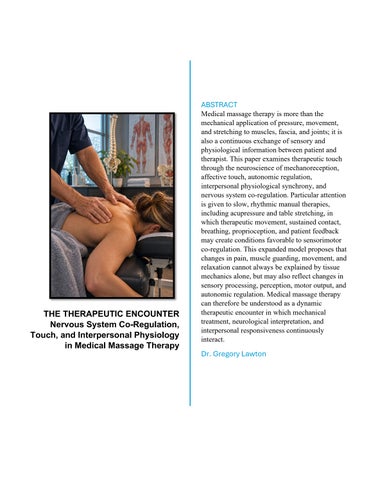
Medical massage therapy is more than the mechanical application of pressure, movement, and stretching to muscles, fascia, and joints; it is also a continuous exchange of sensory and physiological information between patient and therapist. This paper examines therapeutic touch through the neuroscience of mechanoreception, affective touch, autonomic regulation, interpersonal physiological synchrony, and nervous system co-regulation. Particular attention is given to slow, rhythmic manual therapies, including acupressure and table stretching, in which therapeutic movement, sustained contact, breathing, proprioception, and patient feedback may create conditions favorable to sensorimotor co-regulation. This expanded model proposes that changes in pain, muscle guarding, movement, and relaxation cannot always be explained by tissue mechanics alone, but may also reflect changes in sensory processing, perception, motor output, and autonomic regulation. Medical massage therapy can therefore be understood as a dynamic therapeutic encounter in which mechanical treatment, neurological interpretation, and interpersonal responsiveness continuously interact.
Dr. Gregory Lawton