1
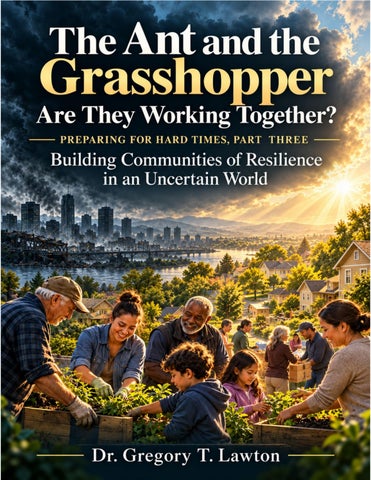
The Ant and the Grasshopper Are They Working Together? Preparing for Hard Times, Part Three Building Communities of Resilience in an Uncertain World Dr. Gregory T. Lawton 2026
2
Copyright and Publication Information The Ant and the Grasshopper: Are They Working Together? Preparing for Hard Times, Part Three Copyright © 2026 Gregory T. Lawton All rights reserved. This publication may be shared without charge for personal reading, educational discussion, and non-commercial community study, provided that the author's name and the complete publication are preserved. Reproduction, modification, or commercial distribution of substantial portions requires written permission from the copyright holder. Biblical, Bahá’í, historical, and governmental references are credited to their respective authors, institutions, and publishers. Copyright in quoted materials remains with the respective rights holders. This publication is intended for general education and reflection. Its discussions of household preparedness, health, emergency planning, and community resilience are not substitutes for individualized medical advice or official emergency instructions. Published by American Health Source www.americanhealthsource.org First edition, October 2026 United States of America
3
Foreword We are living in a period of extraordinary change. Scientific and technological developments have transformed how we communicate, obtain information, produce food, deliver healthcare, and organize our societies. At the same time, growing international tensions, economic uncertainty, environmental challenges, and the fragility of essential public services have raised important questions about our ability to respond to unexpected difficulties. For many people, the idea of preparing for hard times immediately brings to mind emergency supplies, alternative sources of power, food storage, or plans for evacuation. These are reasonable and necessary considerations. Yet the strength of a society cannot be measured only by its material resources. It also depends upon the character of its people, the relationships between its members, and their willingness to cooperate when circumstances become difficult. Throughout history, communities have endured extraordinary hardship through combinations of practical knowledge, foresight, compassion, spiritual strength, and mutual assistance. Their experiences remind us that human survival and well-being are profound social responsibilities. Even the most carefully prepared individual remains connected to others through relationships of family, friendship, work, and community life. This booklet considers the relationship between individual preparedness and the creation of communities capable of responding to adversity with wisdom, courage, and compassion. Drawing upon the Bahá’í teachings, historical experiences, contemporary concerns, and practical lessons developed in two earlier publications, it explores the importance of preparing not only for the protection of ourselves and our families, but also for the service we may be called upon to offer others. The central question is simple, but its implications are far-reaching. Can we develop the spiritual qualities, practical knowledge, and relationships of cooperation necessary to face an uncertain future together? The answer will depend less upon what we say about unity and compassion than upon what we are willing to build through our daily lives, relationships, and acts of service. 4
Preface In 2014, I wrote The Ant and the Grasshopper: Preparing for Hard Times because I believed that individuals and families were becoming increasingly dependent upon complex systems for the ordinary necessities of life, often without considering what might happen if those systems were temporarily disrupted. The familiar story from Aesop provided a useful means of introducing the importance of foresight, personal responsibility, and reasonable preparation. When I revisited and revised that booklet in 2022, the experiences of the COVID-19 pandemic had provided a contemporary demonstration of the vulnerabilities I had described. In 2024, I followed with Has the Grasshopper Learned Its Lesson Yet? Preparing for Hard Times, Part Two, expanding the discussion to include social instability, extended disruptions, and the need for cooperation within neighborhoods and communities. As I considered the circumstances confronting humanity in 2026, it became increasingly apparent to me that another dimension of preparedness required greater attention. The question was no longer simply whether individuals had learned to prepare for difficult circumstances, but whether we were developing the relationships and shared responsibilities necessary to care for one another when adversity occurs. My understanding of these responsibilities has been influenced by more than fifty years of study of the Bahá’í writings, together with a lifetime devoted to education, healthcare, healing, and community service. The historical experiences of ‘Abdu’l-Bahá and the Holy Family during the First World War have particular significance for me because they demonstrate how spiritual devotion, practical foresight, and humanitarian action can become inseparable aspects of service. This third booklet is not intended to replace the practical information presented in the first two publications. Readers seeking detailed recommendations concerning household emergency supplies, equipment, food storage, and other preparations are encouraged to consult those earlier works. The present volume develops their larger implications for community resilience, mutual responsibility, and the spiritual foundations of cooperation. 5
I offer these reflections in the hope that they will encourage thoughtful discussion and constructive action among individuals, families, neighborhoods, and communities of every religious and cultural background. My purpose is not to predict future events, but to encourage the development of qualities and relationships that will remain valuable regardless of what the future may bring. Dr. Gregory T. Lawton October 2026
6
The Ant and the Grasshopper, Are They Working Together? Introduction More than fifty years ago, my study of the writings of Bahá’u’lláh, ‘Abdu’lBahá, and Shoghi Effendi introduced me to a profound understanding of the transformation of human civilization. The Bahá’í teachings describe two simultaneous historical processes, one involving the disintegration of an established world order and the other the gradual integration of humanity into a new civilization founded upon spiritual principles, justice, cooperation, and the oneness of the human family. This understanding has influenced my thinking about the spiritual condition of humanity, the future of society, and the responsibilities we have toward one another. Shoghi Effendi, who served as the Guardian of the Bahá’í Faith from 1921 until 1957, explained that the Bahá’í community would initially need to concentrate upon its own spiritual and institutional development while learning how to apply the teachings of Bahá’u’lláh to the challenges of human society. He anticipated, however, that a time would come when Bahá’ís would be called upon to participate more directly with their fellow citizens in the healing and betterment of society. In its November 28, 2023, message, the Universal House of Justice, the international governing institution of the Bahá’í Faith, recalled this earlier guidance and declared, "That time has now come." The National Spiritual Assembly of the Bahá’ís of the United States subsequently issued a solemn warning concerning the difficulties that may accompany the transformation of civilization: “The clouds now looming on the horizon portend a period of great tribulation.” Its October 21, 2026, letter acknowledged that we cannot know the pace, character, or consequences of the difficulties humanity may encounter. This guidance invites constructive action rather than fear or speculation about future catastrophes. In that same October 21, 2026, letter, the National Spiritual Assembly declared, “Our task is to create in every locality the spiritual refuges for which our countrymen are ever more in need.” The Assembly explained that these are not communities withdrawn from the concerns of the world, 7
but environments in which people develop the capacities to advance themselves and society. I believe these statements deserve serious consideration in light of the increasing instability of international relations and the warnings being issued by European governments, NATO, and other national and international institutions concerning armed conflict, civil preparedness, and the vulnerability of modern society. These concerns extend beyond military security to include the continuity of healthcare, food and water supplies, electrical power, communications, transportation, and other essential services upon which ordinary human life depends. These developments raise questions that deserve thoughtful examination. Are the conditions associated with the disintegration described in the Bahá’í writings becoming increasingly apparent, and might this process unfold through a prolonged succession of conflicts, economic disruptions, institutional failures, and social transformations rather than a single catastrophic event? More importantly, are the processes of spiritual and social integration developing quickly enough to help humanity withstand the consequences of disintegration? My earlier booklets, first published in 2014 and then expanded in 2024, approached preparedness principally through foresight, household supplies, and the challenges of social disruption. This third volume asks how such preparation can become a resource for others. This third booklet asks a different question. Having considered the importance of individual preparation, are we learning how to prepare together? The original fable reminds us of the value of foresight and diligence, but it also raises questions about compassion and mutual responsibility. What happens when those who have prepared encounter neighbors who are elderly, ill, impoverished, or otherwise unable to provide adequately for themselves? And what responsibility do all members of a community share in contributing according to their abilities? My purpose is not to predict catastrophe or encourage fear. It is to explore how we might strengthen ourselves, our families, and our communities while we can do so. Whatever difficulties the future may bring, the development of spiritual strength, useful knowledge, mutual trust, and a commitment to service will remain worthwhile. 8
The question before us is not simply whether we have learned to prepare, but whether we are learning to prepare together. Reflection Questions What does being prepared for difficult times mean to me? Who might need my help if ordinary services were interrupted? How could my own preparations also benefit someone else?
9
A World Under Increasing Stress Throughout human history, societies have faced war, famine, epidemic disease, natural disasters, economic hardship, and political upheaval. What distinguishes our own time is the extraordinary degree to which modern civilization has become interconnected and dependent upon complex technological, commercial, and governmental systems for the necessities of everyday life. We have developed remarkable abilities to produce food, distribute goods, provide medical care, communicate across great distances, and improve the quality of human life. Yet these achievements have also created dependencies that may become serious vulnerabilities when the systems upon which we rely are disrupted. Most Americans rarely consider how many different institutions and services must function continuously to sustain an ordinary day. Electricity powers our homes, hospitals, businesses, water systems, and communications networks. Agricultural production and transportation provide food for our communities, while pharmacies, hospitals, and medical suppliers depend upon extensive systems of manufacturing and distribution. Banking, electronic payments, transportation, and emergency communications are increasingly dependent upon digital technology. When these systems function normally, we seldom question their reliability. When they fail, even temporarily, the consequences can extend far beyond inconvenience. The COVID-19 pandemic provided a memorable demonstration of these vulnerabilities. Within a relatively short period, familiar patterns of daily life were disrupted, businesses closed, healthcare services were interrupted, and shortages of ordinary household supplies became widespread. Some families experienced serious financial difficulties, while others struggled with isolation, uncertainty, and the responsibility of caring for vulnerable relatives. These experiences demonstrated that material preparedness was important, but they also revealed how deeply our individual well-being depends upon the actions and circumstances of others. In recent years, national and international governmental institutions have become increasingly concerned with the possibility of more extensive and prolonged disruptions. In March 2025, the European Commission introduced its Preparedness Union Strategy, emphasizing the importance of a coordinated approach involving governments, businesses, 10
communities, and individual citizens. Among its proposals was the development of guidance encouraging households to maintain sufficient essential supplies to manage at least the first seventy-two hours of an emergency. The strategy also emphasized public education, improved warning systems, and the need to strengthen preparedness throughout society. In September 2026, NATO published updated resilience requirements addressing the continuity of government, energy supplies, food and water resources, healthcare, civilian communications, and transportation. These requirements explicitly considered armed conflict, sabotage, cyberattacks, natural disasters, and the possibility that disruptions affecting one essential system could produce cascading failures throughout others. Attention was given to the ability of governments and civilian institutions to continue delivering essential services during prolonged emergencies. These developments represent a significant recognition that national security involves much more than military preparedness. The protection of civilian populations requires reliable healthcare, food and water supplies, functioning communications, accessible transportation, and the ability of institutions to respond effectively when ordinary conditions are disrupted. I believe these warnings deserve serious attention. They do not establish that a major war, economic collapse, or widespread catastrophe is inevitable, nor do they provide a reliable timetable for future emergencies. Governments and emergency management organizations have a responsibility to anticipate dangerous circumstances and develop plans to protect their populations. Nevertheless, the nature and scope of these preparations demonstrate that the vulnerability of modern society is a significant concern among institutions responsible for public safety and national security. The humanitarian consequences of such disruptions deserve consideration. A prolonged interruption of electrical power may threaten people who depend upon electrically powered medical equipment or medications requiring refrigeration. Problems affecting transportation and distribution can limit access to food, medicine, and fuel. Disruptions to communications may separate family members or interfere with the ability to obtain reliable emergency information. Older adults, people with disabilities, individuals with chronic illnesses, and families with limited 11
financial resources may face especially difficult circumstances when normal services become unavailable. The economic consequences can be equally serious. Many families have limited savings and depend upon continuing employment to meet the costs of housing, food, healthcare, and other necessities. Even a relatively brief interruption of income can create financial hardship. Prolonged disruptions affecting businesses, transportation, banking, or commerce may have consequences that extend throughout entire communities. Recovery can become particularly difficult when several essential systems are affected at the same time. Yet the disruption of ordinary life need not occur through a single dramatic event. Communities may experience an accumulation of difficulties arising from regional conflicts, rising costs, repeated infrastructure failures, shortages of essential goods, or increasing pressure upon healthcare and public services. The effects may be uneven, with some individuals and communities remaining relatively secure while others experience significant hardship. This is one reason I believe preparedness should be understood as an ongoing responsibility rather than a temporary reaction to an immediate threat. We may be unable to prevent international conflict, control economic developments, or eliminate the possibility of infrastructure failures, but we can make reasonable preparations and strengthen our ability to respond constructively to changing circumstances. There is, however, another dimension to these concerns that cannot be measured simply by examining food supplies, electrical systems, transportation networks, or national emergency plans. It is the condition of the communities in which people live. During a serious emergency, material resources are indispensable, but their availability does not necessarily determine how people will treat one another. Some individuals may respond to uncertainty with compassion, cooperation, and a willingness to share information or provide assistance. Others may respond with fear, suspicion, indifference, or excessive concern for their own security. The quality of relationships within a community can influence whether people are able to organize effectively,
12
assist those who are vulnerable, and preserve a sense of common purpose. The experience of natural disasters has repeatedly demonstrated the importance of neighbors helping neighbors. People frequently begin assisting one another before professional emergency services can reach everyone affected. Someone may provide transportation, check on an older neighbor, share a meal, help clear debris, or offer temporary shelter. Such actions may seem ordinary, but during difficult circumstances they can become critically important. These relationships cannot always be created after an emergency has already begun. Trust develops through familiarity, shared experiences, and a history of cooperation. People who have learned to work together during ordinary circumstances may find it easier to communicate, organize, and assist one another when unexpected difficulties arise. The practical question, therefore, is not simply whether individuals and families have accumulated sufficient supplies to withstand a temporary interruption of essential services. It is also whether our neighborhoods and communities have developed the relationships, knowledge, and cooperative abilities necessary to help people whose needs exceed their personal resources. An especially meaningful example of how spiritual conviction, practical foresight, and humanitarian responsibility can be brought together is found in the experiences of ‘Abdu’l-Bahá and the Holy Family during the First World War. Their response to the threat of famine, displacement, military conflict, and widespread deprivation provides a historical lesson in preparation undertaken not simply for personal security, but for the protection and well-being of an entire community. Reflection Questions Which everyday service would be hardest for my household to live without? How would we manage if that service were unavailable for several days? Who in my neighborhood might be especially affected?
13
The Example of ‘Abdu’l-Bahá and the Bahá’í Holy Family The experiences of ‘Abdu’l-Bahá and the members of the Holy Bahá’í Family during the First World War demonstrate how foresight, organized preparation, and compassion can help sustain human life when established social and economic systems are severely disrupted. Long before the First World War, ‘Abdu’l-Bahá and His family had endured decades of persecution, exile, imprisonment, and deprivation. As a child, He accompanied His Father, Bahá’u’lláh, the Founder of the Bahá’í Faith, through successive exiles that eventually brought the family to the prison city of ‘Akká in Palestine. They experienced the loss of their possessions, separation from friends and relatives, harsh living conditions, and continuing threats to their safety. Yet these experiences did not diminish their concern for the suffering of others. Throughout His life, ‘Abdu’l-Bahá became known for His generosity, compassion, and personal attention to people who were poor, ill, or otherwise in need. During His travels through Europe and North America between 1911 and 1913, ‘Abdu’l-Bahá repeatedly warned of the danger of a devastating European war. He spoke of the destructive consequences of nationalism, religious prejudice, militarism, and the failure of governments to establish lasting peace. His warnings were accompanied by appeals for reconciliation, international cooperation, justice, and recognition of the fundamental unity of humanity. Following His return to the Holy Land in December 1913, ‘Abdu’l-Bahá recognized the increasingly dangerous political conditions developing in Europe and the Middle East. As the possibility of war grew more apparent, He discouraged additional pilgrims from traveling to the Holy Land and arranged for those already visiting to return home. By the time the First World War erupted in the summer of 1914, these visitors had departed, avoiding the serious difficulties that would soon confront people attempting to travel through the region. As the war spread and the Ottoman Empire entered the conflict, conditions in Palestine became increasingly difficult. Transportation and communications were disrupted, military demands placed additional pressure upon the population, and shortages of food and other necessities became widespread. The agricultural economy suffered from the effects of 14
war, labor shortages, transportation difficulties, and destructive locust infestations. Food prices increased, hunger spread, and many families found themselves unable to obtain adequate provisions. Anticipating the possibility of famine, ‘Abdu’l-Bahá had encouraged agricultural production in the Jordan River Valley, where Bahá’í farmers were cultivating land. He arranged for the production and storage of grain that could be used when ordinary food supplies became scarce. These preparations proved especially valuable as the war continued and the inhabitants of Haifa and ‘Akká experienced increasingly severe shortages. During the summer of 1917, ‘Abdu’l-Bahá traveled to the agricultural settlement of ‘Adasiyyih, in the region of present-day Jordan, where He oversaw aspects of the wheat and barley harvest. Grain produced through these agricultural efforts was subsequently transported to communities suffering from food shortages. The supplies helped relieve hunger among people whose access to ordinary food distribution had been severely restricted. Of particular importance is the fact that these provisions were not reserved exclusively for members of the Bahá’í community. ‘Abdu’l-Bahá extended assistance to the surrounding population without regard to religious or social distinctions. His preparations were therefore not simply measures undertaken for personal or family security. They became resources through which suffering could be relieved and the practical needs of others could be met. These agricultural efforts required foresight, organization, practical knowledge, and cooperation. Their wider humanitarian value became evident when stored provisions relieved hunger among the surrounding population. ‘Abdu’l-Bahá also took measures to protect members of the Bahá’í community from the dangers associated with military operations. As conditions in Haifa and ‘Akká became increasingly threatening, He arranged for members of the community to relocate temporarily to the village of Abu-Sinan, where they could find greater safety. The arrangements made at Abu-Sinan extended beyond providing temporary shelter. A dispensary was established to offer medical assistance, and a school was organized for children. Historical accounts describe the work of Dr. Habíbu’lláh Khudábakhsh, also known as Dr. 15
Mu‘ayyad, who provided medical care at the dispensary with assistance from Lua Getsinger. Treatment was also offered to people outside the Bahá’í community, including those who were unable to pay for medical services. The response to wartime hardship thus encompassed shelter, medical care, education, and the preservation of community life, as well as food supplies. The example of Bahíyyih Khánum, the Greatest Holy Leaf and sister of ‘Abdu’l-Bahá, offers another meaningful account of compassionate service during this period. Like her brother, she had endured exile, imprisonment, deprivation, and repeated hardships from childhood. Throughout her life, she became known for her generosity, spiritual strength, and devotion to the welfare of others. During the First World War, the home of ‘Abdu’l-Bahá became a place where people experiencing hunger, illness, poverty, and displacement sought assistance. In his tribute to the Greatest Holy Leaf, Shoghi Effendi described her extraordinary care for those in need. She provided food, clothing, money, encouragement, and shelter to people seeking relief. He also recorded that she personally prepared and administered remedies to those who were sick and suffering. For those of us involved in healthcare and traditional healing, this aspect of her service is especially meaningful. The care she provided was not limited to material assistance or spiritual encouragement. It also included direct attention to physical illness and suffering through the preparation and administration of remedies. Although the historical accounts do not provide sufficient information to reconstruct the ingredients or methods she employed, they clearly establish that practical healing was among the many forms of assistance she offered. Her example illustrates how compassion, useful knowledge, and a willingness to serve can find expression in direct care for people experiencing illness and distress. The Bahá’í writings themselves place considerable importance upon the preservation of health and the appropriate treatment of illness. Bahá’u’lláh encouraged the use of competent physicians and offered guidance concerning diet, medicinal plants, and the preservation of health. ‘Abdu’lBahá further explained that material and spiritual healing are not 16
contradictory approaches and that both may have an appropriate place in caring for human beings. In Selections from the Writings of ‘Abdu’l-Bahá, He states, "There are two ways of healing sickness, material means and spiritual means." These teachings recognize the importance of caring for the physical body while also attending to the emotional and spiritual needs of the individual. During periods of war, deprivation, displacement, and prolonged uncertainty, people may experience physical illness or injury while simultaneously struggling with fear, grief, exhaustion, isolation, and the loss of familiar sources of security. The provision of medical care and essential supplies is indispensable, but kindness, reassurance, human companionship, and spiritual encouragement may also contribute meaningfully to their well-being. In wartime, agricultural supplies helped relieve hunger, the dispensary attended to illness, educational activities sustained children, and acts of compassion brought comfort to those enduring deprivation. His response was neither an expression of fear nor a withdrawal from the surrounding society. It reflected practical wisdom, spiritual confidence, and a commitment to the welfare of humanity. The wartime efforts of the Holy Family joined practical foresight with spiritual conviction. Preparations made before the crisis became resources for humanitarian service when the need arose. Their example remains pertinent whenever communities must preserve health, education, and human dignity under difficult conditions. Their lives remind us that the highest purpose of preparedness is not merely to protect what we possess, but to develop the capacity to serve others when that service is most needed. Reflection Questions What impresses me most about the way ‘Abdu’l-Bahá prepared for hardship? How did the Holy Family turn preparation into service? What is one way I could follow their example in my community?
17
Creating Spiritual Refuges and Resilient Communities The recent guidance of the National Spiritual Assembly of the Bahá’ís of the United States concerning the creation of spiritual refuges invites us to consider what such communities might look like in practice. While prayer, spiritual reflection, fellowship, and moral encouragement are important elements of spiritual life, the development of a genuine refuge involves more than providing comfort or reassurance to individuals who may be troubled by the condition of the world. It also involves strengthening relationships, knowledge, abilities, and shared responsibilities through which people learn to care for one another. In many respects, modern society has become increasingly disconnected despite the remarkable technologies that allow people to communicate across great distances. We can exchange messages with someone on the other side of the world almost instantaneously, yet we may know very little about the people living next door. Families are frequently separated by distance, employment, and changing social circumstances. Many older adults live alone, younger people struggle to find meaningful connections, and individuals experiencing illness, grief, or economic hardship may have few reliable sources of personal support. These circumstances create vulnerabilities that are not always apparent until a crisis develops. A person who lives alone may have adequate food and shelter but lack someone who will recognize when assistance is needed. An older couple may possess reasonable financial resources yet have difficulty obtaining medications or transportation during the disruption of ordinary services. A family caring for someone with a serious illness may become increasingly exhausted and isolated without a dependable network of friends and neighbors. The development of resilient communities begins with recognizing these needs and establishing meaningful relationships before circumstances become critical. Friendship, familiarity, and mutual trust cannot always be created during an emergency. They develop through shared experiences, regular communication, opportunities for cooperation, and the knowledge that others are genuinely concerned for our welfare. The Bahá’í teachings place particular importance upon consultation as a means of developing understanding and arriving at constructive decisions. 18
Genuine consultation requires participants to listen carefully, consider different perspectives, express their views respectfully, and seek solutions that serve the common good. These qualities can be especially valuable when communities face difficult decisions concerning limited resources, competing needs, or unexpected circumstances. This principle has important implications for emergency preparedness. A healthcare practitioner may recognize medical needs that others overlook, while someone experienced in construction or mechanical repair may be able to restore essential equipment or identify unsafe conditions. A teacher may help provide continuity for children whose education has been interrupted, while a person experienced in gardening, food preparation, or preservation may offer useful knowledge when ordinary supplies become scarce. When useful knowledge is shared through teaching, mentoring, and mutual assistance, its benefits can extend beyond the person who possesses it. Education is therefore an important part of developing resilience. Practical skills such as first aid, food preparation, nutrition, sanitation, emergency communication, and the safe use of household equipment can benefit people under ordinary circumstances as well as during emergencies. Equally important are the social skills necessary to resolve disagreements, communicate effectively, organize shared activities, and respond constructively to the needs of others. I believe that communities can benefit greatly from bringing different generations together for these purposes. Older adults may possess valuable knowledge acquired through years of experience, including practical abilities that are less commonly taught today. Younger people may contribute technological knowledge, creativity, energy, and a willingness to explore new approaches. When these generations work together, their different capacities can complement one another while helping to overcome isolation and misunderstanding. The participation of people who are elderly, disabled, or living with chronic illness is particularly important. Such individuals should not be regarded simply as potential recipients of assistance. Many possess considerable knowledge, experience, and abilities that can contribute meaningfully to community life. Recognizing their contributions while remaining attentive to their particular needs is an expression of respect for human dignity. 19
The development of spiritual refuges should also encourage an understanding of health and healing that extends beyond the treatment of disease. Physical health, emotional stability, meaningful relationships, and spiritual well-being are closely connected in everyday human experience. During periods of prolonged stress or uncertainty, people may experience sleep disturbances, anxiety, grief, fatigue, loneliness, and other difficulties that affect their quality of life. Opportunities for companionship, spiritual reflection, recreation, education, and appropriate health-promoting activities may contribute to personal wellbeing and help strengthen the relationships upon which community life depends. When professional medical or mental health services are required, supportive community relationships can complement those services by helping individuals obtain assistance and remain connected to others. The arts can also make a meaningful contribution to this process. Throughout human history, music, poetry, storytelling, and other forms of creative expression have helped people communicate shared experiences, preserve cultural traditions, express grief, celebrate hope, and strengthen feelings of fellowship. During difficult times, these activities can provide opportunities for reflection, encouragement, and emotional expression. Our Songs of Healing project grew from an appreciation of the ability of music, poetry, and visual storytelling to encourage compassion, spiritual reflection, and a deeper understanding of human experience. Through original creative works, we explore themes such as love, loss, loneliness, faith, perseverance, healing, and the search for meaning. Such expressions do not replace practical assistance or professional healthcare, but they can contribute to the atmosphere of hope, compassion, and human connection that helps sustain a community. Building a Healing Community represents another expression of this approach. Through weekly six-hour gatherings devoted to education, spiritual principles, health and healing, fellowship, and shared learning, participants have opportunities to strengthen relationships and explore ways of contributing to the well-being of others. The purpose is not simply to provide information, but to encourage the development of a community in which people learn, reflect, and serve together. 20
These examples are not presented as a particular model that every community should adopt. The circumstances, traditions, resources, and needs of different communities vary considerably. What matters is the development of environments in which people feel welcomed, relationships are strengthened, useful knowledge is shared, and opportunities for meaningful service become part of ordinary community life. One important consideration is that genuine community unity must extend beyond those who share the same religious beliefs, cultural backgrounds, or personal opinions. A resilient community cannot be built upon exclusion, prejudice, or distrust of those who are different. It must recognize the inherent dignity of every human being and encourage cooperation across distinctions that might otherwise divide people. This principle becomes particularly important during periods of social tension. Economic hardship, political disagreement, cultural differences, and uncertainty about the future can sometimes intensify existing prejudices and divisions. Communities that have developed habits of respectful consultation, mutual assistance, and cooperation across differences may be better prepared to resist these destructive tendencies. The Bahá’í principle of the oneness of humanity provides a spiritual foundation for this understanding. It teaches that human diversity should not become a source of hostility or exclusion but can instead contribute to the richness and strength of collective life. People of different backgrounds possess experiences, knowledge, and perspectives that can benefit the entire community when they are brought together in a spirit of respect and cooperation. The practical implications of this principle become especially apparent when communities experience hardship. Illness, hunger, displacement, and the loss of essential services do not respect distinctions of religion, nationality, social class, or political opinion. Compassionate assistance should therefore be guided by human need rather than by membership in a particular group. This process also requires patience. Strong communities rarely emerge fully formed, nor do relationships of trust develop simply because people agree upon a common purpose. Misunderstandings, differences of opinion, personal difficulties, and competing responsibilities are inevitable aspects 21
of human relationships. The ability to respond to these challenges with compassion, consultation, humility, and perseverance is itself an important measure of community strength. The development of spiritual refuges must therefore be understood as a continuing process of learning rather than the achievement of a permanent condition. Communities grow stronger as their members gain experience in cooperation, recognize weaknesses, learn from mistakes, and adapt their efforts to changing needs. This understanding has particular significance during times of uncertainty because the circumstances confronting a community may change rapidly. A group originally formed for fellowship or education may discover opportunities to assist an ill neighbor, support a family experiencing hardship, or help someone obtain essential information and services. These acts of service need not transform the group into an emergency response organization. They simply reflect the natural extension of compassion and responsibility into the practical circumstances of everyday life. Spiritual development can foster compassion, trustworthiness, and courage, while practical knowledge gives people additional means of putting those qualities into action. The work of building resilient communities is worthwhile in ordinary life as well as in times of crisis. It can reduce isolation, encourage education, support well-being, and provide opportunities for meaningful service. The challenge is to begin building these relationships before adversity makes them urgently necessary. Reflection Questions Do I know my neighbors well enough to ask for or offer help? What skill or experience could I share with others? What simple gathering or activity could help people feel more connected?
22
23
Preparing Ourselves to Help One Another The first two booklets in this series emphasized reasonable household preparedness, including the essential resources needed when food, water, healthcare, transportation, communications, or other services are disrupted. This chapter revisits their most useful practical recommendations and considers how household readiness can support neighborhood cooperation. In The Ant and the Grasshopper: Preparing for Hard Times, I encouraged individuals and families to maintain essential supplies of food, water, medications, first aid materials, emergency lighting, communication equipment, and other necessities. I also discussed the importance of emergency transportation, alternative sources of power, important documents, and portable equipment that could be used if evacuation became necessary. These recommendations were intended to encourage reasonable self-reliance and reduce the vulnerability that can arise when people depend entirely upon uninterrupted access to commercial goods and public services. Governmental preparedness recommendations have traditionally emphasized maintaining supplies sufficient to meet essential needs during the initial days of an emergency. The European Commission's 2025 Preparedness Union Strategy, for example, includes guidance concerning a minimum of seventy-two hours of household self-sufficiency. I have long recommended that individuals and families, when their circumstances and resources permit, consider a more extensive period of preparedness, with approximately thirty days of essential supplies serving as a reasonable objective. The COVID-19 pandemic demonstrated that shortages of familiar products and interruptions in ordinary services can continue well beyond a few days. Preparing for an extended disruption does not necessarily require purchasing expensive survival equipment or accumulating large quantities of specialized products. Many essential supplies are ordinary household necessities that can be acquired gradually and rotated through everyday use. Familiar foods, safe drinking water, essential medications, appropriate clothing, blankets, emergency lighting, and dependable communication equipment can provide a useful foundation for household preparedness. The objective is not excessive accumulation or hoarding, but thoughtful 24
planning that reduces unnecessary dependence upon the immediate availability of commercial supplies. In reviewing the recommendations from the earlier booklets, I believe it is also important to emphasize the safe and appropriate use of emergency resources. Water storage, for example, must consider not only the quantity of water available but also its suitability for drinking, food preparation, hygiene, and sanitation. Portable water filters and purification systems differ considerably in their ability to remove sediment, microorganisms, viruses, and chemical contaminants. Understanding the capabilities and limitations of these devices is more important than relying upon broad advertising claims that a particular product removes nearly all impurities. Food storage should likewise emphasize nutritional adequacy, familiarity, and proper preservation. Dried beans, grains, canned foods, and other household staples can provide useful reserves when stored appropriately and rotated through ordinary meals. Long-term storage requires attention to moisture, temperature, packaging, and the natural deterioration of food over time. It is also wise to consider how meals might be prepared if electrical power, refrigeration, or conventional cooking facilities become unavailable. For people who depend upon continuing medical care, preparedness may involve additional considerations. Prescription medications, medical records, mobility equipment, medical devices requiring electrical power, and medications requiring refrigeration can become especially important during prolonged interruptions in essential services. Individuals with such needs should work with their healthcare providers and pharmacists to develop appropriate contingency plans. The sudden discontinuation of certain medications or interruption of essential treatment can create serious health risks. Communication is another essential consideration. Mobile telephones, internet services, digital banking, and electronic navigation have become deeply integrated into everyday life, yet they may be unavailable during power failures, severe weather, cyberattacks, or other emergencies. Battery-powered or hand-crank emergency radios, written contact information, paper maps, and alternative communication arrangements can remain valuable when ordinary electronic services are interrupted. Families 25
should also consider how they will communicate with one another if household members are separated during an emergency. In my earlier publications, I described the development of modular emergency bags containing supplies adapted to different circumstances. The principle behind this approach remains useful because an emergency requiring evacuation presents different needs from one in which remaining safely at home is the preferred course of action. Supplies and equipment should be selected according to realistic circumstances, personal abilities, local conditions, and familiarity with their safe use. Alternative heating devices, generators, stored fuels, and portable power systems can provide valuable assistance, but they also require appropriate precautions to prevent fire, carbon monoxide poisoning, and other injuries. A household that has made reasonable preparations may be better positioned to check on a neighbor, offer temporary transportation, share trustworthy information, or teach practical skills. Such assistance should remain appropriate to the needs and abilities of those involved. In the second booklet. Has the Grasshopper Learned Its Lesson Yet?. I devoted particular attention to the importance of organizing community resources before an emergency develops. Under the heading It Takes a Village, I discussed how neighborhood groups, community organizations, and networks of volunteers can strengthen preparedness by bringing together individuals with different abilities, experiences, and resources. I emphasized that during many emergencies, neighbors may be the first people available to aid before professional emergency services can reach everyone who needs help. One of the most practical steps a community can take is to become familiar with the people living within its neighborhoods. This involves more than knowing names or addresses. It includes developing relationships through which people become aware of one another's circumstances, recognize needs, and establish mutual trust. An older person living alone, a family caring for someone with a disability, or an individual dependent upon medical equipment may require assistance that would not otherwise be apparent to neighbors. In Part Two, I suggested that neighborhoods consider identifying volunteers who could serve as coordinators or points of contact during emergencies. 26
These individuals might help maintain communication, share reliable information, check on vulnerable residents, and coordinate appropriate assistance. Such arrangements need not be elaborate or bureaucratic. Their effectiveness depends largely upon the willingness of participants to communicate regularly, respect one another, and accept reasonable responsibilities. The development of alternative communication networks is particularly important because ordinary telephone and internet services may become unavailable during emergencies. Neighborhood telephone trees, agreedupon meeting locations, printed contact information, and other appropriate methods can help people remain connected. Community alert systems and official emergency notifications should also be incorporated into planning whenever available. The purpose is to reduce confusion and make it easier for people to obtain reliable information and assistance. Another recommendation from Part Two involved identifying the knowledge, skills, equipment, and other resources already available within a community. Many neighborhoods contain people with experience in healthcare, first aid, construction, mechanical repair, agriculture, food preparation, communications, transportation, and other useful activities. Often these abilities remain largely unknown to others until a need arises. Through voluntary cooperation and appropriate respect for privacy, communities can develop a better understanding of the resources and expertise that may be available during difficult circumstances. Some communities may also benefit from shared emergency resources or arrangements for obtaining essential supplies when ordinary distribution is interrupted. Such efforts require thoughtful planning, responsible management, and consideration of the needs of those who participate. The purpose is not to create competition between households or encourage excessive accumulation, but to develop a practical understanding of how cooperation can reduce unnecessary hardship. The involvement of local emergency management agencies, public health departments, fire departments, healthcare organizations, and other established institutions is also important. These organizations possess knowledge of regional hazards, emergency procedures, available resources, and appropriate safety practices. Community initiatives can complement their efforts by promoting preparedness, strengthening local 27
communication, and assisting people whose needs may otherwise be overlooked. Volunteer preparedness networks should support professional emergency services rather than attempting to replace them. The practical value of these arrangements is greatest when people have already formed relationships of trust, communicated their concerns, and learned to work with one another. Education and intergenerational cooperation can reinforce these networks. Healthcare practitioners, teachers, craftspeople, caregivers, and neighbors of different ages may share useful knowledge through informal gatherings and opportunities for service. People who may need assistance should not be regarded only as recipients of help. Older adults and people living with disability, illness, or financial hardship may also contribute valuable knowledge and experience, according to their circumstances. Trustworthiness, compassion, patience, and generosity remain essential if practical arrangements are to serve everyone fairly and respectfully. There is also an important distinction between compassionate assistance and creating unnecessary dependency. Personal responsibility remains a valuable principle, and individuals should be encouraged to prepare according to their means and abilities. At the same time, no responsible community should assume that everyone has equal resources, physical capabilities, or opportunities to prepare. Mutual assistance should reflect both practical judgment and concern for human dignity. The broader purpose of community preparedness is not to establish a separate emergency response organization in every neighborhood or to encourage people to organize their lives around the expectation of catastrophe. It is to develop ordinary relationships, useful knowledge, and cooperative abilities that strengthen community life under all circumstances. Neighborhood gatherings, educational programs, shared meals, community gardens, health and wellness activities, and other opportunities for fellowship can contribute to these goals while improving the quality of everyday life. Whether or not a major emergency occurs, these arrangements can strengthen friendships, improve communication, and create opportunities for service. 28
The practical lessons of the earlier booklets therefore gain a wider purpose here: responsible household preparation reduces vulnerability, while cooperation extends the benefits of that preparation to others. Preparing for difficult times also requires asking what we can contribute and how our communities might make wise use of their shared knowledge and resources. The resources we accumulate, the knowledge we acquire, and the relationships we cultivate become especially meaningful when they help preserve health, relieve suffering, protect vulnerable people, and sustain human dignity during adversity. Reflection Questions Could my household meet its essential needs for several days without outside help? What is one practical preparation I could improve this month? How could neighbors share information or assist one another during an emergency?
29
30
The Ant and the Grasshopper: Have They Learned to Work Together? As I reflect upon the years that have passed since I first wrote The Ant and the Grasshopper: Preparing for Hard Times in 2014, I recognize that my understanding of preparedness has continued to evolve. What began as an effort to encourage individuals and families to anticipate emergencies and maintain essential supplies has grown into a broader concern about the spiritual, moral, and social foundations upon which healthy and resilient communities depend. The three booklets in this series reflect that evolution, from personal responsibility and practical preparedness to a recognition that our individual well-being is inseparable from the welfare of others. The National Spiritual Assembly of the Bahá’ís of the United States warned in October 2026 that “The clouds now looming on the horizon portend a period of great tribulation.” We cannot know precisely how the continuing processes of disintegration and integration will unfold or how different nations and communities may be affected. Yet uncertainty about the future does not relieve us of the responsibility to prepare wisely and participate constructively in the healing and advancement of society. The National Spiritual Assembly's call for the creation of spiritual refuges offers an important direction for this work. Such refuges can become places where spiritual strength is cultivated, human relationships are strengthened, and individuals develop the knowledge, compassion, and practical abilities necessary to serve others. The historical example of ‘Abdu’l-Bahá and the Holy Family reminds us that spiritual devotion can find meaningful expression through foresight, education, healing, the protection of vulnerable people, and practical humanitarian assistance. These are qualities and responsibilities that remain valuable regardless of the difficulties the future may bring. The familiar story of the ant and the grasshopper provides a fitting conclusion to our discussion. The ant understood the importance of preparing for winter, while the grasshopper discovered the consequences of failing to anticipate the future. Yet the lesson remains incomplete until both recognize that their lives and welfare are connected. The ant must understand that the resources acquired through diligence and foresight may become instruments of compassion and service, while the grasshopper must learn that belonging to a community involves 31
responsibility, participation, and a willingness to contribute according to one's abilities. Neither foresight nor compassion alone is sufficient. Both must be joined through cooperation and a shared commitment to the wellbeing of others. We cannot prevent every hardship or prepare for every circumstance that may arise, but we can begin today to strengthen our families, deepen our relationships, develop useful knowledge, cultivate spiritual qualities, and build communities characterized by trust and mutual responsibility. If difficult times lie ahead, these efforts may help preserve health, human dignity, and hope. If those difficulties prove less severe than anticipated, the same work will have contributed to a more compassionate, cooperative, and united society. In either case, the effort is worthwhile. The most important lesson of the ant and the grasshopper is not simply that we must prepare for winter, but that we must learn to prepare together. Reflection Questions Am I preparing only for myself, or also thinking about others? What can the ant learn from the grasshopper, and the grasshopper from the ant? What is one thing I can do now to help us prepare together?
32
About the Author Dr. Gregory T. Lawton is an educator, healthcare practitioner, author, and lifelong student of traditional healing arts, philosophy, and spiritual development. His professional career spans more than fifty years of clinical practice, teaching, and the development of educational programs devoted to health, healing, and human well-being. He is the founder and president of Blue Heron Academy of Healing Arts and Sciences and American Health Source. For 47 years, Blue Heron Academy has provided education and professional training through the combined efforts of its instructors, administrative staff, students, and practitioners. Its programs have served more than 15,000 students. A student of the Bahá’í teachings for more than fifty years, Dr. Lawton has maintained a longstanding interest in the relationship between spiritual development, education, healthcare, and service to humanity. His writings explore the importance of compassion, personal responsibility, the unity of the human family, and the application of spiritual principles to contemporary social concerns. His current creative and educational projects include Building a Healing Community, which brings people together for fellowship, learning, spiritual reflection, and health education, and Songs of Healing, which uses original music, poetry, and visual storytelling to explore human experience. His work reflects a continuing commitment to education, healing, and the development of communities in which people learn to care for one another.
33
References and Suggested Reading Bahá’í Writings and Institutional Guidance Universal House of Justice. Message to the Bahá’ís of the World, November 28, 2023. Bahá’í Reference Library. https://www.bahai.org/library/authoritative-texts/the-universal-house-ofjustice/messages/20231128_001/1 National Spiritual Assembly of the Bahá’ís of the United States. Mid-Year Reflections on Progress of the Faith in the United States. Letter to the American Bahá’í Community, October 21, 2026, 12 pages. Especially pp. 1 and 11–12. Source: original letter provided for this publication. Shoghi Effendi. The World Order of Bahá’u’lláh. Bahá’í Publishing Trust. On the processes of disintegration and integration. Shoghi Effendi. The Advent of Divine Justice. Bahá’í Publishing Trust. On the development and responsibility of the Bahá’í community. ‘Abdu’l-Bahá. Selections from the Writings of ‘Abdu’l-Bahá, selection 133. Bahá’í Reference Library. https://www.bahai.org/library/authoritativetexts/abdul-baha/selections-writings-abdul-baha/7 Historical Accounts Bahá’í World News Service. “Remembering ‘Abdu’l-Bahá’s Call for Unity, a Century after World War I.” November 2018. https://news.bahai.org/story/1297/remembering-abdulbaha-call-unity-wwi Shoghi Effendi. Bahíyyih Khánum, the Greatest Holy Leaf: A Compilation from Bahá’í Sacred Texts and Writings of the Guardian of the Faith and Bahíyyih Khánum’s Own Letters. Bahá’í World Centre, 1982. https://reference.bahai.org/en/t/bwc/BK/bk-30.html Balyuzi, H. M. ‘Abdu’l-Bahá: The Centre of the Covenant of Bahá’u’lláh. George Ronald, 1971. Civil Preparedness and Resilience European Commission and High Representative. Joint Communication on the European Preparedness Union Strategy. March 26, 2025. JOIN(2025) 34
130 final. https://eur-lex.europa.eu/legalcontent/EN/TXT/?uri=CELEX:52025JC0130 North Atlantic Treaty Organization. 2026 Resilience Baseline Requirements. September 15, 2026. https://www.nato.int/en/aboutus/official-texts-and-resources/official-texts/2026/09/15/2026-resiliencebaseline-requirements U.S. Federal Emergency Management Agency. Ready.gov: Emergency Planning and Preparedness. https://www.ready.gov Earlier Publications Lawton, Gregory T. The Ant and the Grasshopper: Preparing for Hard Times. 2014; revised 2022. Lawton, Gregory T. Has the Grasshopper Learned Its Lesson Yet? Preparing for Hard Times, Part Two. 2024. Community and Educational Resources American Health Source. https://americanhealthsource.org Blue Heron Academy of Healing Arts and Sciences. https://blueheronacademy.com Songs of Healing. https://www.youtube.com/@SongsofHealing-s3s
35