Reclaiming Submission by Israel Steinmetz Pg. 4
Obey Like Sarah? by Bobby Gilles Pg. 16
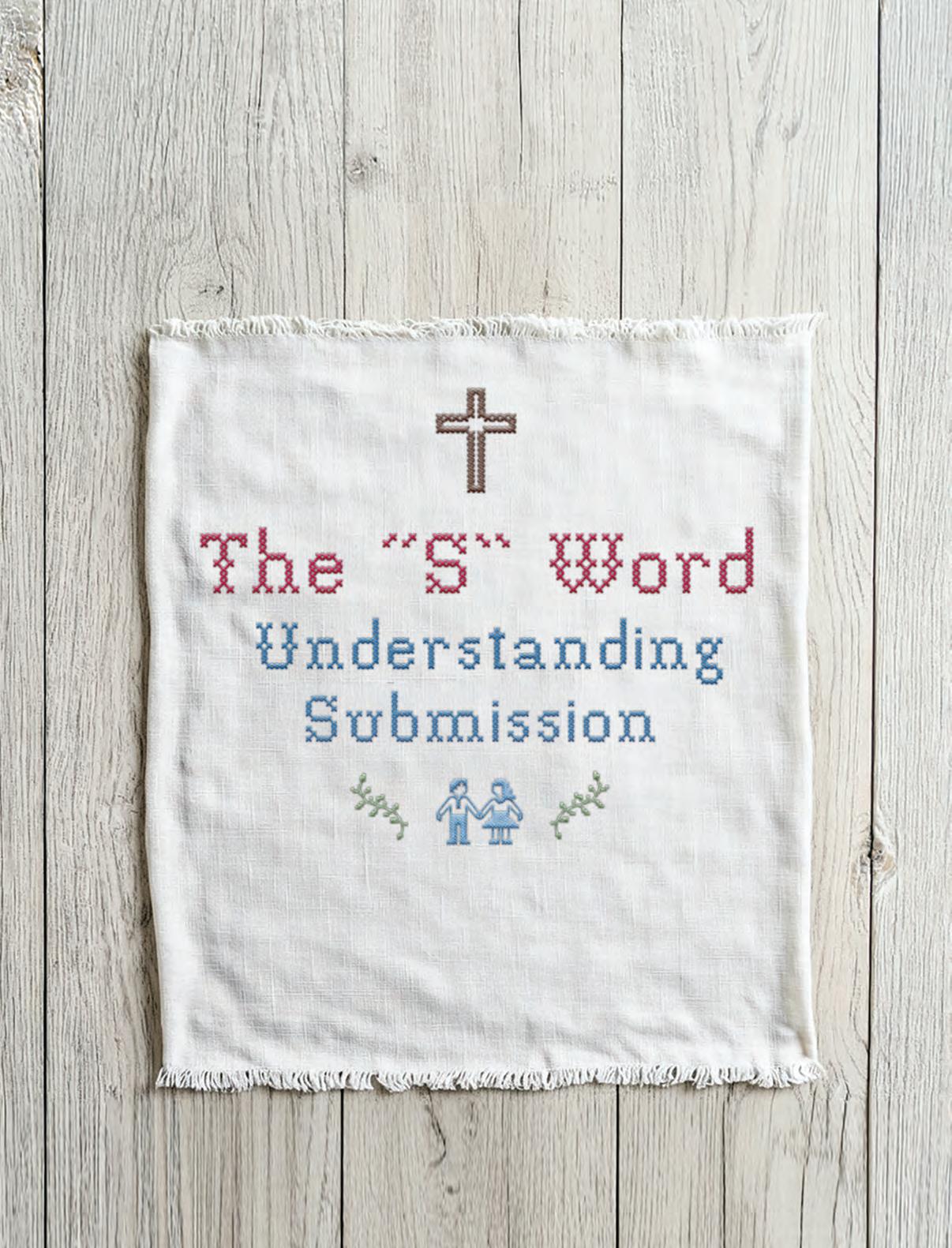
“Let us then pursue what makes for peace and for mutual upbuilding” (Rom. 14:19, NRSV)
Reclaiming Submission by Israel Steinmetz Pg. 4
Obey Like Sarah? by Bobby Gilles Pg. 16
“Let us then pursue what makes for peace and for mutual upbuilding” (Rom. 14:19, NRSV)
4
Reclaiming Submission: Distinguishing Submission from Subjugation
Submission is often associated with coercion and control; the church must understand the difference between biblical submission and unbiblical subjugation.
By Israel Steinmetz
8
12
Submission: Sound Principles or Sound Bites?
Social media enables ideas to be shared in accessible, bitesized formats but when these sound bites take the place of sound principles, ideas that sound romantic or appealing on the surface may lead us away from biblical truth.
By Lauren Roberts Lukefahr
Embodied Submission in Christ
Paul’s metaphor of the church as a living body provides important insights into the nature of submission.
By Bruna Santini
16
20
Obey Like Sarah?
Reading 1 Peter through purely modern eyes can lead us to miss out on just how radical Peter's teachings really were.
By Bobby Gilles
Another "S" Word: Servant Leadership
Leadership and submission are often set against each other as incompatible opposites; the leadership exemplified by Jesus brings them together and reframes how we understand them both. By Abby Amstutz
Mutuality is an award-winning publication published quarterly by CBE, 122 W Franklin Ave, Suite 610, Minneapolis, MN 55404-2426.
We welcome your comments, article submissions, and advertisements. Visit cbe.today/mutuality
All Scripture quotations, unless otherwise indicated, are taken from the 2011 revision of the Holy Bible, New International Version®, NIV®. Copyright © 1973, 1978, 1984, 2011 by Biblica, Inc.™ Used by permission. All rights reserved worldwide.
Advertising in Mutuality does not imply organizational endorsement. Please note that neither CBE International, nor the editor, nor the editorial team is responsible or legally liable for any content or any statements made by any author, but the legal responsibility is solely that author’s once an article appears in Mutuality
CBE grants permission for any original article (not a reprint) to be photocopied for local use provided no more than 1,000 copies are made, they are distributed for free, the author is acknowledged, and CBE is recognized as the source.
Editor: Carrie Silveira
Graphic Designer: Margaret Lawrence
Publisher/President: Mimi Haddad
Mutuality vol.33 no 2, Summer 2026 Cover design by Margaret Lawrence.
Mutuality (ISSN: 1533-2470) offers articles from diverse writers who share egalitarian theology and explore its impact on everyday life.


Mutuality wouldn't be possible without gifts from our generous donors. Scan the QR code to support CBE publications.
From the Editor by Carrie Silveira
“Submission” has become a loaded word. Misused and misunderstood, submission is often rejected in mainstream culture, being equated with passiveness and weakness. Christians who grow up in and break free from controlling hierarchical communities also tend to struggle with submission after seeing it implemented abusively and unilaterally. As they come out of churches that twist and distort Scripture, many don’t know what to do with Paul's teachings on the subject1 and may find themselves skipping over challenging passages and texts when reading the Bible.
But as Christians, we do not have the option of “skipping over” certain parts of Scripture that we find difficult or uncomfortable. It is the word of God—all of it. If there is something in the Bible that bothers us, that is a call to dig deeper, to study more, not to avoid or dismiss it. Thankfully the Lord has called a host of good biblical scholars to write carefully and faithfully about difficult passages—not only on the issue of submission, but on many other hard questions as well. We have abundant resources at our fingertips.2
One of the central accusations in the debate between complementarians and egalitarians is that egalitarians “throw the Bible out” or “pick and choose” what part of Scripture we believe. But at CBE, the authority of Scripture is paramount.3 The Bible is the foundation of all that we believe; we have a responsibility to understand it correctly, to do good exegesis, and to uphold its teachings to the best of our ability. That is why we prefer the term “biblical equality” over other, perhaps more ambiguous terms; our belief does not stem from personal preference or cultural influence. From Genesis to Revelation, the Bible repeatedly and consistently teaches the equality and joint calling of women and men of all ethnicities and socioeconomic backgrounds. This is consistent with God’s character, the loving and equal relationships in the Trinity, and our creation, male and female, in God’s image. How do we

reconcile this overarching image of biblical equality with specific passages that seem to give conflicting instruction on the matter of submission?
Simply put, by correcting our understanding of what submission is in the first place. Contrary to the accusations, proponents of biblical equality do not reject submission at all. We actually believe in more submission than hierarchicalists because we believe in mutual submission for everyone, rather than unilateral submission limited to one group.
This may sound scary to those who are recovering from communities that use submission as a tool of spiritual abuse, who feel an automatic sense of dread and fear when the subject of submission arises. But as the articles in this issue discuss, submission, rightly understood, does not operate on the basis of domination, oppression, voicelessness, or control. Each article thoughtfully seeks to understand what submission is—and isn’t—according to the Bible. From social media misinformation and poor illustrations about stacked umbrellas to misreadings of Peter and Ephesians, misunderstandings about submission are everywhere. By understanding who Jesus is and who we are because of him, may we shed the world’s view of submission and hierarchy, and step into mutuality and unity.
Notes
1. For further reading, see Mutuality Magazine (Making Peace with Paul), Vol. 28, No.1, March 2021, https://www.cbeinternational. org/issue_display/display-issue/?issue_id=35457.
2. As one example, see Cindy Westfall, “Difficult Passages in the New Testament and How to Understand Them,” Mutuality Magazine (Women and the World), Vol. 30, No.3, September 2023, https://www.cbeinternational.org/resource/difficult-passagesin-the-new-testament-and-how-to-understand-them/.
3. "CBE's Mission and Values," CBE International , https://www. cbeinternational.org/primary_page/cbes-mission/.
Disclaimer: Final selection of all material published by CBE International in Mutuality is entirely up to the discretion of the publisher and editor. Please note that each author is solely and legally responsible for the content and the accuracy of facts, citations, references, and quotations rendered and properly attributed in the article appearing under his or her name. Neither CBE, nor the editor, nor the editorial team is responsible or legally liable for any statements made by any author, but the legal responsibility is solely that author's once an article appears in print in Mutuality



Israel Steinmetz
Submission is one of the most beautiful and dangerous words in Scripture and the church. It is beautiful because it expresses one of the core characteristics of Jesus Christ and one of the central character traits of those who follow him. It is dangerous because it is often coopted by those who misrepresent Jesus’s example and teaching on submission and instead weaponize submission in service to sinful notions of power. How can we reclaim submission from this misunderstanding and misuse? How can we preach and practice submission in a way that honors Jesus?
Submission is used to mean various things by different people. When we read “submit” and its cognates in Scripture, our assumptions about the meaning of these words shape our interpretation and application. Defining submission properly is key. Before we define submission, let’s first say what submission is not. Submission is not subjugation. Subjugation and submission are often confused with each other because they both result in one person’s functional status being lower than another’s; they both involve one person becoming subject to another.
However, beyond this similarity, the words share little in common. Properly understood, subjugation and submission are antonyms, not synonyms. Consider these definitions:
• Subjugation is an externally imposed action whereby one person exerts their power, subjecting another to be served by them.
• Submission is an internally motivated action whereby one person relinquishes their power, subjecting themselves to another to serve them.
While this exact verbiage doesn’t appear in Scripture, the distinction is writ large throughout, particularly regarding relations among Christians. The juxtaposition of submission and subjugation finds one of its most familiar expressions in Jesus’s response to his disciples as they jockeyed for power and position in Matthew 20:25–28:
Jesus called them together and said, “You know that the rulers of the Gentiles lord it over them, and their high officials exercise authority over them. Not so with you. Instead, whoever wants to become great among you must be your servant, and whoever wants to be first must be your slave—just as the Son of Man did not come to be served, but to serve, and to give his life as a ransom for many.”1
Here Jesus contrasts subjugation practiced by “the rulers of the Gentiles” with the submission of those who would be great in his kingdom. His words here remind us that, relative to this world’s kingdoms, Jesus’s kingdom is “upsidedown.” In a world committed to coercion, manipulation, and control, Jesus offers freedom, honesty, and self-control. For those who would be his disciples, Jesus invites them to follow him to the cross through service and self-sacrifice. This is true greatness, power, and privilege. This is the heart of true submission.
Jesus modeled submission throughout his earthly life while his opponents practiced
Submission and subjugation find their greatest juxtaposition in the cross of Jesus Christ.
subjugation. This is especially evident in Jesus’s commitment to non-violence. In teaching and example, Jesus rejected the power of subjugation and embraced the power of submission. Near the end, Jesus was surrounded by an armed mob. When Peter raised his sword and cut off Malchus’s ear, Jesus healed Malchus’s wound and rebuked Peter for resorting to violence (Matt. 26:50–52, John 18:10–11). Jesus submitted himself to arrest, torture, and death at the hands of those he could have instantly subjugated and destroyed (Matt. 26:53). Jesus used one of his few remaining breaths to pray for the forgiveness of those who subjugated him (Luke 23:34). Submission and subjugation find their greatest juxtaposition in the cross of Jesus Christ.
Submission is Jesus’s way of relating to power. And it is this very approach to power which is commended to Jesus’s followers. Jesus instructed his followers to emulate him in love (John 15:12), service (John 13:14–15), and taking the gospel to the world (John 20:21). Peter tells us that we should follow in Jesus’s footsteps by suffering persecution from unbelievers peacefully, without retaliation or insult (1 Pet. 2:21–23). Similarly, Paul detailed what it means to imitate Jesus in our relationships within the body of Christ, grounding our way of life explicitly in Jesus’s example, leading us to relate to each other in humility and selflessness rather than selfish ambition and vain conceit (Phil. 2:1–8).
Tragically, submission is often co-opted and transformed into subjugation in many Christian circles. Submission is weaponized into subjugation in three primary ways through certain popular (mis)interpretations of Scripture:
1. Conflating submission with subjugation.
2. Treating submission as the exclusive responsibility of Christians in “inferior” positions and roles, or of a specific gender.
3. Always connecting authority and obedience with submission.
The Greek word translated “submit” in most English Bible translations is ὑποτάσσω (hupotasso). This has two primary meanings: “to put in subjection, subject, subordinate,” and “(passive) to submit, be subject to.”2 The first meaning refers to what I’m calling subjugation while the second refers to submission. The meaning in any given verse is indicated by the voice (passive, middle, or active) and the broader context. Most importantly, we can always observe the difference because subjugation is externally coerced while submission is internally chosen.
So, for instance, the demons were subjugated by the disciples through the power of Jesus’s name (Luke 10:17; 20), and God subjugated creation in hope that it would be liberated along with the liberation of God’s children (Rom. 8:20). Similarly, the prophet’s spirits are subjugated to the prophets, thus under their control (1 Cor. 14:32). The most frequent use of subjugation refers to all things being placed under Jesus’s authority (1 Cor. 15:27, Eph. 1:22, 1 Pet. 3:22), including the power to resurrect our bodies (Phil. 3:21). Ultimately, in Christ, the world to come will once more be placed under humanity’s dominion (Heb. 2:5; 8, cf. Gen. 1:26–28).
Subjugation for None; Submission for All
Jesus and the apostles never instructed Christians to subjugate others or taught that certain people are inherently subjugated to others. Indeed, as we turn to the relationships of people, we find that submission to others is always a choice we are asked to make as an overflow of our submission to God. This pattern is evident in every instance of the word hupotassō which instructs Christ’s followers to submit or be in submission. This includes submission of everyone to governing (Rom. 13:1; 5, Tit. 3:1, 1 Pet. 2:13) or church (1 Cor. 14:34) authorities, of wives to husbands (Eph. 5:22; 24, Col. 3:18, Tit. 2:5, 1 Pet. 3:1; 5), and of slaves to masters (Tit. 2:9, 1 Pet. 2:18). Interestingly, these references to submission to authorities figure prominently, if not exclusively, among those who misunderstand submission and weaponize it as subjugation. Meanwhile, the most important commands regarding submission are often minimized or ignored.
Those who weaponize submission typically insist that it is for subordinates, not those in authority. They refer to passages like those above and Hebrews 13:17 (which uses a cognate of hupotassō) to instruct believers to “Have confidence in your leaders and submit to their authority, because they keep watch over you as those who must give an account.” To be sure, Christians must submit to
those who serve as leaders; but leaders must submit as well. This is because all believers are expected to submit to God (Heb. 12:9, Jas. 4:7) and Christ (Eph. 5:24), as well as to one another (Eph. 5:21).
Consider 1 Corinthians 16:16 where the entire congregation is instructed to submit to the household of Stephanas and all those who similarly devote themselves to serving God’s people by laboring in gospel work. And observe how this broad principle of submission is specified in Romans, where the entire congregation is told to assist Phoebe, deacon of the church in Cenchrea, in whatever business she has (Rom. 16:1). Paul then lists numerous other workers by name. He notably describes women after the fashion of 1 Corinthians 16:16 as those who labor hard in the gospel work, including Priscilla (v. 3), Mary (v. 6), Junia (v. 7), Tryphena, Tryphosa, and Persis (v. 12). First Corinthians 16:16 indicates that the believers in Rome should submit to these faithful workers as well. Similarly, Peter instructs elders to shepherd and watch over believers, “ . . . not lording it over those entrusted to you, but being examples to the flock,” (1 Pet. 5:2–3). He then pivots to the younger believers and, after instructing them to submit to their elders, immediately says, “All of you, clothe yourselves with humility towards one another,” (5:5).
Mutual submission occurs as believers willingly submit to one another in reverence for Christ and in recognition of one another’s service. It is “out of reverence for Christ” that all believers are commanded to “submit to one another,” (Eph. 5:21) a command which connects instructions for the entire congregation to instructions for households. The fact that v. 21 supplies the verb “submit” to v. 22 indicates the inextricable connection between mutual submission of all believers and the submission of Christians to their spouses. Following Jesus’s teaching, the instructions for husbands to love their wives in sacrifice and service after Christ’s example (5:25–30; 33) must be understood as a way in which Christian husbands submit to their wives, just as wives respecting their husbands demonstrates submission to them (5:22–24; 33; cf. Col. 3:18–19). Mutual submission and humility are after the example of, and in submission to, Christ. This is the way all believers are instructed to relate to one another.
Those who conflate submission with subjugation often insist that submission is always commanded in subjection to authority and always involves obedience. However, submission is evidenced in loving service and sacrifice, regardless of the presence of authority or
obedience. Notably, obedience is only commanded in connection with certain forms of authority which are explicitly identified—as in the case with governing and church authorities, masters, and parents—and is always conditioned on that obedience being compatible with Jesus’s commands and his character. Though mutually submitted to each other, neither wives nor husbands are ever told to obey each other.
Further, Jesus’s example insists that we often submit to those over whom we have authority, lowering ourselves before them in humble service (John 13:1–5). While children and slaves are commanded to “obey” those in authority, Christian parents and masters are commanded to submit to God through their humble, loving, sacrificial concern for children and slaves (Eph. 6:4; 9, Col. 3:21; 4:1, cf. Phi. 16). Jesus was never subject to his disciples’ authority and never obeyed them; yet from his position of ultimate authority, he continually submitted to them in service and sacrifice. Authority has its rightful place in the church, and obedience to loving leaders who give righteous instructions is vital. But the only way to follow Jesus is to practice authority and obedience in the context of mutual submission of all believers regardless of age, gender, title, or position. Timothy’s young age did not limit his authority in Ephesus (1 Tim. 4:12) just as Priscilla’s gender didn’t prevent her from teaching Apollos in the church that met in her home (Acts 18:26; Rom. 16:3–5).
Elders (1 Tim. 5:19–21), leaders (Heb. 13:17), and teachers (Jas. 3:1) were held to a higher, not lower, level of accountability in the church, which is responsible for judging all its members—regardless of their position— righteously (1 Cor. 5:1–6:3) as they follow Jesus’s example of service and sacrifice. Jesus is the God who serves his creation, the king who humbles himself to his subjects, the teacher who washes his disciples’ feet. Jesus’s way is one of service and sacrifice which leaves no place for subjugation in the Church but invites mutual submission of all believers in reverence for Christ.
Notes
1. All Scripture quotations from the New International Version. 2. “ὑποτάσσω (hupotassō)” word analysis in Step Bible.

Israel Steinmetz (DMin, Fuller Theological Seminary) is Academic Dean and Associate Professor of Practical Theology at The Bible Seminary (Katy, TX). He is a pastor-theologian with 30 years experience, including prison and military chaplaincy, pastoral ministry, teaching, and foreign missions. Israel and his wife are proud parents of ten children.
Lauren Roberts Lukefahr
In the world of social media, sound bites serve as teachers. Posts, threads, and video clips instruct us and shape our perspective on a variety of topics. Memes enter our collective conscience and slogans become policy. Catchy phrases about submission—particularly unilateral submission of women to men—have been “going viral” for years. Recently, men demonstrating masculinity in the “manosphere” and women reclaiming femininity as “trad-wives” shape rhetoric online.1 And many Christians, perhaps without even realizing it, confuse catchy but simplistic sayings with theological truth.
Trading sound principles for sound bites becomes concerning when familiar, appealing phrases are accepted without careful evaluation.
For instance, many Christians describe their view as complementarian, saying “God designed men and women to complement each other.”2 On the surface, this language resonates with many believers and sounds affirming. Yet most complementarians also believe that men and women should have different, relatively fixed roles. Positions of leadership, such as pastoral leadership or leading the family, are presented as distinctly male, while concepts like submission are presented as distinctly female.3 Thus, many complementarians believe—but may not say— that men and women exist in hierarchy, with men at the top in roles in the church and home. Language that initially seemed straightforward carries assumptions about gender roles and submission that are not always made explicit.
Why take time to dissect pithy platitudes on submission? First, because the Bible reveals that words matter. The tongue can bring death or life, and we ingest the consequences of what we speak (Prov. 18:21). Sowing the wind and calling it biblical will not prevent us from reaping the whirlwind (Hos. 8:7). Ignorant words obscure God’s plans (Job 38:2). The first word spoken on a matter sounds right until someone examines it closely (Prov. 18:17).
Neuroscience supports Scripture and reveals that the language we speak shapes reality, including the physical structure of our brains.4 Repeated words and sounds create neural pathways; unfamiliar words and phrases tend to fall off the path. Words about submission reflect beliefs that tangibly affect how people spend their hours, perform their jobs, and engage in relationships. Rhetoric shapes and sometimes limits opportunities, career paths, and ministries based simply on gender. For example, a pastor says, “Women cannot teach men.” If true, how does this play out? Can a woman speak biblical truth within earshot of a man in her small group? Must a
mother stop sharing instruction with her son beginning on his eighteenth birthday? What does this mean for men, who increasingly attend church and view religion as a meaningful part of their lives?5 Can a man listen to a podcast where a woman teaches the Bible? Can he read books containing theological truth authored by women?
Distilled statements often fail to answer the nuanced questions of real life. We need sound principles that accurately reflect God’s heart for both genders and bear up under the weight of responsibly teaching them.
Certain sound bites regarding the one-way submission of women to men are particularly problematic and warrant further evaluation. Some people internalize these beliefs as quickly as they hear them, and both men and women repeat the refrains. But it doesn’t have to be this way. We can pair careful analysis and interpretation of Scripture with multiple scholarly perspectives to yield an informed, biblical understanding of submission.
Submission Sound Bite #1
“Male headship and female submission is God’s beautiful biblical design.”
God created men and women with equal dignity and purpose.
Gender equality is God’s design. Genesis chapters 1–2 describe God’s creation before sin entered the world. God created men and women in his image (Gen. 1:27). God gave men and women alike the blessing and command to be fruitful, to fill the earth, and to govern or reign over it (Gen. 1:28). The suggestion that one gender would desire to rule over the other only emerges after the fall, as a consequence of sin (Gen. 3:16).6
Some people rely on the English translation “a helper suitable for him” as evidence that women are to submit to men (Gen. 2:18). But in the original Hebrew language, ezer kenegdo means something closer to “a strength opposite but corresponding.” Elsewhere, Scripture uses the term ezer to describe God himself as a strong helper who comes to the aid of his people (Psa. 121:1– 2). In this instance, the helper is stronger than the one needing help. Men and women are equal in dignity because they are equally created in the image of God. Equal dignity is not just a spiritual concept, but a truth to be embodied. Claims of equal dignity that result in separate spheres of life and authority mirror a “separate but equal” logic— affirming equality in name while withholding it in lived reality. Woe to those who call sinful, fallen behavior “God’s beautiful design.”
Submission Sound Bite #2
“Men and women have different roles.”
A Sound Principle:
Godly living transcends gender.
The banner of “different roles” is often a euphemism for “women submit to men.” Proponents usually believe men are called to be teachers and leaders in the church and elsewhere, while women are called to find fulfillment as mothers in the home, or that that men are designed to lead and women to follow.7
But Scripture portrays a variety of ways for women and men to live godly lives, often in opposition to gender stereotypes. From the Old Testament to the New, Scripture affirms women who lead, prophecy, minister, and proclaim the risen Jesus. Deborah led the nation of Israel (Judg. 4–5) and Huldah prophesied (2 Kings 22:14–22). In Luke 8, Jesus travels with women who support his ministry financially, and he tells a man to go back home to his family. He compares himself to a mother (Matt. 23:37) and sends Mary Magdalene to tell her brothers of his resurrection (Matt. 23:37). Jesus commissions his followers to carry out God’s mission according to his commands, not gender (Matt. 28:18–20). Women and men both receive the Holy Spirit and prophecy accordingly (Acts 2; Joel 2:28–32). Later Paul describes men and women, including Phoebe, Priscilla, and Junia, as deacons, co-workers, and outstanding among the apostles (Rom. 16). Throughout the Bible and in the early church, women and men worked together, both leading and serving, to declare and magnify the good news of God’s kingdom come.
Submission Sound Bite #3
“Men are the protectors and providers.”
All individuals come to Christ by grace through faith; children of God share equal spiritual standing and should be free from relationships that subjugate.
The benign-sounding “men are protectors” mantra often hides the belief that, to receive protection, a woman must come under a man’s authority.8 Or, as the popular umbrella image depicts: Jesus leads men; men lead women; women lead children; each keeps the one below it “safe.” Proponents hold up as anecdotal evidence Christian men who protect and provide well. The only problem they see with submission is with sinful men who lead poorly, not with the faulty structure of unilateral submission. A structure that subjugates women to men often leads to more opportunities for abuse, not more safety. Not all hierarchical relationships are abusive, to be sure, yet abuse can be more easily justified, hidden, or prolonged in systems characterized by power imbalance and reduced agency. God never asks men to mediate his grace or restrict women. The only mediator between God and people is Jesus (1 Tim. 2:5--6). There are also biblical precedents that depict women as protectors and providers. Jochabed, Miriam, and Zipporah delivered Moses through womb, water, and wilderness (Exod. 2:1–10; 4:24–26). Rahab protected the Israelite spies who, in turn, protected her (Josh. 2:1–21; 6:22–25). Esther risked her own life to save her people (Esth. 4:10–16; 7:1–10). The ability to give and receive protection and provision are human conditions—not gendered ones.
Submission Sound Bite #4
“As a wife, your body belongs to your husband.”
Jesus sets submission as the way for all his followers—men and women, husbands and wives.
Requiring a wife to submit her body to her husband’s preferences—from hairstyle to waist size to frequency of intimacy—removes her agency. As Shelia Wray Gregoire reveals, “If you can’t freely say no, then you can’t truly say yes either.”9
Such a mindset reflects coercive control, not the upside-down kingdom of God ushered in by Jesus. Instead of claiming authority, Jesus’s followers are commanded to serve. Whoever would be the greatest must serve the most (Mark 10:41–45).
Paul instructs husbands and wives to yield their bodies to each other (1 Cor. 7:3--5). Can a person conform to the image of Jesus while requiring submission from, but not yielding in submission to, their spouse? When a marriage is a relationship of mutuality and reciprocity, versus authority, husbands and wives submit to each other out of reverence for Christ (Eph. 5:21). Both “follow God’s example and walk in the way of love, just as Christ loved us and gave himself up for us,” (Eph. 5:1–2).
Inconclusion, leadership and submission are not gender-based roles. Mutual and loving submission is the privilege and responsibility of all Christ followers. All believers are called to take a lowly position for themselves, submit to God and others, and steward their God-given gifts. Claims suggesting otherwise deserve careful examination.
We are each responsible for thinking critically and evaluating the content we consume and spread. Scripture tells us to test everything that is said and hold to what is good (1 Thess. 5:21). But testing requires more than a quick scroll and share. Testing demands discerning answers to hard questions: Does this align with Scripture's full counsel? Does it reflect God’s character? Does it dignify the imagebearers it describes? If, in honest evaluation, we realize our words fail to accurately depict God’s heart regarding submission—or worse, that they harm rather than heal—we must change the way we speak.
1. "Going viral": To spread extensively and rapidly through social media and other internet platforms, in reference to a post, image, or video. "Manosphere": A network of male-centered websites, internet communities, and other digital media regarded collectively as espousing anti-feminist views, typically involving misogyny and associated with far-right ideologies. "Trad-wife" or "tradwife": A married woman that embraces traditional gender roles; also a movement on social media that idealizes and romanticizes traditional gender roles and purity culture. Merriam-Webster.com Dictionary, Merriam-Webster, https://www.merriam-webster.com/dictionary/.
2. The term “complementarian” was originally used by theologians affirming biblical equality. “Egalitarian evangelicals had long before this date embraced this term as the best way to designate the male-female relationship. Paul Jewett, in his seminal 1975 book, Man as Male and Female , argued for “a model of partnership . . . where man and woman are properly related when they accept each other as equals whose difference is mutually complementary in all spheres of life and human endeavour” (62). In my 1977 book I argued that the church needs for its well-being both men and women in leadership, for the church is impoverished when more than half of its members are excluded from leadership. I did not explicitly use the term “complementary,” but I did speak of “the distinctive contribution that is made by men and women” in the church and in marriage (63). What is more, I repeatedly described ministry in the church and marriage as a “partnership” where each sex adds to what the other brings. I was surprised on re-reading the book that I had not explicitly used the word “complementary,” for the idea was presupposed in all that I said. However, in my 1985 book, Created Woman: A Fresh Study of the Biblical Teaching , I explicitly wrote of the “complementarity of the sexes” and constantly described their relationship in this way.” See Kevin Giles, “The Genesis of Confusion: How ‘Complementarians’ Have Corrupted Communication,” Priscilla Papers , Vol. 29, No. 1, 2015. https:// www.cbeinternational.org/resource/genesis-confusion/.)
3. The Danvers Statement, https://cbmw.org/about/the-danversstatement/. The Danvers Statement reflects the belief that “distinctions in masculine and feminine roles are ordained by God as part of the created order” and that the fall “inclines women to resist limitations on their roles.”
4. Kara C. Martin, W. T. Ketchabaw, and Peter E. Turkeltaub, “Plasticity of the Language System in Children and Adults,” In Handbook of Clinical Neurology, vol. 184, 184, 2022, 397–414, https://doi. org/10.1016/B978-0-12-819410-2.00021-7. This article explores the relationship between plasticity and language, including how language exposure shapes the brain.
5. Frank Newport and Lydia Saad,“Rise in Young Men’s Religiosity Realigns Gender Gaps,” Gallup.com , April 23, 2026, https://news. gallup.com/poll/708410/rise-young-men-religiosity-realignsgender-gaps.aspx.
6. Scot McKnight, The Blue Parakeet (Grand Rapids: Zondervan, 2018), 241. Though some people appeal to passages of Scripture to silence women, Scot McKnight corrects: “What we see in this desire to silence women is the desire to rule over women, a desire that pertains to the fall, not to the new creation. . . . The Spirit creates mutuality. Always.”

Lauren Roberts Lukefahr advocates for gender equality in evangelical spaces. She esteems God’s Word and cares deeply about how God’s daughters are treated in His house. She is a mom, a Learning and Development professional, a student at Dallas Theological Seminary, and a Bible Study teacher at her church.
7. Denny Burk, “The Roles of Men and Women,” The Gospel Coalition, https://www.thegospelcoalition.org/essay/the-roles-of-men-andwomen/. Burk describes complementarians as believing “God calls the husband to be the head of his wife.” He agrees with the Danvers Statement’s resounding nevertheless: “In the church, redemption in Christ gives men and women an equal share in the blessings of salvation; nevertheless, some governing and teaching roles within the church are restricted to men.”
8. Heather Matthews, Confronting Sexism in the Church (Downers Grove: InterVarsity Press, 2024), 6. Matthews points out that “benevolent patriarchy still leads to unequal treatment and discrimination against women.”
9. Sheila Wray Gregoire and Keith Gregoire. The Marriage You Want: Moving beyond Stereotypes for a Relationship Built on Scripture, New Data, and Emotional Health. Grand Rapids, MI: Baker, 2025.
Bruna Santini

Whenever I read the word “submission,” one of the first images that comes to mind is the “umbrella of authority” (or “protection”).1 The well-known image features umbrellas stacked from largest to smallest: Christ at the top, the husband beneath him, then the wife beneath her husband, and, finally, the smallest umbrella covering their children. The umbrellas represent layers of authority, each shielding the one below like nested covers against the rain. This picture, popularized in the mid-twentieth century, became so familiar in Evangelical circles that it eventually spread internationally. Despite its fame, however, the umbrella image is extremely problematic. These nested umbrellas lead us away from the real meaning of biblical submission and authority, replacing another more powerful and more accurate image found in the New Testament.
As with all symbols, the umbrella of authority does more than try to illustrate a theological concept. It carries its own message that creates meaning and changes our perception, speaking to our theological imagination. An umbrella is an object: inert, mechanical, designed to keep something out from above; the umbrellas in this image frame authority as likewise impersonal and functional. In contrast, every time Scripture depicts the relationship between authority and submission, it
reaches for something alive: a body (1Cor 12:12–27, Rom 12:4–5), a vine (John 15:1–5), a shepherd with his flock (John 10:11–16). The images are never inorganic or isolated; they always involve connection, dependence, and shared life. By replacing those living images with images of an inanimate object, we are teaching a fundamentally different theology. Reclaiming the biblical imagery of submission is a theological imperative because it helps us ground our imagination on “divinely authorized metaphors.”2 Ensuring that we understand these metaphors, the imagery, and the symbols used by the Bible to explain submission can illuminate its meaning and protect us from distortions. So what does it mean when Paul uses the metaphor of a body and its head when explaining the church’s submission to Jesus and of wives to husbands? How can we understand this embodied submission? What does submission look like within this reality of being in Christ?
When Paul teaches the Ephesians about submission, he starts with a general exhortation: “submit to one another out of reverence for Christ” (Eph. 5:21). He then addresses wives, calling them to submit to their husbands “as you do to the Lord” (v. 22).3 Here the bodily language starts: the reason why wives must submit is that “the husband is the head of the wife as Christ is the head of the church, his body, for which he is the Savior” (v. 23). Now, we might pause to ask ourselves: “Wait a minute. Why is there such a jump from marriage to church? What does one have to do with the other?” Sadly, many people stop at the verse about Christ and husbands being the “head of the body,” but this is only the beginning of Paul’s rich imagery.
In verse 32, Paul exclaims: “This is a profound mystery— but I am talking about Christ and the church.” He draws the parallel between Christ and the church and marriage because they primarily rest on the same foundation: a covenantal bodily unity. The believer's union with Christ becomes the paradigm not only for holiness, as Paul taught earlier in the chapter, but also for how marital relationships should be. When Paul addresses marriage in Ephesians 5, he's doing more than giving instructions for husbands and wives: he's also reaffirming one of the most precious realities we possess—our union with Christ. We cannot understand submission without grounding ourselves first in that. So, what does it mean to be in union with Christ?
At its core, union with Christ is the spiritual reality that what is true of Jesus becomes true of us. When we are saved, the Holy Spirit incorporates us as living members into the one body of Christ. We share his death, his resurrection, and his life (Rom. 6:3–4). This is the foundation of everything Paul teaches about the Christian life. In Ephesians, Paul opens with a breathtaking declaration of what God has given us, and every single blessing is anchored in the phrase "in him" (Eph. 1:3–13). Redemption, forgiveness, inheritance, the seal of the Holy Spirit—all of it flows from our union with Christ.
This union shapes more than our identities; it shapes our relationships too. Because of this mystical union, we are all members of the body of Christ. To be united to Christ means a shared participation that binds believers to one another, and being in union with Christ represents a lifegiving commonality with him and with others. For that reason, Paul can declare: “There is neither slave nor free,

Every time Scripture depicts the relationship between authority and submission, it reaches for something alive: a body, a vine, a shepherd with his flock.
nor male and female, for you are all one in Christ Jesus” (Gal. 3:28). This unity is covenantal in nature: through our union with Christ, we are joined to one another in a shared life that redefines how we belong, relate, and respond to each other.
When we return to Ephesians 5, we see Paul drawing this spiritual reality into the marriage covenant. He reminds his readers that the same mystical and embodied union that binds believers to Christ also shapes the marital relationship. In verse 28, Paul exhorts husbands to “love their wives as their own bodies,” grounding marital love in bodily unity. He then reinforces this logic by invoking the language of Genesis, reminding them that husband and wife are now “one flesh” (v. 31). So if marriage participates in the same embodied logic of union that defines the church’s life in Christ, then submission within marriage must also be understood through that same living imagery.
When Paul speaks of
submission,
he is not envisioning a chain of command operating at a distance, but a living body responding to itself.
while neglecting the significance of the body in Paul’s metaphor, the result is often a partial reading that misses the relational and embodied logic of the text.

Union with Christ shapes more than our identities; it shapes our relationships, too.
When Paul speaks of submission, he does not envision a chain of command operating at a distance, but a living body responding to itself. In the biblical imagination, submission is always embodied. A body responds to its head as one single, unified organism, animated by shared life. The head does not stand apart from the body’s pain, nor does the body act independently of the head’s care; What affects one member is felt by the whole. Neither head nor body is complete without the other, a biological example of physical mutuality and interdependence.
This is why Paul’s language of headship must be read carefully. In Ephesians 5, “head” does not describe domination or unilateral control, but a life-giving, responsive relationship within a single body. Christ’s headship over the church is defined by his self-giving love and how he nourishes, sustains, and gives himself for the body (Eph. 5:25–29). Authority, in this framework, is inseparable from care. Submission, likewise, is inseparable from shared life. When discussions of submission focus almost exclusively on headship as a synonym for authority

This embodied logic becomes especially clear in marriage. When Paul exhorts husbands to love their wives “as their own bodies” (Eph. 5:28), he makes a covenantal claim: to love one’s spouse is to recognize that their well-being is inseparable from one’s own. The language of “one flesh” echoes the same reality as “one body”: a unity in which pain, responsibility, and decision-making are shared. Even where spouses take on different tasks based on needs and gifting, they do so within unity, working together. Seen this way, submission in marriage is a commitment to shared responsiveness shaped by embodied covenantal life.
For this reason, submission cannot be required where the covenantal bond itself has been violated by violence, coercion, or persistent harm. I have written elsewhere about the devastating consequences of confusing submission with enduring abusive marriages, particularly in contexts where women are taught that faithfulness requires remaining in relationships that have become covenants of harm. In those cases, the language of submission has been severed from the biblical imagery that gives it meaning. When the body is replaced by abstract ideals of sacrifice or hierarchy, women are often left to suffer alone, which contradicts the shared life Paul envisions. Reclaiming submission as an embodied, covenantal reality goes beyond a theological task to a pastoral necessity, one that helps the church distinguish between Christlike self-giving and the quiet normalization of destruction.4
Taken together, Paul’s imagery for submission does not support absorbing harm alone or enduring in silence. A healthy body does not “take the hit” in isolation; if one part suffers, the whole responds. Models of submission that measure faithfulness by silent endurance abandon this biblical metaphor, shifting submission away from participation and toward isolation. Unilateral submission

that puts the head as a detached authority over the body misses the head’s dependence on the body. By contrast, submission grounded in union with Christ calls believers into attentiveness, responsiveness, and mutual responsibility within shared life. Both head and body work in interdependence as one unit for the health and benefit of the whole.
meant to preserve life. Reclaiming these biblical images is a necessary act of faithfulness. It reshapes how authority is understood, how relationships are lived, and how the church protects those entrusted to its care. If submission is to reflect Christ, it must be taught and practiced as something living, never isolating, never destructive, and always oriented toward the flourishing of the whole body. A living body, not an umbrella!
Notes
1. Bill Gothard created and popularized this illustration through his Institute in Basic Life Principles (IBLP).
2. Stephen Clark, “‘Union with Christ’: Towards a Biblical and System of thematic Theological Framework for Practical Living,” in In Christ Alone: Perspectives on Union with Christ , ed. Stephen Clark and Matthew Evans (Mentor Imprint, 2016), 278.
3. As the word “submit” is carried over from earlier in the passage, some argue that including it here under a new section header places undue emphasis on instructions to wives as if it were a distinct command, rather than an example of the mutual submission mentioned earlier in the passage.
The way the church teaches submission depends on the images it chooses to inhabit. When mechanical diagrams replace the living metaphors Scripture gives us, submission is easily reduced to endurance, hierarchy, or silence. But when we return to Paul’s embodied imagery— body, flesh, union—we discover a vision of submission grounded in true commonality. Our union with Christ reframes submission as participation, attentiveness, and mutual responsibility within covenantal bonds that are

4. Bruna Santini, “Yes, You Can End an Abusive Marriage,” Christianity Today, May 24, 2023, https://www.christianitytoday. com/2023/05/domestic-violence-divorce-abuse-brazil-wivespastor-leaders/. Bruna Santini is a writer with professional experience in family law and advocacy for domestic violence survivors in Brazil and the U.S. She is currently pursuing Master of Divinity at Reformed Theological Seminary in Atlanta, with research interests in ecclesiology, covenant theology, and gender.




Bobby Gilles

When it comes to Bible interpretation, context is key. Complementarians ask women to submit to husbands and male church leaders without properly contextualizing the New Testament’s use of “submit.” This can be especially harmful when quoting 1 Peter 3 where the author asks wives to submit to unbelieving husbands, modeling Sarah, “who obeyed Abraham.”
Wives, in the same way submit yourselves to your own husbands so that, if any of them do not believe the word, they may be won over without words by the behavior of their wives . . . For this is the way the holy women of the past who put their hope in God used to adorn themselves. They submitted themselves to their own husbands, like Sarah, who obeyed Abraham and called him her lord (1 Peter 3:1, 5–6a).
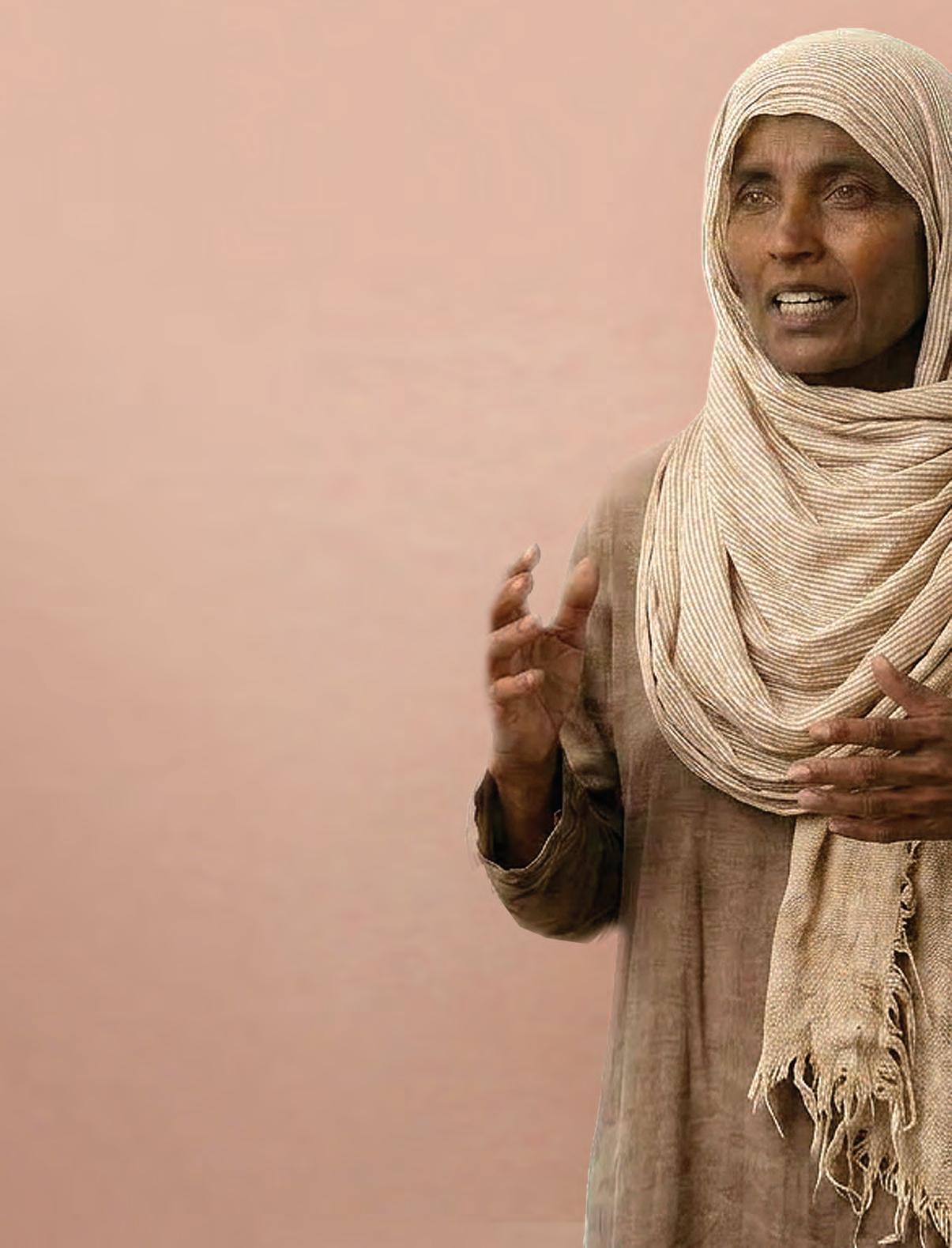
Wives of unbelievers were already disobeying their husbands by being Christians.
1 Peter 2:11–3:12 belongs to the “household code” genre, similar to the passages on the family unit in Ephesians 5:21–6:9; Colossians 3:18–4:1; and Titus 2:1–10. Ancient GrecoRoman philosophers and statesmen wrote and taught household codes to ensure that citizens, slaves, and other inhabitants obeyed laws and cultural expectations. Plato taught that each household is a “ministate.” Under these principles, households were expected to organize for the good of the state: “Parents are superior to their offspring, men to women and children, rulers to ruled.”1 Plato’s student, Aristotle, further solidified this concept, writing, “It is a part of the household science to rule over wife and children. For the male is by nature better fitted to command than the female.”2
The Greeks and Romans believed that insubordination at home led to insubordination against the state. In modern terms, this was a matter of “national security.”3 If a group of people (say, Christians) violated these customs, they would be deemed seditious. The way Peter introduces his household code suggests he knows this context and wants to help his people avoid further persecution:
Submit yourselves for the Lord’s sake to every human authority: whether to the emperor, as the supreme authority, or to governors, who are sent by him to punish those who do wrong and to commend those who do right. For it is God’s will that by doing good you should silence the ignorant talk of foolish people. . . . Show proper respect to everyone . . . honor the emperor (1 Peter 2:13–17).
Neighbors were already assaulting Peter’s flock for disassociating from pagan temple activities honoring their former gods:
For you have spent enough time in
the past doing what pagans choose to do—living in debauchery, lust, drunkenness, orgies, carousing and detestable idolatry. They are surprised that you do not join them in their reckless, wild living, and they heap abuse on you (1 Peter 4:3–4, emphasis added).
Peter’s adaptation of the household code helps the church accommodate cultural expectations whenever possible and resist only when necessary, such as when asked to deny Christ or engage in idolatry. Peter wants to protect his flock. By 100 AD, the Christian population of the Roman Empire was only 0.0126 percent.4 They lacked the strength in numbers, financial clout, legal protections, voting power, or social cache that many Christians in the Western world take for granted today.
Peter is most concerned about the wives of unbelievers because these pagan husbands could cause particular trouble for the community by accusing it of corrupting their wives. These women were already on thin ice because they were expected to adopt their husbands' religion. Dionysius of Halicarnassus (60–7 BC) wrote Roman Histories to preserve foundational policies, including the expectation that a wife share in the “sacred rites” of her husband (meaning, “join his religion”) and that a husband should “rule her as a necessary and inseparable possession.”5
Wives of unbelievers were already disobeying by being Christians. Peter mitigates their risk by telling them to be as quietly submissive as possible, because their situation is unlike that of Christians in contemporary democracies. His call for wives to submit is standard fare in his world—wives are supposed to submit, just as we should drive with a valid license. But Peter’s reason in verse 1, “that they may be won over,” is subversive. He is telling them to obey Rome for the sake of their
safety and the church's, but to do so for a reason that will ultimately undermine the false lord, Caesar.
Here is where it gets interesting. The reference to Sarah will appease potential enemies of the church who may hear Peter’s letter. To them, it simply seems Peter is commanding women to submit and commending an ancient, holy woman who “obeyed” her husband. However, those catechized in the faith will understand it at a deeper level. The Old Testament is their Bible. The story of Abraham and Sarah is not a minor story tucked away in an obscure part of the canon. It is foundational, and Christians were expected to know it.
Of course, this was even more true for Jewish Christians. Even small synagogues that lacked copies of much of the Hebrew Scriptures owned the Pentateuch, the five books from Genesis to Deuteronomy.6 This was mustread material.
In the story of Sarah and Abraham, each tells the other what to do at times. The text never criticizes Sarah for this. God directly backs her up in Genesis 21:12, following Sarah’s demand regarding Ishmael:
“Whatever Sarah says to you, שָׁמַע” (Hebrew “shama,” which means “listen and obey”).
In the Septuagint (the Greek translation of the Hebrew Scriptures used by the early church), Abraham also “obeys” Sarah in Genesis 16:2, using the same Greek word that 1 Peter 3:6 uses to describe Sarah’s obedience:
“Abram listened to the voice of Sarai.” (“listened to the voice” is from hupakousen, which literally means “he obeyed”).

In the story of Sarah and Abraham, each tells the other what to do at times; Sarah obeyed Abraham, and Abraham obeyed Sarah.

So Sarah hupakousen (obeyed) Abraham according to 1 Peter 3:6, and Abraham hupakousen (obeyed) Sarah in Genesis 16:2. All of this would have been apparent to those catechized in the faith but would have gone unnoticed by a pagan who heard or read Peter’s letter. It’s clever, subversive, and gives these Christian women dignity.
Conclusion:
When Peter ends his instructions for wives and begins writing to husbands (where he will suggest that God won’t even hear their prayers if they are inconsiderate toward their wives), he introduces the husband clause with the same clause he used to address wives:
• “Wives, in the same way . . . " (3:1)
• “Husbands, in the same way . . . " (3:7)
What does the author mean by “in the same way?”
We have to trace his thought to the beginning of his “household code” in 2:18: “Slaves, in reverent fear of God, submit yourselves to your masters, not only to those who are good and considerate, but also to those who are harsh.”
This sounds pretty unilateral; Peter gives no specific instructions for the masters. Yet, he has just told these early believers to “live as free people” and, paradoxically, to “live as God’s slaves” (v. 16). This gives the slaves in his community dignity, and it gives the wealthiest and most powerful fellow believers a reality check: they are all slaves, and they are all free. Before the throne of God, they share the same status.
Having provided this mind-bending alteration of standard Greco-Roman codes, Peter then focuses on the reality of his flock’s situation as a persecuted minority who must live in accord with society's laws. Peter knew that trying to overturn Greco-Roman customs on slavery and marriage, which were tied to the state, would only bring persecution on the tiny church. He had no power to overturn slavery or undo the patriarchy, but his examples and instructions make clear that there is a better way, even within those fallen contexts.
We must remember this when we leave the section of the household code that addresses slaves and come to the section addressed to wives. Peter was nobody in the Roman Empire. He wrote to wives who had even less influence. Their situation is not analogous to ours, so a blind adherence to “the letter of the law” in this passage is irresponsible logically and biblically. It also goes against how the Holy Spirit has worked in the world
over the millennia since Peter’s day. This Holy Spirit, whom Peter announced at Pentecost and who is poured out on sons and daughters, causing them to prophesy, has changed the social fabric.7
We see the seeds of equality planted in the New Testament, in the hard soil of political patriarchy. But today, we see so much of the fruit of Jesus’s teaching: slavery and domestic abuse are illegal in many countries. As the Gospel spreads, women’s freedom has increased in religious, financial, relationship, and educational spheres. The battle is not over, but the principles behind Peter’s instructions, highlighted by his examples of biblical relationships, have taken root. Let’s submit mutually to one another, obeying like Sarah, listening like Abraham. We are no longer trapped under Roman rule; why should the church continue to cosplay as citizens under Caesar?
Notes
1. Plato, Laws 3.690a via Jeannine K. Brown, Embedded Genres in the New Testament: Understanding Their Impact for Interpretation (Grand Rapids: Baker Academic, 2024), 90.
2. Aristotle, Politics 1.5.1 (Cambridge: Harvard University Press, 1944)
3. Brown, Embedded Genres in the New Testament , 94.
4. Rodney Stark, The Rise Of Christianity: How the Obscure, Marginal Jesus Movement Became the Dominant Religious Force in the Western World in a Few Centuries (New York: HarperOne, 1996), 7.
5. Dionysius, Roman Histories II.24.i, II.25.vi-v via Jennifer G. Bird, Abuse, Power and Fearful Obedience: Reconsidering 1 Peter’s Commands to Wives (New York: Bloomsbury T&T Clark, 2011), 22).
6. Tim Hegg, “Public Reading of the Scriptures in the 1st Century Synagogue,” TorahResource.com, https://torahresource.com/article/ public-reading-of-the-scriptures-in-the-1st-century-synagogue/.
7. Women have always played key roles in shaping God’s people, from Junia to Macrina the Younger, Catherine of Sienna, Julian of Norwich, and Sojourner Truth. But the degree of influence, education, and leadership women exhibit within the church today continues to grow. Teachers like Barbara Brown Taylor, Beth Moore, and Brenda Salter McNeil have immense followings. Women serve on translation committees of major English Bible translations, including Cynthia Westfall and Seung Ai Yang (CEB), Jeannine Brown and Elizabeth Mburu (NIV), Deirdre Fulton and Laura Nasrallah (NRSV), and Amy Peeler and Lynn Cohick (NLT). The Visual Museum of Women in Christianity uncovers and promotes visual exhibits of women’s leadership in Christianity from the early centuries of the Church, and CBE promotes the equality, equity, and leadership of women around the world.

Bobby Gilles is a pastor and songwriter with a Master of Arts in New Testament from Northern Seminary. He and his wife Kristen have two girls and three boys. He blogs about the blessed alliance of women and men, mutually serving Jesus, at bobbygilles.substack.com
Abby Amstutz
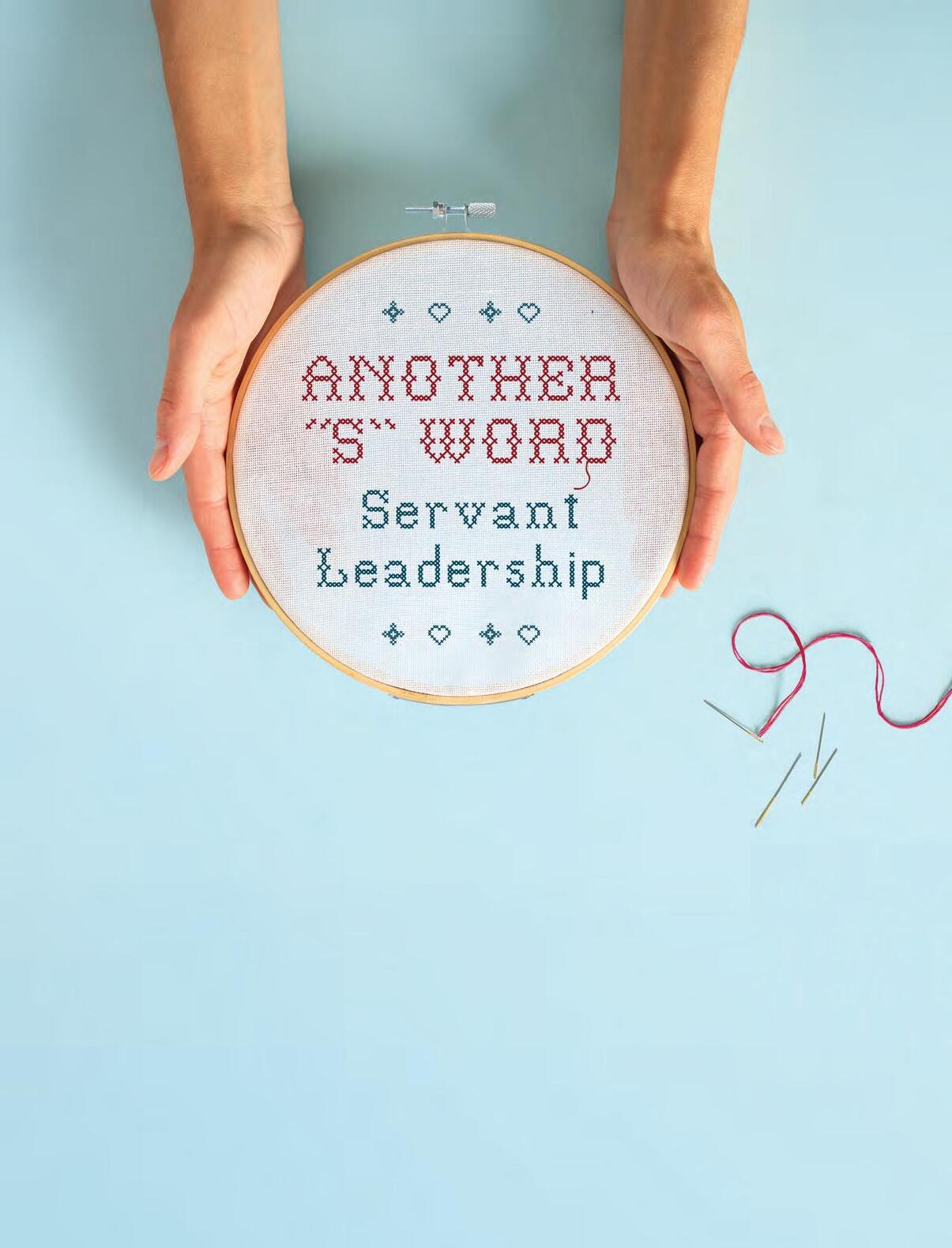
Working at a Christian leadership organization, I spend my days immersed in another “S” word, one far less weaponized in Christian circles: servant leadership. This term, reflecting God’s servant heart, can shed some helpful light on the the troubled conversation about submission.
The idea of “servant leadership” has become so prevalent in secular leadership development that it may appear to have lost much of its meaning. Yet, derived originally from Jesus’s example, servant leadership is powerful and revolutionary. It subverts the native assumptions of human leadership, which, regardless of culture, tend to include power, prestige, and self-aggrandizement. Instead, servant leadership defines leadership as serving, intentionally putting the interests of those you lead ahead of your own.
Through this leadership paradigm shift, Jesus turned the systems of the world upside down:
Jesus said to them, “The kings of the Gentiles lord it over them; and those who exercise authority over them call themselves benefactors. But you are not to be like that. Instead, the greatest among you should be like the youngest, and the one who rules like the one who serves. For who is greater, the one who is at the table or the one who serves? Is it not the one who is at the table? But I am among you as one who serves” (Luke 22:25–27, emphasis added).
Jesus was saying something truly startling. We had built God in our own image, but through his incarnation,
he taught us to rebuild leadership in his image. Paul beautifully articulates this in Philippians 2:5–7, in the words of what was likely an ancient hymn developed by the early church:
In your relationships with one another, have the same mindset as Christ Jesus:
Who, being in very nature God, did not consider equality with God something to be used to his own advantage; rather, he made himself nothing by taking the very nature of a servant, being made in human likeness.
This revelation, when deeply grasped and honestly followed, changes everything. A Cuban church planter trained by my organization recently shared with us: “If Jesus, being the Lord of lords and King of kings, came to serve and not to be served, the least we can learn is to serve.” Leadership has been redefined from the top down, so who are we not to follow? God has called us into a joyful new vocation as servant leaders, reflecting his image and embodying his servant heart in the world.

It is no longer important if would-be leaders are "fit" by the worlds standards; What matters most is if they serve and, by serving, emulate the heart of God.
By identifying leadership with servants and slaves (below even first-century women on the social ladder in most ways), Jesus confounded the leadership expectations of his world (and ours). It is no longer important if wouldbe leaders are “fit” by the world’s standards, that is, if they are commanding, powerful, male, or even the most proficient, if skills are all they have. What matters most is if they serve and, by serving, emulate the heart of God. Though women were not numbered among the twelve apostles,1 Jesus clearly had no qualms welcoming female disciples. Women, including the wealthy and powerful Joanna (wife of Herod’s steward, Chusa, Luke
8:3) traveled with him on his itinerant ministry and financially supported him. Mary sat at Jesus’s feet in the posture of a disciple learning from a rabbi—a position of a leader-in-training—and was warmly commended by Jesus for doing so (Luke 10:38–42).
Quite simply, Jesus never made any gender-based distinction when redefining leadership, through his words or his actions. The burden of proof is on those who would try to impose the patriarchal assumptions of the first century onto Jesus’s radical new teaching.
It is clear that God calls both men and women into a revolutionary new vocation as servant leaders. Both genders are called to serve using the unique gifts God has given them and steward well that which he’s entrusted to them. All are called to create, to have agency, to lead, and to wisely balance freedom and responsibility. We see such charges entrusted to humankind without reference to gender throughout Scripture: in the cultural mandate (Gen. 1:28), the Great Commission (Matt. 28:18–20), and Paul’s discussion of gifts and roles in the body of Christ (1 Cor. 12:1–11, 27–31).
Servant leadership is not passive or impotent, but a dynamic life of service grounded in our unique identities as beloved image-bearers of God, women and men alike. Through this humble form of leading and lives of mutual submission (Eph. 5), we enact God’s love and redemption in a world that so desperately needs them.
However, this leads to a question that has long troubled me. When men lower themselves by serving others, they are recognized, rightly, as leading like Christ. Women, on the other hand, often don’t need to “lower” themselves to serve others because that’s what they’ve always done. Even societies that promote equality in theory still fall prey to disparities between women and men on a cultural level. When women put the interests of others before their own, then, aren’t they just fulfilling their expected societal role? In other words, women and men are not starting from the same place; should servant leadership really be the intended destination of both?
Yes—though the path they take may look different. It is true that history has not treated the sexes the same. However, while men appear to benefit from patriarchy, they too are harmed by it, even if in different ways. In patriarchal systems, men are often trapped in rigid societal expectations, prevented from becoming their full, integrated, and healthy selves—and are deprived of women’s insights and leadership.

Woman or man, we need not fear or chase what the world says of us, whether it limits us or stokes our egos, because we belong to a deeper authority. We are free from the world’s value systems and hierarchies.
For women’s part, they may be culturally familiar with a type of servanthood, but not the empowered, secure, and humble identity of a servant leader. In a patriarchal family or society, women may learn to express leadership in socially acceptable, though not always healthy, ways. In an attempt to retake their God-given agency, women may sometimes fall into distorted or unhealthy behaviors like manipulation, domineering, or exchanging strength and responsibility for being put on a pedestal of beauty and domesticity.
And so, both sexes require healing. Both men and women need to be converted to Jesus’s model of servant leadership. In this model, serving is not subservience, but leading—powerfully and humbly—from below. It is leading together, confidently putting the interests of our brothers and sisters first because we know they will also seek ours. In this way, servant leadership and mutual submission work hand in hand.
Yet we can only meet this vision when we derive our strength and authority from a source beyond ourselves. For men and women alike, it all comes back to identity in Christ, the true Servant Leader, even if we arrive there traveling from different directions. It is from Jesus that we learn how to serve—and it is his servant leadership to us that sustains us in our countercultural calling.
When Jesus became human (Phil. 2), he did not divest himself of his identity as the beloved Son of God or cut himself off from the flow of life and love of the triune God. We, too, can hardly hope to lead—and especially to lead through serving—if we are not firmly grounded in our identities as beloved sons and daughters of God. When our identities are rooted in the freedom and love of God, we can descend with him into serving without losing ourselves. For in him, our true selves are found. Woman or man, we need not fear or chase what the world says of us, whether it limits us or stokes our egos, because we belong to a deeper authority. We are free from the world’s value systems and hierarchies. When we become convinced of this reality, it becomes much easier to “obey God rather than human beings” (Acts 5:29).
Leadership rooted in the triune nature of God reminds us that leading is not a solitary exercise but is deeply relational. We need each other’s unique experiences, testimonies, gifts, and insights—women and men alike. We can only become whole through humble interdependence, mutual submission, and welcoming everyone’s diverse gifts, as Paul establishes in 1 Corinthians 12:12–26.
When the body of Christ is cherished, guided, stewarded, and developed by skilled servant leaders, everyone thrives. Leadership then exists not to further the leader’s own little kingdom, but to expand God’s abundant one, in which everything and everyone is healed, renewed, and brought to fullness of life. It is to this larger vision that we are called, and we begin by participating in— and leading from—God’s own servant nature.
Notes
1. While some use this to argue that women are not called to leadership roles, most scholars agree that the twelve disciples were selected as a representation of Israel’s twelve tribes, not as a statement on gender. Furthermore, the New Testament’s inclusion of women as apostles (Rom 16:7) affirms that this position was not only reserved for men. To read more, see: Tammi Kauffman, “Jesus’s Female Disciples—and Why They Weren’t Among the Twelve,” Mutuality Magazine , November 10, 2021, https://www.cbeinternational.org/resource/jesuss-femaledisciplesand-why-they-werent-among-twelve/.
When the body of Christ is cherished, guided, stewarded, and developed by skilled servant leaders, everyone thrives.

Abby Amstutz holds a master’s degree in Intercultural Studies from Fuller Seminary. She serves as communications director at Development Associates International (DAI), a Christian leadership development organization that works in over 70 countries. Abby has a deep love for the global church and is passionate about women’s leadership.
President's Message by
Mimi Haddad
Christians who support women’s submission and male authority have often emphasized the differences between men and women to justify that view. One well-known Christian leader, for example, argued that male leadership rests on God-given biological distinctions between the sexes. Christians familiar with meta-analyses, however, have challenged this claim, noting that men and women share many overlapping abilities, including in math and language.1 More importantly, Scripture rarely emphasizes these differences. Instead, the opening chapters of Genesis describe God’s purposes for both woman and man.
In the first creation account, we learn that Eve and Adam are both created in God’s image—an identity that is inseparable from a shared destiny: to govern the world side by side. And this, God says, is “very good” (Gen. 1:27–31). The shared rule of man and woman is noted again in the second creation account as Adam’s aloneness is declared the only “not good” in a perfect world (Gen. 2:18). Governance of Eden requires Eve’s partnership. The help Eve brings is clarified by God as a strong rescue. This is how God describes woman— an ezer—a Hebrew term meaning “to be strong” and “to rescue.” Used 21 times in the Old Testament, ezer most often refers to God’s rescue of Israel. Psalm 121:1–2 reads, “I lift up my eyes to the mountains—where does my help come from? My help, my ezer, comes from the Lord, the Maker of heaven and earth.” Given that God sends Eve as a rescuer for Adam, a sinless world includes not Eve’s unilateral submission to Adam but his need for her strength and rescue. It is only as Adam and Eve disobey God that women are subjected to male rule (Gen. 3:1–7, 16).
Man’s authority over woman was not part of God’s sinless world. Rather it was the result of the disobedience of man and woman. Eating the forbidden fruit was not based on male leadership or female submission but was an act that demonstrates the freedom and mutual agency God gave Adam and Eve. Tragically, both man and woman freely chose to disobey God, and the consequence ruptured their oneness, mutuality, and the shared rule of man and woman. It was an evil intrusion into God’s perfect world (Gen. 3:16b). Yet, despite their disobedience, God had a plan to redeem humanity (Gen. 3:15–16), in which a Savior would be born of a woman. Mary will bear Christ, and he will crush evil and the gates of hell. Through Mary and the Holy Spirit, Christ was born, and through the cross humans have

access to forgiveness of sin and the Spirit’s power to resist and oppose prejudice and domination of male over female, of ethnic groups, and of rich over poor.
The mutual submission between men and women, rich and poor, and ethnic groups was memorialized in Christian baptism and carved on ancient baptismal fonts. When Paul said that Jews and Greeks, slaves and free, male and female are one in Christ, he sent these words to a world where nearly half of the population were slaves and women. In a profound way, Galatians 3:28 is one of the most radical social statements made in the first century given that authority was determined by gender, race, and class. Yet Paul boldly asserts that our identity and mutual service are not shaped by human birth but by our spiritual rebirth in Christ. And the early church served accordingly.
Slaves, Gentiles, and women served equally, not only in ministry as evangelists, apostles, house-church leaders, and teachers, but in the home as well. Mutual submission was documented in Christian marriages among leaders like Priscilla and Aquila and couples cited in Romans 16. Their example demonstrates the power of Christ to redeem and free Christians from submissiveness to those born male, wealthy, or to an ethnically dominant class. While secular culture may presume and assert authority based on the presumed superiority of gender, race, and class, marriages and churches flourish when all believers submit mutually and equally to each other out of love and respect based on scriptures like Gal 3:28—a text foreshadowed in the creation account.
Notes
1. Gal 3:28: “As many of you as were baptized into Christ are also clothed in Christ: There is no longer Jew nor Greek, slave nor free, there is no male and female; for you are all one in Christ Jesus. And if you belong to Christ, then you are Abraham's offspring, heirs according to the promise.”

The results are in! CBE writers received two awards in the Evangelical Press Association's Higher Goals Contest. Please join us in congratulating Caylie Cox and Stacie Forest! Caylie Cox received second place in the student writer of the year category for her article, “The Upside-Down Queendom: Aimee Semple McPherson and the Gendered Rhetoric in the 1930s Foursquare Crusader.” Stacie Forest received fourth place in the Blog: Single Post category for her article, "Deep Roots, Fierce Resolve: The Sacred Strength of Women.”
CBE's Award-Winning Publications Are Life-Changing
CBE's website hosts a comprehensive collection of multimedia resources dedicated to a better understanding of what the Bible says about women's biblical equality. Over 4,700 searchable articles, blog posts, podcasts, audio messages, and conference videos from hundreds of international contributors are all available for free online.
• Priscilla Papers is a peer-reviewed, interdisciplinary journal featuring Christian scholarship on topics related to a biblical view of equality. First published in 1987, Priscilla Papers has become a major voice for the egalitarian movement.
• Mutuality Blog + Magazine offers articles from diverse writers who share egalitarian theology and explore its intersection with everyday life.
• CBE's Mutuality Matters podcast explores egalitarian teachings and their impact.
• CBE's audio messages highlight women in Scripture and mission to demonstrate that women were created to share leadership with men. Available in English and Spanish.
• Videos from CBE's international conferences share valuable conversations that address egalitarian issues historically, biblically, and socially.
Partner with us to create more of these valuable resources, so together we can inspire and mobilize Christians with the truth that God created women and men to lead and serve as equals.

Scan the QR code or go to cbe.today/createresources to give today.

Increase your impact and experience significant tax savings by giving non-cash assets.
When you give appreciated assets, you avoid capital gains and receive a charitable deduction. Plus, you support CBE in a meaningful way, without affecting cash flow.
• Real estate
• Personal property
• Silver, gold, and precious gems
• Artwork
• Valuable collections
• (e.g. coins, cars, rare antiques)
• Business interests or depreciated business equipment
• Farm commodities
• Stock or marketable securities
• Life insurance
• Retirement benefits, such as gifts from your IRA
To learn more about giving non-cash assets, call our partner, the Barnabas Foundation, at 1-888-448-3040 or email planning@ BarnabasFoundation.com.
You may also call CBE at 612-872-6898 or email cbe@cbeinternational.org.
1. Reduce your taxes! Receive a fair market value deduction at the time of your gift and avoid tax liability on the sale of appreciated assets.
2. Eliminate hassles! Give assets you no longer need or want to manage.
3. Increase your giving capacity! Give from your resources without restricting cash flow.
4. Simplify your estate planning! Eliminate potential taxes or complications for your heirs by giving complex or burdensome assets to CBE now.
Learn more about donating non-cash assets to CBE at cbe.today/stocks
• God’s faithfulness and provision for CBE’s financial needs during CBE’s last fiscal year (April 2025–March 2026).
• A new database that will make fundraising and marketing more effective for CBE staff.
• New and faithful conference sponsors who support CBE’s work in advancing women’s biblical equality.
• The forward momentum of crucial projects, such as turning CBE’s eLearning courses into eBook study guides and turning CBE’s published books into audio books for Spanish-speakers.
• CBE staff as we host CBE’s 2026 International Conference—Made Whole: Healing the Body of Christ, August 6–9, 2026, in Chicago.
• The continued progress of CBE’s Bible Translation Project, conversations with editors, and forward momentum to publish a resource that will be crucial for healing among women and men.
• The Spanish translation of Created to Thrive and the audio book creation for three CBE books.

Would you be willing to pray regularly on behalf of CBE? Join our prayer team to receive a full list of prayer needs on a quarterly basis, plus occasional urgent prayer needs. Please email us at cbe@cbeinternational.org to sign up. Don't miss an issue! Sign up or renew your Mutuality subscription here.


CBE International (CBE) is a nonprofit organization of Christian women and men who believe that the Bible, properly translated and interpreted, teaches the fundamental equality of women and men of all racial and ethnic groups, all economic classes, and all ages, based on the teachings of Scriptures such as Galatians 3 : 28 : “There is neither Jew nor Gentile, neither slave nor free, nor is there male and female, for you are all one in Christ Jesus.” (NIV 2011 ).
MISSION STATEMENT CBE exists to promote the biblical message that God calls women and men of all cultures, races, and classes to share authority equally in service and leadership in the home, church, and world. CBE’s mission is to eliminate the power imbalance between men and women resulting from theological patriarchy.
• We believe in one God, creator and sustainer of the universe, eternally existing as three persons equal in power and glory.
• We believe in the full deity and the full humanity of Jesus Christ.
• We believe that eternal salvation and restored relationships are only possible through faith in Jesus Christ who died for us, rose from the dead, and is coming again. This salvation is offered to all people.
• We believe the Holy Spirit equips us for service and sanctifies us from sin.
• We believe the Bible is the inspired word of God, is reliable, and is the final authority for faith and practice.
• We believe that women and men are equally created in God’s image and given equal authority and stewardship of God’s creation.
• We believe that women and men are equally responsible for and distorted by sin, resulting in shattered relationships with God, self, and others.
• Therefore, we lament that the sins of sexism and racism have been used to historically oppress and silence women throughout the life of the church.
• We resolve to value and listen to the voices and lived experiences of women throughout the world who have been impacted by the sins of sexism and racism.



JOIN
Receive a year of print copies of Priscilla Papers , CBE’s academic journal, and Mutuality , CBE’s popular magazine. Subscriptions are available for individuals, churches, and libraries.
Learn more at cbe.today/subscriptions.
• Scripture is our authoritative guide for faith, life, and practice
• Patriarchy (male dominance) is not a biblical ideal but a result of sin that manifests itself personally, relationally, and structurally.
• Patriarchy is an abuse of power, taking from women and girls what God has given them: their dignity, freedom, and leadership, and often their very lives.
• While the Bible reflects a patriarchal culture, the Bible does not teach patriarchy as God’s standard for human relationships.
• Christ’s redemptive work frees all people from patriarchy, calling women and men to share authority equally in service and leadership.
• God’s design for relationships includes faithful marriage between a woman and a man, celibate singleness, and mutual submission in Christian community.
• The unrestricted use of women’s gifts is integral to the work of the Holy Spirit and essential for the advancement of the gospel worldwide.
• Followers of Christ are to advance human flourishing by opposing injustice and patriarchal teachings and practices that demean, diminish, marginalize, dominate, abuse, enslave, or exploit women, or restrict women’s access to leadership in the home, church, and world.
Connect with CBE online to learn more about us, enjoy the resources we offer, and take part in our ministry.
Visit our website, cbeinternational.org , to find thousands of free resources—articles, book reviews, and video and audio recordings.
Get news, updates, and free resources (cbe.today/news)
Follow our blog ( cbe.today/mutuality ).


If your church, seminary, school, or nonprofit agrees with CBE’s Statement of Faith and Core Values, join CBE as an organizational member to receive publications, discounted conference registrations, and more.
Visit cbe.today/orgmembers for more info.
Follow us on X @CBEInt ( x.com/cbeint ).
Find us on Facebook ( facebook.com/cbeint ).
Follow us on Instagram @cbeinternational ( instagram.com/cbeinternational ).
Follow us on LinkedIn ( linkedin.com/company/ christians-for-biblical-equality/ ).
Find us on YouTube (youtube.com/@cbeinternational).
Listen to us on Soundcloud ( soundcloud.com/cbe- international ).
International | 122 W Franklin Ave, Suite 610, Minneapolis, MN 55404-2426 | (612) 872-6898
CBE International
122 West Franklin Ave, Suite 610
Minneapolis, MN 55404-2426
Forwarding Service Requested


Permission to Matter: Reclaiming Women’s Humanity & Authority at the Invitation of Jesus
Bekah Stewart

Most models of a Christian spiritual journey were made by men, for men, where men are central, set against the backdrop of an apparently male God. But what if there is a spiritual path informed by women, for women, where women are seen as central figures, and with a God who is also represented in the feminine? Drawing on the Bible stories of the Dying Girl and the Bleeding Woman, Stewart invites women to embrace Jesus’ radical invitation to Wake Up, Stand Up, and Come Out of Hiding—to step into the fullness of who God created you to be.
Under Her Wings: Mothers and Motherhood in the New Testament
Jennifer Houston McNeel

Balancing critical scholarship with sensitivity to the importance of the Bible, Houston McNeel analyzes the stories of mothers and the metaphorical uses of motherhood throughout the New Testament. Readers will come away with a clearer understanding of what motherhood signifies in the New Testament and learn how the historical realities of women in the ancient world should inform our reading of mothers as biblical characters and maternal metaphors. Comprehensive and insightful, this book is a valuable resource for seminarians, scholars, and readers interested in the intersection of biblical studies and motherhood.
From Genesis to Junia: An Honest Search for What the Bible Really Says About Women in Leadership
Preston Sprinkle

As one of the church’s most debated and divisive topics, what does the Bible really say about women serving in positions of leadership in the church? From Genesis to Junia offers a journey through Scripture that begins with questions rather than answers. With theological rigor and a pastor’s heart, Sprinkle opens the Bible with fresh eyes and invites us along as he examines key passages from Genesis to Revelation―weighing historical context, interacting with a variety of scholarly perspectives, and holding familiar views up to Scripture.