






Linnaea Marks
Art Director – KCPR
Writers
Sydnie Bierma
Ishaani Dhanotra
Ever Dionne
Abby Gorman
Fiona Hastings
Sarah Jagielski
Peggy Kuzmich
Riya Minglani
Archana Pisupati
Kaylie Wang
that best describes
Creative
Bailee Isackson Photographer
Natalia Celebrini
Ava Cheung
Ava Donaldson
Anika Loganathan
Kennedy Ray
Maya Shinden
Elena Vaughan

Interview By Ever Dionne
Design By Natalia Celebrini
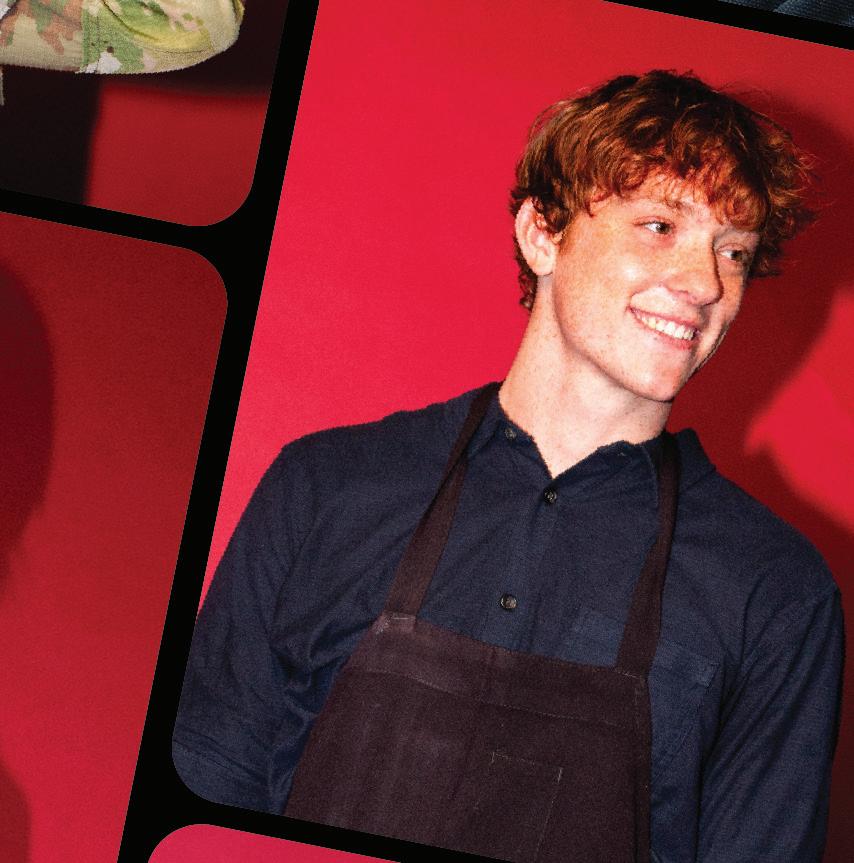
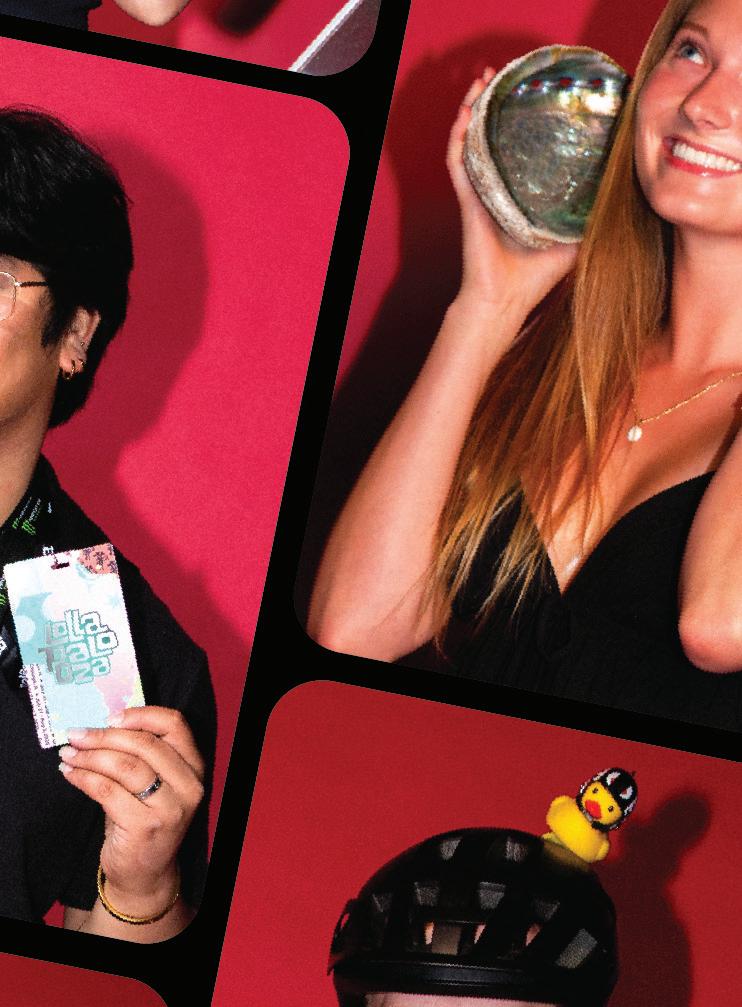
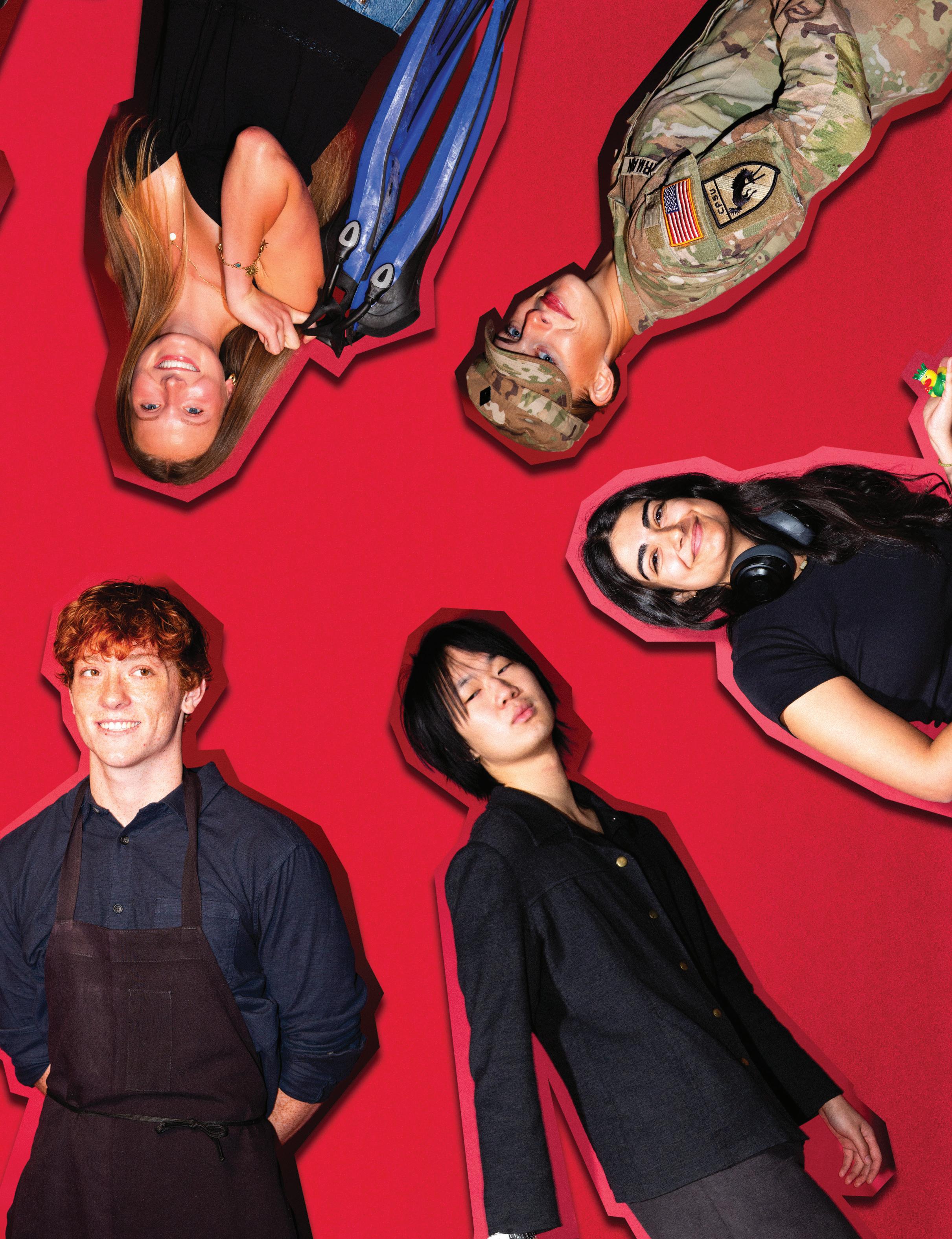
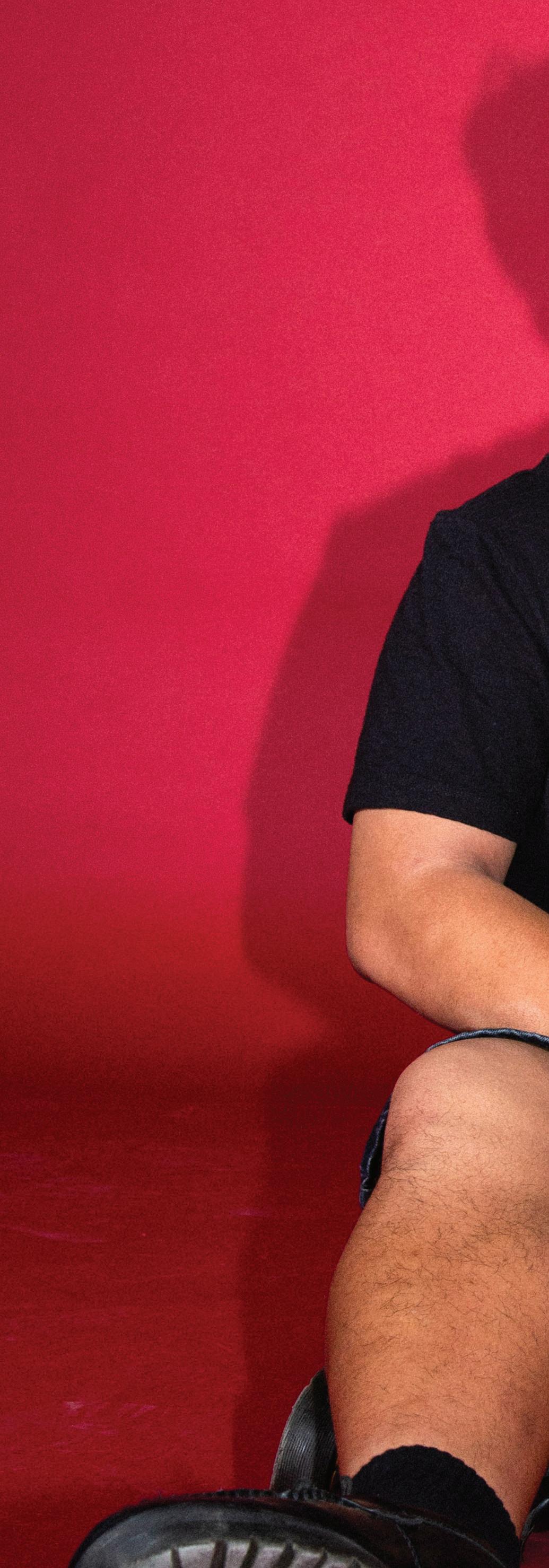
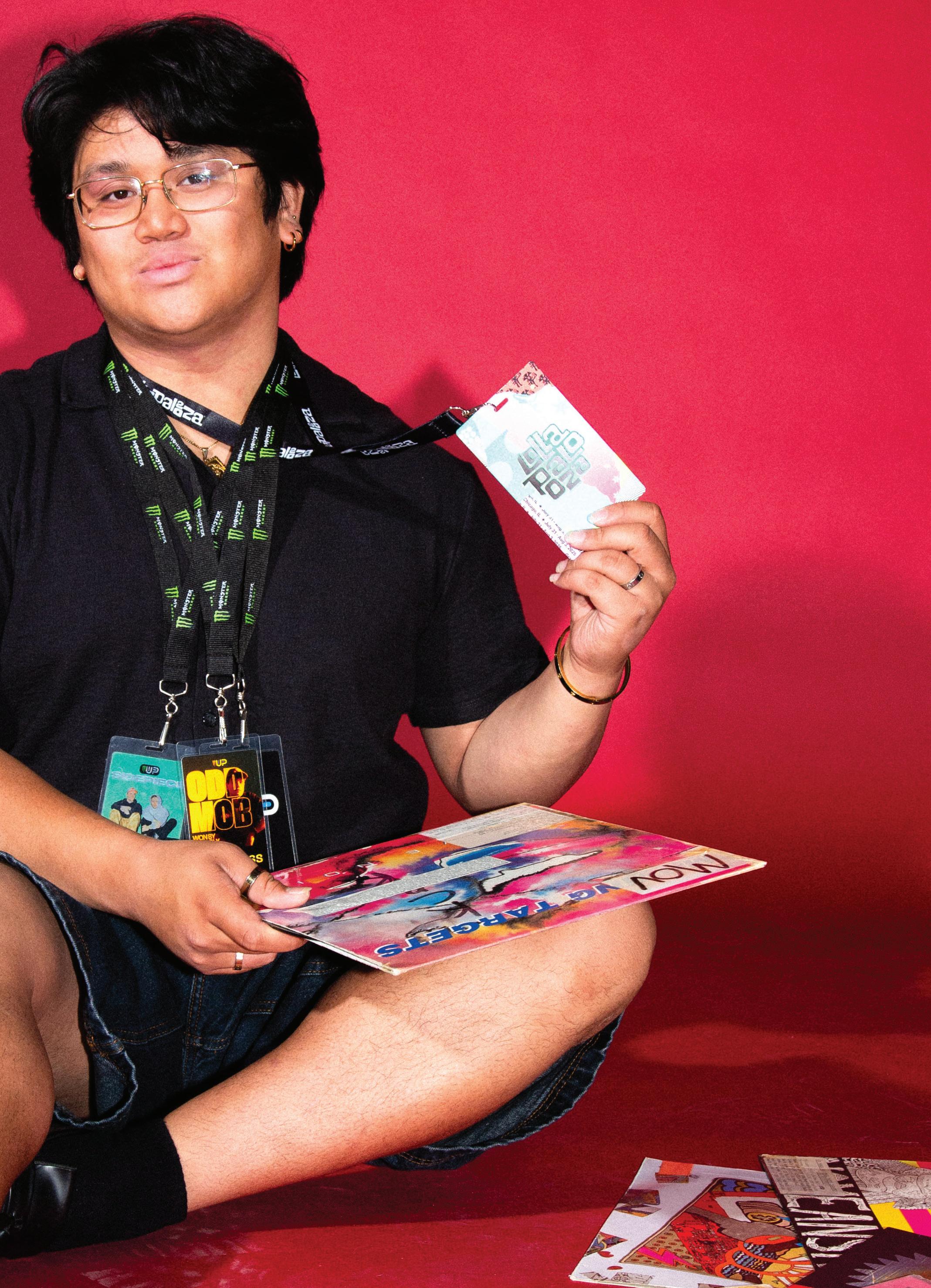
Kyle Flora’s introduction to the music industry didn’t start in a classroom. It all began with an Ariana Grande fan account in middle school. What began as a hobby over time grew into something more — a fascination with fandom culture, audience behavior and the communities that form around music. Now, Flora is turning that long-standing passion into a post-graduation career, where he will be working at Capitol Records on their viral marketing team.
Flora is a business administration senior with a concentration in marketing management and minors in photography and video. During his time at Cal Poly, Flora has immersed himself in the San Luis Obispo creative scene, taking on leadership roles and hands-on opportunities that reflect his interest in music and marketing.
Flora served as president of Up & Up Festival SLO, where he helped lead a student-run music festival. He worked with Shabang Music Festival on both the experiential marketing and content creation teams, gaining practical experience in promoting and producing large-scale events. Aside from music festivals, Flora was also involved in the Pilipino Cultural Exchange, and Take it SLO, a Cal Poly a capella group. Flora credits Cal Poly’s smaller, more intimate environment for giving him the chance to take on leadership roles and explore his interests in a more personal way.
This interview has been edited for length and clarity.
Ever Dionne: What are you most looking forward to working at Capitol Records?
Kyle Flora: I’m really looking forward to being able to spearhead a campaign for an artist that I’ve spent so much time listening to or following. There are already artists on Capitol’s roster like Adéla, Doechii, Katy Perry and Sienna Spiro, and it’s surreal seeing names from my own Spotify playlists. Capitol also gives a lot of ownership to interns and their marketing team,
so I’m excited to take on that responsibility and see what that looks like. I’m excited to bring together everything I’ve learned, both at Cal Poly and through my own creative pursuits.
ED: Who is your dream artist to work with?
KF: Ariana Grande, no question. She’s been my top artist since around 2017. I’ve always been really drawn to fandom culture, and I actually started an Ariana Grande fan account when I was about 14. That was one of the first times I realized how much I loved studying audiences including, what gets people excited and how communities form around music. That’s something I’m really passionate about and hope to continue exploring in my career.
ED: What’s one album that you feel describes your life?
KF: I’d say the album Pure Heroine by Lorde. I’ve always connected with her perspective on that in-between stage of life, being caught between adolescence and adulthood. That idea really resonates with me, especially now as I’m about to graduate and step into the next phase of life. It’s an album I keep really close to me.
ED: What’s a piece of advice you’d give your freshman-year self?
KF: Take ownership of something you’re passionate about. For me, a lot of my path came from one opportunity, someone taking a chance on me with the Up & Up Festival, that led to everything else. If a club doesn’t exist yet for something that you're passionate about, create it. Everyone wants to play this game, but you really have to know how to play it first. A big part of that is growing your name and getting involved in campaigns or projects you care about. Being able to spearhead those efforts and put your name behind something meaningful can really make a difference.
1. One word that best describes you: Original
2. One thing you would bring to a deserted island: My Spotify library downloaded
3. Your future plans: Moving to Hollywood to join Capitol Records in their viral marketing division
4. One object you can’t do your job without: AirPods
5. A Cal Poly class that shaped your life: Digital and New Media Marketing (BUS 453) with Catherine Hillman specifically
Interview By Fiona Hastings & Archana Pisupati
Design By Kennedy Ray
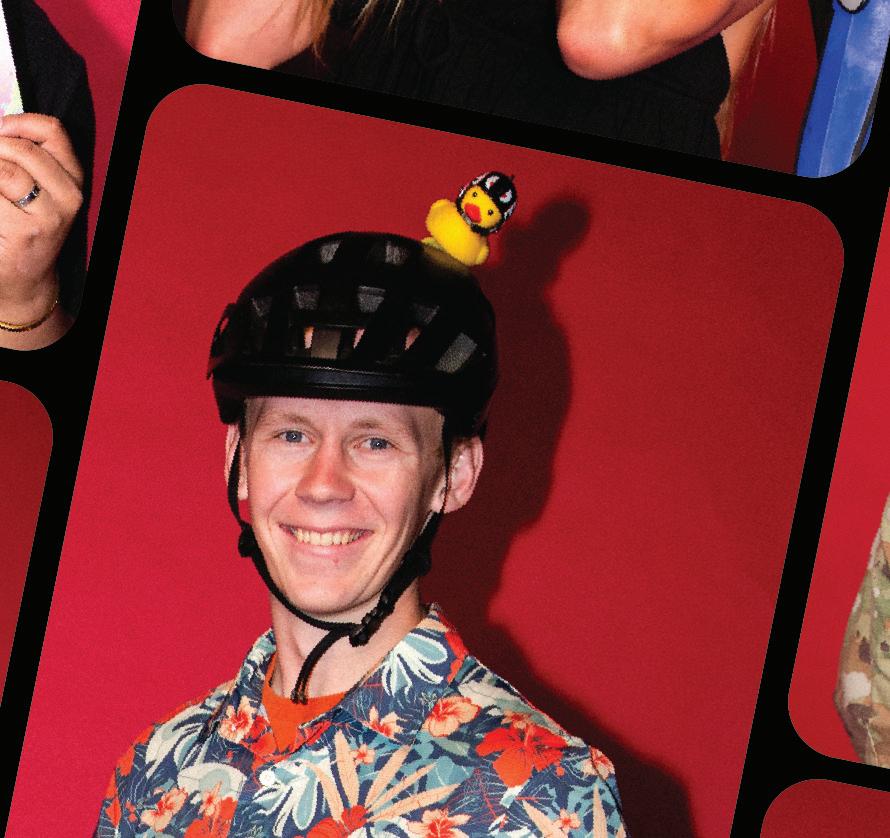
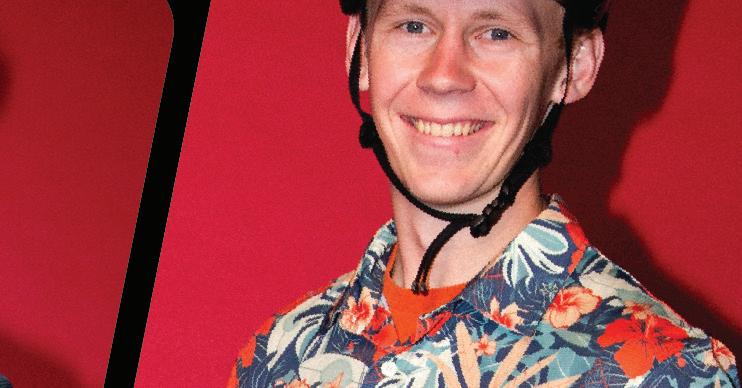
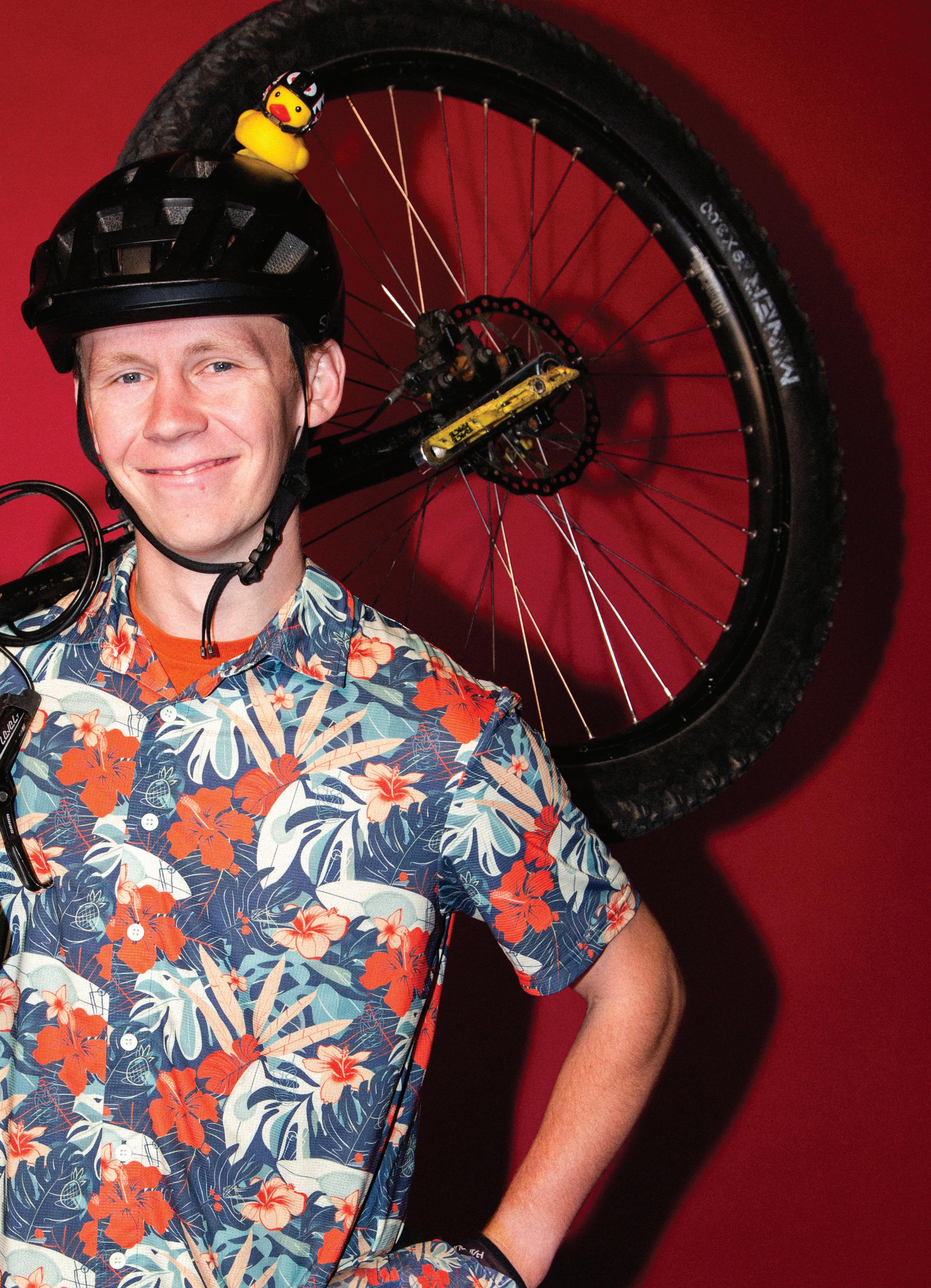
Most teenagers wish for a car to appear in their driveway on their 16th birthday. For marine science senior Jacob Hinshaw, his preferred method of travel became a unicycle after he received one for his milestone birthday. It was an unexpected but life-changing gift that gave him a whole new meaning of transportation.
Now, across campus, many recognize his rubber ducky helmet before being greeted by what he calls his “security blanket,” as he admits he doesn’t go anywhere without his unicycle.
As former president and current vice president of the Cal Poly Unicycle Club, and a director of the Unicycling Society of America board, what started as a “silly” birthday wish quickly turned into a passion built on inclusivity. Hinshaw joined the unicycle club shortly after his freshman Week of Welcome, and helped grow it into what is believed to be the largest collegiate unicycle club in the world, doubling in size every year. This July, Hinshaw will bring the national unicycle stage to San Luis Obispo as a director for the North American Unicycling Competition and Convention.
This interview has been edited for length and clarity.
Fiona Hastings: How did you first find unicycling and why did it become such a passion?
Jacob Hinshaw: I'm one of the few people that started unicycling before coming to Cal Poly. It took me a few hours trying every weekend for like a month or two and I could eventually ride it. I could just barely ride it though. I wasn't confident crossing the street with it, until I got to Cal Poly and found the Unicycle Club. That's where I really got to learn with other peers helping me. It's just so much faster with other people. And then I was riding to class. I was riding down mountains. My first weekend the club brought me up Bishop Peak to go rock climbing.
Archana Pisupati: What does it mean to you to bring a national event like NAUCC to San Luis Obispo?
JH: It means a lot to have the North American Unicycling Championship and Convention in California because it's normally held in the Midwest like Michigan or Minnesota. The main clubs in the nation are in the Midwest, which makes it hard for clubs on the West Coast. We drove 40 hours each way, seven of us from the Cal Poly club up to Michigan last summer.
FH: What is it about the unicycling community that brings people together?
JH: The community makes me feel really included and happy. It’s very inclusive, especially to beginners because everyone was a beginner at this at some point and had someone help them. Someone having to learn to unicycle is a good filter for a good kind of person because they have to be willing to look silly, fall in front of other people, get back up again and keep trying even while people are watching.
AP: How would your 16-year-old self would react to you being a director of a national unicycling competition?
JH: I think he’d be pretty impressed like, "What? I'm going to do that?" I don't think I ever would have would've seen it coming because I didn't know anything about the unicycling community until I got to Cal Poly. I was the only unicycle guy and now I’m part of a larger community and even in a leadership role, helping get others involved.

1. One word that best describes you: Weird
2. One thing you would bring to a deserted island: Solar-powered flashlight
3. Your future plans: Hopefully, a job in aquaculture, state parks or fisheries
4. One object you can’t do your job without: My unicycle, It’s like my safety blanket
5. A Cal Poly class that shaped your life: Applied Experimental Design and Regression Models (STAT 313)
Interview By Peggy Kuzmich
Design By Anika Loganathan
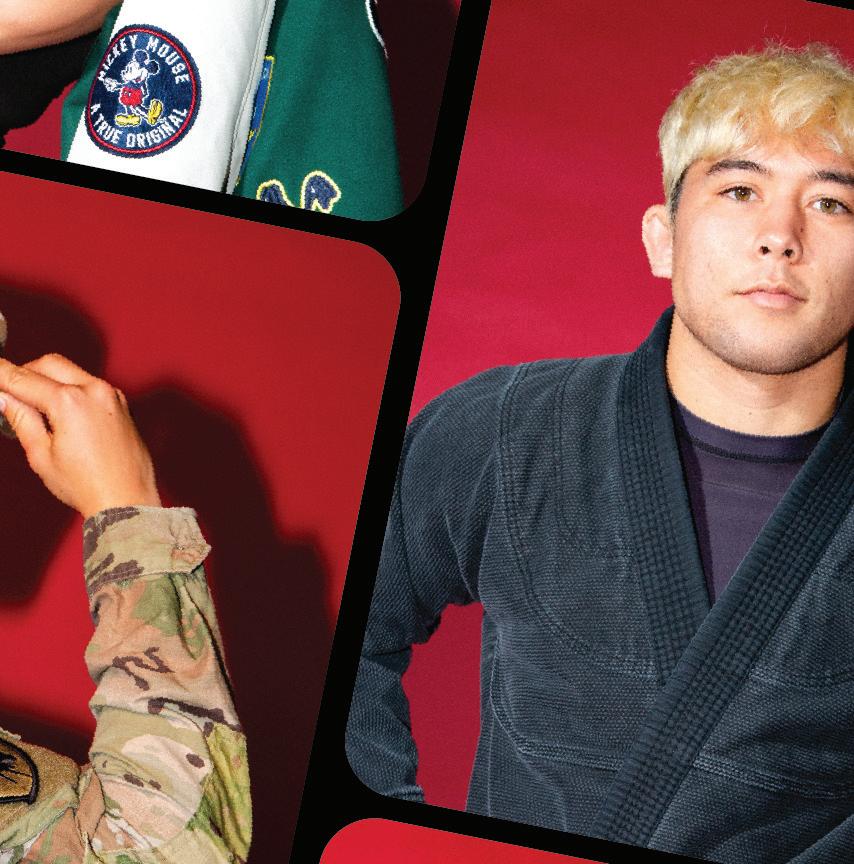
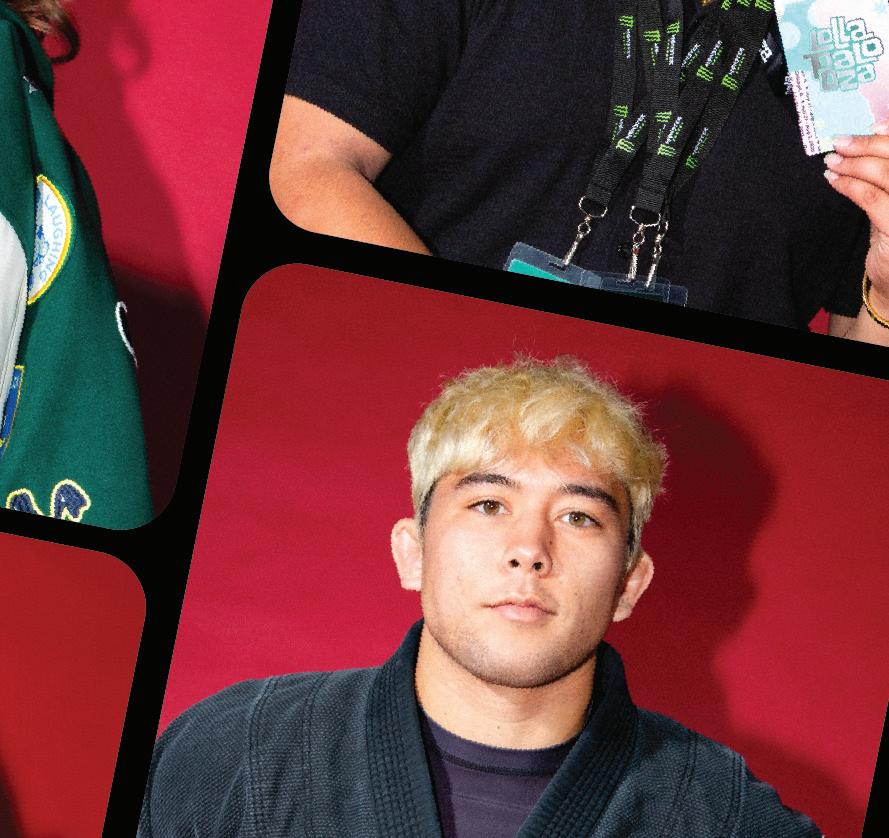
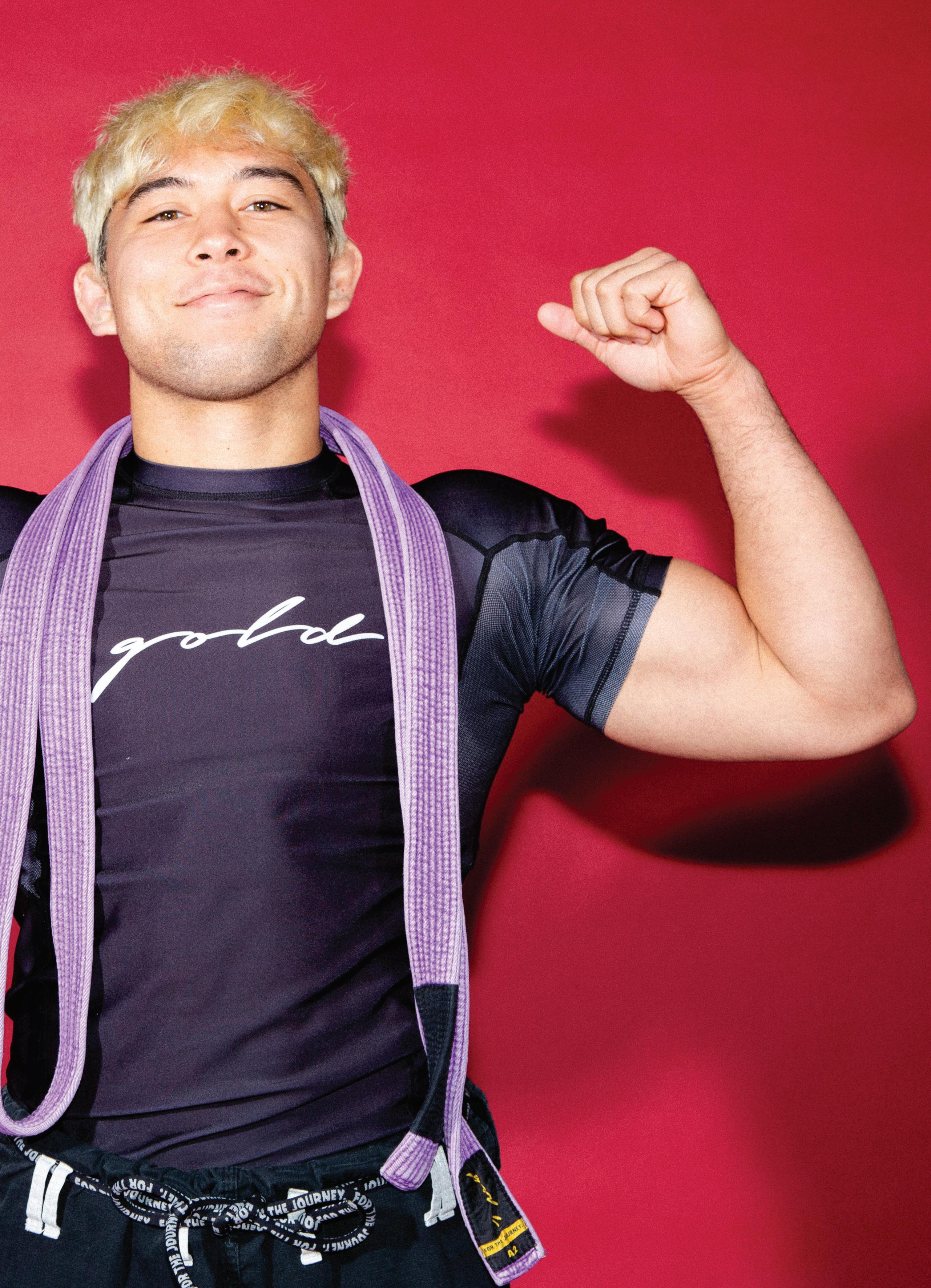
Kai Malek has a major “love of the game” when it comes to jiu-jitsu. As he talks about the sport, Malek’s passion shines through his stories. “It’s mostly middle-aged white dads,” he jokes about the jiu-jitsu scene in San Luis Obispo — but the grin on his face makes it clear he wouldn’t want to be anywhere else than on the mat. Malek is a journalism senior from San Diego who is going professional in jiu-jitsu.
Malek started training jiu-jitsu at around age 10 after he quit baseball. He said he was pretty bad to start and stopped training in high school. Malek picked the sport back up during his sophomore year at Cal Poly, and since then, it's basically all he does.
Malek trains jiu-jitsu around 10 to 12 times a week. He has learned how to balance his student and athletic life throughout his time at Cal Poly. Malek uses the skills he gained from studying journalism to create content for his jiu-jitsu-focused Instagram account. His account, @kaiyuki.jj, features day-in-the-life’s of a student athlete, competition updates and creative content surrounding jiu-jitsu moves.
Malek speaks humbly about his successes in jiu-jitsu, though his continued progress reflects years of dedication and skill in the sport. After graduation, Malek will continue to practice jiu-jitsu while working in advertising for Gold BJJ, a gear brand, in San Diego.
This interview has been edited for length and clarity.
Peggy Kuzmich: When did you realize you could go pro?
Kai Malek: There was a point when I was competing every weekend, going to the Bay Area or to LA to do tournaments. And that was when I was like, “okay I really want to try to pursue this.” It's a really hard sport to make money in. I knew that I was going to try to do something after school that will satisfy my parents in the sense that they know I'm not throwing my life away. But something that will still allow
me to pursue a professional career in jiu-jitsu, which is how I found my job.
PK: Do you have any pre-match rituals or superstitions?
KM: Right now, what’s been really working for me is breathing super heavily, almost hyperventilating before the match. It shocks my whole entire body and then it forces me not to overthink about the match. It makes me go into fight or flight which sounds counterintuitive, but it actually works really well for me.
PK: What would you tell someone trying to go pro in jiu-jitsu or another sport?
KM: First I would tell them to be realistic. Try to really look at the bigger picture and not throw your entire life away and to have a backup plan, even if you have the utmost confidence that you'll succeed.
It's just good to have a backup plan because even if you do succeed, that backup plan can turn into a secondary source of income or something. It's just helpful to have those things and think about your entire life, not just one aspect of it.
PK: Do you have a favorite part or memory from your years at Cal Poly?
KM: I was in a class, I did it for a couple quarters in a row and ended up being a TA. We would go to Santa Maria and we would teach third graders different STEM subjects. And it wasn't a STEM class, it was an interdisciplinary class, there were people from every major. It was fun to go out and interact with kids and be able to talk to them, and they just thought we were so cool because we were college students.

1. One word that best describes you: Excited
2. One thing you would bring to a deserted island: Someone to do jiu-jitsu with
3. Your future plans: Go professional in jiu-jitsu
4. One object you can’t do your job without: My computer
5. A Cal Poly class that shaped your life: Plant Diversity and Ecology (BIO 114) with Sean Ryan
Interview By Ishaani Dhanotra
Design By Ava Cheung
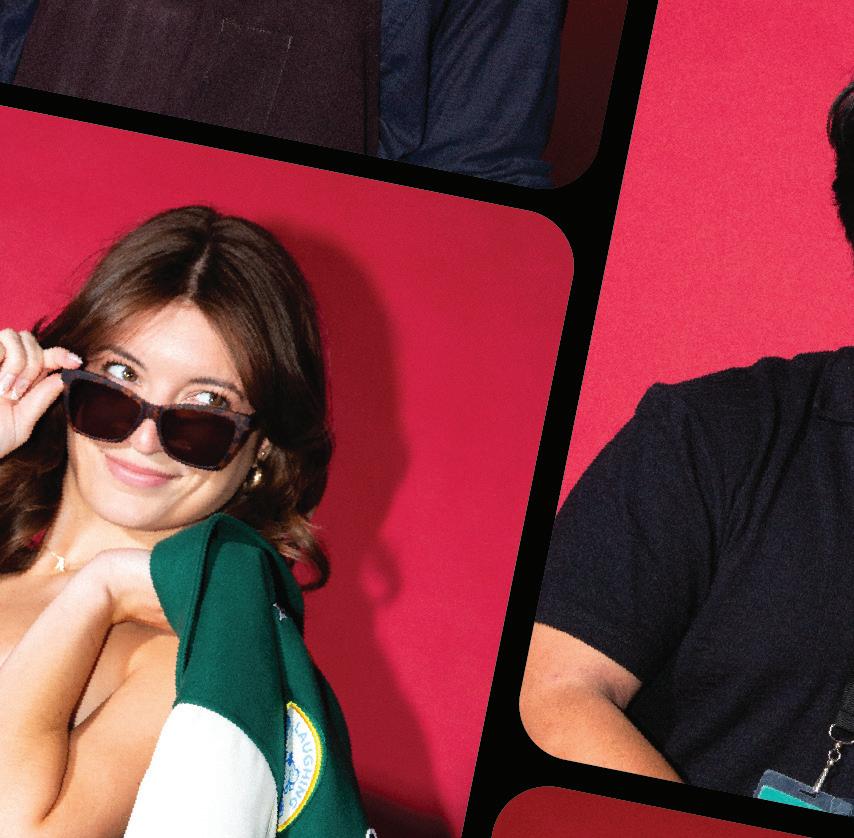
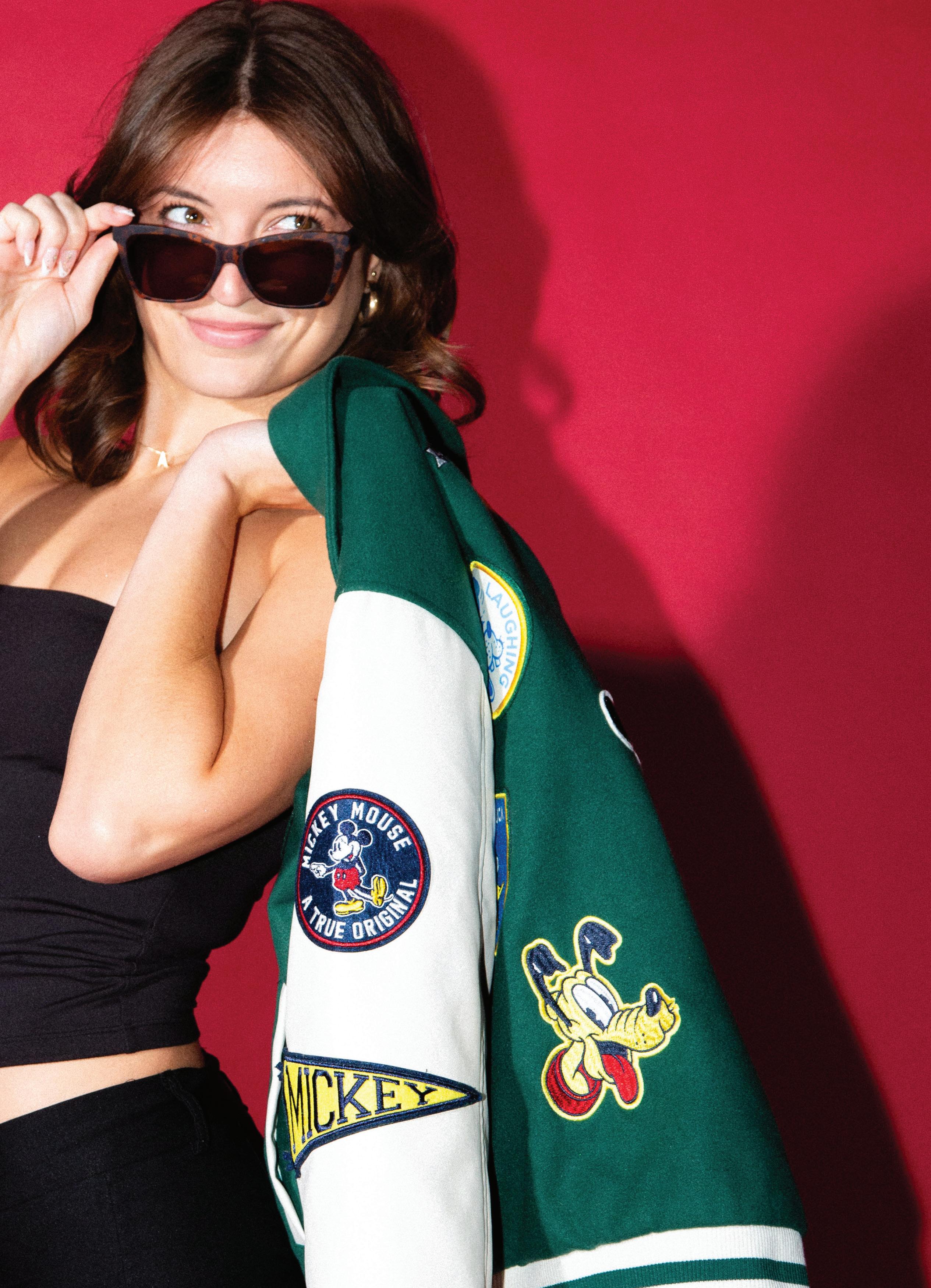
If life is like a roller coaster, Amanda Keith is the one designing the park. As an art and design senior with a concentration in graphic design, Keith is interning at Disney Imagineering this summer, where she’ll be working to design the posters, handouts and illustrations that make up the storybook experience at the Disney parks.
Throughout college, she’s been able to hone her passion for designing detailed graphics and creating hand illustrations, as well as experiment with typography. A longtime lover of movies, art and history, she’s always gravitated towards creative roles and spaces. For Keith, every design has a story and person behind it. Every design is a labor of love.
In a major that requires hours spent working on projects and painstakingly finalizing details, she’s found comfort in the crazy. For her next roller coaster, she’ll head to Glendale this summer to make her dreams a reality.
This interview has been edited for length and clarity.
Ishaani Dhanotra: What are you most excited about for the job?
Amanda Keith: The people I’ll meet. I’ve already met a little bit of the crew I will be working under this summer. I’m excited to get to know them, learn from their many years of experience and gain insight into their creative process and all the small details that contribute to the bigger picture. I want to learn how to make each of those personal and special.
ID: What college experiences prepared you for your future role?
AK: My sophomore year, I competed in the Walt Disney Imagineering Imaginations Design Competition. Every year has a different prompt, but you are given a loose prompt and it’s up
to your interpretation to solve a problem. Last time I competed, the prompt was: think of a space within your college that can provide recreation for students, staff and visitors. My team this year made finals and we placed fourth out of 100+ teams. Our project was called “Moon Path Plaza.” It was focused around the Chumash Tribe, which is native to San Luis Obispo, and their land practices, techniques and culture. We wanted to design a place of appreciation, not appropriation, and give more acknowledgement to the tribe’s history.
ID: What is the biggest challenge in your industry right now?
AK: For me personally, I believe it’s making sure you are keeping up with trends in graphic design. Trends are always changing. The one that’s rising right now is the influx of people using AI to make graphics, specifically on Canva.
ID: How has your major helped prepare you for your future career?
AK: Just meeting everybody and having classes with them, I’ve learned that we all have a similar goal. Being in that environment is very comforting. Students in the art department, we’re all learning together. Because it’s a major that emphasizes meaning over test-taking, we tend to band together to persevere.
ID: What does working for Disney mean to you?
AK: I would say Disney as a whole represents the ability to make dreams a reality. Through the parks, the immersive environments transport visitors to new worlds and unique experiences. I want to be part of the process that creates lifelong memories for generations because you never know if it’s someone’s first, 10th or even last time at the parks.

1. One word that describes you: Creative
2. One thing you’d bring to a deserted island: Digital camera
3. Your future plans: Working in the theme park industry and creating memories for generations
4. One object you can’t do your job without: An iPad with an Apple Pencil
5. A Cal Poly class that shaped your life: Concept Art and Storyboarding (ART 333)
Interview By Kaylie Wang
Design By Ava Donaldson
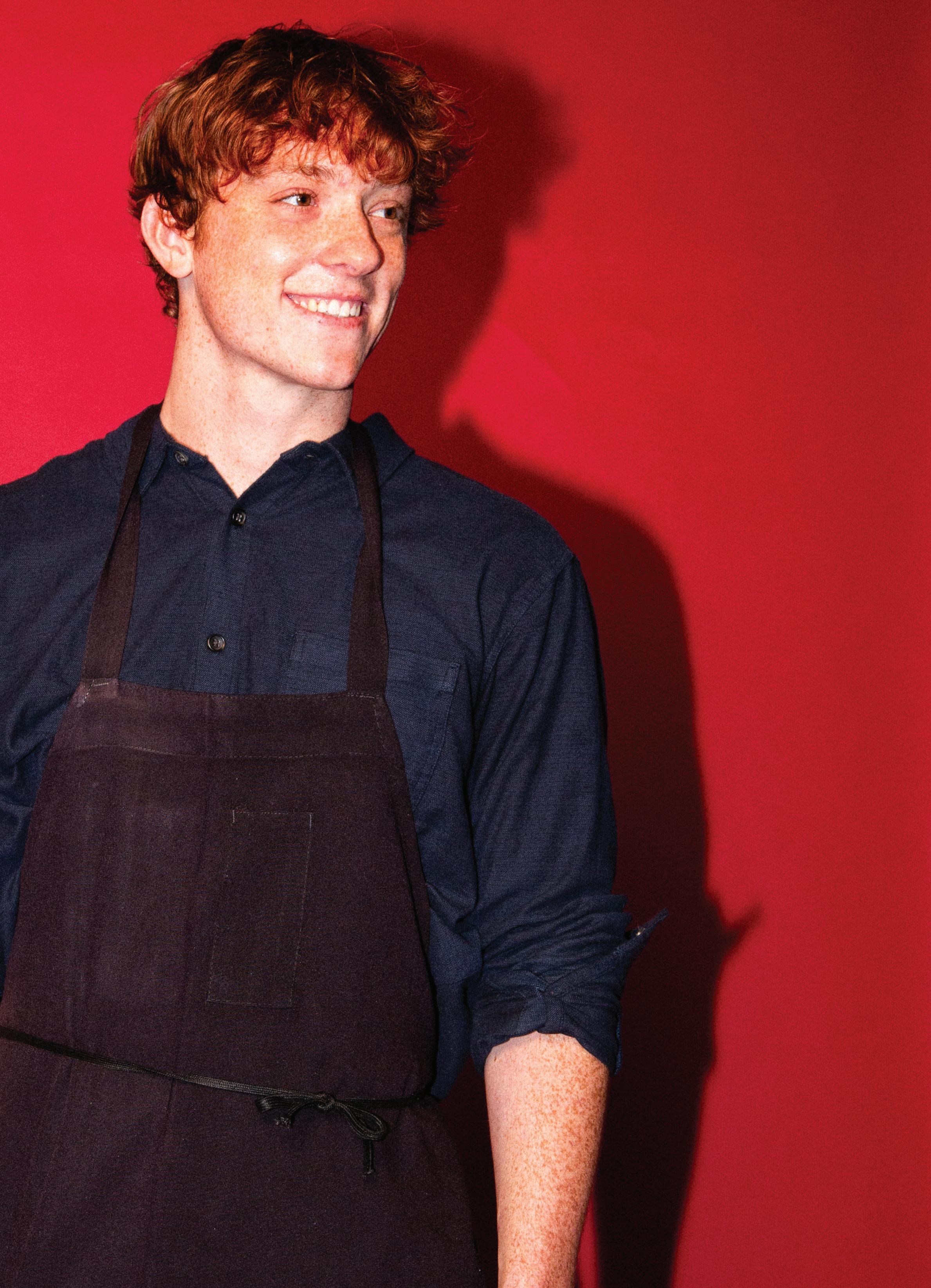
Josh Van Tassel is an agricultural business senior who co-founded Nibble — a business selling guilt-free cheesecake bites backed by Real California Milk. He came up with this idea with his friend Alex Pope in their agricultural entrepreneurship class last year. The top three projects of the class would receive an offer for funding from a Real California Milk sponsor.
Although Van Tassel and his partner’s project did not place in the top three, the sponsor called them after the class and offered funding. Since then, they have continued developing their business incorporating feedback from business owners and the community and dedicating their senior project to it.
After graduation, Van Tassel hopes to receive more mentorship to help him and his partner grow Nibble as a company. They are applying to the Cal Poly Center for Innovation & Entrepreneurship’s Summer Accelerator and Incubator programs. Their future goals are to sell Nibble products at local farmer's markets, local premium stores and even grocery stores nationwide.
This interview has been edited for length and clarity.
Kaylie Wang: What has been the biggest challenge creating a business?
Josh Van Tassel: The hardest part was probably the formulation in the beginning because we had no food science or baking background. Essentially it came down to just a ton of trial and error and research. Some of that research was literally just scrolling through TikTok and looking at different healthy cheesecake recipes people made. And then once we finally got it, we stuck with it and really haven't changed it since.
KW: If you were to go back in time, would you have done anything differently when you started Nibble?
JVT: Probably more community outreach and sampling. In the very beginning, going up to random people and asking them to try the product or reaching out to random people was really scary. Once we actually started doing it, it got easier and easier and easier. Now, we feel like we can go up to anyone and talk to them.
KW: What advice would you give to Cal Poly students who aspire to be entrepreneurs?
JVT: One, consistency is the biggest thing. In the beginning, I thought that Nibble was a silly idea. I think you can make any idea pretty big and worthy if you actually put the time in every single day. The consistency usually shows in the end from all the hard work and not giving up.
Two, I'd say one of the biggest things that you can get out of starting a business is making many different connections. Almost every single week we're meeting a new founder or CEO who just is willing to talk to us. It's super cool to be able to learn from all these different people and build all these different relationships.
KW: Who has been your most important connection and what advice have they given you?
JVT: Some of the best advice I received came from Justin Gold, founder of Justin's Peanut Butter. Justin was working as a server and at REI while he was trying to start his business. I think everyone's trying to get the best six-figure jobs and have a family right out of school. One of the biggest things that's held us back is that social construct. He told us if it's something that you truly love, there's seriously no reason not to. Do the things that you love, and if you truly love it, it's going to be worth it in the end.

1. One word that best describes you: Creative
2. One thing you would bring to a deserted island: My dog
3. Your future plans: Continue my company Nibble, or I do have a couple offers for different jobs I’m looking into as well
4. One object that you can’t do your job without: A knife
5. A Cal Poly class that shaped your life: Entrepreneurship in Agriculture (ABG 304)
Interview By Riya Minglani
Design By Meher Anklesaria
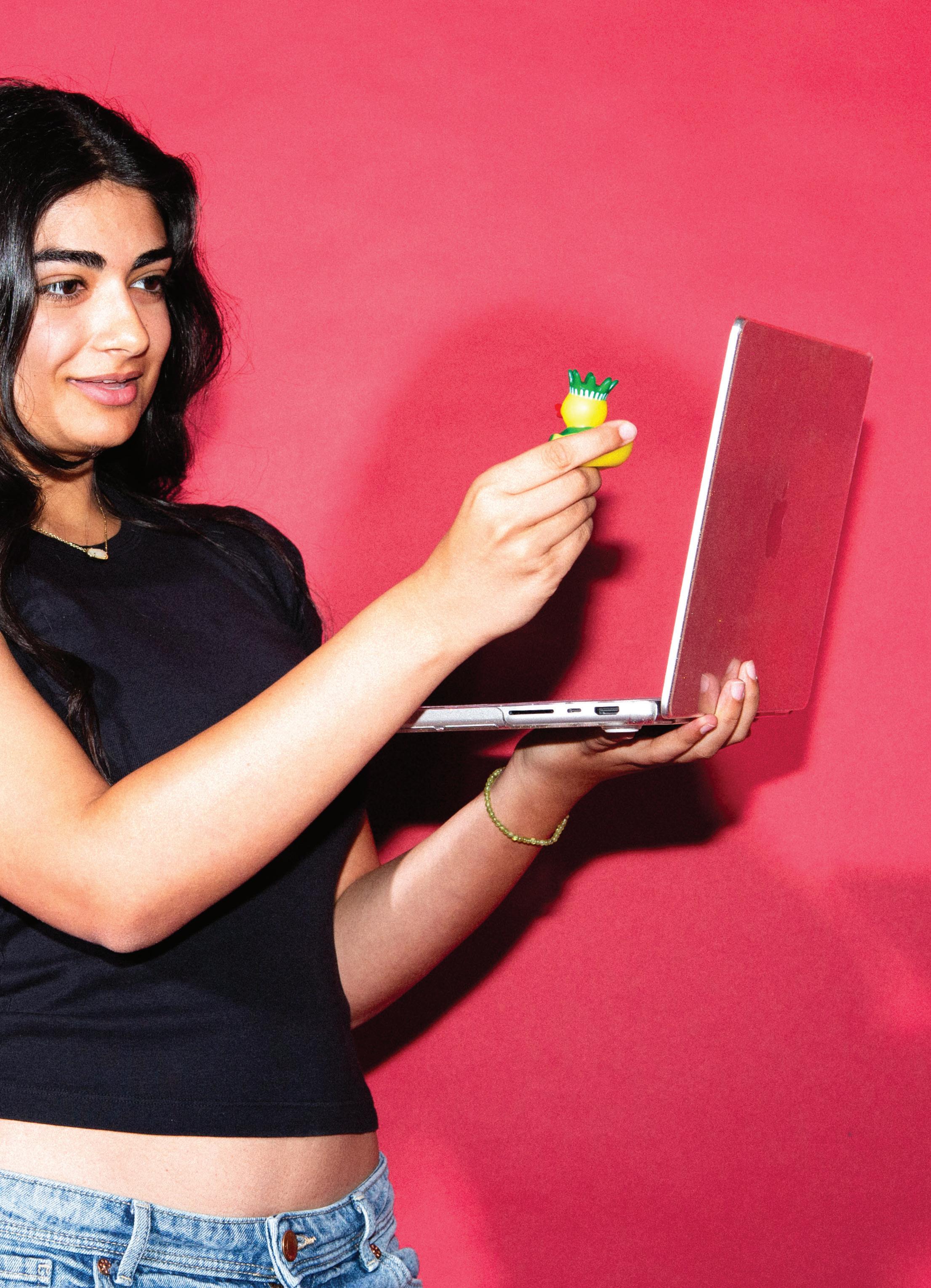
Hannah Moshtaghi always assumed she would end in the Bay Area after college. After all, she grew up in the Bay and is a computer science major at Cal Poly, that pipeline is pretty popular. Moshtaghi felt everything she would ever want would be in California. However, two summers ago, when she was interning at a Google office that was just about 15 minutes from where she went to high school, Moshtaghi had an “epiphany.” She realized being back at home was too comfortable and that she was ready for a change.
This September, Moshtaghi will move to New York City to work as a software engineer for Google, specifically on YouTube. She interned at Google for a second time but in New York City last summer, and was pleasantly surprised by how she liked it. Moshtaghi, who is also in the Cal Poly Honors Program, will graduate with her bachelor's and master's in computer science this spring.
While at Cal Poly, Moshtaghi was a part of various engineering clubs, such as Society of Women Engineers, and founded two clubs: CodeBox and Computing Club Collaborative. Along with being heavily involved in computing organizations, in 2024 Moshtaghi and her Cal Poly teammates won a $20,000 grant at Cal Poly’s “Change the World Challenge" which recognizes student projects that address global projects. Before she moves to New York City, Moshtaghi plans to travel to Japan and Croatia while also spending time with her family in California.
This interview has been edited for length and clarity.
Riya Minglani: How do you feel entering the software industry right now?
Hannah Moshtaghi: It is a little intimidating because you hear a lot of scary things about AI going to take our jobs. But, from my experience, I think AI is a tool. I think it is something that is going to help us expedite our work. I don’t
see it fully replacing us any time soon. I think you need software engineers. You need creative people.
RM: Who is someone you look up to in your industry?
HM: Probably my mom. She is one of the most hard working and inspiring people that I know. She immigrated here from Iran when she was my age and had to figure it all out on her own. It’s crazy to think about all the things she had to deal with to get to this point and help me get to this point. She’s truly my star.
RM: Is there a Cal Poly class that shaped your life?
HM: I think my ethics and technology class. When you’re in tech and you’re a computer science major, it can feel like you are in this bubble outside of the world. You’re always trying to build the next big thing… You just kind of forget that what I’m building affects people — that it has an impact. In that class, I really learned to look outside of that and gain a perspective when I’m building my AI models or whatever I’m building. I need to consider how this is going to impact the world.
RM: How do you feel about moving to another coast?
HM: When I interned in New York City, it was really eye opening. I was surprised by how much I loved being in a new place. A new area allowed me to grow in ways I hadn’t even expected before. I learned so much from that and I wanted to continue that. So even though it's kind of a scary thing, I think it will be a great growth opportunity for me.

1. One word that best describes you: Determined
2. One thing you would bring to a deserted island: In-N-Out — protein-style, animal-style, whole-grilled-onion-style, well-done and animal-style fries and maybe a pink lemonade if I’m feeling extra special
3. Your future plans: YouTube software engineer in New York City
4. One object you can’t do your job without: An ergonomic mouse
5. A Cal Poly class that shaped your life: Ethics and Technology (PHIL 323)
Interview By Sydnie Bierma
Design By Anika Loganathan
Noah Tsang first got into acting after stumbling into a short series production call while he was studying abroad in Paris. Originally looking for a modeling gig, the business entrepreneurship senior fell in love with acting.
While at Cal Poly, Tsang has modeled, acted and worked as a creative director on a photoshoot. Tsang modeled his friend Brady Nakamura’s designs for the Fashion, Innovation, Trendsetting, and Styling (FITS) Club in 2024.
He studied abroad in Paris during his junior year, where he completed his first semester with CEA CAPA before extending his stay by enrolling in a French school.
Continuing to explore creative outlets, Tsang worked as creative director for an editorial photo shoot for FITS. Postgrad he hopes to move to Melbourne for the summer and apply to drama schools in London to further progress his acting career.
This interview has been edited for length and clarity.
Sydnie Bierma: What is your dream job?
Noah Tsang: I have a lot of goals, but I really like the direction that A24 is going. Marty Supreme and the films that have been coming out recently have been so good. That would be a dream to be in one of those.
SB: In your opinion, what makes a good actor or actress?
NT: I'm still learning, but the types of roles that you choose are really important. Because you kind of have to fight for every single role that you get. I feel like all of the people that I look up to have chosen really good people to
work with. That's something that I want for my career, being able to surround myself with really talented people.
SB: What actors do you look up to?
NT: I just recently watched The Dark Knight, so I’d probably say Christian Bale.
SB: What is the biggest challenge in your industry?
NT: I think the biggest challenge in the acting industry is that there's no roadmap. There’s no “you have to do this, and then you’ll get this.” I think dealing with uncertainty is one of the most useful skills that I've learned. And I think it's a good life skill in general.
SB: Why do you do what you do?
NT: I don't think I can do anything else. I don’t think I could work in a system where I have a boss. I want to be my own boss, unless I’m working with a talented director.
SB: Why do you recommend going abroad?
NT: You have to see the world. I think one of the most underrated parts about studying abroad is that the organization takes care of your housing, schooling and schedule. It’s easy to meet friends because everyone else is trying to make friends as well. It's just a great experience to leave the country and see another perspective.


1. One word that best describes you: Erratic
2. One thing you would bring to a deserted island: A watercolor set
3. Your future plans: Applying to drama school in London
4. One object you can’t do your job without: Clothes
5. A Cal Poly class that shaped your life: Abnormal Psychology (PSY 405)
Interview By Abby Gorman
Design By Elena Vaughan
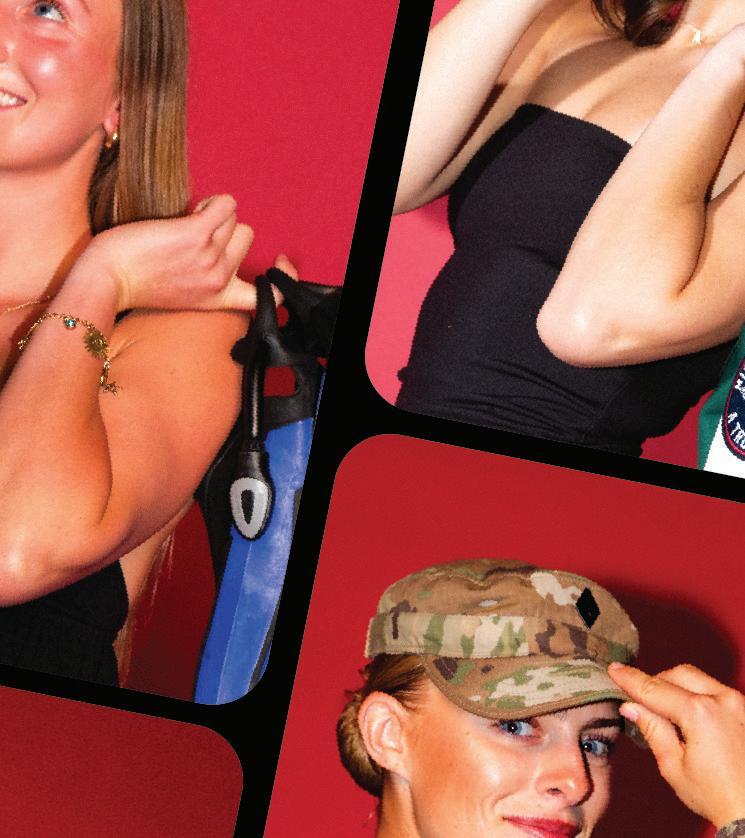
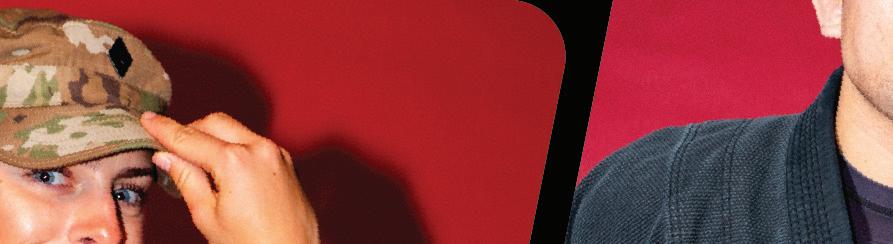
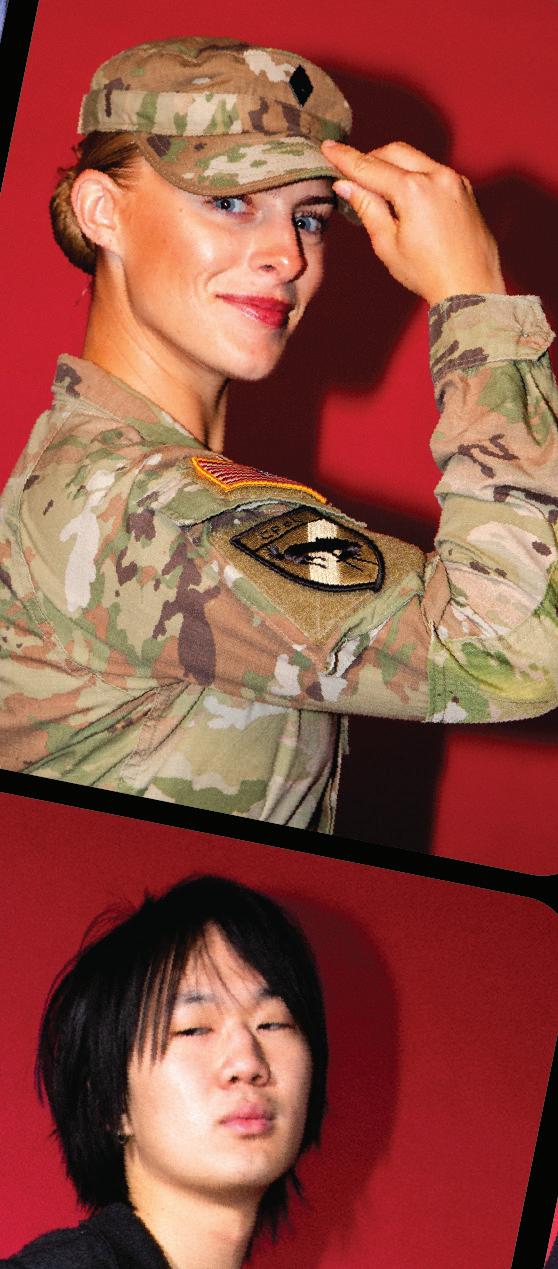
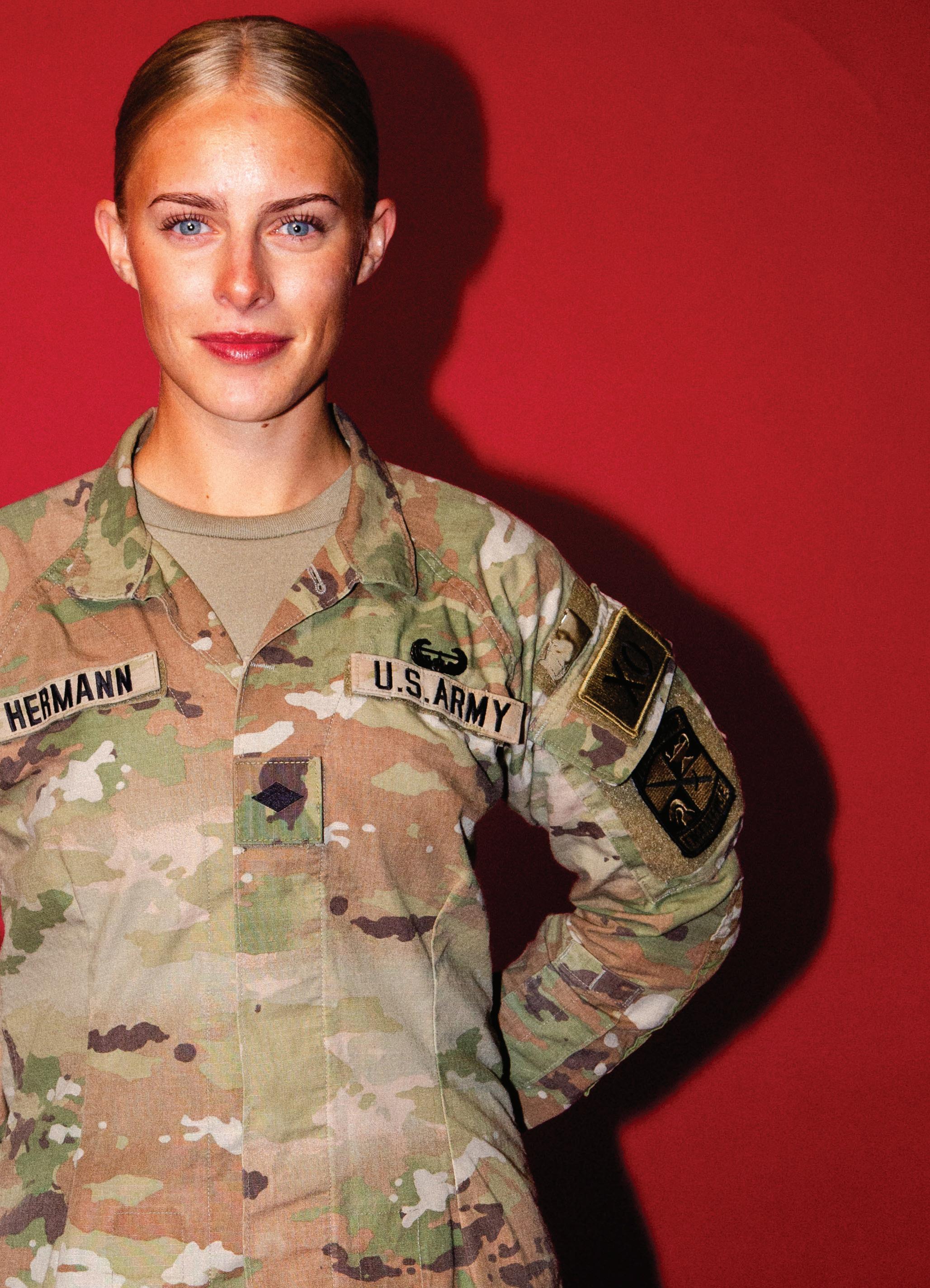
From a young age, journalism senior Isabel Hermann dreamed about working for the FBI. After her freshman year, Hermann decided that the Reserve Officers' Training Corps could be a good way to bridge the gap between her academics and her lifelong desire to work in intelligence. ROTC allows students to complete military training while getting their degree and enter their branch as an officer after graduating. Every week, Hermann attends early-morning physical training sessions and classes on the fundamentals of leadership and military tactics. After being scored against cadets nationwide, Hermann was selected to attend flight school at Fort Rucker, Alabama, for two years. She will then enter into a 10-year active duty service obligation as an officer in Army aviation. She is looking forward to honing her skills and meeting other student officers.
This interview has been edited for length and clarity.
Abby Gorman: How are you feeling about starting flight school?
Isabel Hermann: I’m definitely nervous, especially moving to Alabama and not knowing anyone there. But, I hope my Cal Poly education has prepared me for the rigor that I’m going to endure in flight school. It’s also exciting that I know I’ll be in a class with people my age who are in the same situation as I am.
AG: What encouraged you to choose flight school over going directly into active duty?
IH: I thought it was really cool that I could go from having no background in aviation and that the Army would teach me everything I needed to know.
I really like school, so getting more education on something I’m passionate about seemed like a great deal.
AG: How did ROTC shape your college experience?
IH: I really liked the structure it gave me in my life. I am someone who needs to have a strict schedule, or else I won’t wake up early in the morning. It pushed me to challenge myself physically and mentally and learn about something new. It also gave me community and introduced me to a whole group of people that I never would have met had I not joined ROTC.
AG: What does training look like?
IH: Our early-morning physical training is mostly weights and running. Our weekly labs are where we go out and put everything we’re learning to work. Earlier in the year, we practiced drills on the lower sports complex. Now, we’re going into Poly Canyon, where we’ll run pretend missions and practice our leadership skills.
AG: What will you miss most about San Luis Obispo?
IH: Everything. It’s so beautiful, and everyone’s nice, and that’s not really the way it is in other places. Being surrounded by people my age, the beaches, the mountains. Everything about it is going to be really hard to say goodbye to.

1. One word that best describes you: Spontaneous
2. One thing you would bring to a deserted island: A knife
3. Your future plans: Attend flight school to become an Army aviation officer
4. One object you can’t do your job without: My teammates
5. A Cal Poly class that shaped your life: Intro to Digital Photography (ART 122)
Interview By Sarah Jagielski
Design By Kennedy Ray
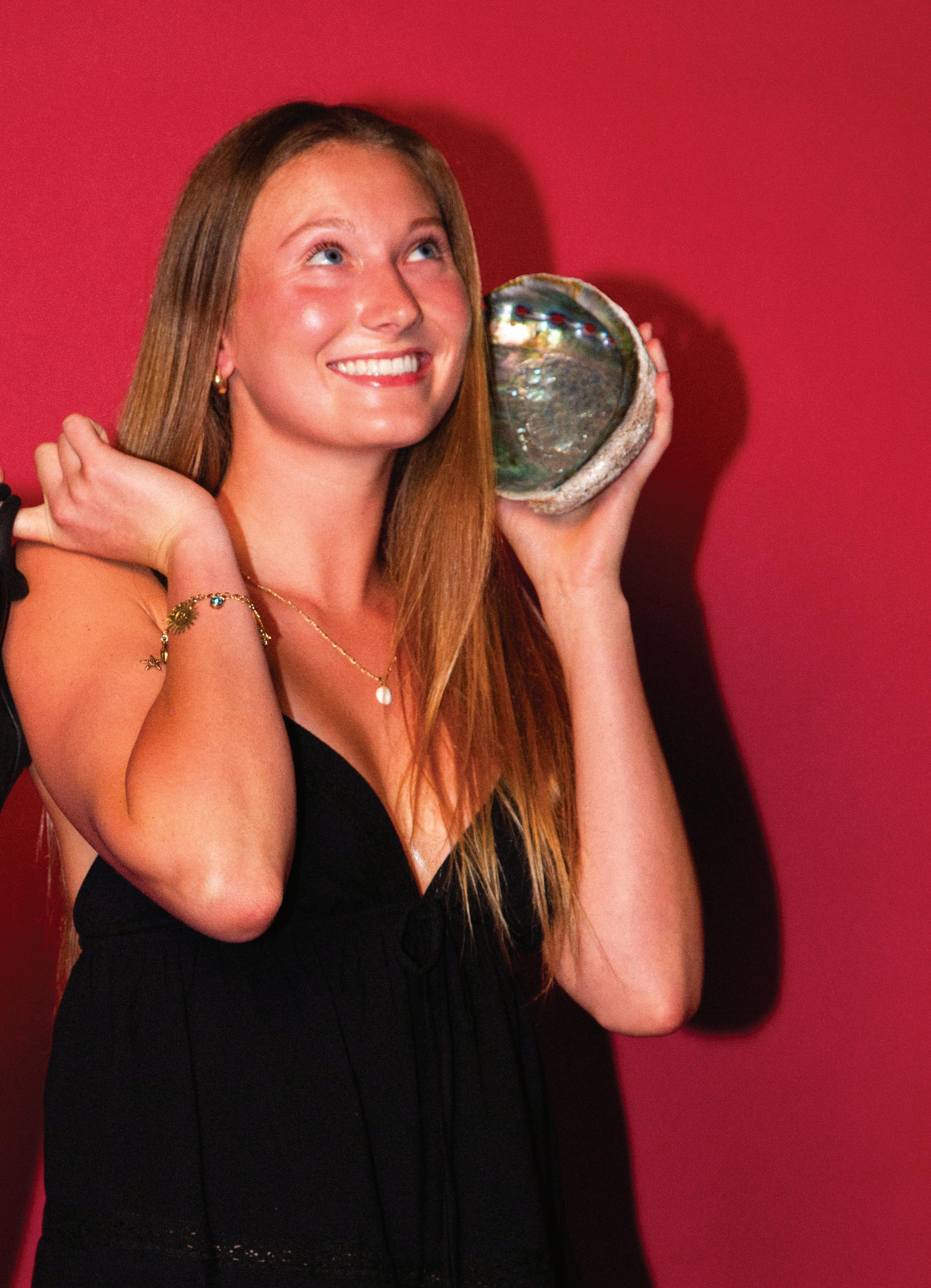
Growing up along the Washington coast, Lucy Bentsen has always found comfort in the ocean. This naturally led to a developed passion for the environment and marine life. With support from her family, Bentsen took up marine diving and scuba in high school, and hasn’t looked back since. She is graduating from Cal Poly this spring with a degree in marine sciences.
Bentsen has absolutely thrived under Cal Poly’s Learn by Doing approach, citing “hands-on work” as important to both her personal and career development. During her time at Cal Poly, she has gotten her scientific diving certification, worked with a marine mammal rehabilitation organization in Morro Bay and has researched harbor and elephant seal populations.
Post-grad, Lucy has an internship lined up this summer in Seattle. She will be assisting local rehabilitation and rescue efforts (while also diving in her free time), building off of her prior experience in the field. After that, grad school is the plan. With her impressive combination of knowledge, skill and motivation, she is well-equipped to make a positive impact wherever she goes.
This interview has been edited for length and clarity.
Sarah Jagielski: What inspired you to pursue a career in marine science and diving?
Lucy Bentsen: I grew up near the Puget Sound in Washington, my family had a cabin in the South Sound. I’ve always just loved the ocean, loved the water. I remember visiting [Cal Poly] for the first time, going to Avila Beach and looking out at the pier. Diving-wise, my dad’s a diver. I got my open water diving certification in high school. Once I knew I wanted to do
marine science in the future, I thought diving would be fun and also helpful for my career.
SJ: What kind of impact would you like to make?
LB: I want to work in marine ecology and conservation. Something that interests me a lot right now is kelp forest restoration with diving. I’m still figuring out exactly where in the field I’d like to be, but I would love to use my diving.
SJ: What are you the most passionate about in marine science?
LB: I think just being able to contribute to ocean conservation and protection. It really serves us in so many ways, such as climate mitigation or storm protection. Preserving the ocean is important for the sake of all the living things in it, and also for everybody getting to visit and see its beauty.
SJ: What else have you been involved with on campus?
LB: I was a Week of Welcome leader my second year, that was a lot of fun. I’m also in charge of a Scuba Club. It’s a local club, but mostly Cal Poly students.
SJ: Do you ever hope to do work outside of the West Coast, or internationally?
LB: I would consider it for a couple years, but I do love the West Coast so I think I’ll end up settling somewhere [here], for sure. That’s also where I’m going to focus my applications for grad school. In grad school, I’ll be focusing on marine ecology or general marine biology.

1. One word that best describes you: Energetic
2. One thing you would bring to a deserted island: Chapstick, specifically Nivea brand (with sunscreen!)
3. Your future plans: Marine rescue/rehabilitation and marine diving
4. One object you can’t do your job without: Binoculars
5. A Cal Poly class that shaped your life: Marine Ecology (MSCI 300)