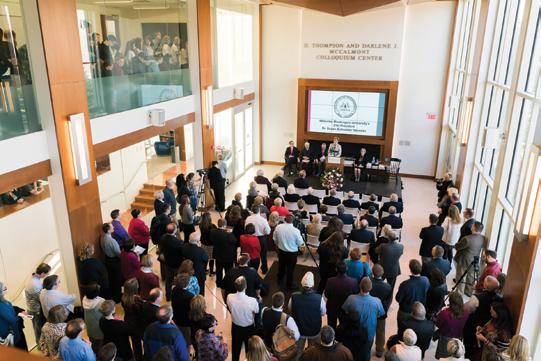
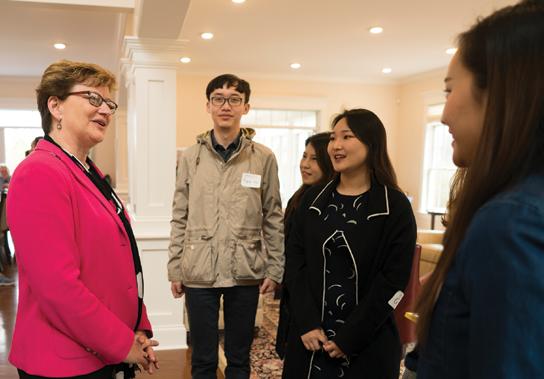
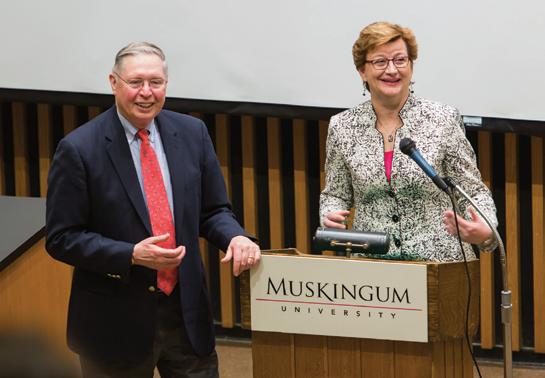
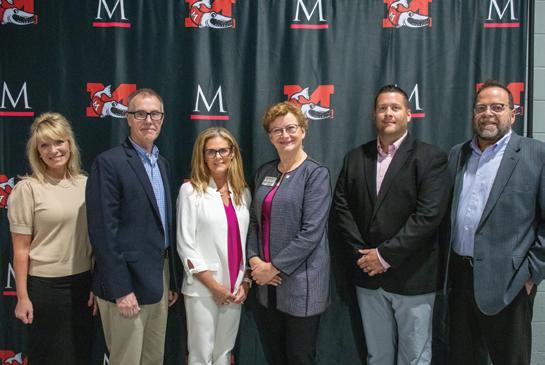
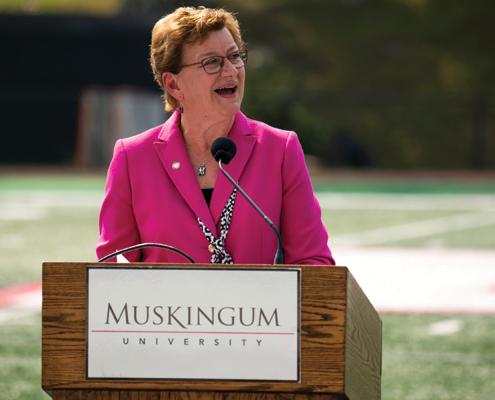
As I conclude my tenure as president of Muskingum University, I am filled with gratitude for the extraordinary community that has made these past ten years so impactful. This edition of Update offers a fitting moment to simply say: thank you. First and foremost, to our students—past, present, and future. It has been a true privilege to walk alongside you: to hear your stories, to help create spaces where you could learn and grow, to share in moments of joy and challenge, and to witness your talents in concerts, exhibitions, competitions, presentations and events. You have shaped this institution in powerful ways, and you have certainly shaped me. You will always hold a place in my heart.
To our faculty and staff, you are the heart and soul of this University. Your dedication to students is what first drew me to Muskingum, and your resilience, creativity, and unwavering commitment have guided us through opportunities and challenges. As teachers, scholars, coaches, mentors, and leaders, you embody excellence. Because of you, we are a Muskingum like always and a Muskingum like never before.
To the Board of Trustees, senior leadership team, and community partners, who led with me so faithfully and well. Together, we have navigated a decade of change, innovation, and shared purpose. Leadership is never a solo endeavor, and I have been deeply fortunate to be part of such an extraordinary team. Because of you, our mission continues to thrive.
To our alumni, you are the living expression of Muskingum’s mission—to educate the whole student for the whole world. Your impact is felt in communities across the globe through your leadership and care for others. Ken and I have treasured the opportunity to connect with Muskies near and far—from visits across the United States to unforgettable experiences in India and China. Your ongoing support of this institution is essential to our well-being and we are grateful for the opportunity to experience the power of the Long Magenta Line in so many ways.
Serving as president of this remarkable University has been one of the greatest privileges of my life. I leave with a full heart, deep appreciation, and great confidence in all that lies ahead. Because today, like every day, is a great day to be a Muskie!
With warmest wishes for a bright future,
Susan S. Hasseler
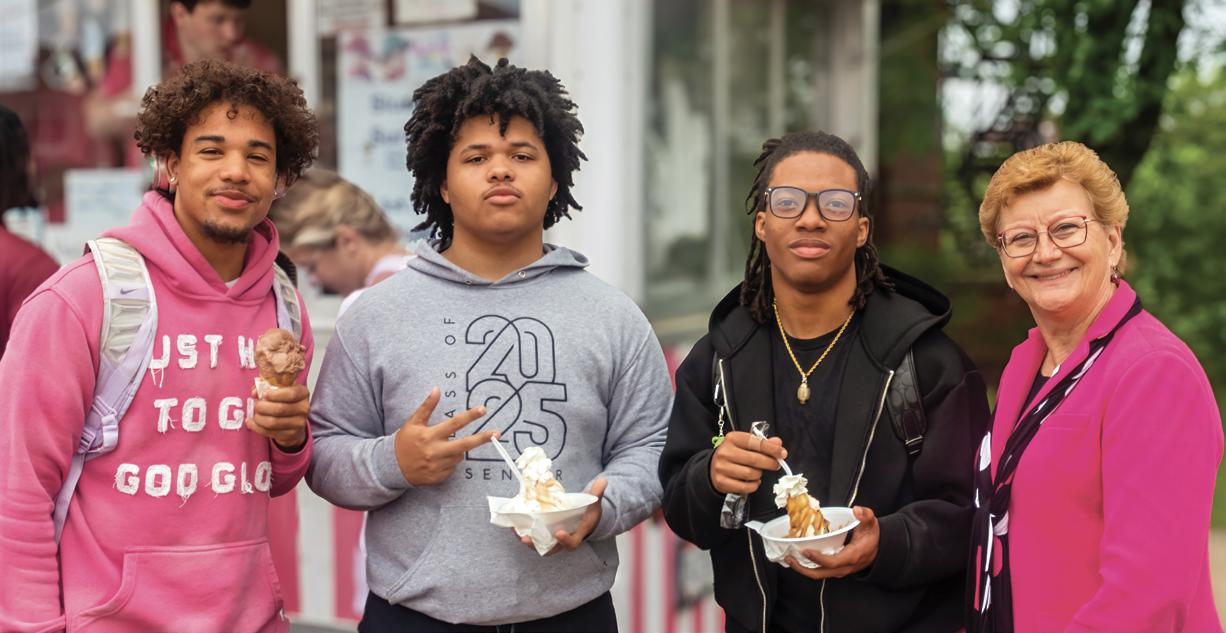
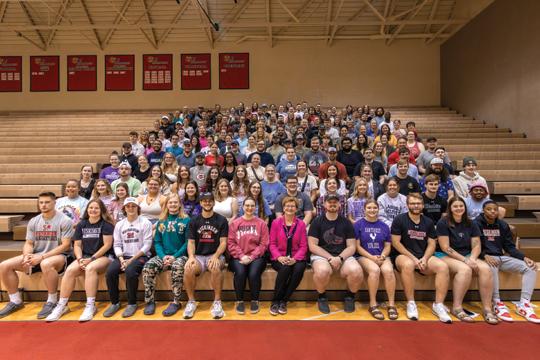
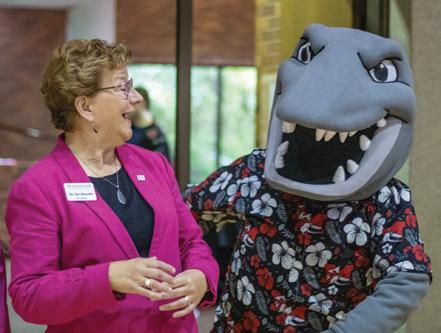
Students enjoy ice cream from Kent's Kones with President Hasseler on the Quad.
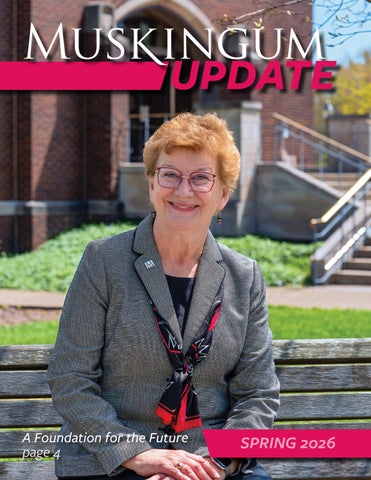
A Foundation for the Future: The Leadership of President Sue Hasseler
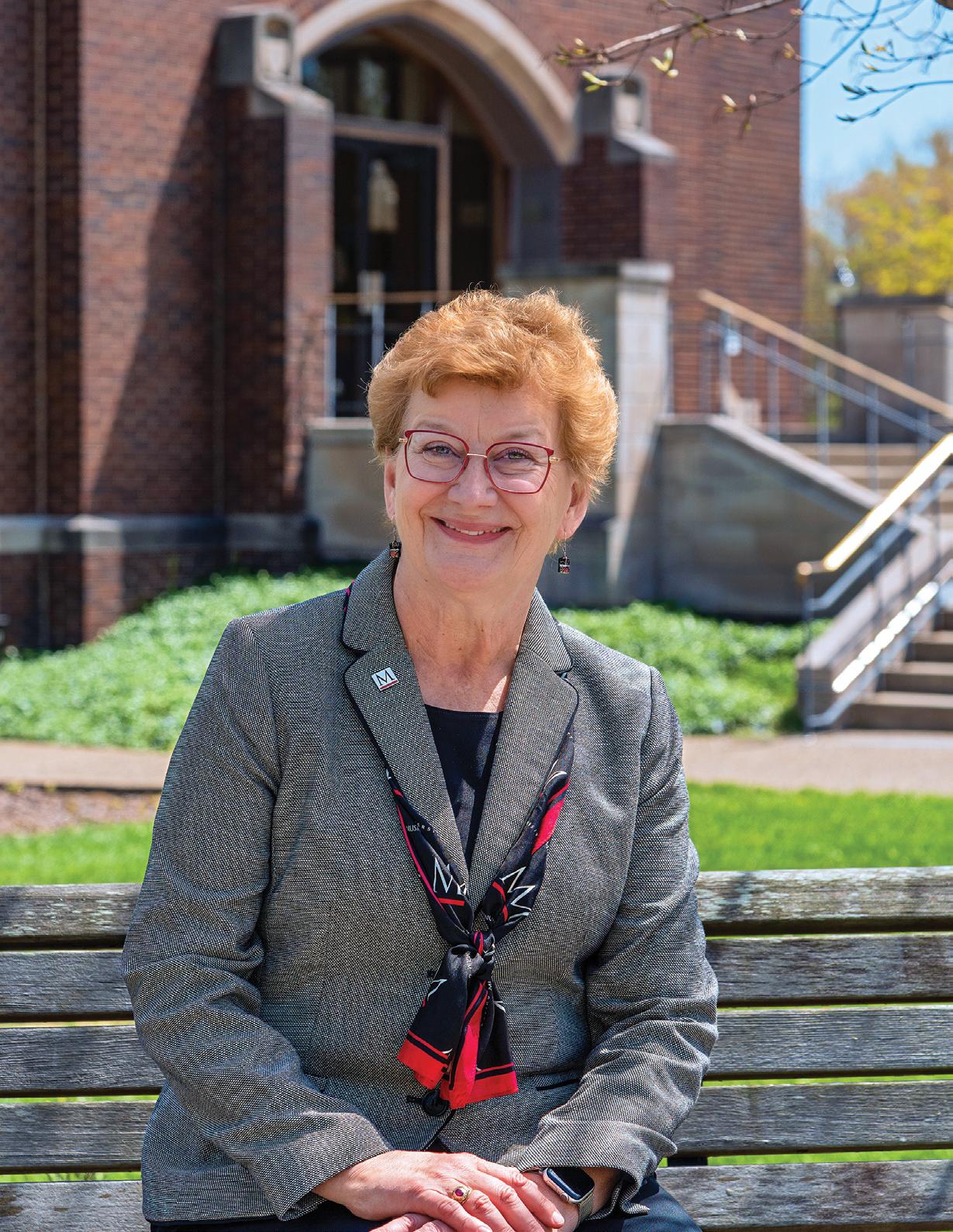
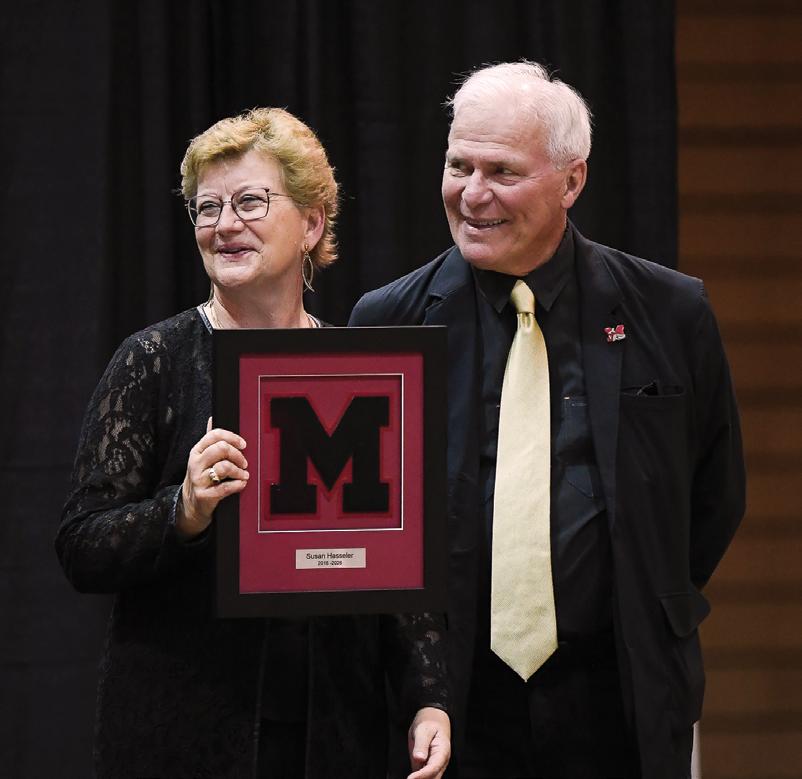
On June 30, 2026, Dr. Sue Hasseler will conclude her tenure as the 21st president of Muskingum University, closing a decade of leadership defined by clarity, resilience, and an unwavering belief in the transformative power of a Muskingum education.
In her 2016 inaugural address, Hasseler articulated a vision rooted in service: “We find our calling, our purpose, and our true meaning in life by engaging with and serving others and the world.” This call to serve captured the essence of Muskingum’s character and set the tone for her administration’s trajectory.
Ten years later, she says farewell to an institution strategically positioned for the future while remaining grounded in its unique Muskingum identity.
We educate the whole learner for the whole world
Throughout her time at the helm, Hasseler championed initiatives designed to expand access to education, a focus that brought Muskingum national recognition, including being ranked multiple times as the #1 Best Value in Ohio by US News & World Report.
Educational opportunities for adult learners increased during Hasseler’s tenure. The University expanded postbaccalaureate teacher education programs, launched a Master of Occupational Therapy degree, added new Organizational Leadership degrees, including its first doctoral program, and created a 4+1 Master of Business Administration.
Undergraduate opportunities were also enhanced, including the addition of 85 new endowed scholarships and four new Fellows Programs. The launch of the Impact Center in 2022 bolstered career development and expanded hands-on learning opportunities. Building on that momentum, the annual Khanna Career Connections Conference, first held in 2023, connected students with alumni and prospective employers. Undergraduate majors were re-imagined to reflect student and workforce needs and micro-credentials were added to an already strong set of academic offerings. New athletic opportunities including E-Sports, STUNT, and Archery, were also added and existing athletic programs were strengthened. Multiple new leadership development opportunities were implemented as well.
Hasseler also reinforced the University’s global partnerships. In 2019, she traveled to China with faculty, campus leaders and trustee Pat Fridley, to deepen Muskingum’s longstanding relationships there. A few years later, to revitalize
Total dollars fundraised $83 Million
Muskingum’s decades-long connection with the Doon School, Hasseler traveled to India with faculty, staff, and trustee Nik Deogun, a Doon School graduate.
“International connections have always been an integral part of Muskingum’s educational programming,” Hasseler said “And these relationships are built on personal relationships.” Through such partnerships, the University continues to serve new generations of international students.
A Muskingum like always, a Muskingum like never before
The impact of Hasseler’s presidency is particularly visible in the revitalization of Muskingum’s campus, with infrastructure investments reflecting strategic intent, a deep understanding of the student experience, and a love for the beauty and history of this special place.
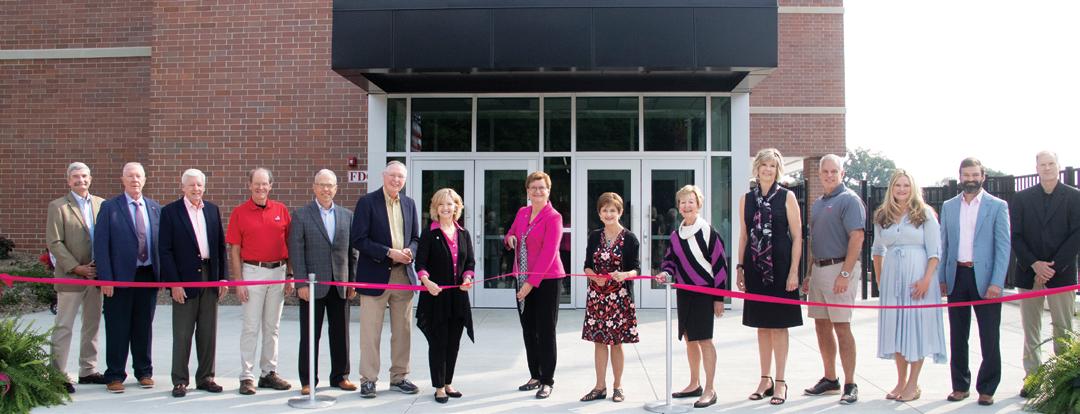
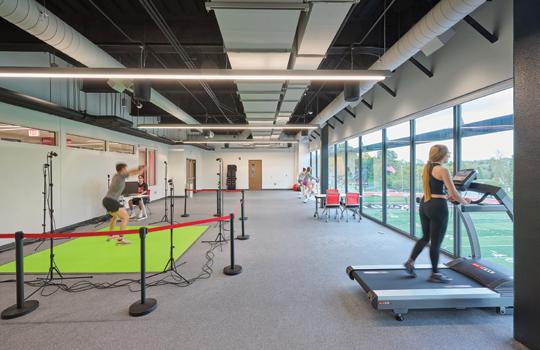
Thanks to a $10 million gift from Trustee Emeritus Henry D. Bullock—the largest single gift in the University’s history— the Bullock Health and Wellness Complex (BHWC) stands as the most ambitious of these projects. Conceived as a multi-use facility, the BHWC integrates athletics, academics, and community engagement in one dynamic space. During early discussions, Hasseler offered a simple question that guided the exceptional planning team: How will a student feel when they walk in the door? Today, the complex serves as a vibrant hub for both campus and regional communities.
Hasseler also invested in the University’s time-honored buildings with a strong focus on increasing accessibility for all. Boyd Science Center is undergoing a multi-phase transformation funded in large part by generous individual donors. A new elevator made Brown Chapel mobility accessible, and Cambridge Hall saw major HVAC and office updates. A $2.2 million federal grant funded the renovation of the Quad Center, including a professional Impact Center, updated Bait Shop and elevator access to all floors. Patton dining facilities and Finney Hall also received a significant makeovers, tangibly enhancing the student experience.
At Muskingum, we roll up our sleeves and get it done
Hasseler’s presidency coincided with one of the most unsettling periods in modern US history. The COVID-19 pandemic required rapid adaptation and sustained attention to student, faculty, and staff needs.
In Spring 2020, the University transitioned to fully remote learning, as did nearly all other colleges in the country. Unlike most other colleges, however, Muskingum safely returned to primarily in-person instruction by the fall of
85
that same year. “We listened to our students,” Hasseler said. “They told us they wanted to come back to campus for inperson learning, and we were determined to find a way to safely make that experience happen.”
Throughout the pandemic, her leadership remained steadfast and student-centered. Even amid uncertainty, the University continued to move forward with key priorities, including curricular and facility updates. This institutional composure increased confidence across campus during a period of unprecedented disruption.
Hasseler’s dedication to the University’s well-being was also evident in how she prioritized compensation as a matter of long-term institutional strength. Recognizing that fair, competitive pay is essential to retaining talented faculty and staff, she worked steadily to close wage gaps and align faculty and staff salaries and benefits more closely with professional norms.
And today, like every day, is a great day to be a Muskie!!
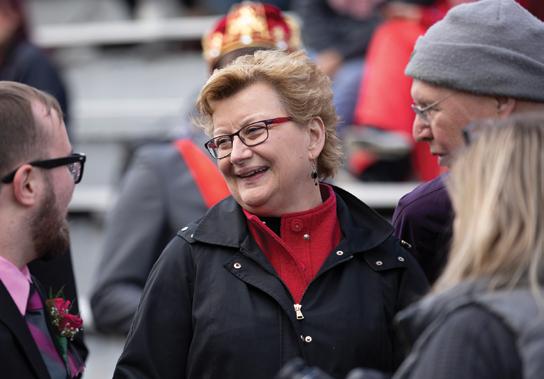
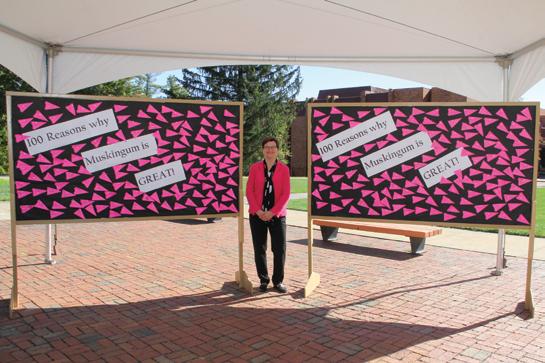
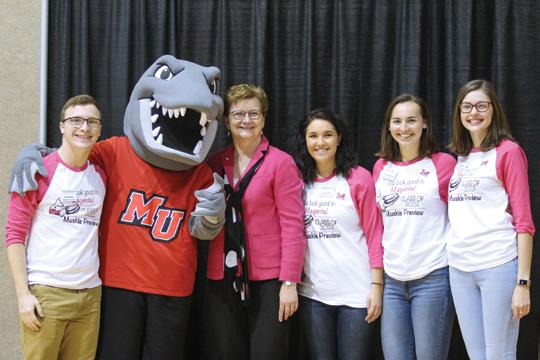
Hasseler’s visibility was a defining feature of her leadership. From ice cream socials with first-year students to open houses with faculty and staff, Hasseler maintained an active role on and off campus. She regularly attended academic ceremonies, athletic competitions, artistic performances, and alumni events. Her consistent presence and contagious institutional pride, including an impressive black and magenta wardrobe, shaped campus culture and cultivated relationships central to the University’s success.
Recognizing that Muskingum’s strength lies in its relationships, Hasseler worked to deepen connections with alumni, donors, and community partners. She served on multiple regional, state, and national boards and participated in regional economic initiatives, establishing an Office of External Engagement to expand that work. During the decade Hasseler led Muskingum, the University raised over $83 million for the annual fund, scholarships, high impact experiences, and capital improvements. Since 2021, the University has also secured an additional $10 million in federal, state and foundation grants.
What made Hasseler’s approach to engagement especially meaningful, however, was her ability to find celebration not only in grand events but in the everyday moments. “Each day, as I walk the campus,” she said, “I find immense joy in Muskie excellence in action.”
Creation of the Muskingum Society
The Muskingum Society honors alumni and friends who help sustain this life-changing tradition with an annual commitment of $1,000 or more. All contributions go directly to student aid and scholarships, unless otherwise directed.
A foundation for the future
The many visible achievements of Sue Hasseler’s presidency tell only part of the story. Her most enduring contribution lies in something less tangible: a clear and steady sense of purpose. By empowering administrators, faculty, and staff to serve the University’s continuum of learners, she helped Muskingum more fully live its mission—to know, challenge, and prepare students for an ever-changing future. As she often observed, leadership is never a solo endeavor, and an exceptional Senior Leadership Team and Board of Trustees played an essential role in making this decade of progress possible.
That clarity provides a strong foundation for what comes next. Incoming president Dr. Flavius Lilly inherits an institution grounded in its identity and ready to meet the demands ahead.
At her inauguration in 2016, Hal Burlingame, then Chair of the Board and now Trustee Emeritus, praised Hasseler’s “deep commitments to inclusivity, community engagement, service, and building local, regional, and national partnerships.” In the years that followed, his words proved an accurate reflection of a presidency defined by thoughtful, steady, and mission-driven leadership.
Envisioning Muskingum
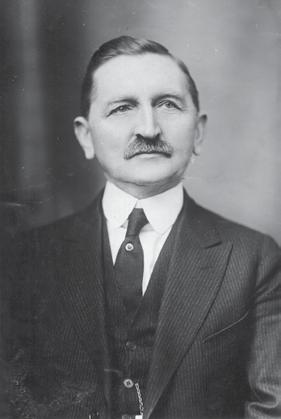
J. Knox Montgomery, President from 1904-1931, developed the earliest campus plan for Muskingum.
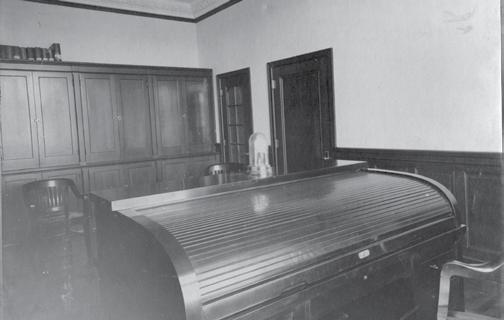
On January 25, 1921, J. Knox Montgomery, Muskingum’s president since 1904, wrote his first letter from his new mahogany roll-top desk in the recently completed college building named for him.
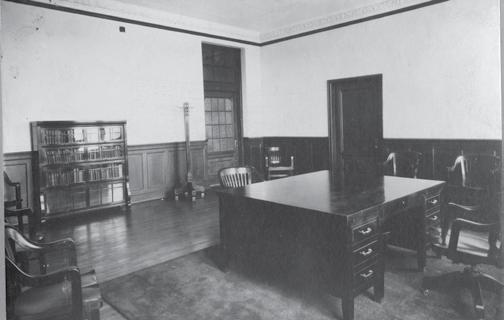
“My dear Children,” he began, “I am at last seated at my desk in my own private office in Montgomery Hall. It doesn’t seem possible, yet it is true...No one knows better than you the long years of hard work and hoping against hope for the coming of this day and I need not tell you that my heart is full of gratitude to God for permitting me to see my dream realized.” He described in detail the many fine pieces of mahogany furniture that filled both his office and his secretary’s, declaring these spaces “the finest suite of college President’s offices I have ever seen.” In the 105 years since J. Knox Montgomery penned that letter to his children, nine installed presidents and several interim presidents have used that same space as their base of operations. Dr. Flavius Lilly, who will begin his term this summer, will be the tenth.
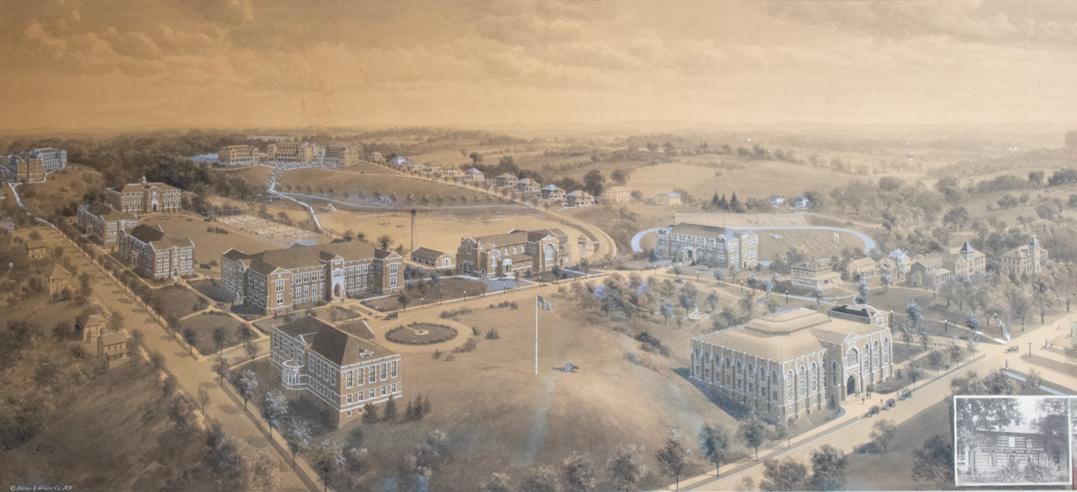
In addition to managing the finer details of Montgomery Hall’s construction, J. Knox was also laying out a broader plan for what Muskingum might become. Guided by his conviction that Muskingum could improve the lives of its students, serve the larger region, and provide opportunity and access to future generations, he commissioned a remarkable lithograph that still resides in the president’s office today. Versions of the untitled print were also reproduced as color postcards, captioned “Birds-Eye View of the Present and Proposed Buildings of Muskingum College.” These postcards were mailed to prospective students and donors. The plan depicted in the president’s office was the third iteration of a campus vision that J. Knox created for a series of fundraising campaigns he began early in his presidential tenure and continued for the rest of his life. The image rewards those who visit the office and examine it closely.
What is most striking about J. Knox’s campus vision is how much of what he dreamed for Muskingum was realized. Most of the defining features of the campus as he imagined it came to fruition: the academic hill arranged around a central quad; a historic east campus; a gorgeous campus lake spanned by a pedestrian footbridge; residential homes, originally occupied by professors, lining Lakeside Drive; and two residential hills to the north topped by large dormitories. His campus design practically guaranteed that generations of Muskies would develop sturdy calf muscles as they descended and ascended the hills at least twice a day while traveling from their classrooms to their dining halls and dorms.
A closer perusal of the image reveals some strange departures. A massive “Guernsey-Muskingum County” Carnegie-funded library—pitched but never built—resides on High Street below the academic hill. A proposed-but-neverfully-funded Zanesville Hall, nearly identical to neighboring Cambridge Hall, occupies the place where the Quad Center now resides. Tennis courts cover the ground where Boyd Science Center stands. And tucked into a valley east of the spoon holder, in a space currently occupied by bluebird boxes and a frisbee golf course, lies a football field.
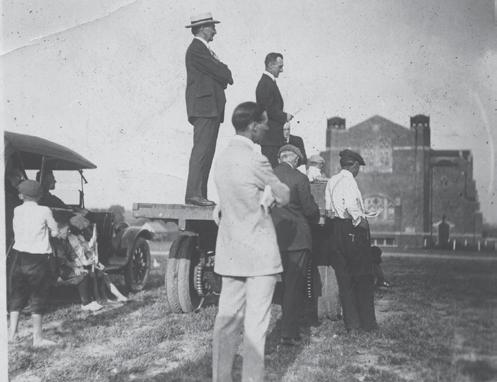
J. Knox overseeing the construction of Montgomery Hall from the back of a flatbed truck.
Each departure in the campus plan reflects presidential leadership responding to changing circumstances. Wars, depressions, recessions, pandemics, baby booms, demographic cliffs, and accelerating technological change have required university leaders to adapt and rethink, which the successive occupants of the president’s office in Montgomery Hall have done skillfully.
Of course, a visual map of a university tells only part of the story. Presidential visioning is not simply about imagining the future physical space. It also requires deep consideration of student needs amidst an ever-evolving world. Much has changed about Muskingum since the days of J. Knox Montgomery, but each president since has remained committed to providing opportunity and access to learners. As Dr. Sue Hasseler completes her decade of leadership and Dr. Flavius Lilly begins his term, that commitment will continue to guide the transition and inform what comes next.
This version of J. Knox Montgomery’s campus vision was commissioned in the early 1920s. A century later, Muskingum’s campus is still influenced by his plan.
J. Knox described the furnishings of his new office, including this mahogany roll-top desk, in a letter he wrote to his children the day he moved in.
Some of the original furnishings in J. Knox Montgomery’s office.
The Bullock Health and Wellness Complex: Where Vision Became Place
Among the defining accomplishments of Dr. Susan S. Hasseler’s decade as president of Muskingum University, few are as visible as the Henry D. Bullock Health and Wellness Complex. Opened in September 2022, the 119,000-square-foot facility marks a milestone of her presidency and signals a promise to future generations: that education, wellness, athletics, and community belong together.
The $38 million project is the largest in the University’s history. Conceived through a campus-wide visioning process and realized during a period of profound uncertainty, it brings academic innovation, modern athletic infrastructure, and community connection together under one roof. From the outset, Dr. Hasseler positioned it not simply as a building but as a catalyst for change. At its dedication during Muskingum’s 100th Homecoming, she spoke of its broader benefits: “This complex reflects not only a transformation of place, but a transformation of possibility—for students, for the institution, and for the region.”
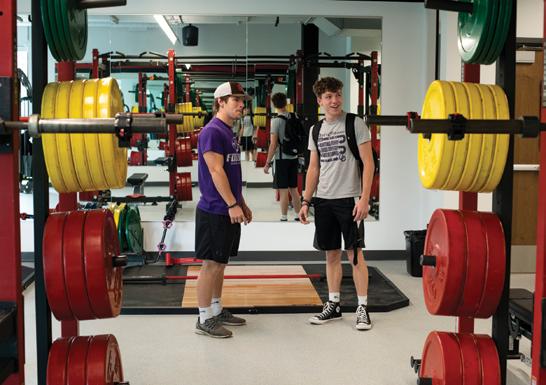
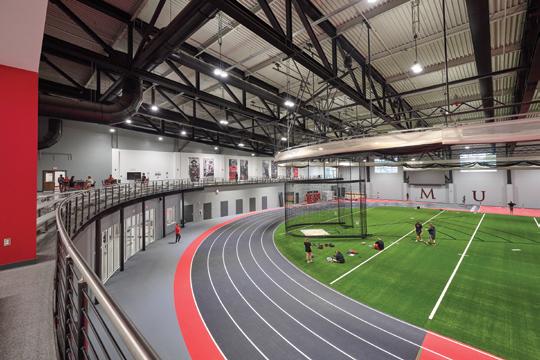
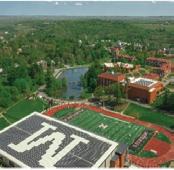
An exceptional campus team designed the Bullock Health and Wellness Complex with adaptability in mind. It supports varsity athletics, intramural recreation, academic instruction, clinical training, and large-scale events. A reimagined stadium with expanded seating and accessible concourses anchors the outdoor experience. Inside, the fieldhouse features a 200-meter track and 60-yard turf field, creating year-round opportunities for competition, practice, recreation, and youth programming. Fitness spaces and a diagnostic training hub provide hands-on learning for students in health-related fields while strengthening partnerships with regional healthcare providers. Multipurpose classrooms and offices serve game day and academic needs; large gathering spaces host community events. All this, and the entire facility operates on solar power.
Built to extend its impact beyond campus, the complex has already welcomed thousands of regional visitors for high school and collegiate competitions, community events, and educational programs. It will continue to serve southeastern Ohio as a gathering place for years to come. “At its best, a university extends beyond its campus—and this facility ensures that Muskingum will continue to serve as a gathering place for the region it calls home.”
Donors
Visitors in Jan-Feb 2026
Excitement about the project reflected confidence in Dr. Hasseler’s leadership, from trustees and foundations to the campus design team. Board Chair Cheryl Hetrick Carpenter ’86 praised Hasseler’s “vision, integrity, and deep belief in the transformative power of higher education.” Project partners echoed that sentiment, with Lincoln Construction and Derck & Edson noting her engagement “from day one through completion.” Local media emphasized the facility’s intentional role in strengthening connections among students, the University, and the region, a goal that continues to guide its use.
The timing of the project adds to its significance. Approved and constructed during the global pandemic, the plan required confidence, courage, and clarity of purpose. Dr. Hasseler consistently framed the decision as an investment in people: future students, faculty, and community partners. The project also contributed more than $11 million to the local economy at a critical time.
As Muskingum prepares for President Hasseler’s retirement, the Bullock Health and Wellness Complex stands as a lasting legacy. Long after her presidency, it will continue to shape the student experience, welcome alumni home, and strengthen the University’s connection to the region and beyond.
The BHWC Story
A Legacy of Impact at Muskingum
High-impact learning has become an expected part of the student experience at Muskingum University. President Susan Hasseler has prioritized experiential learning in ways that have reshaped how students connect their education to purpose and future direction.
“High impact experiences once lived in pockets across campus,” said Dr. Shelley Amstutz Szalay, Vice President for the Student Experience.
“President Hasseler challenged us to think bigger—to ensure these opportunities were accessible to all students, not just those who already knew how to find them.”
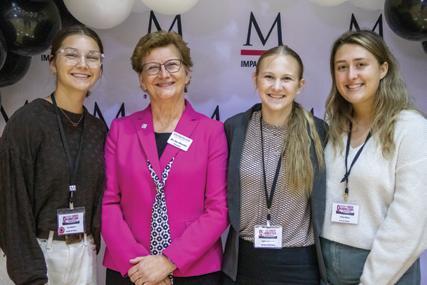
That challenge prompted a coordinated institutional response that brought career development, experiential learning, and alumni engagement together in one place: the Impact Center.
Under President Hasseler’s leadership, Molly Dunn, Associate Vice President for External Engagement, served as the inaugural Executive Director of the Impact Center. “President Hasseler’s vision was central to bringing the Impact Center to life, guiding Muskingum’s transition from a traditional career services model to an integrated approach,” said Dunn.
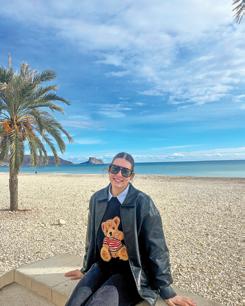
One of the Impact Center’s signature achievements is the creation of the High Impact Experience Grant, which helps remove financial barriers to transformative learning. Since its launch in February 2025, the grants have helped to support 35 students with funding, enabling study abroad, internships, research projects, and participation in national conferences. For students, those opportunities do more than build résumés. They become defining moments. Maria Decaminada ’26 participated in a three-week study abroad program in Alicante, Spain, over winter break. “As a global studies major,” Maria said, “I can only learn so much in an American classroom. There is no better way to learn about the world than in a country that is not my own.”
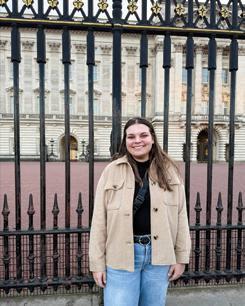
Others emphasize how global experiences build adaptability and confidence. Reflecting on her study abroad trip to London and Scotland, Molly Cepek ’26 said, “I learned life skills for traveling abroad while also learning about the differences in economy and business between the United States and the UK.”
International travel also fosters meaningful human connections. Reflecting on her experience, Maria said, “The most memorable part of the trip was the friendships I built. We still stay in touch and hope to reunite.” Molly shared a similar perspective: “I really valued getting to know my classmates.”
Today, the Impact Center stands as a distinguishing feature of Muskingum. Signature programs such as the High Impact Experience Grant give all students the chance—regardless of financial circumstances—to participate in transformational opportunities. “Working directly with students and hearing how these experiences have shaped their confidence and goals has been incredibly rewarding,” said Amy Nestor, who serves as Senior Director of the Impact Center and helped develop the program from the ground up.
As President Hasseler retires, the Impact Center stands as a clear example of her belief that every student deserves access to experiences that inspire growth, reflection, and lifelong success. The Impact Center will continue to expand access to high-impact experiences and career support, equipping students with the skills and connections needed to thrive. Through intentional integration and collaboration, the Impact Center exemplifies Sue Hasseler’s enduring commitment to transformational learning at Muskingum University.
Maria Decaminada ’26
Molly Cepek ’26
Building the Future: STEM Vision Realized in Boyd Renewal
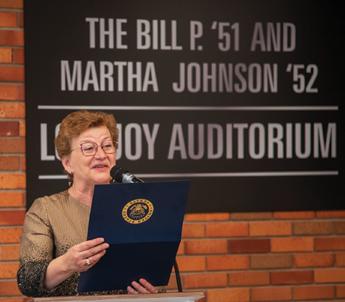
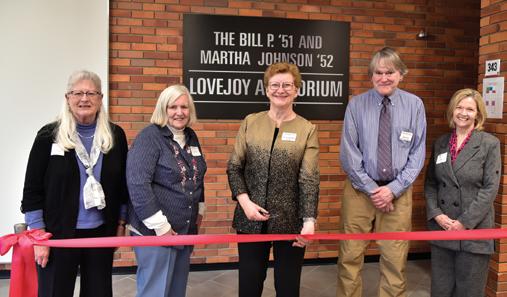
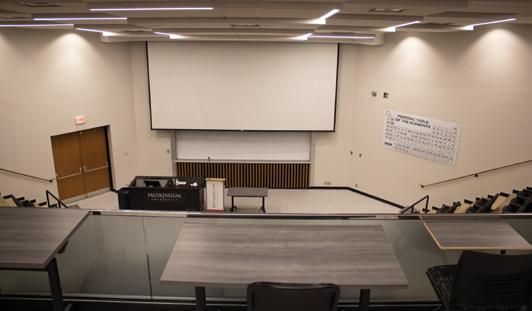
When Sue Hasseler became Muskingum University’s 21st president ten years ago, she set a clear course for growth. As she prepares to step down in June, her tenure closes with a lasting achievement: a plan to revitalize the Boyd Science Center, with the completion of Phase One-auditorium and atrium updates- made possible by a $3.2 million estate gift from alumni Bill P. Lovejoy ’51 and Martha Johnson Lovejoy ’52 along with generous support from the Anderson Family Foundation.
Early in her presidency, Hasseler identified STEM’s key role in Muskingum’s future. Today, nearly half of incoming undergraduate students express an interest in STEM fields. Muskingum’s strength in STEM reflects not only robust programs in biology, chemistry and environmental conservation but also dynamic new opportunities in engineering, data analytics and computer science. The wide range of undergraduate and graduate programs in the health sciences include exercise science, an award-winning Bachelor of Science in Nursing, and an innovative Master of Occupational Therapy.
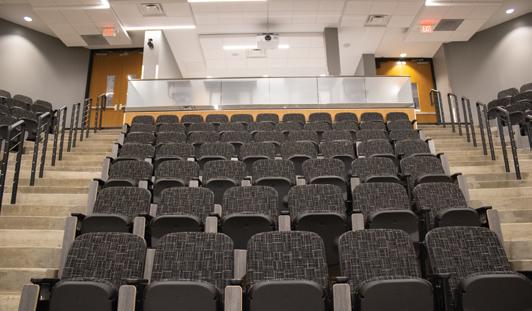
While updates have been made to Boyd Science Center over the last decade, including an E-Sports center, new nursing simulation labs and a virtual cadaver room, the Lovejoy and Anderson gifts provided a catalyst for accelerating and expanding those efforts. The Lovejoy gift funded key upgrades to the university’s largest lecture space, with new seating for more than 250, expanded mobility accessibility and updated technology.
For biology professor and department chair Dr. Jim Dooley, the gift reflects Bill Lovejoy’s personal commitment to students. “Bill was genuinely interested in helping students, especially those just starting in science,” Dooley said. “His support created research opportunities that helped students discover their passion and stay engaged.”
The Anderson Atrium has been redesigned as a collaborative gathering and work space showcasing student research, and nearby restrooms have been made fully accessible and family friendly.
The Auditorium and Atrium were formally dedicated March 23, 2026, marking a significant milestone for the campus.
As Hasseler’s presidency concludes, plans for additional improvements to the Boyd Science Center continue to move forward. The updated facility will support generations of students, while the programs she championed continue to grow.
A Conversation with President Sue Hasseler
Given your experience, what do you see as the most formidable challenges facing higher education in the coming years?
Sue: Muskingum has been remarkably adaptable over the years as we have faced a constantly changing higher ed landscape. From admitting women in the mid-1800s to resetting tuition prices in the mid-1990s, we take action to address the needs of our students and constituents. However, I do believe it is more imperative than ever for us to clearly articulate the exceptional value of a Muskingum education. We need to find new ways to communicate and demonstrate that a college degree is well worth the investment—and then we need to live out that commitment in all of our programming.
What do you say to a family that asks, “Why Muskingum?”
Sue: I like to do a couple of things when families ask this question: briefly review our value statements (opportunity, innovation, community, and access) with an example or two of each; note our designation as #1 in Best Value in Ohio and explain what that means; and remind them that at Muskingum every student is known, challenged, and fully prepared for the future. We provide excellence, affordability, and a bright future in a community full of deep care—what more could you ask for!
When you look back at all the university has accomplished under your leadership, what makes you most proud?
Sue: I am most proud of Muskingum’s continual focus on student and community well-being. Our faculty and staff remain exceptionally student-centered and open to innovation; our students of all ages keep transforming their communities; and we remain committed and full of purpose in a challenged world. That’s a great tribute to an excellent institution.
The Bullock Health and Wellness Complex is a signature achievement for you. What is its lasting impact on students and the community?
Sue: Working on this complex was one of the most enjoyable things I’ve done. Not only does the BHWC meet essential campus and community needs around athletics, recreation, and the health sciences, but it is a beautiful space that resides in the heart of campus. Every part of it was thoughtfully designed for multiple uses and future flexibility. The support for the project was stunning (with over 880 donors), and the financial impact on the community during the pandemic was powerful. The BHWC speaks to optimism about our educational purpose and faith in the future as well as our current commitment to student and community health.
You’ve been a successful fundraiser over the course of your presidency, with over $83 million raised. What are the key lessons you’ve learned doing this important work?
Sue: This was a collective effort, of course, with the advancement and external engagement offices, grant management team, trustees, and campus community all playing important roles. Muskingum has a powerful mission and diverse enough programming that we can connect with many potential supporters. I’ve learned that we need to listen carefully to our supporters, take the time to build relationships, and be authentic about what we can deliver. I’ve also learned to be a thoughtful entrepreneur, taking advantage of unexpected chances when they emerge. Ultimately, it’s all about student well-being and institutional sustainability.
You’re fond of saying “a Muskingum like always, a Muskingum like never before.” What do you mean by that?
Sue: Muskingum has an incredibly rich history of service, excellence, and resilience with wonderful traditions and such powerful stories of impact on individuals and communities. We continue to hold true to our core values: to prepare students to transform the world and to make this powerful education accessible to all. At the same time, the
Bullock Health and Wellness Complex • North Turf Field
Finney Hall and Patton Dining Hall Renovations • Quad Center Renewal Boyd Science Center Renovations • Brown Chapel Updates
needs of students and communities have changed, as have measures of access and success. We need to embrace innovation and create new ways of offering educational opportunities to keep our traditions alive for future generations. Do you have a favorite Muskingum story?
Sue: I have so many great Muskingum stories, but one that will stay with me is the story of John and Annie Glenn. Early in my tenure, I had the privilege of meeting with Senator and Mrs. Glenn in Columbus, where he produced a legal pad with pages of notes and shared his vision of public service with my husband, Ken, and me. I got to hear Mrs. Glenn’s story of resilience and strength as well. Their commitment to New Concord, to higher education, to public service, and to one another was incredibly moving. That December, Janice McCloud and I organized a gathering to commemorate the 75th anniversary of the attack on Pearl Harbor. At the end of the service, two of our students played the echoing taps, which John and his father used to play on Memorial Day. Ten minutes later, Senator Glenn passed away. It still gives me chills when I think about it.
Subsequently, we invited Dr. Scott Parezynski, a fellow astronaut, to speak at the inaugural John Glenn Lecture (endowed by Bill Lovejoy). We also commissioned the original musical piece Godspeed, John Glenn and created the John and Annie Glenn Public Service Fellows program. The Glenns personified the impact that Muskingum can have on the world—and they were lovely people. It has been a treasured part of my experience here.
How has being President of Muskingum University changed you?
Sue: There’s a line from Wicked that I appreciate: “Who can say if I’ve been changed for the better? But because I knew you, I have been changed for good.” The people here at Muskingum are exceptional. With them, I have learned much about persistence, courage, community, integrity, beauty, and joy. I am more measured but remain optimistic, more entrepreneurial but still careful, much more knowledgeable about how education intersects with business, industry, and government, and more connected with higher education leaders across the state and the nation. Most importantly, Muskingum has become a part of me and will always be in my heart. And that is a gift.
What do you see as your legacy at Muskingum?
Sue: I’m quite fond of John Glenn’s comment: “I’m not interested in my legacy. I made up a word: ‘liveacy.’ I’m more interested in living.” I came in and built on a strong commitment to transform the lives of students and the region. We have strengthened programs, enhanced facilities, deepened partnerships, expanded opportunities, and invested in the people who make this all happen. I am hopeful that the hard work we did together has built a powerful foundation to continue this mission long into the future.
Any parting words as your presidency concludes?
Sue: I am so very grateful for the relationships and experiences that have defined my presidential journey and for all the remarkable people who continue to move Muskingum forward. You have important work to do and the power to do it well.
And remember, today, like every day, is a great day to be a Muskie!
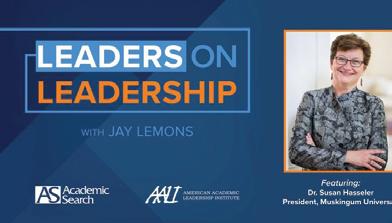
Scan the QR Code to hear President Hasseler's Interview with Jay Lemons on Leaders on Leadership:
You Make the Difference
This year has been defined by the generosity of the Muskingum community and the meaningful impact of giving across campus. Your donations directly fund what matters most at Muskingum: our students, our programs, and our campus environment.
Gifts to the Muskingum Fund provide critical scholarships and student support, expanding access to a Muskingum education and empowering students to focus on their academic and personal growth.
Help Muskingum University continue to be a place that creates opportunity, builds community, cultivates innovation, and provides access with a shared commitment to our students’ success. We invite you to make your gift today: