PREFACE
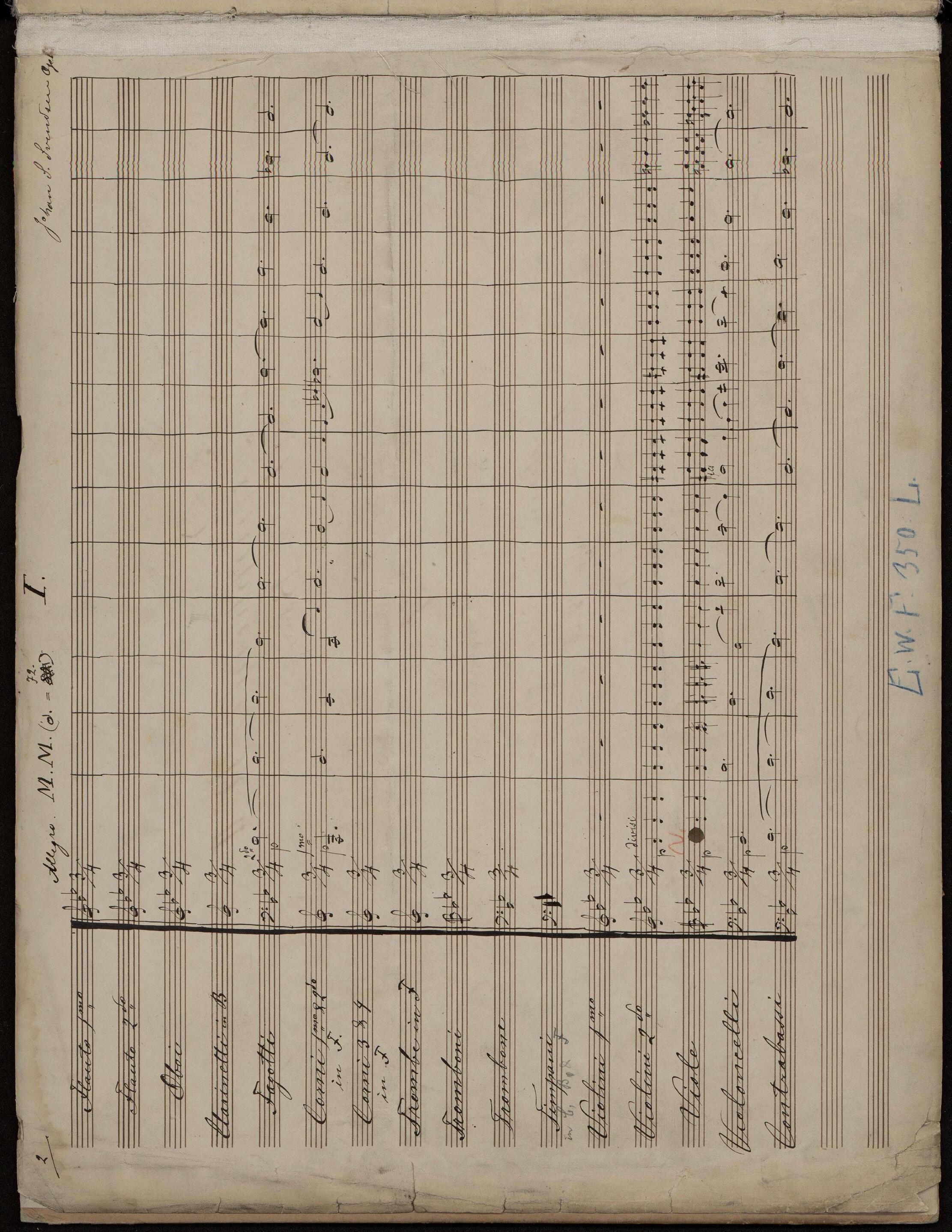
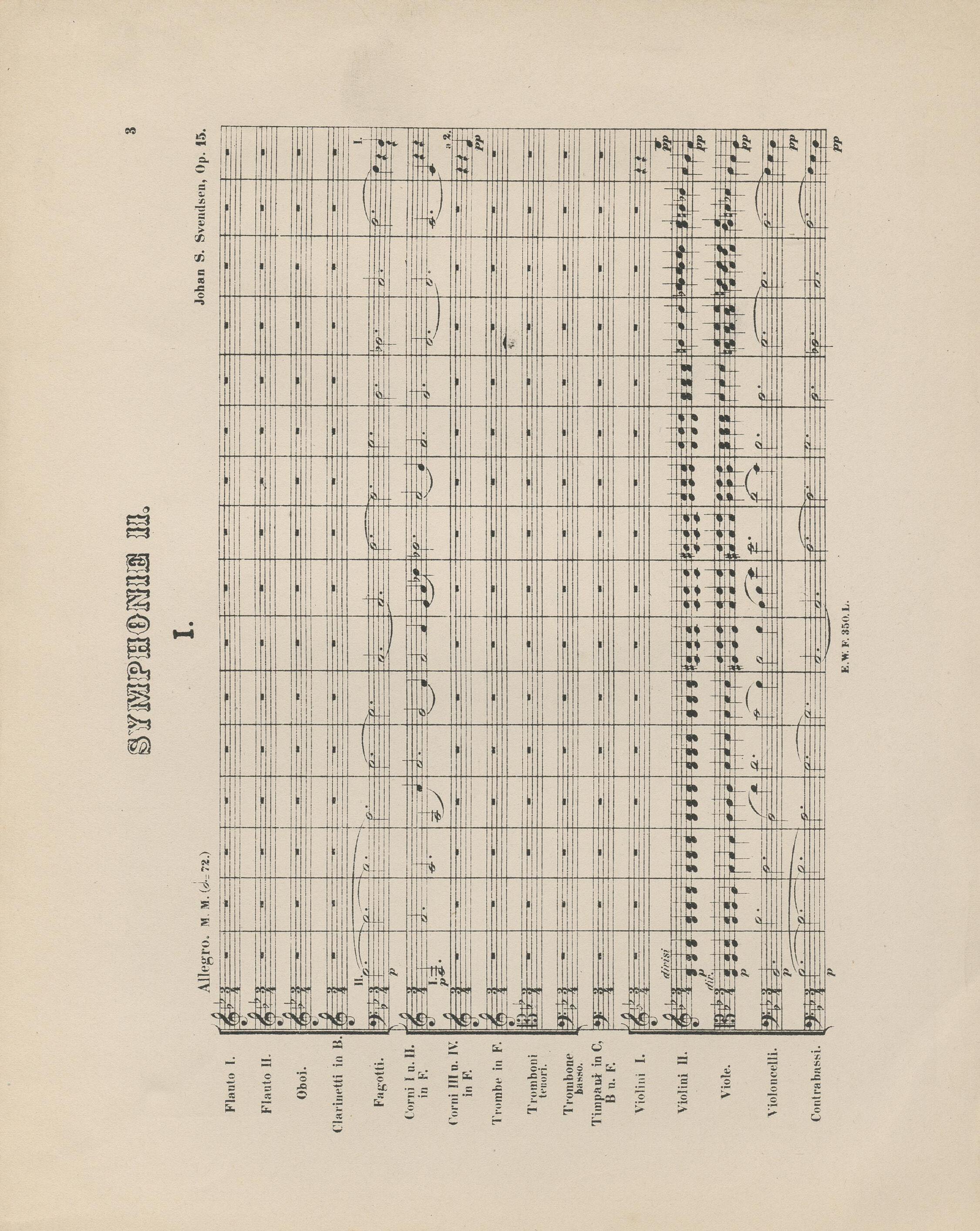
The Symphony No. 2 in B-flat major, Op. 15, occupies a central position in Johan Svendsen’s (1840–1911) oeuvre, and many consider it to be his greatest achievement as a composer. It was written in Christiania36 (Oslo) between 1874 and 1876, the first of Svendsen’s two periods as conductor and teacher in the Norwegian capital. The final manuscript is dated ‘May 1876, Hegdehaugen, Christiania’. Nearly six months later, on 14 October 1876, the symphony was premiered in the large hall of the Freemason’s lodge with Svendsen conducting an orchestra assembled for the occasion.
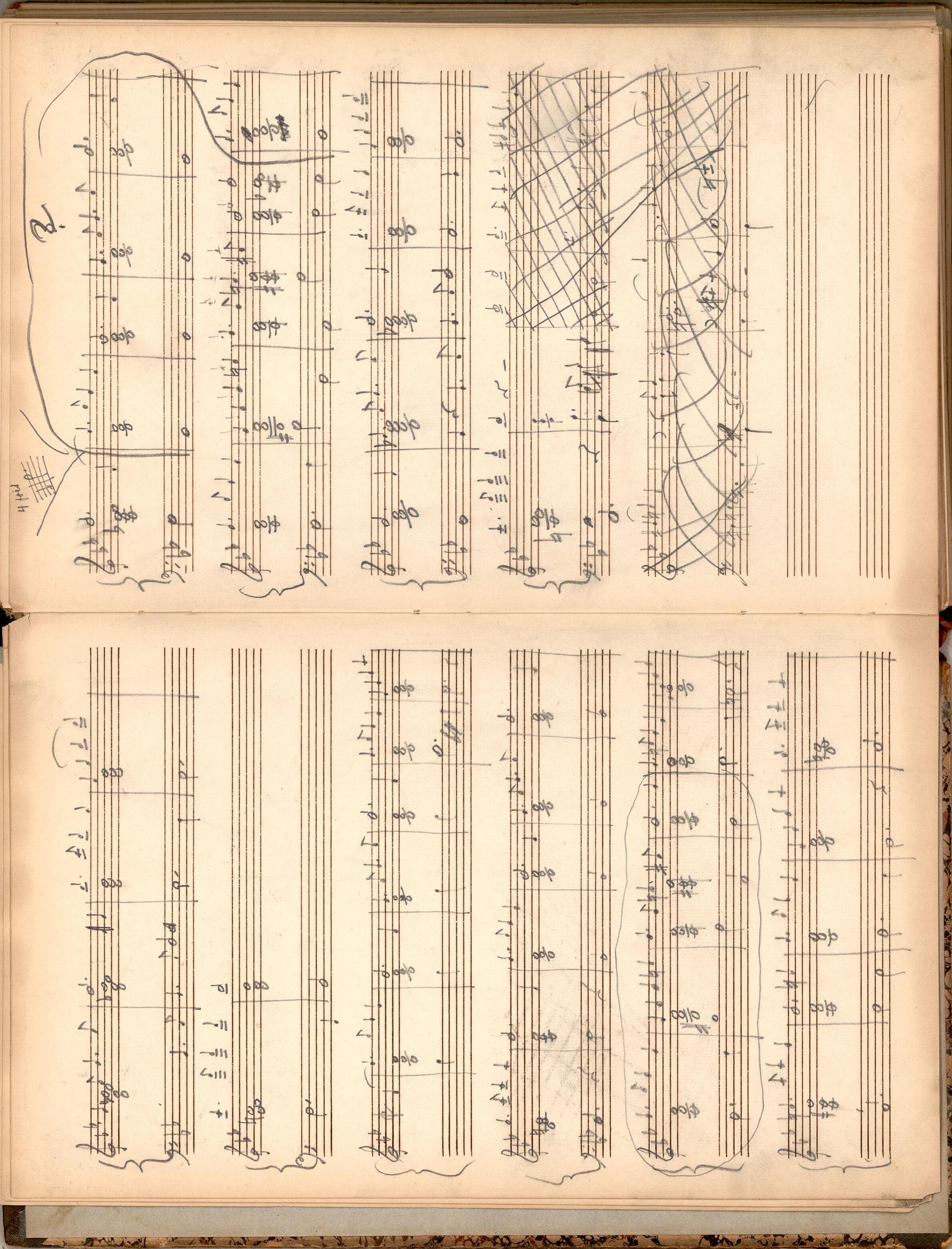
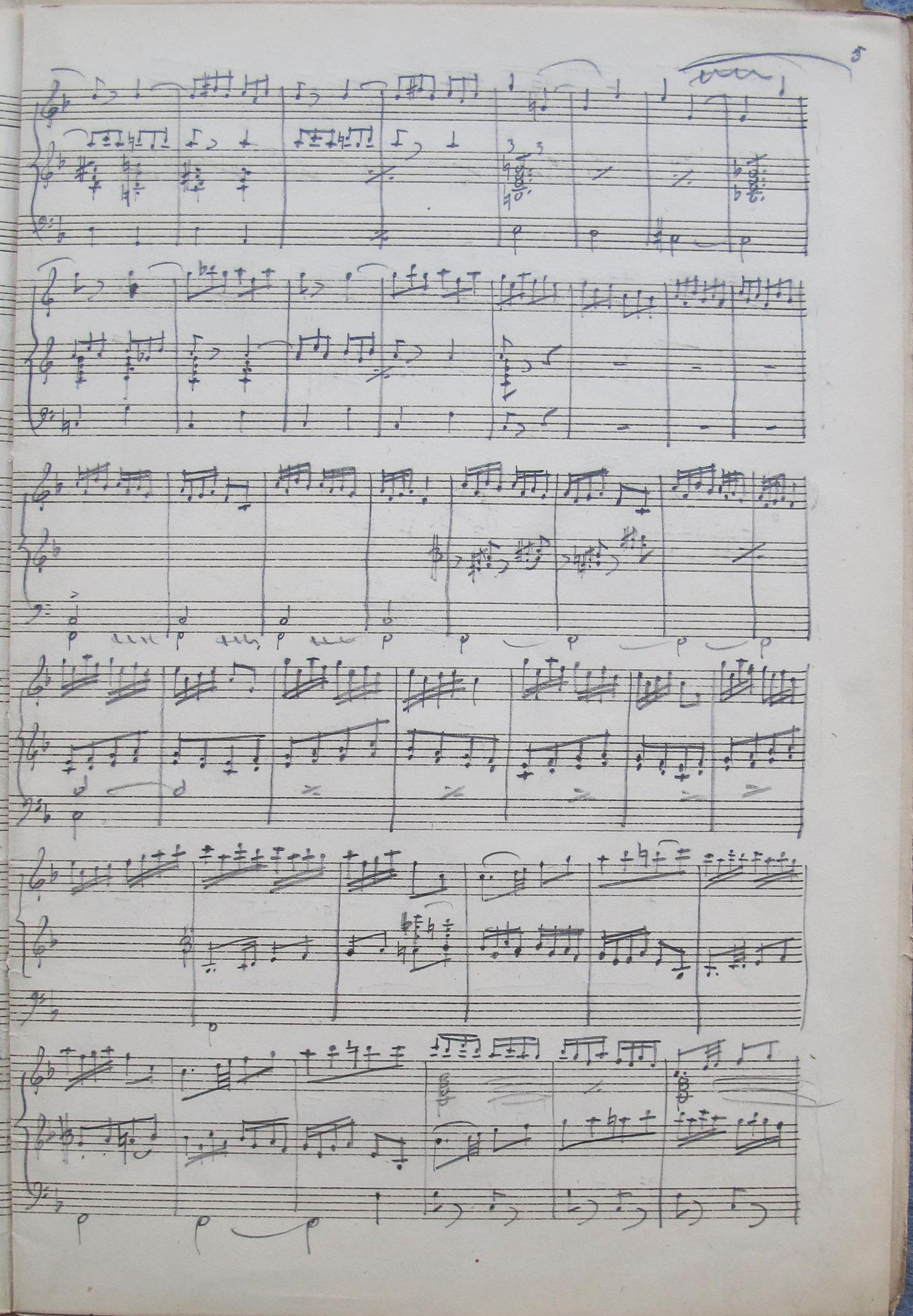
Among all of Svendsen’s works, more sketches survive for the symphony than for any other work. The Royal Library in Copenhagen holds two volumes with more than fifty pages of sketches for the Finale and several sketches for the third movement. Additional sketches for the third movement can be found in a manuscript kept at the Danish Music Museum in Copenhagen. Morten Christophersen, who has analysed and dated the sketches in his thesis Panoramic Constrains –A Study of Johan Svendsen’s Musical Sketches and Exercises, 37 writes that work on the sketches for the first and second movements most likely began before or around August/September 1874, while the last two movements were probably sketched out starting in autumn 1874. The work was to be Svendsen’s seventh and final composition in Classical form (symphony, concert or chamber music), although we do know that he spent much time working on a symphony that was either left incomplete or destroyed. Christophersen discusses the issue in his paper ‘Johan Svendsen’s Lost or Unfinished Sympho-ny: Elaborating Sketches for Performance’.38
Since the orchestra of Christiania’s Music Society was unavailable for concerts in autumn 1876, Svendsen had to personally assemble an orchestra for the first performance in October that year. Although he had not completed any compositions the year before, the concert on 14 October also featured the premieres of Romeo and Juliet, Op. 18, and Two Swedish Folk Melodies, JSV 67. Sketches for both compositions can be found in the same sketchbooks as the symphony. The programme also included a Serenade by Charles Gounod (1818–1893) and two Scottish folk songs, sung by Svendsen’s wife Sally (Bergljot) Svendsen (née Levett) (1843–1911?) and accompanied by pianist Martin Ursin (1842–1916).
A number of extensive and thorough reviews appeared in the papers, most of them offering detailed descriptions of each of the symphony’s movements. On 19 October the critic for
1907), men hevdet deretter at «inden den rent instrumentale Komposition er der kun en Mester, der paa en stor og eiendommelig Maade har vidst at sammenbinde Paavirkning en undefra med det nationale Element – det er Johan Svendsen». I årene som kom, ble symfonien i varierende grad sett på som nasjonalt preget. Kritikeren i Morgenbladet så symfonien som et viktig fremskritt for hele den norske musikkkulturen: «Vor musikalske Literatur tør ved dette Arbeide være rykket et langt Udviklingstrin fremad.» Enda sterkere ord ble brukt i Aftenposten 16. oktober. Kritikeren gledet seg over at Svendsen ikke hadde «brudt alle Broer af mellom sig og Fortiden» og mente verket sannsynligvis var «den største Symfoni, som er skrevet efter Rob. Schumanns»:
Symphonie Nr. 2 i B-dur, viste sig allerede i den første Sats – Allegroen – som et Værk af en storslagen og genial Begavelse. Tanken fremtraadte gjennemgaaende ligesaa umiddelbar og stor som ren og klar, og man følte at man her stod ligeoverfor et Geni, der skaber og udtrykker sine Ideer med Overbevisningens fulde Sikkerhed og Energi saavel gjennem en harmonisk Udvikling af det Enkelte til et stort Hele som gjennem en mærkverdig fremragende Instrumentasjon, gjennemgaaende rig paa endog nye storartede Klangvirkninger.
I Svendsens levetid så de fleste symfonien som et klassisk verk med ren og klar form, men den ble også vurdert som et nyskapende verk med temperament. Det var ulike meninger om hvor symfonien plasserte seg i forhold til begrepet «modernisme». Kritikeren i Ny Illustreret Tidende skildret Svendsen slik i en omtale av komponisten 29. oktober 1876:
Blandt vore Komponister af den moderne Skole har Svendsen stedse været den klareste og mest objektive, men det maa vække ublandet Glæde, at han i denne Henseende ogsaa stedse gaar videre fremad, ligesom han mere og mere løsgjør sig fra saadanne individuelle Eiendommeligeder, som lettelig faar Anstrøg af Maner.
Den lengste kritikken stod i Aftenbladet 17. oktober, skrevet av «F». (Aimar Grønvold). Grønvold delte først sine tidligere funderinger over de vanskelige vilkårene for den seriøse og «sande Kunst» i Norge. Etter urfremføringen av symfonien så han mer optimistisk på fremtiden: Symfonien skapte nemlig stormende jubel mellom hver sats, fikk gjentatte bravorop og krav om da capo av tredje sats. Grønvold mente klarheten i formen var en styrke for symfonien:
the Norwegian daily Morgenbladet prefaced his review with an account of the national importance of composers Halfdan Kjerulf (1815–1868) and Edvard Grieg (1843–1907), but continued by noting that ‘within the realm of pure instrumental composition there is only one master, who in a remarkable and singular fashion has succeeded in uniting outside influences with the national element – and that is Johan Svendsen.’ In the years to follow, the symphony’s national qualities were variously assessed. The critic for Morgenbladet regarded the symphony as an important advance for the entire field of music in Norway: ‘With this work, the development of our musical literature ought to have taken a major step forward.’ Aftenposten of 16 October was even more emphatic. The critic was pleased that Svendsen had not ‘burned all bridges between himself and the past’ and felt that the work was probably ‘the greatest symphony written since Rob. Schumann’:
As early as the first movement – Allegro – the Symphony No. 2 in B-flat major revealed itself as the work of a superior and brilliant talent. Its intent emerged with equal immediacy and grandeur as purity and clarity throughout, and one felt one was in the presence of a genius who creates and expresses his ideas with the full assertiveness and energy of conviction, both through the development of individual harmonic detail into an integral whole as well as through the notably outstanding orchestration, rich throughout in ever new and magnificent orchestral effects.
In Svendsen’s lifetime, the symphony was generally associated with classical purity and clarity of form, but there were also those who considered it a work of innovation and temperament. Opinions on the symphony’s position in relation to ‘modernism’ differed. In an article of 29 October 1876, the critic for Ny Illustreret Tidende assessed Svendsen as follows:
Among our composers of the modern school, Svendsen has consistently been the clearest and most objective, but to our undivided delight he also consistently moves forward in this respect, just as he increasingly frees himself of individual peculiarities that easily assume a touch of mannerism.
The longest review, authored by ‘F’ (Aimar Grønvold), appeared in Aftenbladet on 17 October. Grønvold began by outlining his earlier thoughts on the difficult conditions for ‘true art’ in Norway. Following the symphony’s premiere, however, his view of the future had become more optimistic, seeing that the symphony had led to rousing cheers between each movement, with repeated shouts of ‘bravo’ and insistent calls to play the third movement da capo. Grønvold believed that the symphony’s formal clarity was one of its strengths:
Medens den i sin Form er klar og gjennemsigtig som faa af hans tildligere Arbejder og i sine tre første Satser har en formel Elegance, der minder om en Mendelssohn, viser Inspirationens Styrke sig rigest netop paa de Punkter, hvor Formens Skjønhed træder klarest frem.
Andanten falt aller mest i smak hos Grønvold, og han brukte store ord om satsen: «[E]n dyb, vemodsfuld, mørkt farvet Andante, efter vor Mening det skjønneste og nobleste Kunst i den hele Symfoni. […] En genialitetens fængslende Magt og en moden Klarhed.»
Noen av kritikerne brukte begrepet «tallrikt publikum» i omtalen av urfremføringen, men i to av kritikkene fremgår det likevel at det «kunne vært flere», i og med at konserten gikk med underskudd. I Aftenposten 16. oktober mente en av kritikerne å vite at utgiftene hadde vært på 375 spesidaler, mens inntektene kun var på 251 spesidaler. Slik regnet han seg frem til et underskudd på 130 spesidaler, et faktum som han mente måtte «være mere end skikket til at lamslaa den mest ideelt anlagte Mands Virkelyst og Mod».
Drøyt 60 år senere, 30. september 1940, gjenga Morgenbladet detaljerte historier fra prøvene til Svendsens urfremføring, ført i pennen av journalisten Jens Arbo. Historienes kilde var dr.med. Fredrik Georg Gade (1855–1933), og artikkelens overskrift var «Johan Svendsen. Dr.med. Gades erindringer fra den tid han spilte som «dilettant» i Svendsens orkester». Om første prøve fortalte Gade dette:
Det var heller ikke fritt for at det klikket en del i sammenhengen ved denne a vista prøve. Men Svendsen slo øieblikkelig ned hvor hans skarpe øre hørte feil. Der blev gjentatt og gjentatt, og til slutt kom der dog en viss form på det hele. Farligst var dog situasjonen under denne prøve, da den fornøielige fagottsolo, hvormed scherzoen slutter, i farten fikk en såre slem medfart av solisten, så hele orkestret uvilkårlig brast i latter. Men da ble fagottisten sint, pakket sammen sitt instrument, gjorde streik og vilde gå. Og det krevet Svendsens hele bedårende elskverdighet og overtalelsesevne for å forsone mannen og få ham til å bli og fortsette prøven.
Gade ga også et fascinerende innblikk i Svendsens klanglige detaljarbeid og nitide gruppeprøver.
Han kunde også legge et betydelig arbeide på utarbeidelsen av særlige detaljer. I hans 2. symfoni er der et parti, hvor begge fioliner samt bratsjene, hver stemme delt i to grup-
While clear and transparent in form as few of his earlier works, and with a formal elegance reminiscent of Mendelssohn in its first three movements, his inspiration shines brightest in precisely those places where formal beauty emerges most clearly.
The Andante was Grønvold’s favourite, and he used lofty words to describe it: ‘A deep, wistful, darkly coloured Andante, in our opinion the most exquisite and noble artistic accomplishment in the entire symphony. [...] The captivating power of genius coupled with a mature clarity.’
Some critics used the term ‘large audience’ to describe the turnout at the first performance, but two of the reviews mention that it ‘could have been better attended’, since Svendsen turned a loss. According to one of Aftenposten’s critics, expenses had amounted to 375 speciedaler, while revenues had only come to 251 speciedaler. With an estimated deficit of 130 speciedaler, such a result would ‘be more than enough to smother the initiative and courage of even the most ideal of men’ (Aftenposten, 16 October).
A little more than 60 years later, on 30 September 1940, Morgenbladet published a number of detailed accounts of Svendsen’s rehearsals before the premiere, written by journalist Jens Arbo. His source was the physician Dr Fredrik Georg Gade (1855–1933), and the article was headlined ‘Johan Svendsen. Dr Gade’s recollections from the time he played as a “dilettante” in Svendsen’s orchestra.’ Gade described the first rehearsal as follows:
There was also no getting away from quite a number of slip-ups during this sight-reading rehearsal. But Svendsen immediately homed in on any mistakes his sharp ears perceived. Repeats and utter repeats, and eventually it all began to assume a certain shape. The most precarious situation during the rehearsal, however, occurred when the delightful bassoon solo at the end of the scherzo was somewhat roughly handled by the soloist, so the whole orchestra burst into laughter. At this, the bassoonist got angry, packed up his instrument, refused to carry on and wanted to leave. It took all of Svendsen’s considerable charm and persuasive ability to appease the man and get him to stay and continue with the rehearsal.
Gade also gives a fascinating insight into Svendsen’s detailed work with orchestral sound and meticulous group rehearsals.
He could also put a great deal of effort into working out specific details. There is a passage in his 2nd symphony where the two violin sections and violas, each part divided into two groups, that is to say, actually six parts altogether
per, – altså tilsammen egentlig seks stemmer – har et fint pianissimo arpeggio. For å få dette riktig efter ønske tok han spesialprøver med oss dilettanter i et værelse hos
Brødrene Hals. Men så fikk han også dette arpeggio-ensemble til å virke som et fint tåkeslør, hvori ingen enkelte toner gjorde seg gjeldende, men som delvis dekket de melodiførende instrumenter, en helt fortryllende virkning.
Partiet som beskrives, er kanskje akkompagnementet til fløytesoloen ved reprisen i første sats, fra takt 318. Strykeorkesteret er på dette stedet egentlig delt i ni, ikke seks, ulike stemmer. Det er også mulig at doktoren har hatt et parti i den første symfoniens Scherzo i tankene.
Gade beskrev også i detalj stemningen før den neste fremføringen av symfonien i Christiania, som fant sted på Det Kongelige Slott 12. februar 1877. Kong Oscar II (1829–1907) hadde invitert Svendsen med orkester til en matiné for kongen og hans prominente gjester.
Det var en ekkel, vasskold dag vi en formiddag møtte op. Snibel og hvitt slips på formiddag, den tomme spisesal, hvor orkestret var plasert på gulvet uten noget podium, og så længere borte i salen en rekke fine stoler stillet i halvkrets - det var ikke stimulerende. Jeg tror også at fagmusikerne og veteranene blandt dem ikke var helt i sitt ess. Øiensynlig blev Svendsen opmerksom på denne mindre gode moral blandt troppene, og det led sterkt mot det klokkeslett da kongen skulle komme. Men så springer Svendsen op på den teppebelagte dirigentskammel og sier med myndig røst: «Mine herrer, når hoffet nu kommer inn i denne sal, er der kun én konge – og det er – mig » . Det gnistret i hans øine, og det slo også gnister i våre sinn. Og da så kongen og hoffet et øieblikk efter var kommet inn og hadde tatt plass, bruste festmarsjen gjennem salen så festlig og strålende som jeg ikke vet å ha hørt den senere.
I tillegg til symfonien ble også Kroningsmarsj, op. 13 og I Fjol gjætt’e Gjeitinn, JSV 59 fremført på slottet. Et omfattende referat fra begivenheten ble gjengitt i tidsskriftet The New York World 7. mars 1877 under overskriften «A King and a Composer». Her er et utdrag:
Mellom femti og seksti av landets ledende borgere og musikere var invitert, og fra halv to til nesten fire satt vi og lyttet med fornøyelse til den nye symfonien og til en marsj og en folkevise som Svendsen hadde arrangert. [...] I løpet av symfonien gikk kongen rundt i rommet og
– are playing a subtle pianissimo arpeggio. In order to get this exactly to his liking, he scheduled separate rehearsals with us dilettantes in a room at Brødrene Hals. But in return, he got this arpeggio ensemble to appear like a subtle veil of mist wherein not a single note stood out, but which partly covered the instruments carrying the melody, an utterly spellbinding effect.
In all likelihood, Gade refers to the accompaniment to the flute solo in the first movement’s reprise, starting in bar 318. At this point, the strings are actually divided into nine, not six, different parts.
In addition, Gade paints a detailed picture of the atmosphere before the symphony’s next performance in Christiania, which took place on 12 February 1877 at the Royal Palace. King Oscar II (1829–1907) had invited Svendsen and the orchestra to perform a matinee for the King and his prominent guests.
It was a nasty, wet cold day when we turned up one morning. White tie and tails in the morning, the empty dining room where the orchestra was placed on the floor without a podium, and further down the hall a row of fine chairs arranged in a half-circle – it was not encouraging. I also believe that the professional musicians and veterans among them were not in the highest of spirits. Evidently, Svendsen became aware of the poor morale among his troops, and the time for the king to arrive was drawing very near.
But suddenly Svendsen jumps up onto the carpeted conductor’s platform and says in a commanding voice: ‘Gentlemen, when the court enters this hall any moment now, there is only one king – and that is – me.’ His eyes were full of fire, and this also set fire to our minds. And when the king and his court a moment later had entered and taken their seats, the Coronation March rang through the hall so festively and bright as I do not think I have heard it ever since.
In addition to the symphony, Svendsen’s Coronation March, Op. 13, and Last Year I was Tending the Goats, JSV 59, were also performed at the Royal Palace. A full report of the event was published on 7 March 1877 in The New York World under the heading ‘A King and a Composer’. The following is an excerpt:
Between fifty and sixty of the leading citizens and musicians here were invited, and from 1.30 until nearly 4 o’clock we sat listening with delight to the new symphony and to a march and volkslied which Svendsen had arranged.
[...] During the parts of the symphony the King walked about the room conversing with his guests, who sipped their chocolate and munched their cake, not the least in awe of that
konverserte med gjestene, som nippet til sjokoladen sin og mumset kake, uten å ta hensyn til den opphøydhet som omgir en konge. Han var der for å nyte musikken, og han ønsket at de andre skulle være like glade og komfortable som han selv åpenbart følte seg. Og han applauderte musikken kraftig og insisterte på at triumfmarsjen og den norske folkesangen skulle spilles da capo.. [...] Svendsen, jeg regner deg som en av verdens fremste komponister. Jeg hadde tenkt å gi deg «Vasa-ordenen», men alle som har en orden, har den; du fortjener en mer betydningsfull, og jeg gir deg derfor «Oscar-ordenen», det er bare tre andre som har den – du er den eneste musikeren. Dette er du verdig. Fortsett å komponere, og det vil være mye mer i vente for deg.4
«Oscar-ordenen» som Svendsen fikk utdelt, er også kalt «Kong Oscar IIs belønningsmedalje». Den ble første gang utdelt ved kroningen av Oscar II i 1873, der Svendsen hadde bidratt med både Kroningsmarsj, op. 13 og Festpolonese, op. 12. Følgende personer hadde mottatt ordenen før Svendsen: Hartvig Lassen og Jonas Lie (1873), Christian Holst (1874), Henrik Ibsen (1875), Andreas Munch (1875).
Symfonien ble fremført en tredje gang i Christiania før Svendsen dro på en langvarig utenlandsreise. Komponisten hadde fått stipend både fra Kong Oscar II og fra flere komiteer og enkeltpersoner. Konserten som ble holdt 25. september 1877, var annonsert som «Afskeds-Concert» og hadde symfonien som hovednummer. Dirigentpulten var pyntet med en laurbærkrans, og Svendsen ble møtt av fanfarer da han kom inn. Publikum applauderte stort mellom hver sats. To dager etterpå var det stor fest på Grand Hotel, der «de fleste af de for øieblikket i Christiania værende kunstnere» var til stede, ifølge et referat i Aftenposten 28. september.
Det skulle ikke gå lenge fra Svendsen hadde forlatt Christiania til han på svært kort varsel fikk muligheten til å dirigere symfonien ved en av Europas sentrale musikkscener, Gewandhaus Leipzig. Han fortalte nøkternt om hendelsen i et brev til faren:
Jeg havde oprindeligt tænkt at reise herfra den 20 d. men saa fik jeg en Indbydelse fra Directionen for Gewandhausconcerterne til at dirigere min nye Symphonie som er ansat til Opförelse i 5te Concert den 8 Nov. Jeg har altsaa bestemt mig til at blive.
JOHAN SVENDSEN TIL SIN FAR, GULBRAND SVENDSEN, LEIPZIG, 26.
OKTOBER 1877. NASJONALBIBLIOTEKET.
Symfonien ble altså avslutningsnummeret ved den femte
divinity that doth hedge a king. He was there to enjoy the music, and he wished others to be happy and comfortable as he himself evidently felt. And he loudly applauded the music as it proceeded, and insisted on a triumphal march and Norwegian volkslied being played over again from the beginning. [...] Svendsen. I consider you one of the greatest composers in the world. I had thought to give you the ‘Vasa Order’, but every one that has an order has that; you merit a greater and I give you the order of ‘Oscar’, there are but three others who have it – you are the only musician. This you merit. Go on composing and there is much more in store for you.
The ‘Order of Oscar’ – Oscar II’s Medal of Honour in gold –was first awarded in 1873 at the coronation of King Oscar II, to which Svendsen had contributed both his Coronation March, Op. 13, and the Festival Polonaise, Op. 12. Among those who had received the medal before Svendsen were Hartvig Lassen and Jonas Lie (1873), Christian Holst (1874), Henrik Ibsen (1875), and Andreas Munch (1875).
The symphony was performed a third time in Christiania before Svendsen set out on a long journey abroad. The composer had received a grant from King Oscar II as well as from a number of committees and individuals. Billed as a ‘farewell concert’, the performance took place on 25 September 1877 and featured the symphony as the main work of the evening. The conductor’s desk was decorated with a laurel wreath, and Svendsen was greeted by fanfares when he entered the hall. The audience responded with storming applause between each movement. Two days later, a large celebration, attended by ‘most of the artists present in Christiania at the moment’, was held at Grand Hotel, according to a report in Aftenposten of 28 September.
Not long after leaving Christiania, and on very short notice, Svendsen had the opportunity to conduct the symphony at one of the major music venues in Europe, the Gewandhaus Leipzig. In a letter to his father, he gave a sober account of the event:
I had initially planned to leave here on the 20th, but then I received an invitation from the administration of the Gewandhaus Concerts to conduct my new symphony, which is scheduled for performance in the 5th concert on 8 Nov. I have therefore decided to stay.
JOHAN SVENDSEN TO HIS FATHER, GULBRAND SVENDSEN, LEIPZIG, 26 OCTOBER 1877. NATIONAL LIBRARY OF NORWAY.
Thus, the symphony concluded the fifth subscription concert at the Gewandhaus on 8 November 1877. The concert opened with Ludwig van Beethoven’s (1770–1827) Coriolan Overture, Op. 62, followed by a selection of arias sung by Amalie Joa-
abonnementskonserten i Gewandhaus, 8. november 1877. Konserten åpnet med Coriolan Ouvertüre, op. 62 av Ludvig van Beethoven (1770–1827) og fortsatte med diverse arier sunget av Amalie Joachim og fiolinstykker med den unge solisten Bertha Hast før Svendsen dirigerte symfonien sin.5 Fire av kritikkene som kom i dagene etter konserten, må ha vært meget oppmuntrende for Svendsen, spesielt Carl Kipkes positive omtale 16. november 1877 i Musikalisches
Wochenblatt:
Symfonien ble godt likt og var en suksess, noe det var mulig å forutse om man tar verkets kvaliteter i betraktning. Fremfor alt var det friskheten og ideenes originalitet som begeistret ved symfonien, som for øvrig ble fremført under ledelse av komponisten selv. Gledelig var også den fascinerende ytre bekledning av ideene (harmonikk og orkestrering) og dessuten den klare og velformede helheten – de enkelte satsenes, så vel som hele verkets balanserte og konsentrerte form.6
Kipke mente det var klokt av komponisten ikke å forsøke å fremstille tragikk og lidelse, noe han mente ikke lå naturlig for Svendsen. Derfor hadde Svendsen etter Kipkes syn «desto mer ubekymret kunne han synge det som lå ham på hjertet. Dette var et klokt valg, for bare slik kunne han skape noe sunt, naturlig og fritt fra alt kunstlet».7
Moritz Wilhelm Vogel i Leipziger Tageblatt mente 10. november at konserten utmerket seg som mer interessant enn de fire første i sesongen, og at det var kraftigere bifall på denne. Han fortsatte slik: «Også kritikeren er i den heldige situasjon at han kan uttrykke sin fullstendige tilfredshet.»8 Det var tydelig at kritikeren syntes vel om symfonien: «Svendsen behersker ikke bare den symfoniske formen mesterlig. Han omgås også orkesteret på ytterst dyktig vis.»9 Vogel mente videre at alle satsene i symfonien var påvirket av norske folkemelodier, og dette betraktet han som en styrke. Han beskrev Svendsen som «i lengre tid så godt som borte for det tyske musikkliv»10, noe som må ha bekreftet for Svendsen at både konserten og utenlandsreisen var viktige og riktige steg i karrieren.
Friedrich von Wickede i Leipziger Theater und Intelligenzblatt skrev like positivt 10. november:
Symfonien er en åndfull og ildfull komposisjon, gjennomkrydret av nasjonale danseviser. Den viser stor egenart og gjør det gunstigste inntrykk i så vel i form som innhold. [...] Orkestreringen er gjennomgående glitrende og fascinerende.11
chim and violin pieces performed by the young soloist Bertha Hast, before Svendsen conducted his symphony.39
Four of the reviews that appeared in the days following the concert must have been extremely encouraging for Svendsen, especially Carl Kipke’s positive review of 16 November 1877 in Musikalisches Wochenblatt:
The symphony achieved a resounding success, which in view of the work’s many good qualities was to be expected. What pleased most about the symphony, which was conducted by the composer himself, was its freshness and originality of invention, and furthermore the appealing outward semblance of its ideas (harmony and instrumentation) and the equally clear and rounded as appropriately concise form of its individual movements, as of the entire work itself.40
Kipke noted that the composer had wisely avoided portraying tragedy and suffering, qualities he felt did not come naturally to Svendsen. In Kipke’s view, Svendsen had ‘quite to the contrary blithely sung about what lay close to his heart, and this was right and proper, because only thus was he able to achieve something healthy, natural and free of all artifice.’41
In Leipziger Tageblatt of November 10, Moritz Wilhelm Vogel wrote that the concert distinguished itself as more interesting than the first four concerts of the season, and that there was noticeably more applause. He continues: ‘This critic, too, finds himself in the pleasant position of wholly succumbing to a sense of satisfaction.’42 Vogel was clearly positive about the symphony: ‘Not only does Svendsen have a masterful command of symphonic form, but above all he treats the orchestra most skilfully.’43 Vogel further believed that all the movements were influenced by Norwegian folk melodies, something he considered to be an asset. He described Svendsen as ‘virtually lost to the musical life of Germany for a while’,44 a comment that must have assured Svendsen that the concert as well as the journey abroad had been important and appropriate steps in his career.
A similarly positive review appeared on 10 November in Leipziger Theater und Intelligenzblatt, written by Friedrich von Wickede:
The symphony is an imaginative, fiery composition spiced up with multiple infusions of national dance styles, boasting of many unique qualities and making a most favourable impression in terms of form as well as content. [...] The instrumentation is brilliant and delightful throughout.45
The same day, the critic for Leipziger Nachrichten, Alfred Dörffel, wrote a somewhat more ambiguous and critical review, commenting on the ‘heat’ in Svendsen’s symphony,
Alfred Dörffel i Leipziger Nachrichten skrev samme dag en noe mer tvetydig og kritisk omtale av «heten» i Svendsens symfoni, men mente den i alle fall skilte seg fra «kulden» i forrige urfremføring av en symfoni ved Gewandhaus, en symfoni av Ferdinand Hiller (1811–1885). Her er en del av Dörffels konklusjon:
Symfoniens suksess kan herved bekreftes. Den som mente at symfoniens umiddelbare virkning var årsak til suksessen, vil også med et rolig prøvende blikk i partituret erkjenne at komponisten er utrustet med original skaperkraft, han vil finne at ikke alt er vakkert, men at alt er originalt.12
Eduard Bernsdorf (1825–1901) skrev en kritikk i novembernummeret av Signale für die Musikalische Welt som var meget negativ. Bernsdorf mente at Svendsen har prøvd å gi symfonien en «Norwegische Physiognomie». Kritikeren lot seg ikke imponere: «Vi, som ingen sympati har for nasjonalitetsprinsippet, særlig ikke i de symfoniens høyere kunstformer, lar oss likevel ikke imponere.»13 Bernsdorf uttrykte flere ganger både før og senere misnøye med det han mente var «nasjonalt» orienterte komponister som Edvard Grieg og Johan Svendsen. Et år senere, i desember 1878, skrev Bernsdorf at han overhodet ikke hadde noen glede av en konsert i Gewandhaus med blant annet Griegs Strykekvartett i g-moll, op. 27 og hans Fiolinsonate nr. 2 i G-dur, op. 13. Tvert imot:
[...] tvert imot har vi bare følt ubehag og motvilje overfor latterlighetene og absurditetene som er rasket samment under dekke av nasjonalnorsk karakter, [...] 14
SIGNALE FÜR DIE MUSIKALISCHE WELT, DESEMBER 1876, HEFTE 66, S. 1046. Bernsdorf hevdet dessuten at Svendsens nye symfoni ikke representerte noe fremskritt fra Symfoni nr. 1 i D-dur, op. 4:
Ideene som han arbeider med, er stadig intetsigende og ubetydelige. De er bare utvendig arrangert og utspjåket gjennom alle slags orkestreringsknep og -pek.15
Tolv år senere skrev Svendsen om nettopp Bernsdorf i et brev til Grieg:
Desværre gives der jo sådanne slyngler overalt [...]; lykkeligvis ere alle deres anstrængelser fruktesløse ligeoverfor det virkelig gode; intet menneske bør tage notis af disse herrers grimacer eller skriverier. Isch!
BREV FRA JOHAN SVENDSEN TIL EDVARD GRIEG, KØBENHAVN 23. FEBRUAR 1889. BERGEN OFFENTLIGE BIBLIOTEK.
but contrasting it with the ‘cold’ of a recently premiered symphony by Ferdinand Hiller (1811–1885). The following is an excerpt from Dörffel’s conclusion:
If this provides confirmation of the symphony’s success, which, as the immediate effect of its cause, must be considered rather remarkable, an unhurried scrutiny of the score will in every way reveal that the composer is well equipped with original creative power: one will not find beauty in everything, but one will find originality everywhere.46
Eduard Bernsdorf’s (1825–1901) review in the November issue of Signale für die Musikalische Welt was exceptionally negative. Bernsdorf, who believed Svendsen had attempted to give the symphony a ‘Norwegian physiognomy’, was not won over: ‘We, who have no sympathy for the principle of nationality, least of all as regards such higher art forms as the symphony, are not impressed, however.’47 On both earlier and subsequent occasions, Bernsdorf expressed disgruntlement with what he believed were ‘nationally’ oriented composers such as Edvard Grieg and Johan Svendsen. One year later, in December 1878, Bernsdorf wrote that a concert at the Gewandhaus, among other things including Grieg’s String Quartet in G minor, Op. 27, and Violin Sonata No. 2 in G major, Op. 13, had given him no enjoyment whatsoever:
[...] on the contrary, we experienced nothing but displeasure and aversion at the scurrilities und absurdities gathered under the smokescreen of national Norwegian character, [...]48
SIGNALE FÜR DIE MUSIKALISCHE WELT, DECEMBER 1876, ISSUE 66, P. 1046.
Moreover, Bernsdorf argued that Svendsen’s new symphony represented no progress since his Symphony No. 1 in D major, Op. 4:
His intellectual material continues to remain meaningless and trivial in and of itself, and only its surface is puffed up and fitted with all manner of orchestral tricks and gimmicks.49
Twelve years later, Svendsen commented on Bernsdorf in a letter to Grieg:
Unfortunately, such scoundrels can be found everywhere [...]; fortunately, all their efforts are fruitless in the face of true excellence; no one should take note of these gentlemen’s grimaces or writings. Pish!
LETTER FROM JOHAN SVENDSEN TO EDVARD GRIEG, COPENHAGEN, 23 FEBRUARY 1889. BERGEN PUBLIC LIBRARY.
Nonetheless, following his stay in Leipzig, Svendsen was probably left with a predominantly positive impression. After all, it was not Bernsdorf’s review that was cited in an
Svendsen satt trolig likevel igjen med en overveiende positiv følelse etter oppholdet i Leipzig. Det var da heller ikke Bernsdorfs kritikk som ble sitert i et oppslag 27. november i Dagbladet i Christiania. Avisen trykte derimot en norsk versjon av hele Musikalisches Wochenblatts rosende omtale. Da Svendsen kom tilbake til Norge tre år senere, hadde musikkmiljøet hjemme blitt jevnlig oppdatert med hans mange prestasjoner i utlandet, gjennom artikler både i hovedstadsavisene og i Nordisk Musik-tidende
I Leipzig hadde Svendsen dessuten fått nye forlagskontrakter. Kritikeren Dörffel skrev at symfonien nylig er utgitt: «Herr Johan S. Svendsen fremførte sin nye symfoni (B-dur), som nylig er utgitt som hans opus 15.»16 Dette betyr at avtalen om trykking av verket ble inngått mellom Svendsen og forlaget Fritzsch i tiden før konserten. I boken Johan Svendsen: Mennesket og kunstneren skriver Finn Benestad og Dag Schjelderup-Ebbe at Fritzsch betalte 750 riksmark for utgivelsen av Symfoni nr. 2 i B-dur, op. 15, Karneval i Paris, op. 9, To islandske melodier, JSV 60 og I Fjol gjætt’e Gjeitinn, JSV 59.17 I et brev til Iver Holter (1850–1941) datert 6. april 1878 i London skrev Svendsen gode ord om forleggeren Ernst Wilhelm Fritzsch (1840–1902), som våren 1878 hadde fått økonomiske problemer:
Altsaa! der er nogen Udsigt til at Fritzsch kan fortsætte sin Virksomhed, jeg önsker inderligt dette thi han har dog gandske anderledes Interesse for vor Kunst end de fleste Andere Forlægggere, som muligvis ere bedre Forretningsmænd, men som sjelden sætter sine egne Interesser bag Kunstens.
BREV FRA JOHAN SVENDSEN TIL IVER HOLTER, LONDON, 6. APRIL 1878. NASJONALBIBLIOTEKET.
Symfonien ble likevel det siste av Svendsens verker som Fritzsch gav ut. De senere verkene ble stort sett utgitt av Carl Warmuth (1844–1905) i Christiania.
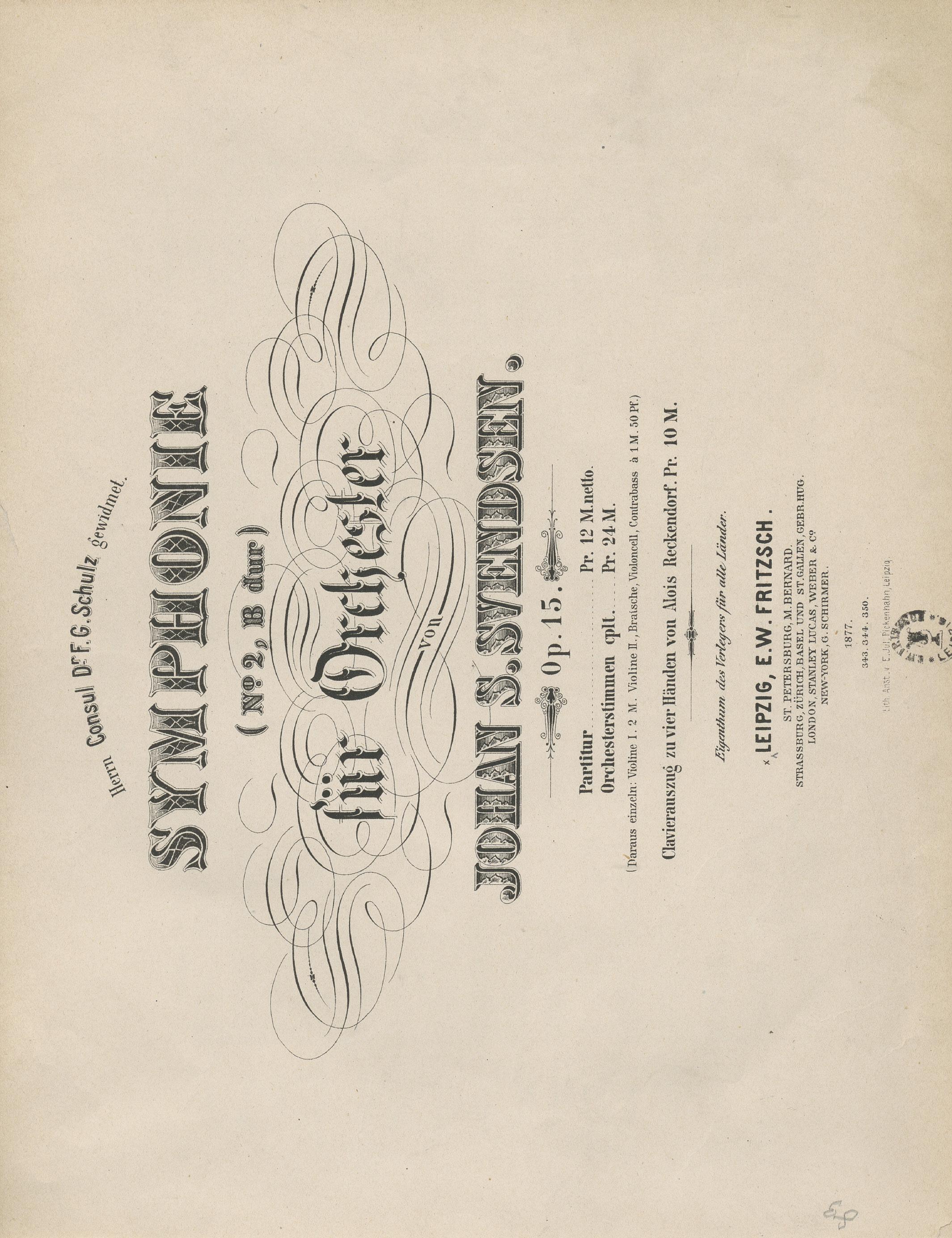
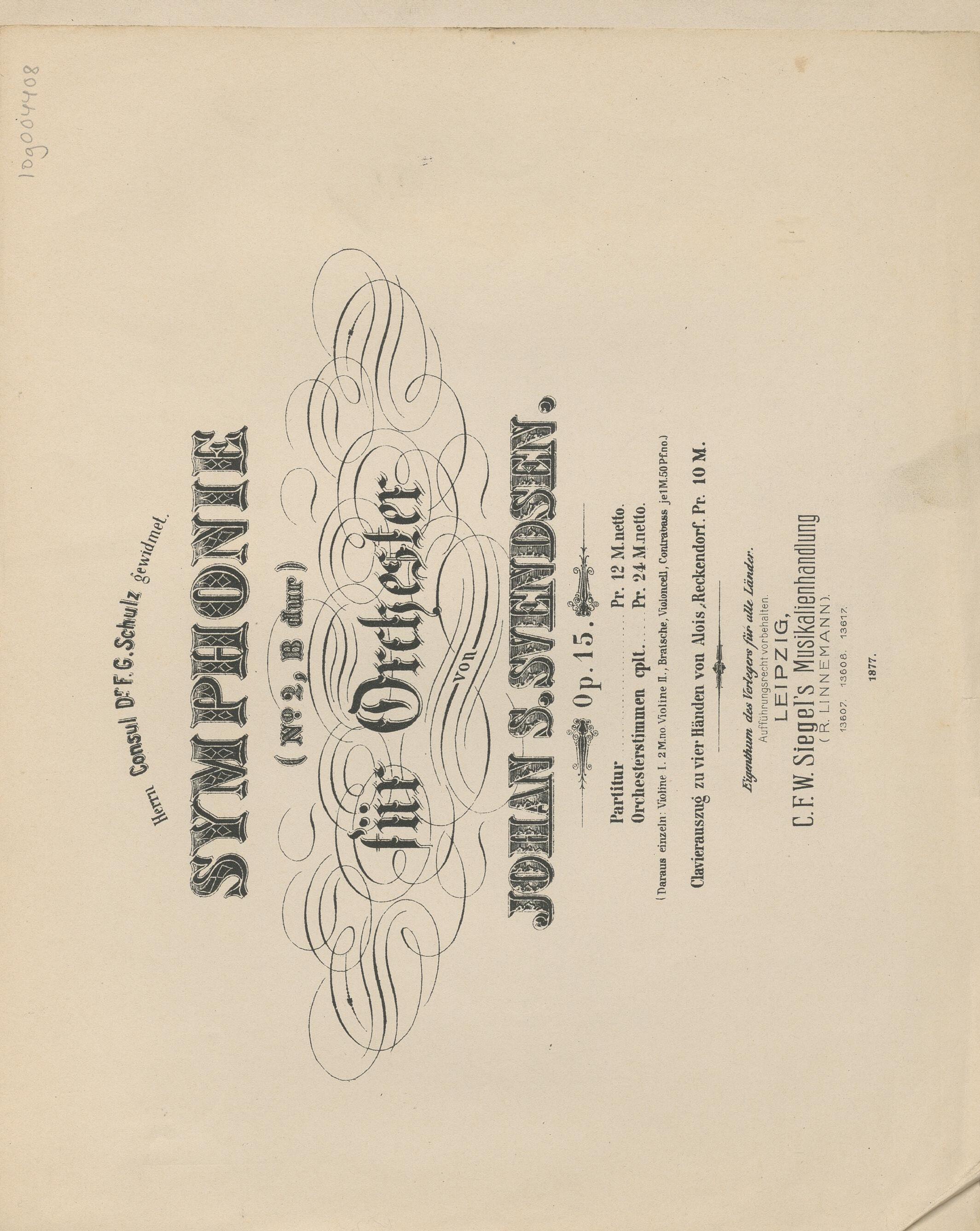
Det er sannsynlig at dedikasjonen til «Herrn Consul Dr. F.G. Schulz» ble påført symfonien i Leipzig i 1877, i forbindelse med utgaven som forlaget Fritzsch forberedte. Dr. Friedrich Gustav Schulz var på denne tiden svensk-norsk konsul i Leipzig. En del av Svendsens manuskripter har slike dedikasjoner, men ikke det symfonimanuskriptet som Svendsen hadde signert i Christiania mer enn et år tidligere.
Svendsens reise fortsatte fra Leipzig til Roma, Firenze, Torino, Paris og London før han slo seg ned i Paris i slutten av august 1878. Der bodde han helt til han kom tilbake til Norge nesten to år senere. 21. januar 1879 fikk han dirigere symfoni
article on 27 November in the Christiania daily Dagbladet, but an unabridged Norwegian version of the glowing review in Musikalisches Wochenblatt. When Svendsen returned to Norway three years later, the musical scene at home was aware of his many achievements abroad thanks to regular updates in the capital’s newspapers and the monthly music journal Nordisk Musik-tidende
Moreover, Svendsen had negotiated new publishing contracts during his time in Leipzig. The German critic Alfred Dörffel announced that the symphony had recently been published: ‘Mr Johan S. Svendsen performed his new symphony (B-flat major), which recently was presented to the public in print as his opus 15.’50 This suggests that the publishing agreement between Svendsen and publisher Fritzsch was reached in the period before the concert. In their book on Johan Svendsen, authors Finn Benestad and Dag Schjelderup-Ebbe write that Fritzsch paid 750 German marks for the publication of Symphony No. 2 in B-flat major, Op. 15, Carnival in Paris, Op. 9, Two Icelandic Melodies, JSV 60, and Last Year I was Tending the Goats, JSV 59.51 In a letter to his fellow composer Iver Holter (1850–1941), dated London 6 April 1878, Svendsen wrote kind words about publisher Ernst Wilhelm Fritzsch (1840–1902), who was facing financial problems that spring:
Well then! there is a certain chance that Fritzsch can continue his operations, I wholeheartedly hope so since he has quite a different interest in our art than most other publishers, who may be better businessmen, but who rarely put their own interests second to those of the art.
LETTER FROM JOHAN SVENDSEN TO IVER HOLTER, LONDON, 6 APRIL 1878. NATIONAL LIBRARY OF NORWAY.
As it turned out, however, the symphony was to be Svendsen’s last work published by Fritzsch. Most of his later works were published by Carl Warmuth (1844–1905) in Christiania.
The dedication ‘Herrn Consul Dr. F.G. Schulz’ was probably added in Leipzig while Fritzsch prepared the edition for print in 1877. Dr Friedrich Gustav Schulz was the Swedish-Norwegian consul in Leipzig at the time. A number of Svendsen’s manuscripts carry similar dedications, but not the symphony manuscript he had signed and dated in Christiania more than a year earlier.
From Leipzig, Svendsen’s journey continued to Rome, Florence, Torino, Paris and London before he settled in Paris in late August 1878. Here he remained until his return to Norway almost two years later. On 21 January 1879, Svendsen had the opportunity to conduct a reading of his Second Symphony with the Pasdeloup Orchestra. In a letter to Edvard Grieg (1843–1907), he wrote:
nr. 2 på en prøve med Pasdeloup-orkesteret. Han fortalte om dette i et brev til Edvard Grieg (1843–1907):
Tirsdag dirigerede jeg min B-dur Symphonie hos Pasdeloup. Det gik brilliant og endte med at hele Orchesteret reiste sig og aplauderede. Jeg har aldrig oplevet en større Triumf. Jeg har efter dette naturligvis sikkert Haab om snart at faa noget opført her. - - -
BREV FRA JOHAN SVENDSEN TIL EDVARD
GRIEG, PARIS, 24. JANUAR 1879.
NASJONALBIBLIOTEKET.
Litt over en måned senere, 7. mars 1879, dirigerte han en konsert i Angers i Frankrike som ble svært godt mottatt. På programmet stod blant annet D-dur symfonien. I mars 1880 vendte Svendsen tilbake, denne gangen med Symfoni nr. 2 i B-dur, op. 15 som hovednummer. Ikke lenge etter returen til Paris fikk han gjentatte henvendelser om å komme tilbake til Angers enda en gang. Følgende to notat finnes i Svendsen almanakk for 1880: 20. mars: «Modtager Tilbud om at overtage Ledelsen af Concerterne i Angers for næste Saison», og 25. mars: «Modtager Brev fra Bordier hvori fornyede Tilbud angaaende Concerterne i Angers for kommende Vinter.»18 De lovprisende kritikkene ble også presentert i aviser i Christiania, oversatt til norsk. Her er noen ord fra kritikken i L’Étoile Angers 20. mars 1880:
Det er et absolutt enestående verk, av en type det ikke skrives så mye av i dag, meget personlig, meget originalt, meget nytt og med det også meget gjennomtenkt. Komponisten ble kalt tilbake på scenen, og vi gav ham en varm applaus.19
I løpet av første halvdel av 1880-tallet, fra Svendsen vendte tilbake til Christiania 11. mai 1880, ble komponistens andre symfoni fremført en rekke ganger flere steder i Norden. Symfonien spilte en viktig rolle i disse avgjørende årene av Svendsens liv, som var perioden da han etablerte seg som en av Nordens mest anerkjente komponister og dirigenter. Særlig viktig i dette bildet var ansettelsen som kapellmester ved Det Kongelige Teater i København i 1883. Denne ansettelsen påvirket Svendsen til å bruke mer kraft og tid på dirigering enn på komponering i sitt videre virke.
På Musikforeningens tredje abonnementskonsert høsten 1880, 4. desember, stod symfonien igjen på programmet i Christiania, dirigert av Svendsen selv og denne gang som åpningsverk, fulgt av Klaverkonsert i a-moll av Edvard Grieg med Erika Lie Nissen (1845–1903) som solist. I almanakken
On Tuesday I conducted my B-flat major Symphony with Pasdeloup. It went brilliantly and in the end the entire orchestra rose and applauded. I have never experienced a greater triumph. After this, I naturally hold high hopes of having something performed here soon. - - -
LETTER FROM JOHAN SVENDSEN TO EDVARD GRIEG, PARIS, 24 JANUARY 1879. NATIONAL LIBRARY OF NORWAY.
Just over a month later, on 7 March 1879, Svendsen earned great acclaim for a concert he conducted in Angers, France. Among other things, the programme included his Symphony No. 1 in D major. In March 1880 Svendsen returned to Angers, this time with the Second Symphony as the main work on the programme. Shortly after returning to Paris, he received repeated requests to return to Angers a third time. Svendsen’s almanac for 1880 includes the following two entries: March 20 – ‘Received an offer to assume charge of the concerts in Angers next season’, and on 25 March – ‘Received a letter from Bordier with renewed offer regarding the concerts in Angers for coming winter.’52 The reviews, which were extremely favourable, were also published in several Christiania newspapers, translated into Norwegian. Here is an excerpt from a review that appeared in L’Étoile Angers on 20 March 1880:
It is an absolutely remarkable work of the type very rarely written nowadays, quite personal, quite original, quite new and thereby quite sensible. The composer was called back on stage and received a warm ovation.53
During the first half of the 1880s, after Svendsen’s return to Christiania on 11 May 1880, his Second Symphony was given numerous performances in different Nordic cities. The symphony played an important role during these crucial years in which Svendsen established himself as one of Scandinavia’s most renowned composers and conductors. Of particular importance was his appointment in 1883 as musical director at the Royal Theatre in Copenhagen, which led Svendsen to spend more time and effort on conducting than on composing in the years to come.
On 4 December 1880, Svendsen conducted the symphony once again in Christiania at the Music Society’s third subscription concert. This time, it was the opening work of the evening, followed by Edvard Grieg’s Piano Concerto in A minor; the solo part was played by Erika Lie Nissen (1845–1903). In his almanac entry for that day, Svendsen had noted down the programme, followed by two words: ‘Big Success’.53 Once again, the third movement had to be played da capo. The critics’ accolades echoed the reviews written after the premiere, but now there was greater emphasis on the fact that Svendsen’s works represented music of the highest order not only
for den aktuelle dagen har Svendsen skrevet ned programmet og de to ordene «Stor Sucsess».20 Igjen ble den tredje satsen spilt da capo. Kritikernes lovord minte om kritikkene som ble skrevet etter premieren, men denne gangen la de fleste enda mer vekt på at Svendsens verk var musikk av første klasse ikke bare innenlands, men også i et internasjonalt perspektiv. Aftenbladet mente 9. desember at konsertprogrammet var noe av det beste Norge kunne presentere, og at programmet kunne blitt fremført i «mangt et betydeligere Musiksamfund end vor hovedstads». I Aftenposten 6. desember skrev en kritiker at symfonien var et verk som ville «bidrage til at gjøre ham berømt over den hele civiliserede Verden». Kritikeren i Dagen hadde den samme tanken da han samme dato skrev at «Svendsens Symphoni No. 2 (B-dur) er en Komposition, der i og for sig vilde være tilstrækkelig til at gjøre sin Forfatter berømt», siden Svendsen hadde gjort «et ligesaa dybt som heldigt Greb ned i, hvad vi skulde ville kalde det universelt nationale i Musikken». Kritikeren i Nordisk Musik-tidende mente dette er en av de beste orkesterkonserter i Christianianoensinne, både med hensyn til utførelse og program. Symfonien ble karakterisert som «af første Rang blandt de moderne Instrumentalverker», og skribenten mente at «Samtlige Symfoniens fire Satser røbe såvel fra Inholdets som Formens Side den geniale Kunstner».
I Aftenposten, to dager etter konserten, bad «musikkvenner» om å få programmet gjentatt snarlig – og de fikk faktisk ønsket oppfylt ikke mange uker senere, 29. januar 1881, like etter at Svendsen var blitt ridder av St. Olavs Orden. Kritikeren i Dagbladet mente følgende etter konserten:
Hr. Svendsen er naaet til den Grad af kunstnerisk Berømmelse, at han naar han nu indbyder til en Konsert, ikke behøver at frygte for tomt Hus. Udlandets berømmende Dom har sat sit Stempel paa ham som en af vor Tids alder største kunstneriske Personligheder.
DAGBLADET, 1. FEBRUAR 1881.
Kritikeren gav også en beskrivelse av Svendsens særpreg som dirigent: «Svendsens Taktstok bliver i hans Haand en Tryllestav.» Ikke minst ble hans evne til å inspirere musikerne fremhevet: «[D]e føler sig selv mægtigt grebne og spiller udaf sine egne Hjerter. Det er det store ved Svendsen, og derfor fængsler og fortryller han mere end nogen anden.» I Ny Illustreret Tidende 6. februar 1881 ble Svendsen beskrevet som en komponist med «sund, bred, kraftig Livsglæde» og «Originalitet og Selvstendighet». Det nasjonale elementet ble betraktet som noe ubetinget positivt: «Dessuten å aabne baade sit eget Folks
in Norway, but also from an international perspective. On 9 December, Aftenbladet wrote that the programme was among the very best Norway had to offer, and that the concert could have been presented in ‘many a more distinguished musical environment than that of our capital.’ On 6 December, one of Aftenposten’s critics wrote that the symphony would ‘contribute to his fame throughout the entire civilized world.’ Dagen’s critic was thinking along similar lines when on the same date he wrote that ‘Svendsen’s Symphony No. 2 (B-flat major) is a composition that in and of itself would suffice to make its author famous’, since Svendsen, ‘with equal depth as to great advantage had reached down into what we should like to call the universally national element of music.’ The critic for Nordisk Musik-tidende believed it to be one of the best orchestral concerts ever presented in Christiania, both in terms of execution and programming. The author characterized the symphony as being ‘of the highest rank among modern instrumental works’, and commented that ‘in terms of content as well as form, each and all of the symphony’s four movements reveal the brilliant artist.’
Two days after the concert, Aftenposten published a request by ‘music friends’ that the programme be repeated soon. Their wish was to be fulfilled only a few weeks later, on 29 January 1881, shortly after Svendsen had been awarded the Order of St. Olav. Dagbladet’s critic wrote the following about the concert:
Mr Svendsen has reached a degree of artistic renown that he need not fear an empty house when he now invites to a concert. The praise from abroad has judged him one of the greatest artistic personalities of our age.
DAGBLADET, 1 FEBRUARY 1881.
Describing Svendsen’s qualities as a conductor, the same critic wrote that ‘in Svendsen’s hand, the baton becomes a magic wand’, and further emphasized the composer’s ability to inspire the musicians: ‘They are overcome by a powerful sense of being moved and play from their own hearts. Herein lies Svendsen’s greatness, and therefore he is able to captivate and enthral more than anyone else.’ The Ny Illustreret Tidende of 6 February 1881 described Svendsen as a composer with a ‘healthy, big and strong zest for life’ and with ‘originality and individuality’. The national quality of his music was regarded as an unconditionally positive trait: ‘Besides opening the eyes of his own countrymen and the rest of Europe to the importance of our wonderful folk music.’ The symphony was referred to as Svendsen’s ‘most accomplished work, and one of most outstanding achievements of our time in the realm of the symphony.’
In the course of the 1880s, the symphony was frequently performed abroad by conductors other than Svendsen. Finn
og det øvrige Europas Øine for Betydningen af vor herlige Folkemusik.» Symfonien ble omtalt som Svendsens «mest fuldendte Værk, og et af Nutidens mest fremragende Arbeider paa Symfoniens Omraade».
I dette tiåret fikk symfonien også mange fremføringer internasjonalt som ikke ble dirigert av Svendsen selv. Finn Benestad nevner for eksempel konserter i Edinburgh (1880), Rotterdam (4. februar 1881) og Königsberg (1882).21 Stockholmspressen brukte også store ord om symfonien etter en konsert med Det Meissnerska kapellet dirigert av August Meissner (1833–1903), 19. mars 1882 i Berns salong. I Aftonbladet 20. mars ble symfonien kalt «ett verkligt mästerstycke» som «utmärker sig framför de flesta här på senare tiden hörda nyare instrumentalverk», og Nya Dagligt Allehanda mente samme dato at «[d]en frejdade norske tonsättaren antager med rätta ett framståande rum bland nutidens instrumentalkompositörer». 26. januar 1884 dirigerte Ettore Pinelli (1843–1915) symfonien i Sala Dante i Roma med La Società Orchestrale – samme dag som Svendsen tilfeldigvis dirigerte et italiensk program i København med blant annet Giovanni Sgambatis (1841–1914) Symfoni nr. 1 i D-dur, op. 16. Avisen Libertà skrev følgende: «Den originale stil og form, de spesielt skandinaviske klanger, måtte berede tilhøreren en del vanskeligheter, men gjorde det likevel klart at man her stod overfor en mester av første rang.»22 Johan Svendsen fortalte om konserten i Italia til sin forlegger i Christiania, Carl Warmuth:
Et Brev fra Ravnkilde* fortæller at min B-dur-Symphonie er spillet med stor Succès paa en Concert i Rom under Pinellis Ledelse den 26 f.M., samme Dag jeg her gav italiensk Concert.
BREV FRA JOHAN SVENDSEN TIL CARL WARMUTH, KÖBENHAVN, 7. FEBRUAR 1884. NASJONALBIBLIOTEKET.
* DEN DANSKE KOMPONISTEN NIELS RAVNKILDE (1823–1890).
To konserter som Svendsen dirigerte i København høsten 1882, skulle virkelig forandre hans retning og karriere. Svendsens almanakk for oktober 188223 forteller om noen meget innholdsrike dager i «Kongens By», med orkesterprøver, to konsertsuksesser i Tivoli og storslagne offisielle og private mottagelser av ulikt slag. Svendsens sjarmoffensiv i København resulterte i tilbud om stillingen som kapellmester ved Det Kongelige Teater. I almanakken hans for 21. oktober 1882, dagen for konserten med symfoni nr. 2 på programmet, står det: «2den Concert. Kronprindsparret nærværende. Igjen livligt Bifald. Fremkaldelser under Orchesterfanfarer.»
Benestad lists concerts in Edinburgh (1880), Rotterdam (4 February 1881) and Königsberg (1882), among others.55 The Stockholm press had nothing but praise for the symphony following a concert with Meissnerska Kapellet conducted by August Meissner (1833–1903) on 19 March 1882 at Berns Salong in Stockholm. The Swedish daily Aftonbladet of 20 March called the symphony ‘a true masterpiece’ that ‘distinguishes itself ahead of most newer instrumental works recently performed here’, and the same day, Nya Dagligt Allehanda wrote that ‘the celebrated Norwegian composer rightfully assumes a prominent position among today’s composers of instrumental music.’ On 26 January 1884, conductor Ettore Pinelli (1843–1915) performed the symphony in Sala Dante, Rome, with La Società Orchestral – the same day as Svendsen happened to conduct an Italian programme in Copenhagen that included Giovanni Sgambati’s (1841–1914) Symphony No. 1 in D major, Op. 16. The Italian newspaper Libertà wrote: ‘The originality of style and form, the uniquely Scandinavian sounds, may have caused the listener some difficulty, but it was clear nonetheless that here one stood face to face with a master of the highest order.’56 Svendsen wrote to his publisher Carl Warmuth in Christiania about the concert in Italy:
A letter from Ravnkilde* tells me that my B-flat major symphony was played with great success at a concert in Rome under Pinelli’s direction on the 26th of last month, the same day I gave the Italian concert here.
LETTER FROM JOHAN SVENDSEN TO CARL WARMUTH, COPENHAGEN, 7 FEBRUARY 1884. NATIONAL LIBRARY OF NORWAY.
* THE DANISH COMPOSER NIELS RAVNKILDE (1823–1890).
Two concerts Svendsen conducted in Copenhagen in autumn of 1882 were to significantly change his life and career. Svendsen’s almanac for October 188257 chronicles a series of extremely eventful days in the ‘Royal City’ with orchestra rehearsals, two successful concerts at Tivoli and official and private receptions in grand style. Svendsen’s charm offensive in the Danish capital resulted in an offer for the post of music director at the Royal Danish Theatre. His almanac entry for 21 October 1882, the day Svendsen’s Second Symphony was scheduled for performance, reads: ‘2nd concert. Crown Prince couple present. Again lively applause. Curtain calls to orchestral fanfares.’
The Copenhagen papers were filled with reports about the two concerts and also commented on the various festivities and receptions. The critics seem to have been equally enthusiastic as the attending audience. Some of the critics compared Svendsen’s two symphonies with each other, among them Charles Kjerulf who put it as follows in Dagsavisen of 23 October:
Det ble skrevet mye om de to konsertene i Københavns mange aviser. Også festene og mottagelsene ble omtalt. Begeistringen synes å ha vært like stor blant kritikerne som i salen for øvrig. Noen av kritikerne sammenlignet Svendsens to symfonier, blant annet Charles Kjerulf som formulerte seg slik i Dagsavisen 23. oktober:
Jeg synes D-dur-Symfoien er friskere, mere umiddelbar, –hvad der er saa naturligt men ikke desto mindre ikke saa almindeligt ved et Opus 4 – den anden i B derimod modnere, mere fuldbaaren og afrundet. At denne sidste derved bliver noget mindre let tilgjængelig end den første er forstaaeligt; den bør høres mindst et Par Gange, men da vil man ogsaa være paa det rene med, at den ubetinget er en af de allerbedste Symfonier, der har set Dagens Lys siden Beethoven. Hvor djerv og mandig er den ikke i hele sit Anlæg. Altid sig selv lig gaar ogsaa Svendsen her til Sagen uden Omsvøb. Hvor lødigt og vægtig er ikke hvert eneste Motiv, og hvor genial ikke Udarbejdelsen.
Det var også Kjerulf som skrev et langt innlegg i Dagsavisen 20. oktober der han argumenterte sterkt for å ansette Svendsen som kapellmester ved Det Kongelige Teater.
Da det våren 1883 ble klart at Svendsen skulle til København og Det Kongelige Teater, ble det 17. mars 1883 arrangert en avskjedskonsert i Musikforeningen i Christiania. Aimar Grønvold omtalte konserten i Aftenposten 19. mars og mente å høre symfonien som «en legende om en kunstners liv i Norge». Dette var den første av tre konserter Svendsen dirigerte på ett kvartal der symfonien stod på programmet. Den siste uken i april 1883 dro han til Stockholm der han hadde to konserter med Kungliga Hovkapellet på Kungliga Teatern, 3. og 8. mai.
Begge symfoniene ble fremført, sammen med andre av verkene hans. Han var i audiens hos kong Oscar II, som var til stede på begge konsertene med familien sin. I et brev til faren Gulbrand datert 2. mai fortalte Svendsen om opplevelsene i Stockholm. Kritikerne bemerket at han dirigerte uten partitur, og i avisen Figaro 10. mai er sterke uttrykk tatt i bruk: «en maestro med Guds nåde.» Det ble mer enn antydet at det var et tap for Sverige at det ikke var Stockholm som «fanget han»:
Svendsen kom hit föregången af stort rykte, hvilket han dog öfverträffat. Han er en maestro med Guds nåde... Den mannen, som vi just nu behöfde för att samman föra våra ganska stora, men splittrade musikaliska krafter – som genom sin öfverlägsna förmåga såsom kompositör och dirigent skulle kunne gifva vårt musikalska lif en lyftning,
I think the D major Symphony is fresher, more immediate –something quite natural but nonetheless not so common for an opus 4 – the other symphony in B-flat, on the other hand, more mature, fully developed and rounded. The fact that the latter thereby becomes somewhat less readily accessible than the former stands to reason; one should listen to it at least a couple of times, but having done so, one will also come to the conclusion that it truly is one of the very finest symphonies that have seen the light of day since Beethoven.
How bold and virile it is in its entire conception. Here too, and in characteristic fashion, Svendsen approaches the matter without further ado. How solid and weighty every single motive, and how brilliantly worked out.
It was also Kjerulf who published a long piece in Dagsavisen of 20 October, arguing strongly in favour of hiring Svendsen as music direc-tor for the Royal Danish Theatre. When in the spring of 1883 it became clear that Svendsen would leave for Copenhagen and the Royal Theatre, a farewell concert was organized at the Music Society in Christiania on 17 March. In his review in Aftenposten of 19 March, Aimar Grønvold wrote that the symphony sounded to him like ‘a legend about an artist’s life in Norway.’
It was the first of three concerts featuring the symphony that Svendsen conducted in as many months. At the end of April he left for Sweden, where he held two concerts with the Royal Court Orchestra at Stockholm’s Kungliga Teatern on 3 and 8 May. Both symphonies were performed alongside other works of his, and he was given an audience with King Oscar II, who attended both concerts with his family. In a letter of 2 May to his father Gulbrand, Svendsen described his experiences in Stockholm. The critics remarked on the fact that he conducted without a score, and the Swedish newspaper Figaro did not mince words when on 10 May it referred to him as ‘a maestro by the grace of God.’ There was more than just a hint of regret that Stockholm had not ‘snatched him up’, and that this represented a loss for Sweden:
Svendsen came here preceded by his great reputation, which in fact he surpassed. He is a maestro by the grace of God … This man, whom at this very moment we would need to unite our considerable but fragmented musical powers –who through his superior ability as composer as well as conductor would be able to lift our musical life to a level worthy of its long traditions, – this man is Johan Svendsen, he is Norwegian, our brother and music director – in Copenhagen.
One month later, on 1 June 1883, Svendsen stood on the podium of the Royal Theatre in Copenhagen to conduct an
värdig de gamla traditionerna, – den mannen heter Johan Svendsen, han er norrman, vår broder og kapellmästare – i Köpenhamn.
En måned senere, 1. juni 1883, stod Svendsen på podiet i Det Kongelige Teater i København i en ekstra forestilling til inntekt for ballettens pensjonsfond. Igjen var symfonien med på programmet. Det ble lagt merke til at Svendsen plasserte musikerne oppe på scenen, og at de (med unntak av cellistene) spilte stående. En laurbærkrans var plassert på dirigentpulten. En kritiker i Nationaltidende skrev 2. juni at Svendsen måtte ha «indtrykket af, at han ikke kom som en Fremmed, men at Publikum til hans energiske og intelligente Ledelse knytter Forventninger, der have en betydelig Rækkevidde». Etter disse tre fremføringene av symfonien i tre land på tre måneder skulle det gå tre år til før den nordiske turneen var komplett, etter to konserter i Helsingfors i Finland i april 1886. Symfonien var med på den andre av disse to konsertene. Svendsen ble invitert til Finland av Edvard Rudolf Neovius (1851–1917) og bodde hos Edvard og kona Thyra (f. Hammerich) (1846–1921) mens han var i landet. Neovius var professor i matematikk ved Helsingfors universitet mellom 1883 og 1900. Reisen var gjort økonomisk mulig ved hjelp av et lån fra Svendsens forlegger i Christiania, Carl Warmuth. Nordisk Musik-tidende formidlet i april 188623 kritikken som stod å lese i Nya Pressen, der det blant annet ble skrevet at «Komponistens geniale inspirasjon meddelte sig til de Spillende og resulterede i et briliant Ensemble», og at Svendsen ble gjenstand for «de mest enthusiastiske Bifaldsytringer under Koncerten. Applaus’er, Fremkaldelser, Bravoraab, Orkesterfanfarer og en vældig Laurbærkrans tolkede den almindelige Henrykkelse». Kransen ble overrakt av Svendsens komposisjonselev fra Paris-tiden, Robert Kajanus (1856–1933).
I mai 1886 stod en lang artikkel i Nordisk Musik-tidende med overskriften «Huru Svendsen öfvar in».25 Forfatteren, med psevdonymet «Bis», hadde spilt i orkesteret under Svendsens konserter i Helsingfors og kunne fortelle om et meget detaljert arbeid med intonasjon, balanse, fine nyanser i dynamikk og klang, bevisst og organisert bruk av slikt som spiss og frosch, karakterisering av små forslag og en helt spesiell pianissimo-virkning. Men «Bis» opplevde aldri arbeidet som pedantisk:
[...] aldrig ger intrycket af pedantisk petande, utan tvärtom rycker hans stora omsorg om det hela, hans öfverlägsna insigt og kännedom af orkestern, hans frimodiga, vänliga och manliga sätt att meddela sig och slutligen hans genial-
extra performance on behalf of the ballet’s pension fund. The programme once again included the symphony. It was noticed that Svendsen had installed the musicians on stage, and that everyone but the cellists performed standing. A laurel wreath had been placed on the conductor’s desk. The next day, a critic for Nationaltidende wrote that Svendsen must be under ‘the impression that he did not come as a stranger, but that his assertive and intelligent direction gives rise to expectations of a considerable scope among the audience.’
Following these three performances of the symphony in three countries in the course of three months, three years were to pass before Svendsen completed his tour of the Nordic countries with two concerts in Helsinki, Finland, in April 1886. The symphony was performed in the second of these two concerts. Svendsen had been invited to Finland by Edvard Rudolf Neovius (1851–1917) and stayed with Edvard and his wife Thyra (née Hammerich, 1846–1921) during his time in the Finish capital. Neovius was a professor of mathematics at the University of Helsinki from 1883 until 1900. The trip had been financed with a loan from Carl Warmuth, Svendsen’s publisher in Christiania. In April 1886,58 Nordisk Musik-tidende reprinted a review that had originally appeared in Nya Pressen, noting among other things that ‘the composer’s deeply inspired ideas communicated themselves to the performers and resulted in brilliant ensemble playing’, and that Svendsen was subject to the ‘most enthusiastic ovations during the concert. Repeated applause, curtain calls, bravo shouts, orchestral fanfares and an immense laurel wreath reflected the general rapture.’ The wreath was presented by Robert Kajanus (1856–1933), one of Svendsen’s composition students from his time in Paris.
In May 1886, Nordisk Musik-tidende published a long article titled ‘Huru Svendsen öfvar in’ (How Svendsen rehearses).59 The author, writing under the pseudonym ‘Bis’, had been a member of the orchestra in Svendsen’s concerts in Helsinki and described the composer’s extreme attention to detail with regard to intonation, balance, fine nuances of dynamics and sound, deliberate and systematic use of bowing techniques such as tip or frog, precise shaping of grace notes and a unique pianissimo effect. But ‘Bis’ never experienced the rehearsals as pedantic:
[...] never gives the impression of pedantic nitpicking, but to the contrary, his great care about it all, his superior insight and knowledge of the orchestra, his candid, kind and masculine way of communicating and finally his brilliance keeps everyone spellbound, and as he already at the rehearsal knew how to inspire the orchestra, I noted it down as an important event.
On his tours, Svendsen often conducted both symphonies,
itet enhver med sig, och såsom han redan vid repetitionen förstod att besjäla orkestern antecknat jag det såsom ett evenement.
Svendsen dirigerte gjerne begge sine to symfonier på reisene sine, ofte i to ulike konsertprogram. Slik var det for eksempel ved konsertene han holdt med Hovkapellet i Stockholm i november 1902. Symfoni nr. 1 i D-dur, op. 4 var på ingen måte ute av repertoaret hans. Ved konsertene han dirigerte i London i 1888, Wien i 1892 og Paris i 1900 var for eksempel bare symfoni nr. 1 med. Den andre symfonien ble også dirigert av mange andre enn Svendsen selv på 1890-tallet, endatil i København mens Svendsen virket der. For eksempel dirigerte Georg Lumbye (1843–1922) – sønn av Hans Christian Lumbye (1810–1874) – symfonien i Tivoli i august 1893. Robert Henriques skrev i avisen Dannebrog at symfonien var «et av de stolteste Værker i den nordiske Musik-Literatur».26
I 1895 stod symfonien nok en gang på programmet i Gewandhaus Leipzig, og Arthur Nikisch (1855–1922), som nylig hadde overtatt som sjefsdirigent etter Svendsens komposisjonslærer Carl Reinecke (1824–1910), skulle dirigere. Johan Svendsen skrev 6. desember fra København til Edvard Grieg, som da var i Leipzig: «Jeg er naturligvis meget glad over at Nikisch vil opføre min Symfoni, gid han maa faa lidt Glæde deraf.» Denne tiende Gewandhaus-konserten 19. desember 1895 hadde også Griegs første Peer Gynt-suite på programmet. Dessverre fikk Nikisch lungebetennelse like før konserten. Grieg skrev om det inntrufne i et brev til Frants Beyer 17. desember:
Tænk, sligt peek for mig, ja, jeg tør sige for Norge... Og under Nikisch’ taktstok ved jeg, at dette var bleven en sejer for Norge. Han elektriserer. (Han fortalte forleden , at han med Peer Gynt suiten havde ‘erobret Amerika’)...En anstændig dygtighed uden al genialitet, [Hans] Sitt, skal dirigere.
BREV FRA EDVARD GRIEG TIL FRANTS BEYER, LEIPZIG, 17. DESEMBER 1895. BERGEN OFFENTLIGE BIBLIOTEK.
Grieg levnet ikke Hans Sitt mye ære:
Tak din gode skjæbne som lod Dig blive, hvor Du er. Sitt er en routiner af 1ste klasse, men der, hvor han ender, der begynder netop Nikisch. Sitt har en utrolig ævne til at sænke niveauet, til at gjøre selv det største hverdagsligt.
BREV FRA EDVARD GRIEG TIL JOHAN SVENDSEN, LEIPZIG, 20. DESEMBER 1895. BERGEN OFFENTLIGE BIBLIOTEK.
Grieg fortalte videre om et møte han hadde hatt med Sitt, da Sitt en kveld dukket opp på Griegs stamkafé. Sitt hadde med seg partiturene til konsertprogrammet. De to hadde bladd seg gjennom symfonien, og Grieg hadde formidlet tempi og karakterer:
usually in two different programmes such as with the Royal Court Orchestra in Stockholm in November 1902. This shows that his First Symphony was still very much part of his repertoire. His concerts in London (1888), Vienna (1892) and Paris (1900), for instance, only included the First Symphony.
In the 1890s, the Second Symphony was performed by many other conductors than Svendsen himself, even in Copenhagen, where Svendsen lived and worked at the time. Georg Lumbye (1843–1922), for example, the son of composer Hans Christian Lumbye (1810–1874), conducted the symphony in Tivoli Gardens in August 1893. Robert Henriques, writing for the Danish newspaper Dannebrog, believed the symphony to be ‘one of the finest works in Nordic music literature.’60
In 1895 the symphony was once again scheduled for performance at the Gewandhaus in Leipzig. Arthur Nikisch (1855–1922), who recently had succeeded Svendsen’s composition teacher Carl Reinecke (1824–1910) as principal conductor, was to lead the orchestra. On 6 December, Svendsen wrote a letter to Edvard Grieg, who was in Leipzig at the time: ‘Naturally I am very pleased that Nikisch will perform my symphony, if only it will please him a little.’ The programme of this tenth Gewandhaus concert (19 December 1895) also included Grieg’s first Peer Gynt suite. Unfortunately, Nikisch caught pneumonia shortly before the concert. On December 17 Grieg wrote about the unfortunate event in a letter to Frants Beyer:
Imagine, such a dirty trick on me, and I dare say on all of Norway … And under Nikisch’ baton I know it would have been a triumph for Norway. He electrifies. (He recently told me that he had ‘conquered America’ with the Peer Gynt Suite) … [Hans] Sitt, a competent musician altogether lacking in brilliance, will be conducting.
LETTER FROM EDVARD GRIEG TO FRANTS BEYER, LEIPZIG, 17 DECEMBER 1895. BERGEN PUBLIC LIBRARY.
Grieg did not leave much doubt as to his opinion of Hans Sitt:
Thank your good fortunes for letting you stay where you are. Sitt is a plodder of the highest order, but it is where he ends that Nikisch actually begins. Sitt has an extraordinary ability to lower the bar, to make even the most eloquent into something mundane.
LETTER FROM EDVARD GRIEG TO JOHAN SVENDSEN, LEIPZIG, 20 DECEMBER 1895. BERGEN PUBLIC LIBRARY.
Grieg continued by describing an encounter with Sitt, who had turned up at Grieg’s favourite café one evening. Sitt had taken along the scores for the concert. The two of them had browsed through the symphony, and Grieg had called attention to tempos and musical character:
Midt i scherzoen, hvor Du så vakkert lar motivet synge ud i en forlængelse, yttret han: «Das werde ich aber bedeutend schneller nehmen und dann ritardando vor dem Eintritt des Hauptthemas.» Og jeg: «Aber um Gotteswillen, ganz im Gegentheil, sogar etwas ruhig hat sich der Komponist diese Stelle gedacht.» Dette smagte ham ikke, men heldigvis opgav han sin plan, så satsen nogenlunde blev reddet.
BREV FRA EDVARD GRIEG TIL JOHANS SVENDSEN, LEIPZIG, 20. DESEMBER 1895. BERGEN OFFENTLIGE BIBLIOTEK.
Grieg var også til stede da Iver Holter (1850–1941) dirigerte symfonien i Musikforeningen i Christiania i desember 1905. Heller ikke denne gangen var han helt fornøyd med tolkningen. Under datoen 5. desember 1905 står følgende i Griegs dagbok:
Generalprøve i Musikforeningen. Svendsens B-dur Symfoni klang, som Svendsens Orkester altid gjør, herligt. Dertil kan Orkestret nu på en Prik de tekniske Vanskeligheder og Kneb. Men det store Mankement ligger deri, at mens Svendsen dirigerer fint i det jevne Tempo, gjør Holter det stort og ufrit, og så pludselig tar han helt umotiveret et lidt langsommere Tempo, der hvor Svendsen fortsætter i det samme. Hvor man har Traditionen så frisk som her, burde al Vilkårlighed være udelukket.27
I februar 1897 ble symfonien fremført ved en konsert i Operaen i Paris under ledelse av Paul Antonin Vidal (1863–1931). Ifølge et brev fra Svendsen til skuespiller og teatersjef Bjørn Bjørnson (1859–1942) må det ha vært Bjørnson som på en eller annen måte hadde arbeidet for å få dette til:
Morsomt var det at erfare, at Du er den der har foranlediget min Symphonis Fremkomst paa Store Opera. Jeg har nemlig i mit stille Sind tænkt paa hvem det i al Verden kunde være. Endnu engang Tak. Forresten er jeg holdt temmelig godt à jour med hele Begivenheden, og jeg ved at Dirigenten Hr Vidal har gjort sig al Umage med Indstuderingen, og at det endelige kunstneriske Resultat var godt.
BREV FRA JOHAN SVENDSEN TIL BJØRN BJØRNSON, 25. MARS 1897.
NASJONAL BIBLIOTEKET.
Svendsen dirigerte symfonien mange ganger i løpet av sitt virke i København. I juni 1888, etter en fremføring ved den store nordiske musikkfesten, var kritikerne igjen meget positive, men noen bemerket nå at Svendsen ikke hadde kommet med nye verker på lenge. Charles Kjerulf skrev en lang artikkel i Nordisk Musik-tidende i juni 188828 der han lovpriste symfonien, men der han også la til: «[F]øler den Mand sig virkelig allerede nu saa gammel og saa færdig at han ikke vil skrive en Node mere?» Ved en kapellkonsert i Odd Fellows Store Sal i København 8. oktober 1903 var symfonien pro-
In the middle of the scherzo, where you so beautifully let the motive sing out in augmentation, he uttered: ‘But I shall take it considerably faster and then ritardando before the entrance of the main theme.’ And I: ‘But for God’s sake, quite to the contrary, the composer intends this passage to be rather tranquil.’ This was not to his liking, but fortunately he gave up on his plan, so the movement was rescued to some extent.
LETTER FROM EDVARD GRIEG TO JOHAN SVENDSEN, LEIPZIG, 20 DECEMBER 1895. BERGEN PUBLIC LIBRARY.
Grieg was also present when Iver Holter (1850–1941) conducted the symphony in December 1905 at the Music Society in Christiania. This time as well, he was not entirely pleased with the interpretation. Grieg’s diary entry for 5 December 1905 reads:
Dress rehearsal at the Music Society. Svendsen’s B-flat major Symphony sounded magnificent, as Svendsen’s orchestra always does. In addition, the orchestra now knows all the technical difficulties and tricks to a T. But the greatest flaw lies in the fact that, while Svendsen conducts properly at a steady tempo, Holter makes it splashy and unfree, and suddenly, without any motivation whatsoever, he changes to a slightly slower tempo, where Svendsen continues as before. Where tradition is as fresh as it is here, anything arbitrary should be out of the question.61
In February 1897, the symphony was performed in a concert at the Opera in Paris under the direction of Paul Antonin Vidal (1863–1931). According to a letter from Svendsen to actor and theatre director Bjørn Bjørnson (1859–1942), the latter must have had some hand in accomplishing this:
It made me happy to learn that you were the one who occasioned the entrée of my symphony to the Grand Opera. This is because I have quietly wondered to myself who in the world it could be. Thank you once again. Incidentally, I have been kept fairly well abreast of the entire event, and I know that the conductor, Mr Vidal, has gone through great trouble rehearsing it, and that the final artistic result was good.
LETTER FROM JOHAN SVENDSEN TO BJØRN BJØRNSON, 25 MARCH 1897. NATIONAL LIBRARY OF NORWAY.
During his years in Copenhagen, Svendsen conducted many performances of the symphony. In June 1888, the symphony was performed at a major Nordic music festival, and as usual the critics were extremely positive. Some of them, however, commented on the fact that Svendsen had not produced any new works for quite some time. That same month, Charles Kjerulf praised the symphony in a long article in Nordisk Musik-tidende, 62 but added: ‘Does he really feel so old and done with already that he will not write another note?’ A concert on 8 October 1903 in the large hall
grammert sammen med blant annet førstegangsfremføringen av Helios Ouverture, op. 17 av Carl Nielsen (1865–1931). Året etter, 15. januar 1904, fremførte Svendsen symfonien igjen ved en kapellkonsert og like etterpå, 5. februar 1904, ved en ekstrakonsert i Vor Frue Kirke, til inntekt for de skadde etter den store og totale bybrannen i Ålesund i Norge to uker tidligere. 25-årsjubileet for Svendsens tiltredelse i København ble behørig markert i Koncertpalæet 16. november 1907, med symfonien på programmet. Etter konserten ble det arrangert en fest for Svendsen med tre hundre gjester og Carl Nielsen som festtaler. 17. og 24. juli 1909 dirigerte Svendsen tross store helseplager de to symfoniene sine ved to konserter i Tivolis konsertsal. Avisene i København fortalte om en overstrømmende mottakelse fra publikum, med «sydlansk stemning». Svendsens lege forbød han etter denne konserten å dirigere mer, men komponisten trosset legens ordre bare noen måneder senere, 15. og 17. november 1909, og dirigerte B-dur symfonien to ganger i Musikforeningen i København. Dette var siste gang Svendsen dirigerte en hel, offentlig konsert. Kritikerne hyllet han som «en kongelig Person indenfor Verdens-Tonerigets Grænser» og omtalte han begeistret som «vort eget verdensberømte Bysbarn». Charles Kjerulf formulerte det slik i Politiken: «Hvor er denne “Fremmede” dog vokset fast i vore hjerter – ja, i vor hele Musikkultur.»
Siden Svendsen ikke var dansk statsborger fikk han ikke pensjon fra den danske stat da han gikk av som kapellmester i 1908. Da heller ikke Stortinget i Norge ville hjelpe Svendsen økonomisk som pensjonist, skrev John Paulsen et brennende innlegg i Verdens Gang 1. mai 1908. Her fortalte Paulsen at da venner og ledelse ved Det Kongelige Teater anbefalte Svendsen å bli dansk statsborger, like etter han kom til København, skal han ha svart: «Jeg er norsk og vil være norsk. Det er min stolthed at være det.» I 1909 vedtok likevel Stortinget etter sterkt påtrykk å gi Svendsen tilbake komponistgasjen han hadde mistet da han forlot Norge.
Bare fire ganger i løpet av de 28 årene han bodde i København, vendte Svendsen tilbake til sitt kjære Norge for å dirigere. Ved to av disse besøkene ble B-dur-symfonien fremført. Første gang var i 1893, 10 år etter at han forlot Norge. Svendsen var på ferie i Norge den sommeren og rakk å dirigere tre konserter i Tivolihagen i Christiania Circus i løpet av oppholdet. Symfonien ble spilt på den andre konserten, 20. juli. Faren, som da var 76 år gammel, spilte i bratsjgruppa.29
Seks år senere, 11. og 12. november 1899, dirigerte han et program med Nationalteatrets orkester i Christiania med blant annet Symfoni nr. 2 i B-dur, op. 15 og Romanse, op. 26 med Johan Halvorsen (1864–1935) som solist. Halvorsen var
of the Odd Fellows Mansion in Copenhagen included the symphony and the first performance of Carl Nielsen’s (1865–1931) Helios Overture, Op. 17, among other works. On 15 January 1904, Svendsen performed the symphony once again, and on 5 February at an extra concert in Our Lady Church to benefit the victims of a devastating fire in the city of Ålesund, Norway, two weeks earlier. Svendsen’s 25th anniversary in Copenhagen was duly marked at the newly restored Koncertpalæet (Concert Palace) on 16 November 1907, and also included the symphony. After the concert, a celebration was held for Svendsen. Three hundred guests attended and Carl Nielsen was the main speaker. Despite major health issues, Svendsen conducted his two symphonies on 17 and 24 July 1909 in two concerts at Tivoli Concert Hall. The Copenhagen newspapers reported that the audience’s exuberant reception had a ‘Mediterranean atmosphere’. Following these concerts, Svendsen’s physician ruled out any further conducting, but only a few months later, on 15 and 17 November 1909, the composer defied doctor’s orders and conducted his Second Symphony twice at Copenhagen’s Music Society. It was to be the last time Svendsen would conduct a full-length public concert. The critics hailed him as ‘a royal personage in the realm of the musical world’ and proudly referred to him as ‘our own world-famous fellow citizen.’ As Charles Kjerulf put it in Politiken: ‘To think how this “stranger” has found his way into our hearts – and, indeed, our entire musical culture.’
Since Svendsen was not a Danish citizen, he had no right to a pension from the Danish government when he retired from his post as musical director in 1908. When also Norway refused to provide economic support for Svendsen’s retirement, the Norwegian author and poet John Paulsen wrote an impassioned article in Verdens Gang of 1 May 1908. Here Paulsen described how shortly after Svendsen’s arrival in Copenhagen, the composer’s friends and the management of the Royal Theatre had recommended that he become a Danish citizen, to which Svendsen had replied: ‘I am Norwegian and will continue to be Norwegian. And I am proud of it.’ In 1909, after strong pressure, the National Assembly voted to renew the annual state grant Svendsen had lost when he left Norway.
Only four times during the 28 years he lived in Copenhagen, Svendsen returned to his beloved Norway to conduct, and two of these visits included performances of the B-flat major Symphony. The first time was in 1893, ten years after leaving his native country. That summer Svendsen was vacationing in Norway and found time to conduct three concerts at Christiania Circus in Tivoli Park. The symphony was performed in the second concert on July 20. Svendsen’s father, who was 76 years old at the time, was a member of the viola section.63
Six years later, on 11 and 12 November 1899, Svendsen conducted the orchestra of the National Theatre in Christiania in a programme that included his Second Symphony and his Romance, Op. 26. The solo part was played by Johan Halvorsen
dirigent ved Nationalteatret i Christiania fra 1899 til 1929. Morgenbladet skrev etter de to konsertene at Svendsen førte taktstokken «[l]ige kraftig, friskt og spænstig som i unge år». Svendsen døde 14. juni 1911, og andanten fra den andre symfonien hans åpnet sørgehøytiden i Trefoldighetskirken i Christiania, sankthansaften 1911. Svendsens urne var fraktet fra København til Christiania for nedsettelse på Vår Frelsers Gravlund. Nationaltheatrets orkester ble dirigert av nettopp Johan Halvorsen, før sogneprest Herman Lunde holdt minnetalen. Svendsens familie, musikere, kunstnere og hele «det offisielle Norge» med Kongen og statsministeren i spissen fylte kirken. Det var også Halvorsen som dirigerte symfonien ved en minnekonsert ved Nationaltheatret på Svendsens fødselsdag noen måneder senere, 30. september. Også der var det fullt hus, og de kongelige var igjen til stede. En del musikkhistorikere, kanskje særlig norske, har i vår tid rangert Symfoni nr. 2 i B-dur, op. 15 i fremste rekke blant symfonier i Norden. Finn Benestad og Dag Schjelderup-Ebbe sier det slik: «Høyt, ja, mange vil si høyest, når Svendsen som symfoniker. I en symfonifattig tid, mellom Schumann og Brahms, rager hans to symfonier opp. Det musikalske uttrykk blir intensivert i B-dur-symfonien, som må regnes blant det ypperste i nordisk symfonisk musikk gjennom tidene.»30 Forfatterne betegner symfonien som «Svendsens mest modne og fornemme verk»31, og de vurderer den som «et klimaks i norsk orkestermusikk i det 19. århundre».32 Rolf Sævik har i sin avhandling fra 1963 analysert symfoniens form, harmonikk og melodikk. I innledningen skriver han om Svendsens arbeidsperiode i Christiania mellom 1871 og 1877: «Til tross for at alle disse gjøremål måtte oppta en stor del av hans tid, ga denne perioden høydepunktet for hans skaperkraft som komponist, med kulminasjon i tilblivelsen av hans 2. symfoni.»33
Nils Grinde skriver i Norsk biografisk leksikon: «Symfoni nr. 2 fra 1876 følger opp tendensene fra den første symfonien, men er et mer modent verk. Den fremstår som Svendsens hovedverk og er uten sammenligning den beste symfonien innenfor norsk romantisk musikk.»34 I The new Grove Dictionary of Music and Musicians skriver John Bergsagel følgende om symfonien: «[D]en større uttrykksbredden hos den modne kunstner gjør kanskje dette til hans mesterverk.»35
Det er trygt å si at Symfoni nr. 2 i B-dur, op. 15 gikk som en rødglødende tråd gjennom Johan Svendsens modne arbeidsår som komponist og dirigent.
Bjarte Engeset
(1864–1935), who was musical director at the National Theatre in Christiania from 1899 to 1929. Following these two concerts, Morgenbladet wrote that Svendsen wielded the baton ‘with as much power, verve and resilience as in his younger years.’
When Svendsen died on 14 June 1911, the Andante from his Second Symphony opened the memorial ceremony at Trinity Church in Christiania, Midsummer Eve 1911. Svendsen’s urn had been taken from Copenhagen to Christiania and laid to rest at Our Saviour Cemetery. The orchestra of the National Theatre was conducted by none other than Johan Halvorsen before pastor Herman Lunde delivered the memorial address. The church was filled to capacity with family, musicians, artists and the entire ‘official Norway’, headed by the King and the Prime Minister. A few months later, Halvorsen also conducted the symphony in a memorial concert at the National Theatre on Svendsen’s birthday, 30 September. This time, too, the house was packed, and the Royal Family was present once again.
In our time, and perhaps especially in Norway, a number of music historians have ranked Svendsen’s Symphony No. 2 in the top tier of Nordic symphonies. Finn Benestad and Dag Schjelderup-Ebbe write: ‘Svendsen’s two symphonies constitute an outstanding achievement; indeed, some would say they constitute his highest achievement. At a time when few symphonies were being written – the period between Schumann and Brahms – these compositions stand forth as works to be reckoned with. […] The musical expression was further intensified in his second symphony, which must be considered one of the finest Nordic symphonic works of all time.’64The authors describe the symphony as ‘Svendsen’s most mature and distinguished work’65 and consider it ‘the climax … of Norwegian orchestral music in the 19th century.’66 In the introduction to his master’s thesis (1963), an analysis of the symphony’s form, harmony and melodic structure, Rolf Sævik makes the following observation about Svendsen’s years in Christiania between 1871 and 1877: ‘Despite the fact that all these duties must have demanded a great deal of time, this period saw the peak of his creative powers as a composer and culminated in the birth of his Second Symphony.’67 The Norwegian musicologist, organist and author Nils Grinde writes: ‘Symphony No. 2 from 1876 follows up on the course suggested by the First Symphony, but it is a more mature work. It represents Svendsen’s most important work and is by far the finest symphony in Norwegian Romantic music.’68John Bergsagel endorses this view in The New Grove Dictionary of Music and Musicians when he observes that ‘… the greater expressivity of the mature artist perhaps make this his master-piece.’69
It is safe to say that the Symphony No. 2 in B-flat major, Op. 15, ran like a powerful leitmotif through Johan Svendsen’s mature working years as a composer and conductor.
Bjarte Engeset
English translation: Thilo Reinhard
NOTER
1 Christiania var navnet på Oslo fra 1624. Fra 1877 ble navnet skrevet Kristiania i matrikkel og statskalender og fra 1897 også av byens kommunale etater. Oslo ble igjen offisielt navn 1. januar 1925. I Johan Svendsens Verker bruker vi skrivemåten Christiania i omtalen av hendelser som skjedde i løpet av Svendsens liv.
2 Morten Christophersen: Panoramic Constrains - A Study of Johan Svendsen’s Musical Sketches and Exercises, Universitet i Oslo, Oslo 2016.
3 Morten Christophersen: «Johan Svendsen’s lost or unfinished symphony. Elaborating sketches for performance», Studia 2011 (Volume 36) s. 33–74.
4 Between fifty and sixty of the leading citizens and musicians here were invited, and from 1.30 until nearly 4 o’clock we sat listening with delight to the new symphony and to a march and volkslied which Svendsen had arranged. [...] During the parts of the symphony the King walked about the room conversing with his guests, who sipped their chocolate and munched their cake, not the least in awe of that divinity that doth hedge a king. He was there to enjoy the music, and he wished others to be happy and comfortable as he himself evidently felt. And he loudly applauded the music as it proceeded, and insisted on a triumphal march and Norwegian volkslied being played over again from the beginning. [...] Svendsen. I consider you one of the greatest composers in the world. I had thought to give you the ‘Vasa Order’, but every one that has an order has that; you merit a greater and I give you the order of ‘Oscar’, there are but three others who have it – you are the only musician. This you merit. Go on composing and there is much more in store for you.
5 Amalie Joachim var gift med fiolinisten Joseph Joachim (1831–1897). Hun sang blant annet en konsertarie komponert av ektemannen, Scene der Marsa aus Schiller’s Demetrius Hun sang i tillegg tre sanger med klaver, Wehmuth av Robert Schumann (fra op. 39), Winterlied av Felix Mendelssohn-Bartholdy (fra opus 19) og Minnelied (fra op 71) av Johannes Brahms. Fiolinisten Bertha Hast spilte Konzert in Form einer Gesangsscene av Louis Spohr og Fantasie brillante (Othello), op. 11 av Heinrich Wilhelm Ernst.
6 Die Symphonie errang einen durchschlagenden Erfolg, was in Anbetracht der guten Eigenschaften des Werkes allerdings vorauszusehen war. Vor allem erfreute an der Symphonie, deren Aufführung der Componist übrigens selbst leitete, die Frische und Originalität der Erfindung, sodann aber auch die reizvolle äußere Gewandung der Gedanken (Harmonik und Instrumentation) und die ebenso klare und abgerundete, als angemessen knappe Form der einzelnen Sätze, wie des ganzes Werkes.
7 […] vielmehr unbekümmert gesungen was ihm ums Herz war, und das war recht, denn nur so konnte er etwas Gesundes, Natürliches, von aller Geschraubtheit Freies zu Stande bringen.
8 Auch die Kritik ist in der angenehmen Lage, sich dem Ausdrucke der Befriedigung ganz hinzugeben.
9 Svendsen beherrscht nicht nur die symfonische Form meisterhaft, sondern weiß besonders auch mit dem Orchester überaus geschickt umzugehen.
10 […] eine Zeit lang für das deutsche Musikleben so gut wie verschollen.
11 Die Symphonie ist ein geistreiche, feurige, mehrfach mit nationalen Tanzweisen durchwürzte Komposition, die manches Eigenartige aufzuweisen hat und sowohl in formelle, wie in inhaltlicher Beziehung den günstigsten Eindruck macht. [...] Die Instrumentation ist durchweg glänzend und reizvoll.
12 Ist hiermit ein Erfolg der Symphonie zu bestätigen, der, weil er sich unmittelbar als Wirkung der Ursache ergab, sehr beachtenswerth erscheinen muss, so wird auch der ruhig prüfende Blick in die Partitur in Allem erkennen lassen, dass der Componist mit ursprünglicher Schaffenskraft wohl ausgerüstet ist: er wird nicht Alles schön, doch Alles originell finden.
13 Signale für die Musikalische Welt November 1876, Hefte 63, s. 994–995: Uns, die wir keine Sympathie für das Nationalitätsprinzip, allen Dingen nicht in den höheren Kunstgattungen der Sinfonie, imponirt jedoch das nicht.
14 im Gegentheil nur Missbehagen und Widerwillen haben wir empfunden
NOTES
36 Christiania was the name of today’s Oslo from 1624 to 1924. In 1877, the spelling Kristiania was adopted in land registers and government documents, and from 1897 also by the city’s municipal agencies. On 1 January 1925, the official name was once again changed to Oslo. In Johan Svendsen’s Works, we use the spelling Christiania in connection with events that occurred during Svendsen’s lifetime.
37 Morten Christophersen: Panoramic Constrains – A Study of Johan Svendsen’s Musical Sketches and Exercises, University of Oslo, Oslo 2016.
38 Morten Christophersen: ‘Johan Svendsen’s Lost or Unfinished Symphony. Elaborating Sketches for Performance’, Studia 2011 (Volume 36) pp. 33–74.
39 Amalie Joachim was married to the violinist Joseph Joachim (1831–1897). Among other things, she sang a concert aria composed by her husband, Scene der Marsa aus Schiller’s Demetrius in addition to three songs with piano, ‘Wehmuth’ by Robert Schumann (from opus 39), ‘Winterlied’ by Felix Mendelssohn-Bartholdy (from opus 19) and ‘Minnelied’ (from opus 71) by Johannes Brahms. Violinist Bertha Hast played Konzert in Form einer Gesangsscene by Louis Spohr and Fantasie brillante (Othello), Op. 11, by Heinrich Wilhelm Ernst.
40 Die Symphonie errang einen durchschlagenden Erfolg, was in Anbetracht der guten Eigenschaften des Werkes allerdings vorauszusehen war. Vor allem erfreute an der Sym-phonie, deren Aufführung der Componist übrigens selbst leitete, die Frische und Originalität der Erfindung, sodann aber auch die reizvolle äußere Gewandung der Gedanken (Harmonik und Instrumentation) und die ebenso klare und abgerundete, als angemessen knappe Form der einzelnen Sätze, wie des ganzes Werkes.
41 […] vielmehr unbekümmert gesungen was ihm ums Herz war, und das war recht, denn nur so konnte er etwas Gesundes, Natürliches, von aller Geschraubtheit Freies zu Stande bringen.
42 Auch die Kritik ist in der angenehmen Lage, sich dem Ausdrucke der Befriedigung ganz hinzugeben.
43 Svendsen beherrscht nicht nur die symphonische Form meisterhaft, sondern weiß besonders auch mit dem Orchester überaus geschickt umzugehen.
44 […] eine Zeit lang für das deutsche Musikleben so gut wie verschollen.
45 Die Symphonie ist ein geistreiche, feurige, mehrfach mit nationalen Tanzweisen durchwürzte Komposition, die manches Eigenartige aufzuweisen hat und sowohl in formelle, wie in inhaltlicher Beziehung den günstigsten Eindruck macht. [...] Die Instrumentation ist durchweg glänzend und reizvoll.
46 Ist hiermit ein Erfolg der Symphonie zu bestätigen, der, weil er sich unmittelbar als Wirkung der Ursache ergab, sehr beachtenswerth erscheinen muss, so wird auch der ruhig prüfende Blick in die Partitur in Allem erkennen lassen, dass der Componist mit ursprünglicher Schaffenskraft wohl ausgerüstet ist: er wird nicht Alles schön, doch Alles originell finden.
47 Signale für die Musikalische Welt, November 1876, issue 63, pp. 994–995: ‘Uns, die wir keine Sympathie für das Nationalitätsprinzip, allen Dingen nicht in den höheren Kunst-gattungen der Sinfonie, imponirt jedoch das nicht.’
48 […] im Gegentheil nur Missbehagen und Widerwillen haben wir empfunden gegenüber den Scurrilitäten und Absurditäten, die unter dem Deckmantel des national-norwegischen Charakters angesammelt sind, [...]
49 Noch immer ist das gedankliche Material, mit dem er arbeitet, an sich nichtsagend, unbedeutend und nur äußerlich durch allerhand Instrumentirungs-Kniffe und Pfiffe ausstaffiert und aufgeputzt.
50 Herr Johan S. Svendsen führte seine neue Symphonie (B dur) vor, die kürzlich als sein Opus 15 der Oeffentlichkeit durch den Druck übergeben worden ist.
51 Finn Benestad and Dag Schjelderup-Ebbe, William H. Halverson (trans.): Johan Svendsen – The Man, the Maestro, the Music Peer Gynt Press, Columbus, Ohio, 1995, p. 170
52 Svendsen’s almanac for 1880, Danish Music Museum, Copenhagen, Svendsen collection, bin no. 3.10
gegenüber den Scurrilitäten und Absurditäten, die unter dem Deckmantel des national-norwegischen Charakters angesammelts sind, [...]
15 Noch immer ist das gedankliche Material, mit dem er arbeitet, an sich nichtsagend, unbedeutend und nur äußerlich durch allerhand Instrumentirungs-Kniffe und Pfiffe ausstaffiert und aufgeputzt.
16 Herr Johan S. Svendsen führte seine neue Symphonie (B dur) vor, die kürzlich als sein Opus 15 der Oeffentlichkeit durch den Druck übergeben worden ist.
17 Finn Benestad og Dag Schjelderup-Ebbe: Johan Svendsen: Mennesket og kunstneren Oslo 1990. s. 144.
18 Svendsens almanakk for 1880, Musikmuseet København, Svendsensamlingen, kasse 3.10.
19 C’est une œuvre absolument remarquable, comme on en écrit fort peu maintenant, très personelle, très originale, très neuve et avec cela très raisonnable. L’auteur a été rappelé et on lui a fait une ovation chaleureuse.
20 Svendsens almanakk for 1880, Musikmuseet København, Svendsensamlingen, kasse 3.10.
21 Benestad og Schjeldrup-Ebbe s. 158–159 og s. 164.
22 Nordisk Musik-tidende april 1886, s. 61.
23 Svendsens almanakk for 1882, Nasjonalbiblioteket, Oslo, Handskriftsamlingen Ms8 1191.
24 Nya pressen
25 Nordisk Musik-tidende mai 1886, s. 69
26 Benestad og Schjeldrup-Ebbe s. 223.
27 Grieg, Edvard: Dagbøker 1865, 1866, 1905, 1906 og 1907. Utg.: Finn Benestad. Bergen: Bergen offentlige bibliotek, 1993, s. 103.
28 Nordisk Musik-tidende juni 1888, s. 93.
29 Benestad og Schjeldrup-Ebbe s. 222.
30 Ibid s. 305.
31 Ibid s. 133.
32 Ibid s. 136.
33 Rolf Sævik: Johan Svendsen: Symfoni nr. 2 i B-dur op. 15: En analyse av verket Hovedoppgave, Institutt for musikkvitenskap, Universitetet i Oslo 1963, s. 1.
34 Norsk Biografisk Leksikon andre utgave (2005) Kunnskapsforlaget, Oslo.
35 The New Grove Dictionary of Music and Musicians, Macmillian Publishers Limited, New York 1980, s. 392: «the greater expressivity of the mature artist perhaps makes this his masterpiece».
53 C’est une œuvre absolument remarquable, comme on en écrit fort peu maintenant, très personnelle, très originale, très neuve et avec cela très raisonnable. L’auteur a été rappelé et on lui a fait une ovation chaleureuse.
54 Svendsen’s almanac for 1880, Danish Music Museum, Copenhagen, Svendsen collection, bin no. 3.10
55 Benestad and Schjelderup-Ebbe, p. 191 and p. 198
56 Nordisk Musik-tidende, April 1886, p. 61
57 Svendsen’s almanac for 1882, National Library of Norway, Oslo, manuscript collection Ms8 1191
58 Nya pressen
59 Nordisk Musik-tidende, May 1886, p. 69
60 Benestad and Schjelderup-Ebbe, p. 275
61 Edvard Grieg: Dagbøker 1865, 1866, 1905, 1906 and 1907. Ed.: Finn Benestad. Bergen: Bergen Public Library, 1993, p. 103
62 Nordisk Musik-tidende, June 1888, p. 93
63 Benestad and Schjelderup-Ebbe, p. 274
64 Ibid. p. 378
65 Ibid. p. 156
66 Ibid. p. 161
67 Rolf Sævik: Johan Svendsen: Symfoni nr. 2 i B-dur op. 15: En analyse av verket, master’s thesis, Department of Musicology, University of Oslo, 1963, p. 1
68 Norsk Biografisk Leksikon second edition (2005), Kunnskapsforlaget, Oslo
69 The New Grove Dictionary of Music and Musicians Macmillan Publishers Limited, New York 1980, p. 392
SYMPHONY NO. 2 IN B-FLAT MAJOR OP. 15, TWO PAGES FROM THE SKETCHES, SOURCE S2 . THIS SKETCHBOOK IS KEPT AT THE ROYAL DANISH LIBRARY IN COPENHAGEN, MA MS 5276 MU 9705.2800, MUSICAL NOTEBOOK 3.
SYMPHONY NO. 2 IN B-FLAT MAJOR OP. 15, A PAGE FROM THE SKETCHES, SOURCE S1 THIS MANUSCRIPT IS KEPT AT THE SVENDSEN COLLECTION AT THE DANISH MUSIC MUSEUM IN COPENHAGEN, UNDER THE LABEL ‘NODEMANUSKRIPTER’.
SYMPHONY NO. 2 IN B-FLAT MAJOR OP. 15, AUTOGRAPH, COVER, SOURCE A THIS SCORE WAS USED AS PRINTING SOURCE FOR THE FIRST EDITION. THE SCORE IS KEPT AT THE NATIONAL LIBRARY OF NORWAY, MUS.MS 64.
SYMPHONY NO. 2 IN B-FLAT MAJOR OP. 15, AUTOGRAPH, FIRST PAGE OF SCORE, SOURCE A THIS SCORE WAS USED AS PRINTING SOURCE FOR THE FIRST EDITION. THE SCORE IS KEPT AT THE NATIONAL LIBRARY OF NORWAY, MUS.MS 64.
SYMPHONY NO. 2 IN B-FLAT MAJOR OP. 15, COVER PAGE OF THE FIRST EDITION SCORE
BY
E.W. FRITZSCH, LEIPZIG (1877)., SOURCE B
NO. 2 IN B-FLAT MAJOR OP. 15, FIRST PAGE OF THE FIRST EDITION
SYMPHONY
BY E.W. FRITZSCH LEIPZIG (1877)., SOURCE B
SYMPHONY NO. 2 IN B-FLAT MAJOR OP. 15, COVER PAGE OF THE SCORE PUBLISHED BY C.F.W.
SOURCE C
SIEGEL’S MUSIKALIENHANDLUNG (R. LINNEMANN), LEIPZIG (1903).,
SYMPHONY NO. 2 IN B-FLAT MAJOR OP. 15, OBOE I. PART OF THE FIRST EDITION PUBLISHED BY E.W.
PTS
FRITZSCH, LEIPZIG (1877), SOURCE B
Symfoni nr. 2 i B-dur, op. 15
JSV 66
Symphony No. 2 in B-flat Major, Op. 15
CRITICAL REPORT
For each individual work in JSV, a primary source is chosen and identified in the header of ‘editorial emendations and alternative readings’. The comments in this list refer to either revisions or variants. Comments about variants always start with a source letter. Any comments NOT starting with a source letter refer to revisions of the primary source.
The following conventions have been used:
• ‘By analogy with’ is used when something has been added, emended or omitted by analogy with another passage in the primary source. The analogy may be vertical: When something has been added ‘by analogy with’ one or more instruments, it is understood that the analogy involves the corresponding place within the same bar(s). Or it may be horizontal: When something is added ‘by analogy with’ one or more bars, it is understood that the analogy involves a parallel passage in the same instrument(s).
• ‘As in’ is used when something is added, emended or omitted to correspond to the same place in another source.
• ‘In accordance with’ is used when something is added, emended or omitted to correspond with a secondary source.
• When JS uses the term ten., it is set in italics. Tenuto markings are written as ‘ten.’
• Very small variations in the placement of dynamics have been left uncommented.
• In the ‘bar number’ column, the symbol ‘+’ is used to indicate an upbeat to the bar in question.
• ‘Note 1’ means ‘main note 1’ (grace notes are not included in the numbering sequence).
• Pitch is expressed as written in the parts. A written g’’ in a transposing clarinet (B) part is thus described as g” (sounding f ”).
• Middle c is defined as c’. Octave positions above middle c are specified as c’’, c’’’, etc. Octave positions below middle c are specified as c, C, C1, C2, etc.
SOURCES
Symphony in B-flat major, Op. 12
S1 Sketches, autograph
S2 Sketches, autograph
S3 Sketches, autograph
A Score, autograph, printing source
B Printed score, first edition (E.W. Fritzsch)
BPTS Printed parts, first edition (E.W. Fritzsch)
BPTS1 Printed parts, first edition (E.W. Fritzsch). Used by Johan Svendsen
C Printed score (C.F.W. Siegel)
CPTS Printed parts (C.F.W. Siegel)
Source S1
Sketches
DK-Mk, Nodemanuskripter 5 pages
Undated sketches for the third movement
Source S2
Sketches
DK-Kk, MA ms 5276 mu 9705.2800, Musical Notebook 3
A small, brown-chequered book, hardbound with a blue-grey back. Among many other sketches, the book contains 20 pages of sketches for the third movement of the symphony
Source S3
Sketches
DK-Kk, MA ms 5276 mu 9705.2800, Musical Notebook 4
A small, taupe-chequered book, hardbound with a brown back The book contains more than 50 pages of sketches for the finale of the symphony
Source A
Score, autograph
N-Onm, Mus.ms. 64
110 pages, 26.5x34 cm
Taupe-coloured, hardbound cover
On the cover: Partitur / Johan S. Svendsen Op 15. / Symphonie No 2 B-dur (probably not Svendsen’s handwriting)
Title page: Symphonie No. II / Bdur / af / Johan S. Svendsen / Op. 15.
At the end of the score: Hegdehaugen ved Christiania mai 1876. / JSvendsen
16 hand-ruled staves
Pagination: 1–110
In the protocol of the library: Wilhelm Hansens musikforlag v N.O.M. Sandvik. Den økonomiske utnyttelse (utgivelse) forbeholdt giveren [The donor owns the publishing rights].
Written in ink (Johan Svendsen)
Additions in pencil, blue crayon and red crayon
Source B
Printed score, first edition: E.W. Fritzsch , Leipzig 1877
Title page: Herrn Consul Dr F.G.Schulz gewidmet / SYMPHONIE / (No.2, B-dur) / für Orchester / von / JOHAN S.SVENDSEN. / Op. 15.
Pl. No. E.W.F. 350 L
Source BPTS
Printed parts, first edition: E.W. Fritzsch , Leipzig 1877
Title page: SYMPHONIE II
Pl. No. E.W.F. 343 L
Source BPTS1
Printed parts, first edition: E.W. Fritzsch , Leipzig 1877
Title page: SYMPHONIE II
Pl. No. E.W.F. 343 L
These parts are kept at the orchestral library of the Royal Danish Opera (set No. 40). Several musicians’ markings show that the set was used at concerts Svendsen himself conducted, such as on 4 December 1880. The set was also used later, making it virtually impossible to identify who used it and when the parts were marked with performance details
Source C
Printed score: C.F.W. Siegel, Leipzig 1903
Title page: Herrn Consul Dr F.G.Schulz gewidmet / SYMPHONIE / (No.2, B-dur) / für Orchester / von / JOHAN
S.SVENDSEN. / Op. 15.
Reprint of the Fritzsch edition
Source CPTS
Printed parts: C.F.W. Siegel, Leipzig 1903
Reprint of the Fritzsch parts
Arrangements by others (published)
Piano four hands
Arranged by Alois Reckendorf
Pl. No. E.W.F. 344 L
E.W. Fritzsch, Leipzig 1877
Reprinted by C.F.W. Siegel, Leipzig 1903
Arrangements by others (autograph)
[3. movement]
2 violins, cello, double bass and piano
Arranged by Poul Kroman
N-Onm Mus.ms.a 5273
22 pages
Title page: Intermezzo af Symfoni Nr. 2 Score
Wind orchestra
Arranged by Kai Nilsen
Livgardens Musikkorps Nodearkiv 709
Score and parts
Manuscript dated 12.11.1937
Wind orchestra
Arranged by Adolf Hansen
Norwegian Armed Forces Museum IV, Litra C, nr. 38. (Bind 51)
Score
Titel: Symphonie No 2 (B Dur.)
At the end of the score: Adolf Hansen / 8/12 – 94 / Bergen.
There are also several sets of parts in multiple different handwritings in the museum’s collection, and a copy score written by Oscar Borg: I, Litra K, nr. 47
EVALUATION OF THE SOURCES
An extensive collection of sketches for the symphony, sources S1, S2 and S3, can be found at the Royal Danish Library and the Danish Music Museum in Copenhagen. Bjørn Morten Christophersen has explored these sketches thoroughly in his dissertation Panoramic Constrains – A Study of Johan Svendsen’s Musical Sketches and Exercises, University of Oslo, 2016. The autograph score, Source A, has several emendations in pencil and blue or red crayon, all probably by Svendsen himself. There are numerous pencil markings, one emendation in blue crayon, and three in red crayon. All of these were incorporated into the published first edition and are therefore relatively unproblematic. We have nonetheless chosen to include all of them in our list of emendations and alternative readings. Since Source A is the printing source, the entire score contains page marks in pencil.
Source C, the Siegel score, has been our primary source. (The Siegel and Fritzsch prints, sources C and B, are identical, using the same plates). The printed scores are very similar to the autograph and the printing source, Source A, as are the orchestral parts, Source CPTS. In some cases, articulations not found in the autograph were appropriately added in the printed edition, which, however, also follows the autograph in a number of cases in which articulations or dynamics are inexplicably missing. Unlike the Symphony in D-major, Op. 4, few manuscript details were overlooked in preparing the print edition. Therefore, our edition of the Second Symphony necessitated far fewer additions and emendations. In a few cases, however, we have added a number of elements by analogy, especially when such additions are also supported by sources A and CPTS
The parts, Source CPTS, were meticulously prepared to match the printed score. The string parts, however, include bowings and bowing articulations not found in any of the scores. We are not sure who added these bowings, but it may well have been the publisher. Therefore, we have not included them in this new edition. The orchestral parts must have been based on the printed score, since they consistently include the emendations and additions found in the latter. In a very few cases, articulations were added to the wind parts, usually in fairly obvious places.
Source BPTS1 is a set of parts now kept at the orchestral library of the Royal Danish Opera, and was used by Svendsen in performances he conducted. Several annotations made by musicians confirm the dates on which these performances took place: at a concert presented by Musikforeningen in Christiania on 4 December 1880, at concerts in Copenhagen in October 1882, and at concerts in Stockholm in May 1883. Even a concert at Drammen Theatre on 10 December 1882, previously unknown to Svendsen research, has been noted in the material. The set was used on many occasions after Svendsen’s death, and it is impossible to identify the authors and dates of the various annotations and performance instructions.
EDITORIAL EMENDATIONS AND ALTERNATIVE READINGS
Particularly important and/or problematic remarks have bar numbers in bold type. Primary source: C
First Movement
Bar Instr. Comment
1 Vle. A: question mark added in red crayon; the first chord is not there
16 Fg. I pp added by analogy with the other parts and as in CPTS
19–28 Cor. III/IV dashed line added as in A and CPTS
48 Tbn. III > added by analogy with Cor. I/II
49 Fl., Ob., Vln. I note 2: cautionary accidental added
51 Cor. III/IV a 2 added as in CPTS
61, 63 Tbn. I/II A: pitches changed in pencil from a–c’ to c ’ –e’, also marked in a staff below the score
63 Vln. I fz added by analogy with b. 61, b. 143 (Fl., Ob., Cor.) and b. 380 (Fl., Vln. I)
81 Cb. p added by analogy with the other parts and as in CPTS
85 Vle. note 3: ten. added by analogy with Vln. I
106–112 str. 0 emended from o
114 Cor., Vle. pp added by analogy with the other parts
115–128 Cor. I/II dashed line added as in A, CPTS (Cor. II) and by analogy with the other parts; C: dashed line from b. 127
118–128 Cor. III/IV cresc. and dashed line added by analogy with the other parts; C: dashed line from b. 127, but no cresc.; A: dashed line from b. 124, but no cresc.; CPTS: cresc. and dashed line from b. 125
118 Cor. II > added by analogy with Cor. I
122–127 Fg. I note 3: > added by analogy with Cor. III/IV (bb. 120–124) and with bb. 120, 121
125–127
Cor. III/IV note 3: > added by analogy with the other parts and bb. 120–124
130 Vln. I/II note 3: cautionary accidental added
131 Fg. I fz added by analogy with Fg. II and as in CPTS; A, C: unclear
133 Fl. II fz added by analogy with Fl. I and as in A, CPTS
134 Cl. note 3: > added by analogy with b. 130
135 Fg. I fz added by analogy with Fg. II and as in CPTS; A, C: unclear
139 Cor. II notes 2–3: added by analogy with Fl. II, Cl. II and as in CPTS
143–144 Timp. A: question mark added in red crayon; trill and trill extension added in red crayon
154 Cb. pp added by analogy with the other parts and as in CPTS
184–185 Vln. II added by analogy with Vc., Cb.
189 Ob. II > added by analogy with Ob. I and as in A, CPTS
199 Vln. I A: stacc. added in pencil
200 Ob. A: stacc. added in pencil
203 Vln. I A: stacc. added in pencil
204 Ob. A: stacc. added in pencil
222, 223 Vc. A: added in pencil
223 Vle. A: added in pencil
241 Ob. > added by analogy with Tbe.
312–315 Vc. A: changes to the part in blue crayon
314–315 Vln. II stacc. added by analogy with Fg. and bb. 306–313
341–342 Vln. I slur across bar line added by analogy with Fl. I and as in A, CPTS; C: incomplete slur
341-342 Vle. note 3: > and slur across bar line omitted as in A, CPTS; C: note 3: > and incomplete slur across bar line
344–349 Cl. cresc. and dashed line added by analogy with the other parts and as in CPTS
346–349 Fg. > added by analogy with Cl. II abd as in CPTS
347 Vln. II > added by analogy with Vle. and as in A, CPTS
356–357 Tbn. I/II > added by analogy with Tbe.
357 Tbn. III > added by analogy with Fg., Vc., Cb.
373–376 Tba. I > added as in A and CPTS (Tba. I); C: unclear regarding accents
373 Tba. II > added by analogy with Tba. I and as in CPTS
375 Tba. II > added by analogy with Tba. I and as in CPTS
375–376 Tbn. I/II > added by analogy with bb. 373–374 and as in Tba. I
376–377 Fg., Tbn III > added by analogy with Vc., Cb.
378, 380 Vln. I A: fz added in pencil
380 Fl. stacc. added by analogy with Vln. I
383 Fg. note 2: > omitted by analogy with the brass and as in CPTS; A, C: note 2: >
386 Tbn. III stacc. added by analogy with the other winds
398–401 Vle. last note: > added by analogy with Vln. I and as in A (bb. 398–399), CPTS (b. 401)
401–402 Ob. I slur added by analogy with Vln. I and as in A, CPTS; C: unclear
401 Ob.II > added by analogy with Ob. I
403 Fg. II f added by analogy with the other parts and as in CPTS; A, C: unclear
407 Fl. I pp added by analogy with the other parts
423 Fl. stacc. added by analogy with Ob. (b. 419), Fg. (b. 421)
423 Cl. p added by analogy with the other ww.
425 Cl. stacc. added by analogy with Ob. (b. 419), Fg. (b. 421)
425 Vln. I > added by analogy with Fl.
425 Vln. II, Vle. A: third note and rest added in pencil
425 Vc. A: pp and tie added in pencil
430 Fg. > added by analogy with Vc., Cb.
433 Cor. > added by analogy with Fl., Ob., Cl., Vln. II, Vle., b. 437 and as in A (Cor. I/II), CPTS (Cor. III)
433 Vln. I > added by analogy with Vln. II and as in A
435 Cl. fz added by analogy with Fl.
435 Tbe. CPTS: fz and > in both parts
437 Tba. II A: note 2: changed to in pencil
439 Fl., Cl. > added by analogy with Vln. and as in A (Cl.)
439 Tba. I CPTS: fz
439 Tba. II CPTS: >
440 Fg., Tbn. III fz added by analogy with Vc., Cb.
445–446 Vle. note 3: downward stems added as in A, CPTS
446 Vle. note 1: downward stems added as in A, CPTS
464 Fl. II > added by analogy with Fl. I
464 Cor. III/IV > added by analogy with Cor. I/IV and as in CPTS
470 tutti A: cresc. added in pencil
473 ww., str. A: > added in pencil
473 Vln. II > added by analogy with the other str.
474 tutti A: ff added in pencil
474 Vle. > added by analogy with Vc. and as in A
480 Cor. IV CPTS: >
483 Ob. I CPTS: >
484 Cor. I > added by analogy with Fl. I, Ob. II
485 Cor. III CPTS: >
487, 488 Cor. I > added by analogy with Fl. I, Ob. II and as in CPTS
490 Timp. A: c, not B; CPTS: trill extension goes to this bar
Second
Movement
11–12 Cl. II rests added as in A, CPTS
16 Fg. added by analogy with Cb.
17 Fl. mf added by analogy with Cor., Vln. I, Vc. and as in CPTS
21–22 Fl. and f added by analogy with Vln. I
35 Cl. II note 7: cautionary accidental added
39–40 Cl. cresc. and dashed lines during the rest omitted as in A, CPTS
39 Vln. I/II p added by analogy with the other parts and b. 41
41 Fl. II note 7: cautionary accidental added
41 Vln. II p added by analogy with Vln. I
42 Vln. I/II f added by analogy with b. 40 and the other str.
46–47 Vln. II slur across bar line added as in A, CPTS; C: incomplete slur
51 Cor. II note 2: > added by analogy with Cl.
52 Cb. > added by analogy with bb. 50–51 and as in A
57 Cl. I fz added by analogy with Cl. II and as in CPTS; A, C: unclear
78 Ob. p added by analogy with Cor. III and as in A
78 Cor. III/IV rest added in Cor. IV as in CPTS; A, C: unclear whether this is III or IV
80 Vc., Cb. slur added by analogy with b. 40
81 Cor. III/IV a 2 added by analogy with b. 79 and as in CPTS
82 Cor. III/IV > added by analogy with b. 80
82 Vc., Cb. slur added by analogy with b. 42
85 Fl. CPTS: pp
99 Cor. I/II ff added by analogy with the other parts and as in A, CPTS
Third Movement
1 Cor. p added as in CPTS
5 Cl. p added as in CPTS
9 Fl., Fg. p added as in CPTS
17–19 Ob. cresc. and dashed line added by analogy with the other parts
18 Ob. stacc. added by analogy with Fl., Cl.
20 Cor. III/IV stacc. added by analogy with the other winds and as in A, CPTS (Cor. III)
25 Fl., Ob., Fg. note 1: stacc. added by analogy with b. 9 (Vln. II) and as in A (Ob., Cl.)
27 Ob. stacc. added by analogy with Fl., Fg. and as in CPTS (Ob. II)
28 Ob. stacc. and added by analogy with Fl.
30 Fl., Ob. stacc. added by analogy with b. 29
31–38 Ob. II rests added as in CPTS
33–34 Ob. stacc. added by analogy with Fl.
37 Fg. II rests added as in CPTS
59 Cl. p added by analogy with Fl.
64–65 Fl. I stacc. added by analogy with b. 63 and b. 66, Fl. II (bb. 65–66) and as in CPTS
65 Fl. II cresc. added by analogy with Fl. I and as in A, CPTS; A: no stacc.
67 Vln. I lower staff p added by analogy with the upper part
68 Vln. I lower staff stacc. added by analogy with b. 70 and as in CPTS
71 Vle., Vc., Cb. p added by analogy with the other parts
77 Fl. I CPTS: no stacc.
87 Cl. note 1: stacc. added by analogy with Fg. and as in A and CPTS
87 Cb. p added by analogy with the other parts
97 Vln. I A: added in red crayon
105 Vle. legato added by analogy with Vc., Cb.
119 Ob. cresc. and dashed line added by analogy with the other parts and as in CPTS (Ob. II)
127 Vle., Vc., Cb. p added by analogy with b. 137 and the other parts
131–134 Ob. stacc. added by analogy with Fl. 138 Ob. stacc. added by analogy with Fl.
141–142 Ob. stacc. added by analogy with Fl.
143 Vln. I p added by analogy with the other parts and as in CPTS
151 Fg., Cor. stacc. added by analogy with Fl., Ob., Cl. and as in A, CPTS (Cor. III)
156 Vln. II notes 2–5: stacc. added by analogy with Vln. I
157–159 Vln. I note 1: stacc. added by analogy with b. 156 and as in A
157–162 Vln. II stacc. added by analogy with Vln. I (bb. 160, 162)
161 Vln. I note 1: stacc. added by analogy with b. 156 and as in A
171 Cor., Vln. I/II, Vle. p added by analogy with the other parts
176–178 Cor. II slur added by analogy with Cor. I and as in CPTS
184–186 Cor. IV CPTS: slur across three bars; A: incomplete slur across three bars
186 Ob. p added by analogy with the other parts
208 Vle. notes 1–4: stacc. added by analogy with b. 207
211 Vln. II arco added by analogy with Vle. and as in CPTS
214–215 Timp. A: tie
214 Vln. II CPTS: all notes: stacc.
218 Cor. III/IV stacc. added by analogy with Cor. I/II
224, 226 Timp. stacc. added by analogy with bb. 220, 222
226 Vln. II stacc. added by analogy with Vln. I and as in A
226 Cl., Fg. stacc. added by analogy with Vle., Vc.
231 Cl., Fg. p added by analogy with the other parts
233 Vc. pizz. added by analogy with Cb.
237–238 Vln. II stacc. added by analogy with Vln. I
247 Vc. arco added
251 Cl. pp added by analogy with Fl., Ob. and as in A, CPTS
255–258 Cl. , Fg. added by analogy with Fl., Ob. and as in CPTS (Cl. I)
255–258 Cl. I slur added by analogy with Fl. I and as in CPTS
255 Cor. III/IV p added by analogy with the other parts and as in CPTS
255–258 Vln. II added by analogy with Vln. I
255–258
Cor. IV, Tbn. II slur added by analogy with Cor. III, Tbn. I and as in CPTS
255 Cb. arco added
257 Fg. I slur added by analogy with Cor. I and as in A
264 Vc., Cb. pp added by analogy with the other str.
275 Vln. I, Vle. stacc. added by analogy with Vln. II, Vc., Cb. and as in A
Fourth Movement
7 Fl. II A: note 3: e’’
7 Cl. II note 3: emended from f ’ by analogy with Vln. II
7, 8 Cor. A: changed from e’, e’’ in pencil
14–16 Cl. A: part added in pencil
25–32 Vln. II, Vle. tremolo emended from four to three strokes
66–72 Ob., Cl. stacc. added by analogy with Fl. (bb. 66–69)
66–67 Fg. stacc. added by analogy with Vle.
66–72 Cor. stacc. added by analogy with bb. 61–65
68 Fg. notes 1–3: stacc. added by analogy with bb. 62–65
68 Vle. notes 1–3: stacc. added by analogy with bb. 61–67
70–72 Fl. stacc. added by analogy with bb. 61–69
80 Ob. I stacc. added by analogy with b. 76
87–88 Timp. trill extension emended not to cross bar line into b. 88 as in A
99 Fg. p added by analogy with Vle.
101 Vle. stacc. added by analogy with Fg., b. 99 (Fl., Cl.) and b. 371 (Fg., Cor.)
112 Vln. I stacc. added as in A, CPTS
117 Ob. stacc. added by analogy with Fl.
120 Fl. I, Ob. stacc. added by analogy with Fl. II, Fg. and as in A(Fl.), CPTS
121 tutti A: all fz added in pencil
139–140 Cl. added by analogy with Ob., Fg., Cor.
142 Vle., Vc. stacc. added by analogy with Vln. and b. 495
146 stacc. added by analogy with b. 500
181–182 Cl. II slur added by analogy with Cor. II and as in CPTS
184 Cb. A: D, not D
187–189 Cor. A: all fz added in pencil
192 Vln. II, Vle. note 1: stacc. added by analogy with b. 193 and as in A, CPTS
194 Vle. note 1: stacc. added by analogy with b. 193 and as in A, CPTS
203 Vln. I A: no stacc.
203–206 Vln. II stacc. added by analogy with bb. 199–202 and as in CPTS
204–206 Vln. I stacc. added by analogy with bb. 199–203 and as in CPTS
206 Vc. stacc. added by analogy with bb. 201–205 and as in CPTS
211, 213 Ob. II rests added as in CPTS
227 Cb. p added by analogy with the other parts
231 Cb. mf added by analogy with Ob., Fg.
233 Cb. f added by analogy with Ob., Fg.
234 Vln. I/II stacc. added by analogy with bb. 228, 230, 232
240 Fl. II A: no stacc.
241 Fl. stacc. added by analogy with bb. 239–240 and as in CPTS (Fl. I)
241–242 Ob. stacc. added by analogy with bb. 239–240 and as in CPTS (Ob. II)
242 Cl. stacc. added by analogy with bb. 239–241 and as in CPTS (Cl. II)
243 Fl. II stacc. added by analogy with Fl. I and as in A
244, 246 Vln. stacc. added by analogy with bb. 248, 250
246 Vle. stacc. added by analogy with Vc.
247 Cor. I/II stacc. added by analogy with Cor. III/IV
248 Fg. stacc. added by analogy with Vc.
248 Cor. stacc. added by analogy with Vln.
249 Fl. notes 3–4: stacc. added by analogy with Cor.
249 Fl. II note 1: stacc added by analogy with Fl. I and as in A, CPTS
271 Vln. II stacc. added by analogy with b. 267
331 Vc., Cb. cautionary accidental added
345–349 Vln. I articulation added by analogy with bb. 75–79
350 Ob. stacc. added by analogy with b. 346
355–356 Fg. a 2 added as in CPTS
357 Tbn. I stacc. added by analogy with Tba. I and as in CPTS
357 Timp. ff added by analogy with b.87 and as in CPTS; trill extension emended not to cross bar line into b. 358 as in A
366 Vln. I note 1: stacc. added as in CPTS and as in b. 112 (A, CPTS)
369 Cor. p added by analogy with Fg.
383 Vln. I p added by analogy with Fg., Cb.
433–438 Vln. I dashed line added as in A, CPTS
441 Vln. I A: fz p added in pencil
446–449 Cl., Fg., Cor. cresc. and dashed line added by analogy with the str.
487 Fl., Ob. cautionary accidental added 489–490 added by analogy with bb. 493–494 and bb. 135–136 (str.)
490 Vln. I A: p added in pencil
491 Fl., Ob. cautionary accidental added
491 Cor. III/IV p added by analogy with the other parts and as in CPTS
493–494 tutti A: added in pencil in all parts
506 Cl. > added by analogy with the other ww.
510 Ob., Fg. > added by analogy with the other ww.
536–537 Timp. CPTS: tie
549 Vle. emended from f by analogy with Vln. I and as in A
555 Tbn. II > added by analogy with Tbn. III and as in CPTS
557 Vln. I stacc. added by analogy with the other str.
560 Fg., Cor. III/IV, Tbn. III note 3: stacc. added by analogy with Fl., str.
582 Fl. I A: all notes: stacc.