IN THIS ISSUE
2026 Summer Conference Wrap-Up: Inspired Repertoire: Inspiring Teaching
Australasian Piano Pedagogy Conference Preview – Dr Debra Andreacchio
Pedagogy Matters: “Beyond the Syllabus” – Yong Cheong Lye
On the Voices: “Words Make You Think” – Pat Wilson
Lead Sheet Interpretation Series #7 – Kerin Bailey
Plus: Highlights from Competitions Day, World Teachers’ Day and the 2025 AGM
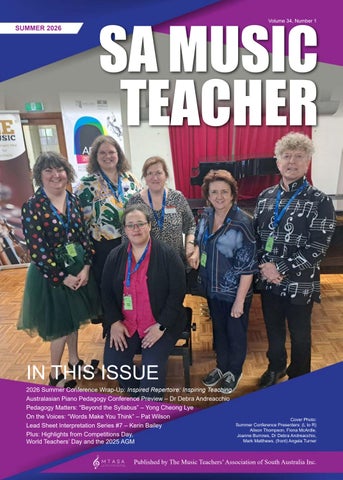
Cover Photo:
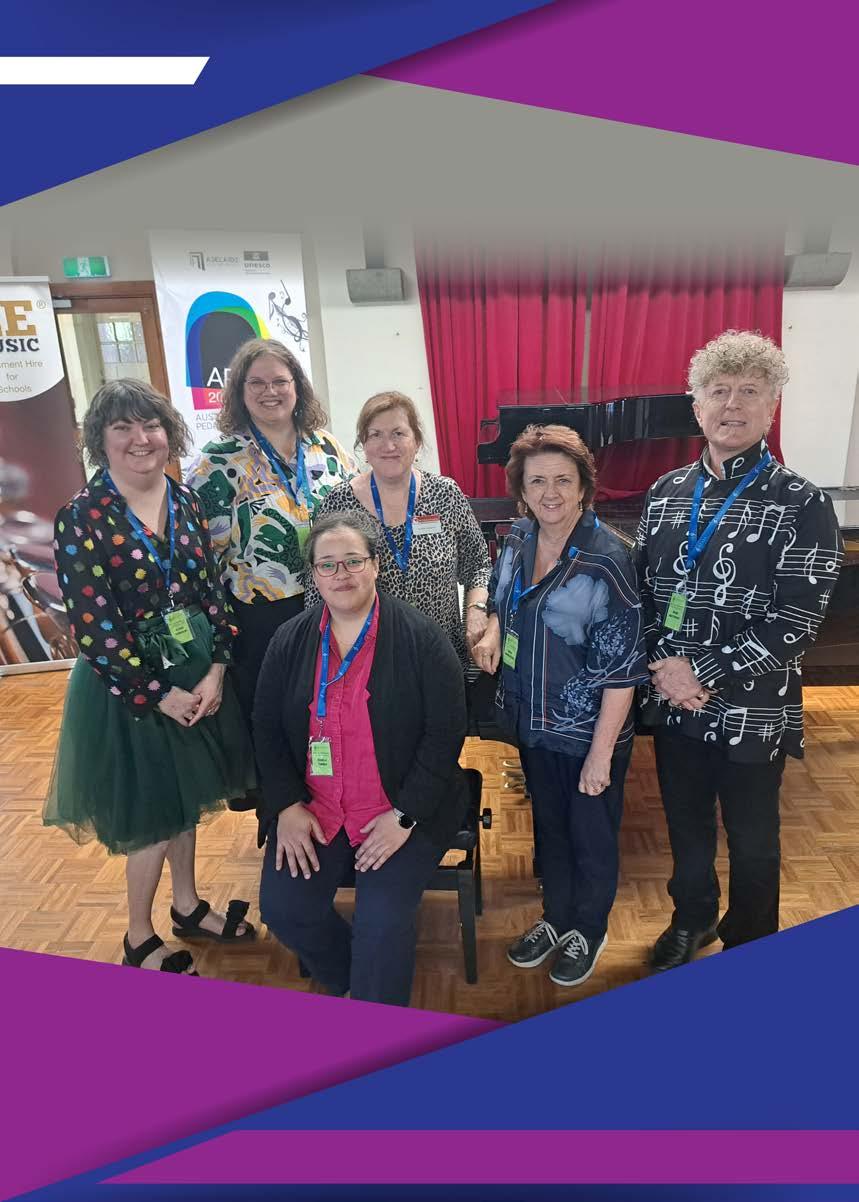
Summer Conference Presenters: (L to R) Alison Thompson, Fiona McArdle, Joanne Burrows, Dr Debra Andreacchio, Mark Matthews, (front) Angela Turner

WELCOME FROM THE PRESIDENT
Dear Members and Friends,
Welcome to our first edition of SA Music Teacher magazine for 2026. I hope that you have all started the teaching year feeling refreshed and re-inspired in your work, and that you will continue to reach out to your Association with your needs, ideas, and reflections as the year unfolds.
In this issue, you will find updates on MTASA’s activities and developments since the last edition, including the results of our reinstated Competitions Day, which received over 40 audition submissions from talented young musicians; a brief synopsis of the 2025 AGM; our World Teachers’ Day celebrations and award; and coverage of our most recent Summer Conference, Inspired Repertoire: Inspiring Teaching, held last month at the University of Adelaide, featuring a stellar line-up of presenters who made every session a highlight, and energised attendees by the positive, generous, and engaged atmosphere on the day.
The busy and dedicated MTASA Council has already begun planning this year’s calendar of events. Our first Concert Performance Day will be held in the next couple of months, offering students a supportive and encouraging performance opportunity and the chance to receive individualised expert feedback; new and interesting professional learning events are in the planning stages for our members, designed to inspire and support teaching practice and provide access to leading voices in the pedagogy community. Looking ahead, our Competitions Day in October will feature the Miriam Hyde Competition, celebrating Australian composition and providing students with the chance to polish and showcase their repertoire in a professional and challenging way.
An administrative change has taken place in our Council Executive, with the departure of Lynne Franks, whom we sincerely thank for her dedication, professional approach, and friendly interactions as MTASA Secretary over the past year. We now warmly welcome Julie Guo in her new role as Secretary and Public Officer of MTASA; Julie has already hit the ground running with a range of activities following the Summer Conference, and we thank her for the enthusiasm and generosity with which she has approached this vital and demanding role.
On behalf of the entire MTASA team, we hope you enjoy this edition of SA Music Teacher, and that you will stay connected and engaged with us as we work alongside you throughout the year. With best regards and wishes for a successful, rewarding, and healthy year ahead.
With warm regards,
Rosanne Hammer President, MTASA
2026
PATRONS : Her Excellency the Honourable Frances Adamson AC, Governor of South Australia, Mr Rod Bunten, and Emeritus Professor Dr David Lockett A.M.
PRESIDENT : Rosanne Hammer
VICE-PRESIDENT : Rodney Smith, Wendy Heiligenberg
SECRETARY : Julie Guo
TREASURER : Samantha Penny
AUDITOR : Australian Independent Audit Services
CURRENT COUNCIL : Rosanne Hammer (President), Wendy Heiligenberg (Vice President), Rodney Smith (Vice President), Julie Guo (Secretary - New 2026), Samantha Penny (Treasurer), Pete Barter, Ada-Maria Wycinka, Elaine Feng, Selena Yang, Yong Cheong Lye, Melody Men, Jessica Liu, Emmy Zhou, Lishan Xiao, James Yip (New 2026)
EDITOR : Ada-Maria Wycinka
LAYOUT: : SECTRIX (www.sectrix.com)
MEMBERSHIP ENQUIRIES to the Secretary – secretary@mtasa.com.au
PO Box 4, RUNDLE MALL, SA 5000 Mobile: 0402 575 219 • E-mail: info@mtasa.com.au
ADVERTISING – Please contact the Secretary
Please see the MEMBER information page for the Advertising Price List.
Contributions to SA Music Teacher are most welcome. All items to be included must reach the Editor (info@mtasa.com.au) no later than May 15th.
WELCOME FROM THE PRESIDENT
Hammer
COMING MTASA EVENTS
MTASA SUMMER CONFERENCE –INSPIRED REPERTOIRE: INSPIRING TEACHING
Review written by Emmy Zhou
A SUMMARY OF A PRESENTATION DELIVERED AT THE MTASA SUMMER CONFERENCE 2026
Penny
FROM PRELIMINARY TO LMUSA - A LONG-TERM JOURNEY IN PIANO EDUCATION
JOANNE BURROWS AND WIRRIPANG PRESENTATION REVIEW
Heiligenberg
APPC 2026 THE ART OF IMAGINATION – CREATIVITY THROUGH THE PIANO By Dr Debra Andreacchio
MTASA COMPETITIONS DAY 2025 Review written by Wendy Heiligenberg
WORLD TEACHERS DAY 2026
AWARD TO ANNABEL CHEEL
KAWAI+ REWARDS PROGRAM
JAZZIN’ AROUND LEAD SHEET INTERPRETATION
ACCOMPANYING
MTASA 2025 ANNUAL GENERAL MEETING Sunday 17th November, 2025
ACCOMPANYING VIEWS FROM THE OTHER SIDE!
REQUIRED PROFESSIONAL LEARNING FOR FULL MEMBERS OF MTASA
CHILDREN
COMING MTASA EVENTS
Sunday May 3, 2026
Concert Performance Day #1
Venue
Time TBA 10AM to 4PM
More details arriving soon! : :
August 2026
Winter Professional Learning Event
September 2026
Concert Performance Day #2
October 2026
Competitions Day
Miriam Hyde Competition (featuring Australian Repertoire)
November 2026
MTASA AGM
MEMBER INFORMATION
MTASA MEMBERSHIP FEES
RECOMMENDED TEACHING FEES
The following teaching rates are recommended to members by the MTASA Council for 2025.
POST-NOMINALS
Full members of the Music Teachers’ Association of South Australia may use the letters MMTA (member of Music Teachers’ Association) as a post-nominal while they are financial members. Interstate Music Teachers Associations are also encouraging their members to use this or a similar post-nominal.
WELCOME TO NEW MEMBERS
Julie Guo (2026)
Jenny Liu (2026)
James Yip (2026)

MTASA Summer Conference
“Inspired Repertoire: Inspiring Teaching”
Review
of Keynote Speaker Angela Turner’s Presentations
Written by Emmy Zhou - MTASA Council Member
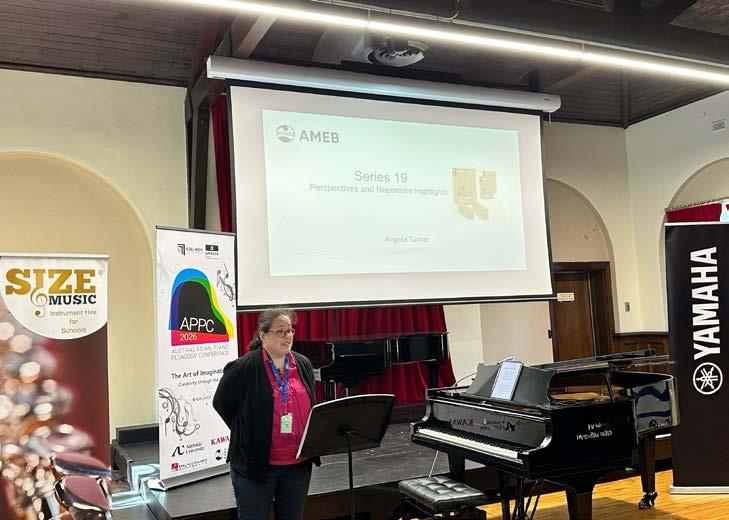
AMEB Piano Series 19: Perspectives and Repertoire Highlights
The sessions presented a comprehensive overview of the philosophy and pedagogical thinking behind the new piano repertoire series. A rigorous selection process was outlined, beginning with the review of approximately 30,000 works. From these, 600 pieces were shortlisted, 500 analysed in detail, and 128 ultimately selected. The final collection reflects a careful balance of stylistic, technical and musical considerations, with a strong emphasis on fostering engagement, creativity and musical connection in students.
A key feature of the repertoire is its commitment to diversity and representation. The series includes works by 25 Australian composers and 28 female
composers from 23 different nationalities, offering students a broader musical perspective while maintaining high pedagogical standards.
Repertoire examples were demonstrated across Grades 1 to 6, illustrating a clear and thoughtful progression in technical and musical demands. Early levels highlighted clarity of articulation, imagination and analysis, including the effective use of pieces without pedal. At higher levels, the repertoire demonstrated increasing complexity in form, expression and technical control, supporting the development of confident, expressive and musically independent pianists.
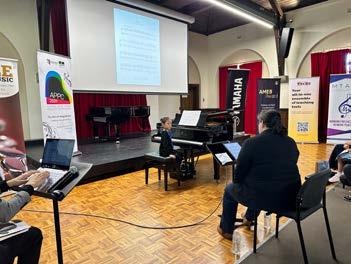
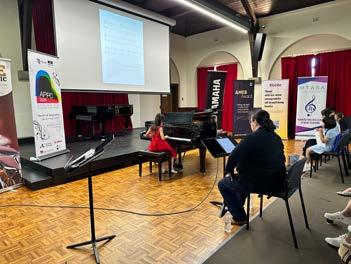
Masterclass: AMEB Piano Series 19 Repertoire
Angela Turner’s masterclass featured students across a range of levels and styles, offering focused guidance on interpretation, technique and stylistic awareness. Each performance provided an opportunity to explore how musical intention and technical choices work together to shape expressive playing.
Yue Li (Preliminary) performed Binin Gala (Light), where Angela discussed the composer’s preference for “crunchy” sonorities and emphasised the importance of tapering dynamics in the final chords. Luna Wu presented Allegro and Scoot, with attention given to attitude, appropriate tempo, rhythmic vitality and contrasting articulations. Michaela Li performed Dance by Shostakovich, and Angela encouraged a clearer sense of character, suggesting a slightly faster tempo to enhance excitement and energy.
In Baroque repertoire, Anna Mao’s performance of Handel’s Allegro focused on musical shape and continuous motion, highlighting the importance of pulse, physical poise and metronome practice.
Joanna Li performed Chopin’s Mazurka Op. 7 No. 1, where Angela discussed the Polish dance origins, distinctive rhythms, light and springing articulation, and subtle forward momentum. Thomas Li concluded with Debussy’s La fille aux cheveux de lin (Grade 7), with guidance centred on pedal control and managing complex rhythmic details.
Overall, the masterclass reinforced the value of stylistic understanding, attentive listening and refined technical control in developing expressive pianists, offering a practical complement to the theoretical and repertoire insights provided in the lecture sessions.
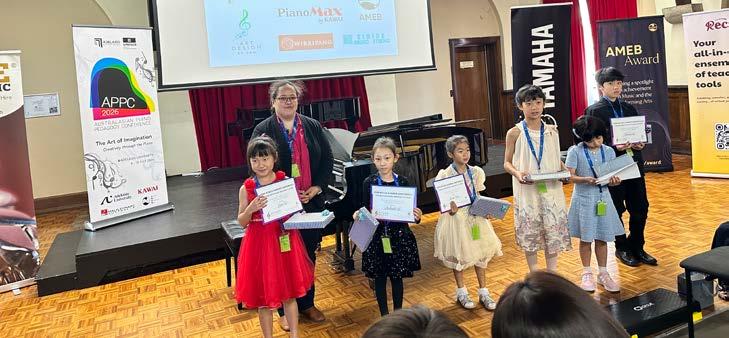
From Scared to Shared:
Teaching the Joy of Performance right from the start
A summary of a presentation delivered at the MTASA Summer Conference 2026
By Samantha Penny - MTASA Treasurer
“We’re going to do a performance!” This simple phrase can incite some strong feelings in our students, whether it be excitement, anticipation, apprehension or even fear. Our mission as instrumental teachers is clear - to help students to feel comfortable and confident as they navigate through preparing and executing performances. My presentation at the 2026 Summer Conference centred around understanding our students’ approach to performance and how we can manage their expectations of the experience to create positive outcomes.
In my own practice, I have defined two clear goals for my students:
1. Students engage in performance at multiple levels where their Reward Network lights up.
The brain’s reward network is a system of regions and pathways that drives how we feel pleasure, form habits, and motivate behaviour. We want to create positive performance experiences for all students where the reward network is activated. We need to consider students’ feelings, pre-conceived ideals and sense of wellbeing at all stages of the performance cycle from finding out that a performance is coming up, practising, performing and post-performance reflection.
2. Students normalise performance as a frequent part of the learning process.
I often say to the families of my students that performance is not an end-goal when you have mastered your instrument, but is very much a constant part of the learning process. Learning to perform is a stand-alone skill-set different to musical mastery, and comes with its own set of challenges individual to each student. Normalising performance as a regular event, in many forms and at all stages of learning will build performance skills as well as more broader abilities such as stress management and emotional regulation.
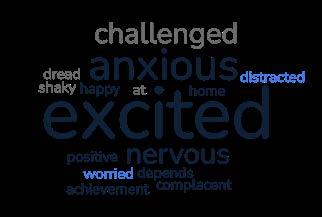
To gain a better understanding of how my own students approach performance, I retrospectively surveyed them about a recent performance. They were asked a set of open-ended questions to gauge how they felt at different points in time in the cycle of performance. This process helped me to understand how individuals responded to preparing and executing a performance, so I could then tailor my teaching to their needs through management of their expectations and emotions as they moved through the experience. I also collected frequently used words for each question,
creating word clouds to show the most frequently used adjectives - a valuable exercise in reviewing my own performance as an effective teacher. Here are some examples:
Question
How did you feel when you found out that you were going to do a performance?
Describe how you felt when you were performing.
Now that the performance is over, how do you feel it went?
Most frequently used word in the responses
Excited Happy Good
After sharing my goals and some results of the data collected in my presentation, the audience was then invited to reflect on their own students and own practice. We did three exercises:
1. Creation of a word cloud with our own feelings about performance.
2. Creation of a graph of our Wellbeing Driversspecifically stress, achievement, challenge and barriers. Participants noted how these drivers change in intensity at different points along the performance cycle, helping them to understand their own wellbeing and feelings, and gain an insight into those of their students by extension.
3. A collaborative discussion about all the different kinds of performances that these teachers have engaged students in followed, and many different ideas to engage students in performance at all levels were shared.
I briefly explained my Concert Challenge, which I use to encourage my younger students to start their musical journey with positive performance. In a nutshell, it is a recital where students opt in to a repertoire list (with guidance) and very proudly perform their chosen pieces with their friends in front of their families - a great way to get them playing plenty of music in an exciting and fun format alongside their peers.
I also touched on managing expectations, particularly in assessments. The importance of being up-front and clear about how they are going in their preparation, and understanding the correlation between this and their success will help
students to not only gauge their progress but also gain ownership and understanding of the process. This will by extension help them to regulate their feelings during the performance cycle and often result in a more positive experience.
We always want students to have the tools to do their best in performance, and if we can provide experiences that give the best chance to ignite their reward network while managing their expectations, then we are doing something right.
For more information about this presentation and a list of resources:

Caption for diagram: Question for participants- How do you feel around rehearsing and executing a performance?
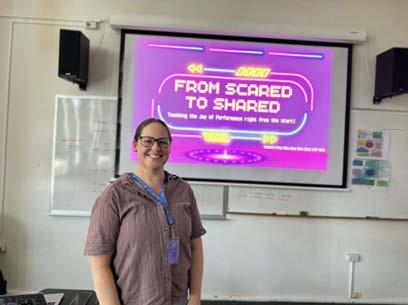
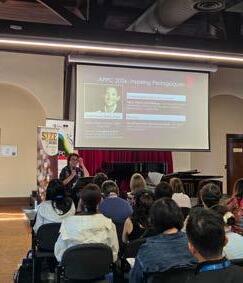
Samantha Penny at the MTASA Summer Conference 2026
From Preliminary to LMUSAA Long-Term Journey in Piano Education
MTASA Summer Conference Presentation Review
By Elaine Feng - MTASA Council Member
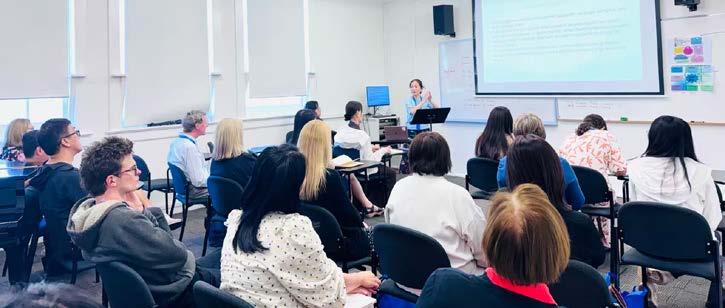
In this presentation, I explored the long-term journey of guiding a piano student from beginner level through to diploma studies — a path that is both challenging and deeply rewarding. Through three case studies from my own teaching practice, I reflected on this journey from the perspectives of the student, the parents, and the teacher.
I focused on three key aspects of piano pedagogy.
First, I discussed how contrapuntal music can be introduced in the early stages using simple, everyday language. As students mature, this understanding can gradually be developed into more refined and professional musical terminology. This step-by-step approach allows technical and musical understanding to grow naturally over time.
Second, I examined the important question of when parents should begin to step back. Encouraging students to take increasing ownership of their learning helps them develop independence, responsibility, and genuine enthusiasm for music.
Finally, I reflected on the importance of teachers remaining lifelong learners. Guiding a student to diploma level requires us to continually deepen our own knowledge, refine our teaching strategies, and grow alongside our students.
My aim was to share practical insights drawn from real teaching experiences, and to encourage teachers to view piano education as a meaningful long-term partnership between student, parent, and teacher.
Joanne Burrows and Wirripang Presentation Review
MTASA Summer Conference 2026
By Wendy Heiligenberg - MTASA Vice-President
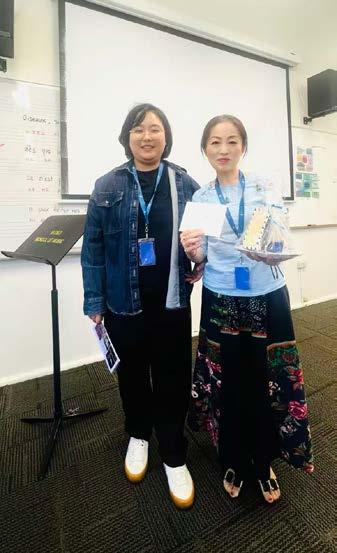
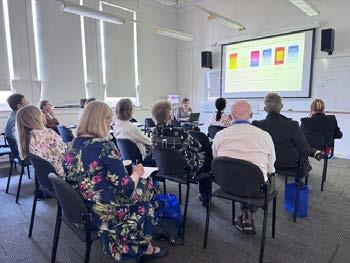
Joanne Burrows kindly gave two presentations at the MTASA Summer Conference. In a lively and informal session, Joanne described her association with the Wirripang Publishing House.
Wirripang, based in Wollongong, NSW was established in 1987 and is the largest independent sheet music publisher of Australian music. A dedicated panel of leading Australian composers, performers and industry experts peer review and approve of all works prior to publication. Wirripang is open to review work if you have written something and would like others to get access to it. This refers not only to recognised composers, but to university students, music teachers, senior school students etc. Moreover, if a music teacher finds that works are missing for a specific instrument, or ensemble, Wirripang is happy to ask their circle of composers if they would oblige by writing new works for the neglected areas.
Joanne herself is completing a PhD, researching and writing teaching material for students aged 1217, as there is almost no material written specifically for beginner students of that age group.
Joanne worked through the Wirripang website, showing us the wealth of resources availableSheet Music, Anthologies, Ensemble works, CDs, Studio teaching books, reference books for theory
etc. I was intrigued by titles such as “Are You Bored Enough to Practice? “ or “Death by Rhythm”, which contains 40 fun rhythmic drills, both works written by Joanne herself, or the “Double Trouble” Series, a collaboration of 3 composers’ works of varying standards for piano duets.
There are also anthologies of Australian music, and more recently, and very importantly anthologies of Australian Women Composers.
Exciting new publications are about to be launched. “Double Trouble Imagine”, which encourages improvisation and Joanne thought might also provide the freedom for intellectually diverse students to develop musically in their own way. I believe another promotes piano duets for “unequal duets” where the standard of one part is more challenging, than the other, encouraging adults to play with younger or less advanced partners.
So, if you are a composer and see a gap that needs filling, compose something for Wirrapang, (submissions of original works are accepted on a twice-yearly basis) or if, like me, you can’t compose, let them know what is missing and needed by you to enhance your teaching resources.
The website is: https://www.australiancomposers.com.au
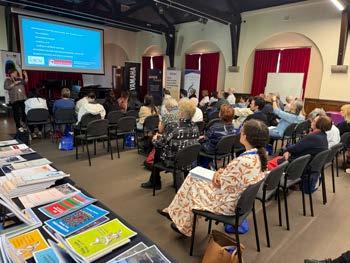
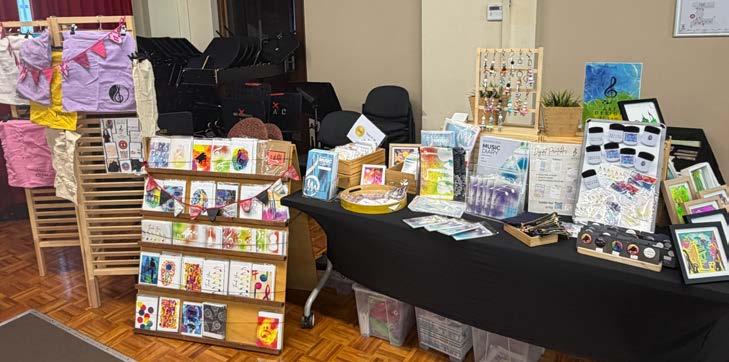
Inspired at the MTASA Summer Conference 2026
Welcoming Jenny Liu as a New Student Member
We are pleased to share the closing paragraph of a thoughtful three-page review written by Jenny Liu, a Bachelor of Music student at the University of Adelaide and a new student member of MTASA. We thank Jenny for sending us this reflection and feedback, and warmly welcome her to the Association.
The MTASA Summer Conference 2026 was an inspiring, motivating and empowering professional development. Through participating, I gained significant knowledge and understanding of music teaching, benefited from meaningful learning experiences and connected with an incredible community of music educators and students. I would highly recommend MTASA membership and future professional development events to any music teachers or university students who are enthusiastic about music education.
Jenny Liu Student, Bachelor of Music, MTASA Student
Member.

APPC 2026 The Art of Imagination –Creativity through the Piano
By Dr Debra Andreacchio
In a world increasingly dominated by social media, computer games, and the allure of Artificial Intelligence, nurturing our students’ imaginations is more vital than ever. Music-making, especially through the piano, offers a powerful way to inspire creativity. For 33 years, the Australasian Piano Pedagogy Conference (APPC) has fostered a love for piano music and learning, and this year from 6-10 July, it returns to its birthplace, Adelaide. Founded in 1993 by Rodney Smith OAM, APPC unites studio teachers, concert performers, university educators and supporters of music education for a concentrated, collegial exchange

Professor Konrad Maria Engel
Our 2026 program features inspiring voices whose work transcends the keyboard, beginning with Professor Konrad Maria Engel, whose background seamlessly blends elite concert performance with visionary pedagogy. The success of his approach is evident in his students, including Jeonghwan Kim, winner of the 2023 Sydney International Piano Competition.
Konrad’s sessions are as practical as they are imaginative. In his plenary keynote, “Practising means teaching yourself! – Or: What does repairing a bicycle have to do with a Chopin Etude?”, Konrad will work with the young Adelaide pianist, Jonathan Wong, to deconstruct the mechanics of a Chopin étude and reveal strategies for genuine self-directed mastery. Beyond the keyboard, Konrad will lead Conservatorium students in an innovative collaborative project where piano, poetry and painting converge, creating a unique artistic experience.
of ideas, artistry and pedagogy. Operating under a national committee with representatives from every Australian state and territory, as well as New Zealand, the conference is now a cornerstone event for piano educators, scholars and practitioners across Australasia and beyond.
This year’s theme – “The Art of Imagination – Creativity through the Piano,” will celebrate performance, research and hands-on teaching led by imaginative and collaborative artists and educators.

Professor Anna Goldsworthy
Professor Anna Goldsworthy, Dean of the Elder Conservatorium, is a celebrated pianist, author and festival director whose career spans international stages and local artistic leadership. A founding member of the ARIA-award-winning Seraphim Trio, she brings a distinctive literary voice, with her memoir “Piano Lessons” that captured the impact of her studies with Eleonora Sivan.
At the conference, Anna will lead a masterclass on the collaborative arts of accompaniment and piano duet, highlighting the skills that underpin ensemble and vocal collaboration. She will perform in a concert of solo piano works and Schubert songs with American tenor Kyle Stegall, illustrating how narrative, text and sound interact in performance. Anna’s multifaceted career, bridging performance, writing and advocacy, embodies the imagination at the heart of the APPC 2026 theme.
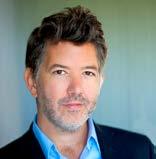
Professor Nicholas Mathew
Joining us from the University of California, Berkeley, Professor Nicholas Mathew is a scholar-performer and world authority on eighteenth and nineteenth-century music. He is fondly remembered for his engaging wit at the 2017 conference. His expertise is deeply practical, shaped by his work on historical pianos with Malcolm Bilson.
At APPC 2026, Nicholas will challenge our assumptions in his plenary keynote, “What Beethoven Didn’t Know,” inviting us to reconsider how history, instruments and context shape interpretation. He will also present a lunchtime recital, “Music Related, Music Recovered, Music Remade,” weaving Schubert, Beethoven and “bouquets of miniatures” into a program that shows how re-imagining the past can unlock new possibilities for today’s performers and teachers.
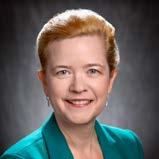
Professor Pamela Pike
From Louisiana State University, Professor Pamela Pike brings a global reputation as a leading authority on how we learn. As Professor of Piano Pedagogy and Editor-in-Chief of Piano Magazine, she is known for translating learning theory and research into clear, practical strategies for the studio.
Her plenary keynote, “The Adult Piano Student: Facilitating Creative Learning Throughout Adulthood,” will address the rapidly growing cohort of mature learners and offer concrete ways to keep them motivated, challenged and musically fulfilled. In addition, Pamela will lead a workshop on “Inventive and Effective Sight-Reading Strategies” and a session on how research can transform our own teaching pathways.
Invited soloists:
There will be further recitals and varied masterclasses throughout the conference, from:
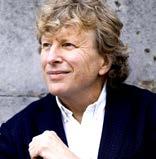
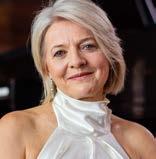


Piers Lane, AO
Lucinda Collins
Kyle Stegall, Tenor
Vivian Choi Milton
Alongside our four keynote presenters, APPC 2026 will be enriched by a group of featured artists and educators whose contributions are made possible through the generous support of our major sponsors Kawai, AMEB and Hal Leonard. Together, they extend the conference conversations about practical repertoire and creative studio strategies.









With four concurrent streams, the conference programme is a feast of diversity, ensuring every teacher finds something deeply relevant to their specialisation. We will enjoy restorative times together, drawing fresh inspiration to find pathways of meaning in the sounds we create, and more importantly, with the students we serve. We look forward to seeing a large contingent of studio teachers at our pedagogy conference in July.
MTASA is proud to announce that member Cathy Miegel has been awarded a full bursary to attend the APPC Conference. Congratulations, Cathy!
Dr Jason Sifford, USA
Mekhla Kumar
Keith Snell, USA
Carly McDonald
Samantha Coates
Angela Turner
Davis Durrough, USA
Tim Topham
Dr Emily Dollman
MTASA Competitions Day 2025
Reimann-Robinson Scholarship and Norman Sellick Memorial Prize
26th October 2025 at Australian Piano Warehouse, Daw Park
Review written by Wendy Heiligenberg - MTASA Vice-President and Competition Co-Heat Adjudicator
At the end of October, the MTASA was proud to conduct our Competitions Day, featuring the Norman Sellick Memorial Prize for students aged 12 years and under and the Reimann-Robinson Scholarship for senior students, aged 13-18 years.
Over 40 applicants took part in the 2 competitions. Rodney Smith OAM and I were delighted to be asked to listen to and assess the pre-recorded performances. We then had the difficult task of choosing those candidates who would go on to perform in person in the second (final) round.
Dr David Lockett OAM was our esteemed adjudicator for the final which took place at the Australian Piano Warehouse.
After listening to the performers, David briefly described what he looks for and how he weighs up important factors in a competition. He is looking for great dedication and commitment. Accuracy is a relative thing- an odd slip or wrong note is not crucial if the dedication and expression are there. He expects the candidates to do something with the composer’s indications, but these are only a part of the interpretation. Other factors are the exploration of the range of colours, moods and emotions which an instrument can produce. He seeks a clear interpretation that communicates the performer’s emotions, enabling them to develop a unique, personal sound.
Music is not a spectator sport. Performances are made up of many things: confidence and accuracy, continuity and engagement, concentration, skill, and projection. He compared a musician’s performance to that of an actor. Actors need to know the lines but then must analyse the character they wish to portray and explore the moods and emotions. Expression makes the music and the audience needs to feel that the player is engaged and feeling deeply about what they play.
It was a very exciting final and David’s task was made very difficult as we heard so many fine performances. Our thanks go to David Lockett, all the competitors, that took part in both rounds, their teachers, and their parents and families.
RESULTS - Adjudicator Dr David Lockett OAM
Norman Sellick Memorial Prize
(Two Contrasting Works, up to 10 mins, age 12 and under)
1st Prize – Anthony Tan (Piano) teacher: Yong Cheong Lye
2nd Prize – Jia Yue Leong (Piano) teacher: Yong Cheong Lye
3rd Prize – Eric Zhu (Piano) teacher: Yong Cheong Lye
Honourable Mention – Eric Wu (Piano) teacher: Yong Cheong Lye
Reimann–Robinson Scholarship
(Two Contrasting Works, up to 15 mins, age 18 and under)
1st Prize – Jessica Mah (Flute) teacher: Linda Pirie
2nd Prize – Anthony Cernaz (Piano) teacher: Gil Sullivan
3rd Prize – Alexander Nguyen (Piano) teacher: Rosanne Hammer
Honourable Mention – Yili Liu (Piano) teacher: Rosanne Hammer
World Teachers Day 2026
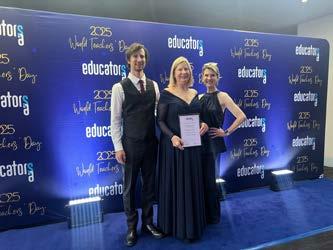
MTASA Award to Annabel Cheel
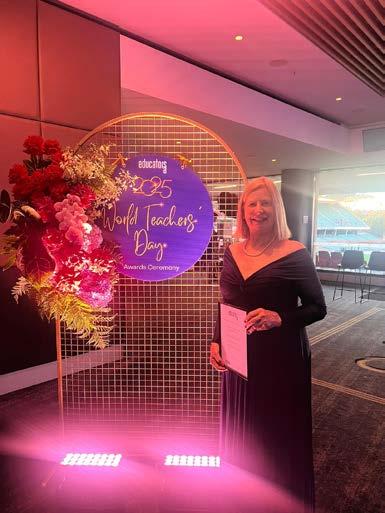
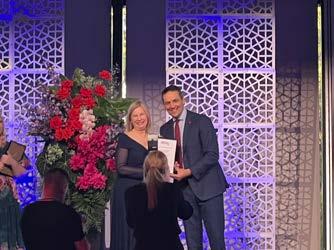
At the World Teachers’ Day event hosted by Educators SA, MTASA proudly presented the Appreciation of Service and Involvement Award to distinguished and dedicated MTASA member Annabel Cheel. The award was presented during a formal dinner held in the William Magarey Room at Adelaide Oval.
This award recognises a member’s collegial and ongoing involvement in the life of the Music Teachers’ Association of South Australia. It acknowledges Annabel’s consistent participation, professional spirit, and thoughtful presence at MTASA events, as well as her long-standing contribution to music education and commitment to the values of connection, respect, and community within the Association.
Annabel was joined on the evening by her son Tim Cheel, daughter Angie Christophel, MTASA Educators SA representative Jessica Liu, and MTASA President Rosanne Hammer, with special guests Her Excellency Governor Frances Adamson AC and South Australian Minister for Education Blair Boyer MP also in attendance.
On the Voices
Words make you think
By Pat H. Wilson
“Words make you think. Music make you feel. A song makes you feel a thought.”
E.Y. “Yip” Harburg (1896-1991) American song lyricist and librettist.
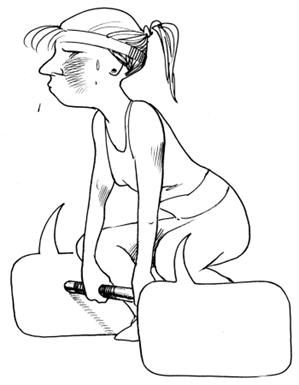
I really love this cartoon. My friend George Aldridge, the artist, dreamed it up for me when I was writing the first edition of my little singing book. It reminds me about the weight of words, and the responsibility borne by every singer to make each lyric meaningful, clear and emotionally accessible. It’s a tall order, but, hey, that’s our gig.
It’s time to focus on one of the more neglected elements of song: the lyrics. When students talk about learning a song, it’s almost always the melodic line they are talking about. Just the tune. And we singing teachers – of all genres – are sometimes guilty of forgetting just how important the song’s lyrics really are. After all, if your song didn’t have words, it would be a [flute/ violin/trumpet/clarinet – choose your own instrument] solo. OK, smarties… I know about Bachianas Brasileiras No. 5 by Heitor Villa-Lobos. But if your performance of that glorious song doesn’t tell me about the moon, the pink clouds, the sea, the quietening birds and the nostalgic ache that Villa-Lobos clearly intended his song to convey, then it simply becomes a vehicle for a soprano show-off. And that’s boring.
These days, I mostly work in the music theatre area, so I’ll use an example from one of my current students. But I suspect that most singing teachers will recognise this situation.
An enthusiastic 10-year-old singing student who had just seen the film Wicked: Part 1 begged me to teach her “Popular” (Words & music by Stephen Schwartz; from the musical Wicked – 2003), Galinda’s snide makeover aria. I agreed, largely because it was preferable to her number one request, “Defying gravity” (!). It still worried me, though. Although “Popular” has a perky upbeat tune, its range is quite demanding for my young student’s developing voice, its sarcasm is quite adult and the language is complex.
The way I like to go about teaching students a new song is always words-first. I ask them to speak the lyrics aloud before ever attempting to sing them. New students invariably ask me why. I tell them, “If you can’t say it, you can’t sing it”. When they say the text aloud, any mispronunciations and stumbling over words help me to identify words and ideas in the lyrics which the student may not understand. And this is just as true for the 45-year-old student as my 10-year-old. (I’m frequently surprised by the limited vocabulary of some of my adult students.)
ploys cohorts personality dialysis dreary unprepossessing communicators aptitude shrewd clandestinely
And so to my young student’s song. From the way she read the text aloud, it was clear that she didn’t understand these words/ phrases: And that’s before we tackle the cynicism, psychological manipulation and patronising required in order to act the lyric intelligently.
If your specialist singing field is CCM (contemporary commercial music), lyrics appropriate to your student’s age and emotional intelligence will quite probably be the bane of your life. Songs that your young students love and beg to sing may be vocally accessible but lyrically far removed from their experience and understanding. Another one of my students, this one 9½ years old, desperately wanted to do “Santa, tell me” (Words & music by Savan Kotecha, Ilya & Ariana Grande – 2014) at an upcoming Christmas concert. Hmmm….
Reading the lyrics of this pop song, it appears to be a heartfelt plea from a lovesick person desperately asking Santa Claus to assure them that the object of their obsession will still love them next year. (At best, it seems a fairly useless request to me.) Whatever its logic, the text is clearly more sexualised than is appropriate for my young singer. Together, my student and I took time to look at the words carefully. Could she sing this song as if she were talking about her pet dog? Her closest schoolfriend? Her love of the Lord Jesus Christ? Her affection for her brother? Nothing fitted. We agreed that it was clearly a sexually-based song, and inappropriate for her. But it took quite a while for her to consider the lyric (by speaking the words aloud) and come to a decision. I always do 1-hour
sessions with my students, whatever their age.
I know that teachers constrained by half-hour singing lessons may be inclined to prioritise musiclearning, appropriate vocal technique and simply learning the words.
But words carry meanings, and those meanings convey emotions. Yip Harburg, whose quote opens this article, knew what he was doing. Why argue with the man who wrote the lyrics of “Somewhere over the rainbow”?
Pat H. Wilson
Cartoon illustration by George Aldridge; from: Wilson, Pat. H. (2013) The singing voice: an owner’s manual. 2nd ed.
Sydney, Lazy O’Rhinus Press.
REFERENCES
Edwin, R. (2012). Popular Song and Music Theater: Repertoire for Child Singers. Journal of Singing, 68(4), 443-444.
Ragan, K. (2016). Serious about singing: Age appropriate repertoire for the talented teen. Journal of Singing, 72(3), 299-304.
Winters, K. L., & Griffin, S. (2014). Singing is a celebration of language: Using music to enhance young children’s vocabularies. Language and Literacy, 16(3), 78-91.
Pedagogy Matters Beyond the Syllabus: Choosing the Right Order for Repertoire
By Yong Cheong Lye - MTASA Council Member
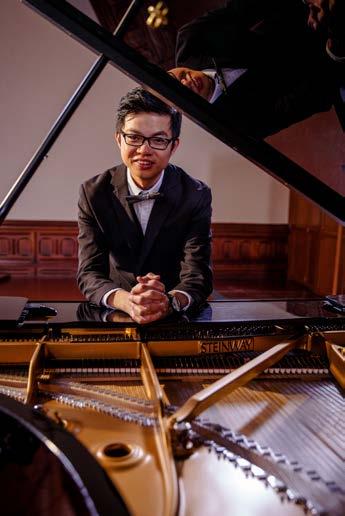
The order in which repertoire is presented matters in pedagogy, particularly in the AMEB Repertoire exam syllabus and other performance-based examination systems. In practice, students and teachers sometimes arrange pieces in a way that lacks cohesion or balance, which can affect musical flow, confidence, and the overall impression on listeners.
The most traditional approach is chronological: Baroque → Classical → Romantic → 20th/21st Century. Each period has a distinct character, making this a widely accepted and reliable baseline practice. Chronological ordering provides clarity for students, examiners, and audiences, and often creates a logical and stylistically clear musical journey.
However, chronology alone is not always sufficient. When multiple pieces come from the same period, such as two Romantic works or two Contemporary pieces, teachers must look beyond historical placement. In these cases, factors such as character, texture, energy, pacing, tonal colour, and emotional direction become essential in determining a convincing and musical order. For example, a slow and solemn 21st-century work may not be best placed at the end, as the final piece should ideally be energetic and leave a strong impression. Repertoire sequencing, therefore, becomes a form of musical storytelling rather than merely a question of which piece comes first or last.
Ultimately, the student as performer must remain at the centre of these decisions, with individual preferences and strengths taken into account. Some students may prefer to begin with their strongest or favourite piece at the start of the programme, while others may benefit from a more gradual progression. Teachers also need to consider which pieces are most secure, which may serve as a warm-up, and how best to connect the programme as a whole. Sequencing should support the student’s musical expression and confidence, rather than simply fulfilling syllabus requirements.
In the end, repertoire selection and sequencing reflect how a teacher understands both the music and the student. Pedagogy truly matters, even in these seemingly small decisions.
Lead Sheet Interpretation #7 – Accompanying JAZZIN’ AROUND
By Kerin Bailey
Armed with the information in previous articles, here are some ideas to easily create an accompaniment from a lead sheet/chord chart – melody line and chord symbols.
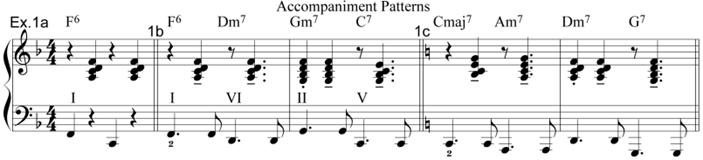
Ex.1a is the most basic accompaniment – which any pianist with some facility with chord symbols should be able to play at sight from a lead sheet. LH is 1/4 (or 1/2) note root/5th – common when harmony static.
1b is simply a variation of this and should look familiar from my Lead Sheet 2 article. Note: F6 has same chord tones as Dm7; rule – when the root of a major chord is the melody note use the 6th chord – not maj7 – the minor 2nd clashes with the melody; Gm7 root position to C7 2nd inversion is good voice leading, enabling minimal hand shifts; the LH rhythm, from Lead Sheet 2, keeps the rhythm and beat ticking over; chord progression is I VI II V – very common.
Practise this in several keys and with experience the rhythm pattern may be varied. To keep the 2nd finger within a 3rd or so of middle C (not always possible) it may be necessary to change the inversions – 1c. These patterns work equally well with swing or straight 1/8th pieces – Latin, rock etc.
Below are some accompaniment excerpts from my pieces for guidance on putting 1a, b/c and more into practice:
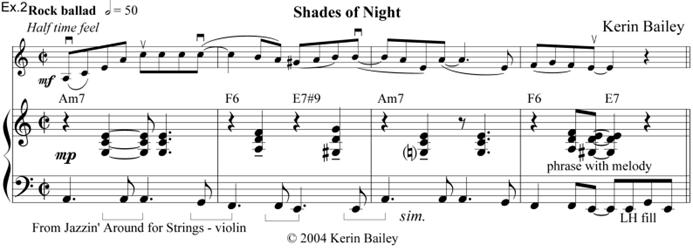
Note: both 1a and 1b patterns occur here; 1b in bars 1 and 3 is only half of the pattern – bars 2 and 4 could have completed the 2-bar phrase; in bar 4, L & RH phrase with the melody, followed by a simple LH ‘fill’; the RH G in bar 2 beat 4 is the augmented 9th – technically Fx, and is a spicy chord!
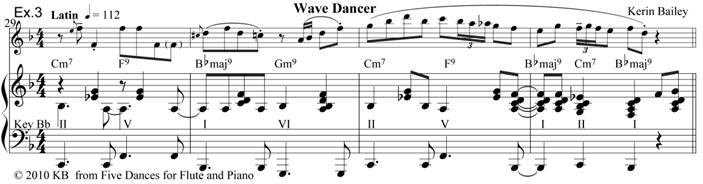
This is a step up from ex.2 and may look more complex. However, the RH chords in 1-3 are merely ‘broken’, creating a more interesting rhythm, with more syncopation, and melodic interest in the lower voice/notes. Note: the syncopated notes in bars 1 and 2, and the chord on 4+ in 3 – these anticipate the following chord*.
Another step up is Cookin’ With Gas – a more two-handed open chord voicing style. (See Lead Sheet article 5– Open/Two Handed Voicings).
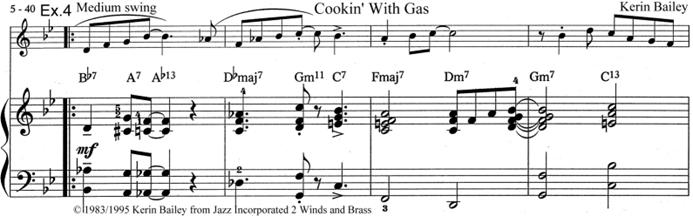
This is trickier to do than ex.2 and 3 above, and also requires a secure sense of time. When syncopation is involved in both hands simultaneously there can be a tendency to rush the beat and rhythm. – practise with a metronome! Note: the unison phrasing and two quick key changes in bars 1 and 2; RH fill with Dm7 in bar 3 – simply using the notes under the fingers; the syncopated Ab13 in 1, Gm11 and C7 in 2 and Gm7 on 4+ of bar 3*.
So – patterns 1a and b/c are the easiest way to create an accompaniment. With experience, listening, and ‘borrowing’ ideas from recordings and well-arranged sheet music, the reader/student will acquire the ability to expand on the techniques presented here. The variations will only be limited by your imagination!
https://www.youtube.com/watch?v=NB_fCAObdX4 Embraceable You – Dianne Reeves vocal with Peter Martin piano – and orchestra. Stunning piano solo – and accompanying, all improvised!
https://www.youtube.com/watch?v=D7WIaXyE7A0&list=PLbnJYtsl3xpjTrYCfvEpvQXvx0QDpLMgc&index=1 Tony Bennett Bill Evans Album – piano and voice. The description is interesting reading!
https://www.youtube.com/watch?v=OdiXmO-tO_o&list=RDOdiXmO-tO_o&start_radio=1 Stan Getz and Kenny Barron – People Time – duo.
https://www.youtube.com/watch?v=_4kEmMqlDR4&list=PL7gp579CMkT-eSLjEI7RPw84VNxG--S4m&index=6 Louis Armstrong Meets Oscar Peterson – I Was Doing Alright. Endless invention without intruding from Oscar.
https://www.youtube.com/watch?v=DIxSq-yCE5E&list=RDDIxSq-yCE5E&start_radio=1 Randy Crawford with Joe Sample Trio – Everybody’s Talking at Me. More contemporary groove. This article © 2025 Kerin Bailey. Next time – self accompaniment.
MTASA 2025 Annual General Meeting
Sunday 17th November, 2025
The 2025 MTASA Annual General Meeting was held on Sunday 17 November at the Minor Works Building, 22 Stamford Court, Adelaide, followed by an informal dinner at La Trattoria Restaurant attended by many of those present. As part of the meeting, the President outlined the Association’s activities and achievements for the year, and this report serves as a record of MTASA’s work throughout 2025. Over the past year, MTASA has continued to strengthen its role as a professional, collegial, and forward-thinking organisation, supporting music teachers through high-quality professional learning, advocacy, governance reform, and member engagement. The summary below highlights key events, initiatives, and developments across the year and reflects the collective efforts of Council, volunteers, partners, and members in advancing music education in South Australia.
MTASA President’s Report – 2025 Category
Events & Professional Learning
Activity / Achievement
January PL Day –Unveiling the Romantic Soul: teaching the emotional depth of Romantic music (23 January)
July PL Day – The Mystery of the Musical Mind (20 July)
Details / Outcomes
Keynote presentation by Dr Dylan Henderson, whose award-winning research offered perspectives for the performance of Chopin’s music and broader Romantic repertoire. Council members Wendy Heiligenberg, Melody Men, and Emmy Zhou gave presentations, as did Bradley Eustace (AGM and S). Simone Licari (SA GOV) discussed the new Sports Voucher Initiative.
Keynote presentation by Amanda Handel exploring the interplay of the conscious and subconscious mind in musical learning and performance, with masterclass and repertoire demonstration. Guest speakers Sam Lench (Wizard Tone Studios) and Pete Barter (SAMii). Sponsored by Credit Union SA and Australian Piano Warehouse.
Concert Performance Day #1 (13 April)
Concert Performance Day #2 (30 August)
Competitions Day (26 October)
Held at Elder Hall in collaboration with AMEB. Three sessions were presented, with one session featuring Certificate of Performance and Diploma repertoire.
Held at Immanuel College Chapel, in collaboration with Immanuel College.T hree sessions were presented, with one session featuring SACE Stage 2 Performance Students
Reinstated Competitions Day with support from Australian Piano Warehouse. Online heats adjudicated by MTASA Vice Presidents Rodney Smith OAM and Wendy Heiligenberg. Final adjudicated by Patron Emeritus Professor David Lockett AM.
Norman Sellick Memorial Prize: 1st Anthony Tan (Piano), 2nd Jia Yue Leong (Piano), 3rd Eric Zhu (Piano), Honourable Mention Eric Wu (Piano).
Reimann–Robinson Scholarship: 1st Jessica Mah (Flute), 2nd Anthony Cernaz (Piano), 3rd Alexander Nguyen (Piano), Honourable Mention Yili Liu (Piano).
MTASA President’s Report – 2025
Category
Activity / Achievement Details / Outcomes
MTASA 95th Birthday Celebration (11 August)
Governance & Policy
World Volunteers Day (22 May)
World Teachers Day (31 October)
Special AGM (11 June)
Code of Conduct
Administration & Operations
DHS Registration
ACNC Application
Membership & Representation
Website Improvements
Membership & Subscriptions
Institutional Membership
External Representation
Reception at Government House hosted by Patrons Her Excellency Governor Frances Adamson AC and Mr Rod Bunten. Awarded two Honorary Life Memberships: Mr Rodney Smith OAM (current Vice-President) and Ms Monika Laczofy OAM.
Held at Ayers House. Awards for distinguished and long service as volunteer council members to the MTASA were presented to Wendy Heiligenberg, Yong Cheong Lye, Jessica Liu, and Melody Men.
Long-standing and active MTASA member Annabel Cheel received the Appreciation of Service and Involvement in the Music Teachers’ Association of South Australia award in a ceremony held at Adelaide Oval, presented by the South Australian Minister for Education, Blair Boyer MP.
Held online to amend and add key clauses in the Constitution relating to our online meeting practices and auditing process.
Newly developed document outlining ethical and professional standards, reviewed, and formally adopted by Council to guide behaviour across all MTASA activities.
Registered with the Department of Human Services to maintain oversight of members’ WWCC compliance.
Lodged application for charity status with the Australian Charities and Not-for-profits Commission in response to changes in tax law affecting not-for-profit organisations, ensuring continued tax compliance and eligibility for concessions.
Significant updates to the MTASA website improving member access and accuracy of information.
Investigated lapses in membership subscriptions, recovered significant funds, and improved monitoring systems.
Developed and launched a new tier to encourage participation from schools and organisations.
Represented MTASA on AHOMINGS, AMEB Advisory Board, and SACE Board throughout the year, maintaining collegial and collaborative connections with these bodies and contributing MTASA teacher perspectives during Stage 2 music subject review.
Educators SA
As well as receiving strong support throughout the year, Council member Jessica Liu attended all meetings and secured a grant on our behalf. We are delighted that Jessica has been accepted onto the board of Educators SA in 2026.
MTASA President’s Report – 2025 Category
Activity / Achievement Details / Outcomes
ABC Radio Adelaide Panel Discussion (1 October)
Honorary Life Memberships
Members Survey
Publications & Communications
SA Music Teachers Magazine
Member Support & Partnerships
SAMii Software Partnership
Member Benefits – Elder Concert Series Member Communications –Event Access
MTASA represented on a panel discussing Music Education in Schools, providing teacher perspectives and promoting professional learning priorities.
Awarded to Mr Rodney Smith OAM (current Vice-President) and Ms Monika Laczofy OAM in recognition of long-term service.
Conducted a survey on Professional Learning values to inform future planning.
Produced three issues under new editor Ada Wycinka, containing articles, reviews, and other member-relevant content.
Arranged special member benefit partnership with SAMii interactive music software.
Offered members free tickets (2x double passes) to the Elder Concert Series performance on Sunday 27 April, 2:30 pm: Fantasies for Twenty Fingers featuring the Neeman Piano Duo, Stephanie Neeman piano.
Throughout the year, MTASA sent targeted emails to members offering discounted or complimentary access to events held by other music teachers’ associations, including special events at the Elder Conservatorium, supporting professional growth and networking opportunities.
ACCOMPANYING VIEWS FROM THE OTHER SIDE!
Words from
a
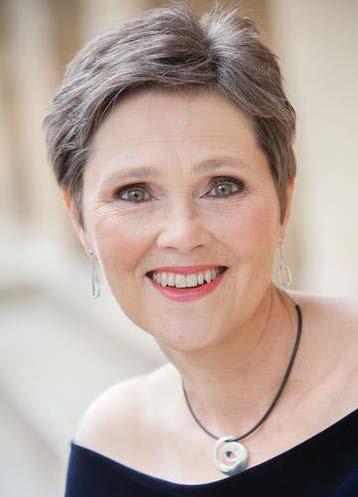
conversation with one of Adelaide’s vocal treasures, soprano Rosalind Martin:
“I’ve been very lucky to have always worked with great musicians as accompanists and it has always felt like a partnership in which we worked together as equals.
Observing accompanists playing with my students, I would say that the most important thing is that they make music - not just play the notes! Also to really know what tempo is best or most comfortable for the singer and, if the singer is not experienced, to encourage them to find that tempo.”
Flexibility is another essential – “a rigid tempo is never helpful when text and emotion are involved. Understanding the text and breathing with the singer is of prime importance. The pianist should sense where the singer might need to move through a phrase, or needs more time on the rests between the phrases, to help with breathing as well as considering the impact of words which need to be emphasised just as in relating a story.”
“I do have a pet hate - accompanists who try to show off how much they know and get distracted from just working on the song in hand!”
“Of course, not being too loud OR too soft is an obvious ongoing issue. Gerald Moore, probably the most famous pianist in the ensemble world, tells many humorous stories about this! Sometimes performers will ask a friend or colleague to ‘sit in’ on a rehearsal (if in the performance venue!) and give a verdict on the balance between singer and pianist. This might be of some help but pianists can actually judge only from what they themselves hear on the stage. They must be able to hear the singer in the softest moments and blend in, but then also strongly support any passionate outbursts – always ‘in tune’ with the text, moods and colours of the song.”
Rosalind Martin (added comments ML)
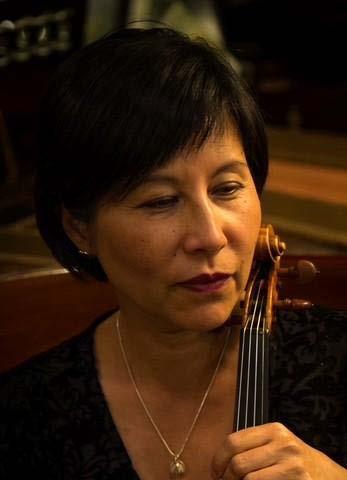
And a few more thoughts from former ASO violinist Shirin Lim”
What an instrumentalist needs from an accompanist or collaborative pianist depends very much on the repertoire being played. In the violin repertory, there are many works in which the violin is clearly the “solo” instrument, while the piano part provides an accompaniment,
supporting a more showy or virtuosic violin line. Sometimes these piano accompaniments are conceived that way by the composer; at other times they are reductions of orchestral scores.
Then there are the works that function more like true chamber music, where both instruments have more equal and interdependent roles. Regardless of the style or genre of music being played, rehearsals are always most productive when both violinist and pianist have thoroughly learned their own parts well before coming together. This preparation allows rehearsals to focus on ensemble and communication: listening closely to one another, responding to how a phrase is shaped, how a trill is begun, how articulation is handled in a passage, and how timing and character is negotiated, etc.
I don’t believe there is any music where the piano part is “just an accompaniment”. The violin part on its own is never the whole music. What matters
is how both players work together to create a complete musical experience. At every moment in a work, each musician needs to understand his/ her musical role and function within the texture. In works where there is a clearer distinction between a solo instrument and an accompaniment, pianists need to be especially sensitive to nuances of rhythm, tempo, dynamics and intensity.
Balance is crucial: the piano must support without overpowering, yet remain alive and expressive. Even in a clearly “accompanying” role, the music still needs to be phrased, shaped, and given direction. Often it is the way an accompaniment is played - its energy, clarity, and responsiveness - that gives the music the lift and excitement. In works that function more like chamber music, as many sonatas do, the relationship becomes a true partnership. Each player will at times accompany the other, and at other moments take on a more leading or soloistic role. When both musicians bring thoughtful interpretive ideas and are open to shaping those ideas together, this collaborative process can be deeply rewarding as well as a great deal of fun!
Shirin Lim
MTASA ADVISORY SERVICE
You’ve hit a problem in your professional life as a music educator.
Feeling isolated in your role as a music educator? You’re not alone.
The Music Teachers’ Advisory Service (MTAS) is here to offer the support and guidance you need. Whether you’re concerned about a student’s progress, your studio’s business model, or navigating institutional regulations, we’re here to help. When you encounter a professional challenge as a music educator, your first step is to reach out to the Secretary of MTASA. Based on your query, you will be referred to the most suitable MTASA Council member who will then contact you to provide the necessary advice and support.
FIND OUT MORE at MTASA.com.au

REQUIRED PROFESSIONAL LEARNING FOR FULL MEMBERS OF MTASA
MTASA has introduced a Professional Learning scheme for Full members. This commenced on July 1, 2019 when Full members began accumulating their seven hours of Professional Development. The scheme is designed to underpin and enhance MTASA’s established reputation for the professional excellence of its members, ensuring its standards are fully compliant with current educational expectations. These are clearly outlined in the Australian Professional Standards for Teachers (visit www.aitsl.edu.au/teach/standards) and similar documents.
From July 1, 2020 onwards Full members, when renewing their membership, will be asked to tick a box declaring that they have undertaken at least seven hours of Professional Learning during the previous twelve months.
The following examples are provided to give general guidance for Full members about Professional Learning that would be acceptable to MTASA. These examples represent only a small sample of all the possibilities available to Full members. Generally Full members should feel comfortable about their own choices but in case of doubt you are welcome to contact the Secretary for further advice (info@mtasa.com.au).
Improved music teaching should be a major factor in all activities that Full members wish to count towards their MTASA Professional Learning.
MTASA will undertake random checks from time to time to ensure the system is working properly. So, on very rare occasions a Full member may receive a request from the Secretary for information about their Professional Learning. In such instances you may submit evidence such as certificates, programs, diary notes, recordings and so forth.

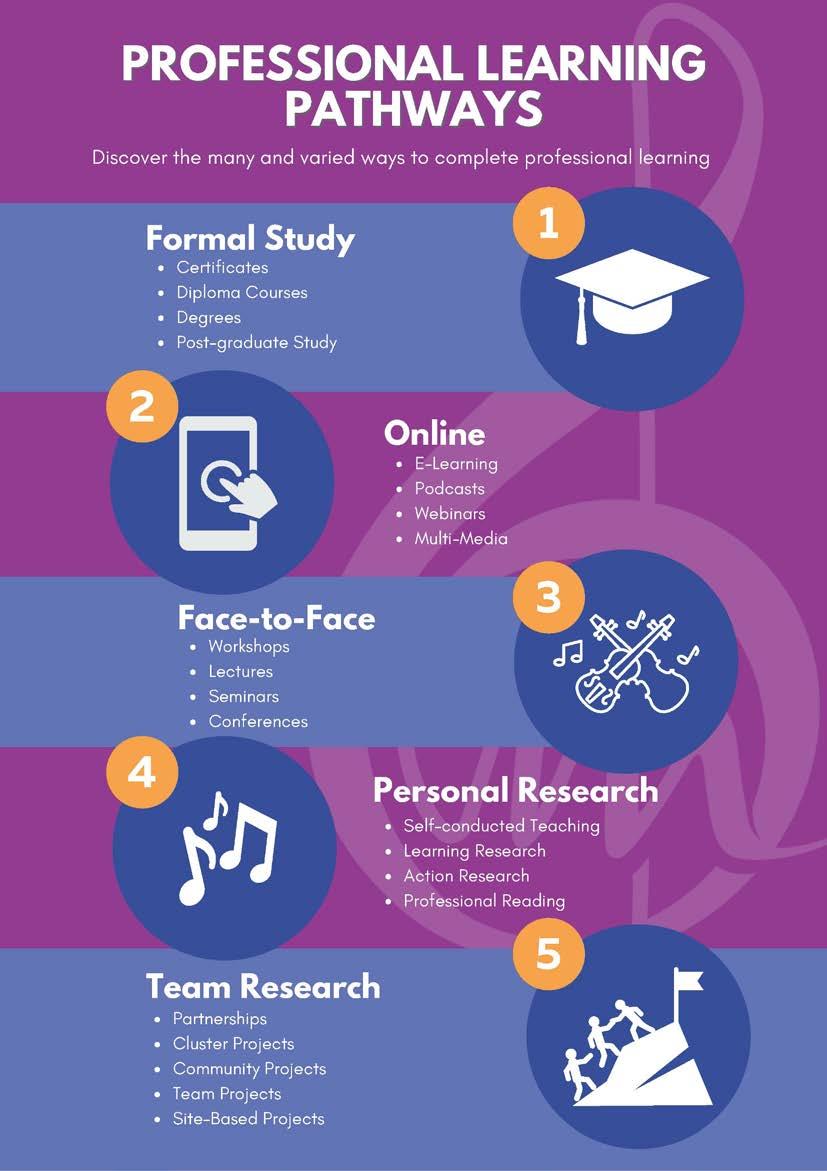
Examples of Professional Learning that would be acceptable to MTASA:
1. Online.
Attending a webinar or similar event; undertaking an online e-learning course.
2. Face-to-Face.
Attending a conference, workshop, masterclass or lecture.
3. Formal Study.
Undertaking a qualification or part-qualification delivered by a recognised institution.
4. Personal Research.
Studying books, journals, articles, musical scores, musical theory, analysis, etc., which lead to an example of improved music pedagogy and/or pupil performance.
Self-conducted research leading to a presentation, masterclass or workshop at a conference.
Composing an educational piece of music that motivates a group of pupils.
5. Team Research.
A joint project with others that achieves particular improvements in a training ensemble.
Joint creation of music teaching materials that improve learning in a group of pupils.
Remember! These are only a few amongst many possibilities. MTASA is a community of creatives. You are encouraged to be creative in your Professional Development!
EDUCATORS SA

As a member of Educators SA, MTASA has access to some fantastic offers of benefits to its members.
Credit Union SA has a range of incredible education only banking benefits. Visit their website for more information: https://www.creditunionsa. com.au/community/educationcommunity-banking-benefits
You also have access to the Member Advantage benefits program offering discounts on your everyday purchases. Think of it as your VIP pass to huge savings and epic deals on everything from your favourite retail stores to tech gadgets, whitegoods, sporting gear, health insurance, motor vehicles, and so much more! You can see more on the Educators SA website here: https:// educators-sa.sa.edu.au/memberadvantage/


NOTICE TO STUDENT MEMBERS
Have you fulfilled the requirements for Full Membership? Student members are reminded that Student membership is restricted to four years after which time it is expected that they would be eligible for another membership category, either Full Membership by Tertiary Study or Full Membership by RPL (Recognition of Prior Learning and Experience). Student members who are ready to upgrade their membership are invited to submit an application form to the Secretary together with the required supporting documents. Criteria can be downloaded from the MTASA website (www.mtasa.com.au) or obtained from the Secretary (info@mtasa.com.au).
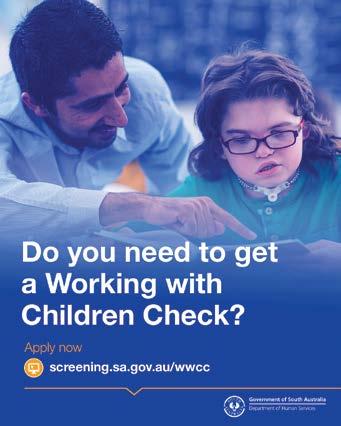
WORKING WITH CHILDREN CHECK (WWCC)
New Legislation regarding Child Protection was introduced with effect from September 1, 2019. A ‘Police Check’ is now known as a ‘Working With Children Check’ (WWCC). The Working With Children Check is the most comprehensive check that exists. Anyone found guilty of breaching this legislation can be fined up to $120,000.
People working or volunteering with children in South Australia must, by law, have a Working With Children Check. A DHS/DCSI child-related check will be recognised as a Working With Children Check until it expires.
People need a Working With Children Check if they are in a ‘prescribed position’. This means people who are in paid or volunteering roles where it is reasonably foreseeable that they will work with children; run or manage a business where the employees or volunteers work with children; are employed to provide preschool, primary or secondary education to a child.
A Working With Children Check is needed for all schools (Government, Catholic and Independent).
For further information go to www.screening. sa.gov.au/types-of-check/new-working-withchildren-checks.
EVENT VOLUNTEERS NEEDED
Enthusiastic volunteers are needed to help with various jobs at MTASA events. Tasks include setting up the venue, helping with registration at the check in table, ushering, assisting performers, helping with meals, and packing up afterwards.
It is a great way to network and a volunteering certificate will be provided, which will enhance your CV!
For more information, please e-mail the Secretary at info@mtasa.com.au.
TEACHING IN REGIONAL SA
In recent years each issue of SA Music Teacher has included an article about music teaching in a country region of South Australia. There are some regions that haven’t been visited yet. If you haven’t done so please write something – it doesn’t need to be very long – and also include a photo. If you have written something before you are welcome to send an update. E-mail the Secretary at info@mtasa.com.au.
ADD
MTASA MEMBERSHIP NOTES
Visit mtasa.com.au/index.php/members/becomea-member/ to join MTASA.
Current Full, Student or Associate Members are not required to submit any supporting documentation to continue their MTASA membership, however an up-to-date WWCC must be supplied in order to remain on the Teachers’ Directory. Anyone applying for Full Membership (either Tertiary Level Qualification and Study or Recognition of Prior Learning and Experience) or Student Membership for the first time must fulfil all of the requirements listed and submit the appropriate supporting documentation. Associate Membership is no longer being offered but those who were Associate Members on September 24, 2017, can continue their membership provided they remain as financial members. Full Membership (Recognition of Prior Learning and Experience) has replaced General Membership.
MTASA Members are always encouraged to write to the Secretary about any concerns that they may have. The MTASA Council will consider your request.
TEACHERS OF THEORY/ MUSICIANSHIP
To be listed in the ‘The Directory of Teachers of Music’ on the MTASA website as a teacher of theory/musicianship applicants for Full or Student membership must supply evidence of having completed studies in this field to at least AMEB 5th Grade theory/musicianship standard or equivalent. Full, Student or Associate MTASA members wishing to have theory and/or musicianship included in their Directory listing should send copies of the relevant certificates to the Secretary (info@mtasa.com.au).
CONTRIBUTIONS TO ‘SA MUSIC TEACHER’
The Editor is always looking for things to include in SA Music Teacher. Articles can be about any music related topic. If you would like to write an article this is your invitation! A helpful hint, a comment, a joke, a poem, a cartoon, etc. … please e-mail them to the Secretary at info@mtasa.com.au.
CONTACTS
Some music-related organisations useful for South Australian music teachers
5MBS
RADIO 5MBS: MUSIC BROADCASTING SOCIETY OF SA www.5mbs.com
+61 8 8346 2324 manager@5mbs.com
4A River Street, Hindmarsh SA 5007
ABODA
Australian Band and Orchestra Directors’ Association (South Australia) ABODA SA www.abodasa.com.au info@abodasa.com.au
PO Box 327, Walkerville SA 5081
President: Michael Degenhart
ABRSM EXAMINATIONS
The Associated Board of the Royal Schools of Music (ABRSM) www.abrsm.org
+44 20 7636 5400 (UK)
4 London Wall Place, London EC2Y 5AU
SA Rep.: Anastasia Chan +61 423 282 589 abrsmsa@hotmail.com
ACCOMPANISTS’ GUILD Accompanists’ Guild of SA Inc. www.accompanists.org.au
President: Gina Macri +61 407 394 714 ginamacri88@hotmail.com
ADELAIDE BAROQUE www.adelaidebaroque.com.au +61 414 875 227 generalmanager@adelaidebaroque.com.au
General Manager: Rob Nairn 11 Boronia Street, Klemzig SA 5087
ADELAIDE EISTEDDFOD
Adelaide Eisteddfod Society Inc. www.adelaideeisteddfod.com.au
Secretary: Jane Burgess secretary@adelaideeisteddfod.com.au info@adelaideeisteddfod.com.au
ADELAIDE HARMONY CHOIR www.adelaideharmonychoir.com.au +61 404 448 194 adelaideharmonychoir.info@gmail.com PO Box 937, Kent Town SA 5067
Secretary: Margaret Hosking
ADELAIDE PHILHARMONIA CHORUS www.philharmonia.net apcchoir@gmail.com PO Box 6008, Halifax Street, Adelaide SA 5000 www.facebook.com/adelaidephilharmoniachorus/
ADELAIDE YOUTH ORCHESTRAS www.adyo.com.au/ +61 8 8361 8896
PO Box 13064, University of Adelaide SA 5005 adyo@adyo.com.au
AIR
Australian Independent Record Labels Association (AIR) air.org.au
+61 3 9329 7105
187 Peel Stret, North Melbourne VIC 3051 CEO/CFO: Maria Amato maria@air.org.au
AMEB
Australian Music Examinations Board (AMEB) SA & NT www.adelaide.edu.au/ameb/ +61 8 8313 8088 ameb@adelaide.edu.au
Lvl. 1 Hartley South, University of Adelaide, Kintore Avenue Adelaide SA 5000
ANATS
Australian National Association of Teachers of Singing (ANATS) anats.org.au/sant-chapter +61 435 300 070 admin@anats.org.au
ANZCA
ANZCA Examinations www.anzca.com.au +61 3 9434 7640 admin@anzca.com.au PO Box 3277, Nunawading Business Hub VIC. 3131
APRA AMCOS
The Australasian Performing Right Association (APRA AMCOS) apraamcos.com.au +61 8 8331 5800 writer@apra.com.au Suite 29/8 O’Connell Street, North Adelaide SA 5006
ASME
Australian Society for Music Education, SA Chapter Inc. https://asme.edu.au contact@asme.edu.au C/- Educators SA, Education Development Centre, Milner Street, Hindmarsh SA 5007 Chairperson: Kate Goodes +61 481 188 587
AUSTRALIAN STRINGS ASSOCIATION
Australian Strings Association (AUSTA): SA Chapter https://www.austa.asn.au/chapters/sa/ President: Anna Piland sa@austa.asn.au 0432 846 008
AUSTRALASIAN DOUBLE REED SOCIETY www.adrs.org.au
Contact: Caryl Lambourn caryl.lambourn@gmail.com +61 450 163 487
BALAKLAVA EISTEDDFOD
Balaklava Eisteddfod Society www.balaklavaeisteddfod.org.au info@balaklavaeisteddfod.org.au PO Box 253, Balaklava. SA 5461 Administration: Trish Goodgame +61 417 891 834
ELDER CONSERVATORIUM
Elder Conservatorium of Music +61 8 8313 5925
https://adelaideuni.edu.au/about/school/elderconservatorium-of-music-and-school-of-performingarts/ music@adelaide.edu.au
Level 9, Schulz Building, University of Adelaide, SA 5005
ELDER HALL, ELDER CONSERVATORIUM OF MUSIC +61 8 8313 5925
adelaideuni.edu.au/about/school/elder-conservatoriumof-music-and-school-of-performing-arts/ concertmanager@adelaide.edu.au
FLUTE SOCIETY
The Flute Society of South Australia, Inc. flutesocietyofsa.org admin@flutesocietyofsa.org flutesocietyofsa@gmail.com PO Box 3208, Norwood SA 5067
KODALY
Kodaly Music Education Association of SA www.kodalysa.com +61 405 066 469 sa@kodaly.org.au 6 Baroota Avenue, Rostrevor SA 5073
LIVE MUSIC OFFICE livemusicoffice.com.au info@livemusicoffice.com.au
Lucy Joseph lucy@livemusicoffice.com.au
MT GAMBIER EISTEDDFOD www.backstageinc.org.au
Secretary: Maxine Chalinor +61 417 081 101 maxinechalinor48@outlook.com
MUSICIANS’ UNION
Musicians’ Union of Australia https://musiciansunion.com.au musosa@bigpond.net.au
Adelaide Branch Secretary/Treasurer and Federal Branch Treasurer: John Callisto 270-272 Payneham Road Payneham 5070 0447 999 822 (mobile) 08 816 67519 (landline)
MUSIC SA musicsa.com.au +61 8 8104 1101 info@musicsa.com.au PO Box 3004, Rundle Mall SA 5000
ORFF SCHULWERK
Orff Schulwerk Association of SA www.osasa.net info@osasa.net
RECITALS AUSTRALIA www.recitalsustralia.org.au info@recitalsaustralia.org.au
Administrator: Maria Tynan +61 8 8236 7488 admin@recitalsaustralia.org.au
PO Box 6454, Halifax Street SA 5000
ST CECILIA
St Cecilia Examinations Intl. Pty. Ltd. www.st-cecilia.com.au 1800 675 292 info@st-cecilia.com.au
PO Box 938, Launceston Tasmania 7250
Director: Matthews Tyson +61 438 628 822 mstyson@st-cecilia.com.au
S.A. BAND ASSOCIATION
South Australian Band Association Inc. www.sabandassociation.org +61 417 804 001 secretary@sabandassociation.org
PO Box 309, North Adelaide SA 5006
President: Bruce Raymond bruceraymond46@gmail.com
SA MUSIC CAMP ASSOCIATION www.samusiccamp.com.au admin@samusiccamp.com.au
SOCIETY OF RECORDER PLAYERS
The Society of Recorder Players SA Inc. www.facebook.com/recorderplayerssa/ srpsainc@gmail.com
President: Neville Pope +61 417 823 537 npope@bigpond.net.au
26 Clarence Street, Blackwood SA 5051
UKARIA www.ukaria.com
+61 8 8227 1277
info@ukaria.com
Suite 911, Lvl. 9, 147 Pirie Street, Adelaide SA 5000
Venue: 119 Williams Road, Mount Barker Summit. SA 5251