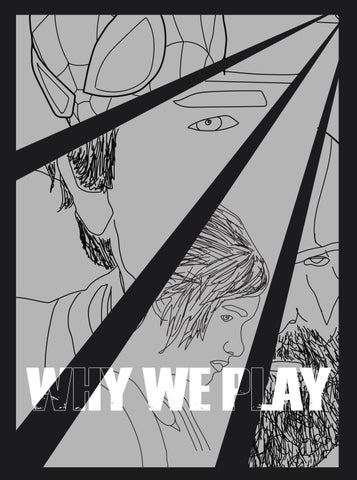
WHY WE PLAY
Red Dead Redemption Red Dead Redemption 2 is not simply a story about cowboys. It is a story about people trying to survive in a world that is slowly leaving them behind.
is not knowing what happens next, but watching these characters question who they are, what they believe in and whether people can really change.
You follow Arthur Morgan, a member of a group of outlaws who have spent their lives believing that freedom exists outside the rules of society. But as cities grow, technology advances and the old American frontier begins to disappear, that way of life becomes harder to protect.
The world moves slowly on purpose. You ride through empty landscapes, talk around campfires and spend quiet moments with characters who begin to feel less like NPCs and more like people.
What makes the story memorable
It feels less like completing missions and more like living inside a western film that lasts for dozens of hours.
“Do not die for pride, my son.”
Most superhero stories let us watch extraordinary people from a distance. Spider-Man 2 lets you become one.
The next, the story slows down and reminds you that behind the mask is simply someone trying to make the right decision.
Swinging through New York is exciting on its own, but underneath the speed and spectacle is a much more human story. Peter Parker and Miles Morales are trying to balance friendships, family, responsibility and their own personal struggles while carrying the expectations that come with being Spider-Man.
The game constantly moves between huge action sequences and surprisingly personal moments. It has the scale of a superhero film, but being the person behind the mask creates a completely different connection to the story.
And that is what makes the game work. One moment you are flying between skyscrapers at incredible speed.
Spider-Man
“Masters at turning my own words against me.”
The Last of Us begins in a world that has already fallen apart. Years after a devastating outbreak, survival has become brutal and trust has become rare. Joel, a man shaped by loss, is given the responsibility of taking a teenage girl named Ellie across what remains of the United States. That sounds like the beginning of a typical survival story. It is not. As their journey continues, the game becomes less interested in monsters and more interested in the relationship between two people who slowly begin to depend on each other. You spend hours walking with them, listening to conversations, surviving dangerous situations and experiencing quiet moments that would normally be cut from a film. And because you are controlling that journey yourself, their relationship begins to feel unusually personal.
“No matter what, you keep finding something to fight for.” Film can make you watch someone suffer. A game can make you walk beside them. That difference is what gives The Last of Us much of its emotional power. You do not simply observe the journey — you participate in it. The player experiences fear, tension, relief, affection and uncertainty alongside the characters. Small conversations can become as memorable as the action because you have spent so much time sharing their world. By the time difficult decisions appear, they no longer feel like decisions made by fictional characters on a screen. They feel personal. The Last of Us shows why games can tell stories in a way that films and television cannot completely reproduce: the audience is no longer only watching the story. They are inside it.
Kratos was once defined by anger, violence and revenge. but what happens when someone like that becomes a father?
“Death can have me, when it earns me.”
On the surface, God of War is enormous. There are mythical creatures, impossible landscapes, ancient gods and battles that feel larger than life. But the emotional centre of the story is surprisingly small: a father and son learning how to understand one another. Kratos struggles to express emotion and fears that his son might inherit the worst parts of him. Atreus wants answers, independence and the approval of a father who rarely knows how to show affection. Their journey slowly turns mythology into something deeply human. That contrast is what makes the game memorable. One minute you are standing in front of something that looks like it belongs in an epic fantasy film. Minutes later, the most important moment might simply be a quiet conversation between a father and his child.
Murilo Rosa Soares
THE GAME ENDS. WHAT IT MADE YOU FEEL DOESN’T. We remember the characters, the choices, the worlds and the moments that stayed with us.
Some stories are watched. Some are read. But games ask us to step inside them, make choices and live through their worlds ourselves.