Mu Phi Epsilon International Professional Fraternity for the Advancement of Music in the Community, Nation and World.
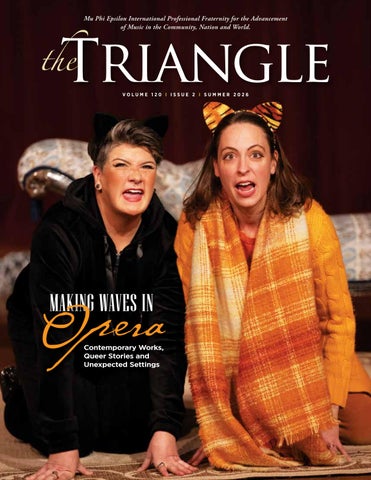
Mu Phi Epsilon International Professional Fraternity for the Advancement of Music in the Community, Nation and World.
Contemporary Works, Queer Stories and Unexpected Settings

Living and performing with hearing loss.
1 President’s Message: Toward the Final Cadence by Kurt-Alexander Zeller
Musings: Receiving Feedback with Grace by Lori Gray
3 From the Archives: Kansas City Alumni, 100 Years Young by Wendy Sistrunk 13 Foundation News: Celebrating Excellence Together by Kira Dixon
16 Applause and Encore: Member and Chapter News
18 Final Notes, Compiled by Ann Geiler
20 District Directors Directory
21 Executive Officers Directory
Fraternity Mission Statement: Mu Phi Epsilon International Professional Music Fraternity is a coeducational fraternity whose aim is the advancement of music in the community, nation, and world through the promotion of musicianship, scholarship and music education with emphasis on service through music.
EDITOR Kat Braz editor@muphiepsilon.org
DESIGN & PRODUCTION Paul Wilson thetriangle@muphiepsilon.org
Send all material for publication to: Kat Braz, editor@muphiepsilon.org
The Triangle welcomes story suggestions from Mu Phi Epsilon members and friends. Publication selections will be made at the discretion of the editor. Photos must be provided as the original digital file at high resolution. Please include photographer credit information. All photographs are published courtesy of the contributor unless photographer credit is provided.
Deadlines for submissions:
Spring — November 15
Summer — March 15
Fall — July 15
Change of address, renewals, notice of deceased members, requests for extra copies and subscription requests should be sent to:
Mu Phi Epsilon
International Executive Office 6510 Telecom Drive, Suite 370 Indianapolis, IN 46278 toll free: 888-259-1471 fax: 888-855-8670 email: executiveoffice@muphiepsilon.org
The Triangle is published three times per year by Mu Phi Epsilon, International Professional Music Fraternity.
Member, Professional Fraternity Association.
Subscription price is $20.00 per year. Single copies are $8.00.
Postage paid at St. Paul, MN, and at additional mailing offices. Printed in the United States of America.
POSTMASTER: Send all changes of address to: Mu Phi Epsilon, 6510 Telecom Drive, Suite 370 Indianapolis, IN 46278
© 2026 Mu Phi Epsilon. All rights reserved.



hen I was an undergraduate, my favorite music theory professor had a phrase she used constantly: “the drive to the cadence.” By this, she meant the acceleration in harmonic rhythm and ratcheting up of harmonic tension just before all that activity reaches a resolution in the final cadence at the end of a work.
It certainly feels as if I’m in “the drive to the cadence” of my term as international president of Mu Phi Epsilon. The rhythm is definitely accelerating and the tasks are piling up as our convention in Fort Wayne draws nearer. (The tension might even be ratcheting up a bit, too.) Although the convention is still four months away as I write, this will be my last president’s message for The Triangle. What valedictory words can I leave you that will provide a satisfactory resolution after so much activity?
That is a daunting question. I simply don’t have words sufficient to express what a joy and honor it has been to serve our Fraternity and all of you for the last five years. It has been an inspiration to experience the harmony that characterizes our working together and to treasure the friendship I have shared with two stellar International Executive Boards and with members and chapters from coast to coast, whether face-to-face, in Zoom meetings, or through cards, letters or emails. (So many emails!) And music — everywhere there are Mu Phis, there is wonderful music! Professional performances, International Artist concerts, KURT-ALEXANDER
chapter meetings, service projects, even the IEB’s chance encounter with Maestro Robert Nance (whom you’ll hear at convention) at the Bradley Hotel — the last five years have been filled to overflowing with music. From the bottom of my heart, thank you all for such magnificent experiences and memories.
But I do not want to end my final column by looking back. In my first president’s message, I quoted Richard Wagner and exhorted the membership to do something new. And just as the final cadence brings us home to the tonic established at the start, I again want to look forward and encourage us all to do new things. The only way onward to a strong future for our fraternity is to Imagine new ways of being and doing and to Innovate in order to make those imaginings a reality. Only by doing this can Mu Phi Epsilon continue to Inspire coming generations of musicians far into the future.
I invite every member of Mu Phi Epsilon to join us in Fort Wayne for our International Convention July 23-25 to start those conversations — and so that, as I pass the gavel to my successor, I can thank you in person for the pleasure and privilege of a lifetime.
Loyally,
LORI GRAY, BETA KAPPA
y first year in college, I was excited and nervous for my field experience in a high school choir in downtown San Antonio. Looking back, I am proud that I was selfaware and realized I knew nothing about teaching high school choir, as I was fresh out of high school myself. I walked into the choir room on the first day and was greeted by a cacophony of sound. Students were busily moving through the room, grabbing their music folders, talking to friends, and playfully shoving each other.
One student saw me and yelled to the back of the room, “Mr. R, new kid!” I pushed my way through the sea of students and found the choir teacher at his desk. “You must be Lori, welcome! Here is the piece you will conduct for our concert. I’d like you to start rehearsing it tomorrow. They’ve sung through it a few times, but it will basically be yours.”
I wasn’t going to mess this up! When I returned to campus, I immediately went to the music building and found a practice room. I worked on my piece for the choir, “Bohemian Rhapsody,” until the janitor of the music building (who often let me stay until he was done cleaning) asked me to leave at midnight. The next day, I arrived at the school ready to rehearse with the choir.
My mentor teacher invited me to the podium, which was surrounded on all four sides by the students. I had never seen a set-up like that for choir and I wasn’t sure how to lead a rehearsal surrounded by students. “Quiet down, everyone,” he said. “This is Ms. Gray. She is going to conduct ‘Bohemian Rhapsody’ on our concert. Pay close attention so you can provide feedback after she conducts.” Wait, what? The students were going to critique my teaching and conducting? That got my heart racing! I led them through the piece, and felt fairly confident in my teaching. I had prepared all night, so I knew the music well and was comfortable with the cues. When the students were asked to provide feedback, they made sure to give constructive comments, but they had a lot of critiques.
I felt vulnerable and could feel my face turning red. My mentor teacher took notes as they offered their suggestions for improvement. After class, I felt overwhelmed and unsure of my abilities as a teacher. We sat in my mentor’s office and he asked, “What do you think about the students’ feedback on your teaching today?”
The students had commented on my conducting pattern, saying that my gestures were stiff. One student mentioned that I faced one side more than other sides of the room. Another student said that I didn’t
smile or encourage them much. Several said that I didn’t seem confident in my teaching, but one student said I had a nice vocal model.
I told him it was tough to hear, because I had worked really hard to prepare for that rehearsal. However, everything they said was accurate. I was also hopeful, because I knew I could improve on everything they listed. He smiled and admitted that he tends to throw field experience students directly into the fire, but the ones with potential tend to come out stronger if they are ready to learn from the experience.
I’ll be honest, I was always scared to get in front of that choir, because I felt extremely exposed. While I would have preferred to receive my feedback from him without having the entire class involved, I learned quickly that this was the environment of learning he had established in his classroom. Students offered comments to him and to each other regularly as a way to support everyone’s growth in music.
Because I was open to learning and growing, and they were all committed to my success as a future teacher, I made great progress in my teaching and conducting. I also learned how to gracefully receive feedback and immediately apply suggestions to my work with the students the next day.
Having our work critiqued by others is always a vulnerable experience. It doesn’t matter whether you are a student learning the tools of your trade, or a seasoned professional. As an 18-year-old, I got “thrown into the fire” during my field experience in choir and I learned how to gracefully receive feedback from both my mentor teacher and the students.
The challenge for many music teachers, myself included, is that we are perfectionists. We have typically already applied a harsh critique to ourselves, so hearing an honest evaluation of our musicianship or our teaching from others can feel like a blow to the ego. However, mentor teachers, professors, colleagues, students, and administrators all have valuable insights they can provide if we are willing to listen and consider their thoughts.
This can become a long and tedious career if we are not willing to continue learning, growing and accepting help and advice from others. I now do my best to learn from anyone who is willing to critique my work. I still reach out to my mentors with questions about teaching and research, and I welcome others into my classroom for peer observations.
I have discovered that my colleagues, who all have very different roles than I do, have unique perspectives and can offer new insights and strategies that I might not have considered before. I’ve learned to remove my initial emotional response and to reflect deeply upon their suggestions. Could I really be more consistent with my behavior management plan? Do I tend to call on
certain students more than others? Do I need to fix something in my teaching sequence? Do I need to vary my assessments more?
I remind myself that there is likely a grain of truth in the feedback that is given; otherwise, it wouldn’t have been said. Taking offense isn’t useful. Taking action to improve the learning environment for students will benefit everyone. We have chosen a profession that requires a commitment to lifelong learning. New approaches to teaching are developed regularly to meet the needs of contemporary students. We must be willing to constantly reflect upon our teaching practices, seek advice and feedback on our work in the classroom, and adjust our approach so that we can remain active and current within our field and continue to meet the needs of the students within our classrooms.
I often tell students that the moment when I think I know everything, or decide to stop learning, is the moment when it will be time for me to retire. Receiving feedback and reflecting on our teaching practices requires humility, vulnerability and the willingness to listen to and receive suggestions from others with grace. The gift of our profession as music teachers is that we get the opportunity to learn alongside students, throughout our careers. Allowing space for vulnerability so that we can receive valuable insights from others on our teaching, will help us continue to grow and thrive in this wonderful career of music education.
This story originally appeared in the Spring 2022 issue of Idaho Music Notes, a publication of the Idaho Music Educators Association
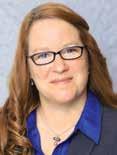
Lori T. Gray (Beta Kappa) is an associate professor and director of music education at Boise State University. She teaches undergraduate and graduate courses in music education and supervises field experience students and student teachers. Prior to her experience in higher education, Lori taught in public and private PreK-12 schools in Texas, primarily as a general music specialist. She is an active clinician and has presented research at state, regional, national and international events.
Gray holds a Doctor of Musical Arts in music education from Arizona State University, as well as a Master of Arts in Teaching in music education, a Bachelor of Music in music education and a Bachelor of Music in vocal performance from Trinity University.
WENDY A. SISTRUNK, INTERNATIONAL LIBRARIAN/ARCHIVES CHAIR, MU MU, KANSAS CITY ALUMNI
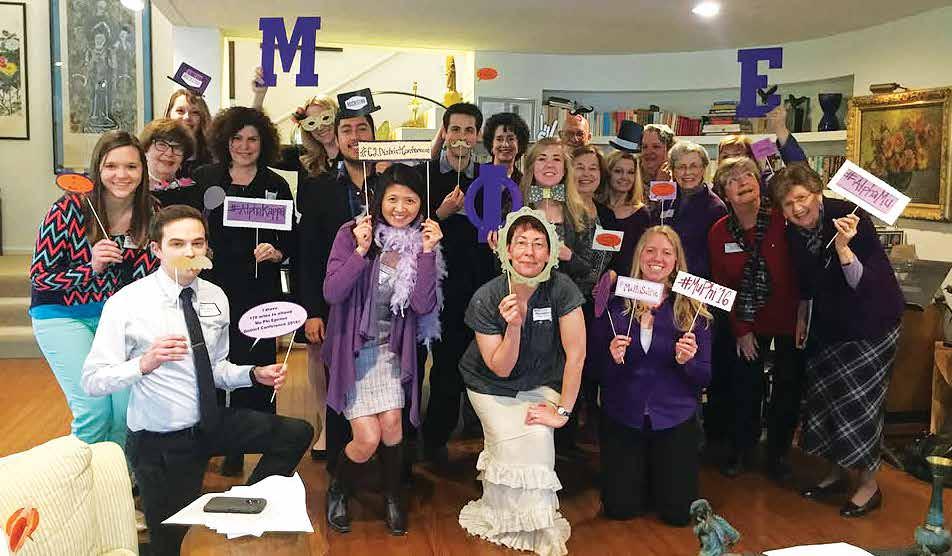
irst, a little context regarding the forming of our alumni chapters. We can’t have alumni without Collegiates.
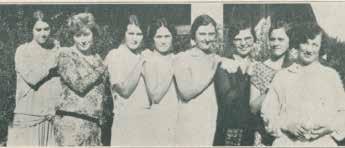
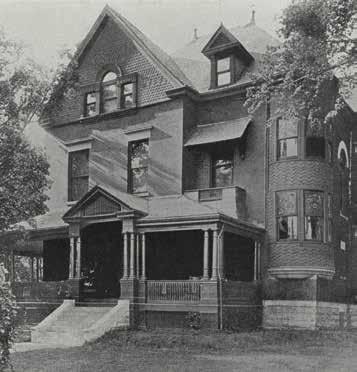
In 1906 a conservatory was founded by John Cowan as the Kansas City Conservatory of Music. In 1916, Cowan turned over the conservatory to the city of Kansas City, Missouri, making it the first publicly owned and supported music conservatory in the country.
In 1914, the Horner Institute of Fine Arts was established in Kansas City by Charles F. Horner. By 1919, it had an enrollment of over 700 students.
The Mu Delta chapter was chartered at the Horner Institute on March 29, 1919. There were 15 members on this first roster. Beatrice Poindexter presided as president and she served as the business delegate during the June 23-27, 1919 Convention held at Northwestern University in Evanston, Illinois. In The Triangle article titled “Installation, as Last” (May 1919), Mu Delta Historian Fleeda Newton Alberti writes:
“We, who are the newest Mu Phis, are in an exhilarated state of mind, for the reason that at last we have been taken into the sorority which received our petition three years ago … [It is now that] we fully realized that we [had to] wait until Horner Institute became five years old before an installation.”
The Phi Phi Collegiate chapter was chartered with five members at the University of Kansas City on April 26, 1945. Kansas City now had two separate collegiate chapters.
In 1959 we are as one! The Mu Delta and the Phi Phi collegiate chapters were dissolved and combined into a new and present-day Alpha Kappa chapter at was called the University of Kansas City! Confused yet? OK, stay with me …
• In 1926, the Horner Institute of Fine Arts was absorbed by the Kansas City Conservatory of Music. The Mu Delta chapter continued there alongside the Phi Phi chapter.
• In 1959, the KC Conservatory of Music was absorbed by the University of Kansas City, where the two collegiate chapters were combined.
• In 1963, the University of Kansas City (which was founded on Oct. 1, 1933) was rebranded by the University of Missouri, becoming the University of Missouri–Kansas City.
On to the Alumnae
The Kansas City Alumnae chapter (they were called “Clubs” in the early days) was chartered on Nov. 26, 1926.
In their first annual chapter report, President Marjorie G. Gard writes “We have not yet had out first regular meeting … However, some of us expect to help the Mu Delta girls by singing in the chorus of their operetta … and to help sell tickets.” — The Triangle.
Not to be outdone by the multiple Collegiate chapters in town, “The Kansas City area added a new alumnae chapter on November 9 when the Kansas City Evening Alumnae Chapter was formally installed at the University House, on the campus of the University of Kansas City” — The Triangle (Winter 1959). The Evening Chapter was founded in order to enable working women to participate who couldn’t otherwise during the day.
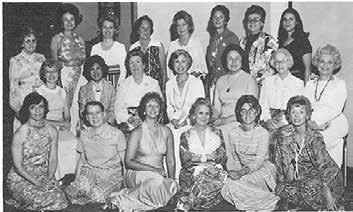
Nearly 50 years later, these two alumni chapters merged back into one Kansas City Alumni chapter.
The chapter hosted two conventions, one in 1932 and another in 1977, the Diamond Jubilee Convention.
Philanthropy & Support
The Kansas City Alumni chapter has always offered support to its Collegiate chapters and to the community through scholarships, fundraising activities and public concerts (Musicales), and in sponsoring visits by various winners of the Mu Phi Foundation International Competition. As we know, Mu Phi Epsilon alumni and Collegiate members everywhere enrich the fabric of our communities as dedicated music teachers (elementary, collegiate and in private) and music therapists. We serve as soloists, members of choruses and community performing groups, church musicians (organists, singers, soloists, choir directors), accompanists and composers.
Here’s to another 100 years!
LINDSEY RAE JOHNSON, PHI TAU, PORTLAND ALUMNI
Portland company presents stories from living voices around the world
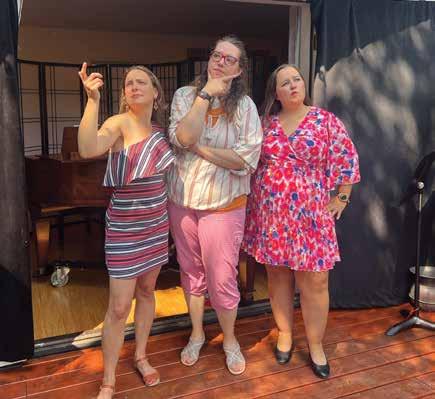
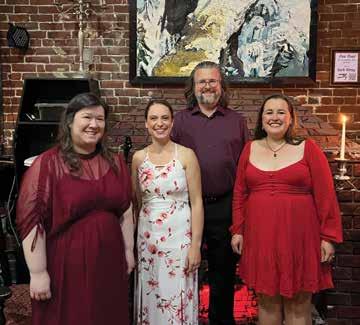
eet Portland’s newest opera company. New Wave Opera (NWO) was co-founded by Lindsey Rae Johnson (Phi Tau), Lisa Neher and Kimberly R. Osberg in 2023. All three earned music degrees in Iowa before settling in the Pacific Northwest. Johnson and Osberg are alumnae of Luther College and Neher is an alumna of the University of Iowa School of Music. Neher and Osberg are accomplished composers. Osberg has attended several premiere festivals as a composition fellow and has had her work featured on albums and Performance Today. In 2025, Neher was named Composer of the Year by Oregon Music Teachers Association and Iowa Music Teachers Association. Neher is also a professional singer-actor and met Johnson through performing with local opera companies including Portland Opera and Queer Opera.
The company performs works by living composers. We believe that opera is a living art form and that new works best represent the variety of stories, experiences and identities of our performers and audiences. Our productions uplift composers, librettists and performers of diverse backgrounds and experiences, while investing heavily in the rich talent pool of our region. New Wave Opera is especially committed to emphasizing treble voices, which are largely underused in standard opera repertoire, and to fostering a professional, welcoming and healthy creative environment for all voice types and identities. We believe opera can be for everyone and are eager to showcase all that the world of opera can encompass.
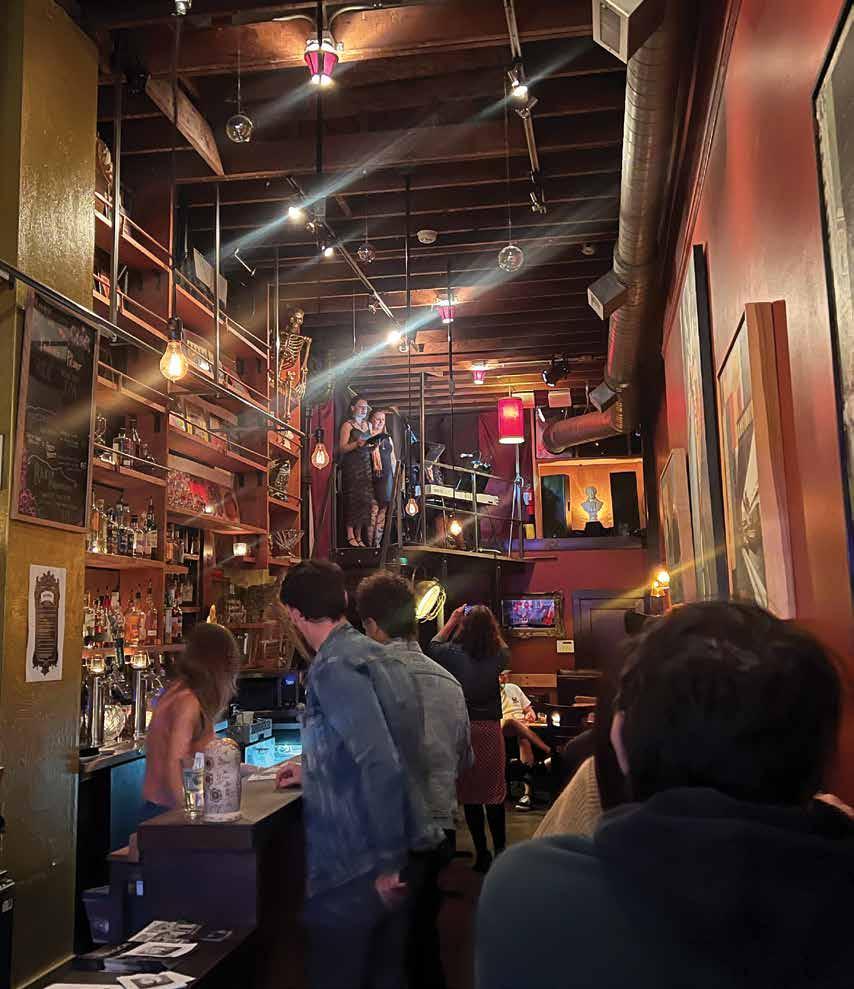
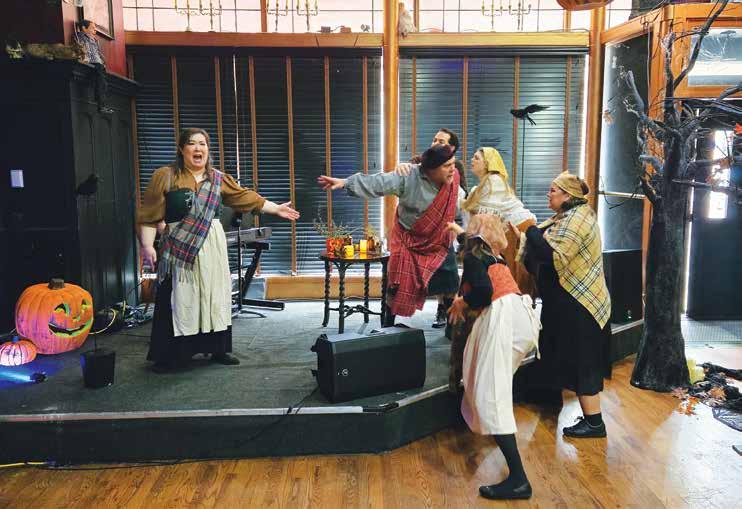
New Wave Opera launched its inaugural season in July of 2024 with the Summer Splash all-ages backyard concert. We held five additional performances that year, including joining All Classical Radio for Thursdays @ Three, a Scream Queens concert at Mendelssohns classical music bar, and a Music in the Manor concert plus our first staged production at Raven’s Manor haunted bar. We were the first live music act to perform at Raven’s Manor — it was a smashing success!
Our sold-out fall 2024 production, Night of the Living Opera, featured creepy contemporary operas to get audiences in the mood for Halloween. Two works were based on Edgar Allan Poe texts: The Oval Portrait by Felix Jarrar and THUMP (based on “The Tell-Tale Heart”) by Osberg. The program also included she conjures by Neher and Bea Goodwin, a feminist tale about the daughter of the last witch burned in Scotland, as well as Serial Killers and the City by Del’Shawn Taylor & Joanie Brittingham, a parody of Sex and the City with girlfriends swapping stories about their latest murders over bloody marys and charcuterie boards. Renegade Opera, co-founded by Madeline Ross (Phi Lambda), joined New Wave Opera as guest artists to preview another Poe-inspired work: The Raven by Jesse Preis.
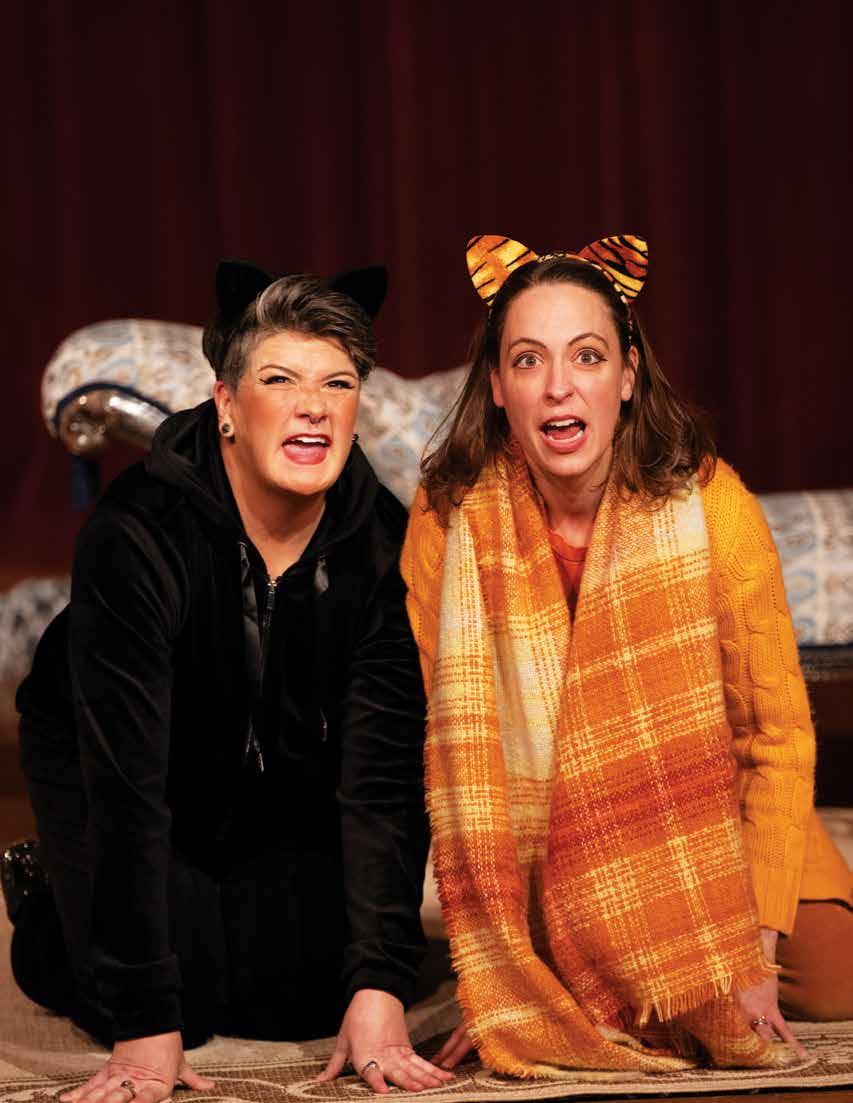
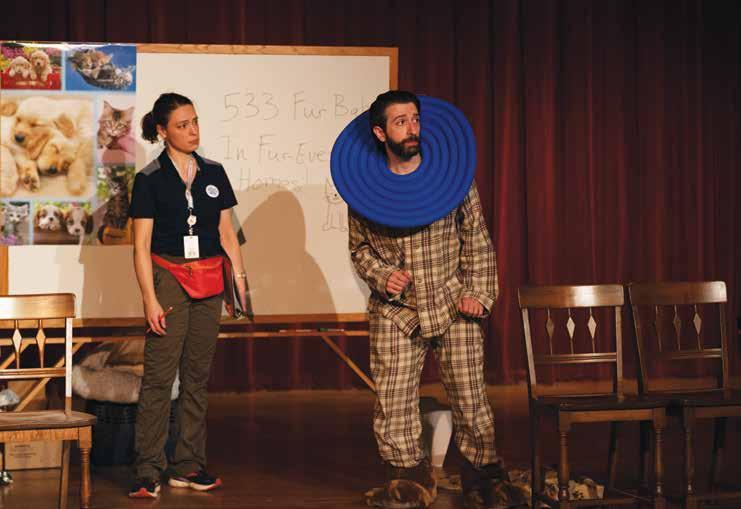
To launch NWO’s second season, we made another appearance on All Classical Radio’s Thursdays @ Three followed by O-PAW-RA Night at Mendelssohns to promote our second staged production: Wags & Whiskers, two “o-paw-ras.” This all-ages
double-billing featured two heartwarming stories for dog and cat lovers: Pepito by Nicolás Lell Benavides and Marella Martin Koch and Meow and Forever by Jodi Goble and Basil Considine. Pepito is a touching story about a lonely shelter dog and a young married couple looking to adopt. Meow and Forever is a story of friendship and queer romance, with a couple of cats eager to be at the center of their owner’s drama. New Wave Opera partnered with the Oregon Humane Society, contributing a portion of ticket sales to the organization and hosting volunteers at the performances to spread awareness and receive donations.
In 2025, NWO participated in the Shine the Light free community celebration and open house at the Patricia Reser Center for the Arts. Our second annual Summer Splash all-ages backyard concert included a world premiere. In August, we returned to Mendelssohns for a Herstory concert and then to All Classical Radio to promote our fall double-bill: Atoms & Artifacts, an exploration of the perceptions and experiences of historical women. This production featured the West Coast premieres of two operas: Marie Curie Learns to Swim by Jessica Rudman and Kendra Preston Leonard and Alice Tierney by Melissa Dunphy and Jacqueline Goldfinger. Marie Curie Learns to Swim explores the dynamics between Marie and her daughter Irène as they take a vacation to the sea and confront conflicting feelings about their research. Alice Tierney focuses on a team of archeology graduate students as they excavate the home of 1800’s murder victim Alice Tierney and theorize about who Alice was.
A grant from the Mu Phi Epsilon Foundation enabled NWO to hire a chamber ensemble to accompany one of the operas. We are very grateful to all of the funders and donors who are making this production possible. Johnson was also a recipient of the 2025 Liana K. Sandin Grant-in-Aid to support this project.
NWO is a female-led performing arts organization. We are committed to sharing music by living composers and librettists, creating work opportunities for local artists and helping performers and audiences find works that are meaningful and relevant. In just over a year of operating, NWO hired 27 performers and shared works by 36 composers and 56 librettists. We are especially committed to creating opportunities for treble voices; twothirds of the performers we have hired are femme. We prioritize inclusion and accessibility, providing supertitles and ASL interpreted performances in ADA compliant spaces for our mainstage productions. The majority of our selections are presented in English, and many of our events are family-friendly.
NWO is led by a volunteer working board that pursues grants and donations, holds silent auctions and raffles, sells tickets and merchandise, accepts corporate matching gifts and finds other
creative ways to fund art. In addition to the generous grant from the Mu Phi Epsilon Foundation, NWO is honored to have received grants from Regional Arts & Culture Council, Multnomah County Cultural Coalition and Marie Lamfrom Charitable Foundation. NWO is also very appreciative of Oregon ArtsWatch and Willamette Week for publicity support.
NWO is thrilled to be sharing new music with the community.
• Sign up for our newsletter at www.newwaveopera.org
• Connect with us on social media
• Watch recordings on our YouTube Channel
• Share your compositions or recommend repertoire
• Reach out about performing
• Attend a show
This June, New Wave Opera staged one of our most ambitious projects yet — the world premiere of Deep Water, a thrilling new opera by Caroline Louise Miller hosted at Portland State University.
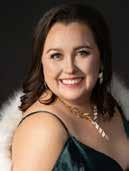
Soprano Lindsey Rae Johnson
(Phi Tau, Portland Alumni) graduated magna cum laude with her Bachelor of Arts in music from Luther College in Decorah, Iowa. She earned her Master of Music in vocal performance from the University of North Texas. She moved to Portland in 2016 where she co-founded New Wave Opera in 2024. Praised for her passion, artistry and commanding stage presence, Johnson has performed with companies throughout the U.S. and Europe.
BRANDON NELSON, PHI TAU
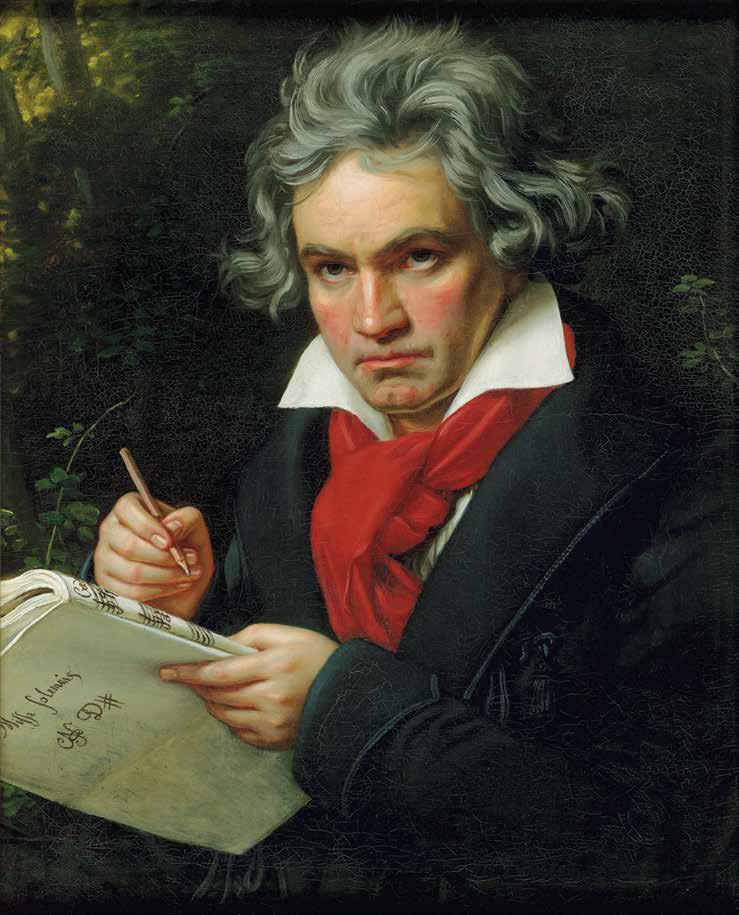
reak a leg and your athletic career could be over. Cut yourself while cooking and you can be back in the kitchen as soon as the bleeding stops. Hurt your hearing, what does that mean for your music? Are you disabled? Are you Beethoven?
The human ear works on a different set of rules from the rest of our equipment. Hearing is not a “primary” sense for most folks. Our sense of hearing can be distorted by pressure changes from weather, elevation or simply swallowing. The process of hearing has multiple parts, some of which can heal and others can be bypassed. Blind painters exist, but history does not give them the same attention as deaf musicians.
I will not attempt to explain human cultural biases in this article, but I hope to amplify your understanding about your sound sense: hearing, hearing loss and musicianship with hearing loss.
Traditionally, one puts author details at the end, but you should know that I have worn hearing aids since I was 4 years old. I have suffered hearing loss both from poor genetics and from poor choices as a drummer. I think about ears and audio technology every day of my life. However, I am not a doctor, lawyer or scientist. The information I’m sharing is statistically insignificant, medically redundant and legally null. I will still loudly share my experience with hearing loss.
I want you to know more about your most soulful senses. I want you to protect your hearing, and I want you to test your hearing regularly and consider getting hearing aids if you have any deficit. I want hearing aids to become as normal as glasses, despite their obvious technological differences.
“No one ever got hearing aids and said ‘wow, that was a bad idea’” —Adam Savage, Mythbuster and a longtime hearing aid wearer.
The Hearing Signal Chain
The machine that takes sound out of the air and turns it into something our brain understands is divided into three parts:
outer, middle and inner. The outer ear features the ear canal and eardrum. The inner ear is a collection of nerve endings that transmit both sound and balance information to the brain. The middle ear is part of the sinus cavity, with a lever of bones connecting the outer ear to the inner ear.
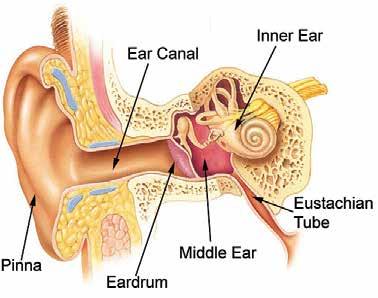
The ear plays an influential part in the sensory system. This organ is a key portion of the auditory system, which translates sound waves into a signal that the brain can interpret.
The outer ear functions like a radar dish, designed to funnel soundwaves into your skull, while keeping the eardrum protected from violence. It is no coincidence that the funnel shape resembles a speaker cone or a wind instrument bell. Our ears are omnidirectional, but favor sounds that are in front of us.
The eardrum is the boundary between the ear canal and the middle ear. Called a tympanic membrane, the eardrum seals off
the ear canal from the sinuses and transmits sound to the smaller bones that connect to the inner ear. Suspended within the cavity of the middle ear are a series of small bones that transmit sound information from the eardrum to the inner ear.
This cavity behind the eardrum connects to the sinuses, and can fill with fluid or air pressure. This is where an injury can happen to folks in diving accidents or from pressure explosions. Some young children with fluid buildup issues or chronic infections have a small tube installed through their eardrum for a few years. Many folks experience this sinus-to-ears connection as muffled popping noises when they swallow or squeeze “behind their head,” and detect a shift in their ears during big elevation changes.
The final part to the human hearing machine is the inner ear. Featuring a snail-like spiral, the cochlea is where the nerve endings that sense sound live. Protruding from the cochlea are several horseshoe shaped tubes where our sense of balance is detected. Both of these elements of sound and balance are sensed within the inner ear.
Once, at a festival, a family member asked me to try some kind of surfboard training activity. As I stood still on the wobbly contraption, my relative was triumphant in their belief that I had just defied medical science. They knew of my supposed inner ear hearing disability and they knew that balance was supposedly located in the inner ear. One of those statements needed to be false for them. While both hearing and balance senses can be found in the inner ear, a problem with one does not mean the other will be affected. A broken door can still have a perfectly functional lock. Hearing and balance are in the same place but are different sets of nerves.
Within the cochlea is an array of tiny hair-like nerves that detect sounds, organized by pitch. The first section detects high pitches, middle-stretch hears middle tones, and the center of the spiral reacts to the lowest tones. Like how the rods and cones in your eyes send light and color information to your brain to sense vision, these various hairs-nerves send pitch and amplitude information to your brain to perceive sound
Losing some or all of one’s hearing comes from various sources:
• Violence: extreme volumes or pressure, explosions, diving accidents
• Persistence: Moderate volumes over extended time, age
• Biological: Catastrophic infections, tumors, neurological damage, malformation in utero or at a young age
• Mystery: Neurological disorders, chemical damage, birth defects
Many folks experience hearing loss as an absence of experiences. Every few years I upgrade my hearing aids, and I experience new sounds such as soda popping, leaves or harmonics in the trumpet sound. Folks with mild untreated hearing loss usually have no idea what they are missing out on. “Flutes, I am sorry I accused you of playing out-of-turn. Apparently, when the trumpet section plays in tune it sounds like flutes are playing too. I just got my hearing aids upgraded and I am hearing new things.”
Damage to the outer ear can often be healed in a few weeks. The ear, ear canal and ear drum are mostly skin. They can take the same kind of punishment and usually heal like skin would
heal. Someone I know had a rock stuck in their ear for six months when they were 5 years old. After removal, they had their hearing tested regularly and watched some mild hearing loss disappear over a few months.
Some folks experience hearing loss as tinnitus, a persistent buzzing or ringing sound. Tinnitus can be an unending experience, a regular accompaniment to loud noise or an inconsistent visitor. I have struggled with tinnitus a few times in my life, always after being in loud noise environments without proper protection such as drum practice, marching band, teaching beginning band or working jobs with loud machines. At best, it would be a soft ringing in my ears in the back of my mind, at worst it was one ear sounding like an out-of-tune radio.
Every first week back to college, I would experience ringing in my ears from the sudden return to three hours a day drumming in poorly muffled practice rooms. I regularly wear earplugs while teaching beginning band and marching band. I have been fortunate enough that I have been able to recover from my tinnitus issues by treating my ears carefully. I still have permanent damage due to not wearing earplugs enough in high school.
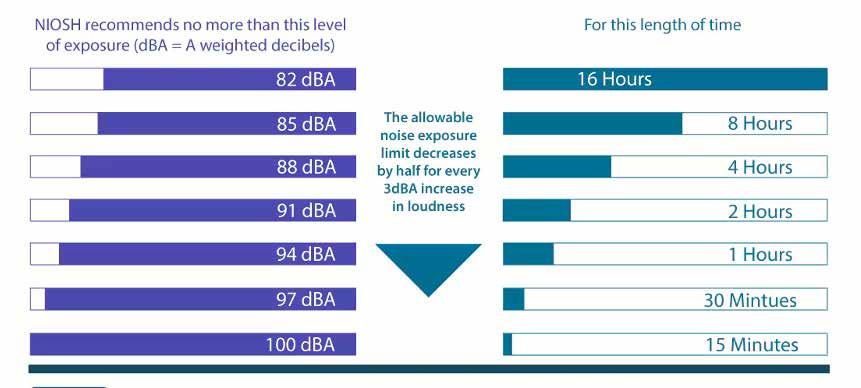
Persistent hearing loss can happen from medium-level noise. A constant drip of water can carve out a canyon, and a mildly noisy computer fan can take some of your hearing. Few of us would sit under a drip for eight hours a day, but many of our jobs expose us to medium-level noise for an extended period.
A music teacher can regulate their classes to medium volumes, but if they experience six hours of mezzo forte a day, five days a week, they will experience permanent damage. Now add a few more hours of noise from your commute home, working with tools in the kitchen or garage and children screaming in your house. Maybe additional music experiences with a youth orchestra, community choir or garage band. All of this adds up. Unfortunately, the intensity of sound is inconsistent and difficult to measure accurately. Folks trying to make convenient decibel meter mobile apps have discovered phone microphones are wildly inconsistent both in their hardware abilities and in their directional sensitivity. Regardless, I find it’s useful to get any kind of data, even if it’s not scientifically consistent.
Experts guarantee that permanent hearing damage happens from sounds in the 80 decibel level and above. However, I know I have experienced hearing damage from lower volumes that were persistent or close to my head. Eight hours of group conversation or phone work can cause permanent damage. Our healthy-noise guidelines are focused on loud noises, permanent damage and data that is consistent enough for employment law. If your ears hurt after a day of lower decibel experiences, your ears still hurt; you don’t need a government workplace safety committee to validate that.
A less obvious side effect of hearing loss is fatigue. When hearing is dulled, our brain unconsciously works harder to cut
through whatever information it is still getting. When I am without my hearing aids, I find it harder to think critically and control my emotions. When I put hearing aids in, my reading comprehension improves, my vision becomes more focused and food becomes more flavorful.
I have never experienced full deafness and I have no deaf friends, but I hypothesize that being deaf might be easier than losing your hearing slowly, because your brain is not trying to stretch itself across a widening gap while trying to live life normally. While we examine the world around us through sight, we are processing sound constantly, and our brain will redirect energy into decoding incomplete sounds. Even if you are not passionate about your hearing, getting hearing aids can improve your quality of life by giving your brain some support, reclaiming energy to better enjoy other senses, emotions, and thoughts.
If your ears hurt, change something. Listeners can turn it down or leave the room, music teachers can demand softer playing or can add more low-volume activities to their music lessons, and everyone can invest in ear protection. Marching band is most notorious for its volume, but the Centers for Disease Control caution that many band directors are exposed to excessive noise levels.
The cheapest foam earplugs are an excellent first step, though you get what you pay for. I prefer silicone earplugs on a string found in sporting goods sections. They are inexpensive and the string helps me keep track of them, especially as I pop them out to teach then back in for playing. My colleagues recommend custom fitted inserts with different noise filter options. I had my own pair and I loved them, but I have a habit of losing things.
Hearing protection must create a pressure seal; not totally airtight, but if your ear protection doesn’t consistently block air pressure then they’re good protection. That’s why foam earplugs must be inside your ear canal to work, and common headphones are not good ear protection: they’re letting sound get around them.
Large headphones that totally cover the earlobes are good protection. Choices used to be limited to uncomfortable gunrange earmuffs or expensive studio/DJ headphones, but you can find affordable options made for drum set players, air traffic controllers and low-cost options for schools that require headphones.
Everyone should get a hearing test, especially musicians. Usually free with insurance, many places will charge less than $100 without insurance. You should see on paper what you can and cannot hear.
Hearing aids are the standard treatment for folks with hearing loss. A microscopic PA system mixed to match your deficiencies — microphone, mixer, amplifier, and speaker — all in your ears.
Fifth grade band & sixth grade music
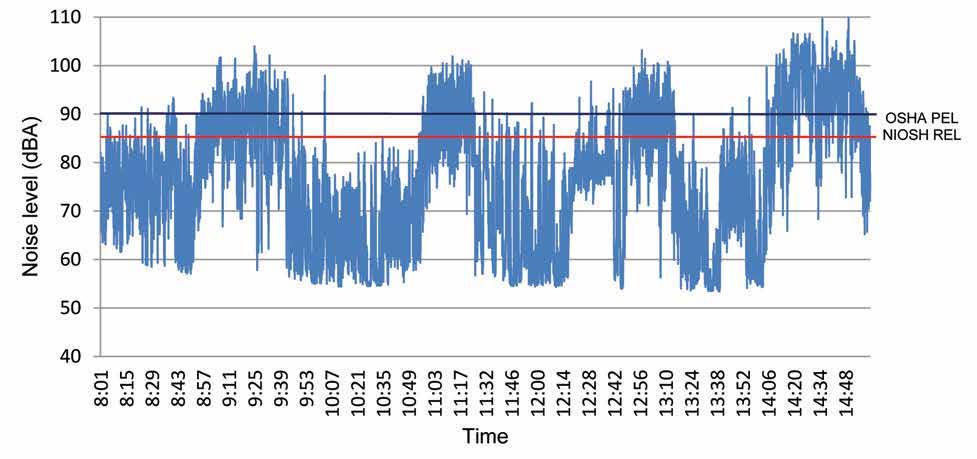
in a few instances. However, during high school marching band rehearsal, noise levels increased to 90 to 100 dBA and exceeded 100 dBA numerous times. Noise levels between music classes were below 85 dBA most of the time. Figure 2 shows the noise exposure time history profile for the 50 minutes of high school marching band practice in the band room.
Sixth grade band Discovery rehearsal High school marching band rehearsal
“Is there no pill? Is there a surgery?” Unfortunately no, except for implanting hearing aids into your skull. “But I can hear everyone, they’re just mumbling!” Hearing aids don’t have to make anything louder, they make things clearer. People don’t wear glasses so they can see, they wear glasses so they can read.
I love my hearing aids because they have extra settings to give me a better experience at live concerts, loud restaurants and when I’m watching TV. Mine also have Bluetooth, so they can stream phone calls and entertainment. I can run metronome apps during rehearsals without bothering others.
I recommend any local business with an audiologist on staff. I have met some dishonest hearing aid sales folks, since you need no medical background to sell hearing aids. However, I have never had a bad experience with a business that had an actual audiologist on staff.
Table 2 compares the band director’s TWA noise exposures during the loudest music classes on the basis of personal dosimeter results. Noise exposure during marching band rehearsal in the band room and in the cafeteria was substantially higher than during other music or band classes. Exposure during marching band rehearsal exceeded 90 dBA using NIOSH and OSHA measurement criteria and was the primary contributor to the band director’s full-shift TWA noise exposure. If the average noise level during marching band rehearsal was reduced by 3 dBA, the band director’s TWA exposure would have been less than 85 dBA on the basis of OSHA criteria.
that sells hearing aids online, sending you equipment to test at home & work with a doctor virtually. I have heard only good things, but I prefer to visit my local audiologist office in person. I wish you good health and good hearing.
Some states now require health insurance providers to cover hearing aids for all ages. Other states, such as Washington, cover hearing aids in their public health insurance option for state employees, like teachers.
Costco also offers hearing aids. I doubt they have an audiologist on staff at every store, but I have never heard a bad thing about their audiology department. Jabra is a newer company
Brandon Nelson (Phi Tau) teaches band and general music at Oak Harbor Intermediate School on Whidbey Island, Washington. In addition to teaching, he coordinates local music festivals, student artist experiences, a summer percussion workshop and serves as president of the San Juan Music Educators Association. Nelson earned a master’s degree in music performance from Portland State University, and a bachelor’s degree in music education from the University of North Texas. At North Texas, Nelson was a re-founding member of the Phi Tau chapter of Mu Phi Epsilon and served as director of music extracurriculars for two years.
Page 3 Health Hazard Evaluation Report 2011-0129-3160
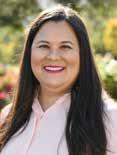
KIRA DIXON, MU PHI EPSILON FOUNDATION BOARD PRESIDENT, PHI MU, PALO ALTO ALUMNI president@mpefoundation.org
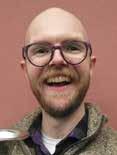
ater this month, members from far and wide will gather for the highly anticipated Convention in Fort Wayne. This annual gathering is always a special opportunity to reconnect with friends, celebrate our shared love of music, and experience the vibrant spirit of our Fraternity together.
The Mu Phi Epsilon Foundation is especially pleased to host the newly revised International Competition, culminating in an exciting final live round at 1:00 p.m. on Thursday, July 23, featuring some truly outstanding musicians. These finalists represent the exceptional talent and dedication that define our organization. You won’t want to miss the moment when our next winner is crowned, so plan to arrive early in Fort Wayne to be part of this inspiring event. In addition, this Convention will feature our first Young Artist Competition winner in a special evening recital on Friday, July 24 — an exciting milestone that highlights the future of musical excellence within Mu Phi Epsilon. Our scholarships and grants cycle also saw a record number of applications this year, reflecting the remarkable depth of talent and ambition among our members. Each application represented hours of preparation, dedication and a passion for musical growth. We would like to congratulate all of our recipients and extend our sincere appreciation to everyone who applied.
Even if you were not selected this year, we strongly encourage members to continue applying in future cycles and to take advantage of the many opportunities offered through the foundation. Supporting the educational and artistic pursuits of our members remains at the heart of our mission. Each year, we are proud to provide over $150,000 in scholarships, grants and awards to help foster the musical and professional development of our extraordinary membership.
As my time on the Foundation Board comes to a close, I would like to extend a heartfelt thank you to the current and former board members with whom I have had the privilege of serving over the past six years. Their dedication, thoughtful leadership and deep commitment to our mission have made this work both meaningful and inspiring. I am grateful for the collaboration, friendship and shared vision that have guided our efforts to support Mu Phi Epsilon members around the world.
It has been a tremendous honor to play a small part in giving back to an organization that I hold very close to my heart. Mu Phi Epsilon has shaped my musical journey in countless ways, and serving the foundation has been one of the most rewarding experiences of my professional life. I look forward to seeing the foundation continue to grow and support future generations of musicians.
In Friendship,

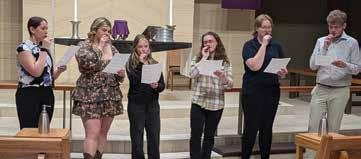
During a spring luncheon hosted by the Lincoln Alumni chapter, Beta Pi at Nebraska Wesleyan University initiated new members and Collegiates performed a kazoo rendition of “Our Triangle.”
Ashley Bouras (Phi Tau, Dallas Alumni), music teacher at Jess Harben Elementary School in Richardson, Texas, was selected as the school’s Teacher of the Year.

Send your newsworthy member and chapter news to editor@muphiepsilon.org for consideration in Applause & Encore. Please include a high-resolution photo and any identifying information.
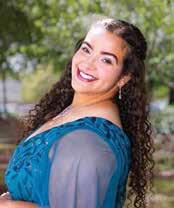
Cailey Martinez (Delta Tau) of the Townsend School of Music at Mercer University won the Pearse and Deidre Lyons Graduate Award and Graduate Apprenticeship at the 21st annual Alltech & University of Kentucky Opera Theatre Vocal Scholarship Competition held in March.
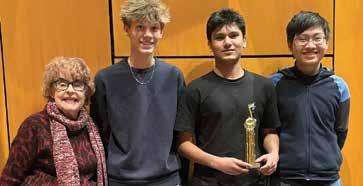
A team from Grantier Music Studio won first place in the Minnesota High School Music Listening Regional Contest held in February. Educator Charlotte Grantier (Phi Xi, Minneapolis Alumni) is pictured with her students.
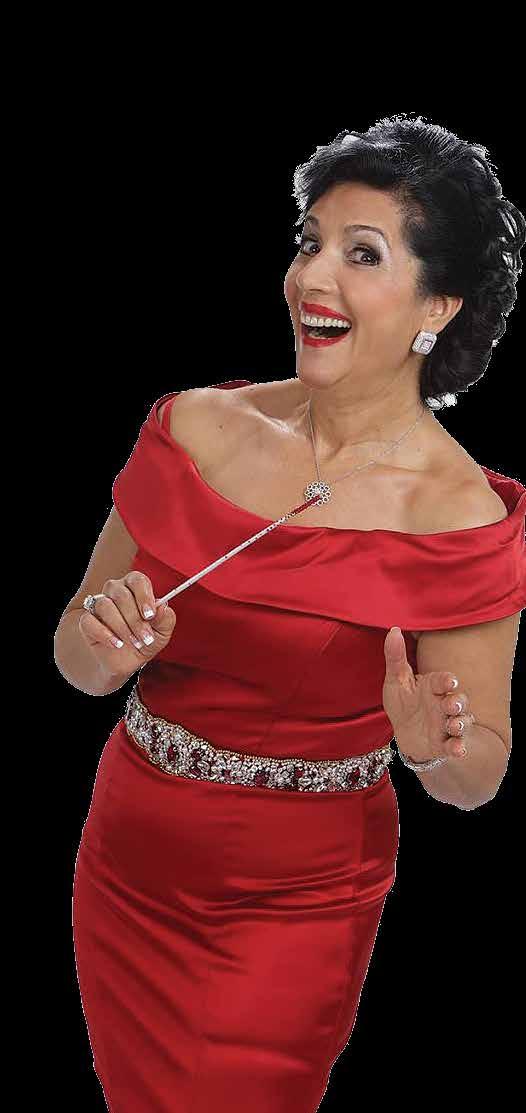
Joanna Medawar Nachef (Gamma Sigma, Palos Verdes/South Bay) has been invited by MidAmerica
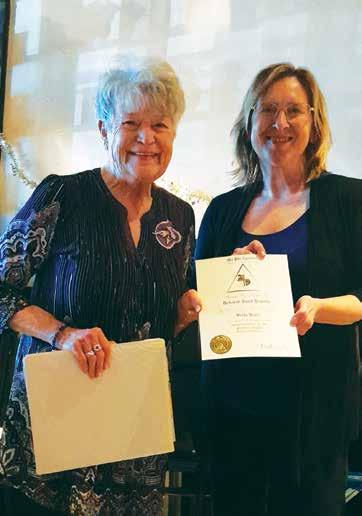
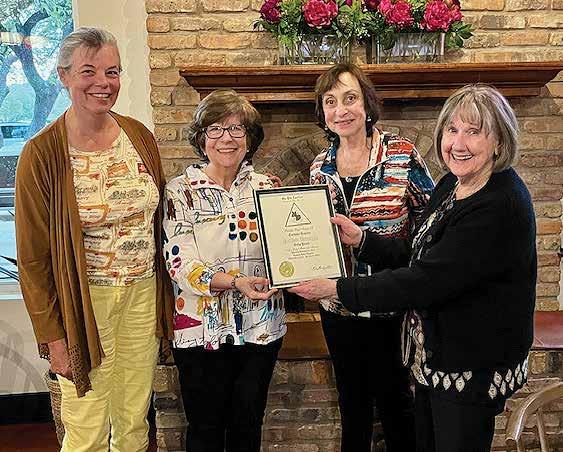
Jennifer Yopp (Alpha Lambda), vice president of Colorado Springs Alumni (right), presents Deborah Yagmin (Phi Theta) with a certificate recognizing Yagmin’s 60 years of membership in the fraternity during the chapter’s Founder’s Day celebration.
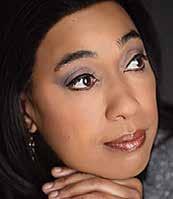
Rebecca Davis (Mu Nu) performed Beethoven’s 4th piano concerto with the Fergus Falls Civic Orchestra in April.
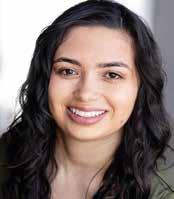
Carmen Chavez (Mu Psi, Minneapolis Alumni) has started a new position as the music education senior assistant at the MacPhail Center for the Arts in Minneapolis.
ANN GEILER, THIRD VICE PRESIDENT/ALUMNI ADVISOR, PHI THETA, ST. LOUIS ALUMNI ALUMNIADVISOR@MUPHIEPSILON.ORG
Clorinda Louise DiLonardo Campagna
Phi Mu, June 8, 1957
Died April 8, 2025

Vocalist. Clorinda was gifted with an amazing singing voice and began singing at church and on the radio at the age of 5. She earned a BA in both music and education from San Jose State University. Subsequently, Clorinda taught elementary school and sang lead soprano roles in operas and concerts in many locations around the country and globally, including San Francisco, New York, New Zealand and Switzerland. She also performed with Arthur Fiedler, the longtime conductor of the Boston Pops Orchestra.
Sandra Sue Corriere
Omega Omega, February 16, 2003
Denver Alumni
Died March 26, 2026

Vocalist. A gifted soprano, Sandra devoted 15 years to Opera Colorado, sharing her passion for classical music through her remarkable voice. She was also an accomplished pianist and carried a lifelong appreciation for the arts. Sandra earned her degree in psychology from Colorado Women’s College, reflecting her thoughtful and compassionate nature. Sandra’s legacy of love, music, beauty, and family will live on in all who knew her.
Katherine Lasater Freiberger
Mu Chi, October 1, 1966
Dallas Alumni
Died October 3, 2025

Pianist, composer. Katy earned a degree in English from the University of Texas at Austin in 1949. In her 40s, she enrolled in Southern Methodist University Meadows School of the Arts to earn a second bachelor’s in piano performance and composition. She was a longtime member of the Dallas Music Teachers Association, a passionate supporter of the Dallas Symphony, a member of the Dallas Opera Board, the Texas Composers Forum, a founding board member of the Music in the Mountains summer festival in Durango and a longtime piano instructor to generations of Dallas children. Her works have been performed by the Dallas Symphony, the Texas Composers Forum, the Austin Chamber Ensemble, Music in the Mountains and Fort Lewis College. Notable compositions include The Coffee-Pot Face, winner of the 1989 Mu Phi Epsilon Composition Prize. She was a lifelong member of the Fraternity and had recently hosted the Dallas Alumni chapter in her home prior to her death.
Joann Louise Harper
Mu Mu, November 21, 1954
Kansas City Alumni
Died March 29, 2026

Flutist, pianist, organist, educator. Joann earned a degree in music education from Kansas State University. She devoted 29 years to teaching music in the Shawnee Misson School District as an elementary music teacher. Joann performed
with both the Overland Park Civic Band and the Greater Kansas City American Legion Band. She served as organist for three churches in the Kansas City area and taught piano to students of all ages, which helped them realize the joy that comes from playing music. Throughout her adult life, Joann remained deeply committed to supporting the music arts and education. For more than 60 years, Joann was a member of Mu Phi Epsilon, where she served one term as the Kansas City Alumni chapter president. She was also active in the Women’s Committee for the UMKC Conservatory and a member Delta Kappa Gamma.
Elizabeth Maria Holderried Phi Upsilon, December 12, 1960 Boston Alumni Died May 14, 2026
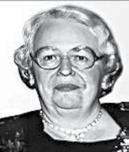
Pianist, organist, violinist. Betty earned a master’s in music from Boston University in 1974. She taught music in all three elementary schools in Canton Public Schools (Massachusetts) for over 38 years. She was a member of the Secular Franciscan Order as well as an organist and choir member at St. Margaret Mary Church in Westwood. Betty accompanied choral concerts and directed musical theater productions with her fifth graders and local community theaters, sharing her passion for music. She was active in the Boston Alumni chapter for over 60 years and held various offices.
Janet Gordon Kaplan
Phi Nu, January 15, 1958
Died December 23, 2025

Violinist. Janet showed a real talent for the violin and music at a very early age. She went to UCLA as a music major and later returned for a master’s in social work. She was a lifelong member of the Fraternity, which enabled her to build friendships with others while also enriching young talent. She served president for San Fernando Valley Alumni as well as a judge for the chapter’s numerous competitions. She also mentored musicians on how to succeed through experience and not just talent. Janet was so talented that her first major violin teacher, Josef Oroop, gave her his violin that he had used when he performed in Russia. This was his pride and joy, but he was prouder of his young prodigy. She became a sought-out violin teacher with students known for being among the best and winning competitions.
Jeanne Couture Kostelic
Epsilon Rho, November 15, 1952
Denver Alumni
Died October 27, 2025
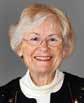
Vocalist. Jeanne was a well-known coloratura soprano who performed with many symphonies in New York, Colorado and California. Jeanne and her husband resided in Salida, Colorado, where they founded Concerts Plus in 1991, a program in which supporters enjoyed classical music and dinner in local homes. Jeanne taught vocal music in private high schools and colleges in Colorado and California as well as in her private studio. She founded
Notables, a women’s vocal group in Salida. Jeanne was a valued member of Denver Alumni and the P.E.O. Sisterhood as well as St. Joseph Catholic Church in Salida where she was a soloist for many years.
Marilyn Hall Pueppke
Mu Gamma, January 18, 1975
Lincoln Alumni
Died September 22, 2025
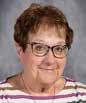
Flutist, pianist, organist, educator. Marilyn earned her degree in music education from the University of Nebraska at Lincoln. She spent her teaching career in elementary music education in the Fremont Public Schools. After retiring from full-time teaching, Marilyn continued to share her musical gifts as an accompanist for both Fremont Middle School and Fremont High School. In addition to being the organist for First Baptist Church and other congregations in Fremont, she also accompanied productions at the Fremont Opera House. She recently joining the staff at SNJ Studios. Marilyn was a talented flutist and won several regional contests.
Carol Tarr
Mu Nu, January 8, 1961
Denver Alumni
Died November 4, 2025
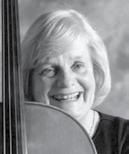
Cellist, educator. Carol was an accomplished cellist and teacher for many years and served on the faculties of the Lamont School of Music at Denver University, Metropolitan State University in Denver, University of Northern Colorado, Beloit College and the Cleveland Institute of Music. She was
a registered teacher trainer with the Suzuki Association of America and is a founding member of the Suzuki Association of Colorado. In Carol’s words, “My goal as a teacher is to give the students the skills and knowledge so that music is a pleasure both as a participant and an intelligent listener.”
Julia Burke Torbert
Alpha Upsilon, April 8, 1975
Atlanta Alumni
Died May 1, 2026
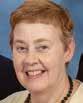
Flutist, vocalist. Julia grew up in Bristol, Tennessee, and graduated from Tennessee High School. She was an alumna of Furman University and of Emory University. Her career included teaching mathematics at J.L. Mann High School in Greenville, South Carolia, and developing and testing software for BellSouth and AT&T in Atlanta. Although Julia’s particular expertise was in software, leading to patented applications, her Atlanta Alumni brothers and sisters remember that once she and other managers had to train to climb poles and do line repair when AT&T was facing a labor strike. Julia’s musical affiliations as a flutist and as an alto vocalist included Furman Singers, Peachtree Symphony Winds and a broad array of church choirs and instrumental ensembles, particularly at Tucker First United Methodist Church. She was a mainstay of the Atlanta Alumni chapter serving numerous times as president and as program chair and with her husband, Edgar, producing the chapter’s yearbook for 20 years.
ATLANTIC
DISTRICT A1 Vacant
DISTRICT A2
Susan Todenhoft
703.323.4772 H 703.509.0224 C todenhoft@gmail.com
EASTERN GREAT LAKES
DISTRICTS EGL1 & EGL2 Vacant
DISTRICT EGL3
Nancy Jane Gray
330.688.7990 bobgrayz@aol.com
GREAT LAKES
DISTRICTS GL1 & GL3
Donna Chrzanowski 586.751.7276 chrzdonna@gmail.com
DISTRICT GL2
Linda McNair
314.494.7472 c1dd@muphiepsilon.org
EAST CENTRAL
DISTRICT EC1 Vacant
DISTRICTS EC2 & EC3
Brandon Barnett
317.557.3443 indianapolis@muphiepsilon.org
SOUTHEAST
DISTRICT SE1 Vacant
DISTRICT SE2
Wanda Yang Temko
404.217.9712 wanda@yangtemko.com
DISTRICT SE3
Arietha Lockhart
404.284.7811 ariethal@hotmail.com
DISTRICT SE4
Marcus Wyche
301.484.3652 videoauth@aol.com
SOUTH CENTRAL
DISTRICTS SC1, SC3 & SC4
Isabel De La Cerda
210.204.6425 idelacerda@hotmail.com
DISTRICT SC2
Rebekah Boatright 817.701.8068 rebekahboatright@gmail.com
CENTRAL
DISTRICT C1
Linda McNair
314.494.7472 c1dd@muphiepsilon.org
DISTRICT C2
Paula Patterson
417.773.1176 paulapatterson@missouristate.edu
NORTH CENTRAL
DISTRICT NC
Carmen Chavez 952.460.0708 nc1dd@muphiepsilon.org
WEST CENTRAL
DISTRICT WC1
Ashley Roever
580.822.5682 amroever@hotmail.com
DISTRICT WC2
Kirsten Forbes 720.232.6450 kirsten_forbes@msn.com
PACIFIC NORTHWEST
DISTRICT PNW1 Vacant
DISTRICTS PNW2 & PNW3
Michael Lasfetto 971.275.3800 pnw3dd@muphiepsilon.org
PACIFIC
DISTRICT P1 Vacant
DISTRICT P2
Kirsten Forbes 720.232.6450 kirsten_forbes@msb.com
PACIFIC SOUTHWEST
DISTRICT PSW
Rylee Lemay and Shania Carden 951.310.5164 psw1dd@muphiepsilon.org
2023-2026 INTERNATIONAL EXECUTIVE BOARD
Dr. Kurt-Alexander Zeller, Mu Chi Atlanta Alumni International President 770.961.4400 president@muphiepsilon.org
Liana Sandin, Beta Pi, Lincoln Alumni
1st VP/Extension Officer
402.560.7126 extensionofficer@muphiepsilon.org
Ashley Bouras, Phi Tau, Dallas Alumni 2nd VP/Collegiate Advisor
972.765.3252 collegiateadvisor@muphiepsilon.org
Ann Geiler, Phi Theta, St. Louis Alumni 3rd VP/Alumni Advisor 314.691.7648 alumniadvisor@muphiepsilon.org
Marshall Pugh, Alpha Xi Roanoke Valley Alumni 4th VP/Music Advisor 252.599.2492 musicadvisor@muphiepsilon.org
Tanner Wilson, Beta Alpha Fullerton Alumni 5th VP/Eligibility Advisor 951.515.9680 eligibilityadvisor@muphiepsilon.org
Jess LaNore, Beta Psi Indianapolis Alumni Executive Secretary-Treasurer 888.259.1471 executiveoffice@muphiepsilon.org
Kat Braz International Editor editor@muphiepsilon.org
Lisa Storm Beyer, Mu Chi Dallas Alumni Social Media Manager social@muphiepsilon.org
HONORARY ADVISORY BOARD
Rosemary Ames, Omega Boston Alumni
508.498.4669 rosemarykames@gmail.com
Lee Clements Meyer, Phi Xi
Austin Alumni
512.345.5072
MUSIC LIBRARIAN & ARCHIVES
Wendy Sistrunk, Mu Mu Kansas City Alumni
816.309.5910
61gwensinger@gmail.com
ACME
Arietha Lockhart (Chair) Beta Gamma, Atlanta Alumni
404.284.7811 ariethal@hotmail.com
Mary Au (Co-Chair), Mu Nu Los Angeles Alumni
323.666.2603 auhaus@gmail.com
BYLAWS & STANDING RULES
Dr. Kurt-Alexander Zeller, Mu Chi Atlanta Alumni
770.961.4400 zellertenor@aol.com
Evelyn Archer, Omega Omega St. Louis Area Alumni
458.562.9177 archerbe@sbcglobal.net
2025-2026 FOUNDATION BOARD
Kira Dixon, President Phi Mu, Palo Alto Alumni president@mpefoundation.org
Isabel De La Cerda, Vice President Delta Omega, San Antonio Alumni vicepresident@mpefoundation.org
Dr. Hannah Porter Occeña, Secretary Alpha Kappa, Affiliate Member secretary@mpefoundation.org
Dr. Matthew Hoch, Treasurer Lambda, Affiliate Member treasurer@mpefoundation.org
Donna Chrzanowski, Philanthropies Coordinator Phi Kappa, Detroit Alumni philanthropies@mpefoundation.org
Dr. Danielle Kuntz, Artist Concert Manager, Grants and Scholarships Coordinator Mu Phi, Cleveland Area Alumni grants@mpefoundation.org
Dr. Wanda Yang Temko, Website Administrator Eta Eta, Atlanta Alumni admin@mpefoundation.org
Dr. Kurt-Alexander Zeller Mu Chi, Atlanta Alumni president@muphiepsilon.org
Mu Phi Epsilon Professional Music Fraternity
6510 Telecom Drive, Suite 370
Indianapolis, IN 46278
executiveoffice@muphiepsilon.org
888-259-1471