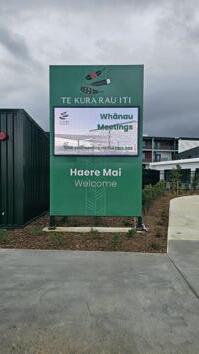
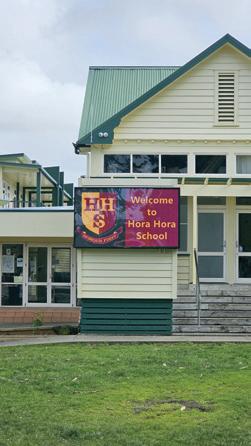
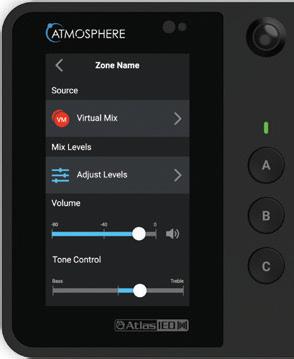
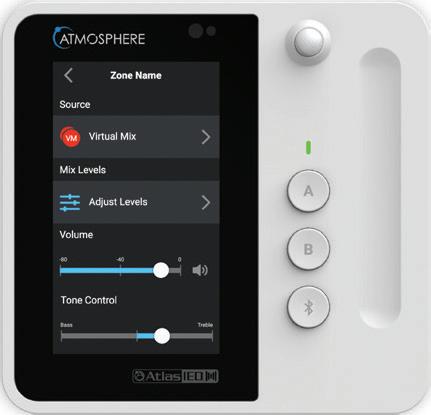
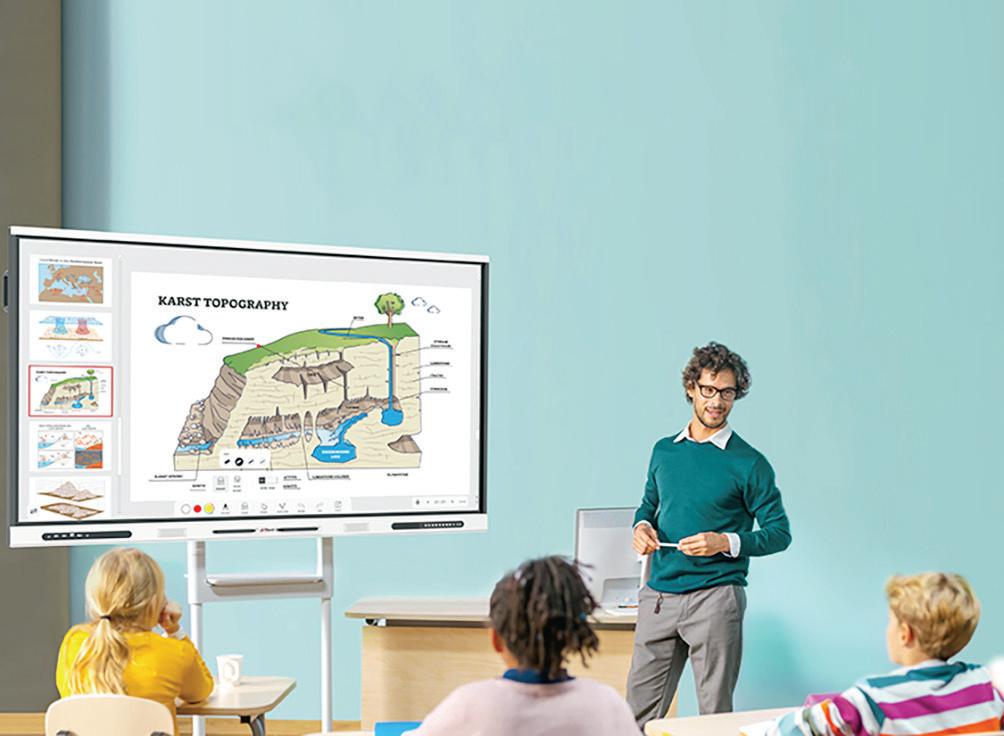
Consistent, coherent, and compliant visual and audio communications when and where they are needed.
Contact your local NAS Account Manager for details.
NEW Atmosphere™ Wall Controllers
If you can dream it, we can build it!
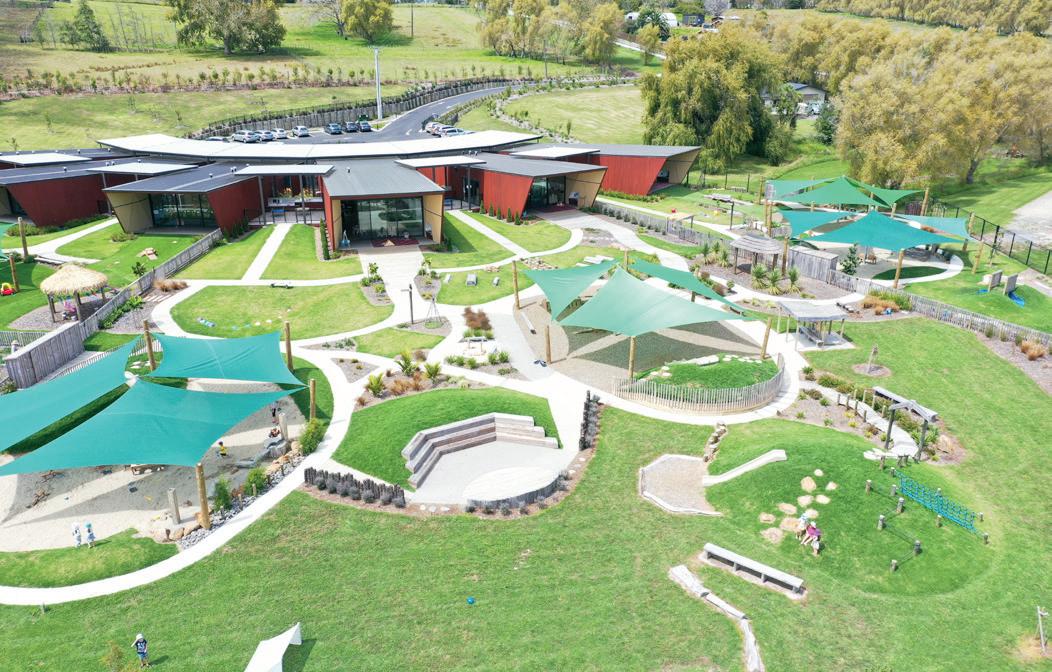
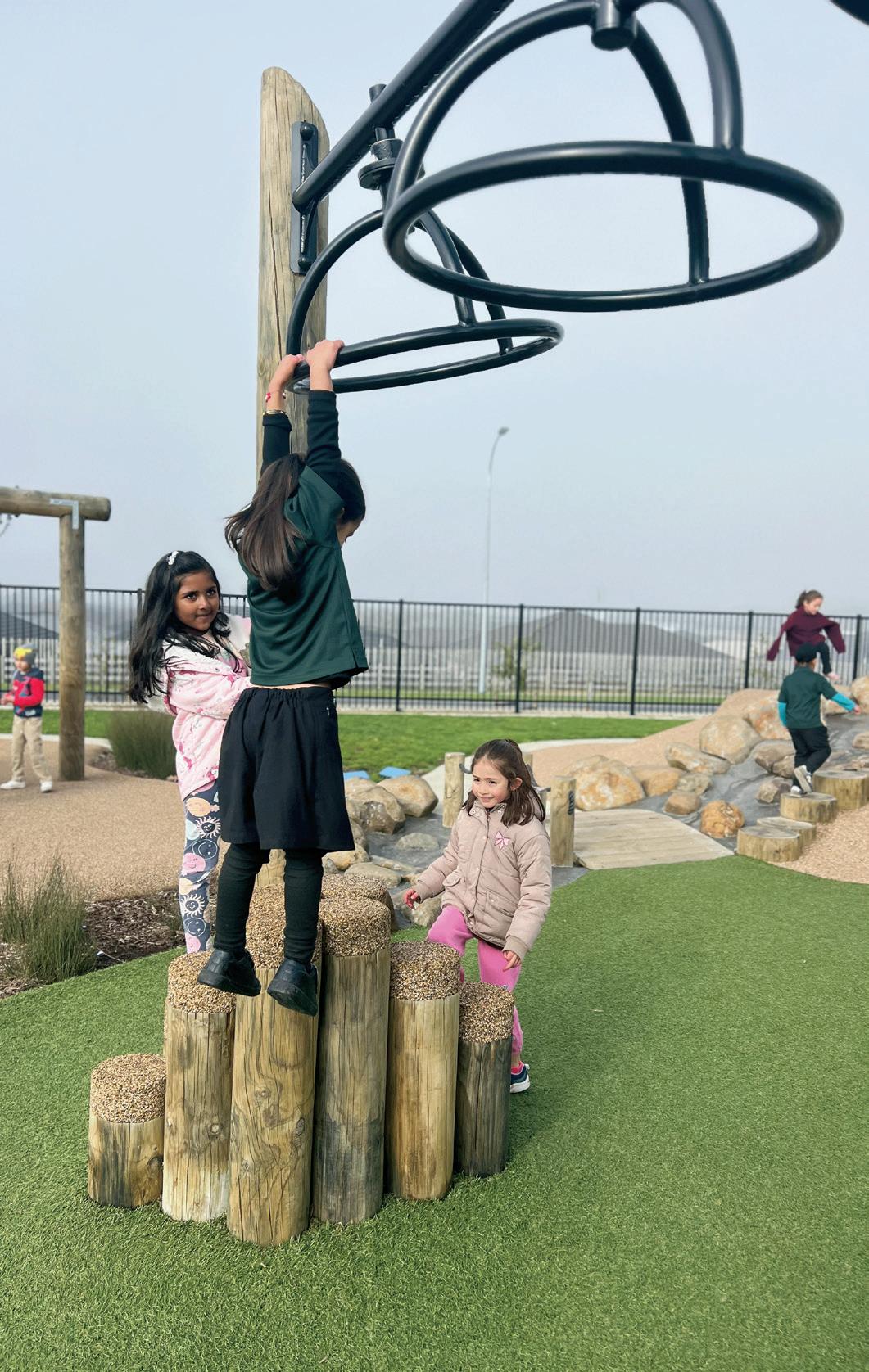
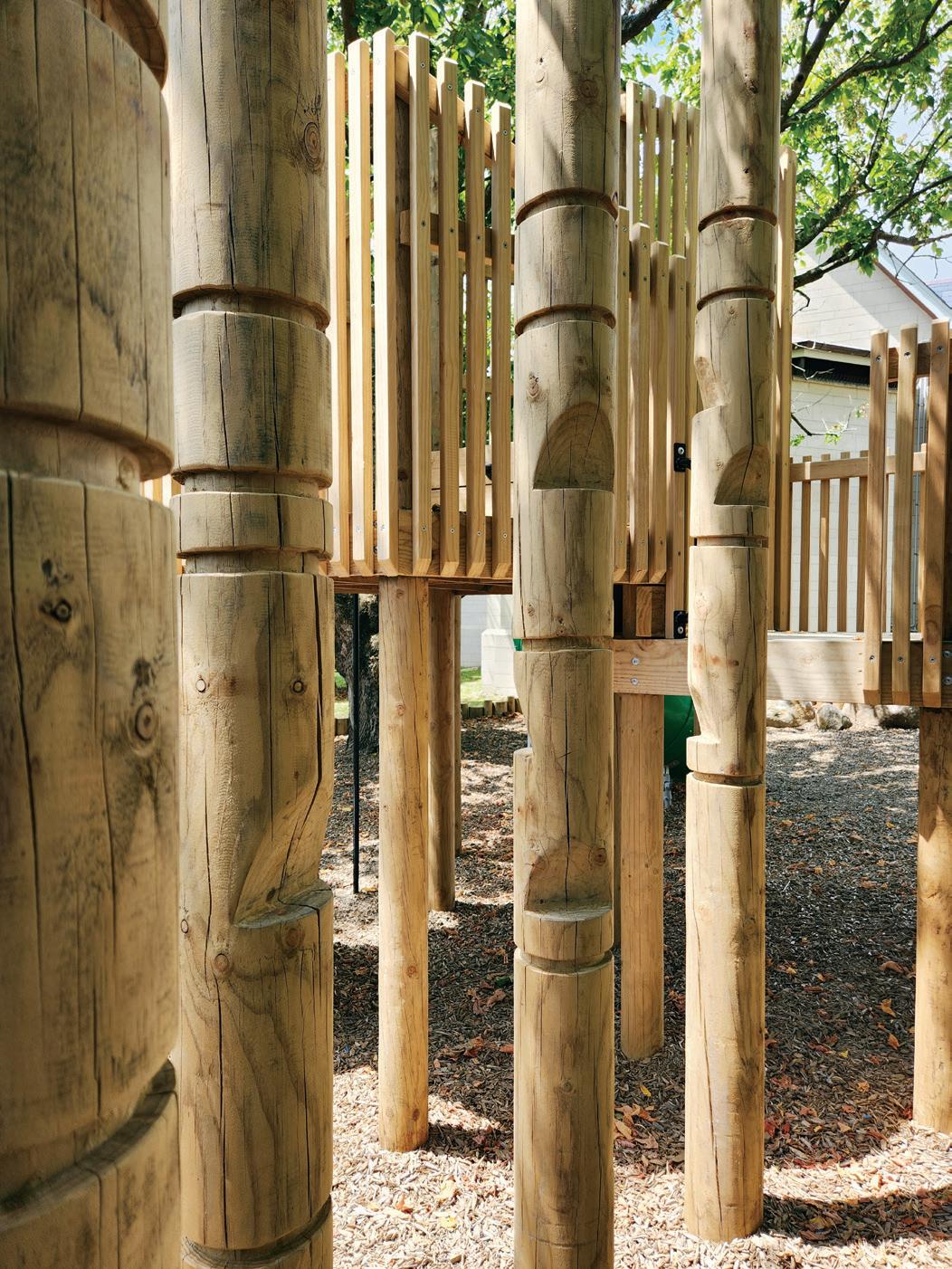
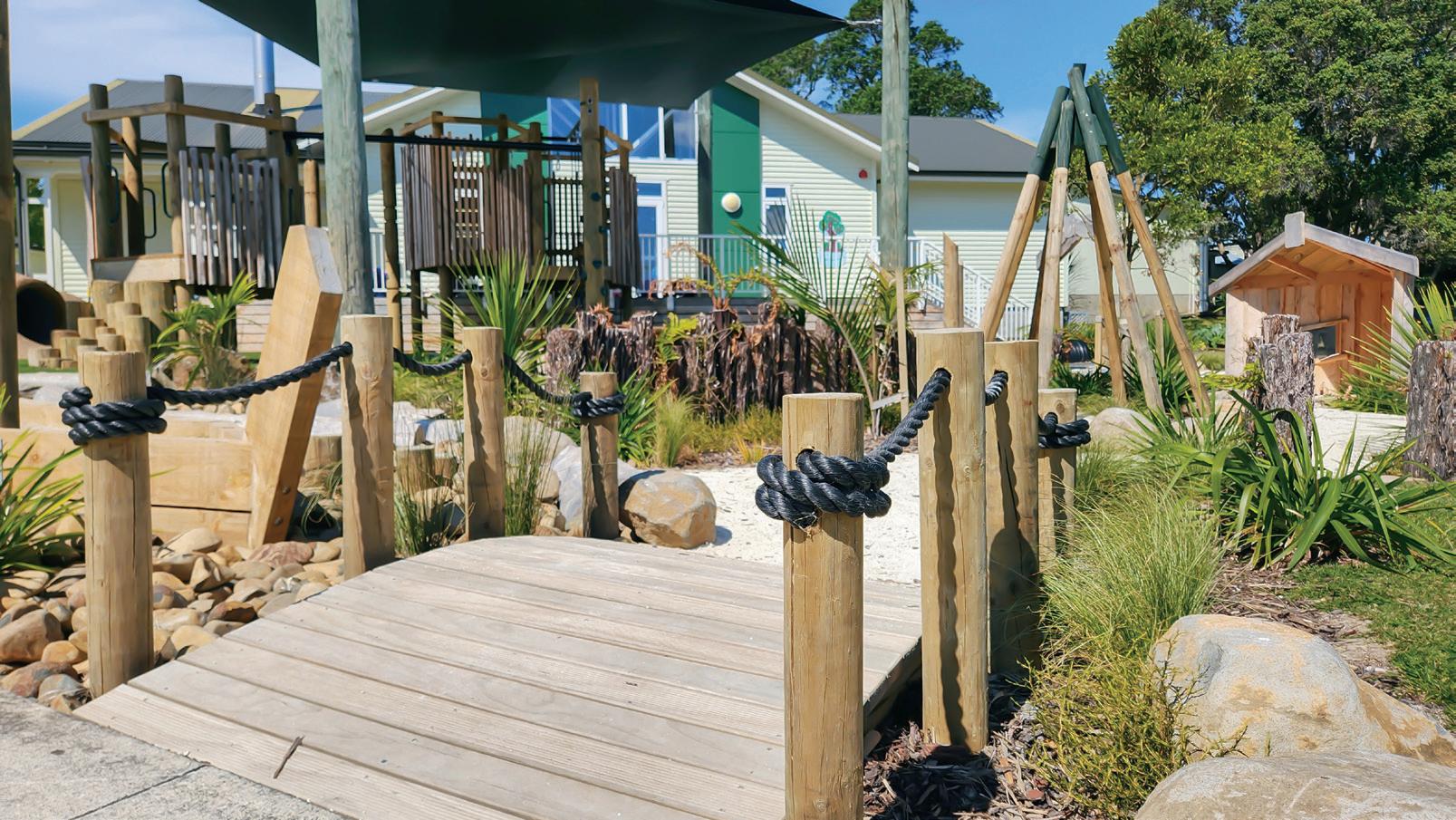
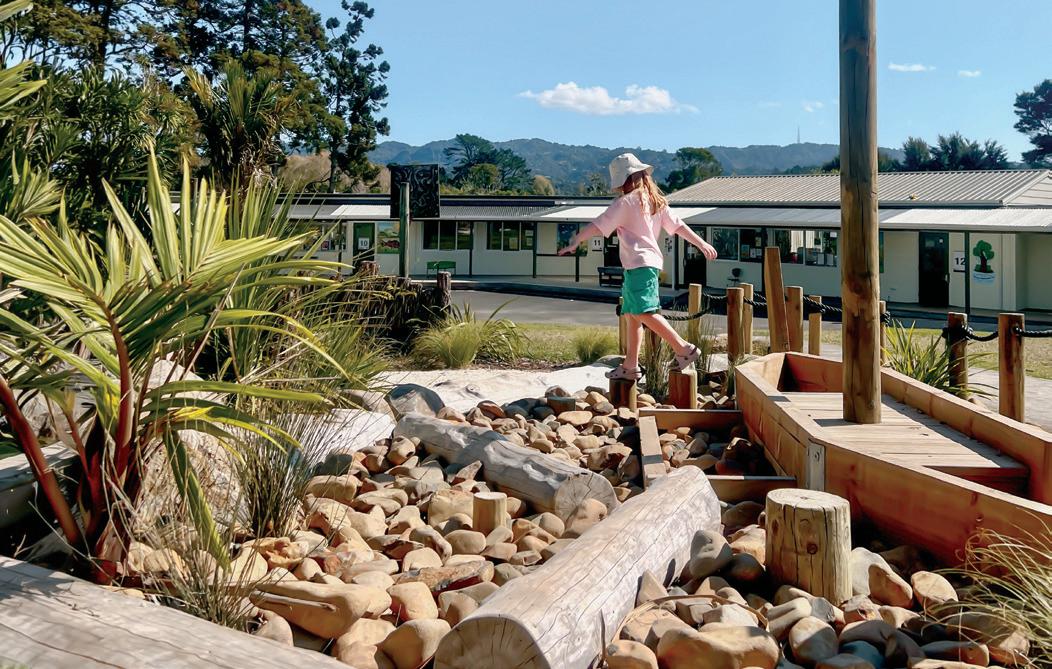
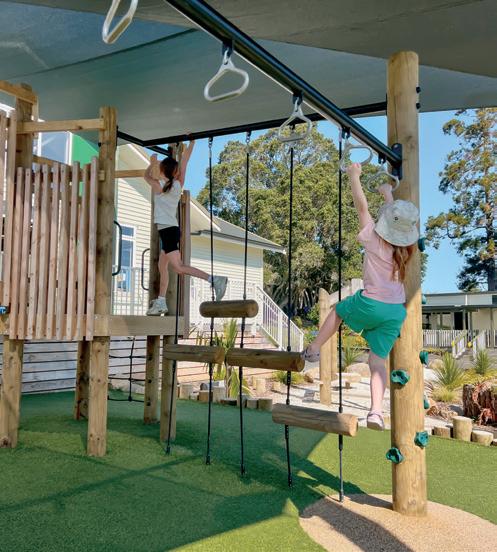
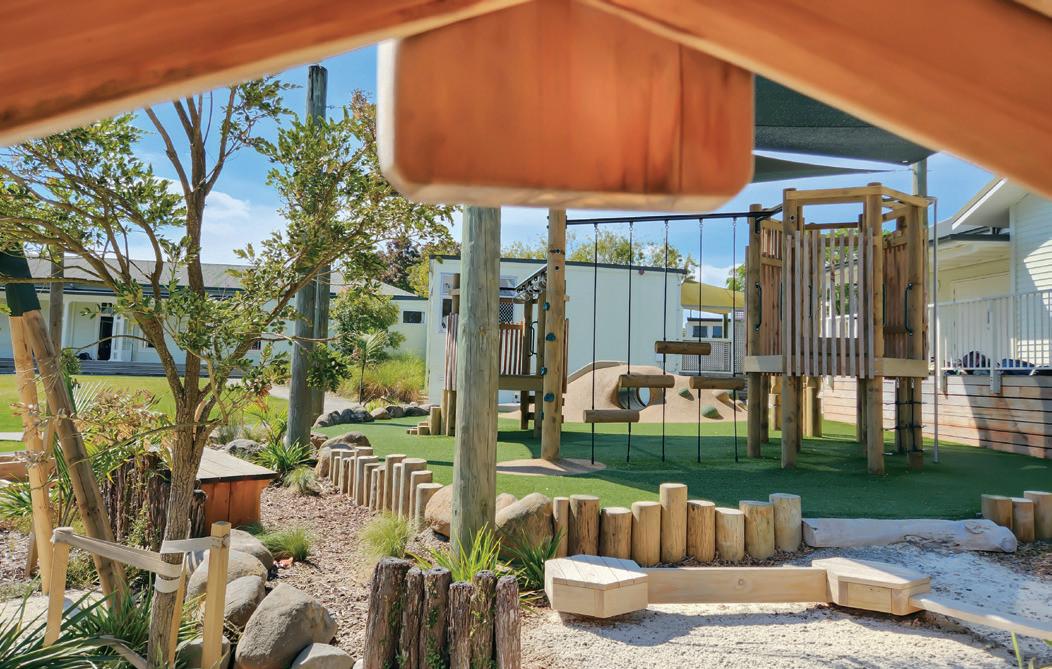
New Zealand-designed and made playgrounds for over 35 years. Our playgrounds are built with play value in mind, promoting fun, learning and development.
Your one-stop playground partner for design, installation, surfacing, and shade.
Custom playgrounds that fit perfectly into your school environment.
Contact the Park Supplies & Playgrounds team today on 0800 752 947 to discuss specific pricing for your project.
PARK SUPPLIES & PLAYGROUNDS
School News is distributed to primary, secondary and intermediate schools throughout New Zealand by Multimedia Publications New Zealand Limited.
The views and images expressed in School News do not necessarily reflect the views of the publisher. The information contained in School News is intended to act as a guide only, the publisher, authors and editors expressly disclaim all liability for the results of action taken or not taken on the basis of information contained herein. We recommend professional advice is sought before making important business decisions.
Advertising Conditions
The publisher reserves the right to refuse to publish or to republish without any explanation for such action. The publisher, its employees and agents will endeavour to place and reproduce advertisements as requested but takes no responsibility for omission, delay, error in transmission, production deficiency, alteration of misplacement.
The advertiser must notify the publisher of any errors as soon as they appear, otherwise the publisher accepts no responsibility for republishing such advertisements. If advertising copy does not arrive by the copy deadline the publisher reserves the right to repeat existing material.
Disclaimer
Any mention of a product, service or supplier in editorial is not indicative of any endorsement by the author, editor or publisher. Although the publisher, editor and authors do all they can to ensure accuracy in all editorial content, readers are advised to fact check for themselves, any opinion or statement made by a reporter, editor, columnist, contributor, interviewee, supplier or any other entity involved before making judgements or decisions based on the materials contained herein.
School News, its publisher, editor and staff, is not responsible for and does not accept liability for any damages, defamation or other consequences (including but not limited to revenue and/ or profit loss) claimed to have occurred as the result of anything contained within this publication, to the extent permitted by law.
Advertisers and Advertising Agents warrant to the publisher that any advertising material placed is in no way an infringement of any copyright or other right and does not breach confidence, is not defamatory, libellous or unlawful, does not slander title, does not contain anything obscene or indecent and does not infringe the Consumer Guarantees Act or other laws, regulations or statutes. Moreover, advertisers or advertising agents agree to indemnify the publisher and its agents against any claims, demands, proceedings, damages, costs including legal costs or other costs or expenses properly incurred, penalties, judgements, occasioned to the publisher in consequence of any breach of the above warranties.
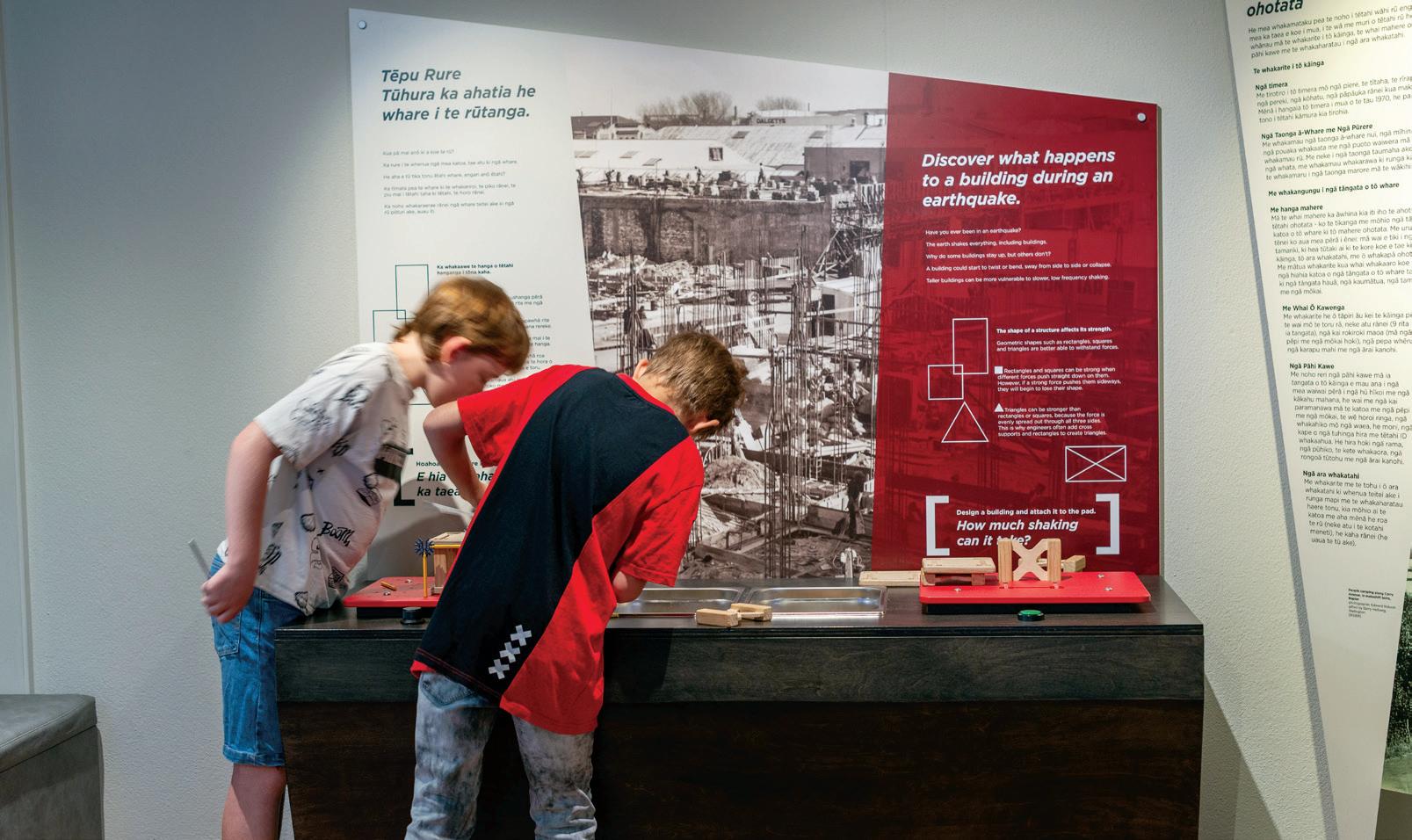
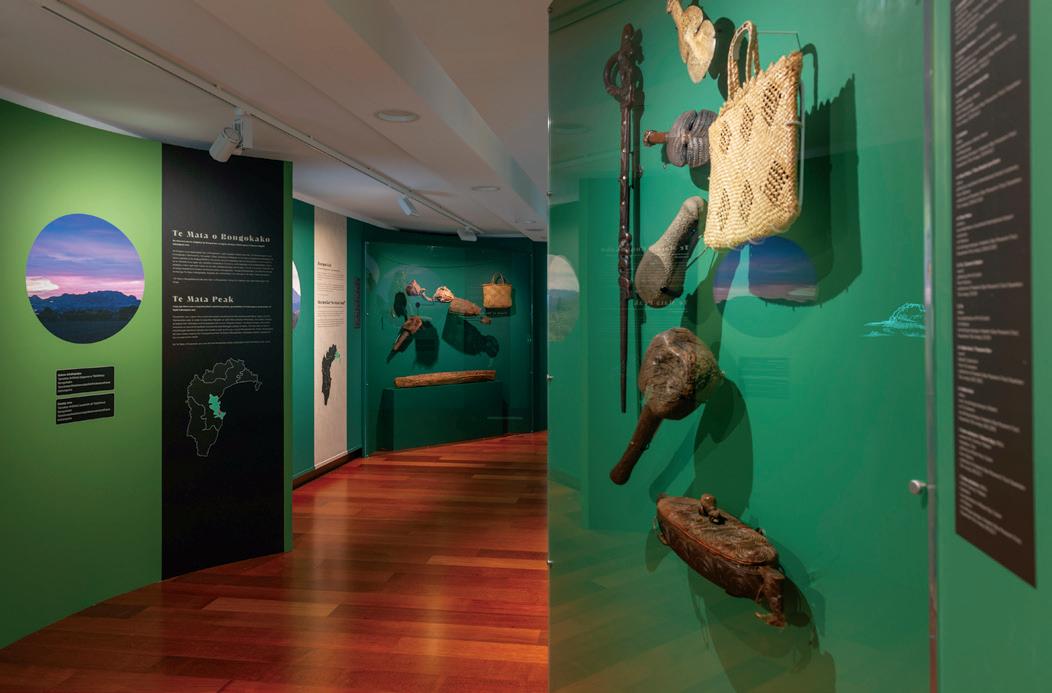
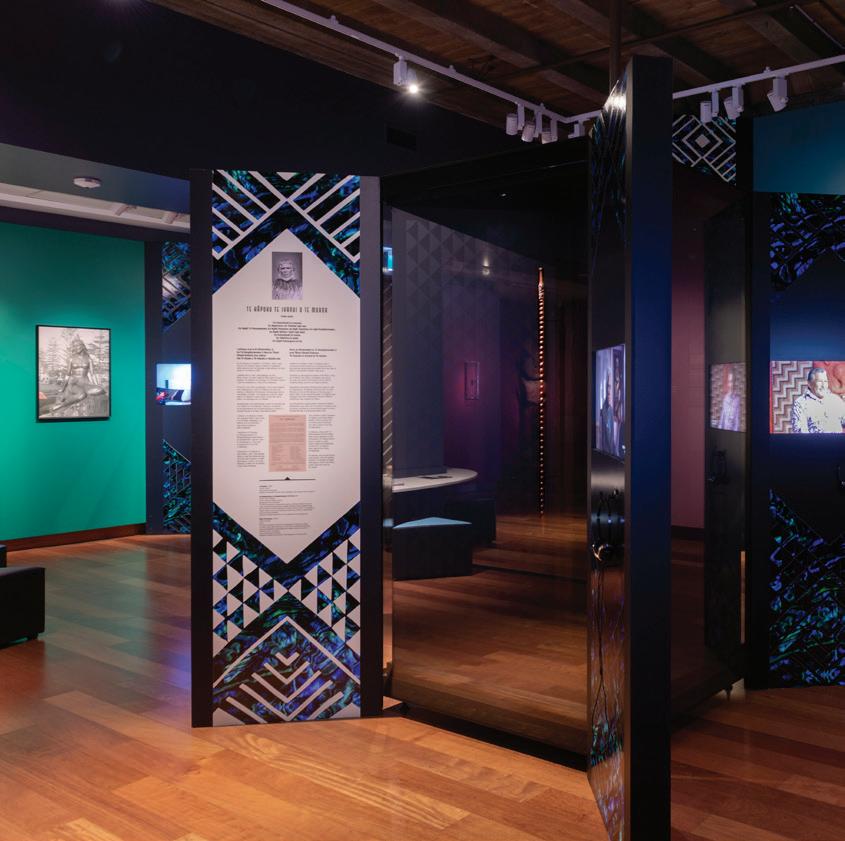
38 The growing importance of museums for education
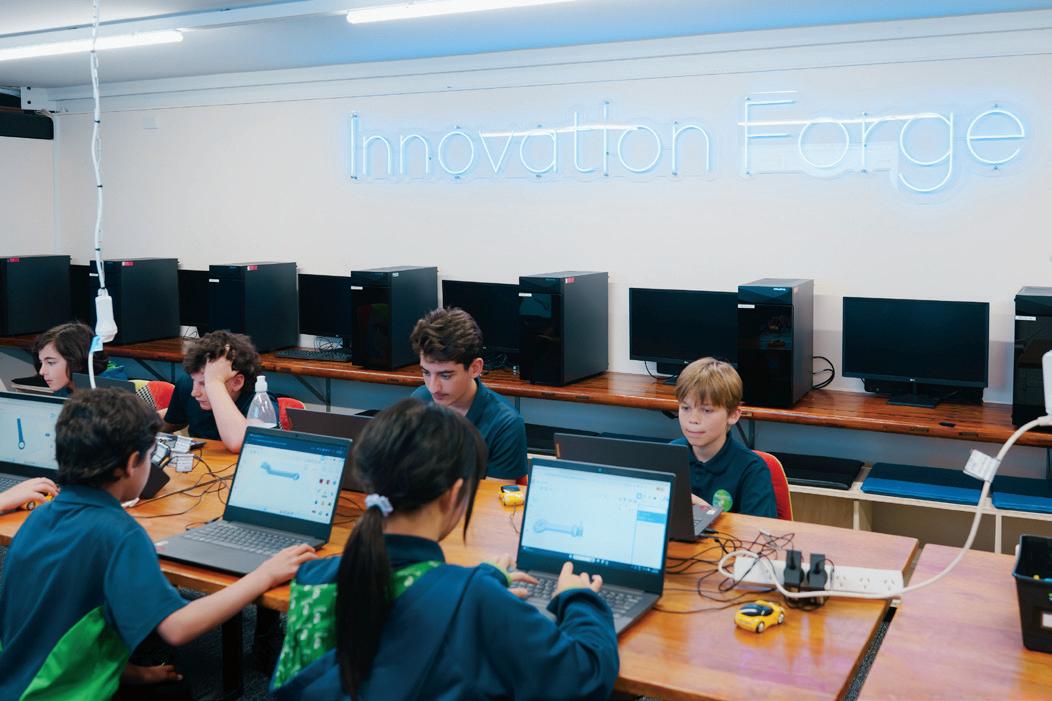
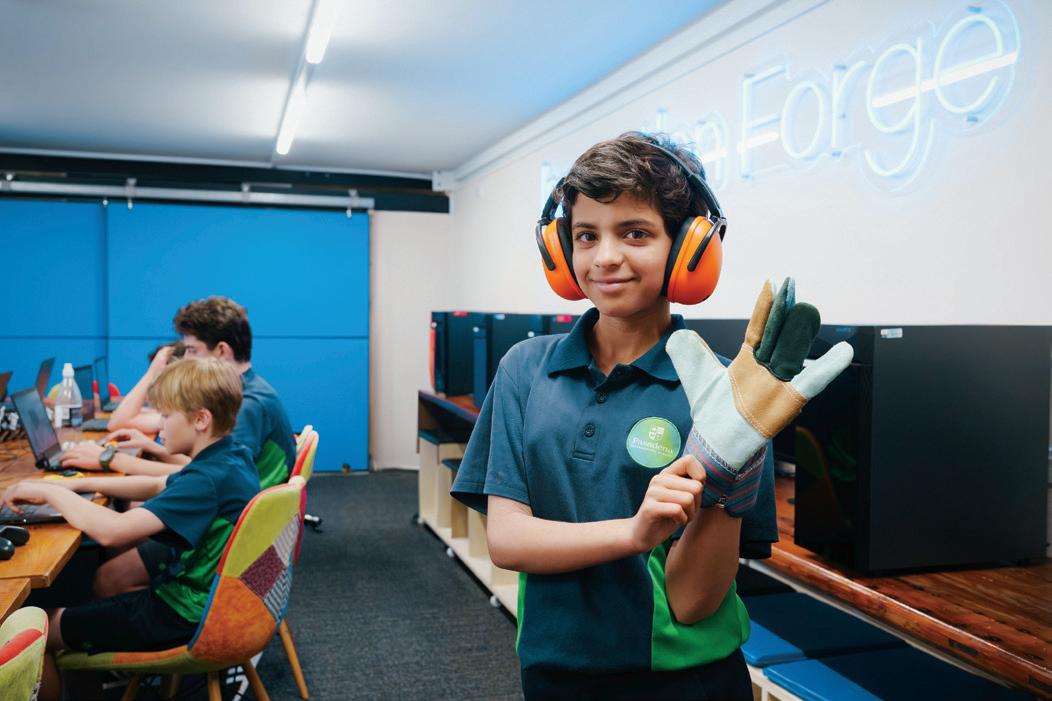
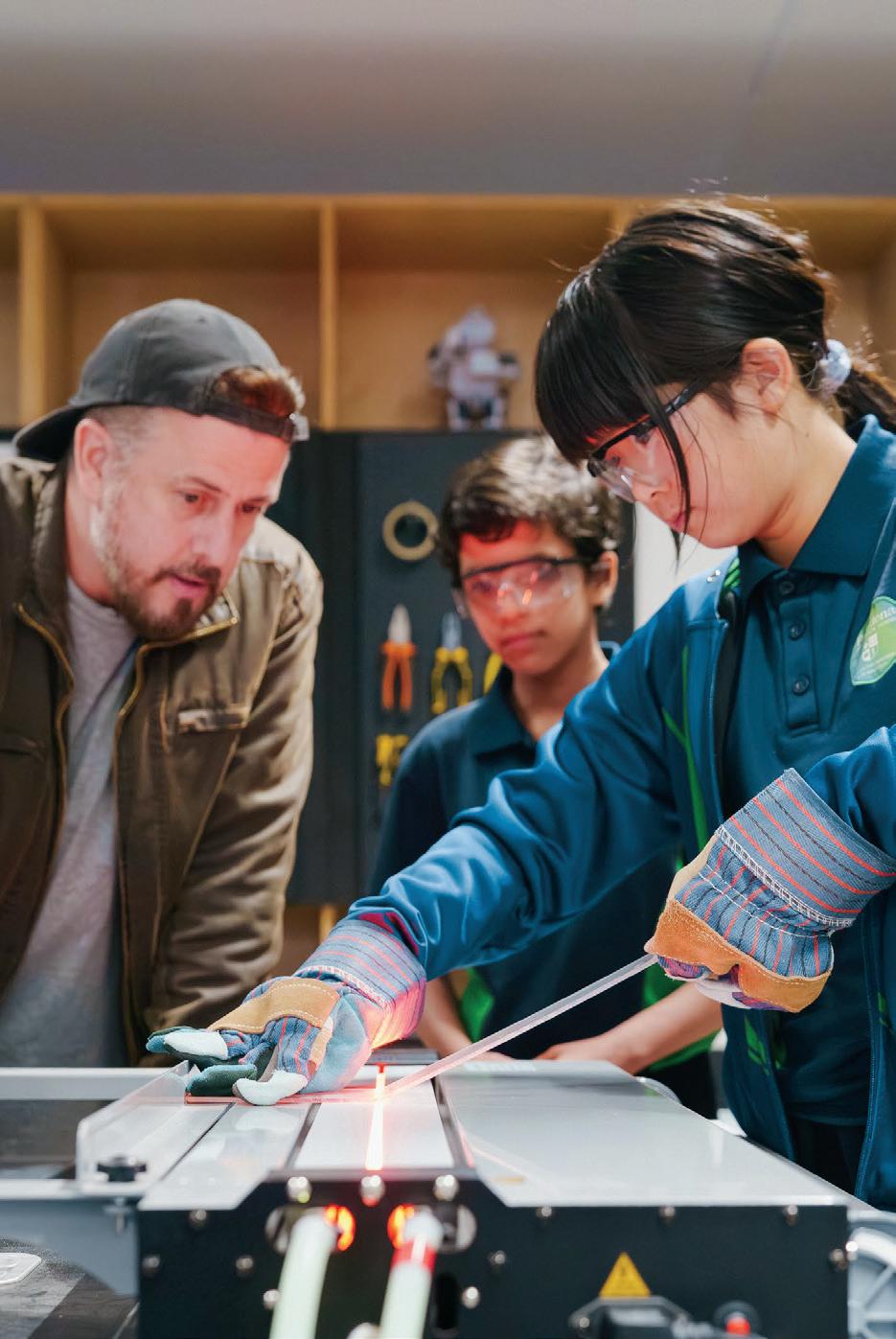
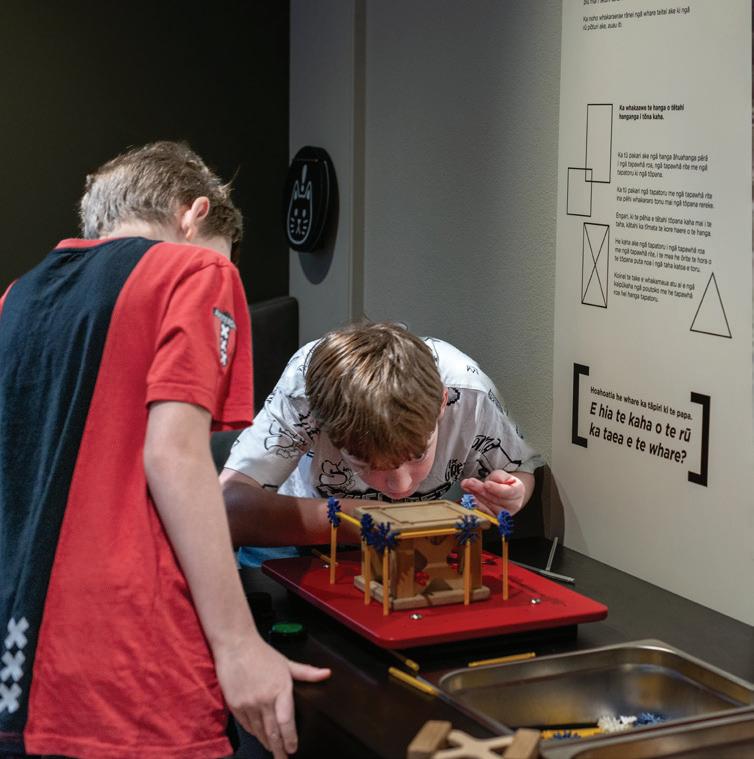
39 Bridging classroom and real-world skills with Innovation Forge
Health & Safety
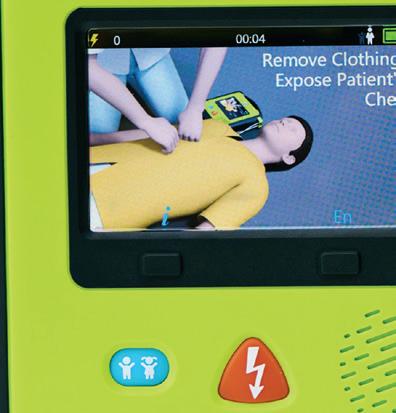
42 Every minute matters in school cardiac emergencies
43 When it comes to children, first aid isn’t a one-size-fits-all
Property
44 Take it outside: Outdoor learning areas for year-round education
44 A step toward future-ready schools
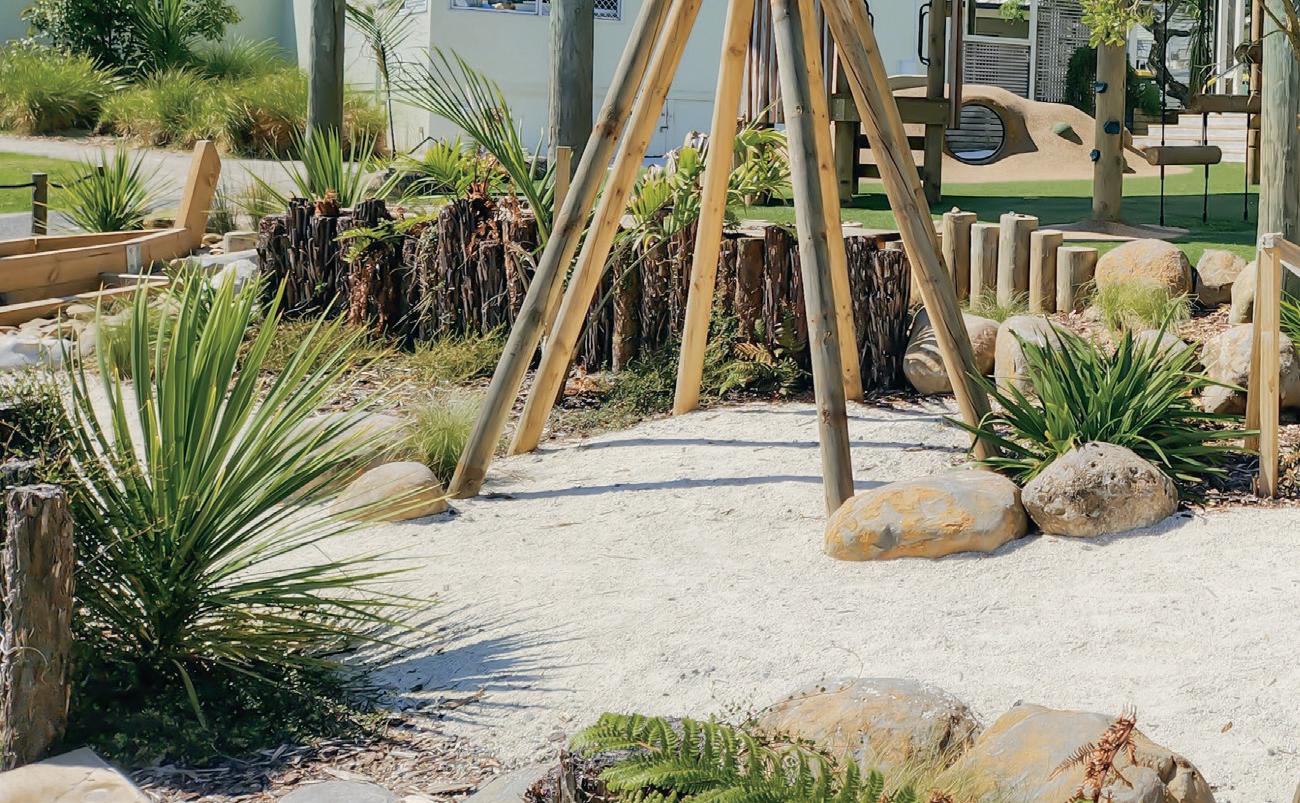
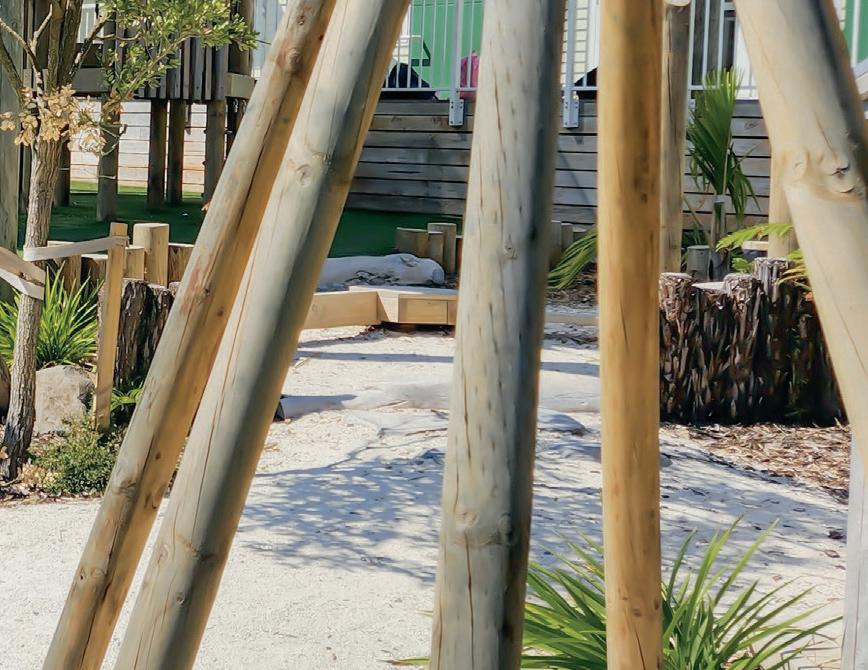
47 Case Study: Building the outdoor heart of Oratia School
FRONT COVER: Stratford Primary School
FRONT DESK
Balancing the good and the bad
From cute online videos to playground rumours to AI deepfakes, misinformation, disinformation and malinformation are everywhere, and can be difficult to pin down.
Deepfakes and AI slop have fooled everyone, including in some instances news outlets and journalists. Many adults are unable to tell what’s real and what’s fake online, so how can we expect our young people to?
In our Term 2 Special Report, we investigate how schools and educators can help tamariki develop the skills to critically evaluate information and sources, especially for online content. The ability to ask questions to help determine if something is real or fake will be
invaluable for our young people, both now and throughout their lives and careers.
And in this age of misinformation, it’s important to remember that AI itself is not the enemy. When used correctly, AI can be incredibly useful in a range of contexts, including in the classroom. This term, we look at
the advantages of implementing AI in the classroom, including improved content and data sharing for teachers, fast feedback and adaptive modules for students, and a range of time-saving and administrative efficiencies. Above all, though, we discuss how kaiako can use AI as a support, with human oversight still essential for the best learning outcomes. Effective use of AI is a case of balancing the good and the bad.
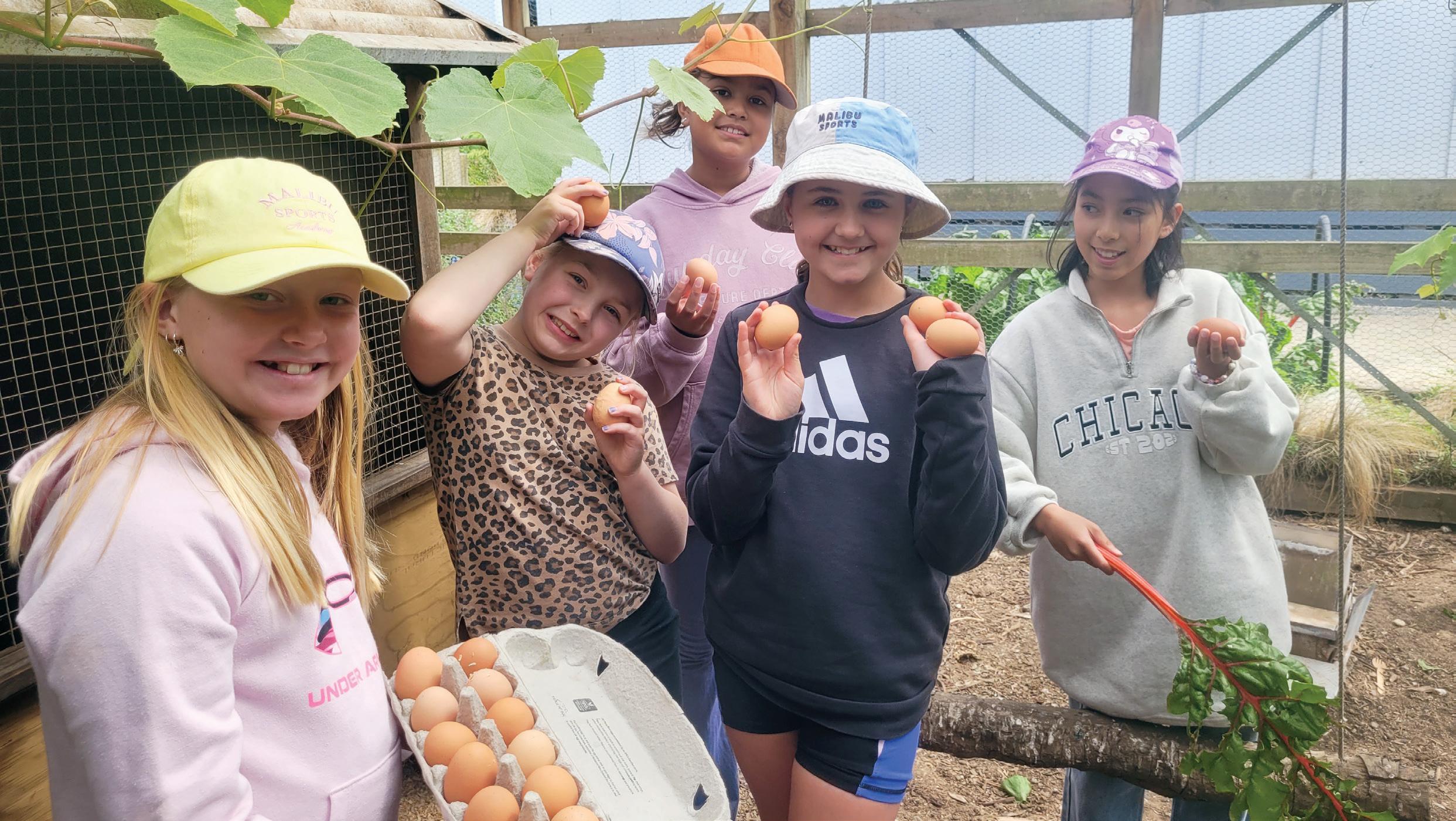
Our Profile this term takes us to Stratford Primary School. The school has embedded care for the environment into its culture, with beehives, chickens, orchards and vegetable gardens making up the school’s grounds.
A Green-Gold Enviroschool since 2022, Stratford won the 2025 BLAKE Ngā Kura/School Award. We talk to staff and students about the award
win, why environmentalism is such an important cause for the school, and the positive impact the enviro programme has had on school culture.
Also in this edition, we discuss how best to organise and store school devices like laptops and tablets; find out about the latest technology and features for school management systems; investigate professional learning and development opportunities for educators and school leaders; and ask the experts how to design and build the perfect outdoor area for learning outside, staff meetings, student lunchbreaks and community events.
I hope you have a happy and productive Term 2. Ngā mihi, Gemma Kaiwāwāhi matua | Editor, School News
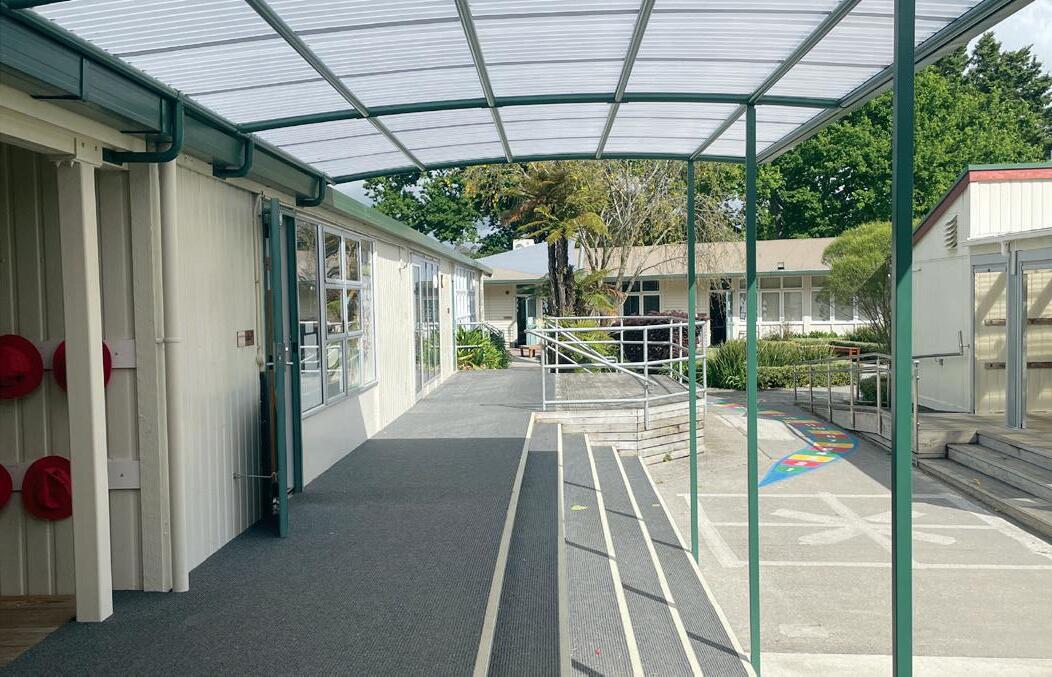
Full-service o er includes a consultation, providing certi ed engineered designs, arranging council consents through to a quality installation.
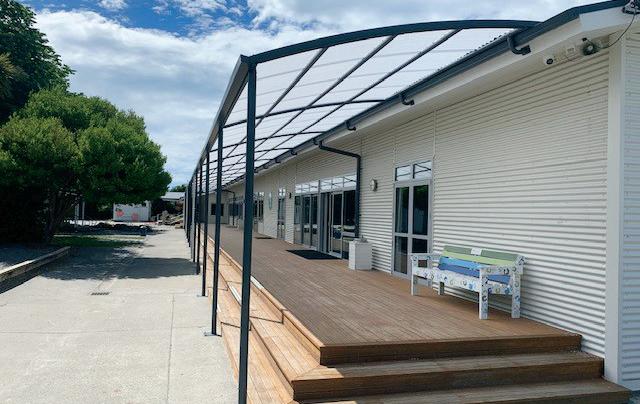
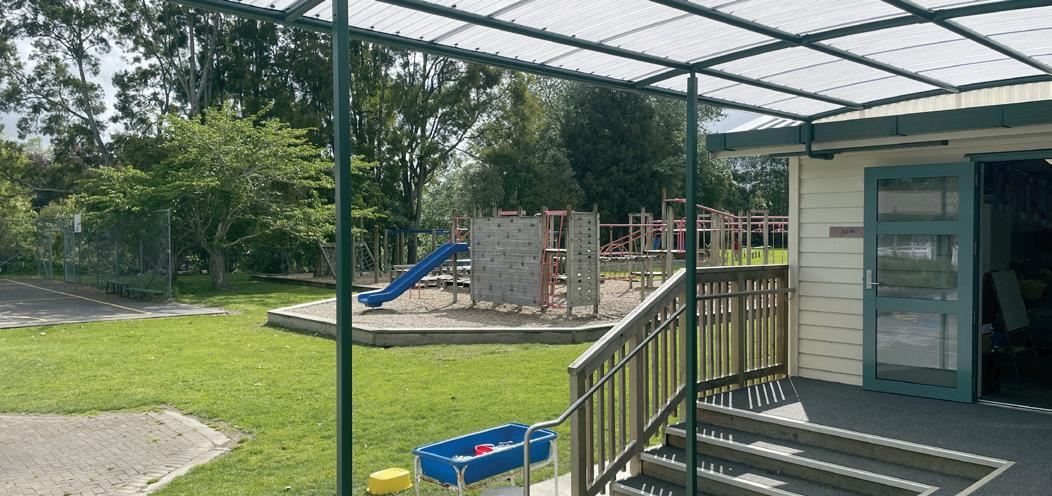
Contact your local Archgola® team to discuss your school shelter needs!
0508 272 446 / ARCHGOLA.CO.NZ
Stemming the tide:
The school’s role in combating misinformation
By Milly Fullick, Industry Reporter
Scrolling through Facebook’s Reels feature, it’s hard not to stop on a clip when it catches the eye.
This one is just 18 seconds long, and adorable. It looks like it has been recorded in a garden, probably somewhere in Europe, and shows a fox and a white duck joyously bouncing on a trampoline together; animals that should be predator and prey, enjoying a moment of pure fun.
It’s cute, it’s extremely realistic, and it’s entirely AI generated. It has half a million views and
From cute videos to playground rumours to AI deepfakes, misinformation is omnipresent and hard
to pin down
hundreds of comments, from “They must both be well fed pets!” to “Aww, too funny” to “AI but really amusing”.
The clip’s title, ‘Fox and Duck Jumping on Trampoline’, does not disclose that it is AI, like many of the unlabelled videos
from the same account which has 4.5 million followers.
There is nothing sinister about the video itself, but the number of commenters seemingly unaware that it is misinformation points to a deeper problem.
With many adults often unable to discern genuine content from misinformation, it’s no surprise that young people believe much of what they see, too.
The tidal wave of misinformation in posts, images and videos shared on social media has flooded young people’s accounts, and educators are increasingly concerned about how to ensure their students aren’t falling for it.
What is misinformation?
One of the biggest complexities of so-called “fake news” is the huge variety of forms it can take. From cute videos to playground rumours to AI deepfakes, it is omnipresent and hard to pin down.
Generally, it is split into three distinct categories; misinformation, disinformation, and malinformation.
Throughout this Special Report, the umbrella term ‘misinformation’ is used for conciseness to refer to any of this content.
The key diff erences are focused on the intent behind them, rather than the forms they take.
Misinformation, according to the New Zealand Government’s Keep It Real Online campaign, is information that is false but not intended to cause harm; that is, it is shared by someone who believes it to be true with no ill intent.
Disinformation, however, is deliberately false information created to harm.
Malinformation is sensitive or private data shared with altered context, such as data leaks. Adding another layer is the varying types of content.
According to American nonprofi t First Draft , misinformation can have many structures, including images and captions or headlines not matching, impersonation of genuine sources, and content that was once accurate, but has been altered or manipulated.
Where is misinformation coming from?
Misinformation comes from a huge variety of sources. The original sources of misinformation can be anything from a Facebook post that presents the writer’s ideas as a fact, to well-intentioned Instagram videos conflating two non-related issues, to senior politicians posting misleading statistics on X. From its source, it can spread unchecked by anyone who believes or is sympathetic to its message, or even those sharing it to question its accuracy.
Disinformation, in particular, is deliberately designed to be engaging. Messages are often short and simple, accompanied by exaggerated and attentiongrabbing visuals. Like much of the internet’s content, it is designed to make users stop scrolling to watch or read, regardless of their reaction to it.
In fact, as Australia’s eSafety Commissioner has advised parents of teens, negative reactions add more fuel to the algorithm’s fire than positive ones; ‘rage bait’ content is more likely to be engaged with than balanced, purely factual or even positive content. Governments, international agencies and charities argue that the social media platforms themselves are responsible for the spread of misinformation
within users’ feeds, but the incentive for the companies that own them to act is low. Their success and profi ts are driven by time spent on, and engagement with, their sites, and misinformation is a substantial contributor.
For educators concerned about their students, though, the root cause is arguably less important than the impact it can have.
What’s the harm?
Some forms of misinformation do not appear to be harmful at first. The fox and duck video, for example, is not necessarily problematic in itself. However, every false, misleading and inaccurate piece of content is potentially quietly eroding the sense of reality for young people, making critical thinking and reasoning more difficult at a time when their brains are just becoming fully grown and crucial pathways are being laid down.
In the shorter term, teachers may be rightly concerned about misinformation being used in bullying, with the ease of spreading false information and the empowering anonymity of sharing information online. Then, there’s the potential for issues around body image and self-perception from digitally manipulated influencers.
Misinformation can also be used to perpetuate negative stereotypes that fuel racism, homophobia, misogyny and other forms of bigotry. It can even accelerate extremism and radicalisation.
There’s also the potential for physical danger through the sharing of viral ‘trends’, promoting everything from pranks to making ‘skincare’ from unsafe products.
In the longer term, false health advice could lead to serious problems. Self-styled wellness influencers peddle advice that could deter young people from seeking help from a qualified healthcare provider, and can even sow mistrust of medical professionals and other authorities.
All of these things have the potential to spill into the classroom, but also to make life difficult for teachers, who may have to spend their time re-explaining basic scientific
concepts about, for example, human nutrition or climate change, to students who have been told something diff erent on social media.
What’s being done?
Young people are taking notice of the issue. A BBC survey found 66 percent of the 2000 young people surveyed were concerned about the spread of fake news and misinformation online.
However, the UK’s communications regulator, Ofcom, found that while 74 percent of children aged 12
to 17 said they felt confident in identifying misinformation, only 11 percent were actually able to do so when tested.
International eff orts are being made to tackle the tide of misinformation; as well as Australia’s social media ban for young people, it also intends to interweave media literacy with its civics education. The European Commission has a recently updated Digital Education Action Plan with practical guidelines for teachers, and in March, the UK government released its Media Literacy Action Plan.
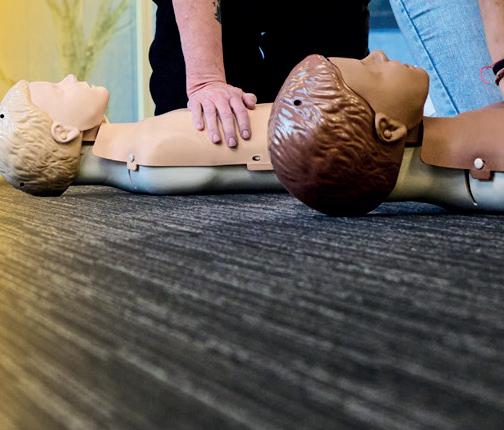
We teach people to save lives in a fun & interactive environment
First Aid for the School Environment - 4 Hour course held at your premises at a time to suit you. This is a cost-effective course designed to give teachers confidence to cope with medical emergencies and accidents at school or on surburban trips. This fits with staff development and is based on Ministry of Education guidelines.
In New Zealand, Netsafe has a range of teaching tools targeting digital literacy, including discerning real images from AI and deepfakes, spotting fake news and the ethical use of generative AI.
What can teachers do?
Studies give varying accounts of how long the average young person spends on their devices each day, but most agree on several hours per day.
The American Psychological Association says US teens average 4.8 hours a day on social media alone and a survey for the Public Health Communication Centre Aotearoa put that time at 2.5 hours a day for New Zealand teens, but noted that around one third said they spent more than five hours a day on these platforms.
In the face of how much time ākonga spend on devices outside of school, it’s easy to feel that in-school interventions may not be enough to stem the tide of potentially harmful content and misinformation they are exposed to every day.
However, a recent research article, Tackling misinformation: where do educationalists need to target their efforts?,
suggests that schools can, and should, play a critical role in helping students spot and process misinformation.
The article argues that there are three mindsets or skills that can be developed to positively impact how young people engage with the online world.
The first of these is termed ‘pragmatic prospection’; this is an open-minded ability to think about the future in order to make and work towards goals.
Encouraging students to think about their future can be expanded to include the kind of person they want to be, and the communities they want to build and be part of.
Then, there is the broadening of social networks, both on- and offline. Broadening the number and types of people that students are exposed to can help them engage with new ideas and widen their perspectives.
Finally, the report highlights the importance of developing critical thinking skills. These are a wide range of skills, including problem solving, information literacy, probability balancing and contextualisation.
The University of Auckland lists critical thinking as one of its key study skills, but it can be developed much earlier; Steve Pearlman, founder of The Critical Thinking Institute,
argues that these skills can be developed from the very beginning of schooling.
The University suggests areas of focus, including being inquisitive and asking questions, being open minded and able to consider alternative options, recognising your own biases, being objective in evaluating information, and trusting your own sense over believing everything you read.
At least initially, these skills need to be discretely taught, but over time, students will grow to embed them in their thinking processes.
Is there any good news?
All of these useful steps— encouraging students to think about the future, broaden their social networks and think critically—are ones that educators are already taking across Aotearoa.
With a renewed focus and prioritising the context of misinformation, though, educators have huge potential to change students’ perspectives and help them not fall foul of misinformation; a skill which they can carry through the rest of their lives.
Supporting Youth Wellbeing
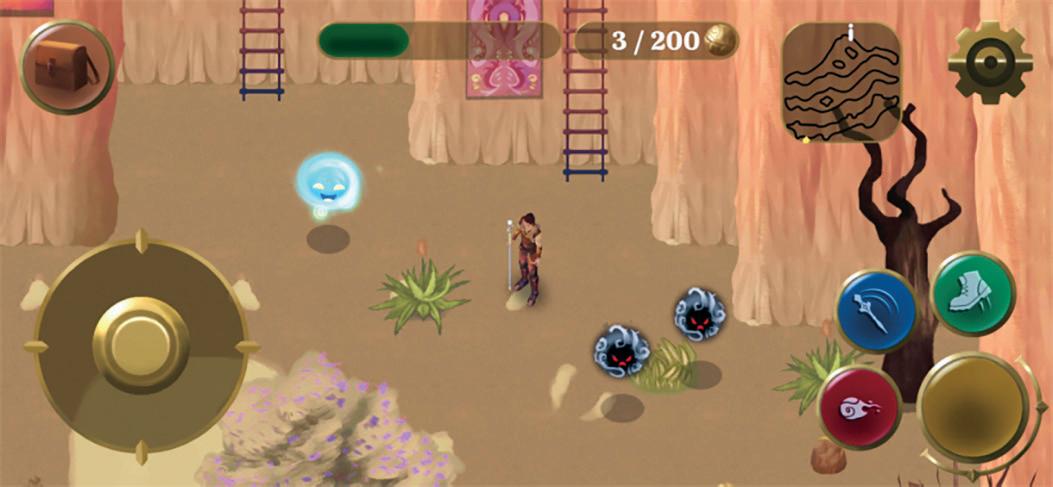
School life can be exciting, but it can also be stressful. Deadlines, exams, friendships, and more can feel overwhelming. Many young people experience anxiety, low mood, or just a sense that things are getting on top of them. The challenge is that it is not always easy to know where to go for support. That is where SPARX comes in.
SPARX is a free, New Zealand–developed digital tool designed to help young people learn practical ways to manage stress, low mood, and di cult emotions. It has been part of the New Zealand landscape for over a decade and continues to support thousands of young people each year. Developed at the University of Auckland, SPARX is internationally
recognised and grounded in strong clinical evidence. It is freely available thanks to funding from Health NZ.
SPARX looks a bit like a game, which is part of what makes it engaging. However, it is a structured, evidencebased programme based on cognitive behavioural therapy (CBT). Each level has a clear purpose and teaches specific skills that help young people understand and manage their
thoughts, emotions, and behaviours.
As users move through the seven levels, they learn how to:
• Manage stress and strong emotions
• Recognise and challenge unhelpful thinking pa erns
• Build confidence and assertiveness
• Improve communication with others
• Solve problems more e ectively
• Identify triggers and respond in healthier ways
These are practical, real-world skills that can be used at school, at home, and in everyday life.
SPARX is designed to be completed at a young person’s own pace, making it flexible and easy to fit around school and other commitments. Completing all levels provides the greatest benefit, as the skills build over time.
Schools continue to play an important role in connecting young people with SPARX. Many students first hear about it from teachers, school counsellors, or peers. As a teacher or counsellor, you can introduce SPARX to students as a publicly available resource or even demonstrate it in a classroom or wellbeing se ing.
Image courtesy of SPARX
Creating a positive culture at Brookby School:
Where belonging sits at the heart of learning
By Wayne Gillard, Tumuaki Principal, Brookby School
I was born in Matamata but spent much of my childhood on Great Barrier Island (Aotea). I was also a self-driven learner for part of my education as I did correspondence school for a few years on the island. Those early experiences shaped me into the person and leader I have become.
Being part of a small community, relying on and supporting each other becomes essential. Special friendships and bonds are formed from this, so I continue to enjoy the strong sense of community that can be formed in a school.
I have been an educator for 32 years and it is a career I absolutely love. I have been the Principal of Brookby School for the past five years, following many years as Deputy Principal at Maraetai Beach School.
From the outset, I want to make an important point: we need
to celebrate more positive stories in education. I believe the culture at Brookby School is one of those positive stories.
Brookby School is unique in that it is a small semi-rural school in South Auckland. We have students attend from outside the area with families looking for the small semi-rural school experience that we offer.
We have a saying which is ‘Once a Brookby Kid, always a Brookby Kid’. This means that if you were a student, teacher,
parent or grandparent of the school at any stage, then you will always be part of this special community. You are always welcome and we value you coming back at any time.
We recently celebrated our 150th anniversary; the positive vibe and turnout was amazing. Everyone had a Brookby story about how the school helped shape their life.
Culture is talked about often in education, but the real question is whether the words match
what is actually happening day to day. Schools have visions and values displayed on walls and buildings throughout the school environment, including at Brookby School. When I decided I wanted to make that next step as Principal, I challenged myself to ensure that the words matched the actions. I wanted to create an environment where students and staff come to school feeling positive, excited and motivated, and where they can focus on teaching and learning.
Too often we hear about teachers feeling burnt out, buried in paperwork and overwhelmed. When I reflect on my own journey through education, I realise that at times I was one of those teachers. I would spend evenings and weekends trying to keep on top of the never-ending list of tasks. Looking back, I am not sure many of those extra hours actually improved my lessons or student outcomes.
Isn’t it better to arrive at school each day well-rested, motivated and excited for the day ahead?
I’m not suggesting that we take the easy road, be underprepared,
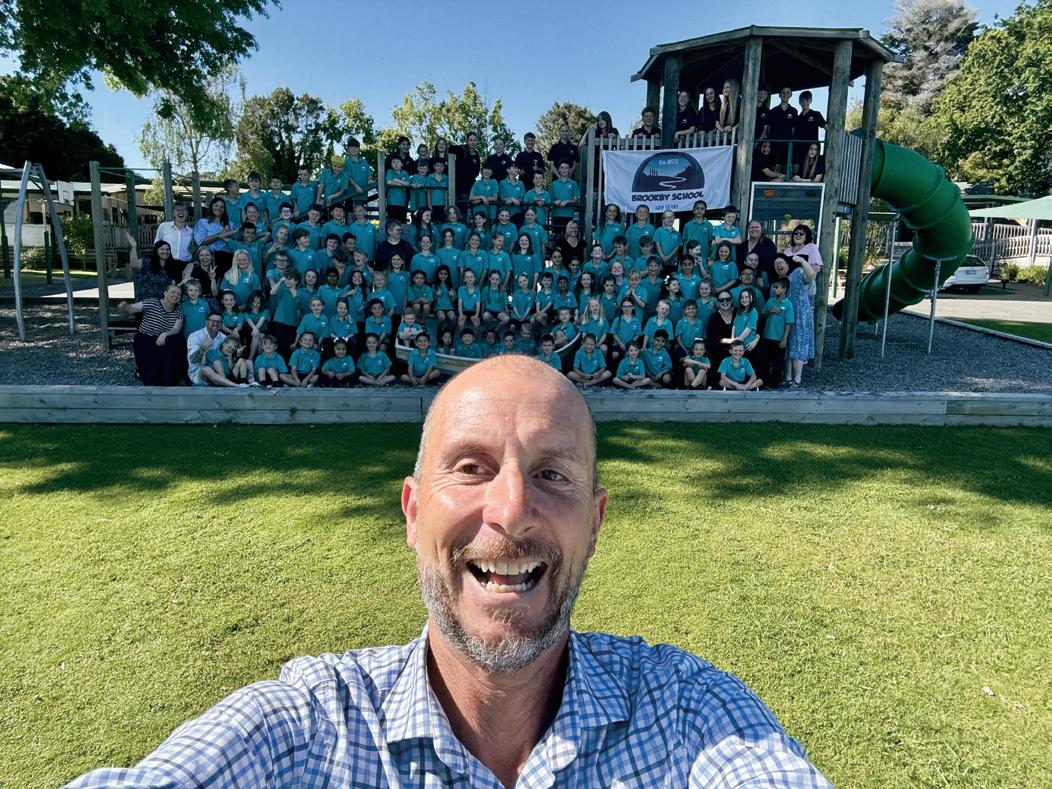
Wayne Gillard. Images courtesy of Brookby School.
or fail to provide the curriculum every student deserves. This is where leadership becomes so important. The question becomes: How can I, as Principal, ensure my staff are motivated while also ensuring student needs are met?
Here, prioritising becomes critical. Leaders must be brave enough to say no to things that might be beneficial for the school but could dilute other initiatives or overwhelm staff. We are in a time of constant change in education, with a curriculum that is being refreshed, or, more accurately, significantly changed.
So how does this look in practice at Brookby School?
Deliberate planning
It starts with strong leadership. The Deputy Principal and I spend significant time planning the year ahead—almost day by day and week by week. It needs to be manageable for everyone: students, staff and our community.
Too much happening in one particular week can lead to unnecessary stress and challenges. When something new is proposed, we ask important questions: Why are we doing this? Do we have the
capacity? Is there something we should remove or adapt to make it manageable?
Deliberate planning also involves constant review and being willing to adjust the plan when required. Over time, this approach has helped us develop strong ‘blueprints’, making planning easier from year to year.
Leading and modelling
My leadership style, which is particularly important in a small school, is to get involved. I help organise events and I prioritise being a visible and engaged leader. I spend time in the playground, classrooms, and outside during pick-up and dropoff, both before and after school.
This is where you truly learn about your school. You find out what is working well and what needs improving.
I also believe strongly in walking the talk. I encourage students to challenge themselves and step outside their comfort zones.
Recently, I completed IRONMAN New Zealand. I took the school along on that journey with me and shared that I had to learn to swim properly. I talked openly about the highs and lows of training and the commitment of this. My achievement was celebrated by the whole school
and community, and the spin-off conversations around taking on big challenges were amazing.
I was fortunate to be awarded the Tony Jackson Scholarship, which supported me in achieving this challenge. Tony Jackson completed 28 New Zealand Ironmans and was known for constantly giving back. He coached and encouraged many others to achieve their goals. This became a powerful example to share with students, staff and the community about pushing yourself and aspiring to something that initially might feel impossible.
As I was competing in the event my thoughts went to Tony’s message of ‘Nothing is impossible…to the willing mind’. My biggest joy is seeing students take on their challenge and be successful. I have often seen students go from one success to the next, as the confidence of achievement leads them to take on the next challenge.
Have fun and celebrate success
Schools should have a strong sense of fun. If students and staff want to be at school, we are already well on the way to helping students succeed.
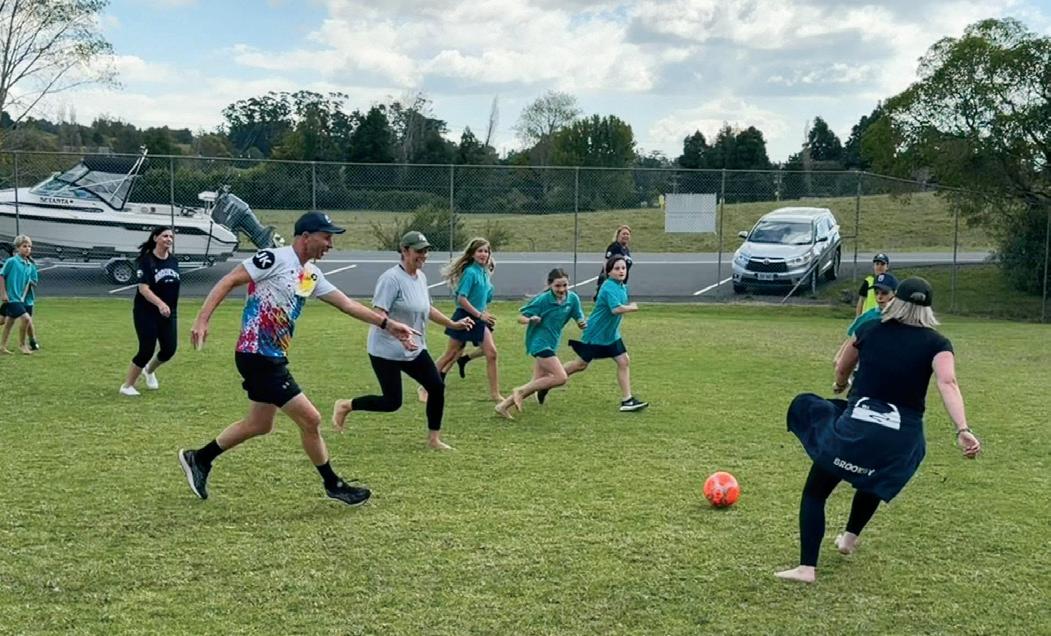
Images courtesy of Brookby School
In our staffroom we try to avoid constant ‘school talk’. Instead, we talk and laugh together and get to know each other beyond our professional roles.
We also think carefully about what students genuinely enjoy. One example is starting every Friday with Jam Jam, which has become a muchloved tradition. We also have a strong house competition that encourages participation, pride and teamwork.
Our school assemblies celebrate student achievements and include success beyond the academic. We have studentwritten productions, with every student performing on stage at a real theatre. We run play-based programmes and provide resources that make the start of the day a real highlight for our junior students.
Each and every day there are students in my office sharing their learning and achievements. I love that they walk out with a smile on their face, with the prized gold Principal sticker.
We also believe in creating memorable experiences beyond the school gates. Each year we take our students off-site for cross country where they run on a fun course with mud, sheep and hills—something very different from a typical school course. Our annual Ag Day is well known and could almost be described as ‘New Zealand famous’ within our community. It is a fantastic day full of activities, animals and fun for students and families alike.
Communication and clear direction
I try to be very clear about what is important at Brookby School. Our focus is teaching and learning.
Clear communication helps staff understand priorities and ensures that energy is directed toward what truly matters for student success. If we keep changing direction and priorities it creates confusion and frustration. It is better to do a few things really well rather than many things at a surface
level just to tick boxes. Again, leaders need to be brave and say “no” or “not yet” to certain initiatives or ideas if they are not the right fit at the time.
Don’t stress the small stuff
One thing experience has taught me as a leader is not to worry about every little thing. Each day brings countless emails, requests from the Ministry and curriculum expectations. Most things can wait. It is important not to let your own stress become school-wide stress.
The questions I ask often to myself: Are the students, staff and community happy? Are students learning and engaged?
At Brookby School, culture is not what we say—it is whether every student, every staff member, and every whānau feels they truly belong.
When I step outside my office, I do so with a positive mindset. Often, I will stop and talk with one of our students. That
simple moment brings me back to the core of why we are all here—supporting young people to learn, grow and thrive.
I am in a privileged position leading a fantastic school. I have a great team of dedicated educators who are treated as professionals. I listen to our students and community, and they tell us they love our school, our teachers and our learning programmes. Culture is crucial and requires deliberate actions that go far beyond the words written on school buildings or classroom walls. It starts with the leadership of the school. Culture is not what we say—it is what we do, every day. At Brookby School, that means creating an environment where people feel valued, supported and inspired to give their best. When culture is strong, everything else—learning, wellbeing and achievement— follows. That is the kind of school we are committed to building, every single day.
Images courtesy of Brookby School
Growing tomorrow’s environmental leaders in the heart of Taranaki Stratford Primary School:
By Milly Fullick, Industry Reporter
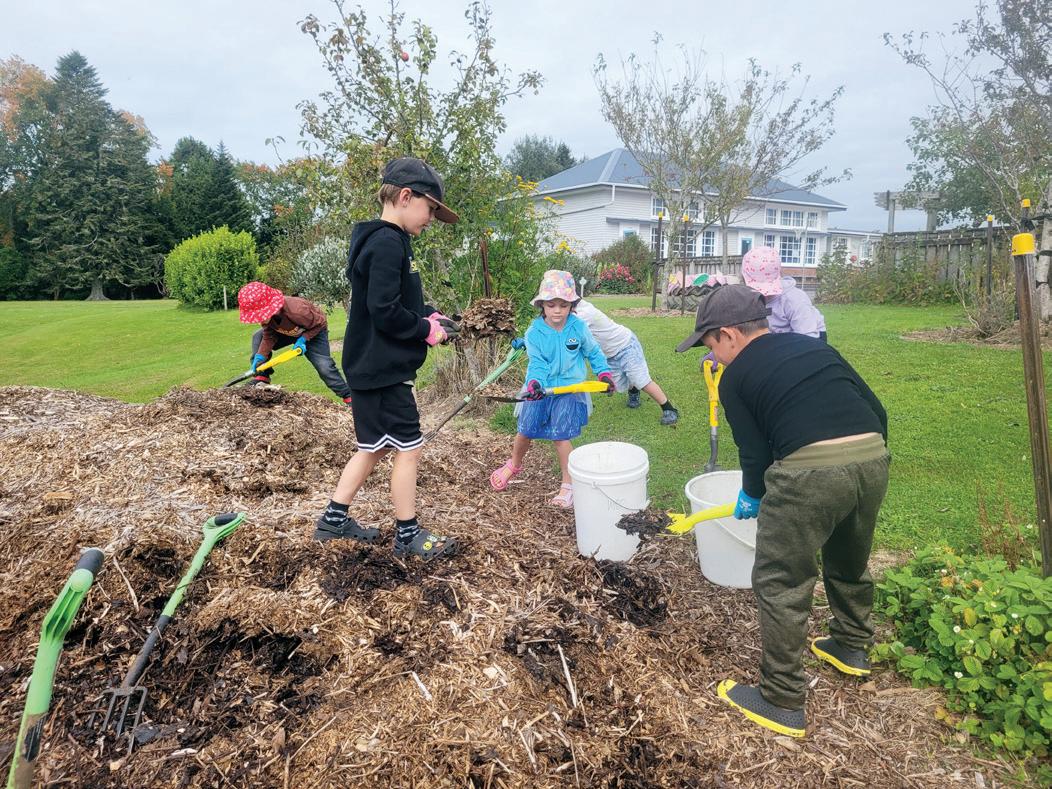
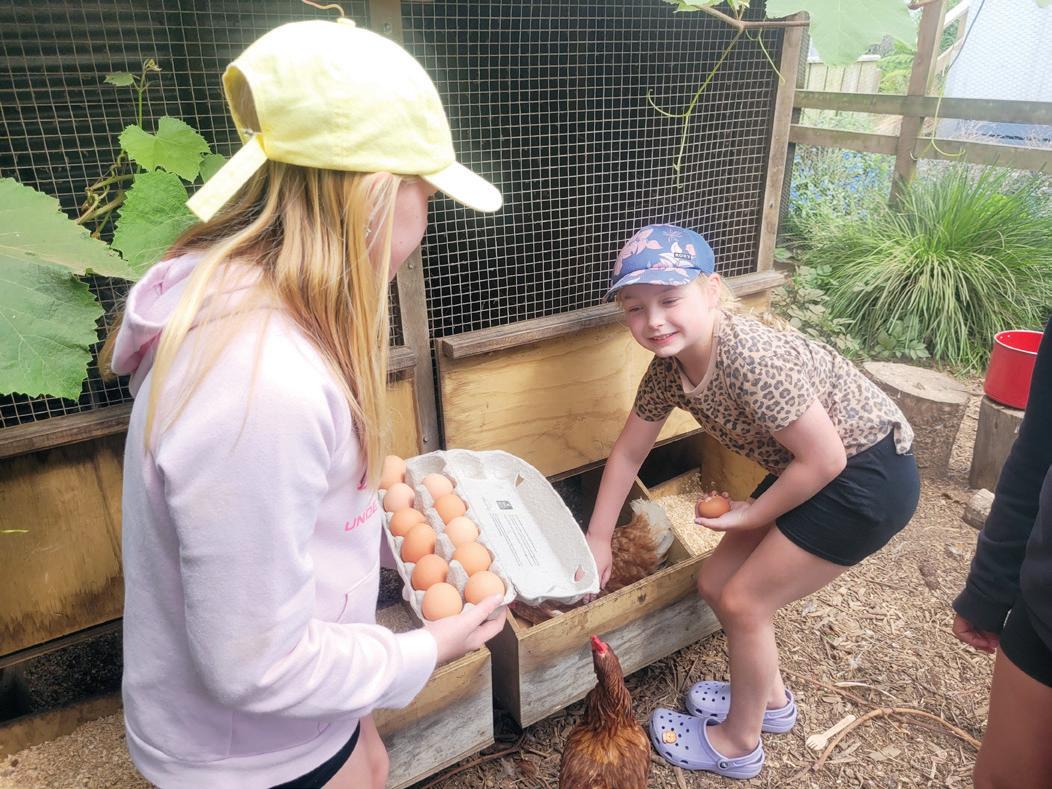
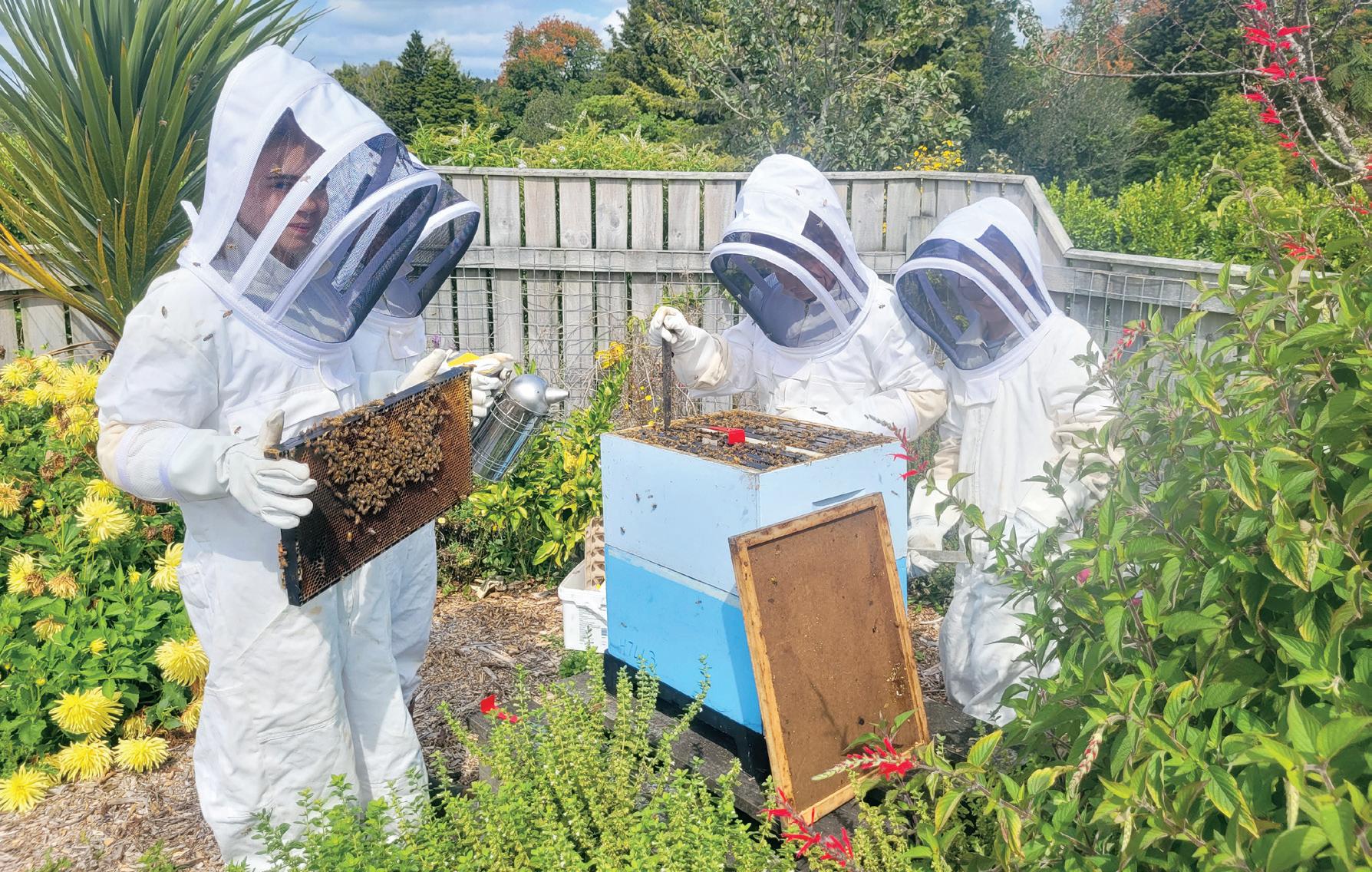
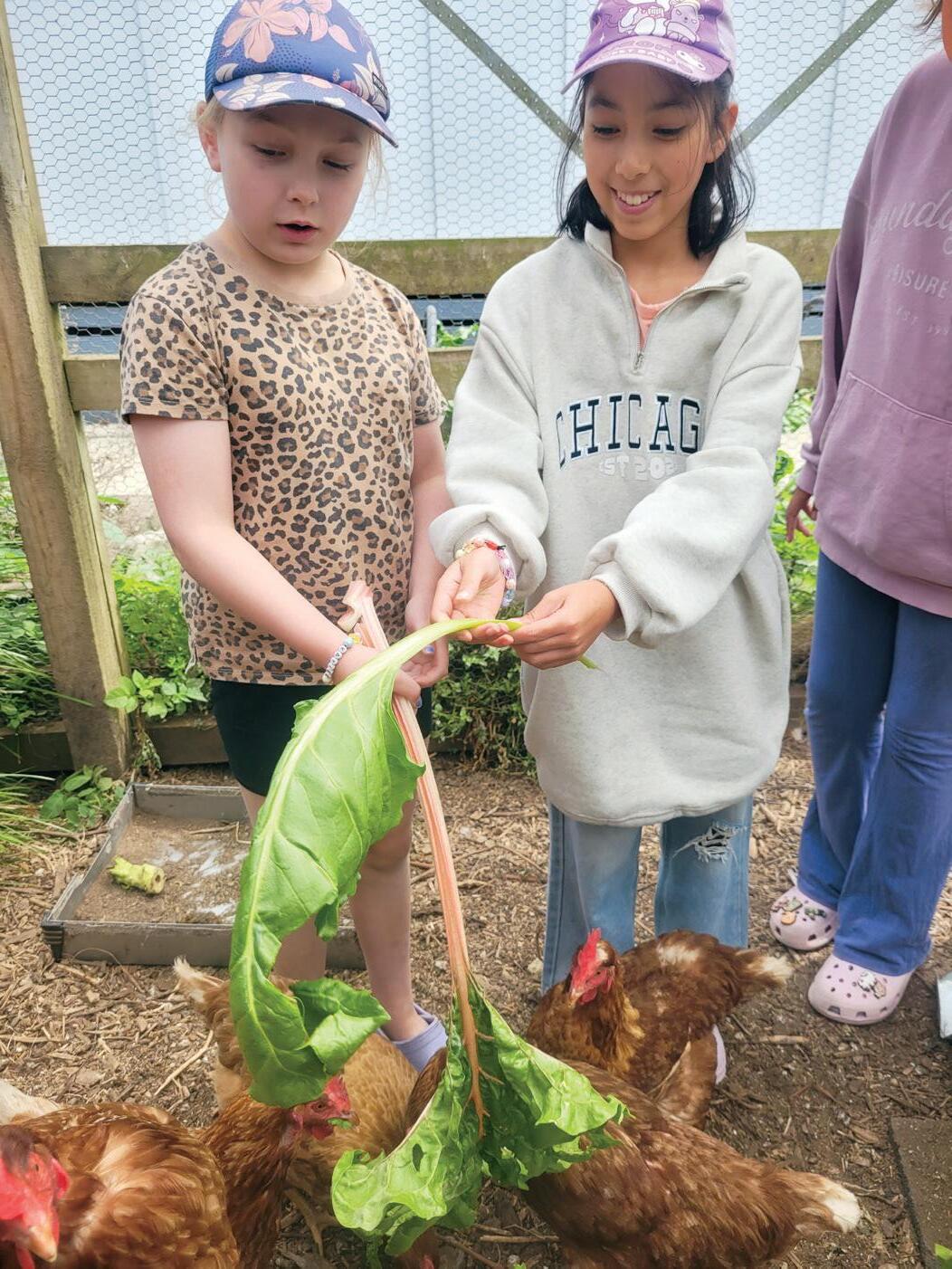
Picture a school with beehives, orchards and a chicken coop, where students spearhead their own seed selling initiatives and make firebricks with wastepaper.
It might bring to mind an ultra-rural Kiwi idyll, perhaps even from a bygone era.
But that school is very real, and it’s not a tiny one-room schoolhouse surrounded by rolling farmland. It’s Stratford Primary School, just around the corner from the town’s CBD, with a roll of over 450 ākonga and growing.
It’s this unusual set up that caught the eye of the Blake Awards, with the school winning the 2025 Schools Blake Leader Award. The accolade acknowledges Stratford’s extensive environmental measures, which are woven into the school, its grounds, and its curriculum.
Stratford has been a GreenGold Enviroschool since 2022, the highest tier of the
national schools’ environment scheme, thanks to its many eco-elements. These include vegetable gardens, composting and recycling systems, and even a chicken coop, aptly named the Heihei Hotel. One
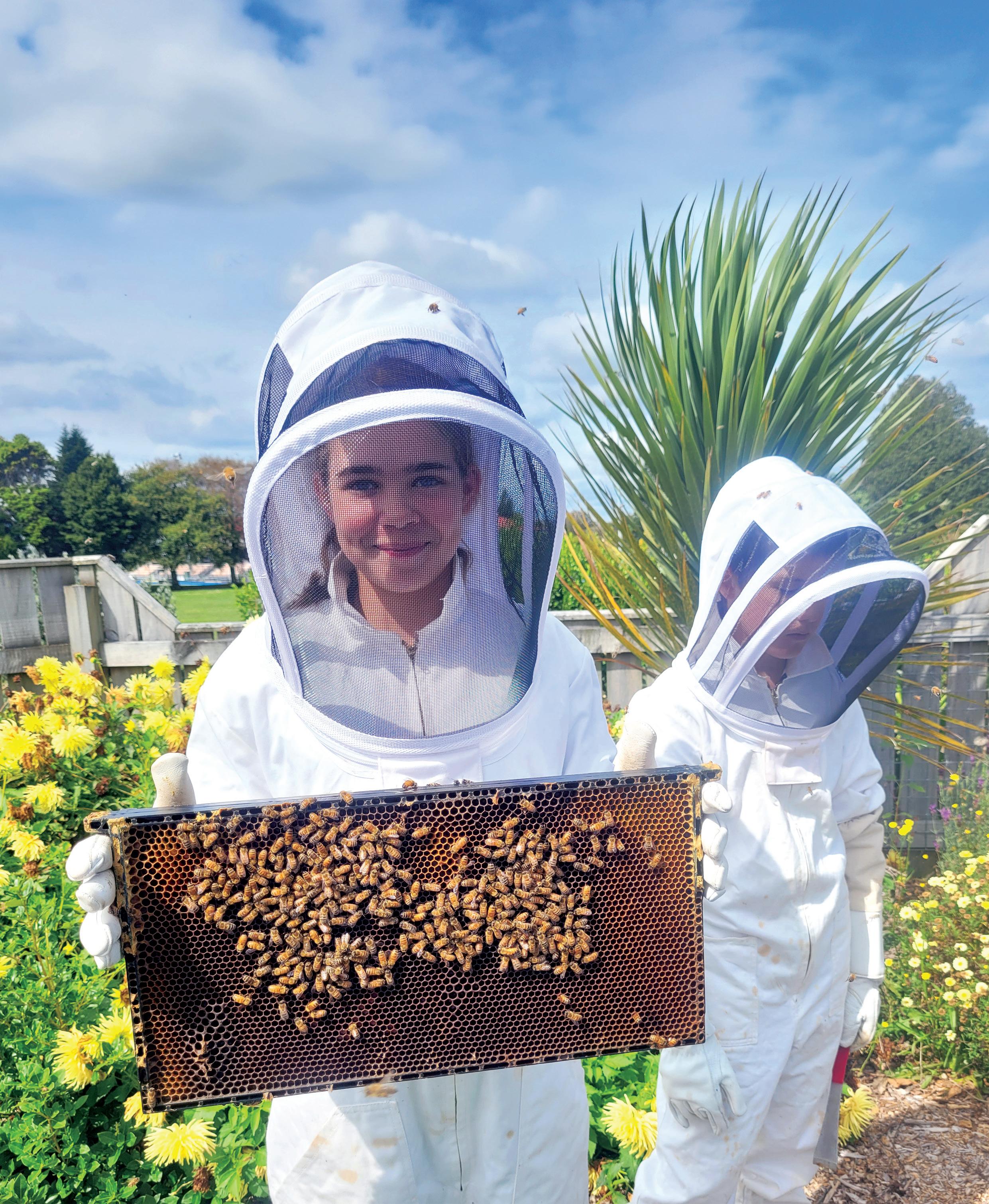
of the more unusual features is the school’s apiary. Here, the students harvest honey and monitor the health of the hives, all in protective bee suits, of course. It’s a favourite with the students,
thanks in part to the constant supply of fresh honey. The hives also provide invaluable learning opportunities, from life cycles to pollinators and the importance of even the smallest parts of an ecosystem.
Images courtesy of Stratford Primary School
Living life through a green lens
What makes Stratford Primary School exceptional is that it’s clear their Enviroschools programme isn’t an add-on to their traditional curriculum learning; it’s a crucial part of it, woven throughout the school day, week and year.
As Enviro Coordinator Marlene Lewis, the driving force behind the school’s sustainability initiatives, sums it up: “We live our lives through a green lens. Everything we do, we ask ourselves, is that good for the environment? Is that going to be long term, sustainable?”
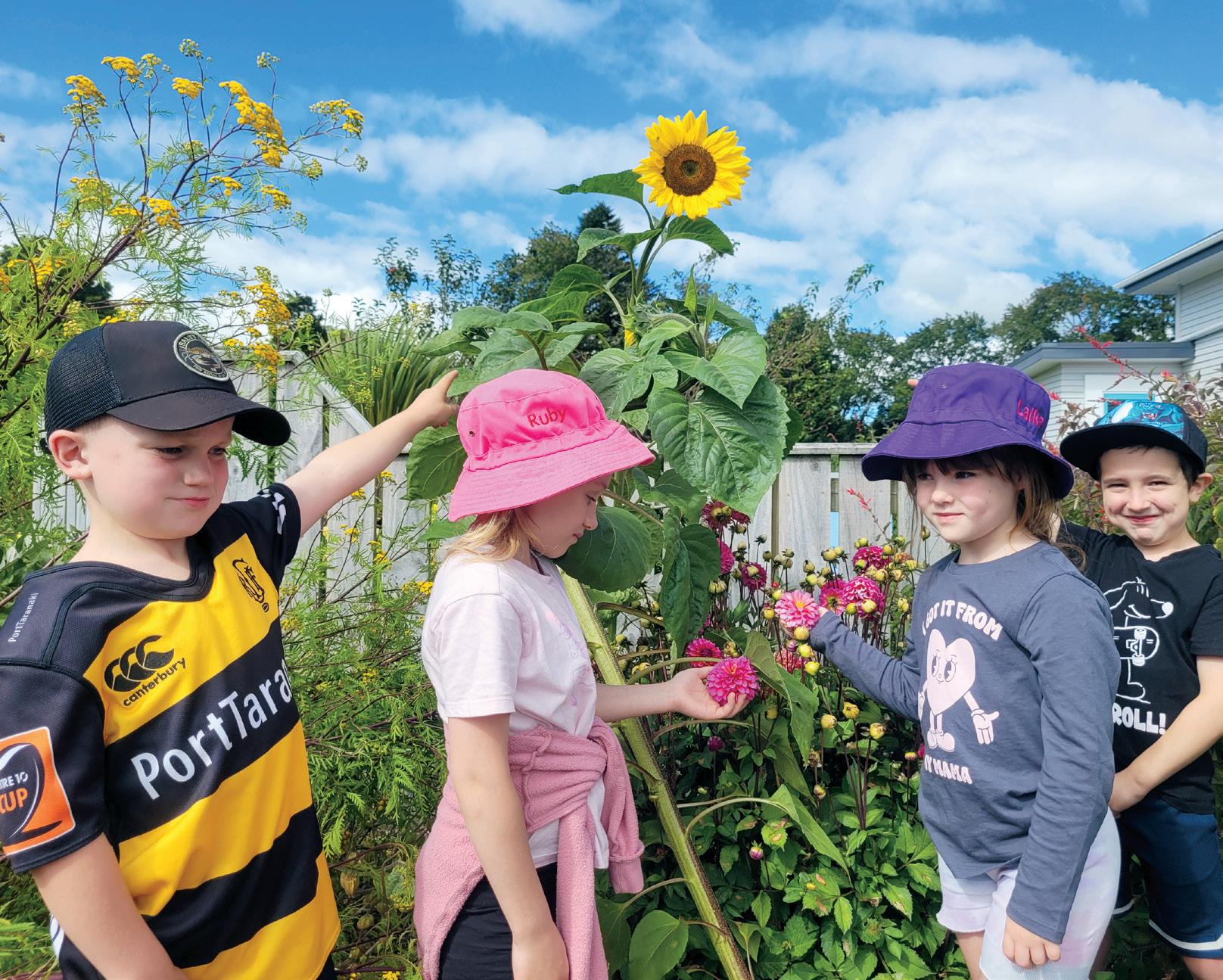
Take the school’s sunflower garden. It naturally provides opportunities to learn about the life cycles of plants and the conditions they need to grow. Beyond that, though, the students use the seeds in their maths lessons, counting them to bag them up, then using money skills, selling seeds to the community and raising funds for the school. That idea came from a student who noticed how many seeds each sunflower head contained.
Student-centred learning
That student-led learning approach wasn’t a one-off; each classroom has a large amount of agency over their learning. Students’ curiosities and ideas are heard and woven into the classroom’s learning, said Ms Lewis. “We had a huge Matariki day for the juniors; the idea came from one classroom. They
grew a plot of vegetables, and all their vegetables were used to make vegetable soup for our school whānau to enjoy.”
In another classroom, a student realised that small scraps of paper weren’t recyclable, and so their classroom has been making offcuts into fire starter bricks to be sold in the winter.
Keeping the scheme going is largely the students’ responsibility; they manage their own rubbish, recycling
and composting, and most classes tend their own flower and vegetable gardens on the school grounds.
Ms Lewis explains: “Each class has their own responsibility. They’re responsible for the waste they’ve created, and we’ve got systems for them to go and empty their food scraps, etcetera.”
The result is confident, self-sufficient learners who know the environmental
systems well because they work with them every day.
Leaders of tomorrow
At the heart of the scheme are the student leaders; two are selected each year to help and inspire their fellow ākonga, so they know the programme like the back of their hand.
Stratford’s 2025 Tūī Enviro Leaders, Elliotte and Neriah-Joy, confidently rattled off to School News the list of environmental measures that form part of the school’s everyday kaupapa; the recycling and rubbish systems, composting, classroom plants and outdoor garden areas, greenhouse, beehives (“the beehive’s my favourite,” Elliotte confirms), the chickens.
The Enviro Leaders are elected each year; Neriah-Joy has taken on the job again for 2026 along with new leader Anna. Elliotte has moved on to secondary school.
The student leaders have an additional responsibility in the form of a weekly assembly on Fridays, as Elliotte explains.
“We have our school assembly every Friday and Neriah and I as Enviro Leaders go up every week and announce the Enviro Award, which is basically an award that goes to a class that has done best Enviro for that week.
“If you’ve passed your recycling test, if you’ve got all 100 percent, we will check your class and make sure it’s tidy. We also talk about what we’ve done good and what we need to improve on.”
It’s clear that the student leaders understand the importance of the environment to their fellow ākonga. Of the school and its grounds, Elliotte shares: “It means everything. It’s just a place for kids to feel at home, and it helps them with stress, being outside and helps kids focus when they can’t think.”
The wider significance of their actions isn’t lost on them, either, as Neriah explains. “I guess if we don’t look after (the Earth), we won’t get a very long time out of it, but you can expand it by being kaitiaki to it. There is no Plan B, there is no other Earth to go to, so we need to take care of the one we have right now.
Images courtesy of Stratford Primary School
“Sometimes as a kid, you don’t think you can make a big impact, but if you actually try hard enough you can. And if everybody does a little bit it can make a big impact.”
A passionate advocate
While the success of the scheme depends on students’ enthusiasm and participation, it would never have been possible without the tireless efforts of adults behind the scenes, particularly those of Marlene Lewis.
Ms Lewis took on the environmental coordinator role in 2013, and the school has never looked back. Among the many initiatives she’s implemented to inspire the next generation was introducing the beehives, a personal passion of hers.
“Probably the enjoyment I get most out of it is actually working with the tamariki, empowering them and seeing where they want to take their learning. There are learning opportunities all the time.
“Still to this day I look at the students’ faces when I open the lid of a beehive and see amazement—it still gives me a little bit of a shiver.”
It’s obvious that Ms Lewis cares deeply about the school and its students.
“It comes down to our school values; to be the best we can
be and showing manaakitanga to our environment is really important to us. We’re presenting our environment to closely link with our school values. It’s our expectations. It’s who we are.”
Support from the top
Principal Jason Elder laughs as he admits: “I call Marlene ‘the boss’.”
When Mr Elder became principal at Stratford Primary in 2016, the journey was already underway, he said, thanks to Ms Lewis’ efforts. Recognising the importance and potential of the scheme for the school and its students, he was on board from day one. His reasoning was simple: “I could see how this could really engage the kids.”
His instinct was correct; he cites a shift in overall school culture and attributes it in no small part to their environmental approach.
“Our culture now compared to from then is significantly different.
“We’ve got a survey going at the moment, and one of the questions that I asked parents is ‘How safe do you feel the school is out of five?’. At the moment, it’s rated 4.5 out of five. That’s been consistent over the last few years, and it shows too the importance, that the environment we’ve created is a big part of it.”
Those whole-school improvements begin with
valuing every student as a part of the school and its environment, he said.
“A lot of our kids don’t have these experiences before they get to school. And so we’ve created an environment—and we’re still working on it—with that real sense of belonging. But the environment is so good in terms of engaging them, nurturing them.
“The kids are the future citizens, they’re the ones who are going to make decisions around the future, around the environment. And if they can love it, nurture it, support it, our society’s going to be so much better.”
Award-winning but not complacent
Stratford Primary School’s win at the 2025 Blake Awards allowed the staff and students to show off their hard work at an awards ceremony in Hamilton. The student leaders, Elliotte and Neriah-Joy were there to accept the accolade.
Neriah-Joy said: “It was really cool when they announced us, and then you just get like this ‘Ohh it’s really happening’ [feeling].”
Seeing the video that was played to showcase the school’s work to the audience “was pretty exciting”.
“I guess what it means to me is that we’ve worked hard and it’s actually shown off and been acknowledged.”
Ms Lewis said it was special to receive the award. “We’re pretty humbled but very proud of what we’ve been recognised for doing. That’s really quite emotional for us, it really took us away.
“I took it as recognition of a long standing and deeply embedded commitment to environmental education and sustainability across all of our school life. This has been a huge commitment for many years for us, so to be acknowledged for our mahi really creates a sense of ‘Hey, we’re doing some good here, we’re in the right direction’.”
Mr Elder said it was a great waypoint, but not the end of the journey for the school. There is plenty to be learned from what others were doing well, he said.
“We’re always trying to improve. We went to an amazing school, Manurewa Intermediate, and we saw how we could extend what we’ve started through some ideas.”
In the meantime, though, the school whānau is proud of the environment they’ve created, said Ms Lewis.
“When students and their families step onto our kura, our aim is to create that feeling of a sense of pride, a belonging to our place; utilising our environment for the benefits of all peoples. It means a lot to us.”
Image courtesy of Stratford Primary School
Smart communications for schools Announcements, emergencies and everything in between:
By Milly Fullick, Industry Reporter
Audio and communication systems are often an understated workhorse in schools; when they function well, most staff, students and whānau don’t think much about them day-to-day.
However, when something goes wrong—whether that’s technical problems from ageing infrastructure, volume issues with a PA system at a school sports day, or even in an emergency—everyone notices.
In a nutshell
Evaluating your existing audio and communication systems and identifying any shortcomings can help to head off any issues before they become troublesome, and with next-generation smart audio systems, there are bound to be options that suit every setting and scenario.
Modern systems rely on IP paging, rather than analogue wiring; simply put, they transmit via the same internet connection used for a school’s wifi. IP communication allows much greater flexibility, including easier installation and more options around uses, placement and customisation.
Benefits of IP systems
Today’s communication systems offer access to a host of features that older ones cannot provide, such as integrating speakers, clocks, bells and emergency systems to create an ecosystem that removes redundancy and is simpler to use.
Another major benefit is that many systems offer zoning and scheduling that work together. If older students work on a
different timetable to younger ones, for example, then bells, reminders and other messages can play at the correct times for each zone. It also means that announcements don’t need to interrupt classrooms where they are not relevant.
Emergency management
In an emergency, the seamless integration and smart features of an integrated classroom system come into their own. In weather events, fires and lockdowns, instant, targeted messaging can make all the difference. Systems can also be customised with digital displays to deliver messages to students and staff who cannot hear them.
Pre-recorded messages can also be utilised in emergency scenarios, so key points including safety information and muster areas can be given automatically, freeing up main personnel for other time critical tasks.
With so many possibilities for schools, from integrating new technology into old systems to starting over with a bespoke layout, School News talked to the experts about what to consider when implementing a smart communications system.
How can schools get started with designing new communication networks?
Namo Naicker, WiPath Communications Ltd: Designing a communication network for a school begins with understanding how information needs to move across the campus. Schools typically rely on a combination of systems such as digital signage, paging, classroom displays, and event audio systems.
Rather than implementing these technologies separately, many schools are now adopting integrated communication networks that allow messages to be delivered consistently across multiple platforms.
A practical starting point is reviewing existing infrastructure, including network capability, power availability, and current communication systems. From there, schools can identify opportunities to improve how information is shared internally and externally.
Schools are busy places, and clear, concise messaging, that can be delivered flexibly, is essential. In what ways are modern IP paging and PA systems assisting schools with this?
Euan Mackenzie, NAS Solutions: Clear, reliable communication is important for any wellfunctioning school, but it’s usually only appreciated when something goes wrong. Recent developments in AV technology are helping schools move beyond clunky ‘sticky-plastered’ systems toward integrated, communication networks that are simple to use, flexible and most importantly dependable.
LIGHTING, SOUND AND AV FOR THE HALL, STAGE OR THEATRE
Don’t just put on a show — provide a learning opportunity. Upgrade your school’s Sound, Lighting, and AV to give every assembly and production a professional edge.
Expert installation for any space:
• LED Screens & Projection: Crystal-clear larger than life visuals for halls and gyms.
• Theatre Audio & Lighting: Tailored for drama studios and auditoriums.
• Student Training: Real-world skills with industrystandard tech.
Boost production quality and give your students the chance to master the technical side of theatre.
School-Wide Paging & Bell Systems
Scan the QR code for a FREE site survey and quotation
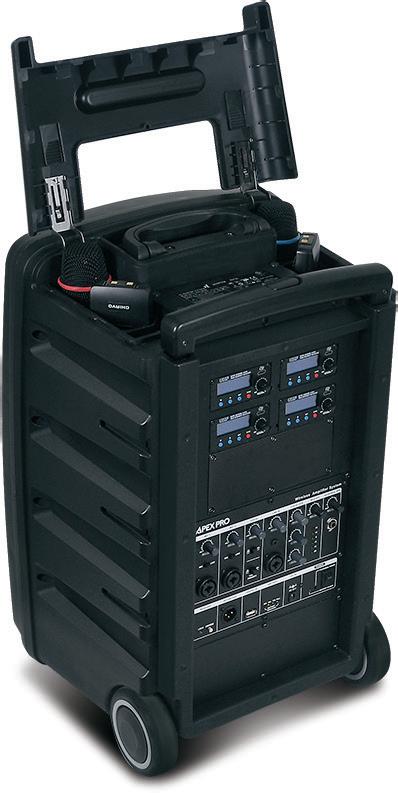
Apex Portable PA System Package
Paging and bell systems with built in bell scheduling that connect using your existing of traditional PA system installation.
Future proof
Unlimited range
Instant so ware-based zoning and bell system remains scalable and reliable for years to come.
Portable PA system with stand and wireless microphone.
• Fully featured, top quality and easy to use.
• Includes a weather cover for outdoor use.
• Built-in trolley and powerful rechargeable ba eries so you can take it anywhere.
Couple this type of backend with carefully chosen modern speaker designs and audio systems can deliver consistent, intelligible messaging across classrooms, outdoor spaces, and shared facilities, ensuring that everyday announcements, timetable changes, and pastoral communications are heard clearly by the entire school (and not the neighbours).
One of the most significant shifts has been the move toward networked audio which allows these systems to converge with existing data infrastructure.
Schools can now manage announcements centrally while still allowing for zoned or localised messaging. This reduces disruption, improves clarity, and supports more tailored communication, whether that’s a reminder to a single block or a full-school assembly call.
Just as importantly, these systems are becoming easier to use, meaning staff can act quickly and confidently without needing technical expertise.
Safety is always a key concern in schools. What role do sound systems play in ensuring safety for the school community during large events?
Jonathan Neil, Edwards: A school’s audio system is often invisible until something goes wrong, and that’s exactly how it should be. When it’s working well, nobody notices it. When it fails, everyone does.
For schools hosting large events,
Today’s communication systems offer access to a host of features that older ones cannot provide
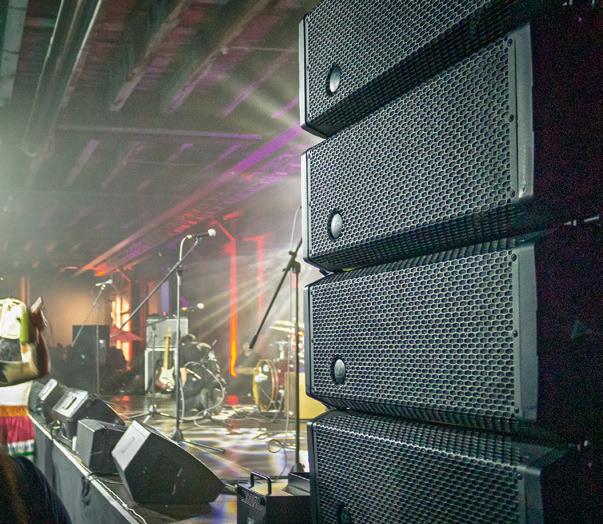
whether a prizegiving in the gymnasium or a gala day on the sports fields, the question of sound is really a question of control. The moment you have several hundred people in a space, your ability to communicate clearly with all of them simultaneously becomes
a safety issue, not just a comfort one. Crowded environments are noisy and disorienting. A well-designed system cuts through that instantly.
Namo Naicker: Large school events such as assemblies, sports days, cultural performances, and prizegivings
often bring together large groups of students, staff, and visitors. In these situations, clear communication plays an important role in maintaining safety and coordination.
A well-designed sound system ensures announcements and instructions can be heard clearly across large spaces such as halls, sports fields, and outdoor gathering areas. This allows staff to guide crowd movement, share important updates, and respond quickly if circumstances change.
Modern network-based audio systems can also integrate with paging and emergency notification systems, allowing urgent messages to be broadcast across multiple areas of the campus simultaneously. Alongside safety benefits, well-designed sound systems also improve the overall event experience by ensuring speeches, performances, and presentations are clearly heard.
Modern sound systems support schools during emergencies by enabling clear, campuswide communication—explain the benefits they provide in these situations.
Jonathan Neil: The role of audio in genuine emergencies is where the investment becomes most obvious.
In a lockdown or an evacuation, you may have seconds to communicate clearly with staff and students across an entire campus. That is not the moment to discover your system only covers half the buildings, or that nobody knows how to use it.
Image courtesy of NAS Solutions
Image courtesy of Edwards
Schools that have invested in proper IP audio infrastructure with zoned coverage, simple interfaces, and tested procedures are the ones where staff feel genuinely confident, not just compliant.
The technology has also become far more accessible. Modern IP audio systems can be operated from a smartphone. A teacher can initiate a campuswide announcement from a classroom. That kind of reach used to require a dedicated operator—it no longer does.
Euan Mackenzie: In critical situations such as severe weather events or lockdowns, the difference a well-designed sound system makes cannot be overstated. Clear, immediate instructions reduce confusion and help maintain calm, which is essential for both student safety and staff response. In these moments, communication must be instant, unambiguous, and audible in every corner of the school.
Ultimately, investing in thoughtful, future-proofed audio infrastructure is not just about convenience, it’s about
creating an environment where communication supports both learning and safety every day.
What are some factors that schools should consider when hiring, upgrading or replacing audio or communication networks?
Euan Mackenzie: Schools sometimes underestimate the importance of sound intelligibility over sheer volume. A loud system is not necessarily an effective one.
Factors such as speaker placement, background noise, building acoustics, and even future campus expansion all play a role in whether a message is understood.
Resilience is another often overlooked consideration. Systems need backup power and redundancy to remain operational during outages or emergencies.
Namo Naicker: Schools often focus on immediate needs, such as installing or upgrading a hall sound system. However, long-term planning is equally important.
Scalability is a key factor, as communication systems should be able to expand as schools grow or new technologies are introduced. Integration is also important, allowing systems such as digital displays, paging, and event audio to work together as
part of a connected platform. Finally, reliability and ease of use are critical. Systems that staff can operate confidently— and that perform consistently during important events—will deliver greater long-term value for the school community.
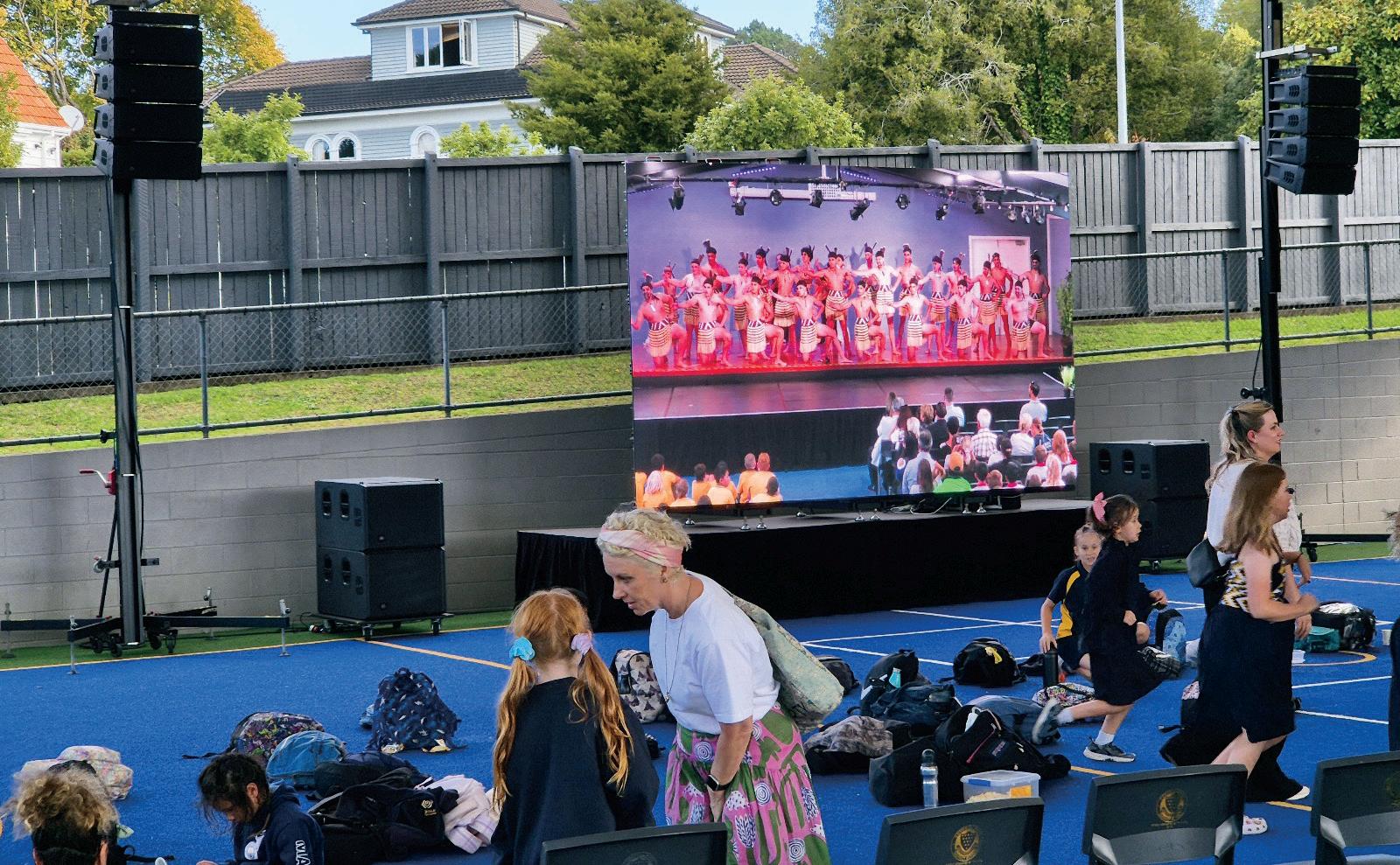
Jonathan Neil: When schools are hiring equipment for outdoor events such as whānau days or sports days, the most common mistake is underestimating the space.
Outdoors, sound behaves completely differently to indoors. There are no walls to reflect it, wind works against you, and the distances involved are often larger than people expect. The right equipment for a school hall is rarely the right equipment for a field.
Schools should be specific with their AV provider about the outdoor area dimensions, the expected attendance, and whether they need coverage across multiple zones simultaneously; a single PA speaker pointed at one end of a field is not a solution.
SMARTER COMMUNICATION & LEARNING FOR MODERN SCHOOLS
Image courtesy of WiPath
From SOS to SMS:
Efficiency and insight with school management systems
By Milly Fullick, Industry Reporter
School management systems (SMS) are common in schools, but most staff who use them could name elements of theirs that they would like to change.
It might be a feature that doesn’t work optimally for the context of the school, or workarounds they need to perform to get the needed result.
Working with these daily barriers and quirks can still seem easier than finding and implementing a new system, at least in the
short term. However, taking the time to look at what can be achieved with a change of SMS can save time and headaches in the long run.
Understanding SMS
The best SMS are ones that understand the realities of daily school life, and the challenges and opportunities that come along with it. Some New Zealandbased systems have been created by Aotearoa school staff, who have more insight than most into how schools run.
Each SMS comes with its own suite of features, but generally, they offer a way to gather a variety of data into
a single platform to deepen understanding and utility.
Most offer several portals, with different information and levels of access for leaders, educators, admin staff, parents and students.
Some potential features of SMS include trackers for students’ curriculum coverage, assessment, goal setting and self-assessment. There are also reporting tools for meeting Ministry of Education standards, gathering evidence and reporting to parents.
Additionally, SMS may offer admin tools for student management, enrolling,
billing, attendance, student and caregiver records and class management.
The power of data
The strength of a good SMS lies in the data it provides and how this data is interpreted. Rather than waiting days, weeks or months for usable information to trickle through, by which time circumstances may have changed or interventions no longer possible, real-time analysis of anything from attainment to attendance allows for greater adaptability and resilience.
School management systems play a central role in how schools securely harness
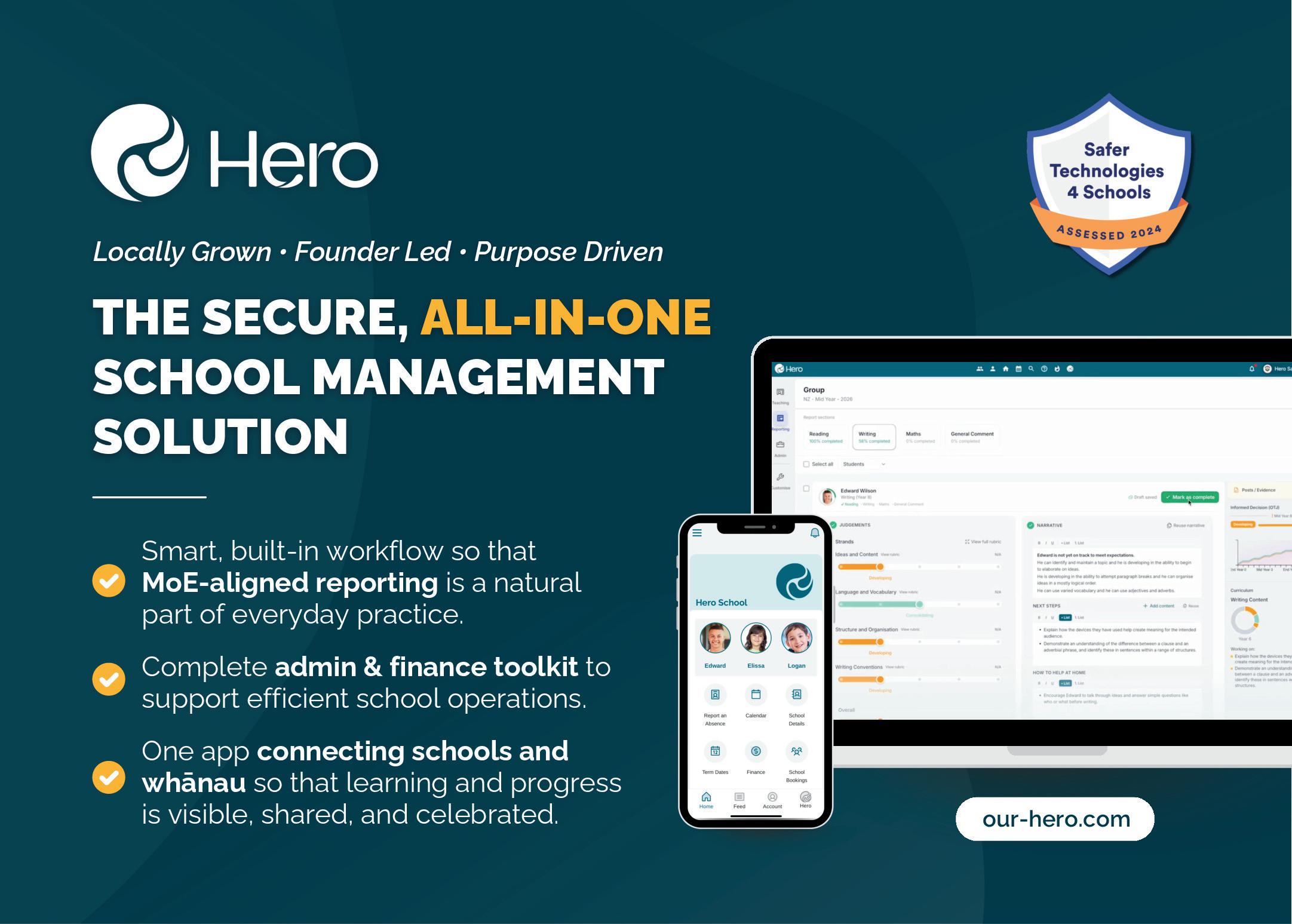
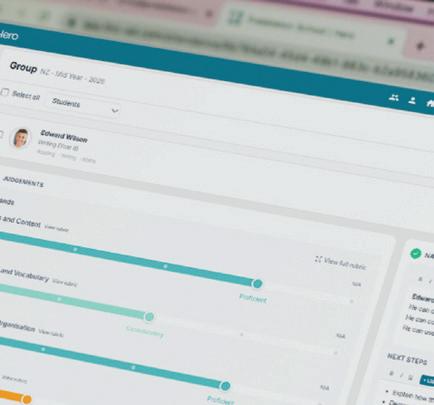
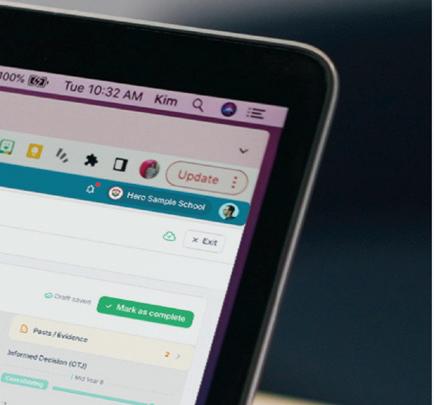
data to drive meaningful outcomes for learners, said Hero co-founder Paul Sibson
“One of the most powerful aspects is the ability to capture and track longitudinal data –both at the individual student level and across the whole school. When staff can see how a learner is progressing over time, rather than just at a single point in time, it gives them the confidence to make informed decisions about next steps.
“This kind of visibility supports the early identification of students who may need additional support, which is critical. The sooner a teacher or leader can recognise a pattern of concern, the sooner they can act.
“Modern systems also enable collaborative analysis—teaching teams can moderate student work together, reflect on trends, and build evidencerich narratives around student learning that go well beyond a number or grade on a page,” Mr Sibson said.
“What’s equally important is that this capturing of data happens as a natural part of
the teaching and learning cycle. It shouldn’t feel like an additional layer of administration for already-stretched staff.
“Ultimately, when schools have access to well-structured, reliable data, it strengthens conversations with whānau, informs resource allocation, and helps foster a genuine culture of continuous improvement— one that’s grounded in real
about real students.”
Tailor-made solutions
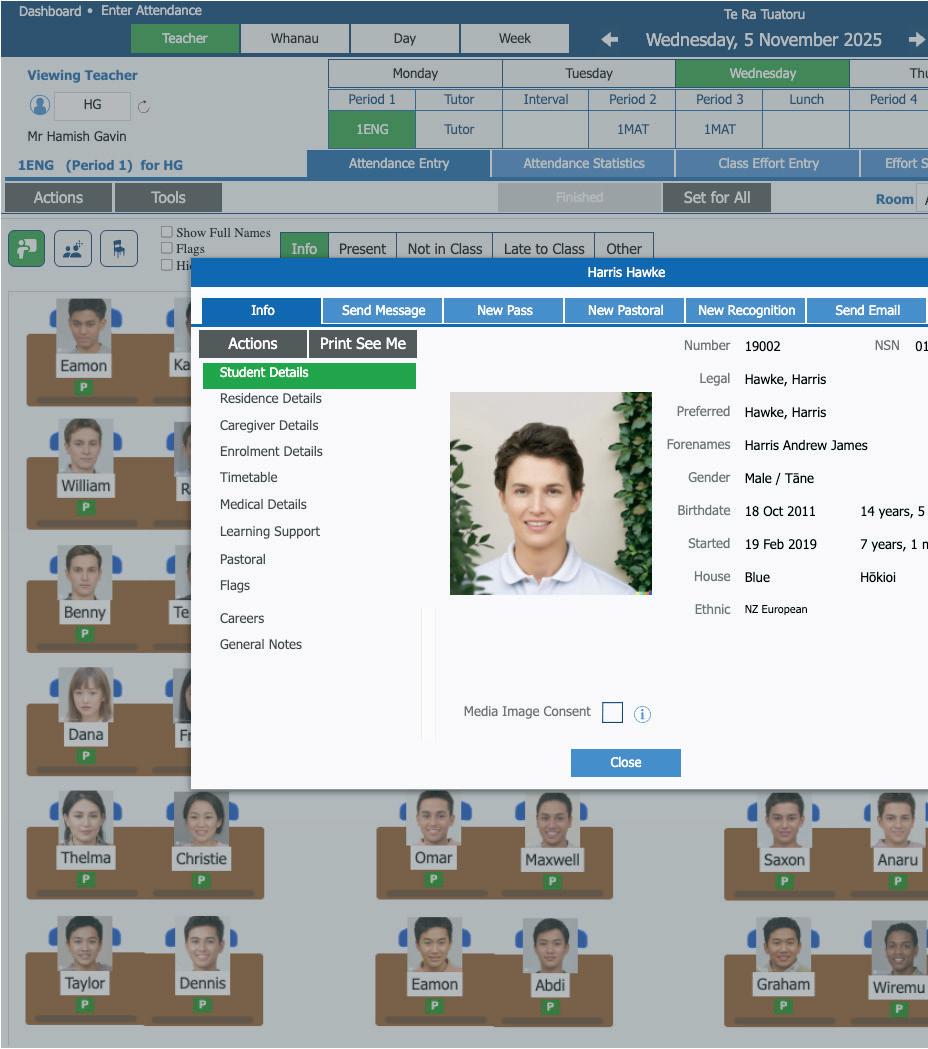
Kent Lendrum, Director of KAMAR, said it was important to look for a system that could fit a school’s specific needs.
“Tailoring is a core part of how a good SMS works. Look for systems that are closely aligned with the New Zealand education system and can respond
quickly to national changes. This local responsiveness is a key advantage.
“The best choice is an SMS that enables the school to customise how they record assessments, track progress, and format reports, so they can reflect their own teaching and reporting practices while still meeting national requirements.
“A flexible system with highly configurable access is also important,” he said.
“Schools need to control what teachers, students, and whānau see, supporting both privacy and effective communication. Flexibility allows schools to adapt the system to different structures and tracking methods.
“Communication tools can also be tailored so schools decide what information is shared and how often, maintaining their own tone and connection with their students and whānau. Overall, an SMS should be flexible and adaptable, so it fits around each school’s needs rather than requiring schools to change how they operate.”
evidence
Image courtesy of KAMAR
More opportunities for engagement
The ability to seamlessly communicate internally and externally through an SMS makes life much simpler for all school staff.
Mr Lendrum said that a good SMS should offer a variety of avenues for communication with caregivers and whānau.
“Look for a range of tools that allow schools to communicate in ways that suit their community, written or electronic, including email and SMS messages.
“Some SMS offer progress reporting features that enable schools to fully customise reports for caregivers, ensuring they reflect each school’s approach and priorities.
“More modern tools include automated reporting to reduce workload while improving consistency.
Schools can automatically share key information with students, whānau, and staff, including automatic emails with weekly summaries, or when students reach absence thresholds,” Mr Lendrum said.
“Dedicated student and caregiver portals are also a key feature. With these, schools have full control over what is shared and how it is presented, allowing communication to align with their values and the needs of their community.
“Internally, SMS can also keep staff informed and responsive. Automated alerts can be set up so the appropriate staff
are notified when students fall below a specified attendance percentage, are late to class, or have pastoral entries added, as well as many other alerts. This ensures staff can quickly identify and respond to concerns, supporting better outcomes for students.”
A modern school management system replaces fragmented channels with a single, secure platform, creating a transparent, real-time link between teachers, students, and whānau, Mr Sibson said.
“Through one app, schools can share learning goals, assessments, and examples of student work as they happen, giving whānau genuine visibility into their child’s learning journey. This supports informed conversations at home, builds trust, and creates shared accountability for learning outcomes.
“Modern systems also allow schools to communicate with precision, whether that’s a message to the whole community, a specific group, or individual families.
“All home-school communication lives in one place—learning updates, absence reporting, two-way messaging, interview booking, events, trip permissions, surveys, and payments. For schools, this reduces the administrative overhead of managing multiple tools, while also eliminating app fatigue for whānau. When the barrier to communication is lowered, participation naturally increases.”
Supporting staff confidence
Once an SMS is in place, it’s crucial that staff are confident in using it to its full potential.
Training and investment beyond the initial setup is crucial for success, Mr Lendrum said.
“Long-term success with any SMS lies in investing in staff development. This means ensuring new staff are onboarded properly with the basics of how to use the system.
“Any database system can only truly show its value once there is buy-in from staff. Quality data in leads to quality data out, and if staff aren’t confident with the system, its benefits won’t be realised right away.
“For many staff, especially those new to a large SMS, it can feel overwhelming at first. But once they become comfortable with the software, everything falls into place. Confidence in the system not only reduces stress but also delivers tremendous value across the school,” Mr Lendrum said.
“To support this, choose an SMS with training videos and manuals, as well as direct support through phone, email, and chat. When staff encounter limitations or need new features, it’s often because they didn’t know the system could do more, or because they hadn’t communicated their needs.”
Mr Sibson said implementation looks different for every school and every platform, but the foundations of a successful rollout are consistent.
“From the outset, schools should be guided by their SMS provider with clear timelines, well-mapped next steps to align with strategic priorities, and support that meets them where they are.
“Timing shouldn’t be a barrier. A good SMS will support schools to make the transition at any point in the school year, securely managing data migration and guiding schools on when and how to move across with minimal disruption.
“Bringing staff into the process early builds confidence and ensures everyone feels set up for success—a good SMS will provide the tools, guides, and training to make that happen seamlessly,” Mr Sibson said.
“Templated setups mean schools can get up and running quickly, with implementation shaped around what schools genuinely need from day one. Training should be high-quality and readily available, from step-by-step video tutorials, live masterclasses, and help articles, to dedicated support specialists who respond quickly and meaningfully when you need them.
“The goal is for schools to start with the essentials and grow their use of the system naturally over time, at a pace that works for them.”
While it can take effort to find, implement and become familiar with a new SMS, finding a good one will pay dividends over time. With so much data and so many potential uses at staff ’s fingertips, a carefully-chosen SMS can save time and stress school-wide.
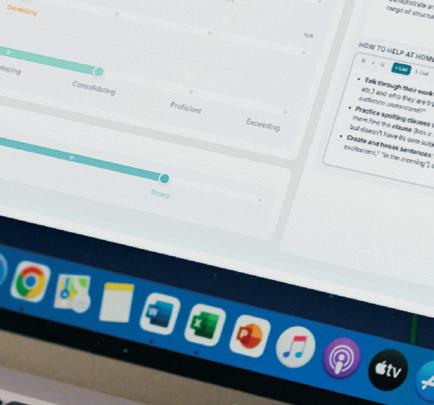
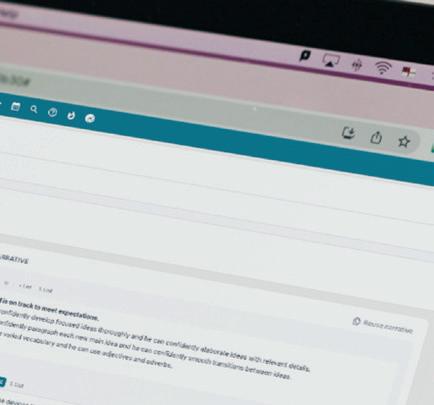
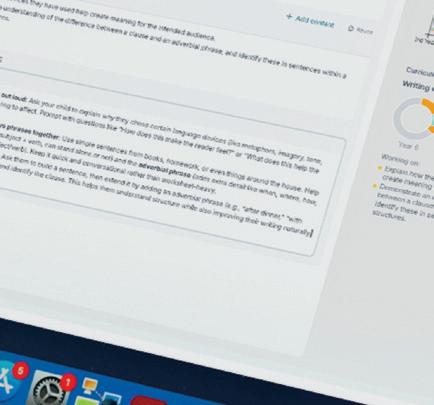
Image courtesy of Hero
Strengthening teaching practice with professional learning development
By Sarah Davison, Industry Reporter
Professional learning and development (PLD) is not a ‘nice to have’ in education, it is essential.
As classrooms continue to evolve, so too do the expectations placed on teachers. From changing curriculum priorities to the rapid rise of digital technologies and an increasing focus on student wellbeing, educators are being asked to do more than ever before. High-quality PLD helps bridge that gap, giving teachers the skills, confidence and practical tools they need to support every learner in their care.
Done well, PLD goes far beyond one-off workshops or box-ticking exercises. It creates space for teachers to reflect on their practice, explore new ideas, and build on what already works in their classrooms. Whether it is gaining confidence with emerging technologies, strengthening subject knowledge, or finding new ways to support student wellbeing, effective PLD can lead to meaningful, lasting change.
Here’s the kicker: research suggests that a great teacher can add the equivalent of several months of extra learning in a single school year. When teachers feel supported and capable, students benefit too.
One of the biggest shifts in recent years has been the growing role of technology in education. Schools are investing in digital tools such as interactive displays, artificial intelligence, and cloud-based platforms, but their impact depends on how confidently they are used.
Targeted upskilling is key, helping educators integrate these tools in ways that genuinely enhance teaching and learning rather than overwhelm it.
At the same time, curriculumfocused PLD remains a priority. Opportunities to deepen knowledge across areas such as English, STEAM, AI, and outdoor learning allow teachers to stay current and bring fresh ideas into the classroom. Increasingly, schools are also looking for PLD that can be tailored, aligning with individual career goals while supporting broader school priorities.
Staff health issues
Navigating staff health issues is one of the most complex challenges employers face today. When illness, injury, or prolonged absence affects your workforce, the stakes are high - balancing legal compliance, operational needs, and genuine care for employee wellbeing.
A end The Legal & Governance Essentials for School Leaders this June and equip yourself with the clarity and confidence to manage long-term sick leave, understand medical incapacity, and respond
appropriately when health concerns become employment ma ers. Learn to handle sensitive medical information responsibly, meet your legal obligations, and follow fair, defensible processes when considering role adjustments or a termination.
This topic will be led by Special Counsel Madeleine Hawkesby and session o ers clear, actionable insights to help you make sound decisions in challenging situations - ensuring both your people and your organisation are treated with fairness, respect, and care.
Image courtesy of Tātai Aho Rau Core Education
Universities and professional providers are expanding what is on offer, from short courses and workshops to postgraduate study, micro-credentials and leadership programmes.
Alongside this, a busy calendar of conferences and events continues to connect educators with new thinking and best practice from across the sector.
In this feature, we explore some of the PLD opportunities available to teachers and schools across Aotearoa.
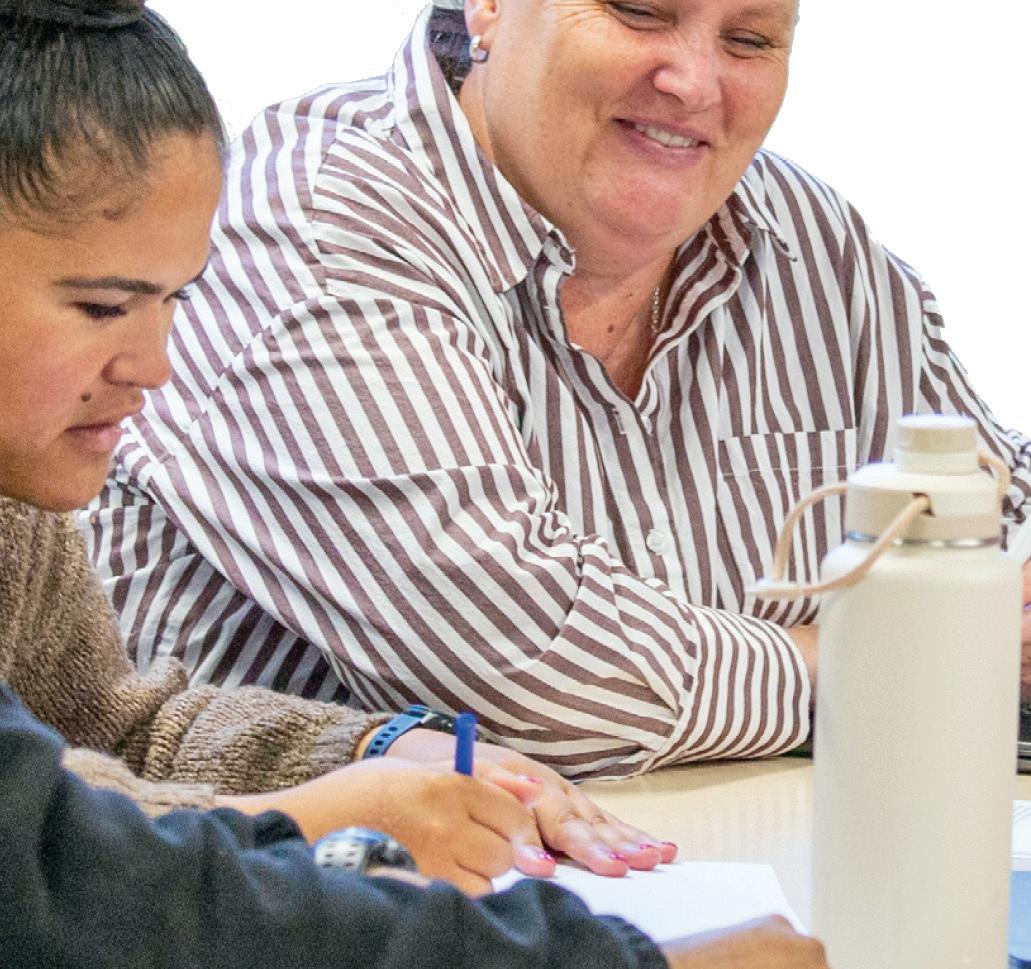
Te Poipoi Kaiako, delivered by Tātai Aho Rau Core Education, is a Ministry of Education funded national programme designed to support mentors and mentees to learn alongside one another, fostering both professional learning and strong relational connections. A key strength of the programme is its ability to bring together kaiako from early learning, primary, and secondary settings— an approach that remains relatively uncommon in PLD.
This cross-sector PLD approach enables participants to recognise shared challenges and strengths, while building greater empathy and understanding across different contexts. Opportunities to connect, kōrero, and share practice beyond one’s own setting are consistently highlighted as a valuable and refreshing aspect of the programme.
The programme offers a range of flexible learning opportunities, including face-to-face and online workshops, webinars,
online modules for mentors and mentees, and one-to-one mentoring. A ‘dip in and out’ model allows participants to engage in ways that suit their needs and availability, with resources housed in the Ministry’s learning management system so they can be revisited at any time.
Workshops follow a consistent structure, supporting familiarity and coherence, while introducing different kaupapa to extend and build on prior learning. This balance allows participants to both consolidate and deepen their understanding over time.
As a national programme, Te Poipoi Kaiako is not designed to be tailored to individual school priorities in the same way as school-based PLD. However, it is intentionally adaptable, encouraging participants to engage with the learning through the lens of their own context and apply tools, strategies, and resources in ways that are meaningful for their setting.
Grounded in effective pedagogy and aligned with the Professional Standards, the programme supports participants to make clear connections to their Professional Growth Cycle, while its practical focus helps kaiako apply their learning directly in day-to-day practice.
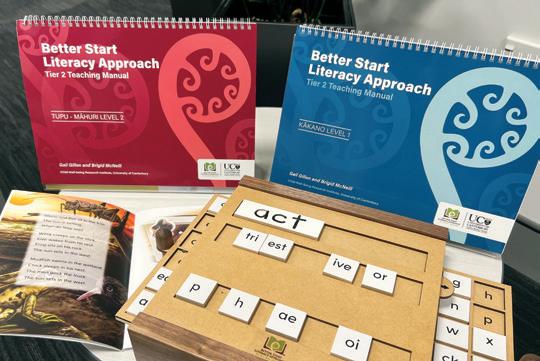
Image courtesy of Better Start Literacy Approach
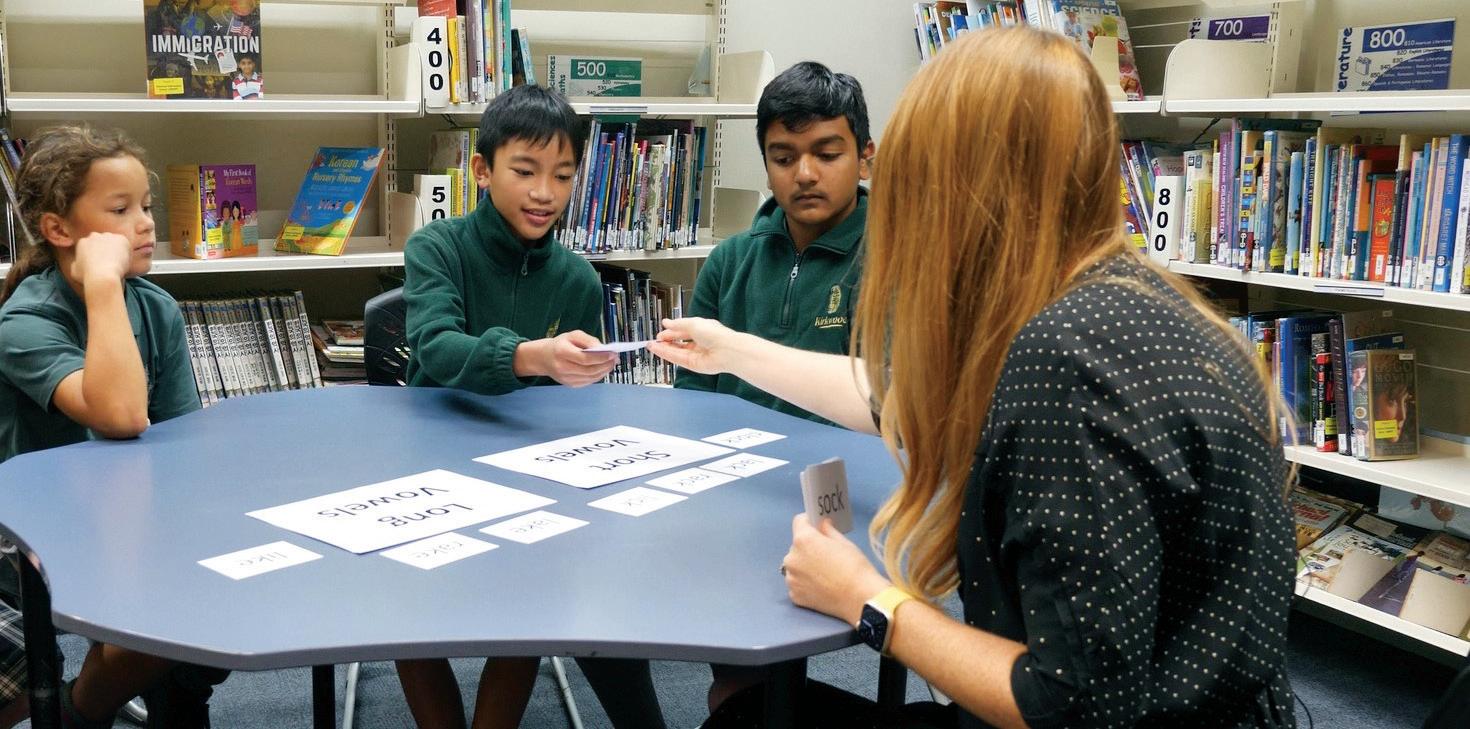
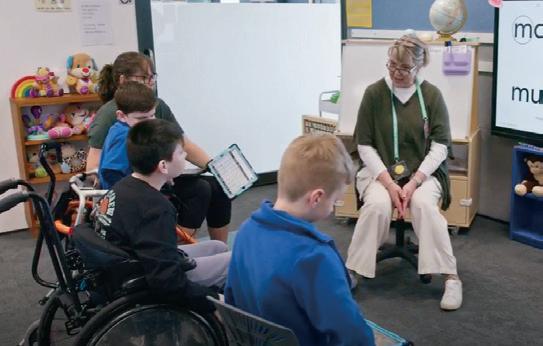
Better Start Literacy Approach (BSLA) offers PLD to support educators in confidently delivering literacy education. BSLA focuses on supporting literacy learners through targeted and tailored teaching within a Multi-Tiered System of Support (MTSS). Recognising that not all students benefit equally from whole-class instruction alone, the approach emphasises the importance of Tier 2 (targeted) and Tier 3 (tailored) support to accelerate progress for learners who require additional assistance, including those with dyslexia and speech or language difficulties.
Grounded in decades of research, BSLA highlights the need to address both word recognition and language comprehension to support effective reading development. By ensuring learners receive the right type and intensity of support, the approach aims to improve academic outcomes and long-term wellbeing, reinforcing the critical role of literacy in lifelong success. At the core of BSLA is a structured, culturally responsive, evidence-based teaching approach that integrates explicit and systematic instruction across phonics, phonological awareness, spelling, writing, and oral language. Teaching practices such as modelling, scaffolding, guided practice, and immediate feedback are embedded throughout, supporting consistent and effective delivery in the classroom.
To support educators in implementing these approaches, BSLA has developed a professional learning course designed to equip teachers with the knowledge, tools, and resources needed to deliver high-quality Tier 2 and Tier 3 literacy support. The course prepares teachers to confidently apply targeted and tailored strategies within their own school settings, supporting learners with a range of literacy needs. The approach is underpinned by a strong research base. Recent research led by Professor Gail Gillon and colleagues (Gillon et al., 2023) highlighted the impact of targeted instruction. In one trial, 98 five-year-old children received four 30-minute BSLA Tier 2 lessons per week for 10 weeks, in addition to Tier 1 classroom teaching. Results
showed accelerated growth in non-word reading and spelling compared with peers who did not receive Tier 2 support.
Further large-scale research has shown these gains can be sustained across diverse classrooms, with evidence of achievement gaps narrowing over time.
Through its evidence-based framework and focus on practical implementation, BSLA supports schools to deliver structured, effective literacy instruction across all tiers, helping ensure every learner has the opportunity to succeed.
Brightstar is supporting school leaders for success with two specially designed events across three cities in June. The events provide an opportunity for educators to tackle the biggest challenges such as workforce issues, governance and curriculum; build day-today leadership required as an effective principal; and connect with veteran educators over common issues and future vision.
The Future Principals’ Development Forum will be held on June 17 and 18 at Novotel Christchurch, Cathedral Square. This forum kicked off in Auckland in March 2026, and Brightstar is excited to bring this hit event to Christchurch. Hear what delegates have to say about it:
“Loved the range of speakers and how honest and open everyone was.”
“...I found it extremely valuable. It was great to have new principals speak.”
“There were a lot of great people in the room to network with.”
Brightstar’s Legal & Governance Essentials for School Leaders will be held in Wellington on June 10 and 11, and Auckland on June 15 and 16.
This long-running popular event is a major fixture in school leaders’ professional development calendars. With a host of new school regulations and employment law to unpack, this event will help keep you ahead of changes and implications. Brightstar will also cover other hot topics at this event, such as privacy and digital safety, governance, board relations, and more – it’s essential knowledge for principals.
Te Poipoi Kaiako
Mentor support programme
Registrations are open for our face to face and online workshops and webinars in terms 2 and 3!
Mentor Teachers and Pou Tautoko - develop your mentoring practice and your induction and mentoring programme.
Provisional Teachers and Piadevelop your professional practice as you prepare to apply for Tiwhikete Whakaakoranga Tūturu | Full Practising Certificate.
Fully funded for kura, schools and early learning services, the programme includes webinars, in person workshops, e-learning modules, and guidance resources.
Register and find out more › core-ed.org/mentor-support
In partnership with
Unlocking literacy success for older students with the Better Start Literacy Approach
The Better Start Literacy Approach is celebrating six years of transforming literacy outcomes across Aotearoa New Zealand.
In that time, tens of thousands of learners have benefited from high-quality, structured literacy teaching delivered by expertly trained educators. While the approach is well established in the early years, it now offers comprehensive support for older students ensuring no learner is left behind.
Proven support for years 4–8 learners
Grounded in robust research, the Better Start Literacy Approach provides structured Tier 1 classroom instruction tailored for students in Years 4 to 8. Already adopted by over half of New Zealand schools, these lesson plans are designed to build confident, capable readers.
A key focus is the explicit teaching of reading comprehension. Students are taught to think like expert
readers—learning practical strategies to use before, during, and after reading. Teachers model these strategies clearly, supporting students to gradually apply them independently and deepen their understanding of texts.
Vocabulary development is another cornerstone. Through engaging lessons, students explore how words work by breaking them into meaningful parts (morphemes). This empowers learners to unlock the meaning of unfamiliar words with confidence. For example, understanding that “bi” means two and “ped” relates to feet helps students make sense of words like “bicycle”
or “pedometer.” Teachers consistently report high levels of student engagement with this approach.
Targeted support for students who need more
While many students thrive with Tier 1 instruction, some require additional support particularly those with underlying language or phonological challenges, including dyslexia. For these learners, the Better Start Literacy Approach offers specialised Tier 2 and Tier 3 support.
A new professional learning and development (PLD) programme focuses on writing instruction for students in Years 7 to 10 who
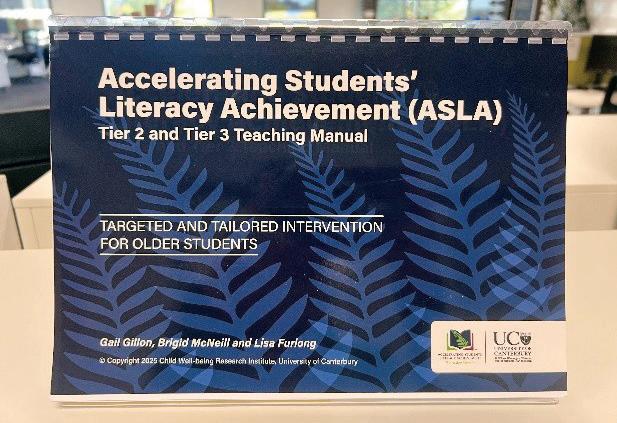
need extra help. Delivered over 12 months, this programme equips teachers with practical tools and strategies to accelerate progress. Educators will learn from leading experts in literacy and learning, supported by experienced practitioners and specialists. The programme includes a comprehensive teaching manual featuring 50 structured lessons, designed for short, frequent sessions that build skills effectively over time. Ongoing assessment tools are also provided, enabling teachers to tailor instruction to each student’s needs.
It’s never too late
Literacy challenges don’t have to define a student’s future. With the right support, older learners can make meaningful progress that impacts all areas of their education. The Better Start Literacy Approach provides the evidence-based tools teachers need to make that difference, empowering students with the skills and confidence for lifelong success.
The Be er Start Literacy Approach (BSLA) o ers a range of high-quality, evidence-based professional development opportunities designed to support educators at every level. Whether you’re working in the classroom, leading literacy across a school, or supporting students with additional needs, BSLA has a pathway for you.
Literacy PLD (Years 0–8)
Choose from three tailored pathways designed to strengthen core classroom practice:
• Class Teachers (Years 0–3) – Build strong early literacy foundations through structured, explicit teaching.
• Class Teachers (Years 4–8) – Support developing readers and writers with research-informed strategies.
• Literacy Leadership (Years 0–8) – Lead and sustain e ective structured literacy practices across your school.
& Tailored PLD
Designed for those supporting students who need additional help:
• Ideal for teachers, literacy specialists, RTLBs, learning support sta , and intervention teachers.
• Focus on Tier 2 and Tier 3 learners requiring more intensive, targeted instruction.
• Practical strategies to accelerate progress for students with diverse learning needs.
Teaching PLD
Focused support for educators working in mainstream and specialist school sett ings:
• Tailored structured literacy approaches for learners with complex needs.
A specialised PLD programme for teachers of older students:
• Designed for Years 7–10 educators across a range of school se ings.
• Focus on improving writing outcomes through structured literacy.
• Ideal for supporting students who require additional literacy development.
Aide Micro-Credential (Years 0–8)
Empowering teacher aides to make a meaningful impact:
• Focus on evidence-based assessment and early literacy instruction.
• Practical tools to support classroom programmes and targeted interventions.
• Designed to build confi dence and capability in supporting literacy learning.
• Strengthen teaching practice with targeted and tailored, evidence-based methods. To find out more about any of our professional development opportunities, contact: askBSLA@canterbury.ac.nz
Why can it be harder than it sounds? Creating calm classrooms :
By Brontë Tomkins, Industry Reporter
It’s not typically featured in a teacher’s job description, but every teacher is tasked with the evergrowing responsibility of maintaining a calm classroom while supporting students who are carrying increasingly high levels of stress and anxiety. Teaching dozens of students with their own complex emotional needs is made even more challenging when outbursts or meltdowns trigger equally complex emotions in teachers. At the end of the day, it’s no surprise that maintaining calm classrooms is an ongoing, daily challenge for teachers across New Zealand.
Family therapist Lisa Taylor believes that the key to calmer classrooms may lie somewhere unexpected. Not simply with behaviour management strategies or reward systems, but with teachers understanding the emotional triggers that
they have brought into the classroom and knowing how to respond to them.
That’s not to say that behavioural management is not a vital tool in a teacher’s toolbox. However, these strategies become practically pointless if used by a teacher who is in a heightened state or reactive.
As Lisa describes it: “Children are extremely sensitive to adult emotional states, and they quickly pick up on tension or uncertainty”, with children likely to borrow or mirror that same emotional state.
A classroom is a complex system of co-regulation, where nervous systems are like sponges, soaking in the emotions around them. Therefore, one of the most powerful methods to calm a classroom of sponges, is by modelling calmness that can be absorbed subtly and silently.
So, go out there and just be calm!
It sounds simple in theory, but why can it be so hard in practice?
Reaching a point of overwhelm
is easily done in a classroom filled with young people whose nervous systems are still developing. Within a single lesson, a teacher may be supporting an anxious student who doesn’t want to do their worksheet, managing another who is acting out to get a few laughs from their peers, responding to someone arriving ten minutes late without their shoes on, while also dealing with the noise of 25 to 30 voices all competing to be heard over one another. Nothing about that naturally invites a sense of calm.
Just as students internally respond to their teacher’s nervous system, teachers, in turn, are emotionally aff ected by their students.
As a former teacher turned family therapist, Lisa Taylor is aware of how outbursts or challenging behaviour from students can also stir up something more personal for teachers. Old emotional scars caused by memories of feeling disrespected, unheard or out of control can arise from deep within us in moments of stress or pressure.
Family therapist Lisa Taylor, Image supplied.
While it may not be possible for teachers to avoid feeling emotionally triggered, there are steps they can take when they recognise an emotional shift .
One of the clearest early signs that behaviour in the classroom has disrupted an adult’s emotional scar tissue is the move from responding thoughtfully to reacting instinctively. “Usually, the first signal appears in the body, a tight chest, quicker breathing, tension in the shoulders, or a sudden surge of frustration. These reactions happen almost instantly because the nervous system has moved into protection mode,” Lisa said.
After the unconscious physical reaction, there may be a behavioural shift that Lisa att ributes to “a strong urge to regain control of the situation or make the behaviour stop immediately. This might show up as a sharper tone of voice, a raised voice, or a more authoritative posture.”
Lisa emphasises that step one is to notice the physical or behavioural shift . Step two is to make a change. Even something small like slowing your breathing, can help signal to the nervous system that you are safe.
Lisa often encourages teachers to ask themselves a simple but powerful question: “Am I responding to the child in front of me, or reacting to the child within me?” A moment like this can provide a perspective shift and enough space for teachers to trade control for curiosity, and trade reaction for reflection.
On top of teachers understanding their emotional triggers, an added layer to Lisa’s view on creating calm classrooms hinges on teachers taking the time to understand the needs beneath a student’s behaviour.
“Behaviour is often communication, a signal that something isn’t working or that a child needs support” Lisa said. “When behaviour is approached purely as something to control, fi x or eliminate, the deeper message can be missed.” This can only strain the teacher-student relationship and minimise trust.
Children are extremely sensitive to adult emotional states, and they quickly pick up on tension or uncertainty
student and teacher. Lisa refers to conflict as an inevitable part of any relationship dynamic and therefore what matters most is how we respond afterwards.
Practising emotional regulation during these moments, avoiding reactions and taking time to understand the student’s behaviour as communication rather than simple defiance can preserve and repair student-teacher relationships.
“A teacher acknowledging that a moment was difficult, or that they may have misunderstood something, models emotional honesty and accountability for students. When children see adults repair relationships after conflict, it builds trust and teaches them that relationships can recover and grow stronger.”
Lisa’s message is not about adding yet another responsibility to the incredibly full plates of teachers. Instead, it is about reframing the work they already do and lightening that emotional load long-term.
Lisa suggests that if teachers are able to adopt a curious perspective on student behaviour, they create opportunities for connection, empathy and growth. Importantly, it
doesn’t mean abandoning boundaries or expectations, but rather finding a balance and space for understanding.
This is particularly important in moments of conflict between a
Calm classrooms, she suggests, are not created through perfect behaviour management, but through the adults at the helm, navigating their own complex emotions with patience and care. By recognising their own emotional triggers and responding to them rather than reacting, teachers can foster learning spaces that are calmer for everyone.
Family therapist Lisa Taylor, Image supplied.
AI tools for teaching and learning:
Embracing technology to streamline and enhance workflow
By Milly Fullick, Industry Reporter
Artificial Intelligence (AI) has quickly become an embedded part of everyday life. It’s not surprising, then, that AI tools have been developed for teachers with the aim of streamlining planning, resource creation, assessment and more.
A bot for every task
While there are plenty of generic AI chatbots that may suit oneoff queries or tasks, bespoke teaching AI tools are built with an education-specific focus for flexibility and ease of use.
Nadeem Aljaber, founder of TeachAid, said AI can help teachers to streamline their day, without sacrificing outcomes.
“AI can save teachers considerable time on routine tasks, from drafting parent communication to creating worksheets, lesson materials,
and simple classroom resources. That matters, especially when workload is already so high.
“But the bigger opportunity is not just doing those tasks faster. It is using AI to support the deeper work of curriculum and pedagogy, helping teachers build coherent and consistent units and assessments that align to the New Zealand curriculum, reflect local context, and embed culturally responsive practice, including
Indigenous education and Māori education,” Mr Aljaber said.
Making the most of AI tools
One of the benefits of using AI teaching tools is that many offer a variety of modular options, meaning educators can choose which elements they want to use. Schools, or individual staff members, may choose to use them only for lesson planning, or make use of the full suite of options.
However, AI tools can work best when used consistently; teachers across the same phase, or teaching the same subjects, can coordinate to ensure that the tools they are using are working efficiently.
AI works best when used holistically, Mr Aljaber said.
“AI tools can help with lesson and curriculum planning by doing more than generating isolated activities. They can help create greater alignment and consistency across a
school by connecting planning to curriculum expectations, school values, and the broader direction the organisation is trying to move in.”
Working with intention
Likewise, the use and implementation of AI tools should be overseen at the leadership level for optimal alignment and efficiency, to ensure that all staff are making the most of the potential gains in time saving and beyond.
“One of the biggest challenges in education is implementation,” Mr Aljaber said. “Schools invest in professional learning, develop multi-year plans, and set clear strategic priorities, but too often those intentions get lost between leadership direction and day-to-day classroom practice.
“That is where well-chosen AI tools can be useful: helping translate those priorities into actual units, lessons, assessments, and teaching approaches so the work of implementation is more consistent, practical, and visible in classrooms.”
Real time responsiveness
One of the biggest benefits of AI is its potential to synthesise large amounts of information and use it to produce a clear outcome. In education, this has the potential to offer extremely personalised learning pathways.
Danny Bedingfield, AI Specialist at Brightstar said a major advantage of AI tools in the classroom is the ability to personalise learning at a scale in ways that were not possible before.
Image courtesy of Brightstar
“In a primary or secondary classroom, generative AI can help tailor content, pace, and support to each learner. The same learning goal can be presented at different reading levels, with varied examples, alternative explanations, or scaffolded steps.
“Importantly, this aligns strongly with Universal Design for Learning. AI can offer multiple means of representation, action, expression, and engagement.
For example, content can be converted into text, visuals, summaries, quizzes, or discussion prompts.
“Learners can demonstrate understanding in different ways, and learning assistants can adapt materials quickly for neurodiverse learners, English language learners, or students with additional needs.
“The real power is that educators remain in control,” Mr Bedingfield said. “AI does not replace professional judgement, but acts as a responsive assistant that helps adjust and personalise learning in real time.
“Used well, it frees teachers and learning assistants to spend more time building relationships and supporting learners where it matters most, while ensuring every student has access to learning that meets them where they are.”
Fostering collaboration and engagement
Teachers are always seeking ways to increase student engagement, but what sparks interest for one student may not work for another. Different AI tools can produce a range of engaging resources, from slideshows to worksheets, polls, quizzes and even interactive games that appeal to a wide range of learners. AI powered technology can enhance classroom interaction but should be used selectively for maximum impact, said Mr Bedingfield.
“In practice, some students respond very positively to generative AI. One on one or small group use can be powerful, particularly when AI is positioned as a tutor rather than an authority.
“For example, AI can generate practice questions, explain concepts in different ways, or provide initial feedback on draft work.
“However, not all students engage well with generative AI. Some prefer human interaction, peer discussion, or hands on learning,” Mr Bedingfield said. “This means AI should be an option, not a requirement, and part of a wider toolkit rather than the centre of the lesson.
“Teacher oversight is critical. Generative AI can hallucinate and produce incorrect or misleading information, so it cannot be trusted as a sole source of truth. The value comes not from the technology itself, but from how thoughtfully it is integrated into good teaching practice.”
No substitute for teachers
AI tools should be treated as a way to supplement the expertise of teachers, not to replace it.
Mr Aljaber advised that schools should select AI tools that are human-centered in their design.
“Schools should look for AI tools that are teacher-facing, not tools that try to replace teachers or work directly with students without strong oversight. A responsible tool should keep educators in the loop so they are reviewing, shaping, and approving what is used in the classroom.”
Mr Aljaber said, “They should also look for whether the tool can reflect the school’s actual context, including curriculum, local priorities, school values, pedagogical frameworks, and culturally responsive and Indigenous education commitments. Otherwise, the output is often generic.
“Choose tools that are built around a human-centred loop, helping teachers turn school priorities into classroom planning and practice, rather than putting AI directly in front of students.”
Ensuring AI tools are developed and used responsibly is one of the hardest challenges schools face, said Mr Bedingfield.
“Responsible adoption also means avoiding the wide range of free AI tools that require student accounts, scrape content, or have unclear data practices. Even well-intentioned use can result in student data or intellectual property being shared in ways schools did not intend.
“Finally, governance matters as much as the tool itself. Schools
should have clear policies, staff training, and agreed expectations around how AI can and cannot be used. Educators must remain in control, critically evaluate outputs, and teach students to do the same.”
Happy teachers, happy classrooms
Given their wide range of features, AI tools for educators can have a real impact on how teachers use their precious time. While there’s no substitute for a compassionate, knowledgeable and engaging professional at the head of the class, the right tools can help with work-life balance, help teachers explore new ideas and provide personalised learning that can lead to a happier classroom environment.
AI governance, policy & strategy for your school
Artificial Intelligence is rapidly transforming classrooms, offering powerful tools to enhance teaching and learning in both primary and secondary schools. From personalised learning pathways to automated feedback, AI enables educators to be er meet diverse student needs while saving valuable time. Teachers can use AI to analyse student progress, adapt lesson plans, and create engaging, interactive content that supports deeper understanding. At the same time, students benefit from increased accessibility, real-time
support, and opportunities to build future-ready digital skills.
However, successful integration requires thoughtful leadership, clear policies, and a strong understanding of both the opportunities and risks. Schools must navigate issues such as data privacy, ethical use, and equitable access to ensure AI supports—not replaces— e ective teaching practice.
For school leaders seeking practical guidance, a specialised training 1 or 2 day course by Brightstar o ers valuable insights into AI governance, strategy, and classroom implementation.
For more information on this event, go to h ps://brightstar.co.nz/training-courses/ai-in-the-classroom/
TeachAid amplifies teaching and learning at Somerville Intermediate
By Gemma Easton, Editor
At Somerville
Intermediate, teachers have a long tradition of working collaboratively to design rich, purposeful learning experiences. Now, working with TeachAid, the school has enhanced quality and consistency, benefiting both staff and students.
Tumuaki Principal Yolande Franke explained. “Prior to TeachAid, some teachers were using AI tools in different ways, which created variability. TeachAid enabled us to move to a position where all teachers have equitable access to high-quality AI tools, professional learning, and a shared platform to design and refine learning together.
“Importantly, TeachAid aligns with our transdisciplinary curriculum design, housing all New Zealand Curriculum areas in one place. It integrates Universal Design for Learning (UDL) from the outset, enabling teachers to design differentiated, inclusive learning experiences tailored to the needs of every student.”
Ms Franke stressed that TeachAid is not a replacement for teachers, but a powerful support that enhances teacher capability and impact.
Julian Salari, Director of Marketing at TeachAid, said the platform supports Somerville Intermediate’s focus on inquiry, critical thinking, and transdisciplinary learning. “It can help staff create tailored prompts to deepen inquiry, build shared banks of planning resources, generate curriculum-aligned units and lessons, support assessment design, and provide classroom-ready materials that teachers can adapt for their learners and context.
“It also offers tools that can support guided student learning
during inquiry-based work, while keeping teachers in control of how those tools are used,”
Mr Salari said. “The platform is meant to speed up strong professional practice, while leaving final judgement and responsibility with educators.”
The platform helps with the heavy lifting of planning, generating lesson frameworks, resources, and activities aligned to curriculum goals.
Teachers then apply their professional judgement to review, adapt, and personalise material to ensure it meets the specific needs of learners.
A key feature of TeachAid is that it is designed to help schools and teachers create learning that aligns with the New Zealand Curriculum and with local curriculum expectations.
“Rather than producing generic materials alone, it supports educators in building units, lessons, and assessments that reflect New Zealand standards,
achievement expectations, and the specific context of their school and community,”
Mr Salari said. “This includes helping teachers tailor content to local priorities, learner needs, school themes, and culturally relevant contexts, so the output is both curriculum-aligned and meaningful for students.”
Mr Salari said TeachAid is designed around responsible AI use in schools. “That means keeping educators in control, supporting supervised and purposeful use, and helping schools use AI in ways that are safe, practical, and appropriate for learning environments.
“Privacy and student safety are treated as core priorities, with a focus on limiting unnecessary data exposure, supporting secure school use, and ensuring that student-facing experiences are structured within teachermanaged environments,” Mr Salari said. “The goal is to help schools benefit from AI while maintaining strong safeguards
around oversight, privacy, and safe classroom implementation.”
Ms Franke said both staff and students at Somerville Intermediate have responded positively to the implementation of TeachAid. Teachers have reported: reduced planning time, allowing more focus on teaching and feedback; greater confidence in integrating AI and the refreshed NZ Curriculum; and increased efficiency through ready-to-adapt resources and insights into student needs.
“For students, TeachAid has enabled equitable access to AI tools in a safe, structured environment. Students appreciate the immediacy of feedback, the increased sense of agency in their learning, and the ability to engage with learning in interactive ways.
“TeachAid has enabled us to bring consistency, equity, and innovation together. It hasn’t replaced great teaching, it has amplified it.”
It hasn’t replaced great teaching, it has amplified it. Image courtesy of TeachAid.
Ready to tackle your curriculum refresh?
TeachAid helps schools across Aotearoa confidently navigate curriculum changes with customisable, aligned, high-quality units — personalised to your kaupapa and culture. Partner with us this term.
WITH TEACHAID, YOUR SCHOOL CAN:
Generate full curriculum units in minutes
Align to NZ curriculum standards
Build agile, multi-year plans
Hyper-localise units to your kaupapa
Reduce educator burnout
Create consistency across year levels
Is your school’s device storage and charging system a disaster waiting to happen?
Are you frustrated by manually loaning devices, swapping out broken devices, or not having devices securely stored and charged?
Prevent re risk, securely charge, and protect your mobile device investments, with PC Locs Charging Carts, Stations and Smart Lockers.
Why choose PC Locs:
1. IT E ciency
Reduce stress and headaches for IT sta .
Overloaded tech teams can streamline IT hardware asset management processes to save time and reduce stress.
2. Device Uptime
Get students and employees back to work faster.
Ensure that productivity for students, teachers, and employees is not being hindered by pesky IT hardware issues.
3. Ready to Go
Make life easier for device users.
Providing access to ready-to-use, fully charged devices doesn’t need to be cumbersome or complicated.
PC Locs is trusted by schools across New Zealand and Australia for reliable, secure and classroom-ready charging.
• Durable construction designed in Australia
• Fast and e cient charging
• Lockable, secure storage
• Neat cable management
Protect your device investments
“Quadrent frequently provides leasing solutions for PC Locs stations and carts bundled with mobile devices. PC Locs extensive range covers budgets of all sizes, and provides quality security, protection and storage longevity for education customers.”
Jan
Paterson, Head of Education, Quadrent
Terrace End School “Learning on the Terrace, “Ako ki te kura atea”, was opened in 1884 and is one of the oldest schools in Palmerston North.
The focus of our school is on the business of learning for children, sta and families. Our vision statement, “Enter to learn and learn for life”, encompasses all we believe in.
“PC Locs has been an outstanding solution for our school’s management of learning devices. The carrier solutions provide simple, secure access for students so they can focus on their learning.”
Warrick Price | Tumuaki, Principal Terrace End School | Palmerston North
Take a closer look at PC Locs Charging Carts Solutions
Portable, high-capacity charging with exibility for classroom mobility. Perfect for schools managing larger or more mobile device eets.
www.pclocs.com.au/charging-carts
Take a closer look at PC Locs Charging Station Solutions
Secure and compact charging for classrooms, libraries and shared spaces. For schools needing xed charging setups.
www.pclocs.com.au/charging-stations
Where
can
we source PC Locs Products in New Zealand?
PC Locs products, and spare parts for existing models, are available from your usual IT supplier, or contact one of our preferred national education specialist partners:
Cyclone Computer Company Ltd 0800 686 686 | hello@cyclone.co.nz
Contact Roger Bennett at Dynamic Supplies New Zealand on 09 304 540, or scan the QR Code.
Organised charging and storage for uninterrupted learning
By Gemma Easton, Editor
Technology like laptops and tablets have become essential tools for learning.
Keeping classroom tech organised and ready for use, then, is essential. Broken or misplaced devices, and technology that isn’t charged can create disruptions; teachers are taken away from their core business while they sort out problems with technology.
Mark Hodgson, Sales Manager, New Zealand, for PC Locs understands well the challenges schools can face. He shared his expert insights on the best way to keep devices ready for use, so learning can continue uninterrupted.
Schools are increasingly reliant on devices for teaching and learning. From your perspective, what are the biggest challenges schools face in managing large numbers of devices day-to-day?
The biggest challenge we keep hearing about is that device management lands on people who weren’t hired to do it. Teachers, librarians, and admin staff are the ones charging, distributing, and troubleshooting devices every day. Those tasks sit well outside their core role, and over time that adds up to real workload pressure.
The sheer volume of devices in 1:1 or shared programmes creates a significant logistical challenge too. Whether a school is using charging carts and cabinets in
classrooms or a more centralised setup with individual storage bays, the daily process of getting the right charged device to the right student at the right time takes genuine coordination.
Accountability is another persistent issue. In shareddevice environments, it can become very hard to identify who’s responsible for a damaged or missing device. That leads to increased replacement costs and, ultimately, disruption to teaching and learning.
What are the most common mistakes schools make when choosing charging or storage solutions for devices?
Buying on price alone is the most common one, and it almost always ends up costing more in the long run. Cheaper solutions tend to have poor cable management, limited durability, and not enough charging output for current or future devices. Schools replace them sooner than expected, and in the meantime, staff are dealing with failed charges and damaged ports.
A closely related issue is not thinking about futureproofing. Device fleets evolve, and a cabinet or cart that works well today might not support the next generation of devices.
Another mistake is treating charging and storage as a one-size-fits-all problem. A primary school classroom with 30 shared Chromebooks has very different needs from a secondary school running a BYOD or 1:1 laptop programme.
Finally, schools often overlook the daily user experience. A solution that’s cumbersome for students to use, or one that requires significant teacher involvement at every interaction, isn’t really solving the problem. It’s just relocating it.
Smart lockers are gaining attention in education. How do they differ from traditional charging trolleys, and where do they make the biggest impact?
Smart lockers are a genuine step forward from traditional charging trolleys, and the difference goes beyond just the hardware.
Where a trolley charges a batch of devices together, a smart locker assigns a specific compartment to a specific device or user. Every interaction is logged. Access is controlled via PIN, RFID, or app. That shift in how devices are managed changes quite a bit about how a school operates day to day.
The biggest difference is automation and accountability. Smart lockers free up staff time by handling device distribution and collection without needing someone physically present.
Students and staff can access devices around the clock, which is really useful in secondary schools with flexible learning schedules or in any school running a loaner programme.
The tracking is where it gets particularly valuable. Because every access is logged against a specific user, schools get much better visibility over who has what and when. That helps reduce losses, makes it easier to resolve damage disputes, and gives IT a clear picture of how the fleet is being used.
Images courtesy of PC Locs
Mark Hodgson
Fresh air, fresh thinking:
Outdoor learning experiences for student wellbeing
By Sarah Davison, Industry Reporter
It’s a familiar scene in many schools: students sitting indoors for hours at a time, moving through tightly scheduled lessons.
Yet just beyond the classroom walls lies an often underused resource for learning and wellbeing: the great outdoors.
As schools continue to respond to growing concerns around student wellbeing, outdoor and experiential learning is gaining renewed attention. More than a break from routine, it offers a way of learning that naturally brings together movement, mental reset, and emotional development.
Outdoor environments invite movement without forcing it. When students are given space to explore and engage more freely, physical activity becomes part of the experience rather than something separate or structured. This can be particularly important for tamariki who feel disengaged from traditional sport, offering more accessible ways to stay active through activities such as bushwalking, outdoor games, or simply exploring natural environments.
That physical shift often leads to a mental one. With so much of the school day spent indoors and on screens, even a short time outside can help reset attention and ease cognitive pressure. Research into time spent in green spaces has linked it to reduced stress, improved mood, and better focus, allowing students to return to their learning with greater clarity.
This growing disconnect from nature has been described as “nature deficit disorder”, highlighting how increasingly
indoor lifestyles can impact attention, stress levels, and overall wellbeing. Stepping outside offers a simple way to counter this, creating space for students to slow down and reconnect with their surroundings.
In outdoor environments, learning also begins to feel different. Moments of challenge, whether physical or practical, are often part of the experience. Working through these challenges can build confidence and a sense of achievement, helping students develop resilience over time. These benefits do not sit separately from learning, but actively support it.
There is strong evidence that this shift in environment can also improve how students engage with their academic work. Studies have found that outdoor learning is linked to improved attention and concentration, as well as stronger retention of information. A four-year study in the UK found that 94 percent of teachers reported improved student understanding, while 92 percent of students said they enjoyed lessons more when they were outdoors.
At the same time, outdoor settings tend to open up more natural opportunities for connection. Without the
usual classroom structure, students often collaborate more freely, building communication skills and a stronger sense of belonging.
Incorporating outdoor learning does not need to be complex. It can begin with small, intentional shifts that allow students to step beyond the classroom and engage more directly with their surroundings. Even brief time outdoors built into lesson plans can sharpen focus, with students often returning to class more attentive than before they stepped outside.
As schools look for ways to better support student wellbeing, outdoor learning offers a simple but powerful reminder. When students are given the space to move, think, and connect, they are often better equipped to learn as well.
Step into a world of animals where children can connect with nature in a fun environment.
Watch hundreds of bu erflies fly around in the Bu erfly House and learn about the di erent species. Visit the Kiwi House and see them in their nocturnal environment and meet New Zealand’s only saltwater crocodiles. See life-size dinosaurs, o ers, meerkats, farm animals and our newest reptile – the sheltopusikup close. With over 30 animal species, there’s something new around every corner at Bu erfly Creek.
Keep the fun going with a keeper talk. Designed for students year 0-8, keeper talks give students the opportunity to learn and ask questions. Available topics include small reptiles, bu erflies, dinosaurs, wētāpunga, kiwi or eels.
No ma er the weather, Bu erfly Creek is the perfect school trip destination.
With 75% of the park undercover, you can comfortably explore the park in all weather.
Book your group trip today at bu erflycreek.co.nz/school-visits
The growing importance of museums for education
By Gemma Easton, Editor
It might seem that museums are merely storerooms for forgotten objects enjoying their final years before they are packed up for good or disposed of.
Modern whare taonga or museums, though, are rich centres for learning and exploring, and are perhaps more relevant than ever for our young people. Museums remind us of achievements we have made, and how far people have come, not just in terms of development, but also in terms of social norms, cultural understanding, and the way we live.
Research indicates that visits to the museum are enhanced when there is a clear and relevant purpose, when students are taken to appropriate parts of the museum or exhibits relevant to the purpose of the visit, and when students are given some agency over their learning agenda. Schools, then, play an important role in helping ākonga make the most of a museum trip.
Beyond a deep dive of a classroom topic, museum visits offer many benefits for tamariki of all ages.
Helping students understand
In today’s unstable environment, some corners of the world are becoming more polarised. Race, class, environmentalism and gender are all hot button issues and can cause tension and debate.
However, whare taonga can provide perspective. Students can examine mistakes of the past to build a better future; they can see the results of past errors, and develop an understanding of how not to repeat these.
Museums can also help people rediscover forgotten or secret histories, which in turn
can help young people feel validated in their own choices.
The Queering Spires exhibition in Museum of Oxford exemplifies this. The exhibit brought Oxford’s LGBTQIA+ history out of the shadows, celebrating Oxford’s queer history as something to be proud of. The exhibition came at a time when an increase in hate crimes throughout England and Wales was being reported.
Through exhibitions like this, museums can help people and groups celebrate what makes them unique, and at the same time help rangatahi to feel like they belong to something bigger.
Bringing communities together
Not every museum visit needs to be to a big, city-centre location. Local museums can provide a sense of community and place, allowing students to learn about local history and people.
Local museums might include historic homes or heritage centres, where students can learn about what life was like for people, including children, from the area. In turn, this can help them develop an appreciation for how life has changed, and the fortunate position we enjoy thanks to technological advancements and changing social norms. P40
Images courtesy of MOTAT
Bridging classroom and real-world skills with Innovation Forge
Museums have long been places of curiosity, where students encounter new ideas, objects, and ways of thinking. Increasingly, they are also becoming spaces where learning is active, practical, and deeply connected to real-world skills.
New to the MOTAT suite of education programmes, Innovation Forge goes even further and is designed to support schools in delivering meaningful technology learning. It complements classroom teaching, offering a practical extension that builds confidence, creativity, and problem-solving capability.
Innovation Forge provides students with access to
a dedicated workshop environment, where they can engage directly with tools, materials, and processes that may not be available in school settings. Developed in collaboration with participating schools, the programme can be tailored to respond to common
Science + Tech + Play
If access to technology spaces is a challenge, we’re here to help.
Innovation Forge helps students gain hands-on experience with tools, design processes, and innovation thinking — all in a safe, supported environment. Students learn by doing — from first concepts to real prototypes. We take care of the equipment, safety, and specialist teaching — so you can focus on learning outcomes.
challenges each school faces, such as limited access to facilities, safety requirements, and time constraints.
Students progress through a structured learning journey, beginning with safe tool use, moving into design thinking and
prototyping, and culminating in the development of ideas that respond to real-world problems. Throughout the programme, they are supported by experienced educators and industry mentors. What sets museum-based programmes apart is the context they provide. At MOTAT, students are surrounded by stories of innovation, engineering, and ingenuity, reinforcing the relevance of what they are learning and helping to spark new ideas.
In an evolving education landscape, partnerships between schools and institutions like MOTAT play an important role, ensuring students continue to access rich and varied learning experiences that inspire curiosity and support future pathways.
For more information and bookings see motat.nz.
Visiting a local museum can prove particularly useful for schools teaching te reo Māori me ōna tikanga, and can help ensure Te Tiriti remains integral to the NZ curriculum.
A site of protest
It might seem unlikely, but museums can act as a site of protest, standing firm in the face of adversity. The Ladies Lounge at Tasmania’s Museum of Old and New Art (MONA) in Australia provides an example.
Created by Kirsha Kaechele, the women only space at the gallery was designed as an oasis for women and women artists among the male-centric art and architecture of the museum. However, the space sparked a major legal battle over gender exclusion. A male visitor’s complaint about sexual discrimination led to a tribunal ruling that the space was illegal. This, however was overturned by the Supreme Court of Tasmania. The Court said the exhibition was permitted to remain women-only to highlight historical inequality.
The incident provides a powerful example to young people of the importance of standing up for yourself, and working to fight injustice and inequality. It also demonstrates the power of museums as centres of strength and power, with the ability to challenge the status quo through art, artefacts and an understanding of history.
Contextualised learning and critical thinking
At a museum, students can see an object or work in its real-life context, or presented in a situation that mimics its authentic context, which provides deeper meaning.
For example, a lesson on hunting objects used by Indigenous people becomes more relevant when items are presented beside each other, rather than in isolation. Learning can be further enhanced with photographs and illustrations depicting the broader context of the hunters’ lives.
Additionally, museums challenge students to ask questions and be curious.
This can help them make connections between different objects or works in the museum, or deepen their understanding of concepts taught in the classroom. This makes museums places for active learning; students need to observe and interpret, skills which can benefit them across the curriculum.
Visiting the museum also encourages students to learn collaboratively, asking questions of each other, debating each other’s views, and sharing their ideas. This helps students develop their communication and argumentation skills. Collaboration can also push students outside their comfort zone and help them to interact with students outside of their usual peer group.
Hubs for exploring innovation, digitalisation and interaction
The rise in technology in the past two decades has challenged what it means to be a museum. More than rooms of artefacts and artworks where students might be left
to passively observe, modern tech is transforming museums into spaces for engagement, interaction, and participation.
The Cleveland Museum of Art in America, for example, contains a variety of screen-based activities that rely on physical movement and interaction from the viewer to operate. Using portable devices, guests can enjoy virtual collaging and painting, learning about various artists and mediums.
Digitisation has also made museums more accessible than ever. Students who might struggle to visit a museum in person can enjoy the growing collections museums and galleries have made available online. Apps, virtual reality experiences, digital guides, videos and podcasts, and downloadable resources can all provide an enriching experience for students to enjoy at school.
The online world also provides greater opportunities for students to talk about their museum visit with other people, and continue their learning conversation. Blogs and wikis provide spaces for sharing, and can connect students with students from other schools, or museum experts.
Ideas for your school’s next museum visit
Discover the rich learning opportunities at Kahukura Hawke’s Bay Museum, where history, art, science and storytelling come alive. The curriculum-aligned programmes support EOTC learning across ECE, primary, intermediate and secondary levels, using the museum’s unique collections, exhibitions and local stories to deepen student engagement.
Images courtesy of Kahukura Hawke’s Bay Museum
Students can explore Aotearoa New Zealand histories through immersive experiences such as Batt les in the Bay, Pūrākau o te Whenua, and hands-on Māori technology workshops, or step into the past to plan for the future with the popular earthquake programmes. The newly refreshed earthquake learning experiences across all ages - Moremore: Kaitiaki o Te Whanganui a Orotū, Rūaumoko Rumbles and Tīhei Rūaumoko, bring powerful local narratives and science together in dynamic, interactive ways with the shake house and shake tables.
Kahukura Hawke’s Bay also off ers the opportunity to engage in The Return of Heretaunga III, an ongoing programme developed in collaboration with local iwi. Ākonga can explore the story of Rangatira Karaitiana Takamoana’s poupou, now held in museums around the world, and take part in their journey of repatriation, connecting deeply with living history.
Creative learners can engage with Toi programmes, from visual arts analysis to making
Museums remind us of achievements we have made, and how far people have come
their own artworks, while outdoor hikoi and self-guided experiences off er flexible, free options for schools to explore Napier’s history, culture and environment at their own pace.
With free self-guided visits, aff ordable educator-led sessions, and customised programmes available, Kahukura Hawke’s Bay Museum is your school’s partner in delivering memorable, place-based learning.
Museums have long been places of curiosity—where students encounter new ideas, objects, and ways of thinking. Increasingly, they are also becoming spaces where learning is active, practical, and deeply connected to real-world skills.
Learning happens at Kahukura Hawke’s Bay Museum
• New name – same great team
• ECE to Year 13
• Curriculum linked programmes covering Hawke’s Bay history, culture, art and more
• Hands-on learning
such as limited access to facilities, safety requirements, and time constraints.
New to the MOTAT suite of education programmes, Innovation Forge goes even further and is designed to support schools in delivering meaningful technology learning. It complements classroom teaching, off ering a practical extension that builds confidence, creativity, and problem-solving capability. Innovation Forge provides students with access to a dedicated workshop environment, where they can engage directly with tools, materials, and processes that may not be available in school sett ings. Developed in collaboration with participating schools, the programme can be tailored to respond to common challenges each school faces,
Students progress through a structured learning journey— beginning with safe tool use, moving into design thinking and prototyping, and culminating in the development of ideas that respond to real-world problems. Throughout the programme, they are supported by experienced educators and industry mentors.
What sets museum-based programmes apart is the context they provide. At MOTAT, students are surrounded by stories of innovation, engineering, and ingenuity— reinforcing the relevance of what they are learning and helping to spark new ideas.
In an evolving education landscape, partnerships between schools and institutions like MOTAT play an important role— ensuring students continue to access rich and varied learning experiences that inspire curiosity and support future pathways.
• Programmes can be tailored to suit your classes learning objectives
Speak to the team at Kahukura to book your class visit today
Every minute matters in school cardiac emergencies
By Sarah Davison, Industry Reporter
Without prompt intervention, fewer than one in ten people survive an out-of-hospital cardiac arrest. By contrast, when used within the first three to five minutes, AEDs can increase survival rates by up to 70 percent.
When every minute matters, schools have a critical role to play. In a setting where students, staff, parents and visitors gather each day, having an Automated External Defibrillator (AED) on site has the potential to save a life.
We spoke with Simon Barnett, Head of Training and Medical Products, Hato Hone St John about how to ensure your school is equipped to react in a cardiac emergency.
What should schools consider when choosing an AED?
When selecting a defibrillator for a school, it’s essential to consider its ease of use, reliability and accessibility. It should have clear voice prompts and visual instructions to help the user in the event of a sudden cardiac arrest.
It should also be considered whether the device has paediatric capabilities especially in primary school environments. Lastly, consider the cost of ongoing maintenance, such as the cost
and life of the replacement pads and batteries to ensure that the device is going to meet your requirements.
Schools can be big, busy places with hundreds or even thousands of staff and students. Where should AEDs ideally be located within a school to ensure they can be accessed quickly in an emergency?
Defibrillators should be placed in highly visible and easily accessible locations. Areas with high foot traffic could also be suitable such as the gymnasium, assembly hall or cafeteria. Schools should also consider placing them near entrances to allow for quick
access. Ensure the defibrillator is mounted with clear signage and that all staff are aware of the location/s. Preferably, it should be placed in an unlocked cabinet.
Sometimes, people can be hesitant to act in an emergency if they feel unsure of what to do. How can schools help teachers and staff feel confident responding to a cardiac emergency, and what types of training are recommended for school communities?
Schools can build staff confidence in responding to cardiac emergencies by focusing on practical, hands-on training that covers recognising early
warning signs and following basic life support action plans, including CPR and AED use. In New Zealand, there are a range of suitable options, including general first aid training as well as childfocused courses for professionals and the wider community.
Incorporating training within the school programme for our tamariki to learn the basics is also a great way to boost school community confidence. When choosing training for staff, it’s worth considering time commitments, alignment with the latest NZQA standards, and planning for refreshers every two years so skills stay current and staff feel ready to act.
An AED can only be effective if it is properly maintained. What maintenance and servicing practices should schools follow to ensure their AEDs remain ready for use?
Schools can keep their AEDs ‘rescue-ready’ by carrying out simple, regular checks. This includes making sure the device’s status light is okay, and that the pads and batteries are within their expiry dates.
It is helpful to keep a quick log of checks, and to set reminders for when pads and batteries need replacing , which is typically every few years or after use. Always be sure to follow the manufacturer’s guidance specific to your AED and consumables.
Images courtesy of Hato Hone St John
When it comes to children,
Hato Hone St John has recently redesigned their child first aid course off erings to ensure they are providing the latest and highest quality training in New Zealand.
Simon Barne , Head of Training & Medical Products says “We understand one course does not fi t all – some learners require a qualification, while others just want to feel confi dent in their skills when it comes to child and infant first aid emergencies. As such, we have launched two new courses: one to meet the needs of education professionals such as teachers and early childhood educators and one for family/ whānau who want to know more about keeping their tamariki safe.”
Child First Aid for Professionals is an NZQA accredited course that meets the first aid requirements set
out by the Ministry of Education for teachers, early childhood educators, sta working with children or anyone looking for NZQA accreditation specific to child first aid. This course includes the same unit standards as St John’s First Aid Level One course, but now with a strong focus on infant and child-related
emergencies, the course equips participants with the knowledge and practical skills needed to respond confi dently in real-life situations.
Caring for Kids: Essential First Aid Skills is a three-hour course for anyone looking to improve their skills when dealing with child first
aid emergencies. This course does not provide any formal qualifications and has been designed with whānau and caregivers in mind, to give them the knowledge and confi dence to deal with any situations that arise.
Both courses are delivered in a class environment and are being rolled out nationwide, making it easy for schools and communities to access highquality, hands-on training. Participants benefi t from expert instruction and real-world scenarios that reinforce learning and build confi dence.
“Knowing what to do in an emergency involving a child is invaluable,” says Simon. “These courses are designed to give people the skills and confi dence to respond when it ma ers most.”
By booking your first aid course through Hato Hone St John, you will be helping to support Hato Hone St John programmes and services which benefi t your community.
A
A Meets MoE requirements
A Perfect for teachers and educators.
A Three hour session
Caring for Kids: Essential First Aid Skills
A Designed for parents and caregivers
A Build confidence and skills to handle child emergencies.
Take it outside:
Outdoor learning areas for year-round education
By Gemma Easton, Editor
Classrooms are important, and the main site of learning in schools. Sometimes, though, it’s nice to get outside.
Outdoor learning environments offer staff and students an alternative to being inside all day. These spaces are also used by tamariki at break times, for staff meetings and planning sessions, and even community events and school assemblies.
Purposefully designed to suit all weather conditions, these spaces enable education to flourish in the fresh air throughout the year.
Furniture for functionality
Effective outdoor spaces need furniture designed to handle the elements. High-strength materials like aluminium and steel, and finished in premium powder coating, can withstand harsh conditions. Woodgrainlook aluminium is easy to clean and maintenance free, making it suitable for schools.
Steel framing is strong, and offers stability and security, however, ensure steel furniture is properly treated and finished to prevent rust and sharp edges.
For inclusivity, consider a mix of two- and four-seater tables and chairs. Tables should
There are some activities that are better outside
accommodate wheelchair users, so make sure they are at an appropriate height, with sufficient clearance to safely manoeuvre a wheelchair. Also consider if a wheelchair user might need a carer beside them.
Arm rests and back rests can be added to chairs, however seats without backrests allow
ākonga to face either way. Bright colours can be added to furniture frames, or printed graphics to walls and floors, to add energy and life to the space.
Covering your bases
To be year-round, multi-use areas, outdoor learning spaces need cover. A shade sail or canopy will protect students
A step toward future-ready schools
By Katrina Evans, Archgola NZ
With growing school rolls and a focus on flexible learning environments, schools across New Zealand are looking for sustainable ways to make the most of their available spaces. One popular solution is the installation of covered outdoor areas that provide shade and shelter for students, creating versatile spaces.
The traditional approach of relying on temporary shade solutions is gradually being replaced by more permanent, multifunctional structures. Schools that invest in canopies not only create safer and more comfortable environments for students but also future-proof their outdoor spaces for years to come.
The need for outdoor coverage in schools
A well-designed canopy does more than protect students and
sta from the sun and rain—it enhances the overall school environment and has become a crucial part of school planning.
Key advantages include:
• UV and weather protection –High-quality canopy structures block harmful UV rays and provide reliable shelter from rain, ensuring outdoor spaces are usable year-round.
• Versatile learning spaces –With more emphasis on openplan learning, covered outdoor areas allow students to transition between indoor and outdoor learning seamlessly.
Common locations for covered outdoor spaces in schools include the front of classrooms and covered walkways.
Another popular location is a sta room extension, allowing sta to spread out and have a sheltered space during breaks.
Tailoring canopy designs to school needs
No two schools are the same, and the structures needs to align
with the project requirements and building type. Fortunately, canopies designed by Archgola are customised so schools can create outdoor spaces that seamlessly integrate with their existing infrastructure while providing optimal coverage.
For example, straight canopies work well for shorter spans, making them ideal for long walkways or for mounting on the front of classrooms. Whereas arched canopies allow for wider spans of up to 6.5 meters with fewer posts, making them be er suited for building-mounted installations. By investing in a quality shade solution, schools can ensure that learning extends beyond the classroom, making the most of the outdoor potential that the school has to o er.
Get started by contacting your local Archgola shade expert on 0508 272 446 or visit archgola.co.nz
from sun and rain, and encourage more teachers and students to use the space. Shade is also essential for students with sensitive eyes who may struggle to see clearly in bright light.
Katrina Evans, Marketing Manager, Archgola NZ, said schools and kura are looking for ways to improve their infrastructure as they plan for the future, and a shelter such as an enclosed canopy can provide this in a more cost-effective way than extensive renovations.
“When an outdoor covered area is set up for students, schools
can confidently plan to use the space without the worry of weather disruption such as hot days needing UV protection and wet days needing shelter.
“The semi-enclosed spaces are great for study groups, and the outdoor setting often encourages a relaxed environment for teamwork and communication,” Ms Evans said. “The flexibility of these spaces means they could also be used for mini assemblies and lunch breaks.”
Adding outdoor blinds extends the use of the space. “Schools have the option of mesh or clear
blinds,” Ms Evans said. “If you primarily want extra shade, then consider mesh blinds, for wind and rain protection consider clear PVC blinds. Outdoor blinds are good to plan for at the outset, but can be added at a later stage, if required to spread out the budget.”
Ms Evans said some practical aspects must also be considered when planning and designing your shade solutions. “Discuss the guttering, flashings and water flow management when planning your shelter. You may take the opportunity to capture rain from
the canopy roof into a water tank for the school enviro-garden.”
A touch of nature
The natural world provides a rich environment for learning and exploring. Purposefully incorporating nature into outdoor learning spaces can strengthen students’ connection to the outside world and provide strong learning benefits.
Vegetable gardens, sensory gardens and native plants to encourage wildlife can all form part of outdoor learning spaces.
Image courtesy of Playscape
Image courtesy of Archgola
Sam McGerty, Designer at Playscape, said well-designed outdoor learning environments can play a powerful role in providing learning opportunities that extend outside the classroom. “By creating outdoor areas that immerse students in nature, schools can provide spaces that calm the mind, encourage focus, and support healthier social interaction.
“Natural elements are proving to be transformative in play design,” Mr McGerty said. “Nature spaces stimulate curiosity and creativity while also supporting cognitive development. From a design perspective, the goal is to create environments that feel alive; where students can climb, balance, build, and explore while developing confidence and resilience.”
Creating meaningful connections with nature does not require large budgets or complex landscaping, Mr McGerty said. “Simple design decisions can have a huge impact. Incorporating logs or boulders for climbing and seating, planting gardens, or creating small outdoor learning areas can quickly transform a space,” Mr McGerty said. “Pathways that weave through greenery, sensory planting that engages sight, touch, and smell or adding seasonal vegetable gardens all
encourage students to interact with their environment.
“Functional natural materials play a key role in successful design. Timber seating, stone or log stepper pathways, sand and water play areas, and compacted surfaces create practical and accessible spaces while maintaining a strong connection to nature. When thoughtfully designed, these environments support physical development, spark creativity, and foster a deeper appreciation for the natural world.”
Take it all outside
While the classroom will always be important, there are some activities that are better outside. Messy work like arts and crafts or movement breaks to reenergise students are obvious examples. However countless other activities can be taken outside. Using chalk on cement to play maths or literacy games, a nature scavenger hunt, tracking rainfall with a gauge, or measuring air quality or soil composition are all great learning activities that can be tied to curriculum.
Outdoor learning spaces provide schools with flexibility around where and how ākonga and kaiako engage with learning. Almost anything can be taken outside.
Images courtesy of Playscape
Image courtesy of Archgola
Image courtesy of Archgola
Building the outdoor heart of Oratia School
By Milly Fullick, Industry Reporter
When Oratia District School wanted to replace an underutilised central playground, they turned to Playscape to create a space that met their needs and reflected their beautiful natural setting in the Waitākere Ranges.
However, it wasn’t a case of handing over control and getting a cookie-cutter design in return, said Oratia District School Deputy Principal Kath Goldsmith.
“The design phase was impressively collaborative and visionary. Playscape truly listened to our pedagogical goals and the specific needs of our landscape. They managed to balance our “wish list” with practical safety requirements and budget constraints, turning abstract ideas into a beautiful, functional plan.”
Playscape’s playground designer, Reuben Maybury, said the project was a balancing act of the school’s aspirations and available funding. “This involved prioritising key play experiences, exploring opportunities to stage elements over time, and collaborating to
achieve the best value without compromising quality.”
The design incorporated cultural elements such as a waka and wharenui alongside age-appropriate play challenges and opportunities for both active and passive play. Strong communication meant the school was able to minimise disruption during the build, even when unexpected weather caused a temporary pause.
“This careful approach ensured that all elements were completed to the highest standard and that the playground would be safe, durable, and visually engaging.”
Ms Goldsmith said the Playscape team impressed from start to finish. “The transition from paper to pavement was incredibly smooth. The build team was professional, respectful of our daily operations, and maintained a tidy, secure site—which is no small feat in a busy school environment.”
Mr Maybury said the real value for Playscape was seeing the space come to life for the students and the school community.
“The project concluded with a school-led opening and blessing ceremony, which Playscape was delighted to attend, marking the culmination of a multi-year journey for the school community.”
Ms Goldsmith said the impact for the school has been substantial. “It’s become the heart of our outdoor area in our middle school area.”