School News is distributed to primary, secondary and intermediate schools throughout Australia by Multimedia Publications Pty Limited.
The views and images expressed in School News do not necessarily reflect the views of the publisher. The information contained in School News is intended to act as a guide only, the publisher, authors and editors expressly disclaim all liability for the results of action taken or not taken on the basis of information contained herein. We recommend professional advice is sought before making important business decisions.
Advertising Conditions
The publisher reserves the right to refuse to publish or to republish without any explanation for such action. The publisher, its employees and agents will endeavour to place and reproduce advertisements as requested but takes no responsibility for omission, delay, error in transmission, production deficiency, alteration of misplacement. The advertiser must notify the publisher of any errors as soon as they appear, otherwise the publisher accepts no responsibility for republishing such advertisements. If advertising copy does not arrive by the copy deadline the publisher reserves the right to repeat existing material.
Disclaimer
Any mention of a product, service or supplier in editorial is not indicative of any endorsement by the author, editor or publisher. Although the publisher, editor and authors do all they can to ensure accuracy in all editorial content, readers are advised to fact check for themselves, any opinion or statement made by a reporter, editor, columnist, contributor, interviewee, supplier or any other entity involved before making judgements or decisions based on the materials contained herein.
School News its publisher, editor and staff, is not responsible for and does not accept liability for any damages, defamation or other consequences (including but not limited to revenue and/or profit loss) claimed to have occurred as the result of anything contained within this publication, to the extent permitted by law.
Advertisers and Advertising Agents warrant to the publisher that any advertising material placed is in no way an infringement of any copyright or other right and does not breach confidence, is not defamatory, libellous or unlawful, does not slander title, does not contain anything obscene or indecent and does not infringe the Consumer Guarantees Act or other laws, regulations or statutes. Moreover, advertisers or advertising agents agree to indemnify the publisher and its agents against any claims, demands, proceedings, damages, costs including legal costs or other costs or expenses properly incurred, penalties, judgements, occasioned to the publisher in consequence of any breach of the above warranties.
ADVERTISING Dee Dawson advertising@school-news.com.au
CONTRIBUTORS
What do you want to be?
In almost all areas of life, it’s hard to be something we can’t see.
We need people to look up to and learn from. We need people to show us what’s possible, and the path we might take to get there. At school, there are many role models for both sta and students. We can be role models to each other, to students, and to families. We can model treating each other with kindness and respect, trying our best even when things are hard, and asking for help when we need it.
Daily, students look to teachers and school leaders to see what they could be. Not necessarily because they want to be a teacher when they grow up, but because they want to learn how to navigate the world.
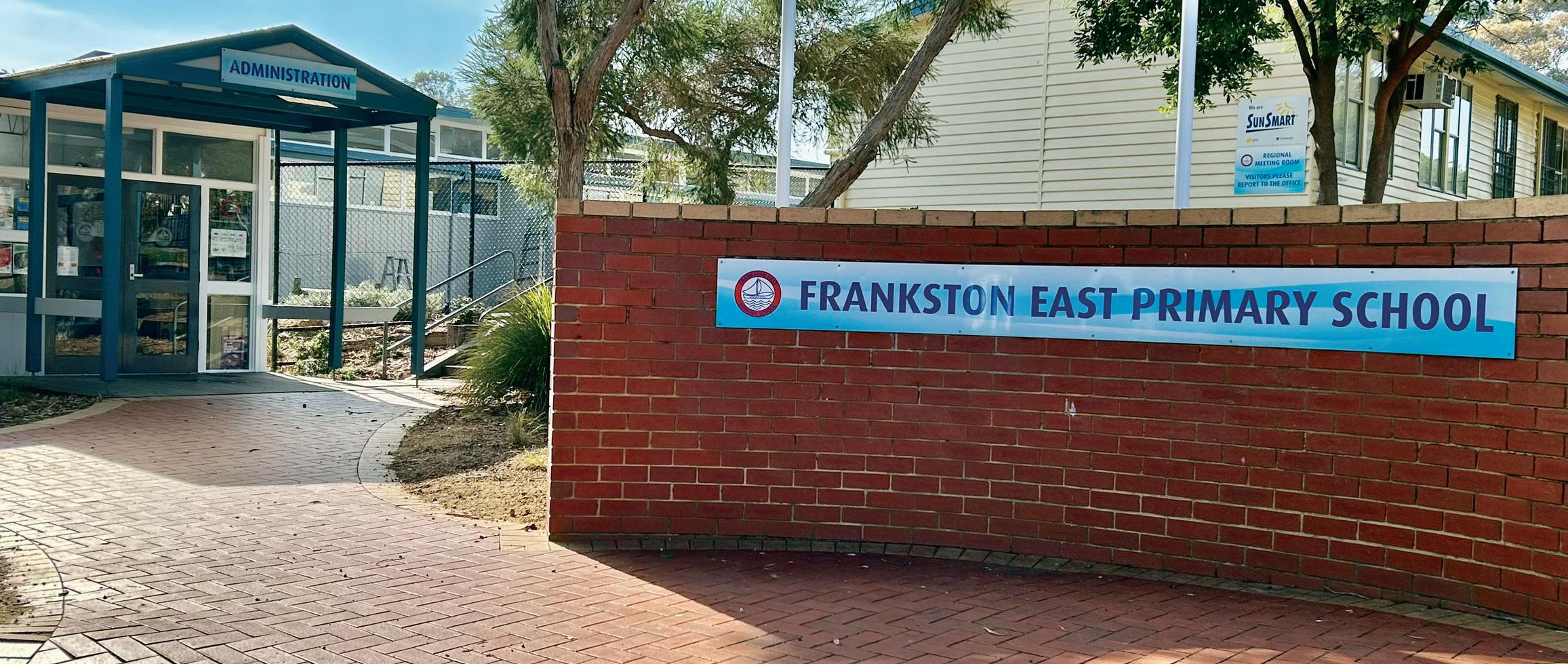
Someone that knows well the value of mentors and deeply appreciates the impact they have had on his professional journey is Warren Bull, Principal of Frankston East Primary School. Warren has written our Principal Speaks column this term. He reflects on the many great leaders that he has been fortunate
to learn from throughout his journey to his first principalship at Frankston East. Warren says mentorship matters, far more than most people realise and more than he fully appreciated until he found himself in the principal’s chair for the first time.
Each of Warren’s mentors has had di erent leadership styles, and di erent strengths and weaknesses. Blending elements from each, Warren says he has developed his own leadership style, one that values having fun and laughing together, and genuine relationships with students, sta and families.
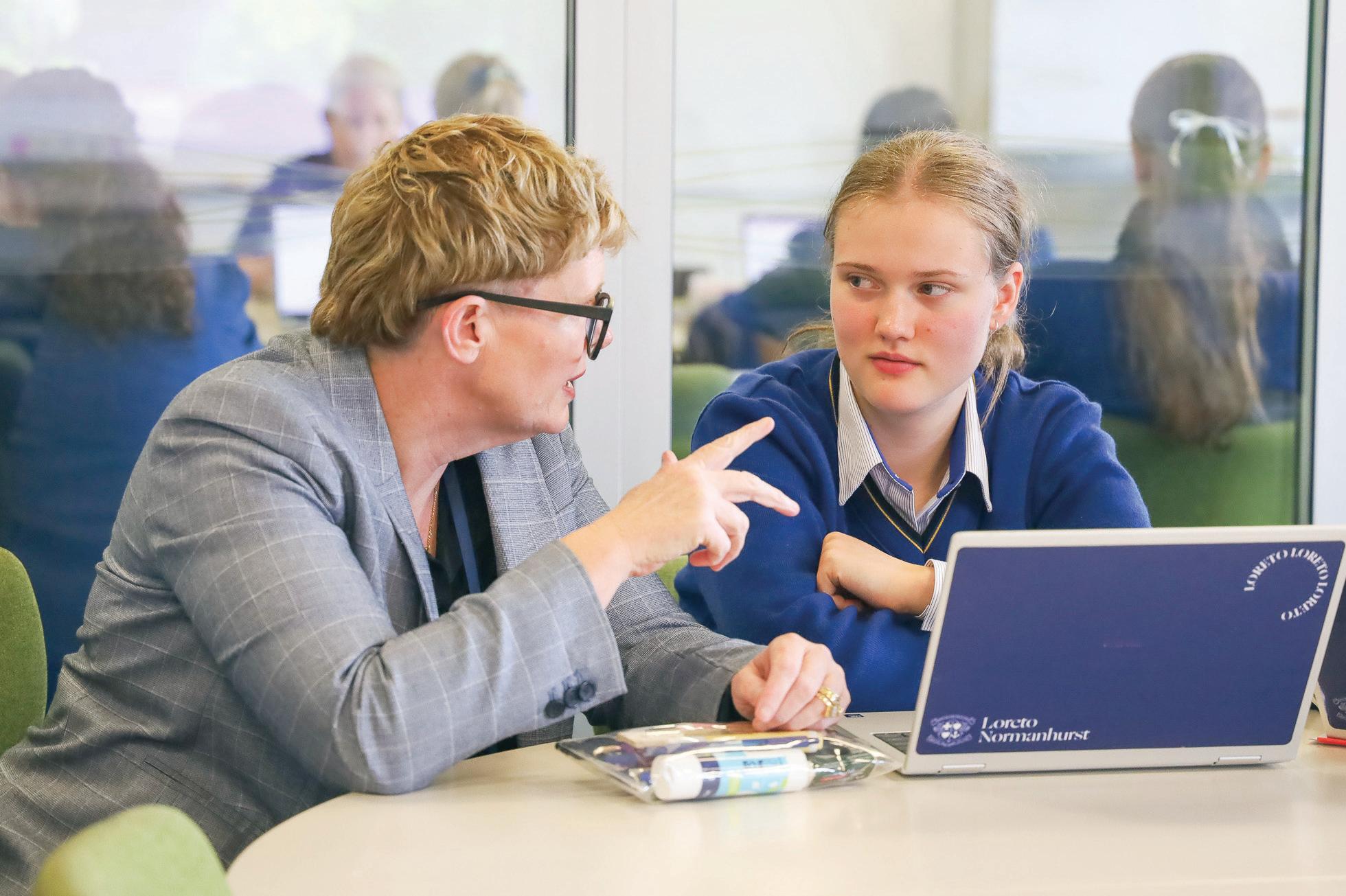
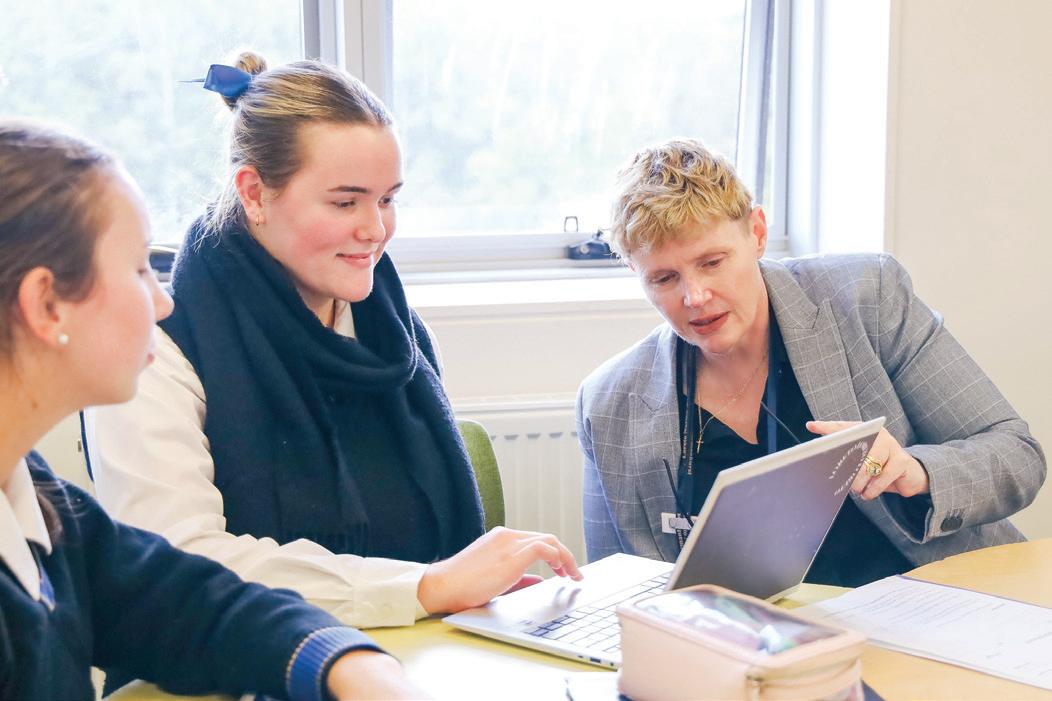
Finding mentors and learning from one another is also woven into every day at Loreto Normanhurst. The school has developed a rich professional growth program, that includes open dialogue, feedback and
learning from one another. Dedicated time for professional development is timetabled, meaning it is never pushed aside or forgotten. In our Profile this edition, we find out what impact the program is having on sta growth and student success.
Do you have a mentor or role model? Or perhaps you are a mentor to someone else, and you might not even know it. We can’t be what we can’t see, and we all want our young people to succeed. It might not seem important, but if we can model values like kindness, compassion, diligence and determination, we will help today’s students build strong foundations for their life.
Go gently, Gemma Editor, School News
Every day matters:
By Sarah Davison, Industry Reporter
School attendance in Australia is declining, not dramatically in a single moment, but steadily and across almost every school community.
The Grattan Institute’s 2025 report, Every day matters: Improving school attendance in Australia, highlights the scale of the issue. On any given day, around 11 percent of students are absent.
Over time, that adds up. Missing just one day a fortnight is the equivalent of four weeks of learning lost across the school year, a gap that is difficult to recover.
But the more telling shift is not just how often students are absent. It is how many are no longer attending regularly at all.
For Dr Pamela Patrick, a lecturer in the School of Educational Psychology and Counselling at Monash University, the trend points to something more fundamental than a temporary dip in engagement.
The facts around declining school a endance
Attendance is shaped by access, support, and whether students feel safe
“The data available to date on school absenteeism paints a concerning picture. School attendance rates have declined from 92.6 percent in 2015 to 88.6 percent in 2023, and the proportion of students attending 90 percent or more of the time— which we use as our benchmark for ‘regular’ attendance—fell dramatically from 77.8 percent in 2015 to just 59.8 percent in 2024.
“That means roughly four in ten Australian students are now failing to meet what international research identifies as the minimum threshold for sustained educational benefit. This is not a marginal shift. It represents a structural change in how Australian young people are engaging with schooling.
“When we look at the reasons for absence, illness-related absences have grown
substantially, with students missing an average of 11.6 days due to illness or medical appointments in 2024, up from 6.6 days in 2017. At the same time, family-related absences, including holidays taken during term time, have more than doubled since 2017. Both trends reflect a broader shift in community norms around the perceived necessity of school attendance.
“Estimates also suggest chronic absenteeism, defined as missing 10 percent or more of school days, reached nearly 50 percent of students in 2022, with between one and five percent classified as severely absent.”
Significantly, the idea that the COVID-19 pandemic caused the attendance crisis does not hold up under scrutiny.
“It is also important to note that evidence suggests the rise in school non-attendance specifically began before COVID-19,” Dr Patrick said.
“The data shows that the pandemic accelerated an already existing trend rather than creating it from scratch.”
It is also clear that the risk is not evenly distributed. Students in remote communities, those experiencing socio-educational disadvantage, and Aboriginal and Torres Strait Islander students are significantly more likely to miss school. In 2024, 35.2 percent of First Nations students were attending at least 90 percent of the time, down from around 49 percent before the pandemic.
These patterns point to something deeper than individual behaviour. Attendance is shaped by access, support, and whether students feel safe and able to fully participate in school life.
Absenteeism, then, is a layered and deeply contextual issue. “There isn’t a simple explanation for school nonattendance, as the drivers are multiple, intersecting, and vary considerably across age groups, communities, and individual circumstances,” Dr Patrick said.
“At the individual level, neurodevelopmental conditions such as autism and ADHD are associated with higher rates of school non-attendance and absenteeism. Anxiety is also a significant factor. Within the school environment, distressing learning environments, including bullying, peer exclusion, academic pressure, and nonaffirming or unsafe spaces, can individually and collectively have a harmful effect on young people’s capacity to attend.
“We also know that absences tend to be higher in schools characterised by a lack of resources to respond to individual student needs, a lack of structure, and a lack of academic challenge,” Dr Patrick said.
“There is also a family dimension that is frequently overlooked. Parents of children experiencing school attendance difficulties often face significant parenting stress, and in many cases are forced into substantial absences from work or are unable to maintain employment.
“The burden of chronic school non-attendance falls heavily on entire families and school communities, not just the child.”
Shifting the narrative on absenteeism
Dr Patrick argues that how schools interpret absenteeism matters. When absence is framed as defiance or a lack of motivation, the response is often one of compliance rather than care. “There are several misconceptions worth challenging, because poorly designed responses
can actively make things worse,” Dr Patrick said.
“The most entrenched is that students who don’t attend are being defiant or simply choosing not to go, and that parents are permissive or complicit. These assumptions are common across education, health, and the broader community, causing significant stress and acting as barriers to appropriate support.
“Current attendance messaging has also been identified as a source of stress for families already struggling, with calls for more nuanced communication that acknowledges some students genuinely cannot attend and that help is available.
“Finally, we must resist the impulse to treat COVID-19 as the sole cause of our attendance crisis. The pandemic accelerated existing trends, but the underlying drivers, including rising youth anxiety, a strained school-based mental health workforce, and an
overemphasis on academic performance metrics, have likely exacerbated school nonattendance and absenteeism.”
Understanding the decline in attendance relies on treating attendance not as an endpoint, but as a signal.
“I would urge a move away from thinking about attendance as primarily a compliance issue. Student wellbeing is foundational to academic success, and an overemphasis on achievement driven by mechanisms like ATAR, NAPLAN, and PISA has increasingly overshadowed the conditions needed for genuine learning.
“Schools that want to improve attendance need to focus on the conditions that make school feel safe, worthwhile, and meaningful to young people.
“In practical terms, the evidence most strongly supports a tiered, whole-school approach,”
Dr Patrick said. “The MultiTiered System of Supports (MTSS) framework recognises attendance as a continuum starting from occasional absences through to chronic disengagement. MTSS allows schools to respond with proportionate and targeted strategies at each level.
“Critically, schools and teachers cannot and should not be expected to address this alone. The most complex attendance challenges require collaboration with external services and systemic support to address individual student barriers.
“For students at the more severe end and those experiencing school reluctance, flexible
and alternative education pathways need to be genuinely accessible rather than treated as a last resort.
“Finally, schools must be supported to collect consistent, predictive, and nationally comparable data, and to use these data to inform decision-making. Without robust data infrastructure, responses risk becoming piecemeal and less effective.”
For educators, much of this will already be part of everyday practice; the most effective attendance strategies are not new. They sit in the core work already happening in schools: strong relationships, consistent routines, and classrooms where students feel safe and supported.
At a whole-school level, this means doubling down on the conditions that make students want to be there.
Where students need more support, targeted responses can be both simple and effective. A check-in with a trusted adult, access to a quiet space, or short-term flexibility can help maintain connection while challenges are addressed.
For students with more complex needs, a coordinated approach, drawing on wellbeing teams, families, and external services, ensures that support is shared, rather than sitting with individual teachers.
Improving attendance is not about adding something new. It is about applying what schools already know works, consistently and with the right level of support.
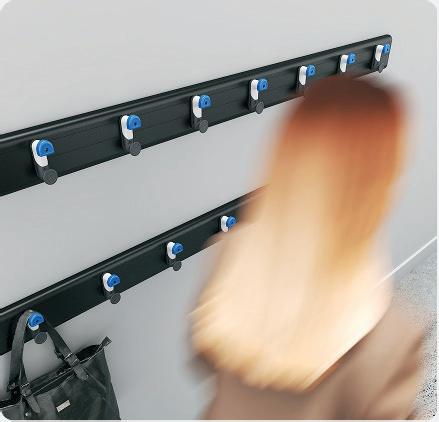
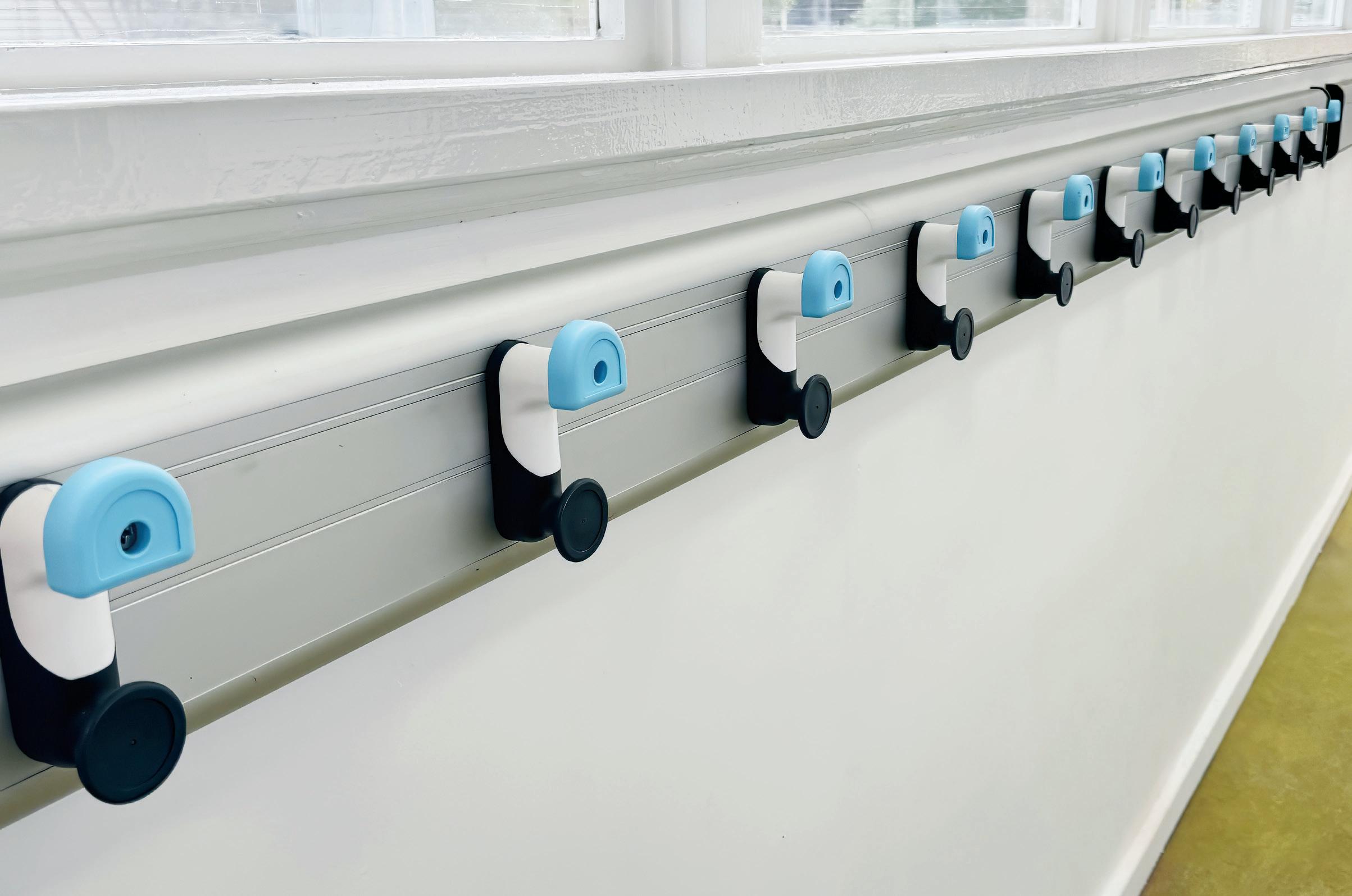
Most storage systems weren’t built for schools. Safehook was. Engineered for high use, heavy loads, and the daily wear that most hardware isn’t built to take. Less replacement, less
Engineered for daily school use, reducing the need for replacement.
Australian made, sustainably sourced.
The indispensable value of mentors: A principal’s journey
By Warren Bull, Principal, Frankston East Primary School
Leadership in education is not learned from textbooks or university courses alone. It is shaped in the experiences of real schools, with real children, real staff, and real challenges that no lecture theatre can fully prepare you for.
I have never met a great leader who got there alone
Throughout my career as an educator, and now as principal of Frankston East Primary School (my first principal role), I have been fortunate to work alongside remarkable leaders who mentored me, shaped my thinking, and ultimately influenced the kind of leader I aspire to be. Their lessons have been invaluable, and I draw on them every single day.
As someone once wisely said: Why did the mentor bring a ladder to school? Because great leaders help others reach new heights. (I’ll see myself out.)
In all seriousness though, mentorship matters. More than most people realise, and more than I fully appreciated until
I found myself sitting in the principal’s chair for the first time.
Learning the foundations: Mick McLaughlin
My first principal, Mick McLaughlin, set the standard for what school leadership could look like. Mick possessed a rare combination of warmth and firmness that created an environment where both staff and students thrived. He was kind without being soft, approachable without being a pushover.
Watching Mick navigate the daily complexities of school leadership taught me that being a principal
doesn’t mean choosing between being liked and being effective. You can, and should, be both. Mick knew students by name, remembered details about their lives, and genuinely cared about their wellbeing. Yet when boundaries needed to be set or difficult conversations needed to happen, he never shied away. His firmness always came from a place of care, and people respected him deeply for it. He also had a sharp sense of humour, a quality I came to understand was not incidental to his leadership but central to it. A well-timed laugh can defuse tension, build connection, and remind everyone in the room that we’re all human.
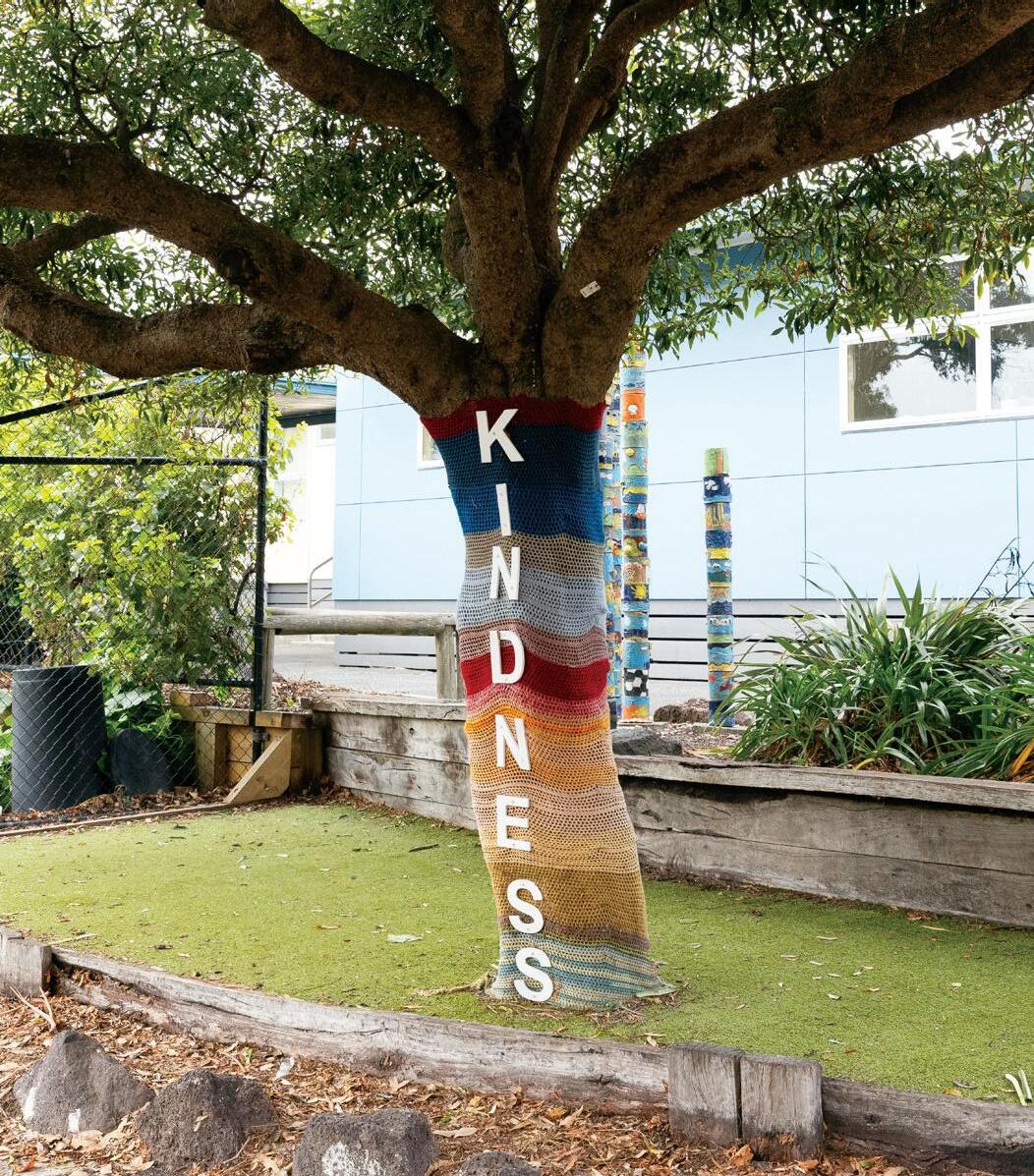
Image courtesy of Frankston East Primary School, VIC
From Mick, I learned that consistency, authenticity, warmth, and the occasional well-placed joke, form the bedrock of effective leadership.
Seeing potential in every student: Doug Bone
My career took an international turn when I worked at Wandle Valley School in London under Doug Bone. Doug was an ex-rugby player. He was broad, imposing, and not someone you’d expect to be the most quietly transformative leader I’ve encountered. He looked like he could bench press a filing cabinet, with a tree-trunk for a neck. But his approach to students, particularly the most challenging ones, fundamentally changed how I see young people.
Doug had an extraordinary ability to find the positive in even the hardest students. Where others saw defiance, Doug saw independence. Where others saw disruption, Doug saw energy waiting to be channelled productively. He regularly challenged my thinking: “What’s this student good at? What do they care
about? How can we use that as a starting point?” That simple reframe adjusted my views of both teaching and leadership.
Doug also understood the power of humour in building relationships with difficult students. A shared laugh, even a groan-worthy one, can open a door that a hundred stern conversations cannot.
I learned from Doug that you don’t have to choose between high expectations and a warm, human approach. In fact, the best educators manage both
simultaneously, often with a grin. I see his influence clearly in how I approach students at Frankston East today, particularly those who need someone to believe in them before they can begin to believe in themselves.
Strategic leadership: Bruce McPhate
Bruce McPhate was my principal across several special school settings, including Monash Hospital’s adolescent psychiatric unit, Berendale School, and
Southern Autistic School. Working with Bruce across these demanding environments gave me a masterclass in strategic leadership, including managing resources, staffing, and the administrative load that comes with running a school.
Bruce understood something crucial: good intentions without adequate resourcing achieve very little. He was strategic in his planning, always thinking several steps ahead, and he had systems for everything.
Image courtesy of Frankston East Primary School, VIC
He also taught me to be strategic with my own time. To delegate appropriately, to build structures that support staff rather than burden them, and to focus leadership energy where it will have the greatest impact.
Bruce was not a big laughs-inthe-corridor kind of leader, but he had a dry wit that surfaced at exactly the right moments, usually when things were at their most stressful. I learned from him that even in the most pressured environments, a moment of levity can reset a room.
As a first-time principal at Frankston East, I lean on Bruce’s strategic lessons constantly, and I try to remember that a smile costs nothing and often achieves more than a stern word or email ever could.
The art of relationships: Tim Harper
At Elisabeth Murdoch College I worked under Tim Harper. Tim was a tireless worker and a wise, measured leader with a particular gift for building genuine relationships with both parents and staff. Tim demonstrated something I have never forgotten: that true dedication to a school means making time for the relationships that matter, no matter how full the calendar.
His approach to parents was especially instructive. Tim
understood that even frustrated or angry parents ultimately want the same thing we do—the best for their child. He approached every difficult conversation with empathy and without defensiveness, consistently turning potential conflict into productive partnership.
And when the moment was right, he could deploy a light touch of humour that would take the temperature down in an instant. Not to dismiss the concern, but to remind the person across from him that they were talking to a human being, not a bureaucrat.
That quality has shaped how I try to lead at Frankston East. I am a firm believer that laughter which is genuine, inclusive, and never at anyone’s expense is one of the most underrated tools in a principal’s toolkit. Some of my best conversations with parents have started with a shared laugh. Some of my toughest staff meetings have been rescued by one.
Navigating new territory: Peter Clifton
More recently, as a first-time principal, I have drawn on mentors from The Academy, in particular Peter, to help me navigate challenges that no previous role fully prepared me for. Leading a school is fundamentally different from working within one.
The decisions are lonelier, the stakes feel higher, and the learning curve is steeper than I anticipated.
Having experienced principals like Peter to turn to has been invaluable. These mentors have helped me think through difficult decisions, offered perspective when I’ve felt the weight of the role, and reminded me that every principal has stood exactly where I am standing now and felt exactly the same way.
Peter has also (importantly) reminded me not to take myself too seriously. The ability to laugh at yourself, particularly during the challenging moments that come with any new principalship, is not just healthy. It’s essential.
The enduring value of mentorship
Reflecting on these mentors and their collective influence, several truths become clear.
Images courtesy of Frankston East Primary School, VIC
I have never met a great leader who got there alone. Every one of them was shaped, at some point, by someone who cared enough to show them the way. Each of my mentors brought something different and essential: warmth and firmness from Mick, belief in every student from Doug, strategic clarity from Bruce, relational wisdom from Tim, and grounded practical support from Peter. Together, they gave me a far richer leadership toolkit than I could ever have assembled alone, and a much better sense of humour than I arrived with.
Mentorship is also not about creating replicas. None of my mentors expected me to lead exactly as they did. Each of them helped me find my own authentic voice, a style informed by their wisdom but shaped by my own values, experiences, and the community I now serve at Frankston East Primary School.
And that community matters enormously to me. Frankston East is my first principal role, and everything I have learned from these remarkable people is poured into it daily. The belief in every student, the commitment
to staff, the genuine relationships with families, and the firm conviction that a school where people laugh together is a school where people belong together.
For any educator aspiring to leadership, my advice is simple: seek out mentors, learn from them hungrily, embrace the hard moments with grace and the occasional laugh, and when your time comes, pay that generosity forward.
Oh, and never be too proud to use a good dad joke. Leadership is serious work. That doesn’t mean you always have to be.
Images courtesy of Frankston East Primary School, VIC
Loreto Normanhurst, NSW:
Professional growth to develop and retain teachers
By Gemma Easton, Editor
Instances of teacher stress and burnout and the impact this is having on teacher recruitment and retention has been well documented in recent years. Australia has one of the highest teacher shortages in the OECD, and it is estimated that the nation is around 4000 teachers short.
To address growing teacher burnout and the retention crisis, Loreto Normanhurst in Sydney is rethinking professional development. With up to 30 percent of educators considering leaving the profession nationwide, the school sees finding sustainable, practical solutions that deliver real results as imperative.
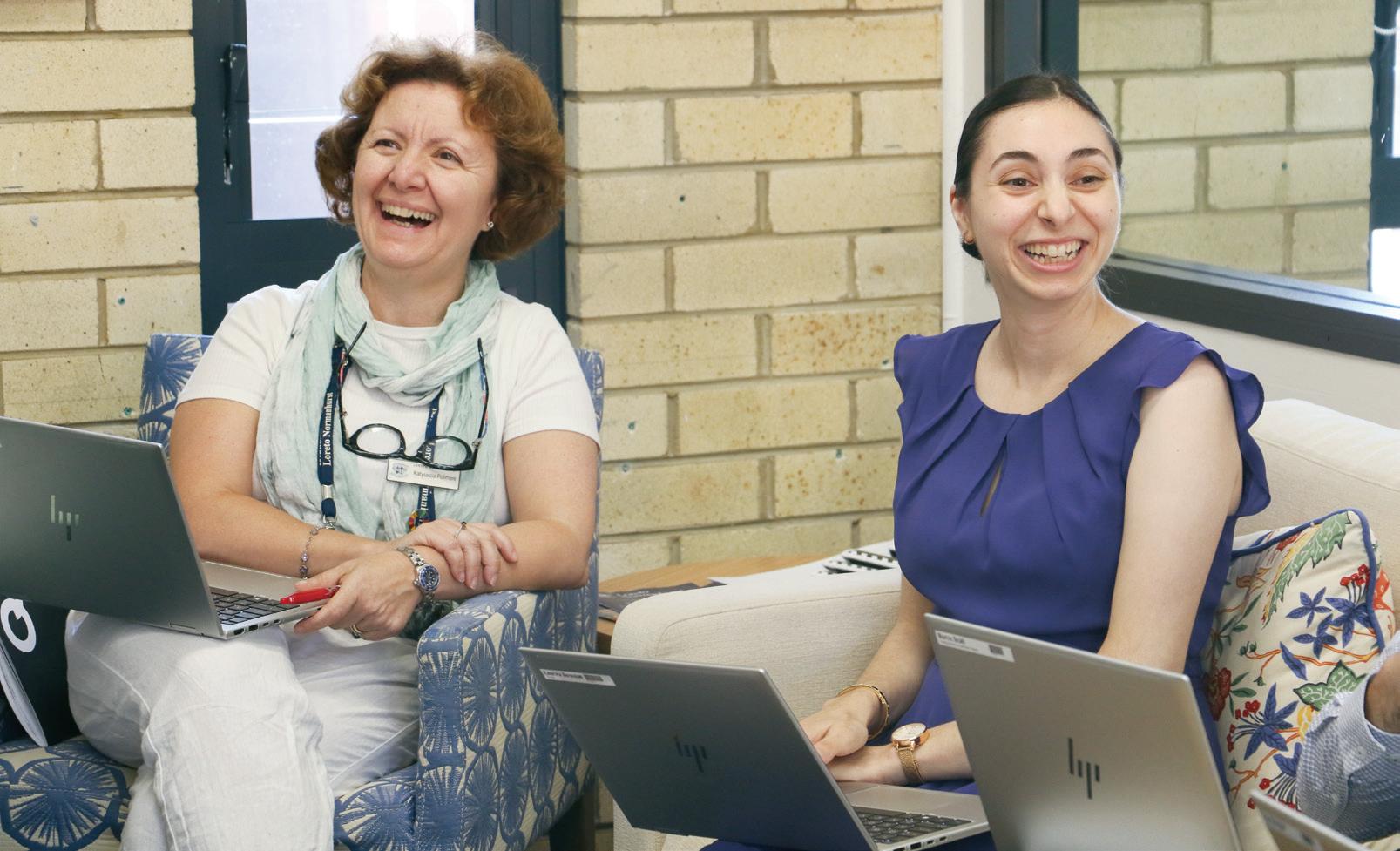
Collaboration, idea-sharing and support are at the heart of the model. As well as developing skills, Loreto Normanhurst’s professional growth plan helps teachers look after their wellbeing and form strong support networks within the school. The researchbased approach is designed to facilitate ongoing growth
and a sense of belonging. This will ultimately have a positive impact on students’ learning and engagement.
Peta Holmes, Acting Head of Professional Practice and Growth at Loreto Normanhurst explained: “Professional learning at Loreto Normanhurst is designed to connect people, not just build skills.”
Educating girls from Year 5 to Year 12, and offering boarding, Loreto Normanhurst has just over 1200 students, with more than 250 staff. Rather than relying on one-off training, Loreto Normanhurst has woven ongoing and structured professional growth into its strategy. The school has introduced a suite of initiatives designed to strengthen teacher wellbeing, collaboration, and excellence, including its Open Learning Circle (OLC) program, instructional coaching and TeachMeets.
“Our professional growth framework is deliberately aligned to the school’s Strategic Plan, so professional learning is never ad hoc, it’s always purposeful,” Ms Holmes said. “Rather than responding to a single problem, the framework was designed to build the conditions for collective teacher efficacy to thrive, with everyone working towards shared priorities.
“These priorities are found in the Strategic Plan Learning
Images courtesy of Loreto Normanhurst, NSW
Peta Holmes, Acting Head of Professional Practice and Growth
Objectives and Faculty Annual Plans that are aligned to the Loreto Normanhurst Strategic Plan. This alignment has been particularly important as we navigate curriculum reform, ensuring coherence across departments and consistency in practice.”
TeachMeets bring together educators from Loreto Normanhurst and other schools, alongside student voices, to share strategies and reflect on teaching practice in a positive and collaborative way.
“TeachMeets create space for authentic, teacher led learning that is practical, collegial and energising. The short, focused format makes new strategies accessible and immediately applicable in the classroom,” Ms Holmes said. “Incorporating student voice is critical as hearing directly from students gives teachers a powerful lens for reflection that we can’t afford to overlook.”
The Open Learning Circles (OLCs) are fortnightly peer groups that have formed the backbone of Loreto Normanhurst’s growth culture since 2023. The OLCs are used to provide all teaching staff with regular exposure to Quality Teaching Rounds (QTRs), which involve staff observing each other’s practice using the Quality Teaching (QT) coding scale.
After this, staff discuss respective codes in the OLCs. Staff who taught the lesson, code their own performance against the QT criteria and
Open Learning Circles are where professional dialogue becomes collective
practice
present self-assessment alongside their peers during the coding discussion.
“Open Learning Circles are where professional dialogue becomes collective practice. Their cross-faculty design is one of their greatest strengths—it breaks down silos and allows powerful ideas to move across subject areas. These conversations and learning
opportunities strengthen relationships, deepen reflective practice, and remind us that excellent teaching is a shared endeavour,” Ms Holmes said.
The integration of QTRs into the OLCs has been a success, with 93 percent of staff indicating that they found the QT Model interesting, and 90 percent feeling that the QTRs have a direct relevance to their teaching
practice. Teaching staff rated the QTR professional learning experience a 4.21 out of 5.
Reflecting on the program, Loreto Normanhurst staff shared: “QTRs have been really engaging and have allowed me to make strong connections with my colleagues. The observation process was smooth and not scary at all. Coding was really professional”; and, “The quality teaching rounds have been one of the most beneficial professional development opportunities I have experienced at Loreto.”
In 2026, Instructional Coaching was launched to provide personalised support for teachers at different stages of their careers. Instructional Coaching helps early-career teachers find their feet and gives experienced educators the opportunity to share their professional insights.
“Instructional coaching provides personalised, low-pressure support that meets teachers where they are, regardless of career stage. Because participation is voluntary, teachers engage deeply, setting their own priorities through reflective practice. At the same time, coaches—who are experienced teachers—are reinvigorated in their own practice, creating a powerful cycle of professional growth.”
The impact of Loreto Normanhurst’s teacher growth initiatives is already clear.
Images courtesy of Loreto Normanhurst, NSW
One teacher said: “The support I’ve felt as a new teacher at Loreto Normanhurst, having this professional team outside the classroom has boosted my sense of belonging and my authentic feeling that I am growing more professionally myself.”
Beyond testimonials, evaluating the impact of the program is comprehensive and data informed. “Student outcomes are tracked using a combination of external assessments, internal data, and reporting trends. Equally important is teacher feedback, which directly shapes the ongoing refinement of our professional learning programs,” Ms Holmes said.
Looking ahead, the next phase of the professional development framework will be consolidation. “We’re particularly interested in expanding work around self-regulated learning and
strengthening student voice through consistent feedback mechanisms. Ultimately, this is about a coherent, whole school approach where objective setting, feedback and professional learning all reinforce one another,” Ms Holmes said.
Of course, time is always at a premium for teachers, so Loreto Normanhurst has deliberately made space for professional growth, allowing teachers to manage their class load and planning while still participating meaningfully in the program.
“It would be disingenuous of me to say that time wasn’t always something that we’d like more of, so we endeavour to embed professional learning in a structured way. Open Learning Circles are a timetabled part of the teaching load, not an extra demand. We also reduce supply allocations and face
to face teaching for coaches, recognising that sustained professional growth requires some protected time.”
For schools looking to reshape their own professional development framework, Ms Holmes offered this advice.
“Alignment is everything, between school priorities, department goals and individual teacher growth. You can’t do everything at once, so clarity of intent and carefully chosen priorities are crucial with progress tracking along the way. And finally, schools should leverage the expertise already within their staff; some of the most powerful professional learning is home-grown.”
Principal Marina Ugonotti is proud of the program, which she said is as much about retention as it is excellence. “Our teachers are outstanding educators
who share their knowledge and expertise generously and lovingly guide our students to discover who they are and who they might become.
“At Loreto Normanhurst, we are committed to building a culture of excellence where teachers feel supported and connected and where their own love of learning is nourished. That is how we will retain great educators and sustain a thriving profession into the future.”
Loreto Normanhurst’s professional growth framework has become intrinsically linked with school culture, sparking conversations about pedagogy, collaboration across classrooms, and openness to feedback.
The program’s biggest success, though, is the effect it is having on teacher retention and ultimately enriching students’ learning and growth.
Images courtesy of Loreto Normanhurst, NSW
Future-proofing for enduring school-wide communication
By Milly Fullick, Industry Reporter
Audio and communication systems are often an understated workhorse in the modern school; when they function well, most staff, students and parents don’t think much about them on a day-to-day basis. However, when something goes wrong—whether that’s technical problems from ageing infrastructure, volume issues with a PA system at a school sports day, or even in an emergency—everyone notices.
Understanding communication systems
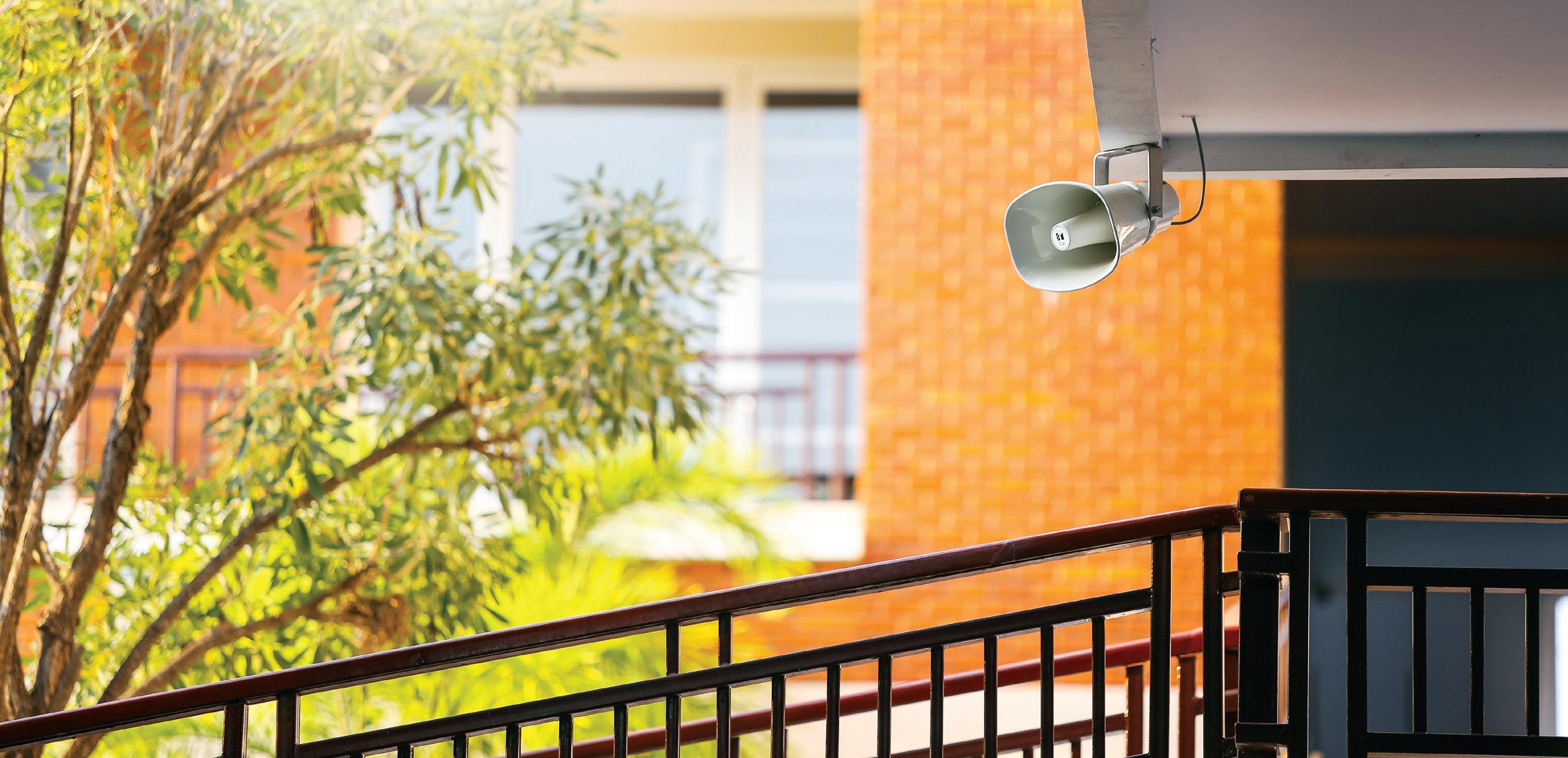
Modern audio and communication systems use IP paging, rather than physical wires. They transmit information through the same internet connection used to supply a school’s wifi. IP communication is considered preferable to analogue connections because of its increased flexibility, including easier installation and more options for uses, placement and customisation.
Benefits of IP systems
Modern audio and communication systems offer a host of features that older ones cannot provide, including
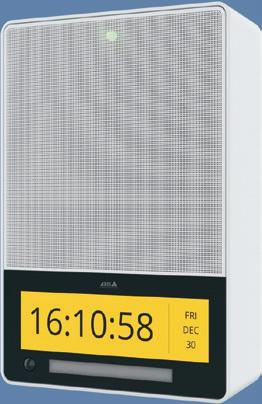
integrating elements such as bells, speakers, clocks and emergency systems to create a cohesive network that is more efficient and simpler to use.
Another major benefit is that many systems offer zoning and scheduling that work together; if older students work on a different timetable to younger ones, for example, then bells, reminders and other messages can play at the correct times for each zone. It also means that announcements don’t need to interrupt classrooms where they are not relevant.
Emergency management
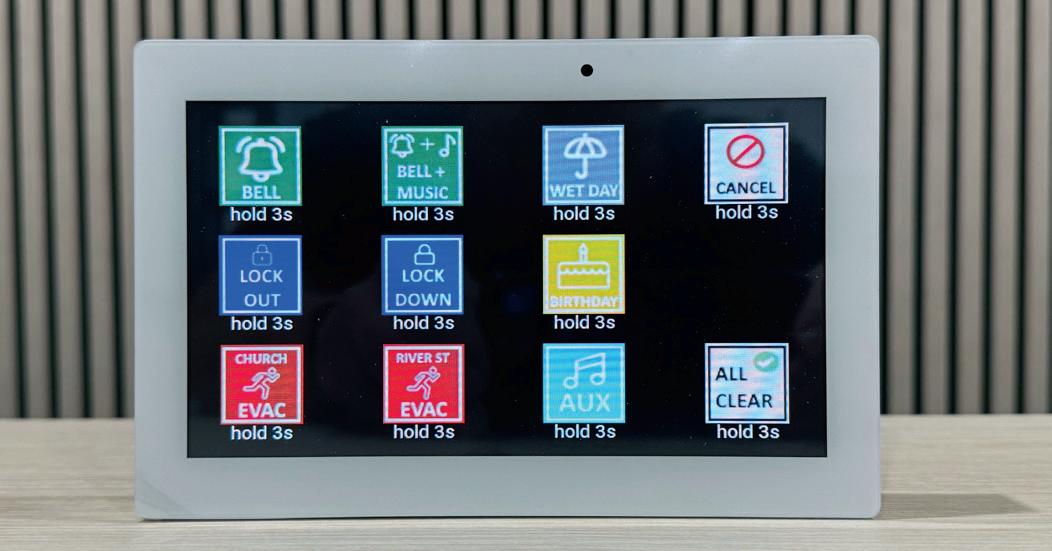
In an emergency, the seamless integration and smart features of an integrated classroom system come into their own. Targeted messaging can help to deliver crucial information where it is needed to save time and avoid mixed messages. There are also options to customise some systems with digital displays to provide text-based messages for Deaf and hard of hearing students and staff.
Pre-recorded messages can also be utilised in emergency scenarios, so key points
including safety information and muster areas can be given automatically, freeing up key personnel for other time critical tasks.
Choosing the right system
With so many possibilities for schools, from integrating new technology into old systems to starting over with a bespoke layout, School News talked to the experts about what to consider with a smart communication system. Most schools will have a PA system already installed at their campus. How are modern IP paging and PA systems assisting schools with improved communication speed, clarity and function?
Linus Pinto, advanceNET: Modern IP paging and PA systems are flexible, networkbased communication platforms. They use existing IP infrastructure to deliver fast, clear, and scalable communication across the entire school.
The key benefits are instant announcements from authorised devices, zone-based and multi-zone paging, remote access for administrators and faster response to routine and emergency events. They also provide clearer audio, improved voice quality and enhanced coverage. Automatic volume even adapts to ambient noise.
Images courtesy of advanceNET
Then there’s expanded functionality over older systems, including automated bell scheduling, emergency alerts, live and pre-recorded messaging and visual alerts for accessibility. Modern systems are flexible and scalable, can be integrated with existing analogue systems and offer improved safety with one-touch emergency button activation and integration with fire and security systems, along with a host of other features.
In an emergency, communication needs to be fast and clear. What are some ways that modern sound systems can help schools in the event of an emergency?
Linus Pinto: IP-based PA systems significantly enhance school safety by enabling fast, clear, and coordinated communication during emergencies.
They allow instant campuswide alerts, delivering live or pre-recorded messages to all areas at once. At the same time, zoned communication ensures alerts can be targeted to specific buildings or areas, reducing unnecessary disruption.
High-quality audio with speech intelligibility and noise compensation ensures messages are clearly understood, even in loud environments.
Two-way communication (talkback) allows real-time coordination and situation verification, while preprogrammed emergency scenarios enable one-touch activation of consistent, reliable responses.
In addition, multi-channel alerts (audio, visual, and mobile) ensure messages reach everyone, including those with hearing impairments. With remote and centralised control, authorised staff can trigger and manage alerts from anywhere, improving response times across single or multiple campuses.
School events can mean hundreds or even thousands of people are onsite. Can IP paging and PA systems improve communication in these situations?
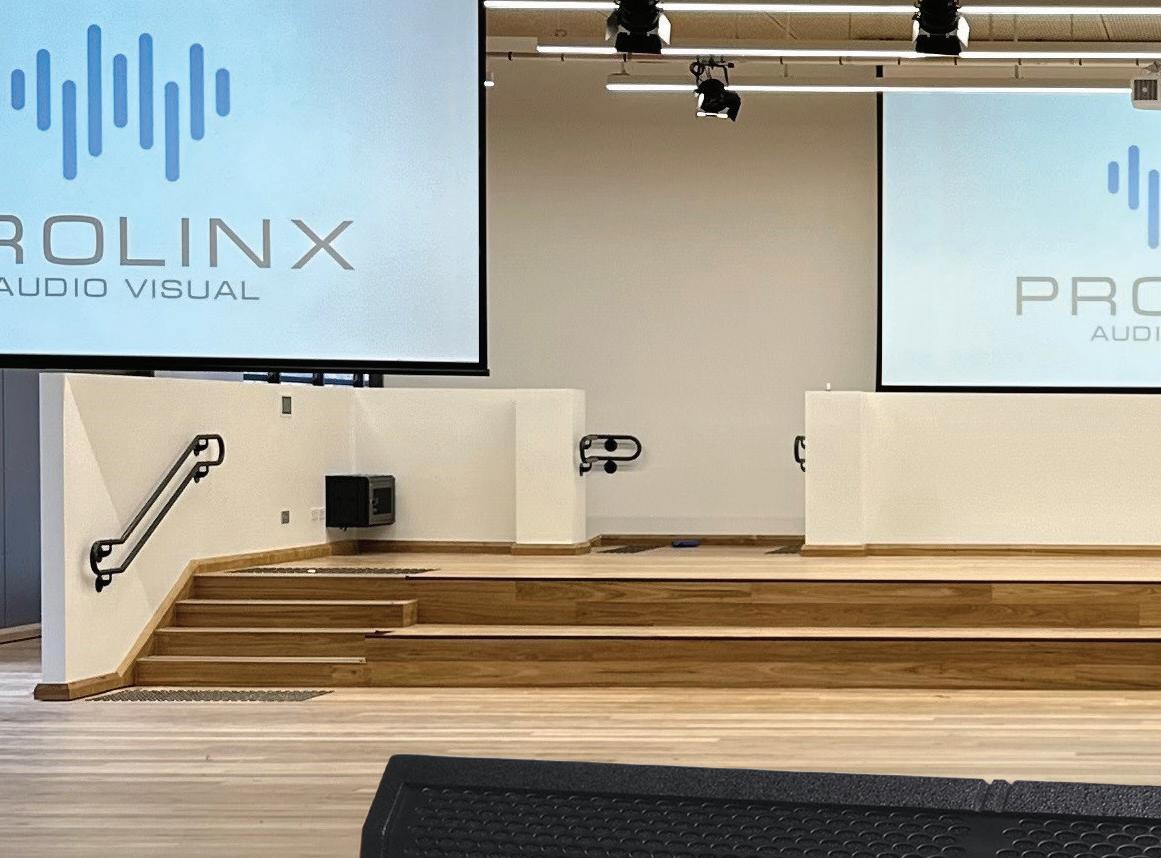
Zoran Aleksovski, Prolinx
Audio Visual: Clear, intelligible communication is critical. A well-designed PA system ensures announcements
can be clearly understood across all areas, even in noisy environments like assemblies, sports days, and performances. Emergency override capability is also important—integrated systems allow priority announcements (e.g. lockdown, evacuation) to override all other audio sources instantly.
Zoned communication means schools can target specific areas, for example oval, hall, or classrooms, with tailored messaging, reducing confusion and improving response times. Modern PA systems can be integrated into evacuation and fire indicator panels, automatically triggering pre-recorded or live emergency instructions.
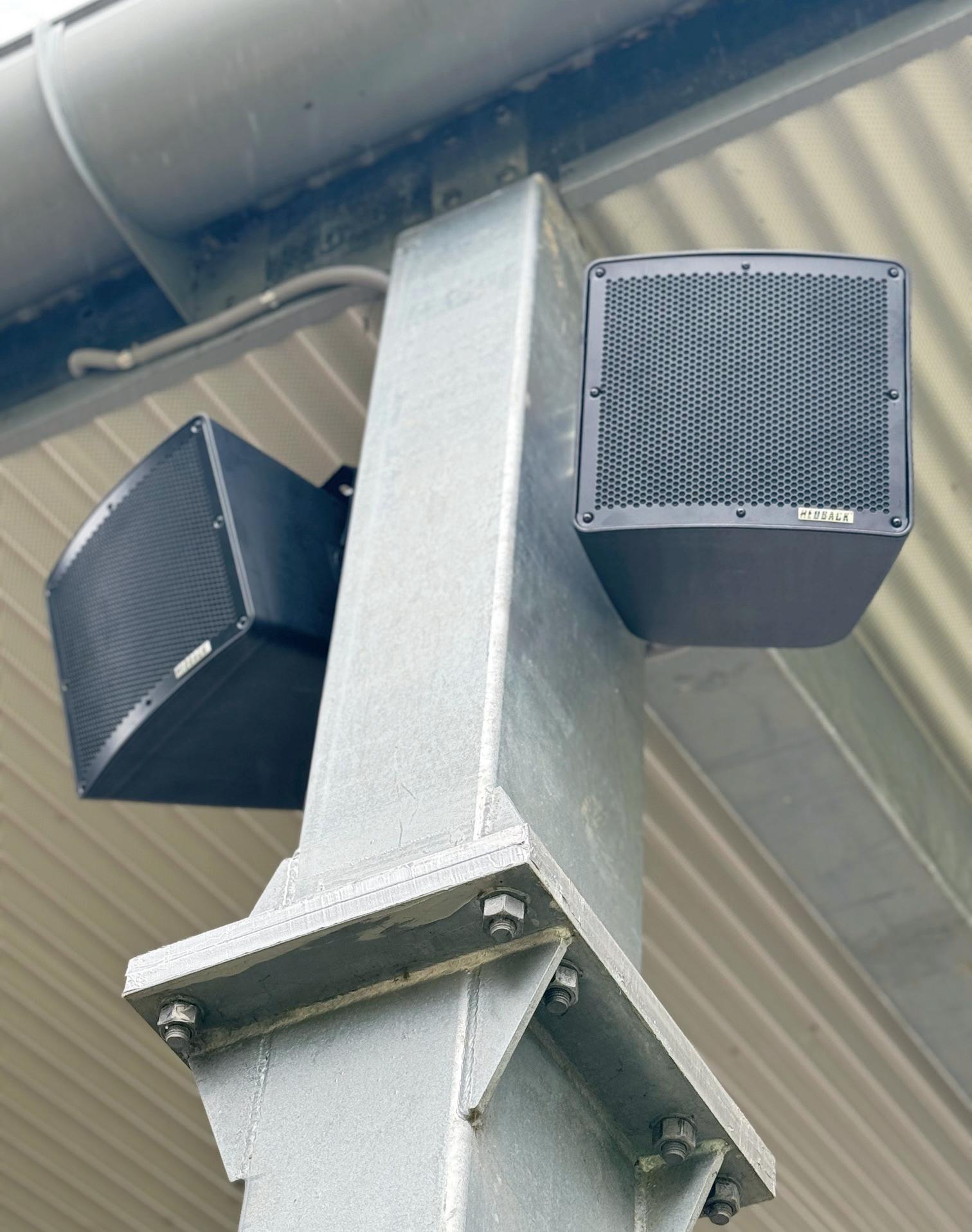
When planning your audio system, consider coverage of outdoor and high-traffic areas. Properly designed systems ensure consistent audio coverage across ovals, playgrounds, and areas where
large groups gather. Redundancy and reliability are important, too. Commercial-grade systems are designed with backup capabilities to ensure operation during critical incidents.
Designing a communication network could be a considerable investment of time and money for schools. Do you have some tips to help schools get started?
Zoran Aleksovski: Start with a needs analysis to identify how the school communicates daily versus during emergencies (bells, announcements, lockdown alerts, events).
Engage AV and communications specialists early in that process. It ensures infrastructure like cabling, rack space, and network capacity are planned correctly before construction or upgrades. Consider scalability— design systems that can grow with the school, allowing for additional buildings, outdoor areas, or new technologies.
Look for solutions that integrate PA, bells, intercom, and emergency notification into a single, user-friendly system, as well as futureproofing with IP based systems. Networked audio allows flexibility, remote management, and easier upgrades over time.
Are there factors that schools should consider when planning, upgrading or replacing audio or communication networks?
Linus Pinto: Safety, operations, and future growth will all be impacted. Careful planning helps avoid costly mistakes and ensures reliable performance.
Key considerations include: coverage and clarity across the full campus with the right speaker types, network readiness with a strong IP network, scalability for ease of expansion without needing a redesign, and system integration to work with everything from emergency systems, access control and platforms like Microsoft Teams. It’s also important to consider emergency capability including pre-recorded messages and failover operation, zoning and control to target announcements by area, ease of use for all necessary staff, and the balance of a hybrid versus full IP system— can existing infrastructure be reused, or is a new, full IP system more future-proof?
Zoran Aleksovski: Schools often don’t consider speech intelligibility versus volume. Louder isn’t always better; clarity is what ensures messages are understood, especially in reverberant spaces like halls. It also pays to think about acoustic challenges like large halls, outdoor spaces, and covered areas, which require careful speaker selection and placement to avoid echo and dead zones.
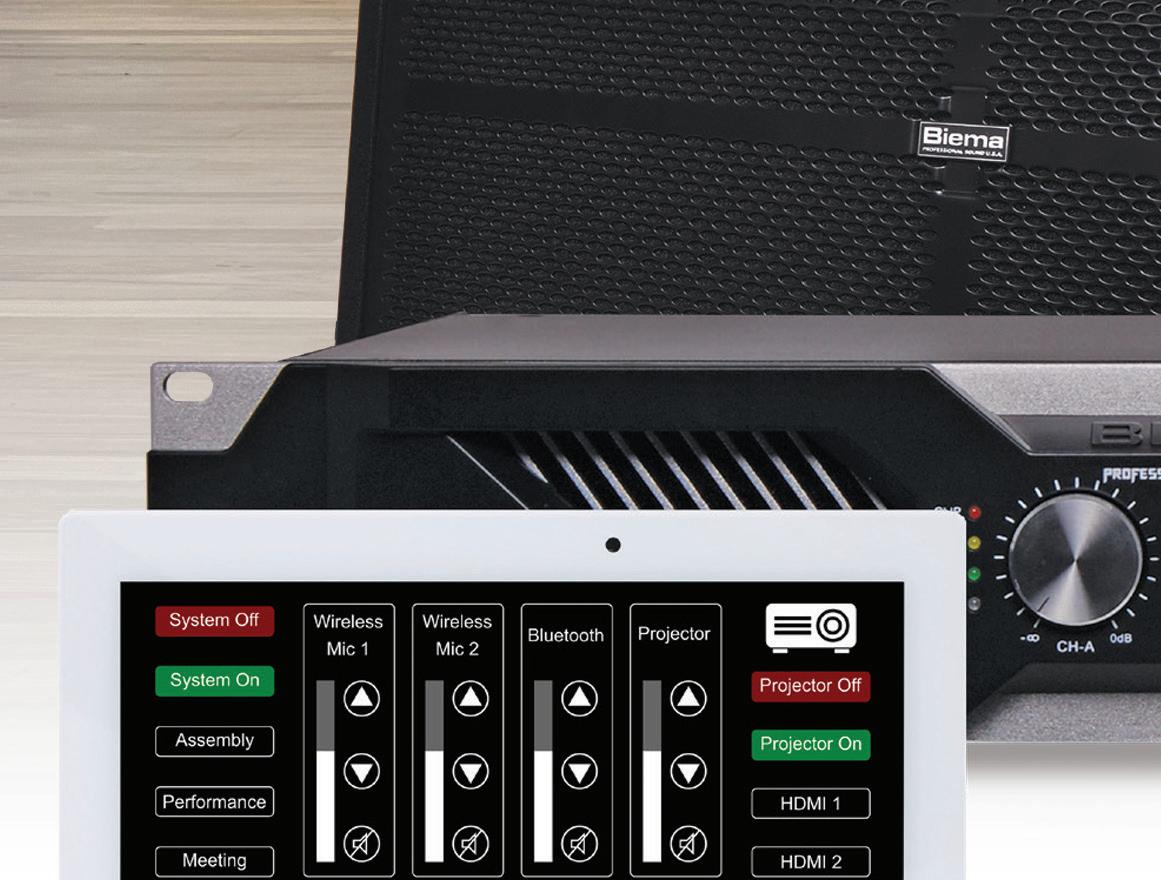
Power backup should be planned for, too—systems need battery backup or UPS to remain operational during power outages. Also, there’s user interface simplicity. Staff need systems that are easy to operate under pressure, particularly in emergency situations.
Lastly, take into account maintenance considerations. Ongoing maintenance and testing are crucial for making sure the PA system is in good working order.
Images courtesy of Prolinx Audio Visual
Smarter IP Communications and Time Systems
Live and scheduled annoucements with zone control across your entire campus.
Run school bells, tones and emergency alerts automatically with precision timing.
Combine speakers, displays, strobes to ensure messages are seen and heard.
Accurate, networksynchronised clocks across all buildings and locations.
Modular solution – Start small and expand as your needs grow
• Make announcements to a single speaker, selected group, or the entire site.
• Integrate with existing PA speakers and IP phone systems.
• Schedule music clips in place of bells, or play them before the main bell
• Add two-way communication & emergency bu ons with password protection.
• Display accurate time and messages across the campus.
• Reduce maintenance with automatic time synchronisation via NTP servers.
Free system design & consultation
Designing school libraries for curiosity, creativity & connection
By Sarah Davison, Industry Reporter
As schools continue to rethink how students learn best, the library remains one of the most important spaces on campus.
It is where independent reading sits alongside group projects, where students can access both trusted digital resources and much-loved paperbacks, and where many young people find a sense of safety and connection beyond the formal classroom.
The idea that these spaces matter is backed by research. According to the Australian Council for Educational Research’s PIRLS 2021 Snapshot, students who never or almost never borrowed books from their school or local library scored lower on average in reading comprehension than peers who borrowed regularly. In a time when literacy rates remain a national concern, creating library spaces that encourage students to engage is important.
Beyond academic outcomes, libraries also play a critical role in student wellbeing. For many students, the library is
one of the few truly inclusive spaces within the school.
Australian author and librarian Karys McEwen describes the modern school library as an “in real life teen sanctuary” where “wallets aren’t necessary, the heating is on, and you can stay as long as you like”. It is a place that exists beyond the structures of
home and the classroom, offering students somewhere to feel seen, supported, and included.
“They are growing up in a world shaped by constant change, uncertainty and digital overload,” Ms McEwen said. “That’s why they all deserve great school libraries. To track down a book that can help shape their world
view and make them feel seen, to chat with a librarian who provides empathy, support, or just a light-hearted conversation, to join a club that welcomes them and their interests, to be in a place where they are taken seriously, and to know there’s always somewhere they belong and can be themselves, no matter who that is.”
Images courtesy of Quantum Library Supplies
The evolution of the school library
However, today’s libraries aren’t just rooms lined with shelves and silent reading zones. Today, they are dynamic learning environments that support literacy, wellbeing, and collaboration.
Virginie Senbel-Lynch, General Manager of Quantum Library Supplies, said libraries are evolving into flexible, multi-purpose learning hubs rather than simply places to store books.
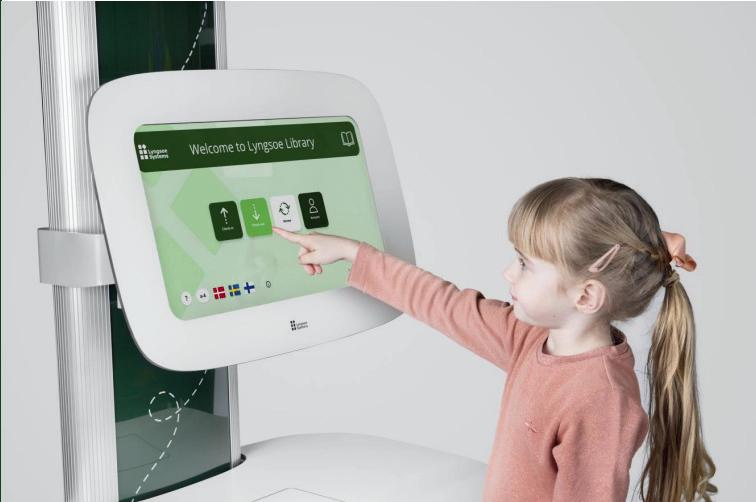
“There is a strong shift toward technology integration, for example RFID, self-service, and digital resources, zoned environments including quiet, collaborative, and creative spaces, and a focus on student wellbeing through comfortable, inclusive, and sensoryconsiderate design. Sustainability and adaptable infrastructure are also becoming more important.”
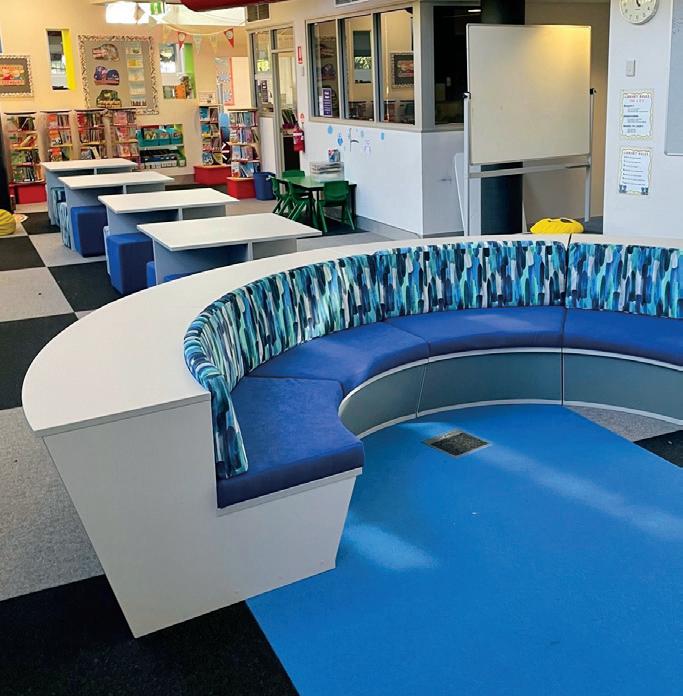
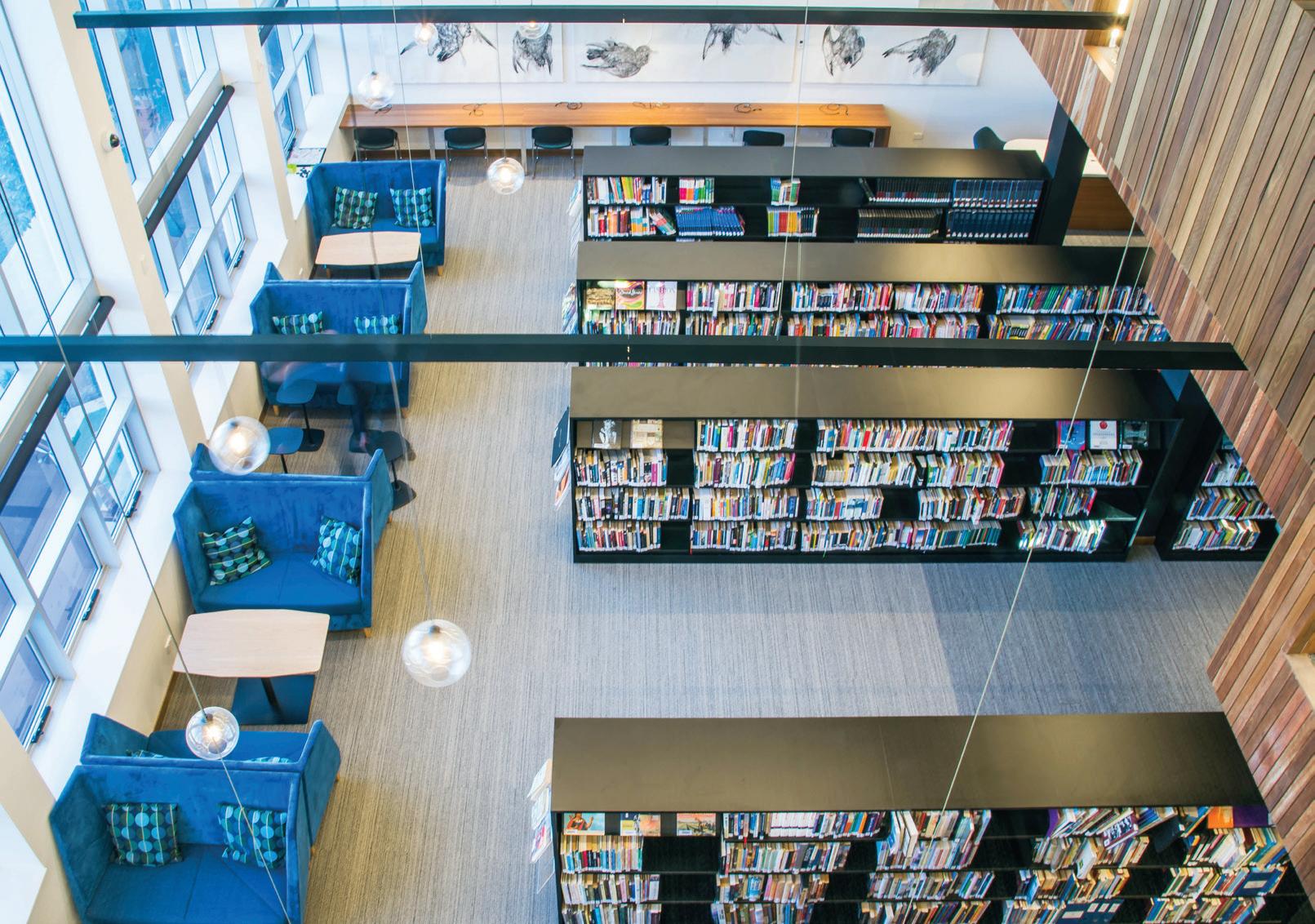
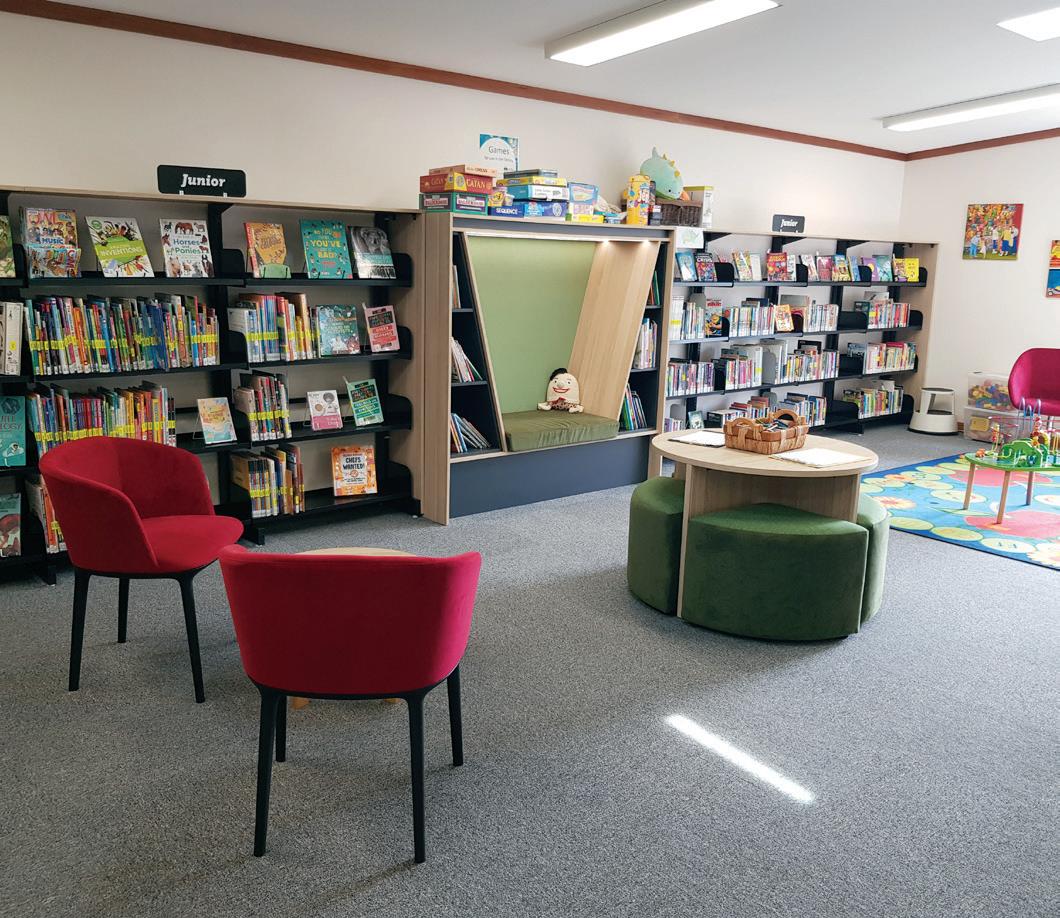
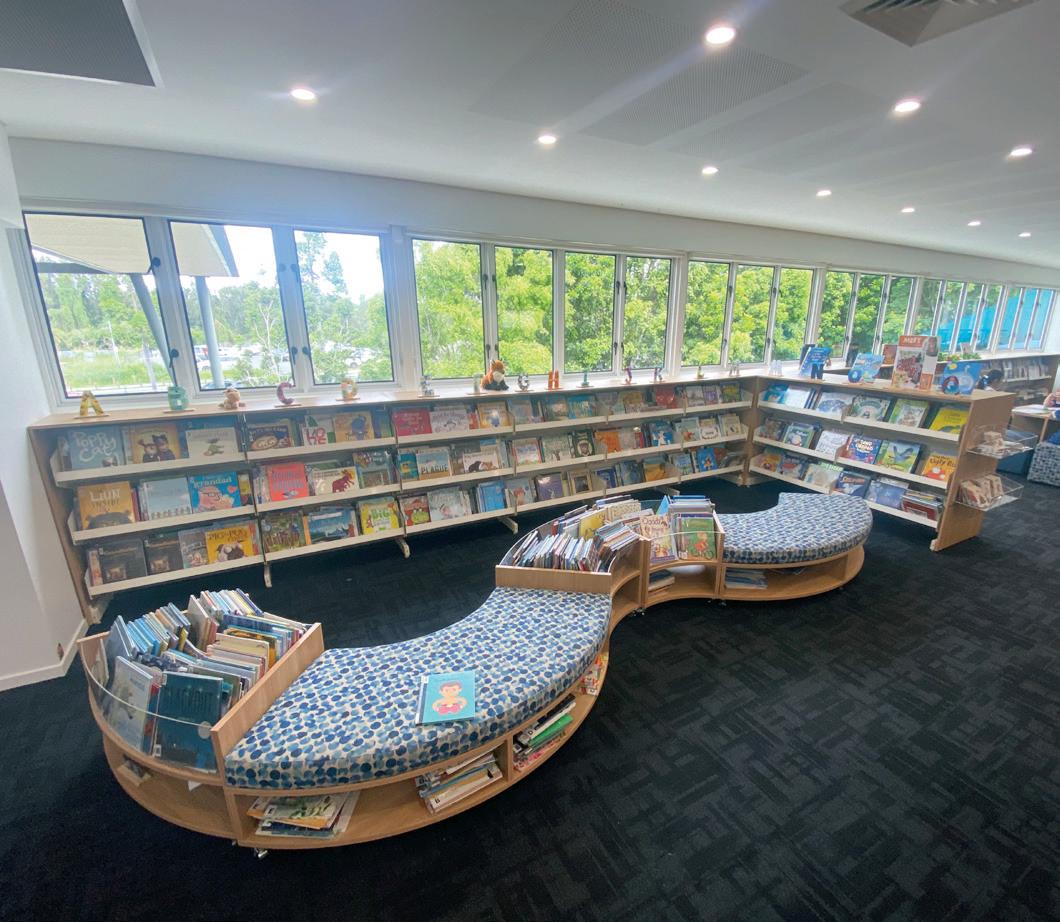
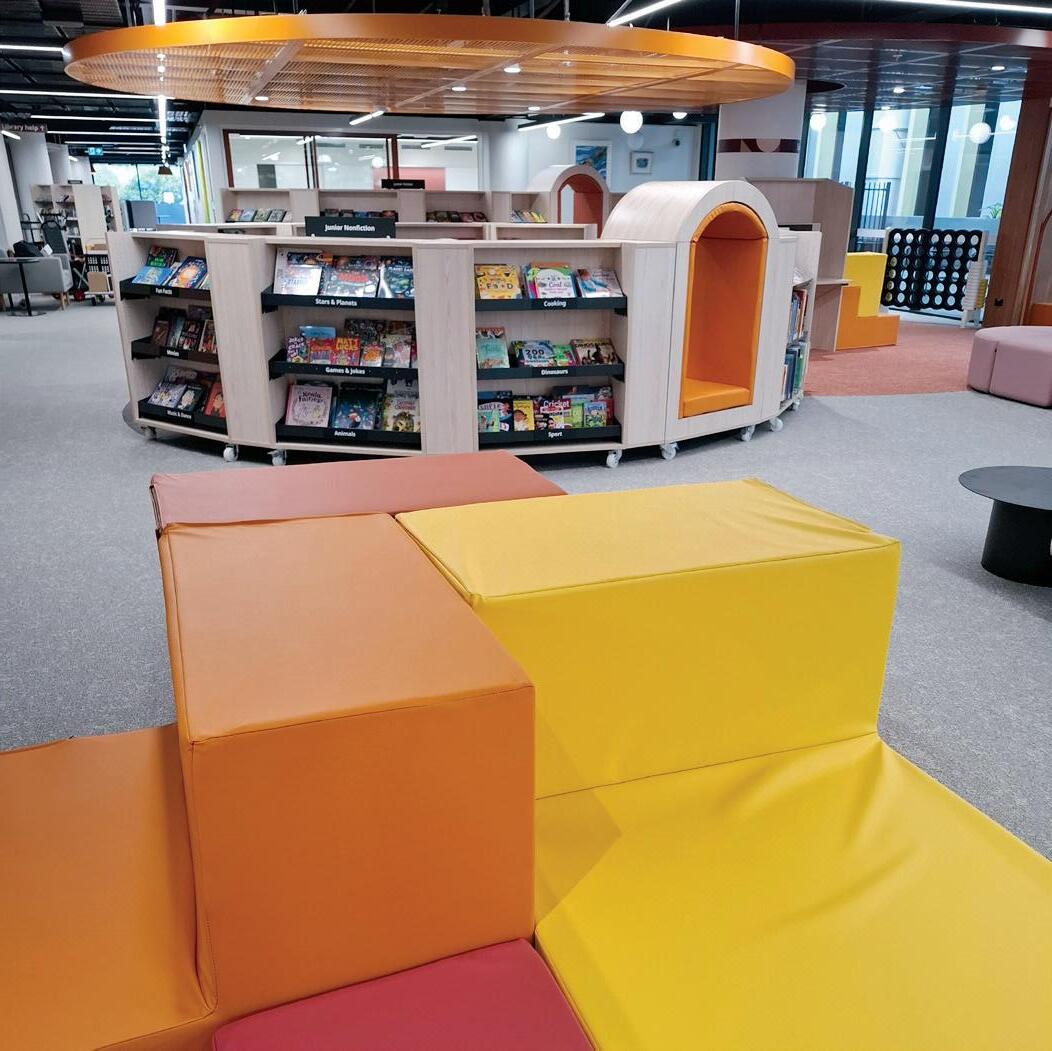
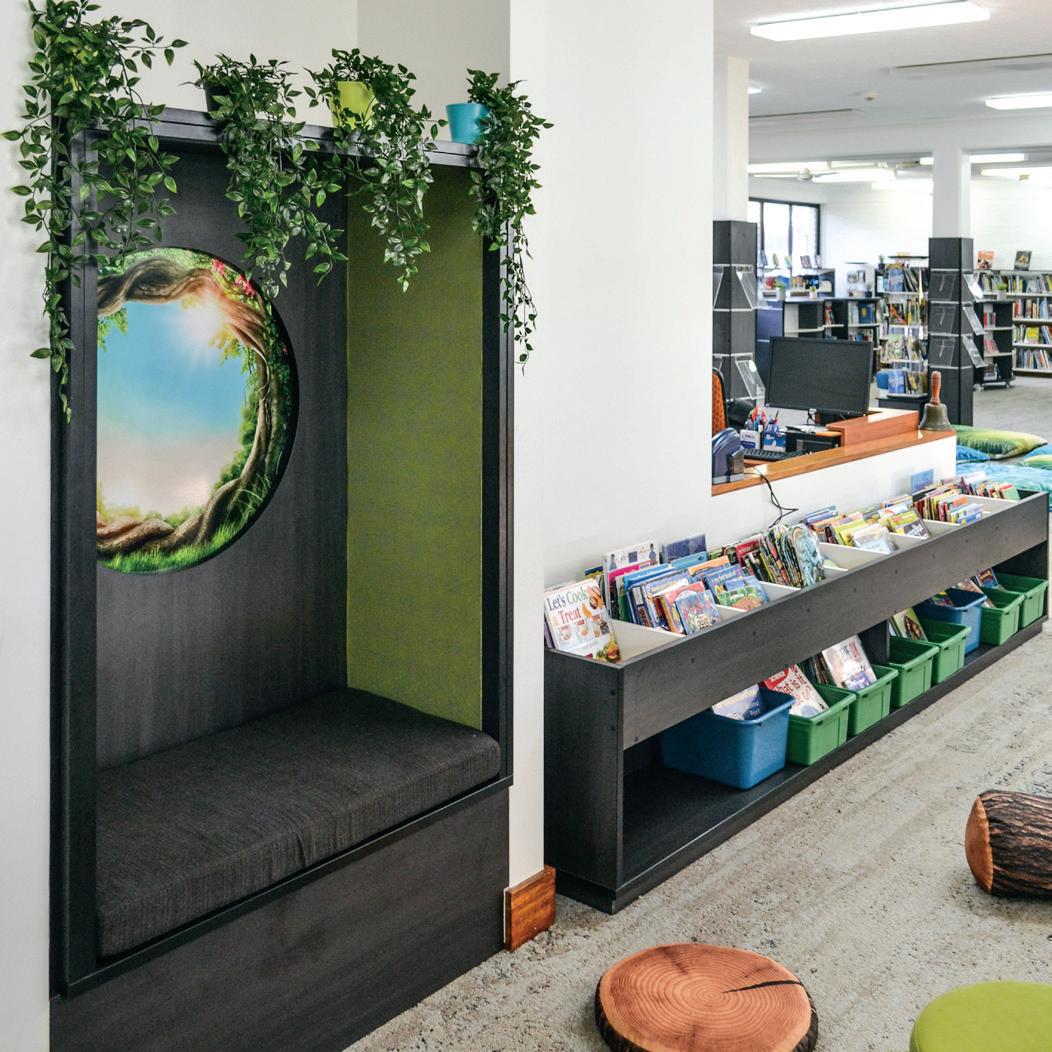
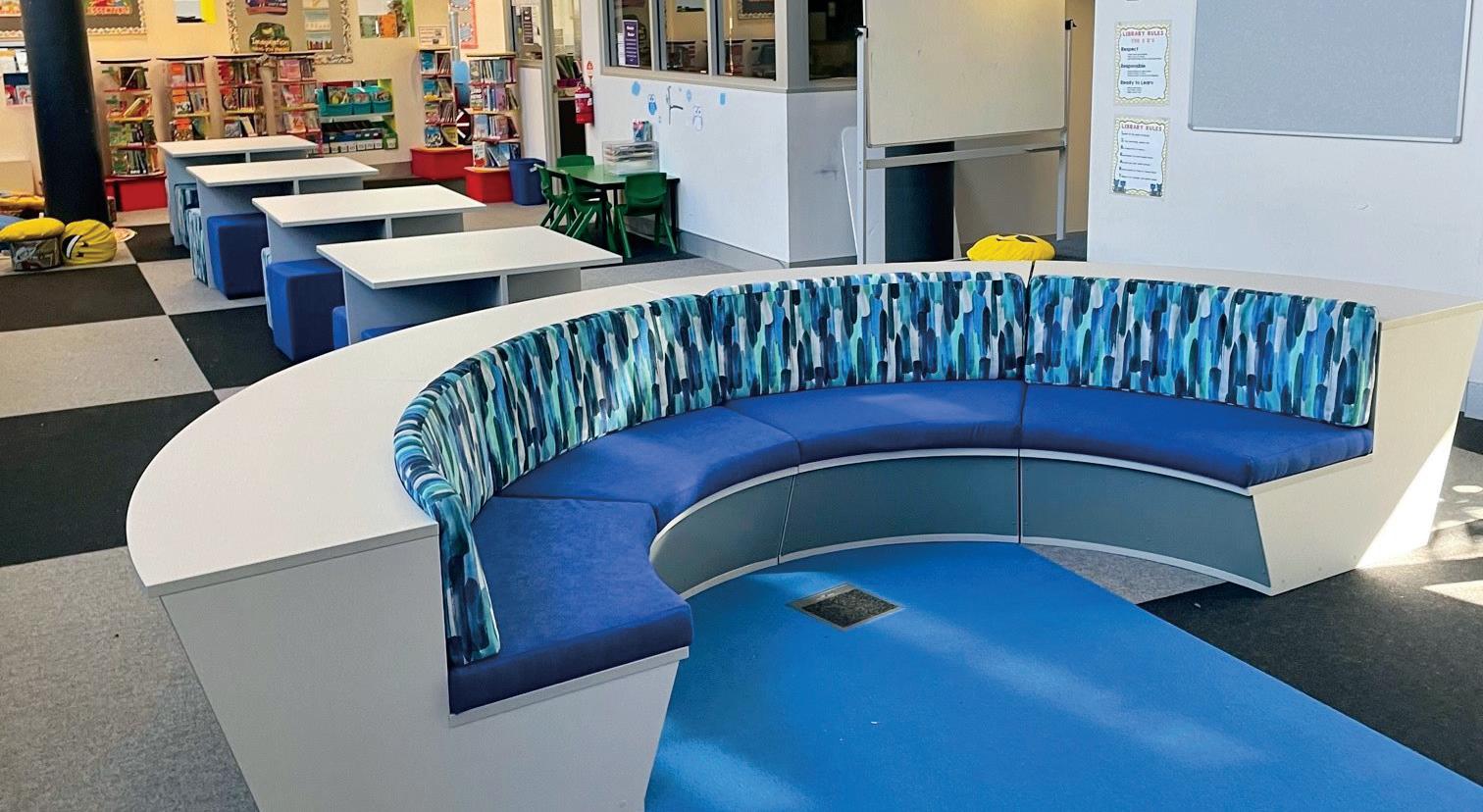
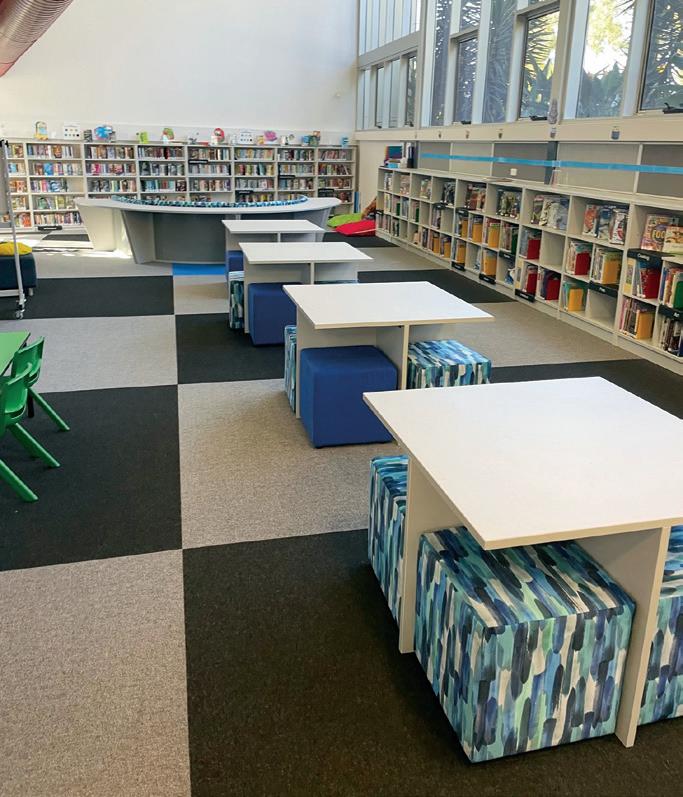
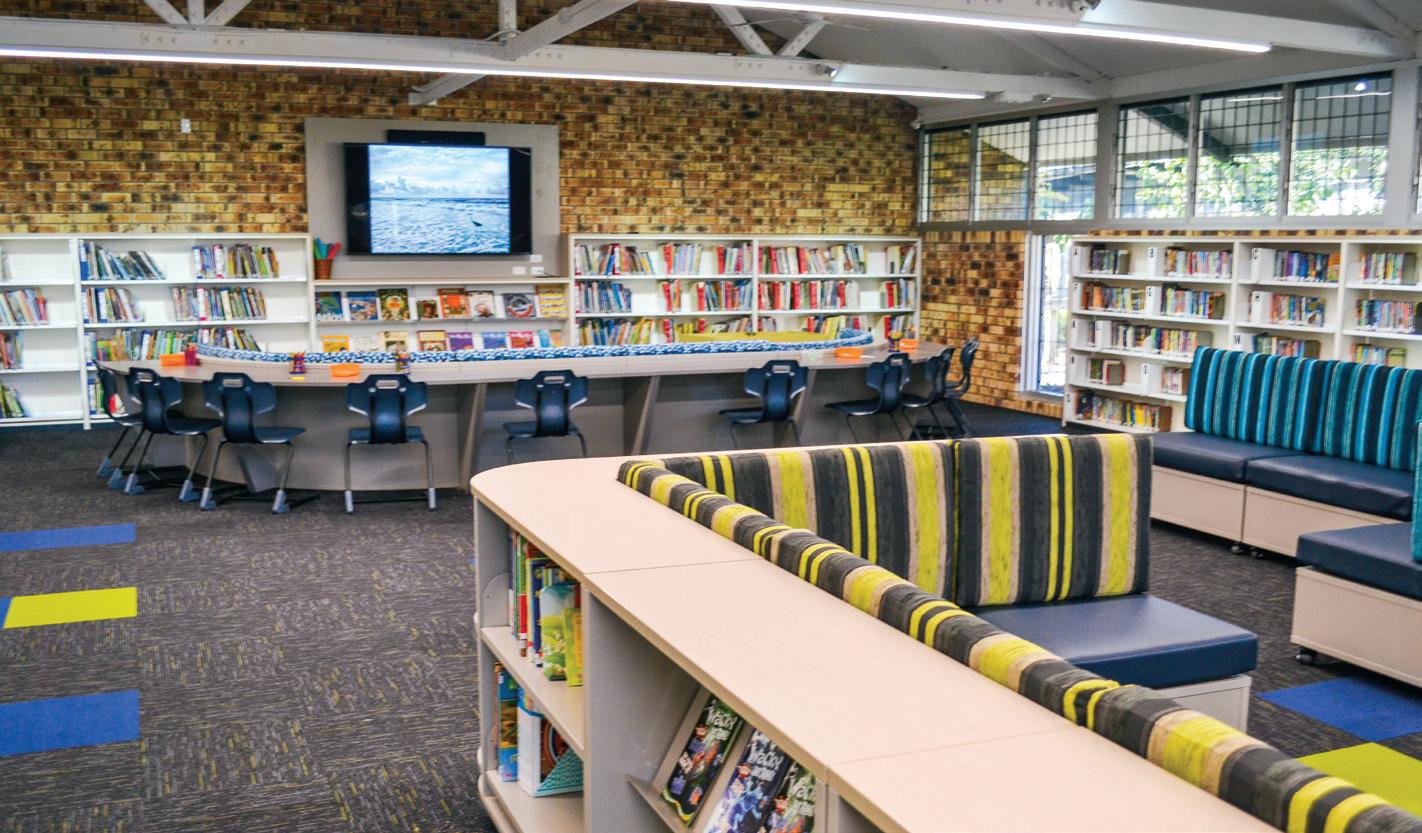
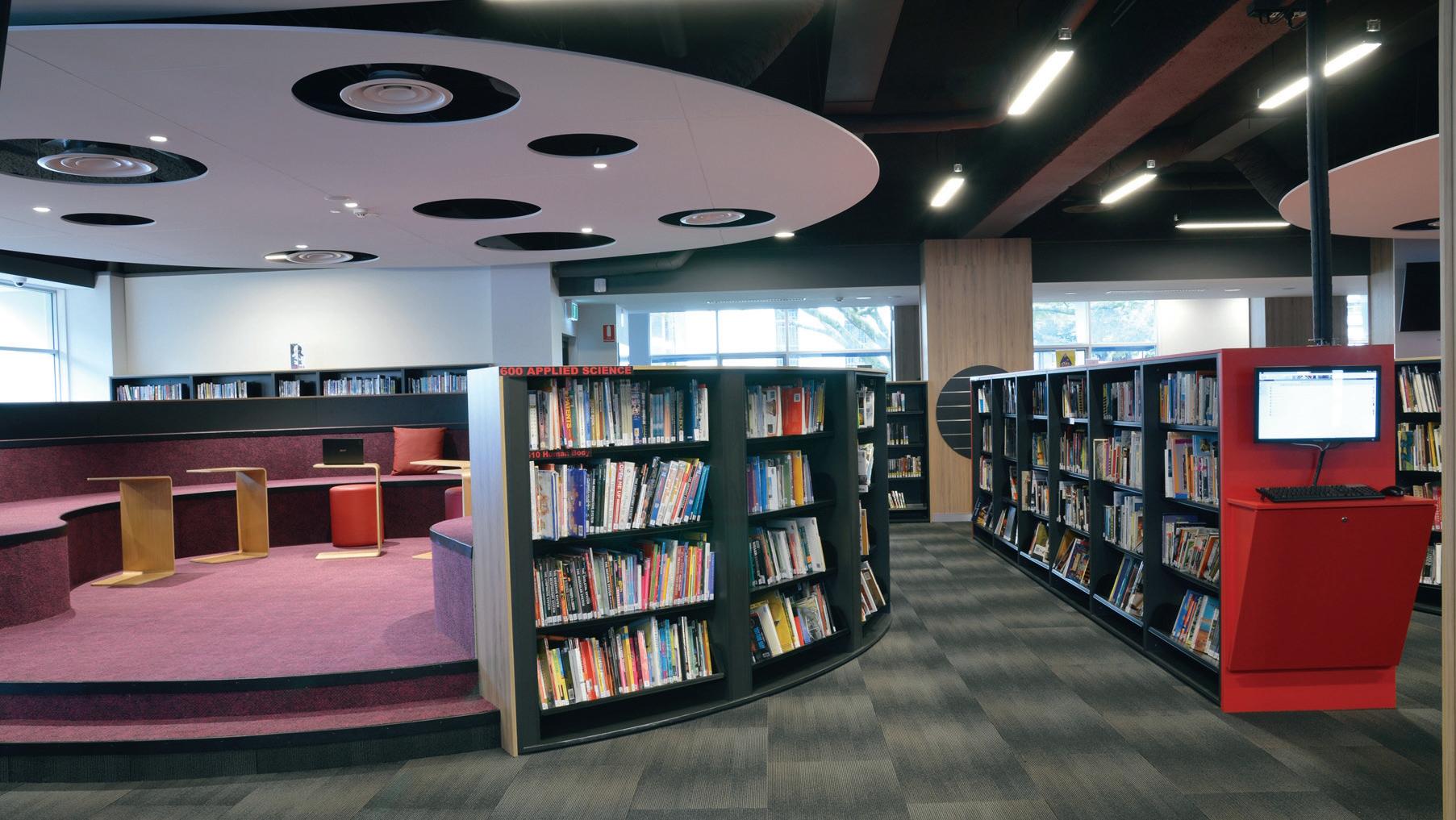
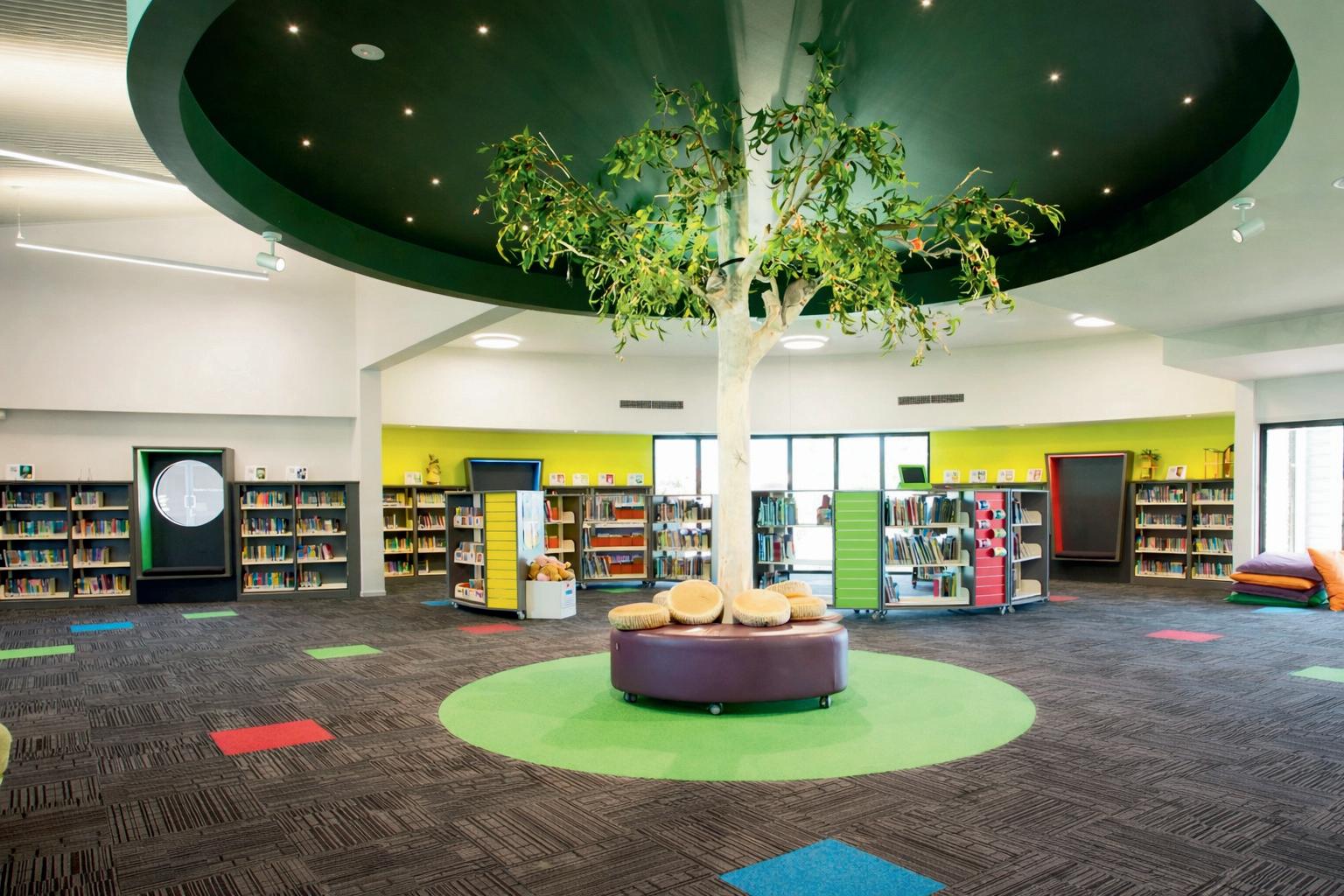
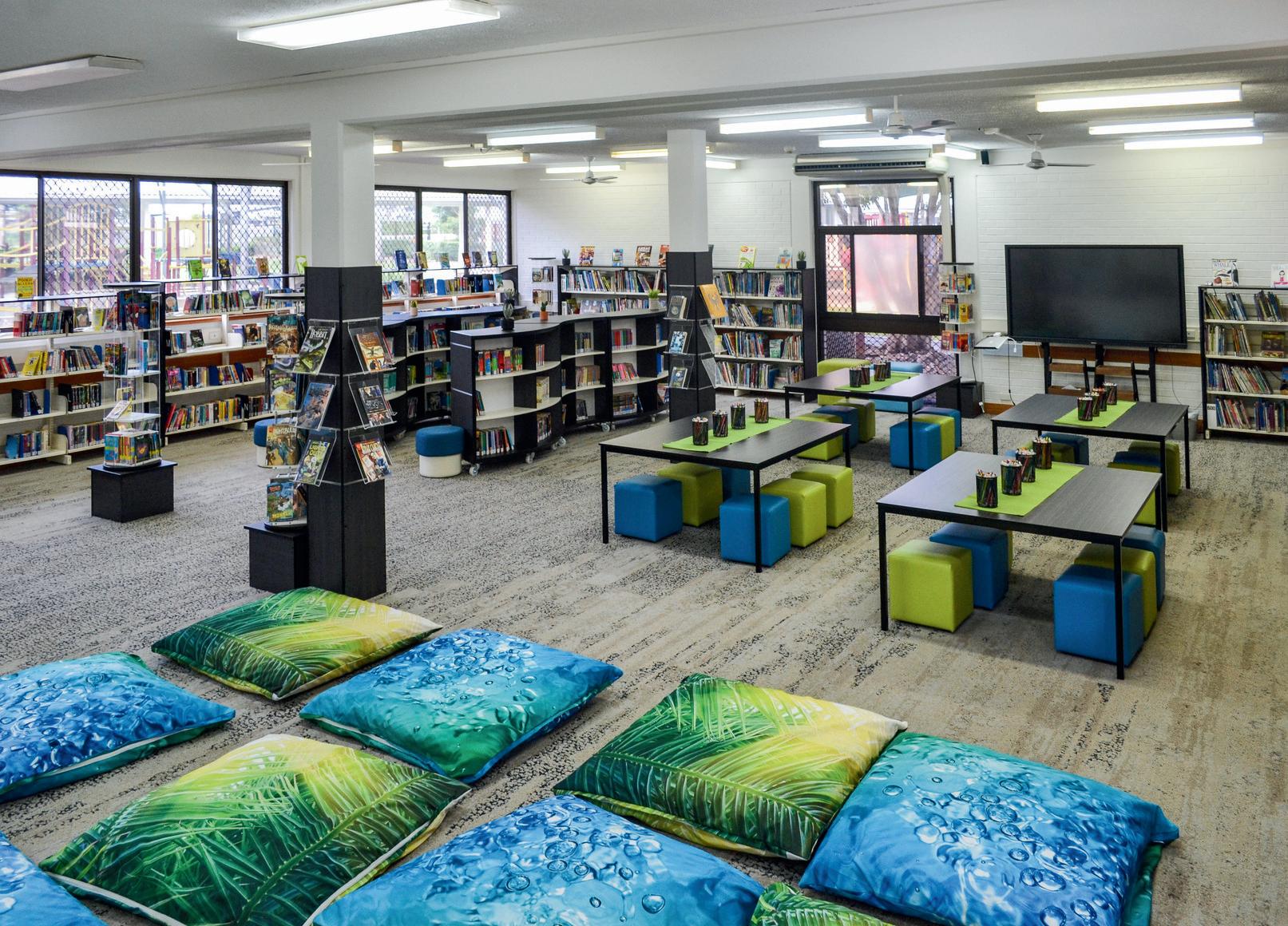
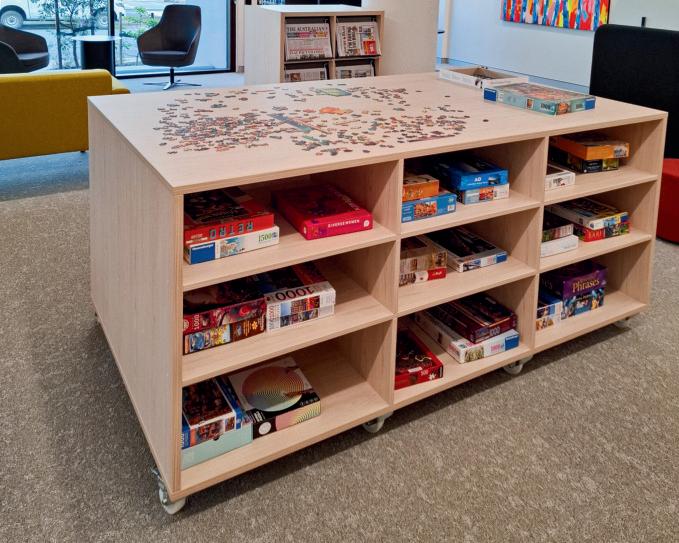
Flexible furniture plays a key role in supporting this evolution. Rather than rigid rows of desks and shelving, modern libraries are more often designed with modular lounges, low-level seating, reading nooks, and mobile shelving that allow the space to adapt throughout the day.
In many schools, the library may host quiet study in the morning, collaborative workshops by lunchtime, and after-school clubs later in the afternoon. Furniture choices need to support all of these functions without creating clutter or confusion.
Ms Senbel-Lynch said intentional zoning is critical to making these multi-use environments successful.
“Quiet areas should be clearly separated, visually and acoustically, from collaborative zones. Mobile furniture, movable shelving, and modular layouts allow spaces to be reconfigured throughout the day. Clear signage and subtle design cues, like lighting, flooring and furniture style, help guide behaviour without needing constant supervision.
“Furniture and layout are also critical, and shape how the space is used. A mix of seating types supports different learning preferences and accessibility needs. Layout should allow for easy movement, visibility, and supervision, while also creating smaller nooks for focus.
“Inclusive design ensures all students can comfortably engage with the space. Making it visually appealing also helps in making students want to come back again and again.”
However, a successful school library is not only about comfortable seating or
attractive shelving, but about what students find when they walk through the door.
Diverse, representative collections help students see themselves reflected in stories while introducing them to experiences beyond their own. One of the ways children can see their cultures, identities and strengths acknowledged and valued is through reading. Literature gives students the opportunity not only to recognise themselves, but to better understand others.
This idea is succinctly captured through Dr Rudine Sims Bishop’s concept of books as mirrors, windows and sliding glass doors. This means students need mirrors to see their own lives reflected back to them, windows into the worlds of others, and sliding glass doors that allow them to step into experiences beyond their own.
Digital resources are also an increasingly important part of the library experience. E-books, online databases and self-service borrowing systems all support modern learning and research skills.
But digital integration is about far more than convenience. Libraries are also becoming central to teaching information literacy, helping students navigate a world increasingly shaped by generative AI, misinformation, and constant digital noise.
Qualified library staff play an essential role in guiding students through this landscape, helping them evaluate sources, understand digital safety, and build the critical thinking skills needed to engage confidently with online information.
This blend of physical and digital learning means libraries must be designed with both technology and wellbeing in mind, balancing connectivity and student collaboration with spaces for focus and reflection.
For schools looking to renovate or refresh their library, Ms Senbel-Lynch recommended starting with how the space will be used, not just how it will look.
“Engage staff and students early to understand needs. Prioritise flexibility and avoid fixed layouts where possible. Invest in durable, modular furniture and ensure strong integration with technology.
“Finally, keep it simple and futureproof: a well-zoned, adaptable space will stay relevant far longer than a highly specialised design.”
When thoughtfully designed, school libraries become more than resource centres. They become places where literacy grows, curiosity is encouraged, and students learn how to engage with the world around them.
Images courtesy of Quantum Library Supplies
Smarter school libraries by design
School libraries are evolving, and with that evolution comes a shift in how these spaces are designed, used, and managed. At Quantum, we work closely with schools across Australia to create library environments that are not only inspiring, but highly functional and easy to manage.
From our experience, the most successful libraries start with one key principle: design for how the space will actually function day to day.
Flexible furniture is a big part of this. Every school is diff erent, and a one-size-fi ts-all approach simply doesn’t work. That’s why we off er a wide range of furniture options: from modular lounges and low seating to mobile shelving, allowing each library to be tailored to the way students and staff actually use the space. A well-designed library should be able to shift eff ortlessly between quiet reading, collaborative learning, and group activities throughout the day.
We often work with schools early in the design phase to map how the space will be used across a typical week. This helps ensure that furniture selections, layouts, and zoning decisions are practical, not just visually appealing. The result is a space that feels intuitive, comfortable, and adaptable from the moment it is in use.
But furniture alone doesn’t make a library functional.
As libraries become busier and collections grow, efficiency in how resources are managed becomes increasingly important. This is where RFID technology has proven to be a game changer. Quantum has implemented RFID systems in many school libraries, simplifying borrowing and returns, improving stock visibility, and reducing the need for manual handling.
For students, this creates a smoother, more independent experience through self-check stations. For staff, it frees up valuable time to focus on supporting students and delivering meaningful library programs rather than managing transactions. It also enables faster stocktakes and
better visibility of resources, which is particularly valuable in larger or multi-campus schools.
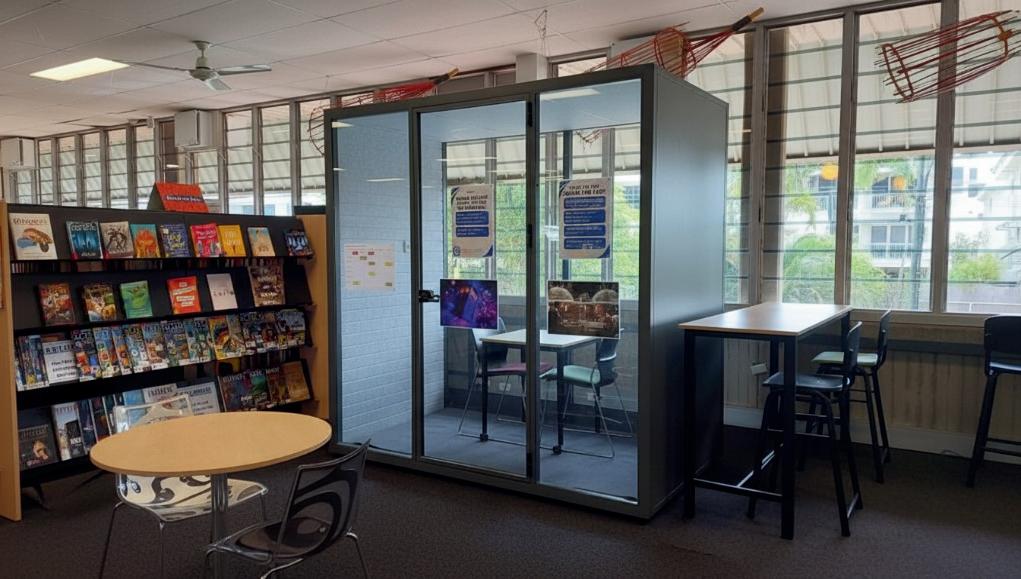
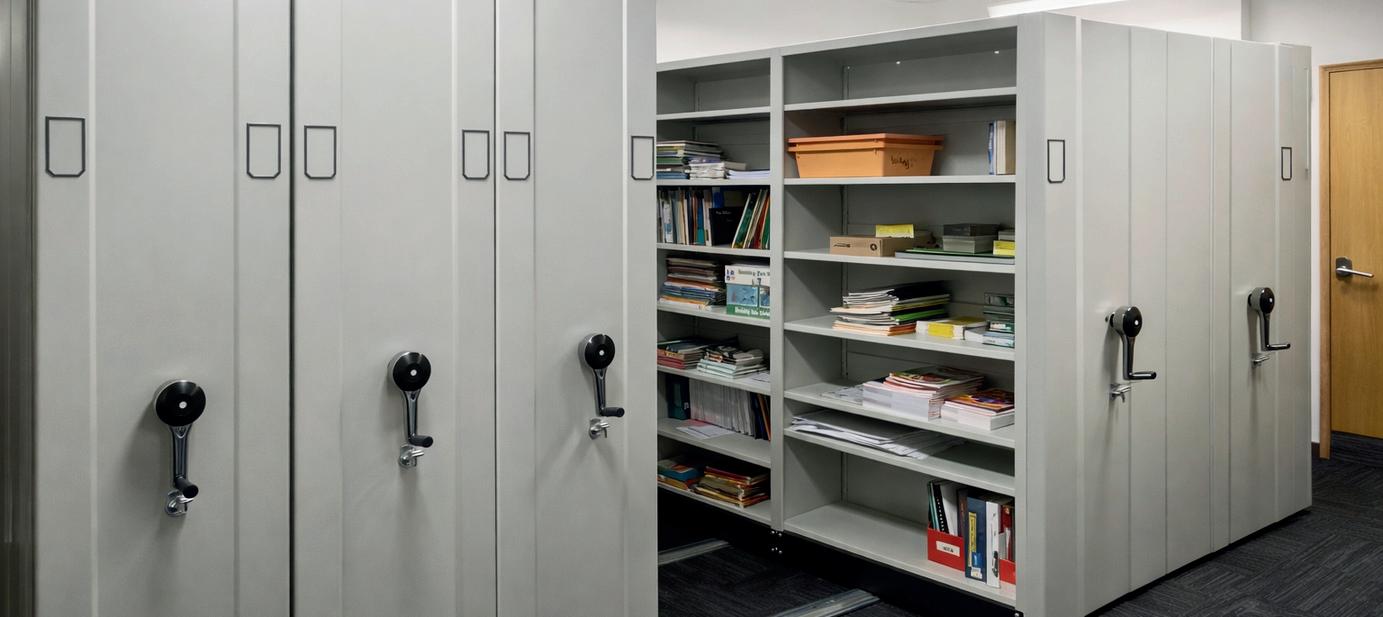
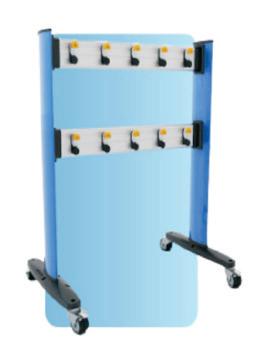
Creating the right balance between collaboration and quiet is equally important. As libraries become more open and fl exible, dedicated quiet spaces are essential. Our Silent Pods provide students with a place for focused study, reading, or downtime, without needing to leave the library environment, helping schools cater to a wider range of learning needs. These spaces are particularly valuable for senior students, neurodiverse learners, or anyone needing a moment of calm within a busy school day. Beyond the library itself, we always encourage schools to think about the wider ecosystem of storage and movement within the space. Practical infrastructure, such as bag racks, mobile understage trolleys for assemblies and events, and compactus systems for highdensity storage, plays a critical role in keeping spaces organised, accessible, and adaptable.
For example, well-positioned bag racks can significantly reduce clutter and improve safety within the library. Understage trolleys allow equipment and resources to be moved efficiently between spaces, supporting events and shared learning environments. Compactus systems,
on the other hand, provide a smart solution for maximising storage capacity without increasing footprint which is ideal for schools needing to store archives, resources, or specialised collections.
These elements may not always be the most visible part of a library fi t-out, but they are often what make the biggest diff erence to how well the space functions over time.
We also place a strong emphasis on layout and fl ow and ensure that diff erent zones within the library work together rather than compete. Clear pathways, logical zoning, and thoughtful placement of key elements help create a space that feels easy to navigate and supports both independent and supervised use.
At Quantum, we don’t just supply products, we help schools design complete, cohesive environments. From layout planning and shelving to RFID integration and storage solutions, our approach is focused on delivering libraries that are efficient, fl exible, and built to support modern learning.
If you’re planning a new library or looking to upgrade an existing space, talk to Quantum Library Supplies. We’ll help you design a library that works beautifully, practically, and for the long term.
Smart Library Technology
Quiet Spaces That Work
Flexible Furniture Solutions
A
Storage That Makes Sense
Strengthening teaching practice with professional learning
By Milly Fullick, Industry Reporter
Professional Learning and Development
(PLD) is much more than an annual checklist exercise; it can be a rich opportunity to upskill, maximise staff’s talents and improve outcomes for students.
Teaching is a dynamic profession with subject matter, theory and practice constantly evolving. Most schools’ staff are made up of educators at different stages of their teaching career, but experienced teachers know as well as new ones that learning never stops.
Digital upskilling
Developments in technology are happening at breakneck pace, so it’s no surprise that a 2024 report showed teachers in Australia feel underprepared and underequipped to deliver the Digital Technologies Curriculum (DTC).
There are several PLD options that focus specifically on the DTC to support teachers who are experiencing challenges with it.
Outside of help specifically with teaching the curriculum, there are courses that can help teachers with implementing and integrating technology in the classroom more broadly, including the use of AI to benefit both students and teachers.
Training is also available for a variety of classroom tools; check with your school’s Main Learning Display (MLD) and other technologies providers as some offer brand-specific PLD.
PLD for a better curriculum
Of course, PLD is a great way to refresh and refine teaching across the curriculum. There are a variety of sources
for subject-specific PLD, including government bodies, subject organisations and specialist PLD companies.
From music to maths, PLD can also take a variety of formats, including presentations, printed materials and digital modules, so there should be something for all PLD needs. This variety is particularly relevant in primary schools, where teachers deliver subjects that they do not specialise in, so regular opportunities to learn and develop are crucial.
Unlocking the curriculum for students means helping teachers to work with all young people. Many organisations offer PLD that focuses on empowering and engaging learners
with disabilities, additional needs and/or neurodiversity. Others can offer insights into supporting the learning of First Nations students, with offerings from understanding cultural practices to developing knowledge of Aboriginal and Torres Strait Islander histories.
Customised PLD
Sometimes, school staff’s needs won’t align perfectly with the ready-made courses that PLD providers offer. If you only need some topics covered, but perhaps in more depth, consider contacting the provider to see if the program can be customised to address the specific needs and setting of your school. Many already offer ‘mix and match’ units that can help ensure that learning is targeted and irrelevant content is eliminated.
Many digital PLD platforms also now offer programs that can be tailored to regions, schools and even individual staff members, often using AI to respond to custom input from school leadership and staff. Engaging with bespoke, digital PLD means that staff can work at their own pace at a time that suits them, though this approach may work best when paired with opportunities to share learning and offer feedback face-to-face.
University PLD
Australia’s universities are a great source of PLD for educators. Most offer a range of options to suit a variety of time commitments and levels of qualification.
For teachers eager to develop their skills in a particular area, micro credential courses offer university-level instruction without the commitment to full-time study. Courses often take only a couple of hours a week, and offer a range of topics from teaching English as an Additional Language (EAL) to classroom management and phonics instruction.
Images courtesy of Musica Viva Australia
Some universities also offer shorter, more traditional PLD courses, with focuses including children’s literature, healthy relationships education and primary to secondary school transition.
Whatever your school’s location, needs and challenges, there are PLD options to help teachers grow and develop, and maintain their love of lifelong learning.
A sample of PLD available to Australian
educators
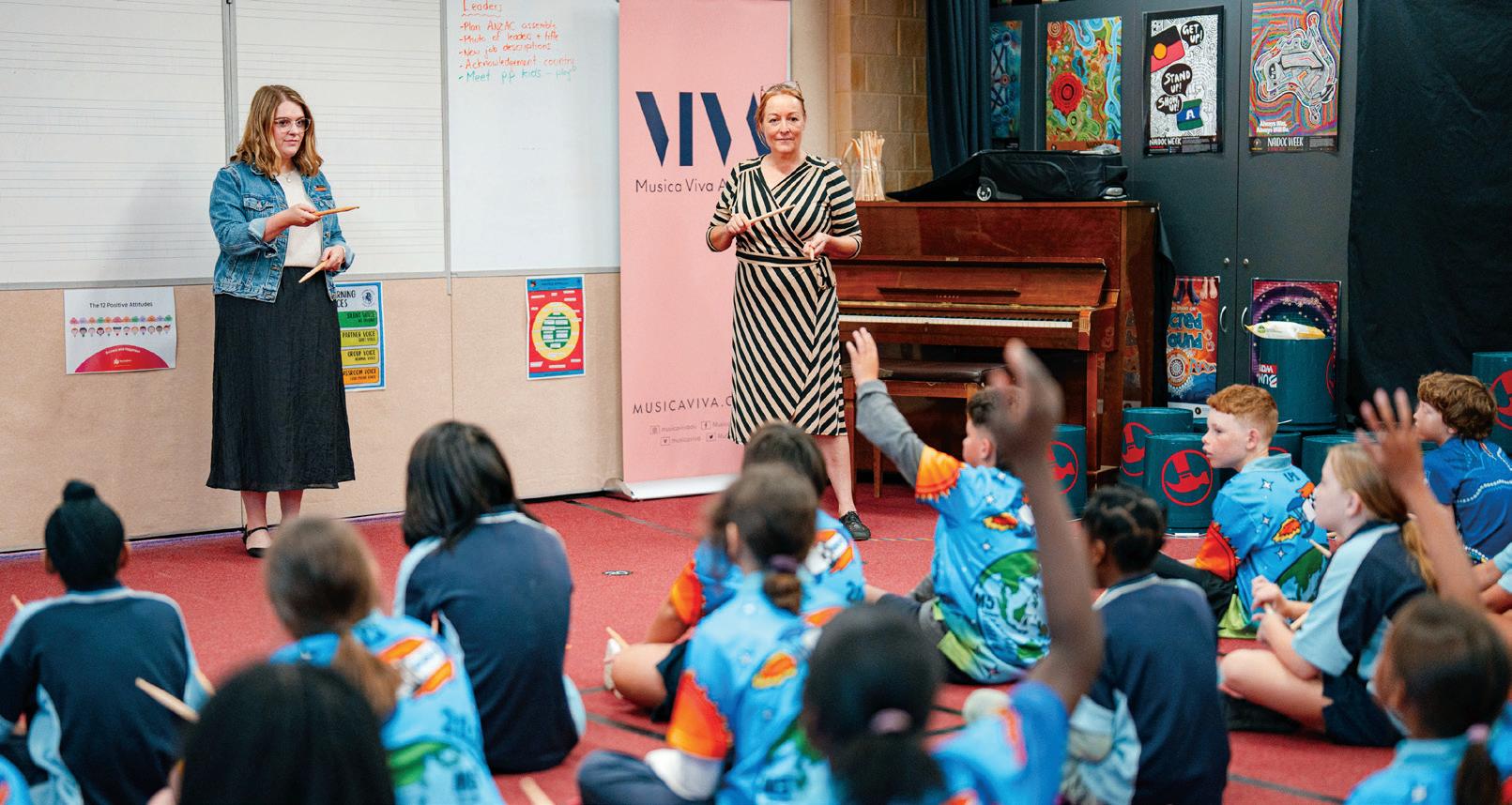
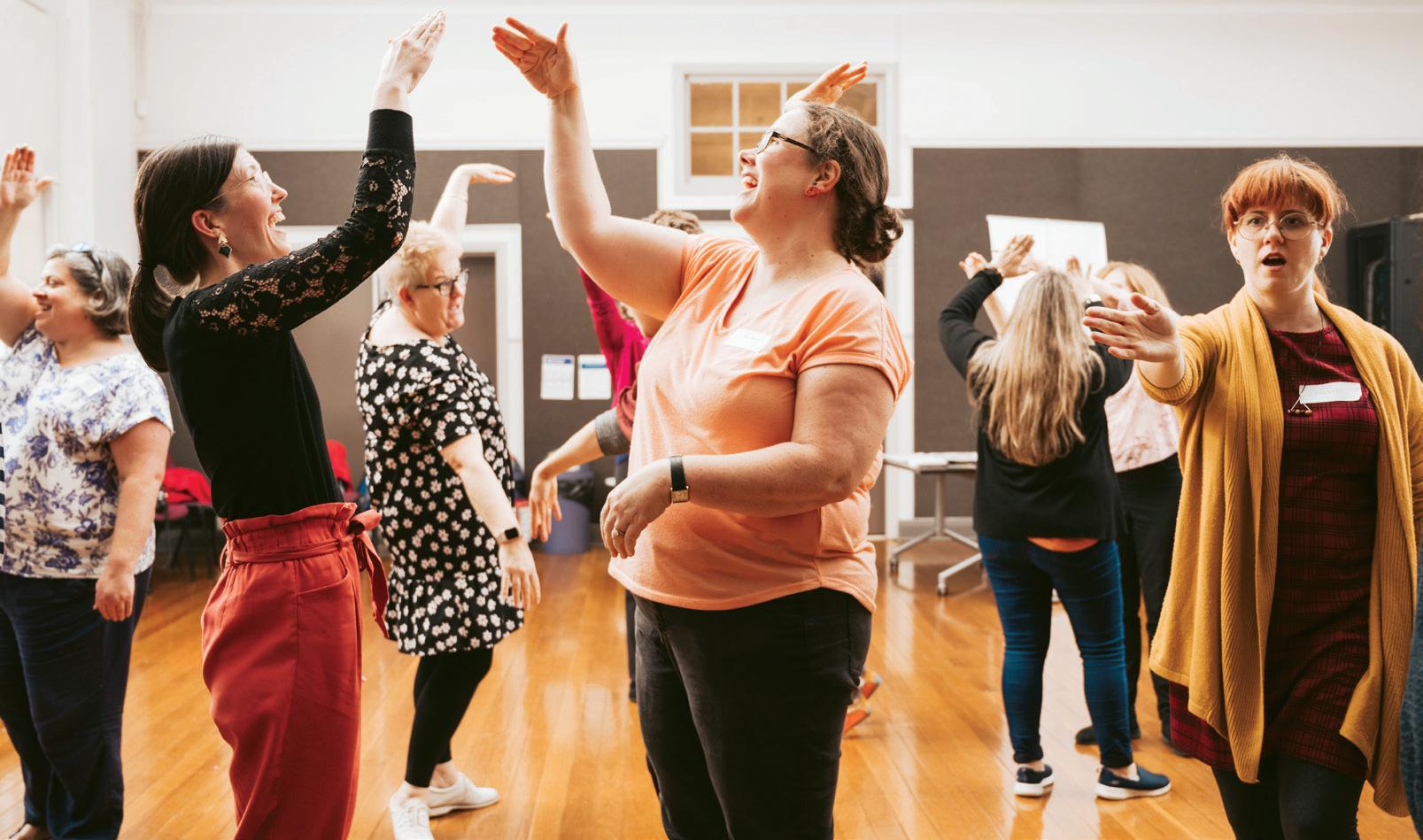
High-quality music education thrives when teachers feel confident, supported and inspired. Musica Viva Australia offers a comprehensive suite of professional development opportunities designed to empower educators at every stage of their music teaching journey.
Available nationally, Musica Viva Australia’s free PLD workshops and webinars provide practical, curriculum-aligned strategies that teachers can immediately apply in the classroom.
Delivered by experienced music educators, these sessions support both specialist and generalist teachers to build confidence, improve student engagement and develop effective teaching approaches.
A 2026 webinar series includes topics such as music-centred technology, neuroscience-informed teaching, and planning end-ofyear school performances.
For schools booking a Musica Viva Australia In Schools
MUSICA VIVA AUSTRALIA EDUCATION PROGRAM BOOKINGS NOW OPEN
Packed with 14 culturally diverse incursions, free professional development workshops, and comprehensive teaching resources to support educators in every classroom, our program is sure to inspire teachers and students alike. Head to our website to discover the full lineup and book now!
incursion, additional tailored PLD webinars are included, helping teachers maximise the impact of live performances through classroom integration and extended learning.
For those seeking more in-depth learning, the Music Education Skills for the Primary Classroom (MESPC) course offers a structured 12-week online program.
Designed for teachers with limited music experience, the course provides practical tools,
lesson ideas and assessment strategies, contributing 14 hours of accredited professional development aligned with the Australian Professional Standards for Teachers.
Flexible, accessible and grounded in classroom practice, Musica Viva Australia’s PLD programs are designed to strengthen teaching practice and support meaningful music learning outcomes for students across Australia.
Images courtesy of Musica Viva Australia
EDUtech returns for 2026
By Gemma Easton , Editor
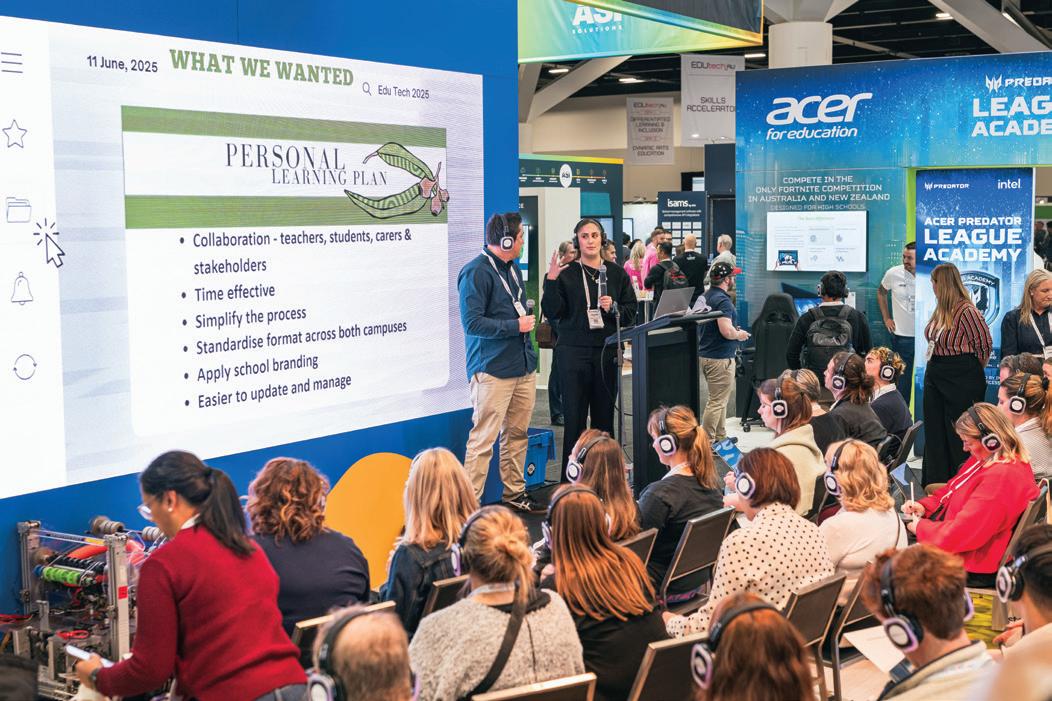
EDUtech, Australia’s largest conference for educators and edtech providers, will return to Sydney this June.
Across two days on June 3 and 4, EDUtech, presented by Terrapinn, will transform the International Convention Centre, Sydney, into a hub for education discussion, collaboration, innovation and experimentation. Attendees will have access to world class education innovators and experts, the latest in
Tailor your EDUtech experience to best suit your schedule and professional learning needs
products and programs for learning and teaching, and unlimited networking.
The event features a massive 15,000 square metre trade show with 320 exhibitors, multi-streamed conferences running in parallel, and dozens
of training forums, practical seminars and professional development sessions. All participants receive attendance certificates, recognised as professional development in most jurisdictions.
EDUtech spans the entire
learning cycle, from K to 12, Higher Education, and Vocational Education. Similarly, EDUtech is relevant to all roles within the education sector, including school leaders, department heads, curriculum leaders, teachers, business managers and more. P28
EDUtech 2025 images supplied by Terrapinn
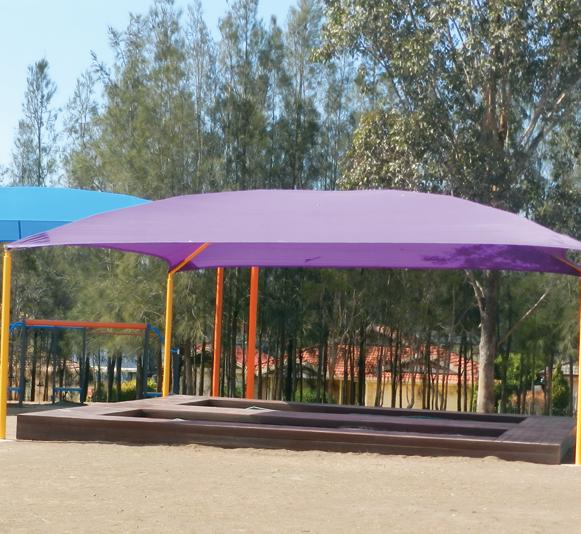
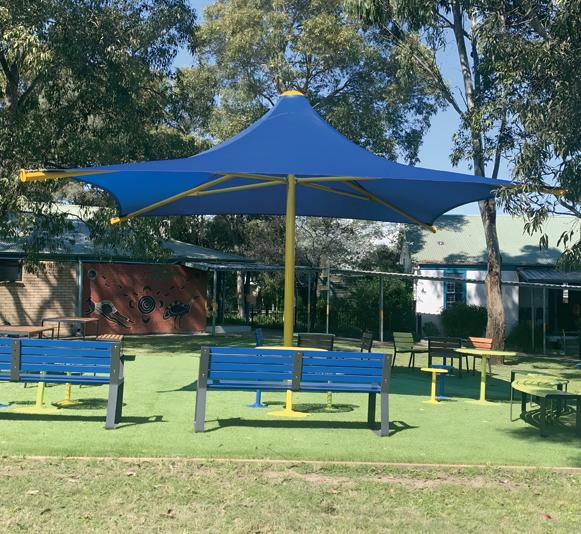
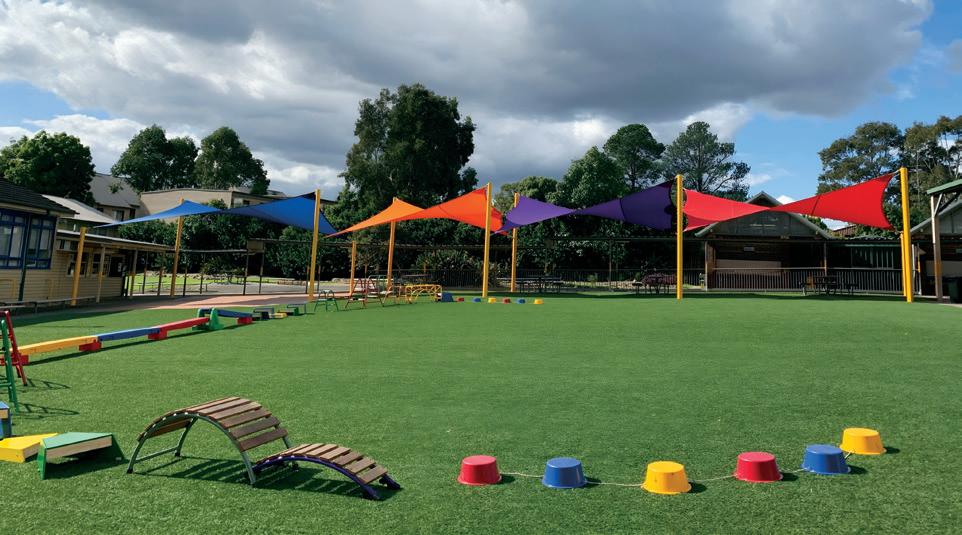
Helping schools create safer, more usable outdoor spaces with shade
Schools are placing a stronger focus on student wellbeing, and that includes making sure outdoor spaces can be used safely while protecting students from harmful UV exposure.
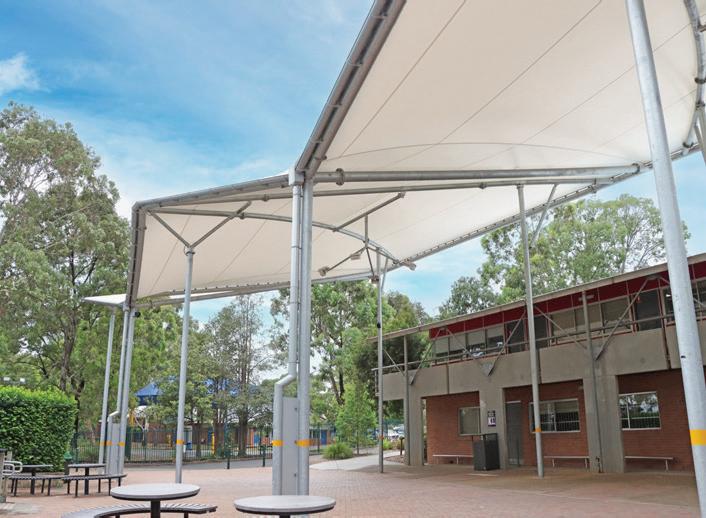
We see how much of a difference effective shade can make in high-use areas like sports courts, helping create more comfortable, sun-safe spaces that can be used throughout the day and across all seasons.
The challenge of exposed outdoor spaces
We often see schools with great outdoor areas that aren’t being used as much as they could be, mainly due to harsh UV, heat and glare. Without proper shade, these spaces can become too uncomfortable during peak periods, which limits how they’re used for sport, play and outdoor learning.
A custom-engineered solution
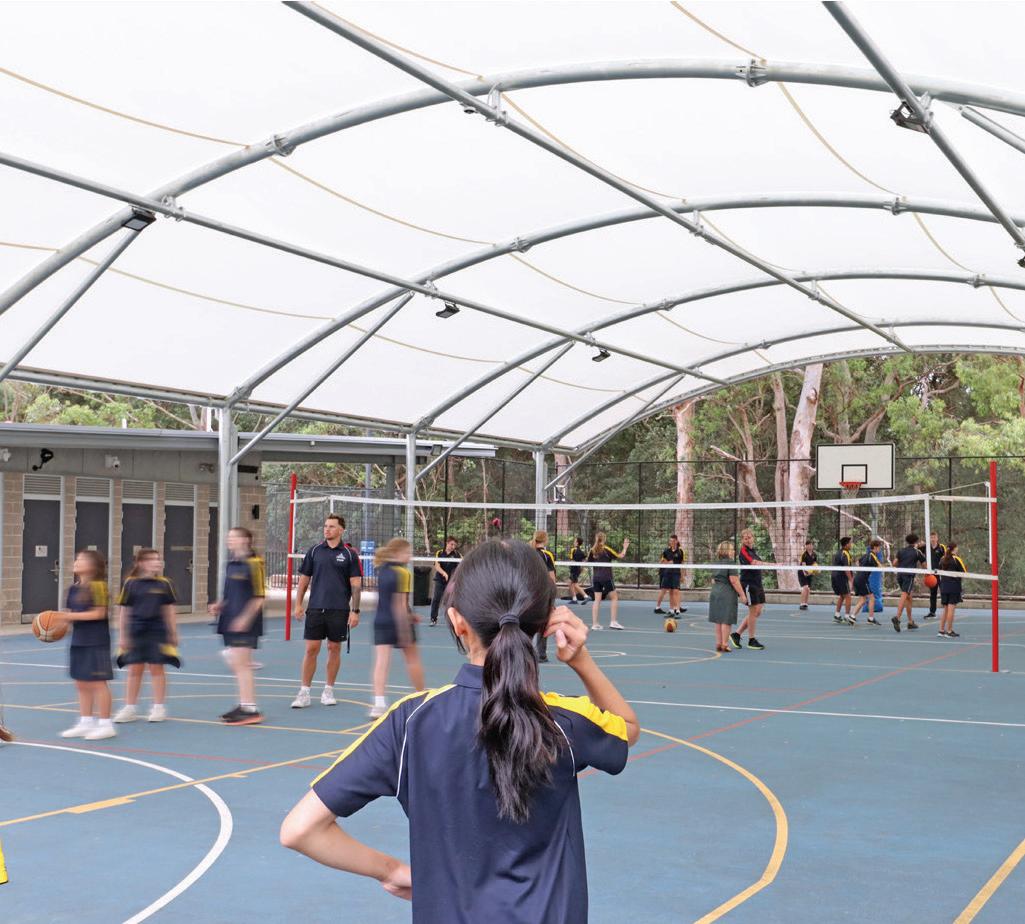
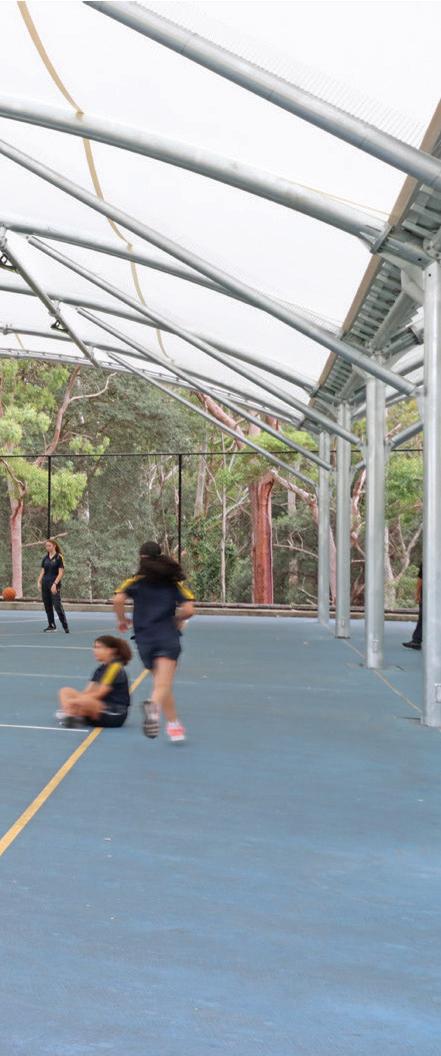
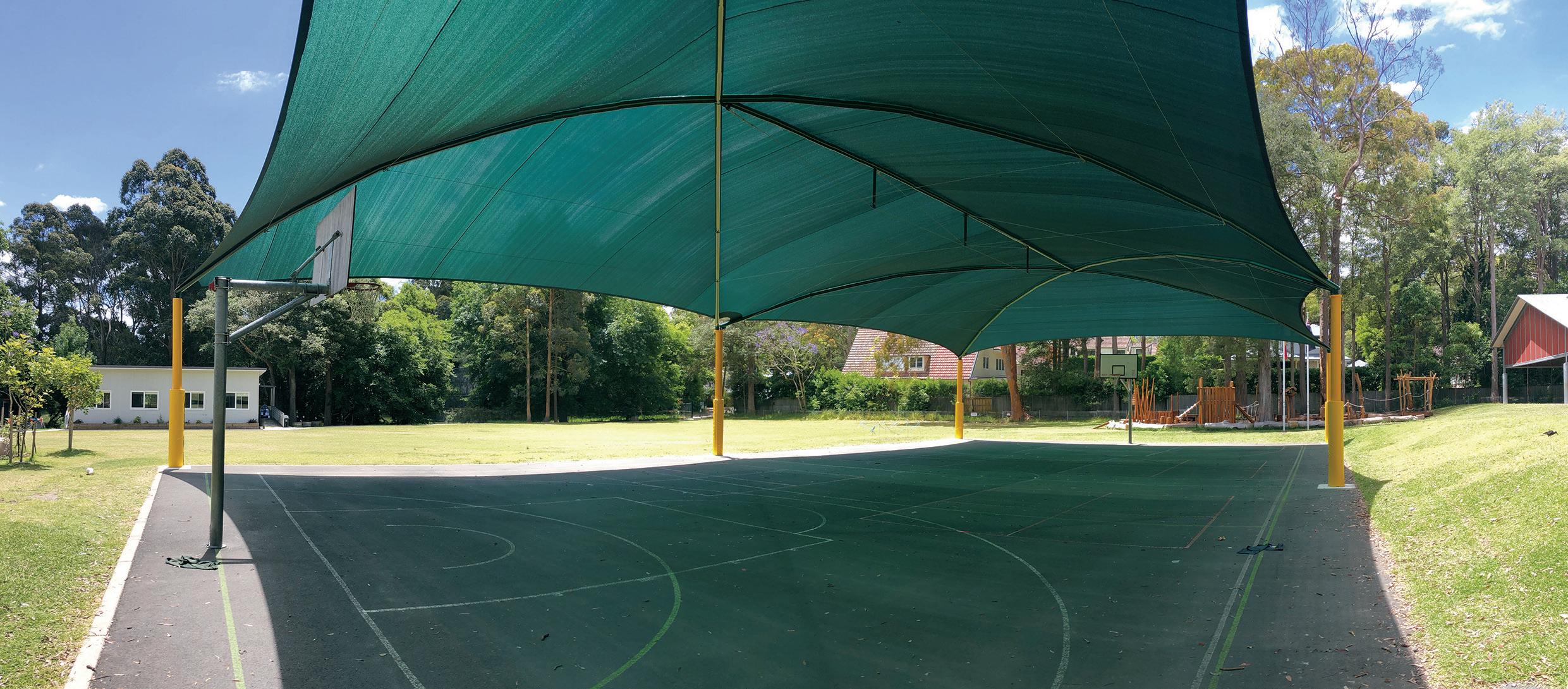
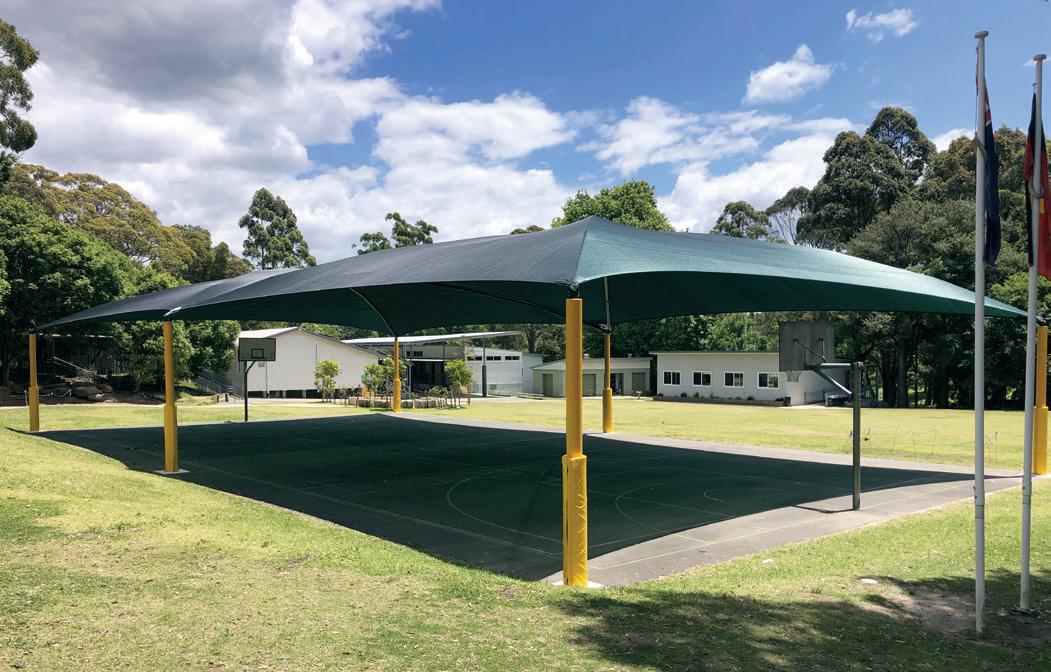
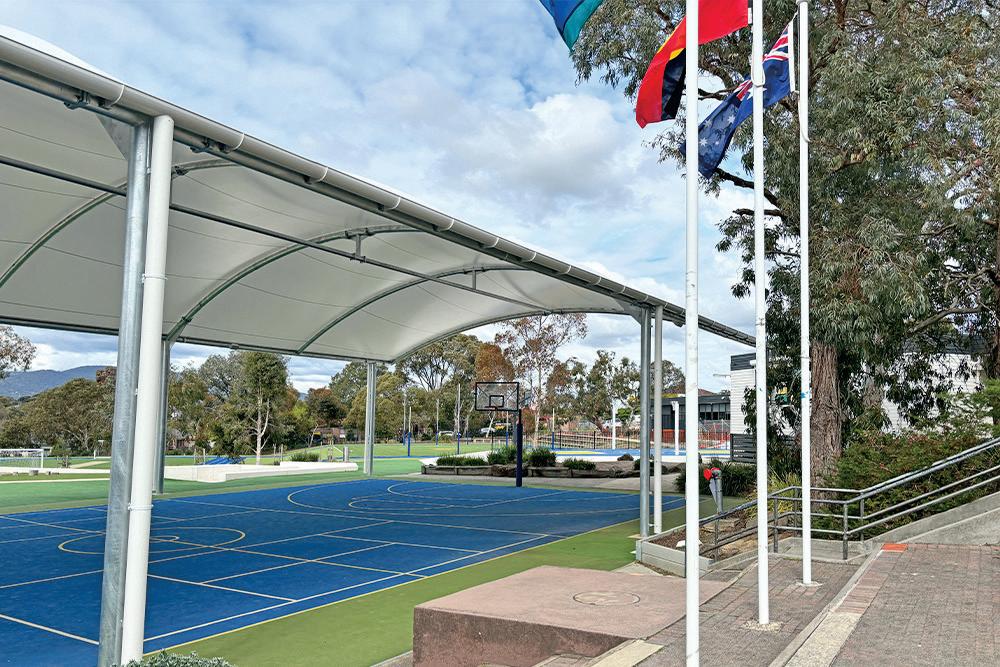
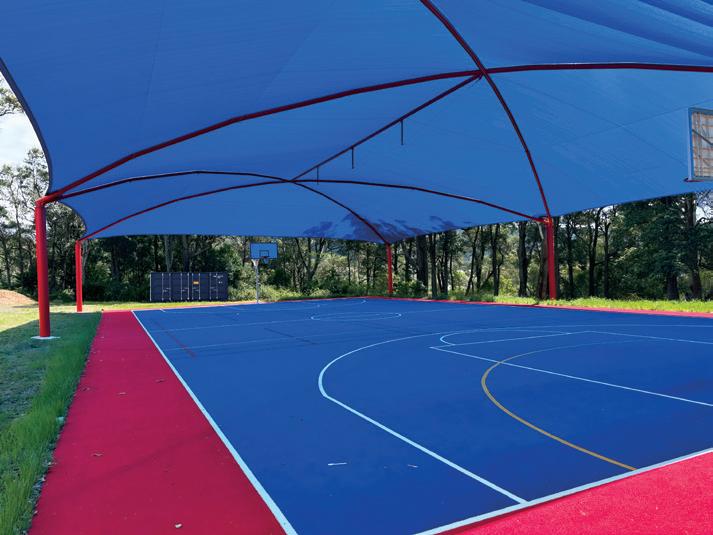
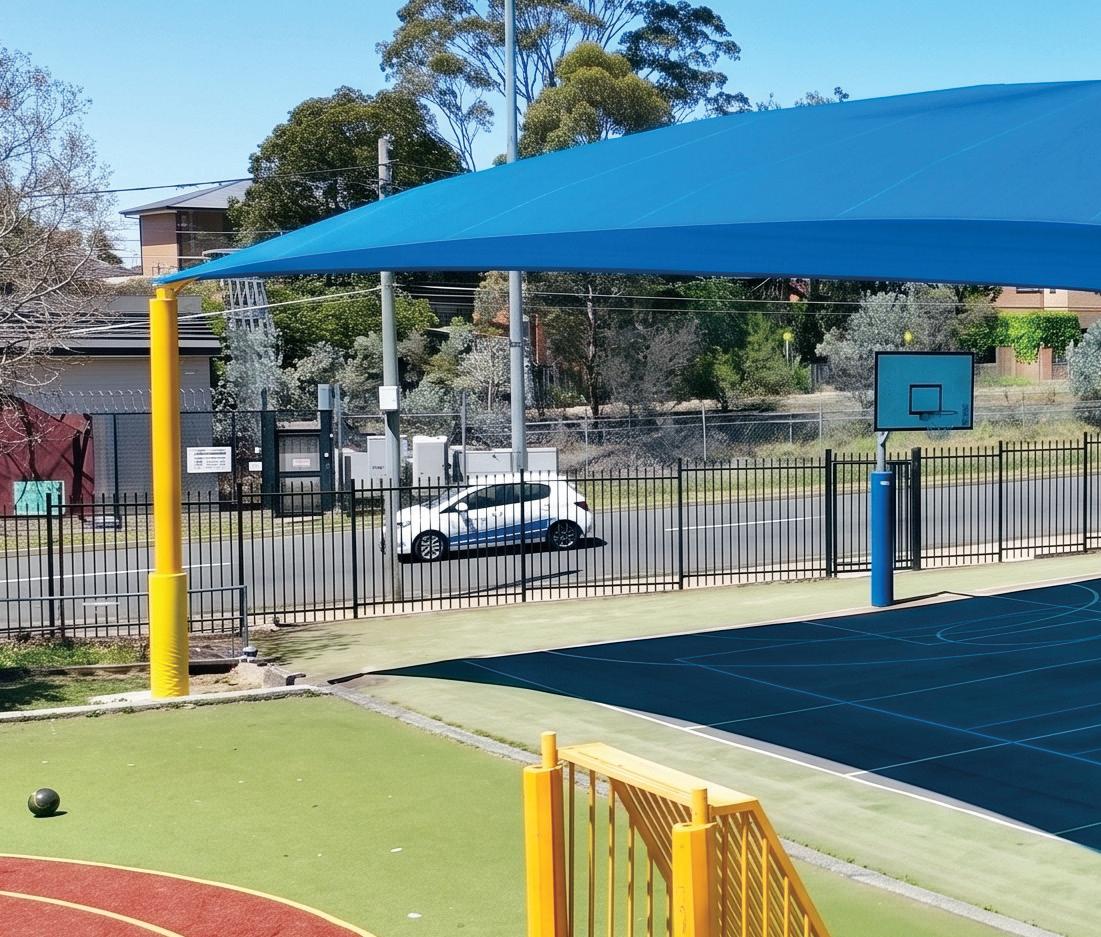
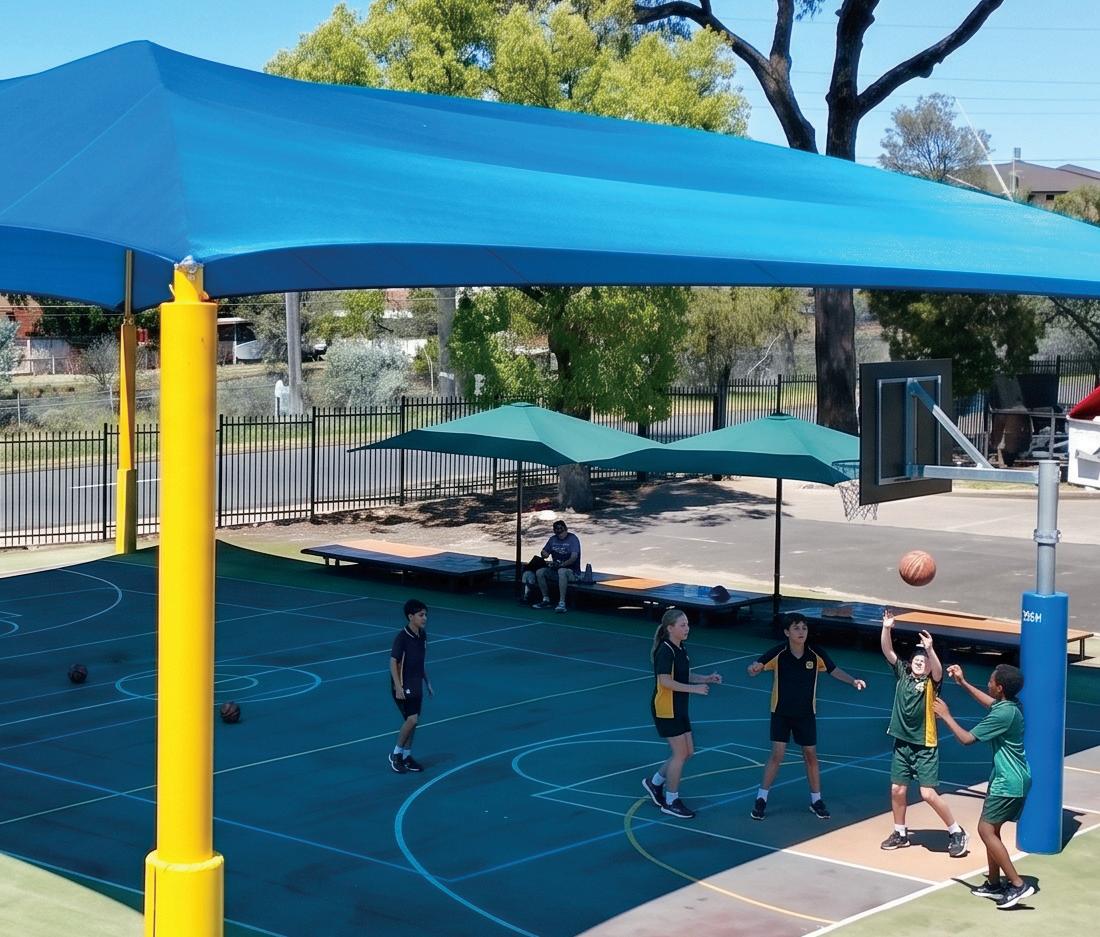
To address this, Sun Shade Australia worked closely with the school to deliver a large-span SSA Superspan™ structure, providing consistent shade coverage across the entire outdoor court.
The design was carefully considered to suit the site conditions and how the space is used every day, ensuring it performs well in real conditions, not just on paper. It was engineered to meet Australian Standards, while also shaping the canopy to manage wind loads and reduce the risk of
water pooling. With the structure manufactured locally in Sydney, the project allowed for strong quality control and a reliable delivery timeline, giving the school confidence in the structure’s long-term performance.
Designing for performance and usability
When designing large-span shade structures, it’s not just about the structure itself, it’s about how the space will actually be used day to day.
By minimising the number of support posts, the design keeps the area open and unobstructed, so it can be used freely for sport, physical education and group activities.
The shade fabric is selected to provide effective UV protection while still allowing natural light through and air to circulate, helping to reduce heat build-up under the canopy and create a cooler, more comfortable space for students and staff.
Supporting safe, active outdoor play
Having comfortable, shaded outdoor spaces gives schools the confidence to let students spend more time outside, knowing they’re protected from the sun.
When students have safe spaces to move, play and get fresh air, it supports their overall wellbeing and helps them stay more engaged throughout the day.
With the right shade in place, these areas can be used more consistently throughout the day, supporting everything from sport and assemblies to informal learning and social interaction.
A long-term approach to sun safety
As awareness around skin cancer continues to grow in Australia, we’re seeing more schools take a proactive approach to how they protect students in outdoor spaces.
It’s not just about adding shade, it’s about creating environments where students can be outside, active and comfortable, while reducing their exposure to harmful UV rays.
Well-designed, engineered shade structures provide a long-term solution, giving schools confidence that their spaces are not only usable, but safer for students every day.
The outcome
The completed structure has made a real difference to how the space is used day to day. The court is now shaded, more comfortable, and able to be used more consistently throughout the year.
With reduced exposure to harmful UV rays, the school can confidently use the space for sport, physical education and outdoor activities, knowing students are better protected while staying active.
Smart shade. Safer play.
At Sun Shade Australia, we’re proud to support schools in creating outdoor spaces that are safer, more comfortable and ready to be used every day.
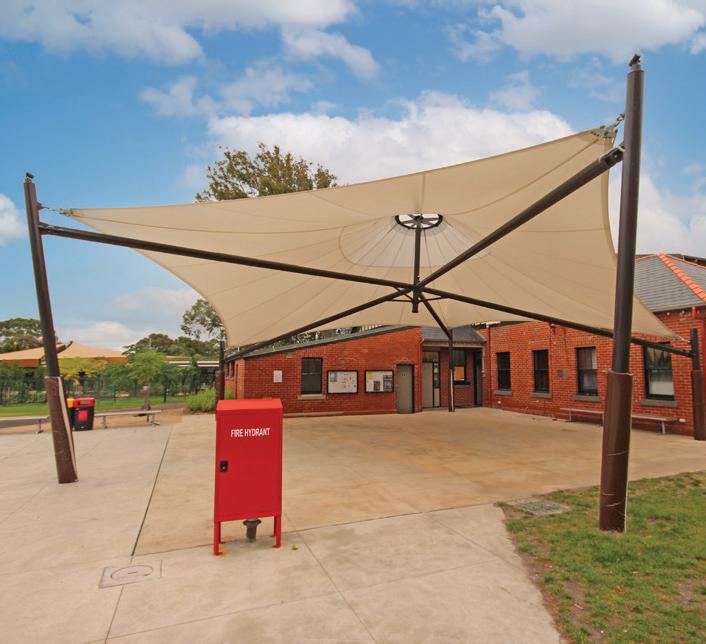
With over 2,600 installations across Australia, our focus remains on delivering tailored shade solutions that protect students and help schools make the most of their environments.
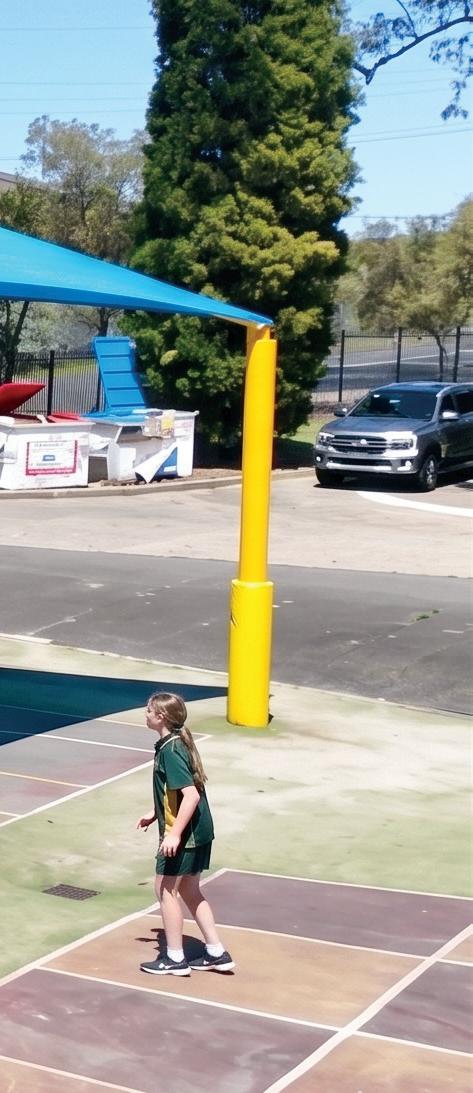
Engineered design delivering unobstructed play space and consistent shade.
Large-span SSA Superspan™ structure providing full court coverage.
P26
Much more than just speeches and presentations, EDUtech provides a hub for collaboration and conversation. Educators and school leaders can join hands-on demonstrations from industry professionals, and share insights from some of the world’s foremost educational leaders.
A mix of paid and free streams are available across the event so you can tailor your EDUtech experience to best suit your schedule and professional learning needs. The exhibition floor is free to all and will host hundreds of leading education and technology players.
Sparking conversation
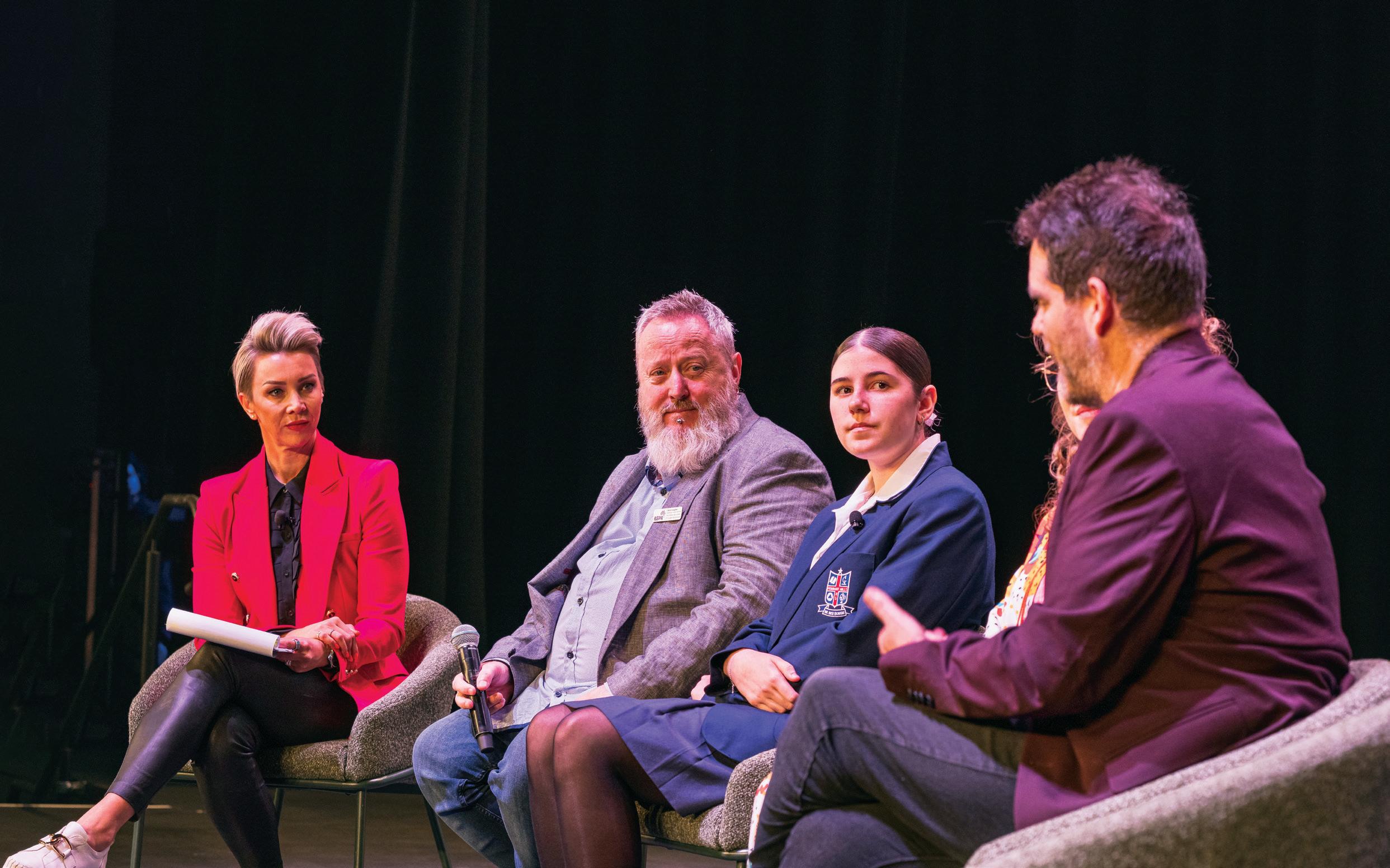
EDUtech will again welcome an impressive list of guest speakers from Australia and around the world.
The Headliners stream features dynamic keynote sessions designed to ignite curiosity and spark ideas. Speakers include inspirational leaders who are shaping education, from classroom changes to system-wide innovations.
Headliner sessions mark the starting point for meaningful conversations across the event, spotlighting fresh ideas, proven strategies, and next-generation, forward-thinking practices that improve student outcomes and empower educators.
Sessions in the Headliner stream will be led by speakers including:
• Jason Reynolds, New York Times bestselling author and National Ambassador for Young People’s Literature (USA): Jason will challenge educators to make literacy an act of empowerment and freedom, moving beyond simply ‘teaching to the text’.
• Professor Jason Lodge, Educational Psychologist and Principal Practitioner at the Generative AI Institute for Teaching and Learning Innovation, The University of Queensland: In his session, Jason will explore cultivating the essential human skills that matter most when generative AI handles routine tasks.
• Dr Sarah McKay, Director at The Neuroscience Academy: Join Sarah for a critical session that swaps common negative stereotypes about the teenage brain for strengths-based research-aligned language.
Other speakers will feature throughout the event, including school leaders across a range of departments, education researchers and experts, edtech innovators and providers, and much more.
EDUtech 2025 images supplied by Terrapinn
Free event streams
Visit seven insightful seminars available on the exhibition floor, led by industry thought-leaders.
Key themes for these seminars are:
• Learning Futures,
• Critical Thinking and Creativity,
• School Operations,
• First Nations,
• ConnectED,
• School Infrastructure, and
• Show and Tell.
Register for an expo pass and unlock access to these seminars. Delivered by diverse, cuttingedge experts, these seminars will broaden your expertise and inspire you in your teaching journey.
Unlimited networking
Today, who you know can be more important than what you know, and with this in mind, EDUtech provides unlimited networking to event attendees.
The customised EDUtech app makes sure you can easily connect with your community, before, during and after the event. The exhibition floor also includes a dedicated meeting
Preparing students for real-world driving
Schools have a unique opportunity to shape safer driving behaviours before students ever enter real traffic.
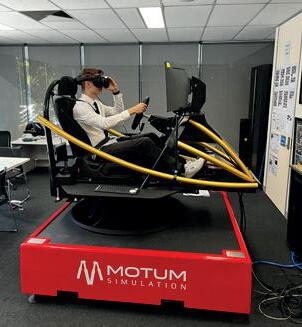
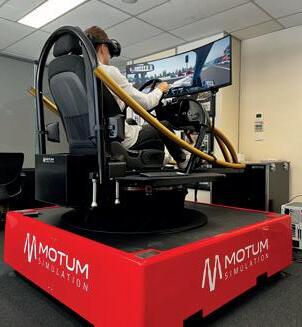
Motum’s Learner Driver Schools Program gives students access to a full-vehicle, immersive simulator that brings real-world driving situations into a safe, controlled learning environment.
Far beyond desktop-based training, Motum helps students build confi dence, hazard perception, decision-making and risk awareness through realistic scenarios aligned to student wellbeing and safety priorities.
The program is ideal for secondary schools looking for innovative ways to support Years 9–12
students through applied, engaging learning experiences.
• Full-motion vehicle simulator
• Realistic hazards in a safe environment
• Builds confi dence, judgement and hazard awareness
• Supports wellbeing, Health & PE and STEM.
To join Motum’s Learner Driver Schools Program contact: Daniel Ritlewski, dritlewski@motumsimulation.com or visit www.motumsimulation.com for more information.
area, making connecting in person simple and convenient.
The exhibition floor is busy, and likeminded educators are sure to be walking the floor. The unstructured nature of this space makes room for organic conversations to begin, whether you’re leaving a seminar, exploring an exhibitor’s stand, or lining up for a coffee.
EDUtech and Terrapinn social media are also designed to maximise networking opportunities for attendees.
Something for everyone
Whether you are a school leader struggling with teacher
retention, an experienced educator struggling with the challenges of generative AI, an early career teacher finding your feet, or just keen to explore the latest in education thought and innovation, EDUtech has something for you.
EDUtech remains proudly independent, neutral and agnostic. This makes it the perfect forum for everyone to discover, meet, learn, and evaluate, and explore the latest in education technology and products.
To secure your tickets and browse the full program of events, exhibitors and speakers, visit the EDUtech Australia website.
EDUtech 2025 images supplied by Terrapin
PE is not sport; sport is not PE
By Kelly Bell, Educator, Mentor & Founder, The Learning Network
The confusion in primary classrooms
In many primary schools, physical education is still closely tied to sport. A game is played, a ball is used, teams are formed and we call it PE.
Sport and physical education are not the same thing
But sport and physical education are not the same thing.
Sport is structured. It has rules, tactics, competition and performance. It is where skills are applied. Physical education, on the other hand, is where those skills are taught. When we blur the two, we unintentionally create a gap. The students who already have confidence and ability thrive. The ones who don’t often disengage.
Why some students switch off
This isn’t because they don’t enjoy movement. It’s because they haven’t been taught how to move with confidence.
Physical education is learning. It is the process of teaching children how to run, jump, balance, throw, catch and coordinate their bodies. It is about experimenting, adjusting and improving over time. It is about building competence, not just participation.
The biggest misconception for teachers
A common belief is, “I’m not sporty, so I can’t teach PE.” But physical education is not about being sporty. It is about teaching. It is about breaking a skill down, modelling it clearly and giving students opportunities to practise and improve.
The shift is simple but powerful: reframe PE as movement.
Movement doesn’t need to be complicated
Movement does not need to look like organised sport. It can happen in the classroom, in short bursts, using simple resources.
A vertical jump to a target on the wall. Hopping between markers on the floor. Balancing, twisting, throwing or striking using everyday objects. It doesn’t have to be complicated. It just needs to be intentional.
Small moments, big impact
Short, consistent opportunities to move can have a significant impact. Even five minutes a day builds momentum across the week.
More importantly, it supports students to regulate their energy, improve focus and return to learning ready to engage.
More than just physical health
Movement also plays a critical role in wellbeing. Through movement, students develop confidence, resilience and problem-solving skills. They learn to try, adjust and try again. They experience success in different ways and begin to see themselves as capable.
A shift schools need to make
Physical education should not be used as a reward.
Too often, movement is something students earn or something that is taken away. In reality, it is something students need. It is essential for their physical, emotional and cognitive development. When we position movement as optional, we diminish its value. When we prioritise it, we strengthen learning.
Why the distinction matters
Sport has an important place in schools. But without quality physical education, we are asking students to perform without preparation.
Physical education is where confidence is built. It is where skills are developed. It is where every child has the opportunity to experience success in movement.
What is one small step you could take to incorporate more physical education into your school day?
Choosing a sports surface for durability and participation
By Milly Fullick , Industry Reporter
A good sports surface can provide the setting for many memories to be made, from lightning passes to last-minute victories.
Well thought-out choices when replacing or installing a sports surface can have surprisingly wide-reaching consequences, including lowering maintenance costs and even enhancing participation in school sports.
Choosing a surface
When thinking about new sports surfaces, the first consideration should of course be how it will be used. Balancing the markings, surface types and other infrastructure needed for diff erent sports should be the top of any list.
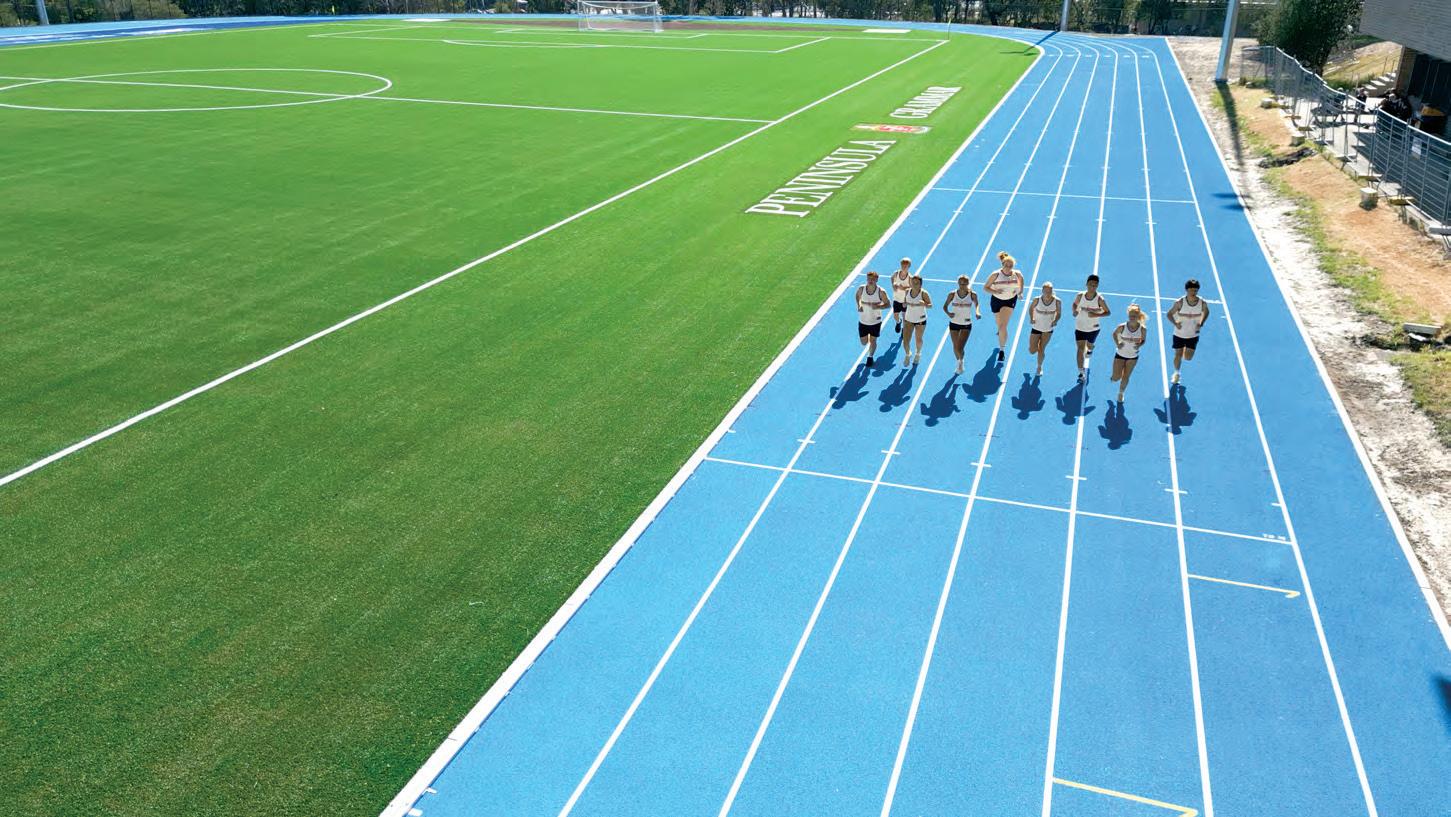
Many schools already have hard concrete or asphalt sports courts, and these can be durable and cost eff ective. Lush green playing fields are also a staple at many school campuses.
Another option is artificial turf. This surface can reduce
injury risk and impact on players’ joints. Artificial turf also off ers all-weather performance and is UV stable so won’t fade in sunlight.
Appearances matter
It is also important to take appearance into account. An inviting surface could be enough to nudge even a reluctant player onto the court.
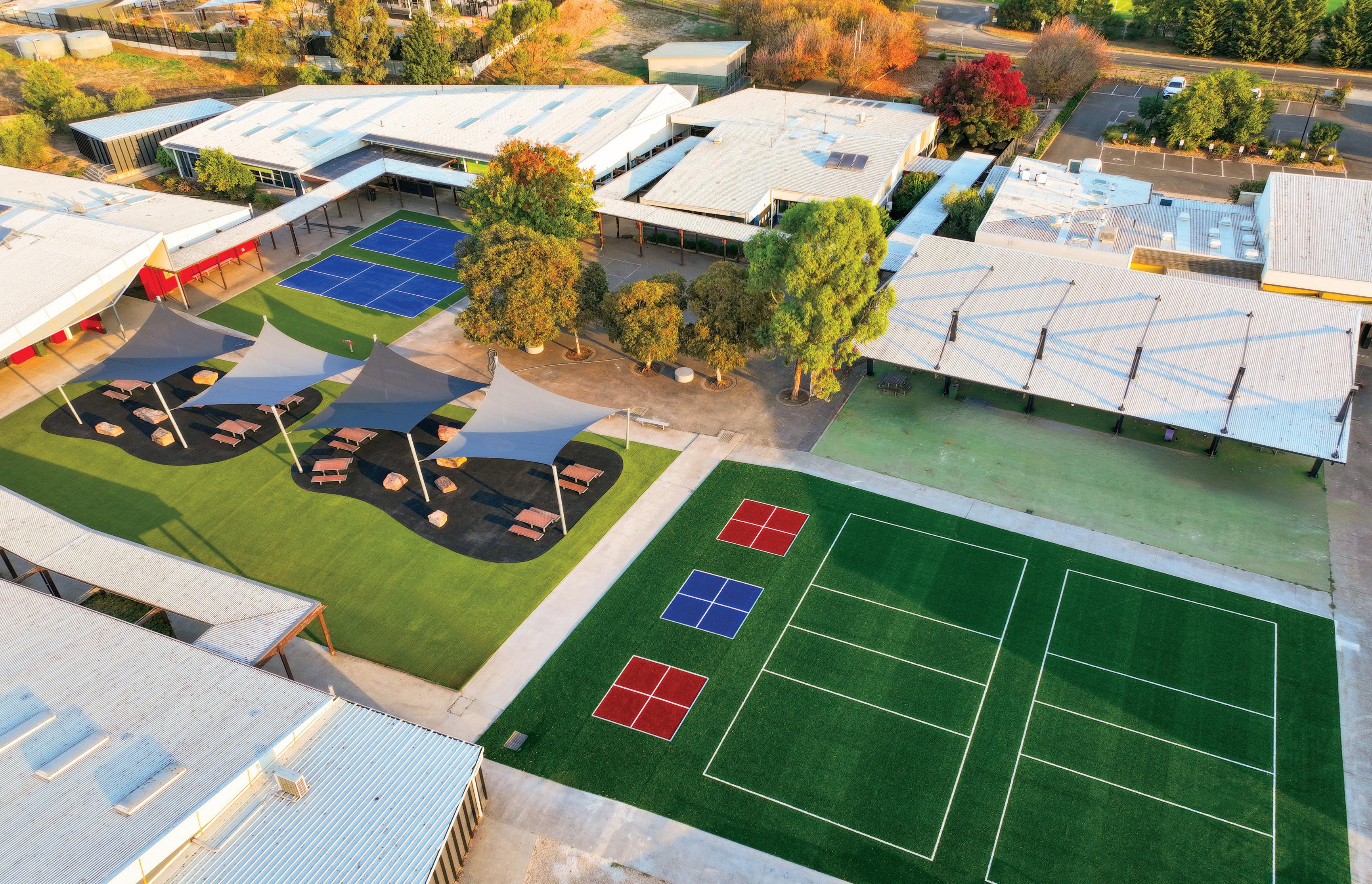
With diff erent colours and custom markings often off ered as options, there is potential to create an appealing, welcoming space for students of all ages and confidence levels, contributing to a positive, inclusive school sporting culture.
Andrew McKay, Managing Director of Easy Turf, said that performance and usability should always come first.
“However, in saying that, you can definitely have areas that are performing optimally with an amazing visual appeal with the right design. Colours, linework and design of areas can blend both performance and visual appeal.
“Visual appeal is important as something that looks great, will spark the students’ interest
and really promote physical play and outdoor play.”
Flexible spaces
Most schools don’t have the luxury of endless land to host a surface for each sport. However, a lack of space does not mean limiting your options, Mr McKay said.
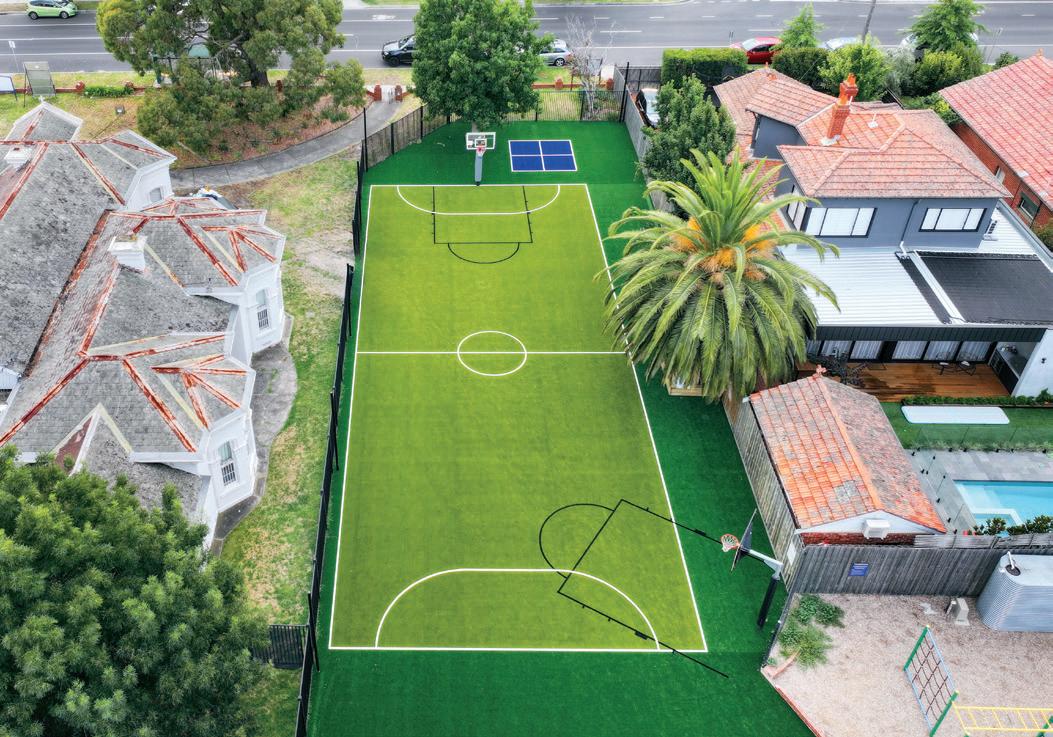
“Depending on the size you have to work with, there are options like providing multiple sports in one area using diff erent colour lines for each sport. For example, within a basketball court, you could also provide linework for netball, bat tennis, a rounders diamond and volleyball.”
Mr McKay cautioned, though, not to try to do too much in one space. “The best way to avoid this would be to discuss with your quoting companies and get their advice on what will work in certain areas.
“You should also be clear with expectations and make sure they align with budgets. For example, if the school is after a high-performance sports field, correct base structure and drainage is really important and requires design and budget allocations to suit.”
Maintaining quality
Keeping on top of regular maintenance can potentially avoid increased costs later.
“Booking in regular maintenance is really important, either with the company who installed the surface or another company who specialises in surface maintenance, especially for bigger sporting surfaces,” Mr McKay said.
“Schools should also regularly clean the areas, keeping them free from debris and spillages as much as possible. It’s also important to make sure there is no dirt building up in areas. If this is not addressed as it happens, it could create a larger issue down the track.”
Let the games begin
As with all school infrastructure projects, careful planning, staff and student consultation, and a realistic budget and timeframe can help you achieve the ideal playing surface. As we look ahead to Brisbane 2032, now is the perfect time to inspire the next generation of sporting heroes…or foster enjoyment for a friendly lunchtime kick around.
Wallan Secondary College, VIC. Image courtesy of Easy Turf
Smarter Spaces for Active Schools: Thoughtful design unlocks greater functionality within a limited footprint
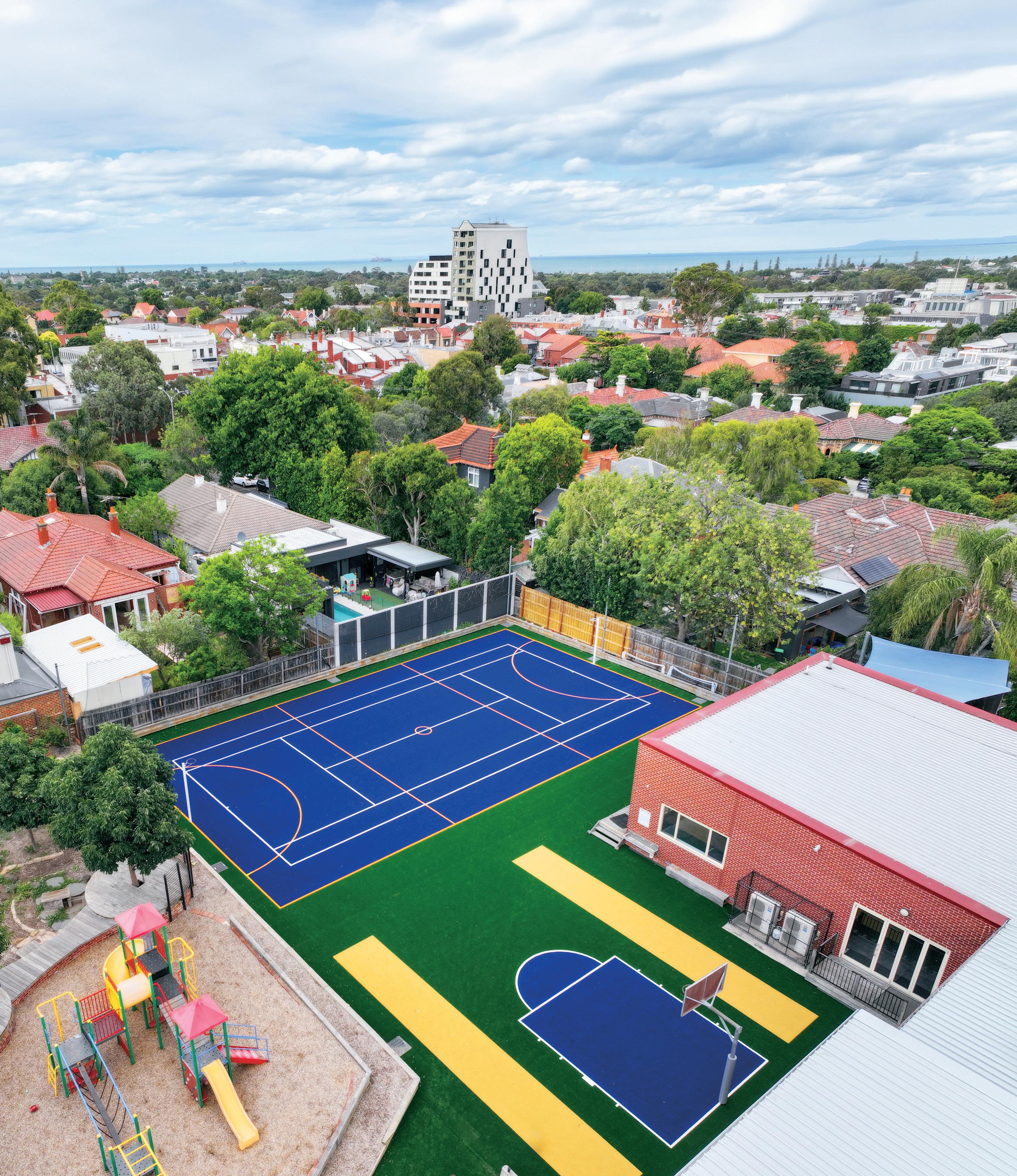
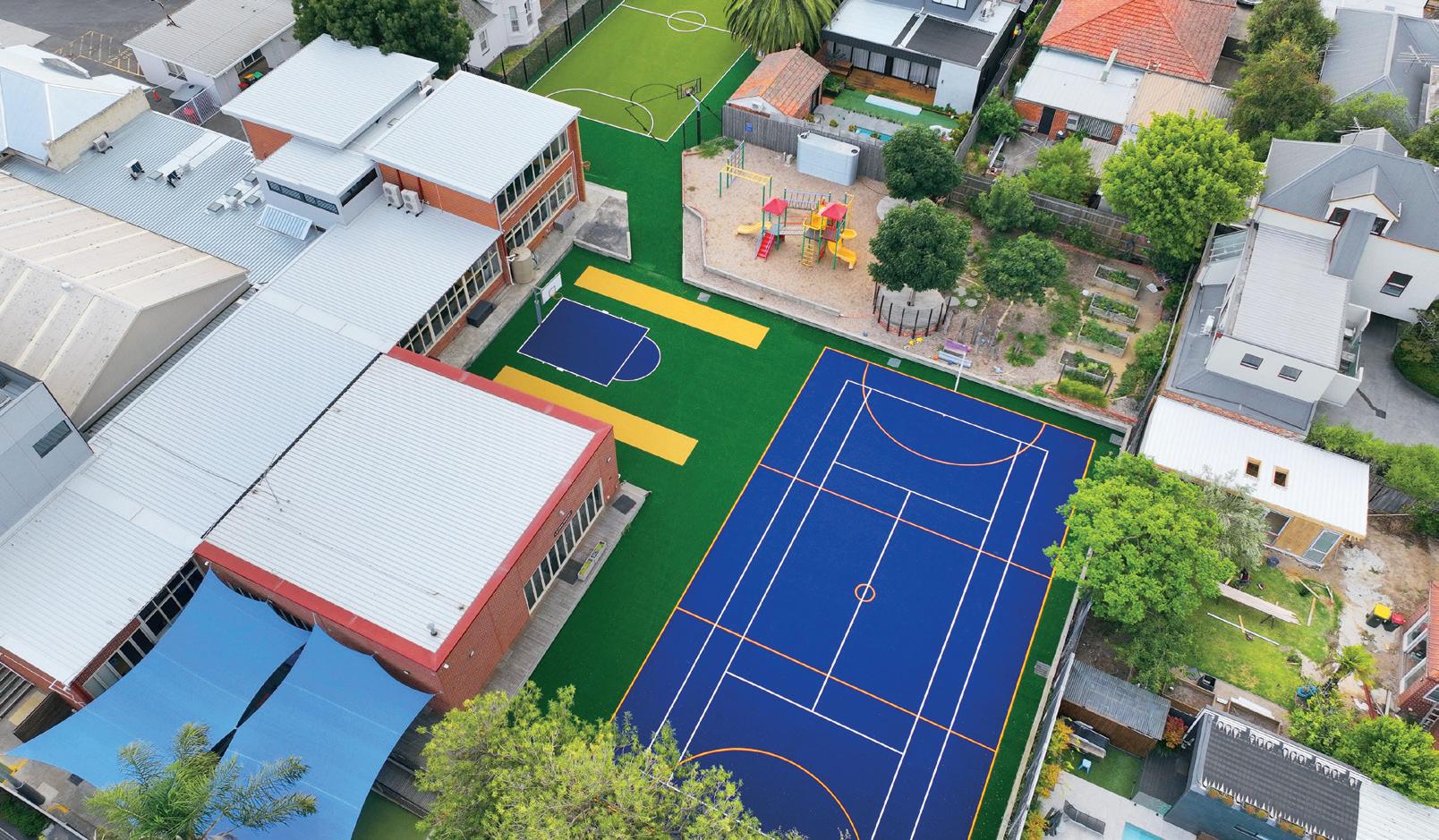
An outdoor sports and recreation upgrade at St Joseph’s Primary School in Elsternwick, Melbourne, has transformed an ageing and underperforming play area into a vibrant, multifunctional space designed to support year-round activity, student wellbeing and inclusive participation.
Working within the constraints of an inner-suburban footprint, the project focused on maximising usability without expanding the existing area. The result is a series of high-quality, multi-sport courts accommodating a wide range of activities including mini soccer, basketball, netball, tennis, cricket, four square and hopscotch–creating a dynamic environment where multiple games can be played simultaneously. The design ensures that students of all ages and abilities can engage with the space in diff erent ways throughout the school day.
For Principal Claire Tobin, the decision to upgrade was both practical and forward-looking. “Our previous outdoor space had served us well over many years, but it was increasingly no longer meeting the needs of a growing and highly active student population,” she explains. “We were managing uneven surfaces, limited usable space in wet weather, and a lack of clearly defined zones for diff erent types of play.”
The new design directly addresses these challenges through thoughtful planning and clearly defined activity zones. Integrated line markings support both structured sport and informal play, helping reduce congestion while encouraging more positive interactions across the playground. The layout also allows multiple activities to run concurrently, improving supervision and creating a more organised and engaging play environment.
Australian-made Supergrasse Pro 17 synthetic turf was selected for the project, delivering a durable, lowmaintenance and all-weather solution suited to the demands of a busy primary school. Available in a range of
colours, the surface also contributes to the visual appeal of the space, making it more inviting and engaging for students. Additional features, including 4-metre-high net fencing for mini soccer and a removable tennis net, further enhance the fl exibility and functionality of the area.
The project was delivered by Easy Turf, with Managing Director Andrew McKay noting the challenges of working within a confined site.
“While this project involved the fairly straight-forward replacement of an existing synthetic surface, it still had challenges due to the tight access and confined nature with church and parish grounds beside it,” he says.
Despite these constraints, the upgrade presented an opportunity to significantly improve the functionality of the space. In collaboration with the school, the layout was refined to include additional features such as a basketball key and dual cricket pitches, along with more vibrant colour combinations to enhance visual appeal and student engagement. “We worked collaboratively with the school to introduce additional games and improve layout positioning,” McKay adds.
A key factor in the project’s success was the ability to reuse the existing base, reducing both cost and disruption. Following a detailed
assessment of structural integrity, drainage and surface levels, targeted rectification works were undertaken to address inconsistencies and ensure optimal performance. “The base was largely sound but did require some rectification works, particularly around the mini soccer area,” McKay explains. Since completion, the impact on student participation has been immediate and highly visible. “Student participation has increased, and we are seeing far more students actively engaged in play throughout recess and lunchtime,” says Tobin. “Quite simply, more students are active, more often.”
Beyond physical activity, the upgraded space is also supporting broader wellbeing and cultural outcomes. The improved layout has created a calmer, more inclusive environment, encouraging connection, collaboration and a stronger sense of belonging among students. It also supports better behaviour outcomes, with clearer structure and purpose to how the space is used.
“This project has been a visible demonstration of what can be achieved when a school community works together,” Tobin concludes.
“The pride our students feel in the space, and the way they care for it, speaks volumes about its impact on our school culture.”
Images supplied by APT
From the most prestigious sporting events to your local school, APT manufactures and installs more artificial turfs, courts, playgrounds and tracks than any other business. Made in Australia for Australian conditions, our artificial surfaces are backed by warranties of up to 15 years.
Installed by Polytan Australia
Fight the winter gloom:
External learning for wellbeing
By Gemma Easton , Editor
For many of us, getting up at this time of year is a little bit harder.
Colder, darker mornings don’t usually invite one to leap out of bed and seize the day, full of energy and vigour. Even when we have made it out of our pyjamas, things may not improve. The weather throughout Autumn and Winter gets progressively gloomier, with fewer sunshine hours, causing many of us to retreat indoors in search of a warm drink and a blanket.
While a bad day here or there isn’t a problem, in some cases, this general feeling of misery can turn into depression. Seasonal affective disorder (SAD) is depression that only
Images courtesy of StayKCC
occurs during Autumn and Winter. Around 35 percent of Australians experience SAD. Given its cyclical nature, SAD can be harder to diagnose than other mental health conditions; it can take up to two years of monitoring symptoms before a pattern is recognised and a person is diagnosed.
A learning environment supporting student wellbeing
At key stages of secondary education, students benefit from learning environments that support both academic growth and wellbeing.
StayKCC o ers schools a naturebased destination in the World Heritage-listed Blue Mountains, where learning, connection and time outdoors come together.
Supporting Life Ready programs and Year 12 study group stays, StayKCC provides a se ing that encourages focus, reflection and resilience away from everyday distractions. Life Ready learning is delivered by experienced external consultants, with coordination
managed by StayKCC, allowing schools to concentrate on students rather than logistics.
For senior study groups, quiet learning spaces, comfortable accommodation, and shared routines help students balance focused study with time outside - supporting wellbeing during demanding academic periods.
With learning spaces, accommodation and catering all onsite, StayKCC o ers schools a fully coordinated, supportive environment that enriches learning beyond the classroom.
Visit staykcc.com.au
In young people, SAD can be characterised by changes in mood, withdrawal from things they usually enjoy, changes in eating patterns, trouble focussing, and increased fatigue. These symptoms can have a profound impact on children and teenagers school life, as they struggle to navigate social pressures, academic pursuits and personal growth.
Young people might find it hard to explain their emotions, which can lead to misunderstandings or delayed SAD diagnoses. In some instances, students may be misdiagnosed with other conditions, for example, ADHD.
And while it might seem that waiting for brighter, sun-filled days to return is the only necessary cure, that will not help students navigate the winter months. Those suffering from a low mood should not be left to fall behind and then stretched to catch up during summer.
Most students will have bad weeks or days, and supporting
all students to navigate the bad times is important. Students can be supported with a range of coping strategies to manage tough times, and external learning activities are an excellent conduit. Light therapy, regular exercise, enjoying hobbies and activities you enjoy, and staying connected are all recommended for warming up and easing the winter blues.
Let the sunlight in
Studies have shown that exposure to sunlight can improve your mood.
Both darkness and sunlight trigger the release of hormones in your brain. Exposure to sunlight is thought to increase serotonin levels in your brain, a hormone associated with boosting mood and promoting calm and focus. At night, darker lighting prompts your brain to produce melatonin, a hormone responsible for helping you sleep.
Low sun exposure which can be common during the colder months of the year, can cause serotonin levels to dip, putting people at a higher risk of depression.
External learning activities naturally force students outside and into the sunlight. Taking a walk around the school grounds, planning an offsite excursion for hiking or rock climbing, or a multi-day camp are all great ways to help students reconnect with the outside world. P36
Where the classroom ends, growth begins
Emu Gully Adventure
Education has been shaping great Australians since 1996, and their approach to student wellbeing is more relevant than ever.
In an era of mounting academic pressure and digital overload, school leaders across Australia are increasingly turning to outdoor and experiential learning to support the whole student. At Emu Gully, that philosophy isn’t a trend - it’s the foundation of everything they do.
Operating across two stunning Queensland locations - Helidon in the Lockyer Valley and the newly opened Tamborine site at the foot of Mount Tamborine - Emu Gully offers structured, story-driven programs that address every dimension of student wellbeing: physical, mental, emotional, social, and cognitive.
Every student, every challenge
Emu Gully operates on a simple but powerful belief: they haven’t met a student they can’t include. Programs
are built around the understanding that every young person deserves the opportunity to take part, be challenged, and contribute, regardless of ability. Working closely with schools to understand individual needs, Emu Gully adapts activities where required so that every student can engage in a way that is both safe and meaningful. Whether navigating the Kokoda Track simulation, pushing through the Siege of Tobruk, or taking on the Tunnel Rats of Vietnam challenge, the challenge may look different for each
student, but the outcome is always the same: growth, connection, and a shared sense of achievement.
Nature as a reset button
Research consistently shows that time in natural environments lowers stress levels, restores concentration, and reduces mental fatigue. At Emu Gully, students step away from screens and into immersive outdoor settings that demand focus, quick thinking, and creative problem-solving, returning to school more settled and ready to engage.
Resilience you can’t teach from a textbook
There is something uniquely powerful about completing a challenge you weren’t sure you could finish. Emu Gully’s signature programs, The Challenge and The Adventure, are built around the character values of Courage, Mateship, Sacrifice, and Perseverance. Professionally facilitated and carefully scaffolded, each activity is designed to stretch students beyond their comfort zones in a safe, supported environment, building the kind of resilience that shows up long after they return to the classroom.
Stronger together
From team initiatives like the Commando Cable Crossing to the camaraderie of the Night Walk, Emu Gully’s shared challenges build real connection – strengthening communication, cooperation, and a sense of belonging that carries back into classrooms and communities.
Visit emugully.com.au or call 07 4697 6631 to discuss a program tailored to your school’s needs.
pull students out of a low mood, even if only temporarily.
Combining nature and sunlight can boost the wellbeing benefits. Spending time in natural environments is proven to lower levels of the stress hormone cortisol, decrease muscle tension, and reduce heart rate. Being outside in the natural environments also helps the brain recover from mental fatigue caused by constant stimulation from bright lights, loud noises and screens found in the classroom.
Mindful activities like yoga and meditation can be taken outside to give students a boost of sunlight while calming the mind and improving focus.
Get moving
Regular physical activity can boost endorphin levels and improve mood. Exercising outside during daylight hours, as offered by many external learning activities, will maximise exposure to natural light.
Doing physical activity can also distract students form negative thoughts and help to lift their mood.
Most students will have bad weeks or days, and supporting all students to navigate the bad times is important
Active external learning can also boost physical health and wellbeing, and encourage students to exercise in a fun and enjoyable way. Not all students are interested in sport or enjoy conventional exercise like jogging or heading to the gym. External learning activities including adventure activities, water-based pursuits and even things like archery and horse riding, can get even the most reluctant participants moving.
For some students, the sense of accomplishment that comes from participating in external learning activities can help alleviate feelings of anxiety and depression. Knowing they can achieve something may
help them regain confidence in their academic and social abilities, and make everything feel a little less heavy.
Talk it out
Staying connected is a powerful tool for combatting a range of mental health concerns. Sharing thoughts and feelings, though, doesn’t come easily to many young people.
Many external learning activities require communication and teamwork, forcing students to interact with their peers. Building a raft, following a geocaching course, or participating in a team scavenger hunt all necessarily facilitate talking. This can help
Conversations had during external learning activities can also carry on after the activity, helping students to open up about their emotions. Activities can also help students to interact with others outside their usual social circle, helping them to connect with new people.
More broadly, external learning programs can incorporate sessions around team building, communication, goal setting and reflection, and provide a safe space for students to talk openly about whatever is on their mind.
Make a plan
If your students seem a little less enthusiastic than last term, some external learning activities might be just the boost they need. Taking learning outside and exposing students to sunlight, exercise that is fun, and the space to talk to and connect with their peers can all be great for physical and mental health and wellbeing.
Organising some external learning adventures could help curb the low-mood trend.
Image courtesy of Emu Gully Adventure Education
Images courtesy of Emu Gully Adventure Education
Image courtesy of StayKCC
While an outdoor yoga session or lunchtime dance class requires minimal planning, activities like offsite excursions and overnight camps will take a bit more work, so think about what’s right for your cohort. Many providers will have openings for groups in 2026, and it’s not too early to plan for 2027 as well.
Remember, while external learning activities might be particularly useful to boost mood and engagement during winter, the benefits of these activities will be felt all year round.
Set across 25 acres of bushland in the World Heritage listed Blue Mountains, StayKCC offers school groups the opportunity to step beyond the classroom and into a setting where learning, wellbeing and connection naturally come together.
Designed to support student growth at key stages of secondary education, StayKCC hosts a range of programs for schools, including Life Ready camps and Year 12 study groups, all delivered within a nature based environment that encourages focus, reflection and resilience.
Life Ready programs at StayKCC support schools in addressing essential learning areas such as independence, mental health and wellbeing, relationships and personal responsibility. All Life Ready learning sessions are delivered by experienced external consultants, with StayKCC coordinating all aspects of the program to ensure a seamless and well supported experience for both students and staff.
For senior students, study groups benefit from quiet spaces, comfortable accommodation and structured routines that balance focused learning with time outdoors, helping students manage stress and maintain wellbeing during demanding academic periods.
With learning spaces, accommodation and catering all onsite, StayKCC provides schools with a fully coordinated, distraction free environment where fresh air and fresh thinking support meaningful learning experiences and student wellbeing.
For nearly three decades, Emu Gully Adventure Education has been taking students out of the classroom and into experiences that stay with them for life.
Founded in 1996 and now operating across two sites— Helidon in the Lockyer Valley and a newly opened location at the foot of Mount Tamborine—Emu Gully has built a reputation as one of Australia’s most
distinctive outdoor education providers. What sets it apart is not simply the outdoors, but the depth of purpose woven into every program.
Rather than generic adventure activities, Emu Gully’s programs are rooted in Australian history. Students don’t just complete challenges, they walk in the footsteps of Anzacs on the Kokoda Track, hold the line at Tobruk, and navigate the tunnels of Vietnam.
History becomes visceral, and character development becomes unavoidable.
Programs range from single-day excursions to five-day immersive camps, catering for students from upper primary through to senior secondary. Each is professionally facilitated and tailored to the needs of the school group.
With thousands of students passing through its gates each year, Emu Gully’s enduring philosophy—that learning is found within the experience, and character is formed through challenge—continues to resonate deeply with educators across the country.
StayKCC provides schools with a supportive setting for Life Ready programs and Year 12 study groups, set in the World Heritage listed Blue Mountains.
• Nature based setting that encourages focus, reflection and student wellbeing.
• Single point of contact - Life Ready learning delivered by specialist external consultants, coordinated by StayKCC.
• Quiet study and learning spaces, flexible accommodation options and onsite catering for a seamless experience
We also welcome: School Day Excursions, School & Community Band Camps and Education & Youth Groups.
Our programs are thoughtfully designed to provide a safe, supportive and inspiring environment for growth and connection.
Image courtesy of Emu Gully Adventure Education
Hot food vending machines provide flexibility & convenience
By Gemma Easton, Editor
With hundreds of students and staff visiting the school tuckshop each day, fast, efficient service is essential.
Recently, Yeronga State High School made use of a government grant and redesigned its tuckshop, aiming to use space more efficiently and reduce wait times. Cash registers were moved to modify traffic flow, and hot-food vending machines were installed.
The vending machines were quick to install, and don’t take up much of the tuckshop’s valuable floor space. Now, students have three ways to access the tuckshop menu—pre-order, walk in, or through the vending machines.
Yeronga State High School Tuckshop Convenor, Stacey Resetti, said the tuckshop refurbishment was necessary to cope with growing demand. “In the past four years that I have been working as the convenor, our school population has steadily increased. To keep up with growth, we needed to think outside the box. Employing more staff or building a second tuckshop is not always an option.”
The school purchased the hot food vending machines through Your Food Pal. Units are also available to be leased or rented by schools, offsetting the initial investment and helping schools to incorporate the cost into their budget.
The food pals can be filled with almost anything that needs to be kept warm. Schools benefit from being able to process more students with the same number of staff.
“We make all of our hot food fresh daily in the adjacent kitchen,” Stacey said. “It is individually packaged and stored in our bain marie. An hour before first service we will fill the vending machines and replenish the bain marie with fresh product
ready for service. This allows us to have more hot food for sale within the same footprint.
“Anecdotally, we have reduced our service times, and all the feedback we have received has been very positive.”
Clean up and maintenance is quick and easy, ensuring tuckshop staff are not burdened with extra work. Like the bain marie, at the end of each day, Stacey quickly wipes the vending machines with warm soapy water, and leaves them to air dry before the next day.
“They are easy to use and maintain from an operations standpoint,” Stacey said. “The supplier is very accommodating and willing to provide support.”
Similarly for staff and students, operation is simple. “From a student perspective we haven’t had many issues. We developed a short video, that was shared widely on the school socials, about how to activate the card reader, select and pay for food. In the first fortnight we also had a staff member standing beside the machines helping students if needed. Of course, some students still open a door without checking if there is food in there, but this isn’t a major issue.”
The vending machines also help to make the tuckshop a more welcoming and inclusive environment. “Some of our kids with sensory issues find the tuckshop overstimulating during the rush period, so the vending machines provide an alternative,” Stacey said.
Your Food Pal multi-functional vending machines use smart technology to offer hot, readymade, contact-free food options for busy environments. A range of configurations and machine sizes are available to suit space requirements and student populations. Schools can opt for custom branding aligned with their school colours, values or symbols, ensuring they blend with the wider surrounds of your school tuckshop.
Images courtesy of Your Food Pal
Your Food Pal is the ultimate solution for efficient school canteens.
Designed to streamline service and eliminate queues, it helps you serve more students quickly, without extra staffing. We offer a design service –simply send us photos of your space along with a few measurements, and we’ll provide a selection of layout options showing how it could look with our vending machines in place.
Every unit is hand-built to order using high-quality stainless steel, reinforced with sturdy hinges and 8mm hardened safety glass. Built for durability. Built for safety. Purchase outright or long term rental
2500+ Australian sch ls escaped the “E Zone”
A drinking fountain upgrade that brings water back into the school day.
Another parent email about the rusty bubbler lands in your inbox.
Or a student asks why the water tastes odd.
It is a familiar school problem. Old bubblers get avoided. They look stained, feel unhygienic, and often do not work well enough for the way students use water now.
When water points are slow, messy, or hard to trust, students drink less. Some avoid the bubbler. Some carry the same half-full bottle until lunch. Some choose bottled drinks instead.
Why old bu lers get ski ed?
It is not just about appearance. Older designs often create hygiene and usability issues.
• Water can run back toward the spout on older up-flow bubblers
• Poor drainage leaves water sitting in the drinking zone
• Worn finishes collect grime and make the unit feel questionable
The fix is simple. Choose a setup designed for hygiene, proper drainage, and daily school use.
Make water part of the daily routine
Hydration supports focus, energy, and student wellbeing. If schools want students to choose water more often, water needs to be the easiest option. Clean. Cold. Convenient. Close by.
Modern hydration stations help make that happen. They offer filtered and chilled water, fast bottle refills during busy breaks, and durable construction that stands up to school life without rust, drips, or slow flow. When students enjoy using the station, they use it. Water becomes part of the school day again.
How sch ls make the switch
Business Manager Ken from Berwick College said, “Our existing drinking troughs were very old, and 60% of the taps did not work. Students would not use them due to their appearance.”
The school replaced the old setup with eight new drinking water stations. Each Aquafil Hydrobank added three bottle refill points and three drinking fountains, giving students more places
to drink and refill across the campus. That kind of upgrade starts with practical decisions:
• Set clear goals such as better water quality, easier access, and less plastic waste
• Think about who will use the station, from younger students to staff and visitors
• Compare station types and plan installation, plumbing, and maintenance
• Involve the school community and monitor usage once the stations are in place
What changes after an upgrade?
Schools notice the difference quickly.
Students drink more. Grounds stay cleaner. Sugary drinks become less common. The research points the same way. One study found that 85% of students chose bottled water, and 30% never used the school fountains at all. Students pointed to hygiene, poor taste, and awkward refill design as the main reasons.
They also asked for the basics:
• Clean water that meets quality standards
• Easy refills
• Tough, low-maintenance design
R dy to get out of the “e zone”?
Book a free Hydration Review with our team. You’ll receive a clear plan, the right station options, and a tailored quote.
Creating safe and hygienic washrooms
By Sarah Davison , Industry Reporter
School washrooms
play a critical role in student health, wellbeing and daily experience, yet they are often one of the most overlooked spaces on campus.
With children’s immune systems still developing, they are more vulnerable to infection, and germs can spread quickly through shared surfaces, close contact and everyday activities in busy school environments.
Hand hygiene remains one of the simplest and most effective ways to prevent the spread of illness. Washing hands with soap and warm running water is the most effective method for removing germs, while hand sanitiser provides a practical alternative when facilities are not immediately available.
Encouraging students to wash their hands at key times—such as before eating, after using the toilet, after coughing or sneezing, and after outdoor play—can significantly reduce the spread of common illnesses within schools.
However, good hygiene habits do not happen by accident. They are shaped by the environments students use every day. Washrooms that are easy to navigate and well-maintained can support consistent hand hygiene and reduce the risk of crosscontamination. Features such as accessible basins, intuitive layouts, effective ventilation and appropriate hand drying solutions all contribute to safer and more functional spaces.
Additionally, schools must also balance durability, privacy and ease of maintenance to ensure facilities remain fit for purpose
over the long term. Thoughtful design considers water efficiency, robust materials and anti-vandal features, alongside partition systems that support both student privacy and appropriate supervision.
The selection of tapware and toilet suites also plays an important role, with touchfree fittings and easy-clean surfaces helping to streamline maintenance while improving hygiene outcomes.
Ongoing innovations, including antimicrobial materials and touch-free technology, are also supporting schools to maintain consistently high standards of cleanliness.
Roy,
, understands the importance of hygienic, well maintained school washrooms.
Drawing on her professional experience, she shared her insights with School News
School washrooms are highuse environments throughout the day. What are some of the key hygiene challenges schools face in these spaces, and how can they be addressed?
One common issue is the rapid deterioration of cleanliness between scheduled cleans. Most schools clean washrooms once daily, usually after students leave, but introducing
midday spot checks and touchups can make a significant difference during school hours.
Ventilation and air circulation are also important. Warm, damp washrooms can become breeding grounds for bacteria, so maintaining ventilation systems and improving airflow can help reduce humidity and minimise odour-causing bacteria.
Regular restocking of supplies is critical. Ensuring soap dispensers are full, and paper towels and toilet paper are consistently available, supports hand hygiene and helps prevent issues such as clogged drains. Supply management is as important as cleaning itself.
Prompt maintenance and repairs are equally important. Addressing leaks, cracks and faulty fixtures early can prevent them from becoming larger hygiene problems. Well-maintained facilities are easier to clean and help limit bacterial growth.
Education and awareness also play a key role. Encouraging students to practise good washroom etiquette, including thorough handwashing, proper flushing and correct waste disposal, can significantly improve overall cleanliness.
Effective hand drying is an important part of the handwashing process. What should schools consider when selecting hand drying solutions to help minimise the spread of bacteria and support good hygiene habits among students?
Schools should take a multifaceted approach. First, they should install effective hand drying solutions, such as touchless or easy dispensing paper towel dispensers, which have been shown to reduce bacterial spread. Using TAD (Through-Air-Dried) hand towels
Anitha
Trade Marketing Specialist at Sorbent
Image courtesy of Sorbent
can further enhance hygiene, as they are more absorbent and dry hands more eff ectively, reducing the likelihood of leftover moisture where bacteria thrive.
Educators can incorporate hand hygiene education into the curriculum, emphasising the importance of thorough drying as a key step in preventing illness. Regular reminders and visible signage in washrooms can reinforce these practices, creating a culture of cleanliness and responsibility among students.
Finally, maintaining well stocked supplies of drying materials will encourage consistent use and reinforce good hygiene habits.
From a hygiene perspective, what role can paper towel systems play in helping schools maintain cleaner washroom environments and reduce cross-contamination?
Paper towel systems off er a simple yet highly eff ective solution. Unlike some alternative drying methods, paper towels provide a singleuse approach, meaning each student or staff member uses
Well-maintained facilities are easier to clean and help limit bacterial growth
a fresh towel every time. This significantly reduces the risk of bacteria being transferred.
Another key benefi t lies in the physical act of drying hands. Studies have shown that eff ective hand drying is just as important as hand washing when it comes to removing residual bacteria. Paper towels not only absorb moisture quickly but also help remove additional germs during the drying process. In fast-paced
school environments, this efficiency ensures students can dry their hands thoroughly and return to class without delay.
Modern paper towel systems are also designed with controlled dispensing in mind. This helps reduce waste, ensures consistent supply, and prevents over-handling of unused towels. Quick and eff ective drying reduces water drips on floors and benchtops, helping to maintain
a tidy and safe washroom environment for all users.
In a school sett ing, where the wellbeing of students and staff is paramount, every detail matters. By implementing reliable and thoughtfully designed paper towel systems, schools can take a proactive step toward improving hygiene standards, reducing the risk of cross contamination, and creating a cleaner, safer space for their communities.
Time out for teachers:
Take your class outside
By Gemma Easton, Editor
We all know that if students aren’t focused and paying attention, they’re not going to learn anything.
And we also know that teachers are wizards at commanding attention, and have an arsenal of tricks and spells to engage reluctant learners. Sometimes, though, once the box of fidgets has been passed around, then students have taken a movement break, and relaxed with a two-minute meditation, focus can remain elusive, and a lot of lesson time has been lost. However, there might be an easier way to get the class back on track—simply take your students outside. Studies have shown that going outside improves students’ concentration, and the benefits continue when learning goes back inside, with students able to focus better.
It’s not just students, though, who benefit from time outside; many advantages translate to teachers as well. In a 2025 study, teachers reported enjoying outside learning and the time away from the constant light and noise that they endured indoors. In turn this helped them to be more responsive
to student needs, and more focused on learning activities.
Surely, we can all appreciate as well, that a teacher’s patience can be tested when a student or class won’t stay on task. Taking everyone outside for a reset can provide teachers space to calm down, which will likely make them more able to manage classroom challenges.
In some instances, taking students outside can make way for another teacher or teacher aide to tidy up the classroom, and set up for a new activity.
Anyone who has tried to clean up and then set up around a room full of children—whether as a teacher or parent—knows this can be challenging.
Additionally, the benefits of moderate sun exposure for children and adults are well documented, which time outside during the school day will provide. Perhaps what’s not discussed enough, though, is the correlation between sunlight exposure and sleep quality, and in turn, the correlation between sleep quality and overall
mood and behaviour. Staff and students who haven’t had a good night’s sleep are more likely to be irritable and lack focus.
A few outdoor lessons each week might help correct this.
Outdoor areas can be multi-functional, dynamic spaces, offering an area for outdoor learning, student lunchbreaks, staff planning and community events. To make the ultimate outdoor area, furniture, shade, flexibility and maintenance will all need to complement one another.
Welcoming for everyone
All areas of your school should be accessible and inclusive, and outdoor areas are no exception.
Drew McKinnon, Marketing Manager at Felton, said schools should choose outdoor furniture that is multi-use.
“Look for versatile, adaptable designs that support different settings throughout the day. Furniture should be designed to work equally well for learning, dining, and collaboration.
“For example, table and seating combinations with appropriate heights and comfortable proportions can function as both classroom desks and lunchtime areas. Modular or movable furniture also allows spaces to be easily reconfigured for group work, quiet study, or staff use.
Image courtesy of Felton
Image courtesy of Felton
Image courtesy of Scully Outdoor Design Australia
“Durability, comfort, and cleanability are equally important,” Mr McKinnon said. “Aluminium furniture is particularly well suited, as it is easy to clean and maintain, allowing spaces to be quickly reset between uses such as meals, classes, or meetings. It also withstands frequent use while remaining comfortable for extended periods, whether students are attending lessons or teachers are using the space for planning.”
By choosing thoughtfully designed, inclusive furniture, Mr McKinnon said schools can create outdoor spaces that are functional, safe, and accessible for everyone. “Schools should prioritise DDA-compliant design.
Taking everyone outside for a reset can provide teachers space to calm down
This means selecting furniture that supports a wide range of mobility and accessibility needs.
“Key considerations include providing adequate undertable clearance so wheelchair users can comfortably access and use tables. Seating should incorporate armrests and
ergonomic design to offer additional support, making it easier for students to sit down, stand up, and remain comfortable during use.
“Safety is also important,” Mr McKinnon said. “Features such as rounded edges and protective end caps help reduce
the risk of injury, particularly in busy school environments.”
Durable design
Shane Scully, General Manager, Scully Outdoor Design Australia, said schools need outdoor furniture that can handle year-round exposure, heavy daily use, with minimal ongoing upkeep. He explained some of the most reliable choices.
“Recycled composite materials are splinter free, fully weatherresistant and highly stable in Australian conditions. Powder coated steel is extremely robust, vandal resistant, available in custom colours, and designed for long-term performance without the maintenance issues of timber.
Image courtesy of Scully Outdoor Design Australia
Image courtesy of Astra Street Furniture
Image courtesy of MakMax
Protecting kids, one shade at a time since 1997
Superior UV Protection
Our shade solutions block up to 99% of harmful UV rays, creating safer outdoor spaces for children and communities by reducing sun overexposure.
Our superstructures are the most cost effective solution for covering sports courts and assembly areas.
• High-strength, lightweight shade fabric reduces the need for multiple support posts
• Promotes air ow while minimising heat and noise buildup
• Breathable fabric for a cooler, more comfortable shade
• Weather-resistant design for sun and moderate rain protection
Our shade cloths are available in a range of vibrant colors to complement and enhance any outdoor space.
“HDPE and UV-stable plastics are perfect for seating, play equipment, and sensory items due to their colourfastness and durability,” Mr Scully said.
“These materials provide a modern look, reduce long term maintenance costs, and maintain their appearance far longer than natural wood products.
“Bringing nature into an outdoor learning space can be as simple as using native and bush tucker planting, which is low maintenance, encourages local wildlife and helps students build a genuine connection to Country,” Mr Scully said. “These gardens sit comfortably around
outdoor classrooms, yarning circles and play spaces, adding colour, shade and texture without the upkeep that traditional garden styles often require.
“Schools can also introduce natural elements like sandstone blocks, mulch and soft garden edges to create a warm, organic feel. These features work well in both structured learning zones and play areas, and they’re durable enough to handle daily school life.
“Together, these elements help schools build outdoor learning environments that are inviting, long lasting and easy to maintain.”
Protection from sun and rain
If your outdoor area is exposed to the elements, it’s not going to be much use. Shade sails, canopies and roofing solutions will keep your spaces usable year-round.
Alastair Morris, Marketing Manager at MakMax said well-designed shade structures do more than provide protection, they contribute to the overall character of a school environment. “Tensile membrane systems, in particular, offer a level of architectural expression that can elevate otherwise utilitarian spaces.
“Curved or tensioned fabric forms create a sense of lightness and movement, softening the built environment while still delivering practical coverage.
“The use of colour, translucency, and form allows designers to complement existing buildings or introduce visual interest into open areas,” Mr Morris said. “Translucent membranes can also diffuse natural light, reducing glare while maintaining a bright and inviting atmosphere beneath the structure.
“Importantly, these structures can be tailored to suit specific site conditions, whether that involves working within existing footprints,
Image courtesy of Felton
Images courtesy of Astra Street Furniture
integrating with surrounding buildings, or responding to orientation and sun paths. The result is a solution that feels considered rather than added on.”
Mr Morris said safety is a central consideration in any school environment, and shade structures are no exception.
“Fully engineered systems should be designed in accordance with relevant building codes and Australian Standards, particularly in relation to wind loads, structural integrity, and fire performance.
“Material selection is also important. High-quality membrane fabrics are typically tested for strength, durability, and UV performance, helping to ensure consistent protection over time. From a design perspective, clear spans without low-level obstructions can improve visibility and passive supervision, which is critical in busy school settings.
“Installation planning also plays a role in safety and project success,” Mr Morris said. “Coordinating works during school holidays or staged construction periods can minimise disruption and
reduce risks to students and staff. Early planning allows for proper approvals, engineering, and fabrication processes to be completed before installation begins.”
Spaces that move
Weather conditions can change throughout the year, and sometimes many times in one day. Flexible shade and furniture options, combined with some permanent solutions, can ensure staff and students
are never left exposed.
Lindsay Stead, Business Development Manager at Astra Street Furniture outlined several ways schools can improve flexibility with shade and furniture solutions in outdoor spaces.
“Schools can use large commercial umbrellas, including options that attach directly to picnic settings for flexible shade solutions,” Mr Stead said.
“Umbrellas that integrate into picnic tables provide shade
exactly where students are seated, without the need for permanent footings. They can be removed, replaced or repositioned as outdoor layouts change. This makes them ideal for eating areas, breakout zones and flexible learning spaces where schools may want to adjust layouts throughout the year.
“For larger areas, shade can also be planned over multipurpose zones so furniture underneath can still be moved and reconfigured as needed,” Mr Stead said.
“Another option is a freestanding two-in-one covered picnic setting, that can be freestanding or fixed. The freestanding option allows for it to be moved to support flexibility requirements of the school. The key is selecting shade that supports how the space will be used, without locking the school into a single layout. “
Mr Stead said movable shade works best with picnic settings that are designed to accept shade covers, so the shade and furniture work together as one flexible solution.
Image courtesy of MakMax
“For example, umbrella-ready picnic tables with central umbrella holes allow schools to add or remove shade as needed without extra structures. This makes it easy to shift furniture and shade together when layouts change.
“In some cases, covered picnic settings that come with an overhead shelter provide built-in protection without needing separate umbrellas.
“The key is choosing outdoor furniture that pairs directly with shade, either via umbrella holes or a built-in cover, so schools can rearrange spaces quickly and easily.”
Keeping it all looking good
Regular cleaning and maintenance of outdoor spaces will keep them safe and useable. To achieve this, Gemma Lynch from Sun Shade Australia recommends that schools build a simple inspection schedule for outdoor spaces into the maintenance calendar, including a basic visual check each term, and a more thorough assessment once a year.
“In my experience, the issues that cause the most trouble aren’t the obvious ones, they’re the ones that develop slowly. A connection that loosens gradually. Fabric tension that shifts over time. A fixing that looks fine until it isn’t. Catching these things early is almost always straightforward. Missing them can mean a much bigger problem down the track.
“Routine visual checks can be done by the school’s own maintenance team,” Ms Lynch said. “But I do recommend bringing in a qualified professional at least annually, and definitely after any significant storm or weather event. A
trained shade technician brings a level of detail that goes well beyond a visual check, especially around structural connections and anchor points, and their documentation is useful for both safety records and warranty requirements.
“It’s easy to underestimate how much cleaning contributes to the long-term performance of a shade structure,” Ms Lynch said. “For accessible structures at ground level, a gentle rinse and light clean is usually all that’s needed. For anything at height, it’s best to engage someone with the right equipment, rather than relying on maintenance staff with a ladder.
“When cleaning shade structures, avoid harsh chemicals or abrasive methods. Following the manufacturer’s cleaning guidelines and sticking to them consistently is one of the simplest things a school can do to protect the asset and remain compliant with the warranty,” Ms Lynch said.
“Keep records across the life of each structure: engineering certifications, installation documentation, any inspection reports, and any repair history. This gives the school a genuine picture of how a structure is performing and helps them make decisions about when to repair, refresh or replace.”
Try some outside time
The next time you are feeling a little overwhelmed, or just need a quick reset, consider taking your class outside. A break from the classroom can help everyone relax and refocus, so that teaching and learning can continue.
Even the most patient and experienced teachers need a little time out every now and then, and your school’s outdoor areas might be the perfect spot.
Images courtesy of Sun Shade Australia
Image courtesy of Astra Street Furniture
Image courtesy of Scully Outdoor Design Australia
Designed for schools. Built for tomorrow.
How Australian schools
can trade waste for sustainability; one hook at a time.
Australia’s waste challenge
According to the ABS, Australia generates around 2.88 tonnes of waste per person every year and our circularity rate of just 4.3% sits below the global average of 6.9%. In December 2024, the Federal Government released the Australia’s Circular Economy Framework with a clear mandate: double circularity by 2035 by keeping materials in use for longer, not sending them to landfill.
Schools are uniquely positioned to lead this shift . Storage is a practical, visible place to start.
The Rack Roadblock
When welded bag racks or pigeonholes fail, the whole structures go to landfill, functioning parts and all. Beyond the waste, these systems create ongoing problems: pest infestations in enclosed
compartments, blocked evacuation routes, hygiene risks, and accessibility concerns. With 4.16 million students enrolled and secondary numbers up 1.9% in a single year, every square metre matters.
At Safehook, we are committed to smarter recycling, cleaner spaces and safer schools.
OUT WITH THE OLD, IN WITH THE SAFEHOOK
Trade in your old hooks and receive $1 Safehook store credit* per hook towards your upgrade.
WIN A STOWMATE
Enter the draw by upgrading to Safehooks and submitting a photo. The best transformation wins!
*Offer available to Australian schools. See safehook.com.au for full terms and conditions.
The Safehook difference
Safehook’s wall-mounted design reclaims valuable corridor fl oor space immediately, while individual hooks replace independently, circular by design, with no need for whole-system disposal. Each bag hangs separately, reducing hygiene contact points and eliminating the dark, enclosed spaces where pests nest and breed. Evacuation routes stay clear and unobstructed, supporting compliance without additional operational overhead. Because every hook is accessible regardless of a student’s height or physical ability, equal access is built into the design from the start.
Built in Australia. Built to last.
Safehook products are proudly Australian made, engineered for local conditions from the ground up.
Hooks are injection moulded with colour built into the material, so there is no paint or topcoat to chip or degrade. A UV stabiliser provides lasting resistance to fading and cracking in the Australian sun.
The Stowmate range goes further, manufactured using EcoAL® low-carbon, recyclable aluminium with heavy-duty glass reinforced components.
At end of product life, rails, bollards, and moulded components can be recycled, keeping materials in circulation rather than landfill. A 5-year warranty backs it all, meaning fewer replacements, lower costs, and less disruption for maintenance teams working with stretched budgets.
The Great Bag Clean Up
Ready to make the switch? Safehook’s Trade In campaign rewards schools that responsibly recycle or creatively upcycle their old bag racks, hooks, and storage. Simply provide proof of recycling or upcycling and receive a Safehook store credit towards your next order. We also want to see your best before-and-after transformation or most creative upcycle idea, whether that is a bag rack turned veggie patch trellis or something entirely unexpected. The most inspiring entries win. Full terms and conditions are available at safehook.com.au.
Sources:
ABS Circular Economy Indicators, 2024
ABS Schools Australia, 2025
Australia’s Circular Economy Framework, DCCEEW, December 2024
Australia’s Circular Economy Framework An entry point for business
O er available to Australian schools only. See safehook.com.au for full terms and conditions.
Cut the rubbish:
Effective waste management
By Gemma Easton, Editor
Schools and educators have a pretty important job, educating and empowering the future custodians of Earth.
The stakes are high. Teach them well, and humans could live well beyond the age of The Jetsons; get it wrong, and humankind might go the way of the dinosaurs.
In reality, things aren’t that dramatic. Today’s young people are more environmentally conscious than previous generations, and most have grown up with an awareness around basic conservation skills like saving water, recycling, and thinking about fossil fuel use.
Environmental stewardship is something many students are already involved in, either explicitly or out of habit. Schools can be powerful centres for modelling environmentally conscious practices to help students build on their green education.
Separate for success
It sounds obvious, but an effective bin system is integral for proper waste management. Many schools have bins for recycling and general waste, but adding food waste bins, and cans and bottles bins can be valuable. Collecting cans and bottles could give your school a few extra dollars in the kitty, and separating food waste gives you the opportunity to create compost and worm farms, which can in turn be used on plants and gardens around the school (and give students an excellent excuse to play in the dirt!).
To help staff and students dispose of waste correctly, make sure bins are positioned alongside each other, and that their purpose can be easily identified. Also think about where bins are positioned. High traffic areas, particularly areas where students will be eating, are good locations.
Chances are, the kids in your class have some excellent waste management ideas
Image
Your waste management and bin systems should extend across your campus, so make sure areas like school ovals and playing fields also have sufficient bins.
It’s also worth thinking about the bins available in indoor spaces. Waste paper bins in classrooms, teacher offices and administration areas including near photocopiers and printers will help divert paper from landfill. If your students enjoy a mid-morning fruit snack in the classroom, collect food scraps in a container to be emptied into a food waste bin.
Choose wisely
Waste in schools goes far beyond what’s in the bin. Furniture and equipment waste makes up a significant portion of a school’s annual refuse.
As with most items, a simple way to reduce furniture waste is to purchase quality products that are made to last. Look for
items that have been specifically designed to withstand the rough and tumble of life in the classroom. Flexible features such as the ability to raise and lower desks and chairs, and modular furniture that can be rearranged will ensure furniture can grow and change with your students.
Sometimes, you may be able to save parts of unwanted or damaged items. If you have desks with damaged tabletops, for example, it may be possible to replace just the top. This will mean that only the desktop needs to be discarded, and the metal legs are saved.
Where possible, try and rehome unneeded furniture and equipment. If a new school is opening in your area, discuss with school administrators whether they would accept a gift of furniture still in good repair, or if they would purchase it for a reduced rate. Community centres, early learning centres, local
libraries and other businesses may also be interested in your furniture items.
Several charities collect and ship unneeded school furniture items for distribution throughout Australia and the world.
Similarly, equipment like pens, pencils, notebooks, whiteboard markers and more can be donated to local charities. Items are always gratefully received and will be shared with students that need them, either in Australia or overseas.
Simple changes in behaviour can also significantly decrease paper waste. Consider moving to digital newsletters and permission slips, sharing school-wide events on digital signs rather than paper ones, and printing on both sides of paper, or reducing the size of paper you print on.
Let the students lead
The current generation grew up with environmentalism on their radar. Activists like Greta Thunberg and Robert Irwin provide examples of young people making a difference in climate and conservation efforts, and give young people something to aspire to. Chances are, the kids in your class have some excellent waste management and environmental improvement ideas.
Simple initiatives like nominating a green leader in each class or year level or forming an enviro club can get students excited about waste management. And of course, making it fun will increase buy-in from students. Run a competition to see which house or year level can collect the most cans and bottles; regularly audit school waste and celebrate wins like less food scraps in general waste bins, or a decrease in soft plastics; see which class can use the least paper in a term; or celebrate the students who yielded the biggest crop from their section of the vegetable garden.
courtesy of Compost Revolution
Partner-up purposefully
Effective waste management starts well before the rubbish is in the bin. The companies you work with and suppliers you source furniture, equipment and supplies from can have a profound impact on your waste footprint.
Look for suppliers who manufacture locally, with recycled products, or that provide products that are easily recycled.
You might like to partner with organisations that specialise in waste management and environmental education. Providers can offer online educational resources, onsite waste audits, and help establishing effective food waste disposal.
School News asked some waste conscious providers how they can help schools cut the rubbish.
Compost Revolution knows that the educational benefits of composting and worm farms run deep and wide. Composting gives students a living, breathing example of the systems thinking that underpins so much of contemporary sustainability.
Compost Revolution’s tutorials align with the Australian Curriculum from Foundation through to Year 12. In the early years (F to 2), observing worms, mould and decomposition brings biological sciences to life—living things and their needs, observable features, life cycles— and offers a gateway into science inquiry skills like predicting, observing and recording.
In the primary years (3 to 6), composting embodies food webs, ecosystems, classification and the ways living things interact with their environment; students can measure and track the food they’re diverting from landfill, which feeds into mathematics (measurement, data representation, statistics) and HASS units on sustainable communities and resource use. By secondary (7 to 10), Compost Revolution tutorials help students engage with cellular biology, decomposition as a chemical and biological process, biogeochemical cycles like carbon and nitrogen, and the systems thinking required for ecological literacy, with strong links into design and technologies, and geography.
Compost Revolution also offers tutorials and tools to help teachers weave food waste collection and compost management into the curriculum.
Beyond the formal curriculum, Compost Revolution believes the social and physical benefits matter just as much: time outdoors, the wellbeing that comes from working with soil and growing things, a felt sense of agency in the face of climate anxiety, and the quiet but profound shift that happens when a child realises an apple core isn’t rubbish but food for their garden.
Sustainable waste practices in schools are often associated with recycling and disposal systems. However, an equally important step is reducing waste at the source through better procurement choices.
Safehook designs and manufactures hook systems in Brisbane specifically for Australian school environments. Manufacturing locally reduces transport emissions and supports shorter, more reliable supply chains. The company’s approach to sustainability is grounded in a simple principle: the most effective waste reduction strategy is preventing waste in the first place.
Safehook provides functional storage solutions designed to withstand the daily demands of schools, including heavy bags, high traffic, and harsh outdoor conditions. Meaningfully designed and built to endure, Safehook products promote longevity of use, keeping them out of landfill for longer. Fewer replacements mean less hardware entering school waste streams.
The Safehook team know that good design is not just about appearance. Ergonomics play a major role in how long a product remains functional and relevant. There is little value in products that look good but fail to perform.
Safehook chooses materials with longevity and end-of-life in mind. Their UV-stabilised polypropylene is selected for durability and recyclability, helping reduce volume sent to landfill.
“Buying less and disposing of less remains the most honest form of waste reduction.”
SCHOOL WASTE SORTED. OUTDOOR LEARNING IMPROVED.
Smarter waste solutions from Astra Street Furniture. Custom bin systems from the Athens Suite designed for real school environments, making it easy for students to separate landfill, recycling and organics correctly. Fully customisable colours, school logos, signage and configurations to suit your space and improve how waste is managed across your school. Australian made with one week lead times on core ranges, built tough for daily use and designed to keep outdoor learning areas clean, organised while supporting better habits every day. Explore the Athens Suite and Outdoor Classroom Range to create a system that works for your school.
C Astra Street Furniture P 1300 509 589 E sales@astrastreetfurniture.com.au W astrastreetfurniture.com.au
TIMBER CREATIONS NATURE PLAY SELECTION PACKAGE
Simplify the decision making process with a Timber Creations Nature Play Selection Package. If you are looking at installing a new playground, and need a streamlined process, Timber Creations has the solution. With a specially selected range of same value items, all designed for easy install with no softfall requirements; simply choose your favourites – or let the students vote on your new playground elements! Timber Creations can install your selections together to form a cohesive playground, or throughout the school for a varied play experience. Get in touch with Timber Creations now to get a copy of the Selection booklet and package deals. Discounts apply for larger orders.
C Timber Creations Nature Play P 02 4372 1170 E admin@timbercreations.com.au W timbercreations.com.au
Meet the Aquafil Hydrobank. The school drinking station built for the way Aussies learn, play and refill. Built Aussie tough for harsh UV, busy breaks, and daily school use. Fast bottle refills and bubblers students actually use. Backed by local know-how, local support, and products made right here. Book a Free Hydration Review. Mention SN26 for our exclusive School News deal.
C Civiq P 1300 600 300 E sales@civiq.com.au W civiq.com.au/sn26