CYPRESS MAGAZINE



Craig Davis (he/him) Head of School
Current families, prospective families, colleagues from other schools, our own faculty and staff, and others, routinely remark that Mulgrave acts with great intention.
It is not happenstance that we work collectively towards our shared mission of Inspiring Excellence (defined as the pursuit of personal best) in Education and Life. Instead, we do so from a place of shared understanding, articulated in our Strategic Direction 2025+.
The approach was not new last year, but rather an evolution as a maturing school, factoring in the rapidly changing world around us while not losing sight of what is, and has always been, the essence of ‘Mulgrave’.
As we reflect on the past year and how we’ve put strategy into action, I am immensely proud of what we have accomplished as a community. We have dug into the notion of ‘confidence’ as the most important element of student growth. As you can see from the graphic to the right, confidence is not a reflection of ego or swagger; it is the quiet, humble sort that enables a person to see beyond themselves.
Do not mistakenly think the bar of ‘learner confidence’ is easy to reach or attain. We are holding ourselves to account in teaching and learning across the board in every field as part of our strategic aims. This consistency of achievement is the single most important area of any school’s focus and also the hardest to do well. As such, we need to create the best conditions for our students
to build this confidence, so they can see the transferability of their skills, values, capabilities, and attributes into unknown situations.
So, just as supporting student development requires agility, so does our school’s strategic direction. Implemented intentionally as a ‘direction’ versus a ‘plan’, we work continually to improve and adjust. Inputs from key data trackers such as our annual Council of International Schools (CIS) community survey, student survey feedback, our annual employee engagement survey, and a multitude of ‘pulse’ tools, as well as systematic feedback on teaching and learning approaches, all infjour direction within the context of educational best practices and the changing context of the world around us. At this point in our history, we have the benefit of a strong foundation without the confines of tradition.
Throughout this magazine, I hope you will see the pride, hope, determination, creativity, and thoughtfulness reflected in our community. To be in a school where children as young as three are exploring and questioning, then transforming into teenagers with ideals and verve, and finally embracing adulthood with conviction and ambition, is truly remarkable. Enjoy their stories.
Purpose
Motivated by a desire to be of consequence in the world. In a world faced with social, environmental, and technology-induced challenges to our sustainability there is a resolve to find purpose in meeting these challenges. There is a recognition to use the successes and privileges of a Mulgrave education in the service of meaningful work.
Self Actualisation
Stronger confidence in learning creates competency & autonomy, has high expectations and is making good progress which enables the mentorship of others. Confidence in self allows movement beyond themselves to become more sensitive to equity issues, social citizenship and the ‘greater good’.
Self Esteem
Has even stronger confidence in our learning process, knows they are consistently improving based on measurements, has set and met targets. This growing consistency of improvement applies to academics, sports, performing arts, or outdoor learning. The growth in learning confidence means they start to help others.
Belonging
Has increasing successes in learning and has access to more support, is engaging with class teacher, advisor and support services, attending co-curriculars with enthusiasm and has a stable friendship group. Learner confidence grows.
Safety
Comfortable with teachers, has at least one trusted adult, feels seen and is learning adequately, with support and experiences both engagement, and struggle.
Acting
Ability to stand up for what is right and challenge or disrupt existing structures
Can remain determined in the face of huge challenges
Moves beyond simplistic critique by understanding complexity, creating new solutions and resolving problems
Collaborating
Willingness to understand the ‘other’ and embrace difference, diversity and working together
Engaging in authentic listening that fosters genuine dialogue and conflict resolution deepening global intercultural sophistication
Thinking
Can differentiate misinformation from reliable sources and claims
Literate in algorithmic and Al generated knowledge systems
Skilled at working with complex and systemic issues
Relating
Capacity to connect to one another respectfully in school, local communities, and across interconnected global ecosystems
Ability to relate to others with growing understanding
Being
Emerging self awareness and openness
Developing self regulation, mindful attention and being present
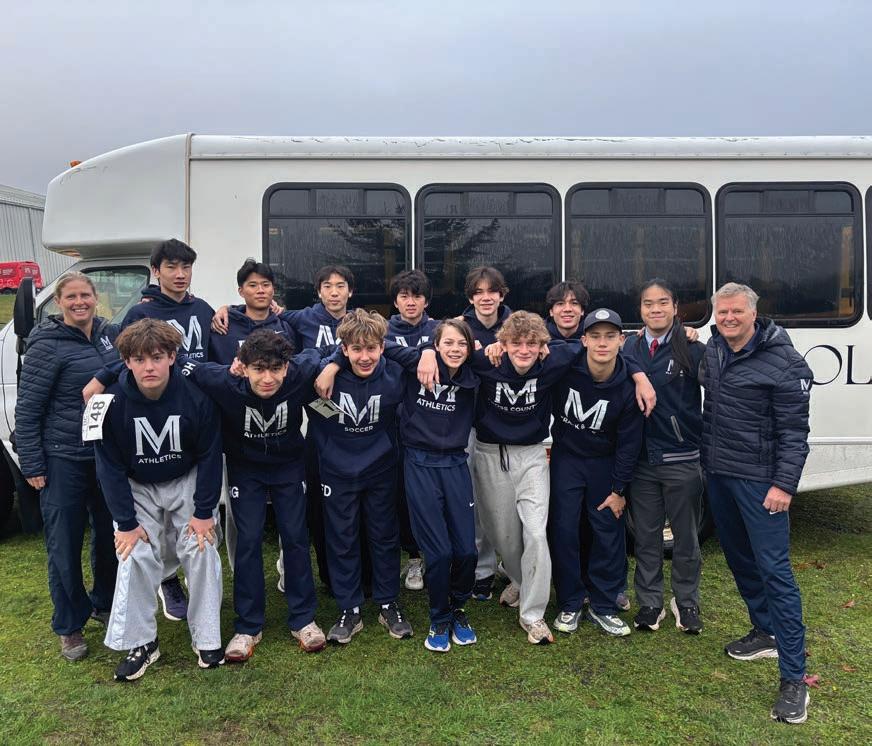
Michael Moore, Assistant Head of School, has been with Mulgrave through its evolution. Mike’s position includes accountability for teaching and learning, ATL skills, ‘data for learning’ as well as ‘risk and safety management’, which might seem disparate, especially when considered alongside his other roles as an IB DP Physics teacher and cross country team coach. We sat down with Mike for a little insight into his role and how it all supports Mulgrave’s Strategic Direction.
When you look at Mulgrave’s strategic work over the years, what are your reflections?
I’ve been at the school since 2007, and while we have had different emphasis within strategic plans over the years, fundamentally, there has been great consistency. Ultimately, we always seek to do the best for our students; our goal is to provide an empowering learning experience to prepare them for a purposeful and productive life. We used to have a tagline for teaching ATL skills, ‘to be happy, fulfilled, and successful in life’. This notion is reflected in our mission statement - Inspiring Excellence in Education and Life - which references our emphasis on personal best. Our Strategic Direction 2025+ takes that further with the development of learner confidence and the specificity of High Impact Teaching Strategies, but we still don’t stray from a student-centric approach and purpose.
Why is data so important in Mulgrave’s approach?
We are not an organisation that follows where the wind blows; we are purposeful. Interestingly, this is where my risk management role is helpful, providing a strategic view. In the long term, through the risk lens, we can identify future challenges and opportunities. Using data and trends, we identify strategic teaching and learning directions; this supported our
early focus on personalisation and skill development. We have since used data to refine our technology approach and clarify our current strategic focus on teaching and learning. Using student benchmarking and performance data, we can identify areas to dive into further, including student involvement and connection - which are foundational to achievement, belonging, and confidence.
Some might think you have a mixed bag of accountabilities. How are they all connected?
Skills, risk and safety, data, coaching, and teaching…yes, I can see how it might appear to be a miscellaneous collection! But each area supports students in finding themselves and building their confidence:
• Appropriate risks stretch students and develop resilience
• Data underpins reflections for students and teachers to ensure we understand student capability and progress against ability
• Approaches to Learning (ATL) skills develop tools for learning, work, and life
• Identified teaching strategies support and extend learning
• Extra-curriculars offer inspiration and connection, strengthen student-teacher relationships, and help students discover their passions
What does self-actualisation look like for you?
I’m privileged to be a part of what I call ‘golden moments’. That can be colleagues talking enthusiastically about connecting their classroom efforts to student outcomes. It can also come from alumni who share how their school experience motivated them towards their goals. It may have been something academic or maybe a club or activity, but knowing that the school enabled them to develop is incredibly rewarding. And as cross country coach, I feel immense satisfaction when someone continues to run, joyfully, beyond graduation. It’s really about knowing that through my work at Mulgrave, I’ve made a difference. Being part of the journey is special.

Kate Hoogendoorn (she/her) Board Chair
The role of Mulgrave’s Board of Directors is that of governance and oversight. We know that the school’s leadership team has day-to-day operations well in handwe are here to provide foresight, long-term planning, and professional expertise within that context.
This foresight has been our main focus over the past two years, diving into discussions around AI and robotics, environmental sustainability, evidencebased teaching and learning, and emerging new school models. This has helped frame future-facing discussions with school leadership, enabling all of us to remain nimble and prepared for the future.
For us, the development and introduction of Mulgrave’s Strategic Direction 2025+ has been the reflection of opportunities presented by an incredibly strong foundation. Over the last three decades, our Board and Committee predecessors, school leadership, faculty, and staff have intentionally and planfully grown our school into one of the leading independent schools in the world.
We are now evolving as a maturing school, looking outward and being particularly mindful of the rapidly changing pace of the world. It always boggles my mind to think that our little preschoolers will graduate in the 2040s! It’s hard to imagine the world they will step into, but it is the Board’s role to consider that, along with the skills and attributes that will make them as successful and impactful as possible.
From the introduction of our Strategic Direction 2025+ to seeing progress already made in the first year, it is very gratifying. The Board’s aim is to build on what has already been accomplished, to look forward to what is to come…and to do so with aspiration and purpose.
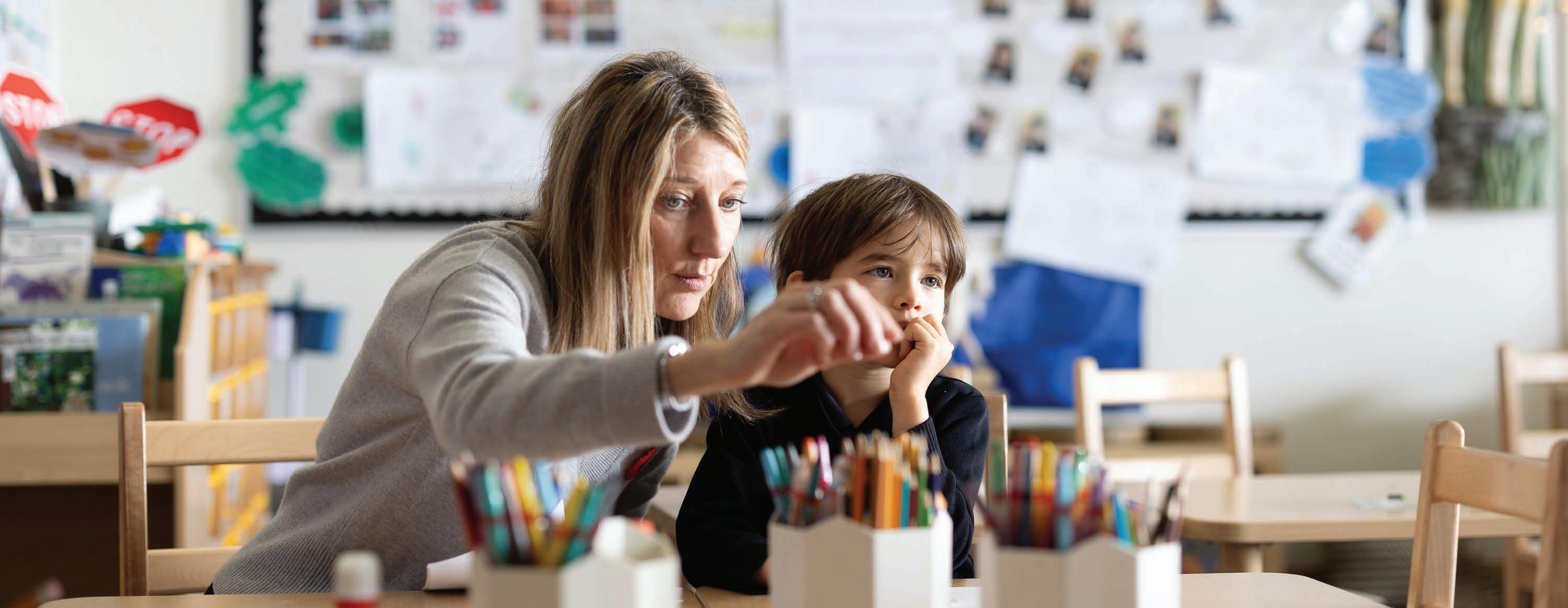
At the heart of our Strategic Direction 2025+ is an ongoing commitment to outstanding teaching. Using proven teaching strategies and culturally responsive pedagogy, our teachers personalise their approach, recognising that students have different needs, learning styles, and competencies. A student can show up with varied levels of confidence, even as they move through situations and subjects within a day. As such, the nuances of our teaching and learning approach requires thoughtfulness and agility. Here are a few examples of these strategies in action:
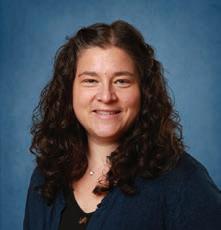
In our Early Years, learning is viewed as an active, engaging, and meaningful process. Rather than separating play from academic development, we recognise play as a powerful tool through which our young learners explore ideas, build understanding, and develop essential skills.
PK3 teacher, Rachel Greenwald explains a ‘story box’ with pieces related to The Three Little Pigs. “We have little sticks, bricks, and pig and wolf figurines. We share the story’s premise in group time, then students explore the materials in small groups. Friends share, take turns, develop communication skills, and exercise their imaginations, all while practicing motor skills, learning about cause and effect, and building academic foundations, such as counting, as they lay out their pieces. We connect this activity to our unit on shelters, and also weave in the moral of the story…along with lots of fun!”
Play and learning are like two wings of a butterfly...one cannot exist without the other.”
Carla Rinaldi
PK4 teacher, Cathy Frewin, describes the intentionality behind what can seem to be ‘just play’. “We deliberately design activities that align with our desired learning outcomes, but we also have to be agile and responsive to students’ curiosities.
“During a STEM activity that built on students’ interests in caring for animals, and tied to a unit about sharing the planet, we tasked groups to build rafts from recycled materials to move mini creatures to a new part of the forest. They tested their rafts in water; some took many attempts to make them float - they tried different materials, collaborated, and even observed other groups. We were there to offer provocations (what would happen if…), but they came up with their own questions. Our students now have curiosities about building bigger rafts to carry bigger animals. Transferring their learning to a new situation gives them autonomy and challenges them even further.”
Learning to read, and continually building skills, is an intentional and data reflective process. There’s a lot of related teaching lingo (decodables, Dibels, phonetic awareness, and phonetic fluency, to name just a few terms), but the essence is that systematic progression is key.
Foundational to this approach is tracking each student’s mastery through regular assessments and observation.
“We have to train our brains to read and write,” explains Taylor WilkinsonCharles, PYP Literacy & Information Coordinator. “We are in our second year using the UFLI programme and progress has been very positive. The skills become progressively more difficult, building students’ confidence
deliberately. From Kindergarten, where students are recognising sounds and letters and breaking words into parts (for example, SUN is three distinctive sounds), to Grade 1 where we focus on reading fluency through accuracy, and then in Grade 2 where students extend into retelling - recalling what they read and sharing it back…they see tangible progress. Incredibly, by Grades 3 and 4, students are into deep novel studies and group discussions and then in Grade 5, critical thinking skills are further layered on.
Teachers use key metrics to measure progress, report to parents, and personalise their approach. It is gratifying to see consistency in a child’s progression, but even more so to see them light up as they make new connections through reading - to a storyline or a character, or even to unlocking research or understanding word problems in math.”
Students may feel uneasy when learning a new language. But by using team games to break the ice and bring students out of their shells, Delia Ma brings both fun and comfort to the classroom.
“My students have a variety of abilities and experiences with Mandarin. I aim to use only Mandarin in class but know that students need confidence to feel that this is attainable. I use a lot of team games in class so students can support one another and don’t feel they have to perform purely as an
individual. Teenagers enjoy working with their friends, so I use that to foster the learning. A favourite is ‘imposter’, where students describe a vocabulary word without saying it. Another good one is ‘Guess Who?’ when we are doing a unit on people and descriptions.
My goal is to get beyond rote memorisation. I have a lot of freedom at Mulgrave to design student-centred classes so they can see Chinese as a useful language in real-life situations. I hope that my students can be life-long language users and embrace their own place with the language as it fits into their lives and identity.”
Feedback can be tough to hear, and sometimes even harder to act upon. But, it is a critical aspect of continuous improvement. Marc Foley, English and Philosophy teacher, approaches feedback purposefully, using his insights to bolster student confidence, not erode it.
“I am very deliberate in honouring the effort students put into their assignments. If they see that I take care and time with their work, they understand that I am here to help. Sometimes, they will comment that I have written more than they have; I want to show them how invested I am in their learning.
I start with positive points to highlight where they are on the right track -
whether in writing or verbally. My critical comments are not definitive or bluntly directive, instead I offer suggestions or questions to encourage students toward their own conclusions on how to strengthen their piece. The resulting confidence is iterative; it builds with subsequent assignments. I often reference previous papers and growth in their process because I want them to see that engaging in feedback is worthwhile.
Feedback is all about looking backwards, but with a goal in mind. When students feel they are making progress, their thinking becomes freer, so they can focus on more complex topics in depth. It becomes exciting for them to see possibilities rather than barriers.”
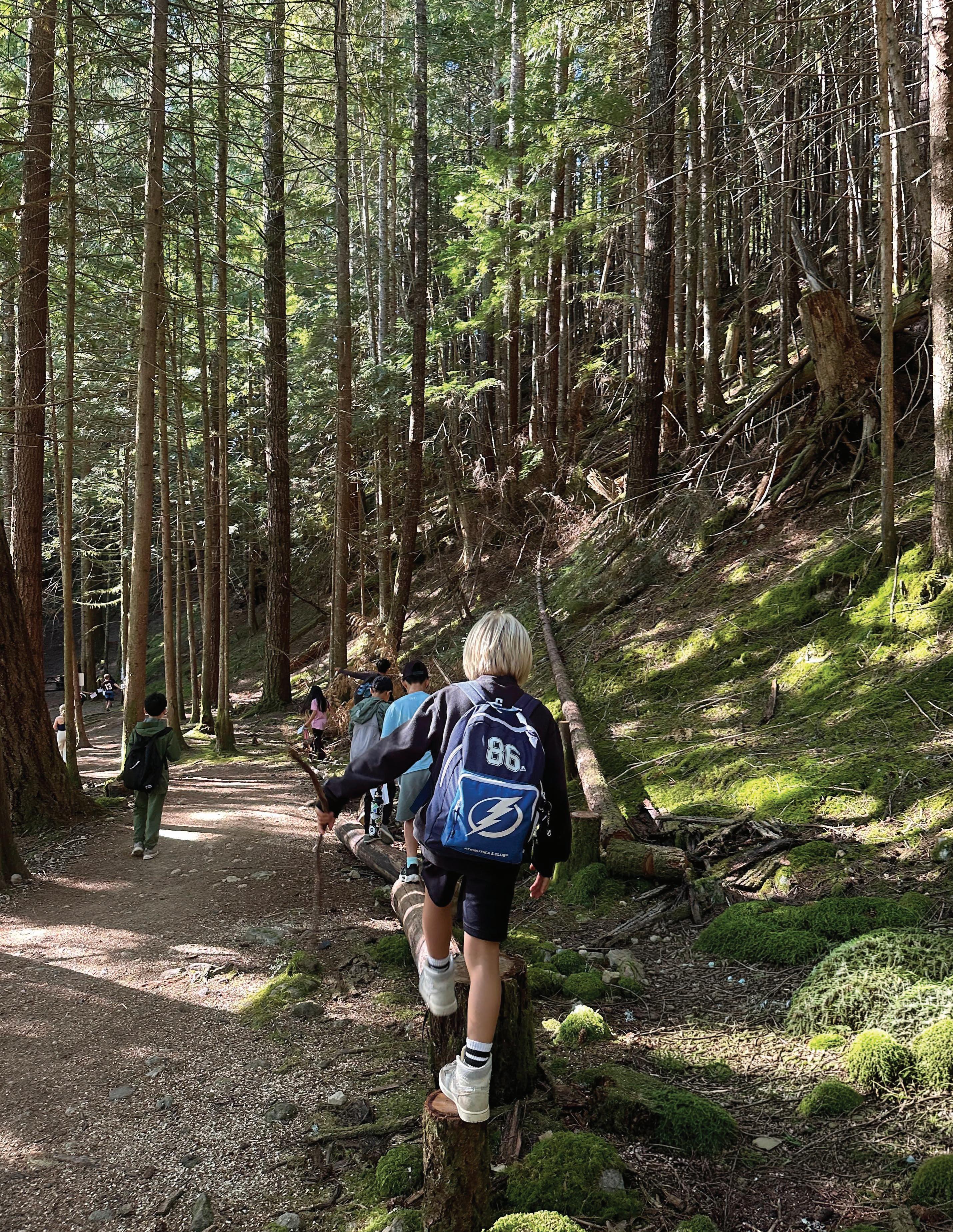
When a Junior School student stands before a moss-covered log on the Mulgrave Nature Trail, the moment is about much more than a simple physical obstacle. It represents the Being stage in our Learner Hierarchy of Needs - a vital period of mindful attention and presence that serves as the bedrock for emotional growth.
While the classroom offers its own rigours, the outdoors provides a unique environment where the rustle of leaves and the uneven terrain command a regenerative type of attention. Nature acts as a physiological reset, directly lowering cortisol levels and calming the systems responsible for our stress response. This environment can be more effective for a child’s focus than typical classroom methods, and can move them from a state of ‘fight or flight’ into a grounded sense of selfawareness.
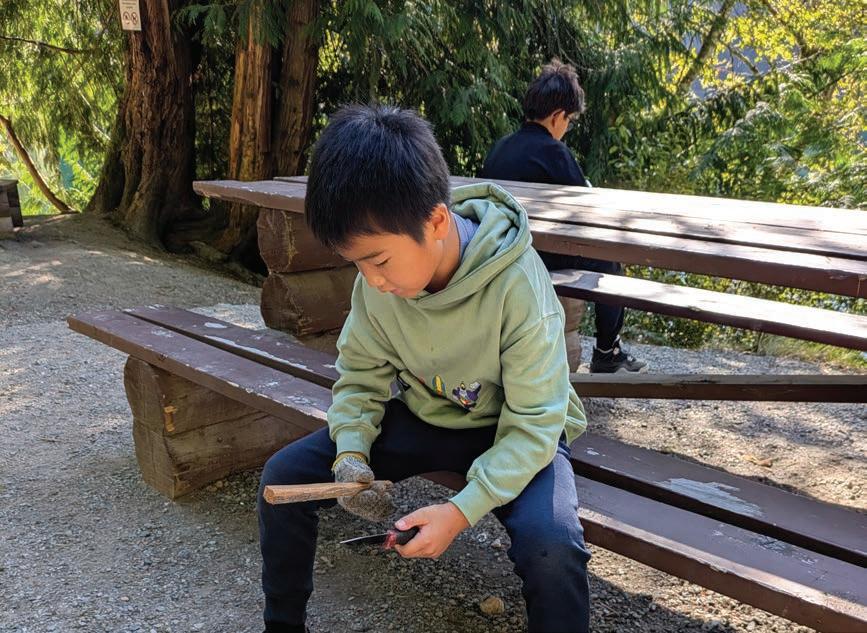
This journey begins by gradually introducing risk-taking with firm boundaries, ensuring students are prepared long before they encounter a true challenge. “In Kindergarten, this might look like learning to use a potato peeler from ‘elbows to knees’, building the muscle memory and safety awareness required to graduate to knife carving by Grade 4,” shares Georgia Williams, Junior School Outdoor Education teacher. By establishing these foundations early, the teacher can eventually step back, moving from a physical safety net to a conversational one. Where a preschool student might require a steadying hand to cross the log, an older student is supported through inquiry: “What does that part feel like under your feet?” or “Where do you feel your balance shifting?”
As this internal control takes root, it manifests in a visible shift in students’ engagement. They move from a state of uncertainty to a grounded love-ofthe-outdoors through a series of lowstakes challenges. Confidence is built incrementally. In the Junior School, the slug challenge on outdoor education trips lives in mild infamy: Grade 1 students might tentatively touch a slug with their pinky finger, eventually leading to the optional, lighthearted placing of a slug on their faces at Grade 4 camp.
These moments allow students to sit with somatic dissonance - the feeling of being scared while simultaneously realising they are safe and capable,” shares Georgia. “This is the birth of what we refer to as the inner risk manager, a mental framework that allows a child to distinguish between perceptual risk (what feels scary) and actual risk (what is scary).”
To foster this independent assessment, the language of instruction shifts from the restrictive to the empowering. Georgia consciously replaces the reflexive ‘be careful’ with a question that demands an action: ‘What’s your plan?’ As she explains, “‘Be careful’ suggests you don’t have autonomy over an action to change. The response there is ‘Oh no, I can’t move forward, I have to freeze.’” By asking for a plan, she encourages students to lift their knees higher over a rock or test the weight of a branch, for example, empowering them to navigate their environment rather than fear it.
Ultimately, these lessons serve as a rehearsal for the complexities of later life. By allowing for bumps and bruises when stakes are low, students learn the reality of risk at a level one rather than testing it for the first time at a level ten. Whether it is understanding that a stove is hot or learning to trust their own assessment of a peer-pressured situation years down the road, these Junior School outdoor experiences provide the compass. Students emerge from them not just with a sense of adventure, but with a quiet, grounded confidence that tells them they have the plan, the ability, and the self-awareness to handle whatever comes next.
Imagine your child coming home from school and, instead of melting down over a misunderstanding with a sibling, they take a deep breath and articulate exactly how they are feeling. This sounds like a parenting dream, yet it can simply be the result of our deliberate, holistic approach to mental health and wellbeing.
A truly well-rounded education must provide the essential emotional vocabulary for students to express themselves and reach peaceful resolutions. Empowering students with the tools to navigate their emotions is central to Mulgrave’s mission of developing confident, purpose-led individuals, a goal we pursue through our IPERMAH wellbeing framework and IB curriculum, through Units of Inquiry.
That commitment led our Junior School teachers to adopt Open Parachute, a vital new wellbeing programme. Created by clinical psychologist Dr. Hayley Watson, this initiative helps students from Kindergarten to Grade 5 identify their emotions, improve their relationships, and navigate their daily lives with self-awareness.
Open Parachute uses documentarystyle videos of authentic peer voices. When students see others their age discussing challenges, it normalises their own struggles and fosters a safe classroom space. The curriculum integrates seamlessly with 20 to 45-minute lessons focussed on SelfReflection, Relationship Building, Respectful Actions, Support Strategies, and Wellbeing.

IDENTITY
POSITIVE EMOTIONS
ENGAGEMENT
RELATIONSHIPS
MEANING
ACHIEVEMENT
HEALTH AND WELLBEING
Students also learn the ‘Being Well Model,’ a framework teaching them to ‘Feel, Pause, Think, and Act.’ Instead of reacting instinctively to stress, they are empowered to choose respectful responses.
The results at Mulgrave have been genuinely inspiring. Understanding that the ability to resolve conflict is a vital life skill (and that conflict is in fact developmental in nature), the Open Parachute programme equips students with the necessary knowledge to help regulate their
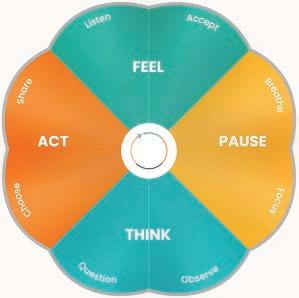
emotions and navigate disagreements more effectively. Since the programme’s introduction, teacher observations and data reflect a noticeable increase in healthy coping language; students are now demonstrating the independence to resolve their own disputes on the playground and in other settings.
Best of all, families are part of this vital conversation. Recognising that resilience is nurtured equally at home, the programme offers video-based wellness modules and resources designed specifically for parents and guardians. By providing a shared language between the classroom and home, Open Parachute ensures support is provided preventively, framing life’s hurdles not as individual failures, but as a standard, manageable part of the child’s development.
By uniting the classroom and the home through a shared, preventative language, Open Parachute is successfully empowering Mulgrave’s Junior School students to develop the self-awareness and emotional resilience needed for a confident, purpose-led life.


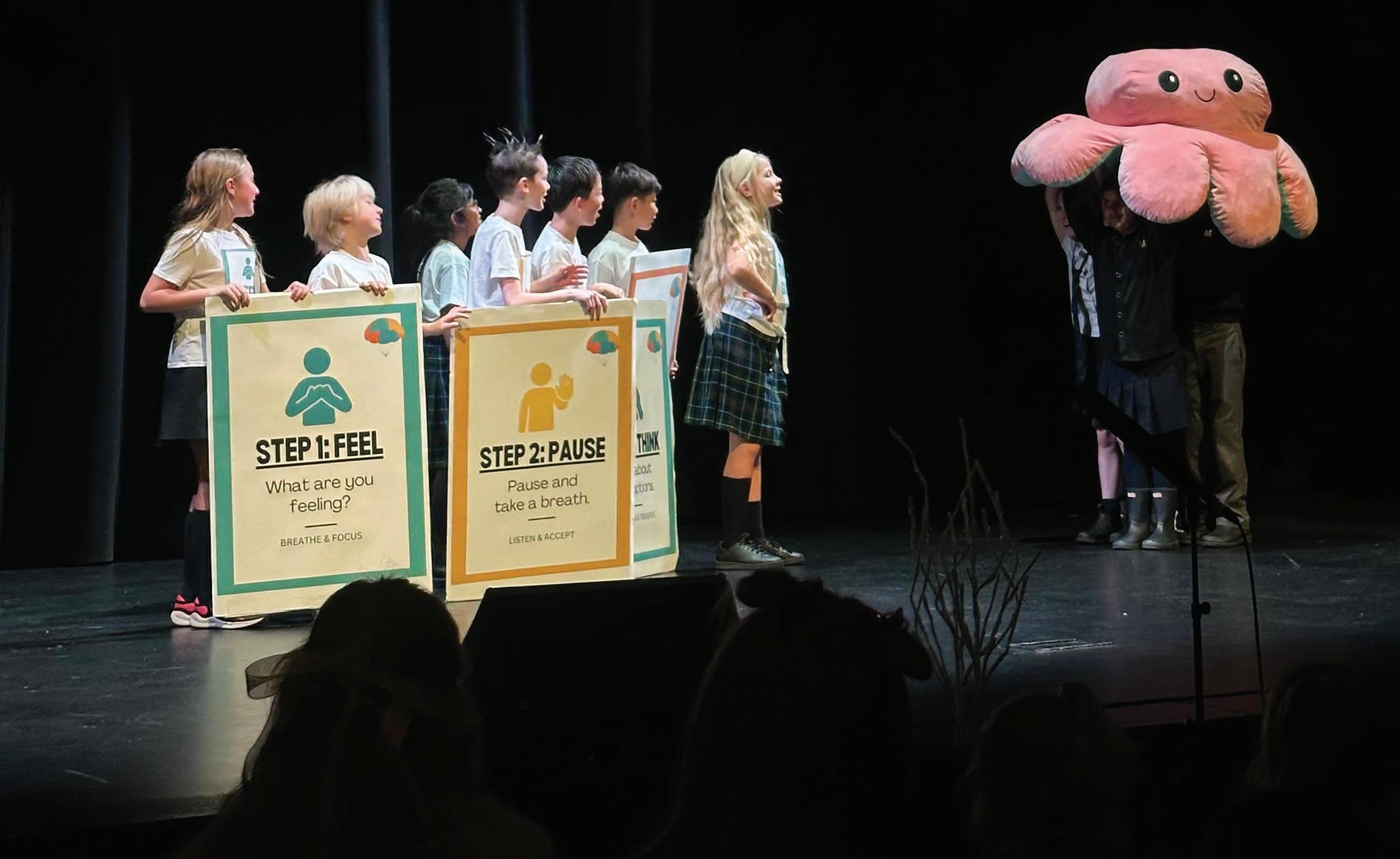
During the foundational Early Years, our focus is on empowering our youngest learners to identify and articulate their emotions with clarity. Through the lens of the IB Units of Inquiry, students explore the nuances of their feelings and the vital interpersonal connections, such as family, that shape their wellbeing. By observing how others express themselves, they begin to develop a precise emotional vocabulary, a crucial tool that encourages thoughtful reflection before action. To ensure a truly safe and supportive environment, even our smallest students are guided to discover simple, effective calming techniques, laying the groundwork for self-regulation and emotional resilience from the very start of their educational journey.
Middle School is a pivotal time for identity and belonging. We support students through a diverse network of advisors, learning strategists, specialised teachers, counselors, and
divisional leaders, ensuring every child is seen and nurtured. This collaborative approach ensures no one navigates these transformative years alone.
Our holistic care includes a Grade 6 transition model and three-year advisory programme that follows. Through LEAP (electives) and Life Skills courses, students explore themes like emotional wellbeing, identity, and personal safety. By embedding the IPERMAH framework, we empower students with the self-awareness and confidence to navigate social dynamics and thrive as resilient individuals.
As students transition to Senior School, the future brings both anticipation as well as internal and external pressure. Our robust support network, including advisors and the University and Careers Counselling Department (UCCD), begins guiding students in Grade 9, fostering deep relationships with families to navigate their path beyond graduation.

(Learn more about our UCCD team on page 39)
Mulgrave uses a comprehensive care model: all students receive consistency through a three-year advisory programme and UCCD guidance; those requiring additional support receive targeted counselling and learning strategies. This is enriched by outdoor education and other structured programmes which nurture the whole learner through community service and global exploration.
The Senior School team regularly reviews the academic calendar with a focus on student wellbeing. As an example, this approach prompted the decision to move IB mock exams from January to March, allowing the winter break to be a period for rest and connection instead of study. Initial feedback indicates increased academic involvement and stronger student resilience.
Ultimately, this ongoing, multi-divisional effort creates a comprehensive support system, ensuring each student is intentionally provided with the emotional vocabulary, self-awareness, and resilience needed to confidently pursue a purpose-driven life, well beyond the boundaries of Mulgrave.
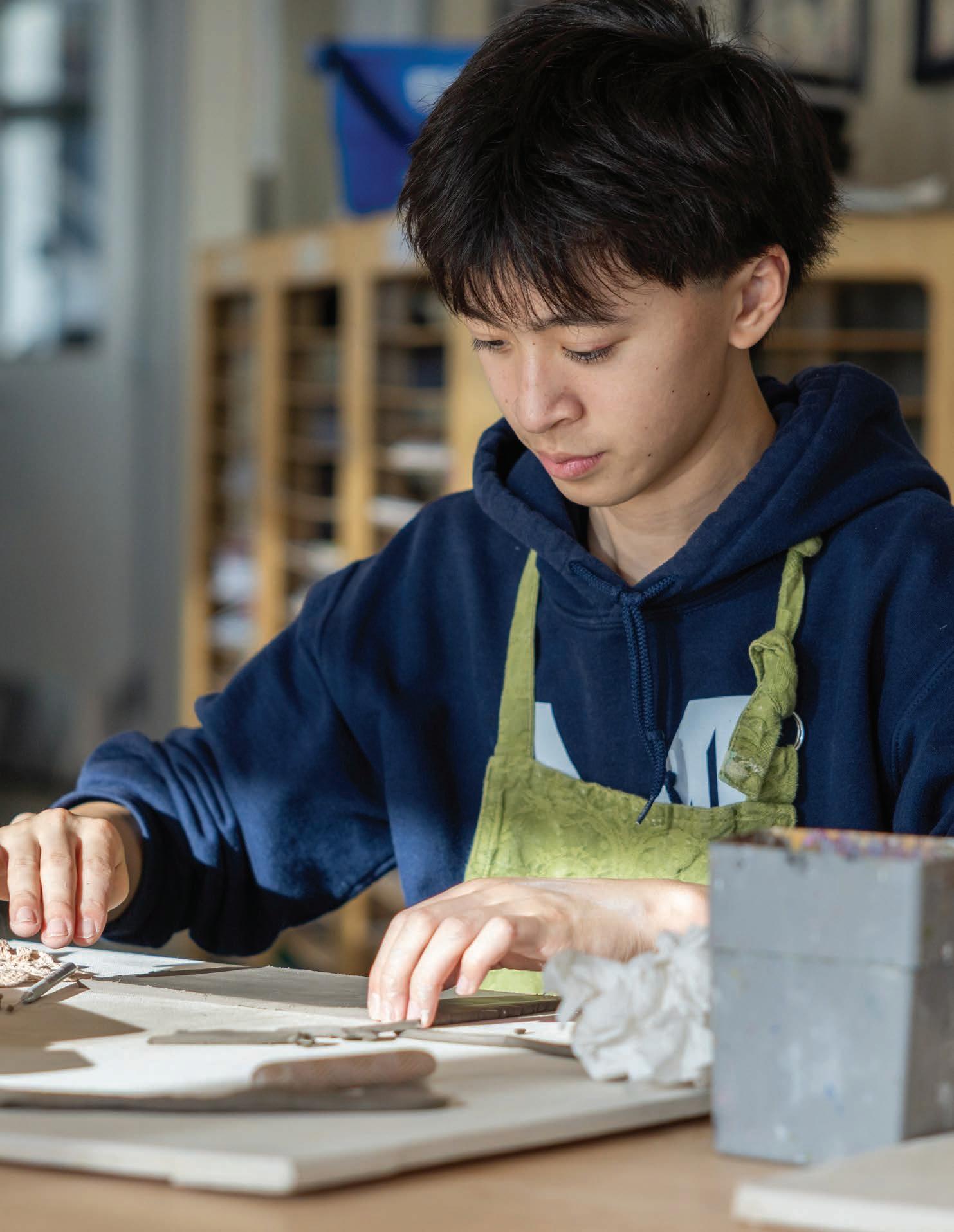
If you had walked into a Grade 9 Visual Arts class this year, you’d be forgiven for thinking you’d stepped into a bustling, global kitchen rather than an art room. Their collaborative project, ‘Welcome Home’, challenged students to recreate the foods that define their lives using ceramic hand-building techniques such as slab rolling and coil assembly. The result? A massive, shared dinner table where every plate tells a story. For many students, this wasn’t just about getting their hands dirty with clay; it was about identity, mindful presence, and the courage to be seen.
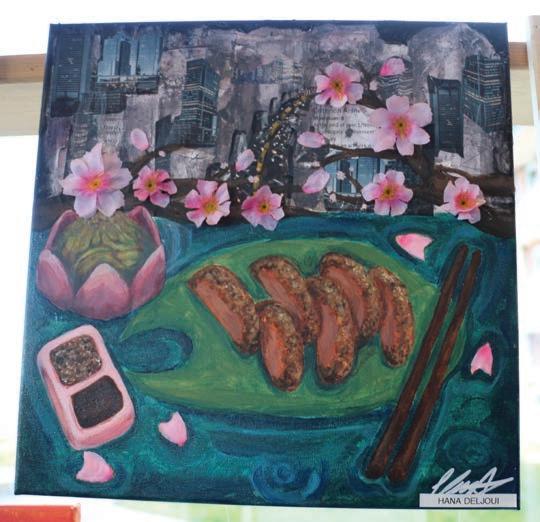
Hana D navigated the project as a way to capture a moment of peace. “I chose Hirekatsu, a Japanese breaded pork dish,” Hana explains. Inspired by visits to a local restaurant with her family, the dish represents a “balance between story and peace; a fun break from all the work. As I was creating the piece, I felt happy that the work was a representation of my mind. It was nice to show my peers and explain the meaning.”

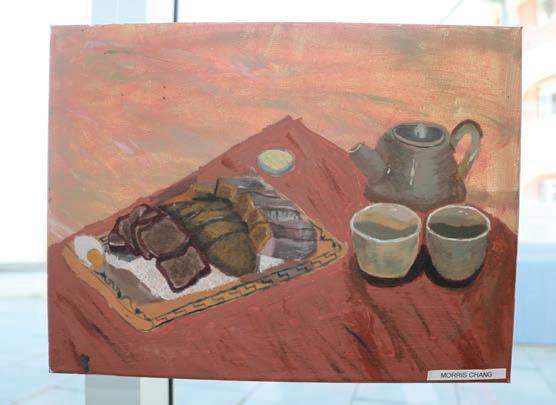
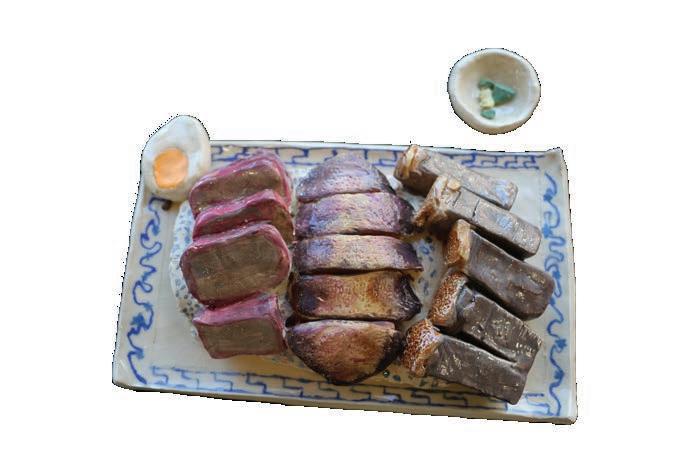
For Morris C, the table was a chance to celebrate his Cantonese roots. He recreated a ‘post-work cheat meal’ from a BBQ shop in Chinatown, a place he describes as a beacon for immigrants. “Everything is a process,” Morris reflects. “I correlated the time I spent making the art to the time people spend making the food. Struggles become a part of the natural thing.”
Morris leaned into the ‘struggle’ of the ceramic process, realising that how we handle the challenges of the medium mirrors how we handle the challenges of our history. By introducing his friends to this specific dish, he felt a surge of happiness; his peers weren’t just seeing a plate of food, they were seeing his heritage. “Through this piece of art, I found peace and happiness,” he notes, emphasising how the shared table transformed individual struggles into a collective celebration.
Paige L used the project to explore the complexity of being a global citizen. Her work features avocado toast served on a plate shaped like a map of Hong Kong. “I moved here when I was young,” Paige says. “It showed me I don’t have to be just one thing; I can be Canadian and from Hong Kong at the same time. I felt vulnerable sharing that part of me because most people don’t know I’m from there.”
Through the artistic process, Paige discovered that she didn’t have to choose one identity over the other. The act of ‘crafting’ her home allowed her to be present with a part of herself she often forgets. “It showed me who I am,” she admits. Seeing her work alongside a friend from Greece or a classmate with a different tradition helped her realise that while we all have unique ‘maps’, we are all navigating the same, often complex, journey of belonging.
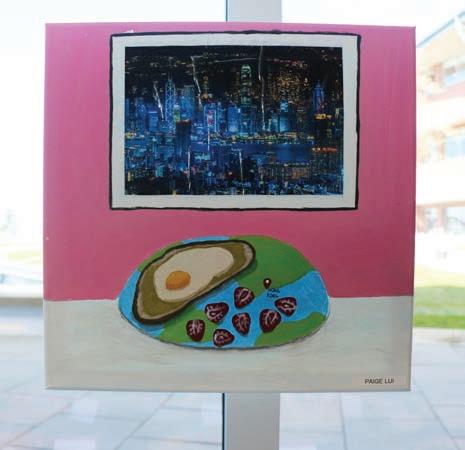

As students transitioned into their second art Unit of Inquiry, ‘Still Home’, where they painted still-life versions of their ceramics, one thing became clear: our school community is a beautiful, diverse mosaic. Seeing all their plates together provided an intimate snapshot of Mulgrave’s collective identity. Whether it’s a traditional cultural dish or a simple snack, ‘home’ is wherever one finds connection.
The 2025-26 school year marked an evolution in our commitment to global citizenship and inclusion, shifting from standalone DEIJ initiatives to much broader, integrated, and in depth work around creating a space of belonging.
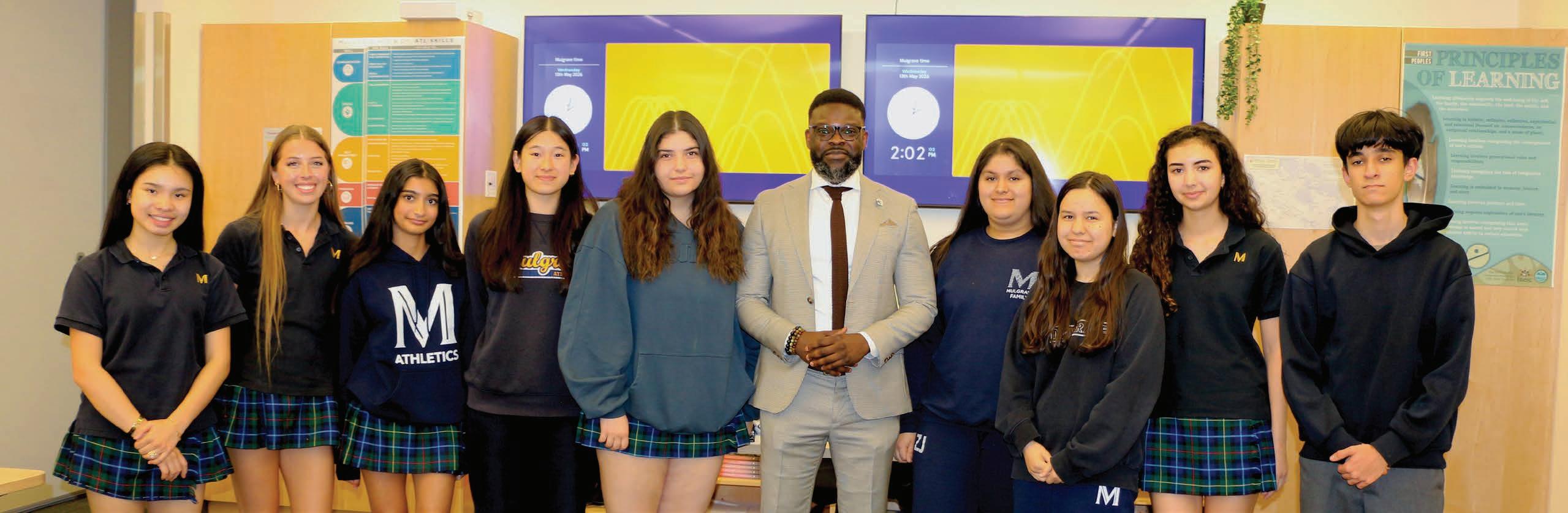
Leading this transition is Director of Equity, Justice, and Belonging (EJB), Olaolu Adeleye, who brings an intercultural perspective spanning work on five continents and in a range of sectors. Olaolu references his Four Ps (People, Pedagogy, Policy, and Parity) as the lens through which equity is woven into the school’s very fabric. He believes that lasting change begins with genuine dialogue, and that empowering students to find and use their own voice is not a programme or an initiative but a way of being in community together. In his work with students, families, and colleagues, he centres connection, collaboration, and candour as the ingredients that foster belonging.
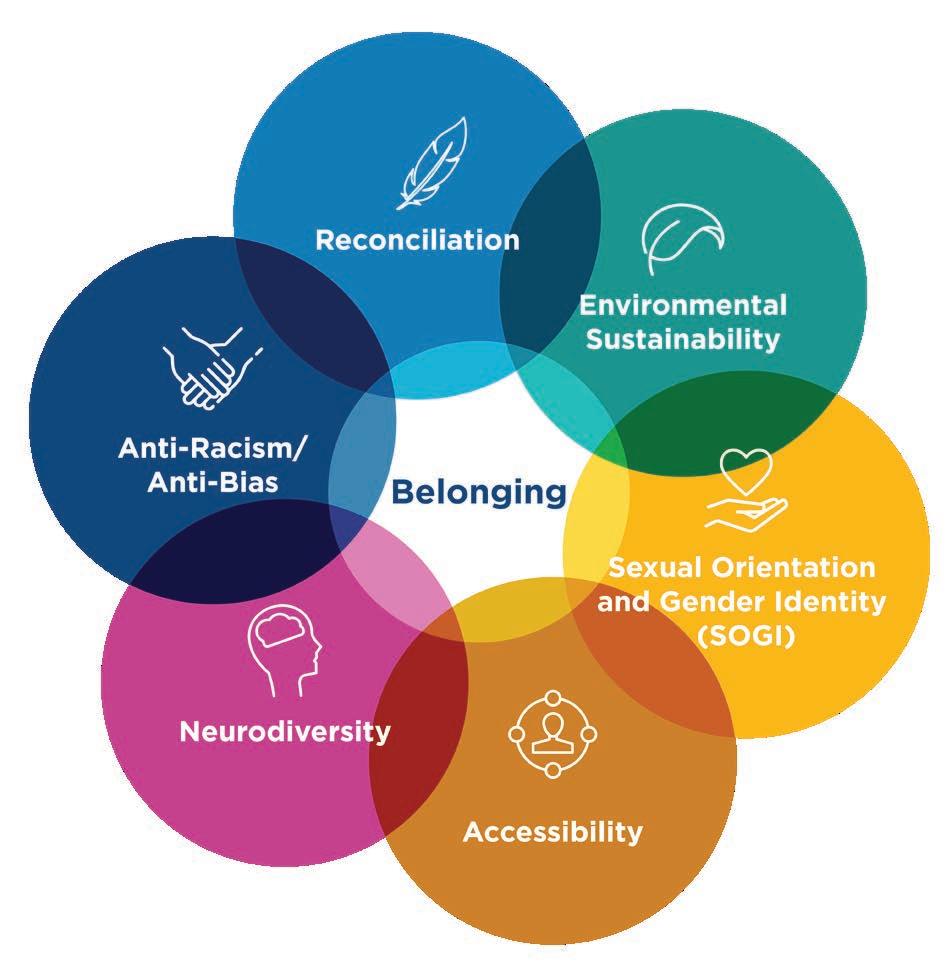
The new EJB framework is rooted in the belief that belonging and safety are the non-negotiable foundation of excellence, both in education and life. This is implemented through six interconnected operational work streams for all members of the Mulgrave community: students, staff and society.
Strategic Foundation and Reporting
Integrates equity into core strategic priorities with transparent governance structures, communication, and reporting to facilitate annual accountability.
Curriculum and Pedagogical Integration
Embeds culturally responsive teaching, Indigenous and global perspectives, and multiple ways of knowing across all curriculum and assessment practices.
Indigenous Partnership and Reconciliation
Honours our partnership with Sḵwxwú7mesh Nation members and actively advances the Truth and Reconciliation Commission Calls to Action.
The EJB framework is built on six thematic areas: Anti-Bias/Anti-Racism, Reconciliation, Environmental Sustainability, Sexual Orientation and Gender Identity (SOGI), Accessibility, and Neurodiversity, aligned with Strategic Direction 2025+. This represents a maturation in our journey, moving beyond ‘checkbox actions’ to deep, day-to-day integration. By intersecting these themes within our policies, curriculum, and our High Impact Teaching Strategies, through culturally responsive pedagogy we ensure that education is a transformative, engaging, and culturally responsive
Community Engagement and Cultural Integration
Transforms family engagement into authentic partnerships through leveraging community cultural assets that strengthen school life for everyone.
Technology and Innovation Integration
Prepares students for a digital future by addressing technology bias, developing ethical AI literacy, and fostering responsible digital leadership.
Organisational Systems and Policy
Aligns school policies, recruitment processes, and governance structures with equity and belonging, moving beyond mere compliance toward community-building systems that enable every learner and staff member to thrive.
experience for all members of our community. This collective effort actively builds a safer, more just, and inclusive environment where these values are deeply ingrained in our community.
EJB at Mulgrave is a collective effort to enrich learning through the professional and lived experiences of our diverse community. Championed by our EJB Council Student Subcommittee, this collaborative work ensures students see their diversity reflected. We are committed to evolving alongside our families to build a community where every individual is celebrated, empowered, and belongs.
1
What motivated you to join the EJB Student Sub-Council?
Ethics and inclusion are deeply personal to me. I wanted to ensure our school is a place where students and staff feel genuinely respected and represented. When students feel a true sense of belonging, they gain the confidence to engage in school life and build healthy relationships. Feeling valued and accepted is the foundation for everything we do.
Can you name a few recent initiatives?
Last year, we hosted former Senator Mobina Jaffer - the first African-born, female Muslim senator in Canadian history - to bridge the gap between representation and active engagement. This year, we’ve shifted toward interactive dialogue with a new Sharing Walls, moving beyond static information to invite the community into active conversation.
Mac Walsh
Class of 2019
Member of the EJB Student Sub-Council
How can others help create a safe space of belonging at Mulgrave?
It starts with approaching every interaction with an open mind. Crucially, it requires shifting from a bystander to an ‘upstander’. Even if you aren't making harmful comments, staying silent can signal that exclusion is acceptable. We all have a responsibility to challenge it.
How do you view Mulgrave’s progress in creating safe spaces for everyone?
Having been here since PK3, I’ve witnessed a significant evolution. Mulgrave is moving beyond the mere fact of diversity toward the tangible results of belonging. The school is far more proactive now, with Junior School students increasingly engaging in initiatives once reserved for older students. We are creating genuine spaces for engagement rather than just celebrating diversity on the surface.
Certificate • Education Assistant ‘24 Bow Valley College
For young Mac Walsh, Middle School often felt like wearing ‘peer repellent’. Navigating the world as an autistic, trans-masculine youth, the search for authentic identity and belonging was a complex, layered puzzle. At age twelve, Mac was also diagnosed with severe scoliosis, which rapidly progressed and required spinal fusion surgery with titanium rods. Over time, managing chronic pain meant embracing mobility aids like walkers and wheelchairs, transforming them into vital tools of empowerment and personal agency. Yet, Mac’s ultimate breakthrough in finding connection came directly when
he joined the Whistler Adaptive Sports and sledge hockey community. It was an absolute ‘life changer’. Surrounded by an encouraging team where mistakes were met with support rather than judgment, Mac found a profound, welcoming sense of belonging. This supportive network strengthened Mac’s ability to relate to others, ultimately inspiring a career as an education assistant and public advocate aiming to help kids facing similar challenges.
Today, Mac’s story highlights how we can actively create a more understanding environment for people

with disabilities. True inclusion means moving past stigmas, providing barrier-free access, such as no-step entries, and treating mobility aids with respect as extensions of a person’s body.
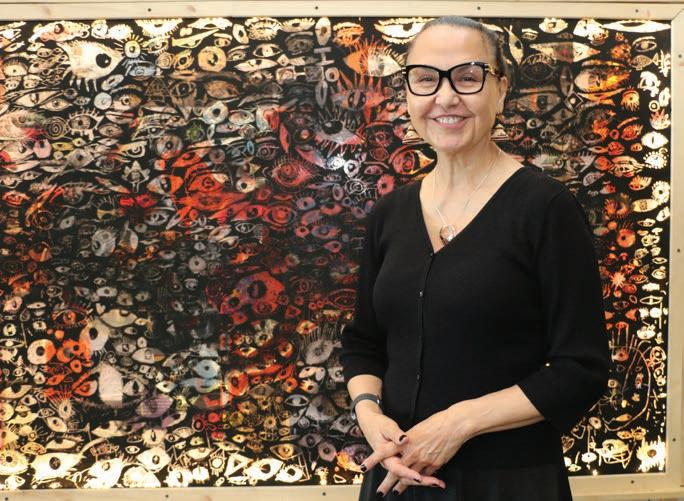
For over 20 years, Samaya Jardey has dedicated herself to the holistic wellbeing and recognition of Indigenous Peoples, serving with the Indian Residential School Survivors Society, the Truth and Reconciliation Commission of Canada, and with Squamish Nation in the Language and Cultural Affairs Department. This year, she joined Mulgrave as a consultant, focussing primarily on the implementation of our new IB Systems Transformation course (STP)(Read about STP on Page 33). Here, she discusses her connection to the land, her role in STP, and how she is walking the path paved by the Elders before her.
To help our community get to know you, please share a bit about your background and what drew you to Mulgrave?
My path is guided by the teachings of my auntie and grandmother. I believe the experiences and histories of previous generations carry profound importance today. This work is a responsibility to my lineage; even my current PhD dissertation, which focusses on training the body to speak Indigenous languages, is a tool my ‘old people’ have guided me toward so that their teachings continue to flow through me. I’m at Mulgrave because I felt a deep emotional connection to its authenticity, and a belief that my ancestors had guided me here to carry out this work with purpose and intention.
How are you working with faculty to incorporate Squamish ways of knowing into lessons?
My role involves collaboration with faculty to move beyond ‘teaching about’ Indigenous people and toward ‘being’ in relationship with Indigenous knowledge. Specifically, I am helping configure the STP curriculum as it relates to the land around us. In the future, as an extension of this work, I hope to be able to focus more on land-based learning, including taking students onto the water to experience Sḵwxwú7mesh Úxwumixw (Squamish Nation) homelands as they were traditionally travelled: by canoe along the waterways that served as the peoples’ highways. There is also the opportunity to use drone technology to bring specific ancestral sites into the classroom, ensuring students understand that the land has its own language, history, and laws that predate the school itself.
How does this work build the confidence of our students to engage with complex histories and be better global citizens?
It’s inviting students to broaden their worldview. When students learn through a Squamish-specific lens, they develop a transdisciplinary perspective rooted in relationships. This builds a unique kind of confidence; confidence in their ability to walk anywhere in the world and recognise that the history of the land matters. By understanding a local landscape, they become more empathetic and effective global citizens who lead from the heart, not just the head.
What is something you’ve learned about Mulgrave since you’ve been here?
One of the most profound moments has been the realisation that Mulgrave’s leadership is genuinely committed to sharing Squamish language, culture, and history in an authentic way. I look forward to witnessing the potential emotional connection students may experience as they come to understand that they are standing on Squamish homelands with thousands of years of living history. These possibilities reaffirm that we are doing more than sharing information - we are shifting perspectives.
How do you see Squamish Education acting as a pillar for the graduates we send out into the world?
Our goal is to plant a seed of thoughtfulness so that students come to recognise the diversity of Indigenous Peoples, cultures, histories, and perspectives. We hope Squamish Education serves as a foundational pillar that encourages graduates to engage with the world with greater respect, curiosity, empathy, and understanding. Whether a student becomes an engineer, a banker, or an artist, my hope is that they will carry a sense of location. If they can function in their professional lives with an awareness of the history and people of the land they occupy, they will be more ethical and compassionate leaders. It’s about awakening a deeper awareness of how they engage with the world.
How can this relationship between Mulgrave and the Squamish Nation continue to grow?
A true relationship means Mulgrave isn’t just checking a box but is actively seeking to be an engaged member of the community. This means saturating the school environment with Squamish art, culture, and language so that it becomes part of the school’s fabric. By honouring the unique knowledge of the Squamish People, Mulgrave moves from being a guest on the land to being a respectful potential partner in sharing Squamish language, culture, and history that is texwlám Sḵwxwú7mesh (truly Squamish).
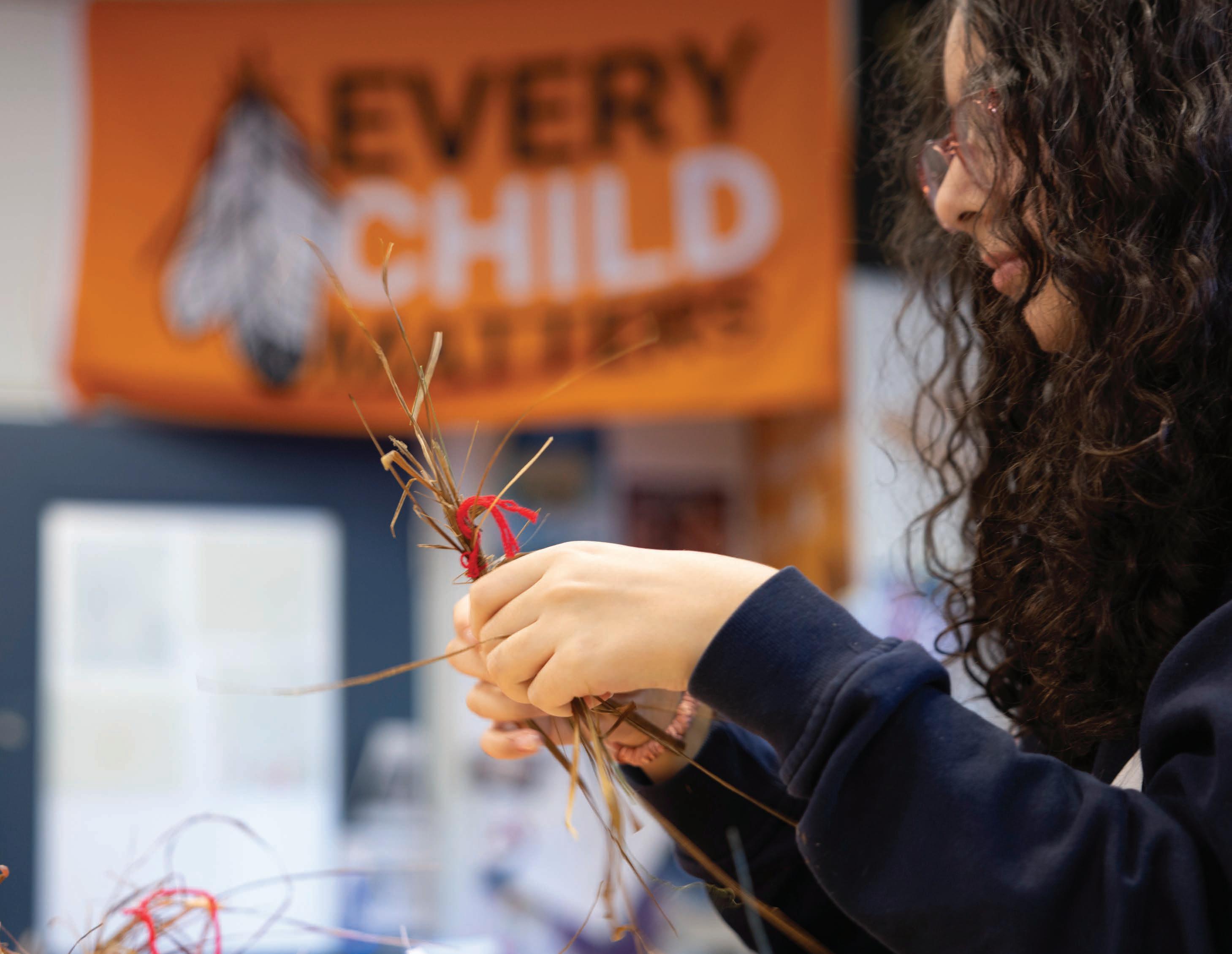
A profound journey of cultural revitalisation and hands-on learning has been unfolding in the Middle School Changemakers LEAP elective, where gardening has transformed into a cycle of connection. Under the guidance of Raquel Teibert, Indigenous Education Coordinator, and Joline McRae, Education Assistant, students spent the 202425 school year planting and tending to three specific sacred medicines in our gardens: sage, tobacco, and sweetgrass.
This project is rooted in the wisdom of the Medicine Wheel, an Indigenous teaching that emphasises the delicate balance between the four directions, the four stages of life, and the physical, mental, emotional, and spiritual selves. By following protocols shared from the Ojibwe Peoples in Iskatewizaagegan, also known as Shoal Lake 39, students learned to engage with these plants as botanical specimens, and as teachers in their own right. Changemakers have also included
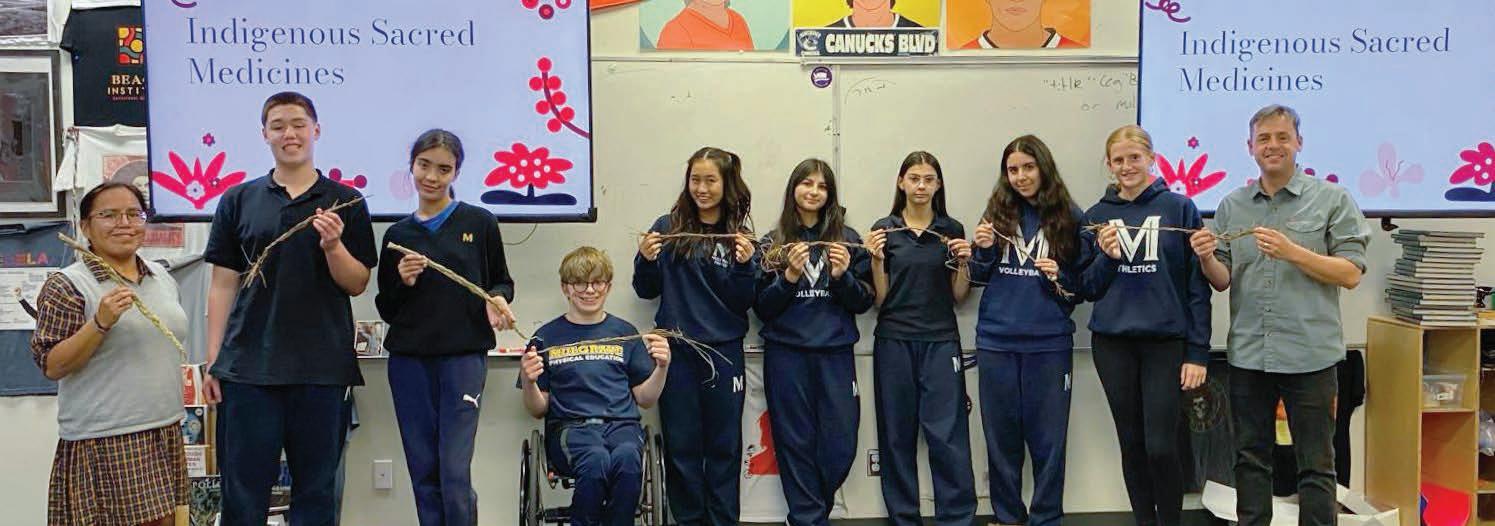
guidance offered from two new sources: one is Squamish Nation ethnobotanist Leigh Joseph, who provides her insights through her book Held by the Land. The other is Sarah Loretta Schuster (Bluesky-WaterWoman), an Anishinaabe medicine gardener, who provides her guidance through the Downie-Wenjack Fund, of which Mulgrave is a Legacy School.
The process began with the intentional act of planting in the spring of 2025. This was then followed by a harvest in the fall of 2025, before the school’s November break. The medicines were then hung to dry over several
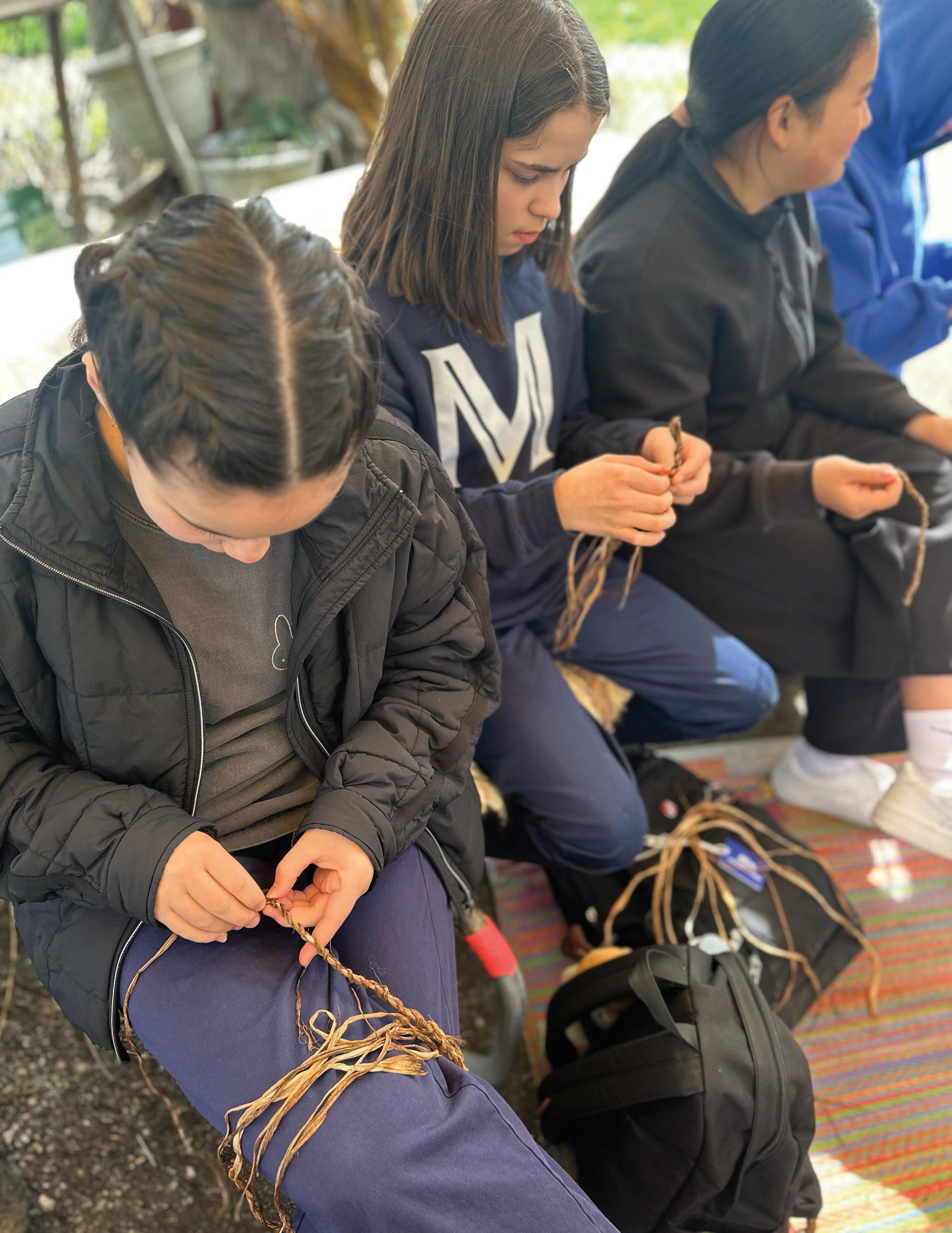
weeks. Most recently, the classroom was filled with the rhythmic work of braiding sweetgrass, a cultural metaphor for unity, healing, and the strength found in interconnection. Each strand represents a thread between the land, the lineage of those who came before, and the spirit of the present generation. To plant, harvest, and finally braid the medicines moves the curriculum beyond the intellectual and into the relational, teaching students to share these traditions in a good way while fostering a holistic connection to the earth and the community that sustains them.
The premise (and promise) of Mulgrave’s Financial Assistance programme is to continue to build socio-economic diversity within our student body and community.
This enables all students, as well as our community as a whole, to gain new perspectives and develop a creative, critical, and compassionate understanding of the world around them. These globally-minded citizens will then go out into the world with a stronger understanding of others and the capacity to connect with one another, respectfully. As students build this ability to relate to one another with growing understanding, they build their learner confidence towards advocacy, allyship, and complex problem solving.
Mulgrave’s Financial Assistance Programme is needs-based. It offers bursaries for current families who face unexpected financial hardship, as well as new students entering the school in Grade 7 and up. This limitation on entry support is a function of our commitment to ensuring students can continue through to graduation if the assistance is needed for the duration of their enrollment. Our budget and reliance on annual fundraising mean that, at the moment, we can’t support new students who are any younger.
That brings us to the programme’s nuts and bolts…or more aptly, dollars and cents. A bulk of the budget comes from Momentum, Mulgrave’s Annual Fund. Money raised in one school year for financial assistance can be
dispersed the following academic year. Additionally, the school has an endowment fund. This money is held separately and we can only draw the interest and apply that money to the next year’s budget. We’re working on growing that fund from just under $6 million to about $10 million so we can provide more sustainable support, into perpetuity.
Students entering Mulgrave with financial support tend to come through one of three channels:
• They apply directly to the school based on word of mouth or marketing of the programme
• They are graduating from Britannia Elementary School and we have worked closely with the family and Grade 7 teacher (who knows Mulgrave well due to a school partnership that has grown over more than a decade).
• They come through the Light Hope Scholars (previously Sparks Scholars) stream for Ismaili students from Afghanistan.
No matter how they arrive at Mulgrave, our goal is for students to feel a sense of belonging - walking through our doors and engaging with enthusiasm in all aspects of a Mulgrave education.
“Ten years ago, a Grade 7 teacher from Britannia Elementary and I shared a vision that has grown into the Mulgrave-Britannia partnership we have today. The goal was simple: to bring students from diverse socio-economic backgrounds together to learn with and from one another. Through play, collaborative projects - such as organising sports days for younger students - and shared passions for music and athletics, these connections have flourished. Over the years, students have gained invaluable insights, discovering that meaningful relationships are built on a foundation of trust and respect. This partnership has been transformative, fostering an open-mindedness that encourages our students to look beyond their immediate circles and bridge the gaps between communities.”
Melissa Moore (she/her) Assistant Head of School

After a journey with her family from Afghanistan, through Turkey, and finally on to Calgary, Tamana S landed in a brand new country with a brand new language. She spent about a year at a public high school, trying to find her feet. Through the local Ismaili community, she was connected with the Light Hope organisation, and ultimately was introduced to Mulgrave.
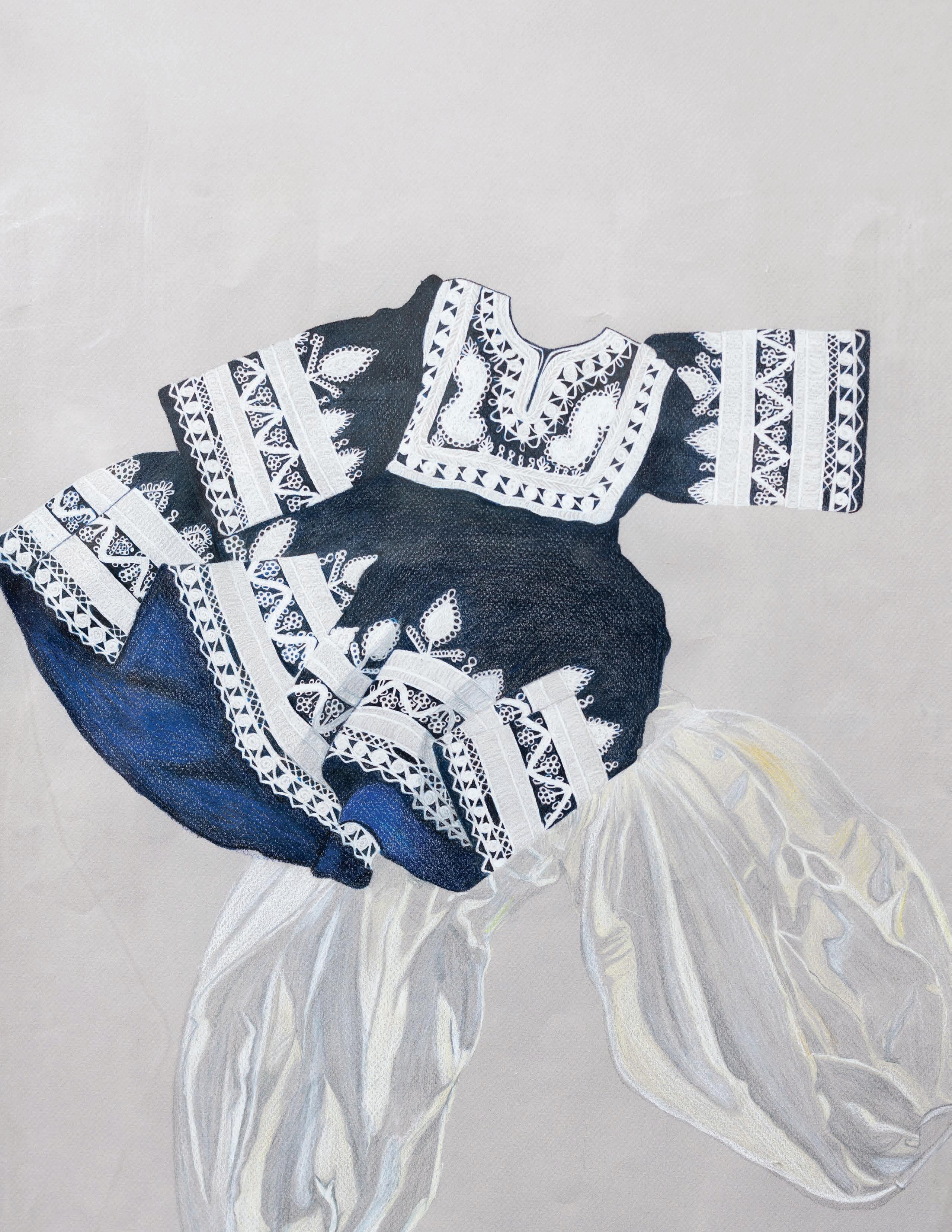
Tamana joined our community in Grade 10 and is very proudly graduating with the Class of 2026. As the artist who created the incredible piece that graces our magazine cover (be sure to check out
Bachelor of Science • Nursing ‘22 University of Alberta
Khenza’s journey is a striking example of the power of education to transform lives. A Sparks Scholarship recipient, she came to Mulgrave directly from Afghanistan, navigating new challenges and opportunities that would shape her future. Today, she works as a nurse, raises a young family, and continues to give back to her community.
At the time she got the news of the opportunity to come to Canada, she says, “I cried. It felt unreal - like a dream come true. Opportunities like this don’t exist for women in Afghanistan. There were no IB schools, and education felt so limited. I couldn’t believe my life was about to change.”
her artist statement on the inside front cover), she has flourished by virtue of her determination and hard work. When asked about her motivation, she very thoughtfully reflected, “I just had to do it.” But we give her far more credit than that - where some would have turtled, she persevered. Tamana’s growth has not been limited to her academics, but has enveloped every part of her, seeding newfound selfconfidence and joy.
Building on her success, Tamana’s next steps will take her to Huron University, on scholarship, where she will study social sciences. Her fellow Mulgravians will continue to cheer her on!
Scan the QR code to read an interview with Khenza about her experience and how her education has shaped her life and values.

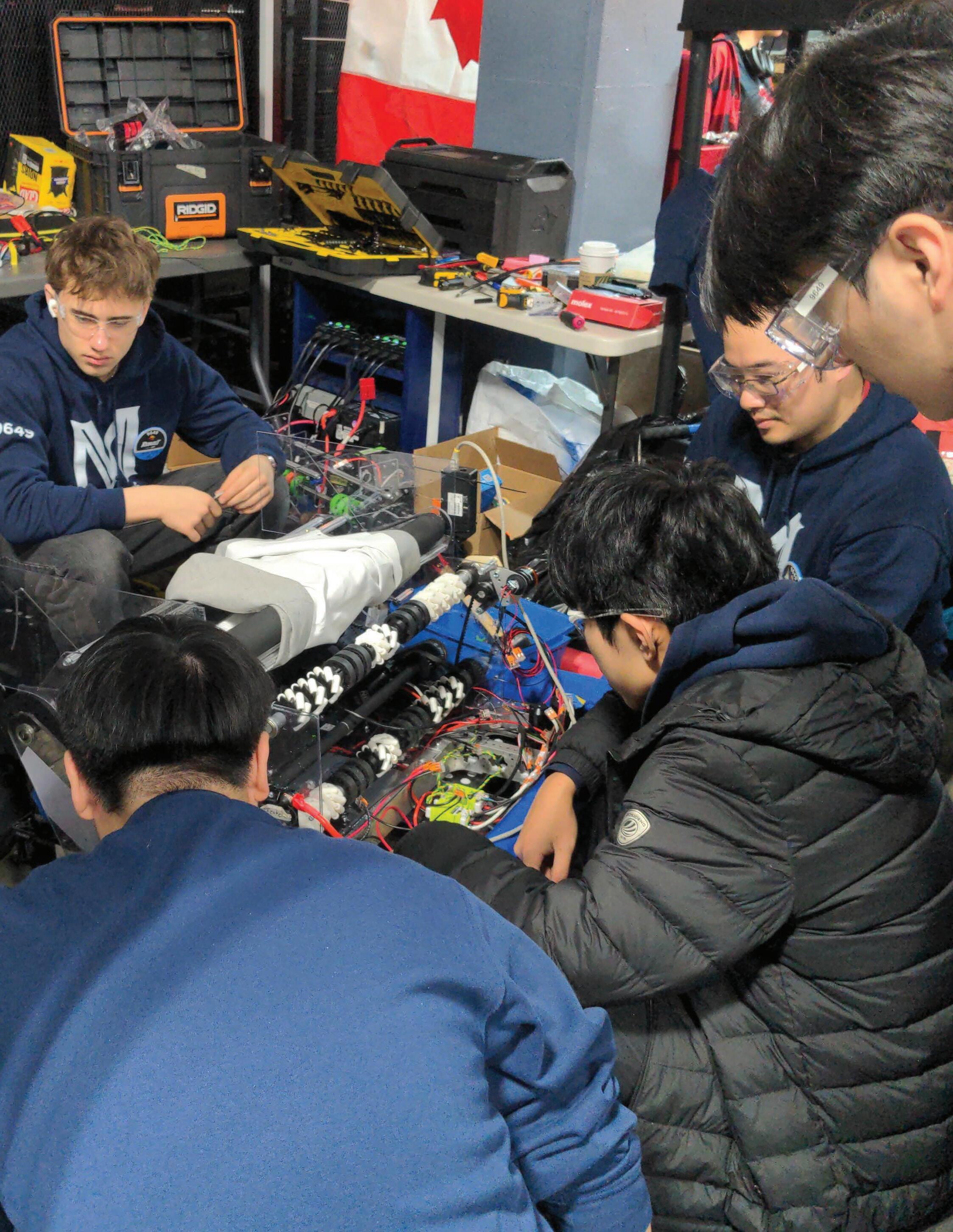
What if confidence came from failing instead of winning? As adults, we often wonder how to prepare our children to become resilient and face challenges with confidence in a world that can be complex and unpredictable. Enter Mulgrave Robotics, a space where wires, metal, and code become the ultimate training ground for both the mind and spirit.
In the competitive FIRST Robotics Competition (FRC) programme, students engage in what teachers call a ‘productive struggle’. Rather than following a step-by-step manual, they are given a broad goal and must navigate the complexities of achieving it on their own. This challenge goes far beyond tightening screws; it requires strict project management, sourcing materials on a budget, and meeting hard deadlines with absolutely no extensions.
For Charles Z, Class of 2027, who has spent three years in robotics, dealing with this complexity meant learning computer-aided design (CAD) from scratch to build a robot on an incredibly tight timeline. This intensive thinking process fundamentally altered his approach to problem-solving. “Operating under pressure and having
the confidence and courage to take things on was boosted by being in robotics,” he notes, linking these project management skills to his ability to tackle rigorous deadlines in his International Baccalaureate (IB) coursework.
Dealing with complexity also challenges students to consider how to approach digital tools like AI. “In their first year, students tried to rely on AI to write code, but because they lacked a full understanding of the entire system, the generated code usually didn’t work,” explains robotics coach, Dennis Chang. “Through experience, they have grown and are now much better at using AI more appropriately for the task.”
But perhaps the most profound lessons come from moments of failure. Teachers note that the stakes in robotics are
Bachelor of Engineering • Computer Engineering ‘16
University of British Columbia
For decades, the multi-billion dollar trading card industry relied on a flawed, subjective system: manual human grading that offered collectors nothing more than a picture and a numerical assessment. Jesse Peng, an award-winning entrepreneur and 2011 Mulgrave alum, identified this lack of transparency as a critical problem waiting to be solved.
Drawing on his engineering background and a lifelong passion for collectibles, Jesse set out to disrupt the status quo. He built TAG Grading, introducing advanced computer imaging systems to replace human error with a highly transparent, data-driven solution. By digitising the grading process, Jesse essentially created
unusually high because if a student makes a manufacturing mistake, it affects the whole team. However, this shared responsibility ultimately protects their confidence. When a robot breaks down, the failure does not fall on one pair of shoulders; it becomes a collaborative puzzle. “Learning from our mistakes is something that goes on and on every year,” Charles reflects.
Over the past three years, robotics team members have naturally emerged from their shells. Older participants are now in mentorship roles, guiding younger peers and speaking confidently to international judges. These young engineers are learning that mistakes are merely necessary iterations on the path to success. They aren’t just building robots; they are building their own confidence.
a new knowledge system, replacing subjective opinions with precise measurements and extensive digital reports.
Now, collectors can scan their cards to access an exact, data-backed breakdown of why an item is graded as such, complete with detailed leaderboards and rankings. This consistent, scalable approach completely democratises the industry by making the evaluation process transparent and repeatable. By applying strategic, math-based decision-making, Jesse has transformed raw data into a revolutionary tool, proving that the right technology can elevate a childhood hobby into a modern technological marvel (and career path!).

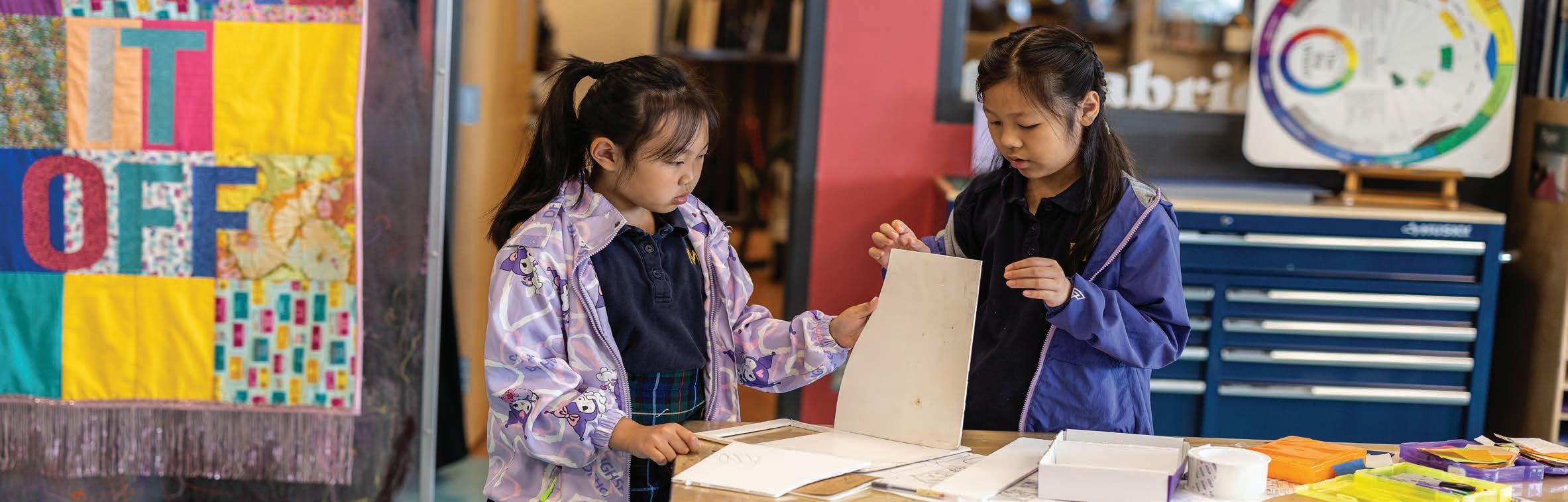
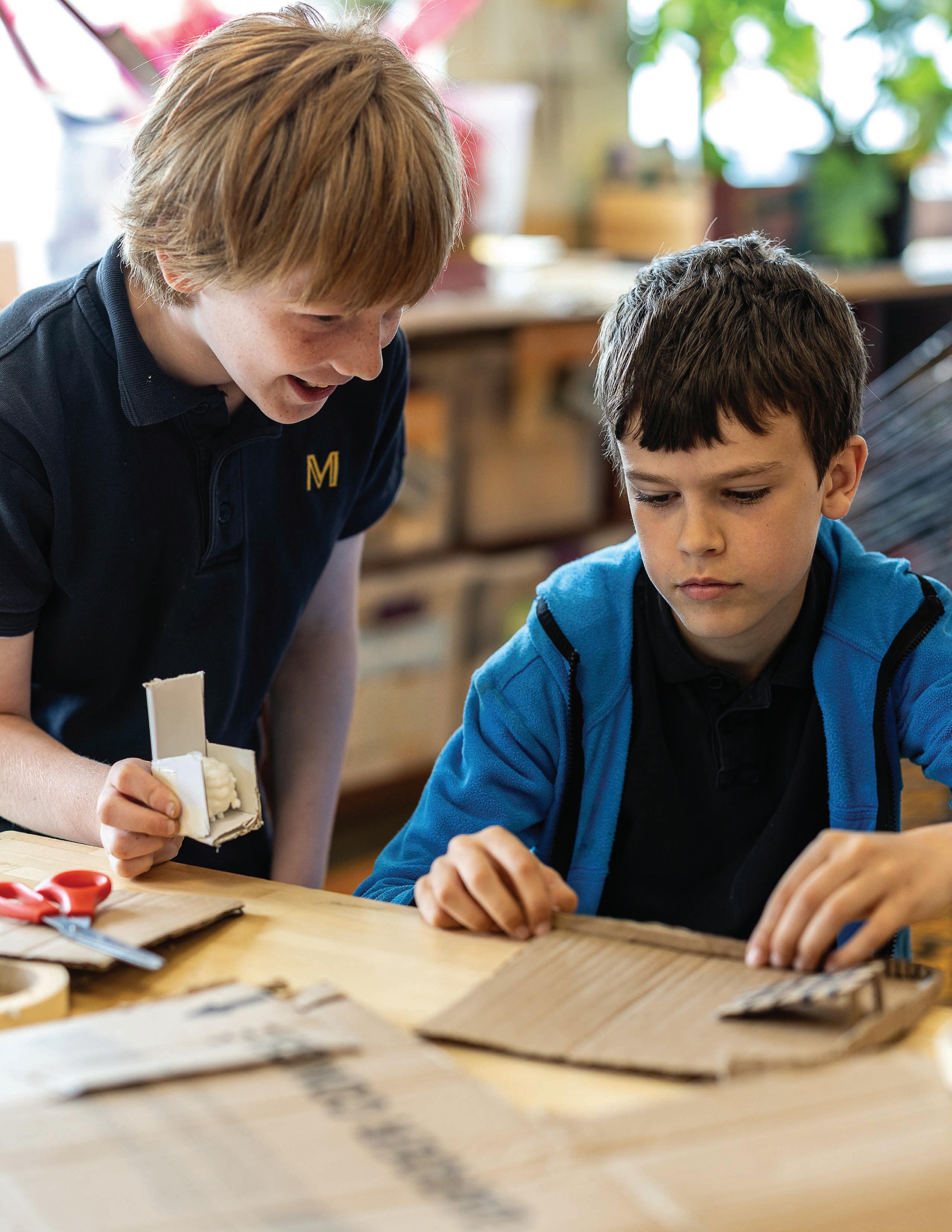
Step into the PYP Makerspace on any given afternoon, and the first thing you notice isn’t the equipment, but the sound: a vibrant hum. It’s a space that breathes with the energy of active inquiry - a maze of recycled materials, crayons and paints, woodworking tools, virtual reality systems, and 3D printers - amongst many other things.
It’s a space where the abstract concept of inquiry-based learning is made tangible. Most importantly, it’s a space where students move away from the safety of following instructions and into the brave territory of taking greater ownership of their learning process. Here, inquiry is a dance between a student’s wonder and the teacher’s guidance, providing the learning muscles and the communication skills that allow young learners to navigate their own curiosity with confidence.
In this colourful arena, the traditional finish line of a ‘perfect’ project is replaced by a focus on the mastery of the process itself. Whether it’s Grade 1 students exploring self-expression through digital arts or Grade 3 learners engineering cardboard land forms, the success criteria are defined by the skills they build along the way. In the Makerspace, failure is not something to be hidden or feared; it is visible, tactile, and remarkably useful. When a bridge prototype collapses or a circuit fails to light, the feedback is immediate. This tangible hands-on evidence helps
students track their own consistency of improvement in a way a grade on a paper never could. They learn to value the iteration, understanding that Version 2.0 or even 3.0 is a triumph of persistence, and that the designthinking process is an invitation to pivot, adapt, and grow.
Ultimately, it is this shared creative journey that allows them to experience the vital Belonging phase of our Learner Hierarchy of Needs. When you see sixty children working seamlessly together, sharing tools and ideas, you realise that the Makerspace is their space - a sanctuary for a community of explorers. The social safety net provided by our teachers and the collaborative nature of the environment make it safe to take risks in this room. Students feel they belong because they see they are part of a collective effort where every idea is welcome and every mistake is a stepping stone. By weaving together support, expert guidance, and the freedom to explore, we create the best conditions for every child to feel seen, heard, and deeply connected to the heart of their learning journey.
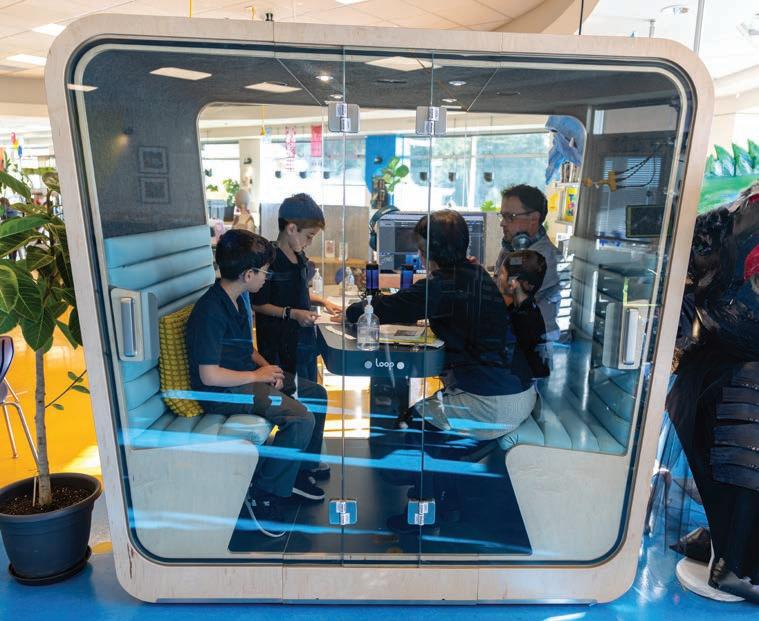
A culture of exploration is fueled by a landscape of professional-grade resources, including a cutting-edge recording booth that has become a central hub for our new podcasting initiatives.
These specialised materials, made possible through the generous support of our families and the Momentum Annual Fund, empower students to see their ideas take flight in increasingly sophisticated ways.
Some would argue that the most profound learning rarely happens within the four walls of a classroom. Instead, it finds you in the kitchen, dicing onions for a communal meal; in a studio, weaving a narrative through a creative project; or at a workbench, discovering how to breathe new life into discarded materials. This is the essence of our Global Citizenship Experiential Education (GEx) programme.
Often mistaken for mere recreational field trips, the ‘Learning Without Walls’ programme is far more than a simple hiatus from academics. It gives students the opportunity to step outside of their regular environment and reflect upon the responsibilities that come with the resources and opportunities available to them.
For several students in the Class of 2031, this was a tangible reality. Katheryn Y discovered this firsthand while preparing meals during her visit to GEx Plenty of Plates at the A Better Life Foundation (ABLF), an organisation that supports unhoused and marginalised people in the Downtown Eastside (DTES) by providing food and community-building opportunities through sit-down three-course meals. When she first learned about the opportunity, she felt uneasy. “I thought this was going to be scary,” she admits. Her initial hesitation highlights the exact stigma ABLF seeks to fight; by bringing people together over a meal, the foundation works to humanise a community that is often misunderstood. As time passed, she realised “they were kind, and they were thankful for
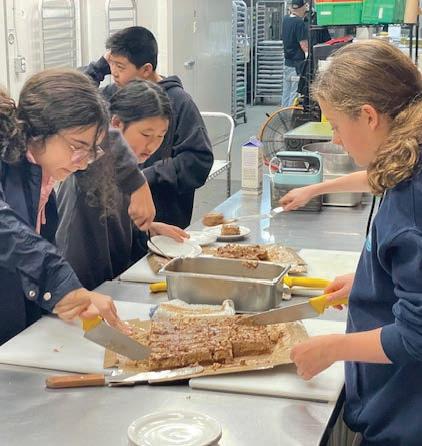
us being there. I always understood my privilege, but I didn’t comprehend the extent of it. This made me become aware of how different our lives are; I can go to the cafeteria and grab a meal with my friends whenever I want, but they don’t have the opportunity to have those same experiences.”
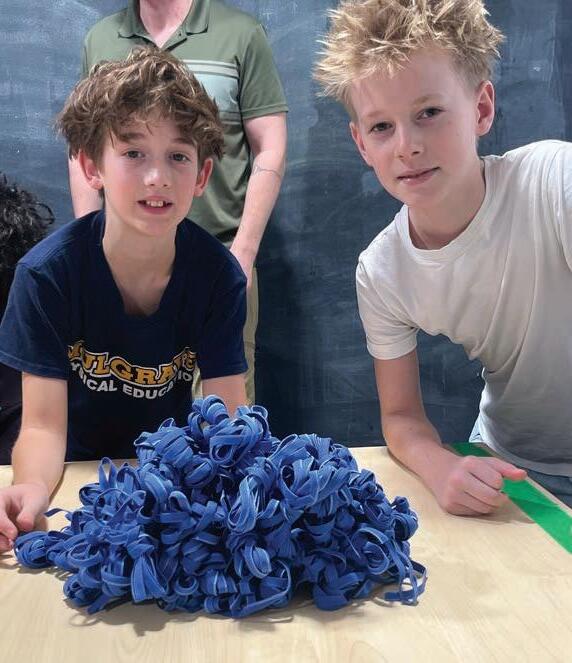
For Alex C, the experience provided a bridge to deeper conversations with people he would normally never interact with. He vividly remembers meeting a woman and her two children and being moved by the reality of their situation:
This taught me to respect other people because you never truly know their story,” he says. “You don’t know what they’ve gone through, so it’s important to treat everyone with respect and show kindness. No matter their condition, you can’t judge a book by its cover.”
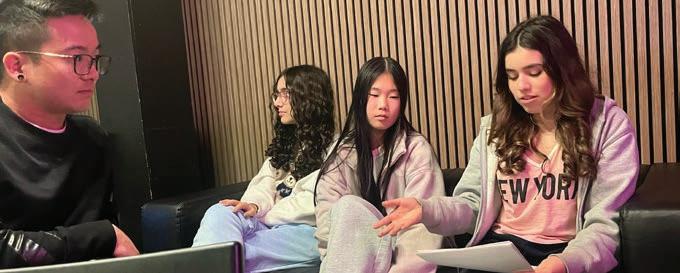
Students also took part in a diverse range of global education activities beyond social outreach, such as learning about sustainability braiding plants at EartHand Gleaners and reusing fabrics during a visit to Fabcycle, or learning to amplify stories of those whose voices are often unheard or left out with Phantom Sound Media: “Every experience taught me something different - whether it was about helping people, understanding how people lived in the past, or even comprehending that there is always more to their story than what you see,” says Anna Sophie C.
In the end, the most significant impact is the lasting perspective carried by students. For Katheryn, it means becoming less of a bystander. “I realise now that I have so many privileges; I can use my resources to help others. Even within school, if I see anyone being treated unfairly, I can help them.”
For Alex, it means looking beyond himself: “If I have an opportunity to have an impact and change other people’s lives, then I will do it.”
In a world that is increasingly complex and uncertain, GEx helps students gain a vital understanding of their ability to contribute. As Anna Sophie notes, “It gave me hope that there are still good people doing good things.” As they continue to participate in these opportunities throughout Middle School, these experiences will build empathy and connections with others, as well as lasting inspiration to find greater purpose and to impact the world around us.
When we think of athletics, our minds often jump to the roar of the crowd or the final score. Yet, behind the spectacle of every game, match, or competition lies a foundation of meticulous planning and quiet mentorship. Mulgrave’s athletics programme encompasses a collaborative ecosystem where coaches and student leaders work in tandem to set goals, manage logistics, establish standards, and hold one another accountable.
The Athletics Department’s core vision is clear: to create confident and resilient leaders of strong character. This isn’t just a mission statement on a wall; it is the heartbeat of every practice, game and team meeting. The goal is to ensure students develop not just as skilled student-athletes, but as individuals equipped to handle the pressures and challenges of the wider world with integrity and grit.
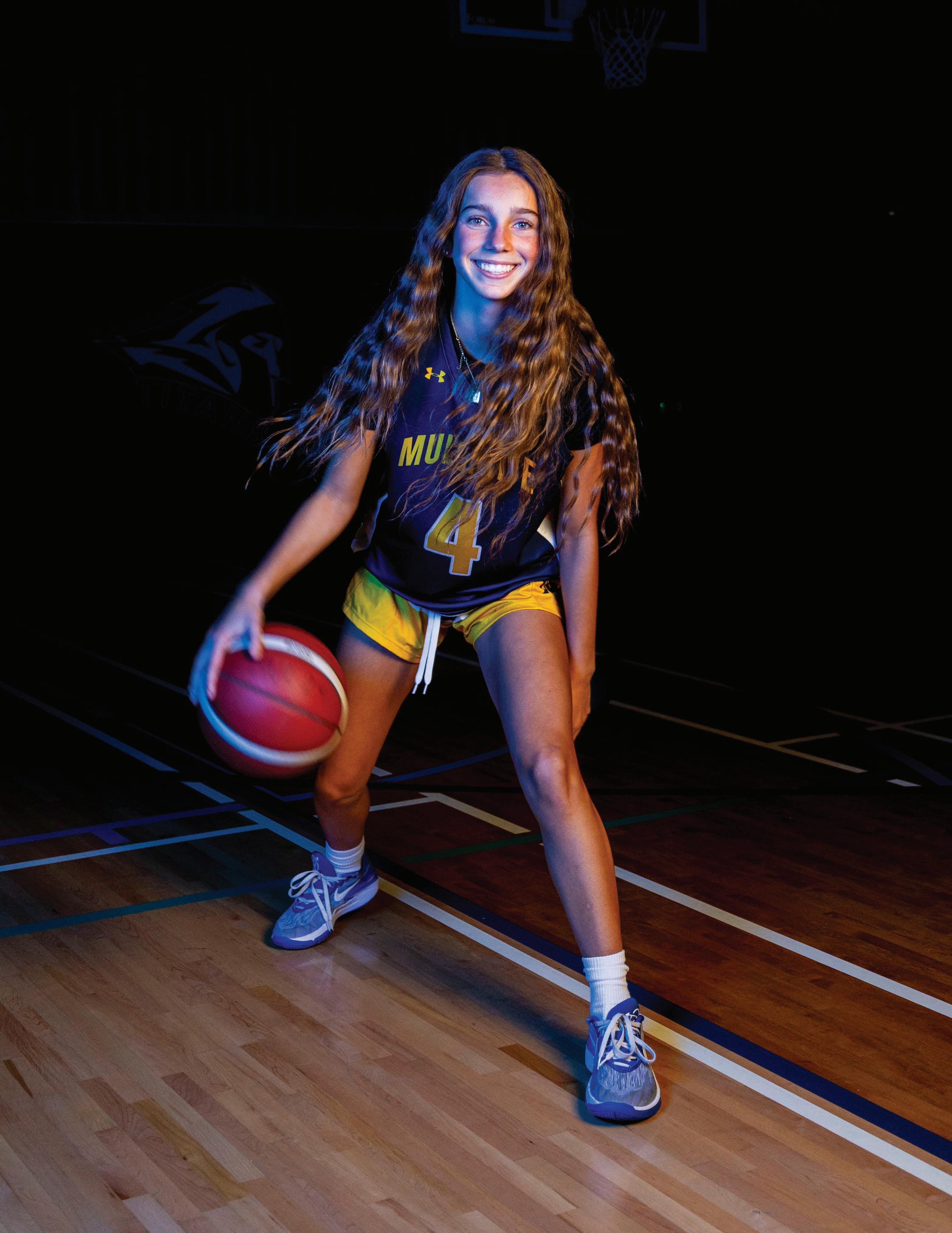
This vision is personified in Riley A (Class of 2027, pictured right). Since joining the Varsity Basketball and Volleyball teams in Grade 10, Riley’s journey has evolved from a player to a pillar of the athletic community. Inspired by former mentor Eva Ruse (Class of 2024), Riley realised that leadership isn’t just a title; it’s a responsibility to give back. This experience prompted her to get involved in the Athletics Council and Book Club, leadership-building opportunities offered by the Mulgrave Athletics Department.
“It (my responsibility) starts with little decisions like rooms and logistics during trips,” Riley reflects. “Once those are made, you start making bigger decisions... It is nice to see how the coach trusts you, even though your decisions don’t just affect you, but the whole team.”
Riley has refined the ‘soft skills’ of leadership, learning that true influence requires empathy and character. This was challenged this year as younger students, some even in Grade 8, joined the varsity ranks. Riley discovered that resilience is built through understanding, reflection, and calculated risk taking.
“Learning how people react teaches you how to engage with different people,” Riley explains. “I learned that when I used a loud voice with one Grade 8 student, she didn’t react well. When I approached her 1:1 to talk calmly and encourage her, she thrived.”

This commitment to mentorship was put to the test during the No Regrets Tournament Championship game. With the score tied and a mere two minutes remaining, the weight of the game rested on the shoulders of a Grade 8 student tasked with two critical free throws. Sensing the mounting pressure of the moment, Riley stepped in with a reassuring pat and words of encouragement. “She made the free throws, and I could see that she was feeling confident in the sense that she realised that she made it happen. That shifted my perspective on the importance of including everyone and mentoring younger athletes,” Riley says.
For Riley, the goal is simple: leave the jersey in a better place than the first day you put it on. Whether advocating for off-season training to build chemistry or fostering an environment where every player is a ‘star in their role,’ she is proving that the most impactful plays happen long before the game even begins.
Bachelor of Science • Medical Science ‘24
Western University
Doctor of Medicine • MD ‘28
The University of Queensland
Assistant Coach, Varsity Boys Basketball (November 2025-January 2026)
“On a holiday break from university, I just saw a good opportunity to get involved again in a team that helped shape me into who I am. I decided it’s a good chance to try to give back to the community and some of the players on the team. I coached when I was their age in Grade 10,
and it was kind of a surreal experience to go back and see them all growing up and becoming really good players.
I was hoping I could give my two cents and get involved, and maybe see them have the kind of success that they’re hoping to have.”
Student leadership at Mulgrave is rooted in the spirit of service. Our framework is designed to empower others and amplify underrepresented voices, cultivating ethical leaders who understand that true impact comes from supporting the collective.
Leadership is not an innate gift reserved for a select few, but a potential within every student that we nurture through an experiential, student-led model.
This journey is inclusive and multifaceted, beginning in the Junior School with our Grade 3 Mini Leaders and Grade 5 Leadership Team.
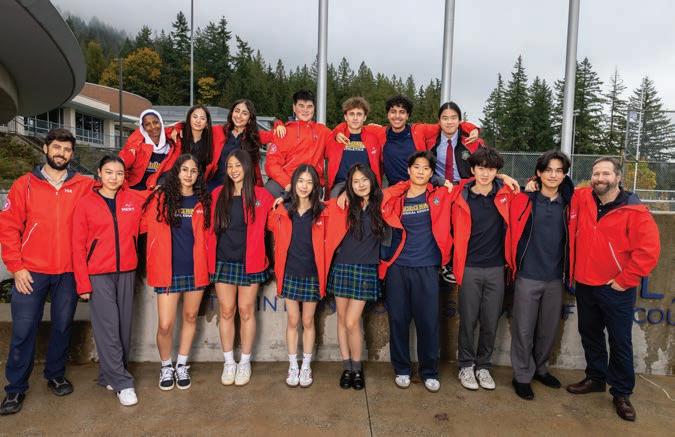
Examples of student leadership group opportunities
Mulgrave Emergency Response Team (MERT) provides first aid care and emergency response support at school. MERT members (Senior School students) complete the Red Cross First Responder course, culminating with a formal written and practical licensing exam.
Student Strategic Leadership Team is composed of Grade 10 to 12 students and provides opportunities to enrich themselves and the community through service, leadership, role modelling, and mentoring. The group’s priority is to connect to all three school divisions and implement strategic initiatives to amplify student voice.
As students progress, the Middle School Action Council (MSAC) partners with Senior School sub-councils to curate meaningful service-learning projects that engage the wider community. From Student Ambassadors who welcome new families to the Student Strategic Leadership Council that shapes campus life, our students lead at every level.
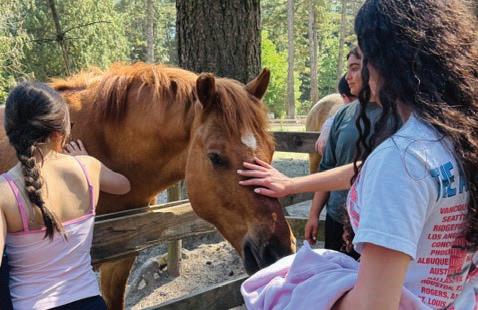
By bridging mentorship and academic inquiry with hands-on experience and intentional reflection, we provide the time, space, and tools for students to find their voice. Through these practical opportunities, Mulgrave graduates build the character and vision to lead with purpose in an ever-changing world.
Grade 10 Experiential Week: A week of experiential learning and activities at the SOLE Centre with student-led activities related to seven different streams: arts, water, land, sustainability, wilderness, first aid, and equine therapy. Students are responsible for planning activities that take place in the evenings, with examples including music, bingo, stargazing, the battle of the homerooms, and a wrap-up celebration. All logistics are managed by students, including developing supply lists and identifying other needed resources.
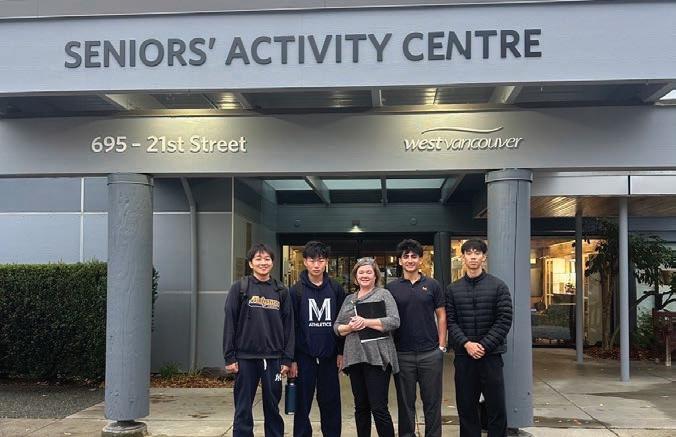
CareQuest (by Alex J, Ben G , Lucas L, Jeffrey R, G11): A youth-led non-profit facilitating intergenerational mentorship through hobby-based matchmaking. Students engage in weekly meetups at North Shore seniors centres.
Courts for All (co-founded by Aaron L, G10): A student-run non-profit increasing tennis accessibility. The team applies for grants, collects equipment, and hosts mentorship sessions to support youth with financial barriers.
Culture Club (by Adam D, Nabeel S, Enzo S, G10): Weekly student-led meetings featuring guest speakers and cuisine to explore global cultures.
Global Nomads
Student-led global citizenship initiatives focussed on SDGs through project-based local community partnerships.
STEM Council Organises and promotes opportunities for extention in science, math, technology, engineering (contests and student led enrichement).
GSA: Gender Sexuality Alliance Provides a supportive space to examine LGBTQ+ issues and advocate for student actions.
Athletics Council
Organises sports events, banquets, and initiatives to boost school spirit and athlete recognition.
Creative Arts and Performing Arts Council Supports school life by creating promotional materials, decorations, and mixed-media art installations.
Co-Curricular Council Oversees club engagement, communication, and strategic approval for Grades 7 through 12.
Peer Counsellors
Offers peer-to-peer mental health support and organises school-wide wellbeing awareness campaigns.
Equity, Justice and, Belonging (EJB) Council Amplifies student voices to foster empathy, belonging, and awareness for marginalised groups.
Adventure Council
Organises outdoor education adventures and recruits students to participate in events.
Environmental Sustainability Council Promotes eco-friendly initiatives, waste education, and school events to reduce the community footprint. actions.
Sustainability is often discussed in terms of global targets and sweeping policy, but action is most often at the community level. Environmental sustainability isn’t just a subject in a curriculum at Mulgrave; it is a collective culture we build together. Every member of our community - students, staff, and parents alike - plays a vital role in shifting behaviours and fostering lifelong habits that extend far beyond the school gates.
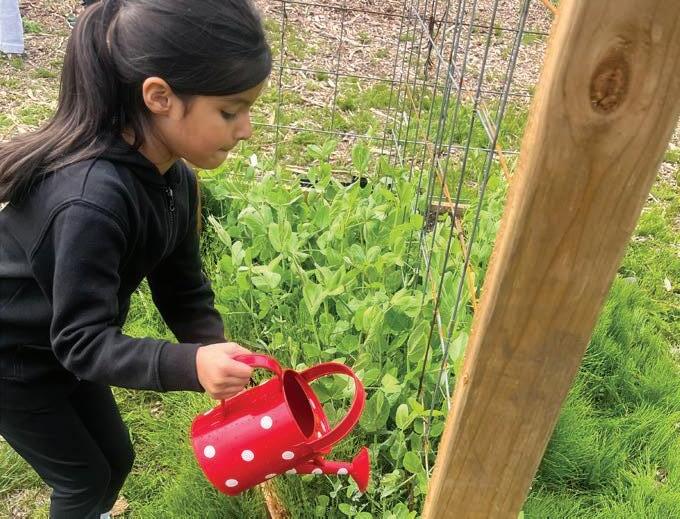
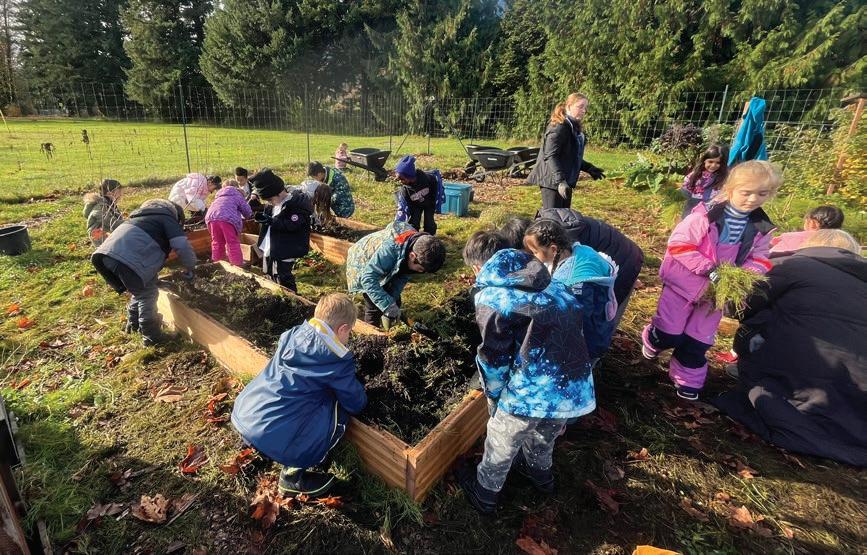
Our students don't just read about the environment, they engage with it. From outdoor education camps to our Units of Inquiry, we emphasise reciprocity, the responsibility to care for the land that sustains us. A standout example saw Grade 4 students designing and building garden beds at our SOLE Centre in Squamish. Afterwards, they planted a mix of native flowers, berries, and vegetables, including potatoes, onions, huckleberries, strawberries, and Saskatoon berries, which they will harvest in the fall. All these crops have been carefully tended to by Grade 1 students during their visits to the SOLE Centre, too. These activities help them develop a sense of independence and a deep understanding of the plant growth cycle, plant care, and our interconnectedness with nature.
Another example of this collective effort was how Earth Week took root across our entire campus. A striking art installation by student Ella Z (Class of 2027) - a tree sculpted from chicken wire and recycled plastic - served as a poignant reminder of our duty to protect the natural world from synthetic waste. This artwork sparked ethical discussions among our Senior School students. They debated the morality of wealthy nations exporting plastic waste to the Global South and questioned
whether sustainable, plastic-free living is a privilege reserved only for the wealthy. The dialogue also turned inward, forcing students to confront the impact of fast-fashion ‘haul’ videos and the microplastics hidden in their own clothes. Ultimately, learning that these particles now contaminate human blood and organs prompted a raw debate on whether personal health risks are a more powerful motivator than threats to the wider ecosystem.
Every division embarked on its own environmental reflection: Early Years students discovered the magic of the environment through storytelling, Grade 3s conducted local litter picks, and Grade 10s rolled up their sleeves for invasive-species pulls.
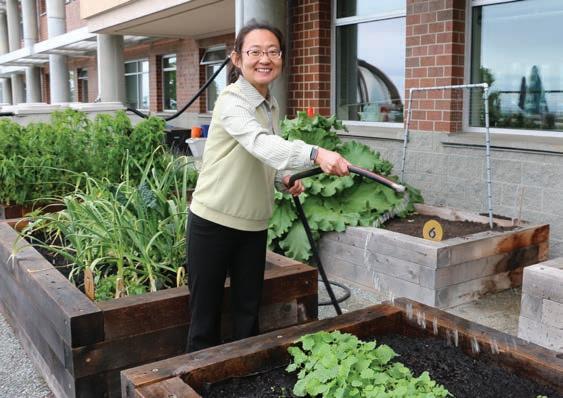
This commitment is mirrored by our staff, who lead by example. From workshops on sustainable gifting to tending to our thriving staff garden beds, our team makes sustainable living a tangible, daily reality. As Xinyi Yan from our Advancement Team brings our community garden initiative to life, she shares:
Seeing
the growth from a tiny seed to a plant full of tasty fruit is a joyful experience.”
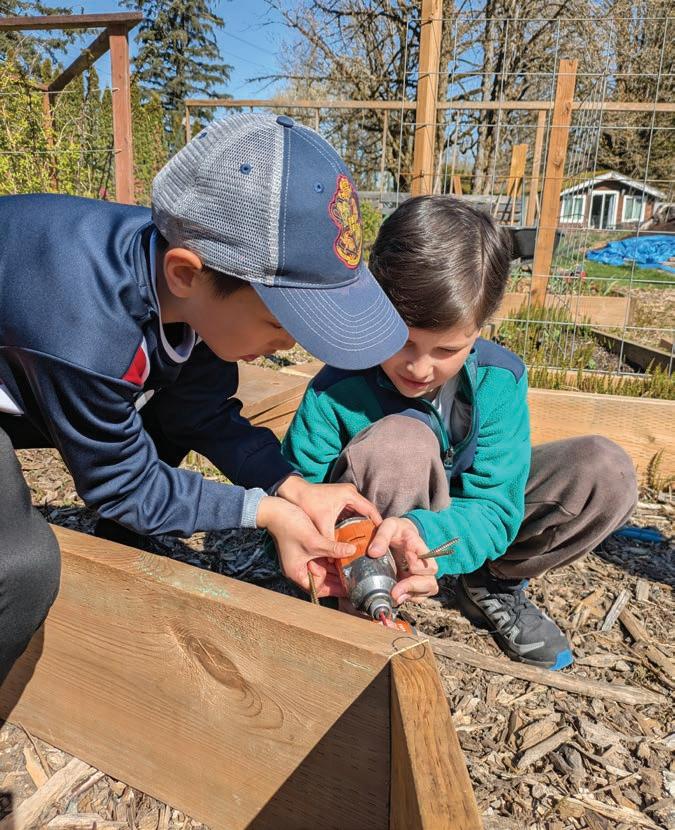
Parents are just as deeply involved in these initiatives, setting a powerful example for our students. Whether supporting our Junior School Climate Crew with sorting recyclables, promoting reuse activities like the Halloween Swap, or ensuring our educational garden beds remain well-kept, families are vital partners. As Kate Mitt from our ECO MVP points out, “taking action is far more important than just talking about it; through these hands-on initiatives, we actually teach children how to live more sustainably, proving that our actions are way more powerful than theory.”
Sustainability is not a one-off event; it is an ongoing, community-wide journey. Together, we are ensuring that the next generation inherits not just a planet, but the wisdom and responsibility to protect it.
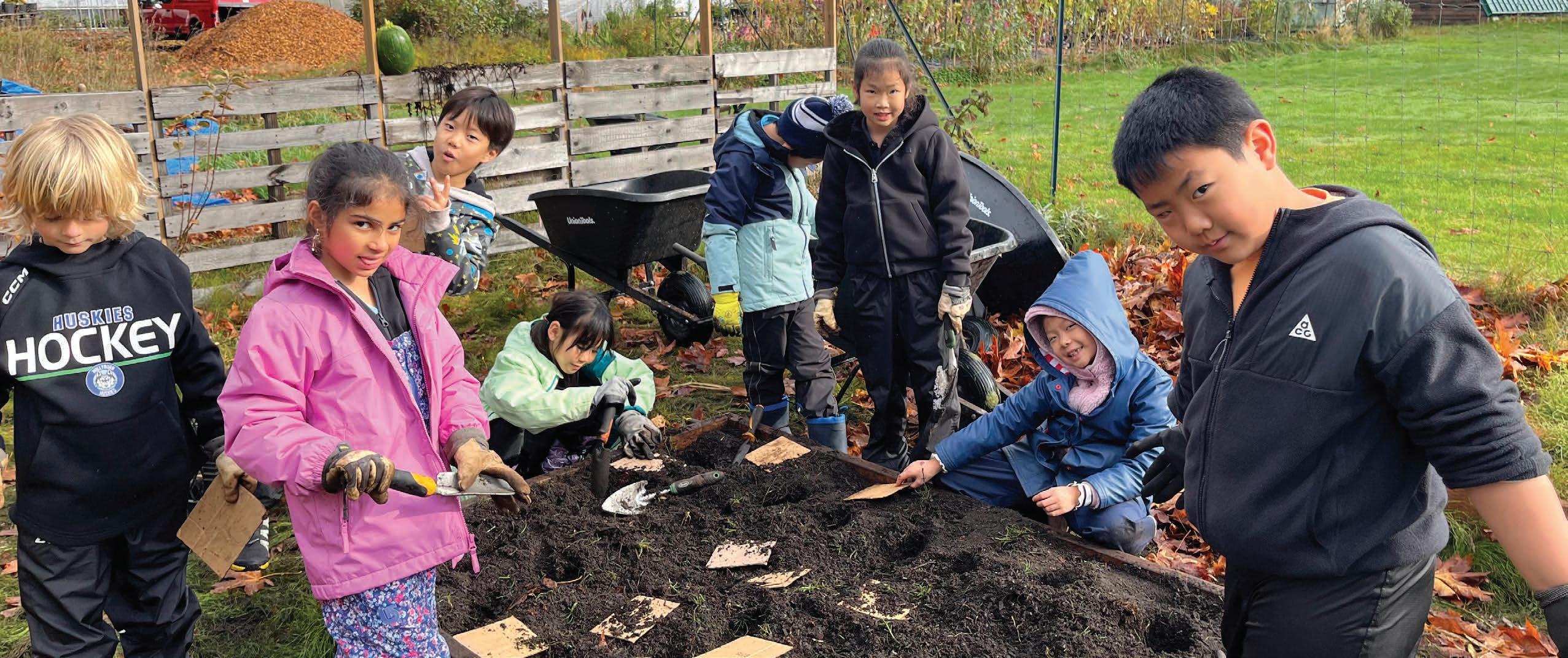
Sustainability isn’t just a concept we teach in the classroom; it is a collective culture we build through our daily choices. A look at our traffic data from 2023 to 2026 collected by Mulgrave’s Environmental Sustainability Council highlights a significant shift in our community’s habits: fewer vehicles on campus and a major boost in school bus ridership! Thanks to everyone choosing more sustainable travel options, we are actively reducing our carbon footprint and easing campus congestion.
Member of the EJB Student Sub-Council
Bachelor of Arts • International Development Studies ‘21, McGill University Master of Science • Urban Studies ‘24, University of Copenhagen
Nine years after Mulgrave, his path led him to Copenhagen, where he works on sustainable food systems. This unpredictable journey reshaped his understanding of sustainability.
He has learned it isn’t just a technical challenge, but one rooted in culture and values. Working with European farmers, activists, and researchers, he sees that transforming global food systems - which cause nearly 30% of
greenhouse gas emissions - requires rethinking production and consumption, not just innovation.
Top-down solutions often fail; lasting change requires inclusive participation. Looking back, embracing uncertainty allowed space for exploration and meaningful work. Today, he finds hope in a shift toward systemic, imaginative approaches to sustainability, driven by people willing to think differently.
Scan the QR code to read Nicholas’ full reflection on how his personal journey led to a career in Copenhagen to transform global food systems.

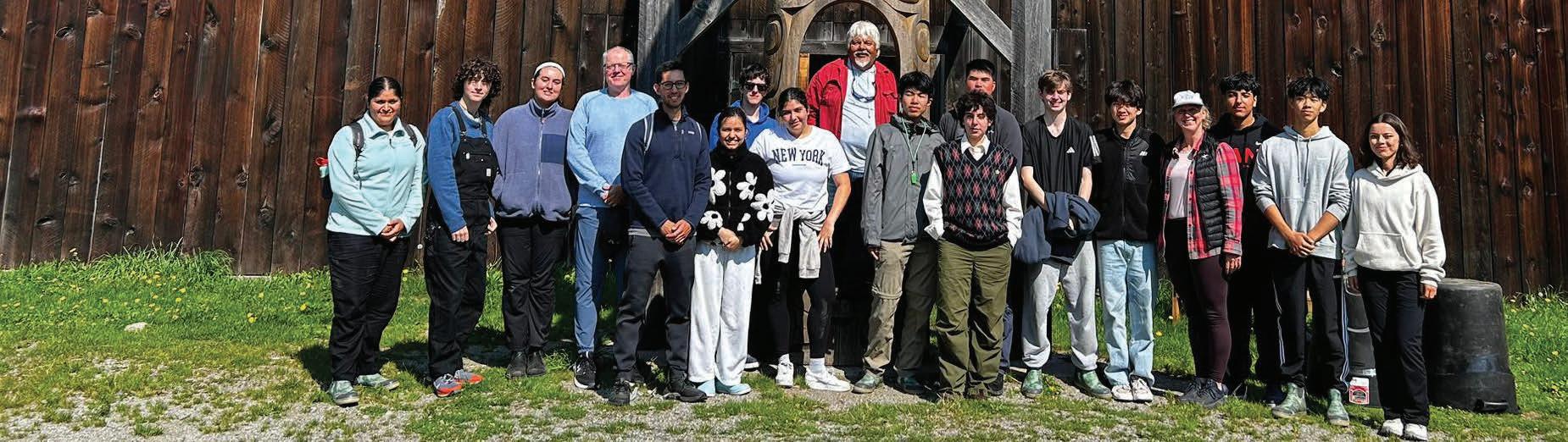
Three years of meticulous planning and a partnership with the IB have culminated in a significant moment for our educational landscape: the first full year of Systems Transformation: Leadership for just and sustainable futures with a pioneering cohort of 14 students. As one of only four schools globally to offer this groundbreaking 300-hour transdisciplinary programme, Mulgrave is redefining how students engage with the world’s most pressing challenges.
By replacing two Standard Level IB courses with a curriculum rooted in systems thinking, we aim to bridge the gap between classroom theory and tangible global impact. This curriculum is specifically engineered to propel students into the Acting phase of our Learner Hierarchy of Needs by providing the specific toolkit students need to move beyond simplistic critique. It is through this course that students can develop the ability to better understand complexity, create viable new solutions, and maintain the determination required to solve problems in the face of challenges.
The heartbeat of the course is rooted in experiential education. This year, that process was facilitated through planned, location-based immersion field trips: five days in Rivers Inlet, three days in the Howe Sound, and two days across the Lower Mainland, providing unscripted exposure to diverse environments where students explored a range of complex systems up close. By immersing themselves in local issues, students were able to develop grit and agency as a powerful engine for impact.
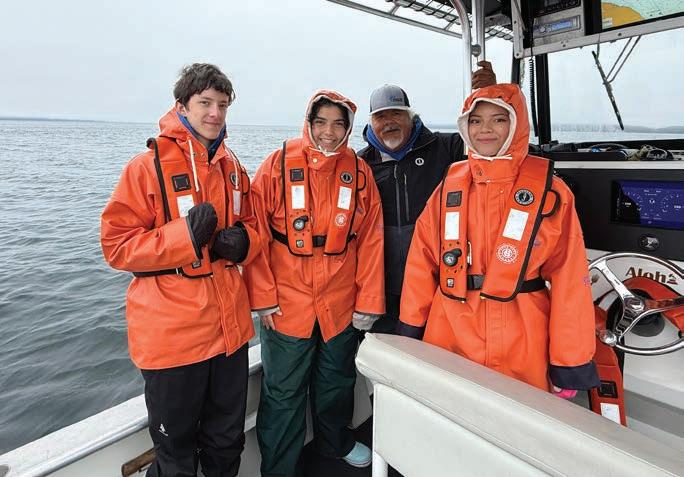
The path to this level of agency was further paved by a powerful blend of in-depth classroom discussions and expert mentorship. The cohort gained invaluable insight into global systems from professionals within the Mulgrave community, including Rona Datta of Health Canada, Dr. Souvik Mitra, Associate Professor at UBC and neonatologist at BC Women’s Hospital, and former White House advisor and drug policy scholar Dr. Kevin Sabet. These perspectives were enriched by external voices like Dr. Ruth Simons of the UNESCO Howe Sound Biosphere Society, Prof. Carlos Sucre of Georgetown University, and Mulgrave alumnus Nicholas Belluk (Class of 2017) who challenged students to
consider the intersections of ecological revitalisation, resource extraction, food systems, and geopolitics. These interactions provided the necessary framework for students to transition from learners to action-takers, applying their skills in high-pressure, realworld simulations where the stakes of systemic change become clear.
This synthesis of theory and practice reached a critical milestone during the students’ IB Case Study Day. Small groups worked through the morning to map complex stakeholder relationships and identify leverage points in a previously unseen system. The afternoon pushed students even further with a ‘disruption scenario’, prompting them to analyse how unexpected events ripple through a system, and requiring them to propose interventions rather than simply observe problems. By demanding that students respond to system shocks with viable solutions, the course successfully moves them into the Acting phase, proving that when education prioritises this level of engagement, students don’t just prepare for the future - they develop the agency to actively reshape it. In May 2026, the IBO announced that the Systems Transformation
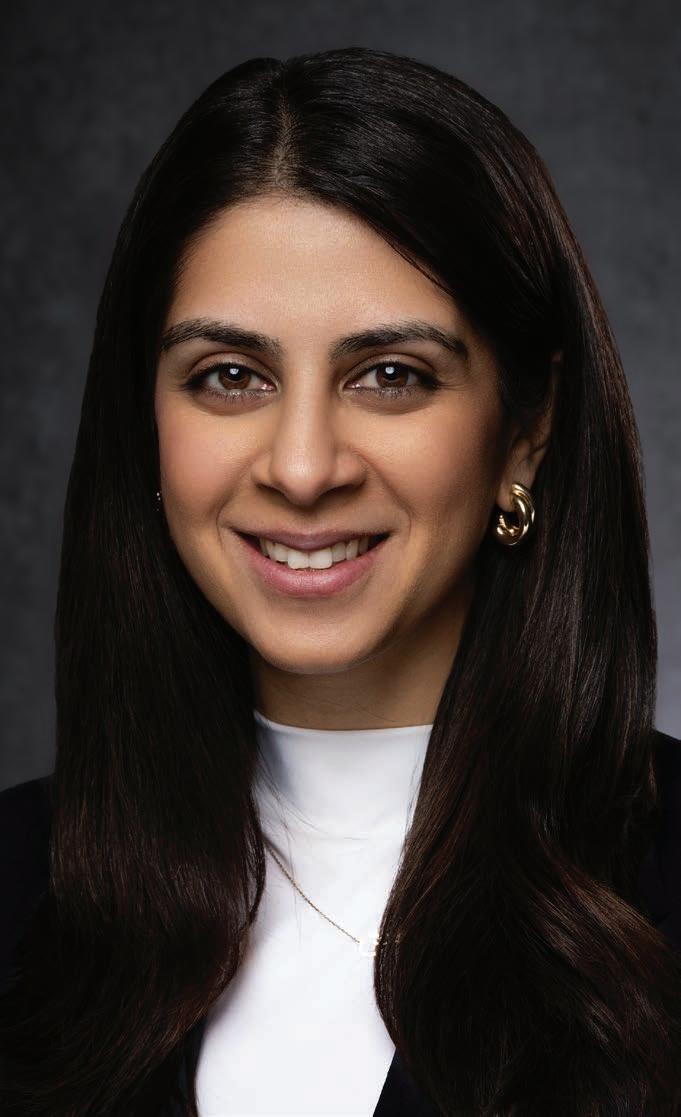
Long before the Mulgrave campus looked as it does today, a young Nabila Pirani was already at the heart of the community as Head Student.
Today, her journey has come full circle: with degrees from UBC, Columbia University, and the University of Toronto’s Faculty of Law, and as a former research fellow of the Asia Pacific Foundation of Canada, Nabila has returned to school leadership as a Board Member and steward of Mulgrave’s vision. A partner at a law firm and recently named in the Best Lawyers: Ones
to Watch list, she exemplifies the excellence and values we seek to instill in our students.
A true personification of working for the ‘Greater Good,’ she balances a demanding career with deep commitments to Mulgrave and Beedie Luminaries. We chatted with Nabila about why she continues to pour her heart back into this community.
With so many professional demands, why have you chosen to invest your energy back into the Mulgrave community?
I’ve been a part of the Mulgrave community for thirty years, starting way back in elementary school. Since day 1, it’s been a welcoming and accepting place - it has always been easy to get involved! Today, my Mulgrave story allows me to bring ‘older roots’ to my work with the Board, helping us remember our past and anchor ourselves to our foundation in order to guide our future.
It feels natural to continue working with a community that has been such a big part of my life; there is a special satisfaction in giving back to a place where I once felt a true sense of belonging. Even now, twenty-some years after I graduated, my values still
align with the school’s. It’s wonderful to be a part of a community and not have to question the principles being inculcated or the motivations of the people you’re working with. In that sense, I’ve been lucky, I haven’t really had to decide whether or not to stay involved; the community makes it easy to just keep showing up.
What has been the most surprising part of seeing the school ‘from the other side’ as a volunteer and Board Member?
I would say the sense of continuity. Having graduated in 2004, when I joined the Board, I expected the school’s physical changes and its evolution from an early phase to a maturing school to make it feel like a completely different place. To my surprise, I found that Mulgrave’s core values and temperament remained largely unchanged. It’s incredible
that so many current and prospective Mulgrave families hold the same views on learning and growth as my parents. When I look at our Strategic Direction 2025+, I don’t see a shift. Instead, it feels like we’re planting our flag and reaffirming exactly who we’ve always been. The school that I grew up in is very much still the school that exists today.
How does the school’s impact look different now versus when you were navigating its hallways as a student?
As a student, you’re so often reacting to the space you’re in. While I was involved in student leadership during my junior and senior years, to be frank, I was so much more focussed on the immediate hurdles of being a teenager (and life outside of Mulgrave) than on what the school was trying to achieve.
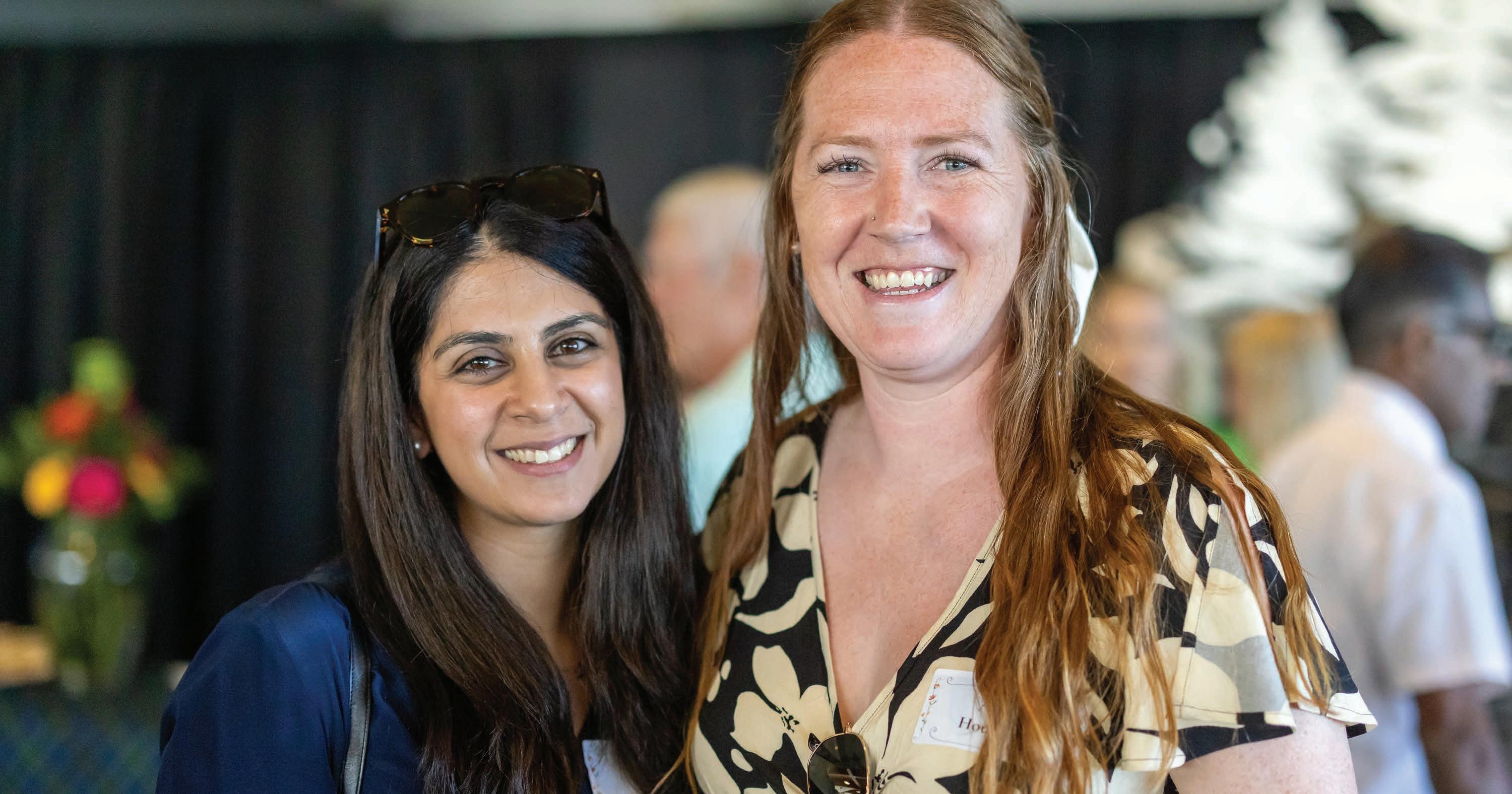
Coming back now, I get to see the school from 10,000 feet, and so the biggest shift for me has been seeing the entire package of what Mulgrave offers.
Not only does this new perspective reveal the vast resources available to our community, it unveils the authenticity and complexity of thinking that define us. I can now see how our long-standing values inform decisionmaking at all levels. It’s a holistic picture of Mulgrave that I experienced as a student but that I couldn’t fully appreciate until I stepped into this role.
Tell us more about your other volunteer efforts. What personal fulfillment do you draw from those experiences?
Since 2020, I’ve been a mentor with Beedie Luminaries, a scholarship programme that, among other things, helps remove financial barriers to higher education by providing substantial scholarships to exceptional Grade 12 students in our province. I am currently working with a couple of students, helping them navigate university and the job market.
My commitment is personal. I’m a child of immigrants. Even though I had the privilege of attending Mulgrave and access to more resources than others, it was apparent to me early on in university that notwithstanding this privilege and these resources, I did not have access to the same spaces as some of my peers; that while formal education and degrees still matter, so much of our society is built on personal and professional relationships. Having now made my own relationships, I’m conscious of creating access and space for others. If I can help someone build their own connections and find their place, I’ll have done something meaningful.
Ultimately, this and other volunteer work keep me grounded. It’s so easy to get caught up in your own world and these interactions serve as a regular reminder that mine isn’t the only experience. They remind me of who I am and why I do this.
You’ve come ‘full circle’ back to Mulgrave after an incredible educational path and career steps. What would you tell a student who is still in the thick of it?
‘Full circle’ moments are interesting. We so often imagine them as this perfect loop, but the reality is that they’re rarely truly smooth. If we look more closely at mine, we’ll see that it’s fairly pixelated, with those pixels representing adjustments in direction, stops and starts, diverse experiences, all of which come together to create my ‘circle’.
In my work as a mentor, I see younger people deeply concerned with finding direct paths. They exist, but, to me, the disjointed, pixelated roads are just as valuable. I appreciate I have the benefit of hindsight in saying this, but I certainly wouldn’t be who I am (and where I am) without all of my experiences. Moving across these rougher roads can be tough, but in my experience they’re navigable with confidence and purpose.
Mulgrave was founded in 1993 by a group of North Shore families with a goal to expand educational opportunities for their children and others. What started as a collective effort, is still such. As a non-profit organisation, the school attracts families who believe in working together, with forward momentum. It is no coincidence that this is also the name of our annual fund!
Momentum began in 2019, following multiple capital campaigns, which established our incredible facilities. Designed to ensure ongoing excellence in programming, transformative learning spaces, and specialised resources, the fundraising effort supports projects that go above and
beyond the limitations of our annual tuition revenue. Additionally, the fund helps us reduce barriers to education through needs-based financial assistance and provides our faculty with opportunities for extensive professional development.
This campaign is reflective of Mulgrave’s strategic ambition in support of the Greater Good. To give in any formfinancially, time, talents, or otherwiserequires a level of self-sacrifice and a thoughtfulness to go beyond one’s own needs and wants.
While we are still finalising the results of the 2025-26 campaign, here are a few highlights of funding priorities:
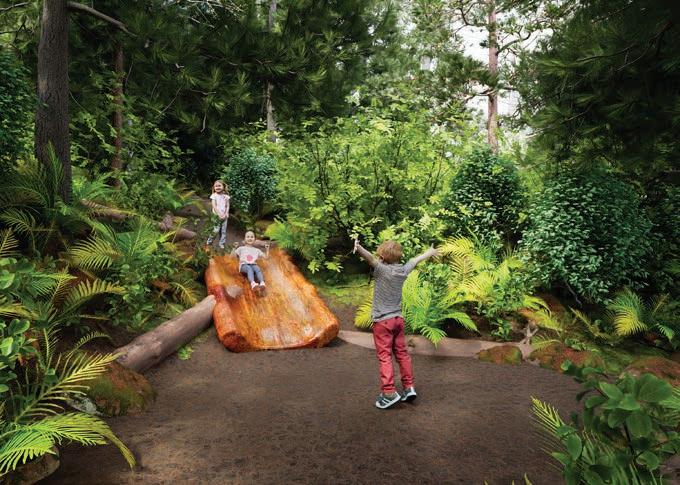
During the summer of 2026, the beloved outdoor space known as The Hill will be transformed into an innovative natural playground designed to nurture imagination, learning, and joyful exploration. Carefully planned environmental restoration, including soil regeneration and water management, is foundational to the project. Stay tuned to @mulgraveschool on social media for updates on the most ambitious of our Momentum projects!
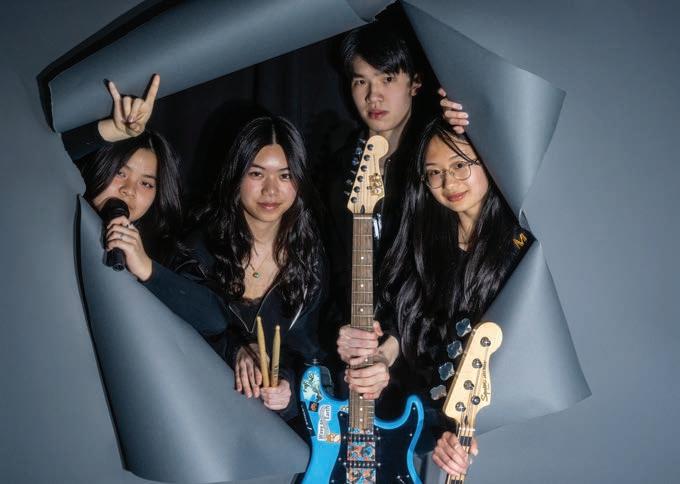
In support of our artists and creative pioneers, the new space and additional resources will enable musicians to produce their own albums and allow us to expand Middle School elective offerings into music production, audio engineering, songwriting, podcasting, and digital sound design.
Please see page 11 for information on the Open Parachute (funded by our Momentum Head’s Priority Fund) and page 19 for stories about our Financial Assistance Programme.
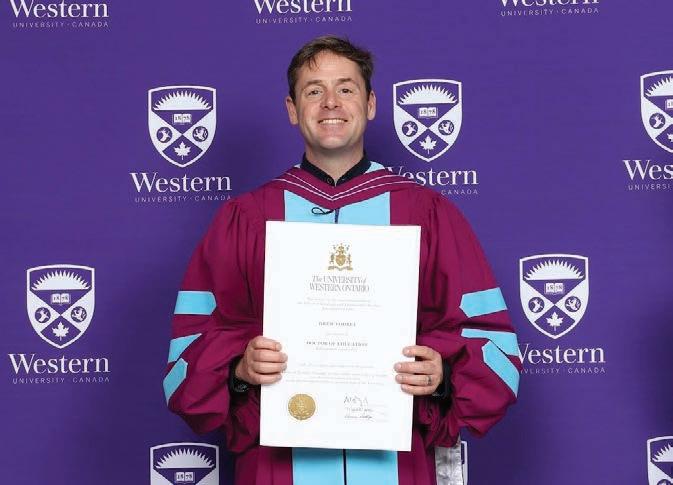
Our teachers themselves are lifelong learners. Through their dedication to their profession, learning best practices, and enhancing their skills, they best support our students. In addition to subject or skill-specific development opportunities, many of our faculty also pursue their higher education through Master’s and PhD programmes. We extend our congratulations to faculty who completed these extensive and ambitious undertakings in the 2025-26 school year, alongside their teaching responsibilities: Megan Pakulak (Master’s in Educational Leadership), Raquel Teibert (Master’s in Indigenous Education), Diana Ferriera (Master’s of Education), and Drew Vodrey (Doctor of Education). An additional teacher, who wishes to remain unnamed, also completed an Executive Master’s of Arts in International Educational Leadership and Change.
An incredible 91% of Mulgrave’s faculty & staff contributed to Momentum during a ‘pre-campaign’ period in the fall of 2025. Their show of support for their school community, students, and projects deemed high priority by their colleagues reflects their passion and commitment. We are grateful to all of them for setting the tone for the campaign and for their ongoing support.
THANK YOU!
We are deeply grateful to the entire Mulgrave community. The desire to support your own children’s education and ‘pay forward’ the benefits of a Mulgrave experience to others is truly remarkable.
With appreciation, Mulgrave’s Development Team

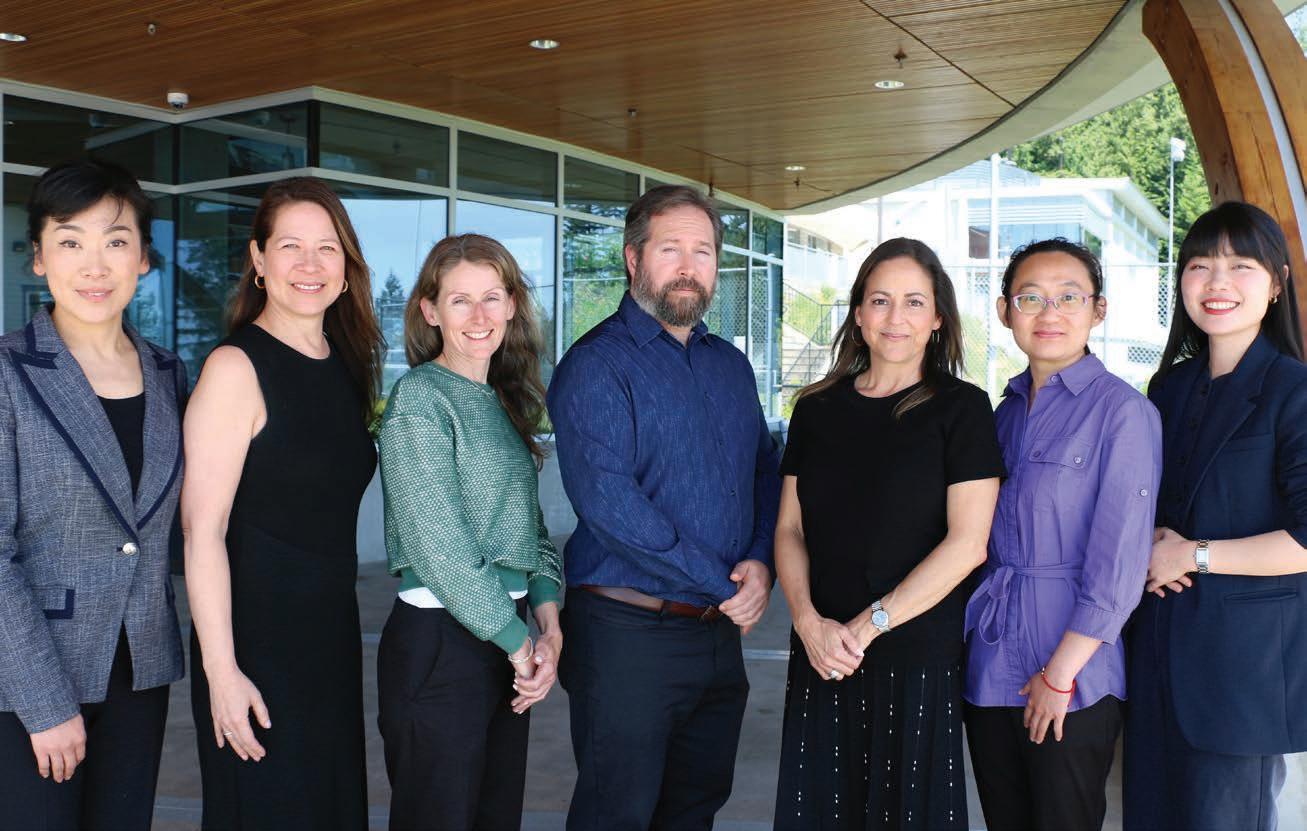
On May 9th, our community came together at the Cirque de Nuit Gala, an enchanting evening gathering in support of our Momentum Annual Fund. With world-class entertainment, decadent food, and a few surprises, attendees made the magic happen by raising more than $400,000 to fuel the innovation and excellence that defines a Mulgrave education!
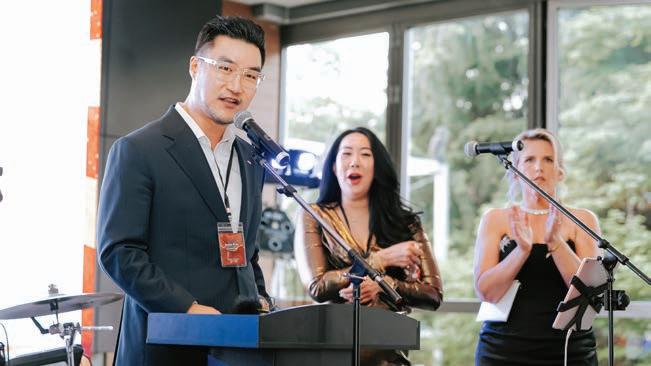


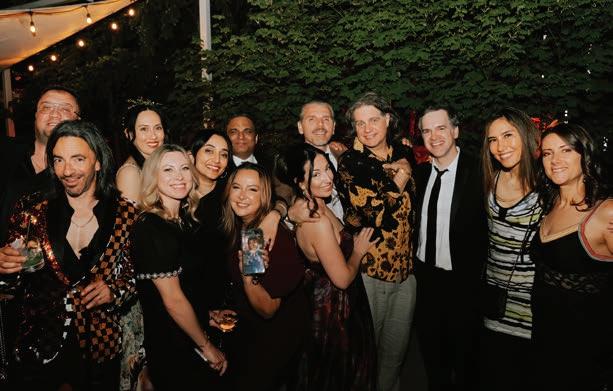


Mulgrave’s University and Careers Counselling Department (UCCD) goes beyond merely supporting the mechanics of post secondary applications; their goal is to help students find their way to an institution where they will thrive, and set them up for fulfilling careers. This journey begins as early as the second half of Grade 9, utilising a ‘best fit’ model designed to identify environments where students will be both successful and happy.
The journey begins with early exploration and self-discovery, establishing the groundwork for future decision-making.
Grades 8 & 9: Foundation Phase
Life Skills Collaboration:
Students work with Life Skills teachers to identify personal strengths, interests, and potential career paths.
Senior School Transition: Initial one-on-one meetings are held with Grade 9 families to introduce the UCCD and begin the shift into the Senior School mindset.
Goal Setting:
Early identification of student ambitions to inform upcoming academic choices.
In Senior School, the focus shifts from general exploration to targeted academic and career planning.
Grades 10 & 11: Strategic Planning Phase
Career Exploration:
Early-stage career mapping to align secondary school efforts with long-term professional goals.
Personalised Mapping: University counsellors meet with each student to map out a detailed pathway tailored to their specific post-secondary ambitions.
Course Selection Guidance: Counselling expands to include expert advice on course selection, ensuring that academic loads align with the requirements of the student’s ‘university of choice’.
Path Refinement: Continuous refinement of the university search based on evolving interests and academic performance.
Additionally, the UCCD will guide enrichment and portfolio building.
• Extracurricular Guidance
Advice on activities spanning arts and culture, athletics, sciences, service, and leadership.
• Work & Volunteerism
Identifying internal and external work experience and volunteer opportunities.
Counsellors provide direct assistance to students and parents through every stage of the application cycle:
Grade 12: Application and Decision-Making Phase
Admissions Mastery: Guidance on specific requirements, document submission, and navigating admission/deferral decisions.
Writing & Review:
Comprehensive support for university essay writing and refinement.
Interview & Tour Prep: Professional coaching for university interviews and support for campus tours.
Scholarship Strategy: Assistance with major scholarship applications, including prestigious awards such as the Loran Award and Schulich Leaders.
• Summer Programming
Support in applying to national and international summer academic or experiential programmes.

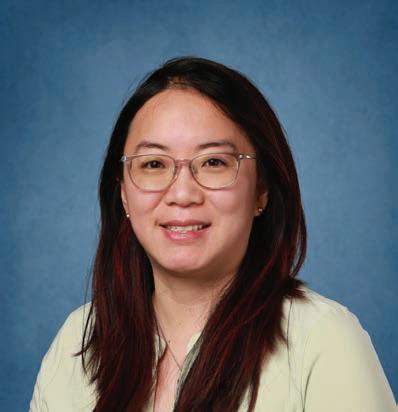
Supporting the Journey (Advice for Parents)
How can families help their children find their purpose without over-directing the process?
“Ask a lot of questions. Keep an open mind and allow them time to explore. They need that time... allow them to dig into different areas of interest and learn how to apply them to a potential career.”
Joyce Tang, University & Careers Guidance Counsellor
Many will chase acceptance to an ‘elite’ university. But what does that really mean? While some might think immediately of Ivy League schools in the US, there are many others around the world, such as the UK Russell Group universities, that offer the best-in-class education. Regardless of placement on a ‘Top’ list, our goal is to find the best fit for our students, taking into account factors such as the teaching and learning approach, programme of study, student body size, geographical location, and more.
As students prepare to leave Mulgrave, the UCCD reminds them that they do not need to have their entire future set in stone. An 18-yearold’s passions might be very different by the time they are 25. The ultimate advice from the counselling team? Keep an open mind, remain flexible, and find a destination where you can explore, be successful, and be happy.
“It is about best fit where we ask things such as learning experience, location, class size, programme. Sometimes the best ranking for their programme may not necessarily be one of the top schools... It starts the conversation and research, and it explores whether or not those schools are the right fit for what the student wants.”
Joyce Tang, University & Careers Guidance Counsellor
“University and career counselling works best when students and counsellors develop a strong and constructive relationship, allowing for students to confidently explore their personal and academic journey in a safe space... By the time students are crafting their university applications, they are actively searching for meaning through their goals and their chosen direction.”
Paul Matheson (he/him) University & Careers Guidance Counsellor (2022-26) | Senior School Personal Counsellor (2026-27+)
The Gap Year Advantage
The path to purpose is rarely a straight line. For students who are confident in who they are but still need time to figure out their specific academic direction, a gap year can be a powerful tool. Getting a job during a gap year helps students gain new perspectives, step out of their comfort zones, and develop the adaptive, innovative skills needed in a rapidly changing world.
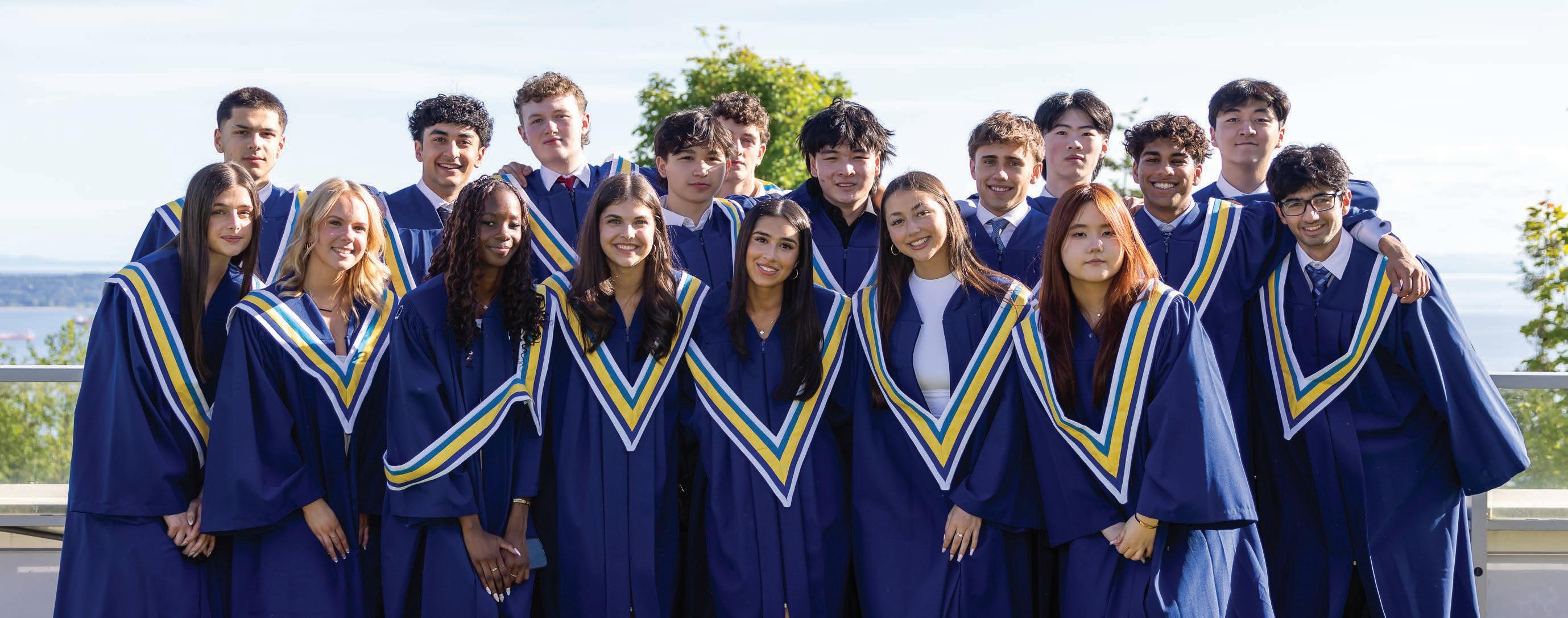
Dear Alumni,
Mulgrave alumni are integral members of the school community - a vibrant extension of its values, spirit, and global network. Building on Mulgrave’s mission of Inspiring Excellence in Education and Life, the alumni programme aims to foster lifelong connections and create meaningful opportunities for engagement after graduation.
As a relatively ‘young’ school, we are building a programme centred on three key priorities:
• strengthening alumni engagement
• creating opportunities for alumni to connect, contribute, and mentor
• establishing the foundation for a sustainable and connected global network
Through networking events, alumni experiences, mentorship, and community initiatives, we hope to
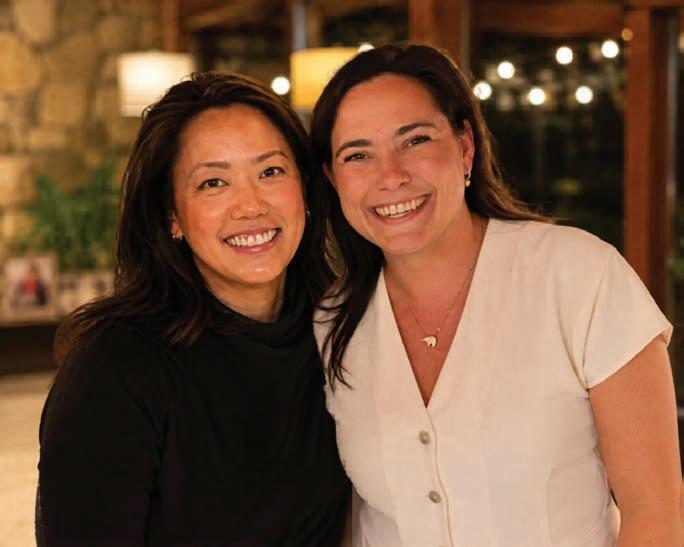
create meaningful connections across our growing global alumni community. For both of us, volunteering with the alumni programme has been an opportunity to reconnect with the Mulgrave community in a new way and help create meaningful experiences for other Mulgravians. Being involved at this early stage has been incredibly rewarding, and it’s exciting to contribute to something that future alumni will continue to build on.
We are still in the early stages of building this community, so there is a unique opportunity for alumni to help guide the future of the Mulgrave alumni experience. We are looking for volunteers interested in supporting future initiatives, sharing ideas, or contributing to the programme’s growth. If you would like to get involved or learn more, we would love to hear from you at alumni@mulgrave.com.
Together, we have the opportunity to build something lasting for current and future Mulgrave alumni. We look forward to reconnecting and seeing you at an alumni event soon.
Cheers,
Bernice Furrer (Class of 2004) and Taylor Shepard (Class of 2008) Mulgrave Alumni Board Co-Chairs
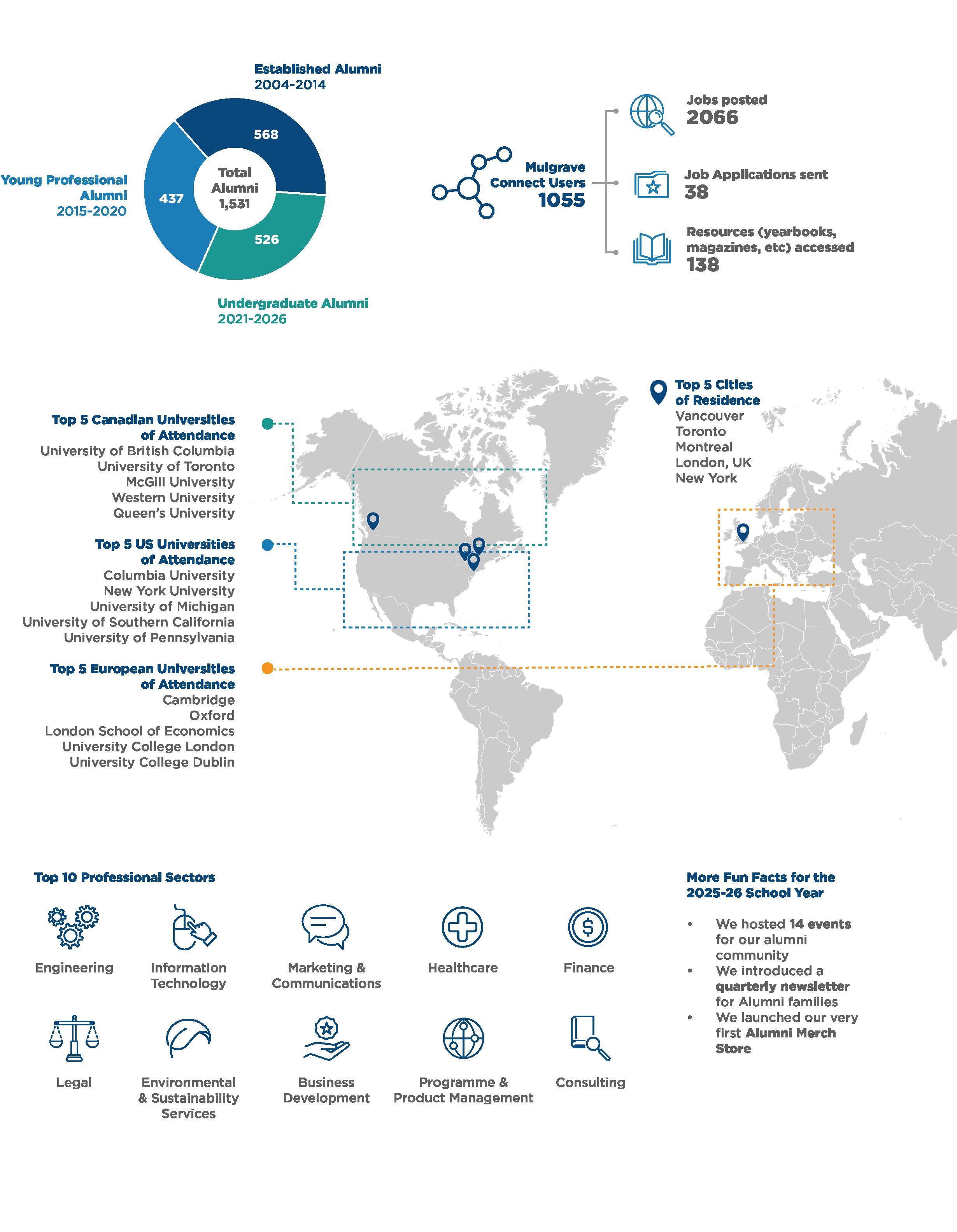
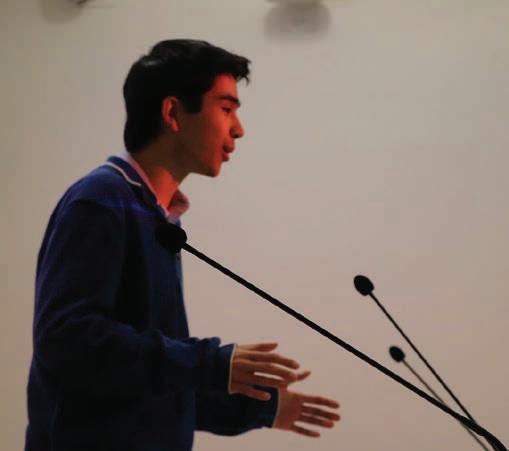
Jaiden Ahuja Class of 2024
Awarded Summa Cum Laude Latin Honours at Sciences Po Paris, a distinction reserved for the top 2% of students
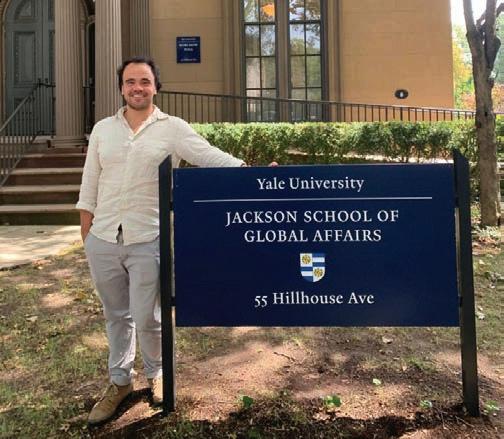
Rafael Gonzalez Class of 2017
Started a Master’s in Public Policy at Yale School of Global Affairs on a full scholarship

Jack MacPhail Class of 2011
Started a new position as Chief Financial Officer at Serino Systems

Andrea Aguilar Class of 2015
Accepted a Senior Manager role at Universal Music Canada
Angela Li Class of 2021
Bachelor of Science
International Relations and History ‘24
London School of Economics
Master of Science
International Relations and Affairs ‘25
London School of Economics
On November 19th, Dr. Li’s students welcomed back alumna Angela Li (Class of 2021) for a special session with students in the Mandarin programme. A recent graduate of the London School of Economics, she is now working in the global media industry.
Drawing from her experiences studying at LSE, interviewing world leaders, and attending international forums across Europe and Asia, Angela shared practical guidance on university applications, IB strategies, campus life, and early career planning. She also highlighted the importance of Mandarin
as a bridge language in the 21st century - one that opens doors across diplomacy, business, media, and global cooperation.
With students, Angela explored current world events, the shifting dynamics of international relations, and the
rapidly evolving future of AI and global technology governance. Her message encouraged learners to stay curious, stay informed, and embrace opportunities to understand and engage with the world - key traits at the heart of the IB learner profile and the ethos of a Mulgrave education.


Devon Seybold
Class of 2021
Began her Rotational Management Program (RMP) at GAP inc. in San Francisco

Chris Gollner
Class of 2013
Welcomed a baby girl, Charlotte, with Lucy
Meg Coleman
Class of 2014
Welcomed baby Katie with Alex

Nick Dempsey
Class of 2011
Celebrated his wedding anniversary with Kim
Nolan Cheung
Class of 2025
Bachelor of Applied Science Material Engineering ‘29 University of Toronto
After being nominated for the $120,000 Schulich Leadership Scholarship by Mulgrave, I found the application process to be both challenging and iterative, requiring significant reflection and introspection.
Discovering that I had received the scholarship was a surreal experience. It felt like all the dedication and late nights had finally paid off. I remember rereading the email multiple times before calling my parents to share the good news. I felt a mix of disbelief and gratitude.
The Schulich Scholarship not only provides financial support for my postsecondary education, but also connects me to an inspiring network of likeminded, STEM-focussed entrepreneurs and innovators. One of the coolest
opportunities was attending SLXCA 2025, a yearly event that connects Schulich Leaders (SLs) from across Canada. I got to meet other SLs and alumni from different backgrounds and experiences. I also heard from a variety of speakers, including business coach Fred Kofman, whose phrase, “The biggest challenges in entrepreneurship aren’t mathematisable, but solvable through the alignment of human spirit”, has reshaped how I think about good teamwork as an alignment of missions and values rather than chasing deliverables.
I’ve also been fortunate to start a mentorship programme with an older Schulich Leader, who has been invaluable as a mentor for advice on life, balance, and courses.
Overall, the scholarship has opened so many doors and given me access to a network that challenges me to think bigger, execute better, and support others doing the same. I’m excited to keep collaborating with bright, driven people and to channel that energy into a meaningful contribution in STEM.

Ashleigh Kearns
Class of 2014
Got engaged to Greg

Lauren Forster
Class of 2015
Joined BC Cancer Foundation as the Senior Writer, Development
Rubi Choi
Class of 2014
Announced her engagement

Ellie Mitchell
Class of 2021
Joined Well.ca as Marketing Coordinator

Angie Travlos
Class of 2012
Newlywed to Lucas

Oliver Dempsey
Class of 2009
Got engaged to Erin

Jason & Jerry Song
Class of 2025
Recognised on the Vancouver Magazine Power 50, 2026 List
Rohin Dhaliwal
Class of 2024
Received the SPEATBC Post Secondary Scholarship for maintaining a 94.1% average in the Mechanical Engineering Programme at UBC

Serena is remembered with deep affection by the Mulgrave community. Gone too soon, she is best known for her warmth, kindness, and the quiet grace she brought to those around her. She left a lasting impression on friends and teachers through her thoughtfulness, sincerity, and genuine care during her time at school.
Serena will be deeply missed and forever held in fond memory by all who knew her at Mulgrave.
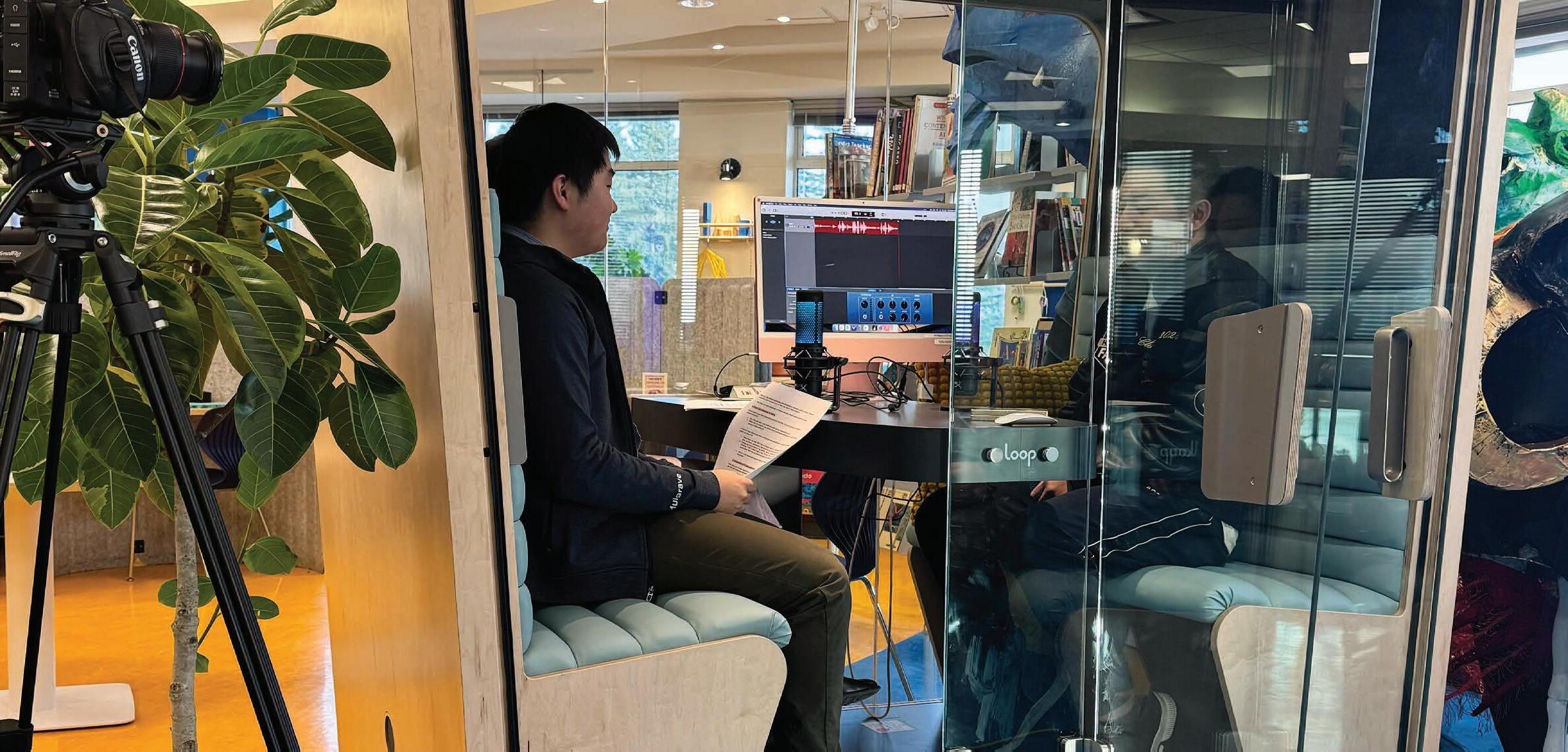
The Mulgrave Alumni Podcast has continued to evolve as a space for connection, reflection, and shared storytelling across our community. We have expanded the range of voices featured to include even more diverse experiences from alumni, students, parents, and faculty.
What began as a platform for sharing individual journeys has increasingly become a way to explore common themes that connect us all: growth, transition, challenge, and purpose. Each episode highlights authentic stories that reflect the many paths taken beyond Mulgrave, while also deepening the sense of connection to the school community.
A growing emphasis has been on intergenerational dialogue and varied perspectives, creating space for conversations that are both personal and reflective of broader experiences within and beyond Mulgrave.
If you would like to take part, share your story, or suggest a conversation topic, please reach out to our Alumni Associate, Ara Mondragon, at alumni@mulgrave.com
Recent episodes:
Farah Virani (Staff & Parent) Giving Life: A story of organ donation
Mac Walsh (Class of 2019) Identity, Advocacy, and Resilience
Kelcy Timmons Chan (Class of 2015) Art that Connects: Queerness, Advocacy, and Community
Jesse Peng (Class of 2011) The Multi-industry Mindset
A special thank you to Ava Thompson (Class of 2018), our host since day one, whose thoughtful presence and genuine curiosity have helped shape the tone and spirit of these conversations.
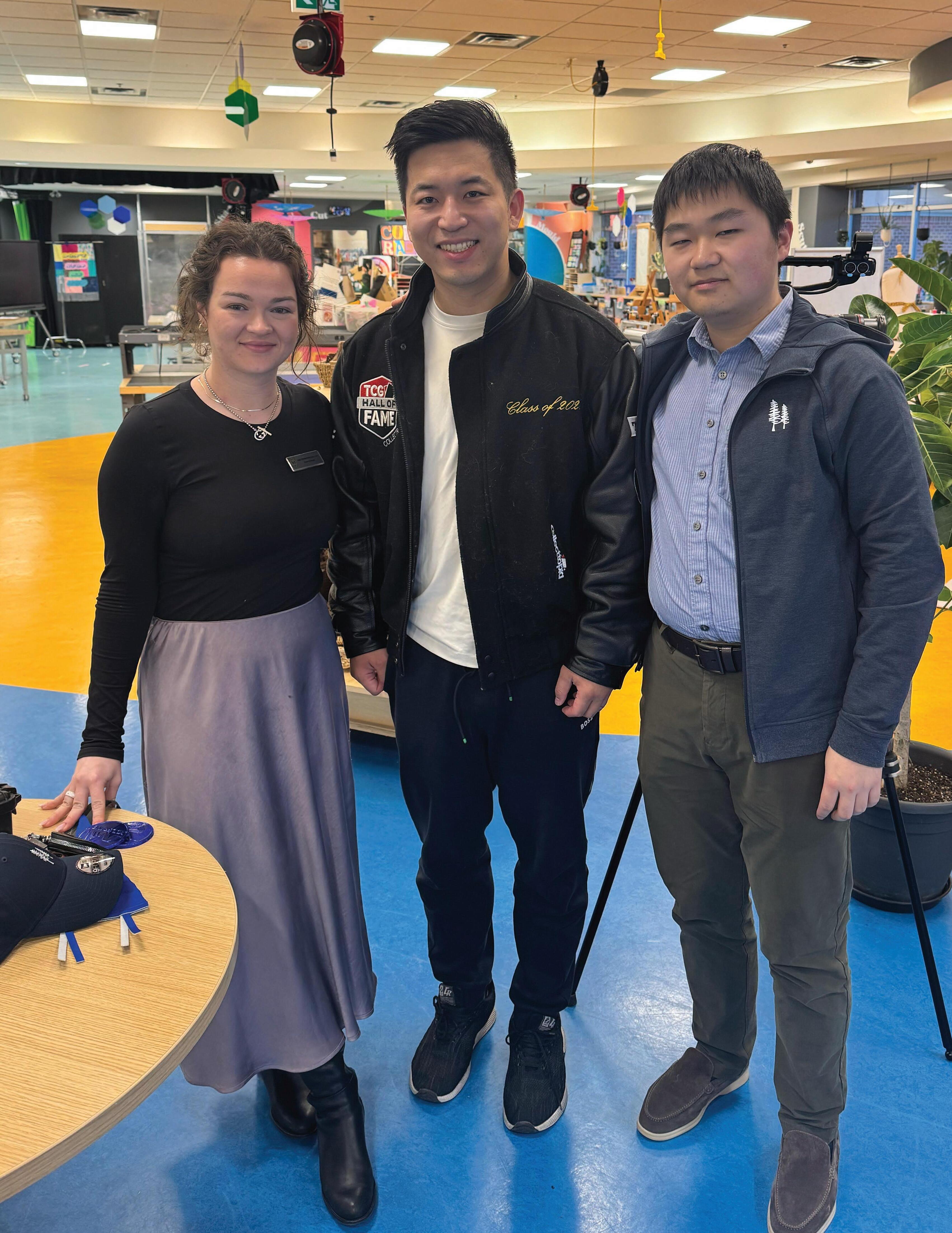
A milestone celebration marked the graduation of the Class of 2025, as students, families, faculty, and staff gathered on campus to celebrate the end of their school journey and welcome them into the alumni community.
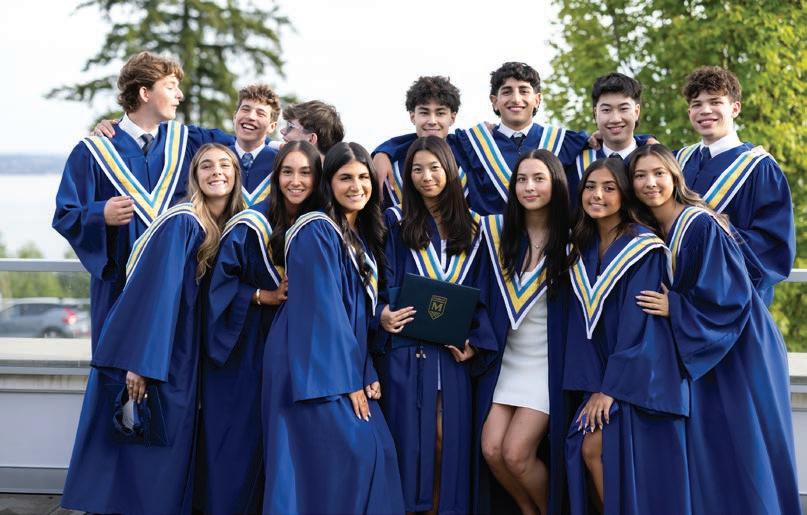
May 2025
June 2025
An informal summer evening hosted by the Alumni Board, brought together Vancouver-based alumni across different years for relaxed conversations and reconnection.
A warm international gathering in London hosted by Mrs. Clark, brought together alumni living in the city for an opportunity to reconnect and build new connections at the Maple Leaf, a comfy setting to feel at home.
August 2025
A special evening that brought together nearly 100 members of the Mulgrave alumni community, including alumni and their parents, to reconnect with past and present Heads of School, faculty, and community members. For many families, it was their first time back on campus since graduation, making it a meaningful celebration of the lasting relationships and extended community built over time.
Hosted by our MVP
This lively start-of-year tradition welcomed the whole school community back to campus. This year, alumni families were invited for the first time, adding an extra layer of connection and making it a true multigenerational celebration.
September 2025
November 2025
A special milestone evening marked 20 years since graduation, with many alumni returning to campus - some for the first time since leaving Mulgrave - to meet up and reflect on their journey since school. community built over time.
A festive pre-holiday gathering on campus that brought alumni and community members together for our annual alumni basketball game, seasonal treats, and a warm, lively atmosphere to reconnect with peers, faculty, and staff.
The main event was preceded by a more intimate Honourary Lifetime Members (HLM) reception welcoming new members and their families to this distinctive group of recently graduated families who went above and beyond in their commitment to Mulgrave.

December 2025
A relaxed evening brought the Class of 2015 back together a decade after graduation, with classmates and teachers sharing stories, laughter, and memories.
January 2026
A joyful celebration of Family Day on campus, welcomed back alumni families for a relaxed photoshoot. It was especially special to see extended families (some even with their furry pets!) back on campus.

February 2026
Montreal Social
Hosted by Mr. McKillop
A cozy winter gathering in Montreal hosted by Mr. McKillop, created space for alumni in the area to catch up and reunite in an informal setting.
March 2026
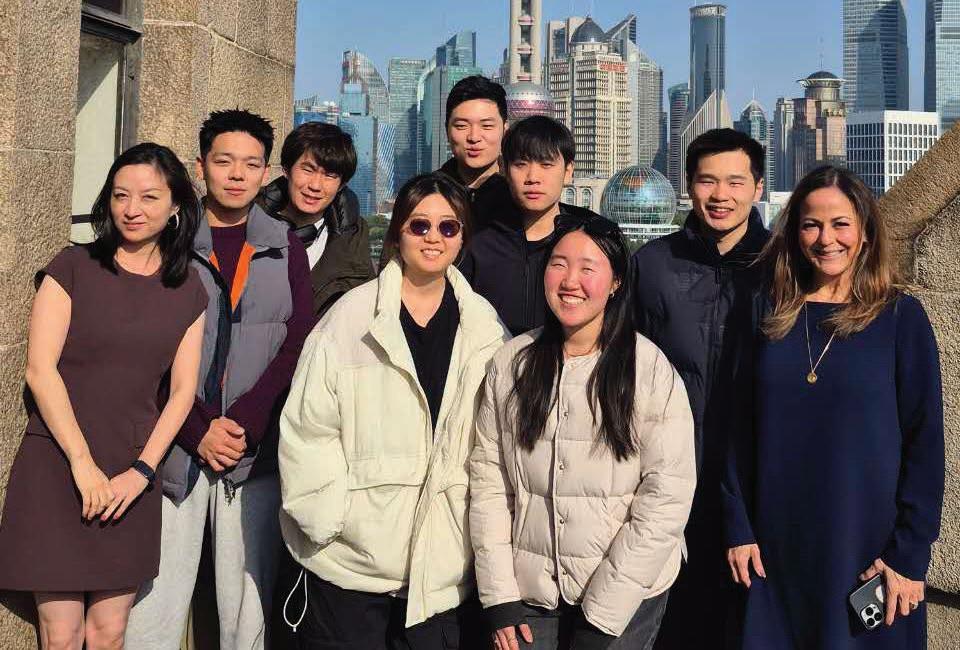
Shanghai Social
Hosted by Dr. Li & Ms. Calderon
The first Shanghai alumni social, brought together graduates based in the region for an evening of connection. The event was very well received and will continue again next year.
Hosted by Mr. Prior
The most well-attended Toronto alumni event yet tested in a new format at a Raptors game. Alumni came together to cheer, reconnect, and enjoy a fun, energetic evening.
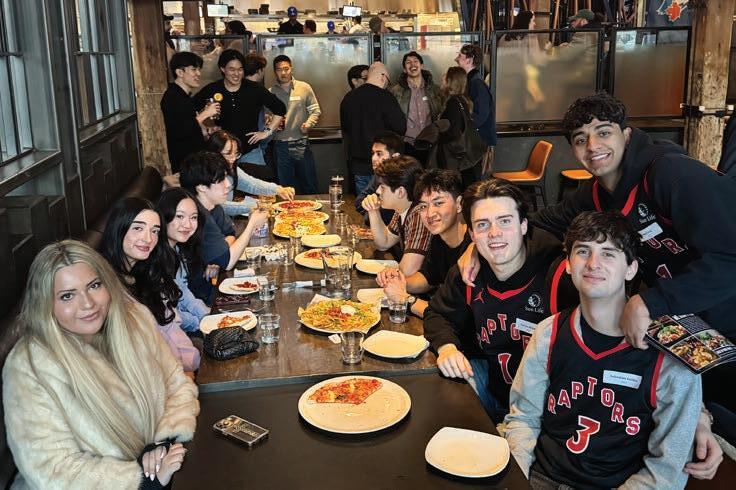
March 2026
May 2026

Class of 2026
A proud ceremony celebrated the Class of 2026 as they graduate and officially joined the alumni community, marking the close of their Mulgrave journey.
The following alumni events are scheduled for the remainder of the 2025-2026 school year:
A first-of-its-kind alumni event focussed on healthcare careers, featuring panel discussions, shared experiences, and meaningful conversations between alumni and professionals.
A long-awaited reunion bringing together the Classes of 2020 and 2021. Many of the usual graduation celebrations were missed due to COVID, making this gathering a meaningful chance to meet again and celebrate together on campus.
The very special environment at Mulgrave is the result of the heartfelt work, professional excellence, and genuine care of our faculty and staff. After more than a decade of service, we say farewell to the following individuals at the end of the 2025-26 school year (plus two others who prefer to fly under the radar as they head into retirement!). We thank them for their incredible contributions and the positive impact they have had on our students, the school, and the community. We wish them all the best in their future endeavours and remind them that Once a Mulgravian, Always a Mulgravian!
Karyn Mitchell, Junior School Principal
Joined Mulgrave in 2005
Ms. Mitchell’s first three years at Mulgrave were as Senior School Vice Principal (as well as Grade 10 advisor and PHE teacher). Following, she became Junior School Principal. Ms. Mitchell has led outdoor adventures, service learning expeditions to Kenya, and many, many Junior School trips to Eastern Canada. Supporting students on these formative experiences, as well as through activities such as basketball coaching and Junior School student leadership, has cemented a very special place for Ms. Mitchell in the hearts of many students (and their families!). Additionally, she has been instrumental in Mulgrave’s ongoing evolution through changes in technology, language study, library structure, and the development of our Maker Space.
Joined Mulgrave in 2003
Mr. Flanagan’s incredible length of service, unflappable demeanour, and instrumental role in Mulgrave’s technological evolution have made him invaluable to students and colleagues alike. Starting as an IT Support Technician and growing his career over the decades, Mr. Flanagan shepherded the school through the initial issuance of school devices, the introduction of Wi-Fi, the ‘Bring Your Own Device’ era, our transition to Google School, the outfitting of three school additions, and our recent transition to schoolissued devices. We wish him a relaxing retirement ahead.
Over my two plus decades at Mulgrave, I’ve had the unique opportunity to work with students across all grade levels and collaborate with every department and division. This crossfunctional perspective allowed me to see the growth of our community and school from every angle and support the diverse needs of both our staff and students. I leave with a heart full of memories and immense pride in what we have accomplished together. Thank you for the support, the challenges, and the friendships. Onward and upward!”
My fondest Mulgrave memories are found in the collective stories of the students and exceptional faculty members I worked alongside every day. As I prepare for retirement, I am eager to pursue new dreams and opportunities while finally having the time to bike, run locally and abroad, and hike in remote corners of the world. My departing message to this wonderful community is one of deep gratitude for the shared journey. I encourage you to continue building a culture where every student feels seen and every leader acts with heart. Thank you for making these years so profoundly meaningful.”
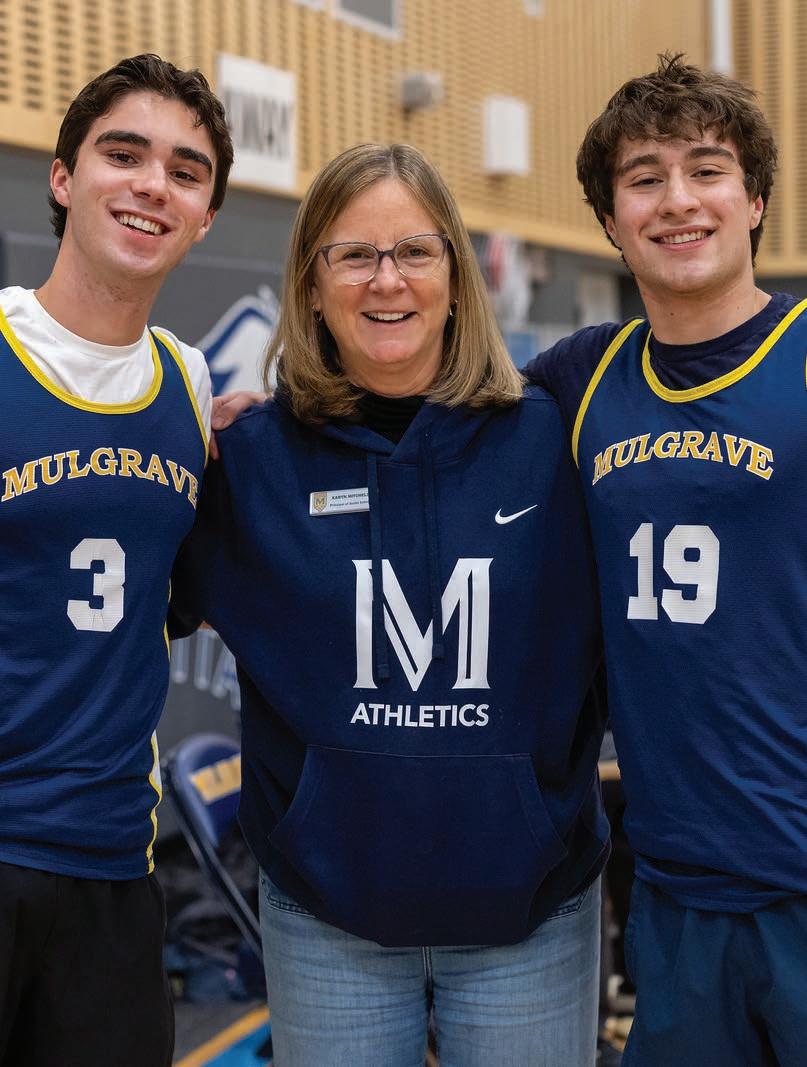
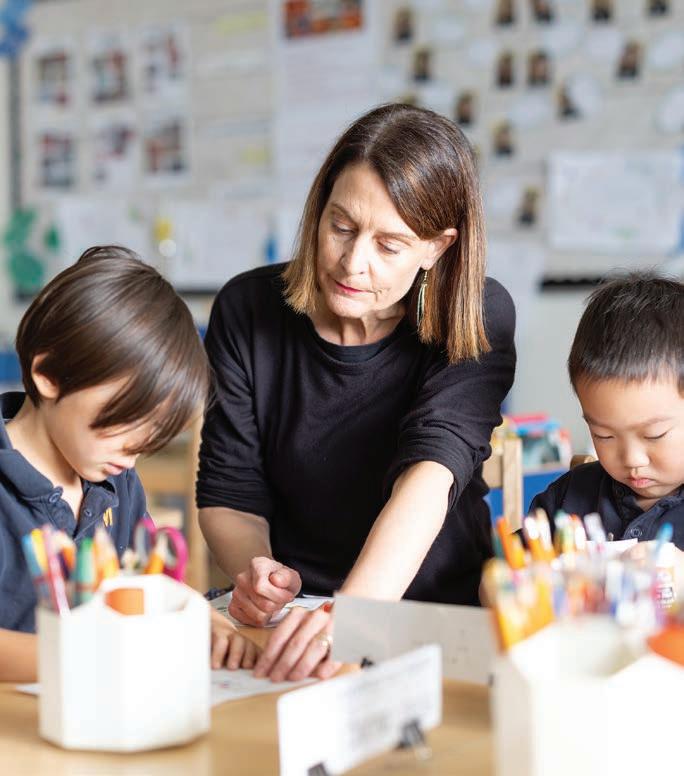
Monique Vodrey, Kindergarten Teacher
Joined Mulgrave in 1998 until 2002, returned in 2009
Ms. Vodrey started at Mulgrave as a Kindergarten teacher and French associate when the school was still at the North Shore Winter Club. As a Grade 1 teacher, she was part of the historical milestone when the school moved to the new campus. After some time away, Ms. Vodrey returned to Mulgrave, moving through a few roles teaching preschool, Kindie, and Grade 1 as well as serving as the EY PYP Coordinator and running clubs such as art and sewing.
My life is so intertwined with the school and I have enjoyed coming to school every day with my family over the years. It’s been special to watch my former Kindergartners grow into Middle School volunteers and Grade 12 buddies! I am incredibly grateful for the deep relationships I have built here with families, students, and colleagues. I am also thankful that my own kids have grown alongside the school, partaking in every important step forward through its establishment, growth, and success.”
Natasha Blair, Kindergarten Teacher
Joined Mulgrave in 2009
Mrs. Blair has served in a variety of roles during her time at Mulgrave, including Kindergarten teacher, Learning Strategist, coverage teacher for preschool and Grade 3, and summer camp instructor. Outside the classroom, she has coached soccer and cross-country, and even had a hand in developing one of our yearbooks. She has also been a committee member for schoolwide and divisional initiatives.
I have a funny memory about a Unit of Inquiry investigating colour; I decided it would be a good idea to have my entire class finger paint with red acrylic paint… we now use tempra in Kindie! One particularly creative student got carried away and wiped his hands on his blond hair. Despite my best efforts, he went home with pink hair - luckily, his parents thought it was hilarious!”
As she departs for full-time parenthood, Mrs. Blair encourages all of us to treasure the relationships made during our time at Mulgrave.
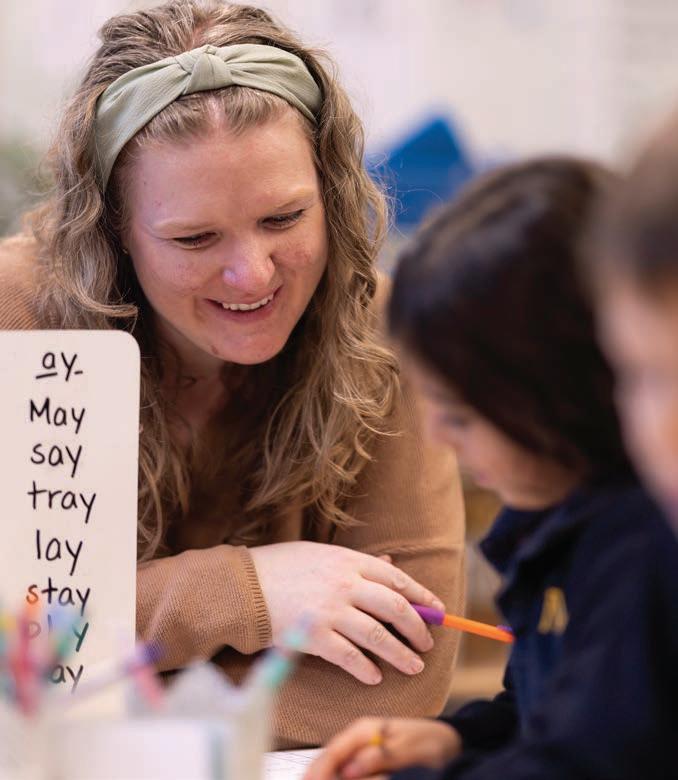
Joined Mulgrave in 2014
Ms. Kok’s career at Mulgrave has encompassed many corners of the Junior School, from associate teacher in Kindie and Grade 1, to lead teacher in Grade 1, and most recently, JS Librarian. Her passion for literacy and shared love of reading and stories has been the foundation of her many connections with students from preschool to Grade 5. Beyond the classroom, Ms. Kok has enjoyed getting creative with students in clubs such as friendship bracelets and sewing.
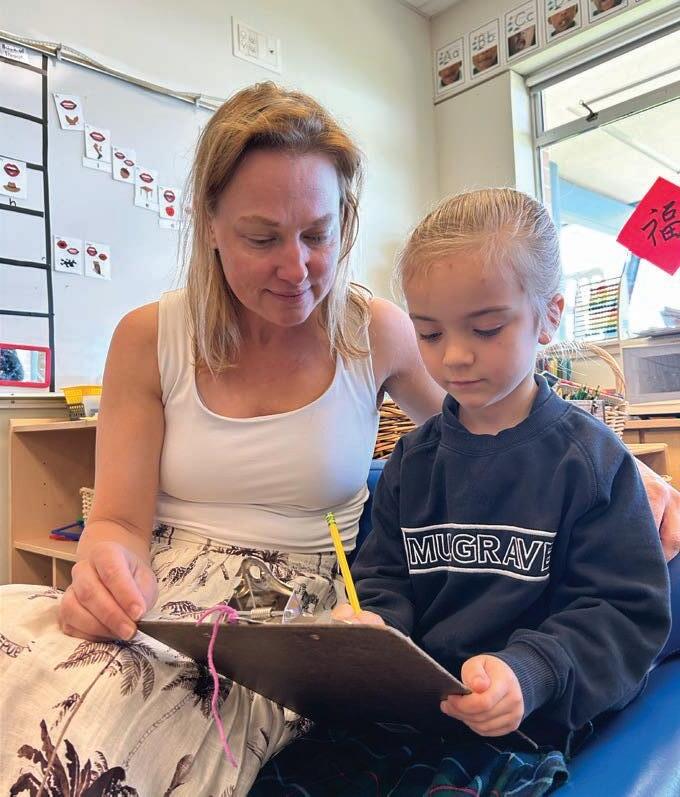
There is a special place in my heart for an impromptu action project that took place in Grade 1. After learning that one of our favourite authors was stranded abroad due to visa delays for his newly adopted son, my students sprang into action! They wrote letters to government officials, eventually making the local news…the visas were issued shortly thereafter. There is magic in seeing a class come together and when students realise they have the power to make a difference.”
In addition to sharing gratitude for her students and colleagues, Ms. Kok’s parting words are a quote from Ms. Frizzle: “Take chances, make mistakes, get messy!”
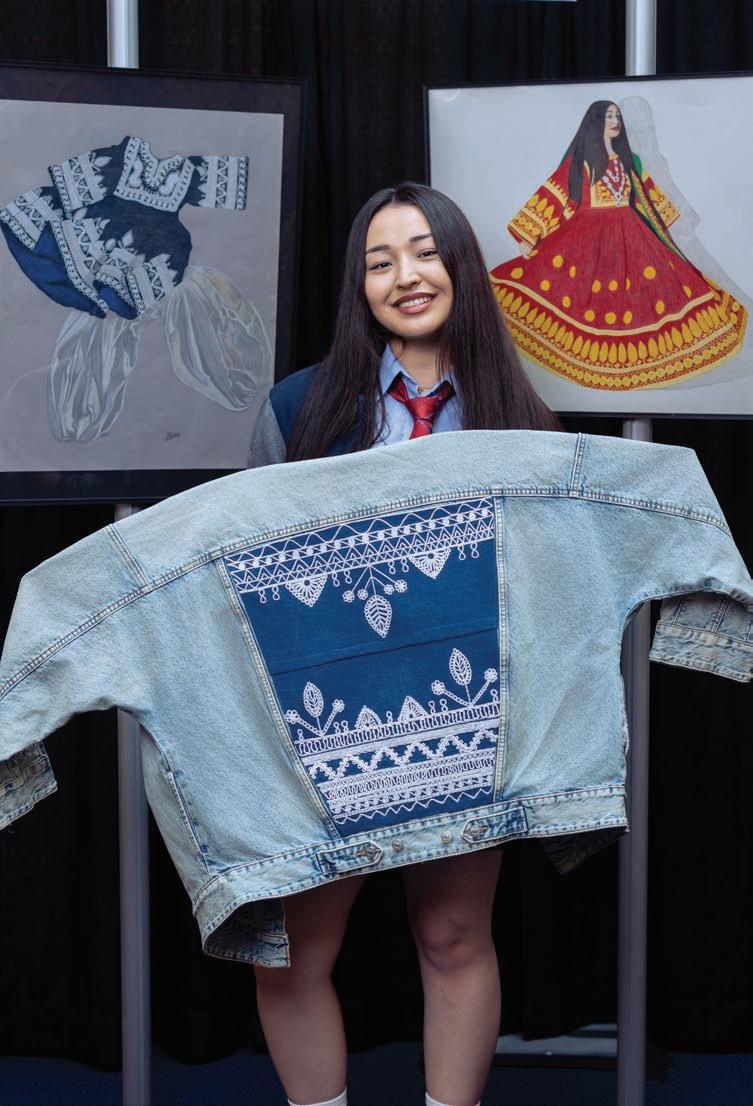
Title: Blue Bakhmal Afghani Dress Medium: Colored pencils on paper
This artwork reflects my connection to Afghan culture and the beauty found within traditional clothing. The Blue Bakhmal Afghani dress is more than just a garment – it represents identity, pride, and the history of my people. Its rich details, patterns, and elegance carry stories passed down through generations. The motifs in this drawing are inspired by Afghan textiles, which often symbolise strength, resilience, and cultural memory. By recreating these patterns with coloured pencils, I wanted to highlight both their artistic value and the deeper meaning behind them. My goal was to invite viewers to appreciate the richness of Afghan heritage while seeing it through a modern artistic lens. Creating this piece was also a personal journey. It strengthened my connection to my roots and allowed me to honour the traditions that shape who I am. Sharing Afghan culture through art is something I take pride in.