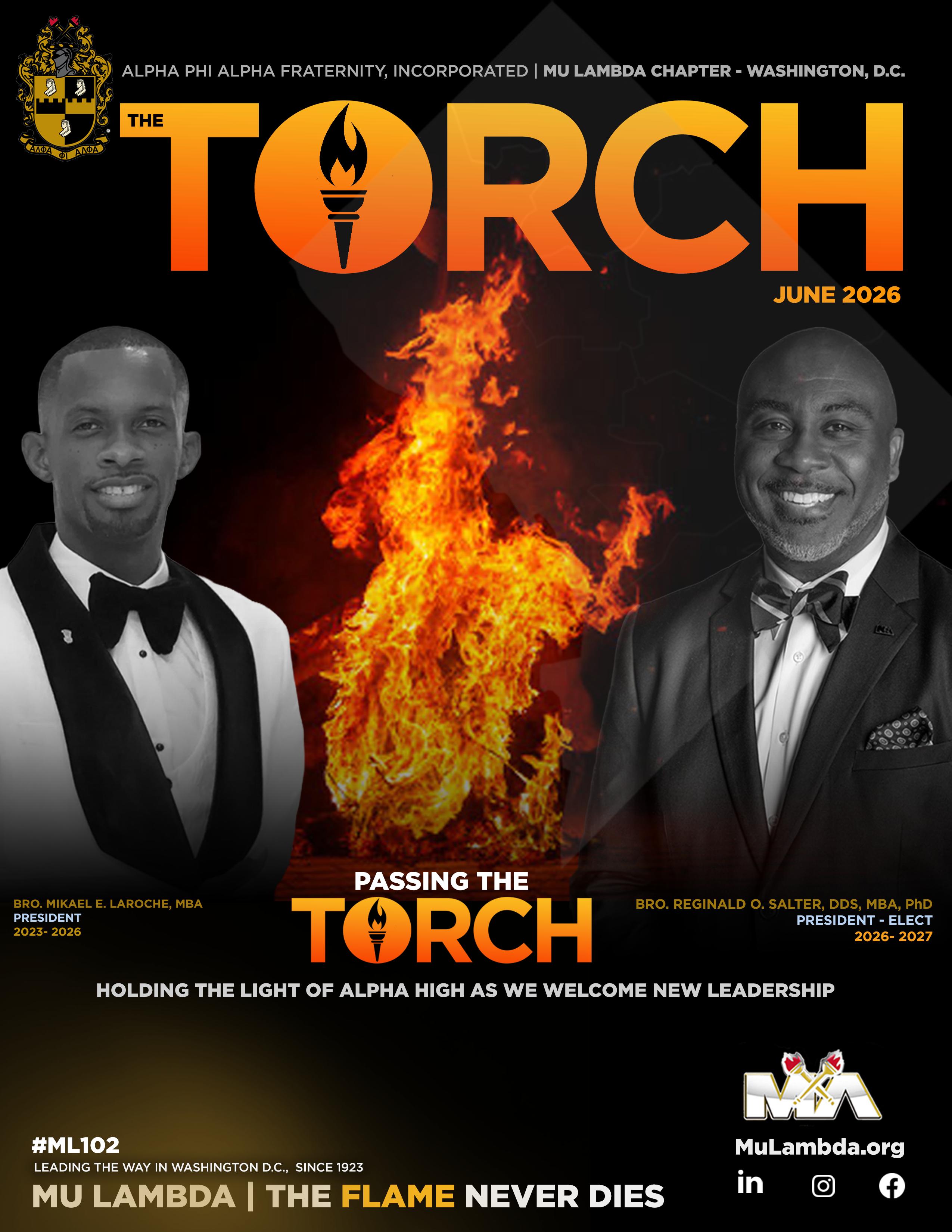
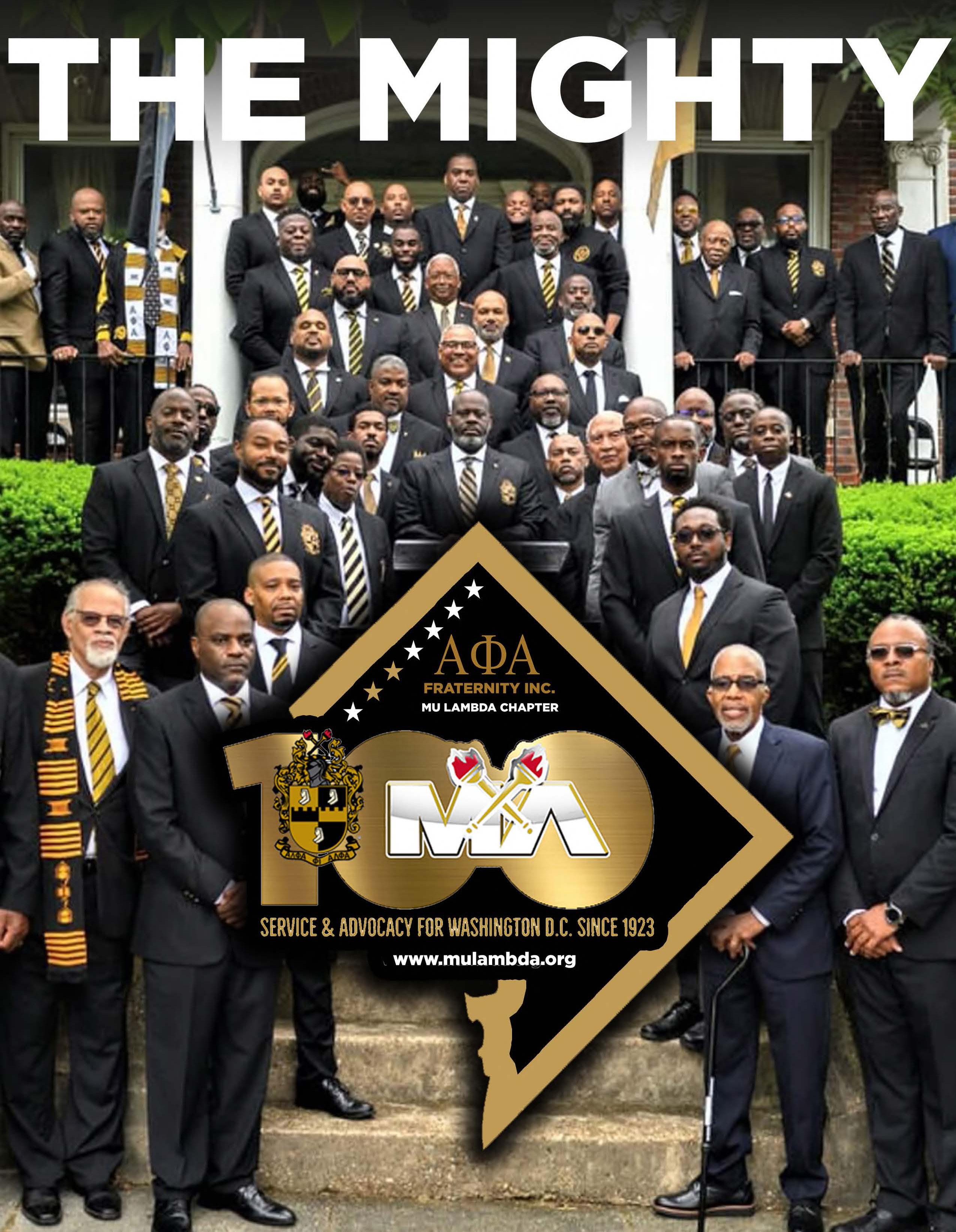

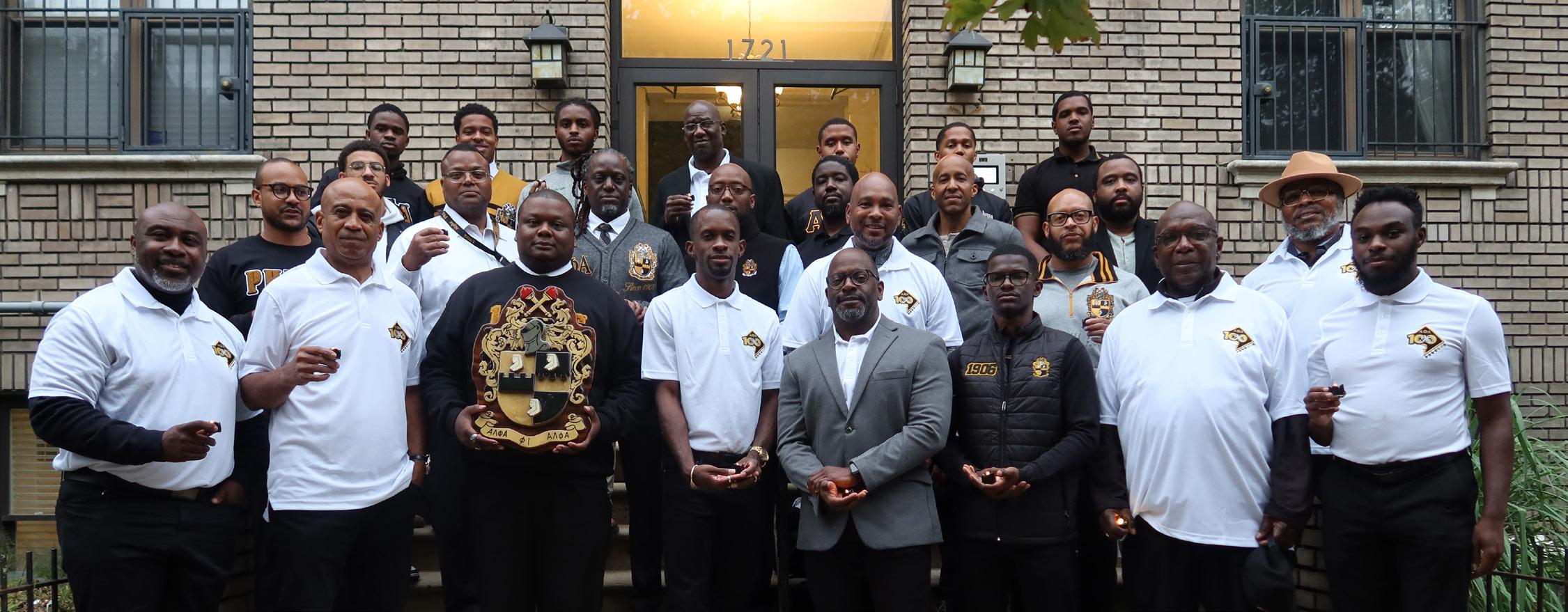
Mu Lambda is Alpha's eleventh alumni chapter, chartered October 1, 1923, in Washington D.C. The chapter was established, in part, in response to the desire of graduate brothers, many whom were initiated into Beta Chapter at Howard University, to give aid to the undergraduate brothers and continue the work of Alpha. Chartered by 22 distingushed men of Alpha which included Jewel Nathaniel Allison Murray and Jewel Robert Harold Ogle.
There has been six members who served as the General President of Alpha Phi Alpha Fraternity, Inc. and two whom served as the Eastern Region Vice President. Mu Lambda is equally proud of our current brothers making their mark in the Washington D.C. community and beyond. Our chapter has many entrepreneurs, activists, political leaders, philanthropists, academicians, ministers and so much more. Our diverse brotherhood age range is between the ages of 25 and 98. We all work together to maximize the brotherhood of Alpha by following the Objective, Mission and AIMS of our Fraternity.
The officers elected at the first meeting were Brother Harold StrattonPresident, Brother John Lowery-Vice President, Brother Victor DalySecretary, Brother Daniel W. EdmondsTreasurer, and Brother Nathaniel Allison Murray (Jewel)-Chaplain. Mu Lambda was thus established and was on its way into history!
www.mulambda.org
1. Torch Cover - June 2026
2. Chapter Cover Image - The MIGHTY
3. In this Issue
4. Executive Board, Committee Chairs, Charter Members, Past Presidents
5. The Presidents’ Message
6. The Vice-Presidents’ Message
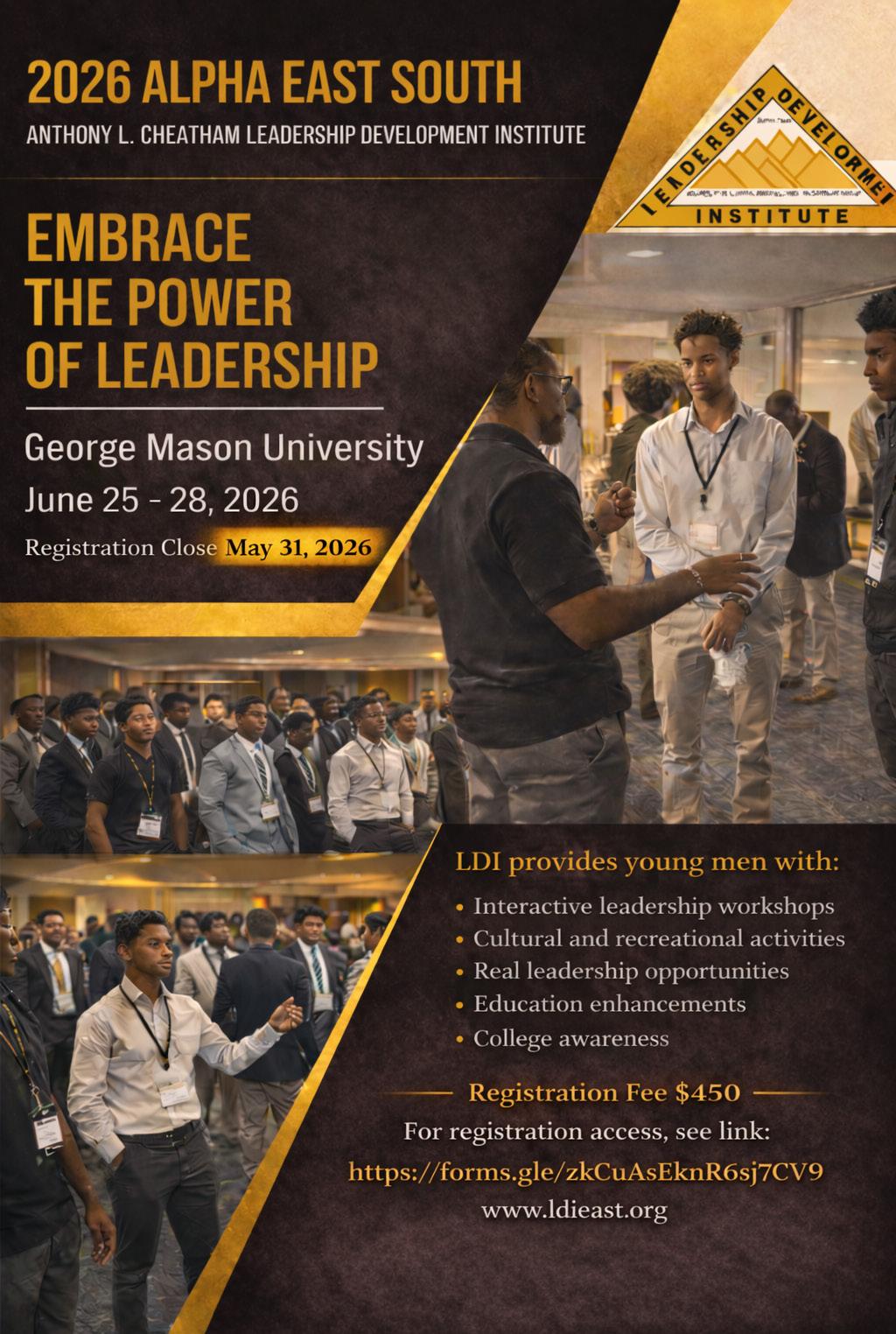
7. Leadership Development Institute
8. Golden Hour Karaoke
9. Mu Lambda Brother’s Birthdays
10. Fatherhood Reflections
12. Passing the Torch - Bro. LaRoche
16. Brothers Taking Care of Brothers - Bro. Collins
22. Juneteenth
25. Juneteenth Celebration
26. Alpha Move
28. Keepers of the Record - Bro. Baker
33. Next on Your Reading List - Bro. Crews
34. Mu Lambda Mixtape
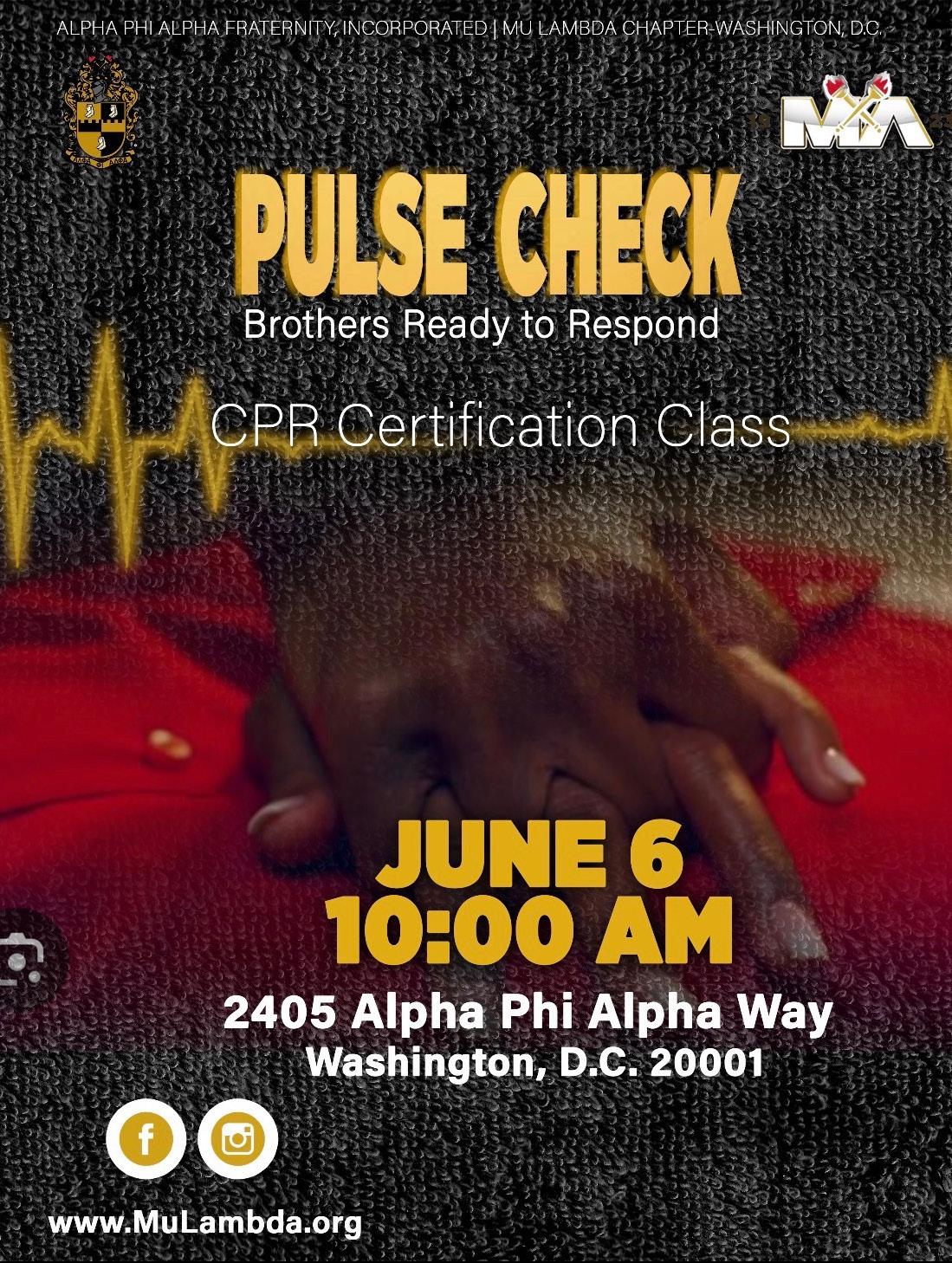
35. Pulse Check
36. The Alpha Imperative - Bro. Frédéric-Simpson
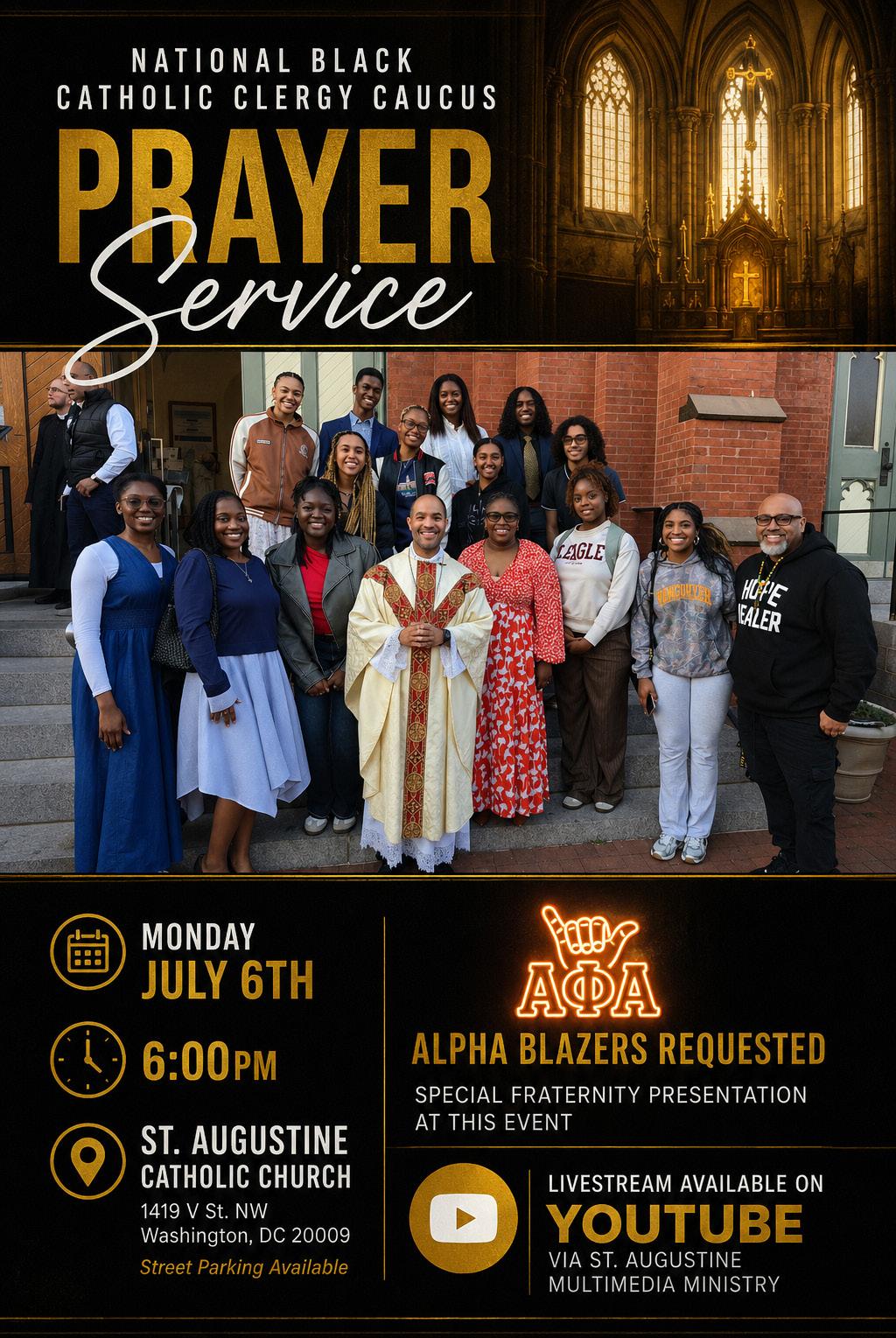
39. Prayer Service
40. The Weight of The Torch - Bro. Chris Butts
44. The Maps They Drew - Bro. Thompson
50. The Keeps of Fire - Bro. Chris Butts
55. Ordination of Bishop-Elect Bro. Robert Boxie III
56. Chapter Brother Business Advertisements
68. Message from the Editor
69. Espirt De. Fraternite

President
Mikael E. LaRoche
Vice President
Karl Bruce
Recording Secretary
Marcus Spells
Corresponding Secretary
Swain Riley
Financial Secretary
Lloyd Ross
Treasurer Michael Young
Chaplain
William “Tony” Hawkins
Historian
Ameer Baker
Archivist
James Heck
Intake Coordinator
Mark Jones
Assoc. Editor/Sphinx
Randall Clarke
Dir. Ed. Activities
Sean Perkins
Sergeant-at-Arms
Frank King
Parliamentarian
Pierre Boynton
Director of Technology
Garrett Miller
Editor of the Torch
Christopher Butts
Member at Large
Jason Jefferson
Risk Management Officer
Joseph Gibbs
General Council
Vacant
Immediate Past President
John “Tony” Wilson
Brother’s Keeper
Joseph Housey III
Budget and Finance
Ross Lloyd
Communications
Randell Clarke
Technology
Garrett Miller
Constitution
Jason Jefferson
DC National Pan Hellenic Council
James Morgan III
Auditing
Juan Powell
Health & Wellness
Ted Darlington
Membership
Timothy Fitzgerald / Jonathan Brown
Hospitality/Men Who Cook
Swain Riley
Beta Chapter Advisor
James Harmon III
Ritual
Ryle Bell / Garrett Miller
Nominating
Samuel Armstrong
Programs/Chapter of the Year
Christopher Butts
Public Policy
George Walker
Social
Xavier Thompson
Community Service
Jeffery Taylor
Fundraising
Antonio King
Archival and History
James Heck / Ameer Baker
Intake
Mark Jones
Arthur Curtis*
Merrill H. Curtis*
Victor R. Daly*
Eugene L. C. Davidson*
Arnold Donawa*
Walter Garvin*
William L. Hansberry*
Charles H. Houston*
Edward Howard*
Joseph R. Jones*
R. Frank Jones*
J Edward Lowery*
Clarence H. Mills*
Jewel Nathaniel Allison Murray*
Norman L. McGhee* FN4
Jewel Robert Harold Ogle*
Louis H. Russell*
James N. Saunders*
Emory B. Smith*
Harold C. Stratton*
J.H.N. Waring*
Charles H. Wesley* FN3
CHARTERED ON MONDAY OCTOBER 1, 1923
WASHINGTON, D.C.
FN1
6th General President 1915-1916
FN2
General Secretary 1915-1916
7th General President 1916-1917
FN3
14th General President 1931-1940
FN4 General Secretary 1920-1926
FN5
8th Eastern Regional Vice-President 1950-1953
FN6
23rd Eastern Regional Vice-President 2000-2001
Executive Director MLK Memorial
1. Harold Stratton* 1923 - 1924
2. Howard H. Long* FN2
3. Charles H. Wesley* 1926 - 1928
4. Frank Adams*
5. R. Frank Jones*
6. James B. Browning*
7. Jewel Henry Arthur Callis* FN1
8. U. Simpson Tate*
9. Claude Ferebee*
10. George O. Butler*
11. C.C. House* 1938 - 1940
12. Verdie L. Robinson*
13. Walter M. Booker* FN5
14. Jack Bond*
15. Millard R. Dean*
16. Frank Davis*
17. Clifton Hardy*
18. Herman Johnson*
19. Howard Jenkins*
20. C.C. House* 1952 - 1954
21. William F. Nelson*
22. Aubrey E. Robinson*
23. Joseph Waddy*
24. Edward J. Austin*
25. Elgy Johnson* 1964 - 1965
26. George H. Windsor* 1965 - 1967
27. James T. Speight* 1967 - 1969
28. Harold Sims* 1969 - 1970
29. Eddie L. Madison* 1970 - 1972
30. Wilbur Sewell* 1972 - 1974
31. Charles Walker Thomas* 1974 - 1976
32. Theodore Taylor* 1976 - 1978
33. Elmer Moore* 1978 - 1981
34. William E. Calbert* 1981 - 1983
35. Osmond Brown* 1983 - 1986
36. Vernon Gill 1986 - 1988
37. LeRoy Lowery, III 1988 - 1990
38. Morris Hawkins* 1990 - 1992
39. C.C. Jones 1992 - 1995
40. Vincent Orange 1995 - 1997
41. Melvin White 1997 - 1999
42. LeRoy Lowery, III FN6 1999 - 2001
43. James Haynes 2001 - 2002
44. Rudolph Harris* 2002 - 2004
45. Edwin Norwood 2004 - 2006
46. James McDonald 2006 - 2008
47. Timothy Fitzgerald 2008 - 2010
48. Kwame Ulmer 2010 - 2011
49. LeRoy Lowery, III 2011 - 2013
50. Eddie Neal 2013 - 2015
51. LeRoy Lowery, III 2015 - 2017
52. Joel Grey 2017 - 2018
53. Eddie Neal 2018 - 2020
54. John “Tony” Wilson 2020 - 2023
* Omega Chapter Brothers Footnote (FN)
Brothers of Mu Lambda,
As we close another remarkable fraternal year, I want to extend my sincere gratitude to each of you for your continued dedication to moving Mu Lambda forward. Together, we have demonstrated what is possible when brotherhood, service, leadership, and commitment to the ideals of Alpha Phi Alpha remain at the center of our work. The 2025–2026 fraternal year has been defined by meaningful impact, structured programming, and an unwavering commitment to serving our community with excellence.
This year, our chapter reached new heights through record-breaking fundraising efforts for the March of Dimes, while continuing our steadfast support of the House of Ruth throughout Mother’s Day, Valentine’s Day, Thanksgiving, Christmas, and numerous other service initiatives. Whether mentoring young people, supporting families in need, engaging in civic action, or strengthening our bonds of brotherhood, Mu Lambda has remained a visible force for good throughout Washington, D.C. I am proud of what we have accomplished together and grateful for every brother who answered the call to serve.
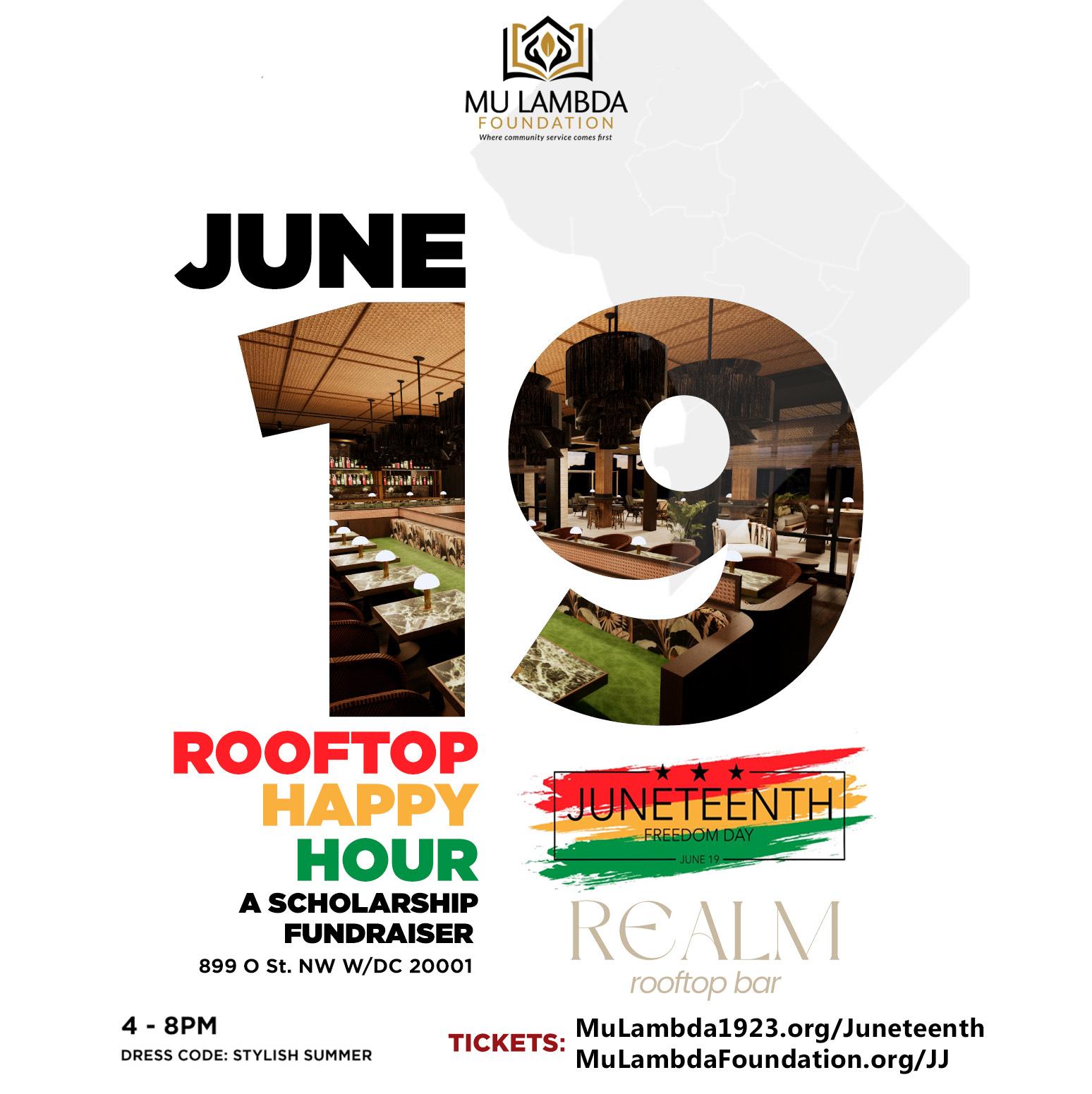
As spring gives way to summer, we now enter a season of reflection, renewal, and planning. While our work never truly stops, this is an opportunity to celebrate our successes, evaluate our opportunities for growth, and prepare for an even stronger year ahead. I encourage all brothers to support the upcoming Foundation fundraising efforts, including our Karaoke Party and Juneteenth Rooftop Happy Hour, as we continue investing in scholarships and opportunities for future generations.
As you spend time with family and friends in the months ahead, I wish each of you a happy, healthy, and safe summer. May it be filled with laughter, fellowship, relaxation, and cherished memories. Thank you for your service, your friendship, and your commitment to Mu Lambda. Together, we continue to build upon a legacy of excellence that will endure for generations to come.
Fraternally,
Brother Mikael E. LaRoche, (10-Mu Lambda-13)
President 2024 - 2026
Alpha Phi Alpha Fraternity, Inc.- Mu Lambda Chapter
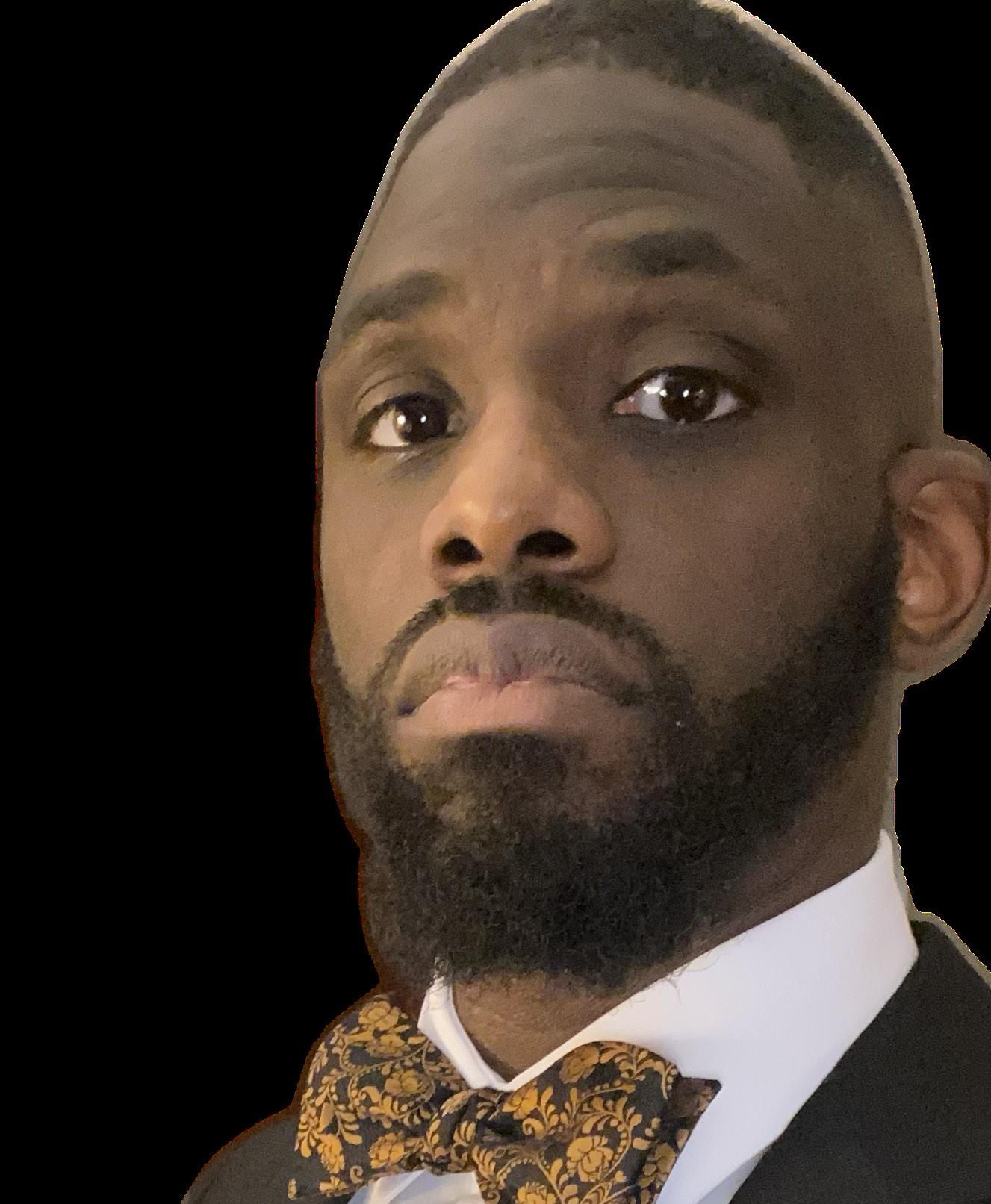
My Dear Brothers,
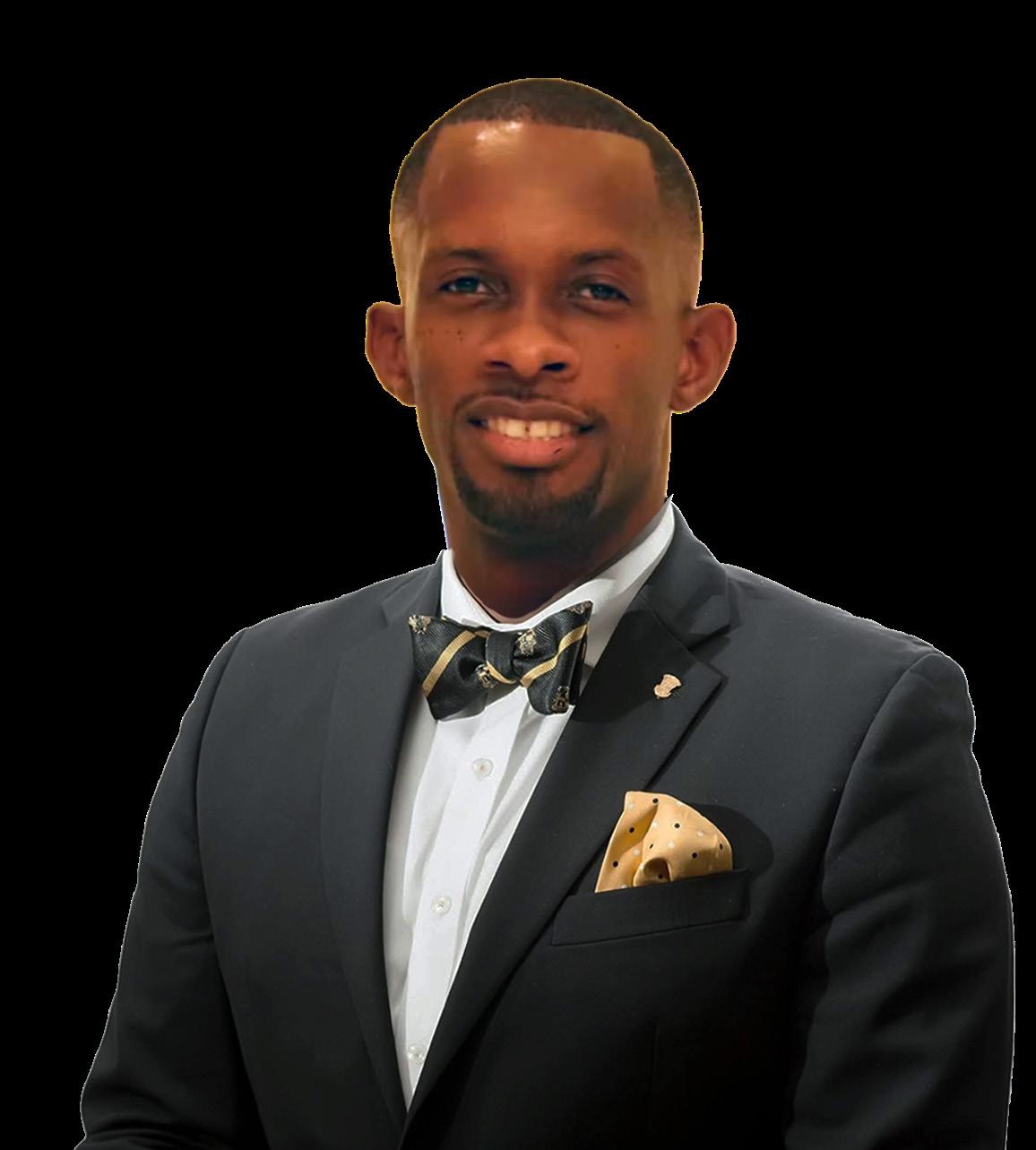
Thank you for a great year in the life of Alpha Phi Alpha, Mu Lambda chapter as your 25-26 Vice President. I have been blessed to serve in a capacity that has tested my dedication and resolve, challenged my ability to balance home life and fraternity life, and given me an glimpse into what leadership in the fraternity looks like. My sincere hope is that I have lived up to your expectations this year and that I have taken the great work done by my predecessors and moved it a round higher. Thank you so much Bro. Joseph Gibbs for being supportive this year and showing me the ropes of a VP; for always being available and giving me things to consider that I otherwise would have missed. To my LB Mark Jones and Lawrence Clark and my Spec Marcus Spells for literally asking me “what do I need to do and where do I need to be” before I could ask. You Bros. carried me through in a way no one else knows. To Bro. Jason Jefferson for challenging my position on things when it needed to be done; just know I always hear you. To the lines of Spring 23 and 25 for pushing me to be a good example of what an engaged, active brother looks like and showing up when called upon. To Bro. Samuel Armstrong for giving us all a place to aspire to be above and beyond the chapter level; we are grateful to have you amongst our ranks. To my LB and Chapter President Mikael LaRoche. Kudos to you for taking the reins of leadership and making a believer out of us. You have shown yourself knowledgeable, a visionary, and a strong advocate for the consideration of what an inviting, brotherly space should look like. You created a place for Brothers to feel welcomed no matter their previous standing or disengagement and catered to Brothers strengths. You allowed Brothers to lead without being managed and truly let their gifts shine in their respective roles. God speed to you in your future fraternal aspirations. My sincere hope is that you see the heights of Alpha that not even you had imagined. Brothers this concludes our 25-26 fraternal year. As we seek to elevate our ceiling and better our best, we can only go as far as togetherness will allow. I hope that the vision of Personal Wellness, Quality Programming, and Neophyte Support was felt and that we met the mark. To the Brothers who have served thank you your efforts and to the Brothers that will serve thank you for answering the call. Enjoy your time off and we’ll see you next year.
Fraternally,
Brother Karl Bruce
Vice President (12-Mu Lambda-13) 2025 - 2026
Alpha Phi Alpha Fraternity, Inc. Mu Lambda Chapter

Bro. Keith McIver - 3rd
Bro. LeRoy Lowery III - 5th
Bro. Chinelo Cambron - 7th
Bro. Dedrick Edwards - 10th
Bro. Theodore Darlington - 12th
Bro. Mario Simpson - 13th
Bro. Antonio King - 15th
Bro. Randall Clarke - 17th
Bro. Marquial McMillan - 17th
Bro. Sean Perkins - 19th
Bro. Joseph Gibbs - 20th
Bro. Manley Collins - 21st
Bro. Carlos DeBose - 23rd
Bro. Gerard Williams - 24th
Bro. Gregory Barnes - 26th
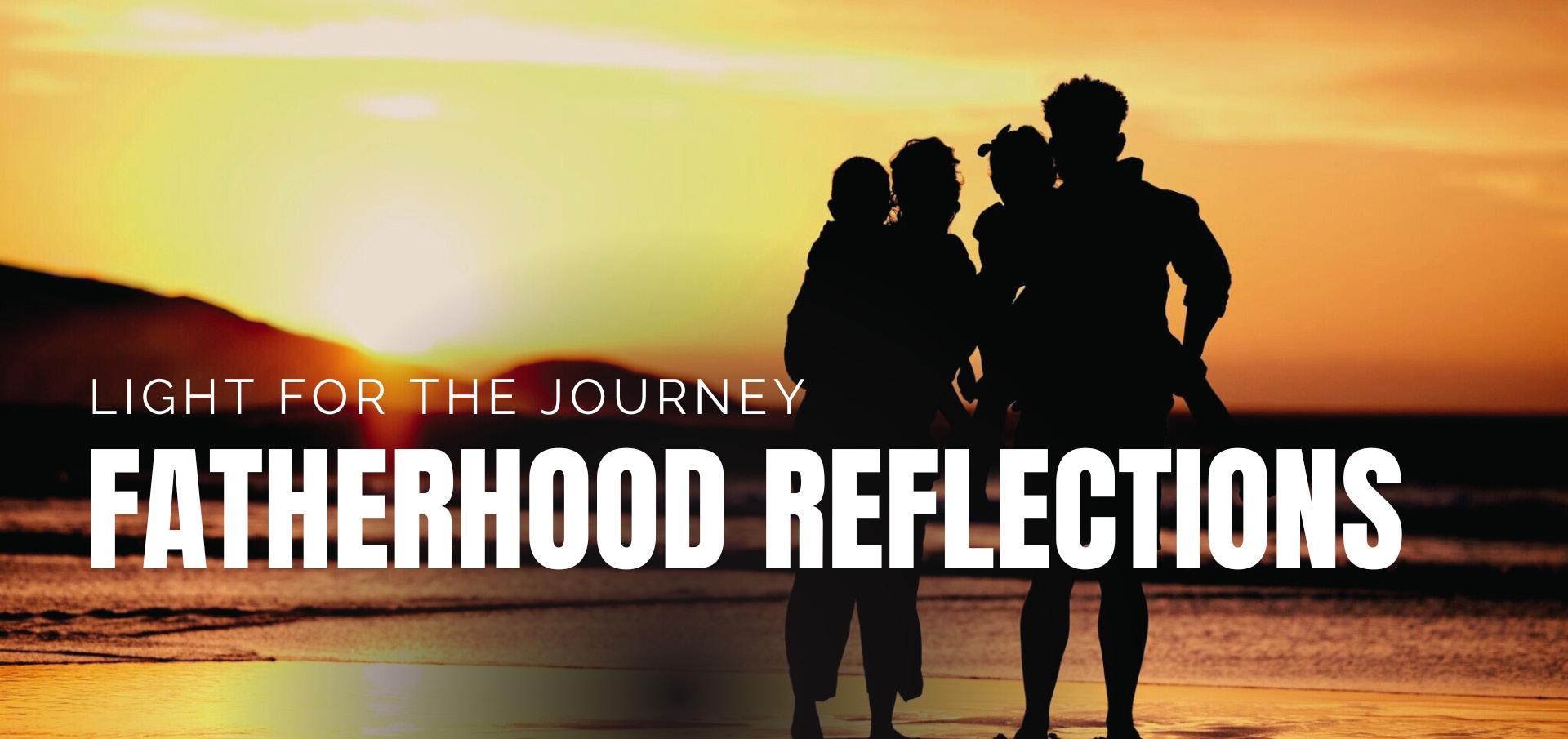
Every summer begins with a promise.
Not the promise written on a calendar or announced on the last day of school, but a quieter promise that fathers know well. It arrives in the form of longer days, later sunsets, and children suddenly finding themselves with something they rarely have enough of during the school year: time.
Time to explore.
Time to play.
Time to wonder.
Time to simply be children.
As fathers, it is easy to feel pressure during the summer months. We see photographs of elaborate vacations, expensive camps, and carefully curated family adventures. We tell ourselves that we need to create a perfect summer for our children, filled with unforgettable experiences and milestone moments.
But the older I get, the more I believe that the summers our children remember most are not necessarily the most expensive or elaborate.
They are the most intentional.
Years from now, our children may not remember every destination. They may not recall the cost of a trip or the details of a particular attraction. What they will remember is how they felt.
They will remember laughing until their stomachs hurt. They will remember ice cream melting faster than they could eat it. They will remember running through sprinklers on hot afternoons. They will remember staying up a little later than usual to catch fireflies or watch fireworks paint the night sky. And if we are fortunate, they will remember that their father was there.
Not checking emails. Not distracted by work. Not physically present but mentally elsewhere. There. Fully there.
Summer has a way of slowing life down just enough for us to notice what matters. A walk around the neighborhood becomes an adventure. A trip to the playground becomes a memory. A visit to a museum becomes a lesson. A Saturday morning bike ride becomes a tradition. Some of the most meaningful memories are created in moments that seem ordinary while they are happening.
I think about family cookouts where children run freely between cousins, grandparents, aunts, and uncles. I think about trips to local parks, soccer games, swimming pools, and community festivals. I think about fathers teaching children how to ride a bike, cast a fishing line, grill a hamburger, or throw a football.

None of these moments make headlines. Yet these are the moments that build childhood. These are the moments that become stories. And stories become legacy.
As fathers, we often focus on preparing our children for the future. We think about education, discipline, achievement, and opportunity. All of those things matter.
But summer reminds us that preparation is not the only assignment. Connection matters too. Our children need memories as much as they need instruction. They need laughter as much as they need guidance. They need experiences that tell them, “You mattered enough for me to spend this time with you.”
One day, the backpacks will return. The school buses will roll again. Schedules will fill. The season will change. And another summer will quietly become part of family history.
The question is not whether the summer will pass. It will. The question is what we will do with the days we are given.
Perhaps this summer is the one where you start a tradition. Perhaps it is the one where you take the trip. Perhaps it is the one where you finally visit the museum, the park, the beach, or the family member you’ve been meaning to see. Or perhaps it is simply the summer where you decide to be fully present.
Because years from now, when our children tell stories about growing up, they will not be measuring our success by what we bought
them. They will measure it by the memories we gave them. And in the end, the greatest gift a father can offer may not be found in a destination at all. It may simply be his presence.
So, make the trip. Take the picture. Tell the story. Stay a little longer. Laugh a little louder. And create the kind of summer memories your children will carry long after the season ends.
Because childhood moves quickly. But the memories we build together can last forever.
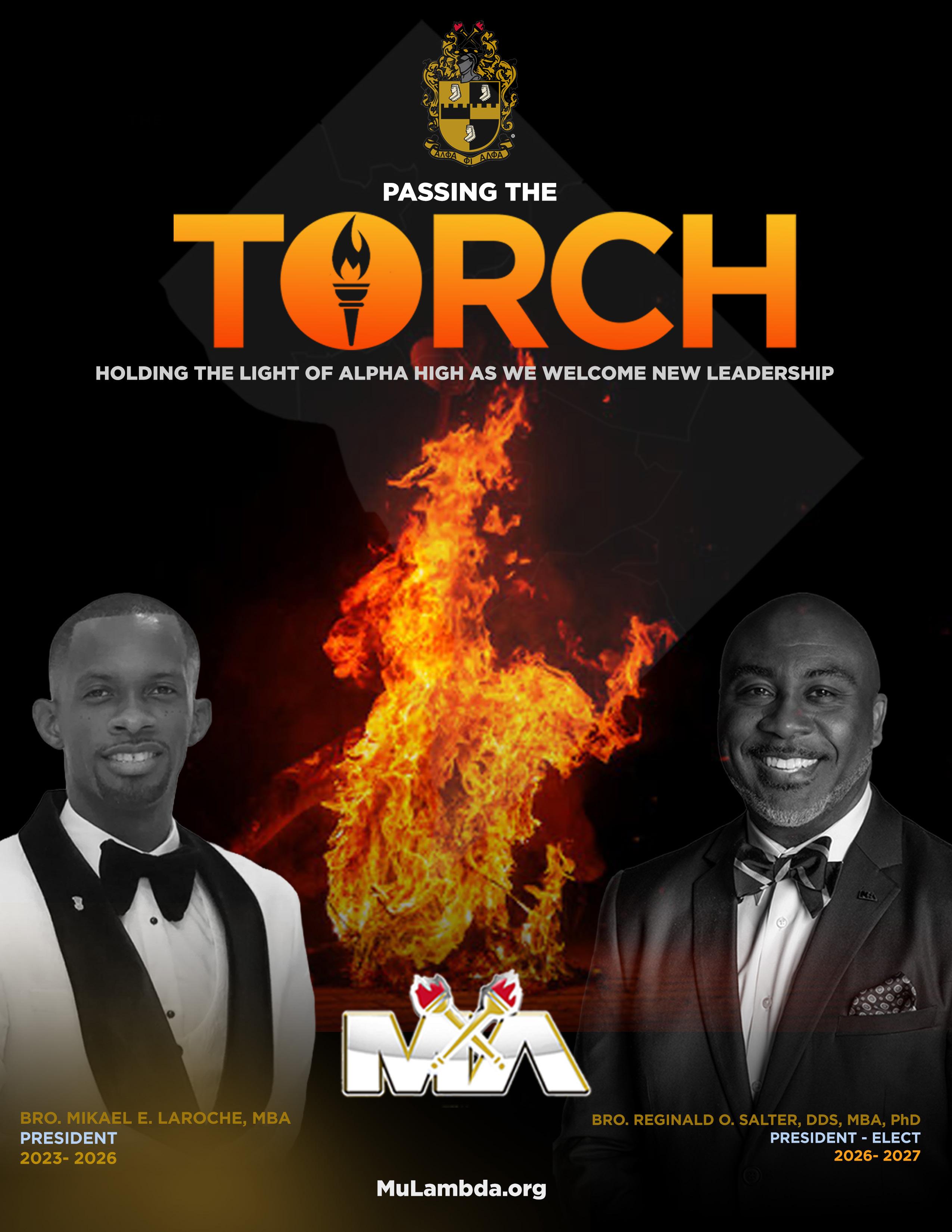
Brothers, Friends, and Supporters of Mu Lambda,
As I sit to write my final message as the outgoing President of Alpha Phi Alpha Fraternity, Inc., Mu Lambda Chapter, I find myself reflecting on a journey that has been both humbling and transformative. What began 13 years ago as a young man seeking brotherhood, purpose, and service has culminated in one of the greatest honors of my life: serving as President of the chapter that has shaped so much of who I am.
Leadership is often measured by accomplishments, but I have learned that its true value lies in the relationships built, the lives touched, and the legacy left behind. Over the past three years, I have had the privilege of standing on the shoulders of giants while helping to guide one of the most historic chapters in our Fraternity into its next century of service.
One of the most memorable moments of my presidency was undoubtedly our Centennial Celebration. To witness brothers from across the nation, return to Washington, D.C., to celebrate 100 years of Mu Lambda was nothing short of extraordinary. The Centennial Gala at the Mayflower Hotel was a defining moment in our chapter’s history. As Past Presidents Leroy Lowery III, John “Tony” Wilson, Vincent Orange, Tim Fitzgerald, and others formally passed the torch of leadership, I felt the weight of a century resting in my hands. It was a moving reminder that leadership is never owned, it is borrowed for a season and entrusted to us to steward faithfully.
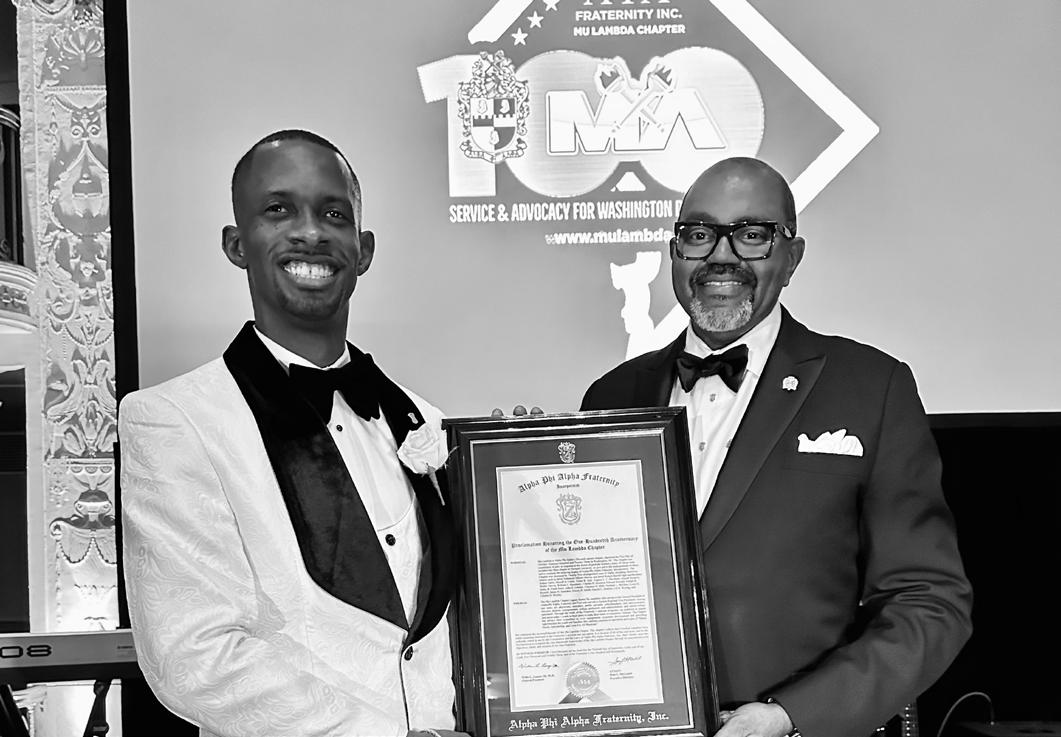
During our Centennial year, we reaffirmed that Mu Lambda’s history would not merely be celebrated; it would be activated.
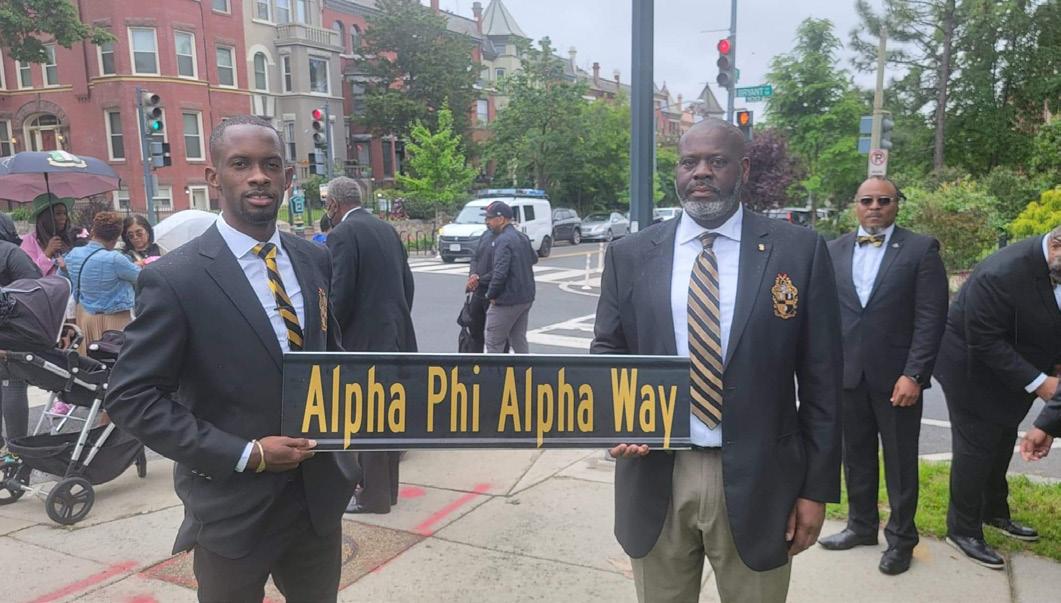
Together, we returned life to the Mu Lambda Foundation House at 2405 Alpha Phi Alpha Way, NW, restoring it as a center of fellowship, planning, and brotherhood. We transformed our house from a symbol of our past into a platform for our future.
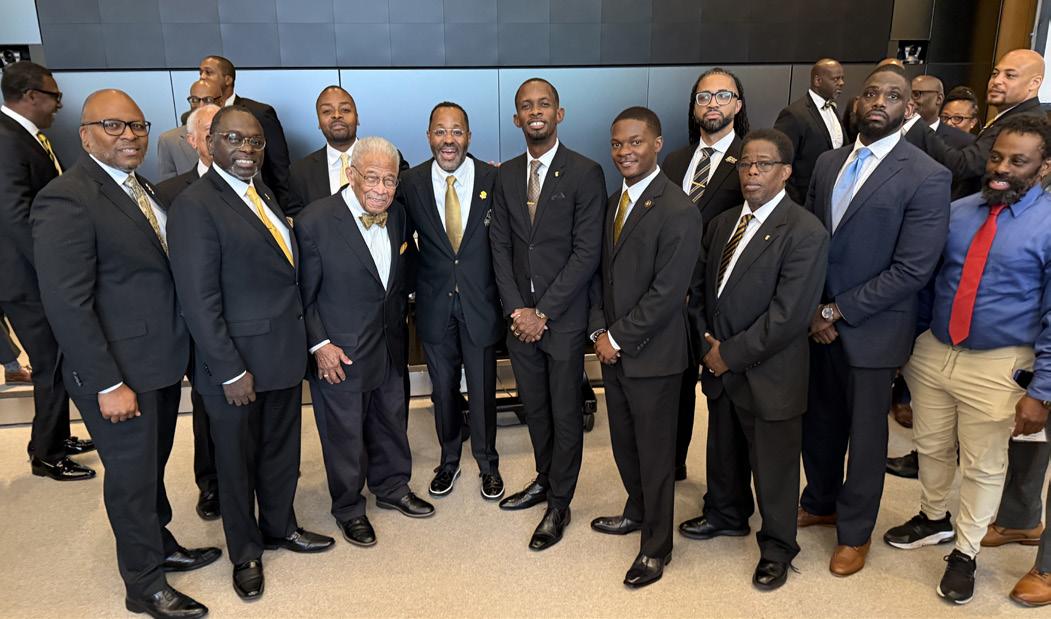
We launched the CBC “F1RST Breakfast” initiative, bringing together leaders in medicine, education, and public policy alongside organizations such as the Association of American Medical Colleges (AAMC). These conversations addressed health disparities affecting communities of color while highlighting Alpha Phi Alpha’s role in creating pathways for future physicians, researchers, and healthcare leaders. Watching rooms filled with students, professionals, and policymakers engage in meaningful dialogue reminded me that Alpha’s influence extends far beyond our membership. It extends into every corner of society where leadership is needed.
As a chapter, we celebrated remarkable achievements and welcomed the best of Alpha into our spaces. Notably, we earned MAAC Chapter of the Year honors, saw me recognized as Brother of the Year, and continued our award-winning streak of mentoring efforts through the Jewel Henry Arthur Callis Award through our enduring partnership with Beta Chapter at Howard University. Together, we demonstrated that mentorship is not simply a program, it is our collective responsibility.
Yet, some of my fondest memories are found not in awards or recognition, but in the moments of fellowship.
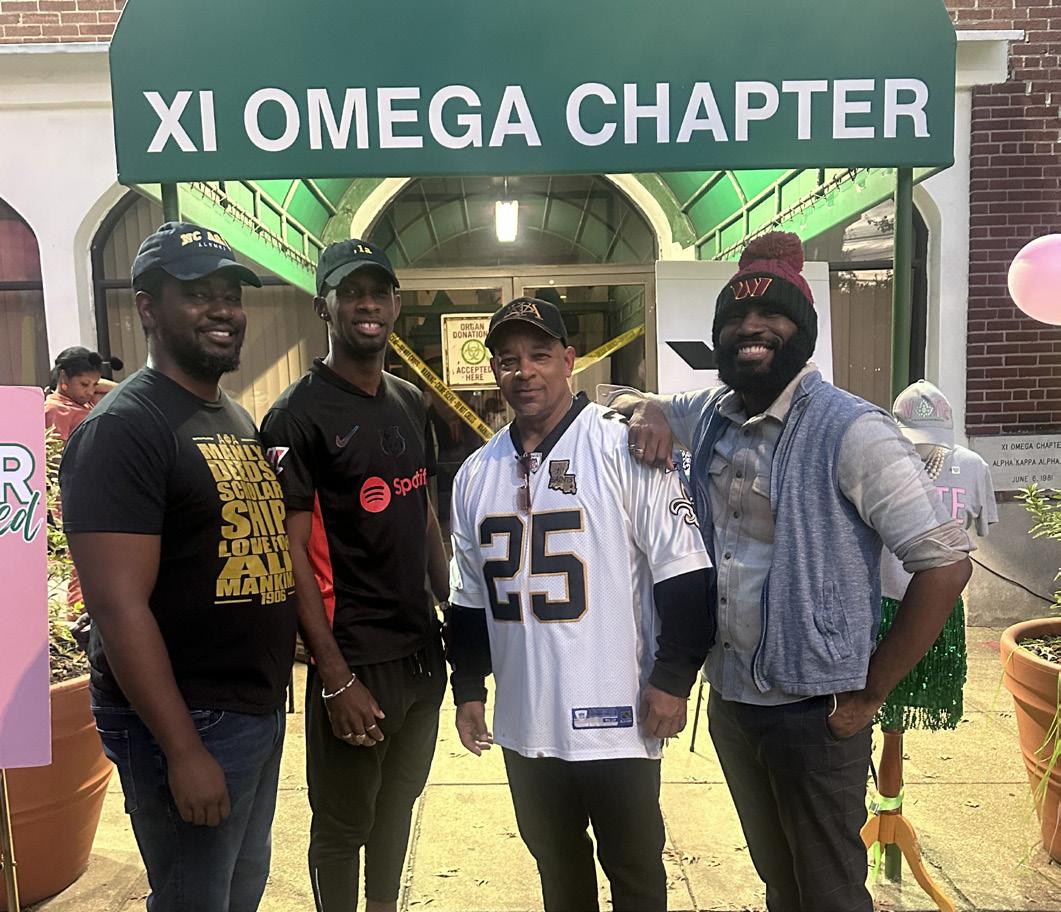
The sunset cookouts. The backyard gatherings. The rooftop socials. The Super Bowl celebrations. The partnerships with Xi Omega and other Divine Nine organizations. The collaborative events with Alpha chapters throughout the DMV and beyond. The revival of our Annual Christmas Party and the joy of collecting gifts for children supported by House of Ruth. These moments reminded us that brotherhood is strengthened not only through service and business, but through laughter, shared experiences, and genuine connection.
I am especially proud of the investments we made in our young people. Through scholarship initiatives, mentoring programs, and our support of the Alpha Young Leaders Institute, we built educational pipelines that will continue to impact generations long after my presidency
concludes. The future of Alpha depends upon our willingness to cultivate future leaders today, and I am grateful that Mu Lambda remains committed to that mission.
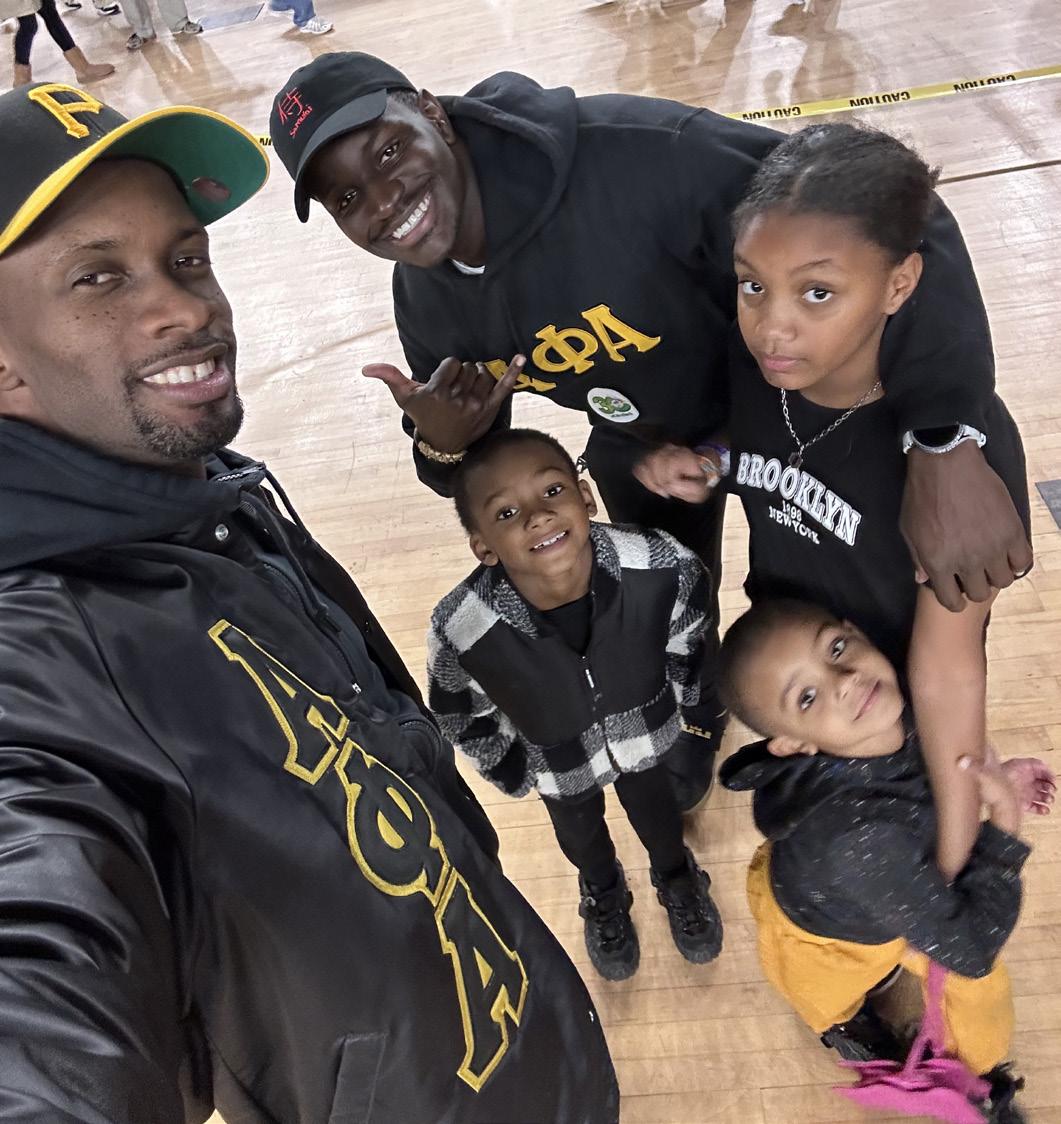
Personally, this presidency challenged me in ways I never imagined. It demanded patience, resilience, vision, and sacrifice. It required me to grow beyond my comfort zones and rise to occasions I often felt unprepared for. Yet through every challenge, I learned a valuable lesson that I hope will remain with this chapter: nothing is impossible.
While serving as your President, I also completed my Executive MBA, graduating with a 4.0 GPA. I do not mention this as a personal accomplishment alone, but as a testament to the culture of excellence we should all strive to embody.
Leadership requires us to continue growing while we serve. If I have left any mark on Mu Lambda, I hope it is the belief that we can pursue ambitious goals, overcome obstacles, and achieve greatness together.
To every brother who supported me, challenged me, advised me, encouraged me, and trusted me to lead, thank you. Your confidence made this journey possible.
To the Executive Boards who served alongside me over these three years, your tireless efforts often went unseen, but they never went unnoticed. I know firsthand the sacrifices required to keep a chapter moving forward. I love each of you and remain deeply grateful for your commitment, friendship, and service.
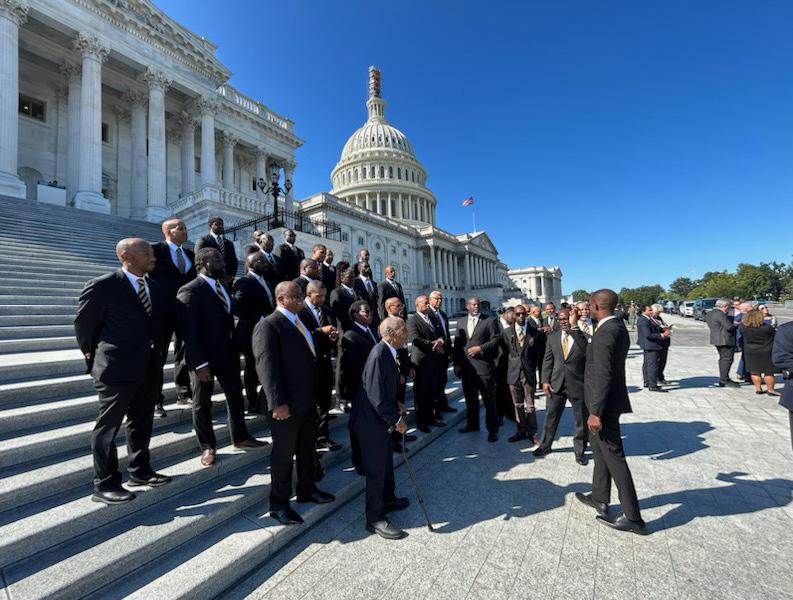
To the Past Presidents who handed me the Mu Lambda flame, thank you for your mentorship and trust. The torch you entrusted to me never went out. I carried it with pride, protected it through challenges, and passed it forward stronger than I received it.
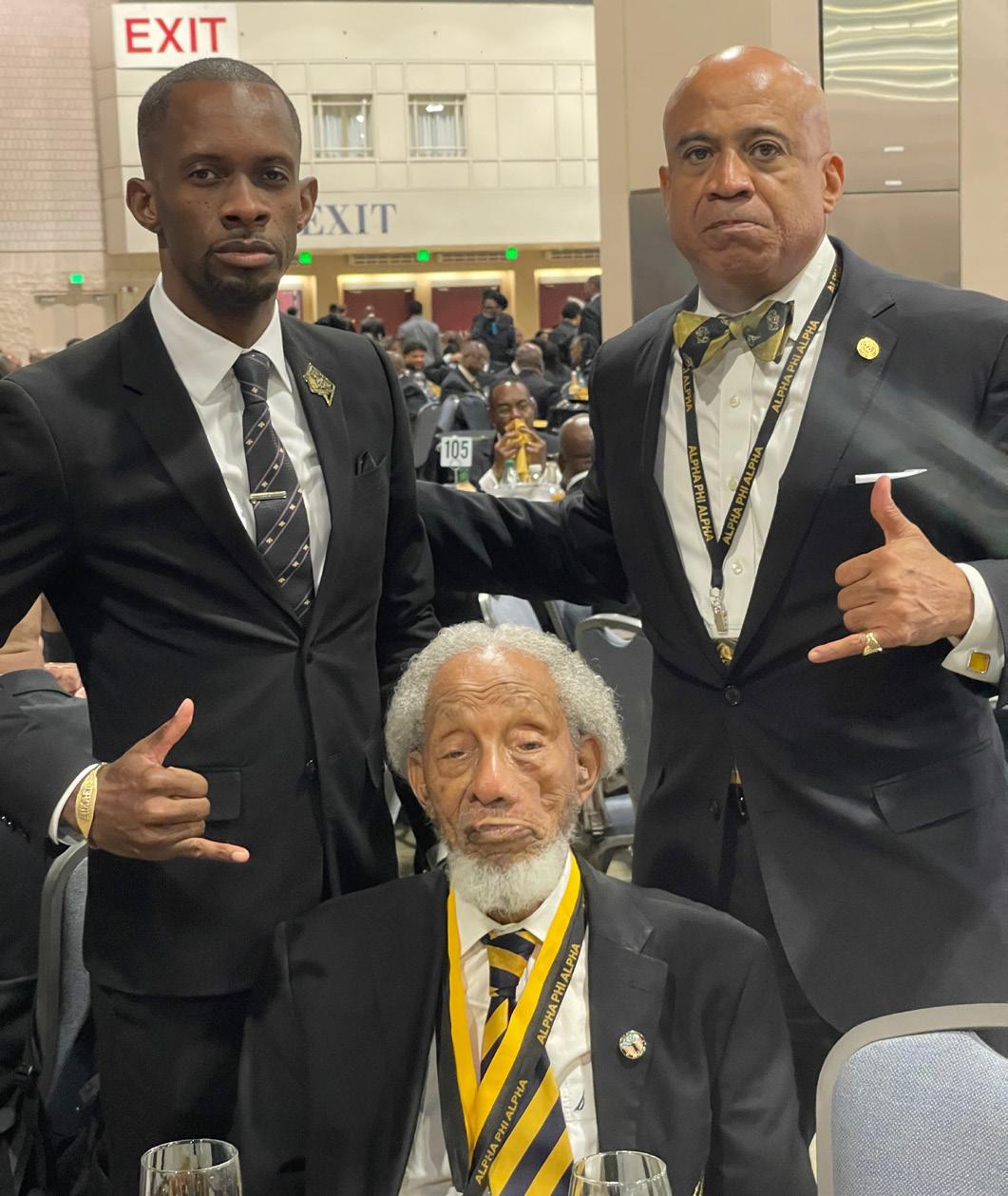
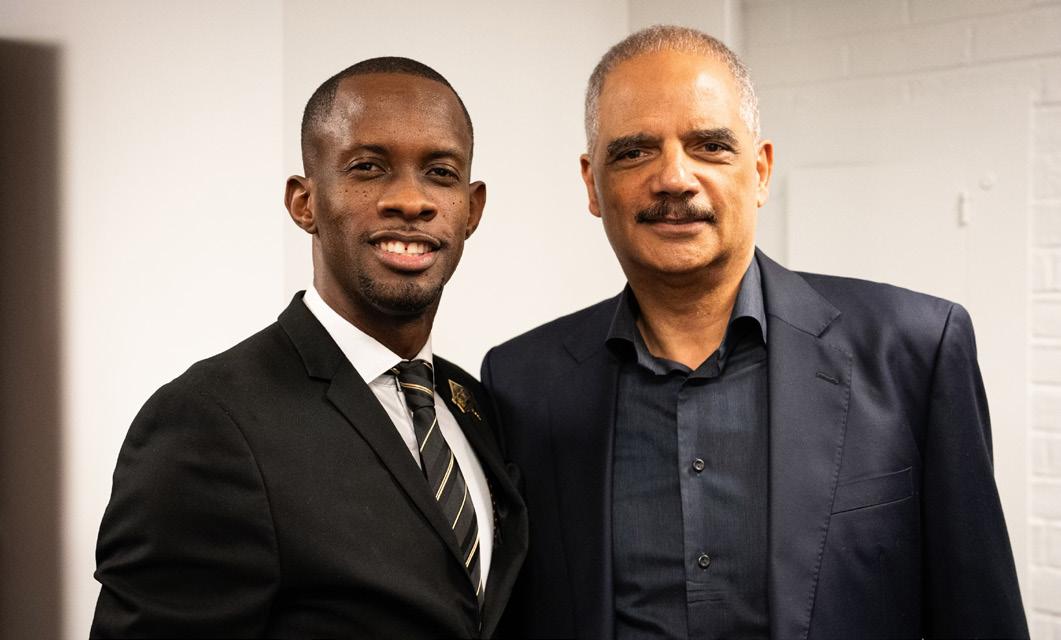
And to our President-Elect, Brother Dr. Reginald Salter, I offer my prayers, support, and confidence. You now inherit an undying flame that has illuminated Washington, D.C., for more than a century. May it burn even brighter under your leadership. Lead boldly. Lead humbly. Lead with love.
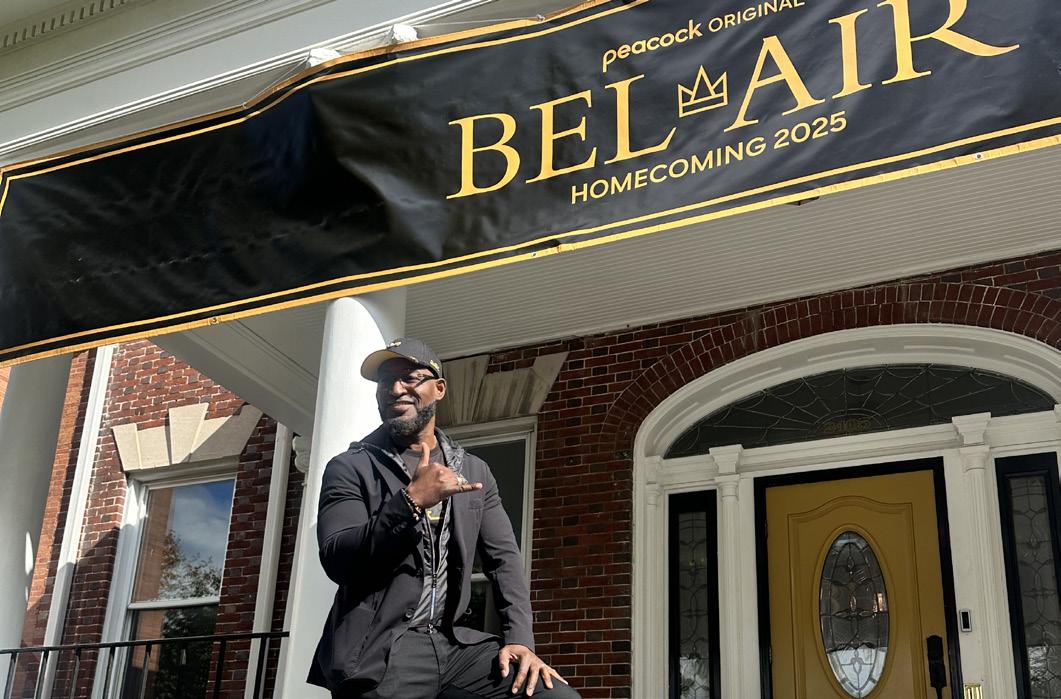
As I conclude this chapter of my Alpha journey, I do so with immense gratitude. The office of President may change hands, but my commitment to Mu Lambda never will. I remain a servant of this chapter, a steward of its legacy, and a believer in its limitless future.
The torch has been passed.
May its light continue to guide Mu Lambda onward and upward for generations to come.
Fraternally, Mikael E. LaRoche 55th President Alpha Phi Alpha Fraternity, Inc. Mu Lambda Chapter 2023–2026
“To my predecessors who handed me the Mu Lambda flame, it lived on. To my successor, may it burn even brighter under your guidance.”
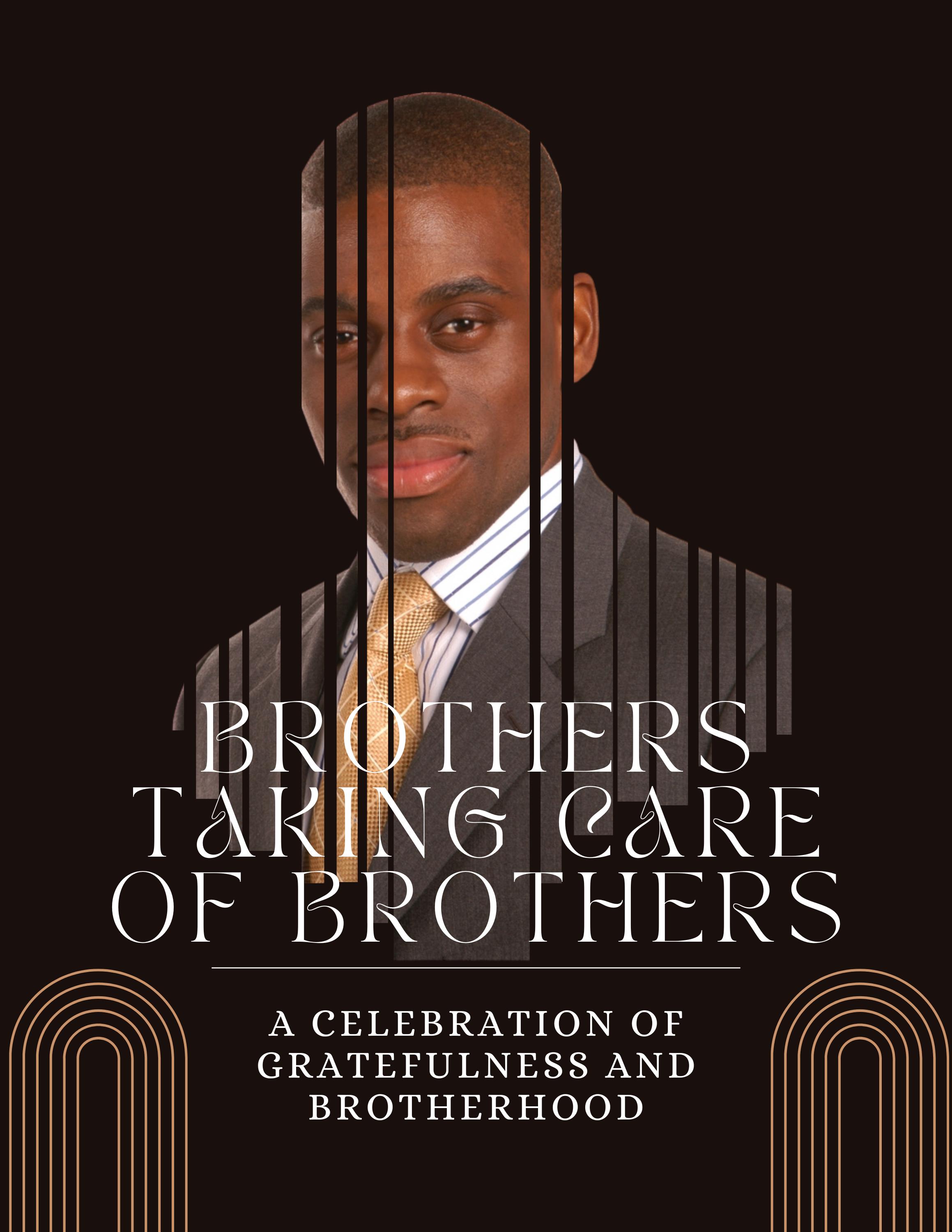
Brotherhood is an irreplaceable community where people with similar characteristics and unique backgrounds come together for a common purpose. Gratefulness is the expression of appreciation for how one person provides for and cares for another. It can be shown in many ways, including through money, material gifts, acts of service, communication, handshakes, and hugs.
The importance of caring for one another greatly shapes the experience within an organization. Whether the experiences are positive or negative, caring for others reminds individuals that they are seen, valued, and supported by someone. Through Alpha Phi Alpha Fraternity, Inc.’s Brother Keeper initiative and my involvement with the Mu Lambda Chapter Brother Keeper program, intentional acts of care demonstrate that the organization values and supports its members as they navigate life’s challenges and experiences.
My experience with the Alpha Phi Alpha Fraternity, Inc. brotherhood has been unexpectedly spectacular, especially after returning to the organization following 23 years of being non-financial. My undergraduate experience was vastly different from my experience as an adult; however, the traditions of the fraternity remained intact while also evolving to reflect current times. My line brothers from the Beta Delta Chapter at South Carolina State University were still present and celebrated our 30th Alphaversary with those fortunate enough to attend. We also communicated with brothers who could not be physically present and shared life updates beyond what is shown on social media.
In my current chapter, the Mu Lambda Chapter has welcomed and supported me by helping me become more involved in chapter activities, passing down or purchasing items for Alpha attire, and meaningful discussions about leadership opportunities and deeper involvement within the chapter.
After growing up alongside my biological brothers and experiencing daily life with them, I was able to learn and grow through many shared moments within our community.
As the oldest of my biological brothers, I had the unique opportunity to witness their development firsthand as they began making their own decisions and navigating various life situations.
My experience with my chosen brothers in the Alpha Phi Alpha Fraternity, Inc. reflects a much larger and more diverse community. In this stage of life, the time spent with them as an adult carries a different level of meaning and depth. Unlike childhood, where growth happened within the same household, my fraternity brothers and I are often experiencing similar or different life situations simultaneously. This has created space for more intentional and mature conversations, where we openly address challenges, decisions, and responsibilities while supporting one another through each stage of life.
With my biological brothers, the trust we built over years of growing up together remains intact. However, maintaining togetherness has become more challenging due to the different places we have chosen to live. Distance and life responsibilities have created natural separation, even though the bond itself has not weakened.
With my chosen brothers in the Alpha Phi Alpha Fraternity, Inc., the dynamic is somewhat different. Trust is still being developed and strengthened over time, but togetherness is more consistent because many of us are located within the same geographical area. This proximity allows for more frequent interaction, shared experiences, and ongoing engagement, which helps build deeper connections as we continue to grow together as brothers.
After experiencing a largely positive upbringing, I did not begin to encounter or recognize more overt negativity until my college years. During that time, my perspective shifted, and I became more intentional about leaning on the support of the Divine Nine community during various life situations over the past 23 years.
In my current experience with the Mu Lambda Chapter of Alpha Phi Alpha Fraternity, Inc., I have been able to benefit from a strong network of resources and professionals within
the chapter. This has allowed me to intentionally engage with individuals who are committed to keeping support rooted in the community.
It has been especially meaningful to see Health and Wellness—particularly Mental Health and other relevant and emerging topics— openly discussed among Black men. These conversations are helping to break longstanding barriers around vulnerability and selfcare. After firsthand experiences with racism outside of the Washington, D.C. area, returning to the Mu Lambda Chapter environment has provided a sense of grounding and familiarity, making it feel like home.
Becoming more familiar with the broader world and interacting with people from different ethnic and cultural backgrounds has allowed me to engage in meaningful conversations with brothers across a wide range of perspectives and experiences. I have learned that individuals often approach the same topic with very different thoughts, shaped by their own lived realities.
As I progressed professionally and earned my Doctor of Management degree, I also grew through life experience and became more intentional about my role in conversations. One important lesson was stepping away from the habit of offering unsolicited or unnecessary advice outside of my area of expertise or professional scope. It was not an easy adjustment, but it was necessary for personal growth and humility. I had to mature beyond the mindset of trying to be “Mr. Know-It-All” or “Mr. Smarty Pants.”
Within the Alpha Phi Alpha Fraternity, Inc. brotherhood, particularly in my current engagement with the Mu Lambda Chapter, I have come to appreciate how every brother contributes to the growth of one another. Each member plays a role in strengthening the chapter, advancing its mission, and preserving the legacy of the organization across the past, present, and future.
Through the Brother’s Keeper program and initiative within Alpha Phi Alpha Fraternity, Inc., younger brothers are encouraged to reach out
to more senior brothers to check on their wellbeing and see whether they need assistance or support in any area of life. This practice reinforces the values of brotherhood, service, and accountability that the organization was founded upon.
At the conclusion of many chapter meetings within the Mu Lambda Chapter, there is also a segment called “For the Good of the Brotherhood.” During this time, brothers openly share life updates, discuss new projects, express frustrations, or request financial and emotional support when needed. These moments create a safe and supportive environment where brothers can be transparent and uplift one another without judgment.
As an active participant in both the Brother’s Keeper initiative and “For the Good of the Brotherhood,” I am genuinely proud and grateful for the positive impact these efforts have had on both individual members and the chapter as a whole. These experiences have strengthened my appreciation for intentional brotherhood and demonstrated the importance of creating spaces where Black men can openly support, encourage, and care for one another.
The importance of gratefulness within brotherhood operates in a way similar to the often unspoken benefits of marriage. Brotherhood becomes an extended family—one that remembers you, corrects you, encourages you, and supports you through different stages of life. It provides a foundation of accountability and connection that cannot easily be replaced.
Without this brotherhood, I would likely place a much heavier emotional and financial burden on my biological family, extended family, friends, strangers, and anyone willing to listen or help. In many ways, I recognize that I could have become frustrated, overwhelmed, and unfairly demanding toward those around me. Instead, the gratefulness that has been instilled in me— and the gratitude I continue to express—has helped keep me grounded in integrity, character, and discipline, allowing me to remain true to myself and not lose sight of who I am.
One of the most meaningful aspects of the
brotherhood within Alpha Phi Alpha Fraternity, Inc. is the shared cultural understanding among many of the brothers. Many of them look like me, sound like me, and relate to similar ethnic and social concerns that I have experienced throughout life. There is comfort and strength in being surrounded by individuals who understand those realities while also standing together for what is right.
At the same time, the brotherhood extends beyond race. The non-Black brothers within the fraternity often relate through shared values, common goals, and mutual respect regardless of color. Together, we uphold the fraternity’s guiding principle and shared mantra: “Goodwill is the monarch of this house.”
Learning from The Secret by Rhonda Byrne introduced me to the concept of the “law of attraction” and the importance of making positive affirmation deposits into the lives of others. The book reinforced the idea that thoughts, attitudes, and energy can influence both personal growth and relationships.
After experiencing significant losses and having many bonds of trust broken over time, I have come to recognize that I am still a work in progress. I continue to build resilience, practice gratitude, and learn how to regain respect and trust while also becoming wiser about whom I choose to trust. These experiences have challenged me emotionally and mentally, but they have also contributed to my growth and self-awareness.
The Southern hospitality values that were instilled in me by my parents, teachers, and childhood community taught me to give respect in order to receive respect. While those lessons still hold meaning and value, I have learned that the world in this decade often operates differently. Respect, trust, and genuine connection now require greater discernment, boundaries, and intentionality than they once did. Even so, the principles of gratitude, kindness, and integrity continue to shape how I engage with others and navigate brotherhood and community.
The brotherhood provides many benefits
because it helps create stronger communities within larger communities. Through Alpha Phi Alpha Fraternity, Inc., the impact of brotherhood extends beyond individual relationships and reaches into service, advocacy, and community engagement. The fraternity operates like a strong network connected to meaningful initiatives and programs such as March of Dimes’ March for Babies campaign, Adopt-A-Highway efforts, and the fraternity’s well-known “A Voteless People Is a Hopeless People” initiative. These programs strengthen communities while also building camaraderie, shared purpose, and collective experiences among the brothers involved.
One important lesson I have learned is that not every benefit or meaningful moment within the brotherhood needs to be publicly displayed or shared on social media. Some experiences carry greater value when they remain personal and are discussed privately among brothers who understand the significance behind them. In many ways, the strength of the brotherhood is not measured by public recognition, but by the quiet and consistent support, trust, and impact shared within the community itself.
Another important benefit of the brotherhood is its ability to reduce loneliness and division. Although brothers may disagree on facts, opinions, or differing perspectives of truth, the bond of brotherhood allows us to continue functioning as a unified body. Disagreements may occur, but the foundation of respect, shared purpose, and commitment to one another helps maintain unity.
Simple acts of kindness from the brothers—such as visiting my home, giving me a ride, or paying for a meal—create a genuine sense of love and appreciation that reflects the care often associated with a true family. These actions may appear small on the surface, but they carry deep meaning because they demonstrate thoughtfulness, presence, and support during everyday life experiences.
Shared experiences within Alpha Phi Alpha Fraternity, Inc., such as Alphaversaries, Homecoming celebrations, road trips, or lunches after community service events, further
strengthen the bonds among the brothers. In many of these situations, shared financial responsibility and collaboration help reduce the burden on any one brother or the chapter itself. More importantly, these moments build trust, teamwork, and collective responsibility while creating lasting memories rooted in fellowship and brotherhood.
Challenges within brotherhood can include pride, lack of communication, overcommunication, jealousy, conflict, and misunderstandings. Like any organization or close-knit community, brotherhood is made up of individuals with different personalities, perspectives, and leadership styles, which can sometimes create tension or disagreement.
Within Alpha Phi Alpha Fraternity, Inc., certain stereotypes do exist, including perceptions of arrogance or overconfidence among some members. In addition, challenges may arise when attempting to connect National initiatives with Chapter-level implementation. At times, decisions or priorities introduced during General or Constitutional Conventions may create pressure for immediate rollout, while other situations may unintentionally delay or complicate progress within local chapters. These organizational dynamics can create frustration and differing opinions among brothers who all desire success, but may have different approaches on how to achieve it.
Jealousy and competition may also surface occasionally, particularly among highly accomplished and driven individuals. However, many of those tensions often fade through fellowship, honest conversation, shared experiences, and time spent together as brothers. Moments of unity—whether during meetings, social gatherings, or simple conversations over food and libations—often help restore perspective and strengthen relationships.
Ultimately, overcoming these challenges requires forgiveness, gratitude, humility, and self-awareness. When issues are recognized early and addressed with sincerity, the brotherhood becomes stronger rather than divided. A willingness to listen, communicate
openly, and extend grace to one another helps preserve the integrity and purpose of the brotherhood while reinforcing the values of unity and mutual respect.
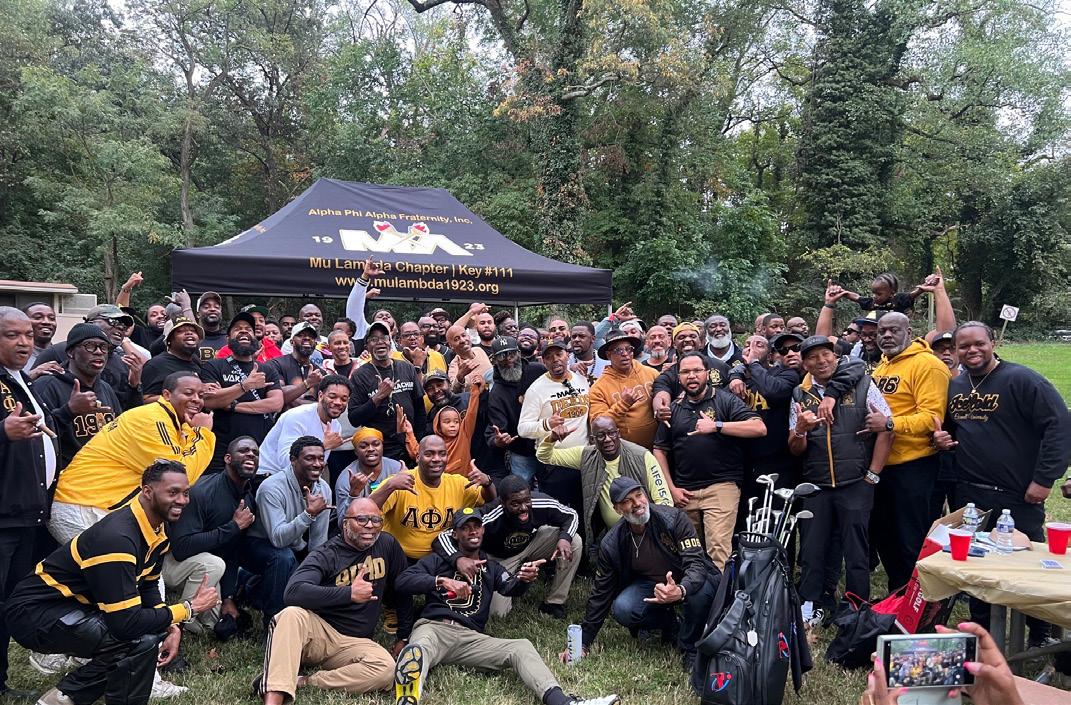
The importance of brothers caring for brothers is vital to the foundation and continued success of Alpha Phi Alpha Fraternity, Inc.. This principle reflects the fraternity’s well-known motto: “First of All, Servants of All, We Shall Transcend All.” The concept of being “Servants of All” represents a major part of why Alpha exists, emphasizing both internal service to the brotherhood and external service to the community.
One of the most meaningful aspects of the brotherhood is that the care and concern for one another often remain present regardless of financial status or level of activity within the organization. Life situations can create distance, hardship, or periods of disconnection, but the bond of brotherhood continues to exist. No matter how difficult the struggles became in my own life, I eventually returned to what felt like home base—a community that cared about me from the very beginning when I was first selected to become a brother.
As fraternity events, programs, and activities continue throughout the year, the brotherhood consistently finds ways to reach out, reconnect, and include others within the intended audience. Whether through direct communication, community service, mentorship, fellowship, or support initiatives, the organization continues to demonstrate that brotherhood is more than membership—it is an ongoing commitment to uplifting and caring for
one another through every stage of life.
The role of gratitude in maintaining strong bonds is often developed during childhood and should continue throughout life. The values of appreciation, respect, humility, and acknowledgment are usually first learned through family, community, teachers, and early life experiences. As individuals grow older, those same values continue to shape how relationships and brotherhoods are maintained.
People are often placed in specific roles throughout life, and with those roles comes the responsibility of understanding that gratitude may or may not always be expressed for certain actions or sacrifices. At times, humility is necessary to accept that acts of service, leadership, or support may go unnoticed or unrecognized. However, genuine brotherhood is not always built on recognition alone, but on consistency, sincerity, and commitment to others.
When gratitude is openly expressed, it strengthens the bond between individuals and within the group as a whole. Simple acknowledgment, appreciation, or encouragement can deepen trust, reinforce loyalty, and create stronger emotional connections among brothers. Within Alpha Phi Alpha Fraternity, Inc., those moments of gratitude often strengthen relationships in ways that are difficult to fully explain, creating a lasting sense of unity, belonging, and mutual respect.
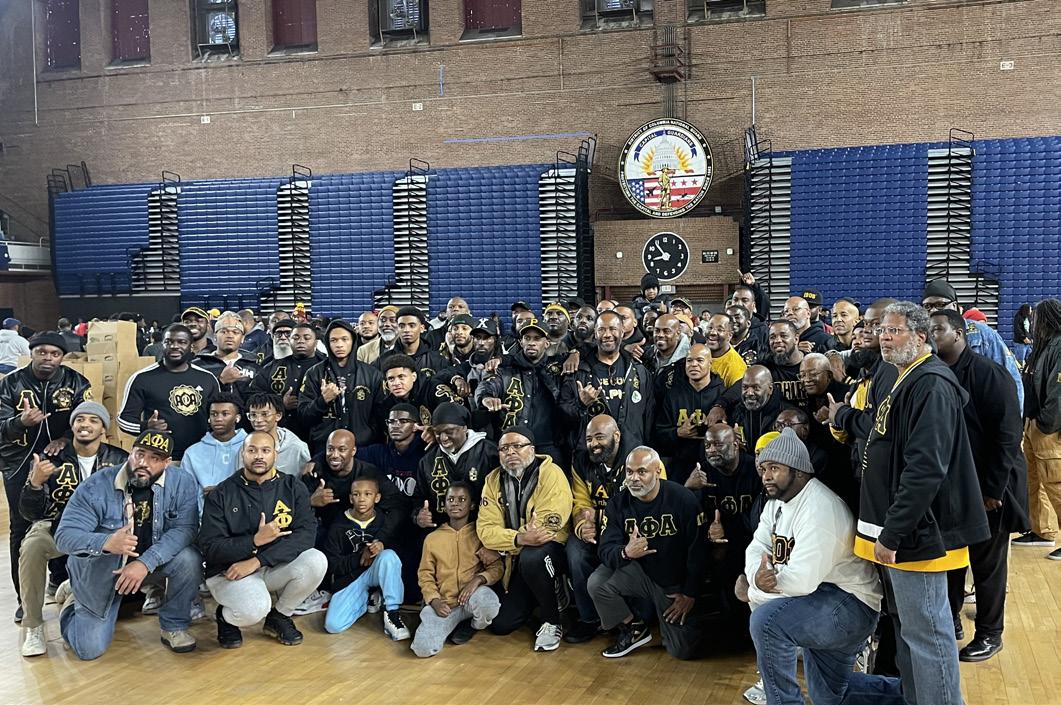
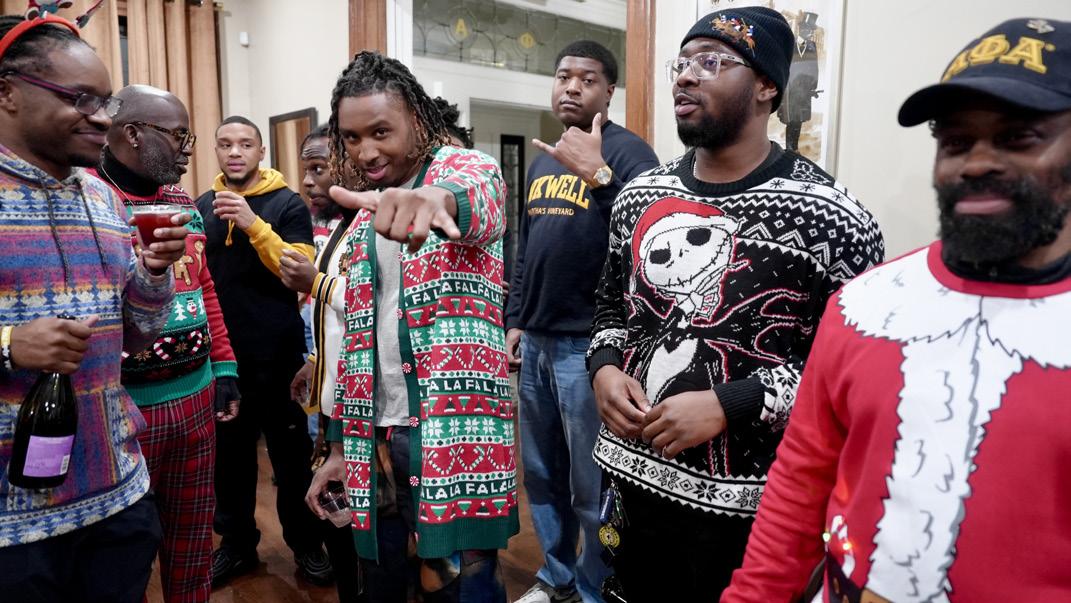
My first call to action for any brother who reads this is simple: say, “Thank you,” regardless of whether the situation is good, bad, or indifferent. Gratitude has the power to strengthen relationships, encourage others, and remind people that their efforts, presence, and support are appreciated. A simple expression of thanks can create a lasting impact and reinforce the values of respect, humility, and brotherhood.
My second call to action is for every brother to reconnect with the line brother who may have chosen to distance himself or stay away from the brotherhood. Take the time to understand the reasons why, reflect on shared memories, and genuinely check on where he is in life today. That conversation may reveal that support, encouragement, or assistance is needed. Within Alpha Phi Alpha Fraternity, Inc., true brotherhood is not only about celebrating achievements together, but also about reaching back, reconnecting, and uplifting one another during difficult moments in life.
~ Bro. Manley Marvell Collins
Alpha Phi Alpha Fraternity, Inc.
Mu Lambda Chapter 1-Beta Delta-96
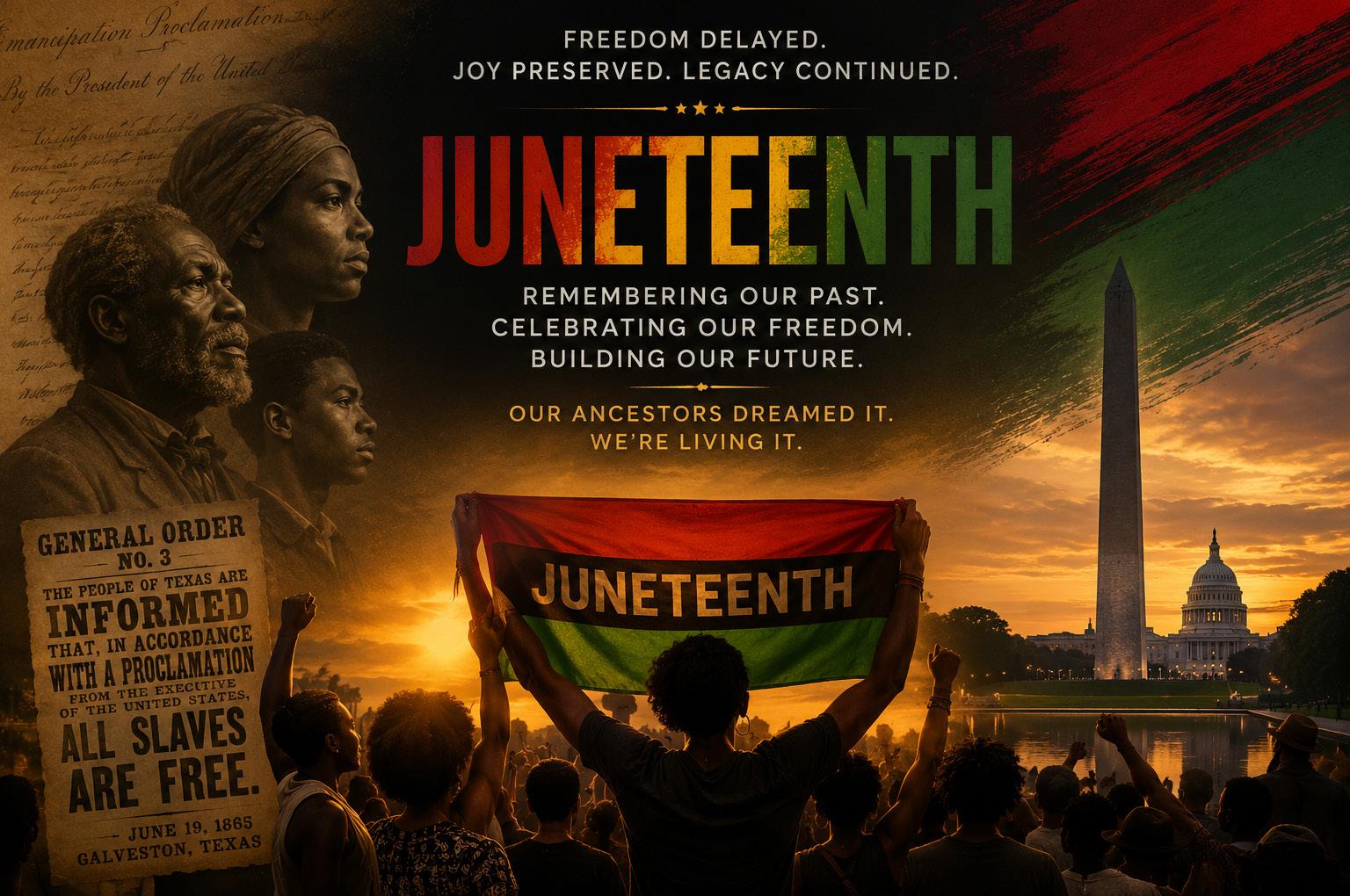
I’ve learned something about history in America. History has a way of becoming acceptable only after enough time has passed. After the sharp edges have softened. After the discomfort settles. After people no longer have to sit with what really happened. We celebrate victories easier than we examine wounds.
That’s part of why Juneteenth matters. Because Juneteenth forces us to hold two truths at the same time: great joy and deep grief. Freedom and delay. Progress and unfinished work. And if you’re willing to be honest, those contradictions have always been part of the Black experience in America.
For some people, Juneteenth appeared suddenly, as if it were a new holiday born in 2021 when it became federally recognized. But for Black families, particularly in the South, Juneteenth has long existed in backyards, churches, family reunions, cookouts, storytelling, and remembrance. Long before federal recognition. Long before social media. Long before companies sold themed products
and public officials released statements. Our people remembered because remembering was survival.
On June 19, 1865, Union Major General Gordon Granger arrived in Galveston, Texas, and announced that enslaved African Americans were free under the Emancipation Proclamation, an order issued by President Abraham Lincoln more than two years earlier. Two years. Pause there. Two years of continued labor. Two years of families remaining separated. Two years of stolen wages. Two years of stolen time. Two years of oppression continuing while freedom already existed on paper.
Juneteenth teaches one of America’s most uncomfortable lessons: Laws can change before lives do.
Freedom declared and freedom experienced are not always the same thing. And if we are honest, Black Americans have seen versions of that truth repeated across generations. Voting rights declared, then challenged. Equal access promised, then obstructed. Opportunities opened, then unevenly distributed. Progress has often arrived with conditions. Yet somehow, our people kept moving.
Juneteenth becoming a federal holiday felt meaningful for many. For some, it represented overdue acknowledgment. Recognition that Black history is American history. For others, there was hesitation. Because recognition can sometimes arrive after resistance.
And even now, conversations around race, equity, inclusion, and historical truth continue to shift depending on political leadership, policy priorities, and public mood. In recent years, America has wrestled openly with what parts of history should be taught, emphasized, minimized, or avoided altogether. Discussions surrounding diversity initiatives, systemic inequity, and even the language used to discuss race have become increasingly politicized.
Many Black Americans feel this tension. There is a quiet question lingering beneath some celebrations: Are we being invited to remember, or being encouraged to forget?
Because memory is powerful. Memory explains why neighborhoods look different. Why wealth gaps exist. Why educational disparities persist. Why some communities carry heavier burdens. Memory tells truth. And truth has always unsettled people comfortable with selective history.
This is the part I keep coming back to. Because Juneteenth was never born from government approval. Our ancestors celebrated before recognition came. Before institutions affirmed them. Before policies protected them. They gathered anyway. They held Freedom Day celebrations. They organized parades. They prayed under open skies. They dressed in their best clothes, not because life was easy, but because dignity mattered.
Think about that. Imagine surviving enslavement and still choosing joy. Not because pain disappeared. But because survival itself became worthy of celebration. That kind of joy is different. It is not shallow happiness. It is defiant joy. The kind that says:
• You may have taken years from me, but you will not take my ability to hope.
• You may have delayed freedom, but you will not stop me from believing in tomorrow.
• You may challenge my humanity, but I will celebrate it anyway.
Black people have always mastered this. Joy during Reconstruction. Joy during segregation. Joy during economic hardship. Joy while organizing marches. Joy while mourning losses. Joy while building futures. That is not accidental. That is inheritance.
Juneteenth lives in family stories. In grandparents who migrated North searching for opportunity. In mothers who carried entire households. n fathers who worked multiple jobs. In teachers who stayed late. In church mothers.
In veterans. In HBCU graduates. In firstgeneration professionals. In little Black children who deserve to grow up knowing they come from people who survived impossible things.
Juneteenth asks us:
• What freedom are you protecting now?
• What opportunities are you creating for those behind you?
• What legacy are you preserving?
For those of us in Mu Lambda and within Alpha Phi Alpha Fraternity, Inc., Juneteenth carries additional weight. Because Alpha has always existed where scholarship meets service. Where memory becomes action. Where leadership means refusing to forget.
In Washington, DC, a city shaped profoundly by Black intellect, advocacy, faith, policy, and protest, we inherit a responsibility to preserve stories and expand opportunity. To educate. To mentor. To vote. To serve. To make freedom tangible in our communities. Our ancestors fought for access. We are called to build upon it.
So, this year, celebrate. Celebrate even if the country feels divided. Celebrate even if conversations about race feel exhausting. Celebrate even when progress feels slower than it should. Celebrate because joy has always been one of our greatest acts of resistance.
Learn something. Teach something. Support a Black business. Visit a historic site. Read Black authors. Tell your children family stories. Call an elder. Cook too much food. Play Frankie Beverly. Play gospel. Play the songs that sound like home. Dance. Laugh loudly. Wear white if you want. Wear red if you want. Gather.
Because somewhere in our lineage are people who prayed for freedoms they would never personally experience. The least we can do is
live fully in the possibilities they created. And if they could celebrate after bondage, after disappointment, after delay. Then surely, we can celebrate too. Not because everything is fixed. But because we are still here. Still building. Still believing. Still becoming.
May we remember honestly, celebrate boldly, and continue marching onward and upward toward the light.
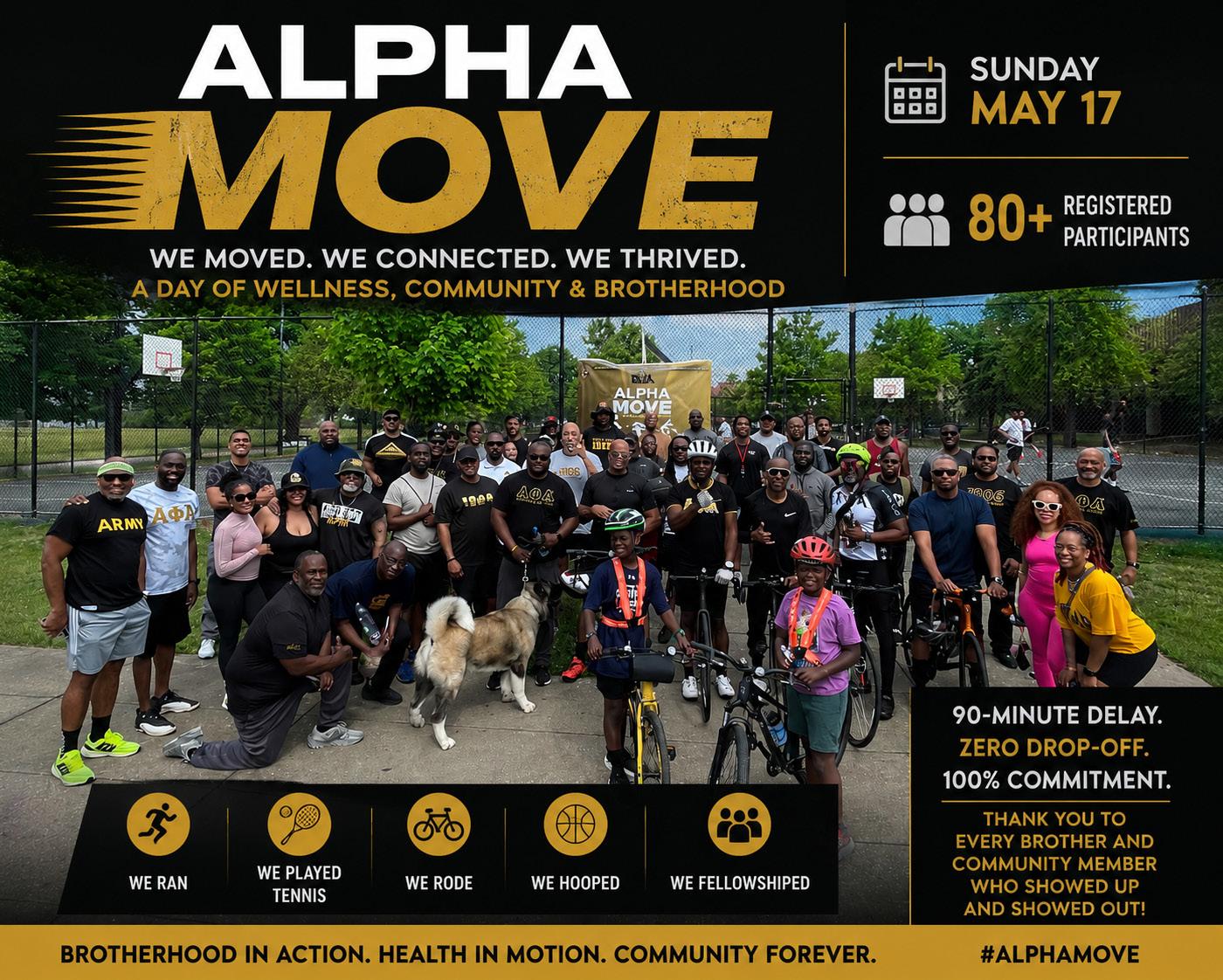
Some events succeed because everything goes according to plan. Others succeed because people decide the purpose is bigger than the inconvenience. Alpha Move, held Sunday, May 17, was the second kind. What was intended to be an early morning gathering centered on movement, wellness, and fellowship met an unexpected obstacle before many participants even arrived. Road closures throughout the area forced organizers to delay the event’s start by 90 minutes, shifting the beginning from its originally scheduled time to 10:30 a.m.
For many events, that kind of disruption changes the energy. Not this one. Because when the day finally got underway, something important happened: brothers and community members still showed up. And not just a few. With more than 80 individuals registered, Alpha Move became a visible reminder that Mu Lambda’s commitment to community extends beyond service projects and chapter meetings. It includes creating spaces where wellness, connection, and joy are prioritized too.
The atmosphere throughout the day felt less like a formal program and more like something deeply needed: people gathering simply to move, laugh, compete, and reconnect. Some participants laced up running shoes and hit their stride. Others picked up tennis rackets, turning casual volleys into spirited competition and conversation. Cyclists arrived ready to ride. Basketballs bounced. Conversations stretched between activities. Brothers greeted one another between sweat and smiles. And for a few hours, titles, responsibilities, and busy schedules took a backseat to something equally important: being present.
In communities where conversations around wellness, particularly among Black men, have historically been overlooked, Alpha Move offered something powerful without making a speech about it. It quietly affirmed that caring for the body, protecting mental wellbeing, and building healthy habits are also forms of leadership. Brotherhood, after all, is not only forged in meetings or moments of service. Sometimes it grows on tennis courts. Sometimes beside bicycles. Sometimes in laughter after missing a shot. And sometimes in
deciding to stay despite delays.
That may have been the lesson of Alpha Move. The event did not begin perfectly. But perfection was never what made it meaningful. Commitment did. Community did. Showing up did. Because long after participants forget the inconvenience of road closures, they will likely remember the feeling: seeing familiar faces, meeting new ones, moving with intention, and spending a Sunday investing in themselves and each other.
As Mu Lambda continues expanding opportunities for engagement beyond traditional spaces, Alpha Move stands as proof that programming rooted in wellness and fellowship resonates deeply. The hope is simple: this gathering was not a one-time occurrence, but part of a growing tradition. One where brothers and community members continue choosing movement. Choosing connection. Choosing health. Choosing each other. Because Alpha moves. And when Alpha moves together, community follows.
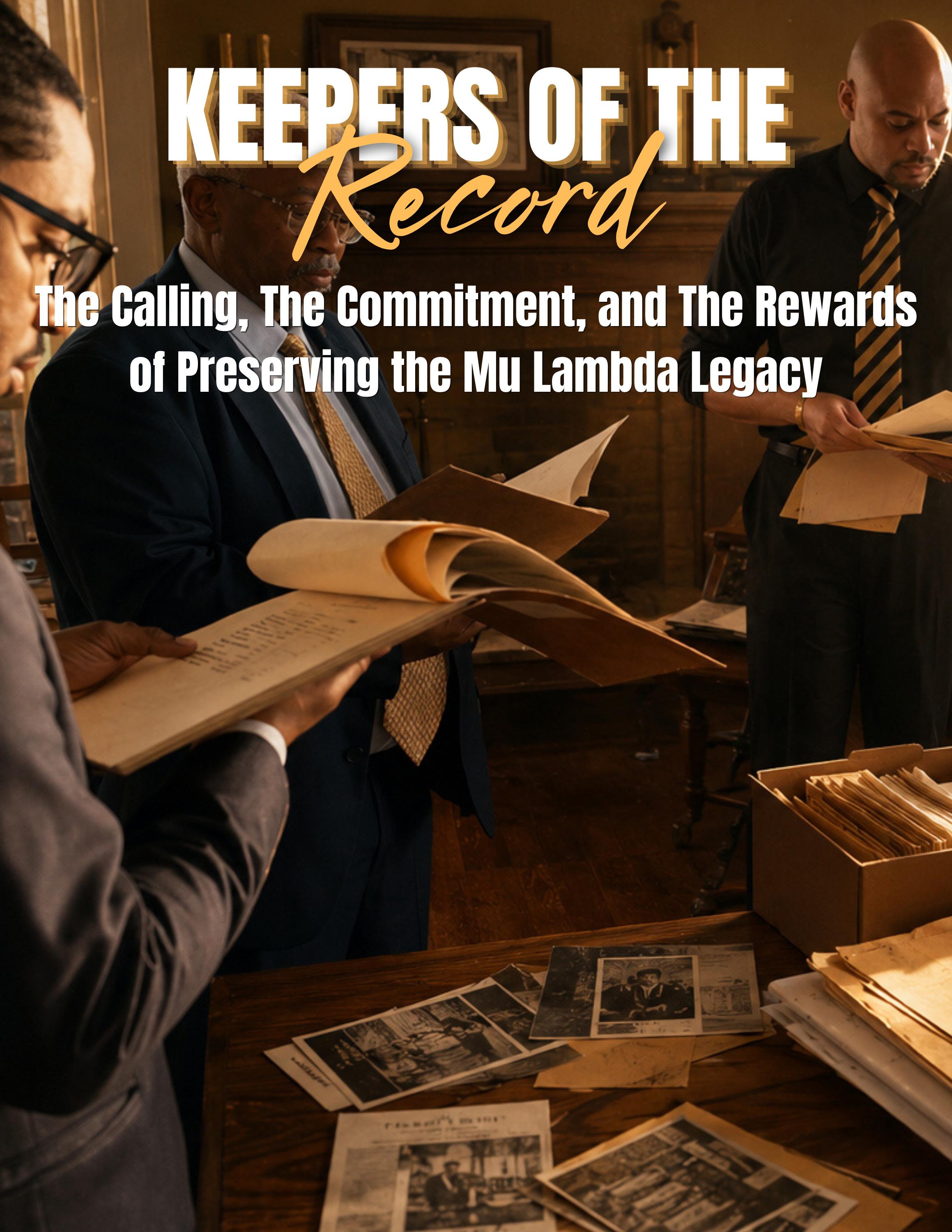
There is a moment that every brother who has served as Chapter Historian or Archivist has experienced, when you hold in your hands a document that time nearly forgot. Perhaps it is a photograph from a Founders’ Day banquet in the 1930s, the faces unidentified but the dignity unmistakable. Perhaps it is a faded meeting agenda from the 1950s listing a program vote or a scholarship recipient, a name that connects to a life you had never known about. Perhaps it is a single issue of The Alpha Newsletter (before it was called The Torch), its pages brittle at the edges, carrying the voice of a past president addressing a chapter that no longer exists exactly as it was, but whose work continues in every brother that promotes and furthers our fraternal objectives today.
In that moment, the weight of what you are holding is not paper. It is the chapter’s memory. And memory, once lost, can rarely be recovered.
The preservation of Mu Lambda’s historical record is not a clerical function. It is an act of brotherhood; one that requires the same intentionality, the same discipline, and the same devotion to the chapter’s mission that we bring to service, scholarship, and civic engagement. It is also, for those who have answered the calling, one of the most profoundly rewarding forms of fraternal stewardship a brother can offer.
“The best indicator of Mu Lambda’s future is our past. Something motivated leaders to join the ranks of Mu Lambda at one time or another — and it is our obligation to know what that something was.”
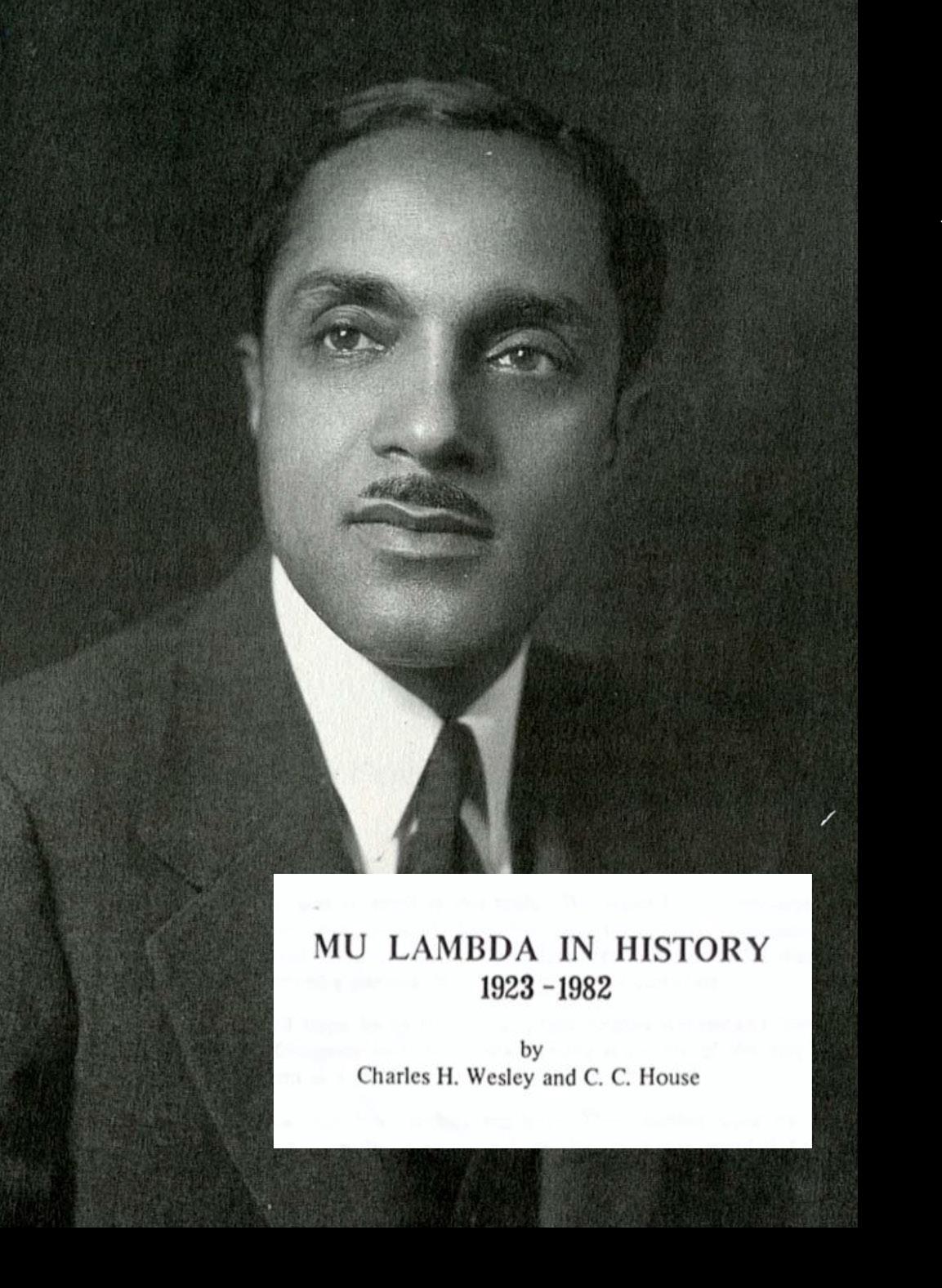
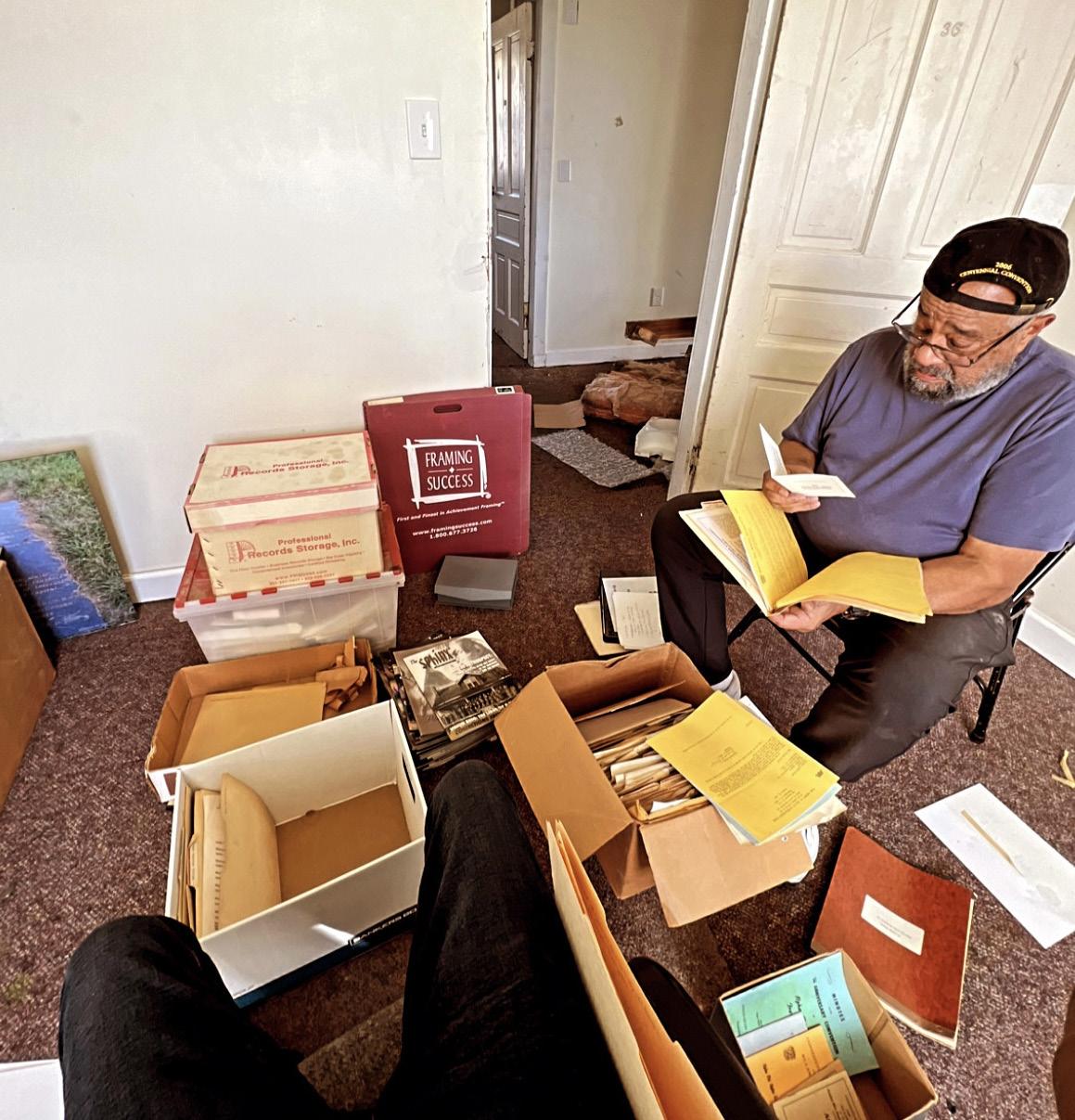
Mu Lambda’s historical record is vast, and it is irreplaceable. It spans more than a century of chapter life in Washington, D.C., one of the most consequential cities in the history of Black America. From the early meetings at various Black churches, Howard University classrooms, and even the historic Howard Hotel, to the programs and events of our Centennial year, the chapter has generated a documentary legacy of extraordinary depth: meeting minutes, financial records, correspondence, program reports, membership rosters, photographs, awards, and one hundred years of published accounts in The Sphinx magazine and our own Torch Magazine.
These materials collectively constitute a living archive of African American civic and fraternal life in the nation’s capital. They document the chapter’s role in the fight for fair housing in Bloomingdale, its decades of investment in Black youth through the Beautillion, the H.A. Callis Academy, and the Leadership Development Institute, its political engagement through the NAACP and local government, and its continuous production of leaders comprised of six General Presidents of Alpha Phi Alpha, two Eastern Region Vice Presidents, a Supreme Court Justice, a United States Senator, a Mayor of the District of Columbia, and countless others whose contributions, though less celebrated, were no less essential.
Every one of those contributions left a trace in the record for someone to collect it, protect it, and pass it forward.
“What we do not preserve, we lose. What we lose, the generations who come after us will never know. And what they never know cannot inspire them.”
The work of historical preservation at Mu Lambda did not begin with the Centennial. It has been carried, in every era of the chapter’s life, by brothers willing to volunteer for the quieter dimensions of fraternal leadership. Brothers who understood that the chapter’s future depended on an honest accounting of its past.
Brother’s Victor R. Daley and James F. Walker published a foundational history of Mu Lambda’s legacy in The Sphinx in June 1964. This was followed by Brother J. Leon Langhorne’s contribution highlighting Mu Lambda’s housing legacy in The Sphinx in 1979, tracing the chapter’s institutional roots from the bond issue of 1919 through the purchase of the first Alpha-owned house at 1917 T Street NW in
1928, and the formation of the Beta-Mu Lambda Corporation in 1925. That work, done decades before the digital age, established a reference point that successive historians and presidents have built upon ever since.
Brother Larry V. Norton, a member at large whose historical research informed the chapter for years, published a comprehensive account of the chapter’s founding and development in the October 1998 Torch Newsletter titled “How Mu Lambda Began”, prepared as a tribute to the chapter’s 75th anniversary. His research connected the chapter’s origins to the aspirations of graduate brothers who wished to support their undergraduate brothers at Howard University while continuing the work of Alpha in the District. Without Norton’s investment of time and care, key details of Mu Lambda’s earliest years might have remained beyond recovery.
These brothers, including Brother Charles H. Wesley and my late mentor, Brother James T. Robinson III, and others, in every decade who maintained membership rolls, clipped Sphinx articles, filed Torch issues, and ensured that program records did not simply disappear at the end of a fraternal year, are as much a part of Mu Lambda’s legacy as those whose names appear in program headlines. Their work was the condition for all the other work to be remembered.
“History is not merely what happened. It is the story we tell about what happened - and the care with which we tell it determines whether those who came before us are remembered or forgotten.”
Any brother who has served in these roles will speak honestly about the challenges. The historical record of Mu Lambda, like that of most fraternal organizations, is uneven. Some decades are richly documented; others carry gaps that no amount of research has yet been
able to fill. Some records were maintained with meticulous care; others were stored in conditions that time and circumstance were not kind to. Photographs are often undated and unidentified. Meeting minutes sometimes record decisions without context. Program reports may note what was done without capturing why, or by whom, in sufficient detail.
The work is also ongoing in a way that other fraternal roles are not. An election yields a clear outcome. A program event has a date and a conclusion. But historical recording and archiving is never finished. Every chapter meeting, every program, every Beautillion gala, every Founders’ Day banquet adds to the record that someone must collect, organize, label, and store. Digital preservation has opened new possibilities, and introduced new responsibilities. A photograph saved only on a personal cell phone is one lost device away from being gone forever. A document housed only on a computer that is not backed up is vulnerable in ways that a file cabinet, however imperfect, is not.
The Historian and the Archivist must think not only about today’s record but about what condition the archive will be in when the next person steps into the role, and the person after that.
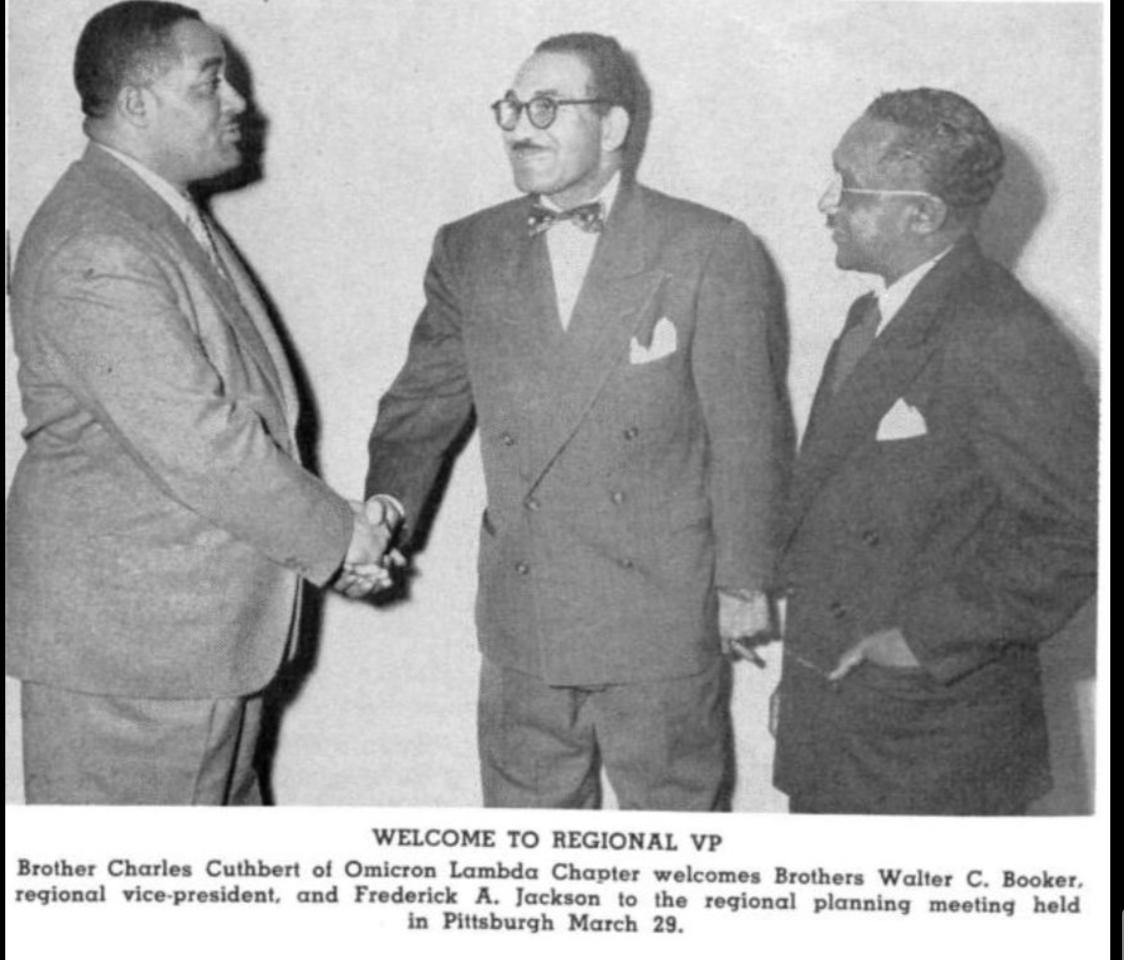
“Preservation is not a single act. It is a sustained commitment, renewed by every brother who accepts the responsibility of stewardship”
The responsibility for Mu Lambda’s historical record does not rest with the Historian and Archivist alone. It belongs to every member of the brotherhood. This is not a ceremonial statement, it is a practical one.
Every brother who attends a significant chapter event and takes a photograph has an opportunity to contribute to the archive. Every brother who remembers a story about a past president, a founding program, or a chapter tradition that is not yet documented has knowledge that the record needs. Every brother who has in his possession correspondence, memorabilia, awards, certificates, or printed materials from his years in Mu Lambda holds something that the chapter’s archive may not have, and that the generations who come after us will wish it did.
The call to all brothers is straightforward: share what you have. Submit photographs to the Archivist. Write down your memories of significant chapter events and share them with the Historian. When you recognize a face in an old photograph that no one else can identify, say so. When you know the story behind a program or a tradition that the written record does not capture, tell it. The oral history of a chapter is as valuable as its documentary record, and it is just as perishable.
Future brothers will study what we preserved. They will not have access to what we did not. The commitment we make today to the integrity of Mu Lambda’s record is a commitment to them.
“Every brother who submits a photograph, shares a memory, or donates a document to the archive is performing an act of brotherhood for men he will never meet — brothers who will carry this chapter forward long after we are gone.”
Those who have invested in this work know that the challenges are real, and that the rewards are worth every one of them.
There is a particular satisfaction that comes when a decade’s worth of scattered records resolves into a coherent story. When a name in a membership roster connects to a biography. When a photograph is identified and placed in its proper historical moment. When a program report from thirty years ago reveals that what Mu Lambda is doing today is not a new idea but a continuation of something begun by brothers who are no longer with us, that the commitment to young men, to civic engagement, to scholarship, to service runs unbroken through every administration, every era, every chapter of this organization’s extraordinary life.
The centennial history project has produced that reward many times over. Mu Lambda was chartered in a segregated city. It now owns property on the very street that once served as a racial barrier between Black and white Bloomingdale. The brothers who fought those housing covenants in the 1940s did not know that their successors would one day own a chapter house on First Street. The connection between their struggle and that achievement is visible only because someone preserved the record.
That is what the Keeper of the Record does: not simply documents the past, but makes the past available to the future. It is one of the most enduring gifts a brother can give to Mu Lambda — and to the brotherhood of Alpha Phi Alpha that this chapter has represented, with distinction, for one hundred years and counting.
Brothers with photographs, documents, correspondence, programs, awards, or memorabilia relating to any period of Mu Lambda Chapter history are urged to contact the Chapter Historian or Archivist. Materials may be submitted digitally or in original form. Oral history contributions — recorded memories of significant chapter events, programs, and personalities — are equally valued. Every submission strengthens the record for the generations who will follow.
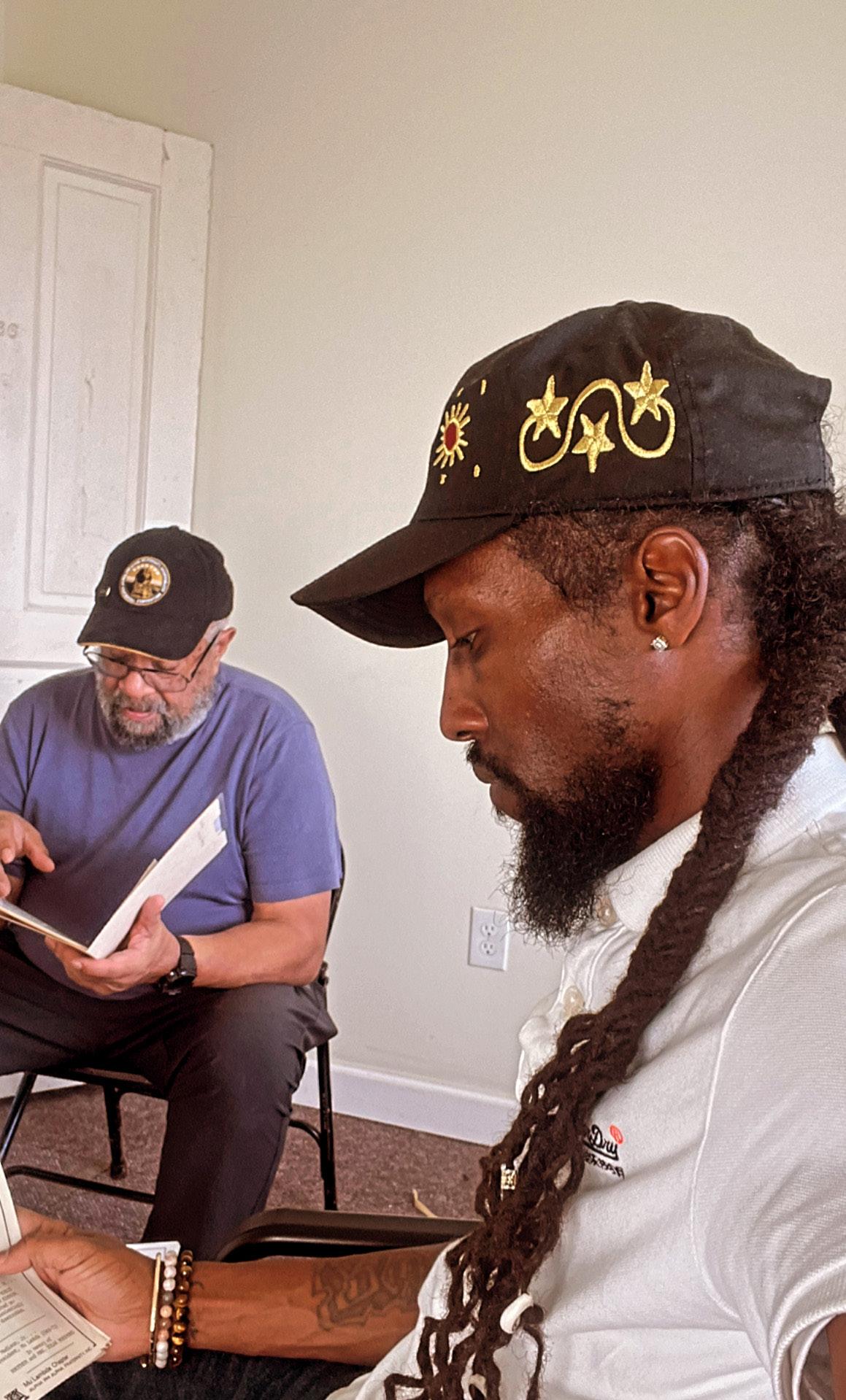
~ Bro. Ameer Baker
Alpha Phi Alpha Fraternity, Inc. Mu Lambda Chapter 1-Mu Lambda-22

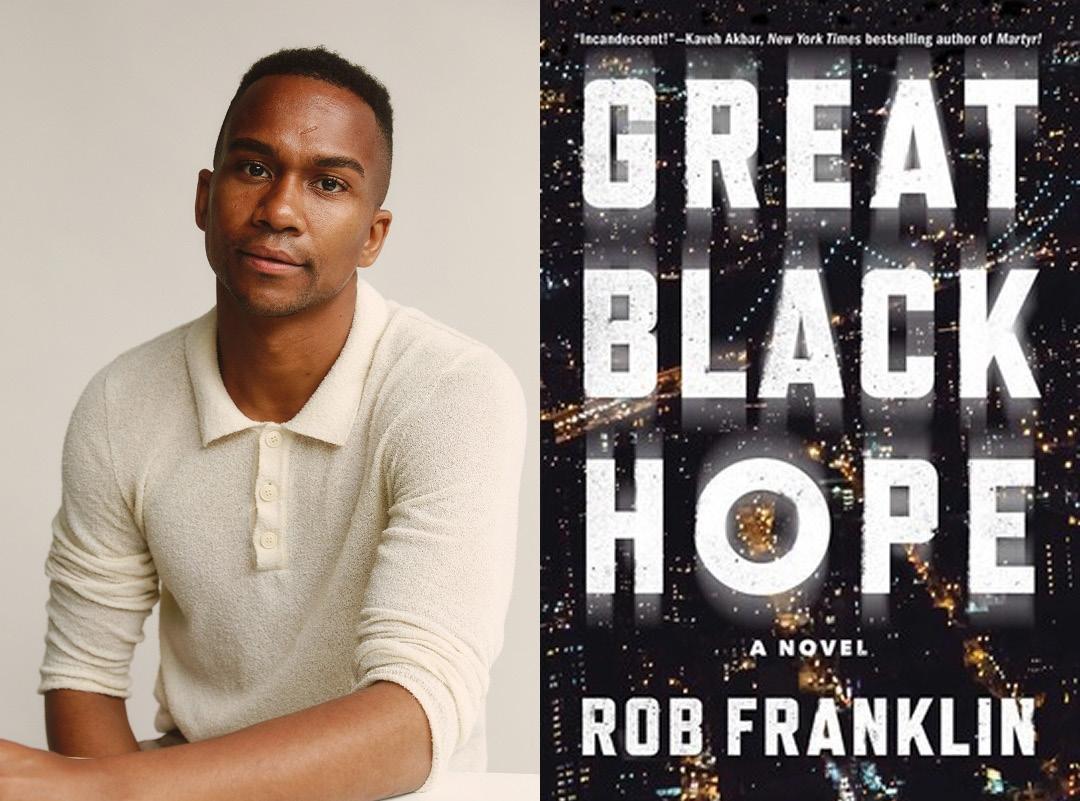
Publisher: S&S/Summit Books
Publication year: February 10, 2026
This novel centers on a young Black man navigating life within New York’s wealthy and influential circles. After the sudden death of his best friend, he is pulled into a period of grief, self-reflection, and unraveling. As he moves through spaces shaped by privilege and expectation, he begins to question who he is versus who he has been expected to be. The story explores themes of race, class, identity, and the emotional cost of maintaining a curated life. It also examines how success and belonging can come with quiet pressures that are difficult to confront. Ultimately, the novel offers a thoughtful look at redefining hope and purpose in the face of loss and uncertainty.


This month’s Mu Lambda Mixtape is curated for those who appreciate music with intention, The Chill Playlist. These are top shelf vibes, crafted for discerning listeners who understand that not all sound is created equal. Smooth transitions, rich textures, and timeless energy define this selection, offering the perfect backdrop whether you’re unwinding, reflecting, or simply moving through your day with purpose. Press play and settle into a sound that doesn’t just fill the space, it elevates it.

“Service will save us.” Governor Wes Moore shared those words during a July 2023 interview with Teen Vogue. He used this phrase to convey a particular vision. One that is emblematic of “the common good,” where broad collaboration among members of a society works toward a shared goal. This is something that Military veterans like himself know all too well.
The statement also spoke to a profound question confronting American society: How do we bridge growing divides and strengthen civic life? While policymakers have proposed countless solutions, few have reflected Moore’s vision as directly as the Maryland SERVE Act. Signed into law in April 2023, the legislation established a public service year program for Maryland high school graduates and became a central component of Moore’s policy agenda. In doing so, the law translated a simple idea: service into public policy.
The arrival of Governor Moore began long before Americans came to know him as a public figure. In his 2010 memoir, The Other Wes Moore, he recounts his own journey alongside that of another young Black man from Baltimore who shared his name but followed a very different path, becoming entangled in drugs and ultimately receiving a prison sentence for first-degree murder. Reflecting on the two lives, Moore argues that opportunity, circumstance, and support systems often shape outcomes in ways that individuals alone cannot control. His story resonates because it reflects a reality familiar to many Americans: talent and potential are widespread, but opportunity is not.
If the difference between two lives can hinge on opportunity, support, and circumstance, how can service help create those opportunities for others?
Governor Wes Moore’s story resonates for many reasons. He is a military veteran, bestselling author, member of Alpha Phi Alpha Fraternity, Inc., and the first Black governor in Maryland’s history. Yet what has distinguished his public life is a consistent belief that leadership is measured not by personal achievement, but by service to others. From The Other Wes Moore to the Maryland SERVE Act, his work has centered on a simple but enduring question: What do we owe one another as members of a shared community? It is the same question that has animated Alpha Phi Alpha for generations through its commitment to leadership, civic engagement, and service.
For more than a century, Alpha Phi Alpha Fraternity, Inc. has wrestled with that question. Founded in 1906 at Cornell University by seven Black college students, the fraternity emerged during a period when Black Americans faced significant barriers to education, employment, political participation, and economic advancement. From its earliest days, Alpha recognized that leadership required more than individual success. It required a commitment to uplifting communities and expanding opportunities for others. That commitment continues today through the fraternity’s national programs, including Go-to-High School, Go-toCollege; Project Alpha; Brother’s Keeper; and A Voteless People Is a Hopeless People (VPHP).
VPHP was never just about voting.
It was about understanding that decisions made elsewhere eventually show up at home. They shape the schools children attend, the jobs families can access, the safety of
neighborhoods, and the opportunities available to future generations. For much of American history, Black communities often lived with the consequences of decisions they had little role in shaping. VPHP emerged from a simple but powerful belief: communities deserve a voice in the decisions that affect their lives. A century later, the issues may look different, but the lesson remains remarkably familiar. While these challenges affect every American and require people from all backgrounds to work together in pursuit of shared solutions, they also remind us that citizenship extends beyond Election Day.
That lesson carries particular significance for the men of Alpha Phi Alpha. Since its founding, the fraternity has challenged its members to pair achievement with service and leadership with responsibility. VPHP reflects that tradition. Not because Alpha men alone are responsible for addressing society’s challenges, but because strong communities are built when people choose to contribute alongside others in pursuit of a common purpose. As the nation approaches the 250th anniversary of its founding, Americans find themselves at an important moment of reflection. The questions facing the country may look different than they did in 1776, 1906, or even 1936. Yet the challenge remains remarkably familiar. What kind of nation do we hope to build, and what responsibility do we share in shaping it?
It is in that spirit that I am pleased to introduce this series entitled, “The Alpha Imperative Policy and Purpose for the Common Good.”
Inspired by Governor Wes Moore’s call to service, Alpha Phi Alpha’s longstanding commitment to civic engagement, and the enduring legacy of A Voteless People Is a Hopeless People, this series will explore some of the most consequential issues shaping our collective future. From education, workforce development, and economic opportunity to infrastructure, energy, and national security, each installment will examine not only the challenges before us, but also the institutions, decisions, and leaders that influence how those challenges are addressed.
The issues may change. The questions may evolve. But the underlying principle remains the same. Strong communities and a strong nation depend upon informed citizens who are willing to engage, serve, and contribute alongside others.
As we begin this journey together, perhaps the most important question is the one that has echoed throughout this essay: If service can help create opportunity, strengthen communities, and advance the common good, what role might each of us play in answering that call?
Alpha Phi Alpha Fraternity, Inc.
Mu Lambda Chapter 16-Omicron Eta Lambda-22
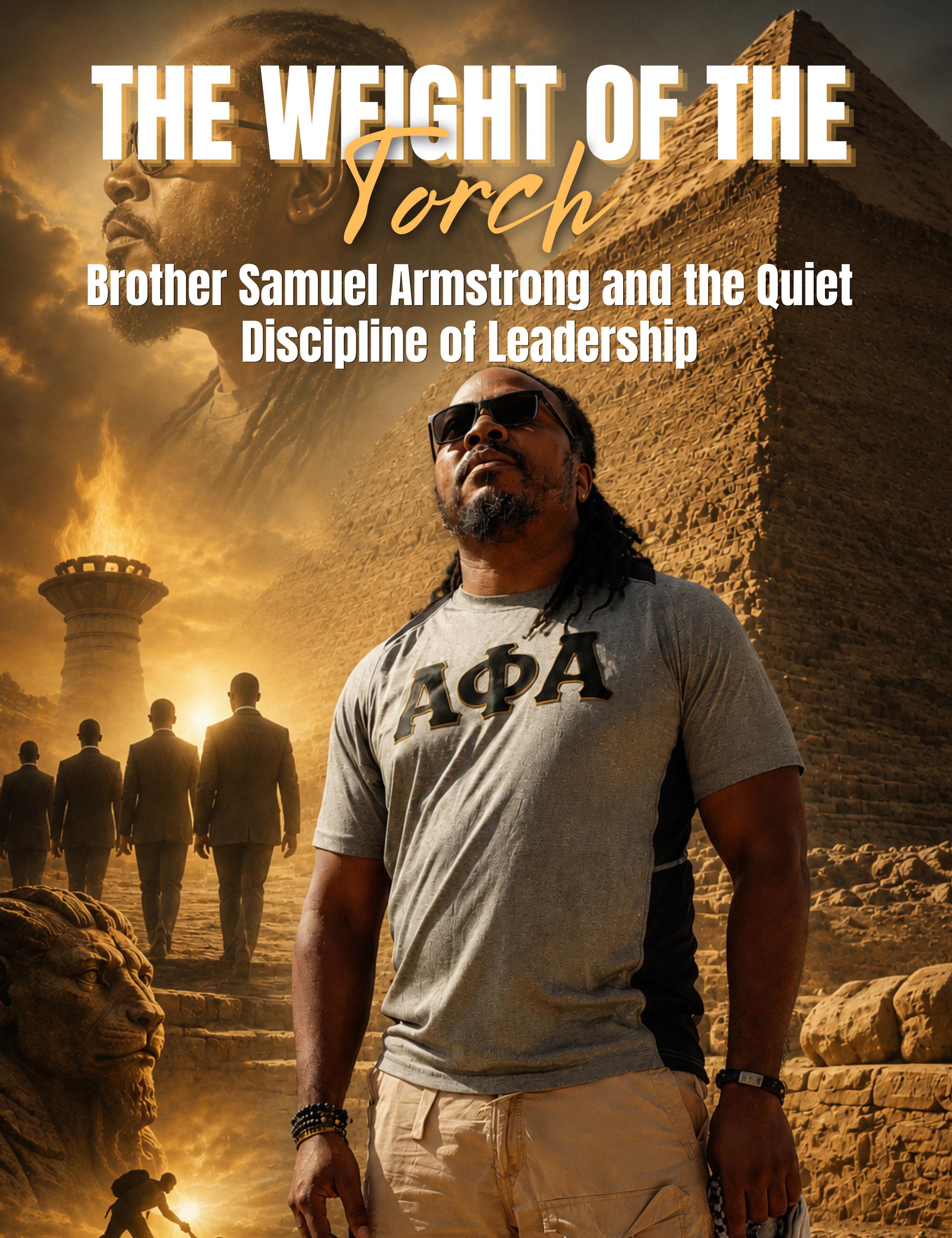
There are men whose names are attached to leadership because they sought visibility. Then there are men whose names become attached to leadership because service kept finding them. Brother Samuel Armstrong feels like the latter.
His story does not arrive wrapped in fanfare. It comes layered in military discipline, long stretches of unseen work, early mornings, committee calls, funerals attended, brothers mentored, frustrations absorbed, and responsibilities carried without complaint. It comes with the kind of steady endurance that rarely earns headlines but often keeps institutions alive.
Spend enough time listening to Brother Armstrong and you begin to understand something uncomfortable about leadership: the people who wear it best are often the ones who never chased it in the first place.
Brother Armstrong crossed into Mu Lambda Chapter in March 2003. More than twenty years later, his footprint stretches across the fraternity, from chapter leadership to district responsibilities, regional development, military affairs, and mentorship. Yet what emerges most clearly from his reflections is not ambition. It is obligation. An almost stubborn belief that leadership is less about authority and more about stewardship.
And stewardship, if done honestly, can be heavy.
That weight, the weight of expectation, legacy, service, and brotherhood, is what Brother Armstrong has spent decades carrying.
The story of how he learned to carry it begins far from Washington, D.C.
After entering Alpha, military orders moved him south to South Carolina. Like many brothers who relocate, he entered unfamiliar territory carrying uncertainty. New city. New chapter. New brothers. For many men, belonging is conditional. It must be earned over years. But Brother Armstrong remembers something different happening.
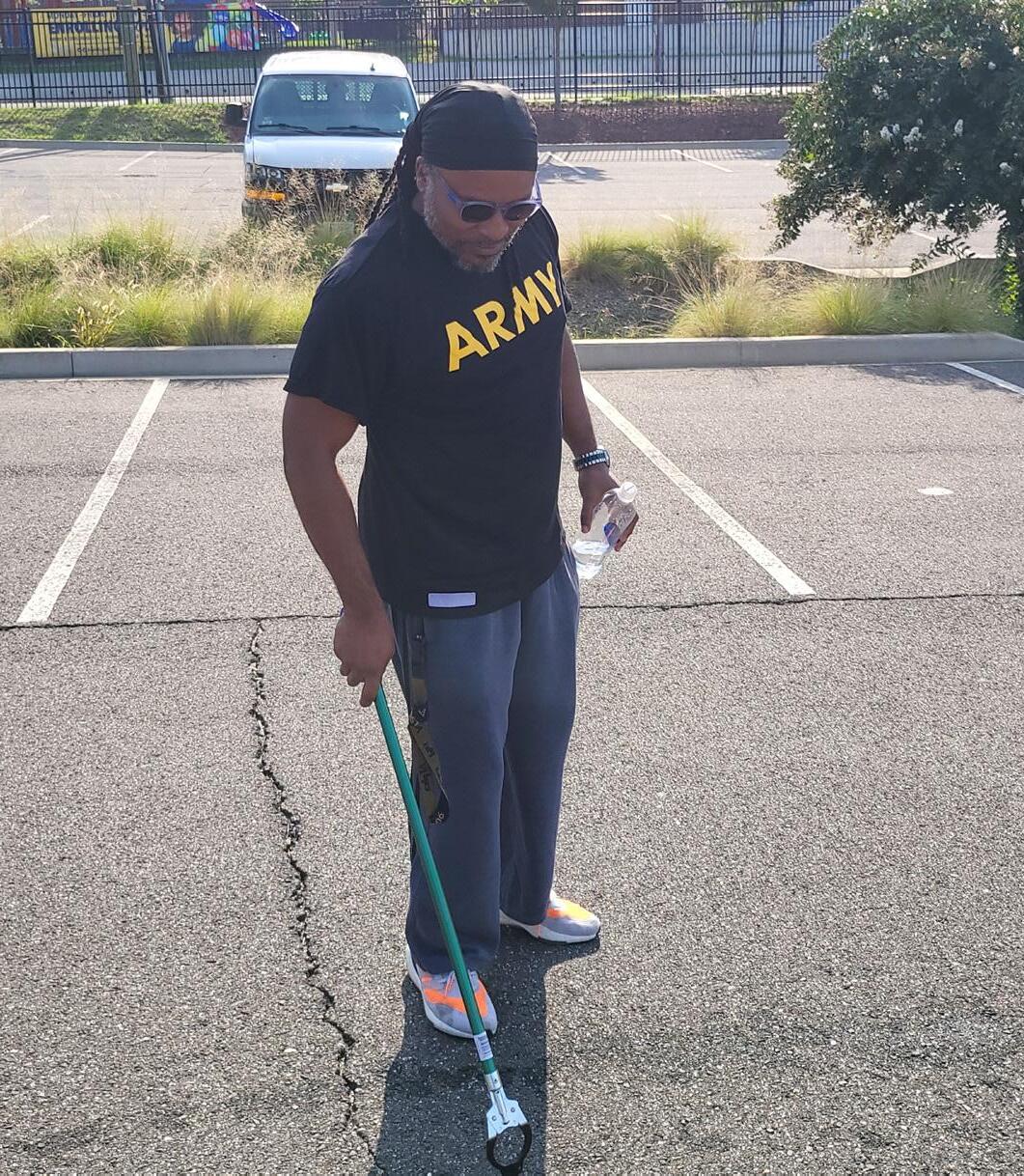
He remembers being embraced. Not tolerated. Not observed from a distance. Welcomed. He recalls brothers seeing him walking alone during a service event and immediately pulling him into fellowship. Soon after, chapter members encouraged him to seek office. Vice president. He resisted. He had only been there a year. How could men barely acquainted with him trust him with leadership? Yet they did. And perhaps that was the lesson. Sometimes people recognize possibility inside us before we have learned to trust it ourselves.
That experience altered his understanding of Alpha forever. The fraternity stopped existing as simply Mu Lambda, or geography, or chapter boundaries. Brotherhood expanded beyond familiarity. It became a living thing capable of finding men where they are and reminding them who they could become.
That realization appears to have changed Brother Armstrong permanently. Because throughout his reflections, leadership repeatedly returns to one unexpected discipline: Listening. Not commanding. Not performing. Listening.
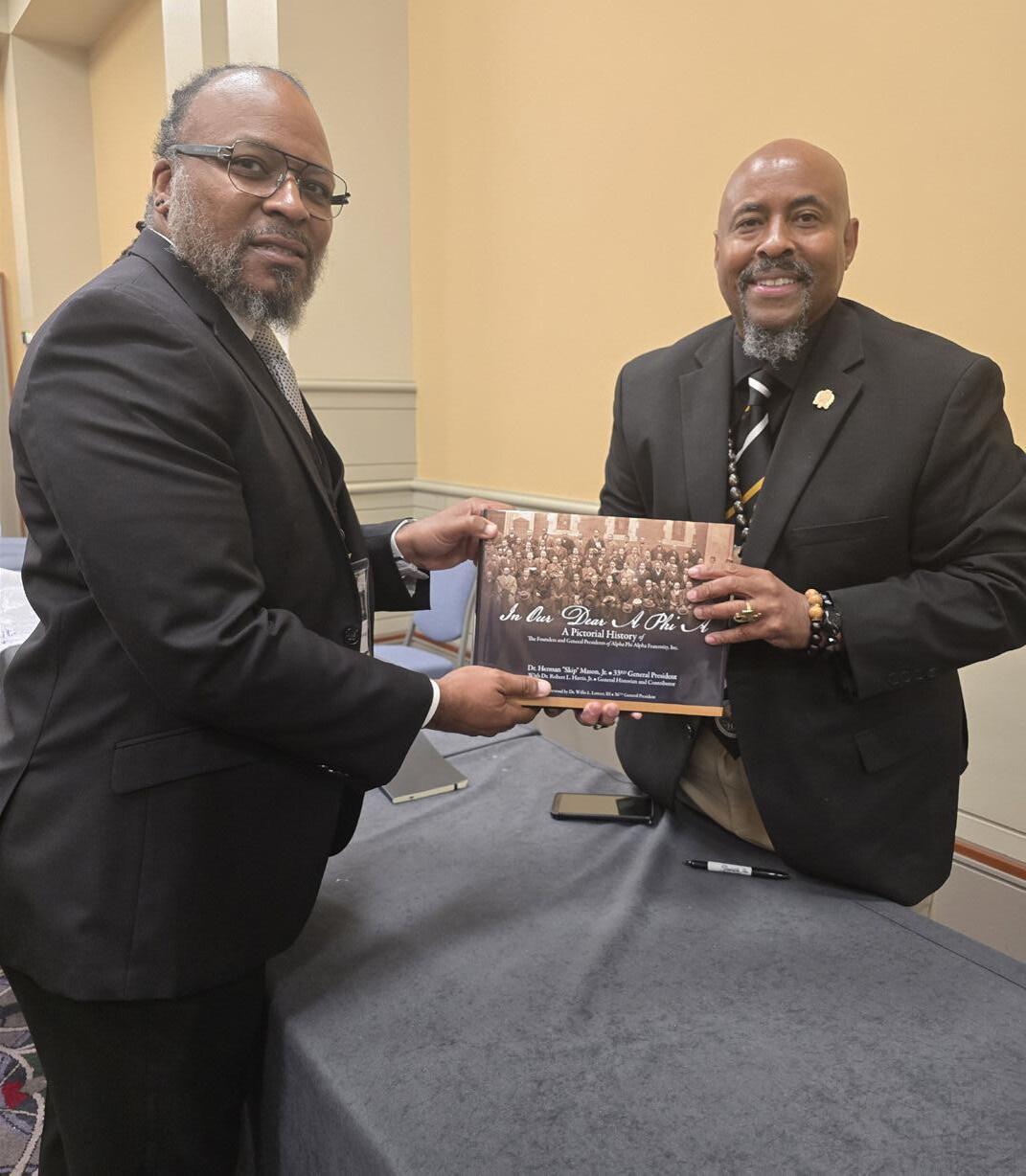
He admits plainly that listening was not always his strength. Like many driven people, certainty once arrived easier than patience. But time and perhaps leadership itself, corrected that instinct. He learned something many never do: leadership without listening becomes ego wearing responsibility as disguise.
He speaks often about teams. Not subordinates. Not followers. Teams. There is intention in that language. He rejects praise directed solely toward him, insisting success belongs collectively to those working beside him. Even disagreement becomes valuable. Particularly disagreement. Because disagreement, when approached honestly, can sharpen vision. This perspective becomes increasingly important in spaces where generations overlap.
Brother Armstrong currently works with committees where brothers span decades in age and experience. Younger brothers arrive carrying innovation, urgency, and a willingness to challenge convention. Older brothers carry institutional memory and caution shaped by experience. Many organizations treat those differences as conflict. Brother Armstrong treats them as assets.
He credits younger brothers with elevating communications, strengthening social media presence, and modernizing engagement strategies around longstanding programs. He does not frame adaptation as surrendering tradition. He frames it as survival. Because institutions unwilling to evolve eventually become monuments. Admired. Remembered. Irrelevant.
His approach suggests something different: Honor where you came from without becoming imprisoned by it. The conversation around leadership eventually turned toward what brothers need most from leaders today. His answer came quickly. Communication. Direction. Motivation. Three words. Simple enough to overlook. Powerful enough to sustain organizations.
Communication, because silence breeds confusion and confusion breeds division. Brother Armstrong argues that information too often stalls before reaching brothers expected to execute vision. Leadership cannot survive if accessibility disappears.
Direction, because legacy matters. History matters. The men who built before us matter. Younger brothers deserve wisdom from older brothers, not as gatekeeping, but as guidance.
Motivation, because commitment cannot survive indefinitely without inspiration. Men need purpose. People need purpose.
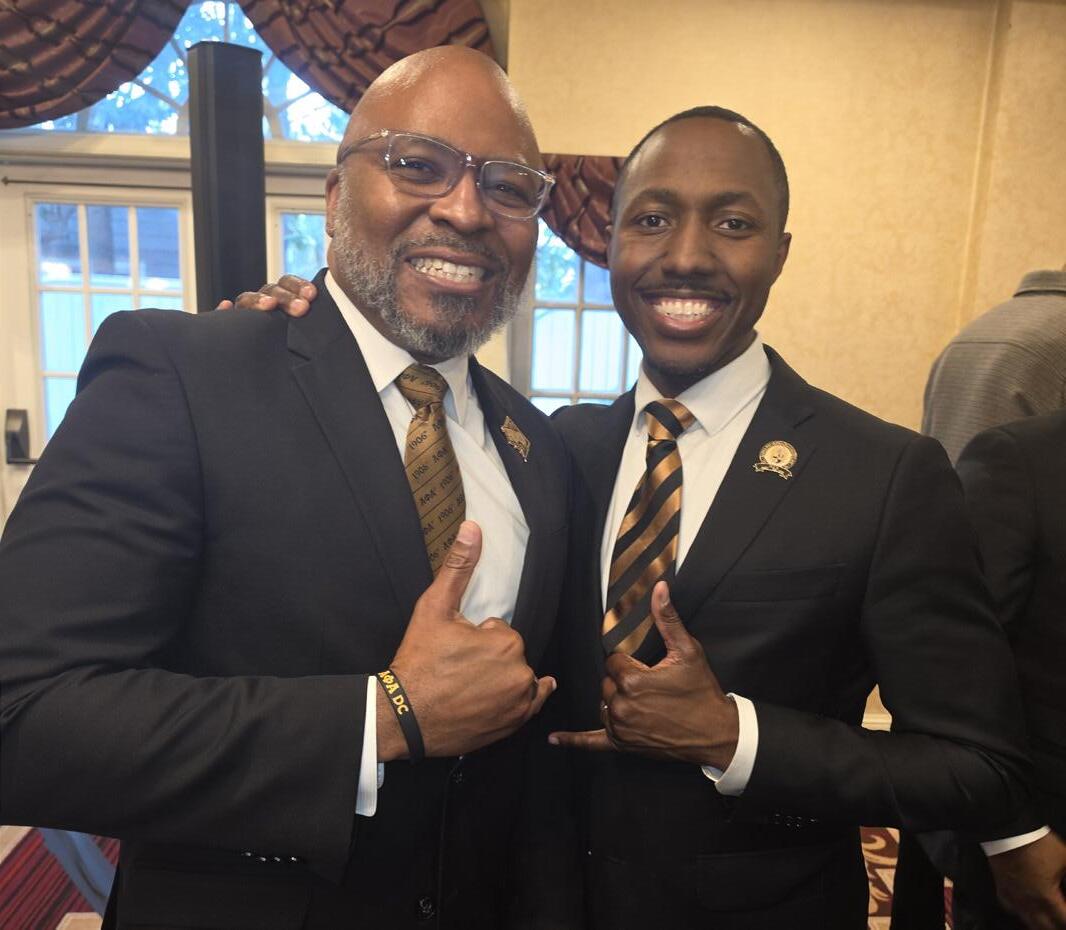
Brotherhood needs purpose. And underneath all three lies trust. Trust that leaders see people. Trust that service matters. Trust that effort is not invisible.
Perhaps one of the most revealing moments in conversation came not around fraternity politics or leadership aspirations, but around exhaustion. Brother Armstrong spoke candidly about mental health. Balance. Stepping away. Knowing when enough is enough. For decades, he worked within military mental health spaces. He learned to identify stress in others, but perhaps more importantly, in himself.
He talked about taking “Alpha breaks.” Imagine that. A man deeply embedded across multiple levels of fraternity leadership intentionally choosing absence to preserve wellness. That may be among the most radical forms of leadership today. Because too many men confuse burnout with commitment. Too many leaders confuse depletion with dedication.
Brother Armstrong rejects that equation. He speaks openly about travel restoring him. About immersing himself in cultures beyond the United States. Villages over resorts. Local food over convenience. Ordinary people over tourist attractions. Travel, for him, appears less escape and more perspective. A reminder that struggle exists everywhere. That gratitude matters. That identity widens when exposed to unfamiliar places.
He also laughs about ice cream. Pralines and cream. Rum raisin. Simple joys. There is something profoundly human in hearing leaders discuss pleasures small enough to keep them grounded.
The conversation eventually returned home, to Mu Lambda.
Brother Armstrong speaks of the chapter with reverence, but not nostalgia. His reflections are rooted in expectation. Mu Lambda’s history includes founders, influential leaders, and men whose impact extended beyond fraternity walls. But history alone is insufficient.
Legacy without continuation becomes
decoration. His vision for Mu Lambda stretches outward. He wants brothers leading communities, hospitals, schools, government, boardrooms, neighborhoods, and churches. He believes Mu Lambda should produce men whose influence is visible beyond chapter meetings. Not simply active Alphas but transformational citizens.
Near the end of discussion came perhaps the most revealing question: What comes next?
District leadership? Broader responsibility? Possibly higher office? His answer remained cautious, measured. Because unlike many, Brother Armstrong understands titles carry unseen costs. More calls, more criticism, more expectations, and more people needing pieces of you. Leadership expands influence. It also expands burden, and perhaps that is why his aspirations feel credible. He understands the price and yet he still, remains willing.
Before concluding, Brother Armstrong offered advice to younger brothers uncertain about stepping into leadership. Observe. Reflect. Ask questions. Then he said something worth carrying long after the conversation ends: “We need you.” Not someday. Not after perfection. Now. Because organizations survive when older hands prepare younger ones. Because brotherhood depends upon succession. Because every district director, chapter president, mentor, and regional leader was once simply a brother sitting quietly in the room wondering if he belonged.
Brother Samuel Armstrong’s journey suggests belonging often arrives before confidence. Leadership often arrives before certainty. And service, true service, may simply be answering when responsibility calls. The fraternity will always need men willing to carry the torch. The greater question may be: Who is willing to carry its weight?
~ Bro. Christopher Butts
Alpha Phi Alpha Fraternity, Inc.
Mu Lambda Chapter 4-Xi Iota-99
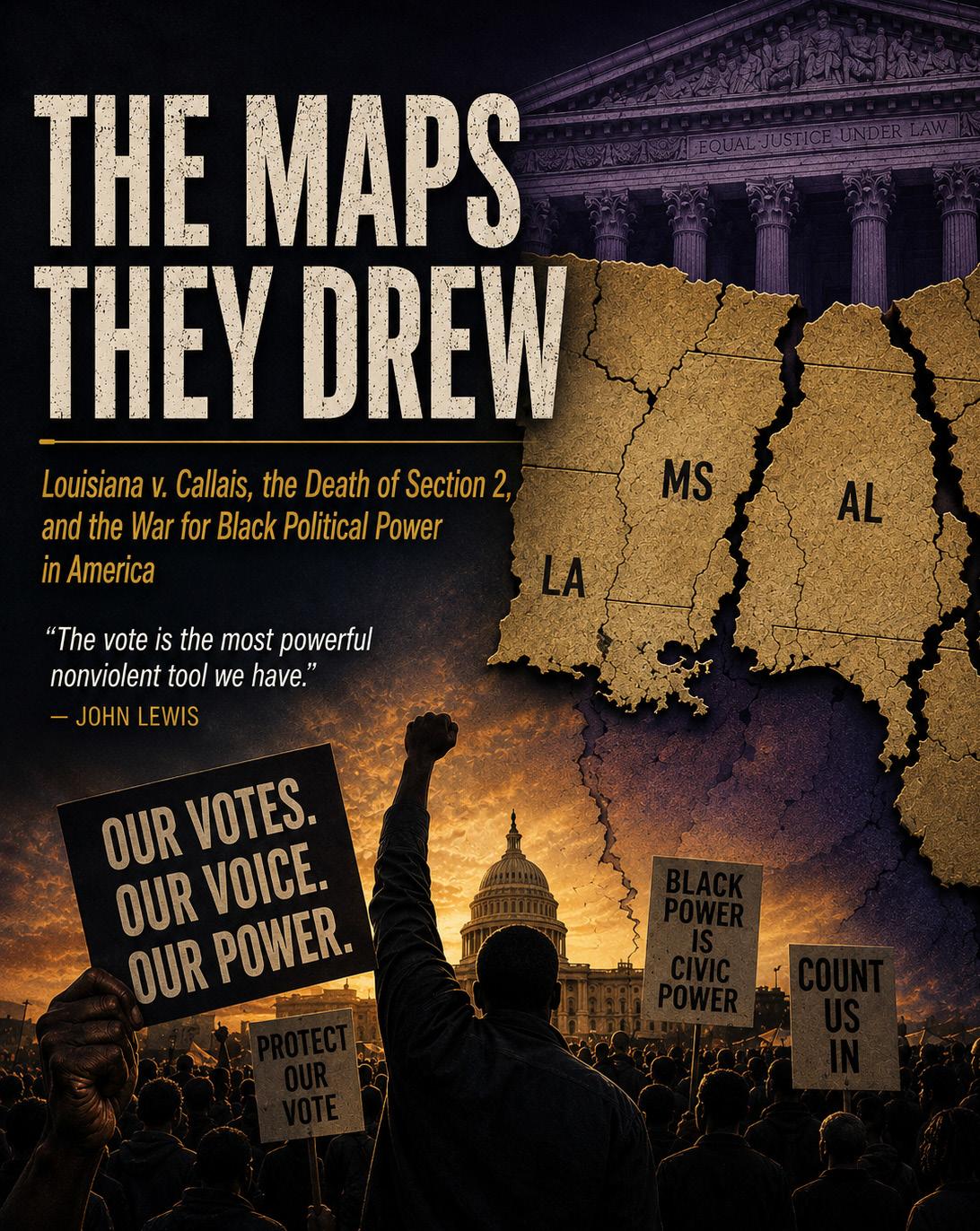
On April 29, 2026, the United States Supreme Court issued its ruling in Louisiana v. Callais, and in a single 6–3 decision written by Justice Samuel Alito, the Court effectively gutted Section 2 of the Voting Rights Act of 1965 — one of the most consequential pieces of civil rights legislation in American history. For those of us who dedicate our lives to Black civic power, who fight every day to ensure Black Men and Black communities are seen, heard, and counted in the halls of power, this decision was not merely a legal ruling. It was an act of political erasure. It was a map redrawn in the dark.
The case before the Court was, on its surface, about a congressional district. Louisiana, under federal court order from Robinson v. Ardoin, had redrawn its congressional map to create a second majority-Black district in a state where Black residents comprise roughly one-third of the population. That district — shaped by decades of advocacy, litigation, organizing, and sacrifice — was Senate Bill 8, a map designed to give Black Louisianians a genuine voice in selecting their congressional representatives. Twelve non-Black voters challenged that map as an “unconstitutional racial gerrymander.” And this Court agreed with them.
The Court held that compliance with the Voting Rights Act did not require Louisiana to use race as the basis for redistricting, and that the intentional creation of a second majorityminority congressional district violated the Equal Protection Clause. What the Court has done, in plain English, is tell states that they cannot draw maps to ensure Black People can elect representatives of their choice — even when those same states have spent decades drawing maps specifically to dilute that power.
Let us be clear about what Section 2 of the Voting Rights Act did and what the Court has now done to it. Section 2 prohibited any
voting procedure that results in the denial or abridgement of the right to vote on account of race or color. It was the provision that allowed Black voters and civil rights organizations to challenge maps that cracked, packed, and diluted Black political power. It was forged in blood — in the wake of Bloody Sunday, the Birmingham bombings, the murders of civil rights workers — and signed into law by President Lyndon Johnson in 1965. The Court did not formally declare Section 2 unconstitutional, but what it did was arguably worse: it constructed additional criteria and impossible standards that render Section 2 functionally useless. They killed the law without burying it.
The ground zero of this fight. For years, Black Louisianians organized, litigated, and demanded a congressional map that reflected the demographic reality of their state. Robinson v. Ardoin produced a court order requiring a second majority-Black district. Senate Bill 8 was that district, a 250-mile corridor connecting Black communities from Baton Rouge to Shreveport. The Court struck it down as a racial gerrymander. The very act of remediation — drawing a district to correct decades of discrimination — was declared unconstitutional. Louisiana’s legislature, emboldened by Callais, immediately convened hearings to redraw the state’s congressional map, now moving to eliminate one or both of its majorityminority voting districts. Governor Jeff Landry suspended voting in an ongoing primary while the legislature scrambled to redraw maps that would deliver maximum Republican advantage. The Black community of Louisiana, which accounts for one-third of the state’s population and all of its recent population growth, may be left without a single seat in which they hold decisive electoral power.
Alabama’s story is the story of defiance rewarded. After the Supreme Court ruled in Allen v. Milligan (2023) that Alabama’s congressional map violated Section 2 by failing to include a second majority-Black district, Alabama Republicans drew a new map that the district court found was — in its own words — “tainted by intentional racebased discrimination.” The state then moved to have the Supreme Court vacate the courtordered map won by the Milligan plaintiffs and restore its discriminatory 2023 map. Alabama called a special legislative session, seeking to redistrict ahead of the 2026 midterms. In a rare moment of resistance, the three-judge district court panel again blocked Alabama from using its discriminatory 2023 map, writing that they “cannot see our way clear to requiring Alabamians to cast their votes in the 2026 elections under a districting plan tainted by intentional race-based discrimination.” But the state is not finished. With the Callais framework now in place, Alabama will continue fighting, likely carrying a new challenge to the Supreme Court, where the new standard will apply. That outcome is far from certain for Black Alabamians.
Mississippi, where Black residents comprise over one-third of the total population and account for virtually all recent population growth, sits at a crossroads. A voting rights case challenging the districts used to elect justices to the state Supreme Court — White v. Mississippi — was proceeding under Section 2 when Callais struck. That case, in which a district court had ruled in favor of Black plaintiffs, has now been thrown into uncertainty. The state has signaled it will not hold a special session to redistrict before 2026 but has made clear it intends to redraw maps before the 2028 cycle. More than 1.1 million Black Mississippians stand to see their representation diluted at every level of government — from Congress down to the state Supreme Court — before this fight is over.
South Carolina Republicans moved with alarming speed following Callais. The clear target was the 6th Congressional District, the
seat long held by Representative Jim Clyburn, once the highest-ranking Black Member of Congress and one of the most consequential political figures of the 21st century. The district has long been a focus of Republican redistricting efforts. After Callais, South Carolina Republicans passed a resolution enabling them to consider new maps, with one state representative openly celebrating on social media that it would allow the party to draw a “new 7-0 Republican map eliminating Jim Clyburn’s unconstitutional race-based district.” The political ambition is naked and unashamed: eliminate the only Democratic seat in the state, which also happens to be the seat represented by one of Black America’s most powerful voices, and call it constitutional compliance. However, on first day of early voting for the 2026 primary in South Carolina, over 55,000 residents cast their vote. Seeing such an overwhelming show of civic participation and protest from community leaders, the State Legislature lost the fight to set forth a new map for 2026.
Florida stands as a preview of the post-Callais America — and it is a grim one. Governor Ron DeSantis, who had been citing the looming Callais decision as justification for redistricting, moved before the ink was even dry. Florida passed new congressional maps within hours of the Callais ruling, and a special legislative session produced a map that could net Republicans up to four additional seats in the U.S. House. For years, Black Floridians had relied on the 5th Congressional District, a majority-Black seat that had given them true representation. DeSantis championed its elimination during post-2020 Census redistricting, dividing Black communities across north Florida among three separate Republicanfriendly districts — a tactic known as “cracking.” The Florida Supreme Court upheld the DeSantis-backed maps. Now, three federal and state court challenges to the newest maps are underway, but the legal landscape, reshaped by Callais, makes those challenges far more difficult to win.
“This year could produce the largest singleelection loss of Black political representation since Reconstruction.”
Brothers of Alpha Phi Alpha: I come to you not as an analyst but as an organizer, as a Black Man who has devoted his professional life to ensuring that Black Men are counted, that Black Men are engaged, and that Black Men understand the stakes of political participation. Let me speak plainly about what Callais means for us.
Black Men in America already navigate a political landscape that was not designed for us. We are disproportionately impacted by criminal justice policies crafted by legislators we did not elect. We are disproportionately excluded from economic opportunity shaped by policymakers who do not answer to our communities. We are disproportionately affected by educational disinvestment decided by school boards and state legislatures where we have no seat at the table. Congressional representation is not an abstraction — it is the mechanism by which our communities receive federal resources, shape legislation, and hold power accountable.
The Congressional Black Caucus (CBC) is one of the few institutional bodies in American government where Black Men and Black Women have systematically wielded legislative power. The redistricting frenzy unleashed by Callais threatens to eliminate as many as six (6) CBC members in 2026 election cycle — the largest absolute loss of Black congressional representation since Reconstruction. Not since the end of the Reconstruction era, when federal troops were withdrawn and Southern states systematically disenfranchised Black voters through literacy tests, poll taxes, and violence, has this country seen such a rapid, deliberate dismantling of Black legislative power.
Black Men, who already face the highest rates of civic disengagement rooted in justified skepticism about a system that has historically excluded and criminalized them, will face an even harder question in the coming years: Why vote, when the map is drawn against us? This is not a rhetorical question. It is the question
that millions of Black Men are already asking, and Callais has handed those who ask it a devastating new piece of evidence.
We know that Black political power is not just symbolic; it is material. It means funding for Historically Black Colleges and Universities. It means reforms to sentencing guidelines. It means healthcare for rural Black communities. It means infrastructure investment in cities where Black families live. Every congressional seat that is gerrymandered out of Black hands is a seat from which policies affecting Black men’s lives will be made without Black Men’s voices.
The damage of Callais extends far beyond Congress. The NAACP Legal Defense Fund has identified at least 28 active lawsuits defending minority voting rights that are now in jeopardy as a result of this ruling. These are not just congressional challenges — they are challenges to state legislative maps, to local district maps, to the composition of state supreme courts, school boards, and county commissions. The tentacles of Callais reach into every corner of government where Black Americans have fought to be represented.
Consider what this means in states where minorities account for virtually all population growth. In Texas and Alabama, people of color accounted for 92% of total population growth from 2010 to 2023. In Florida, the figure is 87%. In Louisiana, Mississippi, and Georgia, the White population has actually declined while the minority population has grown. And yet, through Callais-emboldened redistricting, these states are moving to ensure that all of the political power accruing from that population growth flows to white Republican representatives. This is the three-fifths compromise repackaged for the 21st century: Black bodies counted for representation, but Black voices excluded from power.
The Callais ruling also strikes at state and local representation — the ground-level institutions
that shape daily life. Judges, district attorneys, sheriffs, school superintendents, city council members: these are the elected officials whose decisions most directly affect Black communities. The systematic dilution of Black voting power will ripple through all of these races for a generation.
And make no mistake: this is not happening in a vacuum. Callais arrives alongside an administration and a political environment actively hostile to diversity, equity, and inclusion; actively rolling back affirmative action in federal contracting and higher education; and actively restricting access to voting through new ID requirements, purged voter rolls, and reduced polling locations. Callais is not a lone wolf — it is part of a coordinated pack.
Often lost in these conversations: this is not only a Black American problem. It is an American problem. The integrity of the one-person, onevote principle — the foundational promise of democratic self-governance — is on trial. When the votes of millions of Americans are systematically diluted because of the color of their skin, the democracy itself is diluted.
The Callais ruling comes at a moment when American democracy is already under extraordinary stress. Mid-decade redistricting, once a rare occurrence, has become a partisan weapon wielded across the nation. States that enacted new maps for the 2026 cycle now account for nearly 40% of all U.S. House seats. The maps being drawn in the wake of Callais will shape American governance not just for 2026, but for 2028, 2030, and the postcensus redistricting that follows. The structures being built right now will determine the composition of Congress for a decade. History will judge this moment harshly. A Court that once interpreted the Constitution to expand the franchise — that gave us Baker v. Carr, Reynolds v. Sims, Thornburg v. Gingles — has now presided over the systematic dismantling of the legal architecture that protected the votes of Black and brown Americans. And it has done so not through a single dramatic
reversal, but through a death by a thousand cuts: Shelby County v. Holder in 2013 eliminated the preclearance requirement of Section 5; Brnovich v. Democratic National Committee in 2021 weakened Section 2 enforcement; and now Callais has gutted what remained. Each ruling, handed down along ideological lines, has left the Voting Rights Act weaker than before.
And yet — and I say this as an organizer, as a man of faith in the capacity of organized people — history also tells us that this is not the end. The Reconstruction Amendments were gutted too, and Black Americans organized, litigated, marched, and bled their way to the Civil Rights Act and the Voting Rights Act. State voting rights acts are already enacted in Washington State (2018), Oregon (2019), Virginia (2021) California & New York (2022), Connecticut (2023) Minnesota (2024), Colorado (2025), and being considered in New Jersey & Maryland for potential legislative remedies. Courts at the state level are becoming the new battlegrounds. The political response — including the possibility of Congressional action to restore Section 2 — remains on the table.
Brothers of Alpha Phi Alpha, Fraternity Inc. you wear the letters of a fraternity founded — just forty years after the abolition of slavery, in the teeth of Jim Crow, in defiance of a world that told Black Men they had no place in the academy or the republic. Our founding purpose was to develop leaders, to promote education, and to uplift communities. This moment demands that purpose. Men of Alpha have never been spectators of history — we have been its architects.
Here is what the moment requires of us:
• First, Brothers must fight at the state level. With Section 2 effectively neutralized at the federal level, the next line of defense is state voting rights acts, state constitutional provisions, and state courts. Maryland passed a state Voting Rights Act twentyfour hours before the Callais decision.Every state in the South with a significant Black population must become a target for this
• kind of legislation. Men of Alpha with legal expertise, legislative connections, and community relationships must be at the forefront of these campaigns.
• Second, Brothers must organize with a level of urgency equal to the threat. The redistricting frenzy is happening now, ahead of the 2026 midterms. Voter registration, civic education about what is at stake in these races, and turnout in primary and general elections have never been more important. We know that when Black Men vote in organized, strategic ways, elections change. The question is whether we, Brothers, will respond to this assault on our civic power with the urgency it demands.
• Third, Brothers must build coalitions that transcend our own communities. The dilution of Black voting power affects not only Black Americans but all Americans who believe in the democratic promise. Labor unions, faith communities, Civil Rights organizations, other civil rights groups, must be brought into a broad coalition that understands: an attack on the voting rights of Black Americans is an attack on democracy itself.
• Fourth, Brothers must tell their story. The political and media establishment has not yet fully reckoned with what Callais means. The redistricting frenzy happening across the South is moving faster than the public narrative can track. Men of Alpha with platforms, with relationships in media, with voices in their communities, must make sure people understand what is being taken from them and why it matters.
• Fifth, Brothers must support candidates who look like us and who will fight for us. Black representation in Congress, in state legislatures, and in local government is not just symbolically important — it is materially consequential. Support candidates running in districts being targeted for elimination. Fund their campaigns. Volunteer. Make the cost of erasure too high to pay.
The maps they have drawn are tools of suppression. But maps do not vote. People do. And in this moment, when the legal infrastructure built at the cost of immense suffering is being dismantled by men in robes, I am reminded of what John Lewis once said: that the vote is the most powerful nonviolent tool we have.
They have tried to make that tool less powerful. They have thrown the Gingles framework into confusion. They have constructed barriers to Section 2 claims that will take years to navigate in court. They have handed state legislatures a green light to crack and pack Black communities in ways that would have been illegal a decade ago. They have moved at stunning speed, passing new maps within hours of the Callais decision, redrawing boundaries in special sessions while communities were still absorbing the shock of the ruling.
But they have also awakened something. Every generation of Black Americans has faced a moment when the legal protections they fought for were stripped away, and every generation has responded with a combination of righteous fury and disciplined organizing. This is our moment. Not to despair. Not to disengage. But to organize with the ferocity and the sophistication that this assault demands.
Our Jewels of Alpha Phi Alpha, Fraternity Inc. did not wait for the law to protect them before they dared to build something great. They built it anyway. In the same spirit, Brothers must build our political power anyway — through coalitions, through state-level legislation, through voter organization, through the courts that remain open to us, and through the ballot box.
The map is not the territory. The map is a document of the balance of power at a given moment. The territory is where we live, where we organize, where we vote, and where we raise the next generation. They can redraw the lines. They cannot redraw our resolve.
~ Bro. Khalil Thompson
Alpha Phi Alpha Fraternity, Inc. Mu Lambda Chapter 12-Mu Lambda-25
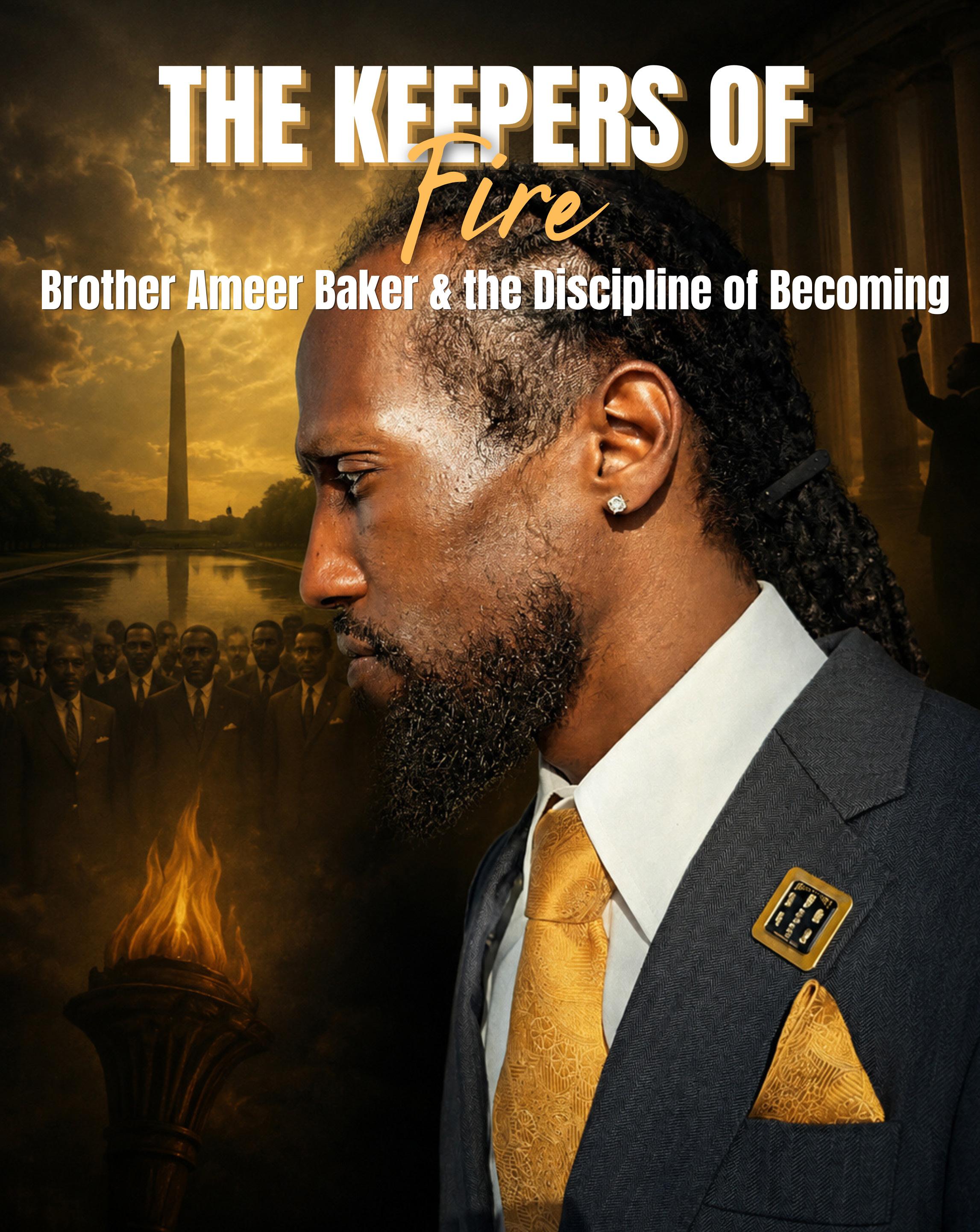
There are men who arrive carrying certainty, and there are men who spend years wrestling with uncertainty until purpose finally introduces itself. We often celebrate the polished version of leadership, the title, the applause, the visible achievement, while forgetting the private negotiations a man has with himself before he ever earns recognition. Before the room listens. Before history records his name.
Brother Ameer Baker’s story is not merely about accomplishment. It is a story about becoming. And becoming, particularly for Black men in America, is rarely a straight line.
It is made in sacrifice. In rejection. In observation. In studying elders. In learning where to stand and where to kneel. It is forged in the quiet moments when nobody is watching and in the painful moments when the world tells you, not yet.
Some hear “not yet” and surrender. Others hear a challenge. Brother Baker appears to have heard invitation. His life, at least as it presently unfolds, reads less like a pursuit of status and more like an ongoing apprenticeship to purpose, a purpose rooted in history, discipline, communication, and the responsibility to lift others as he climbs.
When Brother Baker speaks about himself, he does not begin with professional titles, fraternity positions, or competitive victories. He begins with lineage. He identifies first as the son of immigrant parents, a first-generation American whose understanding of opportunity was shaped by witnessing sacrifice. That distinction matters because children of sacrifice often inherit two things simultaneously: gratitude and pressure.
The gratitude says: Look at what your family survived to get you here. The pressure asks: What will you do with what was given?
Brother Baker seems deeply aware of both. His reflections reveal someone who has spent considerable time examining not only who he is, but what obligation accompanies his existence. There is a seriousness beneath his words. Not heaviness exactly, seriousness. The understanding that life is temporary and therefore must be useful.
He describes himself as someone trying to determine his role in society while elevating those around him. He speaks of planting seeds he may never personally witness growing. He talks about leaving communities better than he found them.
This orientation toward service feels increasingly uncommon in an era obsessed with visibility.
Visibility asks: How many people know your name? Service asks: Who is better because you existed?
Brother Baker appears more interested in the second question. And perhaps that is why his story deserves attention.
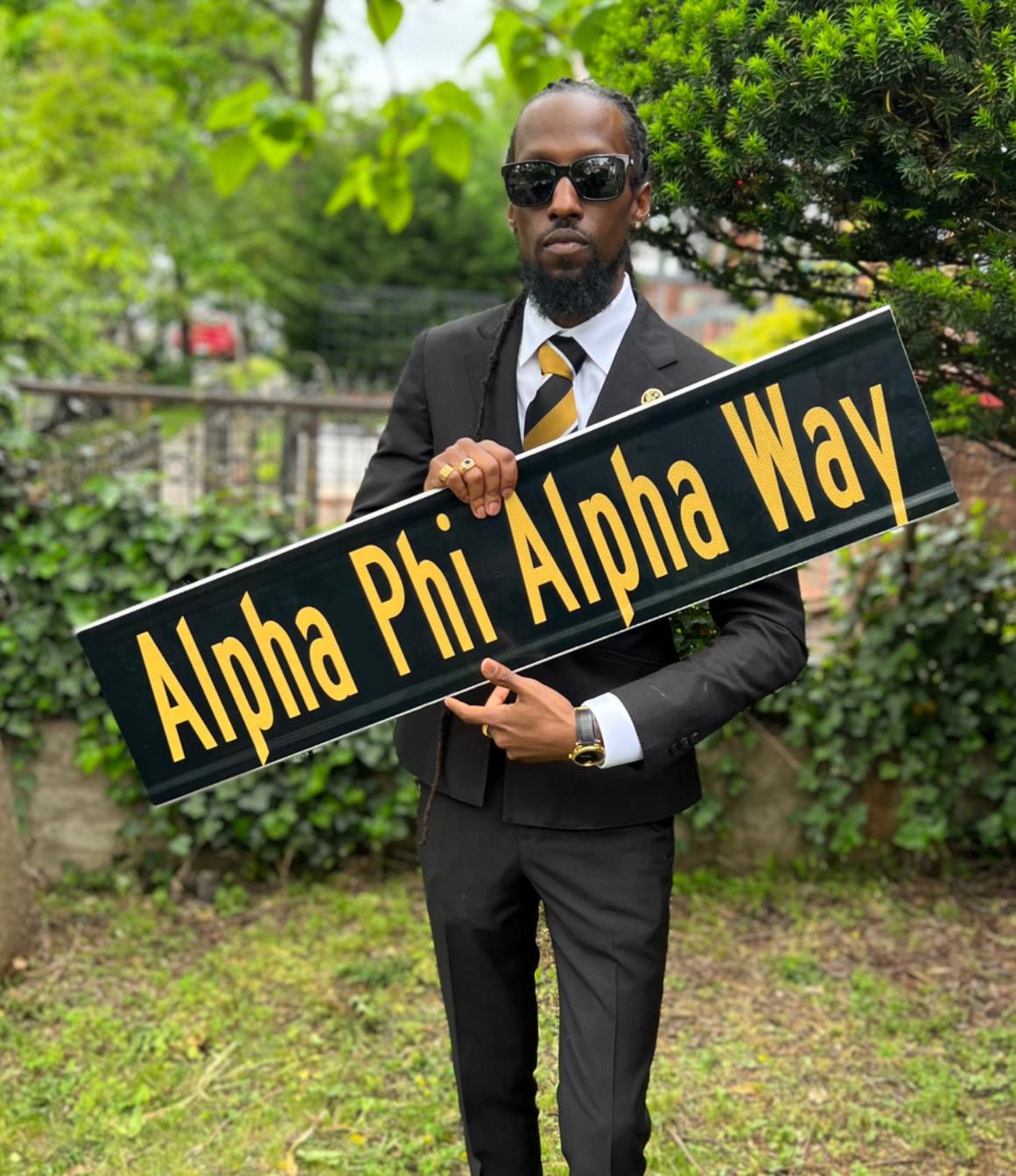
Persistence is often romanticized after success. People celebrate perseverance once the outcome becomes favorable, forgetting the humiliation persistence sometimes requires in real time. Because returning after disappointment is difficult. Returning after public disappointment is harder. Returning repeatedly requires something close to faith.
Brother Baker pursued Alpha Phi Alpha multiple times. First during his undergraduate years at Howard University, then through several subsequent attempts before finally becoming a member in 2022 through the Mu Lambda Chapter.
Four pursuits. Four seasons of hope. Several moments where another man may have concluded: Perhaps this simply is not for me.
But his response was different. Each rejection became reflection. Each disappointment became refinement. He describes learning more history, understanding Alpha more deeply, and recognizing shortcomings within himself that needed strengthening. He viewed every setback as sharpening. Not punishment. Preparation.
There is wisdom in that. Many people desire access without transformation. Brother Baker appears to have accepted transformation as the cost of access. And maybe that explains the calmness with which he recounts those years now. Because once you understand rejection as instruction, bitterness loses power.
When Brother Baker crossed in March 2022 and assumed the role of historian shortly thereafter, it was not accidental. He had promised before membership that preserving chapter history would become part of his contribution.
Promises reveal priorities. His priority was preservation. But preservation, for him, is not nostalgia. It is stewardship. He speaks passionately about Mu Lambda’s charter members and historic figures whose work shaped Washington, D.C., law, education, healthcare, and civic life. He references men whose influence still echoes in institutions long after their passing.
Listening to him, one realizes something profound: He does not study history to admire greatness. He studies history to ask what greatness now requires. There is a difference. Admiration remains passive. Responsibility demands action.
Brother Baker describes learning about decades when Mu Lambda hosted grand affairs attended by mayors, dignitaries, and influential leaders. Periods when the chapter represented not merely fraternity membership, but civic power and cultural influence. And underneath his reflection sits an unspoken question: What would it mean for us to embody that level of influence again? Not imitation. Continuation.
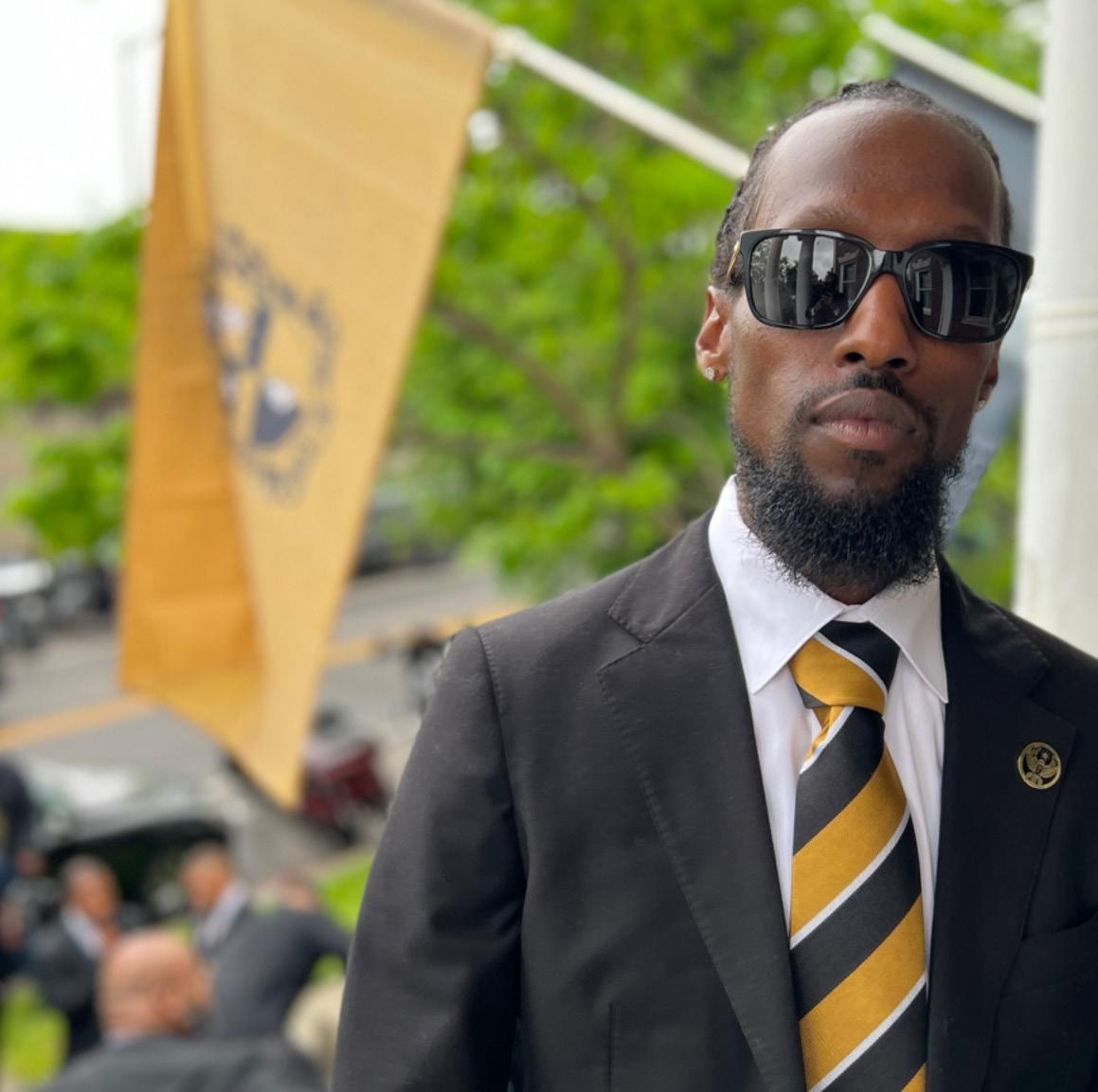
Every serious student eventually seeks teachers. Brother Baker found one in Mu Lambda Brother Ryle Bell’s history and ritual sessions. Yet what seems to matter most is not information itself but depth. The deeper stories. The hidden connections. The humanity behind revered figures.
He speaks about discovering founders’ personalities, flaws, associations, and motivations. About realizing Alpha’s legacy was built not by mythical men, but by complex individuals carrying competing ideas who learned to move collectively.
Some people encounter microphones with fear. Others encounter microphones with recognition. Brother Baker’s involvement in Alpha Toastmasters 1906 emerged from admiration for Alpha’s tradition of exceptional orators, leaders whose words shifted minds and movements. He wanted that skill. Not performance alone. Influence.
Then life accelerated. After stepping into leadership to prevent Alpha Toastmasters 1906 from dissolving, he entered competition. Victory followed. Then another. Then broader recognition. Yet perhaps more revealing than awards is his description of standing before audiences.
He does not describe anxiety. He describes energy. He recalls feeling fully alive under attention. Like the stage introduced him to a version of himself waiting patiently beneath the surface all along.
This mirrors what many gifted communicators discover: Public speaking is rarely about loving attention. It is often about loving connection.
The privilege of helping someone reconsider possibility.
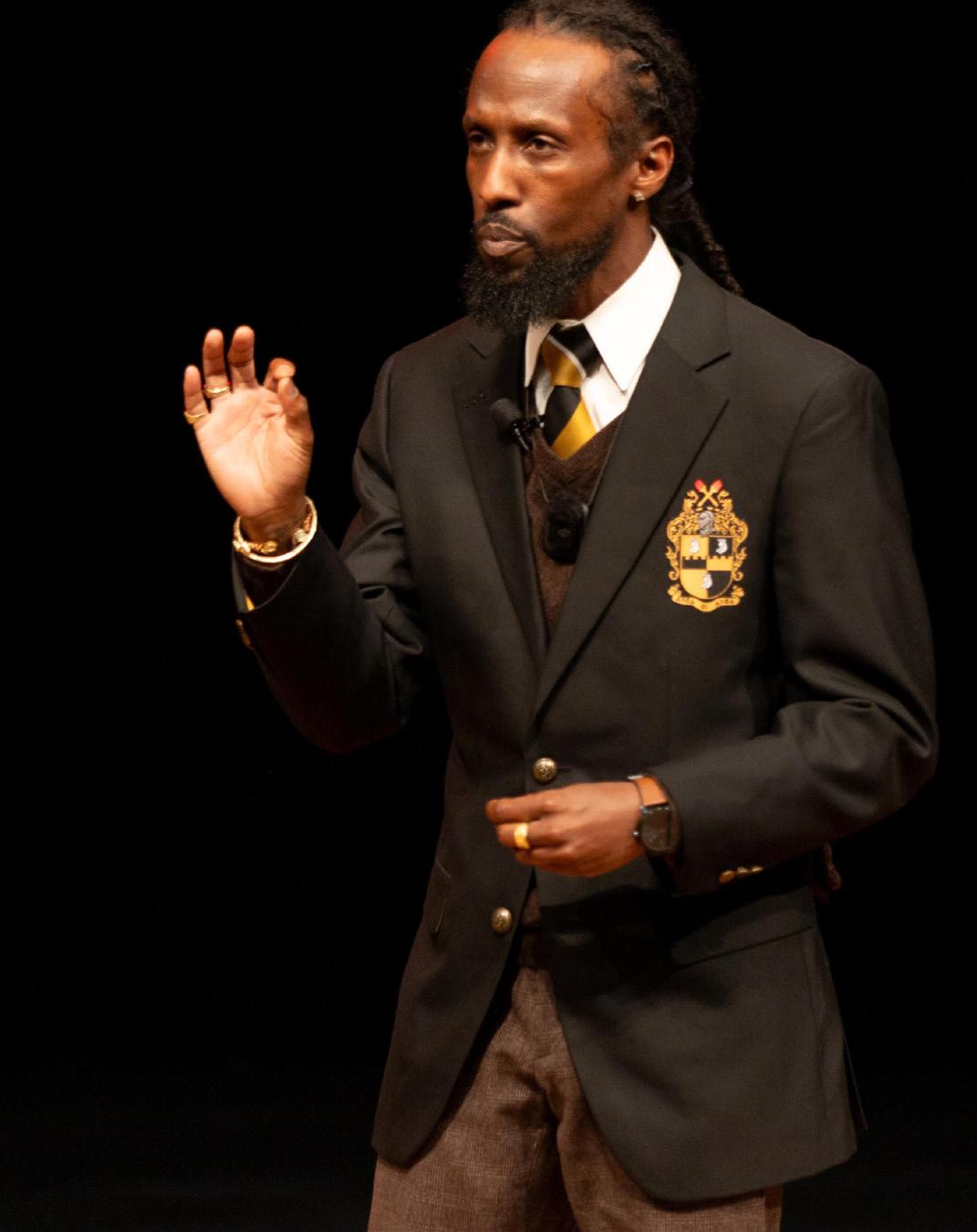
Brother Baker envisions international speaking. Motivational work. Financial literacy advocacy. Personal development. Leadership. Yet the origins of those aspirations are deeply personal.
Years ago, while examining purpose, he concluded his role in life involved helping people become their best selves. Friends reinforced his gift for explaining, motivating, and creating clarity. Early speaking opportunities confirmed it. Audiences responded. People asked for more. And so, the dream continued. Not because recognition called. Because usefulness did.
There is a difference between wanting to be known and wanting to be needed. Brother Baker’s reflections suggest he desires the latter.
Toward the interview’s conclusion, Brother Baker shares something perhaps more important than ambition: He remembers support. Older brothers attending his classes. Investing in his work. Purchasing what he created. Encouraging ideas. Opening doors.
These moments stayed with him. Not because of money. Because support communicates belonging. And belonging changes people. Now he seeks to replicate that experience for younger brothers entering Mu Lambda.
To ask: What are you building? How can I help? This may be the most sacred work fraternity can perform. Not ceremony. Not visibility. Investment.
Brother Baker says he hopes Mu Lambda is remembered as a chapter of gentlemen. Men with class, discipline, conviction, and usefulness to community. Gentlemen. The word sounds almost old-fashioned now. Yet perhaps that is precisely why it matters. Because genuine gentlemanliness was never weakness. It required restraint. Honor. Service. Consistency.
Brother Baker also speaks openly about longterm aspirations for fraternity leadership, perhaps even one day serving as General President. Yet even those ambitions appear rooted in preservation: protecting ritual, history, etiquette, and foundational values.
Time will determine where his path leads. But already there are clues. A historian preserving memory. An orator finding his voice. A mentor investing forward. A student of legacy preparing, perhaps, to become part of it. And maybe that is the story unfolding before us. Not simply the rise of one brother. But the disciplined construction of a man determined to leave behind more light than shadow.
~ Bro. Christopher Butts
Alpha Phi Alpha Fraternity, Inc.
Mu Lambda Chapter 4-Xi Iota-99
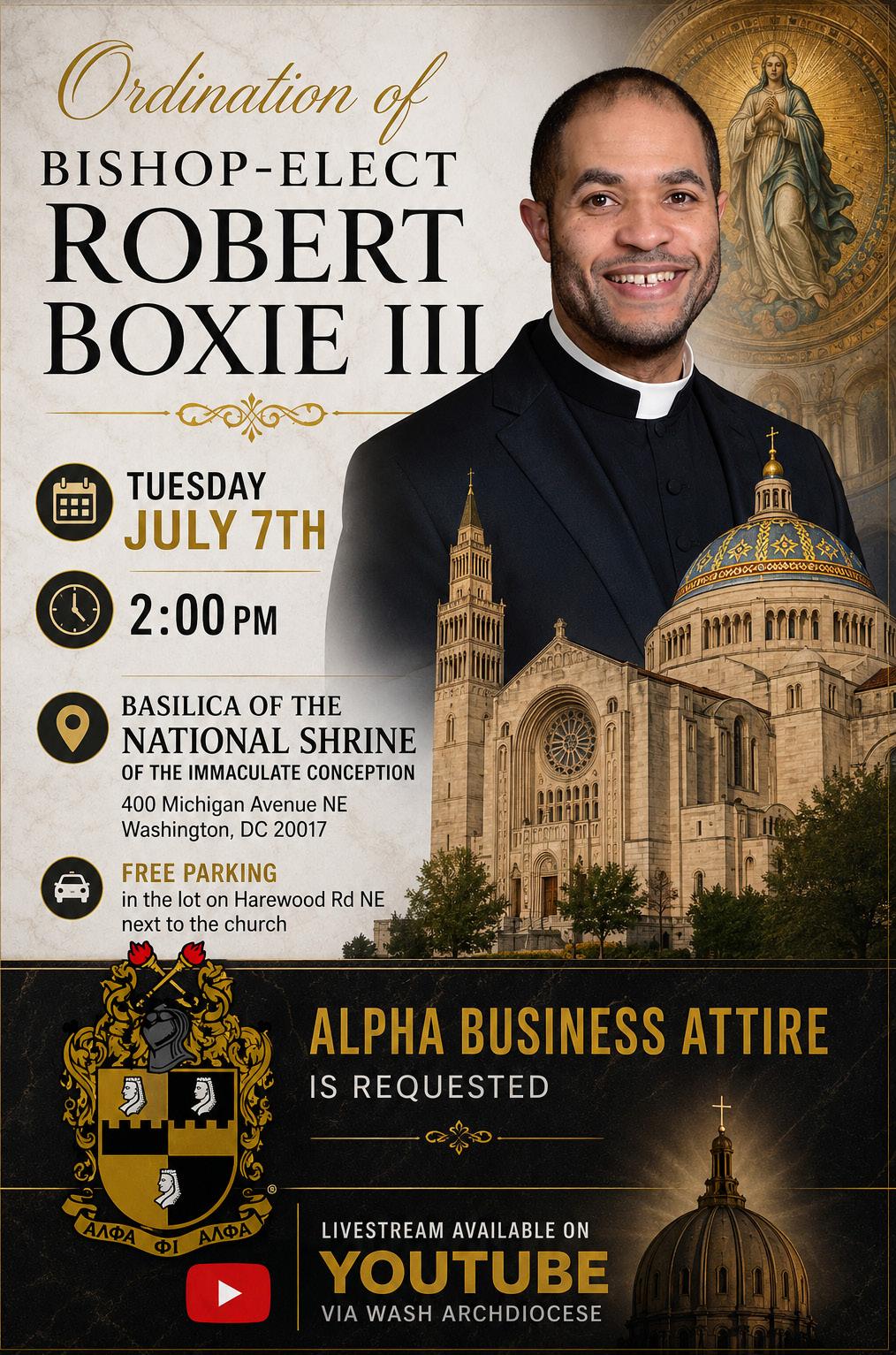

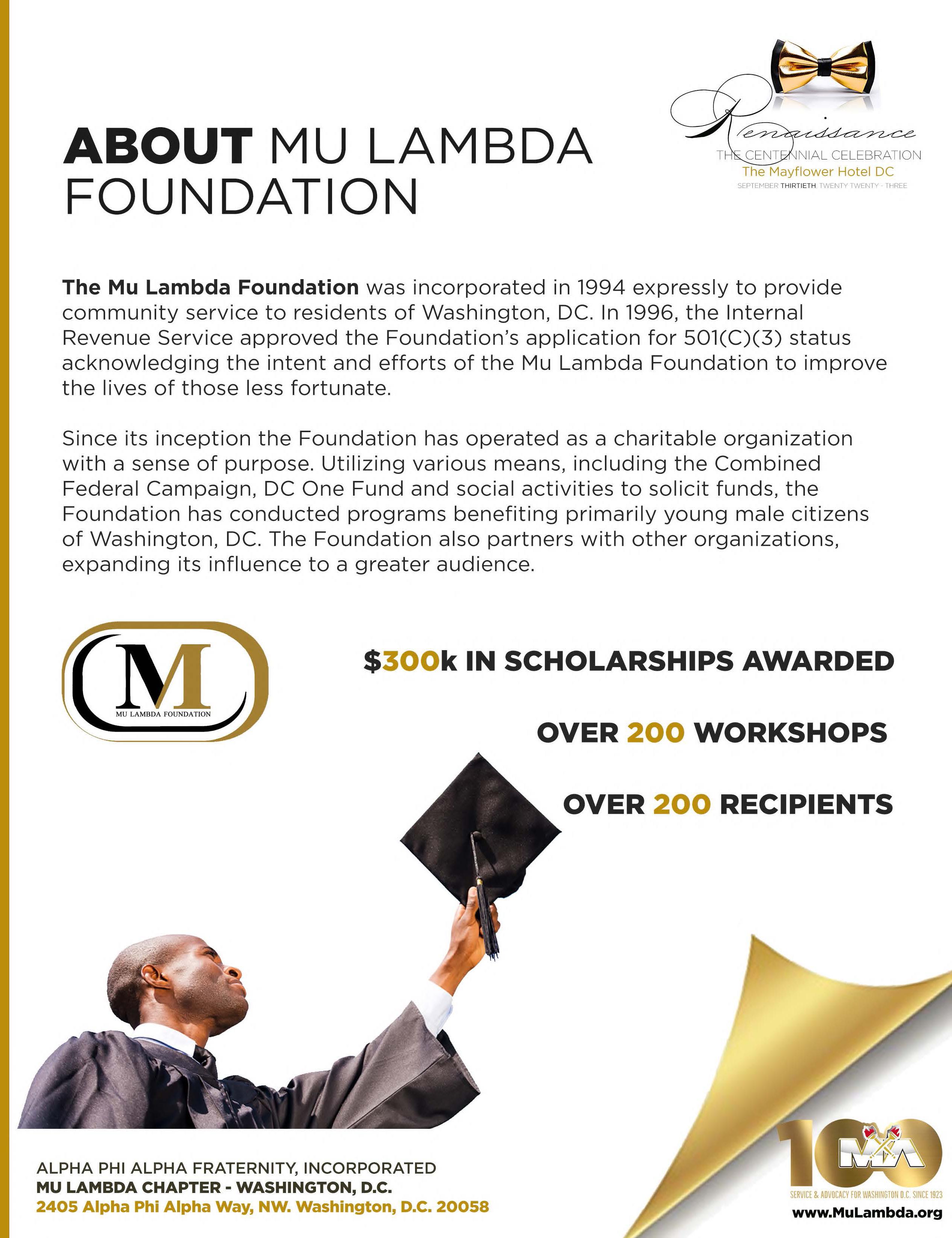
Brothers, it is that time of year when we begin to think in the spirit of giving and giving thanks. In that spirit, the Mu Lambda Foundation participates in two key funding programs through which federal and District of Columbia employees can share the gift of the giving.
The Combined Federal Campaign - CFC (https://www.opm.gov/combined-federal-campaign) is a resource that allows U.S. government employees to make regular payroll deductions in support of the Mu Lambda Foundation and its charitable and community service programs.
The DC One Fund (https://os.dc.gov/page/dc-one-fund-each-one-give-one) provides an opportunity for employees of the District of Columbia to do the same. All donations through these funds are tax deductible and deducted from your paycheck regularly. What could be an easier or better way to support the programs you care about?
As open season begins for 2023, you may plan your weekly, biweekly, or monthly contributions to the Mu Lambda Foundation by contributing to charity number 66770 in the CFC, and number 9556 in the DC One Fund.
Let’s make 2023 the best year yet for supporting youth and abused women in the DC area. Thank you for your continued support.
Bro. Kent Benjamin
The Mu Lambda Foundation meetings are monthly on the third Thursday of the month.
meeting is August 20, 2026
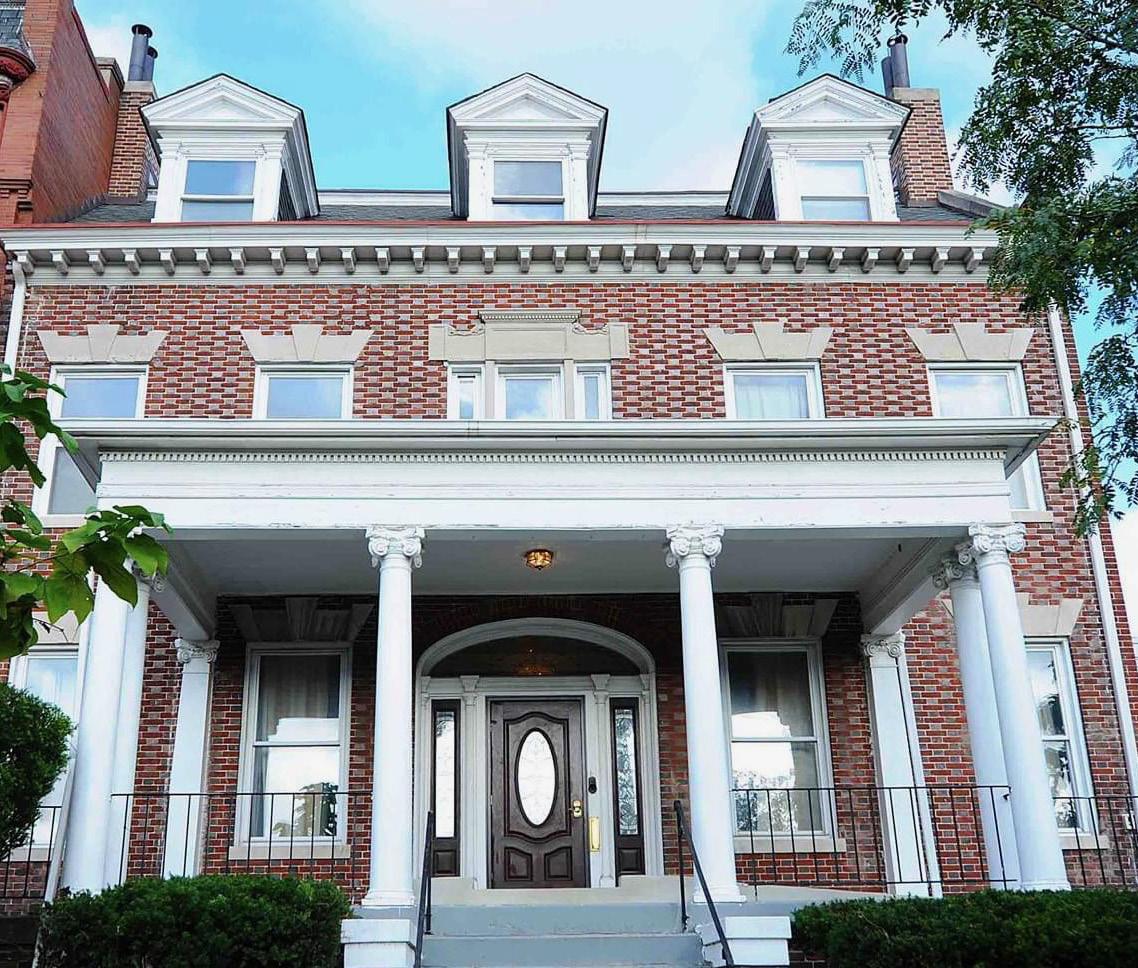
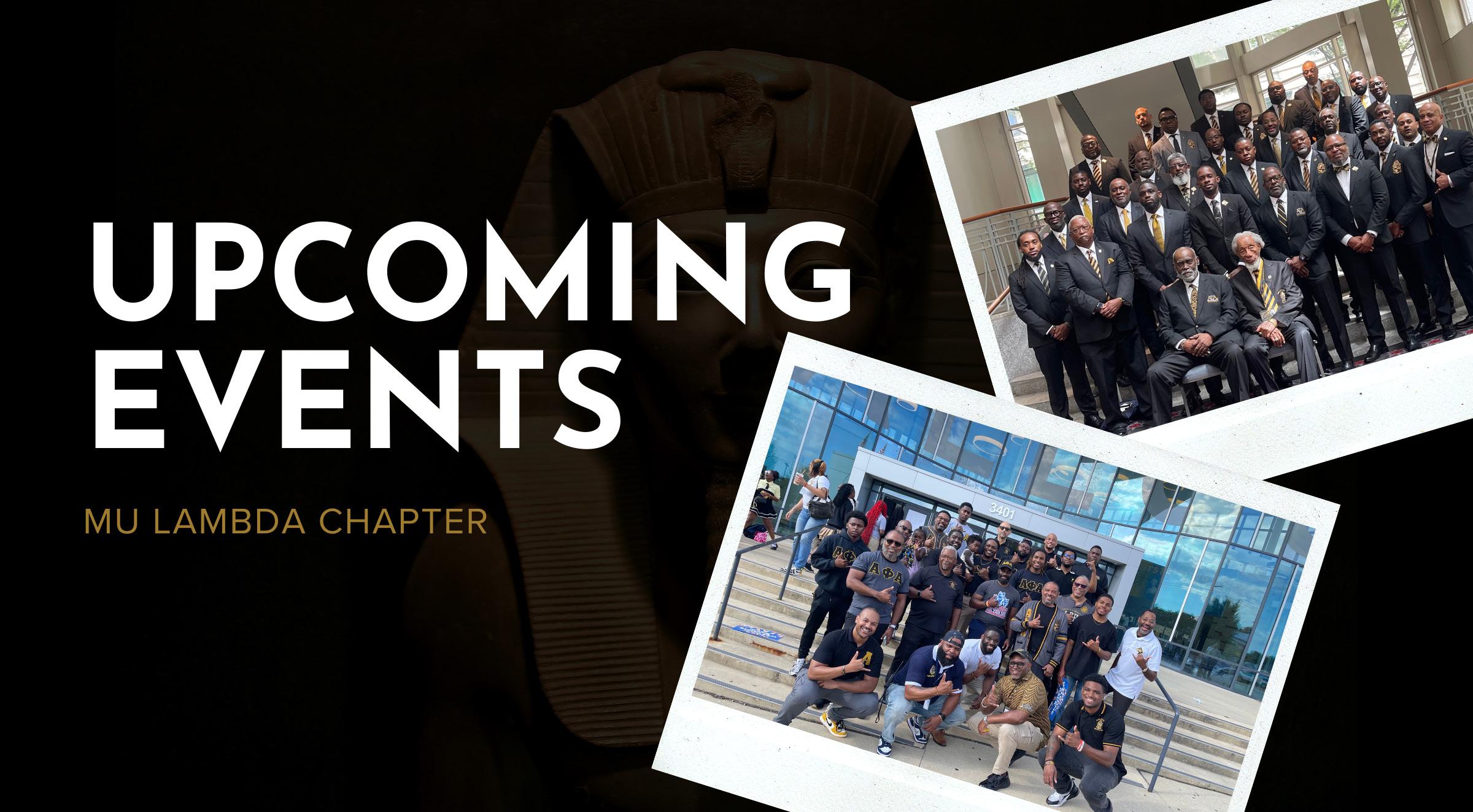
Thursday, January 8
Saturday, January 10
Wednesday, January 21
Thursday, February 5
Saturday, February 7
Wednesday, February 18
Thursday, February 19
Thursday, March 5
Saturday, March 7
Wednesday, March 18
Thursday, April 2
Saturday, April 4
Wednesday, April 15
Thursday,April 16
Chapter Meeting
Alpha Wives Meeting
Eboard Meeting
Chapter Meeting
Alpha Wives Meeting
Eboard Meeting
Foundation Meeting
Chapter Meeting
Alpha Wives Meeting
Eboard Meeting
Chapter Meeting
Alpha Wives Meeting
Eboard Meeting
Foundation Meeting
Wednesday, April 15 -19 Eastern Region Convention
Thursday, May 7
Saturday, May 9
Wednesday, May 20
Thursday, May 21
Thursday, June 4
Saturday, June 6
Friday, June 19
Sunday, June 21
July 2026
Chapter Meeting
Alpha Wives Meeting
Eboard Meeting
Foundation Meeting
Chapter Meeting
Alpha Wives Meeting
Juneteenth Day
Father’s Day
Chapter Vacation
Saturday, August 15
Thursday, September 4
Chapter Retreat
Chapter Meeting
Friday, September 5 ICED or Neat
Saturday, September 6
Alpha Wives Meeting
Wednesday, September 17 Eboard Meeting
Thursday, September 18 Foundation Meeting
Thursday, September 25
Wednesday, October 1
Thursday, October 2
Saturday, October 11
The F1RST Breakfast
102nd Charter Day
Chapter Meeting
Chapter Cookout
Wednesday, October 15 Eboard Meeting
Thursday, October 16 Foundation Meeting
Thursday, November 6
Chapter Meeting
Fri-Sat, Novembr 7-8 Annual District Conference
Saturday, November 8
Wednesday, November 19
Alpha Wives Meeting
E-board Meeting
Thursday, November 20 Foundation Meeting
Thursday, November 27 Thanksgiving Day
Thursday, December 4
Thursday,December 4
Saturday , December 6
Saturday , December 6
Founders’ Day
Chapter Meeting
Founder’s Day Breakfast
Karaoke Fundraiser
Wednesday, December 17 E-Board Meeting
Thursday, December 18 Foundation Meeting
Thurssday, December 25 Christmas


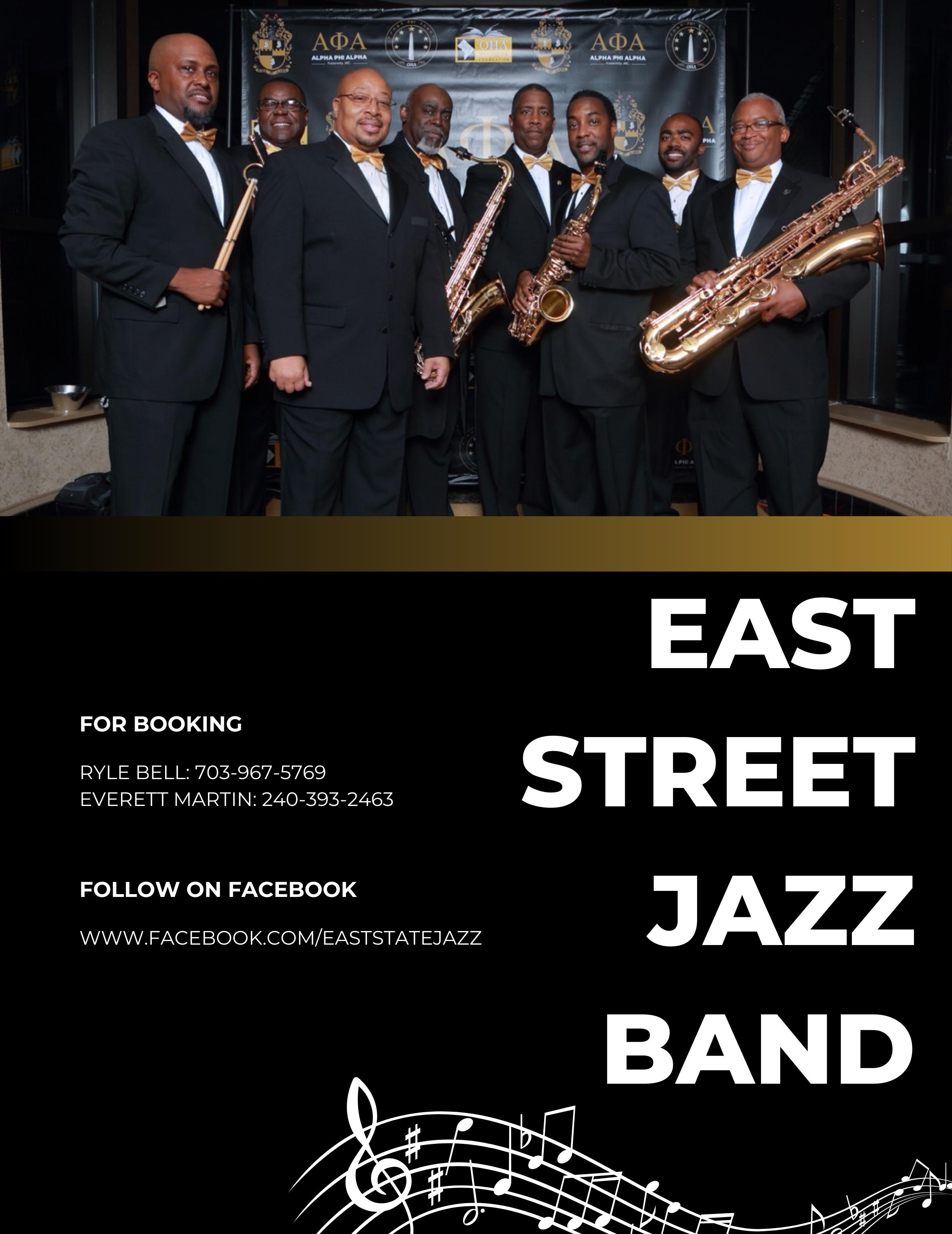






This official Mu Lambda Chapter App is for members of the chapter to find out about our events, chat with Chapter members, View Chapter Documents, View Chapter Directory, View our monthly magazine (The Torch) Pay Chapter Dues and much more. The ability to effectively communicate with Chapter members will help us continue to develop leaders, promote brotherhood and academic excellence while providing service and advocacy for our community.

Founded in 1976, House of Ruth empowers women, children and families to rebuild their lives and heal from trauma, abuse and houselessness. Our continuum of services encompasses enriched housing for families and single women, trauma-informed childcare, and free counseling to empower anyone who is a survivor of trauma and abuse.
Mission: House of Ruth empowers women, children and families to rebuild their lives and heal from trauma, abuse and houselessness.
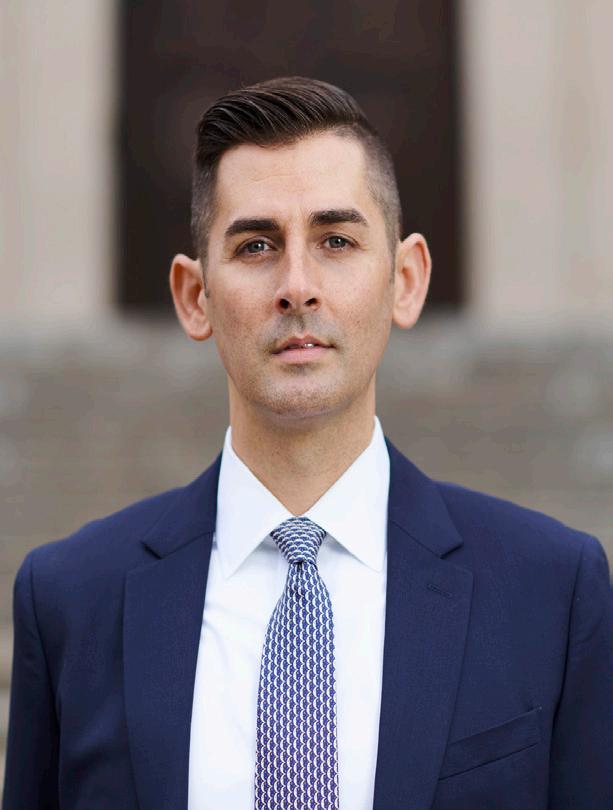
BRO. CHRISTOPHER BUTTS EDITOR OF THE TORCH TORCH@MULAMBDA.ORG
There is something powerful about endings. Not because they signify completion, but because they invite us to pause long enough to appreciate the journey.
As we arrive at the final edition of The Torch for this fraternal year, I find myself reflecting on a simple truth: the strength of Mu Lambda has never resided in a building, a title, or a single administration. It has always resided in the collective commitment of brothers willing to carry the flame forward.
The torch itself is one of the most enduring symbols in Alpha Phi Alpha. It illuminates. It guides. It reveals. But perhaps most importantly, it must be carried. A torch serves no purpose if it remains stationary. It fulfills its purpose only when one hand passes it to another, generation after generation.
ALPHA QUOTE TO SERVE BY...
“Now is the accepted time, not tomorrow, not some more convenient season. It is today that our best work can be done and not some future day or future year.”
Brother W.E.B. DuBois,
This year, we have witnessed that truth repeatedly. We have seen brothers serve our communities through initiatives like Alpha Move, March for Babies, and countless service projects throughout the District. We have celebrated professional achievements, academic milestones, and leadership appointments. We have welcomed new opportunities, strengthened old bonds, and continued the work that has defined Mu Lambda for generations.
Throughout these pages, you will find stories of service, leadership, scholarship, civic engagement, fatherhood, wellness, and legacy. While the topics may differ, a common thread runs through each one: the belief that our responsibility as Alpha men extends beyond ourselves.
As we close one fraternal year and prepare for another, we also stand at a moment of transition. New leaders will emerge. New ideas will take shape. New challenges will present themselves. Yet the mission remains unchanged.
In many ways, this issue is not about looking back. It is about
recognizing that every chapter in our history becomes the foundation for the next one. The work of those who came before us created the opportunities we enjoy today. Likewise, the work we undertake now will shape what future brothers inherit.
The fraternal year may be ending. The work is not. The story is not. And the flame never dies.

Brothers,
It is that time of year again.
The fraternity’s fraternal year runs January 1st to December 31st.
Mu Lambda’s 2025-2026 fraternal year runs September 1, 2025 to June 30, 2026. The chapter does not meet during July and August.
It is now time to pay your 2025-2026 dues which will cover you from January 1, 2026 to December 31, 2026.
Ways to make payment:
1. You can pay your dues on mulambda.org by clicking the dues tab at the bottom left of every web page.
2. Bring a check to the chapter meeting.
3. You can pay on the Mu Lambda App
4. Mail it to:
Financial Team
Alpha Phi Alpha Fraternity, Inc.
Mu Lambda Chapter 2405 First Street, NW Washington, DC 20001

An Alpha Phi Alpha man’s attitude should not be “how much can I derive from the Fraternity” but “how much can I do for the Fraternity?” In proportion to what he does for his Chapter and for Alpha Phi Alpha will a member receive lasting benefits from the Fraternity to himself in the way of self-development by duty well done, and the respect of the Brothers well served.
A member’s duties should be:
1. Prompt payment of all financial obligations, the prime requisite for successful fraternal life.
2. The doing of good scholastic work in his chosen vocation, thereby accomplishing the real end of a college course.
3. The reasonable endeavor to participate in general college activities and social service and to excel therein.
4. The proper consideration of all things with appropriate attention to the high moral standard of Alpha Phi Alpha.