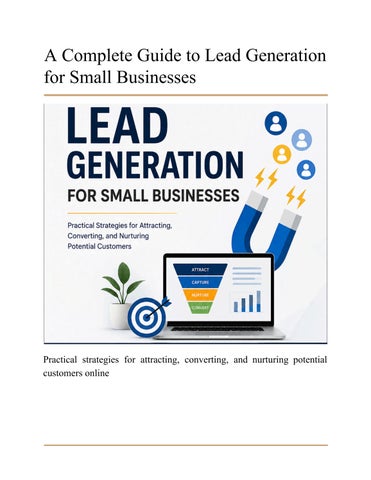
A Complete Guide to Lead Generation for Small Businesses
Practical strategies for attracting, converting, and nurturing potential customers online
Index
Sl.no
Content
Page
1
Introduction to Lead Generation
3
2
Why Lead Generation Matters
3-4
3
Understanding Your Ideal Customer
4
4
Building a Lead-Ready Website
4-5
5
SEO and Content Marketing
5-6
6
Social Media and Email Marketing
6-7
7
Landing Pages and Paid Advertising
7-8
8
Lead Qualification and Measurement
8-9
9
Common Mistakes and 30-Day Plan
9-10
10
Conclusion
10
2
1. Introduction to Lead Generation Lead generation is the process of attracting people who may be interested in a business and encouraging them to take an action, such as submitting an enquiry, requesting a quotation, booking a consultation, or subscribing to an email list. For small businesses, lead generation helps turn online visibility into genuine business opportunities. A simple lead-generation process is: Attract → Engage → Capture → Nurture → Convert The objective is not simply to collect a large number of leads. The real objective is to attract relevant and qualified potential customers. 2. Why Lead Generation Matters Lead generation can help small businesses create a more consistent approach to acquiring customers. Consistent Opportunities Businesses that depend only on referrals or occasional enquiries may experience unpredictable growth. A structured marketing process can create a regular flow of potential customers. Better Marketing Decisions Tracking where enquiries come from helps businesses understand which channels are performing well. SEO, social media, email, advertising, and content can be compared based on the quality of leads they generate. Better Targeting A clear understanding of the target customer allows businesses to create more relevant marketing messages.
3
Quality Over Quantity A business does not necessarily benefit from hundreds of irrelevant enquiries. A smaller number of qualified leads can be more valuable. Effective lead generation focuses on the right audience, useful information, and consistent follow-up. 3. Understanding the Target Audience Before starting a campaign, businesses should identify their ideal customer. Consider: ● Location ● Age group ● Industry ● Business size ● Problems ● Goals ● Budget ● Buying behavior Understanding customer questions can also provide ideas for blogs, videos, FAQs, and social media content. A strong value proposition should answer three questions: Who do you help? What problem do you solve? What benefit do you provide? 4. Building a Lead-Ready Website A website should not only provide information. It should guide visitors toward an appropriate next step. Clear Navigation Visitors should quickly understand the business, its services, and how to make contact.
4
Strong Calls to Action Examples include: ● Request a Quote ● Contact Us ● Book a Consultation ● Download a Guide ● Get Started Trust Signals Testimonials, reviews, case studies, business information, and clear contact details can increase confidence. Mobile-Friendly Design Websites, forms, and buttons should be easy to use on smartphones and tablets. A good website turns attention into action. 5. SEO and Content Marketing Search Engine Optimization SEO helps businesses become visible when potential customers search for relevant information or services. Good SEO focuses on search intent, useful content, website structure, and user experience. Important practices include: ● Creating original content ● Answering customer questions ● Using clear headings ● Improving existing pages ● Building relevant internal links ● Keeping information updated Businesses should avoid keyword stuffing, copied content, and irrelevant links. Content Marketing
5
Content marketing involves creating useful information that attracts and educates potential customers. Examples include: ● Blog posts ● Guides ● Videos ● Checklists ● Case studies ● Infographics ● Tutorials The best content addresses real customer problems. For example, a digital marketing business could create content about SEO, lead generation, website conversion, social media, and online advertising. The purpose of content marketing should be to provide value before asking for a sale. 6. Social Media and Email Marketing Social Media Marketing Social platforms can help businesses build awareness and communicate with potential customers. Businesses should focus on platforms where their target audience is active instead of trying to use every available platform. Useful content can include: ● Marketing tips ● Tutorials ● Industry information ● Customer questions ● Case studies ● Practical advice Businesses should avoid repeatedly posting promotional links without contributing useful information.
6
Email Marketing Not every lead is ready to buy immediately. Email marketing can help maintain communication with people who have voluntarily subscribed. A simple email sequence could be: Email 1: Deliver a useful resource Email 2: Explain a common problem Email 3: Provide a solution Email 4: Answer common questions Email 5: Present a relevant offer The purpose is to build trust and maintain a useful relationship. 7. Landing Pages and Paid Advertising Landing Pages A landing page is designed around a specific goal, such as collecting enquiries or promoting a resource. A strong landing page should have: ● A clear headline ● Short explanation ● Main benefits ● Trust elements ● One clear call to action Lead Magnets A lead magnet is a useful resource offered to potential customers. Examples include: ● Checklist ● Guide ● Template ● Worksheet ● Report
7
The resource should provide genuine value. Paid Advertising Paid advertising allows businesses to reach specific audiences quickly. Campaign objectives may include: ● Generating enquiries ● Increasing bookings ● Collecting leads ● Promoting products ● Driving relevant traffic The advertisement and landing page should communicate the same offer. Testing different headlines, audiences, images, and offers can help improve campaign performance. 8. Lead Qualification and Measurement Generating many leads does not necessarily mean a campaign is successful. Lead Qualification A qualified lead should have a genuine need and fit the business's target audience. Businesses can consider: ● Customer need ● Budget ● Location ● Business type ● Purchase timeline Follow-Up A simple process can be: New Enquiry → Qualification → Follow-Up → Proposal → Customer Consistent follow-up prevents potential opportunities from being forgotten.
8
Measuring Performance Important metrics include: Conversion Rate: Percentage of visitors who take the desired action. Cost Per Lead: Average cost required to generate a lead. Qualified Lead Rate: Percentage of leads that meet the business's requirements. Lead-to-Customer Rate: Percentage of leads that become customers. Customer Acquisition Cost: Average marketing and sales cost required to acquire a customer. Businesses should focus on meaningful outcomes rather than only likes, impressions, or traffic. 9. Common Lead Generation Mistakes Trying Everything Small businesses often have limited resources. Focusing on a few relevant channels is usually more practical. Targeting Everyone A specific audience creates clearer messaging and better targeting. Ignoring Follow-Up Generating a lead is only the beginning. Poor follow-up can result in lost opportunities. Focusing Only on Traffic Website traffic is useful, but enquiries, qualified leads, customers, and revenue are more meaningful outcomes. Excessive Promotion Useful information should come before promotional messages. 30-Day Action Plan Week 1 — Foundation
9
Define your audience, identify customer problems, and improve your website's calls to action. Week 2 — Content Research customer questions, improve important pages, and publish useful content. Week 3 — Promotion Share content through relevant channels and participate in appropriate online communities. Week 4 — Measurement Review enquiries, qualified leads, conversion rates, and marketing channels. The goal is to create a repeatable system and improve it based on real results. 10. Conclusion Lead generation is an important part of digital marketing for small businesses. It helps businesses attract potential customers and create a clear path from initial interest to conversion. A strong lead-generation strategy combines: Audience Research → SEO → Content → Social Media → Landing Pages → Email → Follow-Up → Measurement There is no single strategy that works for every business. The best approach is to understand the target audience, provide useful information, test different channels, and measure actual business results. Consistent improvement can help a small business build a more reliable source of qualified leads. About the Resource For additional information and resources related to lead generation and digital marketing, visit: Website: https://msleadcraft.online/.
10