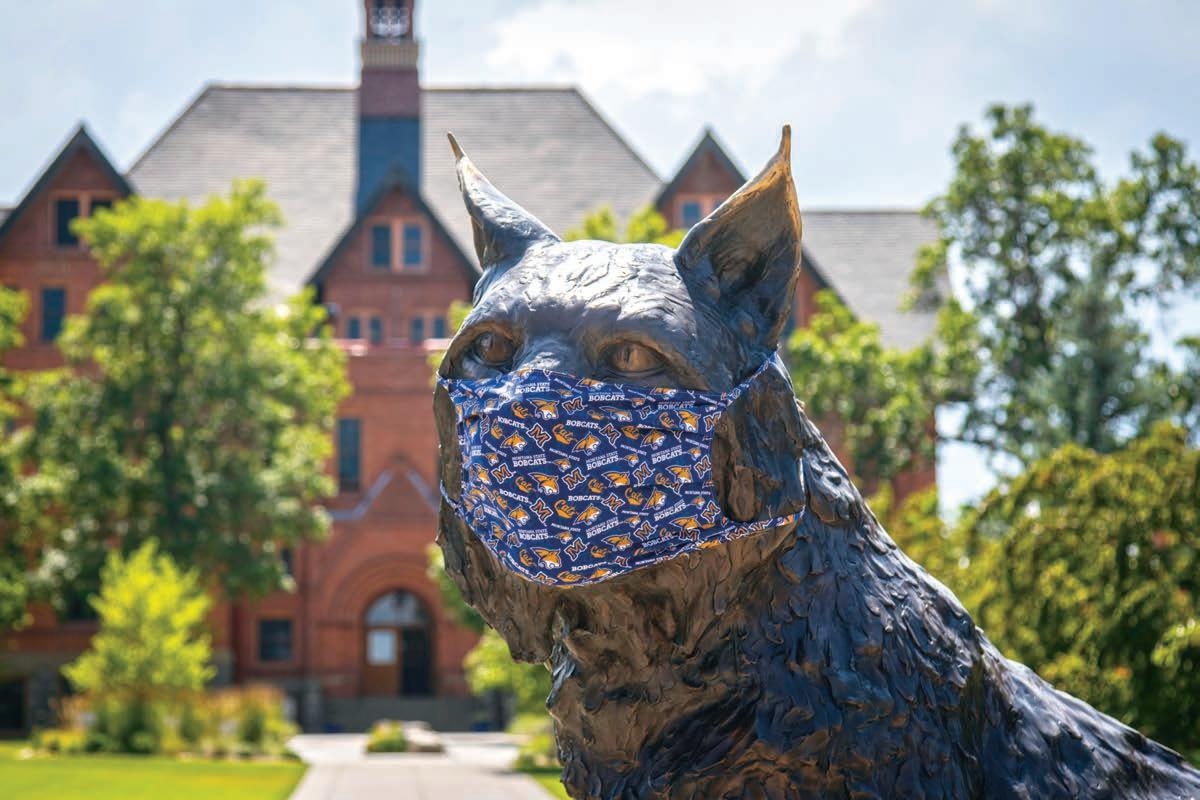
Greetings! I hope this issue of Collegian finds you healthy and safe. Since our last issue much has changed in our world. Like all of you, we here at the MSU Alumni Foundation have been coping with the disruption caused by the COVID-19 pandemic. In March, we began working remotely, and for the most part, remain that way. We are still limiting activities in our buildings, and for the safety and protection of our alumni and friends, cancelled all in-person events that were scheduled for last spring and summer.
This fall, we are carefully monitoring the situation here in Bozeman and in our chapters across the state and country to determine whether bringing people together again is permissible and, most importantly, safe. Our guiding principle is to ensure the health and safety of our alumni, friends and staff. In the meantime, we have moved many of our events and in-person activities to the virtual world.
You’ll notice that this issue is not dominated by stories related to the COVID-19 pandemic or its affect on our communities and economy. That is by design. We chose to include stories of good and interesting things our alumni and friends are doing, just like we always have. Plus, the fall issue of MSU’s awardwinning Mountains & Minds magazine will be devoted to the pandemic and its impact on the university, students, and community, and how MSU is responding to the strange, new environment we are all facing.
You may also notice some familiar pages missing from your Collegian. Because Bobcat football has been delayed until next spring, we’ve been working on some creative alternative programming. We moved information about Homecoming, tailgates and the Cat-Griz watch parties online so we can provide the latest, most current plans for those Fall events. You can access the most up-to-date information for all events on our website at: msuaf.org/events
As I reflect on where we find ourselves, it strikes me that we all have two very important things in common: each of us is navigating this crisis as best we can, and we all have a deep and abiding love for Montana State University. So, no matter where you find yourself, or whatever your circumstances, the truth is, together, we will get through this. I would even venture to say we need each other more now than ever.
It’s the Bobcat way and we’re Bobcat strong!
I look forward to all being together again someday soon,
Go ’Cats.
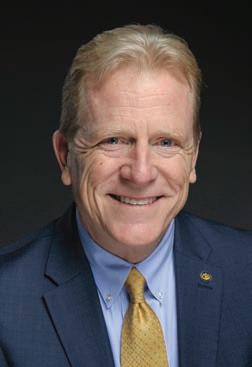
Chris Murray President and Chief Executive Officer, MSU Alumni Foundation
conservation goals.
Montana State University was recently named the best college for LGBTQ+ students in the state of Montana, a recognition made by BestColleges.com in partnership with the nonprofit organization Campus Pride.
Construction began in early May on Montana State University’s Bobcat Athletic Complex, a donor-funded $18 million addition to the north end of Bobcat Stadium. The project is expected to open by August 2021.
New Dean
Yves Idzerda, who formerly served as head of the Department of Physics and professor of physics at Montan State University, was named dean of the MSU College of Letters and Science after a national search that produced many strong candidates. He began his new responsibilities on July 1.
Historic won/loss record
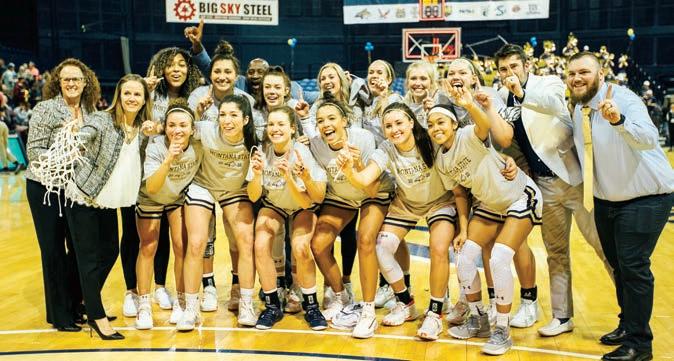
The Bobcat Women’s BB team ended the season 25-6 overall—the best won/loss record in school history. They finished 19-1 in Big Sky Conference play— the most wins ever recorded by a women’s team in the history of the league. COVID-19 ended the season abruptly before the Big Sky Conference championship game with Idaho.
After leading Montana State to a historic 2019-20 Big Sky Conference season, Bobcat coach Tricia Binford was named the league’s Coach of the Year.
Montana State University student Hannah Telling, who will graduate next month in English education and gender studies, has won a Fulbright to teach and conduct research in Serbia.
MONTANA
With the health and safety of the MSU community as the foremost priority, Montana State University’s Roadmap for Fall 2020 focuses on specific actions students, faculty, staff and campus visitors must take to reduce the risk of COVID-19.
Goldwater Scholars.
MSU is No. 1 in the region for
Spillover research
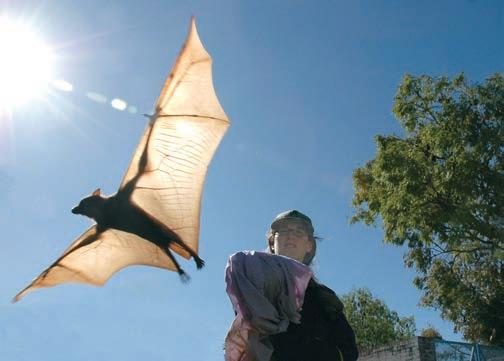
For years, Montana State University researcher Raina Plowright’s work has studied bats and the viruses they carry and spread. Now, with the emergence of the novel coronavirus pandemic, she and collaborators in Australia, Bangladesh, Ghana and Madagascar are researching how to prevent the spread of other viruses from animals to humans—an event known as spillover.
Alex Washburne, a researcher in the Bozeman Disease
Ecology Lab, is helping develop a better understanding of the spread of the novel coronavirus based on data collected after the 2009 H1N1 outbreak.
MSU alumni receive teaching awards
Belgrade High School teacher, Katie Capp, was named Outstanding Biology Teacher for the state of Montana by the National Association of Biology Teachers.
Linda Rost , a high school science teacher in Baker, MT, was selected as the 2020 Montana Teacher of the Year.
Sarah Dahl, an English and career development teacher at Park High School, was one of 19 educators from across the country selected for the PBS Digital Innovator All-Star Program.
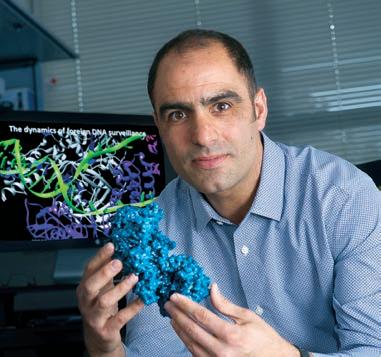
A team led by MSU scientist Blake Wiedenheft was able to detect the novel coronavirus in samples taken at Bozeman’s Water Reclamation Facility. “This may be one of the most important indicators to follow,” said Wiedenheft, associate professor in the Department of Microbiology and Immunology in MSU’s College of Agriculture. “Our hope is that this approach will become more common and that communities can use wastewater monitoring as an early warning sign of coronavirus infections.”
The Montana Innovation Partnership Program, a Montana State University program that assists startups across the state, has helped Montana become the most successful state in the nation in securing small business innovation grants from the National Institutes of Health.
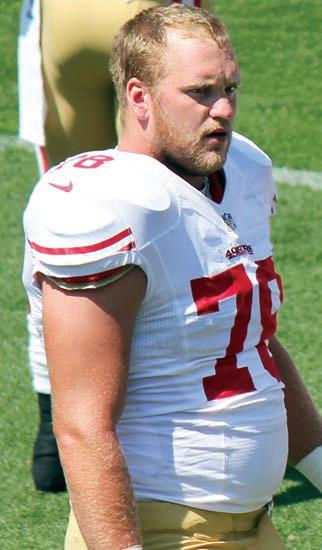
Bobcat athlete Mike Person ’10, (BA 2010), started at right guard for the San Francisco 49ers in the 2020 Super Bowl LIV game with the Kansas City Chiefs.
MSU Arts & Architecture alum, Scott French ’96 of Mister French’s Gourmet Bakery, won the Food Network’s Christmas Cookie Challenge and was awarded prize money of $10,000.
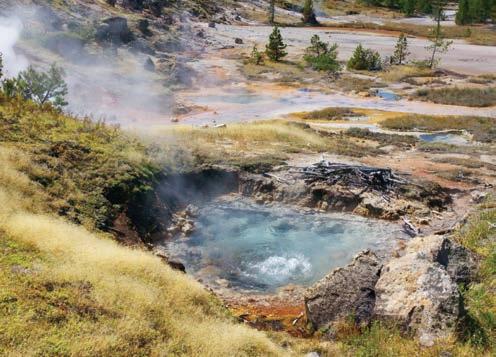
Montana State University has become the newest member in a unique consortium dedicated to increasing scientific understanding of Yellowstone National Park’s supervolcano.
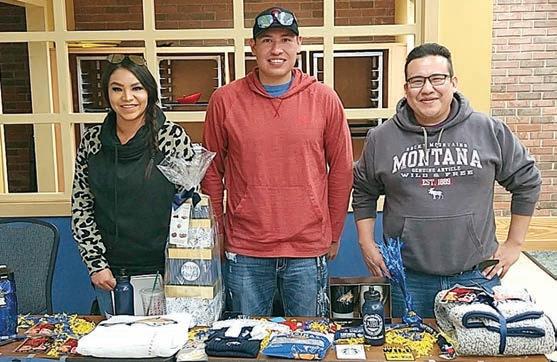
A team of three students ( Zach Fighter, Terrance Limpy and Tiara McGee-Bauer) representing the recently reestablished student chapter of American Indigenous Business Leaders, or AIBL, at Montana State University recently took first place in a business plan competition at the organization’s national conference.
Dr. Irving Weissman ’61, Founding Director of the Institute for Stem-Cell Biology and Regenerative Medicine at Stanford University (ISCBRM) has received $191 million for cancer-fighting biotech research. Last fall, Weissman presented a Hilleman Lecture at the Museum of the Rockies in Bozeman titled “Stem Cells in Regenerative Medicine, Cancer, and as Rogue Cells in Disease.”
Life Stages
BY EVELYN BOSWELL
Montana State University alumni may be recent graduates like former football player Matt Brownlow or retirees like Jim and Kay Gannon, but whatever their stage in life, the MSU Alumni Foundation wants to meet them there.
“A priority of our mission is to cultivate lifelong relationships. We truly are here for our alumni and friends at every stage of their lives,” said Chris Murray, president and CEO of the MSU Alumni Foundation.
“A recent grad will likely have very different needs and interests than an empty nester who is approaching retirement,” he added. “In our quest to become an ever-inclusive organization, we want to engage with them in meaningful, relevant ways and through channels that make it easy for them to connect wherever they happen to be on their journey.”
The profiles here will introduce you to alumni in five different stages of life: recent graduate, young professional, mid-life, apex and retired.
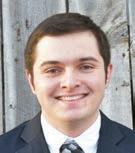
MATT BROWNLOW Recent graduate
Matt Brownlow started playing football as a Little Grizzly and continued at Sentinel High School in Missoula.
“It was a good four years,” he remembers.
But then Brownlow enrolled at Montana State University where he played rugby. Partway through his first season, he started spending time with football players and realized he missed it. So the next summer, Brownlow joined dozens of others competing for walk-on spots with the Bobcat football team. He was one of a handful selected.
It was a thrill to play nose guard the next three years, Brownlow said. Also to see his mom at every game and to beat the Grizzlies in his senior year.
“That was the utmost pinnacle for me,” Brownlow said.
Ever since joining the team, Brownlow has worked to express his gratitude for the opportunity. He has dedicated himself to giving back.
“It’s kind of an unwritten rule,” he said. “You take care of your own.”
Graduating in 2017 with a bachelor’s degree in business management and marketing, Brownlow has continued to do media work for the Bobcats. He still wears blue and gold on Fridays. He gathers with alumni, saying, “It’s cool to find little pockets of Bobcats in Montana.” Every time he works in Missoula, he wears a Bobcat jacket.
“I don’t own a piece of maroon,” he said. “I bleed blue and gold through and through.”
Brownlow also serves his supporters as a business development executive with the Avitus Group in Bozeman. His goal is to alleviate administrative pressures felt by small business owners in Montana, Idaho and Colorado, some of whom he has known since his football days.
“I feel like I’m giving back to the community that supported me,” Brownlow said. “It’s kind of coming back full circle. You helped me. How can I serve you?”
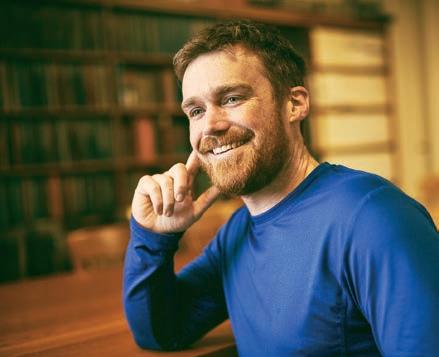
ALEX MARIENTHAL Young professional
Alex Marienthal grew up in Colorado, one of two sons in a family of skiers. Some of his fondest memories are skiing in the backcountry with his father, then sleeping in the huts that honor the soldiers of the 10th Mountain Division.
As such, Colorado would seem to be a natural place for Marienthal to have attended college. Instead, he moved to Bozeman and became a Bobcat.
Bozeman gave him a change of scenery while letting him continue skiing, Marienthal said. At the same time, Montana State University attracted him with its world-renowned program in snow science.
The program lived up to its reputation, and he found himself increasingly interested in research, Marienthal said. He graduated in 2009 with a bachelor’s degree in earth sciences. After analyzing four decades of data from the Bridger Bowl Ski Area, he earned his master’s degree in earth sciences in 2014.
Continuing to choose Bozeman as his home, Marienthal became an avalanche specialist with the Gallatin National Forest Avalanche Center. He now predicts avalanches while continuing what he started as an MSU student.
For five years before taking his position with the GNFAC, Marienthal was an educator for the Friends of the Avalanche Center. He has traveled all over southwest Montana to make the public more aware of avalanches. He warns out-of-state visitors about the possibility of setting off avalanches in the backcountry. He teaches families about the dangers of leaving the boundaries of a ski resort. He participates in MSU’s annual Snow and Avalanche Workshop.
“It’s definitely a source of pride coming out of the snow science program at Montana State University,” Marienthal said. “It’s a prestigious program. It’s one of the things among many that MSU has to be proud of. I think MSU is a cool university of the West.”
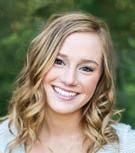
DEBBIE SKIBICKI Mid-life
In Debbie Skibicki’s world, every week has a Blue and Gold Friday and every vehicle she has owned is imprinted with “appropriate Bobcatness.”
“I’m a huge Bobcat all the way around, and I like to interact with other people who feel the same way,” said the Clancy native who first graduated from Montana State University 25 years ago.
Her parents both attended MSU, so she thought about going elsewhere, Skibicki said. But she wanted to become a chemical engineer, and that narrowed her choice down to two colleges. When she visited MSU for High School Days, “I fell in love. That was it.”
Skibicki graduated in 1995 with a bachelor’s degree in chemical engineering. Four years later, she earned her master’s degree in industrial and management engineering. Immediately after college, she moved to Minnesota to work for 3M.
Not only did MSU give her the personalized education that some of her colleagues envied, but it offered her a lifeline after graduation, Skibicki said.
“I really valued the MSU alumni connections and the events when I lived out of state,” she said.
Now living in Helena and the consulting team leader at Bison Engineering Inc., Skibicki continues to strengthen those ties. She serves on the external advisory committee for the Department of Civil Engineering.
“I feel like it’s important to help other students navigate their moving forward in their professional lives,” she said.
She also works with the Alumni Foundation on legislative issues, such as the repurposing of Romney Hall and the six-mill levy that supports higher education in Montana. She is active in her local alumni chapter, attending everything from football watch parties to a presentation on edible bugs.
“I’m just very dedicated to the school, and I want to give back and continue to be involved,” Skibicki said.
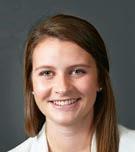
TANYA REINHARDT Apex
Tanya Reinhardt was born to two Grizzlies, but she soon grew the heart of a Bobcat and passed it along.
“This always felt like home away from home. I think it was at the very top of my list of places I wanted to go from a very early age,” Reinhardt said about Montana State University.
A fifth generation Montanan whose grandparents had a sheep ranch in the Gallatin Valley, Reinhardt first came to MSU as a youngster competing in the Montana 4-H Congress. She later enrolled at MSU and graduated in 1988 with a bachelor’s degree in speech and communication.
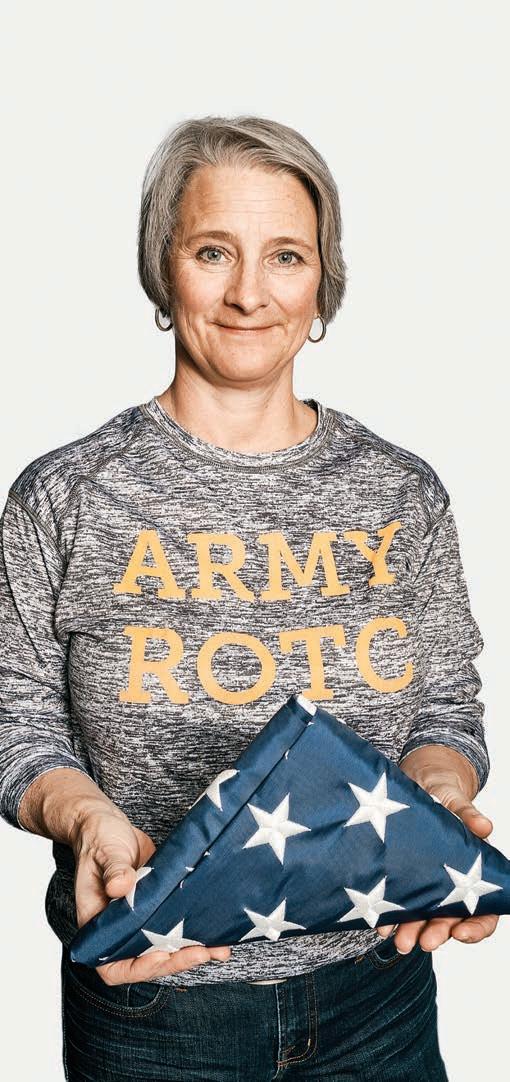
“MSU gave me incredible leadership opportunities. I took advantage of them at every step,” said Reinhardt, cadet battalion commander for the Army ROTC and outstanding student three years in a row.
Her time at MSU set her on a path of service, Reinhardt said. After graduation, she became a lieutenant colonel in the Army. She is now deputy director of programs and operations for The COMMIT (cq) Foundation, which helps veterans transition to civilian life. She is a trustee for Bozeman Public Schools. She is a co-leader for her church’s Stephen Ministry.
Reinhardt also mentors MSU students and helps the Alumni Foundation with legislative initiatives. She sometimes joins ROTC cadets at football games. She flies the Bobcat flag in front of her house for any occasion that strikes her.
Along the way, her daughter, Allison, found MSU a place to lead and serve, too. The senior in political science is a presidential scholar. She is an AdvoCat and served two years as an ASMSU senator. After graduation, she hopes to earn a master’s degree in public health and policy.
“The amount of pride I have in MSU is endless, and I wouldn’t want to be anything other than a Bobcat,” Allison said.
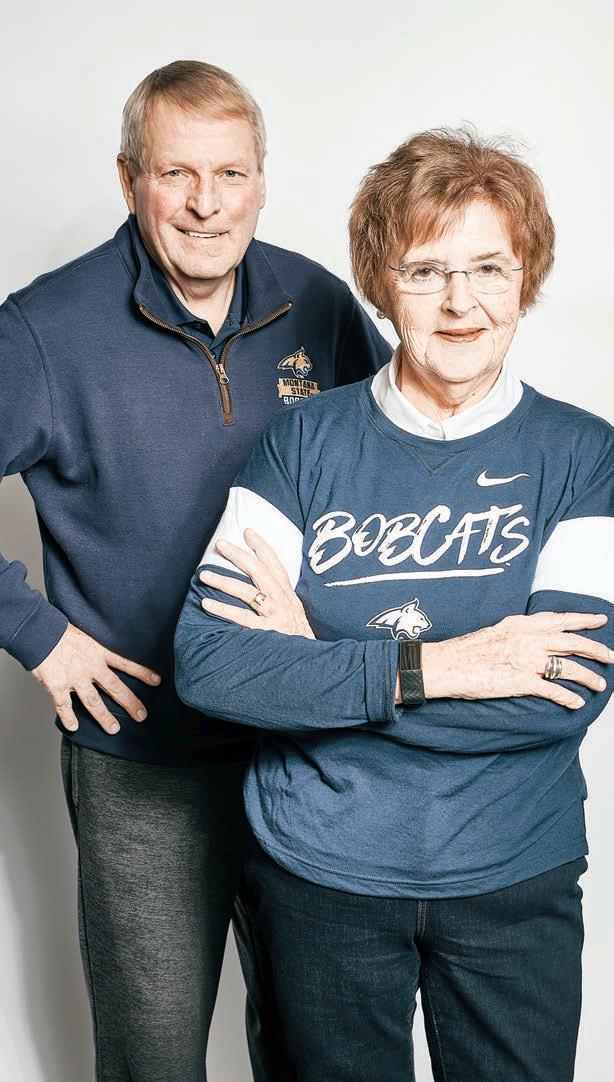
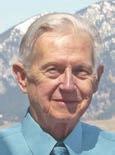
JIM AND KAY GANNON Retired
Kay Gannon used to ride her horse five miles every morning to attend a two-room school near the base of the Bridger Mountains.
Now retired, Gannon still rides occasionally, but the trail since grade school has taken her far from the ranching community of Sedan. It led her to Montana State University and then to her husband, Jim, a Glendive native who was refereeing a state basketball tournament when she met him. The path eventually veered away from Montana and then looped back.
Kay graduated from MSU in 1965 with a bachelor’s degree in elementary education. She earned her master’s degree in guidance and counseling and became an educator and principal in Montana, Minnesota and Texas. Jim attended MSU where he was sports editor for The MSU Exponent and played on the MSU baseball team. He majored in ag education and physical education before working 35 years for the Burlington Northern Santa Fe Railroad.
“Everybody in my dad’s family attended MSU. As a kid, we followed the Bobcats,” Kay said. “It was kind of a natural thing to attend MSU.”
It also seemed natural for the couple to continue supporting MSU—both financially and in spirit—after moving back to Bozeman in 2009.
Jim and Kay attend football games as well as men’s and women’s basketball games. Kay mentors MSU students and advocates for MSU over legislative issues. Jim belongs to the Bobcat Quarterback Club and the 6th Man Club, which supports the MSU basketball team.
The Gannons are are life members of the Alumni Foundation, now known as Blue & Gold Forever, and members of the President’s Circle. They belong to the 1893 Society, a group for donors who have included MSU in their estate plans.
“I just think it’s a good cause,” Kay said of MSU. “Education is good. Everybody should get a shot at it. MSU is a great place to get an education.”
Gary Turner
Mary Kay Dempsey-Noreika
Eric Hastings
Gunner Wade
Mike Everette Debby Green
Marcus “Doc” Craven
Jenny Thuen
Jacey Anderson
Micah Chang
Margo Kirchhoff
Rachel Dunlap
Paul Kent
Project 513 Veterans and students unite through the MSU Veteran History & Arts Initiative
ADAPTED
FROM A NEWS STORY BY ANNE
CANTRELL
“Project 513,” an exhibit of photos and audio recognizing the experiences of 12 local veterans – the first public event sponsored by a new MSU Veteran History and Arts Initiative designed to preserve and honor the history of Montana’s veterans – was held last winter in Bozeman.
The initiative is supported by a two-year, $200,000 Humanities, Art and Social Sciences Grant from MSU, with the possibility the grant may be extended for a third year. “At its core, the initiative and its projects are intended to create connections among veterans and individuals throughout their communities,” said director Marcus “Doc” Cravens, who is also a veteran and an MSU alumnus.
The Veteran History and Arts Initiative includes several projects. In its first, the “Project 513” endeavor, Cravens and MSU associate professor of history, Molly Todd, collaborated through History 513, a graduate seminar focusing on oral history methodologies. As students taking the course learned about the evolution of the field of oral history and the associated theories and professional ethics, they also applied what they learned to interviews with Montana veterans and their families. With guidance from Todd and Cravens,
students conducted interviews, transcribed their interviews and then shared select portions at the public exhibit. The exhibit featured photos made by Cravens of the veterans and their interviewers.
“The intent of the 513 Project was to put faces and voices to what the (MSU Veteran History
of the COVID-19 pandemic. The day to day work of the initiative continues behind the scenes, though, with the hope of sharing the projects with the community in the future.
Cravens said the Veteran History and Arts Initiative aims to obtain, preserve and honor the history of U.S. veterans
“We’re working to connect students and individuals to veterans, their memories and histories.”
— Marcus “Doc” Cravens
and Arts Initiative) is all about,” said Cravens.
Another project of the initiative, called “Living Memories,” is a photographic essay that documents tattoos of or related to veterans, as well as the stories behind those tattoos. The initiative’s “Shadows of our Past” project pairs local artists and businesses with families of veterans who have died. The artists work with the families to create a unique and meaningful way to showcase the veterans’ service medals and other keepsakes.
All the projects within the initiative were originally created to have a public component, but “Project 513” was the only event held before the outbreak
in Montana. It also works to educate and inspire thoughtful creativity through diverse perspectives within the arts and humanities so that veterans’ history is never forgotten. As part of the initiative, volunteers record oral interviews of Montana veterans who served in the U.S. military. Any veteran in any of Montana’s 56 counties, from those who served in World War II to those who are currently serving, are eligible to participate. Each interview that is collected will then live in MSU Library’s Special Collections and Archives. The idea, Cravens said, is that by housing the interviews in Special Collections, the veterans’ stories will never be lost.
“We’re working to connect students and individuals to veterans, their memories and histories,” Cravens said. “It all comes down to how we are connected. It comes down to being human. Ultimately, we are searching for ways to connect our past with future generations by using art as (a way of communicating). We want to build connections and open new lines of communication.”
Cravens added, “There is a sense of urgency that accompanies the MSU Veteran History and Arts Initiative. “About 300 to 350 World War II veterans pass each day, with Korean War veterans right behind. Vietnam vets have the highest rate of suicide, with Iraq War and Afghanistan War veterans right behind them. We’ll lose this piece of history if we don’t communicate it to and preserve it for future generations.”
To learn more about the MSU Veteran History and Arts Initiative, visit: montana.edu/vhai/
Contact: Marcus “Doc” Cravens, director, MSU Veteran History and Arts Initiative, 406-5794064 or marcus.cravens@ montana.edu
“The more you learn, the harder things you do, the better chance you have of doing what you really want to.”
— Loren Acton
Scholar of the Sun
The life of a Montana astronaut
BY DAVID MURRAY/GREAT FALLS TRIBUNE
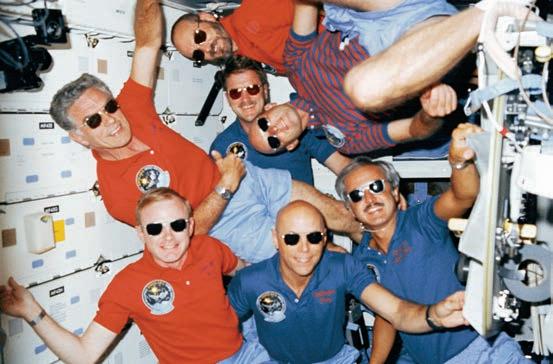
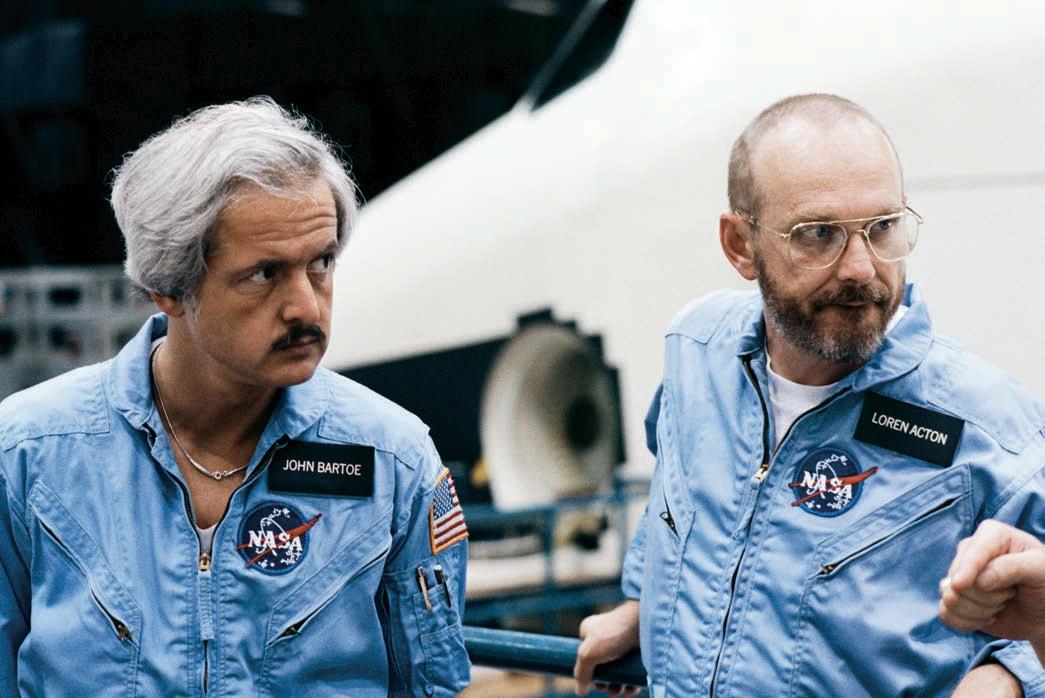
In the months following his mission Acton had a full schedule of public lectures describing his experience. On January 28 he was at a junior high school in Worland, Wyoming when news of the Challenger disaster reached him.
“I was standing on a platform with several hundred middle schoolers ready to give my talk when somebody trotted down the aisle and said, ‘Did you hear that the Challenger exploded?’” he said. “I decided to go ahead and give the talk because I didn’t know whether the kids knew about it or not.”
Acton was an immediate, high profile source for information, not only because of his experience in space, but because he was also one of the last astronauts to fly on the Challenger.
“When I got out from the auditorium the school system there had already set up an office for me with a secretary out front and telephone lines because the media was so desperate to talk to astronauts,”
Acton said. “The career astronauts were embargoed. They were not allowed to be talked to, but payload specialists—those who were no longer working for NASA, were allowed to.
“They flew TV crews in from Denver, from Billings, and I spent a lot of time on the telephone doing interviews. I was able to share everything that I knew. It was a tough day, and by the end of it I was pretty much a rag.”
Acton had been scheduled to fly on a second shuttle mission to continue NASAs research of the sun. However, the program was canceled after the Challenger disaster.
Filming the sun
Acton continued his work at Lockheed-Martin for seven years after his mission to space. His proudest achievement during that time was his participation in the YOHKHO Mission, and with it the launch of the SXTSolar X-Ray Telescope, an instrument designed to produce a continuous movie of the
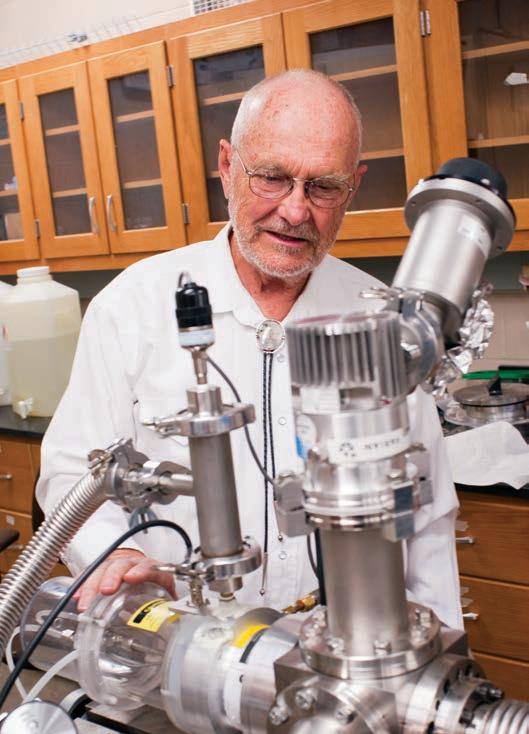
Loren Acton. Photo by Kelly Gorham.
sun’s surface, to more clearly understand its atmosphere (corona) as well as high energy phenomena such as solar flares and coronal mass ejections.
“That was the experiment of my dreams, Acton said. “The sun’s corona is just such a beautiful and fascinating thing. I really, always wanted to make movies of the sun’s corona and x-rays and there was my chance. So, I devoted all my activities and energies to putting together a team and proposal to get to fly that telescope.”
“We’re only begin to understand how the sun does what it does,” Acton continued. “It builds up these strong magnetic fields which erupt through the surface as ropes of magnetism. They come up twisted like a bunch of rubber bands. In the course of transitioning to a lower energy state, massive amounts of energy are released. It’s this process we’re now pretty darn sure which results in solar flares, corona mass ejections.”
According to the National Science Foundation, the energy released by a single solar flare is millions of times greater than the largest volcanic eruption on earth, and greater than a billion megatons of TNT. These eruptions can have real-time effects on our life on Earth, including disrupting satellite and radio communications.
Commercial airplanes are not permitted to fly over the poles during high solar activity because their radio transmissions are not reliable.
“When one of these explosive events happens, it ejects magnetic fields and very high energy particles out into interplanetary space,” Acton explained. “When these big
magnetic storms come … that induces strong electric currents in the electrical grids of the earth. They can burn out transformers which cost $10 million to $15 million apiece, and basically disrupt the electrical grid over a substantial area.”
These mass expulsions of solar radiation have human health implications as well, especially for astronauts working in space.
“The magnetic field of the earth protects us from most of the ionizing radiation from these high energy particles, but if you get up high where the energetic particles can reach you then you’re the one that stops them—and they kill cells,” Acton said. “That’s a health hazard just as radioactivity is in general. The concern of getting caught in a major solar storm on your way to Mars is something that must be thought about.”
The YOHKHO mission, organized in the second half of the 1980s, was designed and operated as a collaboration between NASA and the Japanese space program. It required Acton to stay in close contact with his Japanese colleagues. He formed close friendships with many of them and has traveled to Japan more than 35 times.
“That was really a great time of our lives,” Acton said of the YOHKHO mission. “Our kids were up and out of the nest by then, so we got to go a good bit of time in Japan.
The Solar X-Ray Telescope (STX) aboard the YOKKHO mission was launched on Loren and Evelyn Acton’s wedding anniversary, August 30, 1991, and operated monitoring the sun for more than a decade.
“Don’t worry about whether you can cut the mustard, give yourself a chance to try. You’d be surprised how many times you’re smarter than you think you are. That philosophy turned me into a scientist . . . and that’s what took me into space.”
— Loren Acton
Hurricane Josephine as seen through the space shuttle Challenger’s aft flight deck windows. Credit: Nasa.
On November 10, 2017, Acton and his wife were honored at a ceremony at the National Theater in Tokyo. There he was awarded with the Japanese government’s third highest honor, the Order of the Rising Sun. The only individuals eligible for a higher honor are Japanese heads of state and politicians. The trip culminated with a visit to the Imperial Palace and a meeting with the emperor.
“I was just so, so deeply honored by that,” Acton said of the recognition the Japanese government bestowed upon him. “It is a priceless affirmation of the love and respect of my Japanese colleagues who went to the trouble of nominating me. It was very, very special.”
Mentor and motivator
By the end of the 1980s Acton had already traveled a long way from his boyhood in Lewistown, both in his career and through space and time. But the world was changing, and his role as a solar physicist was forced to change with it.
“When the Cold War went away the corporation (Lockheed) realized they were going to be doing a different kind of business,” Acton said of the dawn of the 1990s, “so they offered an early retirement incentive to the old dead wood like me.”
“We had just launched the YOHKHO satellite in 1991 and I was not about to quit at that point,” he added. “It was way too much fun. But then it soaked in one day that I could retire from Lockheed, take a
fraction of my satellite activities with me and move back to Montana.”
MSU has offered a physics program to students for more than a century, but studies specific to the sun were absent prior to Acton’s return to his alma mater. It was something he hoped to change, and with the help of Lockheed-Martin, was able to make happen.
“It pays to be really lucky,” Acton said with a laugh. “I was getting paid really well at Lockheed, and their overhead rate was about a factor of three. I made the agreement with my Lockheed friends that I would take a fraction of the cost of my contract exchange for their financial support at MSU.
“When I went back to Montana I was able to take a bag of money with me that could pay
my salary and the salary of graduate students and postdoctoral (researchers). As soon as I got back to Montana State I got back to work and hired a post-doc and began to fund a graduate student. Over the years it became one of the most significant solar physics groups in the world. It was one of the joys of my retirement.
What Acton refers to as his “retirement” ended up being a second career lasting 25 years as a research professor overseeing the Solar Physics Group at Montana State University.
“Over a period of years, I promoted something I called the Space Science and Engineering Laboratory,” Acton said. “We nailed a couple of million dollars from Congress to get this Space
“The sun’s corona is just such a beautiful and fascinating thing.”
— Loren Acton
A filament eruption on the sun, accompanied by solar flares. Credit: NASA.
Science and Engineering lab started. We hired a professor and a chief engineer and lots and lots of students. And so, Montana is now making space hardware, has a large number of satellites in orbit, and is an active participant in the space business.”
“It’s one of the larger and most productive solar groups in the country, if not the world, which I find quite remarkable,” Acton said.
During a conference of solar scientists at MSU in 2010, astrophysicists from around the world reflected on Acton’s role in making MSU a powerhouse in solar physics. Some shared memories of making dinner reservations in Acton’s name so they’d be sure to get a table.
“He’s the grand old man,” said Ed DeLuca, who commented
during an interview with the MSU News Service. DeLuca is an astrophysicist with the Smithsonian Astrophysical Observatory and a leader on two solar missions that involved MSU.
“We have collaborated with MSU on a variety of projects, but particularly the XRT (an X-ray Telescope to explore the sun’s magnetic fields and better understand the mechanisms driving solar eruptions). “They are the prime subcontractor for us.”
DeLuca added that the University of California, Berkeley, Stanford University and the University of New Hampshire all produce graduate students in solar physics, but MSU produces the bulk of them.
David McKenzie, a research professor at MSU, told the MSU News Service that the Solar
Physics Group is prominent because its members don’t just study one part of the sun. They delve deep into its interior to learn about its dynamics. They examine the sun’s surface to learn how its magnetic fields get pushed around by dense plasma. They look at the area just above the surface—the chromosphere. They study the area above that to understand solar flares and magnetic fields, and then go even farther up to understand how solar wind and space weather interact with the Earth’s magnetic field.
“This really is a fun field with great opportunities and wonderful puzzles to solve,” McKenzie said. “We are happy to share it with everybody.”
A large part of the gratitude MSU’s students and professors feel for their opportunities can
be credited back to the vision and dedication of Loren Acton.
To the future, and beyond
On February 25, 2020, the United States’ most prestigious organization of professional astronomers, the American Astronomical Society (AAS), honored Dr. Acton as a society Fellow for his contributions toward “enhancing and sharing humanity’s scientific understanding of the universe.”
Acton took this most recent accolade with a grain of amusement.
“One always likes to have one’s colleagues say nice things about them,” he said from his home in Sparks, Nevada. “It’s just sort of something that happens as result of whatever happened before.”
“I really am curious about stuff, and I really love beautiful things.”
— Loren Acton
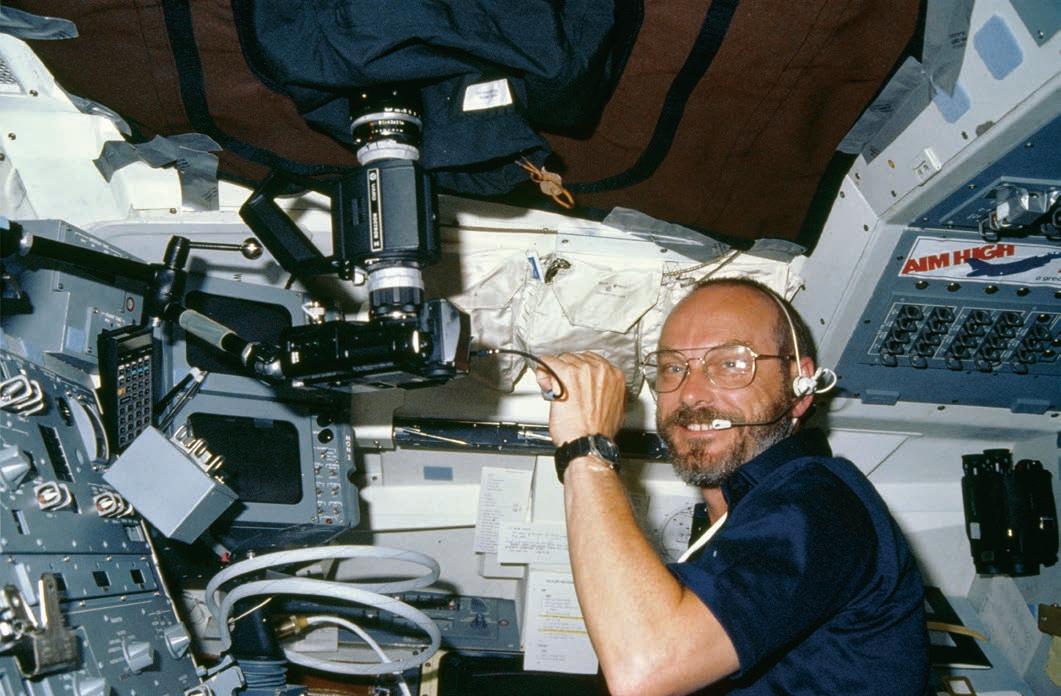
This page: This image of North and South America at night is a composite assembled from data acquired by the Suomi NPP satellite in April and October 2012. Credit: NASA. Facing page, top: Loren Acton in 2010. Credit: Kelly Gorham. Facing page, bottom: Loren W. Acton, payload specialist, triggers a 35mm camera recording stellar imagery aboard the Space Shuttle Challenger, 1985. Credit: NASA.
Though he’s retired from active teaching, Acton is still excited about research into the inner workings of the sun.
“We’re in an era now where we’re increasingly using more and more powerful tools,” he said enthusiastically. “My SXT experiment on YOHKOH was a real breakthrough in providing movies of the changes in the sun’s corona over a whole solar cycle—10 years. Now we are seeing the first pictures from the Daniel Inouye Telescope on Hawaii, which has the highest angular resolution of any instrument so far.”
“I have to admit though, I’m not a very good scientist,” he added bluntly. “In terms of discoveries and breakthroughs and important publications over the years, my list of those kinds of accomplishments is pretty thin. But I really am curious about stuff, and I really love beautiful things.”
“Being in a business that works on studying a star which is close enough to see in detail —the beautiful structures and changes of this dynamic star— is a wonderful way to make a living,” he added. “That has really been my motivation over the years—to see the data.”
To young physicists, and to curious minds of any age, Acton offers the same advice his older brother gave him 65 years ago.
“The more you learn, the harder things you do, the better chance you have of doing what you really want to,” he said. “Don’t worry about whether you can cut the mustard, give yourself a chance to try. You’d be surprised how many times you’re smarter than you think you are.
“That philosophy turned me into a scientist instead of an engineer and that’s what took me into space.”
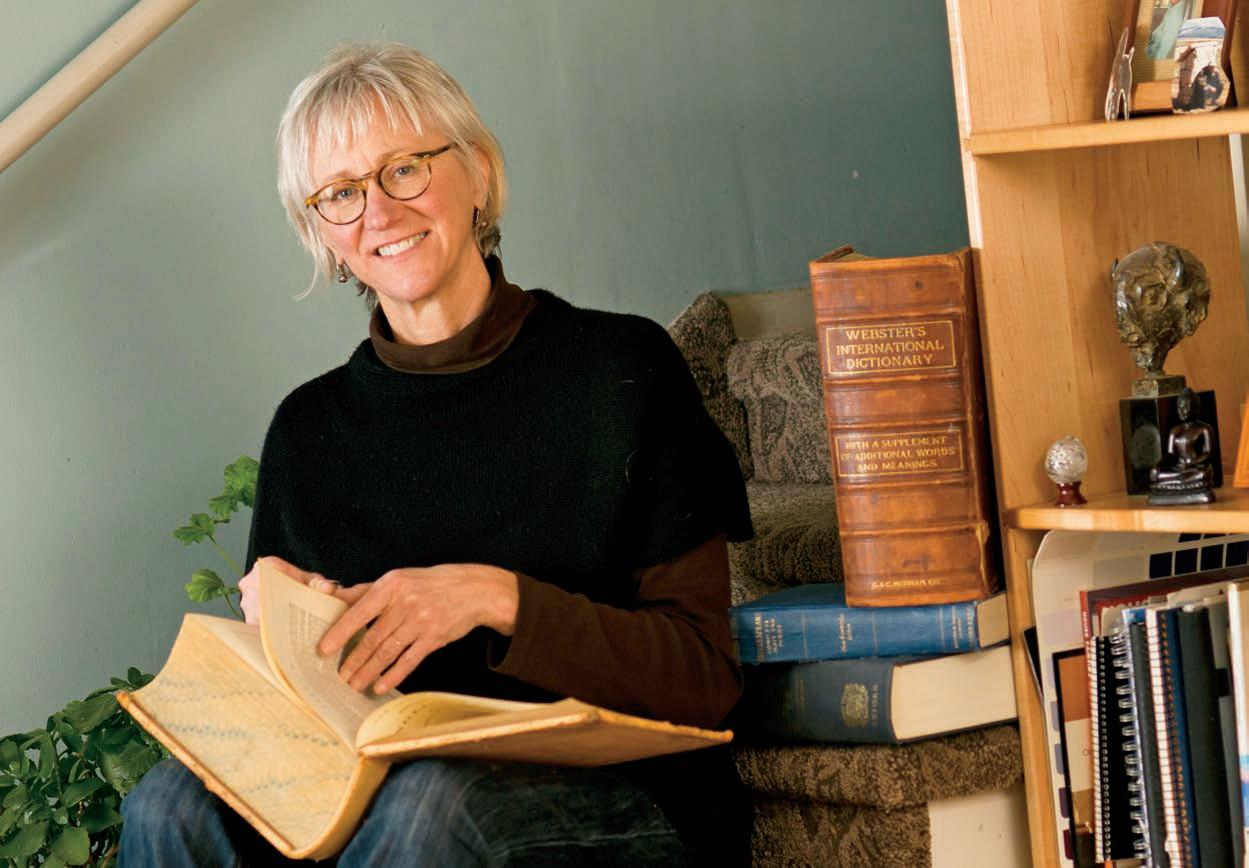
Christy the Wordsmith
Etymological
BY SALINA CHRISTARIA
storyteller extraordinaire
archaeology students hired for summer work-study positions at an archaeological dig site. The remote location of the dig at Barton Gulch, situated twenty miles southwest of Virginia City, necessitated team members camp out in tents or vehicles and make do without electricity or running water. Foregoing the amenities of modern civilization while investigating the remains of a 6,000- to 9,000-year-old ancient civilization inspired Smith in ways she couldn’t have imagined. She worked on the dig for two consecutive summers, and is convinced they were the most important seasons of her intellectual and creative development.
At the end of each day at the dig site, Smith would climb in her 1977 brown and white Volkswagen Transporter Bus, with room enough for a mattress, a table, and a box full
“It sucked me in like a big vacuum. I truly fell in love with dictionaries and the origins of words.”
— Chrysti Smith
of dictionaries. After lighting a few candles for illumination, she would bury her nose in her books doing research for new episodes of Chrysti the Wordsmith
“I kept writing for the radio show at night after work because I didn’t think the production would survive a hiatus,” she explained.
“I knew I couldn’t lose my momentum. And those summers turned out to be the best in my life, because I was stimulated by the archaeology dig and I was just hitting my stride with the radio project.”
In the spring of 1991, word of Smith’s wordsmithing started to spread. It came about when a Billings resident passing through Bozeman just happened to catch Chrysti the Wordsmith on his car radio. When he got back home, he contacted the station program manager at KEMC, the MSUBillings campus radio station where Yellowstone Public Radio originates. His suggestion that Smith’s show be added to the YPR programming led to them reaching out to her.
“I was very flattered and very pleased they approached me and made the connection,” Smith said.
She was more than happy to expand her listening audience by having Chrysti the Wordsmith aired on YPR, which covers much of Montana with 34 locations on the FM dial. A year later, she was thrilled when the Armed Forces Radio Network started broadcasting her show to U.S. troops stationed stateside and all around the globe. The etymological audio interludes of Chrysti the Wordsmith were now being heard worldwide!
By the time she graduated MSU in 1995 with a B.S. in Sociology, her fate was sealed.
“I wanted to be an archaeologist, but I got seduced away by radio,” she confessed. “It was meant to happen. I wouldn’t change it.”
Although Chrysti’s life is filled with more than just wordsmithing, her home in Belgrade is filled with an extensive collection of dictionaries and other books about words. She estimates having 200-300 of these treasures in her beloved library, including the dictionary her family owned when she was growing up in Poplar.
“I still have it,” she said. “I think I even drew scribbles in it when I was very young. And when I was learning to count, I remember turning the pages of that dictionary and reading the page numbers.”
Along with loving words, and books about words, Smith was approached by Far Country Press about writing her own book. She embraced the idea, resulting in Verbivore’s Feast: A Banquet of Word and Phrase Origins being published in 2004. Two years later, in 2006, Verbivore’s Feast, Second Course was released by the same publisher.
When the books first came out, she sold quite a large number of copies by taking them along with her as she lectured all across Montana with the Humanities Montana Speaker’s Bureau. Although the books are no longer in print, verbivores can still find used copies through online and brick-and-mortar retailers.
Smith credits fellow etymologist Richard Lederer for coining the term “verbivore,” a
humorous descriptor of people who have an enjoyment of words and wordplay. She ran across the innovative neologism while reading his books, and loved it so much she started calling her radio show listeners “verbivores” in 2002. By 2005 she was reaching verbivores in new markets as her audience expanded to include the thirteen FM stations served by Montana Public Radio, as well as KCPW in Salt Lake City.
A voracious verbivore herself, Smith enjoys doing the research for her shows, and becomes quite delighted by particularly interesting discoveries. Although there isn’t one word or phrase that has remained her perennial favorite, temporary fondnesses often arise during the course of her research. Smith currently fancies the word “mawkish,” an adjective meaning excessively sentimental.
She certainly doesn’t want to come across as mawkish herself, especially now that she has a deeper understanding of its origin and meaning. But she does feel immensely appreciative of all those who have contributed to her journey of becoming Chrysti the Wordsmith.
“I wouldn’t be able to do what I do without grants from the corporate sponsors and foundations that have been loyal supporters of my show,” Smith said. “And I owe a profound debt of gratitude to MSU’s campus radio station KGLT. It’s a gem in this town, this state and the whole nation really.”
Visit WordsmithRadio.org to learn more.
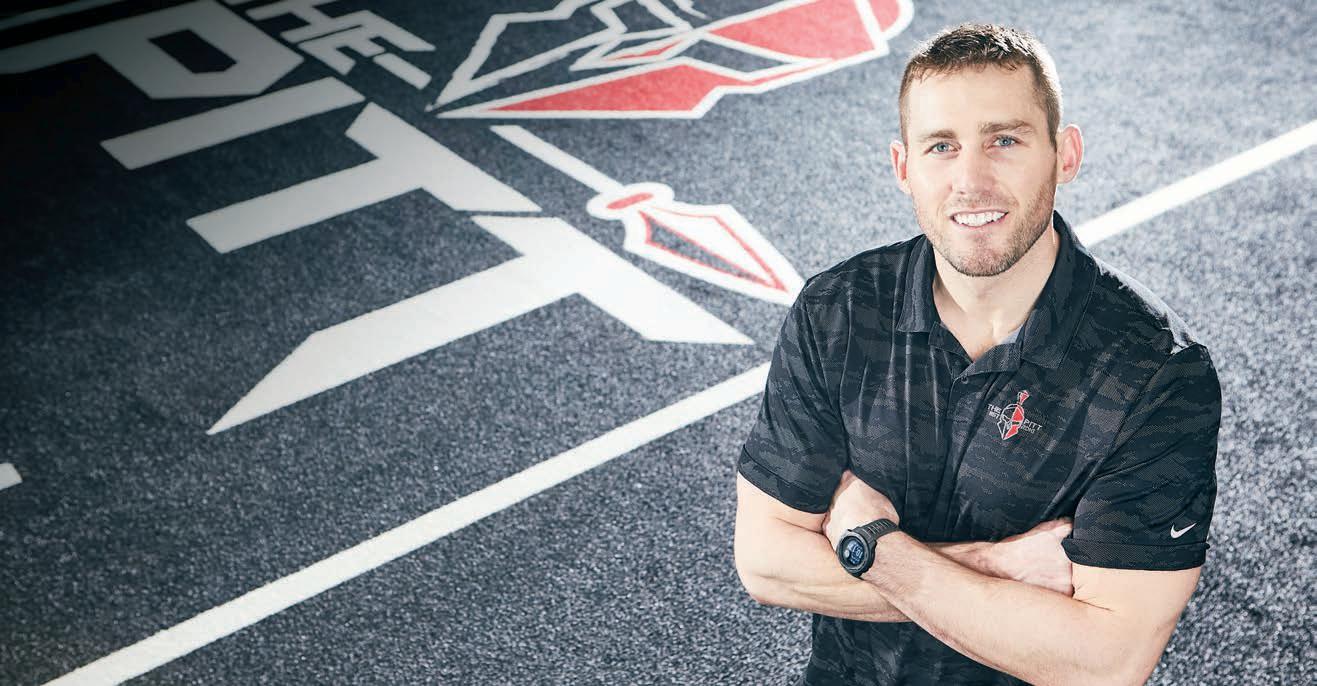
Dane Fletcher Bobcat now spends his life in The Pitt
BY MEAGHAN MACDONALD-POOL
Dane Fletcher reached a football career-high playing as a linebacker for the New England Patriots. But that career wasn’t his Plan A.
Most college football players dream of playing in the NFL and dedicate their lives to preparing for a chance to make a roster. But for Fletcher, a Montana State University linebacker and defensive end, that had never been his main goal. He’d always wanted to build a gym to call his own. The pro career was Plan B: a way to pay for it.
A Bozeman native, Fletcher played for the Bobcats from 2005 to 2009. In his senior season, he earned first-team all-America and all-Big Sky honors, was named Big Sky Defensive MVP and was a finalist for the Buck Buchanan Award, given annually to the top defensive player in the Football Championship Subdivision. He received his bachelor’s degree in business management from the Jake Jabs College of Business and Entrepreneurship in 2010.
“My plan was to start what I really wanted to do when I retired from the NFL,” Fletcher said. “That was to create a community where I can work out with other people, train them and create an atmosphere that not just improves your body and mentality, but helps you become a better person, while also being an enjoyable place to be a part of.”
After a five-year NFL career that also included a stint with the Tampa Bay Buccaneers, Fletcher returned to New England to retire in 2015. The next year he returned to Bozeman and opened The Pitt, a state-of-the-art training facility. The Pitt’s team consists of highly trained coaches, or trainers, who focus on the strengths and imbalances of each athlete. Its facilities house a variety of equipment and strength stations and offer access to a recovery lab with hot and cold tubs, nutritionists and physical therapists.
Fletcher knew he wanted his gym to be unlike anything that
was available to the public, closer to the facilities usually reserved for professional athletes. Inspired by the facilities he trained in during his NFL career, he visited gyms, taking notes, speaking with owners and trying to understand the science behind what made each place work.
“I took a lot of different concepts and said, ‘I like the boxing part of this, I really like the recovery side of this,’” Fletcher said. “I tried to formulate the best product possible, and I believe we’re there.”
When choosing a location to open The Pitt, Fletcher considered other cities but decided on Bozeman, a community that set him up early for his many successes. Fletcher was a three-sport standout athlete growing up, playing football, hockey and baseball at Bozeman High School. During his final years of high school, Fletcher shifted his primary focus from hockey to football.
Fletcher said that while he was growing up all he wanted to do was become a Bobcat. Under the bleachers of Bobcat Stadium, he would play football with friends as the sounds of fans rumbled overhead. At the time he wasn’t sure that football would be his calling, but the desire to play in front of his hometown community was the spark that made the dream a reality.
“This is where I always wanted to live. Even during the NFL, I built a house here. In the offseason I came back to be a part of the community, and this is where I wanted to raise my kids,” Fletcher said. “Business aside, this is where I always wanted to be.”
Fletcher’s parents, Bob ’71, and Kathy, have been staples in the Bozeman community for decades and own two businesses downtown: The Cannery Lounge and Burger Bob’s. They also own a ranch outside of town. Fletcher knew firsthand how small business ownership and
Dane Fletcher. Photo by Adrian Sanchez-Gonzalez.
hometown involvement could make an impact.
“When it all comes down to it, you don’t just start a gym and get into a world like this to make millions and millions of dollars,” Fletcher said. “You get into this for the right reasons, and those who do are the ones who make it in the industry. I think my parents gave me a good base of how to give back and what it looks like, whether it’s to MSU, nonprofits or to people in need.”
Along with family influences, Fletcher’s connections in the Bozeman and MSU communities influenced his business philosophies. Initially an architecture major, Fletcher switched to business and found himself in the management program, where he learned the basics of being a business owner from finances and payroll to every day operations.
His position coach at MSU, Bo Beck, also helped define how Fletcher wanted to connect with his customers and community members. Beck coached linebackers at MSU from
2007−2017 and is currently the linebacker coach at Colorado State University Pueblo.
“I didn’t really have that coach who understood me until my sophomore season in college when I found Beck,” said Fletcher. “He believed in me, and he could help me in avenues I needed help in. He helped me as a person and now as a coach. He knows what it means to be a valuable resource for athletes, and that has become the mantra of what we do (at The Pitt).”
Beck and Fletcher have been close ever since Fletcher’s years as a Bobcat. Beck remembers Fletcher as having always been an entrepreneur, throwing around ideas for businesses or products he wanted to develop. Once Fletcher got to the Patriots, Beck said he started to talk more about opening his own gym, sharing drawings and plans for the building. Knowing Fletcher’s dedication firsthand, Beck was confident that he would be successful.
“When he bought the property, he drove me out there and the
idea was off and going,” Beck said. “He took a gamble to build it and had faith in himself that he would succeed. He always had the drive, just like with the NFL. He wanted The Pitt to work and he’ll keep expanding it.”
The Pitt has allowed Fletcher to maintain a connection with the Bozeman and MSU athletics communities, with a slew of Bobcats and Hawks joining to fulfill their training needs.
Kevin Kassis ’20, a former wide receiver for the Bobcats, connected with Fletcher during his freshman year and worked with him to prepare for his junior and senior seasons. With his MSU career complete and his eyes on the NFL, Kassis has been utilizing Fletcher’s football prowess and training knowledge even more at The Pitt to prepare for MSU’s upcoming pro day, where NFL scouts come and watch players participate in NFL Combine events.
“I feel like I went to Dane and still go to Dane for anything, whether it be for training, general football questions, nutrition or
recovery, because he knows a lot,” Kassius said. “He’s been around the sport and in a top program with the Patriots, so he’s someone who, if he says something to me, I trust him. I want to get as much information as I can out of him.”
Plan B may have taken Fletcher on a different route than initially expected, but it brought him everything he needed to help Plan A flourish and grow. Each gym owner he met helped mold his vision; his coaches instilled a work ethic model he would pass on to employees and members; his professional football career assisted him in mentoring future collegiate and professional football players.
“There’s not one thing where I am like ‘I wish we had this or wish we didn’t have that,’” Fletcher said. “We narrowed it down after three and a half years of being open and I love the facility we have. I love our members, love our coaches and I couldn’t be happier with the direction we are heading.”
Blue and Gold Pride
Show your Bobcat spirit at work, at home, at play.
BY AMY KANUCH AND JULIE KIPFER
MSU’s alumni and friends are passionate about MSU and the Bobcats. They share their blue and gold spirit in a variety of ways, such as wearing MSU branded products or displaying a Bobcat flag on blue and gold Friday.
At MSU, the licensing team works hard to get the Bobcat brand out to fans in new and innovative ways. Partnerships with Montana brands, like UpTop, Wear Your Roots, and Jelt Belts have been developed. New products have been created that fit our fans’ interests like Gold Rush Huckleberry Lemonade and Hi Country beef jerky. These partnerships allow MSU to align with other recognized brands and connect with our fans.
Alumni support has always been strong for the Bobcat brand and again alumni stood up to help by providing their input in a merchandise survey. In February 2020, the MSU Licensing team sent a survey to 5000 randomly selected alumni nationwide.
SURVEY SAYS!
The purpose of the survey was to gain a better understanding of alumni preferences for branded merchandise.
Working with MSU Marketing and the Office of Planning and Analysis, an MSU marketing student generated the survey questions and compiled the results. The data will be used to help take product offerings to a new level to better serve Bobcat fans. Whether that means developing new products or retail outlets, this information will help generate more visibility for Bobcat gear in the marketplace. Watch for MSU to leverage fashion and retail trends, like vintage or patriotic designs.
As the means to support MSU evolves, this information can help develop new avenues to reach friends and fans.
MSU Bobcat friends and family are passionate about their university and want to show their support.
WHAT CAN YOU DO TO SUPPORT:
Wear your MSU Bobcat gear at work, at home, at play
Follow us on social media: Find Bobcat gear at montana.edu/bobcatspirit or follow us on Facebook for the newest gear available fb.com/MSUGearup
Get on board with promotions and new products
Jim Sargent A
glass overflowing
BY KAY LAFRANCE
One of his daughters describes him as “not a glass half full but a glass overflowing kind of guy.”
Jim Sargent had been looking forward to his 70th MSU reunion for, well, 70 years. He served on the alumni reunion committee. He called classmates and encouraged participation in
the commencement ceremony and the events surrounding it. But in the weeks leading up to graduation weekend, a global pandemic was putting a damper on things. Events were cancelled. Parties were postponed. MSU employees began planning “graduation in a box”. Jim Sargent,
author of a book titled “Too Poor to Move but Always Rich” was not deterred. Jim enjoyed his Class of 1950 reunion anyway. Ten friends and family members gathered safely on the Sargent’s lawn. Jim’s wife Alice baked cupcakes and served them one at a time out of a wagon. Poems
were read. Music was played. Photos were taken.
Jim dressed in poorly fitted regalia (supplied by a friend) and addressed the crowd. He was limited to 7 sentences one for each decade since graduation from MSC. Here’s what he said:
1950s: Rather than returning home to ranch after MSC, I was shocked to be sleeping in an Army troop train headed to Fort Riley, Kansas for my two years in the service.
1960s: Alice Taylor and I now happily married were parents of four wonderful children: Jan, Linda, Sharon and Larry.
1970s: I walked atop the Great Wall of China on a day so cold that my movie camera quit functioning.
1980s: At the last minute, I filled in for a sick Catholic priest with a keynote opening address for 200 people at the Western States 4-H Convention in Helena and was pleased to read, “The Catholic priest did a good job” in the evaluations.
1990s: Alice and I are charter members of the B. S. (Yes) Valley Meat and Potatoes Bridge Club, still functioning now. To keep up during the coronavirus four of us play a new version (each with our own deck) many nights.
2000s: I got to be a Lewis and Clark Guide for five groups canoeing a 6-day trip down the White Cliffs of the Missouri River.
2010s: I am happy to wear a College of Agriculture jacket as a proud recipient of the Alumni Achievement Award I won in 2019 and to be here today.
Jim fulfilling his ongoing goal of walking 100 miles per month. Photos courtesy of Dr. Linda Sargent Wood ’83.
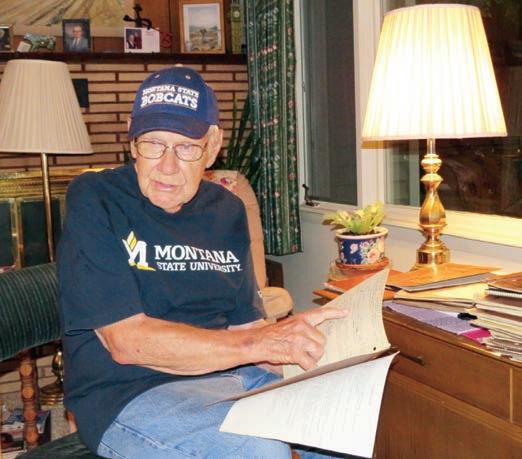
Jim reading through old vet science class notes taken during a course taught by his favorite teacher, Dr. Welch.
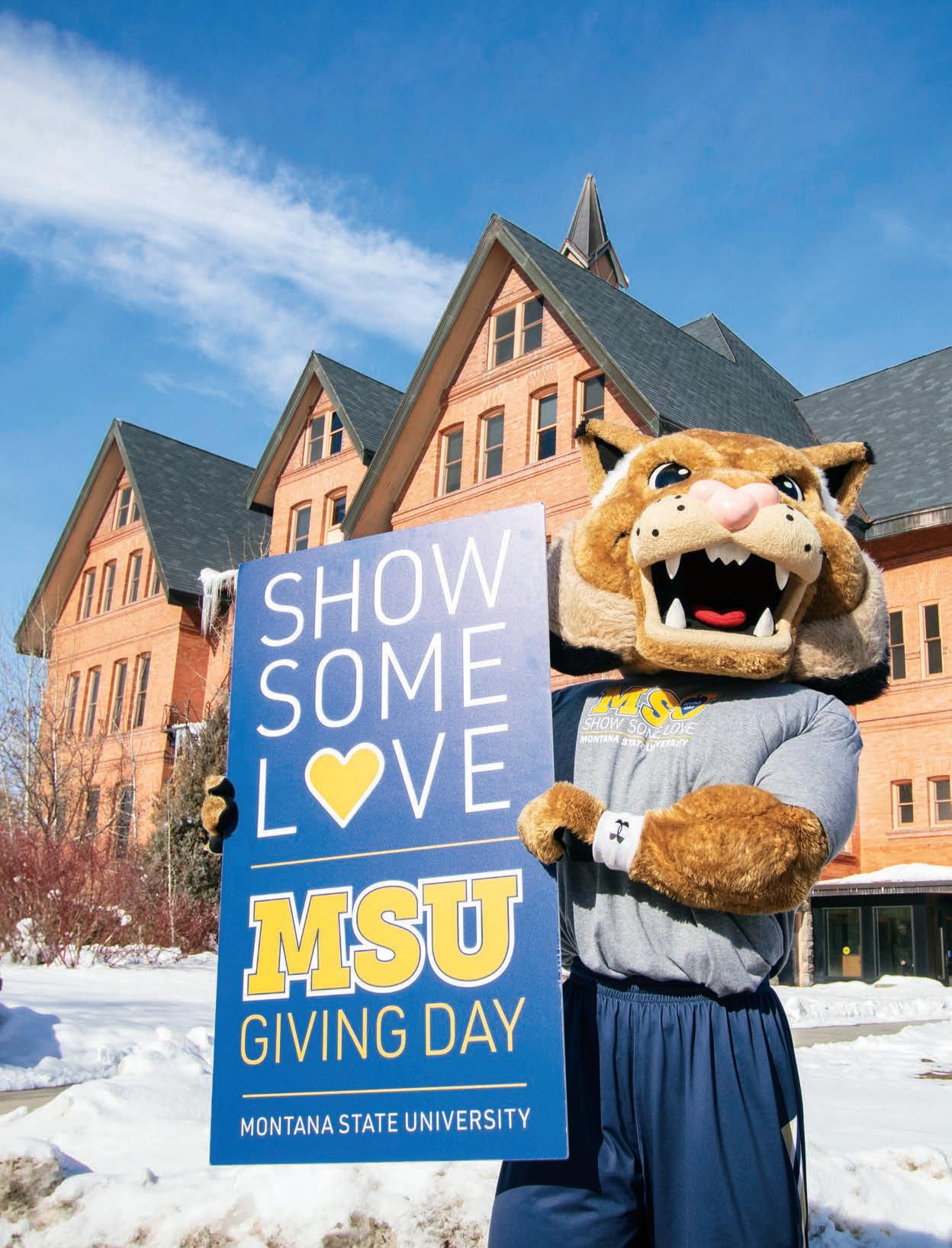
Giving Day at MSU
BY EVELYN BOSWELL
Forty-eight projects in need of a boost were galvanized by Giving Day, a new online fundraiser organized by the Montana State University Alumni Foundation.
Spurred on by a looming deadline, challenges and promises of matched gifts, donors started giving within 10 seconds of the Feb. 13 kickoff and didn’t stop until the 5 p.m. deadline on Valentine’s Day.
By the time Giving Day ended, the 29-hour fundraiser had surpassed its goals for both donors and dollars. Instead of 1,000 people donating $300,000, 1,537 donors gave $320,118. They supported everything from scholarships and research to weekly giveaways of peanut butter and jelly sandwiches.
“It was an exciting day with a lot of energy,” said Vice President of Communications Drew Van Fossen.
“Our entire organization watched in amazement as we saw the outpouring of support from our Bobcat community and campus for Giving Day,” added Samantha Brandon, associate director of annual fund, digital fundraising.
Donations came from 43 states and across the world, setting off screams and cheers as Giving Day organizers followed the mounting dollars. The largest individual gift, $16,755, went to Engineers Without Borders to help the group continue 16 years of work in Kenya. The most gifts, 157, went toward renovating a memorial for MSU students who died before graduating. The most money raised before challenges, $13,455, went to the MSU Leadership Institute which brings renowned speakers to campus.
“Thrilled. Honored. Supported. Loved. All of these words come to mind, and especially when witnessing the student staff’s excitement during MSU
Giving Day,” said Carmen McSpadden, director of the MSU Leadership Institute. “Without their leadership and personal outreach, we would never have won the ‘most funds raised’ challenge. The joy of seeing our community support our leadership development work was indescribable.”
Giving Day donors included MSU President Waded Cruzado, 318 faculty and staff members as well as students, alumni and friends. Almost 250 student ambassadors used their social and network influence to attract 418 gifts that averaged $64 and totaled nearly $27,000.
Donors overall gave to local outreach and international travel. They donated so the Spirit of the West Marching Band could buy a pickup truck to haul its equipment instead of using personal vehicles. They supported ROTC students who planned to run 26 miles across the desert in the Bataan Memorial Death March. They gave so the Bridger Solar Team could race its solar-powered car 1,400 miles in a national competition.
Donors supported women in computing, women in physics, women in engineering and a new group for Hispanic engineers. They gave to a dance marathon for children and a food pantry for students. They donated to an Ivan Doig festival and Montana Shakespeare in the Parks. They supported a program that will turn World War II memorabilia into shadow boxes.
“Giving Day was an amazing opportunity, and I’m excited to have participated. I’m thrilled to have earned the support of our alum and supporters and look
forward to providing the state with some really interesting and important data about the 2020 campaign,” said David Parker, a political science professor and head of MSU’s Department of Political Science.
Parker and other faculty developed a poll that MSU students conducted to accurately predict the results of the U.S. Senate and House elections in 2018. Hoping to build on their reputation for nonpartisan analysis, Parker sought donations for MSU’s Treasure State Poll. He was challenged at one point to perform a Hamilton-style rap, but was able to dodge that opportunity. He was pleased, however, that the Treasure State Poll attracted 144 gifts, the second highest number for any Giving Day project.
“In some respects, I was not surprised—Bobcat alum and Montanans are generous folk,” Parker said. “My staff in the department and my fellow political science colleagues also helped tremendously in spreading the word about the work we do on social media, which was essential to our success. I am truly humbled by all the support from across the country to support our efforts.”
Kacie Cummings of Cascade, one of five ASMSU senators on a committee to renovate the student memorial, said she, too, was thrilled with the results of Giving Day.
“Giving Day was a huge success for the student memorial project,” she said. “We had the overall most number of gifts, which is a huge deal.”
MSU already has a beautiful memorial for students who died
before receiving their diplomas, Cummings said. But the memorial lists no names after 2016 and too few people know about it.
The memorial is located just east of the evergreen trees along South 11th Avenue between the Aasheim Gate and the MSU duck pond. It was built after freshmen Brian Boeder and James Clevenger were killed 30 years ago in room 130 of Langford Hall. The memorial includes their names, as well as those of 170 others who died from a variety of causes, including car accidents, suicides and recreational injuries.
To engrave more names, renovate the memorial and make it more accessible, the ASMSU initiated a $250,000 project that Cummings hopes will begin this fall. The timing depends on funding, however. The ASMSU is raising a portion of the cost, and Giving Day provided it with another $13,450.
“It was a very big deal,” Cummings said.
Van Fossen said the Alumni Foundation hopes to make Giving Day an annual event to be held the middle Thursday and Friday of February. That schedule should prevent conflicts with other fundraisers and occurs around Founder’s Day on Feb. 16. Since Valentine’s Day fell on Friday this year, the MSU Alumni Foundation built its first Giving Day around the theme, “Share some love.”
McSpadden, who felt the love on behalf of the MSU Leadership Institute, said she’s in favor of continuing the event.
“MSU Giving Day was a huge success,” she said. “For us, we would welcome the opportunity to raise much needed support in this way.”
For a more complete description of Giving Day and the projects it benefited, go to: givingday.montana.edu
GIVING DAY
Mike and Nomie Ketterling
You make a life by what you give
BY SARAH LUDIN
Mike ’75, ’77 M, and Nomie (Wells) ’75 Ketterling love MSU, and so putting Montana State in their will was a simple step. Like many others, it’s important to the Ketterlings to give back to their alma mater and make a difference for the next generation of students.
Earning college degrees at Montana State University led the Ketterlings to each other and to successful and fulfilling careers. “I feel like going to college was an incredible step in the life I’ve lived and the career I’ve had,” Nomie said. Mike agreed, “I wouldn’t have gotten to where I was without MSU. It’s as simple as that.”
his company with another in Fort Collins and it is now one of the largest civil firms in Northern Colorado—Northern Engineering.
Nomie grew up in the small town of Park City, Montana. She utilized grants, workstudy, everything she could to get to MSU and graduate with a degree in Sociology, the study of people. “I was very much into fighting for causes and very interested in criminal justice and law
engineering scholarship and give to the MSU Library.
“No one does it alone; we both had a lot of help,” Nomie said. “Now it’s our turn to help others,” Mike said.
Mike and Nomie get to hear first-hand about the difference their scholarship makes in the lives of students, from letters they receive from students.
“You give to the things you believe in and that you love.”
Nomie Ketterling
Mike was born and raised in Billings, Montana, where his father was the supervisor for the Yellowstone County Road and Bridge Department. Mike’s interest in excavation, road construction and the way things work mechanically, led him to earn his B.S. and M.S. in Civil Engineering. Mike knew before going to college that he would have to pay his own way, but he was very grateful to be one of two students in his high school to be chosen by a local philanthropist who paid his college tuition costs.
Mike has been a consulting Civil Engineer in private practice for his entire career. After becoming a principal with a firm, he decided to start his own engineering firm in 1995. In 2015, he merged
enforcement,” Nomie said. Nomie went on to build her career from dispatcher at the Gallatin Valley Sheriff’s Office to serving as a counselor for inmates in Colorado where she saw the difference that education can make for people’s options and life choices. She shifted to one-to-one mentoring and concluded her career at a community mental health center prevention program for drug and alcohol prevention.
Nomie and Mike’s philanthropy is rooted in their own experiences and in the belief that a college education can change people’s lives. Including Montana State in their will was a simple step, but it is also part of a larger commitment that the Ketterlings made to MSU. They currently fund an annual
“It is so rewarding to hear the students tell us about their stories and goals in life,” Mike said. He recounts one small town kid who had to come through some real struggles in his life to live his dream of becoming an engineer.
Nomie recalls the story of a small-town Montana high school girl whose goal was to get an engineering education. “Hearing her goal was especially moving and touching for me as a woman,” Nomie said. “50 years ago, women went to college to find a husband. I didn’t know any female engineers.”
The Ketterlings would like every student to experience the successes they had. Mike summed it up well with one of his favorite quotes by Winston Churchill, “You make a living by what you get, but you make a life by what you give.”
Mike and Nomie live in Eaton, Colorado, and wear their Montana State gear and cowboy hats whenever they can.
MANY ways to GIVE
With philanthropic intention and commitments that suit their finances, these donors have found a variety of ways to make impacts across campus.
CHARITABLE REMAINDER TRUST
Gary and Vicki Gilman established a fund to support MSU through a charitable remainder unitrust (CRUT)
IMPACT Athletic facilities, President’s Excellence Fund and scholarships for studentathletes and business majors
ESTATE BEQUEST
Anonymous donor documented a bequest from his estate designating support for a specific academic discipline
IMPACT Department of Chemical and Biological Engineering
OUTRIGHT GIFT
Jim and Jeanne Rolph made gifts of stock impacting students and programs
IMPACT Scholarships for education majors committed to teaching in rural communities and the Department of Modern Languages and Literatures
CHARITABLE GIFT ANNUITY
Bruce Parker established a deferred charitable gift annuity to fund scholarships that encourage and assist students to pursue occupational opportunities available through Gallatin College.
IMPACT Scholarships for Gallatin College students
MATCHING GIFT
Janice and Rod Ostermiller inspired nursing donors during MSU Giving Day 2020 to contribute with a matching gift.
IMPACT JoAnn Paterson Scholarship—a memorial scholarship for nursing students
To make your own impact, visit: msuaf.org/give
The MSU Alumni Foundation takes seriously the responsibility to honor the confidentiality of donors and their gifts to MSU. All donor and gift stories are published with the expressed approval of donors and affected family members.
A new level of recognition brings together those who have demonstrated, through past membership and support, an extraordinary dedication and commitment to the advancement of Montana State University.
BY DREW VAN FOSSEN
With roots that go back to 1903 with the establishment of the alumni association, the MSU Alumni Foundation has been instrumental in contributing to the longterm success of Montana State’s land-grant mission to integrate education, create knowledge and art and serve communities.
Today, the Alumni Foundation works to keep alumni and friends of the university connected to one another and to their alma mater, all while raising significant private financial support and providing stewardship for invested resources from many generous donors.
For well over 100 years, the alumni association was a membership-based organization that required that alumni pay dues to be included. For all those years, dues provided the operating budget for the organization.
In 2012, the alumni association and the MSU Foundation merged into one nonprofit organization, dedicated to “cultivating lifelong relationships and securing private support to advance Montana State University.”
At that time, the MSU Alumni Association ceased to exist as a legal entity, but carried on in principle as the traditional membership organization.
According to Chris Murray, President and CEO of the MSU Alumni Foundation, the merger was a way to make a stronger organization.
“The association’s goal was to engage alumni. The foundation’s goal was to raise private support, often from the very same people. It just made sense to combine
“The landscape of engagement for alumni and friends of higher education is ever-changing. It has moved away from exclusive clubs and associations to a more inclusive environment—one where all who share a passion for the university are welcome.”
— Chris Murray, President and CEO, MSU Alumni Foundation
forces, and it has proved to be the right move,” Murray said.
After the merger, the Alumni Foundation embarked on the first-ever comprehensive fundraising campaign in the university’s history.
What It Takes: The Campaign for Montana State University raised more than $413 million in support of the university. Through the campaign, it became abundantly apparent MSU had a wide range of supporters.
“Our alumni were amazingly supportive throughout the campaign and were responsible for a large part of the total we raised,” Murray said. “Our largest gifts came from alumni, but we also learned that MSU has passionate supporters from people who didn’t complete a degree at MSU, like friends in the community, former students who did not graduate from MSU, parents and family members of students, faculty and staff.”
“It made us think of how we could better engage a wider audience—how we could become a more inclusive organization,” he concluded.
Two things happened that allowed the Alumni Foundation to think differently about who it serves:
First, by the end of the campaign, the organization’s financial health was such that it could get by without member dues to help fund its operating
budget. It would much rather put those dollars to work in support of the university instead of the Alumni Foundation.
Second, in an effort to serve an even broader family, it expanded its definition of alumni from those who graduated from MSU to anyone who attended MSU.
“We recognize many alumni have a special affinity for MSU. We also know that we have attracted and enthusiastically adopted some incredible Bobcats by virtue of academic, arts, cultural and athletic offerings at MSU,” said Kerry Hanson, the Vice President of Alumni Engagement. “And parents and families of current MSU students are also part of the MSU community, too, so inclusivity and broadening of our efforts really made a lot of sense.”
Hanson went on to explain how a more inclusive approach led to a decision to move away from a dues/membership model for alumni engagement.
“We have 116,000 graduates in our records, yet only about 11,000 were members,” Hanson said. “And we know from national data and from our own recent graduates, that they aren’t really that interested in ‘joining’ an association. For all those reasons, we decided to phase out the membership model.”
With this more inclusive model of engagement, constituents are
part of a much broader network of alumni and friends, and with it, comes new connections and opportunities. All the events and activities previously designed for alumni and friends will continue on, but without member and non-member differences.
That decision was not without some trepidation, as there were a number of alumni and friends who made a onetime commitment to a life membership.
“Our life members take great pride in that identity. They are proud they made a commitment to MSU for, well, life,” Hanson said.
“To me, once you are a life member, you are always a life member. That will never change,” she said.
A new life paradigm
To honor the commitment of life members and to form a more inclusive environment for those who have never been members, but who have loved and supported MSU through the years, a new recognition level has been established: Blue & Gold Forever.
Blue & Gold Forever welcomes all life members, and since the cost of a life membership at its highest was $1,000, it also welcomes anyone who has contributed $1,000 or more to MSU in their lifetime. For those who paid annual dues in the
past, their dues will be counted toward that $1,000 level.
“This is a way we can continue to honor our most steadfast and longstanding life members while also recognizing those who have demonstrated a level of support for MSU that also deserves recognition,” said Murray.
Those who are recognized through Blue & Gold Forever will receive special communications throughout the year and will also have access to perks like receiving the Collegian and Mountains & Minds magazines, access to Outside Bozeman online magazine, the annual calendar, and many of the same discounts that have always been available.
For current annual members, benefits and discounts will be honored though the term of the membership. Once the term has expired, annual members will be asked to consider reassigning their membership dollars to donation dollars, directed to any area of the university they choose.
“This is a new model for us and for our alumni and friends,” Murray said. “We are setting the stage, and we hope that the MSU generations to come will be as committed, energetic, involved and generous as their predecessors have been.”
“Quite frankly, the future health and vitality of the university depends on it,” Murray concluded.
Get the latest on events
You may notice some familiar events and highlights are missing from this issue of Collegian. At the time of publication, there were still uncertainties, but we encourage you to check-in and stay informed though our web site, as Tailgates, Homecoming, Cat-Griz watch parties and chapter event plans evolve. In the current environment, we are continually thinking of unique ways to engage with our alumni and friends and bring MSU to you easily and safely. Please join us. Now, more than ever, we need to see your smiling faces at our virtual events!
Homecoming
Honestly, we are promoting a “Stay Home-coming” during Homecoming Week, September 28–October 3, as we will have some terrific and fun ways for you to engage with us virtually. You are likely to see a Pajama Day and Career Day promoted, and even a virtual parade. Stay abreast of events as they develop at: msuaf.org/homecoming
Tailgates
We now know that there will be no live Bobcat football this fall, but we are not defeated! We look forward to bringing you a virtual “Caturday” football event or two. That’s right! Put on your favorite Bobcat gear, make sure you have your game-day beverage and appetizers ready for a great tailgate and throwback game—all from the comfort of your backyard or living room (socially distanced of course). We will provide updates for these events as they develop at: msuaf.org/tailgate
Cat-Griz Watch Parties
The annual Brawl of the Wild is one of the greatest rivalries in college football. Sadly, we know that we will not be playing the Griz on November 21 as originally scheduled. We will, however, work hard to bring you a Virtual “Caturday” and maybe you’ll be watching one of your favorite Cat-Griz games of all time! Stay tuned: msuaf.org/catgriz
Then & Now
1960
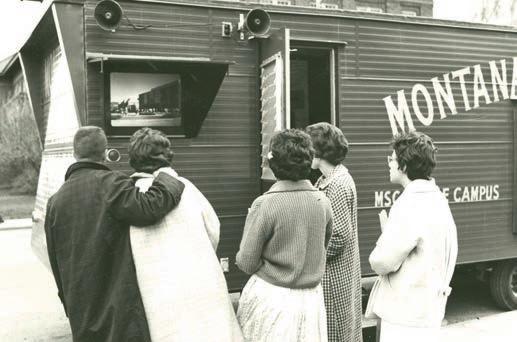
Mobile learning then: Students are seen viewing a TV screen which is attached to part of the MSC Mobile campus trailer, a traveling educational and promotion venue that toured county fairs throughout Montana promoting a variety of subjects.
In the 1950s ...
Enrollment in 1950: 2,315
Montana State College received a $4.5 million bond to build dormitories.
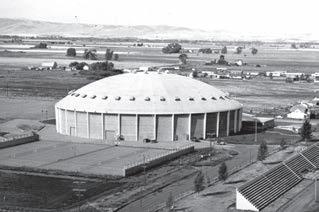
Campus expanded significantly with construction of Reid Hall, a dairy center and the Fieldhouse.
The “Great Panty Raid” took place as 1,000 MSC male students converged on Hannon Hall in 1957.
The demand for student housing was met by introducing various styles of temporary housing trailers which included prefabricated war surplus frame buildings, Quonset huts and a large barrack for a men’s dorm.
2020
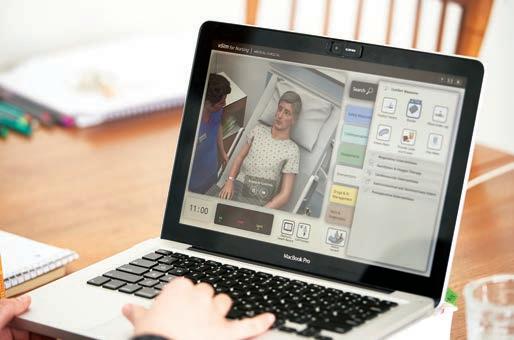
Mobile learning now: with the advent of the COVID-19 pandemic, MSU quickly adapted to a new instructional paradigm that included a variety of online teaching and learning methods, including this virtual patient simulation from a nursing class.
In the 1960s ...
Enrollment in 1960: 3,935
Social events required chaperones, alcohol was prohibited on campus and all freshmen and sophomore men were required to undergo military training.
The 1964 football team was the only team in Bobcat history to win an end-ofthe-season bowl game in the Camellia Bowl. The win marked MSU’s third bowl game, but the program’s first triumph.
On July 1, 1965, Montana State College became Montana State University with the college’s commitment to science and humanities.
In the 1970s ...
Enrollment in 1970: 8,187
Ground was broken for the Museum of the Rockies in 1971.
In 1972 MSU was awarded the bid for the WWAMI medical program.
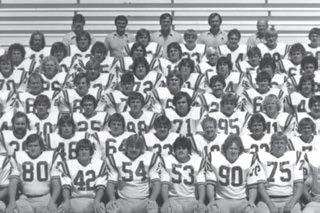
Reno H. Sales Stadium was built in 1973 for $500,000 and in 1976 the MSU Bobcats won the Division II National Championship.
It was a decade where student groups began to flourish on campus. Organizations like Spurs and Fangs took on service projects supporting hospital and clinics in Honk Kong, South Vietnam and Mexico.
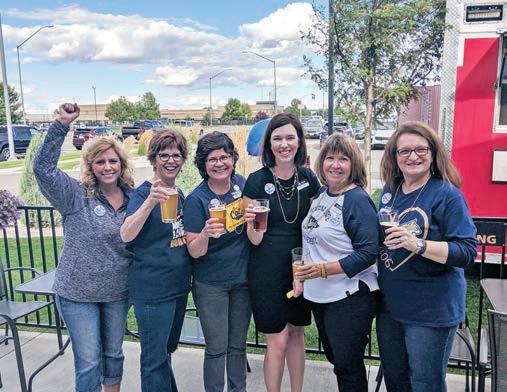
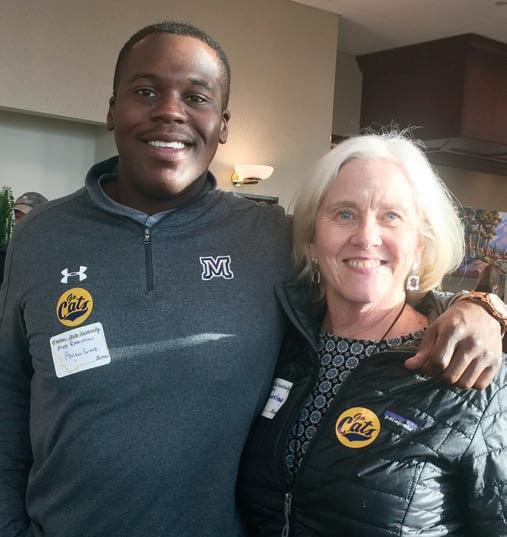
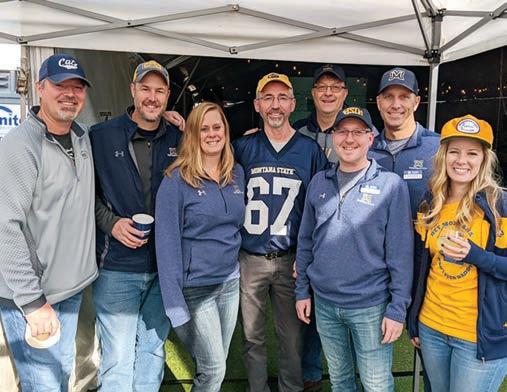
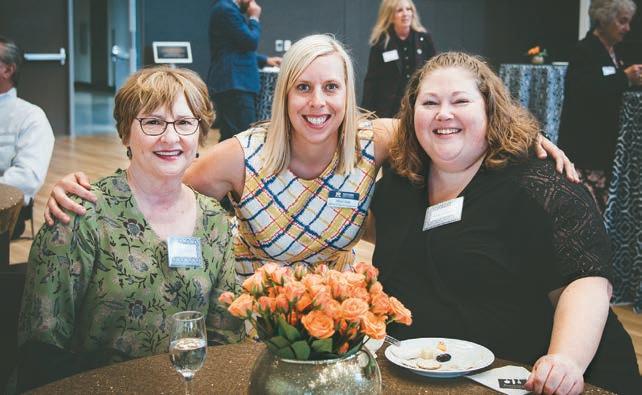
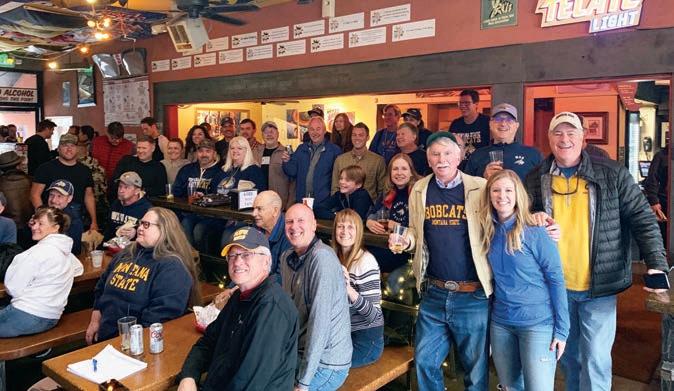
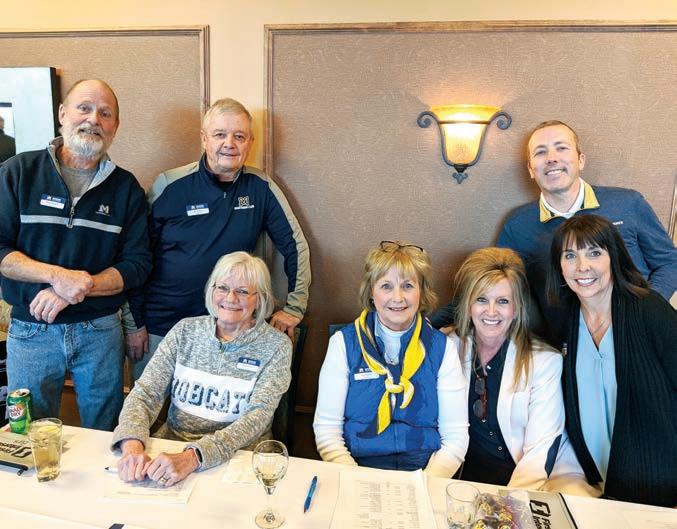
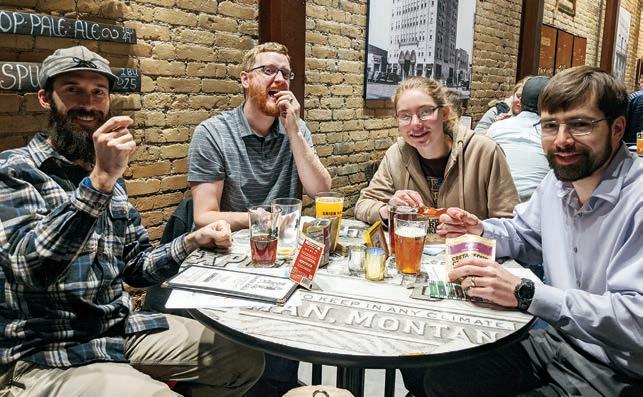
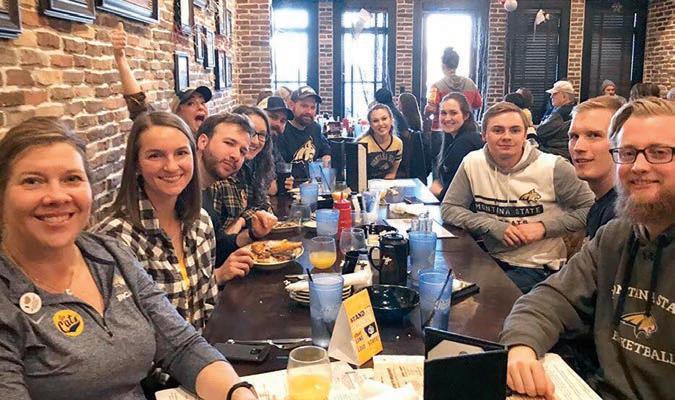
EVEN WITH THE DISRUPTION CAUSED BY COVID-19, AND WITH FOUR MONTHS OF INPERSON EVENTS CANCELLED, OUR CHAPTERS STILL CONNECTED THOUSANDS OF BOBCATS
12
CHAPTERS
53
125
CHAPTER VOLUNTEERS
2,984+
EVENTS ATTENDEES
Cities Area Inland Northwest (Spokane area)
Houston Area Mile High (Denver area) Puget Sound (Seattle area) Sleeping Giant (Helena area)
understanding of what it means to be a true professional. Her devotion to student success is unparalleled, and her professional career and philanthropic generosity have impacted so many – here at MSU, across the nation and internationally.
Jack Hyyppa ’68, ’69, Bozeman, Montana
Jack Hyyppa brought Montana’s first public broadcasting station on the air, and today MontanaPBS is available in nearly every Montana home. As the father of public television in Montana, Hyyppa left an enduring imprint on the culture and community. He also was a dedicated educator at Montana State for close to three decades, affecting the lives of thousands of students.
David O. Kem ’67, ’00 HD, Houston, Texas
David Kem brought international prominence to Montana State during his distinguished career as an engineer and executive. His leadership at the MSU Alumni Foundation is only one way he has given abundantly of his time, resources and intellect to Montana State.
Kent Norby ’64, Excelsior, Minnesota
Kent Norby was active on the campus of Montana State College as a student and forever since has been an avid Bobcat devoted to the advancement of Montana State University. He brought his expertise to the MSU Leadership Institute Advisory Board and helped establish the relationship between Cargill and MSU. And his incredible support
of scholarships and initiatives at MSU has shaped the lives of countless students.
Lois Fulker Norby ’65, Excelsior, Minnesota
Lois Fulker Norby’s leadership forever changed the landscape of the MSU campus with Alumni Plaza and the creation of the MSU Alumni Foundation. She shaped the lives of countless students through her engagement, mentorship, connection and incredible support of so many university causes and initiatives, including scholarships.
Franklin D. Schurz, Jr., Bozeman, Montana
Franklin Schurz, Jr. is a retired executive, Harvard graduate and decorated veteran who has dedicated his time and resources to service. Here at Montana State University, his generosity changed lives, particularly for underserved student populations. The American Indian Hall and scholarships for Native Americans in the College of Nursing will leave an indelible impact on MSU.
John “Jack” Stonnell, awarded posthumously
John Stonnell’s exemplary performance and influence as a professor of cinema at Montana State University contributed significantly to making MSU’s Film and Television department among the top 10 in the nation. An awardwinning filmmaker, his impressive knowledge and his willingness to share his expertise extended from his students to his colleagues and his friends. His tremendous impact on the film program continues to this day.
Dan Barz
Jack Hyppa
Kent Norby
Franklin D. Schurz, Jr.
David Kem
Lois Fulker Norby
John “Jack” Stonnell
Carol Rutlen Ezrati
Carol Doig
Dr. Gordon “Corky” Brittan
Nancy Cameron Davidson
Dr. David and Tanya Cameron
Frank Schurz accepts his Blue & Gold Award from MSU President Waded Cruzado.
From left, David Kem, Tanya Warner Cameron and Dr. David Cameron at the award breakfast.
Legacy: Jason Noyes ’97 and Karen (Lambott) Noyes ’96
“I believe in fully experiencing all that college has to offer and this scholarship allows me to do just that. I have sought a challenging and diverse course load at Montana State. After graduation I intend to embark on a career path to use the skill set I achieved during my time at MSU while inspiring future generations of Bobcats.”
Hannah Parrott
Major: Human Development & Family Science
Legacy: Christy (Jacobson) Parrott ’94
“As a legacy, I hold an immense sense of pride and appreciation for the history and traditions of MSU. This scholarship will allow me to continue pursuing a career path I’m truly passionate about. One that allows me to help others and give back to the community, while providing support and grace to those in need.”
Allison Reinhardt
Major: Political Science
Legacy: Tanya Casey-Reinhardt ’88
“I am proud to attend MSU and am continually amazed at the opportunities I have. I recently returned from studying abroad in Amsterdam, and while the semester was cut short, it is scholarships like these that enable me to have these types of diverse experiences.”
Lindsey Riley
Major: Cell Biology and Neuroscience
Legacy: Michael Riley ’86 and Margie (Gaskill) Riley ’88
“Receiving this scholarship means so much to me. Having grown up in an area with limited access to healthcare, I took a passion for rural medicine. It is my dream to return home and help improve the community I grew up in. I hope to use my education to better the lives of those around me.”
Jaynee Drange Groseth Scholarship
Erica Casey
Major: Nursing
Legacy: Todd Casey ’92 and Stacey (May) Casey ’92
“Growing up, my parents, aunts, uncles, grandparents, and cousins always talked about the fond memories they made while attending MSU. I remember dreaming that some day I could also be a part of those memories. Thanks to this scholarship, that dream has come true, allowing me to continue our family tradition.”
Emily Pemberton
Major: Elementary Education K-8
Legacy: Chris Pemberton ’93 and Amanda (Becker) Pemberton ’93
“Since I was young, I have loved working with children, and being able to pursue a career that allows me to do that every day is something that I could not be more grateful for. I am excited to one day be able to influence a child’s life for the better while continuing to make lifelong memories at MSU.”
Boeing Employee Alumni Scholarship
Eric Riley
Major: Mechanical Engineering
“I am excited and looking forward to attending Montana State University and taking in the diverse and unique community of Bozeman. This scholarship will allow me to take full advantage of the many opportunities available. I truly appreciate the generosity and assistance in helping me achieve my career goals.”
Houston Area Chapter Scholarship
Brent Bergman
Major: Electrical Engineering
“I was born and raised in Houston, Texas. I have always been fascinated with how electrical engineering can help improve everyday life by solving complicated problems in many ways. I am thrilled to receive this scholarship as it will allow me to continue my education at this outstanding university.” For specific criteria, application or donation information about one of these Alumni Scholarships visit: msuaf.org/ scholarships. To view all scholarship opportunities available at MSU visit: montana.academicworks.com
CatTreks
Adventures designed for those who have MSU in common and are eager to expand their cultural and intellectual horizons. Find more detail about the trips listed here at: msuaf.org/cattreks
Awe-Inspiring Antarctica Cruise: Buenos Aires to Antarctica
January 18–30, 2021 | From $8,799 per person, double occupancy. Airfare not included.
Journey to the final frontier aboard Albatros Expeditions’ Ocean Atlantic on this exciting eleven-night adventure.
Brazilian Spotlight Cruise: Buenos Aires to Rio de Janeiro
March 8–19, 2021 | From $3,099 per person, double occupancy.
Airfare included from select cities.
Travel down the coast of Brazil on this captivating ten-night journey aboard Oceania Cruises’ Marina.
Italy & the Adriatic Cruise: Rome to Venice
April 12–23, 2021 | From $2,849 per person, double occupancy.
Airfare included from select cities.
Travel around the picturesque coasts of Italy on this incredible ten-night trip aboard Oceania Cruises’ Riviera.
Graduation Tour of Europe: London to Rome
May 14–24, 2021 | From $3,075 per person, double occupancy.
Airfare not included.
Visit Europe’s “must see” destinations before settling into a new job or graduate school. Experience amazing theater, see great works of art, walk through millennia-old landmarks, swim in the Aegean Sea and bask in the Grecian sun.
British Isles & Lowlands Cruise: London to London
June 12–23, 2021 | From $4,099 per person, double occupancy.
Airfare included from select cities.
Cruise the Celtic shores of England, Ireland, Northern Ireland, and Scotland on this incredible ten-night adventure aboard Oceania Cruises’ Sirena.
Lustrous Coasts Cruise: Rome to Barcelona
Sept. 25–Oct. 6, 2021 | From $3,349 per person, double occupancy. Airfare included from select cities.
Sail the shores of the sparkling Mediterranean on this incredible ten-night journey aboard Oceania Cruises’ Riviera.
Prismatic Fall Colors of Canada & New England Cruise: New York to Montréal
October 1–11, 2021 | From $4,299 per person, double occupancy. Airfare included from select cities.
Take in the seaside towns of Canada and New England in early fall aboard Oceania Cruises’ Insignia on this incredible ten-night cruise.
Young Alumni Trip to Austria: New Year’s Eve on Cloud 9
Dec. 28, 2021–Jan 2, 2022 | From $1,745 per person, double occupancy. Airfare not included.
Ring in the New Year over 6,200 feet above sea level at “Cloud 9”—an igloo club with stunning views of the Austrian Alps.
national associations working on advancing School Mental Health.
Troy McClellan ’86, ’14 M, Orange, California, was appointed CEO and President of Canivate Growing Systems. McClellan previously held the position of Vice President, Design & Construction for Canivate.
Alan Wood ’87 PhD, Kalispell, Montana, received the Montana Chapter of The Wildlife Society’s Distinguished Service Award for 2020 in recognition for more than three decades protecting Montana’s fish and wildlife and their habitats. Wood is the Science Program Supervisor for Montana Fish, Wildlife & Parks.
Ralph Brigham ’87 PhD, Liberty Lake, Washington, was elected to the board of directors of the Cooperative Education and Internship Association. Dr. Brigham serves as the Global Director of Campus Relations for the Southwestern Advantage company. Prior to his 19 years with Southwestern Advantage, Ralph was the Director of Career Services at Montana State University.
Thomas DeLuca ’87 M, Missoula, Montana, was selected
as the new dean of the College of Forestry at Oregon State University. DeLuca, a forest soil scientist whose long research career includes more than a decade in Sweden and the United Kingdom, was previously the dean of the W.A. Franke College of Forestry & Conservation at the University of Montana.
Clark Hays ’89, Portland, Oregon, published a new book, Gates of Mars, which is the first book in a new sci-fi series coauthored by his life and writing partner, Kathleen McFall.
90s
James Wilkins ’90, Helena, Montana, was promoted to brigadier general in the Montana National Guard.
Brent Leibach ’91 M, Sheridan, Wyoming, retired in June as principal of Sheridan High School. Leibach’s 38-year career in education began as a high school social studies
teacher in Sidney, Montana, in 1982.
Joni Marsh ’92, Longmont, Colorado, was named Longmont Assistant City Manager. She previously served as the Director of Planning and Development.
Gregory Hirschey ’94, Manhattan, Kansas, was promoted to group commander colonel of 52nd Ordnance Group at Fort Campbell. Col. Hirschey’s decorations include the Bronze Star with two oak leave clusters (Iraq and Afghanistan), the Defense Meritorious Medal, Meritorious Service Medal with five oak leave clusters, a Meritorious Unit Citation and the Valorous Unit Award.
Bradley Dubeau ’96, Sylvan Lake, Alberta, was promoted to general manager of Alberta Beef Producers. He spent the last three and a half years as the provincial Alberta Beef Producers’ Marketing & Education Manager.
Peter Farr ’97 M, Sacramento, California, was appointed Chief Financial Officer at McClatchy. Farr has served as Controller and Chief Accounting Officer (CAO) since joining McClatchy in 2018 and will continue in his role as
CAO. McClatchy operates 30 media companies in 14 states.
Edward Rollins ’97, Lone, Oregon, the senior vice president/chief credit officer of Bank of Eastern Oregon in Heppner, has joined the American Bankers Association’s (ABA) Agricultural and Rural Bankers Committee. Committee members meet throughout the year to discuss the critical issues affecting the ag community and provide guidance and recommendations to ABA on a number of issues relating to the industry.
00s
Brea (Ackerman) Bauer ’01, ’07 M, Bozeman, Montana, was promoted to shareholder at Anderson Zurmuehlen & Co., P.C. Bauer is a CPA and has been with Anderson Zurmuehlen since 2005.
Scott Peterson ’06, St. Paul, Minnesota, has been named vice president of hospitality and office development at Minneapolis’ United Properties. Julie Comnick ’01 M, Flagstaff, Arizona, was the featured artist
Mike Person retires after nine years in NFL
Person ’10, a Glendive native and Montana State product who spent nine years in the NFL and started at right guard for the 49ers in Super Bowl LIV in February, announced his retirement from professional football.
At Montana State, Person started 35 games in a row on the offensive line under coach Rob Ash, and helped the Bobcats win the Big Sky Conference championship as a senior in 2010, a year in which he was named an All-American.
Before that, Person was an all-state player at Dawson County High School in Glendive, from where he graduated in 2006. His dad, Jim, was his high school coach.
Person was a seventh-round draft choice of the 49ers in 2011, and spent time with the Seahawks, Chiefs, Rams, Falcons and Colts before returning to San Francisco
in 2018. It was there that Person had his most sustained success, starting 30 games and helping the 49ers win the NFC championship last season.
Person played all 58 offensive snaps for San Francisco in Super Bowl LIV in Miami against Kansas City. The 49ers were in the lead with less than six minutes left, but ultimately surrendered 21 unanswered points in the fourth quarter and lost 31-20.
The 49ers released Person on March 19. Citing aches and pains and a desire to spend more time with his wife and three growing children, Person, 32, said it took a few weeks to arrive at the decision to retire. He opted to retire despite multiple offers from other NFL teams.
Person currently resides in Columbus, Ohio, with his wife and their kids Sean, 5, Nora, 3, and Eli, 1.
Montana Society of Engineers honors notable alumni
John Morrison Jr. ’55, ’97 Hon. PhD, Phoenix, Arizona, is a Helena native who led one of Montana’s largest civil engineering firms as it took on major projects overseas. Morrison had a long career at Morrison-Maierle, where he served as president and CEO from 1973 to 1988. Morrison has served in numerous professional organizations as well as on the advisory board for MSU’s Department of Civil
Logan Jones ’07, Ballwin, Missouri, is the new general manager for SparkCognition Government Systems, (SGS), the world’s first full-spectrum AI company devoted entirely to government and national defense. Previously, Jones served as vice president of Boeing HorizonX, the innovation arm of the world’s largest aerospace company, The Boeing Company.
Heather Denny ’09 M, Whitehall, Montana, was honored as the Mckinney-Vento State Coordinator of the Year Winner by the National Association for the Education of Homeless Children and Youth. Denny is a licensed teacher and school counselor. For the past eight years, she has served as the Montana State Coordinator for Homeless Education.
Tyler Miller ’09, Belgrade, Montana, has been named the newest assistant vice-principal for Belgrade High School (BHS). An alum of BHS, Miller spent the last 10 years teaching social studies in Baltimore city schools.
Joseph Staszcuk ’09, ’10 M, Bozeman, Montana, was promoted to the position of Senior Engineer and Community Transportation Studio Manager at Sanderson Stewart.
Engineering and Norm Asbjornson College of Engineering.
Albert Kersich ’93 Hon. PhD, Billings, Montana, is a Red Lodge native who helped design MSU’s Brick Breeden Fieldhouse. Kersich has more than 50 years of experience in civil engineering and water resources. Starting as a structural engineer with Billings-based B.F. Hurlbut, he later joined with Hurlbut to form HKM Associates where he served
the Montana Teacher of the Year for 2020. Rost is a science teacher at Baker High School.
Chad Sievers ’12, ’13, Vaughn, Montana, joined the Internal Medicine & Pediatrics team at Holy Rosary Healthcare in Miles City. Sievers is a physician assistant-certified, a Montana native from Power and a past member of the MSU Bobcats football team.
DeNarius McGhee ’14, Houston, Texas, accepted a position with the Houston Texans of the NFL as a quality control coach. McGhee is a former Bobcat quarterback and Montana State running back coach.
Kenneth Linder ’15, Belgrade, Montana, was honored for his years of service and expertise with the National Indicator Fraternity Award from the USA Softball Umpire Awards Program. Linder began umpiring softball in 2012.
as president. Kersich also served as chairman of the Montana State Board of Professional Engineers and Land Surveyors.
Kersich and Morrison were honored with plaques hanging in Roberts Hall on the MSU campus. The award, given annually by the Montana Society of Engineers, recognizes exceptional contributions by engineers who are professionally licensed in the state.
Maggie Zaback Gordon ’18 M, Billings, Montana, was promoted at Northern Plains Resource Council to director of mission engagement. Gordon has been at NPRC since 2013, and in her new position will oversee external fundraising, assist the executive director in management and oversee implementation of the organization’s five-year strategic plan.
Jenna Schaack ’18, Great Falls, Montana, is the first female Armor Officer in the history of the Montana Army National Guard. Second Lieutenant Schaack was assigned as a Platoon Leader with C Company, 1-163rd Combined Arms Battalion in Great Falls.
Keljin Blevins ’19, Hot Springs, Arizona, signed a training camp contract with the Portland Trail Blazers. A former Montana State forward, Blevins appeared in three games for the Trail Blazers during the 2019 NBA Summer League.
20s
Lisbeth Olsen ’20, Wasilla, Alaska, has joined Great West Engineering as a staff engineer.
Kyle Myhre ’20, Lewistown, Montana, has joined Robert Peccia and Associates’ Water and Wastewater Group as an engineering designer/ construction technician.
Blaire Braxton ’20, Bozeman, Montana, has been named assistant women’s basketball coach at Montana State University. Braxton is former Bobcat standout and a two-time allBig Sky Conference academic selection. She finished her outstanding career playing in a school-record 125 games, including 56 as a starter.
Linda Rost ’10 M, ’18 M, Willard, Montana, was named
Garrett Leach ’18, Missoula, Montana, a former Montana State University student body president now working at BlackRock, a global investment management firm, won a Schwarzman Scholarship, a highly competitive award recognizing leadership. With the award, Leach will spend a year earning a master’s degree at Tsinghua University in Beijing.
Jessica Criss ’19, Bozeman, Montana, was crowned Miss Montana 2020 on July 25 in Glendive. Criss’s talent is classical vocal, and she was chosen by her peers as Miss Congeniality. She won a scholarship and will advance to compete in the Miss America Pageant. Criss’s degree is in equine science. She will be traveling the state talking about how to erradicate bullying.
Class Notes are compiled from public information and notices received from our alumni and friends. To submit information, please email us at collegian@ msuaf.org. Also look for frequent Class Notes postings on our Facebook page at: fb.com/msu.alumni.foundation