
Commencement Reunion
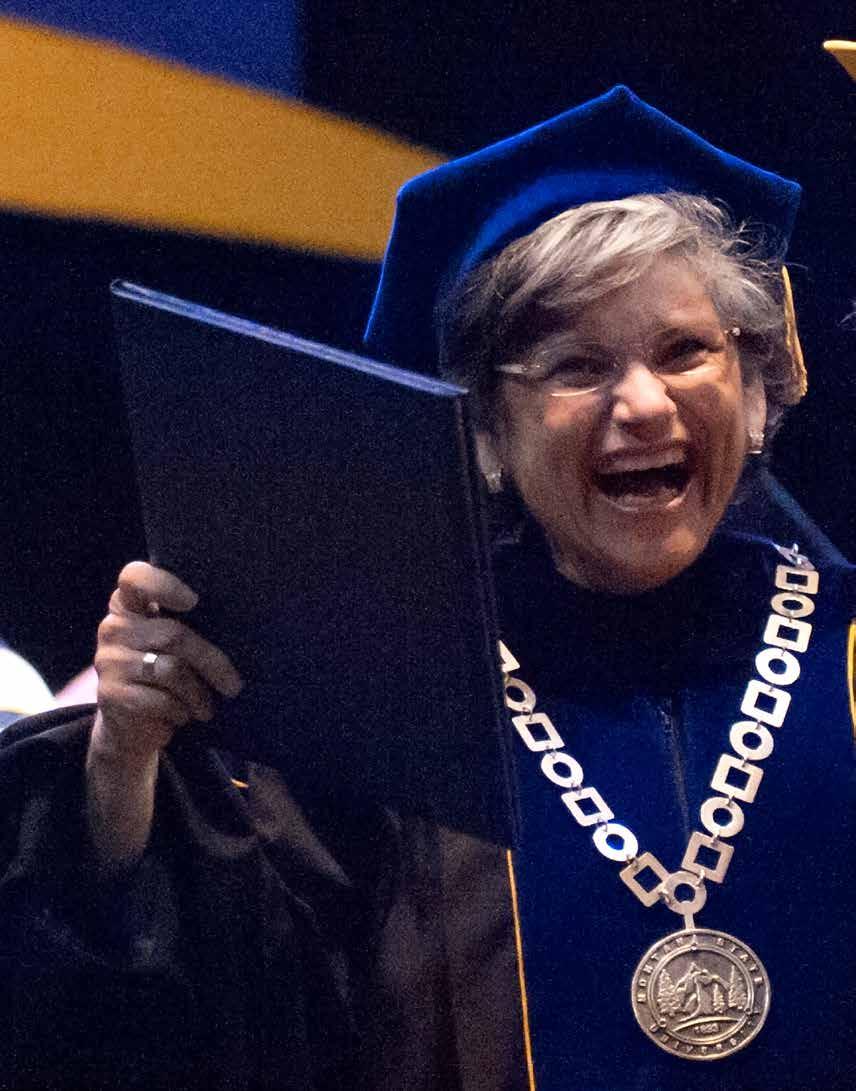
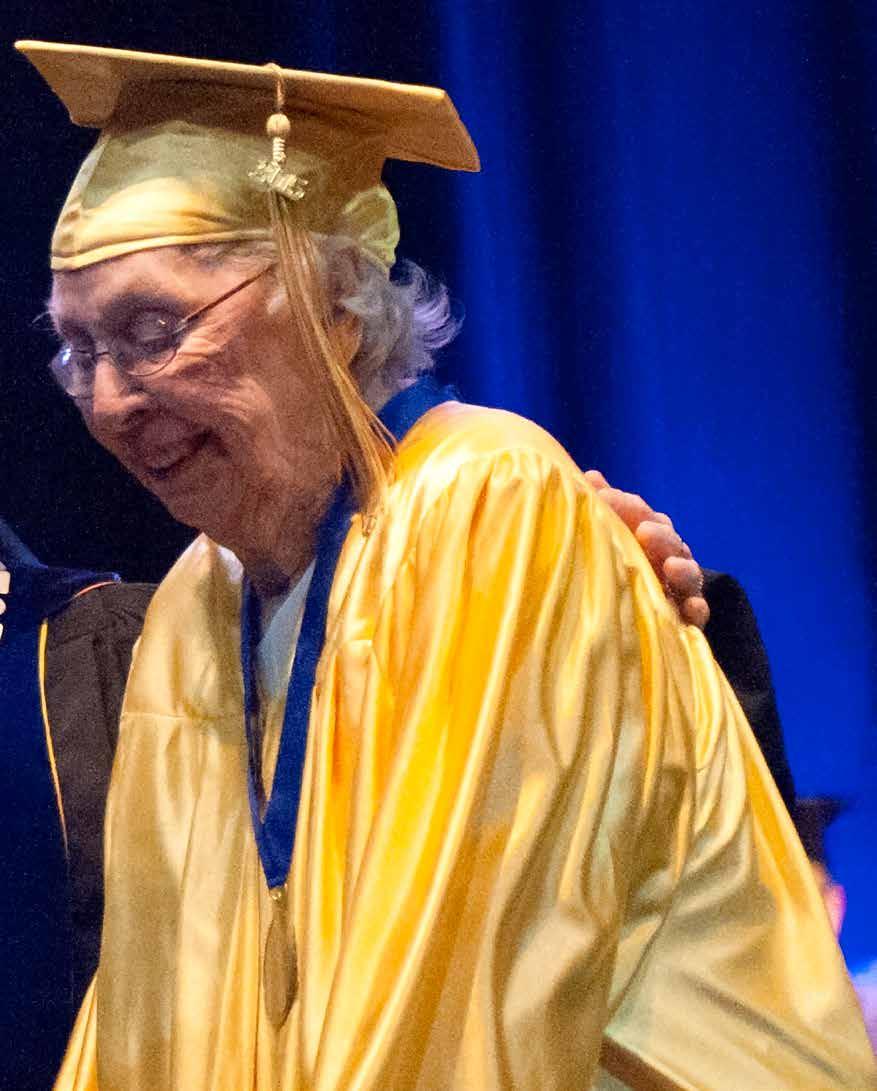
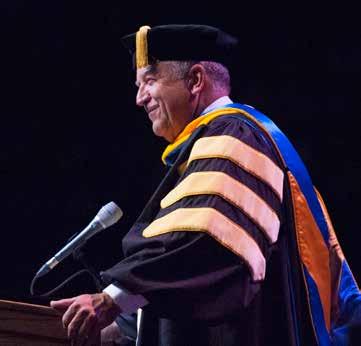
1935 graduate Edith (Johnson) Carlson greets MSU president Waded Cruzado on stage at the 2015 Spring Commencement ceremony.
1935 graduate Edith (Johnson) Carlson greets MSU president Waded Cruzado on stage at the 2015 Spring Commencement ceremony.
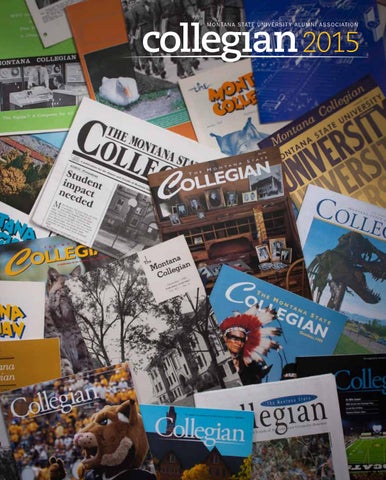
Welcome to your new and improved Collegian magazine. For 90 years no publication has played a more important role than the Collegian in engaging and connecting you and generations of alumni to Montana State University. Simply put, this publication is a handson, tangible reminder of the power, emotion and sense of place that is MSU. We hope the improvements we’ve made will meet with your approval, and that the Collegian will continue to be a way for you to “come back” to your university.
As a newcomer to the MSU family, it didn’t take long for me to see what makes your university so special—it is the people. Our faculty, students and staff are exceptional. They could be anywhere and on any campus but they choose to be here. They are passionate, talented and engaged. But it is our alumni who truly embody the university and its power to transform lives. In this issue you’ll read about graduates who have been transformed by MSU and who are, in turn, transforming our world. A musician in the Army, an architect, a freelance journalist, an agricultural diplomat, a mountain biker, cherry growers and a clothing line entrepreneur. Such is the breadth and depth of the Bobcat Family.
Our alumni share one common bond: MSU made a difference in their lives. That reality inspires many of them to stay connected, and I hope you are among them. Be it through your academic achievements, your extra curricular activities on campus, a faculty member who was instrumental in your life and your success, lifelong friendships or just the beauty and inspiration of Bozeman, staying connected is about honoring the place that made you, you. The Collegian is a great way to stay connected, and I hope you enjoy this issue and the stories that reflect the impact MSU has made and continues to make on our students, our graduates and our world.
As always, we’d love to hear from you. Please share your feedback on the improvements we have made or the stories we have highlighted. And, as you know, our class notes section is a place for updates like job changes, promotions or other exciting news about your life. Send us your comments and give us your ideas. The Collegian is your magazine, and we want your input.
Thank you for all you do for MSU. Happy reading and Go Bobcats!
Warmly, Chris Murray Montana State University Alumni Foundation President & CEO
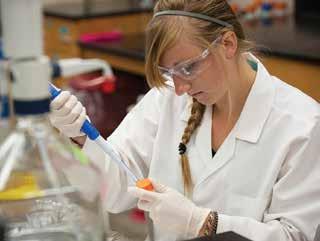
Montana State University recently received recognition for its scientific impact and collaboration. The university earned the 302nd spot on the CWTS Leiden Ranking for 2014, which ranks the 750 universities in the world with the largest contributions in international scientific journals. Unlike other university ranking systems, the Leiden Ranking focuses exclusively on measuring citation impact and scientific collaboration.
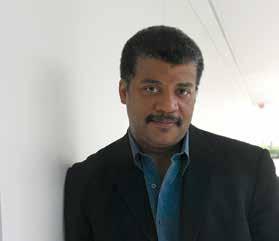
“I wrote a whole book called ‘Death by Black Hole.’ People just love that, and kids love it. I thought, well that’s really creepy if kids like stuff like that, but kids also like T. rex better than vegetarian dinosaurs. I conclude that kids like things that can eat them.”
—NEIL DEGRASSE TYSON
Neil deGrasse Tyson, astrophysicist, cosmologist, author and one of the most recognized science communicators in America presented a lecture on March 4 at Brick Breeden Fieldhouse. Host of the Fox and National Geographic popular TV program “Cosmos: A SpaceTime Odyssey,” Tyson is currently the Frederick P. Rose director of the Hayden Planetarium at the Rose Center for Earth and Space in New York City. The lecture was hosted by the MSU Leadership Institute.
MSU is one of only 83 institutions from across the nation and the only university in Montana to receive the 2014 Higher Education Excellence in Diversity, or HEED, award from INSIGHT Into Diversity magazine, the oldest and largest diversity-focused publication in higher education.

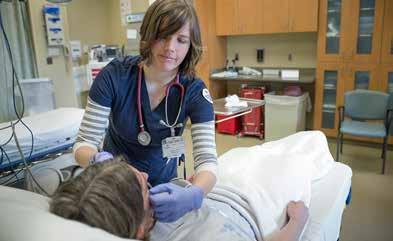
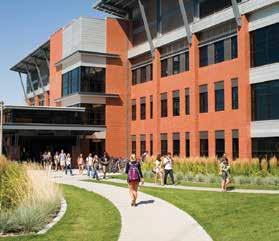
Montana State University recently earned the 144th spot on The Business Journals’ 2015 list ranking U.S. public colleges. It is the highest rank earned by an institution in Montana. The Business Journals’ rankings are based on several factors, including retention and graduation rates, admissions processes, tuition and housing costs, diversity of faculty and student bodies, and economic strength of communities.

“Montana State University MSU and its president Waded Cruzado cast a vision several years ago to be an institutional leader in veteran support and career development.”
—RYAN LUCHAU, Impact Montana Founder and Director
Montana State University is the first recipient of a new award that honors organizations for their impact on Montana’s veterans. For its service to the military, MSU received the “Impact Montana Organizational Award” during the Montana Military Community Appreciation Gala held Feb. 20, 2015, in Helena.
Montana State University art and design programs have received full accreditation from the National Association of Schools of Art and Design, acknowledging MSU as one of the top schools of art and design in the country.

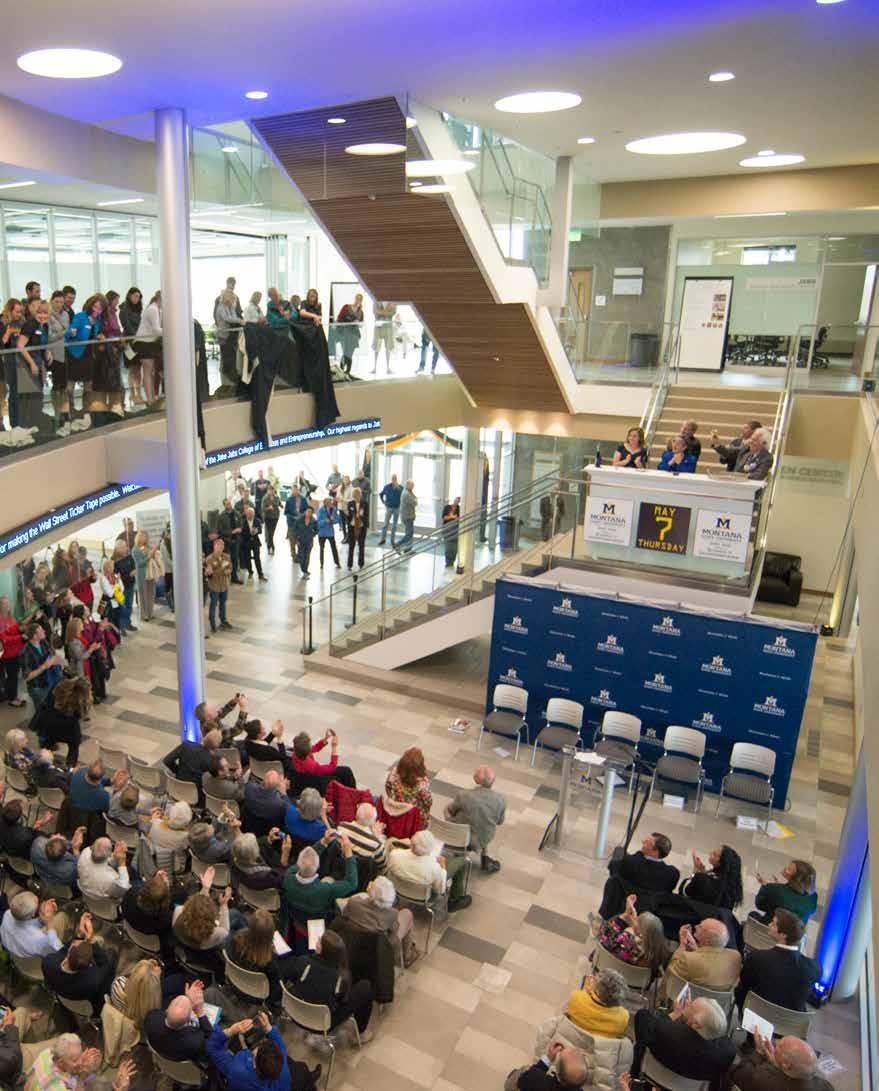
They did exactly what I imagined. I couldn’t imagine a more perfect building. It will raise the bar on how education is done.
—Jake Jabs ’52 at the ribbon cutting for the new home of the Jake Jabs College of Business and Entrepreneurship
At some point I want everyone to take the time to thank the people who have been there on their journey. Oh yeah, and don’t forget to have fun.
—Outgoing ASMSU president Destini French ’15, from her commencement speech
We were so excited to get our new ’Cats piggy banks! Thank you so much! Go ’Cats!
— Future ’Cat members Remington & Charlee Cline
Life is a game: Play it.
is a challenge: Meet it.
is an opportunity: Take it.
—Honorary Doctorate and morning 2015 Spring Commencement speaker Robert Lee ’15
It is easy to be proud of MSU, particularly with the excitement Dr. Cruzado generates. She is a dynamo and truly reflects the excellence of MSU. As they say ’Dynamite comes in small packages.’ We ’Cats don’t have to play second fiddle to anyone.
– Commencement Reunion attendee Bill Erickson ’65
BY JENNY LAVEY
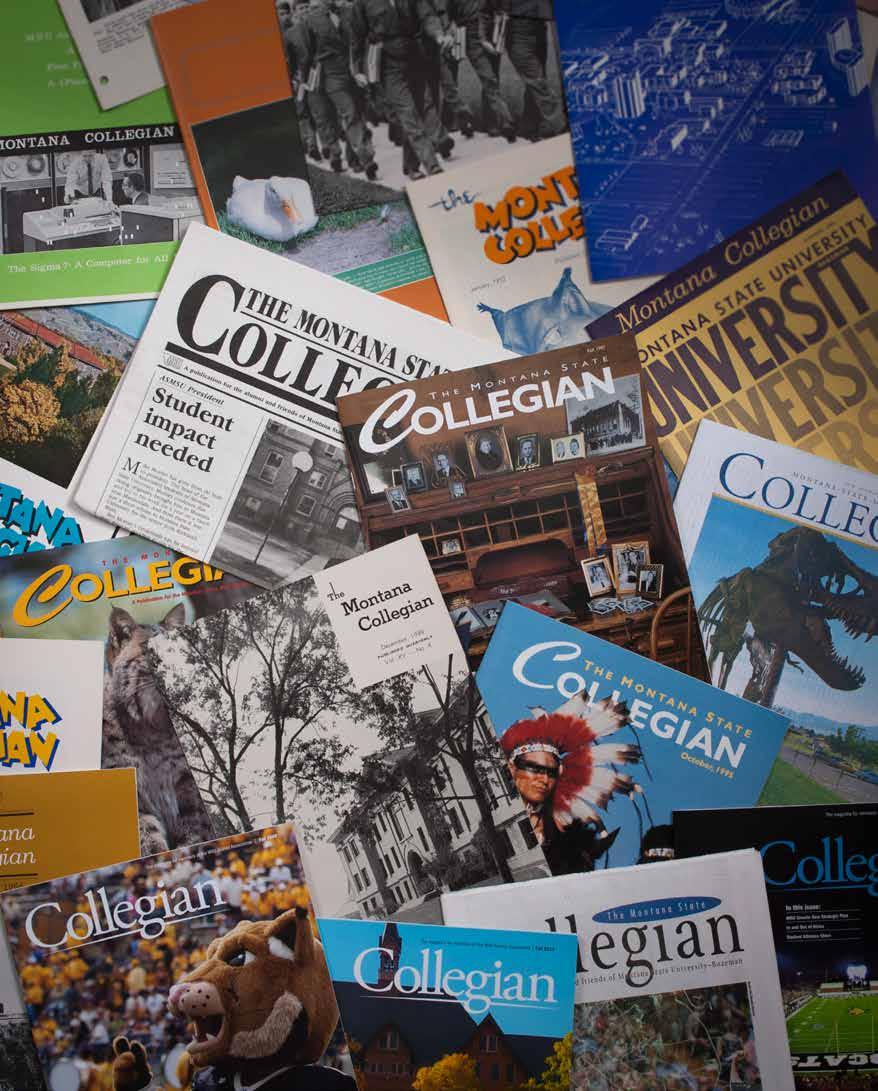
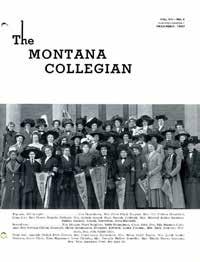
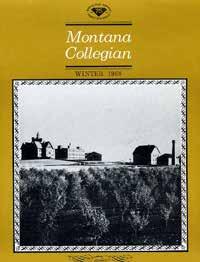
Volume One, Issue One, of the Montana State Collegian was published 91 years ago on December 4, 1924. That first issue was a four-page standard newspaper layout published by then Montana State College (MSC) when Alfred Atkinson was the university’s third President.
President Atkinson served as the Collegian’s first editorin-chief and in his very first editor’s note, he wrote that MSC was “busy selling itself to its citizens” touting “no product more distinctly Montana in character than the state’s own higher educational institutions” exclaiming “a new and wonderful loyalty to and pride in Montana State sweeping ahead of us.”
In this same issue, a vocational conference was advertised; for men, agricultural and mechanical arts were listed, and for women, art and home economics. The MSU Bobcat football team played seven games that fall, with a 5-2 record (seven games qualified the
team for the Rocky Mountain Conference), and the Bobcats had “walloped Missoula in a recent rivalry.”
Butte sent the highest number of students to the university that year: 45, followed by Great Falls, which sent 27. Many recent graduates were taking jobs with the Anaconda Mining Company as agronomists, chemists and engineers. The “personals in ag” listed Gery Von Vost, who had made extensive improvements on his farm in Geraldine, Mont. Albert Lux ’24, of Platwillow, Mont., reported a fair crop and offered a turkey dinner to alumni visitors. Births (all of them at home), deaths and marriages were listed. Georgia Callum Roosevelt wrote
to say she had left for California for a visit of several months. Much has changed since that inaugural issue of the Collegian There are more buildings on campus, more graduates, and parking lots and residence halls have spilled into wheat fields. Through the decades of change, one thing has remained constant the Collegian magazine has been written, shared and celebrated with its larger MSU family, always harkening to its original mission of “connecting alumni with their alma mater.”
Some identify the Collegian’s avid readership as “full of vim,” others as “bleeding blue and gold” or having “Bobcat fever.”
Whatever the term for readers

far and wide who treasure the magazine, the Collegian has printed stories showcasing and celebrating the talent, grit and accomplishments of the many faces and personalities that have attended MSU and left their mark, in some way or another, on the university.
In 1937, volume 13, issue four, MSC reported a record enrollment of 1,245 students and noted a change in the Collegian “making its debut in a new, popular dress” charging $2 an issue for subscribing alumni. Jean Young of Helena, MSC alumna, was noted as the first licensed woman aviatrix in Montana.
In 1955, volume 21, fully trained chemists and engineers were featured as the most “in-demand workforce” and the MSC’s teacher education program highlighted the state’s steep shortage of public school
teachers. The Collegian was published quarterly.
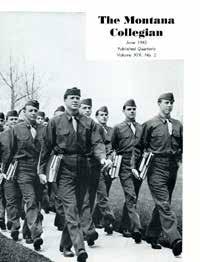
In 1975, MSC had been renamed to Montana State University and had tenured eight presidents, each profiled in volume 51. This same issue reported the rise of computer science degrees in an article titled “Talking with Computers: You Have to Learn the Language or You Won’t Understand What the Machines are Telling You.”
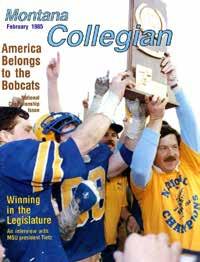
In 1985, volume 62, issue four, “America Belongs to the Bobcats” was featured, highlighting the big win over the Louisiana Tech Bulldogs at 19-6, to claim the NCAA I-AA national football championship and the Big Sky Conference the previous year.
In 1990, volume 67, issue four , MSU unveiled its first themed license plates that would benefit a university scholarship endowment. This program still exists
and in 1994, MSU was the national leader in collegiate license plates sales, numbering more than 3,285 sold. Today, there are two MSU-themed plates and one Bobcat Club license plate.
In 1992, volume 69, issue two, Wheat Montana CEO and MSU alumni Dean and Hope Folkvord both ’82, set a Guinness Record for the amount of time it takes to turn wheat to bread at eight minutes and 13 seconds. The first Boeing 777 wide-body airliner was designed and constructed with more than two dozen MSU alumni working in civil engineering at Boeing.
What weaves these distinct and invariably unique legacies together is that they all are rooted in Montana State University. These are the stories that illustrate the power of the university and impact on its most committed group of stakeholders: its alumni.
“Staff and faculty come and go, and administrations change over the years,” said Jaynee Groseth ’73, ’91 M, president emerita of the MSU Alumni Association and previous Collegian editorial board member of 20 years. “What remains the same is our alumni and what builds community among them, through stories is the Collegian.”
Groseth served as editor of the Collegian in her role as Alumni Association president and reviewed story ideas with a campus-wide editorial committee for each issue. She recalled a handful of particular stories that will stay with her forever, Blake Rasmussen ’06, ASMSU student body president ’04–05, who boasts both parents and both sets of grandparents as Bobcat graduates, a true legacy family; and the group of alumni in Culbertson, Mont., who gave an MSU scholarship to one girl and one boy with a poker game as the application the winner
received the scholarship. In 1993, the year of the university’s centennial, Groseth sought out MSU’s oldest living alumna, Florence Gray 1916, at 101 years old. After the story was written touting Gray as MSU’s oldest and dearest, Emma Taylor 1916, wrote in, claiming she was indeed the school’s oldest alumna, with a birthday preceding Taylor by a few days. The list goes on and on and Groseth tears up a bit when she recalls the impact and influence of the Collegian
“I always felt it was an honor and a tremendous responsibility to imagine what our alumni would like to hear from their university,” she said. “What came from that effort is a lifetime of stories that have intertwined the successes, advancements and highlights of the university and its alumni. In all of its various forms, the Collegian has been
“The Collegian is one of those really special publications that celebrates all walks of life; not just people who were academic stars as students, but a wide spectrum of people who have had success and impact in their careers and their community.”
Kerry Hanson, vice president of alumni relations
an important way for alumni to come back to MSU through words and pictures, so it’s a very special publication.”
Kerry Hanson ’93, ’08 M, vice president of alumni relations, said the magazine is the place where all of MSU is celebrated.
“The Collegian is one of those really special publications that celebrates all walks of life; not just people who were academic stars as students, but a wide spectrum of people who have had success and impact in their careers and their community,” said Hanson.
“MSU alumni do an incredibly diverse amount of things and they do them very well, and the Collegian is a record of these inspiring lives and accomplishments that demonstrate what MSU is capable of producing.”
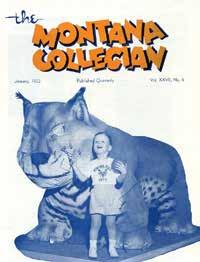
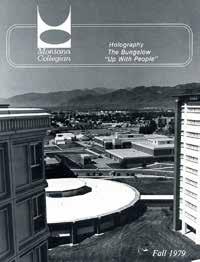
The publication has taken many forms over its history, responding to the format popular for readers of the time. From the 1920s–1940s, it was published as a quarterly newspaper. In the 1950s–1970s, it was a single-fold newsletter featuring
200-word highlights. In 1993, it morphed into a glossy magazine—popular for the readership that remains today. Some years it was printed up to five times, some editions going only to Alumni Association members. Now, in 2015, the Collegian has yet again been revised by collating four issues each year into a single annual publication.
Chris Murray, president and CEO of the MSU Alumni Foundation, said the latest iteration of the publication will be a more substantial issue, with longer stories and seasoned photog-
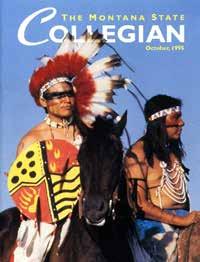

raphy, in an extended, more in-depth format that readership will be proud to have grace their living room coffee tables.
“The Collegian is the Alumni Foundation’s most important publication and readership piece,” Murray said. “It engages, educates and celebrates the good work of MSU’s people, programs and places. There are so many great stories to tell about the university and our alumni and we want to share those so our alumni know what’s happening at their university.”
Murray added that he hopes readers respond to the new look and feel, as alumni and friends have done in decades past.
“I want them to be proud of their university, I want them to be amazed at the quality and the breadth and the impact of Montana State University,” Murray said. “Universities change lives. That’s what I think people understand about MSU and its power, they understand what the university does every day it changes lives, and it’s the role of the Collegian to tell those stories.”
Excerpt from President Alfred Atkinson’s letter from the Collegian Issue One, Volume One
“Get on the band-wagon with those ‘I told you so’s’, who have helped to boost Montana State College until today she stands with the best in the country in scholastic standards, quality of graduates, power of athletes and leadership in activities.”
“The few remaining doubting Thomases are waking from their sleep to discover that their Alma Mater has gone far ahead of them. Don’t stop to wonder if you are proud of M.S.C., but take time occasionally to wonder if M.S.C is proud of you. Are your alumni dues paid up; are you boosting for the school that made possible your better success in life? Answer those questions with action.”
What do you think about the new Collegian?
Send us your feedback at collegian@msuaf.org or share your thoughts on social media with #msucollegian. We look forward to hearing from you.

“I am focused on doing as well as I can and making each race better than the last. If I continue to do that, I think I can be on the Olympic team in 2016.”
Stephen Ettinger
BY CAROL SCHMIDT
For Stephen Ettinger ’12 it has been all about the bike since he showed up at Montana State University as a freshman in 2007 expecting to become a Bobcat Nordic skier.
During his first week in the Roskie residence hall, the native of Cashmere, Wash., who has mountain biked since he was age 10, traveled to Scotland to compete in the Mountain Bike World Championships with the U.S. National Team.
“It was a terrible race,” recalled Ettinger. “Our team was miserable. But I did well enough that I thought that realistically I might have a shot in competitive mountain biking.”
Ettinger said that it also helped that the week he arrived at MSU, the Bobcat Nordic team was unexpectedly full of Norwegian skiers and there wasn’t really a spot for him. So, he turned his focus to endurance mountain biking.
“It has all worked out,” he said with a shrug.
It certainly has.
Since his freshman year, Ettinger has become the topranked North American mountain biking cross-country rider. Some of his most recent accomplishments include winning the 2014 Pan American Continental Cross Country championship, the 2014 Short Track National Championship, the 2014 Fontana U.S. Cup Short Track, and taking second in the 2014 U.S. National Marathon
Championship. In 2013 he was the U.S. National Cross-Country Champion and was second in the U.S. National Marathon Championships. In 2013, he also won the Elite men ProXCT Vermont Short Track, the Elite Canada Cup UCI C1 at Mont Tremlant and the Canada Cup UCI C1 Bae-St-Paul.
Ettinger recalls traveling throughout the U.S. and Europe to compete and podium in races, and then returning to MSU, his studies and to take finals. He said while “everyone at MSU was incredibly supportive,” not many of his classmates knew what he was doing, even when he earned professional status his freshman year.
He was asked to race for the BMC Mountainbike Development Team in 2011, and before he graduated from MSU with highest honors in exercise science, he had become the U23 National Champion, was third at the Pan American Championships, and eighth in the U23 World Cup Overall with multiple top-five finishes. He had also been a member of the Pan American Games Team, signed his first professional contract with the BMC Mountainbike Racing Team and was named to the Olympic Long Team.
It’s been a fast ride to the top for the 26-year-old, who competes in a sport recognized for endurance rather than the crushing strength and bravado of downhill mountain biking.
Ettinger explains that Olympicspecific cross-country mountain bike races are run on courses that are four to six kilometers long. Each race is six or eight laps, and the race usually totals about 1.5 hours long. In Europe, the cross-country races and its racers are tremendously popular, particularly in Switzerland, Germany and Italy, said Ettinger, who lived in Switzerland for a time following his MSU graduation.
Ettinger has had a steady climb up the rankings, with a breakout year in 2013 when he won his first professional title and earned the distinction of becoming one of the top-ranked riders in North America.
Yet, in Bozeman, where he lives with his girlfriend, Corrine Malcolm ’15, a former Bobcat skier who has who trained with the U.S. Olympic biathlon team in Lake Placid, N.Y., he has welcome anonymity when he trains in the gym (“lots of strength work”) and on area trails and roads. He is also an avid backcountry skier when he isn’t traveling, which isn’t often. He estimates he travels 180 days a year.
Ettinger said his top rankings have been surreal, especially since “I never had a long-term plan for a professional career.” He credits his ability to be analytical following a race as well as his deep love for his sport with his success.
“In any sport, you are going to have a lot more bad days than good days,” Ettinger said. “When that happens, I’m able to look at it objectively and see what went wrong. I also check in with my values and re-center myself. Knowing and remembering what those good days feel like can be incredibly motivating.”
Ettinger said his persistence, competitiveness and his love of challenge also have contributed to his success.
His next challenge is making the U.S. Olympic team for the 2016 Olympics in Rio.
“Right now, the biggest question is whether (the U.S.) will have one or two positions for the Olympics. We should know more about that next May,” Ettinger said.
Ettinger is the premier rider in his age group and feels if he stays healthy he will have a good shot at the Olympics.
“I am focused on doing as well as I can and making each race better than the last. If I continue to do that, I think I can be on the Olympic team in 2016.”
was as though 30 years hadn’t elapsed at all.”
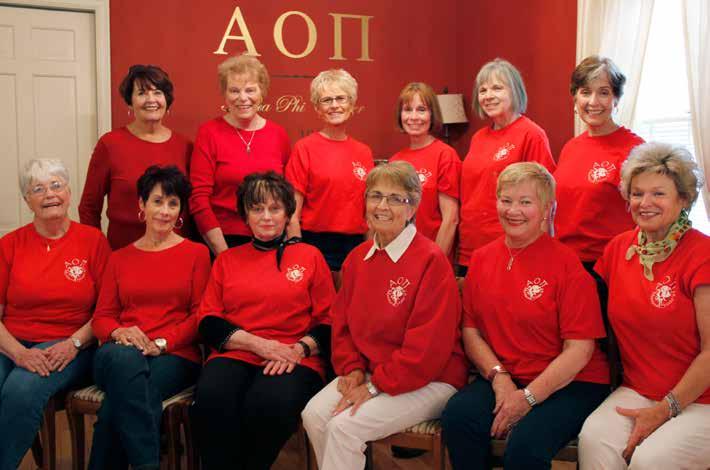
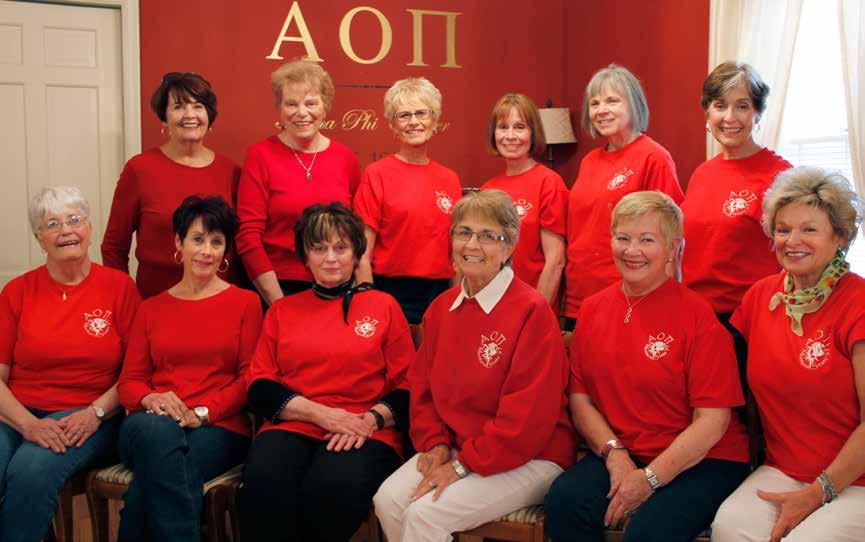
“That reunion was so much fun, we decided to do it again,” Phyllis says. In 2000 they got together in Port Townsend, Wash., where Robin lived. Julie remembers, “I rented a big van and 13 of us drove around the Olympic Peninsula for three days taking in the sights.”
In 2005, 19 AOIIs met in Big Fork, Mont. “We wore red T-shirts and rode a red bus into Glacier Park the first day,” says Julie. In 2008 they were at Big Sky where Phyllis and Bill Breeden live when they’re not in Alaska.
In Red Lodge in 2011, Julie says, “We decided we should meet every two years so we went to Bozeman in 2013 for Homecoming.”
Their recent reunion, in Bozeman in May, was timed to coincide with the 50th anniversary of their graduation. “We did the whole thing,” Phyllis says. “We wore the golden caps and gowns, toured the campus and wore special T-shirts designed by Barbara (Hoffman) Erickson.”
Phyllis says that five members of the original pledge class have passed away, and two or three have never responded to their invitations. But for Robin, “the continued relationship with my sorority sisters means the world to me. They are a part of my history and the continued friendship is part of my being. There is something special about old friends because we know each other’s history.”
Phyllis acknowledges that the future of Greek societies has become less certain in the past half century (MSU has lost two of the six sororities that were on campus when she was an undergrad). “I think in our era, sorority membership was a huge factor in keeping us in school and on track to graduate. As freshmen, we each had an AOII big sister who helped us negotiate the challenges of being away from home. And then in our upper-class years, we were big sisters to younger students, and that helped keep us focused.”
Robin says that for today’s students keeping in touch is probably easier because of email, texting and Facebook, but for the deep relationship she’s maintained with her AOII sisters,
“it takes someone to organize it and keep it going. I’m not sure that the young people today are as close as our pledge class was now that men are allowed in the house to study and there are no curfews. Maybe today closeness and bonding is different.”
“We still share the same silly jokes, laugh at one another, and yet love each other for each person’s individuality and what she brings to the group. We have all gone different directions in life and have had varying challenges, but down deep, we are who we are and each deserves and receives respect,” Julie says
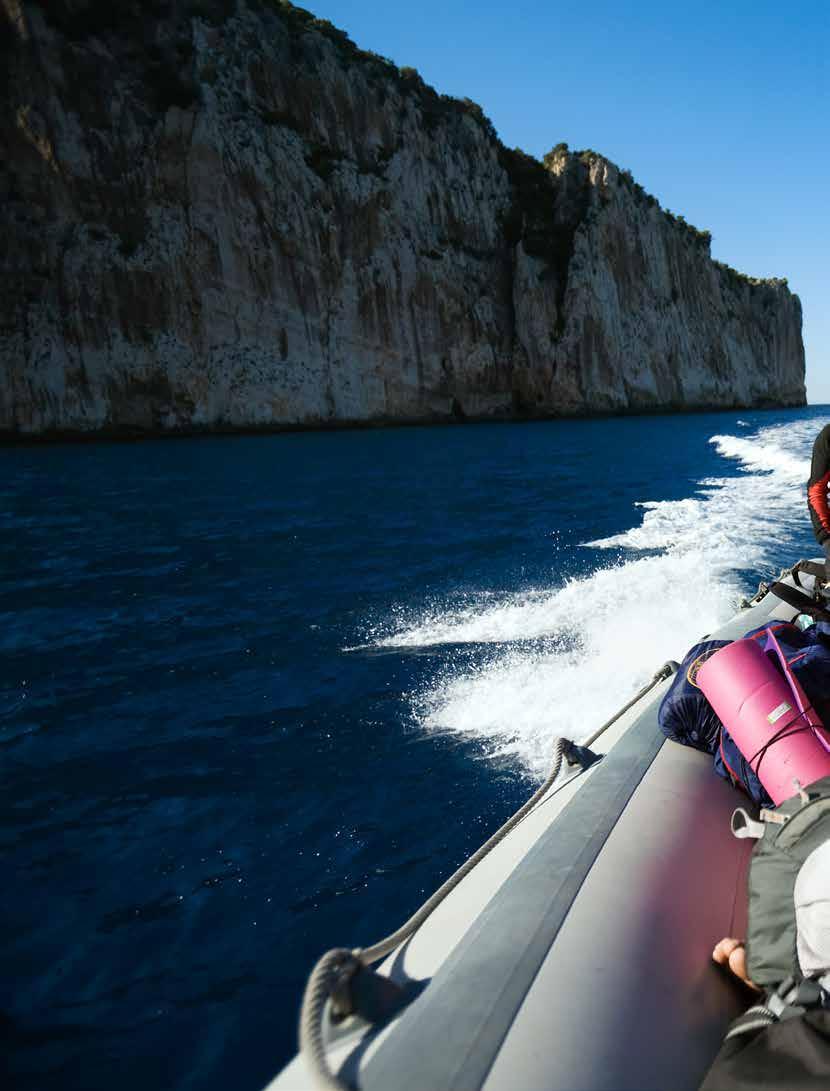
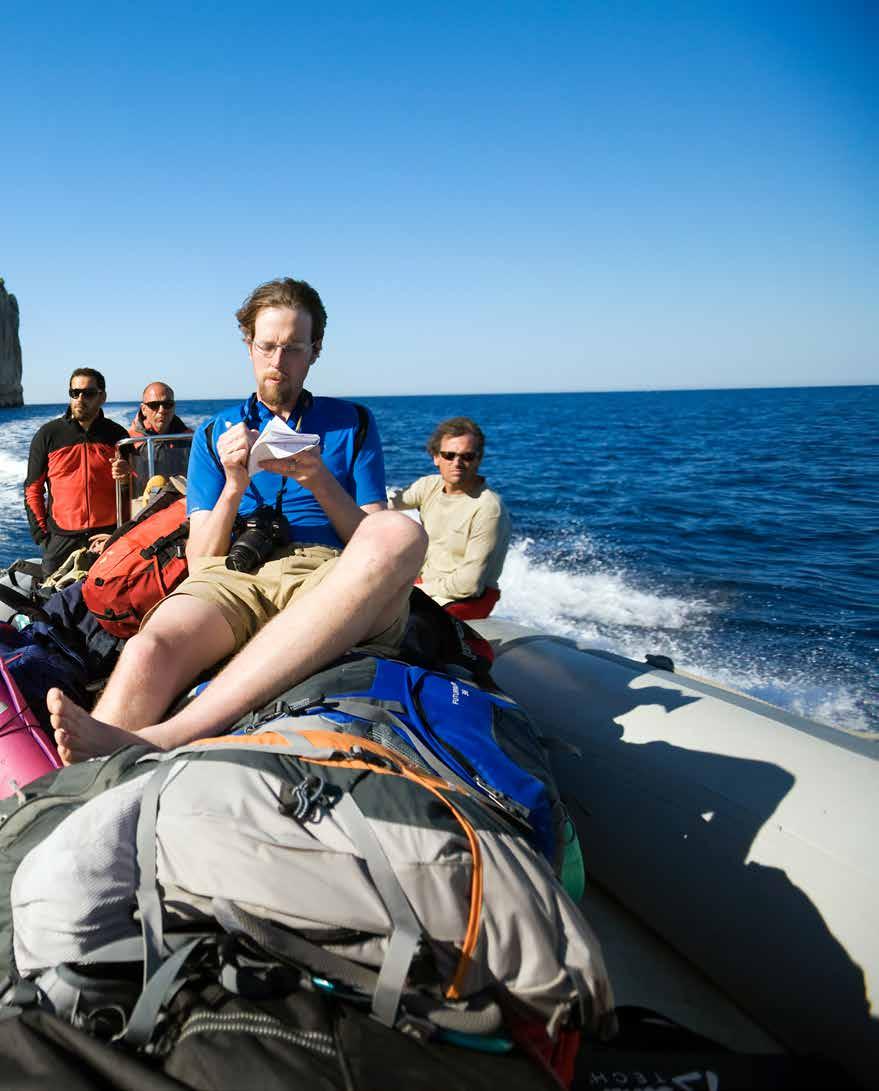
Tim Neville, who cut his journalistic chops at the Montana State University Exponent, jots some notes on the return from a hike called the Selvaggio Blu while on assignment in Sardinia, Italy, for the New York Times in 2008.


outside world and environmental issues. It reinforced the idea that travel writing and freelancing was a viable way to make a living. Neville said he just needed to find a way to turn his newly acquired chops as a reporter into a reputation that would land him assignments.
While writing for the Exponent, Neville landed his first freelance assignment about Montana kids who earned money for college by competing on the rodeo circuit. The story was published in the college industry publication U. Magazine.
After his stint at the Chronicle, Neville made his way to Bolivia and Peru, where he teamed up with his then girlfriend on a story about bicycle travelers. Back in the states, he drove from his parents’ home in Maryland over to Santa Fe, N.M., for an internship at Outside.
His pay was $5.15 per hour, but that didn’t matter. The gig was his first real foot in the door, Neville said. His internship tenure of four months quickly became eight months, before morphing into a staff job.
“All of a sudden I was at a magazine, learning how pitch meetings worked and what would fly and what never would,” Neville said.
Even when his pay grade improved, Neville continued saving enough money to fund his next trip. Neville said he once got a $500 assignment from Outside in the Philippines and took 59 days off to pursue it, employing journalistic skills first honed at MSU to “tease out the fabric of a place.”
Neville said the networking he did at Outside was game changing. When he relocated to Bend, Ore., where he still lives with his
wife and daughter, editors he’d become acquainted with while at Outside sought him out to write stories on one of the West’s upand-coming small cities.
Through the years the reputation he hoped for has solidified. Neville said he can pitch stories that might require an extended trip to Uzbekistan or the Balkans and know that he’ll get a legitimate hearing from the person on the other end of the phone.
“It’s super humbling to have an editor say ’This is going to be great,’ and send me off to do a story like that,” Neville said. “Back when I walked into that room upstairs in the SUB, I couldn’t have imagined having such a fun and rewarding career. It’s amazing to think that it all started there at the Exponent.”
Opposite: During a multi-day mountain trek in the Balkans region, Tim Neville (at right) chats with one of his hosts at a lodge in Valbona, Albania, while on assignment for the New York Times in 2012.
Neville poses among the halls of L’Étivaz, a speciality cheesemaker, in Switzerland on assignment for Ski magazine about hunting down some fondue masters in February 2015.
Neville mugs for the camera during a dive with the sea lions off San Cristobal Island in the Galapagos Islands, Ecuador, for a New York Times story.
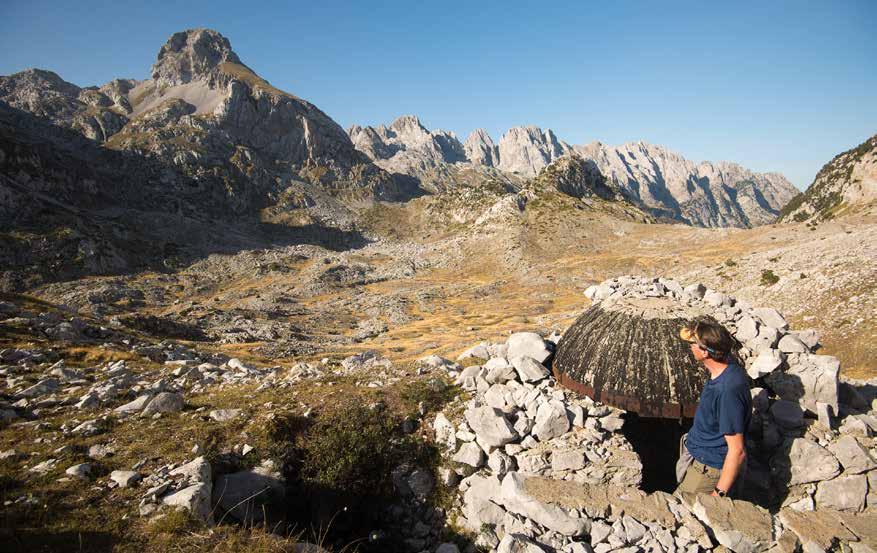
Above: Neville looks out from an abandoned machine gun bunker in Albania, near the border with Montenegro in the Accursed Mountains, during an exploratory hike through Montenegro, Albania, and Kosovo in 2012.
two,” Block said. “Elevated was more of the spiritual side of it; bettering yourself and getting closer to God, just really being all that you can be in life. Kavadba, which means Best of Times, represented my crazy side.”
To fulfill his senior thesis project, Machi, his brother, cousin and two best friends ventured on a 15,000-mile, cross-country road trip after graduation.
Companies such as Contour HD, New Belgium Brewery, SCS Wraps and Red Bull sponsored the trip.
“We called it the Kavadba Summer Road Trip ’10. One van, five guys, 15,000 miles, the adventure of a lifetime. We spent six weeks on the road circling the United States and promoting our clothing line at various shops along the way,” Block said.
Upon the conclusion of the 2010 summer trip, Machi and his brother Zachary settled in Los Angeles, where they collectively
design and print their products in a small shop in North Hollywood.
Machi has devoted the last five years to growing Elevated Clothing. In addition to the small shop in California, the company also has a presence in Scandinavia, most notably in Sweden and Norway.
“The quality of our product is top of the line, competing with brands like Quicksilver, O’Neill and Hurley. We just secured a new store in the Czech Republic, and are working on a new deal with an Australian distributor. Our goal for the summer is to secure distribution in various board shops across the U.S., Australia and Europe.”
“I love what I’m doing and living my passion,” Machi said.
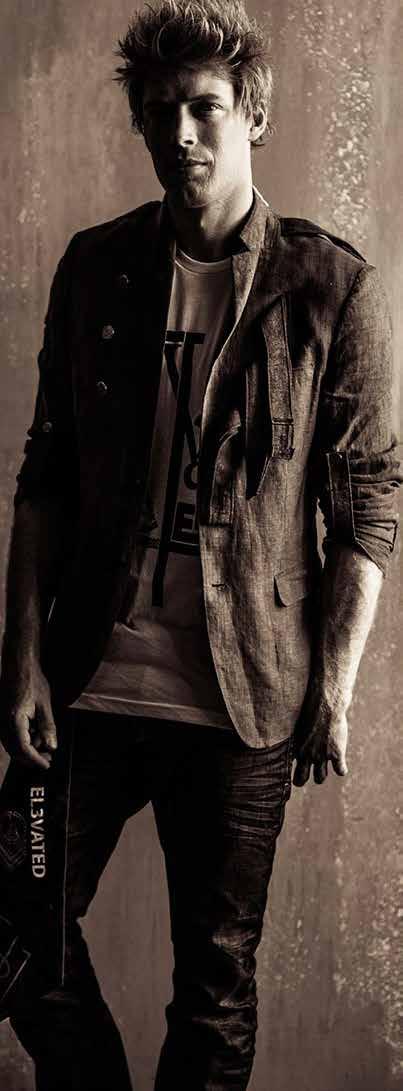
Machi Block models some of the Elevated Clothing line.
To learn more go to: thebreaksshow.com elevatedclothingco.com facebook.com/elevatedclothing
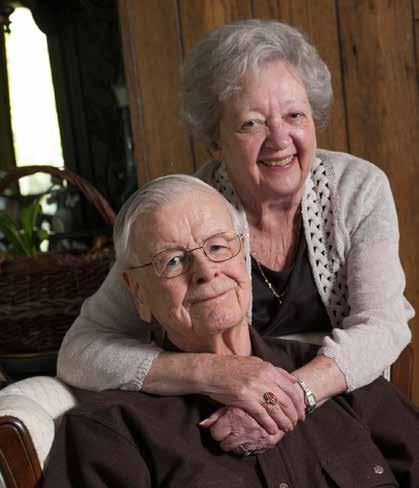
also responsible for negotiating agricultural issues between the U.S. and Norway. As with all American diplomats, overseas postings alternated with assignments in Washington, D.C. During his career, Fred learned Spanish, Portuguese and Danish.
Fred keeps a list of the remarkable people with whom he had personal contact through the years including Robert F. Kennedy, President Eisenhower, Allan Greenspan, Aaron Copeland, Yasser Arafat, Cesar Chavez and Henry Kissinger. As agricultural attaché accredited to Norway, Traeger attended the ceremony when Norman Borlaug, popu-
larly known as “The Father of the Green Revolution,” was awarded the 1970 Nobel Peace Prize. Asked to choose the most memorable celebrity he interacted with, Traeger pauses, then decides. “Having lunch with Charles Lindbergh and Filipino President Ferdinand Marcos may have been my biggest thrill, simply because ’Lindy’ had been such a hero of mine since my boyhood.” Lindbergh had gone to the Philippines on an environmental mission. “He was working to save the Philippine eagle, which the Filipinos call ’the monkey-eating eagle,’” Traeger remembers.
“Having lunch with Charles Lindbergh and Filipino President Ferdinand Marcos may have been my biggest thrill, simply because ‘Lindy’ had been such a hero of mine since my boyhood.”
Fred Traeger
Fred
and Virginia Traeger at their home in Bozeman
During one Washington assignment in 1980, as director for international marketing of oilseeds and products, Traeger traveled to China to negotiate opening the Chinese market to U.S.-grown soybeans, a major coup for American agriculture. Asked to name his most challenging negotiation, Traeger remembers an odd one during his years in Scandinavia when he had to argue against an embargo the Norwegian government had placed on American wine in support of Cesar Chavez’ United Farm Workers.
Since their retirement to Bozeman, the Traegers have kept busy. Fred spent 20 years
advising Montana businesses as a member of the Service Corps of Retired Executives and continued to participate in international trade conferences as well as serving on boards of local nonprofits. Virginia has been an active volunteer for the Museum of the Rockies and the Intermountain Opera, while honing her golf skills to the point that her husband, himself an avid golfer, says ruefully, “She’s the one who made a hole-in-one. Twice!”
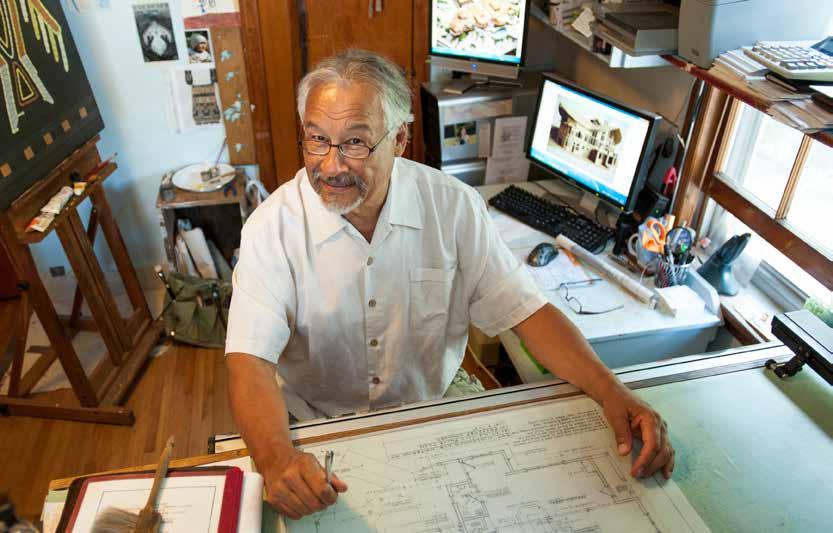
“It was nice to honor my dad and the family,” she said, calling her father “an architect, cartoonist, and freewheeling, idea-connecting, music-loving, life-affirming, people-inspiring ninja. “Their story is a great story. And my dad is this real world citizen. He is a gem.” Sarah Smith

“John was such a terrific person,” Richard Smith said. “He was very talented. An athlete, musician. Just a really loveable person. When he joined the Navy he was stationed in San Diego. His first duty was in Guantanamo Bay in Cuba. There is so much material.
“He affected me as an athlete. I played basketball and I played clarinet because he played them. You are affected by your relatives.”
Like his brother, Richard Smith has also had an interesting life. He had planned on joining the Marines, like his father, when he graduated from high school.
“But my dad told me he didn’t want me to do that,” he recalled.
“It was his idea that I go to (MSU). He said he didn’t want me to join the Marines because that would mean everything he had done would be for nothing. Which is saying something because he had been a Marine his whole life.”
Smith said until he graduated, he had no idea that he would be the first Native American to graduate from the MSU School of Architecture. “Dennis Sun Rhodes (who founded the Great Horse Group design firm in Minnesota) was just one year behind. This year, Dennis and I were on a panel during the President’s Fine Arts Series, so we got to visit, which was real nice.
Marriage took Smith to Glen Falls, N.Y., until “I moved back to Montana because I wanted my kids to listen to meadowlarks in the morning.”
He worked for a firm in Kalispell, then built and ran the Orient Express restaurant in Whitefish and did architecture on the side.
“My mom was the one who got on my case,” Smith recalled. “She said that I should be doing architecture. So, I did and I’m still practicing.”
Richard said he has been drawing the cartoon series in his spare time for 15 years, since shortly after his brother died in Fort Hall, Idaho. He used to send it around to major newspapers to get them to buy it.
“I started at the top … the Washington Post. I got very nice letters back saying they aren’t interested. But I still enjoy working on it.”
Sarah Smith said she thought of her father’s love for his brother and the comic strip when she learned of a Montana Arts Council contest about films about Native artists and thought it might be a vehicle for others to learn about Johnny Bearpaws.
“John was a central character in our family,” said Sarah Smith. “He holds a historical weight in
Richard Wyman Smith created the “Johnny Bearpaws” comic strip honoring his brother John Smith.
our family. I thought a short film would be a way to tell his story.”
Smith received her undergraduate degree from Evergreen State College in Washington State, then was a teacher and tutor at Blackfeet Community College. She was looking for a graduate school program when she came across the logo for the MSU Science and Natural History Filmmaking Program—a mountain lion with a roll of film coming out of his mouth.
“The film program transformed my life and gave me hardcore skills,” she said. “It marries that love of relationship of people and stories.”
Since graduating she has made a film for Glacier Park
about huckleberries, helped edit Charles Dye’s film “Indian Relay” and is planning a trip to Siberia to make a film about an indigenous group there.
Smith said while the “Johnny Bearpaws” film didn’t win the film contest, it was accepted on the online site Audience Awards, and was screened recently at the Roxy Theater in Missoula, where Sarah Smith now lives.
“It was nice to honor my dad and the family,” she said, calling her father “an architect, cartoonist, and freewheeling, idea-connecting, music-loving, life-affirming, people-inspiring ninja.
“Their story is a great story. And my dad is this real world citizen. He is a gem.”
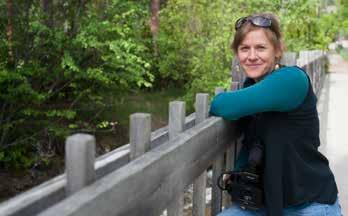
Sarah Smith ’14
who met at Montana State. Jim’s father, Robert Lee ’35, grew up in Livingston before enrolling at the university and played in the MSC marching band. He graduated with a major in entomology and a minor in biochemistry and then went on to earn a Ph.D. in entomology from the University of California, Berkeley. He eventually became a full professor at Cornell University. Jim’s mother, Mary Louise ’35, came from a pioneer family in the Deer Lodge Valley, and she earned a degree in secretarial studies, which she put to use in her family’s hardware and metal shop business before marrying Jim’s father. Because playing in the marching band was an important part of Jim’s father’s life at Montana State, the Dr. Robert L. and Mary Louise (Trask) Patton Memorial Scholarship goes to a student who is a member of the band.
Two years after establishing the scholarship in Jim’s parents’ memory, the Pattons decided to endow another scholarship to honor Jim’s grandfather, Warren Trask 1904, who received a degree in electrical engineering from MSU, and his grandmother, Mary Elizabeth Trask.
A few more years later, the Pattons again decided to endow scholarships at MSU. The Jim Patton Scholarship in Wildlife Management will be a memorial to
Jim, and the Carol Patton Music Scholarship for music education will be a memorial to Carol.
While at some institutions it is more typical for alumni to give, MSU is fortunate to have the generous support of both its alumni and friends, according to Chris Murray, CEO of the MSU Alumni Foundation. And, whether the gift is from a friend or an alumnus, the investment in MSU students is much appreciated, he added.
“Montana State University is a place that changes lives on a daily basis,” Murray said. “Many of our friends have received degrees from other institutions, but they give to MSU because they
care about our university, the role we play in Montana and the very real impact these gifts have on people, places and programs. A philanthropic dollar goes a long way at MSU.”
Jim said it is gratifying to know that he and his wife are contributing to students’ educations while simultaneously honoring their family members.
“We feel like we’ve created something that will last for a really long time,” he said. “In fact, these scholarships are intended to last in perpetuity. We think this is a fitting memorial to the persons whose names are on the scholarships.”
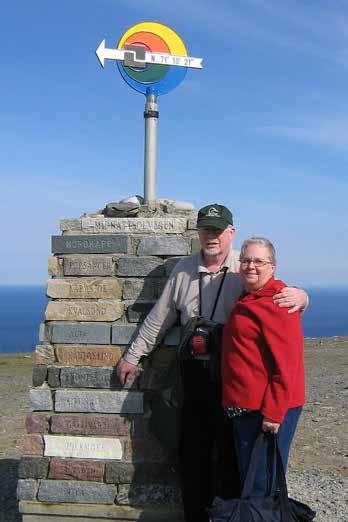
Jim and Carol Patton at the North Cape (Nordkapp), on the northern coast of the island of Magerøya in Northern Norway.
Learn more about scholarships and MSU’s other areas of need at msuaf.org/areasofneed
BY MARJORIE SMITH
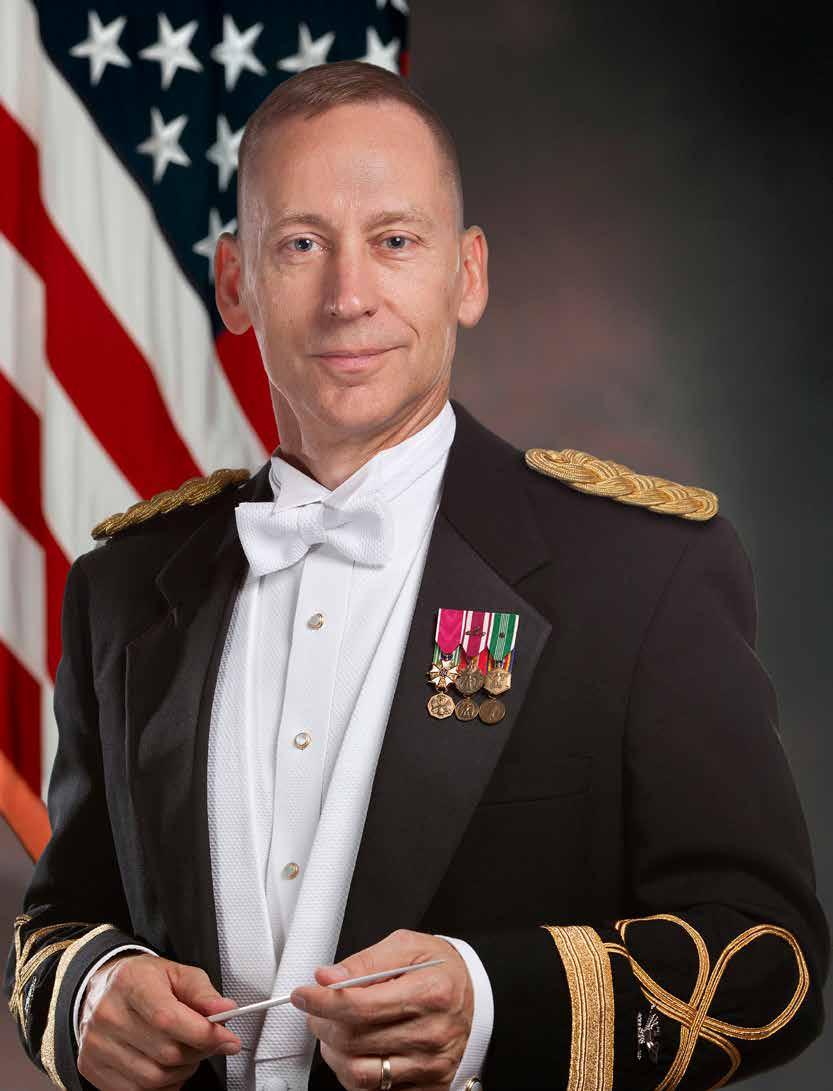
When he was a college freshman, the newest commander of the United States Army Band was thinking pre-med. Beginning college in his North Dakota hometown of Bismarck, Timothy Holtan ’77 says he found himself a bit intimidated by the idea of eight years of hard science before he could even start looking for a job. One day he confided to his mother that he was considering changing his major to music. “Well!” she said. “I’ve been wondering how long it would take you to come around to that.”
“The funny thing,” Holtan says, “is she was the only member of the family who wasn’t at all musical. And yet she seemed to know what the right career was for me.”
A musical mentor in North Dakota advised him to check out the music education program at Montana State University, and he decided to transfer. “It was great!” Holtan says. “I felt like I was in exactly the right place.” His first teaching job after graduation was in Superior in extreme western Montana where “I did it all band, chorus, all levels.”
He then spent a year as a performing musician (he sings as well as playing piano and trombone) while he picked up a
master’s degree in music at the University of Montana. During his studies, he adjudicated high school music competitions and was particularly impressed by the students coming from Great Falls High School. “And then what do you know I got hired as the band teacher at GFHS. I thought I might just stay there forever.”
His wife, Laurie Matheson Holtan ’80, was also on the music faculty at GFHS, and she was more ambitious for him.
“Laurie kind of pushed me to find out about the opportunities with military bands,” he says. The idea was not without precedent: his father had played cornet in one of the U.S. Army bands.
Holtan met the chief of Army bands at a National Music Educators conference and was invited to do some auditions. At age 33, Holtan enlisted in the Army. He rose to the rank of colonel and to his current post as leader of “Pershing’s Own,” the premier U.S. Army band which actually consists of eight performing ensembles: the concert band, the ceremonial band, the Army Chorus, the Army Blues, the Army Band Downrange, the Army Herald Trumpets, the Army Strings and the Army Brass Quintet.
The musicians in the various U.S. Army band organizations are truly soldier musicians, Holtan says. They go through basic training and must keep up their military skills as well as their music.
Holtan has participated in many nationally televised broadcasts and conducted his musicians at some of the nation’s most prestigious music venues. While at West Point, he reestab -
“And then what do you know—I got hired as the band teacher at Great Falls High School. I thought I might just stay there forever.”
Timothy Holtan
For those who make it a career, Holtan says, playing in an army band or singing in the chorus can be a “permanently stabilized existence,” something unusual in career military circles. But for officers like Holtan, transfers from one job to the next occur frequently. He’s been commander of the U.S. Army Field Band at Fort Meade, Md., leader of the U.S. Military Academy Band at West Point, N.Y., and commandant of the U.S. Army School of Music in Virginia. He also was selected for the army’s “training with industry” program and served a term as operations manager and associate conductor of the Dallas Winds.
lished a partnership with the New York Philharmonic that led to five Lincoln Center performances. An estimated 160 million viewers watched Holtan conduct the West Point Band in an Emmy-nominated PBS production, “Marina at West Point,” featuring Serbianborn pianist/composer Marina Arsenijevic.
Holtan’s MSU degree in music education has put him in the best of company he says, pointing out that most members of the U.S. military musical organizations are drawn from “the best music conservatories, places like Oberlin, Indiana University and the Eastman School of Music.”

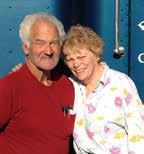
grandkids are the fifth generation of cherry growers.”
Cherry season is a “threering circus” and her hands are stained purple all summer, but they still enjoy the business, Marilyn said.
Remaining competitive in the industry is one reason they became involved with MSU research, Jerry added. In fact, MSU Agriculture Extension Agent Pat McGlynn said Jerry was one of the first growers to approach her when she moved to the Flathead area seven years ago.
“He really helped me get my boots on the ground,” McGlynn said.
Besides discussing industry challenges, “Jerry felt there was a void in horticulture research and asked if I might be able to help with that,” McGlynn said.
As a result, the Bowmans joined a three-year research project to find new varieties of cherries that would thrive in the Flathead Valley and help decrease the competition from Washington.
The Bowmans, like other participating growers, served on an advisory committee and offered their land for research. The Bowman research plot was the coldest in the study and offered a range of elevations, McGlynn said. The Bowmans also helped select varieties for the trials. They stored, sorted and labeled trees and trucked new trees to other sites.
“I’m always looking for a better cherry variety,” Jerry said, explaining his participation. “I enjoy being out in the orchard, looking at the trees and pondering what can be
done better to increase production or cherry quality.”
Even after all these years, he still likes rebuilding engines and motors, Jerry said. He also likes driving equipment whether it be an excavator, or tractors with a mower, sprayer or cultivator, or a semitrailer on the highway.
As a 12-year-old boy, in fact, Jerry’s birthday wish was to drive a tractor and cultivator in the orchard.
His wish now, Jerry said, is for the ability to harvest sweet cherries mechanically for the fresh market.
And yes, after a lifetime in the cherry business, he still eats cherries.
“I love them,” Jerry said. “I eat them every day, either canned or fresh when in season.”
the orchard.
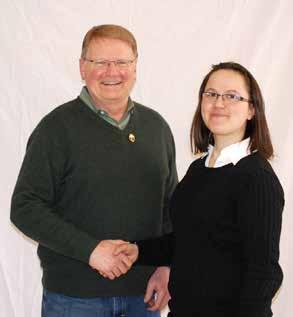
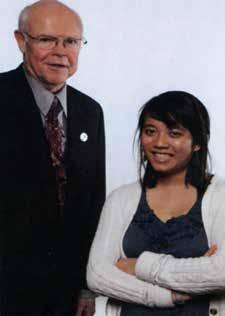
internships at Intel, as one sign of success in this area.
“If we can build a track record of well-prepared students and alumni coming from MSU, the reputation will continue to grow,” Reichelt said.
Reichelt and Nordahl both came to Montana State from rural Montana communities.
Reichelt, now 63, grew up as a “typical rural farm kid” in Big Sandy, where he went to a high school with a graduating class of 51. MSU was Reichelt’s first choice for college, he said, both because cousins and other relatives had attended Montana State, and also because he was interested in engineering and knew that MSU had a strong reputation in the field.
As a student at MSU in the early 1970s, Reichelt enjoyed his classes and recreational opportunities like skiing, joined a fraternity and made lifelong friends. With a professor, he also became involved with an environmental impact assessment on U.S. Highway 191 that connects Bozeman to Big Sky.
“A lot of the work (on U.S. Highway 191) was transportation
planning: What did we think the traffic counts would be? What would the increase be? What would be the impact on wildlife crossing? We were trying to figure out not only the impact, but how to soften the impact,” Reichelt said. “It turns out that development has far exceeded anything that was envisioned, but this was a seminal project and helped shape my career.”
Reichelt went on to enjoy a long and successful career in a variety of facilities planning, energy management and environmental engineering positions. Over the course of more than 30 years, he worked with Deere & Company, Puget Energy and Intel Corporation at locations across the globe, including Phoenix, Boston, Santa Clara, Calif., Livermore, Calif., and in the Philippines, Malaysia, China, Costa Rica and Ireland. While at Intel, Reichelt helped develop and implement many of the company’s global environmental programs and policies. Beginning in 1992, he was also involved with some of the first product stewardship efforts in energy efficiency and recycling, and he was a cofounder of EPEAT, or Electronic Product Environ-
mental Assessment Tool, an environmental rating system.
Nordahl graduated from high school in Columbus, Mont. where he obtained a journeyman plumber’s license at age 16 and worked in his father’s mechanical contracting business during high school and summers while in college.
While at MSU, Nordahl was a member and president of Sigma Nu Fraternity, as well as a member of the Interfraternity Council. He was also Commissioner of Finance as a member of Student Senate and president of Septemviri, a senior honorary society of seven students selected by faculty.
Nordahl’s career in the commercial nuclear power industry included engineering and management positions with a number of companies, including General Electric, Atlantic Richfield Hanford Co., Exxon Nuclear and Siemens/AREVA, U.S. Nuclear Divisions, where he served as president and CEO. Nordahl is now retired.
In addition to serving as a mentor through MSU’s Bobcat Mentoring Program, Nordahl also regularly delivers presentations on engineering and business eth-
ics to MSU engineering students. The lectures relate to what he calls his passion: team effectiveness based on leadership integrity.
Both Nordahl and Reichelt emphasize to students that their engineering education gives them the ability to do meaningful work.
“I strive to help (young people) realize that good engineers with high ethical standards have many key roles to play in leading technology companies/organizations to success in providing products and services that are needed to support humanity and save the planet,” Nordahl said.
Reichelt noted that MSU “stands up to any university in the country.
“The thing that I really appreciated about Montana State is that it’s a great experience, it’s a great place to go to college, (and) it’s a high-quality education. The value of that education is immeasurable. Graduates of Montana State should be very proud.”
For more information on MSU’s Bobcat Mentoring Program, go to montana.edu/ bobcatmentoring


“All the side jobs I had while I was at MSU were construction related,” Boyles said. “I did everything from laying asphalt to putting in sewer and water lines to framing. It was good experience because I got a taste of all the construction trades, and they were good-paying jobs. It was hard work, a lot of manual labor, but I learned a lot. And that was the goal because when I came to MSU I barely knew what a wall was made of, much less how to draw it or build it.”
Boyles said he took a job with Intrisik as a builder when he finished his master’s degree, before signing on with JLF to do more design-oriented work. It
was there he began to learn to work with the Rocky Mountain rustic style.
It is a style that owes some of its look to the great historic lodges of the national parks, Boyles said.
“The buildings in the parks are big, permanent structures, and they take on a lot of public sentiment,” Boyles said. “These are structures that are built to last for multiple generations. They have a certain legacy and that’s fun to be a part of.”
Boyles said the first of the new hotel buildings, which were built in sections and trucked to Yellowstone, will open this summer.
“The buildings in the parks are big, permanent structures, and they take on a lot of public sentiment,” Boyles said. “These are structures that are built to last for multiple generations. They have a certain legacy and that’s fun to be a part of.” David Boyles
should have included a look at a weather map and knowing that he couldn’t afford a motel, he slept a few nights in the lobby of the Bozeman post office.
“It was open 24/7. It was nice and warm compared to the outside, and nobody bothered me,” Abdi said, adding that he felt better off than his friends who were living in their cars.
“Back then, it wasn’t like you are feeling, ’What a harsh life,’” Abdi said. “You are a student, just happy to get into school. It wasn’t a big deal at the time.”
Abdi went on to live in the MSU residence halls and work multiple jobs. Despite the Iranian crisis and the misconceptions Americans might have about Iranians as individuals, he felt safe at MSU, Abdi said. The biggest challenge occurred when the foreign student adviser called all the international students together and told them they couldn’t work on campus anymore because they were taking jobs away from Americans.
“It was a huge, huge blow,” Abdi said, especially for Iranians whose funds were frozen during the revolution.
Fortunately, the decision was soon reversed, and he returned to shelving books at the library, cleaning kitchens and working in cafeterias, Abdi said. He also concentrated on his studies, determined to master electrical engineering.
“It was a very, very hard major,” he said. “That’s one of the things that attracted me to it. It was so abstract at the time and so difficult for me to grasp that I thought, ’I have got to do this.’”
It was also different from his brothers’ specialties, he said. One had become a chemical engineer and the other a mechanical engineer.
The math and science he had studied in Iran prepared him for MSU, and the passionate, tough instructors he had at MSU prepared him well for Georgia Tech and beyond, Abdi said. By emphasizing the theoretical, they gave him the strong problemsolving skills that he still uses today.
“When it came to tests and understanding concepts, I was always at the top of the class,” Abdi said, referring to Georgia Tech. “I beat them hands down. I attribute that a lot to my background at Montana State.”
Because of his strong Iranian background in math and science, he knew early on in life that he would pursue engineering, Abdi said. But his interest in electrical engineering, specifically semiconductors and microchips, grew at MSU.
“The more I got into it, the more passionate about semiconductors and electrical engineering I became,” Abdi said. “I saw the possibilities for the future.”
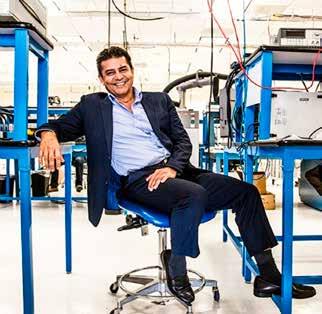
He spent more than 18 years at Motorola, then went on to leadership positions in other hightech companies. Now the holder of approximately 20 patents, he has headed InvenSense, Inc. since 2012.
“It’s such a dynamic industry that things happen very quickly,” he said.
For that reason, it is important to be ready when opportunities arise, he added.
In other countries, wealth and family connections play a more important role than they do in the United States, Abdi said.
“But here, you can create your own opportunities more than anywhere else.”
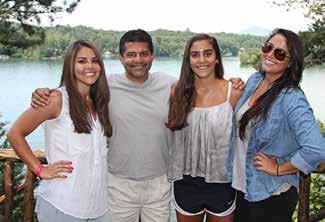
The couple and their three daughters live in northern California.




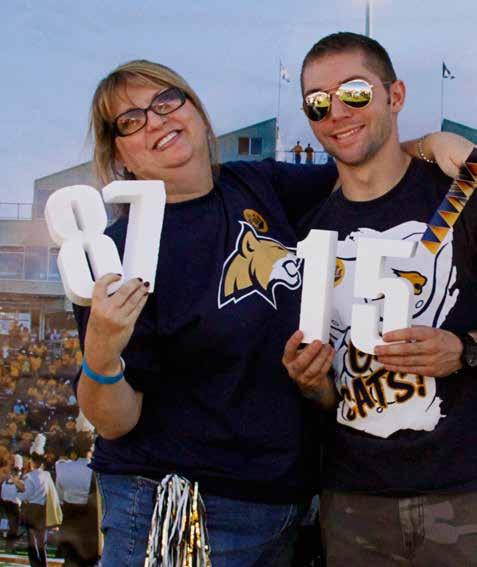
$10 per person or $25 per family
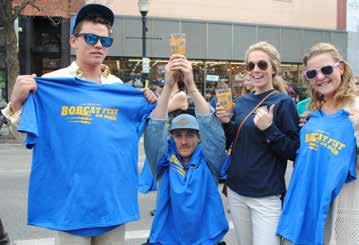
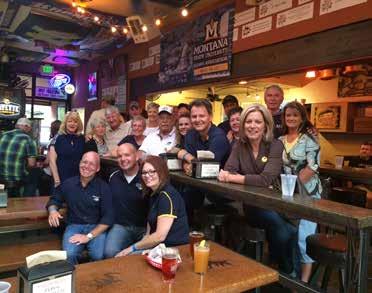
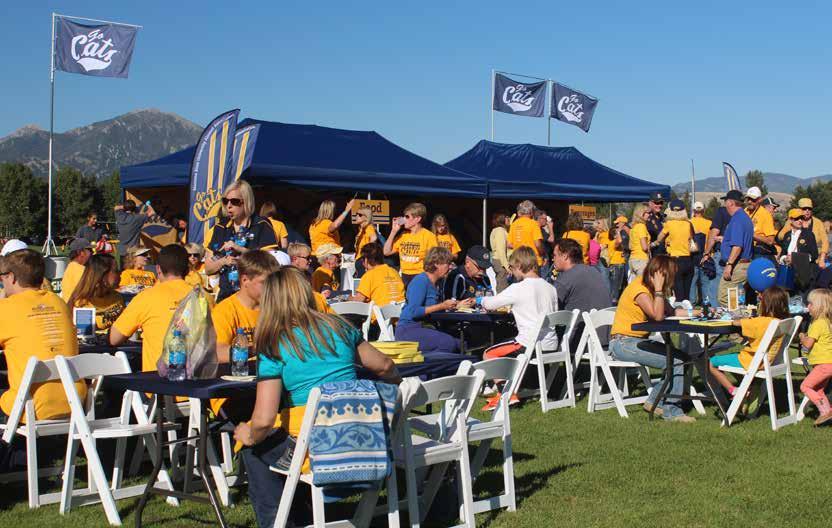
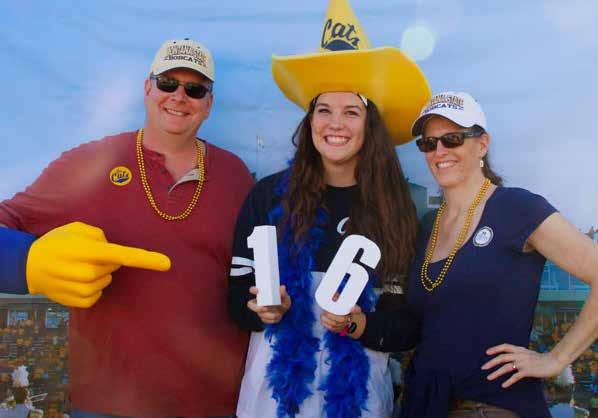
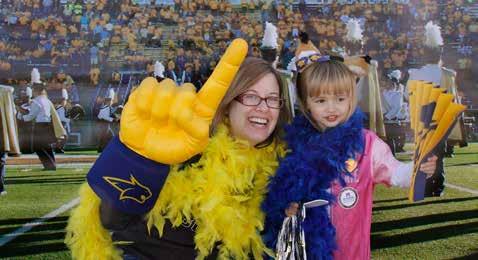
MSU Alumni Association tailgates, both home and away, have been huge successes over the years. Due to exciting growth in attendance, all 2015 tailgate admittance will be $10 per person and $25 per family (two adults and any number of children), which includes a meal. Alumni Association members will receive a complimentary beverage. Tailgate costs are consistently increasing and we strive to create engagement opportunities for all of our alumni and friends; be sure to RSVP and pay in advance for any home and away tailgates you plan to attend.
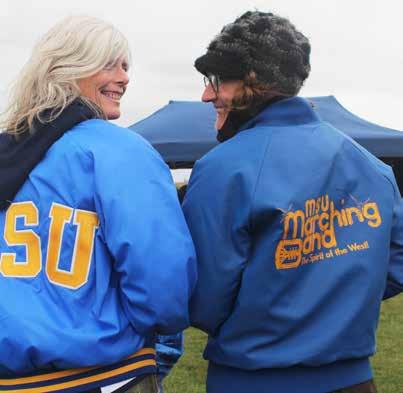
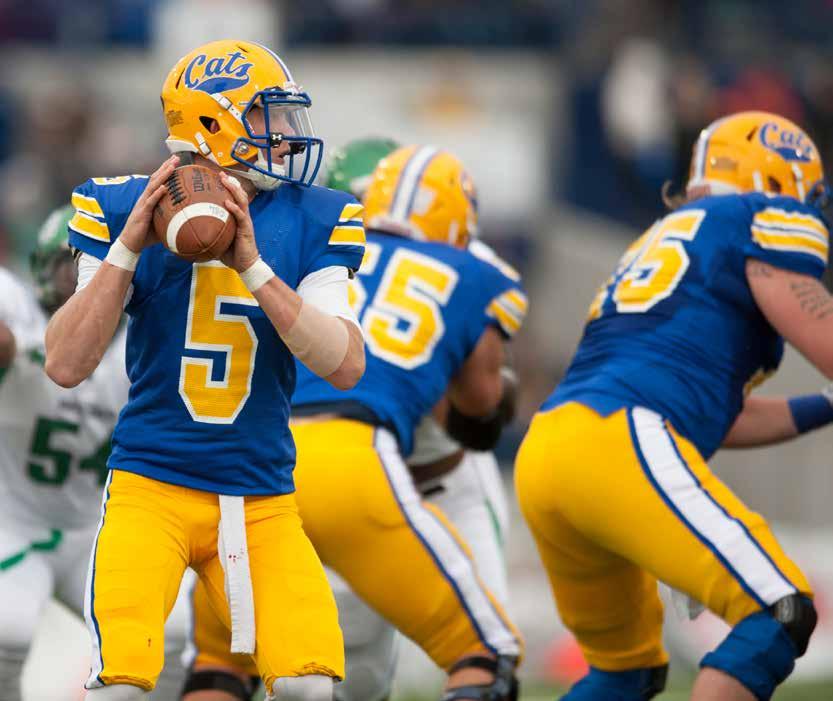
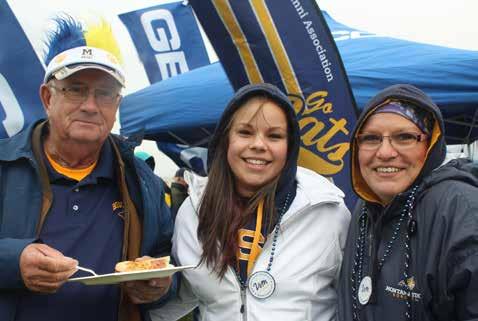
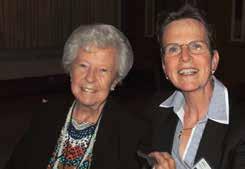
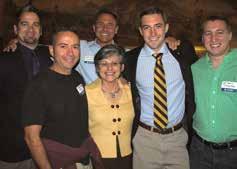
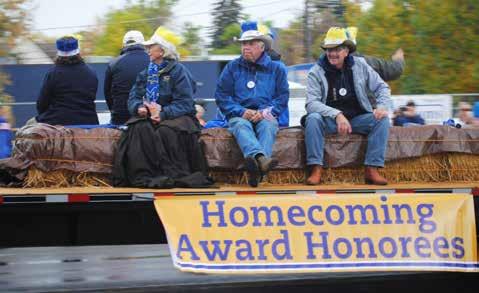
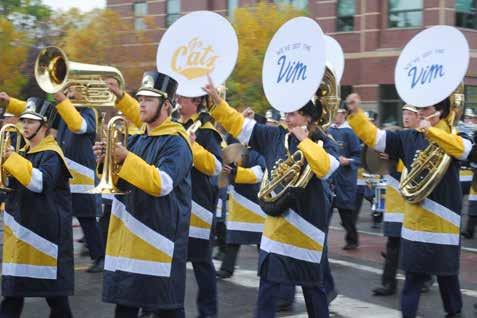
Each fall, alumni from across the country come home to Bozeman and MSU to see friends, celebrate Blue & Gold traditions, tour campus and watch the ’Cats at Bobcat Stadium. We hope to see you this year!
Homecoming Weekend 2015
September 24–26, 2015 Weekend event listing at msuaf.org/homecoming.
Thursday, Sept. 24
3 p.m. | President Emeritus Geoff Gamble Tribute.
4 p.m. | College of Engineering Homecoming Awards ceremony and reception at the Museum of the Rockies.
Friday, Sept. 25
10:30 a.m. | Jake Jabs College of Business and Entrepreneurship Classic Golf Tournament.
12–3 p.m. | M-Day Hike. Sponsor: Student Alumni Assoc.
5:30 p.m. | Pep Rally Downtown.
6:30 p.m. | Young Alumni Homecoming HQ: Rocking R Bar.
9 p.m. | Lighting of the “M” by the Student Alumni Assoc.
Saturday, Sept. 26
10 a.m. | ASMSU Homecoming Parade downtown.
11 a.m. | Homecoming tailgate: Bobcat spirit—show us What It Takes!
1:35 p.m. | MSU football v. Cal Poly.
7 p.m. | Cat/Griz Homecoming Volleyball at Shroyer Gym.
Reunion Groups
Sept. 25–26 | Sigma Chi events. Email Laramie McCullough at mcculloughl2014@gmail.com.
Sept. 26 11 a.m.–2 p.m. | Delta Gamma at 418 W. Garfield St. DGs and families are invited to drop in for this informal gathering. Email Marianne Liebmann at mcliebmann@earthlink.net.
Sept. 27 10 a.m.–12 p.m. | Alpha Omicron Pi open house. Email bozemanaoii@gmail.com.
2016 save the date! Housing and Residence Life will be hosting a reunion for all former housing staff and student leaders during Homecoming 2016. Take tours of the new residence hall and facility upgrades! Details will be provided in the coming months and volunteers are needed! Email James Tobin at jtobin@montana.edu.



Cat/Griz: Nov. 21, 2015
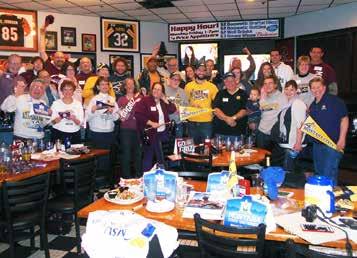
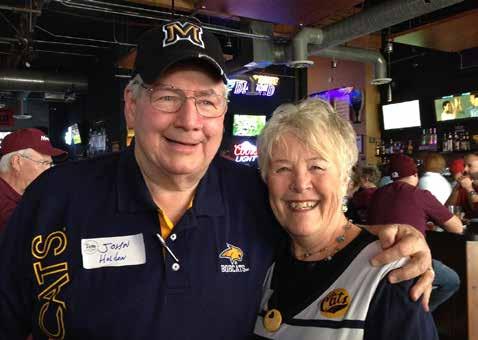
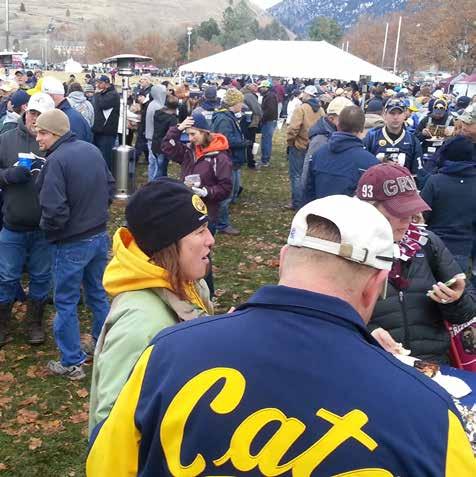
Get off the couch and make plans to join a Watch Party for Bobcat camaraderie. This year’s game is in Bozeman, kickoff is 12 p.m. Mountain Time. Cities with an asterisk need a Bobcat volunteer. Interested? Email allison.hupp@ msuaf.org. Go to msuaf.org/catgriz for full details.
2015 Cat/Griz Watch Parties
AK: Anchorage Fairbanks • Juneau
AZ: Scottsdale • Mesa Peoria • Tucson • Yuma Flagstaff
AR: Little Rock*
CA: Fresno LA–Culver City • Orange County–Rancho
Santa Margarita Palm Desert–La Quinta Sacramento–
Fair Oaks San Diego SF–East Bay–San Leandro
SF North Bay–San Rafael area • San Francisco*
CO: Colorado Springs Denver • Fort Collins • Grand Junction
CT: New York City
FL: Wildwood
GA: Atlanta–Alpharetta
HI: Honolulu-Kailua Kamuela
ID: Boise • Clarkston/Lewiston, ID • Idaho Falls
Lewiston Pocatello • Teton Valley Twin Falls
IL: Chicago–Schaumburg Chicago
IN: Indianapolis
IA: West Des Moines
KS/MO: Kansas City–Overland Park
LA: Monroe
ME: Northampton, Mass. • New York City
MA: Boston area–Northampton
MI: Detroit area–Utica
MN: Minneapolis–Mendota
MO: St. Louis–St. Charles
MT: Billings Big Sky • Butte Ennis • Glendive • Sidney
NE: Omaha
NV: Carson City–Dayton Las Vegas • Mesquite* Reno
NM: Albuquerque
NY: New York City
NC: Cary • Charlotte
ND: Bismarck • Fargo
OH: Cincinnati–West Chester
OK: Oklahoma City*
OR: Bend Portland Medford Salem-Silverton
PA: Pittsburgh • Philadelphia
SC: Greenville
SD: Rapid City
TN: Nashville
TX: Austin Dallas–Richardson • Houston
UT: Salt Lake City
VA/DC: Arlington
WA: Bellingham • Bremerton Clarkston/Lewiston, ID
Olympia–Lacey Seattle–Renton • Spokane
Tri-Cities–Richland Yakima
WV: Morgantown*
WI: Madison
WY: Cody • Gillette Sheridan
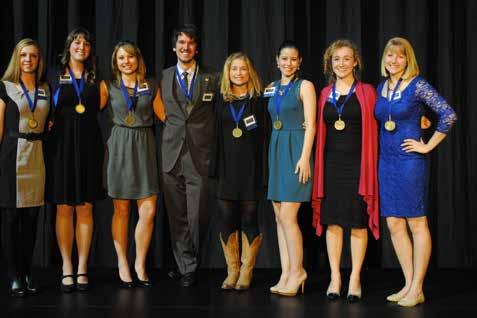
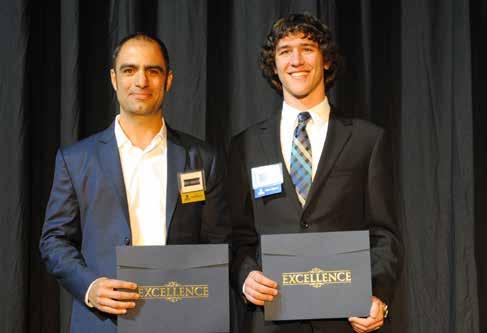
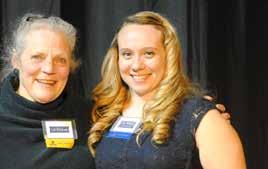
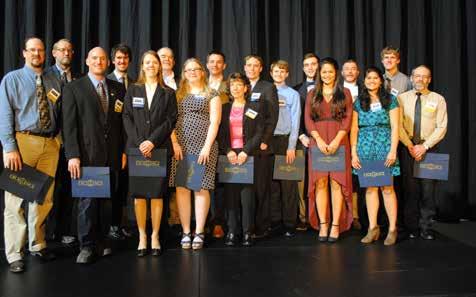

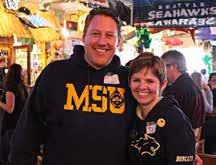

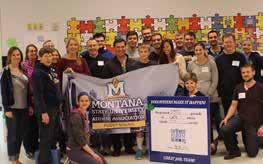
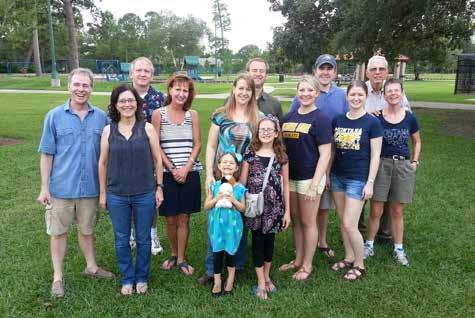


MSU Alumni Association chapters, led by volunteers in several communities around the state and across the country, host events to connect local alumni to each other and back to their alma mater. We welcomed several new chapters this year (see page 6 for the complete chapter list) and we look forward to seeing what the next year brings for our chapter network!
See below for a few of the upcoming chapter events and “like” the Facebook pages on page 6 of this issue. For the complete event list, go to msuaf.org/calendar.
Bobcat watch parties
Several chapters will host parties throughout the football season to root on the ’Cats with alumni and friends. Check your email this fall for invitations to watch parties near you!
9/3 Chapter football watch parties (locations vary)
9/19 Billings Area chapter at Red Door in Billings and other locations
10/3 Billings Area chapter at Red Door in Billings and other locations
10/10 Chapter football watch parties (locations vary)
10/17 Chapter football watch parties (locations vary)
10/24 Billings Area chapter: Bobcat watch party at Red Door in Billings and other locations
10/31 Chapter football watch parties (locations vary)
11/14 Billings Area chapter: Bobcat watch party at Red Door in Billings and other locations
11/21 Cat-Griz watch parties (msuaf.org/catgriz)
Chapter events
8/19 Boise Valley chapter: Hawks baseball game, 7:15 p.m.
9/18 Greater Twin Cities chapter Twins baseball game and pre-game social (msuaf.org/GTCtwins)
9/19 Mile High chapter Colorado Rockies baseball game, 6:10 p.m. (msuaf.org/MHgame)
9/23 Gallatin Valley chapter support of SAA DyeHard Bobcat Run, 6:00 p.m. (msuaf.org/dyehard2015)
10/16 Columbia River chapter: Bobcat Friday Night, details TBD
10/17 Columbia River chapter: Tailgate, details TBD
10/18 Houston Area chapter: annual picnic, Bear Creek Park, 1:00–3:00 p.m.
10/TBD Flathead Valley chapter happy hour
11/7 Chapter football watch parties (locations vary)
11/22 Billings Area chapter: Border Wars Basketball
12/1 Greater Twin Cities chapter food bank volunteer event, 6:00-8:00 p.m. (msuaf.org/GTCfoodbank)
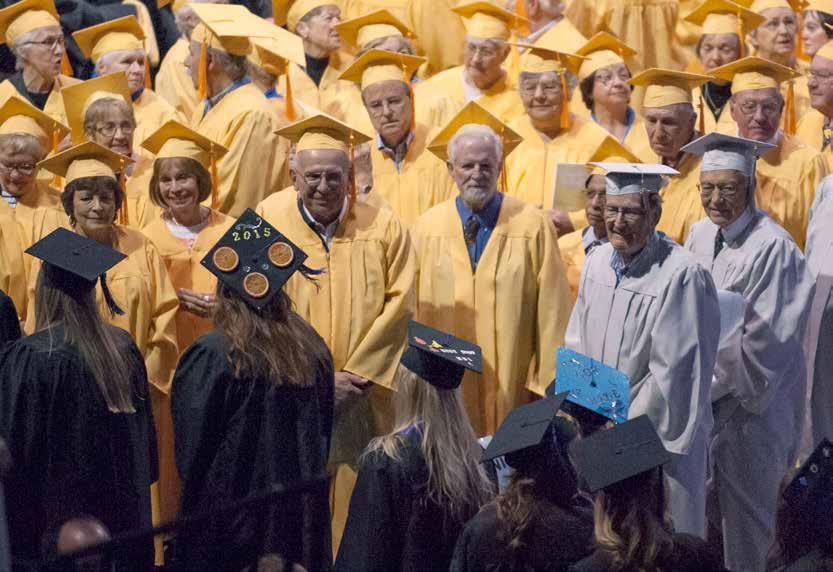
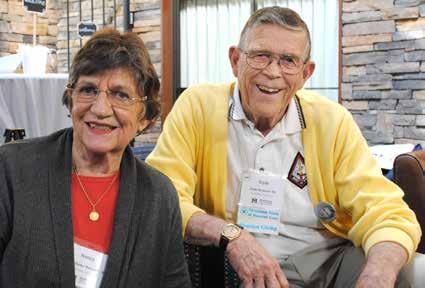
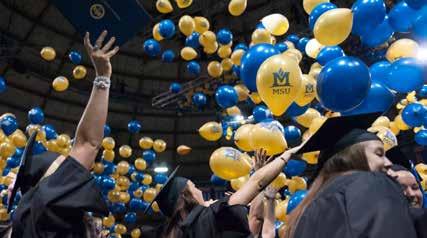
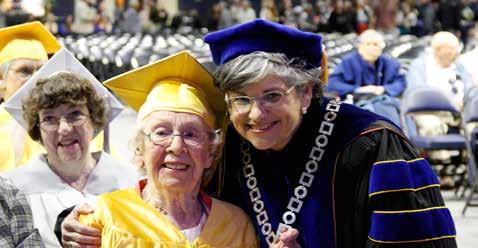
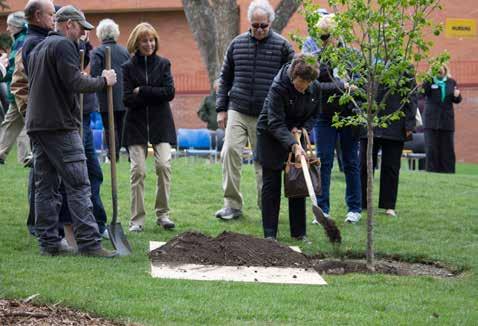
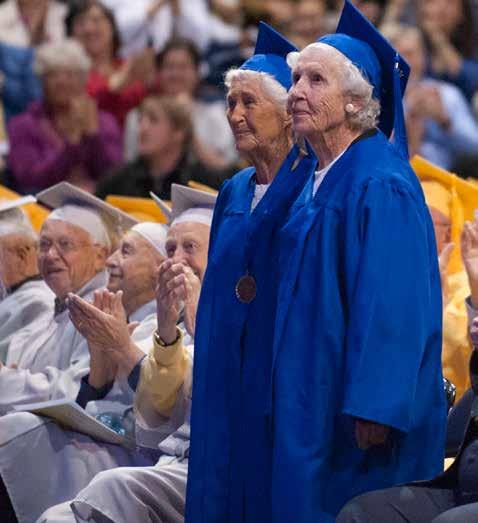
This past May, we celebrated the MSC classes of 1945, 1955 and 1965 during Commencement weekend. Highlights included college tours, a veterans’ tribute and tree planting at Jabs Hall and recognition at commencement. The star of the weekend was Mrs. Edith (Johnson) Carlson, class of 1935, who attended many events and was presented with her 80th anniversary degree by President Cruzado, in front of a cheering crowd during the graduation ceremony. Edith turned 101 this spring. All our reunion alumni are terrific examples of our most loyal and engaged Bobcats.
The MSU Alumni Association is excited to welcome back the Montana State College classes of 1946 and 1956, and the first class to graduate from Montana State University— the class of 1966.
1966 Golden (50 years)
1956 Diamond (60 years)
1946 Sapphire (70 years)
Commencement Reunion Weekend will be held May 5–7, 2016. Registration packets will be mailed in January of 2016.

Experience a country still unspoiled and quite unique in the world. Meet the cultured, attractive, and hospitable
Hue and Hoi An. Travel through highland plateaus and narrow coastal plains with stunning limestone scenery, junk boat. Though often associated with hardship and war, today you will find Vietnam a serene and peaceful
June 13–24, 2016 · From $3,799 per person, double occupancy (airfare included from select cities)
Embark on an odyssey to Northern Europe. From London, travel to Southampton and begin your voyage aboard Oceania Cruises’ majestic Marina, stopping first in Le Havre, a jumping-off point for adventures in magical Paris. Take in the stylish art galleries of Antwerp. Explore the fine museums and canals of Amsterdam. Behold the sprawling parks and gardens of Hamburg, Germany’s “Green City.”
Continue to Kristiansund, a gateway to Norway’s welcoming villages and gorgeous fjords, followed by Scandinavia’s oldest capital, Oslo, home to the imposing Akershus Fortress. Discover the charming boutiques, cozy cafes and elegant structures that grace Gothenburg, Sweden’s cultural heart.
October 8–16, 2016 · From $2,699 per person, double occupancy (airfare included from select cities) Uncover a captivating mosaic of cultural and historical treasures as you sail from Greece to Italy, Monaco, France and Spain aboard Oceania Cruises’ exquisite Riviera. Depart Athens for Sorrento, a delightful seaside resort, or travel to nearby Capri. See monuments of antiquity in Rome. Explore the magnificent architecture of Florence, stand before Pisa’s famous Leaning Tower, or admire the rolling hills of Tuscany. Then stop in Monte Carlo. Before concluding your odyssey in Barcelona, browse Marseille’s lively markets and charming old quarter, or experience the rich Provençal countryside.


October 23–31, 2016 · From $2,799 per person, double occupancy
Celebrate homegrown country and blues music on a luxury river cruise aboard the American Queen. Begin with a stay in Nashville, an iconic city that beckons with elegant architecture, an inventive culinary scene and ever-vibrant music culture. Then cruise the Cumberland River to Clarksville. Delve into fascinating Civil War history at Dover’s Fort Donelson National Battlefield and Cemetery, and encounter a striking blend of lush forests and rugged bluffs at Cave-In-Rock State Park in southern Illinois. Stroll past well-preserved historic landmarks in Mount Vernon, and take in the delightful 19th-century architecture of Paducah. Before concluding your voyage in Memphis, the “Home of the Blues,” witness colorful local artifacts on display at the New Madrid Historical Museum and the magnificent Hunter-Dawson home.
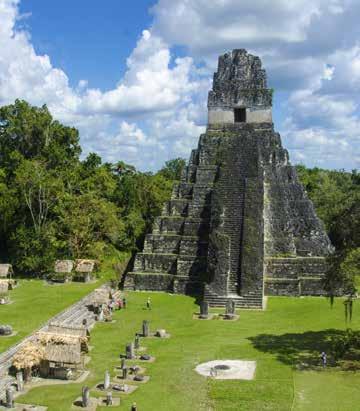
December 2–11, 2016 · From $3,995 per person
Explore a world of tropical abundance and ancient mystery in Belize. Witness the majestic ruins of great Mayan cities and temples, explore lush jungles and limestone caves used as ceremonial and burial grounds by the Mayans and swim in the crystal waters of the Caribbean. Visit the ancient Mayan site of Tikal in Guatemala, one of the world’s most significant archaeological sites. See first-hand some of the efforts being made by local people to preserve that biodiversity through education and sustainable economic development. It’s a breathtaking experience you’ll never forget.
GIVE Help advance MSU by connecting what is most important to you with MSU’s strategic ambitions. msuaf.org/give
JOIN
Become part of the MSU Alumni Association and stay connected as your university builds on its history and traditions. msuaf.org/join
Scholarships and Fellowships Ensuring access to a wider range of prospective students helps MSU build larger, more talented, and more diverse classes of graduate and undergraduate students who will be prepared for their futures.
Professorships and Chairs Securing support to recruit and build an outstanding faculty furthers groundbreaking research and offers our students access to leading experts and opportunities in their fields of interest.
Student Success Funds Mentoring, tutoring and other innovative programs provide our students with vital learning that occurs beyond the classroom, creating opportunities for them to excel academically, become more involved with efforts in their communities and pursue meaningful employment in their chosen fields.
Faculty Research and Leadership Grants and Awards Increasing the number of groundbreaking research and teaching projects initiated by faculty enables them to offer more unique learning opportunities to our students that more closely connect MSU to our communities.
UPDATE Receive important news about MSU, event invitations and more by updating your contact information. msuaf.org/update
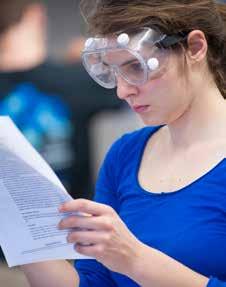
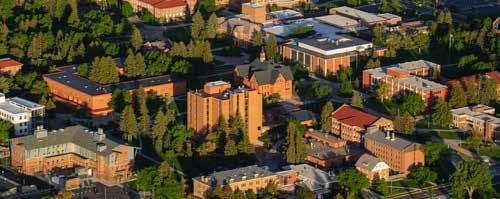
Service-learning experiences gained through programs help students develop critical traits they can carry with them into their lives after college. Expanding the opportunities for all students and faculty to take part in MSU’s outreach programs will foster powerful engagement experiences that create advantages for these communities and themselves.
High-tech and fully adapted learning and leadership centers ensure that we embrace growing student enrollment and offer our increasingly diverse student body access to the classrooms, labs and technology they need to succeed.

2015-2016 Alumni Legacy Scholarship recipients
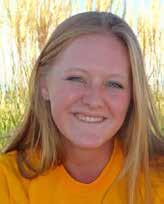
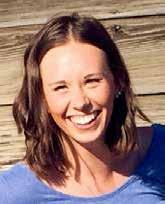
Madison Owens
Major: Chemical & Biological Engineering
Hometown: Ennis, Mont.
“This scholarship enables me to focus on my studies and take part in some of the amazing opportunities at MSU without having to sacrifice my studies because of work. Academically, I have been stretched and challenged to learn new concepts, think creatively and work diligently. Not only that, but socially, athletically, spiritually and morally MSU has given me the chance to construct who I want to be.”
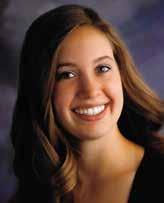
Dominique Cox
Major: Mechanical Engineering
Hometown: Walla Walla, Wash.
“This scholarship is not only a valuable financial contribution to my education, but a sense of faith and encouragement from my fellow Bobcats as I work to achieve my aspirations. My experiences in and out of the classroom help me further develop who I am and who I want to be.”
The MSU Alumni Association awards this scholarship to continuing students who show excellence in academics and in campus involvement and leadership. Through this award, the MSU Alumni Association seeks to acknowledge and reward these qualities and foster deeper loyalty to Montana State. Recipients must: be a continuing student (i.e., sophomore, junior, or senior) for the upcoming academic year; have at least one parent/guardian who is an MSU alumnus (i.e., attended and/or graduated from MSU in Bozeman, Montana);
• have at least one parent/guardian who is an active member of the MSU Alumni Association; and
• have a strong record of academic achievement and excellence, as well as campus involvement and leadership while at MSU.
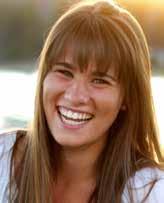
Leslie Gappa
Major: Health & Human Performance-Exercise Science
Hometown: Park City, Mont.
“I work hard to provide for the majority of my educational costs, from working at an oil refinery during breaks, mowing lawns, cleaning and babysitting. Scholarships like this help reduce the stress of financial assistance, allowing me to concentrate on learning and help get me closer to my goals.”
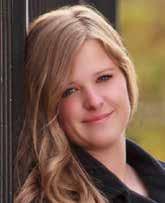
Rachel Casey
Major: Business Finance
Hometown: Liberty Lake, Wash.
“This scholarship allows me to continue in my pursuit of a degree in business finance at a university that is significant to my family, as I’m a third generation Bobcat. It helps bridge some of the financial gap between in-state and out-ofstate tuition, aiding me in being able to attend my university of choice. MSU has allowed me to make many new connections, experience an amazing education, spend time with family and enjoy the beautiful Montana outdoors.”
Major: Secondary Education
Hometown: Billings, Mont.
“I chose MSU because of the people, history and landscapes that are all close to my heart, and I could not picture going to college anywhere else. Receiving this scholarship has allowed me to concentrate on furthering my education at my dream school, in addition to helping me reach my goal of becoming a high school history teacher. I truly appreciate this scholarship.”
This scholarship is made possible by MSU alumni employed by Boeing and is awarded by the MSU Alumni Association to incoming freshmen who show academic promise and true interest in furthering their education and learning the “Montana Work Ethic.”
This scholarship is made possible by the MSU Alumni Association Houston Area chapter and is awarded by the MSU Alumni Association to continuing students from the Houston area who show excellence in academics and in campus involvement and leadership.
2015–16 Boeing Employee Alumni Scholarship Winner
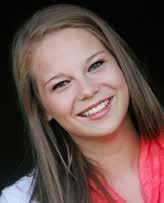
Haley Walter Major: Business
Hometown: Helena, Mont.
“This scholarship is important to me because it not only recognizes my hard work in school, it also shines a light upon my parents who are both MSU alumni. This scholarship means that I am not only able to continue my education, but it allows me to follow in my parents’ footsteps and get a degree at MSU”.
For application information for any of these scholarships, please visit msuaf.org/scholarships
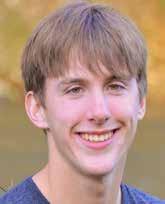
Major: Chemical Engineering
Hometown: Orting, Wash.
“This scholarship is important to me because it helps me to attend Montana State. Without scholarships it becomes very difficult to afford the cost of a higher education despite the fact I work year round. This scholarship helps me to meet my financial goals while receiving the opportunities that come with attending school and working towards a higher education.”
2015–16 MSU Alumni Association Houston Area Chapter Scholarship Winner
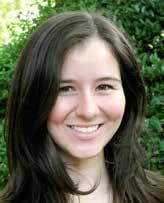
Major: Electrical Engineering
Hometown: New Orleans, La.
“This scholarship is important to me because it allows me to represent Houston at Montana State and it helps me meet my goals by providing financial assistance towards my tuition. It also establishes support and encouragement from a whole chapter of MSU alumni who have successfully graduated from MSU. My four years at Montana State are not over yet, and as I stay in Bozeman this summer, my appreciation for the place only grows. One more year to go, and I sincerely appreciate the help in the final push towards graduation.”
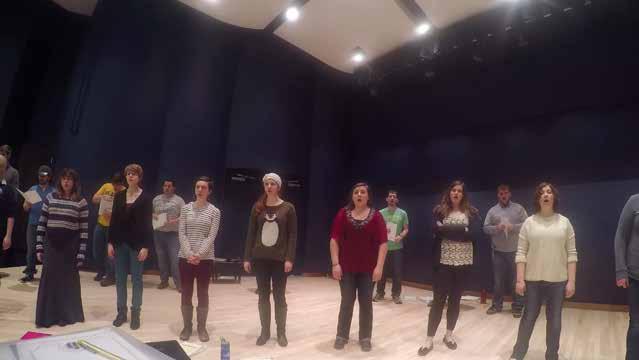
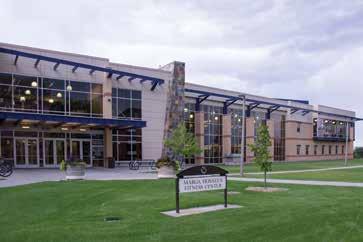
A little exercise at Hosaeus Recreation Center.
Run quickly to my biology class.
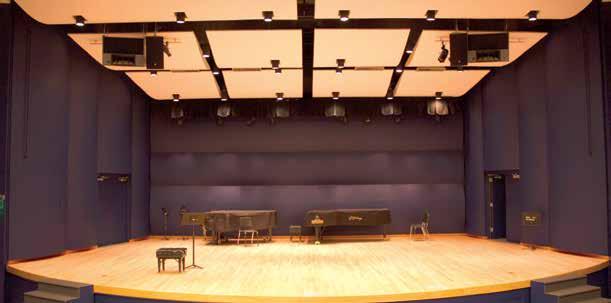
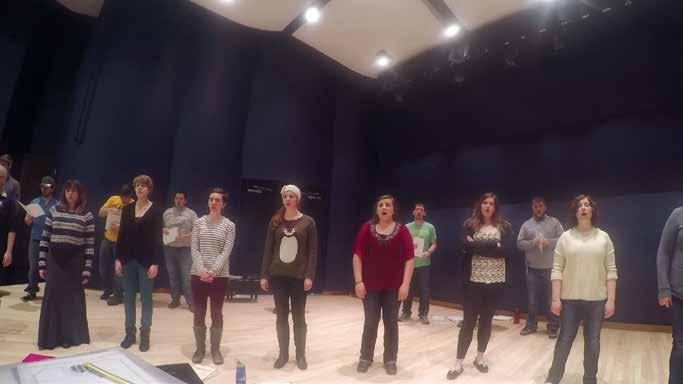
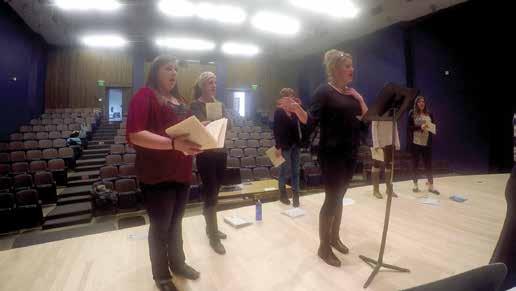
Montanans rehearsal, Reynolds Recital Hall. Top group of 16 singers, rehearsing a varied repertoire of vocal ensemble music.
Committee work: School of Music scholarship; promotion; and tenure committees.
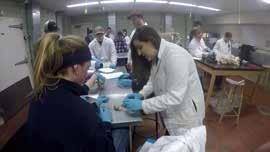
Animal Anatomy Lab in Linfield Hall.

home
Student ambassador work at the
Throughout college, although we had pledged different sororities, we
so that we would see each other more often. She is now a wife and a mother and lives in California. I can’t tell you how HAPPY it made me,
she could be in Bozeman, with friends to celebrate. This year, I offered
doing amazing things out there, and our Bobcats are part of this world,
Rodney (Rod) Allen* ’65, ’73 M, and Mary Lee James* ’65, Whitehall, Mont., have retired. Rod was a professor in environmental and general engineering at Montana Tech and Mary Lee worked at a preschool for 25 years.
Kathy Ogle ’73, Cheyenne, Wyo., has recently retired from a position as regional coal coordinator for the Bureau of Land Management. Kathy and her husband, Phil, are enjoying traveling and riding their horses. The National Customs Brokers and Forwarders Association of America, Inc. (NCBFAA) has named Area 1 director and certified customs specialist Mary Ann (Scheid) Comstock* ’74, Sweet Grass, Mont., as the 2015 recipient of its coveted Centurion Award. In addition to her nearly 40-year career, Comstock has served on the NCBFAA Board since 2011 and is a member of the NCBFAA Bylaws Committee. The first woman so honored, Comstock is the latest in a distinguished line of honorees.
John Fulton ’77, Richland, Wash., and a co-worker were recognized as a 2014 Battelle Distinguished Inventor at Pacific Northwest National Laboratory (PNNL). They have multiple U.S. Patents to their credit as a result of their work for Battelle, which operates PNNL for the U.S. Department of Energy. Fulton’s research focuses on measuring the molecular structure of water using intense x-ray sources, and his findings have resulted in new ways to exploit liquids’ special properties. Fulton has earned 15 patents and numerous national awards related to fluid processing. Some of his inventions were translated into commercial products that are in use today, like a cardiovascular stent for heart patients and the use of liquid carbon dioxide for precision cleaning of surfaces.

Robert A. (Rob) Wheeler* ’81, North Bend, Wash., has been elected president & CEO of Clark Nuber, a Bellevue, Wash., CPA firm and one of the largest independent accounting firms in the country. Wheeler has been with Clark Nuber for 29 years and headed the firm’s tax practice for 12 years prior to his election as CEO.
Samuel Gingerich ’83 PhD, Anchorage, Alaska, was hired as
the provost at the University of Alaska Anchorage.
John Burgess ’82, Seattle, Wash., toured Montana in June to read from his new book, by Land…, his fourth collection of poetry from Ravenna Press. Burgess first intersected with the Lewis & Clark Trail in 1978 while on a crew in the Gallatin Valley. He has explored major sites along the trail from St. Louis to Fort Mandan, from Fort Clatsop to Lolo Pass. The work is a collage of poems, handwritten lists, typewriter poems, cartoons, a memoir in 10 fragments, maps and reassembled texts that riff on the Journals.
David Crawford ’85, ’87 M, Bozeman, Mont., became president/CEO of TD&H Engineering on February 12. Prior to this position, Crawford managed the TD&H Bozeman office since 1992. Crawford has been active as a charter member of the Bozeman Sunrise Rotary Club since 1993. He met his wife, Kristi (Dolezilek) Crawford ’87, while at MSU, and they celebrated their 25th wedding anniversary last year. Kristi teaches second grade at Longfellow School in Bozeman. Their son James Crawford is a junior at MSU in chemical engineering and their son Jackson is a freshman at UM.


Don McKinney ’87, Spokane, Wash., was promoted to senior associate at NAC|Architecture. McKinney is a construction contract administrator and cost estimator in the Spokane office who is currently working on multiple projects for the Moses Lake School District, Barker High School and Early Learning Center for Central Valley School District, Salk Middle School for Spokane Public Schools and the Pullman High School Renovation and Reconstruction.
William Windhamm III ’87, has been hired as vice president of Morphy Auctions–Automobile Division. He was previously general operations manager for Billion Auto Group in Bozeman.
Ronald Lewis* ’88, Marietta, Ga., has been promoted to senior vice president of Supply Chain for Coca-Cola Enterprises.
Karen McNenny ’94, Missoula, Mont., spoke at the 7th Annual Richland County Conference in March in Sydney, Mont. McNenny also acted as facilitator as community members gathered to discuss current changes and ideas for improvement. McNenny

two years renovating. Recently, Heavey held a grand opening for his fine art photography studio, which was attended by more than 400 people. LaGree has a yoga studio in the building.
John Lackey ’03, ’06 M, Anchorage, Alaska, a former road racer on the cycling team at Montana State University, set a new record for the Iditarod Trail Invitational, biking the 350 mile race in 1 day, 18 hours and 32 minutes. Lackey took 10 hours and 11 minutes off a cycling record set last year, which was itself a record by more than 14 hours. The Iditarod Trail Invitational is the world’s longest winter ultra marathon by mountain bike, foot and ski and follows the historic Iditarod Trail from Knik, Alaska, over the Alaska Range to McGrath and to Nome in late February every year, one week before the Iditarod Sled Dog Race.
Lukasz Mazur ’03, ’05 M, ’08 PhD, Cary, N.C.. The Institute of Industrial Engineers has announced the election of the association’s new officers. Mazur will join the technical operations board as a vice president.
Brent Nielsen ’03, ’04 M, Beaverton, Ore., has been promoted to assistant department head of civil engineering at Mackenzie of Portland, Ore.
Amy Lindgren ’07, ’08 M, Billings, Mont., has passed her architect registration examination and attained her architecture licensure; she’ll now be able to drop the “intraning” suffix on her job title. Lindgren is employed with CTA Architects Engineers.

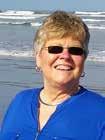
It has been two years since I retired as president of Montana State University’s Alumni Association. I have thoroughly enjoyed my retirement status, even though I do miss my work with alumni and my colleagues. In September 2013, following my tremendous retirement party, I moved to Billings to spend a year at MSU Billings with Rolf who was serving as chancellor. We really enjoyed being together again entertaining in the chancellor’s home, being involved in the community and deepening our appreciation for the great work done at Montana State University’s campuses.
Rolf retired in June 2014 and we returned to Bozeman and our home. We have appreciated having time to reflect, laugh, dream and make plans together, for this new chapter in our lives.
Since then, we’ve been attending Bobcat football games, traveling around Montana and beyond visiting friends and appreciating beautiful sights. These trips have been just what I had hoped; special time with friends and family.
David Schipf ’09, Highwood, Mont. Schipf, has been awarded a Boren Fellowship to study in Taiwan during the 2015-16 academic year. Schipf is currently a PhD student in mechanical engineering/applied physics at the University of Washington. He will study Mandarin Chinese at National Cheng Kung University in Tainan, Taiwan.
Zach George ’12, ’14 M, Kalispell, Mont., has been hired at Scott | Edwards Architecture LLP based in Portland, Ore.
Crystal Reichhoff ’14, Great Falls, Mont., has been hired at the Montana-based accounting firm of Junkermier, Clark, Campanella, Stevens as a CPA in the areas of tax and audit.
*Life member of the Alumni Association Class Notes are compiled from information received from our alumni and friends. MSU Alumni Association members will receive priority listing in Class Notes. To submit information, please send an email to collegian@ msuaf.org or drop a line to the MSU Alumni Association, P.O. Box 172750 Bozeman, MT 59717-2750
Today, Rolf and I are working with Global Travel Alliance, an educational travel company, and we recently went with a group of 18 old and new friends, on the first Big Sky Food and Wine Tour to Rome and the Tuscany region.
The next chapter for us is Semester at Sea, a program of the University of Virginia, where I will serve as the alumni and advancement coordinator. I will work with students, faculty and life long learners, instilling loyalty in this program where global awareness and leadership will be taught and experienced. Our first voyage departs in September from London and travels to multiple destinations in the Mediterranean, then Senegal, Brazil, Central America and ends in San Diego in December. Believe it or not, Rolf and I put this on our “retirement to-do” list when we got married in 1979. And I am now making travel arrangements, applying for visas and anticipating the wonders of the world. I already have Bobcat connections and we plan to get the Cat/Griz game streamed on board!
My heart continues to be full of love for and loyalty to “the Blue and Gold.” I feel blessed by the friends I made in my journeys through the years and the opportunities to represent our incredible university. I will always seek out alumni wherever I go and when I call, you can expect me to say, “Hey, I’m in town. Can I buy you a cup of coffee?” I look forward to seeing you in beautiful Bozeman or at a campus event or in your town, where I might be traveling.
Thank you for your loyalty to your alma mater, our Alumni Association and to me, over the many years of my time at Montana State. Retirement comes but friendships remain. Go Cats!
I would love to stay in touch. Drop me a line at jaynee.groseth@gmail.com
Jaynee Drange Groseth President Emerita, MSU Alumni Association



Have you ever seen a surfing Bobcat? Members, deck out your Flat Champ in this beach-ready outfit and celebrate summer in Blue & Gold style!