2025 Report to the Community | Seattle Colleges Foundation
THESE ARE UNSETTLED times. Change is accelerating across the economy, society, and politics, and the future feels hard to make out. What remains clear is the power of education. It expands opportunity, strengthens communities, and gives people the tools to adapt—not just once, but over a lifetime.
This has perhaps never mattered more. Artificial intelligence is now transforming work across virtually every sector, eliminating
some roles and reshaping others. Those best positioned to navigate this new landscape won’t necessarily be those with the most degrees, but those with durable skills: the ability to think critically, relate emotionally, communicate effectively, work with their hands, and keep learning as conditions change.
At North, Central, and South Seattle Colleges, we prepare students for two equally valuable and viable futures. Some come to
Those careers may indeed be fundamentally altered by AI, and colleges and universities are responding by redesigning curricula to impart not only advanced knowledge, but also the ability to use it critically and ethically, and to communicate and collaborate across disciplines.
For many students, these paths may overlap. Our job is to make sure that when students are ready for what’s next, they have the credentials, the skills, and the confidence to take the next step.
In every case, affordability and flexibility are key. The city’s rising costs make our colleges both practical and essential.
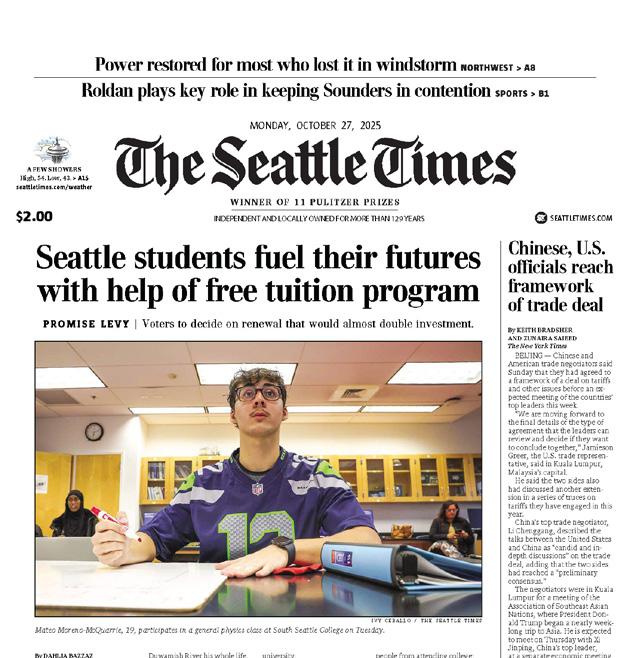
Last November, Seattle voters approved a six-year extension of Seattle Promise (page 12) and its new Skilled Trades Pathway, broadening access when it matters most. At the same time, state and federal cutbacks—along with the chronic underfunding community colleges have faced for decades—make clear that public commitment alone is not enough.
enter high-demand fields directly—skilled trades such as carpentry and cement masonry, and health professions from nursing to public health. These fields depend on physical presence, human judgment, and care. AI may augment that work, but it is unlikely to replace it.
Others come to build the foundation for a four-year degree and the careers that follow: teacher, lawyer, researcher, engineer, policy analyst.
Public investment opens the door. Philanthropy helps students walk through it. Through our Stay in the Game initiative, you help provide life-changing scholarships, emergency assistance, and advising for thousands of Seattleites. This report shares some of their stories. We couldn’t be more grateful for the part you play in making them possible.
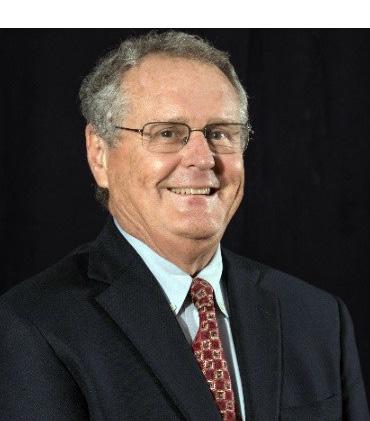
STEVE HILL BOARD CHAIR
The Seattle Colleges ADDING UP THE IMPACT
A 2025 study by the labor-market intelligence firm, Lightcast, documents how the Seattle Colleges are a major engine for the region—supporting jobs, fueling higher earnings, and generating meaningful returns for taxpayers, businesses, and the broader community. The Colleges, it concludes, are “a cornerstone of shared prosperity.”
$2.1B Annual income added to the King County economy.
17,278 Regional jobs attributable to the Seattle Colleges.
$5.10 Higher future earnings for every $1 students invest in a Seattle Colleges education.
$10,800 Added yearly income for a typical associate degree holder compared to someone who only graduated high school.
Read the full Lightcast report at bit.ly/seattle-impact
Foundation
support of
the Colleges
$24 MILLION AND COUNTING (through June 30, 2025)
Scholarships: 56%
Program support: 42%
Other: 2%
“Our donors recognize that the success of each individual student ripples outward, benefiting their family, their neighborhood, and our whole region. Each contribution is an investment in all of us, and a vote of confidence in our shared future.”
KERRY HOWELL, CEO SEATTLE COLLEGES FOUNDATION
DIVERSE PATHWAYS
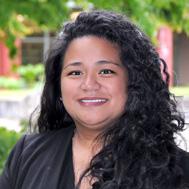
Nursing Graduate, Seattle Central College, Seattle Promise Alum.
"I came to America not knowing any English. Now I'm a first-generation college graduate and, I'm told, an inspiration to people who look like me."
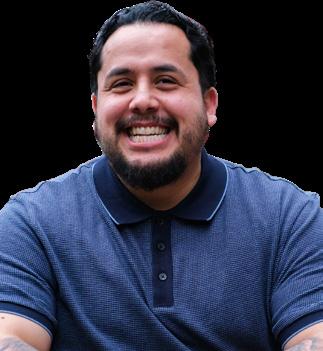
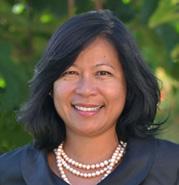
Business Student, North Seattle Colleges (soon transferring to the University of Washington).
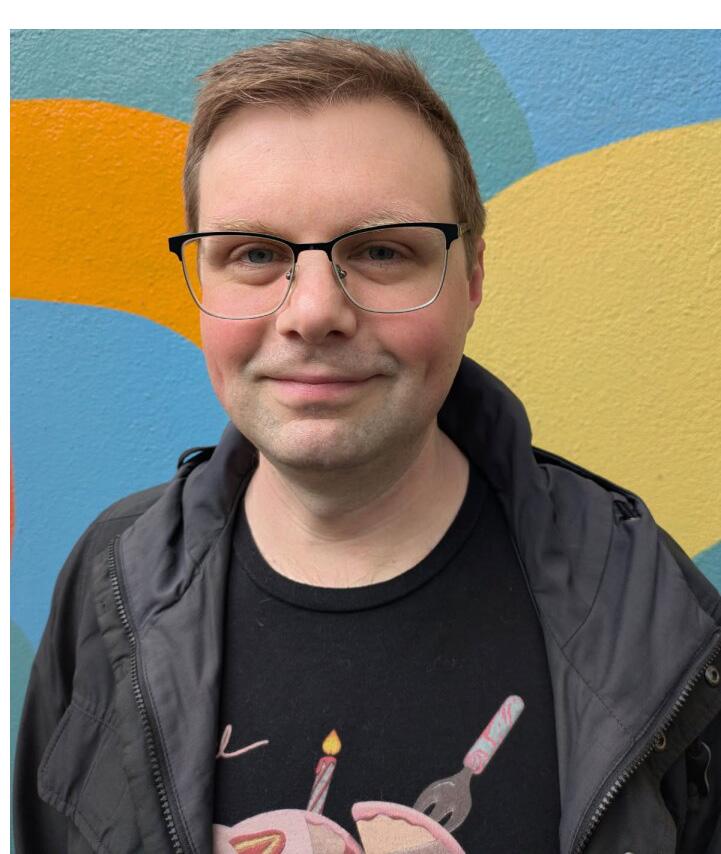
"I plan to use my degree to start my own business so I can hire other justice-impacted individuals and give back to that community."
DIVERSE STUDENTS
33,685
NEED
$55,000
*School year 2024-25.
†These two categories comprise about 2/3 of Seattle Colleges students. The other third are students in basic education/pre-college classes, or non-credit continuing education.
130 Programs of Study
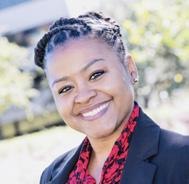
Welding Fabrication Technology Graduate, South Seattle College, Seattle Promise Alum.
"I'm excited to be joining the trades because they're so important for Seattle's growth… and it's pretty clear that I'm never going to lack for work considering all the building, repair and maintenance that needs to get done."
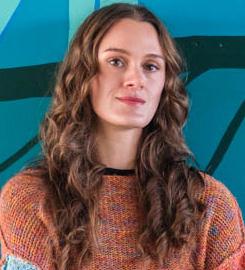
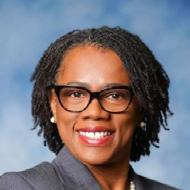
Political Science Student, Aspiring Transfer, South Seattle College.
"After having children, I realized I want to leave the world better than I found it. I think public policy is a powerful way to do that."
LATIFA
RAMON
FLOYD
ALICIA
HELPING STUDENTS round the bases of their education and...
OVER THE LAST DECADE, Seattle has become one of the most expensive places in the country, ranking fifth out of 386 metro areas nationwide. A new study by the Washington Roundtable finds that expenses have surged especially in the categories that most directly affect students: housing is up 71%, and food is up 60%.
For the working adults, parents, and first-generation students at North, Central, and South Seattle Colleges, the weight of these increases is felt every month: in rent that consumes most of a paycheck, in childcare costs that feel like a mortgage, and in the surprise expenses— a car repair, a missed shift, a medical bill—that can be enough to derail a future.
Grit and determination carry a student only so far. What’s needed is the practical backing to keep going.
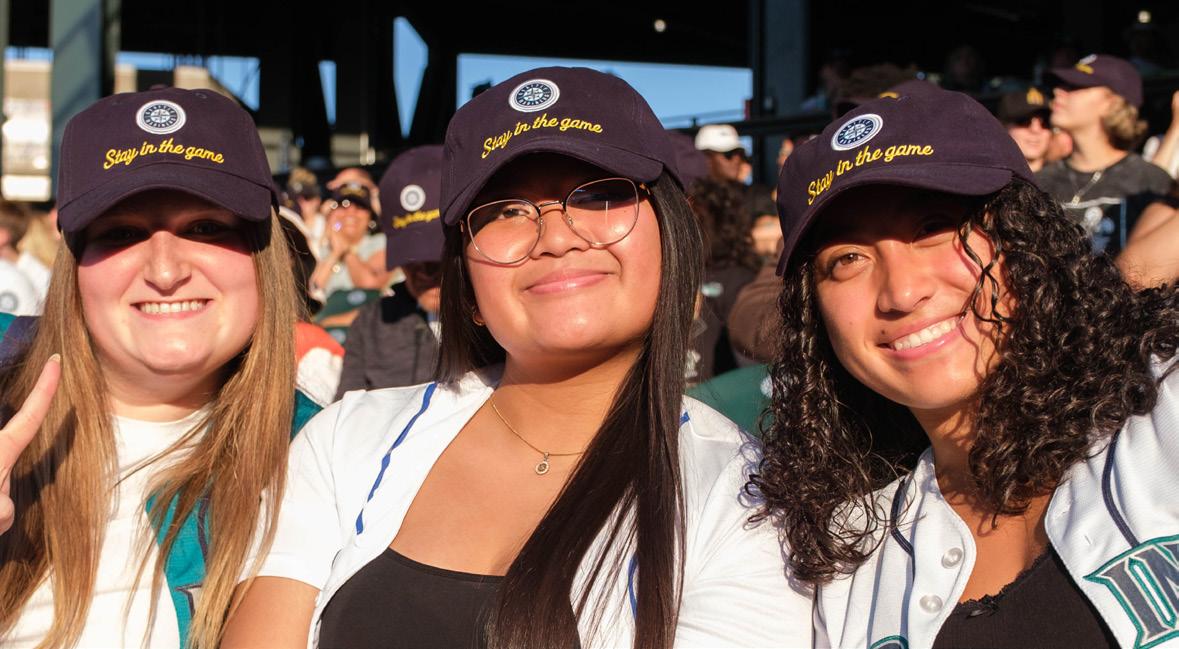
That’s where the Seattle Colleges Foundation comes in. Stay in the Game—launched with a generous lead gift from the Seattle
Mariners—gives students what they need to stay enrolled and finish strong: scholarships that make an expensive city a little more manageable; College and Career Navigators who help students find the fastest, smartest path to their goals; and
emergency assistance that’s there when life throws a curveball.
Stay in the Game is ensuring that talent, effort, and ambition are not defeated by the cost of living. That way more students finish—and more of Seattle’s future stays...in Seattle.
Scholarships | College and Career Navigators | Emergency Supports
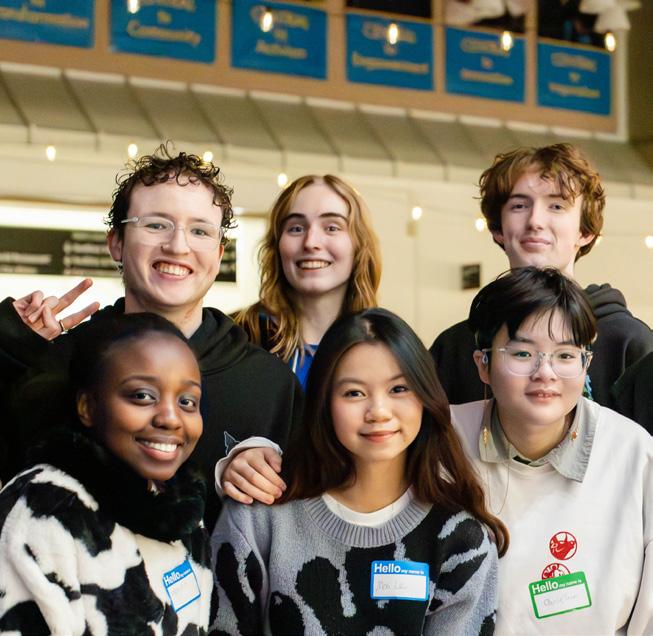
A group of 2025-26 scholarship recipients celebrate at a January 2026 event.
Bringing a Brighter Future Within Reach
SCHOLARSHIPS
FULL-TIME TUITION at the Seattle Colleges is comparatively low, around $5,000 a year, and students sometimes benefit from government grants. It’s the other expenses—not of school but of life—that pose the affordability challenge.
Rent, utilities, groceries, transportation, and childcare are all costlier in Seattle than almost anywhere in the country. Even when students work (as 70% do), it’s hard to make ends meet.
Recent research found an average shortfall of $4,920 between what students can typically piece together and the true cost of attendance.
That’s why a core aim of Stay in the Game is not only to give more scholarships, but larger scholarships, averaging $5,000.
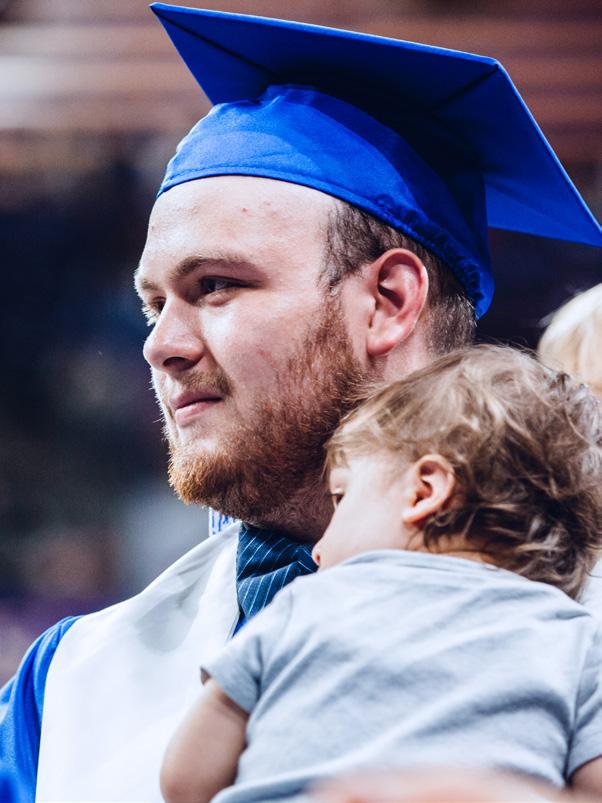
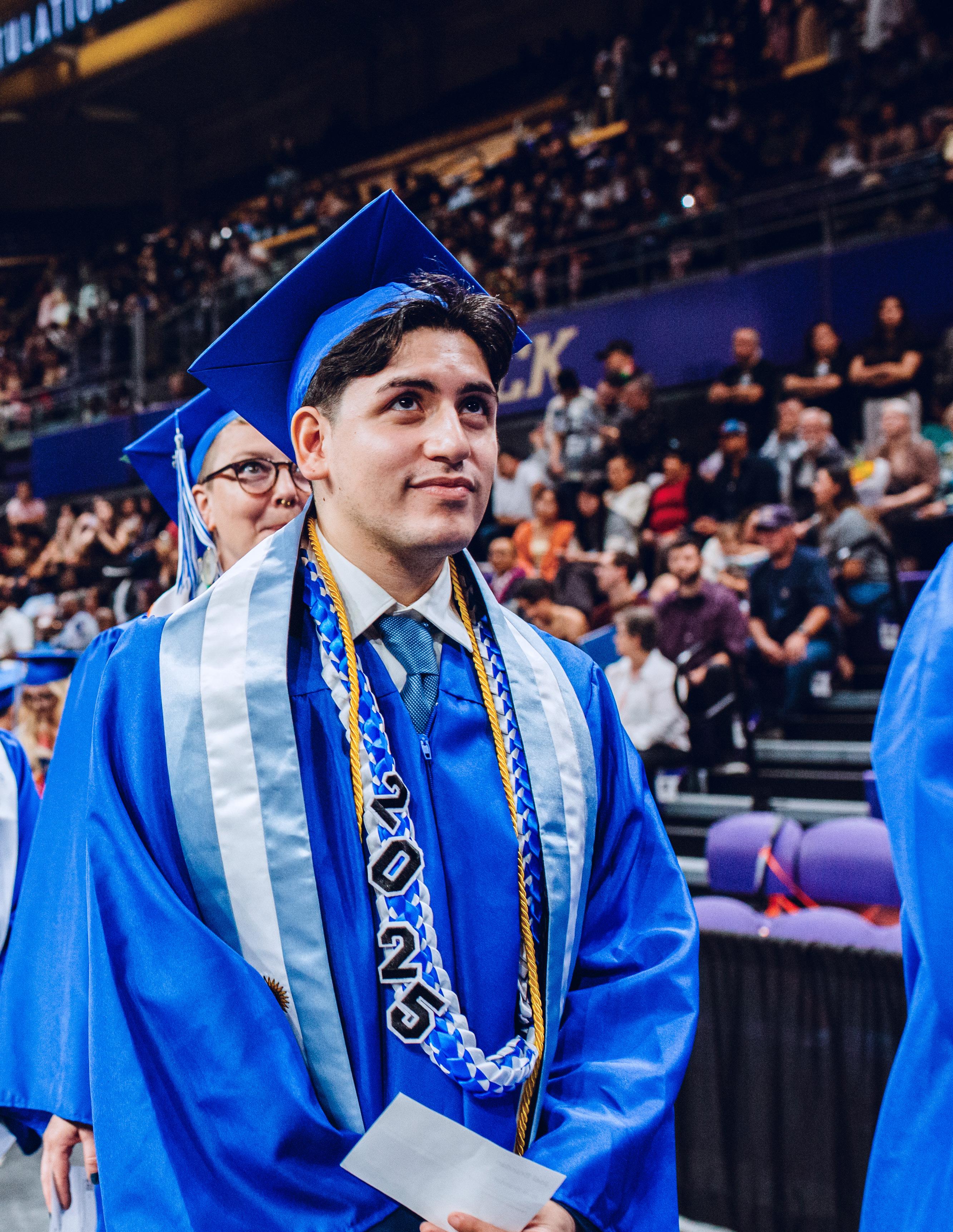
Callan Hercules was one of 245 recipients of Seattle Colleges Foundation scholarships who graduated in 2025. Callan earned his Bachelor of Science in Computer Science and is now part of a new tech start-up.
CALLAN HERCULES SCHOLARSHIP RECIPIENT
“It’s not just the money. It’s knowing there are people who believe in the future I’m trying to build.”
A scholarship winner sees a future on the sea
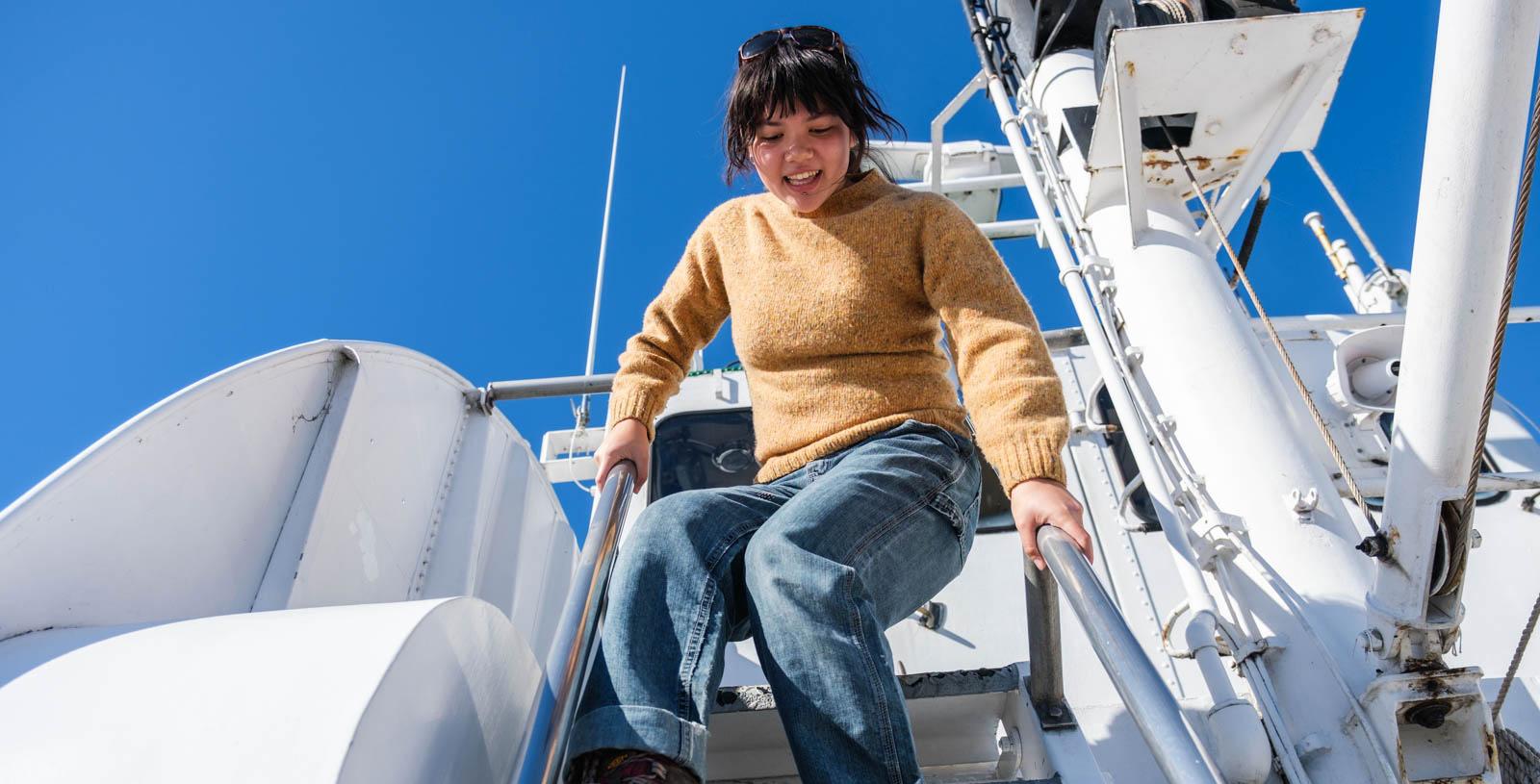
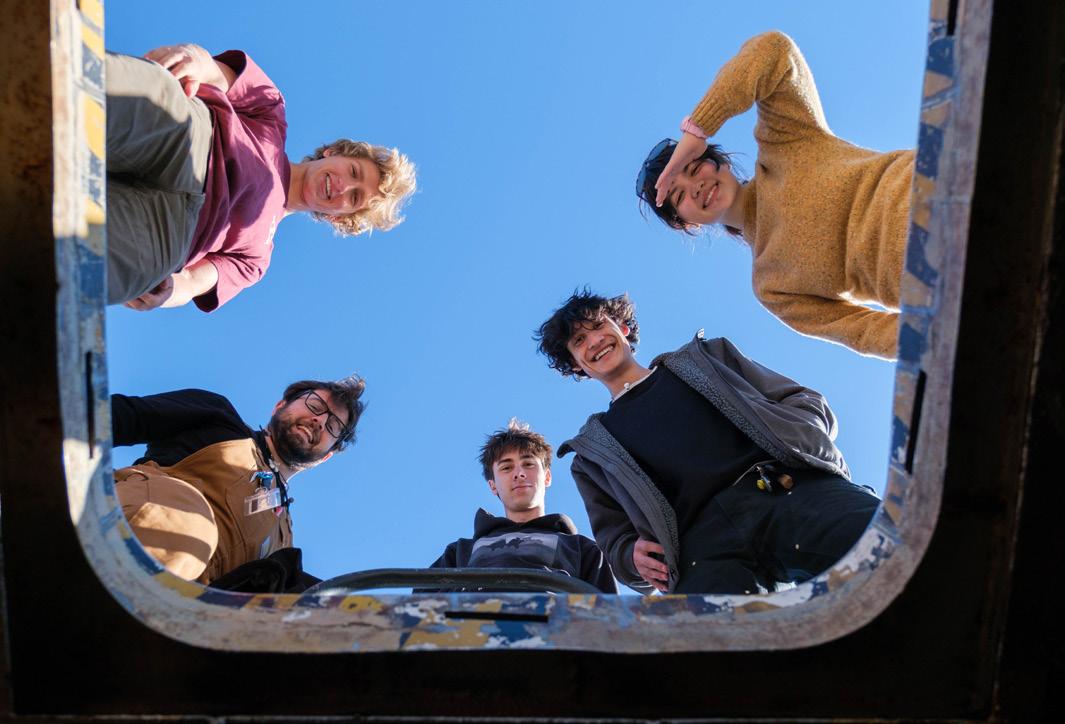
ANOUK GREW UP on the water. Raised in Florida, she spent her childhood kayaking, exploring rivers, and watching marine life from clear-bottom boats run by her parents’ kayak company. When her family moved to Seattle, she carried that curiosity with her—and ultimately to Seattle Maritime Academy, a division of Seattle Central College. The fiery 18-year-old is loving all of it: crawling into tight spaces, learning navigation and meteorology, and building skills for a life at sea. “I realize all my characteristics and traits led me here,” she says.
Her long-term goal is to become a captain and serve aboard research vessels.
Getting here required more than determination. Barely out of high school and already on her own, Anouk needed financial support to focus fully on the program. A Stay in the Game Scholarship from the Seattle Colleges Foundation made it possible. “It’s not just the money,” she says. “It’s knowing there are people who believe in the future I’m trying to build.”
ANOUK HAYAMI
SEATTLE MARITIME ACADEMY
Students with first-year advising are 15% more likely than peers to continue to the next quarter
Helping students quickly identify and reach their goals
COLLEGE & CAREER NAVIGATORS
WITH EIGHT broad areas of study and more than 130 programs, the Seattle Colleges can overwhelm anyone. That can be particularly true for someone returning to school after a long absence, who’s
supporting a family, who faces language or cultural barriers, or who’s overcoming past academic setbacks—the circumstances of many of our students.
College and career navigators work one-on-one
with students to identify courses that fit their goals. They also make connections to tutoring, financial resources, material supports like tools and uniforms, and ultimately internships and jobs.
ADDING FIRST-YEAR STUDENT ADVISORS AT CENTRAL PAYS OFF
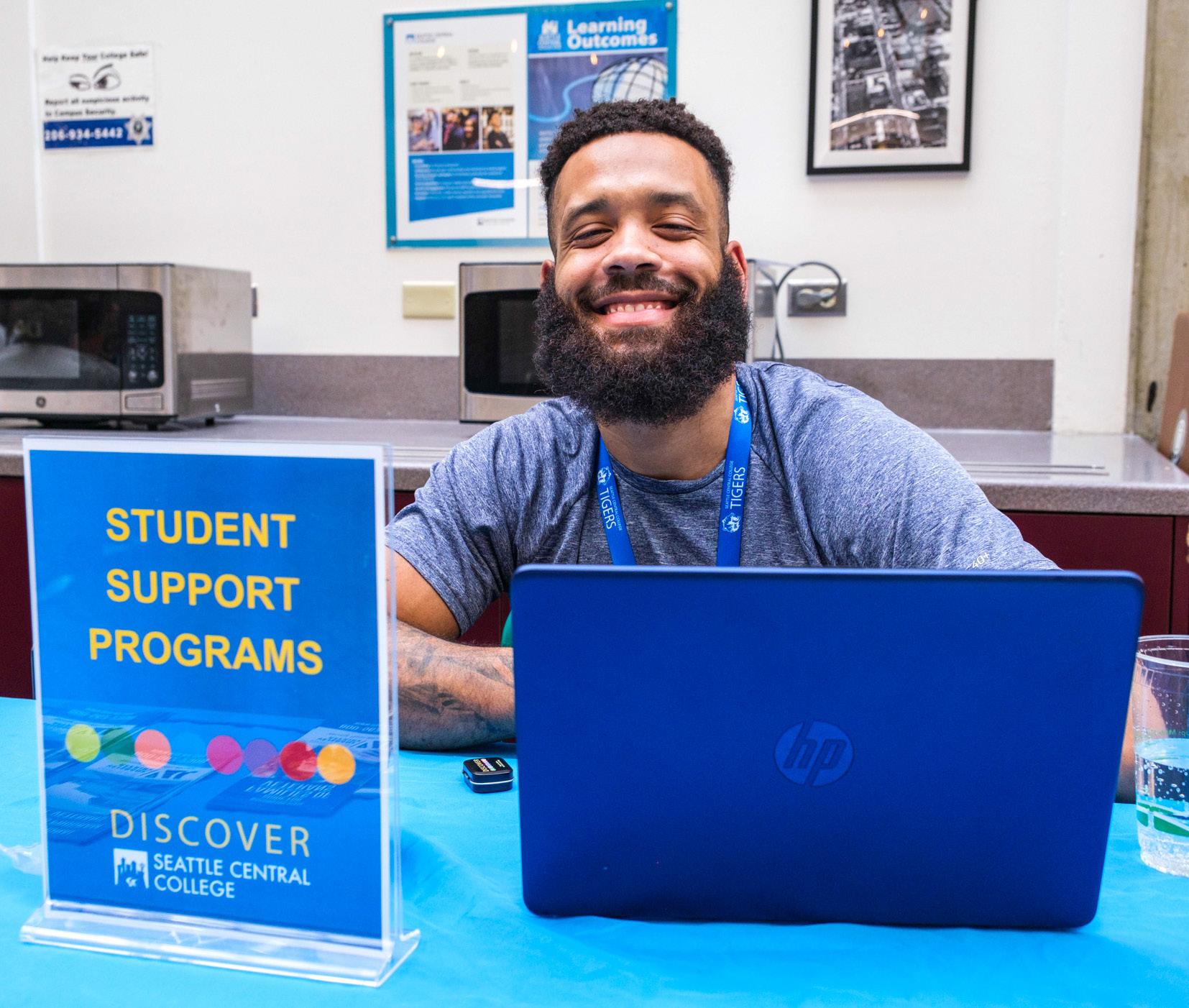
EVERY YEAR, hundreds of students arrive at Seattle Central with great ambition but little clear direction. It can be a prescription for floundering and stalling out— unless they’re quickly matched to quality support.
That’s just what a generous donor investment has made possible. With $320,000 in support from the Loeb Family Foundation, Seattle Central dramatically expanded its First Year and Career Services (FYCS).
The FYCS team is dedicated to helping students explore career paths, build confidence, and make informed choices about their
futures. The approach is holistic and culturally responsive, meaning it meets students where they are instead of forcing them into a onesize-fits-all model.
The results speak for themselves. Over the last two years, FYCS has supported 2,500 students—a 32% jump in engagement.
Another number stands out even more: among students who hadn’t yet picked a program of study (and who are often the most likely to stop out), first-quarter advising participation jumped from just 6% to 29% in a single year. That’s catching students right when they need it most.
“Sometimes determination isn’t enough—you need a support system to succeed. We appreciate that Seattle Colleges’ navigators are making sure students aren’t just starting school, but finishing it, by enabling them to overcome obstacles that might otherwise force them to give up. Helping these students succeed strengthens our local workforce and our community’s future.”
“I didn’t know where to start. I was scared to even ask questions. But my advisor didn’t just tell me what classes to take, they helped me believe I belonged here.”
A Standout Success
At the Colleges’ tradesfocused Georgetown campus, the presence of a dedicated navigator led to Pre-apprenticeship enrollment Completions
15% 58% 37%
Job placements
“My advisor helped me feel confident again. I came in thinking I just needed help with classes, but I left knowing what I wanted to do next and how to get there.”
SEATTLE CENTRAL STUDENT
SEATTLE CENTRAL STUDENT
Helping students meet basic needs EMERGENCY SUPPORTS
SEATTLE COLLEGES STUDENTS
shoulder much more than the heavy weight of books and a laptop. They also carry the burden of our city’s unforgiving costs, now some of the highest in the country. For many, it’s a daily struggle to keep food on the table and a roof overhead.
What this looks like: young parents skipping meals to feed their children, working adults living out of a car between shifts and classes,
first-generation students choosing between textbooks and rent.
The hardships quickly add up. Students facing hunger and housing instability are far likelier to miss classes, see their grades slip, and feel the need to stop out.
Indeed, about half of students who step away from community college say their main reason is financial strain. What begins as a temporary setback—a missed rent
payment, a broken-down car, an unexpected medical bill—quickly snowballs, derailing dreams, since only a fraction ever make it back. Stay in the Game recognizes that meeting basic needs is fundamental to educational access and equity.
This 7-point gap is driven by Seattle’s rental market, one of the costliest in the
Roughly 1 in 5 Seattle Colleges students have endured
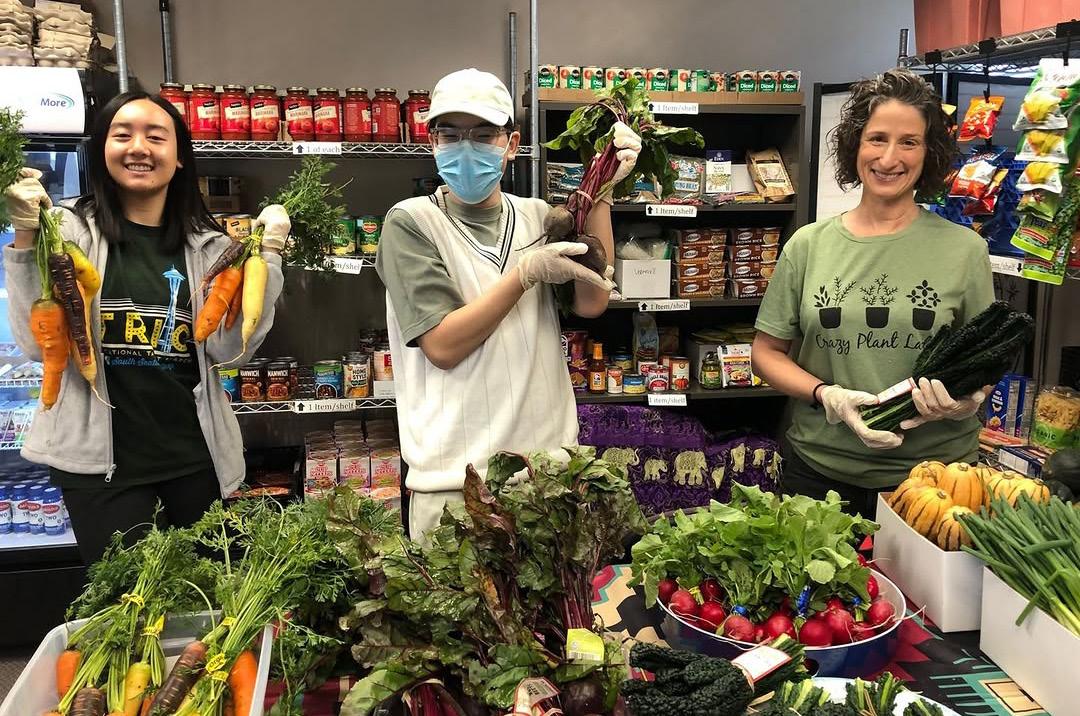
Student volunteers at the South Seattle College food pantry.
In early 2026, Foundation donors enabled special $100K grants to help each college address their students’ basic needs.
NORTH
As Dean of Student Support Services, Jeanette Miller oversees the North Seattle College’s emergency assistance and basic needs programs, helping students with food, housing, learning technology—and also transportation to get to campus and work.
“Walking into the North Star Food Pantry for the first time was a relief I didn’t expect—I actually teared up. Knowing it’s there lets me focus in class instead of sitting there wondering what I’m going to eat tonight.”
— North Student
This year, North launched a new food pantry on campus. “It’s so popular, it’s kind of scary,” she says. “We are filling it with healthy foods that are also culturally sensitive so that everyone feels like they have a little bit of something there.”
CENTRAL
Amanda Thomas oversees emergency supports at Central as Dean of Workforce Education. She reports that the College’s food pantry has expanded into a network of nine mini pantries spread across main campus and satellite facilities like Seattle Maritime Academy and the Wood Technology Center. Over the last year, the pantries have served 1,740 students.
Beyond the food pantries, Seattle Central has used Foundation support to provide one-time emergency grants to 392 students, assisting with unexpected setbacks like medical and car bills, or the sudden departure of a roommate.
“I truly appreciate the time, effort, and care that goes into organizing and running the pantry. Your support makes a real difference in our student community.”
— Central Student
SOUTH
Monica Lundberg, a specialist with the Student Life team at South, reports that the Foundation’s recent $100K grant is helping the College’s food pantry meet demand that’s up 50 percent over last year, now averaging nearly 200 students a week.
“I’m hungry a lot at school, and a two-hour lecture on an empty stomach sucks. This helps out insanely! The food pantry is awesome.”
— South Student
The funds are helping purchase culturally-diverse food, along with fresh produce from King County farmers, so students have consistent access to fruits and vegetables.
In partnership with South’s Culinary program, the pantry also now offers weekly hot soup and fresh sandwiches, ensuring students have full meals, not just shelf-stable snacks.
Another new pantry item: diapers for student parents.
68% of student parents experience basic needs insecurity
76% of student parents who need childcare cannot afford it
84% of young people who aged out of foster care experience food or housing insecurity—or both—as community college students.
Participants in Bridge to Finish, a basic needs support program, were 25% more likely to persist and/ or complete a credential than non-participants.
“For many students at our schools, college life is shadowed by hunger and homelessness. But meet those basic needs and students earn higher GPAs, are more likely to stay in school, and feel a greater sense of belonging.”
JEANETTE MILLER
NORTH SEATTLE COLLEGE
Free Tuition and Wraparound Support
SEATTLE PROMISE SOARS
SEATTLE PROMISE opens the door to college for every Seattle Public Schools graduate, providing free tuition and intensive wraparound supports at North, Central, and South. Today, more than 70 percent of SPS graduates apply and about one in four enrolls—helping Seattle stand out at a time when college-going rates across Washington remain mostly below pre-pandemic levels.
Launched with Seattle’s voter-approved Families, Education, Preschool, and Promise
(FEPP) levy in 2018, the program has already enrolled more than 5,500 students. More than 900 Seattle Promise scholars have completed a certificate, technical degree, or transfer pathway—moving forward into university study and family-wage careers across the region’s most in-demand industries. Philanthropy plays a vital role in ensuring every Promise scholar can succeed once they arrive on campus. Donors to the Seattle Colleges Foundation—including anchor partners BECU
and WSECU—are amplifying the City’s investment by funding additional need-based support for students with the greatest financial barriers.
To date, nearly 300 Promise students have continued their education at the University of Washington through the Path to UW initiative.
Voters Back Seattle Promise’s New Skilled Trades Pathway
SEATTLE VOTERS renewed and expanded the Families, Education, Preschool, and Promise levy in 2025, extending Seattle Promise through 2032 and investing in a new Skilled Trades Pathway.
This expansion will help more students launch careers in high-demand—and AI-resilient—fields such as construction, advanced manufacturing, and the skilled technical trades. up from 69% in 2018 80% of Seattle voters said YES to the 2025 FEPP levy renewal
Promise enrollment since 2019
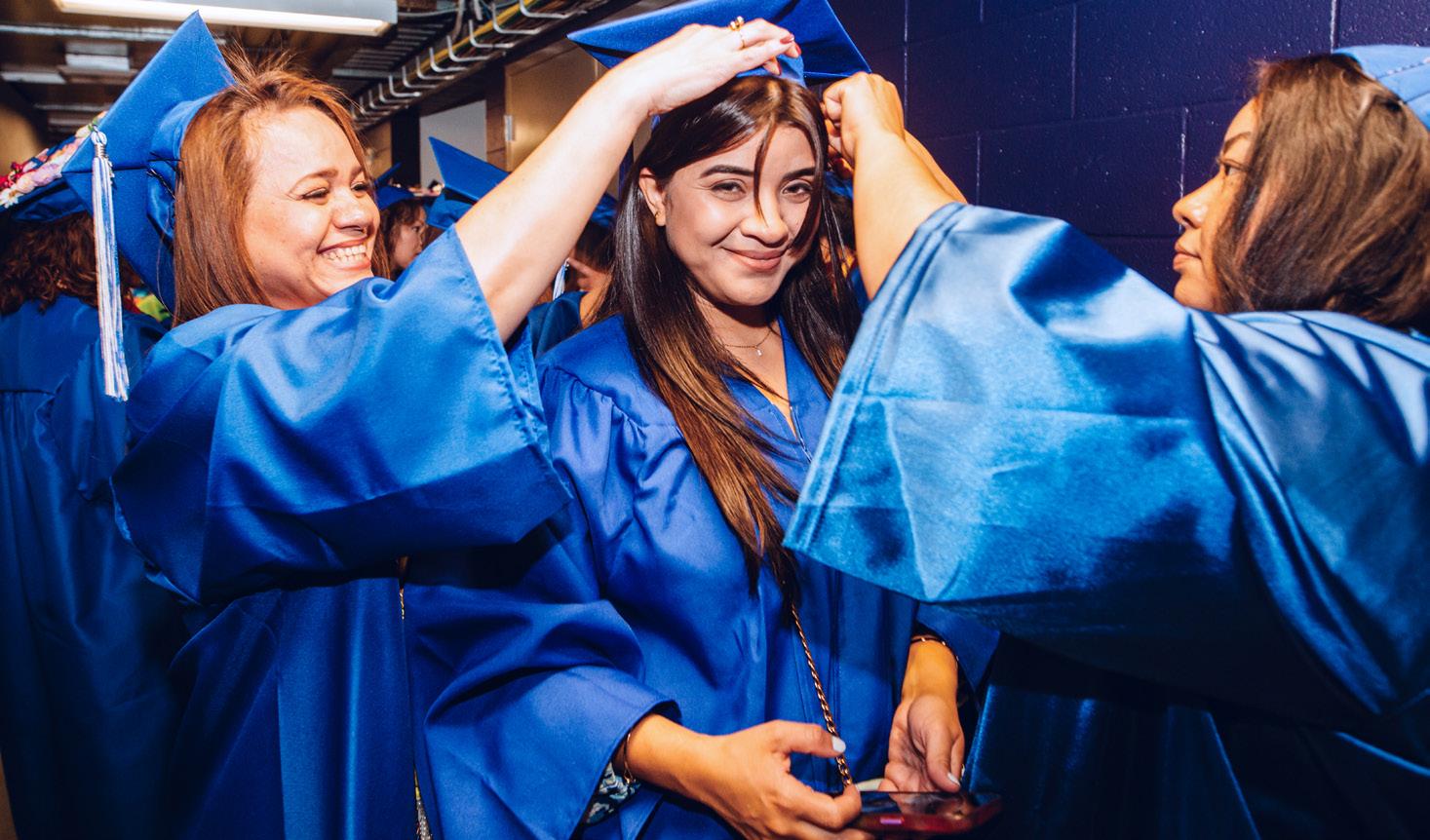
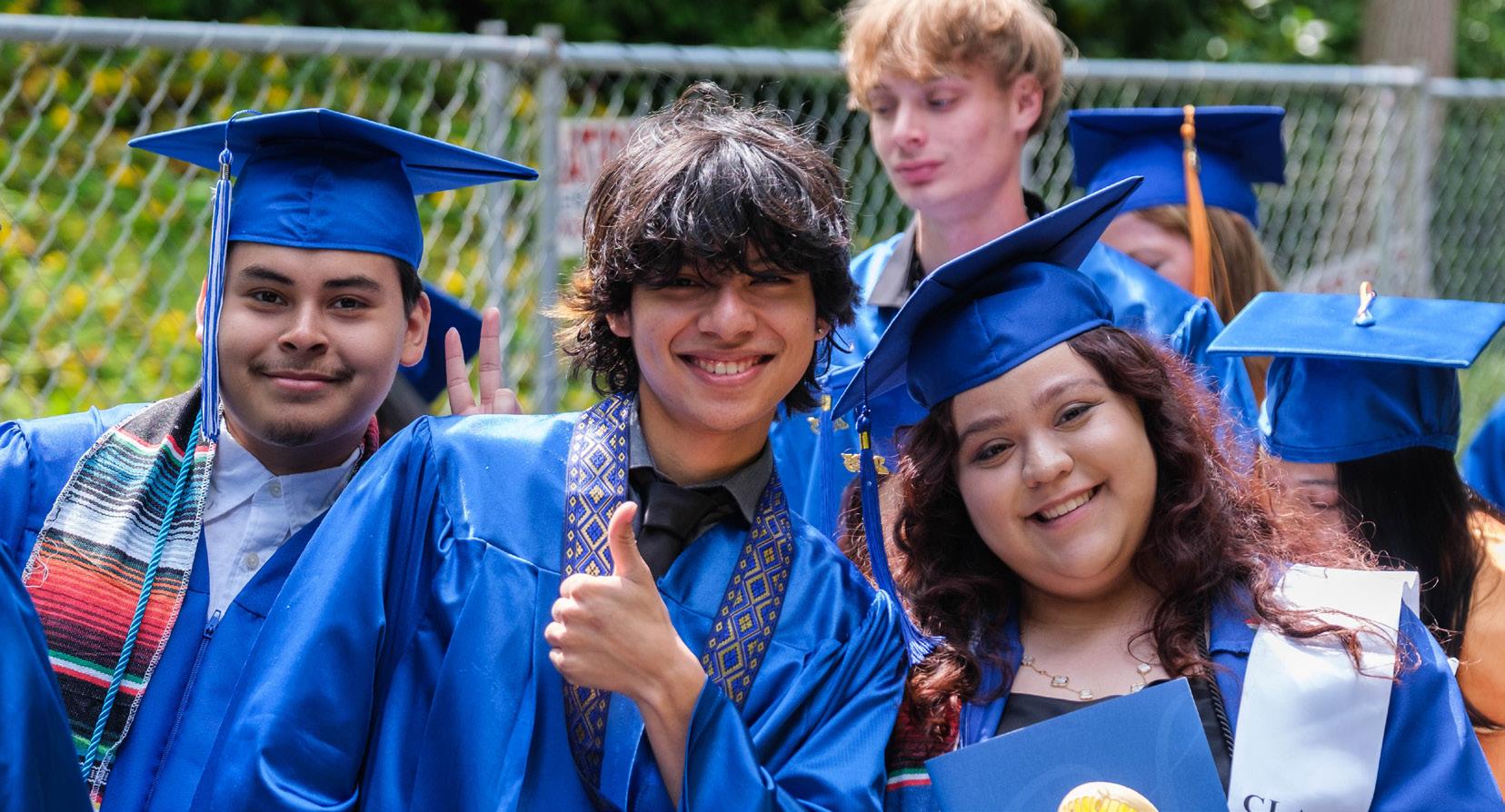
Some of the 352 Seattle Promise students who graduated in 2025.
NORTH
From Idea to Enterprise
A NEW ENTREPRENEURSHIP HUB is taking shape at North, powered by a $500,000 anonymous gift secured by the Seattle Colleges Foundation. The Hub will bring together Business Administration, Accounting, and International Business programs to help students and community members turn their ideas into thriving ventures.
Whether it’s a welding student with a breakthrough fabrication concept, an IT student building an inventive app, or an immigrant entrepreneur with global trade connections, anyone with an idea will be able to tap into a network of mentors, workshops, and hands-on support. Alongside their classes, participants will gain practical skills—reading financial statements, setting prices, managing teams, and navigating global markets.
The goal is simple: give every innovator the tools and confidence to turn their spark of inspiration into a lasting enterprise.
Foundation scholar and 2025 North grad MATÍAS SAENZ
won the nation’s most prestigious BA/BS transfer scholarship from the Jack Kent Cooke Foundation, earning him a full ride at UC Berkeley.
SOUTH
Powering State-ofthe-Art Auto Tech
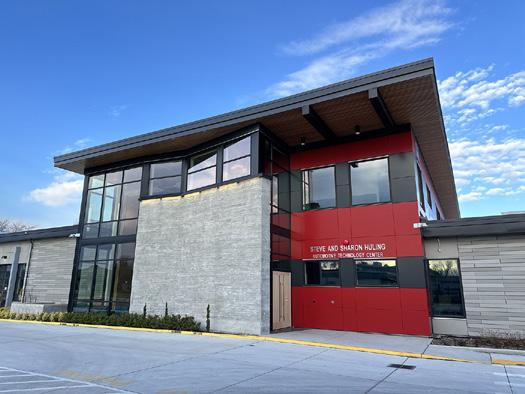
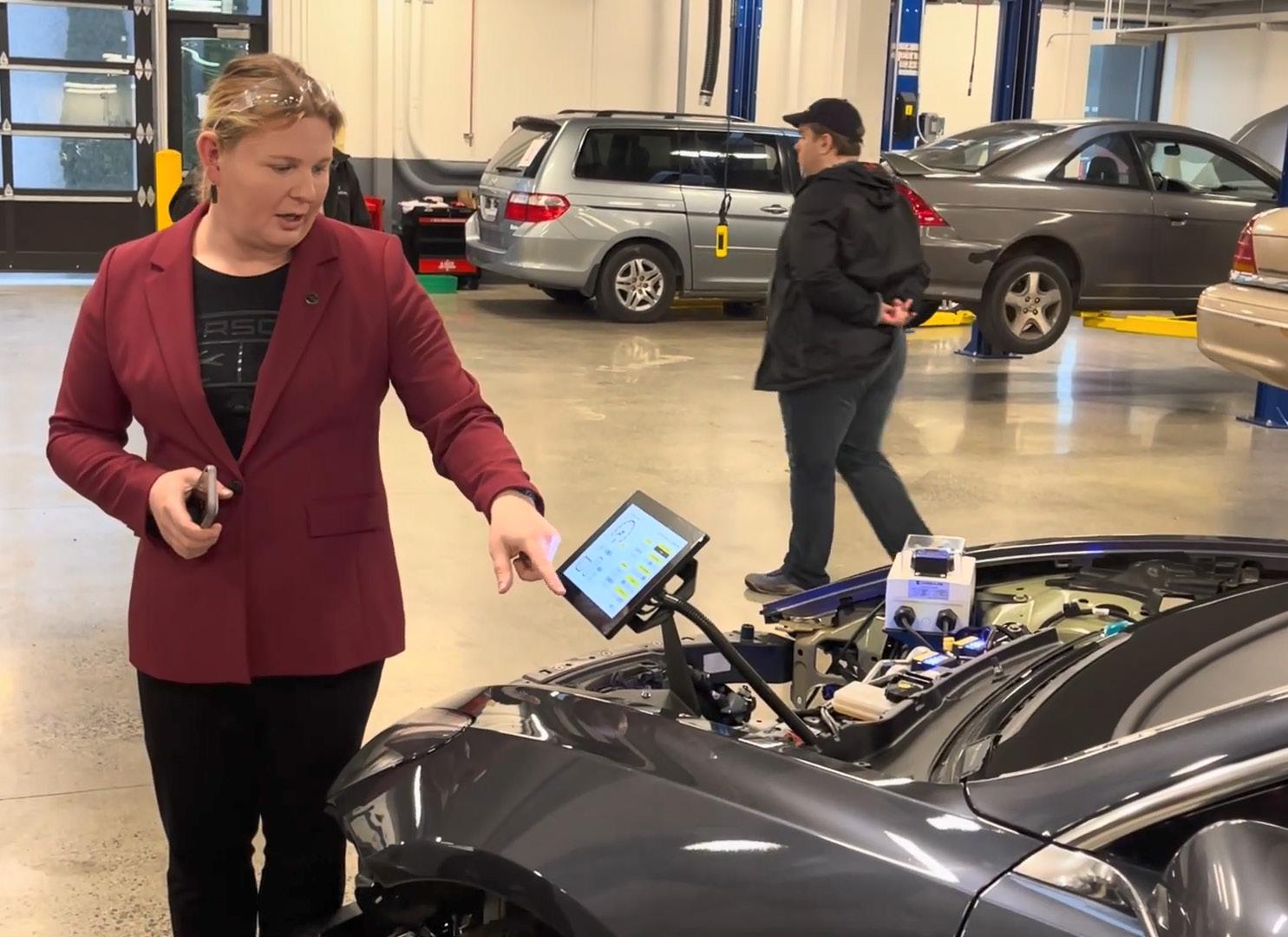
THE STEVE AND SHARON Huling Automotive Technology Center at South has received a $1.57M federal grant—the only of its kind in Washington—to launch a 10-week EV & Hybrid Service Technician Certificate program.
It will utilize a new Consulab EV simulator, demonstrated here by instructor Teryn Kilgore. To celebrate the certificate program, the Hulings are continuing their longtime generosity by endowing new Seattle Colleges Foundation scholarships.
An alum of Seattle Central’s Seattle Culinary Academy, Chef Aaron Verzosa is co-founder of the acclaimed Filipino-American restaurant, Archipelago. It’s a three-time nominee for a James Beard honor, in 2026 for Verzosa as outstanding US chef.
Dureti is excited to be working at the frontier of information technology, having landed a position as a Solution Architect at the prominent artificial intelligence company, Snowflake.ai.
“I owe it all to North,” she says. “The new Data Science track within the BS in Computer Science program was the perfect preparation.”
Dureti graduated in June 2025, supported by a Seattle Colleges Foundation scholarship.
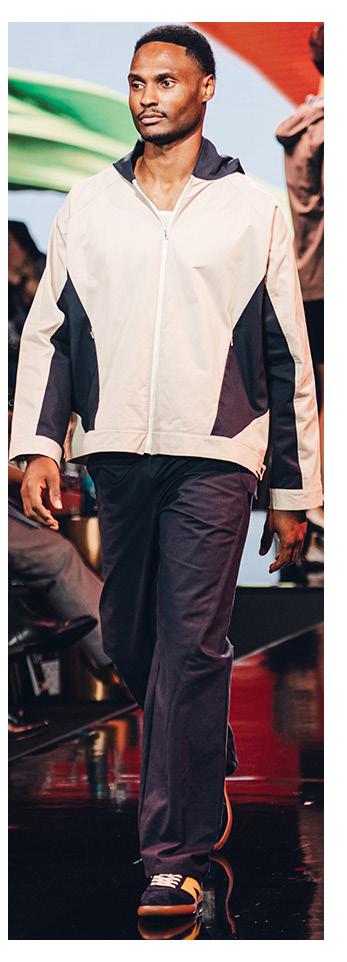
Looks by Annie Tempest and Max Moreno Rebollar, two standout Seattle Central Apparel Design & Development students, were featured during Bellevue Fashion Week’s NEW + NEXT 2025 show.
Max’s look presented technically driven sportswear with vintage details.
Our thanks to Paula, Jon, Jesse and thousands of other supporters
JON FINE AND PAULA
SELIS have built their lives around public service, and now they’re turning that same commitment toward Seattle Colleges students with a powerful set of planned gifts.
Their estate plans will fuel two funds: the Districtwide Completion Scholarship and the new Jon Fine and Paula Selis Endowment for Student Completion, both focused on students in their final one or two quarters who need a last financial push to finish strong and step confidently into the region’s economy.
Jon led United Way of King County as CEO for nearly 19 years, earning a reputation as a bold, data-driven champion for community impact. He later served as board chair of the Seattle Colleges Foundation and co-chair of its Equity Can’t Wait campaign. Paula, a former senior attorney in the Washington State Attorney General’s Office and a trusted civic leader in her own right, deeply shares in the conviction that education changes lives. Together, they’re helping open doors to prosperity for new generations of Seattleites.
Foundation Board of Directors 2024-25
CHAIR
Steve Hill
Trustee Emeritus, Seattle Colleges; Community Volunteer
VICE CHAIR
Rahim S. Rajan CEO, AQL Labs
SECRETARY
Sarah Jane Gunter Vice President, Latin America Stores, Amazon
TREASURER
Mark Dawson Private Investor
DIRECTORS
Rick Davis
Community Volunteer
Barbara Dingfield
Community Volunteer
Jon Fine
Immediate Past Chair, Seattle Colleges Foundation; Former President and CEO, United Way of King County
Mark H. Gleason
Marine Insurance, The Travelers Companies, Inc.
Aracely Godinez
Regional Marketing Director, Global Leasing, Boeing
Timothy Howell
Market Manager, JP Morgan Chase & Co.
Dr. Rosie RimandoChareunsap Seattle Colleges Chancellor
Dr. Rachel Solemsaas North Seattle College President
JESSE KINKEAD puts it very simply. “I wouldn’t be here—in this career, in any position to give money—if it weren’t for Seattle Central.” Kinkead, a 2000 grad, is now a successful software engineer and steadfast supporter of the Seattle Colleges.
Looking back on his career, Jesse credits Central with giving him a new foundation after his rocky high school years. “Central was the place I was able to go and prove that I could be a good student,” he recalls. “Plus, I could afford it. I didn’t have
Mike Hughes
Former President, Safeco Insurance
Richard Locke
Principal and Founder, DataWeb, Inc.
Dr. Sandra Madrid
Former Assistant Dean, University of Washington School of Law; Community Volunteer
Lauren McGowan
Executive Director for Puget Sound, Local Initiatives Support Corporation
Scott Meden
Former Chief Marketing Officer, Nordstrom; Community Volunteer
Marc Mora, M.D.
SVP, Resource Stewardship and Network Management, Kaiser Permanente and the Washington Permanente Medical Group
Dr. Chantae Recasner
Seattle Central College Interim President
Dr. Monica Brown
South Seattle College President
help from my parents, but between grants, scholarships, and a part-time job, I could cover my tuition and rent.”
More than 20 years, a bachelor’s, and a master’s degree later, Jesse gives back through monthly recurring donations to support today’s hardworking students at the Seattle Colleges. “I don’t think a lot of people understand the impact these local community colleges have, from the trades to helping students shift into a new career path,” he says. “It’s really a public good.”
Will Rance
Vice President of Community Relations, WSECU
Fred Rivera
Founder and CEO, The Rivera Group; Special Advisor, Seattle Mariners
Jackie Martinez-Vasquez
Chief Impact Officer, Seattle Credit Union
Shiao-Yen Wu
Founder and CEO, WPI Real Estate
EX OFFICIO DIRECTORS
Dr. Monica Brown
President, South Seattle College
Louise Chernin
Trustee, Seattle Colleges; President & CEO Emeritus, Greater Seattle Business Association
Kerry Howell
Vice Chancellor for Advancement, Seattle Colleges & CEO, Seattle Colleges Foundation
Dr. Chantae Recasner
Interim President, Seattle Central College
Dr. Rosie RimandoChareunsap Chancellor, Seattle Colleges
Dr. Rachel Solemsaas
President, North Seattle College
CHAIR
Brian Surratt
Greater Seattle Partners
VICE-CHAIR
Colleen Echohawk
CEO, Community Roots Housing
Teresita Batayola
President & CEO Emeritus
International Community Health Services
Louise Chernin
President & CEO Emeritus, Greater Seattle Business Association (GSBA)