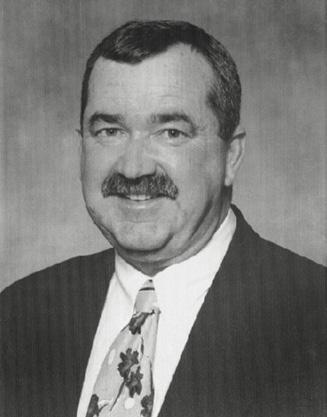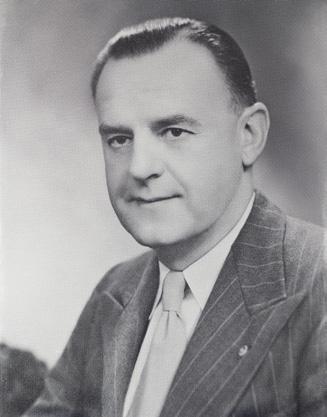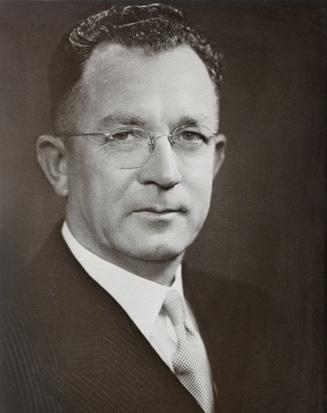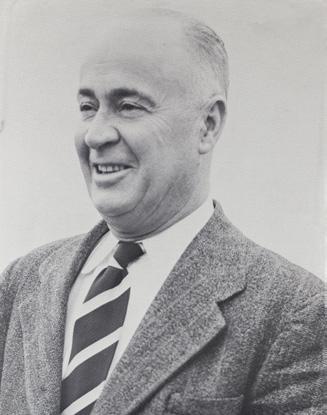


A Centur y of Automotive Excellence

Thinking about the future is never easy, but choosing your beneficiaries gives you peace of mind and helps protect the people you care about most
A beneficiary is a person who receives your super, and any insurance payout, if you pass away. Without a valid nomination, the trustee must decide who receives your benefit.
Making a nomination (and keeping it up to date) makes sure your super goes where you want it and your loved ones are cared for when it matters most
And when life changes, your plan can change with it
Chair Mark McGuire
CEO Darrell Jacobs
GM Automotive Business Jason Polgreen
GM Training
Jodi Ryan
GM
Kaes Cillessen
BOYLEN
3/288 Glen Osmond Road, Fullarton P (08) 8233 9433
w ww.boylen.com.au
Cover And Layout: Paul Reppucci
Writers: Tim Boylen, Miles Hudson
Editors: Kaes Cillessen, Jaydeen West

Welcome to the landmark 2026 edition of Future Auto magazine. This year is profoundly significant for our community as the Motor Trade Association of South Australia and the Northern Territory officially celebrates its centenary. For 100 years, this Association has stood as the unwavering voice of our industry, serving as the engine room for the prosperity of South Australia and more recently, the Northern Territory. As I look back on our journey, I am awestruck by how a small gathering of passionate individuals in a meeting room in Adelaide evolved into the industry leading representative and training body we are today.
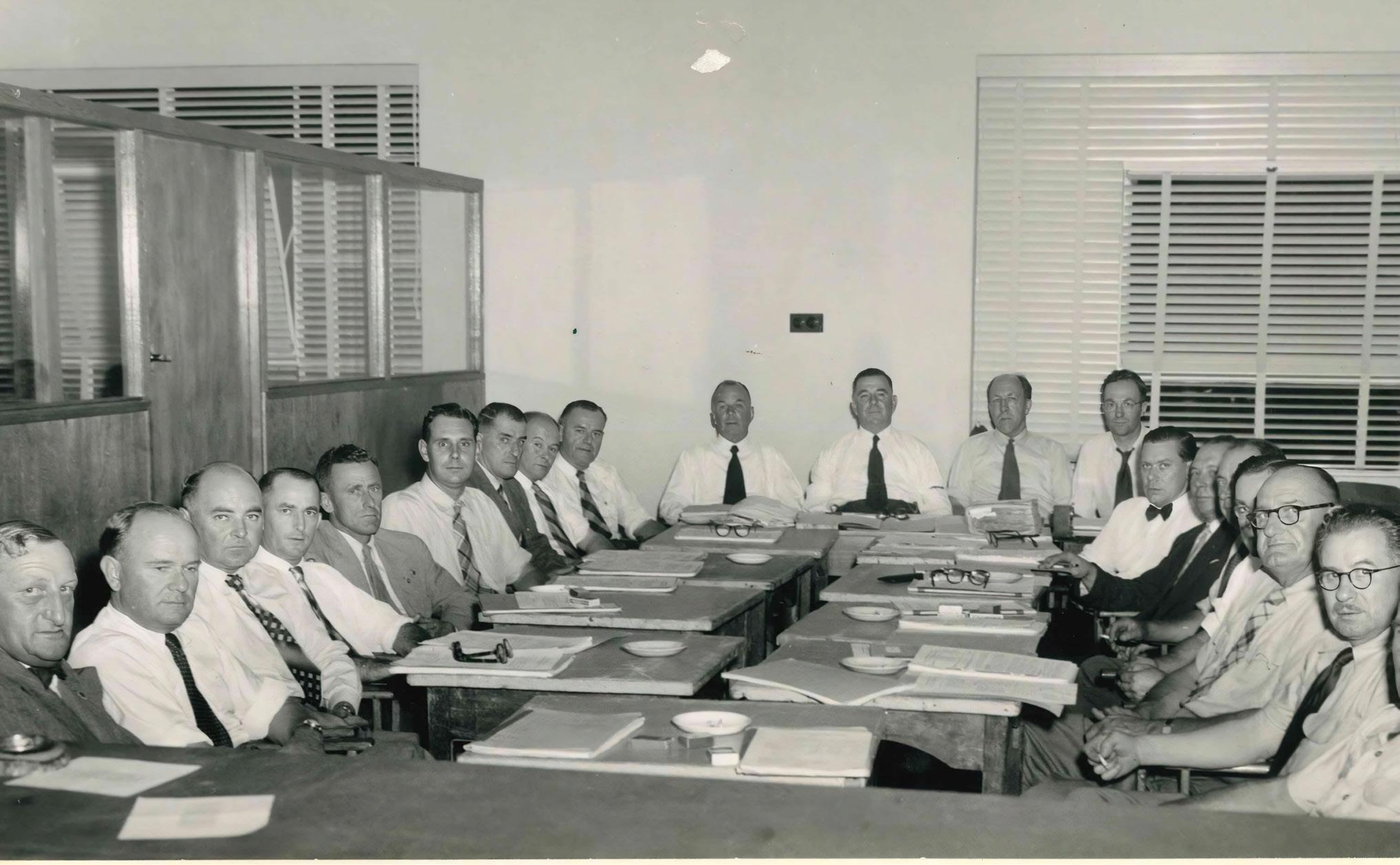
Our story began on the 22nd of March 1926, when a group of garage proprietors and petrol dealers gathered at a building on Grenfell Street. They resolved to form an association to address the immediate, practical challenges of their trade, specifically focusing on petrol pricing and establishing a united front in their relationships with oil companies.
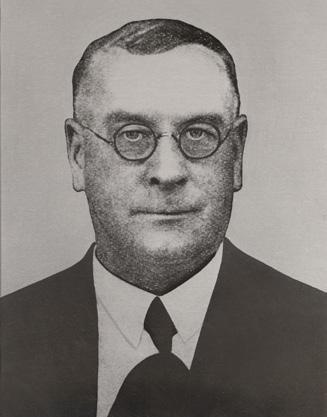
Just two weeks later, on the 6th of April, the Association was formally established, and Frank Hazell was unanimously elected as our first President. It was under the early leadership of figures like Hazell and Archie Provis that the foundation of our collective resilience was built. Those early days in the 1930s were not about abstract policy; they were about the daily survival of small businesses during the Great Depression.
As the decades progressed, the Association adapted alongside the rapid evolution of the motor vehicle itself. We stood by our members through the disruption of World War II and the post-war rebuilding era, a time when the demand for vehicles and services accelerated at an unprecedented pace. We witnessed the birth of the first Australianbuilt car, the Holden FX, in 1948 under the presidency of H.G. Lock, and navigated the global oil crisis of 1973. Each of these milestones was met with a commitment to professionalising the trade. We shifted from a focus on basic practicalities to broader representation, industrial award involvement, and a growing emphasis on high standards. This growth was physical as well as professional, leading us from our early days on Waymouth Street to our current home at the MTA Training and Employment Centre in Royal Park.
Perhaps our most enduring legacy is our commitment to the next generation of automotive leaders. In 1982, under President Ray Noack, the MTA Group Training Organisation
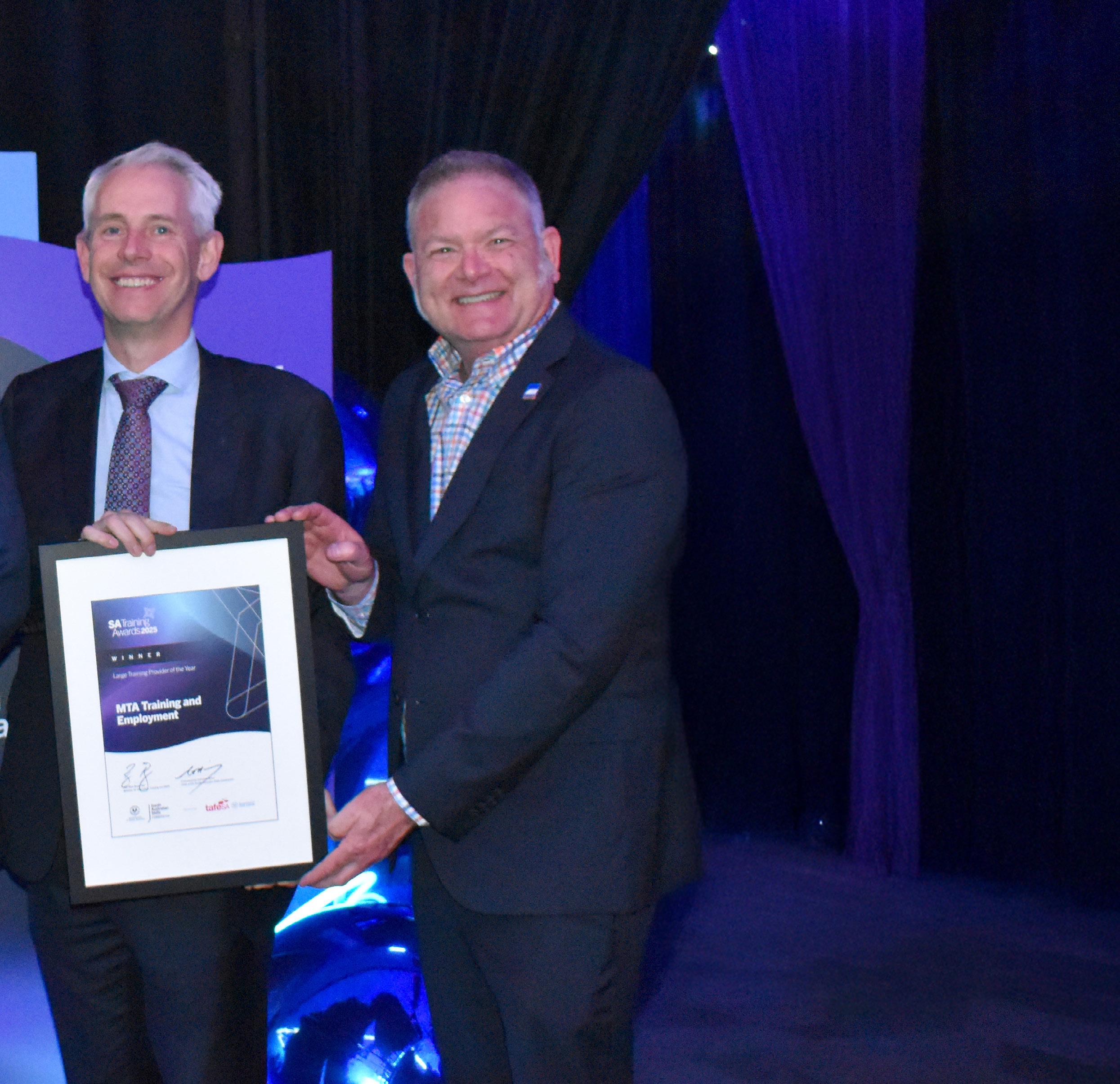
began with just ten apprentices. Since that modest beginning, we have expanded exponentially, purchasing the Automotive Centre of Excellence at Royal Park in 1997 and becoming a Registered Training Organisation in 1999. In the last 12 months, we were incredibly proud that MTA Training and Employment was named Large Training Provider of the Year at the 2025 SA Training Awards. Today, we train over 1,100 apprentices ensuring that the training they receive is the gold-standard for the country.
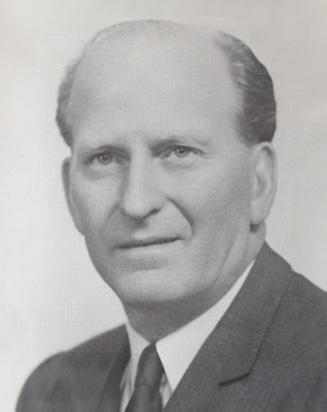
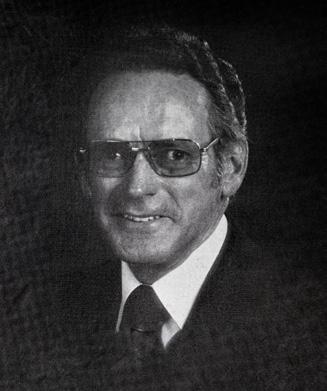
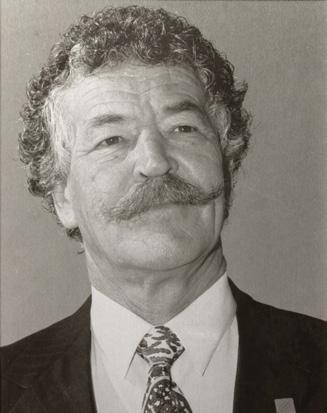
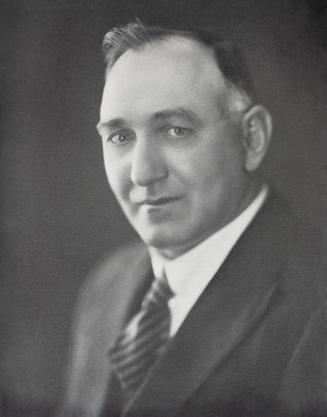
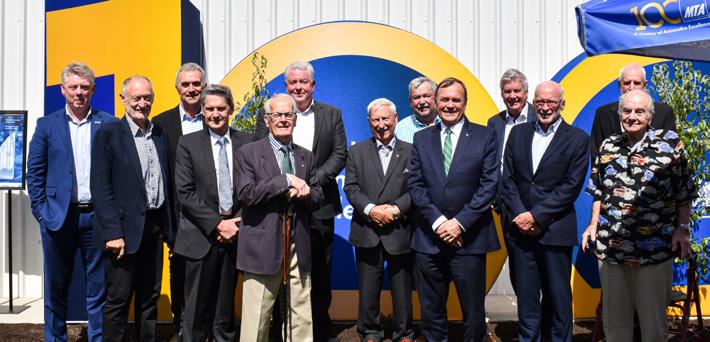
As we celebrate our 100th birthday, we do so by acknowledging the leaders who brought us here. We were honoured to host a celebration that brought together our current Board, Life Members, and past CEOs. Seeing these industry titans stand alongside our modern apprentices was a powerful reminder that our graduates are the bridge between a proud past and a high-tech future.
What started as the Garage Proprietors and Petrol Retailers Association has evolved into South Australia and the Northern Territory’s leading voice for more than 1,200 members across the automotive retail, service and repair industry, embracing a future increasingly shaped by software-driven and electrified vehicles.
Looking toward the next 100 years, the MTA remains committed to leading the industry through profound transformation. We are entering a new era where our toolboxes include complex data streams and advanced electronics.
From launching one of Australia’s first Electric Vehicle Training Centres in 2023, to introducing Australia’s first automotive dual trade apprenticeships in 2024, and opening the Automotive Refinishing Centre of Excellence in 2025, we are ensuring our workforce is equipped for the industry’s bright future.
Our vision for the future is one where we continue to advocate for our members, educate the industry
and public on new technologies like zero and low emission vehicles, and maintain our position at the cutting edge of transport technology.
As a Board, we continue to invest heavily in our nation-leading training facilities, as apprentices deserve to learn in state-of-the-art facilities and with the latest technologies.
While what’s beneath the bonnet has changed beyond recognition since 1926, our purpose remains constant:
to stand up for and support the people who keep our industry moving. As we drive into our second century, we do so with the same passion and determination that those garage proprietors felt on Grenfell Street a hundred years ago.
Here’s to the next century of progress, prosperity, and partnership.
“Unlocking the opportunity within automotive is a powerful multiplier for all sectors and for South Australia as a whole.”
This is the sentiment held by the Motor Trade Association SA/NT (MTA SA/NT) CEO Darrell Jacobs in its 2026 South Australian State Election Blueprint. South Australians went to the polls on 21 March 2026 with the Labor party entering its second term. For the automotive industry, this continuity of government matters. It means the relationships built over the past four years can be deepened and conversations that have already been started can be completed.
However, it is not business as usual. Fuel shortages and soaring petrol prices dominated the weeks postelection, serving a reminder, of how
central the automotive sector is to everyday South Australians’ lives. From service stations, to repairers, towing operating and dealership, the industry remains an essential service to economic activity, and MTA SA/NT’s 1,200-plus members, the majority small and family businesses, sit at the centre of it.
The MTA’s Blueprint is not a wish list, it’s a continuation. Over the previous term, several MTA priorities have moved from advocacy to legislated change.
The Unclaimed Goods Act (Miscellaneous) Amendment Bill 2025, one of our long-advocated reform to modernise the outdated framework around abandoned vehicles, passed
Parliament in late 2025, with the industry’s full support. Automotive businesses have long been used as an informal dumping ground for vehicle owners who have no intention of collecting.
Equally significant has been the investment in skills and training. The not-for-profit training provider grant program, a critical funding stream for MTA Training and Employment has delivered real results. Our recognition as Large Training provider of the Year at the 2025 SA Training Awards is a reflection of what industry-led training can achieve when properly resourced.
Pleasingly, returning Premier Peter Malinauskas has also committed vital funding for MTA’s Automotive Apprentice Mentoring program.
With the majority government and four years ahead, Government has the opportunity to act on the industry’s most pressing needs:
Choice of repair:
This remains our headline consumer protection priority. Following the increased consolidation in the insurance market, South Australians now face even greater constraints in their ability to choose their repairer. This places pressure on small collision repair businesses and reduces competition. The solution is straightforward: enshrine a legal right to choice of repair in legislation.
teams and invest in the next generation of automotive technicians.
EV preparedness:
The transition to zero and low emission vehicles also requires attention. The MTA is calling for a $1 million co-contribution grants program to help over 200 businesses acquire the high-voltage tools and safety equipment needed to work on these vehicles safely. We are also calling for $500,000 to fully subsidise EV safety depower and reinitialise training for the state’s 10,000 automotive technicians.
Vehicle inspections at change of ownership:
More than 150,000 used vehicles are sold privately in South Australia each year, representing three in every four transactions, with no statutory consumer safeguards. As vehicles become more complex, especially with EVs, the risks to consumers increase. We believe it’s time South Australia caught up and close the regulatory gap.
Small and medium automotive businesses are under sustained cost pressure. Raising the payroll tax annual wage threshold from $1.5 million to $2.5 million, and introducing an exemption for apprentice and trainee wages, would give businesses the breathing room to grow their
towing operators, and progressing digital modernisation of trade services, are backed by the industry and ready to be implemented.
South Australia’s automotive industry contributes more than $2 billion to the state’s economy and keeps nearly 1.5 million vehicles on the road. As MTA SA/NT CEO Darrell Jacobs notes, “we are not just seeking support; we are asking for a collective vision for the future.”
The MTA looks forward to working constructively with the Government to turn the Blueprint’s priorities into action.
There are recommendations in the Blueprint that will take longer to achieve but are no less critical to the industry.
Reducing stamp duty on noncommercial motor vehicles to 3 per cent would stimulate new vehicle sales, lower the average age of South Australia’s fleet, currently the second oldest in the nation, and improve road safety outcomes. Likewise, reform to skilled migration settings, including a reduction in the Temporary Skilled Migration Income Threshold, is essential to address workforce shortages, especially in regional areas.
Other practical reforms, including expanding RiderSafe training access, introducing a licensing regime for
“we are not just seeking support; we are asking for a collective vision for the future.”
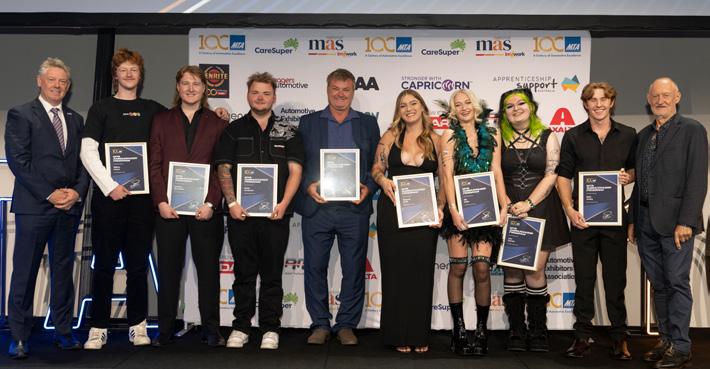
The South Australian automotive industry reached a historic milestone on March 13, 2026, as the Motor Trade Association (MTA) celebrated its largest graduation and awards event at the iconic Adelaide Oval. Amidst the glitz and glamour, where nearly 200 apprentices graduated into qualified technicians, the MTA officially unveiled a first-of-its-kind initiative: the MTA Ambassador Program.
Designed to empower the next generation of automotive professionals, the program selects high-achieving apprentices to represent their peers, promote the trade, and bridge the gap between training and industry. The inaugural cohort of nine Ambassadors was announced during the gala, marking a significant shift in how the MTA engages with its emerging workforce.
The Ambassador Program, proudly developed and supported by Automotive Exhibitors Association and CareSuper, is built on the principle of peer-to-peer influence who will act as role models, participating in school visits, careers expos, and social media content creation to demystify modern automotive trades. MTA SA/NT CEO Darrell Jacobs emphasised the strategic importance of the initiative. “This program is a first-of-its-kind initiative where apprentices will
represent their peers, inspire future talent and have direct influence on the way training is delivered,” Mr Jacobs said.
Beyond promotion, the program provides a vital feedback loop for the Association. Ambassadors participate in quarterly roundtables with MTA leadership, providing constructive insights into training quality and key industry issues.
He further noted the significance of timing, stating, “ The MTA is celebrating 100 years of automotive tradition while facing the most significant industry transformation and skills challenge in history”.
The program is highly selective, drawing from MTA Graduation and Award finalists across various trades, including light and heavy vehicle, automotive electrical, agricultural mechanical, and automotive refinishing. To be eligible, applicants must be current second or third-year apprentices enrolled in an MTAdelivered Certificate III qualification.
In addition, Ambassadors receive branded apparel, professional development opportunities, and exposure to high-profile events such as trade shows and media activities.
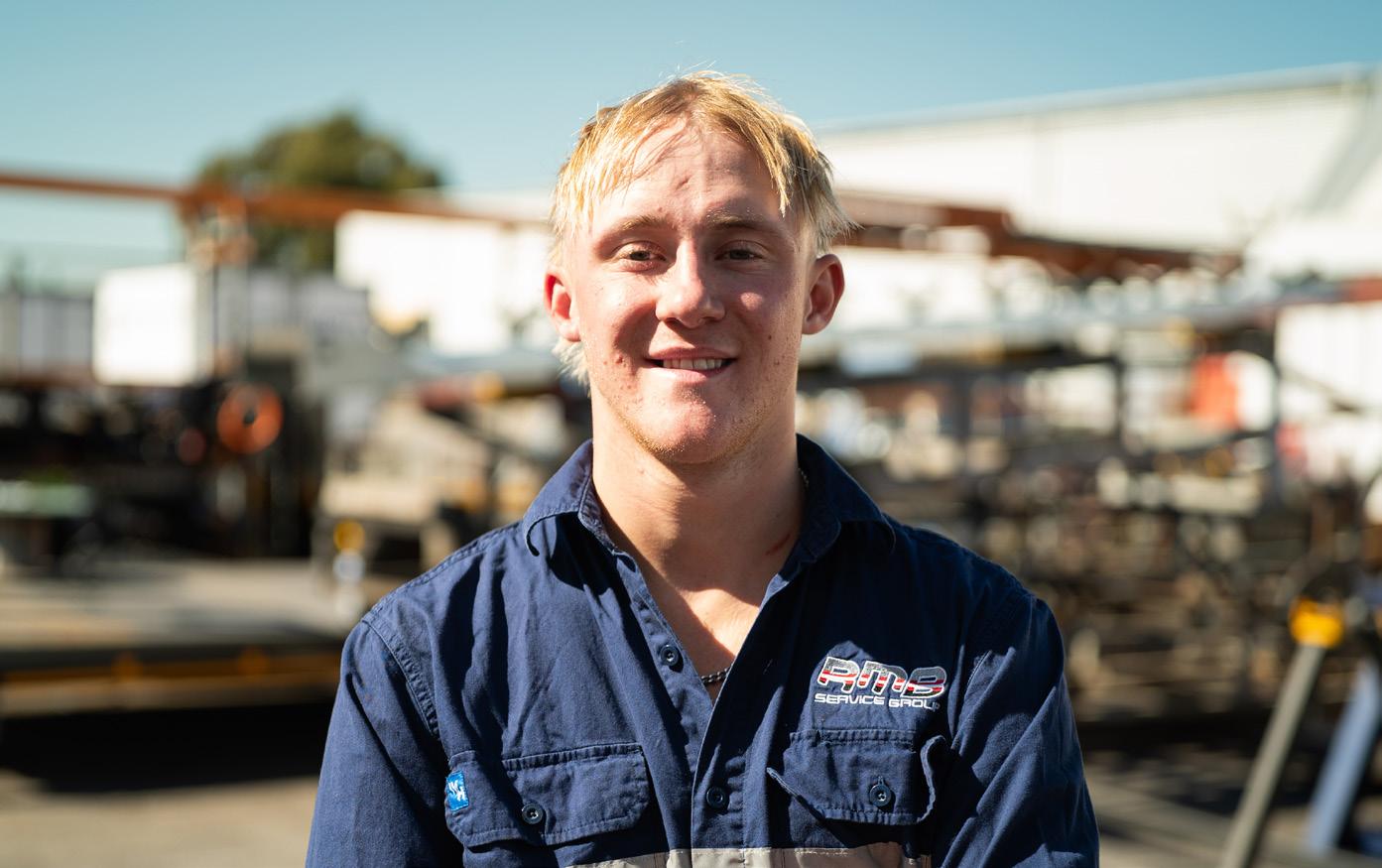
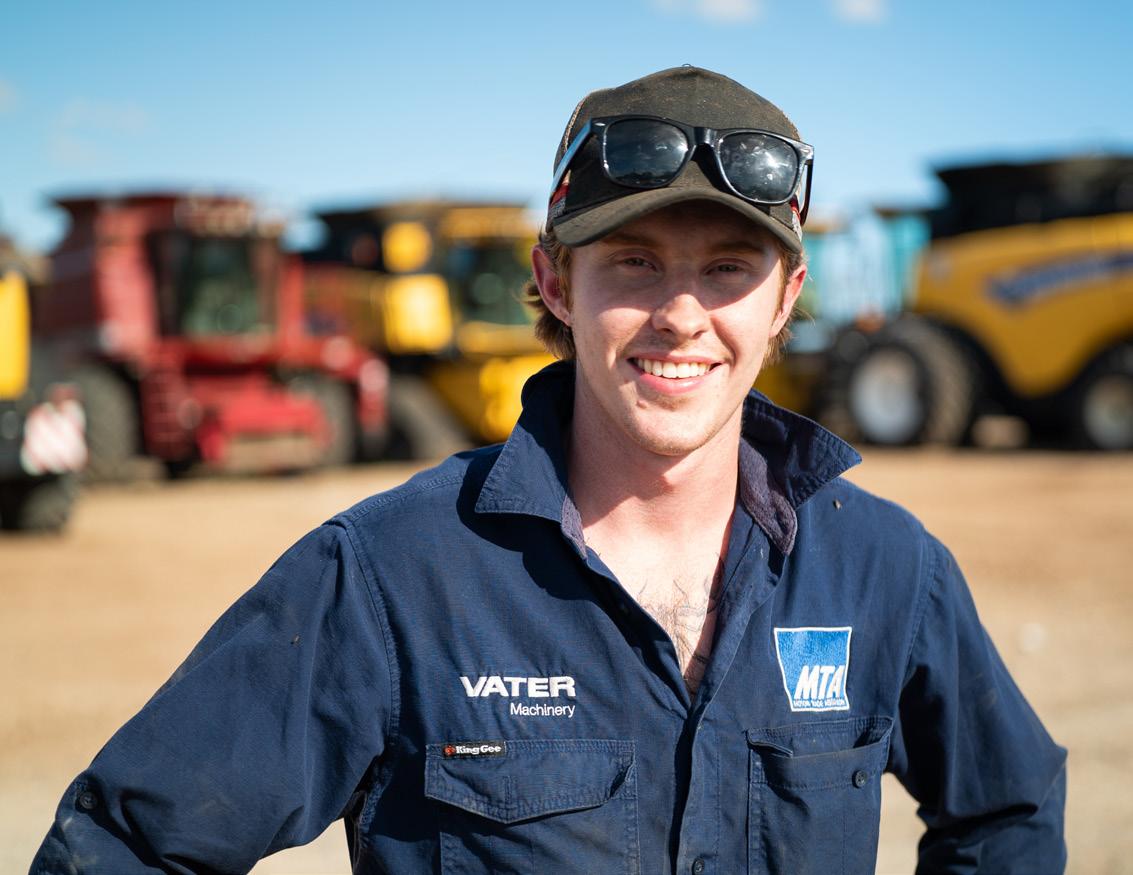
Top to bottom, L-R: Ashanyia Smith, hosted at North East Mitsubishi, Elly Brake, hosted at Eblen Collision Repairs, Archie Henderson, employed by Stillwell Ford, Jessica Ganosis, hosted at Eblen Collision Repairs, Ethan Lockwood, hosted at RMB Service Group, Rylee Anning, hosted at Vater Machinery, William Forrest, hosted at McLaren Vale Auto Electrical, David Hissey, employed by Emmetts Crystal Brook and Matt Baudinette, employed by Barry Maney Group.
The 2026 cohort represents the diversity and technical excellence of the modern automotive sector. The first ambassadors include Ethan Lockwood, who was also named the 2026 MTA Apprentice of the Year, and Elly Brake, the Female Apprentice of the Year. The group also highlights the rise of specialised fields, featuring dual-trade apprentices Ashanyia Smith and William Forrest, automotive refinishing apprentice Jessica Ganosis, light vehicle apprentice Archie Henderson, alongside regional representatives like Rylee Anning, Matt Baudinette and David Hissey.
As the automotive industry continues to evolve through technological change, the MTA Ambassador Program provides the best and brightest apprentices with opportunities to develop their leadership skills, share their experiences and inspire others to pursue a career in the trade. It is an investment in the people who will help drive the industry’s future for generations to come.




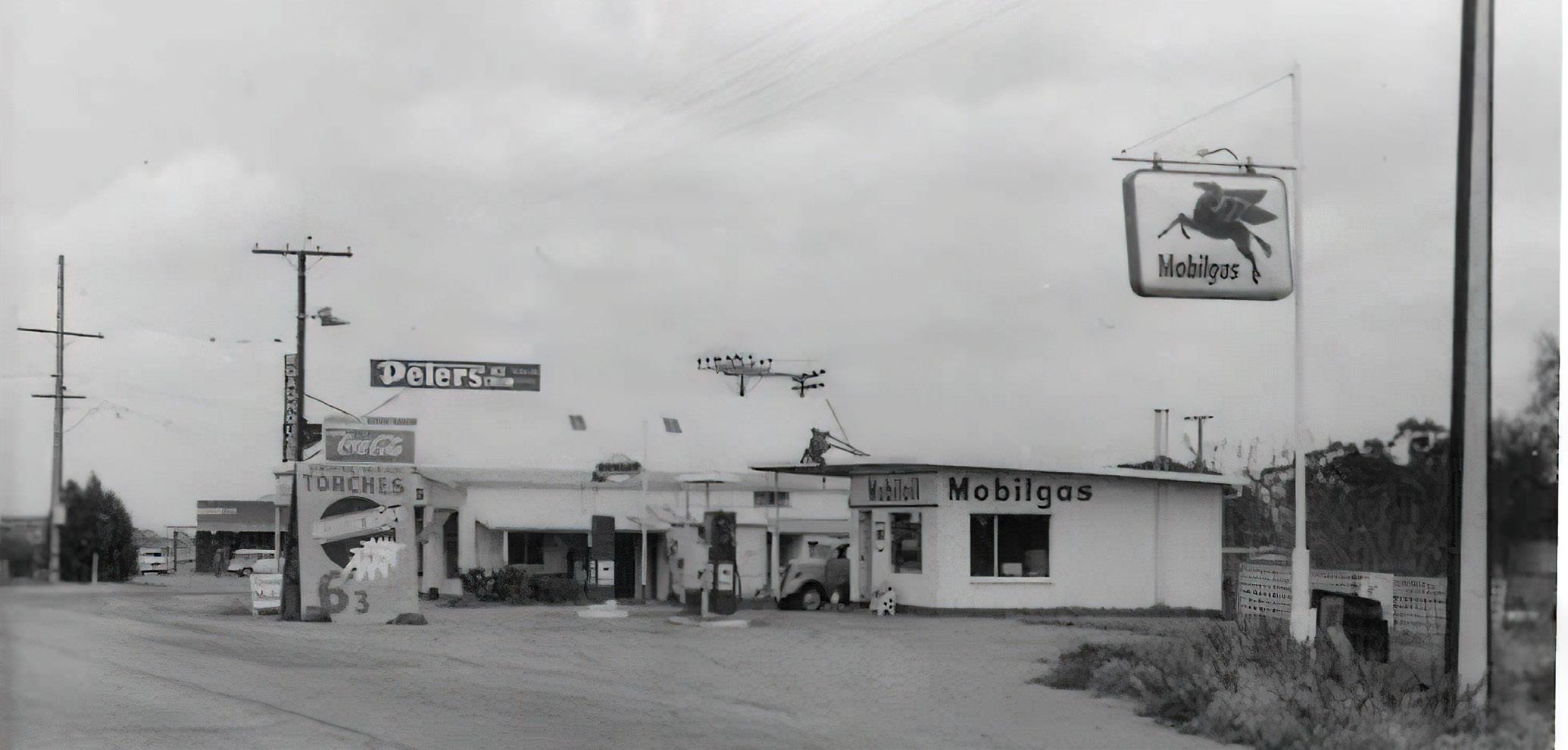
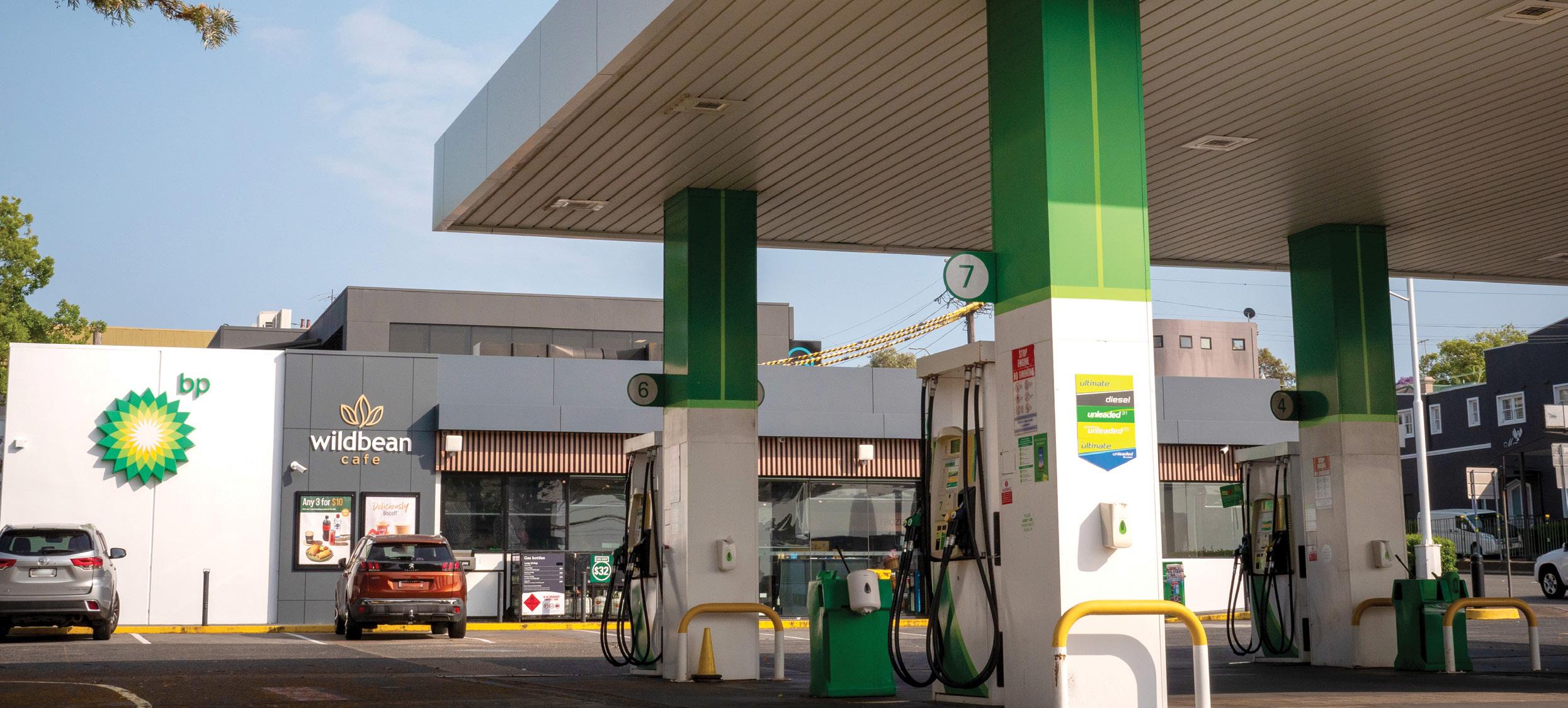

The service station is more than just a place to refuel; it is a community landmark that has mirrored the changing habits of South Australians for nearly a century. From the days of uniformed attendants rushing to check your oil to the modern, hightech convenience hubs of today, the “servo” remains the heartbeat of our mobility.
The roots of our industry are deeply personal. On 22 March 1926, a group of independent fuel retailers met in Adelaide to form what was then known as the Garage Proprietors and Petrol Retailers Association of South Australia. This organisation, which eventually became the Motor Trade Association SA/NT we know today, was born from a need for collective representation among small, familyowned businesses that were the lifeblood of their local communities.
In those early decades, “service” was literal. Full service was the standard, and drivers rarely had to leave their seats. A team would meet you at the pump, clean your windscreen, check your tyre pressure, and ensure your engine was ready for the road. It was an era of independent spirit, defined by hundreds of small operators competing to provide the best personal touch.
As the decades rolled by, the industry underwent significant consolidation. Today, the landscape is dominated by a few key global and national players, the fundamental role of the service station has arguably become even more critical.
Service stations have evolved into our modern corner stores. In a fastpaced world, they offer the choice and flexibility once provided by the neighbourhood corner store. For many South Australians, the local servo is where they grab their morning coffee, a loaf of bread, or a quick snack. Locally, this sector employs more than 4,200 people across nearly 700 locations. These businesses rely heavily on in-store purchases to survive; fuel sales alone often do not provide the margins necessary to sustain such a large workforce.
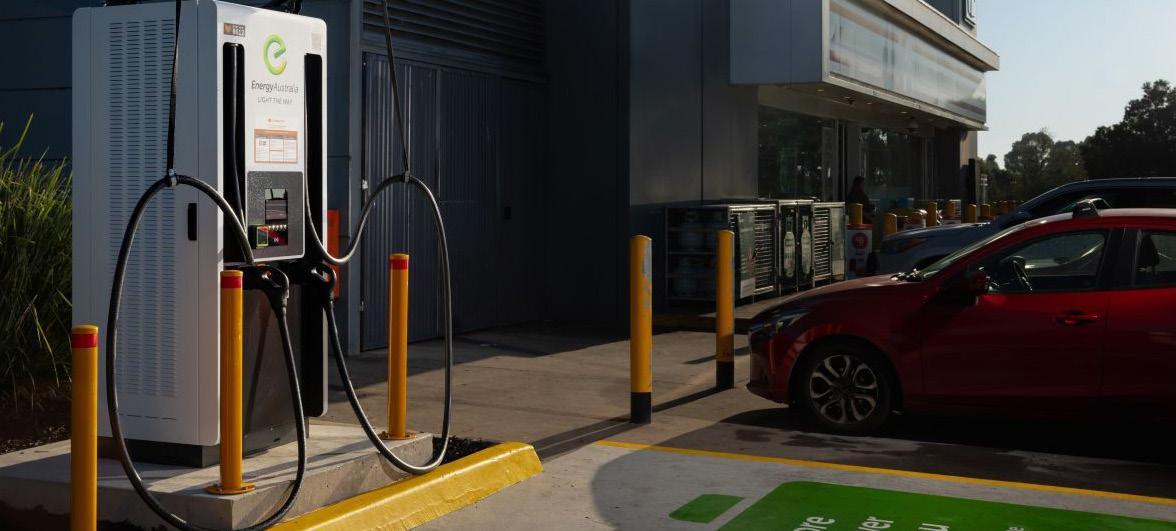
We are now entering a revolutionary turning point in mobility. As South Australians increasingly adopt zero and low-emission vehicles (ZLEVs), the service station is reimagining itself once again.
MTA SA/NT CEO Darrell Jacobs highlights that this shift is happening in real-time. “Whether it’s electric vehicles, hybrids, biofuels, or more
efficient diesel vehicles, we must bring everyone along for the journey,” Mr Jacobs says.
He emphasises that while the transition won’t happen overnight, the MTA is at the forefront, preparing businesses for a world where customers may spend more time instore while their vehicles charge.
The future servo will likely be a “destination”. Imagine ultra-fast charging hubs co-located with highquality food offerings and comfortable lounge areas. Just as we transitioned from leaded to unleaded and then to diesel, the industry is ready to jump “headfirst” into diversifying its energy sources to meet the needs of the next generation of drivers.
The “servo” has always been about more than just what’s in the tank or under the bonnet. It’s about the journey, the service, and the community. This is the legacy the MTA has protected since 1926 and will continue to champion into the future.
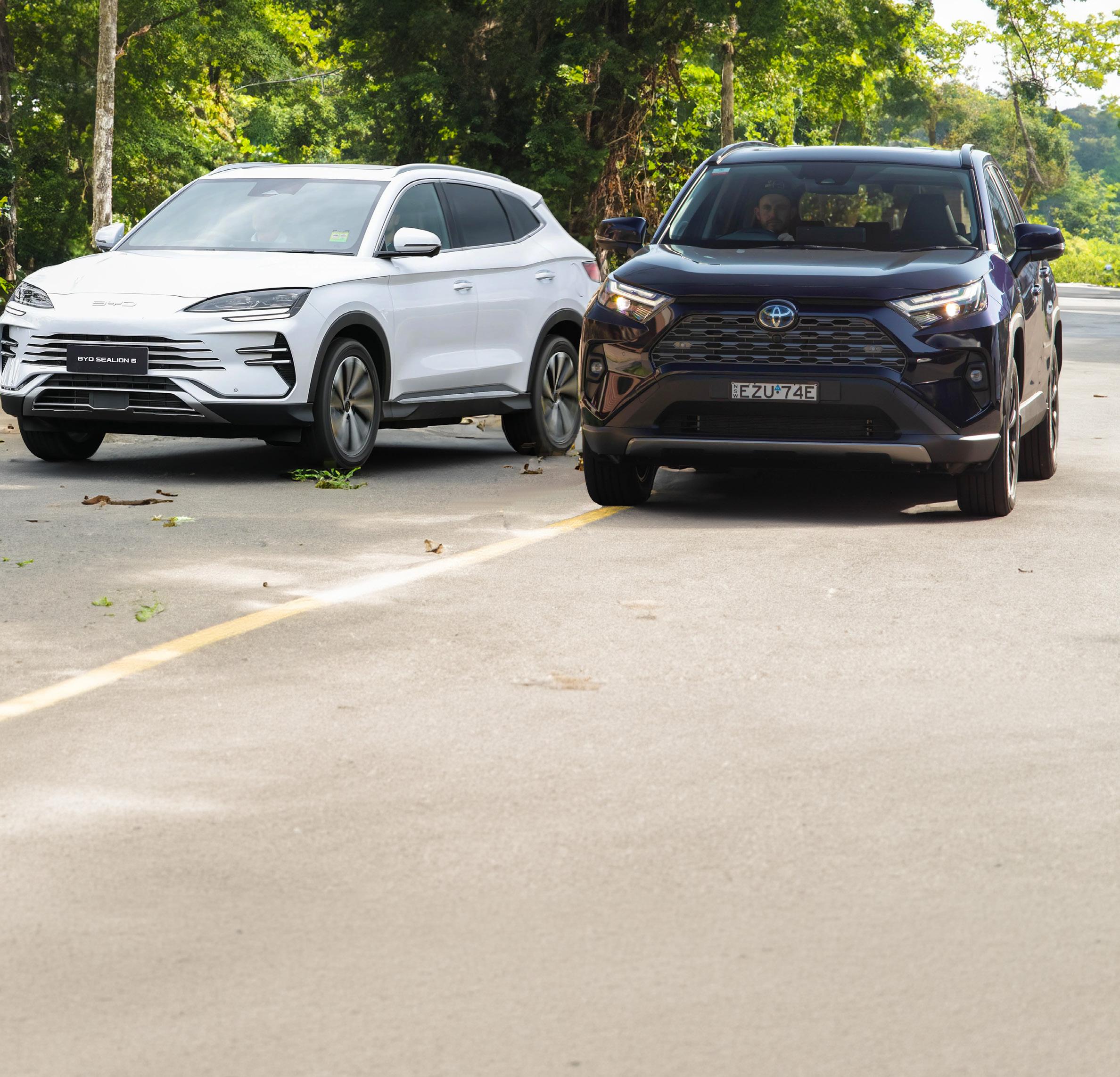
Can legacy brands keep up with China’s automotive powerhouses?


Darrell Jacobs MTA SA/NT CEO
I recall the noise of Shanghai during my 2018 visit, an assault on the senses defined by the roar of internal combustion and the frantic buzz of scooters. Returning for Auto Shanghai 2025, the change was nothing short of transformative.
The city had fallen quiet, the sky was clear, and the streets were dominated by electric and hybrid vehicles that moved with a silent, purposeful hum. At that time, new energy vehicles already made up over 50 per cent of new sales in China, a figure that stood in stark contrast to the 5.4 per cent we were seeing back home in Adelaide.
Fast forward to 2026, and that glimpse into our future has become our present reality. Today, China is officially Australia’s largest source of new vehicles. This shift is being felt acutely in South Australia (SA) and the Northern Territory, where a perfect storm of geopolitical tension and economic pressure has accelerated a decisive pivot in consumer behaviour.
The ongoing conflict in Iran and the uncertain nature of the Strait of Hormuz have sent record shocks through global fuel supplies. For many motorists, the transition to electric or hybrid power is no longer just an environmental choice, it is a financial necessity. In SA, zero and low emission vehicles now account for more than one in three new cars sold. While traditional favourites like the Ford Ranger and Toyota HiLux still hold the top spots, the affordable end of town is rapidly reshaping the leaderboard.
Chinese powerhouses like BYD and GWM have seen meteoric growth, with year-to-date sales in SA jumping 578 per cent and 320 per cent respectively. In the Northern Territory, the GWM Haval Jolion has surged into the top five, outpacing icons like the Toyota Prado. These brands are winning over Australians by challenging legacy brands in cost and high-tech integration, and a hedge against rising fuel costs.
However, this rapid influx of new entrants brings significant challenges to our local industry. We are seeing a brutal knockout stage in the global market, where intense competition and fading government subsidies in China are forcing consolidation.
For the Australian consumer, this creates a real risk. Not every brand that launches here will survive the next five years. We face the genuine possibility of “orphan” vehicles, cars left without OEM support, specialised parts, or authorised service networks if their parent company exits the market or collapses.
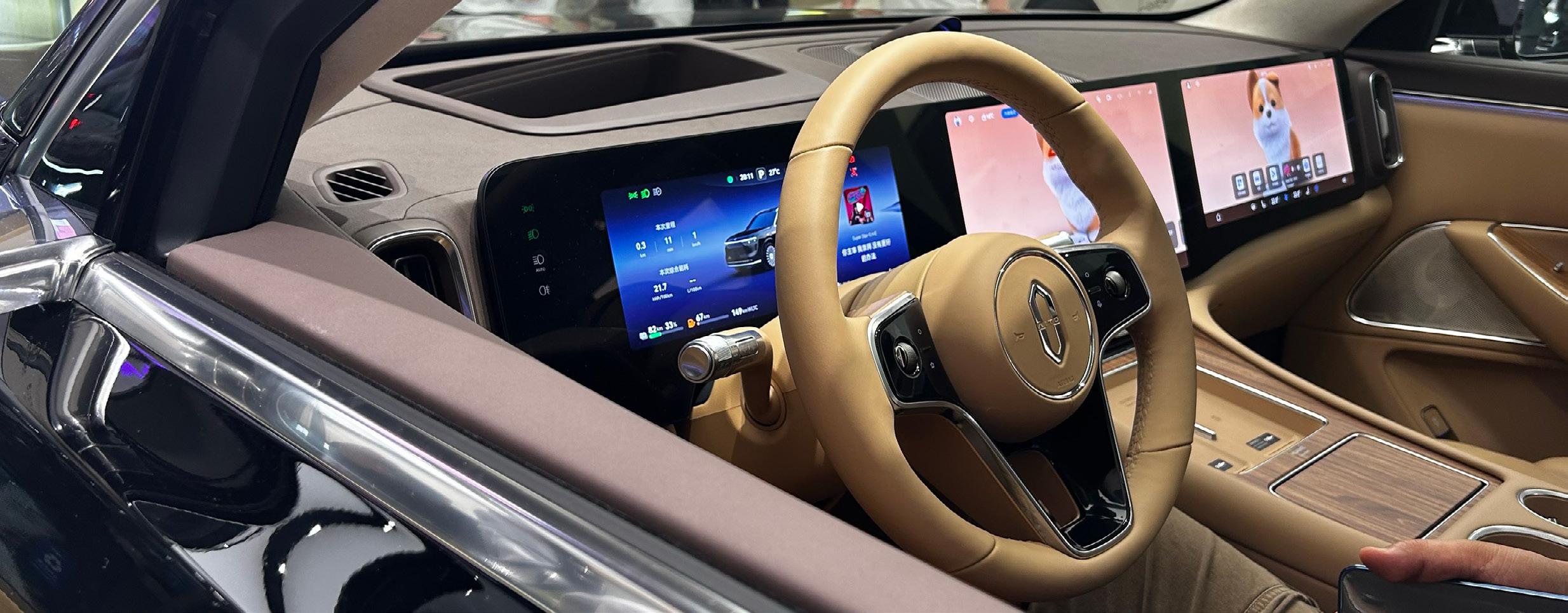
The technical complexity of these vehicles, which I saw firsthand in Shanghai with their wall-to-wall screens and AI-driven connectivity, requires a robust back-end infrastructure. If a brand grows its sales volume without simultaneously investing in a deep dealer and parts network, it is the motorist who pays the price. Established brands have spent decades building the trust and the logistics required to keep Australians on the road; many of these new entrants are still playing catchup.
As the MTA celebrates its centenary, we reflect on a hundred years of
navigating these very cycles of change. History shows that the Australian automotive landscape has never been static; we have witnessed the rise and eventual departure of icons like Holden, Chrysler, and British Leyland, brands that once defined South Australian roads.
We saw the industry pivot during the 1970s oil crisis, which paved the way for the dominance of Japanese manufacturers, followed by the successful expansion of Korean brands into our local market.
Today’s influx of Chinese technology is the next chapter in that long story. Throughout every shift, our guiding principle has remained the same: to ensure that the industry, our members, and South Australian motorists are never left behind. Whether it is through advocacy, training, or technical support, the MTA is committed to bringing everyone along for the ride as we integrate these new players into our vibrant automotive community.
As takers of technology, we must navigate this transition carefully. While some larger Chinese manufacturers like BYD are already moving to support vehicles from exiting rivals, the industry as a whole is facing a period of immense uncertainty. Our role at the MTA is to ensure that while we embrace this high-tech, electrified future, we also protect the integrity of the automotive trade and the safety of the motoring public.
The arrival of this new era in our driveways is inevitable, but it must be backed by the service and support standards that Australians expect and deserve.
Predicting the future is fraught with danger.
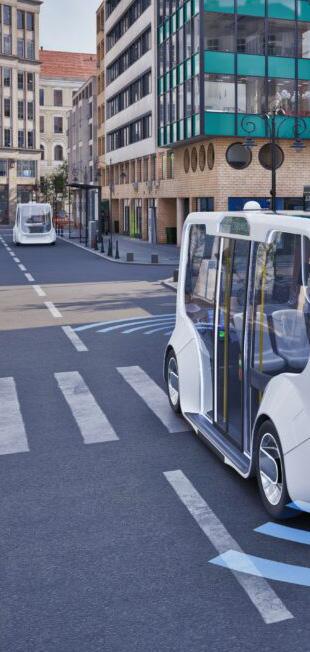
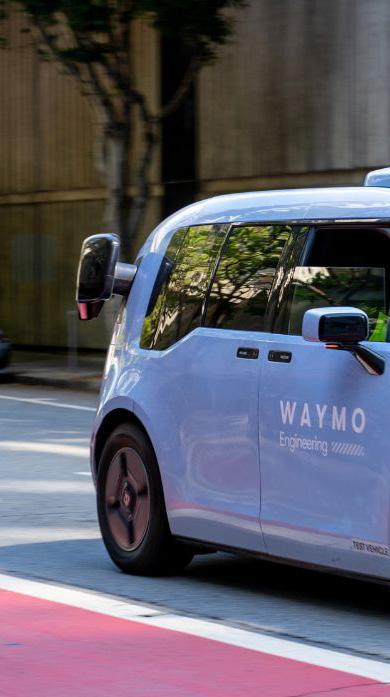
While Assistant Professor Feras Dayoub, senior lecturer at Adelaide University’s Australian Institute for Machine Learning (AIML), is reluctant to specify a year when autonomous or driverless cars will be commonplace in Australia, he is much more confident about nominating the two triggers that will precipitate it.
The first, he said, is the level of risk that governments are willing to accept.
“Having a driverless car does not mean zero accidents,” he said.
“There will always be some accidents, so the question is, what is the tolerance level for an autonomous
vehicle (AV) to get into a fatal accident and kill somebody?
“That is really what is stopping driverless cars because 99 per cent of the time, autonomous driving is fine.
“It is the last one per cent that is the hardest to solve and it will take many, many years.”
That’s despite autonomous driving being safer than many drivers already on the road.
Feras said statistically, driverless vehicles are already recording fewer accidents than human-driven vehicles.
“A car with multiple cameras on board and a complex algorithm is predicting what traffic will do better than a human in any driving scenario. But it
will, from time to time, maybe every million kilometres, have an accident.
“The problem with that is if you put a million driverless cars on the road, you will hear about accidents a lot because of the number of vehicles. It’s a numbers game.”
Drivers normally learn from their mistakes. AI does not do so automatically.
“The car itself will not get better because the model onboard is frozen.
“It’s been trained and deployed. It does not learn from its mistakes on the fly.”
It can however be retrained via software updates that would prompt it to make a better decision under similar circumstances.

The ‘when’ may be difficult to predict but Feras thinks the ‘where’ is a little more obvious.
Silicon Valley (USA) and Shenzhen (China) are the epicentres of AI technology and have the most to gain by pushing its uptake.
Car manufacturers, Feras said, have been quite a passive player in the rise of AI within the automotive industry.
“A lot of these big car manufacturers were resistant to it, but they quietly started ading these features without making any noise about it.
“I think it’s because they are worried about the competition.
“A lot of these ideas come from some kind of crazy Silicon Valley inventor backed by a lot of money who wants to change the world based on how they see the future.”
Tech-inspired Google Maps and Uber are classic examples.
While Feras sees the US and China as the most obvious early mass adopters, he expects it to be patchy.
“It depends on each country’s tolerance to risk, and it won’t be deployed everywhere at the same time,” Feras said.
“I expect we might see some kind of deployment somewhere in California. They already have regions where you can call a driverless taxi.
“Most countries are not the producers of the technology. They are the consumers, so they will be waiting for the producers to deploy them in their own countries, which is the United States and China.”
That brings us to the second major trigger that will fast-track the uptake of driverless vehicles – “demand.”
Like electric vehicles, autonomous vehicle development will be driven by market demand.
If people see the benefit, said Feras, “they will start buying them and then
there will be pressure on governments to allow them.”
That push is likely to come from big business keen to take advantage of its numerous economic benefits.
“It’s not just that autonomous cars are cool, a lot of new businesses will depend on them.
“For example, delivery services with repeated deliveries from A to B.”
Feras also sees benefits for town planning and traffic flow, especially if they can solve traffic jams in large cities.
“When you are actively driving on the highway, there is more free space between the cars.
“With autonomous cars, they don’t need as much space because they can communicate with each other.
“In 10 or 20 years, these cars will not be isolated to themselves, they will be communicating with other cars and infrastructure as well.
“This is not a big technological step. They just need the protocol to be developed, and the infrastructure is almost there using the Internet of Things.”
But what of the young, first-car driver whose vehicle is not autonomous and doesn’t interact with smart infrastructure?
Feras envisages a time when some cars on the road are driverless and some are not.
“If you look at how a driverless car works, it’s always doing a prediction on what the other cars might do – the intent of people.
“So if a person is a reckless or not a very confident driver, I would say they will be safer in an environment where a lot of cars around them are autonomous.”
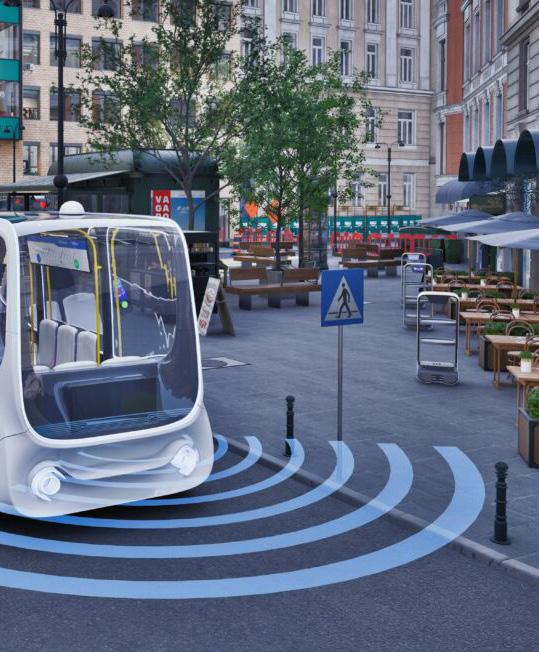
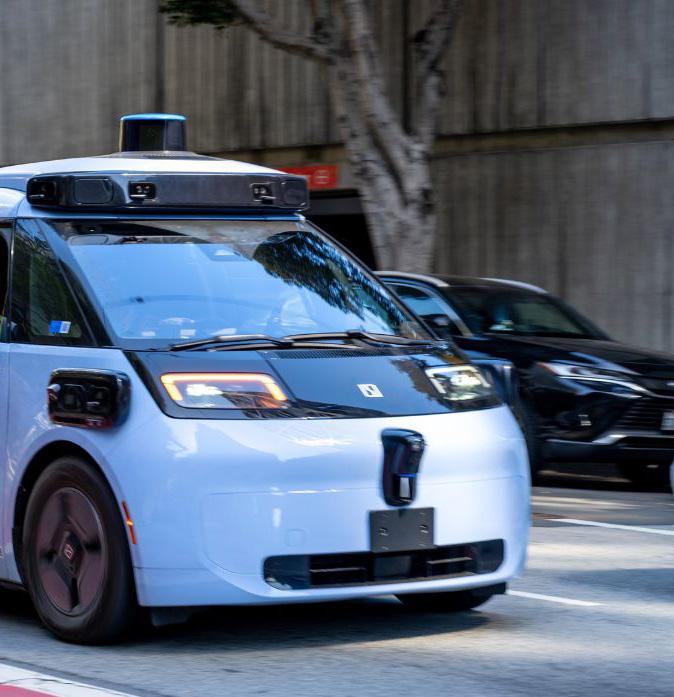
“It is the last one per cent that is the hardest to solve and it will take many, many years.”
Feras said the car of the future will be like the modern-day phone.
It will receive software updates to download, giving the car new features, such as automatic parking or a summoning feature where the car comes to you in a car park.
“I think what is happening with autonomous driving, or intelligent driving, may be a better term, is that companies are slowly integrating new features that are based on AI.
“When you buy a new car it has adaptive cruise control, the lane keeping, all these elements are coming out to make the car more autonomous.
“What we are seeing is not a sudden shift.
“We will end up with a high level of autonomy, but it is gradual. Maybe at some point, we will say, ‘how did we drive manually before?”

The invention of the gasoline-powered automobile in 1885 predated the launch of the world’s first artificial satellite by 72 years. While Sputnik 1 did not draw on automobile technology, space technology has powered the development in the automotive industry.
A few examples include Michelin’s radial tyres, fuel cell development, high-strength aluminum alloys and turbochargers.
Electronic engine management is arguably the most consequential. Space pioneers drove miniaturisation of electronics and development of reliable sensors for extreme environments. By the early 1970s, automakerspushed partly by emissions regulations - began adopting electronic ignition and fuel injection systems that depended on this semiconductor progress.

“Many EVs and highperformance vehicles include… an aerospace-style chassis designed to withstand rugged conditions.”
The rate of transfer from space to automotive will only increase in the coming years, as EVs and autonomous vehicles embrace the technology.
“There are a lot of synergies between space electronics and automotive electronics,” noted Said Al-Sarawi, Associate Professor in Microelectronics at the University of Adelaide.
“These synergies come from the size, power, weight and in some cases the performance and reliability that is required.
“For example, space electronics are designed to work in extreme temperatures.
“If I am in space, it could go from close to -270°C all the way to 125°C.”
While terrestrial temperatures are much friendlier, many new cars are fitted with printed circuit boards featuring a minimum of three copper foil layers designed to withstand extreme temperatures.
“In addition, in space, I might need to worry about radiation.
“If the components are exposed to gamma radiation that would affect them.
“The same thing happens with automotive electronics. They also have to work in extreme conditions.
“And they also need to withstand vibration.”
Many EVs and high-performance vehicles include protected highvoltage cables, sealed connectors and an aerospace-style chassis designed to withstand rugged conditions.
“Electromagnetic interference is also becoming a big problem,” Said AlSarawi said.
Today’s cars generate significant levels of EMI from their ignition and electric drive systems, through to bluetooth, wi-fi and mobile phones. They are also exposed to outside sources such as from power lines, radio transmitters, charging stations and other vehicles.
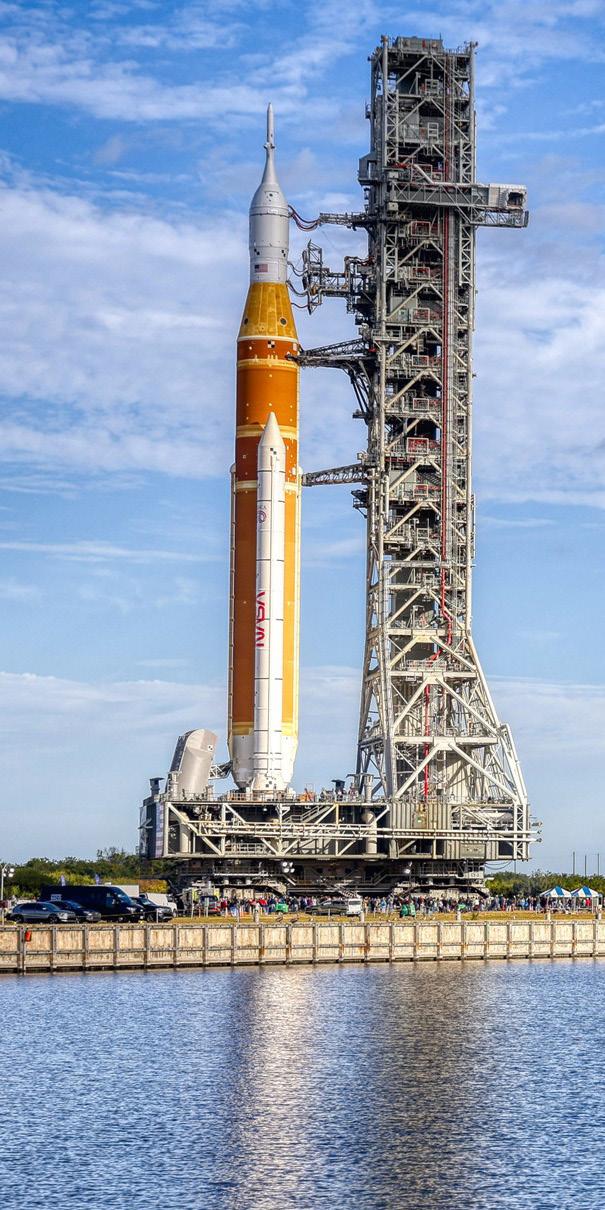

“Even though the interference in space is slightly different from the ones in cars, some of the techniques used could be applicable.”
Insulation and air purification systems initially designed for space capsules have been adapted for use.
Nissan’s zero-gravity car seats were inspired by NASA to help improve posture and reduce fatigue and back stress during longer drives.
Tyre pressure monitoring sensors originally developed for the space shuttle are standard in many vehicles.
Repeated Precision GPS using NASA algorithms are now fundamental to the navigation systems found in cars.
These features demonstrate deeply space-derived engineering has filtered into everyday vehicles. What began as mission-critical innovation for space is now embedded in the systems that drivers rely on without a second thought.
The next phase of crossover sits is at the heart of the electric vehicle revolution.
“In space, you are always needing electronics that are very efficient,” said Said Al-Sarawi.
“Nowadays with advances in EV technology, that is becoming more and more critical because the battery technology operates at very high voltages which is required to power an EV system.”
Continued improvement in battery life is critical to growing the EV market.
“Here at the University of Adelaide, we have a number of researchers working on battery technology and a way of trying to increase what we call the power of density unit volume.
“It’s evolving at a very fast rate around the world. We are looking to the US and China who are pushing this very hard.
“With any new cars, you are always looking to extend their range and improve their efficiency, but the
mechanical part still requires a certain amount of energy to be utilised. For that we still require a highperformance battery.”
As battery performance and power management improve, the electronic architecture of modern vehicles is becoming vastly more complex.
AI navigation and collision avoidance systems used in space are now evident in today’s vehicles.
“If you are driving an EV, you can see how much work it is doing while you are driving.
“For example, it’s got seven cameras working at the same time processing all this information and the amount of electronics needed to be able to do that is very significant.
“So, I could comfortably say the process used in these devices would be billions of transistors.
“In the 1960s, we were only able to fit a few hundred transistors on the same chip but nowadays we are getting billions of transistors on the same chip.”
Looking forward, car manufacturers such as Toyota, Honda and Geely, are invest in space technology with a view to improving vehicle capabilities.
Toyota alone invested $44 million into Japanese private spaceflight startup, Interstellar Technologies, in 2025.
Space tech and car tech are much closer kins than it might seem.
“The requirements are sometimes slightly different,” concluded Said AlSarawi.
“In space, you want components to be very robust and you are prepared to put in a lot of money to ensure your electronics will work for a long period of time.
“When it comes to cars, it’s not as critical so it becomes a trade off between the performance and the cost of that component.”
Mainstays of North American roads, full-size pickup trucks are becoming an increasingly common sight on South Australian roads. In fact, the not-so-humble ute accounted for some 20% of vehicle sales in South Australia last year, while SUVs dominate the Australian market.
In an interview with ABC Radio, Motor Trade Association SA/NT CEO Darrell Jacobs reminded listeners the ute is an Australian invention “and they’re here to stay”. In fact, the not-sohumble ute accounted for some 20% of vehicle sales in SA last year, while SUVs dominate the Australian market.
In what has become a vanity battle between brands, Chevrolet, Ford, Ram, and Toyota have all launched OEM-quality right-hand-driveconverted vehicles into the Australian market, citing growing demand in the segment as their reason for pushing into the space. However, the shift is no longer strictly about traditional American V8 engines. The landscape is rapidly evolving with the arrival of manufacturers like BYD, introducing heavy-duty plug-in hybrid and electric dual-cabs. This ensures that even as the market moves toward electrified powertrains, the physical footprint of vehicles continues to grow.
This dramatic shift has prompted the South Australian government to introduce the Statutes Amendment (Vehicle Parking and Urban Renewal) Bill, proposing sweeping changes to the state’s planning laws to address the reality of modern vehicle choices. Under the proposed changes, minimum dimensions for off-street vehicle parking areas would
be increased so that the largest passenger and utility vehicles sold in Australia could be parked with sufficient width to allow doors to be opened.
Standard single garage requirements would increase from 3m x 5.4m to a more spacious 3.5m x 6m, and minimum garage door widths would expand from 2.4m to 3m. Additionally, one-bedroom dwellings would be required to provide one vehicle parking space, while dwellings with two or more bedrooms would need at least two spaces.
As South Australians increasingly choose larger vehicles to suit their work and lifestyle, many existing home garages are struggling to accommodate these bigger models. However, the blanket dimensions face pushback from the housing and construction industry. Detractors say they will add a massive premium to the cost of dwellings at a time when many Australians face a housing crisis.
Industry critics, including the Urban Development Institute of Australia (UDIA), argue that the rigid rules, coupled with proposed “offset fees” of up to $45,000 per missing park for non-compliant builds, will severely damage housing affordability. Blocked by the Opposition and Greens, SA Premier Peter Malinauskas upped the ante, vowing to address it in the new term of Government.
Beyond housing, the automotive industry itself is dealing with the operational reality of servicing these giants. Independent workshops and
dealership service departments are seeing an unprecedented growth of large American pickups and fullsize SUVs. This growth is driving an overhaul of workshop infrastructure. Standard hoists lack the lifting capacity and width required for these heavy-duty platforms, prompting businesses to invest in heavy-duty four-post hoists and wider service bays.
The broader public infrastructure is feeling a similar squeeze. Standards Australia is considering increasing the length of a standard parking bay by 20cm, a sure sign that consumers aren’t returning to small cars any time soon.
Mr Jacobs reminds critics that the ute is an Australian invention “and they’re here to stay”. New builds must accommodate this choice to create viable off-street parking.
Whether driven by lifestyle, safety perceptions or work requirements, Australia’s appetite for larger vehicles is reshaping more than just dealership floors, it is influencing urban planning, housing design and the future infrastructure needs of communities nationwide.
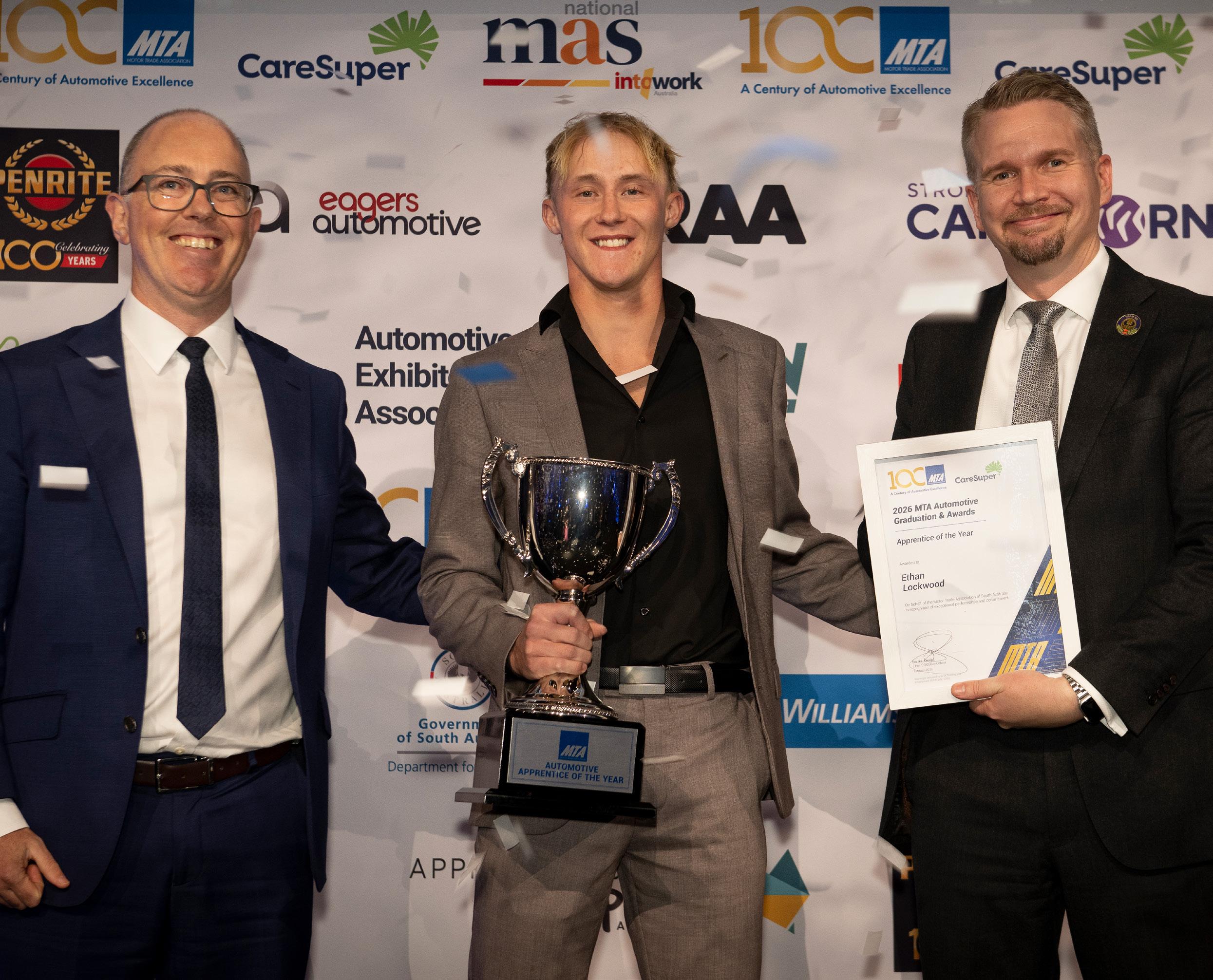
The South Australian automotive industry’s night of nights reached a historic milestone as guests celebrated 100 years of the Motor Trade Association (MTA), honouring the state’s leading apprentices, employers, and trainers at the 2026 MTA Graduation and Awards.
More than 650 apprentices, employers, and industry partners packed the iconic Adelaide Oval on Friday 13 March, cementing the centenary celebration as the largest and most prestigious apprentice graduation in the Association’s history.
In 2026, nearly 200 apprentices graduated into the workforce, supported by a gala event that also celebrated 19 award winners across the trade.
Taking out the night’s top honour, Ethan Lockwood hosted at RMB Service Group was crowned the 2026 MTA Apprentice of the Year.
Female Apprentice of the Year went to MTA Automotive Refinishing apprentice Elly Brake, hosted at Eblen Collision Repairs.
This year saw the introduction of the Dual Trade Apprentice of the Year Award, following a significant rise in apprentices undertaking an automotive dual trade apprenticeship, with numbers exceeding 200 in just over 18 months. William Forrest hosted at McLaren Vale Auto Electrical claimed the inaugural award.
The evening was marked by the launch of two landmark initiatives designed to support
the next generation of automotive professionals, the MTA Scholarship Program and the MTA Ambassador Program.
CEO of MTA SA/NT, Darrell Jacobs, highlighted, “We know that today’s apprentices, who toil away for four years, are facing real-world costof-living pressures that can make completing an apprenticeship difficult.”
The Scholarship Program will provide four annual scholarships to assist apprentices with cost-of-living pressures related to their trade such as tools, fuel, and registration.
Simultaneously, the inaugural nine MTA Ambassadors were announced who will help represent the automotive industry.
Mr Jacobs explained, “This program is a first-of-its-kind initiative where apprentices will represent their peers, inspire future talent and have direct influence on the way training is delivered.”
MTA SA/NT CEO Darrell Jacobs reflected on the industry’s evolution since the Association’s founding in March 1926, “Tonight we stand at the intersection of tradition and transformation.”
“We are celebrating 100 years of automotive tradition while facing the most significant industry transformation and skills challenge in history. The cars and trucks we drive and the machinery we operate will be different tomorrow, but those who embrace this change will have
a lifelong career full of pride and passion.”
Delivery the keynote address, a week out from polling day, South Australian Minister for Education, Training and Skills Blair Boyer emphasised the rewarding careers an apprenticeship can bring, “You don’t need to go to university to have a great career.”
Minister Boyer continued, “[Every graduate] is a powerful inspiration for the next generation to choose the automotive industry through your stories and experiences.”
South Australian Skill Commission Cameron Baker announced during his speech on the night that MTA Training and Employment will hold the WorldSkills Australia 2026 Automotive
Refinishing and Automotive Body Repair Regional Competitions.
Reinforcing the MTA’s commitment to being an industry leader in training.
Reflecting on the success of the MTA Training and Employment, which was named Large Training Provider of the Year at the 2025 SA Training Awards, Mr Jacobs urged the graduates to take pride in their milestone.
“You wear the MTA brand just like many who have come before you, make us proud,” Mr Jacobs concluded, “Our graduates have demonstrated standout skills and mastered their craft. You are the bridge between our proud past and our high-tech future.”
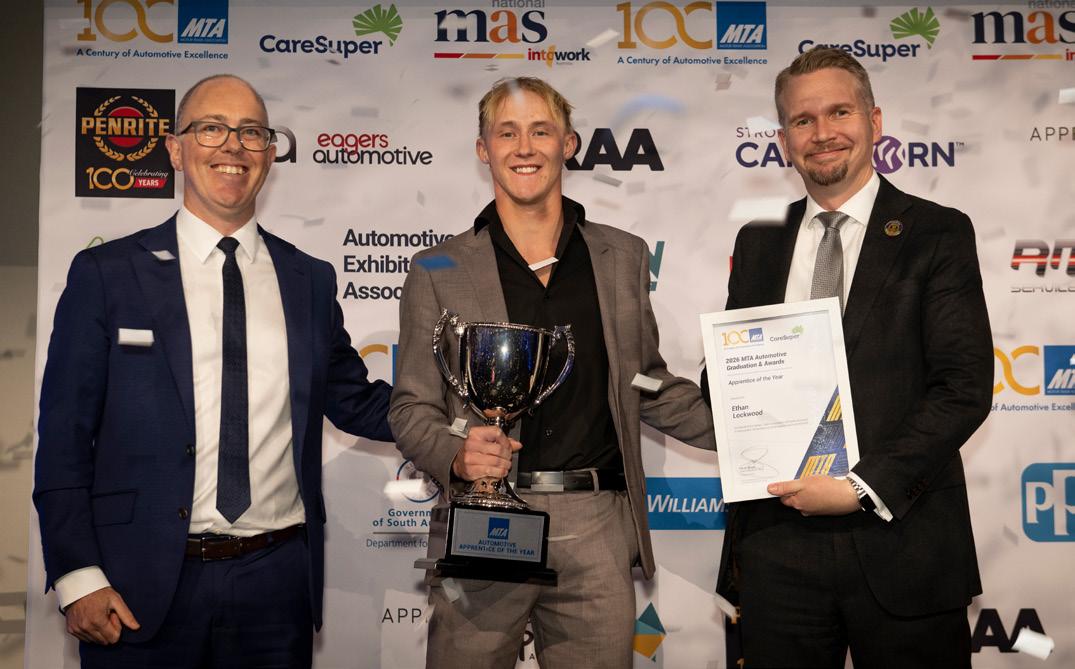
APPRENTICE OF THE YEAR AWARD
Ethan Lockwood hosted at RMB Service Group
Presented by SA Skills Commisioner Cameron Baker and award sponsor CareSuper
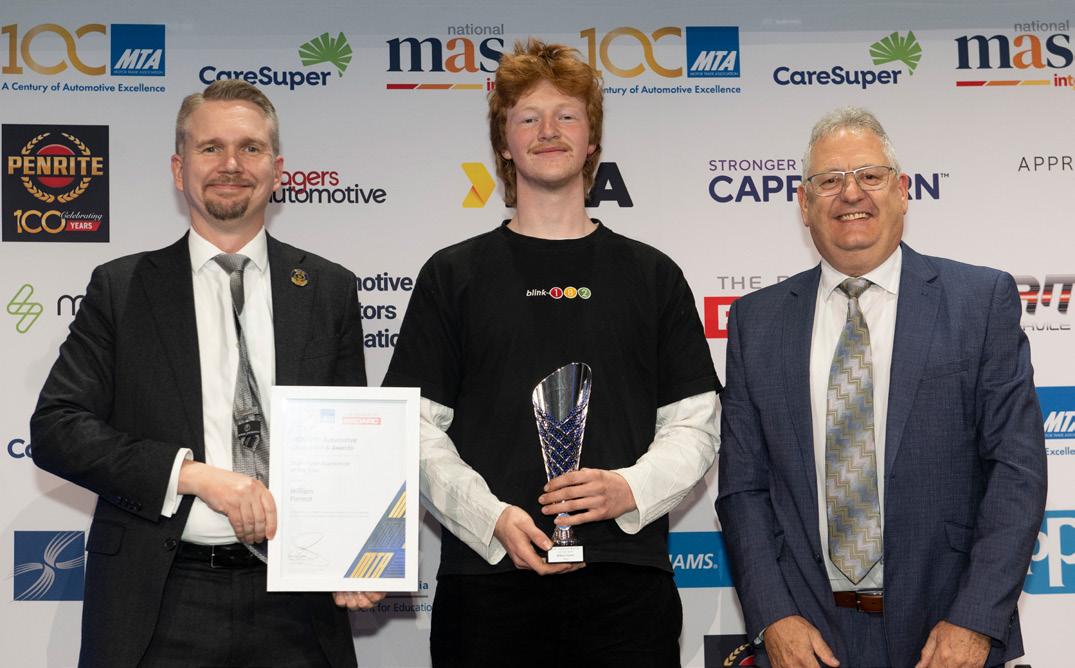
DUAL TRADE APPRENTICE OF THE YEAR AWARD
William Forrest hosted at McLaren Vale Auto Electrical
Presented by SA Skills Commisioner Cameron Baker and award sponsor REDARC
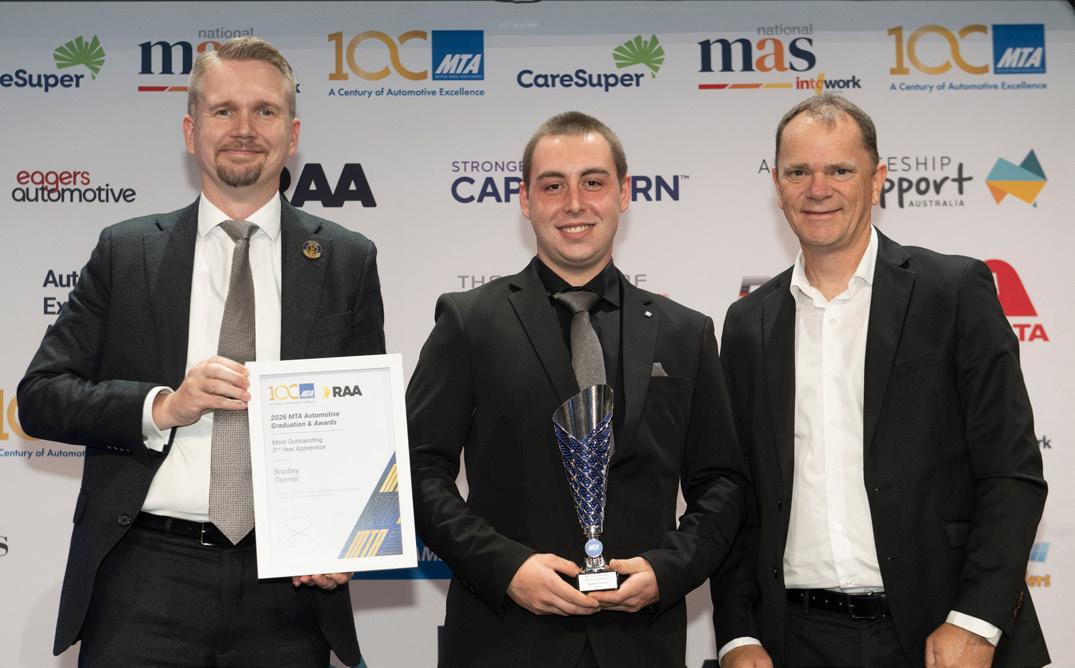
MOST OUTSTANDING 2ND YEAR APPRENTICE AWARD
Bradley Connor employed by JV Crash Automotive Group
Presented by SA Skills Commisioner Cameron Baker and award sponsor RAA Insurance
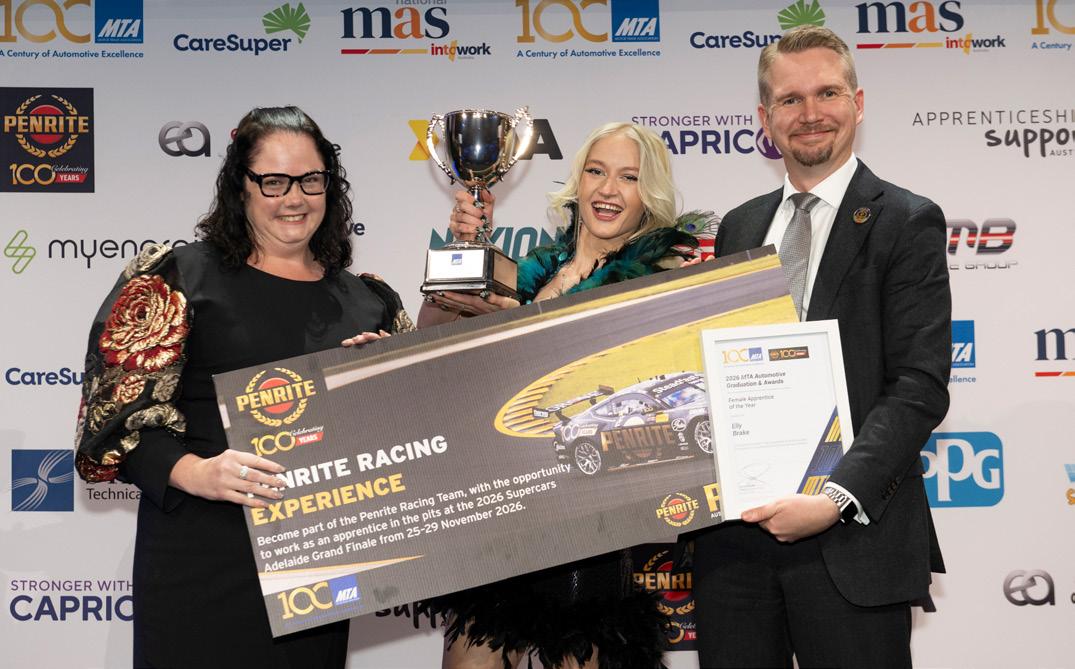
FEMALE APPRENTICE OF THE YEAR AWARD
Brake hosted at Eblen Collision Repairs
Presented by SA Skills Commisioner Cameron Baker and award sponsor Penrite Oil

MOST OUTSTANDING 3RD YEAR APPRENTICE AWARD
Matt Baudinette employed by Barry Maney Group
Presented by SA Skills Commisioner Cameron Baker and award sponsor MAS National
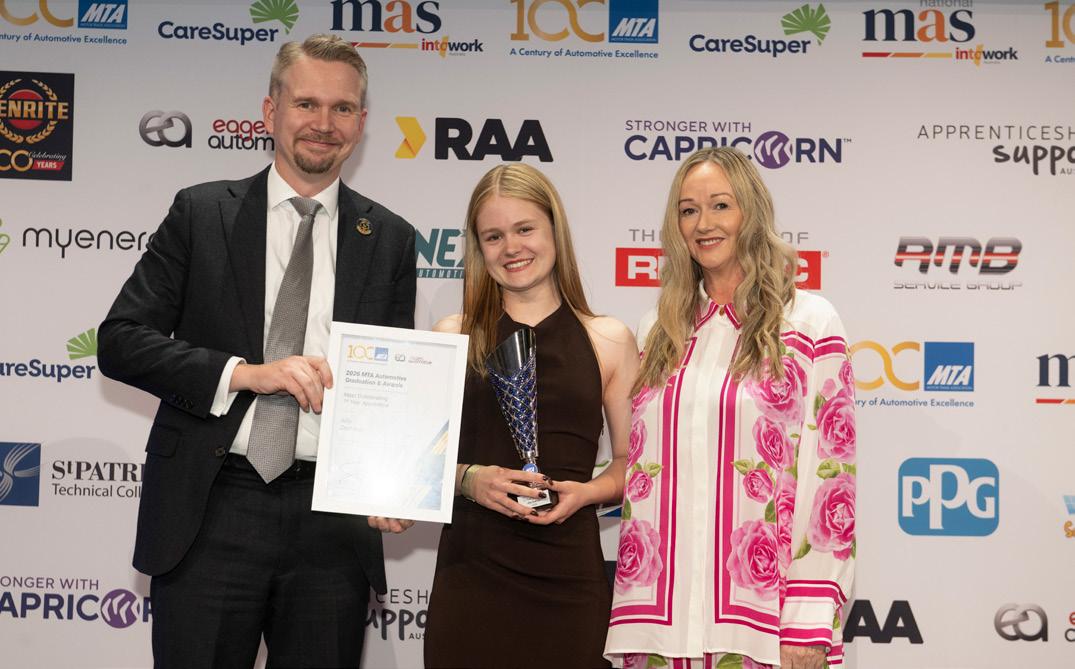
MOST OUTSTANDING 1ST YEAR APPRENTICE AWARD
Ally Dedman hosted at Eblen Collision Repairs
Presented by SA Skills Commisioner Cameron Baker and award sponsor Eagers Automotive
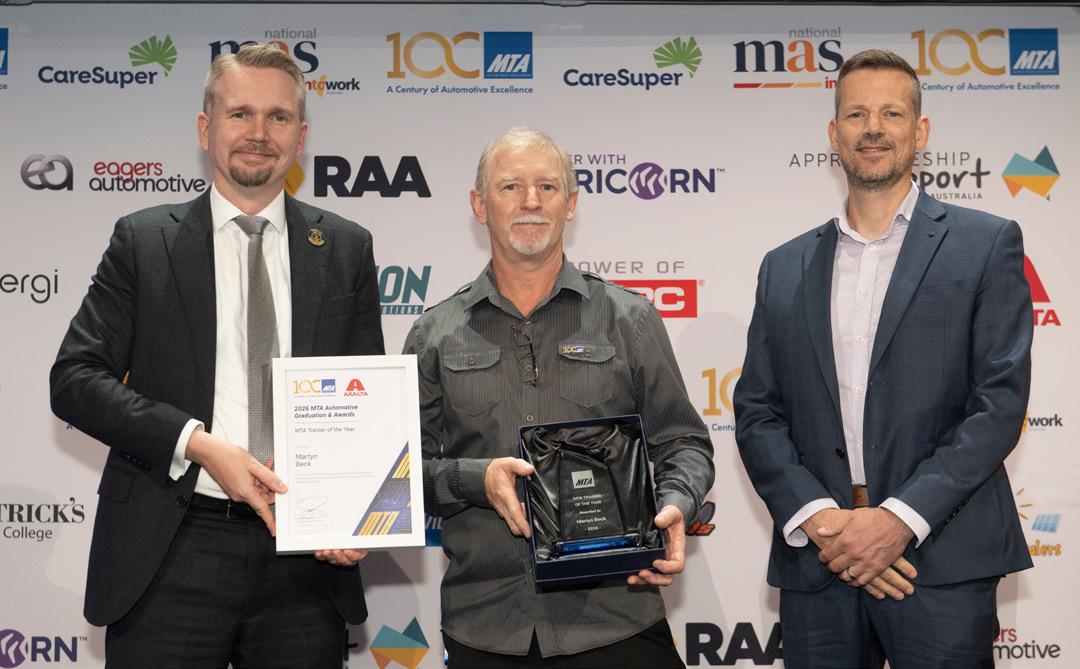
MTA TRAINER OF THE YEAR AWARD
Martyn Beck, Trainer and Assessor - Heavy Vehicle
Presented by SA Skills Commisioner Cameron Baker and award sponsor Axalta
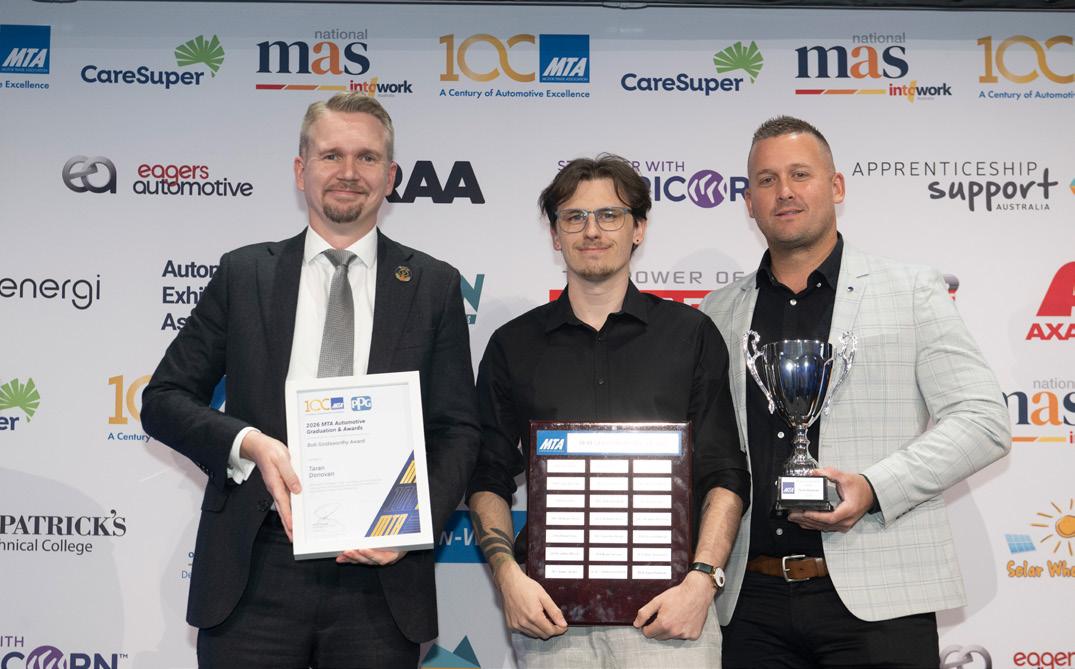
BOB GOLDSWORTHY AWARD
Taran Donovan employed by JVS Bodyworks
Presented by SA Skills Commisioner Cameron Baker and award sponsor PPG
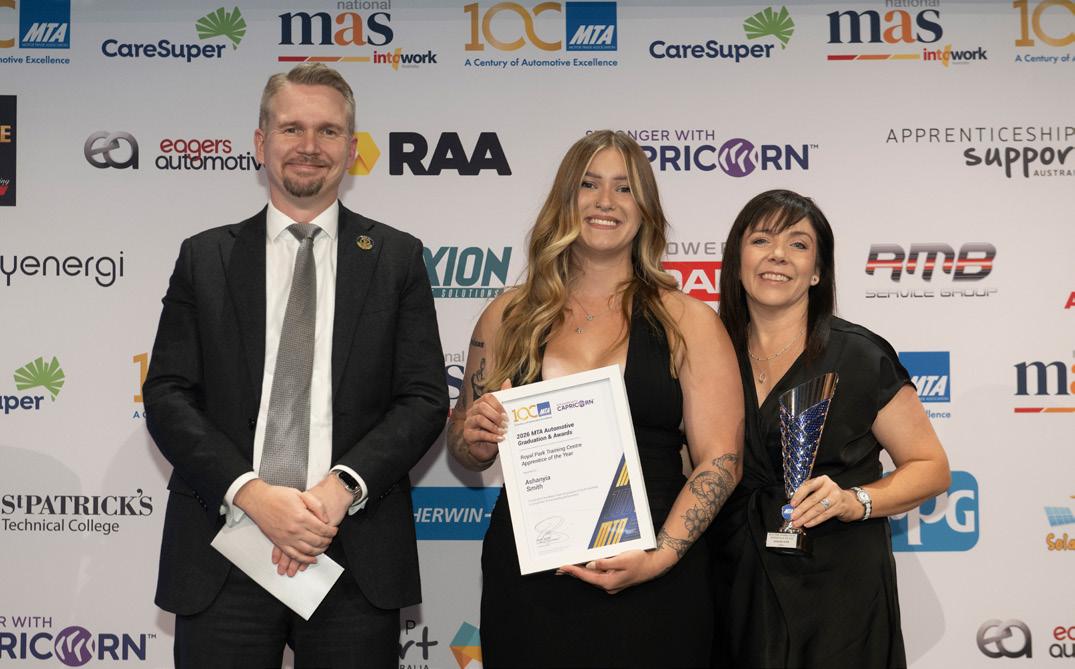
ROYAL PARK TRAINING CENTRE APPRENTICE OF THE YEAR AWARD
Ashanyia Smith hosted at North East Mitsubishi
Presented by SA Skills Commisioner Cameron Baker and award sponsor Capricorn Society
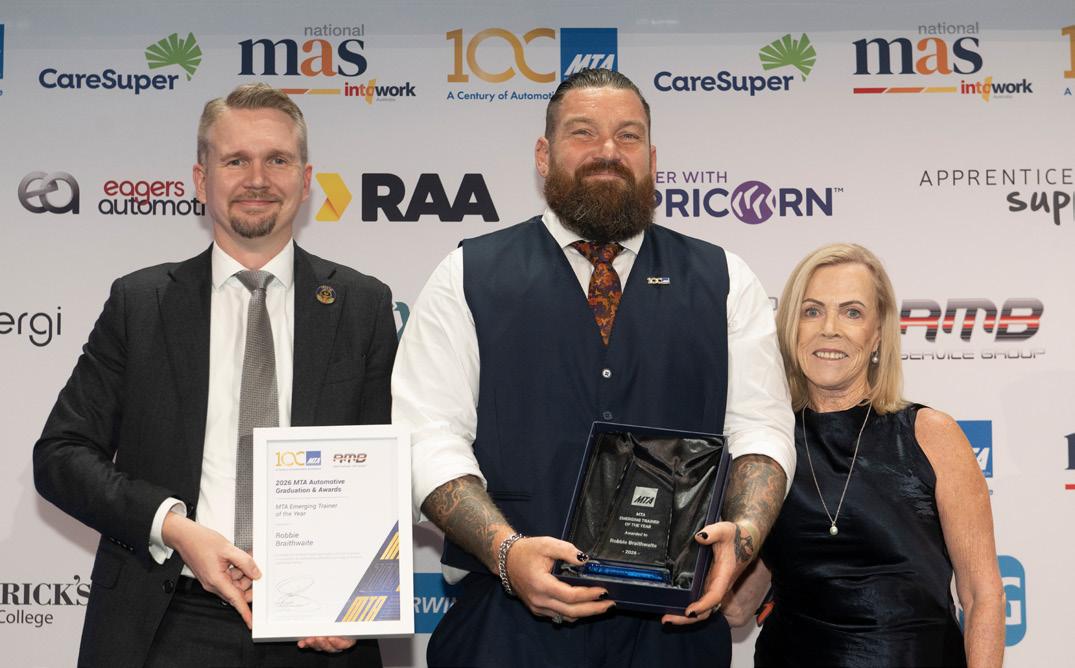
MTA EMERGING TRAINER OF THE YEAR AWARD
Robbie Braithwaite, Trainer and Assessor - Light Vehicle
Presented by SA Skills Commisioner Cameron Baker and award sponsor RMB Service Group
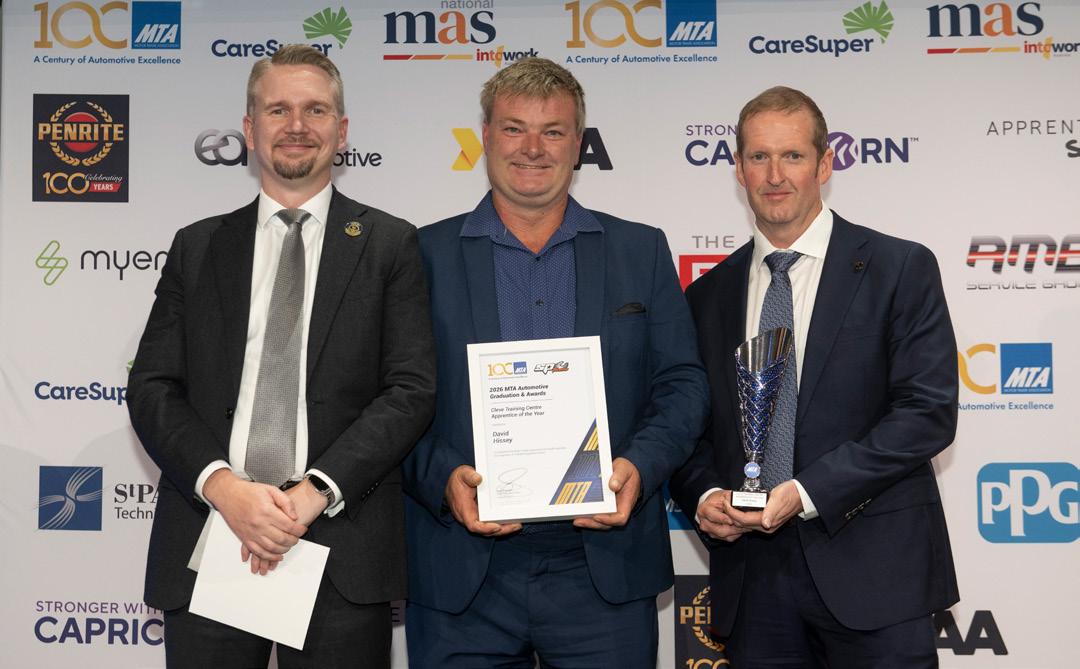
CLEVE TRAINING CENTRE APPRENTICE OF THE YEAR AWARD
David Hissey employed by Emmetts Crystal Brook
Presented by SA Skills Commisioner Cameron Baker and award sponsor SP Tools
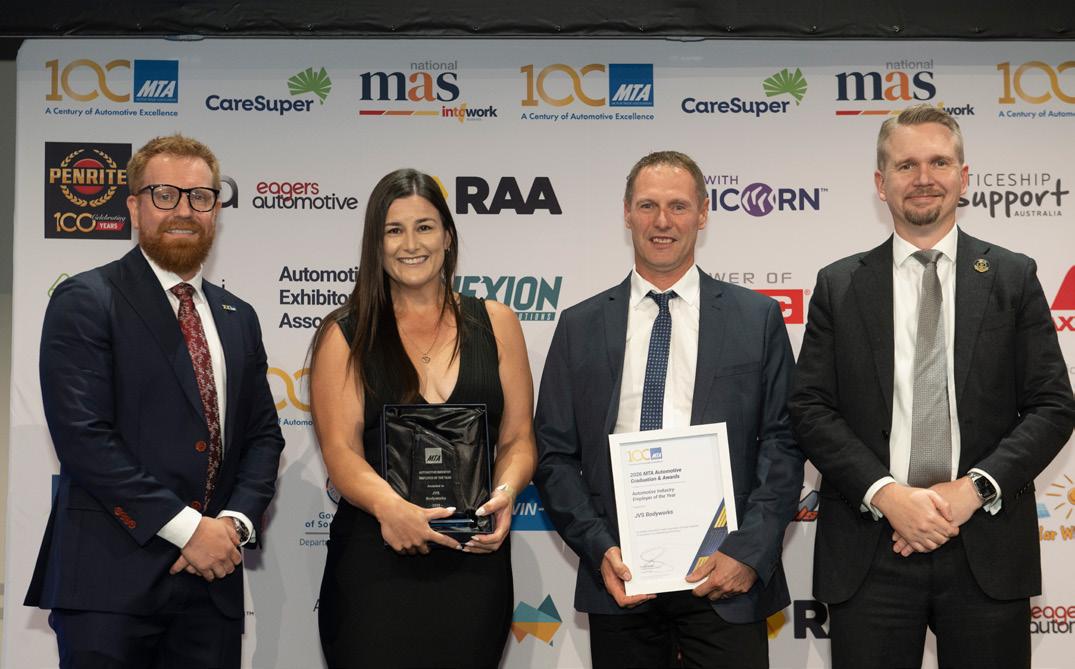
AUTOMOTIVE INDUSTRY EMPLOYER OF THE YEAR AWARD
JVS Bodyworks
Presented by SA Skills Commisioner Cameron Baker and award sponsor MTA SA/NT
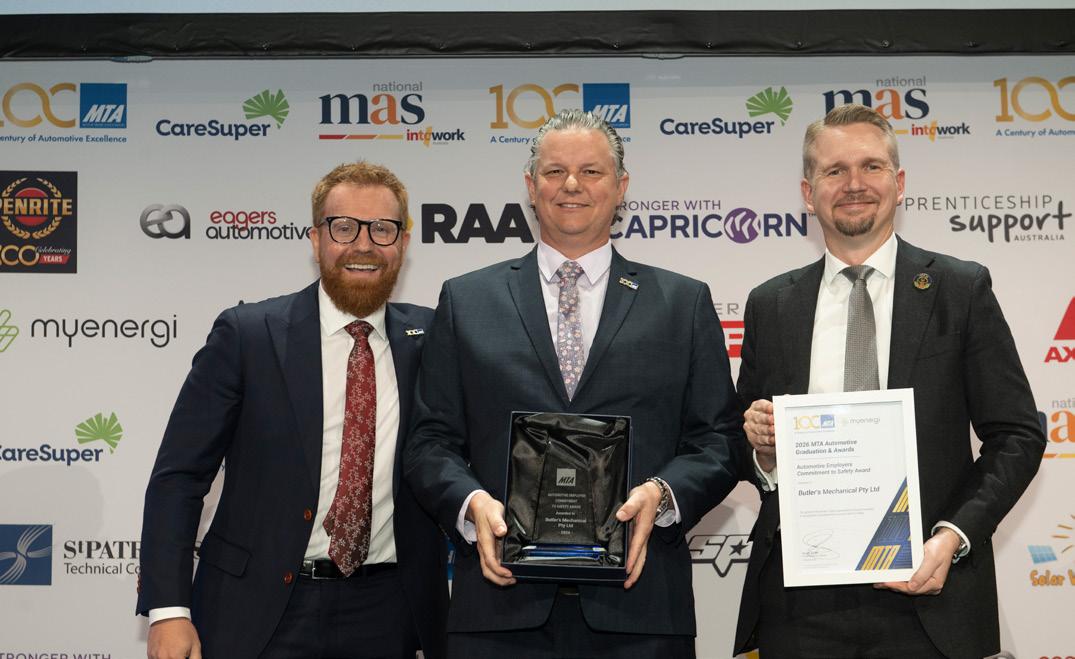
AUTOMOTIVE EMPLOYER COMMITMENT TO SAFETY AWARD
Butler’s Mechanical Pty Ltd
Presented by SA Skills Commisioner Cameron Baker and General Manager, Automotive Business, Jason Polgreen on behalf of award sponsor myenergi
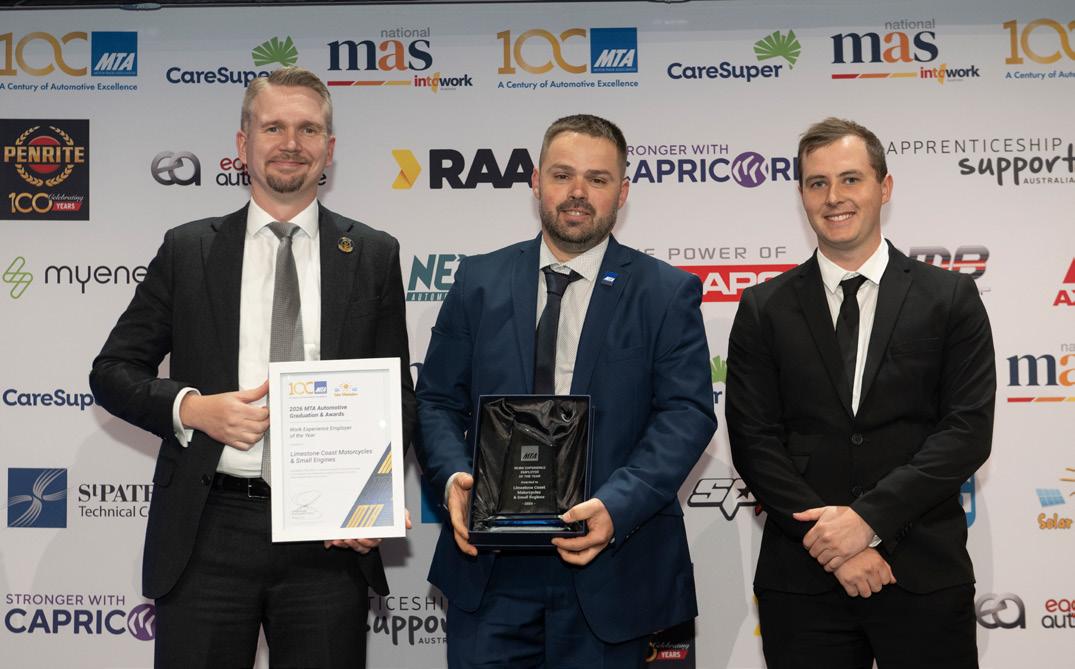
WORK EXPERIENCE EMPLOYER OF THE YEAR AWARD
Limestone Coast Motorcycles and Small Engines
Presented by SA Skills Commisioner Cameron Baker and award sponsor Solar Wholesalers
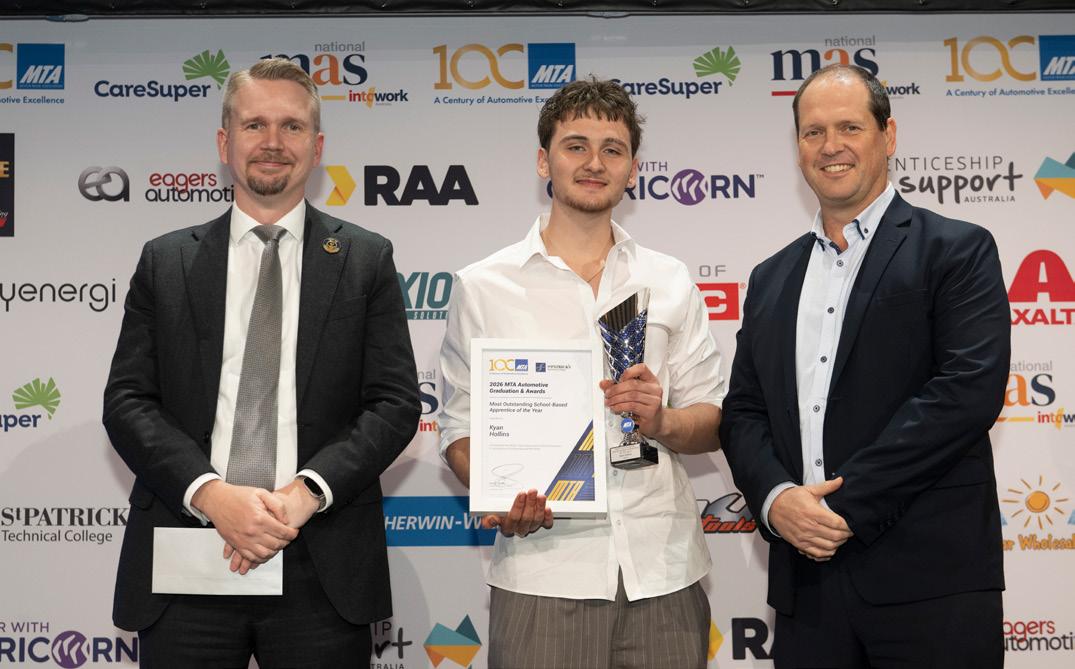
MOST OUTSTANDING SCHOOL-BASED APPRENTICE OF THE YEAR AWARD
Kyan Hollins employed by Eblen Subaru
Presented by SA Skills Commisioner Cameron Baker and award sponsor St. Patrick’s Technical College
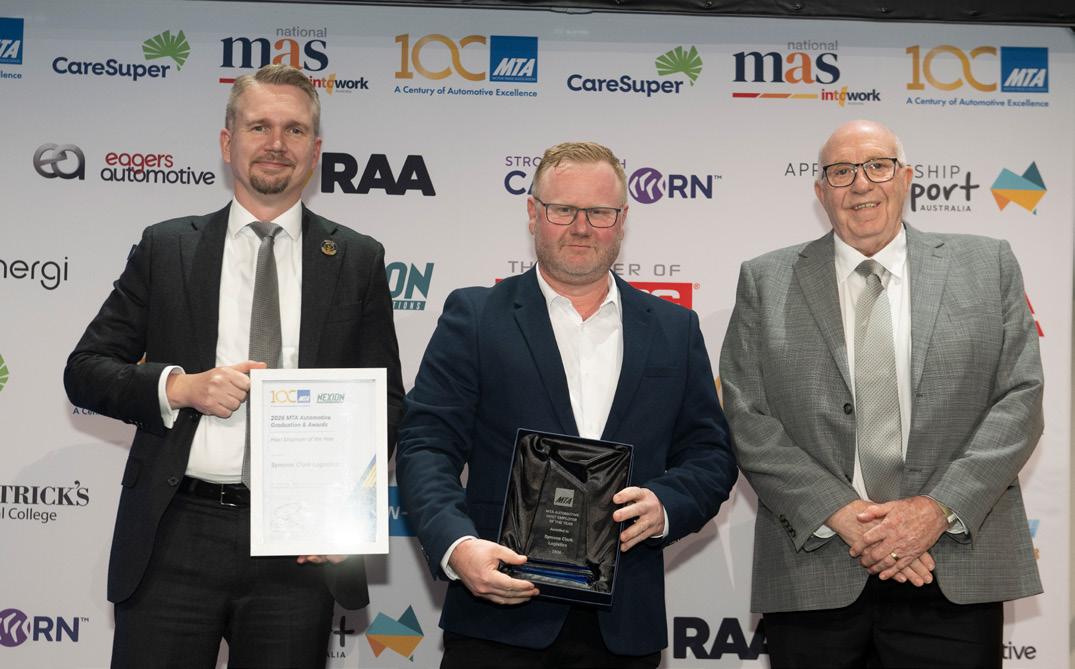
HOST EMPLOYER OF THE YEAR AWARD
Symons Clark Logistics
Presented by SA Skills Commisioner Cameron Baker and award sponsor Nexion
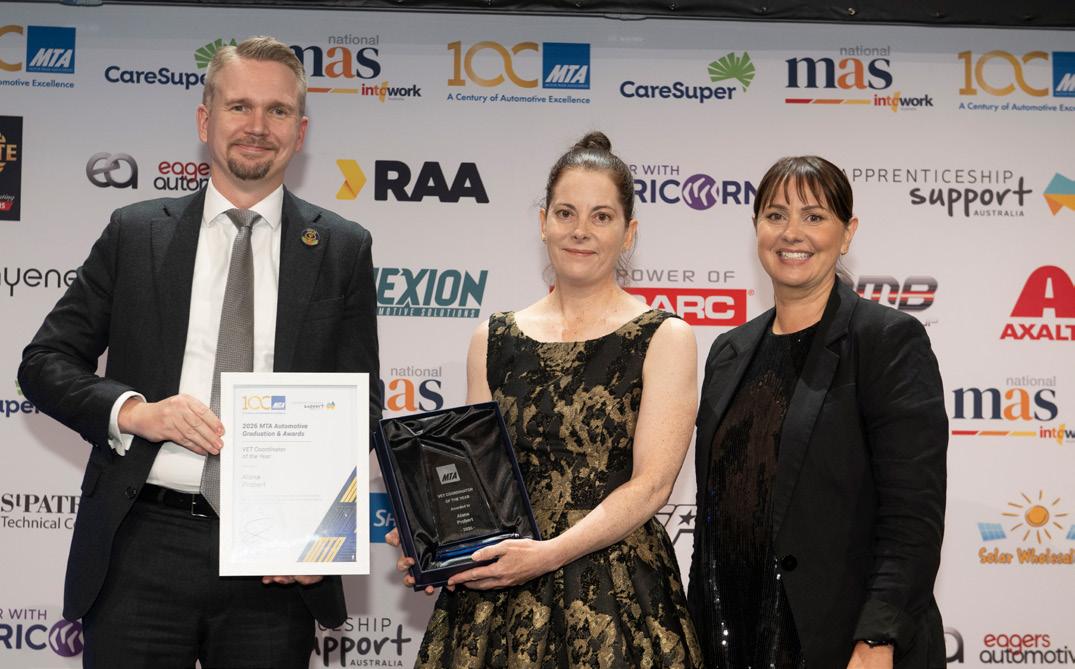
VET COORDINATOR OF THE YEAR AWARD
Alana Probert – Student Pathways and Careers Leaders at Brighton Secondary School
Presented by SA Skills Commisioner Cameron Baker and award sponsor Apprenticeship Support Australia
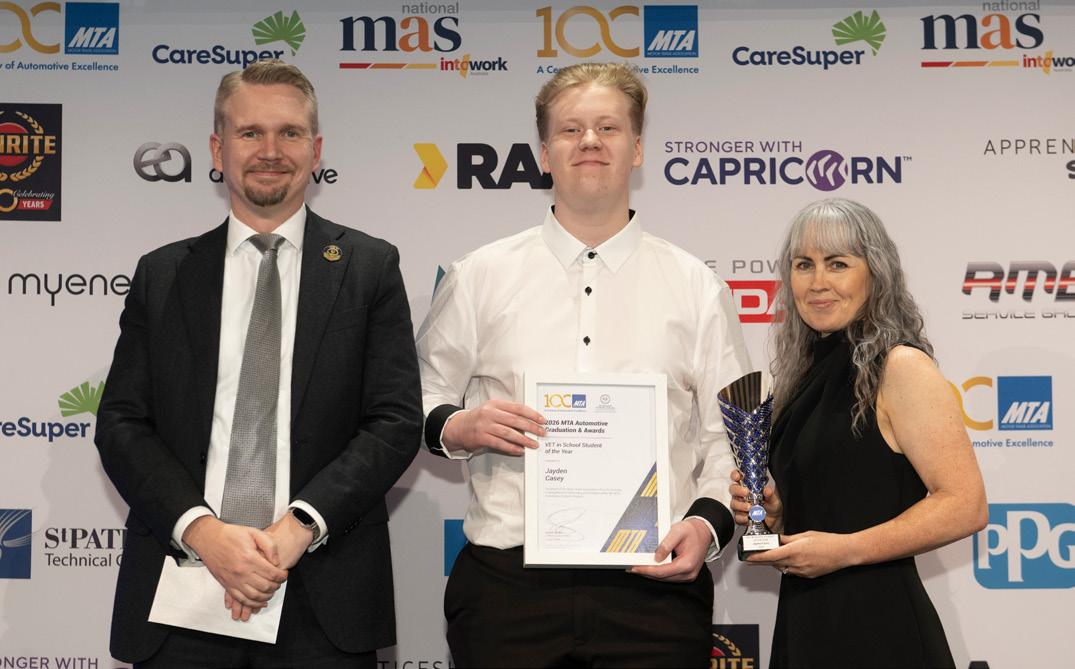
VET IN SCHOOL STUDENT OF THE YEAR AWARD
Jayden Casey – Open Access College
Presented by SA Skills Commisioner Cameron Baker and award sponsor Government of South Australia, Department for Education
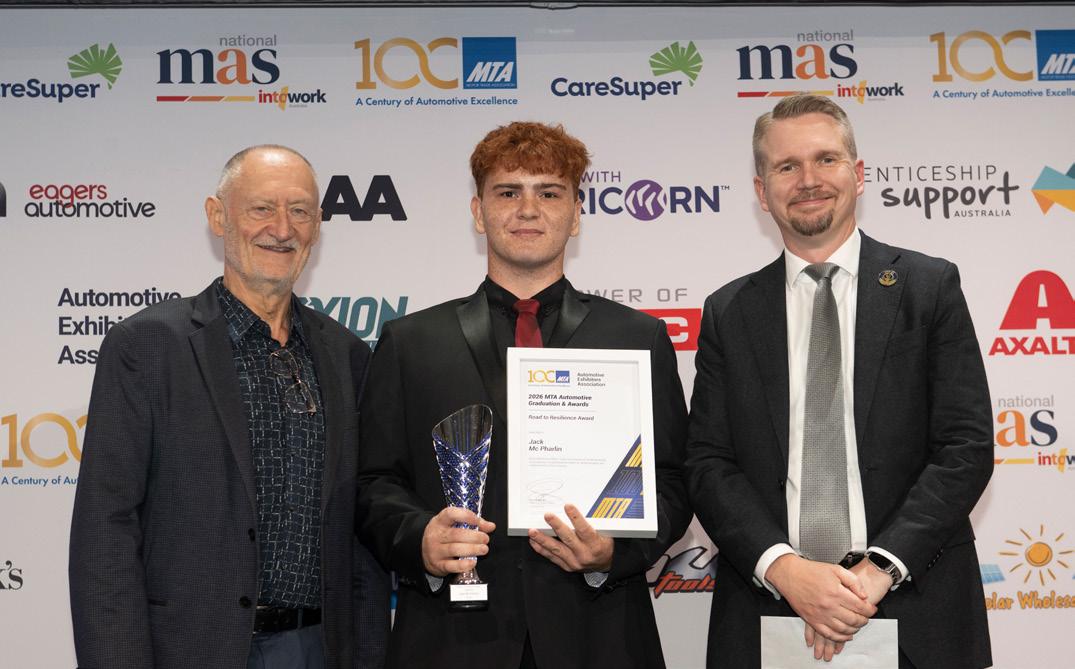
Jack McPharlin hosted at Wakefield Trucks (SA/NT) Pty Ltd
Presented by SA Skills Commisioner Cameron Baker and award sponsor Automotive Exhibitors Association












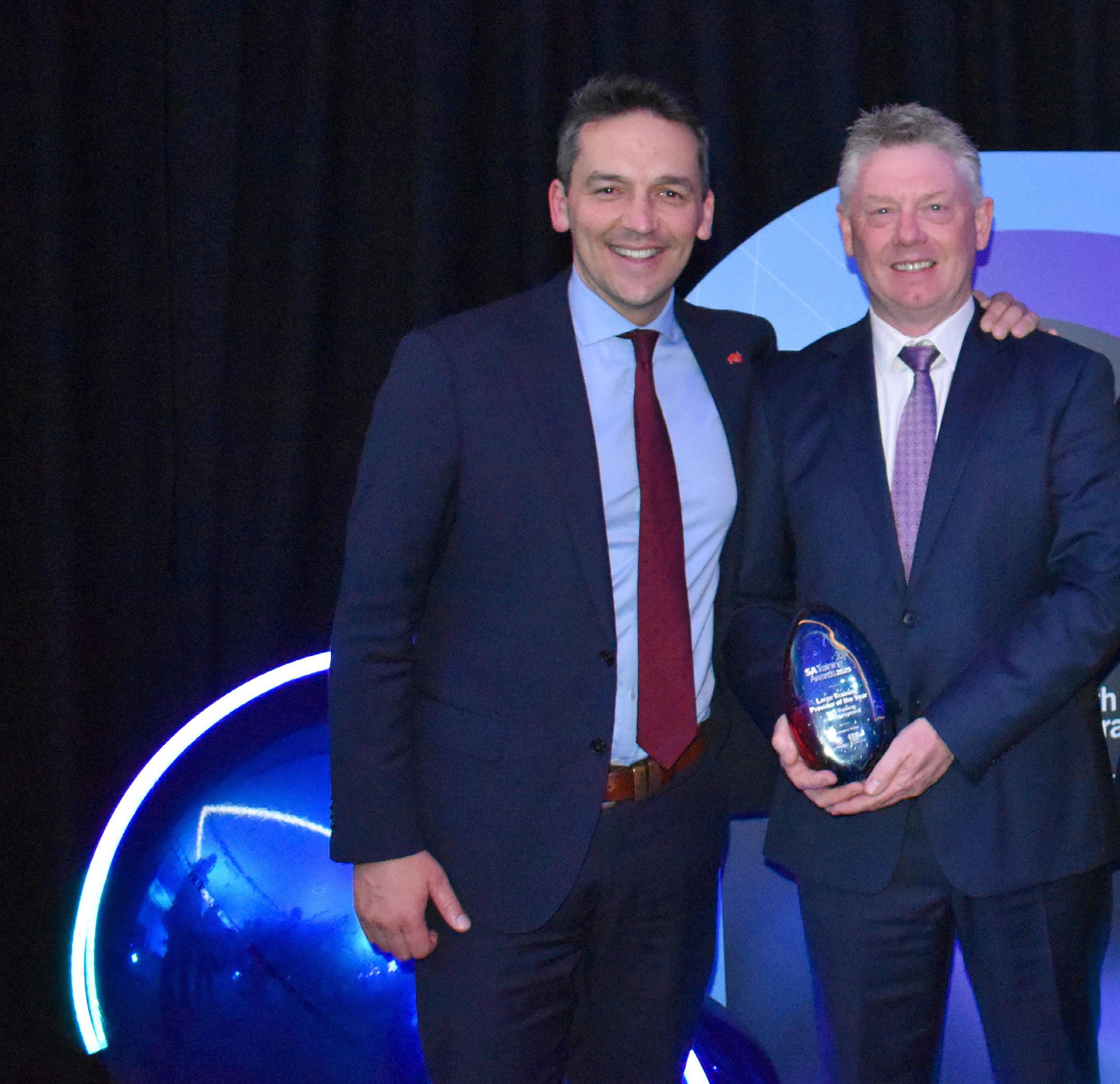
Be proud. You’re training with the best. Large Training Provider of the year, SA Training Awards 2025.

The autonomous harvesting sector is expanding rapidly around the globe, with sectors that are more suited to current technology - such as fruit picking - witnessing higher adoption rates.
Some analysts continue to forecast double-digit annual growth over the next decade, driven by labour shortages and productivity pressures. Other benefits include precision harvesting, yield optimisation and 24hour operation during harvesting and other tight seasonal windows.
In Australia, a 2025 Grain Producers Australia survey of more than 200 growers found interest in autonomous machinery remains strong despite hesitation around full driver-less systems.
The report showed 61 per cent of respondents were keen to learn more about autonomous farm machinery, even while raising practical concerns about cost and connectivity.
However, only eight of the roughly 200 respondents were using “true driverless machinery”.
So, while interest is high, adoption is not.
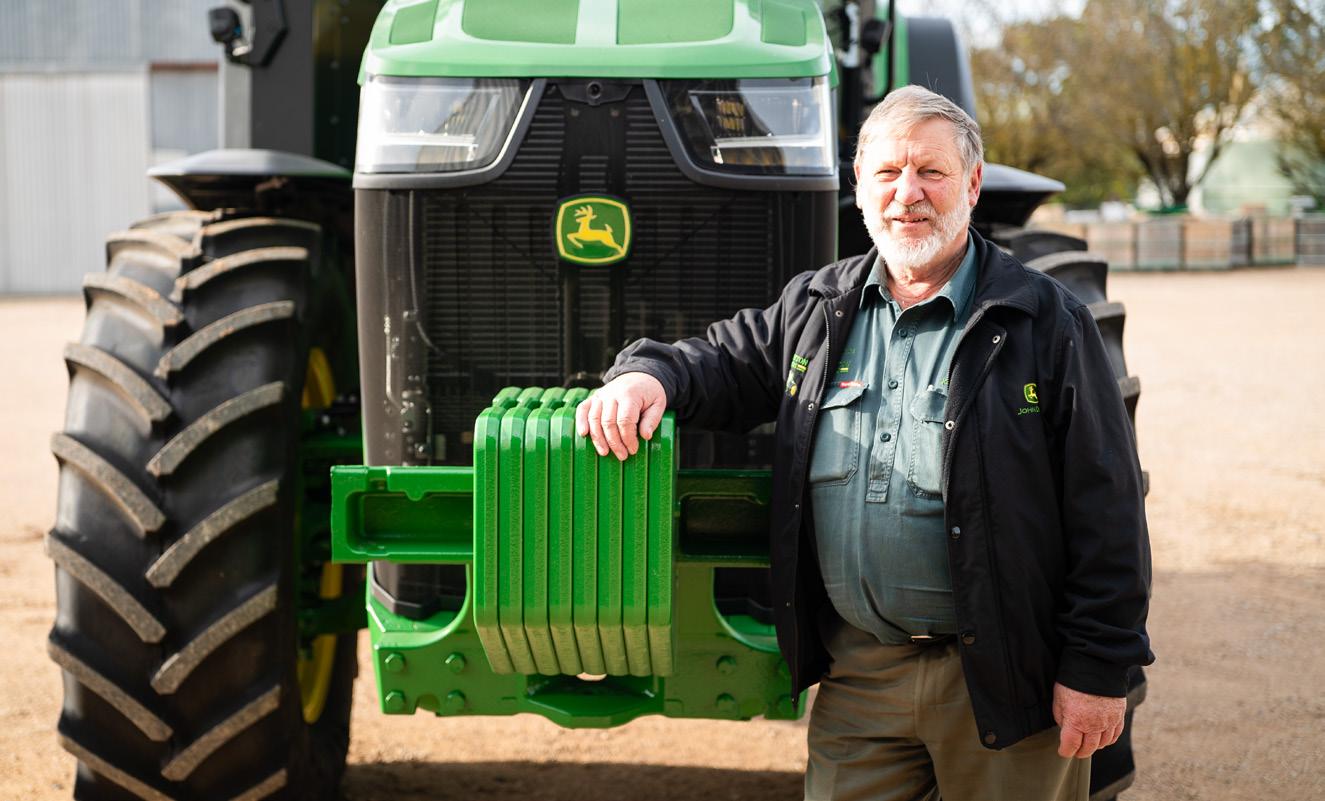
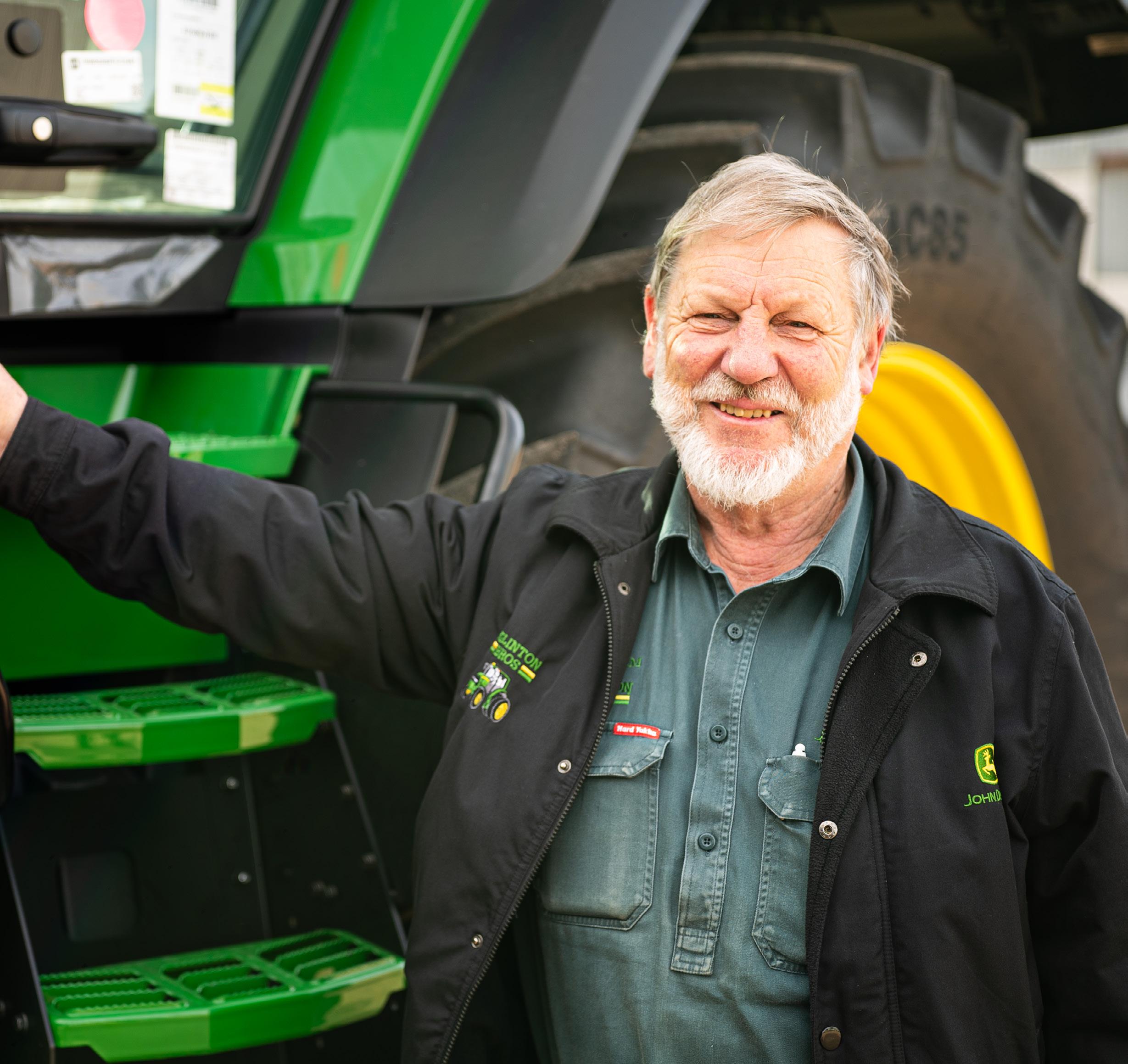
This point is reinforced by Malcolm Eglinton, MTA member and long-time manager and co-owner of Eglinton Bros, the John Deere dealership in Maitland on the Yorke Peninsula.
He sees the value in many of the technological advances that have transformed modern machinery and acknowledges automation is progressing steadily.
However, he baulks at the idea of full autonomy in large grain harvesters operating across uneven paddocks, rocky ground and complex terrain.
He also reinforces some of the concerns raised in the Grain Producers survey, particularly the initial investment, licences fees and the cost of repairing high-tech equipment.
That caution aligns with national survey findings, where 52 per cent of growers identified affordability as the primary barrier to adopting fully autonomous machinery, while 39 per cent pointed to set-up costs.
Connectivity in rural areas and lack of confidence in skills were also cited as constraints.
The GPA survey found that while some 5% of growers reported using true driverless machinery, around 27 per cent are already using semiautonomous systems such as GPS guidance and autosteer.
This suggests that many primary producers are partway along the automation pathway rather than starting from scratch.
Malcolm said those with an interest would adopt it, while those who were unsure would eventually trial it but discontinue it if it didn’t meet expectations.
Some concerns have been raised about operating at night and the ability to avoid unmapped obstacles.
Developers say newer systems use 360-degree sensing and automated stop functions, with radar and LiDAR mapping capable of detecting both
fixed and moving objects regardless of lighting conditions.
Malcom also raises questions about liability and insurance, which he says have not been worked through by government.
Looking forward, he understands the value of automation and acknowledges its continued growth is inevitable.
"We’ve already got autonomous mowers, but it’s not quite the same as a harvester,” he said.
“My personal perception is that when people talk about autonomy, they’ve already got autonomous prototypes, largely in orchards for spraying.
“I believe it’s happening in tillage equipment and that’s easy because there’s no seating, you just put it in the ground. They’ve got to get that perfected before going to the next step as far as I can tell.”
In fact, harvesting robots are already operating commercially in high-value crops such as strawberries, apples and tomatoes, using AI vision systems to identify ripeness and selectively pick fruit without damaging plants.
Across parts of Asia, autonomous harvesters and tractors are being scaled in rice and wheat production, backed by government programs aimed at lifting efficiency and addressing chronic labour shortages.
Tractors, said Malcolm, will require another leap.
“They’re working on it. Somewhere between now and 2030 you might see them but I just don’t know. I don’t
believe it’s just around the corner.
“But as far as autonomy in harvesters go, that isn’t going to happen in the near future.
“I don’t think it will ever come personally, unless you’re in WA and you’ve got a block that is goes mile after mile. Autonomy might do that. But it’s got an awfully long way to go before even that is a reality.”
John Deere has already demonstrated fully autonomous tractors in large scale row-crop environments in North America, signalling the direction major manufacturers intend to take.
The push for automated harvester, he suspects, is being driven by the big end of town.
“The reason autonomy is flavour of the month with some of the corporates is because they have difficulties finding enough workers who can drive them.”
Industry analysts consistently cite workforce shortages as one of the strongest drivers behind global investment in autonomous harvesting technology.
Malcolm said modern equipment already offers features yesterday’s
farmer could have scarcely imagined.
“You can drive a harvester today and it’s near on autonomous, even without predictive cameras.
“When you put it on an auto track line, it picks the line and off it goes. If you have turn automation operating, it will turn and bring itself back down the line as well.
“So the question is, do you really need autonomous when you nearly have that now?”
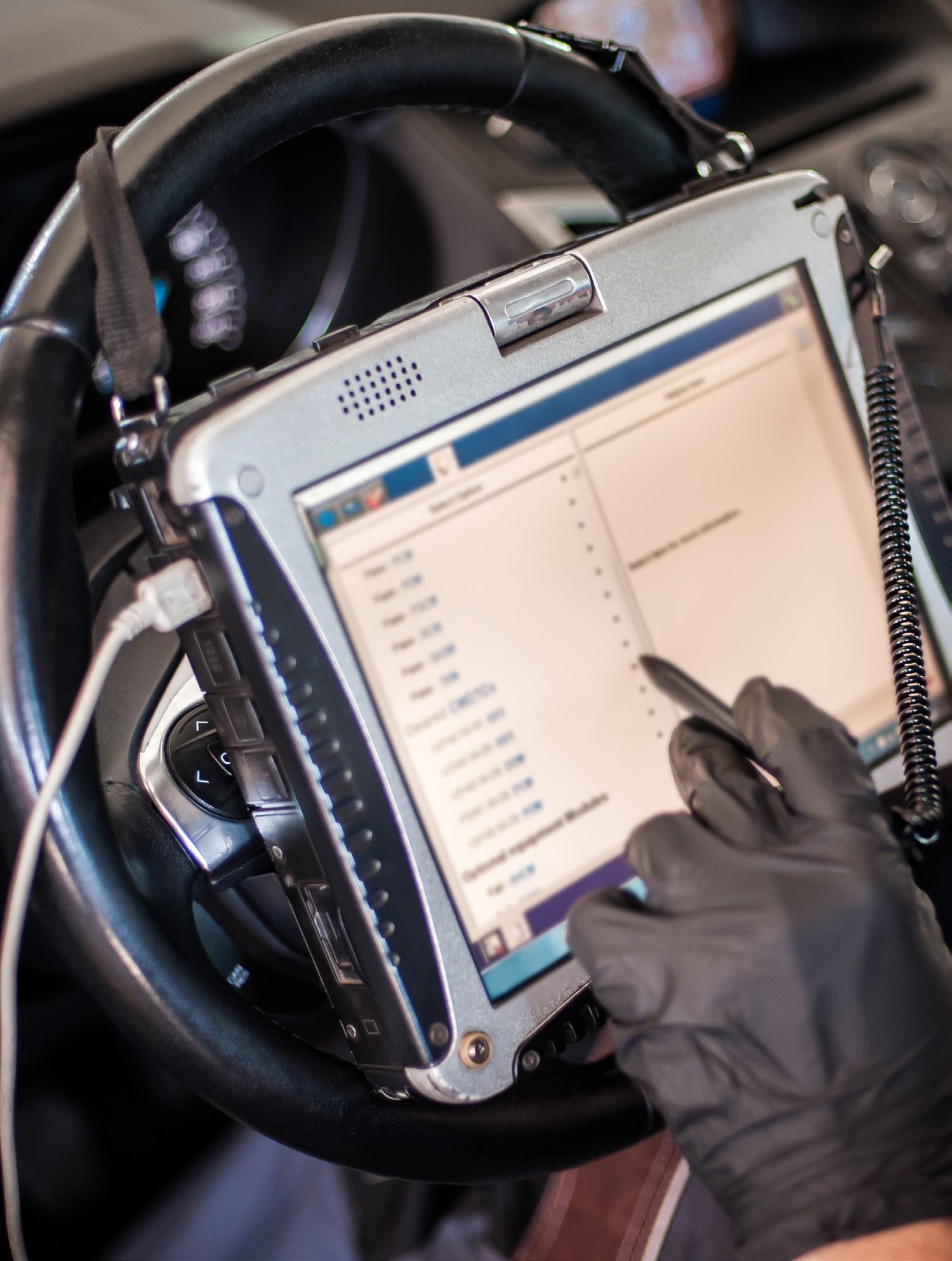
The global automotive sector is undergoing its most profound workforce transformation. Electrification, automation, software-rich vehicles, and AI-driven manufacturing are rewriting the skills required to build and service modern transport. For training stakeholders worldwide, incremental change is no longer sufficient.
Industry observers returning from major motor shows are seeing this shift accelerate. After attending Auto Shanghai 2025, Motor Trade Association SA/NT CEO Darrell Jacobs described the rapid advance of connectivity and AI integration as “nothing short of mind-blowing”. Modern vehicles increasingly blur the line between transport and digital ecosystems. As Mr Jacobs warned, capability demand is expanding faster than workforce pipelines.
Across major automotive markets, employers are struggling to secure skilled workers. Capricorn Society’s State of the Nation report found that labour and skills shortages are the industry’s biggest challenge, with 53% of companies requiring entirely new skillsets.
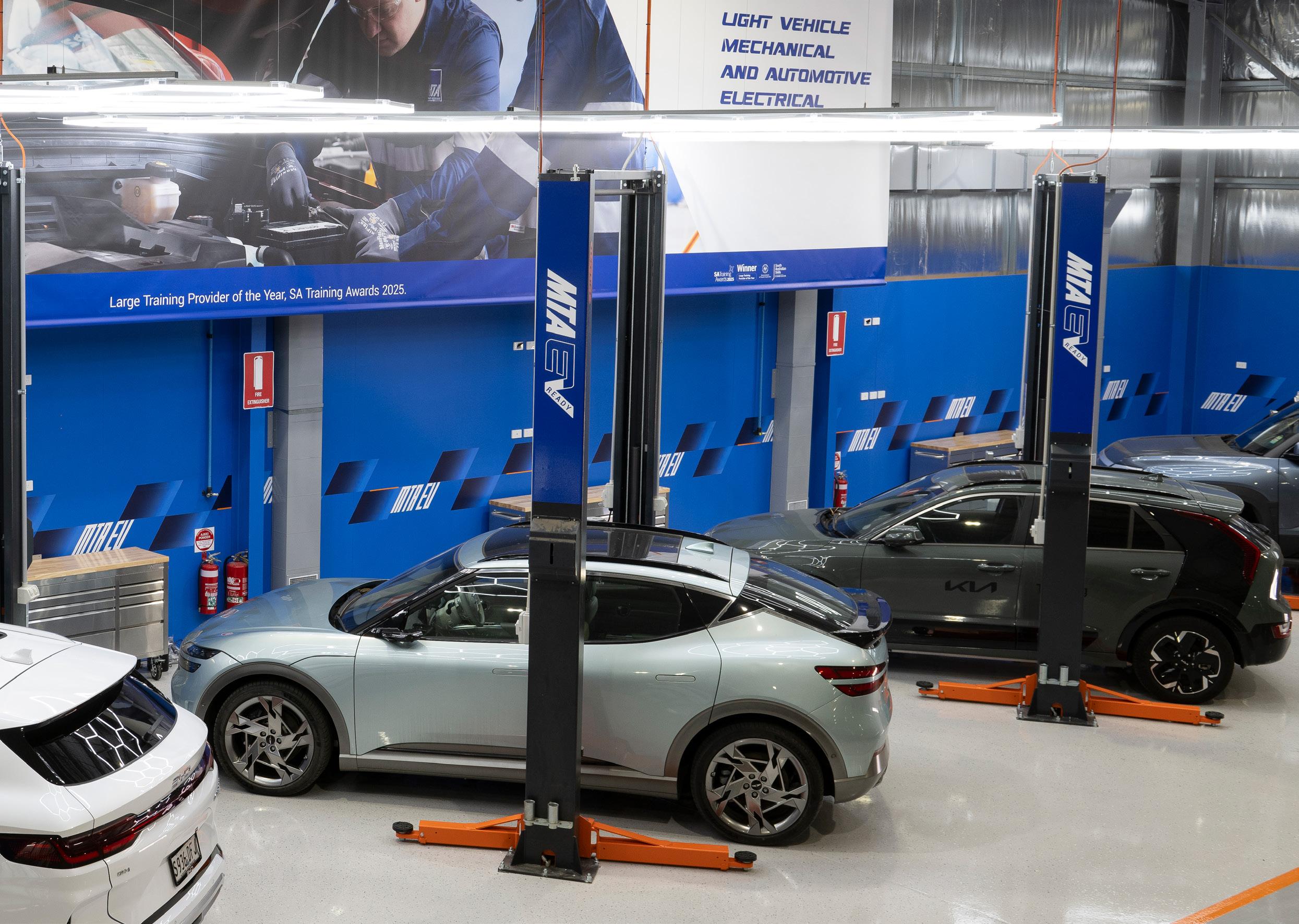
This shortage is a borderless problem. In the United States, tens of thousands of technician roles remain unfilled each year, while global projections suggest millions of automotive manufacturing jobs could go vacant over the next decade without intervention. Australia faces the same pressure. Locally, MTA Training and Employment has ramped up efforts to attract youth, remodelled training for EV technology, and introduced upskilling pathways for experienced workers.
The global shift to electric vehicles is the single biggest driver of training reform.
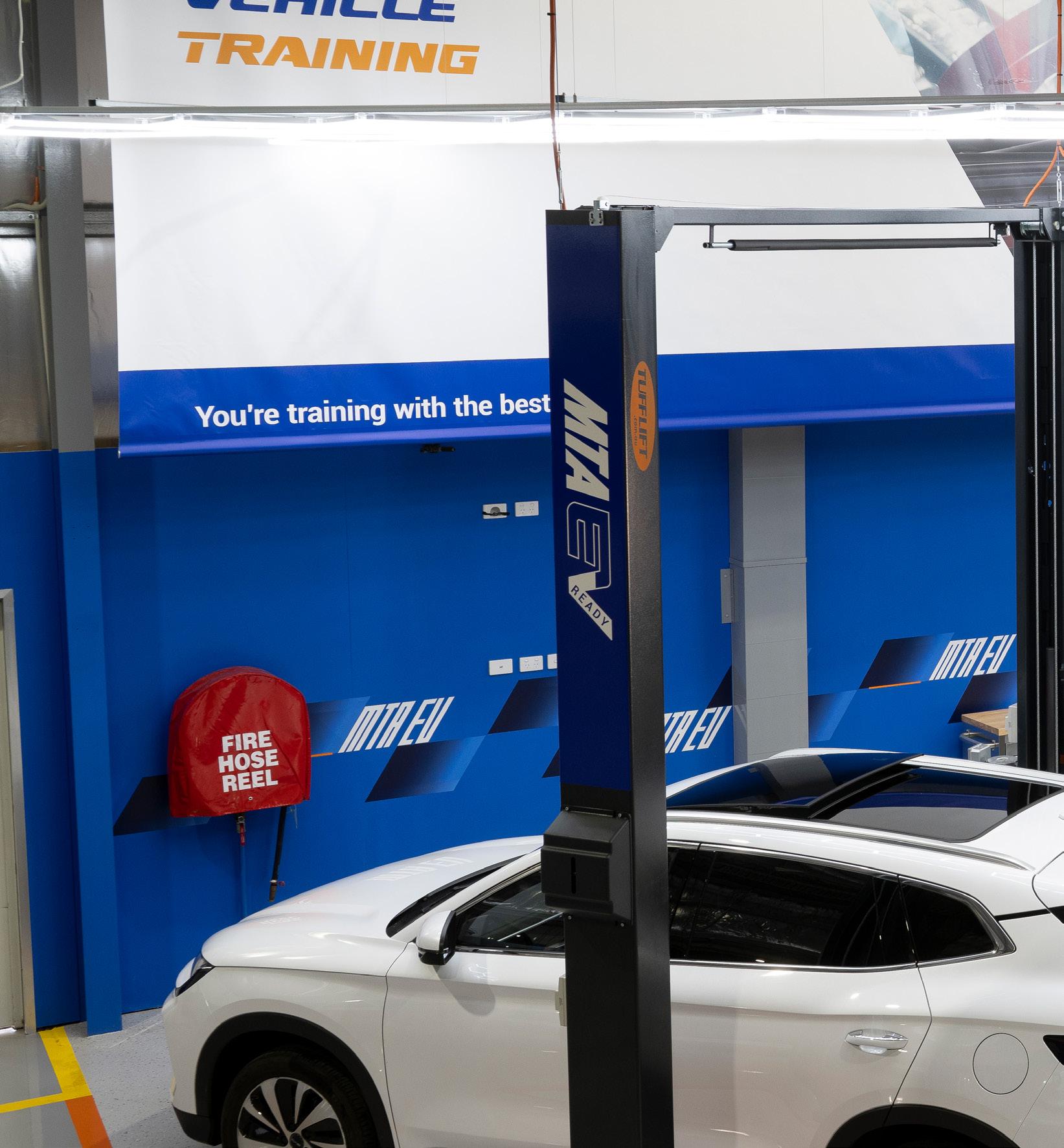
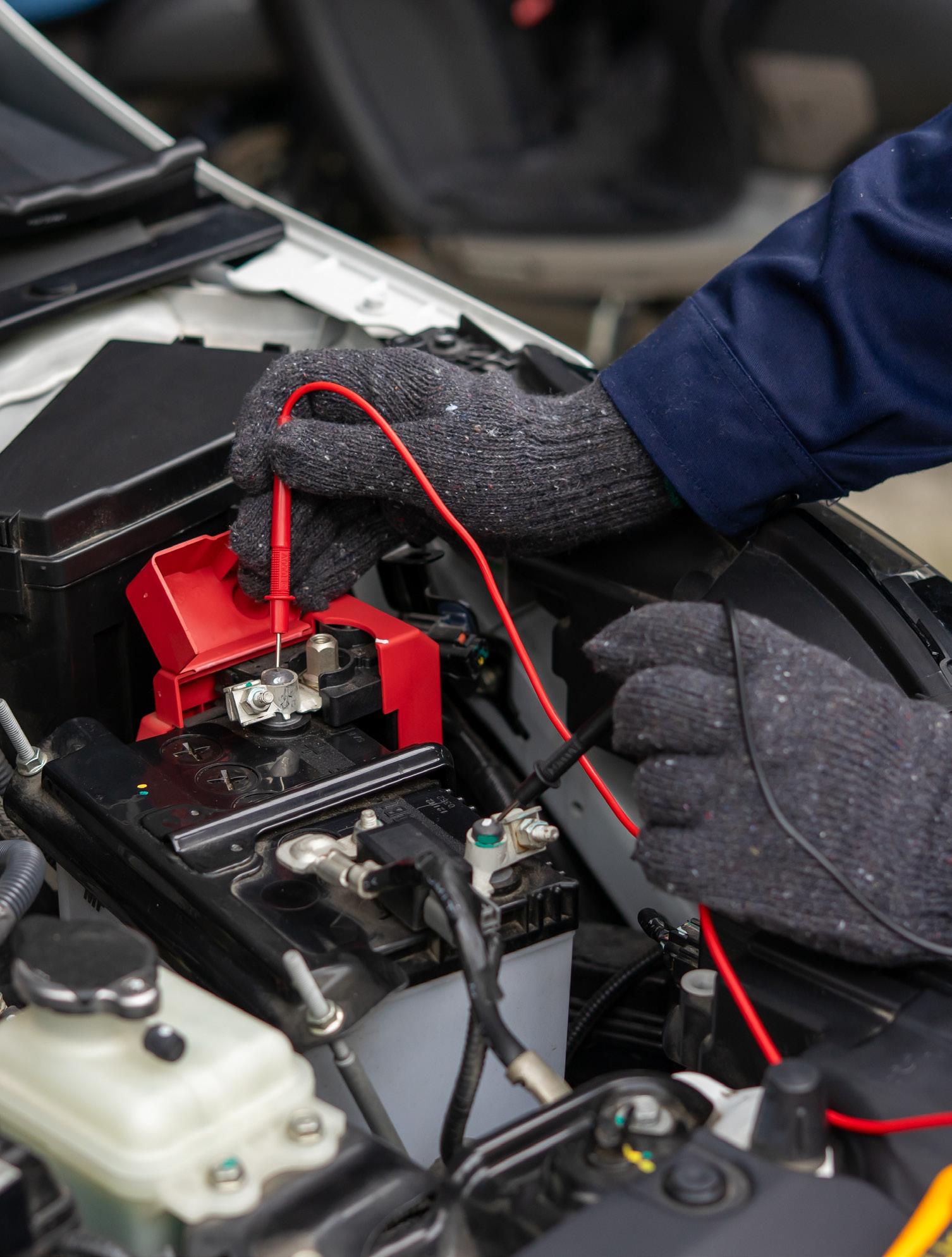
With global EV sales surpassing 20 million in 2025, workshops require fundamental shifts in training. Technicians must now be proficient in:
High-voltage safety
Battery diagnostics
Power electronics
Software integration
Because qualified workers are scarce, EV customers face potential servicing delays. Meanwhile, market dynamics are shifting rapidly. BYD overtook Tesla last year as the world’s largest EV manufacturer, only for fellow Chinese carmaker Geely to outsell BYD by approximately 76,000 vehicles in early 2026. China now dominates most areas of global vehicle production (except commercial vehicles, which is led by the US), and three Chinese brands have cracked the top 10 vehicle brands sold in Australia.
According to McKinsey & Company, software-defined vehicles (SDVs) and over-the-air (OTA) capabilities have become the new competitive battleground for manufacturers. Conventional OEMs are struggling to match the development speed of digital-native competitors like Tesla, Nio, and BYD due to legacy organisational structures. To service these vehicles, the future workforce must master:
Embedded software environments
Vehicle networking and cybersecurity fundamentals
Remote diagnostics and OTA update management
While OTA updates allow wireless improvements without workshop visits, cybersecurity experts warn that poorly secured pathways create dangerous new attack surfaces for
malware injection or remote vehicle compromise. Modern vehicles are increasingly designed to integrate with a consumer’s daily life via remote home control and speech-driven services, further expanding necessary workforce competencies.
Education systems globally remain misaligned with industry speed.
Nearly half of automotive employers say existing qualifications fail to keep pace with technological change due to systemic issues:
Outdated workshop equipment and slow curriculum approval cycles
Declining apprenticeship participation and ageing instructor workforces
Weak industry - education feedback loops
In the United Kingdom, the Institute of the Motor Industry (IMI) reported that only one in four technicians were qualified to work on EVs in late 2025. Shortfalls are projected to hit 44,000 technicians by 2035. “It is now too late for even sustained growth in certification to fully close the gap,” warned Emma Carrigy, the IMI’s Head of Research, Policy and Inclusion, noting that subsequent servicing bottlenecks could undermine consumer confidence in EV adoption.
Compounding this is a stubborn image problem. IMI research shows that while 90% of parents consider apprenticeships, only 41% would encourage an automotive career.
“If the industry fails to consistently presents itself as a high-tech, futurefocused career pathway, recruitment challenges will persist.”
Regulatory paths are diverging, adding uncertainty for workforce planners. In February 2026, the U.S. EPA ended federal greenhouse gas emission standards, the largest deregulatory action in U.S. history. Designed to cut compliance costs and vehicle prices, this move reduces the pressure on American automakers to transition rapidly to EVs. Analysts expect reduced urgency around battery R&D, slower factory conversions, and a pivot toward hybrid models. Conversely, European and Asian markets show no signs of policy reversals, creating a highly fragmented global transition pathway.
In response, leading nations are treating workforce capability as strategic infrastructure by investing in battery academies, co-designing curricula with industry, targeting high school talent pipelines, and utilising virtual reality simulation training.
MTA Training and Employment provides a solid template for this emerging global training model through five core pillars:
Modular credentials: Short, stackable qualifications that keep pace with technology
Hybrid training: Training technicians in both physical systems and software environments
Embedded learning: Increased reliance on live workshops and employer-led delivery
Continuous upskilling: Instilling a culture where initial trade training is no longer a lifetime qualification
Safety frameworks: Formalised pathways for high-voltage and battery safety
The automotive industry is navigating a once-in-a-generation occupational reset. Over the next decade, the governments and major employers that treat automotive training as strategic infrastructure, rather than a compliance exercise, will successfully define the future workforce of mobility.
Mas National is proud to support the Motor Trade Association.
Mas National (Mas), proudly part of the IntoWork Group, has been delivering employment and apprenticeship support services to employers, apprentices and trainees across South Australia for over 20 years.
We partner with government, industry, employers, individuals and other stakeholders to facilitate apprenticeship sign-ups, deliver targeted mentoring and to create workforce participation opportunities, across all industries.

Why is Mas South Australia’s leading Apprentice Connect Provider?
Trusted by South Australian employers for over 20 years.
We tailor our services to suit your individual or business needs. When you work with Mas, you become a valued partner.
Qualified Allied Health professionals to support apprentices to complete their apprenticeship.
Access to our MasConnects app designed to empower apprentices throughout their apprenticeship journey, from commencement to completion.
Access to additional resources through our IntoWork Group of businesses.
We would like to wish all finalists the very best and congratulations to all apprentices and trainees on their success.



Data from the mining sector reveals that EV adoption is continuing to grow for smaller surface trucks and those used in underground hard-rock. However, for ultra-class trucks with 300 to 400-plus tonnes payloads in open-cut iron ore operations, the rollout is slower than predicted five years ago.
Battery-electric haul trucks have the ability to decarbonise mining’s largest mobile emissions source and align the sector with net-zero targets.
They are commercially viable in deep underground operations where
ventilation savings materially offset higher capital costs. For example, ventilation and cooling can account for 30% to 50% of total underground mine energy use in deep operations.
Sandvik points to repeat orders across multiple sites as evidence of the success in this part of the market.
However, in ultra-class open-cut iron ore operations, electrification remains in the trial phase. Large-scale fleet conversion has been constrained by infrastructure, power supply and capital intensity.
Australia’s Pilbara iron ore sector relies heavily on ultra-class fleets. Electrifying these fleets requires very large battery packs and high-capacity charging systems
BHP has stated that fleet conversion could require hundreds of megawatts of additional supply for large sites.
It has teamed up with Rio Tinto to test large battery-operated electric haul truck technology in the Pilbara, working with manufacturers Caterpillar and Komatsu.

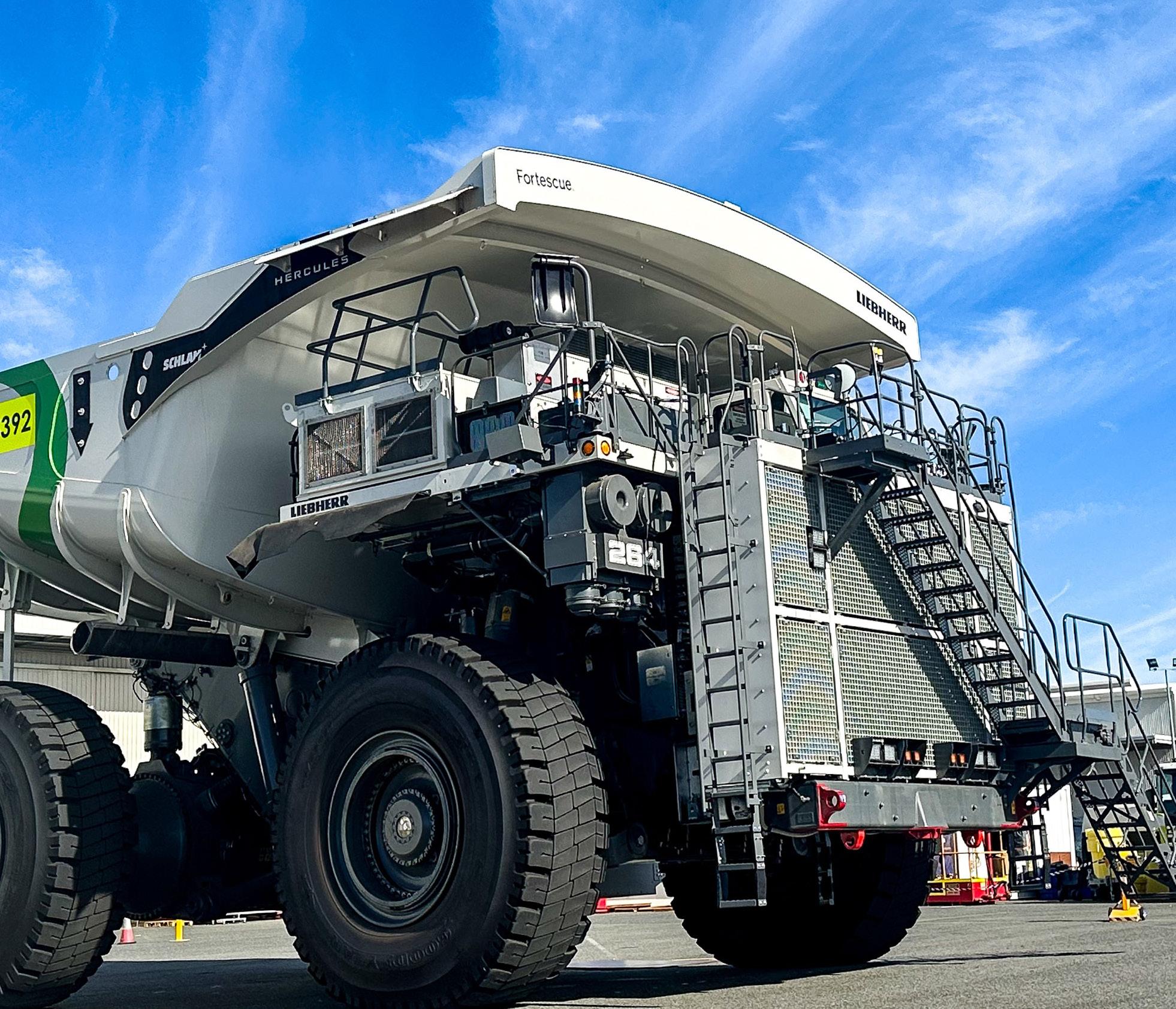
One of the most promising initiatives was unveiled late last year, when open-pit miner Fortescue inked a $2.8 billion partnership with Liebherr “to create one of the world’s largest zeroemission mining fleets”.
Reuters report that the company’s fleet “consumed about 450 million litres of diesel in FY24 and accounted for 51% of its scope 1 carbon emissions”.
The T 264 battery-electric truck sits just under the ultra-class classification but is seen by some as a precursor to adoption at the ultraclass level. The trucks will be powered
by a Fortescue Zero battery power system, with Fortescue Zero looking to sell its technology solutions to the global mining industry.
“As part of our decarbonisation plan, we intend to roll out around 250 fast chargers of varying capacities across our iron ore operations before the end of this decade, said Fortescue Metals Chief Executive Officer, Dino Otranto.
Equipped with robotic connection options, they will be able to power the T 264 trucks in just 30 minutes.
It’s been a long wait and the fact that Rio and BHP are in trial, rather than replacement phase, matches what industry sources have been saying:
the transition is taking longer than expected.
The decision is seen as only a delay to the battery electric switch, rather than a rejection of the technology.
“Let’s say they were looking at 50 per cent of the fleet being battery electric within two years,” said one person.
“That might now be pushing out to three to four to five years to work out the infrastructure side of it because all that grid power takes some planning.”
That information is backed up by independent analysis, with IDTechEx’s forecasting that nearly 50 per cent of all mining vehicle sales will be EVs by 2044.
AI is everywhere and the automotive sector is embracing its potential faster than most.
Think AI-powered, in-car assistants. Predictive maintenance for brakes, batteries and engines. Fatigue detection. Adaptive Cruise Control. Lane Centering.
However, that is just scratching the surface.
To understand the impact of AI on driving, look no further than global technology giant, Google.
While it started as a search engine and dominates online search and digital advertising, Google has diversified broadly – and deeply –across automotive and transport.
At a corporate level, Mitsubishi Motors Group faces constant threats from cyber attacks and this extends across its many companies. Google’s AI has transformed security, moving it from rule-based detection to a dynamic, proactive system.
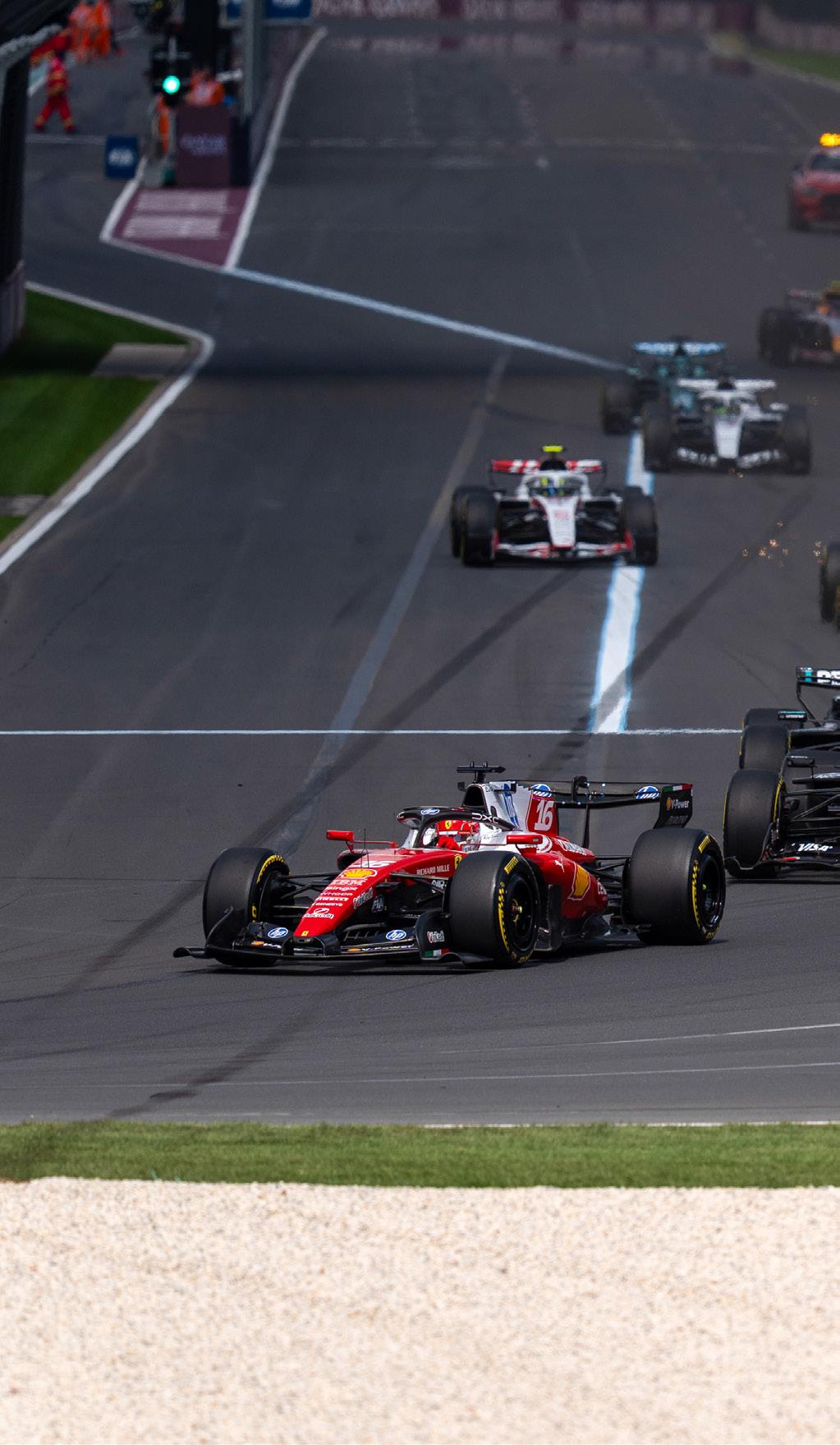
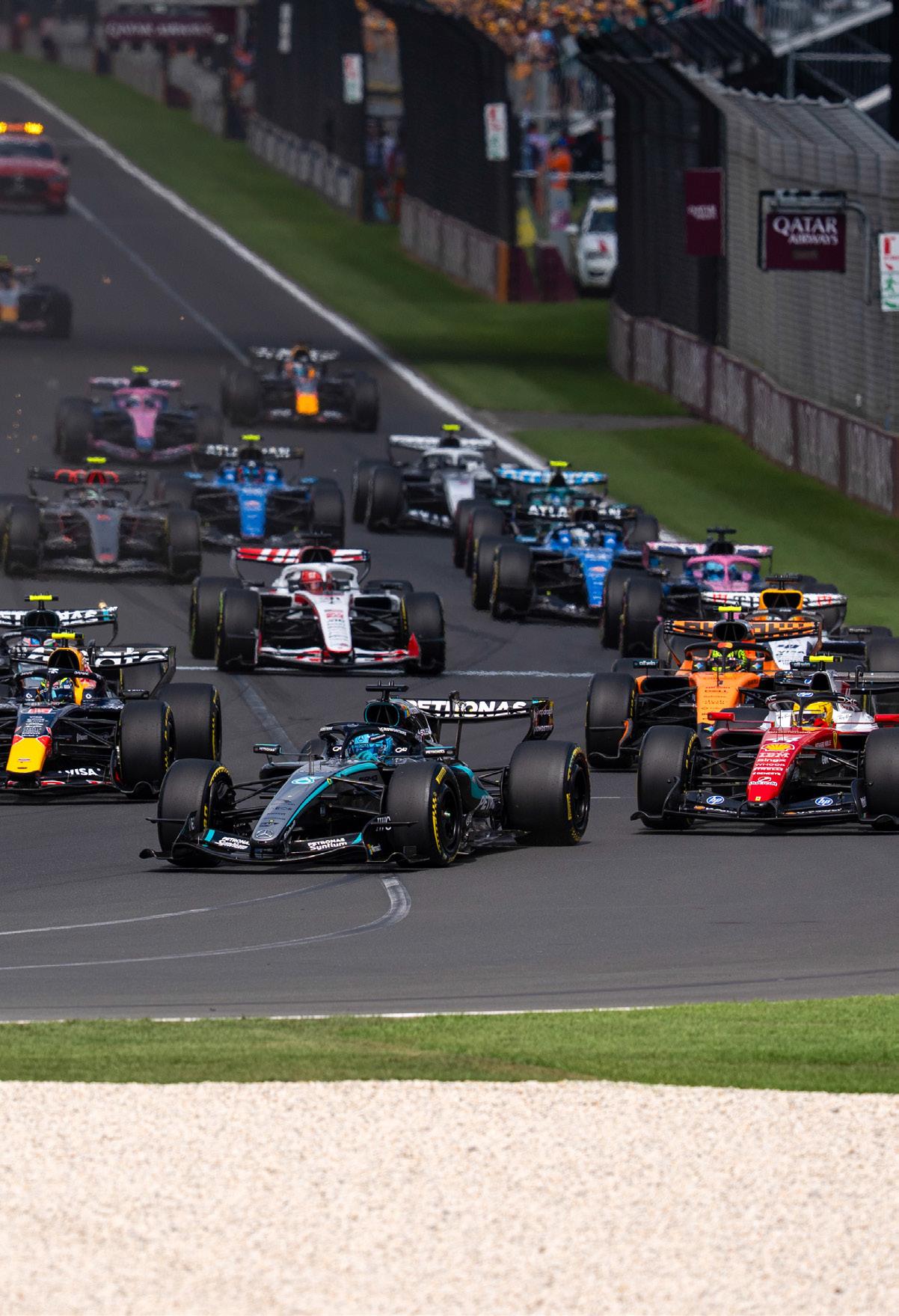
AI was crucial in Mercedes Benz winning the 2026 Australian Grand Prix. Mercedes has been leveraging AI, working with partners such as Microsoft and G42 for years to gain an edge. On open roads, its everyday models use AI to talk to drivers, with “personalised answers… for things like navigation and points of interest”.
Clearly, they are not alone.
“Continental’s Smart Cockpit HPC, an in-vehicle speech-command solution,” reports Google.
“Volkswagen of America built a virtual assistant in the myVW app, where drivers can explore their owners’ manuals and ask questions, such as, ‘How do I change a flat tyre?’ or ‘What does this digital cockpit indicator light mean?’
“Users can also use Gemini’s multimodal capabilities to see helpful information and context on indicator lights simply by pointing their smartphone cameras at the dashboard.”
Toyota has an R&D division devoted to AI. Named Woven, it underpins autonomous driving technology.
Toyota also used AI to cut over 10,000 work hours annually. Taiwanese EV brand, LUXGEN, uses an AI agent to reduce human workloads by 30%.
Customer service staff at Uber have a suite of AI tools to improve their productivity. More importantly, AI summarises previous interactions with customers and provides context, with the aim of improving communications.
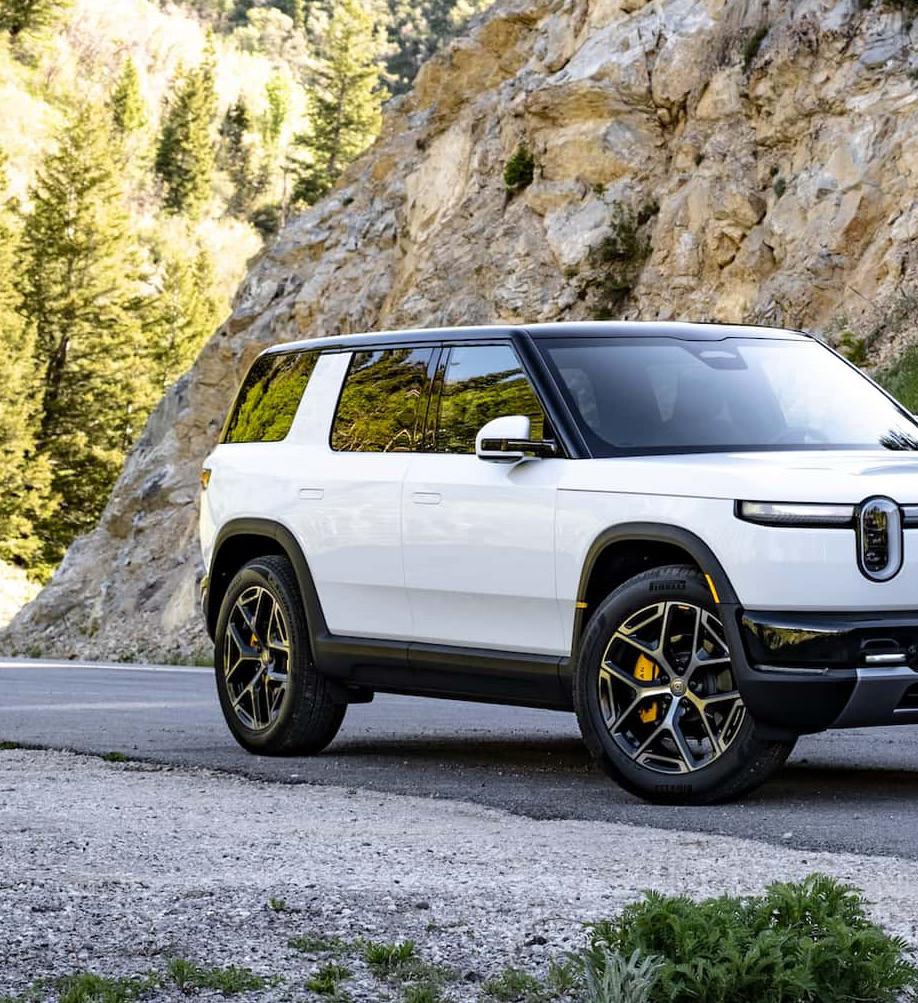
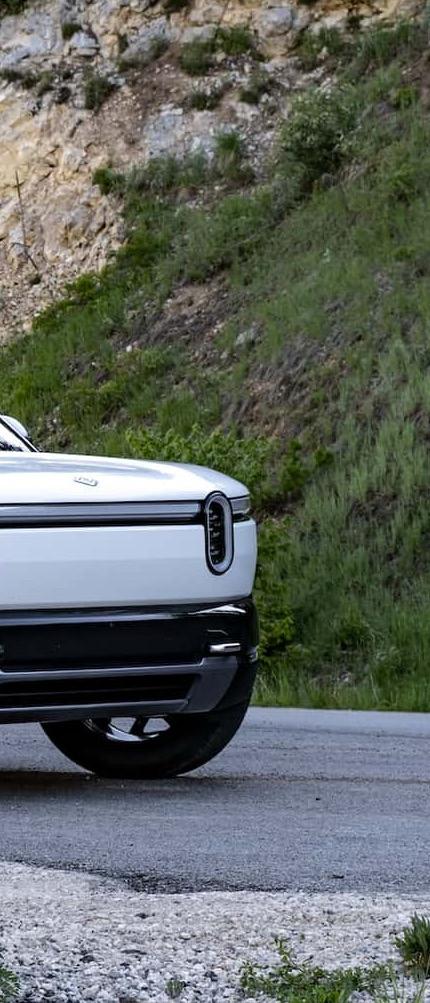
EV maker Rivian uses NotebookLM in a similar way, programming its AI with validated information and interactive chat features.
Commercial road users have thrown away the Gregory’s Street Directory and now rely on AI.
BMW Group uses AI to create “digital twins that perform thousands of simulations to optimise distribution efficiency”.
UPS is another good example. It uses DeliveryDefense Address Confidence, a combination of UPS data and machine learning to maximise delivery success rates.
Domina manages over 20 million annual shipments. AI has improved its delivery effectiveness by 15%.
“Routematic, a Transport-as-aService platform for employee transportation, migrated its entire infrastructure to Google Cloud using Compute Engine and Google Kubernetes Engine in eight months with zero downtime,” reports Google.
“The company shortened product release cycles from weeks to days while unlocking significant cost savings through better control over billing and infrastructure.”
Struggling with your admin workload? Oxa develops software for autonomous vehicles, and deploys Gemini for Google Workspace across marketing, reporting, job descriptions and admin. The aim is to reduce time and maximise the use of precious resources.
Mercedes Benz is also infusing e-commerce capabilities into its online storefront with a generative AIpowered smart sales assistant.
Everywhere you look, AI is now embedded in our industry. It will continue to grow and improve.
For members, the question is no longer whether AI will transform the sector but how quickly it will do so.

QUALITY & INNOVATION.
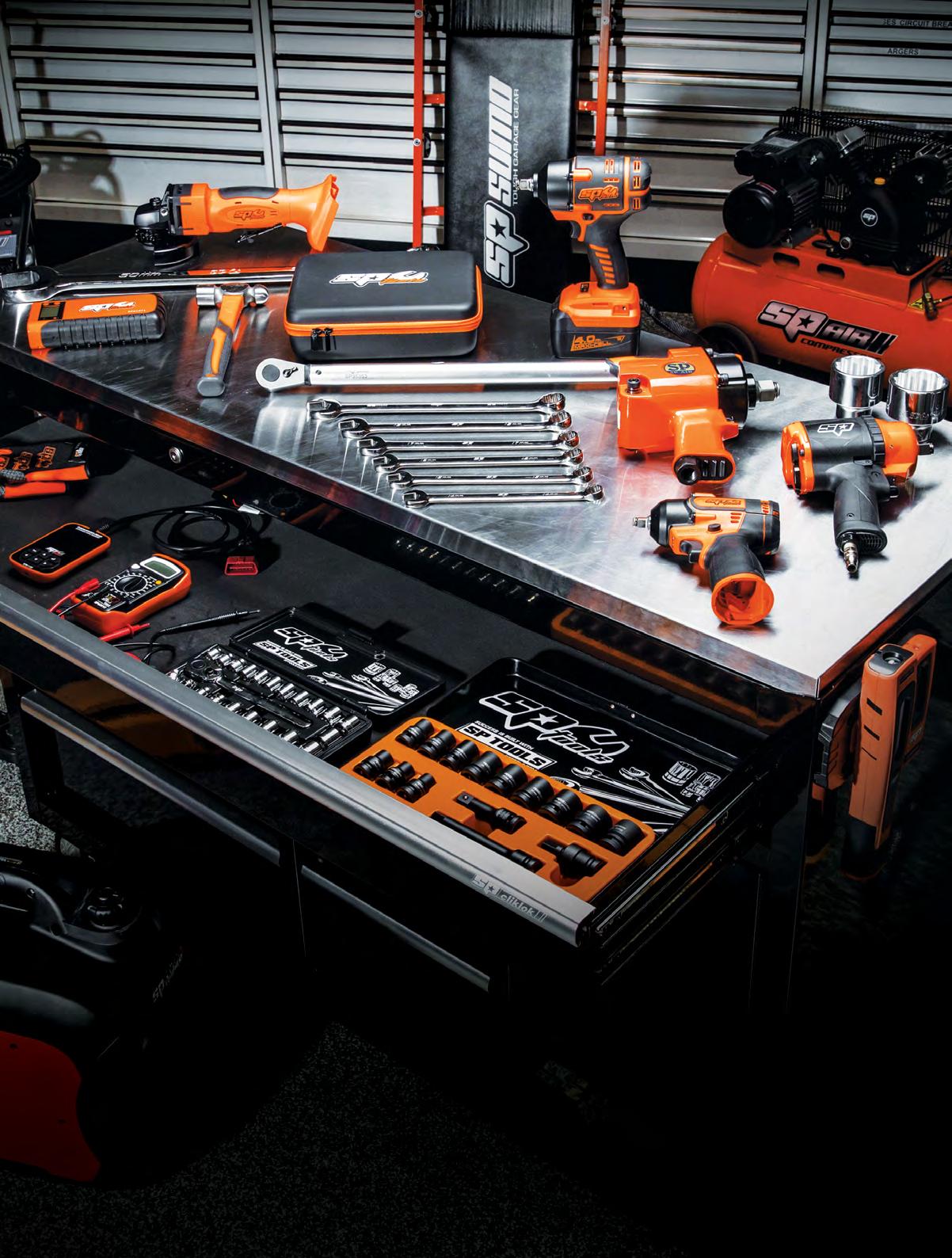
These 3 words describe our brand and our culture. We have designed, manufactured and delivered tools to a global workforce for over 45 years. Our goal is to make tools that make the job easier and safer.
SP Tools is a professional tool company that produces hand tools and tool boxes that meet and exceed the expectations of tradespersons across the globe. With a team of dedicated professionals, we strive to innovate tools and tool storage that keeps pace with an ever changing automotive and industrial landscape.
SP Tools is found in world leading race shops, dealerships, workshops and home garages that require the very best quality tools. With distribution in over 50 countries worldwide you too can own the very best... SP Tools
Specialising in high quality professional Tool Kits, Tool Storage Solutions, Hand Tools, Automotive Specialty tools, Cordless Tools, Cordless Lighting, Air Tools, Compressors, Generators, Pressure Washers & Shop Vacs
The “information highway” was one of the first monikers to describe the internet in its early years – and today it has taken on a whole new meaning. Road infrastructure has become increasingly connected in a digital sense and now vehicles themselves are being absorbed into this network to help improve safety.
For example, vehicles connect with traffic lights, street signs, incident alerts and also receive timing data to optimise their drive.

“…it’s the chicken or the egg. If everyone else has it, it’s a no brainer that you should have it. But if you’re the first person in your town who has it, it doesn’t really help you a lot.”
The concept known as V2X (or Vehicle-to-Everything) has been around since the start of the new millennium. However, in recent years the technology that will transform niche adoption it into a mass market reality has leapt forward.
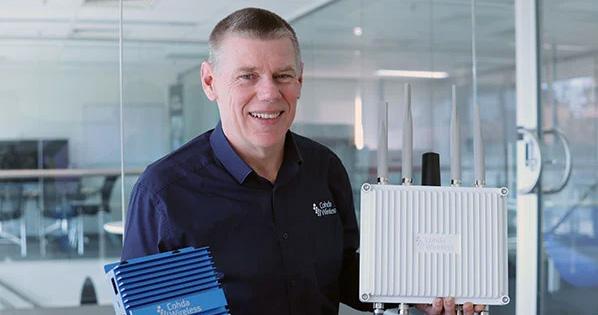
South Australian company Cohda Wireless was founded at the University of South Australia in 2004 and is a world leader.
Despite the local connection, most of the company’s business is in Europe and the US, explained CEO Paul Gray.
“Australia is still watching and waiting,” he said. “We’re always going to be a follower because we don’t manufacture vehicles ourselves.”
Europe leads the world in terms of deploying infrastructure that can use the technology.
“They’ve got VW vehicles on the road with V2X factory fitted which actually has Cohda software in it.
“There are now over three million VW vehicles on the road in Europe with V2X onboard and they are talking to a lot of the infrastructure, such as roadwork warnings, road hazard warnings, things like that.
“So if you’re on the motorway and there’s a lane closed ahead, you are warned you need to move to the right or left.”
The US is also well advanced but is charting a slightly different course.
“There is quite a lot of infrastructure deployment in places like Georgia, Michigan, Arizona and Utah,” said Paul. “A lot of the prime-use cases are around emergency vehicle and transit vehicle priority.
“So basically, they are integrated with the traffic signals and are giving priority to those vehicles as they approach the intersection.
“That works in the US because the state departments of transport own the traffic lights and also own the fleets of vehicles, so it’s a no brainer for them to install it.
“And it allows them to deploy infrastructure that is future proof for when their vehicles get on the road.”
With 20 years of development, it is quite a mature technology – but like many new innovations, adoption has been painstakingly slow.
Nevertheless, momentum is building.
“The current thinking is that the tipping point is going to be around 2030,” he said.
That’s being driven largely by both the China NCAP (New Car Assessment
Program) and European NCAP, which now have (safety rating) points available for V2X.
“That’s going to be the prime motivator for OEMs (Original Equipment Manufacturers) to put them into production vehicles.”
How much safer a car fitted with V2X technology is compared to one without depends largely on its surrounds.
“If everybody has it, the analysis in it could play a role in almost 90 percent of two-vehicle road accidents.
“But it’s the chicken or the egg. If everyone else has it, it’s a no-brainer that you should have it. But if you’re the first person in your town who has it, it doesn’t really help you a lot.”

At a cost of around $100 to the consumer, it stands to become the most valuable safety feature added to cars since the seat belt.
Even pedestrians and cyclists are on the radar.
“That’s a big use case being trialled in the US at the moment, with what they call vulnerable road users.
“Cameras at an intersection can detect pedestrians or cyclists, and they send a message to the vehicles around them.”
The technology appears set to become integral in the future operation of autonomous vehicles as their volume increases on our roads.
Paul explained that it extends the sensor horizon. Autonomous vehicles may have cameras, LiDAR and radar - but they are all line of sight. They
can’t see things over a hill or around corners.
On the other hand, interconnected cars and road infrastructure can fill that gap.
Australia is not totally devoid of activity.
Trials have been conducted by Queensland’s Department of Transport and Main Roads, Latrobe University has been testing the technology for motorcycles and most states are involved in another trial being run by the University of Melbourne.
Not surprisingly, the private sector is already using the technology.
“We’ve got a large deployment with Rio Tinto in their Oyu Tolgoi mine in Mongolia, using collision avoidance between vehicles underground.
“They’re also equipping people on foot with radio tags so the vehicles are aware of all the people around them.
“And they are using it for emergency management so if there is an incident in the mine, they know where everyone is at any given time.”
Convincing governments in Australia to build the infrastructure needed for V2X to operate has proven frustrating to those at the forefront.
“Naturally I’d like to see more of that,” he said.
“You see a lot of big motorway developments and the incremental cost of adding the technology is minimal.
“Why not do it then? It’s probably going to be more expensive to retrofit it.
“That’s why I like the model they are adopting for deployment in the US where they are starting off with fleets.
“They say, ‘If we can equip our buses and emergency vehicles, we can get priority at intersections’ and then the technology is in the infrastructure ready for other vehicles.
“We need everyone to move as one.”

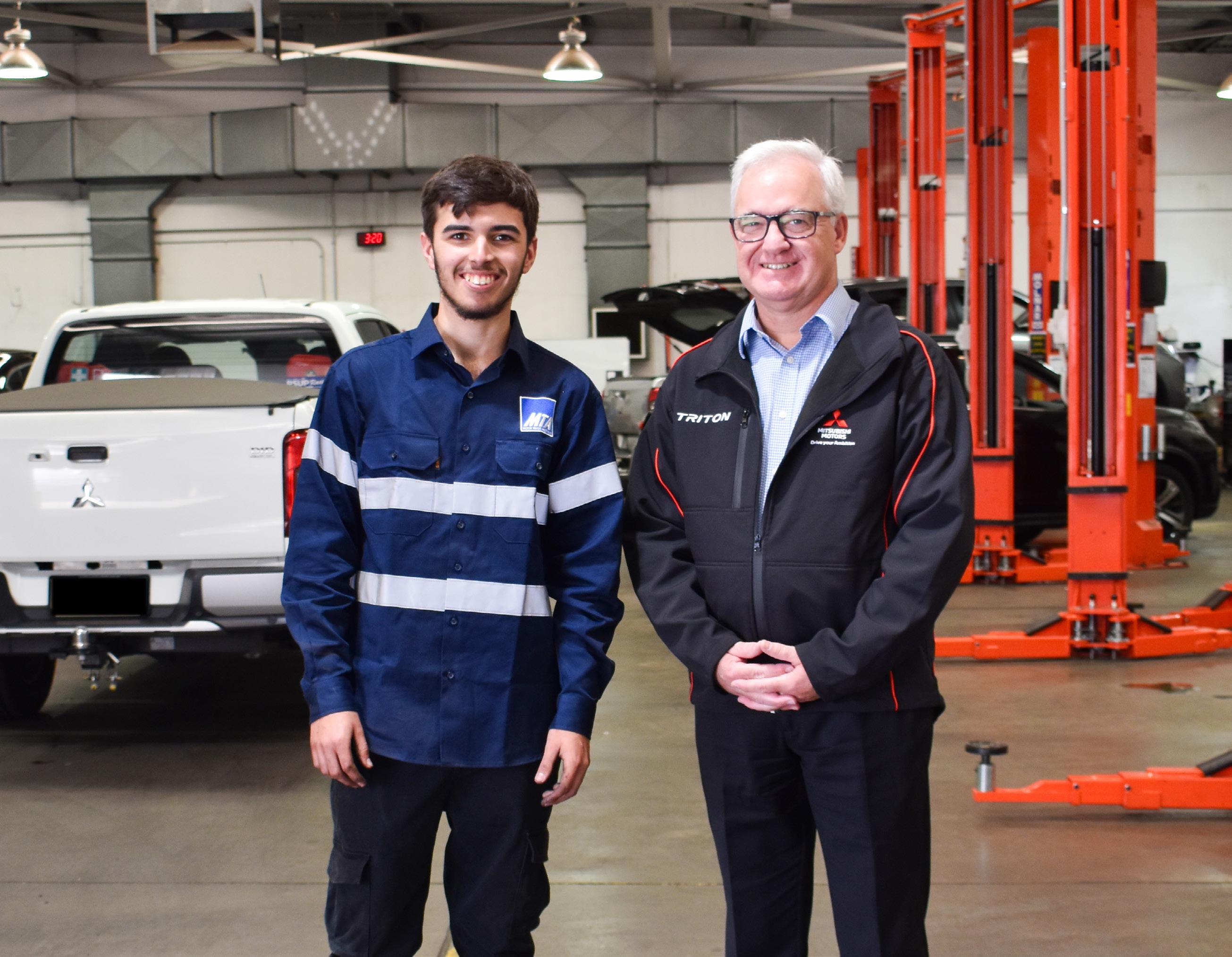
The MTA has apprentices across metro and regional SA available right now.
Why hire an apprentice through the MTA?
Our apprentices are put through a pre-employment job-ready program
We handle all the paperwork including payroll, claims and WorkCover
Uniform, tools and all PPE is supplied
Training programs will be designed to assist with planning your workforce
"We
Apprentices receive a dedicated Employment Officer plus ongoing mentorship from trainers and the MTA's mentor
No strings attached, you have the option to release your apprentice at any time and much more...
are very happy with the quality of apprentices that MTA are providing us. They are great young people with bright futures."
Nathan McEachern Car Service Manager - O G Roberts & Co
Australia is moving steadily towards allowing autonomous vehicles (AVs) to operate legally on public roads.
Next year - 2027 - is predicted to be a watershed year. It marks the move from consultation to the legislation that will enable AV deployment.
“Australia’s existing road laws accommodate SAE Levels 0-2 automation, where human drivers remain in control,” said Kaes Cillessen, General Manager Media, Marketing and Policy at Motor Trade Association SA/NT.
“But a pivotal shift occurred in November 2025 when Transport Ministers endorsed conditional AV operations for SAE Levels 3-5 starting 2027 in approved operational domains.”

States and territories will be required to align their enforcement, registration and insurance frameworks.
The National Transport Commission (NTC) is leading harmonisation efforts, embedding AV safety standards into the Road Vehicle Standards Act 2018 to streamline initial vehicle certification.
Australian Design Rules (ADRs) are also coming into line.
ADR 98/00 mandates car-to-car Autonomous Emergency Braking (AEB) in all new vehicles from March 2025, with pedestrian and cyclist detection following by August 2026.
“Clearly this has implications for the automotive industry,” said Kaes.
“While driverless deployment at scale remains distant, the implications for dealers, repairers, fleet operators and parts suppliers are substantial.
“It is also possible that workshops will see increased demand for retrofits, while parts suppliers pivot to AEBcompatible sensors and software.”
Regardless of the technology’s readiness, new legislation needs to be put in place before it can be used.
The proposed Automated Vehicle Safety Law (AVSL) would sit alongside, and amend, the likes of the Heavy Vehicle National Law Act 2012 and the Road Vehicle Standards Act 2018.
The AVSL is due to be finalised by late 2026.
Along with establishing a national regulator, it will shift safety liability from the human driver to the automated driving system (ADS) manufacturer or operator.
“While the focus is on the manufacturer, it may also include liability for aftermarket service providers,” said Kaes.
“Under this no-fault insurance model, where corporate entities bear costs for design flaws, over-the-air update failures or domain exceedances, it directly impacts trade insurances and warranty claims.”
The industry potentially stands to gain from new services, such as maintenance of AV sensor arrays, radar/LiDAR replacements, validating software patches and “Over-The-Air” diagnostic tools that OTA (Over-TheAir) diagnostic tools remotely monitor and update software, normally via wireless networks.
The powers of the new national regulator will include:
the authority to mandate data sharing
investigation of systemic safety issues
enforce compliance across a vehicle’s entire service life.
“For workshops, this has practical implications; the regulator will have a view over how vehicles are modified, serviced and updated,” said Kaes.
“Aftermarket modifications that interfere with ADS functionality will almost certainly fall under scrutiny, and technicians will need a clear understanding of where their responsibilities start and end.”
Australia’s vehicle fleet is already on the automation pathway. For example, Advanced Driver Assistance Systems (ADAS) - including adaptive cruise control, lane keeping and automated parking - are now common across many new models.
The transition will be gradual rather than sudden. Estimates vary but 2030 has been mooted as a date when SAE 4-5 will be seen in capital cities.
AVs open lucrative niches: calibration bays for 360-degree sensor suites, cybersecurity audits against hacking vulnerabilities, and telematics platforms for predictive maintenance.
Recalibration after even minor collision repairs will become mandatory and technically demanding.
Experts consistently note that autonomous systems already perform extremely well in most driving scenarios.
However, the “last one per cent” remains the hardest technical challenge. Until governments are comfortable with the residual risk profile, widespread Level 4 or Level 5 deployment will remain gradual.
The next 18 months will be defining. State and territory governments must pass complementary legislation before conditional deployment can begin, and the pace of that process varies considerably. South Australia, Victoria and Western Australia have been the most active in trialling AV technology and are expected to move faster.
Overseas, Waymo’s robotaxis have been operating in US cities since the early 2020s. They have consistently recorded significantly fewer injurycausing collisions than human drivers in comparable conditions.
Germany passed legislation in 2021 allowing Level 4 autonomous vehicles to operate on defined public roads without a human driver.
It is now moving from trials to early commercial deployments, particularly in automated shuttles and logistics, providing a regulatory model closely watched by Australian policymakers.
For the automotive industry, the message is clear. Autonomous vehicles are not arriving overnightbut like EVs, they are coming.


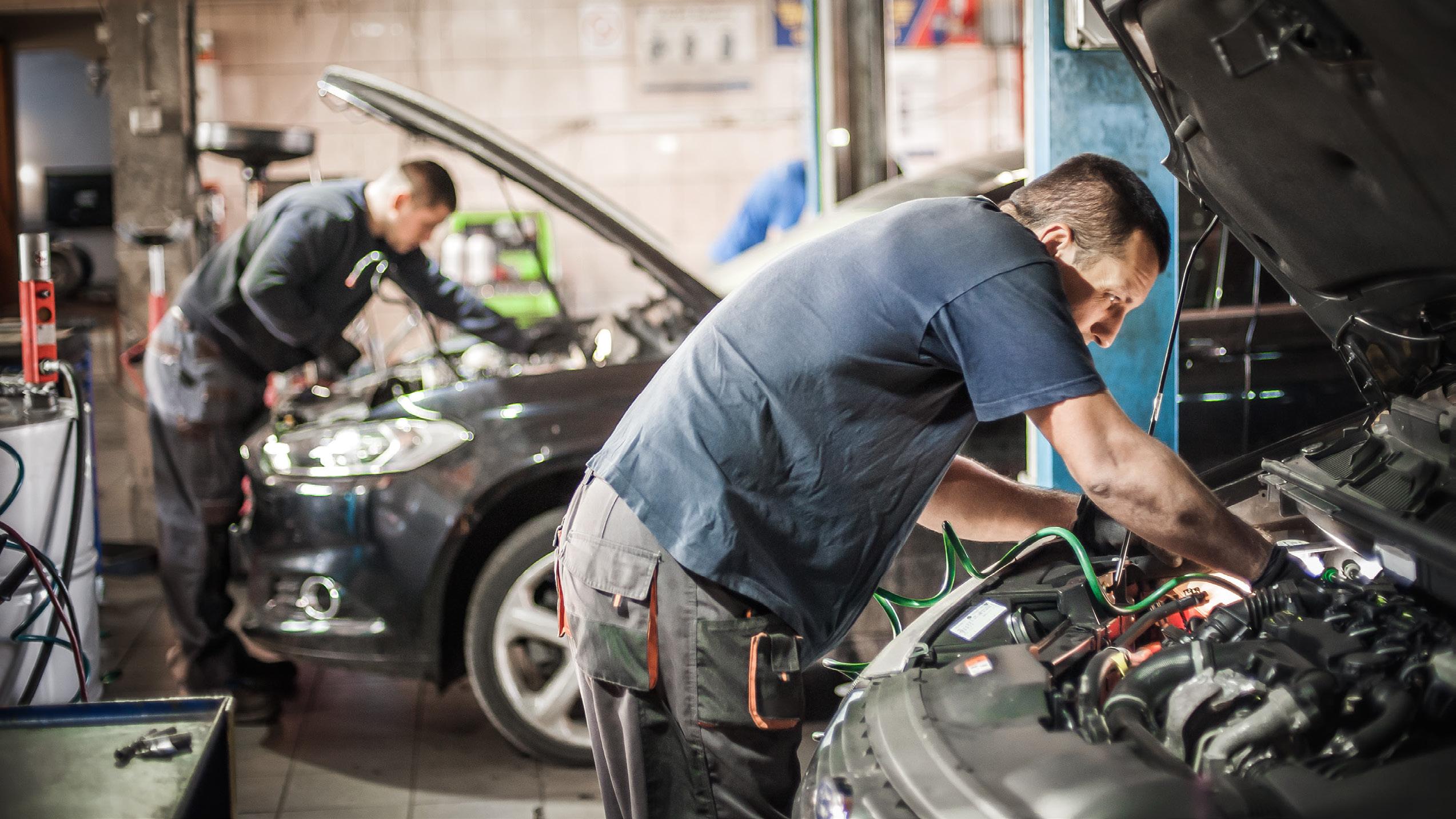
Why open a Penrite trade account:
▪ Trade-only pricing to improve your bottom line
▪ Trade-exclusive oil range built for modern vehicles
▪ Fast, reliable national supply when you need it
▪ Proven performance that keeps customers coming back Now’s the time to switch.
Open your trade account today!
*Terms &



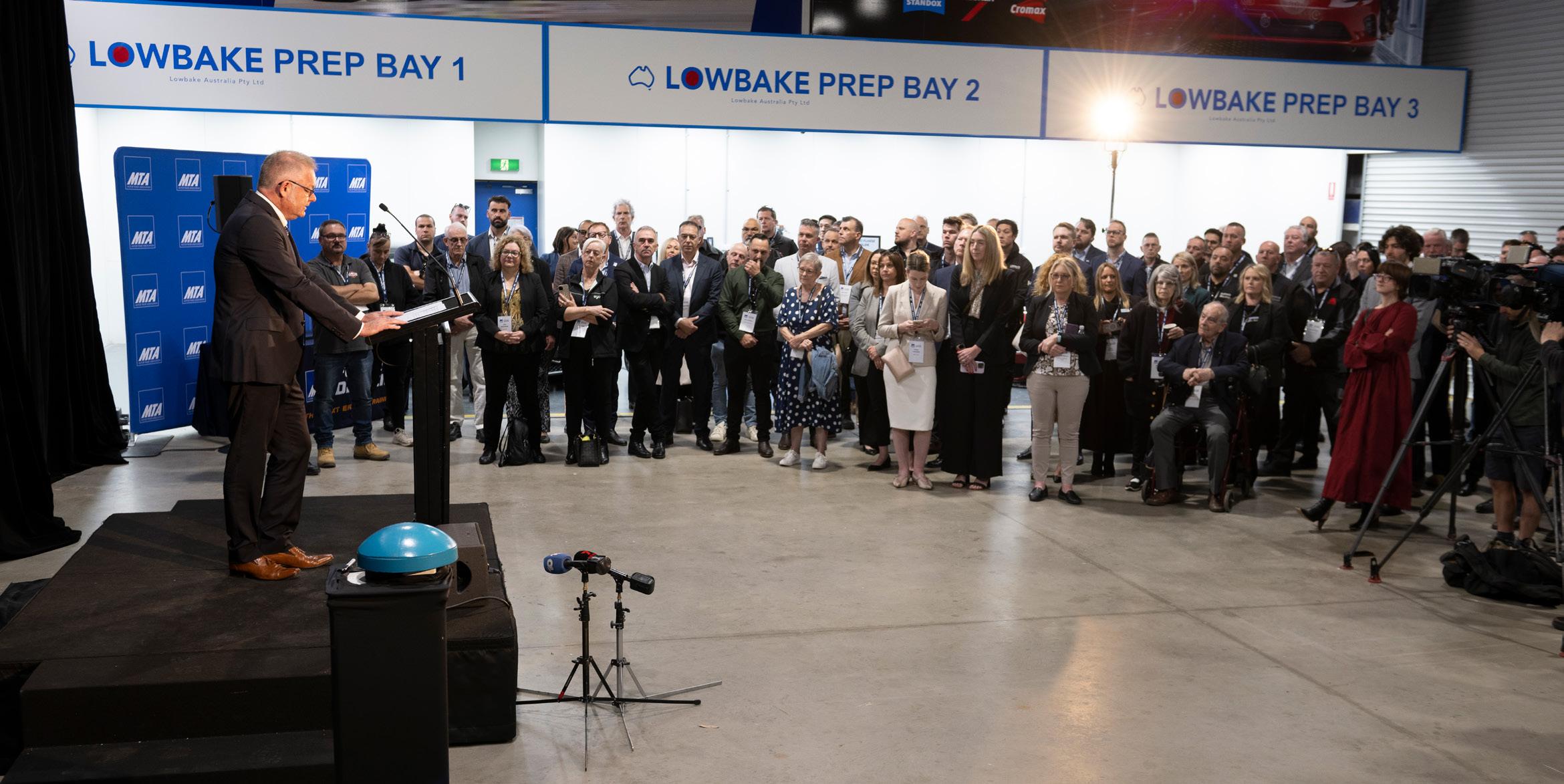
Lowbake prides itself on being Australia’s leading provider of spray booths and paint shop equipment.
It has designed, manufactured and installed more than 3,500 booths since its founder Mark Williams bought a shelf company in 1988, originally known as Tiptown.
Lowbake, a name describing the method where their oven temperatures do not exceed 70°C, now sells its products worldwide. This includes New Zealand, USA, Malaysia, Thailand, Solomon Islands and Papua New Guinea.
Its customers extend beyond the automotive industry into aerospace
and defence, agriculture, industrial equipment manufacturers and electric motor suppliers.
Yet some of its strongest business connections for this Victorian familyowned company remain in South Australia.
Its links with the Motor Trade Association SA/NT extends beyond the past decade.
Late last year, Lowbake delivered and commissioned two electric-gas hybrid-fuelled booths for for MTA Training and Employment allowing apprentices to complete their training with state-of-the-art energy-efficient technology.
In fact, Lowbake’s fledgling footsteps were taken in SA.
“The first spray booth this company ever produced went to Stefan Crash with ID number 0001,” said Mark’s son Paul, now the Technical Director of the company.
“We had a fantastic salesman named Reg Ellis who was based out of South Australia.
“Mark had a very good relationship with Reg from a previous career.
“Mark focussed on the manufacturing side of the business and Reg sold it. He had a wonderful connection with the industry in South Australia.”
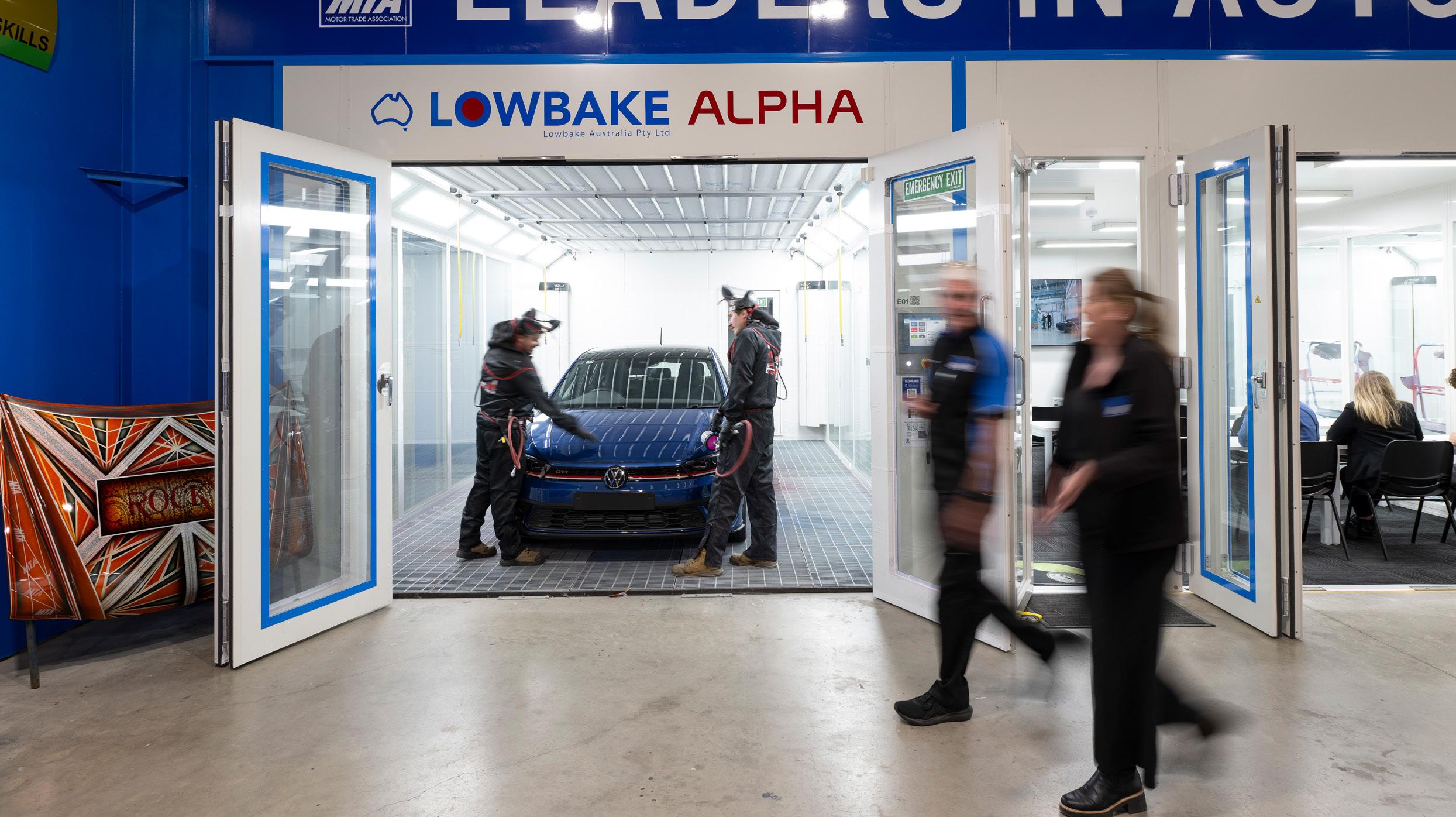
Mark remains managing director of the company but Paul said his role has evolved to the point where he now “does what he wants, not what he has to”.
It’s left Paul to run the day-to-day operations of the business with his brother and CEO, Chris.
“Mark is like the nutty professor coming up with weird and wonderful things for the business; new technologies that he thinks our customers might benefit from,” he said with a laugh.
The introduction of automation has been a key pillar of Lowbake’s business model.
Since the early 2010s, Lowbake’s
booths have featured back-to-base monitoring.
“We have two software engineers who sit up here every day and monitor all our equipment, whether it be in Australia or around the world,” Paul said.
“We rely on remote connection to diagnose, support and even just to check in.
“And we’re constantly doing software upgrades.
“It’s all about developing the product to make it better than what it was yesterday.
“To not have a piece of equipment operating, that’s a break in the chain.
“For a lot of our customers, you can
lose $2000-$3000 an hour if the equipment is down and you might be talking 3-4 days to get a technician there and then to get the part and have it installed. That’s a substantial hit.”
Lowbake saves its customers’ time and money by circumventing that process.
It also uses its remote capabilities to assist apprentices at the MTA.
“Relying on technology to offer that support without even being there is paramount to the school.
“They’ve got so much pressure from employers within the industry and from government to deliver training programs, it’s critical to them. If they can’t deliver, that’s a big issue.”

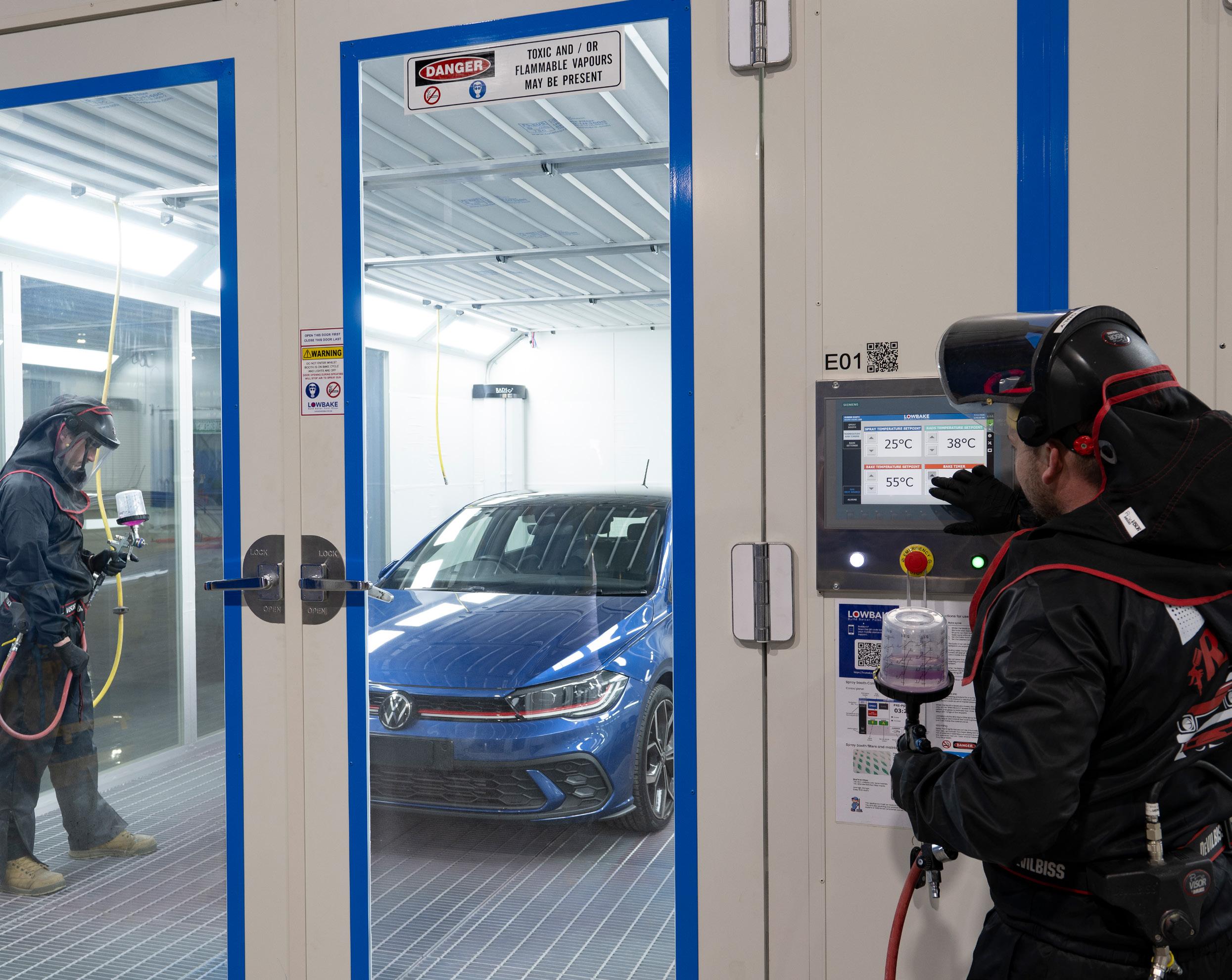
Lowbake is already investing heavily in the next phase of its technological development.
AI features are expected to be integrated within the next 12 months. “We’ve all acknowledged the power of AI not as a replacement but as a tool. There are some tools that do things better than humans can, so watch this space.”
Paul said it is all part of the company’s determination to remain at the cutting edge.
“You don’t actually notice the long history of little decisions we take to make the overall design what it is.
“It’s those little one percenters, whether it be in the design of the fans, our controls, our touch screens or just the simplistic nature for the operator.
“All those little bits and pieces make the booth last that much longer.
“We never stop engineering our products, we refuse to stop developing. I think that’s pretty critical to our business and I think the MTA is a prime example of that.
“We continue changing and part of our ethos is to give the tools to our customers so they remain ahead of the game for the next 20-30 years. That’s because we understand these booths are significant capital investments. You can’t just go and buy another one tomorrow.”
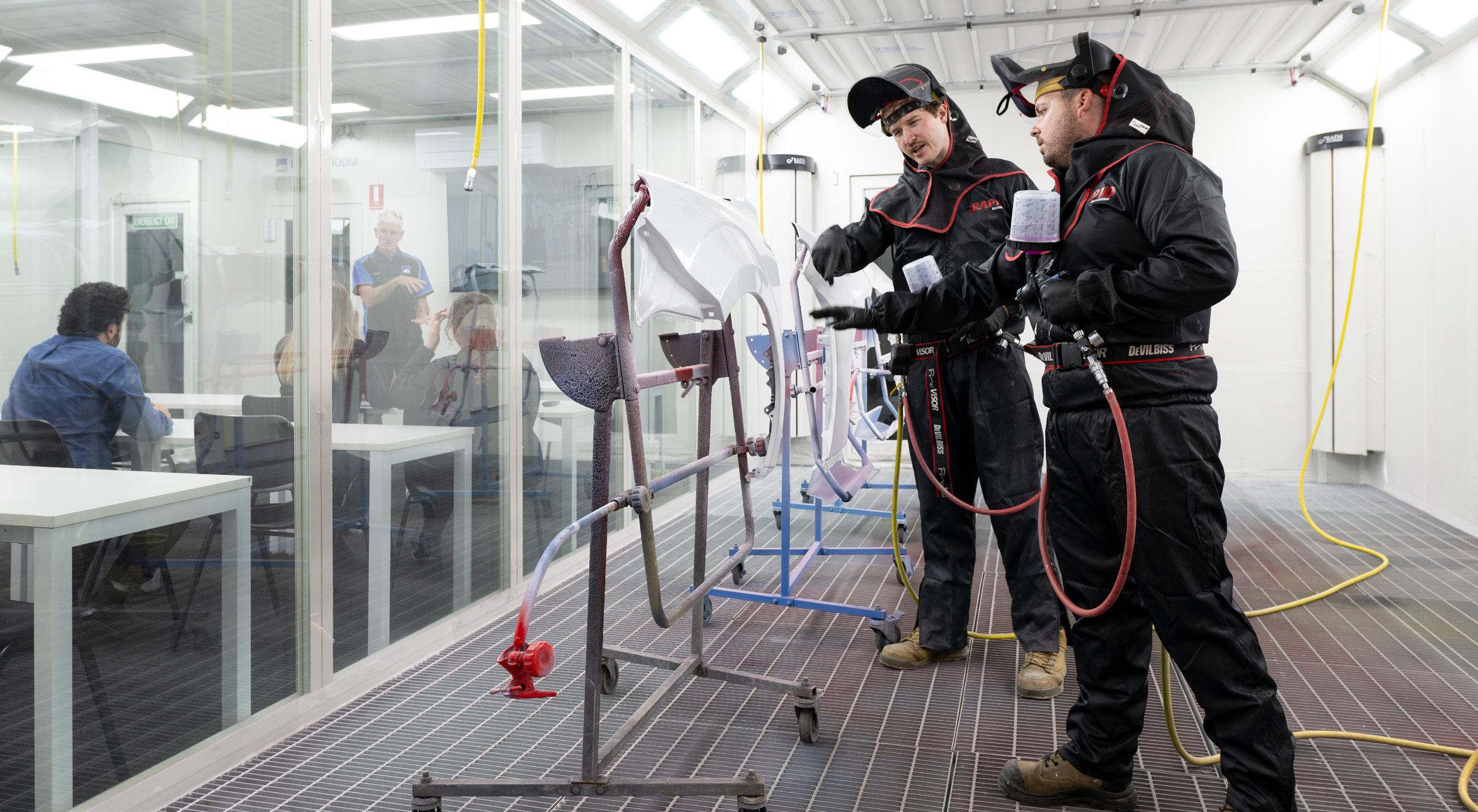
But Paul said Lowbake will never make change simply for change’s sake.
“I’m a big believer that if you’re putting a touch screen on a booth, you don’t want to just simulate a button because to be honest, an old school push button is better than a touchscreen will ever be.
“It’s easier to clean, it’s easier to fix, it’s easier to get a spare part.”
Rather, modifications are only added to improve the overall functionality of their systems and reduce the burden on the operator.
“Our operating panels are intentionally simplistic.
“We don’t want our customers to need five days of training, a certification and a degree to operate them,” said Paul.
“We stick to our core functionalitybut the intelligence is what is going on behind the panel.
“The system is making decisions for the operator so they don’t have to.
“The operator shouldn’t have to focus on whether they have to change or modulate the temperature because the day is hot.
“Or whether they should change the cabin pressure because their exhaust filters are getting blocked.
“We take that away from them so they can focus on getting on with the job.”
Batteries are the most valuable component of an EV - and yet they are also the greatest unknown.
Accounting for up to 50% of a vehicle’s value, a battery’s true condition has been notoriously difficult to measure.
Opportunity breeds invention and an Austrian battery diagnostics company, AVILOO,[DJ1.1] has developed a data-driven diagnostics platform that provides an independent assessment of EV battery health.
Battery health is inconsistent across brands, making it difficult to assess value with confidence. AVILOO creates a standardised, independent measure, setting a common benchmark across all EVs.
And it’s fast!
AVILOO has two primary test types:
Fast and scalable, it is designed for high-throughput environments such as workshops and dealerships
Conducted with the vehicle stationary
The plug-and-play process takes three minutes. It is deliberately simple and described as “plug and play”:
1. Connect the AVILOO Box to the vehicle’s onboard diagnostics (OBD) interface.
2. Test runs automatically
3. Certificate is generated and emailed.
The test uses predictors such as vehicle age, mileage and charging behaviour to estimate battery condition quickly and accurately.
This is more of a forensic tool, providing a deep diagnostic analysis. It analyses the battery over a full discharge cycle, records highresolution data and then delivers a detailed technical report
The test analyses the battery over a complete discharge cycle, collecting:
Current flow
Cell voltages
Temperature behaviour
Time constants and resistance
The result is model-specific “cell-level diagnostics”. Instead of averaging battery performance, it identifies the weakest cell, which determines the overall condition (EV batteries are only as strong as their weakest component). A single degraded cell can limit performance, range and safety.
AVILOO models a range of factors such as internal resistance, voltage curves and balancing behaviour to determine true battery condition at a granular level.
Once collected, the data is transmitted to AVILOO’s cloud-based database. Rather than relying on manufacturer data, it has developed a bank of “manufacturer-independent battery field data” from a wide range of vehicles.
This is important because battery behaviour is not linear. It is influenced by factors such as temperature, how a vehicle is driven and how it has been charged.
By benchmarking against thousands of vehicles, AVILOO moves beyond theoretical estimates to real world data.
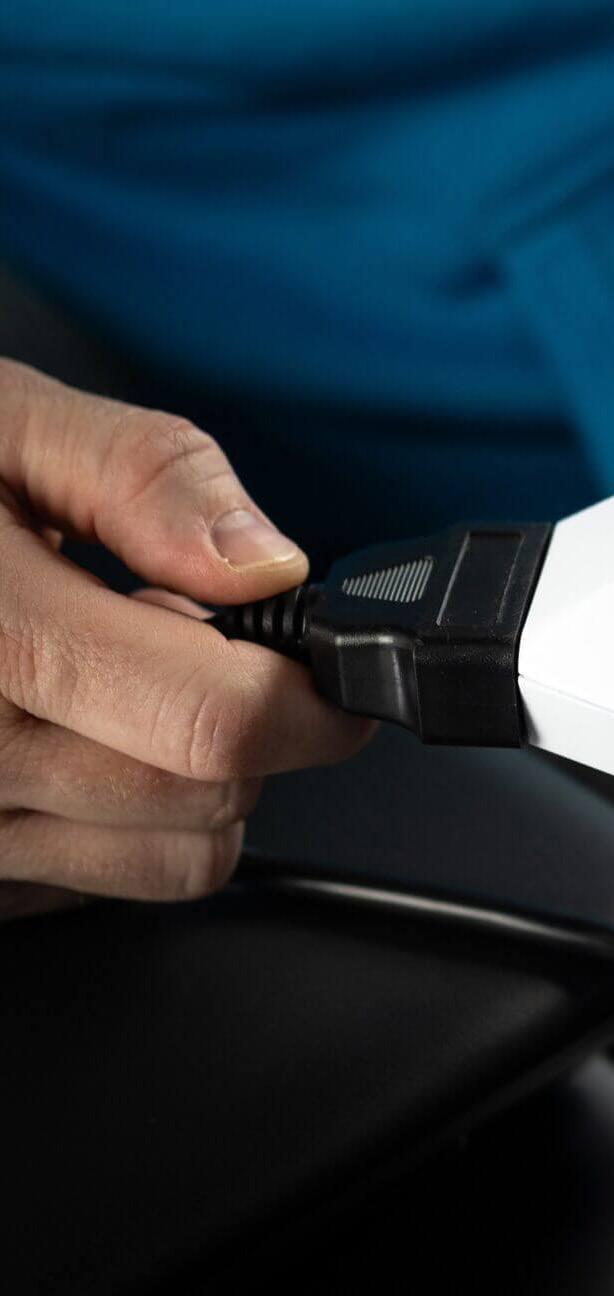
Most vehicles already display some form of State of Health (SoH), but these are based on manufacturer algorithms that can vary widely and may not reflect real-world usable capacity.
The benefits of the new technology include more accurate pricing (less guesswork) and faster decisionmaking. Also, by identifying hidden degradation or weak cells early, you avoid costly warranty issues.
AVILOO’s approach is to bypass these limitations by:
1. Extracting raw vehicle data
2. Comparing it to a large proprietary database
3. Analysing it using its own models
4. Producing a standardised certificate
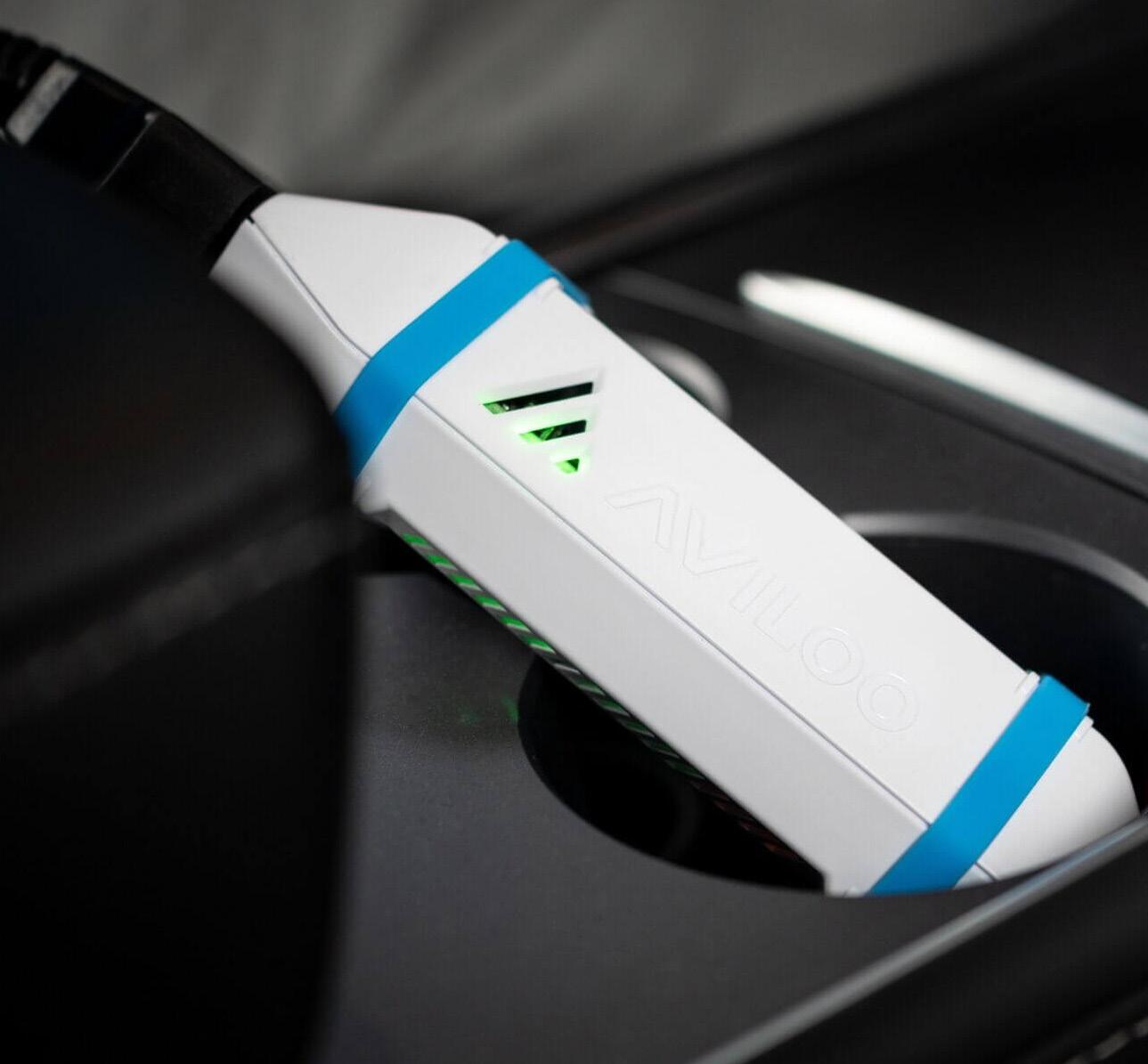
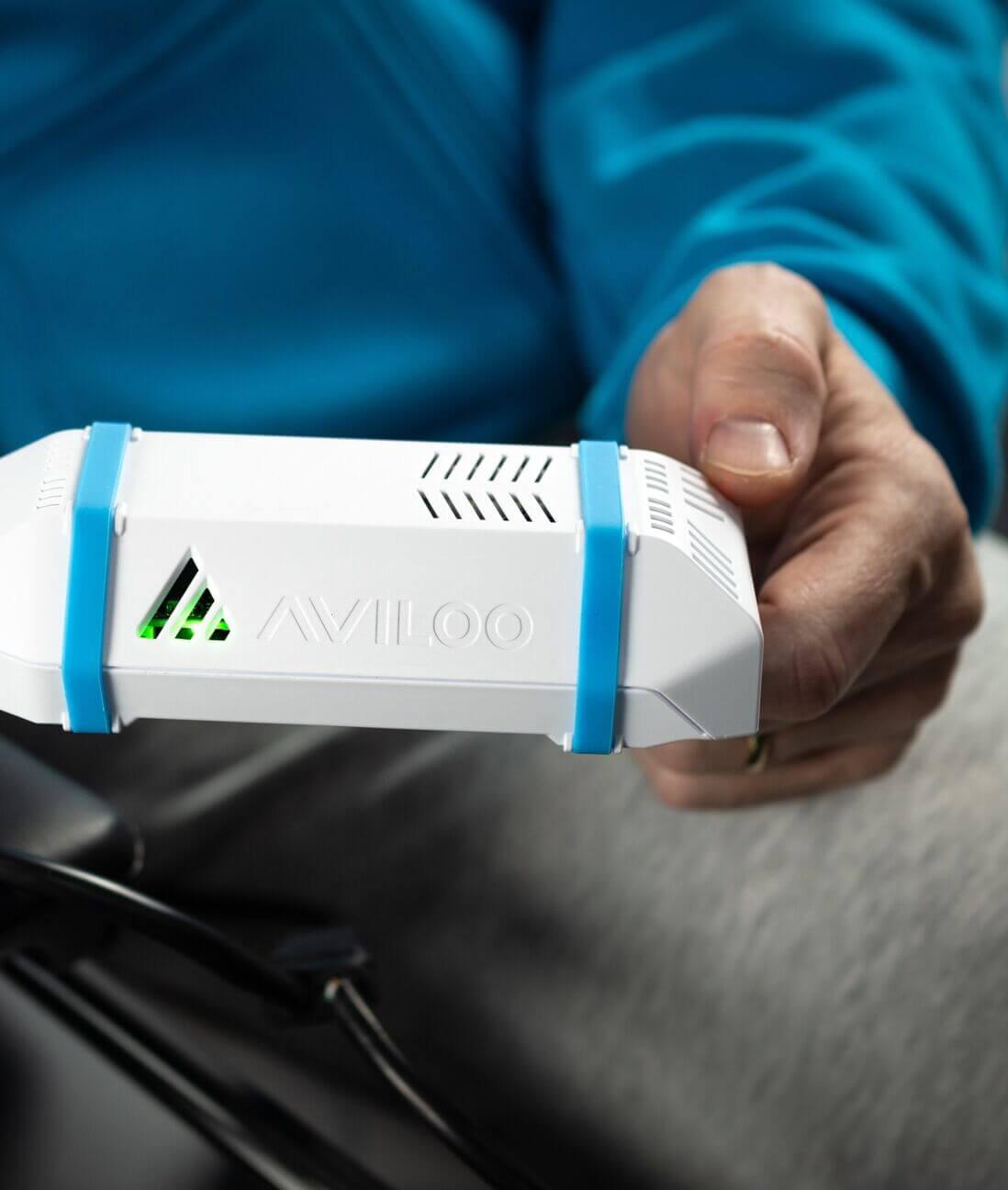
Rather than relying purely on traditional SoH, AVILOO uses its own metric: “State of Certified Energy (SoCE)”.
This is based on usable energy (kWh) and standardised to World harmonised Light vehicle Testing Procedure (WLTP) conditions. It is also calculated at cell level.
“Our goal is to precisely represent a vehicle’s actual range… transparent, traceable, and independent,” the company says.
The final output is the AVILOO Battery Certificate, which includes:
State of Health (SoH/SoCE)
Remaining capacity
Degradation level
Charging behaviour
Temperature performance
Fault indicators
Cell imbalances
Identify defective modules
What AVILOO ultimately delivers is not just a test, but a new layer of trust in the EV ecosystem.
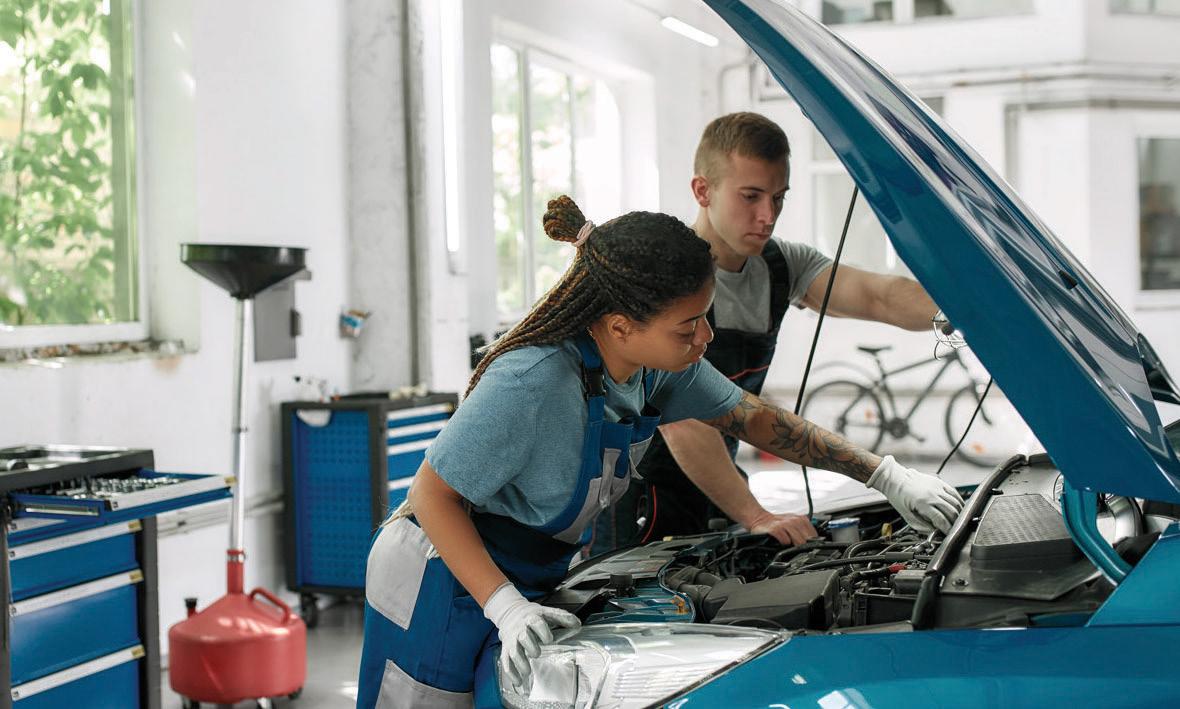
With Commonwealth Bank, MTA SA/NT members can receive special discounts on EFTPOS solution.
We can also offer a customised comparison^ of your current merchant service to Commonwealth Bank’s merchant solutions, to help you discover which product is right for you. We have flexible terminal and pricing options to suit your needs today and that can change with you in the future.
To find out how much you could save with Commonwealth Bank, contact MTA SA/NT on 08 8291 2000 or email mta@mtasant.com.au and they’ll put you in touch with a Commonwealth Bank Relationship Manager.


A new generation of EVs is about to roll onto Australian shores.
Among the highly anticipated arrivals are the Toyota HiLux BEV, as Australia’s best-known ute goes electric, and the Range Rover Electric in the luxury category.
With high performance Jags, fastcharging KIAs and the ultra-cheap BYD Atto, it promises to be an exciting 24 months.
Even before petrol prices soared during the Iran war, interest was growing in the emerging long-list of alternatives.
Approximately 158,000 EVs were sold in 2025, up from about 114,000 in 2024, with annual registrations tipped to exceed 500,000 by 2029. As Australia’s EV pipeline expands dramatically, analysts predict that increased choice will continue to push down prices, fuelling further growth in the segment.
Australia’s EV market is growing –and growing up.
Lower prices, regulatory pressure and a rapidly expanding charging network mean the next two years could reshape the country’s vehicle landscape faster than any period since the arrival of the hybrid two decades ago.
Any further disruptions in oil supply will only add momentum to that shift.
Here’s what to watch for:
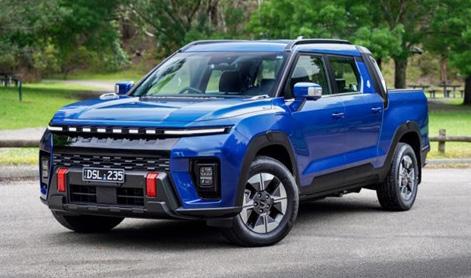
KGM Musso EV is South Korea’s first production electric ute from KG Mobility (formerly SsangYong). Built on a SUV-based platform, the Musso EV is powered by an 80.6 kWh battery, with both FWD and AWD versions available. It is capable of up to 400 hp, around 1.8 tonnes of towing and a driving range of roughly 420 km depending on the variant.

The KGM Musso EV is South Korea’s first production electric ute from KG Mobility (formerly SsangYong). Built on a SUV-based platform, the Musso EV is powered by an 80.6 kWh battery, with both FWD and AWD versions available. It is capable of up to 400 hp, around 1.8 tonnes of towing and a driving range of roughly 420 km depending on the variant.
The Jaecoo J5 BEV is a compact electric SUV from Chery’s Jaecoo brand. It is designed to blend offroad styling with modern urban mobility with its bold front fascia and upright stance. The J5 is all about efficiency and quiet performance at an affordable price point.
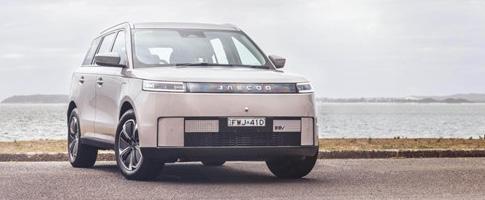
The Mazda 6e is Mazda’s all electric sedan. A mid-size EV that features a low, coupe-like profile and minimalist design, emphasising aerodynamics and premium styling. Inside, the 6e has a tech-focused cabin with a large infotainment display and digital driver interface.
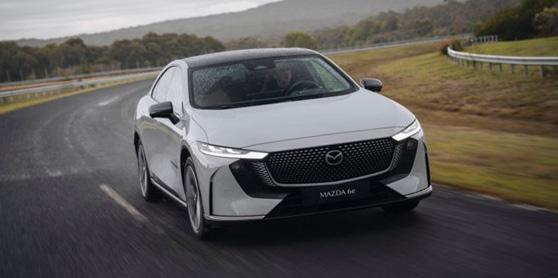
The Denza B5 is a rugged plugin hybrid (PHEV) SUV from BYD’s premium Denza brand. A bold and boxy design with strong proportions that is positioned as a more adventure-focused alternative to typical urban SUVs. The B5 uses BYD’s dual-mode hybrid system, offering a balance of electric-only driving for short trips and extended range with a petrol engine.
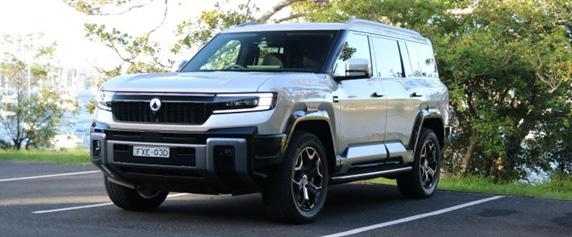
The KGM Actyon Hybrid is a mid-size SUV from KG Mobility, combining a modern coupe-like design with hybrid efficiency. It revives the Actyon name with a premium, urban-focused approach, the Actyon Hybrid has dual digital displays, connected features and a focus on comfort and practicality.

The Lamborghini Temerario is Lamborghini’s next-generation plugin hybrid super sports car, replacing the Huracán and marking a major step in the brand’s electrification strategy. It combines a high-revving twin-turbo V8 engine with multiple electric motors, delivering extreme performance along with improved efficiency.
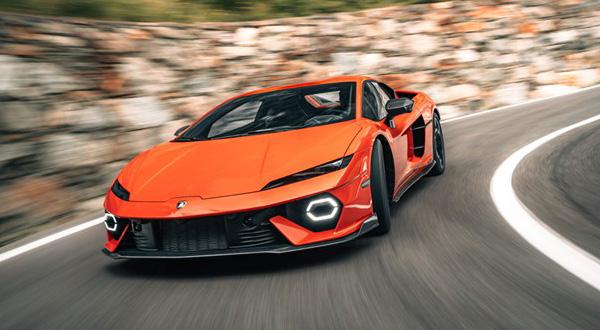
The Toyota HiLux FCEV is a hydrogenpowered prototype version of Toyota’s iconic pickup. It features three highpressure hydrogen tanks, a fuel cell stack, a battery, and a rear-mounted electric motor that delivers around 134 kW, 300 Nm of torque and an estimated driving range of about 600 km between refuelling.
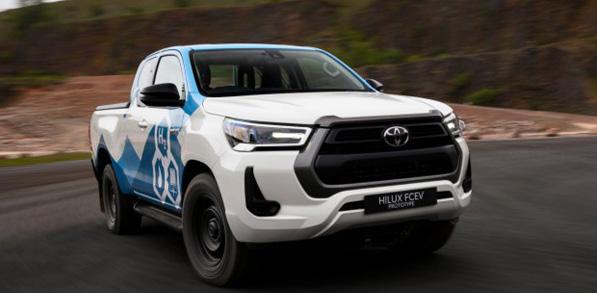
The Sealion 8 PHEV is BYD’s familyfocused flagship model. It combines the practicality of an SUV with advanced electrified performance, targeting rivals like the Kia Sorento PHEV and Toyota Kluger Hybrid. It is powered by BYD’s latest Dual-Mode hybrid system with a 1.5 litre turbo petrol engine. Higher-spec deliver up to 359 kW and 675 Nm, with 0–100 km/h in about 4.9 seconds.

The Frontier Pro PHEV is Nissan’s first electrified ute and a major step toward low emissions utility vehicles. It uses a 1.5 litre turbocharged petrol engine paired with an electric motor, producing over 300 kW and 800 Nm of torque for strong towing and offroad capability.
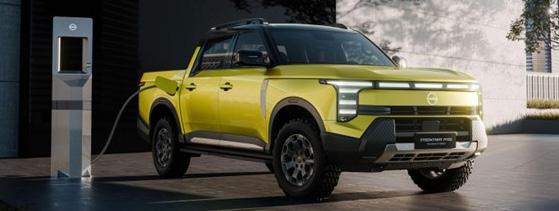
The MTA’s business partners provide exclusive discounts and benefits to our members. Join as an MTA member today to access these discounts as well as a range of free services, resources and advice.
Contact us on (08) 8291 2000 or email: mta@mtasant.com.au to enquire.


Unlock preferential rates on merchant fees, plus special access to a suite of business products and services tailored for growth and efficiency.

MTA OurAuto – 1300 441 474 ourauto.com.au
Access tailored insurance solutions through MTA OurAuto Insurance, delivered by Marsh. Cover includes liability, property, management, and cyber risk—designed specifically for automotive businesses with 20+ years of industry experience. Get a quote at ourauto. com.au or call 1300 441 474.

Officeworks
officeworks.com.au/campaings/mtasa
Enjoy exclusive savings and pricing benefits with a 30-day Officeworks Business Account— made for members looking to streamline their office needs.

Premium manufacturer of tools for automotive professionals, giving apprentices access to industry-standard equipment at discounted prices.

www.migrationsolutions.com.au
Access migration and workforce advisory services through Migration Solutions. MTA members can access support across employer-sponsored visas, skilled migration and training visa pathways to help address workforce shortages and skills gaps.
Access exclusive perks by joining or linking your existing Bunnings Trade PowerPass account, bringing more value and convenience to your business essentials.
Zembl - 1300 957 721 - zembl.com.au/ partner/motor-trade-association
Enjoy better energy pricing with Zembl, an energy price comparator that takes care of all the homework, legwork, and paperwork for MTA members. Just contact Zembl for a comparison and start saving.

Myenergi – 1300 743 443 myenergi.com/au/mtamembers
Take charge of energy efficiency with memberonly discounts on myenergi chargers, including the popular zappi range.
“I’ve saved more money through MTA’s business partners than the cost of my membership.”
– Michael Phillips Gawler Caravan Centre

Solar Wholesalers – 8391 6602
Solar Wholesalers, a trusted SA business with over 15,000 installations, now offers MTA members exclusive pricing on Sigenergy batteries and 3-phase controllers. All work is completed by their in-house team. Express your interest via the Solar Wholesalers –Expression of Interest form.

St John Ambulance SA – 1300 78 5646 stjohnsa.com.au
Prioritise safety with discounted first aid training, 15% off first aid kits, plus restocking and defibrillator saver bundles.

Capricorn – 1800 EASIER (1800 327 437) - capricorn.coop
Join Australasia’s largest automotive cooperative! Gain access to everything from quality parts and diagnostics to finance solutions and business protection, all designed to support your success.

Lane Printing – 8179 9900 orders.mta@laneprint.com.au
Save 20% on all print products (excludes other offers) and bring professional quality to your branding materials.
CareSuper – 1800 005 166 caresuper.com.au
Tap into expert superannuation support with dedicated advisers to help you and your team stay compliant and well-informed. Simplify employee contributions with our secure clearing house—making super hassle-free!



The MTA is here to help your business prepare for the future.
Join the MTA EV Ready Program, designed to assist your business in attracting new customers by signaling your readiness to service and repair hybrid and battery electric vehicles.


Scan the QR code, or visit qrco.de/bekwC8, for more information and eligibility criteria www.mtasant.com.au | mta@mtasant.com.au | 8241 0522