
POLISH FOREIGN POLICY STRATEGY
2026–2030

For the foreseeable future, Poland will conduct its foreign policy in an international environment that has become significantly less stable and considerably more unpredictable. After decades of relative peace, security has once again come to the forefront. Russia’s invasion of Ukraine has fundamentally reshaped perspectives on international politics across Europe. For Poland, the war has become the central reference point for long-term strategy. The fundamental principle that underpinned the international order—respect for the territorial integrity of states—has been violated.
We are under no illusions: regardless of how the war in Ukraine unfolds, Russia will remain a threat to all of Europe until there is a regime change in Moscow, or the Kremlin abandons its ambitions to rebuild an empire. We hope that change will come, but hope is no substitute for strategy. That is why Poland must prepare for a prolonged period of heightened security risks.
Our response should be to strengthen our own defence capabilities and deepen relations with like-minded partners. A crucial component of foreign and security policy is broadly understood concept of societal resilience. This includes countering Russian propaganda and disinformation, as well as providing citizens with a transparent and accurate assessment of the scale and nature of the threats faced by the state. The aim is not to instil fear, but to raise awareness: society must be ready for more challenging times and less vulnerable to manipulation.
Nostalgia for a world that will not return is no substitute for strategy. The international order as we have known it for decades is unravelling. We do not yet know what will
replace it, but we do know that we are living through a period of profound transformation. These shifts are being driven, among other factors, by an ongoing technological revolution. As with previous groundbreaking innovations, advances in AI may dramatically alter the global balance of power. They might, however, provoke a severe market crash, with equally serious economic and political consequences.
Nearly everything we recently took for granted—from the rules governing international trade to the durability of alliances—is now being questioned. Poland enters this period as a far stronger country than it was 40 years ago. We have come a long way from a bankrupt communist regime to becoming one of the world’s largest economies.
Nevertheless, Poland remains a medium-sized state, meaning that our strength must derive not only from our own resources but also from a robust network of international partnerships. This is particularly important in a globalised world where distance has ceased to matter and events on the other side of the globe can directly affect the situation at home. As one of the world’s 20 leading economies, Poland cannot shirk its international obligations and commitments.
This does not imply that Poland should seek to engage in every region of the world. It means we should act wisely in setting priorities and focusing on areas where we can make a real change. Foreign policy is not a task for idealists, but neither should it be entrusted to extreme cynics. We must combine our values with a sober, pragmatic pursuit of national interests.

I. Introduction: A Strategy for a Time of Great Change
The new medium-term strategy for Polish foreign policy (PFP), formulated in the mid-2020s, must address exceptionally difficult challenges. Compared with the previous strategy covering 2017–2021, the current document reflects a far more complex and unpredictable international environment. Factors influencing this new situation include:
• Ru ssia’s full-scale aggression against Ukraine, which has undermined the security of Europe;
• destabilisation and armed conflicts in other regions, which may indirectly affect Poland’s security by absorbing the attention and resources of key allies, primarily the United States;
• as pirations of certain states to revise the existing international order, resulting in violations of international law and the growing use of both military and economic instruments as tools of foreign policy;
• escalating hybrid and cyber threats, including those involving the use of modern technologies for Foreign Information Manipulation and Interference (FIMI);
• th e growing appeal of ‘strongman’ rule among citizens of democratic states, based on the conviction that authoritarian power can ensure order and restore control over rapid social, economic and technological change;
• acceleration and intensification of adverse global trends, especially widening economic and demographic imbalances that fuel migration pressure;
• the energy revolution and emergence of artificial intelligence;
• cl imate change and challenges it poses to sustainable development and public health, which require a globally coordinated response.
The processes outlined above create opportunities but also open new fronts of competition. They are all open-ended and may intensify over the period covered by this strategy. The direction, pace and broader implications of developments in fields like AI cannot be predicted with confidence today. Consequently, the assumptions underpinning this document, as well as the objectives, priorities and actions identified herein, will require constant verification.
The new strategy maintains a set of fundamental principles guiding the Polish government in formulating national interests. These include:
• a set of values rooted in Western civilisation, including respect for human and civil rights, democracy and the rule of law;
• recognition of the fundamental importance of European and transatlantic cooperation;
• Eu ropean integration perceived not as a threat to national sovereignty but as a historic development opportunity, a pillar of security, and an instrument for increasing Poland’s influence on the global stage;
• a balanced concept of transatlantic relations seen as co-existent with the European project rather than as an alternative to it;
• an a spiration to foster friendly and constructive relations with neighbouring countries, preserving memory of an often difficult past while maintaining a clear focus on the present and the f uture;
• respect for other cultures and political systems, provided they accept a set of f undamental principles governing international relations.
II. Poland’s Foreign Policy Interests and Priorities
Foreign policy serves to fulfil the Republic of Poland’s fundamental national interests, the most significant of which is ensuring security through the State’s political continuity, territorial integrity, sovereignty and internal stability. Security is a necessary precondition for a St ate to develop – in the political, economic, health and social dimensions of the term – and to strengthen its international position.
Poland’s national interests determine its foreign policy priorities. For the years 2026–2030, these are defined as follows:
• ma intaining a strong position within the European Union while bolstering the EU’s global role and leverage. The EU is understood here as a vehicle for Poland’s development and for increasing its agency on the international stage;
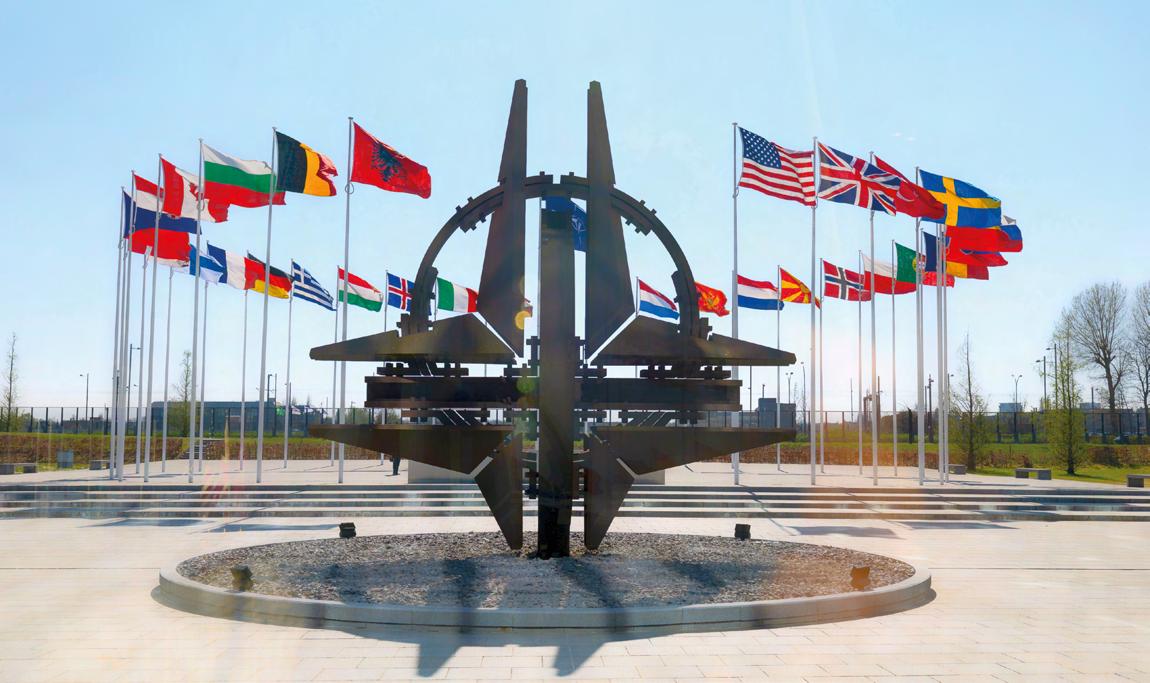
• co nsolidating and reinforcing Poland’s role in NATO as a strong and credible ally with influence over the Alliance’s strategic decisions;
• developing security and defence cooperation with the US, as well as bilateral and regional cooperation with key EU partners
and select non-EU states (including Canada, Norway, Ukraine, and the Republic of Korea). Particular emphasis will be placed on cooperation in the defence industry and on the development of new technologies that enhance interoperability and enable rapid response capabilities in crisis situations;
• st rengthening the EU’s eastern border and NATO’s eastern flank;
• employing public diplomacy to support the Polish economy through pragmatic development cooperation, active engagement with the Polish diaspora (Polonia) and Poles abroad, and improving Poland’s international image;
• collaborating with international organizations to counter disinformation and manipulation by strengthening societal resilience and institutional awareness.
Poland is a country with a proud history, an open society, and a dynamically developing economy. Yet it is also a medium-sized state with a limited potential to independently shape the international environment.
This means the most favorable setting for pursuing Polish national interests is an international order grounded in the primacy of law and upheld by stable, collegial international institutions.
Poland is both a co-creator and a beneficiary of the current multilateral international order, based on the United Nations Charter. Acting to maintain this order and the institutions that serve it is a fundamental objective of Polish international policy. This does not negate the need for reform. The priority is to strengthen the EU and NATO. It is also vital to improve the effectiveness of the United Nations system and especially of one of its principal organs – the Security Council – so that it can respond effectively to global challenges and be more representative of the world community. Poland will also strive to maintain regimes for arms control and the non-proliferation of weapons of mass destruction.
By 2030, Poland should expect to play a key role in regional stability. Its strategic objective is to continue among the EU’s fastest-growing economies while becoming a pillar of Europe’s military and economic security. Furthermore, Poland should strive to serve as a model of effective democratic governance, thereby inspiring other nations which embark on the path of profound political and economic reform.
III. Security
1. MAIN SECURITY THREATS
The most serious threat to Poland would be an attack by the Russian Federation against a NATO member state. Such an attack could be motivated, inter alia, by an intent to challenge the international institutions and alliances upon which Poland’s security is founded. Russia has been identified by the North Atlantic Alliance as its most significant threat, and there are currently no grounds to alter this assessment. Further Russian aggression is not a foregone conclusion, however; preventing it is one of Poland’s priorities. Our ability to eliminate this threat will depend on several factors: 1) the outcome of the Russia–Ukraine conflict; 2) the determination of Poland and its allies to build credible deterrence and defense capabilities; and 3) preventing conflicts elsewhere that Russia might exploit as opportunities for escalation.
Russia is waging a hybrid war against Europe. Its methods include sabotage, subversion, weaponized migration, cyberattacks, and disinformation.
ternational law, including the territorial integrity and sovereignty of states. Any action taken to revise borders – whether by reverting to a “Concert of Powers” or trying to subordinate smaller states to stronger patrons through “spheres of influence” – undermines these foundations. Already we observe the growing influence of authoritarian states which assert the primacy of force in international relations. The most glaring and dangerous manifestation of these trends is Russia’s aggression against Ukraine. In this war the future of Ukraine as an independent state and the credibility of the international order based on the rule of law, and thus the cohesion of the broadly understood West, are at stake.
The global security system established after 1945 is based on recognition of the rules of in-
Parallel to the military invasion of Ukraine, Russia is waging a hybrid war against Europe. Its methods include sabotage, subversion, weaponized migration, cyberattacks, and disinformation in an ever-expanding arsenal of activities that fall below the threshold of conventional warfare. Irrespective of developments in Ukraine, Poland cannot assume that these activities will diminish in intensity. Pre-
venting them requires a coordinated effort by European states.
The need for collective action is evident within the cybersecurity realm and the information and cognitive domains, where the threats are cross-cutting, affecting both the military and civilian sectors, public and private alike. Countermeasures must aim to protect critical infrastructure, supply chains, and the industrial base of strategic sectors, as well to preserve the broader societal attitudes and norms that underpin democracy. Like other nations targeted by such attacks, Poland cannot afford to just play defense. It must also have the capability to act pre-emptively against potential perpetrators.
We are also faced with a crisis in arms control, where agreements limiting nuclear and conventional arsenals – which for decades provided a high degree of stability and predictability – are now breaking down. Recent years have seen the termination of many key pacts on arms control, including the Intermediate-Range Nuclear Forces (INF) Treaty, as well as growing uncertainty over the future of the New Strategic Arms Reduction (START) Treaty. Meanwhile, the Organization for Security and Co-operation in Europe (OSCE), established to strengthen the European security system, is facing serious challenges. Growing uncertainty regarding alliance guarantees may prompt further states to seek additional safeguards, potentially including nuclear capabilities.
Poland’s security is also seriously undermined by instability in Africa and the Middle East. Humanitarian crises caused by conflicts, which translate to humanitarian crises in Europe’s Southern Neighborhood, are a major factor behind the challenges posed by migration pressure and political and religious fundamentalism. The situation in the Indo-Pacific will increasingly affect Polish and European security as well. A major conflict in the region would have a significant global impact on politics and the world economy. In a worst-
case scenario, it could even encourage Russia to escalate its aggression in Europe.
2. SECURITY ISSUES IN POLISH FOREIGN POLICY
The North Atlantic Alliance
In a complex international landscape, membership in the North Atlantic Treaty Organization plays a pivotal role in ensuring Poland’s security and safeguarding the stability of Europe. NATO is not merely an instrument of military defense; it is also a symbol of international solidarity and a community of values.
Ensuring the Alliance’s effectiveness and adapting it to a fast-changing environment are both critical. The rapid development of new military technologies, cyber threats, Russia’s imperial ambitions, and an increasing US focus on the Asian theatre of operations pose challenges that require a comprehensive NATO response.
The most significant medium-term challenge will be to sustain enough international support for Ukraine to keep defending itself and stabilize the country sufficiently to enable its reconstruction and the return of at least some refugees. However, any potential deployment of NATO peacekeepers to Ukraine must not undermine the credibility of alliance security guarantees to Poland and other member states.
Transatlantic Relations
In the realm of security and defense, this strategy assumes the US will remain the leader of transatlantic cooperation due to its superior military potential and its long-standing commitment to preserving peace and stability in Europe.
At the same time, it should be acknowledged that this partnership could be weakened by
ideas gaining traction in public debate on both sides of the Atlantic. Some argue that the US should limit engagement in areas not directly tied to its core interests, while others contend that European efforts to build “strategic autonomy” in security and defense could undermine transatlantic ties. These debates transcend the views of individual politicians and the duration of their terms of office, and should therefore be addressed within the framework of a comprehensive, multi-year strategy.
Poland will consistently support mutually beneficial cooperation between Europe and the US. It does not shy away from measures to enhance the capabilities of European states and ensure fair sharing of the defense burden. However, steps to bolster NATO’s European pillar and expand the EU’s strategic and security dimensions should not be seen as an alternative but as a complement to transatlantic ties.
The Global Posture Review undertaken by each incoming US administration carries the risk of significantly reducing the engagement of US Armed Forces in Europe in favor of the Indo-Pacific region. This would be consistent with the priorities set out in the National Security Strategy (NSS) and the National Defense Strategy (NDS), which in recent years have reshaped the hierarchy of threats. China is described as a long-term “pacing challenge”, while Russia – previously regarded as the primary rival – is now characterized as an acute threat. Poland will strive to sustain the US military presence on its territory by providing US forces with generous terms and conditions, including attractive living and training facilities under the Enhanced Defense Cooperation Agreement (EDCA).
The US-Polish strategic partnership in security and defense encompasses, among other things, joint military exercises, permanent deployment of significant forces on NATO’s eastern flank, investment in and protection of critical infrastructure, and the procurement and moderniza-
tion of weaponry. Since the Alliance’s effectiveness depends on rapid troop movements, Poland will continue to develop dual-use infrastructure serving both civilian and military purposes.
Poland acknowledges that American and other Western decision-makers are increasingly focused on strengthening alliance networks with partners beyond the transatlantic area, primarily in the Indo-Pacific. For Poland, cooperation with like-minded states in that region will also become more important.
The European Security Pillar
After the Second World War, Europe benefited from the US security umbrella. However, the “peace dividend” that followed the end of the Cold War and encouraged the disastrous dismantling of European defense industries has definitely come to an end – as demonstrated unequivocally by Russia’s full-scale invasion of Ukraine. Regardless of short-term developments on the battlefield, the adverse consequences of the Kremlin’s imperial policy are likely to persist in the medium to long term. Europe should therefore be ready to sustain a protracted effort in Ukraine, tailored to Kyiv’s military and economic needs, and to engage in Ukraine’s reconstruction as an investment in global security once a ceasefire is agreed.
Meanwhile, the deteriorating security situation in other parts of the world increasingly absorbs the attention and resources of the US. Under these conditions, Europe must assume greater responsibility for its own security and its immediate neighborhood. This will require, among other things:
• more defence and dual-use infrastructure spending across the EU;
• en hanced operational capabilities for national armies;
• improved European-level coordination for
more efficient spending, in line with the principle of subsidiarity;
• st reamlining cross-border troop movements between member States;
• bu ilding up the manufacturing base and R&D capacity of Europe’s defence industries, while supporting small and medium-sized enterprises (SMEs);
• deepening defence-industrial cooperation with non-EU partners, including NATO allies outside Europe and other like-minded states;
• act ively seeking new sources of investment to reconstruct Europe’s defence industry and sustain its growth;
• increasing the utility of joint units such as the EU Rapid Deployment Capacity.
Poland treats its security obligations as a priority. This is reflected in its NATO highest military expenditure as a percentage of GDP. However, a greater commitment to strengthening the socalled European security pillar must not be allowed to weaken NATO or “strategic harmony” within the Alliance. Rebuilding European arms industries does not contradict close transatlantic relations, as the effort serves the interests of all member States while showing that Washington’s long-standing appeals for European nations to shoulder more responsibility for their own security are being taken seriously.
and has a similar agreement in prospect with the United Kingdom. Both agreements are comprehensive instruments with a strong security dimension. Far from constituting an alternative to multilateral obligations, such agreements build on those commitments and give them specified form. Their objective is to bolster Poland’s political position in Europe and chart a path to similar agreements with other European partners.
Economic Security
The COVID-19 pandemic, Russia’s aggression against Ukraine, and more frequent natural disasters brought on by climate change are just three examples of how risks to the Polish and European economies have grown in recent years. This situation is exacerbated by states that challenge the established international order and use economic dependencies as instruments of coercion.
A greater commitment to strengthening the so-called European security pillar must not be allowed to weaken NATO or “strategic harmony” within the Alliance.
In such an environment, economic security assumes greater importance. For the purposes of this analysis, the concept can be divided into eight components:
• Defense: stage a fast, coordinated expansion of Polish and European defense industries to ramp up output, technological innovation, synergies in R&D and production, and weapons standardization among allied states.
• Digital: augment Poland’s cybersecurity and cyber defense capacities through closer cooperation between the Government Plenipotentiary for Cybersecurity (together with the College for Cybersecurity) and the Digital Affairs, Foreign and Defense Ministries.
New security challenges have signaled the need to update the legal basis of Poland’s relations with key European partners. In response, Poland has signed a bilateral treaty with France
• Energy: maintain close ties with credible partners to allow stable access to energy resources, ensuring the continuity of key
industries; develop modern energy technologies to reduce dependence on hostile states; build an energy mix based on renewables and nuclear energy to enhance national security.
• Raw m aterials: ensure stable supplies of critical and strategic raw materials by implementing the Critical Raw Materials Act and launching a multi-year exploration programme, among other measures. To conserve rare resources, it is also vital to develop recycling methods and take steps to further diversify supply sources – especially for critical materials needed for energy, digital transformation, and the defense industry. Continuous improvement of supply-chain security is essential to avoid vendor lock-in and ensure access to safe products and services.
• Food: nations with competitive, crisis-resilient farm sectors have access to safe, sufficient supplies of nutritious food while providing farmers with an adequate income. For EU member states, this requires compliance by non-EU producers with the Community’s food quality, safety and sustainability standards; a strong and adequately funded Common Agricultural Policy; and combatting the causes and effects of climate change through incentives and support, rather than prohibitions and excessive burdens.
• Te chnology: create competitive advantages by identifying niches to develop critical technologies (e.g., semiconductors, artificial intelligence, net-zero technologies and biotechnology); neutralize external threats such as hostile takeovers or technology leakage.
• In frastructure: build and operate a network of high-capacity transport links with dual civilian and military functions. Protect
critical water infrastructure (drinking-water supplies, sewage systems, retention reserves) as a crucial element of national security and system resilience. Here coordination with EU and NATO allies is important, with a view to securing resources and mechanisms for rapid support (e.g., mobile treatment systems and logistical reserves) in crisis situations.
• Health: boost the broadly defined resilience of the healthcare system to protect public health. This economic sector is large and complex, involving both public and private entities, including NGOs. Its development is almost entirely dependent on investment, innovation and efficient resource management.
Economic diplomacy has a vital role to play in achieving the aforementioned objectives. It can help build greater resilience in supply chains, ease cooperation with like-minded states, aid the search for new economic partners, and assist in reducing trade deficits when possible. Other facets include engaging in international economic forums, attracting foreign investment to strategic sectors (e.g. semiconductors and green technologies), and screening such projects for security risks. Effective economic diplomacy fosters better coordination between economic cooperation and development assistance.
IV. Poland’s Development within the European Union
1. A POLISH VISION FOR THE FUTURE OF THE EU
The European Union is the primary forum for building a zone of peace and prosperity in Europe and its neighborhood. Member States differ as to the direction in which the Union should evolve. Prioritizing economic competitiveness and broadly understood security during the current institutional cycle is aligned with Poland’s interests.
Poland’s objective is to maximize the benefits of Union membership in pursuit of its national goals. At the same time, it will refrain from acting in a spirit of short-sighted, zero-sum egoism. Polish policies will be pursued with a view to long-term national and common EU interests, both of which require compromise.
In practice, this means selecting partners judiciously depending on the issues under negotiation, while consolidating Poland’s position as a permanent participant in the “Big 5” format – the group of the largest Member States that exert significant influence over the EU. The objective remains to increase Poland’s impact on policymaking at the
Union level, including through personnel decisions that place Polish officials in key posts within EU institutions. Greater influence can also be achieved by proposing creative initiatives that resonate across the EU. A model example is the Eastern Partnership promoted by Poland and Sweden in 2009 – a programme that now requires substantial updating given new circumstances. Aspiring to a more prominent EU role also entails recognizing that Polish interests will not be fully realized in every instance and honestly communicating this fact to the public.
Poland’s vision for the EU over the next five years can be captured in three concepts: “Geopolitical Union”, “Union of Values”, and “Union of Growth”.
Geopolitical Union is indispensable to Poland as a complement to the North Atlantic Alliance, serving as an insurance policy against threats from the East and other challenges arising from instability in Europe’s neighborhood. It is a project of solidarity-based cooperation in foreign and security policy, building resilient democracies, and assertive defense of Member States’ interests whenever they are violated by external actors. In this context, given the EU’s economic potential, the Union sanctions policy constitutes a vital policy instrument.
Union of Values refers to a solidarity-based community of states in which human rights, democratic principles and the rule of law form a bond that shapes our sense of belonging and distinguishes us from many external actors.
Union of Growth points to the opportunity for measures taken at the European level to support the Poland’s push to modernize and sustain its economy as one of the most dynamic and competitive in Europe. At the same time, it remains crucial to safeguard the competitiveness of European entities in the common market against non-EU companies.
2. EU REFORM AND ENLARGEMENT
Poland, as an active Member State, aims to take part in the process of EU reform and enlargement.
As a matter of principle, Poland supports maintaining unanimity in the Common Foreign and Security Policy (CFSP). At the same time, Poland remains open to a discussion—within the existing Treaty framework—on ways to increase the ef ficiency and flexibility of EU decision-making, recognizing the challenges associated with the misuse of the veto right by individual Member States to block collective decisions. However, this debate on improving EU decision-making cannot be separated from the issue of ensuring effective enforcement of decisions already taken.
Today the EU faces not just Russian revisionism and expansionism, but also increasingly intense competition from other international actors. Poland will consistently support EU enlargement, convinced that this process expands the zone of security, stability, democracy and the rule of law while fostering economic cooperation. Nonetheless, Poland cannot agree to acceler-
ating enlargement at the expense of lowering accession criteria for candidates.
In EU accession negotiations with individual candidate countries—including Ukraine, Moldova and the Western Balkan states—Poland will be guided by two principles: 1) decisions taken must safeguard Poland’s key interests; 2) negotiations must be transparent and grounded in a merit-based assessment of candidate countries’ progress (in line with the “more for more” principle).
It is essential to develop an appropriate framework for relations between the EU and the United Kingdom. Despite Brexit, the UK remains our close NATO ally and a key partner in security and defense. The conclusion of an EU–UK Security and Defense Partnership in the first half of 2025 was a significant step in this direction was. Poland is keen to see the UK remains actively engaged in Central and Eastern Europe.
3. EUROPEAN COOPERATION FORMATS
Given its geopolitical position in Central Europe – at the intersection of the continent’s East-West and North–South axes – Poland is well positioned to advance its interests by fostering NATO and EU cooperation with Eastern Europe. Foremost among these efforts will be active engagement in Ukraine’s post-war reconstruction, the development of dual-use infrastructure and military mobility, and the expansion of infrastructure connections across the Baltic Sea region, with the Balkan states, and through regional formats.
Among the latter, the Weimar Triangle is especially prominent due to its political and economic heft – especially in the areas of security, transatlantic relations, and key EU policies, including policy towards eastern neighbors. The Weimar Triangle
could turn into an engine for EU development if it becomes a laboratory for ambitious reform initiatives to strengthen resilience, improve effectiveness, and enhance the EU’s geopolitical role. This potential could be further strengthened by meetings in an expanded format including Spain, Italy, the UK and the EU High Representative for Foreign Affairs and Security Policy.
Cooperation with regional partners who share a similar view of the seriousness of the Russian threat is also becoming more important. This collaboration includes the Nordic and Baltic states through such formats as the Nordic-Baltic Eight (NB8) and the Council of the Baltic Sea States (CBSS).
Cooperation within the Bucharest Nine (B9), despite differences among its member states, can serve as a useful vehicle for harmonizing positions of the entire eastern flank on security issues, and thus strengthening its voice within the EU and NATO.
reducing intra-EU disparities, and enhancing overall resilience.
The Eastern Partnership (EaP) remains an important instrument of Poland’s regional engagement and a way of helping it shape the EU’s Eastern policy. A debate on the Partnership’s future is ongoing in coordination with other states. Options for updating the EaP may include:
• ens uring complementarity between the Partnership and the enlargement process;
• creating opportunities for cooperation in security and resilience-building;
• creating opportunities for targeted cooperation with Central Asian states.
Cooperation with regional partners who share a similar view of the seriousness of the Russian threat is also becoming more important.
Collaboration within the Visegrad Group (V4) has become less effective in recent years amid significant differences on key issues, with Poland maintaining limited cooperation in the V4 format on objectives that continue to converge. Poland has an interest in ensuring the stable functioning of the International Visegrad Fund (IVF) and continuing its grant and scholarship programmes. We do not exclude the possibility of revitalizing the V4 format under more favorable circumstances.
Poland regards the Three Seas Initiative (3SI) as an economic project aimed at strengthening transport, energy and digital connectivity along the continent’s North–South axis. Its success will hinge on increasing infrastructure capacity across the region from Estonia to Greece,
The Eastern Direction Poland’s interest is for all neighboring states to be stable, predictable and democratic. As the largest country on the eastern flank of the EU and NATO, Poland has strong historical and cultural ties with Ukraine and Belarus, as well as a long and difficult history in its relations with Russia. As the only state sharing a border with Russia, Belarus and Ukraine, Poland finds itself in close proximity to the largest armed conflict in Europe since the Second World War.
The war’s outcome will have a profound impact on Poland’s security and growth. Successfully repelling Russian aggression and ensuring the survival of an independent, democratic Ukraine would open the prospect of extending Europe’s freedom and cooperation area eastward beyond Poland’s borders. Conversely, Ukraine’s defeat would weaken Poland and damage perceptions of the EU and NATO as guarantors of European security.
Poland will support Ukraine and Moldova in reforms on their path to European integration and look to strengthen bilateral relations. It will also remain open to closer ties with the countries and societies of the South Caucasus, supporting their rapprochement with the EU.
Another priority of Polish foreign policy in the eastern neighborhood is countering Russian threats organized in cooperation with Belarus, including overtly hostile actions against Poland across multiple domains.
States that violate territorial sovereignty and resort to armed aggression against other states must be held politically, financially and criminally accountable for their actions. This means supporting the sanctions policy against Russia and other states that violate fundamental norms of international law. To ensure that restrictions are effective, the sanctions regime must be tightened to prevent its circumvention by third countries.
Sanctions are not intended solely to weaken the aggressor’s economy and consequently their capacity to build “a zone of influence”. They are in Europe’s interest as well because sanctions reduce economic dependency on politically unpredictable partners, strengthening the continent’s economic security in the long term. Sanctions are grounded in the conviction that the aggressor— in this case, Russia —poses a grave, long-term security threat to Europe.
Under current circumstances, there is no basis for constructive engagement with the Russian authorities. Unless the Russian Federation’s policy changes, Poland will oppose attempts to normalize relations with the Kremlin, although it will continue to support Russian civil society and its efforts to promote democratization and respect for human rights.
In the foreseeable future, relations with Belarus are likely to remain tense. Opportunities for constructive official-level dialogue is limited as
long as the Belarusian regime continues to be fully subordinate to Moscow. Poland will continue to back Belarusian civil society in its struggle for a free, sovereign and democratic homeland. Support for independent Belarusian- and Russian-language media remains an important instrument of such aid.
Another objective is to reduce Russia’s ability to exert harmful influence over other post-Soviet states, including those aspiring to EU or NATO membership.
The Northern Direction – Baltic Sea States
The Nordic and Baltic states will continue to occupy a special place in Poland’s foreign policy. Our bonds have been forced by geography and history, as well as daily person-ot-person contacts in political, cultural, academic and economic life. Poland shares a convergent approach with these countries to security and relations with Eastern Europe, providing a durable basis for sustained regional cooperation.
Poland’s cooperation with the Nordic and Baltic countries—including through the aforementioned Council of the Baltic Sea States (CBSS) and the EU Strategy for the Baltic Sea Region (EUSBSR)—will seek to strengthen the region’s role in shaping EU and NATO strategic policies. Key areas of cooperation will include the protection of critical infrastructure, maritime and energy security, migration, and safeguarding the EU’s external border against hybrid threats. There is also significant potential for expanding trade relations.
Mediterranean Europe
On Europe’s southern flank, multiple developments are accumulating with potential to undermine the security and stability of the entire EU, including:
• unc ontrolled mass migration from North Africa and sub-Saharan Africa;
• armed conflicts in the Middle East that generate multidimensional threats;
• act ivity by hostile states to destabilise the situation in African countries;
• terrorist threats, especially to the security of maritime trade routes.
It is in Poland’s interest to help shape a common European threat assessment. Poland is committed to solidarity-based cooperation among all EU Member States to respond to challenges on the Union’s southern and eastern flanks. In line with the principle of the indivisibility of security, Poland will support EU Mediterranean countries—politically, materially and, if necessary, militarily—while also seeking their military and material engagement in defending the EU’s eastern flank.
Strengthening Europe’s defense readiness and boosting military spending remain necessary, including major infrastructure investments such as the “East Shield” (Tarcza Wschód) fortifications, as well as the development and protection of dual-use transport infrastructure on the eastern flank, in line with requirements under the so-called military mobility framework.
2028–2034. The scale of challenges facing the EU is unprecedented and should be reflected in the size of the EU budget. Poland’s priorities remain security, cohesion policy and the Common Agricultural Policy (CAP). Addressing the issue of increased expenditures and the growing share of instruments managed centrally by the European Commission under the MFF will be a challenge. To date, Polish entities have made limited use of most of these instruments—particularly those supporting technology and innovation. In negotiations on the future MFF, it will also be essential to ensure a fair approach to the EU budget’s revenue side, ensuring that it does not place a disproportionate burden on less-developed Member States.
4. EUROPEAN SECTORAL POLICIES
Poland should aim to shape EU sectoral policies in a manner that serves its national interests. Poland will build on the priorities and achievements of its Council of the EU Presidency in 2025, with security in all its dimensions remaining the cornerstone of its efforts.
A key context for these efforts will be the negotiations and initial years of implementation of the EU Multiannual Financial Framework (MFF) for
Strengthening Europe’s defense readiness and boosting military spending remain necessary, including major infrastructure investments such as the “East Shield” (Tarcza Wschód) fortifications, as well as the development and protection of dual-use transport infrastructure on the eastern flank, in line with requirements under the so-called military mobility framework. Deepening European cooperation to counter hybrid threats—including weaponized migration—will be essential, while stronger EU and NATO coordination is needed to combat disinformation and mitigate the effects of hostile activity in cyberspace.
Broadly understood migration policy is also of vital importance. Among EU citizens, a sense of losing control over migration inflows has increased pressure on governments to tighten oversight, including at the EU’s internal borders. This could ultimately pose a medium-term
threat to the free movement of people within the Schengen Area. The only effective response is a comprehensive set of measures that restores citizens’ sense of security.
In the economic sphere, Poland recognizes the need to deepen the single market and will continue to press for the removal of barriers to cross-border activity—particularly in services sector—and for improving the business environment, in part by simplifying EU rules and requirements and by giving fast-growing companies better access to private capital. This highlights the importance of building the Savings and Investments Union in a form that supports the Polish capital market.
Efforts to improve the EU’s internal market should be accompanied by an industrial policy aligned with Poland’s needs, as well as by policies that strengthen the EU’s economic security and competitiveness. Poland will support EU measures to: strengthen supply-chain resilience; tighten the screening of foreign investments; ensure energy independence and create appropriate conditions for the energy transition; reduce EU dependencies in critical raw materials, technologies and medicines; restore balance in the road freight transport market; and enhance the security of scientific research. In the context of EU work on new state-aid rules, it is crucial to ensure a level playing field within the EU and, in relations with non-EU countries, fair conditions for European industry in external markets.
Poland will implement European industrial and energy policy as set out, among others, in the “Clean Industrial Deal” and, more broadly, in the “Plan for EU Competitiveness and Decarbonization”. These strategies aim to retain key industries within the EU, including through the development of carbon capture, utilization and storage (CCUS), as well as carbon transport and technologies. Such technologies are necessary to decarbonize hard-to-abate sectors (such as
cement, steel, chemicals and metals) while maintaining competitiveness and employment.
To support the economic development of the Member States and strengthen European security against multiple geopolitical challenges, the following steps are paramount:
• consistent strengthening of the agri-food sectors competitiveness and resilience, which are essential to Europe’s food security. Key instruments in this regard include a robust Common Agricultural Policy that supports farmers and rural development, alongside measures to foster a robust, competitive and resilient agricultural sector across the EU;
• systemic linkage of infrastructure between neighbouring EU and NATO countries, including extensions eastwards;
• reconstruction, expansion and maintenance of key transport routes on high technical standards to remove bottlenecks, both internally and in border areas;
• di versifying supply chains, including for medical products;
• st rengthening the steel sector to build economic resilience to external shocks—whether military, climate- or resource-based;
• supporting industrial transformation that allows the EU to remain a producer of fuels, fertilisers, cement and steel;
• developing new technologies critical to the energy transition.
V. Poland in the Global Dimension
1. CHANGES IN THE INTERNATIONAL BALANCE OF POWER
The growing influence of China and Russia among countries of the so-called Global South (GS) poses challenges to the international order and is therefore detrimental to Poland’s interests. China makes effective use of trade and investment instruments, extensive credit provision, and public diplomacy to build influence in Southeast Asia, Africa and Latin America. The Chinese concept of a purportedly more just multipolar world and development model, along with its relativization of human rights—reinforced by propaganda and the growing dependence of its economic partners—are becoming an increasingly attractive doctrine to countries of the Global South. Russia, by contrast, tends to rely on military assistance and disinformation aimed at discrediting Western values to expand its influence, along with protection offered to authoritarian regimes.
Moscow and Beijing frequently employ post-colonial narratives, attributing the Global South’s developmental challenges to the legacy of Western imperialism, while seeking to undermine
public confidence in democratic institutions (for example, by interfering in elections).
Unlike Russia, however, China remains an important trading partner for Poland and a power capable of using its leverage—including its ability to influence Moscow—to promote international stability. How the authorities in Beijing choose to use these capabilities will significantly shape perceptions of China, including in Europe, and will also affect Sino-Polish relations. Poland would like to see China as a constructive partner that recognizes the irrationality of the Kremlin’s aggressive actions in its neighborhood. Since China is a state with global power and ambitions, Poland will be guided in bilateral relations by the principle of cooperation where possible, competition where necessary, and confrontation only where absolutely unavoidable.
Emerging powers such as India, Brazil, South Africa and Indonesia tend to view a ‘multipolar world’ as an international balance in which their interests receive greater recognition. They also advocate reform of the United Nations system to improve its effectiveness and give them greater influence over decision-making processes. These states should be regarded as important partners
for dialogue. As a country without a colonial past and with a record of economic success, Poland should take an active part in this engagement.
The Indo-Pacific region’s growing importance has far-reaching implications. The US has been increasing its engagement in this part of the world for years, and an increasingly complex security environment will only accelerate this trend. The repercussions (including economic) of a potential armed conflict in the region would be felt in Europe and Poland, just as Russia’s attack on Ukraine had a global impact.
2. POLAND’S INTERESTS AND PRIORITIES IN NONEUROPEAN REGIONS
As international rivalry intensifies, the security of Europe and the Indo-Pacific is becoming increasingly interconnected. Strengthening cooperation with like-minded states such as Japan, the Republic of Korea, Australia and New Zealand, is gaining in importance. In recent years, international cooperation on arms procurement has intensified, particularly with the Republic of Korea, becoming an important element of Poland’s efforts to strengthen national security and modernize its armed forces.
Such cooperation should have bilateral and multilateral dimensions, using formats in which Poland is already engaged (the OECD) along with those where its engagement has been intermittent, and a more permanent role is sought (the G20).
The intensity of Poland’s engagement with India should reflect that this country’s growing role as a key shaper of the Indo-Pacific’s political and economic architecture. Consequently, bilateral relations were elevated to the strate-
gic level in 2024. Relationships with Southeast Asian countries have also gained importance, as underscored by their fast economic growth in recent years.
Cooperation with the countries of Central Asia—both bilaterally and at the EU level—will assume increasing significance, in part to balance Russia’s influence in the region but also to support the economy by diversifying export and investment destinations and accessing vital raw materials.
EU and therefore Polish security are closely linked to developments in Africa. This is due not only to shared threats emanating from that continent, such as terrorism, arms and drug trafficking, illegal migration, and the adverse effects of climate change. Africa is also an economic partner with enormous growth potential and a favorable demographic profile. Intensive relations with African states can yield mutual economic benefits and strengthen Poland’s energy and raw-material security.
The Middle East poses a security challenge as a source of migratory pressure and potential threats from Islamic fundamentalism and terrorism. Conversely, the Gulf states constitute a key source of hydrocarbon fuels for Poland and important partners in renewable energy and emerging technologies. Regional stability will depend on European countries’ willingness to engage politically and economically in the reconstruction of Syria and the Gaza Strip –not only to restore infrastructure, but also to rebuild public administration and civil society.
Latin America is another important supplier of hydrocarbons and critical raw materials, as well as a key food producer and a sizeable and receptive market for European technologies. The lifting of trade barriers with Latin American partners—if pursued responsibly and with due regard for the sensitivities of the agricultural sector—may benefit Poland’s long-term deve-
lopment, especially given growing protectionism in other directions.
In the economic sphere, Poland will use available development-cooperation instruments and EU initiatives to build durable economic ties. Cooperation with the Polish diaspora (Polonia) and Poles abroad, expanded scholarship opportunities for students from emerging countries, and the training of specialists—especially in new technologies, health and agriculture—will strengthen Poland’s capacity to influence public opinion in these regions.
To treat the countries of the so-called Global South as a monolith would be a misguided simplification. The strategic objectives of states such as China and Russia, which pose as protectors of international justice, frequently do not align with the interests of small and medium-sized states. It is important to underline the imperial character of Russia’s aggression against Ukraine and accentuate the neo-colonial nature of Russian engagement in Africa.
3. GLOBAL CHALLENGES
Migration
Europe, like the US, will remain a primary destination for migration flows in the foreseeable future, with long-term demographic projections for Africa, particularly sub-Saharan Africa, suggesting that migratory pressure will intensify.
Once treated almost exclusively as a humanitarian, economic and social issue, migration now primarily affects the security situation in destination countries. It shapes their foreign policy and has become an instrument used by hostile regimes as a destabilizing weapon of hybrid warfare. Migration is also sometimes used as a means of political pressure by countries of origin and transit.
A key requirement for migration policy, implemented at both national and EU levels, is not to compromise a state’s internal stability. Legal migration— managed in alignment with the host country’s interests and limited in scope and duration—should support development without eroding social cohesion or adversely affecting public order. Furthermore, it should not impede the processes of modernization and automation, which are needed to bolster economic competitiveness. The consequences of demographic and social changes for the domestic labor market cannot be averted solely through immigration policy. However, safe and controlled labor immigration can make a positive contribution to the Polish economy, particularly by addressing shortages in skilled jobs.
Poland will work with EU institutions on regulations that support effective migration management, with a particular focus on preventing and combatting irregular migration and related abuses and crimes. Poland emphasizes that any legislative solutions adopted at the European level must take account of the above objectives, as well as the specific situation of EU Member States that border with countries that which exploit migrants for hybrid, destabilizing operations. The European Council has repeatedly condemned the instrumentalization of illegal migration by third countries, recognizing threats associated with this phenomenon.
Poland consistently pursues a policy of protecting its borders and territory against irregular migrant inflows as effectively as possible. Border controls on the frontier with Belarus will be maintained and strengthened, in the interest of both Poland and its EU partners. This policy aims to safeguard the continued ability to exercise the free movement of people within the Schengen Area.
Development Agenda and Economic Promotion
Development cooperation will remain an important element of Poland’s foreign policy, following the premise that such cooperation should be flexible, attuned to the sensitivities of recipient coun-
tries as well as to the geopolitical context. Given budgetary constraints, the objectives and scope of such cooperation should be focused and aligned with Poland’s political and economic interests.
Government assistance alone cannot remove all obstacles to development and should be accompanied by offers of long-term economic cooperation, which also serve to inspire the beneficiary states’ own modernization efforts.
Problems faced by many aid recipients stem from weak institutions, among other factors. Having thoroughly and effectively rebuilt its own institutions over the past 35 years, Poland should become a significant “exporter of best practices” and purveyor of expertise.
The objectives defined in Poland’s economic promotion policy—such as boosting internationalization and strengthening competitiveness—remain key to its economic diplomacy, whose role in pursuing Polish interests abroad can be expected to grow in coming years. To support domestic businesses, exporters and investors, Poland will pursue an active promotion policy, including in markets where its economic presence has so far been limited. Support will be delivered primarily through export credit policy and close coordination among the public authorities, including Polish diplomatic missions and economic institutions. In particular, the Ministry of Foreign Affairs (MFA) and its diplomatic missions will work closely with other bodies involved in attracting investment and supporting Polish investors abroad, among others the Ministry of Finance, the Ministry of Economic Development and Technology, and the Polish Development Fund (PFR) Group, including the Polish Investment and Trade Agency (PAIH). To foster economic growth, it is crucial to remove barriers—also non-tariff barriers—that impede Polish food exports to third-country markets, with the aim of strengthening the stability and profitability of Polish farm output. Poland will also place greater emphasis on cooperation with
active Polish diaspora organizations that are well embedded in local communities.
4. THE POLISH DIASPORA (POLONIA) AND POLES ABROAD
To achieve its foreign policy priorities, Poland should leverage the potential of the Polish diaspora (Polonia) and Poles living abroad, particularly in promoting a positive national image and promoting knowledge of the country. Changes in the character and composition of the diaspora require the MFA to take a fresh approach, including:
• working with diaspora organisations using a more partnership-based model;
• transforming existing grant procedures into flexible support mechanisms (while making effective use of funds available in countries of residence);
• investing in second- or third-generation emigrants seeking to reconnect with their Polish roots, as well as in foreign nationals interested in Poland (e.g. through professional internship programmes combined with Polish for foreigners courses).
These efforts include support for Polish-language education abroad and the preservation of Polish cultural heritage. At the same time, diaspora organizations should play a stronger role not only in sustaining Polish culture, but also in supporting Poland’s economic interests.
The aim of this renewed approach to the Polish diaspora and Poles abroad is to promote Poland more effectively and encourage young people of Polish origin to settle in Poland. Those who choose to remain abroad should be helped to network with local or regional government leaders in their countries of residence.
VI. Poland’s Image and Public Diplomacy
Improving Poland’s image directly supports the pursuit of the State’s strategic interests on the global stage.
Poland’s recent history offers a compelling and easy to understand narrative of a nation striving for sovereignty and the opportunity to build its own just and democratic state. It is a story of resilience and perseverance, of individual courage in confronting an oppressive system, and of the power of social solidarity. Finally, it is the story of a mature, peaceful transition that helped catalyze democratic change across the region, bringing political rights and an improved quality of life to millions of Europeans.
Efforts to promote Poland should focus not only on the distant past, but also on recent, tangible achievements: most notably the economic transformation that has propelled Poland within a single generation into the ranks of the world’s 20 largest economies.
VII.
Human
Poland will continue to cultivate its image as a pioneer in overthrowing communism, implementing the most successful economic reforms in Europe, and steadily building its economic, social and military strength. Poland’s strong standing is also shaped by its rich cultural heritage, its centuries of scientific achievement, and its successes in sport, including as a host of international events.
Poland is a fast-growing economy with modern infrastructure, open to innovation, and at the same time a safe society with low crime rates. Poland is the new beating heart of Europe. Highlighting these attributes can generate even greater interest in the country and bring tangible benefits, by attracting investors, luring educated professionals who seek opportunities in modern sectors of the economy, and strengthening Poland’s ‘soft power’ on the international stage.
Resources, Essential Infrastructure and Technical Resources
Implementing the strategy outlined above will require adjustments in institutions, organizational culture, staffing, infrastructure and technology.
From the perspective of the Ministry of Foreign Affairs (MFA), the operational backbone of
Polish foreign policy, and its network of more than 160 foreign missions, the following tasks should be prioritized:
(1) Making sure that the process of modernizing Polish diplomacy and its instruments
is a continuous effort rather than sporadic pushes interrupted by long stretches of stagnation, which effectively increase the distance to other states. In this sense, modernization in its key elements should enjoy the broadest possible political support.
(2) Securing optimal expert and analytical input within and outside the MFA, including through public think tanks, cooperation with academics and NGOs at home and abroad, and more effective inter-ministerial cooperation.
(3) Continuously adapting the structure, staffing, and budgets of the MFA Headquarters and its network of foreign missions to current needs and challenges.
(4) Successively improving management of human capital within Polish diplomacy to facilitate the temporary placement of Polish nationals within international institutions. Simultaneously, to ensure that investments in the career development of Polish diplomats and foreign service personnel generate lasting benefits to the State, appropriate legal frameworks should be created for the secondment of diplomats to other government ministries, agencies or key institutions outside the administration, with reciprocal arrangements enabling staff from those bodies to serve within the MFA.
(5) Addressing long-standing infrastructure deficits both at the Headquarters and at foreign missions, supported by the “Strategy for the Development of MFA Infrastructure in Poland and Abroad”.
(6) Adapting available digital tools, including artificial intelligence, to the tasks of Polish diplomacy, while continuously strengthening resilience against cyber threats and modernizing the knowledge-management system, supported by the “State Digitization Strategy”.
(7) Modernizing the legal framework, including by implementing provisions of the amended Foreign Service Act and preparing a new Foreign Service Act.
(8) Improving the security of facilities and personnel, which means ensuring high standards of operational continuity at the Ministry, under critical conditions.
(9) Leveraging the experience of other states to reform the Support Exchange Mechanism so that it fully addresses Polish interests and needs within international institutions. Within this framework, Polish candidacies should be coordinated across all international organizations of which Poland is or aspires to be a member (e.g., the IFI, UN, OECD, WTO, etc.). Simultaneously, the Support Exchange Mechanism should cover both personal candidacies and institutional bids (e.g., for hosting organizational or agency headquarters).
* * *
As Poland faces its most significant foreign policy challenges in decades, it remains convinced of the benefits stemming from closer integration with EU partners and a stronger NATO.
Undoubtedly, the gravest challenge in coming years will be Russia’s war against Ukraine. Even a just and lasting settlement of this conflict must not our weaken efforts to strengthen the EU’s and NATO’s eastern flank. Continuing military cooperation with the US and intensifying intra-European cooperation will be fundamental to ensuring stability in the region.
While maintaining a steady level of activity in its immediate neighbourhood, Poland also recognizes the globalization of opportunities and threats, which require stronger engagement beyond the country’s traditional areas of focus.
Over three decades of uninterrupted economic growth, Poland has come a long way. From an impoverished post-communist country, it has emerged as one of the largest economies in both the EU and the world. Poland’s ambition to join the G20 as a permanent member is a clear signal of its growing engagement in global affairs. These aspirations are justified not only by the size of the Polish economy but also by the expertise acquired in recent years. Poland stands ready to share its experience of transformation and to contribute to discussions on reforming the international system. This order—however imperfect—remains a better guarantor of socio-economic development than a regression to the politics of brute force. * * *