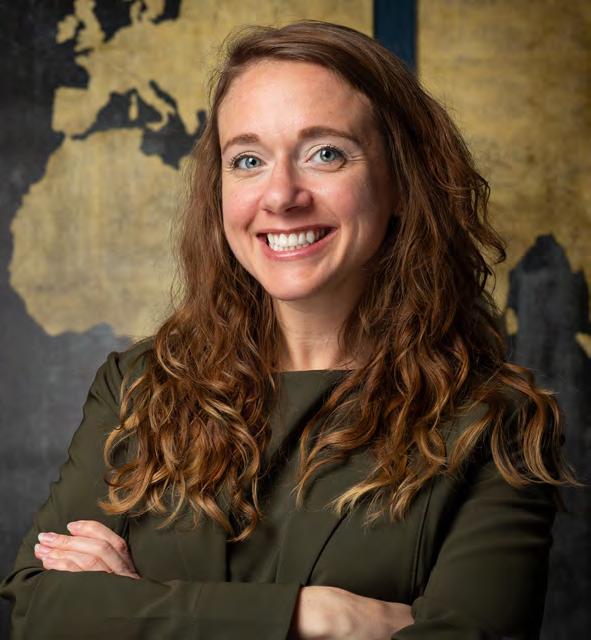
I am endlessly proud of these pages and honored to present them to you.
In writing these stories, I had the opportunity to interview Missouri Southern’s best and brightest. Listening to their deepest passions and the enthusiasm they possess for their craft—whether athletic, academic, or creative—provoked within me an overwhelmingly positive frisson. Lions continue to inspire.
Just as you will have done after reading their stories, I learned from them in abundance, discussing everything from herpetology, aerospace engineering, NFL sports art, anatomy, printmaking, and so much more. Above all, I was reminded of how Missouri Southern fosters legacies, including that of bordertown, MSSU’s Literary Magazine, which now celebrates its 20th year of literary excellence. While you browse, I hope you take a moment to reflect on how your own connection to Southern has contributed to the university’s history—no matter how big or small.
These pages also grant the opportunity to witness Missouri Southern’s progress in providing student experiences where Lions Explore Boldly, Care Deeply, and Impact Globally. These steps forward include a prospective Medical Imaging Program that will mitigate the region’s shortage of qualified technologists; an upcoming Master of Social Work program designed to address the growing need for social work professionals; and conservation efforts within the biology department to save endangered species. These advancements, among others, are representative of how MSSU moves the needle.
I am lucky to have been a vessel for Lions’ expertise and zeal. I hope these stories bring you as much joy to read as they brought me to write.
See you next issue!
With gratitude,
Madison Ditzler, Editor Crossroads Magazine
Missouri Southern State University
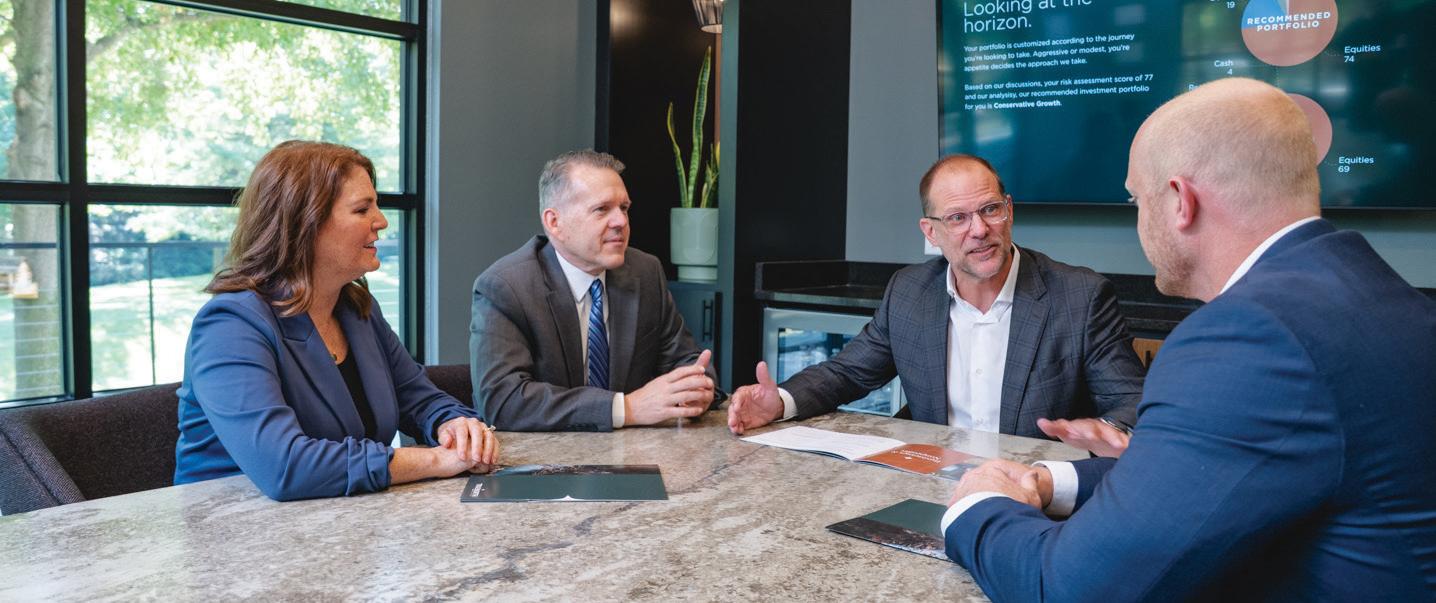
Helping Fellow Alumni Chart Their Financial Path
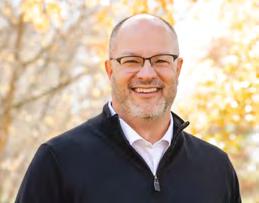
Cari Ray
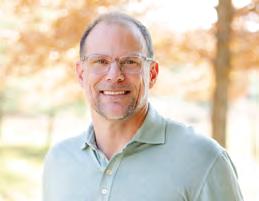
Bryan Vowels, CFP® CFA Troy Stovern, CFP
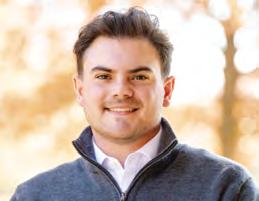
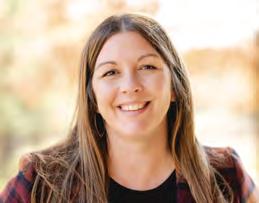
Maegan Linden Connor Williamson
As we experience a time of transformation at Missouri Southern, I am filled with gratitude and pride for the extraordinary momentum building across our campus.
In this issue of Crossroads, you will see how Missouri Southern is stepping confidently into a new era—one defined by Exploring Boldly, Caring Deeply, and Impacting Globally.
That momentum was formally recognized in 2025, when Governor Mike Kehoe signed legislation to affirm Missouri Southern’s leadership in health and life sciences, immersive learning, and global education. With this historic designation, we became the only public university in Missouri to have any of these three elements as part of its statewide mission.
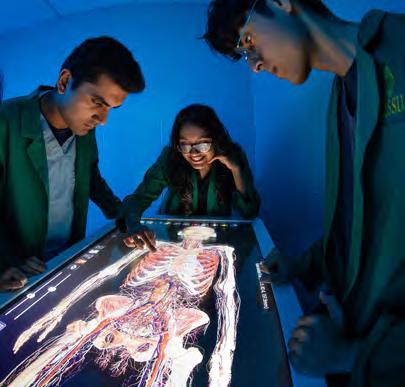
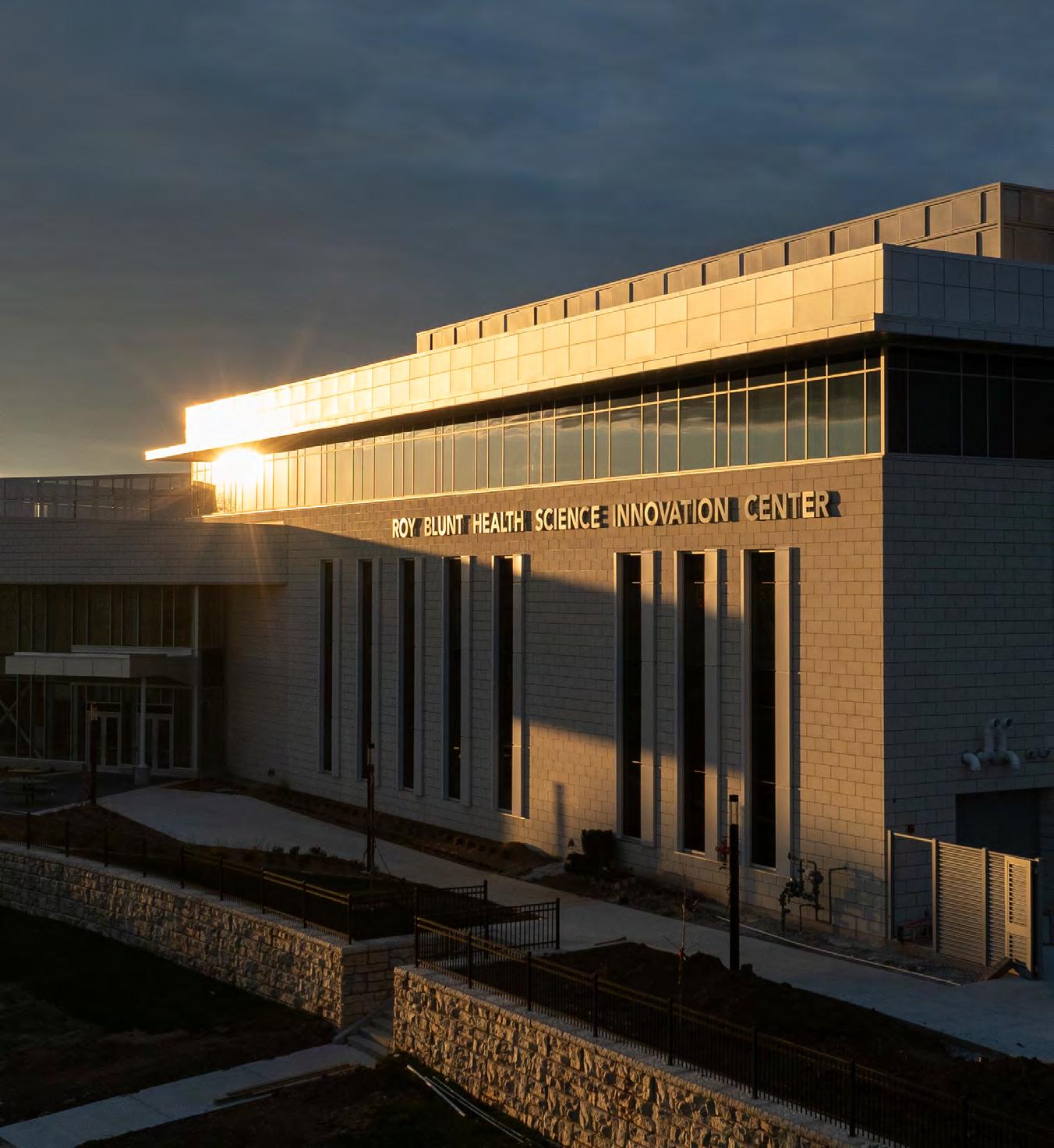
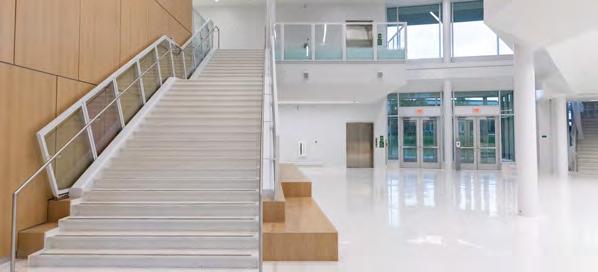
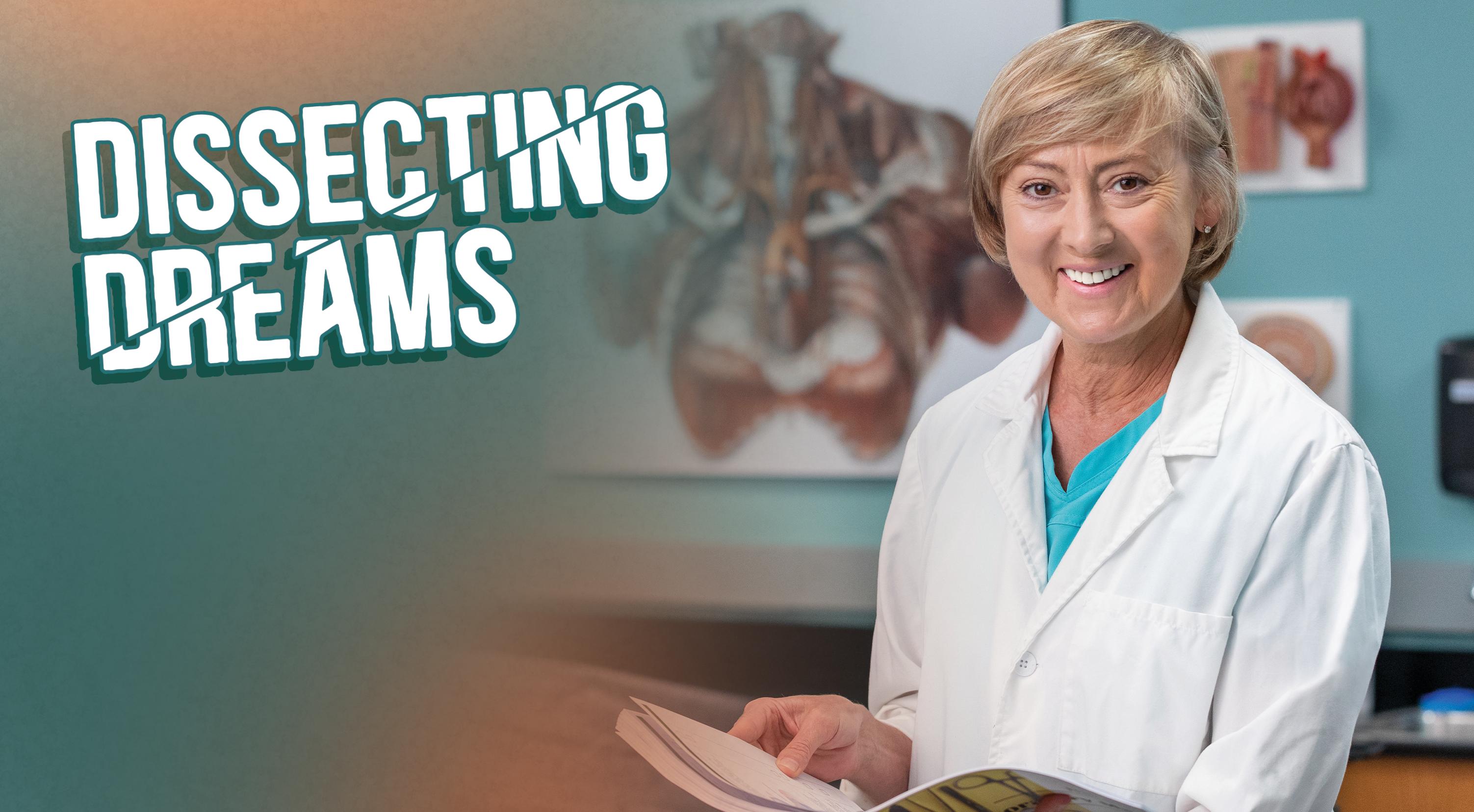
As we prepare for the opening of the Roy Blunt Health Science Innovation Center this summer, we are energized by the opportunity to elevate health sciences education across our region and state. In these pages, you will discover how this transformational facility, featuring advanced simulation environments and the latest healthcare technologies, will provide immersive learning experiences that mirror real-world clinical settings. We are proud to also highlight Dr. Alla Barry’s work in advancing anatomy education, an inspiring example of how our faculty encourage exploration to drive student success.
This issue further dives into the impactful work of the Public Safety and Forensics Institute, where students engage in cutting-edge training in criminal justice and forensic science. You will also read about our commitment to develop a new Master of Social Work program, designed to meet critical workforce needs across Missouri, particularly in rural and underserved communities.
Global education remains central to who we are. In this issue, you will follow current student Laura Kimmel’s study abroad experience at the University of Hradec Králové in the Czech Republic. Her story reflects the life-changing impact of global education and reinforces our commitment to preparing graduates to lead in an interconnected world.
Each story in this edition of Crossroads reflects a university on the move. Thank you for your continued support and belief in our mission. Your advocacy, generosity, and partnership make this progress possible and ensure that Missouri Southern’s impact will continue to grow for generations to come.
Lions Together. Lions Forward.
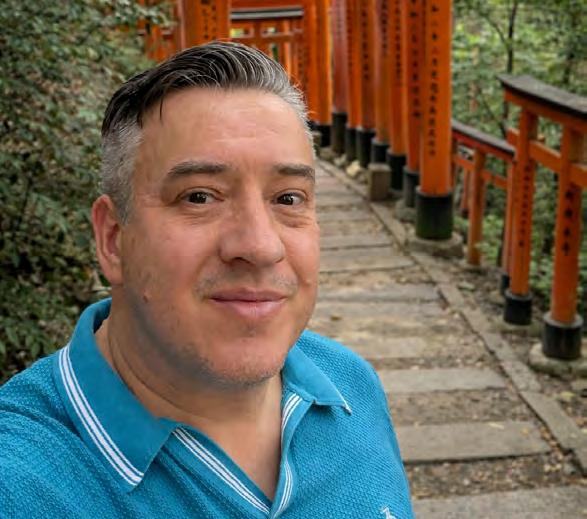
Dr. Dean Van Galen President Missouri Southern State University
MSSU LEADS: REDEFINING HIGHER EDUCATION IN THE SHOW-ME STATE
MSSU has taken a bold step forward, becoming the only public university in Missouri with a statewide mission centered on three core pillars: Immersive Learning Experiences, Health and Life Sciences, and Global Education. These pillars reflect Missouri Southern’s promise to prepare students who Explore Boldly, Care Deeply, and Impact Globally.
Institutional missions outline a university’s priorities. A statewide mission, however, is something greater—a formal designation granted by the State’s General Assembly. MSSU first submitted the expansion proposal to the Coordinating Board for Higher Education in 2023. After unanimous approval, Missouri’s legislative champions helped set our mission in stone.
Explore Boldly
Our advanced mission proves MSSU’s pride in its progress. Among our distinct roles is an obligation to equip students with unique educational opportunities. Missouri Southern’s expanded statewide mission elevates this philosophy to a defining institutional strength.
MSSU’s immersive learning prospects, including studying abroad, mean that students step into studios, clinics, and communities around the world before they begin their careers. 17% of MSSU seniors study abroad compared to the 11% national average, demonstrating how Southern leads the charge. Additionally, 51% of first-year students and 82% of seniors participate in at least one High Impact Practice. These experiences involve evidence-based active learning. Practicing skills in a real-world setting through these High Impact Practices affords students opportunities to explore boldly, discovering who they can become.
Care Deeply
With growing healthcare needs, MSSU’s leadership as Missouri’s number one public university for undergraduate health programs is crucial. Missouri Southern is a source of innovation and service that extends throughout our region as we graduate skilled future healthcare workers that society will depend on. The success of MSSU’s strategies is evident in our B.S. in Nursing students’ 100% NCLEX pass rate for the past three cohorts; and in our Paramedic, Dental Hygiene, Radiology, and Respiratory Therapy students’
100% pass rate for the past three years. Our methods, outlined in the statewide mission, create successful, wellprepared graduates ready to make an impact anywhere they go.
Impact Globally
These numbers show that MSSU molds diverse leaders whose thinking is not bound by borders. Because of this, students can compete in a global marketplace with their problem-solving skills, cultural fluency, and renewed confidence. What begins on our campus truly blooms around the world.
This is Missouri Southern State University: Explore Boldly. Care Deeply. Impact Globally. One expanded mission, built with Lion Pride.
Global education has been part of MSSU’s identity since 1995, and our expanded mission amplifies that legacy. Over the last 5 years, 1,200 international students have studied on our campus. And, since 1998, more than 3,800 Missouri Southern students have taken their learning abroad. Those experiences pay off. Students who study internationally earn an average of $4,159 more in their first job after graduation. Moreover, many international students that represent numerous countries join our community each year, bringing new perspectives with them as they make Joplin their new home. This global reach ensures that Lions graduate ready to navigate and contribute to a connected world.
STUDENTS’ LIVES
“While we hope we are a blessing to our students, they have definitely been a blessing to us!” - The Jernigans
For international students, studying abroad is a big step— and families like the Jernigans take it with them. Missouri Southern’s Friendship Family Program helps international students feel at home on arrival. Reflecting MSSU’s commitment to student success, the program connects international students with local families who ease culture shock and build a sense of belonging.
“My wife, Ann, and I have been in the program since January 2019,” said Mike Jernigan. “We enjoy helping students feel welcome here. We have had students from countries all around the world.”
Students’ access to their Friendship Family provides essential guidance, creating a smooth transition into
life at Missouri Southern. With support that can include everything from transportation assistance, dorm essentials, home-cooked meals, and immersive day trips, they foster students’ success.
“We pick up students at the airport, help them get into their dorm rooms, make trips for their essentials, and invite them to our home for dinners and board games,” said Ann. “We even take trips to sites like Silver Dollar City and the George Washington Carver Monument.”
With the Friendship Family Program, a seemingly simple “welcome to MSSU” grows into lifelong connections that bridge cultures and expand students’ worldviews. As families like the Jernigans demonstrate, the program is invaluable to students choosing MSSU to revolutionize their study abroad experience.
For more information on how to become part of the Friendship Family Program, Contact Stephanie Goad at goad-s@mssu.edu or 417-625-9372.
MSSU’S FRIENDSHIP FAMILY PROGRAM CHANGES INTERNATIONAL
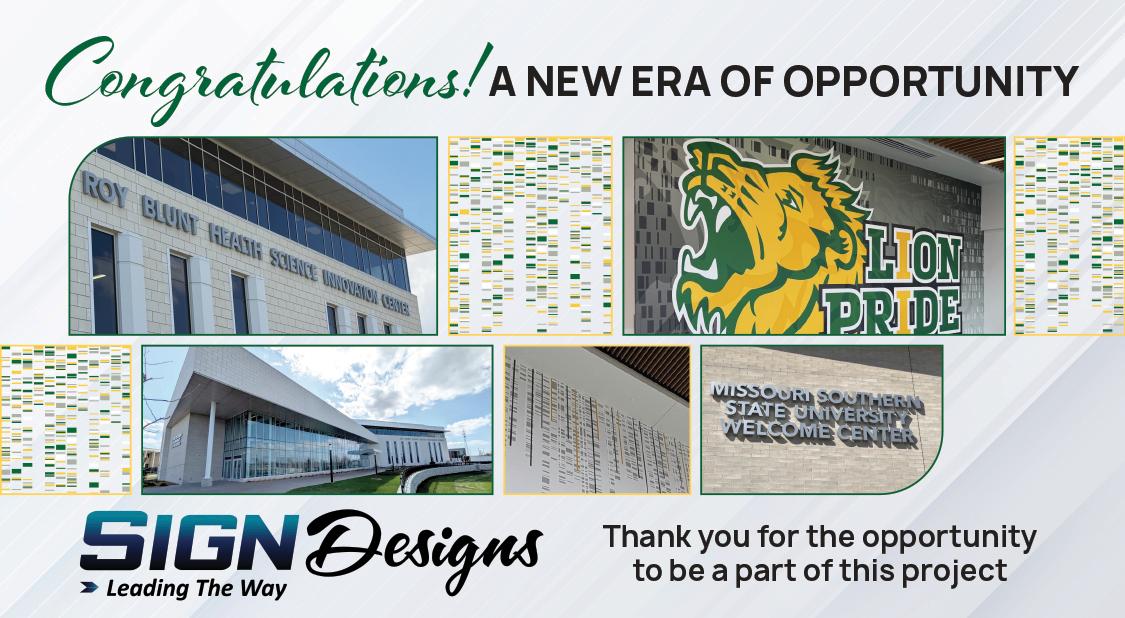
The highly anticipated Roy Blunt Health Science Innovation Center (RBHSIC) will open its doors by July 4, 2026. At every step of the building’s construction, a vision takes shape. Designed to transform Missouri Southern’s immersive learning prospects and the future of our region’s health, the Center will help students gain the skills and confidence to care deeply for patients in real-world scenarios.
We are the only university in Missouri with a statewide mission built on Immersive Learning Experiences, Health and Life Sciences, and Global Education. The RBHSIC is a direct expression of our mission. It embodies MSSU’s commitment to Explore Boldly, Care Deeply, and Impact Globally.
The project has progressed on budget and on time, meaning students are just months away from revolutionized learning inside the RBHSIC.
“This achievement underscores the dedication and effective collaboration of everyone involved,” said Linda Eis, MSSU’s Chief Financial Officer. “The building symbolizes strong support and confidence in Missouri Southern, reflecting our ongoing service to students and the local community.”
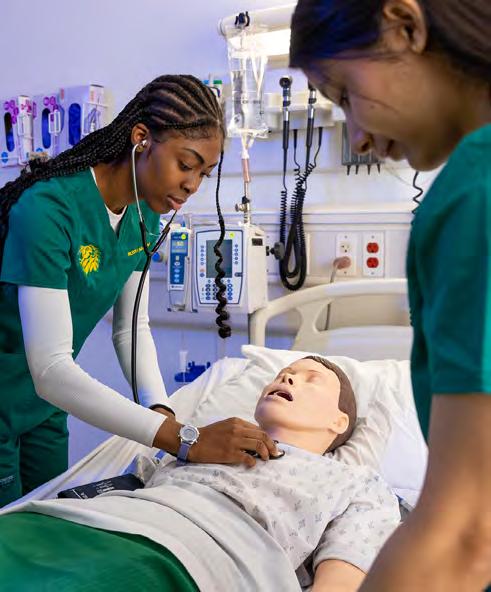
The RBHSIC is about impact. Students will train in a stateof-the-art simulation hospital complete with advanced laboratories and technology-rich clinical environments that mirror real healthcare settings. These immersive experiences will allow students to practice critical skills before entering the workforce, strengthening their readiness to serve.
The center also expands MSSU’s ability to meet Missouri’s growing healthcare needs. As the state’s #1 public university for undergraduate health programs, Missouri Southern graduates nurses, paramedics, dental hygienists, radiologic technologists, and respiratory therapists with exceptional licensure pass rates. The new RBHSIC will deepen that excellence, offering students the kind of hands-on training that directly leads to strong outcomes for patients and communities. Beyond academics, the building will serve as the campus’ new front door, welcoming all to explore what Missouri Southern has to offer.
The Roy Blunt Health Science Innovation Center is a physical manifestation of MSSU’s commitment to the region’s future. It represents an investment that will shape the next generation of healthcare professionals to make an impact for decades to come.
ALEX GANDY Director of Career Services
For 14 years, Alex Gandy’s passion has been pivotal in the lives of Missouri Southern State University’s students. As the Director of Career Services, he bridges gaps in their needs, helping students access the resources required to thrive in their studies and beyond. A culture-maker in his community, Gandy’s efforts have made a ubiquitous impact on MSSU’s campus.
DOING RIGHT WITHOUT HESITATION: SO, IT BEGAN
I started my professional career at an organization called Christ in Youth (CIY). I had a conviction to use my BSBA in Marketing from Missouri State University (MSU) to work for a non-profit and make an impact. In 2007, Google wasn’t the strong search engine we know today, but my exploration led me to CIY. It was the first search result, and without any hesitation I emailed them my resume and letter of interest. I was determined. There wasn’t a job opportunity, I just wanted to get connected with them. Then, a CIY Director extended a job offer as the Program and Marketing Coordinator for their high school event MOVE.
“I WILL NOT LOSE FAITH.”
I was traveling more than 130 nights a year. It became too much once I got married. I transitioned from working at CIY to a local marketing firm in town. Tragically, our
firm burned down, and my boss was caught in the situation underinsured. She had to lay off a majority of her team—and I was one of them. Simultaneously, I lost my home in the Joplin tornado of 2011. I was desperate, though no words could truly capture how it felt. It was a discouraging season, but I refused to lose faith.
I was working with FEMA on tornado debris relief when I discovered an opening at MSSU for an Admissions Counselor. I want to give special gratitude to Derek Skaggs, former Dean of Enrollment Services, for giving me my first shot at Southern. Working in higher education is a privilege and honor. I loved my collegiate experience, and I hope to create that same positive experience for others. I owe my career in higher education to Skaggs. Learning to market under his guidance was a formative opportunity I don’t take for granted.
“I BELIEVE IN YOU—YOU ARE VALUABLE.”
My goal with every student is to understand their expectations and professional needs. That insight helps me guide and strengthen the trajectory of their careers. We work to exceed those expectations through personalized career counseling, confidence-building, and employer connections.
What motivates me most is encouraging students so
they can recognize their value. By the time they leave MSSU Career Services, they’ve gained a wide range of skills that support their success in the workplace and in their communities. I am beyond proud to be part of their journey.
FOR THE PRIDE
I’m also proud of my accomplishments in advancing student outreach with the Internship Taskforce, the Employer Engagement Taskforce, the Internship EXPO, and Dress to Impress. Above all, my most rewarding moments have been the latter two. For 12 years, Dress to Impress has served more than 400 students in a single day—roughly 13% of the on campus student population at once. This event provides students with professional attire to help them feel confident in interviews and workplace settings. That confidence carries into the Spring Career Fair, where they can interact firsthand with the fantastic businesses and organizations our community has to offer.
MOSO AND BEYOND
I’m looking forward to the future of Career Services. We strive toward impacting more students across campus with expansive options for integrated career development partnerships, a wide selection of degree programs, and diverse academic courses. At Missouri Southern, we are thrilled to continue helping students see what’s possible.
Our students can do anything they put their mind to, and it’s my honor to help them achieve their goals.
The Spark of a Global Era
Dr. Rebecca Shriver’s Vision ‘Puts MSSU on the Map’
From the first time she travelled abroad, Dr. Rebecca “Becca” Shriver knew global education was her calling. Having experienced firsthand the transformative power of international understanding, Shriver provides those same life-changing experiences for MSSU students.
“Immersing yourself in a different culture opens your worldview,” said Shriver, MSSU’s Executive Director of Global Education. “It teaches you a great deal about yourself and where you come from, too.”
Shriver joined MSSU in 2018 after earning her PhD in Modern European History from Florida State University, with minor fields in Middle Eastern and U.S. History. From the beginning, she gravitated toward roles that blend academia with hands-on global engagement. She taught history and international studies, advised Model United Nations,
and led five study abroad programs from 2018–23. Most importantly, she has continuously made a difference in her students’ education.
“Our commitment to graduating knowledgeable, responsible global citizens is vital,” said Shriver. “I want to ensure our international programs remain accessible for all students, faculty, staff, and community members. Global experiences provide invaluable skills that help our students excel. Their international perspectives set them apart in the job market. Witnessing their growth is the most rewarding part of my time here.”
Expanding opportunities that prepare students to thrive in an increasingly interconnected world are paramount. One of the ways Shriver ensures this preparation is through MSSU’s themed fall semesters, a long-standing tradition she hopes to make even more interactive. Fall 2026 will spotlight Vietnam, a choice that has already generated enthusiasm on campus.
“This project is an important part of our global mission,” she said. “The events we plan are interactive, community building, and focus on bringing the culture of the location we’re featuring to campus.”
Thanks to this experience, students who don’t travel abroad still have the chance to connect with other cultures. Dr. Becca Shriver’s vision for expanding MSSU students’ global opportunities reflects her confidence in the role international education will play in the university’s future.
“I am truly excited about the direction our campus is headed,” Shriver said. “It is so wonderful to be at a university where you can sense the positive energy driven by a promising vision and a community that cares about one another. It is humbling to have been entrusted with leading the international component of that vision.”
Belief as a Compass
Author Jeff Billington Conquered Self-Doubt at MSSU
When Jeff Billington, ’99, arrived at MSSU as a first-generation student from McDonald County, he wanted to avoid writing. He had imagination, but lacked belief in his abilities. That changed in Dr. Chad Stebbins’ news writing class. Billington excelled, though he hesitated to claim the identity in front of him. During an office visit, Stebbins asked if Billington had signed up for The Chart practicum. He hadn’t.
“Before I knew it, he had signed me up to be on the staff,” he said. “I gained so much confidence from having responsibility for the newspaper and feeling like my writing was important. I was inspired to keep going.”
As Billington prepared to graduate with a Bachelor’s Degree in Mass Communications, Stebbins again shaped his path.
“He asked me what it would take to stay another year,” he said. “I was already graduating. It didn’t make sense to stay. To that, he said, ‘What if you had a full scholarship?’”
Stebbins’ offer included a reporting trip through Panama,
Costa Rica, Honduras, and Nicaragua for MSSU’s international programs. Billington stayed, serving as editorin-chief before leaving in 2000. The experience sparked a lifelong love of travel and storytelling.
“I couldn’t have afforded those opportunities otherwise,” he said. “The university made those experiences possible.”
After graduation, Billington landed his first journalism position at a Phoenix newspaper—another opportunity Stebbins helped him secure. Billington’s heart was soon drawn to nonprofit communications. Today, he serves as Director of Policy Communications for the National Audubon Society in Washington, D.C., translating complex conservation policy for nearly two million supporters.
“Our work is about protecting bird habitats and conserving land,” he explains. “My job is helping communicate how those policies affect the environment and why they matter.”
Billington’s passion for conservation traces back to his childhood on a farm along Big Sugar Creek, where nature was always around him. This connection frames Billington’s writing. He has published two novels set in small towns within the Ozark Mountains, each exploring community, political division, belonging, resilience, and the quiet beauty of rural America. His young adult novel Summer’s Second—an LGBTQIA+-centric Bildungsroman—hit #1 on Amazon’s LGBTQ young adult charts; and his novel Chicken Dinner News poignantly explores cultural divides. For Billington, publishing two books in succession felt surreal after spending more than 20 years writing the latter. He continues writing, no longer questioning himself.
“I want to show that small towns matter and have a lot to offer,” he said. “People there often feel ignored or looked down upon, but those places still have stories and value. I’ll always be a writer. My story shows that a little encouragement goes a long way. Sometimes just asking someone what they’re working on next can inspire them to keep going.”
Run It Back
Alvin Fall Returns to Goal-Post Dreams and Rewrites His Playbook
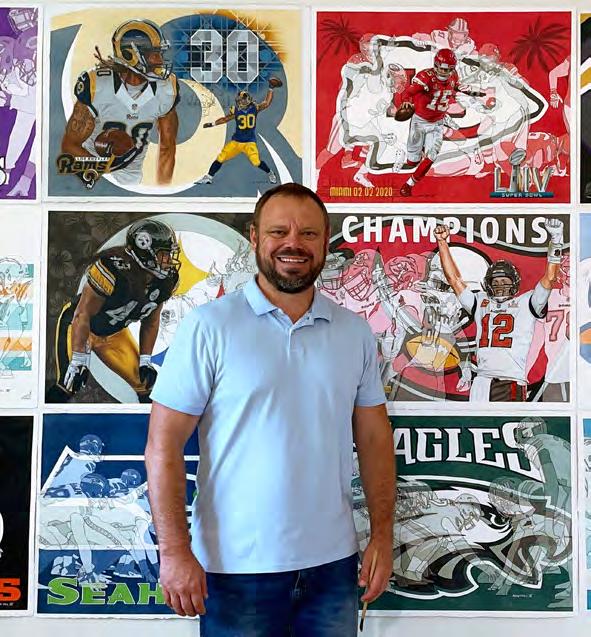
Alvin Fall’s work resides at the intersection of art and football. Raised in a creative home, Fall’s mother often set out watercolors and encouraged his imagination. A love for football came first, and art let Fall see the game differently.
“I didn’t know if ‘Sports Art’ was a thing, but I wanted it to be,” he said.
One day, flipping through Beckett Football Magazine, he was stunned by a player’s painting.
“The bar had been set, and there it was: proof that sports art could be a profession,” said Fall.
From then on, he saved his allowance for every issue, studying the craft. Simultaneously, he lived the game, earning AllState First Team Receiver honors in high school. Arriving at MSSU in 1996, he planned to pursue both passions—
but an academic technicality sidelined his ambitions. Fall pivoted. He approached the athletic department to create the football program cover. This marked the beginning of an interdisciplinary career. He later earned a spot on the team, but the demands of school and work forced him to step away.
“I left knowing I proved to myself that I belonged on that field,” he said. “My time playing football gives my artwork authenticity.”
After graduating, Fall moved to Florida, immersing himself in a thriving arts community. Through commissions, gallery contracts, and collaborations, he built his reputation. In 2015, Fall was selected as one of just 20 artists for the Deacon Jones Foundation NFL Artwork Program.
“NFL licensing is not easy for even the most well-known artists,” said Fall. “To have my work licensed and sold was a dream come true and a huge networking opportunity.”
A full circle moment came in 2019 and 2020. Beckett Magazine—the publication that inspired him—featured Fall in a “Sports Artist Spotlight.” Momentum compounded, and Fall embarked on an ambitious project: the NFL Logo Series, comprising 32 large-scale watercolor paintings.
“Using flat watercolor washes, a technique called ‘glazing,’ I created large paintings of each team,” said Fall. “Each painting took 30–45 hours. I created a double image of the team logo with the players, capturing the moment just before the ball is snapped.”
Today, Alvin Fall continues to build connections locally and nationally, driven by the belief his mother instilled when she first set out those paints—a belief in the power of imagination and pursuing what you love.
Celebrating 100 Years of the Buchanan Mansion
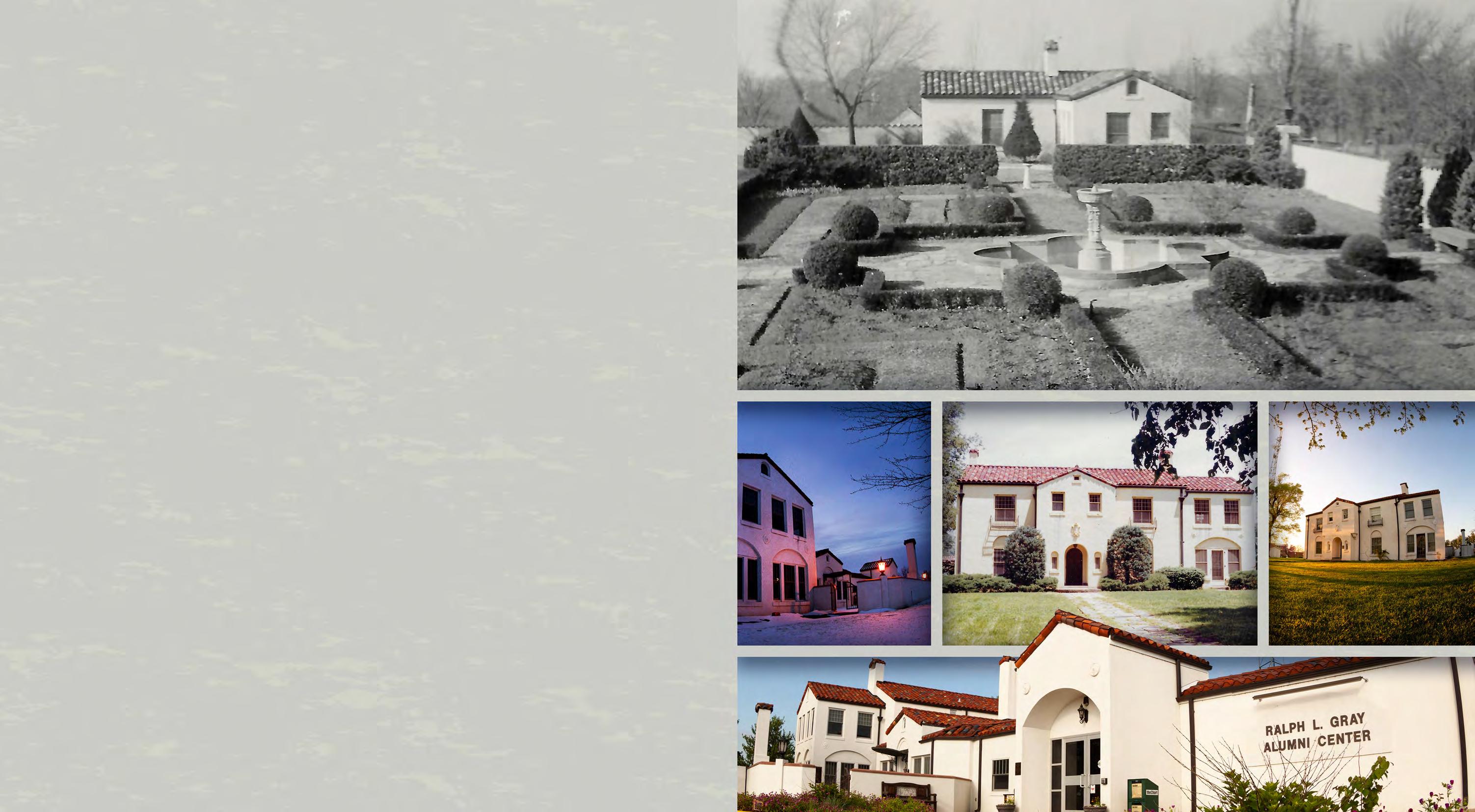
Onthe hill overlooking Turkey Creek stands one of Missouri Southern’s most historic landmarks—the Spanish Mission-style mansion that has seen history unfold for more than a century. Built in 1926, the Buchanan Mansion is an architectural gem and a testament to the vision that shaped the university.
Lucius P. Buchanan, a young zinc shoveler who worked along Turkey Creek with mere pennies in his pocket, would climb the hill above the mine on his breaks and imagine a different future. He wanted to own the land beneath his feet. Slowly but surely, Buchanan rose from laborer to millionaire, eventually acquiring more than 250 acres of the property and building the home alongside his wife, Ethel Caywood Buchanan. The mansion was extraordinary for its time. It featured a bathroom for every bedroom, stucco walls, arched doorways, multi-colored clay tile roofs, twisted wrought iron, as well as an elegant Batchelder-tiled fountain and fireplaces.
As the Depression devastated the area’s mining industry, Buchanan recognized a need for economic diversification. Wanting to be part of the solution, he became an instrumental force in establishing the Joplin Stockyards on Rangeline Road. His plan worked, and the business became a major economic stabilizer amid fading job opportunities.
After Buchanan’s passing in 1939, Frank Wallower purchased the estate, where he maintained a substantial dairy farm with his wife, Juanita Wallower. Reminders of their operation remain on campus today, including the
grain silo that resides by the campus police station and the original front gate housed inside of the Mansion.
Like Buchanan, Wallower left his own mark on Joplin. An engineer from Pennsylvania, Wallower assisted in organizing the American Zinc Institute and became the director of the Southwest Missouri Railroad Company (SMRC). His service within the SMRC connected the Tri-State District mining towns and made Joplin the region’s vibrant urban hub, significantly boosting the economy.
In 1937, two years before Wallower’s arrival, Joplin Junior College was founded downtown, but community leaders soon realized the need for a fouryear institution. The goal was to keep students local after graduation. When expansion became impossible in the landlocked downtown building, the Wallower family sold the mansion property for the creation of a new campus. Early university leaders used the mansion as their headquarters to plan the layout of the Oval and the first academic buildings. The stately home has been everything from classrooms, office spaces, and even the first bookstore. Its prominence led alumni and community members to rally behind its restoration in the early 2000s when the mansion had deteriorated. The funds were raised, and in 2010, the mansion reopened as MSSU’s Ralph L. Gray Alumni Center.
“The mansion is the historical cornerstone of the campus,” said Brad Belk, MSSU’s Historian. “Missouri Southern’s foundation was formed inside. Celebrating the 100th year anniversary of the mansion is part of a greater mission to take pride in where you came from and give a little back to your roots.”
Homecoming is a great time to be a Lion, and alumni are essential to our celebrations. Mark your calendars and come home to MSSU this October!
Kick off the weekend at the Homecoming Pep Rally. This event brings students, alumni, and community members together as we gear up for Saturday’s big game.
On Saturday, head to Downtown Joplin on Main Street for the Homecoming Parade at 10 a.m. The parade begins at 6th Street and ends at 3rd Street. Show your Lion pride as an attendee, register your organization to participate, or sign up to become a parade volunteer. Prizes for decorated floats in support of the homecoming theme will be awarded to the top community floats, and winners will be announced at the MSSU home football game halftime.
Before the game, gather your friends for a Tailgate to enjoy food, drinks, and pre-game festivities. The lot opens to the public four hours prior to game time and closes one hour after the game.
Cheer from the stands and relive the excitement of game day at the Homecoming Game on SATURDAY, OCT. 10TH at the Fred G. Hughes Stadium on the MSSU Campus. Cheer on the Lions as MSSU takes on the Emporia State University, and wear green to show your pride!
MSSU students, faculty, and staff can present their school ID for free admission. MSSU alumni can get $5 general admission tickets—just email alumniassoc@mssu.edu for this year’s discount code.
Finally, be on the lookout for our many athletic teams’ and programs’ reunions on Homecoming weekend!
SCAN THE QR CODE for up-to-date information on how to get involved.
MSSU’s Alumni Board
The Missouri Southern Alumni Board of Directors enters an exciting new chapter as it welcomes two new members—Mike Carter and Taylor Robertson—who will guide engagement efforts with new leadership in Alumni Relations.
Leading this next phase is Abi Almandinger, ’96, who recently stepped into her role as the Director of Alumni and Donor Relations where she supports alumni involvement. For Almandinger, returning to the university is a rewarding, full-circle moment she doesn’t take for granted.
“What excited me most about my role was the opportunity to strengthen the connection between alumni and the university in meaningful ways,” she said. “Missouri Southern has always had a strong sense of community, and this position allows me to help create experiences and programs that bring alumni back into that community.”
Through events, mentorship opportunities, storytelling, and student engagement initiatives, Almandinger hopes to help alumni rediscover the sense of community that defines Missouri Southern. The Alumni Board plays an important role in reconnecting graduates. Members serve as ambassadors for MSSU, promote alumni programs and events, provide feedback on initiatives that affect alumni, and help identify ways graduates can give back.
“Missouri Southern continues to grow and evolve, but the heart of the university remains its people,” said Almandinger. “We want alumni to feel like they are always part of that story.”
Interested in serving your alma mater?
SCAN THE QR CODE to apply to join the Alumni Board.
The mural also contains symbols recognizable to any visitor, such as two Harry Truman campaign buttons. These represent Truman’s involvement with and proximity to Monett, as he rode the train on the 1948 Whistle Stop Tour, visited the city several times as a senator, and even stayed at V. B. Hall’s home while on campaign stops.
These details, like all others Dawn crafted, were selected through collaborative research. With Monett’s rich history, there were countless mural-worthy moments to choose from.
Rod Anderson Commissions Muralist Sandra Dawn Pemberton
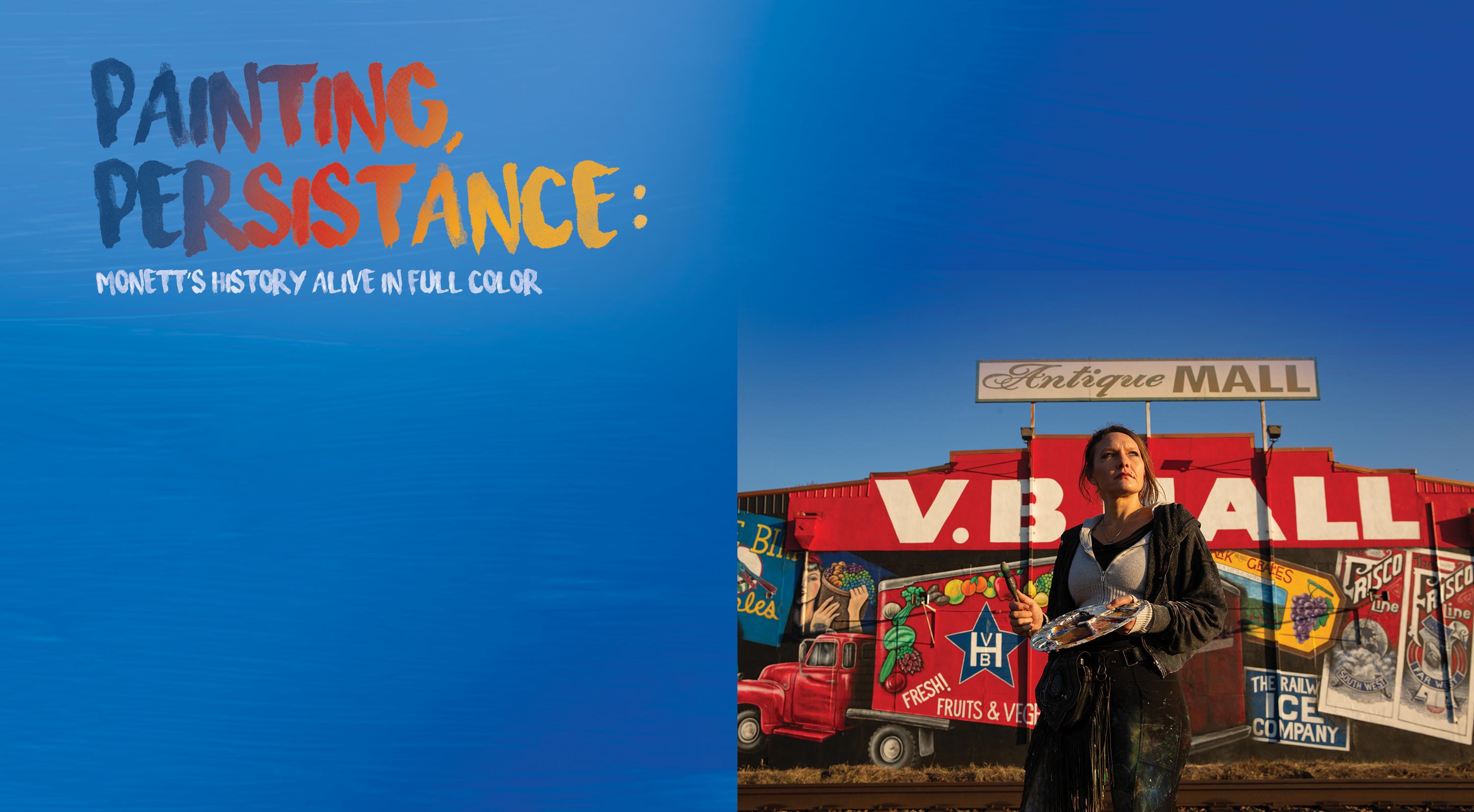
Electric ultramarine, berry-sweet red, and rich yellow shines on the side of V. B. Hall Antique Mall & Flea Market in Monett, MO. This historic gem-made-canvas can be seen from a block away. Each meticulously painted detail is emblematic of the city’s greatest moments, serving as markers of how Monett became the heart of Barry County. Railroad tracks lie just below; their parallel lines tracing the building’s side as if to underscore the mural’s significance.
There was no better artist for the job than MSSU alumna Sandra Dawn Pemberton, ’15—and no place more fitting for a collage of the city’s history than this generational market of treasures, owned since 2017 by lifelong Monett resident Rod Anderson, ’76.
Anderson commissioned Pemberton, professionally known as “Sandra Dawn,” to create this mural that encapsulates the history of an entire city. This act is emblematic of a passion for investing in local art, history, and the region—a passion further reflected by his consistent support of MSSU and his 12 years of service on the Board of Governors. Just as he enriches Missouri Southern, Dawn’s mural enhances the culture of Monett’s center, transforming the space into something brighter—something more—keeping history alive.
The Antique Mall has its own history, and Anderson is connected to it in more ways than one. The store is named after V. B. Hall: the longest serving mayor in Monett’s history, a community icon, and an important figure in Anderson’s family.
“He founded the V. B. Hall wholesale company in 1919 with three locations. My store was his last location until 1971, when my youngest uncle bought the store,” said Anderson. “My father and my two uncles worked through this business all their lives.”
Anderson’s father is honored with a portrait at the mural’s center, illustrated on the red delivery truck.
“It’s from a picture of him in 1948,” said Anderson. “Dawn took inspiration from a promotional item V. B. Hall had made and used my dad’s tractor trailer truck as a prop. The truck’s colorful produce border is Dawn’s artistic depiction of actual fruit labels, like the Ozark Fruit Growers Association’s grape and strawberry labels seen in the mural.”
Creativity runs in Sandra Dawn’s DNA. She comes from an encouraging family of artists and began painting in her early teens. Despite their support, Dawn doesn’t know if she would have had the determination required to execute a career in the arts had she not faced—and, thanks to painting, subsequently overcome—obstacles during her youth.
“I had health problems as a child and, after many surgeries, was diagnosed with Ehlers-Danlos syndrome at 15 years old,” said Dawn, describing the effects of the connective tissue disorder on her life. “I found that art was one of the few things I enjoyed doing and could still participate in. It was an escape from the pain, and I decided art was my future.”
When she graduated high school in 2003, Dawn was already painting murals and selling her work. She later enrolled at MSSU in 2010 while freelancing and raising her children, but her declining health eventually forced her to step away from large-scale projects. She decided to help others discover the power of art and made a local impact working with Spiva Center for the Arts and other community organizations. A successful shoulder replacement in 2020 made murals possible again, and with the help of her business partner, David Mason, Dawn returned to art as a full-time muralist.
Dawn finds inspiration in even the most mundane corners of our world.
“’Ordinary people’ are an endless abundance of inspiration. I love sitting and talking to clients, seeing what makes them light up. Their stories are anything but ordinary.”
With her murals, Dawn helps others celebrate what is important to them. Performing this labor of love is a connection to joy and community she is grateful for. Because she cares deeply about her craft, preparation for each mural is vital.
“I paint to celebrate the remembrance of people who impacted communities or events that shaped them,” said Dawn. “I will read entire books, visit museums, spend hours combing through images and articles, and listen to stories from anyone who has one.”
Dawn’s distinct attention to detail in her art is palpable. She doesn’t use computer programs to layout her designs—so image scaling and outlining are completed entirely by freehand.
“I work in many layers,” she said. “I will take breaks to look at the inprogress mural from wherever the viewers will be, which is rarely from where I’m painting, to make any necessary adjustments. Often, that just means getting down from a lift or ladder, but sometimes—like on Anderson’s wall—I’m driving around the block to see it from a road or other public area.”
In addition to the sheer size of the surface, the train track’s position made lift use impossible. The project necessitated four levels of scaffolding, which Mason took on, frequently having to work around the wall’s light fixtures. Still, the pair triumphed. The completed mural immortalizes the importance of a business and family name surviving for over 100 years.
Dawn is grateful for every opportunity to work with people like Rod Anderson, create art for communities, and keep history alive, just as she has done with the V. B. Hall mural.
“This all felt surreal,” said Dawn. “Without David’s help and years of learning to work around my health issues, the mural would be physically impossible. don’t take Anderson’s trust lightly, and his connection to MSSU made the project especially meaningful. I’m reminded of the hurdles I’ve crossed and how far my art has come. Even though there are more to chase, some dreams have already come true.”
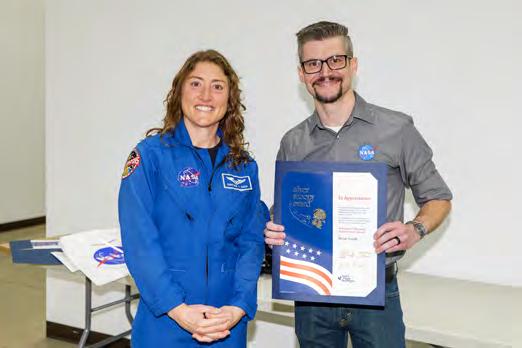
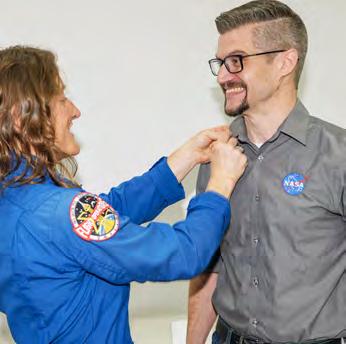
Brian Smith, previous manufacturing engineer at EaglePicher Technologies, stood on the very floor where he’d spent countless hours engineering for NASA’s Artemis II when astronaut Christina Koch bestowed him a most prestigious award—the iconic Silver Snoopy. The moment was surreal.
A truly out-of-this-world honor, the sterling silver pin symbolizes excellence in human spaceflight safety. It features legendary comic-strip character Snoopy from “Peanuts” as a joyous astronaut, thrilled in anticipation for his visit to the cosmos.
likeness becoming the award’s logo, and created a new sketch of the character in a spacesuit.”
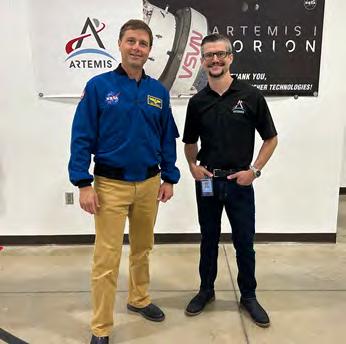
But the Snoopy Award—while certainly the most significant recognition he has received from astronauts—was not Smith’s first. Less than a year earlier, Reid Wiseman, Mission Commander for Artemis II, visited EaglePicher to gift Smith and his team members each a personalized crew portrait signed by all four members.
“The Silver Snoopy is flown in space before being given personally by astronauts to individuals ‘for professionalism, dedication, and outstanding support that greatly enhanced space flight safety and mission success,’” said Smith. “The award is very exclusive. It is given to less than 1% of the aerospace workforce, and an individual can only earn one in their lifetime.”
Smith is one of just 15,000 individuals to earn the honor since its inception in 1968.
“The award was created to promote awareness of flight safety among NASA employees and contractors,” said Smith. “NASA wanted to find a well-known and loved mascot for this safety promotion and contacted ‘Peanuts’ creator Charles Schulz, who welcomed the idea of Snoopy’s
“I now have that picture framed and hanging in my living room next to a New York Daily News newspaper from July 21st, 1969, the morning after the Apollo 11 moon landing,” he said.
These objects, hanging adjacent to one another, prove how far Smith has come. From the newspaper his wife, Briana, purchased him years ago as a gift, we see his aspirations. Beside it, one giant step for his ever-evolving career.
A Webb City native, Smith began his career as a local shop’s machine operator while completing his Bachelor’s Degree at MSSU, ’10. In 2017, he wanted to move into a position which better utilized his skillset and thus joined EaglePicher as a Manufacturing Engineer. He would go on to earn his Master of Science in Data Analytics from MSSU, ’25—already accomplishing numerous life-long goals
before his Silver Snoopy nomination. Now, Smith is a Lunar Manufacturing Engineer for Blue Origin on the Space Coast in Cape Canaveral, FL.
“When Reid visited, it felt like a oncein-a-lifetime experience,” said Smith. “Little did I know I would soon receive the Silver Snoopy award from Christina Koch. Wiseman was the first astronaut I had ever met. The fact that NASA would send an astronaut to visit our facility and meet our team really highlighted the importance of what we do to support key NASA missions right here in Joplin, MO.”
Smith was nominated for the Silver Snoopy by Wiseman and the entire Artemis II crew for his life-saving work on the Orion spacecraft. An error was discovered during testing of the mission’s battery design, and he helped resolve what could have led to the loss of the crew’s life if an ascent abort was necessary.
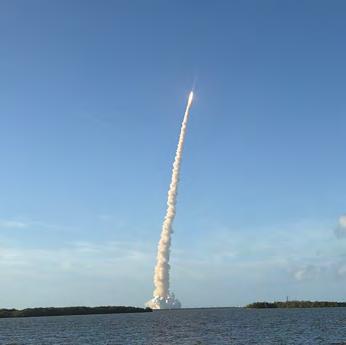
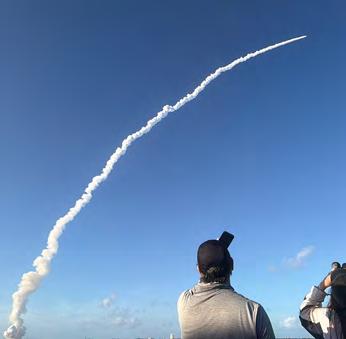
“Our team was responsible for building the Orion spacecraft batteries for NASA’s Artemis II mission,” he said. “These batteries are mission-critical, powering the life support systems and providing electrical functionality to the spacecraft. While the systems can run on solar power for much of the mission, the batteries are the sole source of power during a potential launch abort sequence, as well as through reentry and splashdown. Artemis II will take humans out of low Earth orbit and around the moon for the first time since the Apollo program ended in 1972. My wife, Briana, and I got to watch Artemis II’s successful launch in-person on April 1st. It was incredible.”
During testing, Smith led the production team to efficiently produce prototype battery packs with design changes to be tested at the Johnson Space Center in
Houston, Texas. They worked together to invent new procedures to address deficiencies from the original build.
“When a repair approach was identified, the production team became the critical path to getting the repaired batteries back on the Artemis II spacecraft,” Wiseman wrote in Smith’s nomination letter. “Smith was invaluable in helping identify schedule savings that reduced the initial schedule estimates by more than six months, and he continually worked to identify ways to improve the schedule as the team juggled four flight batteries, a new qualification unit, and a spare.”
Smith overflows with gratitude for those who made this work possible and uplifted him on his path to this remarkable milestone.
“I would like to thank my wife, Briana, for her understanding as I worked many late nights and weekends,” he said. “As well as for supporting my wild idea to also pursue my Master’s Degree at MSSU when spare time was already limited. I also want to recognize and thank my EaglePicher teammates who have invested countless hours and significant effort in support of the Orion program. Human spaceflight is a team effort, and success belongs to all of us.”
Brian Smith’s humility adds to his words’ resonance as he reflects on his well-earned honor.
“It’s difficult to put into words what this award means to me,” said Smith. “I certainly never thought I would receive a Silver Snoopy, so I was blown away. We do what we do for mission success and astronaut safety, not for personal recognition. To be recognized by a member of the crew who would ultimately
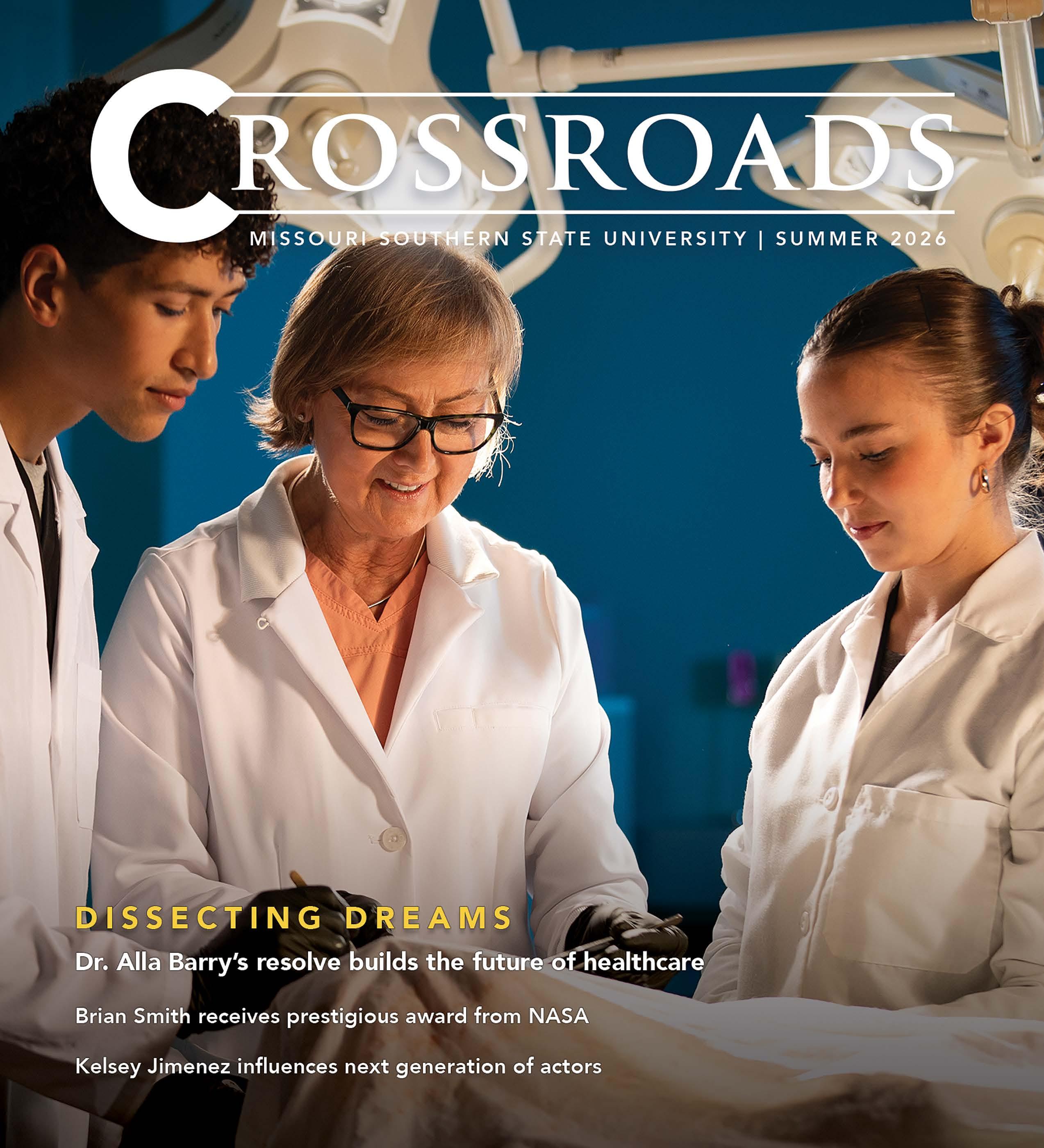
Dr. Alla Barry’s Resolve Builds the Future of Healthcare
In an apartment where outdoor winter temperatures dropped to -30°F and a physician’s monthly salary was barely enough to buy two pounds of bologna, a young Russian doctor, Alla Barry, made a decision that would go on to revolutionize anatomy education in Joplin, MO.
Growing up in Arkhangelsk, a northern Russian city, a fascinated Alla Barry watched her eldest sister begin medical school, studying thick textbooks filled with anatomical drawings labeled in Latin.
“The words didn’t make any sense to me,” said Barry. “But they were so much fun to say—spina iliaca anterior superior.”
Eager to unravel the complexities of the human body, Barry chased her dreams.
“It was the only future I could imagine,” she said. “I began to practice medicine during the era of the USSR. Patient well-being and quality of life were paramount, never
determined by ability to pay. Any necessary procedures were accessible to all. I could truly practice guided solely by what was best for my patients.”
In 1991, everything changed. The Soviet Union’s dissolution affected generations. The economy spiraled.
Groceries became scarce. Socialized medicine, once functional, began to collapse.
“Essential diagnostic procedures were delayed for months, medications were often unavailable, and physicians sometimes went unpaid for months at a time,” said Barry. “Those hardships triggered my decision to leave Russia—but they never diminished my love of medicine.”
When her family immigrated to the United States, Barry believed she was prepared. With a solid grasp of the English language, nothing could stop her.
“That confidence crumbled the moment I found myself at the Chicago airport counter, trying to explain what I needed,” she said. “The words I heard didn’t sound like the English I learned in classrooms. I felt small and scared. That experience was a turning point. It pushed me to adapt quickly and build the confidence I needed to thrive in a new country.”
She had been right, always making her own path.
“I spent more than a decade waiting tables and working as a CNA and telemetry technician at Freeman Hospital. Those experiences gave me a unique perspective on healthcare and taught me how much patient outcomes depend on the dedication of nurses and their assistants.”
Now, Barry has lived in the U.S. for 27 years, and for the last 16, she has been proud to call MSSU her professional home.
“I began my first year at Missouri Southern in 2010 as an adjunct professor, teaching Russian for two semesters,” she said. “I developed tremendous respect for language instructors. Although I am fluent in Russian, I quickly discovered that teaching it was another story entirely—it was a disaster!”
Fortunately for Barry, she was hired the following year as a full-time assistant professor in the Biology Department.
“I remember thinking, ‘life cannot get any better,’” she said.
Still, life improved exponentially.
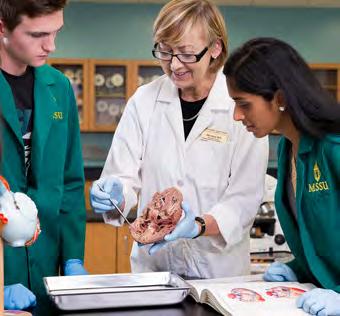
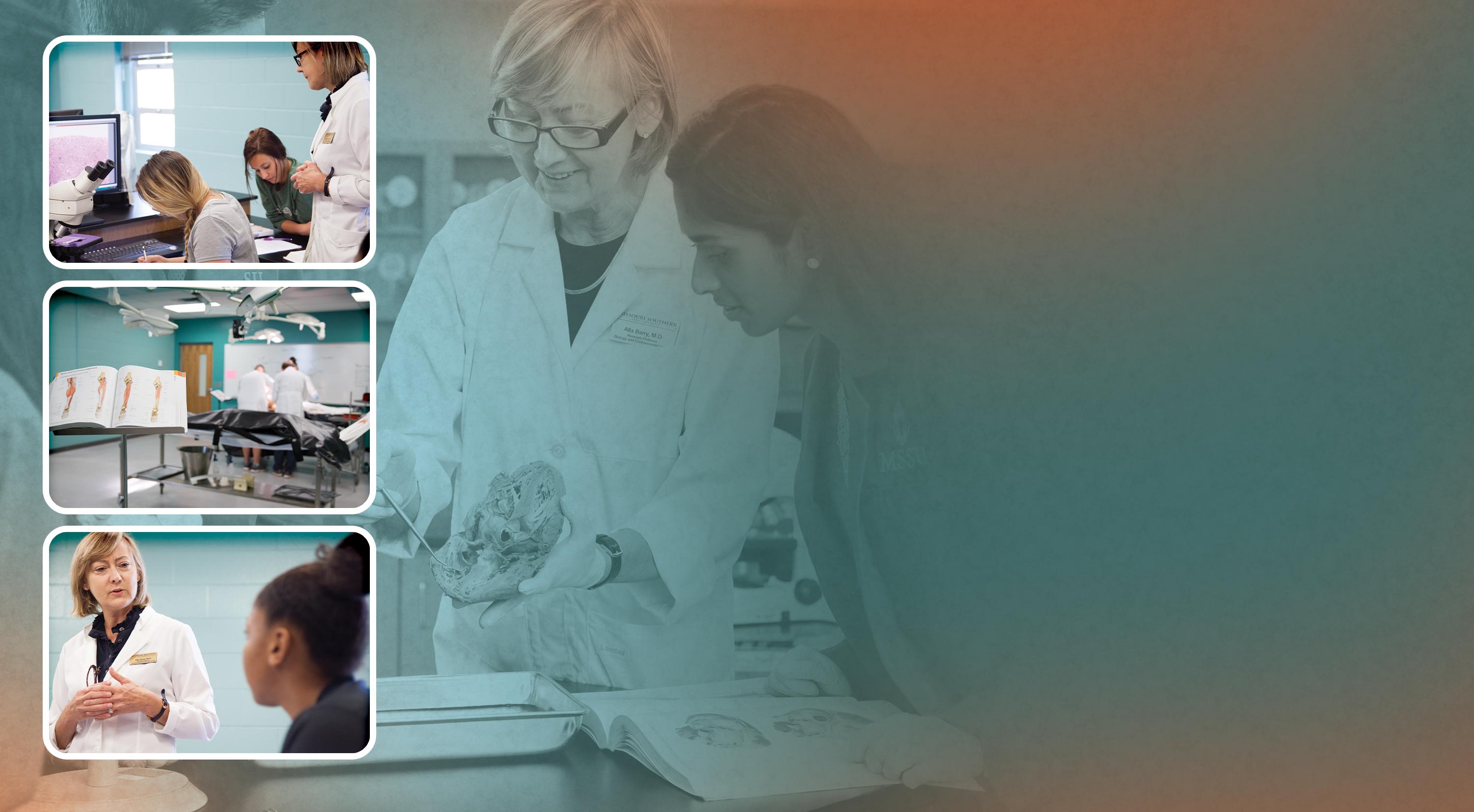
“Thanks to the vision of Dr. Crystal Lemmons, 2011 was also the year our cadaver lab opened,” she said. “The lab allows for what truly sets MSSU apart—the Advanced Human Dissection (AHD) course, a rare opportunity for undergraduates to perform full cadaver dissections. Less than a few dozen universities nationwide offer this experience.”
For more than a decade, Barry has had the privilege of leading the AHD course, which continually reaffirms the value of learning anatomy through dissection.
“Each cadaver is treated as a ‘first patient,’” she said. “Our process fosters deep respect and empathy for the donors. Students perform full dissections, document abnormalities, and analyze tissue samples, so clinical perspectives are built from the start. The experience bridges anatomy, histology, pathology, and genetics to transform the lab into a multidisciplinary classroom.”
Barry’s immense passion and impact are undeniable.
“MSSU is the only undergraduate program in the nation to incorporate hands-on ultrasonography into anatomy education,” she said. “I truly believe ultrasound will become the stethoscope of the 21st century. Offering our students early training in this technology is another way we’re preparing them to become forward-thinking, patient-centered healthcare providers.”
This preparation has become crucial to America’s future.
“In 2015, I learned that medical errors were the third leading cause of death in the United States,” said Barry. “One reason for this was a lack of observational skills among healthcare providers. This fact, as well as the inspiration I gained from our Anatomical Italy trip, sparked the idea for the Artful Medicine Symposium. It has since become a tradition that brings art and science together, making future doctors better observers and more empathetic people.”
A leader in immersive learning innovation at MSSU, Dr. Alla Barry has overcome more challenges than many face in a lifetime—but that is not what she is most proud of.
“I’ve had the joy of building our cadaver-based anatomy program, of introducing ultrasound training into anatomy education, and of founding the Artful Medicine Symposium,” said Barry. “More than anything, I’m proud to see my students succeed. The road from Arkhangelsk to Joplin has been long and difficult; but
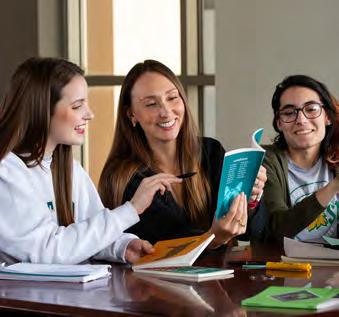
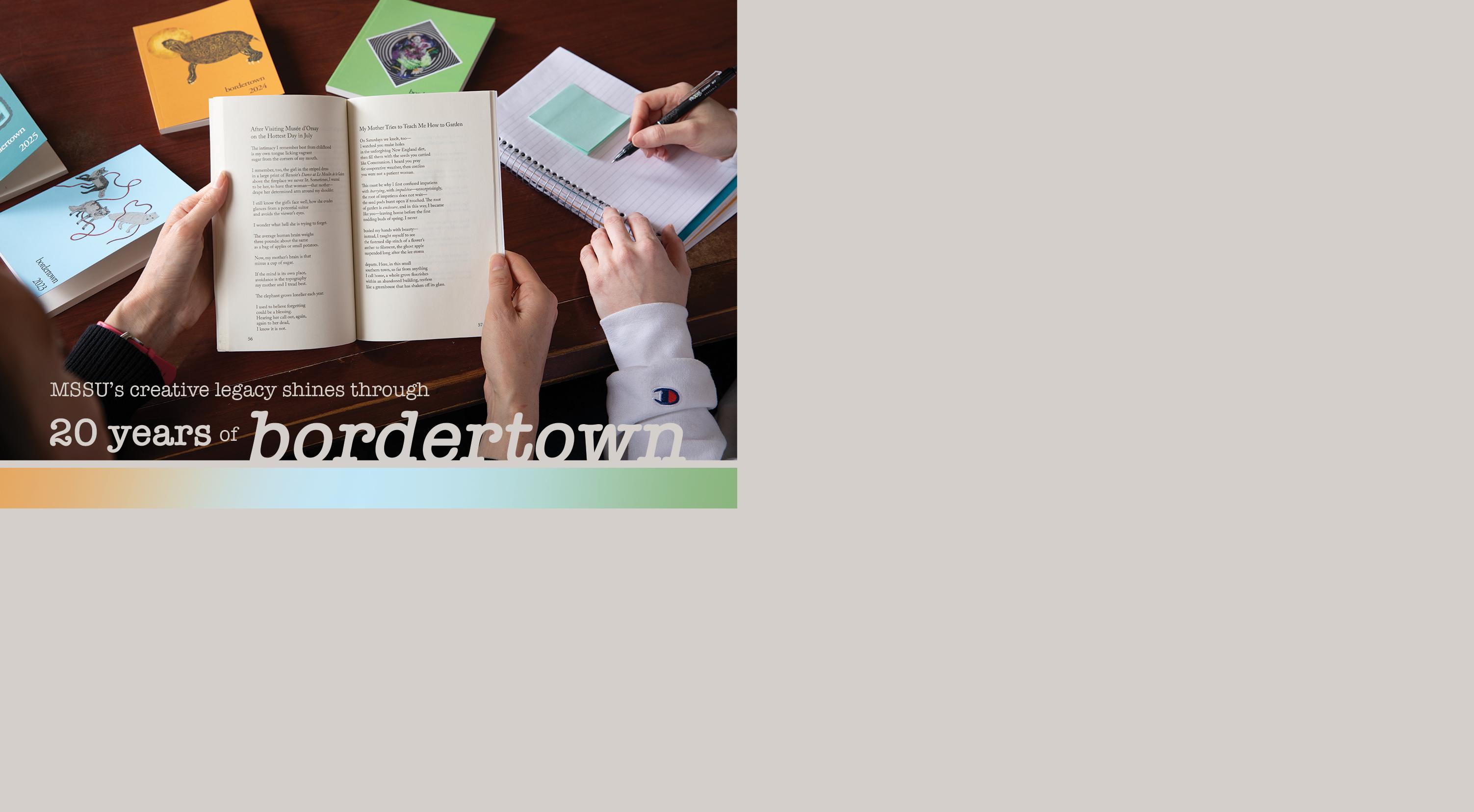
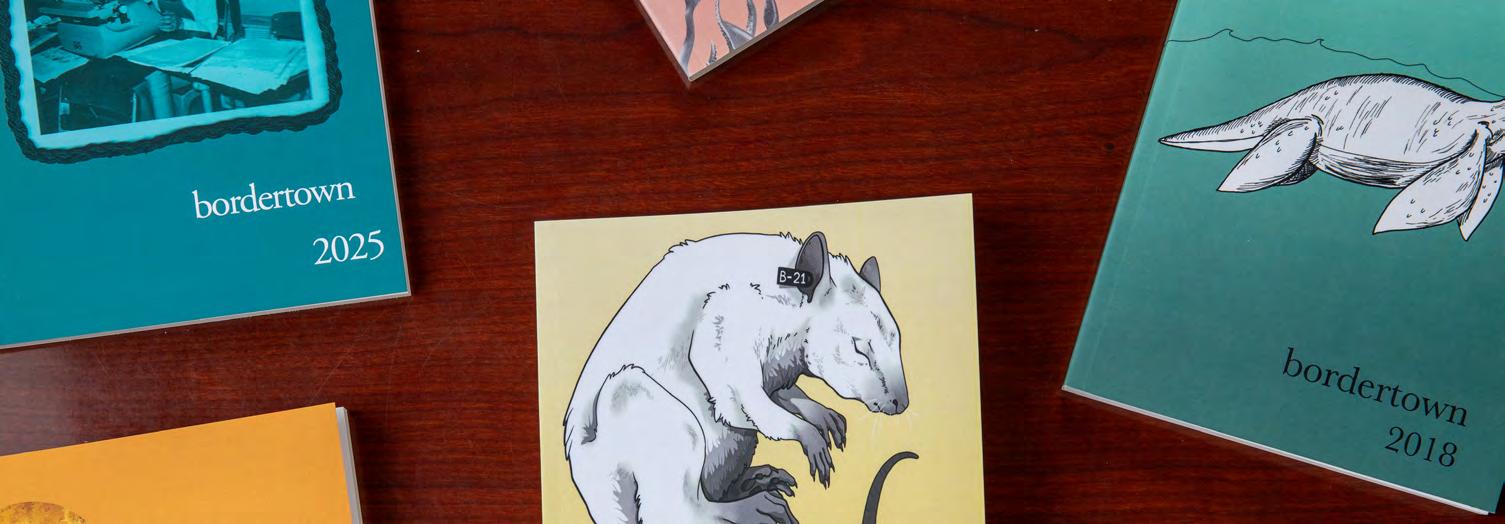
bordertown, formerly The Winged Lion, has become a cornerstone of the Language and Literature department and a cherished feature of MSSU’s writing community. For 20 years, it has showcased the creative work of MSSU students, prioritized free expression, and strengthened literacy and artistic engagement in Joplin. It provides a space where students discover their voices and take creative risks.
“Many students who submit might have never seen themselves as writers,” Dow said. “But when we accept their pieces, we show them we see something meaningful in their writing. It’s exciting, and it validates them. The first time you see your work in print, it’s huge. Being published is the prize they earn for all the hard work they’ve done on their writing.”
“Look How Far We’ve Come”
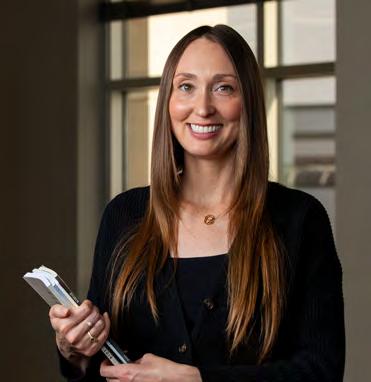
Lover of running, hater of lotus pods, master poet, and beloved professor Dr. Hannah Dow never saw herself becoming a writer, yet she always had a compulsion for storytelling. In the sweet spot where a child knows their letters but can’t quite spell words of their own volition, she would sit at the dining room table and ask:
“Mom, how do you spell [insert every single word]?”
This impulse to commit stories to paper shaped Dow’s future. From that dining room table emerged a talented writer, editor, and mentor driven to create space for students’ voices and help them share their words with the world.
At Missouri Southern, Dow’s work is rooted in that instinct. As a poet, professor, and Faculty Advisor to bordertown, MSSU’s literary magazine, she views her responsibilities as privileges. For her, teaching means cultivating the early sparks that bring students into the Language and Literature department’s creative writing culture.
“I see my role here as nurturing students’ love for writing,” said Dow. “Seeing students grow and become more confident as writers and editors is the most rewarding thing. The world has only something to gain from good people working diligently to create art.”
One of bordertown’s greatest strengths is its studentdriven editorial model. Students submit their poetry, plays, fiction, creative non-fiction, art, and more— but they also oversee the magazine’s production. Dow’s leadership ensures the process mirrors that of renowned literary journals, giving students an immersive publishing experience.
“We publish annually, accepting submissions in the fall,” said Dow. “I anonymize the works, share them with our editorial team, and throughout winter break we read all submissions and vote. In the spring, editors compile the issue, design the layout, proof all content, and I send it to the publisher. Our last grand reveal, the 2025 launch, was especially meaningful. It was standing room only. It gets bigger and better every year.”
Students leave with invaluable hands-on publishing experience.
“In the absence of a publishing program, we offer something where students get real experience in literary publishing on both sides,” said Dow. “Many of our editors and contributors go on to pursue successful writing careers and graduate studies. Many MSSU students I’ve worked with have so much talent and brilliance.”
This year’s team, she adds, is exceptional.
“Our team is committed to making things happen and bringing the publication to a higher caliber with incredible attention to detail,” said Dow. “They fully embrace their roles and look for opportunities to do even more.”
That dedication stands out to Dow.
“Anyone willing to spend their free time doing this sets themselves apart from the average student,” she said. “It’s very altruistic and special when students decide, ‘I’m not just here to fill my own cup—I’m here to serve others.’”
In a world where many literary journals have gone fully digital, bordertown remains proudly print-based—with plans to add digital access via its MSSU-housed site without sacrificing the physical edition.
“The fact that we remain a print journal is something that sets us apart,” Dow said. “It is a tangible reminder of all that we do in Language and Literature, and it’s something that we’re fostering in our classrooms.”
She also credits MSSU’s support for sustaining the print tradition.
“The support we receive from MSSU is something we’re so grateful for,” said Dow. “The fact that we’ve continued to prioritize bordertown being free for
our students says a lot about our strong values as an institution.”
The literary magazine also publishes international and dual-credit students, as well as writers submitting in languages other than English—providing students of all backgrounds the opportunity to hold their work in print and experience that magical moment.
“bordertown is for MSSU students, but it’s more than that,” Dow said. “It’s for their families, for faculty and staff, for administrators, for the community. It’s for Joplin—it’s for everyone.”
The magazine appears at the Joplin Writers’ Faire, Third Thursday, and other campus and community events. Even those who don’t consider themselves readers often pick up a copy and discover something that opens their world. At these events, the editors also offer poetry on demand, a service where visitors provide a prompt and receive a personalized poem written on the spot.
“Having access to literature is having access to the world,” she said. “Everyone’s poem, story, or essay is a slice of their world—their life. If we don’t experience that, then we’re just living in our own echo chamber.”
This belief in literature’s ability to expand empathy and possibility is central to bordertown’s mission.
For Dow, the 20th anniversary is both nostalgic and energizing. Looking ahead, she dreams of extending the magazine’s reach.
“I’ve always hoped that someday bordertown could be expanded for a wider audience,” Dow said. “We’re on the right path. We already have so much of what we need to become a literary journal for the public.”
No matter how it grows, the heart of the publication remains a space that celebrates students’ voices. bordertown has been a testament to the power of student voices, creative community, and literature’s ability to open one’s world.
“There is so much beauty in the world if we take the time to notice,” Dow said. “The world has enough joy to break your heart.”
For two decades, bordertown has helped us notice—and Dr. Hannah Dow ensures that legacy will continue.
Dr. Hannah Dow
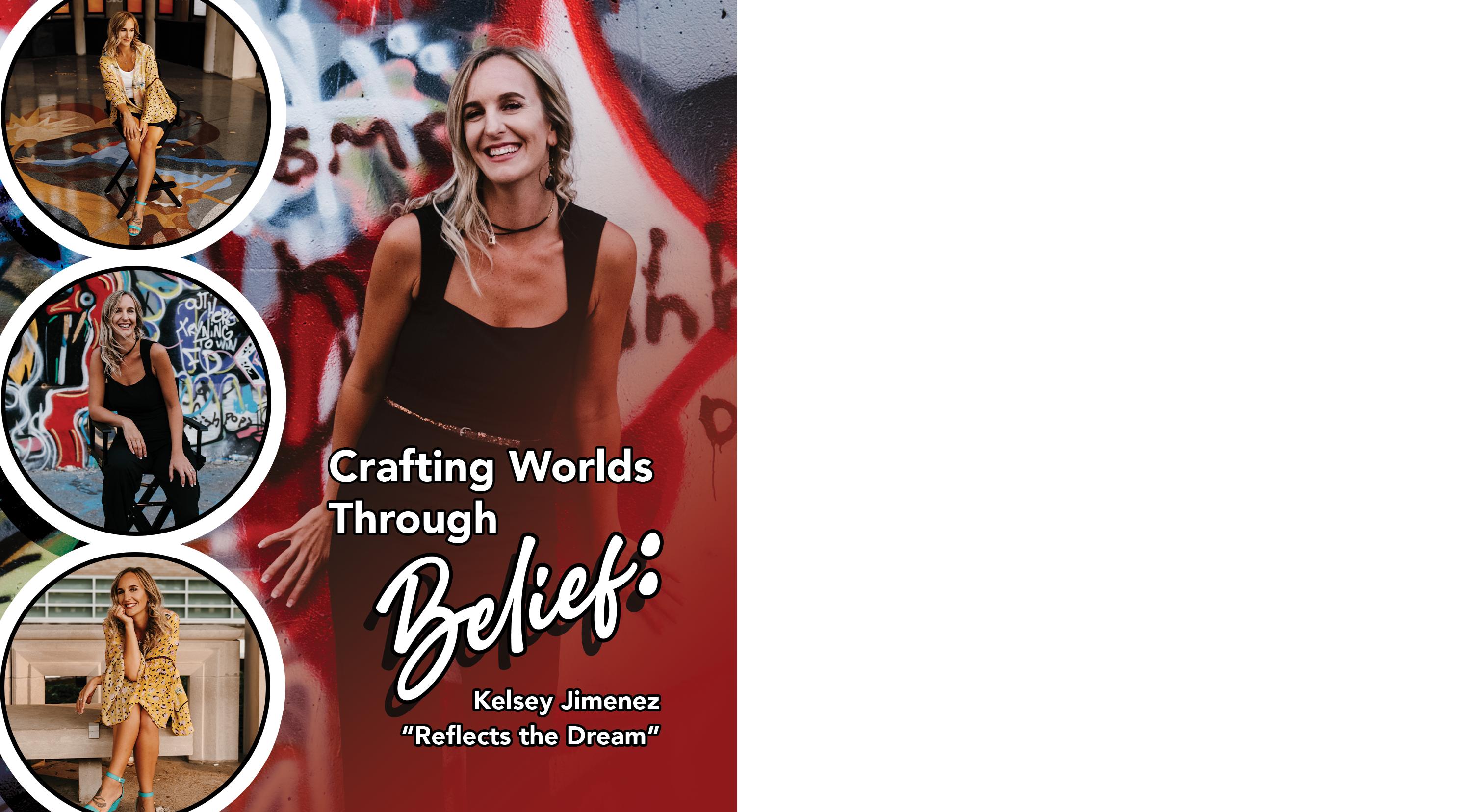
To become who you’re meant to be, you have to let go,” said Kelsey Jimenez. “The tool of believing in yourself—even when you’re afraid, when it’s risky, and when you don’t know the next steps—is invaluable.”
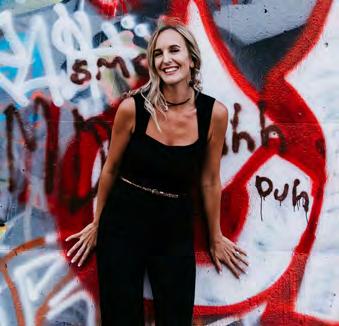
Determined from the beginning, Kelsey Jimenez dreamed of teaching future actors the art of theatre. After more than a decade of hard work and relentless dedication to her craft, she made her aspirations reality; growing even further since she moved to California.
“This was always my path,” said Jimenez. “And it all started at Missouri Southern with earning my Bachelor of Arts in Theatre.”
When she first visited MSSU, Jimenez met former Director of Theatre Dr. Jay Fields and knew she belonged.
“I felt seen,” said Jimenez. “He saw me as an actress. He didn’t question me; didn’t make me feel silly. I instantly knew this is where I needed to be. I went on to graduate school after my time here, but honestly, I love Southern. There’s no competition. It was such an incredible experience in my life. Everyone wanted me to succeed, and they were truly there for me.”
Powered by grit and well prepared from her immersive education, Jimenez moved to St. Louis where she followed through with the next step in her lifelong plan. She earned her Master of Fine Arts in Acting and couldn’t wait to bring her skillset to university students in the area. She wanted to make an impact—but obstacles abounded.
“These colleges were only interested in someone with 10 or more years of experience,” said Jimenez. “Not only that, but they wanted people from Tennessee, New York, or Florida—just anywhere but Missouri. I thought, ‘how can I get experience if no one will hire me?’”
Nevertheless, she persisted. In the face of “no, you can’t,” Jimenez has perpetually had one thing to say:
And so, she built her way up. Jimenez began teaching courses at local acting schools and organizations, including the Foundry Art Centre. Finally, she was teaching students and found an abundance of inspiration.
“It led me to think: ‘I want to do this myself—open my very own school of acting,’” said Jimenez. “In 2020, I signed up for business classes, but I was scared. I would tell myself I couldn’t do it. But I began seeing my strengths and gifts as a teacher. I had to remind myself that, ‘Kelsey, this is not just what you do. This is who you are.’”
With confidence in herself, Jimenez was unstoppable. Her family sold their home, bought an RV, and moved from Missouri to Ventura, California—something she had always pictured alongside her career. From 2021–2025, she launched Reflect the Dream School of Acting, the Voiceover Academy, and the Public Speaking Bootcamp. She’s had the opportunity to play a pivotal role in her students’ lives.
“It’s an incredible transformation, and I get a front row seat,” said Jimenez. “I watch their lives change as they leave behind lies and limitations and step into believing in themselves. Once my actors know their goals are possible, it’s like there’s a fire inside of them.”
To Jimenez, this fire is familiar; its flames stoked by the release of doubt.
“I, too, had to trust this is who I am, and it was scary,” said Jimenez. “It changed me. The things I used to think about myself—that I’m not enough, or I’m just some girl from the Midwest—all had to go. Then, I could become who I was meant to be. I had to make the choice every day to believe.”
For Kelsey Jimenez, the path to success is now clear:
“Be honest with your dreams. Tell someone about them, don’t keep them in. Be honest with yourself. Take the next step—believe.”
“
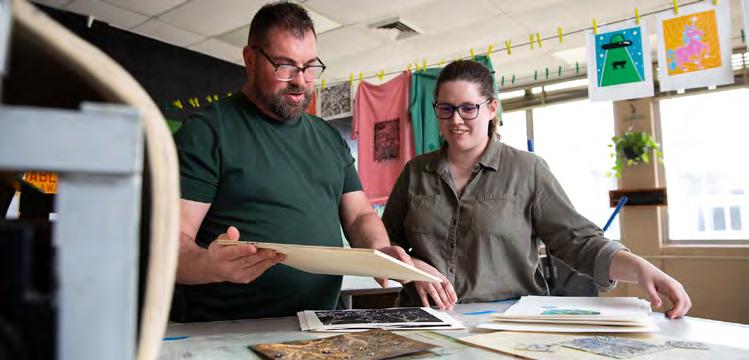
A DEEPLY HUMAN CRAFT: PRINTMAKING RETURNS TO MSSU
After a two-year hiatus, printmaking is back at Missouri Southern—a rewarding revival for Assistant Professor Scott E. Murray Jr.
“Printmaking is an artistic process with a nearly 2,000 year history,” he said. “It was a primary way information moved through the world, shaping how communities connected. It is the art of transferring an inked image from a prepared matrix onto paper or fabric. The artist shapes the matrix by hand, making each print an original.”
Murray was key in reactivating the studio—assessing equipment, refining safety procedures, and rebuilding the curriculum to restore an environment that honors tradition and exploration.
“In the studio, students learn carving, inking, layering, and pressing,” said Murray. “Fully engaged, they learn how ideas move from concept to production. Those skills translate into careers in fine art, graphic design, illustration, publishing, and education. When students work with professional equipment, they begin to see themselves as practitioners.”
The timing of printmaking’s return, he noted, couldn’t be better.
“In an increasingly digital world, we must continue practicing hands-on disciplines,” said Murray. “They engage the senses in a way screens cannot replicate. Printmaking reminds us that making is physical, deliberate, and deeply human. I am proud to be part of an institution that understands the value of the arts.”
MSSU’S MASTER OF SOCIAL WORK PROGRAM MEETS CRITICAL REGIONAL NEED
“Anywhere there are humans, there are social workers,” said Jannette Eldred, Social Work Program Director. “There’s nowhere between prenatal, death, and dying that you don’t need a social worker. They connect all patient services, creating holistic care. We need social workers where decisions are made.”
In our region, healthcare systems are the largest social work employers. These clinicians are essential in every aspect of healthcare—yet the region faces a shortage. MSSU’s new Master of Social Work (MSW) program endeavors to change that. Eldred and her colleagues spent months gathering data, aligning curriculum with the Council on Social Work Education, and working with university leadership to secure accreditation. A major investment from Freeman Health System helped make the program possible.
“It’s an enormous amount of work to launch a program like this,” said Eldred. “Freeman’s investment ensures we have the resources to create quality curriculum and hire the best faculty.”
The MSW program’s emphasis on integrated healthcare will set graduates apart. Students will participate in hospital rounds, interdisciplinary simulations, and collaborative training with many health disciplines. For many students, pursuing an MSW has meant relocating. MSSU’s hybrid format removes that barrier.
“Students can continue providing care to the populations they love while advancing their degree,” Eldred said. “They won’t have to uproot their lives, and they can make a real difference.”
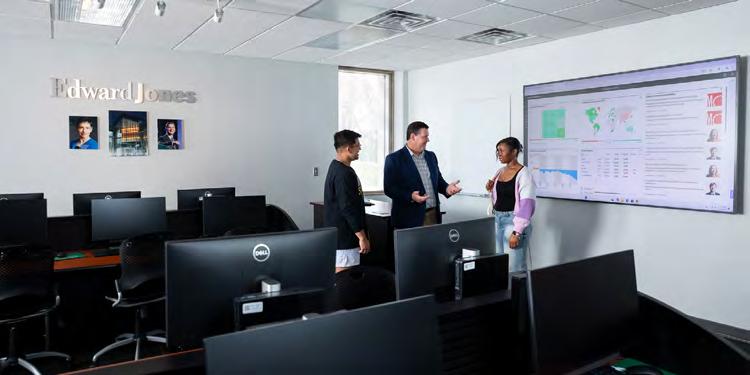
Established in ‘06 within the Plaster School of Business (PSB), The Edward Jones Investment Center has long improved students’ education. Thanks to generous alumni and friends, the center underwent a $56,000 remodel in May ‘25, including aesthetic updates, upgraded computers, and a 98-inch flatscreen— making the classroom a technology-forward learning environment.
“Hands-on learning adds value to my education,” said PSB student Jayna Gunter. “Our classes are more collaborative after the renovations. Learning in this space gives me confidence in the skills I’ll take into my future career.”
Top contributors supported this project, including current and retired Edward Jones Financial Advisors, Russ Alcorn, Jim Goodnight, Mike Lawrence, Dan Stanley, and Don Swanson. The renovation honors Goodknight, one of the firm’s first 100 financial advisors.
For students, the renovations strengthen peer learning with an open layout and give students space to practice communication skills. Updated desktops allow seamless use of financial modeling software. The large display enhances presentations, such as sector analyses for the student-managed Youngman portfolio. The center is a tribute to industry partnership and a tool for student achievement.
“The Edward Jones Investment Center allows students to prosper and progress,” said Alcorn, ’77, Foundation Board and Business Advisory Council member. “The company will continue to support the university.”
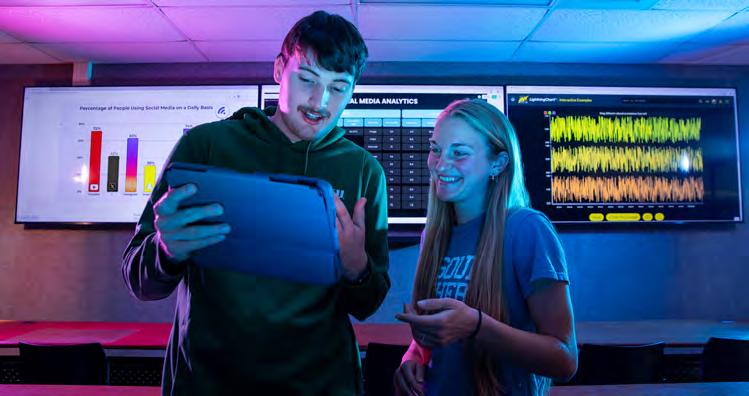
When MSSU’s Communication Department began imagining ways to incorporate hands-on learning, a once unused room in Webster Hall became a powerful immersive learning space—the IDEAS Lab— an Interactive Data Evaluation and Analysis Space. This provides students an area for collaboration and creativity with interdisciplinary projects. Alongside his colleagues, Brian Mehrens, Master Instructor of Communication, saw potential to turn the classroom into a hands-on learning lab. The concept grew into a technology-rich environment built for collaboration and real-world practice. The lab features modular tables for custom layouts that aid creative teamwork, a gaming-level PC to support virtual and augmented reality technology, and three extra-large televisions that provide extended data display and a shared digital whiteboard. Additionally, a boardroom-style camera and sound system allow students to practice virtual presentations, interviews, and client pitches for challenging fields.
“The screens are a blank canvas for digital learning,” said Mehrens. “Students often study long-term data. Having three screens allows us to analyze a full timeline in a way a single screen can’t. Individuals and groups can research at their desks as everyone sees their work come together on the screen right in front of them. Any chance we have for students to actively participate rather than passively absorb information is a win. I’m hoping to make those memories and experiences stick with them and make an impact in their lives. Seeing students’ eyes light up when they make a connection—that’s what I look forward to.”
EDWARD JONES INVESTMENT CENTER
WHEN THE WORLD OPENS: HOW LAURA KIMMELL FOUND STRENGTH ABROAD
Laura Kimmell, ’25, didn’t know how profoundly MSSU would shape her path after earning her Bachelor’s Degree in Exercise Science. Growing up in Nevada, MO, Kimmell was immersed in athletics. But until she entered MSSU’s Kinesiology program, she hadn’t discovered her academic spark. Even more than the knowledge she gained, what stands out about MSSU to Kimmell was her connections, and how they built her up.
WHERE INNOVATION AND CONSERVATION CONNECT
An MSSU employee knew who to call when he found an injured turtle on the side of the road. The turtle, now named Roberta, needed a miracle—and Dr. David Penning’s hands were the best place she could be.
“She was missing 25% of her shell,” said Penning. “This is more than some Neosporin and sending them on their way. I didn’t know if I was legally allowed to help. I called every vet clinic around—they couldn’t.”
Penning discovered working with native wildlife requires a state permit. No one local had taken on that responsibility. After applying through the Missouri Department of Conservation, Penning’s background in reptile physiology helped secure a permit, allowing him to treat Roberta.
“This all started because I had one turtle that needed help, and I realized we lacked a mechanism within a 200 mile range to help a turtle,” said Penning. “I shared the story online, and the community blew it up. We went from one turtle to 11 in a week, and we’ve seen 17 turtles this year already.”
Missouri Southern hosts the only university-associated turtle rehabilitation program in the state. The effort has become a unique learning opportunity for students studying preveterinary medicine, wildlife conservation, and biology. Students test innovative ways to stabilize damaged shells,
MSSU’S MEDICAL IMAGING PROGRAM WILL STRENGTHEN REGIONAL HEALTHCARE
even using Health and Life Sciences’ 3D printing technology to design protective coverings, “shellmets,” for severe injuries.
“There’s no book for turtle prosthetics,” Penning said. “Everything we do is creative problem-solving.”
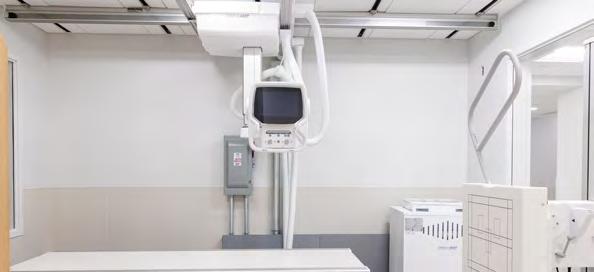
The work sparked collaboration across campus. When Penning needed X-ray imaging to diagnose a turtle’s hip injury, Dental Hygiene answered his call, allowing students to use their equipment. This collaboration coincides with the project’s greatest success—community support. Donations provide supplies while Penning’s students volunteer countless hours caring for recovering animals. Roberta, the turtle who started it all, is still recovering, but she will soon return to the wild.
Beyond rehabilitation, Penning oversees critically endangered tortoise breeding initiatives, including Madagascar spider tortoises and pancake tortoises—species with populations as low as 5,000 worldwide. For Penning and his students, the work is equal parts science, innovation, and hope.
“Every case forces students to solve problems no one has,” he said. “And every turtle is one more chance for the species to continue. If you’re hoping someone exists to fix something, sometimes that person is you.”
“The care my professors had for my education and well-being still strikes me,” said Kimmell. “They did whatever it took to help me succeed. I loved the quality of my education. So many of our classes get you up on your feet through hands-on learning instead of sitting in lectures. I had never been so eager to learn about anything in my entire life. I knew I was exactly where I should be.”
Kimmell’s confidence brought her to one of the most transformative opportunities MSSU offers—studying abroad. Kimmell spent a semester at the University of Hradec Králové (UHK) in the Czech Republic. There, she took courses that pushed the boundaries of her staple academic diet.
“My business classes at UHK allowed me to see a different side of the college experience,” said Kimmell. “They equipped me with a skillset that will help me open my own gymnastics business. This experience taught me there is more variety in life than I ever thought possible. I now know I shouldn’t get stuck in paths that never change.”
Today, Laura Kimmell remains driven, and there’s nothing more inspiring than watching her athletes succeed. Kimmell’s journey reflects what Missouri Southern does best—empowering students to explore boldly with confidence in the possibility of the unknown.
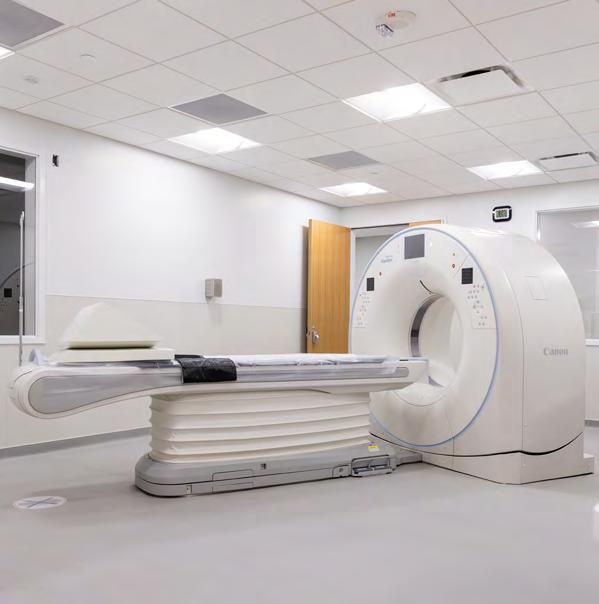
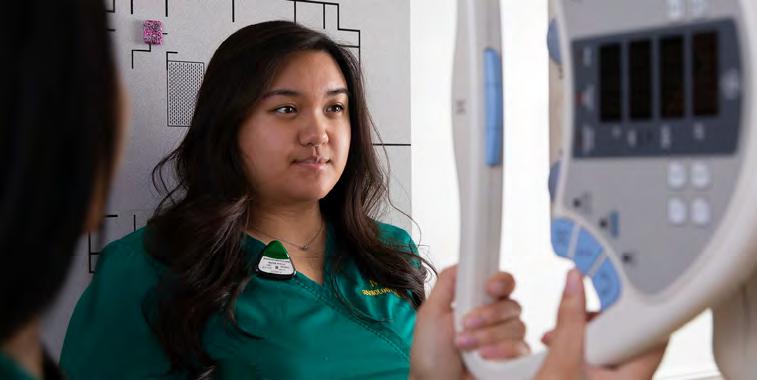
With a new Bachelor of Science in Medical Imaging and plans to expand into Computed Tomography (CT), Magnetic Resonance Imaging (MRI), and Sonography, MSSU aims to address a critical shortage of imaging professionals. Radiology Student Paige Burleigh sees this need firsthand in local hospitals.
“Many positions are vacant in CT and MRI,” she said. “The closest schools are in Springfield, Tulsa, or Kansas City. We can fill jobs here with local training.”
Immersive learning will prepare students in the new Roy Blunt Health Science Innovation Center with advanced imaging equipment and simulation tools. This program is essential for rural hospitals, and was made possible by Bill and Tracy Gipson who have dedicated part of their $1 million gift to the expansion.
“Some technologists take care of entire hospitals,” said Radiology Program Director Kimberly Matejcek. “Being multi-credentialed is invaluable. W ithout this program, patients lack access to care that could change their quality of life.”
The program was also designed for flexibility and impact.
“The radiology curriculum lets students begin advanced credentials before graduating,” said Dr. Sherry Whiteman, Department Chair of Allied Health. “That gets skilled technologists into the workforce sooner. Hybrid and online opportunities support working professionals, too. We’re here to meet the needs of the region we serve.”
LOGAN
' THE WORK IS WORTH IT '
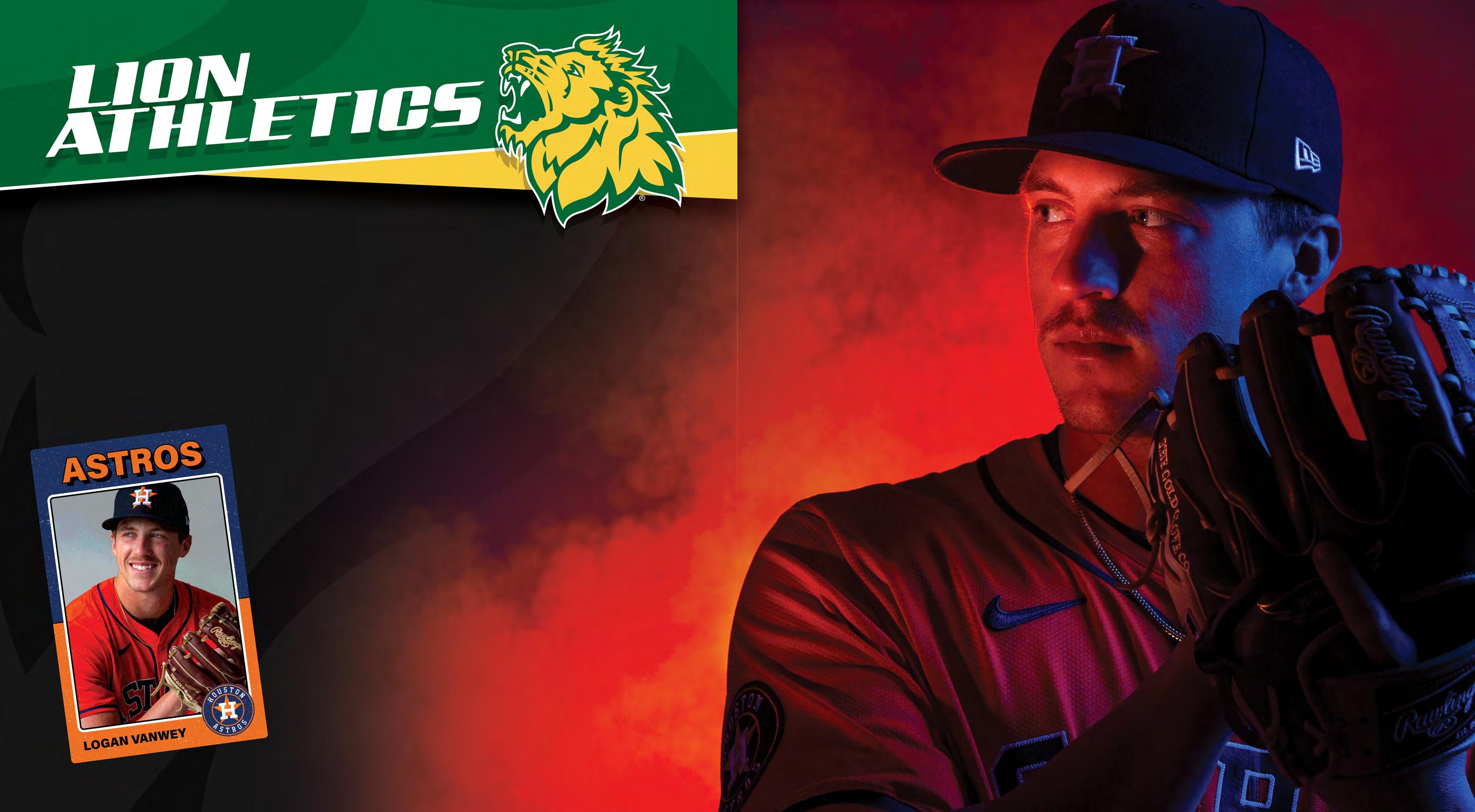
For five days, Logan VanWey waited. Adrenaline coursed through his veins. Called up to the Houston Astros with the expectation he’d pitch the first night, he spent almost a week watching a shut bullpen door. Finally, on a Friday night in the nearly sold-out stadium, 46,000 fans watched VanWey’s debut.
“When they called me to pitch, there were no nerves,” he said. “Just pure excitement to live out my dream. I went two scoreless innings and recorded my first major league strikeout. It couldn’t have been a better day.”
After the game, everyone gathered on the field to watch fireworks
illuminate the sky in a worthy celebration.
VanWey’s moment didn’t happen because of luck. He was always driven to succeed. Beginning his baseball career in his hometown, Webb City, MO, he applied to Missouri Southern.
“Baseball was always my sport—but MSSU gave me my only college offer to play baseball,” he said. “I reached out to every division and almost every college in the area. Southern was the only school that believed in me and my ability.”
Tenacity brought him a long way, yet smooth sailing was still not guaranteed.
“Like my college baseball journey, playing professionally was challenging,” said VanWey. “I went undrafted three times, played independent baseball, and signed a free agent deal in 2022. I always knew all I needed was a chance. I made it to AAA my first full season, won the AAA national championship the following year, and debuted in the Major Leagues my third season.”
Looking back on his experience at the university, VanWey has only good things to say.
“Playing baseball at MSSU was the most fun I’ve had while
playing,” he said. “I’ve done everything from high school travel baseball, summer ball, MLB draft league, and pitched in the big leagues for the Houston Astros—and still remember how much fun I had playing at Missouri Southern. Many teammates are still my best friends.”
At Southern, VanWay earned lifelong connections alongside his Bachelor’s Degree in Business Management, ’22. Now, with his spot on the 40-man roster and a shot at breaking camp with the Opening Day team, Logan VanWey still follows the advice he offers to anyone wanting to go pro.
“You are the one that controls your career,” said VanWey. “Never stop playing until someone rips the cleats out of your hands. That is how I earned my place in the game today.”
VANWEY: EPITOME OF
LEGGETT & PLATT’S
METAMORPHOSIS
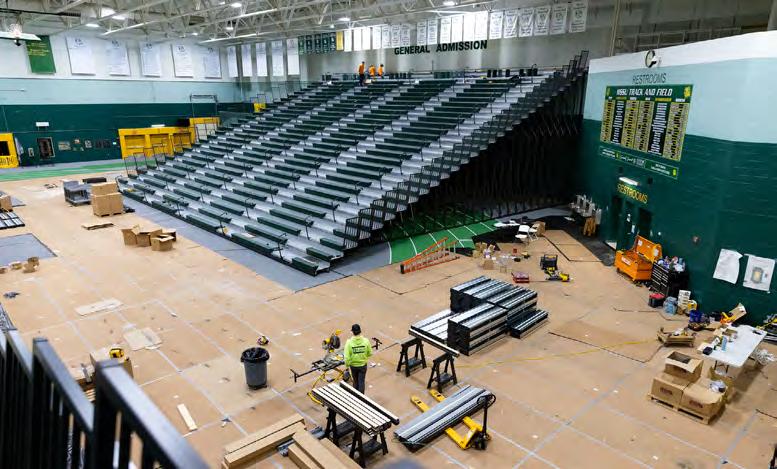
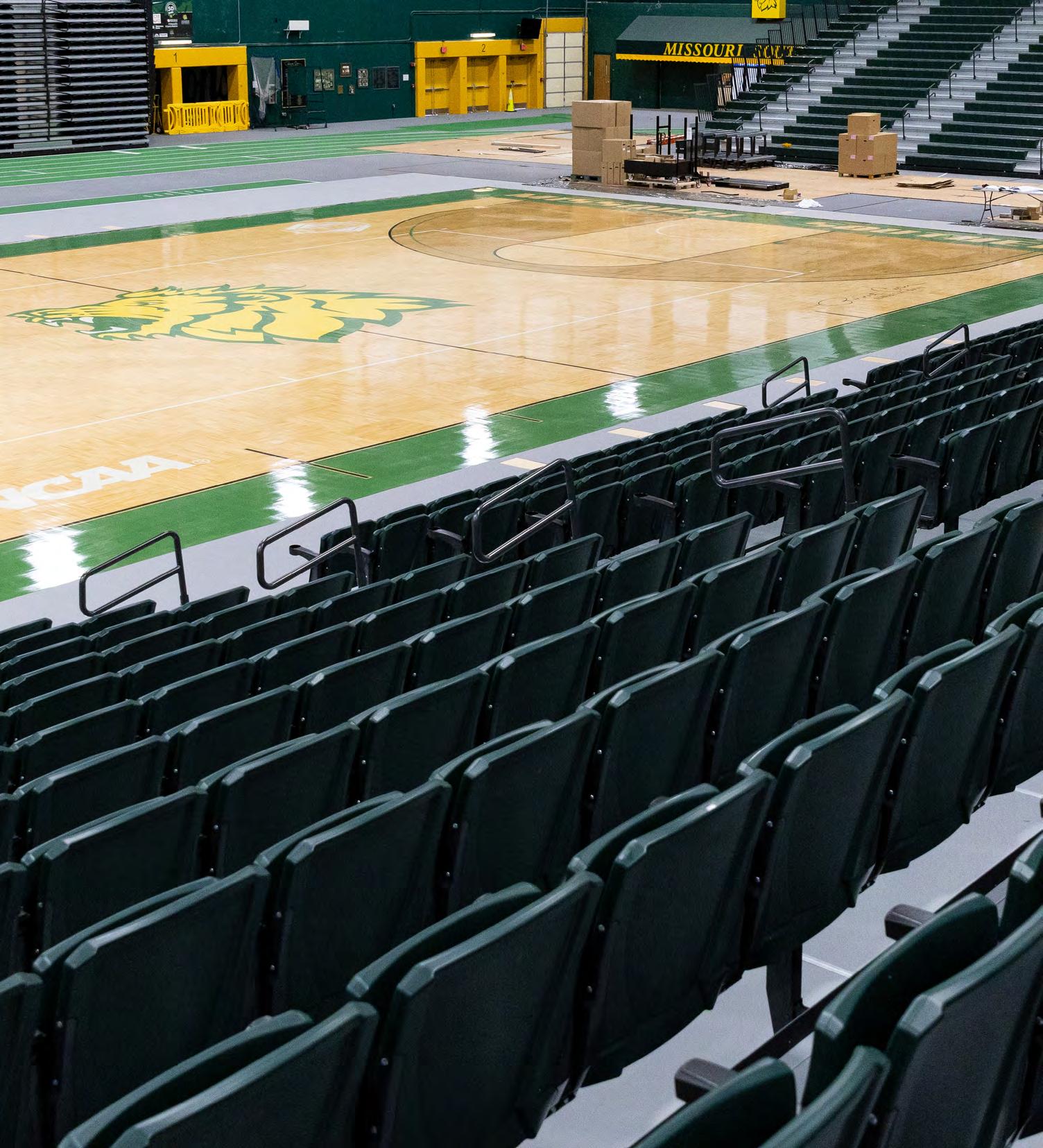
After25 years of hosting more than 80 events annually, Missouri Southern’s Leggett & Platt Athletic Center is undergoing a major transformation. Rob Mallory, Director of Athletics, emphasizes how these updates are already reshaping the experiences of student-athletes and the broader community.
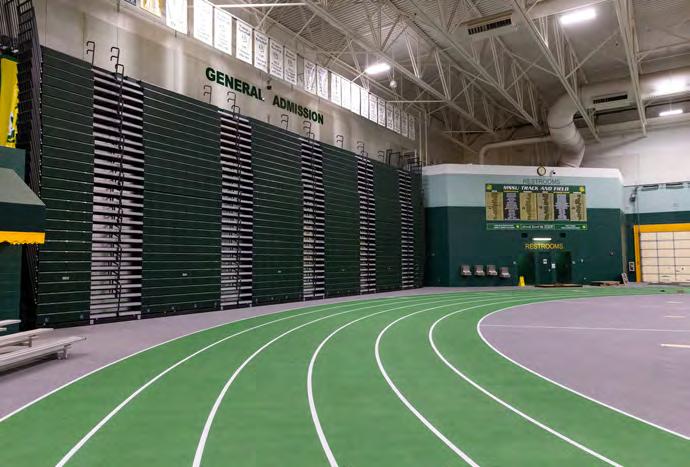
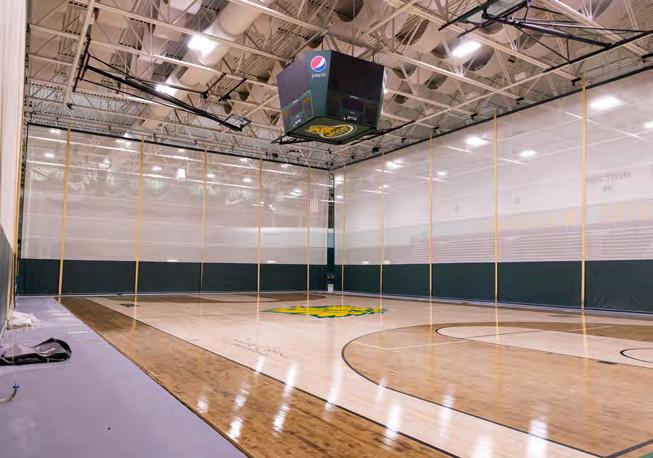
Phase One of the renovation launched a $3.2 million overhaul of the building’s core infrastructure. Most significantly, the original bleachers were upgraded to a modern 3,200-seat system, a new track surface was poured, and a new basketball court is nearing completion. For Missouri Southern’s track athletes, these changes have had an immediate impact.
“Recently, our track student-athletes had the opportunity to compete at home, which is something they’ve not been able to do for so long,” said Mallory. “That sense of being home—that sense of community and pride when performing—is huge for them. It wouldn’t have been possible without this project.”
Additionally, the basketball court replacement became a priority as the university prepared for commencement. The previous floor had aged to the point it could no longer be sanded safely. Not only will the new court be ready for May ceremonies, but it will also enhance the playing surface for basketball student-athletes, eliminating dead spots and allowing consistent performances.
While the renovations benefit basketball, volleyball, and track most directly, Mallory asserts that the impact reaches every athletic program.
“These upgrades allow us to better serve every studentathlete on a daily basis,” he said. “That is as important as anything we do, and the cumulative impact is monumental.”
The updates also influence the facility’s operation. The new bleacher system will be essential to increasing Leggett & Platt’s flexibility as a multi-purpose venue.
“Prior to the renovations, we had to say ‘no’ to some events because we couldn’t flip the facility fast enough,” Mallory said. “The new bleacher system is designed for a multi-purpose complex. It’s easier to bring in and out, allowing for smooth transitions. Now, we can continue serving both our campus and the greater Joplin community.”
Phase Two of the project will focus on fan experience, with plans for a center-hung digital scoreboard, improved sound, fresh paint, and potential upgrades to restrooms and concessions.
For Rob Mallory, Leggett & Platt’s evolution is about creating a space where student-athletes and the community can gather to rally behind Missouri Southern for years to come.
NEW ROD ANDERSON BASEBALL CLUBHOUSE
ELEVATES MSSU ATHLETICS
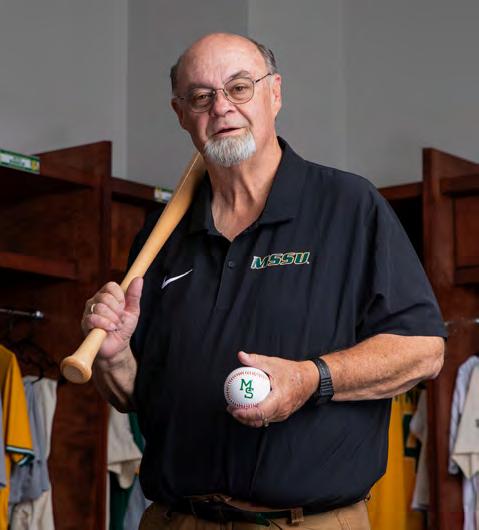
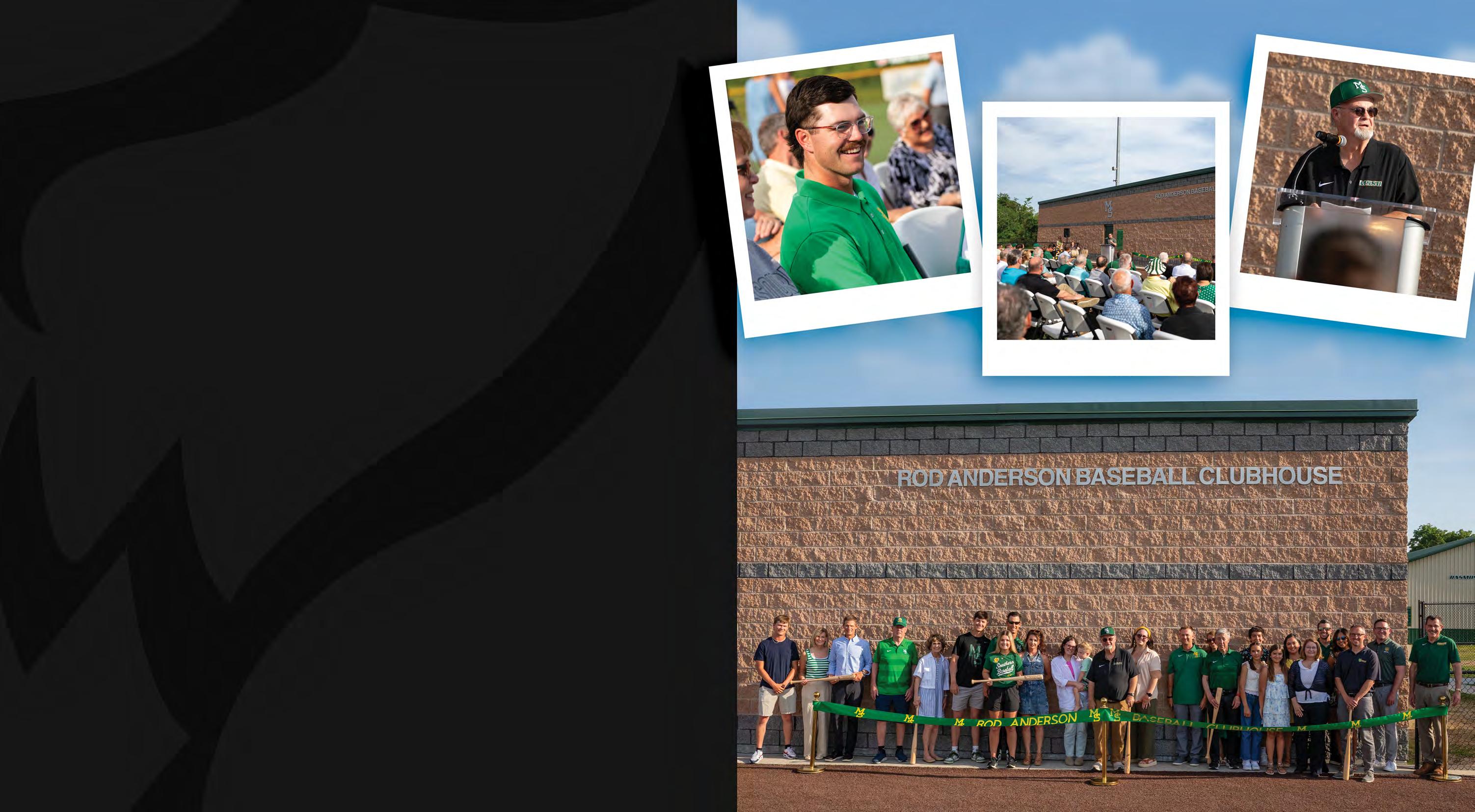
The Rod Anderson Baseball Clubhouse marks a defining moment for Missouri Southern Baseball, completing a decade-long vision for Warren Turner Field.
“Last year was our 11th season on campus,” said Rob Mallory, MSSU’s Director of Athletics. “The clubhouse really completed the facility. The stadium came first, then the indoor hitting complex in 2021, and this final piece brings everything full circle. For our athletes, it feels like home.”
Indeed, this space immediately transformed their daily experiences.
“The clubhouse gives our team the opportunity to compete, develop, and recruit at a high level,” said senior Sports & Recreation Management major and baseball student-athlete Brayden Luikart. “Having access to a facility like this raises the standard of our program and helps strengthen the bond within our team.”
Mallory said. “They want to invest in that.” Luikart echoes this significance.
“That support is the backbone of Missouri Southern Baseball, and it motivates us to represent them well every time we take the field,” he said. “This space is crucial to the development of the student-athlete, and it means a lot to our team.
The project was made possible by 107 donors—a powerful reflection of community belief in MSSU Athletics.
“People believe in Missouri Southern, in our baseball program, and in Coach Bryce Darnell’s leadership,”
My first reaction when I saw the new clubhouse was how fortunate we are to have this.”
Mallory credits lead donor Rod Anderson as the catalyst.
“This project doesn’t happen without Rod,” he said. “His connection to MSSU runs deep, and when the opportunity came to make this clubhouse a reality, he stepped up.”
With upgraded amenities, team meeting spaces, coaches’ offices, and direct field access, the clubhouse enhances daily life for everyone involved in MSSU Baseball.
“I’d put our facility up against any in Division II,” Mallory said. “This is a physical indicator of the belief people have in what we do, and it strengthens our connection to the Joplin community.”
1970s
Stephen, ’77, and Pam, ‘75, of Joplin were honored by the Webb City R-7 Schools Foundation as the 2025 Distinguished Citizen.
1990s
John Emrich, ’64, was inducted into the 2026 Regional Media Hall of Fame.
Krista Kirk, ’95, was promoted to Project Manager at CR Crawford Construction in Fayetteville, AR.
Hon. David “Chuck” Replogle”, ’98, of Marshfield has been elevated to Circuit Judge for the 30th Judicial Circuit.
Shally Lundien, ’95, of Neosho, MO was inducted into the MIAA Hall of Fame Class of 2025 in Kanas City, MO.
Dr. David Pyle, ’97, of Carl Junction, MO was promoted to Superintendent of Carl Junction Schools beginning July 1, 2025.
Heather Surbrugg, ’98, of Joplin, MO was promoted to Director of Joplin Early Childhood in Joplin, MO.
Dr. Gretchen Shull, ’99, of Webb City, MO was appointed to the State of Board of Education.
2000s
Matthew Meyr, ’02, of Galena, KS was awarded the Diamond Nine Award by Missouri Sports Hall of Fame in Springfield, MO.
Aram Stephens, ’03, is a Chief Financial Officer with altRadar Inc in Las Vegas, NV.
Amber Carr, ’03, was awarded the 2025 Outstanding Professional Librarian award by the Missouri Library Association.
Kenny Peters, ’07, was promoted to Assistant Principal at South Middle School in Joplin, MO.
Phillip Dowden, ’08, was named the new Director of Communications & Marketing for the Ozark R-6 School District September 2025 in Ozark, MO.
Jason Terry, ’09, began employment with Belmont University in Nashville, TN. He received a second Fulbright award, this time to travel aboard as a pianotuning instructor at the Arab and Mediterranean Music Center in Tunisia.
Nikki (Llewellyn) Nill, ’09, of Wentzville, MO was inducted into the MIAA Hall of Fame Class of 2025 in Kansas City, MO.
2010s
Brian Smith, ‘10, of Joplin, MO received one of NASA’s highest honors – the Silver Snoopy Award, presented by the Artemis II crew.
Peter Russell, ’10, of Neosho, MO was promoted to Police Chief of Neosho Police Department.
Macenzie Masterson, ‘15, began employment at Stride, Inc. as an Enrollment Coordinator in Herndon, VA.
Allen Barbre, ’15, of Granby, MO was inducted into the MIAA Hall of Fame Class of 2025 in Kansas City, MO.
Joshua Thompson, ’16, of Joplin, MO was promoted the Head Principal at Jefferson Elementary in Joplin, MO.
Garrett Griffith, ‘17, of Gentry, AR was named Community Relations Director for Clear Cree, an Anthem Memory Care community in Fayetteville, AR.
Tylan Harris, ‘18, of Webb City, MO promoted to Head Principal of Eastmorland Elementary School in Joplin, MO.
Susannah Brogan, ’18, of Kansas City, KS began employment with FOX5 as a News Producer in Henderson, NV.
Evan Belk, ‘19, of Joplin, MO began employment at Sterling College as new Head Coach of women’s basketball in Sterling, KS.
Chelsey
2020s
Logan VanWey, ‘21, of Webb City, MO was called up to the Major Leagues to play with the Houston Astros.
Rajindra Campbell, ’23, was inducted into the Cloud County Athletics Hall of Fame in Cloud County, KS.
Charles Grigsby, ’23, began employment with Abacus as an Internal Bookkeeper in Springfield, MO.
Kory Taylor, ’24, was sworn in as Howell County Deputies, in West Plains, MO.
and Landon Decker, ’19, welcomed Mclayne Faith Decker in May 2024.
Courtney Taylor, ’25, and Trevor Shanks welcomed Vayia Shanks in September 2024.
Cody, ’12, and Lindsey McClafferty welcomed Harper Grace on November 5, 2025.
IN MEMORI AM
DATES AS OF FEB. 27, 2026
ALUMNI
Adams, Keith ’49 | April 26, 2025
Former Alumni Board, Board of Governors, and Foundation Board Member
Adams, Mary ’49 January 18, 2025
Adkins, Margaret ’76 | March 26, 2025
Allen, Tom ’77 | September 11, 2025
Ball, Cheryl Langley ’92 | December 26, 2024
Baggerly, Nancy Hunt ’72 | January 3, 2025
Baker, Sherry Cole ’67 | November 26, 2024
Former Alumni Board Member
Beal, Helen Eli ’69 | August 21, 2025
Bekebrock, Rayma Davis ’75 | September 17, 2025
Former Foundation Board Member
Berry, Dakota ’22 | February 14, 2026
Biss, Francis ’80 February 20, 2026
Bischoff, Diana Compton ’93 | December 26, 2024
Bland, James ’90 January 29, 2025
Braeckel, Celia Sieglinger ’50 August 13, 2025
Brill, Jack ’97 March 23, 2023
Brooks, Danny ’71 | February 22, 2025
Brundige, Marian True ’87 | February 11, 2025
Cantrell, Larry ’71 | September 26, 2025
Carlton, David ’83 | January 12, 2026
Carter, Cynthia ’76 | August 20, 2025
Chatman, Laura ’80 | January 1, 2026
Coble, Betty Danner ’90 December 1, 2025
Compton, Charles ’63 | January 2, 2025
Cortez, Ralph ’61 | June 20, 2025
Cowan, Amanda Thurston ’14 | March 31, 2025
Crutcher, Ronald ’72 | October 2, 2025
Davis, Cassidy Owen ’04 January 19, 2025
Davis, Kenneth ’84 | February 7, 2025
Dry, Mary ’12 | June 23, 2025
Dudinsky, Justin ’00 | December 10, 2025
Dunham, Ervin ’49 January 27, 2025
Eggerman, Paul ’61 | February 21, 2025
Elliott, Linda | October 2, 2024
Eppard, Sandra Rolla ’82 January 24, 2025
Fishcer, Donna ’18 | September 15, 2025
Ford, Phil ’90 April 4, 2025
Frerer, Frederick ’75 November 30, 2025
Garrison, David ’58 | September 5, 2025
Former Alumni Board Member
Garrison, Theodore ’52 | January 16, 2025
Gaylor, Barbara Isgrigg ’77 | October 15, 2025
Gerbitz, Brian ’95 | January 22, 2026
Gideon, Robert “Bob” October 7, 2024
Gilbert, Verlene Davenport ’87 | December 6, 2025
Graham, Peggy Lassiter ’99 | January 13, 2026
Green, Victoria October 24, 2024
Griffin, Campbell ’49 | December 14, 2024
Gruginski, David ’97 | February 1, 2025
Guppy, Tracy ’92 | October 26, 2024
Hardy, James ’72 | December 3, 2025
Harpole, John ’72 July 24, 2025
Hartman, Mary ’73 | December 12, 2024
Harrell, Cheryl Bentlage ’82 | November 5, 2024
Hayes, Donald ’79 | December 4, 2024
Hayes, Misty Germany ’05 | January 20, 2025
Heatherly, Geraldine ’80 January 15, 2025
Heiniger, Jerry ’72 November 14, 2024
Herron, Larry ’62 January 29, 2025
Hillhouse, Jane Pitt ’60 | August 5, 2025
Holden, Raymond ’65 | September 15, 2025
Hues, Vicki Turner ’98 January 10, 2026
Hughlett, Michael ’64 | June 14, 2025
Jackson, Keith ’69 | February 18, 2026
Johnson, Darlene ’80 | November 28, 2025
Jones, Bethany Willetts ’85 | January 3, 2025
Jones, Virginia Oehlschlayer ’05 | March 27, 2025
Keltner, James ’96 July 21, 2025
Kemm, Mary ’56 | November 17, 2024
Kilmer, Jonathan ’98 | January 1, 2025
Klor, Sylvia ’03 | October 28, 2025
Lankford, Vicky McGuire ’85 February 7, 2025
Leffen, Carter ’77 February 12, 2026
Lindquist, Joseph ’67 | August 21, 2025
Lofton, Judith Gundlach ’63 | November 3, 2024
Loftis, Juanita Mitchell ’81 | January 11, 2025
Love, J.D. ’71 | August 3, 2025
Former Alumni Board Member
Martin, John ’79 July 16, 2025
Martin, Larry ’62 | January 28, 2025
Martyn, Gertrude Werner ’80 | February 21, 2025
McGuire, Calvin ’94 February 19, 2025
McKinley, Galen ’63 March 19, 2025
McKnight, John ’81 December 18, 2024
McQuality, Paul ’10 | April 22, 2025
McReynolds, Allen IV ’72 | April 28, 2025
Former Foundation Board Member
McReynolds, Ronald ’76 | November 23, 2024
Mourglia, Max ’73 | October 28, 2024
Myers, Janet ’76 | January 13, 2025
Nutting, Mary Robinson ’87 | October 16, 2025
Overton, Hugh ’53 July 21, 2025
Palmer, Martha Eden ’74 | August 17, 2025
Porter, Janice Kiser ’77 | April 23, 2025
Powell, Steven ’76 December 21, 2024
Price, James ’76 January 25, 2025
Pruett, Carolyn November 2, 2024
Ray, Jack ’71 March 28, 2025
Richardson, Gregory | September 22, 2024
Roesch, Mary Sweeney ’84 | May 18, 2025
Roggensees, David | October 20, 2024
Salzer, Linda ’58 | February 22, 2025
Schulz, Jason ’99 July 31, 2025
Selves, Timothy ’86 | December 31, 2024
Seneker, Lawrence ’94 | September 24, 2025
Skaggs, Dennis ’80 | December 3, 2024
Smith, Donald ’94 | May 6, 2025
Smith, Joel ’87 | December 28, 2024
Sneed, Harry ’60 | February 9, 2025
Southwick, Kevin ’93 | August 17, 2025
Spurlock, Joan ’81 | March 31, 2025
Steele, Jennie ’15 February 22, 2026
Sterner, Eva ’76 December 15, 2024
Strickling, Annie ’21 January 4, 2026
Teel, Kevin ’08 | February 7, 2026
Thomas, John ’90 January 23, 2025
Thorn, Donald ’89 March 29, 2025
Timmons, Linda Gardner ’76 | December 25, 2024
Tourtelot, David ’69 | June 23, 2025
Tucker, Wayne ’51 | February 21, 2026
FRIENDS
Babbitt, Ross | February 22, 2026
Beers, Susan Hill February 22, 2026
Blue, Otis August 25, 2025
Brooks, Timothy January 27, 2026
Buehner, Lloyd | August 12, 2025
Former Foundation Board Member
Burk, Sharon Gladden | October 22, 2024
Cable, Robert | February 8, 2025
Cooper, Anna | February 13, 2026
Creighton, Norman | September 10, 2025
Doolin, Charles | January 30, 2025
Verbyck, Della ’72 | March 21, 2025
Versoy, Betty Karnes ’75 May 20, 2025
Waggener, Wylene Cohagen ’55 | January 20, 2025
Waites, LaDawn ’02 | September 8, 2025
Walker, Lonnie ’62 | January 27, 2026
Walters, Doris ’64 April 27, 2025
Ward, Charles ’76 October 22, 2025
Waynick, Janis Swan ’72 | December 25, 2025
Weeks, Gary ’89 August 30, 2025
Westcott, Joe ’62 | February 10, 2025
Weston, Wilma Smith ’82 | July 30, 2025
White, James ’72 April 22, 2025
Wiseman, Scott ’84 | November 5, 2024
Wiss, Floyd ’66 | August 25, 2025
Elrod, Gene July 10, 2025
Gladden, Wallace | January 12, 2025
Glauber, Michael | November 26, 2024
Gray, Marvin January 6, 2025
Greninger, Cora Taylor | September 7, 2024
Henderson, Steven | November 19, 2024
Hokanson, David May 23, 2025
Former Foundation Board Member
Karns, Austin August 2, 2025
Manar, Verna | March 15, 2025
Marshall, Donald | March 23, 2025
McClintock, Kenneth | April 10, 2025
Miller, Donald | February 6, 2024
Former Foundation Board Member
Mitchell, Maynard | April 20, 2025
Mueller, Adolph December 2, 2025
Nodler, Beatrice November 13, 2025
Pacheco, Jose | May 31, 2025
Schwab, Cynthia January 28, 2025
Former Board of Governors Member
Schmidly, Bill | May 22, 2025
Smith, Gloria Bowman | September 16, 2025
Smith, Russell | August 3, 2025
Taylor, Joan April 13, 2025
Vernon, Gary September 20, 2025
Whitaker, Virginia Wood | March 21, 2025
White, Renee September 9, 2025
Yates, Michael November 19, 2024
FACULTY, STAFF & RETIREES
Jim Bray | March 24, 2025
Julie Eichman Christensen | April 5, 2025
Carolyn Hale | February 7, 2026
Henry Harder | July 15, 2025
Charlene Twitchell Hartley | March 19, 2025
Robin Hicklin | April 13, 2025
Clarence Kirchner | April 18, 2025
Russell Phillips February 27, 2025
Thomas Simpson | October 25, 2025
DR. JAMES “LARRY” MARTIN was a cherished member of MSSU’s community whose decades of service influenced generations. A Joplin native, he joined the university early in his career and went on to serve as Mathematics Department Head, Dean of Arts and Sciences, and Vice President of Academic Affairs. In 1980, he was honored with MSSU’s very first Outstanding Teacher Award, a reflection of his deep commitment to students and to Missouri Southern’s growth. Remembered for his leadership, humility, gentleness, wisdom, and unwavering devotion to his faith and family, Dr. Martin leaves a legacy that continues to shape the university he loved.
“
This has to happen—kids from Southwest Missouri deserve access to affordable higher education.”
This became Gilbert Roper’s mantra until Missouri Southern State University made Mission Hills campus its home. His passion for higher education’s importance was palpable— and determination pays off. Thanks to the Roper family, students’ dreams of better lives through post-secondary education are transformed into reality. Missouri Southern’s origin and enduring legacy are inseparable from the Roper name.
“MSSU holds a special place of honor and pride in our family,” said Sallie Roper-Beard, one of Gilbert’s three daughters. “We know what Dad did to help the college come to fruition. Personally, MSSU became my life—my career. It’s given me such a breadth of opportunities.”
Sallie, who graduated from MSSU with her Bachelor of Science in ’72, is not the only Roper whose path was shaped by the university. Daughters Janice Roper-Steele, ’58, and Joy Roper-O’Dell, ’61, both earned their Degrees from Southern. Moreover, Hal Roper, one of Gilbert’s two sons, contributed to MSSU’s legacy through his service on the Foundation Board of Directors until 2004.
“The most important thing to advance society is education,” said Janice. “That is invaluable to me. Missouri Southern is one of the best assets Joplin has. I see MSSU impacting young people that, even today, may not have the opportunity for a higher education. And now—they’re out there taking on the world. Yet when they first come here, they have no idea what that big world out there is all about.”
Janice is right. Education expands students’ worldviews and critical thinking skills—a truth of paramount importance to Joy.
“College offers the opportunity for students to begin to think for themselves and evaluate different ideas and experiences,” said Joy. “They learn to make decisions on their own and decide what is best for themselves and their family.”
The Roper family strives to honor their father’s values by continuing to pay it forward.
“Giving to the university, to put it simply, is just what we do,” said Hal. “We were raised that way. Our father was instrumental in starting the university, and it’s amazing to see what has developed over time.”
The family feels it is their duty to contribute to MSSU and continue their father’s legacy. This passion is one they share equally.
“At Missouri Southern, I had the opportunity to meet people and make connections,” said Joy. “I gained the confidence to pursue my goals. It is absolutely amazing. I’m just so grateful I can contribute to the university. It’s an obligation, not a wish.”
MSSU’s impact is undeniable.
“I witnessed firsthand the transformation of students during their time here. It is lifechanging. You live it with them,” said Sallie. “I’m happy for everyone who gets this experience. I can’t emphasize Dad’s mantra enough—MSSU is affordable higher education.”
THE ROPER FAMILY
To discuss how you can support Missouri Southern, please call the MSSU Office of Development at 417-625-9622.