
Autumn/Winter 2026

Page 5
Whole-of-person care: Inside our Wellbeing Centres
Page 14 Travel well with MS

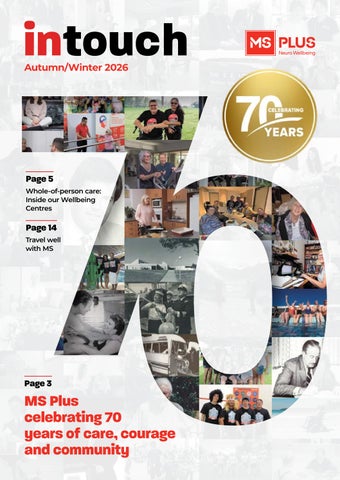
Page 3 MS Plus celebrating 70 years of care, courage and community










Autumn/Winter 2026
Page 5
Whole-of-person care: Inside our Wellbeing Centres
Page 14 Travel well with MS
Page 3 MS Plus celebrating 70 years of care, courage and community

Welcome to our Autumn/Winter edition of Intouch magazine.
This year is a particularly special one for MS Plus as we celebrate several meaningful milestones across our organisation. Most notably, 2026 marks 70 years of MS Plus – supporting people living with multiple sclerosis and other neurological conditions. Over seven decades, our focus has remained clear: to ensure people can access the services, support and community they need to live well. We are also celebrating the first anniversary of the Lidcombe Wellbeing Centre, our newest centre following the openings of Hobart and Footscray in recent years. For several years we have been strategically working to ensure our Wellbeing Centres sit at the heart of our neuro care model as places where clients can access integrated services, connect with community and focus on their wellbeing in supportive environments.
Looking ahead, we are pleased to share that the sale of our Blackburn headquarters will help support the next phase of development for our Wellbeing Centre network, particularly in Melbourne’s eastern suburbs. These decisions are guided by a simple goal: ensuring MS Plus remains focused, sustainable and able to deepen the impact we have for people living with MS and other
neurological conditions. This year also brings other important anniversaries. We celebrate 20 years of the Art Show, 35 years of Care For You at Home, and almost two decades of our Employment Support Service. Each of these programs represents our ongoing commitment to evolving services that respond to the needs of our community.
During National Volunteer Week in May, we are also reminded that none of this work would be possible without our volunteers. Their dedication, compassion and generosity make a profound difference to the lives of those we support. In 2025 alone, 408 event volunteers generously donated more than 2,400 hours of their time to MS Plus.
As we approach the halfway point of our Strategic Directions 2025–2027, our focus remains on building sustainability, increasing impact and strengthening our community.
Most importantly, it’s about being stronger together – with our clients, donors, partners and volunteers – as we continue creating lasting impact into the future.
Disclaimer: Information and articles contained in Intouch are intended to provide useful and accurate information of a general nature for the reader but are not intended to be a substitute for legal or medical advice. MS Plus is not recommending medical or legal advice and readers must seek their own as may be appropriate.
Advertising disclaimer: MS Plus does not endorse any one product or service over another, nor do we receive any commission on sale of items. Consumers are encouraged to discuss the options for exchange or return at the time of purchase with a specific supplier because MS Plus is not liable in the event the product is not satisfactory.
Publisher: MS Plus
ABN: 66 004 942 287
Editor: Amanda Willimott
Advertising enquiries: intouch@msplus.org.au
Privacy policy: msplus.org.au/privacy
ISSN: 1833-8941
ACT
117 Denison Street, Deakin ACT 2600
NSW
80 Betty Cuthbert Drive, Lidcombe NSW 2141
TAS
246 Murray Street, Hobart TAS 7000
54 Railway Road, Blackburn VIC 3130 Connect: 1800 042 138 (free call) 8:30am – 5:00pm
If you need an interpreter, you can call the Telephone Interpreter Service (TIS) on 131 450 or visit tisnational.gov.au
offices: msplus.org.au/contact-us
70 years of support. A lifetime of possibilities.
For 70 years, MS Plus has walked alongside Australians living with MS and other neurological conditions – supporting people to live with confidence, connection and hope. This anniversary is a tribute to the clients, families, carers, staff, volunteers, researchers and advocates who have shaped a community based on care and courage.
“It was that whole-ofperson care, the way the different members of the care team worked together to get me the best possible outcome. I felt really well supported and looked after.”
– BETH, MS PLUS CLIENT
From humble beginnings, MS Plus has grown into a whole-of-
person, multi-condition, multiservice organisation. While much has evolved, one thing has never changed: our belief that no one should face MS alone.
As we celebrate our history, we also look forward with purpose.
MS Plus is investing in impact, research, strengthening clinical partnerships and advancing knowledge in neurological and community wellbeing. We are expanding life-stage supports –from newly diagnosed individuals to people ageing with MS –ensuring care evolves as life does. That is the promise of MS Plus.
“Learn to advocate for, and be gentle with, yourself. Learn to speak up, but also let others lift you when you need it. You’re not alone.”
– CONNIE, MS PLUS CLIENT
Together with our clients, staff, volunteers and partners, we will continue building informed, caring communities. We honour those who laid the foundation, and we move confidently into the next 70 years – committed to innovation, connection and hope for every person we support.
“MS Plus turning 70 is quite an amazing thing.”
– DUNCAN, MS PLUS VOLUNTEER


1956:
James Charles Godfrey, whose wife Edith has MS, creates the Australian Multiple Sclerosis Society Inc. (MS Society) in Sydney.
1980s:
MS societies expands its residential care, therapy services, and community support programs to meet the needs of people living with MS as life expectancy increases.
2020:
MS Plus introduces its Wellbeing Model, focused on delivering a person-centred approach to service delivery, officially building on its existing ethos of care during previous decades.

As we celebrate 70 years of MS Plus, we also mark an important date on the global calendar: World MS Day on 30 May. It is a day of solidarity, collective action and hope, when the international MS community comes together to share stories, raise awareness and campaign for change.
“Research fuels hope.” – Nigel
World MS Day is dedicated to everyone affected by MS. In 2026, the theme focuses on diagnosis, advocating for early and accurate diagnosis for all people living with MS. It shines a light on the global barriers that can delay diagnosis and highlights the importance of listening to lived experiences, backed by real data and research. These priorities closely reflect the work of MS Plus and our partners.
In March, MS Australia announced the outcomes of its 2026 Research Grant Round, with 16 new projects funded through a $2.8 million investment. Among the exciting developments, Australian researchers will now be able to study more than 100 genetic risk factors for MS together. This breakthrough brings scientists

closer to understanding how the disease develops and opens new possibilities for improving quality of life for people living with MS.
MS Plus contributes funding to MS Australia to support its national research program. Over more than two decades, MS Australia has invested over $60 million into MS research, helping drive scientific discovery and clinical progress.
The need for this work continues to grow. In 2025, more than 37,700 Australians are living with MS – a 77.4 per cent increase since 2010.
The total economic burden of the disease reached $3 billion in 2024. As the number of Australians living with MS continues to rise, accelerating research across the full spectrum of the disease is increasingly urgent.
Through research, advocacy and community support, we are working together toward a future where MS is better understood, diagnosed earlier and, ultimately, cured.
Donate before June 30 to help Australians with MS get faster, tailored treatments.
For many people with MS, damage continues even when symptoms seem stable.
Hidden inflammation in the brain and spinal cord can quietly drive disease progression.
A new MRI-based measure is helping researchers track the damage that continues even when people are not having relapses. With deeper understanding, we may be able to use existing treatments to slow this damage earlier.
But there’s still so much to learn.
Reveal what’s hidden. Reveal what’s possible. Donate now at: donate.msplus.org.au/tax-appeal-2026

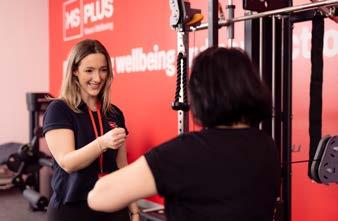
At MS Plus, we believe care should be more than appointments and treatment plans. It should recognise the whole person – your goals, your family, your community and your future. That’s why our Wellbeing Centres across Victoria, New South Wales and Tasmania are built around a whole-of-person, person-centred approach to neurological care.
Located in Lidcombe (NSW), Blackburn and Footscray (Victoria) and Hobart (Tasmania), our Wellbeing Centres are local hubs of expertise, connection and support – embedded within the neuro community and working alongside hospitals, GPs and allied health providers to ensure people living with MS and other neurological conditions receive coordinated, specialist care close to home. These centres are also the foundation of our Wellbeing Model for Service Delivery, which places the individual at the centre of every decision, recognising that wellbeing includes physical health, emotional wellbeing, independence and social connection. Through
evidence-informed practice, clinical pathways and measurable outcomes, our teams work in partnership with clients to design supports that align with their personal goals.
Personalised support for you
No two neurological journeys are the same. Our services are tailored to your individual goals. Across our centres, you can:
Improve strength and movement in our specialist neuro gyms with exercise physiologists
Enhance physical wellbeing with physiotherapists
Build independence with occupational therapists
Access nutritional support from dietitians
Receive continence nursing support
Connect with NDIS support coordination and plan management
Succeed at work with employment support services
Build community through peer support
Depending on where you live, we can see you in-centre, visit you at home or connect via telehealth –ensuring flexibility.
Specialist facilities, local impact
Each Wellbeing Centre has been thoughtfully designed to support neurological care. Our refurbished neuro gyms in Blackburn and Footscray provide purpose-built equipment. In Lidcombe, the stateof-the-art facility includes therapy rooms, a large purpose-built gym, multipurpose spaces for classes and events, accessible amenities and landscaped outdoor areas, including a sensory garden.
Lorraine, who attends the Footscray centre, shares:
“I’ve been coming to the new MS Plus Wellbeing Centre in Footscray once a week to see the physiotherapist. They have the proper equipment that are purposely designed for all our needs. It’s going to be so beneficial.”
Beyond equipment and expertise, it’s the atmosphere that makes our centres special.
“Everyone’s got MS or another neurological condition at the MS Plus Wellbeing Centre. So, you’re not judged, you’re not having people look at you as some sorry soul. We have a good laugh,” says Alison from Blackburn.
Our teams are specialists in neurological conditions. We understand symptom progression, fatigue management, mobility challenges and the emotional impact of diagnosis. Importantly, our Wellbeing Model also ensures there is a ‘no wrong door’ approach to accessing support – helping people connect with the services they need regardless of where they begin their journey.
Most importantly, our Wellbeing Centres are places where individuals are supported to live well, stay active, remain independent and feel part of a community that understands.

MS Plus Virtual Art Show: Celebrating 20 years of creativity
This year marks the 20th anniversary of the MS Plus Virtual Art Show. For two decades, it has provided people living with MS and other neurological conditions a meaningful and accessible platform to express their creativity, share their stories and connect with others through art.
The power of creative expression
Since its inception, the Art Show has celebrated the powerful relationship between creativity and wellbeing. Art can be a therapeutic tool, helping to connect the mind
and body. For people living with neurological conditions, creative expression offers a way to process emotions, explore identity and communicate experiences that are sometimes difficult to put into words. Art can foster calm, build confidence and support better dayto-day management of symptoms. Whether you are an experienced artist or simply enjoy creating at home, this is your opportunity to slow down, reflect and share something uniquely yours.
The Art Show is not about perfection – it is about expression, courage and community.
Entries open now
Entries for the 2026 MS Plus Virtual Art Show opened on 25 March and close on 8 May 2026. The online prize ceremony will be held on 28 May 2026, bringing our community together to celebrate this year’s entrants.
Who can enter
The Art Show is open to MS Plus clients only. By submitting an entry, participants agree to be registered as a client of MS Plus. We also have dedicated prizes for friends, family and carers, and a new youth category for children or grandchildren of people living with MS or neurological conditions in NSW, ACT, TAS and VIC.
All types of artworks can be submitted, including paintings, illustrations, sculptures, craft, digital artwork and photography.
Awards and prizes
Each year, the Art Show recognises outstanding contributions through a range of awards:
Barry Allen Art Award – $350
Highly Commended –
Painting – $100
Highly Commended –
Drawing/Illustration – $100
Highly Commended –
Sculptural/Craft Artwork – $100
Highly Commended – Digital Artwork and Photography – $100
Carers Award – $100
Youth Award – $30
The prestigious Barry Allen Art Award honours the memory of the late Barry Allen, who found great comfort and joy in art and music.
As we celebrate 20 years of artistic expression, resilience and connection, we look forward to seeing the diverse and inspiring works that make our community so special. We can’t wait to see what you create!
Find out more about the MS Plus Virtual Art Show 2026 on our website msplus.org.au/ArtShow

Working with an invisible disability can bring unique challenges, including when, if and how to disclose to an employer, whether role adjustments to better manage symptoms are possible, or in some cases, even whether a career change is needed.
For Sonya, who found herself navigating her diagnosis during the pandemic, it became a question of whether she would be able to continue working at all. When she began struggling with movement and control, symptoms on her right side, as well as vision problems, she began to fear she would need to quit her job.
A chance meeting that changed everything
Fortunately, when Sonya participated in our MS Walk, Run + Roll fundraiser in 2021, she ended up walking alongside an MS Plus Employment Support Services (ESS) staff member. This chance meeting led to Sonya being connected to their services and having her own consultant, Anne. Practical changes, real impact
An ESS Occupational Therapist
(OT), Anne, assessed Sonya’s home and office setup, making adjustments and offering guidance on managing symptoms and work/life balance, helping her work comfortably and confidently.
“Thanks to Anne, I now have an office set up at home and work, I have a particular screen that’s good for my vision, foot stools and a proper chair. A lot of Anne’s advice is about strategies to manage my symptoms, maintaining a work life balance and feeling confident and comfortable in my workplace,” Sonya says.
Sonya found navigating her 2019 diagnosis particularly difficult during the pandemic, especially when she began developing new symptoms – struggling with movement and control on the right side of her body.
“I’ve always worked and the thought that this might have been in jeopardy was worrying for me but through Anne I’ve realised that it was absolutely possible for me to continue. I also know when Anne isn’t there, I will be able to
Did you know
91 per cent of people who accessed our Employment Support Service secured employment within three months? We have helped many people with neurological conditions to stay at work as well. Reach out today on 1800 042 138 or connect@msplus.org.au

work with another consultant, I know there is always someone there and the service remains so consistent,” Sonya says.
Choosing whether to speak up Sonya’s workplace has also been very supportive since she revealed her diagnosis to them.
“I decided to tell them, as it was pretty obvious something was wrong, I couldn’t see out of one eye and there would be days where I would walk with a limp. I didn’t want people making their own assumptions.
“Working with Anne has helped me understand that I can have MS and still work but it’s the strategies you build in to maintain that balance that are important.”
“Having the support from Anne also allows me to talk about my symptoms, something I don’t necessarily want to burden my family and friends with. So I have another outlet to talk about things and work things out and it can be hard for people who don’t have MS to really understand,” Sonya says.
“My EP’s understanding of how people with neuro conditions need specific treatment has been incredible.” Marianne’s story
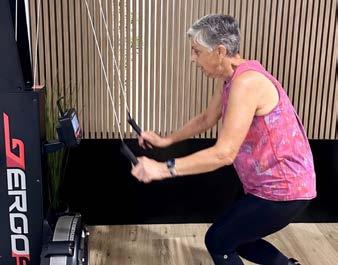
Marianne was a registered nurse at Tamworth Hospital from 1973 until 2013, working first in the emergency department and then as a clinical nurse consultant for rural critical care for 25 years.
“I used to work seven days a week, 12 hours a day because I was so passionate about what I was doing and because there is such a disparity between rural and metro health services.”
Unfortunately, Marianne needed to ease back from work due to MS symptoms like fatigue.
“I had my first episode of MS in 1990 but in those days, you had to have two episodes before you were diagnosed. I wasn’t formally diagnosed until 2007. It explained a lot of things that happened at work – the fatigue and I’d had several falls which I just thought was me running around and being busy.”
“I wasn’t formally diagnosed until 2007. It explained a lot of things that happened at work – the fatigue and I’d had several falls which I just thought was me running around and being busy.”
Exercise has many proven benefits for people living with neurological conditions, including managing spasticity, stiffness, pain and improved mobility, sleep and mental health.
“There’s only 3 out of the 14 of us in my local peer support group who do exercise, lots of people with MS don’t exercise.”
Marianne, who had always been extremely active due to her work as a nurse, hadn’t realised
the benefits of exercise for MS until meeting an exercise physiologist (EP) through her peer support group.
“[EP] Talita Welmans did a presentation for one of my Peer Links groups talking about the benefits of exercise physiology. I’d never really had much exposure to EP before that and she mentioned that the benefit of EP is that it’s a holistic approach.”
Her now weekly sessions with a neuro specialist EP have been life-changing.
“My EP went through all my history, my test results, I don’t think I’ve ever had such a thorough assessment. They really work on not just your MS but everything that’s going on in your life.
“I find EP not only focuses on the importance of exercise but also the mental health component to MS, as well as eating well, getting enough exercise and sleep.
“I’ve gone from Pilates for 11 years to a neuro EP who really focuses on my MS specific issues – fatigue, poor balance etc. but coming at it with an understanding of how people with neurological conditions need specific treatment has been incredible.
“I walk with hiking poles, and when I did May 50K this year I did over 966 km between my exercise bike and walking.
“Sometimes with symptoms of MS as you get older it’s an interesting question, what is MS and what is just old age? But I know that staying active helps me either way.”
If you would like to chat to an exercise physiologist phone 1800 042 138 or email
connect@msplus.org.au
Recently, we hosted our first online Donor Impact Forum, bringing together supporters, people with lived experience, and MS Plus leaders to reflect on the impact of MS care today and the role our community plays in shaping the future.
The forum featured insights from John Blewonski, CEO of MS Plus, Jess Morris, Project Lead of the MS Integrated Care Project, and lived experience advocate Connie Janiszewski. Together, they explored why MS Nurses sit at the heart of our wellbeing model of care, the reality that one in three Australians with MS still lack access to specialist nursing care, and the real world difference this support can make for people navigating an MS diagnosis.
The conversation reinforced a simple truth: when care is connected, compassionate and evidence led, people living with MS are better supported to live well. We’re now looking ahead to our next online forum on 23 April, which will mark the beginning of MS Plus’ 70th birthday celebrations. This special event will reflect on seven decades of progress, courage and community – honouring how far we’ve come, and looking forward to the next chapter of wellbeing and support for people living with MS and other neurological conditions. We hope you’ll join us as we celebrate the past, recognise the present, and look ahead with purpose.






At MS Plus’ Footscray Wellbeing Centre, physiotherapist Jack Wong is passionate about helping people with MS and other neurological conditions improve their movement, independence and quality of life.
With experience across a broad range of physiotherapy in neurological, musculoskeletal, sporting and occupational health settings, Jack values the diversity his profession offers. What draws him most to neurological physiotherapy is the opportunity to make a meaningful difference.
“By being able to work with people with MS, I am privileged to be able to make a positive impact to improve people’s quality of life,” Jack says. “MS and neurological conditions often present with complex symptoms and varying prognosis which physiotherapy can have meaningful impact in providing positive changes for people in managing their conditions, and that is where I hope to make a difference.”
An individualised approach to MS care
When someone with MS or another neurological condition attends their first session, Jack takes an individualised approach. He completes a comprehensive assessment, measuring movement, balance, strength, fatigue and other symptoms. Together, they set goals and develop a physiotherapy plan aligned with those goals, using evidence-based treatment approaches such as home exercise programs, hydrotherapy, education and gym-based programs.
Jack emphasises that no two people experience MS the same way. “Every person living with MS is different,” Jack says. “The physiotherapy program is tailored to fit each individual to meet their needs and goals, determined using individualised assessments. On top of that, everyone has different

preferences on what types of exercise modalities they enjoy more, some prefer the gym, some enjoy reformer Pilates, others like the pool and hydrotherapy. Doing exercises that you enjoy definitely makes sticking to the program a lot easier and more fun, while still getting therapeutic outcomes.”
More than just ‘massage’ Jack is also keen to address common misconceptions about physiotherapy. “Some people think that physiotherapy is only about massages and manipulations (‘adjustments’) but physiotherapy is all about moving better and living better. It is more than just physical interventions and a bigger picture approach is most effective, looking at the biopsychosocial variables and managing those is also important in making a positive difference.”
By taking a whole-person approach and empowering people with practical strategies they can use between sessions, Jack supports people with MS and neurological conditions to build strength, confidence and sustainable movement habits over time.
We have physiotherapists in New South Wales, Victoria and Tasmania. And we also provide physiotherapy in the ACT via telehealth. Contact our Connect team to book an appointment by calling 1800 042 138 or email connect@msplus.org.au
Jack Wong has some simple ways to keep moving between sessions:
1. Keep it simple
Have a personalised home exercise program that’s achievable and realistic. Consistency beats intensity.
2. Pair movement with daily tasks
Squats while waiting for the microwave
Calf raises while the kettle boils Side steps while making tea Balance exercises while brushing your teeth
Habit stacking makes exercise easier to remember and easier to stick to.
3. Set movement reminders
If you’re working at a computer or watching TV, set an alarm every 20 minutes to stand, stretch or move. Small, regular movement adds up and can make a big difference over time.
A comprehensive exercise routine is vital for managing MS and other neurological conditions. Make sure your routine includes:
Strength training
Mobility exercises
Balance exercises
Cardiovascular activities
This balanced approach helps improve overall health and supports better symptom management.

Menopause does not worsen disability in MS
In Australian women, the average age of menopause is 51 years. With MS onset between 20 and 40 years of age, most women with MS will experience menopause while living with MS.
Smaller studies in the past have given conflicting results on how menopause affects MS. MS disability may worsen after menopause, but it has been challenging for researchers to separate the effects of menopause from the effects of ageing. Also, common menopausal symptoms, such as hot flushes, can be mistaken for worsening MS symptoms.
What did the researchers do?
In a large study led by Australian researchers, 987 Australian women answered questions about their menopause status and age at menopause. Women with “relapseonset MS” (either relapsingremitting or secondary progressive MS) were included, and clinical data from the MSBase registry
were used to monitor disability for an average of seven years. Researchers analysed whether menopause reduced the time to confirmed disability progression (defined as sustained increases in Expanded Disability Status Scores (EDSS) for at least 6 months), as well as the time to progress to secondary progressive MS.
What did the researchers find?
The researchers found that menopause did not speed up disability progression, nor did it speed up the transition to secondary progressive MS. Instead, faster disability progression was linked to being older at the onset of MS, as well as having MS for longer or a higher level of disability at baseline (“baseline” being when the first EDSS measurement was recorded). On the other hand, exposure to high-efficacy disease modifying therapies protected against disability progression.
Having more disability and having MS for longer at baseline were both associated with faster transition to
secondary progressive MS, while exposure to high-efficacy disease modifying therapies was protective. There was no difference between pre- and post-menopausal women in the speed of disability progression.
Time since menopause did not change the speed of disability progression.
What does this mean for women living with MS?
Menopause can be challenging for many women with MS. This study reassures women that menopause does not speed up the progression of disability or hasten the transition to secondary progressive MS. These findings will help women and their healthcare providers make informed decisions about managing their health as they navigate this stage of their lives. Last year, MS Plus was proud to donate almost $2 million to support important MS research. This article was originally published by MS Australia. For more of the latest research news, visit msaustralia.org.au
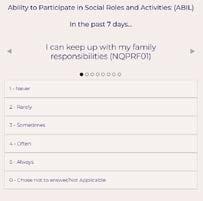
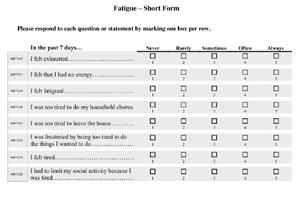
We’re always looking for ways to improve our services. Since February this year, all new MS Plus clients (excluding those receiving only NDIS Plan Management or Support Coordination) have received a quality of life survey.
The survey is designed specifically for people living with MS and other neurological conditions and asks about different areas of daily life – from physical wellbeing and independence, to emotional health and social connection. Clients are encouraged to complete a second survey after three months. This is a chance to reflect on your own progress and for us to know what’s
from MS Plus Dietitian Julie Orr

working well (and what could be better).
Your responses help us improve programs and supports, and can also be useful when discussing goals or seeking funding through NDIS or My Aged Care. Most importantly, it helps us continue delivering services that meet the needs of our community. The survey is confidential, and every response helps shape the future of MS Plus services.
If you have any questions about the survey, contact our Connect team on 1800 042 138 or email connect@msplus.org.au
Living with a neurological condition means every healthy habit counts – including what’s on your plate. Your gut health can influence how you feel physically and mentally. Eating a variety of plant foods helps support a healthy gut, while restricting your intake can do the opposite.
A simple goal is aiming for 30 different plant foods each week –that’s just 4–5 different plant foods per day. You might like to build in some gut-friendly foods and habits over time:
Try adding one new fruit or vegetable each week – frozen and canned options count.
Experiment with a new wholegrain food each week, such as a
different bread, cracker, or cereal. Use herbs and spices to add flavour and keep meals interesting. Include mixed beans/legumes in soups, salads, or stews – canned versions are suitable. Keep frozen fruit on hand to easily add to yoghurt, smoothies or oats. Consider swapping meat for plantbased options like tofu, beans or lentils once or twice a week. Choose unsalted mixed nuts as a nourishing snack option. These are simple, flexible ideas –start with the ones that feel most achievable for you.
Book an appointment with MS Plus Dietitian Julie today!
Phone 1800 042 138 or email connect@msplus.org.au

Travel can be restorative and empowering. If you’re living with multiple sclerosis (MS) or another neurological condition, thoughtful preparation can make the difference between a stressful experience and a smooth, enjoyable break. With the right supports in place, you can conserve energy and focus on what matters most –enjoying the journey.
Plan ahead for a smoother experience
A successful trip starts with good research. Before booking, look closely at your destination’s accessibility. Check:
Step-free access at accommodation and attractions
Accessible public transport or taxi services
Proximity to medical centres and pharmacies
Climate and how it may affect your symptoms
If possible, call ahead to confirm accessibility details. Clear communication about your needs when booking flights, hotels or tours helps avoid misunderstandings later.
Consider hiring essential equipment at your destination instead of
travelling with bulky items. Mobility scooters, electric beds or hoists can often be arranged in advance, reducing the strain of navigating airports with large equipment.
Comprehensive travel insurance is also essential. Make sure your policy covers pre-existing conditions and any disabilityrelated requirements, giving you peace of mind if plans change.
Pack smart and stay organised
Packing with intention can significantly reduce stress.
Create a checklist that includes:
Medications (plus extra in case of delays)
Prescriptions and relevant medical letters
Mobility aids and chargers
Symptom-management items
Emergency contact details
Keep medications in their original packaging and place essential items in your carry-on luggage in case checked bags are delayed. If travelling with a wheelchair or mobility device, contact your airline well in advance to confirm handling procedures and battery requirements. For those travelling with a service animal, ensure you
have the correct documentation and have checked airline and destination regulations ahead of time.
Understand your supports
If you’re a participant in the NDIS, you may be able to access funding for disability-related supports while travelling.
While the scheme does not fund general holiday expenses such as flights or accommodation, it may cover “reasonable and necessary” supports, including:
A support worker to assist during your trip
Hire of essential mobility or personal care equipment
Speak with your provider or support coordinator before travelling to understand what your plan allows and to organise supports in advance.
Navigate with confidence
Airlines are required to provide assistance to passengers with disability. Contact your airline at least 48 hours before departure to arrange support such as help with check-in, wheelchair assistance or priority boarding.
Allow extra time at airports, stations and attractions. A buffer reduces pressure and makes it easier to manage fatigue if delays occur.
Accessible travel apps can also help you find step-free routes, accessible toilets and nearby services, making unfamiliar places easier to navigate. Most importantly, build flexibility into your plans. Travel can be unpredictable, but patience and preparation go a long way. By planning ahead, communicating your needs and using available supports, you can travel in a way that prioritises both comfort and enjoyment, and continue exploring the world on your terms.
Subscribe to our Intouch monthly email newsletter and you’ll be the first to know when our next travel webinar is announced msplus.org. au/intouch-magazine

Register for an upcoming program today msplus.org.au/programs
A monthly, online group for men with MS to share common experiences and concerns, provide and receive emotional support, and get information on various aspects of living well with MS.
Dates: 1st Friday of the month, 12.30pm – 1.30pm; and last Thursday evening of the month, 7pm – 8pm
This one-hour session is designed specifically for family or friends of someone with MS. Join our MS Nurse Advisor for a free live online education session that aims to empower you with knowledge and strategies to help support a person with MS.
Dates: Various dates available.
Specifically designed for people within the first two years of diagnosis, this two-part, small group, live online course facilitated by an MS Nurse is an opportunity to learn and ask questions and will support you to build confidence in managing your MS, and connect with others on a similar journey.
Dates: Various dates available.
6 x 90-minute weekly sessions. Whether you’re trying to keep up with the kids, ease fatigue at work or want to get more out of your day, FACETS provides practical strategies and approaches.
Participants must have a MS diagnosis and a minimum level of mobility.
Dates: Various dates available.
A six-week online group program led by an exercise physiologist. Stay active and build confidence for daily life, whether that’s being able to enjoy activities, keeping up with the kids or being more confident moving around at home. Keeping active can also help with managing fatigue and promote pain management.
Dates: Various dates available.
In this four-week program led by a qualified dietitian, discover how simple, everyday food choices can help you feel more energised, improve digestion and become part of your routine.
Dates: Various dates available.
NSW
To book, phone 1800 042 138
Boxing
Fridays 9am–10am
80 Betty Cuthbert Dr, Lidcombe
Lidcombe Yoga (chair-based)
Wednesdays 10.30am
80 Betty Cuthbert Dr, Lidcombe
Dance for Health (independent and chair-based)
Mondays 10.30am
80 Betty Cuthbert Dr, Lidcombe
East Gosford Exercise Group (independent)
Wednesdays 10.30am (school term only)
East Gosford Lions Hall
Marrickville Yoga (independent)
Tuesdays 9am
Addison Road Community Centre, 142 Addison Road, Marrickville
ACT
To book, phone 1800 042 138
Be better balanced
Tuesdays 9.30am (circuit-based class)
Thursdays 10am (chair-based class)
Gloria McKerrow House 117 Denison St, Deakin
Wheels in motion (chair-based class)
Thursdays 11.00am
Gloria McKerrow House, 117 Denison St, Deakin
VIC
For queries relating to exercise groups in Blackburn, phone 1800 042 138