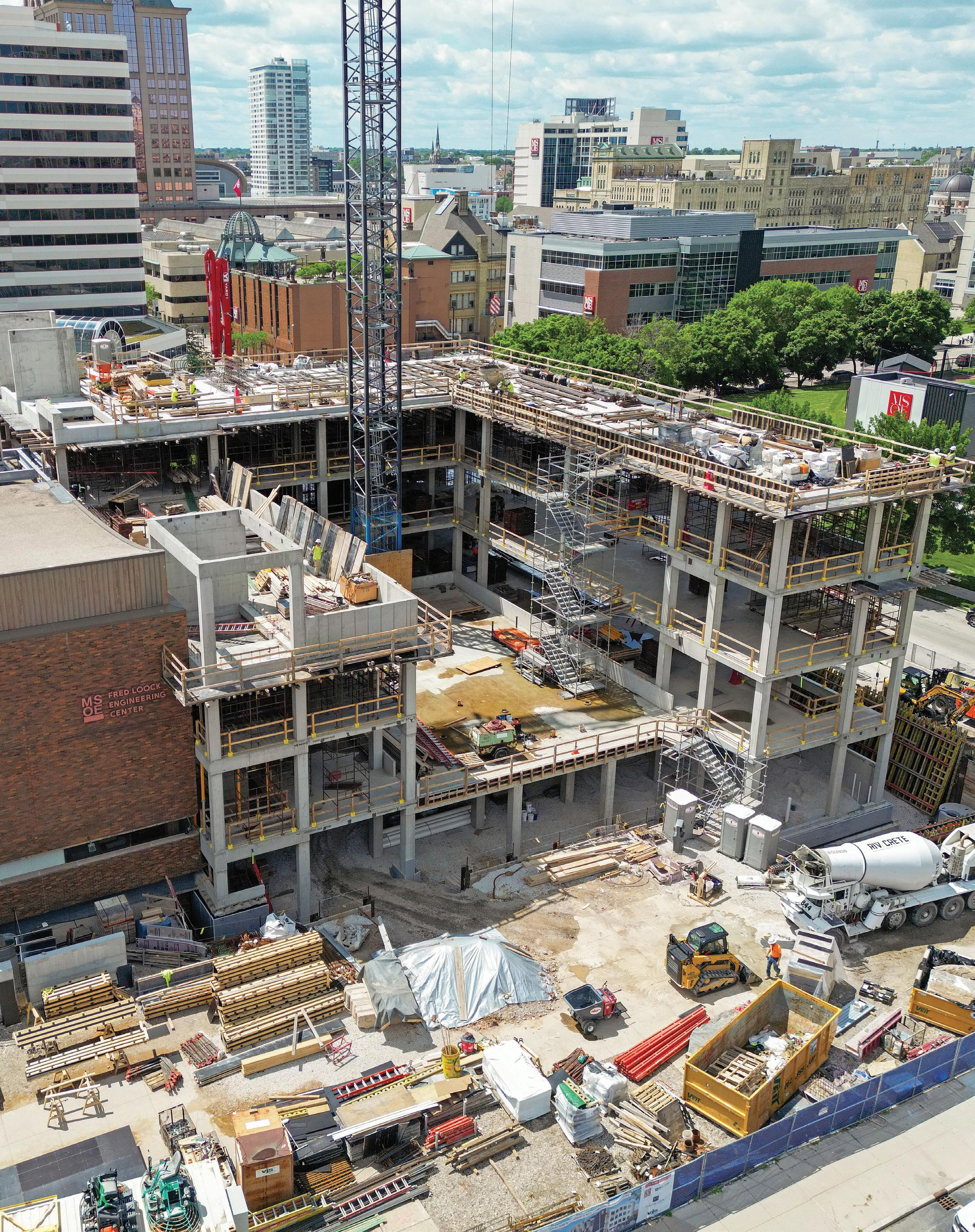
A cornerstone of MSOE’s Next Bold Step campaign, $66.5 million has been raised toward the $76.5 million goal for the Robert D. Kern Engineering Innovation Center (EIC).
Steady progress is being made on the new building, where all four floors of the structure have now taken shape. On track for completion by the fall 2027 semester, the EIC will be an inviting space that inspires discovery and brings our values to life as we shape the future. Get a live look at the construction progress at msoe.edu/construction. Every gift continues to move this transformational vision forward. Learn more at nextboldstep.msoe.edu.
Dear Alumni and Friends,
In April, as I stood at my inauguration reflecting on MSOE’s 123-year history, I was struck by a simple but powerful idea: this university’s strength has always come from people who chose to say “yes” to opportunity, to innovation, and to one another. It is an honor to now serve as MSOE’s sixth president, and I am deeply grateful for the trust the Board of Regents and this community have placed in me.
My career has been shaped by having the courage to say “yes” to opportunities. I embrace the president’s role with humility, gratitude and a profound sense of responsibility. And an enthusiastic “yes!” I’m inspired by the possibilities that lie ahead and, together with the MSOE community, I’m fully committed to advancing MSOE’s mission and driving opportunities for generations of students to come.
As a member of the MSOE leadership team for the past nine years, I have seen what makes this place special: the dedication of our faculty and staff, the drive of our students, and the enduring commitment of our alumni and partners. Many have invested in our university over time and shaped it into what it is today. What has impressed me most is how consistently this community turns possibility into action. Thanks to all of you who have said “yes” to MSOE and positioned the university for what is ahead.
We are approaching a defining milestone: MSOE’s 125th anniversary in 2028. More than a moment to celebrate our history, our anniversary is an opportunity to shape what comes next. We stand at a pivotal moment within a higher education landscape that is becoming increasingly challenging. MSOE is responding to these challenges by intentionally driving opportunities. This edition of Dimensions highlights the primary theme of my inauguration address—Driving
Opportunity—and the five focus areas that will ensure our future. In following editions of Dimensions, we will dive deeper into each focus area to explore existing and future initiatives that are aligned with these areas and will drive the university forward.
That forward momentum is already visible. Thanks to the generosity and confidence of alumni and friends like you, we have raised more than $101 million toward The Next Bold Step campaign, bringing us within reach of our $125 million goal by our 125th anniversary. This is a major milestone representing investments in our future and the value of every MSOE degree.
Nowhere is that future more tangible than in the Robert D. Kern Engineering Innovation Center (EIC). Currently under construction and on track to open before the fall 2027 semester, the EIC will bring nearly all engineering programs under one roof and embed AI and machine learning across all disciplines. The first floor will be a welcoming place where students begin their journey with applied learning from day one and where, over time, they deepen their expertise through collaboration and innovation surrounded by supportive faculty and staff. The EIC will be a space that encourages exploration and discovery, creating opportunities for our students and for the industries and communities they will serve.
Ensuring a bright and prosperous future for MSOE is not the work of a single individual. As alumni and friends, you are an essential part of this progress. I invite you to continue partnering with us as we build on the foundation you helped create.
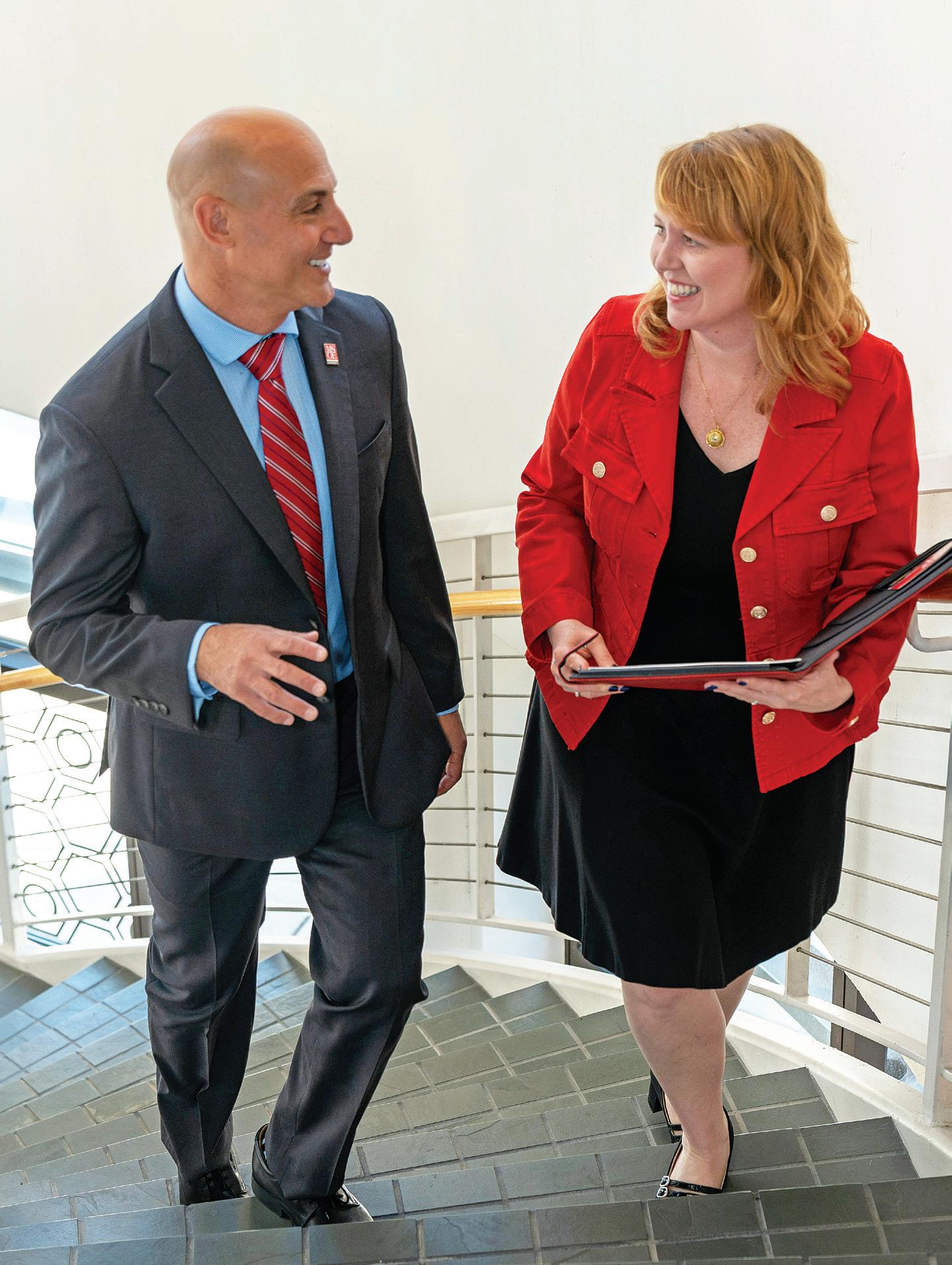
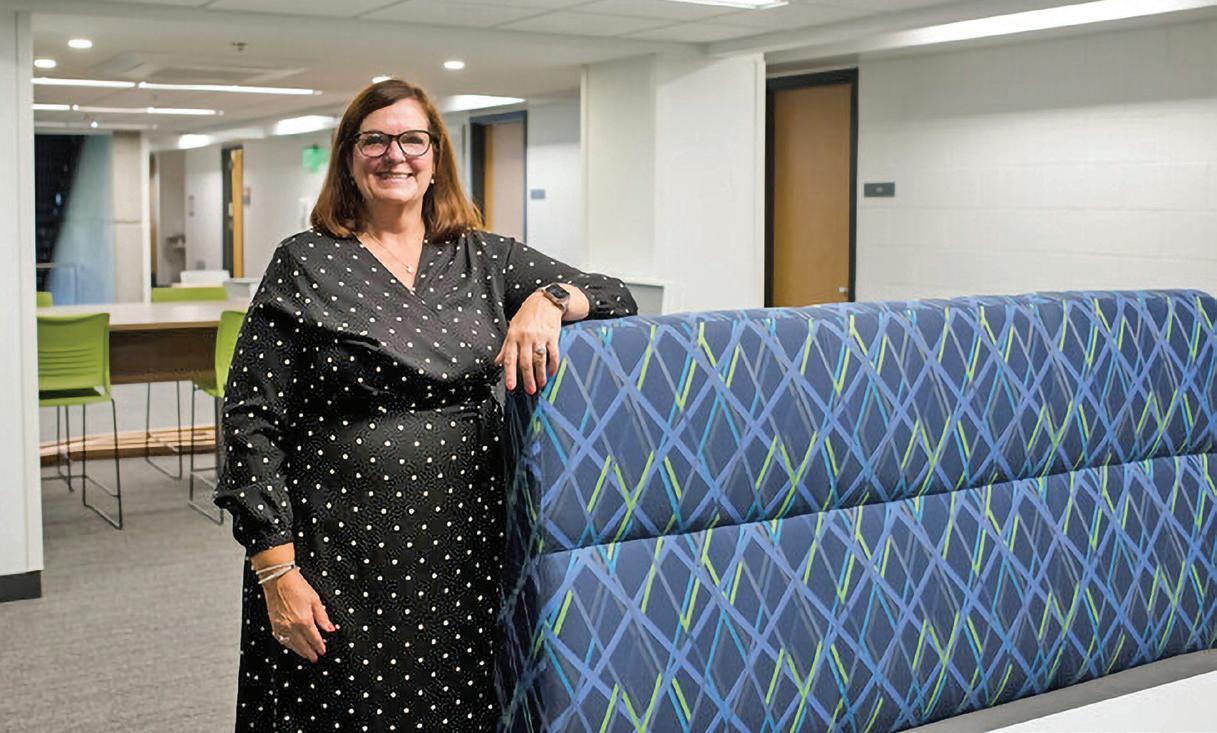
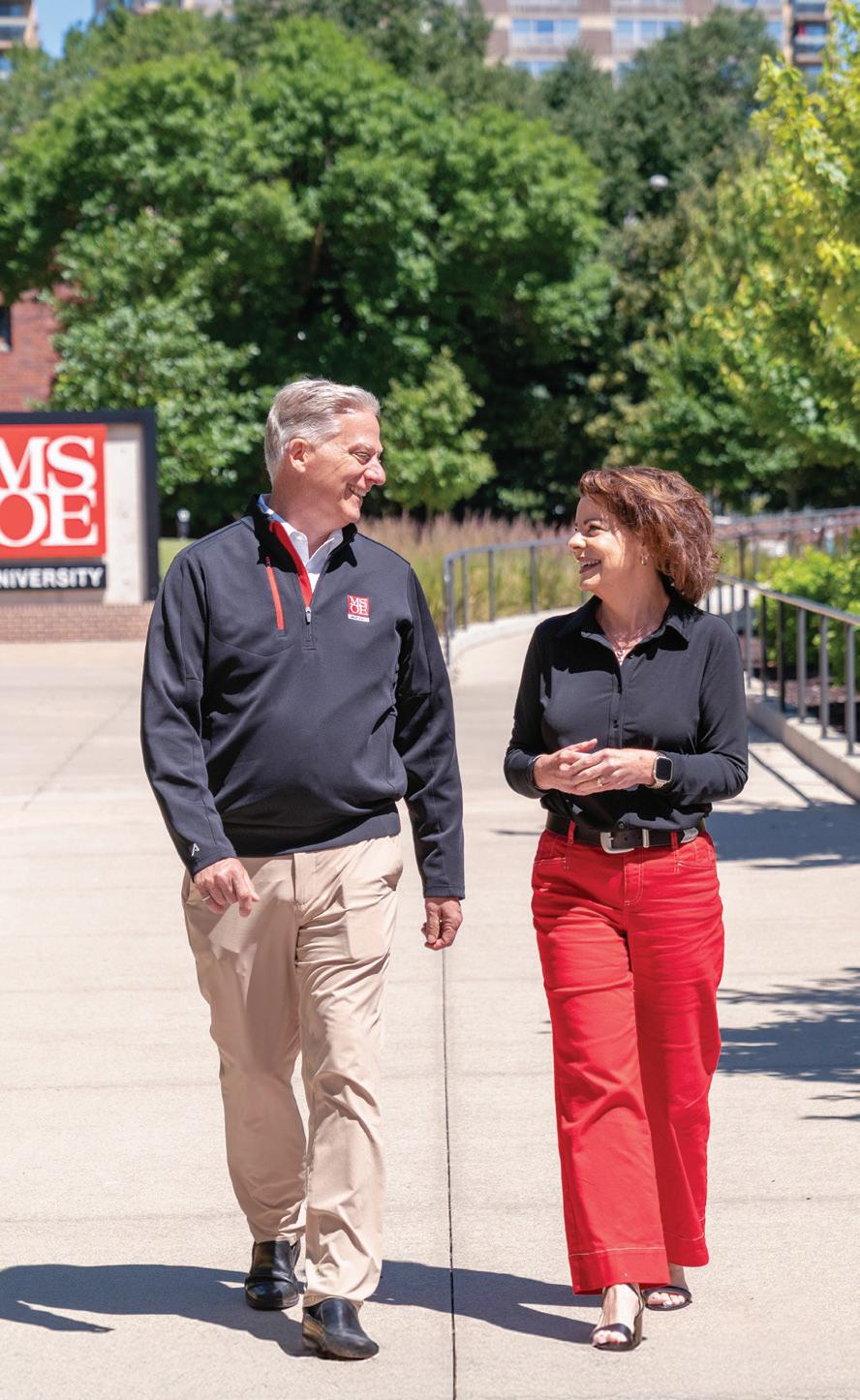
I am also deeply thankful that my wife, Annmarie, joined MSOE as the executive advisor for strategic engagement in the president’s office. Annmarie brings
decades of experience in alumni, donor and community engagement to MSOE. She and I are committed to advancing MSOE together and believe strongly that the future of MSOE depends on the love, loyalty and dedication of all stakeholders.
Annmarie and I are grateful to all those in the MSOE community who have welcomed us into our new roles and who, like us, are saying “yes” to the many opportunities that will propel MSOE into the future. We look forward to meeting you in the coming months and years. We encourage you to visit campus and see firsthand all the exciting things that are taking place. Most of all, we are grateful for your support and belief in our university. The next 125 years of MSOE will be defined by our shared action in this next chapter. Join us in driving MSOE forward.
With warm regards,
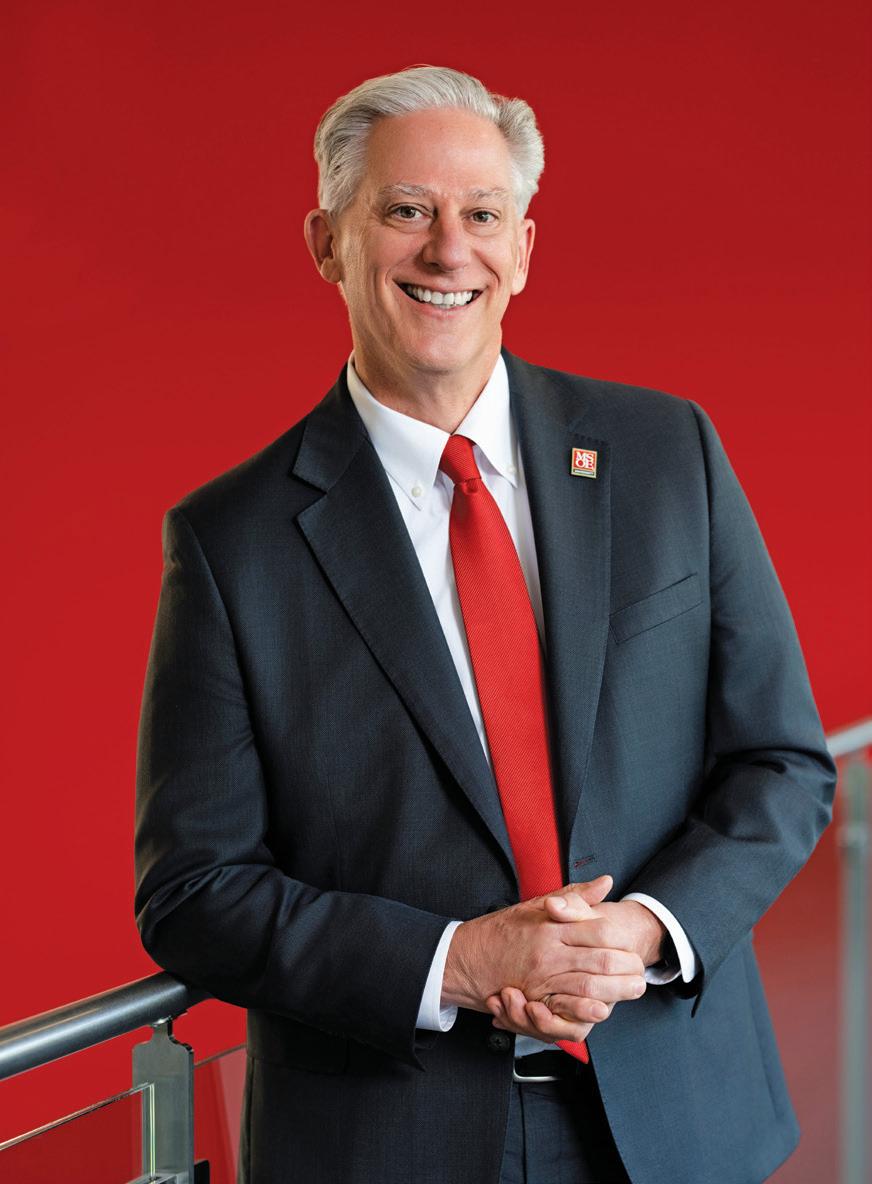
ERIC T. BAUMGARTNER, PH.D. President
OVERHEARD ...
“In times like these, we need exceptional leaders. Eric [Baumgartner] is a hardworking leader who will
compete.
A positive force who truly cares about employees and students.”
J-D YODER, PH.D., DEAN OF THE T.J. SMULL COLLEGE OF ENGINEERING, OHIO NORTHERN UNIVERSITY
FEATURES
6 AI Week: Forging New Frontiers
MSOE is engaging partners from all sectors in robust discussions, learning and competitions to advance applied AI knowledge and skills.
COVER STORY
14 Driving Opportunity
MSOE begins a bold new chapter as Eric T. Baumgartner, Ph.D., former NASA rover driver, leads with vision, innovation and a commitment to shaping limitless opportunities.
DEPARTMENTS
ON THE COVER:
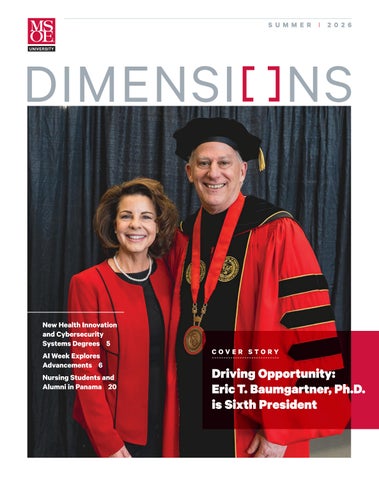
Eric T. Baumgartner, Ph.D., takes the helm as MSOE’s sixth president.
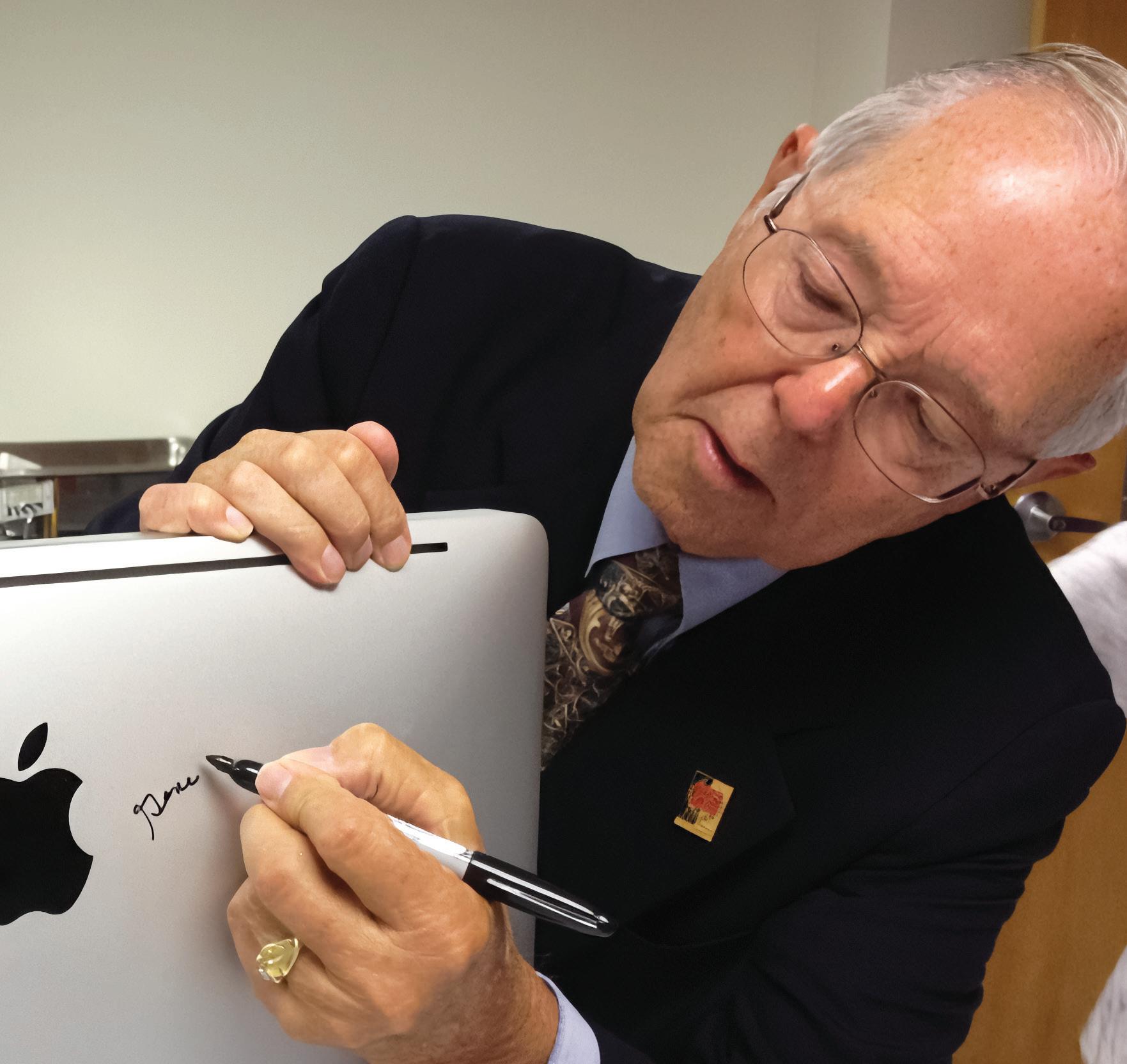
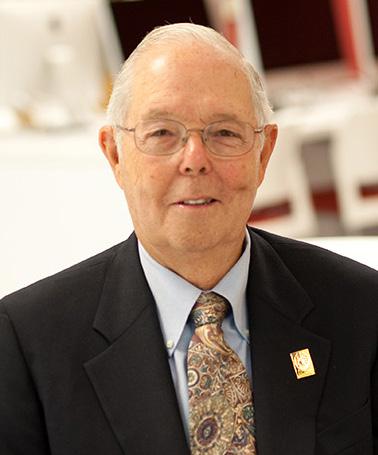
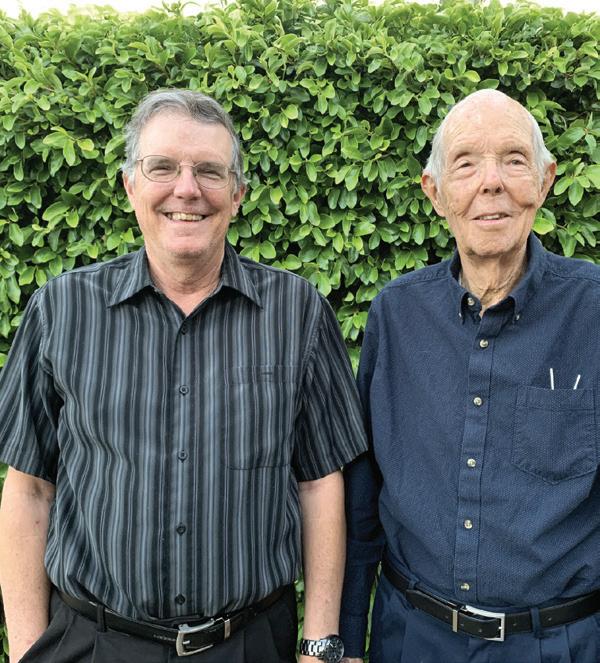
(Left) Regent Emeritus Gene Carter ’60, H’95 left a lasting legacy at MSOE. His visionary belief in people, passion for innovation, and commitment to education continue to inspire generations of MSOE students.
Editor
JoEllen Burdue
Managing Editor
Annette Pirrung
Creative Director
Kristin Dunn
Graphic Designers
Peg Houghton, Marley Mendez
Production Manager
Leigh Ann Hass
Contributing Writers
Annmarie Baumgartner, Dr. Eric T. Baumgartner, Seth Corrigan, Jillian Kokott, Kristen Mekemson, Madaleine Niemi, Greg Off, Rachel Schmidt
Images
Front Room Photography, Bryan Pechacek, Jang Vuong, Jay Westhauser
Use, reproduction or storage of the name, address or other information about any individual identified within this magazine is strictly prohibited and constitutes misappropriation of corporate property.
Address correspondence to Dimensions Magazine 1025 N. Broadway Milwaukee, WI 53202 marketing@msoe.edu
SUMMER 2026
Volume 40, No. 2
MSOE grads have highest earnings four years post-grad in Wisconsin
According to a new earnings indicator launched by the U.S. Department of Education, MSOE graduates’ median earnings four years out of college is $93,000, topping the list of all Wisconsin institutions. The earnings indicator was created to complement the Free Application for Federal Student Aid (FAFSA) process and show applicants the median earnings for each school they are interested in attending.
LEADERS
LOOKING FORWARD
MSOE joins Northwestern Mutual Data Science Institute
MSOE is strengthening its commitment to innovation, collaboration and regional impact through its partnership with the Northwestern Mutual Data Science Institute (NMDSI). By joining NMDSI alongside the Medical College of Wisconsin and Waukesha County Technical College, MSOE expands a growing coalition that already includes Marquette University and UWMilwaukee—uniting leading academic and industry voices to advance efforts that will increasingly position the region as a national hub for AI and data science.
Since its founding in 2018, NMDSI has championed the transformation of both academia and industry through datadriven discovery. For MSOE, joining this collaborative network reflects a clear strategic priority: leveraging partnerships that strengthen the university while
creating meaningful value for the broader community. By working together through NMDSI, these institutions are advancing responsible innovation in ways that no single organization could achieve alone.
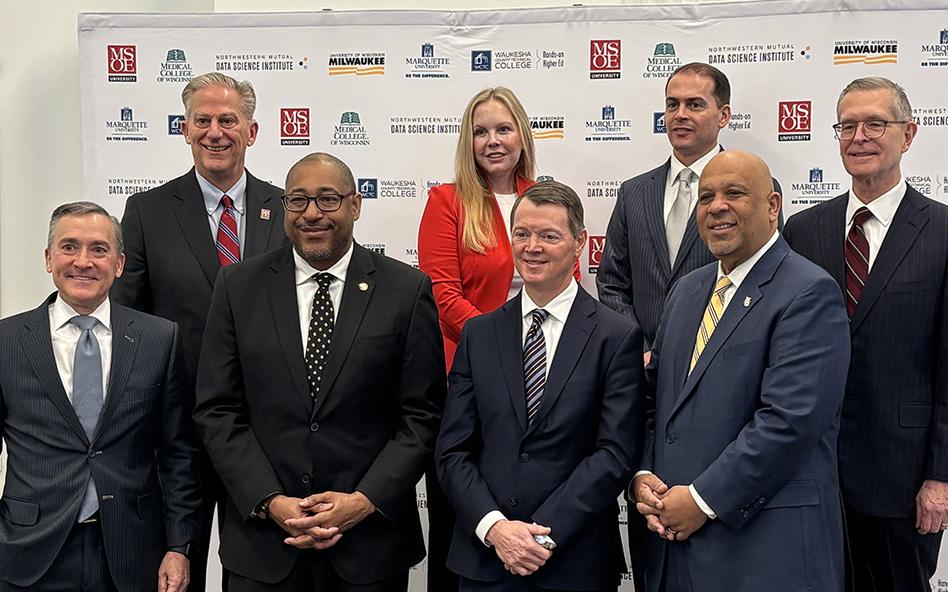
(Above) Regional leaders gathered to celebrate the expansion of the NMDSI.
Front row, from left: Ray Manista, Northwestern Mutual executive VP and chief legal and public affairs officer; Thomas Gibson, UW-Milwaukee chancellor; Tim Gerend, Northwestern Mutual chairman, president and CEO; Kimo Ah Yun, Ph.D., Marquette University president. Back row, from left: Eric Baumgartner, Ph.D., MSOE president; Amy Pechacek, Wisconsin Workforce Development secretary; Rich Barnhouse, Ph.D., Waukesha County Technical College president; John Raymond Sr., MD, Medical College of Wisconsin president and CEO.
Collaborative leaders advance MSOE’s future
Milwaukee School of Engineering is energizing its path forward with the addition of two accomplished professionals to its leadership team—Dr. Joe Tranquillo as executive vice president of academics and Kristen Mekemson as vice president of university advancement. Together, they bring a dynamic blend of academic innovation and strategic growth that aligns with President Eric Baumgartner’s goals for MSOE’s next chapter.
Tranquillo joins MSOE with a national reputation for reimagining engineering education. Most recently at Bucknell University, he served as associate provost for transformative teaching and learning and professor of biomedical engineering, where he grew the program into one of the nation’s best—earning the No. 1 undergraduate ranking five times from U.S. News & World Report. A widely respected educator and leader, Tranquillo is a Fellow of ASEE, AIMBE and BMES, and a Senior Member of IEEE. His work has been recognized with top honors, including the National Biomedical Engineering Teaching Award and the ASEE Theo Pilkington Outstanding Educator Award.
Beyond accolades, Tranquillo is known for his collaborative and forward-thinking approach. He has led faculty development through times of rapid change, co-founded interdisciplinary innovation initiatives, and taught globally across multiple continents. His passion for creativity extends beyond the classroom to personal pursuits—like sausage making and beer brewing—making him a natural fit for Wisconsin.
Mekemson brings exceptional fundraising expertise to MSOE and a proven ability to build momentum. As vice president of university advancement, she serves as MSOE’s chief fundraising strategist, supporting Baumgartner and campus leaders in growing philanthropy, strengthening alumni engagement, and advancing the university’s ambitious goals.
Mekemson joins MSOE from the Greater Milwaukee Foundation, where she led the foundation’s first comprehensive campaign, Greater Together, exceeding its $700 million goal and reaching $726.8 million in commitments. Her leadership expanded donor engagement, nearly doubled the number of donors of color, and strengthened long-term
(Above) As new members of MSOE’s leadership team, Dr. Joe Tranquillo, executive vice president of academics, and Kristen Mekemson, vice president of university advancement, will help guide the university’s academic and strategic priorities.
fundraising infrastructure. Mekemson managed a team responsible for raising more than $75 million annually and granting $50–80 million to community initiatives. At MSOE, she will play a pivotal role in driving the Next Bold Step campaign, including support for the Robert D. Kern Engineering Innovation Center.
Together, Tranquillo and Mekemson represent a powerful combination of vision, innovation and momentum. Their partnership will align institutional priorities with philanthropic investment, ensuring that innovative ideas in the classroom are fueled by the resources needed to bring them to life.
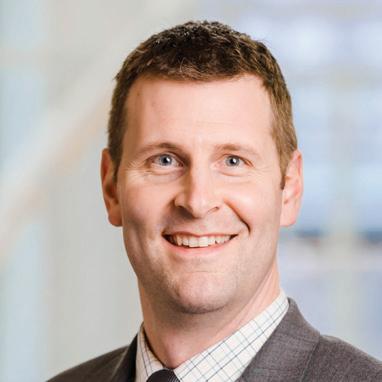
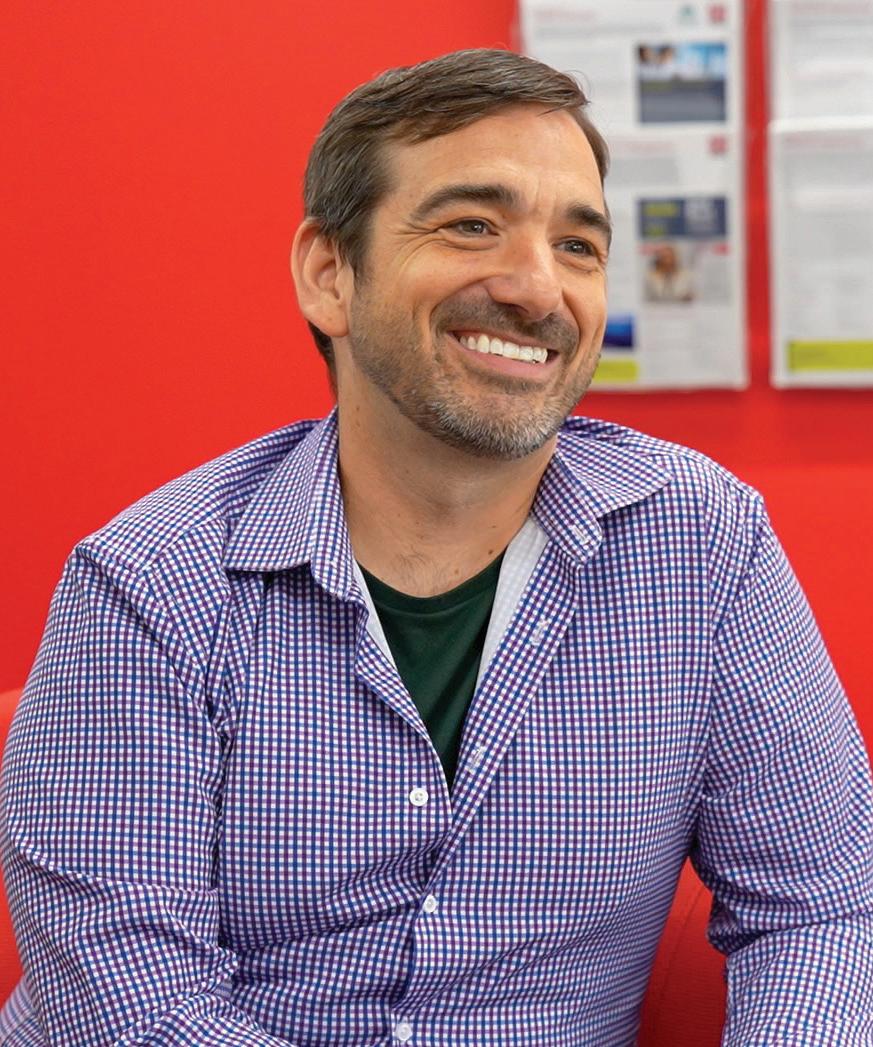
Additional leadership appointments further strengthen MSOE’s operations and leadership. Dr. Dan Bergen (1) has been promoted to vice president and chief of staff, where he oversees human resources and the daily operations of the Office of the President, driving efficiency, productivity and alignment with MSOE’s strategic goals while advancing research, data analysis and continuous improvement efforts to support data-informed decision-making.
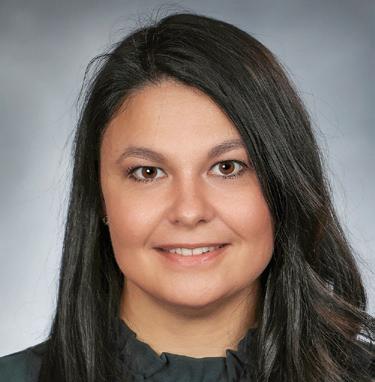
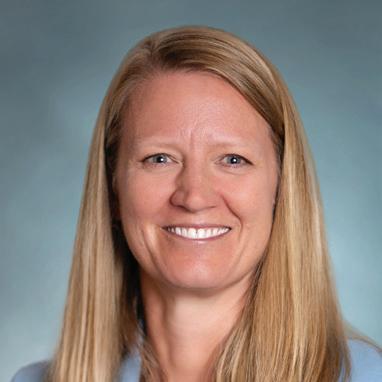
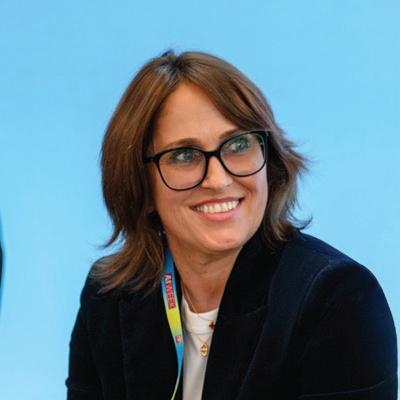
In the university’s academic departments, Dr. Kseniya Fuhrman (2) has been named chair of the Mathematics Department. Dr. Anne-Marie Nickel (3) is the new chair of the Physics and Chemistry Department. They are succeeding Dr. Matey Kaltchev who retired after serving as chair for both departments.
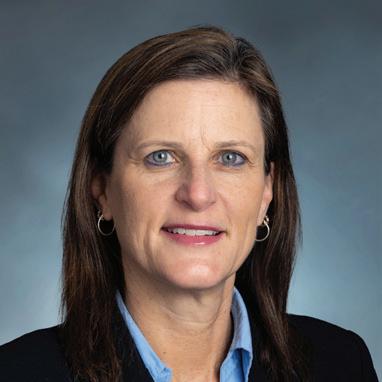
Teresa Massoels (4) has been promoted to director of the Career Connections Center, where she will continue to build strong employer partnerships and expand career opportunities for MSOE students and alumni.
New degrees answer industry demand
Healthcare is evolving faster than ever—and it needs leaders who can think across disciplines. The Bachelor of Science in Health Innovation, offered through a unique collaboration between MSOE and the Medical College of Wisconsin (MCW), prepares students to improve health systems for patients, providers and communities by combining health science, technology, data science, artificial intelligence (AI) and business principles. Students have the option to earn both a B.S. in Health Innovation from MSOE and a master’s degree from MCW in five years. Graduate program options for this major currently include precision medicine, clinical and translational science, global health equity and public health. The pre-professional pathway offers students who plan to enter the workforce after completing their bachelor’s degree with a specialization in user experience, pre-med, anesthesia assistant or pharmacy. Learn more at msoe.edu/hi.
Cybersecurity threats continue to rise in both frequency and severity, with attacks more than doubling since 2020 (Total Assure, 2025, citing FBI and Verizon DBIR data). In response, MSOE developed a new Bachelor of Science in Cybersecurity Systems degree in collaboration with its industry advisory board to align directly with workforce needs and emerging security challenges. The innovative, four-year degree is designed to prepare graduates to protect critical systems, safeguard sensitive data and build resilient digital infrastructure in an increasingly connected world. Learn more at msoe.edu/cyb.
AI Week: Forging New Frontiers
AAdvancements in artificial intelligence bring equal amounts of excitement and apprehension. Across all sectors, for people at every stage of their career, the AI-related challenges are surprisingly similar. The specifics differ, but most fall into a handful of recurring themes: skills gap and AI literacy; trust and accuracy problems; data privacy and security; job displacement anxiety; productivity versus quality tradeoffs; and ethical and legal uncertainty.
Perhaps the most common issue is not the technology—it’s adaptation. Businesses need workers who can collaborate with AI. Educators need to teach AI literacy. Healthcare needs safe, trustworthy implementation. Graduates need career paths in an AI-transformed job market.
MSOE is tackling these challenges and forging new frontiers in applied AI education with next-generation technology, industryexperienced faculty and AI-focused coursework. Students are learning how to combine human judgment, domain expertise, ethics and communication skills with rapidly advancing AI capabilities. Faculty are preparing students to immediately help organizations solve the integration and adaptation problem so they can gain value from AI.
These themes were carried forward into MSOE AI Week presented by the Northwestern Mutual Data Science Institute (NMDSI) in April. MSOE brought together industry experts, educators, faculty, staff, students, alumni and corporate partners to discuss the future of AI, its challenges and its impact. Students demonstrated their advanced computing prowess during the fifth annual Rosie Supercomputer Super Challenge. This competition, sponsored by MSOE Regents Dwight Diercks ’90, H’14 and Nick Haemel ’02, gives students an opportunity to solve a problem using Rosie the supercomputer. (Read more on page 9.)
Throughout the week, industry experts shared the ways they use AI as a tool to optimize workflows and elevate workforces— all while providing ample opportunities for students, alumni and industry professionals alike to learn and network.
CHARTING THE FUTURE: AI, CAREERS AND CONNECTIONS
“Will AI make my job obsolete?”
It’s a question many have heard swirling in the news cycle or whispered around the office water cooler. Day one of AI Week addressed the question head on with an industry leadership panel featuring professionals from engineering, law, business and healthcare to examine how AI is reshaping careers. The panel discussed AI skills and the future of jobs, what new graduates need to know, and how companies are adapting their talent strategies.
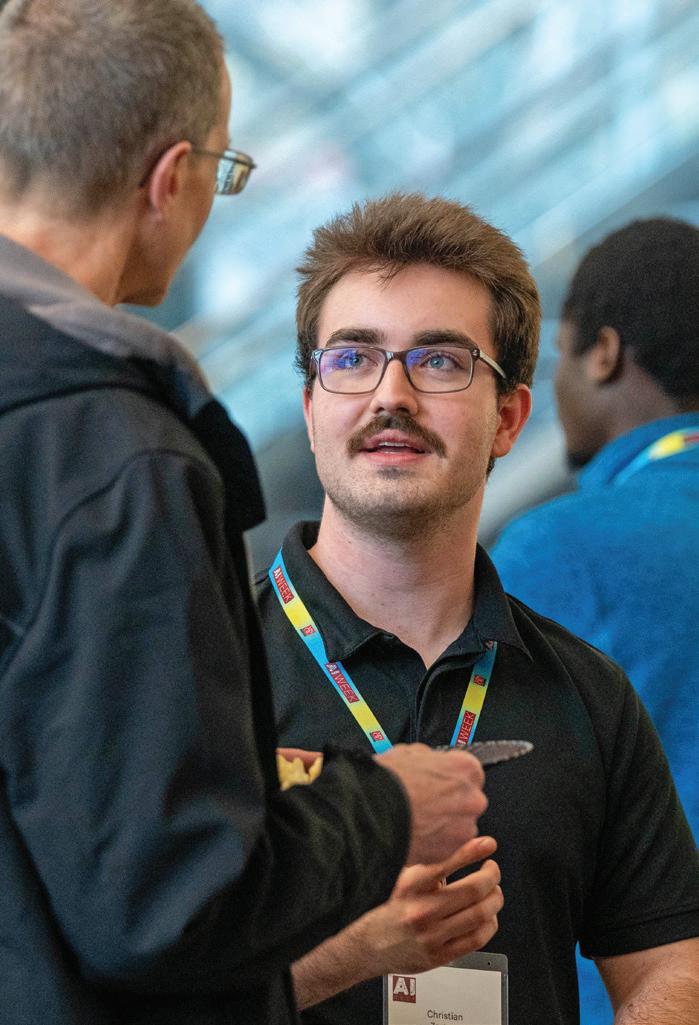
Christian Zastrow (pictured right), an electrical engineering junior, asked the panel how they recommend using AI as a tool versus using it to complete their work. Their response was simple: “AI can’t replace your knowledge.” Zastrow spent last summer as an intern at Milwaukee Tool and this summer has an internship at the NASA Glenn Research Center in Ohio.
“My main takeaway from the evening was that I am going to continue doing what I’m doing,” said Zastrow. “I will leverage AI as a tool to get work done, but I will make sure I understand the material independently.”
REIMAGINING EDUCATION: AI, CRITICAL INQUIRY AND TRANSFORMATIVE PRACTICE
“How do we integrate AI into education?”
Educators are forging new frontiers when it comes to teaching AI. At MSOE, faculty are guided by the Applied AI Integration Process, which is a university-wide framework that sets clear, comprehensive standards for integrating applied AI into every academic program. This framework provides faculty with a structured yet flexible model for embedding AI knowledge, skills and ethical considerations into the curriculum of all degree programs. (Read more on page 9.)
During AI Week, local educators examined practical approaches to AI implementation into K–12 and higher education curriculum. Presenters addressed AI ethics, responsible use policies and implications for student preparation in an AI-driven workforce.
“I enjoyed seeing the different ways that people are approaching the topic of AI with education,” said Paul Mech, director of education at Discovery World. “It’s really helping me understand what I can do when approaching schools on a topic they may be unfamiliar with.”
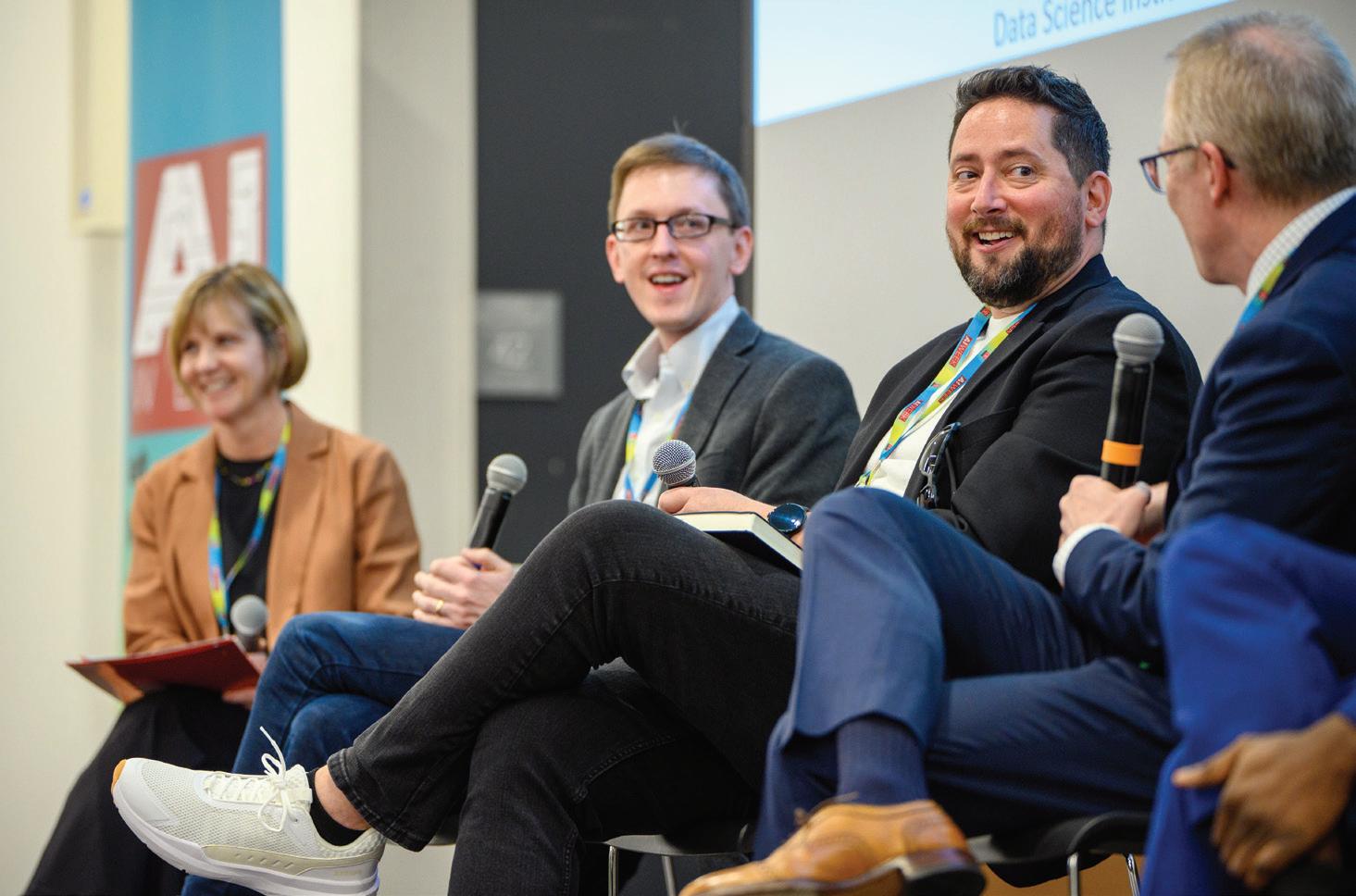
Above, from left: Michelle Trawicki, MSOE MBA Education Leadership program director; Nick Semenkovich, MD, Ph.D., assistant professor, founding member, Medical College of Wisconsin Data Science Institute; Walter Bialkowski, Ph.D., NMDSI associate professor of practice and founding co-director of seed scholars, Marquette University; and Brian D. Thompson, chief innovation and partnership officer, UW-Milwaukee, were part of a panel discussion on AI in higher education.
Thought leaders from the five academic member institutions of the NMDSI shared their expertise on “Leading the AI Transformation: Higher Education Approaches to Innovation, Governance and Student Success.” Panelists represented Marquette University, Medical College of Wisconsin, MSOE, UW-Milwaukee and Waukesha County Technical College.
They discussed the future of AI and data-driven innovation, explored the ethical and responsible use of AI, how
the workforce will evolve, and the role educators play in preparing future talent. They emphasized that while AI may surpass humans in tasks like coding, it will elevate, not replace, future roles—a theme echoed throughout the week.
“AI Week at MSOE is a powerful example of our ecosystem in action—connecting students, educators, industry and community around shared learning and future opportunity,” said Krista Brookman, executive director of NMDSI.
Luke Leonhard ’04, who serves as a chief of staff within Google DeepMind, was a keynote speaker at MSOE AI Week. Leonhard shared insights from working at the center of AI and with the speech and audio teams for Gemini (Google’s AI assistant). He also shared examples of how attendees could integrate AI into their personal and professional lives.
EXPLORING FRONTIERS: AI, INNOVATION AND EMERGING TECHNOLOGIES
“How is AI transforming industries?”
The final day of AI Week brought together nationally recognized experts from cognitive neuroscience, sustainability, healthcare and cybersecurity to examine how AI is transforming their fields.
The day featured talks from Nataliya Kosmyna, Ph.D., research scientist at MIT Media Lab and visiting faculty researcher at Google; Peter LaViolette, Ph.D., vice chair of radiology research at the Medical College of Wisconsin; Luke Leonhard ’04, a chief of staff at Google DeepMind, and others.
Khatera Nazari, an AI engineer intern at Northwestern Mutual and UW-Milwaukee senior, enjoyed hearing from industry experts on the responsible use of AI. “You have to be careful with using AI, make sure you know what you are doing and use AI in an efficient way.”
THAT’S A WRAP: AI WEEK FINAL THEMES
A common theme emerged across audiences at AI Week: AI is a powerful tool, but to harness its power, it’s imperative to be well educated on how to use it responsibly. Faculty want their students to understand the fundamentals and skills first, and use AI as a tool to take their projects to the next level second. Similarly, students want real feedback from faculty, not AI generated comments. In industry, leaders want employees who are knowledgeable on AI and can use it to leverage projects, not complete projects. Across audiences and industries, human connection reigns supreme. Applied AI education at MSOE empowers students to become responsible professionals ready to solve the complex challenges of tomorrow. []
Thank you!
“I want to thank MSOE’s sponsors, supporters, corporate partners, guest speakers, panelists and departments across campus for making MSOE AI Week 2026 possible. What we were able to build was only possible because so many individuals gave their time, energy, judgment and care to make it happen. I am sincerely grateful for everyone’s hard work, and I could not have asked for a better team to do this with.”
Dr. Olga Imas ’99
Learn more from AI Week presenters in MSOE’s podcast, Rethink What’s Possible. Tune in at msoe.edu/podcast.
Chair, AI Week Planning Committee
Professor and Director of Applied AI Education Milwaukee School of Engineering
PRESENTING SPONSOR:
SUPPORTERS:
Direct Supply
CREATE Institute at MSOE
KEEN: Kern Entrepreneurial Engineering Network
MSOE Diercks School of Advanced Computing
MSOE Biomedical Engineering Program
MSOE Computer Engineering Program
MSOE MBA in Education Leadership Program
MSOE Center for Professional Education
MSOE Career Connections Center
MSOE School of Nursing
We Energies STEM Center at MSOE
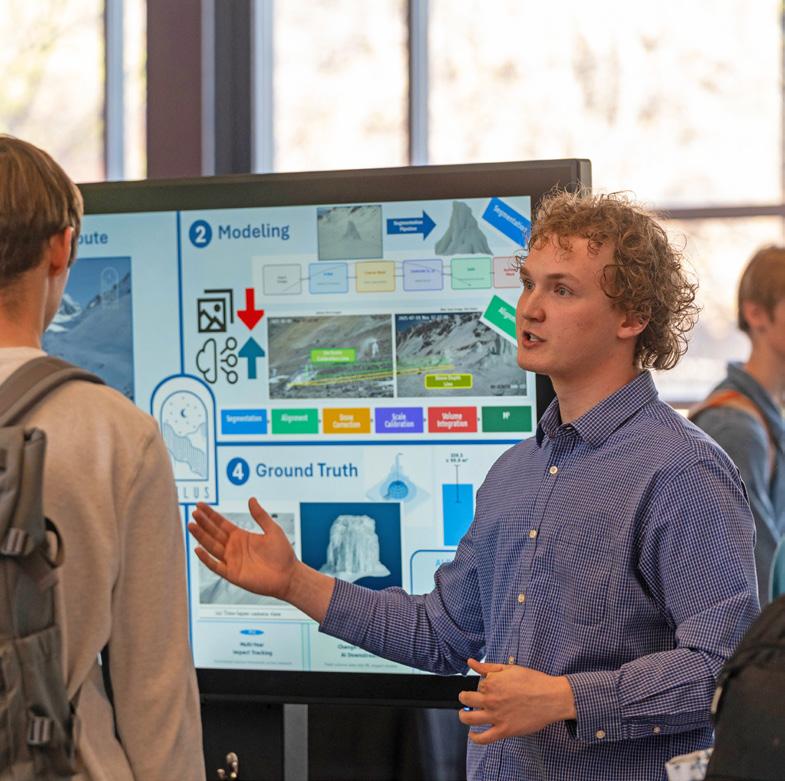
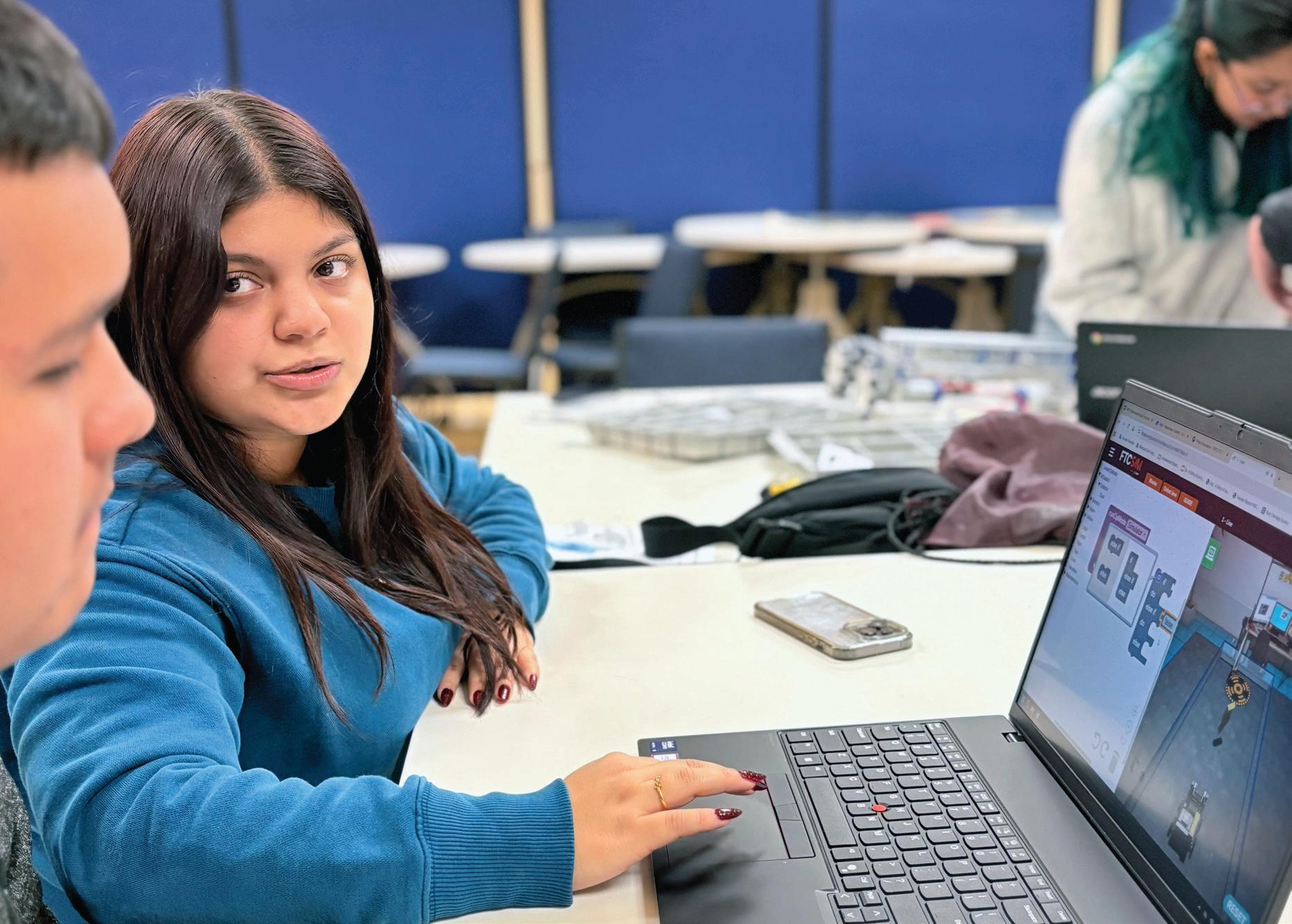
Students wow the judges at Rosie Supercomputer Super Challenge
As one of the featured events of AI Week at MSOE, the 2026 Rosie Supercomputer Super Challenge saw record-breaking submissions and awe-inspiring projects. The annual challenge asks students to solve a problem using Rosie, MSOE’s NVIDIA GPU-powered supercomputer and number crunching behemoth.
“The presentations this year were off the charts,” said Dwight Diercks ’90, H’14, MSOE Regent, NVIDIA senior VP of software engineering. “It’s thrilling how each year the students outpace the competition.”
Diercks served as a judge alongside Nick Haemel ’02, MSOE Regent and NVIDIA vice president of medical imaging and system software; Dr. Jeremy Kedziora, PieperPower Endowed Chair of AI; and Dr. Derek Riley, MSOE professor.
Adam Haile was inspired to create his project after attending the Midwest Instruction and Computing Symposium in 2023 and has been perfecting it ever since. His project uses game-playing reinforcement learning models to demonstrate how an AI agent can be trained to play the game SkyJo and predict who will win.
The judges were impressed by Haile’s technical prowess, awarding him first place and the $10,000 grand prize. And
Existing Course/Program
the judges weren’t the only ones who were impressed—his project caught the eye of an NVIDIA hiring manager. After graduating in May 2026, Haile began his career as an AI agent engineer at NVIDIA. “I never would have imagined that one project could kickstart something this big,” said Haile.
Two of this year’s finalist teams were inspired to solve a social problem affecting their communities, both near and far.
Alhagie Boye teamed up with Wilfried Tapsoba and Muhammad Alliyu to create a system that optimizes where healthcare facilities should be placed in Africa. The project has a special place in each team member’s heart as it connects them back to their home countries in Africa.
Growing up in The Gambia, Boye saw firsthand how difficult it was for people to access basic healthcare. “My mom worked as a midwife. There were times when women would come to our home in labor because it was the closest help available,” explained Boye. “Knowing that this kind of system could help inform better decisions and improve access to care for millions of people make the work feel purposeful beyond just a technical project.”
Closer to campus, Josh Myers, Xander Ede, Eddy Chukwuma and Dylan Norquist created a project focused on proactive urban forestry management. They explored
how satellite data can be combined with forestry data from the City of Milwaukee to help re-prioritize how the Forestry Department manages thousands of trees across the city to prevent damages that may arise from structural deficits and falling trees.
“This was our first time working on a project with actual stakeholders,” said Chukwuma. “This increased our confidence and reinforced the fact that we’re solving real issues and having a real impact.”
The team earned third place and continues to work with city officials to expand their project.
This year marked the fifth anniversary of the competition, and it was the largest to date with 27 entries, nearly doubling the number of entries received last year.
New plan integrates applied AI in all programs
MSOE has introduced university-wide standards to ensure every graduate gains applied AI skills. This new comprehensive framework, known as the Applied AI Integration (A2I2) Process, weaves applied AI into every degree program. Rather than relying on a handful of standalone courses, MSOE’s approach embeds AI directly into existing curricula, ensuring students across all disciplines build practical, hands-on experience.
The A2I2 framework is built around four core ideas: foundational knowledge, practical application, critical evaluation
and social responsibility. Together, these pillars aim to balance technical skill with ethical awareness. Programs and courses earn A2I2 certification by demonstrating meaningful integration of these elements through updated outcomes, coursework and projects.
Developed by MSOE’s AI Steering Committee, the initiative positions the university at the forefront of applied learning—preparing graduates not just to use AI, but to be AI native and lead responsible adoption in a rapidly evolving technological landscape.
IMPACT
A Legacy Built on Belief
Gene Carter (1934–2026) and the lasting impact of investing in people
The story of Gene Carter ’60, H’95, Regent Emeritus, has often been told through the milestones of a remarkable career—pioneering work in Silicon Valley, a role on Apple’s original management team and a legacy of philanthropy to MSOE that has transformed and expanded opportunities for students. But to his children, Pam Shukait and Brian Carter, his life is best understood in quieter, more personal moments—at home around the dinner table, in the garage or gathered around a campfire.
“Dad’s generation was different,” says Brian. “He worked a lot. Always providing for his family.” During their childhood, Gene’s days followed a steady rhythm: leaving for work at 7 a.m., returning at 6 p.m., then heading to his home office after dinner before ending the day with the 10 p.m. news. Discipline ruled both his schedule and his mindset—the same discipline that propelled a career defined by bold ideas, sharp instincts and impeccable timing.
Yet, woven into those long workdays were the quieter, cherished private moments that shaped his family and linger as the clearest measure of who he was.
Pam remembers a childhood modest in means but rich in experience. “We didn’t have a lot of money. Our vacations were always camping,” she says. “But I loved it. I liked being in nature and cooking outside.”
One of her most treasured possessions is a handmade “grub box” her father built, carefully designed with different compartments for camping supplies. “It holds so many special memories.” It is an object that reveals Gene’s approach to life: thoughtful, purpose-driven, built to last.
For Brian, some of the most lasting lessons came not from words, but from watching his father work with his hands. Saturdays often meant a half day at the office, followed by afternoons in the garage. “He enjoyed woodworking, electrical, plumbing—he just figured things out,” Brian says. “Learning from him set me in the right direction. Because of him, I was willing to try things myself. To this day, that’s one of the greatest gifts he gave me.”
That instinct to guide and encourage others extended far beyond Gene’s family.
In the workplace, he set ambitious but achievable goals. “His former colleagues would say he was a tough cookie,” Pam recalls. “He set a high level of expectation, but also enjoyed mentoring and helping people succeed.”
Gene’s philosophy on work and life was clear and consistent. “Always love what you are doing and the money will follow,” he often told his children. “The journey is the reward.”
Despite his career achievements, Gene carried a sense of humility. He took risks, but also acknowledged how timing, opportunity and relationships often matter as much as talent.
Relationships, in fact, became the cornerstone of his later business ventures. When evaluating investments, he focused on the people behind them and how passionate they were about the product. In one of his most successful ventures, a recycling and landfill operation, two individuals sought his support. As the company grew, there were more opportunities to expand the venture. When approached and asked if he had read their business plan, Gene simply replied, “What for? I’m investing in you and Rich.”
That belief in people became a defining thread throughout his life.
It is also the lens through which Pam and Brian now understand their father’s philanthropy. “We always knew education was important to him,” Pam says. “But we didn’t fully realize the scope of his impact.”
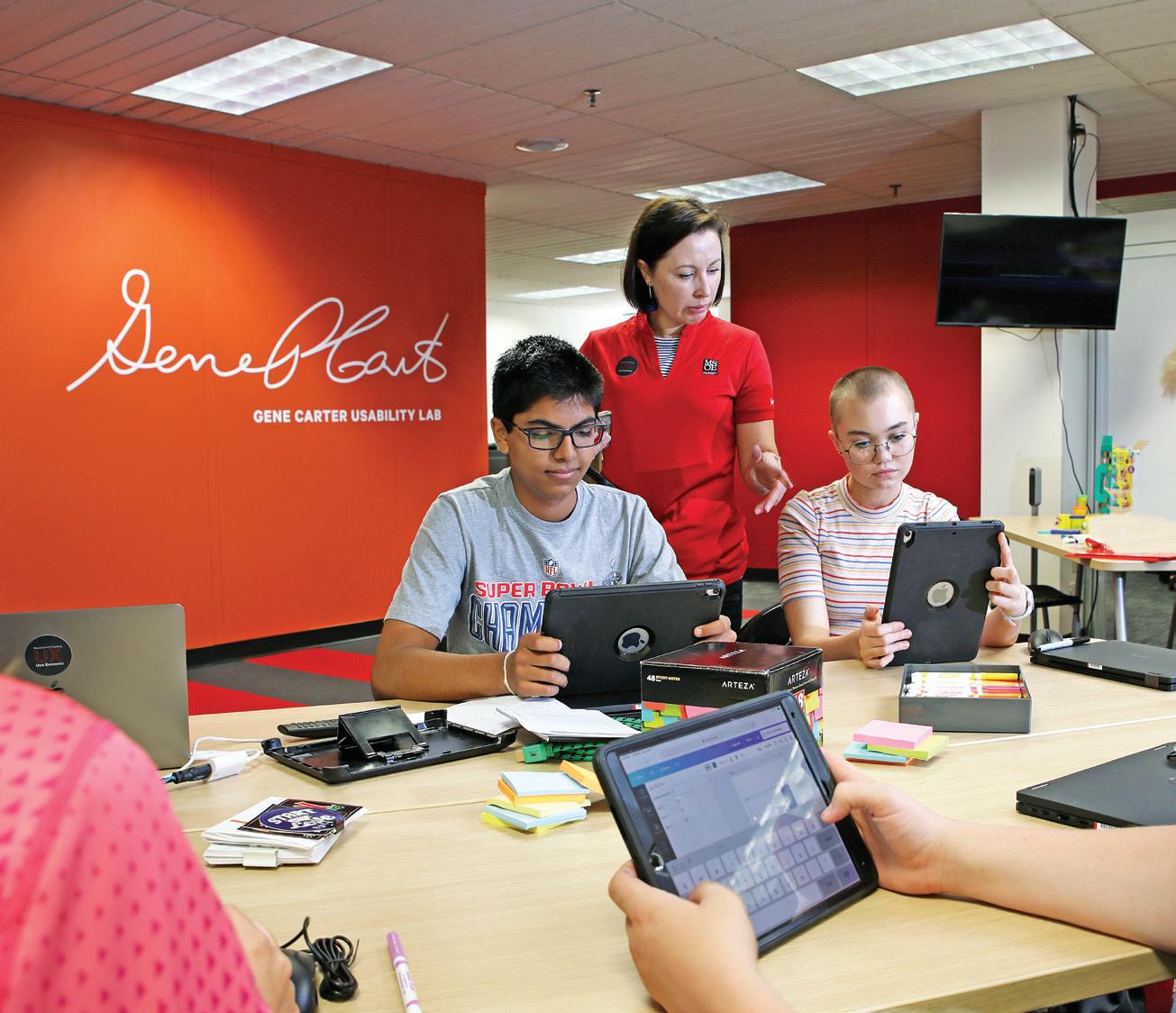
That realization came into sharp focus in 2021 when Pam visited the MSOE campus and encountered her father’s name on the wall of the Carter Usability Lab. The magnitude of her father’s generosity and legacy became clear.
“How many times do you see your dad’s signature 12 feet long on a wall?” she says. “I choked up when I saw it.”
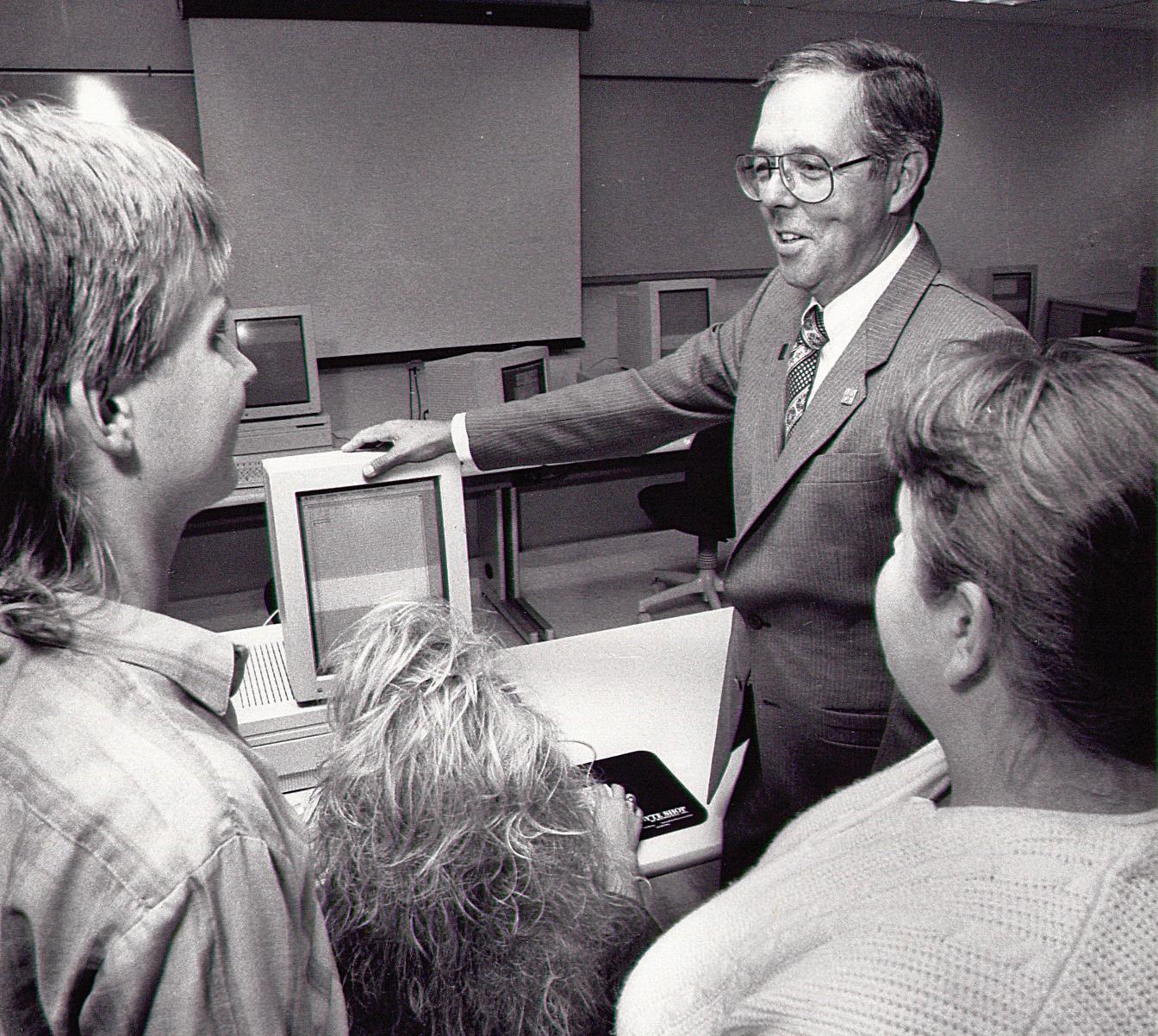
In 1989, Gene made a significant contribution to set up the lab, providing MSOE students with access to high-tech Apple computers and a dedicated space on campus to learn, research and design.
Gene Carter ’60, H’95
“When we look at everything— the students he’s helped, the programs he made possible—it’s a direct reflection of who he was.”
PAM SHUKAIT (ABOVE), DAUGHTER OF MSOE ALUMNUS GENE CARTER
For Gene, education was foundational. He credited it and the discipline it instilled as the starting point for everything he achieved. He also believed that access to education should not be limited by circumstance; others should have the same opportunity.
That belief took tangible form in 2013 with the creation of the Carter Academy, established through an endowed gift from Gene
Gene Carter supported MSOE’s efforts to provide students with high-tech computer equipment since 1989, when he established the Carter Desktop Media Laboratory. He supported several renovations and upgrades to the laboratory since then, ensuring students have access to the newest technologies.
and his wife, Patricia. Designed as an academic summer bridge program, the academy has supported 550 students to date, helping them build academic confidence and community as they transition to college.
In 2021, that commitment deepened with the creation of the Carter Academy Scholars House in Hermann Viets Tower, a living-learning community that allows students in the program to collaborate, study and support one another on a regular basis.
Another area of passion for Gene was STEM education. In 2017, Gene’s vision became a reality with the launch of MSOE’s STEM program for K–12 students, expanding access to math and science education and helping cultivate the next generation of problem solvers.
At home, those same convictions shaped how Gene raised his own children. College was never presented as optional. It was expected and fully supported. “No matter what you wanted to do or when you wanted to do it, it was paid for,” Pam recalls.
Pam says behind all her father’s success was their mother, Patricia. “He was successful because he had my mom as support. You must have that support at home to make that happen.”
Today, Gene’s legacy is visible across MSOE’s campus. You can see it in the labs, programs and buildings he made possible.
Brian and Gene Carter
But his true impact was on people: students whose paths were widened, colleagues whose careers were shaped, and family members who absorbed his values by watching how he lived. All were supported by his belief in them.
“When we look at everything—the students he’s helped, the programs he made possible—it’s a direct reflection of who he was,” Pam says.
Now, Pam and Brian carry their father’s legacy forward in their own lives, continuing his commitment to helping others, especially children and the elderly, those he felt most in need of support and opportunity.
In the end, Gene Carter’s life cannot be measured only by professional success. For him, the journey was the reward. And it showed in how he chose to live each day. His legacy is found in the steady discipline of his days, the curiosity of his hands, the generosity of his giving and, above all, the unwavering belief he placed in people.
Or, as he might have said with a smile, “Wow! What a ride!”
Inspired to invest in our students? Please visit msoe.edu/giving or contact Kristen Mekemson at
$125 MILLION CAMPAIGN GOAL
$101.5 MILLION RAISED!
81.2% RAISED TOWARD $125 MILLION GOAL
MSOE surpasses $100 million in Next Bold Step campaign
Milwaukee School of Engineering has reached a major milestone in its Next Bold Step campaign, surpassing $100 million raised toward its $125 million goal—a powerful testament to the generosity and commitment of MSOE’s alumni, parents, corporate partners, foundations and friends.
MSOE’s first comprehensive campaign supports strategic priorities with investments that strengthen academic excellence, expand student access and affordability, and position the university for continued leadership in applied education.
A cornerstone of this effort is the Robert D. Kern Engineering Innovation Center, a transformative facility designed to elevate experiential learning, foster interdisciplinary collaboration, and deepen industry engagement. The Kern Engineering Innovation Center brings together advanced laboratories, classrooms and project spaces that prepare students to tackle complex challenges from day one.
“This milestone reflects the strength of the MSOE community and their belief in our mission,” said Dr. Eric Baumgartner, MSOE president. “Reaching $100 million brings us closer to our goal and ensures we have the resources—both designated and unrestricted—to deliver an exceptional education and adapt to the evolving needs of our students and society.”
Momentum remains strong as the campaign moves toward its $125 million goal. University leadership recognizes it will take all of us to shape a bold and impactful future for generations of students and invites all who have a personal stake in this future to help ensure the long-term financial sustainability of the university.
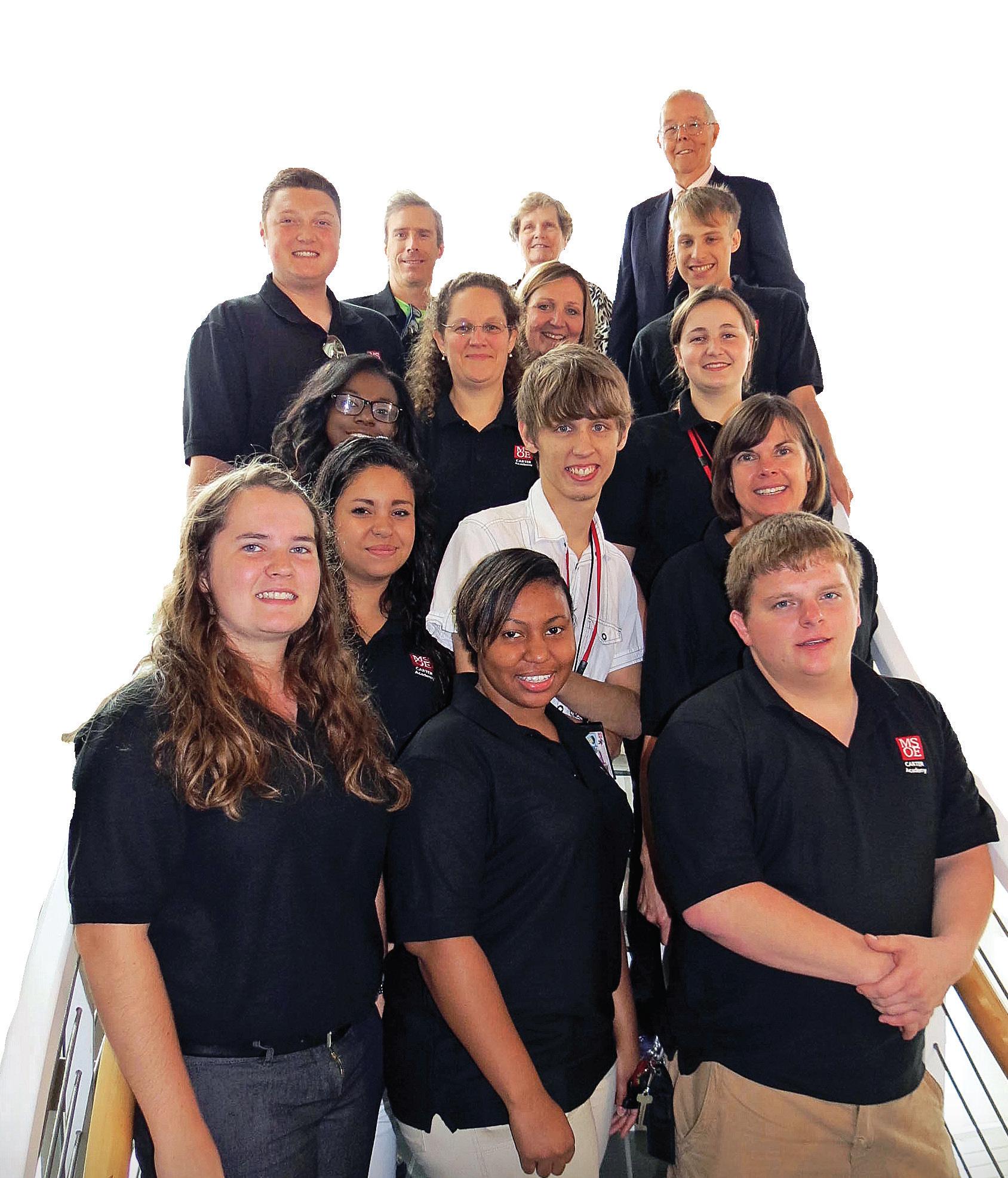
Patricia and Gene Carter (back row, at right) established the Carter Academy at MSOE to support students as they transition to college.
Raider pride drives impact on Giving Day!
MSOE’s annual Giving Day on April 16 delivered a remarkable show of Raider pride and generosity. Together, 2,121 donors, which included students, faculty, staff, alumni, parents and friends, raised an impressive $729,244. These gifts fuel opportunities that ensure every student can access the resources, programs and scholarships they need to succeed. The energy and momentum surged thanks to the incredible impact of donor-sponsored challenges and matches, which doubled support across campus areas like athletics, student clubs and organizations, and scholarships.
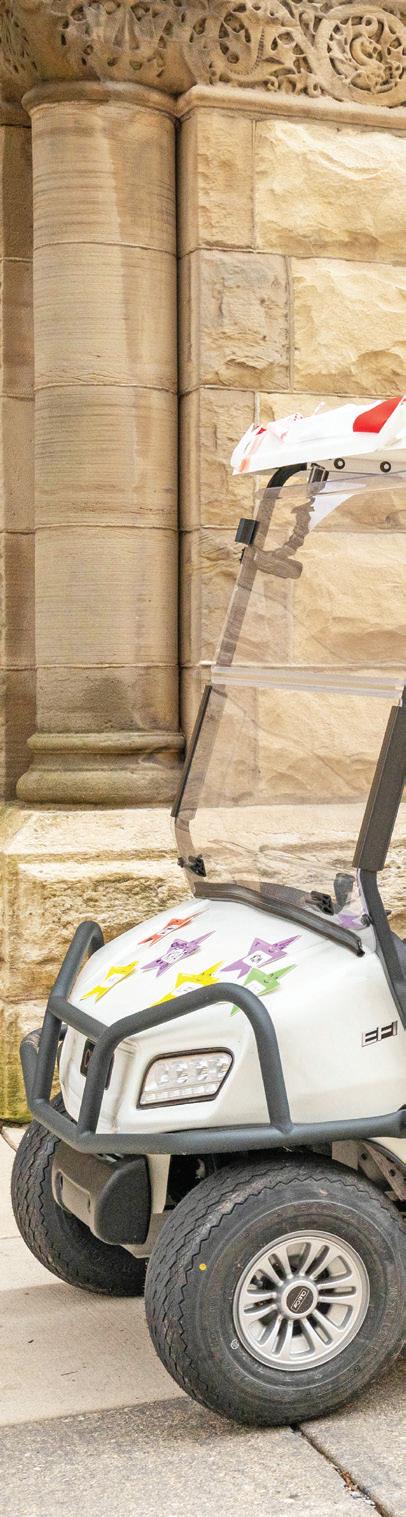
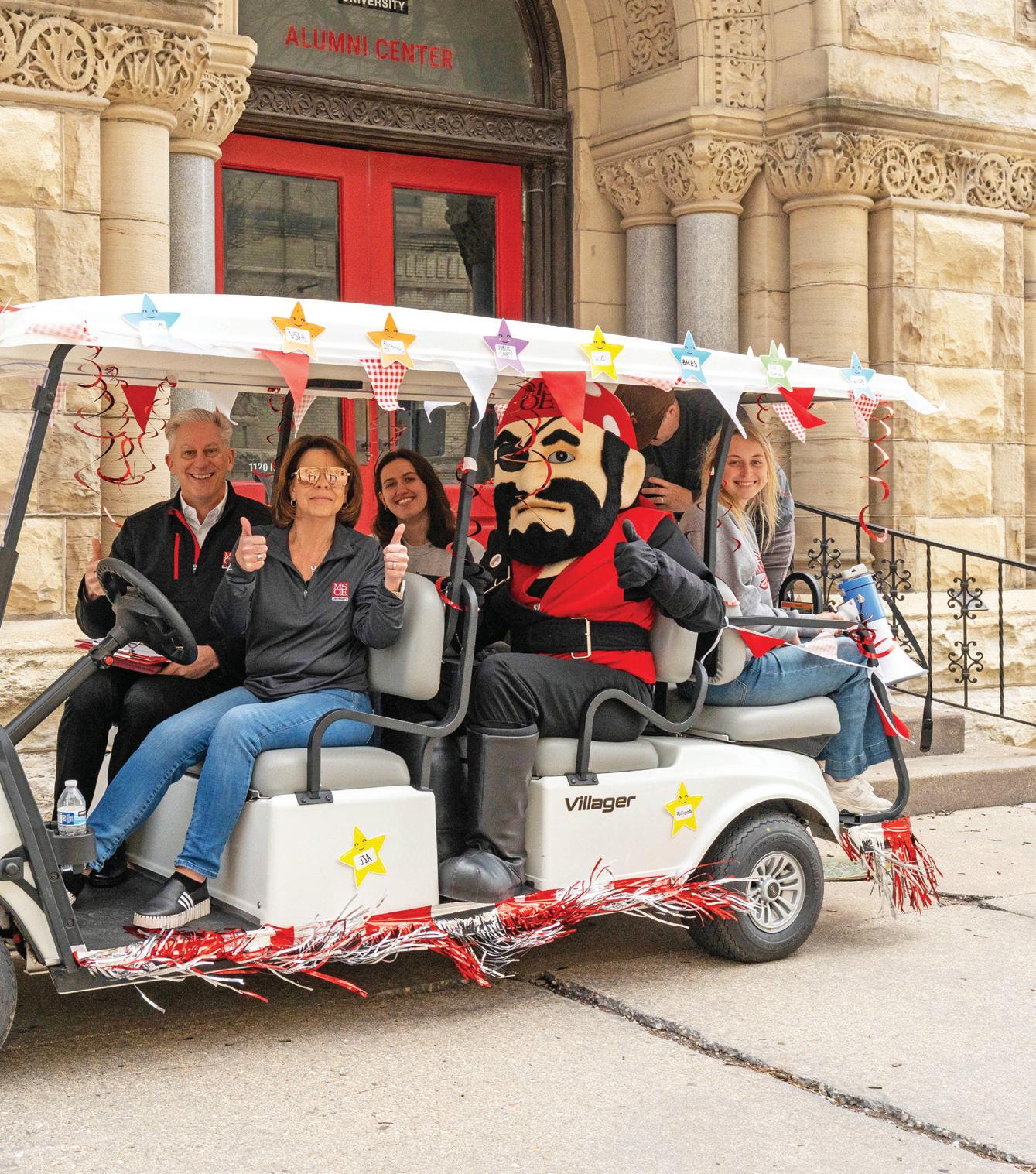
A standout favorite returned to campus: the popular Cash Cab. The decorated cab featured many “celebrity” drivers, including Dr. Eric Baumgartner, MSOE president, and Annmarie Baumgartner, executive advisor for strategic engagement. Students enjoyed free rides around campus while answering trivia questions such as “Who is the founder of MSOE?” for the chance to earn money for their preferred area of support on Giving Day. In total, students raised a collective $2,500 thanks to a generous challenge match from Dr. John Walz, president emeritus, and his wife Moira.
Celebrating impact at the Scholarship Appreciation Luncheon
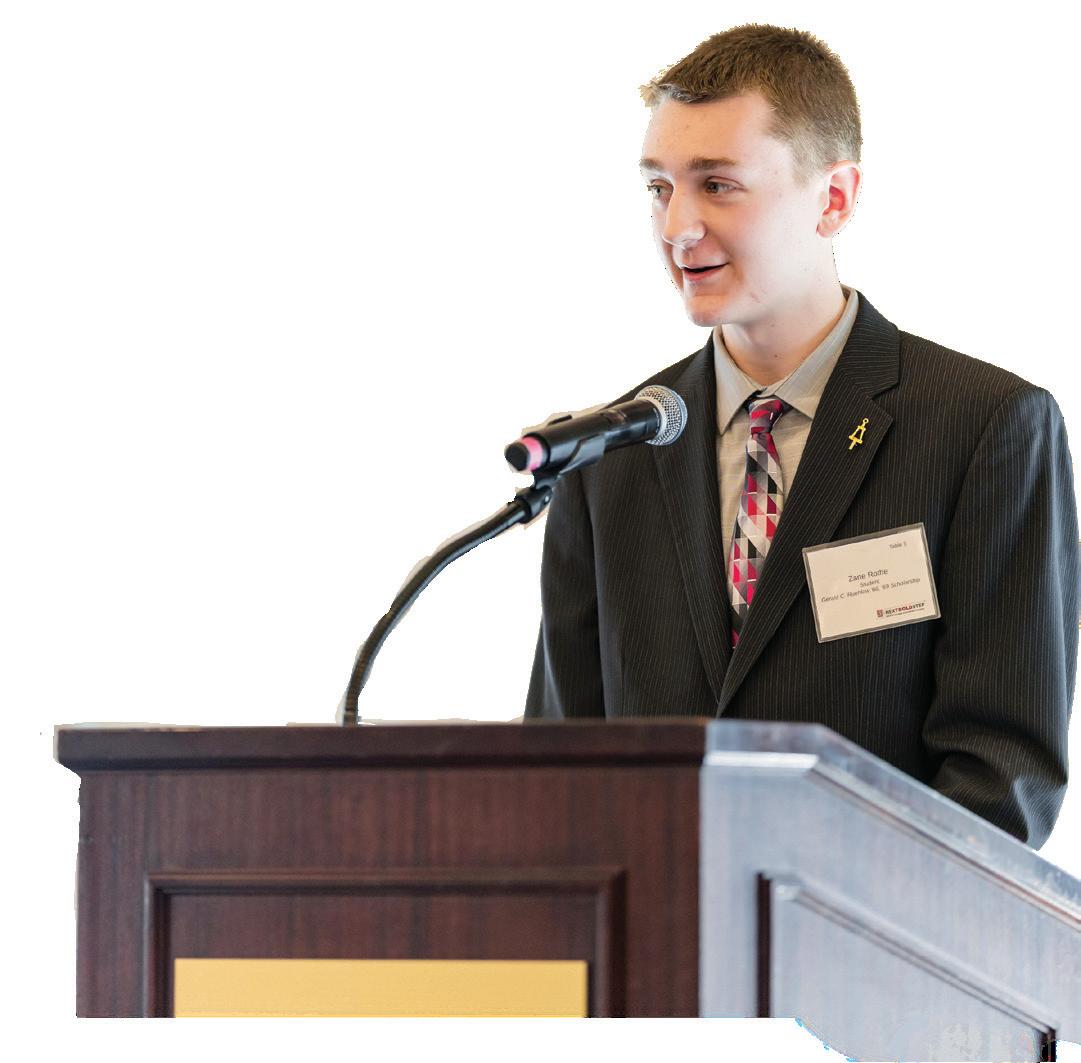
“I am beyond thankful for the generosity of Mrs. Ruehlow and her family and for their financial support of my education. It’s not just a gift; it is an investment in my future.”
This powerful testimony of impact comes from student scholar Zane Rothe ’26, a recipient of the Gerald C. Ruehlow Annual Scholarship. Rothe shared his story at this year’s MSOE Scholarship Appreciation Luncheon, held April 14 at the Pfister Hotel.
At this annual event, gratitude and generosity meet, as students share their stories with the private and corporate donors who help make their dreams possible.
Inspired to make a difference? Learn more about starting your own scholarship at MSOE by contacting Ciara Hassinger at hassinger@msoe.edu or (414) 277-7259.
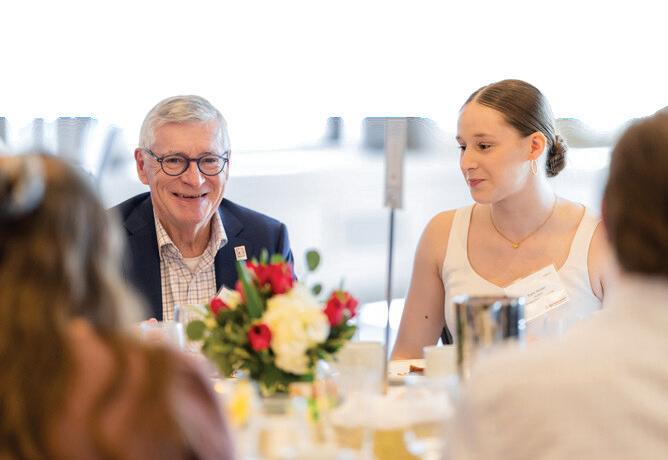
Zane Rothe ’26 expressed gratitude for donors who support scholarships. Joe Sacco ’71 (below) enjoys hearing from Katie Moser and other MSOE students at the Scholarship Appreciation Luncheon.
DRIVING OPPORTUNITY
MSOE Inaugurates Eric T. Baumgartner, Ph.D. as Sixth President
LLike a rover setting out across unexplored terrain, every presidential inauguration marks the beginning of a new era. An era fueled by possibility, guided by experience and inspired by the promise of what lies beyond the horizon.
For Dr. Eric T. Baumgartner, the spirit of discovery has been a lifelong companion.
Growing up in upstate New York, he was the kind of kid who looked up at the stars and imagined what was possible beyond them. What began as childhood curiosity grew into a career defined by a relentless pursuit of new frontiers.
A RECORD OF IMPACT
In 2004, the Opportunity rover landed on Mars. Millions of miles away in mission control at NASA’s Jet Propulsion Laboratory, Baumgartner remotely navigated the rover across unfamiliar terrain, solved complex challenges and played an influential role in the exploration of Mars. The mission required vision, precision, resilience and the courage to venture into the unknown.
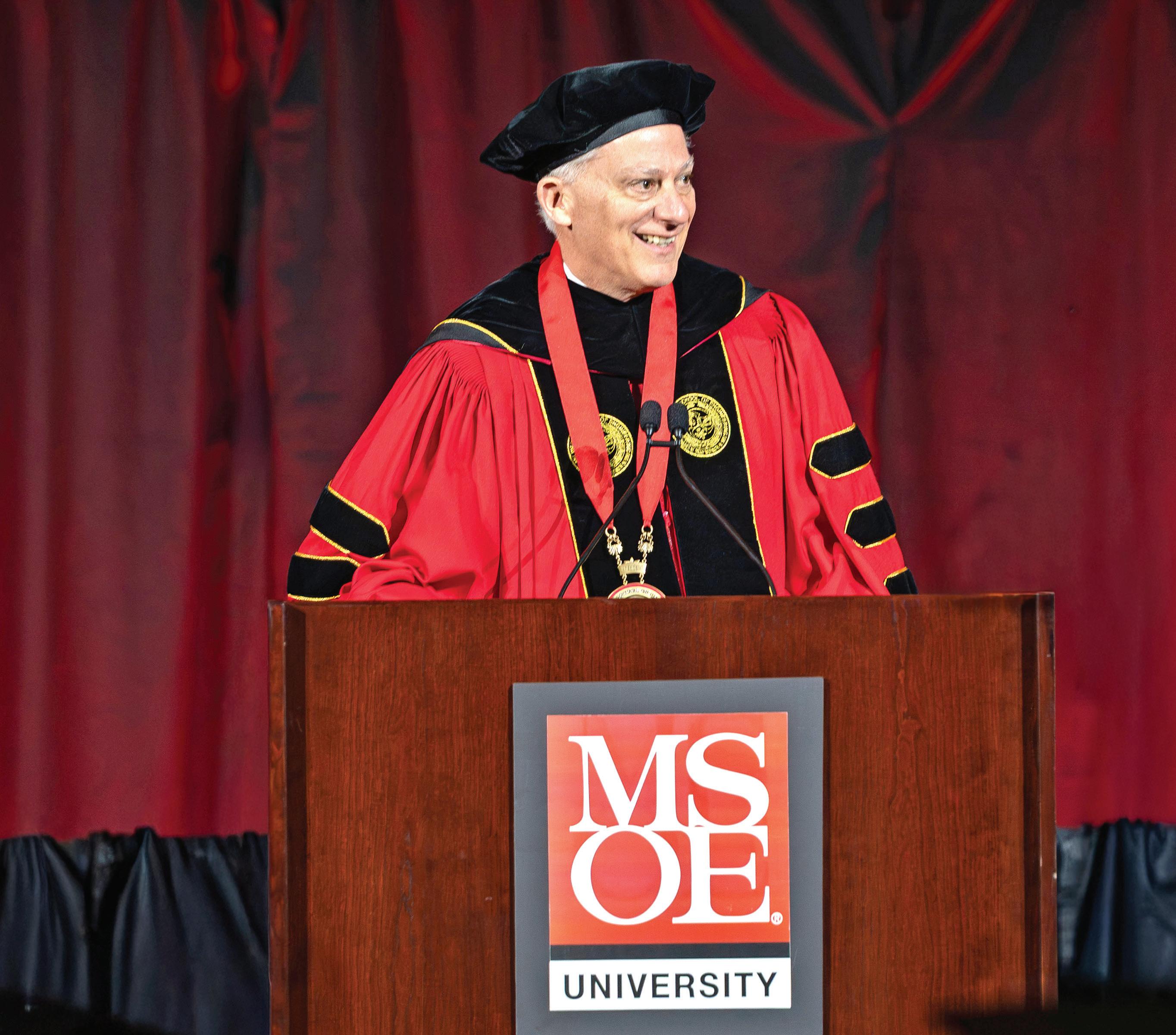
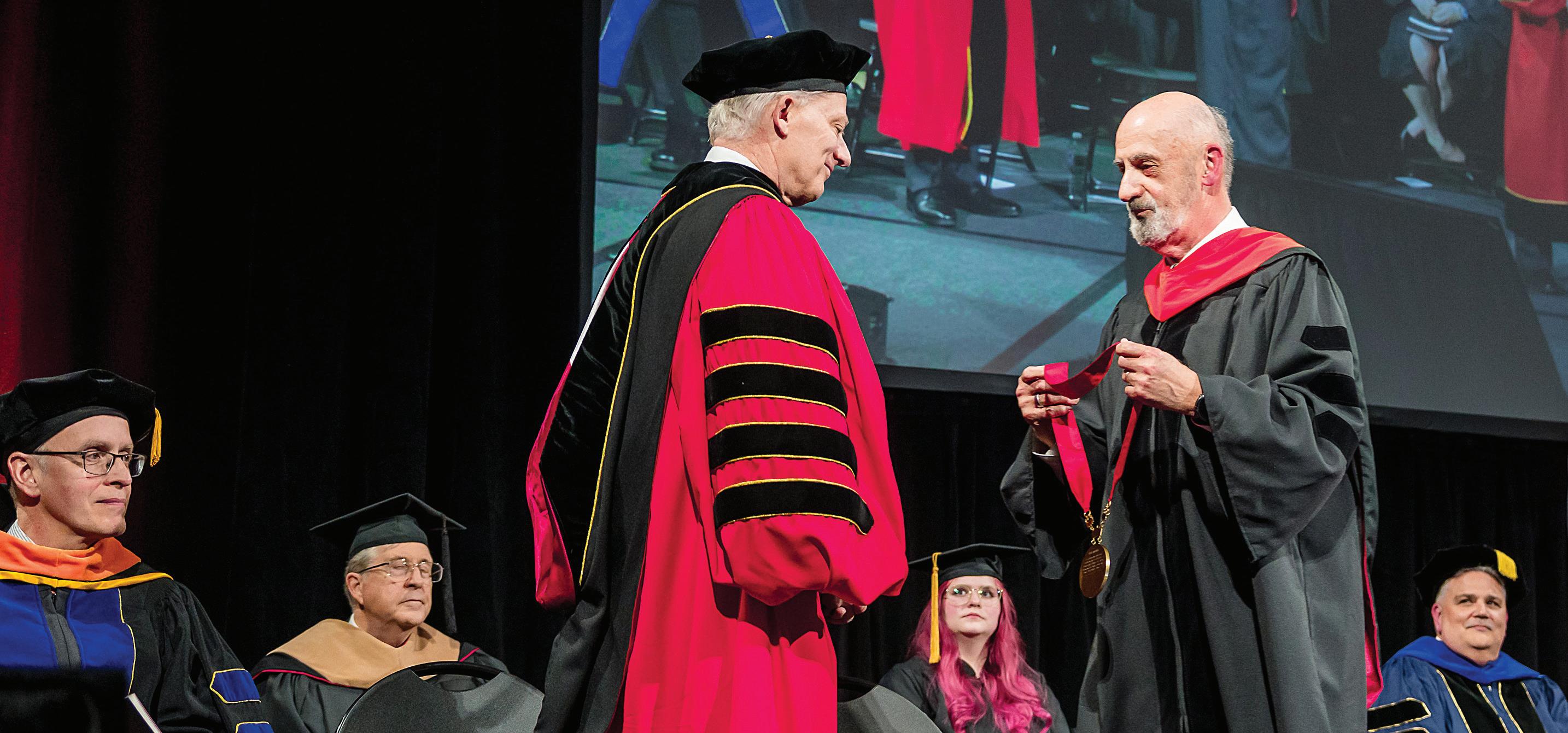
Today, Baumgartner is applying those same qualities in a new leadership role. On April 24, 2026, he was inaugurated as only the sixth president of Milwaukee School of Engineering since its founding in 1903. For those who have worked alongside Baumgartner, his appointment reflects both a proven record of leadership and a deep understanding of MSOE’s mission.
“There were many qualities that compelled the Board of Regents to elect Dr. Eric Baumgartner—none was more important than our belief that he exemplifies the MSOE Mindset,” said James C. Rahn H’15, MSOE Regent
and former chair. “I have known Dr. Baumgartner for nearly 15 years, and throughout that time, I have come to value him as a thoughtful, innovative and characterdriven leader.”
Since joining MSOE as executive vice president of academics in 2017, Baumgartner has been a catalyst for meaningful, forward-looking change. Through his early support of the development of the MSOE Mindset, he reinforced a vision of students as leaders of character, responsible professionals, passionate learners and value creators.
He also steered the university’s transition to a semester model, unlocking new opportunities for experiential learning, co-ops and study abroad trips. He played a central role in shaping modern academic spaces including the Robert D. Kern Engineering Innovation Center which is currently under construction. In addition, he strengthened partnerships to connect classroom learning with evolving workforce needs.
I have seen first-hand what Eric can do when the stakes are at the highest and the timeline is the shortest. MSOE is in incredible hands”
JENNIFER HARRIS TROSPER JPL FELLOW, NASA’S JET PROPULSION LABORATORY
Baumgartner’s influence extends beyond institutional initiatives. Students have seen firsthand the changes he helped shape. Amelia Brandt, president of the MSOE Student Government Association, reflected on this during the inauguration ceremony. “Dr. Baumgartner, the student body knows you have played an instrumental role in MSOE’s momentum, and we are excited to see these efforts continue to grow and take shape under your presidency,” she said. “We look forward to all the years ahead under your guidance and leadership.”
Following his time at NASA, Baumgartner served as the dean of the T.J. Smull College of Engineering and professor of mechanical engineering at Ohio Northern University (ONU) in Ada, Ohio. There, he experienced the opportunities, challenges and perspective of a small, private institution. He worked collaboratively with the college’s stakeholders to set the vision for the college and advanced a fundraising campaign that resulted in a new engineering building.
Dr. J-D Yoder, then professor who succeeded him as dean of the T.J. Smull College of Engineering at ONU and a lifelong friend, witnessed Baumgartner’s leadership and dedication while they collaborated on countless projects and initiatives at ONU. He spoke to Baumgartner’s credentials at the April inauguration.
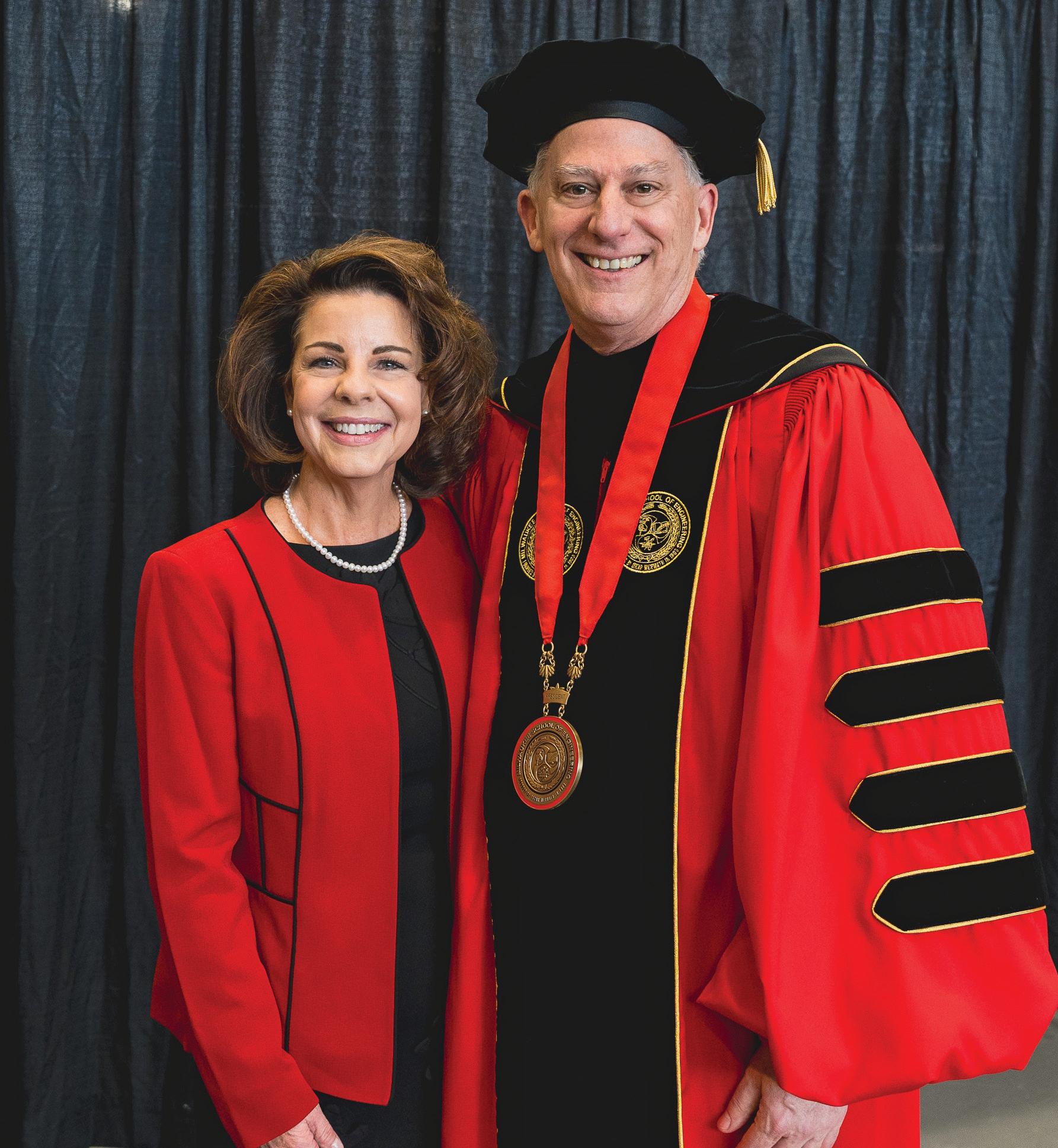
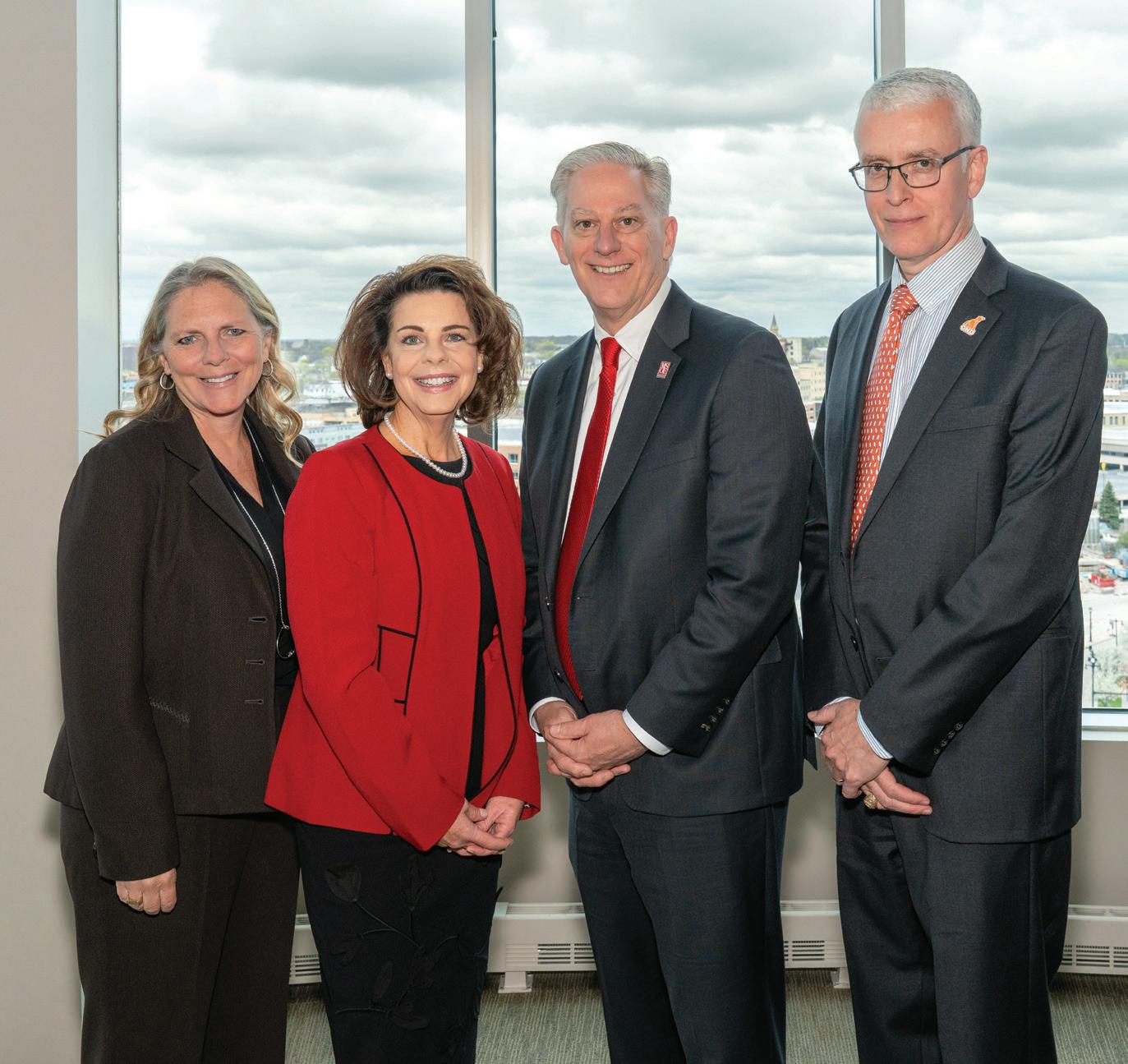
Annmarie Baumgartner and Dr. Eric Baumgartner (center) with inauguration speakers Jennifer Harris Trosper (left) and Dr. J-D Yoder (right).
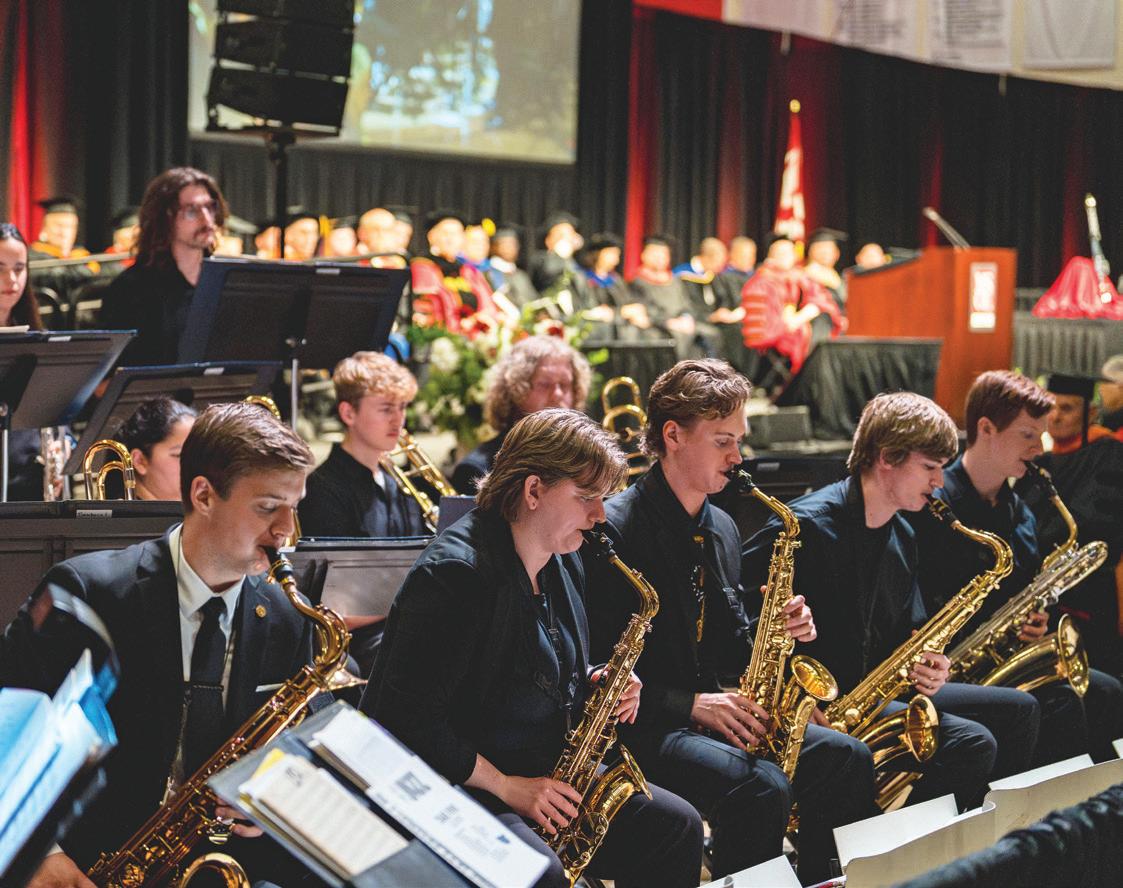
The MSOE Jazz Band provided live music before and during the inauguration ceremony.
“In times like these, we need exceptional leaders. Eric is a hardworking leader who will compete. A positive force who truly cares about employees and students. An entrepreneurially-minded leader who will find new opportunities, try new things and stay laser-focused on creating value for university stakeholders.”
Baumgartner takes the lead at MSOE during a transformative time in education and industry. In the eyes of Jennifer Harris Trosper, JPL Fellow at NASA’s Jet Propulsion Laboratory, he is the exact person for the challenge. She worked alongside Baumgartner as he handled chaos with grace and tackled roadblocks with brilliance.
“I have seen first-hand what Eric can do when the stakes are at the highest and the timeline is the shortest. MSOE is in incredible hands,” said Harris Trosper. “As Eric takes
on the presidency of Milwaukee School of Engineering, continuing to forge firsts and inspire and lead the next generation, you all—the students, faculty and staff— are blessed.”
LEADING THE WAY
Baumgartner’s inaugural address connected both his and MSOE’s accomplishments of the past with the opportunities that lie ahead.
When MSOE was founded, it was a bold response to the demands of its time. Founder Oscar Werwath took a risk, one rooted in urgency, vision and a belief that education could directly connect industry and opportunity. He was the first to plan an American educational institution based on an applications-oriented curriculum.
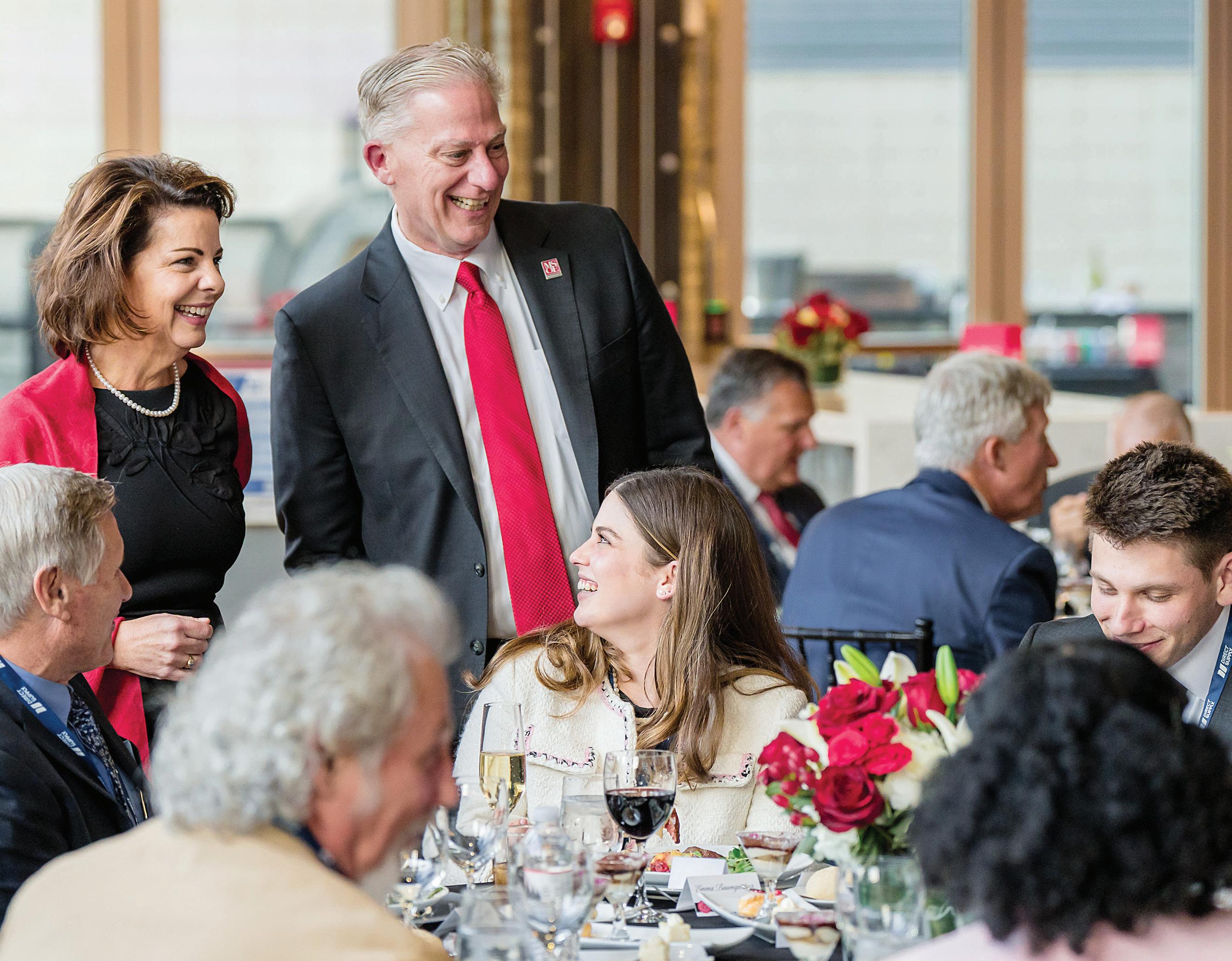
The Baumgartners mingled with family, friends, Regents and special guests following the inauguration.
Inauguration Week at MSOE was filled with special events to celebrate the momentous occasion. Visit msoe.edu/inauguration for photos, videos and a recording of the inauguration ceremony.
“As we look toward the future of MSOE, this moment calls us to move from responding to opportunity to intentionally driving it, purposely shaping what comes next”
Today, Baumgartner believes that MSOE is in a similarly pivotal moment that needs the same spirit of ingenuity.
To shape the future, MSOE will need more than incremental change; it will require exponential impact and a shared commitment to work together.
“As we look toward the future of MSOE, this moment calls us to move from responding to opportunity to intentionally driving it, purposely shaping what comes next,” said Baumgartner. “While the opportunities throughout my career have shaped me, today is bigger than any one individual. It’s about the institution we are all passionate about. It’s about all of us. It’s about the opportunities we choose to create and drive forward together.”
Baumgartner shared five priorities that acknowledge MSOE’s history and today’s moment:
Impact the industries we serve.
Industries are MSOE’s customers while students remain its mission. Industry partners value the applicationfocused and experiential learning that is a hallmark of an MSOE education. Our corporate partners invest in their future workforce by supporting MSOE while MSOE ensures that graduates are prepared for a lifetime of impact.
Embrace students as working learners.
MSOE must drive innovative solutions to serve all working learners in the ways that best accommodate their circumstances and provide opportunities for them to earn an MSOE education that will transform their lives and careers.
Leverage partnerships that strengthen us. MSOE’s strengths uniquely position it within the higher education landscape, but MSOE cannot be all things to all people. We must drive opportunity through collaboration with others.
Fully engage all university stakeholders.
MSOE must build robust engagement opportunities for alumni and friends to share their expertise and wisdom with its students, and MSOE must continue to be supportive of their career advancements through academic and professional education programs that are timely and empowering.
DR. ERIC T. BAUMGARTNER MSOE PRESIDENT
Build the resources necessary to support the ideas that will truly transform us.
We must drive opportunity by supporting ideas that have yet to be dreamed of. We must not be complacent. We must act with urgency. We must build MSOE into an institution that becomes stronger year after year, decade after decade, and into its next 125 years.
“Driving opportunities for MSOE is not the work of a single individual,” Baumgartner continued. “It is the responsibility of the faculty who push the boundaries of teaching and scholarship, our staff who strive for excellence every day, our students who bring energy and ambition to campus, our alumni and friends whose success and dedication propel us into the future, and our partners who believe in what we can accomplish together.”
LAUNCHING MSOE FORWARD TOGETHER
As Baumgartner takes the helm of the university, he brings a proven record of innovation, collaboration and exploration. Just as he pushed the boundaries of discovery through the Opportunity rover on Mars, Baumgartner’s leadership will help propel MSOE toward new horizons, empowering the next generation of leaders and problem-solvers.
In closing his inaugural address, Baumgartner shared, “Together, as one community, we will drive opportunity— not someday, but today. And years from now, when we look back on this moment, we will say: this was the time we chose to launch—intentionally driving MSOE forward one opportunity at a time ensuring its future. I invite all of you to join me on this journey so that we can drive opportunity together.” []
MEET THE BAUMGARTNERS
In the Office of the President, Dr. Eric Baumgartner (E) is joined by his wife, Annmarie (A), who serves in a voluntary capacity as MSOE’s executive advisor for strategic engagement. She supports institutional priorities by serving as a liaison between the Office of the President and University Advancement and Student Affairs, advising on advancement and alumni relations strategies, and cultivating meaningful relationships with donors, alumni, and the campus community.
The Baumgartners are the proud parents of three adult children—Megan, Luke and Emma— and grandparents to their granddaughter, Eloise. Together, the Baumgartners bring exceptional leadership and guidance to MSOE.
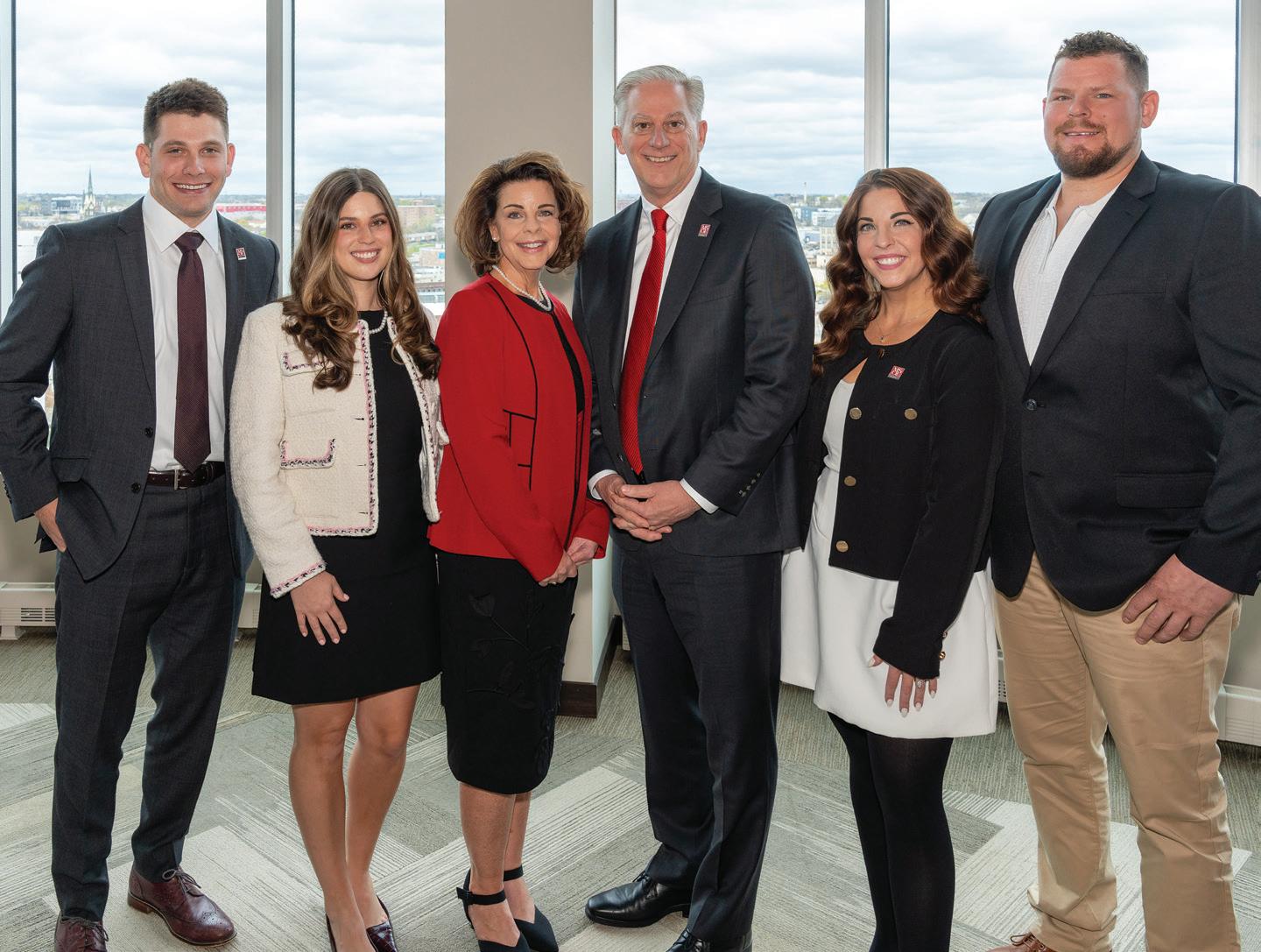
Dr. Eric and Mrs. Annmarie Baumgartner (center) posed with their daughters and future sons-in-law before the inauguration ceremony. At left are Julian Sonn ’20 and Emma Baumgartner, and at right are Megan Baumgartner and Andrew Brugger.
Our favorite …
... VACATION: Ireland
... HIDDEN TALENTS: (E) Jazz trombone; (A) Soprano
... MILWAUKEE RESTAURANT: (E) Avli for the view; (A) Mason Street Grill for happy hour
... TEAMS: Notre Dame, Green Bay Packers, Bucks and Brewers
... MSOE MEMORY: When Eric broke into song at the Employee Appreciation Dinner (Sang – “Oh What a Beautiful Morning” from Oklahoma)
... MILWAUKEE FESTIVAL: Summerfest
... BOOK: (E): The Martian by Andy Weir; (A) Brave New World by Aldous Huxley
... HOBBIES: Concerts, golf and family time
LEARN MORE ABOUT THE BAUMGARTNERS AND THEIR JOURNEY TO MSOE.
CHANGING LIVES
Alumni join Global Brigades trip to Panama
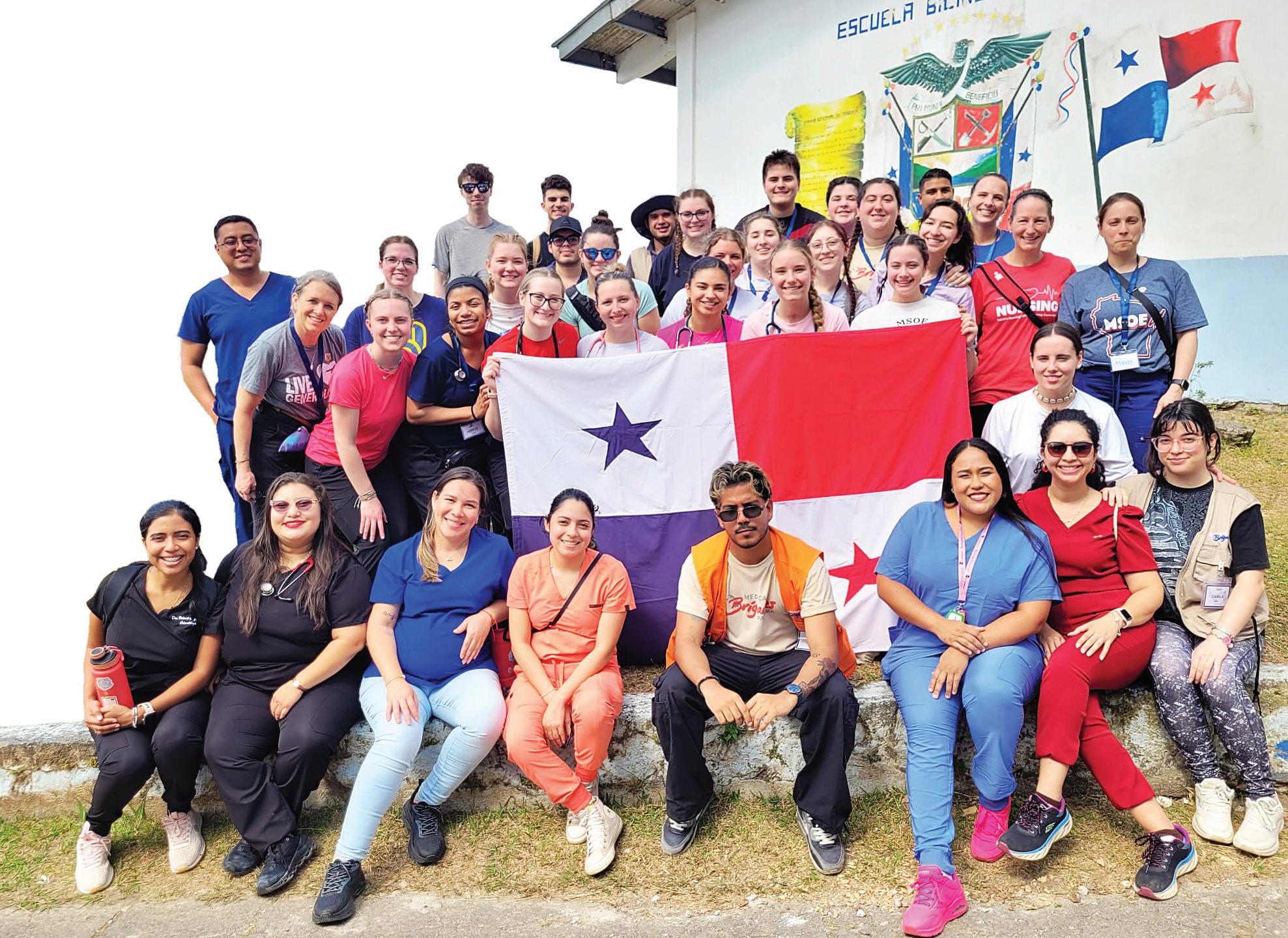
With stethoscopes around their necks and compassion in their hearts, a group of MSOE alumni joined students, faculty and staff to travel to Panama with Global Brigades to bring healthcare to needy communities.
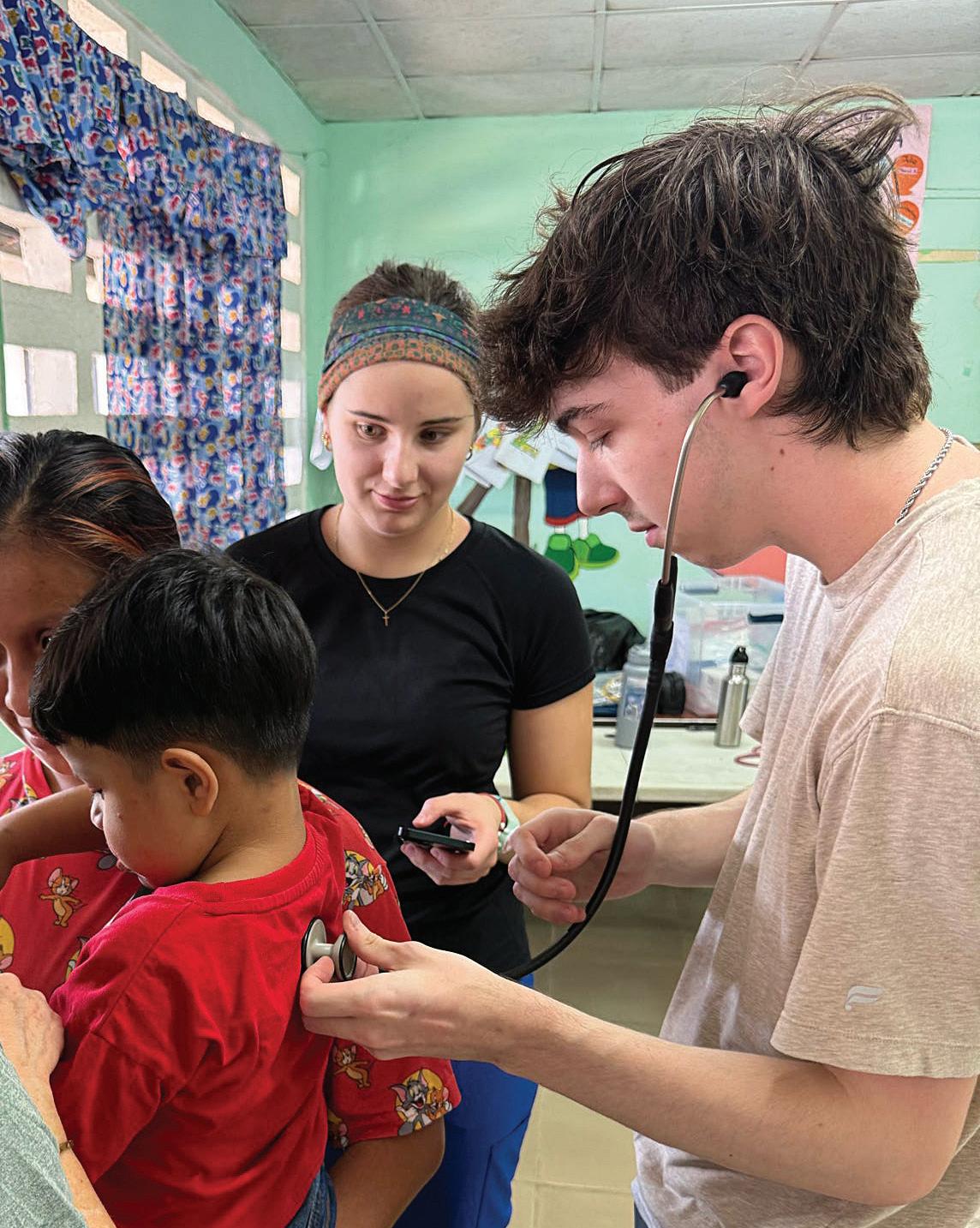
There, they provided hundreds of adults and children with dental care, medical consultations and fluoride treatments, helped with triage, physiotherapy, pharmacy and dental hygiene education.
This was the fourth Global Brigades trip for alumna Katie Haddad ’24, a nurse at Froedtert Hospital in the Neurology Department.
“Even after graduating, I continue to join Global Brigades trips because the experiences have become such a meaningful part of my life,” said Haddad.
Staying involved as an alum isn’t just about fun trips and friends, it’s also about continuing to be part of a community where those connections matter and inspire growth in others.”
KATIE
HADDAD ’24
Global Brigades is more than a spring break trip— it’s a servant-leadership opportunity that empowers students to build their skillsets and give back to others. The experience exemplifies the MSOE Mindset, which identifies graduates as leaders of character, responsible professionals, passionate learners and value creators.
Sophomore nursing student Laura Brown valued the hands-on learning experiences she gained during clinical days as well as the connections she made with her peers and patients.
“This is an experience that will change your life,” said Brown. “Getting to use the skills I have learned at MSOE in a setting so different from the typical clinical experience was great! It was a good reminder to me that a smile is a sign of joy, even if there is a language barrier.”
Global Brigades is supported by the Global Humanitarian Fund, which provides support to help offset costs for students, staff and faculty for domestic and international travel initiatives. It was established through a private gift from Dr. Bernie Cohen ’71, H’13, MSOE Regent and founder and president of Neurological Monitoring Associates.
Learning through celebration
Colors filled the air and smiles spread across faces at the MSOE International Student Association’s (ISA) Holi Celebration in the spring. Holi is an annual Hindu celebration marking the arrival of spring, end of winter and the triumph of good over evil. Throwing colorful powders is one of the many traditions of the cultural celebration.
“Holi represents joy, renewal and togetherness, but what made this celebration especially meaningful to me was being able to create this experience for the Indian student population on campus,” said Yuktha Koganti, computer science student and ISA vice president. “It was rewarding to help introduce a tradition that many students had never experienced before and see it become a space for connection, fun and cultural exchange.”
MENTORSHIP
SHPE Jr. inspires future STEM leaders
The Society of Hispanic Professional Engineers (SHPE) strives to empower the Hispanic student body at MSOE to realize their potential through trainings, mentorship, networking opportunities and unique programming to cultivate a foundation of professionalism and expertise. This year they extended their framework beyond MSOE with SHPE Jr.
“Our chapter launched a new SHPE Jr. Committee with one clear mission: to inspire and support local high school students, especially those who lack access to STEM resources and role models,” explained Adrian Rubio Reyes, computer science student and SHPE president.
Kathlyn Leanos, computer science student and SHPE Jr. representative, built relationships with several Milwaukee area schools, including Acosta High School, Cristo Rey, Escuela Vieau, Pulaski High School and Riley Montessori. At the SHPE Jr. kick-off event, MSOE students discussed STEM career opportunities and shared their college experiences. The high schoolers asked questions about different professions and learned the steps they need to take now to pursue different careers in the future.
“Seeing high school students grow in confidence and begin to believe in their own potential makes everything we do meaningful,” said Leanos. “With the support of SHPE, I hope this program can grow, and we can impact more high schools in the Milwaukee area.”
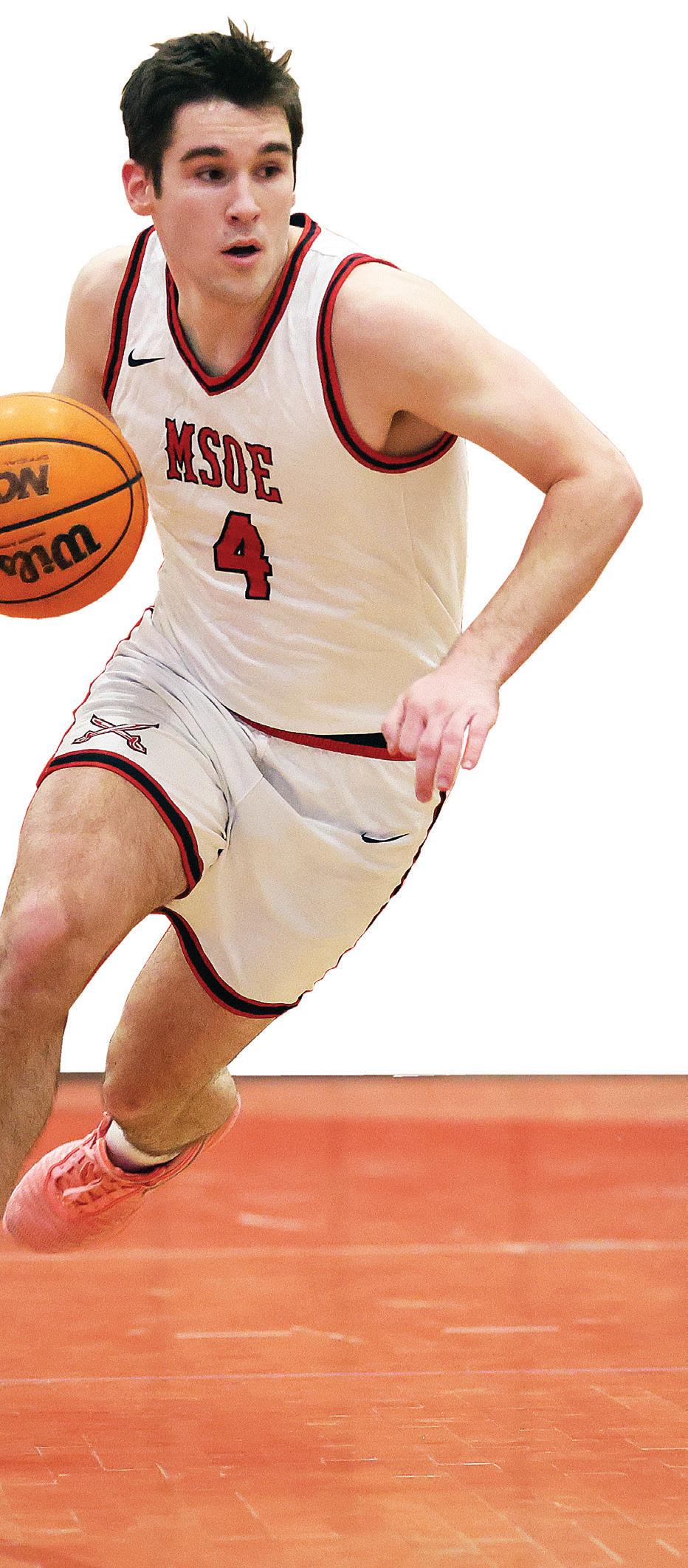
Mason Dopirak honored for his talent on the court and in the classroom
Throughout his historic career, MSOE men’s basketball guard Mason Dopirak ’26 shined on the court for the Raiders and in the classroom.
The Manitowoc, Wisconsin native had the best season of his career, averaging 26.1 points per game, leading the Northern Athletics Collegiate Conference (NACC) in scoring and getting ranked fourth in the country at the Division III level.
points
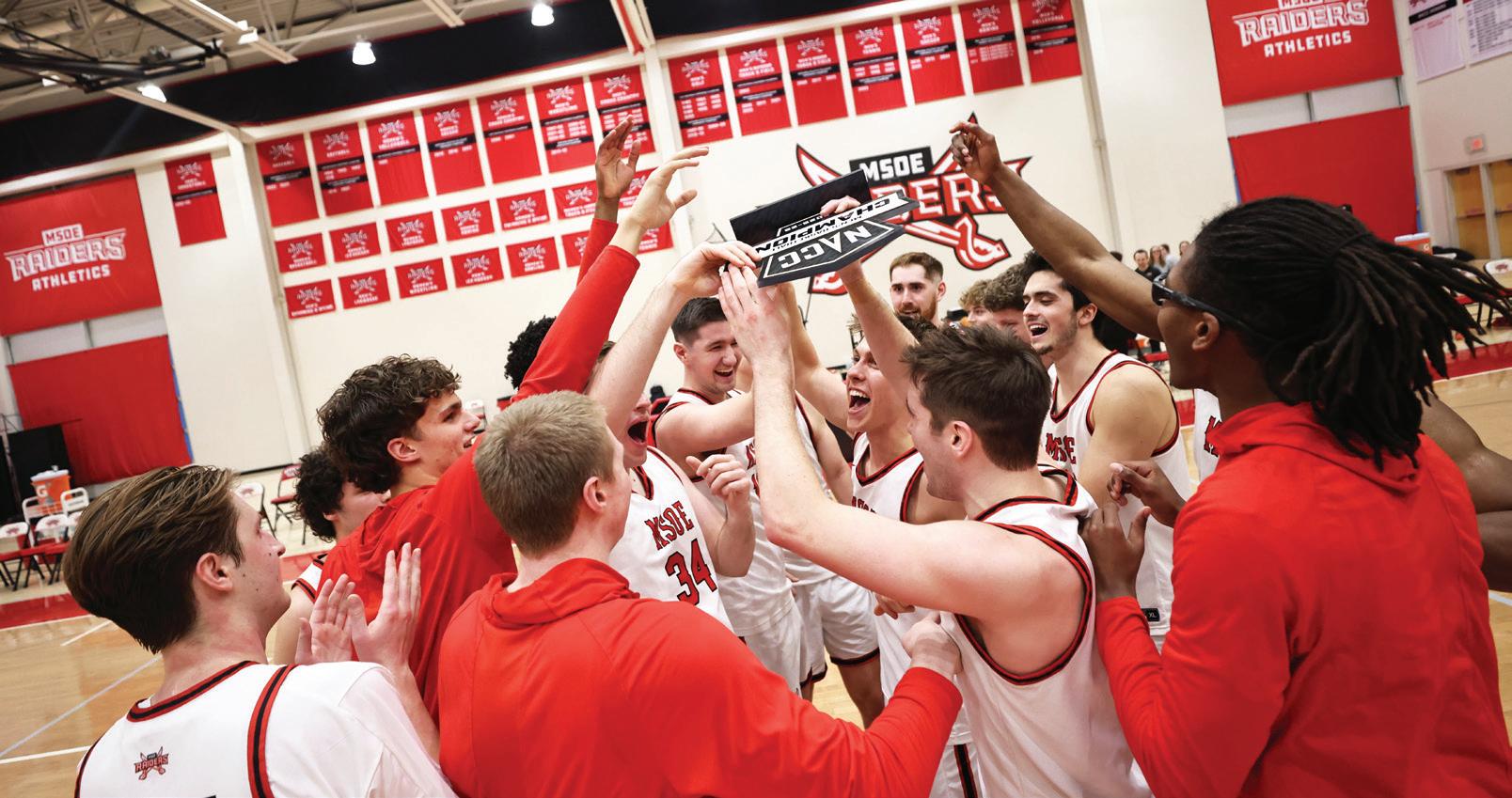
Dopirak was named the NACC Player of the Year, and his successful season earned him a spot as a Second-Team All-American by the National Basketball Coaches Association and Third-Team All-American by D3Hoops.com. The Raiders, who went 19-8 and 16-2 in conference play, earned a share of the NACC regular season title, their best finish in eight seasons.
Embodying what it truly means to be a Division III student-athlete, Dopirak was also named Academic All-American Team Member of the Year for NCAA Division III men’s basketball, the highest honor a player can receive, by College Sports Communicators. He also was a finalist for MSOE’s highest honor, the Fred F. Look Outstanding Student Award.
“Mason’s consistency, daily work ethic and attention to detail are unmatched,” said men’s basketball head coach Kevin Hurd. “However, his character is what separates him. He would be the first to give credit to his family, teammates, professors and all of those who have helped him get to this point. He has been a leader for our team on and off the court and commits daily to the pillars of our program: unity, humility, passion, thankfulness and servanthood.”
“Balancing being a student-athlete at a school like MSOE can be difficult,” said Dopirak. “Thankfully, I have a great group of people around me who genuinely want me to succeed. Our coaches plan around our academic schedules, and MSOE’s smaller class sizes enabled me to build personal relationships with my professors.”
Among those biggest supporters are his family, who have instilled commitment to his academic success and athletic pursuits, and his teammates—including his brother Matus.
“From a young age my parents taught me the value of hard work. They’ve shown me the importance of academics being the foundation of whatever my future career was going to be.”
Dopirak graduated this spring with a Bachelor of Science in Chemical and Biomolecular Engineering and a perfect GPA of 4.0 and plans to apply to medical school. He finished his basketball career with 2,175 career points, a mark that puts him third in MSOE program history and second in NACC history.
Mason Dopirak (left) averaged 26.1
per game his senior year while Men’s Basketball (right) grabbed a share of the NACC season title.
LEARNING IN 3D
Faculty develop optical CT scanner for Medical Imaging Systems course
Applied learning is a hallmark of an MSOE education. For the biomedical engineering program, however, it can be challenging to find opportunities for students to work with healthcare technology such as MRIs or CT scanners as they are large, regulated clinical devices.
That didn’t deter Paul Licato, adjunct associate professor, and Dr. Larry Fennigkoh ’74, ’86, professor emeritus in the Electrical, Computer and Biomedical Engineering Department from bringing this technology to the classroom. They created an optical CT scanner that operates on the same principles as Computed Tomography (CT). Except instead of using X-rays rotating around a human to construct an image of what’s inside the body, their optical scanner uses a rotating object that passes through a stationary beam of light to reconstruct a 3D image of the object.
“It really helped boost my understanding of the course content,” said Ben Williams, senior biomedical engineering student. “It
was cool to actually see the process from the image acquisition, all the way to getting it to the 3D volume on our computers.”
Licato and Fennigkoh joked the construction of the scanner was their version of “senior design.” Although building the scanner had its challenges, the reaction from students made it worth it. “Seeing students go, ‘Wow! This is cool!’ That was the best feedback,” said Licato.
“When you see those light bulbs going off and when you hear stuff like that, that’s precisely why we’re here as educators,” added Fennigkoh. “I don’t think we can get a greater reward.”
To construct the scanner, Licato and Fennigkoh combined their engineering and physics expertise and utilized AI to assist with brainstorming, troubleshooting and developing the hardware and software for the scanner. “For the optical and mechanical design, AI helped us rapidly explore different configurations involving lenses, illumination systems,
telecentric imaging approaches and scanner geometry,” explained Licato. “This significantly accelerated the pace at which ideas could be investigated and refined.”
The duo viewed AI as their “personal engineering assistant” and a tool to help further their ideas. “The project still depended heavily on physics expertise, engineering judgment and experimental validation,” said Licato. “AI was most valuable not as a replacement for expertise, but as a catalyst for exploring ideas, comparing alternatives, and accelerating iterative design work.”
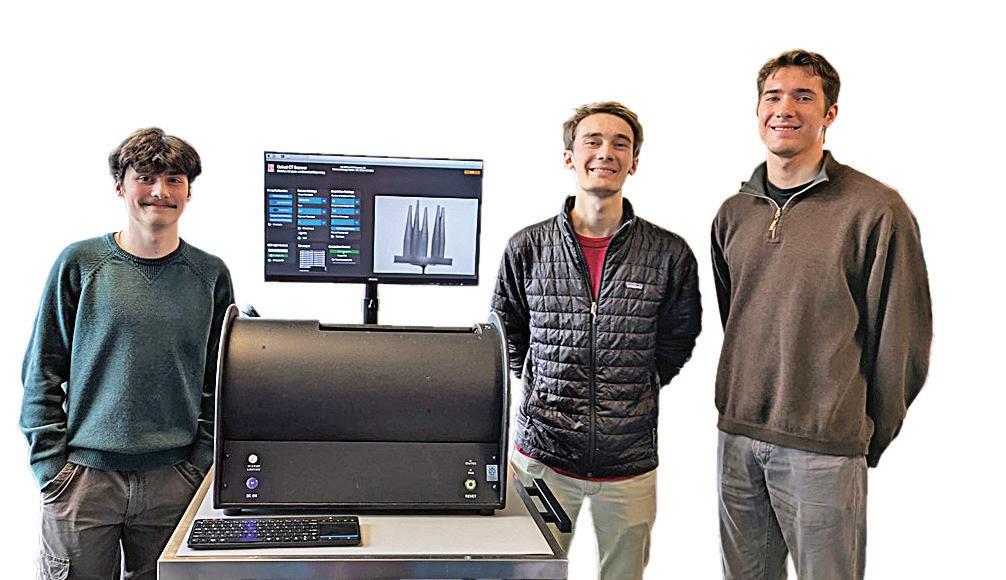
Senior biomedical engineering students Joseph Pearson (left), Zach Peterson (center) and Ben Williams valued working with the optical CT scanner in their Medical Imaging Systems course.
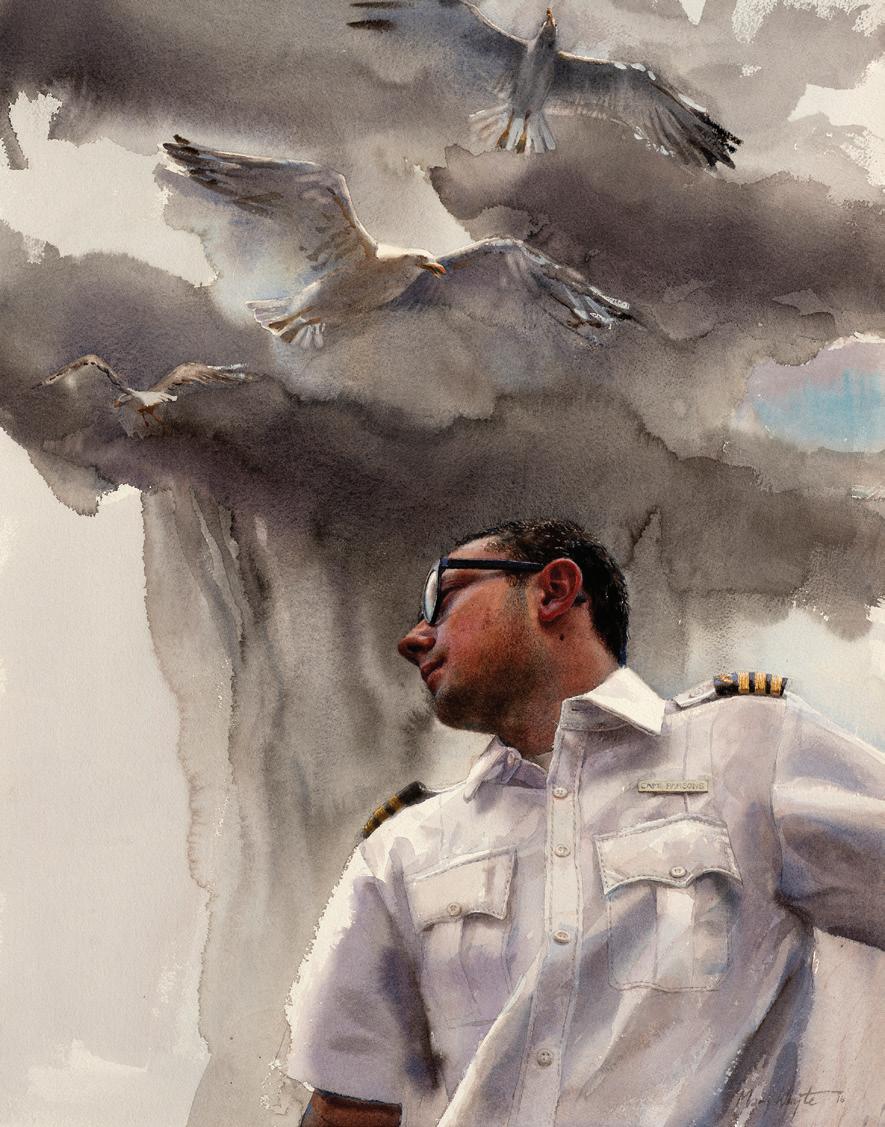
WE THE PEOPLE: Portraits of Veterans in America AT THE
Watercolors by Mary Whyte
On display through Aug. 23, 2026
The museum is honored to showcase Mary Whyte’s watercolor series, WE THE PEOPLE: Portraits of Veterans in America, a project that ties the art of labor to the impact of veterans’ work throughout our country.
A renowned watercolor artist, Whyte has captured scenes of working America and honored the nation’s working class throughout her career. In this remarkable series, she has depicted military veterans of all ages and in all walks of life. For this show, Whyte traveled the country, interviewing
Mary Whyte (American b. 1953), Crossing Over, 2016, Michael (Army National Guard, Specialist, 2013–present), Madeline Island Ferry Boat Captain, La Point, Wisconsin, Watercolor on Paper.
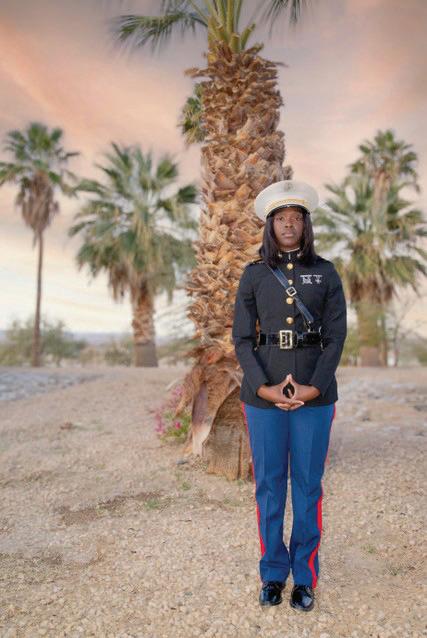
Boots and Sand: The Marines of 29 Palms
Photographs by Dennis Darmek On display through Aug. 23, 2026
On a family trip to Joshua Tree, the artist Dennis Darmek decided to make an unplanned visit to the Marine Corps Combat Center, 29 Palms, California, resulting in this photo project. His only other visit to 29 Palms was in 1969 when, as an 18-year-old Marine, he received advanced weapons training before shipping out to Vietnam. Darmek says while memories can be suspect after 50 years, it’s impossible to forget the intense desert heat and rugged mountains of the Mojave Desert.
each individual featured in this exhibition over the course of seven years.
Through her work, we see the individuals who have served our country in the military in the ways that they continue to serve the country in industry— from agriculture to education to public service. The result is 50 large-scale watercolor portraits of everyday American veterans, including a Missouri dairy farmer, a Rhode Island lobsterman and a Pennsylvania science teacher. Altogether, WE THE PEOPLE presents a timeless portrait survey of the United States through labor and human achievement.
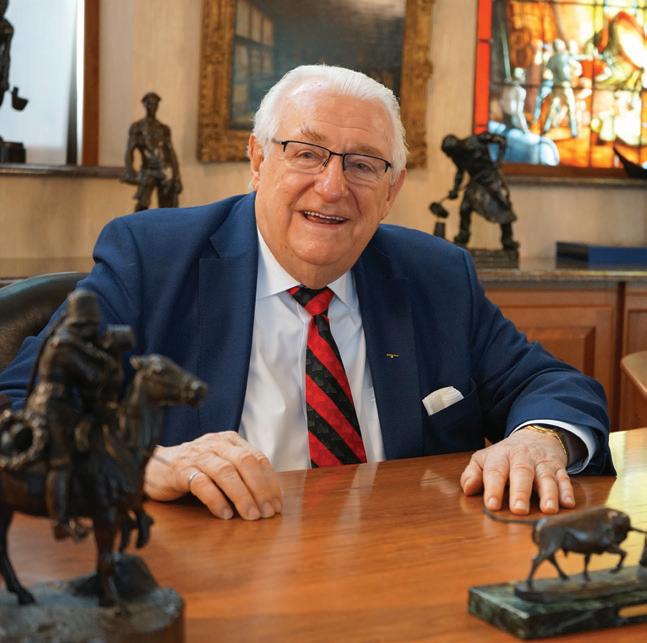
Happy 90th Birthday, Eckhart Grohmann!
MSOE Regent Eckhart Grohmann H’99 celebrated his 90th birthday on June 29. Grohmann is a Milwaukee businessman and avid art collector who donated his collection to MSOE in 2001 and subsequently the funds to purchase, renovate and operate the museum that bears his name. Grohmann and his wife, Ischi, are longtime supporters of scholarships for MSOE students and donated funds to purchase the property for the Kern Center, to purchase and renovate the Grohmann Tower and to renovate Hermann Viets Tower, and donated the GermanEnglish Academy building.
Dennis Darmek (American b. 1950), 2nd Lt Nettles at Oasis, 2024
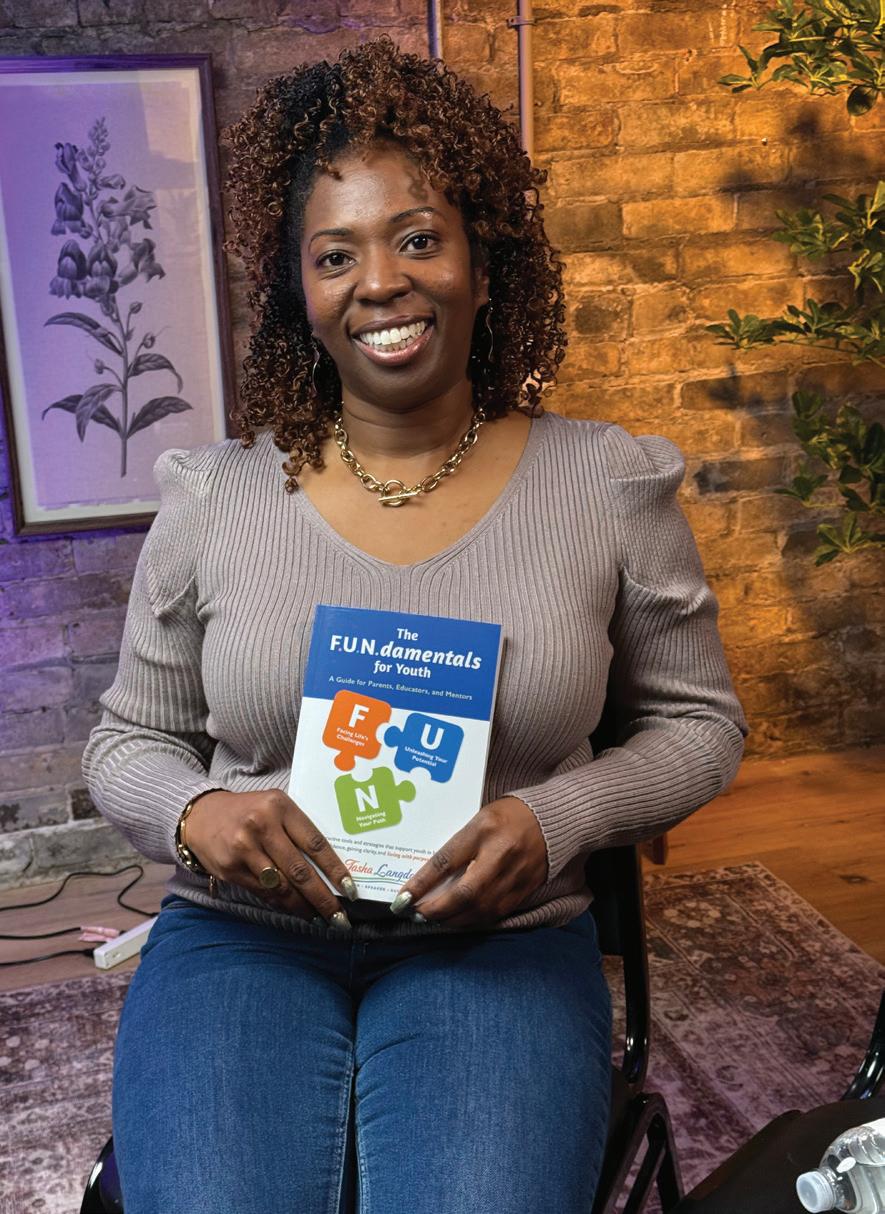
Empowering the Next Generation
In 2026, LaTasha “Tasha” Langdon ’00 expanded her mission of mentorship by publishing her first book, The F.U.N.damentals for Youth: A Guide for Parents, Educators and Mentors. This interactive roadmap equips adults with practical tools to guide teens ages 12–17 toward confident, responsible decision-making.
As the founder and president of Divine Destinies Life Skills LLC, Langdon remains dedicated to serving Milwaukee youth through specialized workshops and classes designed to set the next generation up for lifelong success. Learn more about Langdon’s story at msoe.edu/latasha-langdon.
1970s
Steven Edson 77 EPET, 78 EET retired from electrical engineering after 51 years of working with electronic systems, starting with his internship while attending MSOE and lasting through his last project preparing data for use by AI.
Dr. Joseph J. Rencis 80 AE, MSOE Regent, received the American Society for Engineering Education Benjamin Garver Lamme Award. This national award honors a distinguished engineering educator for excellence in teaching, research, literature and college administration. He also received the ASEE Donald E. Marlowe Award for national prominence and exemplary academic leadership.
Michael Marr 83 MSEM retired in 2018 from a long career in the energy efficiency and energy production industries. His last position was as COO of a district energy company in Detroit, which produced steam in a Refuse Derived Fuel boiler plant, which cogenerated 60MWe for the local utility, and a conventional gas fired boiler plant. Since then, he has indulged in his lifetime passion for boats and worked part time as a tour boat captain on Geneva Lake.
Jeffrey Spenner 06 ME, vice president, technology and product development, Serigraph Inc., West Bend, Wis.
Francis Paretti 09 AE, director of mechanical systems, PS&S, Allentown, Pa.
2010s
Jennifer Hale 11 MSEM wrote and published the book Divorce Out Loud: From Heartbreak to Healing, One Affirmation at a Time. The book reads like a conversation with a close friend and is about her healing journey after divorce. It is interactive and loosely follows Maslow’s hierarchy of needs. She is excited to share something that helps other divorced moms as much as the experience helped her.
Sherri Biendarra-Tiegs 14 BIOE, associate director, innovation, AbbVie, North Chicago, Ill.
Frederik Karsten 14 ME, director of engineering, Scag Power Equipment Inc., Mayville, Wis.
Carley Witteveen 25 AE, structural engineer I, Atkins Realis, Grand Rapids, Mich.
Jonathan Worm
25 ME, field service engineer, BW Paper Systems, Phillips, Wis.
Marriages
Ashley Mercado 14 NU married Kevin Welzel on Nov. 15, 2025 in Dallas.
Kristine Irish 18 CE married Mark Mathews on Oct. 4, 2025.
Keaton Harrison 21 IE and Renee Malecke 21 NU were married on Oct. 25, 2025.
Kyle Hedblom 23 AE, 23 MSAE and Rebekah Smith 22 BIOE were married on Aug. 23, 2025 in Ham Lake, Minn.
Births/Adoptions
Hallie (Flanders) Cordes 18 BBA and Mike Cordes 18 ME welcomed second son Parker Jett Cordes on Aug. 16, 2025.
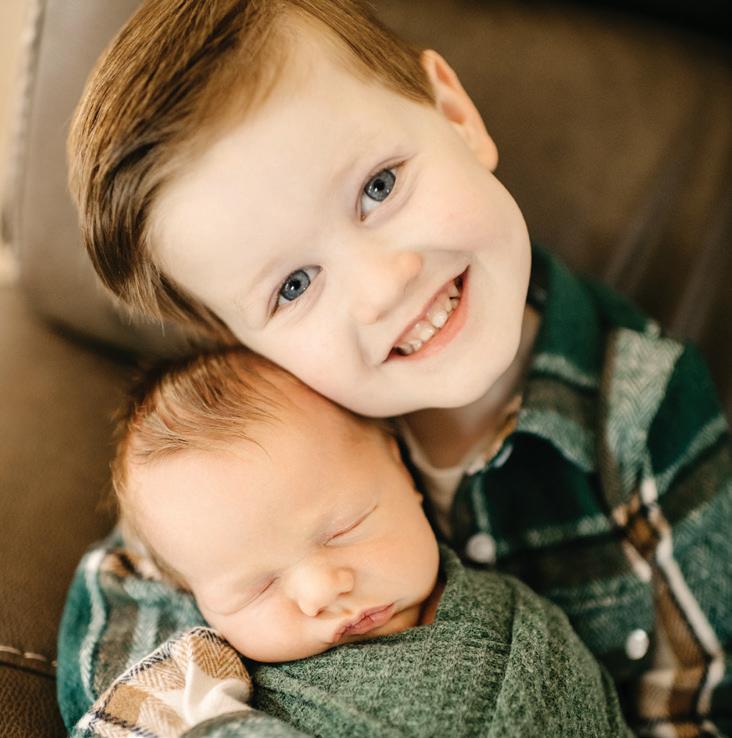
Ryan Kaput 14 AE and Jessica Kaput 14 CM welcomed their second baby, Cody Ryan Kaput, on April 3, 2026. Cody joins big sibling Caleb (3).
Mark Your Calendars
All alumni, families and friends are invited to join us for these upcoming events. We look forward to welcoming you!
Matt Stachelski Memorial Bike Ride Sept. 13, 2026
Homecoming Weekend Oct. 3, 2026
Giving Day April 15, 2027
Find more events and details at msoe.edu/alumni/events
In Memory
Janette (Yaeger) Foth 46 NU
Carolyn (Fischer) Settimi 46 NU
Marvin Ormerod 48 ECET
Donald Langner 49 EPET
Elizabeth (Follstad) Brozowski 51 NU
Kent Jacobs 51 NRTT
Ralph Seymer 51 NRTT
Marilyn (Pistulka) Cronan 52 NU
Shoso Yasui 52 NRTT
Joseph Brey 53 NRTT
Leila (York) Leisch 54 NU
Pat Runstrom 54 NU
Carole (Krueger) Dellevar 55 NU
Ruben Schwefel 55 ME
William Bolton 56 EET
Valerie (Meyer) Grunwaldt 56 NU
Francis Kaderabek 56 EE
Robert Lockhart 56 EE
Robert Long 56 EE
Howard Christiansen 57 NRTT
Roy Clemens 57 ME
John Hansen 57 NRTT
Victor Higgins 57 NRTT
Howard Honett 57 RACS
Gerald Oja 57 ACT, 59 ME
Ralph Pungercar 57 NRTT
Floyd Bontrager 58 ACET
Charlyn (Elmer) Hurst 58 NU
Giles Miller 58 ACT
Donald Wehrenberg 58 INDT, 60 ME
Thomas Anspach 59 EE
Donald Brei 59 EE
Jacob Burckhard 59 EE
James Schrmack 59 EE
Frank Sommer 59 EET
Nicholas Stefaniak, Jr. 59 CT
Gene Carter 60 ECET
Lois (Hafemeister) Cornehls-Solazo 60 NU
Gerald Finch 60 ECET
Robert Lewis 60 EPET
Ronald Neitzel 60 EE
Donald Ulik 60 ED
Mildred (Zastrow) Wendt 60 NU
Greg Apuli 61 IET, 68 IM
Richard Atwood 61 CT
William Bullinger 61 ACET
Richard Czubkowski 61 EE
James Diffee 61 ECET
Kenneth Keel 61 MT
Mary Ellen (Lund) Kubacki 61 NU
Luke Loyd 61 ACT
Anthony Roth 61 ECT
Richard Stokes 61 ECET
Murray Fry 62 EE
Richard Griebel 62 CT
Jeffrey Kraft 62 EE
Roger Lange 62 ME
Harold Diederich 63 EE
Jerry Errath 63 MT
Gerald Lourigan 63 ECT
Richard Miller 63 ME
Judith (Kannenberg) Boldt 64 NU
Jonathan Goss 64 EE
Gar Adams 65 ICEET, 76 ME
Jeffrey Kravitz 65 MET, 69 ME
Carol (Schmidt) Wehland 65 NU
Wayne Brown 66 EE
Donald Warner 66 ME
Wayne Petrusha 67 ECET, 78 EET
Ronald Dorst 68 EE
James Mancuso 68 IM
Gregory Miller 68 EE, 71 MSEM
Richard Marek 69 EE
Robert Sherwood 69 EE
Alvin Bruss 70 CET
Marcus Christenson 70 EE
Lawrence Larson 70 EE
Alan Schneider 70 ME
James Kiekbusch 71 EE
William Brenner 72 EPET, 77 EPET
William Hobby 72 ABCET, 74 ABCET
Gary Armstrong 73 FPET
Melvin West Jr. 74 EE
John Macik 75 IM, 75 ABCET
Miles Thompson 75 ABCET
Richard Landau 76 ABCET, 77 ABCET
Andis Nikurs 76 ME
John Antoniewicz 77 IM, 81 IM
Thomas Marra 77 ABCET
Robert Scheper 77 IM
Carol Schmeling 77 NU
Robin Brunsch 78 CET
William Hoettels 78 NU
James Ruppel 79 CET, 80 EET
Thomas Schueller 79 ECET, 81 EET, 84 CET
Patrick Drea 80 IM
Sharon Eickstedt 81 NU
William Gilgenbach 83 CET, 86 EET
James Koenigs 83 IM
Edward Wasrud 85 ECET, 86 EET
Jeffrey Klopf 86 EET, 86 EPET
Jody (Gross) Anderson 93 NU
William Kandler 93 MSEM
David Oden 98 EET
William Siebert 00 IM
David Johnsen 07 MSEM
Andrew Bryl 08 IB
Steven Waas 09 ME
Chad Hoelzel 12 EE
Christopher Rucinski 13 SE
Eric Stiles 16 EE
Derek Lopez 24 EE
David Kahler H’97, longtime leader of Milwaukee-based architecture firm Kahler Slater, passed away on April 14, 2026. He was awarded an Honorary Doctor of Engineering from MSOE in 1997 in recognition of his professional achievements and commitment to the university. His relationship with MSOE spanned more than three decades, including 13 as a Regent. Notably, Kahler designed Margaret Loock Residence Hall, which won the first Honor Award in Wisconsin Architect’s Annual Design Competition. His work includes the Golda Meir Library at UWMilwaukee, restoration of the Wisconsin State Capitol, and the Bradley Wing addition to the Milwaukee Art Museum. He collaborated with Santiago Calatrava on the Quadracci Pavilion. Kahler was also an avid railroad photographer and his work was featured in a special exhibition at the Grohmann Museum in 2021, called The Railroad and the Art of Place: Photographs by David Kahler.
Paul Unangst 78 MSEM passed way in January 2026. Unangst was a professor in the Mechanical Engineering Department from 1978 to 2004 and continued teaching part-time until 2011. He earned both a B.S. in Mechanical Engineering and a B.A. from University of Illinois in 1956, and an M.S. in Engineering Management from MSOE in 1978. He was a Registered Professional Engineer in the state of Wisconsin and was a professional witness on a soil remediation case in 1993. Before retiring, and when not teaching, Unangst worked as a mechanical engineering consultant and in several mechanical engineering capacities at Douglas Aircraft Co., Sundstrand Corp., Stolper Industrial, Unit Crane & Shovel and Trak International.
Robert Burkhardt 90 AE passed away Sept. 9, 2025. Burkhardt led a successful career as an engineer at CDP Corp. and taught from 1996 to 2001 in the Architectural Engineering and Building Construction Department (known today as the Civil and Architectural Engineering and Construction Management Department).
Michael Haase passed away Jan. 4, 2026. Haase was a valued member of the MSOE community, serving the university for 17 years as a maintenance technician in the Facilities & Maintenance Department.
Eugene Magnuson, Ph.D. passed away Nov. 6, 2025. Magnuson held a Ph.D. in organic chemistry from Kansas State University and started his career at Allis-Chalmers until finding his real joy in teaching chemistry. He taught in the Physics and Chemistry Department at MSOE from 1969 to 2001.
In an era where technology and AI rapidly reshape the global workforce, the question of long-term job security looms large. Yet amid all this uncertainty, one profession remains unmistakably future proof: nursing.
MSOE’s nursing curriculum is a prestigious, high-impact program, and alumna Pamela “Pam” Maxson-Cooper ’72 believes the strong demand for nurses presents a significant opportunity for the university to educate the next generation of healthcare leaders.
“Everyone will need a nurse sometime in their life,” she said. In Wisconsin alone, more than 22,000 nursing positions are unfulfilled. “Now is the moment to shine a brighter light on MSOE’s exceptional School of Nursing.”
Maxson-Cooper’s own journey into nursing began at the Milwaukee County General Hospital School of Nursing (MCGHSN). After earning her diploma in 1972, she gained experience at hospitals in Wisconsin and California before beginning what would become a nearly three-decade career at Milwaukee’s Froedtert Memorial Lutheran Hospital in 1980.
Over time, Maxson-Cooper rose steadily through the ranks, eventually recognizing that leadership could be her greatest avenue for impact.
The Profession of Saving Lives
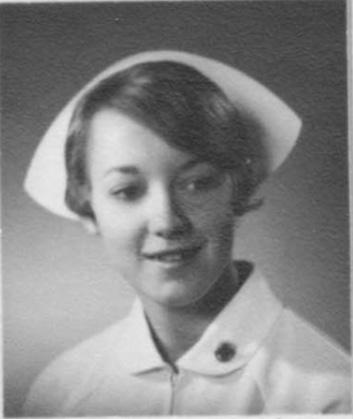
Pam Maxson-Cooper ’72
In 1999, she was appointed vice president of patient care services and chief nursing officer, roles that allowed her to influence not only patient outcomes but better equip nurses with the tools needed to provide high-quality care.
“My philosophy and professional compass were never to ask of the nurses that which I could not ask of myself,” Maxson-Cooper reflects. “I led with logic, weighing pros and cons in decision-making, but always with compassion. All the while influencing and mentoring the next group of leaders.”
Maxson-Cooper witnessed the excellence of MSOE alumni firsthand when Froedtert hired some of the university’s first nursing graduates following its 1995 merger with MCGHSN. Under her leadership, Froedtert’s nursing services grew in both size and professional excellence. By the time she retired in 2009, the hospital had earned Magnet Recognition—the highest distinction for nursing services in the country.
“MSOE nursing graduates have earned a strong reputation as qualified critical thinkers who deliver outstanding care,” she says. This reputation has been carefully designed. MSOE’s nursing program offers unique advantages: direct admission, nursing classes starting in the freshman year and hands-on experience in state-of-the-art simulation labs.
The university also offers graduate degrees in nursing education, informatics, psychiatric mental health nurse practitioner and leadership—preparing nurses not only to practice, but to lead.
“In the School of Nursing, we prepare students to have the knowledge, skills and mindset nurses need to provide high-quality, patient-centered care,” said Dr. Carol Sabel, School of Nursing chair. “As the world evolves, so do we. Nursing students are taught how to utilize AI in diagnostics and clinical decision support, adding another tool to their toolbelt to ensure they are well equipped to take the lead after graduation.”
Today, Maxson-Cooper is working alongside her fellow alumni and faculty in the MSOE nursing program to encourage graduates to re-engage and help recruit the next wave of MSOE nursing students to fill the gaps in our healthcare system.
“My hope is that more of the nursing alumni get involved to recruit and replace themselves with a new MSOE nursing student,” she says.
From attending events like the Annual Nurses’ Scholarship Lunch during Summer in the City—MSOE’s alumni reunion weekend each July—to advocating for the program throughout the region, Maxson-Cooper believes alumni play a vital role in raising the program’s profile, ensuring the university is recognized for its excellence in nursing education as much as it is for its storied engineering heritage.
“As much as we need engineers, we also need nurses,” Maxson-Cooper notes. “Engineers keep us moving—building and expanding possibilities—while nurses show up every day to treat, heal, educate and touch our lives in deeply personal ways.”
For students choosing MSOE, nursing offers more than a secure, AI-resilient career. It offers the opportunity to join and continue a legacy of healthcare excellence and saving lives, rooted right here in Milwaukee.
LEARN MORE ABOUT THE MSOE SCHOOL OF NURSING AT MSOE.EDU/NURSING.
PASSING THE MACE
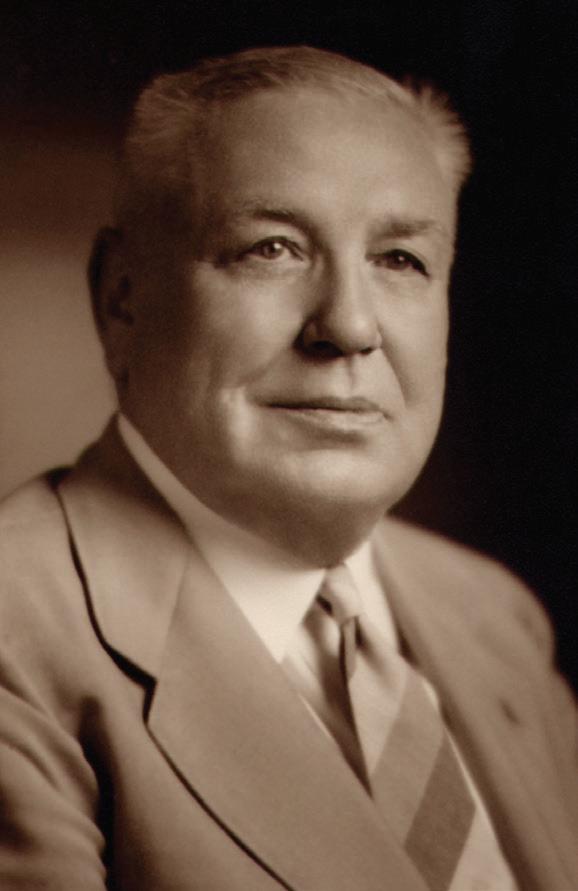
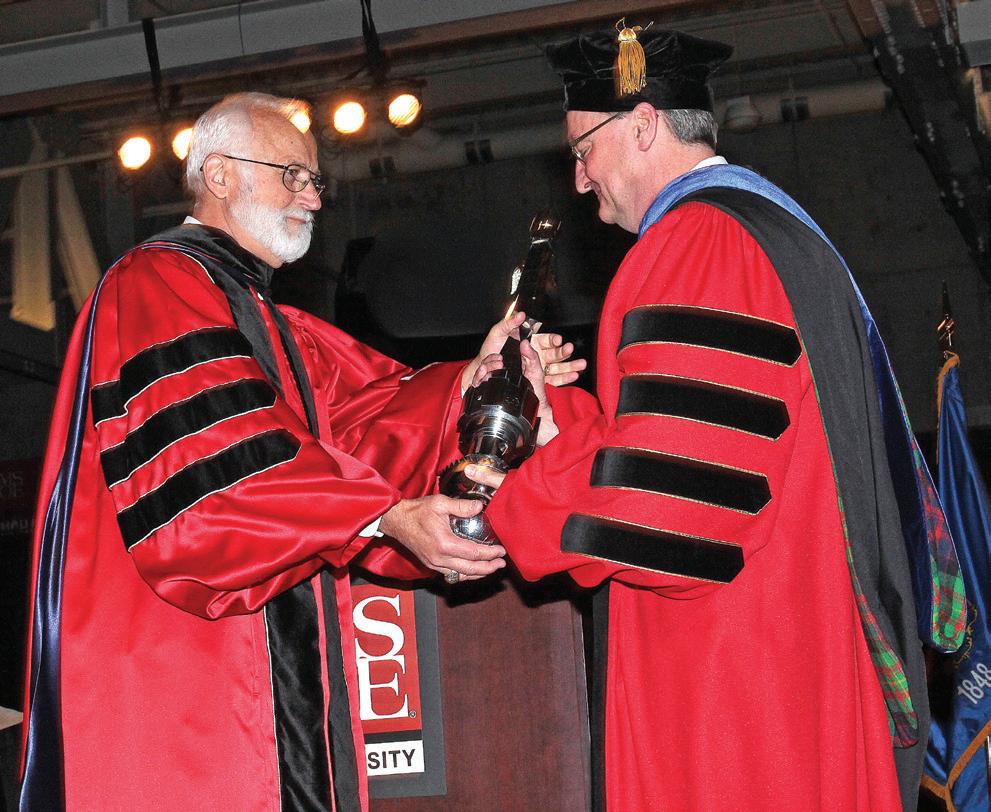
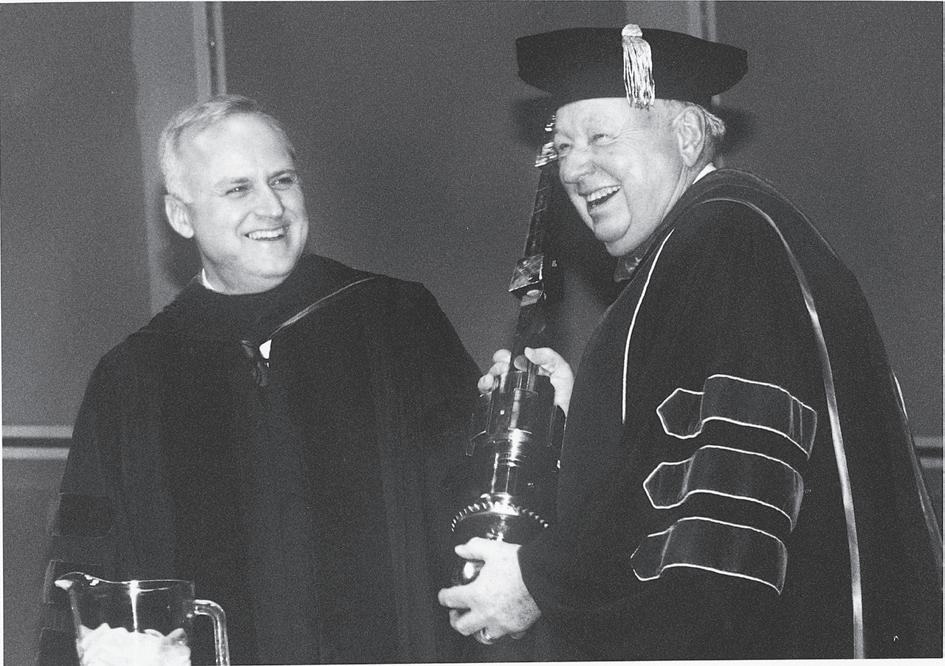
Since its founding in 1903, Milwaukee School of Engineering has remained committed to its distinctive identity as a hands-on, industry-connected hub for applied education. Guided by just six presidents over more than a century, this continuity of leadership has been instrumental in shaping that identity.
1903
MSOE’s story begins with its founder and first president, Oscar Werwath, a pioneering educator who envisioned a school that blended theory with realworld practice. At a time when engineering education often emphasized theory, Werwath insisted that students learn by doing.
1977
1948
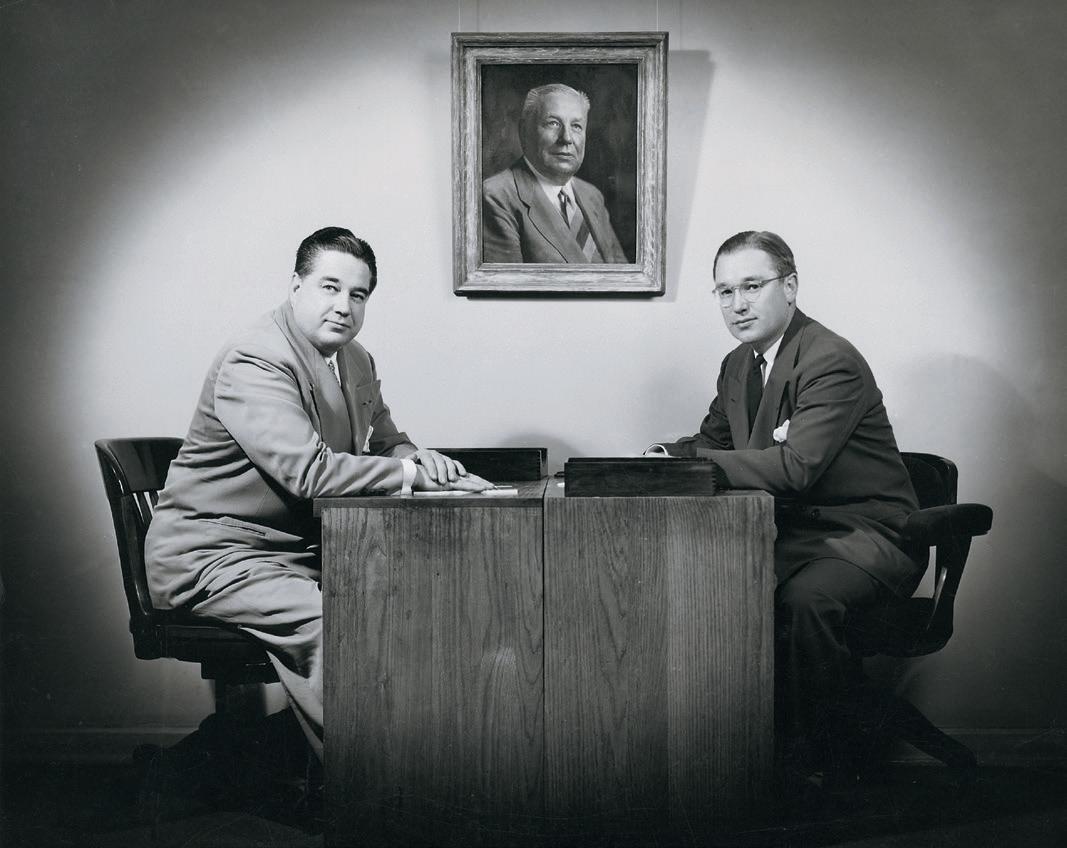
Following Oscar Werwath’s death in 1948, MSOE’s Board of Regents voted to pass the leadership torch to his son, Karl Werwath ’36 (left), who had already served for several years under his father as MSOE vice president. Heinz Werwath (right), Oscar Werwath’s youngest son, served as the university’s treasurer.
In 1977, Karl Werwath retired from MSOE, an institution that had been a central part of his life since his birth in 1909, through his own education at the school, and in roles as assistant registrar, vice president and president. Dr. Robert Spitzer became the first person outside the Werwath family to hold the presidential reigns at MSOE.
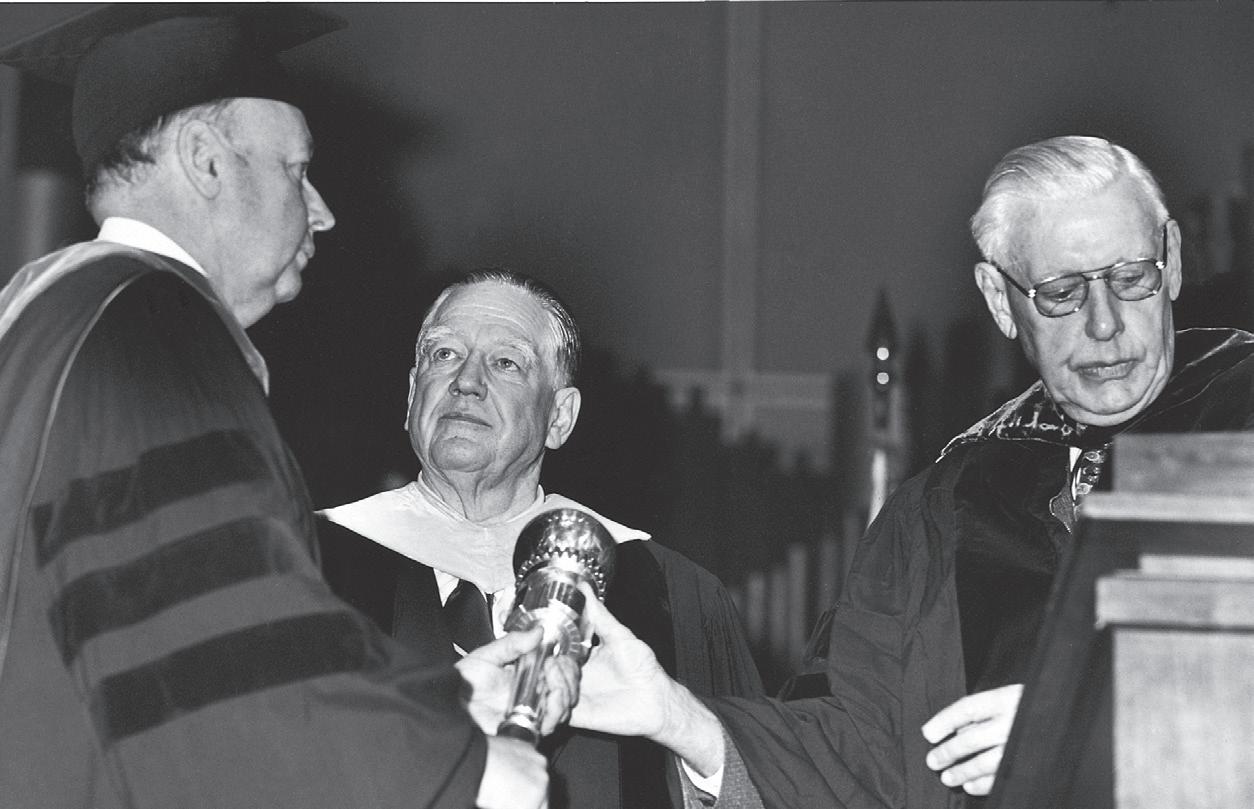
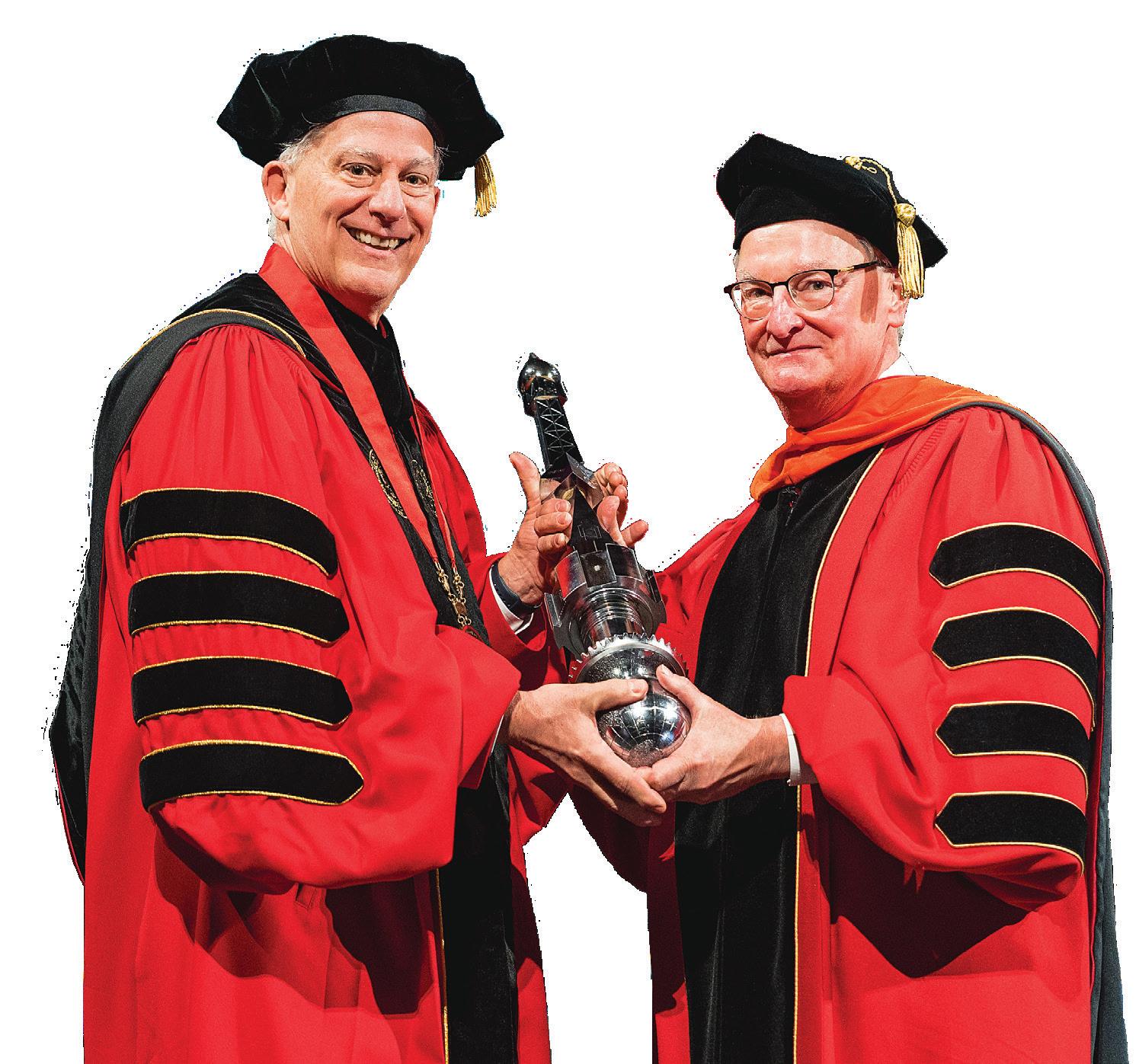
Spitzer was inaugurated as the third president on Oct. 30, 1977. Regent Chairman Walter O. Helwig passed the MSOE Mace to Spitzer, with Karl Werwath looking on, during the ceremony, symbolizing the transfer of power. Helwig gifted the Mace to the university. It represents a charge to the university and to the graduates to use their education to influence the general welfare of the world. The MSOE Mace remains an integral part of every MSOE commencement and presidential inauguration.
An inauguration ceremony for Dr. Hermann Viets, fourth president of MSOE, was held on Nov. 3, 1991 with retiring president Spitzer handing over the Mace. Viets helped guide the university through a period of modernization and growth. His tenure saw increased academic offerings and strengthened ties with regional industries.
2026 1991
2016
Dr. John Walz served as the fifth president of MSOE from 2016 through 2025. He was formally inaugurated on April 29, 2017, with Viets and Spitzer in attendance. Viets continued the tradition of passing the MSOE Mace to the new president. Walz’s tenure was marked by new construction, programs and developments that enhanced academics and student life and supported MSOE’s mission to offer hands-on learning experiences.
In 2026, the MSOE community welcomed Dr. Eric T. Baumgartner as its sixth president, a role he was elected to by the MSOE Board of Regents after serving as MSOE’s executive vice president of academics for nearly a decade. Walz passed the Mace to Baumgartner during his presidential inauguration on April 24, 2026. Baumgartner will guide the institution in fulfilling its mission and drive MSOE forward, ensuring its future.
Milwaukee School of Engineering 1025 N. Broadway Milwaukee, WI 53202-3109
Get MSOE news delivered to your inbox!
Update your contact info at msoe.edu/alumni
Where Big Ideas Meet the Future
What happens when innovators, industry leaders, educators and curious minds come together to explore what’s next? Tune in to season two of MSOE’s Rethink What’s Possible podcast for conversations that dive into emerging technologies, AI and the ideas shaping the future. Each episode offers fresh perspectives on the technologies transforming business, education, healthcare and our world.
• Episode One: Preparing Students for the AI Era
• Episode Two: AI Myths, Hype and Reality
• Episode Three: What AI is Revealing in Education
• Episode Four: AI Insights from MSOE to Google DeepMind
• Episode Five: What Employers Want in an AI World
• Episode Six: Supercharging AI Research at MSOE
Listen wherever you get your podcasts or at msoe.edu/podcast.
Sarah Alt ’99, CIO at Phelps Dunbar LLP, discusses how careers are being shaped by AI in episode five.