

There are a lot of reasons people fall in love with golf.
The tranquility of being outdoors with a group of friends enjoying the pursuit of trying to manipulate a little white ball provides us with challenges, humility and some laughs. No one masters the game, but the uniqueness of knowing that no two rounds will ever be the same keeps us coming back.
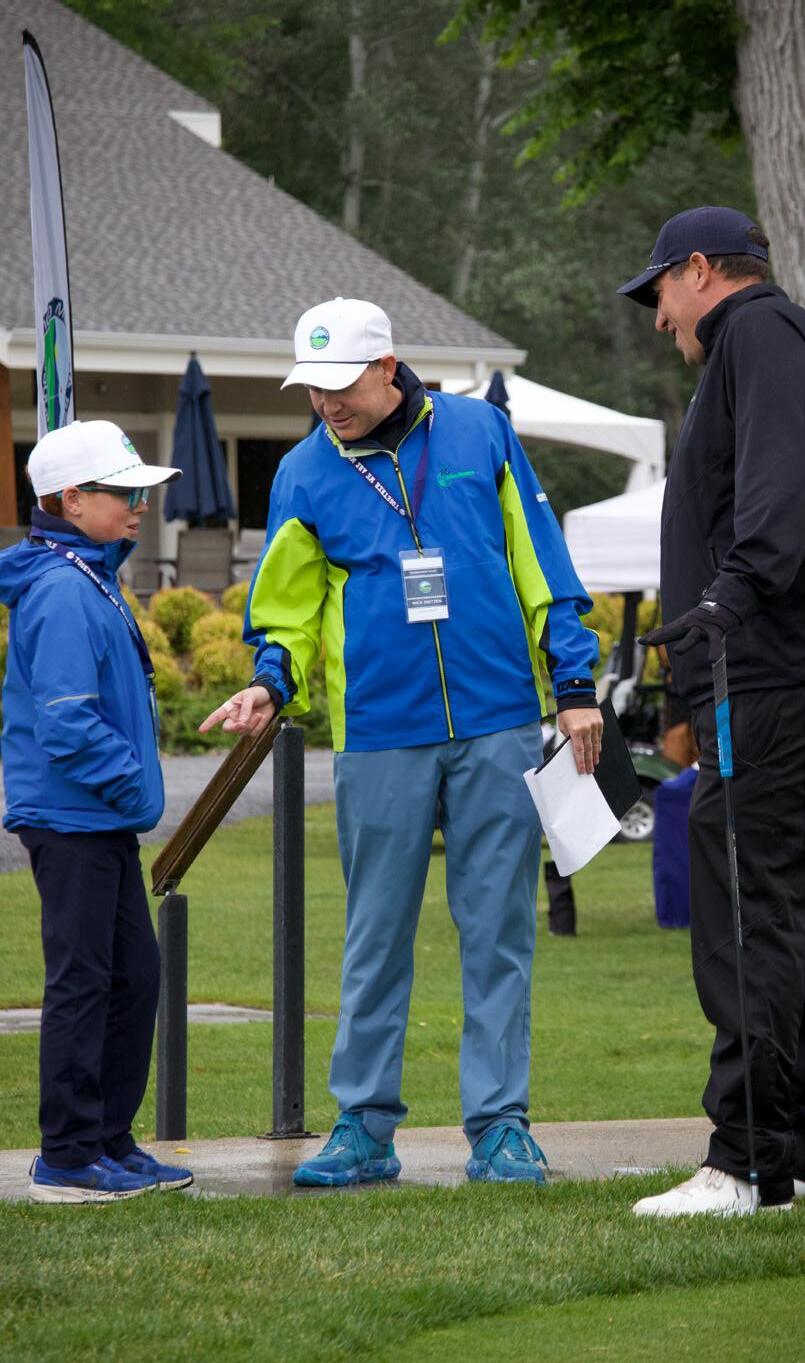
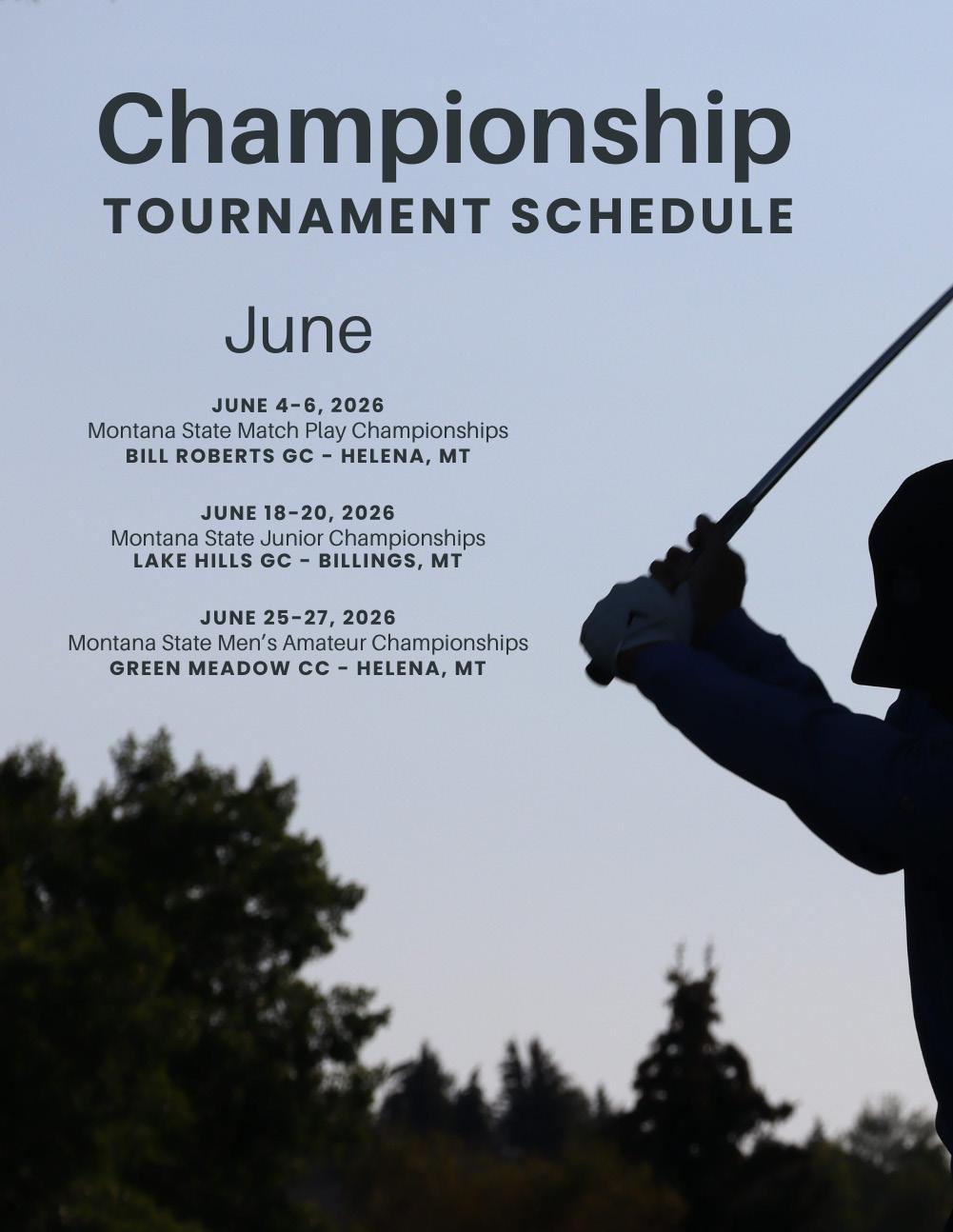
The MSGA team just completed two of the busiest weeks on our calendar with the State Junior Championships in Billings and our Men’s State Amateur Championships. We were reminded that one of golf's greatest gifts has very little to do with the scorecard.
It's being part of a community.
Over the past several weeks, our staff has been fortunate to watch that community in action. One of our players had a club break during their round and Andrea our volunteer, connected the player with Ken, the local club-repair genius who took time out of his evening to get the 3-iron back in play for round two.
Competitors arrived before sunrise to get ready with parents, friends and caddies ready to help them prepare. Staff, interns and volunteers arrived early for check-in, scoring, starting and ball spotting. Rules officials crisscrossed the properties to assist with rulings and our host clubs (Lake Hills GC and Green Meadow CC) opened their facilities and welcomed players from every corner of the state. Golf professionals, superintendents, committee members and countless others quietly filled roles that most competitors never even notice.
None of them were there for recognition. They were there because they care about the game and the people who play it. Cinna, brought some baked treats to the check-in table to give our bleary-eyed staff some pep in our steps after another 16-hour day.
That spirit is something increasingly rare.
In a world where so much of our interaction happens through screens, golf continues to bring people together face to face. A foursome may include someone decades older or younger than you. You spend four hours talking between shots, learning about careers, families, successes and setbacks. By the time you shake hands on the 18th green, you often know far more about someone than you would after months of exchanging emails or social media posts.
Those friendships have always been one of the game's greatest gifts.
Many of us can trace our closest relationships back to a golf course. Some met lifelong

friends in junior golf. Others found mentors through club events or league nights. Business partnerships have started over a casual nine holes. Families have created traditions that span generations, returning to the same tournaments and clubs year after year.
That sense of belonging doesn't happen by accident.
It exists because people are willing to invest in one another. They volunteer. They mentor a junior golfer. They welcome a new member into their regular game. They rake one more bunker, repair one more ball mark or stay after a tournament to help clean up instead of heading home.
Those individual acts may seem small, but together they create the kind of culture that keeps golf healthy.
As Executive Director of the Montana State Golf Association, I have the privilege of seeing this happen across our state. Every commu-
nity is different, every club has its own personality, yet the common thread is always the people. They are the reason championships succeed, junior programs grow and new golfers feel like they belong.
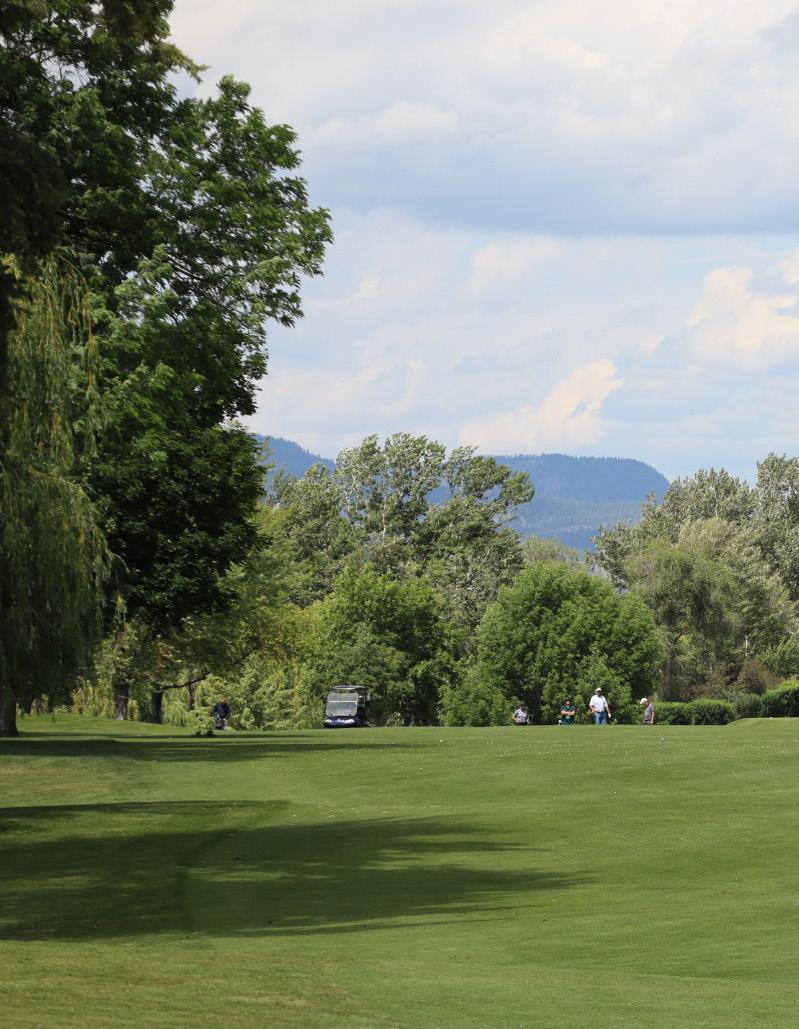
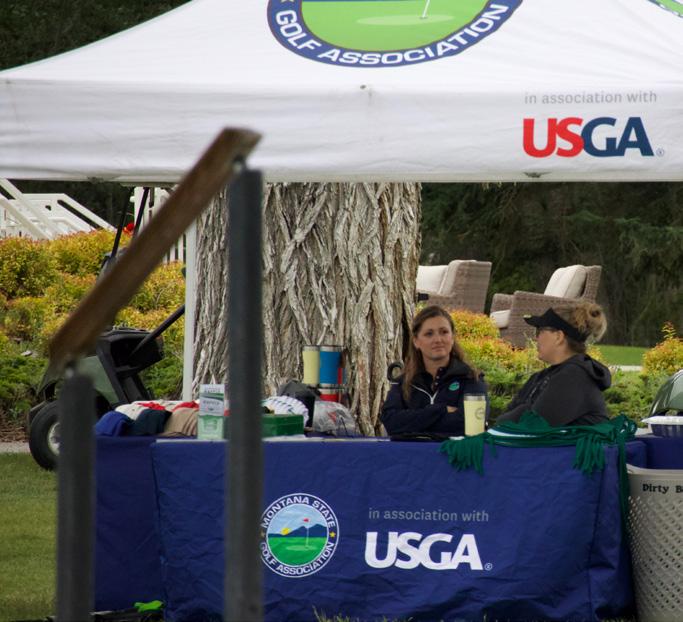
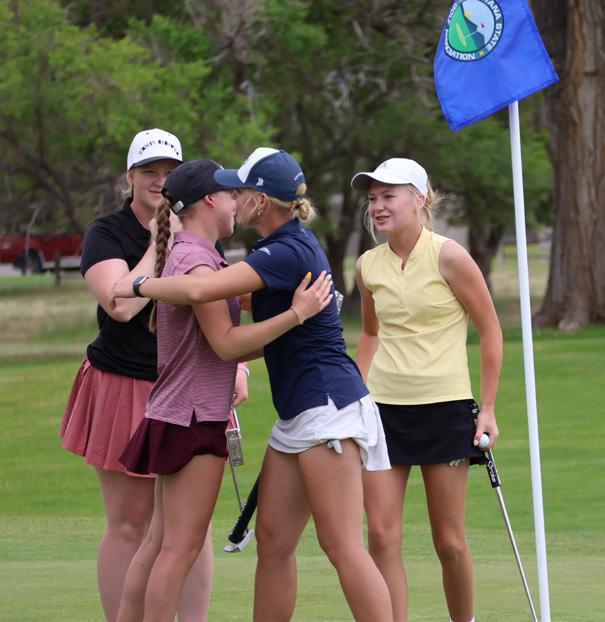
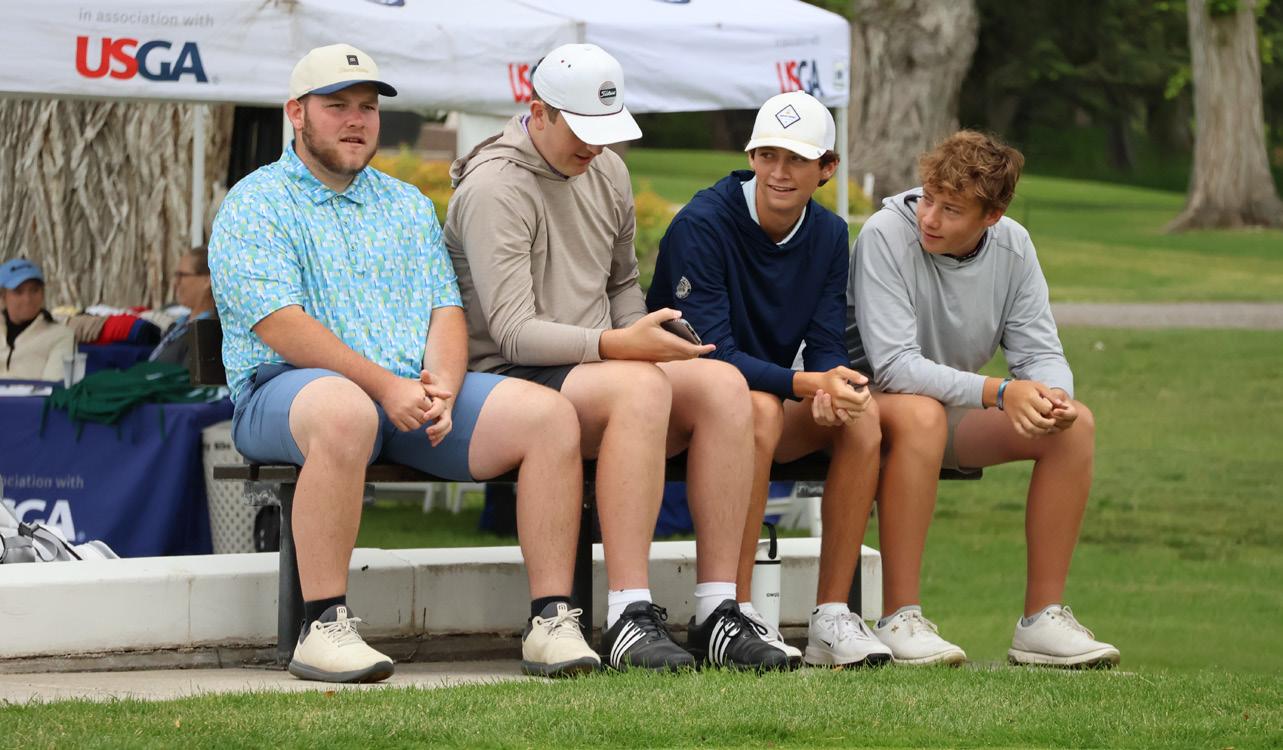
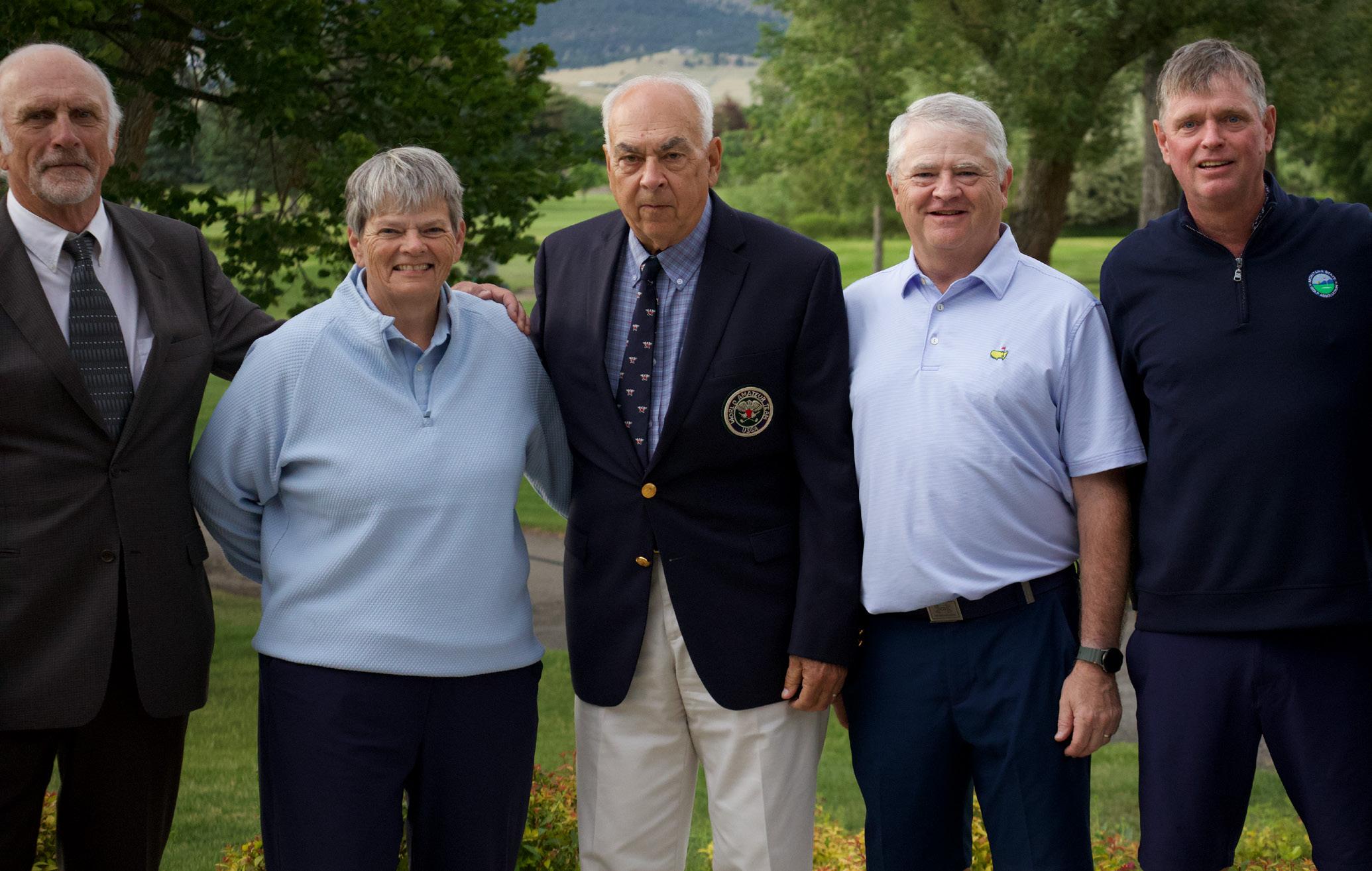
We have been fortunate to collect a great many photos in our recent events and as much as I love a good story, some of the best are told visually and I’m glad we have some inventory from the past couple weeks to remember.
The hole location sheets find the recycle bin, the broken tees are collected and champions are crowned and another season moves forward.
What remains are the friendships, the shared memories and the countless individuals who quietly make those moments possible, together.


BOARD OF DIRECTORS - OFFICERS
PRESIDENT................................................... Peter Benson
VICE PRESIDENT.................................. Ron Ramsbacher
TREASURER....................................................... Bill Dunn
PAST PRESIDENT......................................... Mary Bryson
EXEC COMMITTEE......................................Joe Rossman
BOARD OF DIRECTORS
Ross Bartell, Peter Benson, Carla Berg, Marshall Bettendorf, Mary Bryson, Brandon Davidson, Bill Dunn, Cheri Ellis, Lisa Forsberg, Marcia Hafner, Susan Haskins, Jeri Heard, Katy Peterson, Ron Ramsbacher, Joe Rossman, Rod Stirling
MSGA STAFF
Executive Director......................................... Nick Dietzen
Tournament & Player Dev. Director.............. Tim Bakker
Membership Operations Director............... Emily Hulsey
Member Services Manager.............................. Ian Hulsey
Marketing and Branding Director................... Katie Fagg
Communications Manager.............................. Ty Sparing
Partnerships & Business Development...... Nick Dietzen
Nick Dietzen.............................. 1 (800) 628-3752, ext. 6
406GOLF STAFF
Editor in Chief............................................... Nick Dietzen
Senior Writer..................................................... Ty Sparing
Graphic Designer................................................Katie Fagg
Contributing Writer......................................Shanda Imlay
Contributing Writer...........................................Ian Hulsey
Contributing Writer................................Cade Shoemaker
Contributing Writer.......................................Noah Weyne
Contributing Writer.......................................Avery Linder
Contributing Writer........................................Toby Dinges
Contributing Writer..........................................Peter Grass
Contrubuting Writer................Logan Groeneveld-Meijer
Montana State Golf Association P.O. Box 4306
Helena, MT 59604
1 (800) 628-3752
www.msgagolf.org
BY CADE SHOEMAKER
MSGA BOATWRIGHT INTERN
As an average golfer who’s overjoyed whenever I’m able to break 90 on occasion, I didn’t think I would be the target audience for the USGA GHIN app. My handicap would certainly be in the mid teens, and why did I need to officially track my scores that included more snowmen than birdies?
Well, turns out… I, like many high handicap golfers, actually benefited the most from using a GHIN — not just for my score, but for actual improvement on the course as well!
Unbeknownst to me until I downloaded the app and started using it, the GHIN does far more than just keep a record of your worst (and best) outings on the golf course. In fact, it's a very helpful tool for beginner golfers to use, in order to identify what parts of the game they need to improve upon the most.
Let me explain.
Over Memorial Day weekend, I got the chance to play a 9-hole round of golf at Bill Roberts Golf Course in Helena. This was the first time I used the GHIN app’s “hole-by-hole with stats” scoring function.
The software made it very simple for me to not only track my score, but also analyse how I played each hole and where most of my strokes added up. This included inputs like driving accuracy (number of fairways hit), approach shot accuracy (greens in regulation) and putting breakdowns (percentage of one putts or better, two putts, three putts or worse).
Before the round, I would have told you I was losing the most strokes from my putting. After the round — though I did still lose quite a few from some three-putts — the GHIN app actually revealed a different story: my struggle to get on the green in the first place!
According to my stats, over the nine holes I played I didn’t hit a single green in regulation. More than that, the GHIN broke down where my misses were, with 67% of my approaches short of the green, 11% right of it and 22% long.
This valuable insight gave me immediate feedback about where my iron shots were going awry, and allowed me to dial in my practice sessions at the driving range with a specific plan to improve my wedges and short irons.
The other insights, such as my putting summary and driving accuracy, also highlight where I need the most work in my game. Off the tee I missed right of the fairway 43% of the time (like most right-handed golfers), and still have work to do eliminating my slice.
Finally, the score itself isn’t just a number alone, but also provides extra context for my scoring tendencies. A pie chart visually breaks down my percentage of birdies, pars, bogeys, etc. and also gives your average score on par3s, par-4s and par-5s. This allows me to come to the course with an attainable goal, like paring 33% of the holes or averaging less than six strokes on the par 5s.
Overall, the GHIN app is a great way for below average golfers, like myself, to track their growth through scoring stats and shot summa-
ries. The USGA’s GHIN app is more than just a way to certify your handicap for MSGA events — which in itself is a helpful tool — but also the best way to understand your growth as a golfer with an easy to use database.
To begin tracking your own scores, shot tendencies and other data points today, click here to sign up for free as a MSGA member or navigate to the member benefits page: https:// www.msgagolf.org/member-benefits.

BY TY SPARING MSGA COMMUNICATIONS MANAGER
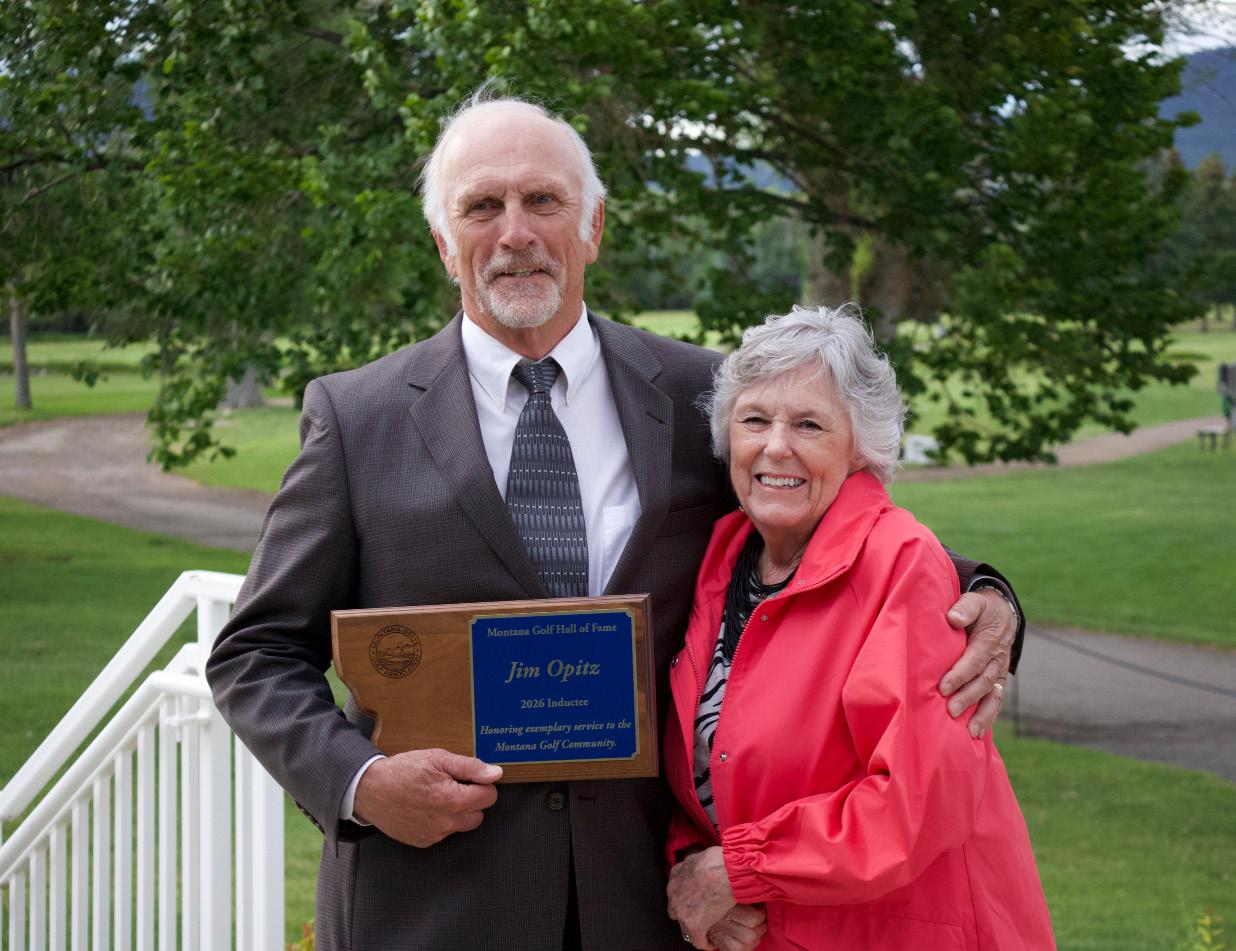
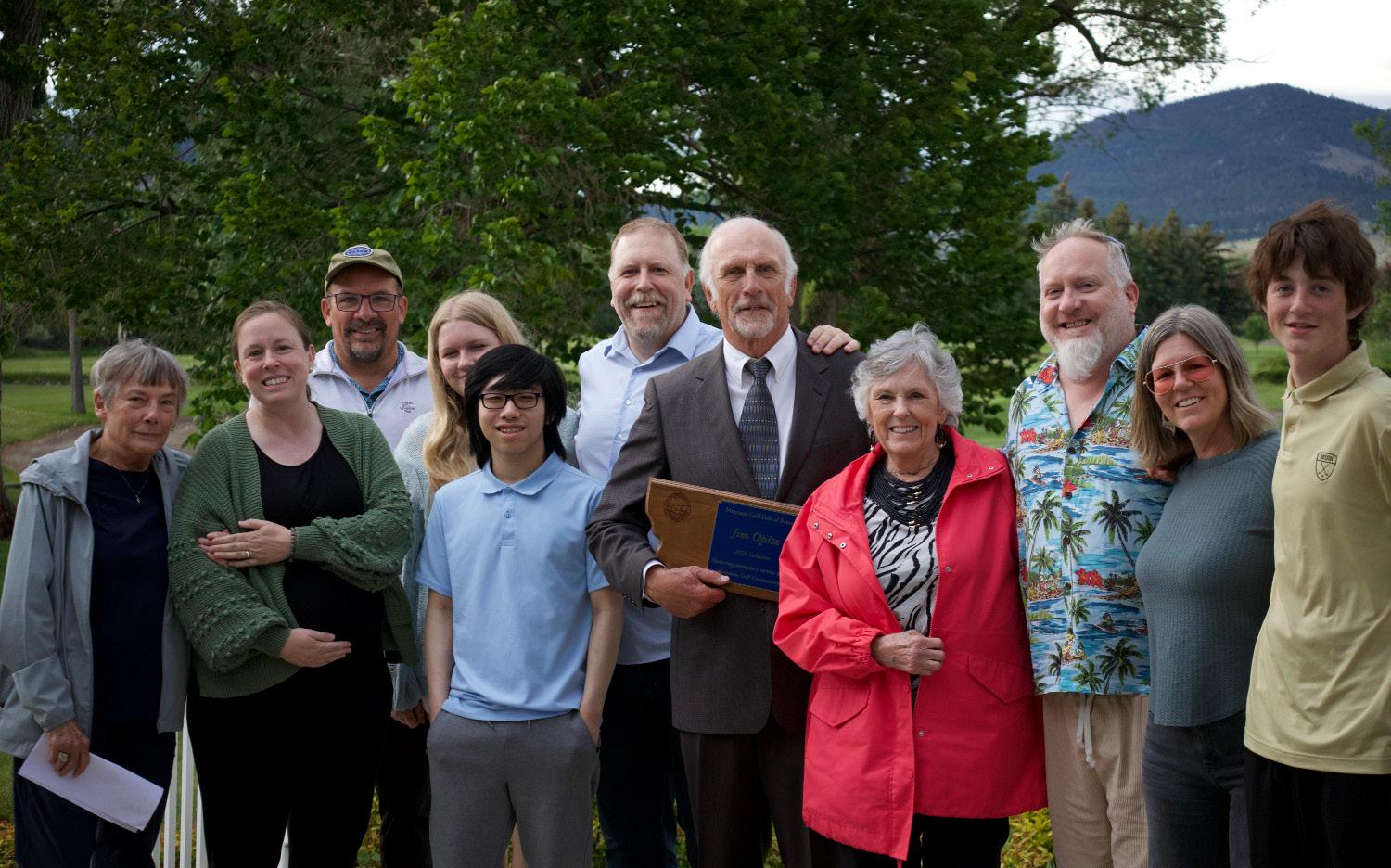
Back in the spring of 2000, Helena’s Jim Opitz was tasked with ushering the MSGA into the 21st century after being selected to replace longtime Executive Director, Fraser MacDonald. Having also worked for forty years in the Helena School District teaching, coaching and spending 25 of those years as the towns Activities Director, he certainly knew a thing or two about sports leadership when he took over from MacDonald. In the two plus decades at the helm of the MSGA Opitz not only upheld the integrity of its century-old traditions but also stewarded the organization through monumental changes and helped pave the way for the vibrant golf community in Montana that we see today.
A standout multi-sport athlete growing up in Missoula, Opitz first learned to golf in high school when he would sneak onto the University of Montana Course with his friends. “It wasn’t a very serious attempt,” he told 406GOLF in 2025, “I wasn’t good right away (maybe never will be) and it was frustrating. I wasn’t very patient, I guess.” For a naturally gifted athlete like Opitz, golf no doubt provided a uniquely challenging experience.
After a brief stint with the Griz in his hometown, eventually Jim landed at Carroll College in Helena where he was an All-Conference quarterback for the football team and a pitcher for the baseball team, and it was there that he met his wife Patty.
Graduating from Carroll in 1971 with
a bachelor’s degree in history, and shortly thereafter earning a master’s degree in education from the University of Montana, Opitz proceeded to spend the next several decades serving as a coach, teacher, and counselor in the Helena School District.
Given his diverse background as an athlete, it comes as no surprise that Opitz was a jack-of-all trades type of coach, having led just about every sporting team at Capital High in the 1970s and 1980s, including: basketball, football, tennis, track, and golf. In 1983 he was named the Class AA Basketball Coach of the Year after leading the Bruins to their first (and for a long time the only) state championship title. Shortly after the title run assistant coach John Frankino summed up part of what makes Jim special as a leader, stating, “Jim has the gift of getting the best out of the people he works with because he helps people believe in themselves.”
As a person operating in the broader realm of sports administration, Opitz likewise dabbled in just about everything. Hired in the early 1990s as Helena’s Activities Director, he was also once on the YMCA Board of Directors, the Carroll College Hall of Fame Board and was chairman of the Helena Park Board. He was an umpire supervisor for Helena Babe Ruth Baseball, organized a girls Babe Ruth Softball league, created a basketball clinic for third through sixth graders, directed a Helena fouron-four summer basketball league and was a volunteer coach for Helena Special Olympics Basketball. In 1995, in recognition for his extensive work with Helena youth, Opitz was
presented the prestigious Dick Muffick Award by Carroll College, which honors individuals for their outstanding contributions to Helena athletics.
And then there was the world of golf. Opitz started gravitating towards the game as he got older, influenced in part by his lifelong friend and fellow MSGA Hall of Famer, Paul Caruso. “We played a few tournaments together,” Opitz said, “it was my first meaningful golfing experience. I liked it and it was competitive which made it feel more like the team sports I was accustomed to playing.”
It was that same friend Paul Caruso who introduced him to Fraser MacDonald in the early 1990s. “We became friends,” Opitz recalled of the former MSGA Executive Director, “and he
asked me to be a Boatwright intern one summer to help with tournaments. I was hooked. I loved being involved with tournament golf and the players.”
Along with serving as a Boatwright intern, he also spent six years as the Montana director of the USGA Public Links state qualifying tournaments before taking the MSGA reins from his predecessor MacDonald. “When Fraser was planning to retire, he asked me if I wanted to follow him. I couldn’t wait to begin,” Opitz said.
There were some notable changes to the MSGA during those first few years of Opitz’s reign. The most immediately noticed shift was that it was the first time since the 1930s that the director was not located in Butte.
Some other early strategic decisions included adopting GHIN for handicap services, and the MSGA also developed something of a digital headquarters with its new website, formerly known as www.montana.net/msga.
Also popping up around the Treasure State by 2003 were new “Golf the Big Sky” specialty license plates created in collaboration with the Montana State Women’s Golf Association (MSWGA), intended to help fund junior and college golf throughout the state. As told later by MSGA Hall of Famer George Geise in his history of the organization, “the extra revenue generated by that funding source allowed the MSGA to increase financial support for golf programs at the state’s universities, four-year colleges and junior colleges.” The license plate program continues to this day as a great opportunity to help junior golf in Montana and show the golfing spirit. (If you haven’t heard yet, the license plate recently got a makeover, click here to check it out).
In the later 2010s, Opitz was an instrumental part in transforming the MSGA into a more all-encompassing golf organization. As the current MSGA Executive Director, Nick Dietzen, explained, “Jim’s tenure with the MSGA saw many evolutions for the organization most notably with the mergers of the Montana State Women’s Golf Association (MSWGA) and Montana State Senior Golf Association (MSSGA) in the past decade, creating one golf community.”
When Jim Opitz was hired as the MSGA Executive Director, the tournaments he inherited were the State Junior Championships and the accompanying district qualifiers, the Men’s State Amateur, the Men’s Mid-Amateur, and as Jim says, “that was kinda it.” But with two large scale mergers and the natural progression of the MSGA, the tournament offerings grew considerably by the early 2020s.
Added to the catalogue of events was the
Montana State Women’s Amateur Championships, which is one of the state’s most long-standing traditions, having started in 1917, the same year the MSGA was created. The Montana State Senior Tournament came under the fold of the MSGA as well, and it continues to be one of the state’s largest attended sporting events every year, attracting over 300 golfers from all over the Big Sky.
Opitz continued to navigate tournaments throughout the tumultuous COVID year of 2020 despite many hang ups and alterations along the way. “That was quite an achievement,” he said, “considering we were handing out scorecards with gloves on.”
In 2021 Opitz oversaw the inaugural Montana State Four-Ball Championship. He also helped conceive and organize the MSGA Senior Tour, which started in 2023 and remains one of the most beloved events the organization offers. Like when he first started back in the 1990s helping direct local qualifiers for the USGA, Opitz loved working tournaments. In a recent conversation he stated, “Everything about running a golf tournament was good… until lightning.”
In 2017, Opitz received the USGA’s Ike Grainger Award, which is presented annually for those who have served for 25 years.
2017 was also the year of the MSGA’s 100th anniversary. One of Opitz’s fondest memories of his time as Executive Director was the celebratory dinner that took place at Missoula Country Club. “It was a beautiful July evening,” he recalled, “we had bag piping, the US Open trophy, great meal, USGA officials and several former State Champions in attendance.”
It turned out the ceremony was also a great way to catch up with a few legends of Montana golf. “After dinner I went outside and eavesdropped on a conversation that Gene Cook was having with Mike Barnett,” Opitz said. “They were talking about particular shots
from the last 40 years that were made while competing with each other. They laughed with each other as they reminisced. It was golf at its best. Two great champions sharing a beer and a memory. I smile even now because it was so cool.”
One of the great parts about Jim is the way he shows respect and appreciation for those around him, along with always maintaining a positive attitude no matter the circumstances. In my own experience working with Jim during the summer of 2022, whenever things started getting a little tense at an event, Jim would recite a line from the showtune “Oliver!” that would always lighten the mood. It still makes me laugh thinking about his deep voice singing, “I’m reviewing, the situation…”
As he reflected on his career in golf during a recent conversation, it was the people he met along the way that stuck out the most. “If you’re lucky enough to have a career where you can be around people,” he said, “the superintendents, the pros, the groundskeepers, general managers – most all of them are really good people and they love the game. I was lucky that career in golf was really good and I enjoyed the people.”
Likewise towards his 2026 cohort of Hall of Fame inductees his feelings are nothing but admiration. “I’m honored and humbled to be in the same group with these same people that are going in this year because every single one of them are just so good,” he said.
For Jim Opitz the MSGA Hall of Fame induction caps off an incredible career in golf. During the first quarter of this century he was a rock for the organization and was uniquely influential in developing the enthusiastic and thriving golf community that exists today in our beautiful state. For a man who is wellknown for appreciating others, now it is our time to appreciate Jim and everything he has done for golf in Montana.
BY TY SPARING MSGA COMMUNICATIONS MANAGER
Missoula’s Shanda Imlay told 406GOLF recently, “Fifty-some years ago, a kid from a small town in Montana stepped onto a golf course with hopes and dreams. It was my desire to not only play the game to the best of my ability but to be able to give back to others, especially junior players.”
That small town kid eventually grew up and not only fulfilled those early golfing aspirations but did it so well that she can now call herself a member of the Montana Golf Hall of Fame. Over the course of Shanda Imlay’s wide-ranging career both playing and working in golf, she has consistently exemplified what it means to be a Hall of Famer, whether that was winning tournaments or guiding others in the industry with her vast knowledge of the game. As MSGA Executive Director, Nick Dietzen, states “Shanda’s amateur playing career was exemplary and her accomplishments are impressive in their own right, but her commitment to growing the game as an instructor and champion for junior golf has created a legacy that extends well beyond her individual playing prowess.”
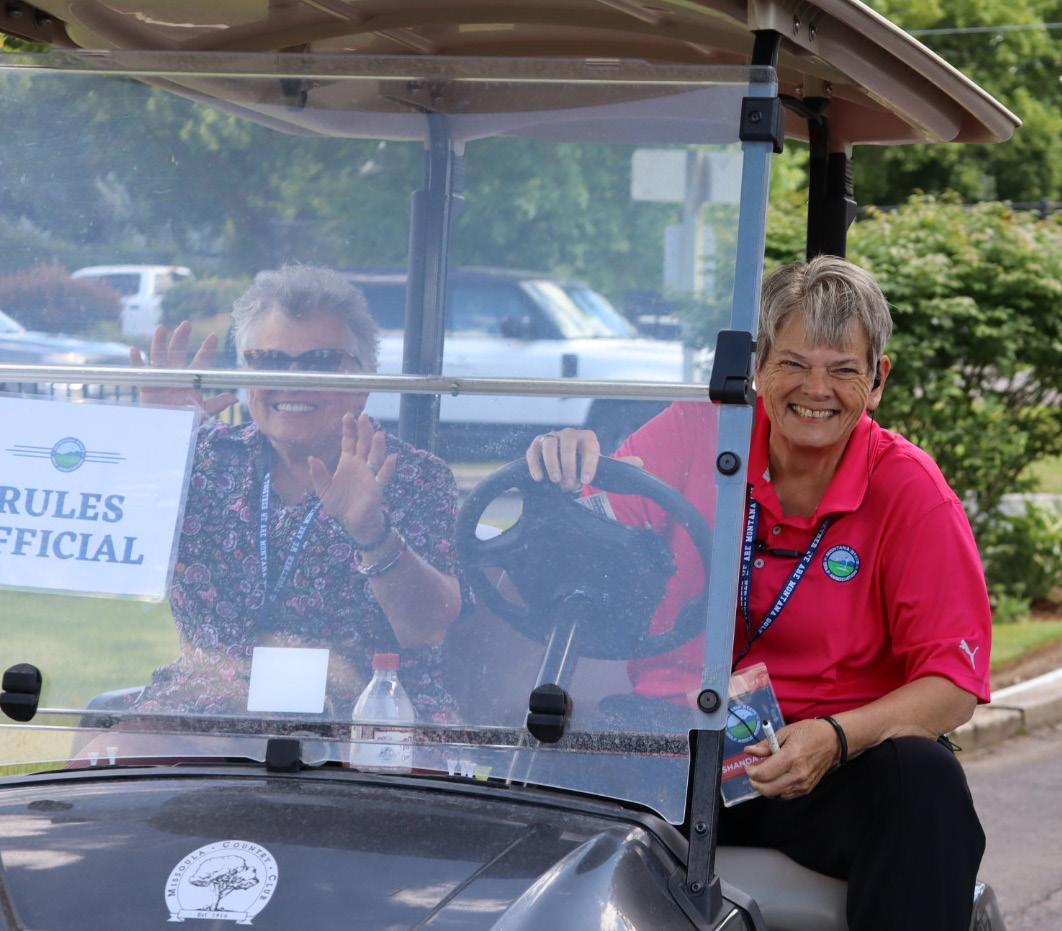
If you have played at a state golf championship in recent years, you’ve likely seen Shanda riding around in her rules cart solving problems one at a time. She currently serves as a Rules Official for the MSGA and contributes the always informative rules column for 406GOLF. For those of us who work with her, it’s easy to appreciate Shanda’s sincere love for
the game and outstanding work ethic. Patient and thoughtful, her years of accumulated wisdom often shine through, a defining trait with origins that go back a handful of decades to the Bitterroot Valley in southwest Montana.
Growing up in Hamilton, Shanda started playing the sport at the age of 10 and was immediately hooked. As she recalls, “at the time I was the only girl playing Little League Baseball. My mom and dad found out the new golf professional at Hamilton Golf Club, Jimmy Wallinder, was giving free junior lessons and they asked if I wanted to give golf a try rather than play baseball.”
Wallinder instilled in junior golfers not only how to play the course and get the job done but also focused on why a person plays the game in the first place. “[He] showed me that golf is a game and playing can be FUN!” Shanda said of her early mentor. “Jimmy was also the one that introduced me to the love of teaching.”
Under Wallinder’s direction, and later another Missoula Country Club professional, Dan Desmond, who taught her the finer points of tournament operations and rules, Shanda started showing a serious knack for golf, and it wasn’t long before she was knocking on the door as one of the Treasure State’s best golfers.
At age 13, Imlay entered her first Montana State Women’s Amateur Championship in Billings, intent on proving herself as one of the top golfers in the state. “That was Alice Ritzman’s last before she went on to a pro career,”
Shanda recalls “and I told my parents that I’m going to be in the championship flight and make the top ten. They go, like most parents, ‘we’ll be happy with however you finish.’” Sure enough, she made the championship flight and ended up finishing in seventh place.
The championship flight became a comfortable place for Shanda Imlay over the next decade as she competed and succeeded against many legendary women golfers in Montana. She was a High School State Golf champion for Missoula Sentinel in 1975, along with winning the former Big Sky Open that same year. Shanda also won the Women’s State Amateur in 1977, among a bevy of other runner-up and top five finishes. That was no small feat considering she was playing against fellow Montana Golf Hall of Famers like Alice Ritzman, Jane Hibbard, Jewell Lee, Mona Clark, Cathy Studer, and of course one of Shanda’s favorites, Helen Tremper, who won a record
15 State Amateurs and was runner-up five times. As Shanda describes it, “growing up seeing a woman playing competitive golf and being able to play with [Tremper] was one of my favorite moments.”
But she wasn’t just competing against those greats of the game, she was learning from them as well. “When I was a junior player playing with adults,” Shanda said, “the best advice given to me was to be a person of integrity, no matter who you are or who you know, leaving a positive legacy starts with being kind to others.”
Part of Shanda’s fuel during this period was a love for the game and an awareness that she wanted to make a career out of it. “I knew it from the age of 10,” she explained, “Jimmy would let me sit on the range bucket and I’d watch him teach and I go, ‘this is what I want to do.’” In fact, she started working at a young
age at the Hamilton Golf Club cleaning clubs, raking bunkers, irrigation and eventually working in the pro shop.
After earning an accounting degree and showing off her multi-sport talents by playing basketball at the University of Montana, Shanda began what became a rich and winding career in golf.
Over the course of her life, she has gone from youth golf phenom to working in every capacity one can think of in the golf industry. She’s been a golf assistant, golf pro, teacher, coach, owned a golf business, worked in club repair, volunteer, was the executive director, tournament director, and director of junior golf for the Oregon Golf Association (OGA), and then of course her most recent role as a rules official and magazine contributor for the MSGA.
In 1982 when Shanda made her way to Oregon, she became the first woman ever elected to membership in the Pacific Northwest PGA. She went on to work in her various director roles with the OGA, along with co-owning the FUNdaMental Golf and Learning Center for close to two decades. The FUNdaMental Golf and Learning Center provided a variety of programs, among others a four-week clinic to help husbands and wives play together, working with veterans who suffer from PTSD, and educating juniors.
Many of Shanda’s favorite memories of her career in golf she says is “not about me but the opportunities the game was able to provide.” Whether it was her time working as a golf coach for Cleveland High School in Oregon, working with juniors at the OGA, or serving in her role at the FUNdaMental Golf and Learning Center, so many of the great memories are about having watched so many young people thrive and go on to big things in life. For her efforts, in 2017 she was awarded the prestigious Pacific Northwest PGA Player Development Award which added to an already illustri-
ous resume.
Through her deep love of golf and a philosophy of doing things that make her smile, we look back on the career of a person with no regrets. “The best advice that I was ever given was find your passion and follow it,” she explained when discussing the advice she gives to people trying to break into the golf business. “I mean I started out teaching, then went into the merchandising side, and then from there it was tournament operations. Of anything I can say about the golf business, it’s there for whatever direction you want to take it, it’s just finding something that you enjoy.”
One thing that becomes clear when talking to Shanda is how much she has appreciated working in golf. “I liked everything in my career and one thing about working in the golf industry is I was never bored,” she said.
Shanda maintained a strong connection with Montana while working in Oregon and several years ago decided to move back to Missoula. When asked what is unique about Montana golf, as compared to other places that she has worked, she says, “Well Montana is my home, and this is still the small-town country, neighbor helping neighbor feel. It’s not really a big business yet, like you go to a place like California – it’s big business.”
These days Montana tournament golfers get to witness Shanda riding around in her RULES cart utilizing her encyclopedic knowledge to answer some of the game’s most vexing questions. Rules can be an intimidating topic, even for the most seasoned golfers, and one of the biggest misconceptions Shanda pinpoints is the idea that rules officials are roaming around looking to get people in trouble. “Rules officials are there to help you,” she said, “and a lot of players do not understand that. They think that when you’re going around, ‘oh we’re doing something bad.’ No we’re here to help. That’s the big misconception.”
Now as one of the newest members of the
Montana Golf Hall of Fame, Shanda says it “feels surreal,” and that it represents the “countless hours, the personal sacrifices to be the best version of myself and the relentless pursuit of excellence in my profession.”
But with the honor comes gratitude. It “goes beyond personal achievement,” she said, “it represents every person who believed in me, every head professional who took a chance on me, especially being a woman, pushing me to excel within the PGA. And every student who trusted me to introduce them to playing this great game.”
Starting as just a kid with hopes and dreams of carving out a life in golf, to spending decades playing and working in various aspects of the golf industry – through it all one of the most impressive lines of continuity in Shanda’s career is her integrity and the sincere desire to make the game more enjoyable for everyone. When asked for advice, which is often these days, Shanda is keen on steering it towards happiness. “The path matters more than the end point,” she says. “Remember why you wanted to play. Golf is a game and should be played for FUN!”
Sable is a mom, nurse, golfer, and a beacon of
BY LOGAN GROENEVELDMEIJER
PNGA COMMUNICATIONS COORDINATOR
Hover a magnifying glass over a map of the state’s southeast portion, and the small village of Busby will appear. Encircled within the Northern Cheyenne Indian Reservation in Eastern Montana, it is where approximately 700 souls call home.
It’s also where Sable Kerzmann – a member of the Tribe – grew up and commuted 90 minutes on a bus each way to attend high school in Colstrip, some 40 miles northeast.
“We left an hour and a half early just to go to the same school and attend the same days everyone else from town did,” she recalled. “Most days I left the house at 5:30 a.m. and I got home at 8:30 p.m.”
Several years later, Sable remains on the reservation, working in Ashland. A mother of two who hails from a large family in which she has nearly
40 first cousins, Sable is a registered nurse and administrator at Heritage Living Center in town, overseeing dozens of its elderly residents.
She also happens to be one of Montana’s finest golfers, a merited distinction that has allowed her to travel far beyond the confines of her small yet beloved community, as well as represent her home state in USGA championships.
“Golf has afforded me experiences and to see places and people I surely wouldn’t have had the opportunity to see otherwise,” Sable said. “It was my portal to a much bigger world, especially in contrast to growing up in the middle of nowhere in Montana.”
She’s always been an athlete. Growing up a talented volleyball player at Colstrip High, Sable took up golf at the urging of one of her friends who played on the school’s golf team, which had a blank roster spot that needed to be filled.
“She knew I’d be able to figure it out,” Sable said of her
would-be golfing teammate.
Sure enough, Sable and the Colstrip girls won the Montana Class A State Girls Championship in October 2003, a team effort boosted by Sable’s solo fifth place finish. To date, it remains Colstrip golf’s only such title, having moved to Class B in the years since.
Soon, one by one, the doors began to open. Sable’s carefully crafted skills earned her a spot at Rocky Mountain College in Billings, the state’s largest city which certainly contrasted Busby and Colstrip in size. Adorning the green and golf of the school’s Battlin’ Bears, Sable kept up with her teammates and even performed well at national tournaments, before returning home a year before she was to graduate to give birth to her first daughter, Kyla.
“My kids were the best thing that ever happened to me,” Sable maintains in retrospect of returning home at that time.
Once Kyla and second daughter Kambryn were born, Sable began working at North-
ern Cheyenne Service Unit in Lame Deer, the town where the Northern Cheyenne is headquartered. As an appointment clerk, she realized she had a genuine proclivity for being in healthcare.
“I genuinely loved the facility,” she explained. “So, it just
kind of sparked my interest.”
Her passion was noticed by nurses at the facility, some of whom encouraged her to return to school.
“The nurses were like, ‘Sable, what are you doing? You need to go to nursing school. Just go, come back and serve
your people,” Sable said. “So that’s what I did.”
She had some college golf eligibility remaining following her early exit from Rocky Mountain. In pursuit of an associate nursing degree, Miles Community College in Miles City – about an hour or so
northeast of the Reservation – offered Sable a full scholarship that covered her education costs. The golfer earned her coveted nursing degree and, after passing her board exam, her nursing license.
Sable was now equipped to serve her people on the Reservation.
As her medical career began, her days became full, which was to be expected given the effort she was giving toward raising her two young daughters in addition to her and her husband’s work.
“It was tough,” said Sable. “But I still made it a point to play. I still played in the summer when I could.”
She qualified for the USGA Women’s State Team Championship in 2009, 2011, and 2017, which led her from what she called “the middle of nowhere Montana” to compete in all parts of the U.S. Having won a high school state championship and earned a golf scholarship which enabled her to earn a nursing education, as well as making friends and being able to experience the life-expanding joys of travel, Sable knew she wanted golf to provide similar opportunities in the lives of her two daughters, Kyla and Kambryn.
“Golf can have a profound impact on an athlete’s life, on any player’s life,” she said. “If you have a good under-
standing and an open idea of how you’re viewing it, how you meet challenges, how you overcome things; honesty, and integrity.”
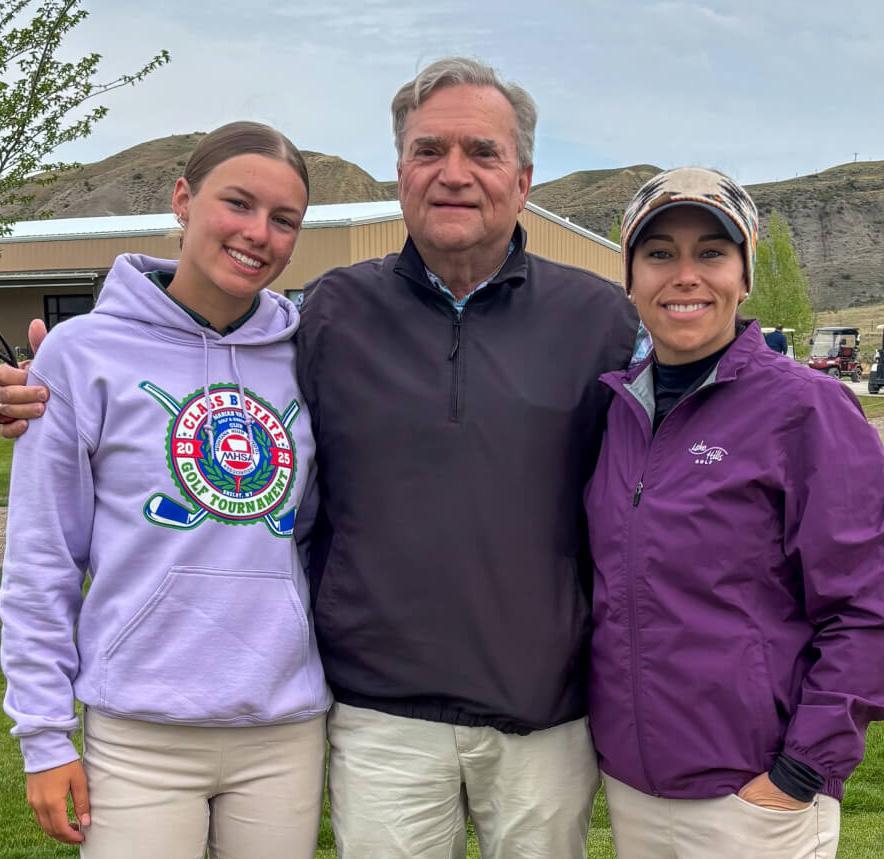
Sable eventually began to coach the boys’ and girls’ golf teams at her former Colstrip High School, to which she and her daughters continue to commute from the Reservation. Kyla, 18, and Kambryn, 17, are both nearing the end of their high school years. Kyla has become a fine player, performing well in Class B individual play in spring 2026. Kambryn has more recently decided to prioritize rodeo – a popular and deeply rooted sport in Big Sky Country – instead of golf, but the younger sister still knows her way around 18 holes when called upon.
Coaching is and has been a valuable role for Sable. At some point, she hopes to add that role to her repertoire of the many she serves on the Reservation, to lend both her golf and volleyball knowledge to local children. That’s part of a goal to represent the Northern Cheyenne community through her golf proficiency and allow some of its youngest athletes to work toward the opportunities that she had.
“The biggest amount of pride that I have with me and golf is that I want to bring something positive,” she explained. “I want to bring a
positive view and a positive light to my community and to the people that I know and the people that I love. And I’m able to do that with golf.”
It’s a full throttle effort. As recently as 2025, Sable placed third in the Montana Women’s Mid-Amateur and continues to play in fundraising tournaments, playing out of Ponderosa Butte Golf Course in Colstrip. Wanting to give her older daughter an additional learning experience, Sable has had Kyla caddie for her throughout the past two years and is intent on returning the favor in any of Kyla’s future competitions.
“My dad caddied for me probably 10 years straight, and that was a really good thing for us,” Sable said, referencing her golf beginnings. “I imagine I’ll do the same thing with my grandkids and hopefully I’ll be the caddie out there someday.”
In a life where Sable has given her all as a mom, nurse and coach – roles that collectively entail love, service and mentorship – the game that granted her so much forward progress will unequivocally remain, as long as Sable is able.
“I’m going to play golf forever, I’ll say that,” she said. “Ill just keep practicing and trying to improve. That’s one of the things golf teaches us, we’ve got to just keep working to make improvements.”
1. Who introduced you to golf?
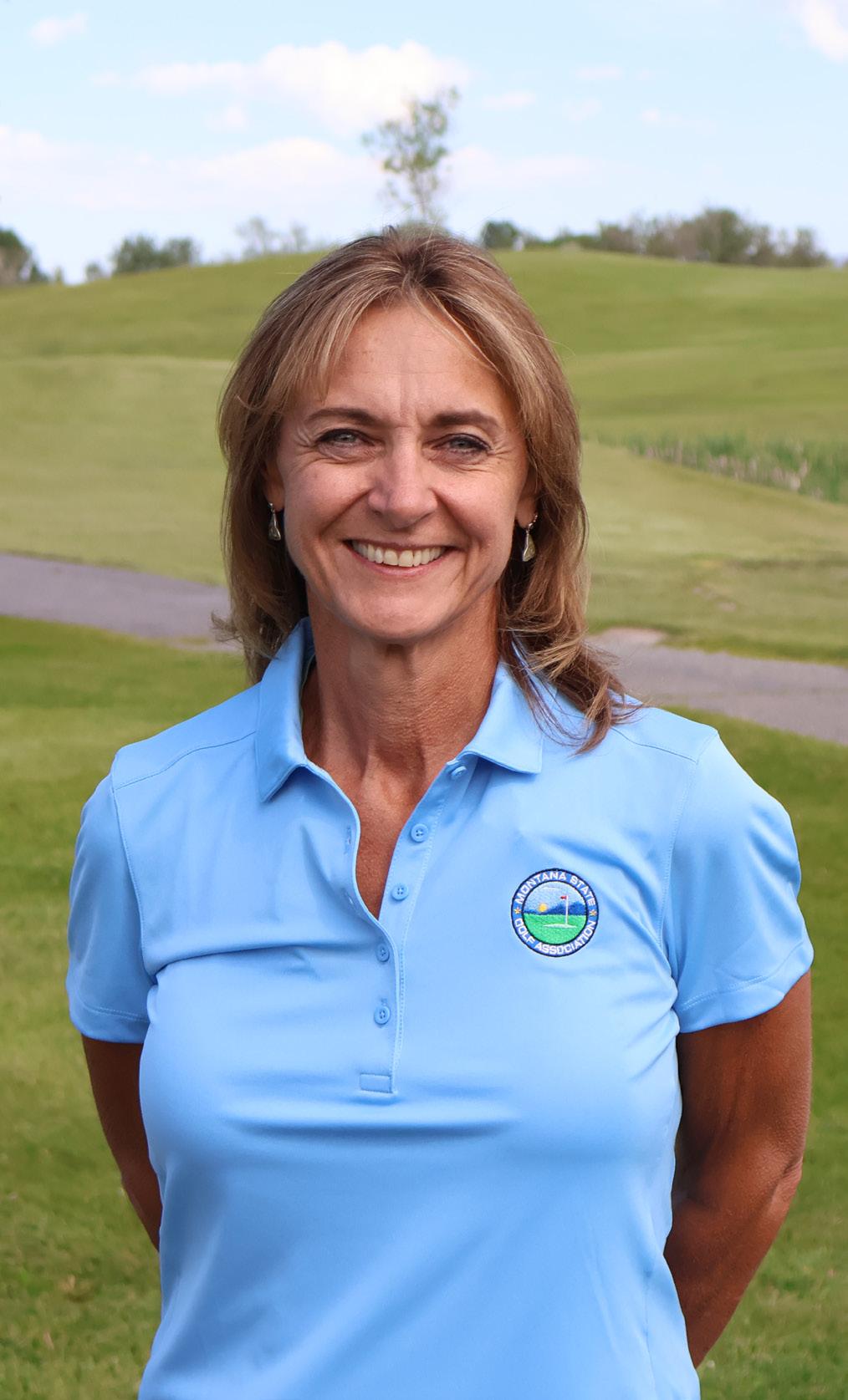
My Grandpa introduced me to golf when I was 5 years old. He played with the men’s league at the Par 3 course in Billings, MT. He let me tag along and putt on the green sometimes with the guys. The following summer he bought me a beginner set including a putter, 7-iron, wedge and a wood (not sure if it was driver or a 3W). I was hooked!
2. Who influenced you most in your golf life?
I’ve had a few influences in my career including my Grandpa John Slavish. Bill Larson was a big promoter of Junior Golf in the 80’s. Mary and Ed Mattson were amazing mentors for junior golf in High School in Ennis. Sonja Dehn, worked diligently in Junior Golf and was our coach for the Junior America’s Cup in 1989. My parents were my biggest cheerleaders and advocates to keep me travelling around the state and help apply to play college golf.
3. What brought you to the MSGA? As a new board member, what MSGA projects are you most excited about?
Karen Rice brought me into the MSGA last year with the junior grant program. I’ve wanted to be involved in a broader area of
golf for a while, but the opportunity did not present until this. Nick reached out last year and asked if I’d be interested in being on the board and I’m thrilled to be a part of an organization that has been a part of my golf history my whole life. I like the junior programs but am also interested in helping to promote MSGA in the clubs and its importance for Montana Golf. All that we are involved in and the support we provide for a lot of programs etc. We are not just the ‘handicap’ system keeper. I think there is a lack of information about the MSGA or maybe just not enough hype. Either way I want to help spread the word and excitement about MSGA and what we do!
4. What is your favorite course in Montana and why?
There are a few for different reasons! Valley View in Bozeman I shot my lowest round in a tournament and blew the competition out of the water by 15+ strokes. Eagle Bend in Bigfork is amazingly beautiful, challenging and holds a nostalgic memory from my younger days. Briarwood in Billings, what golfer does not like the challenges it presents! Of course my hometown, Madison Meadows in Ennis. Even the 9 hole course can make you jump for joy some days and curse why you even play the game other days! And the view of the Madison Range
is unparalleled. Oh, shoot, I almost forgot I was able to play The Reserve at Moonlight. OMG! That is incredible!
5. What is a dream golf course you’d like to play once?
In the U.S. - probably Pebble Beach or Augusta.
Outside U.S. - Royal Portrush, Northern Ireland or St. Andrews, Scotland.
6.What is your dream foursome (living or dead)? Why would you choose them?
Tiger Woods, Sam Snead, Nancy Lopez, Jack Nicklaus.
They each have a little bit of a story for me in my golf career. From Nancy who I looked up to as a young female golfer to Tiger who is my age and has always been a part of my golf story. Sam’s name always came up throughout my life with my Grandpa and my Dad! And Jack, well.. He’s the “The Golden Bear”! Does it get any cooler than that!
7. What’s your most memorable moment on a golf course?
State Tournament Class B/C in Scobey, MT 1992 third hole playoff in the wind and snow about 15 degrees out and a win for my second consecutive State High School Championship.
More recently - my albatross #15 on the first day of MSGA Mid-Amateur State Tournament at Meadowlark Country Club, Great Falls in 2021. Leading to back-to-back Mid-Am Championships.
for those who are serious about playing the game.
8.If you could change one thing about the game of golf what would it be?
Make it more affordable and accessible
9. What advice would you give to beginner golfers?
Mental practice is just as important as the physical practice. You have to learn to not let a bad shot get in your head. Remember…every shot is independent of the next.
Bonus: Lay up or go for it?
Ugh, I always go for it (quite often to the detriment of my score!)
BY TY SPARING MSGA COMMUNICATIONS MANAGER
Anaconda’s Mrs. Frank Tucker only needed 18 putts on the last 16 holes she played to capture her second straight Montana State Women’s Amateur title. Golfing match play style at the Anaconda Country Club, the Montana State Golf Association was still quite young, only in its ninth year of operation. At the time there were 14 golf clubs that comprised the MSGA.
The types of trophies handed out offer insight into the culture of the roaring twenties, as Mrs. Frank Tucker received a 10 ½ inch sterling silver sandwich plate, the runner-up received a smaller, similar sandwich plate, and flight winners won twelve-inch hammered silver vases with handles that made it look like a golf club. Whoever won the women’s driving contest won a silver fruit tray, while salt and pepper shakers were awarded to winners of the putting contest.
(For those curious, the men on the other
hand, received silver cocktail sets complete with a shaker, a tray and six goblets, and whoever hit the longest drive won a silver flask.)
Mrs.Tucker was back at in 1936, defeating Kalispell’s Marie Ross, 1 up on the 18th hole, for her fourth Montana State Women’s Amateur title. Played at Butte Country Club, Tucker set a course record for nine holes after registering a 36 in the semi-finals, before going on to defeat Ross in a tightly contested match. For her efforts, Tucker received a lapel watch.
It was already the eighth time Butte Country Club hosted the event. With the Montana State Golf Association headquarters also having its headquarters in the Mining City, Butte Country Club in the first half of the 20th century was often considered the Treasure State’s flagship course. Infused with copper money, the club was the first built in Montana (1899) and quickly became one of the most highly regarded courses in the pacific northwest. As one Montana Standard writer proclaimed at
the time, “The Butte course is the daddy of all Montana golf links…The club house is one of the finest in the Northwest.”
The 1940s was a decade in which the Montana State Women’s Amateur Championship was dominated by two teenage golf prodigies, Lue Jeanne Gronley and Edean Anderson. Gronley was the daughter of a Butte mining boss and she won three straight Amateur titles from 1940-1942, just the second female golfer to achieve the feat since Mrs. I.M. Wheeler won three in a row from 1917-1919. With three titles by the time she turned 18, it appeared Lue Jeanne might go on to win a bunch more, but with World War 2 raging, she ended up moving to California after high school to work in the shipyards for the defense industry. Instead of golf, Gronley was one of the many thousands of women that exemplified the spirit of ‘Rosie the Riveter’ during those tumultuous years.
There was no Amateur Championship held in 1943 due to the war effort, but when play resumed it was another prodigious teenager named Edean Anderson that won every other title the 1940s had to offer. Out of the six straight State Amateur’s that Anderson won, perhaps the most dramatic victory came in 1946 when she faced off against Lue Jeanne’s younger sister, Jewell Gronley, who was runner up four times in the 1940s (and eventually carved out victories for herself in 1951 and 1965). Edean and Jewell were plenty familiar with each other on the course too, as the Lewistown Daily News explained that the two teenagers were “friends for years, but cold-blooded rivals on the course.”
Held at the Anaconda Country Club, the two youngsters faced off in the final match, and it went down as one of the most exciting in the event’s history. In that final round both Edean and Jewell tied the all-time course
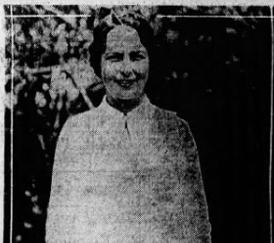
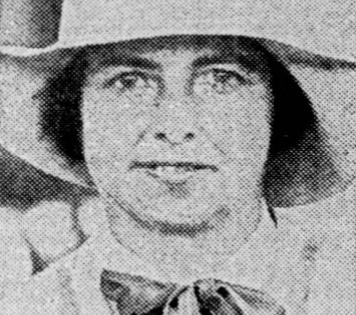
record at Anaconda CC with scores of 77. One writer for the Montana Standard described the play of Edean Anderson as “steady as an eight-day clock, her shots came off the tees as though pumped from a gun.”
The grueling match eventually went into an extra hole, and there was a gallery of 1000 people there to watch the two 16-year-olds battle it out. While Gronley bogeyed, Anderson managed to par the hole and retain the crown 1-up, in what was described as a “crackerjack finish.” After it was over, Edean had nothing but praise for her friend Jewell, declaring that it was “the toughest match I ever had to play.”
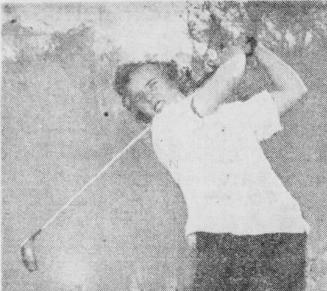
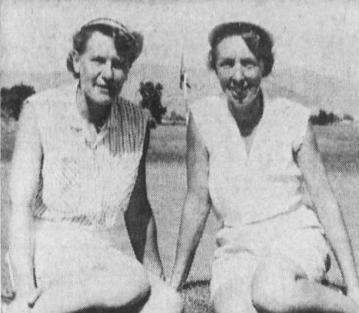
While Edean Anderson collected six Montana State Women’s Amateur titles in the 1940s before moving on to the national level where she played against the likes of Babe Didrickson Zaharias, it was in the 1950s when Helen (Schroeder) Tremper, Montana’s other “greatest female golfer in state history,” began her inexorable march towards glory.
A grade school teacher living in Missoula, Schroeder won her first Amateur in 1955 and repeated as champ in 1956 at Missoula Country Club after a “keenly contested match” against Margie Polhamus. It was the second of an eventual fifteen Montana State Amateur Women’s titles for Schroeder.
Unlike her contemporary Edean Anderson (Ihlandfeldt) who collected six state amateur titles by the time she was 20, Schroeder didn’t start playing golf seriously until she was an adult. A valedictorian in high school, Helen Schroeder started playing in 1952, at age 22, after taking lessons from Missoula Country club pro, Russ Swonson, a former Men’s State Amateur winner himself. She then spent the next two decades establishing herself as one of the best golfers in our state’s history.
In 1958 Schroeder married Robert Trem-
per. The reception was at Schroeder’s favorite place, Missoula Country Club.
It might come as no surprise that Helen S. Tremper won her ninth Montana State Women’s Amateur title in 1966, in fact she won every state amateur in the 1960s except in 1965 when she took some time off after giving birth to her daughter, Mary Ann.
While she was a young school teacher at Lewis & Clark in Missoula when she won her first State Amateur in 1955, by 1966 she had a family watching her success on the course at not only the State Amateur events, but also the many club championships and other tournaments around the region in which she usually came out the victor. Her husband Robert was perhaps her biggest fan, as Helen told a reporter for the Great Falls Tribune in 1966 that “he encourages me,” and is “tickled to death when I win a tournament.”
16-month-old Mary Ann had a pretty talented mom to show her the ropes of golf, albeit with a few bumps along the way. “I’ll have to admit,” Tremper said about her daughter’s burgeoning golf game, “she is a better pounder than a putter so far. She hit me on the foot with the putter, and I felt the pain for a couple days.”
The 1976 Montana State Women’s Amateur Championship marked a turning point of sorts for women’s golf in the Treasure State. Things already looked a little different in preceding years after the respective Men’s and Women’s State Amateurs split into their own events in 1969. But in 1976, the most obvious change noticed was who wasn’t playing, and that was Helen Tremper who decided to retire from competition that year, despite having won the previous two State Amateurs in 1974
and 1975.
The decision didn’t come easy for Tremper who was still clearly at the top of her game. She had considered calling it a career in 1974 after winning the event by a whopping 20 strokes at her home course, Missoula Country Club, but organizers in 1975 convinced her to come back and defend her title at Butte Country Club, which she did and ultimately won in a “cardiac finish,” against Shanda Imlay. Talking with 406GOLF years later, Shanda recalled what it was like playing against the perennial women’s champ: “[Tremper] always had a gallery,” she said, “and it was fun watching her play and how she tried to intimidate the players, especially the young players.”
Tremper actually mailed in her entry to the 59th annual event in 1976 but later called the organizers to have her name withdrawn. Missoulian sportswriter John Blanchette summed up the general response to Tremper’s decision, stating “That’s a shame. And wonderful.”
Wonderful perhaps for all those who now had a shot at winning women’s golf tournaments around Montana for the first time in 20 years. When Tremper retired, she was the reigning back-to-back State Amateur champion, a momentous feat for many, a drop in the bucket for the former school teacher. To put her career into perspective, Tremper won two or more State Amateur’s in a row four different times. She won five in a row, twice.
Thus closed the chapter of Montana’s greatest amateur golfer of all time.
The other, less noticeable change in 1976 was the broader shift occurring in women’s golf.
While the nation’s workforce in the 1970s began including more women in permanent full-time roles, junior golf started taking off as well, which allowed more opportunities for girls to play at the high school and college
level. Title IX was signed into law by Richard Nixon in 1972 and by the time the University of Montana and Montana State female golf teams were finally rolled out in 1993 the transformation of women’s golf in our state was pretty much complete. Competitive women’s golf in Montana became a pursuit monopolized by the youngsters.
As an example of the changing cultural dynamics within the game, a noticeable shift happened in the mid-1970s where the dominant female players in this state went from women like Tremper or Jane Hibbard who were winning titles well into their forties, to predominately college golfers or those who had recently graduated. It’s a shift that is still in effect today, as seen in the Montana State Women’s Amateur Championship leaderboards where top tens regularly look like all-star teams of college golfers from around the state. In fact, since 39-year old Mona Clark’s victory in 1976, only one golfer over the age of 25 has won the State Women’s Amateur, the great Joanne Steele who won the event for the second time in 2009 at the age of 38.
After placing runner-up in 1983 and 1984, Helena’s Judi Schneider ended atop the leaderboard in 1986 at Missoula Country Club, the first of two Montana State Women’s Amateur titles for the former Class AA state high school champion. Schneider, who was playing golf for the University of Alabama at the time, outdueled the defending champion, Whitefish’s Chris Newton. With the lead going back and forth throughout the final round, Schneider pulled ahead by one stroke after birdying the 16th hole and she held on the rest of the way.
Also placing in the top four was a pair of 17-year-olds, Billings’ Leslie Spalding who finished in third and Missoula’s Heidi Burns in fourth place. In conjunction with the Women’s State Amateur that year was the ceremony
for the Montana State Women’s Golf Association’s inaugural Hall of Fame class. Making up that first class of Women’s Hall of Famers were two Missoulians with 21 State Amateur titles between them, Helen Tremper and Jane Hibbard.
Looking back on it, it almost seems like the Women’s Amateur Championship in 1996 was destined to be won by somebody who played for Montana State University. Bobcat golfer Jen McGregor (James) was coming in as the defending amateur champion, and that previous fall she was part of an MSU team victory and won the individual title at the Big Sky Conference Championships, which, incidentally, also happened to be held at Riverside Country Club in Bozeman.
That 1995 Bobcat team is in the MSU Athletics Hall of Fame, and for good reason too, they had a magical run through the Big Sky Conference Championships in which McGregor won medalist honors by three strokes, and the team pulled out a victory that required a two-hole playoff against Weber State and Idaho. After Idaho fell that first hole, it all came down to a four-foot putt from Paula Nelson to clinch the team title. As coach Dan Davies recalled, “Those are long putts when you’re the one that has to make them, but there was no one else I’d rather have putting there than Paula. She was our best butter.” Nelson calmly sank the putt and the 1995 MSU Bobcats went down in history as perhaps the greatest in program history.
Fast forward to the Women’s State Amateur Championship nine months later and Paula Nelson found herself once again needing the putter to come through for her while in a playoff at Riverside Country Club, this time against Butte’s Nicole Calcut. They were both tied for the top spot after three rounds of regulation and needed an extra hole to determine
the winner. During that first nerve-wracking playoff hole, Calcut just barely missed a long putt, before Nelson stepped up and sank a clutch 20-foot birdie that gave her the win.
Once again, in conjunction with the tournament, there was an MSGWGA Hall of Fame ceremony honoring Billings’ Velma Walrath and Judi Schneider Pavon. Walrath was a past president and served on the Board of Directors for the MSWGA. Pavon meanwhile won her two Women’s Amateur titles in 1986 and 1989 before a stint on the LPGA and eventually landing at the University of Tennessee where she was the Head Golf Coach for 21 years up until 2021.
Eagle Falls Golf Course in Great Falls hosted the 89th annual Montana State Women’s Amateur Championship in 2006, their first time hosting an MSGA championship event.
Although there were initial hesitations with a course that had an “extreme makeover” just a few years prior, according to former Great Falls Tribune Sports Editor and MSGA Hall of Famer, George Geise, “Eagle Falls and its staff – both paid employees and volunteer workers – passed with flying colors.”
In the end it was former Great Falls High golfer, Tina Bickford, who went wire-to-wire for an eight-stroke victory over the reigning two-time champion, Jasi Acharya. The 2002 Class AA titlist, Bickford, jumped out to a big lead in the first round after posting the tournament’s only score under par at -1 (70). She followed that up the second day with a +1 (72), giving her a nine-stroke lead going into the final round. The lead was more than plenty for Bickford who was playing for Western New Mexico University at the time.
It was an impressive win for Bickford especially considering she defeated Jasi Acharya who had been winning just about every tour-
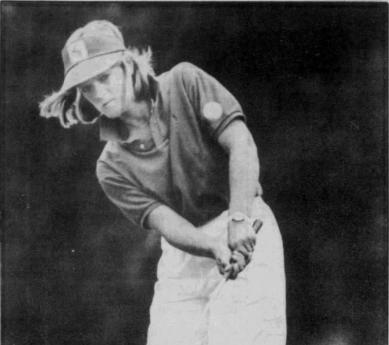
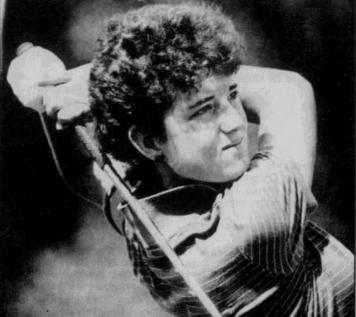
nament she entered. Not only did Acharya win the previous two Women’s State Amateurs, but she also took home medalist honors and led the University of Montana golf team to victory at the Big Sky Conference Championship held earlier that spring. Acharya was aiming to be the first woman in 26 years to accomplish the State Amateur threepeat, but with Bickford putting the top spot out of reach early in the contest, it was not to be. Acharya would settle on the runner up spot for 2006 and then once again in 2007. In recent years she’s been in the news for winning five straight Minnesota State Women’s Mid-Amateur Championships.
Like Acharya who came into the 2006 event having won the previous two Montana State Amateurs, Bickford went on to win back-toback State Amateur titles as well, although instead of Montana in 2007 she won the New Mexico State Amateur Championship.
2011 was quite a summer of golf for Missoula’s Maggie Crippen (Conway). She started off in May by winning her first of three Class B individual titles as a sophomore for Loyola Sacred Heart and followed that up in July by winning her first Montana State Women’s Amateur title at Bill Roberts Golf Course. Then in August, back at Bill Roberts, Crippen won her first of two straight Montana State Junior Championships.
She must like playing Helena courses because in 2016, Crippen won her second State Amateur title by seven strokes while playing at Green Meadow Country Club. At the time she was playing for North Dakota State University where she was an All-American Scholar. Teigan Avery, who had won the previous three straight Montana State Junior titles finished in second place and would go on to win the event in 2017.
Last year's champion Raina Ports brought the Montana State Women’s Amateur title back into the fold of the University of Montana. Four out of the previous five years had been won by Montana State Bobcat golfers including the last three in a row, with Kylie Esh the only other Grizzly in that time span to win the tournament, which she did in 2021.
Will it be another Bobcat or Grizzly golfer that takes home the crown this year? Or will someone from outside the Big Sky Conference pull it off?



BY NOAH WEYNE MSGA BOATWRIGHT INTERN
Each year, according to collegegolfcommits. com, roughly 1,000 high school seniors sign to play Division I college golf. That’s out of an estimated 150,000 competitive junior golfers nationwide – a 1.8 percent accomplishment rate that makes some Ivy League schools look attainable. For Montana high schoolers, the number is even smaller, with just .08 percent of the 2026 boys recruiting class coming from the Treasure State.
The pipeline barely exists for Montana junior golfers, as there are no in-state Division I men’s programs, while there are only two women’s programs that call Montana home – University of Montana and Montana State University. And yet, three Montanans have made the leap to DI golf in the last two years.
When college coaches think of powerhouse golfing states, Montana is not top of mind. Over 70 percent of DI commits for the class of 2026 are native to California, North Carolina, Florida or Georgia. What do all these states have in common? Year-round seasons, elite junior circuits like the American Junior Golf Association coming to their state for events and recruiting pipelines coaches know by name.
Montana's options are slim by comparison. Beyond those two women's programs, the state offers a pair of Division II programs and eight NAIA programs — a fraction of what's available in golf-rich states. For student-athletes weighing their options, the path forward may require some creativity.
Among those who found their path is Katie Lewis – the Montana State Golf Association's most decorated female junior golfer. The three-
time Montana State Junior Champion and three-time Montana State Class A Champion from Frenchtown High School committed last fall to the University of Montana, proving that the road to Division I can be paved right here in Big Sky Country.
“Being a small town kid in Montana, not a lot of people look at you,” Lewis said. “Being at that level with the new standard was a lot to take in at the start.”
Lewis wrapped up her freshman season leading the Griz at the Big Sky Conference Championship, shooting 76-77-71 for a T-25th place finish. She played in all ten of her team’s tournaments with a scoring average of 78.90.
“No matter how many summer tournaments I did…there’s just nothing that prepares you for the level that DI golf is,” Lewis said. “Everybody is good, and just being able to go in there and tell yourself like, ‘Hey, I belong here with these girls' was the biggest boundary for me.”
While Lewis was prepared by playing in high school and competitive junior golf tournaments, collegiate golf reminds athletes that there is a ton of talent across the nation. In her first year in college, Lewis played against 55 different schools while traveling to compete in nine different cities.
“I mean, there are some times where it feels like I’ve learned more on the golf course than in a classroom,” Lewis said. “I’ve learned how to be patient, how to go through hardships and stay on board and how to never give up on something.”
Patience and perseverance are the sport’s defining values. Lewis, who is the recent Montana State Match Play Champion, started
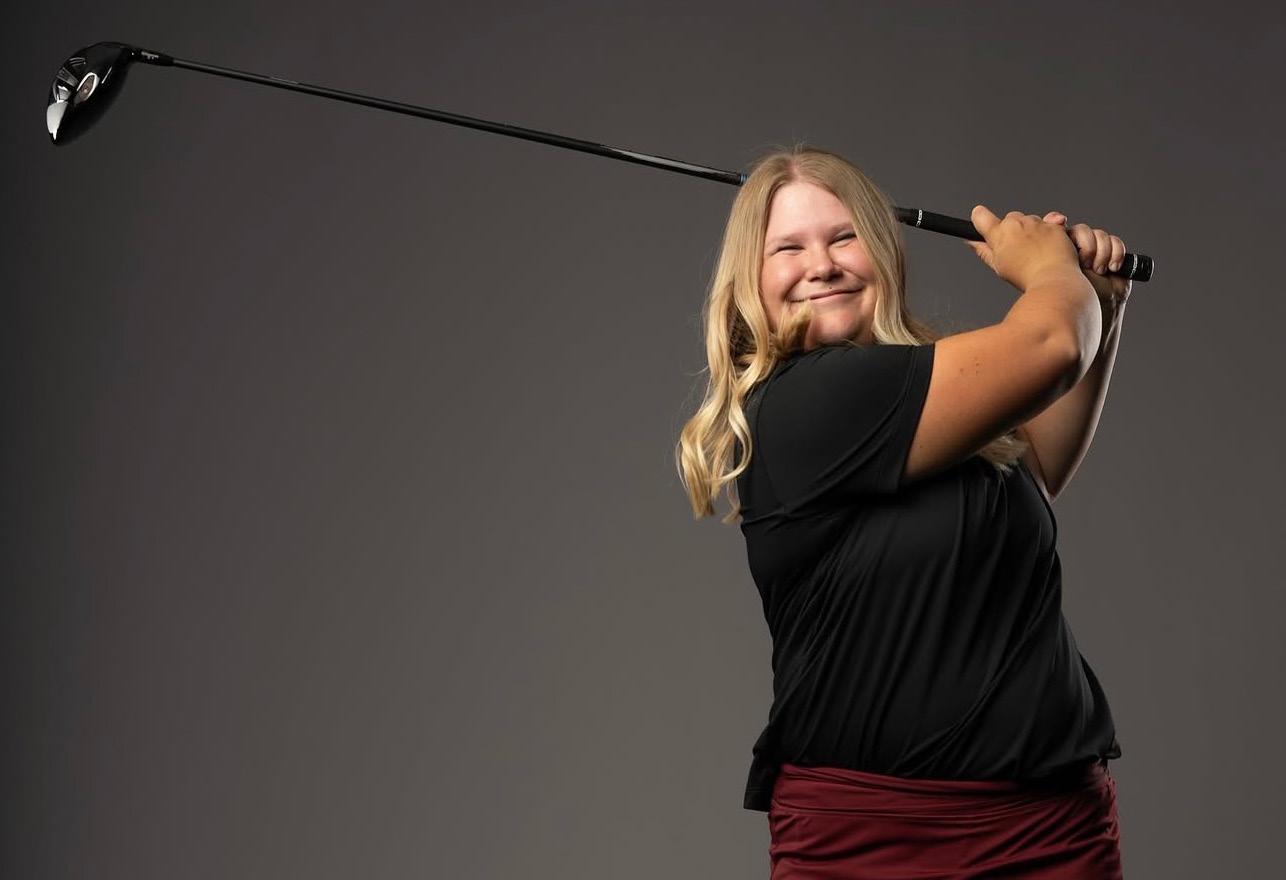
playing golf when she was young, chased after her dream and is now defining what it means for herself to be a collegiate athlete at the highest level.
“Believe in yourself,” Lewis said. “Just go out there and know that you can do whatever you put your mind to, and that if you believe you can play college golf, then work your tail off and it’ll happen.”
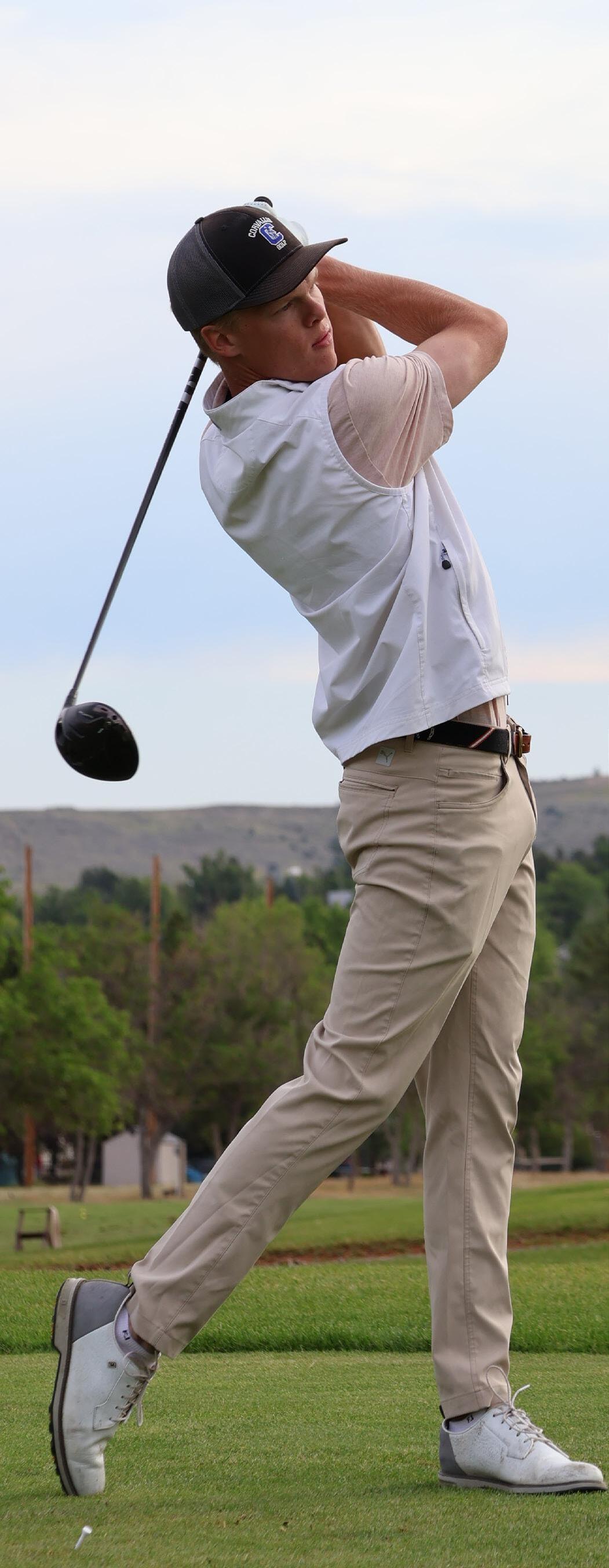
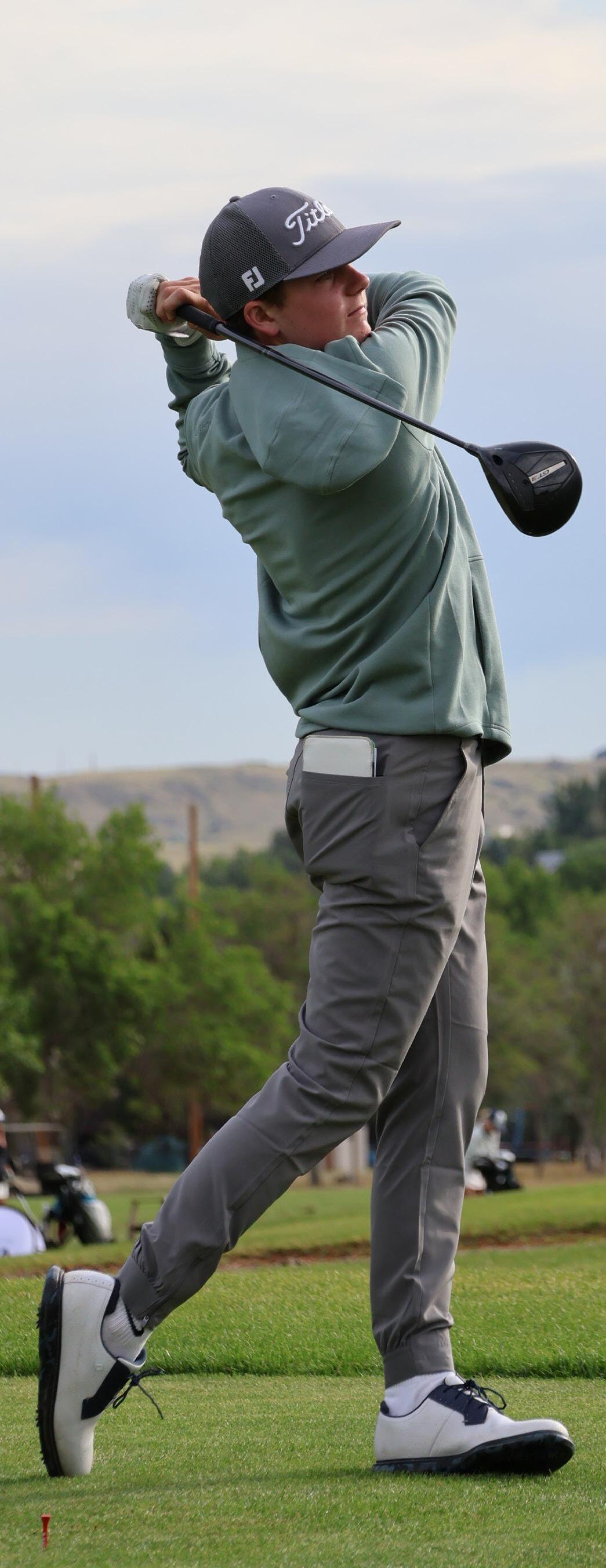
One golfer who believed in himself and worked his tail off to play DI collegiate golf is Capital High School junior, John Gilbert. The Helena native will be playing golf at Washington State University in the fall of 2027.
Like Lewis, Gilbert has competed in a plethora of Montana State Golf Association events and Pacific Northwest competitions to be a top recruit. The 2025 Montana High School Class AA State Champion takes a different approach
to the game than other junior golfers.
“What I’ve kind of learned over the years is that I like to strive on my strengths and not worry about my weaknesses,” Gilbert said. “While there are golfers who hit it farther than me or have a prettier swing, I try to remind myself what my strengths are and what makes a good golfer.”
A strength all Montana golfers have over others is knowing how to adapt to weather on the course. With high winds, cold winters and unpredictable springs, elevation that affects ball distances and a diverse landscape – players like Gilbert can play anywhere and feel comfortable.
Playing golf in Montana is a genuine competitive advantage. “When you’re competing with guys from Texas, California or Florida and they show up to a tournament and it’s


BY CADE SHOEMAKER MSGA BOATWRIGHT INTERN
When Laurie McCarthy passed away at age 77, she had no immediate family to inherit her wealth.
Choosing the charitable route, McCarthy gave away a large portion of her estate to local education, her hometown and a quaint, nine-hole golf course that a few years before didn’t have grass on its greens.
As a local of Townsend, Montana, the par-36 track was the only golf course in a 40-mile radius for McCarthy, and much like many other members of the small farming town, she ensured it was a suitable place to learn and play the game. Using her donation of 50,000 dollars — more than 90,000 in today’s money — members of Old Baldy Golf Course and volunteers from the community were able to install irrigation lines along each hole.
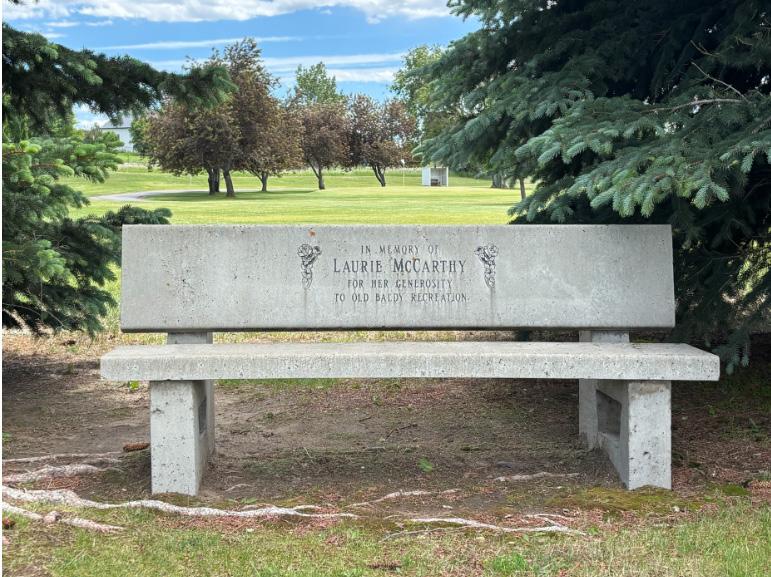
Today, a stone bench a few paces behind the sixth tee box remembers McCarthy’s commitment with an inscription reading, “In memory of Laurie McCarthy for her generosity to Old Baldy recreation.”
It's one of several memorial benches throughout the golf course that bear witness to the men and women who shaped the golf oasis into what it is today.
“Most of the early stuff was almost all donated labor, equipment and everything,” former course superintendent John Hilton said.
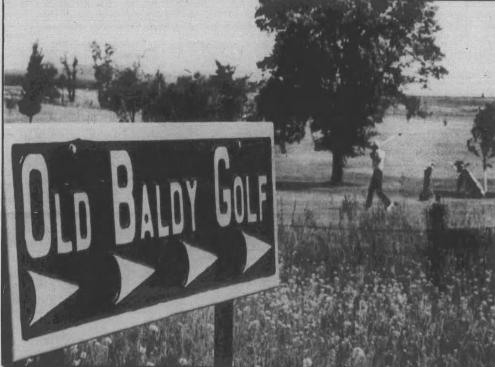
Sure, the course has changed since McCarthy played, and even more since its opening in 1973, but its communal feel persists. Though the trees planted 30plus years ago have matured from their initial saplings and the last sand greens in the state were replaced with bentgrass in 1988, Old Baldy has stayed true to its roots. A tee-time-less golf course with an honor-system payment method that relies on the integrity of its players.
“It’s that typical small-town mentality,” Old Baldy president Jesse Swenson said. “It runs pretty strong here.”
Much like the rest of the golf industry, Old Baldy saw an increase in golfers during
the COVID-19 pandemic. And since the course was rarely patrolled due to the honor system, it was one of the rare places that remained open during lockdown.
As word spread, golfers flocked from over an hour away to play it for the first time. Though most dropped money in the cash box or paid online, the rare few saw the opportunity to play for “free” on a well-groomed course that was worth the drive.
But it was seldom the residents of Townsend who would exploit the social contract. Only the outsiders viewed the roughly 2,000-resident railroad town as just a stop between Helena and Bozeman.
“Anytime we have somebody abusing it, it's always (people) from out of town,” Swenson said. “It’s very rare that any locals take advantage of us. We look out for each other.”
Although the busyness of the course has only continued to increase with the recent golf boom, the honor
system tradition lives on. Only during peak hours, like on weekends, will there be someone to check in on large groups to see if they’ve paid their dues for the round.
A change of pace that keeps Old Baldy the humble retreat that it is.
However, not everything about the course has remained the same since its opening round, and one change has been for the better.
Forget the hassle of raking
footprints out of a bunker, for over 15 years, golfers at Old Baldy would have to rake out a path for their ball on sand greens covering every hole. It was a mix of river sand and a small amount of oil that was packed down on top of a concrete foundation.
After players chipped onto the surface, they’d use the backside of the rake to smooth out the line in the sand for their putt all the way to the cup. Then, once the ball rolled, bounced, and even collected a little bit of
sand along the way, players would rerake the green for the following golfers to repeat the procedure.
“I don’t miss that,” Hilton said of the raking process. “They were domed (greens), but there was very little breaking… The sand kind of takes all the break out of it.”
As a previous coach for the girls and boys golf teams at Townsend High School, Hilton taught many beginners how to putt on the unconventional greens. And for annual home matches hosted by the
Bulldogs at Old Baldy, the sand was a competitive advantage. But when they would travel to every other course in the state, the adjustment to putting on grass became a real problem.
…Most of the time.
“We happened to go to a tournament 90 miles away after they had just plugged and top dressed the greens with sand just before,” Hilton remembered.
As other schools struggled with the bumpy roll of putts running over the aerated
grass and sand-filled holes, Hilton recalled the Bulldogs feeling right at home.
“The girls were excited. Like, ‘This is what we’re used to putting on!’” he said with a chuckle.
Though the greens now have grass, it doesn’t mean they aren’t any less challenging. Play the course, and you’ll find how hard it is to land your ball on the postage-stamp greens that are only 30-40 feet in diameter and shaped like upside-down bowls.
More than that, the greens are protected by hundreds of trees that have grown into tricky obstacles across the course. Towering pines, thin birches, and fluffy cottonwoods are among the trees the community planted to make arrant tee shots more punishing.
But with the greenery comes more work. Upkeep is still occasionally done by volunteers alongside the maintenance team, like earlier this spring, when a fierce thunderstorm swept through Townsend and snapped sever-
al large tree limbs, scattering branches all over the course.
The strenuous cleanup job required several hands to chainsaw and haul the debris away, so the course would be enjoyed by those who put their own sweat into it.
“Regardless of people’s positions in other parts of their lives, they recognize that they are part of a community that, when it comes together, great things can be done,” Vickie Rauser, the mayor of Townsend, said. “The golf course, our rodeo fairgrounds, is another example that is community-driven, but our longtime residents are that way. And I think the community attracts other people who have similar mindsets.”
Old Baldy Golf Course remains a time capsule in the ever-changing environment of golf. A course, true to its roots, that has remained unique, but not at the sacrifice of excellent playing conditions or scenic views of the Big Belt Mountains.
Adjacent to cattle farms, the Missouri River and a railroad that built up the surrounding area, Old Baldy is an embodiment of a “diamond in the rough” that so many courses in the Treasure State try to capture.
“It is a hidden gem,” Swenson said. “It’s a very underutilized, very well-maintained course that our community is very lucky to have.”



BY PETE GRASS RETIRED CGCS
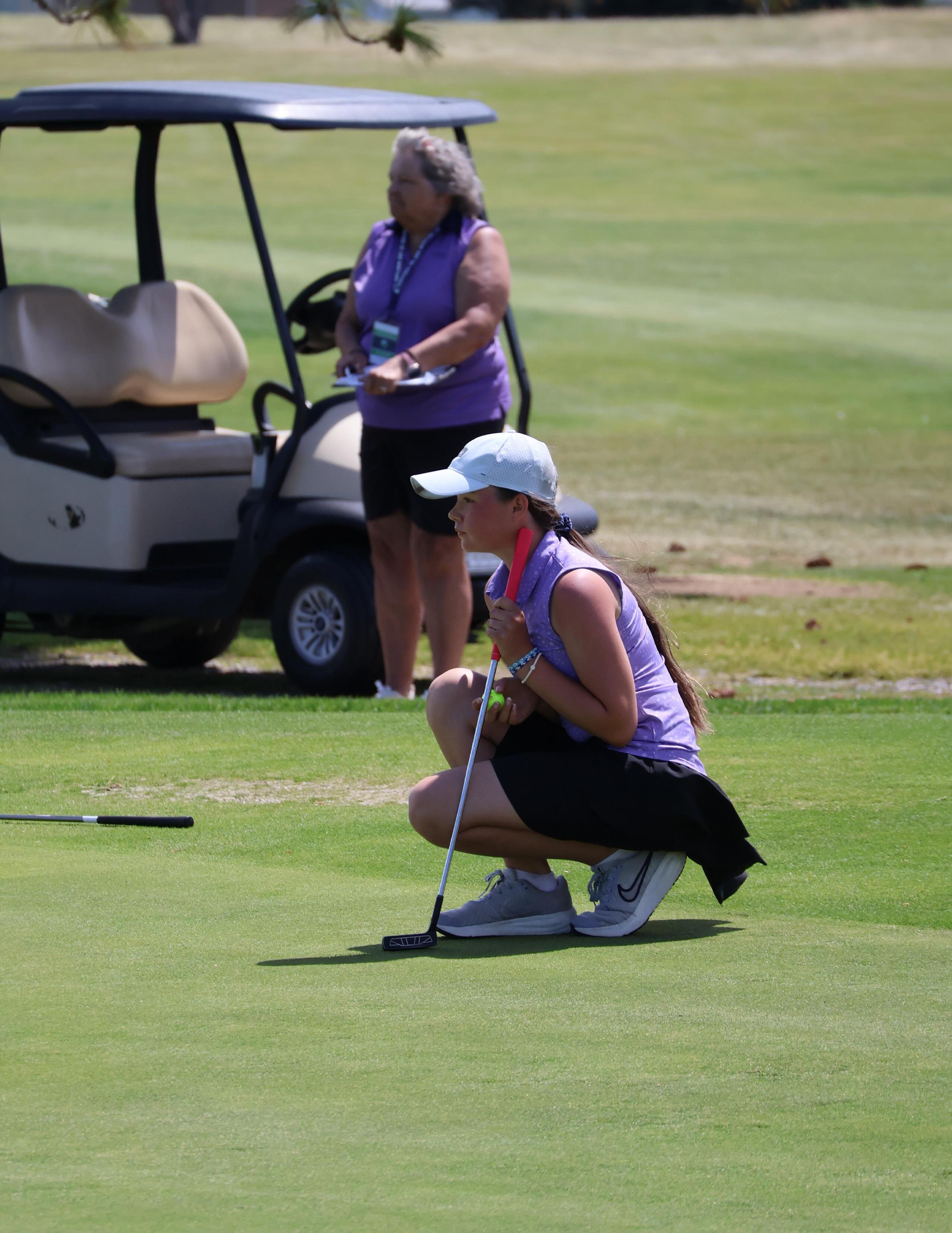
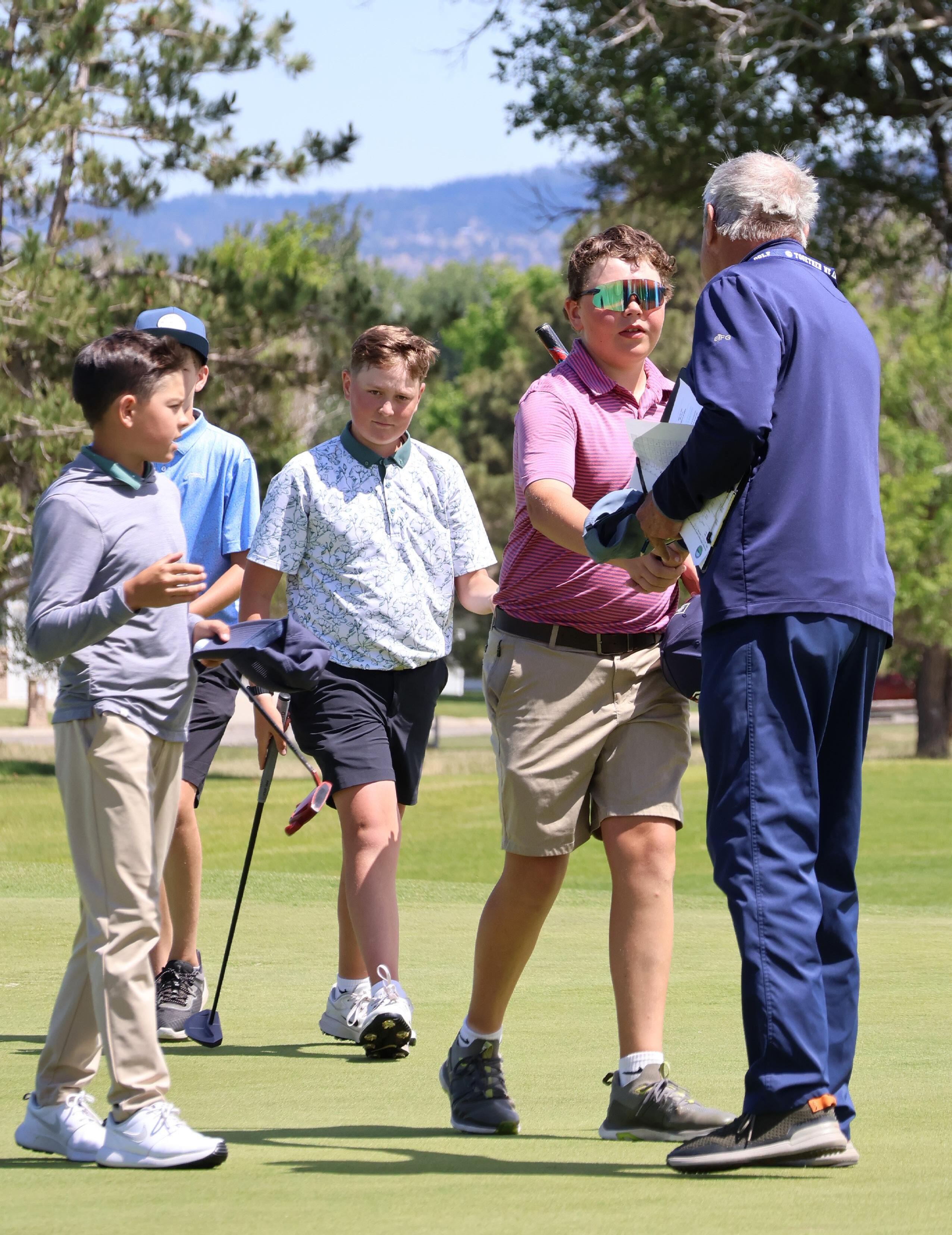
Just last week I was privileged to volunteer at the MSGA State Juniors Tournament at Lake Hills Golf Club in Billings. The first two days I was a scoring marker for a group of 13 and Under Boys and the final day I helped at the scoring tent.
What I observed while watching and interacting with all the participants renewed my faith in the future of golf in Montana. Seeing what I consider to be a perfect balance of competitive spirit, etiquette and just having fun was so refreshing. To be with a foursome 13-year-olds (who by the way could all easily beat me) who all wanted to beat the others but congratulated each other when an above average shot or putt was hit and then walked together down the fairways, smiling and enjoying each other’s company. Supportive parents, grandparents, friends followed from a respectful distance, letting the kids just do their thing.
While working at the scoring tent the final day, each group, boys and girls up to age 18, finished their final round and sat with their group competitors, read each other’s scores to whom they kept, to confirm before officially signing and submitting as correct and
official. No matter if someone had a bad day or had just won their age group or overall honors, the players smiled, if a good round was played, the others said so again to that player and what I noticed most overall was that every player said a nice, clear, THANK YOU to Boatwright Intern Isabel and I. Such politeness not seen very much elsewhere in this world by teenagers. It showed me that golf is a teaching ground for the principles of sportsmanship, manners, fair play and friendship, all things that are lifelong valuable attributes to have.
My thanks to the MSGA staff, fellow volunteers and the Lake Hills Clubhouse and Golf Course Maintenance team along with Gary Shampany (Managing Partner) who by the way is a solid supporter of junior golf in all facets, for putting on a great event and my congratulations to every young lady and man who competed because from what I observed from each of you, everyone was a winner in my opinion.
PS: I asked some of the MSGA staff what topics about golf course maintenance they might have questions about that I could address in future articles. I would ask the same of anyone who happens to read this. Please email me at pghgc@montana.net if you have something you would like to know my opinion about or experience with.
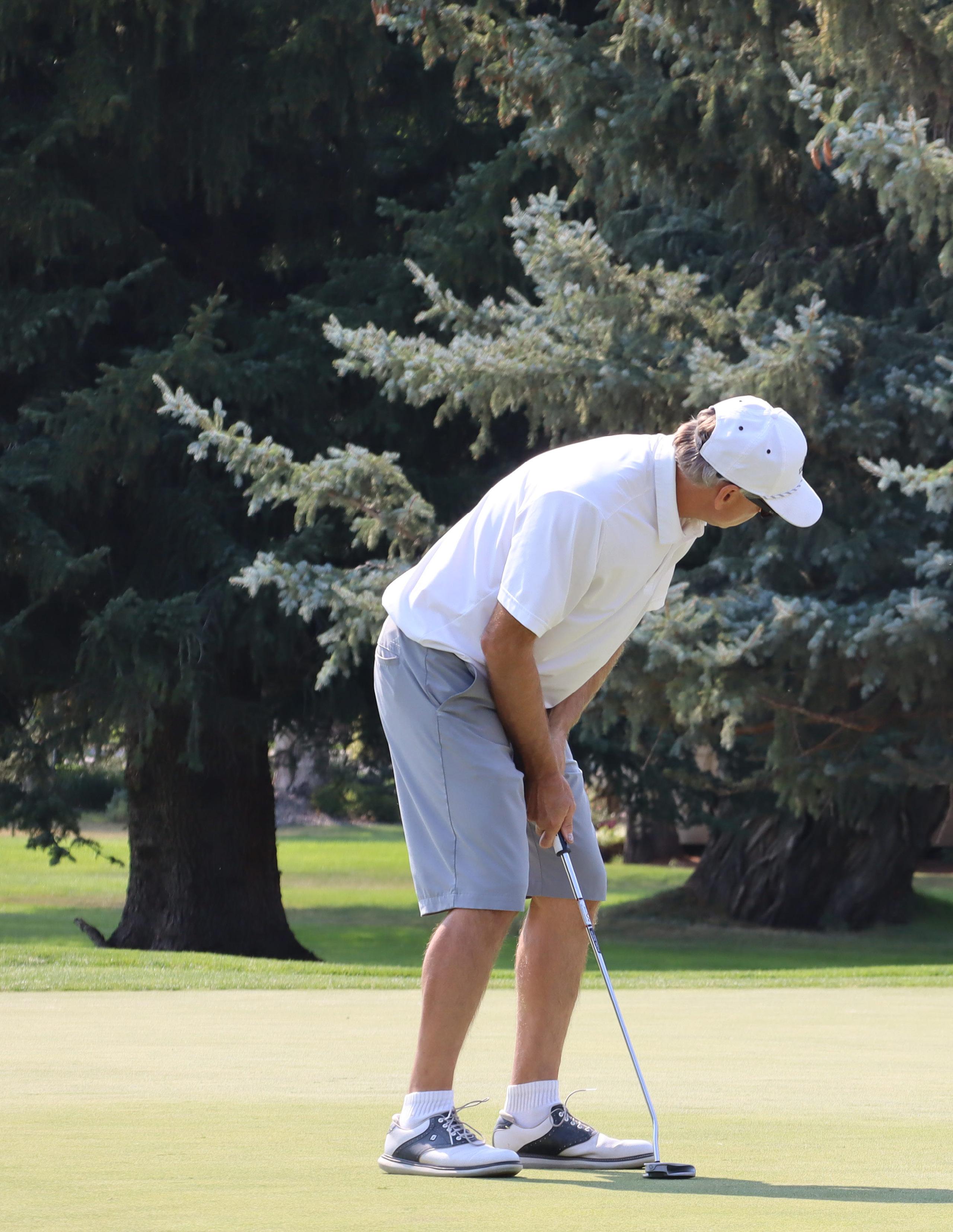

After watching Adam Svensson pick up his marker on the green during the Final Stage of the US Open Qualifier, I thought it might be a good topic for WWSD.
Rules Around the Green: What Every Golfer Should Know.
The Putting Green is where some of the most specific and misunderstood rules of golf come into play. From marking and cleaning your ball to dealing with the flagstick or another player’s ball in your line, it’s easy to get tripped up if you’re not sure what’s allowed just ask Adam Svensson. Adam Svensson likely cost himself a US Open spot after a marker mistake. After Max McGreevy sank his birdie putt to secure the final U.S. open spot at Lambton Golf & Country Club in Toronto, Svensson assumed his long day — 36 holes in regulation plus a three-hole playoff, was over. He quickly grabbed his ball marker, without replacing his ball back on the spot, and went to shake hands with McGreevy. However, Svensson had a par putt that would have tied
him with the other golfer, Matt Wallace, in the qualifier for the first alternate spot.
The two would have played on to see who earned the crucial first alternate spot. When he picked up his marker, it turned into a DNF, leaving Adam Svensson as the second alternate.
During a recent Junior Championship, that I was officiating, I had a junior think it’s ok to adjust the line on their ball on the putting green without marking it, they said they are just twisting it to adjust the alignment? Unfortunately, I had to explain why they were given a one-stroke penalty.
To answer this specific question, See Clarification 9.4b/1 Ball Deliberately Touched but not Moved Results in a Penalty which states: Ball Deliberately Touched but Not Moved Results in Penalty to Player.
When the ball in play is deliberately touched by the player, even if it does not move, the player gets one penalty stroke under Rule 9.4b.
For example, a player gets
one penalty stroke if they:
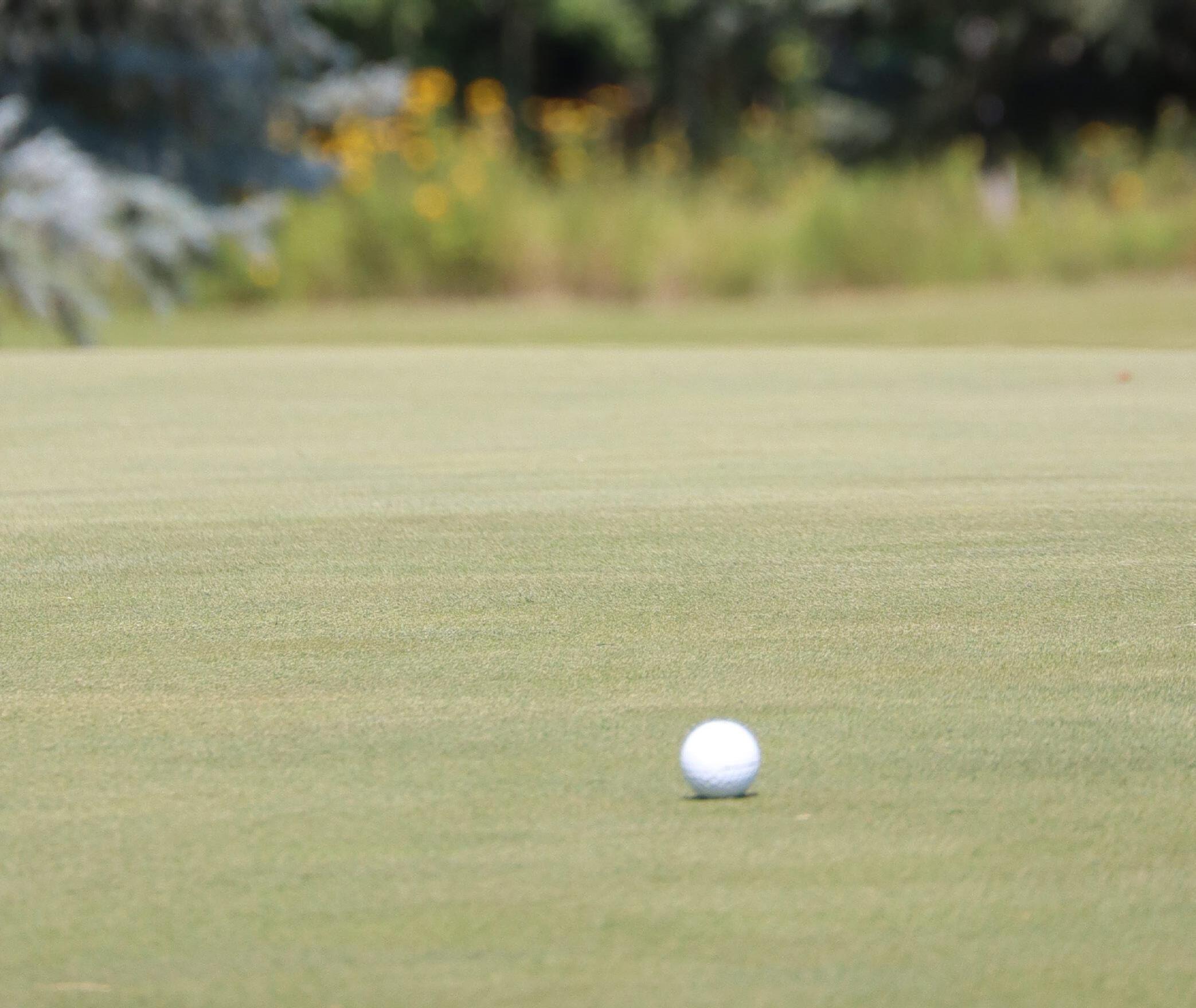
Without first marking the ball's spot, rotate the ball on the putting green to line up the trademark with the hole, even if the ball remains on the same spot.
If the player had marked the spot of the ball before touching or rotating it, there would have been no penalty.
At another event I had a player that had an odd way to
mark his ball on the green. Because of a bad back the player reaches down with the hand that has the marker in it, picks up the ball and drops the marker at the same time and the ball is lifted before the marker hits the putting surface? Unfortunately, the player was given a one-stroke penalty under Rule 14.1a.
Rule 14.1a Spot of Ball to be Lifted and Replaced Must Be Marked
Before lifting a ball under a Rule requiring the ball to be replaced on its original spot, the player must mark the spot which means to:
• Place a ball-marker right behind or right next to the ball, or
• Hold a club on the ground right behind or right next to the ball.
If the spot is marked with a ball-marker, after replacing the

ball the player must remove the ball-marker before making a stroke. If the player lifts the ball without marking its spot, marks its spot in a wrong way or makes a stroke with a ball-marker left in place; the player gets one penalty stroke.
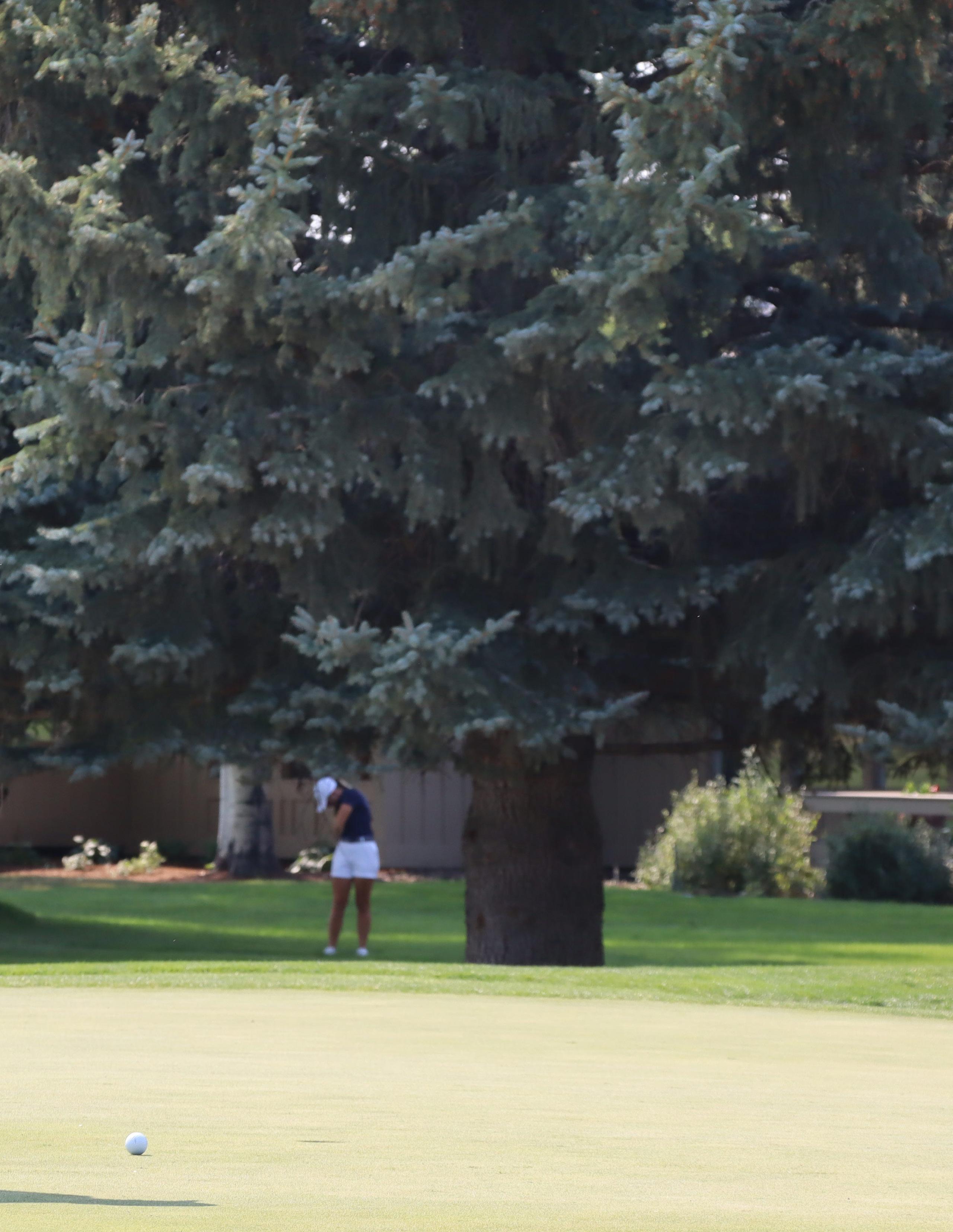
A player’s approach shot landed and stopped on the middle of the green. His playing partner needed a ruling before playing his approach, which took several minutes. During this delay, a huge gust of wind blew across the green, sending the ball off the putting green.
According to Rule 13.1d, there is no penalty when wind, water or other natural forces cause a ball to move. But how to proceed after it moves depends on what happened prior to that moment. If you have already marked, lifted and replaced your ball on the green and it moves, you're supposed to put it back in its original location.
Think of it as having “owned” that spot by virtue of your ball being lifted and replaced there. If you haven't marked AND lifted your ball, you're supposed to play it from its new position, even if that spot is off the green and in a bunker.
This is an important distinction, because this is where a mistake can cost you. Just ask Keegan Bradley. At the 2022 Players Championship, Bradley incorrectly replaced his ball despite marking it, because it
hadn’t been lifted. He should have played it from its new location. Because he didn’t, he was hit with a two-stroke penalty.
Damage on the Green – Remember let’s help the hard working maintenance crew. Repair your ball mark and one more!
One of the most golfer-friendly rule changes in recent years allows players to repair almost all damage on the putting green — a big help for anyone who has been frustrated by spike marks or scrapes in their line.
What You Can Repair
• Ball marks (also called pitch marks)
• Spike marks and shoe indentations
• Old hole plugs
• Animal damage, like hoof or paw prints
• Indentations from maintenance equipment
These repairs can be made without penalty and should be done quickly to keep the pace of play moving.
• Natural wear of the green (from foot traffic or mowing patterns)
• Damage you cause intentionally
• Lines created by rolling or dragging the mower
• Normal imperfections that don’t affect the
ball’s path
• Accidental Movement by the Player
If you accidentally move your ball or ball marker while:
• Reaching down to mark it
• Replacing it
• Lifting your putter behind it
• Brushing debris nearby
• There’s no penalty. You simply replace the ball on its original spot.
In stroke play, if you play a putt and your ball hits another ball at rest on the green:
• The putting player receives a two-stroke penalty
• The other player does not get penalized
• The ball at rest that was hit will be replaced on its original position the other ball is played as it lies.
The green may be the smallest area on the course, but it’s packed with rules that can impact your score in big ways. Whether you’re marking your ball, repairing damage, or dealing with interference, having a solid understanding of what’s allowed gives you a huge advantage — and helps you avoid penalties that can sneak up on even experienced players.


BY NOAH WEYNE MSGA BOATWRIGHT INTERN

Raymond Olds is a graduating senior at Park High School and a recipient of the Montana State Golf Association’s Junior Scholarship. Olds will be playing collegiate golf at Toccoa Falls College in Georgia where he plans to study Business Administration and Landscape Architecture.
“It’s been so fun to play golf, meet new people and make connections,” Olds said. “Learning how to be patient and get over your mistakes has been really important to me as I walk throughout the rest of my life.”
Olds has played competitive
golf since his 8th grade year. His high school career ended by earning All-Conference and All-State honors.
“I had to change something in my head,” Olds said to himself after a bad day at his junior year high school state championship. “I had to tell myself, if you play frustrated, you can’t play at all. I had to learn how to let go of some things.”
Golf has created values and a strong work ethic within Olds. He hopes to carry these values as he plays collegiately and in his studies at Toccoa Falls.
“Perserverance and grit, that is something you learn from being on the golf course and having to play in rain and all sorts of things,” Olds said. “Having grit and determination gives me the ability to get it done.”
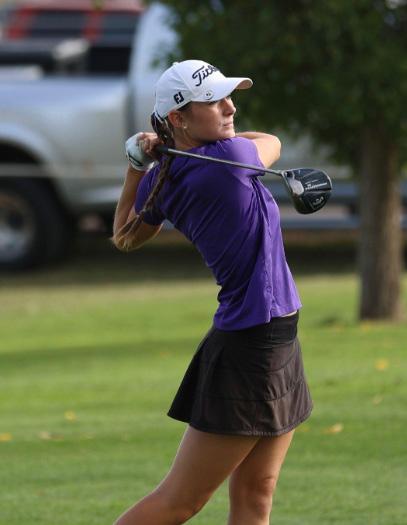
Recent graduate of Park High School, Anna Lende, received the Montana State Golf Association’s Junior Scholarship. Lende will play golf at Rocky Mountain College in Billings. She plans to major in
Business or Accounting.
“The best thing I have gotten from competitive junior golf is all the people I’ve met,” Lende said. "Getting to play a ton of golf courses around the state and meet people I would not normally play with, is something I really liked.”
Lende wrapped up her high school season as the Montana High School Class A individual champion. She dominated the field, winning the Championship by eight strokes with a +10 finish (77,77). She has competed in summer junior tournaments since she can remember.
“I started liking golf when I played in high school,” Lende said. “It made me more committed and competitive.”

The sport taught Lende to stay committed even when things are hard and to be patient with herself. Realizing the path to collegiate golf was a process that became a turning point in her athletic career.
“Golf… is just hard work,” Lende said. “Seeing firsthand how that can pay off is something I will carry into my school work and future job.”
Quincy Weymouth, recent graduate of Charles M. Russell High School, will play collegiate golf at North Central College in Illinois. She plans to major in Elementary Education.
“When I called the coach she talked so highly of her program it made me really excited,” Weymouth said. “When I visited, it secured the decision for me.”
Golf is a tradition for the Weymouth family. Playing with her father and brother growing up grew Weymouth’s love for the game at a young age.
“Team sports, for me, were always kind of hard,” Weymouth said. “I like golf because you contribute to a team, but you are still an individual working on your own game to get better.”
Through playing on her high school team, competing in summer tournaments, vol-
unteering to get middle school girls involved or even playing with her Dad on the weekends, golf taught Weymouth to worry less about the past and focus on the present.
“Becoming a teacher one day, I think this lesson will serve me well,” Weymouth said. “Kids are going to make mistakes, I am going to make mistakes, but you can’t focus on them too much. You’ve got to move on to make your day and everyone else' s more enjoyable.”
Golf is a fun outlet for Weymouth. She treats every round as an opportunity to grow and holds deep value for the integrity aspect of the sport.
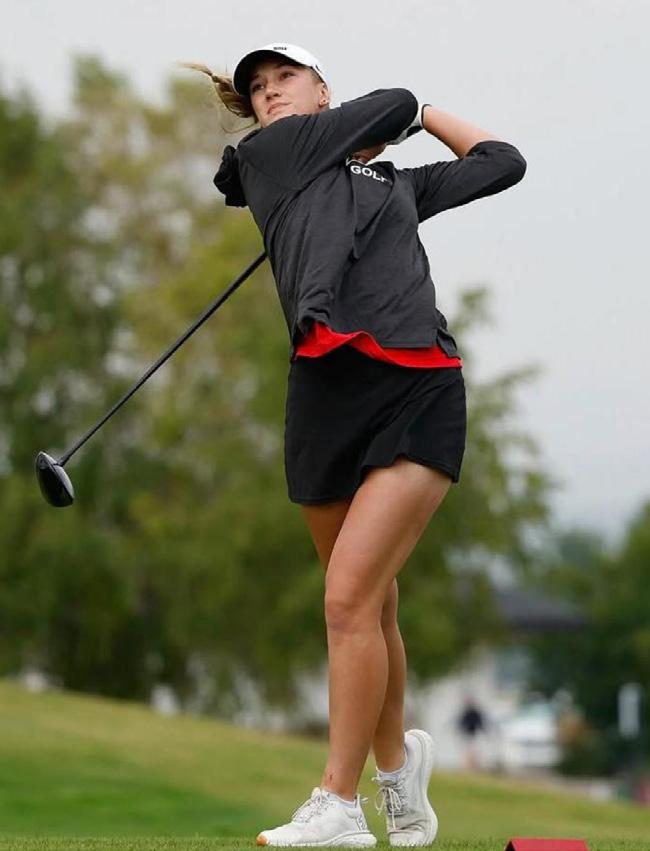
Heidi Huber is a recent graduate of Bozeman High School and a recipient of the MSGA’s Junior Scholarship. She will be attending the California Polytechnic State
University in San Luis Obispo, California where she plans to study Communications, Leadership and Journalism.
“I love how the sport of golf is both an individual and team sport,” Huber said. “You can go out and be in your own world, but you’ll always have your teammates to fall back on.”
Huber wrapped up her high school career leading the Hawks to the Montana State High School Class AA Eastern Championship title and earning runner-up honors individually.
“I could not believe someone was filming me playing golf at States,” Huber said. “I was having too much fun being in the moment and seeing all these people watching me, I forgot I needed to lock in and actually hit the ball.”
Huber started playing in summer junior tournaments in high school, mainly on the First Security Bank Jr. Tour. In 2025, she claimed the Wheat Montana Jr. Tour Championship Title.
“I loved meeting new people through high school golf,” Huber said. “I think the biggest lesson I have taken away is to play for yourself and to not be too hard on yourself, the sport is already hard enough.”
Setting small goals to get better each day has led to Huber’s success on the golf course. She has learned to not focus on those around her and let the bad shots roll off her back. At
Cal Poly, she hopes to join the club golf team in the fall.
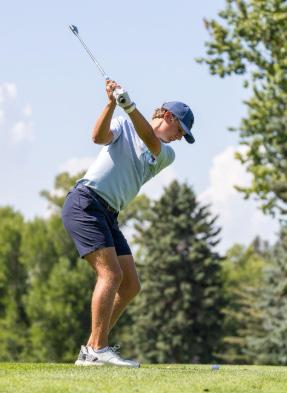
Billings native, Isaac Mosser, recently graduated from Skyview High School. He will be playing collegiate golf at Montana Tech University and plans to study Petroleum Engineering.
“In high school, I played basketball and golf, which are vastly different,” Mosser said. “I like golf because it is just you out there. You are in charge of all the good things and the mistakes.”
Mosser believes the sport is representative of the effort someone puts in. The threetime All-State honors recipient finished his high school career tied for Montana High School Class AA State runner-up, shooting +4 (72,74).
“I started playing golf as soon as I could walk,” Moss-
er said. “My high school golf seasons felt like two different phases – one where I was mentored by my older teammates and one where I stepped up as a leader on the team.”
The First Tee volunteer is dedicated to teaching kids how to play golf in hopes to grow the game. Through his involvement in the sport Mosser has taken away the lesson of having a goldfish memory the most.
“You get 10 seconds,” Mosser said. “10 seconds of frustration. 10 seconds to reflect or be down, but then you got to let it go. You have to move onto the next shot.”
Mosser is excited to be a Digger, play new golf courses and be challenged with further distances in the fall.
Lilia Troxel recently graduated from Belgrade High School as their most decorated female golfer. She will be playing collegiate golf at Rocky Mountain College where she intends to study in their Physician Assistant Pathway program.
“Golf has always been a part of me and my identity,” Troxel said. “I enjoy every aspect within the game.”
The future Battlin’ Bear has golf practically in her DNA. She was captain for Belgrade’s team, works part-time at a
local golf course, volunteers and coaches junior golf and consistently played in summer tournaments.
“What makes golf special for me is the connection the game has brought me,” Troxel said. “Most importantly, the game has given my dad and I something to bond over. He’s been my coach, biggest support and is the main reason why I love golf.”
Troxel acknowledges that sport is as much of a mental game as a physical one. Golf has consistently reminded her how important a positive and resilient mindset is to succeed as a golfer and in life.
“Not only has golf shaped my work ethic, but it also taught me the value of working hard at something you love,” Troxel said.
Golf has instilled sportsmanship, resilience and optimism in Troxel – values she plans to carry on and off the golf course next year.
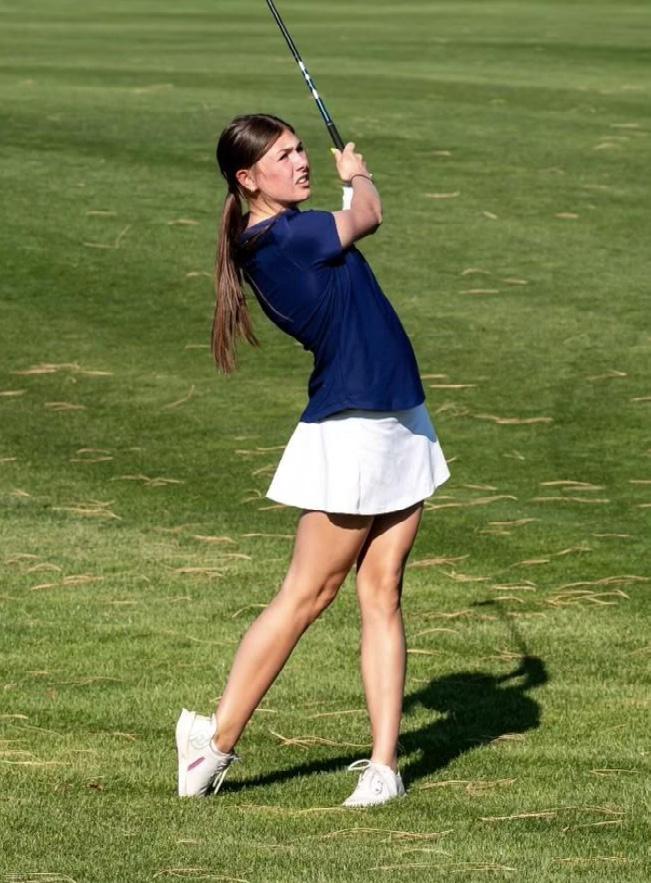
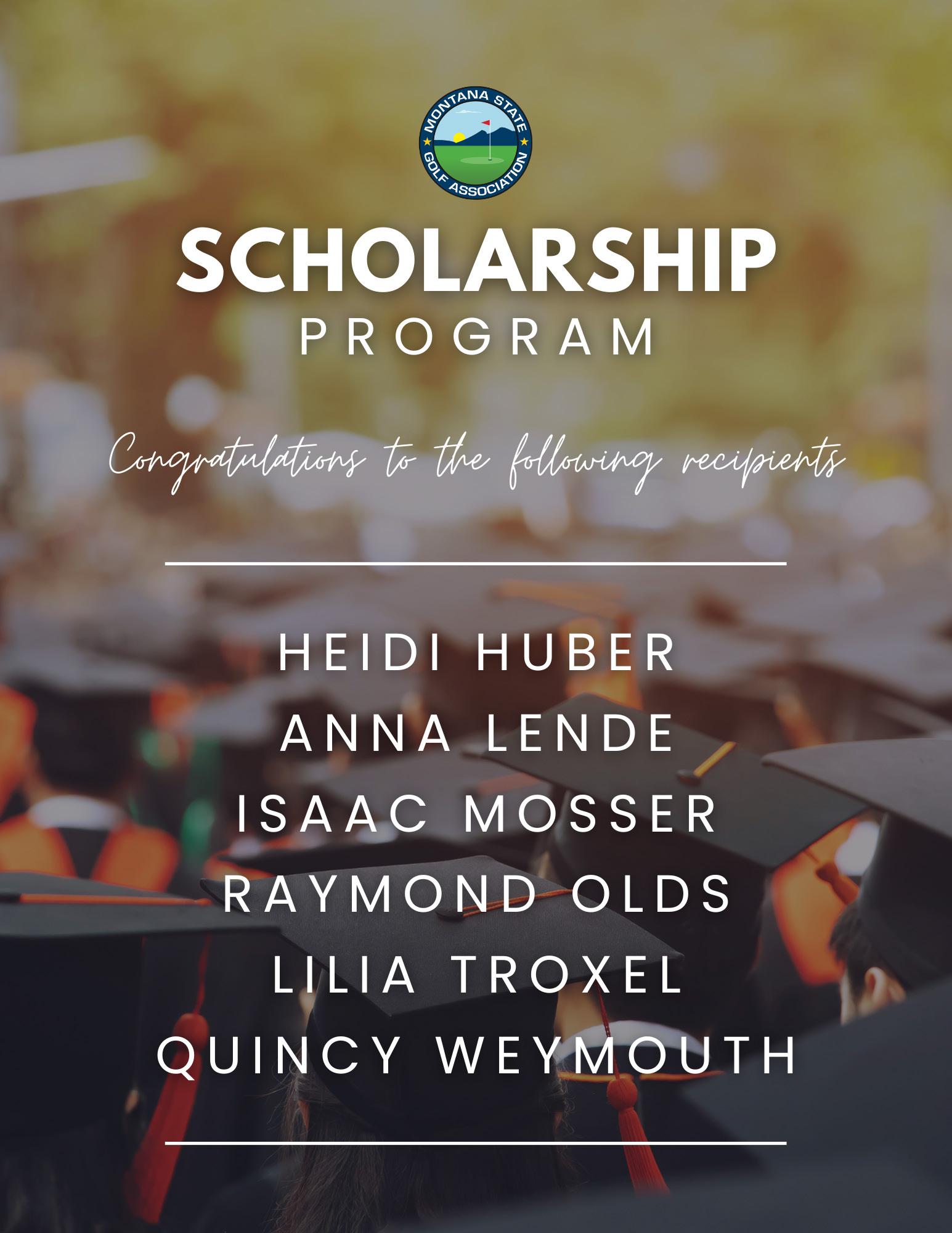
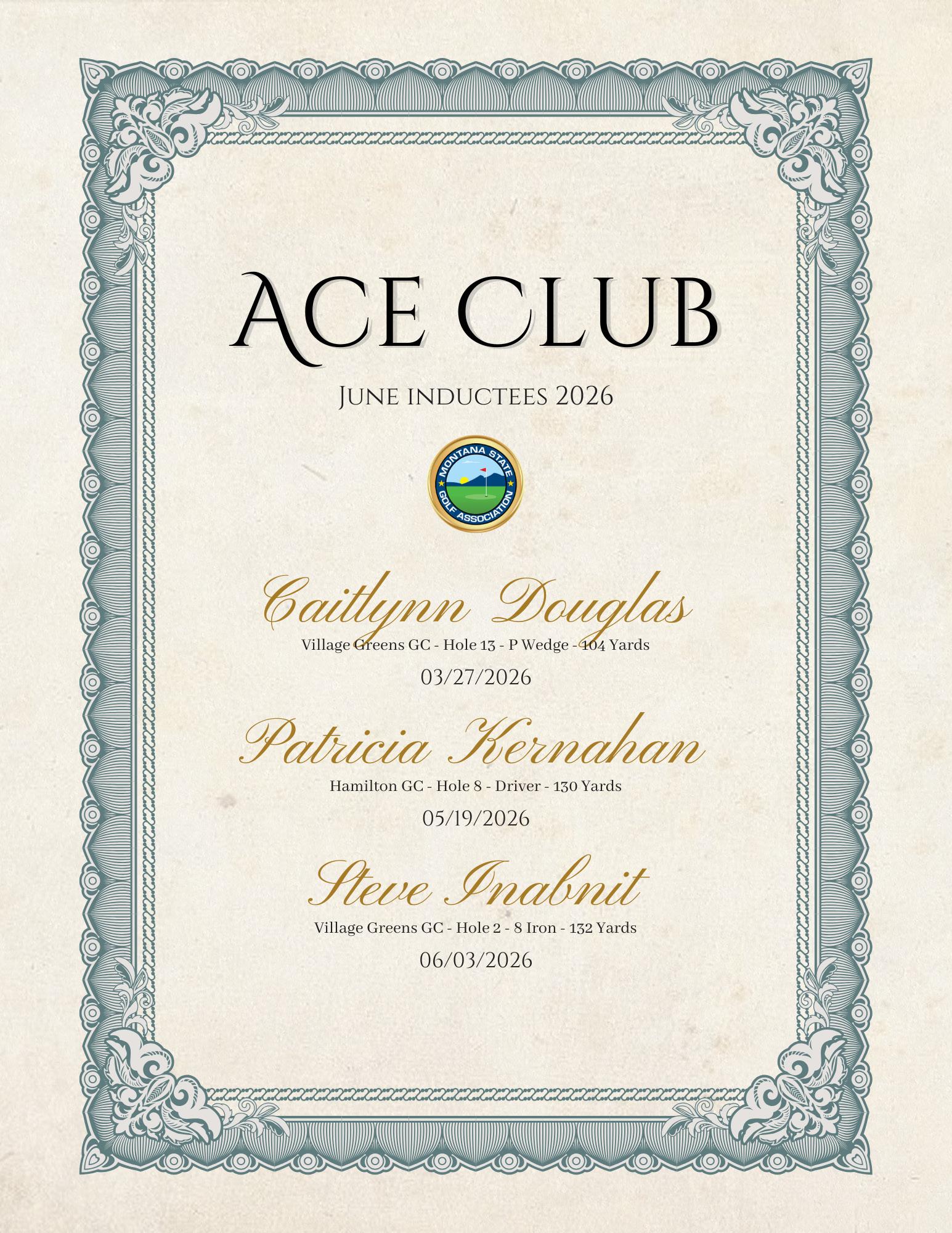

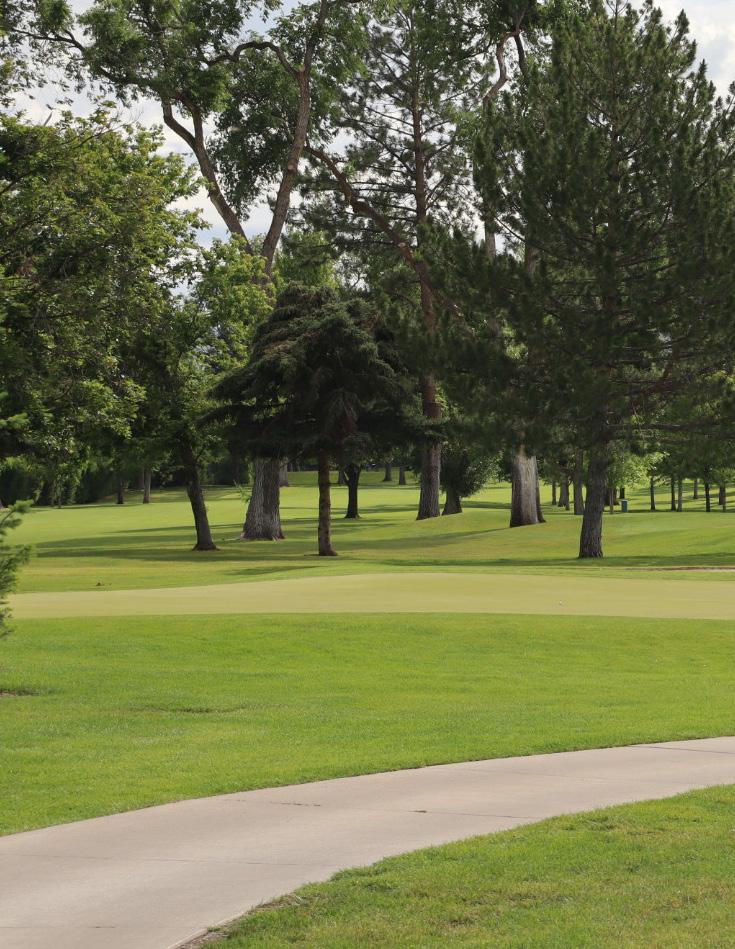


BY BILL LARSON
So, you want to play a tour event and get the feeling of the Big Dance. Fast greens, rounds under four hours, added money and a world class field.
If that sounds enticing sign up for the “Pepsi Gallatin Valley Open” (GVO) at Cottonwood Hills Golf Course, September 12th and 13th. The event is open to anyone with 12 HDCP or better. 39 Professionals and 84 Amateurs make up the field.
The GVO is a 36-hole stroke play event and Amateurs are flighted by handicap into seven flights. The Championship Flight gets mixed within the pro field on Sunday based on Saturdays score.
Past contestants include PGA, Canadian, Asian and South American Tour players. The pro field is very strong. The pro purse is $16,000 based on a full field.
On the Amateur side many Montana State Golf Association title holders have played in the event and two years ago an Amateur, Andrew Van Lossow, won the Amateur title and beat the Pros to win the Open trophy. He also beat the number one seat and placed 16th in
the US Amateur.
The GVO has been held for 30 years and has raised over $20,000 for Eagle Mount which is an organization that provides people with disabilities recreational activities. Over $10,000 is raised in the Bozeman community and money is added to the Professional and Amateur purses.
The event is PGA sanctioned and a points event for the Montana State Golf Association.
When the tournament was put together its main goal was to give Montana Amateurs a place to grow their games. At the time almost all events were team play with rounds lasting up to seven hours. GVO rounds are under four hours with the help of a strong field playing in threesomes.
Being a PGA Sanctioned Event means the starting and rules are strictly adhered to. The GVO totally mirrors a PGA event. Pros are required to wear slacks with their shirt tails in.
The event also holds a Pro-Am on Friday to include the sponsors and a Par 3 tournament on the Cottonwood Hills Par 3 course. These are added events and separate from the GVO.
For more information about the GVO you can go to www.CottonwoodHills.com. Amateur registration is made with paid entry to Cottonwood Hills and the Pro entry is made to the Rocky Mountain PGA Section.
If you want the experience of playing in a PGA Tour event and you have a 12 HDCP or better this is your tournament.
BY TOBY DINGES MSGA BOATWRIGHT INTERN
My name is Toby Dinges. I am one of Montana’s 2026 Boatwright interns and I had the pleasure and honor to attend the Boatwright Summit in Liberty Corner, New Jersey. The Boatwright internship is such a blessing, and the program's values are truly inspirational. During my time at the USGA headquarters, I had the pleasure of meeting interns from across the United States. I built strong connections with several of these interns, deepening my understanding of golf and golf operations. During my trip to the USGA headquarters, I was able to completely learn and understand the game of golf from a new perspective.
On my travel day, I met people from Wyoming, Washington, and Oregon, all of whom were heading to the summit. On our way, we compared our different associations and how we run tournaments in our designated states. Upon arrival, I was greeted by members of the USGA community and other allied golf associations. I was truly amazed by the USGA museum and the on-site facilities; it was fascinating to see so
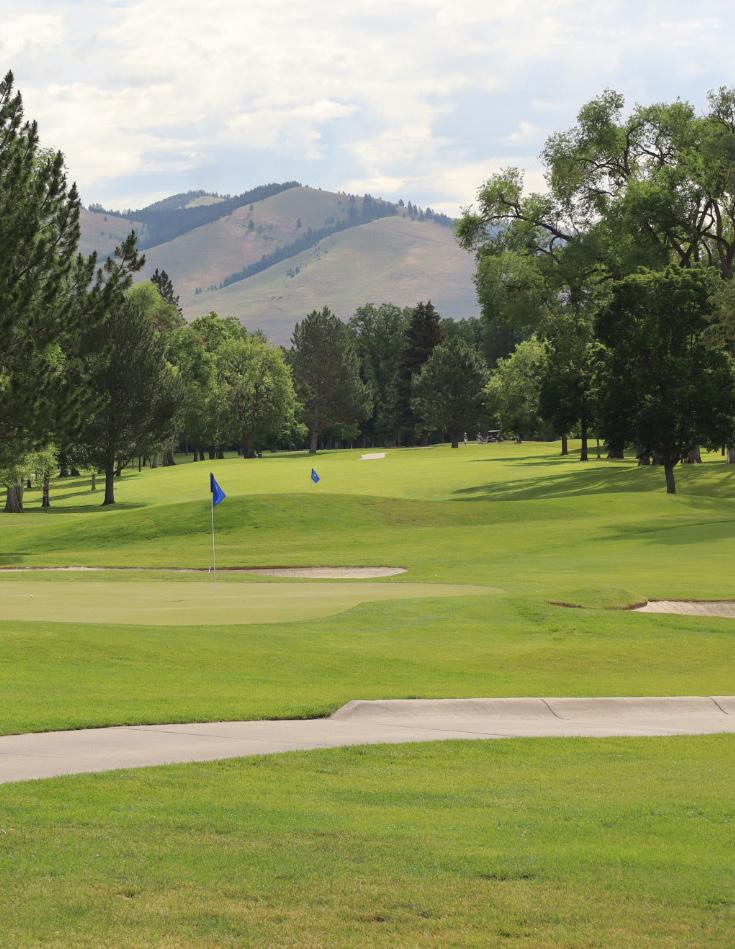
much history come to life.
My first full day at the summit was action-packed and full of learning. We started by learning about the partnerships the USGA holds; within these partnerships, they can benefit from having their name available and out in the market with the USGA. From the partnerships, we moved on to the handicapping system. My advice to anyone who plays golf: GET A HANDICAP! It’s much more important than you know, whether you are a competitive golfer or your everyday Joe looking for a couple strokes when playing your buddy for an extra buck. One of my personal favorites was the USGA broadcast; that is where they air the USGA during or after rounds of tournaments like the US Open. Did you know that there are over 150 cameras on the golf course during a single round of the US Open? Then, to conclude my day, I learned about the extensive merchandising at USGA-organized events. It was eye-opening to hear about the operations that take place behind the scenes of the USGA. I hope everyone gets the opportunity to learn.
On my last full day, I saw the tournament operations in action on the golf course. We arrived at the Watchung Valley Golf Course, which held a 2025 US Amateur qualifier. There, we learned on-course rulings, photography, how to
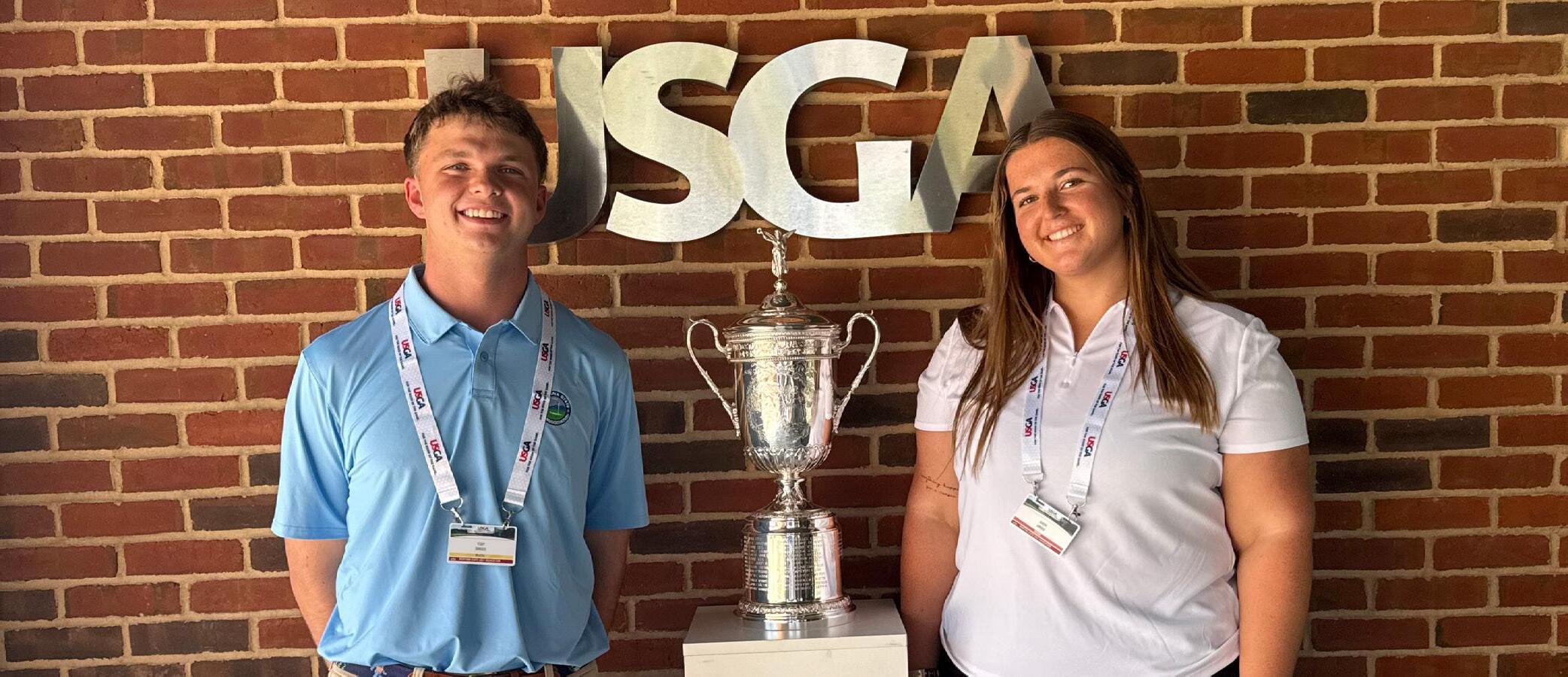
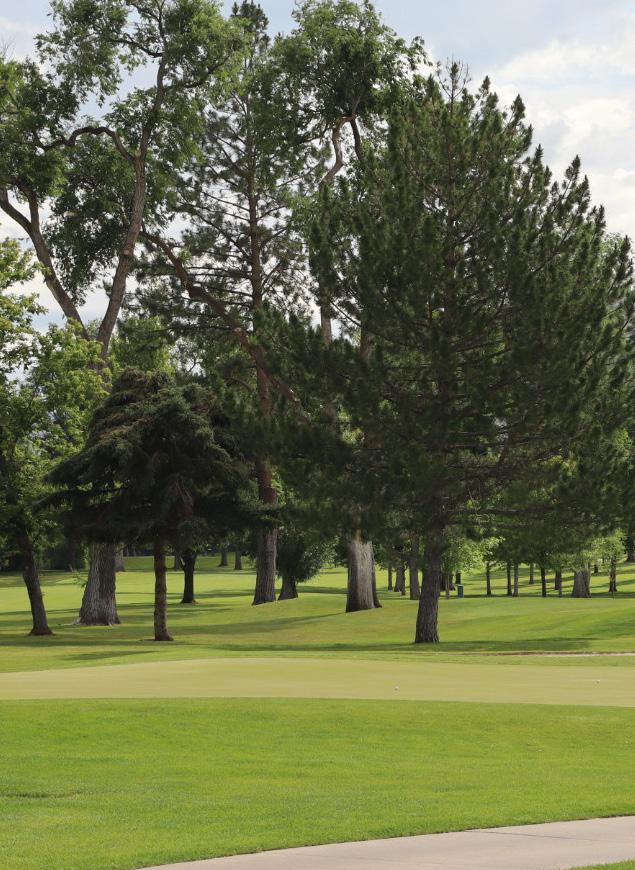
get ratings, and how to lay out greens for tournament setup. My favorite part of being on the golf course was getting to see how they measure slope/speed of the greens with a Stimpmeter, and how that has evolved with technology. The tool or concept used to measure the slope/speed of the greens is the same amongst all courses in the world. As our day started to wrap up, we were fortunate enough to hear closing remarks from the CEO of the USGA, Michael Whan. He has a wealth of knowledge; he has worked all across the country and in many different industries. When I had the opportunity, I asked him what he wanted to be remembered for. He responded, “The relationships I've made, and the people I’ve worked alongside”. It was definitely an eye-opening moment for me to hear!
As my time at the Summit wrapped up, I was very impressed by how it was run, and the internships it has offered people from across the United States. I’m forever grateful to have been able to attend the summit alongside fellow Montana intern Avery Linder. I look forward to the rest of the summer with the Montana State Golf Association and getting to know the participants of the tournaments.
BY AVERY LINDER MSGA BOATWRIGHT
During the week of May 18th, 2026, I had the incredible opportunity to attend the annual United States Golf Association (USGA) P.J. Boatwright Intern Summit, held at the USGA Headquarters in Liberty Corner, New Jersey. I was honored to be selected as one of two interns representing the Montana State Golf Association, and I’m excited to bring back what I learned and share it with others.
During the week, we partook in various sessions discussing topics ranging from championship administration to merchandise and player relations. My personal favorite session was about photography and communications. We learned which different forms of communication perform the best in the golf industry, different
ways to angle articles and feature stories, and how important it is to trust your team during high-stress moments. A special thanks to John Mummert, whom I connected with following the session and who generously shared advice as I prepare for my first summer working in the golf industry.
Another session that stood out was about USGA partnerships. It was really interesting hearing about all the behind-the-scenes work that goes into brand collaborations and what they look for when working with partners. They explained what makes a good fit, how the partnerships build up over time, and all the coordination that needed to allow it to run smoothly. These different sessions truly provided a new perspective on how much work goes into growing the game both on and off the course.
Throughout my time at the summit, I connected with numerous golf professionals, donors, USGA employees and alumni, and other Boatwright interns from other Allied Golf Associations across the nation, who all share the same passion for making an impact in the sports industry. To conclude the summit, we were honored to hear from Mike Whan, USGA’s CEO. His speech was one of the best I have ever heard. He didn’t just focus on golf and the different aspects of the industry. Instead, he focused on making each one of the interns believe in themselves. He preached the idea of getting comfortable with being uncomfortable. Not only did he share his journey to becoming CEO, but he also reminded us that whatever paths we take following our internships, it won’t be easy and there will be challenges we encounter along the way. His speech was the absolute best way to wrap up the summit as we all prepared to return to our home associations.
Overall, the 2026 USGA P.J. Boatwright Intern Summit was an extremely valuable experience that helped broaden my understanding of the golf industry and gave me tools to help me succeed. I’m very grateful for the opportunity and the lessons learned, and I look forward to bringing them back to the Montana State Golf Association this summer.
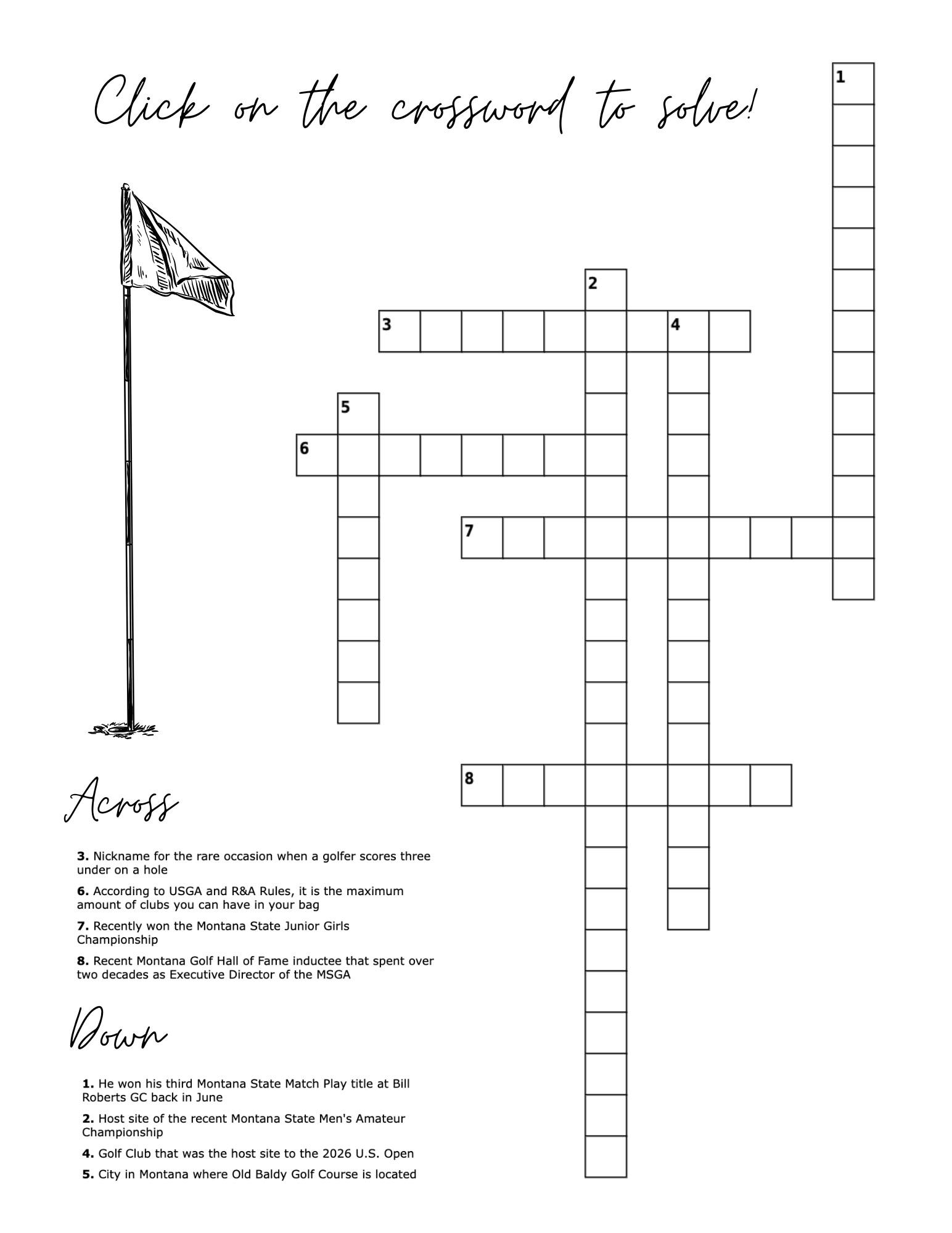
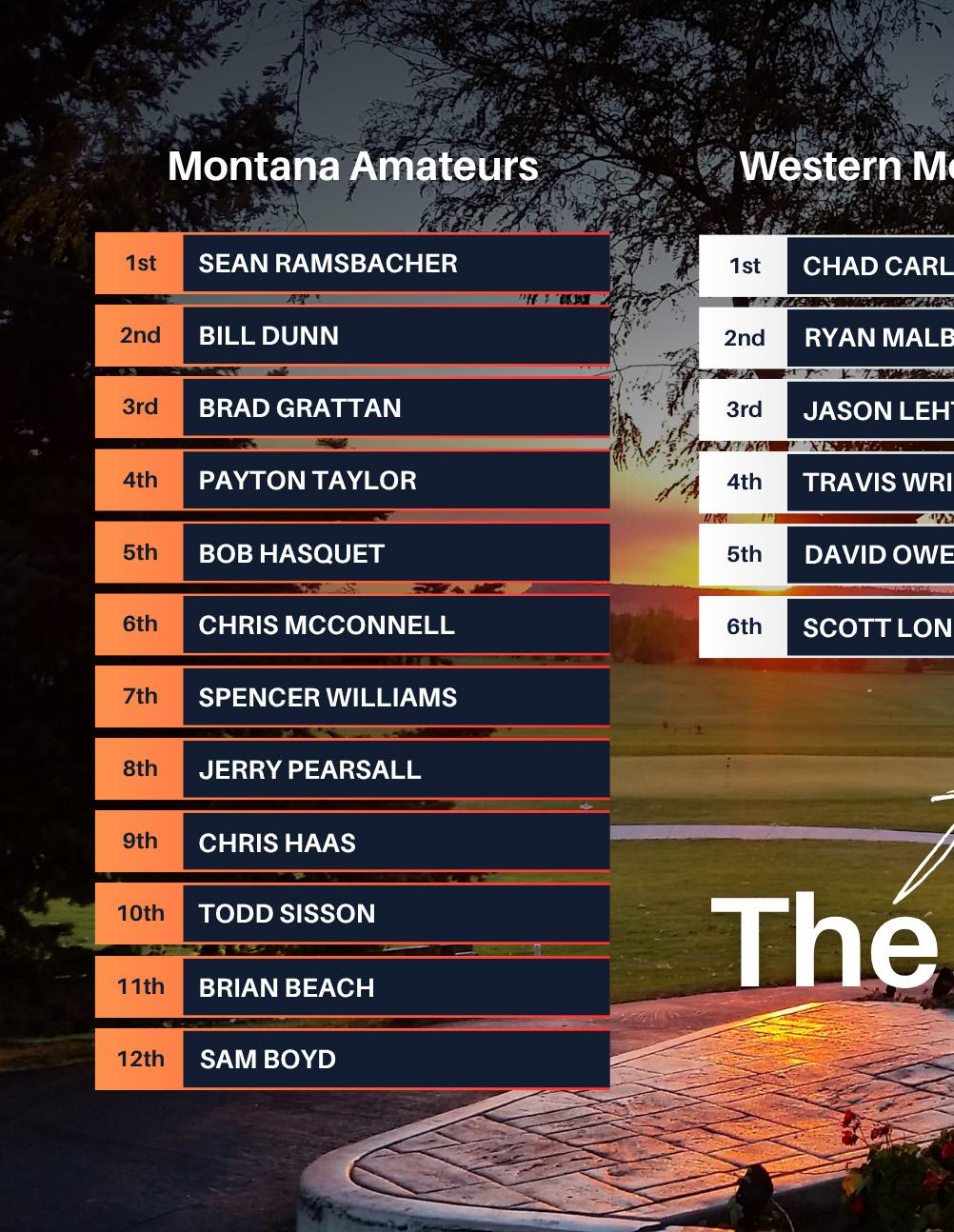

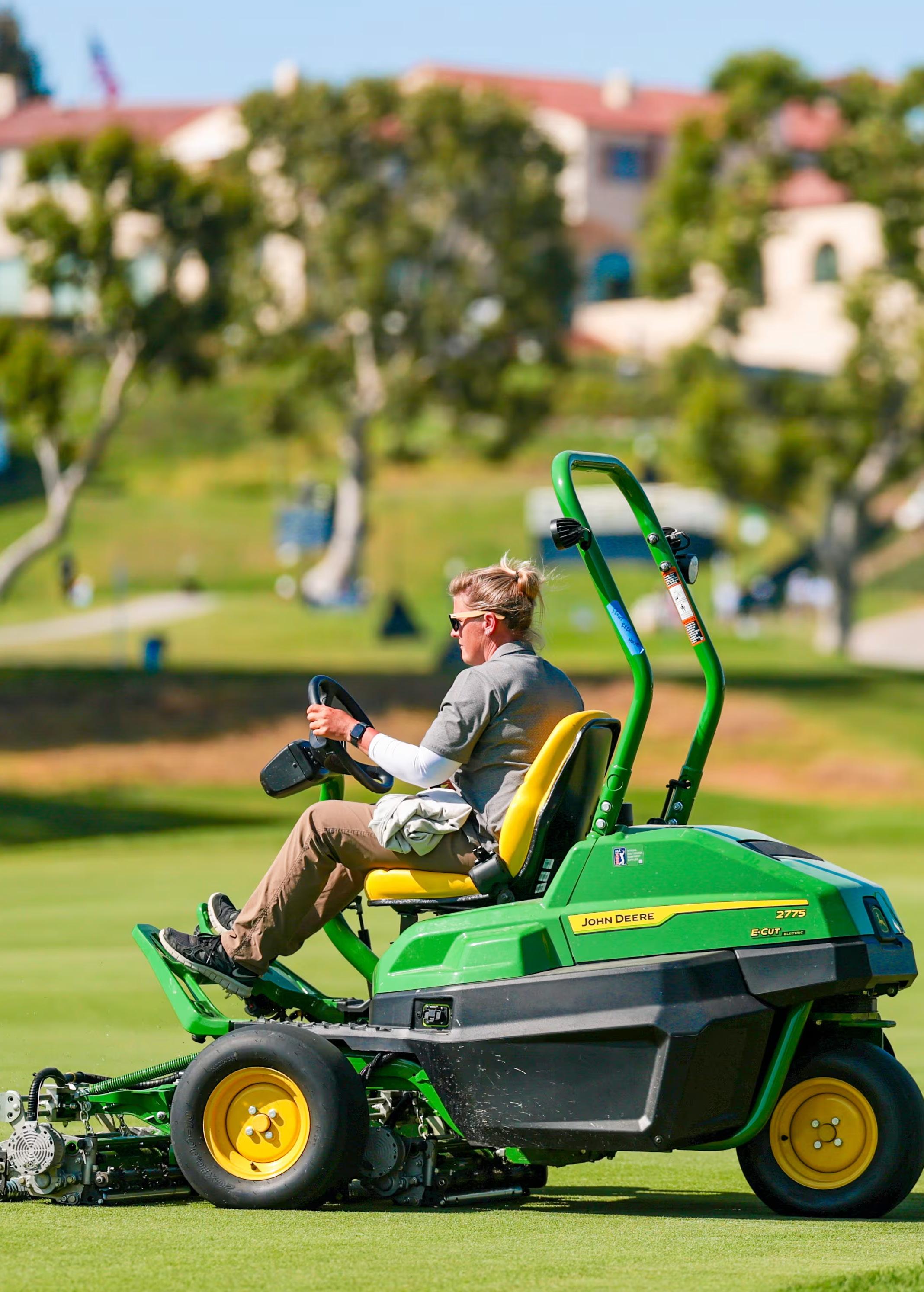
a desire to stay connected and continue providing support and encouragement. Updates on promotions, new positions, job openings and volunteer opportunities are regularly shared within this community.
For those who have been in the industry longer, there is a growing sense of pride in watching women who entered the profession as assistants in training (AITs) or entry-level maintenance crew members take the next steps in their careers and follow their professional journeys. Beyond sharing news, this network provides an opportunity for individuals to seek advice from peers who deeply understand the challenges faced throughout the golf course maintenance industry, while also recognizing the unique experiences of being a woman in a traditionally male-dominated field. The

work these women do to help prepare iconic golf courses for the U.S. Women’s Open also shines a light on the opportunities available in the turf industry for women.
Every one of the women volunteering to help with course maintenance at this year’s U.S. Women’s Open is passionate about what they do and, in my opinion, they are among the strongest women you could ever have the pleasure of meeting. As many will tell you, perseverance is one of their defining qualities. They are standouts in the workforce who have been recognized and elevated through their expertise and accomplishments. I have greatly enjoyed working with them as a USGA agronomist helping to prepare Riviera for a great championship.