

Taking Care of the Game—and One Another
The 3M Open just concluded and one of golf’s emerging stars, Jackson Koivun (21) burst onto the scene in a big way with his victory over a collection of major championship winners. The 3M is played in Minnesota and as I think about age, golf and life it reminded me of a Minnesotan – former Vice President, Hubert Humphrey and a quote during a speech of his:
"The moral test of government is how that government treats those who are in the dawn of life, the children; those who are in the twilight of life, the elderly…
This quote from nearly 50 years ago had me thinking of the golf community as the game is soaring to record heights of participation and traditions, emerging technologies and personalities are yielding creative friction.
Golf is in a strong position today. Courses are busy, participation remains healthy, and more people are discovering—or rediscovering—the game. That strength is worth celebrating. It also gives us an opportunity, and perhaps an obligation, to think carefully about how we welcome and support all golfers – including both ends of the age spectrum.
For young people and beginners, golf must feel accessible, enjoyable and inviting. Their first experiences with the game may not involve an 18-hole scorecard or a perfectly organized swing. They may not know the rules or etiquette, those are all learned – not unlike a flop shot. They might begin at a junior clinic, riding along with a parent, putting
on a practice green or playing a few holes late in the evening. The details matter less than whether they feel that they belong and if they are encouraged.
We should teach young golfers the traditions of the game, but we also need to give them room to enjoy golf on their terms. That means creating affordable opportunities, offering encouragement and understanding that fun is often the first step toward a lifelong relationship with the sport.
Older golfers require a different kind of attention. For many, golf has been part of their lives for decades. It has provided competition, friendship, exercise and a familiar place to gather. As mobility, distance or health changes, the golf community should continue finding ways to keep them connected. Having combination or “combo” tees have become more common and provide a fair test, while also providing the same enjoyment we want our beginners and juniors to relish.


A golfer should not feel that there is an expiration date on being part of the game. Some may no longer play 18 holes several times a week, but their experience, stories and presence remain an important part of a club and community. A little patience can go a long way towards feeling included.
Taking care of golf also means taking care of the places where it is played.
Strong participation brings additional traffic and wear to our courses. Maintaining quality playing conditions cannot fall entirely on superintendents and their staffs. Every golfer has a role. Replacing a divot, repairing a pitch mark, raking a bunker and keeping carts away from vulnerable areas are small actions individually. Collectively, they make an enormous difference.
These habits are also a form of respect. We repair the course for the golfer behind
us, just as someone repaired it for us. In that way, course care reflects the larger spirit of the game: leaving something in as good—or better—condition than we found it.
Golf’s current strength should not be measured only by rounds played, memberships sold or crowded tee sheets. It should also be measured by whether a junior golfer feels welcome, whether a seasoned golfer still feels valued and whether we are caring for our courses and communities with an eye toward the future. After all, for those of us lucky to have come to the game, whenever in life that is – we can all enjoy it together.
Finally, we recently lost two great friends of our association – Bill Sprinkle and Woody Hahn
Bill, an accomplished athlete in the prep and collegiate ranks, is a member of multiple halls of fame, most notably – Bill was a
standout football player for the Washington Huskies. Bill’s service to sports was lengthy and included many roles across different organizations including serving as the director of the Montana State Senior Golf Association before it merged with the MSGA. I had the good fortune to know Bill, his family and to spend time on the links in Helena with him as he not only played good golf late into his 70’s, but matched competitive drive with a gentleman's demeanor – something that can be in short supply when the game isn’t going your way.
Woody also had a distinguished and diverse career in sports. Hahn co-owned a minor league baseball team, and served as commissioner of three different collegiate leagues in addition to numerous leadership roles in the communities he lived, most notably, Billings. Woody served on the MSGA Board and was inducted into the Montana Golf Hall of Fame for his service to the game. In my first state junior championship as Executive Director, Woody and I had a great visit about what golf had meant to him, his family and his friends. His love of the game and the values instilled by golf and other sports was palpable and you couldn’t help but be uplifted after a visit with Woody.
Both men made meaningful contributions to golf in Montana and to the people around them. We offer a heartfelt tip of the cap in their memory and dedicate this message to the friendships, service and love of the game they shared with all of us.
THE MSGA WILL BE LOOKING BACK LATER THIS YEAR ON A NUMBER OF FRIENDS OF THE ASSOCIATION WE’VE LOST IN 2026. If there was someone important to you, your community or golf in Montana – please drop us a line nick@msgagolf.org

BOARD OF DIRECTORS - OFFICERS
PRESIDENT................................................... Peter Benson
VICE PRESIDENT.................................. Ron Ramsbacher
TREASURER....................................................... Bill Dunn
PAST PRESIDENT......................................... Mary Bryson
EXEC COMMITTEE......................................Joe Rossman
BOARD OF DIRECTORS
Ross Bartell, Peter Benson, Carla Berg, Marshall Bettendorf, Mary Bryson, Brandon Davidson, Bill Dunn, Cheri Ellis, Lisa Forsberg, Marcia Hafner, Susan Haskins, Jeri Heard, Katy Peterson, Ron Ramsbacher, Joe Rossman, Rod Stirling
MSGA STAFF
Executive Director......................................... Nick Dietzen
Tournament & Player Dev. Director.............. Tim Bakker
Membership Operations Director............... Emily Hulsey
Member Services Manager.............................. Ian Hulsey
Marketing and Branding Director................... Katie Fagg
Communications Manager.............................. Ty Sparing
Partnerships & Business Development...... Nick Dietzen
Nick Dietzen.............................. 1 (800) 628-3752, ext. 6
406GOLF STAFF
Editor in Chief............................................... Nick Dietzen
Senior Writer..................................................... Ty Sparing
Graphic Designer................................................Katie Fagg
Contributing Writer......................................Shanda Imlay
Contributing Writer...........................................Ian Hulsey
Contributing Writer................................Cade Shoemaker
Contributing Writer.......................................Noah Weyne
Contributing Writer..........................................Peter Grass
Contributing Writer...............................Heather Schapals

Montana State Golf Association P.O. Box 4306
Helena, MT 59604
1 (800) 628-3752
www.msgagolf.org
BY TY SPARING
MSGA COMMUNICATIONS MANAGER
In 1955 the very first Montana State Men’s Senior Tournament was conducted at the historic Butte Country Club. Having acted as a “splinter group” in years previous within the broader field of the annual State Amateur Championship, golfers who were aged 55 or older finally had a chance to formally compete with players their own age. Eventual MSGA Hall of Famers C.C. “Pop” Vaughn and George Sarsfield organized the event, while the original trophy was named after nine-time State Amateur Winner, E.J. “Ted” Barker.
Barker attended the original State Senior Tournament in Butte and given that it was held at his home course where he was a charter member and club champion 21 times between 1903 and 1927, he was given the role of Honorary Chairman. Even in 1955, just two years before his death at 78, Barker was something of a golfing folk hero in the state of Montana, having dominated the scene for many years before and after the creation of the MSGA in 1917. In a way this original State Senior Tournament held in conjunction with the Men’s State Amateur served as a send off to the man that captured the imaginations of Montana golf fans for nearly half a century.
Roughly 40 players registered for that inaugural Montana State Senior Men’s Golf Tournament in 1955, and it was an immediate success. It became so popular that by 1957 a
new Senior Golf Association was created with Dr. Don Barnett elected as president and in the summer of 1958 the State Senior Golf Tournament was held separate from the State Amateur for the first time.
In 1959 the wives of senior golfers were even formally invited to come along for a weekend full of golf and socializing. They organized their own separate ladies tournament at a different golf course in the same town, a tradition that was in place for the next fifty years.
The decades rolled on as the Montana State Senior Tournament eventually became one of the largest annual sporting events in the state. By the early 1990s it was apparent that more courses were needed to host the hundreds of men and women that attended the yearly occasion, culminating in 1993 when 540 golfers showed up to Kalispell for play at four different courses. 400 men were rotated between Buffalo Hill, Meadow Lake, and Eagle Bend, while 140 women were hosted by the Village Greens Golf Club.
Nowadays, the Montana State Senior Tournament still attracts a small town’s worth of people, regularly hosting a field of over 300 golfers. And while there isn’t a formal women’s tournament organized alongside it anymore, wives and families are still ever present over the weekend, attending the banquet and other activities during the four-day jubilee.
This year the MSGA is thrilled to bring
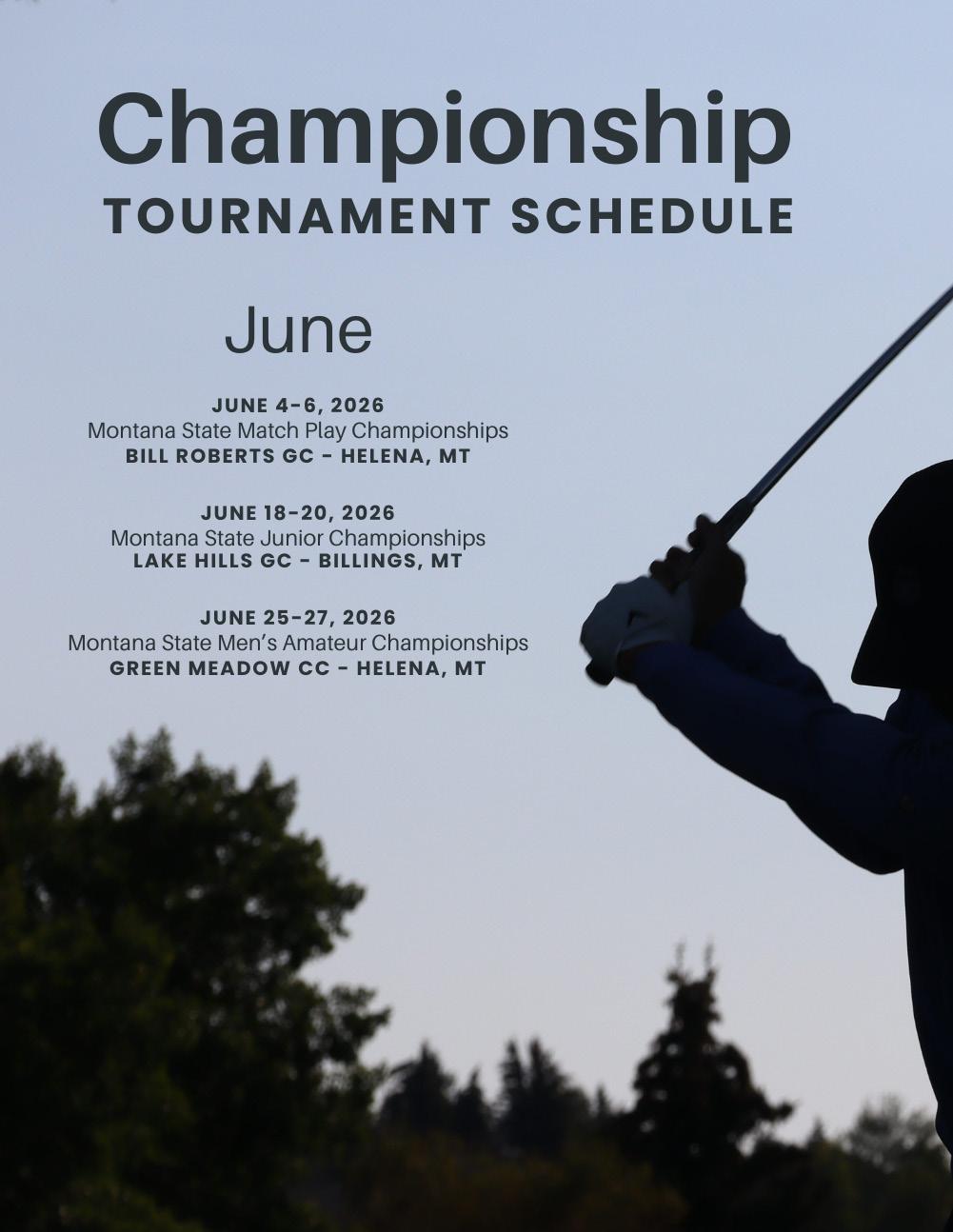
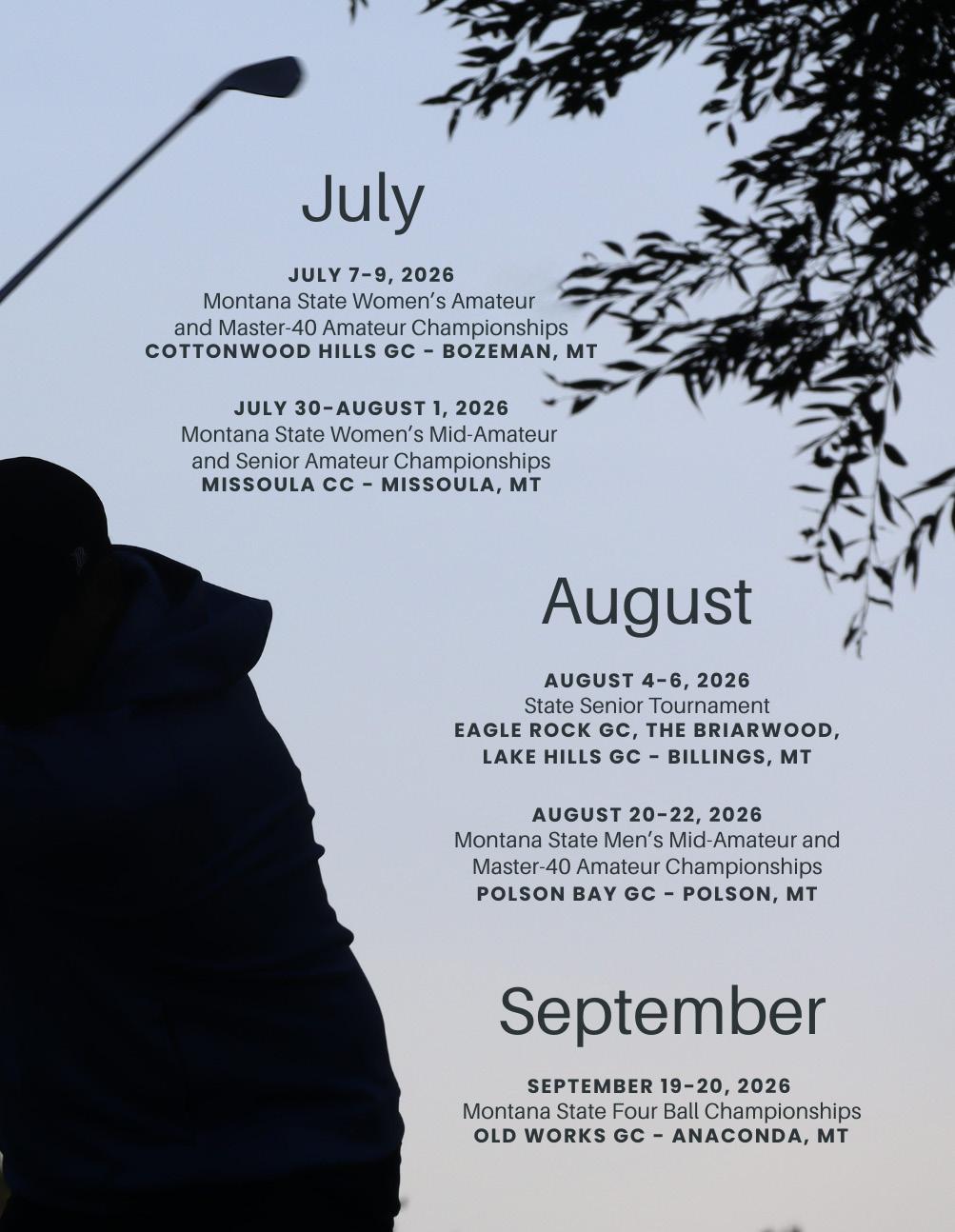
the 70th Annual State Senior Tournament (*Should be the 71st but it was cancelled during the COVID year) to Billings where golfers will rotate around three great courses: Lake Hills, Eaglerock, and The Briarwood. 2026 Will mark the tenth time that the Magic City has hosted the event.
The three-day tournament is filled with fantastic golf and even better camaraderie. Along with days spent at the links, one of the high-
lights of the week is the banquet which brings out much of the field in a fun social setting. This year it will be a delicious BBQ Buffet at the Northern Hotel.
Special thanks to the 2026 host clubs Lake Hills Golf Course, Eaglerock Golf Course, and The Briarwood Golf Club for continuing to support one of our state’s most popular sporting traditions, the Montana State Men’s Senior Tournament.
BY TY SPARING MSGA COMMUNICATIONS MANAGER
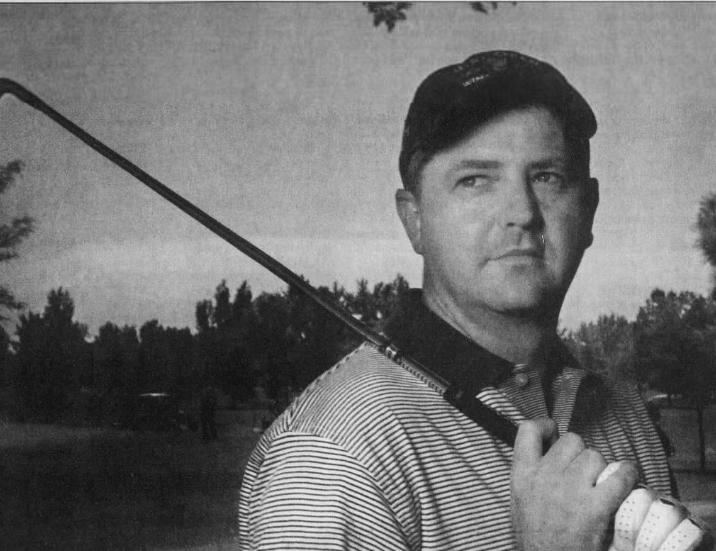
Billings’ Jerry Pearsall has been one of the most dominant senior golfers in Montana the last few years. In 2019 he won his first State Senior Tournament title and followed that up with another one in 2024. Pearsall was also the 2024 and 2025 Montana State Senior Amateur Champion and even qualified for last year’s U.S. Senior Amateur at Oak Hills Country Club in San Antonio. While he enters the Montana Golf Hall of Fame for what he’s already accomplished, given his continued success it seems likely, as MSGA Executive Director Nick Dietzen stated recently, that “his playing record will continue to grow in the years to come.”
For Jerry Pearsall, the golf life began in Dickinson, North Dakota at the early age of six when his dad Gary would take him for a quick nine-holes before heading off to work. When the family moved to Billings “he continued to take me along with him to Lake Hills,” Pearsall recalled of his dad, “and that is where I spent the next 20 years learning to play.”
Pearsall had early success as a youth golfer, starring for the Billings Senior High School team and twice having the honor of representing Montana in the Boys’ Junior Americas Cup. Also on those Junior America’s Cup teams was Billings West golfer and another future MSGA Hall of Famer, Mike Grob. The two teenagers had many battles on the course and Pearsall credits his “life-long friend” Grob as somebody who “inspired me to get better as a junior golfer if I wanted to try to compete with him.”
In 1980 Pearsall beat out the future PGA Tour player Grob, among others, for the Steve Schwartz Memorial Trophy which is awarded to the lowest scoring junior at the Montana State Men’s Amateur Championship.
A year later and once again back at the State Amateur at Riverside Country Club in Bozeman, the 16-year-old Pearsall had a memorable playing performance, finding himself in the final group with Montana golf legends Gene Cook, Louie Bartoletti, and Mark Metzger. “I was incredibly nervous and way out of my league,” Pearsall recalled to 406GOLF. “The weather was awful – pouring rain, thunder, and a saturated course. Gene and Louie did not even notice the weather and played great all day.”
As memorable as playing in that final group was for Pearsall, the first thing that nevertheless comes to mind about that 1981 State Amateur was getting to play with another hero of his. “My first love was baseball growing up, and as a Billings kid, my favorite player was Dave McNally,” Pearsall said about the Billings native McNally who was an All Star pitcher and won two World Series’ with the Baltimore Orioles. “The first two rounds I was paired with Mr. McNally – that in itself was memorable. I played really well those first two days opening with 72-72, and he was cheering me on and encouraging me the whole way. We didn’t play together in round three, but he came looking for me after the round to see how I did…that made my day.”
By the mid-1980s Pearsall began his career as a golf professional and continued getting better on the course, even qualifying three straight years (1990-1992) for the Boise Open which was on the Ben Hogan Tour (eventually re-branded as Korn Ferry Tour).
In his first Boise Open in 1990 at Hillcrest Country Club, Pearsall played against the likes of Tom Lehman, Jeff Maggert, and John Daly and yet managed to get his name briefly atop the leaderboard early on. “My hands were shaking teeing the ball up on the first hole, and Dad was on the bag,” he recalled. “I think he was more nervous than me!” After settling down a bit, he played well for three rounds, making the cut and finishing in a tie for 41st and made $560 for his efforts. As Pearsall
proudly recounted, “A PGA Tour paycheck! This was probably the best golf I have ever played over three days.”
Along with his playing exploits, Pearsall was also bestowed with the 1991 Rocky Mountain Section PGA Assistant Professional of the Year Award while working at Lake Hills. A couple years later it was his work with the local section that led him to a new administrative position with the Pacific Northwest Section PGA in Olympia, Washington, which included ten years as Executive Director. While working in Washington, Pearsall ran tournaments all throughout the Northwest as well as trade and merchandise shows and even helped establish a First Tee facility for kids.
After spending over a decade in Olympia,
Pearsall still looks back fondly on his time spent there. “Although it has been more than 20 years since I left the Pacific Northwest,” he reminisced, “the friendships developed over those years with PGA professionals across the Pacific Northwest Section, Rocky Moun-
tain Section, and throughout the country are treasured. I especially enjoy the friendships made with fellow staff members I worked beside those twelve years, nearly all of which we remain in contact to this day.”
Pearsall moved back to Billings however in 2004, and he immediately applied to the United States Golf Association to regain his amateur status. It didn’t take long to reacquaint himself with the top of the leaderboards at state events, turning in runner up performances at four Mid-Amateur Championships (2008, 2010, 2011, 2015) and a handful of top five finishes at State Amateur and Mid-Amateur events over the next decade. In 2010 after narrowly eking out a Mid-Am win, fellow Billings golfer Craig Hurlbert had some prophetic words when talking to a local reporter about the runner-up Pearsall, “His time is going to come, and he’ll win several,” he said.
In 2009 Pearsall qualified for the U.S. Amateur at Southern Hills Country Club in Tulsa, his first experience with a USGA Championship. It was a special experience with his mom and dad flying down to watch the event, and his friend Dr. Robert Bergeson as his caddie. “To be in that atmosphere walking the fairways with Bob Bergeson was unforgettable,” Pearsall said. “[He was] just a wonderful person who loved golf, the Rules of Golf, and baseball…he left us way too soon.”
As for the golf itself, Pearsall claims that the two courses he played at the 2009 U.S. Amateur – Cedar Ridge Country Club and Southern Hills Country Club – “were the longest and most difficult courses I have ever seen or will ever play.”
That same year he represented Montana at the USGA State Team Championship, which he did again in 2012.
While his golf remained at an elite level, Pearsall was still searching for that elusive MSGA Championship title to call his own. He was close but no cigar a number of times in the decade and a half since moving back to Billings in 2004 but couldn’t quite reach the top spot.
2019 changed all that however, when playing in his first Montana State Senior
Tournament in his hometown of Billings, Pearsall managed to outlast another “lifelong great friend,” Craig Hurlbert for his first state amateur title. It was a bit of redemption for Pearsall who narrowly lost the Mid-Amateur to Hurlbert in 2010 when it was played at Laurel Golf Club. And while the trophy certainly felt nice, being able to play and compete against his good friend Hurlbert made the experience extra special. “A terrific golfer and even better person,” Pearsall said of Hurlbert, “Even though he finished second, I don’t think anyone was happier than Craig that day that I finally got a victory. And if you know how competitive Craig is, that is saying a lot.”
With the win Pearsall established himself as one of the top senior players in the state and continues collecting first place trophies. In 2024 he played his way into both the Senior Tournament and Senior Amateur titles and followed that up in 2025 with another State Senior Amateur victory, making that four MSGA Championships won by Pearsall thus far, with more likely on the way.
2025 also marked the second USGA experience for Pearsall when he qualified for the U.S. Senior Amateur at Oak Hills Country Club in San Antonio. He was thrilled to share the moment with his good friend and golf buddy, Mike Follett, who had caddy duties.
“Thinking back,” Pearsall stated recently, “I’ve played in MSGA events for over 50 years going back to those early days of the MSGA district junior tournaments that were usually held at Laurel Golf Club.” As he reflected on his induction into the Montana Golf Hall of Fame, he told 406GOLF the “incredible honor” it is to be included in this prestigious 2026 class of inductees. “I’ve said before that winning a Montana State Golf Association event is something that all of us Montana golfers aspire to accomplish,” Pearsall stated, “But to be in their Hall of Fame was never an aspiration, never a goal…just an amazing by-product for simply enjoying this great game for a lifetime.” AUGUST 1, 2026 -

BY NOAH WEYNE MSGA BOATWRIGHT INTERN
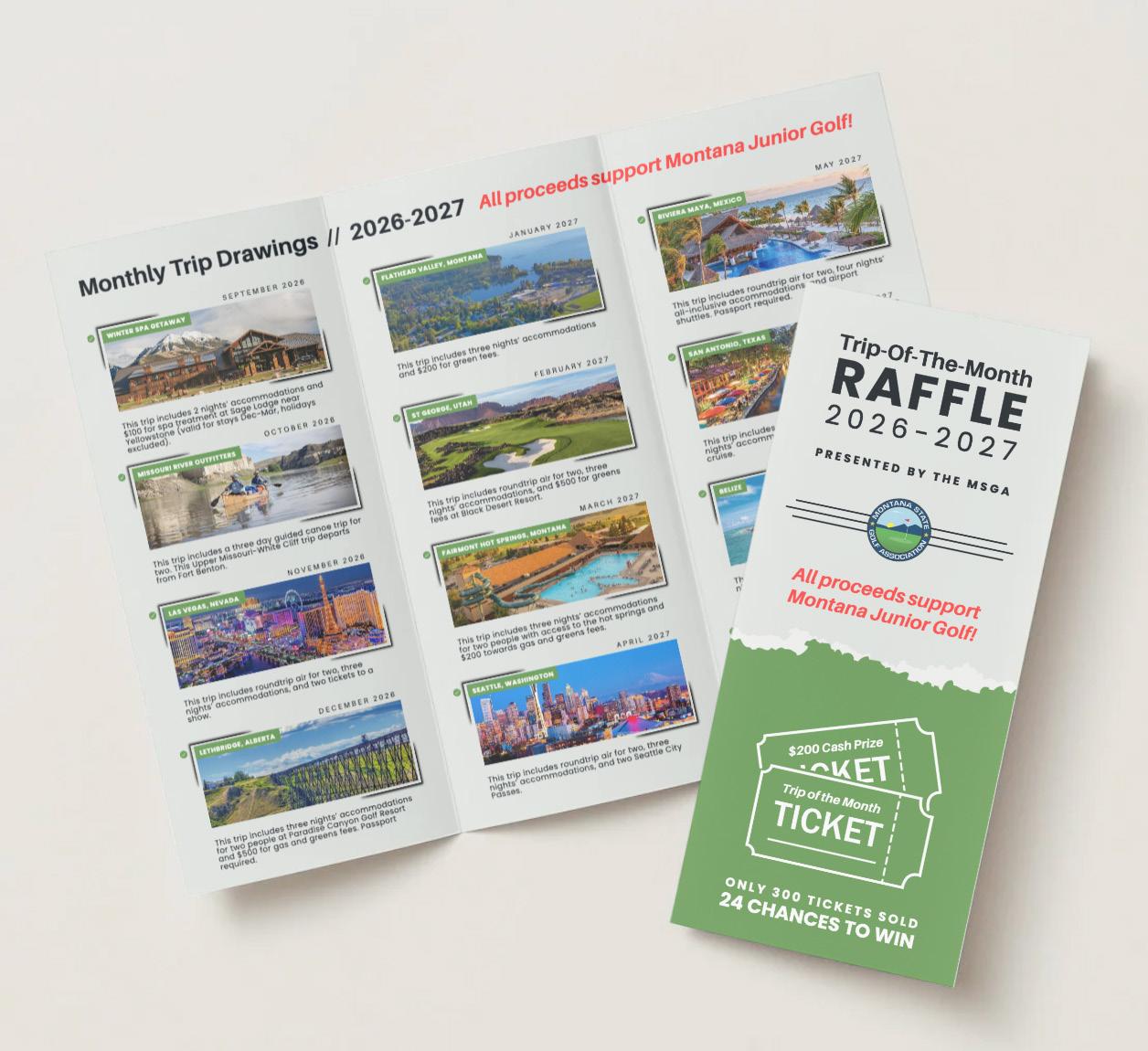
The Montana State Golf Association’s Trip of the Month raffle is back, running from September 2026 to August 2027. If you are like me, you are skeptical of raffles – they usually feel like a long shot dressed up to look like your odds are better than they actually are. But as a 21-year-old who wants to travel and see the world, I was even convinced to buy a ticket. Here’s why.
It costs $200 to enter, and that single ticket gives you 12 chances to win a trip and 12 chances to win your money back.
Here is the part that changed my mind: the raffle is capped at 300 tickets. That’s a much smaller pool than most raffles, so your odds are better than most. Instead of a 1-in300 shot like a typical raffle, each of us has about an 8% chance of winning something every single time a name is drawn. And that’s assuming all 300 tickets sell - if they don’t your odds are even better.
Stack that up over 12 months of drawings, and the odds of walking away with something are really solid.
If you are the first name drawn, you and a guest get to go on one of the trips listed below. And if the trip does not fit your life – say, a city getaway to Seattle in April does not sound too fun because you already travel there a lot for work – you are not stuck. You can swap the trip for a $1,000 travel voucher or take $750 in cash instead.
And if you are anything like me, you also maybe had the thought - do I really have the time to go to Alberta in November? Well, here is the great news: you have 12 months to get the trip you won on the books. The travel agency works around your schedule, not the other way around.
September 2026 — Winter Spa Getaway at Sage Lodge: 2 nights' accommodations plus $100 toward spa treatments near Yellowstone (valid Dec–March, holidays excluded)
October 2026 — Missouri River Outfitters: a three-day guided canoe trip for two on the Upper Missouri–White Cliffs stretch, departing from Fort Benton
November 2026 — Las Vegas, Nevada: round-trip air for two, three nights' accommodations, and two show tickets
December 2026 — Lethbridge, Alberta: three nights' accommodations for two at Paradise Canyon Golf Resort, plus $500 for gas and greens fees
January 2027 — Flathead Valley, Montana: three nights' accommodations plus $200 for greens fees
February 2027 — St. George, Utah: round-trip air for two, three nights' accommodations, and $500 toward greens fees at Black Desert Resort
March 2027 — Fairmont Hot Springs, Montana: three nights' accommodations for two with hot springs access, plus $200 toward gas and greens fees.
April 2027 — Seattle,
Washington: round-trip air for two, three nights' accommodations, and two Seattle CityPASSes
May 2027 — Riviera Maya, Mexico: round-trip air for two and four nights' all-inclusive accommodations with airport shuttles
June 2027 — San Antonio, Texas: roundtrip air for two, three nights' accommo-

dations, and a Riverwalk boat cruise
July 2027 — Belize: round-trip air for two and five nights' hotel accommodations
August 2027 — Roundtrip air for two to anywhere in the contiguous U.S.
If you are the second person drawn, you get your $200 back – no harm done, and you are still in the running for a
different trip the following month.
So where would my $200 go if I don’t win anything? Well, here is the other good news - all proceeds go to the MSGA Junior Grant Program. The program provides vital funding to junior golf programs for kids in grades K-8
across Montana, from our largest cities to our most rural communities.
Grants can be used to buy golf equipment for the first time or host lessons and golf camps. This program is open to all MSGA member clubs, individual MSGA members or Montana schools that desire support to include golf in their physical education curriculum.
I got introduced to golf at a
very young age, and some of my fondest childhood memories are rounds with my dad and sister. This fund can help create those same memories for the next generation. The sport has taught me values I still lean on today, in college and as a young professional: resilience, patience and integrity.
Are you convinced yet? To sign up for the Trip of the Month - Raffle Fundraiser
CLICK HERE or grab a brochure at your next MSGA tournament!
Drawings are held monthly through August 2027. You do not need to be present to win, and MSGA membership is not required to enter. Winners must be 21 or older. A ticket is limited to 2 first-place wins and 2 second-place wins over the course of the raffle. Blackout dates and restrictions apply; see official rules for full details.






BY TY SPARING MSGA COMMUNICATIONS MANAGER
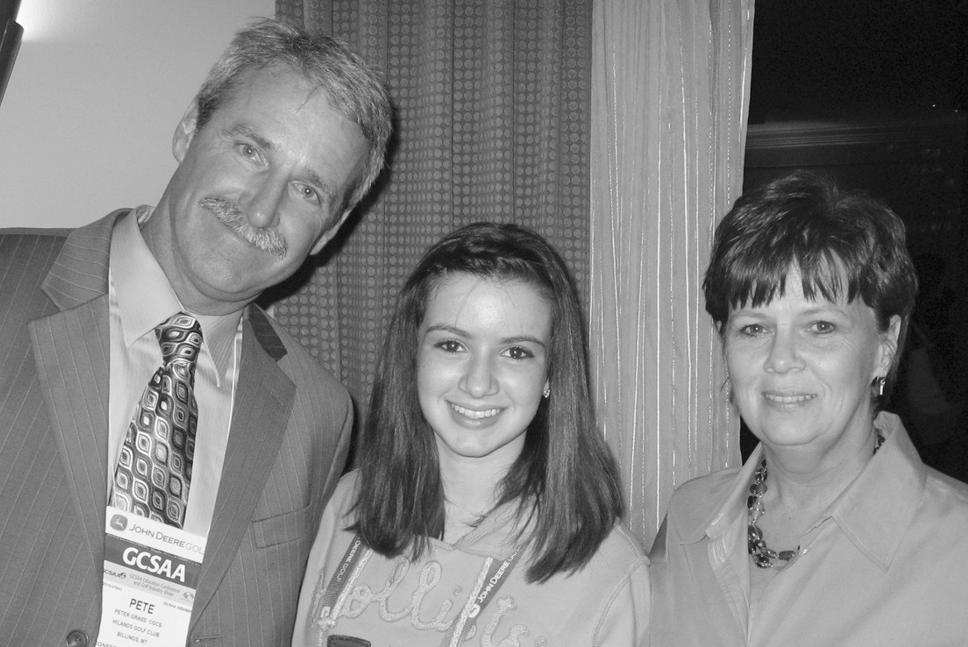
In 1975 as a sophomore at Billings Central High School, Peter Grass took a job in the Pro Shop at the historic Hilands Golf Club and then spent the next fifty years carving out a hall of fame career there. Working at the century-old club on grounds picked out by the great Walter Hagen, and which formerly employed fellow Montana golf legends like Bill Roberts and Paul Allen, Grass ascended through the ranks of Hilands and became well-known over the years for his dedicated and meticulous approach to curating one of the most immaculate courses in the state. As MSGA Executive Director, Nick Dietzen, stated upon Grass’ induction, “Pete is an institution at Hilands Golf Club in Billings. Thanks to Pete’s leadership and work there, the facility was the envy of peers throughout the state and beyond.”
Grass got his start playing golf at age twelve at Lake Hills Golf Course. As a teenager he spent a couple seasons working as a bag boy, washing clubs and cleaning carts at Hilands, while also golfing for the Billings Central team among other extracurricular activities. Grass showed early leadership skills as the student council Vice-President, and he even won the prestigious John Sousa Award for his excellent musicianship as a drummer in the high school band. After graduating, Grass continued golfing and studying at Eastern Montana College (now known as MSU-Billings).
Grass moved to the grounds staff in 1977
and shortly after became Assistant Superintendent in 1981, a position he held for nearly ten years.
One of his favorite golfing memories occurred during this era when he got the chance to play with one of the NBA’s all-time greats, Larry Bird. With some distant family living in French Lick, Indiana, Grass had come to hear about an annual charity golf tournament in the city famous for being the hometown of the Boston Celtics star, and in 1986 he decided to make the trip over. Bird was coming off one of the best seasons in his career having won the regular season MVP and NBA Finals MVP.
“No more scary moment for me than when we stood on the first tee and Larry said, ‘How much do you want to play for?’” Grass told 406GOLF recently. “Me an Assistant Superintendent at the time playing against a multi-millionaire, was so happy when he seemed just fine with my reply of ‘how about a dollar a hole’”.
Playing in a foursome with Larry Legend and his brother Mark, and some other visitor from Caifornia, Grass ended up taking three dollars off the basketball legend that day. “I should have had him sign those dollar bills and saved them but hey, money was tight (for me at least) back then,” he said.
Grass became Superintendent in 1991 and he spent the next three plus decades setting standards of excellence for course management at Hilands Golf Club. “First off, there is no better office to go to work at than a golf
course during a beautiful morning sunrise,” he stated about his chosen profession. “The day often goes downhill from there with challenges, but my mind was always at so much peace admiring God and our staffs work first thing in the morning.”
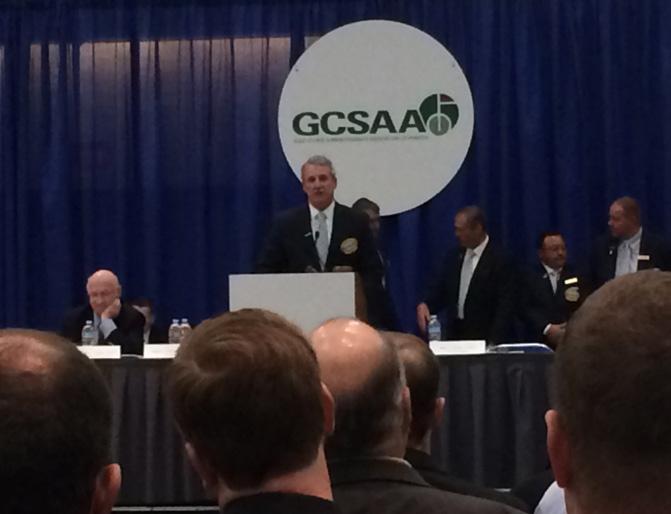
Along with his duties at Hilands, Grass also began serving in many leadership roles with the Golf Course Superintendents Association of America (GCSAA) and Peaks & Prairies GCSA (MT/WY chapter of GCSAA). He was a Peaks and Prairies board member from 19912001 and served as President in 1996-1997, before moving on to positions with the national GCSAA a few years later.
In 2002 Grass had the special opportunity to work with his sons at the 2002 PGA Championship at Hazeltine National when Rich Beem narrowly beat prime Tiger Woods by one stroke. “My two sons Jason (20 at the
time) and Stephen (13) were allowed to ‘tag along’ and be a rough fluffer and bunker raker,” Grass recalled of the memorable occasion. “Stephen has taken over as Superintendent at Hilands after working many years under me before my retirement, so the Grass name continues on managing the course at HGC. Hanging out with Dad and having fun experiences may just have led him to follow me into this career.”
In 2003, Grass won the Pendulum Award which was a nationally recognized honor for Superintendents that demonstrated exceptional ingenuity in golf course management. That same year was the first of three times when he served as the Hilands Interim General Manager (the other occasions in 2005 and 2007-2008).
Grass continued his ascent in the world of Superintendents, joining the GCSAA Board of
Directors in 2009. In 2015 he served as their National Vice-President, and in 2016 became the 80th GCSAA National President but the first that hailed from a 9-hole facility.
Having spent his entire career at Hilands, Grass said that it “gives me great pride for all other ‘9-holers’ to be recognized as legit golf courses.” Years ago at a golf industry conference he even gave a talk, titled “I’m 9, and I’m Ok With That,” in which he expressed the many positive aspects of 9-hole facilities and how important they are in communities across the world.
One of the perks being the National President of the GCSAA is it allowed Grass to represent the organization at multiple PGA Championships, U.S. Opens, the 2016 Ryder Cup at Hazeltine, and the 2016 Olympics in Rio de Janeiro when they reintroduced golf. He even had clubhouse and all access credentials at the 2016 Masters, a tournament like no other that Grass has now attended nine times in his life.
He also joined the Board of Directors of First Tee of Montana in 2016 which lasted until 2024.
Grass gained national recognition again in 2022 when he received the GCSAA’s Leo Feser Award for best superintendent-written article published in Golf Course Management Magazine. His article “I need help (and I don’t mean labor)” inspired many in the industry as it was a personal discussion on the mental health side of working in the game and was yet another example of Grass’ humility. Since retiring as Superintendent from the Hilands, Grass has continued his foray into writing with a regular series in 406GOLF called “Grass Clippings.”
“No one has been more dedicated to serving his profession than Pete Grass,” said MSGA’s Nick Dietzen. “His leadership locally, regionally and nationally through the GCSAA is representative of his commitment to the critical work of superintendents in the golf industry,
but he extended far beyond – emphasizing the whole person and the importance of mental health and work-life balance, which was uncommon in the industry.”
When he was told about his Montana Golf Hall of Fame induction, Grass was quick to heap praise on others. “I don’t deserve any more special recognition than any other Superintendent in the state. We all work(ed) hard with the staff, equipment and budgets that our facilities could afford with the goal of providing the best course conditions possible,” he stated. “Any one person does not succeed alone. I certainly have had great member, staff and family support to be able to serve the golf course management profession over many years at the local, regional, national and international levels.”
Nevertheless, Peter Grass is the first Superintendent inducted into the reformulated Montana Golf Hall of Fame, and it’s not just for all the reasons listed above. It’s also about all the long hours and the tiny little details that build up over the years that created a legacy to be proud of. He’s known as a person that works hard, shows respect and sincerely cares about his community.
Lori Russell, the Executive Director of Peaks & Prairies GCSA, who has known Grass for over 50 years, elaborated to 406GOLF recently on his hall of fame induction:
“Leading through his actions is part of Pete Grass’ nature. He’s continued to give into his retirement as he did throughout his career on both the regional level with the Peaks & Prairies GCSA and the GCSAA national level. Pete cares deeply about his family, his peers, and his profession, making a positive impact wherever he goes. It is not possible to quantify the boards and committees Pete has served both professionally and in his community. It is a rarity and a pleasure to have worked with someone over the years who fortunately for us – and sometimes unfortunately for him –
could never say no. Having known Pete since the 1970s, I am honored to be his friend and grateful for his leadership. I’m also grateful for any opportunity to acknowledge his exceptional drumming skills in the high school band.”
Peter Grass is deeply entwined with the history of Hilands Golf Club, about as much as anyone can be with a golf course. For decades his exemplary work as a Superintendent helped set the standard for courses across Montana and beyond. His leadership skills likewise took him to the highest echelons of the GCSAA, able to represent his profession (and his home state) at the national and international levels. With his induction into the Montana Golf Hall of Fame, Grass is not
only recognized for his vast contributions to the sport in our great state, but is now also a model example to follow for the young up-andcomers who are just starting out in the industry.
When asked by 406GOLF what piece of advice he would give to aspiring Superintendents and future MSGA Hall of Famers, Peter Grass stated, “In golf and life, I believe you get back what you give. Volunteer for things that you love, help others to succeed by mentoring them, giving them opportunities to make mistakes and learn from them. Doing the right thing, is never the wrong thing and if you live by the golden rule of treating others like you wish to be treated, you should never be disappointed in yourself.”

BY TY SPARING
MSGA COMMUNICATIONS MANAGER
In 1930 Polson city leaders announced they purchased a forty-acre tract of land a half-mile west of the Polson Bridge with immediate plans to build an airport and a golf course on it. As crazy as it sounds, back then towns and cities often utilized the same civic space to accommodate the two burgeoning industries. Helena and Whitefish for instance had similar situations with planes landing in fairways throughout the 1920s and 1930s, and Charles Lindbergh in fact once landed his famous “Spirit of St. Louis” plane on the capital city’s Municipal Golf Course (now known as Bill Roberts).
The golf-airport combination in Polson, however, never panned out. In part because of heavy resistance to the extra taxes needed for construction, and we can reasonably speculate that the locals had already heard the tumultuous reports coming out of Helena regarding the bitter territorial feud between golfers and pilots. Whatever the case, as
a local newspaper soon made clear, Polson golfers weren’t too keen on sharing the course with aviators, stating that “frantic efforts have been made to secure other land for the golf links.”
Despite the initial idea falling through, local enthusiasts nevertheless remained strident in their quest for a golf course in town and by March of 1931 a handful of local businessmen along with the Phoenix Construction Company devised a way to build a nine-hole links on the south banks of the Flathead River.
And they got to work quick too, as by the second week of April the new Riverview Golf Course was opened to the public and according to local newspapers was quickly considered “one of the best [courses] in the state.”
(1931 was a big year for all kinds of golf in Polson. A month after Riverview’s opening, the town also got a brand new 18-hole miniature golf course.)
The Riverview Golf Course was a fairly popular spot in town while it was in operation, but in 1936 things
changed dramatically when the Polson Chamber of Commerce purchased 64 historic acres of Flathead Lake shore land which included the site where the nine-hole course was located. Along with the course, much of the new acreage had once been owned by a man of Chinese-Indian descent named Mose Auld, who around the turn of the century was well-known in the area for his work as a translator for many nearby tribes and whose land was described by a local newspaper as “the gathering place of Indians from all parts of Montana,” and was the site of “many an Indian pow wow and dance.”
The city’s plan wasn’t to get rid of Riverview so much as an attempt to rebuild it by using federal funds that were available as part of FDR’s broader New Deal agenda. One of the larger programs of the New Deal was the Works Progress Administration (WPA) which provided funding for public works all over the country. Lasting throughout the 1930s and finally phasing out by 1943, the WPA built sixteen golf courses in Montana and improved 23 others. In
Polson’s case, almost immediately after the 64-acres of land was purchased in 1936, the WPA allotted $26,000 ($625,000 in today’s money) to the town for the purpose of expanding recreational activities on the acreage, which included building a log clubhouse and leveling the
nine-hole course, “remapping it” and seeding it with grass.
On May 1, 1938, a shiny new Polson Country Club opened to the public and it was clear that the WPA improvements helped leapfrog the course into the upper tier of playing grounds in Mon-
tana. It helped having a stateof-the-art log clubhouse and perhaps more importantly it became one of just three grass courses in Montana.
More broadly, Polson the town went through quite a transformation in the 1930s. Along with the WPA funded
golf course and other recreational facilities, the Montana Power Company built the nearby Kerr Dam (now known as Selis Ksanka Olispe) which was completed in 1938. To celebrate the occasion, a two-day dedication ceremony took place that August where thousands of confederated tribal members and other non-native residents showed up for the festivities. Among the venerated speakers that showed up were Salish and Kootenai Chiefs Martin Charlo and Koostatah Big Knife, along with Montana’s Governor Roy Ayers and Senator Burton Wheeler. Activities included a water regatta, Native-American dances, band concerts, a buffalo barbecue and a two-day ladies golf tournament at the new and improved Polson Country Club.
Over the ensuing decades, Polson Country Club settled into becoming a favorite destination for locals and tourists alike, hosting tournaments and all sorts of community events for nearly 90 years now. Incorporated into Polson at an early stage of development, the golf course eventually became fundamental to the personality of the town and became ingrained as one of Montana’s most popular golf locales.
One of the unique qualities of Polson golf relative to other areas in the Treasure State is how moderate the weather
can be during winter months due to its shielded positioning on the south end of Flathead Lake. One local newspaper writer speaking in 1963 labeled Polson the “Banana Belt Capital of Montana,” and throughout the 1960s the Daily Inter Lake even hosted the “Mid-Winter Golf Tournament” at the Polson course, usually held in January or February.
(The tradition of winter golf in Polson lives on, as noticed this past February 2nd when Polson Bay Golf Course announced the opening of nine-holes on their Facebook page, “We’re back baby!” they declared. “All you golf sickos can once again get your golf fix in February.”)
In 1989 due to popular demand another nine holes and a new driving range were added to the course, with a grand opening that included the annual Polson Summer Wine Festival being held in the clubhouse.
Just ten years later in 1999 and once again due to popular demand yet another nine holes were added, making the Polson Bay Golf Course one of the rare 27-hole course gems in the state of Montana. Washington’s John Steidel was architect of the new nine holes which he merged with the previously added nine holes from 1989 to create an 18-hole championship course that is accentuated by the
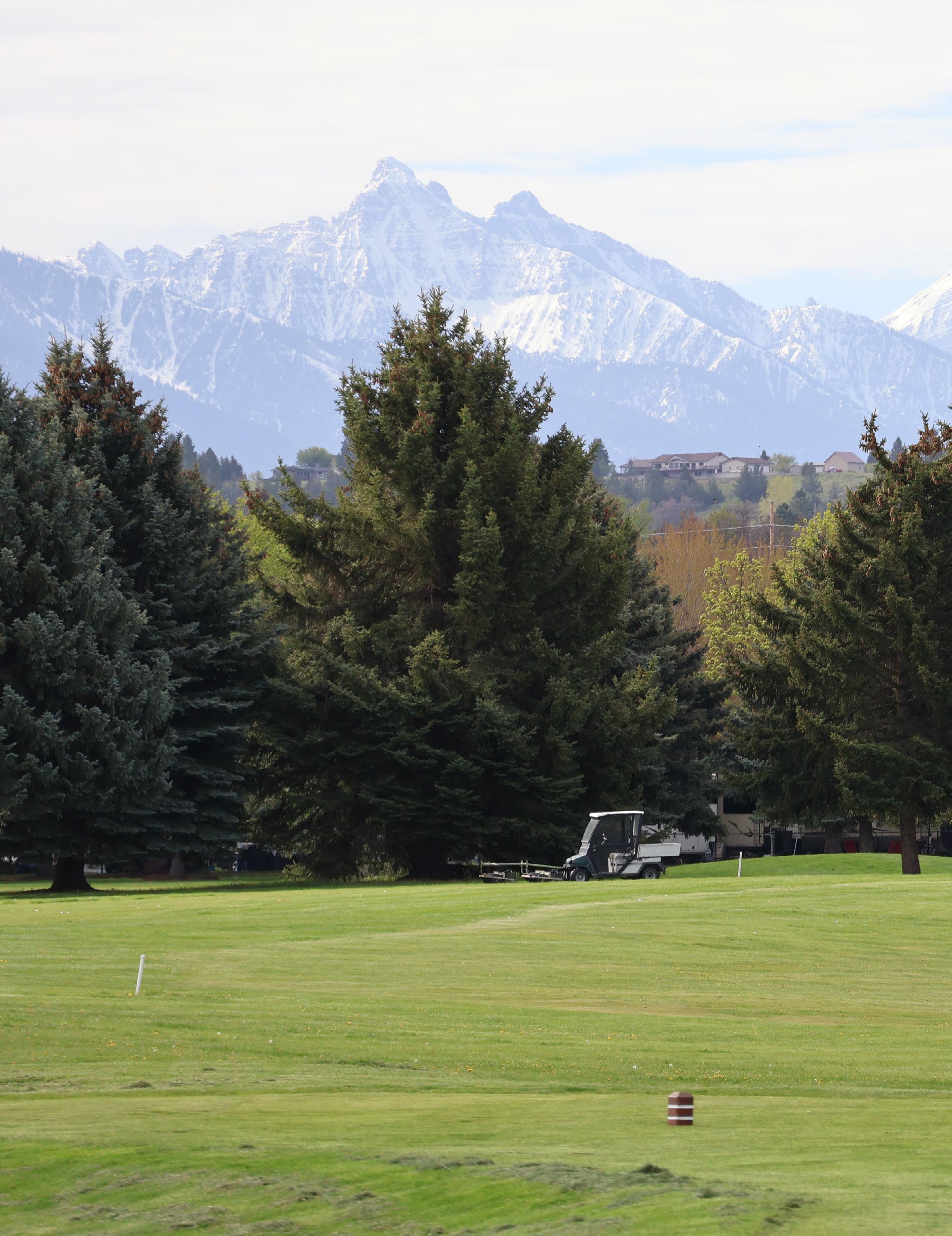
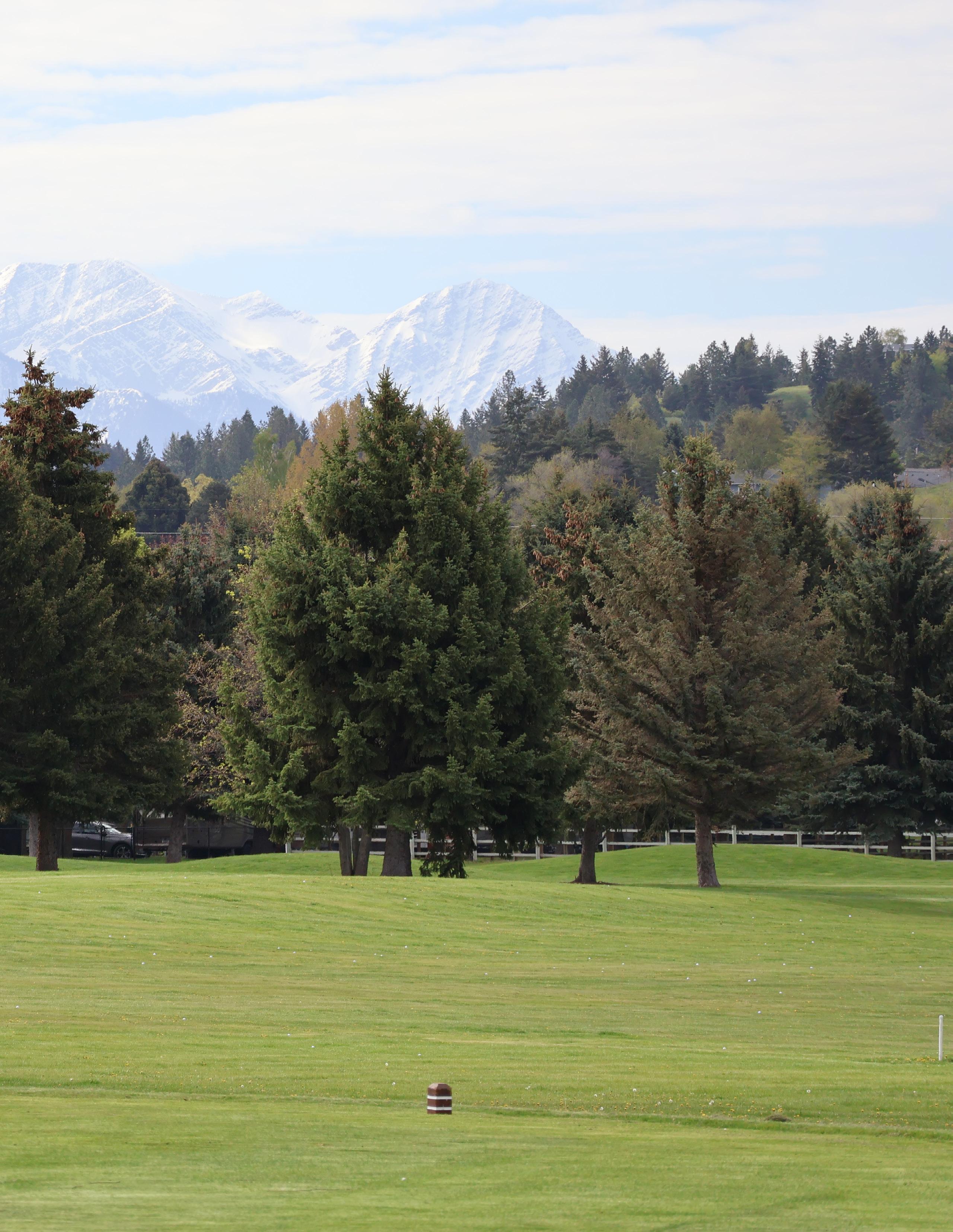
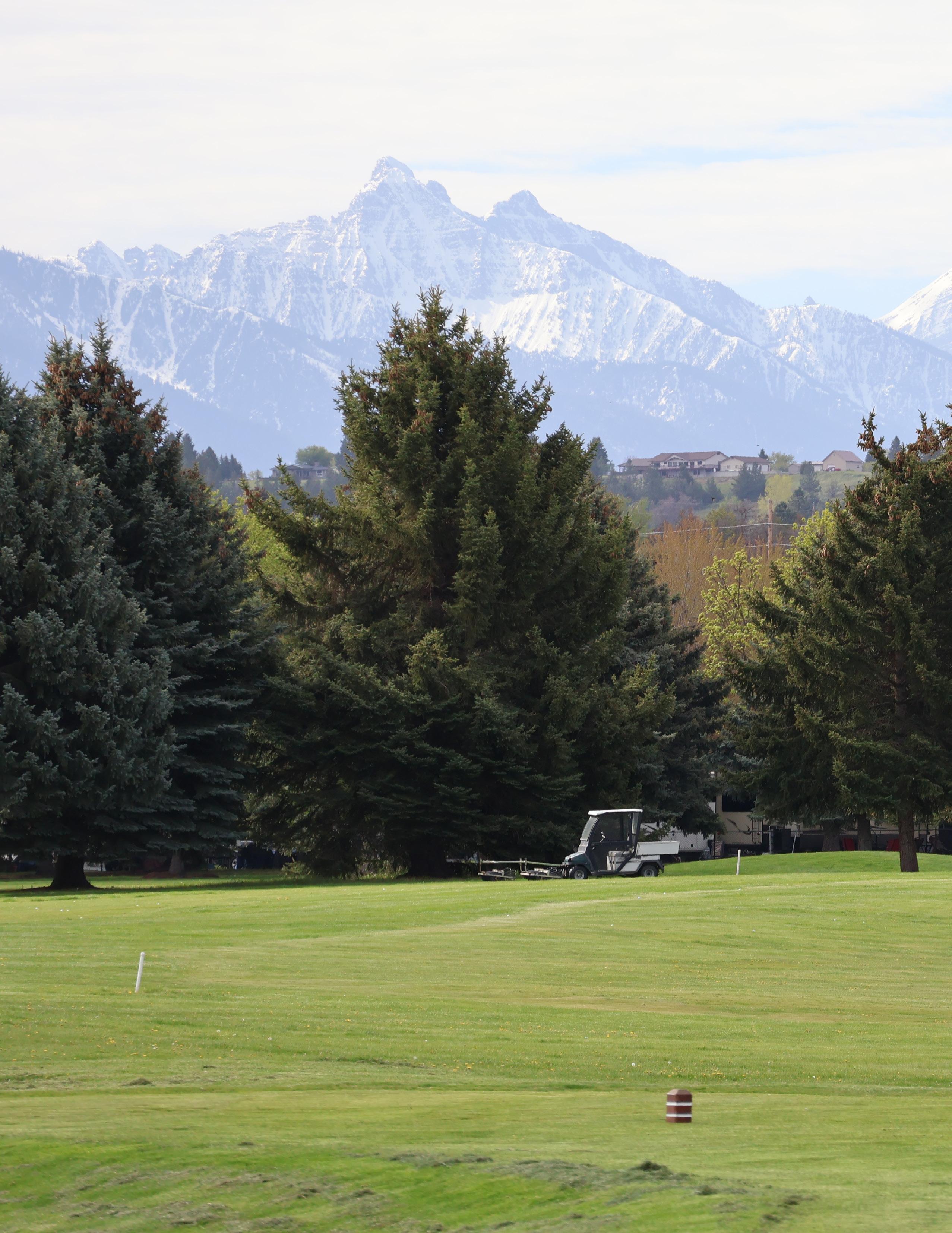
spectacular beauty of the Flathead Lake and the Mission Mountains beyond.
For nearly three decades now the championship course at Polson Bay has hosted a variety of MSGA and High School events, including this years Montana State Men’s Mid-Amateur and Master 40 Championships (Aug. 20-22). It’s also the practice facility for the Polson High School golf teams, who have both been pretty good in recent years with back-to-back girls’ team titles in 2022 and 2023, a boys team title in 2023, along with two individual state champions in Hunter Emerson (2023) and Maxwell Milton (2024). For a small town of just over 5,000 residents, Polson is nevertheless a leader in the state when it comes to building up the culture of golf.
Meanwhile the original tree-lined nine-holes built by the WPA is still open for play and remains as popular as ever, but now at nearly 90 years old it goes by the name of “Olde Course.” Born in response to the Great Depression, the Olde Course has remained sturdy through the years, and given the continued popularity of golf in Polson and the broader Flathead area, it appears set for another 90 more.

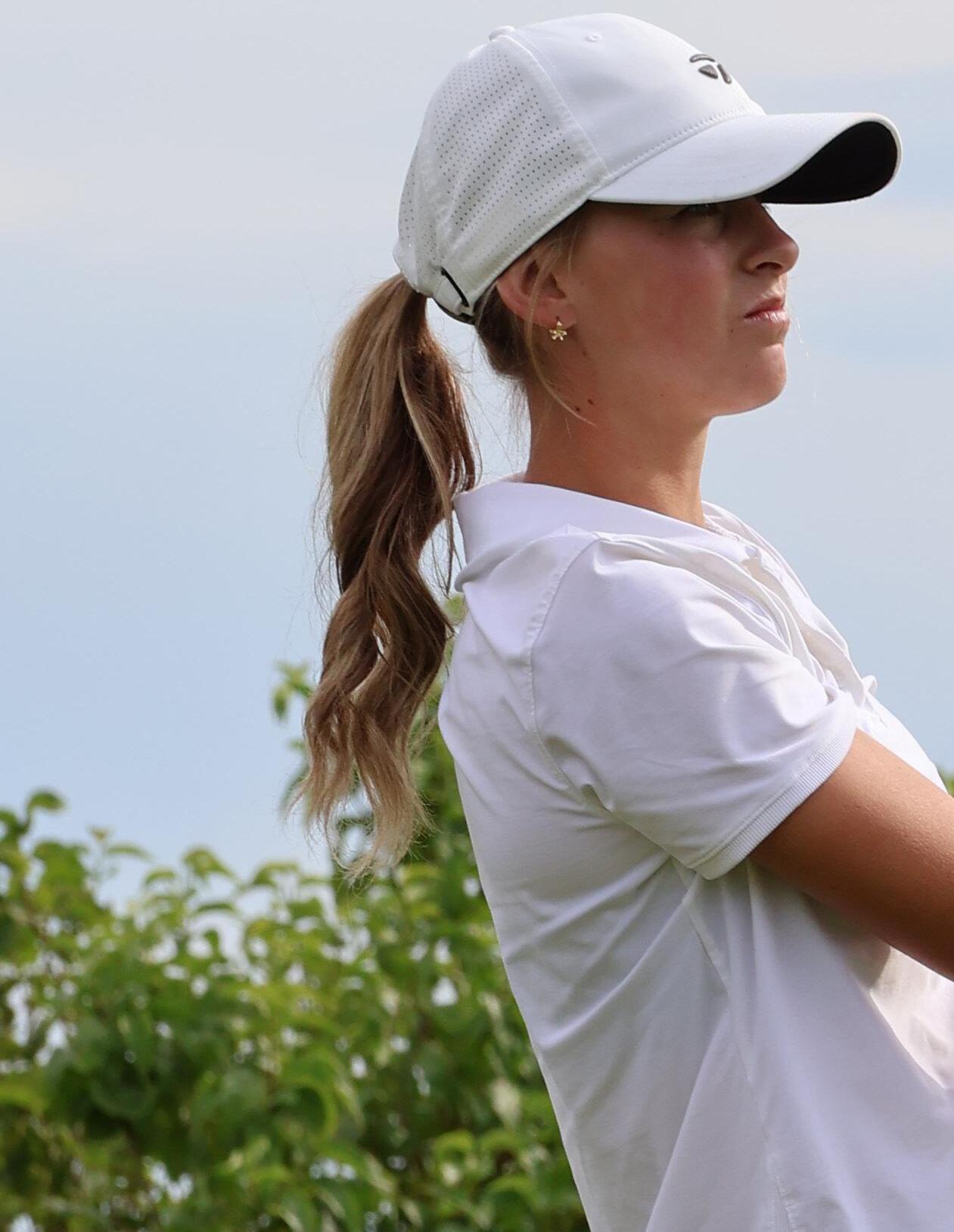
1. Who introduced you to golf?
My dad talked me into playing high school golf my freshman year.
2. Who influenced you most in your golf life?
Garrett Woodin has helped me the most, whether it comes to my swing or even the mental game. It has been great working with him and I am very thankful for how my game has grown cause of him.
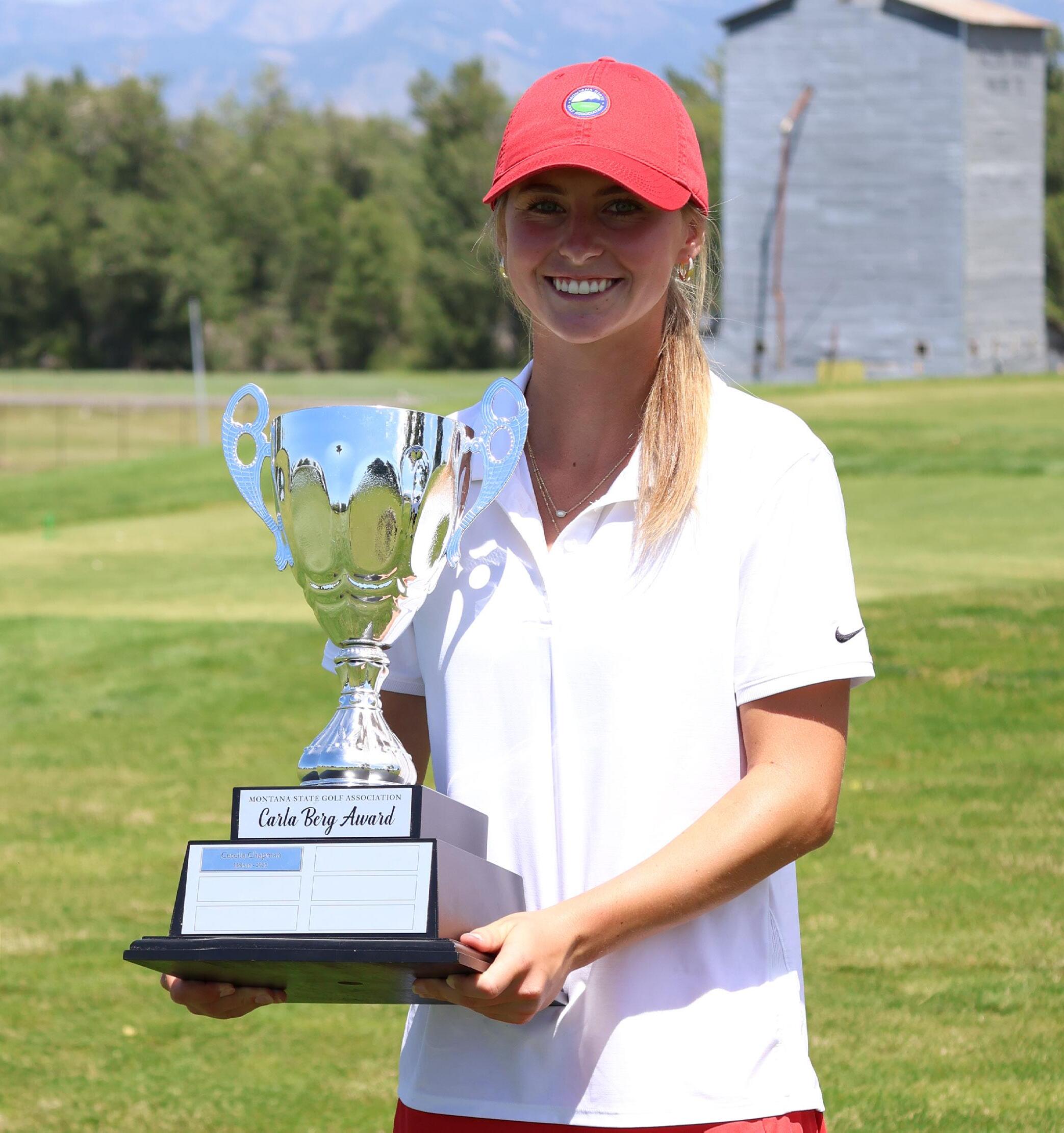
3. How did it feel to win the Class AA State title and the Carla Berg Trophy (for lowest scoring junior at the Women’s State Amateur) in the same year?
It felt super rewarding to see my hard work pay off. I always fell short of the win during high school season, and couldn’t get two good rounds back to back. Winning state really gave me the confidence of knowing how well I can actually play.
4. What is your favorite course in Montana and why?
I’ve only got to play Rock Creek once, but it is definitely my favorite. The course is beautiful and in great shape. I got to play there for the Top Ten Match Play after state,
and it was a great experience playing the course with amazing girls.
5. What is a dream golf course you’d like to play once?
Augusta National.
6.You have already committed to play golf with the University of Montana after you graduate in 2027. What about the Grizzlies appealed to you? What are you looking forward to most playing collegiate golf?
I’ve always had a dream of going to the U of M so I am very blessed for the opportunity given to me by Coach Mee. I’m looking forward to playing with a tight knit team and playing against a strong field of great golfers.
7. What’s your most memorable moment on a golf course?
Winning the state tournament and honorable mention of getting a hole-in-one during a tournament.
8.If you could change one thing about the game of golf what would it be?
Afternoon tee times. No more early
mornings.
9. What advice would you give to beginner golfers?
Don’t be so hard on yourself, and remem-
ber it’s just for fun. You can’t be perfect in this game.
Bonus: Lay up or go for it? Go for it!

BY CADE SHOEMAKER MSGA BOATWRIGHT
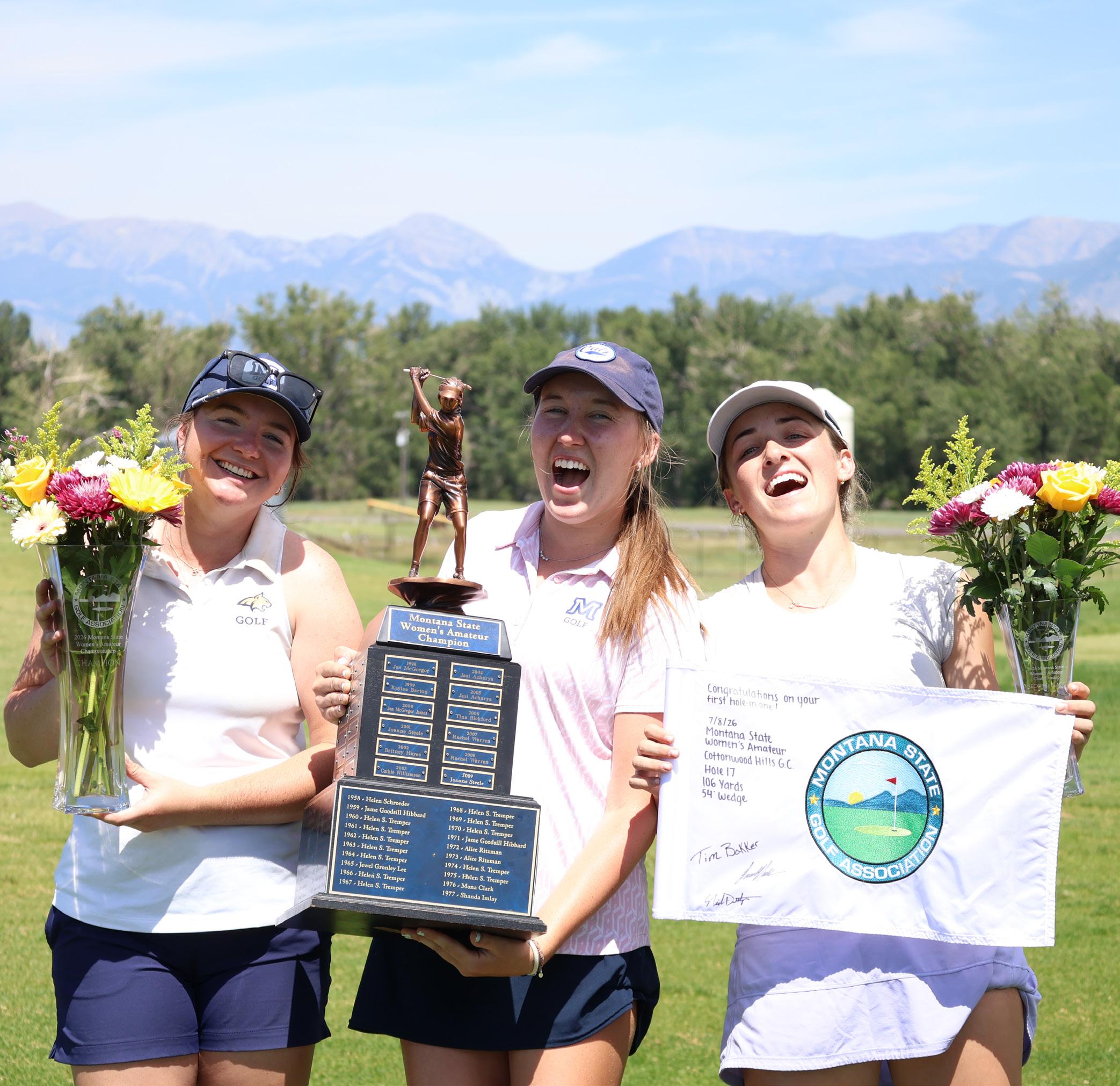
This past spring, the Montana State women's golf program had one of their best seasons to date, collecting their first team tournament victory in nearly 23 years, three individual wins, six topthree finishes and five golfers earning All-Big Sky honors.
As rising MSU sophomore Lauren Nau continued the Bobcats' winning ways with a dominant performance at the 2026 Montana State Women's Amateur, Montana State head coach Brittany Basye reflected on what last season's success meant for the program and how women's golf continues to grow in the Treasure State.
Basye has built the program steadily since returning for her second coaching stint in 2011, and the Bobcats now hope to soon capture their first Big Sky Conference team championship since 1995. Last season brought MSU's first back-to-back individual titles in program history, with Maddie Montoya winning in 2025 and Norah Seidl this past season.
Basye believes that success, paired with Bozeman's growing appeal, has helped recruiting. And because the golf world is small, when current and former players speak fondly of MSU, interest in playing for the Bobcats spreads.
"The team, the personality, the culture that we've started is growing as well," Basye said. "It's like an addictive culture, where it's a fun culture but competitive as well."
Montana's climate has also given the program a unique schedule that appeals to its athletes. Though hard winters rule out year-round golf, the offseason gives players a healthy break from the sport.
Skiing, fishing, snowshoeing and other Montana staples have shaped a culture that doesn't lose sight of the fun side of college athletics — all while the Bobcats stay locked in on the competitive process.
"It's just not solely focused on golf, and so that takes a little bit of pressure off of
them and doesn't make it necessarily so intense," Bayse said. "But we still have a nice indoor facility that the girls can go practice in the wintertime and work on chipping, putting, hitting and all that fun stuff."
That balance between competition and fun is fueling the Bobcats' success. This past season, four players — Lauren Greeny, Norah Seidl, Eva Heinz and Ashleigh Wilson — earned Second-Team All-Conference honors. At the same time, Maddie Montoya picked up an All-Big Sky Honorable Mention, marking the most honors in program history and the most in the Big Sky last season.
Though Greeny and Montoya graduated in the spring, the Bobcats will return five golfers, including breakout star Norah Seidl. The rising senior, who transferred in from Tulsa last season, led the team with one victory, three top-five finishes and four top-10 results — including a third-place finish at the Yellowstone Intercollegiate that
gave Montana State its first team victory since 2002.
The Bobcats will also return rising senior Eva Heinz, who owns the Big Sky Conference individual round record, and underclassman Ashleigh Wilson, who earned all-conference honors as a freshman
last season. Rounding out the roster, a pair of transfers will add veteran experience as Basye looks to continue the program's momentum this fall.
"We've created the base with the foundation; now I need each of them to keep
adding those bricks to keep the building going up," Basye said. "It's just exciting to see the momentum ... and I think if we can keep it fun and they stay competitive at the same time, I think we're doing our job."
BY CADE SHOEMAKER MSGA BOATWRIGHT INTERN
Your GHIN number can get you access to a lot in the world of golf. Add one more to that list!
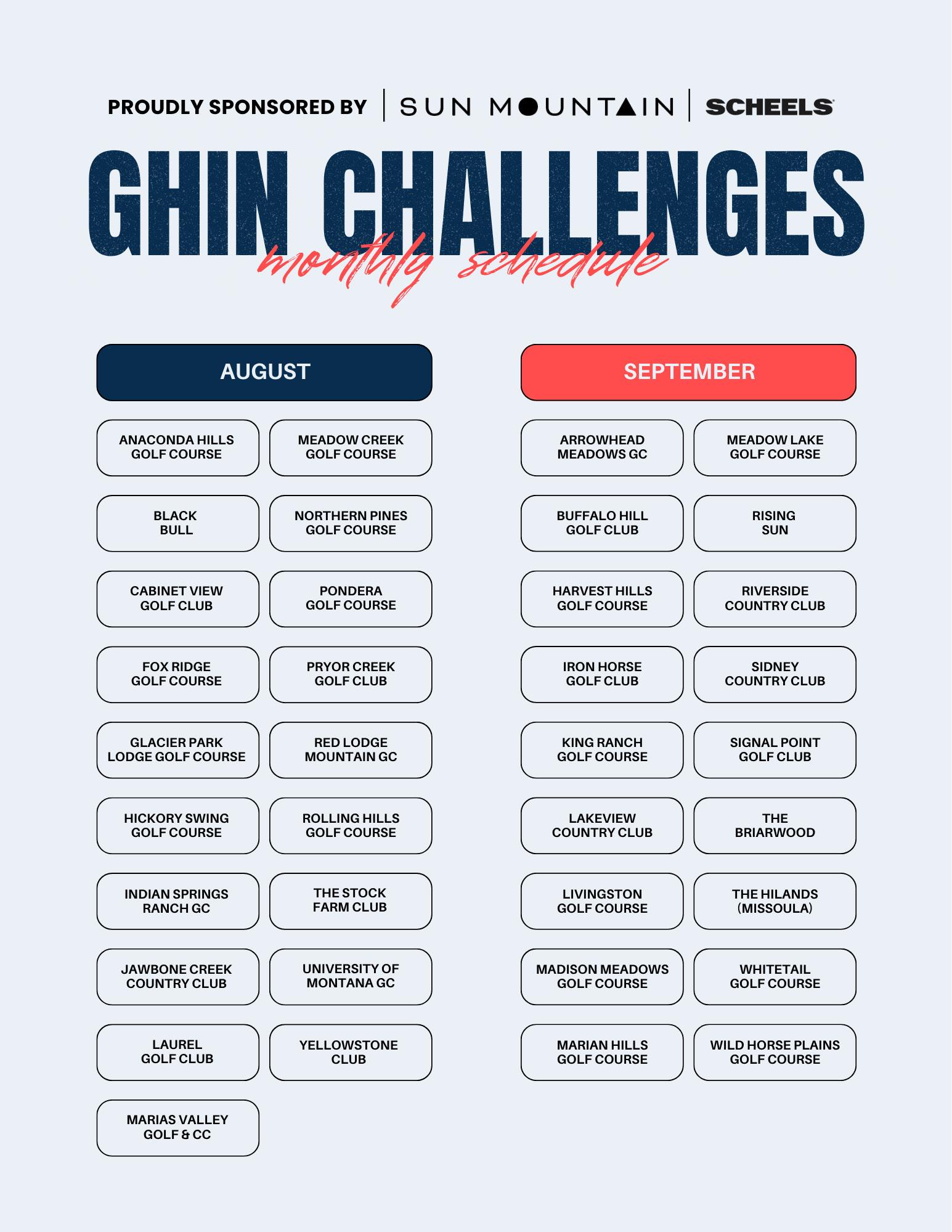
GHIN Challenges is a new feature in the GHIN app… a virtual competition at a featured course! During the duration of the Challenge, scores you post at that course are automatically included on a virtual leaderboard, using your total Net Score (Adjusted gross score – Course Handicap – Total par for tees played).
To participate, you must:
• Be an active MSGA member
• Have an established Handicap Index® with access to the GHIN app
• Play at least three 18-hole rounds at the featured course.
GHIN Challenges is a fun way to be part of a competition, at your own time and pace. The MSGA will run several Challenges during the season at different courses, with the winners receiving great prizes from Scheels and Sun Mountain!
After posting a score at a course hosting a Challenge that month, a pop-up message will display allowing you to join the Challenge. Additional scores will be added after posting, with a ranking on the leaderboard after the 3rd score. All of the scores you post during the Challenge are considered, using the top three. Golfers can join only one Challenge at a time.
Check the 2026 Schedule below for a Challenge in your area. Links will become available during the week before the Challenge. Remember – only join a club you have access to. Private clubs are reserved for their members. Stay tuned for the 2027 schedule and even more opportunities to play!
Join the hundreds that have already played this year… are you ready for a challenge?


BY MELISSA DICKSON MSGA BOATWRIGHT INTERN
This year marks 10 years since one very special memory for Billings golfer Robb Bergeson.
In a heartfelt ceremony framed by the timeless Evergreens and Big Mountain, surrounded by the company of friends, Bergeson stood on the fourth hole at Whitefish Lake Golf Club to return his father to the greens they’d walked on together for one last time.
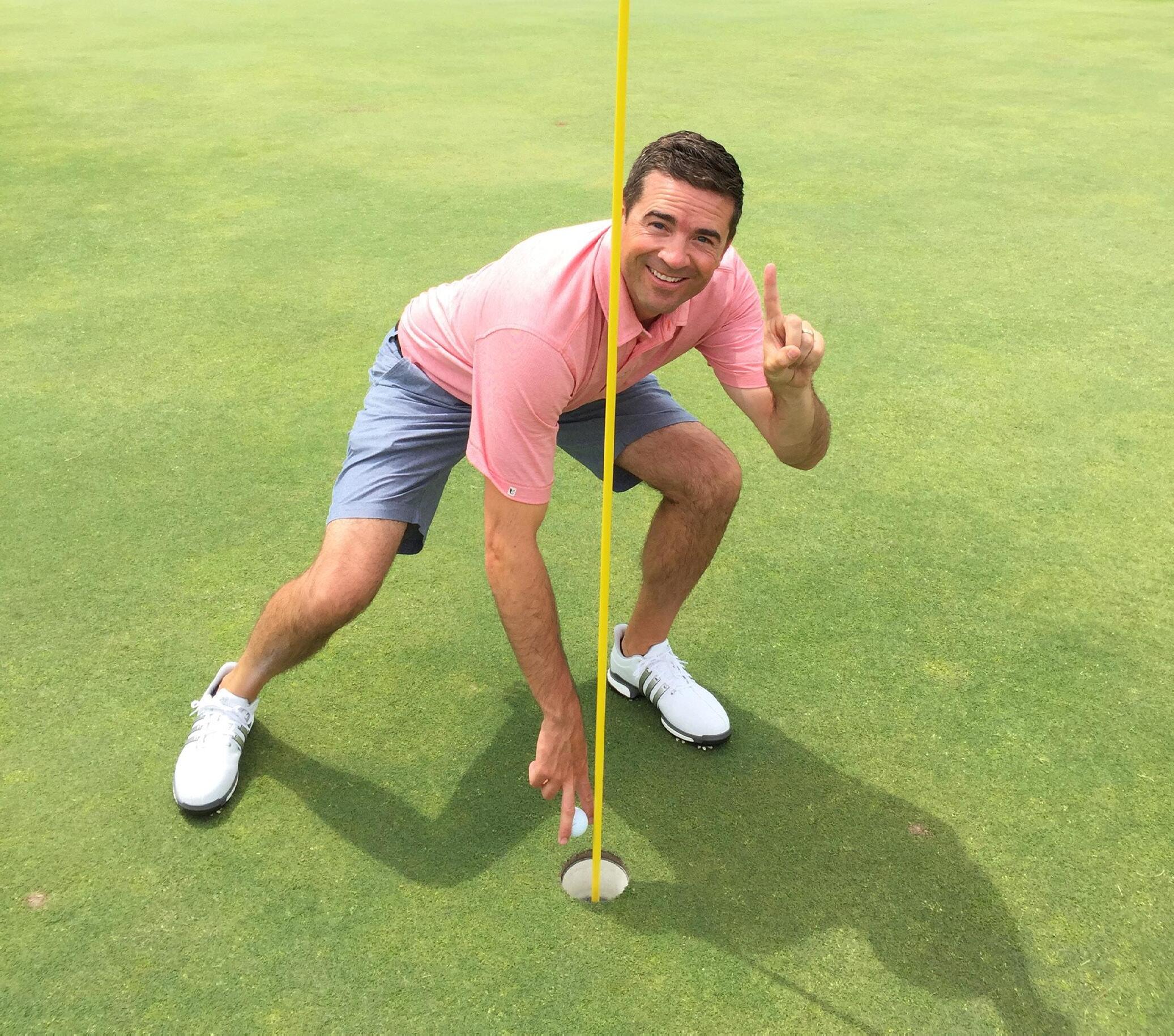
Then, two days later Bergeson shot a hole in one. On the fourth hole.
For as long as Robb Bergeson can remember, golf was the language he and his father spoke together. The late Dr. Robert Bergeson was a fixture at Yellowstone Country Club, a regular with the tight knit group of friends known as “Team America,” and it was there, tagging along at just four or five years old, that Robb got his first real education in the game. Robert Bergeson was diagnosed with Interstitial Lung Disease in late 2012 and ultimately passed on April 4th, 2016.
It was during a 9-hole round that summer of 2016 that Bergeson gathered about 12 or so of his and his father’s closest friends, who all sported matching t-shirts Bergeson had made leading up to it, what they coined as the “Bobby B Invitational.”
“When we got to 4 tee, I popped a bottle of champagne, said a quick toast to him, and spread his ashes,” Bergeson said.
Days later was the annual 4th of July Tournament at Whitefish Lake Golf Club, an event that brought his family together every year. Having grown up vacationing on Whitefish Lake, it felt natural to join in on the tourna-
ment. He had the privilege to have played in it for the past 30 years.. For many of those years Robb had his father as a caddy, before Dr. Bergeson started playing in it himself – up until the point he got sick.
“We both loved #4 because of the lookwith the tee box tucked back into the trees, the pond on the left side, and the awesome backdrop of Whitefish Mountain,” Bergeson said.
So, come the day of the tournament, Bergeson took to the fourth tee box on the North course, 209 yards from the back hole location. It was a breezy summer day, so he grabbed his 4-iron and thinned the shot just a little so it didn’t get very high. “Believe it or not, it flew right into the hole. It never bounced - truly unbelievable!” Bergeson recounted. “As you can imagine, the shot became the talk of the golf course. Everyone was coming up to me, hugging me. It was so special.” It was also the first time he had ever tee’ed off from that tee box.
“I immediately thought of my dad, it was impossible not to,” Bergeson recalled after making the ace. “The coolest thing about the whole deal was that my two best friends in the world were right there when the ball went in.” Justin Miller was on the third green behind them and John Moscrip was on the fourteenth green right next to them. “I played golf with both of them at the University of Washington, and both were like sons to my dad so it was pretty special. Not a dry eye around,” Bergeson said.
Spreading a loved one’s ashes on the greens is a practice that surprisingly, is not uncommon. Although there are stricter regulations on private property, consent from the property management is required, and it can be de-

clined. Human cremains can alter the soil PH of the delicate greens and in turn, damage the grass. Despite this, there are no laws in writing that explicitly say no, and none that explicitly say yes. That is up to the individual course regulations and approval from management. One prominent course operator told GOLF Magazine in an article on the legality of spreading a loved one’s ashes on a golf course that “Most of us consider it an honor, not an irritation,” as long as permission is granted through the proper channels.
Whitefish Lake Golf Club’s Director of Golf,
Tim Olson, was there on the day Bergeson made the ace. After three decades playing in the tournament Robb said it was important for Olson to be a part of that special afternoon.
“My dad was not just my mentor, but also my best friend. And so many of our greatest days were shared together on the golf course. So to me, golf has always been more than just a game. To this day, I still think of my dad every time I play golf,” Bergeson said.




"Dear Shanda,
I was playing in a tournament and I had just gotten to the tee box of this par 3. I went to use my range finder to get my yardage and the battery must have died. I must have looked a little confused because before I hit, a spectator standing near us said, "I heard someone say it in the group before you—it's 178 yards." I thanked him, grabbed a club, and hit my shot. Later someone told me I might have gotten advice from a spectator. Did I break a rule?" - Annonomus Submission
First, we need to understand the definition of advice and Rule 10.2 in the Rules of Golf
Advice: Any verbal comment or action (such as showing what club was just used to make a stroke) that is intended to influence a player in:
• Choosing a club,
• Making a stroke, or
• Deciding how to play during a hole or round.
But advice does not include public information, such as:
• The location of things on the course such as the
hole, the putting green, the fairway, penalty areas, bunkers, or another player’s ball,
• The distance from one point to another,
• Wind direction, or
• The Rules.
Once we understand what the definition of advice is in the Rules of Golf, a spectator telling a player the yardage to the hole is not advice and there is no penalty. Remember yardage is considered public information, you can even ask the players in your group!
"Hey Shanda! I have a quick question to run by you. I was just off the green facing a tricky chip shot. I caught it a little heavy, and my club accidentally hit the ball twice during the same swing. The first contact barely moved the ball, and the second contact sent it onto the green. One of my playing partners said double-hitting the ball is a penalty, but another said the rules changed a few years ago. What's the ruling?" - Annonomus Submission
Let’s begin by looking at Rule 10 Preparing for and Making a Stroke in the Rules of Golf.
Rule 10.1a. Fairly Striking the Ball
In making a stroke: The player must fairly strike at the ball with any part of the head of the
club such that there is only momentary contact between the club and the ball and must not push, scrape or scoop the ball.
If the player’s club accidentally hits the ball more than once, there has been only one stroke and there is no penalty.
To answer the question, the
second player was correct! Hitting the ball twice during a golf swing is no longer a penalty. As of 2019 under Rule 10.1a, if a player accidentally strikes the ball more than once in a single stroke, it is counted as just one stroke, and there is no penalty involved.

BY PETE GRASS RETIRED CGCS
We as humans make mistakes all the time and golf course Superintendents and their staffs are no exception. With that said, I am going to lecture here a bit based upon my 50 years working on a golf course.
With the weather the entire state has been experiencing since the start of July I wish to enlighten you the golfer about the challenges where these temperatures and golf course maintenance clash. In Montana I do not know of any golf course (or anywhere else for that matter) that uses/grows anything other than “cool season” turf types, bluegrass, bentgrass, ryegrass, fescues and not planted but invasions of poa annua. Maybe a homeowner has put in some zoysia, which is a transition zone turf type which is more heat and humidity tolerant but, in our climate, goes dormant as soon as temperatures dip below freezing, spring or fall. Warm season types used on courses, primarily Bermuda, tolerate and thrive at 80 degrees and above while the cool season varieties mentioned can tolerate well below zero temps and their optimal high temp is around 75 degrees. Obviously, these cool season varieties (even poa annua) can survive 110 degrees and weeks without lower than 90’s and nights never
cooling off below that optimal 75 degrees for lows, but they do need to be “babysat” and never let get too dry. You can lose poa annua in a matter of hours in extreme heat and it won’t come back for several weeks up to months, others have a bit more tolerance which is why they are preferable.
With all that background, I hope you will understand the tough spot that Superintendents get put in during heat spells like this. I know that any course is only trying their best to keep turf alive with whatever means they have available. Some facilities have limited access to adequate water (quantity/quality, both??) others, no matter if they have Montana’s most expensive, high tech irrigation systems are still going to struggle to keep turf alive.
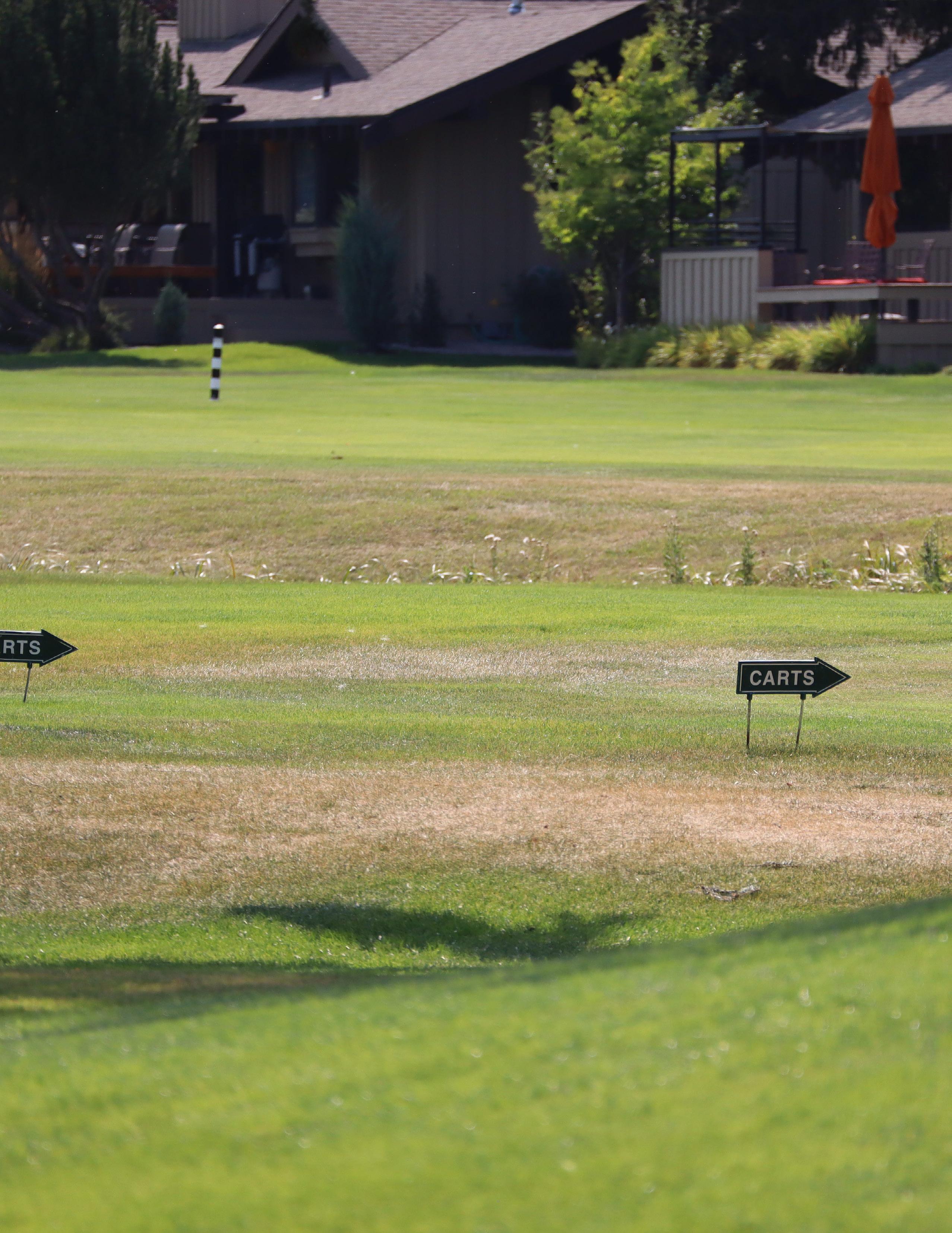
I now get to the reason for my article title this month. “Don’t You Dare” be critical of wherever you play during weather patterns like this, you are going find dry areas and overly wet areas, I hate to be rude but DEAL WITH IT. No irrigation system is going to keep conditions perfect, and I assure you that the maintenance staff is doing the best with what they have to keep turf alive most importantly and only secondly, as playable as possible.
My personal experience was that it is better to be wet than dry. You can skip ir-
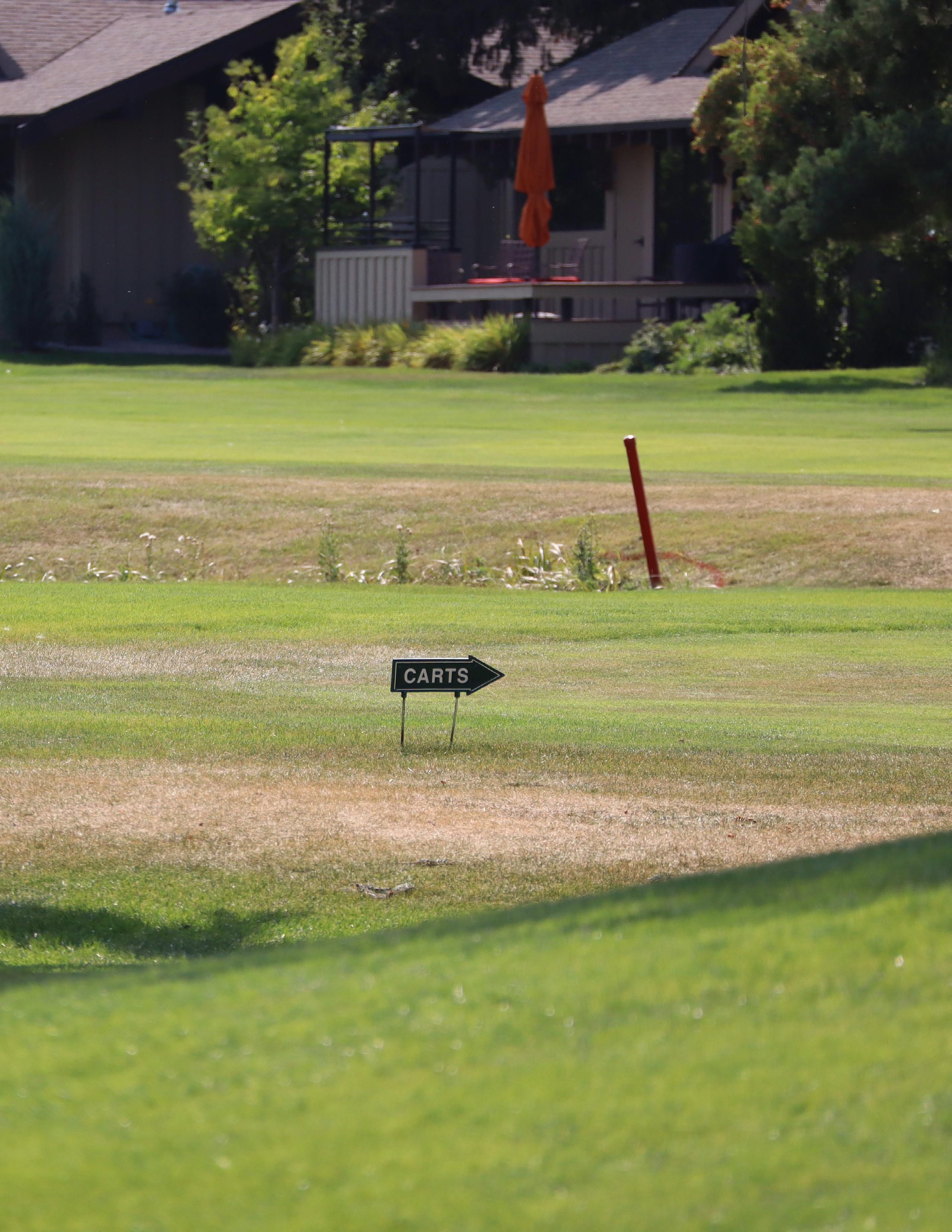
rigation for a few days if wet, but like an unreplaced divot, if not taken care of right then, the recovery of that dry turf could be a month until cooler weather helps it recover. The worst scenario is when you have an extremely hot day, you set or program your irrigation system to replace the soil moisture lost that day, sometimes waiting until you have to just go with your gut and go to bed. The forecast may call for rain that night, but can you really count on it? You must irrigate for the worst to not potentially lose any turf and if it rains in the night, you are going to be overly wet the next day, wet is still better than dead, in my opinion at least.
Another complaint we hear a lot during this type of heat is “they were watering while I was trying to play”. Again, not making excuses but if you play early in the morning, many irrigation systems are not able to complete a very heavy usage cycle during the
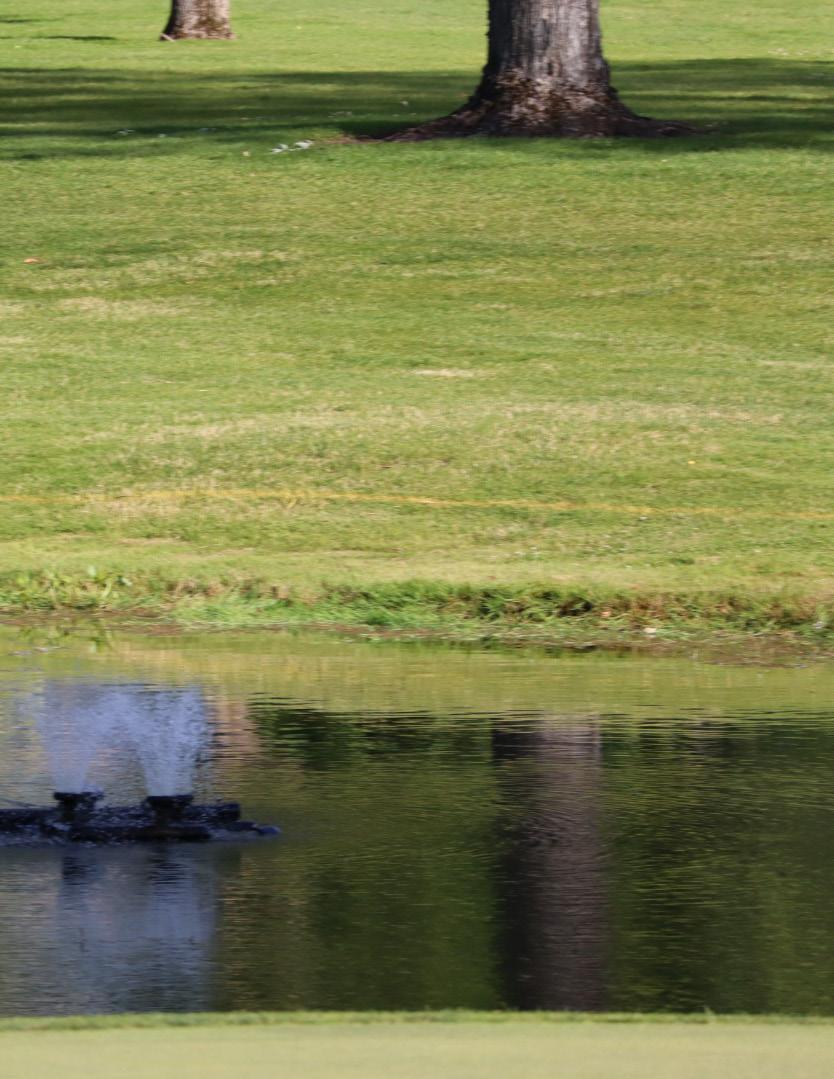
short nights of mid-summer and may still be running for a bit when you play. Another fact is that when it is around 100 degrees and higher, greens especially may need a shot of irrigation a few times from noon to evening to cool the canopy temps over them, that could be by either hose or irrigation system heads.
If by now you have not learned that you may be inconvenienced, annoyed, disappointed or find other negative factors to your round of golf in this weather, I did not explain the situation well enough. Bottom line, there are so many factors to all facets of golf course maintenance that are often beyond human control, so don’t assume that staffs just don’t care or are not doing their job. I do not know of any Superintendent that is not trying to do their best with what they have at their disposal year around, not just in these very hot conditions.


BY HEATHER SCHAPALS AGRONOMIST, WEST REGION
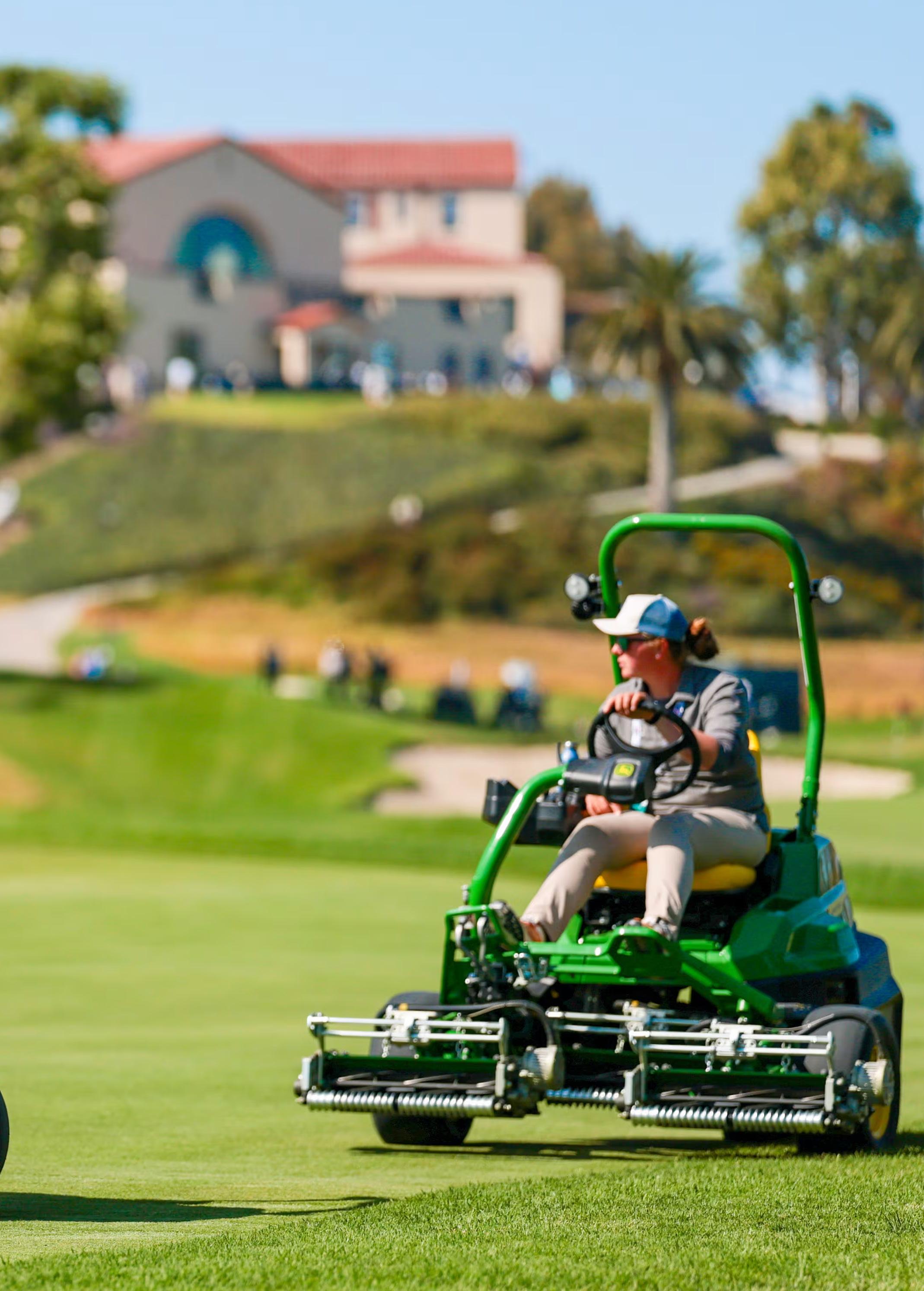
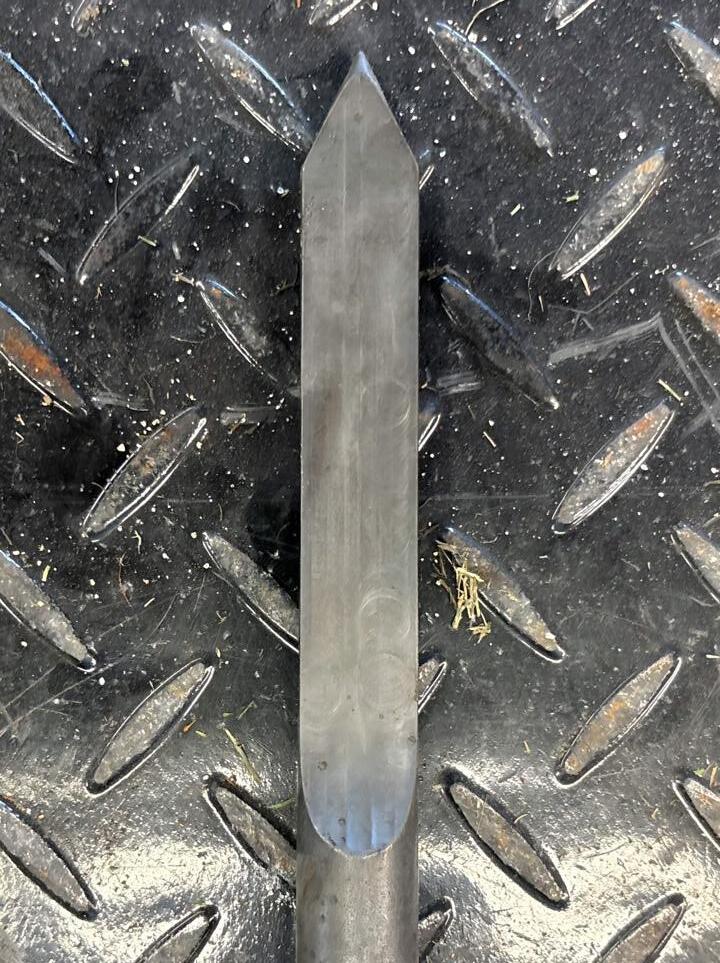
Every year, problem spots develop on tees and fairways that would benefit from some additional aeration during the prime playing season. This leaves superintendents with a familiar challenge: How do you improve soil conditions without disrupting playability too much? Venting with knife or bayonet tines is one way to strike that balance. These narrow-profile tines create deep channels that improve water infiltration and gas exchange while leaving the playing surface largely unaffected, making them an excellent option during the busy playing season.
One of the greatest advantages of this tine style is how quickly the surface recovers. On turf maintained at tee and fairway mowing heights, the slits are often difficult to see almost immediately after the operation is complete. This minimal disruption provides superintendents with the flexibility to make multiple passes and increase the number of channels, maximizing the venting benefits while preserving surface quality.
Slicing tines are also durable, perform well in heavier soils, and are very versatile. Their strength allows them to penetrate dense soils that may present challenges for other cultivation tools, making them a dependable option across a wide range of site conditions. In my time as a superintendent, I found
them to be ideal for addressing localized dry spots and other targeted aeration applications, but they can also be part of your routine cultivation program. Perhaps the most overlooked benefit of slicing tines is their cost-effectiveness. Most golf courses already own a compatible aerator, so incorporating this practice typically only requires purchasing the tines rather than investing in an entirely new piece of equipment.
Venting with knife/bayonet tines should not be used to replace more aggressive cultivation practices such as hollow-tine aeration, but this practice is an excellent mid-season component of a comprehensive cultivation program. With minimal disruption, rapid recovery and meaningful improvements to soil function, slicing tines can provide significant agronomic benefits while keeping golfers happy – a combination every superintendent can appreciate.