BRINGING MEDICAL HUMANITARIAN ACTION TO YOU
SPRING 2026
NEWBORN NURSING For the smallest survivors LESSONS FROM EBOLA A crisis within a crisis A LONG WAY TO CARE Women in South Sudan
EDITORIAL
CONTENTS 02 Editorial 04 News in brief 06 Feature: Nursing the smallest survivors 08 Photo essay: South Sudan 10 Interview: Sudan, art and hope 12 Letter from Gaza 14 Staff profile: Anna Negus 16 On assignment
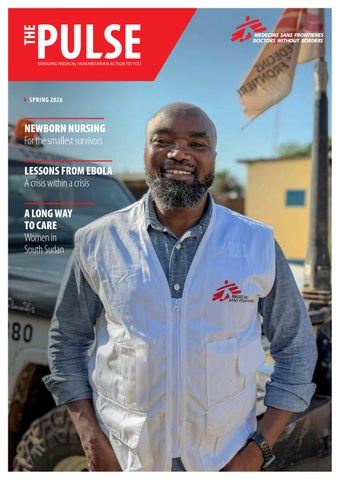
Cover: Denis Mbae, MSF project coordinator in Aweil, Northern Bahr el Ghazal State, South Sudan. © Joanne Lillie/MSF
MEDECINS SANS FRONTIERES Médecins Sans Frontières is an international, independent, medical humanitarian organisation that was founded in France in 1971. The organisation delivers emergency medical aid to people affected by armed conflict, epidemics, exclusion from healthcare and natural disasters. Assistance is provided based on need and irrespective of race, religion, gender or political affiliation. Today Médecins Sans Frontières is a worldwide movement of 24 associations, including one in Australia. In 2025, there were 95 departures of Australians and New Zealanders to fill roles in our medical humanitarian projects.
Médecins Sans Frontières Australia acknowledges the Gadigal of the Eora nation, the traditional owners of the land on which our office is located. We recognise their ongoing custodianship of land, waters and culture. We pay our respects to Elders past and present.
CONNECT WITH US Call 1300 136 061 Email office@sydney.msf.org msf.org.au facebook.com/MSFANZ @msf_anz 2
Lessons from Butembo Building an Ebola treatment centre from scratch illustrates what it means to work in a complex humanitarian crisis. Responding to an emergency is never about executing a perfect plan. It is about having a good plan, and having the people, the relationships and the insight to make the right adjustments. What keeps it together is trust. That was a big lesson from my recent time in the Democratic Republic of Congo (DRC), where I went in June to help set up an Ebola treatment centre. Going to DRC was not in my plans. I had a trip scheduled from Sydney to MSF’s Paris headquarters. But with the Ebola outbreak accelerating in eastern DRC, I emailed the Paris Emergency Unit to say I could be available for a few weeks if they needed someone. To my surprise, they jumped at the offer. So I changed my plans. When I landed in Paris, I dropped my passport at the MSF office right away to get my visa sorted. In a matter of days, I was on a plane to Kigali, Rwanda, then on the road to Butembo in North Kivu province, DRC, as medical referent for a new MSF project, alongside four colleagues. I was there because of my expertise in public health and my experience in emergencies like this one – going back to the West Africa Ebola outbreak of 2014–15 – but the next month was full of challenges. For one thing, the Bundibugyo virus driving the outbreak, one of several viruses that cause Ebola disease, had no vaccine or therapeutic treatment, making it harder to contain than the more common Ebola (or Zaire) virus. For another, this region of DRC has been at the centre of armed conflict for decades, with armed groups, displacement and insecurity shaping everyday life. It is an extremely fragile context, with political tensions, economic vulnerability, and communities too well acquainted with emergencies.
A crisis within a crisis Butembo, a city of around 2 million people, is a trading hub with links to Uganda and the wider Great Lakes region. People move constantly in and out of the city, which matters in an epidemic. By the end of May, the outbreak had travelled from the epicentre in neighbouring Ituri province, around 300 km to the north. The health authorities were quickly becoming overwhelmed. A short MSF exploratory mission had found that our presence in Butembo could be useful. The usual international response machinery was slow, and the situation was moving fast. We were among the first to get there. And we found ourselves in a crisis within a crisis.
A one-size-fits-all approach wasn’t possible. We needed to respond to an evolving situation. The conditions were far from safe, with minimal infection prevention and control (IPC) in the places we were living and working. Our first batch of tests showed two positive cases in a health centre across the road from our hotel. The outbreak wasn’t somewhere else – it was all around us. There was also a lingering memory of the previous Ebola response in Butembo. During the 2018–19 outbreak, MSF suspended operations here after violent attacks on two treatment centres. A history of incidents linked to humanitarian actors had eroded people’s trust.
“There is no Ebola here”
Preparing in a whirlwind
Day one
The situation was urgent. Within days of our arrival, cases spiked. The death rate rose. People were getting to health centres late, often close to dying. Healthcare workers were getting infected. We needed a treatment centre to begin caring for patients. We needed to support the surveillance in place to detect and monitor the virus and stop its spread. We needed a strategy for working in this highly challenging context. And above all, we needed community engagement. “There is no Ebola here” was something we kept hearing. Our program coordinator Marie-Laure Duclos spent her time meeting people, introducing MSF, listening and trying to understand how the city worked. That meant talking with motorcycle taxi drivers, community leaders, religious communities, the police, health workers and many others. If people don’t believe Ebola exists, they might avoid isolating and testing. If they don’t trust healthcare workers, they might avoid treatment or disappear after a positive result. Trust was crucial. Containing the outbreak depended on people understanding how the virus is transmitted, and how they can stop it.
While our program coordinator was out building acceptance, the water and sanitation team and I got the treatment centre ready. We designed the layout, studied IPC requirements, negotiated use of the site, and started recruitment and training – 150 staff for a 35-bed centre. Priorities fluctuated. Meetings with the Butembo Health Zone team became an essential part of my day, because they kept MSF inside the local response, rather than creating a separate one – a mistake made the last time. Meanwhile, our logistics team leader, Ludovic Levadoux, also from MSF Australia, made sure the team could function. We were nine when I arrived. Three weeks later, we were around 45. We needed accommodation, offices, warehouses, a pharmacy, cars, drivers, guards – a whole ecosystem from scratch. And there was another reality impossible to ignore: the absence of other humanitarian organisations, the fallout of the funding collapse. In an emergency like this, there would normally be many NGOs present, bringing expertise in specialised sectors (health, water and sanitation, shelter, logistics, etc.) and coordinating with others. Those on hand had to fill the gaps, taking on tasks usually shared across a much larger humanitarian presence.
After weeks of plans, construction, recruitment, training, surveillance support, negotiations and countless discussions, the centre was ready to receive its first patients in a safer environment, with trained staff and the systems in place to provide appropriate care. And that was the day I left Butembo. But the work was only beginning. That’s the reality of an emergency in a complex environment: you don’t arrive in one crisis, with a clear beginning, a clear plan and a clear end. You arrive in the middle of something already happening. Your job is to understand it, build the relationships that allow you to work within it, adapt your response to what you find, and keep going. Trust is what holds it together. Justine De Rouck Head of Medical Unit, MSF Australia
MSF teams get the Ebola treatment centre running in Butembo, DRC, as the first patients are being admitted, 2 July 2026. © Paul Lorgerie/MSF THE PULSE: SPRING 2026
3
NEWS IN BRIEF
HAITI
Confronting obstacles to women’s healthcare In Port-au-Prince, armed violence and a collapsing health system have made access to sexual and reproductive healthcare increasingly dangerous for women. Checkpoints, roadblocks, transport costs and fear of being targeted (based on area of residence) prevent many women from reaching clinics, while women go without antenatal care and give birth at home without skilled support. MSF has responded by sending mobile clinics into communities and rehabilitating the Isaïe Jeanty maternity hospital in Cité Soleil, where teams provide emergency obstetric care, contraception and support for survivors of sexual violence. In the first half of 2026, MSF delivered 4,500 sexual and reproductive health consultations and assisted 929 births, including 285 emergency caesarean sections. Yet insecurity continues to disrupt care. “When clashes affect our medical facilities, we have to suspend our activities and evacuate the premises. This has happened twice in the last two months,” says Diana Manilla Arroyo, MSF head of mission in Haiti. The human cost is stark. A 38-year-old patient explains why she has not vaccinated her two-year-old in 18 months: “I don’t want to go out with my identity card with my address indicated. I’m scared. You could get killed.”
At 328 deaths per 100,000 live births, Haiti has the highest maternal mortality ratio in the Americas, compared to 197 globally and 58 in the Americas. (WHO 2023)
In Bel Air, a neighbourhood of Port-au-Prince controlled by armed groups and marked by frequent gunfights, women seeking maternal and other healthcare wait at an MSF mobile clinic in an abandoned school. © Jelle Krings/MSF 4
At the MSF-run Mehr clinic in southwest Tehran, a doctor checks a pregnant woman’s blood pressure. Through fixed and mobile clinics, MSF provides free healthcare to vulnerable members of the community, including lowincome Iranian families and migrants. ©Farhad Babaei/MSF
IRAN
Expanding care for excluded communities Since a major military assault on Iran began in late February 2026, refugees, migrants and other marginalised groups have faced worsening barriers to essential healthcare. Repeated escalations have disrupted primary services, leaving many people without routine treatment for non-communicable diseases, antenatal care, or mental health support, even as trauma needs surge. MSF has scaled up medical and psychological services across Tehran, Mashhad and Kerman, running four projects between January and June 2026. Teams provided 84,615 consultations in the first half of the year – an 80 per cent increase on all of 2025 – alongside a 50 per cent rise in mental health visits for posttraumatic stress disorder, depression and anxiety. MSF also donated medical kits and supplies to the Iranian Red Crescent Society and opened a new primary care clinic in Kerman focused on refugees and migrants. “During periods of intensified hostilities and ceasefire, the communities we support often face limited access to medical care,” said Grigor Simonyan, MSF head of mission in Iran. “We have urgently scaled up core medical and mental health services to meet needs that continue to grow.” With a potential fifth project in Hormozgan province, MSF remains committed to adapting to meet evolving medical needs. “As health needs intensify and become more pressing, we are ready to expand our activities further to ensure vulnerable people can access free and independent care,” said Simonyan.
180 patients seen each day on average at MSF clinics in Tehran
BANGLADESH
A children’s health emergency Nine years since more than 700,000 Rohingya fled their Myanmar homeland, children in Bangladesh’s refugee camps are arriving at MSF’s Kutupalong Hospital later and in more critical conditions, as humanitarian funding cuts weaken primary healthcare, nutrition programs and basic protection. Medical teams report more children with complex conditions involving severe malnutrition, infections and other illnesses. At the same time, a mental health emergency is taking a devastating toll on young people. Hospital data shows the proportion of children under 15 seeking MSF mental health support jumped from just under 10 per cent in 2021 to almost 30 per cent in 2025. Between 2023 and 2025, children under 18 accounted for 27 per cent of suicide attempts recorded at the hospital. MSF has expanded emergency paediatric care at Kutupalong, its largest hospital and main referral hub in the camps, while providing psychiatric care, counselling and safe spaces for distressed adolescents. “When parents are forced to prioritise daily survival, like securing food or safety, they delay seeking hospital care for a sick child until it becomes a lifethreatening emergency, leading to an influx of far more severe cases,” said deputy hospital director Dr Nadim Shahariyar. The worsening cases reflect a broader public health and protection emergency affecting more than 1.3 million Rohingya refugees, more than half of whom are children. MSF has continued to call for adequate humanitarian response and efforts towards a lasting political solution.
Referrals for children at Kutupalong Hospital requiring more complex care has increased 75% between 2022 and 2026.
Dr Nadim Shahariyar, deputy hospital director of MSF’s Kutupalong Hospital, follows up on the condition of Aiyan Arfan, who is 10 days old and critically ill. © Nazmul Islam/MSF
In the Busuma camp, the number of makeshift shelters continues to decrease as repatriation operations organised by the government and UNHCR have enabled around 1,000 Congolese refugees to return home each week. © Dorine Niyungeko/MSF
BURUNDI
Fragile gains at Busuma camp Living conditions have improved at Burundi’s Busuma camp, which shelters around 42,000 refugees who fled violence in the Democratic Republic of Congo in December 2025. As of late August, MSF’s outbreak treatment centre had received no patients since 29 July and recorded no deaths since March, while severe medical cases fell to 0.3 per cent of 970 consultations in late July, from 14 per cent in mid-January. But the gains remain precarious. More than seven months after many families arrived, food, shelter and sanitation remained inadequate. Humanitarian organisations delivered only 30 per cent of the planned response, and data from the UN refugee agency (UNHCR) showed 156 people sharing each latrine – far beyond the recommended maximum of 20. Since December 2025, MSF has supported water supply and provided primary and secondary healthcare in Busuma, treating 29,349 patients and admitting 654 between January and early August. But sustained, expanded humanitarian assistance remain needed to protect people from renewed outbreaks and to address continuing mental-health, nutrition and protection needs. “Hygiene conditions are critical and the risk of an outbreak is imminent,” said Sabrine Hamdi, MSF’s project coordinator in Busuma. “Without better access to sanitation infrastructure, we fear the emergence of outbreaks that we have managed to control so far.”
Drinking water available per person/day in Busuma camp: January 2026: 3 litres August 2026: 16 litres (The WHO recommended minimum in emergencies is 15 litres.) THE PULSE: SPRING 2026
5
NEWBORN CARE
Nursing the smallest survivors Nurses specialised in neonatal care are often scarcest in countries with high newborn mortality. To help address this deficit, MSF is expanding training programs to build theoretical knowledge, skills and confidence among MSF nursing teams and their colleagues. In August, MSF spotlighted some of its achievements at the Council of International Neonatal Nurses’ global conference, held in Australia for the first time.
In their first 28 days, babies are more vulnerable to health threats than at any other time of life. Globally, 47 per cent of deaths of children under five years old occur in the 28-day neonatal period. And over decades this proportion has only grown, reflecting slow progress in addressing some of the leading causes of what should often be preventable deaths: premature birth, birth complications such as birth asphyxia or trauma, and neonatal infections. Newborn deaths are most common in sub-Saharan Africa, followed by central and southern Asia. For small and sick babies, nurses specialised in neonatal nursing are essential to help them survive. 6
Nurse aide Ndayumvire Antoinette engages with a mother while holding her baby in the maternity ward of the MSF Hospital in Nduta Camp, Tanzania, June 2025. © Eugene Osidiana/MSF
Newborns are not small children “Nurses have a unique role in the health of, and care for, populations of all ages and in all settings. And it all starts at birth,” says Melissa Hozjan-Gaudin, nursing advisor for MSF based in Sydney. Nurses are essential also to provide family-centred care and support in a nurturing role that extends beyond the fragile baby alone. But the global healthcare worker shortage is acute among nurses, disproportionately so in low-income countries. Nurses trained in neonatal care are even more rare. “Newborns are not small children,” Melissa notes. They have distinct warning signs, but rapid deterioration in their condition can be almost imperceptible. “We know what danger signs we’re looking for, but often it’s also about the time spent with the baby and watching trends. Often, it’s very subtle – something just doesn’t seem right.” For many babies, the crisis occurs within their first 24 hours, hence the importance of essential newborn care in a healthcare facility, integrated to safe delivery care and the immediate post-partum period. “We’re so familiar with deliveries being inside a delivery room. But sometimes the birth environment is not that. We have babies coming in who have been delivered at home, with few resources, by a mother or grandmother, or a traditional birth assistant or inexperienced healthcare professional. Everything that happens before also impacts on the babies we see – lack of antenatal care, for example,” Melissa says.
Specialised training in Pakistan
Improving newborn survival in a refugee camp
Global data from 2023 places Pakistan second worldwide for neonatal deaths (38 per 1,000 births), which is why MSF opened a newborn unit in collaboration with the Ministry of Health of Pakistan in rural Khyber Pakhtunkhwa in 2025. Newborn unit supervisor Sundas Parwez leads a team of nurses trained in neonatal care for the first time by MSF.
In Tanzania, MSF was providing healthcare to a large group of Burundian refugees in Nduta displacement camp until the camp’s closure earlier this year. To reduce neonatal mortality, MSF ran a 10-month training program for nurses involved in neonatal care and their midwifery colleagues. The program combined self-paced online modules, group-based case studies and discussions, and face-to-face training including simulation and bedside mentoring at Nduta Hospital. Paskal Alto Hyera, nursing activity manager in Nduta, recalls a newborn admitted shortly after birth, with an extremely low birth weight of around 900g. “At the beginning, even the caregiver had lost hope because of the baby’s condition,” Paskal says. But the team paid particular attention to feeding support, hygiene, close monitoring and timely medication. “The baby improved gradually, and we were eventually able to discharge it at around 1.8kgs. The family was very grateful, and we continued outpatient follow-up until the baby reached around 5kgs.” Paskal explains that after the training program, they had improved the hospital’s staffing situation because the nursing team was sometimes too busy to give enough attention to the feeding process. “I feel that proper feeding support was one of the key factors that helped save this very small, at-risk newborn.” “Newborn care reveals that human life is incredibly fragile, yet amazingly resilient,” says Dogra unit supervisor Sundas, “requiring a perfect blend of hightech precision and basic human connection. Every drop of fluid and milligram of medicine matters, leaving zero room for error. Advanced technology saves lives, but simple acts like warmth, hygiene, and skin-to-skin care are equally essential. But as I’ve also learned, true healing extends beyond the baby, to include educating and supporting the families as crucial partners in care.”
Advanced technology saves lives, but simple acts like warmth, hygiene, and skin-to-skin care are equally essential. They have learned breathing support and neonatal resuscitation, neonatal assessment, safe medication use, how to support kangaroo mother care, and early recognition of complications. In Dogra hospital, these skills enable the nurses to provide timely and appropriate care for small and sick newborns born inside the hospital as well as outside. One such baby was brought in by his mother after she experienced a difficult birth. He was diagnosed with aspiration pneumonia, an infection caused by inhaling a substance other than air into the lower respiratory tract, as a result of respiratory distress. “The baby required oxygen therapy and antibiotics, along with close monitoring and supportive neonatal care,” Sundas says. “The baby and mother stayed with us for 10 days. Thanks to his clinical improvement, he could then be discharged home, with regular follow-up advised.”
MSF nurse Sylvia Waleem cares for a baby admitted to the MSF newborn unit after being born in Dogra Hospital but determined to be at risk of sepsis and hypoglycaemia, Khyber District, Pakistan, July 2026. © Gul Nayab/MSF
More than 92,000 newborns were admitted for specialised neonatal care in MSF projects in 2025
Neonatal mortality in Pakistan in 2023: 37.6 deaths/1000 live births Neonatal mortality in Australia in 2023: 2.3 deaths/1000 live births Neonatal mortality in New Zealand in 2023: 2.7 deaths/1000 live births THE PULSE: SPRING 2026
7
PHOTO ESSAY
The long journey to care for Aweil’s women Following global cuts in foreign aid, two-thirds of primary healthcare facilities in South Sudan’s Northern Bahr el Ghazal State have closed, leaving 1.4 million people without access to care close to home. Without primary healthcare, people cannot access antenatal care, vaccinations, medicines and nutrition support for their children, assistance for complicated births, referrals for specialist care, or other essential services. As a result, women travel great distances to reach the MSFsupported secondary hospital in Aweil for emergency care when their children’s conditions deteriorate. Some of the women who made it there share their stories. Photos shared with storyholders’ permission. All photos © Joanne Lillie/MSF unless otherwise acknowledged. Medical data from Aweil State Hospital shows increases of 30 per cent for neonatal admissions, 36 per cent for complicated births, and 90 per cent for new admissions to inpatient therapeutic feeding centres in the first half of 2026, compared to the same period last year. This is “a sign that primary healthcare is not functional,” says Dr David Kahindi, MSF medical coordinator. “People are dying because of this gap in healthcare.” © Isaac Buay/MSF
8
Abuk Thiek Malek travelled almost eight hours on two motorbike taxi trips to bring her newborn son, Rou, to the neonatal intensive care unit at Aweil State Hospital. There were no medicines at her local primary healthcare unit. Rou is receiving treatment for a rare life-threatening bacterial infection. “I am happy because now he is eating well and getting better,” Abuk says. The family had to go into debt to fund the A$140 journey.
Akok Wol Manyuol brought her babies Akok (left) and Abuk – her second set of twins – to hospital from their village on foot, a six-hour journey. When the twin girls developed vomiting and diarrhoea, Akok went to her local primary healthcare unit but found it closed. Left untreated, common conditions like diarrhoea can lead to a rapid deterioration in a child’s health, and severe acute malnutrition.
Dr Daniel Garang (left), obstetrician-gynaecologist Dr Harizah Hamiet (middle) and nurse aid John Deng Kiir (right) attend to a young woman who lost her baby after a prolonged and obstructed labour. She was in labour for two days and fully dilated for five hours before she reached care. “The journey was very far and difficult,” said her mother. “The outcome would likely have been very different if antenatal and birthing support had been available closer to home,” Harizah says.
Nyirol Dut Anjit travelled two hours to bring her baby, Angong, to the hospital. He had difficulty breathing, high fevers and was frequently ill. By the time he came into MSF’s care, Angong had been coughing for one month and was losing weight. After he was screened at the inpatient therapeutic feeding centre, he was diagnosed with a chronic condition and malnutrition. With a medication regimen and nutritional support, his condition is improving at last.
Akon Akol Deng holds Ngor, one of her triplets, while nurse Aken Peter Aken feeds him with a specialised cup in the inpatient therapeutic feeding centre. Both boys, Ngor and Chan, receive therapeutic food and milk to treat severe acute malnutrition, while their sister, Anger, who is well at the moment, keeps them company. With the closure of medical facilities due to humanitarian funding cuts, there is nowhere for patients to go for follow-up care after leaving Aweil State Hospital. THE PULSE: SPRING 2026
9
CREATIVE COLLABORATION
On Sudan, art and hope After more than 1,200 days of war, Sudan’s story continues to be ignored in much of the world’s media. But it is being told in the lines and language of its own people, through the work of artists who have refused to look away. At the heart of this effort is Khartoon magazine, founded in 2023 by Sudanese cartoonist Khalid Albaih. Over the past three years, Khartoon has created a shared visual archive of a conflict marked by displacement, hunger, epidemics and the collapse of health services. In a collaboration with MSF, Khartoon’s cartoonists have turned moments from MSF projects into images that share a humanitarian message. Among these contributors is Nader Jenni, an illustrator and writer whose work transforms suffering and data into images that anyone can understand. In this interview with The Pulse, Nader reflects on what cartooning means to him, and he shares his hopes for the future – not that drawings will stop the war, but that they will keep Sudan’s humanity visible, plant hope, and insist that the world does not turn away.
Can you tell us about the history of Khartoon? Khartoon is an independent Sudanese magazine specialising in cartoons and comics, founded by the Sudanese artist Khalid Albaih in 2023, in the middle of the war that broke out in Sudan. It took shape from our belief that drawing is a tool for preserving memory and documenting what people are living through, especially in times of conflict. Dozens of Sudanese artists and illustrators have contributed to Khartoon, from inside Sudan and from the diaspora. From the beginning we made it a platform open to different generations, publishing well-known names alongside young talents. We also gave particular attention to women artists and cartoonists, because we believe the documentation of war is not complete without women’s voices and the vision women bring to their own experiences and communities. For that reason, we sought to create a safe and fair space for participation – through artist residency programs, training workshops, and the “Khartoon Qalam Talent” competition to discover new talent, as well as exhibitions and international participation. We believe Sudanese art, in all its diversity, deserves to be seen globally, and that it is best placed to express the concerns of the Sudanese zol [personality] amid this forgotten war.
Sudanese illustrator and writer Nader Jenni in Khartoum in 2023. (Supplied)
10
What first inspired you to draw? I started drawing in childhood, like many kids. For me it was a way of understanding the world and expressing it – and of inventing parallel worlds, which I still escape into whenever I need. I draw and I write, and over time I discovered that cartooning is the language through which I can say what is difficult to say in words. I find that drawing and writing complete one another.
I make work built on old sorrows and on the memory of places that the war destroyed – and a yearning to rebuild them in the future. What has inspired me most is the Sudanese people: starting from the circle of the family and extending to every other level. Their lightness of spirit, their ability to mock even in the hardest circumstances, and, on the other hand, the political and social contradictions we live in. It is magical realism, but brutal!
Where did you grow up? I grew up in Shajara, in the south of Khartoum, near the Nile. That environment was fundamental to who I became – the neighbourhood, the people, the markets, the neighbours’ conversations; all of it shaped my visual memory. The Nile was always present in our lives – it gave me a sense of contemplation and calm, while Khartoum, with all its contradictions, gave me endless material to think about and to draw. Now I make work built on old sorrows and on the memory of places that the war destroyed – and a yearning to rebuild them in the future. Left: “Silence kills… Talk about Sudan.” Poster by Amani Al-Zein and Nader Jenni/Khartoon Magazine for MSF. Right: © Fatma Hanouta/Khartoon Magazine for MSF
What has your experience been over the past three years? Exceptional years by every measure, of course. Working at a magazine that documents our daily life is not necessarily only journalistic or artistic work – it is a moral responsibility as well. We were trying to document what was happening without losing our humanity, and without losing our impartiality in directing accusations at the warring parties whenever they committed a crime against the citizens and the country; while also weighing in on the side of peace and an end to the war, and at the same time offering a visual narrative that reflects people’s daily suffering. I learned early in my artistic path that an image can condense pages of words, and that cartooning, comics and the visual arts can be a historical document as much as they are a work of art. That is why Khartoon’s foundation is strong, and is not measured by engagement and spread on social media, but by withstanding the test of time. We faced great challenges: the scattering of the team and the difficulty of communicating with artists inside Sudan; their fear of publishing; and the avoidance of sensitive political subjects – sometimes withdrawing work for reasons of caution and safety. Also, the challenges of funding and continuity. But against that, we built a wonderful network of artists from different generations who believe in the same idea and the same vision.
Where do you live now, and how do you stay connected to the community of Sudanese artists? I currently live in Cairo, but I am still in almost daily contact with Sudanese artists inside and outside Sudan. The war separated us geographically, but it brought us closer professionally and as people.
Read more about the collaboration between Khartoon and MSF on our website.
THE PULSE: SPRING 2026
11
LETTER FROM: GAZA
An ordinary Friday Despite the October 2025 ceasefire, violence in Gaza persists, with over 3,500 Palestinians injured since 11 October last year and 121 killed in June 2026 alone – the deadliest month this year. The term “ceasefire” has become meaningless as civilian lives remain disregarded. MSF staff have faced direct harm: colleagues shot in tents, family members killed, homes destroyed, and people forcibly displaced. One nurse witnessed her four-year-old cousin’s death in an airstrike; another colleague was trapped in a vehicle under fire with his family; a third fled with his disabled brother, losing all his possessions. A widow whose husband, an MSF driver, was killed now lives near the “yellow line” and is awakened every morning by the sound of shells. These are not isolated events but part of a broader pattern endangering humanitarian workers and civilians alike. Ashraf Afifi, an MSF radio operator, recounts being severely wounded by an Israeli quadcopter in June 2026. Ashraf Afifi, MSF colleague shot by Israeli forces in Gaza, June 2026. © Nour Alsaqqa/MSF 12
Dear Friends, I was sitting in my tent, like any ordinary Friday, if there is such a thing as an ordinary day during the genocide. My son Adam was outside playing with a kite. Suddenly, he said, “Dad, bullets are landing next to us.” I didn’t believe him. I went outside but couldn’t see anything strange. I thought he was imagining things. I didn’t think much of it. I dismissed it as a one-in-a-million coincidence, nothing to fear. I went back to my tent. Suddenly, I heard a striking sound, like someone hitting a wooden table with a hammer. I came out of the bathroom and saw my wife looking frightened. I looked around to see where the bullet had hit. Suddenly it felt like someone struck me in the side with a wooden club, and I heard the same sound again: like a hammer hitting a table. Immediately I knew I’d been hit. My wife was standing right next to me. She screamed. I looked down at my body. My side was covered in blood. Since the beginning of the genocide, I have never ignored a sign of danger. If I sensed a threat, even a kilometre away, I’d take my children away from it, no matter the cost. But this time, I was careless. For the first time since the genocide began, I was careless. I’d gone outside to confirm it was really a bullet. That was when I was hit. “Don’t let me pass out. That’s the most important thing,” I said to my brother as we drove with my hand on my wound. I called my friend, our colleague Bilal Abu Saada. “I’ve been shot. I’m on my way to Nasser Hospital.”
SUPPORTER PROFILE In my mind, it was simple: I saw two holes in my side close to each other, meaning the bullet came from the side, went in and out, simple, nothing to fear. But the pain was severe. My brother looked at me and said, “There’s blood on your back. Turn around.” I turned, lifted my shirt. “The bullet went in your back,” he said. All my courage vanished when I realised the bullet had entered from my back and exited through my side. I immediately understood that this was serious, I started thinking about my kidney, my spleen, other organs. I began to feel numbness in my hands, numbness in my face. My breathing became difficult, and the world started going dark. My brother was slapping my face, “Don’t fall asleep!” It was the longest journey of my life, like a road with no end. Even though I’ve driven it dozens of times, it felt endless, full of stops, traffic jams and obstacles. Finally, we arrived at the hospital’s main entrance. Someone in front of the emergency door said, “Get out.” I tried to get out but couldn’t. The pain was horrific. “I can’t, I’m wounded.” I told him. “There are no stretchers,” he said. “Come on, try, I’ll hold you.” I wanted to scream, to shout: “What do you want, man? I can’t get out!” I started trying to get out. Suddenly someone brought a bed from the ER, and they wheeled me inside.
The staff member said, “You’re wounded and making jokes?” I said, “You don’t know me. I make jokes at the worst times.” In the X-ray room, they placed my bed next to the X-ray bed and said, “Move onto this bed.” I thought they would lift me or help me. Instead, they left me to writhe like a snake, struggling to move, in severe pain. I thought: maybe this is intentional, to keep me active? Aren’t they afraid I could have internal bleeding? Then they took me for an ultrasound. I’d never had one, but I remembered when my wife was pregnant with our first daughter, and the doctor used the same machine. I joked, “Boy or girl?” The staff member said, “You’re wounded and making jokes?” I said, “You don’t know me. I make jokes at the worst times.” I had a CT scan, and when it was done, Bilal, the first person I had called, was standing over me. He said, “Enough of this pampering – get up.” Hearing that warmed my heart. I understood right then there was no serious danger. That same night, we went back to our tent. I sat about two metres from where I was hit. I had imagined I would be terrified to go back to the place where I had almost lost my life. When the doctor told me I didn’t need to stay in the hospital, I said, “Thank God, I don’t want to stay here.” But honestly, I was afraid to go back to my tent. Yet, after three hours, here I was, sitting in the same spot as if nothing had happened. The whole experience was surreal. I wouldn’t wish it on anyone.
Ashraf Afifi MSF Radio Operator in Gaza
Tim Snell
Home: Armidale, NSW (Anaiwan)
Tim Snell’s interest in humanitarian action began early. Growing up in rural New South Wales, he attended a small one-teacher school involved with the Red Cross, where children raised money through community efforts. And his mother’s example of generosity has remained with him: “She always put other people first,” he says. “She would say, ‘A cup of kindness costs nothing,’ and ‘There is always someone worse off.’” Tim first noticed MSF in magazine ads, and then while completing his nursing degree he found out more. The commitment to providing care without bias closely reflects his own values. “To be able to help your fellow man, woman and child is wonderful,” he says. His decision to include MSF in his Will was prompted by information he saw online and by the accessibility of leaving a gift. “It makes it available to basically anyone, because regardless of the amount, anything will help.” He hopes his gift will contribute to care for anyone in need of healthcare but who does not have easy access to it. For Tim, MSF is “a very important and extremely worthwhile organisation” because it puts humanity first. He hopes to be remembered simply as someone who cared: “It doesn’t matter what race you are, what colour you are, what sex you are, what your sexuality is. We’re all humans, and we all have basic human rights.”
To learn more about our Gifts in Wills program, please visit msf.org.au/leave-a-legacy or contact our team at giftsinwills@sydney.msf.org or 02 8570 2611. THE PULSE: SPRING 2026
13
STAFF PROFILE
ANNA NEGUS
Anaesthetist Home: Perth (Wadjuk Noongar) MSF experience: South Sudan
How did you join MSF? I’ve volunteered a lot, but I’ve never really put myself out there on such a level in terms of aid work. I’ve always wanted to do that. One of the first things I thought when I got to medical school was, I must go and join MSF. How do I do that? Of course, you’re 18 and you know nothing. So I was a bit disillusioned. But I always felt that I would at some point. And finally, it seemed like the time was right, so I just applied. And I was very surprised I got accepted. Why were you surprised? It seemed that people who did this must have some sort of magical skill set. Here in Australia, we’re not dealing with war or famine. We’re one of the most privileged populations on earth, I think. So you wonder if you’ve got the right skills for the job. You hear about people going to Gaza or other conflict zones where there’s bombs dropping, and that’s the immediate thought – that’s what I’ll be expected to do. I’ve given a few talks to colleagues and friends about my trip. The overwhelming comment is, “Wow, you’re so brave to do that” – which is surprising, because it can be stressful, but generally you’re safe, you’re doing what you can do. And I believe they wouldn’t send me if they didn’t think I could do it. I think most people can do it – they just think they can’t. What were some of the challenges you had to deal with?
Top: Anna Negus on assignment in Aweil, South Sudan. (Supplied) Below: MSF-supported Aweil State Hospital in South Sudan. © Frederic Seguin/MSF
14
Aweil is a well-established hospital. The challenges are not logistics or environmental; they’re purely medical. You have difficult hours. You don’t know when you’re going to sleep or when you’re going to be working. You have very sick children, mothers who are either dying in childbirth or they lose their children in childbirth. Those are very difficult things to manage on a day-to-day basis. It’s not just one event once every month; it’s every day. Then I went to Toch, setting up a hospital where there was none. You’ve got all the environmental complexities and fewer medical complexities. You’re dealing with patients who are not as unwell – they’ve got gunshot wounds, but they only get to you because they survived, and you can help them. But the challenges are more logistics and environmental. You’re dealing with very little infrastructure, very little equipment, very few drugs, and you’re having to build it as you go.
Do you get good at improvising? Yeah, very much so. You just do what you need to do and what they need at the time. And I think you either have that, or you don’t. I noticed that with my colleagues, and obviously the more you’re exposed to that sort of environment, the better you get at it. You need to be able to apply your skills and your knowledge to make it work with what you’ve got. How did you connect with the people you were working with? You’re all there for the same reason. You have a common interest in getting on with everyone, and they need to find a community within the people that they have. Especially people doing humanitarian work, you tend to be someone who wants to form communities and form friendships. Everyone generally is very friendly, very willing to help each other, so it seemed pretty easy to get on with people.
A CAREER WITHOUT BORDERS
Life on assignment with MSF Working with MSF means working in complex and often challenging humanitarian contexts. But what does that look like day to day? MSF project staff from Australia and New Zealand joined our recent webinar to share an inside perspective: • What happens after you join the MSF pool? • Preparing to depart and arriving in a project • Daily life on assignment • How projects differ from one another
Scan the QR code to watch
And you brought something else that ended up being really special, which you wrote about. Where did that come from? Oh, my origami! One Christmas at home, I suggested making origami tree decorations, and we went all out. It’s really nice and it’s easy to do. So I guess that’s where it started. Before leaving for South Sudan, I was stressed about what to do with my free time, and I thought, why not make an origami each day about something that happened? Every day became a story in paper: a gorilla after we talked about gorillas; a dog for someone whose favourite animal was a dog. I’d leave them on doorsteps. People loved them. It made friends. I started teaching people to fold butterflies. Groups would gather around, folding together. By the time I left Aweil, I think everyone had made a butterfly. It brought the whole camp together. My colleague Marianne thought it would be nice to hang them all up, and I was trying to work out how to do it. Before I knew it, the logistics coordinator had gone to the shops and bought string already – word had got around. When we hung everything up, there was a massive party. Kids from other wards, nurses, everyone came to see the commotion. It was really wonderful, and it gave the camp a bit of soul.
EMERGENCY PHYSICIANS Make an impact with your expertise. Join MSF. Learn how at msf.org.au/join-us
My aim is to go on assignment at least once a year. I told myself I’d go at the end of next year. Then about a month after I got back, I said, just sign me up. I’m hoping to go somewhere at the beginning of next year. And I’m learning French.
© Abba Adamu Musa/MSF
What’s next? Another assignment?
THE PULSE: SPRING 2026
15
ON ASSIGNMENT
A sign points towards the Pran Men’m (Creole for “take my hand”) clinic hosted in Isaïe Jeanty maternity hospital in the Cité Soleil neighbourhood of Port-au-Prince, Haiti. The clinic provides medical and psychological care to survivors of sexual violence. © Marx Stanley Léveillé/MSF
During the last quarter, 64 staff from Australia and 12 from New Zealand covered 79 assignments in 24 countries with MSF. This list of project staff comprises only those recruited by MSF Australia who have given permission for their names to be used. We also wish to recognise other Australians and New Zealanders who have contributed to MSF programs worldwide but are not listed because they joined the organisation overseas.
Afghanistan Irma Bilgrami, ICU doctor Philip Burke, logistics manager Yee-Fang Chen, water and sanitation manager Simon Eccleshall, head of programs Raminder Dhillon, surgeon Mia Oestrup Nordentoft, anthropology activity manager Lisa Noonan, antimicrobial stewardship focal point MD Andrew Wallace, paediatrician Chiho Otani, nursing activity manager Bangladesh Julia Stuart, clinical support nurse Annie Lee, hospital director Simone Michel, responsible behaviour advisor Democratic Republic of Congo Justine De Rouck, project medical coordinator Anne Lickliter, infection prevention and control manager Ludovic Levadoux, logistics coordinator Maider Pagola Ugarte, epidemiology activity manager Noni Winkler, epidemiology activity manager Ethiopia Beau Carr, antimicrobial stewardship focal point MD Susan Bucknell, operational deputy head of programs Leahanne King, finance/HR manager Ivan Cerrafon, project supply chain manager
msf.org.au facebook.com/MSFANZ @msf_anz
Haiti Patrick Baffoun, project coordinator Alec Kelly, head of programs Iraq Christopher Binks, clinical support nurse Lisa McDonald, recruiter Kenya Philip Burke, logistics manager Kiribati Bridie-Rae Bourgeat, midwife activity manager Peter Clausen, head of programs Shelley Harris-Studdart, midwife activity manager Shannen Oversby, medical doctor Lebanon Kenneth Lo, ER doctor Emily Young, project medical coordinator Libya Adam Mangal, mission logistics manager Malaysia Natasha Yacoub, humanitarian affairs manager Myanmar Samuel Templeman, medical coordinator Netherlands Kathrine Charlton, head of programs
Nigeria Amy Kaukiainen, mental health activity manager Amy Kaukiainen, psychologist Ralien Palmer, finance manager Papua New Guinea Ivo Juliao Valente Dias, deputy head of programs Natalie Kiemski, logistics manager Nicholas Pettiona, logistics manager Philippines Megan Graham, finance and HR coordinator Michael McDonald, project coordinator Sonam Kalon, medical coordinator Poland Thienminh Dinh, medical doctor Palestine Prue Coakley, deputy head of programs Kaylene Tomkins, project medical coordinator South Sudan Matthew Calissi, hospital facilities manager Catherine Deacon, Ebola trainer Grant Clark, logistics team leader Louisa Cormack, head of programs Brian Moller, head of programs Saari Nigol, mental health activity manager Soleyana Jemaneh, mental health activity manager Joanne Lillie, field communications coordinator
Sudan Lucy Butler, project coordinator Adriana Talotta, midwife activity manager Kristi Young, intersectional legal advisor Lhara Waby, midwife activity manager Rhianon Hutcheson, nursing activity manager Malcolm Hugo, mental health activity manager Simone Silberberg, mental health activity manager Kaylene Tomkins, project medical coordinator Syria Amy-Louise Curtis, nursing activity manager Trudy Rosenwald, mental health activity manager Bradley Ogden, logistics manager Aidan Yuen, epidemiology activity manager Hana Badando, ways of working facilitator Justine Wheatley, clinical support nurse Lisa Searle, project coordinator Uganda Malaika El Amrani, nursing activity manager Lindsay Croghan, logistics team leader Ukraine Hannah Whetham, mental health supervisor Yemen Carole Armingeat, ER doctor Clare Hamilton, medical doctor Naomi Thomson, logistics manager Erin Kiley, finance/HR manager Louisa Cormack, head of programs