Confronting the ‘double blow’ of climate change
Humanitarian needs are increasing amid climate shocks, while delivering aid becomes more difficult. MSF is taking action on multiple fronts.
Providing medical and humanitarian aid to people in crisis is getting harder. War and conflict are driving huge population displacements and threatening the lives and livelihoods of millions of people. Poverty and economic inequality create growing disparities in food security and access to healthcare. Yet when 239 million people globally are in need of assistance, governments that used to provide much of the assistance funding have made radical spending cuts.
Amidst these challenges, we are confronting the realities of climate change.
Climate change is intensifying many of the same crises MSF already addresses, and it’s changing how fast, where and under what conditions aid can be delivered. Climate change isn’t a separate environmental issue – it’s a core humanitarian issue.
Put together, these factors lead to complex emergencies in which climate shocks, conflict, displacement, fragile health systems and food insecurity all interact. We need to look squarely at this reality and respond appropriately. For MSF, adaptation means designing humanitarian healthcare systems that can operate despite overlapping crises. It also means scrutinising the environmental impacts of our own operations.
Increasing disasters
We are seeing more extreme weather such as cyclones, hurricanes, droughts, floods and changing rainfall patterns. The increasing frequency and severity of disasters worsens humanitarian crises, undermining food and water security, spreading disease, and deepening risks of displacement and conflict. The vulnerable are hit first and hardest: children, women, disabled and older people, Indigenous people, and displaced persons.
Climate change could cause 250,000 additional deaths per year, from undernutrition, malaria, diarrhoea and heat stress.
Climate change affects people’s health through heat stress, injury and death from floods and storms, malnutrition, water scarcity, waterborne- and vectorborne disease, mental health harms, lost livelihoods and forced migration. The World Health Organization has estimated that between 2030 and 2050, climate change could cause 250,000 additional deaths per year, from undernutrition, malaria, diarrhoea and heat stress alone.
At the same time, climate-related damage to infrastructure and supply chains is making aid delivery more difficult, while harsher conditions are affecting staff health and wellbeing. Damaged roads and infrastructure, disrupted transport and supply chains, extreme working conditions and greater logistical complexity can slow or block access to affected communities.
This has been called the “double blow” of climate change – increasing humanitarian needs while making humanitarian response harder.
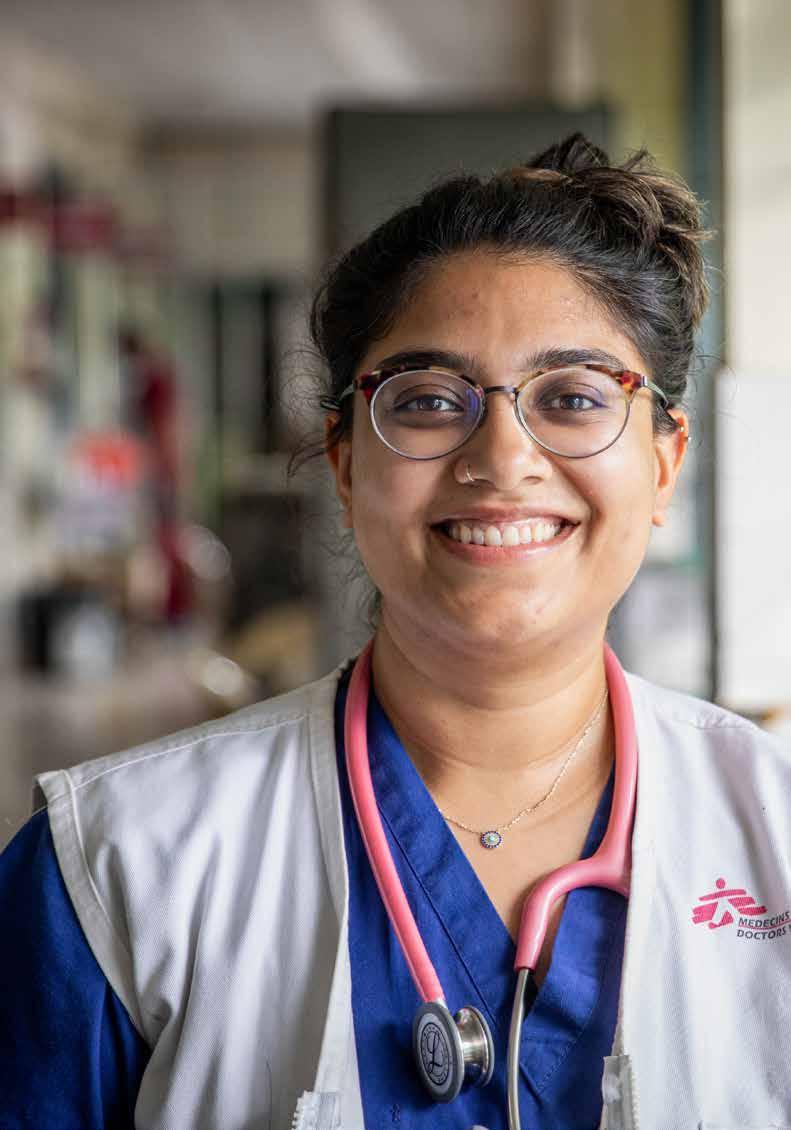
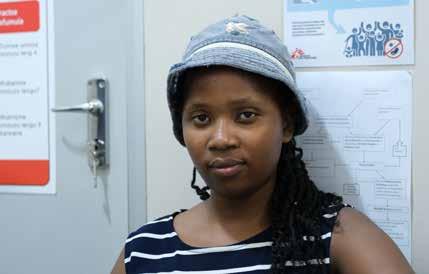
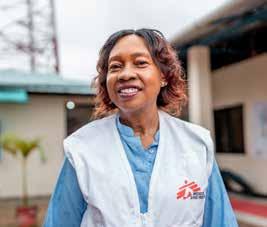
Cover: Dr Aliza Hudda at the MSF advanced HIV care centre at Guru Gobind Singh Hospital, Patna, Bihar state, India.
Deepak Bhatia/MSF
Responding through adaptation
Climate change pushes organisations to shift from reactive emergency response towards preparedness, anticipatory action, risk analysis and resilience-building. MSF is responding in two main ways: adapting its operations and reducing its environmental footprint.
On adaptation, MSF is raising awareness, improving anticipation, building resilience into programs and strengthening collaboration with communities. An MSF joint brief with the Lancet Countdown on Health and Climate Change identified several operational approaches to adaptation, including redesigning clinics for heat and flood resilience, modifying disease surveillance for climate-sensitive outbreaks, promoting decentralised or mobile care, developing alternate supply chain planning for extreme weather, adding anticipatory emergency preparedness, and incorporating water security measures.
In Somalia, for example, we’ve integrated climate adaptation into operations by upgrading solar infrastructure at Mudug Regional Hospital to ensure sustainable healthcare and reduce reliance on fossil fuels.
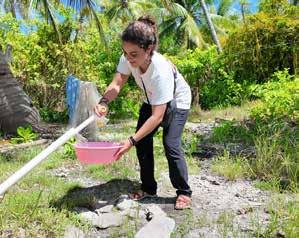
In Kiribati, a Pacific Island nation highly vulnerable to the effects of climate change, we’re working to combat waterborne diseases caused by saltwater intrusion and contamination of wells, and geo-mapping water sources to create a database of water wells to track quality and help the community identify safe, sustainable water sources.
In Mozambique, we’ve rehabilitated water points and built solar-powered health facilities in rural locations to ensure continuous care during emergencies, while in Nampula province, we shifted operations to address the rise in waterborne and parasitic diseases like schistosomiasis and lymphatic filariasis, driven by droughts and irregular rainfall.
MSF has committed to cutting its carbon emissions by at least 50 per cent by 2030 compared with 2019 levels, and it has also launched initiatives such as Humanitarian Action for Climate and Emergency to develop climate services, support research, and build a climate adaptation community of practice.
MSF Australia and MSF New Zealand recently published the 2025 Climate Emergency Report, which tracks delivery against MSF’s global commitment to reduce emissions by 50 per cent by 2030. Although MSF Australia is exempt from mandatory climate disclosures under current legislation, we are aligning our reporting with the national framework and the equivalent international standards. This strengthens comparability, supports consistent oversight and improves transparency.
We have also started speaking out about the health impacts of climate change we’re witnessing in our projects. We’re calling on policymakers in developed countries to do more to decarbonise their economies and to increase their support for climate change adaptation in developing countries. We’re amplifying the voices of communities experiencing the increasing frequency of extreme weather events and increased risks from infectious disease. And we’re sharing their lived experiences and their compelling arguments for why world leaders need to do more.
The urgency of addressing climate change and its impact on people’s health is getting lost in the public conversation. But we are committed to confronting this crisis head-on and doing everything we can to respond effectively and with humanity.
Simon Eccleshall Head of programs, MSF Australia
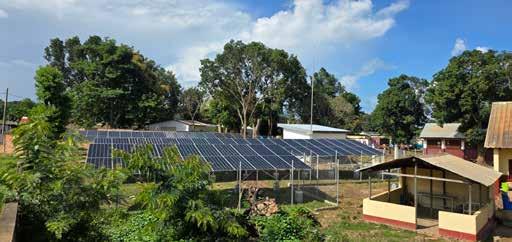
At the general hospital of Bossangoa, in the Central African Republic, the solar panel system installed by MSF produces 75 per cent of the electricity. The investment in solar energy is essential for improving continuity of care, increasing autonomy of health facilities and maintaining cold chain for vaccine and medicine storage. © Fuh Hanson Suh/MSF
NEGLECTED
DISEASES
‘We couldn’t dream of anything better’
Researchers have developed a breakthrough treatment for sleeping sickness, a neglected disease in sub-Saharan Africa. MSF partner organisation the Drugs for Neglected Diseases initiative (DNDi) and French pharmaceutical company Sanofi have received approval for their new drug Acoziborole, which can cure the disease with a one-dose oral pill.
Sleeping sickness is a parasitic infection which attacks the body’s central nervous system. Untreated, the disease is almost always fatal. Named for one of its most striking symptoms, it causes extreme drowsiness in daytime and insomnia at night, along with other debilitating symptoms.
Acoziborole is a testament to more than two decades of innovation efforts and gradually improved treatment options. It brings within reach the World Health Organization’s target of eliminating the disease by 2030.
“When I started as a doctor in 2004, sleeping sickness had 30,000 cases in DRC every year, and the only treatment was Melarsoprol, an arsenic treatment involving painful injections,” says Dr Wilfried Mutombo, the clinical head of DNDi’s West and Central Africa operations. “I lost patients who were young, in their 20s, who died because of the treatment. So, to go to a singledose treatment that we can administer with complete peace of mind and without worrying about side effects, we couldn’t dream of anything better.”
Sanofi will donate Acoziborole to WHO through its philanthropic organisation, the Sanofi Collective. The medicine will be available free of charge to patients.
In 1998, almost 40,000 cases of gambiense sleeping sickness were reported. Today there are fewer than 600 new cases per year, a 98% decrease.
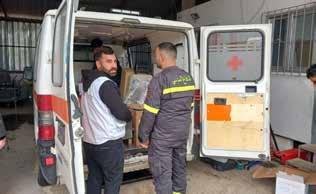
Civil
which MSF is supporting through the provision of ambulance equipment, first-aid supplies, fuel and protective gear such as bullet-resistant helmets and vests. © MSF
LEBANON
A ceasefire in
name only
Starting in early March, large-scale Israeli strikes across Lebanon caused thousands of civilian deaths and injuries, including in densely populated areas. Humanitarian needs are immense.
Following the temporary ceasefire that came into effect on 17 April, MSF scaled up its activities through mobile medical units providing primary healthcare, sexual and reproductive healthcare and mental health support. MSF teams have also supported hospitals dealing with growing trauma and emergency needs.
On 12 May, a drone strike hit three paramedics responding to an incident. Two of them were killed on the spot, and the other was wounded. Over recent weeks, MSF teams in Lebanon have been witnessing the consequences of airstrikes, drone strikes and artillery fire, which are damaging hospitals, ambulances and medical equipment, and killing or injuring civilians, health workers and first responders.
Australian emergency doctor Thienminh Dinh has seen the risks that healthcare workers and first responders are facing. “I pass by a mass grave when I go to work. Last week there were three new graves,” she says. “They belonged to the paramedics who were killed in a double-tap strike, when they were going to save the lives of others.”
MSF has called for an immediate end to the attacks on medical and rescue personnel, facilities and offices, as well as on the violence that places civilians and those trying to help them at risk.
Between 2 March and 3 June, 191 attacks on healthcare caused 128 deaths and 357 injuries. Six hospitals and 55 health centres have fully closed.
(Source: WHO Surveillance System)
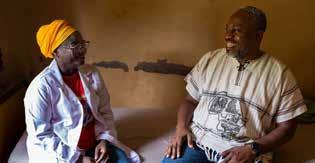
Dr Mariame Camara (left), DNDi investigator, National Sleeping Sickness Program and Dr Wilfried Mutombo, the head of clinical operations for DNDi in the DRC, at the Dubreka Clinical Trial site in Dubreka, Guinea. © Brent Stirton/Getty Images for DNDi
An MSF staff member (left) with a member of the Lebanese
Defence team,
KIRIBATI
BREASTFEEDING IS A LIFELINE
A holistic approach to the mother–baby bond is a small change that can have a big impact, says MSF paediatric advisor Mariana Gutierrez Popoca.
In the turmoil of humanitarian emergencies, where clean water is scarce, electricity unreliable, and health systems pushed to the breaking point, breastfeeding isn’t just a recommendation – it’s a lifeline. So explains Mariana Gutierrez Popoca, an MSF paediatric advisor based in Paris, on a recent visit to Australia to attend the Breastfeeding Medicine Network Australia New Zealand Conference held in May in Sydney.
“You need to breathe to survive. It’s kind of the same with breastfeeding,” says Mariana. Her insights, drawn from working in MSF projects in Afghanistan, Iraq, Lebanon, Democratic Republic of Congo, Sierra Leone and other contexts, challenge common misconceptions while offering practical solutions like zero separation and kangaroo mother care (KMC). These approaches keep mothers and babies together and can transform survival rates in even the most difficult conditions.
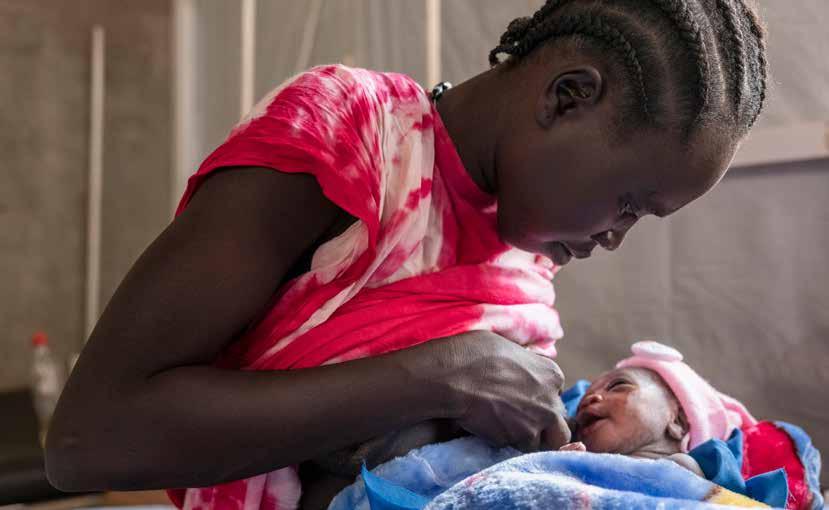
In Mayen Abun, Twic County, South Sudan, Abuk Mangolc Dhal holds her baby for the first time as she begins breastfeeding under the guidance of MSF midwives. Early breastfeeding is encouraged in the maternity ward, especially in a region where malnutrition and illness threaten newborn survival in the critical first days of life. © Nicolò Filippo Rosso/MSF
More than just milk
“Breastfeeding is seen as only nutrition, but it’s not only nutrition – it’s way more than that. All the defences that the mum has developed throughout her life pass through the milk to the baby and protect the baby. Breast milk has amazing properties to fight against bacteria, viruses, parasites, fungi, all sorts of germs that might hurt the baby and the mother.”
It also fuels neurodevelopment through primitive reflexes: reaching, grasping, even stepping, all “created for them to be able to latch to the breast”. These motions activate from the first feed, building neural pathways as babies seek the breast using smell, touch and instinct.
Breastfeeding continues the mother–child bond from the womb, where mothers regulate temperature, glucose, oxygenation. “The mum still is the environment. Formula will never be comparable to breastfeeding.” She puts the blame on “competing financial interests by big pharmaceuticals and companies producing breast milk substitutes”. The myth of formula’s convenience persists, but with breastfeeding, there is no need for sterilising bottles, no heating milk to precise temperatures, no lugging around supplies. “You just pop out the breast and put the baby to the breast.” It soothes cries after a fall, a scare or a vaccine jab, embedding a sense of security and belonging.
Mariana explains that the loss of traditional knowledge of women about their bodies and their relationship to breastfeeding has accelerated in many industrial societies. In rural or less urbanised areas, breastfeeding is still more the norm. Doubts about a mother’s milk supply are exaggerated to help drive the use of formula.
Fragmented systems, deadly separations
MSF works within fragmented healthcare systems – filling gaps, mainly in emergency settings, but sometimes in stable settings. “If MSF is in a community and opens a maternity hospital, who is doing the antenatal care? Is somebody doing all the things to avoid the baby being born with risks and problems?”
Then there is the mother who arrives at an MSF health facility to deliver – maybe one that has skilled birth attendants, a blood bank to provide transfusions if needed, that can deal with the complications of an already risky pregnancy, that can perform a caesarean section.
“Then, once the baby is born, because the baby was already at risk, because the mum had all of these risk factors, there is a chance this baby will need some sort of hospital care afterwards,” she says. This is a critical point where separation can occur.
“The WHO recommendation is breastfeeding exclusively for the first six months of life, and then up to two years plus supplementary foods, and then more if the mum and the baby want to,” she says.
Post-birth separations can shatter this vital process. Mariana explains that the best chance of successful breastfeeding is for it to happen on demand 24-7. If mother and baby are separated, that chance might be gone.
EXCLUSIVE BREASTFEEDING HAS BEEN FOUND TO LEAD TO:
Reduction in diarrhoea episodes by 50% and admissions to hospital due to diarrhoea by 72%
Reduction in respiratory infections by 33% and admissions due to severe respiratory infections by 57%
Zero separation
Mariana’s aim is zero separation. “The mum should have access to her baby 24-7, not visiting hours.” Ideally, mum–baby units feature adjacent beds and cots. IVs or transfusions happen skin-to-skin. “This coupled care makes all the difference in the world,” she says. It curbs postpartum depression and haemorrhage via oxytocin, fosters bonding, and engages families, viewing motherbaby as one.
By late 2024, zero separation had begun being implemented in Kenya, Central African Republic (CAR), Nigeria and other contexts. When the maternity ward in Carnot in CAR was being renovated for zero-separation, staff worried about maternal bacteria. Mariana countered, “Their own bacteria are the good bacteria that the baby already has. We are the ones passing the bad bacteria.” Breastfeeding soared.
All the defences that the mum has developed throughout her life pass through the milk to the baby and protect the baby.
Limited space and budgets can be an obstacle. B Humanitarian contexts can present enormous challenges, such as the effects of conflict and malnutrition. ut ensuring the “golden hour” often baby-to-breast within one hour of birth – guarantees at least two months of exclusive breastfeeding, Mariana says. Medicalised births waste that time on weigh-ins and charts. “It doesn’t even require more resources. It just requires a different configuration and a different way of seeing what our role as clinicians is.”
For premature or low birth-weight babies, there is kangaroo mother care – continuous skin-toskin contact. It halves preterm mortality where incubators fail. In Dagahaley, Kenya, KMC plus zero separation yielded shorter hospital stays, better weight gain, higher breastfeeding continuation rates. In Yemen and South Sudan power cuts make mums “the incubator” – empowered, not sidelined.
A two-way lifeline
Mothers gain from zero separation too. Suckling triggers oxytocin for haemorrhage control; lactation helps space births. In the long term, breastfeeding lowers risks of breast and ovarian cancer and diabetes. In crises, bonding combats depression and supports immunity.
The breastfeeding conference in Australia revealed interesting parallels to what Mariana has observed elsewhere: dismal rates, formula lobbies, training gaps. “MSF has a lot to offer, not just in the field, but in advocacy and policy. It’s not about more money; it’s about better design: mum-baby as one unit, from antenatal to discharge. Breastfeeding isn’t a ‘nice-tohave’ – it’s survival, especially in crises.”
Abdille Abdi Maalim (left), nutrition supervisor, consults with a nursing patient in the inpatient therapeutic feeding centre in the MSF hospital in Dagahaley, Kenya. MSF operates two health posts and one hospital in Dagahaley, where daily health education on exclusive breastfeeding is provided by nutritionists and other healthcare workers. © Zainab Mohammed/MSF
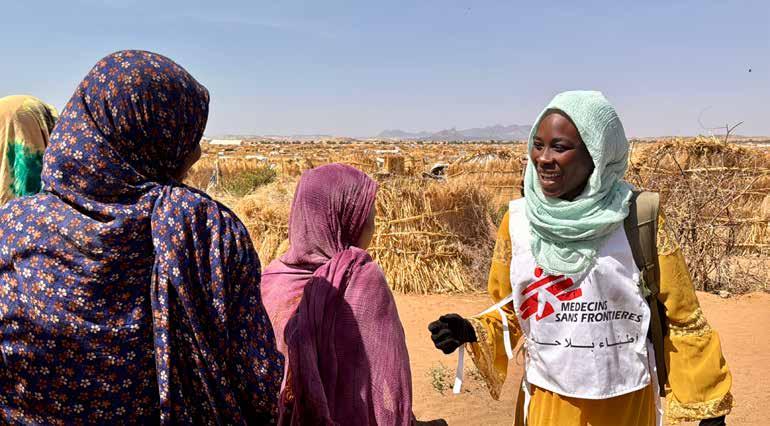
(right), a community focal point in Daba Naira camp, in North Darfur state, Sudan, greets a group of women before an MSF health promotion session on sexual violence, February 2026. Rimeh supports survivors in the community, helping them reach the MSF emergency clinic for medical and mental health support. A recent MSF report found that sexual violence has become a pervasive and defining feature of the three-year-old conflict in Sudan. © Cindy Gonzalez/MSF
Care in conf lict
Providing medical care in situations of armed conflict presents extraordinary challenges. It means not just conducting emergency medicine under difficult conditions, but also navigating insecurity, logistical constraints, population movements and the many cascading effects of violence, while aiming to maintain safe and effective operations. Every conflict situation is different, which for humanitarians means always being ready to adapt to shifting circumstances.
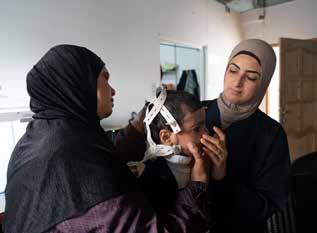
Right above: In MSF’s Gaza City clinic, MSF physiotherapist
Ibtihal (right) fits a 3D mask on Joud, a four-year-old affected by burns, as the boy’s mother helps, April 2026. Facial burn patients require specialised pressure therapy masks, which prevent thick, heavy scarring and contractures that can impair breathing, movement and facial function. MSF has been the only provider of 3D-printed physiotherapy masks in Gaza since 2020, but since December 2025, we’ve been unable to get new supplies into Gaza. © Nour Alsaqqa/MSF
Right below: MSF staff member Dália Paulo gives prescribed medicines to patients after consultations at an MSF mobile clinic in Alua Velha, Eráti District, in Mozambique’s Nampula province, December 2025. More than 300,000 people were forcibly displaced in Nampula in the second half of 2025, part of a broader humanitarian crisis caused by the eight-year-long conflict in Cabo Delgado province, which has periodically spilled over into neighbouring provinces, including Nampula. © Sofia Minetto/MSF
Rimeh
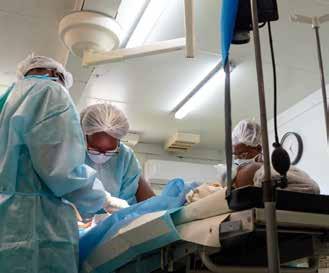
In an operating room at MSF’s Tabarre trauma hospital in Haiti, an MSF doctor performs surgery on a patient wounded by a gunshot in Port-au-Prince, January 2026. Last year, MSF teams in Haiti performed 8,469 surgical procedures, treated 3,419 people for violence-related injuries, and conducted 19,819 physical therapy sessions. In May this year, we were forced to evacuate and suspend operations in the Cité Soleil neighbourhood of Port-auPrince, following more than 24 hours of heavy clashes between armed groups. © Marx Stanley Léveillé/MSF
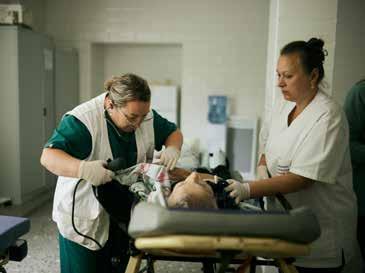
Hanna Dudnyk (left), MSF emergency doctor, and paramedic Nadiia Toka take care of an 84-year-old patient just admitted by ambulance at one of the hospitals in Mykolaiv region, in southern Ukraine, where the front line is about seven kilometres away. Unable to answer what was bothering her, the woman was admitted to hospital for testing. This medical facility, supported by MSF medical teams since April 2025, has continued operating despite being desperately understaffed, providing assistance in a region where many health facilities have closed and large numbers of qualified doctors have left for safer places. © Mariia Nahorna/MSF
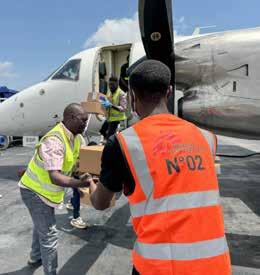
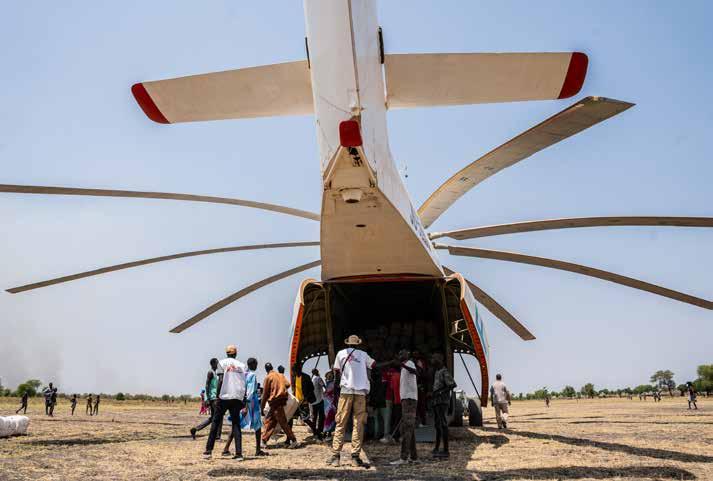
staff offload relief items transported by UN helicopter in
Escalating violence in Jonglei state, including the 3 February bombing of MSF’s hospital in Lankien, forced MSF to suspend medical activities in Lankien and Pieri. At least 25,000 people sought refuge in the small town of Chuil, where MSF upgraded the healthcare centre, increasing capacity to 60 beds to provide emergency care, treatment for malnutrition, and maternal health services, and to stabilise trauma cases. © Isaac Buay/MSF
MSF
Chuil, Jonglei State, South Sudan, March 2026.
Profits over patients
New breakthrough medicines could end HIV, but a manufacturer’s restrictions on access could cost millions of lives.
About 1.3 million people every year contract HIV. That means access to highly effective new prevention tools such as long-acting pre-exposure prophylaxis (PrEP) medications urgently needs to be scaled up.
These new tools – like injectable lenacapavir – function almost like vaccinations. When used before exposure to the HIV virus, they are highly effective at helping people remain free from infection.
Lenacapavir is administered twice a year and could be life-changing, especially for people in communities where stigma and systemic barriers can hinder a regular daily pill regime. It could be just as transformative for public health, with the potential to end the HIV epidemic.
Lenacapavir manufacturer Gilead Sciences’ CEO Daniel O’Day said in Health Policy Watch that it had taken Gilead 17 years to develop the drug and that it was “a unicorn of a molecule”. But while Gilead has said it can expand production of lenacapavir to meet the need, the company will not sell the medication to humanitarian organisations like MSF for use in our programs.
Instead, the company has referred MSF to the Global Fund, which, along with PEPFAR, has negotiated access to a limited supply of lenacapavir for low- and middleincome countries. But this supply is already overstretched and only enough doses to reach up to 3 million patients over three years.
UNAIDS previously set a target for 21.2 million people to be on PrEP by 2025 to reduce new infections, so this contribution represents just 15 per cent of the need.
Only nine countries have received doses of lenacapavir so far, while millions of people worldwide remain at high risk of HIV infection.
Many countries where MSF works face very limited supply, restrictions or complete exclusion from the Global Fund agreement, meaning that vulnerable people in need will be denied access to HIV prevention unless Gilead sells it to MSF directly.
“Blocking humanitarian organisations from accessing a medical breakthrough puts vulnerable people in danger,” says Dr Tom Ellman, director of MSF’s Southern Africa Medical Unit.
Gilead made more money from HIV drugs last year than the Global Fund was able to spend on tackling HIV over the last decade.
Gilead sells lenacapavir at a price of US$28,000 a year per patient in the USA, even though it could be sold at a profit for less than US$40.
At their annual stockholder meeting in May, the company declared profits of almost US$7 billion in quarter one of 2026, of which more than $5 billion was derived from the sale of its HIV products. Gilead made more money from HIV drugs last year than the Global Fund was able to spend on tackling HIV over the last decade.
“Gilead must decide whether it prioritises protecting people or protecting control and profit. This is a chilling echo of the policies we saw in the 1990s when antiretrovirals were provided to those in the global North, while the rest of the world was denied access and many lives were lost to HIV/AIDS,” says Dr Ellman.
While Gilead has agreed for six generic manufacturers to make and sell the medicine at a lower price, countries like Argentina, Brazil, Mexico and Peru – where the clinical trials leading to the drug’s approval were held –are excluded from that deal. In fact, up to a quarter of new HIV infections are happening in countries excluded from the agreement.
“That this drug’s development was supported by public funding – and through the trust of communities who participated in clinical trials, many of them in countries now excluded from affordable access – makes the current restrictions even more unconscionable,” says Dr Ellman.
Giving other manufacturers permission to make lenacapavir, without restricting where they can sell it, to help boost the global supply, is necessary to reach everyone who needs this medicine.
“It is not enough for this groundbreaking medicine to only be available to people living in wealthy countries. To truly curb HIV transmission, lenacapavir must be affordable and accessible for vulnerable people across the world who are at the highest risk of contracting the virus,” adds Tirana Hassan, CEO of MSF USA.
“If Gilead has the capacity to produce more,” Dr Ellman says, “it’s indefensible and inhumane that they’re choosing not to.”
40.8 million people globally were living with HIV in 2024
Including 1.4 million children under 14
1.3 million people became newly infected with HIV in 2024
630,000 people died from AIDS-related illnesses in 2024
(Source: UNAIDS)
HIV and PrEP in Eswatini
With the world’s highest rates of HIV among adults 15-49 years old (23.4 per cent in 2024), Eswatini was the first to receive lenacapavir in November 2025.
MSF negotiated a limited number of doses for its program in Eswatini though the Ministry of Health, which procured them through the Global Fund. Within four weeks of implementation, MSF had already exhausted its allocated supply. One of the early recipients was Philiswa Mbingo.
“I am a very young woman, and in our times there are a lot of things that can happen to you unexpectedly,” she says, reflecting on the complex realities many young women face in Eswatini, where sexual violence against women and girls is high.
“I heard about the six-month PrEP injection which made me very happy,” she says. The extended protection appealed to her, reducing the need for frequent clinic visits, daily pills or other methods of protection. Beyond convenience, Philiswa believes the injectable option is more effective for her.
“We normally say it is better to prevent than to treat,” she says. However, lenacapavir is still not an option for many in Eswatini, and around the world, who are still waiting to access it.
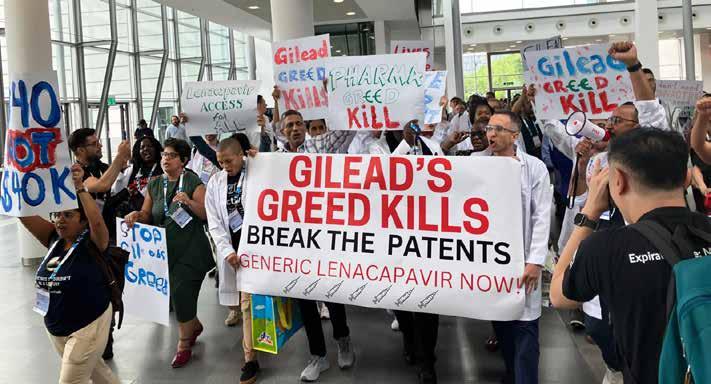
Opposite: MSF protested at an International AIDS Conference in 2024 in Munich, Germany, demanding price reductions for lenacapavir. © MSF
Left: For Philiswa Mbingo, 26, who lives in Eswatini, the country with the highest HIV prevalence in the world, HIV prevention is important.
‘To be alive is the lowest bar and the highest achievement’
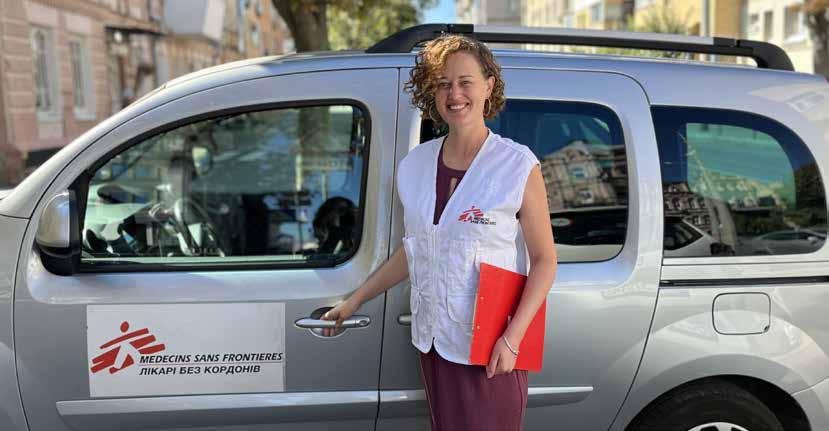
Katsa Juliana Shea joined MSF in January 2022 and has worked in South Sudan, Bangladesh, and Haiti. In Ukraine, Katsa is based in Kyiv but works in MSF projects in Dnipropetrovsk, Cherkasy, Donetsk, Mykolaiv and Kherson regions, managing three teams of health promoters across these regions. Health promoters, or HPs, are the link between MSF’s medical staff and people in the community. They meet with community leaders and local medical staff, engage with patients, collect feedback and life stories, and use data and firsthand accounts to shape MSF’s programs.
Dear Friends,
Managing health promotion teams is an endlessly varied and meaningful job – no two days look alike. The teams here in Ukraine have recently worked on a variety of projects: a new model for a systematic needs assessment using digital mapping tools; a “Babusya [grandmother] Newsletter” of everyday stories from across the country to help older women on the front line feel less alone; and identifying other organisations and care pathways for those who’ve lost contact with medical providers. The HPs also use games, quizzes and stories as creative ways to teach about topics like healthy sleep, hypertension, tuberculosis and antibiotic resistance.
Health promotion is about creating concepts of health that last beyond a lecture. It is a way to reject narratives of destruction and carry forward physical, mental and social well-being together with communities.
The absurdity of this war lies in its contradictions: life goes on in parallel with unbelievable destruction. There are the bravery and the steadiness of the Ukrainian will, but also the grief, the fatigue of my friends, and the weight of patients’ stories.
There is the sight of young men every day, canes in hand and missing limbs. It’s impossible to get one’s mind around the scale of it all.
Yet somehow amid this absurdity – the alarms, the shelling, the drones menacing the sky – people still go to parks, children play, restaurants stay open. Horror and beauty coexist. You can’t help but carry that tension like a stone in your pocket, trying to understand how it can be this way.
Last summer, more than 300 drones and several dozen long-range missiles were launched at Kyiv in a single night. Rockets and unmanned aerial vehicles (UAVs) struck residential buildings, hospitals, public transport, schools and kindergartens. According to the UN Human Rights Monitoring Mission in Ukraine, 2025 was the deadliest year for civilians since 2022, with 2,514 civilians killed and 12,142 injured by conflict-related violence.
“The absurdity of this war lies in its contradictions: the way life keeps going in parallel with the unbelievable destruction,” says Katsa Juliana Shea. © Anhelina Shchors/MSF
Even so, the impact is uneven, filtered through different lives. I feel it – but not in the same way as my friends and colleagues. I’m under the same sky, I hear the same blasts, and I see the same windows shake. But it’s not my brother on the front line, not my home reduced to rubble, not my whole village and childhood, upbringing and family wealth erased. It’s not my history or my culture being fought for. There is a constant doubling – on the one hand, I’m walking alongside them, caring for the same patients; on the other hand, there’s a kind of a barrier between their grief and mine, their risk and mine. I feel deeply part of this experience and very much outside of it – like I’m inhabiting someone else’s tragedy, but only as a guest.
Most of the shelling occurs in the early morning, between 1am and 5 am, when people are most vulnerable, tired, sleepy and disoriented. It is at once terrifying and oddly banal. Your night is restless because of the hum of UAVs followed by explosions that jerk you awake, not to mention the way your phone pings every few minutes with some air alert or security information.
There are so many stories that could tear your heart out, but sometimes it’s the deceitfully ordinary moments that really hit me.
Yet the next morning, there’s this strange return to form, almost a defiance disguised as routine. As you walk to work, everyone you pass is tired like you; it’s written on everyone’s faces. You feel a sort of solidarity knowing none of you has slept the night before. And when you see your Ukrainian colleagues and ask them how they are, they often say, “I’m alive”, but not in an ironic or even melodramatic way – it’s just the blunt truth of the situation. You realise that “alive” is both minimal and maximal, the lowest bar and the highest achievement now for everyone who lives in Ukraine.
Recently, I spoke with a man who had walked kilometres to reach one of the evacuation centres set up away from the rapidly changing front lines. He had two dogs and two cats by his side. As we talked, he stood there with the dogs at his feet sleeping, a cat missing half its face. “These animals saved my life,” he said. “There were drones above my head, but they didn’t attack me because they saw I had animals with me.”
There are so many stories that could tear your heart out in the quiet moments of the day when you let yourself feel it, but sometimes it’s the deceitfully ordinary moments that really hit me, the ones that feel small until you realize they carry the weight of everything.
One afternoon stepping out of my flat, I glanced up and noticed my neighbours, a young and ridiculously cute couple, standing at their window. I waved, and the man motioned for me to wait. He disappeared briefly, then returned with the tiniest newborn baby. He held the infant up to the window for me to see, beaming with such unguarded pride. I waved back. This image cements itself into my mind: a family, living under drones circling above, so deserving of peace.
It’s just one of the countless small miracles that persist. My friend told me that the Ukrainian phrase “бути у надії” [buty u nadiyi], used for someone who is pregnant, literally translates to “be in hope”. And for sure, this hope, this investment in the future, is the resilience carried forward.
Mathew Bannister
Location: Gisborne, NZ
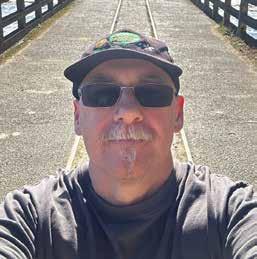
“I’ve known about MSF for many, many years, perhaps 30 or so,” says regular donor Mathew Bannister, a father of three who works in the fresh produce industry as a compliance coordinator, helping fruit growers meet their requirements.
He enjoys spending time with people through both his work and volunteering, reflecting his strong sense of community. In his spare time, he volunteers with Fire and Emergency New Zealand and also as a mentor for young people.
As someone who gives his time to help others, Mathew admires MSF’s work in responding to humanitarian health crises around the world.
“I support MSF because it’s nongovernmental, fiercely independent and aligns with my values,” he says. “It’s absolutely focused on what it does, and it has the strength to carry that through in really challenging situations.”
“They’re particularly focused on delivering healthcare to those who would not otherwise have access to it,” he says. “Wherever they are, they bring forward the very best they can in those situations.”
Balancing work, family and volunteering, Mathew understands the importance of showing up when it matters most, something he sees reflected in MSF’s teams around the world.
You can become a regular donor to MSF New Zealand by visiting https://msf.org.nz/general-donate or contacting our Supporter Relations team on 0508 633 324.
MAIA BLENKINSOP
Nursing activity manager, Ranya, Iraq
Home: Queenstown, NZ
MSF experience:
South Sudan, Ukraine, Bangladesh, Iraq
Maia Blenkinsop (left) demonstrates with an MSF colleague on a patient trolley during a training session with Iraqi Ministry of Health colleagues in Ranya, June 2026. (Photos supplied)
How did you start with MSF?
I started during COVID-19 in 2020. I’d always wanted to work for MSF, but it was about lining up the right time and the right skill level. I’d actually gone into emergency nursing because MSF needed emergency nurses at the time, and that was about 20 years ago. Life happened, and I didn’t get the chance to apply again until 2020, when they needed people. My first project was in South Sudan. Then I worked in Ukraine in 2022, Bangladesh in 2023, and after almost two years off because I’m studying, this project came up in Iraq, where I am now. My first role was IPC [infection prevention and control], but they realised I could do emergency work, so I was helping in the hospital with after-hours emergency cover. Ukraine was more in line with my background. I’m an ED nurse, but I also do a lot of rural work, and that project was focused on rural populations. I also speak Russian, which was useful.
What was it like working in a conflict area like Ukraine?
The work itself was very much in line with what I do, which is look after rural populations. Of course there were security incidents – there was bombing, and there were a few incidents along the way – but I focus on the work and let operations focus on security. I’ve found that in every project there’s been some level of incident. In Bangladesh, for example, we had a mass casualty event, and you could hear artillery fire from about 20 kilometres away near the border with Myanmar. You just stay focused on what you’re there to do.
What do you hold onto from the different contexts you’ve worked in?
The main thing I’ve held on to is the people I’ve met. Some of the local staff go to work every day and deal with whatever they’re dealing with, while I’m there for a short time. I get really tired, but I can’t imagine how that compares to their day-to-day lives. It’s humbling to realise that what feels like an intense experience for me is someone else’s normal life. Our local staff also show up better dressed than us and look like they’ve slept more, even when they haven’t. They’ve still taken care of their families. Sometimes I feel humbled by how tired I get, and then I think: they’re just superhuman.
What does your role involve now in Ranya?
The main reason we’re here is to position ourselves so that if things escalate, we can respond. In the meantime, we’re strengthening the emergency services here. We’re working in the emergency departments in Ranya, Qaladze and Koya, and we’re also working with the ambulance systems in all three areas. Ambulance services is another area I have experience in from New Zealand. I’ve worked in ED for 20 years and in ambulance work for six or seven years as a nurse. Here, the paramedics are nurses – there’s no separate paramedic degree. It’s been nice to go in and offer continuing education and clinical coaching to the local staff, especially since many of them have said they haven’t had much investment in professional development. If someone came into my ER and offered that, I’d love it.
Tensions have escalated heavily in the region in the last few months. How is the relationship with the local community?
The Kurdish people are very welcoming and friendly. A lot of people have said, “Thanks for coming,” because this region is semi-rural and, as far as I can tell, hasn’t had an NGO here for at least 10 years. So people are curious about us, but in a positive way.
I think people understand that we’re here to strengthen services for them – their emergency departments, some biomedical equipment, the ambulances, and professional development support. There have been drone strikes in one of the areas, including on one of the refugee camps where people who had been displaced from Iran were living, so those camps were being hit too, though no one was hurt.
Overall, people know we’re here to help, and we’ve been very welcomed.
Is it different working in a new project, compared to your other assignments?
Yes, definitely. I’ve never been part of strategy work at this level before. I arrived and the next day we started doing the project strategy, before I had a chance to have a briefing, so that was an interesting position to be in. I was thinking, “I don’t know anything.” I spoke up when I thought something wasn’t going to work, based on my ER experience – but also with the knowledge that I hadn’t been to any of these areas or the hospitals. So far it’s all worked out ok.
What’s next for you?
I try to keep a balance between staying at home and supporting the employers who support me, while still doing work with MSF. I’m hoping to start my nurse practitioner final year in February, which is like an internship year. If that works out, I’ll have from October to February without a job, so we’ll see. Hopefully I can squeeze something in.
We are stronger together
How MSF delivers care during times of conflict
Providing healthcare in conflict situations is about more than just emergency medicine. It’s about responding to people’s needs in constantly changing circumstances and ensuring we can provide healthcare safely in the most precarious conditions.
This webinar is for supporters who want to understand what providing care in conflict truly involves, from frontline emergency medicine to the essential, behind-the-scenes work that keeps operations running. It’s an opportunity to reflect on MSF’s principles in action, and the bond of humanity that connects patients, staff and supporters like you.
Scan the QR code
Make a meaningful impact by supporting families around the world. Join MSF. Interested?
at msf.org.nz/join-us
During the last quarter, 55 staff from Australia and 11 from New Zealand covered 69 assignments in 23 countries with MSF. This list of project staff comprises only those recruited by MSF Australia who have given permission for their names to be used. We also wish to recognise other Australians and New Zealanders who have contributed to MSF programs worldwide but are not listed because they joined the organisation overseas.
Afghanistan
Yee Chen, water and sanitation manager
Andrew Wallace, paediatrician
Chiho Otani, nursing activity manager
Lisa Noonan, antimicrobial stewardship focal point MD
Timothy Pont, mobile implementation officer (children’s TB program)
Bangladesh
Annie Lee, hospital director
Eileen Goersdorf, nursing activity manager
Julia Stuart, clinical support nurse
Central African Republic
Anne Lickliter, infection prevention and control manager
Chad
Noni Winkler, epidemiology activity manager
Patrick Baffoun, project coordinator
Democratic Republic of Congo
Ian Hayes, surgeon
Ludovic Levadoux, logistics team leader
Ethiopia
Jairam Kamala Ramakrishnan, mental health activity manager
Ivan Cerrafon, project supply chain manager
Susan Bucknell, operational deputy head of mission
msf.org.nz facebook.com/MSFANZ @msf_anz
Haiti
Alec Kelly, operational deputy head of mission
Iraq
Chris Binks, clinical support nurse
Maia Blenkinsop, nursing activity manager
Tecwyn Davies, ER doctor
Kenya
Philip Burke, logistics manager
Kiribati
Bridie-Rae Bourgeat, midwife activity manager
Leahanne King, finance/HR manager
Neil McNulty Cooper, medical doctor
Peter Clausen, head of mission
Shannen Oversby, medical doctor
Lebanon
Louisa Cormack, head of mission
Thienminh Dinh, ER doctor
Libya
Adam Mangal, mission logistics manager
Myanmar
Samuel Templeman, medical coordinator
Kathrine Charlton, medical coordinator
Nigeria
Amy Kaukiainen, psychologist
Kathrine Charlton, medical coordinator
Shelley Harris-Studdart, midwife activity manager
Occupied Palestinian Territories
Ben Shearman, logistics coordinator
Emily Young, project medical referent
Kathrine Charlton, medical coordinator
Kaylene Tomkins, project medical referent
Prue Coakley, deputy head of mission
Hana Badando, ways of working (WoW) facilitator
Papua New Guinea
Ivo Juliao Valente Dias, deputy head of mission
Natalie Kiemski, logistics manager
Nicholas Pettiona, logistics manager
Philippines
Megan Graham, finance/HR coordinator
Michael McDonald, project coordinator
Stobdan Kalon, medical coordinator
South Sudan
Anna Negus, anaesthetist
Brian Moller, head of mission
Matthew Calissi, hospital facilities manager
Saari Nigol, mental Health activity manager
Soleyana Jemaneh, mental Health activity manager
Sudan
Louise Timbs, head nurse
Malcolm Hugo, mental health activity manager
Rhianon Hutcheson, nursing activity manager
Grant Clark, logistics team leader
Malaika El Amrani, nursing activity manager
Lucy Butler, project coordinator
Tara Pollock, project coordinator
Lhara Waby, midwife trainer
Syria
Aidan Yuen, epidemiology activity manager
Caterina Schneider-King, HR coordinator
Hana Badando, ways of working (WoW) facilitator
Lisa Searle, project coordinator
Trudy Heemskerk (Rosenwald), mental health activity manager
Uganda
Lindsay Croghan, logistics team leader
Ukraine
Hannah Whetham, mental health supervisor
Yemen
Erin Kiley, finance/HR manager
Naomi Thomson, logistics manager
Carole Armingeat, ER doctor