
A lucrative sector: Twin Cities at center of life sciences boom
By Dan Rafter, Editor

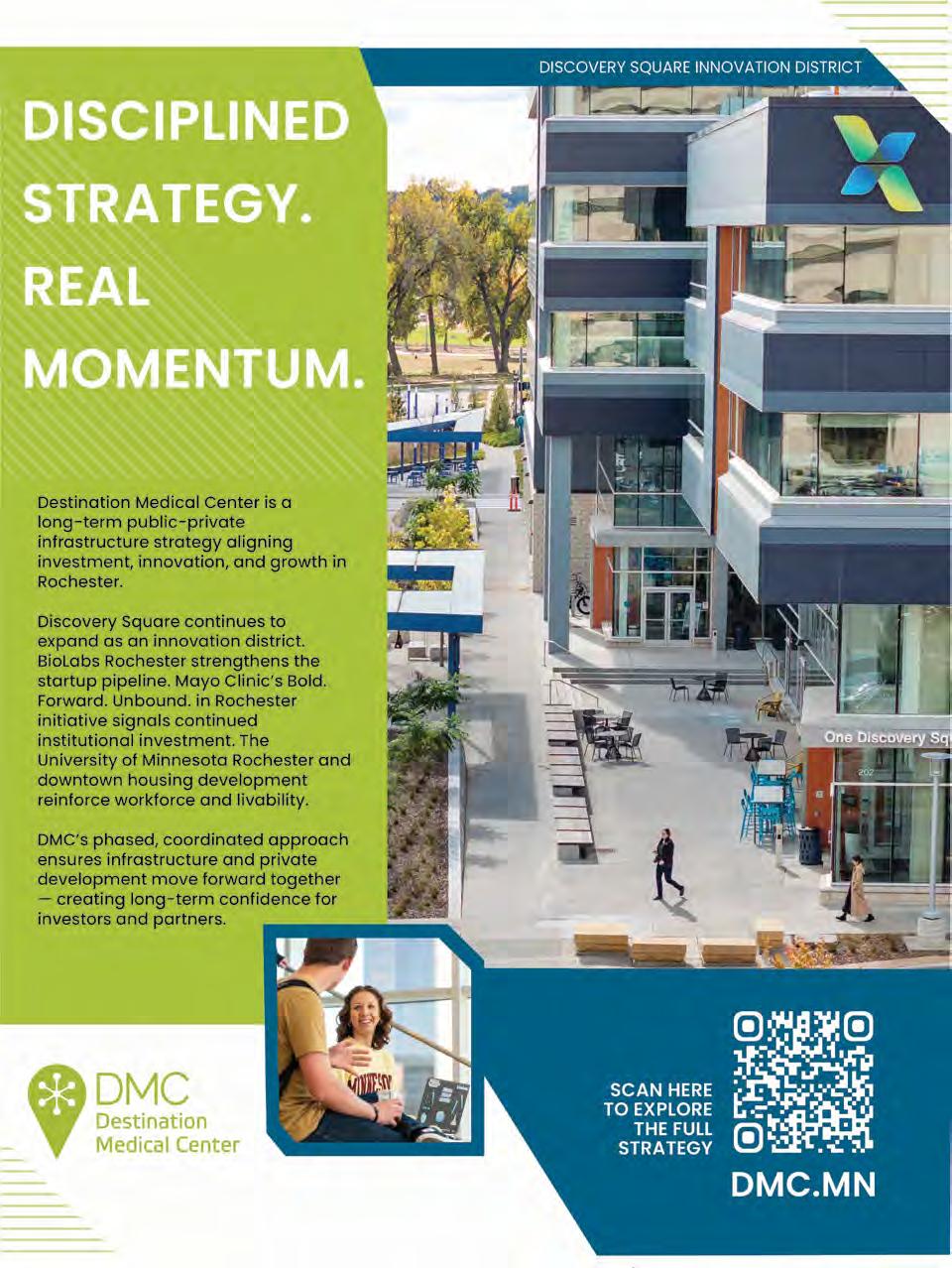
Medical technology companies continue to flock to both the St. Paul and Minneapolis region and to the Rochester, Minnesota, market, home to the famed Mayo Clinic. This boom in life sciences demand is creating an opportunity for developers in and around the Twin Cities area.
And in good news? The demand for life sciences development throughout the United States is showing no sign of lessening. Pharmaceutical, medical research and biotech firms are looking for new locations. Many want to build their own headquarters space.
We spoke with Chris Lyles, director of life science and technology with Minneapolis’ Knutson Construction, about the boom in life sciences construction and what it means for the commercial construction industry. Here is what he had to say.
Why is there so much demand for life sciences space in the Twin Cities and Rochester areas today?
Chris Lyles: We are seeing strong demand mostly from the medical technology sector as opposed to pharmaceutical companies, which are concentrated more in other geographic areas of the country. But
we do have our own medical alley here, from St. Paul to Rochester. It’s a hub for medical device companies looking to start up and relocate. The Mayo Clinic, of course, is a draw for many of these companies.
In my opinion, Minneapolis-St. Paul offers the best of all worlds for these companies. We have a highly educated workforce. We have strong contractors that are well-versed in this industry. And when companies get away from the coasts, from the traditional pharmaceutical hubs like Boston, San Diego and other areas, the cost-per-square-foot to build and lease is significantly
Sciencesto page 34
To succeed in today’s Twin Cities office sector? Landlords must work hard
By Dan Rafter, Editor
The latest research on the Minneapolis-St. Paul office sector tells a familiar story: Vacancy rates remain high, demand for new office space has dipped and landlords need to work hard to attract tenants.
Those are the big takeaways from Newmark’s first quarter 2026 Minneapolis-St. Paul office report.
And while many of the numbers in Newmark’s report paint the picture of an office sector that continues to
struggle, there are some signs of hope. The Nemark report points to early signs of a stabilizing market and even cites opportunities for investors who are willing to take a longer-term view of the Twin Cities office sector.
Vacancies down … slightly
Overall office vacancy across the Twin Cities dipped to 19.9% in the first quarter, according to Newmark’s report, down from 20.8% at the end of 2025. That’s
not a big drop, but any dip in today’s office sector is worth celebrating.
In an additional bit of good news, Newmark reported that office net absorption in the Minneapolis-St. Paul market turned positive, too, reaching nearly 50,000 square feet during the first quarter.
That improvement, though, comes with an asterisk. Much of the vacancy decline is tied not to surging demand but to shrinking inventory. Developers and owners are actively removing obsolete office space
Photo courtesy of Farm Kid Studios, Inc.
The Vision To See Banking Differently
Discover Bridgewater Bank.
CONTENTS May 2026
1
1
A lucrative sector:
Twin Cities at center of life sciences boom:
Medical technology companies continue to flock to both the St. Paul and Minneapolis region.
To succeed in today’s Twin Cities office sector?
Landlords must work hard:
The latest research on the Minneapolis-St. Paul office sector tells a familiar story: Vacancy rates remain high, demand for new office space has dipped and landlords need to work hard to attract tenants.
10
Healthcare Real Estate in 2026: Market Insights and Emerging Trends:
The outlook for healthcare real estate in 2026 and beyond is broadly optimistic, with high occupancy, increasing rents and a positive capital markets trajectory shaping decision-making.
12 What is a 731 Transaction?:
In real estate and partnership investing, a common question comes up: Can I take cash out without triggering tax?
4
6
8
Four financial benefits of fiber overbuilds for aging apartments:
Aging properties can realize new financial gains. Multifamily property investors can recoup ROI and quickly see an uptick in NOI by making their property more attractive in a tough competitive rental market.
Beyond the Build: How Smart Tenant Improvements and Exterior Programs Are Reshaping Asset Performance:
In today’s commercial real estate environment, owners and asset managers are being asked to do more with less.
CREW Network Brings its Spring Leadership Summit to Minneapolis:
CREW Network Leadership Summits bring together leaders in commercial real estate (CRE) for a focused, high-impact leadership development experience.
14
16
Think All Real Estate Qualifies for a 1031 Exchange? Think Again.:
The 1031 exchange is one of the most powerful tools available to real estate investors, but it comes with important boundaries.
A momentum change in the Minneapolis-St. Paul industrial sector?:
A shift in momentum defined the Minneapolis–St. Paul industrial market to start 2026, as a sector that had long ridden a wave of steady demand hit a notable speed bump.
18 Monthly apartment rents becoming an ever-increasing burden for renters across the United States
22 2026 Minnesota Real Estate Journal Awards Finalists & Winners
Minnesota Real Estate Journal Copyright © 2026 by the Minnesota Real Estate Journal is published bi-monthly for $85 a year. 7767 Elm Creek Boulevard, Suite 210, Maple Grove, MN 55369. jeff.johnson@rejournals.com. For more commercial real estate news and information, please visit our website www.rejournals.com ©2026 Real Estate Publishing Corporation. No part of this publication may be reproduced without the written permission of the publisher
Pragmatic Advice Staunch Advocacy
Fredrikson’s regionally and nationally recognized team of property tax lawyers helps commercial and industrial property owners, tenants, developers and managers obtain reductions in real estate taxes of many millions of dollars every year. Contact Gauri Samant at 612.492.7492 or gsamant@fredlaw.com. fredlaw.com

President | Publisher Jeff Johnson jeff.johnson@rejournals.com
Managing Editor Dan Rafter drafter@rejournals.com
Senior Vice President Jay Kodytek jay.kodytek@rejournals.com
Chief Financial Officer
Todd Phillips todd.phillips@rejournals.com
Art Director | Graphic Designer Alan Davis alan.davis@rejournals.com
Senior Graphic Designer Jordan Jensen jordan.jensen@rejournals.com
Managing Director National Events & Marketing
Kaitlyn LaCroix kaitlyn.lacroix@rejournals.com
7767 Elm Creek Boulevard, Suite 210 Maple Grove, MN 55369
Four financial benefits of fiber overbuilds for aging apartments
By Quantum Fiber® from AT&T

Aging properties can realize new financial gains. Multifamily property investors can recoup ROI and quickly see an uptick in NOI by making their property more attractive in a tough competitive rental market. This is especially relevant in Minnesota, where rental competition remains intense and properties must work harder to differentiate and retain value. Investors can benefit from reduced turnover, expanded revenue generating options, low future maintenance or need for upgrade expenses, and improved property values following a fiber upgrade.
Regardless of the telecom infrastructure in place at your apartment property—cable, cell service, or DSL—fiber will stand out as an advanced internet connectivity option in terms of speed, bandwidth, reliability, and latency. Future-proof fiber-to-the-unit (FTTU) provides advantages to residents. Also from a competitive standpoint, FTTU overbuild installation offers the same quality internet as new construction, making it a smart investment for now— and the future.
Financial reasons to upgrade to fiber
There are two ways to increase NOI: cut operating costs or improve revenue. Upgrading to fiber can pull both these levers. Fiber can reduce renter turnover and shorten vacancies—but it can also increase revenues. If you have your sights set on improving your NOI and property value, here are four reasons to upgrade now.
1. Turnover and vacancies are costly
The cost of a vacancy is a function of time. Even in highly competitive rental markets, the longer an apartment is empty, the more it costs the property. In markets like the Minneapolis–St. Paul metro, where apartments lease in roughly 38 days on average, according to RentCafe, demand is strong — but the pressure to minimize turnover remains high.
By delivering fiber directly to apartments renters may find your property attractive by keeping up with their current and future demands. With remote work, streaming services, and smart-home technologies driving unprecedented demand for fast reliable internet, FTTU is considered valued highly and future proof.
2. Revenue can grow
First, property owners can increase their rent. According to the 2024 NMHC & Grace Hill Renter Preferences Survey, more than three quarters of multifamily renters are willing to pay a premium in rent if high-speed internet is available. Second, property managers can sign a bulk contract with a provider that gives them a discount over the going market monthly internet rate. Some providers will lock that low rate for several years. As a result, properties can generate incremental income by charging residents the market price and pocketing the difference—and even increase it to align with current market rates as they rise.
Third, unlike planning for a roof project or unit renovation and the requisite capital included in your budget, typically most of the design work and installation expense can be covered by your Internet Service Provider.
3. Low maintenance or need for further upgrades
Fiber is frequently called future proof, because it’s a onetime investment in the property’s infrastructure, and then it’s done. The fiber lines are designed to last.
Also, fiber can handle todays and future connectivity technologies. Fiber has untapped bandwidth capacity to support much higher speeds and data transfer rates than what is needed today. Future smart products will require even more speed, reliability, and bandwidth. Your fiber infrastructure will be ready.
4. Property values rise upon installing fiber
Your cap rate also takes into consideration the market value of an MDU property as well as its NOI (cap rate is calculated by dividing NOI by current property value).
Industry research continues to show fiber broadband increases rental values by ~8% and property values by ~3% respectively. That alone can make an investment in a fiber upgrade worth it from a portfolio ROI perspective.
Fiber is the future
Today’s renters are demanding it. Fortunately, amenities that help drive value in a multifamily property, like fiber internet, can make sense and help retain your property’s long-term competitive appeal. Your NOI can improve as fiber can both cut costs and boost revenues.
Your property investment portfolio shouldn’t lose value because of its aging telecom infrastructure. Learn how Quantum Fiber® from AT&T can tailor connectivity solutions for your Minnesota community at QuantumFiber.com/multifamily-upgrade.
All content is for informational purposes only, may require user’s additional research, and is provided “as is” without any warranty, condition of any kind (express or implied), or guarantee of outcome or results. Use of this content is at user’s own risk. All third-party company and product or service names referenced in this article are for identification purposes only and do not imply endorsement or affiliation with Quantum Fiber. If Quantum Fiber products and offerings are referenced in the content, they are accurate as of the date of issue. Quantum Fiber services are not available everywhere. Quantum Fiber service usually means 100% fiber-optic network to your location but, in limited circumstances, Quantum Fiber may need to deploy alternative technologies coupled with a non-fiber connection from a certain point (usually the curb) to your location in order to provide the advertised download speeds. © 2026 AT&T Intellectual Property. AT&T and globe logo are registered trademarks of AT&T Intellectual Property. All other marks are the property of their respective owners.
iStock photo, credit Pratchaya

Beyond the Build: How Smart Tenant Improvements and Exterior Programs Are Reshaping Asset Performance
By Brian Wessels & Rob Stangler, Intent Built

In today’s commercial real estate environment, owners and asset managers are being asked to do more with less. Capital is tighter, operating costs are rising, and tenants expect higher-performing spaces delivered faster and with fewer surprises. While much of the industry conversation focuses on interest rates and capital flows, there’s a quieter, but equally important, story playing out at the asset level.
It’s the growing recognition that tenant improvements, building science, and proactive exterior maintenance aren’t expenses to be minimized—they’re tools for protecting value, reducing operational risk, and making smarter long-term decisions about existing assets.
Performance Starts Inside—but Doesn’t End There
Tenant improvement work has traditionally been viewed as transactional: scope it, price it, build it,
move on. But owners who approach TI strategically are seeing a different outcome.
Well-planned tenant improvements can:
• Reduce future rework and change orders
• Improve energy performance and occupant comfort
• Shorten downtime between tenants
• Increase lease durability and tenant retention
The difference is how early construction and building science expertise is brought into the process. Understanding air, vapor, thermal, and moisture control, and how those systems interact with existing conditions, allows TI projects to address root causes rather than simply covering symptoms.
In older industrial and commercial buildings especially, many issues attributed to “aging stock” are actually correctable performance failures. Addressing them during tenant improvement work is often the most cost-effective opportunity an owner will have.
Building Science as Risk Management
Building science is sometimes misunderstood as theoretical or academic. In practice, it is a form of risk management.
Condensation in wall assemblies, uncontrolled air leakage, thermal bridging, and poorly integrated roofto-wall transitions are not abstract concerns. They are among the most common drivers of:
• Premature material failure
• Indoor air quality complaints
• Mold and moisture remediation
• Unplanned capital expenditures
Owners who invest in building science-driven solutions, right-sized insulation strategies, continuous

iStock photo, credit Charnchai.

CREW Network Brings its Spring Leadership Summit to Minneapolis
By CREW Network
CREW Network Leadership Summits bring together leaders in commercial real estate (CRE) for a focused, high-impact leadership development experience. The 2026 Spring Leadership Summit, June 17-18 in Minneapolis, will serve as a powerful platform for connection, leadership development, and strategic dialogue among leaders shaping the industry. CREW Network chapter MNCREW will serve as the local host of the event and welcome 350+ participants to the Minneapolis Marriott City Center. Unlike large-scale conferences, the Spring Leadership Summit is intentionally designed to be more intimate and targeted. It convenes chapter leaders, board members, and commercial real estate professionals from across the global CREW Network community. This structure allows for deeper conversations, more meaningful networking, and actionable takeaways that participants can bring back to their local markets. At its core, the summit is about leadership—what it means today, how it is evolving, and how CRE professionals can continue to grow their influence and impact. Attendees engage in sessions that explore both
A defining feature of the Spring Leadership Summit is its emphasis on peer learning. Participants are not just passive attendees; they are active contributors. Through facilitated discussions, breakout sessions, and collaborative exercises, leaders share challenges, successes, and strategies. This exchange of ideas across markets and disciplines is one of the most valuable aspects of the event. It reinforces a key strength of CREW Network: a global community grounded in shared purpose and mutual support.
The summit also plays a critical role in aligning chapter leadership with the broader mission and strategic priorities of CREW Network. Chapter leaders gain insight into organizational initiatives, research, and resources that can help strengthen their local chapters. This alignment ensures that the network continues to move forward cohesively, while still allowing for local innovation and responsiveness to market needs.
Programming topics include:
• Beyond the Business Card: Turning Contacts Into Real Connection
• The Changing Dynamics of Association and Chapter Membership

Equally important is the networking experience. The summit creates space for authentic connection— whether through structured networking opportunities or informal conversations. Because attendees share a common commitment to leadership and advancement, the connections formed tend to be both meaningful and lasting. Many participants leave not only with new ideas, but with new collaborators, mentors, and advocates.
The Spring Leadership Summit also reflects the evolving nature of leadership in today’s environment. Leaders are being asked to navigate increasing complexity—from economic uncertainty and technological change to shifting workplace dynamics. The summit addresses these challenges by encouraging adaptability, resilience, and forward-thinking leadership approaches.
For many attendees, the impact of the summit extends well beyond the event itself. Participants return to their organizations and chapters with renewed energy, clearer direction, and practical strategies they can implement immediately. Whether it’s launching new initiatives, strengthening member engagement, or pursuing new professional opportunities, the ripple effects are significant.
The Spring Leadership Summit reinforces the importance of intentional leadership development and the value of a strong professional network. By bringing together talented, driven CRE leaders from across the



Healthcare Real Estate in 2026: Market Insights and Emerging Trends
By Davis
The outlook for healthcare real estate in 2026 and beyond is broadly optimistic, with high occupancy, increasing rents and a positive capital markets trajectory shaping decision-making, according to a Q1 2026 Market Review by Davis, a national healthcare real estate firm.
Despite the healthcare industry’s persistent headwinds caused by policy uncertainty and rising opera-
tional costs, this real estate sector benefits from strong demand and supply constraints.
“Nationally and throughout many regions of the country, the healthcare real estate sector emerged from 2025 with occupancy rates approaching 93% and rent growth exceeding inflation,” said Mark Davis, President and Founder, Davis. “With that as a backdrop, we see capital markets activity accelerating in 2026

Speakers:
as interest rates are expected to trend downward and construction activity remains below historical norms.”
Reimbursement Policies and Labor Issues Produce Rising Spending
Healthcare spending continues to grow at record levels, with total U.S. expenditures reaching approx-
Alexx Smith - University Gateway Corporation
Audrey Janzen - AJ Dagny Company
Becca Krieger - Capital Partners
Brenda Grams - Cushman & Wakefield
Brian Wessels - Intent Built, Inc.
Chad Haller - 10K Architecture, PLLC
Cori Kuechenmeister - Shea
Dana Twum - CBRE
David Filak - NELSON Worldwide
Emily Marden - BDH
Jamie Korzan - Oppidan
Katie Bongard - Transwestern
Larry Olimb - Carlson Real Estate
Lauren VanRanst - HJ Development
Mel Schultz - NAI Legacy
Mike Doyle - Kenwood Commercial
Mitch Kall - Modern Commercial
Mitch Robertson - Suntide Commercial Realty, Inc.
Patrick Seng - JLL
Rob Stangler - Intent Built, Inc.
Spencer Crittendon - Gardner Builders
Tracy Jordre - JLG Architects
Johnson












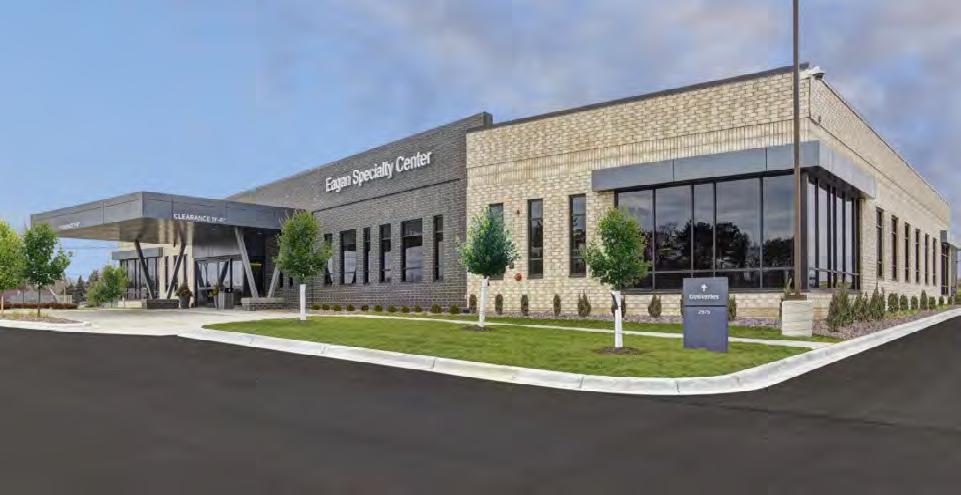
Eagan Specialty Center in Eagan, Minnesota. (All photos courtesy of Davis.)






What is a 731 Transaction?
By Jeff Peterson, J.D., Commercial Partners Exchange Company

In real estate and partnership investing, a common question comes up: Can I take cash out without triggering tax?
In certain situations, the answer is yes.
IRC Section 731 governs how partnership distributions are taxed. Under the right conditions, investors may receive cash or property without immediate tax liability. The rule applies specifically to partnerships
and entities taxed as partnerships, including many real estate syndications and joint ventures.
But there is a limit, and once you cross it, the tax consequences change quickly.
What Is Section 731?
Section 731 addresses how distributions from a partnership to a partner are treated for tax purposes.

At a high level:
• A partner does not typically recognize gain on a distribution
• Unless the cash or value of property received exceeds the partner’s adjusted basis in the partnership
If distributions exceed basis, the excess is treated as a capital gain, similar to selling a portion of the partnership interest.
The Key Concept:
Basis
The ability to take cash out tax-free comes down to one thing: basis.
A partner’s basis typically includes:
• Initial capital contributions
• Additional contributions over time
• Allocated income (which increases basis)
• Allocated losses and prior distributions (which decreases basis)
Think of basis as a yardstick to measure your tax investment in the partnership.
Section 731 allows you to recover that investment without tax, but only up to that amount.
How It Works:
Under Section 731:
• Distributions up to your basis are generally not taxable
• Distributions above your basis trigger capital gain
• Loss recognition is limited and typically applies only in certain liquidating scenarios
This creates a clear line: of basis.





Image by Steve Buissinne from Pixabay






Speakers:
Charles Burdick - Streetfront Development
Grace Kim - Schemata Workshop
Jill Nokleby Kaiser - Ebenezer
Alison Zelms - City of Rochester
Bridget Avikainen - Mayo Clinic
Bruce Thompson - Urbaneer

Catherine Malmberg - Destination Medical Center
Geof Hannigan - Mayo Clinic
Kim Norton - City of Rochester
Kylle Jordan - Destination Medical Center
Lori Carrell - University of Minnesota Rochester
Michael Flynn - Destination Medical Center
Patrick Seeb - Destination Medical Center Jeff Johnson jeff.johnson@rejournals.com | 612-819-0385
Jay Kodytek jay.kodytek@rejournals.com | 612-940-3713











Think All Real Estate Qualifies for a 1031 Exchange? Think Again.
By Jeff Peterson, J.D., Commercial Partners Exchange Company
The 1031 exchange is one of the most powerful tools available to real estate investors, but it comes with important boundaries. A common misconception is that any real estate qualifies. The IRS draws clear lines about which properties and transactions make the cut, and which do not. Crossing those lines can jeopardize your deferral and leave you with an unexpected tax bill.
Personal-Use Property Does Not Qualify
At the top of the “does not qualify” list are properties used primarily for personal enjoyment rather than investment.
• Lake cabins and vacation homes often fall into this category. If you use the property for primarily personal vacations or family gatherings more than incidentally, it may likely fail the “held for investment” test.
• Primary residences do not qualify either. While homeowners may be eligible for the Section 121 exclusion of up to $250,000 (single) or $500,000 (married filing jointly) of gain, that is a different provision of the tax code, not a 1031 exchange. There are instances where people rent out a mother-in-law apartment or one side of a duplex or triplex; in those cases, the

rental portion may potentially qualify for 1031 tax-deferral, while the principal residence portion does not.
• Building on land you already own or paying down a debt on property already owned generally does not qualify because a 1031 exchange requires

Speakers:
Abe Roberts
Dan
Dylan Steman
Heidi
Jaime Perron
Jeff Anneke
John
Josh Hinchley

Sean
Steve
the acquisition of like-kind replacement real property. Constructing improvements on property you already hold is considered development activity, not an exchange into new property interests.
• Related party transactions are subject to strict IRS scrutiny and additional holding-period requirements. While not outright prohibited, exchanges involving related parties can easily disqualify if they are structured to shift tax basis in an abusive fashion or if either party disposes of the property too soon after the exchange.
The IRS looks at intent. If the property was not held for productive use in a trade or business or for investment, it likely will not qualify.
Flippers and Dealers Do Not Qualify
Another common disqualifier is property held primarily for resale rather than long-term investment. The IRS considers these “dealer properties,” essentially inventory, not investment property.
For example:
• The investor who buys a fixer-upper, renovates it, and sells it six months later at a profit is a “flipper,” not a 1031 investor.
• Developers who build and immediately sell new homes also fall outside the scope of 1031.















Jeff Peterson (Photo courtesy of Commercial Partners Exchange Company.)


A momentum change in the Minneapolis-St. Paul industrial sector?
By Dan Rafter, Editor

Ashift in momentum defined the Minneapolis–St. Paul industrial market to start 2026, as a sector that had long ridden a wave of steady demand hit a notable speed bump.
That slowdown showed up most clearly in net absorption, which turned negative in the first quarter, according to CBRE’s latest industrial figures report. The market recorded negative 112,458 square feet of net absorption, a sharp reversal from the gains posted in both the fourth quarter of 2025 and the first quarter a year earlier.
The swing is striking not just for its direction but for its size. Minneapolis–St. Paul’s industrial sector saw a 703,000-square-foot drop in absorption compared to the previous quarter and a year-over-year decline of 1.5 million square feet. After several years in which tenants consistently filled new space, the early months of 2026 suggest that occupiers are taking a more cautious approach.
That caution is also reflected in vacancy and availability rates, both of which ticked higher during the quarter. Overall vacancy rose to 4.2%, an increase of 30 basis points from the previous quarter and the same period last year. Direct vacancy came in just slightly lower at 4.1%, indicating that most of the available space is being marketed directly by landlords rather than through subleases.
Availability, a broader measure that includes both vacant space and space that will soon be vacated, climbed to 6.8%. That’s up a full percentage point from 5.8% a year ago, another sign that more industrial
Momentum to page 30

We’re not just in the business of residences.
We’re in the business of community building, and making people feel at home. To do that, we take a proactive approach to property management.
We anticipate needs.
And come together with the boards we serve, to find solutions that meet the unique needs of their communities.
Welcome to life, simplified.

Image by kp yamu Jayanath from Pixabay.
BUILDINGS ARE COOL. Buildings are Cool .
We should know. We design the behind-the-walls systems that bring them to life.
Smarter design of your mechanical and electrical systems will dramatically impact your ability to achieve your project goals and maximize your investment.
Monthly apartment rents becoming an ever-increasing burden for renters across the United States
By Dan Rafter, Editor

Demand for multifamily units continues to grow. But at the same time, a growing number of renters are struggling to afford the monthly cost of these units.
Apartment List last month reported that as of 2024 22.2 million U.S. renter households were considered cost burdened. This means that they spent more than 30% of their monthly income on rent. That 22.2 million renters equaled 51.8% of all renter households in the United States.
Some renters face even greater financial challenges. Apartment List reported that 11.2 million renter households in 2024 spent more than half of their income on rent, making them severely cost-burdened.
The percentage of cost-burdened renter households reached a new high in 2024. Apartment List reported that just 48% of U.S. renter households in that year spent less than 30% of their income on housing.
And though more recent figures aren’t available, it’s a safe bet to say that this hasn’t improved since 2024.
As Apartment List says, rent burden has long been an issue in the United States. But the trend in recent years represents a reversal of the modest progress that was made during the 2010s. Following the Great Financial Crisis, the renter cost-burden rate hit a peak of 53.4% in 2011. But in the following years, it gradually improved, eventually dipping to 48.4% in 2019.


Photo by Pixabay.


Expert Underwriting
We tailor our underwritingsolutions to your transaction
Our team of sophisticated professionals spans our national network providing local expertise wherever you ’ re located
Data Analytics
FirstAmerican Data &Analytics offers comprehensive, multi-sourced, and verified datasets with the most expansive and highest quality data in the industry Learn more by visiting our Insights Center! firstam us/49EkhSR
ClarityFirst®
C
firstam us/48mYtKK
American Title National Commercial Services of Minnesota
612 297 4106 | aangstman@firstam com
612 816 8596 | nhaapala@firstam com
612 286 7922 | jmwilliams@firstam com
612 305 2175 | kmarleau@firstam com
Resource Library
Don’t reinventthedeal! Get immediate access to forms, endorsements, real estate practices, rate manuals, industry-related articles and more by visiting: firstam us/49JKPCv
Webinars and Classes
Expandyour knowledge! Wehelpour customers gain
firstam us/3SZBaAK

imately $5.3 trillion in 2024—reflecting 7.2% annual growth rate—well above GDP. Spending in this sector now accounts for approximately 18% of GDP (up from 17.7% one year ago) and is projected to exceed 20% by 2033. Growth is driven by increased utilization, technological advancements (including AI), and inelastic demand from an aging population.
“As impressive as those statistics may be, rising costs are intensifying healthcare provider concerns around affordability and long-term sustainability,” Davis noted.
Labor remains the industry’s largest and most volatile expense, accounting for 50–60% of provider costs. Workforce shortages and intense competition have driven higher wages, signing bonuses, and enhanced benefits. While automation and AI offer longterm potential, the capital required for implementation restrains near-term adoption.
“Balancing labor costs with quality care will remain one of the industry’s most complex challenges,” he added.
Mounting operational pressures and policy uncertainty, which directly impact decision-making, are top concerns for the industry. Despite historic spending levels, reimbursement uncertainty persists as hospitals face evolving government policies, shifting payer mixes, value-based care transitions, and rising technology costs.
“Given these factors, healthcare systems across the country are taking a conservative approach to real estate decisions, including consolidating into owned facilities, reducing space commitments, or delaying
actions altogether,” Davis said. “Like everyone, they are waiting until greater clarity emerges.”
Five Predictions for Healthcare Real Estate
1. Limited availability will constrain expansion -National healthcare real estate occupancy is expected to rise further in 2026 to between 93% and 94%. Expansion and relocation options, if available, are limited and typically more costly.


2. Supply constraints will drive healthcare rental growth -- Strong demand and modest new deliveries will push rents higher. Annual rent growth has moved above 3% and is expected to track inflation. New clinical developments in markets such as Minneapolis are expected to command $35–$40/SF NNN, with surgical space exceeding $40/SF NNN. Tenant improvement allowances for full buildouts now range
to page 19

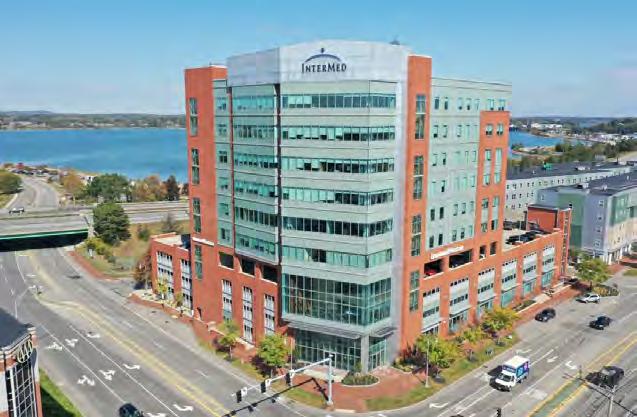
InterMed Medical Office Building in Portland, Maine. (Photo courtesy of Davis.)





from $80–$100/SF, an increase of $10–$15/SF above pre-pandemic levels.
3. Cost pressures will force users to reconsider strategy -- Healthcare users are increasingly experiencing sticker shock as development, leasing, and property tax costs rise. In high-tax markets, occupancy costs can squeeze operating margins, prompting users to reassess expansion plans and explore other strategies.
4. Capital Markets Strengthen as Interest Rates
Decline -- The Federal Reserve’s 2026 target rate stands at 3.50%–3.75%, with expectations for one to two additional cuts in 2026. Cap rates are already compressing: trophy assets are trading in the high5% range and stabilized outpatient facilities generally between 6% and 8%, depending on asset quality and tenant credit. Further rate cuts would accelerate cap rate compression, particularly for high-quality, credit-backed assets. Credit STNL transactions are expected to trade in the mid-6% cap range, while large portfolio sales could reach the high-5% cap range for the first time since early 2022.
5. Construction Costs Expected to Remain
Elevated -- Healthcare construction costs continue to outpace other sectors, driven by sustained demand for modern facilities and lingering supply-chain constraints. Absent broader economic forces, material reductions in construction costs appear unlikely. Longterm tariff risks could further pressure pricing.
“Healthcare real estate remains a fundamentally “need-based” asset class, supported by demographic trends, inelastic demand, and the ongoing shift toward outpatient and community-based care,” Davis said. “While the industry faces meaningful operational challenges, these dynamics have not diminished the
long-term demand for well-located, high-quality medical facilities.”
Minneapolis-based Davis specializes in healthcare real estate development.












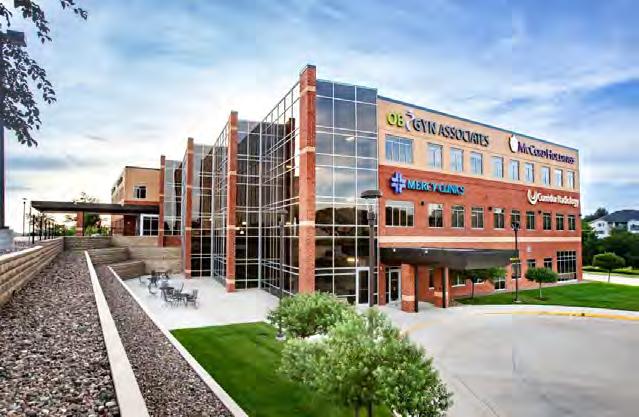
Coral West in Coralville, Iowa. (Photo courtesy of Davis.)

air barriers, and properly sequenced assemblies are effectively reducing long-term operational and maintenance risk.
This approach is especially relevant for value-add and adaptive reuse assets, where existing conditions vary widely and assumptions can be costly if left untested.
Exterior Systems: The Most Overlooked Asset Component
While interior upgrades often receive the most attention, exterior systems quietly determine how long an asset performs as intended.
Roofs, façades, site drainage, and pavements are the first line of defense against environmental exposure. Yet they are often addressed reactively, only after visible failure has already occurred.
A proactive exterior strategy focuses on:
• Lifecycle planning instead of emergency replacement
• Coordinated repairs that extend system life
• Sequencing work to align with ownership and capital planning cycles
When exterior systems are evaluated holistically, rather than as isolated line items, owners gain clarity on what truly needs replacement versus what can be preserved with targeted
Why Pavement Maintenance Plans Matter More Than Ever
or assets, and one of the easiest to mismanage.
Without a maintenance plan, parking lots and drive lanes typically follow a predictable pattern: deferred upkeep, visible deterioration, and ultimately a disruptive and expensive full replacement.
A pavement maintenance program changes that trajectory.
By combining regular inspections, crack sealing, seal coating, and targeted repairs, owners can:
• Extend pavement life by years
• Improve safety and curb appeal
• Reduce operational disruption for tenants and users
Across many portfolios, pavement maintenance plans prove to be one of the highest-return exterior investments an owner can make.
Execution Matters: From Planning to Ongoing Care
Planning is only effective if execution follows through. One of the most common challenges owners face with maintenance and repair programs is fragmentation—multiple contractors, inconsistent quality, and limited accountability over time.
Intent Built approaches these programs with flexibil-
• Maintain long-term familiarity with the asset, reducing repetitive assessments and re-learning across project cycles
This approach allows owners to move beyond oneoff projects and toward repeatable, well-managed programs, with a single point of responsibility and a clear understanding of how each repair or improvement fits into the broader performance strategy.
A Practical Path Forward
The takeaway isn’t that every building needs a full overhaul. It’s that intentionality matters.
Engaging teams that understand construction execution and building science—and who can connect tenant improvements with exterior systems and ongoing maintenance—
allows owners to make better decisions at every stage of an asset’s life.
In a market where predictability, performance, and durability matter more than ever, the most resilient assets will be those where owners invest not just in what tenants see—but in how the building actually works.

OUR TEAM. YOUR SUCCESS.


larly advises owners on performance-based tenant improvements and exterior maintenance strategies

The key distinction: property held “primarily for sale” does not qualify. Only property held for investment or productive use in a trade or business will qualify.
Partnership Interests Do Not Typically Qualify
It surprises many investors that partnership interests are specifically excluded from 1031 eligibility. Even if the partnership owns real estate, you cannot exchange the ownership interest in the partnership itself.
The workaround is often a “drop-and-swap” re-configuration strategy, which means restructuring ownership, so individuals hold title as tenants-in-common before selling. But this requires careful advance planning and professional guidance to avoid IRS scrutiny. It may also require holding the property in the new tenants-in-common modality for a while to “season” it before selling.
In a previous article for REJournals, Practical tips for navigating 1031 exchanges, published on September 9, 2025, I provide additional information on partnerships and drop-and-swaps.
Foreign Real Estate Does Not Qualify
Another limitation is geography. U.S. real estate can only be exchanged for other U.S. real estate. Likewise, foreign real estate can only be exchanged for other foreign real estate. Mixing US and foreign real property will disqualify the transaction.
Other Common Missteps
Even when dealing with U.S. investment property, intent still matters:
• Second homes with significant personal use are risky. Occasional rental of a vacation property will not typically transform it into an “investment property.”
To support investment intent, the property should be rented at fair market value, personal use should be limited, and the owner should be able to demonstrate a genuine investment/business motive through consistent rental activity, proper recordkeeping, and compliance with applicable IRS safe-harbor guidelines.
• Recently acquired property may raise IRS concerns if there is not enough evidence the property was “held for investment or business.” Factually, quick flips or short-term holds may undermine the purported investment intent required for 1031 treatment, particularly when there is no history of rental income, leasing efforts, or other objective indicators of investment use.
Why It Matters
The consequences of misclassification are serious. If the IRS deems your property personal, dealer inventory, or otherwise non-qualifying, your exchange will likely fail, and the gain is immediately taxable. That can mean that you lose the tax deferral benefit of a 1031 exchange.
Pro Tips: How to Show Your Property Qualifies
The IRS looks at your intent and use of the property. To support investment intent, and avoid having your exchange challenged, consider these guidelines:
• Two-Year Rental Safe Harbor: Under IRS Revenue Procedure 2008-16, a vacation home can qualify if it was rented out for at least 14 days each year and your personal use was limited. “Limited” typically means no more than 14 days or not more than 10% of the rental days, whichever is greater, in each of the two consecutive years prior to the exchange.
• Business or Investment Purposes: Use the property to generate rental income, appreciation, or


business operations. Avoid excessive personal use that could reclassify it as personal property.
• Consistent Rental Activity: Sporadic or “occasional” rentals may not be enough to prove investment or business intent. Keep all records showing active rental listings, leases, and income received. Report this income on your tax returns and take the appropriate tax deductions.
• Document Everything: Maintain documentation such as rental agreements, tax returns, repair invoices, property tax payments and expense records to demonstrate clear investment intent.
These steps won’t guarantee IRS approval, but they provide strong evidence that your property was truly held for investment or business use, making your 1031 exchange more defensible.
Final Takeaway
Not all real estate is created equal when it comes to 1031 exchanges. Personal-use property, flips, partnership interests, and foreign real estate may be outside the strike zone for Section 1031. Before you assume your property qualifies, consult with a qualified intermediary or tax advisor.
Jeff Peterson is a Minnesota attorney and former adjunct professor of tax law. He serves as President of Commercial Partners Exchange Company, LLC, where he facilitates forward, reverse, and build-to-suit 1031 exchanges nationwide. Jeff regularly collaborates with attorneys, accountants, and real estate professionals on exchange strategies. Reach him at 612-643-1031 or JeffP@CPEC1031.com or on the web at www.cpec1031. com.
Speakers:
Callie Ronkowski - JLL
Carrie Charleston - Mall of America
Deborah Carlson - Cushman & Wakefield
Gregory Frahm-Gilles - Anoka County Regional Economic Development
James Freytag - CBRE
Judd Weliver - CBRE
Katrina Porter - Gardner Builders
Kit Bennett - Opus
Kyle Willems - Bassford Remele
Lisa Christianson - Colliers
Mark Anderson - Sambatek
Mark Evenson - Avison Young
Mark Kolsrud - Colliers
Nate Ryan - RJ Ryan Construction
Peter Dugan - CBRE
Peter Mork - Capital Partners
Robert Williams - Fredrikson & Byron
Stas Manchik - Wyn Group
Steve Chirhart - TaTonka Real Estate Advisors
Steve Dombrovski - Dombrovski Properties
Suzanne Schefcik - Colliers











A Simple Example
Let’s say:
• Your basis in a partnership is $500,000
• You receive a $400,000 distribution
Result: No tax is triggered. Your basis is reduced to $100,000.
Now consider:
• Same $500,000 basis
• You receive a $600,000 distribution Result:
• $500,000 is a return of basis (non-taxable)
• $100,000 is recognized as capital gain
(This example is hypothetical and for educational purposes only.)
Why This Matters for Investors
Section 731 can create real flexibility for investors who want to access liquidity without fully exiting an investment.
This often comes into play when:
• A partnership refinances a property and distributes proceeds
• Capital is returned during the hold period
• Investors rebalance across opportunities
• Investors want to divide up property between partners
In these situations, investors may be able to pull cash out without immediate tax, as long as sufficient basis remains.
In more complex structures, such as certain UPREIT partnerships (often resulting from DSTs completing a Section 721 contribution) or other partnership-based
arrangements, additional planning opportunities may exist. In some cases, investors may have the ability, after a period of time, to redeem operating partnership units for REIT shares and then sell those shares to access liquidity.
However, the underlying principle remains the same: distributions are generally tax-free only to the extent of basis, and different steps in the process may carry different tax consequences.
While the concept is straightforward, the application is not always simple. In certain situations, “mixing bowl” rules under the Internal Revenue Code may apply, which are designed to prevent partners from contributing property and then quickly receiving different property in a non-recognition transaction.
Strategic Considerations
1. Basis Drives Everything
Your ability to receive tax-free distributions depends entirely on your basis. Misunderstanding it can lead to unexpected tax liability.
2. Debt Impacts Basis
A partner’s share of partnership debt increases basis. If debt is reduced, basis may decrease, which can affect future distributions.
3. Timing Matters
Distributions that seem similar on the surface can have very different tax outcomes depending on timing, structure, and prior allocations.
4. This Is About Deferral, Not Elimination
Section 731 allows for tax-efficient distributions, but it does not eliminate tax. Once distributions exceed basis, gain is recognized.

How Section 731 Fits Into a Broader Strategy
For many investors, partnerships are a core part of their portfolio, through syndications, joint ventures, or fund structures.
Section 731 supports:
• Liquidity planning
• Capital recycling
• Managing tax exposure over time
It is not a replacement for other tax strategies, but it can be an important complement within a broader investment approach.
Final
Takeaway
You can generally receive distributions tax-free up to your basis, but anything beyond that may trigger capital gain. Understanding where you stand relative to that line is critical.
Unlike a 1031 exchange, there is no intermediary involved. Section 731 is driven entirely by tax reporting and partnership structure. Because outcomes depend on basis and partnership accounting, investors should work closely with their CPA or tax advisor, and in more complex situations, a tax attorney.
With proper planning, Section 731 can be a useful tool for accessing capital efficiently while staying aligned with your overall investment strategy.
Jeff Peterson is a Minnesota attorney and former adjunct professor of tax law. He serves as President of Minneapolis’ Commercial Partners Exchange Company, LLC, where he facilitates forward, reverse, and build-to-suit 1031 exchanges nationwide. Jeff regularly collaborates with attorneys, accountants, and real estate professionals on exchange strategies. Reach him at 612-643-1031 or JeffP@CPEC1031.com or on the web at www.cpec1031.com.
- Bruce Engelsma, Chairman, Kraus-Anderson



Green & hea lthy
Energy ef ficiency & building perfor mance
Sustaina bility repor ting & ESG stra tegy
Decar boniza tion & compliance suppor t
Sustaina ble financing

space is coming to market even as tenant demand softens.
Developers, for their part, appear to be responding to this shift with a more measured approach. The pipeline of industrial space under construction fell to 2.5 million square feet in the first quarter, down 15.8% from the fourth quarter of 2025 and nearly 20% from a year earlier. That total is a far cry from the market’s recent peak of 9.6 million square feet in the second quarter of 2023, representing a drop of more than 70%.
New deliveries are slowing, too. The amount of industrial space completed and brought online fell 21.2% from the previous quarter and 30.8% year-overyear. After a period of aggressive development, builders are clearly pulling back, likely in response to rising vacancy and a more uncertain demand environment.
Even with these headwinds, one key metric has remained resilient: pricing. The average asking rent for industrial space in the Twin Cities stood at $9.34 per square foot in the first quarter, essentially unchanged from the prior quarter. On a longer-term basis, though, rents are still well above where they stood just a few years ago, up 12.5% from the first quarter of 2023.
Leasing activity offers another sign that the market isn’t stalling so much as recalibrating. More than 2.8 million square feet of industrial space was leased during the quarter across transactions of all sizes. Notably, the average lease size climbed to more than 20,000 square feet, a 13.1% increase from the fourth quarter and a 4.2% gain from a year earlier.
That combination of larger deals but fewer net gains in occupied space suggests that while tenants are still making moves, they may also be consolidating or giving back space elsewhere.




That progress has since been reversed by the record-setting rent growth that occurred in the U.S. multifamily market in 2021 and 2022, according to Apartment List. There were 2.4 million more cost-burdened renter households in 2024 than there were in 2019. Even though the current rent burden rate is slightly lower than it was from 2010 to 2012, the number of renter households who are burdened by their housing costs has never been higher, according to Apartment List.
Rent burden is an issue across the country, but as Apartment List reports, it’s more of a challenge in certain areas. Markets along the coasts and in many parts of the southern United States tend to have a higher rate of renters who are cost burdened. In the Midwest, cost burden rates are below the national average, Apartment List said. In fact, Apartment List refers to many markets in the Midwest as being among the last bastions of housing affordability.
Florida has the largest cost burden problem, with 62.1% of renters being cost-burdened in 2024. Pittsburgh boasts the lowest rate of cost-burdened renters among the 50 largest metropolitan areas in the country. But even here, 44.9% of renters struggle with rents that consume more than 30% of their gross monthly incomes.
Other Midwest markets in which renters enjoy relatively low cost burden rates are St. Louis, 45.8%; Minneapolis, 47.4%; and Oklahoma City, 48%.
Overall, though, the rent burden has worsened in each of the country’s 25 largest metropolitan areas, according to Apartment List. This suggests that renters across the country will continue struggling with rising rents in the foreseeable future.













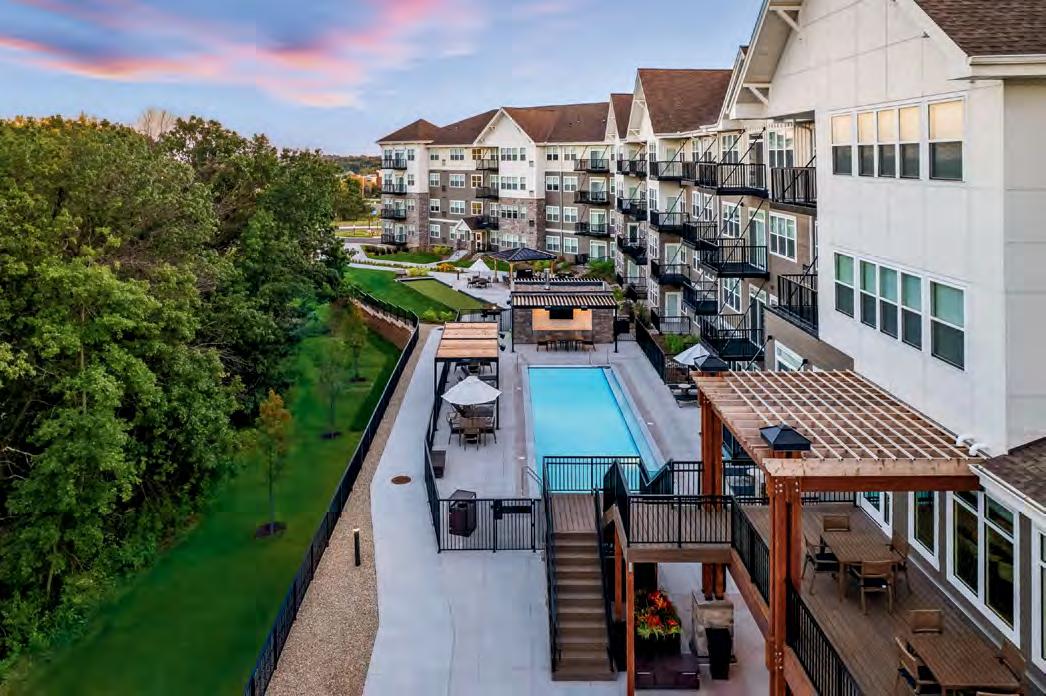
Frauenshuh
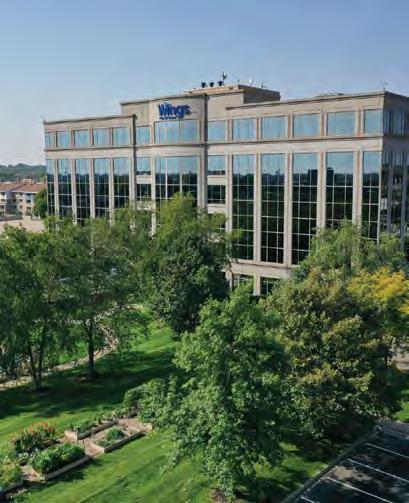
Sciences
from page 1
less. We are a solid economic choice and we have a strong workforce.
How strong is the demand from medical device companies in the Twin Cities and Rochester areas?
Lyles: Medtronic, Boston Scientific and others are strong anchors here. Bost Scientific is moving ahead with a massive expansion project in Maple Grove. The success of these companies shows just how strong our market is.
I’d say we are the first or second choice in the country when it comes to medical device companies looking for new homes or to expand. We are generally in competition with some of the areas in California. We are seeing some demand from pharmaceutical companies, too, but we are nowhere near the power of Raleigh or the Boston-Cambridge area. We do, though, get some pharmaceutical companies looking for space here.
What about Knutson? Is your company seeing a steady stream of life sciences construction work?
Lyles: We have done well in this market sector. Now we are ready to continue growing it. There is a little more complexity to it. We’ve done well with that. We have a long history in the healthcare field. There are some parallels between healthcare and life sciences when it comes to the complexity.
We are working now with two new clients, one in the pharmaceutical and the other in the medical device field. Their projects are just getting ready to kick off. They aren’t huge jobs, but they are significant ones. We are also working with a larger global conglomerate in Chaska. We’re excited about that. What are some of the factors that make life science construction so much more complex?
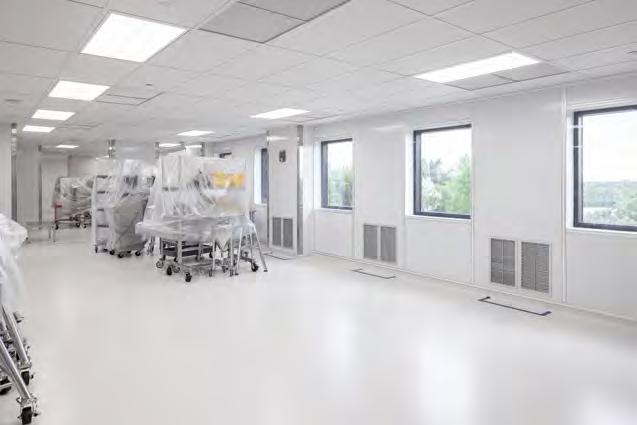
Lyles: When you get into cleanroom sites, everything gets more complicated. It’s all about purity. It requires a different kind of welding process. You might use exotic plastics for purity when it comes to the water supply. It requires an understanding of how those systems come together. It’s about knowing how to work with trade partners on the mechanical and electrical side to find the quality that must be there in this type of construction.
Is it challenging for end users to find sites for their life sciences projects in the Twin Cities or Rochester areas?
Lyles: I do talk to people on the real estate side. We have not overblown the market with construction. We focus more on specific build-to-suit projects. On the coasts, they have a big glut of square footage avail-

able. We have done a good job of not just building massive amounts of square footage.
It might be a little tougher for end users to find sites, but they are available. When Boston Scientific moves from its Minnetonka location, I think that area will open for other users. It’s some good real estate for this type of construction.
What submarkets in the Twin Cities area are seeing especially strong demand from life science users?
Lyles: This might be anecdotal, but it seems like Chaska is attracting a lot of this type of construction. Roseville is seeing some activity. Overall, though, the whole area in general from Minneapolis-St. Paul to Rochester is open to this type of construction.
You were recently named director of life science and technology with Knutson. What do you enjoy about working in this sector?
Lyles: This is my 23rd year with Knutson. I’ve worked in several market segments. Working in this one happened organically about eight or nine years. I had a client that I started working with that worked in life sciences. I like complex mechanical systems. Once I started learning about these companies, my interest in the work they did continued to growth and I picked up more clients in the medical device and pharmaceutical industries.
I enjoy the complexity and the coordination that comes with these projects. And when you work in this field, you hope that you are making a positive impact, that you are working with a company that might develop something that could extend a person’s life. Do you think that the demand for life science space will continue to rise in the Minneapolis-St. Paul area in the future?
Lyles: I think so. With the anchors we have here, and after looking at the research on how much spending is expected to take place in life sciences, I do expect to see more of this kind of construction here. I do speak a lot with design firms. They are all very busy. I think this sector will remain steady in this area.
Photo courtesy of Farm Kid Studios, Inc.
Photo courtesy of AJ Brown Imaging.

from page 1

through conversions, demolitions and redevelopment projects. Since 2024, more than 3.4 million square feet of office space has been taken out of the Twin Cities office inventory, Newmark reported.
A quiet leasing market
While vacancy and absorption numbers improved, office leasing activity across the Twin Cities market remains subdued, Newmark said.
The big trend in the first quarter here? Tenants continued to right-size their footprints, often renewing leases for smaller spaces or relocating to newer, amenity-rich buildings. This ongoing “flight to quality” is one of the dominant trends shaping the market. Tenants today can spend more money per square foot while leasing a smaller amount of office space, giving more expensive, amenity-rich properties an advantage.
This tend is also helping to create a sharp divide between properties. Newer or recently renovated Class-A buildings in desirable submarkets, such as the North Loop or the West End, are leasing up. Older Class-B buildings, especially those lacking modern amenities, are struggling to compete.
Office landlords working hard
Newmark reported that landlords are responding by holding the line on asking rents while increasing concessions. Average asking rents in the Twin Cities office market have inched higher, but the true cost of occupancy is falling as landlords offer more free rent, higher tenant improvement allowances and flexible lease terms.
That dynamic has firmly tilted the market in favor of tenants.
The challenges faced by landlords are particularly noticeable in the downtown cores of Minneapolis and St. Paul. In downtown Minneapolis, vacancy hovered just above 30% in the first quarter, while St. Paul’s downtown office market posted an even higher vacancy rate of about 37%.
Don’t expect these numbers to fall significantly anytime soon. Newmark projects that vacancy in the Minneapolis central business district could climb past 31% by 2028 as companies continue to shed space.
High-profile moves are contributing to that trend. Target paid nearly $110 million to exit a long-term lease at City Center, removing about 900,000 square feet from the sublease market and returning it as direct vacant space.
At the same time, financial pressures are reshaping ownership. Several downtown properties have traded at steep discounts compared to their pre-pandemic values, while others have entered foreclosure or special servicing. These lower valuations are opening the door for opportunistic investors to acquire assets at reduced prices and reposition them.
A bit of hope?
The Twin Cities do possess some traits that are helping it weather the office sector’s struggles. Newmark points to the region’s diverse economy and highly educated workforce as positives. Newmark also noted that the region’s unemployment rate stood at 3.8% at the end of 2025, below the national average.
But office-using sectors such as information and financial services have lagged in job growth, with many companies still eliminating jobs. Office-using employment has yet to return to pre-pandemic levels here, too, a challenged faced by many markets across the United States.
The office sector remains fundamentally changed, too, after the COVID pandemic. Newmark says that hybrid work schedules are employed by a growing number of companies. Most companies have settled into long-term workplace strategies, bringing more clarity to their real estate decisions. Even so, another wave of downsizing could come soon as leases signed before the pandemic expire over the next few years.
Newmark said that selective expansion is beginning to emerge, particularly among financial firms. Suburban submarkets are also showing relative strength, with lower vacancy rates and demand that is more stable than in the market’s downtown cores.
Then there is the opportunity that comes with a more chaotic market. Newmark said that investors willing to buy discounted assets and invest in upgrades can find plenty of opportunities today in the Twin Cities office sector.
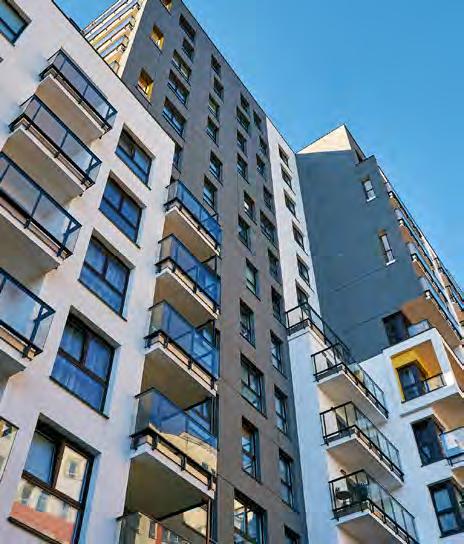
iStock photo credit: benkrut

Congratulations, Heidi! HEIDI ADDO NAMED MINNESOTA BROKER OF THE YEAR
Michel Commercial is proud to recognize Heidi Addo as Minnesota’s Broker of the Year.
Growth and Performance
Heidi has played a key role in the growth and direction of Michel Commercial Real Estate, helping expand the firm into one of the most active multifamily brokerages in Minnesota. Building on a 38-year foundation, she has strengthened client relationships, improved how the team operates, and refined how properties are positioned in the market.
Under her leadership, Michel Commercial achieved its strongest year in the firm’s history in 2025—doubling the number of properties sold and increasing total sales volume by 163% year over year. That momentum has carried into 2026, with the firm on pace to exceed those results.
Approach and Impact
Heidi is known for her steady approach and clear perspective in a market that continues to shift. She works closely with clients to make informed decisions, set realistic expectations, and move forward with confidence. Her focus is on building long-term relationships grounded in trust and integrity, while guiding transactions through to completion.
Her impact is reflected not only in record-setting results, but in the long-term relationships she continues to build across the Minnesota multifamily market.







Heidi Addo , Michel Commercial Real Estate
LIFETIME ACHIEVEMENT
DAVID FRAUENSHUH
David Frauenshuh has 56 years of experience in the commercial real estate industry. With his extensive history in real estate and market expertise, he has built a reputation for himself as well as for Frauenshuh, Inc. as an industry leader and trusted partner and advisor to its clients. David has built and leads an organization focused on creative real estate solutions and property ownership, management, and investment both locally and nationally. The name Frauenshuh is synonymous with honesty and integrity.
Frauenshuh, Inc. has vast expertise in the areas of development, corporate real estate services, project management, property management and financing within the commercial, office, medical and institutional sectors. Over the years, David has provided strategic solutions for many organizations as it relates to their business model as well as site, facilities, and real estate portfolio optimization. Significant projects include development of LaSalle Plaza, Infor Commons and St. Francis Hospital in the Twin Cities metropolitan area as well as many renowned medical facility projects around the country.
Mr. Frauenshuh is a graduate of Minnesota State University Mankato and a recipient of their Distinguished Alumni Award. A native of the Saint Paul area, he is a member of the National Association of Industrial and Office Parks and the Building Owners and Management Association founding member RPA designation). In 2010, David was honored with the prestigious Minnesota Business Hall of Fame Award, recognizing top business leaders across the state. David’s entrepreneurial endeavors have spanned into hospitality and restaurant franchisee ownership, energy, data centers, and the pharmaceutical medical sectors.
David humbly supports many causes that improve communities ranging from the Frauenshuh Cancer Center located on the Methodist Hospital campus to Globe Serve International, as sponsor of a K-12 school in Ghana, West Africa. Throughout his career, he has supported and served on the boards of many for-profit and nonprofit organizations, including: Economic Club of Minnesota

(Founder and Board Member), The Salvation Army (National Advisory Board), Federal Home Loan Bank of Des Moines (Federal Housing Finance Board), National Prayer Breakfast (Business Leaders Committee), Children’s House Hawaii (Board of Trustees), Minnesota Prayer Breakfast (Chairman), Minnesota Military Family Foundation (Board Member), Concordia University – St. Paul (Chairman, President’s Advisory Board), and Minnesota Private Business Council (Founder and Board Member). In addition to his many contributions to business and non-profit philanthropy, David remains actively involved in Christian outreach and missionary work with several charitable organizations

On Winning the Lifetime Achievement Award
Old National is proud to work with you, and applauds you on this recognition.
Project Awards
Affordable Housing - Suburban
Bluestem
Callisto Commons
Carver Place Apartments
WINNER! CROFT AT ROSECOTT
Decatur Landing
Harbor Highlands VI
The Juniper
Affordable Housing - Urban
Kyle Garden Square
Lakefield Apartments
Magnolia Flats
WINNER! OPPORTUNITY CROSSING
Oshki-Gakeyaa
Rivkin Apartments
Wadaag Commons
Education & Daycare - Suburban
WINNER! CASS LAKE-BENA ELEMENTARY
Everbrook Academy - Otsego
KinderCare
Spectrum Athletic Center
Education & Daycare - Urban
Achieve Language Academy Addition
Bruce Vento Elementary School
Minneapolis College Management Education Center
Pillsbury Creative Commons
WINNER! UNIVERSITY OF MINNESOTA FRASER HALL
University of St. Thomas - Lee & Penny Anderson Arena
Government - Suburban
All Seasons Arena
Owatonna Wastewater Treatment Facility Upgrade & Expansion
Bloomington Ice Garden Renovation
Hennepin County Public Safety Service Headquarters
Lebanon Hills Maintenance Facility
Minnesota State Emergency Operations Center
Rambling River Center
WINNER! SCOTT COUNTY COMMUNITY DEVELOPMENT AGENCY
Washington County Central Service and License Center
Washington County Emergency Housing Services Building




Government - Urban
Hennepin County Government Center Atrium Window Refurbishment
Listening House
WINNER! MSP TERMINAL 1 AIRSIDE MODERNIZATION
NEON Collective Kitchens
Northend Community Center
Pillsbury Creative Commons
Greater Minnesota
44° North
WINNER! AGRALITE ELECTRIC COOPERATIVE HEADQUARTERS
Belmont Heights -- Jackson, MN
Black Bear Casino Event Center
Marthaler Honda Dealership
Green / LEED Development of the Year
Anoka Cannabis Company
WINNER! TKDA
University of Minnesota Fraser Hall









Hotel / Hospitality
44° North
Black Bear Casino Event Center
Century Plaza / Roami
WINNER! THE PARC
The Sky Lounge at River Park Plaza
Industrial
610 Junction 4
Kemps Distribution
Lakeville Logistics
Lebanon Hills Regional Park Maintenance Facility
WINNER! PAR SYSTEMS AT SEVEN LAKES
RL Cold
Interior Design - Urban
Center for Reproductive Medicine
Messerli | Kramer
Miro Apartments
Rivkin Apartments
Bush Foundation
WINNER! GOODWILL EASTER SEALS
MN CAREER AND SERVICES CAMPUS
The Nine at Lexington Station
The Sky Lounge at River Park Plaza
Interior Design - Suburban North
Gradient Financial Group
Minnesota Lottery Headquarters
BGS Law Office
WINNER! NINETY9 LOFTSSIGNIFICANT REMODEL
The PARC
The Winn at Golden Valley
Interior Design - Suburban South
Hop House
Rye Apartments
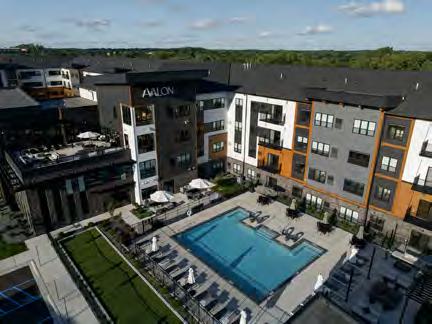
WINNER! AVALON APARTMENTS AND TOWNHOMES
TKDA
Danny’s Construction Office Buildout
Zinpro
Abdo Corporate Office Expansion
Mirabelle
PM&J
Vagabondo & Capuchin
Medical Property
Astera Health CentraCare Coborn Cancer Center
WINNER! CAPITOL PARK MENTAL HEALTH HOSPITAL
Dental Associates
Summit Orthopedics Plymouth Bass Lake Clinic and Plymouth ASC
Youth Stabilization Center
HealthPartners Specialty Center Woodbury
iSpine Clinic
Midwest ENT - Lakeville
Olmsted Medical Clinic Owatonna
Richfield Medical Group
Mixed-Use Property
Century Plaza / Roami
WINNER! MIRO APARTMENTS
Rowe Residences
The Finch
The Nine at Lexington Station

Jana Deach
Office Managing Partner, Minneapolis (612) 877-5305 | jdeach@cozen.com
Cozen O’Connor congratulates our colleagues and friends Tim Gustin and Betsy Kiernat, finalists for the Real Estate Lawyer of the Year.
Cozen O’Connor has earned its place among the nation’s top real estate legal practices. With nearly 100 dedicated real estate attorneys based in cities across the U.S. and Canada, the firm offers vast real estate capabilities and a full-service multidisciplinary platform.
Steven Silton
Office Managing Partner, Minneapolis (612) 260-9003 | ssilton@cozen.com
Mulifamily - Suburban
Avalon Apartments & Townhomes
Rye Apartments
The River House
Belmont Heights
Bohemia Flats
The Brooks Apartments
WINNER! THE FINCH
The Fox & The Grouse
The Winn at Golden Valley
Vale Apartments
Villas at Chasewood Condomimiums
Mulifamily - Urban
Accolade Minneapolis
WINNER! MIRO APARTMENTS
The Nine at Lexington Station
Office - Suburban
Abdo Corporate Office Expansion
Hornig Companies Office Remodel
WINNER! MERIDIAN TWO
TKDA
BGS Law Office
Eagan Central
Gradient Financial Group
High Stakes Venture Multi-Tenant Office Building
PM&J
Rubus Station
Zinpro
SICK Phase II
Office - Urban
Bush Foundation
WINNER! SPS TOWER
The Sky Lounge at River Park Plaza
Unity Office Building
Redevelopment - Suburban
APX Construction Group Headquarters Force on Fifth Avenue
Hunt Electric Headquarters
WINNER! NINETY9 LOFTS LUXURY RENOVATION
Vagabondo
Redevelopment - Urban
42 Water Street Adaptive Reuse
750 Madison Street Redevelopment
WINNER! BIMOSEDAA
Century Plaza / Roami
Kyle Garden Square
Marvella 2190
Playwrights’ Center
State of Minnesota Governor’s Residence Renovations
Sumner Library
Retail / Restaurant - North
Chester Bird American Legion Renovation
Si Senor Mexican Restaurant
WINNER! SLICK CITY MAPLE GROVE
The PARC

Retail / Restaurant - South
LaunchPad Golf
Liliana
Mirabelle
WINNER! MYSTIC LAKE AMPHITHEATER
Noma HiFi
Vagabondo
Wells Roadside
42 Water Street - The Bouldering Project
Lynette
Senior Housing
Amira of Lake Elmo
Bluestem
Estoria Cooperative of Lakeville
Marvella 2190
The American Cooperative on Lake Phalen
Bethesda StoneRidge
WINNER! SAINT THERESE OF CORCORAN
Trillium Woods Phase 2 Expansion
Vista Prairie at Eagle Pointe
2026 Company Awards
Architecture Firm of the Year
HGA
WINNER! SYNERGY ARCHITECTURE STUDIO
Association Management Company of the Year
WINNER! CITIES MANAGEMENT
FirstService Residential
Sharper Management, LLC
Brokerage Firm of the Year
Commercial Equities Group
Davis
Marcus & Millichap
Michel Commercial Real Estate
Northmarq
Tradition Commercial Real Estate LLC
WINNER! TRANSWESTERN REAL ESTATE SERVICES
City / County of the Year
WINNER! CITY OF FARMINGTON
City of Lakeville
City of Owatonna
Developer of the Year
Beacon Interfaith Housing Collaborative
Gonyea Company
JLS Development
MI Homes
WINNER! OPPIDAN
Roers Companies
Engineering Firm of the Year
Emanuelson-Podas
WINNER! ERA STRUCTURAL ENGINEERING
General Contractor of the Year
Doran
WINNER! JE DUNN CONSTRUCTION
JLS Design + Build LLC
Roers Companies
Owner / Landlord
Capital Partners Management
WINNER! PIEDMONT REALTY TRUST
Roers Companies
Sumitomo Corporation of Americas
Professional Service Company of the Year
IPX1031
PACE Loan Group
WINNER! SUSTAINABLE INVESTMENT GROUP, LLC (SIG)
Property Management Company of the YearCommercial
Capital Partners Management
CBRE
Davis
Frauenshuh
KabSkye Investments
WINNER! MSP COMMERCIAL
Transwestern Real Estate Services
Property Management Company of the YearMultifamily
WINNER! KLEINMAN PROPERTY MANAGEMENT
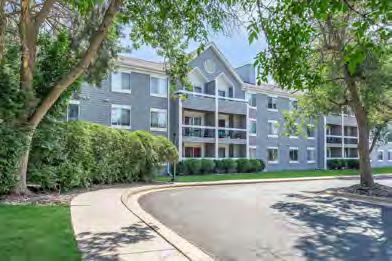
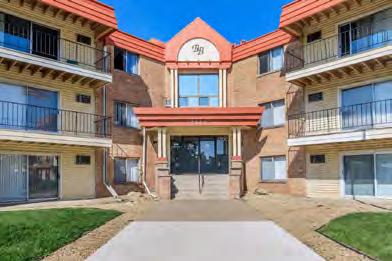
Mid Continent Management Corp (MCMC)
Roers Companies
Solhem Management Company
2026 people Awards
Architect of the Year
WINNER! DAMARIS MELO-GYASI, DESIGN BY MELO
Matthew O’Keefe, Synergy Architecture Studio
Mythili Thiagarajan, Auromira Architects
Association Manager of the Year
WINNER! Kim DuPont, Sharper Management
Nancie Thom, HOALiving Minnesota
Broker of the Year
Andy Lubinski, Colliers | Minneapolis - St. Paul
Brady Whalen, Mid-America Real Estate
Brent Masica, Cushman & Wakefield
WINNER! HEIDI ADDO, MICHEL COMMERCIAL REAL ESTATE
Jeff Budish, Northmarq
Jim Damiani, Newmark
Jim Montez, Transwestern
Ted Bickel, Northmarq
Economic Developer of the Year
WINNER! GREG KRUSCHKE, CITY OF OWATONNA
Jacob Wiensch, City of Faribault, MN
Tina Goodroad, City of Lakeville
Emerging Leader of the Year - Brokerage
Brian Bruggeman, Colliers | Minneapolis - St. Paul
WINNER! DANNY CALLAHAN, TRANSWESTERN
Dylan Steman, Northmarq
Elena Branca, Newmark
Hunter Williamson, Tradition Commercial Real Estate
Sam Gleason, Cushman & Wakefield
Emerging Leader of the Year - Development / Operations
Brandon Kesler, Village Green
WINNER! EDDY WOLF, RYAN COMPANIES US, INC.
Francis Junior Kaunda, Mid Continent Management Corp (MCMC)
Jon Mierow, Sharper Management
Joshua Segal, JLS Design + Build LLC
Lerew Kaas, NAI Legacy
Matt Brawner, Endurus Capital
Matt Swanson, CBRE
Shane Reding, Oppidan
Engineer of the Year
Benjamin Bahr, Emanuelson-Podas
Dave Fox, Transwestern Real Estate Services
John Skogstad, CBRE
Justin Pickard, VillageGreen
WINNER! REBECCA GORDON, ERA STRUCTURAL ENGINEERING
Executive of the Year
Dan Cunningham, Sharper Management LLC
Dave Higgins, Saint Paul Downtown Development Corporation
Dean Freeman, Frauenshuh
Heidi Swank, Rethos
Joshua Segal, JLS Design + Build LLC
Mel Schultz, Legacy Management Services
Ron Patzer, Capital Partners Management
Shane LaFave, Roers Companies
Steve Michel, Michel Commercial Real Estate
Tannen Loge, CBRE
WINNER! TIM MURNANE, OPUS
Interior Designer of the Year
WINNER! LAUREN DEPOINT, RYAN COMPANIES US, INC.
Sheila Mozayeny-Hale, BDH
Project Manager of the Year
Caleb Robinson, Sharper Management LLC
WINNER! GREG LAVERE, OPPIDAN
Matt Fornasiere, Oppidan
Rodney Hintz, MSP Commercial
Tyler Lenzner, Knutson Construction
Property Manager of the Year - Female
Jessica Maidl, Kabskye
Katie Bongard, Transwestern Kelsey Sponsler, FirstService Residential MN
WINNER! KRISTEN HEDIN, MSP COMMERCIAL
Maria Schreder, Capital Partners Management
Melissa Gomes, Davis
Sarra Muqaddam Grayer, Village Green
Property Manager of the Year - Male
Bob Traeger, Transwestern
WINNER! CHAD CONORYEA, FRAUENSHUH
Connor O’Neill, Mid-America Real Estate - Minnesota,
Dan Conzemius, CBRE
Dan Sullivan, FirstService Residential MN
Jeff Kreger, CBRE
Jeremy Fry, Hempel Companies
Jim Duerr, Roers Companies
Mitchel Spiker, Village Green
Zach Nguyen, Village Green
Real Estate Lawyer of the Year
Elizabeth (“Betsy”) Kiernat, Cozen O’Connor
John D. Nolde, Winthrop & Weinstine, P.A.
Michael Klemm, Hellmuth & Johnson
WINNER! TIMOTHY GUSTIN, COZEN O’CONNOR
Woman of the Year
Teresa Borgen, Newmark
Angie French, Mid Continent Management (MCMC)
Anne Madyun, Davis
Britney Kocken Davis, CBRE
Damaris Melo-Gyasi, Design by Melo
Emily Paulino, Village Green
Kari Ross, HOALiving Minnesota
Katie Scheetz, Roers Companies
Kim Ihle, CBRE
Natalie Martynow, Sharper Management LLC
WINNER! ROBIN ZELLMER, COLLIERS | MINNEAPOLIS - ST. PAUL
Sara Garcia, RJM Construction
2026 Transaction Awards
Most Significant Investment Sale Transaction in 2025
The Beach Club Residences
WINNER! THE PILLARS OF PROSPECT PARK
The Woods
Most Significant Lease Transaction in 2025
Biolabs Lease at Two Discovery Square
Realty Income MAS HVAC
WINNER! MERIDIAN
Micro Control Company
Schwans at 9320 Excelsior
SPS Commerce Headquarters