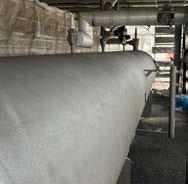
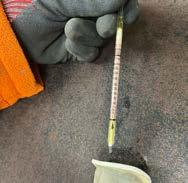
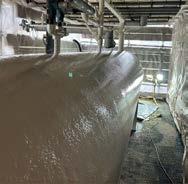
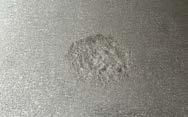
In this issue: UP FRONT The season before the season for US amusement parks ANALYSIS The importance of proper testing for corrosion under insulation IN FOCUS How tethered power units are redefining offshore inspections
Motivated by the toughest of conditions, we constantly seek to solve the problems that lie ahead. As a trusted partner, we offer a unique range of expert coatings and solutions tailored to ensure well-informed maintenance decisions.
2 UP FRONT
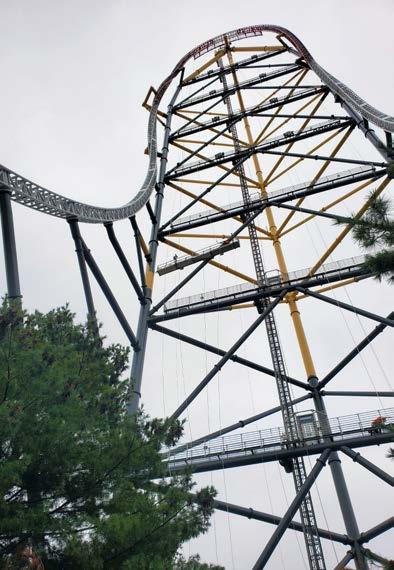
Baynum Solutions looks at the maintenance season before amusement parks open in the US
10 ANALYSIS
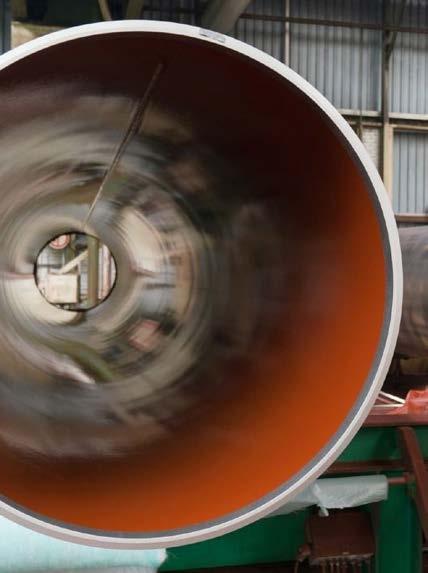
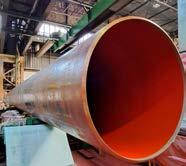
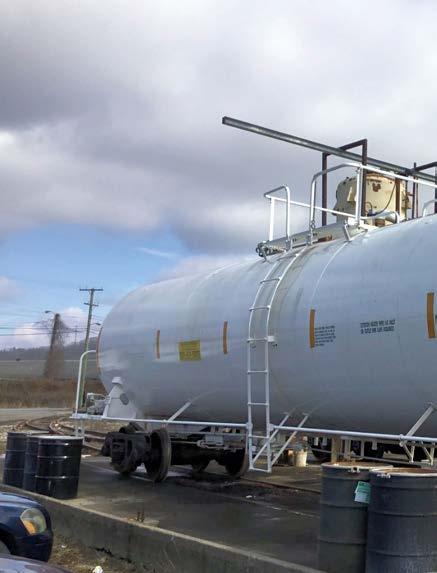
Hempel investigates the importance of proper testing for corrosion under insulation, pressure vessel corrosion protection explored with Corroless Eastern, almost solvent-free internal pipe coatings from Teknos and lining strategies for emerging US biofuel transport by Carboline
38 SPOTLIGHT
Deep cleaning is the key to sewer lining success, says KEG Technologies
44 LIFTING THE LID
A new model for sustainable hull performance and the next generation of graphene-base hard foul-release coatings from GIT
50 IN FOCUS
PPG’s copper-free antifouling solution and Flyability looks at how offshore drone inspection is flying high
60 UPDATE
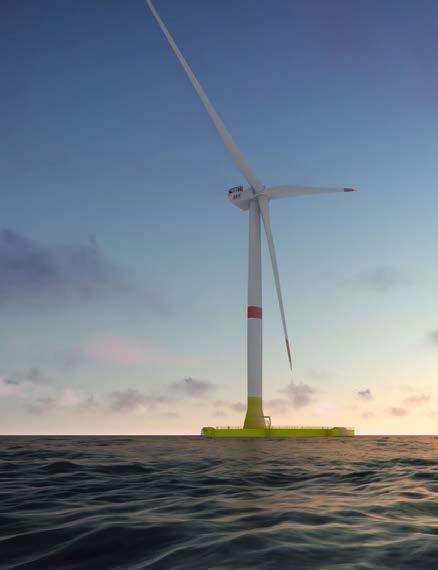
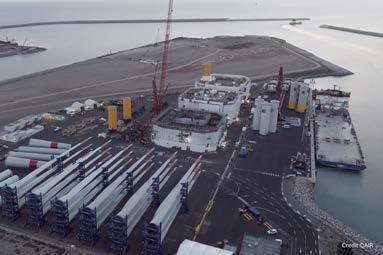
How Jotun has successfully secured a significant role in one of France’s first floating offshore wind projects
66 REVIEW
A hydropower station spillway restoration by Belzona
70 CORRODERE ACADEMY
The latest articles, news and directory listing from Corrodere Academy
82 NEWS
The latest products, appointments and industry news
For a century, Jotun has shaped offshore and onshore industries across the world with marine and protective paints and coatingsbuilt to last.
When the gates open and the first guests walk through your park each spring, it’s easy to overlook what it took to have it ready, says
Melissa Bamford, Director of Marketing at Kentucky-
based Baynum Solutions.
When the first Monday in September (Labor Day) rolls around in the US, most breathe a sigh of relief – summer’s crowds have dispersed, routines settle back in and the pace slows. But for Baynum’s amusement park road crews, Labor Day is the starting gun for a seven-month marathon.
Behind every polished ride and freshlyinstalled structure is a road crew that’s been working – literally – around the clock, across the country, and through every kind of condition to make that happen. Because in this business, Memorial Day (the last Monday in May) isn’t a starting line; it’s the finish line. Work doesn’t stop when the rides do.
The Hidden season
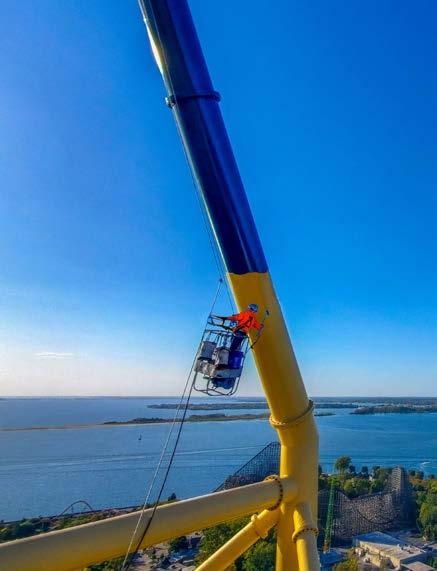
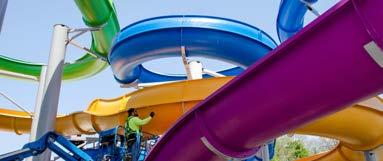
As soon as the music fades and guests exit the gates after Labor Day, Baynum crews get to work. For us, that’s when the real season begins: our road teams pack up and hit the highway, moving state to state with a singular goal: restore, repaint, rebuild and be gone before opening day. Some crews are tackling restoration and coatings, others are craning in new ride systems or installing multi-slide towers. By the time spring arrives, we’ve clocked up nearly 10,000 field hours across more than 20 states, with five to 10 active road crews working at any given time.
This post-season window – between Labor Day and Memorial Day – is our busiest time of year. It’s a fast-moving, high-stakes stretch that demands precision planning, logistical flexibility and serious endurance. There’s no easy way to describe the effort it takes to pull it off, but for those who do it, it’s a badge of honour.
Weather isn’t a forecast; it’s a factor
In this industry, you don’t fight the weather; you plan around it. The type of work we perform is heavily dictated by temperature, surface conditions and even regional humidity levels. Specialty coatings can be modified to work in colder conditions, but there are limits.
“You can swap out a part B component to drop your application range to the 30s,” says Adam Kimbrough, who leads Baynum’s restoration and coatings crews. “But that doesn’t mean it’s ideal to be 200 feet (60m) in the air with wind chill – we find a way to get the work done – but planning matters.”
Gelcoat application, for example, requires consistent temperatures above 55°F (13°C). For parks in cooler regions, that often means tackling projects early in the autumn, or
The type of work performed is heavily dictated by temperature, surface conditions, and regional humidity levels
waiting until late spring when temps rebound. And sometimes, it’s not about the cold; it’s the rain. 2024 brought one of the wettest springs in recent memory, which meant entire days lost to standing water, soaked surfaces or unsafe equipment operation. Every one of those days had a ripple effect.
That’s why timing matters. Parks that confirm early and finalise scopes before winter hits open up more flexibility for our crews to plan around unpredictable weather.
Parks that wait until March to call us in?
They’re crossing their fingers that Mother Nature cooperates.
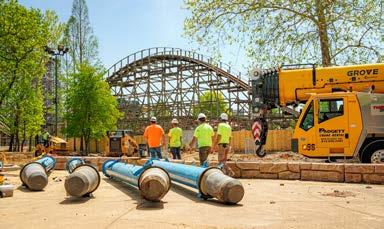
Don’t underestimate installations New installations – whether a relocated coaster or a brand-new tower slide complex – carry their own layer of complexity. These aren’t just build-outs. They’re multi-trade operations involving concrete, utilities, design approvals, structural inspections and crew sequencing that’s often down to the hour.
“We’re lifting 30,000-pound (13,600kg) rides into place and coordinating every trade on-site to support it,” says Terry Stephens, Construction Manager. “When you’ve got cranes, trucks, and timelines stacked, any slips in prep or permits can affect the whole project.”
This work isn’t plug-and-play. Each site comes with unique access requirements, surface preparation challenges, ride configurations and crew safety considerations. And the more we can frontload – permits, equipment rentals, material deliveries – the smoother things go once we hit the ground.
It takes a symphony
Successful projects are symphonies of coordination. Park maintenance managers clear work areas, facilities teams unlock gates at sunrise and supply vendors deliver resin and paint just in time. When the entire operation hums, the result is seamless: no surprise boardwalk detours, no muddy staging areas and no last-minute product swaps. Together, we transform closed-off maintenance zones into vibrant guest attractions.
Behind every job site is a project manager coordinating equipment deliveries, a foreman managing scope changes and a support team back at HQ tracking every moving part. From our crews in the field to our logistics and admin staff, it takes a team to keep this machine moving.
“At any given time, I could be coordinating multiple active installations in several states – each one with its own weather patterns, staging plans and construction needs,” says Kevin Fife, who oversees Baynum’s aquatic slide tower installations. “Our success depends on everyone being where they need to be, when they need to be there.”
Helping deliver the best result
Each off-season, we prioritise projects based on scope, crew availability and weather conditions. And while we always try to accommodate as many parks as possible, the truth is: we book up fast. Especially for gelcoat work or full attraction repaints, locking in your spot early gives us the chance to get your project the attention it deserves.
It also helps avoid the ‘April panic’, where last-minute calls collide with weather
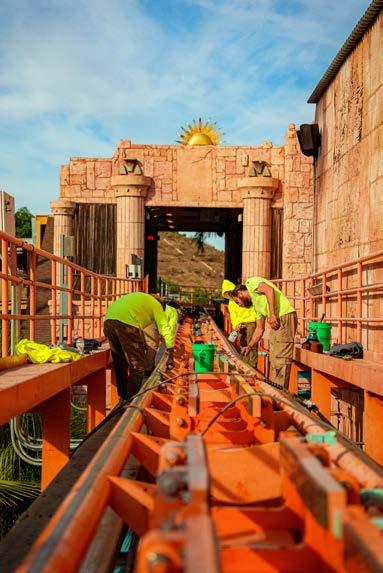
The work isn’t plug-and-play, with each site having its unique access requirements
Here’s what helps:
• Early scope confirmation: The earlier the project is confirmed, the more flexibility we have to schedule it during the ideal climate window and assign the right crew.
• Full ride access: Whether it’s a repaint, a slide repair or a full installation, our crews work safer and faster when we have access without obstructions or delays.
• Prepared sites: Power, water, access paths and staging areas matter. The more ready the site is, the faster our work proceeds and the fewer change orders arise.
• Documentation: Even a simple walkthrough video of problem areas goes a long way in helping us scope, estimate and plan logistics long before arrival.
• Contingency mindset: Spring storms, wildfire smoke (like the California crews navigated last year), supply chain delays –it all happens. When plans shift, flexibility keeps the work moving forward.
The human factor
Every ride we restore, every structure we install, it’s all in pursuit of a better guest experience. ■ limitations and tight deadlines. Starting those conversations in the fall ensures your project is on our radar – and on our calendar. The best outcomes come from strong partnerships and proactive planning.
Our road teams are a different breed. They go where the projects take them, and stay
until the job is done. That could mean a month in Ohio, three weeks in Georgia, or back-to-back jobs that send them from coast to coast. It means missing birthdays, family dinners and school plays. It means waking up in one hotel, painting a structure 200 feet (60m) in the air, and going to sleep in another city.
It’s not just physical labour; it’s a lifestyle. And it takes a special kind of commitment to do this year after year. It’s demanding, it’s unpredictable – and they wouldn’t trade it for anything.
You may never see the early morning site meetings, the late-night finish coats or the hours spent getting blasted by wind while prepping a lift for morning work. But guests will see the final result. They’ll see a park that feels fresh and vibrant; a structure that looks brand new and a ride that’s once again photo-ready.
That’s the part we love most. And while we don’t expect the average visitor to think about who painted the coaster or fixed the slide joints, we know our partners do. Because when it’s time to do the work, they know who to call – and they know what it takes to get it done.
Guests will see the final result, which is fresh and vibrant
EXPLAINING CORROSION UNDER INSULATION (CUI)
Hempel is often asked about their perspective on the new ISO 19277 standard for testing coatings exposed to CUI. To shed some light on the topic, we spoke with David Hunter, Segment Development Manager for CUI, High Heat & Thermal Insulation Coatings at Hempel, to learn more about what this standard means for the industry.
It is well known that CUI is an accelerated form of corrosion, localised within insulated, low alloy and carbon steel equipment. It occurs wherever water makes its way under layers of insulation and has contact time to unprotected steel, causing the equipment to corrode and lose structural integrity. Normally found under the insulation layers of operating vessels, piping, tanks, process equipment, valves and other refining assets, CUI has unfortunately become well-known amongst operators in the process industries causing loss of revenue due to maintenance, downtime and the replacement of corroded components.
But why can CUI be more problematic that other forms of corrosion?
Mechanical insulation, as its name implies, is held in place by mechanical means and does not have integral contact to the substrate. Because of this, the corrosion of the substrate under the insulation is not visually apparent outside of the insulation system jacketing. This necessitates the owner / operator to go through the costly process of verifying mechanical integrity of insulated equipment, most often through a “remove / inspect / replace” methodology. Due to the large volume of insulated surface areas, the OPEX cost of material and manpower to perform the inspection alone would make the management of CUI uneconomically viable. To spread this cost, the insulated area is often prioritised on a risk / consequence of failure basis, which can extend the inspection frequency to potentially over 10 year or more. Volume of mechanical insulation disposed of is one of the largest environmental impacts of these facilities.
With few exceptions, mechanical insulation manufacturers recommend a protective coating that is fit for purpose underneath insulation to help protect against the eventuality of moisture penetrating the insulation system. Here is where the right protective coating can play a significant
part. But choosing a protective coating to fight corrosion under insulation is not straightforward, given the sheer number of products on the market today.
Choosing the correct coating to protect against CUI
Protective coatings are one piece of an overall CUI mitigation strategy and should not be used in isolation. Proper initial installation of the mechanical insulation, maintaining the insulation weather barrier (jacket, lagging cladding), repairing damaged jacketing, maintaining sealants at seams / attachment penetrations, etc. is an important component, by preventing or reducing moisture ingress.
Similarly, a protective coating must be properly specified for the service environment (fit for purpose), properly applied over the right surface preparation, under the right conditions. Any quality product can be defeated by lack of attention to detail of the QA/QC process.
There are many standards which have set out to try to model the complex CUI environment, including some owners own
developed tests for durability. The materials need to resist effectively immersion conditions, elevated temperatures and / or cold / cryogenic conditions, increases in chloride and other contaminant levels, yet still adhere to the substrate while under the stress of dimensional changes of the surface due to cyclic conditions. Attempting to model this environment for these varied set of conditions can be quite challenging, given the uniqueness that could be any given operation. Often times engineers have relied on multiple types coating systems to handle differing temperature ranges in the same environments. Making materials that are truly “fit for purpose” can be quite challenging.
Is there any guidance available to help customers to make the correct choice of coating?
As previously mentioned, there are several test method standards for evaluating
coatings for CUI service. ISO 19277 is a relatively recent introduction to address this issue but has only seen limited recognition amongst operators. This standard, described in full as, ISO 19277: 2018 “Petroleum, Petrochemical and natural gas Industries – Qualification testing and acceptance criteria for protective coating systems under insulation” seeks to address testing of various factors which help determine the suitability of a coating for use under insulation.
Importance of testing
With advancements in technology in recent years providing a wide range of protective coatings, the importance of proper testing has not diminished. Money and time can both be saved when the right tests are performed to determine an appropriate coating for a given situation.
ISO 19277: 2018 introduces the concept of CUI categories based upon temperature.
This allows coatings to be classified to one or more categories, dependent upon the temperature in which they are intended to operate. Additional categories are used for coatings intended for cryogenic service.
The standard describes a battery of test to simulate thermal performance, boiling water, thermal shock, thermal cycling, peak temperature performance, and long-term isothermal conditions, as well as providing corrosion protection for extended periods of ambient conditions, wet cycles, etc. The goal is to simulate the types of conditions the coating will see for the entire lifecycle from application, install prior to start-up, in-service, process shutdowns up to short term mothballing.
If the service environment demands it, optional tests for Cryogenic exposure are included in the standard, as well as an additional option test with some history was also include as part of the standard is the Vertical pipe/Houston Pipe test.
The future of testing of coatings to protect against CUI
Although this standard is a very positive start to prescribe a documented and reproducible CUI coating test methodology, the CUI testing element faces significant push back from the industry.
With many test programmes active in this area, it seems probable that this standard will be refined as time passes by. Additionally, with a handful of key oil and gas standards such as NORSOK M-501, currently due for revision, it seems likely that there will be continued activity in this
important area. Artificial testing will always have its limitations vs. natural exposure, but given the durability required (often >10 years), its not practical nor does it make economic sense. How to model the conditions in a CUI environment is why there are many standards and test methods which seek to address it. Understanding the operating conditions of specific insulated piping circuits, tanks and vessels can help drive the selection of the test methods / standards of which to qualify materials.
The process of testing the effectiveness of coatings on their ability to prevent or delay CUI is complex, although necessary. Combining these test methods into a coherent standard with clear acceptance criteria is what ISO 19277 seeks to do. Further refinements to this document as improved test methods for CUI become available will allow even better coating selection to be taken in the future.
Refinery protection
Hempel recently conducted trials of Hempaprime CUI 275 at Bharat Petroleum Corporation Limited, Mumbai Refinery (BPCL, MR), one of India’s largest refineries, with an annual refining capacity of 14M metric tons. Hempaprime CUI 275 was approved for usage in both new construction and maintenance for insulated areas up to 204°C, and with peak temperature resistance up to 275°C.
The challenge
The petrochemical industry faces major disruptions, lost production, expensive repairs, and potential safety and environmental hazards due to CUI, with its effects running into millions of dollars. The BPCL refinery has extensive both insulated and atmospheric assets. Due to facility operational requirements, often times the best surface preparation and being able to take the equipment out of service were not always an option for insulated assets. The facility needed a product which could be
applied and perform over limited surface preparation and applied to hot surfaces up to 204°C, if needed.
The trial
Hempaprime CUI 275, was applied to assets at the BPCL refinery under the minimal surface preparation of SSPC-SP-2 / ISO St2, and then re-insulated. These assets included a vessel, two inlet pipelines, and a DG set stack. The Hempaprime CUI 275 was designed to provide longlasting barrier protection in corrosive environments, particularly those with high temperatures and wet conditions beneath thermal insulation. It can endure operating temperatures from -196° C to 204° C, making it suitable for assets prone to CUI and thermal cycling. With its fast-drying and alkylamine-cured epoxy formula, Hempaprime CUI 275 offers superior crack resistance in cyclic conditions and higher dry film thickness (DFT) tolerance compared with traditional epoxy phenolic coatings. It is suitable for new construction and maintenance/repair projects involving carbon and stainless steels, as well as insulated and uninsulated service areas found at BPCL. Hempaprime CUI 275 meets international standards such as ISO 19277:2018 for categories CUI-1, CUI-2, CUI3, cryo equivalents insulated surface, and ISO 12944 for C5 H and CX for atmospheric service. The performance testing was conducted over a 6–8-month evaluation period at BPCL. The test required application over limited surface preparation (St2), application of two coats of Hempaprime CUI 275, each at 150 microns, using a brush and roller. The surfaces were then re-insulated, and operated as normal over the evaluation period. The mechanical insulation was then removed, and a condition assessment was made by Hempel Services team with support of BPCL. Visual evaluation was made for degree of rusting, cracking, peeling, loss of DFT, as well as adhesion testing of the dried film.
The result
Trials conducted for Hempaprime CUI 275 on BPCL’s assets were successful, meeting the desired performance parameters. The crosscut and pull off adhesion test yielded satisfactory results, passing the desired threshold in line with ISO 4624 and ASTM D 3359 respectively. BPCL endorsed the solution, confirming that Hempaprime CUI 275 can be extended for the painting of surfaces associated with CUI, in aforementioned temperature range.
Keeping production in full swing
As stated above, perhaps one of the toughest decisions in managing any industrial plant is knowing when to shut down production to carry out scheduled maintenance – finding the balance between market demands and seasonality, lost revenue and increased expenses, stopping today to be better tomorrow. This is a challenge that has been successfully overcome at a geothermal facility in Europe, simply by carrying out maintenance while keeping the plant in full production. Geothermal power is a clean and renewable energy source. In some areas of the world, it provides a large proportion of the local population’s energy supply.
Geothermal projects
Hempel has participated in a number of projects involving geothermal facilities. At one such maintenance project, its Versiline CUI 56990 coating was being used to repair corrosion under insulation (CUI). Versiline CUI 56990 is designed for the CUI environment, but unlike CUI 275, Versiline CUI 56990 can resist a broader temperature range up to 650°C/1202°F, as well as thermal shock and cycling in dry or wet service conditions. In total, 1,700m2 of geofluid piping was being repaired. Such a project would normally require that the facility is shutdown during maintenance work. However, at this project, the application company performed the maintenance while
keeping the plant in operation. As a result, the client was not required to slow or halt production at any time in the process.
As is standard practice on any pipe coating renewal, the first stage was to strip the piping of its old, insulated cladding to gain access to the steel pipe, which was then abrasive blasted to grade SA2½. Once the surface was suitably clean, it was coated with two 150µ coats of Versiline CUI 56990, Hempel’s single component inorganic copolymer coating designed specifically to protect against CUI. It was then insulated with new metal cladding.
Interesting application temperature
What makes the project interesting is the application temperature. The technical specification for Versiline CUI 56990 states that it is designed for long-term protection of hot pipework, equipment and other hot surfaces and can be applied directly onto the steel substrate. In this project, that steel substrate was at a constant temperature of 140ºC during both the blasting and coating stages. This meant that the facility could keep operating throughout. The project is an example of how Versiline CUI 56990 offers tremendous cost-saving benefits over conventional aluminium silicone coatings. In this case by minimising the expense of scheduled maintenance by keeping production in full swing.
Another Versiline solution
Owned by Shaanxi Tianhong Silicon Materials, the Shaanxi Yousr Polysilicon Plant in China will produce polycrystalline silicon material for the solar photovoltaic and electronics industries. When engineering company Fluor was asked to design the plant, it was faced with a specific challenge. Much of the plant’s pipework and equipment is exposed to high temperatures, making it prone to corrosion under insulation. Fluor knew that conventional anti-corrosive solutions are often not able to protect equipment in these conditions, and
the company was looking for an alternative but reliable and proven coating solution.
The solution
Fluor chose Versiline CUI 56990 coating to provide long-term protection for pipework, equipment and other hot surfaces. Versiline CUI 56990 is extremely resistant to microcracking and corrosion, even in tough operating conditions. Its ability to handle a wide variety of operating conditions make it the ideal choice to help engineering companies simplify complex painting specifications.
Versiline CUI 56990 is used to protect all insulated hot pipework and equipment in the Shaanxi Yousr Polysilicon Plant, totalling more than 20,000 litres, and will help keep the plant in good operating condition with limited maintenance for years to come.
David Hunter is a Civil Engineer and Segment Development Manager for Corrosion Under Insulation (CUI) & Thermal Insulation Coatings (TICs) for Hempel. He has 29 years of coating and corrosion experience including consulting in CUI, protective coatings, linings, composites, and passive fire protection materials.
He is also 17-year AMPP instructor for several AMPP courses including:
• AMPP Corrosion Under Insulation Course
• AMPP Fireproofing Specialty Inspection Course
• AMPP CIP-1 & 2 Instructor
• AMPP/NACE Offshore Corrosion Assessment ■
PRESSURE VESSEL PROTECTION
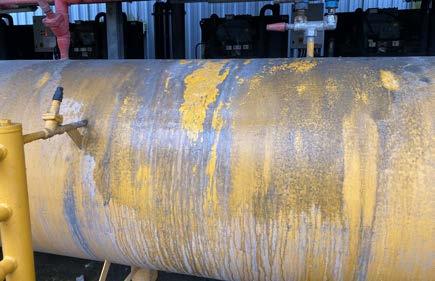
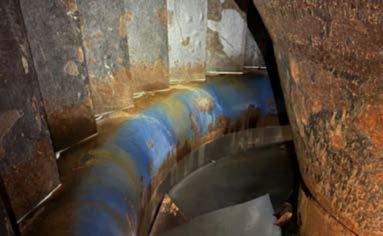
When the existing protective coatings on a pressure vessel in Yorkshire, UK had reached the end of their service life, leaving visible pitting, laminate corrosion and reduced longterm corrosion protection, Corroless Eastern was brought in to solve the problem.
Because the vessel is in an area with active chemical processes, the steelwork had become contaminated with chemical salts, increasing environmental corrosivity and accelerating deterioration.
To maintain safe operation and prevent further structural degradation, the client required a complete replacement industrial protective coating system engineered for harsh, high-corrosivity environments.
The solution
Given the aggressive on-site conditions, Corroless Eastern specified a high-build, solvent-free polyurethane protective coating system applied to a nominal thickness of 1,000 microns.
In accordance with ISO 12944, this coating specification provides very high durability (25+ years), even in a C5 corrosivity environment, making it ideal for long-term corrosion protection of industrial vessels.
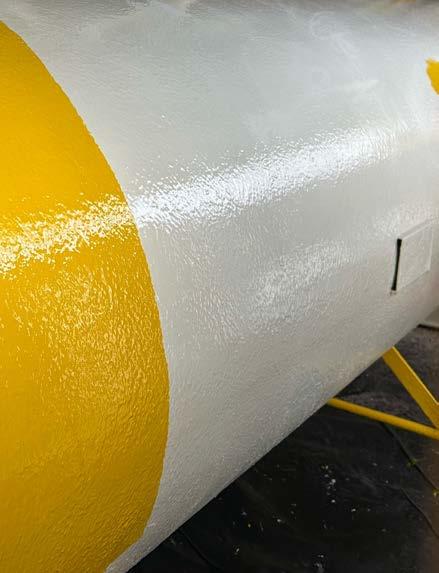
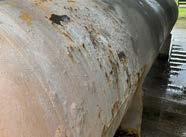
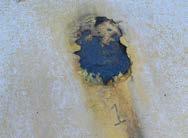
The existing coatings had visible pitting and laminate corrosion (top left to top right) The first step was thorough high-pressure washing (2nd from top), with dehumidifiers used to reduce humidity and prevent flash rusting (3rd from top), followed by abrasive blasting to SA 2.5 (bottom)
Contamination removal
The vessel’s surface was heavily contaminated with salts and chemical residue, so the first step was thorough highpressure washing to remove contaminants, debris and badly-adhered remnants of previous coatings. As the original coatings had been applied poorly, large areas detached during the cleaning process.
To control environmental conditions before blast cleaning, dehumidifiers were installed to reduce humidity and prevent flash rusting on exposed steel.
Grit blasting
All remaining coatings were removed, and the steel substrate was prepared to SA 2.5 in line with ISO 8501-1, ensuring an optimal surface profile for long-life industrial coating systems.
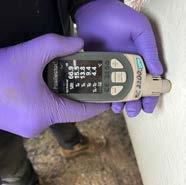
A surface profile needle gauge was used to verify the required anchor profile. Following removal of existing coatings, soluble salt testing was carried out to ensure the surface was free from contaminants that could compromise the new coating system.
If salts had been detected, the steel would have required further washing and re-blasting – a critical step in preventing osmotic blistering and premature failure of high-performance protective coatings.
Climate condition monitoring
Throughout all stages of surface preparation and coating application, climatic conditions (temperature, humidity, dew point) were continuously monitored and recorded to ensure compliance with manufacturer requirements and coating performance standards.
Application
A solvent-free, high-build polyurethane coating was applied in two full coats to achieve the specified 1,000-microns dry film thickness. A separate stripe coat was used on welds, edges and sharp geometries
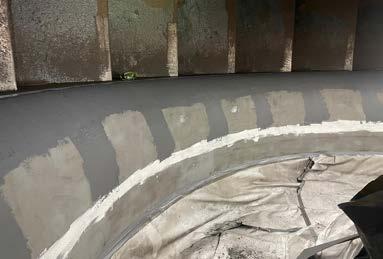
Abrasive blasting ensured an optimal surface profile (left & below), which was followed by soluble salt testing and climate condition monitoring (middle). Two coats of a solvent-free, high-build polyurethane coating were applied (bottom left) followed by dft readings (bottom right)
where coatings typically draw thin due to surface tension.
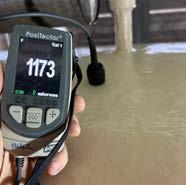
Dry film thickness readings were taken and documented throughout the process to ensure full coating integrity and compliance with specification.
Topcoat finish
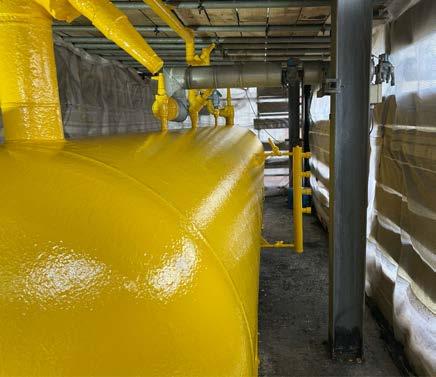
To complete the system, an aliphatic polyurethane topcoat was applied in the required colour to match the client’s pipework colour scheme. This topcoat provides enhanced UV stability and a high-quality, durable finish suitable for demanding industrial environments.
Long-term corrosion protection
The vessel now benefits from a robust, fully compliant industrial protective coating system engineered for longterm performance in a C5 corrosivity environment. Through correct surface preparation, salt testing, climate control and the use of a high-build polyurethane system, Corroless Eastern has restored the asset to a high-durability condition with an extended service life. ■
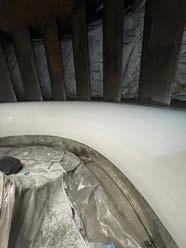
An aliphatic polyurethane topcoat was applied to match the client’s colour scheme
ALMOST SOLVENT-FREE INTERNAL PIPE COATING
Mülheim Pipecoatings GmbH (MPC) operates the biggest ‘large-diameter pipe’-coating plant in the industry. With Teknopox 3297 from Teknos, the company has successfully converted its internal coating process to an almost completely solvent-free solution.
Less frictional resistance, more transport capacity, lower requirements for pressure increase and material thickness – flowcoat internal coatings have a significant influence on the economic efficiency of gas pipelines.
They also serve as temporary corrosion protection during storage and the construction phase. The coated inner pipe surface reduces the load on the filter systems in the compressor stations and simplifies cleaning before commissioning.
As a specialist and full-service provider for the surface treatment of pipes, Teknos has been offering flowcoats for gas pipelines for a long time. More than 10 million litres have already been produced and supplied to processors around the world. Customers include Mülheim Pipecoatings GmbH (MPC), one of the world’s leading specialists in internal and external coatings for largediameter pipes. MPC is a Europipe Group
company and operates the largest coating plant in the large-diameter pipe industry, with an annual capacity of nine million square metres of internal and external coating.
Avoidance instead of afterburning MPC and Teknos are both pioneers in the development and use of virtually solventfree flowcoats. “We have been pursuing the goal of reducing and ultimately completely avoiding the use of solvents for a long time,” explains Christian Balkenohl, Operations Manager at MPC. “This is not just about complying with official requirements. Employee and environmental protection are an essential part of our company philosophy, and environmental compatibility is also playing an increasingly important role for our customers.”
The coating solutions from Teknos make an important contribution here. A first step towards reducing emissions was the Teknopox 3296 ultra-high-solid epoxy coating with more than 80% volumetric solids content. The flowcoat was used in various major projects. “By using ultra-high-solid coatings, we have already been able to significantly reduce the emission of volatile organic substances (VOCs),” says Balkenohl. “However, the next step is the completely solvent-free production of the interior coating.”
The search for a solvent-free flowcoat was also fuelled by the stricter requirements of the Solvent Ordinance (31st BImSchV) and the implementation regulations (TA Luft). Emissions can either be retained by filter systems, disposed of by post-combustion or avoided from the outset. Thermal post-combustion in particular requires considerable effort, high investment costs and causes environmentally harmful emissions.
The challenge of reducing solvents
In the search for a suitable solution, Teknos was able to fulfil MPC’s requirements in terms of application properties, process stability and solvent content. “Depending on the pipe dimensions, MPC coats up to 1,400 square metres of inner surface per hour,” explains Balkenohl. “With this application rate, the coating must cure so quickly that the line speed is not slowed down. Teknos has succeeded in developing a flowcoat that fulfils these requirements exactly. This provides MPC with a solvent-free flowcoat that is also suitable for large-scale production.”
The solution is Teknopox 3297, an almost completely solvent-free two-component epoxy coating for the inner surfaces of pipework for non-corrosive gas. The flowcoat achieves a very smooth, mechanically robust surface and cures quickly. With a solids content of at least 97%, VOC emissions can be significantly reduced. The product has been tested in independent laboratories and fulfils the
relevant standards such as API PR 5L2, EN 10301 and ISO 15741.
“The development of solvent-free coatings is a key focus at Teknos,” says Martin Mehler, Key Account Manager Teknos Germany. “In recent years, we have launched innovative solutions on the market in many application areas that drastically reduce emissions. Teknopox 3297 is a typical example of this. Achieving outstanding surface and process properties without the use of solvents is a major challenge that requires a lot of experience, especially when it comes to large coating volumes. It was an important milestone for us to be able to fulfil MPC’s requirements with a virtually solvent-free flowcoat.”
Launch after successful small series
A first major order with the solvent-free flowcoat was an offshore pipeline that was commissioned at the end of 2022 and transports natural gas over a total distance of 900km. To qualify the new internal coating for the first project, MPC subjected some of the pipes to 100% sampling. Test coatings were applied in parallel operation on the production line to ensure that the solvent-free flowcoat was suitable for large-scale production. Much of the process remained the same. In some areas, such as pressures, nozzle size and nozzle spacing, details were adjusted. There was a difference in the application due to the higher viscosity of the solvent-free flowcoat. For this reason, MPC now uses temperature control units to ensure the required viscosity via the temperature setting.
Thanks to the adjustments, the required qualification for the project could be verified and large-scale production of the internal coating could be started. In the nowcompleted project, a total of 92,216m of pipes with an internal surface area of 252,855 square metres were coated with Teknopox 3297 for the pipeline. Teknos supplied the flowcoat from its production facility in Germany not only in bulk containers, but
also in cartridge form for repairs. This repair solution is the result of a joint idea by MPC and Teknos and makes it easier to apply the material during repair work.
New projects
The impressive reduction in emissions thanks to the solvent-free flowcoat can be demonstrated by measuring the exhaust air flow. From an economic point of view, too, there is nothing to stop the new solution. Although the costs for the material are higher, there are savings in production. Firstly, material consumption is lower, because fewer litres of flowcoat are required per pipe for the same coating thickness. Secondly, the use of solvent-free material is considerably more economical than treating pollutants with a costly thermal post-combustion process.
“The first major project was a successful start to largely solvent-free production,” Balkenohl summarises. “The excellent collaboration with Teknos also contributed to this. Our leading role in environmentally-friendly, solvent-free production was also a dooropener for further major projects at MPC.”
Future projects will also involve pipelines for transporting hydrogen. A study by Salzgitter Mannesmann Forschung (SZMF), one of the leading steel research institutes in Europe, recently confirmed that Europipe pipes coated with Teknopox 3297 at MPC are suitable for hydrogen pipelines in a 100bar pure hydrogen atmosphere. This means that MPC and Teknos are ideally prepared for the pipeline projects of the future. ■
Trusted when it matters most
In the face of hazards or the pressure of tight schedules, time is essential and trusted performance is everything. Jotachar passive fire protection is engineered, tested, and certified to withstand extreme conditions, protecting assets and lives, while ensuring efficiency across projects of any scale and in any climate.
Proven fire protection. Keeping people and assets safe.
ANALYSIS
LINING STRATEGIES FOR EMERGING US BIOFUEL TRANSPORT
Emerging fuels are reshaping how energy commodities move from source to market. Renewable diesel, biodiesel, bioethanol and other low-carbon fuels and feedstocks will only become more essential to the future energy mix, says Carboline.
As these alternative fuels gain traction, traditional transport networks face increasing strain. Pipelines, designed for high-volume, single-commodity service, were never built to handle the variable chemistries and widely-distributed sourcing of today’s renewable feedstocks.
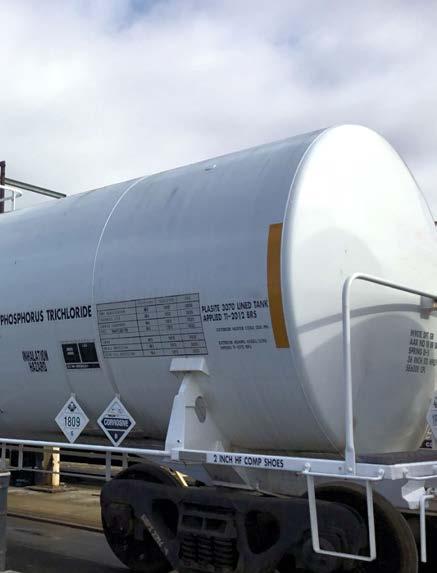
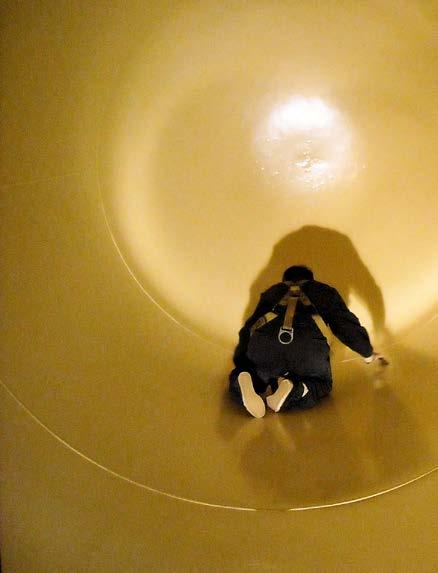
Rail transport offers a proven and flexible solution. Already deeply embedded in energy logistics, rail moves emerging fuels safely and at scale when paired with the right protective linings.
Evolving existing networks
Feedstocks used to create renewable fuels – including animal fats, used cooking oils and other plant-based materials – come from a vast network of small, scattered producers. This geographic dispersion makes pipeline transport impractical, and building new pipelines to reach so many rural sources is cost-prohibitive.
Even where pipelines exist, their design cannot handle the various chemistries of these products. Exposure to incompatible materials can cause delamination, corrosion and substrate degradation, increasing maintenance costs and failure risk.
Rail transport offers a flexible and immediately deployable solution. Its established, intricate network already links small producers with key processing and distribution hubs, enabling timely movement of commodities that pipelines could not move efficiently. Fleets can adjust to changing volumes and chemistries by assigning specific commodities to cars with the appropriate linings. This approach allows shippers to safely move diverse feedstocks while maintaining fleet efficiency.
Geographic flexibility alone is not enough –it must be paired with strategies to address
the variable chemical properties of recycled or bio-based fuels and feedstocks, ensuring consistent, reliable transport under all conditions.
Lining compatibility
The chemical makeup of emerging fuel feedstocks can vary widely based on source materials, handling methods and seasonal changes. These differences appear not only from shipment to shipment, but also from producer to producer and processing facility to processing facility.
Factors such as elevated water content, free fatty acids or other corrosive components influence how aggressive these commodities are toward protective linings.
Fortunately, the US’s tank car fleet is already positioned to meet a broad range of specific chemical resistance requirements.
Linings engineered for the broadest chemical resistance add an additional layer of assurance. They adequately protect steel, extend service life and foster resilience even when commodities’ chemical properties shift unexpectedly.
By selecting the proper tank car lining for each commodity – or choosing a lining built to handle all variabilities, rail shippers can be the dependable partners the market needs and achieve long-term performance of rolling stock at the same time.
Solutions for complex fuel requirements
Carboline’s Plasite linings deliver reliable corrosion protection and optimised application properties across dynamic chemical exposures.
Epoxy linings – Designed for less aggressive biofuels such as biodiesel, providing reliable barrier protection and consistent performance.
• Products: Plasite 4550, Plasite 4550 FP, Plasite 4550 S *Plasite 4550 HT is rated for exposure to ethanol, a fuel generally more aggressive than most biofuels*
• Cure: Ambient cure, with turnaround ranging from several days (4550) to approximately 20 hours (4550 HT)
Vinyl esters – Handle a wider range of chemical variability, including higher-risk feedstocks with smooth, easy-to-clean surfaces that reduce downtime.
Additional thin-film linings, including Phenoline 353 LT and Phenoline 1205, deliver robust protection against methanol, methane and other aggressive commodities under elevated temperatures or extended immersion.
Together, this portfolio enables rail fleet owners to balance chemical resistance, application efficiency, turnaround time and long-term durability, providing tailored solutions for the specific demands of each cargo.
Continued testing and trusted support
As renewable and recycled fuels evolve, so do the corrosion challenges protective linings must withstand. A clear understanding of each fuel composition, combined with access to well-matched lining options, helps fleets control costs, reduce shipment gaps, prevent failures and keep the economy moving. Carboline’s expansive chemical resistance testing library has supported lining selection for bio-based, recycled and other alternative fuels and fuel feedstocks for over 40 years. Proper technical guidance helps ensure reliable performance as commodity demands continue to evolve.
Rail transport of emerging fuels is not a temporary stopgap in the US. It is a proven, safe and scalable way to meet the future of fuel – and it is ready today. ■
A KEY ROLE IN SEWER LINING SUCCESS
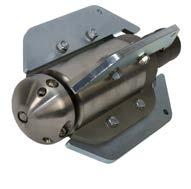
KEG Technologies chain cutter nozzle
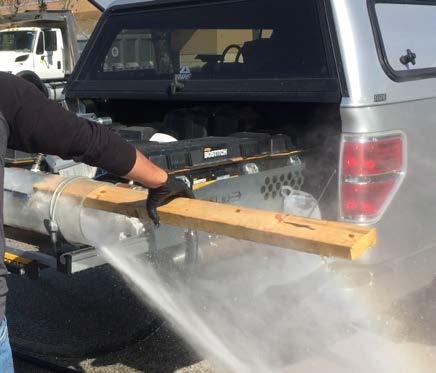
Deep cleaning is necessary before replacing the lining of sewer pipes. High-powered nozzles and chain cutters make pipe cleaning quick and efficient.
Pipe lining has become a go-to solution for renewing ageing sewer and storm lines without the disruption of open-cut excavation. By installing a new liner inside an existing pipe, crews can restore structural integrity, seal leaks and extend service life while keeping streets, pavements and landscapes largely untouched.
But the success of that liner depends on what happens first. Liners are installed by inverting or pulling them into the host pipe and holding them tightly against the pipe wall with air or water pressure, while steam or hot water is used to cure the resin and form a new structural pipe within the existing one.
However, blockages in the pipe formed by tree roots, hardened mineral scale, grease buildup, silt and debris can interfere with this process. If a liner is installed over these obstructions, it cannot fully contact the host pipe, which can lead to wrinkles, voids, weak spots or areas where the liner never properly bonds or cures. Over time, those defects can become failure points.
That is why pipe cleaning is not just a preliminary step – it directly affects the integrity of the finished liner. Fortunately, the right combination of nozzles and cutters allows crews to remove even the most stubborn buildup, allowing the liner to work properly once it is installed.
“The inside of the pipe must be spotless for the liner to work properly,” explains Dan Story, an experienced trainer and Operations Manager at KEG Technologies, a leading manufacturer of nozzles and chain cutters used to clean sewer and stormwater lines. “In industry terms, this condition is described as ‘gun barrel clean.’ Just as a firearm barrel must be meticulously cleaned to function reliably, the pipe interior must meet the same standard to ensure proper liner adhesion and long-term performance.”
Common lining techniques
Over the past several decades, contractors have adopted a variety of lining technologies, each suited to different pipe conditions, diameters and access constraints.
Cured-in-place pipe lining, known as CIPP, is the most widely used method for sewer rehabilitation. In this approach, a flexible liner saturated with a thermosetting resin is inserted into the host pipe.
Once positioned, internal pressure forces the liner tightly against the pipe wall, and the resin is cured to form a rigid, continuous
pipe. Because the liner relies on chemical curing, surface condition plays a direct role in performance.
Fibreglass-reinforced liners are a variation of CIPP designed for applications where higher stiffness and load-bearing capacity are required, including stormwater and drainage systems. These liners incorporate glass fibre reinforcement within the resin system, resulting in a finished pipe with greater structural integrity.
From a chemical standpoint, the curing performance of lining materials such as fibreglass resin can be compromised by
OVER THE PAST SEVERAL DECADES, CONTRACTORS HAVE ADOPTED A VARIETY OF LINING TECHNOLOGIES, EACH SUITED TO DIFFERENT PIPE CONDITIONS, DIAMETERS AND ACCESS CONSTRAINTS.
factors including dirt, debris, roots or grease residue within the pipe, as well as an incorrect resin-to-chemical mixture.
A dirty pipe doesn’t just block physical contact. It can also interfere with the resin’s
KEG’s Aqua Power 700 is designed for general pipeline cleaning and grease removal applications
chemistry. When resin mixes with various residues in the pipe, it may not ‘wet out’ properly, meaning it can’t work the way it’s designed to. In those areas, the resin can cure weakly, unevenly or not at all.
Chemical-related liner failures usually present as one of several symptoms. The liner may remain tacky or soft, deform under normal flow conditions, crack prematurely, shrink away from the host pipe or develop blisters or bubbles caused by gases trapped during curing.
Spiral-wound lining systems use a different approach, relying on mechanical assembly rather than resin curing. In these systems, a continuous PVC profile is fed into the pipe and spirally wound to form a new liner inside the existing pipe. The liner is installed at a reduced diameter and then mechanically expanded until it presses against the interior wall.
Because the liner is formed mechanically, this method is generally more tolerant of minor surface irregularities, although significant protrusions or obstructions still need to be removed to allow proper expansion and alignment.
Nozzles and chain cutters
According to Story, when relining failures occur they can typically be traced to one of two causes: debris that remained in the pipe
WHEN PROPERLY EXECUTED, THIS JETTING-AND-VACUUM PROCESS LEAVES THE PIPE INTERIOR UNIFORMLY CLEAN, FREE OF LOOSE MATERIAL AND READY FOR INSPECTION AND LINING.
at the time of installation or improper curing of the lining material.
To clean a sewer line thoroughly prior to lining, specialised jetting nozzles are operated in conjunction with a vacuum truck. The process combines high-pressure water and continuous debris removal to restore the pipe interior to a condition suitable for liner installation.
High-pressure water from the truck is delivered through a hose to the nozzle inside the pipe. The nozzle directs multiple water jets outward and backward. The rearfacing jets provide thrust, pulling the nozzle through the line, while the forward and radial jets scour the pipe wall. This action loosens grease, scale, sediment, roots and other deposits adhered to the interior surface.
As the nozzle advances, dislodged material is flushed downstream toward the access point. The vacuum truck simultaneously removes this slurry of water and debris.
When properly executed, this jetting-andvacuum process leaves the pipe interior uniformly clean, free of loose material and ready for inspection and lining.
However, the level of cleaning is only as good as the nozzle at the end of the hose, says Story. There are tiers of nozzles rated for water efficiency from Tier 1 (about 30% efficient), Tier 2 (50-60% efficient), to Tier 3 (75-98% efficient). In the case of KEG’s Tier 3 nozzles, the high-performance fluid mechanics design leaves little room for power losses and excessive turbulence.
“In many cases, using a high efficiency Tier-3 nozzle will provide significantly more cleaning force, at a greater distance, with less water,” says Story.
When the objective is to aggressively scour the pipe wall prior to installing a liner, Story says a controlled-rotation nozzle is typically the most effective option. “Controlled rotation refers to intentionally slowing the rotation and spin of the nozzle head or body. By reducing rotational speed, the nozzle maintains contact with the pipe surface for a longer duration, which increases cleaning effectiveness.”
KEG’s controlled-speed rotational nozzle, the Aqua Power 700, is designed for general pipeline cleaning and grease removal applications. By consistently running at 650rpm, cleaning is faster and more efficient because of the consistent contact with the jets.
Although the skilful use of high-powered or controlled nozzles can sometimes dislodge partial obstructions in smaller pipes, tree root intrusions must be completely removed
to avoid compromising relining operations. Resolving the worst cases in large pipes requires the use of special heavy-duty chain cutters that can remove even a ‘wall of roots’.
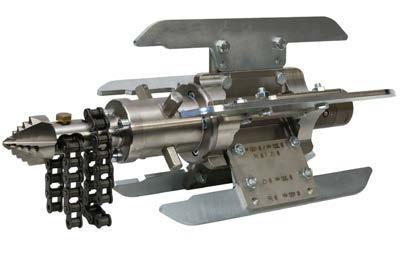
For the toughest blockages, KEG’s chain cutter nozzles utilise the power of highefficiency nozzle water pressure to provide sufficient torque to cut through a thick root mass. When high-pressure water enters the chain cutter nozzle chamber, it is directed to spin the cutting chains at high velocity with enough torque to avoid seizing.
In pipe lining, success is decided long before the liner ever enters the pipe. No matter how advanced the lining system is, it cannot overcome a pipe that is coated in roots, grease, scale or debris. Highperformance nozzles, controlled rotation and heavy-duty chain cutters make lining work possible.
“When crews leave a pipe truly ‘gun-barrel clean,’ they are creating the conditions that will allow the liner to cure, bond, expand, and perform exactly the way it was engineered,” says Story. ■
KEG Supernova 4000 chain cutter nozzle
A new model for sustainable hull performance
Philippos
Sfiris,
Head
of Market Strategy
and
Vessel Performance,
GIT Coatings looks at the results obtained after a gas carrier completes a full year under a graphene coating and robotic grooming regime.
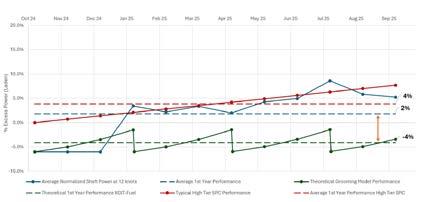
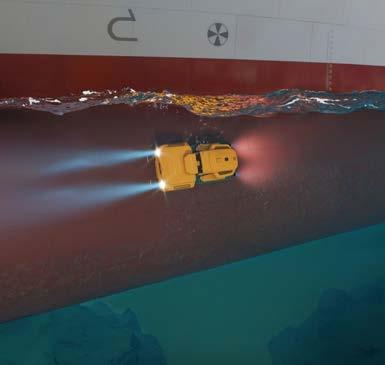
In an industry long dominated by biocidal antifoulings and reactive cleaning, a different model of hull maintenance is beginning to emerge, and for the first time, it now has a full year of real-world proof. Over the past 12 months, a gas carrier has operated with a graphene-based foul-release coating on its hull, paired with an onboard grooming robot operated by the crew during idle periods.
The combination is straightforward yet disruptive: the graphene coating provides an ultrasmooth yet hard surface engineered for frequent light cleaning, while robotic grooming removes early-stage slime before it develops into more persistent forms of fouling. This keeps the hull consistently close to ‘as-docked’ condition without biocide release, without abrasive cleaning and without depending on uncertain port permissions for reactive cleanings.
This is the first documented case globally of such a system being used continuously in commercial operation for a full year. And it worked – not in controlled trials, but under the unpredictability of global trade.
A tailored plan
From the outset, the approach was not simply ‘apply the coating and hope for the best’. Before the vessel sailed, a ship-specific proactive cleaning (or grooming) plan was developed based on its trading pattern and fouling-risk profile. High-risk regions, frequent idle periods and the vessel’s speed profile indicated that slime could accumulate quickly if not managed early.
Instead of waiting for visible fouling or performance drop, the plan defined when inspections would take place, how often grooming would be needed and in which ports or anchorages cleaning was realistically feasible considering local restrictions and time availability.
It was a strategic, data-informed framework intended to make proactive cleaning achievable –not a theoretical schedule detached from real operations.
A year of real-world operation
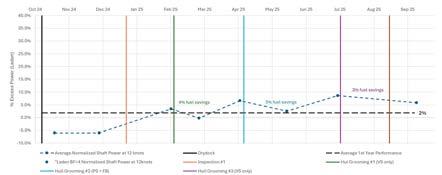
Across the first 12 months, the vessel completed seven underwater inspections and three grooming events. As expected in commercial trade, the year included tight port schedules causing partial or delayed cleanings, early robot reliability issues, unexpected idle periods and regulatory constraints on where cleaning was allowed.
Despite these conditions, each grooming restored the hull to clean condition with no damage to the coating, and no hard fouling developed at any point. The graphene coating showed no measurable degradation, maintaining the smoothness required for efficient operations and trouble-free grooming.
Better performance results
Year One results were clear and verifiable: approximately 6% power improvement out of dry dock compared to the premium antifouling previously used, under similar trading conditions; less than ~2% added power across the entire first year, despite more than 180 idle days; 3–5% efficiency regained after each grooming as early-stage slime was removed. Taken as a whole, the vessel’s fuel consumption for the year using the graphene-coating and grooming combination was lower than with the conventional premium antifouling for the same period, even though execution of the grooming plan was far from perfect.
Lower emissions, no biocide release
Because the graphene coating contains no biocides, no toxic substances entered the marine environment, as grooming did not require aggressive scrubbing. Maintaining a consistently clean hull also reduced fuel burn, directly lowering CO₂ and air emissions.
The vessel delivered both sides of the sustainability equation: cleaner oceans and lower carbon output.
What the industry can take from this
1. It can be done.
A full year in operation has now shown that a graphene-based foul-release coating combined with light, frequent robotic grooming can maintain a clean hull – continuously, predictably and without biocide release.
2. It performs better.
Across the year, the vessel consumed less fuel than during the equivalent period on a premium conventional coating under similar trade conditions. Performance remained close to ‘as-docked’ levels despite significant idle time, and light grooming consistently restored efficiency without damaging the coating.
3. It requires a system, not just a coating.
Perhaps the clearest lesson is that success came from a structured in-service support model, not from coating chemistry alone. The vessel operated under a tailored grooming plan built around its actual trade, followed by continuous visibility of hull condition through inspections, performance analysis and monthly reviews involving both the ship operator, the coating maker and the robot supplier. This ongoing feedback loop enabled timely adjustments – an essential element of making proactive hull management work in real operations.
4. There is still room to optimise.
The first year also highlighted where the industry can improve the model further: broader port coverage and approved service partners to complement onboard robots and addressing niche areas robots cannot reach; remote robot operation, reducing crew involvement and improving cleaning consistency across voyages. These refinements would narrow the gap between real-world execution and the theoretical optimum, unlocking additional efficiency gains and simplifying adoption for more vessels.
A working blueprint for the future
What makes this case compelling is that it survived the real world: operational challenges, port restrictions and all the unpredictability that defines global shipping. The vessel still maintained a clean hull, avoided hard fouling, preserved coating integrity, and delivered year-long efficiency gains – without releasing biocides and without fuel penalties over time.
For an industry seeking solutions that reduce both emissions and environmental harm, this is proof that a new, sustainable category of hull management has matured to the point of practical application – and that it already works in everyday commercial operation. ■
Robotic grooming has its part to play
LIFTING THE LID
May the force be with you
GIT Coatings, a global leader in sustainable highperformance marine coatings, has announced the launch of its next-generation graphene-based hard foul-release coating, XGIT-Force. This launch marks a fundamental shift in the maritime industry, the company says, moving beyond traditional biocide-based antifouling protection to a new era of hull performance management.
With first applications already underway across a global fleet, XGIT-Force is engineered to unlock up to 10% fuel savings and provide the highest return on investment of any antifouling coating on the market. With this launch, GIT Coatings is proving that peak operational efficiency no longer means polluting the marine environment.
“XGIT-Force represents the natural evolution of our graphene-based solutions and a definitive step toward a new era of proactive hull performance management,” says Mo AlGermozi, CEO of GIT Coatings. “By listening closely to our customers and integrating years of real-world learning, we have refined a technology that is mature, reliable and biocide-free. This launch is about providing shipowners with a high-performance solution that gives them the flexibility to actively manage fleet efficiency and turn ambitious decarbonisation goals into a reliable, competitive advantage.”
Intensive R&D
XGIT-Force is the result of years of intensive research and development, involving rigorous testing and trials in different fouling pressure conditions across the globe. The proprietary Dynamic Phase Engineered Technology (DPET) combines smart surface chemistry with graphene-reinforced mechanical tuning to create a dynamic, amphiphilic barrier that inhibits biofilm formation and maximises foul-release performance.
Building on this foul-release foundation, XGIT-Force delivers one of the smoothest surface profiles in the industry – providing a guaranteed 6% out-of-dock power gain compared to premium biocidal antifouling coatings – while offering the mechanical durability to withstand ice friction, fender impacts and frequent cleanings. As a zero-leaching solution, it ensures shipowners can reduce fuel consumption and emissions without shedding toxic chemicals or microplastics into the marine environment.
Proactive hull performance management
Being ‘cleanable by design’, XGIT-Force aligns with the industry shift toward proactive hull cleaning as the most effective method for maintaining long-term vessel efficiency. This approach aims to keep hulls free from even light slime, which an IMO-published study has proved can increase fuel consumption by up to 25%. While the innovative DPET technology provides antifouling protection during idling and releases fouling while sailing, its resilient surface is specifically built to tolerate regular grooming and reactive cleaning without the degradation typically seen in traditional soft-foul release or ablative coatings.
Responding to a rising customer interest in proactive cleaning, GIT Coatings has established a dedicated advisory services department that provides an end-to-end hull performance management solution. This team assists with everything from developing vessel-specific grooming plans and identifying suitable cleaning solutions to sending fouling risk alerts and managing the process of cleaning approvals. This turnkey approach ensures that implementing a proactive cleaning regime is a seamless, data-driven and hassle-free transition for any global fleet.
Immediate global adoption
The shift toward this new era of hull performance is already in motion. Over the coming months, XGIT-Force will be applied to more than 10 vessels, including LPG tankers, dry bulk vessels, RoRo vessels, container ships and cruise ships. These applications across major international trading routes represent a significant milestone in the maturation of graphenebased coatings, proving the technology’s readiness for the most demanding global operations. This rollout is the result of years of iterative development and real-world learning across 600+ vessels worldwide. By integrating feedback from early-generation applications into this nextgeneration system, GIT Coatings has refined XGIT-Force to meet the rigorous performance standards required by today’s forward-thinking shipowners. Today, GIT Coatings stands as a proven partner for operators looking to transform ambitious decarbonisation goals into a reliable, competitive advantage. ■
IN FOCUS
A COPPER-FREE ANTIFOULING SOLUTION
PPG helps FRS Syltferry and Esbjerg Shipyard achieve their sustainability ambitions, whilst not compromising on aesthetics and performance.
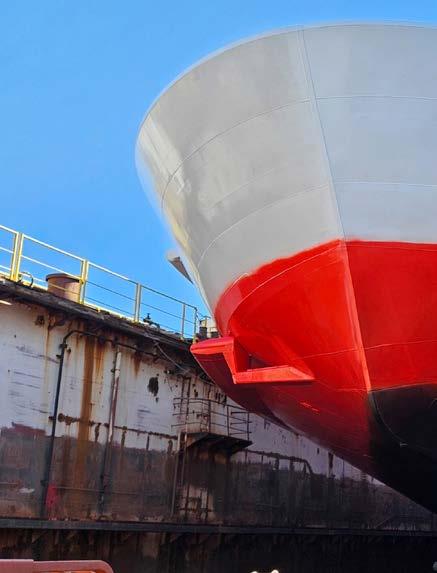
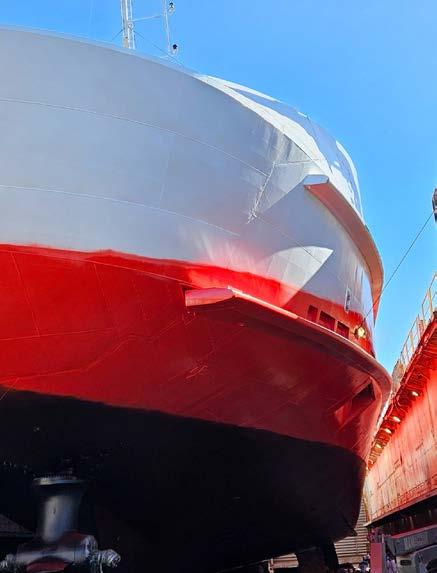
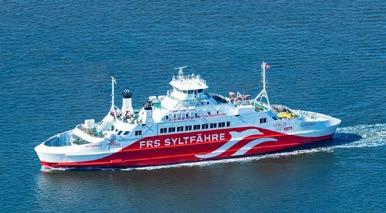
Sylt Express is a RoRo passenger ship operated by FRS Syltferry and sails between Havneby on the Danish island of Rømø and the German island resort List on Sylt. The parent company FRS (formerly Förde Reederei Seetouristik) is an international ferry operator based in the north of Germany with around 75 vessels. The company carried 5.7 million passengers and 1.5 million vehicles on its numerous national and international shipping lines in 2023. The Sylt Express is not only responsible for transporting tourists to and from List on Sylt but also for the island’s access to food, infrastructure and more.
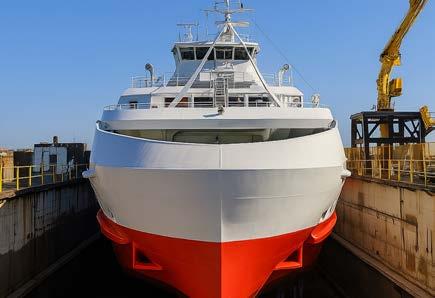
The vessel was drydocked at Esbjerg Shipyard, Denmark, in collaboration with the applicator MMT Group and industrial equipment supplier Mouritsen A/S. Mouritsen supported the shipyard and PPG with the equipment needed to ensure that the antifouling application went smoothly.
The challenge
One of FRS’s guiding principles is corporate social responsibility. It is always looking for innovative, sustainable solutions that are geared towards long-term business goals and sustainable strategies with the intent of reducing its ecological footprint.
Esbjerg Shipyard is always looking for innovations that can help it reach its sustainability goals and minimise its environmental footprint. “Operating a shipyard in the middle of a national park also brings obligations to think of more environmental and sustainable products to be used for maintenance and repair of ships,” explains Brian Mose, the yard’s Sales Supervisor.
The solution
For many years, PPG has invested in developing sustainably advantaged products, helping shipowners reach their
sustainability targets. Investing in advanced hull coatings helps owners cut fuel use, lower GHG emissions and comply with IMO regulations. By reducing drag, these coatings boost efficiency and support sustainable, cost-effective operations.
One example is PPG Sigmaglide 2390, a fouling release silicone-based coating that is 100% biocide free, along with PPG Nexeon 810, which is a copper-free antifouling with reduced photodegradable biocides. These two products are unique not only due to being sustainably advantaged, but they are also suitable for electrostatic application. This spraying technique significantly reduces coating overspray and waste, minimising the loss factor, resulting in less paint needed.
To support the customer’s needs, PPG proposed PPG Nexeon 810 as an ultralow-friction hull coating for the ferry. As it is 100% copper-free, PPG could ensure that no copper would be released into the marine environment in relation to the coating. This ultra-low friction product also delivers immediate power and emissions savings, compared with traditional antifouling coatings, thereby reducing environmental impact.
As stated above, PPG Nexeon 810 is suitable for electrostatic coating application, a technology that has an increased paint transfer efficiency compared to airless spraying. Using an electrostatic spray gun, the charged paint droplets are drawn to the grounded hull surface like a magnet. This technique not only creates a uniform, ultrasmooth, long-lasting film layer but also significantly reduces overspray and waste. It also minimises the need for masking the vessel and cleaning the dock postapplication, saving time, materials and costs.
The result
Relying on PPG as a trusted partner, FRS Syltferry and Esbjerg Shipyard took significant steps towards achieving their sustainability ambitions, whilst not compromising on aesthetics and performance. PPG Nexeon 810 helps to improve vessel performance by delivering up to 25% emissions savings due to reduced drag, maintaining higher speeds while staying CII compliant, and improving speed by 0.5 knots, compared with traditional antifouling coatings.
The electrostatic spraying technique also greatly reduced overspray around the shipyard and contamination in the surrounding waters. ■
OFFSHORE DRONE INSPECTION FLYING HIGH
CAN-USA and Shell are redefining offshore inspections with the Elios 3 UT drone.
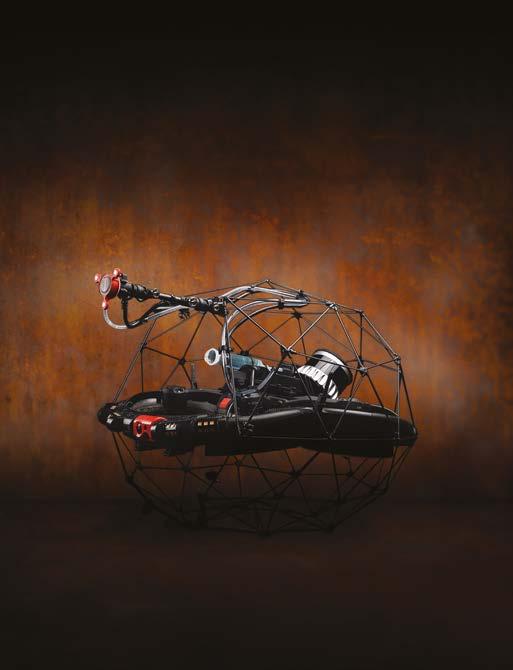
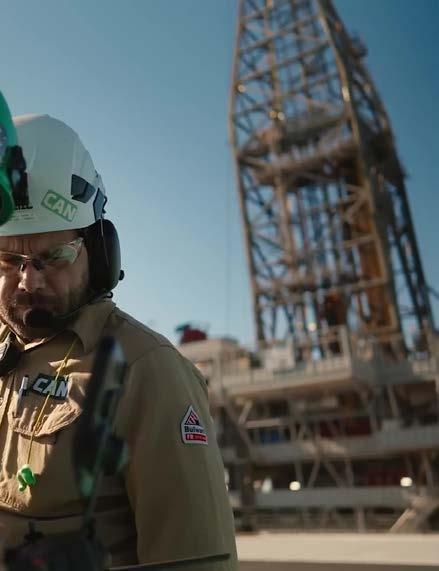
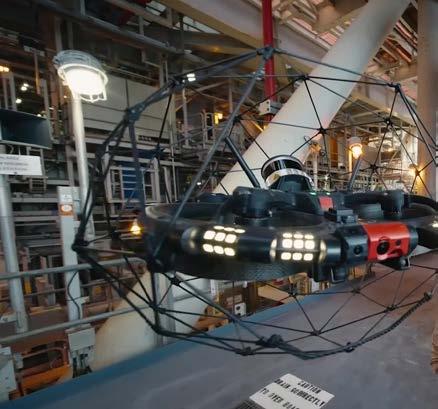
The Elios 3 UT drone with its tether power unit is deployed on offshore Shell platforms and operated by expert CAN-USA pilots to perform safer and more efficient offshore inspections.
“Once a manual operation, drones are providing a safer, more time-efficient option to inspect offshore platforms, helping keep the lights on at home,” says Shell USA.
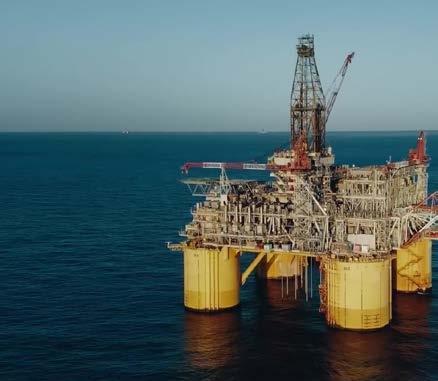
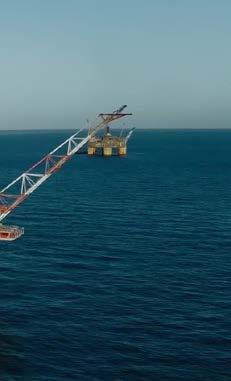
Offshore platforms and FPSOs present some of the most challenging environments to inspect. Tanks, piping and lifting equipment
all require regular monitoring, while the risks of corrosion and dropped objects demand constant vigilance. Traditionally, rope access has been the backbone of these inspections, with skilled technicians completing much of the critical work. While effective, rope access can be time-consuming and exposes teams to challenging conditions. Looking for a way to enhance safety and efficiency without losing the expertise of its technicians, inspection, maintenance and repair company CAN-USA turned to inspection drones like the Elios 3 UT.
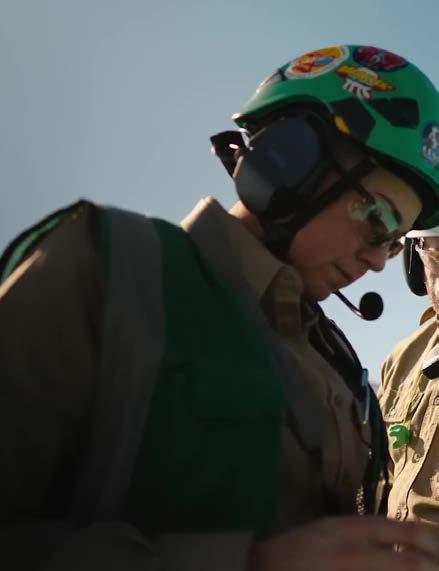
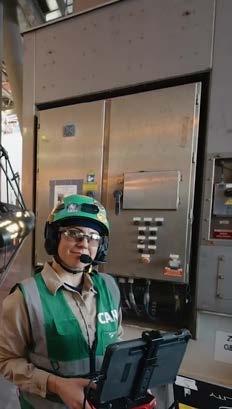
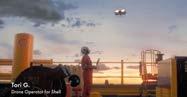
Tori Gibson has transitioned to conducting offshore platform inspections with drones
Offshore inspection challenges
Offshore oil rig and FPSO operators need to maintain asset integrity while minimising downtime and risk. Inspections of tanks, cranes, and piping often take significant time using rope access, and some areas remain difficult to reach. Dropped object inspections are particularly demanding, as early detection of corrosion-related hazards can be difficult with limited access. Shell and other operators rely on CANUSA for inspecting many of these critical assets. Driven by their spirit of innovation,
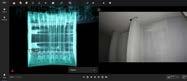
CAN-USA looked at inspection drones to improve coverage and efficiency of their inspections while ensuring the safety of their team. These drones can collect video recordings, thermal imaging, 3D models, ultrasonic thickness measurements (UTM) and gas levels. One of the biggest benefits of drone data is the ability to localise within the 3D model any points of interest and the collected UT measurements, which provides better situational awareness for the inspectors. Inspection drones also have the ability to fly tethered for prolonged flight
Richard Turner, Specialty Services Manager and Head of the Drone & Robotics Program at CAN-USA, proposed a practical solution: train rope access technicians to operate drones. These technicians already knew what to look for on offshore platforms and FPSOs, and with drones in hand they could extend their reach and efficiency without depending on external drone pilots unfamiliar with offshore environments. This approach kept inspections in the hands of experts while unlocking the benefits of drone technology.
“Rope access technicians are retraining to use new cutting-edge drone technology on Shelloperated offshore platforms,” says Shell USA.
A great example of this is Tori Gibson, who has worked in the oil and gas industry for over nine years. She spent four of those years conducting manual rope access inspections, but more recently has transitioned to conducting offshore platform inspections with drones. “Not only are drones safer, but they are also time efficient,” says Shell USA. “Previous rope access inspections could have taken an entire day, and now inspections can be accomplished in minutes. In some instances, because they allow easier remote
access, drone inspections alleviate the need to stop production on the platform.”
The Elios 3 UT drone became central to this strategy. It is now used for tank and vessel inspections, piping surveys, lifting equipment assessments and preventing dropped objects. By supplementing rope access with drone technology, CAN-USA has reduced time spent in hazardous areas while achieving greater coverage. The Elios 3 UT’s LiDAR maps, localised points of interest and onboard UTM payload provide a richer picture of asset health, while the Inspector software makes reporting more straightforward for operators.
“The Elios 3 gives us an unparalleled ability to perform confined space inspections safer and more efficiently than ever before,” says Turner. “That efficiency is further boosted in the hands of a qualified and competent inspector.”
Adoption results
The adoption of drones has brought measurable benefits. CAN-USA’s offshore teams can complete inspections faster and with fewer interruptions to operations, while rope access is reserved for areas that truly require human intervention. On Shell offshore units, this hybrid approach has led to more complete inspections, greater situational awareness and safer workflows for technicians.
A major enabler has been the Elios 3 tether power unit. With a continuous power supply, CAN-USA can now sustain long missions without pausing for battery swaps, allowing entire tanks or cranes to be inspected in a single deployment. The tether also provides assurance when flying over open water, ensuring the drone can be recovered even in the event of failure. By eliminating the need to carry lithium batteries into hazardous offshore environments, it further strengthens operational safety.
“The tether has opened up areas we would have never been comfortable operating the Elios 3. We expected the longer flight times, but we gained so much more,” says Turner.
By combining the proven expertise of rope access technicians with the advanced capabilities of offshore drones, CAN-USA has created a balanced, efficient inspection strategy. The Elios 3 UT and its tether power unit have allowed the company to deliver safer, faster and more complete inspections on offshore platforms and FPSOs. This forward-looking approach, driven by Turner’s vision, is reshaping offshore drone inspections and setting a new benchmark for the industry ■
JOTUN JOINS FRENCH FLOATING WIND PROJECT
Jotun has successfully secured a significant role in one of France’s first floating offshore wind projects –Eolmed – marking another milestone in Jotun’s mission to protect assets in the renewable energy industry through its technical coatings experience.
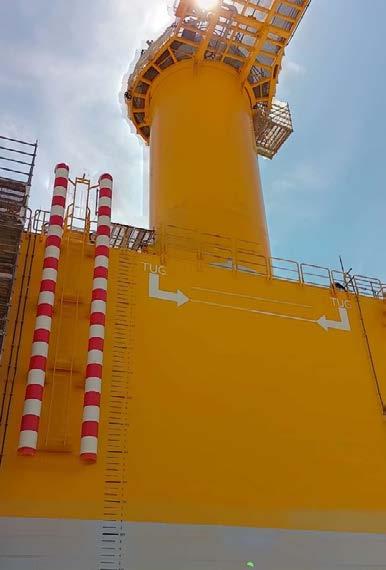
Located 18km off the coast of Gruissan in Southern France, the Eolmed floating offshore wind project is a 30 MW pilot farm owned by Eolmed, with floaters designed by BW Ideol and manufactured/ assembled by MP Archimed. Featuring three Vestas V164-10 MW turbines mounted on floating steel foundations, Eolmed is designed to produce nearly 110 million kWh annually – enough to power 50,000 homes – and paves the way for future large-scale offshore wind farms in Europe.
“This is an exciting project to be a part of,” said Xavier Pianezzi, Sales Manager for Energy and Infrastructure in Jotun. “The floaters are massive steel structures measuring approximately 45m x 45m x 17m, including the demanding splash zone, which sets high demands on the coating on the external part.”
The Eolmed project was completed in September 2025 at Port-La-Nouvelle,
Understanding the problem to find your solution
• Protective Coatings
• Tank Linings
• Waterproofing
• Hygiene Coatings
• Bund & Sump Linings
• Polyurea
• Resin Flooring
Occitanie, and is part of France’s strategy to develop floating offshore wind and reduce carbon emissions. It is expected to operate for 20 years and sets a benchmark for future commercial floating wind farms.
“As Eolmed represents a major step forward for floating offshore wind in France, we are reliant on good partnerships through all steps in the project,” said Thomas Beucler, Floating Foundation Package Manager at Eolmed. “The collaboration with Jotun has been instrumental in meeting our technical and sustainability goals, ensuring the longterm success of this pioneering project.”
Exterior & interior coatings
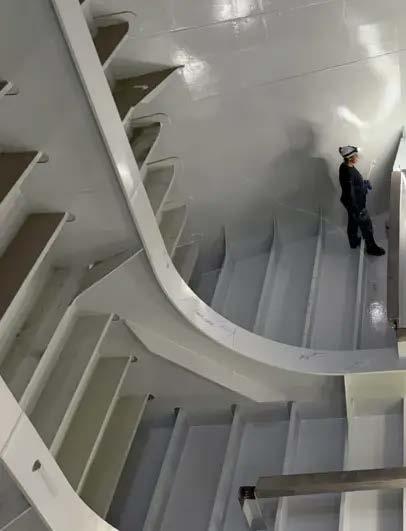
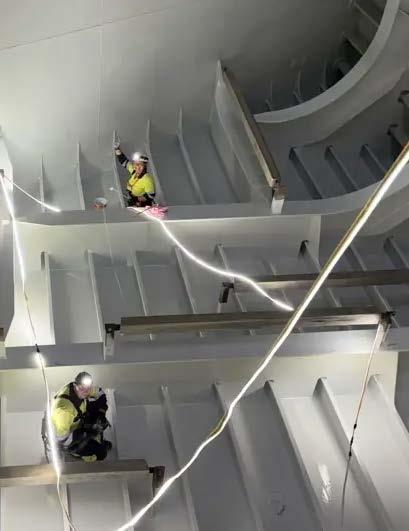
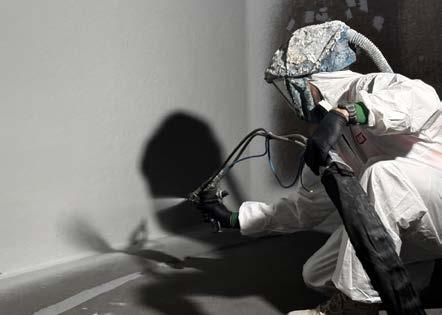
Besides the external coating, Jotun also secured the interior, which can be compared to a ballast tank and represents even larger surface areas. Jotun’s solvent-free solutions, in line with the owner’s sustainability requirements, were used and applied in
partnership with steel fabricator Matière and Italian applicator Petrol Lavori.
In addition, Jotun provided coatings for external equipment and transition pieces at the Navacel yard in Spain, using the Jotun NORSOK 1 system to meet stringent technical specifications. Across the project, Jotun delivered critical technical support to ensure execution and compliance.
“The scope included both exterior and interior coatings for all three floaters and
consumed nearly 60,000 litres of Jotacote Universal S120, along with Penguard Pro GF and Hardtop AX,” explains Torgeir Bringeland, Marketing Manager at Jotun Europe Sales. “We are very proud to have secured this significant project, and I am sure it may serve as a strong reference for Jotacote Universal S120 and our overall capabilities, both within and outside the European market. To enable the future of energy, assets need long lasting protection even in the harshest environments.” ■
HYDROPOWER STATION SPILLWAY RESTORATION
At a run-of-river hydro plant in France, the spillway on a Kaplan turbine was repaired and protected in situ with a combination of epoxy composite and coating systems. Despite three flooding events during the repair procedure, the application team was able to successfully repair the spillway, protecting it against future erosion and corrosion damage, reports Belzona’s Chloe Hirst.
The spillway at a hydropower station restored with epoxy composite and coating systems
The hydropower station was experiencing generalised erosion and corrosion on approximately 40 square metres (430.6 sq ft) of one of its spillways, with 15mm (0.6 in) metal loss recorded in some areas. This was caused by continuous exposure to high-velocity water, turbulence and abrasive particles. An intervention was required to rebuild the damaged profiles, restore hydraulic geometry and provide long-term protection against further wear in this challenging environment.
The plant produces almost 2Bn kWh of electricity per year – enough to supply roughly 815,000 households with electricity annually. Given the critical role the plant plays in providing renewable energy to the local area, it was imperative that the application was carried out promptly, with minimum downtime being incurred.
Repair specification
Following an inspection by authorised Belzona distributor Protecmo, a combination of epoxy coating and composite systems was specified. For the severely corroded and eroded areas, Belzona 1311 (Ceramic Metal) was chosen.
This is a 100%-solids, ceramic-filled epoxy repair composite, specifically designed to repair metal surfaces subjected to high levels of erosion and corrosion. Following a successful erosion resistance test carried out by the client, the epoxy coating Belzona 1331 was further specified. This system will provide outstanding erosion and corrosion resistance under immersed conditions, such as those found in the aqueous environment of the spillway. This polymeric technology is cold curing, which helps to mitigate the health and safety concerns that can arise when hot work is involved.
Application
Firstly, a fully-sealed containment airlock was installed, incorporating air treatment, dust extraction and vacuum recovery systems to ensure safe and controlled working conditions.
All surfaces were then grit-blasted using corundum abrasive to provide a surface compliant with Sa 2.5 cleanliness in accordance with ISO 8501-1. Unfortunately, three flooding events occurred during the surface preparation stage. To adapt to these
The spillway needed erosion and corrosion protection
unforeseen events, the team had to gritblast the substrate three times.
In areas with material losses of up to 15mm, custom-made formers were used to apply the two-part Belzona 1311 (Ceramic Metal) system. This technique ensured that the substrate could be accurately restored to its original hydraulic profile.
The two-part epoxy coating Belzona 1331 was then applied in two coats of approximately 300 µm (11.8 mil) each, achieving a minimum total dry film thickness of 600 µm (23.6 mil).
Throughout the application process, careful control of material impregnation, overcoating intervals and curing times and conditions was maintained to ensure the long-term durability of the repair.
Future erosion & corrosion protection
The combination of Belzona systems, together with an efficient and adaptive application carried out by Protecmo’s team, ensured that the spillway was successfully
repaired and protected against future damage with minimum downtime. In turn, by prolonging the lifespan of this critical hydropower asset, this supports the hydropower station’s contribution to renewable energy generation. ■
Spillway resurfaced with epoxy composite
The completed application of repair composite and protective coating
In partnership with PCE Magazine
News from the Corrodere Academy
Corrodere Academy provides globally recognised accredited training and qualifications to the protective coatings and corrosion control industry. Their aim is to raise standards throughout the industry worldwide and help students learn, discover and succeed.
QCA assessments with KAEFER
Corrodere Academy recently carried out a series of Qualified Coating Applicator (QCA) independent assessments with KAEFER UK & Ireland on site at Hinkley Point C. Over three days, 18 candidates took part in the practical requirements of the Qualified Coating Applicator Certification, with assessments completed by independent assessor Steven Slack.
QCA ASSESSMENTS
The assessments went very well, and the candidates showed strong practical skills, safe working methods, and a clear sense of pride in their work.
QCA Certification, accredited by Lloyd’s Register, has been developed by Corrodere Academy to provide a guaranteed standard for coating applicators.
The qualification proves a high level of competence and any candidates who need further support receive guidance and a structured development plan to help them progress.
KAEFER chose to introduce QCA certification across their team to help raise industry standards and to recognise the skills of their operatives. As they explained, “We’re introducing QCA to raise industry standards, recognise skills, and ensure
quality, safety, and pride are at the heart of everything we do.”
KAEFER SHARED POSITIVE REFLECTIONS ON BOTH THE PROCESS AND THE PERFORMANCE OF THEIR TEAMS
Michael Gove, Package Manager and Train the painter Trainer at KAEFER UK & Ireland said: “It was inspiring to see how positively the team approached the QCA assessments and how keen they were to demonstrate their skills. The programme shows the strong abilities our teams already have while also giving us a clear path for further development.”
Simone Williams, Training Coordinator at KAEFER UK & Ireland added: “The enthusiasm, cooperation, and pride shown by the team were clear from the moment we arrived. Even with a temporary setup, every operative worked with professionalism and focus.”
Allan Setterfield, Coatings Technical Operations Advisor at KAEFER UK & Ireland said: “The QCA assessments highlighted the strengths of our operatives and helped identify where additional training can support even greater consistency. It was very encouraging to see the standard of work being produced.”
Independent assessor Steven Slack praised the attitude and professionalism of the operatives, noting: “The operatives showed a real willingness to learn and take on feedback. Their teamwork and pride in their work made the assessments a pleasure to deliver.”
ASSESSMENT HIGHLIGHTS
One highlight of the assessments was seeing Callum Smith, son of Train the painter Trainer Paul Smith, complete the first spraying practical of the assessment series. His confident and assured performance reflected the strong training culture on site.
A special mention goes to Andy Brown, who has more than 30 years of industry
experience and was the first Train the painter Gold Blaster to complete the QCA blasting practical.
Andy guided Steven through every stage of the process from prechecks to blasting and finishing. His depth of knowledge and steady approach were a real example for others.
Corrodere Academy is pleased to support the KAEFER team at Hinkley Point C in developing and recognising their workforce through the Qualified Coating Applicator Certification. The practical assessments highlight the skill within the team and the value of providing clear pathways for professional growth.
The Importance of Thin Film Intumescent Coatings & Specialist Inspection Training in Modern Construction
Passive fire protection plays a critical role in safeguarding people, structures and assets across the built environment. Within the construction and building industries, thin film intumescent coatings are one of the most widely used methods of protecting structural steel against fire. Designed specifically for cellulosic fire scenarios, these coatings react when exposed to heat, expanding to form an insulating char layer that helps maintain the structural integrity of steel. This protection is essential in buildings such as offices, residential developments, transport hubs and public spaces, where evacuation time and structural stability are vital.
Unlike hydrocarbon fire environments seen in the oil and gas sector, cellulosic fires develop more gradually, but still pose a significant risk to life and property. Ensuring that fire protection systems are correctly specified, applied and inspected is therefore fundamental to building safety.
In recent years, the importance of robust fire protection measures has been brought sharply into focus. Incidents such as the Grenfell Tower fire have highlighted the devastating consequences when fire safety systems fail, and the critical need for competency, oversight and accountability across the industry. While intumescent coatings are highly effective when correctly
applied, their performance is heavily dependent on proper installation, accurate thickness control and thorough inspection. Even small deviations can impact their ability to perform in a fire scenario.
THIS IS WHERE SPECIALIST TRAINING AND COMPETENCY BECOME ESSENTIAL.
Professionals responsible for inspecting passive fire protection systems must have a clear understanding of fire protection principles, coating behaviour, testing standards and inspection techniques. Without this knowledge, it becomes difficult to verify whether systems will perform as intended in real fire conditions.
As an Approved Training Provider with the Association for Specialist Fire Protection (ASFP), Corrodere Academy is committed to supporting the development of knowledge and competency in passive fire protection across the construction industry. Recognising that fire protection requirements differ across industries, Corrodere Academy has developed specialist inspection training aligned to different fire scenarios.
The Thin Film Intumescent Inspection Course is designed for professionals working within the construction and building sectors, focusing on coatings used to protect structural steel in cellulosic fire environments.
Alongside this, the PFPNet Passive Fire Protection Inspection Course has been developed for those working in the oil, gas and process industries, where fire risks are classified as hydrocarbon and require different fire protection systems, including epoxy and cementitious coatings designed to withstand rapid-rise, hightemperature fires. Together, these courses provide professionals with the flexibility to develop expertise relevant to their sector, or to broaden their knowledge across both construction and hydrocarbon fire protection environments through a combined training package.
As the industry continues to place greater emphasis on competency, compliance and fire safety, specialist training in passive fire protection inspection is becoming increasingly important.
By investing in knowledge and training, professionals can play a key role in ensuring that fire protection systems perform as intended, ultimately helping to protect lives, buildings and infrastructure.
To find out more visit corrodere.com or email info@corrodere.com.
PANTHERA SOLUTIONS JOIN TRAIN THE PAINTER
We’re pleased to welcome Panthera Solutions Inc. a Guyana-based provider of specialist coating, fabric maintenance, and industrial services to the offshore oil and gas sector, as a registered Train the painter company.
Having previously outsourced Train the painter training, bringing delivery in-house allows Panthera Solutions to take a more cost-effective and flexible approach to developing their workforce, while maintaining internationally recognised, auditable standards for quality and safety.
“Train the painter supports our goal of building a skilled local workforce that can deliver to international benchmarks.”
Tony Turnbull CMgr, General Manager
CORRODERE ACADEMY ARE ATTENDING AMPP ANNUAL CONFERENCE + EXPO
Corrodere Academy will be attending the AMPP Annual Conference + Expo in Houston. We’re looking forward to connecting with our international partners and industry professionals and discussing training and certification opportunities. If you’re attending, we would love to see you, please get in touch to arrange a meet up with Lucy Pavia and Andrew Deere: info@corrodere.com ■ +44 (0) 1252 732 236
Corrodere
CORROUS INDUSTRIAL GROUP JOIN
TRAIN THE PAINTER
We’re thrilled to announce that Corrous Industrial Group are now registered with the Trian the painter programme. With extensive experience in protective coatings within high-risk industrial environments, Corrous has built its business around governance, structured competence, and independently verified standards. Their registration provides a recognised benchmark for workforce development and technical capability as they continue to scale their integrated industrial services model.
WE ARE DEVELOPING A CULTURE WHERE COMPETENCE IS EVIDENCED, NOT ASSUMED. TRAINING PATHWAYS, CERTIFICATION AND CONTINUAL DEVELOPMENT ARE PART OF HOW WE OPERATE.
NEW TRAIN THE PAINTER PROVIDER: RI3 TECHNICAL SERVICES & SPECIALIST COATINGS
We’re pleased to welcome Ri3 Technical Services & Specialty Coatings as an Affiliate Training Provider of Train the painter.
Based in Tamil Nadu, India, Ri3 brings decades of experience in inspection, training, and technical services across the marine and protective coatings industries, supporting applicators, contractors, and supervisors through our globally accredited Train the painter programme.
It’s great to be working with Company Founder and Trainer Edwin Abraham and the teamwelcome to the Train the painter network!
WITH THREE DECADES OF EXPERIENCE IN INSPECTION & TRAINING ACROSS THE MARINE & PROTECTIVE COATINGS INDUSTRIES, WE NOW EMPOWER APPLICATIONS, CONTRACTORS AND SUPERVISORS TO UPSKILL THROUGH THE GLOBALLY ACCREDITED TRAIN THE PAINTER PROGRAMME.
Corrodere Academy News
QUALIFIED COATING APPLICATOR (QCA) ASSESSMENTS AT DENHOLM INDUSTRIAL SERVICES
In December, operatives from Denholm Industrial Services, one of our Train the painter registered companies, completed their Qualified Coating Applicator (QCA) Certification.
Candidates completed a theoretical test in advance before completing the practical assessment at their own facility. This element was observed by independent third-party assessor Steven Slack, ensuring consistent assessments in line with QCA guidelines and standards.
QCA provides independent verification of competence, supporting applicators in demonstrating knowledge and practical
capability, while helping businesses meet project requirements, client expectations, and industry standards.
Thank you to Denholm Industrial Services, the candidates, and Steven Slack for their time and commitment in completing the assessment process.
PosiTector ® Inspection
Unrivaled
Coating Thickness Probes
n Ferrous n Non-Ferrous n Combination n Ultrasonic
Surface Profile Probes
n Depth Micrometer n Replica Tape Reader
Environmental Conditions Probes
n Integral n Cabled Magnetic Probe n Anemometer Probe
n 1/2” NPT n Infrared
Hardness Probes
n Shore n Barcol
Salt Contamination Probe
n Bresle Method
Gloss
n
Ultrasonic Wall Thickness Probes
n Corrosion n Multiple Echo Thru-Paint n Precision
n Low Frequency n Xtreme
Customized Inspection Kits...
Corrodere Academy Registered Companies & Affiliate Providers
3T Training Services
A1 Powder Coatings Ltd
Abbey Protective Coatings Ltd
Access & Coating Group
ADCAM Fabrications Ltd
Advanced Industrial Coatings Ltd (AIC)
AkzoNobel
Alp Access
Altrad Prezioso (Angola)
Applewood Painting Company
Arabian Pipecoating Company Ltd (APCO)
ARS UK Ltd
Assured Coatings
Atlas Coating Ltd
AW Rail Services Ltd
Barrier Fire Protection Ltd
BDS Industrial Painting
Bell Group Ltd
Bin Quraya Company Ltd
Blast Clean and Coatings Ltd
Bradleys Metal Finishers
Brand Energy & Infrastructure Services (BEIS)
Brook Blast Ltd
Buckingham Coatings
C Jones & Sons Ltd
C&D Access
Cairnhill Structures
CAKE Commercial Services Ltd
Carpenter & Paterson Ltd
Caterpillar (NI) Ltd
Cimolai S.p.A
Cladspray Solutions Ltd
Coating Consulting Services
COFIP Solutions
Complete Coating Services
Control de Revestimientos SL
Corrosion Academy South Africa
Corrous Industrial Group
Curtiss Wright Surface Technologies
Bilfinger
BRIC
BRIC
Corrodere Academy Registered Companies & Affiliate Providers
Dalkia Facilities Ltd
Dangle Academy Ltd
Dart Industrial Services Ltd
Denholm Universal Ltd
DF Coatings Ltd
Diversified Lines Petroleum Services (DLPS)
EIS Infrastructure Services
Elite Blasting Solutions Ltd
Elite Coatings International Ltd
Elliott Environmental Drainage Ltd
Enzo Corrosion Services
Eptec
ESCS Training & Recruitment Ltd
Falcon Tower Crane Services
Ferrous Protection Ltd
FI Coatings Ltd
Firecote Ltd
FMC Technologies Ltd T/A Technip FMC
Galco Steel Ltd
Grand Bahama Shipyard Ltd
Group Industrial UK Ltd
Hankinson Whittle Ltd
Harrisons Engineering Lancashire Ltd
HAY-TEK (Madacan)
HC Technical Consulting and Contracting Services Ltd
Herrington Industrial Services Ltd
Hi-Tech Surface Treatment Ltd
Hunter Steel Ltd
Hutchinson Engineering Ltd
Impact Coatings
Industrial Blasting & Coatings Training (IBCT)
Inspection Services (Scotland) Ltd
InterGroup Ltd
IV Rail Ltd
J & D Pierce
Jack Tighe Ltd
Corrodere Academy Registered Companies & Affiliate Providers
Jaeren Overflatebehandling AS
JMK Training
K&N Finishers (Southern) Ltd
KAEFER Ltd
KGD Enterprises Ltd
L & N Labour Solutions
Lanarkshire Welding Co. Ltd
Lassarat Angola Comercial Lda
Ledwood Protective Coatings Ltd
Liebherr Container Cranes Ltd
LJF Powder Coating Ltd
MacTaggart Scott
Marval Marine Services Ltd
McGeoch Technology Ltd
Metallisation Ltd
Metspray NZ
Miller Fabrications Ltd
MONTI - Werkzeuge GmbH
Mozambique Inspection & Corrosion Services Lda
NARUS Auditoria e Consultoria
NEBC Site Services Ltd
NL Williams Group
NMDC Energy
Norco Composites Ltd
Northpoint Ltd
NSB Infrastructure
Nusteel Structures Ltd
NZ Corrosion Services Ltd
One Stop Coatings
OneAIM
Optimiza Protective & Consulting, SL
Panthera Solutions Inc
PAPYRUS, Lda
Pershore Dip Coating Limited
Powertherm Contract Services Ltd
PPG Coatings Europe B.V.
Prezicon Ltd
PSI Global Training Ltd
Ri3 Technical Services & Specialty Coatings
Corrodere Academy Registered Companies & Affiliate Providers
RLP Painting Contractors Ltd
Robert Nicholas Ltd
Rodopi Academy
S E Railway Ltd
Searay Services Ltd
Shanghai Zhenhua Heavy Industries Co Ltd
Shirley Industrial Painters & Decorators Ltd
Shutdown Maintenance Services Ltd (SMS)
SMT Ltd (Standish Metal)
Smulders Projects UK
Solent Protective Coatings Ltd
Specialist Coatings & Inspection Ltd (SCI)
Specialist Painting Group Ltd (SPG)
STM Coatech Kalite Denetim Belgelendirme Ltd
Straight Outta Surface Training LLC
Taziker Industrial Ltd
Tech Dec Ltd
Technija JSC
Technomechanica Ltd
Tema Protective Coatings
Thomson Protective Coatings
TIS (NGA) Ltd
Trade Techs Northern Ltd
Transocean Coatings Nigeria Ltd
Travers Protective Coatings Ltd
UHP Systems Ltd
ULA (BG) Ltd
Vale Protective Coatings Ltd
VolkerLaser
W G Beaumont & Son Ltd
Wardle Painters Ltd
Wescott Industrial Services Ltd
William Hare Ltd
Wilson IS Ltd
VIP Verniciatura Industriale Pesarese Srl
Jotun has reported an estimated 11.8 million tonnes of CO2 emissions avoided for vessels coated with its products in 2025 – an increase from 11.1 million tonnes the year before. The result is verified based on an independent technical evaluation conducted by DNV.
The figure is based on the average speed loss of the vessels included in the evaluation, compared to an industry benchmark referenced in ISO 19030. The evaluation uses the DNV MASTERv2 emission prediction model
combined with AIS data and Jotun-provided data on average speed loss over a five-year dry-docking cycle.
“This evaluation reflects a year-on-year increase in the verified avoided emissions estimate, and helps quantify the link between hull performance, speed loss and emissions,” says Morten Sten Johansen, Global Category Director Hull Performance at Jotun. “We are pleased to have an independent verification of the avoided emissions estimate based on documented speed loss performance.
As the market leader in marine coatings, we are committed to delivering value to our customers that is backed up by third-party technical evaluations.”
In 2024 Jotun presented its avoided emissions figure to be 11.1 million tonnes CO2 for vessels coated by Jotun products, based on the same approach and DNV verification methodology.
“In addition to the avoided emissions estimate, we estimate this level of performance to correspond to fuel cost savings of approximately $2 billion,” says Johansen.
DNV VERIFIES JOTUN’S FIGURES
“To bring the number into perspective, 11.8 million tonnes CO2 is comparable to the annual greenhouse gas emissions of approximately 2.5 million gasoline-powered cars, based on calculations from the US EPA. These results underline the scale of potential operational value associated with hull performance.”
The 2025 figure is verified on the same premises as Jotun presented for its 2024 numbers, with a margin of +2.5 million tonnes and -2.0 million tonnes CO2. The assessment follows ISO
19030 principles by measuring average speed loss over the final four years in a five-year drydocking interval.
“We are pleased to support Jotun on this project,” says Olav Rognebakke, Head of Section Hydrodynamics and Stability at DNV. “This verification quantifies an avoided CO2 emissions estimate for the vessels included in the evaluation and provides a documented basis for discussing the potential emissions effect associated with hull performance.”
“As the home of hull performance, we will continue to focus on delivering quantifiable value to the maritime industry through our products and solutions,” adds Jotun’s Johansen. “These verified results highlight the role hull performance can play in improving energy efficiency. Our investments into R&D and industry collaboration are part of our clean shipping commitment – helping the industry to cut carbon emissions, preserve fuel and protect biodiversity.”
Morten Steen Johansen, Global Category Director Hull Performance at Jotun
BCF WINS AWARD
The British Coatings Federation (BCF) has been named Trade Association of the Year at the 2026 Trade Association Forum (TAF) Awards, reaffirming its position as one of the UK’s leading and consistently high-performing trade bodies. This latest win adds to BCF’s strong track record at the TAF Awards, having previously secured multiple wins across various categories in recognition of its leadership, member engagement and impact across the coatings, inks and wallcoverings sectors.
Held on 26th February at the London Marriott Hotel Grosvenor Square, the TAF Awards celebrated excellence across the UK association community, bringing together more than 400 industry professionals to recognise outstanding achievements.
In addition to winning the headline award, the BCF was highly commended in the Event of the Year (Under 500 Attendees) category for its 2025 Charity Cycle: Ride Warwickshire, which raised over £25,000 for The Myton Hospices.
“We are incredibly proud to be named Trade Association of the Year once again,” said Tom Bowtell, Chief Executive Officer of the BCF. “This award reflects the engagement
of our members and the collaborative spirit that drives everything we do. I’m so lucky to work with such a dedicated and talented team – everyone has contributed to making us such a brilliant organisation that I’m so proud to lead.”
The TAF Awards are the UK’s premier celebration of trade association excellence, recognising organisations that demonstrate strong governance, member value, innovation and sector leadership.
The BCF’s repeated success at the awards underscores its longstanding commitment to championing the coatings industry, supporting members through policy engagement, sustainability initiatives, skills development and bestpractice programmes.
INTERPON JOINS NATSPEC
Interpon, AkzoNobel’s powder coating brand, is now a recognised product partner of Australia’s National Building Specification tool NATSPEC, giving architects, specifiers, fabricators and engineers convenient access to its high-performance, sustainable and compliant architectural powder coatings.
NATSPEC is a national, not-for-profit organisation, owned by government and industry. Its objective is to improve the construction quality and productivity of the sustainable built environment and is used widely by architects and specifiers. The NATSPEC system helps streamline product selection while supporting compliance with
The BCF team on stage at the 2026 TAF Awards accepting the Trade Association of the Year Award
The European Corrosion Congress 2026 will explore all aspects of corrosion science, technology, and engineering, with a focus on sustainability and green technologies.
EUROCORR 2026 will be held on 6-10 September 2026 in Dublin, Ireland; a cosmopolitan capital with a vibrant, unique and colourful personality. This CPD accredited conference is the flagship event of the international corrosion calendar, attracting upwards of a thousand delegates.
Sponsorship and exhibition opportunities available. Email eurocorr2026@iom3.org for more details.
eurocorr2026.org
Australian standards and project requirements.
Through this collaboration, architects and specifiers can now select Interpon powder coatings directly within the work section of the NATSPEC website, without the need to search for technical documentation or rewrite specifications.
Access to verified sustainability and performance data, warranties, technical information and colour and finish options helps improve specification accuracy, reduce project risk and support efficient workflows from design through to delivery.
Among the Interpon products and services available through NATSPEC are the super- and hyper-durable D2525 and D3020 ranges. These powder coatings offer excellent weather resistance, colour and gloss retention. The D2525 range has an extended colour retention
warranty from 15 to 20 years. The D3020 range has an extended film integrity warranty from 30 to 35 years and colour retention warranty from 20 to 30 years.
Moreover, the D2525 range sits within Interpon’s sustainable solutions collection, having met the data-backed sustainability criteria that define the sustainable solutions range. Interpon sustainable solutions powder coatings help reduce environmental impact without compromising durability, appearance or cost – making it easier for architects to choose coatings that align with their sustainability goals.
Simon Timmins, Regional Commercial Director, Powder Coatings South Asia at AkzoNobel Powder Coatings, says Australia’s architectural sector is placing increasing emphasis on performance and compliance: “As these
expectations continue to rise, specifiers need streamlined tools that simplify product selection, while architects are seeking reliable, locally supported products they can specify with confidence.
“By working together with NATSPEC and integrating Interpon into a trusted specification system, we’re setting a clearer, more efficient pathway for high-performance coating specification – delivering the durability, design flexibility and local technical support the industry expects.”
NEW CONTROLLER FROM DÜRR
In many production environments, control units need to be precisely tailored to the dosing technology and applicator to ensure reliable operation of the overall system. With the new EcoAUC2, Dürr is raising the performance of application control to a new level and, at
Interpon is now a recognised product partner of Australia’s NATSPEC
PCE will continue to showcase its regular features; Lifting the Lid, Upfront and Spotlight, as well as featuring the latest news and developments in marine and offshore coatings
PCE International is published quarterly by MPI Group Peel house, Upper South View, Farnham, Surrey. GU9 7JN. UK To advertise in the magazine, on the website and /or newsletter contact Nick Carugati: nick@pce-international.com
the same time, simplifying its integration into modern plant concepts. The control of various technical components has been extended and now includes an integrated high-speed unloader, which improves cycle times and increases safety when working with
high voltages. The control unit can optionally regulate an integrated air heater to ensure a consistently high application quality, particularly in humid and warm production environments. Additional interfaces, such as PROFINET, EtherNet/IP and
DeviceNet, enable seamless data exchange and simplify the integration of the control unit into existing production and plant networks. ■
Sur face Protection
Temprotech is a leading global supplier of flame retardant and IMO approved temporar y protection materials to cruise and ferr y newbuild and refurbishment programs. Our range of affordable products provide cruise lines, yards, outfitters and contractors with security and peace of mind enabling them to complete projects with minimal disruption, damage or delay
An extensive stock of products in strategic locations are ready for immediate despatch worldwide. You can rely on our experience and exper tise to supply the right protection for your next projects.
Temprotech Half Page Advert - DRYDOCK 2025
• Train a trainer to deliver courses internally
• Demonstrate a commitment to high quality workmanship
• Internationally accredited and approved training material and qualifications
• Affordable and flexible
• Available in multiple languages
• Monitor staff progress with the Train the painter log book app