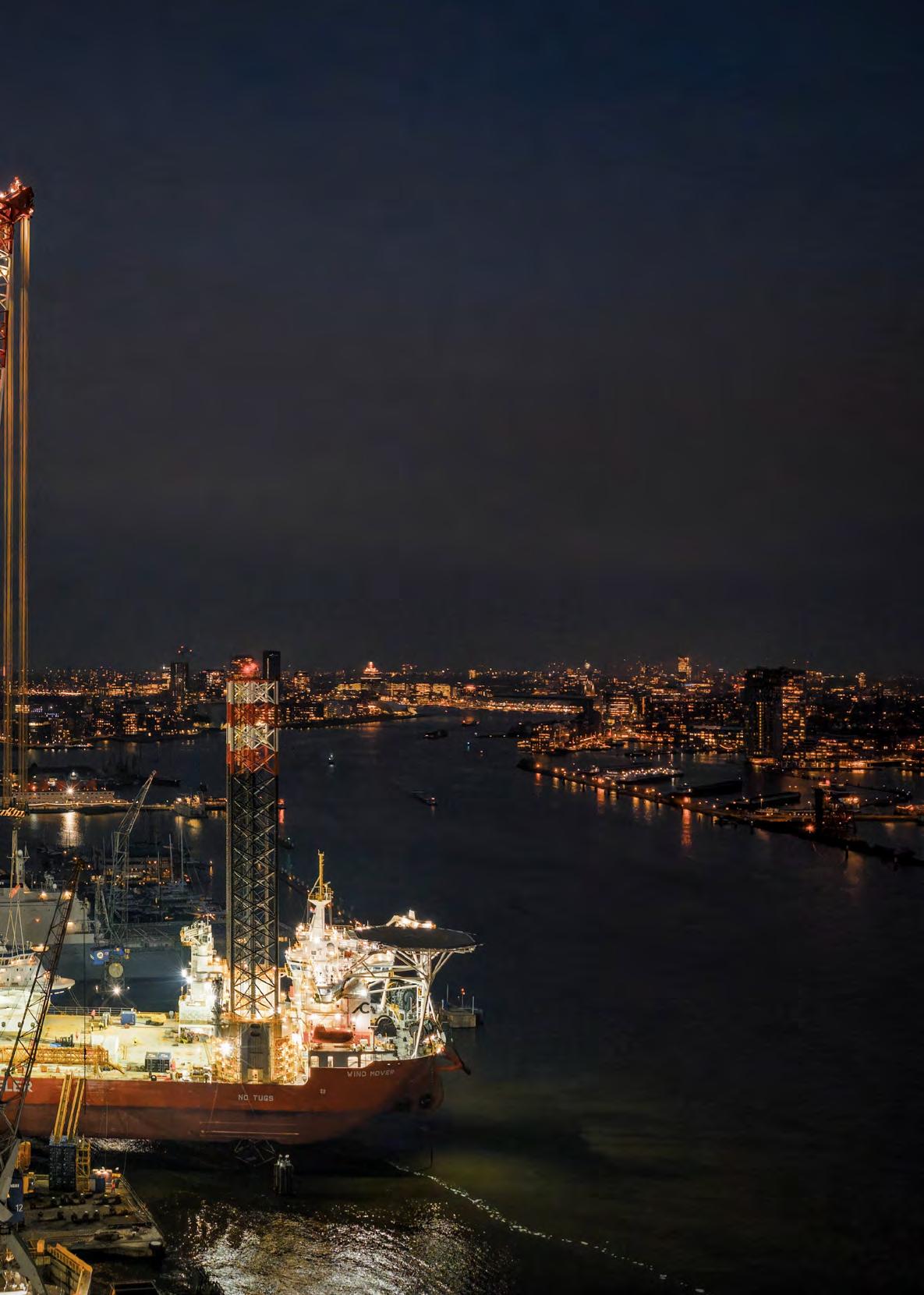
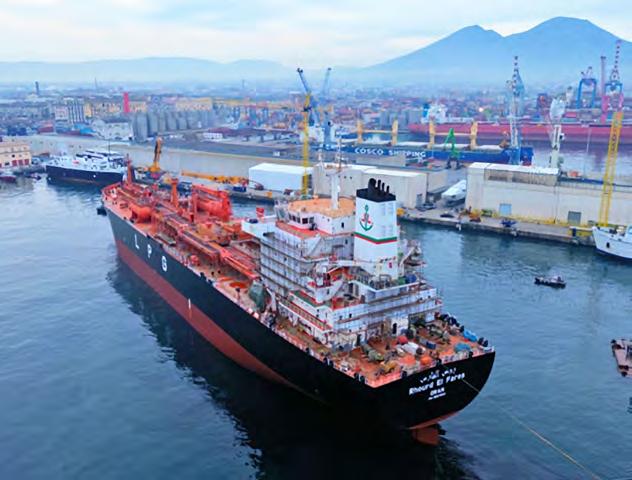
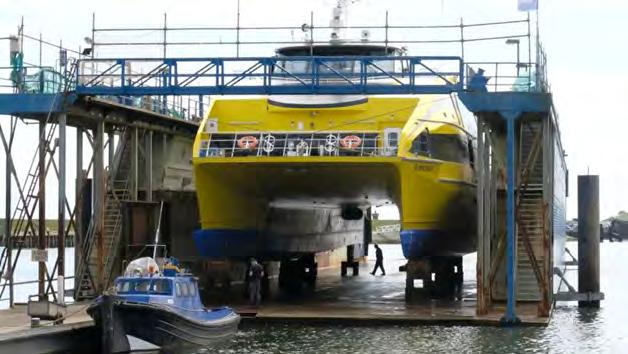
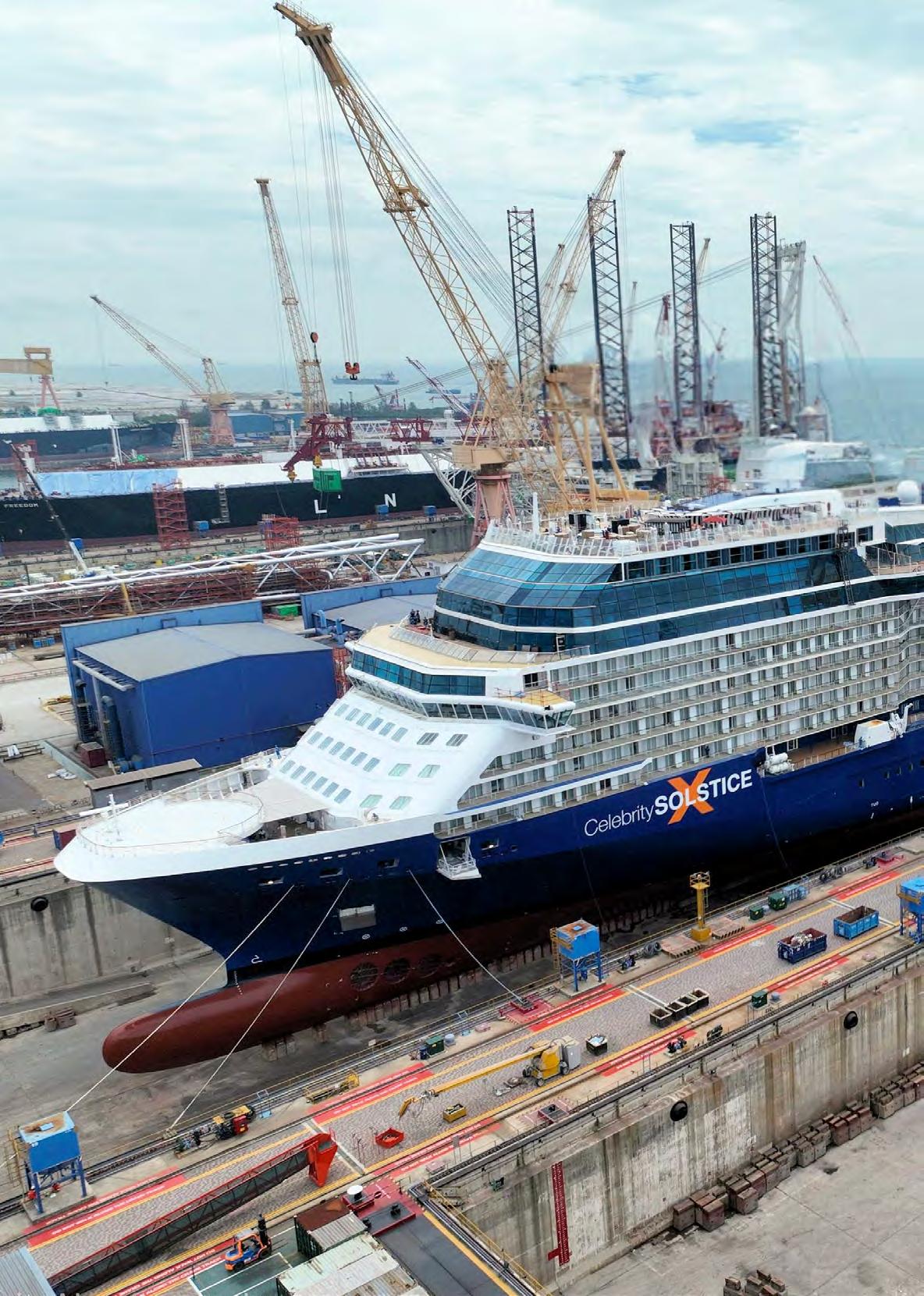
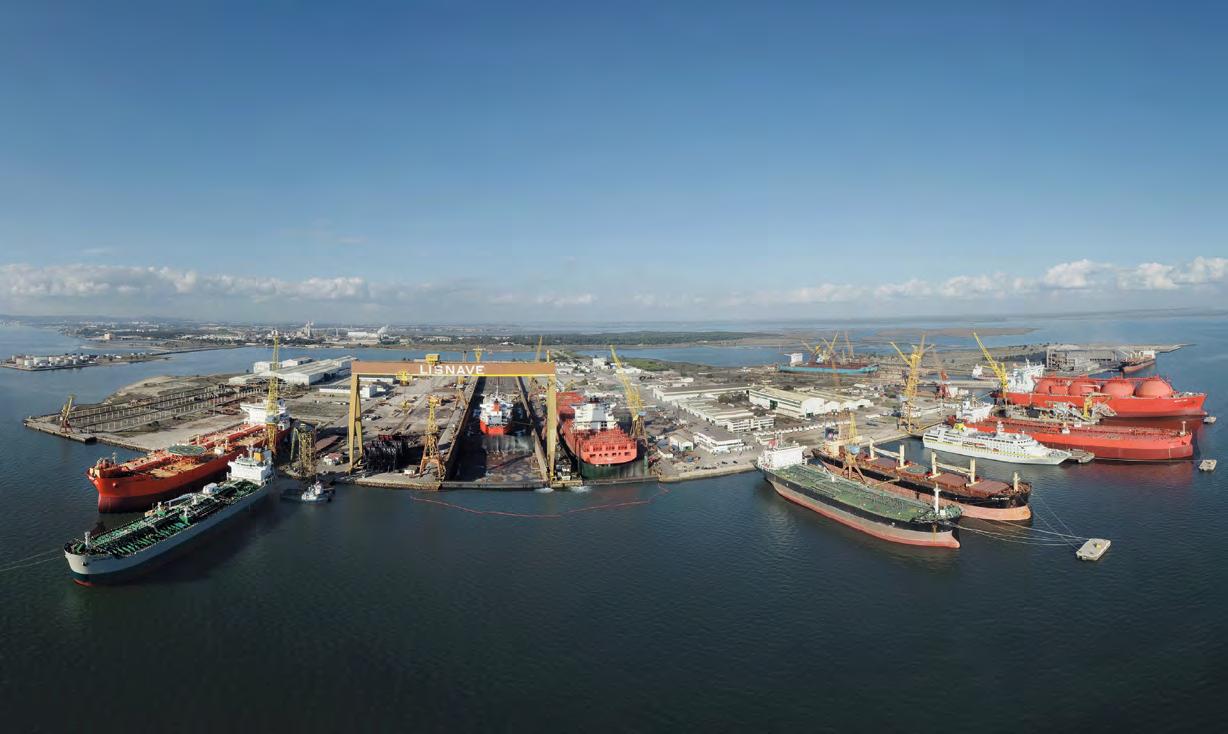
FACE THE FACTS: Réunion island capabilities boosted with a floating dock ON THE LINE: Fragmented technical records drive repair delays at yards UP FRONT: Drones are taking off when it comes to maritime inspection
are TST
and
to
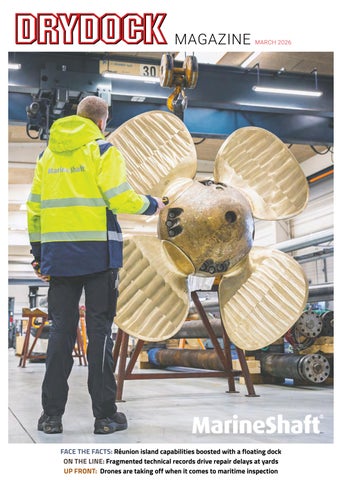
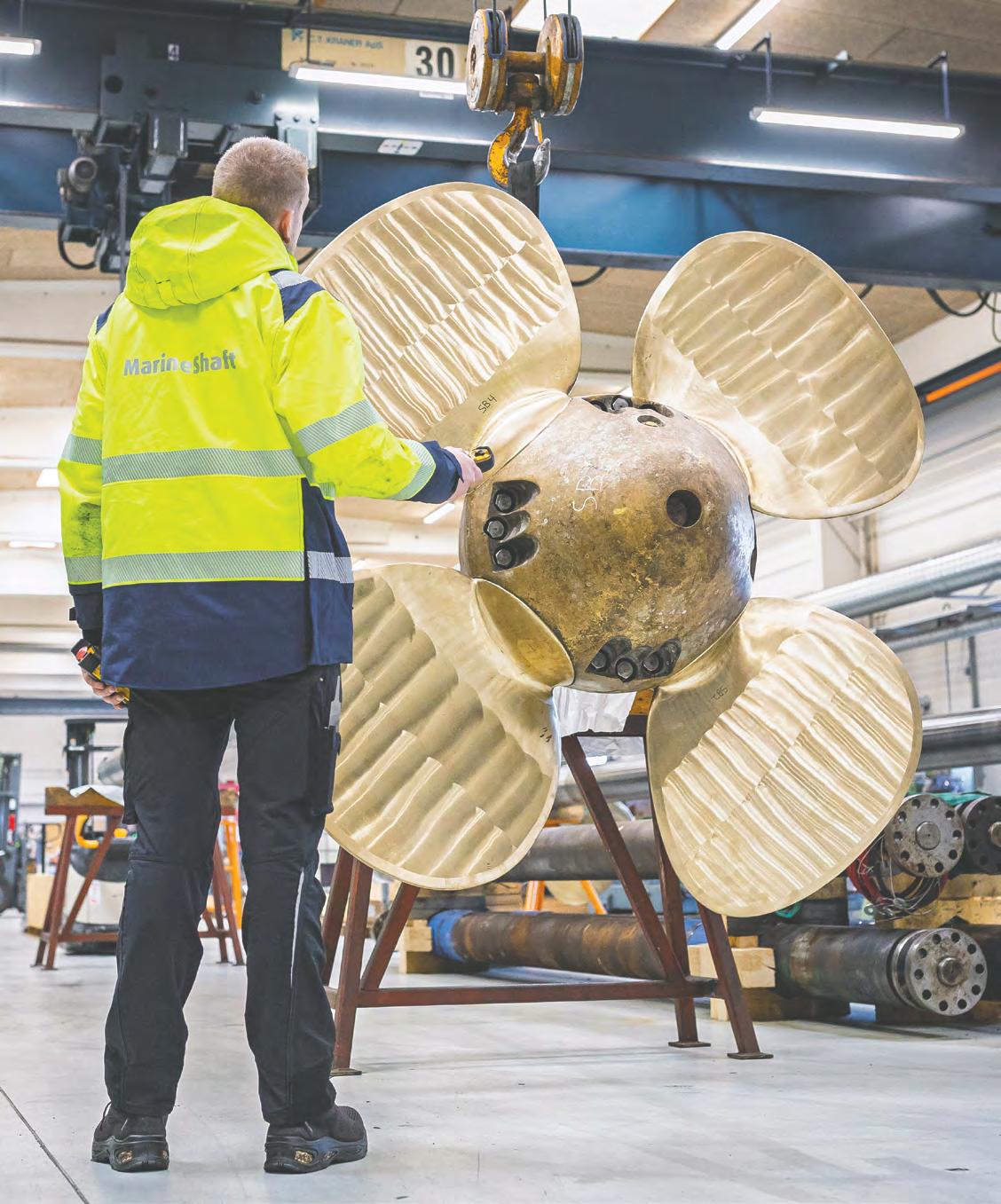
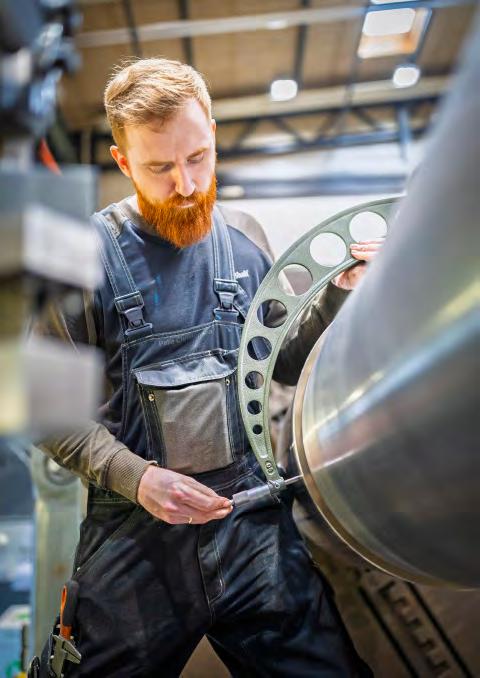
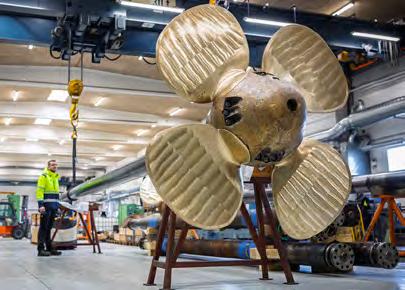
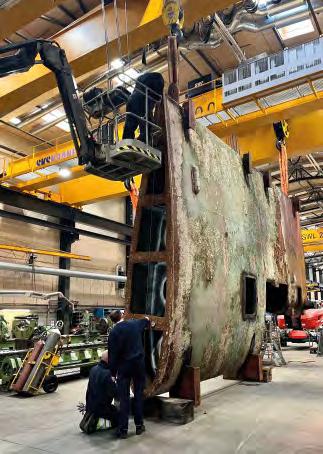
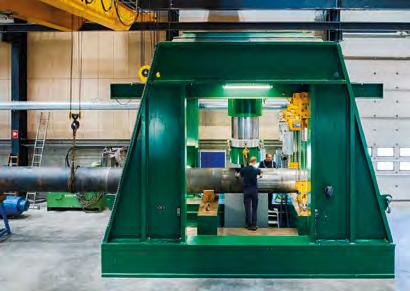
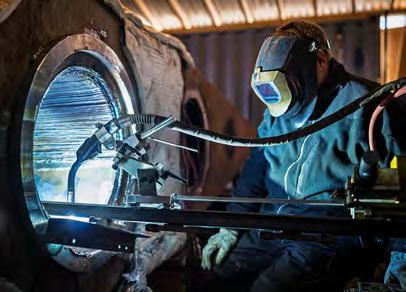
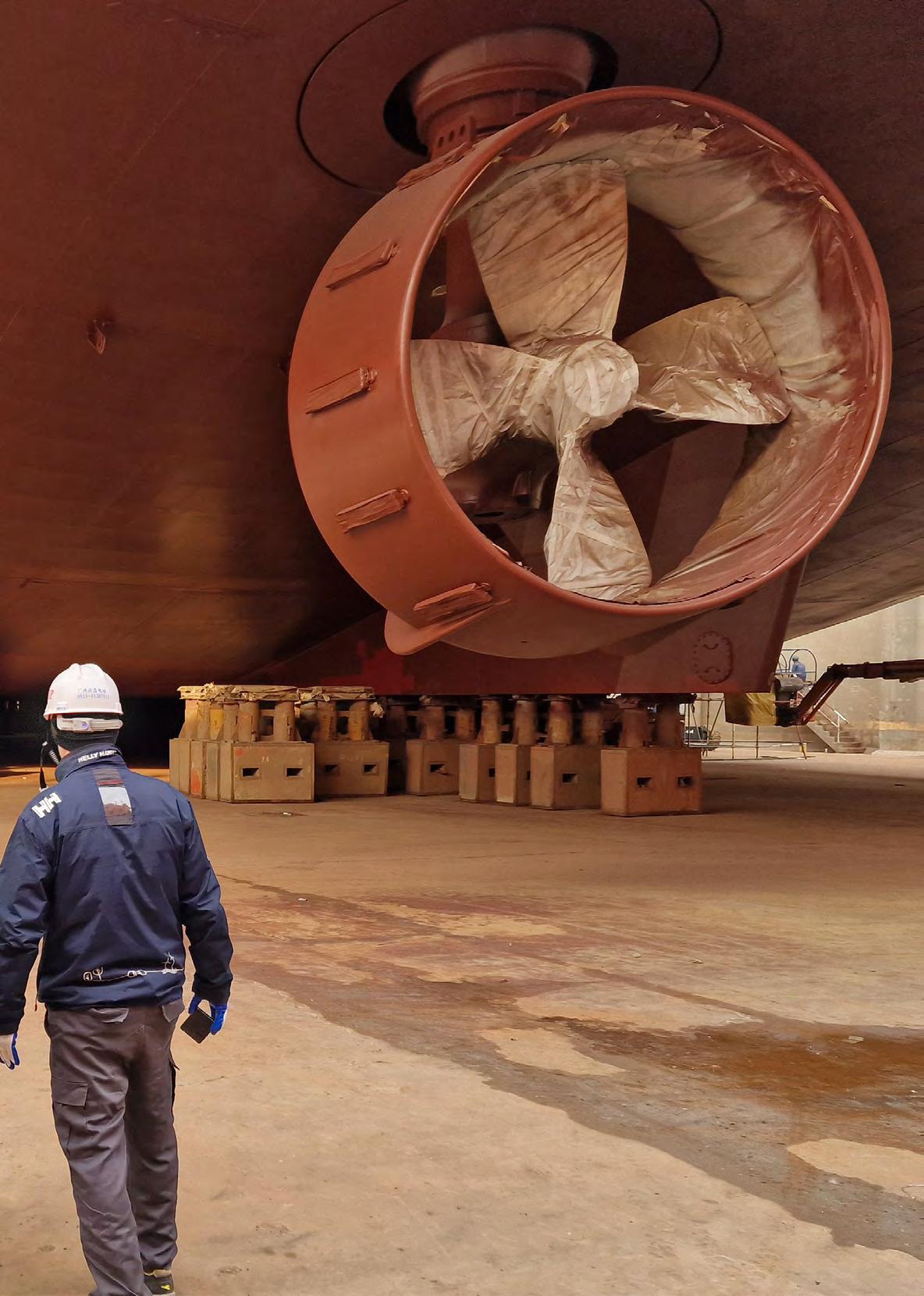
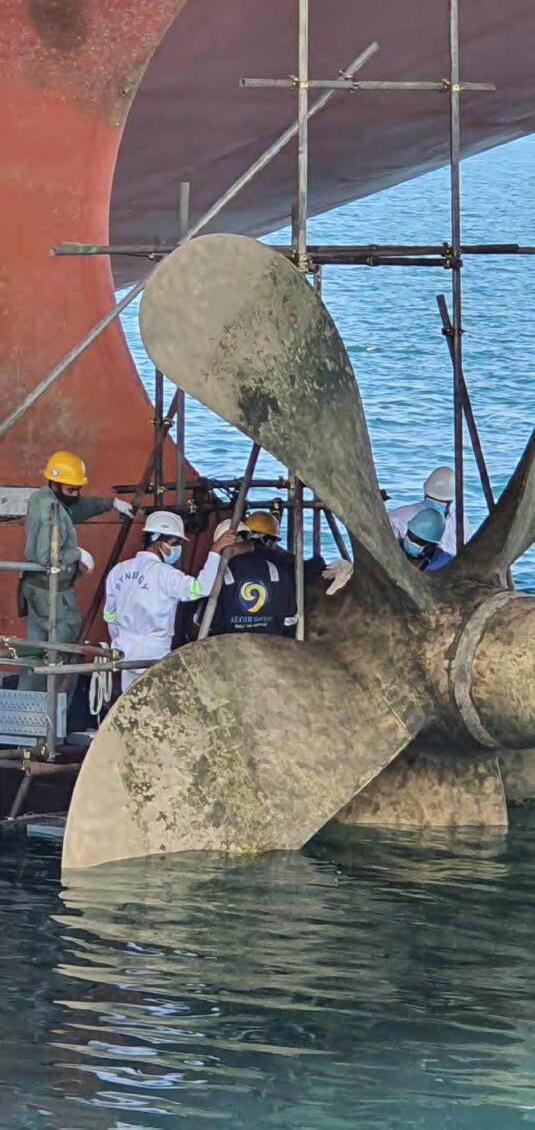
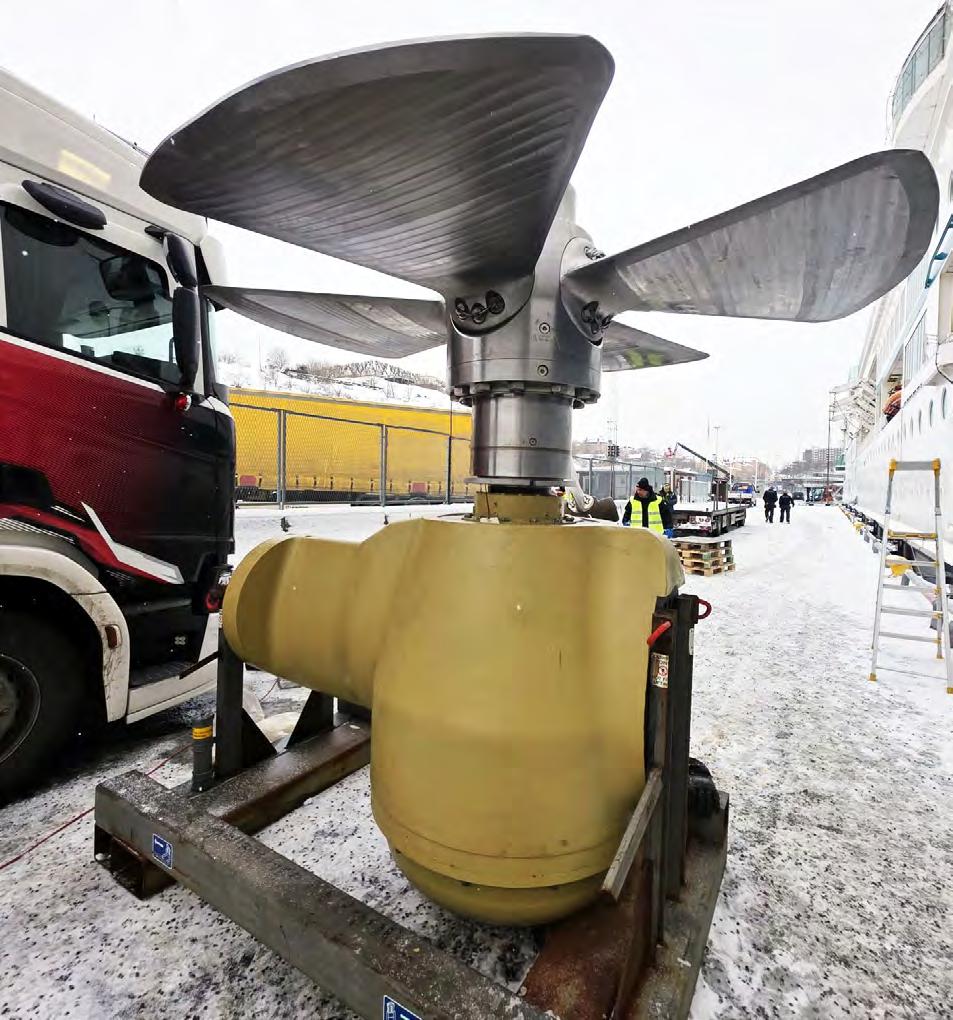
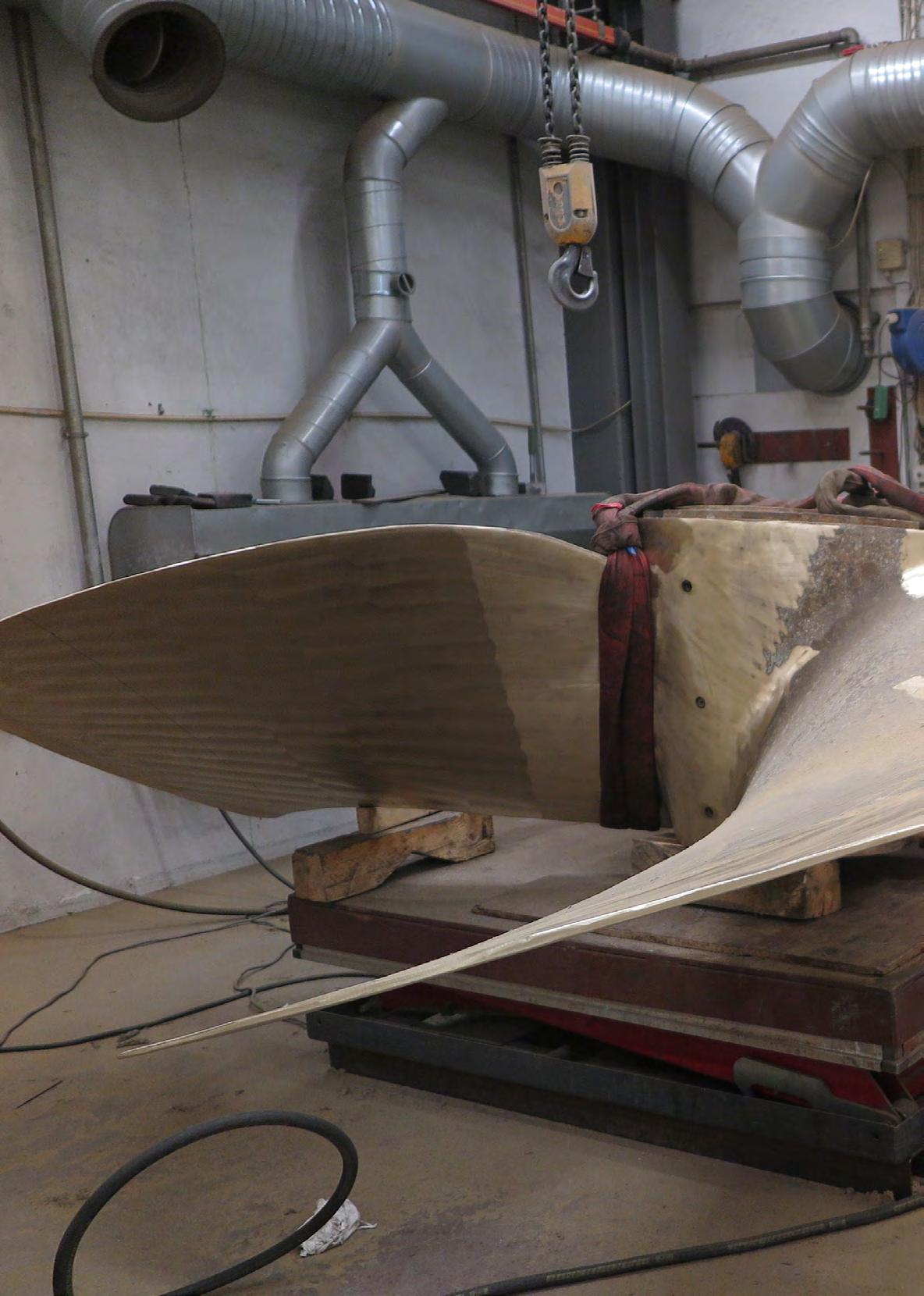
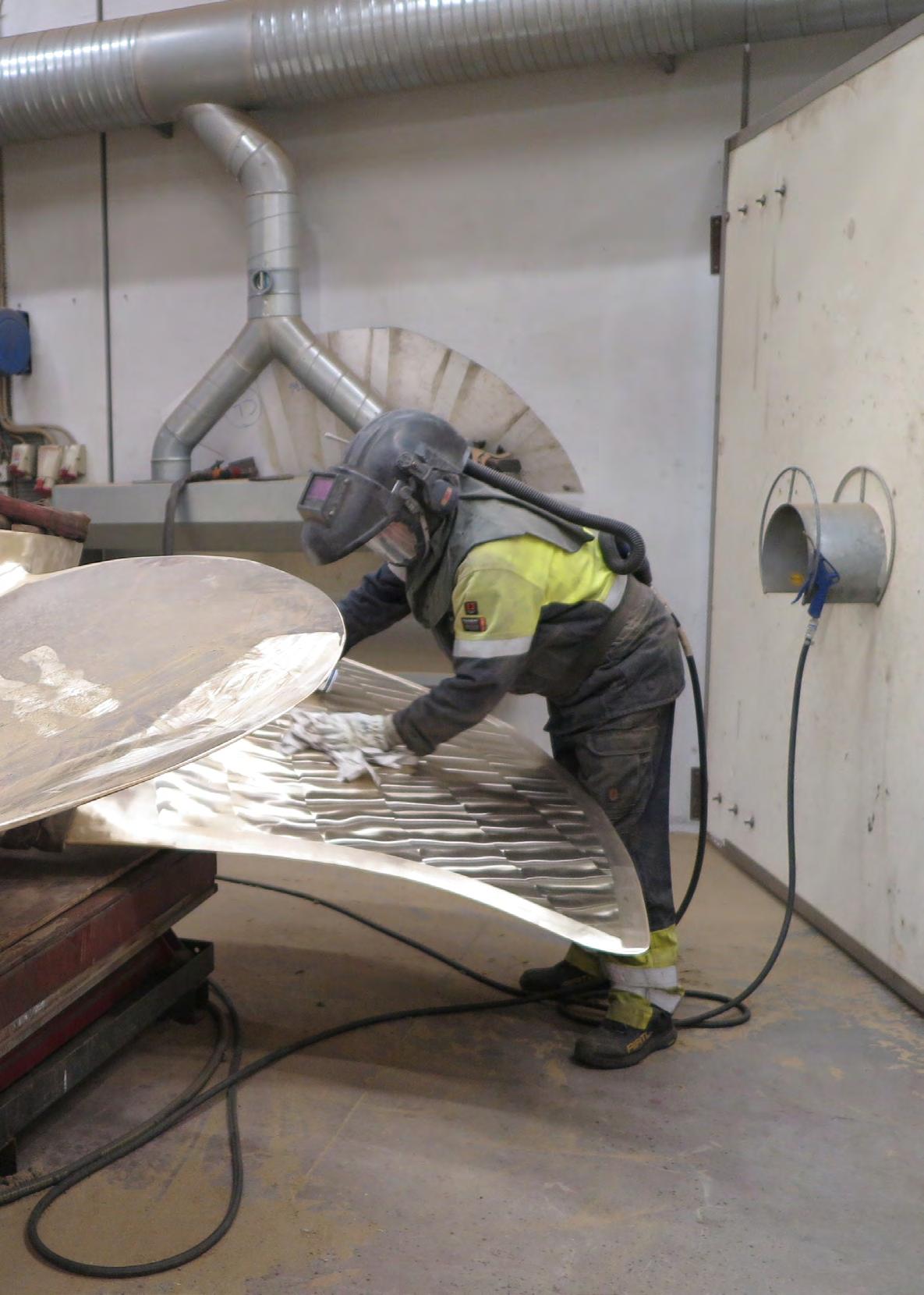
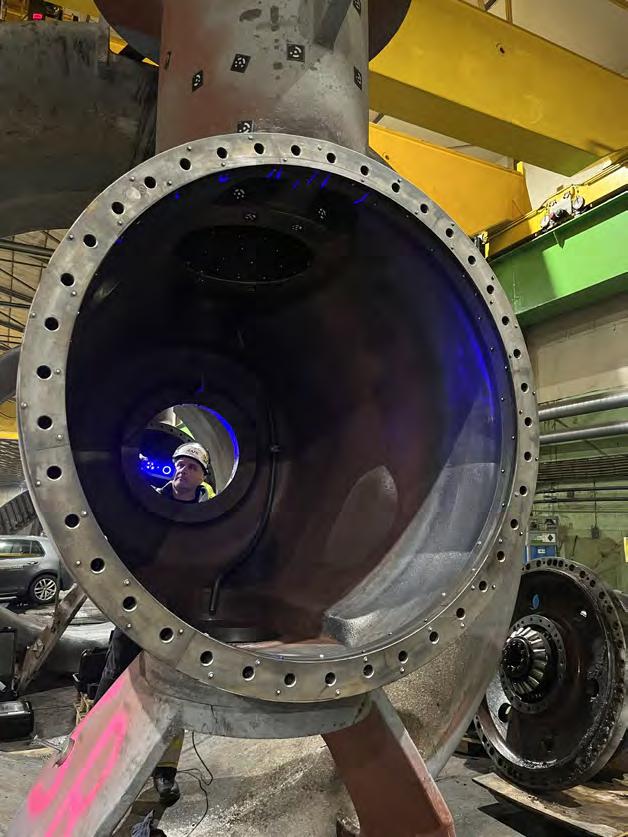
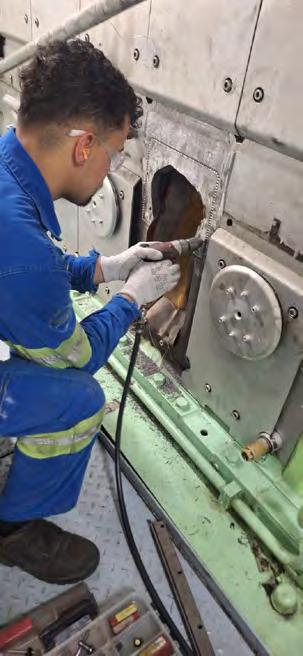
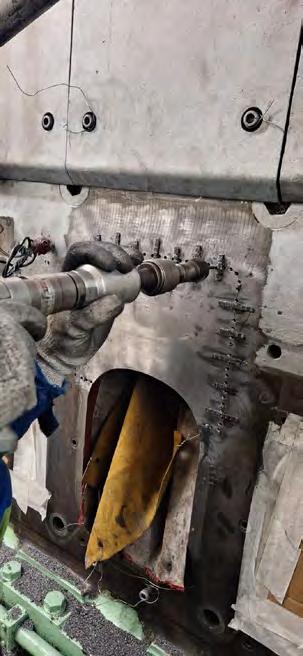
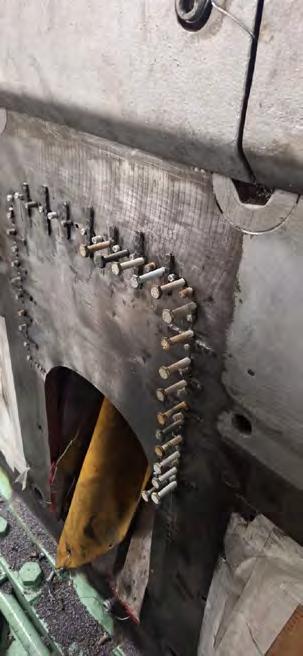
Marine shaft: Full scope repair solutions for rudder and propulsion systems including on-situ technical clarification of the repair needed, final installation and supervision.
MarineShaft A/S
E-mail: info@marineshaft.com
Phone: +45 9656 0202
Issue: March 2026
Volume No.50 No.1
ISSN No. 0143-5000
Editor: Mark Langdon
Advertisement Manager: Nick Carugati
Design & Production Manager: Fiona Andreanelli
Accounts: Claire Long
Subscriptions: Molly Andrews
Publisher: Andrew Deere
Subscribe Today! Visit www.drydockmagazine.com
MPI Group Peel House, Upper South View Farnham, Surrey GU9 7JN, UK
Tel: +44 (0)1252 732220
info@mpigroup.co.uk
www.mpigroup.co.uk
2 Face the Facts
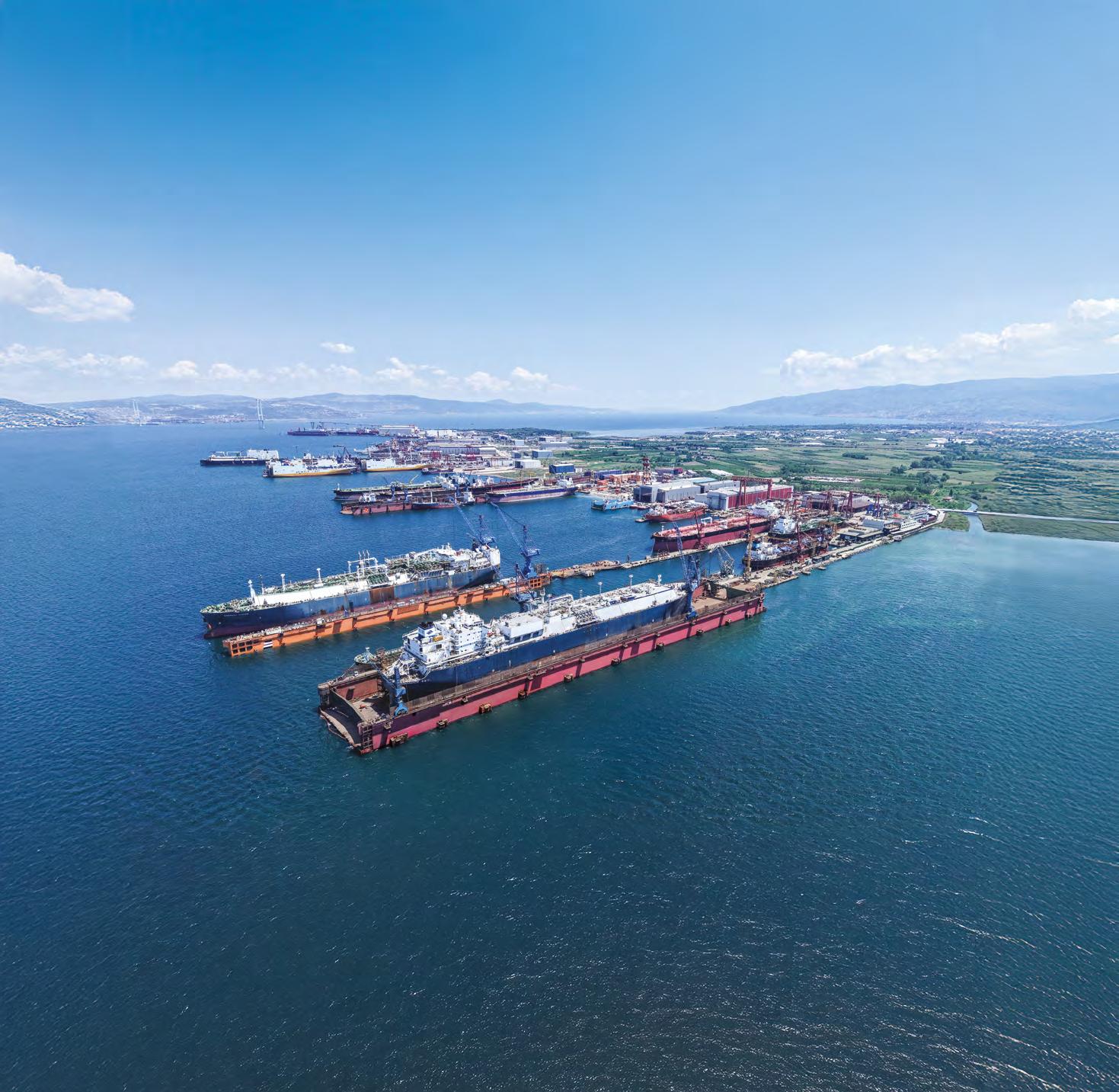
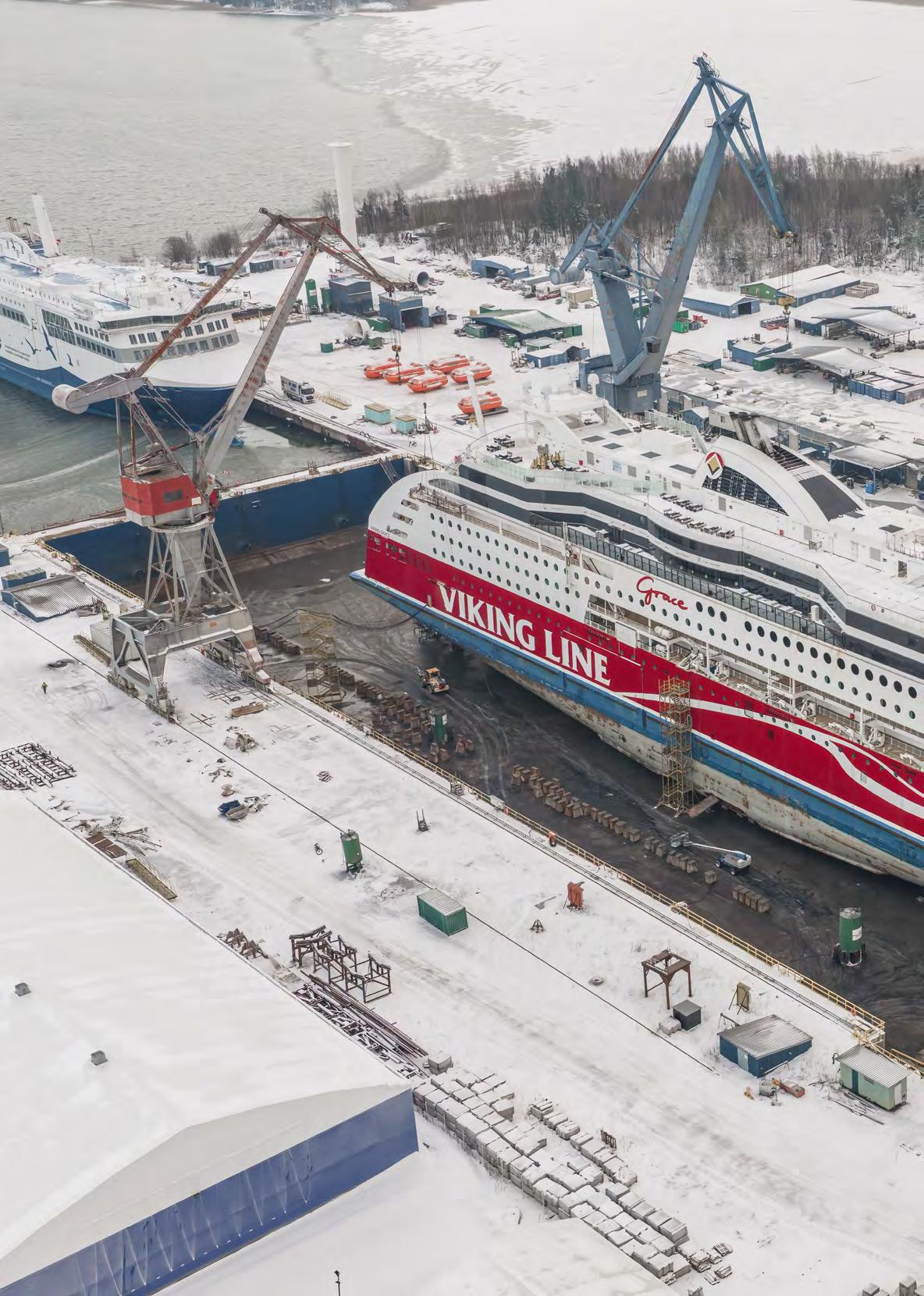
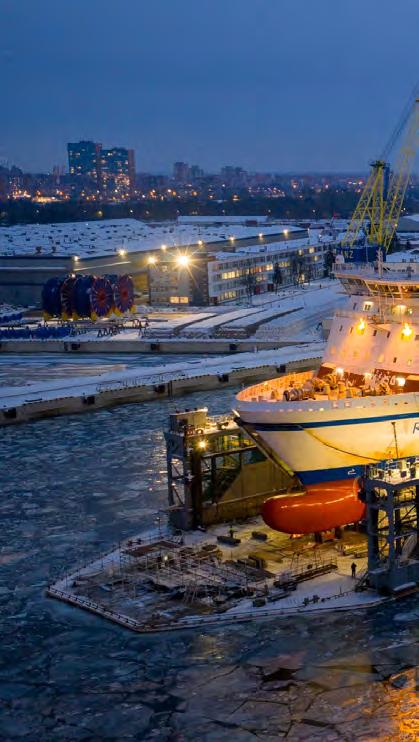
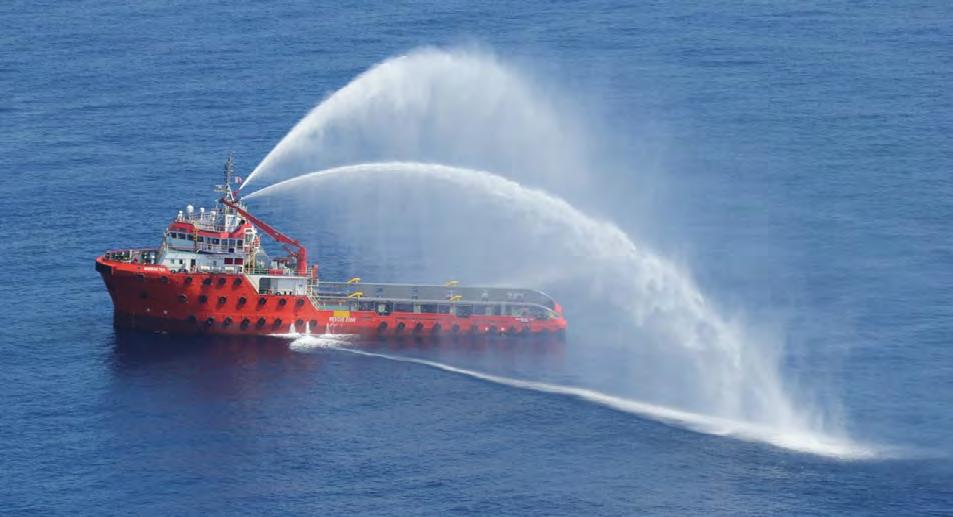
We hear from Grand Port Maritime de La Réunion and Piriou Reunion how Réunion island ship repair capabilities have recently been upgraded with the acquisition of a floating dock
8 On the Line
Fragmented technical records are driving yard delays, explains George Balan, Head of New Building Supervision and Plan Approval, and Stefano Saccone, Director of Business Development, Bluestone Group
16 Upfront
Eloise McMinn Mitchell, Vertical Marketing Manager, Flyability explains how inspection drones are taking off in maritime
24 Spotlight
The spotlight focuses on the cruise & ferry sector, where we look at how digital twins bring Stena Line closer to sustainability goals; the world’s largest marine battery retrofit, fossil-free and renewable energy projects from Viking Line and Tallink and a step towards CO₂-neutral propulsion by Everllence
38 Area Review
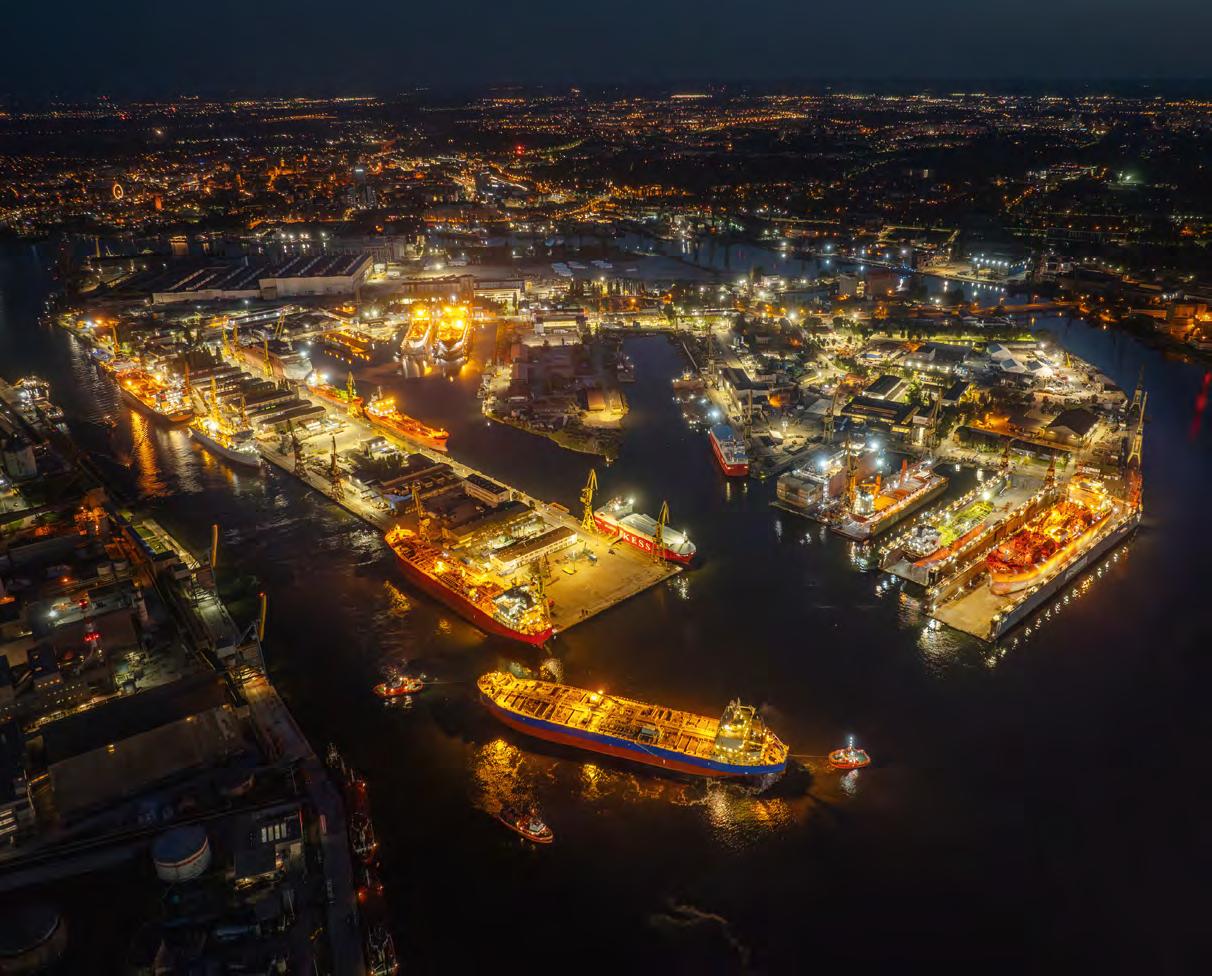
Our attention is turned to the Baltics, where the ferry repair season is in full swing at BLRT, Remontowa and Oresund Drydocks
54 APM Show Preview
Asia Pacific Maritime, Asia’s premier exhibition and conference for shipbuilding & marine, workboat, offshore and electric & hybrid marine
56 Market Intelligence
Steve Gordon, Global Head of Clarksons Research, provides an update of ship repair data points from Clarksons World Fleet Register, including the Asia Pacific and Baltic regions
62 Mechanical Matters
On-site and workshop repairs by MarineShaft, an enhanced thruster changeover solution and the validation of a biofuel initiative
68 In Focus
A new hull cleaning standard, the next-generation graphene-base hard foulrelease coating and a milestone electrostatic application for PPG
74 Analysis
Can Egypt and Gulf yards act as Arctic strategic hubs, asks Ahmed Ghowel, PhD, MRINA, IEng, PMP
80 Worldwide
A diverse selection of repairs and refits at Palumbo, Damen and Seatrium and by Metalock
88 News
The latest products, appointments and news
or transmitted, in any
MPI Group, as a body, are not responsible for any opinions expressed in DryDock by contributors. All rights reserved. No part of this publication may be reproduced, stored in a
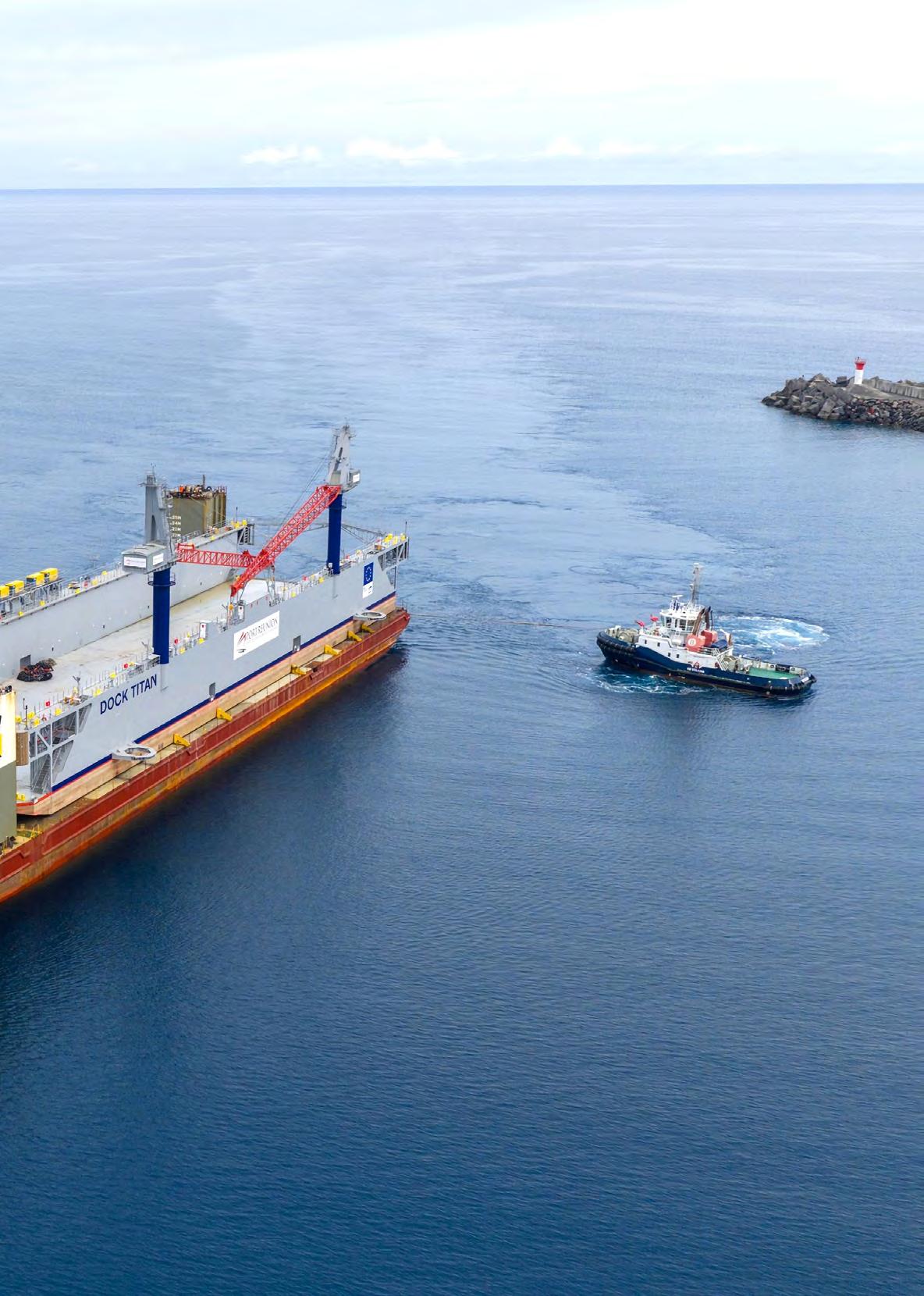
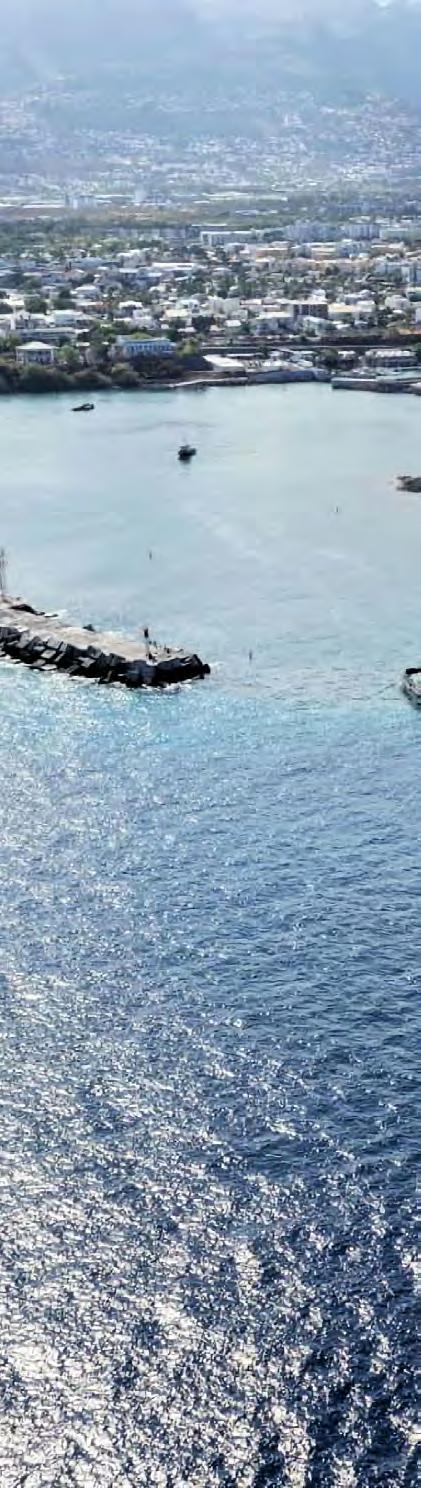
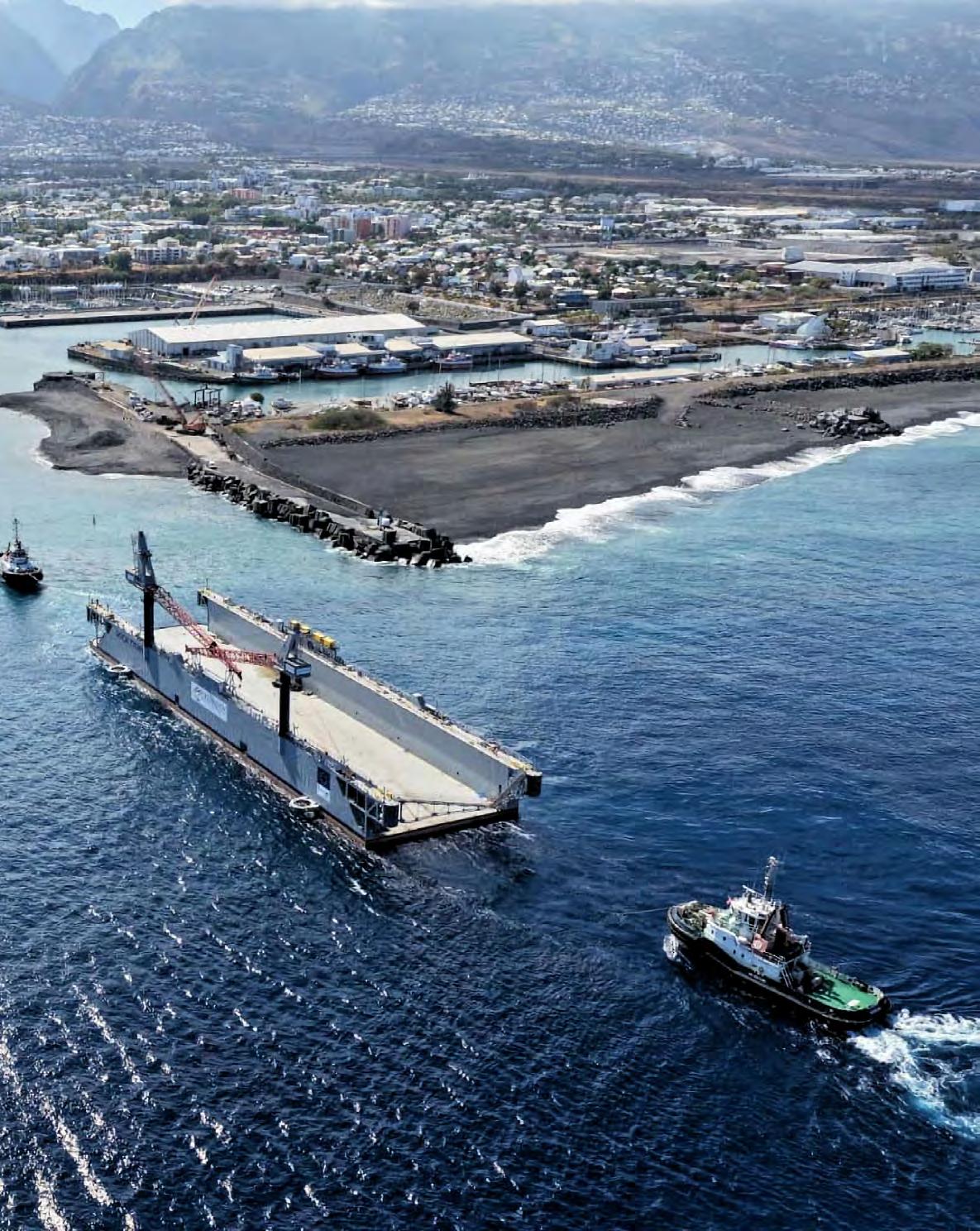
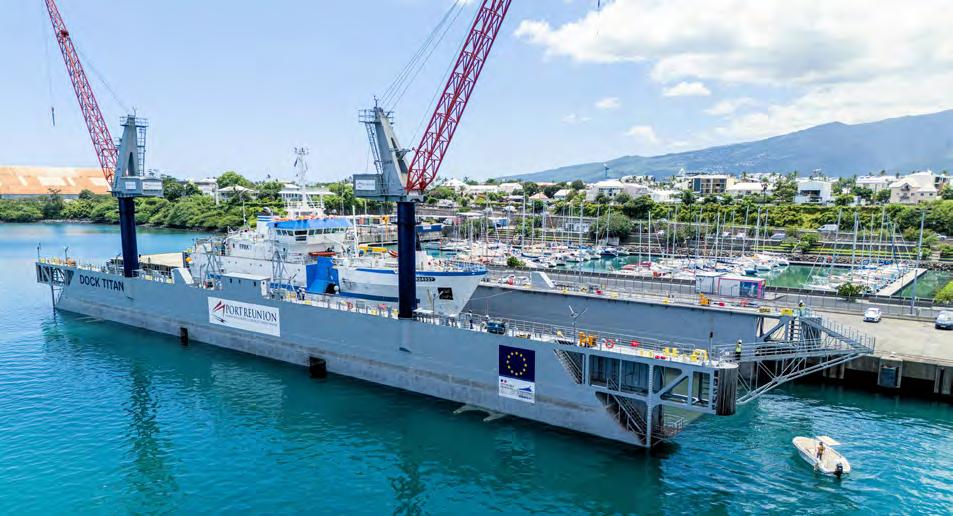
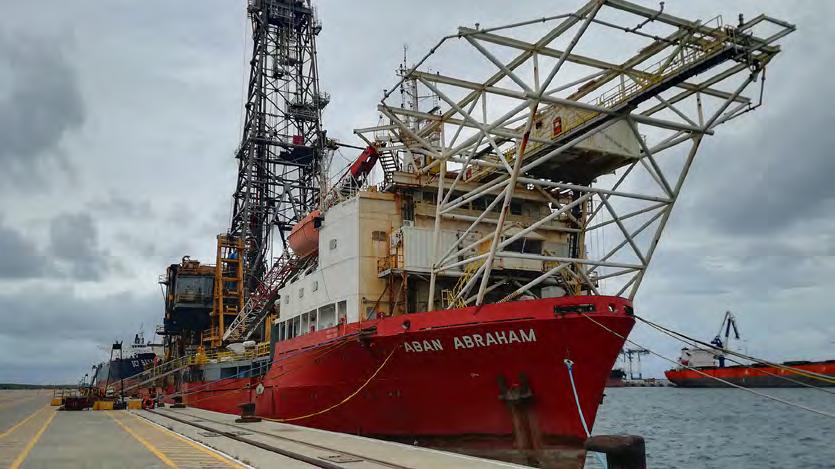
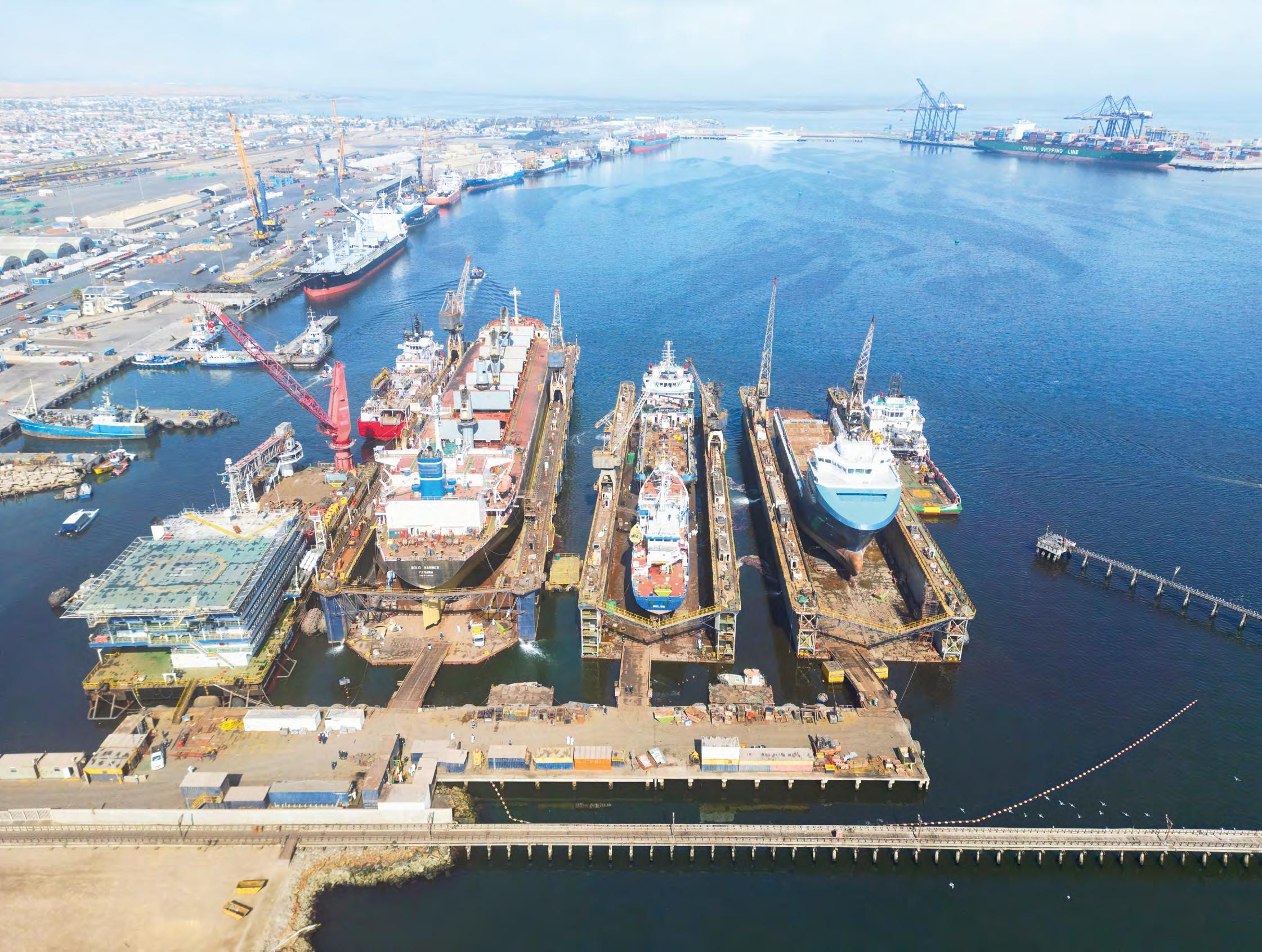
Réunion island in the Indian Ocean is an overseas Department and region of France within the African region. Part of the Mascarene Islands, it is located some 679km (367 nautical miles) east of Madagascar and 175km (94 n-miles) southwest of Mauritius. The island’s ship repair capabilities have recently been upgraded with the acquisition of a floating dock able to dry dock vessels up to 4,600 tons and 120m long.
Commercial operations will begin in April with the dry docking of the French Navy’s BSAOM Champlain, built by Piriou shipyards. The dry docking, which will last about two months, is being carried out by Piriou Reunion.
Gilles-Ham-Chou-Chong (GHCC) is Deputy General Manager of Grand Port Maritime de La Réunion (GPMDLR), and Christophe Lagathu (CL) is CEO ship repair and in-support at Piriou Group and General Manager of Piriou Reunion.
Q. What was the rationale for acquiring a dry dock and why that size?
GHCC: The acquisition of the floating dry dock stems from a clear strategic ambition: to repatriate to Réunion Island all naval maintenance operations that until now often had to be undertaken abroad. By equipping the port with a high-capacity industrial asset, designed to accommodate both local fishing vessels and state-owned ships, Port Réunion is positioning itself as a major regional player in ship repair.
The choice of a dock of this size is no coincidence: it is a versatile format, large enough to meet regional demand while remaining compatible with the Port Ouest infrastructure, strengthened as part of the Quay 9 anchoring project.
Q. How long had you been looking for one?
GHCC: Finding a suitable floating dry dock is the result of long-term work. Several years were needed to identify equipment that was technically reliable, financially sustainable and compliant with local environmental requirements. The administrative milestones –including the prefectural authorisation – demonstrate a project that has been carefully prepared and fully aligned with the port’s long-term strategy.
Q. Was it always going to be a secondhand dry dock or had you considered getting one built?
GHCC: While the option of a newlybuilt dock was examined, the chosen scenario quickly shifted toward a fully refurbished second-hand dock, offering the ideal balance between performance, deployment speed and budget control. The refurbishment operations – carried out in Cape Town, South Africa – made it possible to deliver a fully operational asset while significantly reducing the delays inherent in constructing a brandnew unit.
Q. When and from where did you acquire it?
GHCC: The floating dock Titan was acquired in 2024 and then transferred to the port of Cape Town, where it remained for several months to undergo a complete renovation before being loaded onto the transport vessel. Its departure from South Africa marked a decisive step toward its permanent installation in Réunion.
Q. What sort of work was needed before it could be moved to Réunion?
GHCC: Even before setting sail, the dock underwent a major refurbishment programme, including:
• compliance with technical standards
• rehabilitation of all equipment
• full validation of immersion trials.
These works were carried out in Cape Town and ensured both safe transport and rapid commissioning once installed in Réunion.
Q. How was it transported to the island?
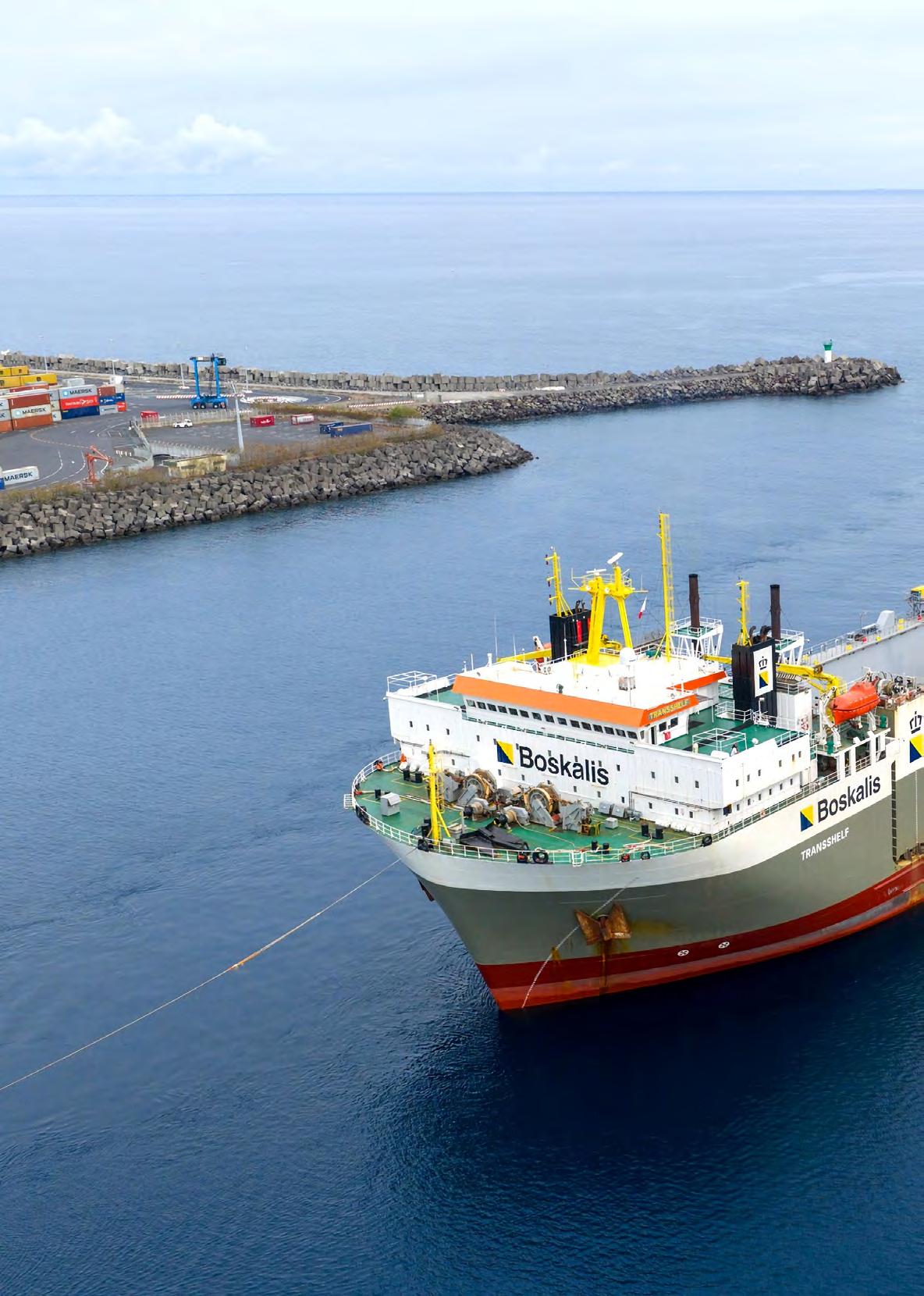
GHCC: The dock was loaded onto the semi-submersible vessel Transshelf, a 173m unit specifically designed for exceptional cargo. This mode of transport ensures maximum stability, essential for floating structures of this size. Once loaded in Cape Town, the Transshelf set course for Réunion for a crossing of approximately 10 days.
Q. Is there any additional work required before its first dry docking, and when will it be ready to accept its first vessel?
GHCC: Upon arrival, the floating dock still needs to be integrated into its operational environment, notably through final technical adjustments scheduled for early April 2026.
The first dry-docking operation with Titan, carried out on the Albius longliner. Commercial operations will begin in April with the dry-docking of the French Navy’s
Q. Do you have any plans to further expand the ship repair business?
CL: With the Titan, La Réunion island can now offer two complementary infrastructures for dry docking that cover an interesting range of vessel dimensions: a slipway for vessels up to 750 tonnes and 55m length, and a floating dock for vessels up to 4,600 tons and 120m length.
On one hand, French owners, private or public, operating their vessels from La Réunion will finally find a local solution for their maintenance issues. These opportunities will be the foundations for growth. At the same time, the owners and technical managers of vessels using the very busy route close to La Réunion should be interested in a ship repair yard working under European quality standards which is used to monitoring and ensuring deadlines.
They should also be attracted by a shipyard located in European territory at La Réunion, where logistics is easy and safety ensured.
Thanks to these strengths, these opportunities will become growth drivers.
Q. How do you see the future for ship repair in the region?
CL: There is no other European shipyard in the vicinity of La Réunion able to offer
the same dry-docking facilities and competencies. Its location in European territory within the Indian Ocean region is a guarantee of stability and security, so important for shipowners in this period of international tensions.
In a first stage, for these reasons La Réunion’s capacities and competencies in ship repair will become a credible alternative to the other ship repair yards in the area and to the Middle East zone.
Q. Is there anything you would like to add?
CL: A ship repair industry cluster has been developed in La Réunion since 2018. It started with maintaining vessels on the slipway or afloat, which gave time for the cluster to build strong foundations before the floating dock Titan implementation.
Today, all necessary competencies are present on the island to ensure high technicity and delivery time fulfilment.
Piriou Reunion, the ship repair yard subsidiary of Piriou Group, has been the driving force behind the industry for the last five years.
Today, the cluster of ship repair activity is ready to answer shipowners’ requirements and take on the challenges of this demanding sector.
BSAOM Champlain
Not all dry dock capacity is equal
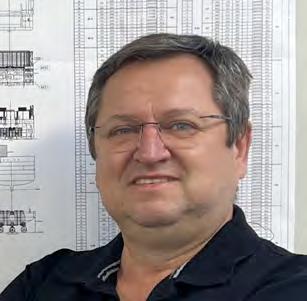
George
Fragmented technical records driving yard delays –and how to solve the problem, explained by George Balan, Head of New Building Supervision and Plan Approval, and Stefano Saccone, Director of Business Development, Bluestone Group.
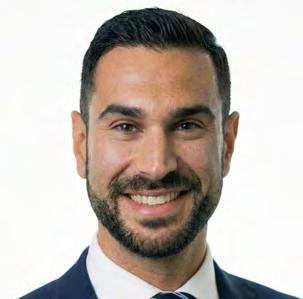
Stefano Saccone, Director of Business Development, Bluestone Group.
Balan, Head of New Building Supervision and Plan Approval.
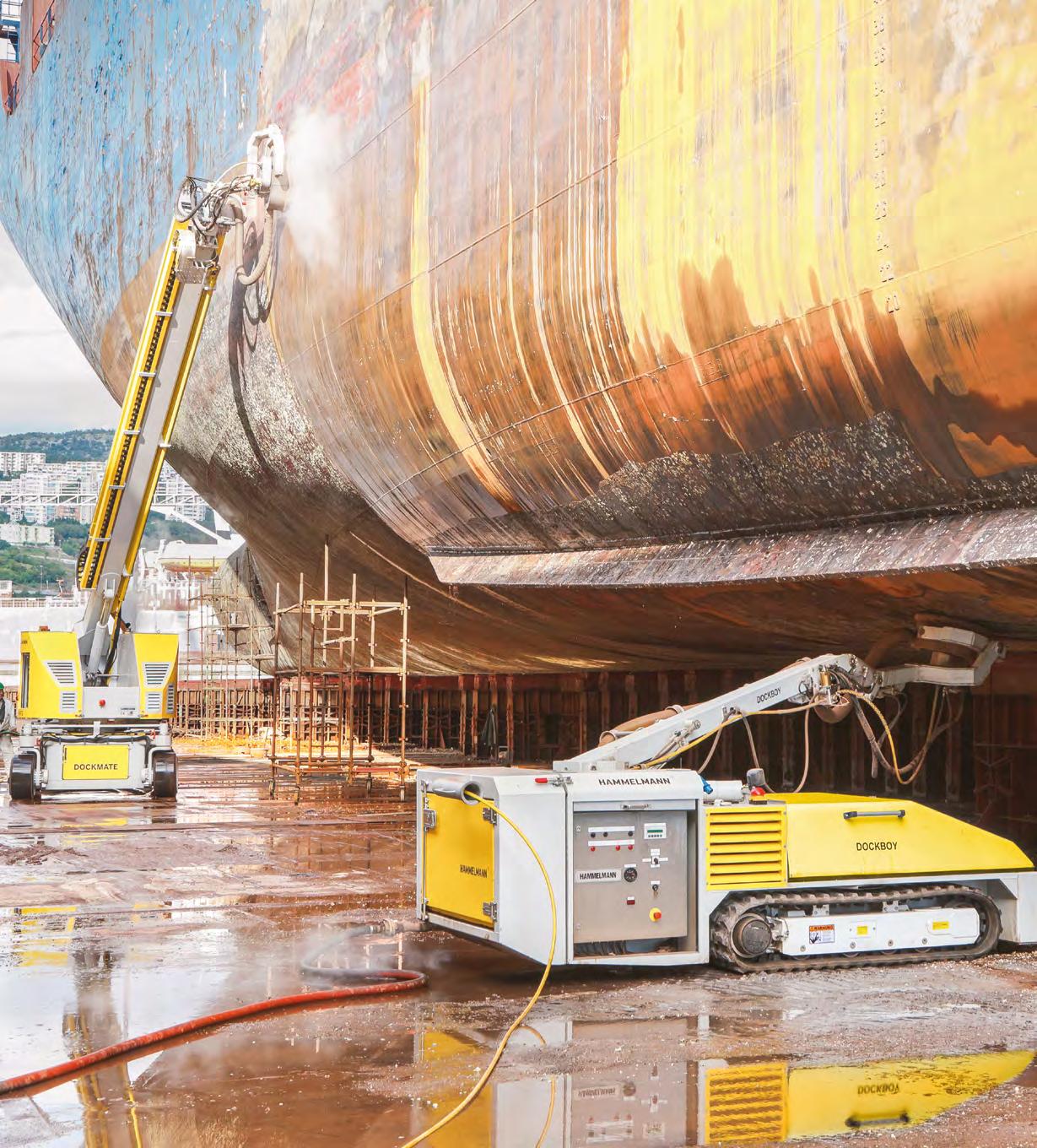
A hull and propeller inspection being carried out
Across ship repair, conversion and technology integration projects, schedule pressure is often attributed to yard availability, supply chain disruption or regulatory complexity. These factors are real, but they do not on their own explain why projects that are apparently the same on paper experience very different outcomes once execution begins. Increasingly, one of the most consistent sources of friction during dry dockings and conversions is far less visible: fragmented technical documentation.
In many projects, engineering teams arrive in the shipyard to find that
essential information already exists but is dispersed across disconnected systems and formats. Plan approval histories are scattered across emails and legacy platforms. Design changes introduced during construction are not consistently reflected in final as-built drawings, and inspection findings are disconnected from the drawings they relate to. The result is that owners, shipyards and class are left reconstructing a technical and document baseline that should already be established.
This is not a question of competence, but rather simply reflects how vessels have traditionally been documented across
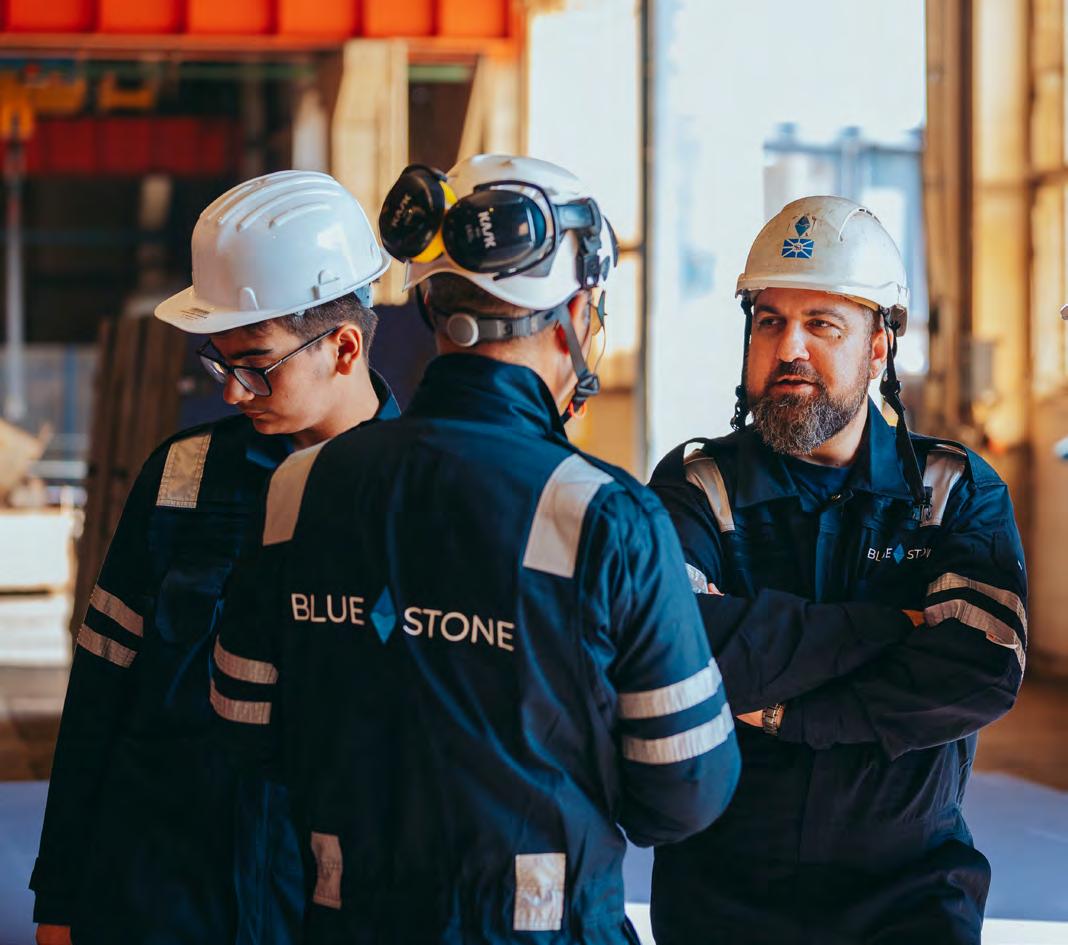
Bluestone’s newbuilding supervision team
different lifecycle phases. But as vessels become more complex and dry-docking windows tighten, this fragmentation has moved from being an inconvenience to a material execution risk.
The timing matters. The industry is now operating under simultaneous pressure on dry docking demand and the availability of yard capacity.
Inefficiencies carry costs
Fleet age is one driver. UNCTAD reports that the global fleet now averages over 22 years of age by vessel count, with more than 40% of ships older than 20 years. As vessels mature, major
surveys, conversions and life-extension work become more common, and inefficiencies inside a fixed dry dock window carry greater cost.
Regulatory pressure compounds this trend. Measures such as EEXI, CII, EU ETS and FuelEU Maritime are driving additional inspections, reporting obligations, and efficiency and emissions-related technical modifications. Dry dock slots that were once used primarily for class survey and routine maintenance are increasingly expected to bundle multiple workstreams within the same window.
Under these conditions, not all capacity is equal. Complex conversions and energy-related upgrades require experience, coordination and disciplined execution. Where suitable slots are limited, projects that rely on repeated verification, re-surveying and reapproval consume time that cannot be recovered. It is within this context that the continuity of technical records has become a practical determinant of schedule reliability for both owners and shipyards, rather than purely serving as proof of compliance.
During newbuilding, documentation gaps are often masked by proximity. Engineering teams, supervisors and yard staff work in parallel, issues can be resolved informally, and deviations are addressed while design intent is still fresh. Once the vessel enters service, that informal continuity disappears. What remains is whatever has been formally assessed, approved and recorded.
Gaps appear
When a vessel returns to dry dock for conversion or major repair, owners, shipyards and class must rely entirely on that formal record. This is where gaps surface most clearly. Structural modifications, system replacements and energy-efficiency upgrades all depend on confidence in the existing configuration.
Where documentation is incomplete or inconsistent, engineering effort shifts from solution development and towards verification. Over time, this loss
of clarity shapes how future work is defined, forcing projects to be planned defensively around what cannot be confidently assumed.
This shift has tangible consequences. Approval cycles lengthen as baseline arrangements are revalidated, interfaces between systems become harder to manage and inspection planning becomes reactive rather than controlled. On vessels with dense machinery spaces or hybrid installations, even modest changes can trigger disproportionate engineering effort simply to establish what already exists.
Traceability becoming even more important
As owners increasingly combine surveys with regulatory upgrades and life-extension measures, the value of entering the shipyard with a clear technical baseline and traceable approval and inspection history becomes more pronounced.
From an engineering perspective, the scale and scope of challenges encountered during repair and conversion are therefore determined long before a vessel reaches its first dry dock.
Technical traceability, established during design development, plan approval and site supervision, is easily lost if deviations introduced during construction are not properly assessed, recorded and reflected. This affects warranty management, dry docking preparation and the feasibility of future retrofits.
Modern vessels amplify this effect. High-voltage systems, energy storage, alternative fuels and advanced automation are tightly interdependent. For hybrid and decarbonised vessels, being able to demonstrate correct integration of electrical systems, thermal management, ventilation and safety arrangements depends on the quality of the original technical record.
Recent upgrade projects
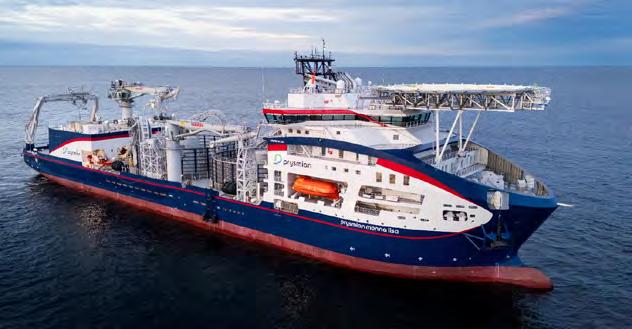
Recent projects illustrate why this becomes more critical as vessel architecture evolves. Prysmian’s Monna Lisa, a highly integrated cable-laying vessel, combines DP3 redundancy, large-scale energy storage, high voltage shore-power connectivity and biodiesel capability. Maintaining confidence in such a configuration depends on all participants in the value chain being able to access the same information.
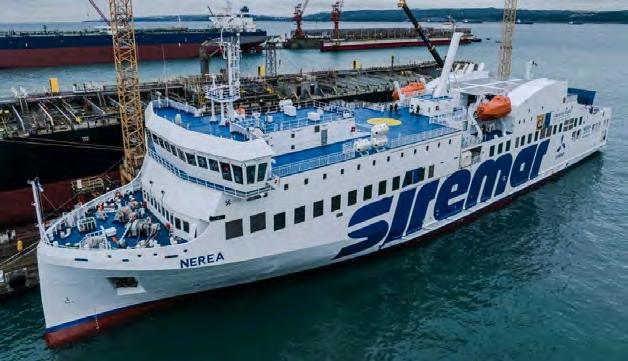
A similar principle applies to Nerea, a RoPax ferry integrating hybrid dieselLNG propulsion, battery systems,
The Nerea integrates hybrid dieselLNG propulsion, battery systems, photovoltaic generation and advanced energy management
Prysmian’s Monna Lisa combines DP3 redundancy, large-scale energy storage, high voltage shore-power connectivity and biodiesel capability
OVER SUCCESSIVE DRY DOCKINGS, THESE EFFICIENCIES COMPOUND AS REGULATORY REQUIREMENTS CONTINUE TO EVOLVE, BRINGING NEW EFFICIENCY, EMISSIONS AND SAFETY SCOPES INTO THE YARD
photovoltaic generation and advanced energy management. Clear records of system integration, ventilation, redundancy and configuration control are essential to avoid re-validating fundamentals each time an upgrade or dry dock intervention is assessed.
Of course, the impact of fragmented documentation is felt most acutely once execution begins. In shipyards, uncertainty disrupts work sequencing and coordination between trades. Where drawings do not reflect reality, clashes are discovered late, often after steel has been cut. Even when the technical solution is straightforward, this stop-start dynamic introduces unnecessary delays.
This effect scales with vessel complexity. On specialist vessels, small documentation gaps can propagate quickly across multiple systems. Conversely, where records are accurate and accessible, planning becomes more predictable, inspection activities can be scheduled with confidence and project discipline is easier to maintain.
Documentation underpins decision-making
Documentation is often treated as an administrative output. In practice, it underpins decision-making throughout the entire repair and conversion process. Consolidating drawings, approvals and inspection findings into a coherent technical history allows engineering teams to understand what was approved, what was installed and how the final configuration evolved.
In Bluestone’s experience, ownercontrolled project databases are still being used several years after delivery as the primary reference for retrofit planning and maintenance, precisely because the information remains complete, navigable and reliable. A permanent record of plan approval, installation quality and commissioning also provides owners with credible evidence of technical integrity, supporting condition surveys and strengthening the vessel’s risk profile with insurers.
This is particularly evident in inspection planning. Fragmented records complicate scope definition, attendance coordination and close-out verification, while centralised inspection records allow findings to be tracked against specific systems, corrective actions to be verified, and acceptance to be clearly documented. Capturing inspection data consistently at source further improves accuracy and auditability, ensuring that what is observed on site is logged correctly.
Over successive dry dockings, these efficiencies compound as regulatory requirements continue to evolve, bringing new efficiency, emissions and safety scopes into the yard. Vessels with a clear technical history move through these cycles with fewer surprises, as design intent, as-built deviations and commissioning evidence remain accessible, allowing later compliance retrofits to be engineered and approved more efficiently.
When documentation continuity is embedded from the outset with the vessel’s full lifecycle in mind, the benefits extend well beyond compliance.
Retrofit feasibility assessments become faster, dry dock schedules more reliable and engineering effort better focused. Owners gain improved control of lifecycle cost and risk. Shipyards benefit from stronger execution discipline and clearer demonstration of quality and coordination. Class benefits from clearer technical baselines and more efficient approval processes.
None of this requires a fundamental change in repair practice. Rather, it requires consistency, traceability and continuity across phases, so that work done once does not need to be rediscovered later.
As the ship repair and conversion sector is asked to deliver more complex work within increasingly constrained windows, the quality of technical records has become a practical determinant of whether projects progress smoothly or stall under their own complexity. Preserving technical knowledge across a vessel’s life is now a prerequisite for planning and delivering safer, better-documented vessels.
Inspection drones are taking off in maritime
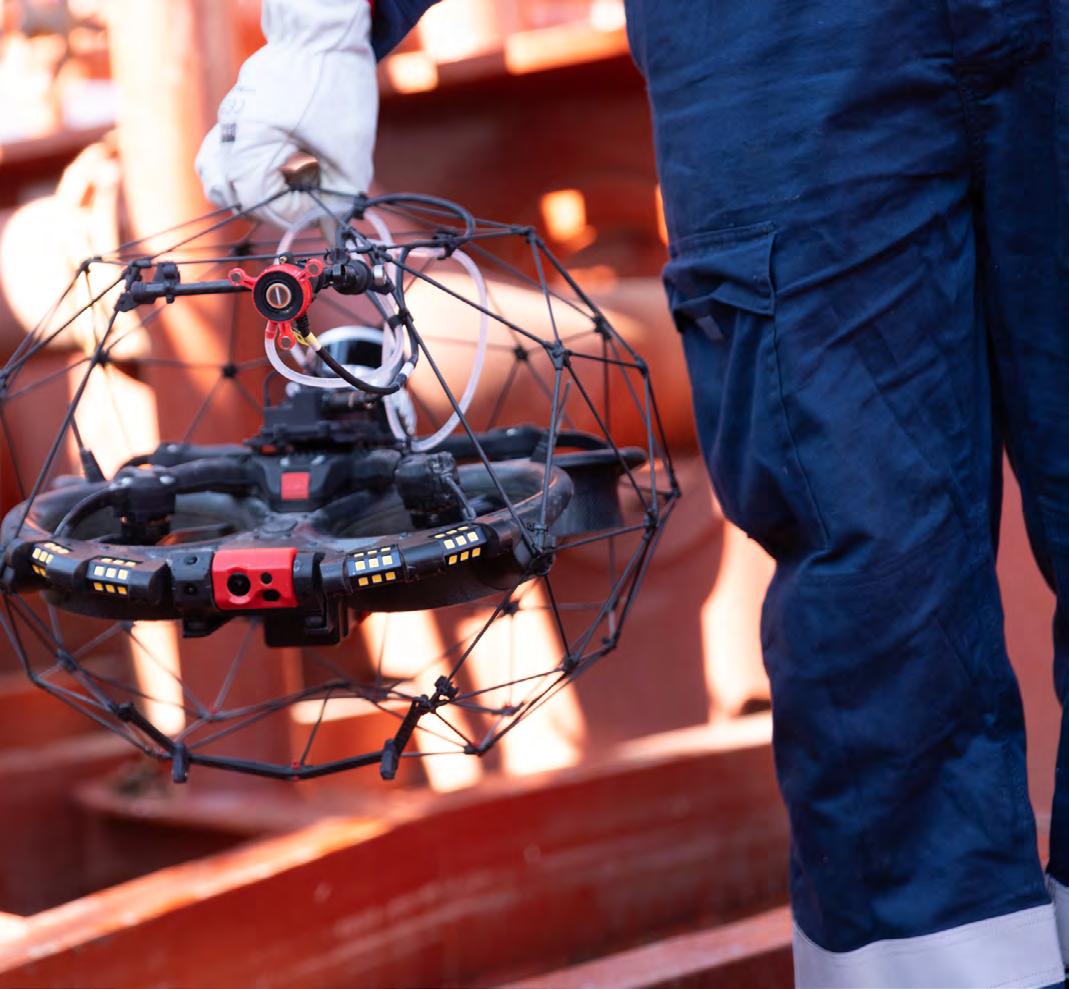
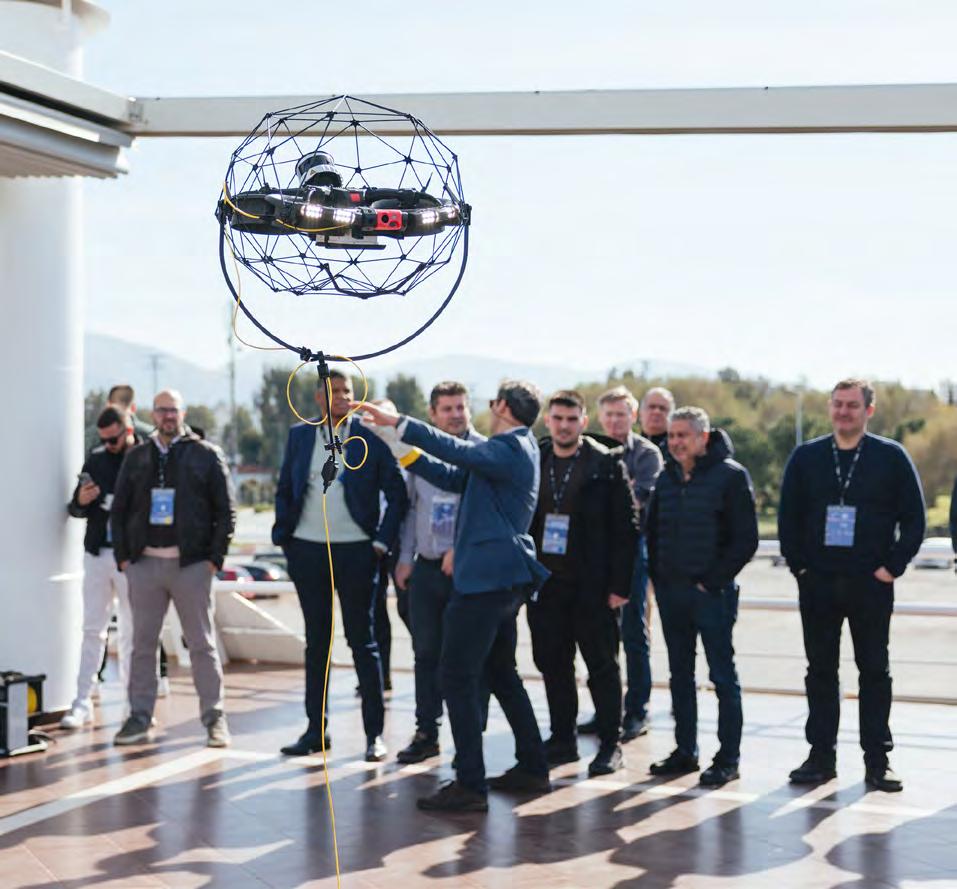
Using a probe head and magnet, the Elios 3 drone attaches to surfaces for UTM
Industry ‘disruptors’ constantly tout new technologies in the hope that they have found the next big thing that will drive real, meaningful change. Drones, it seems, have fallen into the successful category when it comes to inspection technologies in the maritime sector, says Eloise McMinn Mitchell, Vertical Marketing Manager, Flyability.
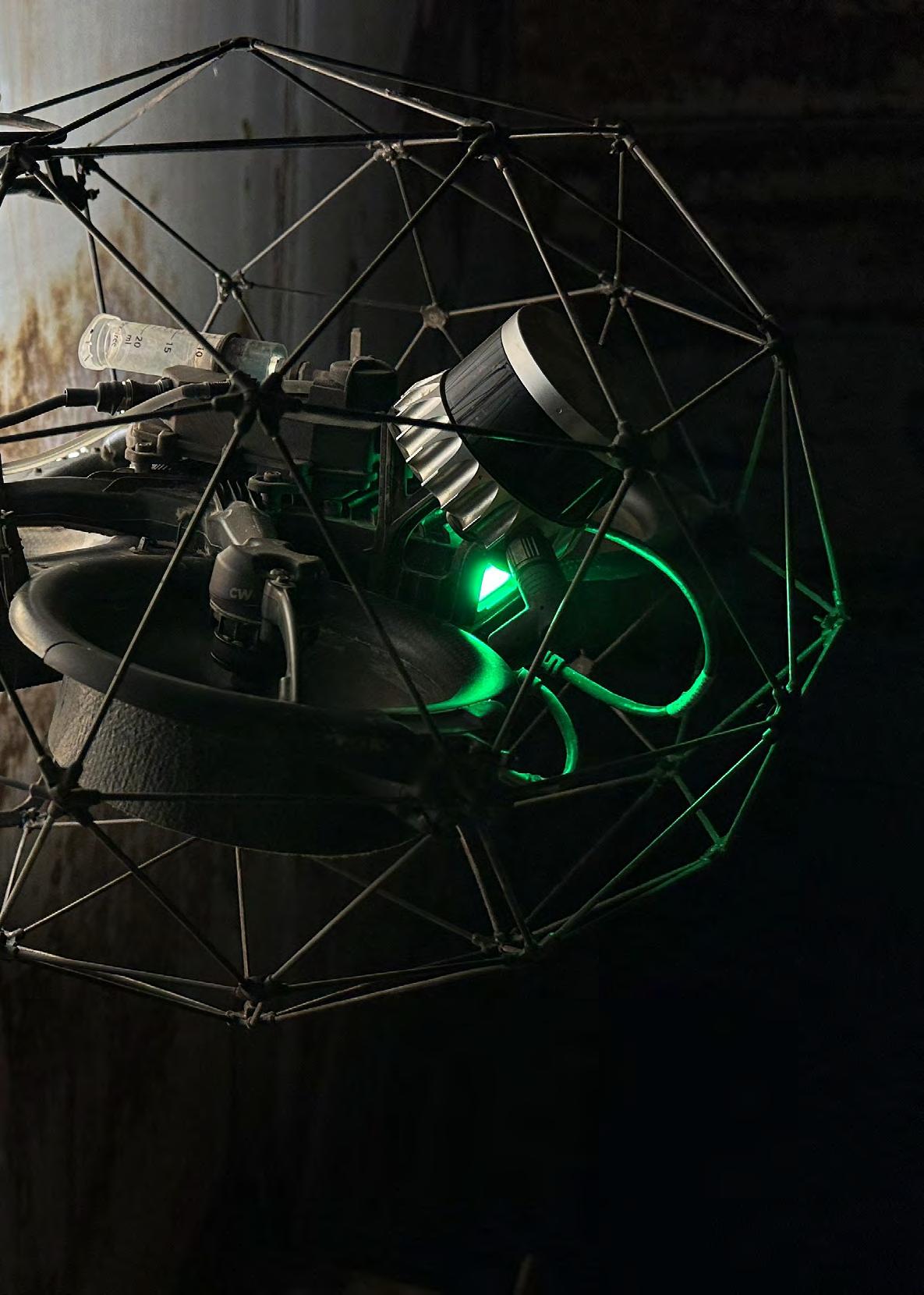
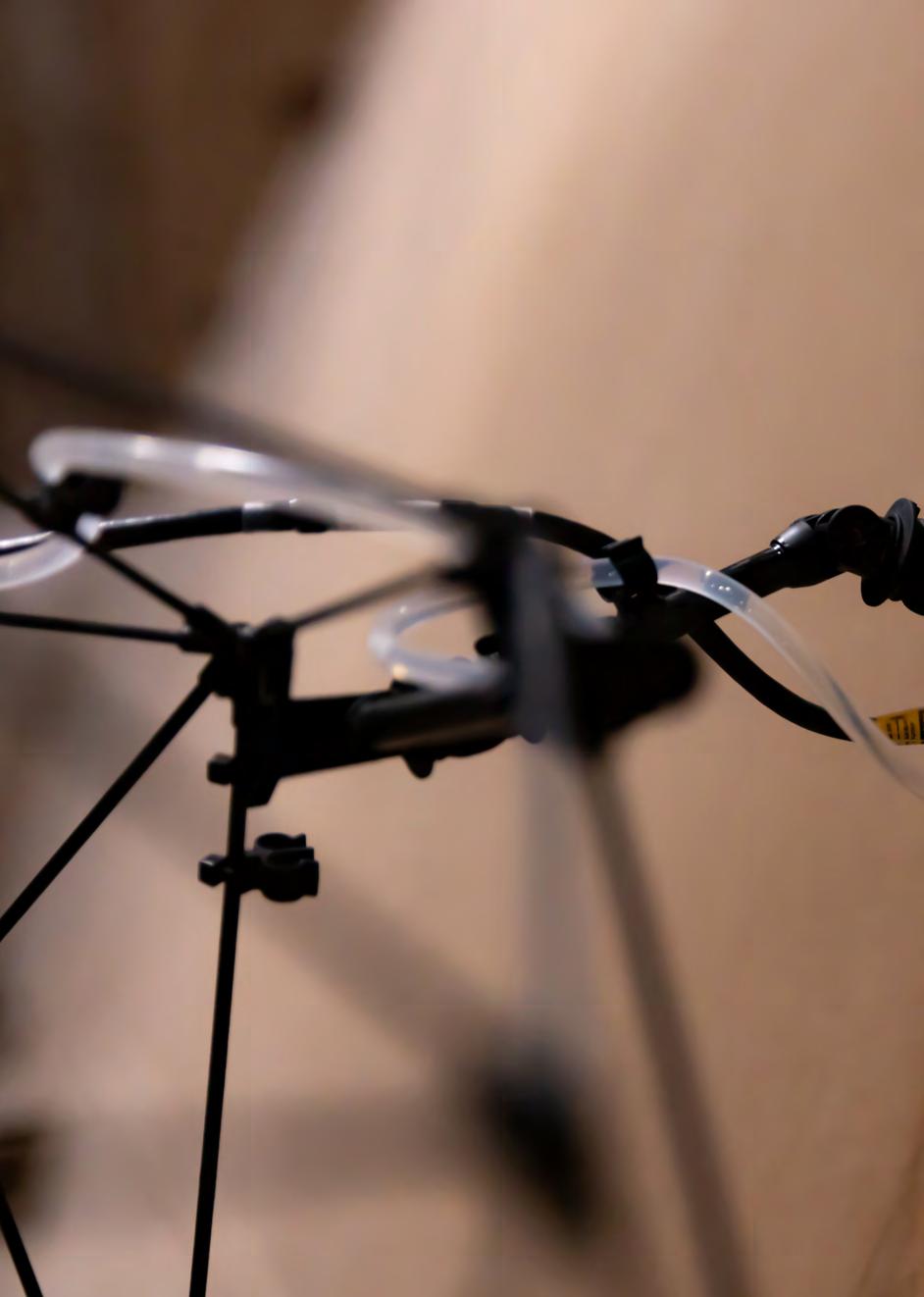
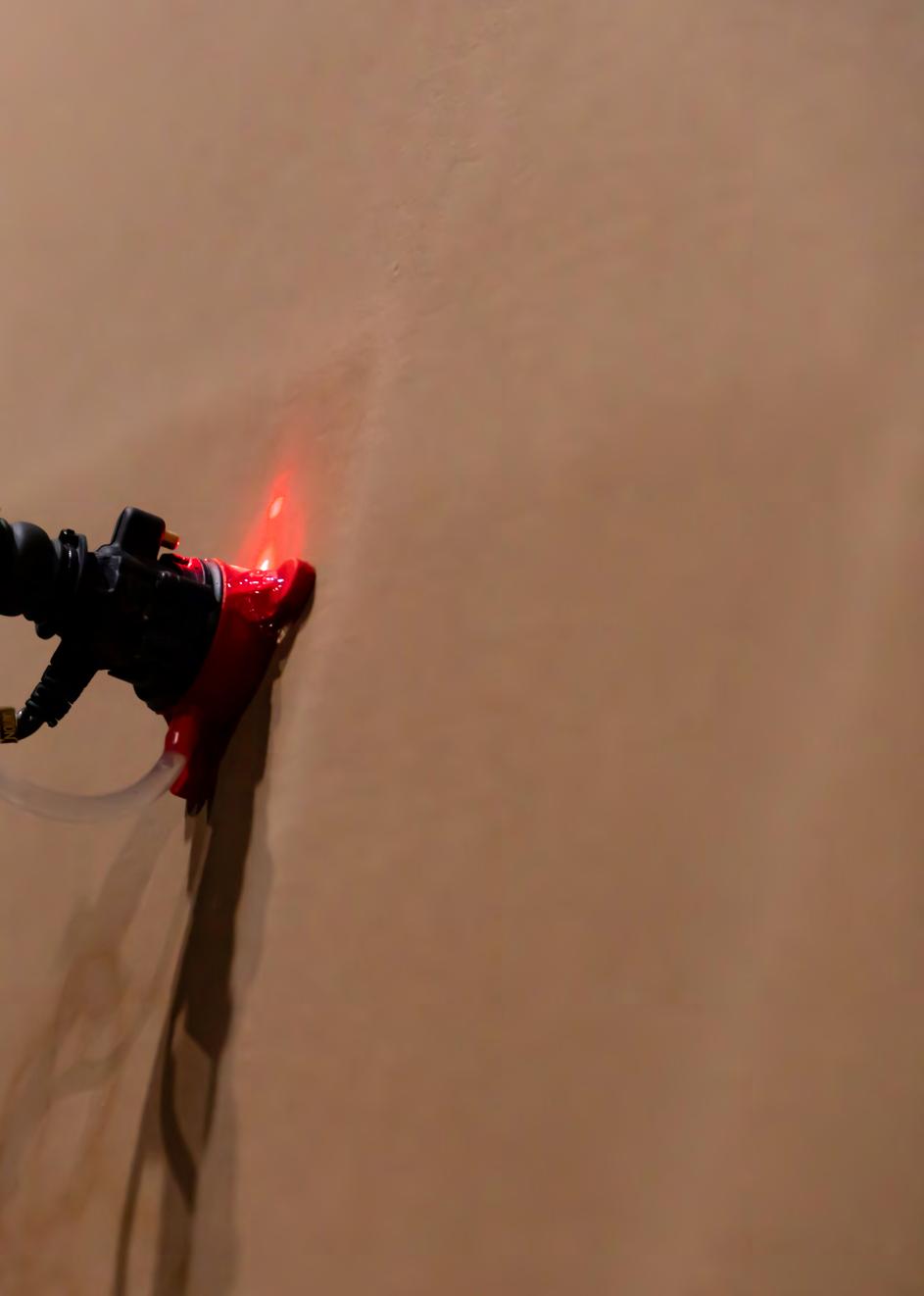
A laser pointer and couplant dispenser –key parts of the Elios 3 UT
Inspection drones have evolved rapidly in the past 10 years, growing from mobile camera platforms to critical data-gathering tools with a growing list of applications. These drones offer multiple types of data collection while prioritising safety and efficiency for their users. This article explores how drones are reshaping maritime inspections and how the industry is reacting.
What is a maritime inspection drone?
While the standard drone is typically used for photography, industrial inspection drones are a completely different type of unmanned aerial vehicle or system (UAV/UAS). They’re designed to gain access to complex or unsafe environments to give inspectors more information than they can conventionally or safely get.
The maritime sector has seen a rise in inspectors using drones as remote inspection technologies for class surveys. Initially, drones could be used for close visual inspections, but new developments, including the integration of ultrasonic thickness gauges, mean drones can now be used to gather more data without needing scaffolding – cutting hours of work and days in dry dock with faster, safer inspections. Drones are inspecting various types of vessel and their storage facilities, including ballast tanks, oil tanks and cargo holds.
Flyability leads the charge
One of the biggest names in maritime inspection drones is Flyability – the Swiss scale-up behind the Elios 3 platform. Backed by over 10 years of R&D, the Elios 3 is Flyability’s third generation of a unique, collisiontolerant drone that uses biomimicry and modularity to adapt to different inspection environments.
As inspection drones go, the Elios 3 offers a broad range of benefits. It starts with the drone’s design: a flexible, collision-tolerant cage and impactrecovery firmware mean the drone can be flown in confined spaces and
recover from making contact with its surroundings without pilot intervention. This, combined with its ability to fly in GPS-denied environments, makes it a leader for safely gaining insights into inaccessible locations – from underground mines to inside wind turbines and now ship hulls and tanks. During a flight, pilots can navigate using the drone’s 4K camera while using the thermal overlay to spot hotspots, and in cases of extreme dust the pilot can swap to the 3D LiDAR view as the drone simultaneously scans and creates a 3D model of its environment that enables navigation when the visual feed is disrupted. The integration with the LiDAR data also enables precise localisation of defects and UT (ultrasonic thickness) measurements within a digital twin of the vessel, allowing for repeated inspections of the same defects and streamlining the generation of reports.
The Elios 3 was designed with longterm adoption in mind. For that reason, the drone features a modular payload bay to support new sensors that Flyability regularly releases, allowing early adopters of the technology to benefit from the latest developments. Now, the Elios 3 can carry explosive gas sensors, radiation detectors and, most relevant to the maritime sector, an ultrasonic thickness payload created in partnership with UT measurement experts Cygnus Instruments. This payload is what has opened the door to this drone being a viable tool for the maritime sector, offering the ability to collect the data necessary for class surveys without scaffolding or rope access, even inside ship hulls.
Probe types and drones
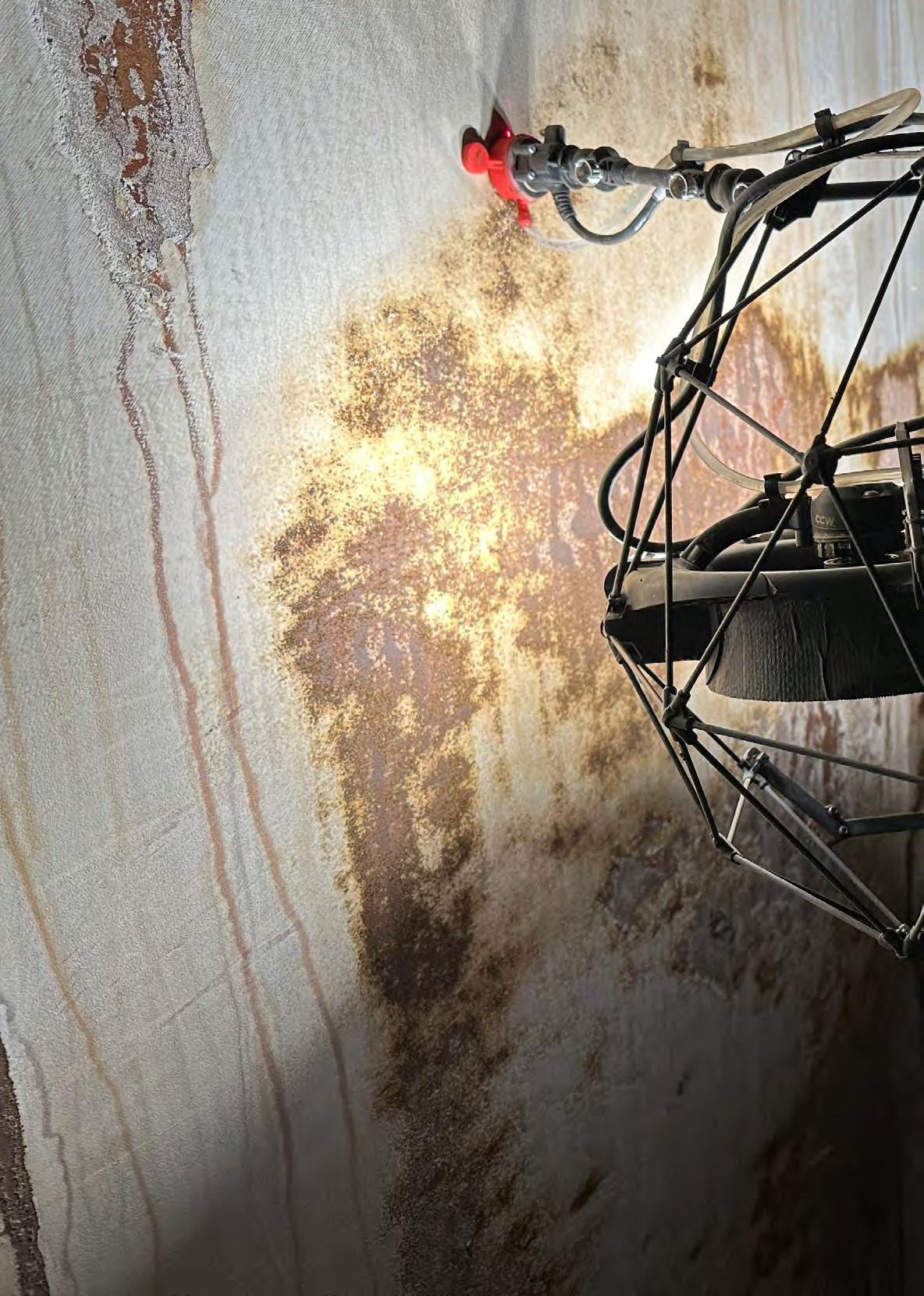
Flyability’s Elios 3 UT is one of the only drones that can be used for nondestructive testing. The UT payload comes with a cleaning module to remove light rust/dust before taking a measurement, as well as a syringe for remotely deploying couplant to ensure smooth sound transmission. The probe head uses magnets to stick to the test surface, with different probe head shapes available according to the size and position of the material.
The partnership between Flyability and Cygnus Instruments has been the key factor behind the success of this payload, as its design was tailored by Flyability’s drone expertise and Cygnus Instruments’ 40+ years of experience in ultrasonic testing. Together, they created two probes for the drone: a single crystal and a twin crystal, including sub-categories of the twin crystal probes. The twin crystal and single crystal probes were designed to offer a broad range of measurement capabilities according to the test material, depending on corrosion levels and the presence of coating.
Class society view
Any tool could be used for data collection for a class survey, but the results may not be accepted by the class society. For that reason, Flyability put industry acceptance at the core of its maritime strategy. The company submitted its technology to rigorous testing by multiple class societies, including the American Bureau of Shipping (ABS).
Remote drone access offers better safety without compromising data quality
ABS set the drone to work in multiple environments to test the quality of its results, including ultrasonic thickness measurements in tankers, chemical carriers and bulk carriers. During these assessments, the drone was found to “quickly, safely, and efficiently access spaces that humans can’t reach and therefore, the need for scaffolding, rope access, and rafting is eliminated.” The safety implications are huge, as all traditional means of access carry inherent risks to inspectors, alongside being costly and time-consuming.
Following extensive assessments over several years, ABS updated its Guidance Notes on the Use of Remote Inspection Techniques to include drones – a clear signal of the growing acceptance of UAVs as a method of collecting data for class surveys. In an interview with Flyability, ABS team members said they saw “strong potential for this type of technology and application to become increasingly common. The demonstrated benefits in terms of safety, accessibility, and potential cost and time savings align with the industry’s ongoing efforts to improve efficiency and safety.”
The Elios 3 is portable and light, meaning it can be easily transported
Making maritime inspection drones centre stage
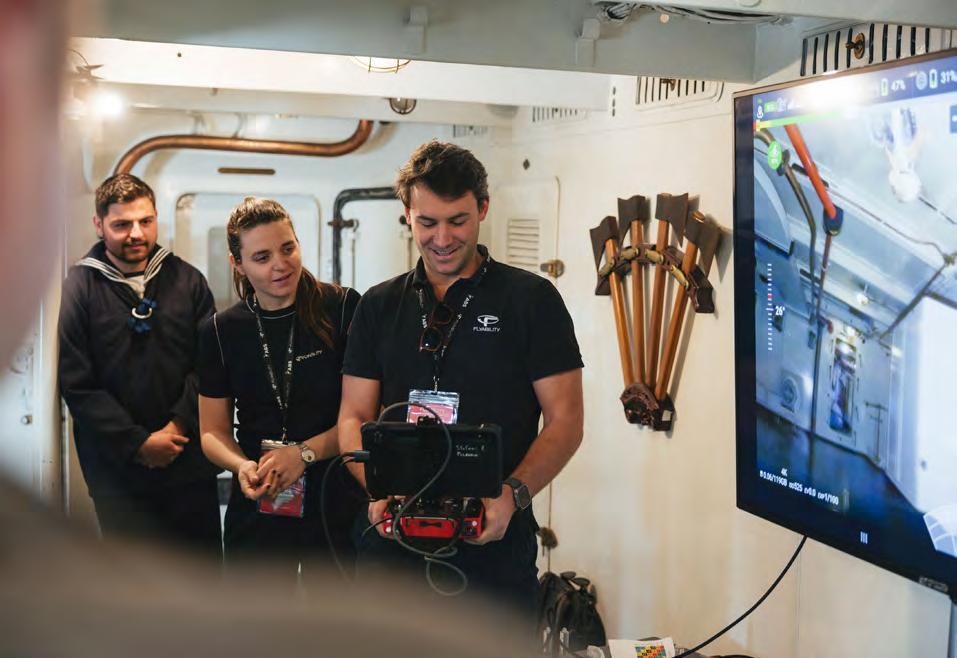
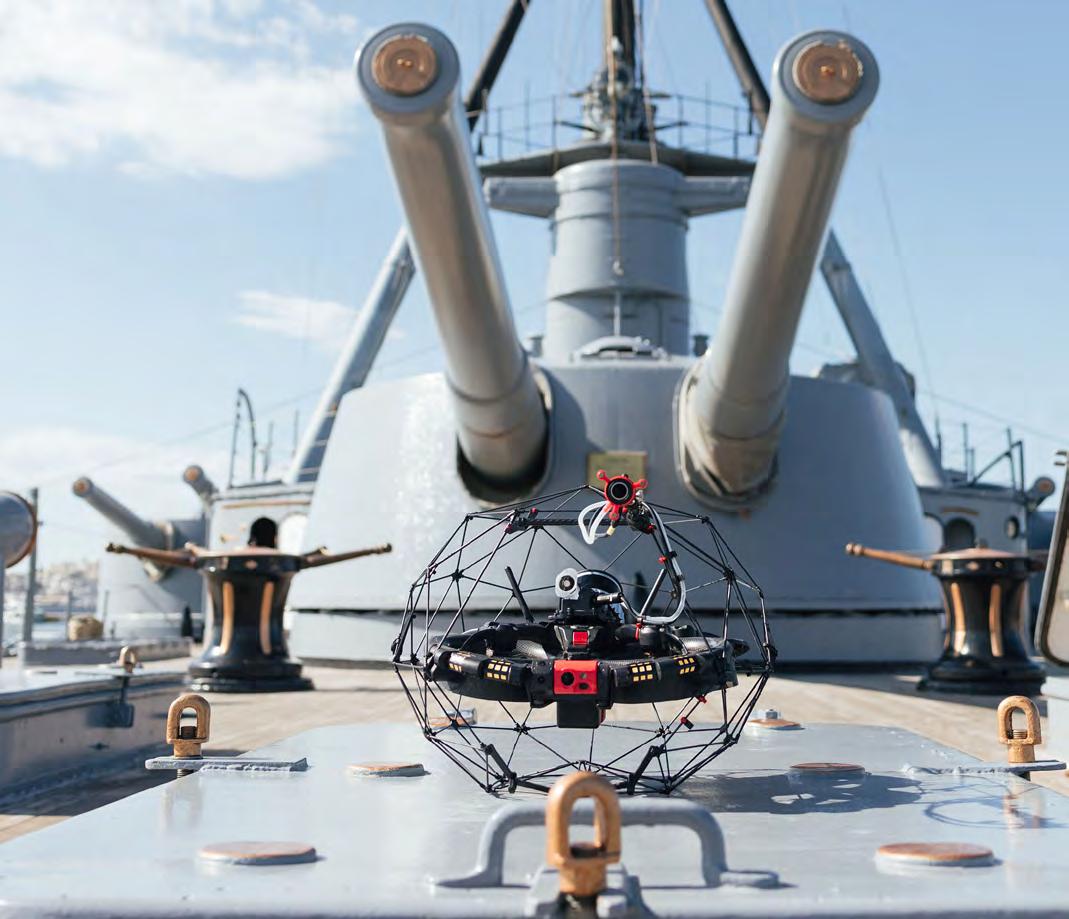
In February 2026, Flyability hosted the Maritime Drone Days in Athens, Greece to put the Elios 3 UT on stage and invite industry professionals, regardless of their familiarity with drone technology, to see what the Elios 3 UT can do and what the future holds. Over two days, more than 140 people gathered to hear from a plethora of guest speakers, including representatives from ABS, Bureau Veritas, Lloyd’s Register, IACS, Cygnus Instruments, TotalEnergies and more. On the second day, thanks to permission from the Hellenic Navy, Flyability hosted training for attendees with the Elios 3 and its UT payload aboard the iconic Georgios Averof, a
100-year-old armoured cruiser that is also a floating naval museum. With exclusive access for the day, event attendees tried their hands at piloting the drone through the space, including with the tethered power unit, which enables unlimited flight time by replacing battery units with a tethered power cable.
An international event like this, including its high attendance and prestigious guest speakers, signals an industrywide shift towards drone adoption. Despite the Elios 3’s UT payload being just two years old, it has already been approved by two class societies, and more than eight class societies accept data from inspection companies that use the Elios 3.
The tethered power unit delivers unlimited flight to Elios 3 pilots
Continued advances
The unstoppable growth of drone technology – paired with the rising capabilities of AI and automation features – means that this technology will only get better with time. Alongside reducing safety risks to inspectors from work at height or in confined spaces, case studies show that this technology can save as much as $600,000 in cargo tank inspections. Drone manufacturers are also investing in more automation capabilities to ensure ease of use for pilots and to reduce the skill barrier for flying drones. Flyability itself launched a Smart Return-to-Home feature that enables the drone to autonomously fly
back to the pilot at the end of a mission, as well as to automatically return to the exact same point when resuming an inspection, to ensure total data coverage. More automation features are promised by Flyability, and other drone manufacturers declare the same for their products.
When the choice is between hundreds of work hours on scaffolding or the headache of organising safe rafting inside ship hulls, and a drone that can be deployed in minutes and complete the work in days instead of weeks, it’s not a question of if drones have a place in the maritime sector – but how quickly they’ll become the norm.
The Elios 3 aboard the Averof in Athens
Cruise & Ferry in the spotlight
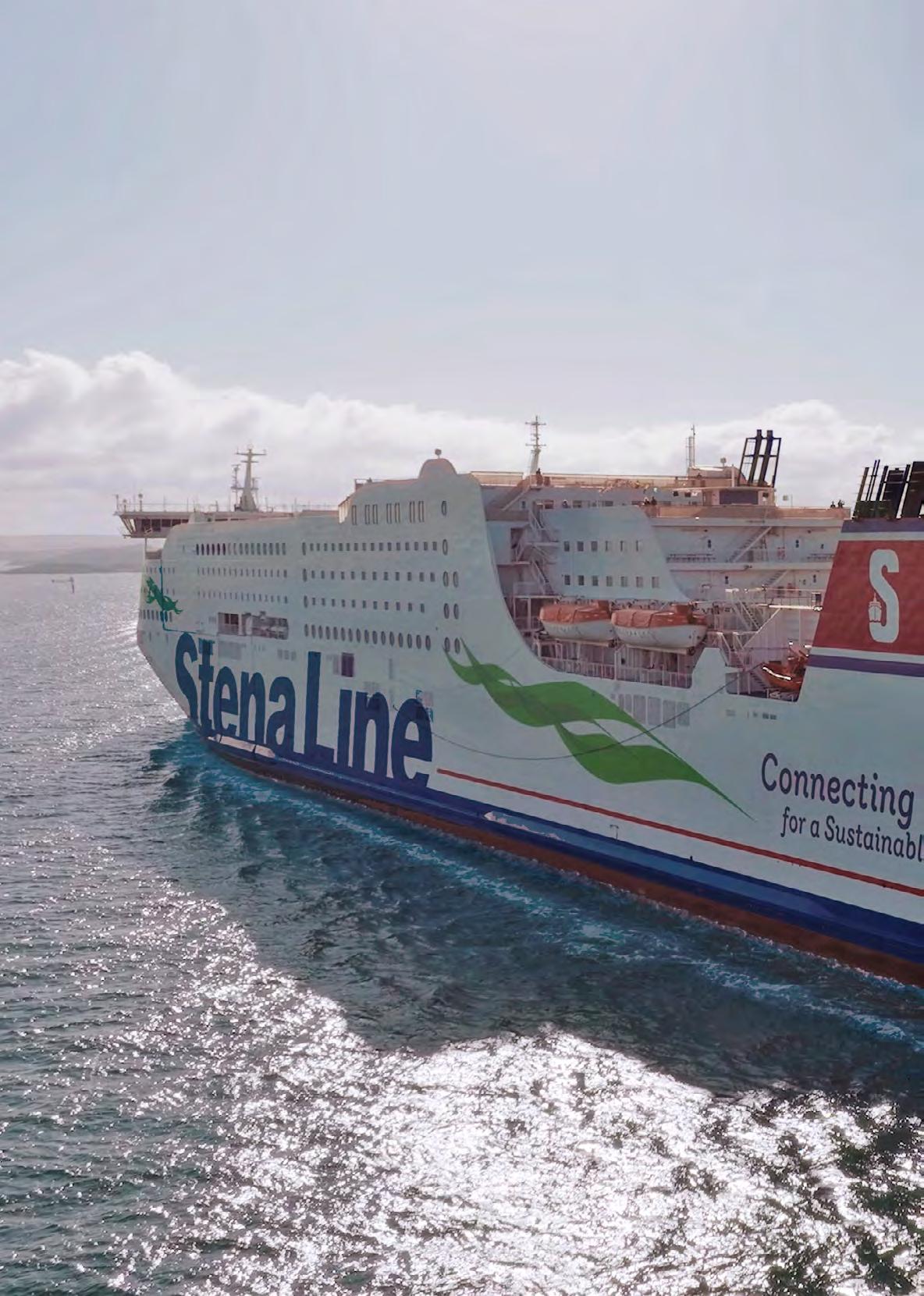
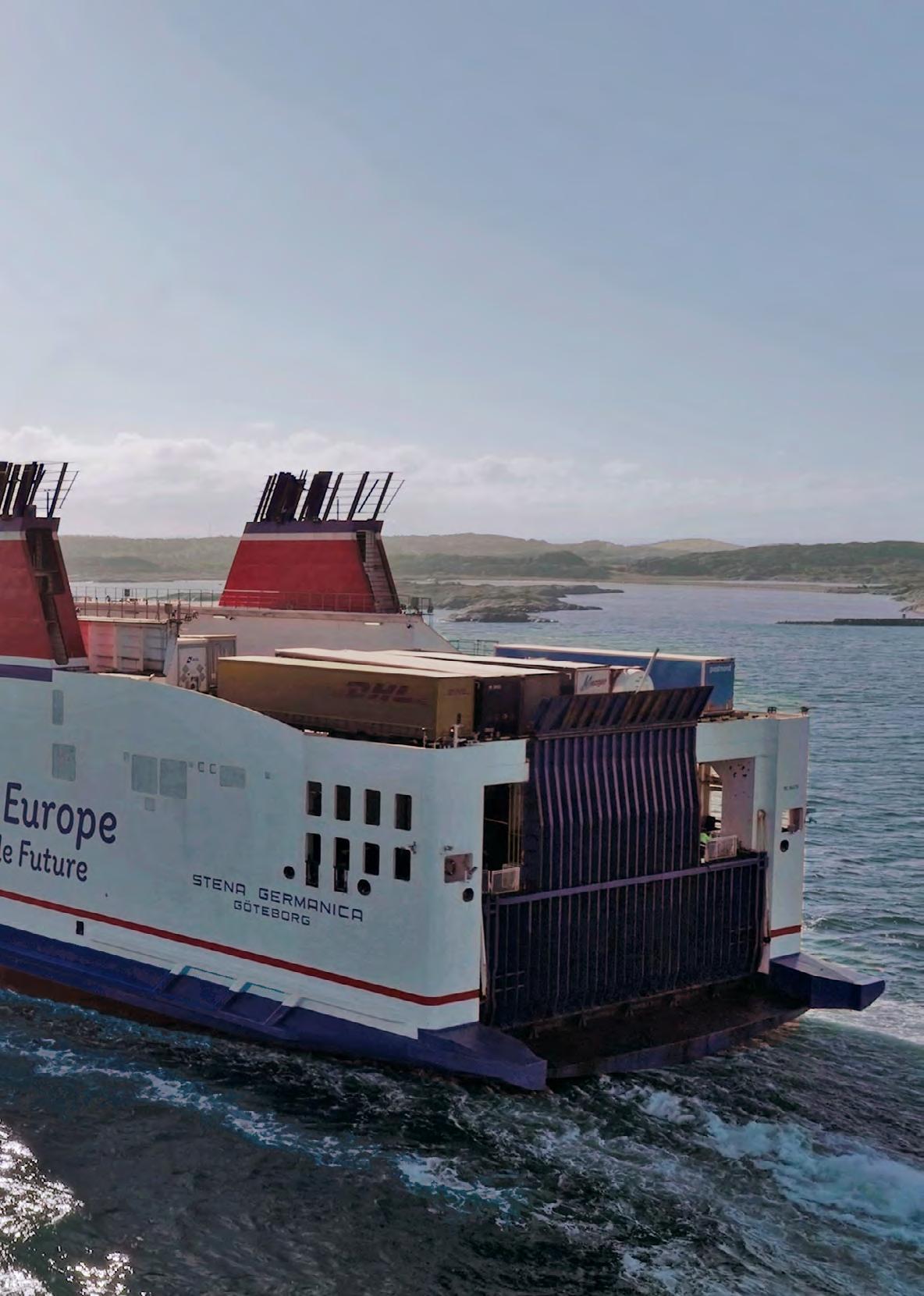
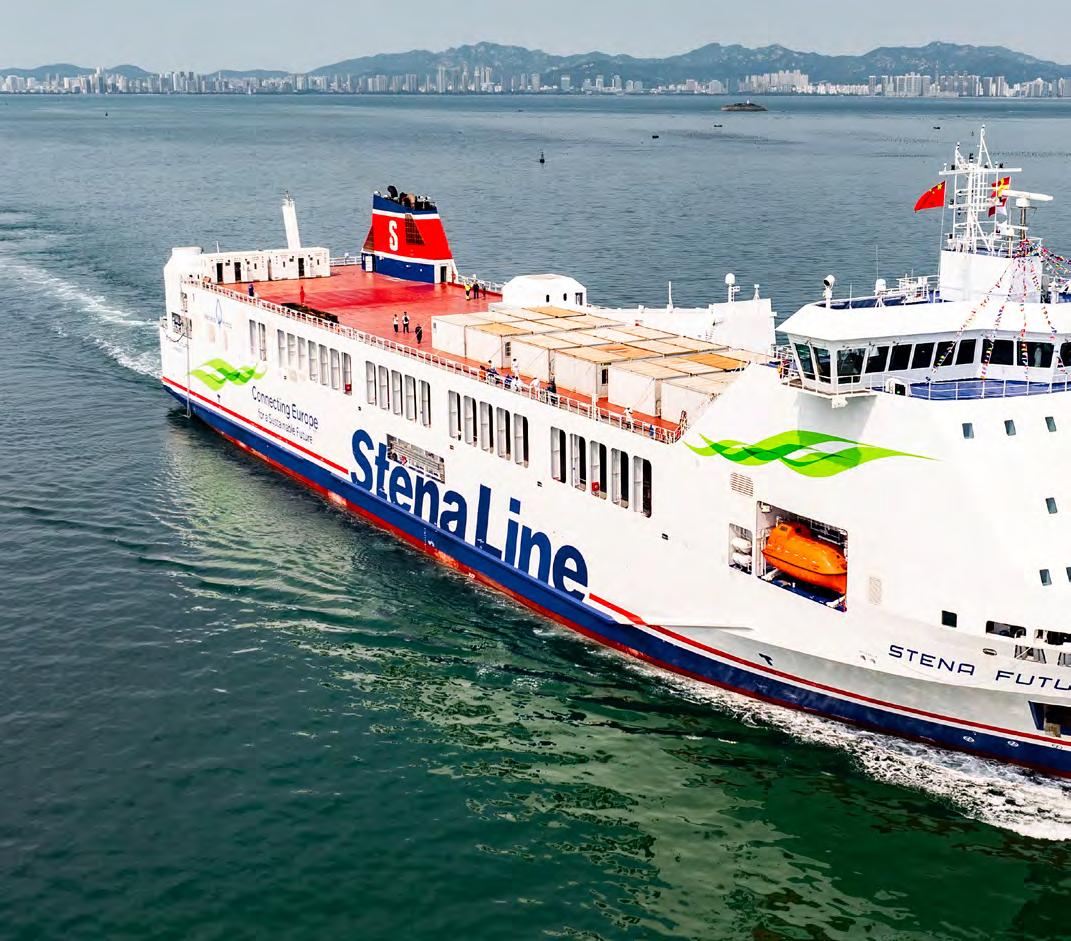
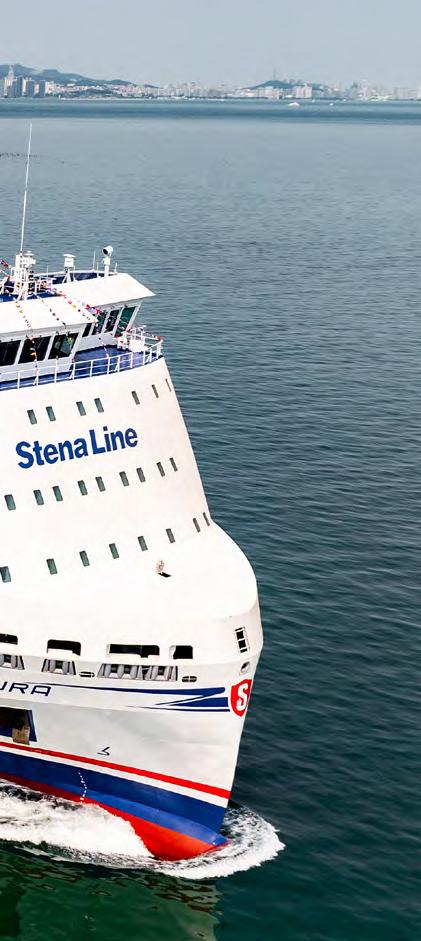
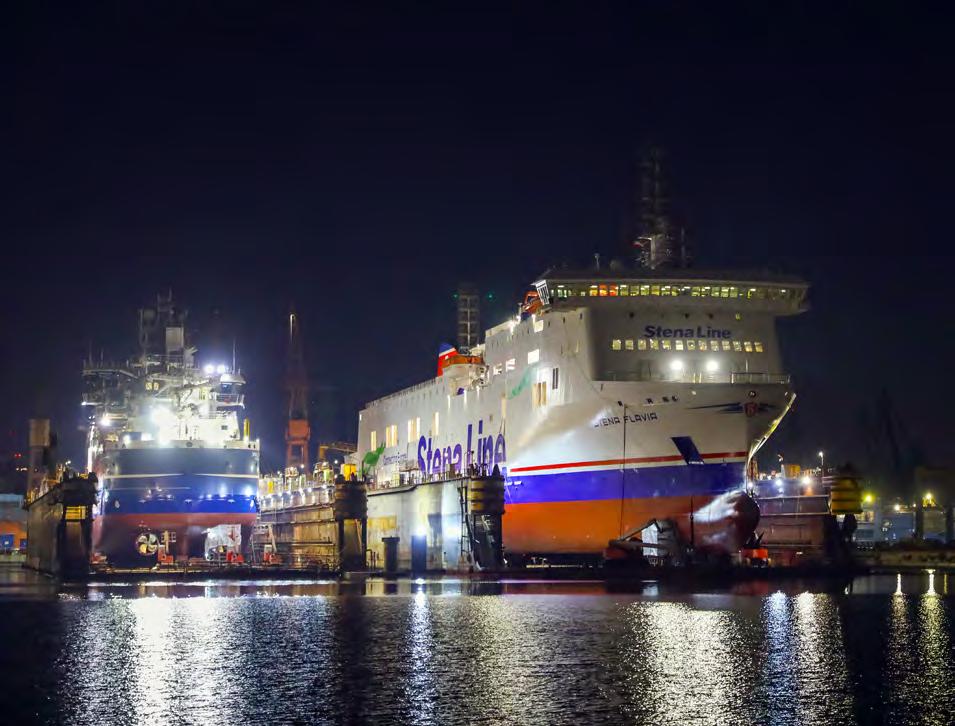
Digital twins are helping Stena Line get closer to its sustainability goals
Digital Twin brings Stena Line closer to sustainability goals, the world’s largest marine battery retrofit, fossil-free and renewable energy projects from Viking Line and Tallink and a step towards CO₂-neutral propulsion by Everllence.
By creating a digital twin of its vessels within an EU-funded project, the company can simulate technical solutions in advance, to reduce fuel consumption, cut emissions and lower costs, says Ruihua Lu, Ship Efficiency Expert & Project Leader at Fleet Operations Digital, Stena Line. “I really like this opportunity,” he adds. “We can see some actual push in digitalisation with the support of this project.”
The purpose of the EU-funded Twin Ship Horizon Europe Project is to bring together different actors in the shipping industry to collaborate on an open-source digital platform. This
Below:
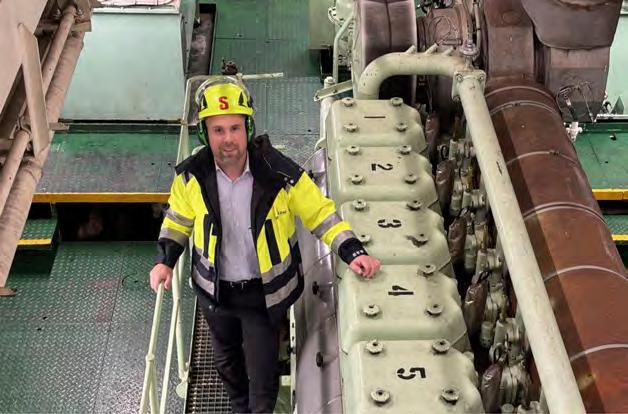
Above: Richard Rindevret leads Stena Line’s Mechanical Optimisation Projects
A vessel can have a lifespan of 30 to 50 years
platform will be fed with data and enhanced through AI and advanced machine learning. Within the platform, digital twins or virtual models of ships will be created. Using both collected measurements and theoretical calculations, the models make it possible to simulate scenarios, evaluate the effects of new technologies and support operational decision-making to reduce fuel consumption and emissions.
Stena Line and Stena Teknik are jointly participating in the project to leverage each other’s experience, expertise and measurement data, and to bring back as much knowledge as possible to the Stena sphere. The project has been
running for one year and will continue for another two.
Nicolas Bathfield, Project Manager at Stena Teknik, explains that the Twin Ship Project consists of two main parts: Modelling and simulation
• Building digital twins that can be used to analyse, for example, fuel savings from different measures on the vessel.
• Providing the ability to test hypothetical scenarios for vessel improvements, such as installing sails or converting to methanol engines.
Operational decision support
• Developing a system that helps vessel operators make better decisions regarding routing, speed and trim.
• Integrating weather data and onboard measurements to optimise fuel consumption.
In addition to enhanced capabilities for analysing data and supporting the transition to more sustainable shipping, Bathfield highlights the importance of standardising signal names and data formats across the organisation.
“The most exciting part of the project is that it accelerates our digitalisation and forces us to organise the data we already collect and make it accessible across the entire organisation,” he explains.
THE PURPOSE OF THE EUFUNDED TWIN SHIP HORIZON EUROPE
PROJECT IS TO BRING TOGETHER DIFFERENT ACTORS IN THE SHIPPING INDUSTRY TO COLLABORATE ON AN OPENSOURCE DIGITAL PLATFORM.
Ruihua Lu, Ship Efficiency Expert & Project Leader at Fleet Operations Digital, Stena Line
Nicolas Bathfield, Project Manager at Stena Teknik
Ruihua Lu, who has extensive experience participating in EU-funded projects, initiated Stena’s involvement in the Twin Ship Project. He is enthusiastic about the many opportunities it provides. “This project is quite beneficial for our decarbonisation roadmap,” says Lu. “We can simulate different options for each specific ship to predict ship performance more accurately.”
“With the support of this project, Stena Line and Stena Teknik are more closely related and we collaborate in depth… it’s real collaboration now,” he adds.
Behind the scenes
The journey toward reducing CO₂ emissions by 30% by 2030 is ongoing and happening on many fronts across Stena Line. A wide range of technical upgrades and innovations on its vessels are bringing it closer to that goal every day.
New ships and innovative concepts featuring the latest sustainability technology and striking design often capture attention and become symbols of the company’s environmental ambitions. But just as important are the many initiatives quietly taking place across Stena’s existing fleet – work that has a significant impact on reducing its environmental footprint.
“A vessel can have a lifespan of 30 to 50 years,” explains Richard Rindevret, Fleet Project. “During that time, technology and regulations change a lot. That’s why we constantly need to adapt with new technical solutions along the way.”
Smart engineering that cuts emissions and saves energy
Within Stena Line’s Fleet organisation, around 50 project initiatives are currently underway across six teams, all part of Stena Line’s Decarbonisation Roadmap 2.0 and focused on finding ways to save fuel and energy – reducing both emissions and costs. Rindevret, who leads Mechanical Optimisation Projects, shares five examples.
1. Compressed air compressor retrofit
“By replacing the air compressors onboard, we can both match air
production to actual demand and have the compressor run at optimal speed at all times. This upgrade cuts electricity use by almost 50% and will be rolled out across 20 vessels.”
2. Absorption chiller retrofit
“Surplus heat generated onboard is reused to produce cooling. This solution reduces electricity consumption for cooling by more than 90% compared to conventional chillers. It will be installed on five vessels, with the first implementation planned for spring 2026.”
3. Green filter systems retrofit
“Conventional purifiers used for removing water and particles from lubricating oil are being replaced with filters made from surplus wool. Unlike separators, which require oil to be heated to 90-95°C, the new filters don’t need preheating, which achieves over 90% lower power use compared to conventional separators. They also eliminate sludge, the residual waste product. The new system will be installed on 23 vessels.”
4. Fuel valve optimisation
“Installing Autosync injectors, which inject exactly the right amount of fuel needed at the exact right time, results in an up to 4% reduction in fuel consumption, cleaner combustion and lower exhaust emissions. Part of a pilot study, the system will be installed on the Stena Adventurer and hopefully rolled out across more vessels later.”
5. Waste heat recovery
“Excess heat is recovered to generate electricity and/or heating. By installing an exhaust gas boiler on the auxiliary engines, surplus heat can be extracted while the vessel is in port, and be used to produce steam, which in turn heats the vessel or generates electricity. The system will be installed on Stena Scandica as part of a pilot study. The savings are substantial: each year, the measure reduces CO2 emissions equivalent to 11 round trips on Stena Scandica’s Nynäshamn-Ventspils route. The system will hopefully be rolled out across more vessels after a verification period.”
Passion & teamwork
Many small projects like these add up to major savings and real progress. But how do the ideas come to life? According to Rindevret, engagement throughout the entire organisation is a big part of the answer.
“You have to be passionate about it. The best ideas can come from anywhere, it’s about capturing them. Part of the job is staying curious and keeping an eye on what’s happening in the world, like attending technology fairs. We also get approached by suppliers developing new solutions. This is a living project – it constantly needs fresh ideas – it’s also about educating the crew and getting everyone to pull in the same direction.
“Projects that were not economically viable a few years ago can now make strong financial sense as higher oil prices and stricter penalties change the equation. At the same time, many established technologies have advanced significantly, becoming far more efficient and effective than before.”
A key advantage is also the collaboration within the Stena Group, which includes companies
at the forefront of ship technology development.
“By working together within the Stena family, with Stena RoRo and Stena Teknik, we can align our efforts and move forward as one,” Rindevret concludes.
LARGEST BATTERY RETROFIT
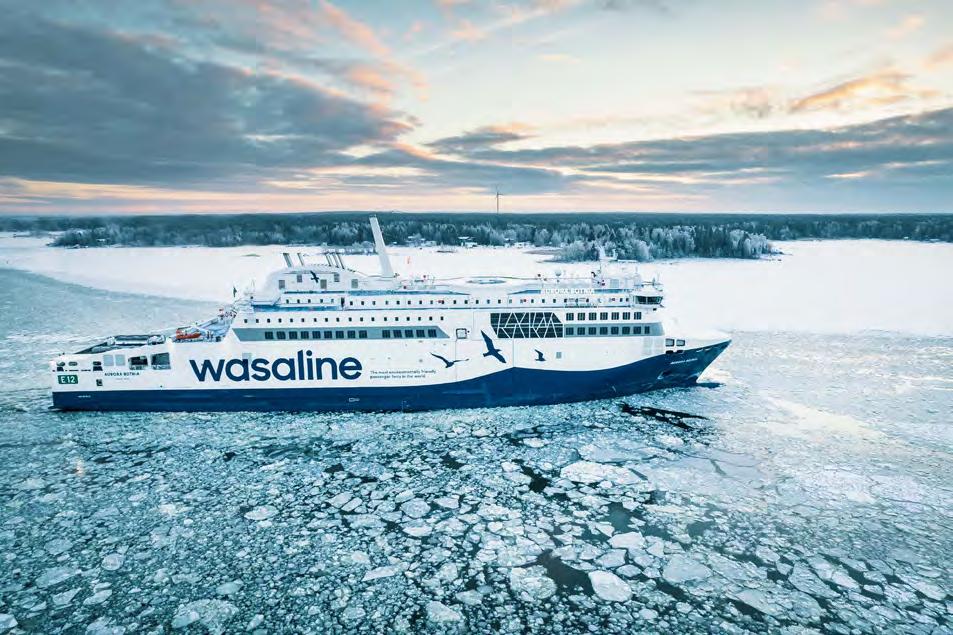
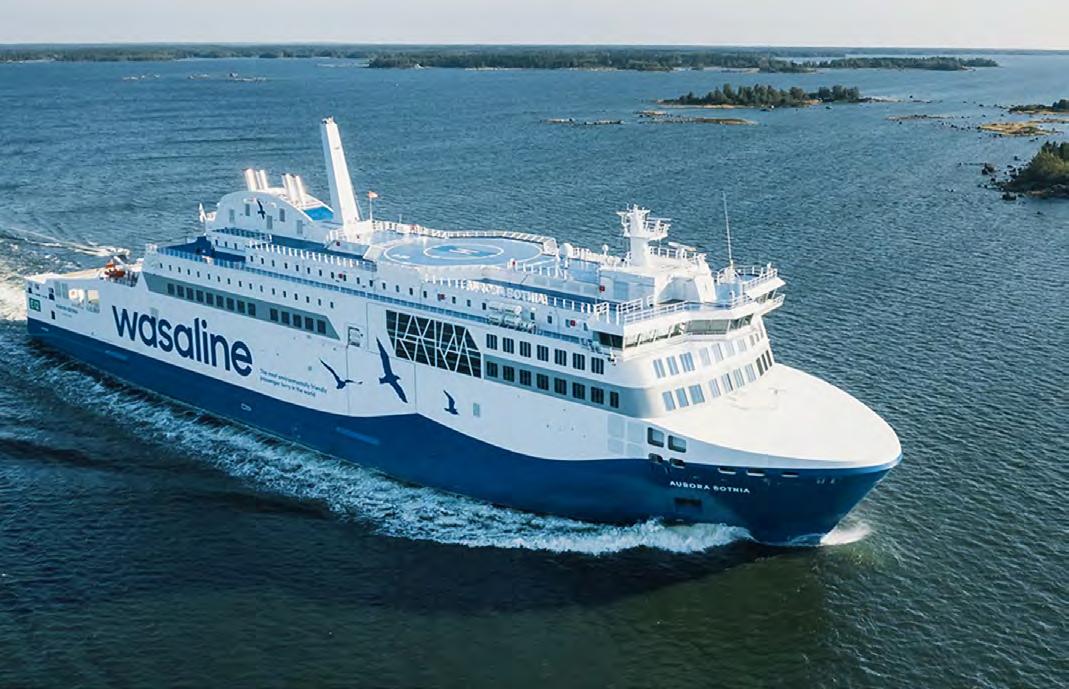
AYK has successfully installed the world’s largest marine battery retrofit to date on Wasaline’s RoPax ferry Aurora Botnia. Marine battery technology is advancing rapidly, and this retrofit demonstrates what is now commercially viable for hybrid-electric vessels.
The upgrade was started in normal operation and finalised at the Turku Repair yard in Finland. The vessel is now back in service operating an all-yearround service between Finland and Sweden. The upgrade has seen AYK Energy install its AYK Pisces+ battery system, which is five times more powerful than the existing battery, boosting electric power to 12.6MWh from the previous 2.2MWh system.
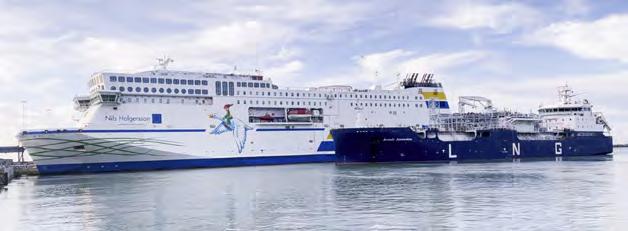
Chris Kruger – AYK founder
Wasaline’s RoPax ferry Aurora Botnia
The Aurora Botnia operates the battery system in combination with Wärtsilä dual-fuel LNG/LBG engines. AYK founder Chris Kruger confirmed that the new AYK battery system exceeds the previous biggest retrofit, on the cruise ship Aida Prima, by about 500kWh.
“AYK is delighted to undertake this groundbreaking upgrade for Wasaline,” Kruger said. “Our companies share a passion for innovation and decarbonisation. It is especially pleasing for AYK to deliver this project on time and on budget. The time for electric vessels has come.”
Improving technology
“Marine battery technology is improving so fast with superior levels of energy density, safety and cost savings,” explains Kruger. “The Aurora Botnia retrofit shows what is possible. Hybrid ships have a very big future, not least because the ROI is so fast. Battery systems can pay for themselves within just a few years in fuel savings.”
From the initial planning of Wasaline’s Aurora Botnia, the shipping line set the target of achieving fully carbon-neutral operations by 2030, but they achieved it in 2025 by starting using biogas.3
“The Vaasa-Umeå route is the first international green shipping corridor in operation,” explains Peter Ståhlberg, Managing Director of Wasaline. “There’s growing demand for environmentallyfriendly transport in Europe. The entire transport chain can be carbon-neutral today. Expanding our battery capacity with AYK Energy is a major step that allows us to make our vessel even more sustainable. Our collaboration with Finland’s and the region’s energy clusters makes innovative solutions like this possible.”
Surge in demand
The latest delivery comes as fastgrowing AYK is seeing a surge in demand for its batteries across the maritime industry, with the manufacturer supplying cruise ships,
icebreakers, ferries, workboats and even large container vessels as part of their power mix.
In the last year, AYK has successfully installed some of the biggest marine battery systems ever built, including two 12MWh Orion+ batteries for Brittany Ferries’ hybrid-electric vessel Guillaume de Normandie and its sister ship SaintMalo. AYK further struck a deal to supply a 6MWh battery for the world’s first battery-methanol tug for Svitzer.
FOSSIL-FREE PROJECT
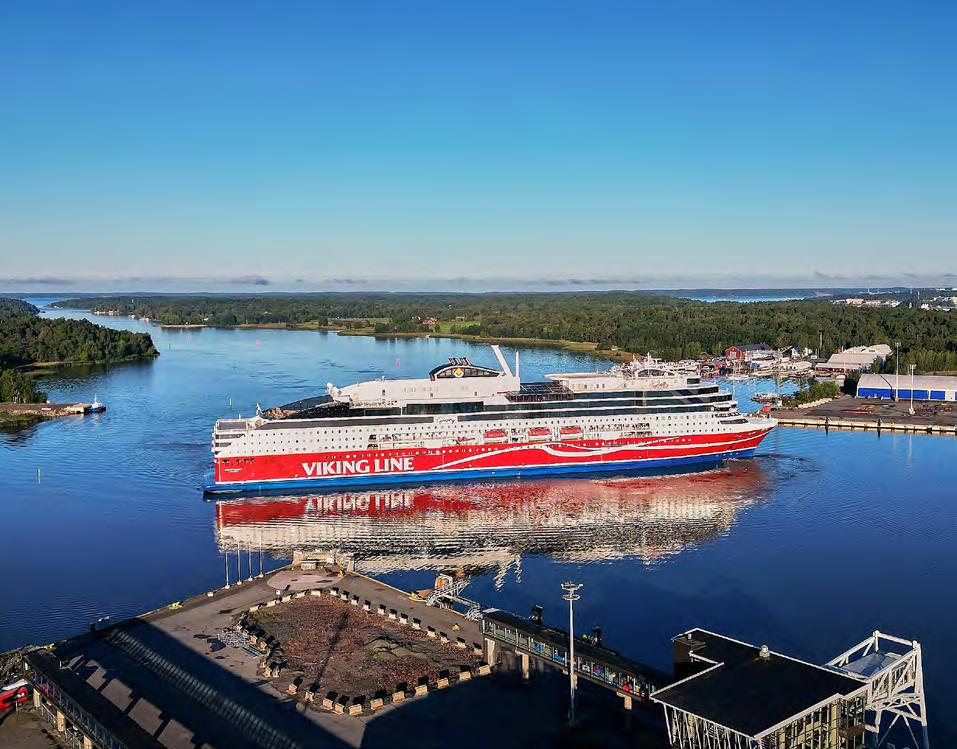
Viking Line, Port of Turku and Ports of Stockholm are running a joint project with the aim of establishing a fossil-free shipping corridor between Stockholm and Turku by 2035. Two years into the project, concrete progress has been made on biofuel, onshore power and zero-emission targets in ports.
Since the project started on 6 February 2024, the parties have laid a solid foundation and deepened the collaboration on both technical solutions
and joint planning. A joint roadmap has been developed and adjusted over time.
On the project’s two-year anniversary, the parties gathered aboard the Viking Glory ferry to discuss the results achieved, lessons learned, remaining challenges and future opportunities.
“The collaboration on the green corridor is a clear example of how Viking Line is driving the transition to emission-free shipping,” says Marcus Risberg, CEO of Viking Line. “In just two years, we have taken major steps forward, not least thanks to our investment in renewable biogas. But the work requires continued commitment and close cooperation between shipping companies and ports, as well as contributions from politicians, decision-makers, authorities and relevant companies.”
“We are proud of the concrete progress made during the first two years of the Green Shipping Corridor collaboration,” says Erik Söderholm, CEO of Port of Turku. “The investigation and planning work for onshore power has progressed
as far as we have been able to prepare for future solutions, with pipelines being built as part of the Ferry Terminal Turku project. Another important milestone is the launch of our first public charging station for heavy vehicles in Finnish ports, at our truck parking area.”
“The City of Stockholm has high climate ambitions, and shipping is crucial to the transition to fossil-free transport,” says Deniz Butros, Vice Mayor for Housing and Real Estate Stockholm and responsible for Ports of Stockholm.
“The task of ports is to make fossilfree alternatives available, and the Green Shipping Corridor project is truly at the forefront of this. I hope that our long-term strategic work on the port’s electricity supply and electricity infrastructure will inspire the entire shipping industry.”
Prioritised measures
During the first two years of the project, the parties have identified, prioritised and gradually worked on the most
important goals and measures to reduce carbon dioxide emissions from shipping. The work is based on a joint project plan that is continuously updated and includes the following initiatives:
Viking Line
• Preliminary studies of battery installations on the ferries Viking Grace and Viking Glory
• Installation of Elogrids – a mesh grid installed on ship hulls to reduce water resistance and improve fuel efficiency. By optimising water flow and reducing turbulence, the technology contributes to lower energy consumption
• Tenfold use of renewable biogas by Viking Grace and Viking Glory in 2025 compared with 2024
• Ensuring continued high levels of biogas use on ships (50% throughout the first half of 2026)
• Increased sales of fossil-free travel on all ships.
Port of Turku
• Study and pilot project for onshore power supply at the quay
• Zero emissions from Viking Line ships at berth – necessary onshore power infrastructure
• Zero-emission port facilities for all vehicles – charging infrastructure
• Opportunity for shipping companies to bunker sustainable fuels – Gasum with biogas.
Ports of Stockholm
• Target: Zero emissions from Viking Line ships at berth
• Collaboration with external actors for sustainable transport to and from the port
• Opportunity for shipping companies to bunker fossil-free fuels.
Parties gathered aboard the Viking Glory ferry to discuss the results achieved
TALLINK’S SHUTTLE TO RUN ENTIRELY ON RENEWABLE ENERGY
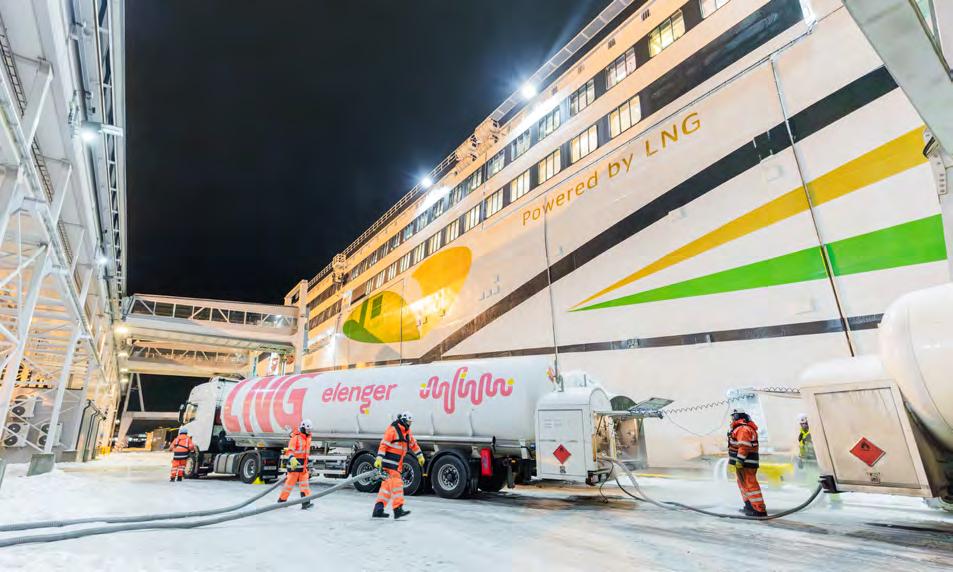
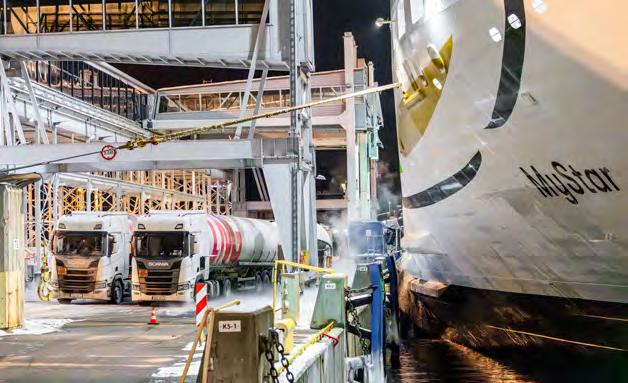
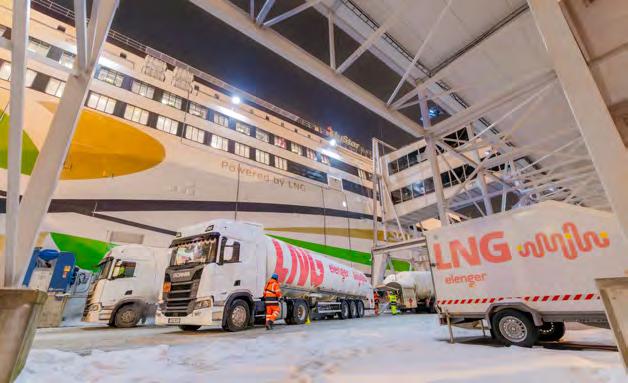
Tallink’s shuttle ships on the Tallinn–Helsinki route are making a big leap towards using cleaner fuel. Soon, they will be fully powered by renewable energy. In January, 74% of the fuel used by Megastar and MyStar was liquefied biomethane (LBM). The company aims to replace its entire LNG demand with LBM in the near future.
“The Megastar and MyStar, which operate with the busiest schedule between Tallinn and Helsinki, are real examples of how cleaner maritime transport is not just a topic for the future, but a reality today,“ says Paavo Nõgene, CEO of Tallink Grupp. “By switching to biofuel, we have created the greenest bridge across the Gulf of Finland. For Tallink, this is not just a change of fuel type, but a longterm strategic step. We are pleased that our partner Elenger has secured the necessary fuel quantities. If the price and availability of fuel remain favourable, we will continue to use liquefied biomethane in the long term,” he confirmed. The LBM for Tallink’s shuttle ships is supplied by Elenger.
Using fuel produced from renewable raw materials allows Tallink Grupp to meet the European Union’s and the International Maritime Organization’s increasingly stringent greenhouse gas reduction requirements. A complete transition to LBM will reduce GHG emissions by an estimated 75% compared to the use of fossil fuels.
TOWARDS CO₂NEUTRAL PROPULSION
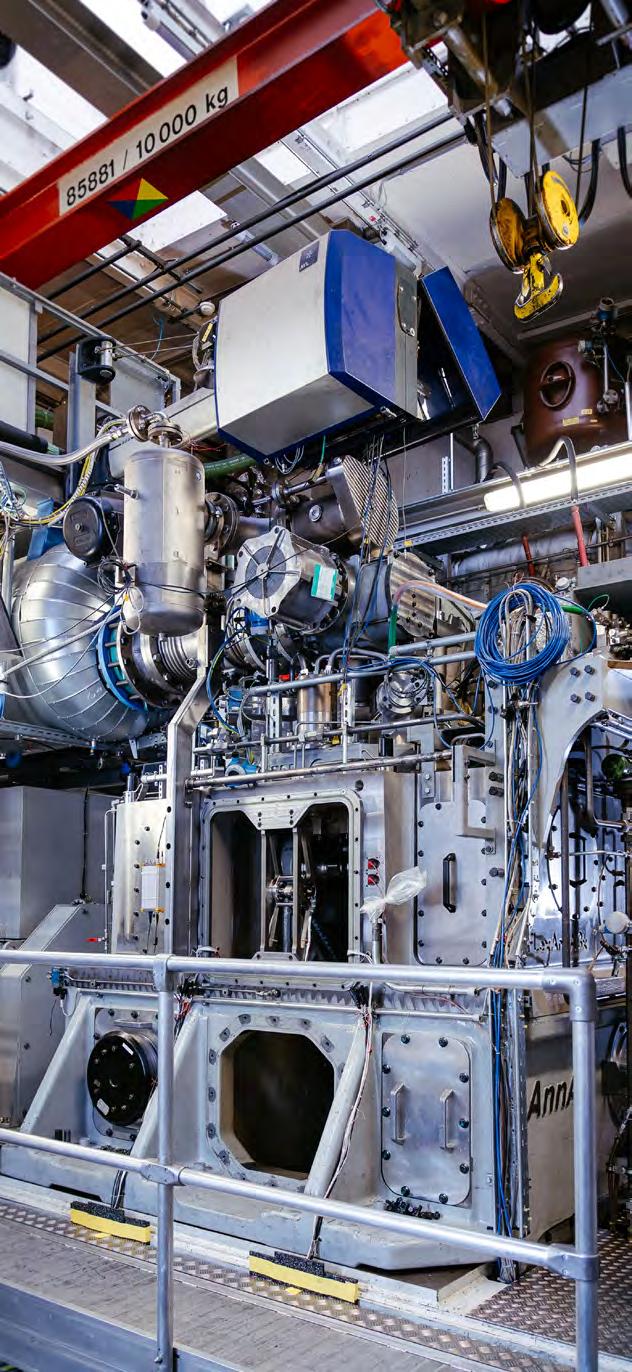
Everllence, formerly MAN Energy Solutions, has taken a step towards the development of CO₂-neutral propulsion systems with the announcement that a research engine test bench at its Augsburg site has been successfully upgraded to enable hydrogen combustion.
The new development took place under the umbrella of the ‘HydroPoLEn’ project, an Everllence partnership with industry leaders and research institutes. The project is supported by funding from the German Federal Ministry for Economic Affairs and Energy within the framework of the Maritime Research Programme.
HydroPoLEn is focused on creating sustainable propulsion solutions for the maritime sector, addressing the urgent need for environmentallyfriendly technologies in global shipping. Based on investigations, the project has designed and successfully tested a combustion process, mechanical components and parts specifically for hydrogen operation. In particular, the newly-developed combustion process enables a significant increase in power density under hydrogen operation.
Project partners include Everllence, WTZ GmbH, NMA at the Technical University of Munich and Tenneco, with Carnival Maritime acting as associated partner.
Technology hub
A dedicated hydrogen infrastructure has been set up alongside the project in Augsburg, representing a significant milestone for the site. This infrastructure not only supports current research but also positions Augsburg
Everllence has upgraded its research engine test bench at Augsburg to enable hydrogen combustion
as a key hub for developing future technologies.
“We are still at an early stage in terms of developing a complete propulsion solution for the market, but this news augurs well for the future,” says Dr Cornelius Wagner, HydroPoLEn Project Manager. “Hydrogen poses significant challenges for engine operation and requires optimal adaption of safety systems and components for it to reach maximum potential. With these key challenges now addressed, hydrogen is moving closer to becoming a longterm solution for the defossilisation of passenger ships.”
Propulsion technology race
“In the race for future propulsion technologies in the maritime sector, hydrogen has a decisive role to play alongside ammonia and methanol,” explains Dr Matthias Auer, Head of Performance & Emissions, Four-Stroke R&D, Everllence. “Since no single
technology will likely prove optimal for all applications in the foreseeable future, companies must remain flexible and evaluate all options. Hydrogen will be an essential consideration in this context.”
“With HydroPoLEn, we are taking another, major, step forward toward climate-neutral maritime transportation,” says Dr Alexander Knafl – Senior Vice President R&D Four-Stroke, Everllence. “Our hydrogen engine demonstrates that ingenious engineering is a key element for sustainable, carbon-free propulsion, providing the foundation for the next generation of marine mobility. We are extremely proud to drive forward solutions that unite environmental responsibility with strong industrial innovation.”
Everllence further states that the new development underscores its commitment to innovation and sustainability, paving the way for cleaner and greener propulsion systems in maritime applications.
BUSY in the BALTIC
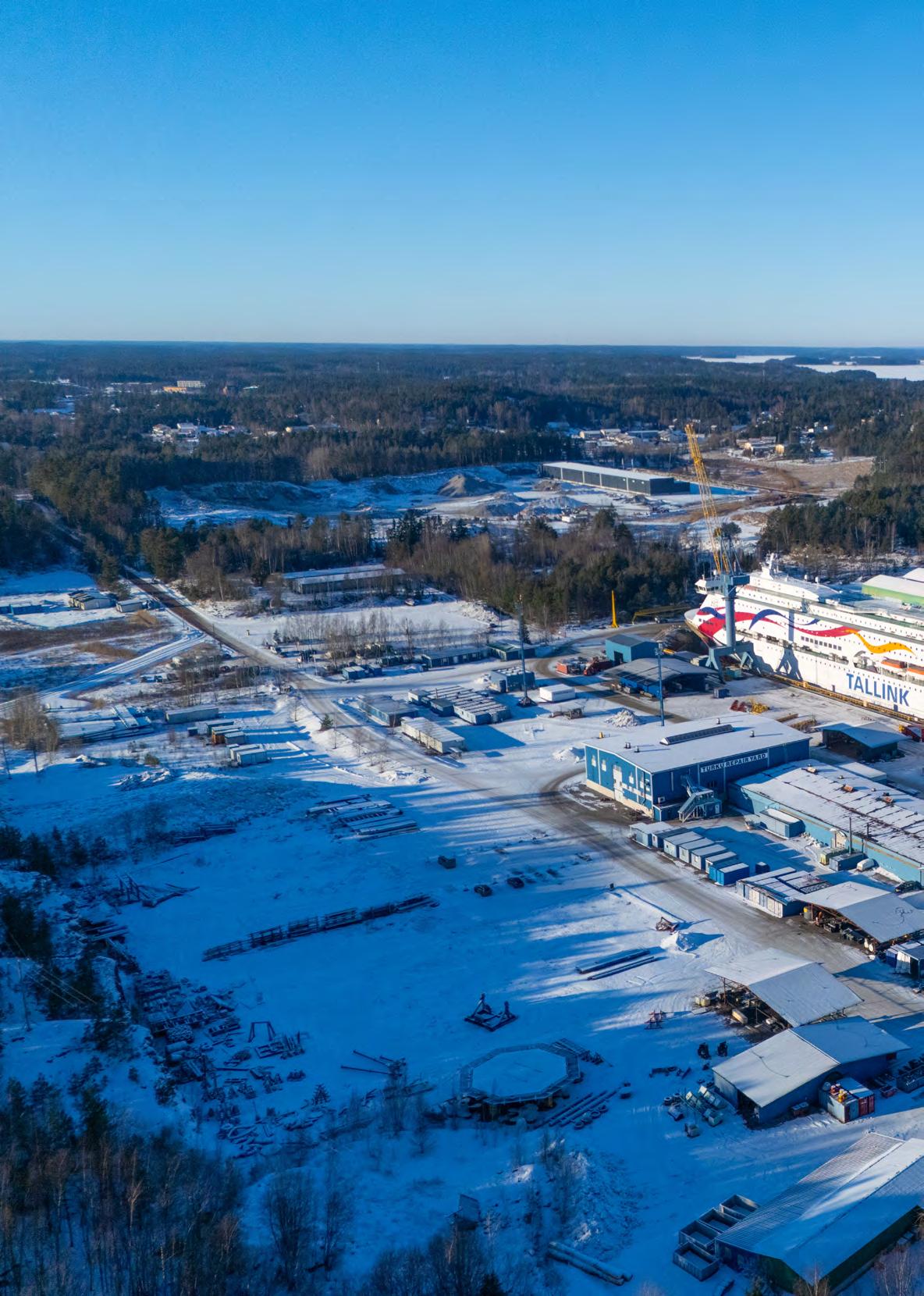
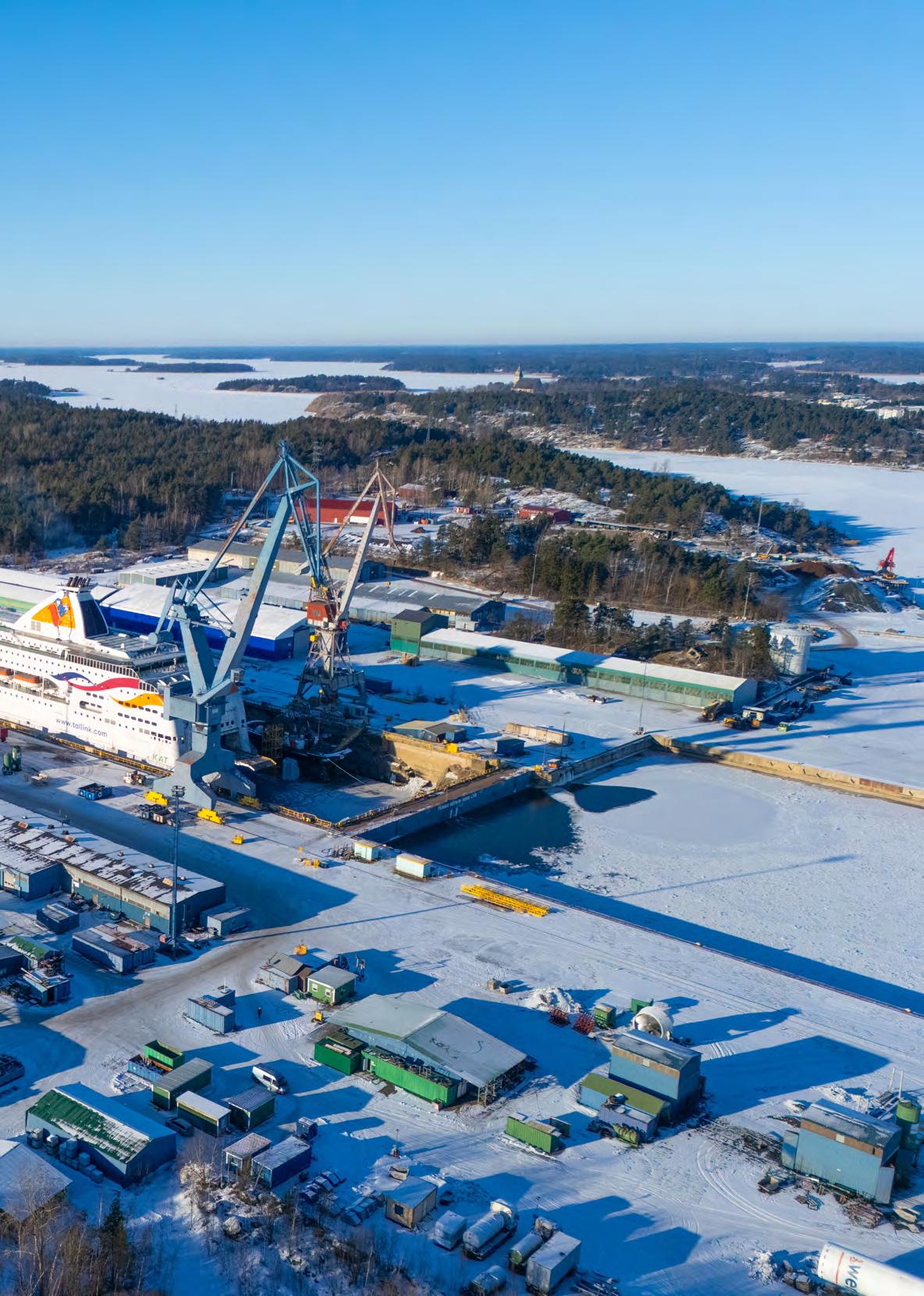
The ferry repair season in full swing at BLRT
Ferry repair season in full swing at BLRT, repairs and retrofits at Remontowa, a strong docking schedule for Oresund DryDocks and a wintry bow thruster replacement by Hydrex.
When ferry season is in full swing, everything is on the move. However, winter tells a different story, with routes quieter and lower passenger volumes, and ferries get ready for much-needed planned maintenance.
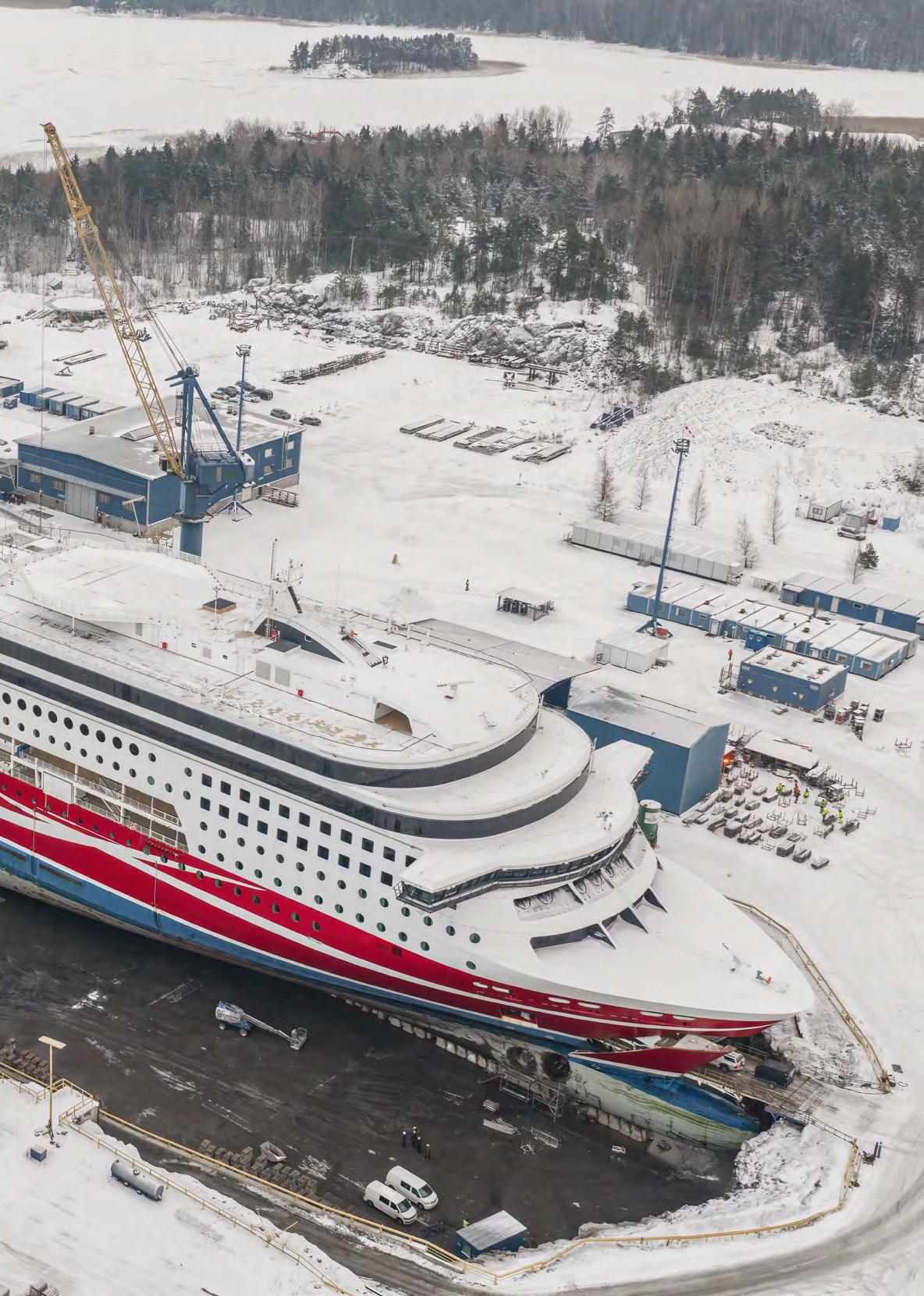
When Viking Line’s Viking Grace arrived at BLRT Repair Yard Naantali, Finland for its scheduled docking, the focus was clear: careful maintenance of critical systems to ensure safe, efficient and reliable operation.
The most important measures were centred on systems below the waterline, including rudders, the propeller shaft system and thrusters, which form the backbone of the vessel’s manoeuvrability and propulsion. In parallel, the vessel’s bottom was painted to strengthen corrosion protection and support optimised fuel consumption, an essential factor in everyday ferry operations.
Key control systems serving the RoRo equipment and the HI-FOG sprinkler system were replaced, cargo handling equipment on the car deck was maintained and the electrical system underwent planned review and servicing covering generators, bow thrusters and propulsion engines. Together, these works support stable operation, redundancy and onboard safety.
A strong emphasis was placed on energy optimisation, with system adjustments aimed at ensuring efficient performance, reducing environmental impact and maintaining a high level of operational safety until the vessel’s next docking. Touch-up of the vessel’s exterior completed the maintenance package, restoring protection where it matters most.
Structural upgrades
After completing a maintenance period, Tallink Grupp’s Victoria I has returned to service, ready for another busy season.
The team at Turku Repair Yard carried out a comprehensive scope of work to ensure safe and reliable operation. The project included both structural upgrades and critical machinery maintenance.
Work covered the installation of a new passenger entrance on Deck 7, underwater hull surface treatment, propeller shaft seal replacement, steering gear overhaul, CPP hydraulic system overhaul and replacement of two propeller blades.
Additional works included mooring equipment and electrical upgrades, servicing of more than 90 deck and overboard valves and galvanising of worn car deck areas totalling approximately 1,100 m².
Estonian ferry maintenance
After maintenance at BLRT Repair Yards Tallinn, TS Laevad’s Leiger left the shipyard to head back to resume service on the Rohuküla-Heltermaa route.
This winter has tested Estonia’s ferry connections with heavy ice and unusually low water levels, among the toughest conditions in the past decade.
While Leiger was in dock, the route was operated by Regula, which also underwent maintenance at the Tallinn yard in December 2025, ensuring that both vessels are technically prepared to meet demanding winter operations and enabling continuity of service between the mainland and Hiiumaa.
Next in line is the Tõll, continuing BLRT Repair Yards’ cooperation with TS Laevad.
Tallink ferry upgrades
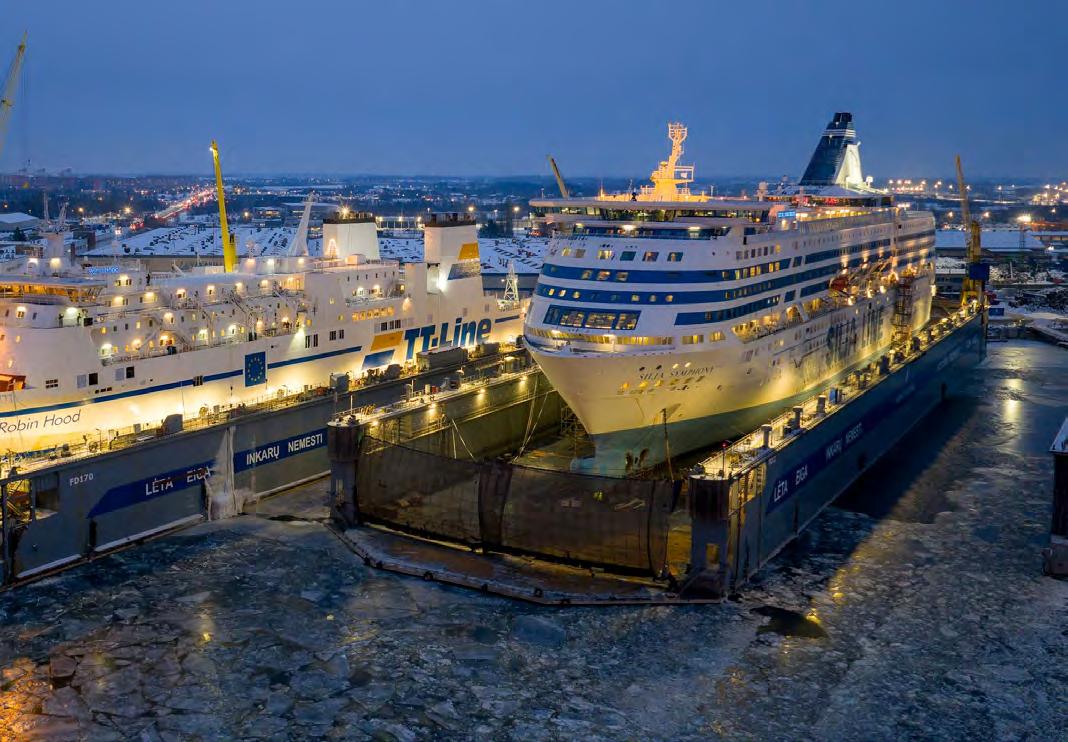
Silja Symphony called at BLRT shipyard in Klaipeda, Lithuania during January for a scheduled dry-docking. The ship’s integrated automation system and navigation systems were upgraded and regular underwater maintenance performed.
“At Tallink, we prioritise innovations that reduce fuel consumption and increase the efficiency of our ships because this directly reduces greenhouse gas emissions,” says Captain Tarvi-Carlos
Tuulik, Head of Ship Management at Tallink Grupp. “For example, in addition to the upgrade of essential automation and navigation system, Silja Symphony will be equipped with the innovative Kongsberg EcoPower control system, which optimises propeller pitch and main engine load and operation, thereby improving the ship’s efficiency and safety of operations.”
Other electronic control systems on the ship, such as the integrated navigation and radar system, the fire detection system and the public address system, were significantly upgraded during regular maintenance. A wifi network covering the cabins and public areas was also installed.
Whilst the ship was drydocked, maintenance was performed on its underwater parts, including the valves, seawater systems, stern thruster and stabilisers. Additionally, work was carried out that cannot be done while the ship is in service. For example, the large window
Robin Hood & Silja Symphony at BLRT Repair Yards Klaipeda
area in the stern of the Silja Symphony has undergone thorough maintenance and renewal of window panels.
“All of this will contribute to ensuring that Silja Symphony is in good shape for its 35th birthday at the end of May 2026 and will continue to offer a pleasant and safe cruise experience between Finland and Sweden for many years to come,” adds Tuulik.
Baltic Queen at Naantali yard
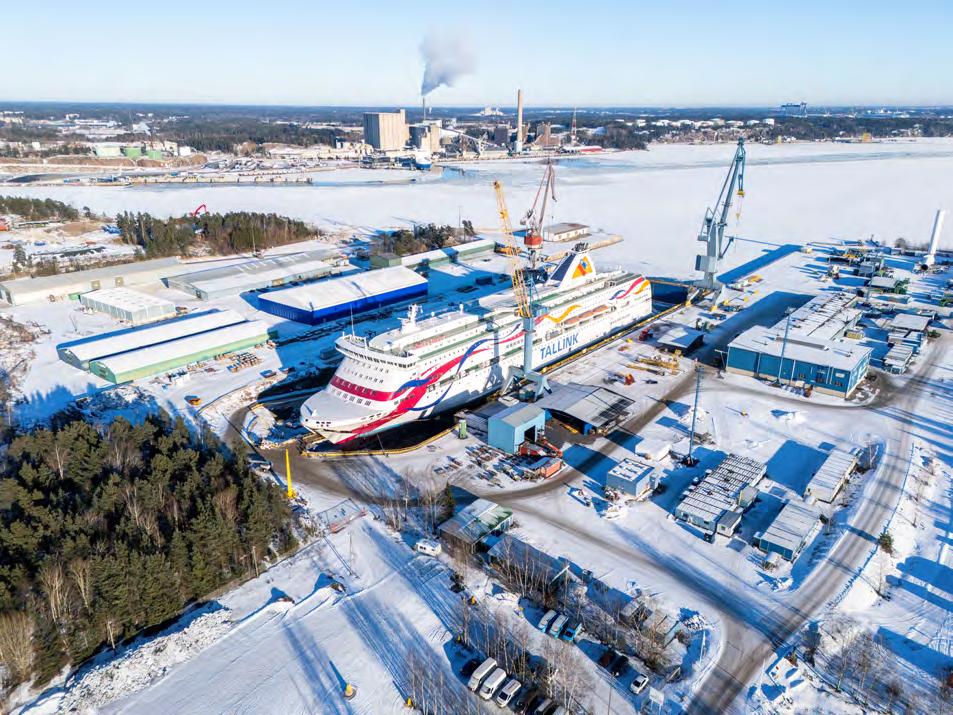
Tallink’s Baltic Queen visited BLRT’s Naantali yard during February for regular technical maintenance. Most of the work focused on the ship’s technical systems. Additionally, the hull was coated with an innovative antifouling paint to reduce water resistance. The vessel last docked at Naantali in September 2023.
Tallink Grupp’s Baltic Queen at BLRT Repair Yards Credit: Karl Kõrgmaa
“To keep our ships in good and safe condition, constant maintenance is essential,” says Tallink Grupp’s Tuulik. “In addition to the daily work and regular maintenance performed by the crew, more thorough maintenance is necessary every few years to maintain and renew the ship’s underwater parts and tanks. This includes the overhaul of all watertight seals and valves and
renewing the innovative paint coating on the underwater hull that reduces water resistance and decreases the ship’s fuel consumption.”
In addition to paint renewal and maintaining the thrusters, the anchor chains were inspected, winches tested and the stabilisers underwent maintenance. Much of the docking work
involved the ship’s auxiliary systems, including cleaning and maintaining the ventilation and potable water systems. Since several passenger areas were updated during the longer docking period in 2023, the scope of work for this period was smaller. However, the passenger sauna area was updated, some cabins recarpeted and some flooring work was done in other passenger areas.
FERRY & RORO REPAIRS AT REMONTOWA
Traditionally, the autumn-winter season sees a high concentration of ferry and RoRo repair projects at Remontowa Shiprepair Yard, Poland, particularly involving vessels operating in the Baltic and North Sea trades.
A broad portfolio of projects carried out in late 2025 and early 2026 highlights both the scale and diversity of work currently undertaken in the European ship repair sector. The docking
programmes ranged from routine class renewals to complex propulsion overhauls, structural modifications and system upgrades, often executed under tight schedules and in demanding seasonal conditions.
Operational focus across the projects remained consistent, with particular attention to propulsion reliability, cargo handling systems and compliancedriven upgrades that reflect evolving regulatory and operational requirements.
Car carriers
The City of Rotterdam underwent its third special survey, continuing a longstanding cooperation with Remontowa. Earlier in 2025, its sister vessel City of St. Petersburg also completed a class renewal in Gdansk, confirming the operator’s continued reliance on the yard for scheduled maintenance.
Work on the City of Rotterdam covered overhaul of the bow thruster, inspection
Baltic Queen visited BLRT’s Naantali yard during February for regular technical maintenance
TAKE A TOUR
SHIP REPAIR & DECARBONISATION SOLUTIONS
Tallinn
Klaipeda
Naantali
of the shaftline and servicing of the main and auxiliary engines. Electrical systems were upgraded to support navigation equipment enhancements, while additional tasks included hull measurements, the renewal of selected structural components and the servicing of lifesaving appliances.
Ferry refurbishment
Brittany Ferries vessels formed a significant part of the programme, reflecting a long-standing cooperation with Remontowa.
The ferry Cotentin underwent an extensive dry-docking period during which the scope expanded well beyond the initial specification. Work centred on propulsion and steering systems, including overhaul of shaftlines, stabilisers and a main engine. A wide range of auxiliary machinery, including pumps, coolers and heat exchangers, were refurbished, whilst piping renewals, valve replacements and steel repairs were also carried out across multiple areas of the vessel.
The RoPax Mont St. Michel underwent a similarly demanding programme, also characterised by a substantial increase in scope during execution. The works involved the overhaul of thrusters, comprehensive servicing of main and auxiliary engines, and the refurbishment of numerous pumps and coolers. Extensive piping renewal, including replacement of a large number of overboard and steam valves, was combined with steel repairs and maintenance works in tanks and machinery spaces, alongside coordinated activities on exhaust systems and associated equipment.
Finnlines
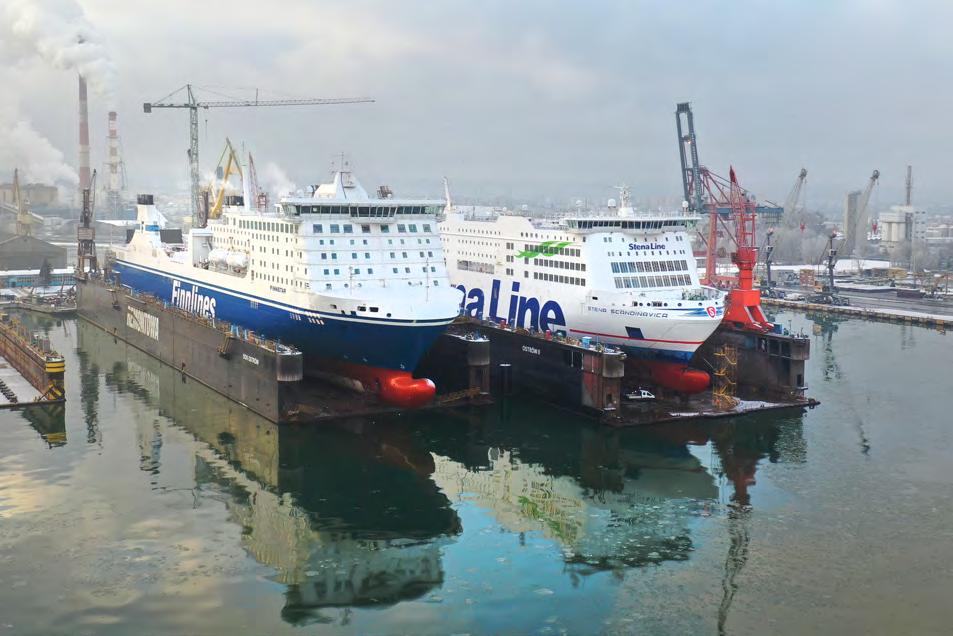
The Finnlines RoPax Finnstar returned for another large-scale repair project, marking her third visit within five years. The docking programme focused on propulsion and steering arrangements, including overhaul of rudder blades, stabilisers and gearbox systems. The latter required extensive dismantling to gain access, followed by rapid reinstallation to meet schedule constraints.
City of Rotterdam underwent its third special survey at Remontowa
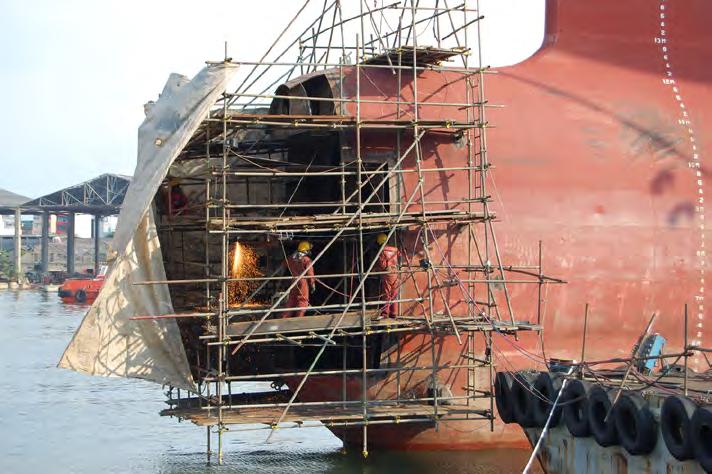
“Drill Ship Aban Abraham” Heli pad removed at afloat at Hambantota Port
Structural repairs were carried out in confined and technically demanding areas, particularly around cargo ramps and machinery spaces. The programme was complemented by cleaning, maintenance and coating works on the underwater hull and selected internal spaces.
DFDS
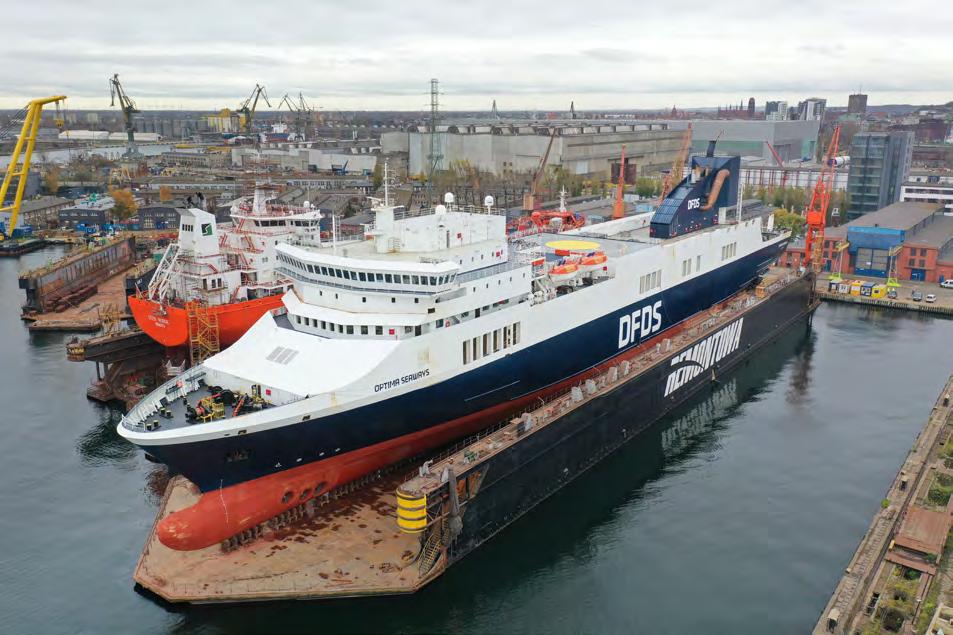
Two DFDS ferries, Princess Seaways and Sirena Seaways, underwent repairs within a tightly coordinated timeframe, combining heavy structural work with targeted system upgrades.
On Princess Seaways, the scope was dominated by extensive steel renewal in cargo decks, tank tops and parts of the superstructure. Propulsion-related work included maintenance of stabilisers, shaftlines and bow thrusters, together with repairs to propeller blades affected by cavitation. Additional tasks covered piping renewals, including exhaust system components, and detailed work on bow door arrangements, requiring careful access planning due to space constraints.
The docking of Sirena Seaways focused on intermediate survey items, including
sealing works on the shaftline, minor stabiliser repairs and servicing of auxiliary machinery. A key upgrade involved installing a new fire line system on open vehicle decks to meet updated safety requirements. Electrical works included the overhaul of multiple motors, while aluminium repairs were carried out in the superstructure.
RoRo modifications
RoRos form another important group within the overall portfolio, with projects often combining structural modifications and propulsion-related repairs.
Stena Line vessels represented another major segment of the programme, with several ferries undergoing a combination of dry-docking, modification and maintenance works.
On Stena Horizon, the primary task was modifying the stern ramp to align with the new terminal infrastructure in Liepāja, Latvia. The ramp was structurally adjusted, including realignment and renewal of hinge arrangements, to ensure compatibility
The Finnstar and Stena Scandinavica at Remontowa
with the new berth geometry. Steel repairs, piping works and maintenance of auxiliary engine systems complemented this.
The docking of Stena Scandinavica focused on propulsion and underwater equipment, including the dismantling of the shaftline, overhaul of rudder systems and the replacement of propeller blades. In parallel, significant piping renewals were carried out on upper decks, alongside electrical maintenance and localised coating repairs.
Stena Germanica underwent classrelated works, including underwater hull preservation and antifouling application. The programme also covered inspection and renewal of shaftline seals, stabilisers and thrusters, as well as maintenance of deck machinery and cargo areas. Steel renewals were carried out across multiple decks, reflecting the vessel’s operational intensity.
The ferry Stena Spirit underwent an intermediate survey focused on hull preservation and propulsion system maintenance. The works included dismantling and servicing of thrusters
and stabilisers, overhauling steering gear components and renewing shaft seals. Additional tasks covered auxiliary machinery, electrical systems and structural modifications, all supported by coating operations performed under controlled environmental conditions.
Lakeway Link & Godby Shipping
A key part of the upgrade of RoRo cargo ship Lakeway Express at Remontowa has been a newly-designed bulbous bow, tailored to the vessel’s operating profile, prefabricated ashore and installed during the yard stay. The vessel has also received new high-efficiency propeller blades, optimised for its speed range and load characteristics. The scope also included an overhaul of stabilisers, repairs to stern ramp components and selected piping works. Standard docking items, such as hull cleaning, renewal of overboard fittings and inspection of anchor chains, were carried out in parallel.
A more extensive programme was carried out on the sister vessel Mistral (Godby Shipping). In addition to bulbous
bow replacement, the vessel underwent significant propulsion and steering system repairs, including overhaul of the stern thruster, shaftline work and rudder repairs. Structural modifications to cargo handling systems included reconstruction of ramp arrangements, while steel renewals were carried out in ballast tanks and adjacent areas. Electrical, piping and auxiliary system works were performed across multiple sections of the vessel.
Polferries upgrade
The ferry Nova Star, previously upgraded at Remontowa for Baltic routes, returned for targeted repairs focused on its bow ramp system. The scope included installing a new bearing element and restoring ramp components to ensure reliable operation.
Additional works covered standard docking activities, such as hull cleaning, renewal of overboard connections and inspection
of anchor chains, alongside boiler testing, cooler inspections and alignment of selected main engine components.
STRONG SCHEDULE AT ORESUND DRYDOCKS
“Throughout 2025 we were engaged in the KBV202 combination vessel project, which was successfully delivered to the Swedish Coast Guard in mid-February 2026,” says Magnus Malmström, Sales & Marketing Manager at Oresund Drydocks. The scope of this project has been comprehensive and included, among other things, the installation of a fully integrated hybrid propulsion arrangement consisting of two main engines (ME), two PTI/PTO generators and two diesel generators.
The vessel has also been equipped with a new integrated propulsion and power management system (PMS), new structural components, new piping systems and upgraded bridge and communication equipment. In addition, extensive interior outfitting and ventilation work was carried out.
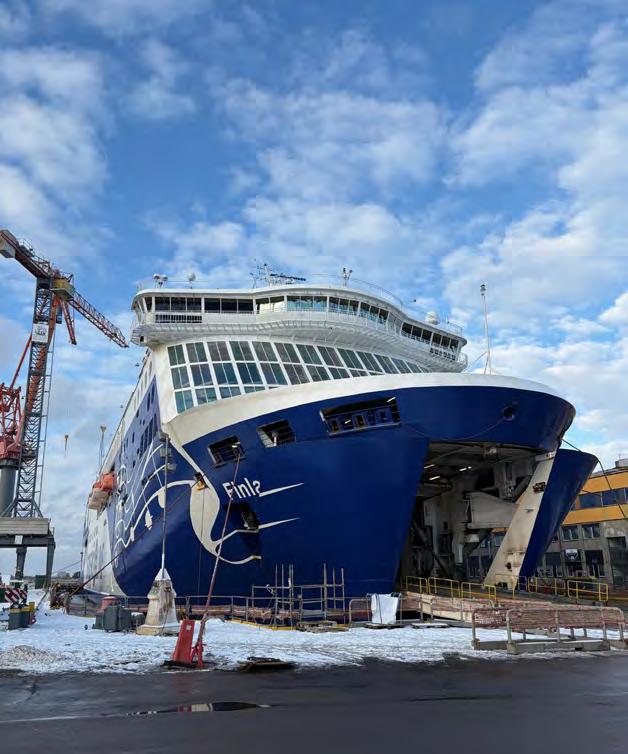
Immediately following the Stena Nautica docking, Eckerö Line’s RoRo passenger vessel Finlandia arrived for a two-week class docking. The project included major deck treatment in addition to steel and piping work. At the same time, the owner carried out significant modification work through a subcontractor, extending and rebuilding an upper deck area to create additional public space. This included the construction of a completely new atrium with structural work and installation of large windows. The project also included completion of structural fire integrity elements such as fire doors and insulation, as well as work on the fire alarm system, sprinkler system and painting.
“After Finlandia, Visby RoRo arrived for its annual docking,” says Malmström. “A major part of this project is the installation of a new hangar deck. Preparatory work is currently ongoing at our western quay, and the new deck structure will arrive within the next few weeks.”
Most recently, the passenger/ RoRo cargo ship Povl Anker from
Finlandia arrived at Oresund for a twoweek class docking
Bornholmslinjen/Molslinjen departed following completion of its class docking. “We are now preparing the dock for Stena Danica, while in our floating dock we currently have Fure Skagen from Furetank,” Malmström told DryDock. “This will be followed by KBV201, which marks the start of a new LTF project for 2026.
“Overall, the docking schedule looks strong for the remaining part of 2026, with several significant projects already confirmed,” he concludes.
WINTRY BOW THRUSTER REPLACEMENT
Hydrex recently carried out an underwater bow thruster operation on a ferry in Stockholm, in the middle of winter. Snowfall and cold temperatures were part of the picture, but that is nothing new for Hydrex. The company is used to working in all kinds of conditions, and with the right preparation weather never has to be an obstacle.
This operation was planned well in advance and was scheduled to take place during a planned break in the ferry’s timetable. That meant that Hydrex could do the work without disrupting the vessel’s service unnecessarily and without the need for a dry dock visit.
Smooth operation
From the start, Hydrex worked closely with the crew to make sure everything aligned with their operational planning. To prepare for the job, the company mobilised a truck fully loaded with equipment from its office in Antwerp, while the rest of the team flew in separately. This approach allowed them to have all specialised tools on site while remaining flexible as to how personnel were deployed.
Whilst one team prepared the underwater part of the job, the remainder handled internal preparations so that once started, everything could move forward efficiently. Working this way allows Hydrex to adapt to the
customer’s needs instead of forcing the vessel into a repair window that does not fit its schedule.
Confident execution
Hydrex has been carrying out underwater bow thruster removals and installations on a regular basis for well over 30 years, so the company knows exactly what is needed and how to execute the work efficiently and safely.
In Stockholm, after removing the tunnel grids, the team disconnected and lifted out the existing bow thruster underwater. A new thruster was provided while the removed unit was sent ashore for overhaul and refurbishment by the owner’s chosen service provider.
Because the thruster was fully assembled and prepared, it could be
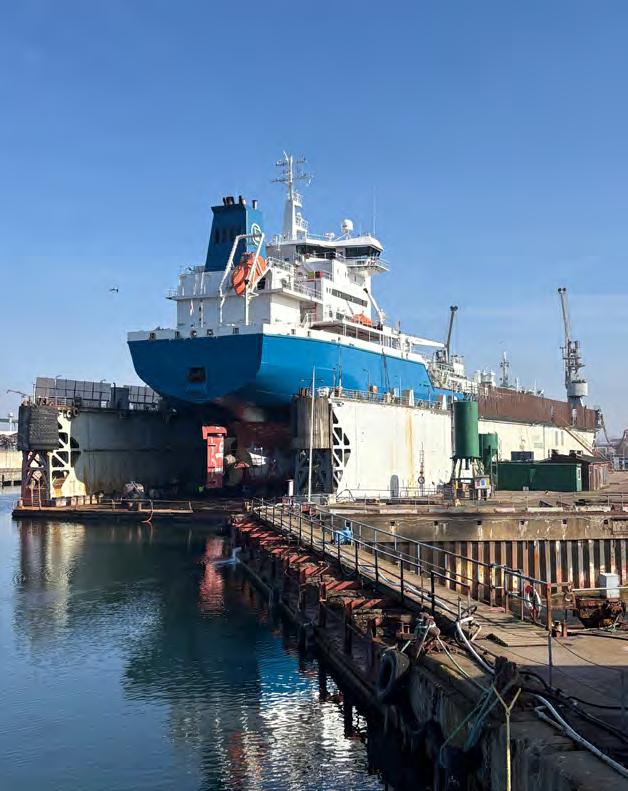
Fure Skagen from Furetank in Oresund’s floating dock
installed in its entirety without the need to create a dry environment in the tunnel as is required when the blades are fitted separately. Once the new thruster was positioned in the tunnel, all connections were secured, the grids were reinstalled, and final checks confirmed that everything was ready for operation.
From the vessel’s perspective, the process was well coordinated and controlled. As the Chief Officer later told Hydrex: “I can only say that I’m impressed by the work and the time
schedule. The only delay we had was from our side when we had some issues removing the studs. For me this was a new experience.”
Delivering in winter conditions
Snowy weather did not slow Hydrex down. Cold water, limited daylight and logistical challenges are all part of the job, and the company is used to adapting as situations change. Extensive experience helps keep operations predictable.
PosiTector ® Inspection
Coating Thickness Probes
n Ferrous n Non-Ferrous n Combination n
Surface Profile Probes
n Depth Micrometer n Replica Tape Reader
Environmental Conditions Probes
n Integral n Cabled Magnetic Probe n Anemometer
n 1/2” NPT n Infrared
Hardness Probes
n Shore n Barcol
Salt Contamination Probe
n Bresle Method
Gloss
n
Ultrasonic Wall Thickness Probes
n Corrosion n Multiple Echo Thru-Paint n Precision
n Low Frequency n Xtreme
Customized
Asia Pacific Maritime preview
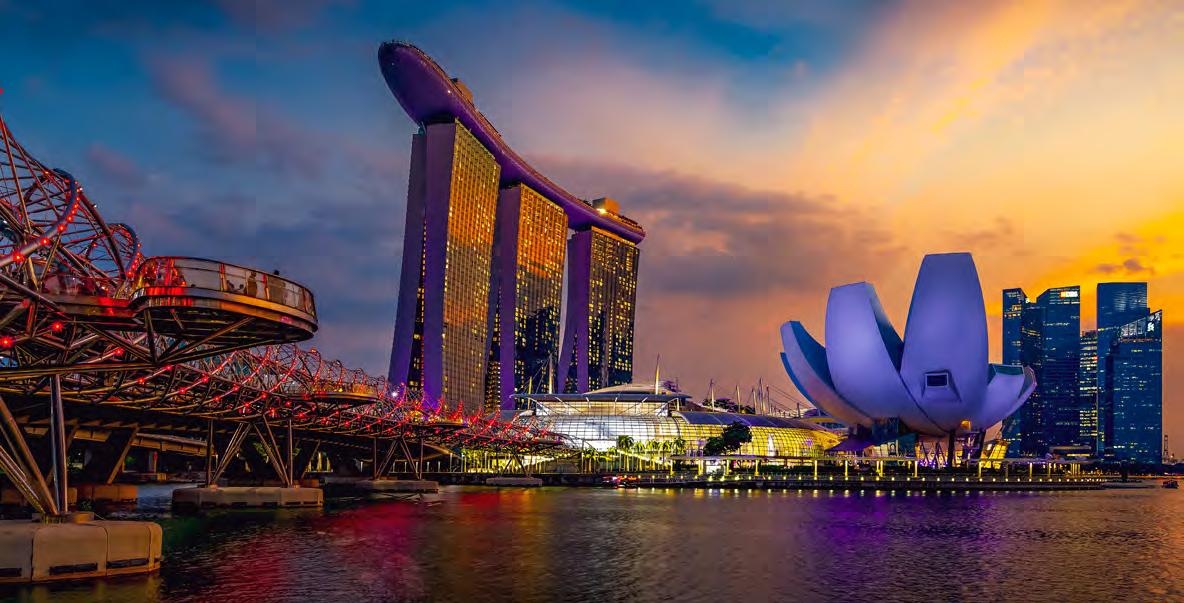
Asia Pacific Maritime (APM), Asia’s premier exhibition and conference for shipbuilding & marine, workboat, offshore and electric & hybrid marine, returns for its 19th edition from 25–27 March 2026 at Marina Bay Sands, Singapore.
With 35 years of excellence, APM is the pre-eminent platform where global solution providers showcase the latest developments in maritime technology and innovation to shipowners, shipyards, ship managers and decisionmakers across Asia and the world.
Anchored by the theme ‘Future of Vessels, Solutions for Tomorrow’, APM 2026 will be the largest-ever edition, bringing together global industry leaders to explore how next-generation energy technologies and innovation are shaping the future of maritime.
The event will spotlight future fuels, electric and hybrid solutions, wind propulsion and AI-driven advancements accelerating maritime decarbonisation.
Official opening
APM 2026 will officially open on 25 March with a welcome address by guest of honour Ang Wee Keong, Chief Executive of the Maritime and Port Authority of Singapore, setting the stage for a record-breaking edition with 800 exhibitors and 20 pavilions.
The opening ceremony is followed by the first keynote panel: The Maritime State of Play & What’s Next for Asia.
The oceans have always connected us – but today, they’re at the centre of a transformation that will redefine global trade and sustainability. Decarbonisation, digitalisation and
shifting trade flows aren’t just industry trends; they’re choices that will shape the next decade. Asia stands at the forefront of this change. In this session, we’ll explore bold ideas and ask: How do we turn disruption into opportunity?
The key discussion points include:
• How do leaders balance short-term cost pressures with long-term goals for decarbonisation and digitalisation?
• What strategic bets on technology and fuel innovation will deliver real competitive advantage?
• How can leadership build resilience and agility to thrive in an era of constant change?
• What role will Asia play in setting global standards and driving the next wave of maritime innovation?
This is followed by a panel discussion entitled Scaling Green Fuels for Net-Zero Shipping.
With the IMO’s revised GHG strategy, EU ETS and FuelEU Maritime reshaping compliance and competitiveness, shipping faces mounting pressure to accelerate its fuel transition. Asia’s central role in shipbuilding, trade and energy supply intersects with Europe’s regulatory-first approach, creating both friction and opportunities. This panel will explore how global ecosystems can align to unlock large-scale adoption of green fuels.
Special surveys in greater focus
The Asia Pacific region still accounts for the largest portion of the global repair market at approximately 65%, but whilst the Baltic region is a relatively smaller component of global ship repair at 5%, about 65% of repair yard calls are from local owners, reports Steve Gordon, Global Head of Clarksons Research.
The flow of ships to the world’s repair yards continued to grow steadily in 2025, with more than 19,000 instances of ships (2,000+ dwt/ gt) visiting yards recorded in the full year, up 2% year-on-year. Meanwhile, 2026 has seen a firm start, with more than 3,000 repair yard visits tracked in January-February (+10% vs 5yr avg. for the two months).
Growing demand for repair work comes on the back of solid overall fleet growth, which reached +4.1%
in 2025, and a rising share of older tonnage (avg. fleet age: now ~18yrs vs 2014 low of ~13.5yrs), supporting an elevated number of 3rd to 5th special surveys. Meanwhile, though work linked to environmental regulations has so far eased from its highs earlier in the 2020s, the flow of work linked to reducing fuel consumption and GHG emissions has shown signs of developing.
Special surveys are currently in greater focus as the ‘wave’ of vessels delivered
Remontowa is one of the Baltic’s most active yards Credit: Remontowa
in the shipbuilding boom of the early 2010s undergo their 3rd survey, and as ships built earlier this century undergo their 4th and 5th. More than 12,000 ships (2,000+ dwt/gt) are projected to undergo a special survey in 2026, up from >11,700 in 2025 and up ~20% compared to 2016.
Additionally, older tonnage is set to account for a greater share of vessel surveys, with the proportion of ships aged ~15-20yrs surveyed estimated at ~45%, its highest proportion since at least 2000. Significantly, surveys for older vessels typically require more time in dry dock (15yr survey avg. duration: ~20% longer than a 10yr survey).
Together, the higher number of special surveys and the older profile of vessels are projected to drive time spent under survey up by ~30% compared to 2016.
Furthermore, aside from forming a key driver of repair yard demand themselves, special surveys also support demand for other repair and retrofit work, as owners often coordinate additional work to coincide with dry docking.
ESTs on the increase
Turning to other substantial workstreams for repair yards, the overall pace of retrofitting equipment and technologies has been comparatively more subdued, though the fitting of energy saving technologies (ESTs) is a bright point. The BWMS retrofit programme is now largely concluded, having driven >5,900 retrofits at its peak in 2022. Meanwhile, the SOx scrubber retrofit programme continues to create a flow of work for yards, with ~300 ships receiving a scrubber retrofit last year, though the pace of activity has slowed from the ~500 retrofits tracked in 2023 and the ‘wave’ of work generated by the ‘IMO 2020’ fuel sulfur limits entry into force: >1,000 scrubber retrofits were recorded in both 2019 and 2020. The slower pace of work reflects weaker incentives for owners. Strong shipping market conditions have encouraged owners to keep ships trading rather than take them out of service for work, while
Refurbishment & Repair Events In Jan-Feb 2026 In Asia Pacific
Note: Includes special surveys, scrubber/BWMS retrofits, repairs, cruise refurbishments and other activity. Data as of March 2026. Subject to late reporting.
Refurbishment & Repair Events In 2025 In Asia Pacific
Note: Includes special surveys, scrubber/BWMS retrofits, repairs, cruise refurbishments and other activity. Data as of March 2026.
Refurbishment & Repair Events In Jan-Feb 2026 In The EU Baltic Region
comparatively tighter fuel differentials have limited the upside from retrofitting (2025 HSFO/VLSFO price differential averaged around half the level reached in 2022). However, bunker prices surged and fuel differentials widened amid the outbreak of conflict in the Middle East. If the conflict’s impact on fuel pricing persists, the financial case for scrubber retrofits could be strengthened.
Meanwhile, though the work streams linked to shipping’s broader GHG emission reduction efforts remain at an early stage, they are developing, with the pace of EST retrofitting notably up. More than 500 EST retrofits were reported in each of the last two years, up from ~150 in 2020. Meanwhile, other prospective workstreams, including carbon capture scrubber (CCS) retrofitting and fuel conversions, are at an early stage (~50 of each carried out since start-2020).
Asia Pacific repair
Note: Includes special surveys, scrubber/BWMS retrofits, repairs, cruise refurbishments and other activity. Data as of March 2026. Subject to late reporting.
Note: Includes special surveys, scrubber/BWMS retrofits, repairs, cruise refurbishments and other activity. Data as of December 2025. Refurbishment & Repair Events In 2025 In The
Focusing on the geography of ship repair, the Asia Pacific region accounts for the largest portion of the global repair market, with ~65% of repair yard visits in 2025. The position reflects China’s leading position in the global repair market, with a ~50% share, though this share is smaller than its position in shipbuilding, where Chinese yards account for ~65% of CGT on order. Notably, China maintains a majority position in the bulk carrier (~75%) and container ship (~65%) repair markets, as well as leading positions in tankers (~40%) and gas (~35%), with yards supported by demand for work from both the country’s large domestic ownership base and international owners (~50/50 share each). Moreover, repair work in the country is comparatively dispersed across its ~200 active yards: CSSC and COSCO yards collectively accounted for ~20% of repair work in the country in 2025, compared to a ~33% share of shipbuilding for CSSC alone.
Aside from China, other major Asia Pacific repair destinations include Indonesia and Japan (~5% of global repair visits each in 2025). In both countries, the locally-owned domestic trading fleet forms a significant portion
of the workflow for yards. Some 95% of repair visits in Japan are for domestically-owned vessels, with almost half of all work coming from the general cargo, RoRo and ferry segments. In Indonesia, ~70% of repair yard calls are for locally-owned vessels, while SMI Shipyard accounts for ~25% of repair work carried out in the country and is the most active repair yard in the Asia Pacific region outside China.
Baltic region
Meanwhile, the Baltic region is a relatively smaller component of global ship repair, with the eight EU members with a Baltic coast
collectively accounting for 5% of repair work globally. Europe is a major repair destination, but work is more focused at southern European destinations, chiefly Turkey. Baltic repair yards are focused on supporting the locally-trading fleet, with ~65% of repair yard calls in the region for vessels with local owners (rising to ~85% for all EU owners), and ~45% of work carried out on MPPs, general cargo ships and RoRos. The region’s most active yards include Poland’s Remontowa Repair, Lithuania’s Western Shiprepair and Denmark’s Fayard (each ~10% share of the EU Baltic repair market).
Global outlook
Finally, turning to the outlook for global ship repair, the sector is expected to continue to see underlying support from fleet growth (2026/27f: +4-5% each year) and the fleet’s age profile (~40% of the current fleet will be >20yrs old by 2030). Moreover, the retrofitting of ‘green’ technologies could also provide a future workflow for the sector. The flow of EST retrofits has grown in recent years, with the potential for future ‘green’ regulations to further develop the workstream as well as to support currently ‘nascent’ CCS retrofitting and fuel conversion work programmes.
A combined on-site scanning and workshop repair, an enhanced thruster changeover solution and biofuel initiative validated.
Damaged thruster blade edges being reground to restore the original blade geometry at MarineShaft
Measurements confirmed that all three thruster housings were intact and correctly aligned within acceptable tolerances
When an offshore support vessel experienced damage to its thrusters during operation, it was luckily able to attend a scheduled docking at a Danish shipyard for inspection and repair.
During the inspection, it was discovered that all three thruster shafts had suffered severe damage and required replacement. The vessel owner decided to order new thruster shafts directly from the OEM.
Accurate on-site 3D scanning
MarineShaft was asked by the shipyard to assist with on-site 3D scanning of the three azimuth thruster housings. The purpose of the scan was to verify the alignment and condition of the bearing seats in the thruster housings
before installing the new shafts.
Two MarineShaft service engineers went to the shipyard with portable 3D scanning equipment and carried out the measurements on site.
The high-precision 3D scanning provided accurate documentation of the internal geometry of the thruster housings, enabling the owner and shipyard to make well-proven technical decisions.
The measurements confirmed that all three thruster housings were intact and correctly aligned within acceptable tolerances. As a result, no further machining or structural repairs of the housings were required.
MarineShaft workshop repair
Whilst the thruster shafts were manufactured, the three azimuth thruster propellers were transported to MarineShaft’s workshop in Hirtshals for repair.
Following an initial inspection, a repair procedure was prepared and submitted to classification society ABS for approval. MarineShaft specialises in welding repairs and holds classapproved welding procedures, enabling fast initiation of repair work and reduced lead time.
The damaged blade edges were rebuilt with weld, and the blades were reground to restore the original blade geometry. “Our repair included balancing of the thruster propellers,” says Hanne Magnussen, MarineShaft’s Marketing Manager. After the repairs were completed, the propellers were inspected and were finally approved by an ABS class surveyor.
Project showcase
This project showcases MarineShaft’s ability to combine advanced on-site inspection technologies with workshopbased repair capabilities. MarineShaft supported both the shipyard and vessel owner in completing the repair efficiently and with full technical documentation.
ENHANCED STERN THRUSTER CHANGEOVER SOLUTION
Energy and marine consultancy ABL has successfully secured DNV approval of a preliminary design concept for an enhanced stern thruster changeover solution on a DP2 vessel.
The approval marks an important milestone in the development of practical, class-aligned DP retrofit solutions, strengthening operational robustness while addressing charterer confidence.
The industry challenge
DP2 vessels configured with two main propellers and a single stern thruster can face operational vulnerabilities during changeover. While the configuration may be class compliant, conventional auto-changeover philosophies can introduce short-term risks to electrical system reliability during thruster transfer and restart.
As a result, formal compliance does not always translate into charterer acceptance, raising commercial and operational concerns around system performance.
ABL’s solution
ABL’s operations in Egypt developed a fast-response stern thruster changeover philosophy designed to close the gap between compliance and operational resilience.
The concept was designed to:
• Maintain DP redundancy principles
• Minimise transfer interruption time to the lowest technically achievable level
• Prevent fault propagation between redundant groups
“This DNV approval confirms that advanced engineering solutions can bridge the gap between compliance and operational robustness,” says Juan Antonio Vieiros Cañal, ABL’s DP Lead – Middle East. “As the industry increasingly focuses on DP upgrades and retrofits, structured electrical design concepts like this will play a key role in improving both technical resilience and charterer confidence.”
This solution opens new retrofit opportunities for DP vessels seeking to strengthen post-worst-case failure performance and improve charterer acceptance.
BIOFUEL INITIATIVE
German ferry operator TT-Line has revealed that – working closely with Everllence PrimeServ Germany – its RoRo passenger vessels Nils Holgersson and Peter Pan successfully operated on bio-LNG during 2025, enjoying a significant emissions reduction. The 230m vessels were commissioned in 2022 and 2023 respectively and are powered by two 8L51/60DF plus two 6L51/60DF engines each. They trade in the Baltic Sea between Germany, Sweden, Poland and Lithuania.
TT-Line and Everllence discussed the use of bio-LNG as a substitute for fossil LNG fuel, strengthening the long-term technical cooperation between the two organisations. This collaboration also overlapped with continuous emission measurements on board the Nils Holgersson that Everllence carried out for almost a year in support of operations optimisation.
This revealed:
• No significant ageing effect on the engines related to methane emissions
• Emission values from the test bed could be reproduced by measurements on board
• No negative influences on engine operating parameters during bioLNG operation.
“With the use of climate-neutral bioLNG, which is obtained from waste materials, TT-Line is making a decisive contribution to climate protection on the Baltic Sea,” says Andreas Schaerli, COO TT-Line. “Thanks to this technology, our Green Ships – the Nils Holgersson and the Peter Pan – enable a CO2-free journey throughout the entire fleet. Our
customers can already fully compensate for their crossing by adding bio-LNG during the booking process. We are thus consistently focusing on innovative solutions to sustainably reduce emissions and shape the future of ferry transport in a climate-friendly way.”
Fuel source
The bio-LNG is sourced from agricultural waste in northern Europe where biogas is fed into the grid and then extracted, liquefied and loaded onto a bunker vessel, which transports the climateneutral fuel to the respective TT-Line vessels. Replacing one tonne of fossil LNG with bio-LNG saves 2.75 tonnes of CO2 emissions, equivalent to a 100% reduction.
“The key benefit associated with bioLNG is the reduction in CO2 emissions,” says Dr Michael Filous, Senior Vice President and Head of PrimeServ Germany, Everllence. “A major advantage for the customer is that while there are specifications that the fuel gas needs to fulfil – such as methane number – no additional engine works are necessary as long as the fuel gas meets the specifications. Indeed, this was the case for the Nils Holgersson.”
TT-Line further states that it is delighted with the positive experience gained from the uptake of renewable fuels during the collaboration. The resulting emission savings contribute to the reduction of TT-Line’s fleet emissions in the Baltic Sea through a process known as pooling. From an administrative perspective, this process is supported by certificates issued by the fuel supplier, which document the emission savings achieved by using biofuels compared with conventional fuels.
The Nils Holgersson (seen here) and Peter Pan successfully operated on bio-LNG during 2025
Hull coating standards, advances & applications
A new hull cleaning standard, the next-generation graphene-base hard foul-release coating and a milestone electrostatic application for PPG.
GIT Coatings has announced the launch of its next-generation graphene-base hard foul-release coating, XGIT-Force
Anew ISO standard was recently published to help port authorities, shipowners and operators navigate rules on how ships should be cleaned in an environmentally sound way. Hull cleaning is gaining traction among shipowners, while countries are increasingly introducing regulations – but many ports still lack practical guidance on how to manage it, says Irene Øvstebø Tvedten, Senior Adviser at Bellona.
“Biofouling on ships’ hulls can spread invasive aquatic species and damage ecosystems. It also increases drag, reducing a vessel’s efficiency and leads to higher fuel consumption and increased greenhouse gas emissions.” Tvedten is project manager for the Clean Hull Initiative (CHI) and has led the work on the new ISO standard ISO 6319, entitled Conducting and documenting inwater cleaning of biofouling on ships
One of the key solutions for managing biofouling on ships – hull cleaning – can help prevent the spread of invasive aquatic species and reduce greenhouse gas emissions. ISO 6319 supports these practices by ensuring that hull cleaning is carried out responsibly and does not release organisms or chemicals into the environment.
The standard was originally initiated by the CHI, which consists of a range of stakeholders with a shared interest in proactive hull cleaning – meaning sufficiently frequent cleaning to maintain a thin layer of biofouling on the hull. The group produced the original draft four years ago, under the leadership of Bellona.
“The standard has finally been published, and I’m delighted to share that it is now available for global stakeholders in shipping and ports,” says Tvedten.
ISO 6319 aims to help ports and regulators request documentation from service providers intending to clean ship hulls, making it easier to assess whether the technology used provides adequate environmental protection.
Contributors
One of the contributors to ISO 6319 was Luc Van Espen, Port Environment Expert at Port of Antwerp-Bruges, Belgium. He explains that at AntwerpBruges, hull cleaning is permitted as part of the port’s commitment to sustainable shipping.
“An internationally accepted and applied standard creates a level playing field among seaports worldwide, strongly limiting the transfer of invasive alien species from one port to another,” he says.
Globally, approval procedures vary widely among ports and authorities, creating challenges for shipowners. Wallenius Wilhelmsen, a leading global RoRo operator, was among the shipowners contributing to ISO 6319 and is working to lower fleet emissions through enhanced hull maintenance.
“When applications follow the same structure and technical specifications, ports and authorities can process them more efficiently. For us as a shipping company, this means fewer operational disruptions and greater predictability,” says Senior Manager Kim-Helge Brynjulfsen at Wallenius Wilhelmsen.
Another contributor to ISO 6319 was Jotun, a global leader in marine coatings to tackle biofouling, which also offers a proactive hull-cleaning robot and compatible coatings.
“At Jotun, we find that many ports and authorities lack detailed knowledge about hull cleaning and are often unnecessarily sceptical of cleaning ships,” says Petter Korslund, Regulatory Affairs Manager. “ISO 6319 can help ports assess permits on a case-bycase basis, depending on whether the hull cleaning technology sufficiently protects the environment. There are significant quality differences between hull cleaning systems.”
“ISO 6319 helps guide approval authorities as to what the actual risks of cleaning are and how to manage and mitigate those risks to the greatest extent possible while promoting the environmentally-sound cleaning of ships,” says Mark Riggio, another of the
Senior Manager Kim-Helge Brynjulfsen at Wallenius Wilhelmsen
Luc Van Espen, Port Environment Expert at Port of Antwerp-Bruges
Irene Øvstebø Tvedten, Senior Adviser at Bellona
contributors to ISO 6319 and technical director at BEMA, an organisation consisting of several hull-cleaning service providers.
“In the group developing this standard, competitors have put commercial interests aside and collaborated to set the terms for hull cleaning. I’m truly impressed by their efforts,” says the CHI’s Tvedten.
“Ports and regulators play a key role in enabling or prohibiting hull cleaning. ISO 6319 will help them make informed decisions,” she concludes.
MAY THE FORCE BE WITH YOU
GIT Coatings, a global leader in sustainable high-performance marine coatings, has announced the launch of its next-generation graphene-base hard foul-release coating, XGIT-Force. This launch marks a fundamental shift in the maritime industry, the company says, moving beyond traditional biocidebased antifouling protection to a new era of hull performance management.
With first applications already underway across a global fleet, XGIT-Force is engineered to unlock up to 10% fuel savings and provide the highest return on investment of any antifouling coating on the market. With this launch, GIT Coatings is proving that peak operational efficiency no longer means polluting the marine environment.
“XGIT-Force represents the natural evolution of our graphene-based solutions and a definitive step toward a new era of proactive hull performance management,” says Mo AlGermozi, CEO of GIT Coatings.
“By listening closely to our customers and integrating years of real-world learning, we have refined a technology that is mature, reliable and biocidefree. This launch is about providing shipowners with a high-performance solution that gives them the flexibility to actively manage fleet efficiency and turn ambitious decarbonisation goals into a reliable, competitive advantage.”
Intensive R&D
XGIT-Force is the result of years of intensive research and development, involving rigorous testing and trials in different fouling pressure conditions across the globe. The proprietary Dynamic Phase Engineered Technology (DPET) combines smart surface chemistry with graphene-reinforced mechanical tuning to create a dynamic, amphiphilic barrier that inhibits biofilm formation and maximises foul-release performance.
Building on this foul-release foundation, XGIT-Force delivers one of the smoothest surface profiles in the industry – providing a guaranteed 6% out-of-dock power gain compared to premium biocidal antifouling coatings –while offering the mechanical durability to withstand ice friction, fender impacts and frequent cleanings. As a zeroleaching solution, it ensures shipowners can reduce fuel consumption and emissions without shedding toxic chemicals or microplastics into the marine environment.
Proactive hull performance management
Being ‘cleanable by design’, XGIT-Force aligns with the industry shift toward proactive hull cleaning as the most effective method for maintaining longterm vessel efficiency. This approach aims to keep hulls free from even light slime, which an IMO-published study has proved can increase fuel consumption by up to 25%. While the innovative DPET technology provides antifouling protection during idling and releases fouling while sailing, its resilient surface is specifically built to tolerate regular grooming and reactive cleaning without the degradation typically seen in traditional soft-foul release or ablative coatings.
Responding to a rising customer interest in proactive cleaning, GIT Coatings has established a dedicated advisory services department that provides an end-to-end hull performance management solution. This team assists with everything from
MILESTONE DEMONSTRATES HOW INDUSTRY COLLABORATION CAN DRIVE REAL SUSTAINABILITY PROGRESS IN MARINE COATINGS.
developing vessel-specific grooming plans and identifying suitable cleaning solutions to sending fouling risk alerts and managing the process of cleaning approvals. This turnkey approach ensures that implementing a proactive cleaning regime is a seamless, datadriven and hassle-free transition for any global fleet.
Immediate global adoption
The shift toward this new era of hull performance is already in motion. Over the coming months, XGIT-Force will be applied to more than 10 vessels, including LPG tankers, dry bulk vessels, RoRo vessels, container ships and cruise ships. These applications across major international trading routes represent a significant milestone in the maturation of graphene-based coatings, proving the technology’s readiness for the most demanding global operations.
This rollout is the result of years of iterative development and realworld learning across 600+ vessels worldwide. By integrating feedback from early-generation applications into this next-generation system, GIT Coatings has refined XGIT-Force to meet the rigorous performance standards required by today’s forward-thinking shipowners. Today, GIT Coatings stands as a proven partner for operators looking to transform ambitious decarbonisation goals into a reliable, competitive advantage.
PPG CELEBRATES ELECTROSTATIC APPLICATION
PPG has recently announced the completion of its 200th vessel dry docking using electrostatic application of marine fouling control coatings, nearly three years after introducing the technique to the global shipping market.
The project was completed on the Stena Britannica, a passenger and RoRo cargo vessel operated by Stena Line, one of the world’s largest ferry companies, at the EDR Antwerp shipyard in Belgium. The team applied PPG SigmaGlide 2390 fouling release coating, a silicone-
based, biocide-free solution, using the electrostatic application method.
The technique uses an electrostatic spray gun to guide coating particles onto a grounded metal surface, delivering even coverage and uniform film layers that help enhance smoothness and fouling control performance. Compared to traditional airless spray methods, electrostatic application improves paint transfer efficiency and significantly reduces overspray, material waste and carbon emissions.
“In an industry that makes up 3% of global greenhouse gas emissions, we take responsibility for our impact on the environment,” said Dennis Tetzlaff, CEO Fleet, at Stena Line. “Our target is to reduce CO2 emissions from our vessels
by 30% by 2030, based on a 2019 baseline. We are taking substantial steps to drive down our carbon footprint and decrease any negative impact on biodiversity. Collaborating with partners like PPG allows us to adopt solutions that help address global challenges.”
Carbon lifecycle savings
Electrostatic application also offers Scope 3 carbon lifecycle savings compared to traditional application methods, since fewer raw materials need to be extracted, manufactured or transported. These reductions are in addition to the operational carbon savings achieved by vessels coated with high-performance, low-friction solutions such as PPG SigmaGlide 2390,
which help shipowners reduce fuel consumption and Scope 1 emissions.
“This 200th electrostatic application milestone demonstrates how industry collaboration can drive real sustainability progress in marine coatings,” said Jan Willem Tegelaar, PPG global marine platform director, Protective and Marine Coatings. “Working with Stena Line from the start of this journey, we have delivered solutions that help shipyards and operators reduce both operational and embodied carbon footprints. With our premium hull-coating technologies, such as the PPG SigmaGlide 2390 coating designed for electrostatic application, PPG is the only marine coatings provider offering both types of carbon-reduction benefits in one integrated solution.”
FROM SAND TO SNOW
Can Egypt and Gulf yards act as Arctic strategic hubs, asks Ahmed Ghowel, PhD, MRINA, IEng, PMP, who brings 20 years of shipyard experience across the MENA region and North America.
As Arctic sea ice retreats, the Northern Sea Route (NSR) is consolidating its position as a strategically significant complement to traditional east-west shipping corridors. The 5,600km passage along Russia’s northern coastline shortens the sailing distance between Northern Europe and East Asia by around 40% relative to the Suez Canal, with associated reductions in transit time and fuel consumption that can more than double operational energy efficiency under favourable conditions (Schøyen & Bråthen, 2011; Husdal, 2011). Cargo volumes, while still modest in global terms, increased from roughly 34 million tons in 2022 to 36.2 million tons in 2023, signalling growing commercial interest in this emerging corridor (Arctic Review, 2023). For the Middle East, a region historically defined by deserts, hydrocarbons and warmwater chokepoints, this development presents not only a routing alternative but also a strategic opportunity to reposition itself as a provider of critical capabilities to the polar maritime economy.
NSR-Suez studies
Seminal work by Schøyen and Bråthen (2011) offers a detailed comparative analysis of the NSR and the Suez Canal Route (SCR) using two bulk shipping cases on Norway-China trades. Their
voyage-level assessment quantifies differences in distance, sailing days, operating costs and energy efficiency across NSR, Suez and Cape of Good Hope alternatives, demonstrating that the NSR can reduce distance by approximately 40% and more than double operational energy efficiency when navigable.
The present analysis builds on these insights but shifts the analytical lens in three important ways. First, whereas Schøyen and Bråthen focus on voyage economics and route competitiveness, we foreground the capability geography underlying NSR-Suez utilisation by examining how Middle Eastern and Egyptian human capital, shipbuilding and repair infrastructure and operational expertise enable or constrain the practical uptake of Arctic routes (Schøyen & Bråthen, 2011; Zeng et al., 2020). Second, while their framework largely treats the NSR and Suez as alternative corridors to be compared, we conceptualise them as components of an integrated, seasonally adaptive Suez-NSR network in which hybrid routing can generate resilience and emissions benefits, particularly in light of recent disruptions in the Red Sea and Eastern Mediterranean (BiznesAlert, 2021; RiverBasin, 2024). Third, we introduce the Middle East and Egypt as under-examined but increasingly
central actors in Arctic shipping, arguing that Gulf universities, Egyptian maritime institutions and shipyards along the Suez Canal are emerging as key providers of design, maintenance and governance capabilities for polarcapable fleets – a dimension largely absent from existing NSR-Suez costcomparison models (New Maritime Trade Routes, 2019; Zeng et al., 2020).
In doing so, this analysis complements route-level economic analyses by asking not only whether the NSR is competitive, but who is building the technical, institutional and infrastructural capacity to operationalise and govern an emerging NSR-Suez system over the coming decades.
Human capital as a strategic differentiator
A core argument is that the Middle East’s emerging role in Arctic shipping is underpinned less by geography and more by deliberate investments in specialised human capital. While prior NSR studies emphasise distance savings, cost structures and environmental performance, they pay limited attention to where the engineering, operational and maintenance expertise required for safe polar navigation will be produced and anchored (Schøyen & Bråthen, 2011; Husdal, 2011; Zeng et al., 2020). This analysis addresses that gap by foregrounding Gulf states and Egypt as producers, rather than merely users, of Arctic shipping technology and knowhow, particularly as Arctic nations grapple with acute skilled workforce shortages amid rising shipping demands.
Arctic shipping traffic hit a record 1,812 unique ships in the Polar Code area in 2025, up 40% since 2013, driven by resource extraction, yet key nations face severe labour gaps in maritime expertise. Canada’s marine sector reported over 3,600 unfilled seafaring positions in 2024 (11% vacancy rate, triple the national average) and needs 8,300 new workers by 2029 – 30% of its current workforce – with training institutions covering only 40% of demand. Globally, officer shortages stand at 8.5% today, projected to hit
10% by 2030 due to fleet growth and retirements, while Denmark’s maritime industry has near-zero unemployment for specialists, forcing reliance on foreign talent.
Universities across the Gulf Cooperation Council – including Khalifa University in the United Arab Emirates, Qatar University and King Fahd University of Petroleum and Minerals in Saudi Arabia – have developed programmes that explicitly target polar and extremeenvironment challenges, with curricula in ice-class hull design, advanced computational hydrodynamics, and cryogenic systems. These initiatives effectively repurpose desert-born engineering ecosystems to address high-latitude operational risks, potentially filling Arctic gaps through joint academic programmes and internships. In parallel, Egypt’s well-established maritime institutions, notably Alexandria University, Port Said University and Arab Academy for Science, Technology & Maritime Transport (AASTMT), provide expertise in ship design, offshore structures, canal operations and port management, creating a crossregional talent pipeline that spans both Arctic technology and warm-water chokepoints; targeted internships could channel this into Arctic needs, building on Middle East shipbuilding’s potential for 50,000-70,000 new jobs.
The impact of this human-capital strategy is visible in global classification and design activities. Alumni from regional centres of excellence, such as offshore research programmes at King Fahd University, have contributed to polar notation standards at the American Bureau of Shipping, while Middle Eastern naval architects participate in the design of double-acting tankers and other icestrengthened vessels capable of efficient operation in both ice-covered and openwater conditions (UNCTAD, 2023; Schøyen & Bråthen, 2011). Their comparative advantage lies in transferring experience from hot, high-salinity, high-waveenergy Gulf environments to robust design solutions for minus-50-degree Arctic gales. Recent UNCTAD and industry analyses underscore the region’s growing share of maritime R&D
ARCTIC SHIPPING TRAFFIC HIT A RECORD 1,812 UNIQUE SHIPS IN THE POLAR CODE AREA IN 2026, UP 40% SINCE 2013, DRIVEN BY RESOURCE EXTRACTION, YET KEY NATIONS FACE SEVERE LABOUR GAPS IN MARITIME EXPERTISE.
talent and forecast substantial expansion of the skilled maritime workforce by 2030, reinforcing the scale of this human-capital pivot (UNCTAD, 2023).
The Suez-NSR nexus as a networked architecture
Existing scholarship has convincingly shown that the NSR offers distance and emissions advantages but is constrained by seasonality, schedule unreliability and high ice-class capital costs (Schøyen & Bråthen, 2011; Husdal, 2011; Zeng et al., 2020). Studies such as Schøyen and Bråthen’s conclude that, despite its theoretical efficiency, the NSR is currently most attractive for certain bulk trades and remains ill-suited to high-frequency container services (Schøyen & Bråthen, 2011). Much of this literature frames the NSR and Suez in binary terms, treating them as competing substitutes and emphasising potential risks to Suez Canal revenues under high NSR-uptake scenarios (Khan, 2015; BiznesAlert, 2021).
This analysis advances the debate by reframing the relationship as a networked architecture rather than a zero-sum competition. In practice, the Suez Canal remains a high-throughput, year-round artery carrying roughly 12% of global trade and functioning as the Mediterranean gateway for Asia-Europe flows (Valdai Club, 2018; Arctic Review, 2023). At the same time, hybrid routing concepts – such as a Rotterdam-Yokohama loop combining NSR segments with Suez transits –can generate operational synergies, including voyage time reductions in the order of two weeks and significant CO2
abatement per round trip, as highlighted in European maritime risk and safety assessments (Arctic Review, 2023; Zeng et al., 2020).
Within this networked view, Middle Eastern and Egyptian actors are not passive price-takers but system integrators.
Egyptian shipyards as polar-capable hubs
Most NSR analyses concentrate on Northern European and East Asian shipbuilding and repair clusters, paying limited attention to shipyard capacity along the Suez corridor (New Maritime Trade Routes, 2019; FNI, 2000). This analysis instead foregrounds Egyptian shipyards as strategically located assets in the emerging Arctic maintenance and retrofit landscape. Major facilities distributed along the Suez Canal – Port Said Shipyard, Port Tawfik Shipyard, Suez Shipyard and Canal Naval Constructions in Port Fouad – offer substantial dry dock capacity, floating docks and repair berths for a wide range of vessel sizes. Their positions at the northern and southern entrances to the Canal make them natural service nodes for ships transitioning between NSR segments and conventional east-west legs.
As forecasts suggest that a growing portion of the global fleet will be ice-strengthened or partially polarcapable by 2030, these yards are well placed to compete for retrofit, maintenance and life-extension work on ice-class tonnage. Their existing heavy-steel repair capability, coupled with modernisation programmes and proximity to major traffic flows, enable them to specialise in hull reinforcement, low-temperature steel welding and winterisation systems. Furthermore, their tight coupling with Egypt’s maritime universities ensures a steady supply of engineers and technicians who understand both the operational constraints of canal transit and the technical requirements of polar vessel maintenance. This positions Egypt not only as a transit state but as a service and knowledge hub within the broader Arctic shipping ecosystem.
Worldwide repair roundup
Gas carrier refit at Palumbo, a diverse brace of repairs at Damen, a new cruise agreement for Seatrium and an onboard engine repair by Metalock Brasil.
Cadeler’s Wind Mover at Damen Shiprepair Amsterdam
The refit of
Record turnaround times and top-tier international partners characterised the refit of the LPG/C Rhourd El Fares, marking another successful project for Palumbo Group’s Naples facility, the historic headquarters of its Mediterranean shipyard network.
The 174m 23,059gt vessel arrived with an extensive scope of work covering a wide range of activities from mechanical systems to coatings – all to be executed flawlessly within just 30 days. This was the challenge entrusted to the yard by the owner.
Engineers coordinated multiple technical teams engaged in dry-docking operations, mechanical works and, in particular, main engine maintenance and generator tuning. Specialist crews carried out the removal and dismantling of the 13-ton propeller and the complete treatment of the vessel’s steel surfaces.
For this project Palumbo Shipyards Naples selected, coordinated and supervised leading specialists from around the world, involving more than 30 vendors for highly specialised tasks. Korean partners were engaged for the cargo domes; valve maintenance was performed by Portuguese teams; instrumentation specialists came from Belgium and Sweden, while Dutch partners supported the engines and alternators.
Thanks to the yard’s deep and diversified technical know-how – and above all to its proven ability to manage complex programmes – the works were successfully completed within the agreed deadline. Over 250 skilled personnel were deployed on the project, working across multiple day and night shifts.
Palumbo Shipyards Naples also carried out maintenance on the cranes and rescue boats, with tests performed in the presence of the classification society. High-precision activities included thickness measurements and weld inspections, as required by the CAP survey.
“During our work with Palumbo Shipyard, we experienced a professional and responsive environment, with the team consistently meeting the needs and expectations required by Lloyd’s Register,” says Claudio Percivale, representing LR. “Despite the challenging nature of the project, the cooperation among all stakeholders was outstanding, contributing significantly to the successful completion of the activities.”
During the stay, the Rhourd El Fares was accommodated in the SPP2 floating dock, the newest and most significant addition to the operational infrastructure of the Port of Naples and the wider region. This strategic asset further strengthens the competitiveness of the Neapolitan yard in the ship repair sector.
DIVERSITY AT DAMEN
Damen Shiprepair Amsterdam (DSA) is currently hosting Cadeler’s Wind Mover, an impressive offshore wind installation vessel with a 208m crane that has become a temporary landmark.
The vessel is jacked up 18m above water while DSM’s teams apply precision craftsmanship to complete and install heavy steel structures designed to transport wind turbine components to sea. Its main deck will be outfitted with high-end offshore wind steel constructions, prefabricated by Niron Staal Amsterdam, the yard’s in-house steel workshop. These structures have already been brought alongside, ready to be lifted, installed and assembled onboard.
the LPG/C Rhourd El Fares marked another successful project for Palumbo Group’s Naples facility
Some parts weighing up to 270 tonnes will be handled by a crane with a lifting capacity of 2,600 tonnes. Every weld, every connection, every detail matters when working at this scale. The Wind Mover was scheduled to remain at DSA until mid-March.
Projects like this showcase the strength of Damen’s integrated approach: skilled craftsmanship, local expertise and a commitment to the energy transition.
Topaze Express prepared for the Caribbean
Damen Shiprepair has played a key role in preparing the high-speed ferry Topaze Express for its new operational deployment in the Caribbean. The Damen Fast Ferry 4212, originally built by Damen in 2018, returned to the Damen Group to undergo an extensive repair and modification programme ahead of entering service under French flag with FRS Express des Iles.
After serving with several ferry operators in Asia and Europe, the vessel was brought back into the Damen network where Damen Trading facilitated the transfer to FRS. As part of the sales process, the ferry underwent inspection, river trials, dry docking and survey, providing a solid technical baseline for the work that would follow. With the vessel destined for island services in Guadeloupe, compliance with French flag regulations and a fixed mobilisation schedule were critical considerations.
Damen Shiprepair takes the lead
To prepare Topaze Express for its new role, Damen Trading introduced FRS to Damen Shiprepair, where the project was coordinated by Sales Manager Oscar van Wees. Because of the aluminium structure of the catamaran and the scope of modifications required, Damen Shipyards Den Helder, with its floating dock on Texel offering the right combination of capacity, specialist skills and availability, was selected for the dry docking.
A decisive factor in the yard selection was the availability of in-house aluminium welders, ensuring that all structural and engineering works could be executed efficiently and to Damen standards.
Delivering against the clock
Time pressure was a defining element of the project. The ferry had to be completed within a narrow window to meet a pre-arranged heavy-lift transport to the Caribbean. Close coordination between Damen Shiprepair Den Helder and FRS allowed the scope and quotation to be finalised rapidly, enabling work to commence without delay.
Once in dock, Damen Shiprepair Den Helder carried out a wide-ranging modification and refit programme to prepare Topaze Express for its new operational profile. A major visual transformation formed part of the works, with the vessel fully repainted from its previous yellow and black appearance into FRS’s red and white livery. At the same time, interior and deck-level modifications were executed, including the creation of a new recreation area for the crew on the top deck and the installation of additional electrical cabling to support onboard safety and passenger information systems.
A significant part of the project focused on adapting the vessel to meet French flag requirements. Damen Shiprepair installed new electric passenger and cargo ramps, together with a cargo hoisting boom, and reconfigured internal spaces to comply with regulatory
ONCE IN DOCK, DAMEN SHIPREPAIR DEN HELDER CARRIED OUT A WIDE-RANGING MODIFICATION AND REFIT PROGRAMME TO PREPARE TOPAZE EXPRESS FOR ITS NEW OPERATIONAL PROFILE.
Damen Shiprepair played a key role in preparing Topaze Express for its new operational deployment in the Caribbean
Royal Caribbean Group is expected to dock a significant number of cruise vessels at Seatrium’s facilities over the next several years
standards. One of the more complex engineering challenges was the design and installation of a magnetic sliding fire door, which was engineered and fitted on site by the Damen Shiprepair team. In parallel, all onboard documentation and signage required was updated and translated into French, ensuring the vessel was fully compliant and ready for service upon delivery.
Despite the complexity of the works and the tight delivery schedule, the project was completed on time and to specification.
Continued Damen support
Following delivery, Damen Services will provide ongoing technical support for Topaze Express, ensuring continuity through spare parts supply, maintenance support, crew training and technical assistance to support reliable operations in Guadeloupe.
RENEWED PARTNERSHIP AT SEATRIUM
Seatrium has entered a new agreement with Royal Caribbean Group, reinforcing a long-standing strategic partnership since 2012 and underscoring the strong capabilities of Seatrium’s Repairs & Upgrades business as a leading provider of complex cruise ship retrofit solutions.
Under the new agreement, Royal Caribbean Group is expected to dock a significant number of cruise vessels for statutory inspections, repairs and upgrades at Seatrium’s facilities over the next several years, providing sustained workload visibility for the group’s Singapore yards. The contract covers Royal Caribbean Group’s global fleet across its leading brands including Royal Caribbean, Celebrity Cruises and Silversea Cruises.
Seatrium has started work on selected vessels under this strategic partnership. Celebrity Solstice completed its revitalisation works at Seatrium’s Tuas Boulevard Yard on February 28 and Ovation of the Seas will begin its enhancement work in March, whilst Silver Cloud is scheduled for dry dock, repairs and upgrades later in the year.
“This renewal underscores Royal Caribbean Group’s continued confidence in Seatrium’s strong track record – built over more than a decade of partnership – in delivering complex cruise ship projects with reliable execution, high quality and uncompromising safety,” says Alvin Gan, Executive Vice President, Repairs & Upgrades, Seatrium. “Our state-of-the-art Tuas Boulevard Yard, equipped with advanced dry docks and integrated digital workflows, further enhances our ability to support large-scale, fast turnaround projects. Partnering with world-class cruise ship operators like Royal Caribbean Group reinforces our market leadership that also supports Singapore’s position as a leading cruise hub. We remain committed to driving continuous improvement and shared value.”
“Seatrium has consistently demonstrated the engineering depth and operational discipline required for highly complex cruise ship dry dock, upgrade and retrofit projects that are critical to our fleet,” says Brian
Ostergaard Sorensen, Senior Vice President, Global Marine Operations, Royal Caribbean Group. “As a longstanding trusted partner, we look forward to continue to work closely together to achieve safe and timely project deliveries for our vessels.”
Seatrium is Asia’s leader for cruise vessel repairs, upgrades and conversions, with an extensive track record of more than 430 cruise vessels repaired since 1978. Leveraging proven expertise, deep engineering capabilities and state-of-the-art facilities, Seatrium remains committed to supporting the cruise industry’s evolving needs through innovation, reliability and excellence.
ENGINE BLOCK REPAIR
Metalock Brasil has completed a cold structural repair on the auxiliary engine No. 4 block of an international-flagged merchant vessel during an operation carried out at the Port of Kingston, Jamaica, reinforcing its expertise in technical solutions applied to marine engines in operation.
The service was carried out on the auxiliary engine block, cylinder No. 2, following the identification of a damaged area measuring approximately 300 × 250mm with a thickness of 20mm, which compromised the structural integrity of the component. The intervention was performed directly on board while the vessel was berthed at the Port of Kingston, avoiding the need for block replacement and reducing vessel downtime.
The scope of work included full preparation of the damaged area, with removal of the fractured section, controlled cutting and surface adjustment to ensure the proper fit of a new insert. Subsequently, a custommade insert was manufactured and installed, designed to restore the affected region of the engine block.
The insert was secured using the Metalock cold repair process, applying Metalock keys and studs, ensuring restoration of the structural strength of the assembly without the introduction
of heat. After installation, surface finishing was performed to ensure proper levelling of the repaired area.
As a final stage of the service, new drilling and thread machining were carried out, allowing for the reinstallation of the engine cover and side plug. All alignment of the repaired surface was referenced from existing intact areas, strictly following the applicable technical procedures.
After completion of the work, the repair was inspected and approved by the vessel’s onboard technical team, releasing the auxiliary engine for operation.
With a well-established presence in the marine sector, Metalock Brasil is a recognised reference in precision structural repairs on engine blocks, component restoration and in-situ engineering solutions, offering technical alternatives that avoid complex replacements, reduce vessel downtime and enhance operational reliability.
Mohammed Sultan, ASRY’s Business Development Manager
ASRY BACKS DECARBONISATION AND RETROFIT SHIFT
The global maritime industry is undergoing its most significant transformation in a century.
Guided by the IMO’s EEXI and CII regulations, the drive toward decarbonisation has evolved from a long-term vision into an immediate operational imperative. Demand for engineering and retrofit work has surged, and the Arab Shipbuilding and Repair Yard Company (ASRY) is meeting it across the region.
According to Mohammed Sultan, ASRY’s Business Development Manager, the yard has become a regional base for lower-emission repair and retrofit work, helping shipowners cut fuel use and emissions. Today, shipowners are turning to ASRY for practical, compliant and cost-conscious upgrades that deliver clear gains towards cleaner operations.
Over the past decade, ASRY has built a formidable reputation in specialised retrofits that raise energy efficiency and reduce emissions. Sultan highlights that this work ranges from Alternative Marine Power (shore power) systems that cut carbon emissions while in port, to engine de-rating projects that trim fuel burn and extend engine life. The yard has also advanced hybrid and energy storage integrations to improve fuel efficiency and operational flexibility.
Further work includes bulbous bow modifications and hull optimisation to improve hydrodynamic performance, exhaust gas scrubber installations to reduce NOx and SOx emissions in line with international regulations, and waste heat recovery systems that convert exhaust energy into useful power and lower the overall carbon footprint. Sultan notes that ASRY also
carries out upgrades to propeller and rudder units to enhance propulsion performance and steering efficiency, applies next-generation silicone-based paints to reduce resistance and boost long-term fuel efficiency, and runs vessel draft optimisation projects that adjust parameters to reduce CO₂ emissions per nautical mile and enhance voyage efficiency.
Taken together, these projects show ASRY’s move beyond routine ship repair into a full-service yard supporting owners as they meet international environmental targets.
According to ASRY’s commercial records, in 2025 the yard successfully completed four Alternative Marine Power (AMP) retrofits for one of the world’s largest container ship operators. This milestone marked the first AMP installations of their kind undertaken at ASRY for a global container-shipping client.
AMP systems allow vessels to plug into a port’s electrical grid while berthed, avoiding the need to run onboard auxiliary engines. That reduces emissions of carbon dioxide and other pollutants during port stays and lowers noise and vibration, which helps both port areas and nearby communities. Sultan confirms that delivering these upgrades alongside scheduled repair and maintenance shows that ASRY can handle demanding, sustainability-driven work while maintaining its safety and quality standards.
ASRY’s delivery of these early AMP retrofits stems from steady investment in infrastructure, skills and technical partners. Based in Bahrain on major east-west routes, the yard offers owners a convenient stop to fit energy efficiency and environmental upgrades with limited deviation.
The successful delivery of these AMP projects adds to ASRY’s growing list of sustainable retrofits: from ballast water
treatment & management systems and exhaust gas-cleaning scrubbers to hybrid power and waste heat recovery solutions, all aimed at helping clients meet emission reduction targets while maintaining reliability and commercial performance. As Sultan emphasises, the sector’s journey toward the IMO’s 2030 and 2050 targets is accelerating, and ASRY remains focused on expanding its range of decarbonisation services and providing tailored solutions that meet the technical, environmental and operational needs of shipowners worldwide.
NEW BWTS ORDERS
Norwegian Greentech has been awarded several contracts to deliver a total of 10 new ballast water treatment systems (BWTS) to undisclosed shipyards in Norway and internationally.
The BWTS systems will be delivered as both retrofits on existing ships and to newbuild vessels. The vessels in question include shuttle tankers, live
be made during 2026.
Norwegian Greentech will supply its compact and energy-efficient UV- and filter-based BWTS to the 10 vessels. The systems will be assembled at the company’s headquarter in Fosnavåg, Norway.
“We know that our chemical-free and highly compact BWTS design resonates with shipowners that are keen to maximise their vessels’ commercial potential but at the same time keeping operating expenditure to a minimum,” says Børge Gjelseth, SVP Commercial at Norwegian Greentech. “This latest batch of contracts have provided us with an encouraging start to 2026, and we look forward to delivering on both the shipyards and shipowners’ expectations.”
fish carriers and offshore vessels. Most of the BWTS equipment deliveries will
Greentech’s energy efficient UV- and filter-based BWTS
COMING UP
Drydock June 2026
The world’s leading ship repair and maintenance magazine
SPECIAL EDITORIAL FEATURES & ANALYSIS
• Area Review: Middle-East
• Spotlight: The Black Sea & Mediterranean
• Analysis: Cruise & Ferry repair
• Special Feature: Cruise refurbishments
Bonus event distribution
Posidonia: Athens
Subscribe to receive Drydock Magazine
Drydock Magazine will continue to showcase its regular features: On the Line, Face the Facts, In Focus, Worldwide repairs & News.
Editorial content is welcomed and will be published at the Editor’s discretion.
DryDock Magazine is published quarterly by MPI Group. Peel house, Upper South View, Farnham, Surrey. GU9 7JN. UK
To advertise in the magazine, on the website and/or newsletter, contact Nick Carugati: nick@drydockmagazine.com
NEW TUG BATTERY
Echandia, a leading provider of safe maritime battery systems, will supply a battery system for a tug operating in Singapore harbour. The battery system will have a lifespan of at least 25 years and is part of Singapore’s ambitious plan to electrify its harbour craft fleet by 2030.
The order is for a 3MWh battery system, and the agreement includes an option
for an additional set. The contract was signed with a large shipyard and shipowner based in Singapore.
“The electrification of maritime transport in Singapore is really gaining momentum, and it’s important for us at Echandia to be part of this transition,” says Torbjörn Bäck, company CEO. “This project not only strengthens our presence in Asia but also solidifies Echandia’s role as a global leader in the transition to zero-emission maritime solutions.”
Echandia was selected for this project because of the long lifespan and proven reliability of its LTO battery system, which stands out in the maritime industry. The system is designed to last the entire lifetime of the tug, eliminating the need for replacements and ensuring a very low total cost of ownership. Since the battery system experiences minimal degradation over time, it provides predictable performance and simplifies planning and management of the tug’s daily operations.
“The combination of durability and operational efficiency played a key role in securing this contract, as customers
seek solutions that not only meet but exceed the rigorous requirements of modern shipping and sustainability goals,” Bäck continues.
Echandia has rapidly grown to become one of the world’s leading maritime battery system providers, having sold over 100 systems for electrification projects globally.
QUICKER EMISSIONS REDUCTION
Independent university tests have proved that marine fuel consumption and associated emissions could be reduced more quickly and costeffectively than previously assumed, using existing vessels and standard fuels already in circulation.
A study conducted by the National Technical University of Athens (NTUA) has found that a fuel treatment technology developed by Fuelre4m delivered measurable efficiency improvements in large marine engines operating on conventional marine fuels. In the most conservative fixed test condition, where shaft speed and
Torbjörn Bäck, Echandia CEO
A fuel treatment technology developed by Fuelre4m delivered measurable efficiency improvements in large marine engines operating on conventional marine fuels
has completed the
load are deliberately held constant, fuel consumption was reduced by 3.5-6.7%, demonstrating that the fuel delivers more usable energy per unit consumed. In real-world operation, where engines are not artificially constrained and can reduce load to achieve the same work, this improvement expresses as a materially larger efficiency gain, with independent testing showing propulsion efficiency improvements of 21% and above.
The results were achieved without engine modifications, hardware changes or alterations to fuel specifications. According to the researchers, the efficiency gains were attributable solely to changes in fuel behaviour during combustion.
The findings have huge implications across the maritime sector, which consumes more than 200 million tonnes of fuel annually and continues to face rising pressure to reduce emissions while managing operating costs. Even incremental efficiency gains, if adopted at scale, could contribute to meaningful reductions in greenhouse gas emissions and fuel expenditure across global fleets. The research comes as shipowners and operators assess compliance pathways under tightening international
and regional emissions frameworks, including IMO decarbonisation targets. Rather than relying solely on newbuilds, alternative fuels or long-term infrastructure investments, the study points to a near-term option applicable to vessels currently in service.
“We were surprised by how consistent the efficiency improvements were across different operating conditions,” says George Papalambrou, Associate Professor at NTUA.
“Fuel remains one of the most significant cost components in maritime operations,” says Rob Mortimer, CEO of Fuelre4m. “Reducing consumption delivers immediate economic and environmental benefits. What’s notable here is that these results were achieved using existing engines and fuels, allowing operators to act now rather than waiting for future solutions.”
APPLICATION FIRST
Hempel has successfully completed the first application of its next-generation silicone hull coating, Hempaguard NB, on the newbuilding Tangier Maersk - the first in a new series of six 9,000 TEU vessels ordered by Maersk. This marks an important step in extending the
proven Hempaguard performance to vessels directly out of the newbuilding yard.
Applied at Yangzijiang Shipyard (YZJ) in China in October 2025, this successful result was achieved through close collaboration between YZJ, Maersk and Hempel. Even though it was the first application of Hempaguard NB, the work was carried out efficiently and without affecting the vessel’s launch schedule, underscoring the coating’s suitability for streamlined newbuilding operations.
“This milestone shows how effectively Hempaguard NB can be applied during vessel construction when shipyards, owners and Hempel’s coating and application specialists work closely together,” says Alexander Enström, Head of New Build at Hempel. “It provides a practical pathway for introducing silicone coatings in newbuilding without schedule impact.”
The successful application is viewed as a significant achievement for Hempel, Maersk and YZJ. Building on the strong results achieved during the project, additional vessels under the same contract are scheduled to be coated with Hempaguard NB during 2026.
Hempel
first application of Hempaguard NB on Tangier Maersk
KR SOFTWARE UPGRADE
Korean Register (KR) has launched an upgraded version of its technical software platform SeaTrust Software Hub, introducing an AI-integrated system designed to enhance user accessibility and strengthen customer support.
SeaTrust Software Hub provides a more intuitive and structured interface for KR’s suite of technical software. It also enables users to manage the entire workflow, from software downloads and technical inquiries to feedback submission and improvement requests, all within a single integrated platform.
A key highlight of the upgrade is the implementation of an AI-driven feedback processing system. The new platform analyses user inquiries and automatically directs them to the appropriate team, helping KR respond more efficiently to customer requests.
The AI system has been developed using extensive technical resources, including engineering documentation, user manuals, email correspondence and historical feedback records. By leveraging this data, the platform can generate context-aware responses to user inquiries.
As inquiry data continues to accumulate, the AI system is expected to further
enhance response speed, accuracy and quality over time.
In addition, the website has been reorganised into a unified digital hub where users can search for and download all KR’s technical software solutions in one place. This includes SeaTrust-HullScan, a structural strength assessment software widely used by shipyards and design companies, as well as web-based applications such as the route-specific reduction factor calculator used by container shipping operators.
“This upgrade significantly improves accessibility and user experience while enabling us to respond more quickly to customer feedback,” said KIM Daeheon, Executive Vice President of KR, commenting at the launch.
“By strengthening the connection between user input and our technology development and services, SeaTrust Software Hub will evolve beyond a software platform into a digital knowledge centre where operational experience and technical expertise are systematically accumulated and shared.”
DNV VERIFIES JOTUN’S FIGURES
Jotun has reported an estimated 11.8 million tonnes of CO₂ emissions avoided for vessels coated with its products in 2025 – an increase from 11.1 million tonnes the year before. The result is verified based on an independent technical evaluation conducted by DNV.
The figure is based on the average speed loss of the vessels included in the evaluation, compared to an industry benchmark referenced in ISO 19030. The evaluation uses the DNV MASTERv2 emission prediction model combined with AIS data and Jotunprovided data on average speed loss over a five-year dry-docking cycle.
“This evaluation reflects a year-onyear increase in the verified avoided emissions estimate, and helps quantify the link between hull performance, speed loss and emissions,” says Morten Sten Johansen, Global Category Director Hull Performance at Jotun. “We are pleased to have an independent
verification of the avoided emissions estimate based on documented speed loss performance. As the market leader in marine coatings, we are committed to delivering value to our customers that is backed up by third-party technical evaluations.”
In 2024 Jotun presented its avoided emissions figure to be 11.1 million tonnes CO₂ for vessels coated by Jotun products, based on the same approach and DNV verification methodology.
“In addition to the avoided emissions estimate, we estimate this level of performance to correspond to fuel cost savings of approximately $2 billion,” says Johansen. “To bring the number into perspective, 11.8 million tonnes CO₂ is comparable to the annual greenhouse gas emissions of approximately 2.5 million gasoline-powered cars, based on calculations from the US EPA. These results underline the scale of potential
operational value associated with hull performance.”
The 2025 figure is verified on the same premises as Jotun presented for its 2024 numbers, with a margin of +2.5 million tonnes and -2.0 million tonnes CO₂. The assessment follows ISO 19030 principles by measuring average speed loss over the final four years in a fiveyear dry-docking interval.
“We are pleased to support Jotun on this project,” says Olav Rognebakke, Head of Section Hydrodynamics and Stability at DNV. “This verification quantifies an avoided CO₂ emissions estimate for the vessels included in the evaluation and provides a documented basis for discussing the potential emissions effect associated with hull performance.”
“As the home of hull performance, we will continue to focus on delivering quantifiable value to the maritime industry through our products and solutions,” adds Jotun’s Johansen. “These verified results highlight the role hull performance can play in improving energy efficiency. Our investments into R&D and industry collaboration are part of our clean shipping commitment – helping the industry to cut carbon emissions, preserve fuel and protect biodiversity.”
NEW AI MARITIME SKILLS PLATFORM
Dolgo, a new Florida-based maritime tech start-up, has launched its new AI platform to help combat the maritime skills crisis.
Tampa-headquartered Dolgo founder Nithesh Wazenn explained that the platform, which can be uploaded to a phone or computer like ChatGPT, will tackle one of the biggest challenges facing maritime: the vanishing ageing workforce. As a measure of the scale of the problem in the US today, the average age of shipyard workers is 55. This is against a backdrop of shipbuilding demand being set to double over the next decade.
The new platform was introduced at the recent Blue Innovation Symposium in Rhode Island. “I am super proud to launch Dolgo,” says Wazenn. “It’s easy to
use, intuitive and designed by gamers. This is the moment AI enables maritime to claw back time. The sector is being paralysed by skills shortages. It’s a ticking timebomb. Dolgo can provide a solution by retaining the expertise before it leaves forever. One platform driven by machine learning constantly being updated with the knowledge of hundreds then thousands of workers across a vast array of tasks.”
Dolgo has been spun out of the National Oceanic and Atmospheric Administration Ocean Enterprise Accelerator and has built its AI platform and undertaken testing with the University of South Florida’s marine science lab. The software enables workers to share knowledge, allowing companies to retain skills for new and existing engineers.
Wazenn described how the platform gives shipyards a private AI system that continuously updates with proprietary knowledge from their workforce. Workers will be able to call each other on the platform to seek advice on engineering problems while the AI learns on the job.
He added that the Dolgo software further tackles the long-standing issue of ‘ownership’ of know-how. He also noted that shipyards are reporting how older workers can be reluctant to share valuable knowledge with younger colleagues who are being paid the same wage as them, leading to a ‘race to the bottom’ as new workers’ skills cannot replace those of those who are retiring.
Wazenn emphasises that AI will incentivise workers to share their expertise. On Dolgo, the engineer is equitably rewarded with bonuses or benefits each time their knowledge is downloaded from the platform, using a similar concept to a Spotify download.
“Retaining expertise will not only drive efficiency and improve safety, it will also prevent costly and time-consuming mistakes and equipment damage,” he added. “In addition, with turnover of younger workers high and with shipyards reporting attrition rates of 20%, we can help reduce training costs by automating learning.”
Morten Sten Johansen, Global Category Director Hull Performance at Jotun
Dolgo founder Nithesh Wazenn
We move big things to zero with future-proof retrofit solutions.
Retrofit solutions are among the most e ective ways to achieve net-zero targets. Our experts convert your conventional fuel engines into dual fuel systems that can also run on green e-fuels. By upgrading existing engines and turbomachinery, we balance ecology and economy, and give your business a long, clean future.