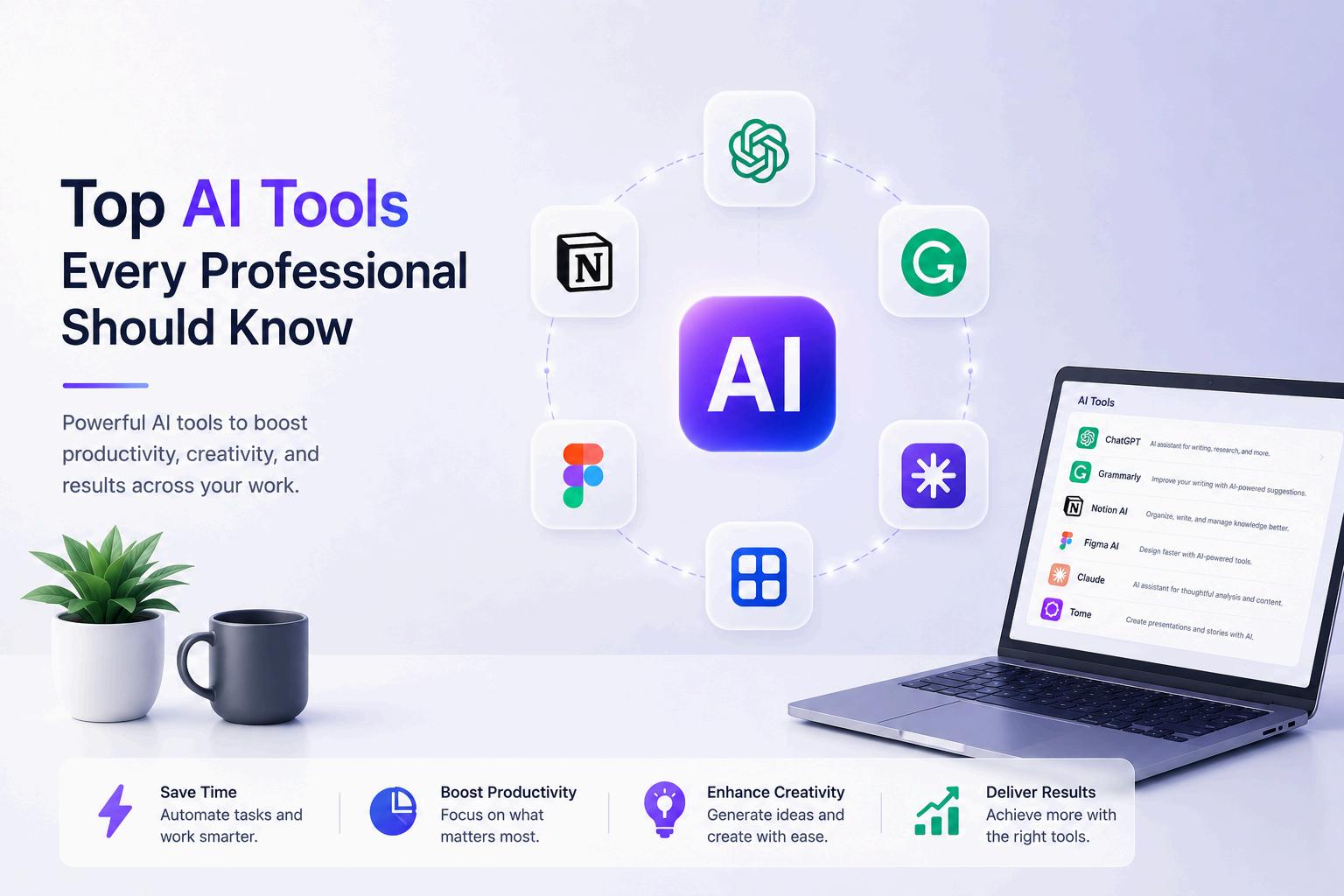
Artificial intelligence has become an indispensable part of the modern workplace Professionals across industries are using AI to automate repetitive tasks, analyze data, create content, improve customer service, and make faster, more informed decisions. As AI technology continues to evolve, understanding the available tools and knowing how to use them effectively has become a valuable skill for anyone looking to increase productivity and remain competitive.
Whether you're a business owner, marketer, developer, designer, educator, or consultant, the right AI tools can help streamline workflows and improve efficiency This guide explores the key categories of AI tools every professional should know and how they can enhance daily work
AI Writing and Content Creation Tools
Content creation is one of the most popular applications of artificial intelligence. AI writing assistants can generate blog posts, marketing copy, product descriptions, emails, reports, and social media content in minutes These platforms also assist with grammar correction, rewriting, summarization, and brainstorming ideas
While AI accelerates the writing process, human editing remains essential for ensuring originality, accuracy, and brand consistency The best results come from combining AI-generated drafts with professional expertise.
Professionals seeking to evaluate different writing platforms often benefit from using an AI resource hub to compare features, pricing, supported languages, and specialized
capabilities before selecting the right solution
AI Design and Image Generation
Graphic designers and marketing teams increasingly use AI-powered design platforms to create illustrations, marketing materials, presentations, logos, and social media graphics Image generation tools allow users to transform text prompts into visual content quickly, reducing production time while expanding creative possibilities.
These tools help businesses produce high-quality visuals without requiring advanced design experience, making professional-quality content more accessible
AI Coding Assistants
Software developers rely on AI coding assistants to improve productivity throughout the development process AI helps generate code, explain unfamiliar functions, detect bugs, recommend optimizations, and assist with documentation.
By automating repetitive programming tasks, developers can spend more time solving complex technical challenges and designing scalable software architectures
AI coding assistants also support continuous learning by explaining programming concepts and suggesting best practices
AI Productivity and Workflow Automation
Productivity-focused AI tools automate scheduling, email management, document processing, note-taking, meeting summaries, and project organization. These solutions eliminate repetitive administrative work and improve collaboration across teams.
Organizations use workflow automation to reduce manual effort, increase operational efficiency, and ensure consistent execution of routine business processes.
Employees benefit by spending more time on strategic initiatives instead of repetitive administrative tasks
AI Data Analytics
Businesses generate massive amounts of data every day AI-powered analytics platforms process this information rapidly, identifying patterns, forecasting trends, and producing actionable insights.
Marketing teams analyze customer behavior, finance departments evaluate business performance, and executives use predictive analytics to support strategic decision-making
AI-driven analytics improve both speed and accuracy while enabling organizations to respond quickly to changing market conditions
AI Customer Support Solutions
Customer service has been transformed by AI-powered chatbots and virtual assistants. These systems answer common questions, guide users through processes, and provide support around the clock
More advanced AI solutions analyze customer interactions to identify recurring issues, measure satisfaction, and recommend service improvements
This combination of automation and intelligent analysis enhances both customer experience and operational efficiency
AI Research and Knowledge Management
Professionals spend significant time searching for information, reviewing documents, and organizing knowledge AI research assistants summarize articles, extract key insights, answer complex questions, and organize information into searchable knowledge bases
These capabilities reduce research time while helping teams make better-informed decisions
For professionals exploring new AI solutions across multiple categories, an AI resource hub provides a centralized place to discover platforms, compare capabilities, and identify software that aligns with specific business or personal requirements
Choosing the Right AI Tools
Selecting the right AI solution begins with understanding your objectives Different professionals require different capabilities depending on their responsibilities
When evaluating AI software, consider:
● Ease of use
● Output quality
● Integration capabilities
● Security and privacy
● Scalability
● Customer support
● Pricing
● Customization options
Testing free trials allows users to evaluate real-world performance before making long-term purchasing decisions
Best Practices for AI Adoption
Successfully implementing AI requires thoughtful planning Start by identifying repetitive tasks that consume significant time and evaluate where automation can provide measurable value
Provide training so employees understand how AI supports their work rather than replacing their expertise Establish quality review processes to verify AI-generated outputs and ensure consistency with organizational standards.
Continuous monitoring and optimization help maximize the long-term benefits of AI adoption
Conclusion
Artificial intelligence has become an essential productivity partner for professionals across every industry From content creation and software development to customer support, analytics, and workflow automation, AI enables organizations to accomplish more while maintaining high standards of quality and efficiency
The key to success lies in selecting tools that align with your specific needs, integrating them thoughtfully into existing workflows, and continuously adapting as technology evolves Professionals who embrace AI strategically will be better positioned to improve productivity, foster innovation, and remain competitive in an increasingly digital workplace