‘really enjoy it.’
- David Sanderson
Mark Szczerbicki
Renate Carius
‘really enjoy it.’
- David Sanderson
Mark Szczerbicki
Renate Carius
Equity & as the chosen question for the graduation studio posed many possible options. Decidedly, how does one choose what to engage with and what is appropriate on the site? Does addressing one particular community make another disadvantaged? What is the optimal solution and middle ground?
The studio follows as a result of conducting interviews and site assessments of the 10-16 Bay St, Ultimo to determine a scheme that will benefit most, whilst excluding none.
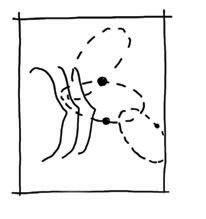
The Man - The Machine
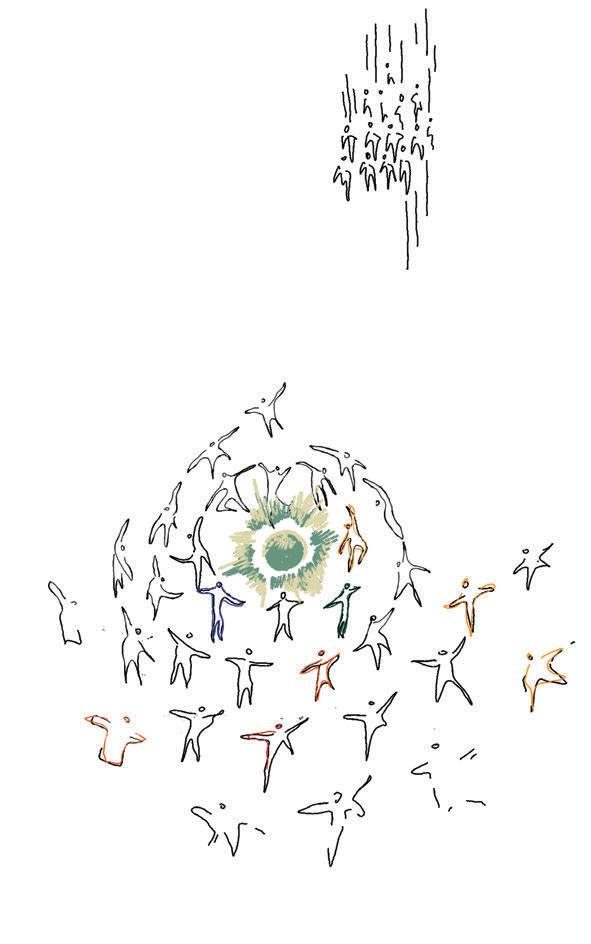
Separation of the man and the machine and restoration of the machine as noble, and good - born out of need.
Post Work Society
Joanna Biggs, All Day Long: A Portrait of Britain at Work, “Work is … how we give our lives meaning when religion, party politics and community fall away.”
Work in modern society has many issues, even those ‘well educated’ are unable to get jobs, long hours result in isolation, and exhaustion. As a product of capitalism, people find a lack of meaning in a life they do not work. There have been many predications of the future with lowered work hours, where machines effectively take over work. However, these have also been accompanied by a fear of the machine as well, a dystopian future should they overcome humans.
Post Work has an optimistic framing, in which machines alleviate the current intense work culture. A more fulfilled life will be attainable due to the ability to spend more time on leisurely activties, and social engagement.
Thus the resulting design is the ultimate expression of relaxation.
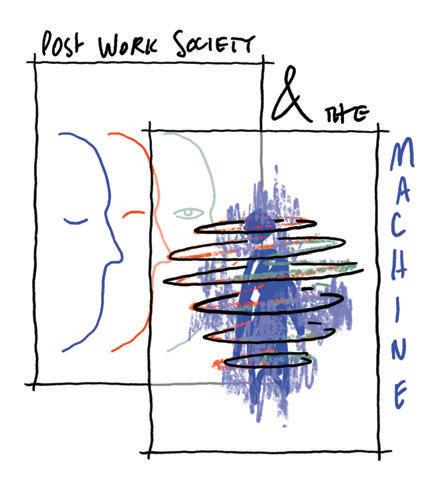
This chapter encompasses a large range of things in order to understand the complexities of the site, and human connections. Entrenched in an industrial history, there is a deep connection to man and the working/industrial environment. With Blackwattle Bay and Wentworth Park on the doorstep of the site as environmentally interrupted places, how can they be renewed places of interaction?
What is a common way humans often connect with each other through various cultures? Why does Australia have a large beach culture? Why are water parks so successful? What is the ideal third place for people to enjoy?
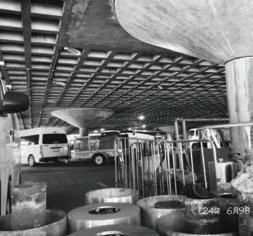
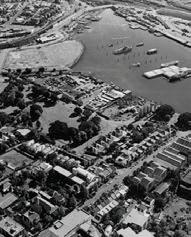
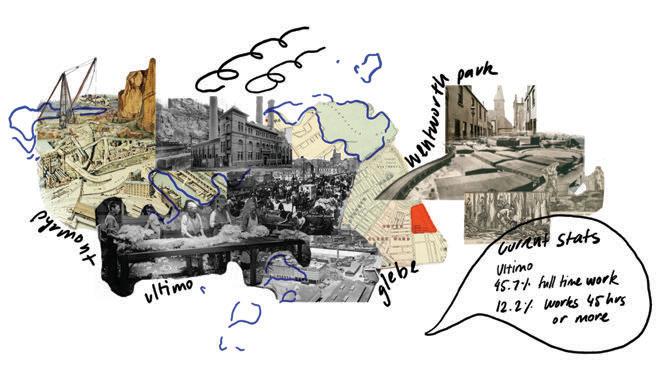
The site surrounds has heavy industrial history which lead to high amounts of pollution. The immediate site was used for wool storage, wentworth park for abattoirs, ultimo for electricity powering, pyrmont quarries for sandstone.
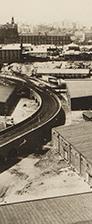
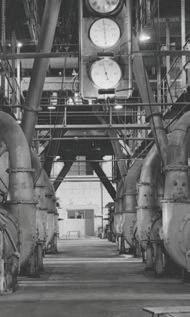
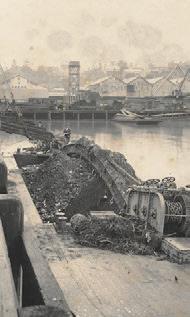
Blackwattle Bay was one of the earliest boundaries of settlement, and was soon populated with small industry, including flour milling, animal processing such as tanneries, brick manufacturing and breweries, along with housing.
Subsequently, this lead to pollution and unsanitary conditions that arose due to stormwater, industrial waste, and untreated sewage ending up in the bay during the pre-sewage era. Additionally, the filling in of the mangrove forest area lead to the creation of which sporting facilities and open ground, including Wentworth Park, Harold Park, and Jubilee Oval. Additionally 30 manufacturing works in Glebe, including the timber industry which relied on moving timber by boat, became a strong presence along the waterfront. By 1944, there were 156 factories in the area.
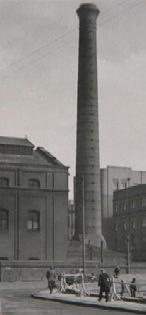
The Ultimo Power House, constructed in 1898 in the Italian Renaissance style of architecture, was established to supply electricity to Sydney’s new electric tram system. It commenced operations in 1899, emitting coal dust over Ultimo. After the cessation of the tram system in 1961, the building became obsolete. In 1988, it was repurposed to accommodate the Technological Museum and was reopened as the Powerhouse Museum.
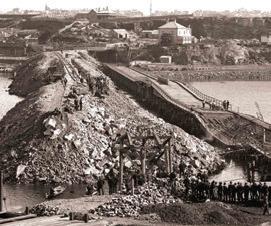
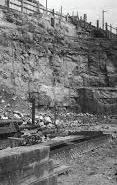
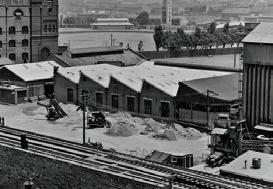

The Pyrmont quarries, including Paradise, Purgatory, and Hell Hole, were active from the 1840s to the 1940s, significantly impacting the local landscape and providing sandstone for prominent public buildings in Sydney and other cities. Quarry-masters like Charles Saunders employed stonemasons and modern machinery, contributing to the construction of early churches and public houses. Their industrial influence also played a role in the successful campaign for the EightHour-Day.
exhaustion of the mind and body (the overworked human)
“sickness is the vacation of the poor”
- Guillaume Apollinaire
As a soceity, there seems to be more tired people than ever. These stresses often arise from over working, changes in cost of living, and inflation, as well as a range of rising societal issues. Focusing on overworking, the Australian Institute noted within the past year of 2023, the number of people working more than one job has risen 7% (958,600 australians) according to the Bureau of Statistics.
In recent months, there has been a notable increase in older workers taking on multiple jobs. As of September 2022, 6.1% of individuals aged over 65 were working multiple jobs, which has now risen to 8%. Similarly, the percentage of those aged 55 to 59 working multiple jobs increased from 5.9% to 6.5%.
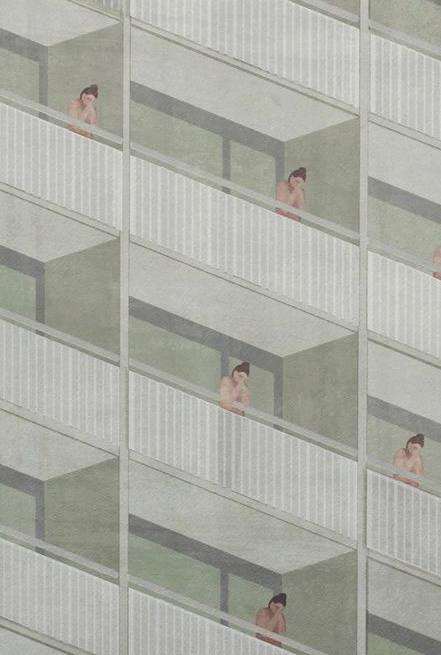
With increase in working, there also increased dangers of burning out, mental exhaustion and associated health issues. Therefore, it is more important now to bring back third spaces that allow people of all ages to relax, and form connections with each other. Reconnection with others can decrease concerns of loneliness and isolation that can occur when potentially stuck in the workplace 9am-9pm, 5-6 days a week. Ultimately the question posed is: when do we become a means to an end, and when does working become our only personality?
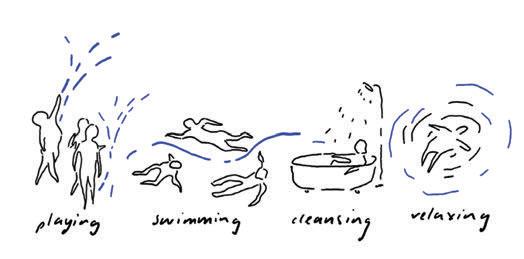
Surrounded on all sides by water, Australia has beautiful beaches all round which are frequented by people of all ages. A relaxing weekend often translates to a day at the beach, swimming in the water, exploring natural rock pools and relishing in the cool of the ocean. The ocean pools around beaches fill with water as the waves crash over, and allow a safe space for people to swim.
Children find water play engaging, as seen through the Darling Square water play area. They can enhance motor skills, coordination and physical fitness.
Swimming can be beneficial to stress, and carried by natural currents in the ocean offer a sense of weightlessness, and freedom.
Having access to water for cleansing, or not having access can impact how one is viewed in soceity. This can lead to social segregation. Water for cleansing is also important in religious rituals.
Water can be a way to socialise with friends and family. In a way similar to cafes, being submerged in water, just dipping your feet in water is similar to sipping tea or coffee while conversing with a friend.
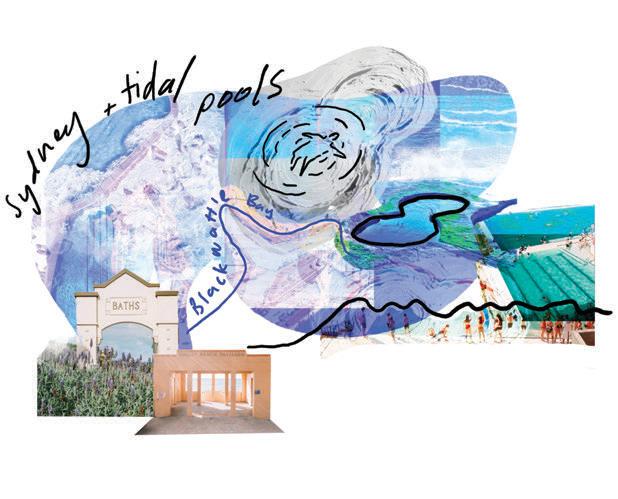
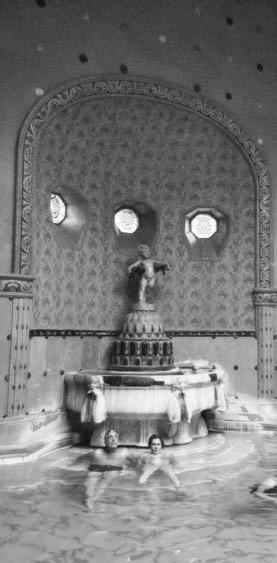
Bathhouses exist around the world for various reasons, including cultural practices, social gatherings, relaxation, and hygiene. In different societies, bathhouses serve as communal spaces for cleansing, socialising, and promoting overall well-being. They often reflect local traditions and customs, providing a place for people to connect, unwind, and maintain personal hygiene. Additionally, bathhouses can hold historical significance and continue to play a role in preserving cultural heritage and community ties.
‘Why we need to bring back the art of communal bathing’ (Jamie Mackay) discusses discusses the decline of communal bathing in modern society, highlighting its historical and cultural significance as a collective act in various civilizations. It explores the shift from small ritualistic societies to vast urban metropolises, noting the associated benefits and challenges, including increased loneliness and urban alienation.
The author suggests that reintroducing bathhouses as public spaces with a focus on collective physical contact could potentially address the loneliness prevalent in contemporary megacities. The concept of hadaka no tsukiai “naked association” or “skinship” is proposed as a means of bringing corporeality and touch back into social interaction.
The article also emphasises the democratic nature of historical bathhouses, where people of different social classes and backgrounds would wash side by side, promoting a better understanding of diverse bodies and breaking through societal norms regarding nudity and body diversity.
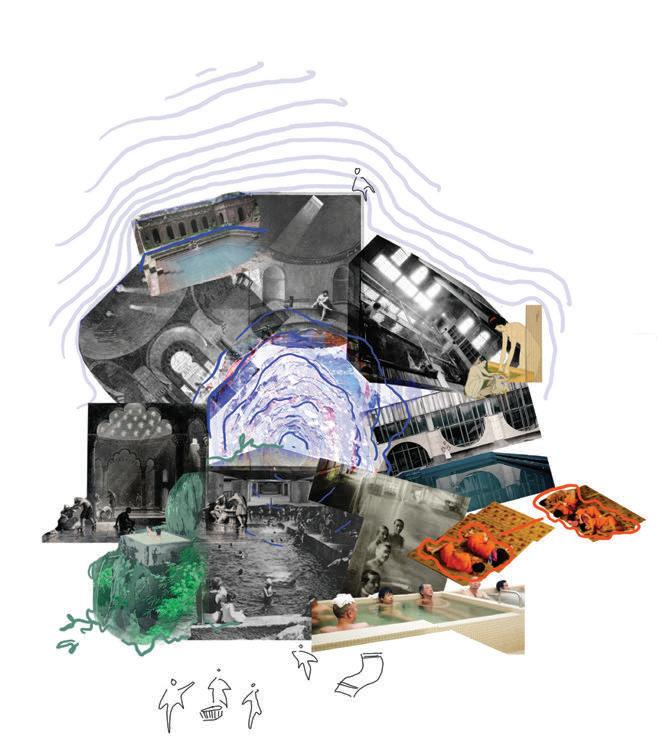
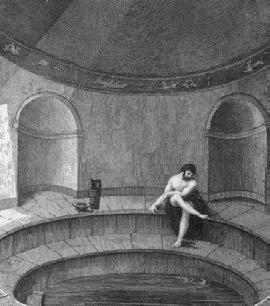
ROME - Integral part of daily life, citizens of all social classes to relax. A cultural and social hub. Often connected to gyms, libraries.
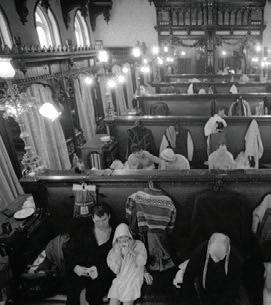
RUSSIA- Banya is a steam bath with a wood stove. Takes place in a small room of high heat and steam. Often it is occupied by the Bannik (spirit), and people performed rituals to keep it happy. Fir branches, water and soap and a loud thank you was left behind for the Bannik. The Banya as also used for births.
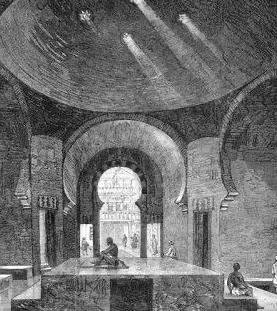
TURKEY - Hammam emerged from Roman Baths. Part of the Islamic Culture, seen as religious and civic.
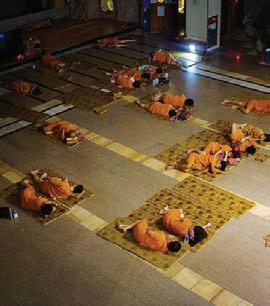
- First appeared in 19th century. Korea has religious connotations towards water and people often bathed together in rivers, hot springs/ oncheon. They are joined with a cafeteria and lounge. They provide mattress and pillows for sleeping.
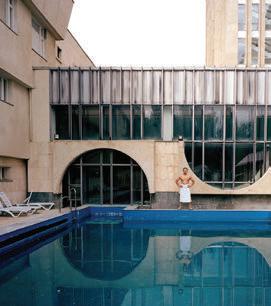
EUROPE - Sanitoriums built under Soviet Union rule. They cater for weary workers and people can be prescribed visits by the doctor.
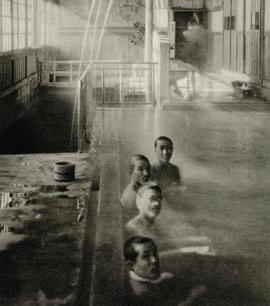
- Originated in 6th Century with Buddist purification rituals. Baths to cleanse the body and spirit, many temples also have baths. These were places for relaxation and social interaction.
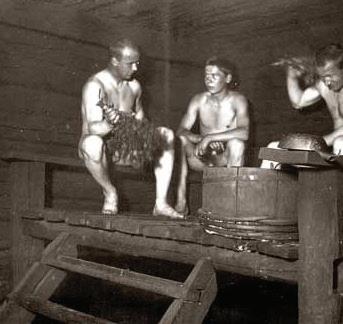
FINLAND- For cleansing bodies and inner peace. Often used to live in, eat, address hygience and give birth in sterile environment. Allowing warmth in winter as well. The word sauna has finnish origins.
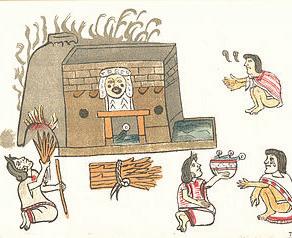
MESOAMERICA - Temazcales (‘house of heat’) were used by indigenous people to cleanse themselves and for pleasure. It was a volcanic sweat lodge that was also used to recharge after battle, and for birth.
‘The Soviet Banya and the Mass Production of Hygiene’
Tijana Vujosevic
The article discusses the significance of the bathhouse, particularly in the context of Soviet society, as a site of collective experience and mechanization with mystical elements. It explores how the architecture of the bathhouse reflects a cosmological modernization, providing a world inhabited by the mechanized proletariat.
The bathhouse is seen as an abstract machine, where the bathing process represents a form of production that shapes the relationship between the Soviet subject and state authority.
The article also highlights the diverse architectural designs of bathhouses, emphasizing the production of hygiene as an example of modern efficiency and a transcendental experience. Overall, the architecture of the bathhouse is portrayed as a system where efficiency, magic, modernity, and the occult intersect, conveying a unique experience of modernity and proletarian belonging.
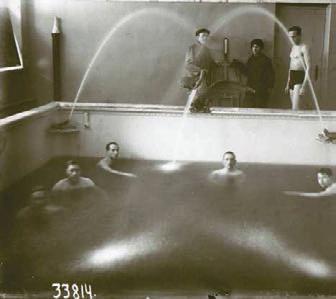
Alice Gregory
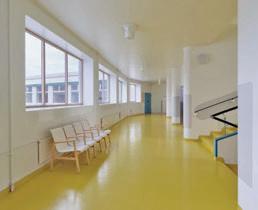
The article discusses the historical significance of spa culture in central Europe, portraying it as a retreat from the rapid-paced industrialized atmosphere of the continent. It highlights how spa towns served as mystical destinations, attracting people from various backgrounds to temporarily withdraw from reality and engage in reflection and social interaction
Unlike sanatoriums, visitors to spa towns in Europe were not always ill; they often came to socialize, attend cultural events, and negotiate political treaties. The towns were strategically planned to maximize a “therapeutic landscape,” promoting strolling and alfresco mingling.
The architectural style of the bathhouses was formal and atavistic, featuring marble walls, high arches, domed ceilings, and mosaic floors. These grand spa complexes were well-maintained, infrastructurally sophisticated, and aggressively promoted, representing some of the earliest examples of modern tourist destinations.
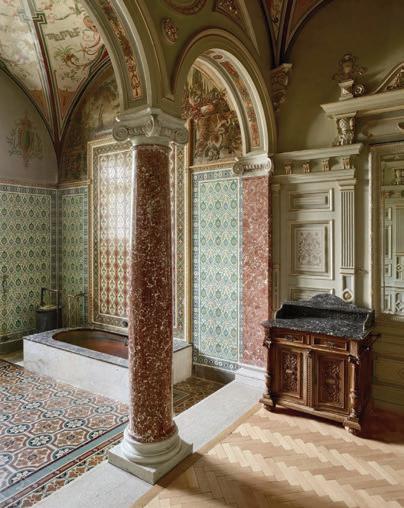
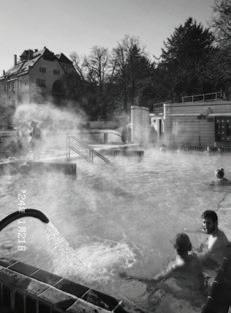
gellert thermal baths, budapest, hungary
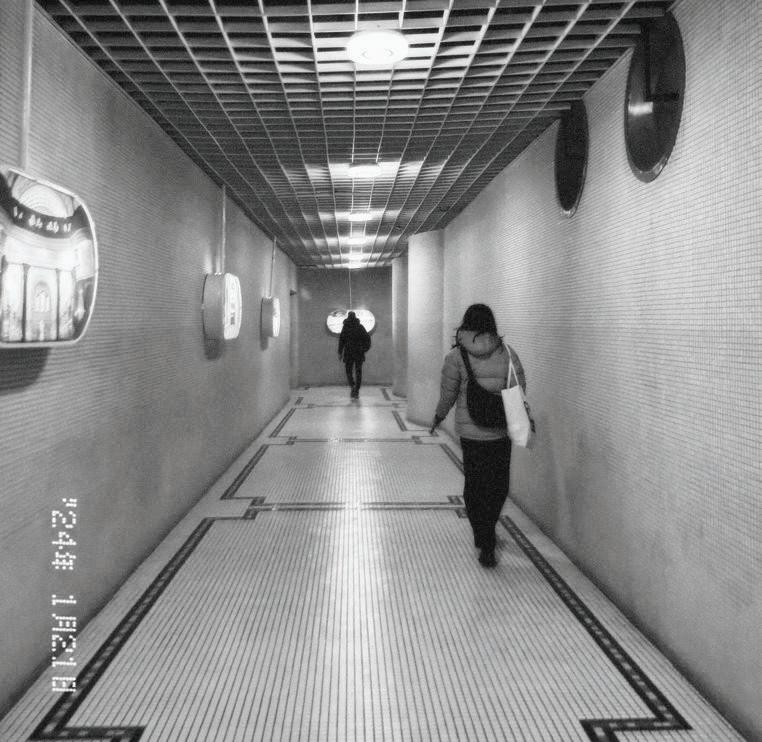
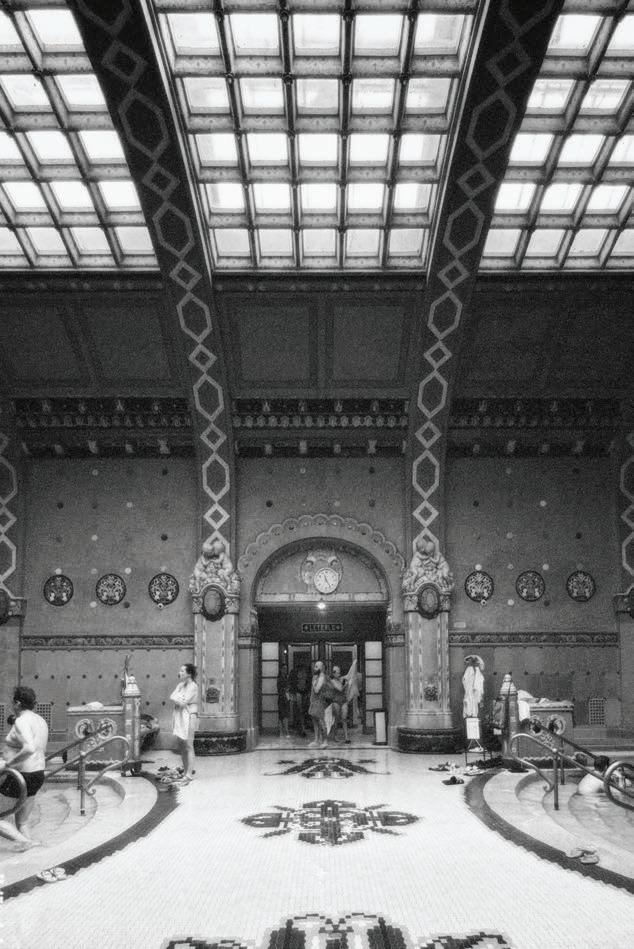
Bathhouses are experiencing a decline due to various factors, including changes in personal hygiene practices, the widespread availability of private bathing facilities in homes, and evolving social norms. The further privatisation and commercialisation of natural springs promote societal divide and strip communities of their natural resources.
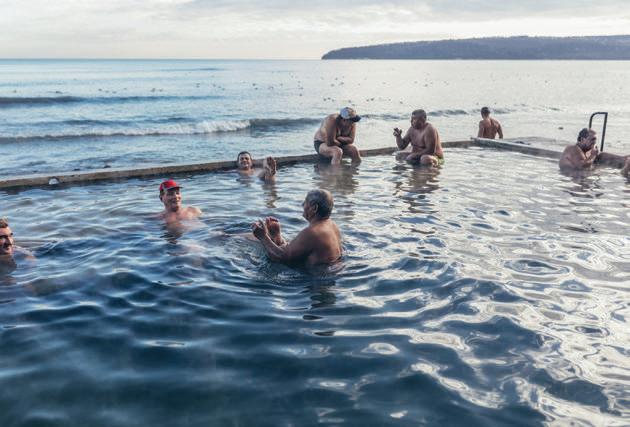
“Pensioners fight water privatisation in Bulgaria’s thermal pools” (Constant Leon) discusses the battle over the public thermal pools in Varna, Bulgaria, where pensioners are fighting against the privatization of the mineral waters.
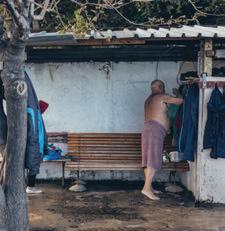
The pools, known as the “giol,” have historically been a free and open 24/7 bathing spot for locals and tourists. The article highlights the significance of these mineral waters, which have been frequented since Soviet times and are considered to have therapeutic value. However, there are concerns about the potential privatization of the springs, which would limit access to the waters, especially for those with modest means who rely on them for bathing and washing.
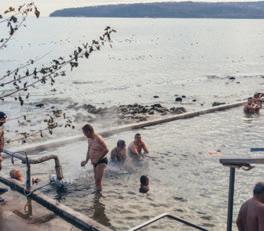
Slava Savova highlights the complexities in the privatisation of the sea, stating “The value of water reawakened the interests of politicians after the transition of the 1990s. Selling these resources to the private sector, whether bottling companies or spa businesses, is usually compensated with symbolic fees – the communities lose access and there is nothing in exchange. Everything is legal on paper”
The article further the transformation of these baths into museums and the lack of consideration for local contexts in such projects.
“There aren’t many people in museums, but there’s always a queue to drink water from the fountains.”
- Slava Savova
As evident within the above research, an ideal proposal for the site would be a government subsidised bathhouse. One that is open to the public without exorbitant fees which often segregate particular financial bands of society. There will need to be potential to store water on site, and provide sustainable methods of water treatment, and heating. Ultimately, the spaces produced will be a retreat within the hustle and bustle of the city that can revive mind, and body.
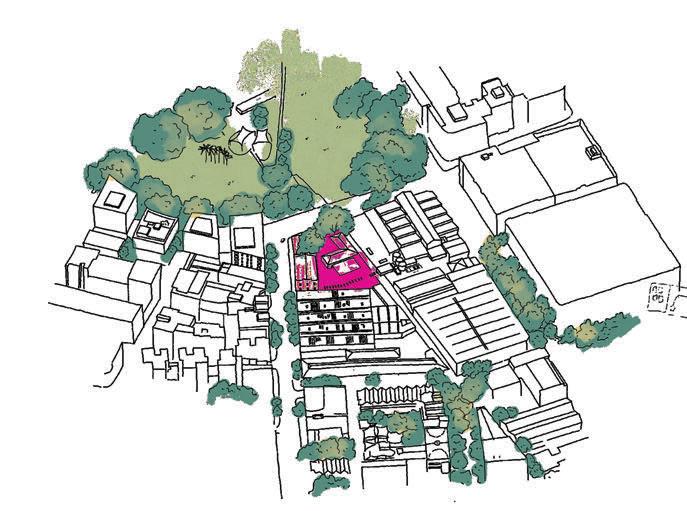
and complexities of the overall site. It acknowledges it’s deep indigenous history, and the industrial age that tore it apart. The Site’s forgotten waterways, and paths have been invesitgated along with key opportunities and constraints, flooding issues to propose key design interventions.
Blackwattle Bay Country is known as Tjerruing (Callicoma Serratifolia), a flora species which grew prolifically along the creekline and was given the common name ‘blackwattle’ by British colonists. Despite the English misnomer, Tjerruing is not a wattle. It has spherical lemon-yellow fluffy flowers that appear similar to those of the local acacia species (such as acacia decurrens and acacia parramattensis) which were also assigned the misnomer ‘blackwattle’ in the early days of the colony after their suitability for mimicking the wattle and daub houses built in Britain.
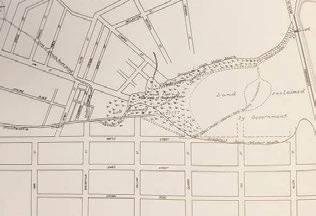
Prior to extensive interference, Blackwattle Creek and its tributaries arose in the Kangaroo Grounds and meandered down to Blackwattle Bay. Now they run in a heritagelisted sewer under Blackwattle Lane and Wentworth Park.
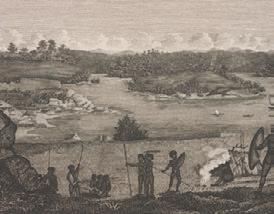
Blackwattle Creek bears significant historical importance with its role as a tidal watercourse and a source of fresh water for Sydney’s Aboriginal people prior to European settlement. It contains archaeological traces of Aboriginal use along the creek, including the discovery of stone artifacts at various locations, indicating occasional visits and activities such as stone tool manufacture, hunting, and processing of plant foods.
These findings serve as evidence of Aboriginal presence and ongoing use of the area after the arrival of Europeans, highlighting the survival of physical evidence despite intense European activity.
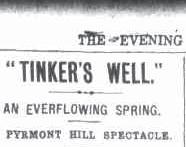
All people depend on fresh water to live, and so it is usually the case that reliable sources of water known to Aboriginal people were later used by Europeans. The most permanent of these sources in Sydney were creeks like the Tank Stream, and a number of springs, where freshwater continually seeped out of cracks in outcrops of sandstone. One of these springs was located at Pyrmont and was known to Europeans in the area as Tinker’s Well.
Tinker’s Well was located in a large sandstone overhang. In the early 20th century, an old Pyrmont resident recalled that ‘through the mosses and ferns’ of the overhang ‘trickled musically a small stream of pure, cold water’. The water collected into a natural dish in the sandstone floor of the shelter. This was also an Aboriginal campsite, or midden.
Aboriginal people continued to live in the Pyrmont area into the 19th century, but quarrying and intense industrial and urban development has destroyed most traces of their presence both before and after the arrival of Europeans. The shelter containing Tinker’s Well was destroyed in the early 20th century, but water continues to flow down sandstone outcrops behind a modern apartment building nearby in the vicinity of the original spring.
Land Zoning: B4 - mixed use
The site faces onto a large open green space, that then looks over blackwattle bay waterfront. It is in close proximity to University of Sydney, and University of Technology. Travel and transport to site is not convenient with no closeby buses.
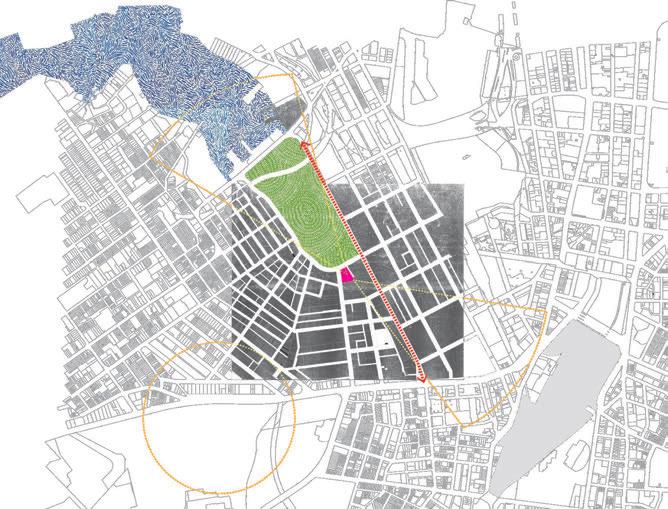
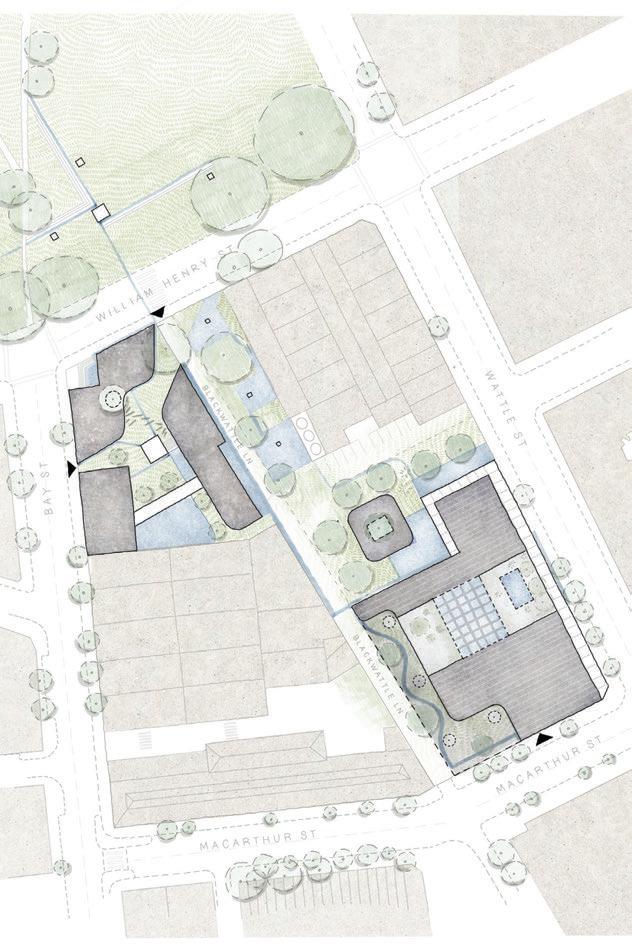
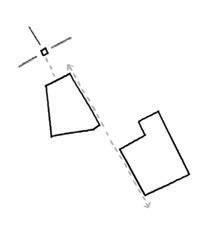
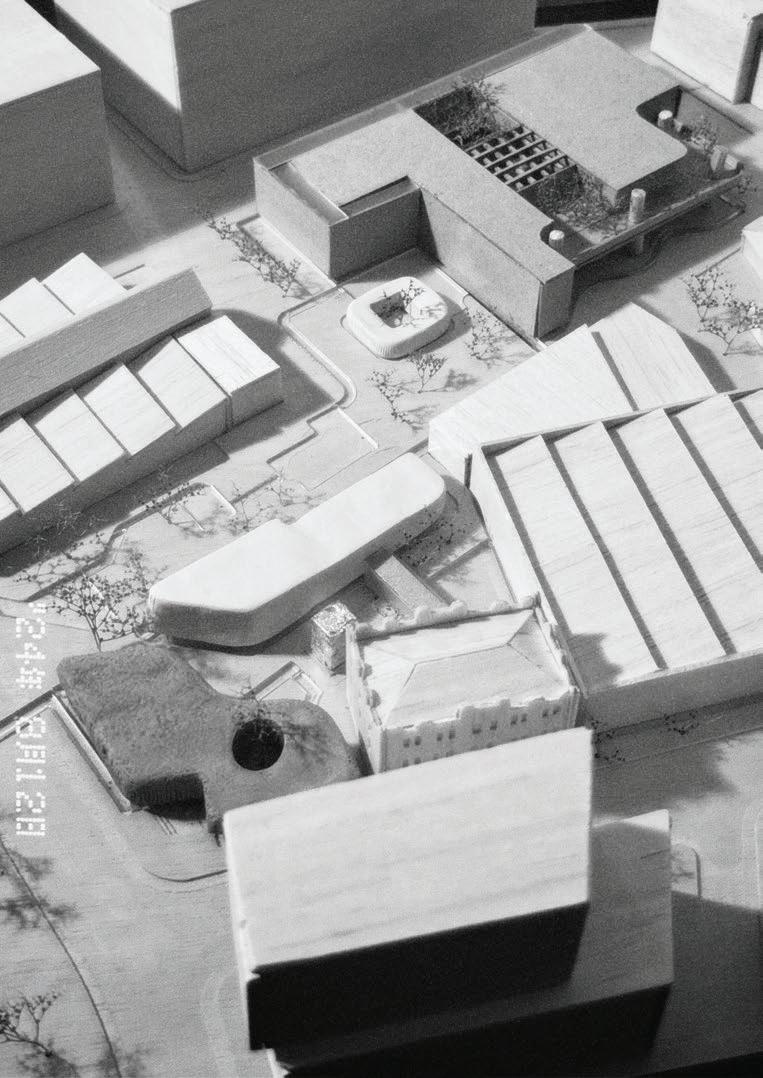
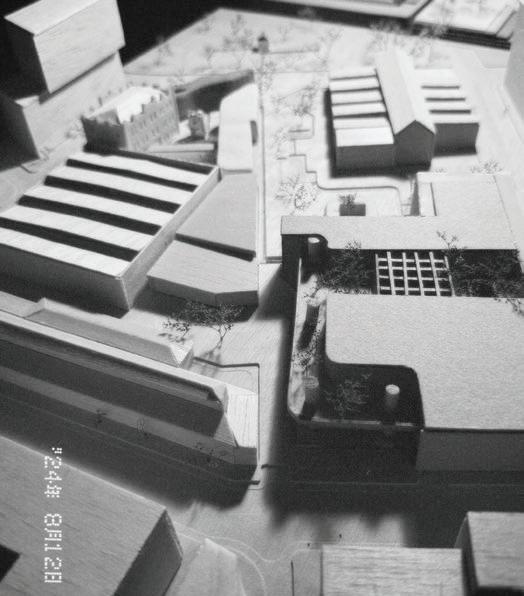
The overall lot is composed of 2 lots and 4 quadrants. The chosen site at the left and bottom right quadrants provides an advantages outlook to Wentworth Park, reuse of building space, and possesses the highest capacity for activation.
Floor Space Ratio: 1.75:1
The site is surrounded by quite large trees with large canopies. These border Wentworth Park Road. The site itself only has one large mature London Plane tree. Therefore the centre of site is potentially subject to high heat levels during midday in summer.
Building Height Limit: 15m
Max. Storey Height: 4 storeys









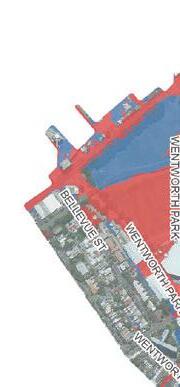
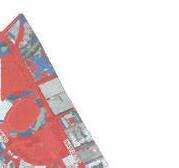
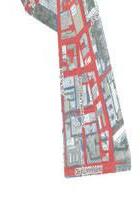
1% AEP Hazard
This Annual Exceedance Probability (AEP) flood scenario shows that in the 1% chance in any given year of the event ocurring, all immediate streets surrounding our site are classified as high hazard during the flood.

PMF Hazard
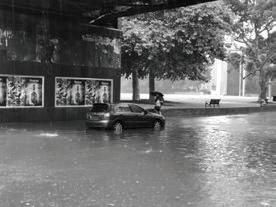
This Probable Maximum Flood scenario shows the largest flood that could be expected to occur at this location, based on the probable maximum precipitation. Most of Wentworth park and our site are at high hazard.
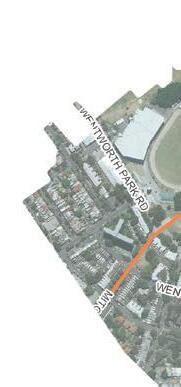


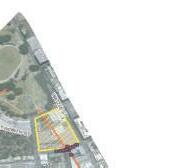
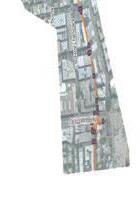
Council’s Flood Mitigation Options
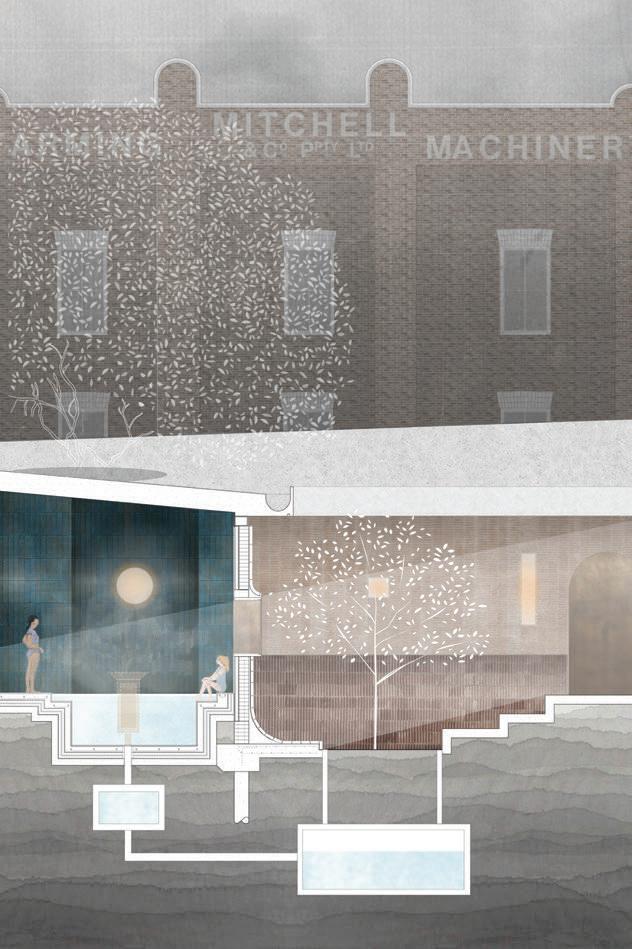
City of Sydney’s flood risk mitigation management options include putting an underground storage tank under our site, currently the council depot. This may be seen as a constraint for our project in terms of having underground spaces.
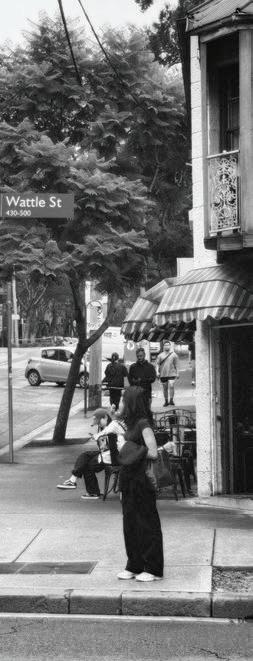
Opportunities around site include potential for through site link to increase connectivity towards city center. The park and it’s green edge provides further ability to increase the green corridor, and make the site more inviting. The corner of Bay St and Wentworth Park Rd have potential to provide a dynamic intervention into an otherwise low activity site. Additionally, Wattle St close by has good connection to the rough sleeping community and the rest of the city. The existing heritage building can also add character to site.
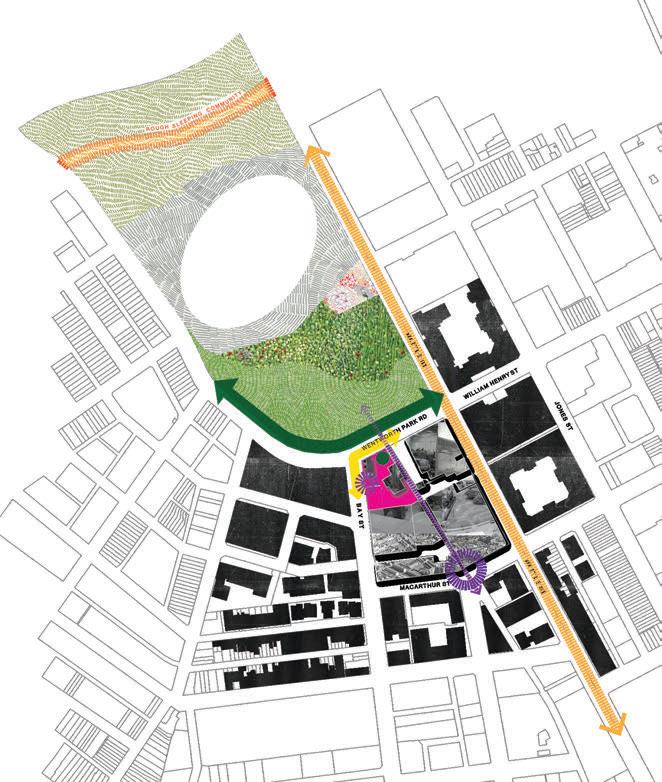
Identified weakness and constraints of the site include barriers in connectivity caused by roads, and the greyhound racecourse within the park. High traffic along Wentworth Park road further enables this barrier, preventing pedestrian gatherings. On site there is potential for demolising buildings without heritage value. The Heritage building may become a constraint if not adequately integrated.
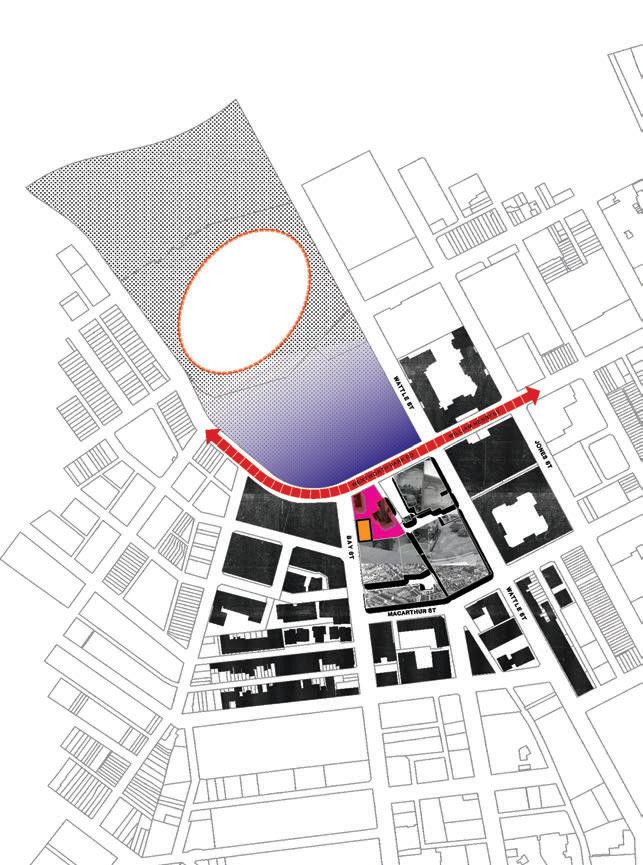
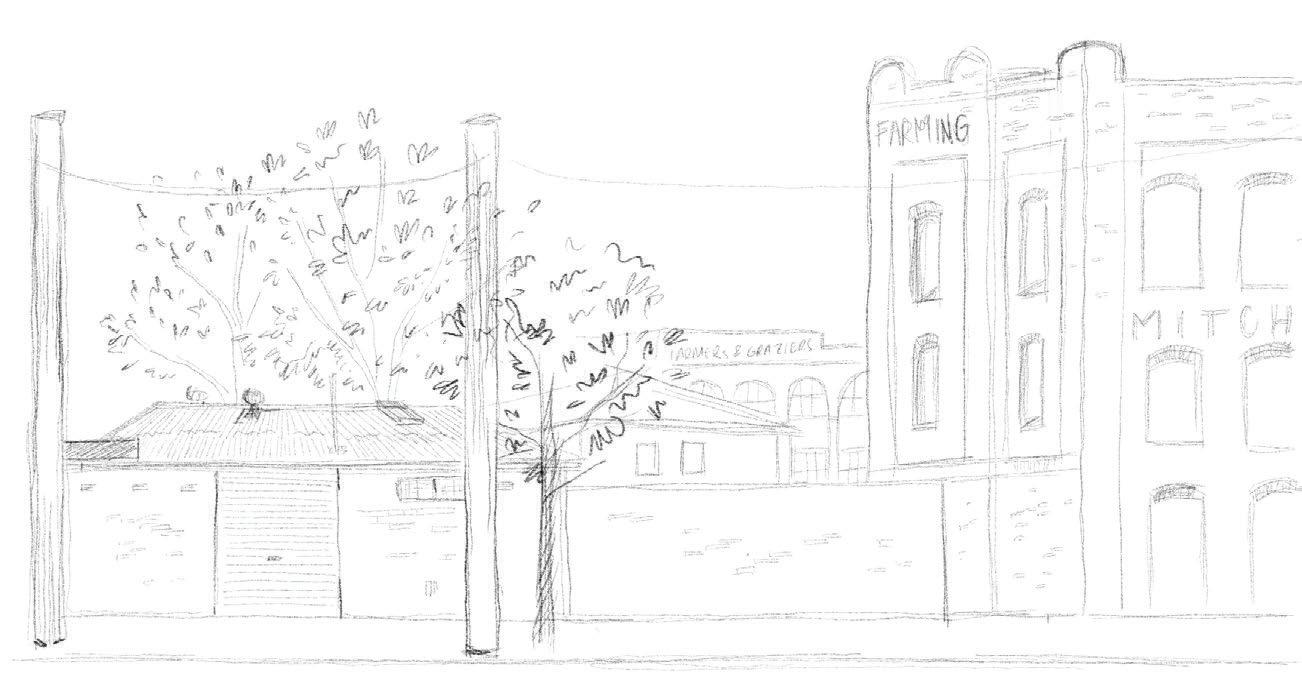
interventions 01 02 03
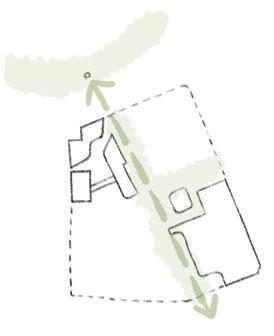
Relinking and providing a new greenlink to Wentworth Park
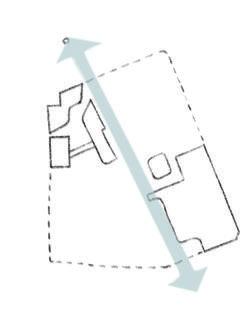
Introduction of floodable pools with restorative landscaping to memorialise Blackwattle Creek
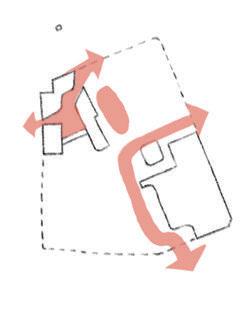
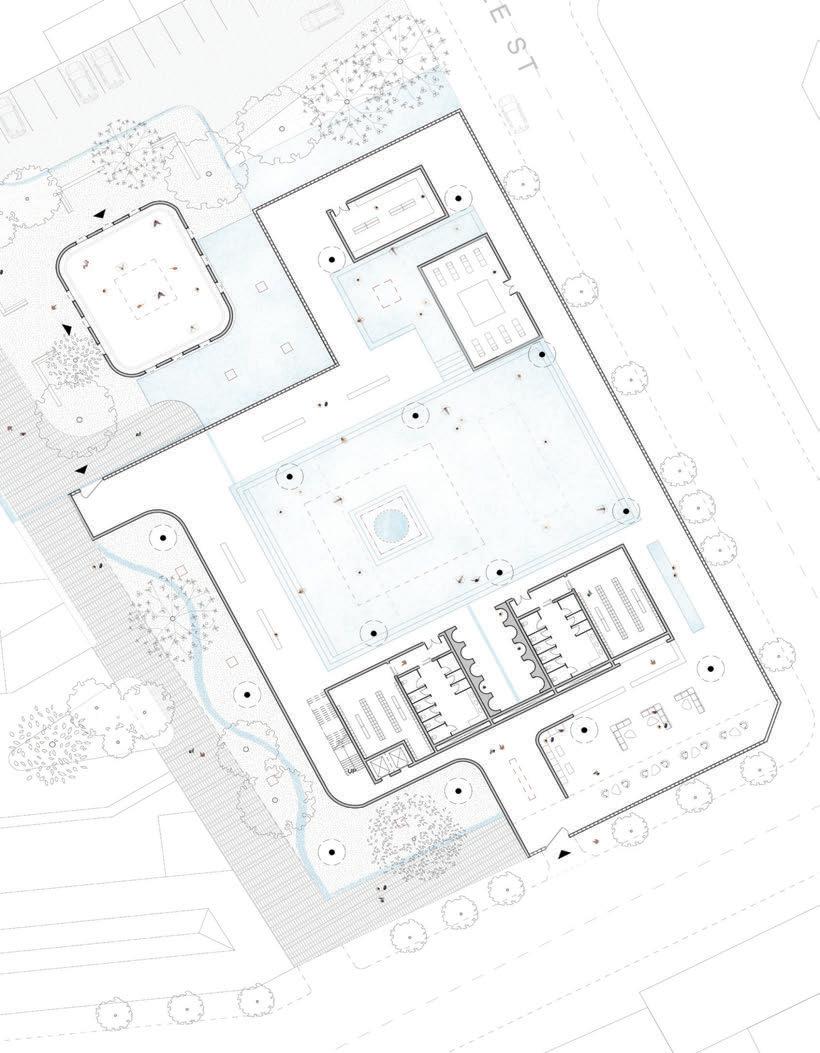
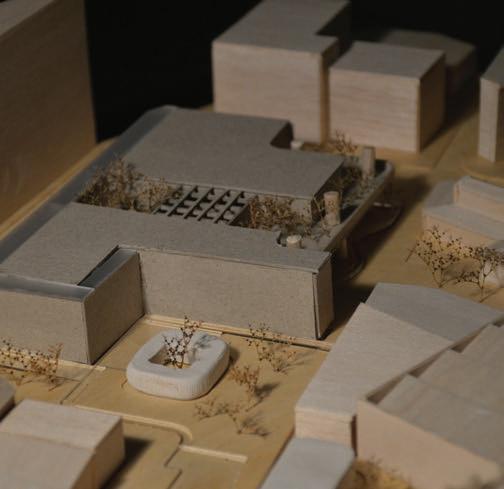
Introduction of soft corners to provide welcoming entry points to site. This includes removing a wall of the existing carpark in the bottom right, and proposing a curved wall.
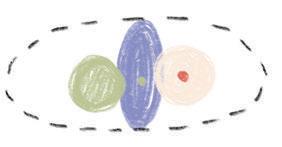
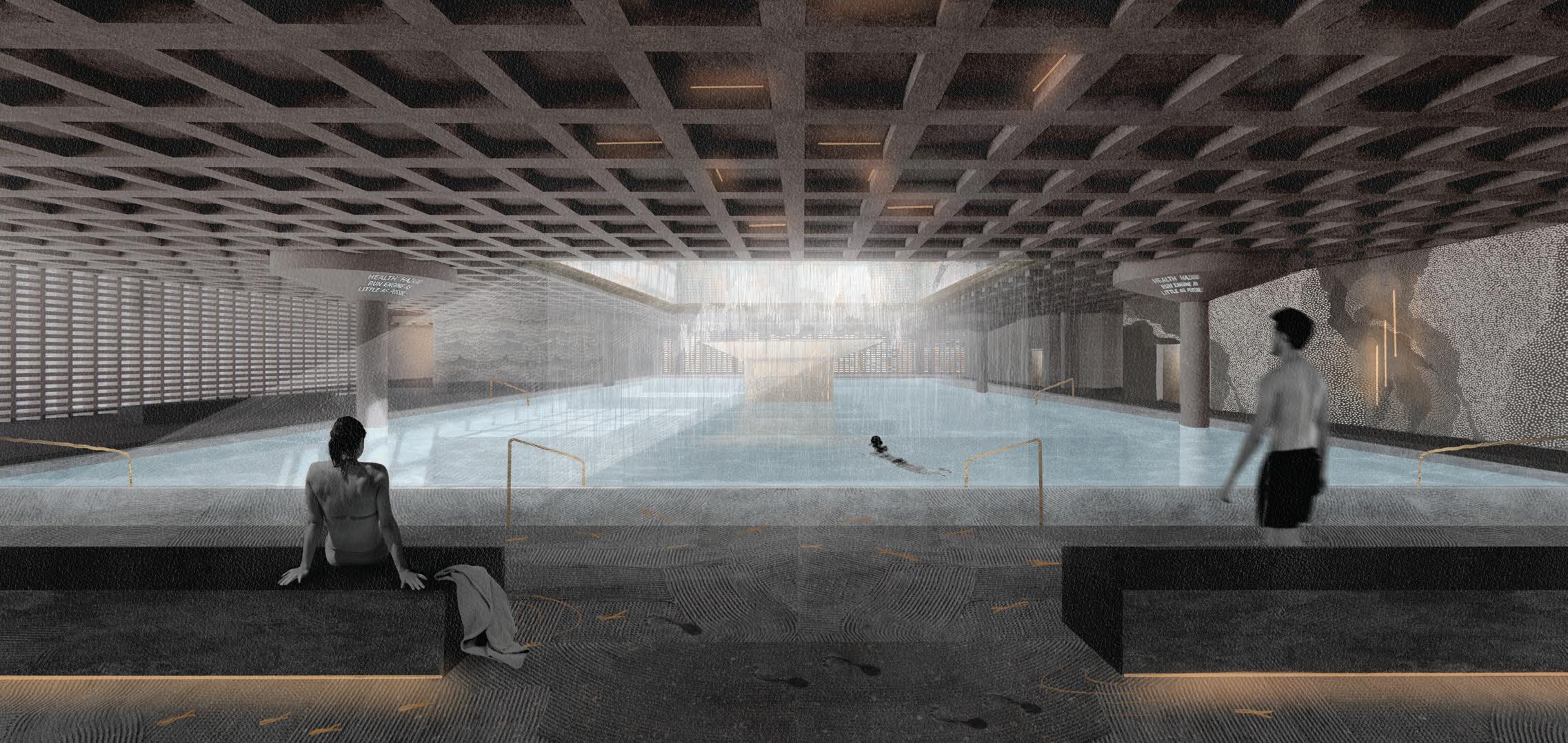
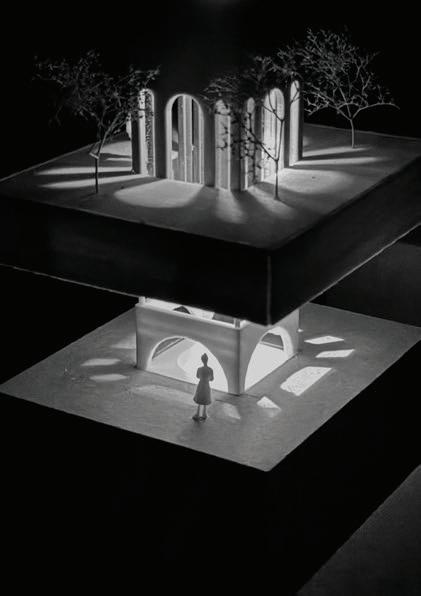
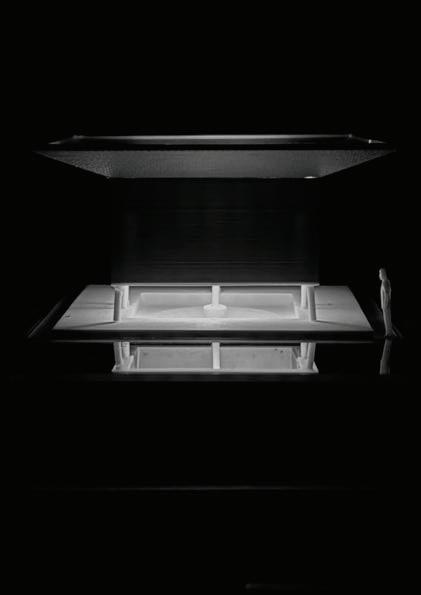
Focusing on a future where leisure is prioritised, the Bathhouse aims to reform lost social connections by providing a place for dialogue, a place to renew ritualistic motions, and reconnect with nature. These areas heighten one’s relationship with their bodies as well, focusing on wellbeing.
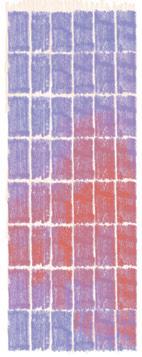
sensitive spaces
Utilising thermochromic tiles and smart glass to provide adaptable spaces that evoke interest, and facilitate conversation.
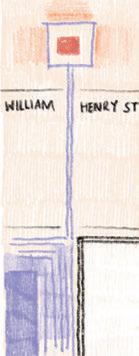
Once blackwattle swamp, the site is still prone to flooding. Channels in the ground fill with water and transform the site. Pools of water recall Tinker’s well.
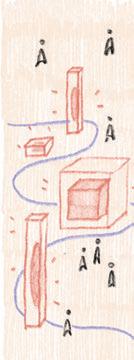
A community place of gathering, the hallway, the door to the bathhouse. Sensored lighting connected to the bathhouse machine hums and pulsates with conversation.
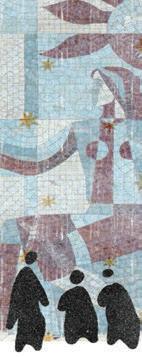
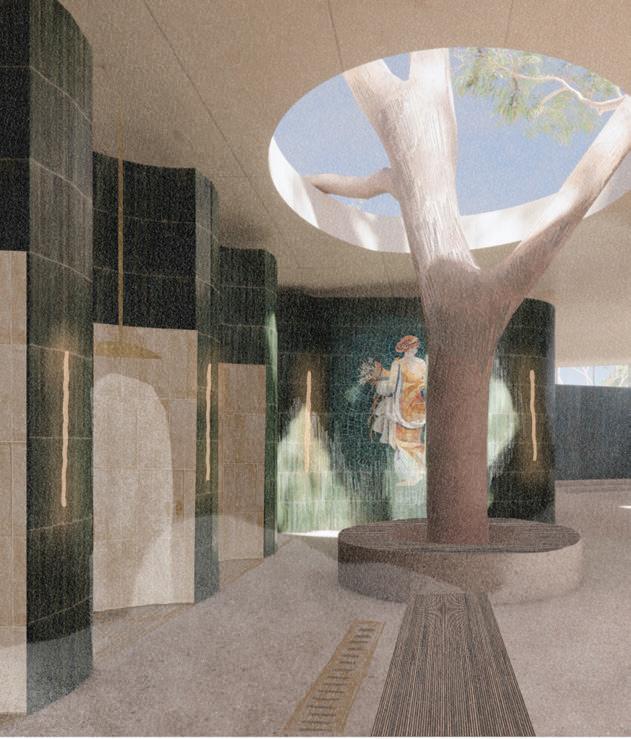
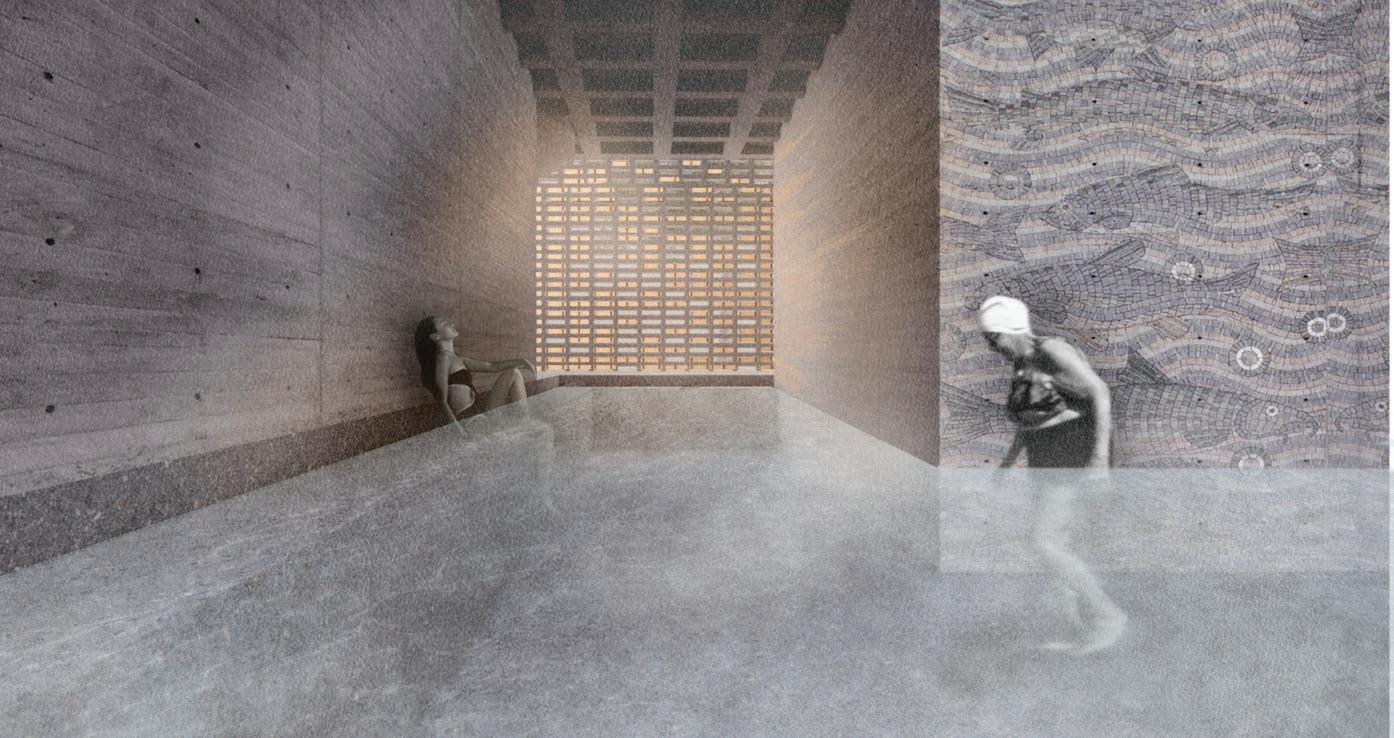
Involving community participation, mosaic murals in and around the bathhouse etch the country and community’s identity, and stories onto the walls.
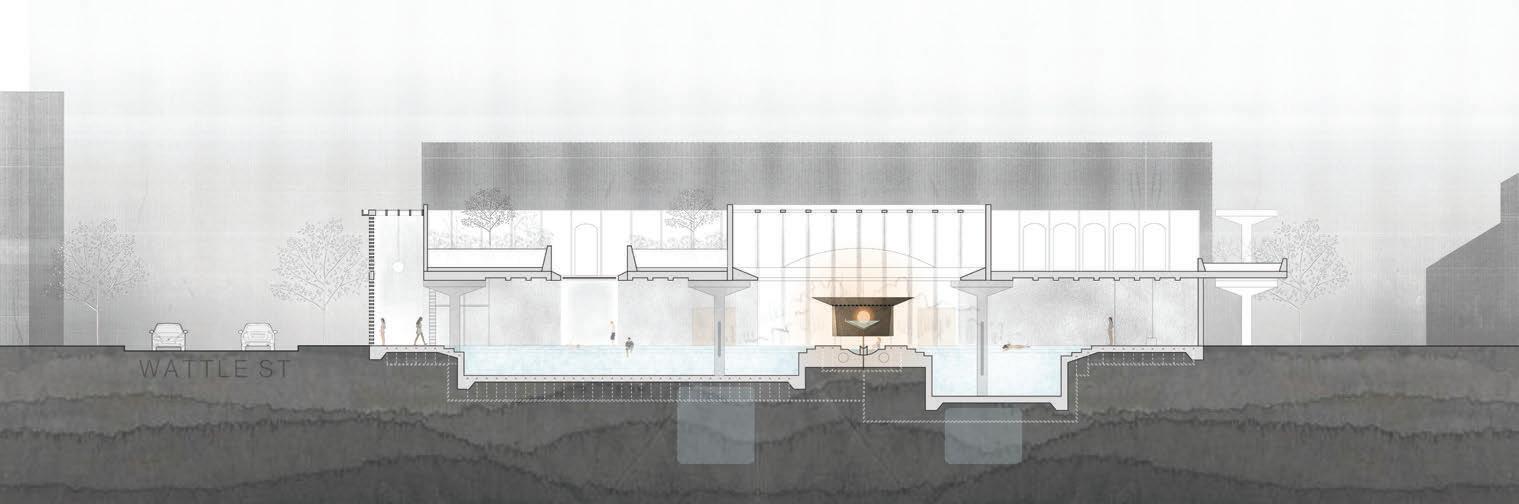
Inwoven throughout the site, the inclusion of the machine heightens the separation of man from work, and also provides awareness of the bathhouse’s mechanisms. It provides heat, light and sound.
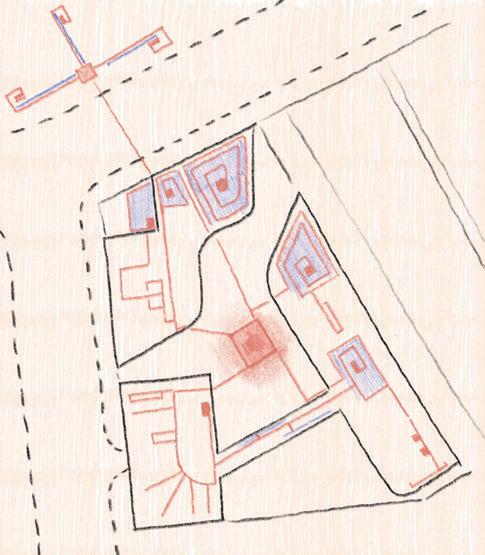
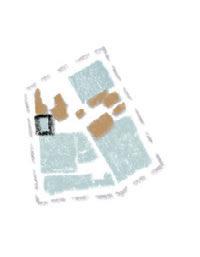
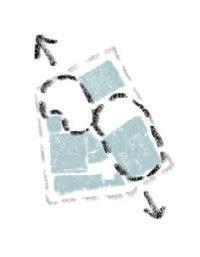
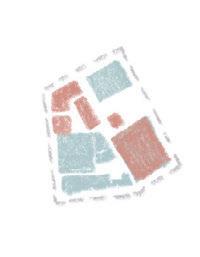
03. Situate new build and adaptive reuse building
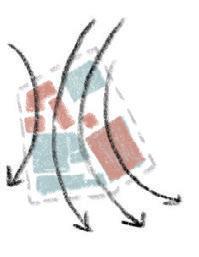
04. Introduce welcoming curves into the design that resonate with the topography
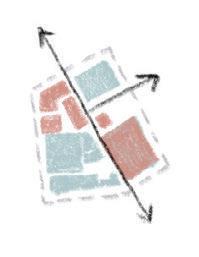
05. Form a link through Blackwattle creek and reinstate the old waterway
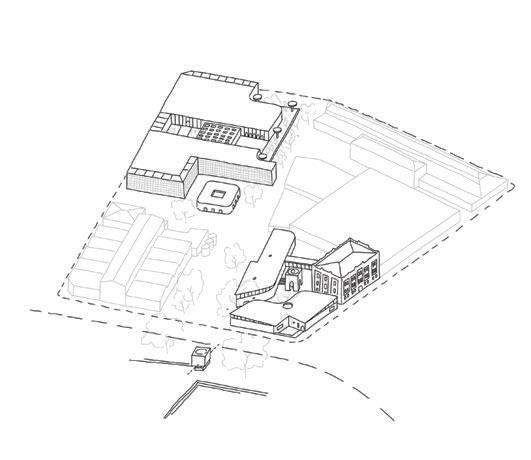
The scheme comments on the heavy industrial history of the site, and it’s workers by subverting the notion of ‘the machine’. The machine which became synonymous with man, is separated within the scheme. The worker is restored, and the place of the machine as something mechanical, functioning is reinstated.
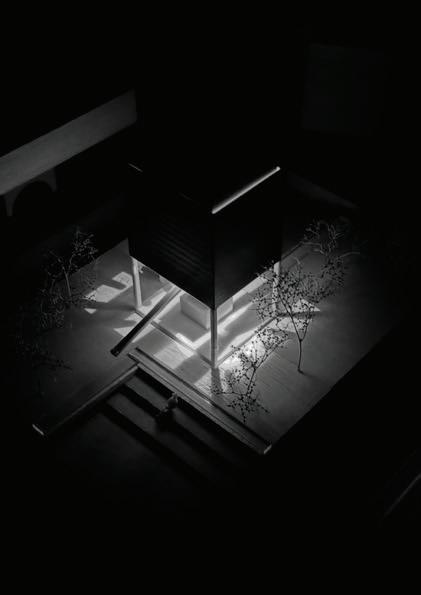
The machine works away, whether day, night, weeks, months or years have passed. It is a relic but also a reminder. It work’s to promote the timeless nature of the site, and to suspend reality, which starkly contrasts with its position
in modern life. In which, it serves as a constant reminder, a clock, a timesheet. Therefore, by proposing a bathhouse, the site becomes a place of ultimate relaxation.
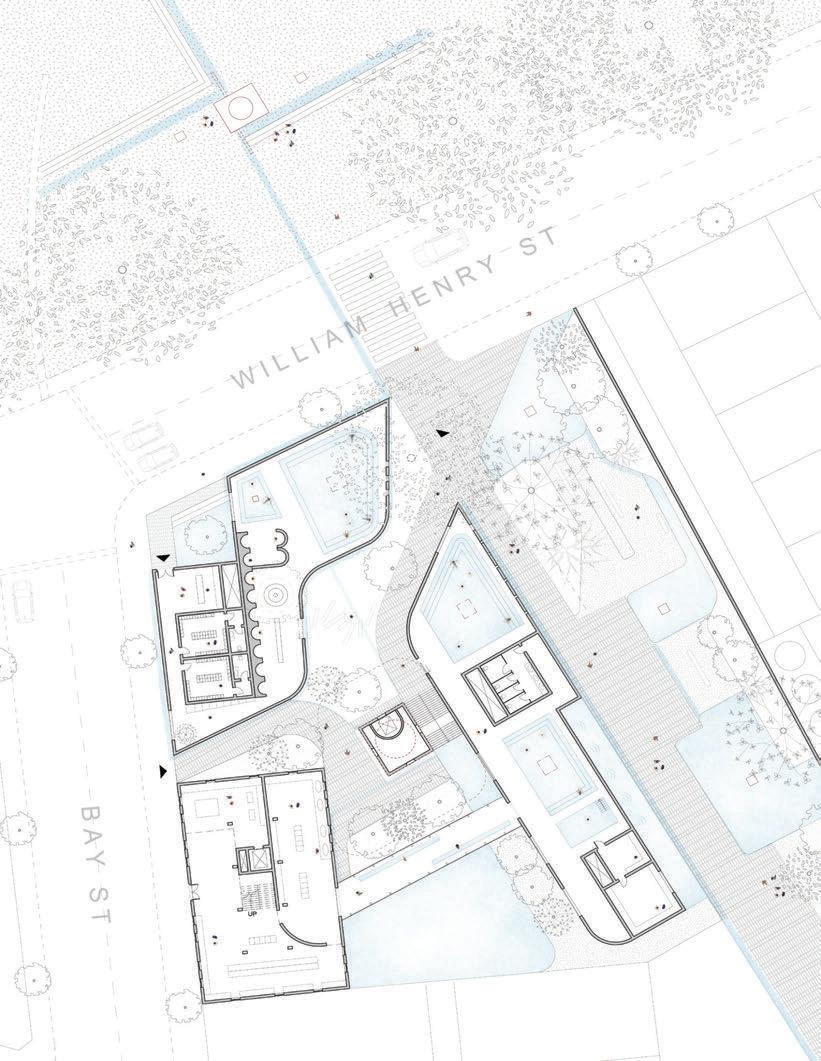
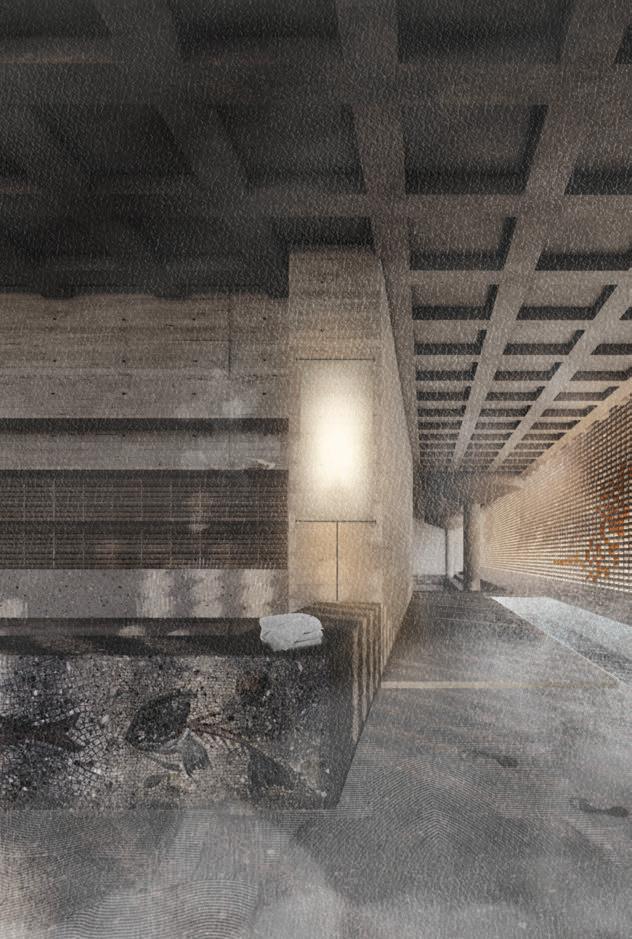
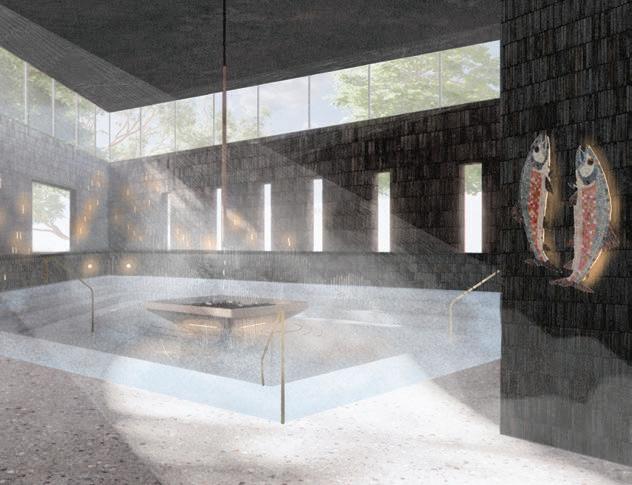
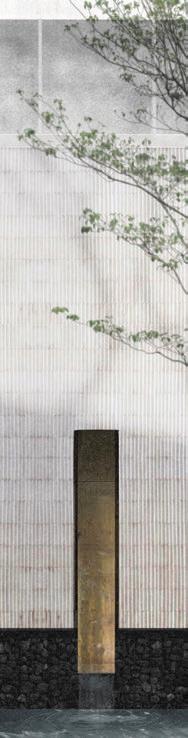
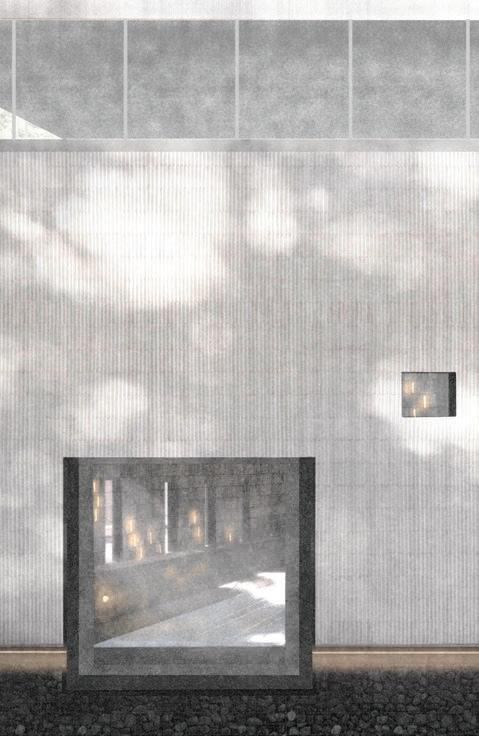
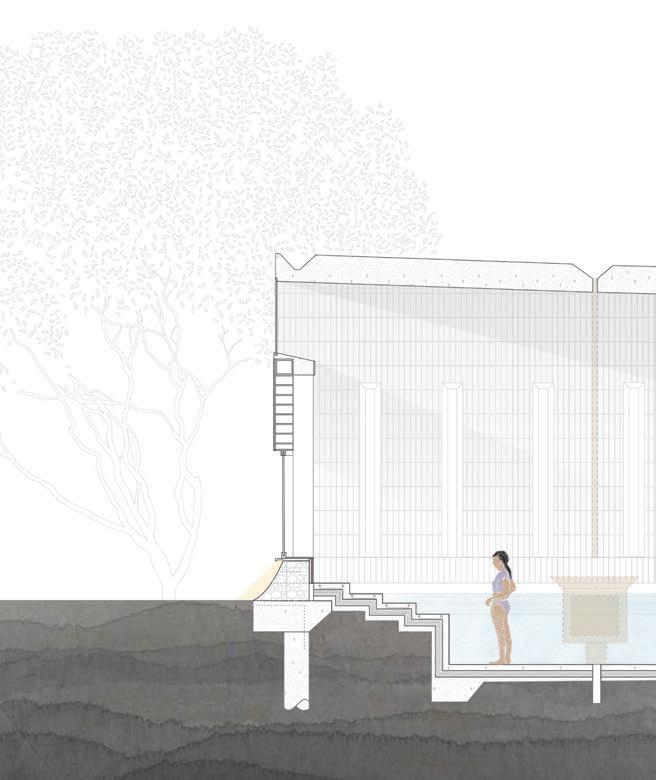
The design emphasises the sensory experience of the visitors. The sound of water permeates the bathhouses, and combined with the tactile quality of concrete, ceramics, and the interplay of light create a suspension of time. The spatial arrangement further encourages a journey that is crafted to memorialise the natural watercourse of Blackwattle Creek.
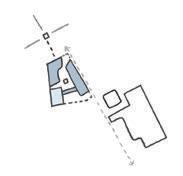
New Build: 2800 m2
Adaptive Reuse: 1,950m2
Occupancy: 300 max
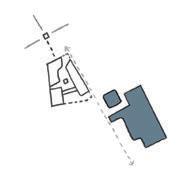
Adaptive Reuse: 5,450 m2
Occupancy: 300 max
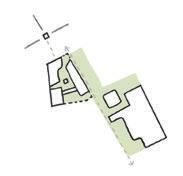
Reclaimed Green Space: 9600 m2
‘The Entries’
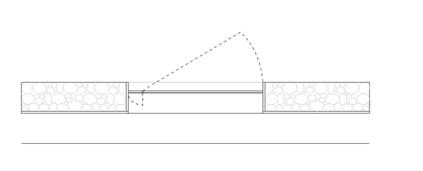
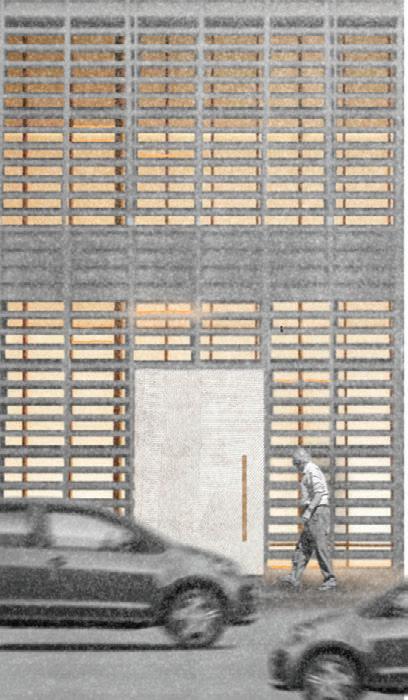
Continuing the industrial character of the site surrounds, the facade facing William Henry St attempts to utilise recycled brick from demolished buildings on the site. The newer proposed building will be of concrete, and darker in the interiors as well.
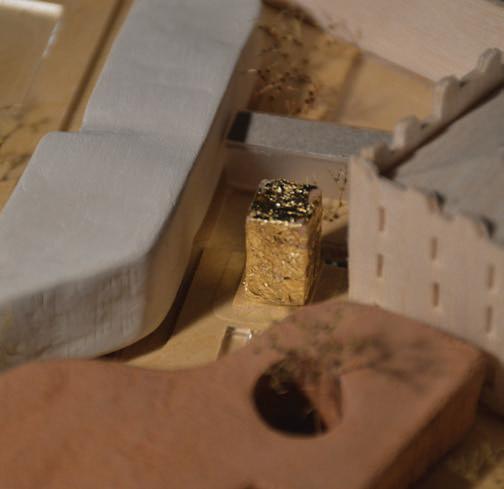
This entry passes Tilly the tree, and heads into the courtyard space where a the Machine provides, light and acts as anchor.
the family
The mother and daughter work full time and barely see each other. They go to the bathhouse on the weekend and together count the moles on their arms and neck, and find comfort in how alike they are.
friends
It is too cold for the beach, and bored with the existing social spaces in the city, the friends try out the bathhouse. They sit amid the mist and find themselves sitting together in comfortable silence.
the individual
It is too lonely to go home after work, so this person heads to the bathhouse at night. They don’t know what the order is to experience the baths and feel shy in an unknown space. A stranger speaks to them, and lets them know spurring the start of more conversation.
General Baths
Ideal Water Temperatures
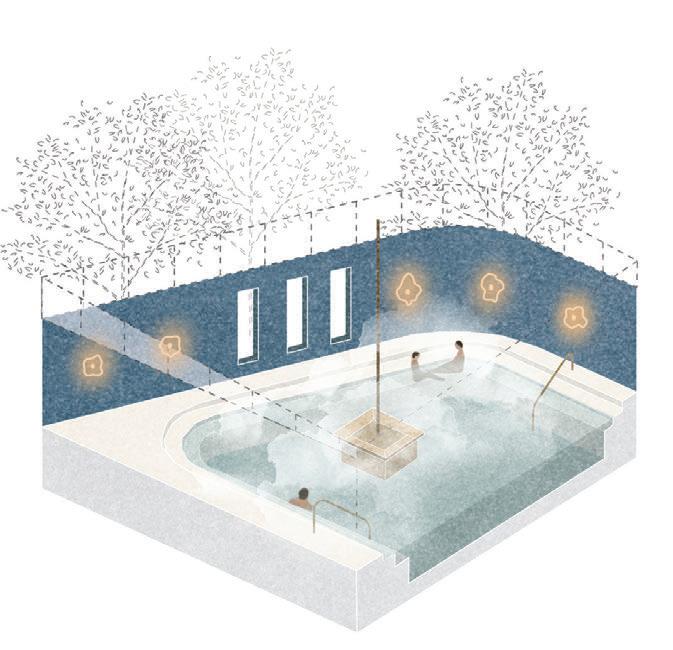
The recommended bath temperature is 36-40 degrees Celsius, which is just a few degrees above normal body temperature.
Herbal Baths
In Japan, Hinoki (Japanese Cypress) is common in Onsens. It can help to alleviate various skin conditions such as acne and combat stress. Research suggests that Cypress has antimicrobial, antibacterial, and anti-fungal benefits.
Carbonated Baths
It consists of a distribution of microbubbles of carbon dioxide (CO2) contained in a hot bath at 36 °C. The carbon dioxide absorbed by the body while soaking improves blood flow.
Cold Plunge
The optimal ice bath temperature is below 15 degrees Celsius. It can reduce inflammation to provide quicker recovery of muscle strength, power and neuromuscular function.
Sensory Deprivation Tank:
Flotation-REST has been found to be effective in reducing anxiety. A 2018 study showed that a single one-hour session in a sensory deprivation tank was capable of a significant reduction in anxiety and improvement in mood in the 50 participants with stress- and anxietyrelated disorders.
the water, it hits your back and your arms, and your legs and trickles down to the ground along with your worries.
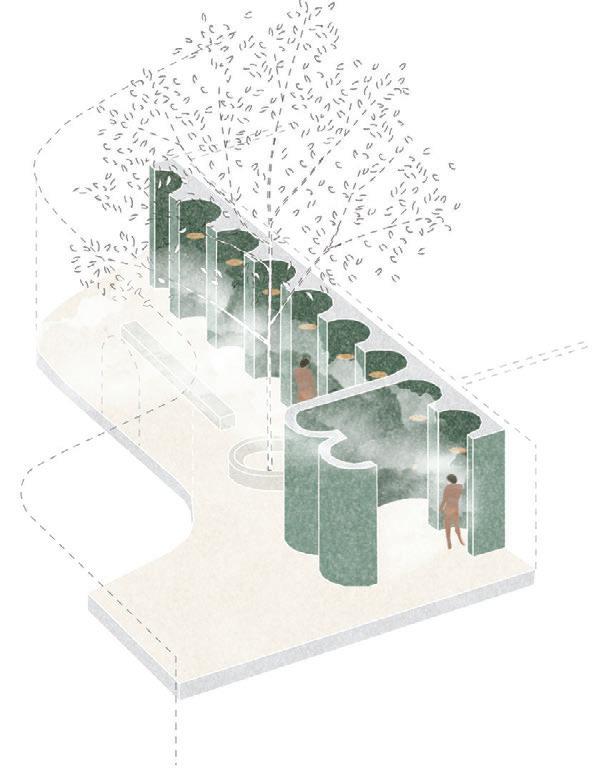
the steam twists around your ankles and cleanses you with every inhale the cold depths awakens you
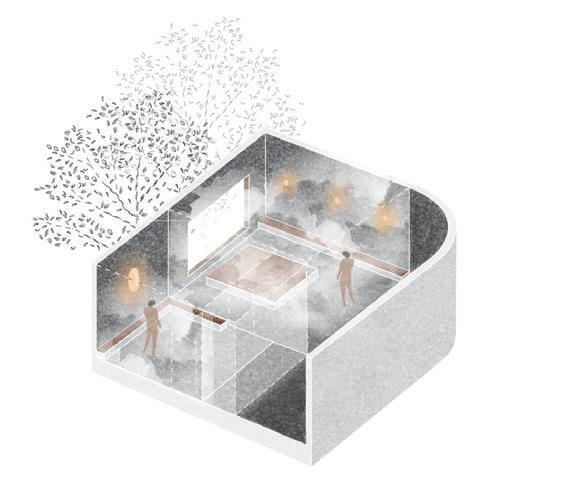
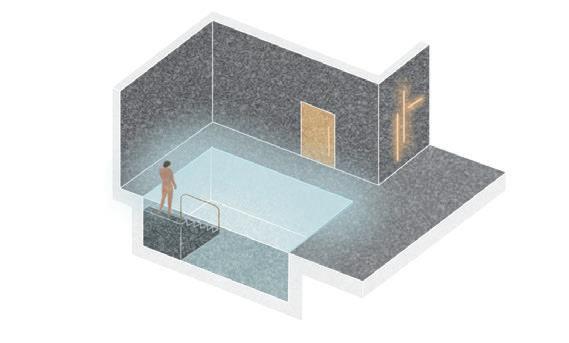
the heat climbs inside your skin and remains, you are warm and safe and content
deep below the machine casts warm light as you float endlessly forever light in body and mind

the time machine
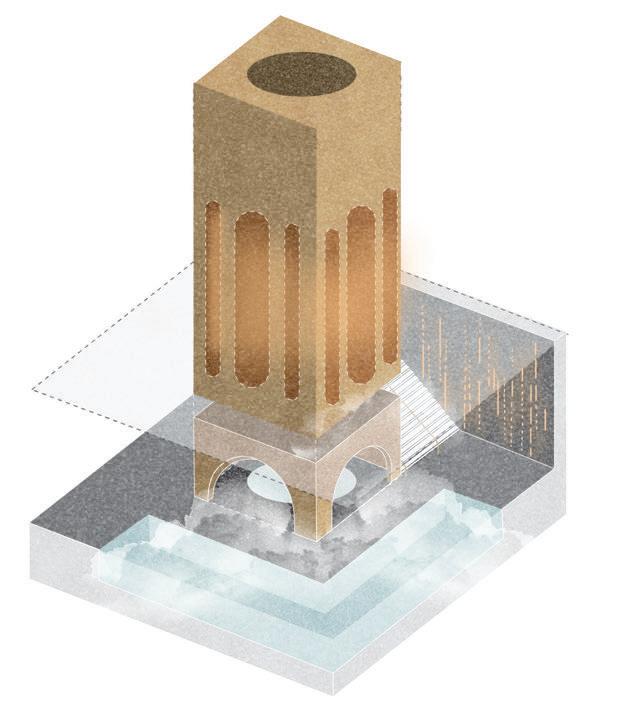
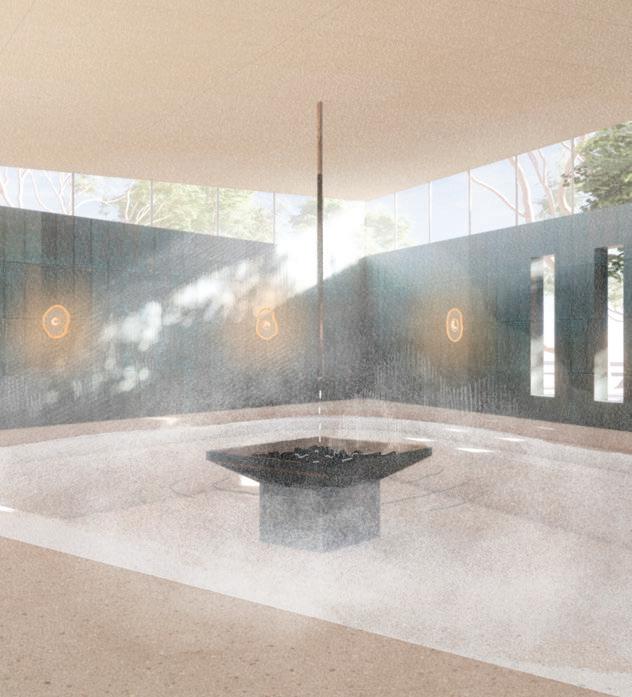
Reminescent of a Japanese Water Clock ‘Shishi-odoshi’, the time machine consists of three main components: the bowl, the arms, the base. Water accumulates at the bowl, trickles down onto the arms which are balanced on a transclucent orb. The ball and socket joint here allows for the arms to move once the center of gravity shifts due to the weight of water. From here water is steadily feed to the channels into the ground, through to the rest of the site.

the mind machine
Inspired by tibetan singing bowls, and sound baths, this machine extends above and below the ground. It’s sound permeates throughout the underground sensory deprivation tanks. Water is captured in a bowl at the top, and gradually drips down bespokely crafted metalwork. A transcluent orb at the top consistantly provides a glow of light to it’s surrounds.

the heart machine
Taking inspiration from the heart machine in ‘Metropolis’ by Fritz Lang, this machine takes center place in the public bathhouse. Connected to minature versions of itself, the heart machine constantly pumps heat, and steam into the bathhouse. Water drips onto heated rocks placed in the center of the machine. This then is chanelled down into a smaller bowl within a space for self reflection, and gradually gathered back below the building for water storage.


the water, it flows gently down and through, remembering when it was blackwattle creek.


twisting and turning, the machine coils underneath, as stubborn as tree roots.
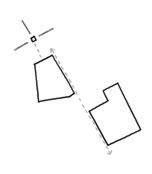

This is a lighter setting and the start of the experiential journey. The timber ceiling and light aggregate of the floor lifts the mood, and provides a more refreshing atmosphere.
gellert thermal baths, budapest, hungary
21.01.24
gellert thermal baths, budapest, hungary
special thanks my parents everyone in studio amy he and ian tsui