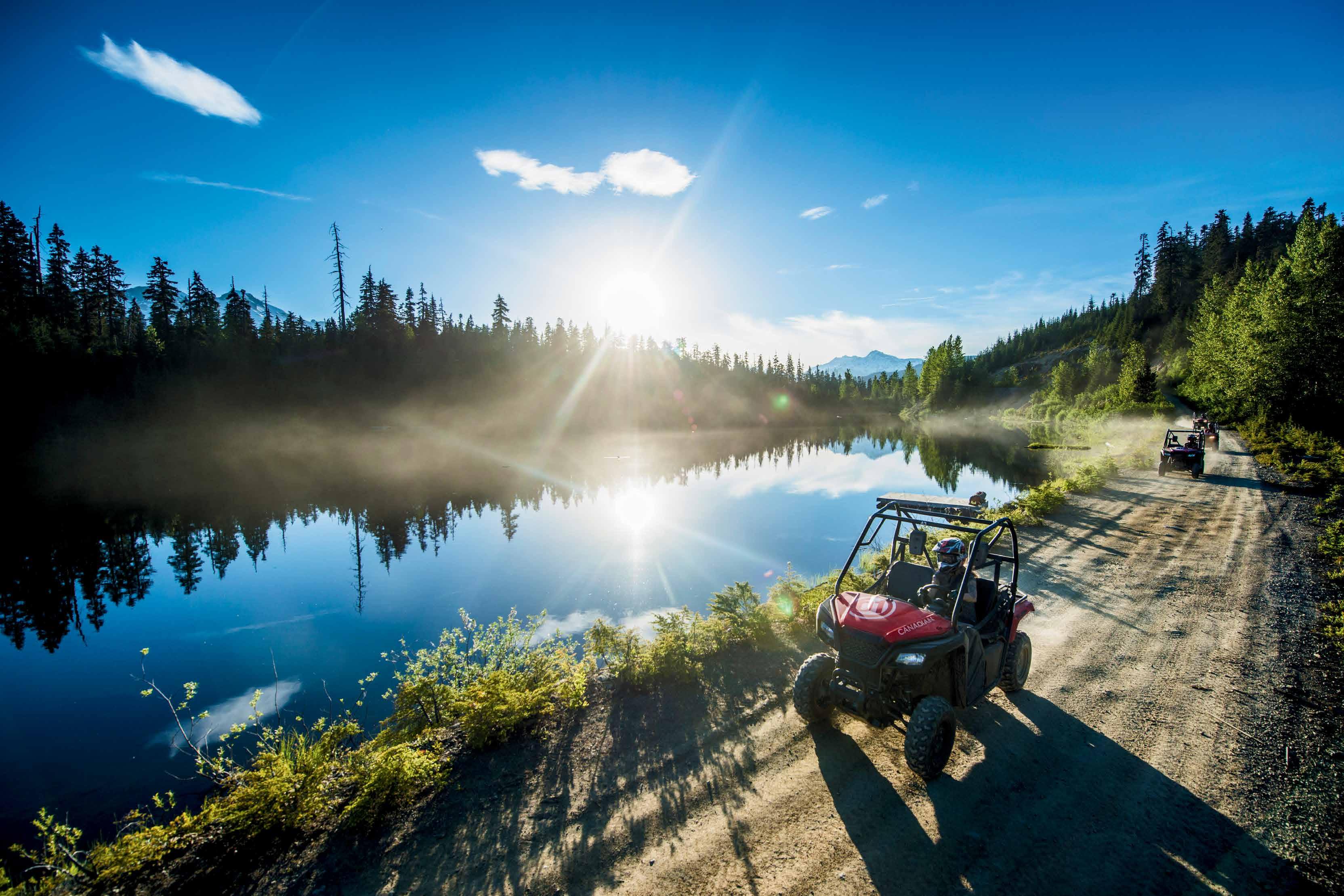
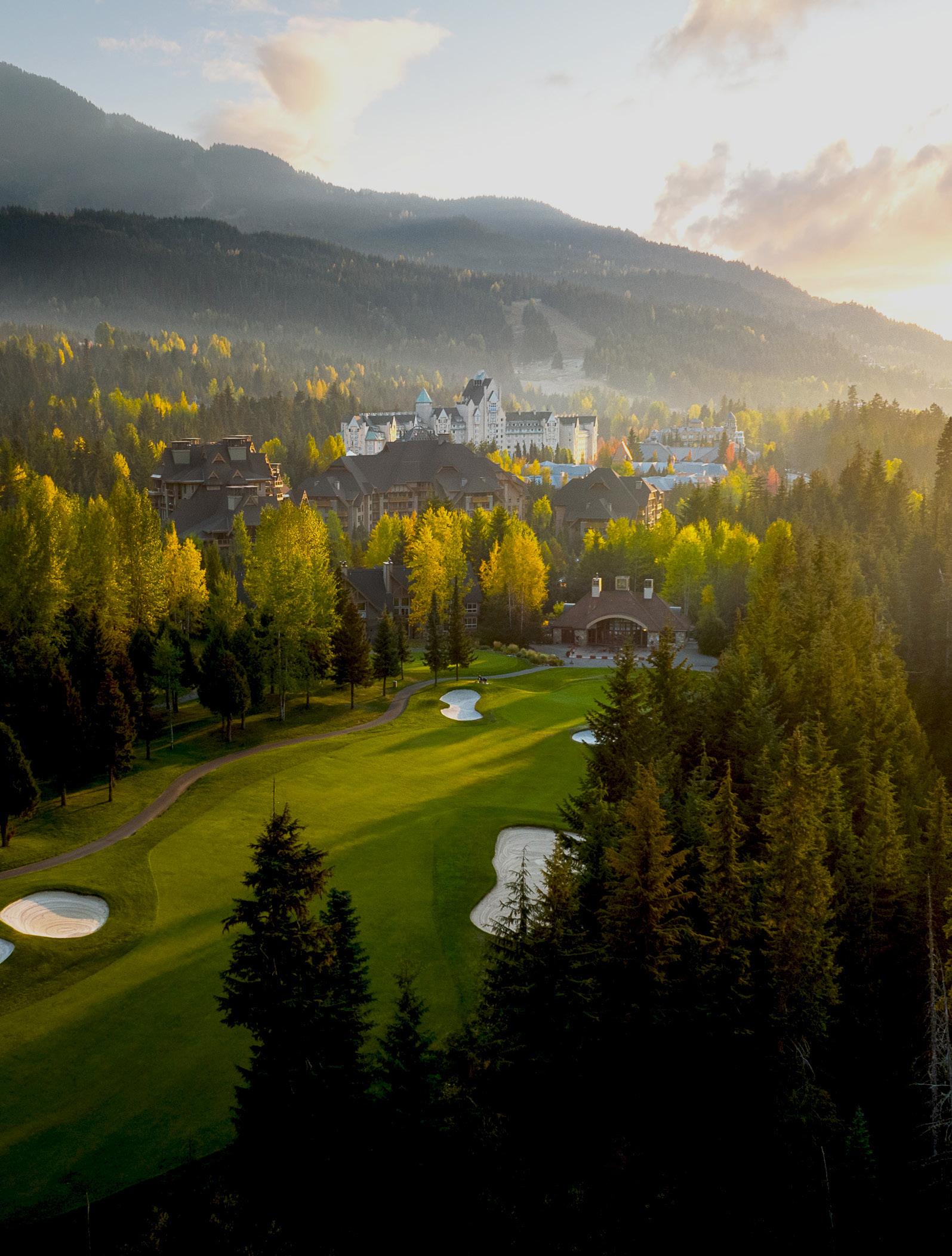
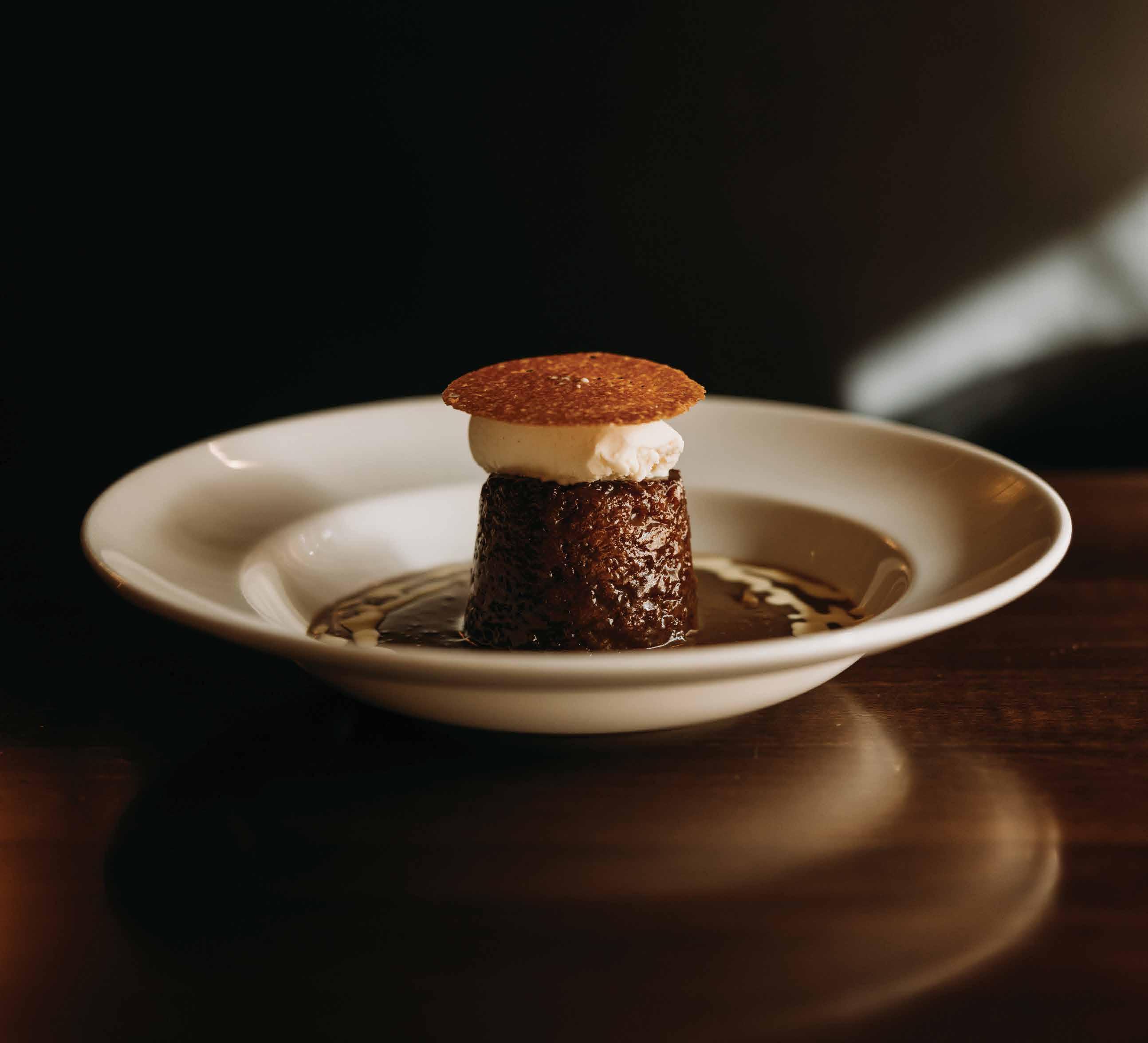
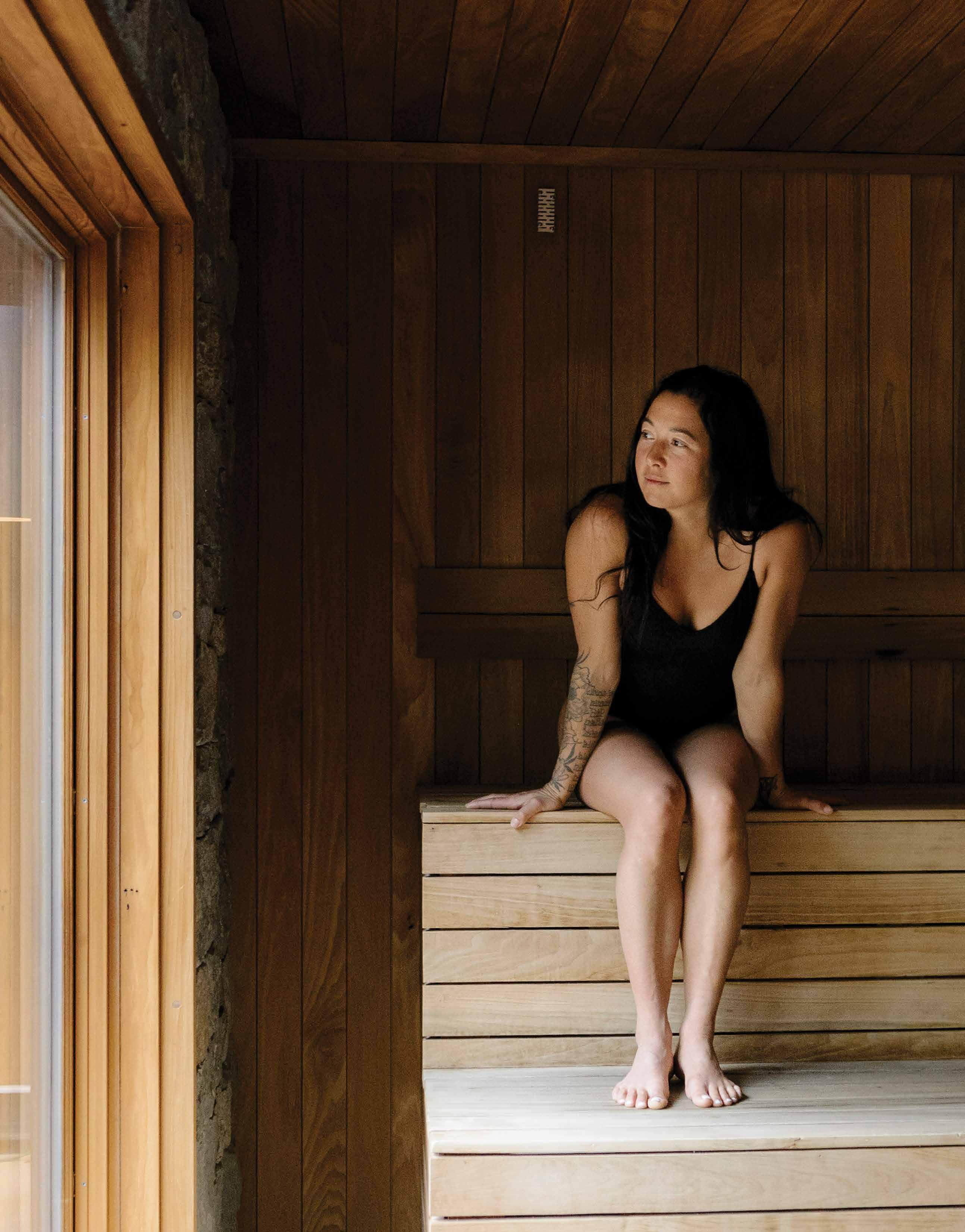
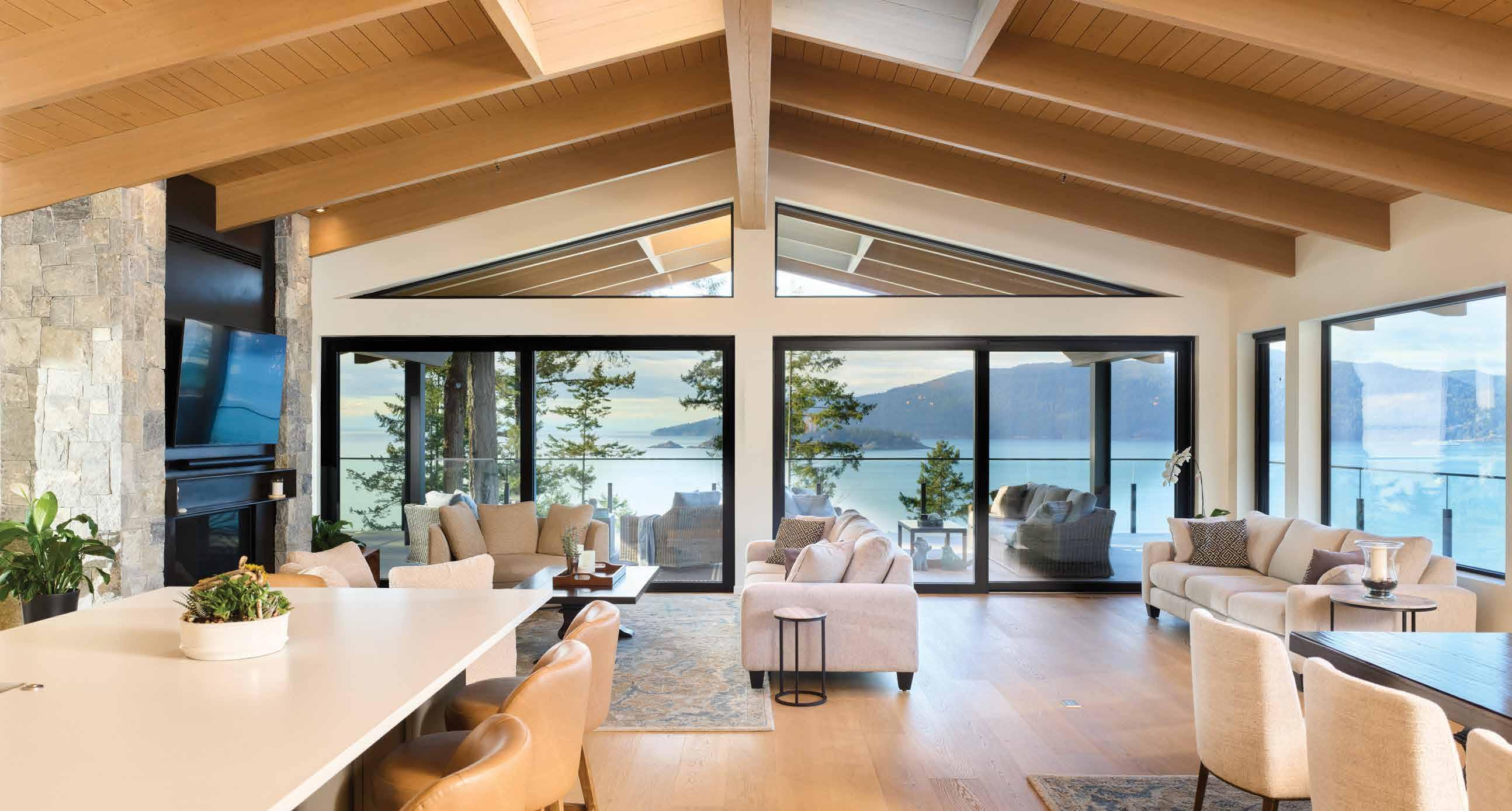
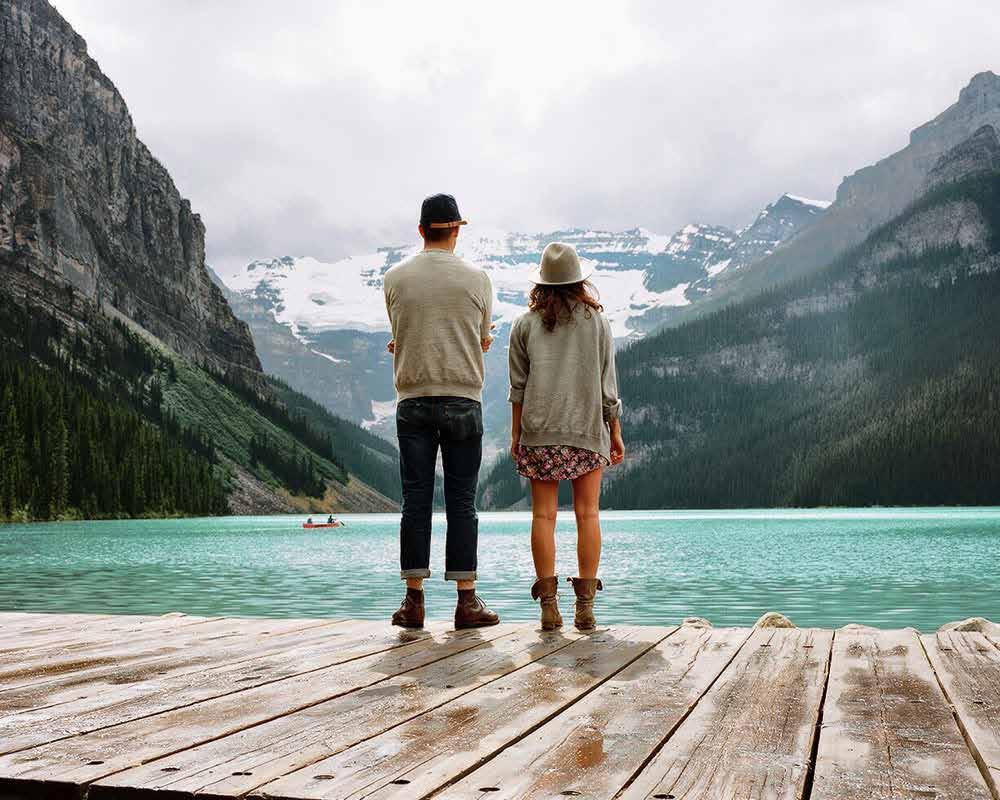
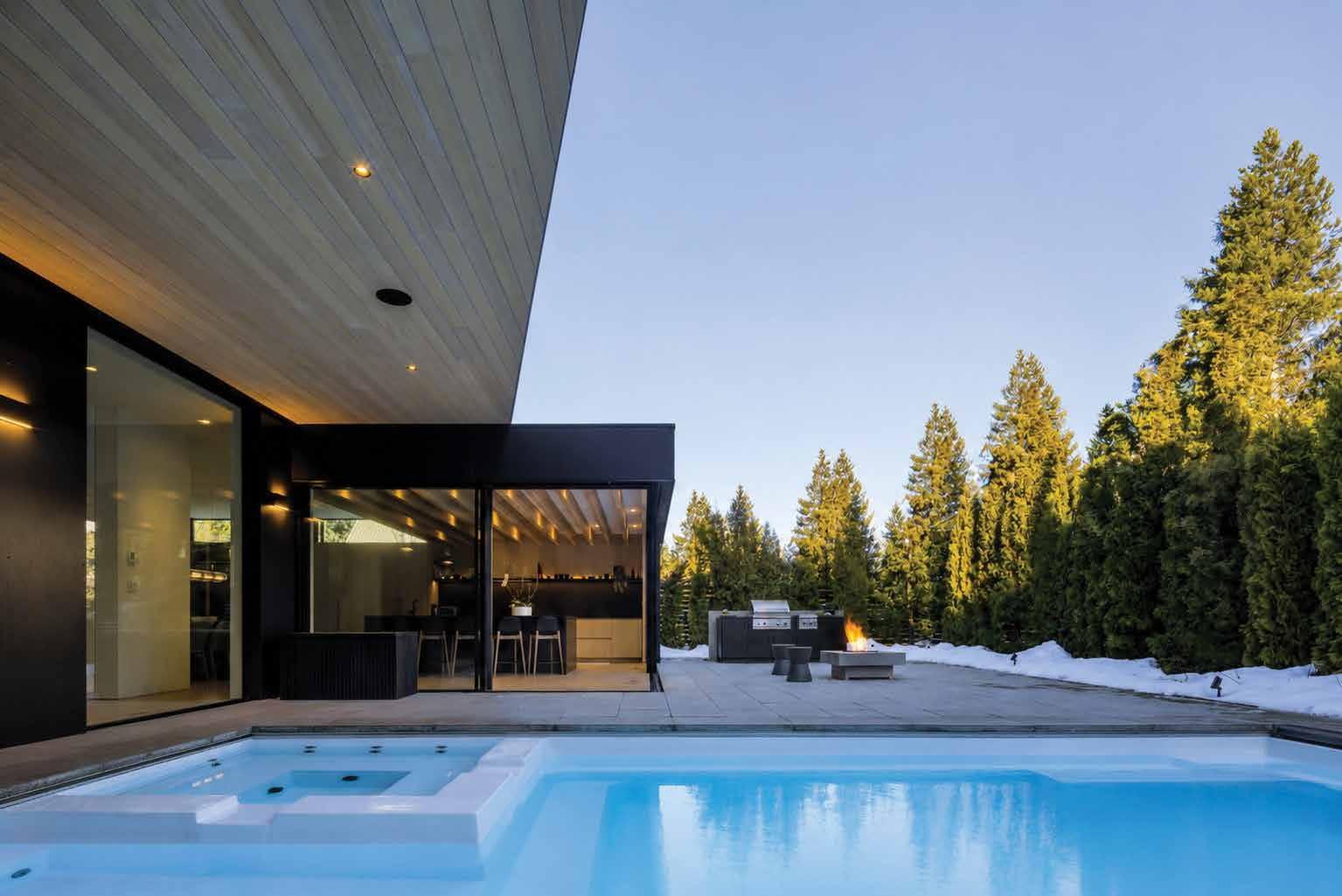
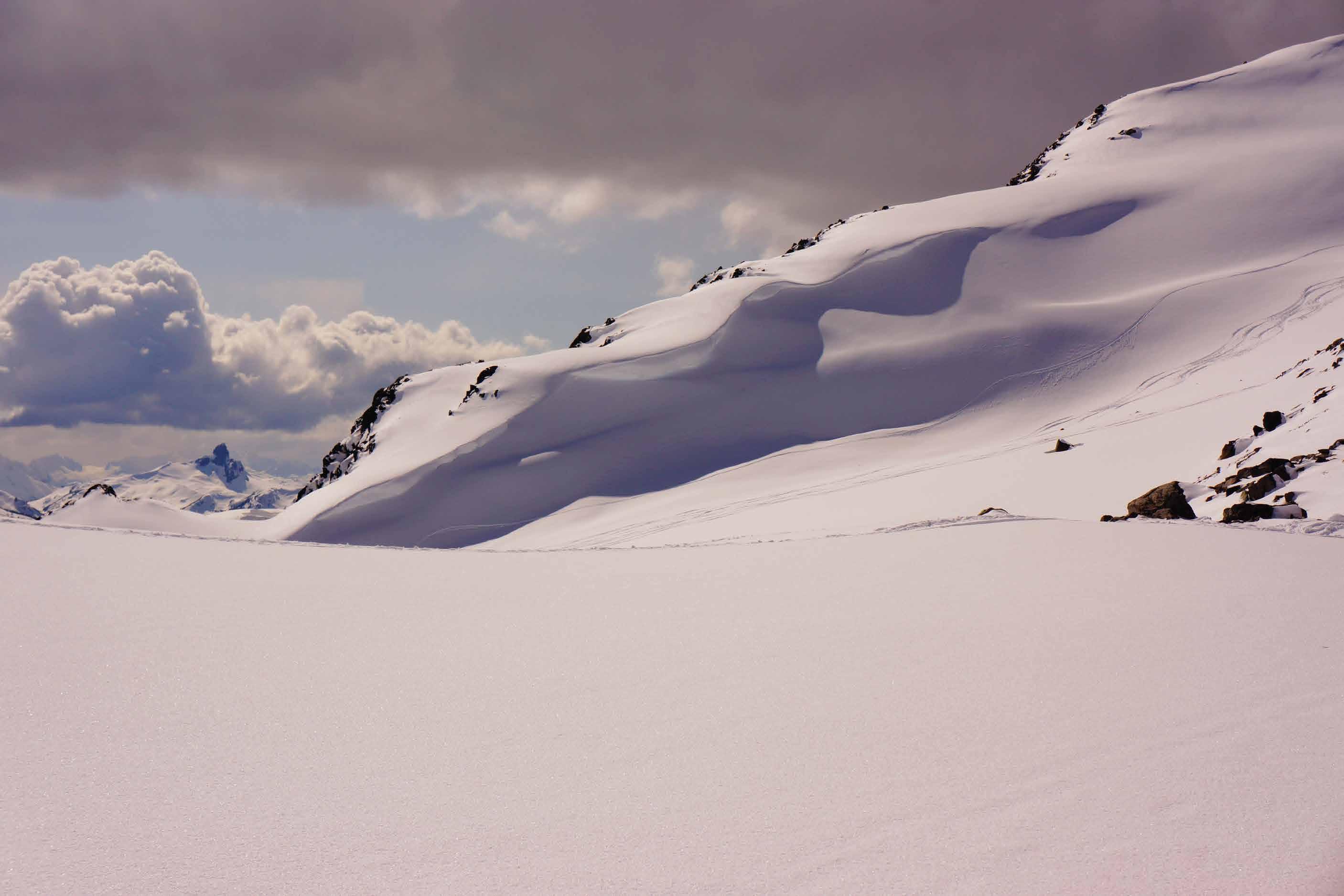
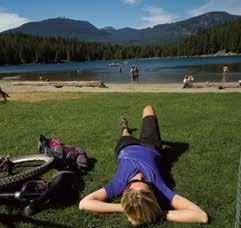
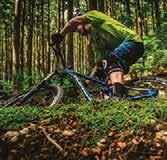
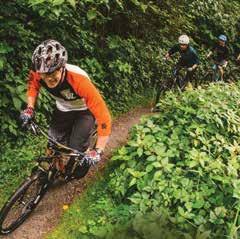
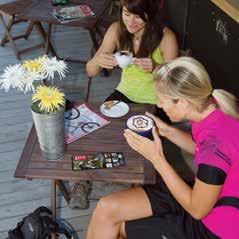
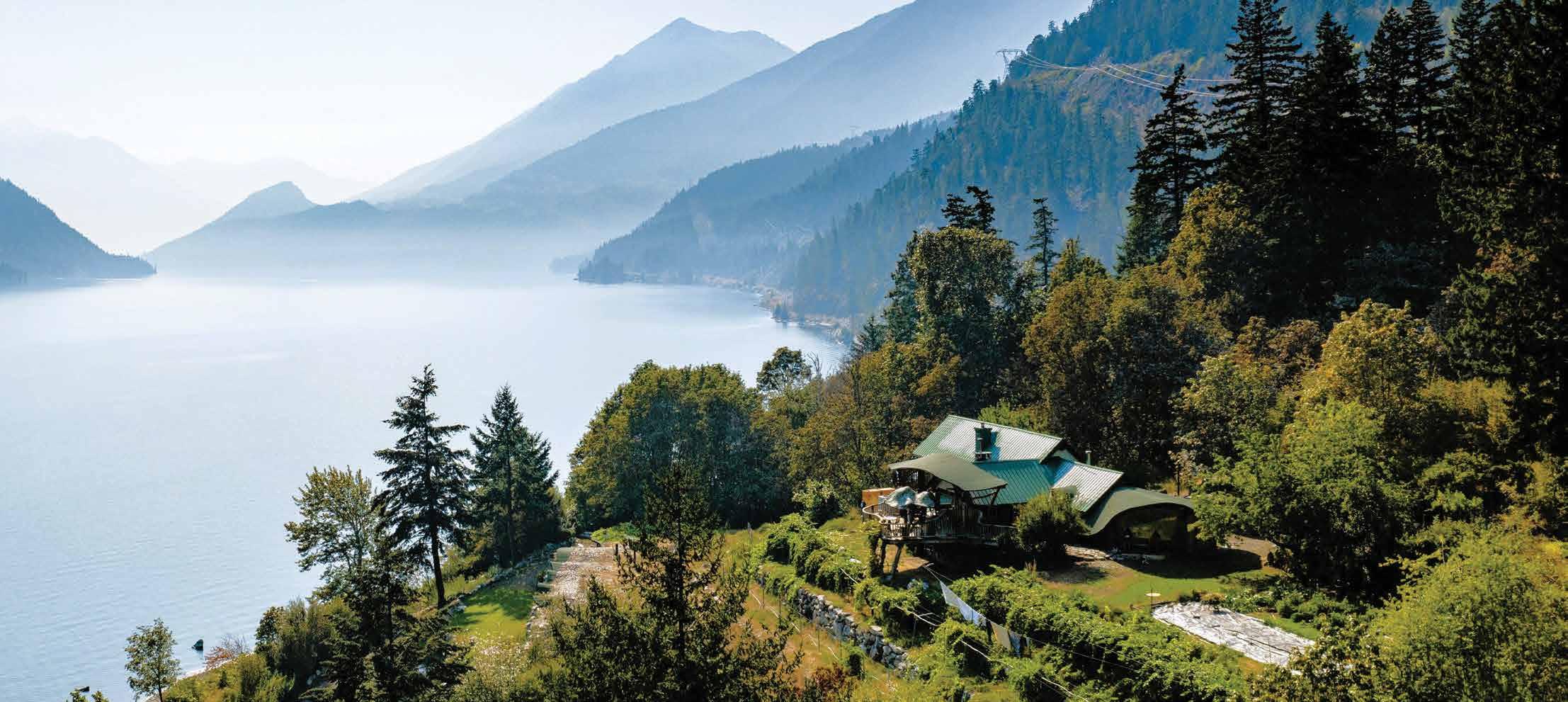
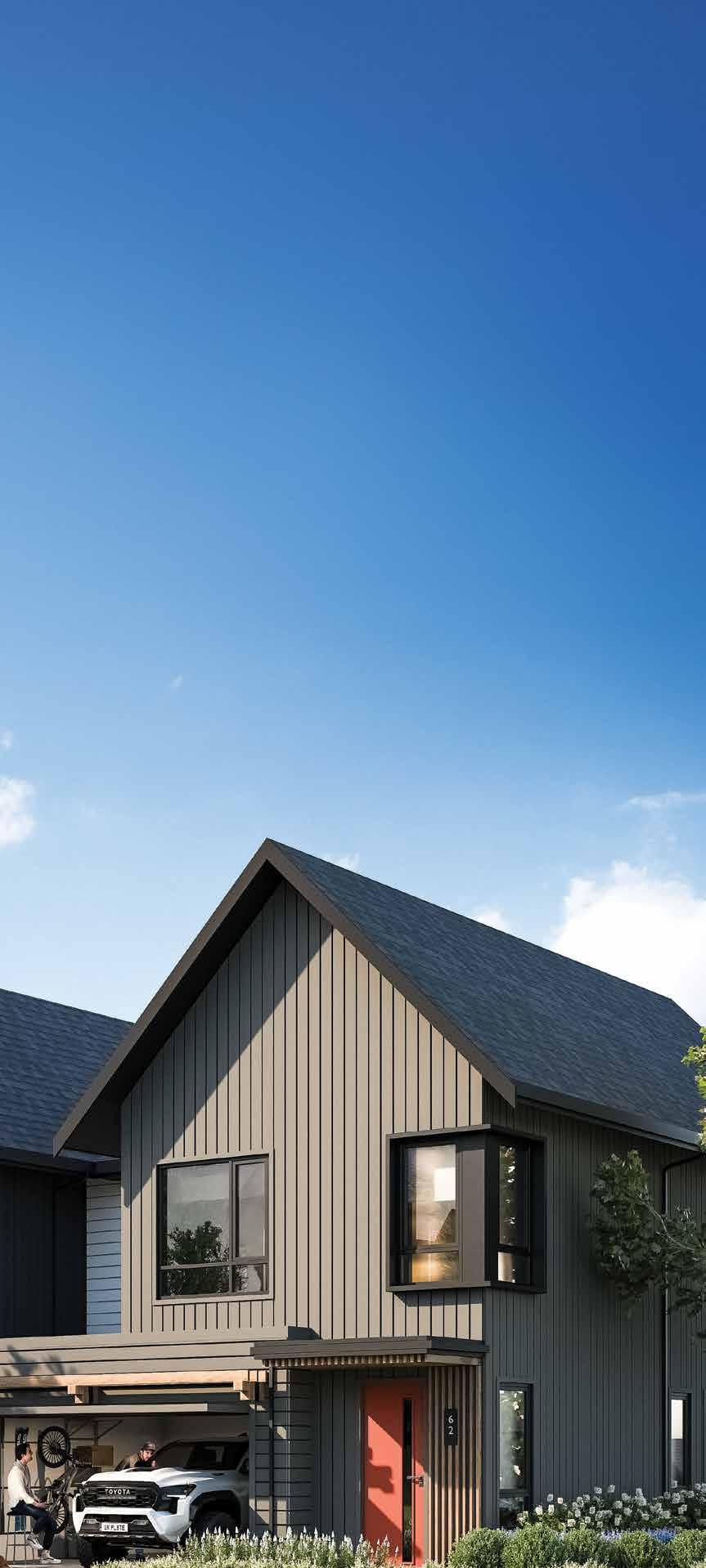
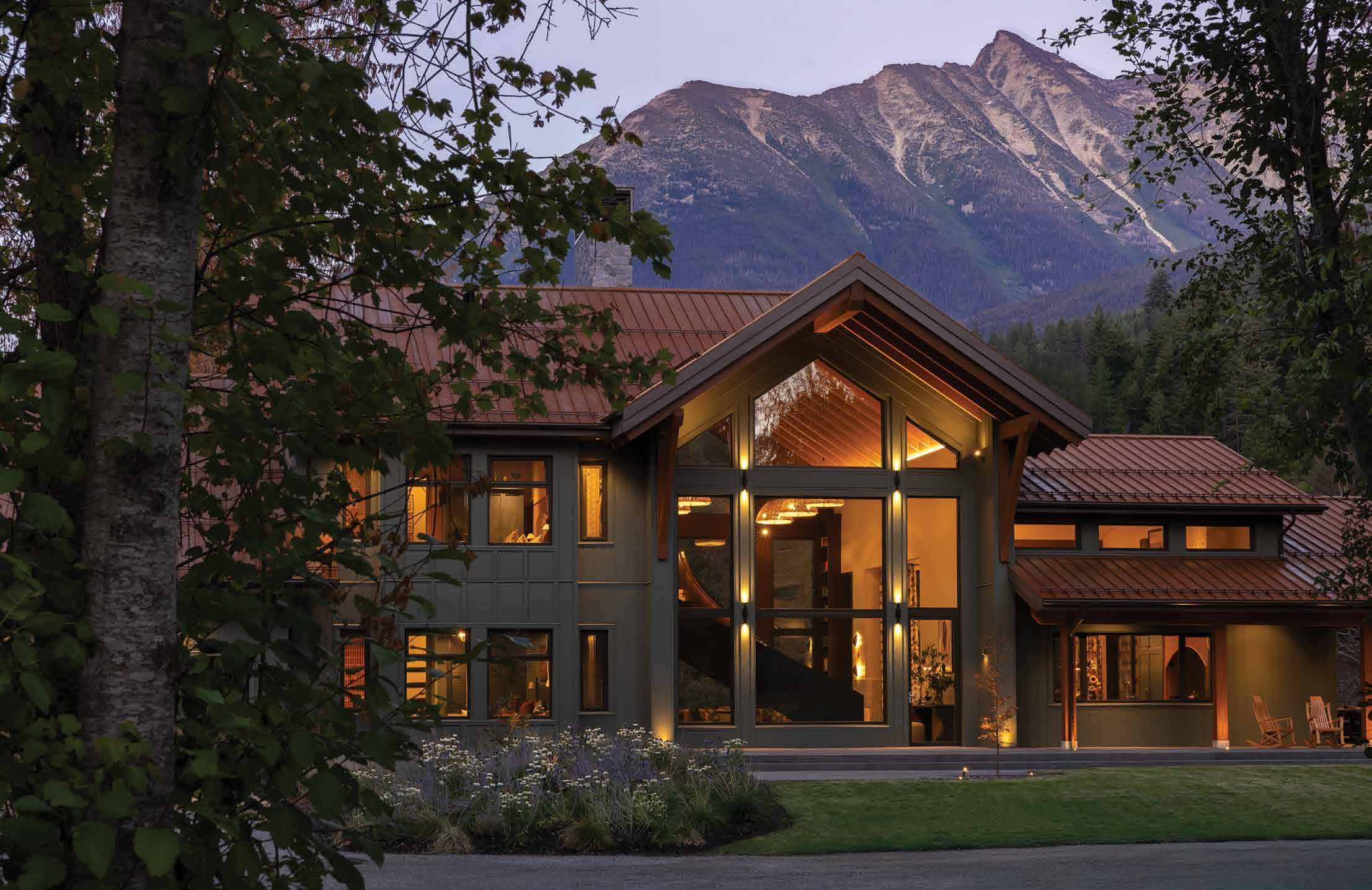
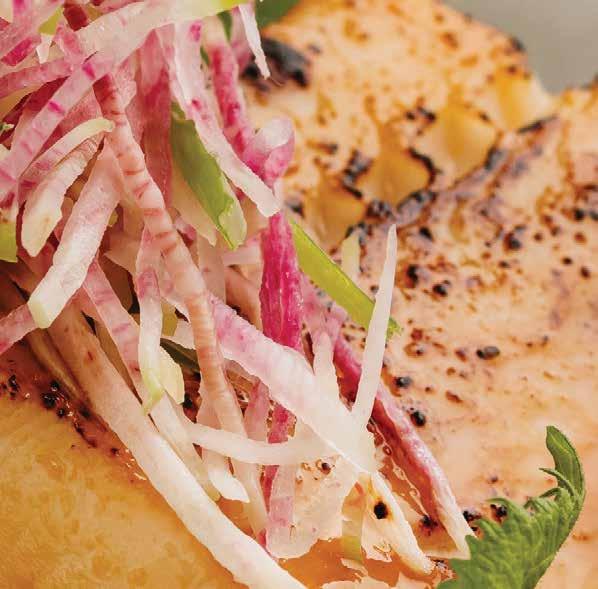
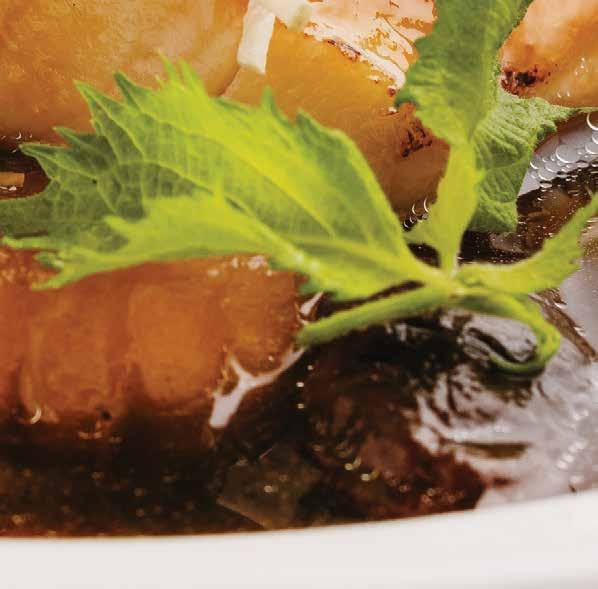
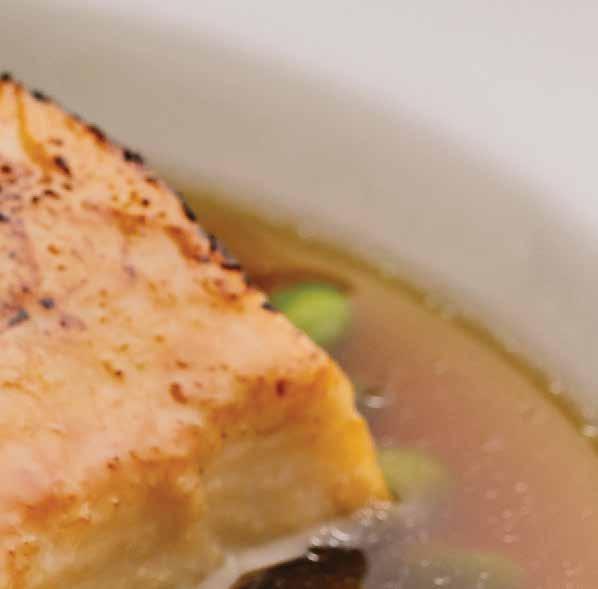
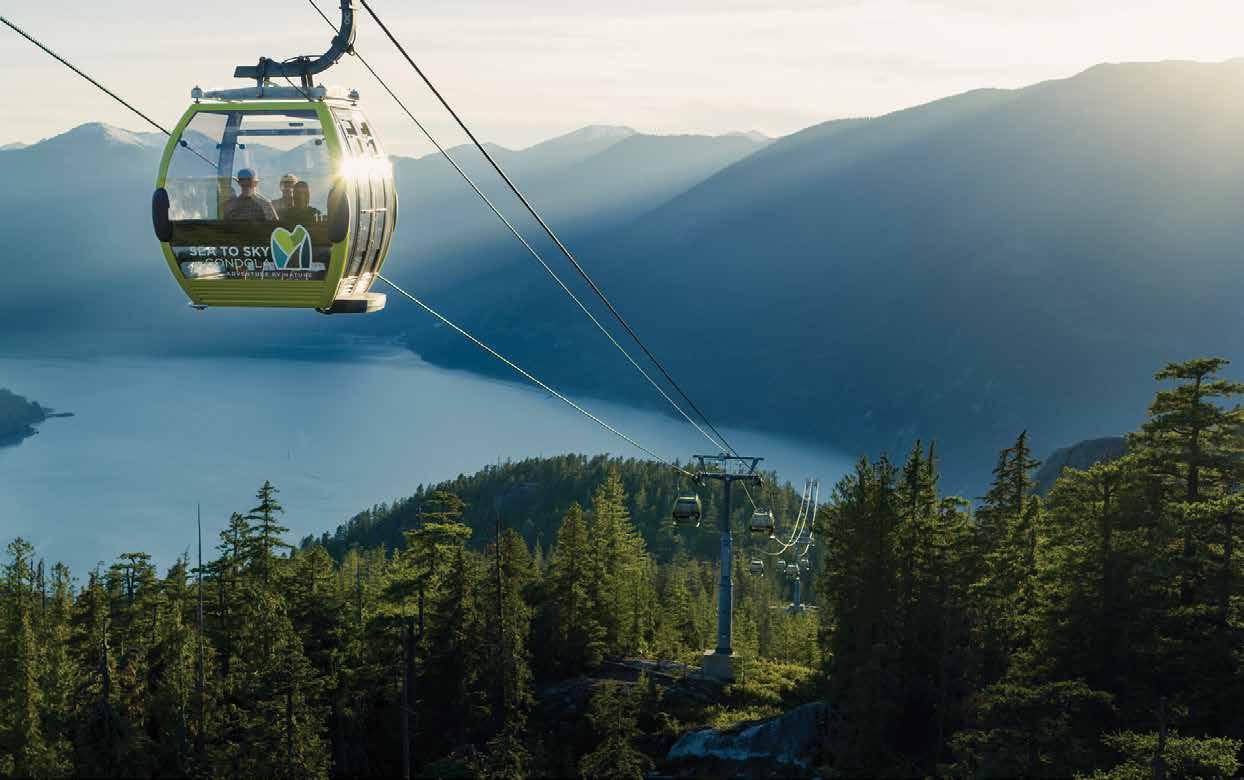
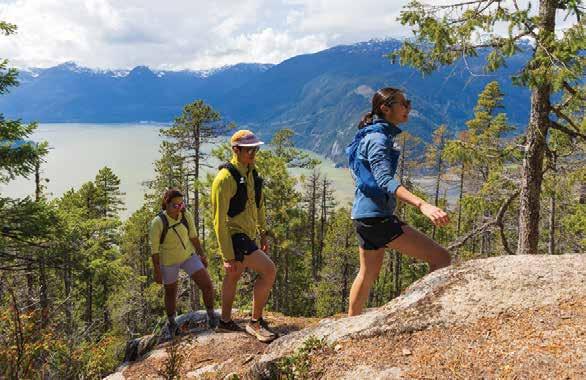
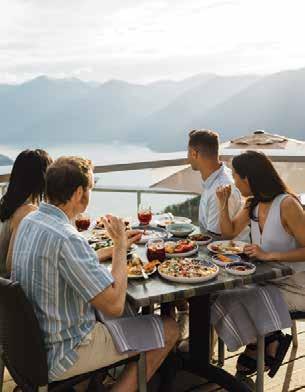
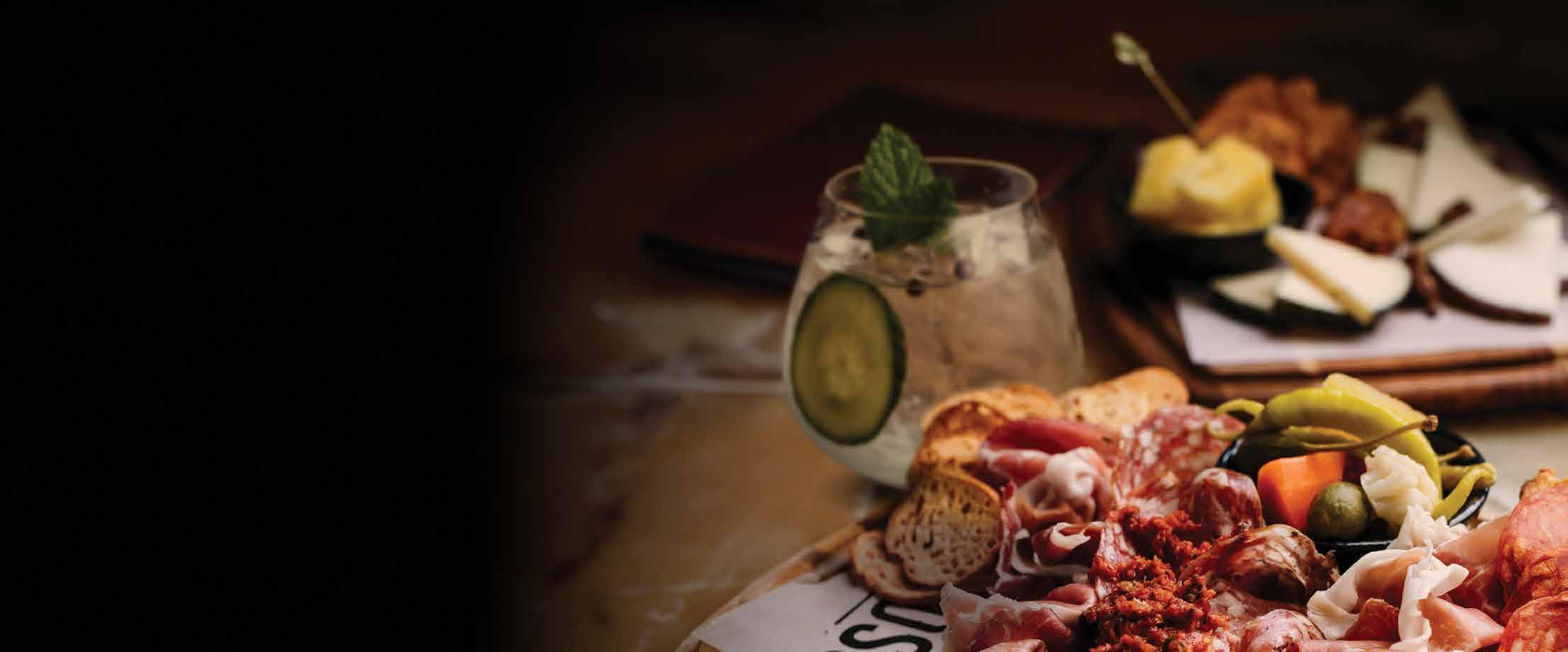
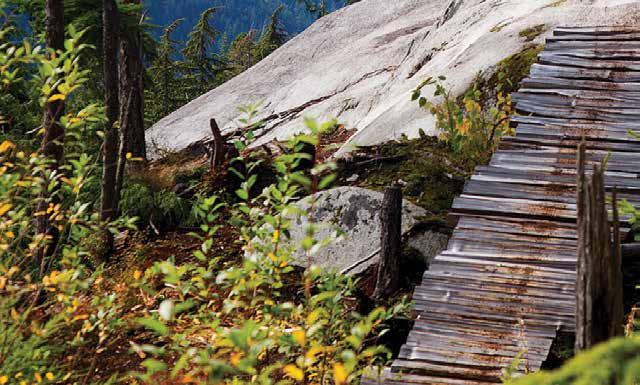
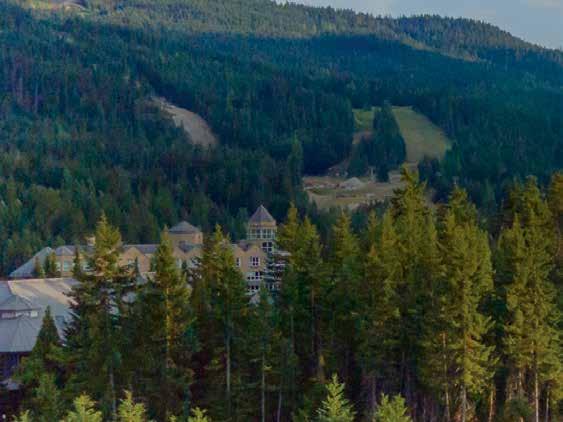
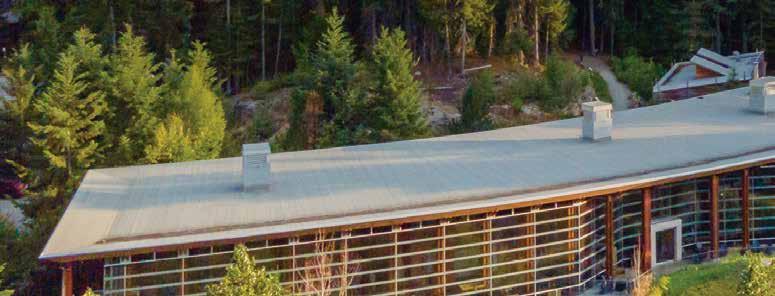
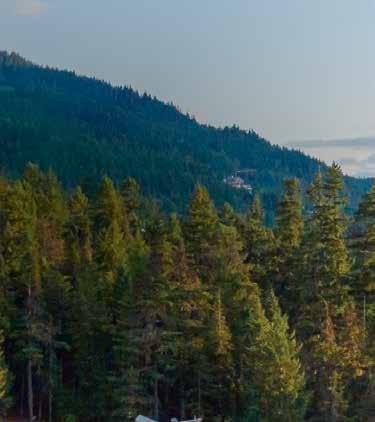
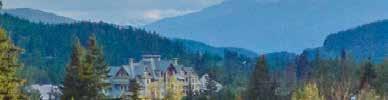
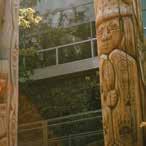
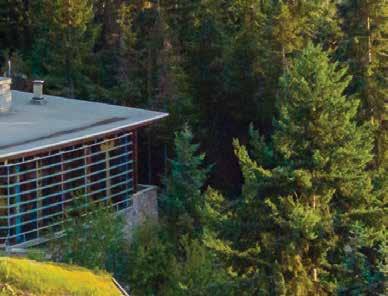
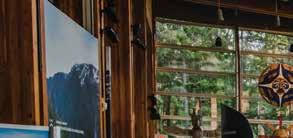
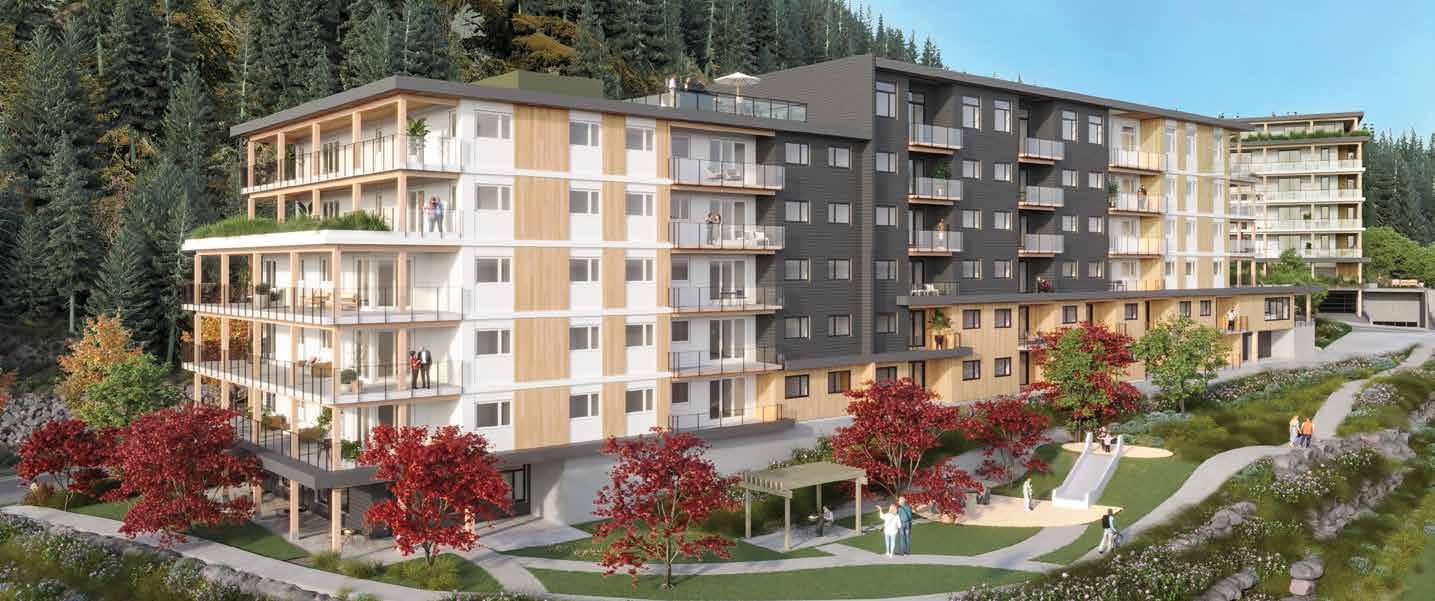
Your alpine escape starts here. Where Whistler Blackcomb’s slopes, golf course stunning vistas, spa serenity, and five exquisite dining venues combine for a truly special experience.
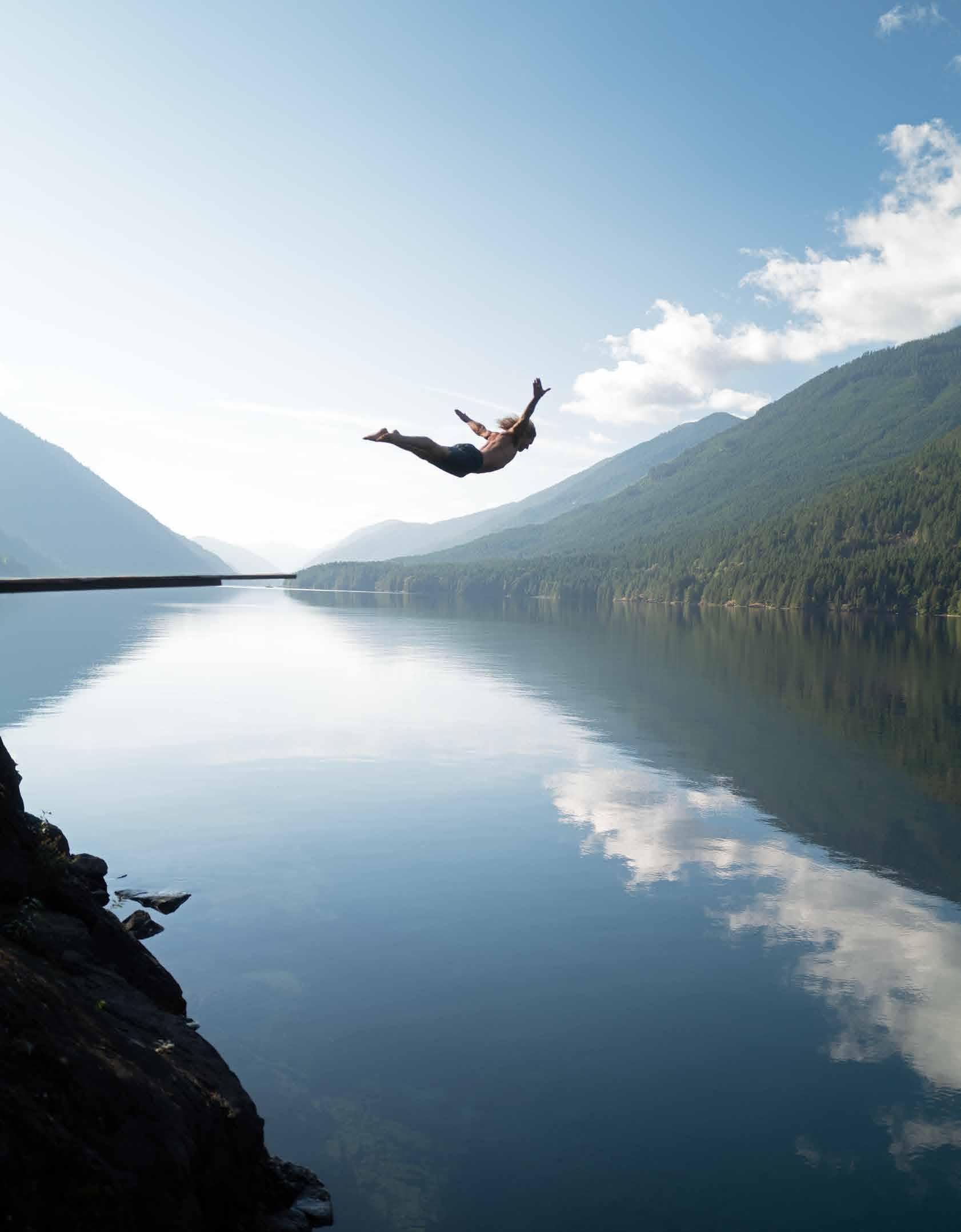
See The World, Don’t Carry The Weight Of It.
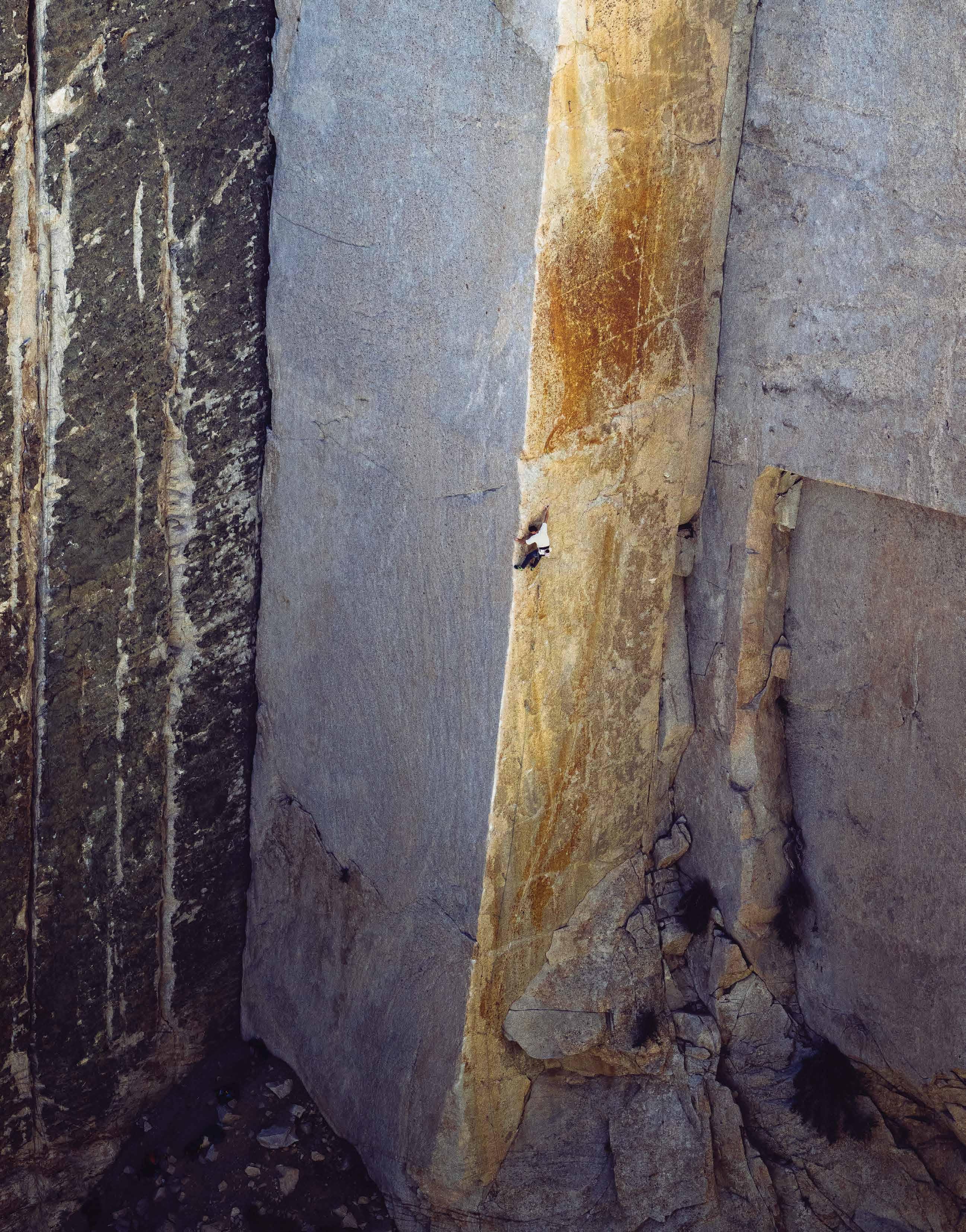
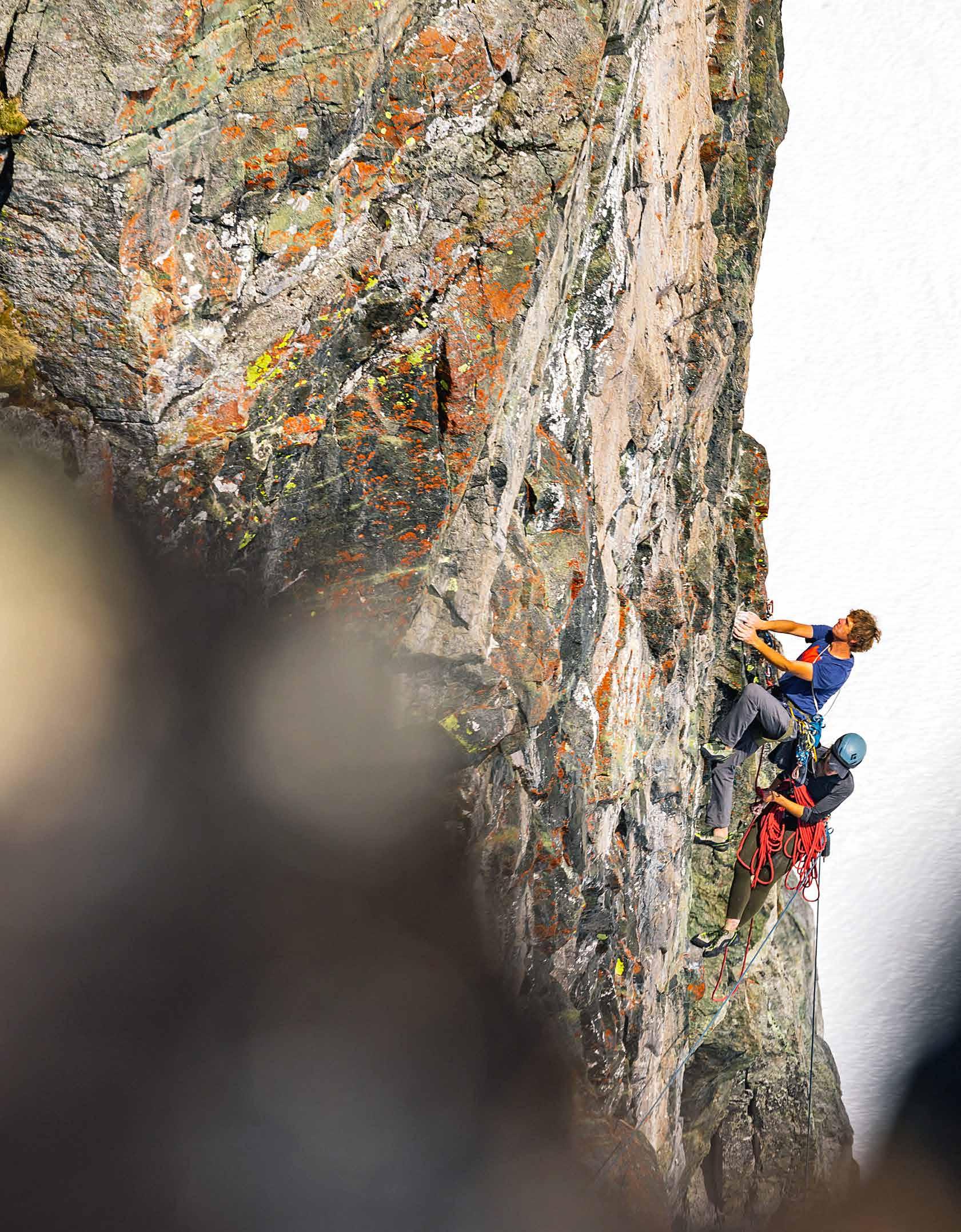
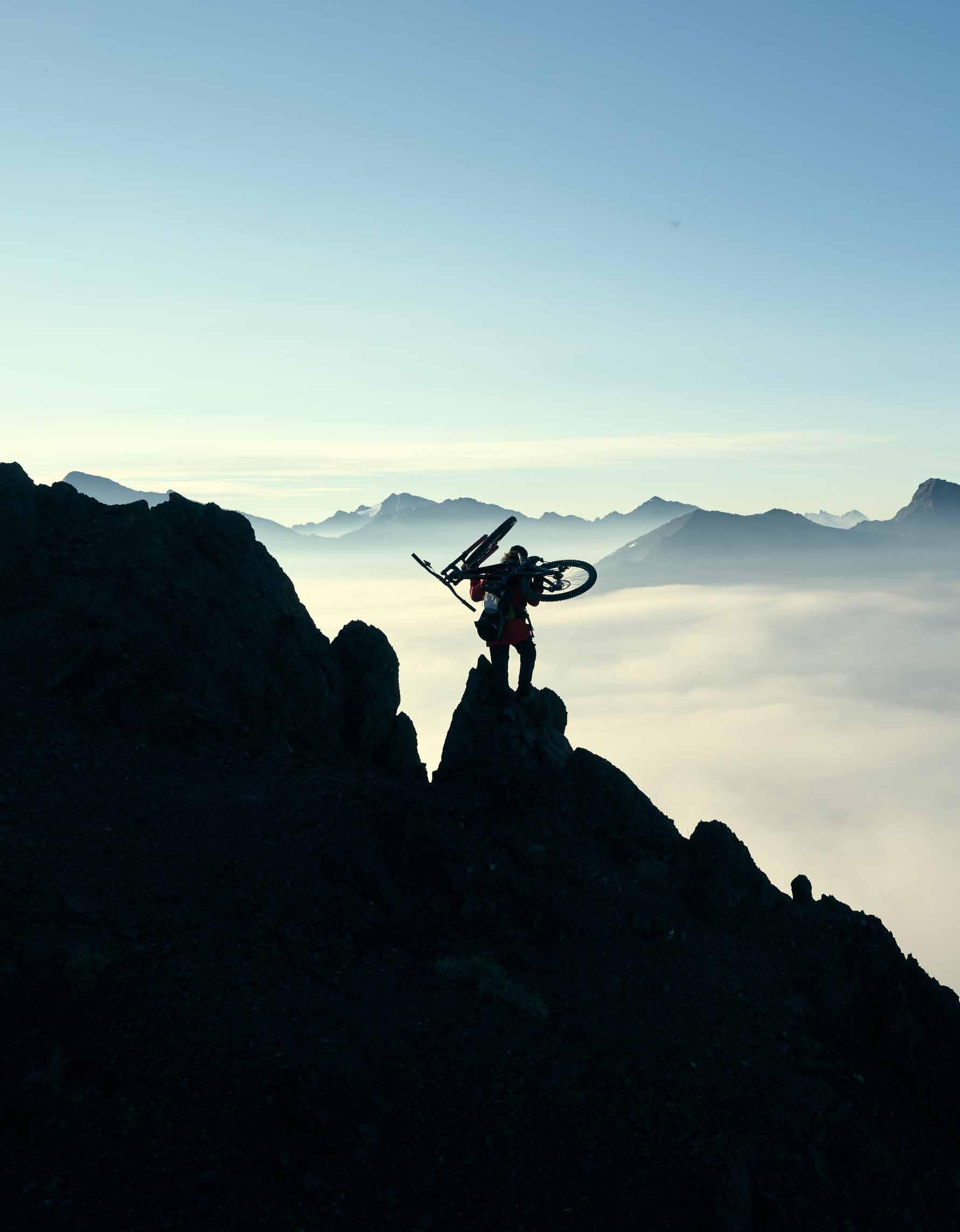
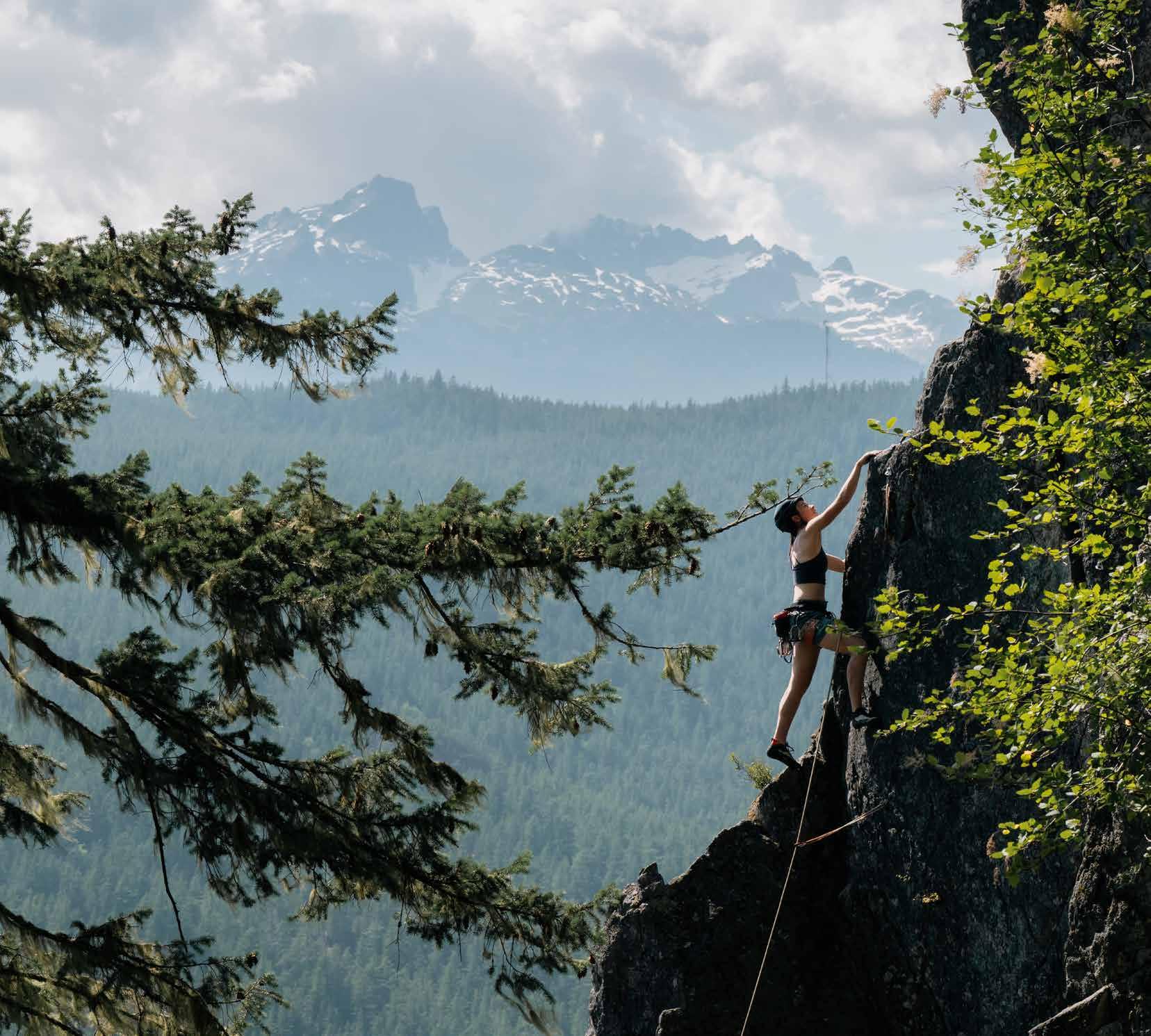
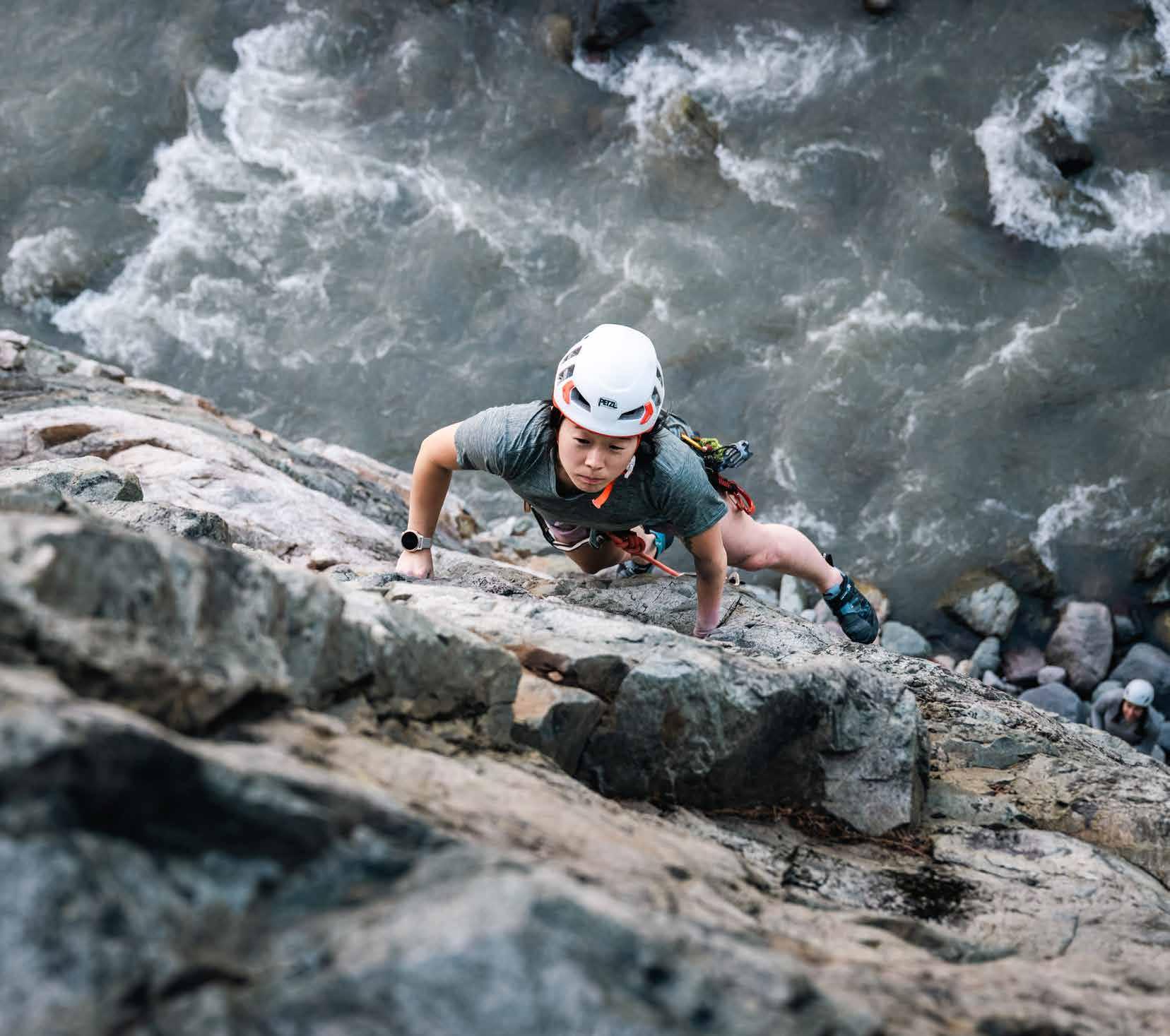
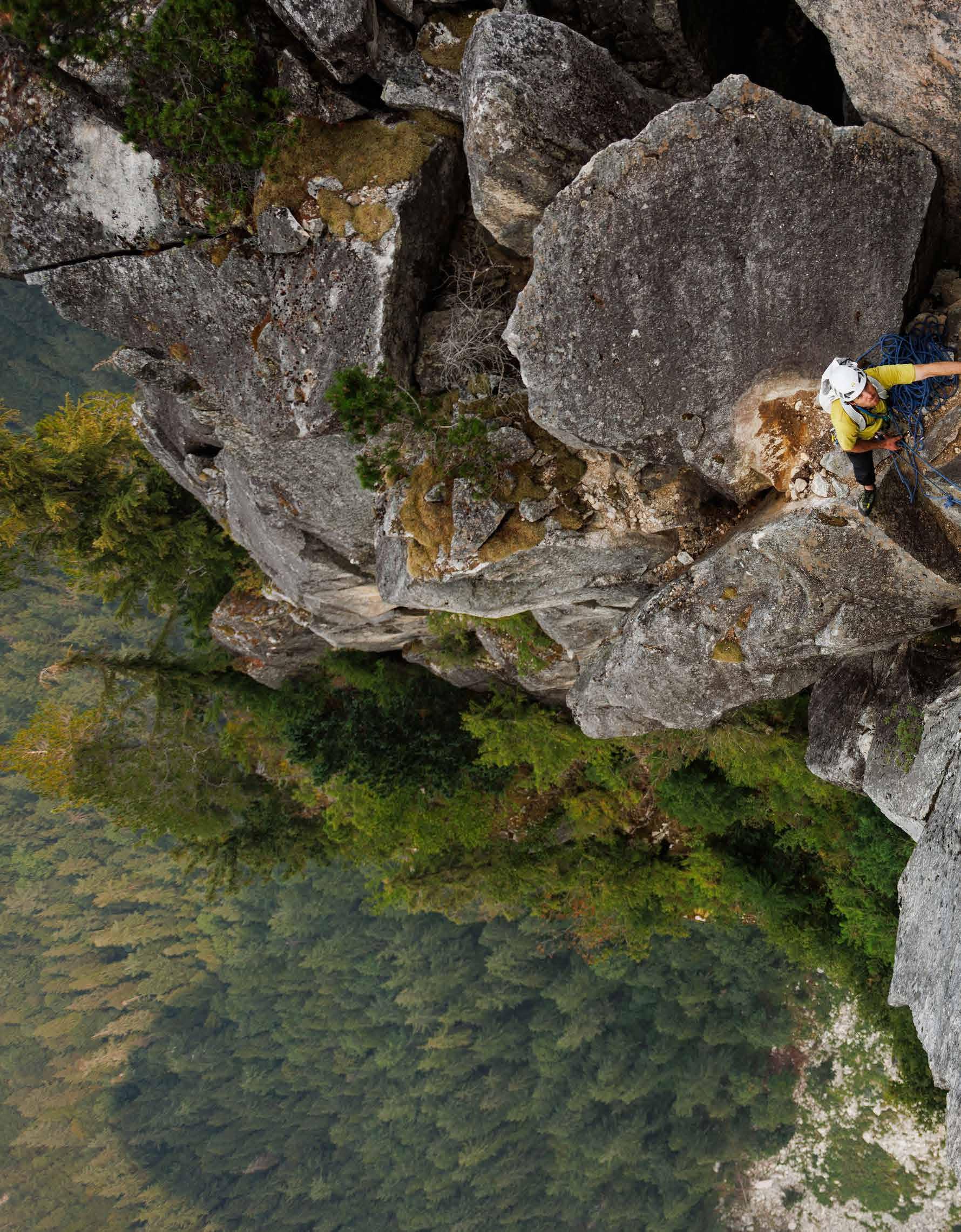
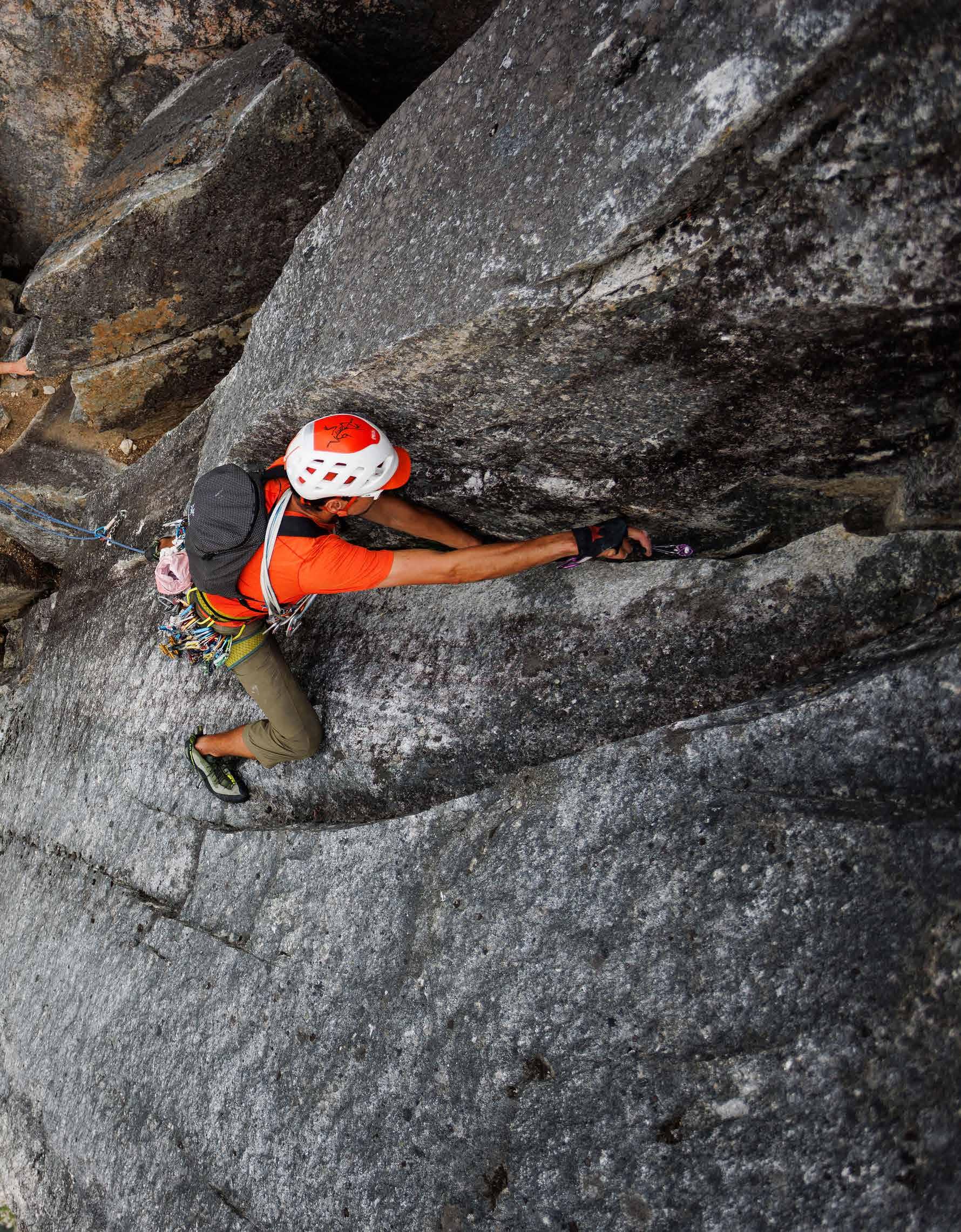
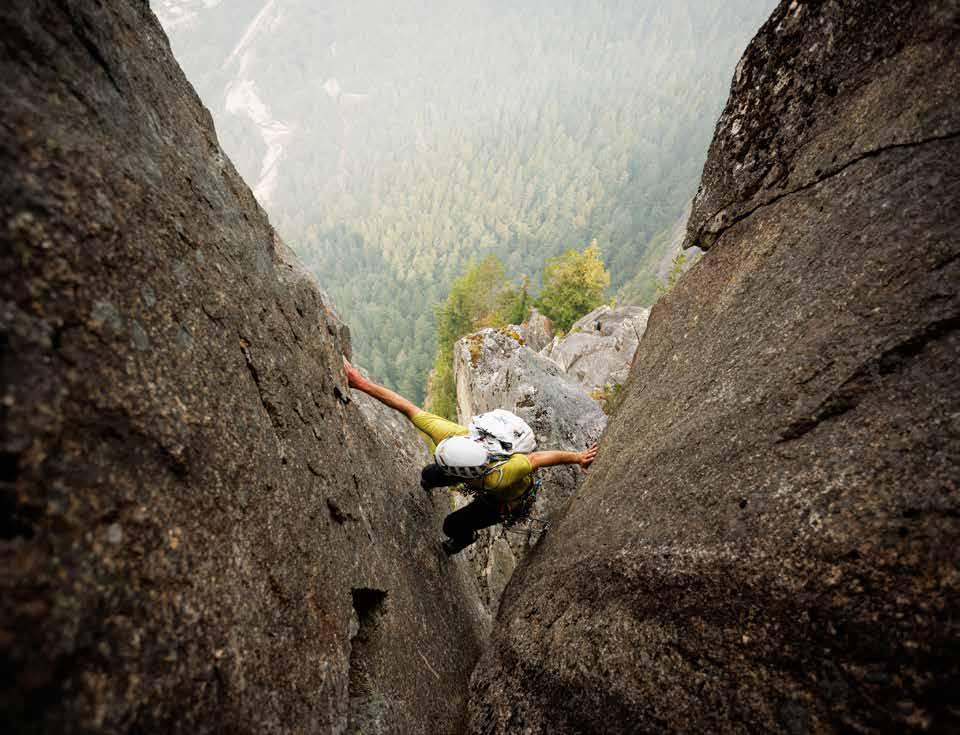
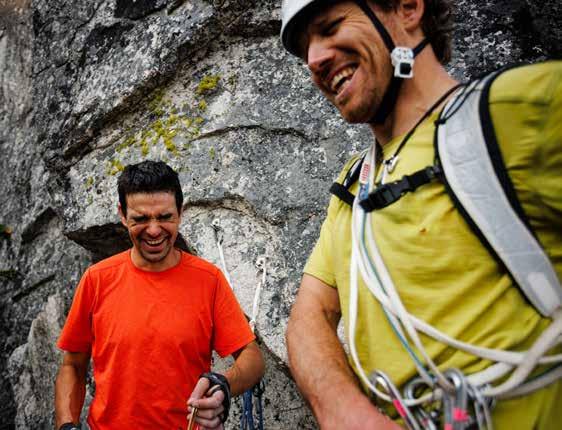
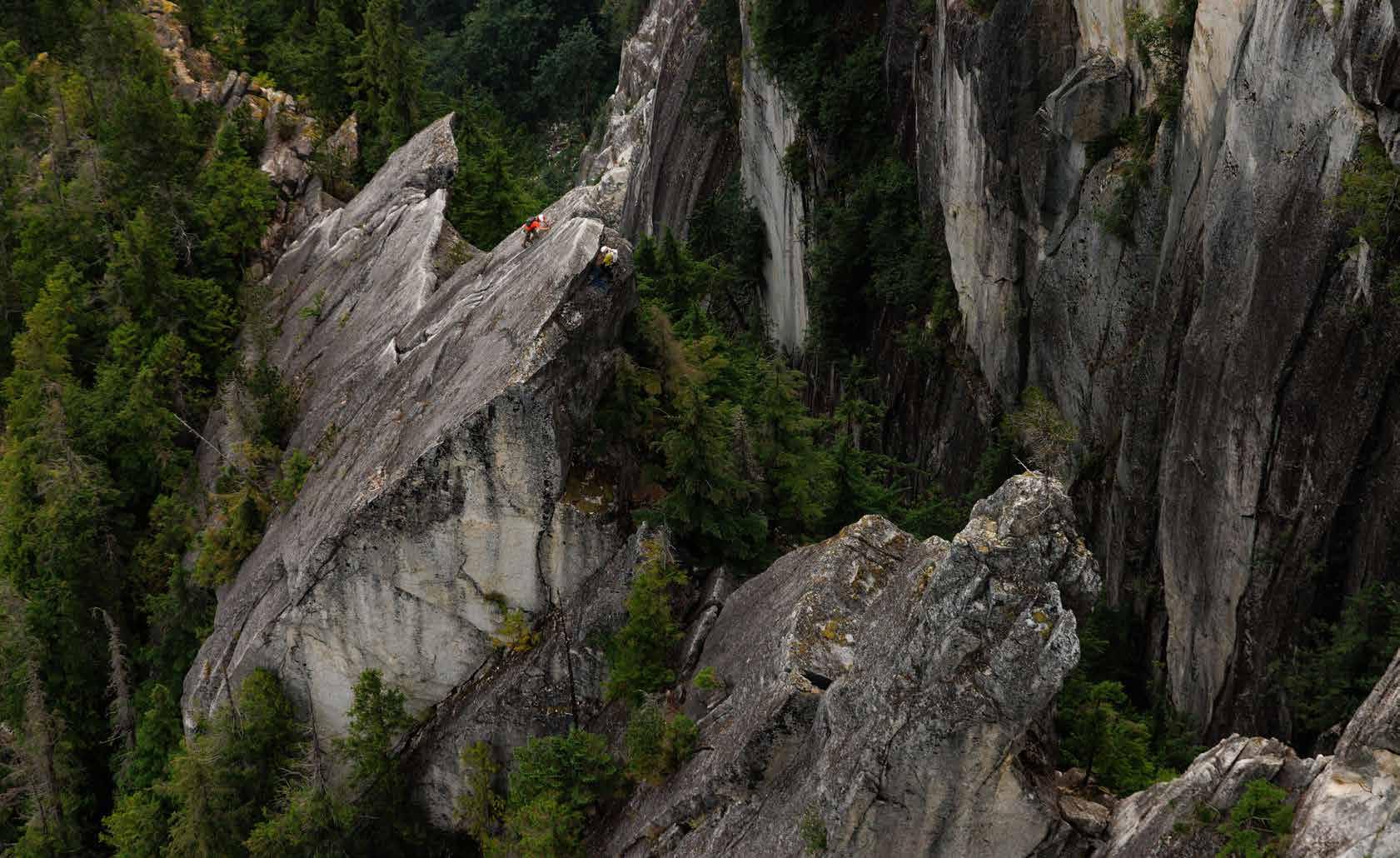
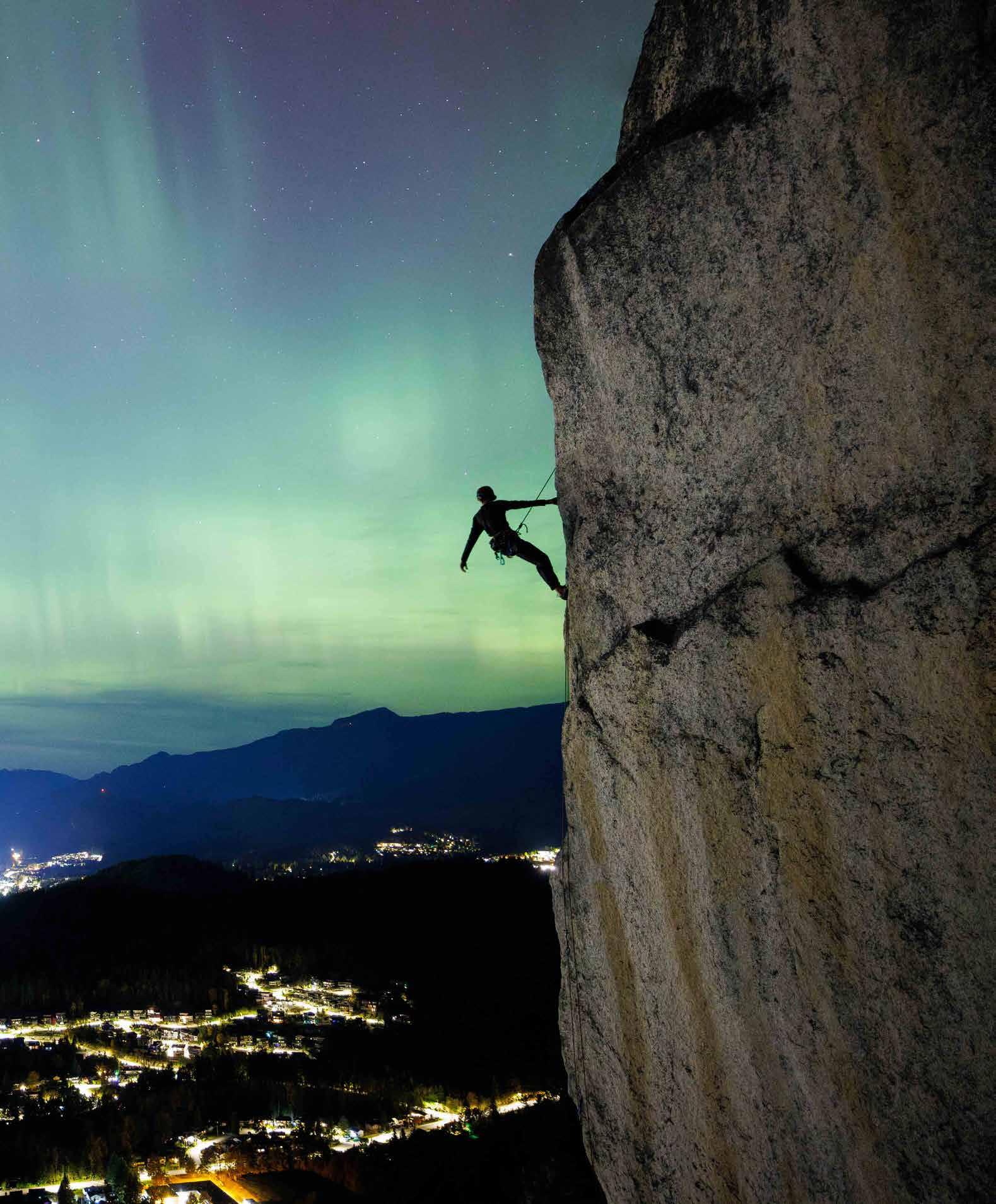
Jonathan Siegrist Payahuunadü Territory
Pine Creek Canyon, California, USA
Photo: Taylor Shaffer
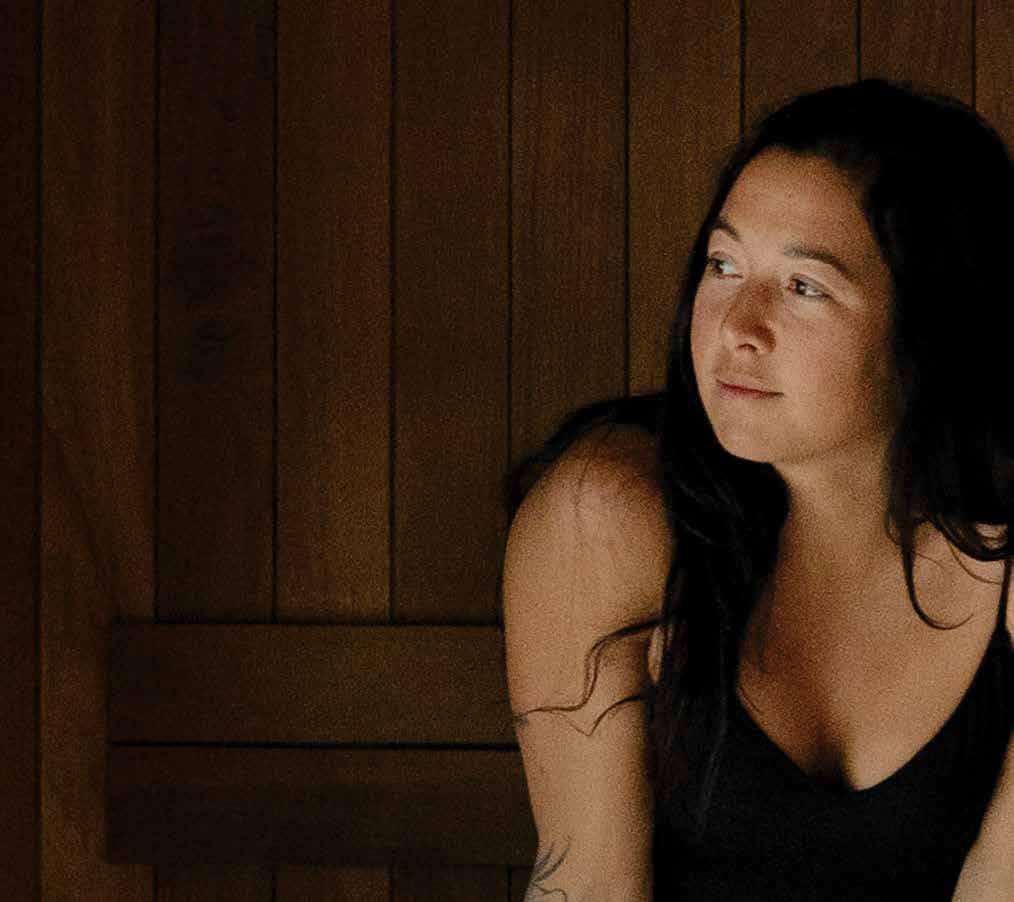
A NORDIC SPA EXPERIENCE DESIGNED FOR RESET
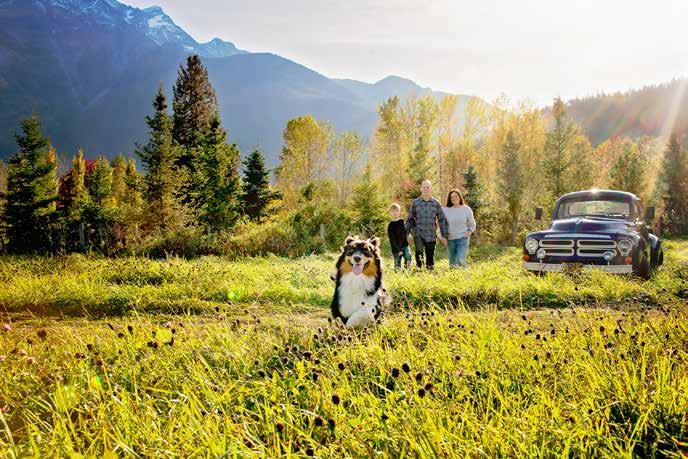
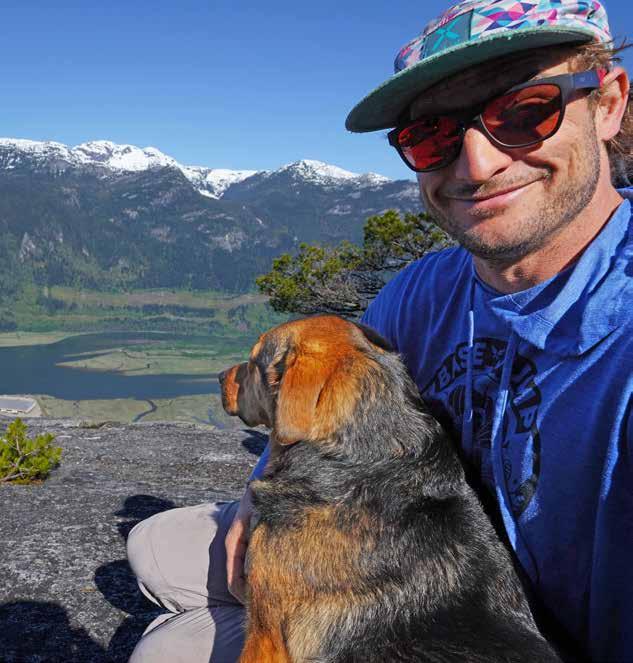
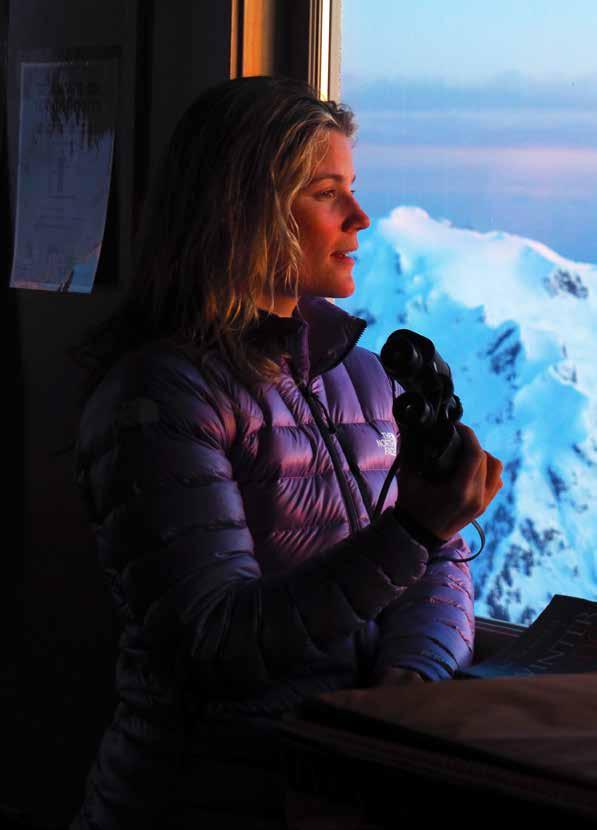
Taylor Godber knows how it’s done. Professional backcountry snowboarder, health-focused chef, dog mom, retreat practitioner, and Scandinave Spa ambassador.
SOUTH OKANAGAN
Unleash Your Next Adventure in Penticton, BC
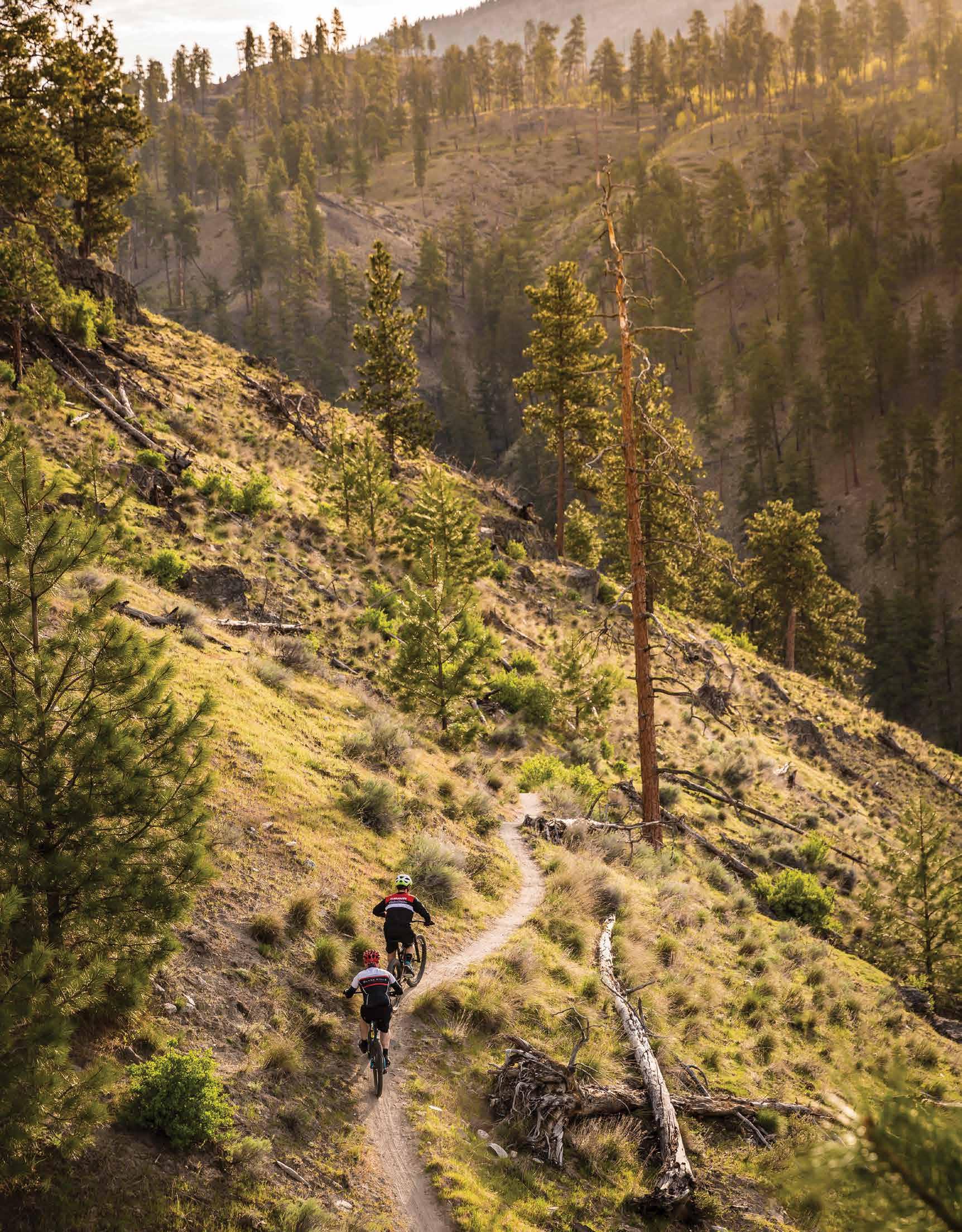
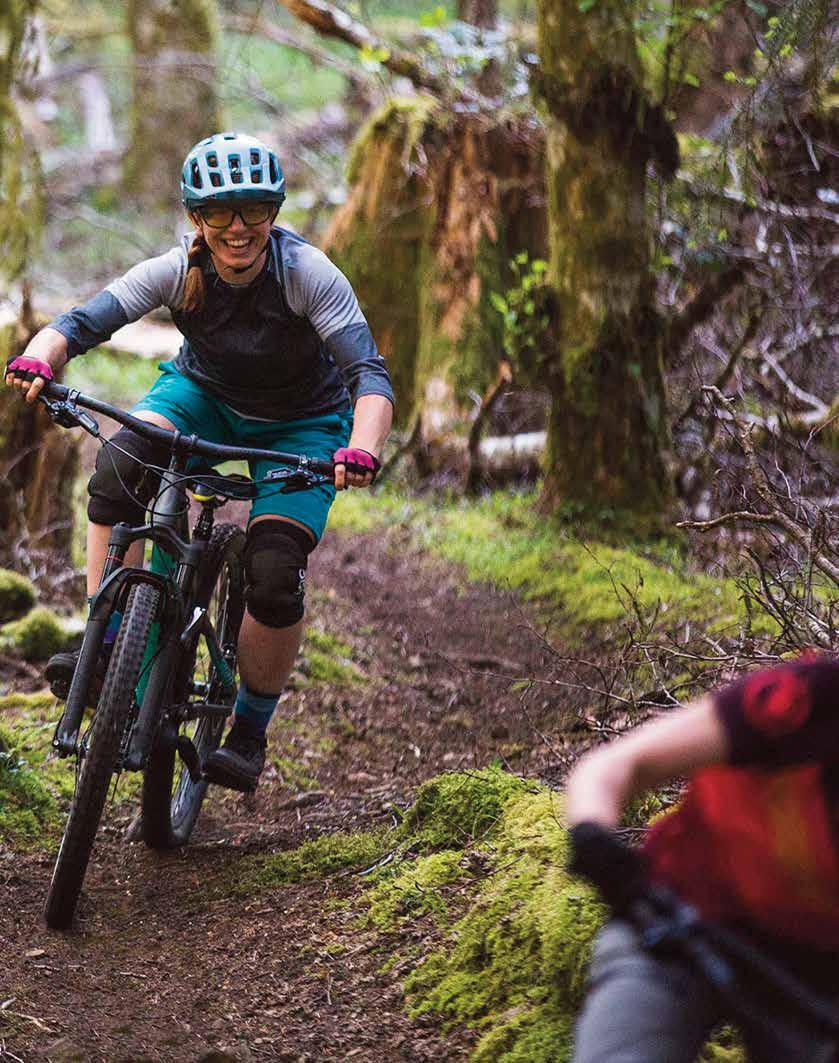
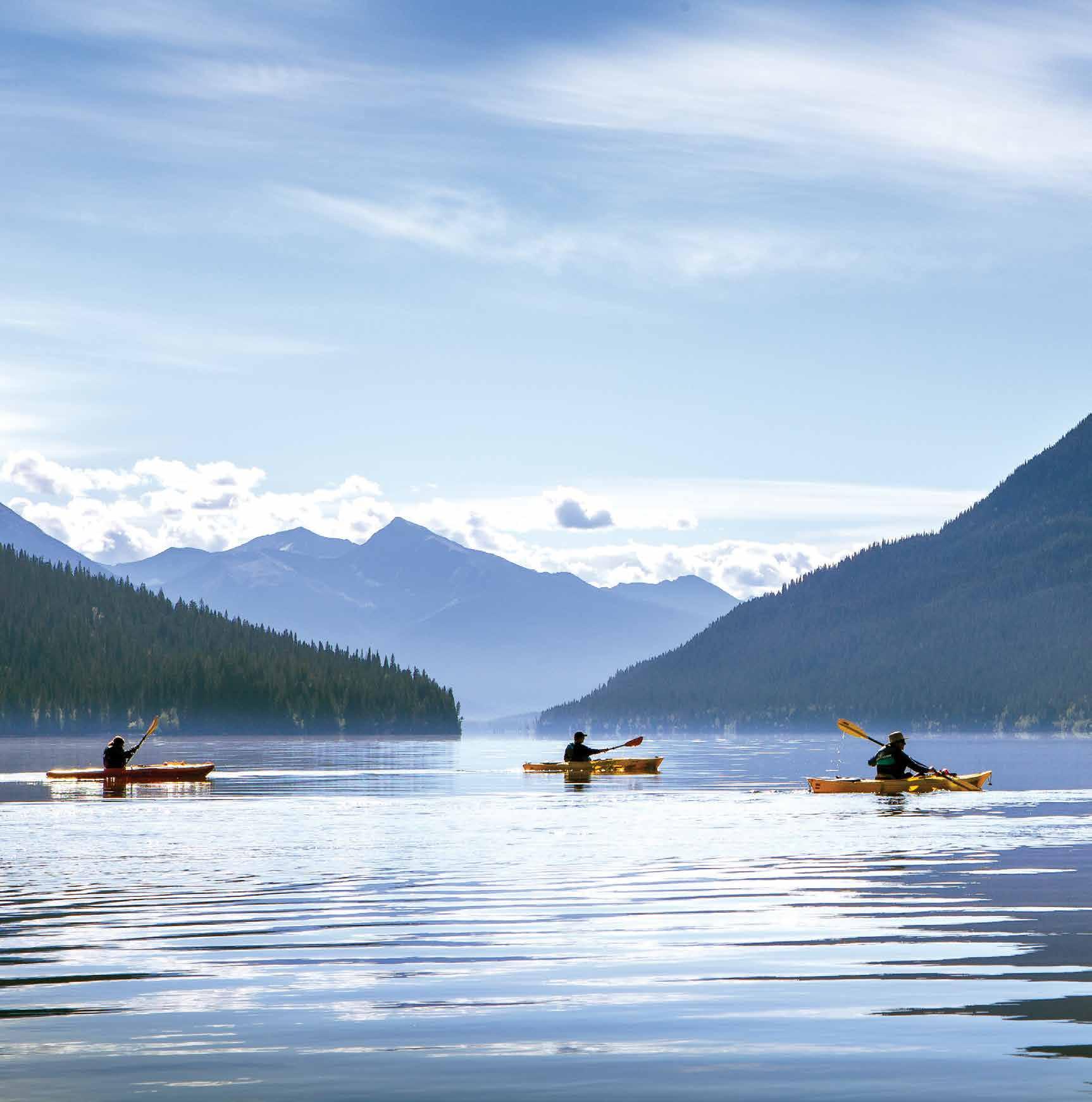
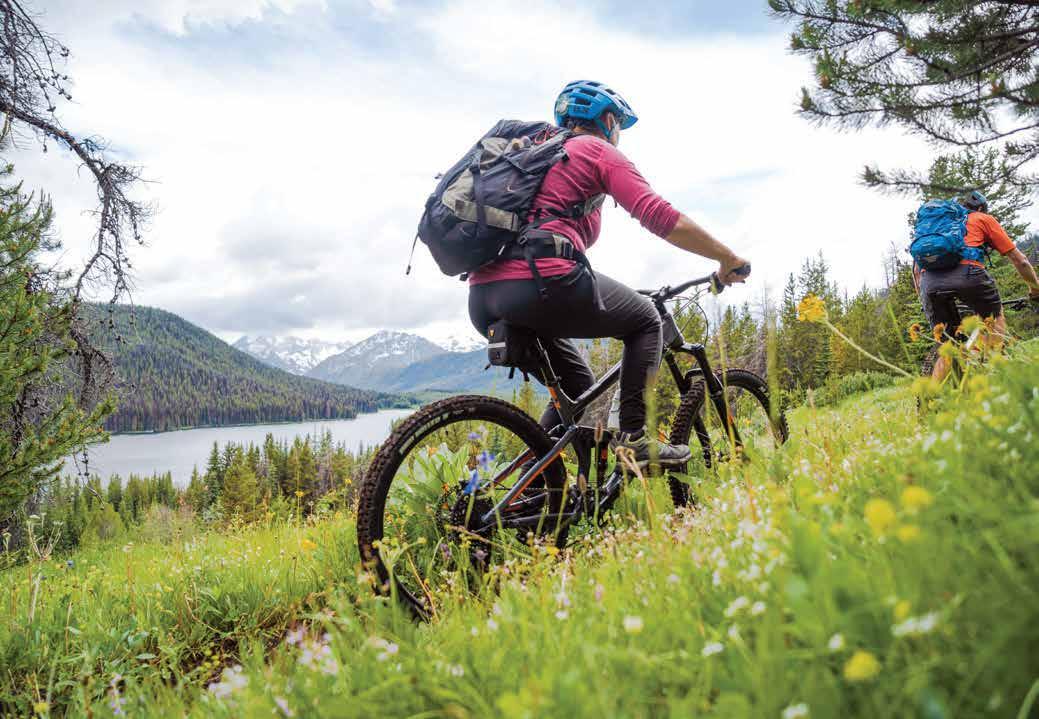
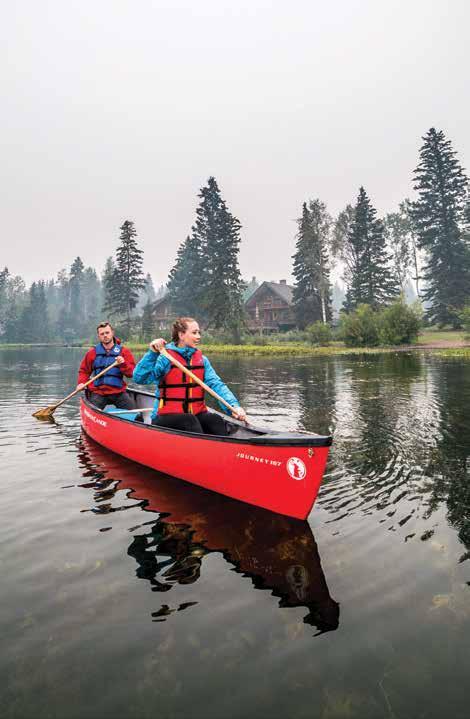
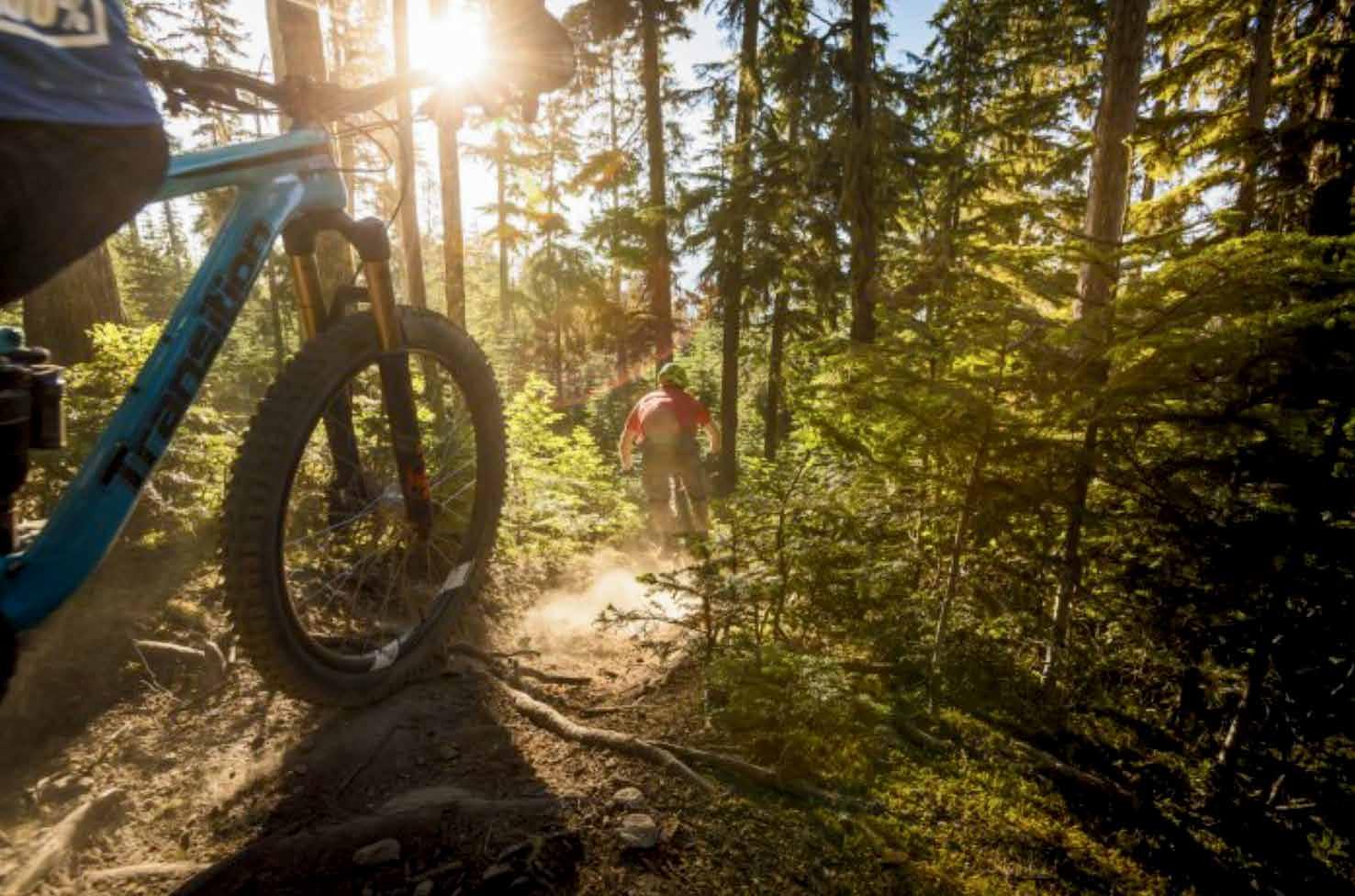
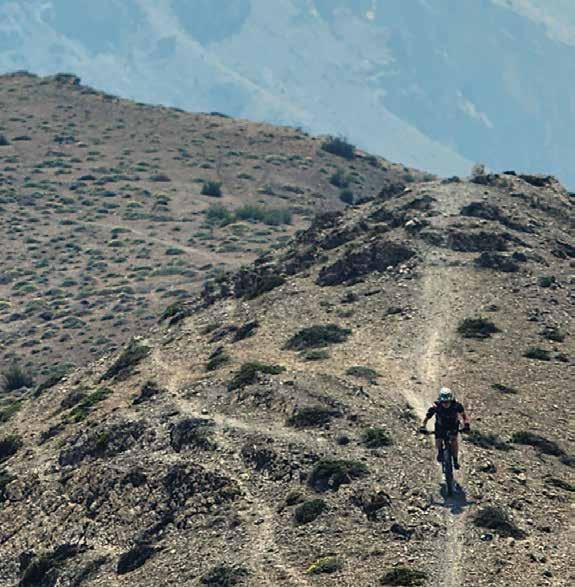
Adventure seekers don’t just visit Penticton—they push boundaries here. From the flowing singletrack of Campbell Mountain and Three Blind Mice trails to the sun-warmed granite of Skaha Bluffs, this terrain is built for pure exploration. Paddle pristine lakes, trek through dramatic landscapes that stretch far beyond the horizon, and explore a legendary network of 8 mountains featuring over 200 trails and 350 kilometers of riding. Here, every trail leads to a new challenge and every view rewards the effort.
Plan your next epic adventure in Penticton, BC.
FEATURES
P. 28 THE FIVE-KNOT MEDITATION Sailing to Alaska
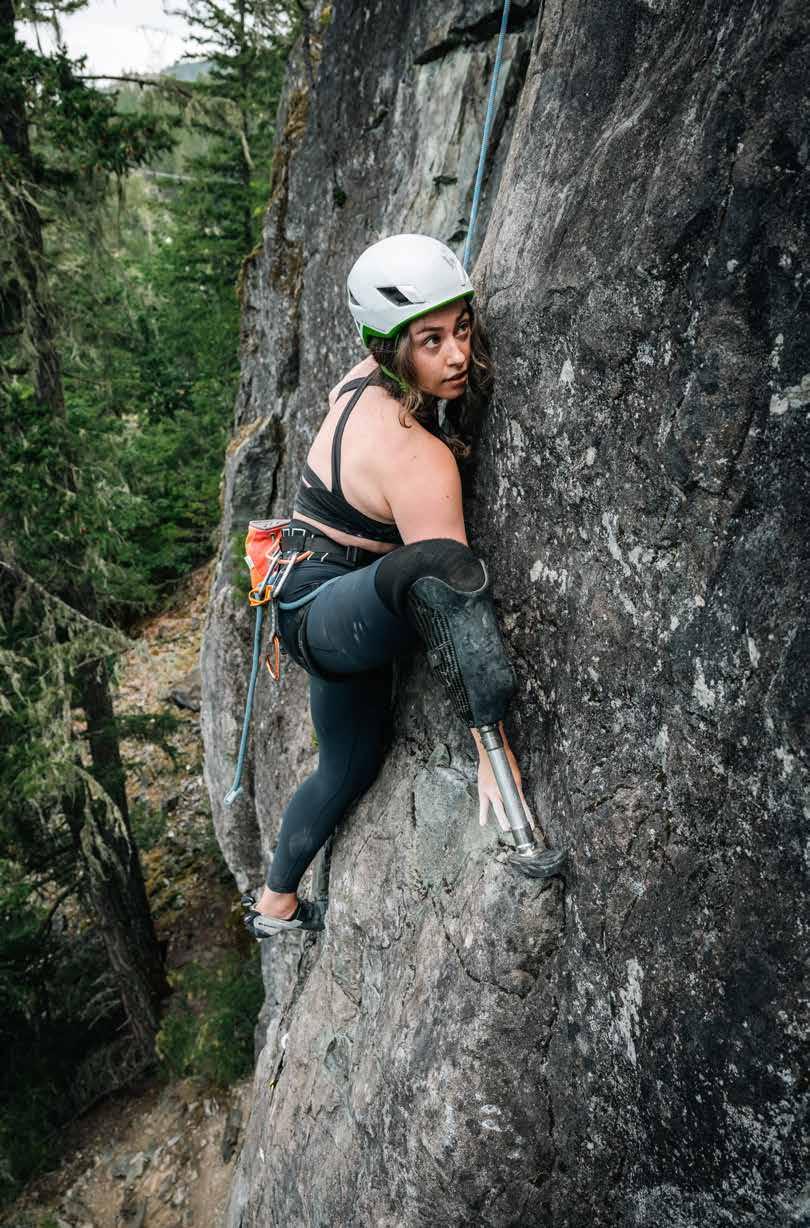
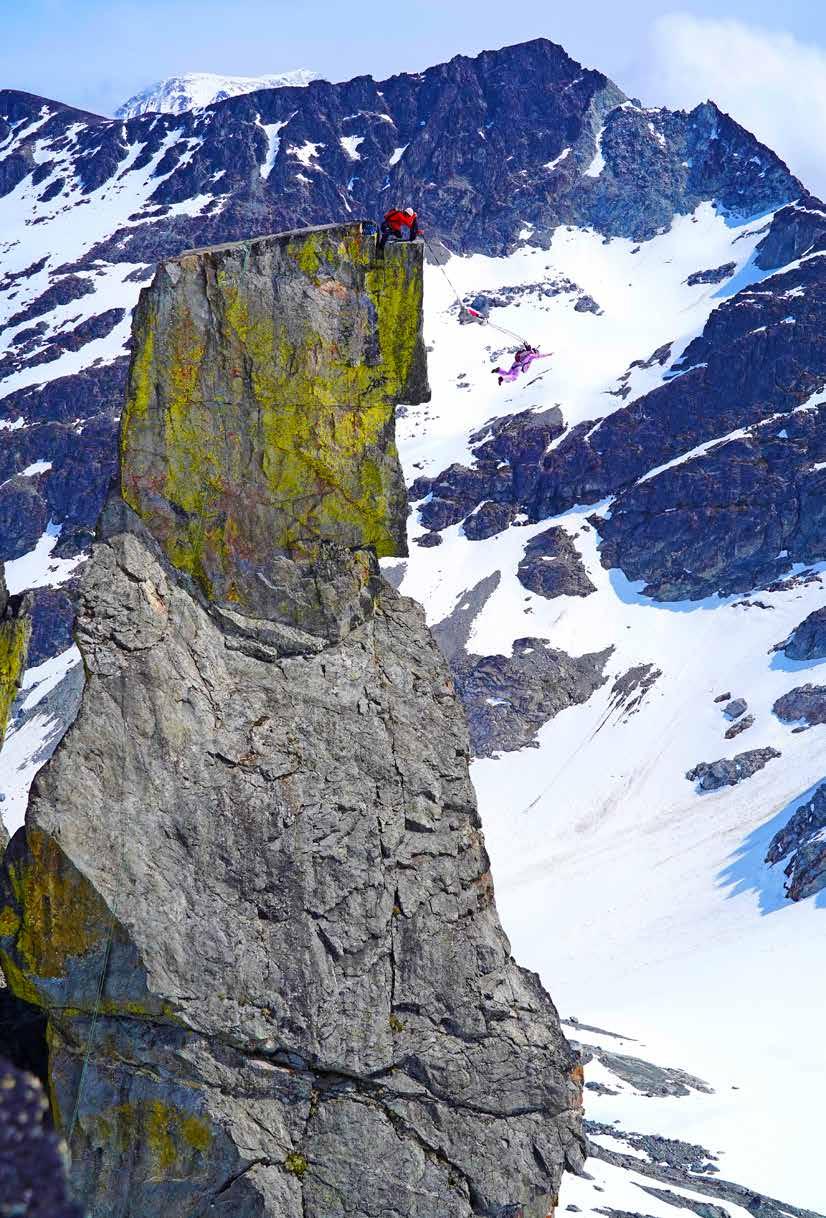
P. 55 BEYOND THE WALL Paraclimbing
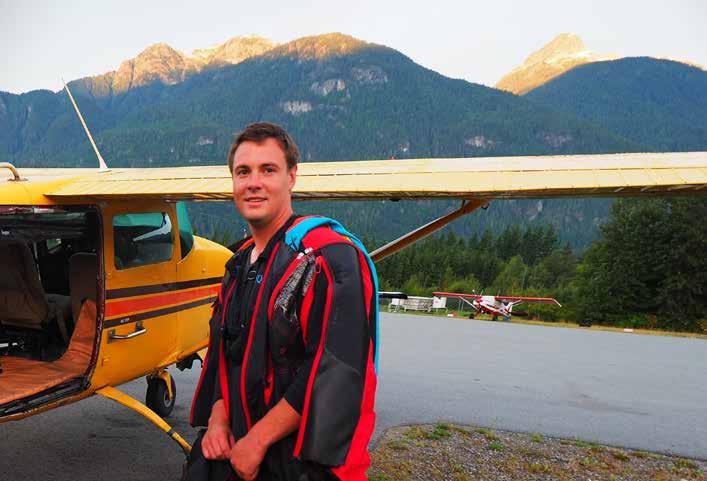
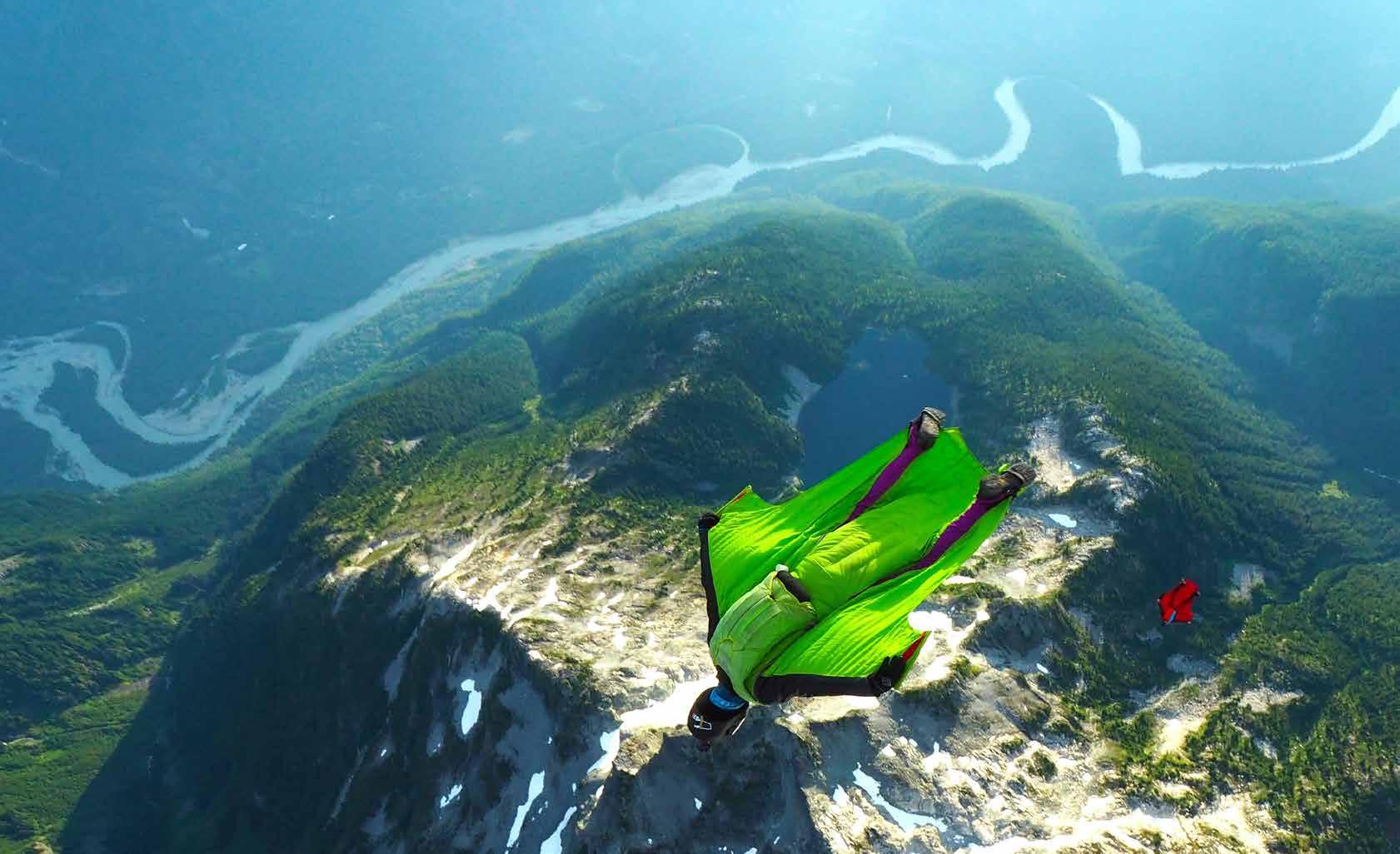
P. 66 QUEST FOR FLIGHT Squamish BASE Crew
DEPARTMENTS
P.16 FEET FIRST Editor’s Message
P.24 BEHIND THE PHOTO Gut Cheak
P.36 EPIC TRIP Japan’s Charcoal Trails
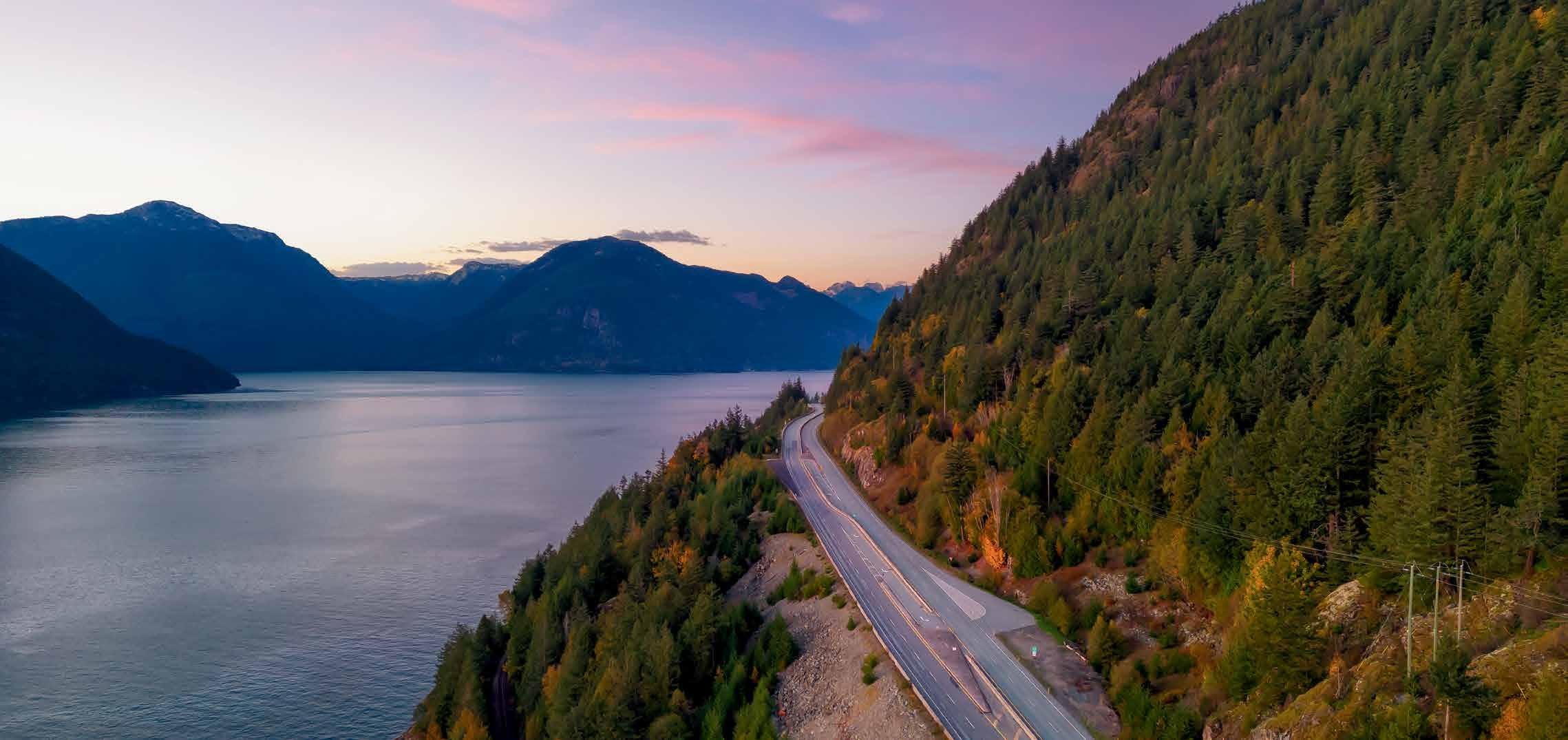
P.47 BACKYARD Sea to Sky Trail
P.78 BACKYARD The Call
P.89 BEYOND The Fairy Godmother
Stokes, Showcase Spire, Whistler Blackcomb. BRIAN FINESTONE
Another fine evening. Ryan McIntosh, Squamish. NATALIE CARRIERE
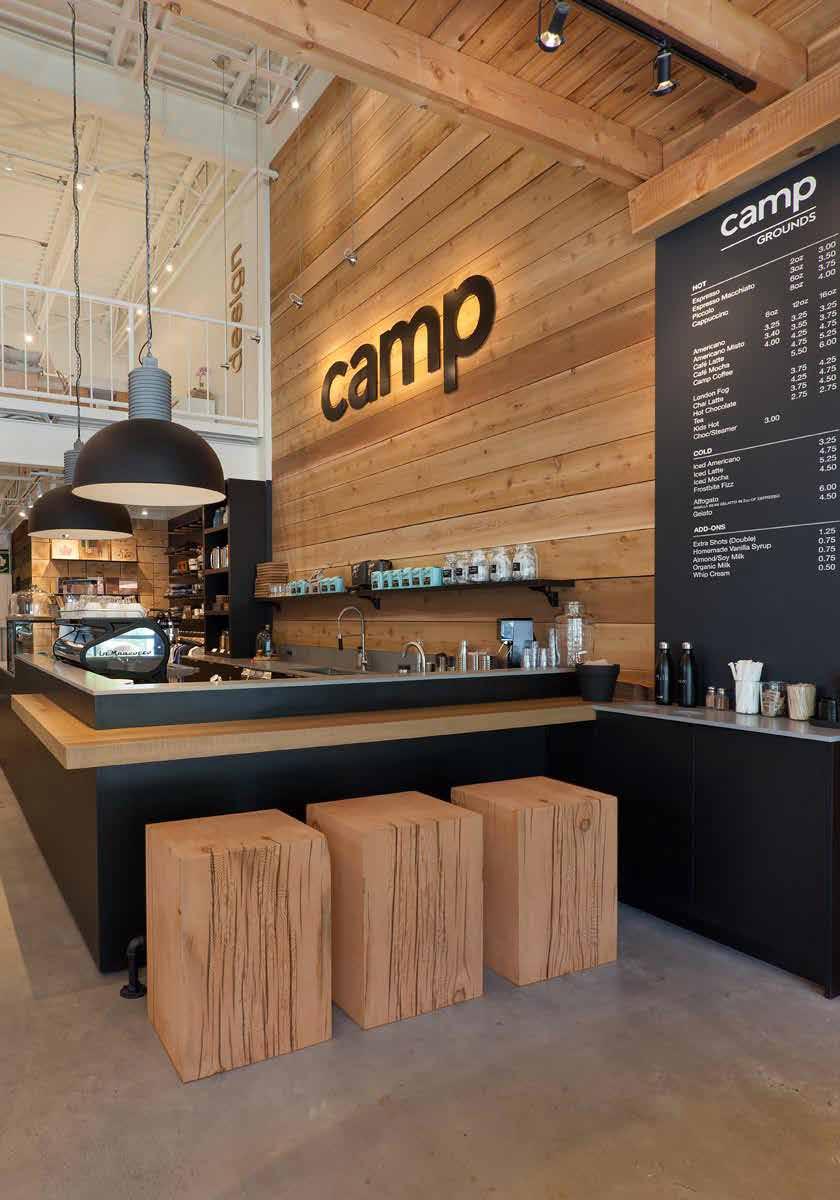
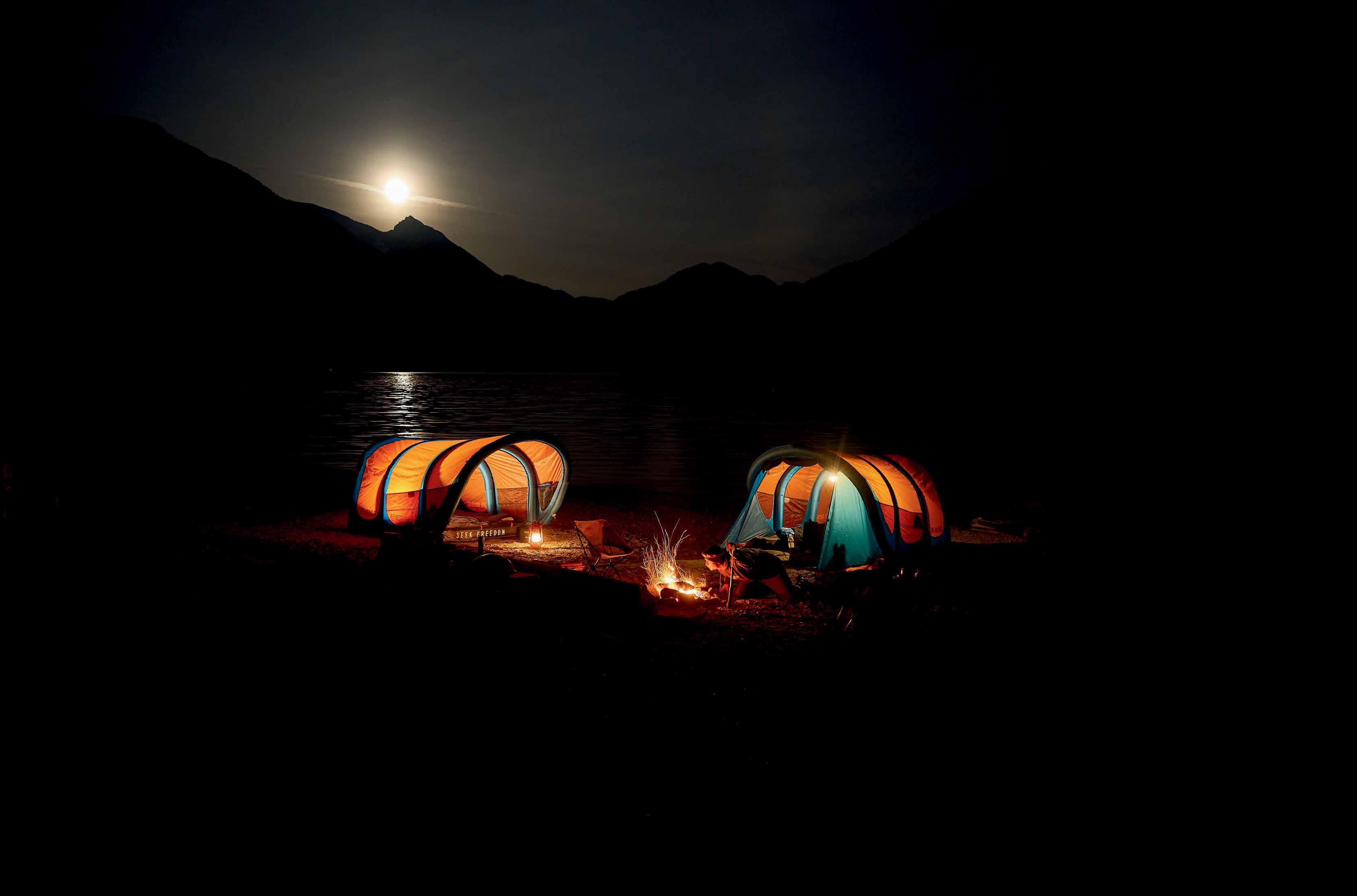
1066 Millar Creek Road, Function www.camplifestyle.ca
Mountain Life Coast Mountains operates within and shares stories primarily set upon the unceded territories of two distinct Nations—the Sḵwx̱wú7mesh and the Lilwat7úl. We honour and celebrate their history, land, culture and language.
Ilanna Barkusky, Kieran Brownie, Natalie Carriere, Eric Carter, Max Dienohan, Brian Finestone, Ben Girardi, Ben Haggar, Brian Hockenstein, Lani Imre, Jimmy Martinello, Paige Reimer, Bronwyn Preece, Cooper Saver, Laura Szanto, Jon Turk, Evan Wong.
Mountain Life is printed on paper that is Forest Stewardship Council ® (FSC ®) certified. FSC ® is an international, membership-based, non-profit organization that supports environmentally appropriate, socially beneficial and economically viable management of the world’s forests. Mountain Life is PrintReleaf certified. It measures paper consumption over time automatically reforested at planting sites in Canada.
Photo:
FEET FIRST
Make hay when the sun shines.
I always love those old sayings. Truisms that seem to have been around as long as time and capture life’s complexities in a few simple words. This one is a favourite because I’ve spent a few summers farming hay and the advice is perfectly sound. Hay is just dried grass, so of course the best time to cut it, dry it, flip it, dry it more and bail it is during clear, warm weather. No one wants wet hay.
But take those words a bit further and apply the concept to other aspects of your life, and it still works. Summer is when the sun shines, when the days are long and the air is warm. It’s the season of opportunity, our best chance to enjoy time outside. So get out there and seize the season. Get wet, get wild, get airtime or get down in dirt ‘til your teeth turn brown. Wake up early and stay up late. Get after it. Summer is short and every day counts, go make some hay.
But also, look before you leap. –Feet Banks
Mark Abma, Sproat Lake, Vancouver Island. MAX DJENOHAN
Photo: Russell Dalby
Made by Mountains
Blake Jorgenson’s psychological approach to mountain bike films
words :: Feet Banks photography :: Blake Jorgenson
“That’s the thing with art,” Blake Jorgenson says. “Deadlines are a double-edged sword—they suck, but they get it done.”
Best known as one of the most prolific and talented ski and mountain bike still photographers on the planet, this summer sees Blake facing a deadline and putting the finishing touches on Made By Mountains, his first full-length film as writer/director/executor producer and a movie he describes as “more of an art project with the crew.” Mountain Life caught Blake eating ice cream with his daughter in a café in Squamish and got the inside scoop.
Graham Agassiz, Coast Mountains. BLAKE JORGENSON
Mountain Life: How about you start at the beginning?
Blake Jorgenson: I did a trip to Bralorne a long time ago with the Sherpas Cinema crew and Graham Agassiz, back when he was 18 years old, a fresh pro. And then, 15 years later, he called me up to go back there and do another shoot and told me, “That experience in one trip gave me the vision of what my identity was gonna become.” And I loved the idea of how one adventure in the mountains, one weekend, can map out your whole future. I’d been thinking about this for years, but when Aggy called, that kickstarted it into motion.
ML: You are now three years into the making of it. What’s the process been like?
Blake: I’m learning how to create my own process and direct my vision. For me, filmmaking is a creative problem-solving endeavour, so it’s been collaborative with the rest of the crew. And it keeps evolving creatively. Letting it marinate in our minds for so long has made it interesting. So much of the time, as creatives, we don’t get to do that. We need to make a living.
ML: Tell me about the crew.
Blake: Graham Agassiz, Matt Hunter and Matty Miles—all from Kamloops, all grew up together, all veterans. And we have Lucy Van Eesteren, the young one looking to find out where her career is gonna go. It’s a bit of a changing of the guard film, but I said let’s blow that idea out into something larger. Usually with action sports you go on trips, accumulate footage and figure out what to do with it. I wanted something more intentional and scripted, but with the flexibility and freedom needed to work in those environments.
ML: What have you learned along the way about making movies?
Blake: At the start I was like, “I have an idea, everyone follow me!” But I’ve learned that to really direct a movie and manage a crew, everyone needs to clearly understand what the project is and what’s going on in my head. So I’ve learned to do more pre-production, put more on paper, more Zoom calls, so when we get to the shoot everyone is on the same page.
And I’m learning from our director of photography—Brody Jones—and from our camera operators. They are 20 years younger than me so I take my old-guy experience and their up-to-date knowledge. The gear and technology is developing so quickly; we just shot stuff that wouldn’t have been possible even three years ago when we started. I have learned so much from those guys. Filmmaking is collaboration—everyone wants to trust the vision and the management of the project so it can run smoothly and be the best it can be.
ML: So what is it gonna be?
Blake: Very visual. But also, no one hired us to do this. There is no advertising department dictating how things get made—we are in charge of everything, so it has a different vibe than a commercial delivery. I’m trying to take more of a mountain-culture approach, use my age and pseudo wisdom to bring a bit more depth. But also, right now I have a trailer for a movie that doesn’t exist. We all know what we want, though—and there’s a deadline.
Made By Mountains is set to be finished later this summer. Stay up-to-date and check out the trailer at madebymountainsfilm.com
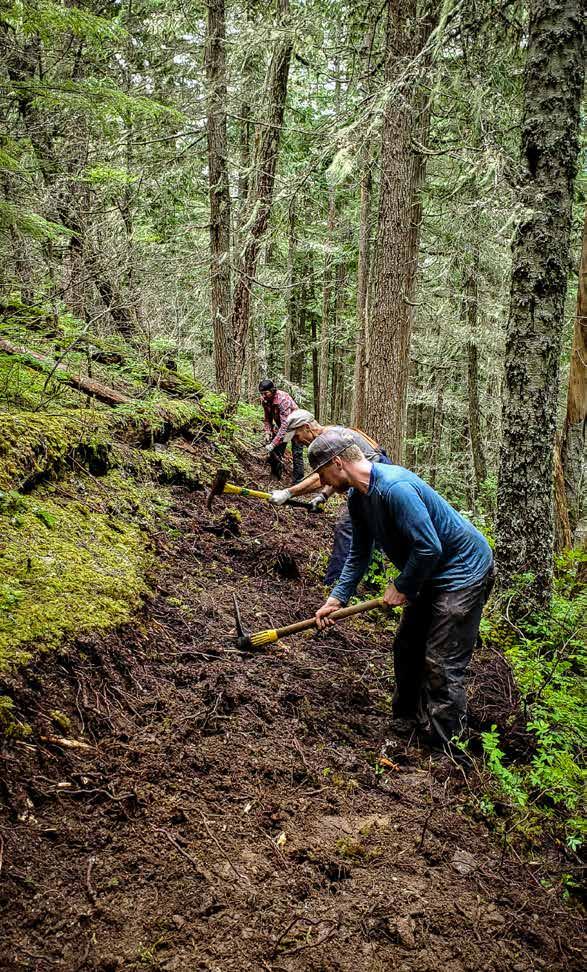
High above Squamish lies a new adventure for the ultra-keen willing to go the distance, thanks to a group of ambitious builders and thousands of hours on the tools
words :: Cooper Saver photography :: Ben Haggar
As soon as the whispers of a new mountain bike trail in Squamish start circulating, the pow-day mentality sets in—gotta get it while it’s fresh. The communal rush to ride a hot new build puts trails to the test (and oftentimes proves some are not built to last the relentless pounding of both high traffic and the rainy season). But when the streets started talking in spring 2025, I quickly learned the new destination trail, in a remote area north of the Diamond Head network, was something else entirely.
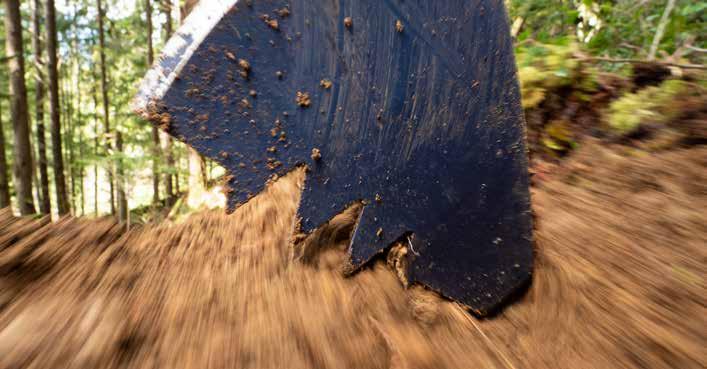
Intergalactic was crafted over the course of four years by experienced diggers Phil Szczepaniak and Ben Haggar (plus a slew of volunteers), resulting in the longest authorized descent (647 metres) in Squamish. The trail is a tribute to late trail (and community) builder Dave Reid, not only for his infectious enthusiasm for ambitious lines, but also his artistic and innovative approach to trail building over the course
of his 15-year legacy in town. Dave had a real penchant for sharing great outdoor experiences with people, and most Squamish riders have likely ridden some of his work.
Before he passed away in 2022, Dave was aware that Ben and Phil had been separately scouting and flagging the same zones for a couple of years, so he initiated an introduction. “We might not have connected on it if it wasn’t for Dave,” Ben says. “But, thanks to him, we walked each other’s lines together and were like, ‘This could make for a really amazing trail. Let’s combine them.’”
Being invited to ride a trail built by Dave Reid always came with a sense of big adventure, and Ben and Phil worked to capture some of that essence and spirit and bring it to this new trail. But as Squamish continues to grow as a biking destination, both builders knew those kinds of big adventures also come with big concerns regarding the volume of traffic within the network. “You just can’t rush stuff anymore,” Phil explains. “I waited two years for the permit. I was going to take however long it takes to build it.”
TOP The views on Intergalactic are one of the many draws. ABOVE Although spearheaded by Ben and Phil, a rotating crew of volunteers helped bring the trail to life.
YOUR PACE.
“Every build day was a [full] day,” Ben adds. “You’re dedicating a whole day to go work on a section, compared to a quick one after work.”
On an Intergalactic lap, that care and attention is clearly felt; it’s remote, and the ascent carries plenty of “Are we there yet?” moments. The descent, however, feels like going back in time through a zone previously left untouched for decades. Logging and commercial forestry started in the Diamond Head region in the 1930s, eventually extending all the way to the boundaries of Garibaldi Provincial Park. What remains are remnants of history—old mossy roads mostly reclaimed by the forest, now existing as prime access potential.
What absolutely destroys a trail is braking. And Ben and Phil knew that, with an interesting trail in a lesser-known region, riders of every skill level would want to try it. “I think one of the keys,” Ben says of building what will surely become a new local classic, “is really following the natural lines of the terrain—not forcing things, but also
keeping your grades in check. Walking it dozens and dozens of times, trying different lines, moving your flagging, walking it down, walking it up so you can see it from both directions, and then just refining it. And not being too tied to singular features. Not fighting the hillside is the biggest thing.”
A trail like Intergalactic must be built for minimal maintenance: Funds are tight and hauling tools to a remote area requires a day’s effort in itself. The trail’s design is a reflection of this reality, primarily featuring bench-cut single track—the only method that holds its shape to last the test of time. Being able to keep your speed and flow— and not drag the brakes too much—is the key to longevity in a trail like this. Ben and Phil resorted to creating wooden box-like structures to dial in a particularly challenging section known as the “erosion zone,” keeping maintenance and labour expenses low. Trail building in this region is still primarily for the love of the game.
Ben and Phil’s dedication to the soil (and time for the toil) pays off. The fun
begins at around the 900-metre elevation mark as riders dip into old growth forest with sweeping bench cuts and punchy climbs up to a series of truly next-level Squamish viewpoints before a high-speed, low-angle finale. Steep ski-like turns get the blood pumping in the upper section while the lower half lets you catch your breath, rest your arms and put some style into the flow section.
Big adventure rides like Intergalactic (or any number of Dave’s trails) often reach those special moments where the crew gets a little delirious and silly (and probably a little hungry). I usually end up with a song stuck in my head. Obviously in this case it’s Intergalactic by the Beastie Boys, despite the trail’s name having nothing to do with the song. Pedaling up, ripping down, taking in years of care and dedication and the spirit of a Squamish legend, I found the lyrics of late Beastie Boy MCA perfectly matching the adventure at hand: “Well, I gotta keep it going, keep it going full steam… Intergalactic, planetary.”
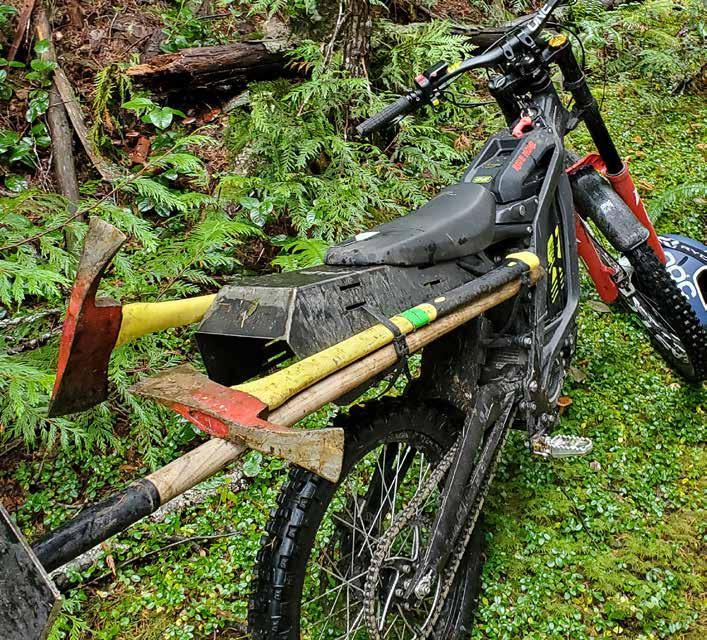
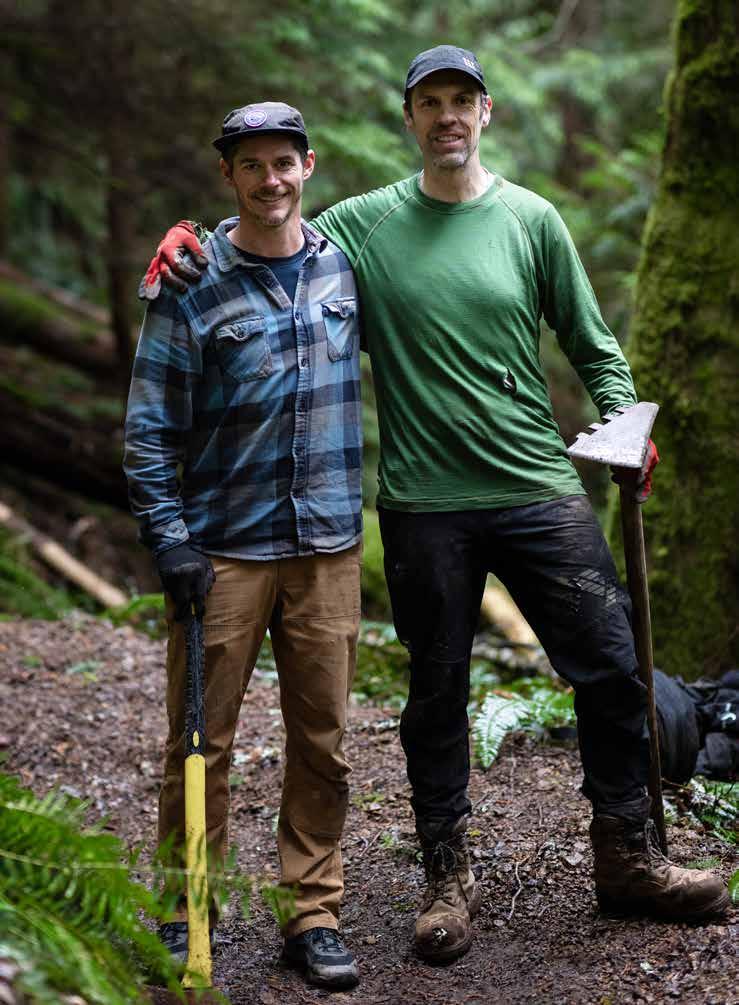
TOP LEFT Diamond Head zone geology is as diverse as the trails that criss cross its hillsides. It may not be a bonanza but when you strike gold, you strike it big. LEFT Sometimes the most important tool is the one you use to get to the job. RIGHT When a shared plan comes together. Intergalactic visionaries Ben Haggar (left) and Phil Szczepaniak.
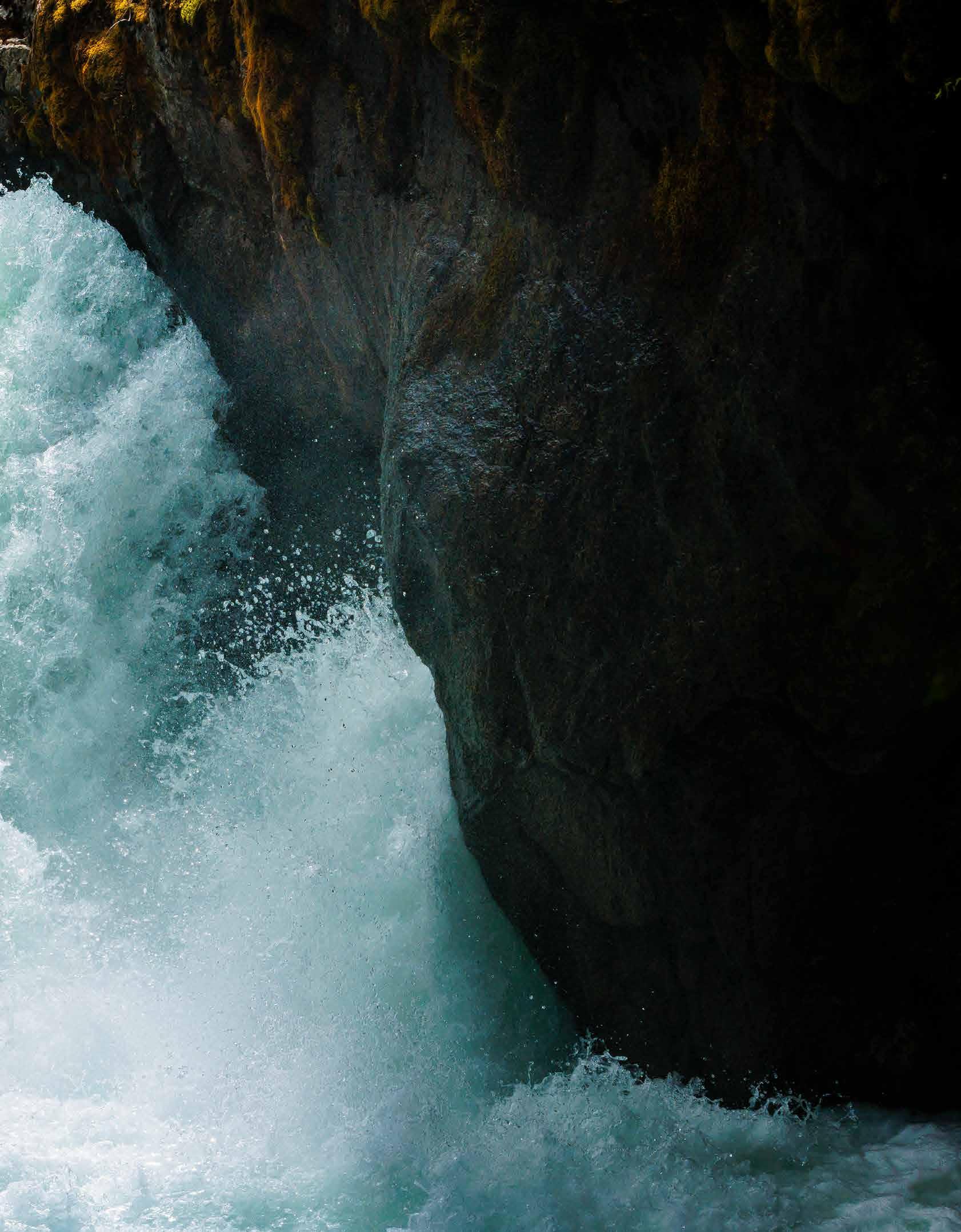
GUT CHEAK
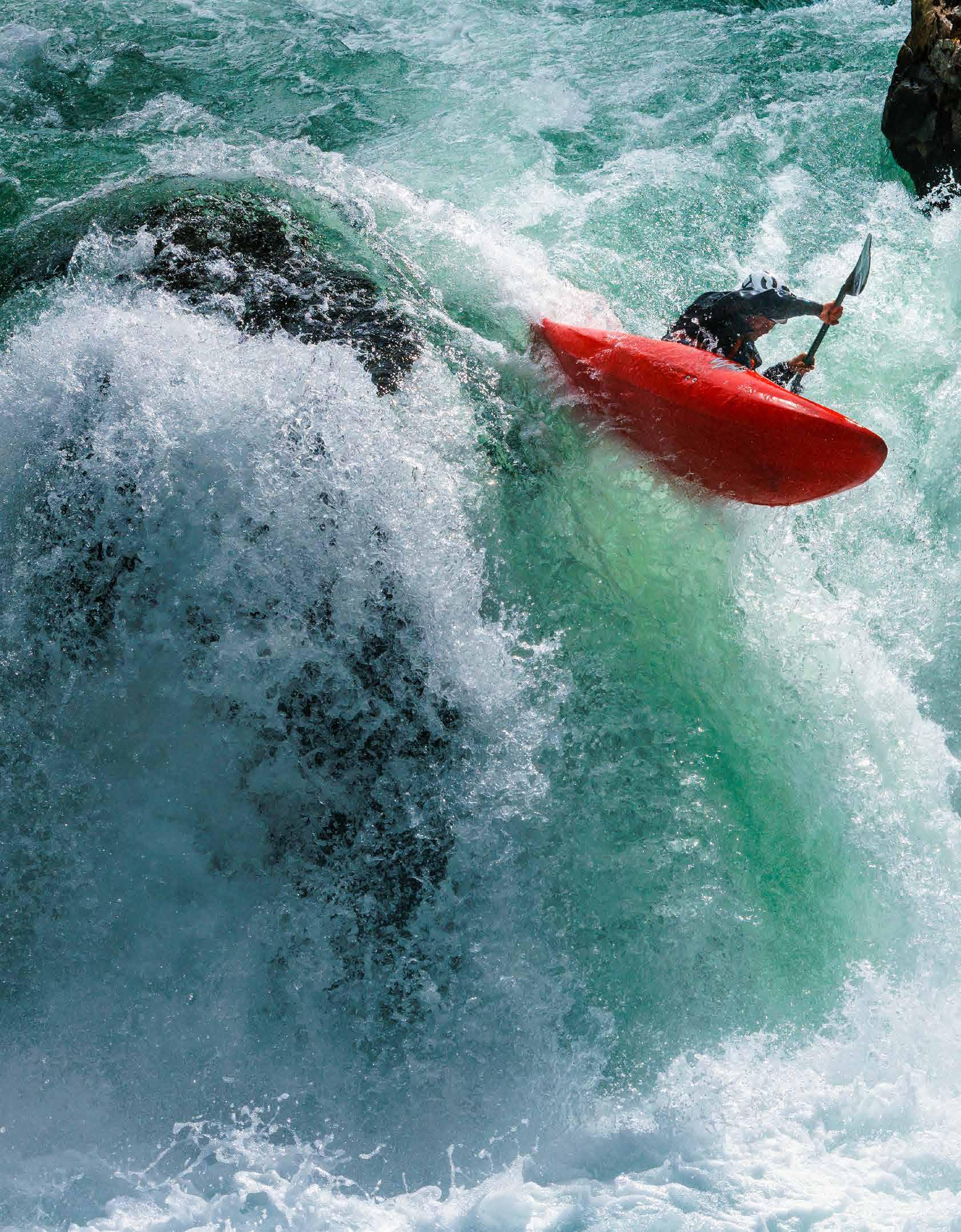
photography :: Ben Girardi paddler :: Kiah Schaepe location :: Cheakamus River, Whistler
Ben: “I originally met Kiah randomly at the pullout of a river. We got talking and ended up getting out and shot a bit on a couple different rivers. The following summer I knew I wanted to create an image of a kayaker paddling a waterfall lit with flashes. I reached back out to Kiah to see if he was interested and he was down. When shooting with flashes it can sometimes take a few tries to get the shot exactly right, so we needed a spot that looked good but was able to be run multiple times—the Cheakamus delivered.
Kiah and fellow paddler Dave Graham ran the falls multiple times until we came away with this shot. Going into something like this I often question the idea and whether it is worth lugging all the gear into the forest, but seeing the image I had in my mind show up on the back of the camera—it always feels worth it. Huge thanks to Kiah and Dave for being willing to get out and try this idea with me!”
The Cheakamus River hosted the 1977 Canadian National Slalom Championships, but none of the roads or facilities have been upgraded since. With local and global popularity of the river continuing to grow, Sea to Sky paddlers are currently fundraising to upgrade the parking lot, shelter and launch/take out sites on the Cheakamus River. For more info or to make a donation, email paddle@mras.info.
LEFT OF WEST, NORTH OF NORMAL
Inhale diesel fumes. Exhale the ungodly perfume of two dudes who haven’t showered in three weeks. Tune in to tune out at the speed of a brisk Sunday jog.
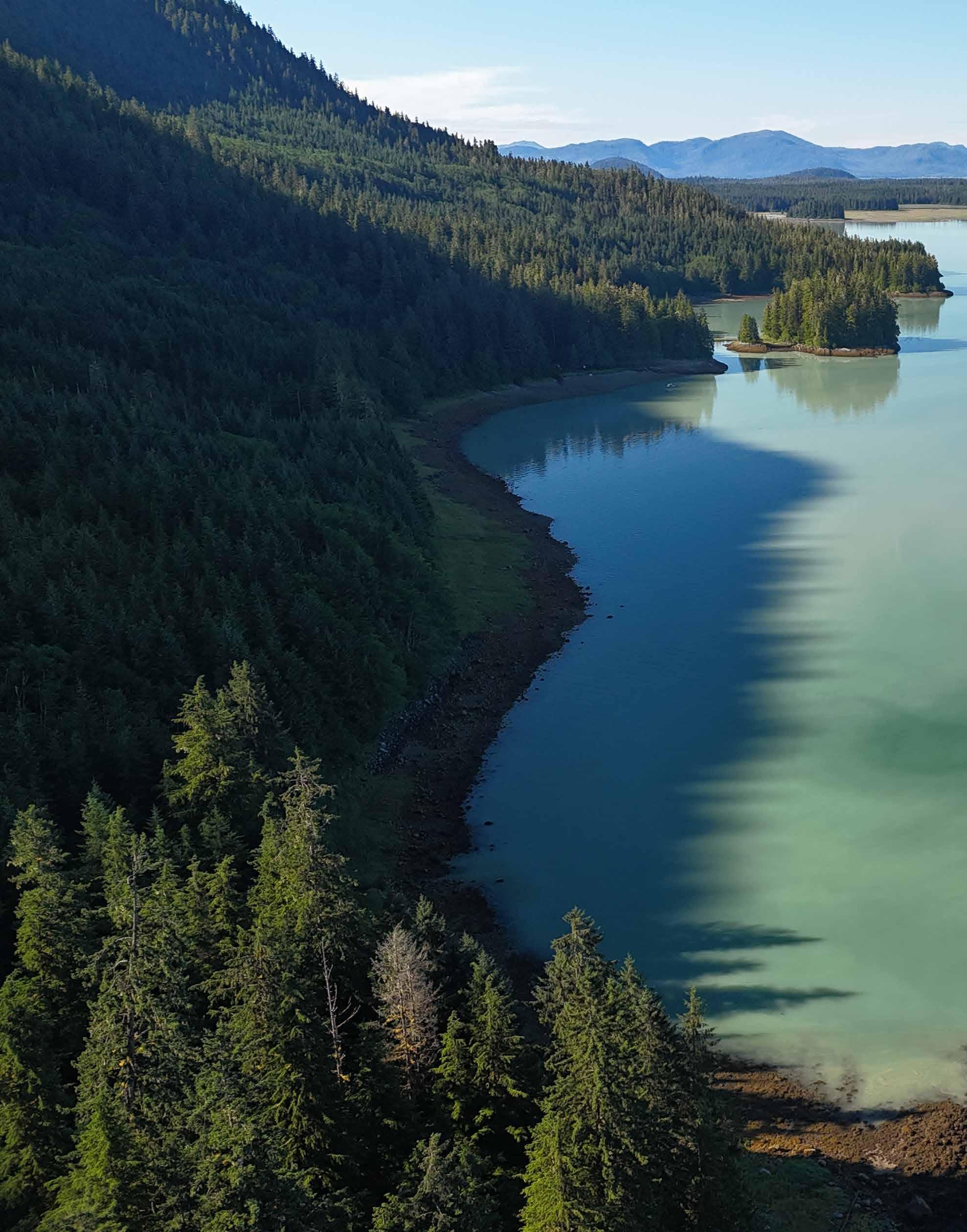
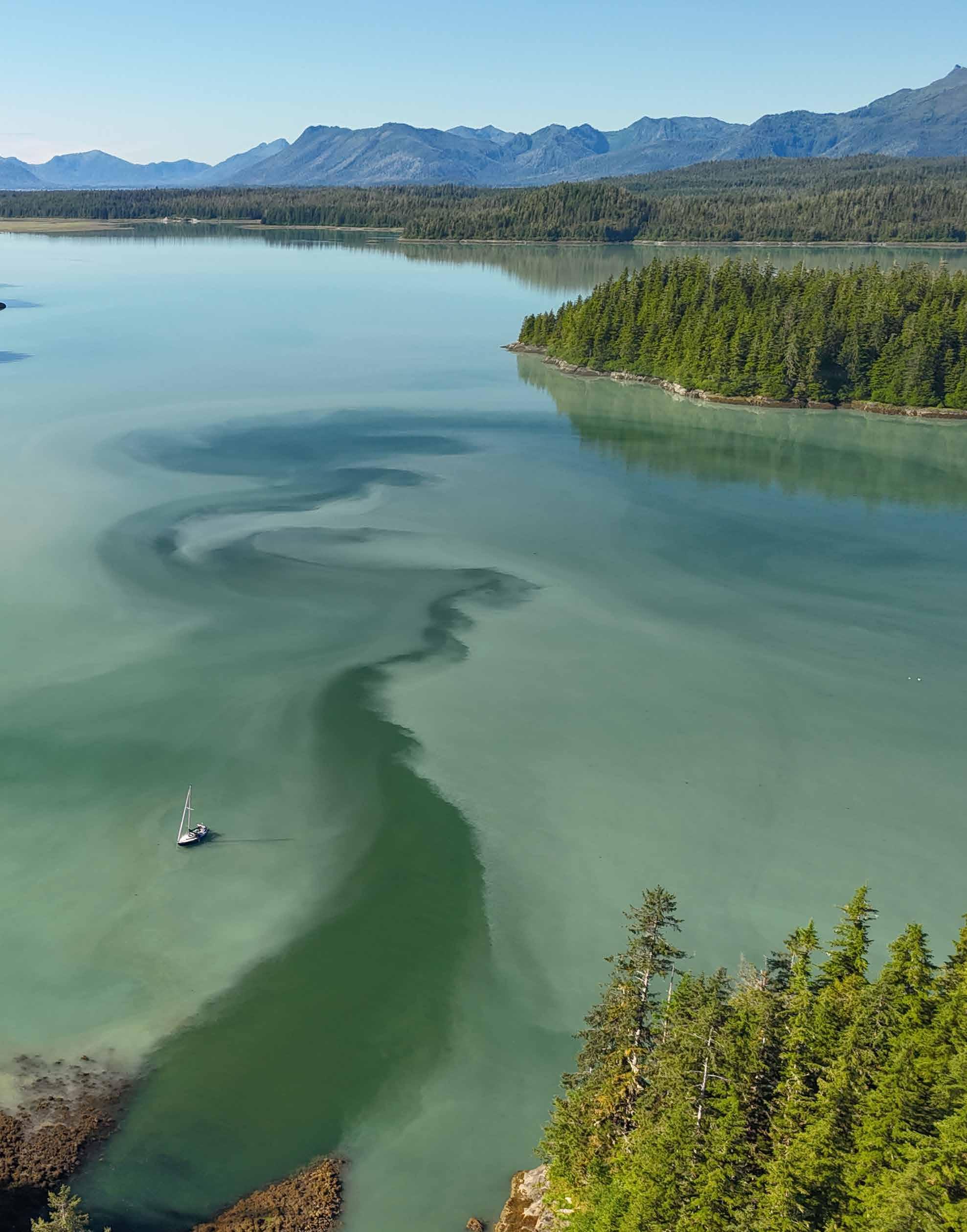
Boating large distances—in this case, the length of the Central and North Coasts of British Columbia from Vancouver Island up into the impossibly lush Tongass National Forest in Southeast Alaska—forces a meditative state of existence that is hard to find in between the incessant stream of notifications and socalled technological advancements competing for our attention.
When your top speed is five knots (just shy of nine km/h) your relationship to time and space shifts dramatically. Your senses are forced to slow alongside and retreat into a natural state that, apparently, is lying in wait at all times. So it goes.
words, photos & captions :: Brian Hockenstein
Slow is not the opposite of fast. It’s the opposite of numb.
In my relentless quest to run away from normalcy and financial stability, last summer I decided to turn what was supposed to be a one-week trip (to volunteer with an amazing youth organization called Sea Stories) into a three-month escape.
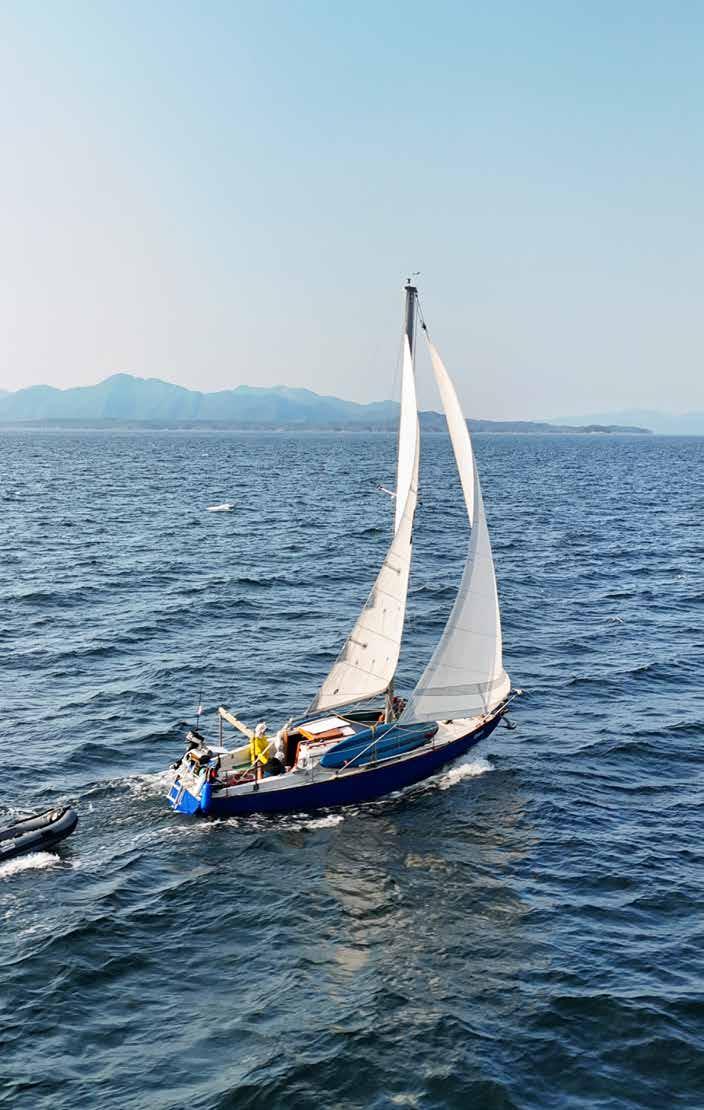
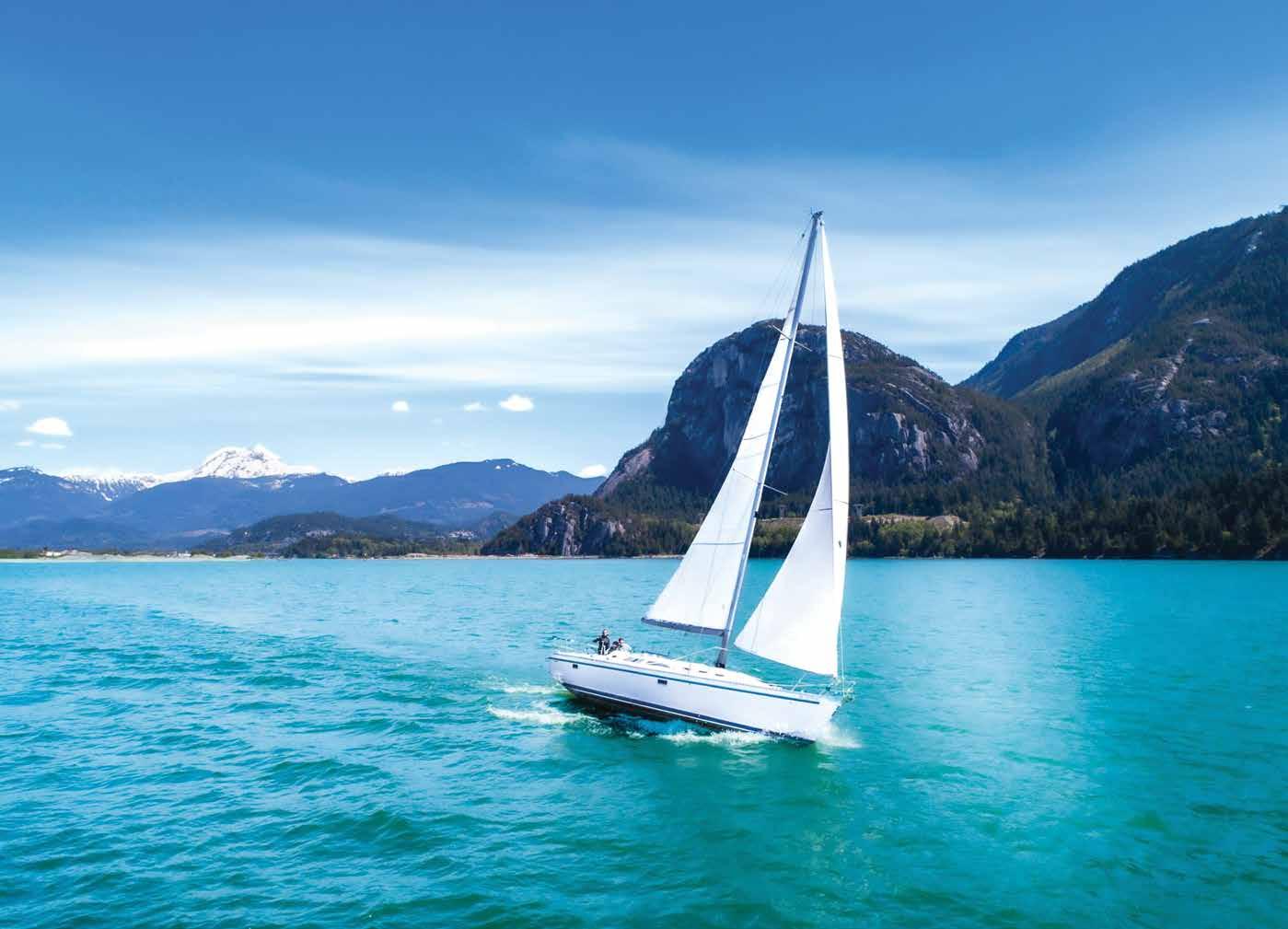
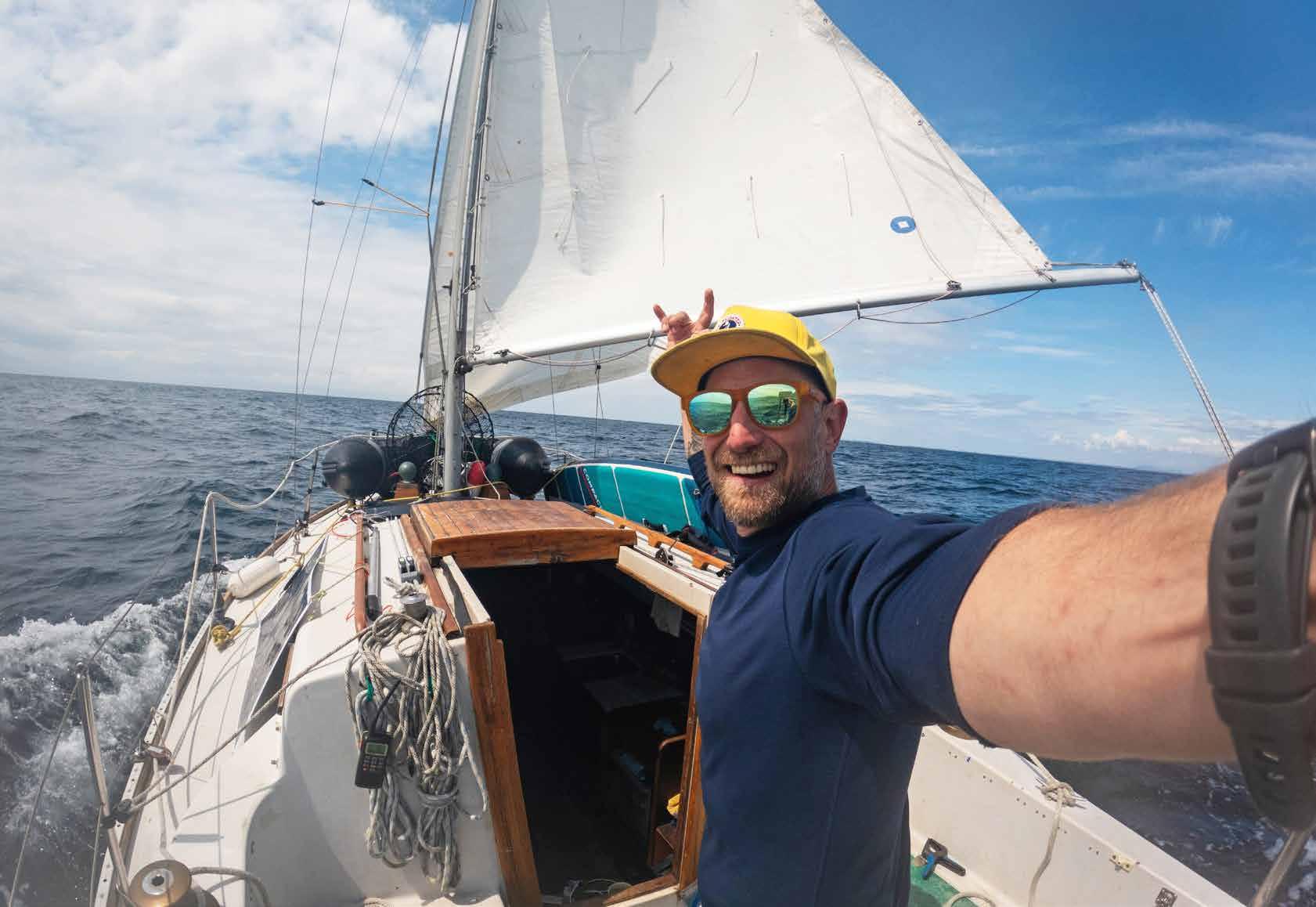
Without much thought or any real planning, I set my course north in early June from my adopted home at the northern tip of Vancouver Island aboard my aged but trusty sailboat, the SV Estera, a 60-plus-year-old 30-foot sloop built in the late ‘60s. I can best describe the Estera as a boat where everything works perfectly and something breaks every day.
Sailing north, I soon found myself face-to-face with some of the most rugged and uninhabited spaces I have ever witnessed. My only goals and expectations were to marinate in it all like a sponge in a cosmic bathtub.
The trip became a waking meditation, traveling at the pace of a sea snail. A daily scamper with just the right amount of entheogens in my system to keep things fanciful. Wind and weather forecasts dictated my schedule. Life at sea requires a brave form of simplicity that demands respect and attunement, something I had no idea I craved so deeply until I was well in the glorious thick of it.
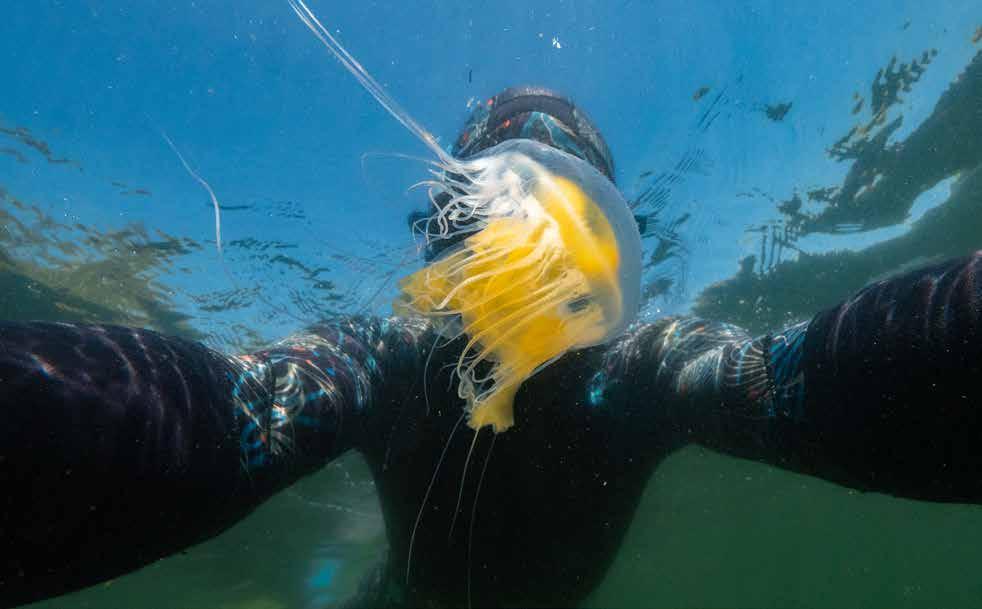
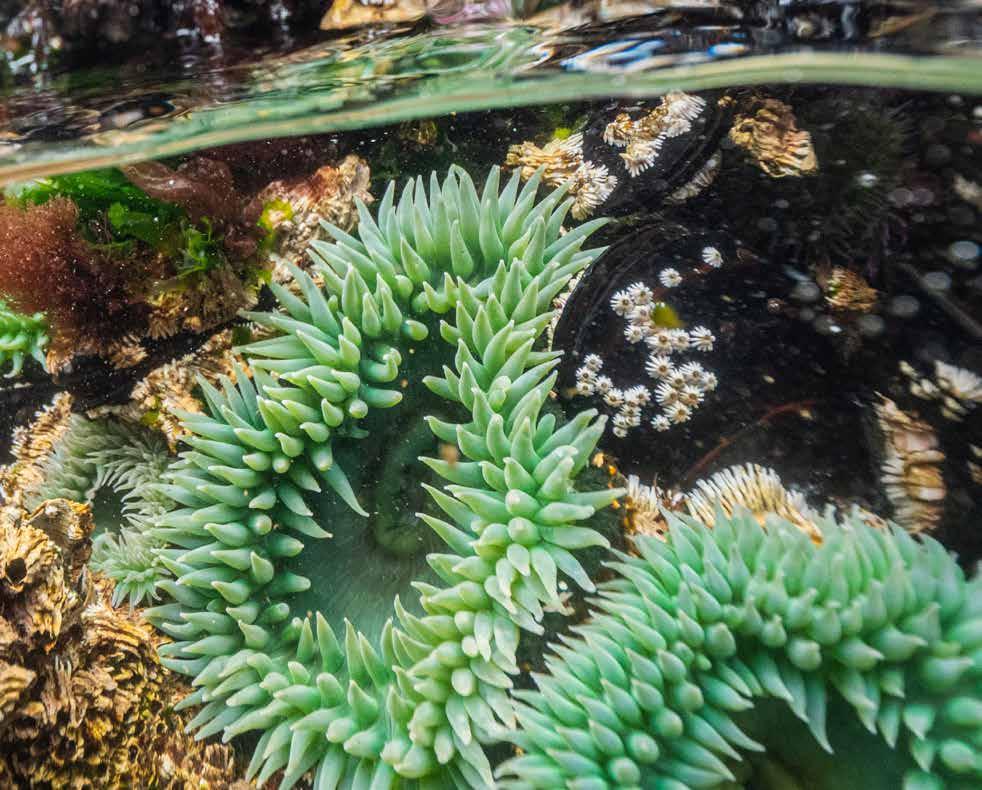
ABOVE Bashing upwind on the way to check out wolf tracks on Campania Island. TOP RIGHT Don't be jelly! I had a moment with this lion's mane jellyfish in the crystal-clear waters at the Canada/US border in the Dixon Entrance strait. BOTTOM RIGHT Watching giant green anemones is like a glimpse into alien life.
And then, just like that, I was back home.
The overflowing inbox. The construction on the corner that has been “almost finished” since 2019. The (admittedly delicious) sevendollar donuts. The constant underlying layer of hum and noise.
I tried to reintegrate. I genuinely did.
It took time, effort. But when I was able to let attention drift and settle my mind back into the quiet life out on the water, I’d find myself right back in the experience. Noticing the way a humpback exhale hangs in the cold air before the sound even reaches you, watching the light do impossible dances on the waves, hearing the sea lions announcing themselves from a mile away like they own the whole coast—which, honestly, they do.
Once our cells and molecules have been exposed to a different way of being—that natural way—there will always be a resistance to the opposite, the version of our lives that moves at an impossibly slow pace few would choose but nobody thought to question why not?
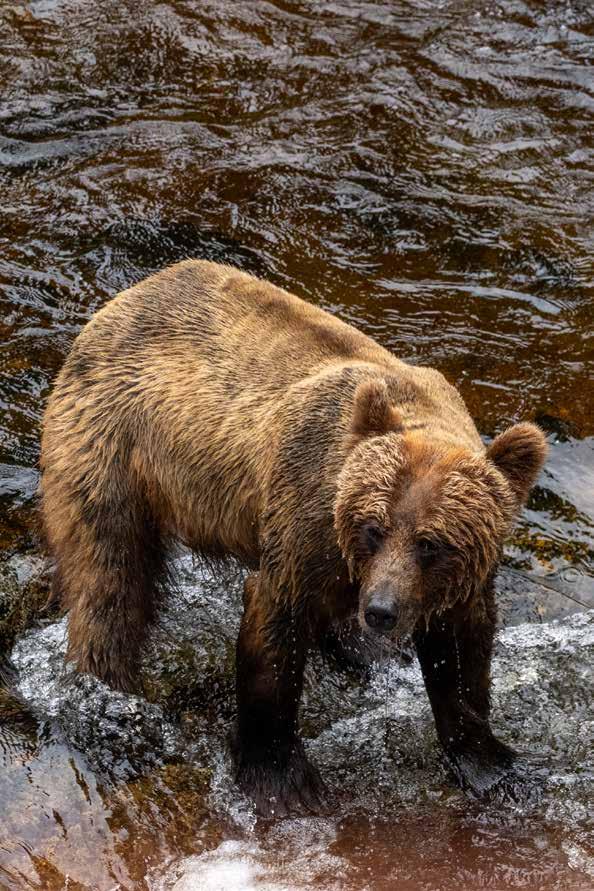
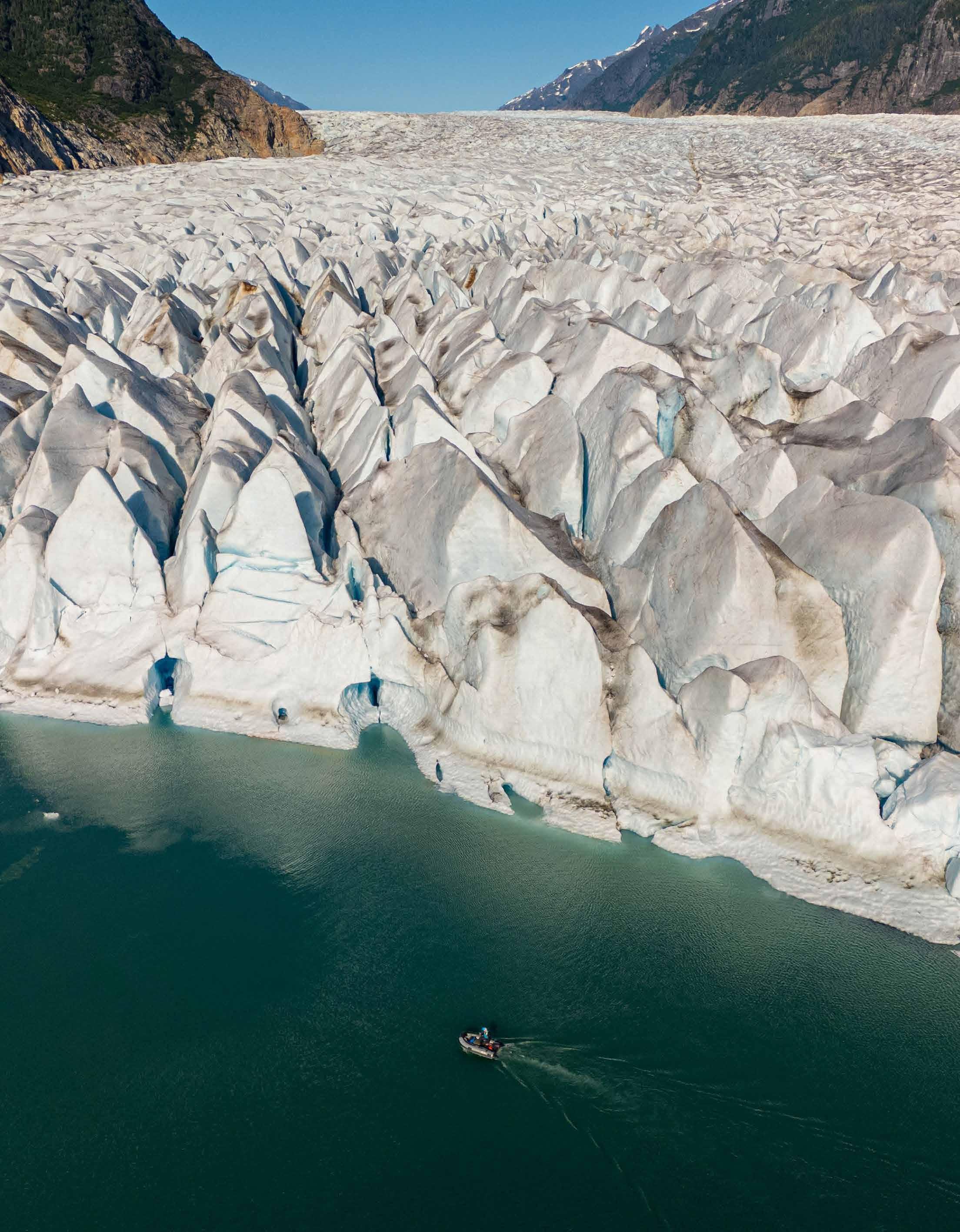
ABOVE Selfie while sailing downwind off the Central BC coast. To my left, the next closest thing is Japan. LEFT A grizzly bear fishing for salmon at the Anan Wildlife Observatory. RIGHT Solo cruising in a nine-foot dingy at the foot of the Baird Glacier was among the most in-the-moment experiences I have ever had. Tears of joy in my eyes the whole time.
Noticing the way a humpback exhale hangs in the cold air before the sound even reaches you ...
Entering the state of flow for not just minutes, or even hours, but days and months, gave me a glimpse into what the human spirit becomes when it is given nothing to optimize, no signal to chase and all the time in the world to simply witness.
That sound of a whale’s breath. The setting sun shaping the waves that roll unimpeded from distant shores an ocean away. The fishy, catastrophic smell of a cacophony of sea lions.
These are the kind of things we are destined to miss when we travel at a more “civilized” speeds.
A long, slow boat trip—like any meditative endeavour—is an opportunity to train your soul as much as your mind. And it turns out that can be a hard thing to come back from. What I learned on this five-knot meditation is that slow is not the opposite of fast. It’s the opposite of numb. And that somehow this relentless forward churn and blunder of so-called modern life has become our default, our status quo, the “normal.” Except I never actually agreed to that, did you?
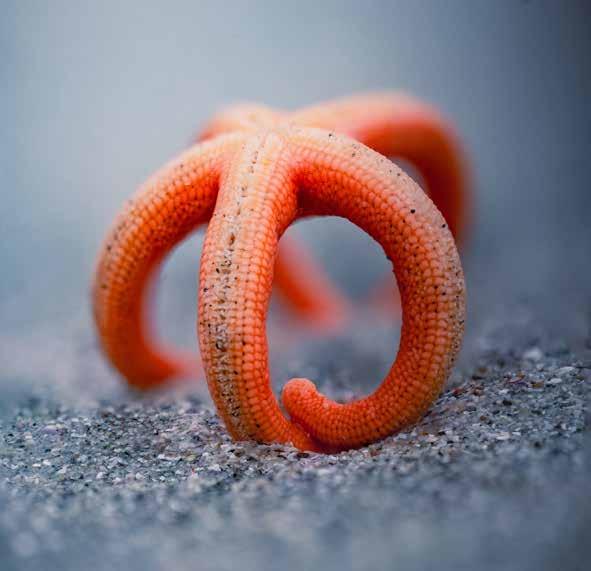
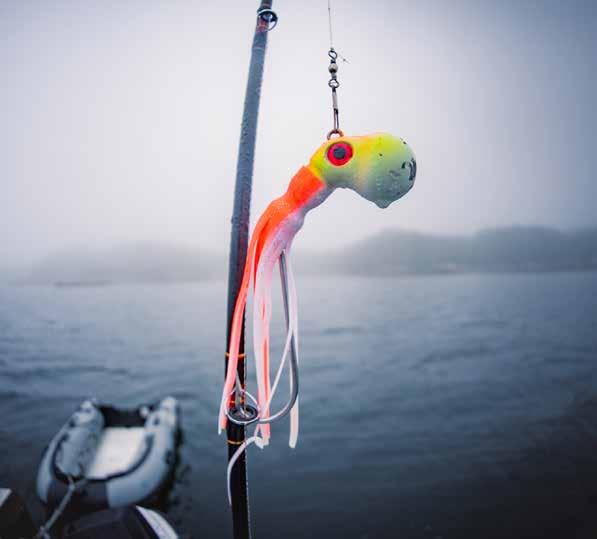
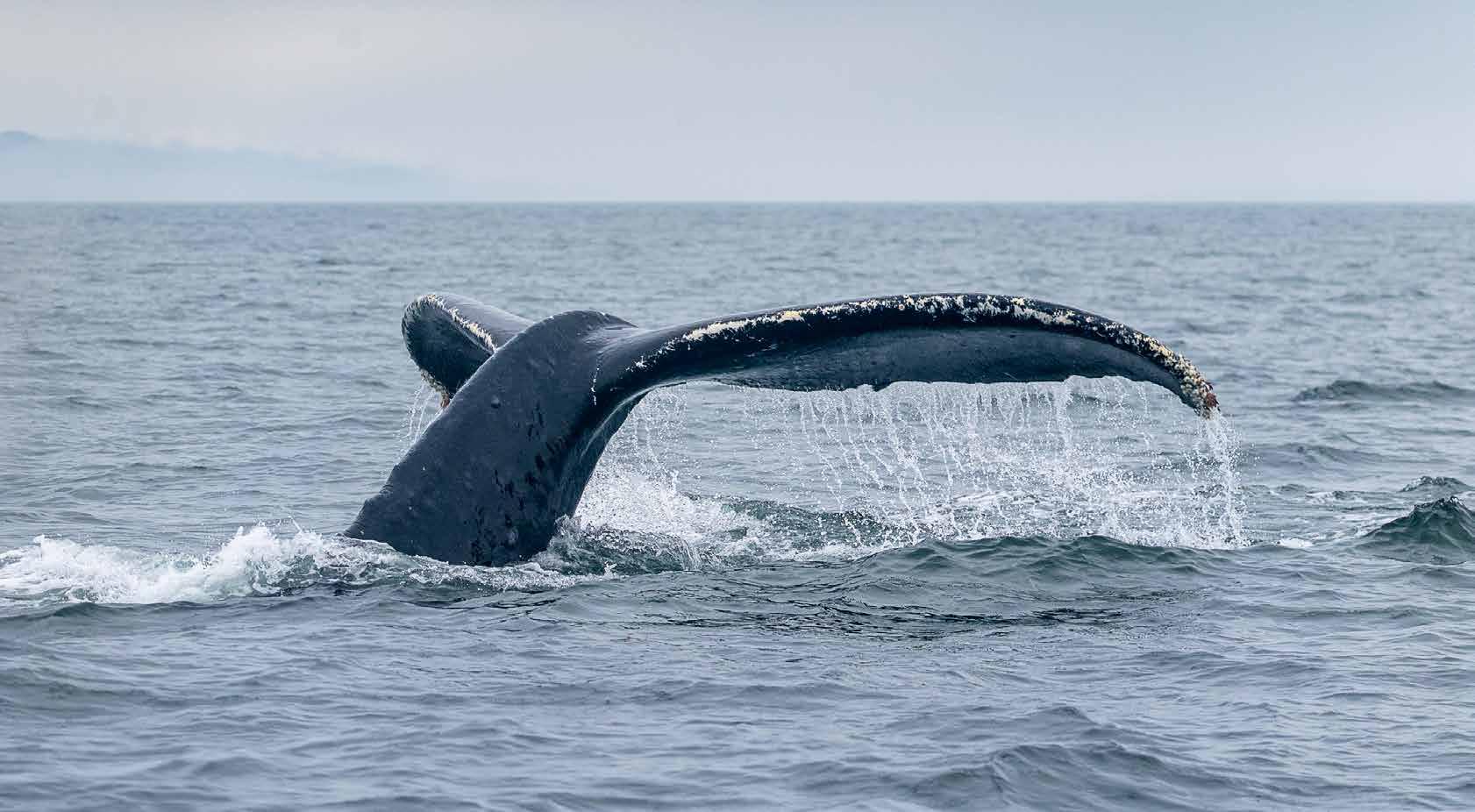
TOP LEFT A dried-up sea star on a remote beach, patiently waiting for high tide. KIERAN BROWNIE. LEFT A beautifully ugly fishing lure. When Kieran joined me for a bit we made a lot of attempts to catch dinner. Most were not successful. BELOW A humpback whale breaches mere feet off the stern of Estera. Not something you easily forget.
Riding the forgotten charcoal trails of Japan
日本の忘れられた焼き道を辿る
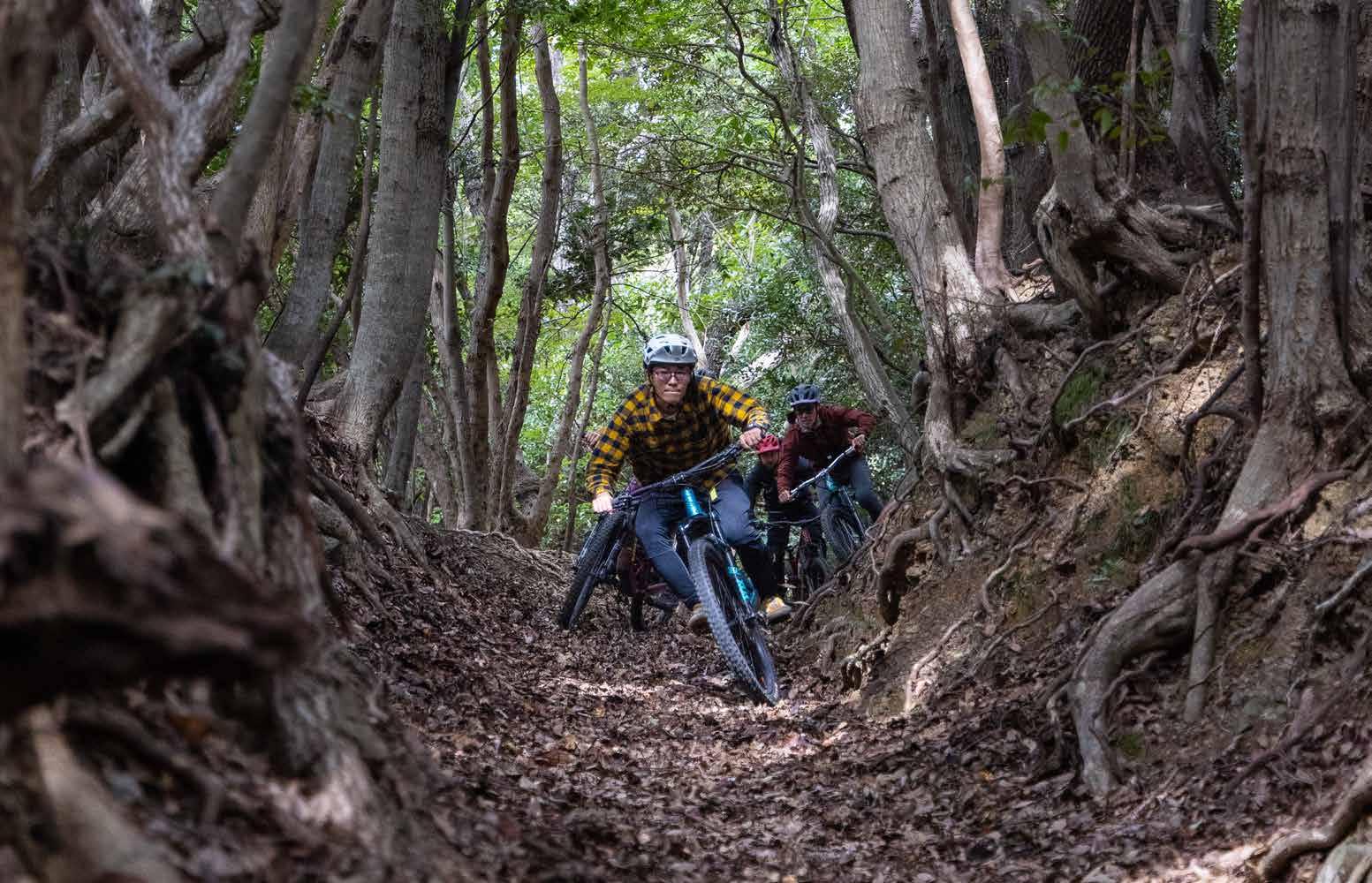
Charcoal production was a major industry through the entirety of Japan. Thousands of forgotten trails lie dormant and overgrown, but a few have been revitalized like this line a few hours northeast of Tokyo.
It’s hard to believe this trail wasn’t made for mountain bikes.
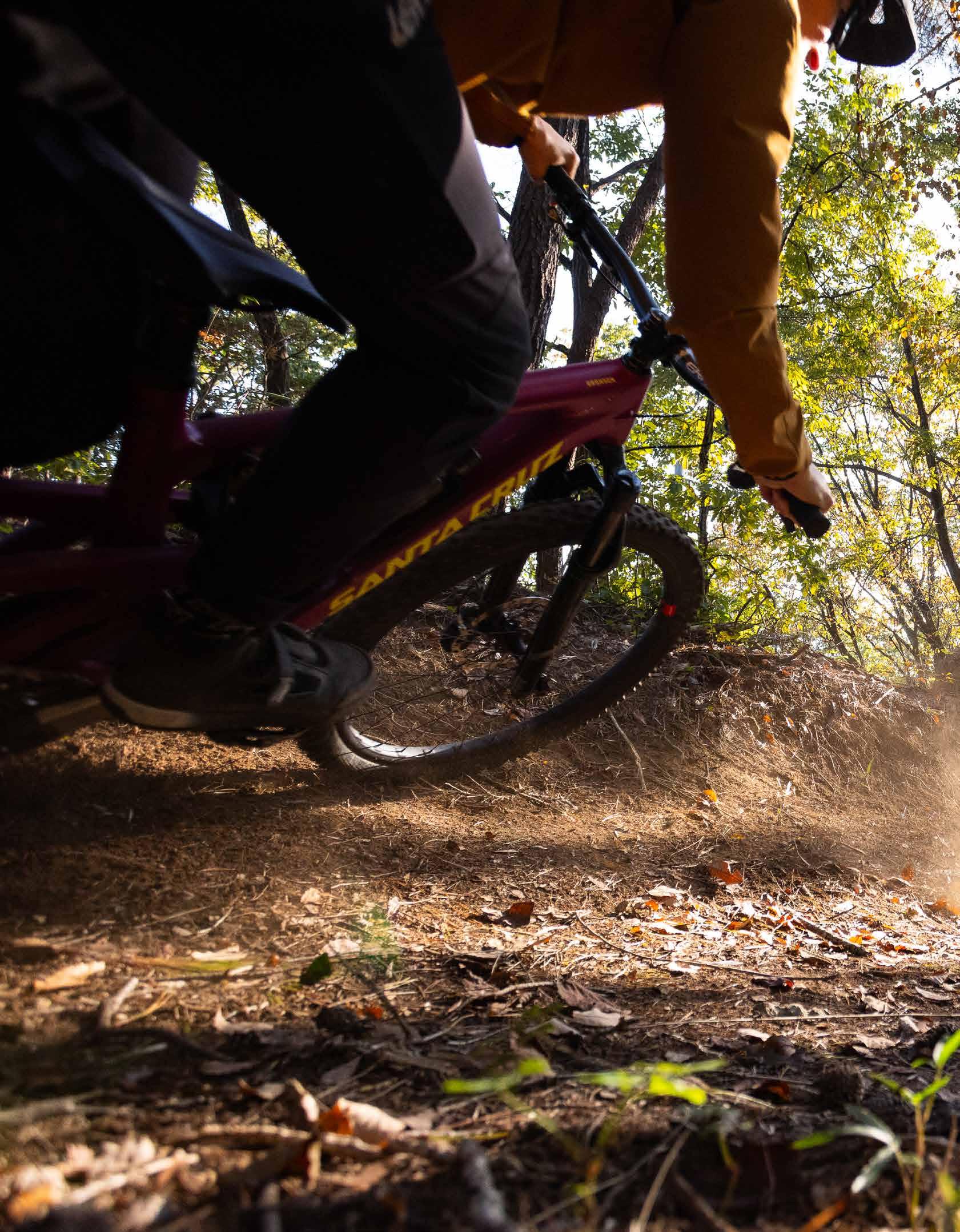
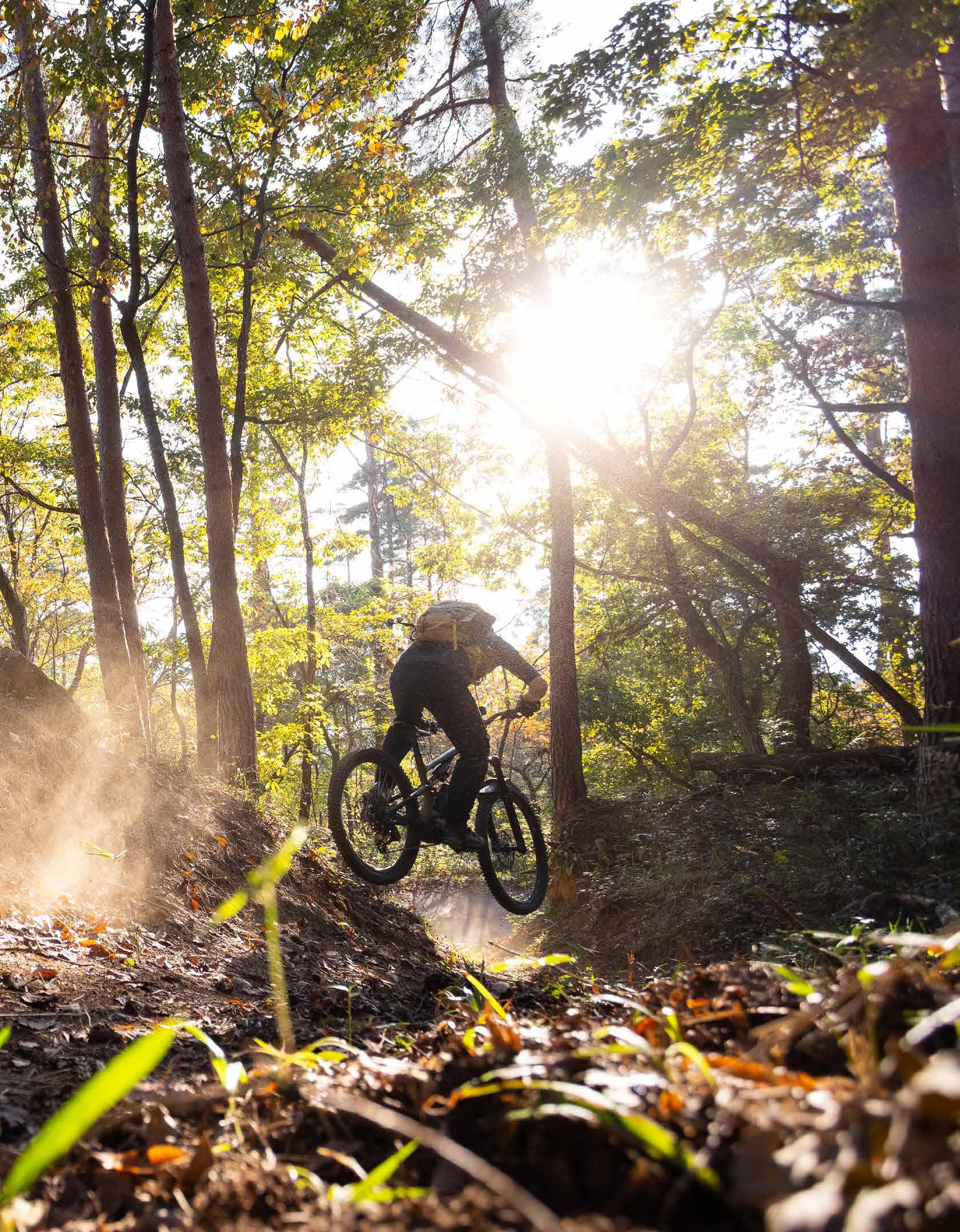
Following an undulating ridge line, the singletrack snakes its way through the satoyama, an open natural hardwood forest. As the grade steepens, the trail burrows into the slick, clay-based soil, sculpting half-pipe walls that switch back, swell and tighten with the terrain. Perfectly radiused corners gather the falling leaves, creating a trail bed soft enough to drift the back end in a playful slash, but with ample traction to hold a line into the next wall. It feels like the summer version of the famous “Japow” snow days—and I’m addicted.
Unbelievably, when these trails were built, the invention of the bicycle was still more than 1,000 years in the future.
We’re in Japan to ride the forgotten trails of the Nishi-Izu Skyline, which dates back to the Heian period (794–1185 AD). This anachronistic network of roads and paths was used to connect villages and temples, with arteries snaking high up the narrow ridges into the satoyama, where charcoal was collected to fuel the houses and kitchens of Izu as well as Edo (modern-day Tokyo).
For much of Japan’s history, charcoal served as the main energy source for heating and cooking. Over centuries, charcoal production became a highly specialized craft, evolving beyond its utilitarian usage into an art form. One traditional usage of charcoal involves rendering slow-burning hardwoods like ubame oak, tsubaki (Japanese hornbeam) and buna (Japanese beech) with flame in a low-oxygen
kiln high in the hills, creating a product that is almost pure carbon. Individual processes result in different types of charcoal, each with unique properties, colours and uses—for specialized dishes like kushiyaki (skewered grilled foods), on large open grills for robatayaki, or for smoking bonito flakes, known locally as izu-bushi.
The charcoal industry thrived nationwide until World War II when the adoption of petroleum-based fuels, natural gas and widespread electricity usurped traditional methods. The craft of charcoal production rapidly disappeared, and with it much of the rural population and their time-honoured traditions—along with a legacy of responsible forest management. The satoyama quietly reclaimed the historic mountain roads and foot paths used to extricate the resource until they were virtually lost from memory.
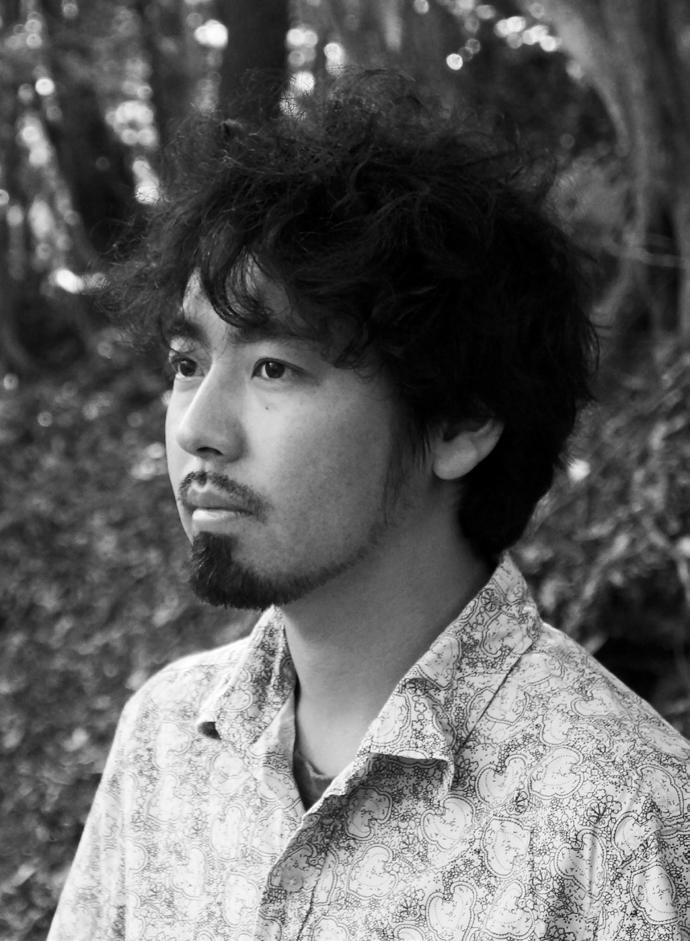
When Junichiro Matsumoto heard from a village elder that 1,200-year-old mountain roads and trails were buried in the hills, he knew he had to search for them. A Yokohama native, Matsumoto’s thirst for exploration began while hitchhiking around Japan in his youth, which led to sojourns through Asia, the Middle East and South America by motorcycle and on foot. While hiking in the Himalaya, Karakoram and South America, Matsumoto discovered a deep passion for the intersection of history, culture and adventure that ancient trails weave together. Inevitably, his curiosity transformed into obsession, unearthing trails in his backyard that were much older than those of the Inca he had hiked on the other side of the planet.
words & photography :: Ben Haggar
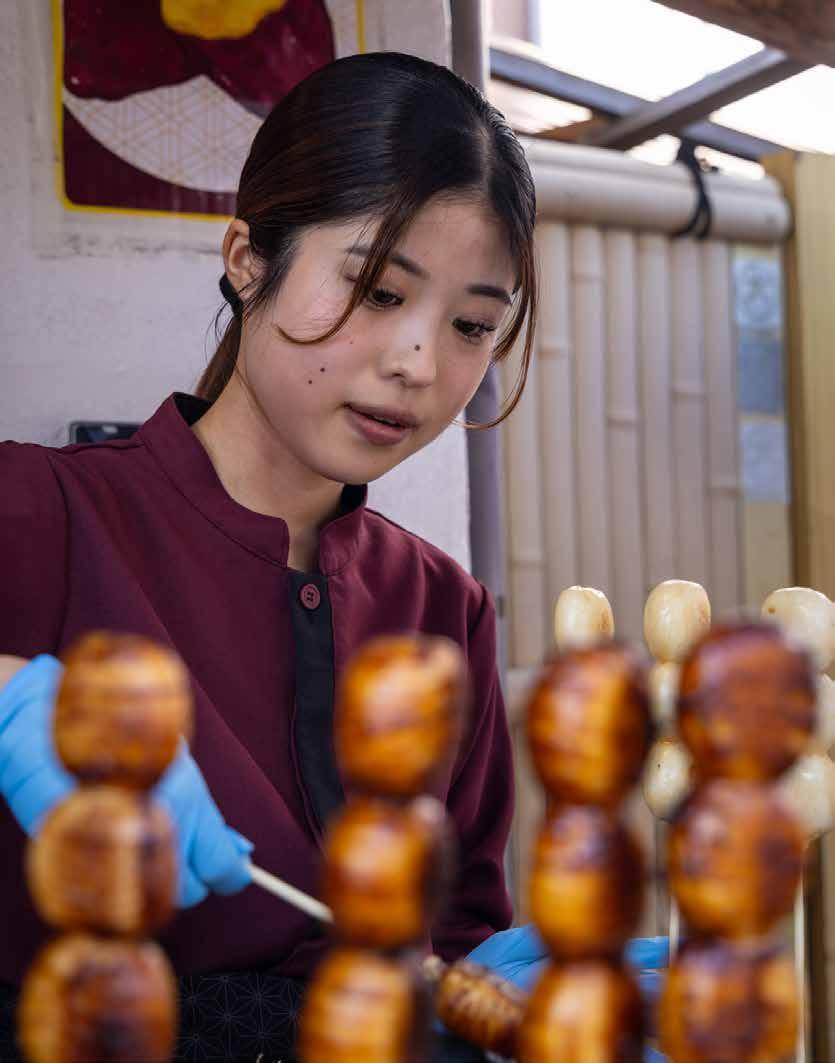
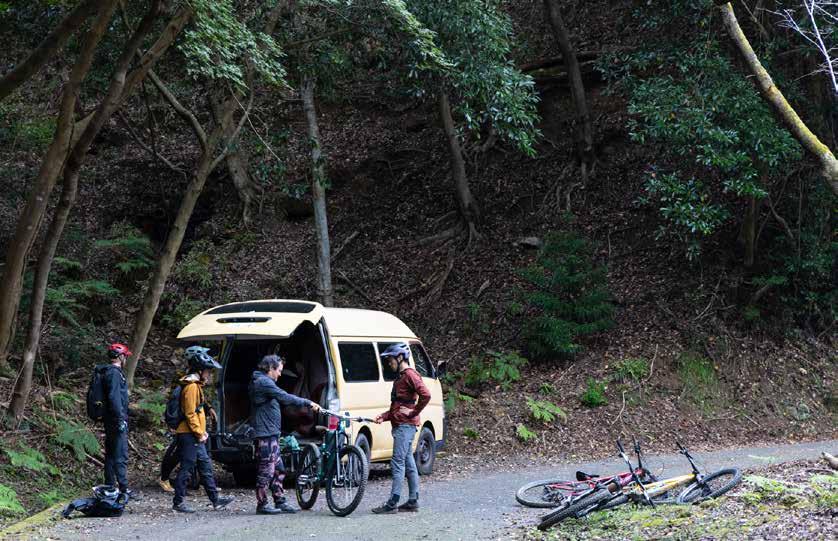
LEFT Charcoal is still an important part of Japanese cuisine and mandatory to get the subtle flavours unique to specific dishes like mitarashi dango, shown here. BELOW Loading up the bikes for more shredding. BOTTOM Charcoal smoke hangs in the air from street food vendors at Shibuya Crossing. It’s known as the busiest pedestrian crossing in the world, with up to half a million people per day and
3,000
green-light cycle.
Matsumoto hunted down a map from the Meiji period (1868 –1912) and got to work searching out the paths. A key feature of the trails became apparent. “At first, I started maintenance work alone, lugging a hoe and chainsaw,” he says. “But as I cleared away fallen leaves, earth and trees, I found a number of kannon and stone monuments.” Kannon are memorial headstones, in this case for horses. Horsedrawn sleds were used to transport charcoal off the local mountains, and some kannon were emblazoned with a handprint and horseshoe to represent the deep bond between the hardworking teams. From his extensive motorcycle background, Matsumoto realized that the winding halfpipe features created through centuries of gradual sled erosion would be perfect for mountain biking.
As Matsumoto envisioned, these ancient trails, beaten into submission through a millennium of compaction, are perfect in their original form, requiring little alteration or maintenance apart from the addition of drainage and removal of deadfall. The sled-hewn lines feel natural—both within the terrain and under our tires—with a vibe more akin to freeriding than trail riding. The wide trail bed with steeply banked, twisting walls allows for endless creativity in line choice as we race to keep up with our guide, Keitaro. It’s a unique sense of freedom not typically found on purpose-built singletrack. Each lap is a new opportunity to refine line choice and personal expression, while discovering previously unseen features.
Creating mountain bike trails in Japan, however, is not as straightforward as clearing brush and pointing a bike downhill.
ABOVE More like skiing an untracked couloir with friends, Kei leads the pack through the ultra-shreddable leaf litter or “brown Japow.” BOTTOM The visionary Junichiro Matsumoto surveying the landscape.
In 2012, Matsumoto began the complex task of obtaining permissions to uncover and transform the trails. “I attended council meetings in over 20 different villages and negotiated patiently,” says Matsumoto. “These are traditional, closed, rural communities, but surprisingly many of the elders supported the idea of a young guy in his 20s trying to create a new form of tourism. Their endorsement was the key.”
Over the past decade or so, he has unearthed seven paths totalling 40 kilometres and created Yamabushi Trail Tours, a private guiding operation on the exclusive trail network. Although one of Matsumoto’s goals was to create a nexus of legal mountain bike trails for everyone to ride, the endeavour is more nuanced. “If we were to open [the trails] to the general public, we would lose control over illegal riding, accidents and friction with the local community,” he says. “By keeping it strictly guided-only, we can ensure safety, maintain trail quality and, most importantly, keep our promise to the villagers that we will manage the mountains responsibly.” Matsumoto says he and his team will guide between 10 to 20 riders on the trails per day in their high season.
Our next lap begins from Hozo, centuries-old, ornate Buddhist temple grounds carved from the forest. The traditional guardians of travelers, stone Jizo statues covered in moss and creeping vines line the sando (entry pathway) leading to the modest temple shaded by towering Japanese cedars. The primordial atmosphere sets the tone for the ride as we drop into a technical descent strewn with slick, moss-covered rocks and roots. Decrepit charcoal kilns and weatherworn kannon pass by in a mossy blur, though we stop to check out larger monuments at trail junctions (and take a much-needed rest). The breaks offer a chance to appreciate the uniqueness of the experience—in so many ways, this network is much more than just lines down a mountain.
Matsumoto’s commitment to the local community and the environment is earnest. Aging forestry workers could not properly manage the satoyama, which supports biodiversity and safeguards against landslides; Matsumoto’s maintenance efforts address this issue. The trails he works on also provide tsunami evacuation routes and allow access to the forest for villagers, who grow shiitake mushrooms in the area, as well as local hunters. The wood cut from trail and satoyama maintenance is sold to local restaurants and fuels Matsumoto’s own guesthouse and restaurant, Quebico, which is entirely fossil-fuel-free and powered exclusively by the harvested hardwood. He gives ash from the stoves to farmers for fertilizer and uses their vegetables in his restaurant. “By revitalizing ancient trails and properly thinning the trees, we have created a system where recreational use equals conservation,” says Matsumoto.
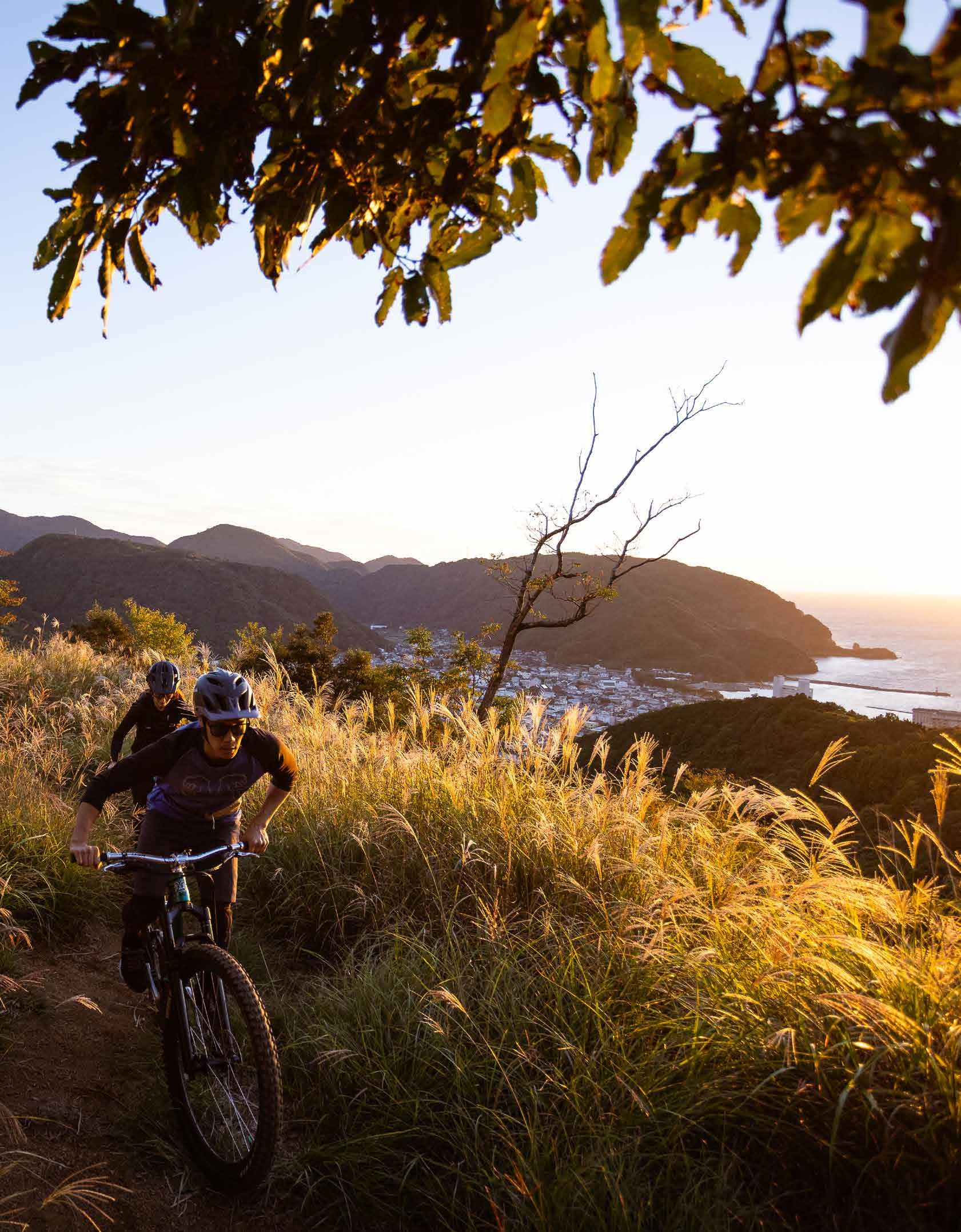
Back on the trails, one final push brings us to an open bluff overlooking the coast. As the sun sinks into the Philippine Sea, I reflect on how mountain biking can be a catalyst to new possibilities here. A huge portion of the population used to make their living from the mountain’s natural bounty, but with the adoption of modern fuels and mass urbanization, many rural Japanese communities face a slow demise—and with it a loss of history, culture and tradition. Mountain biking has the potential to change that. Through this reimagined trail network, Matsumoto is creating a framework for other rural Japanese communities to follow. With roughly 75 per cent of the country covered by mountains, with paths carved under the canopy over thousands of years, Japan’s riding potential is truly endless. More trails equal not only more fun, but the continuation of mountain culture.
平安時代、この古びた街道と古道は
This anachronistic network of roads and paths was used to connect villages and temples during the Heian period (794–1185 AD).
Walk Hard
Hike the entire Sea to Sky Corridor— but do it poetically
part 1: sea to sky trail
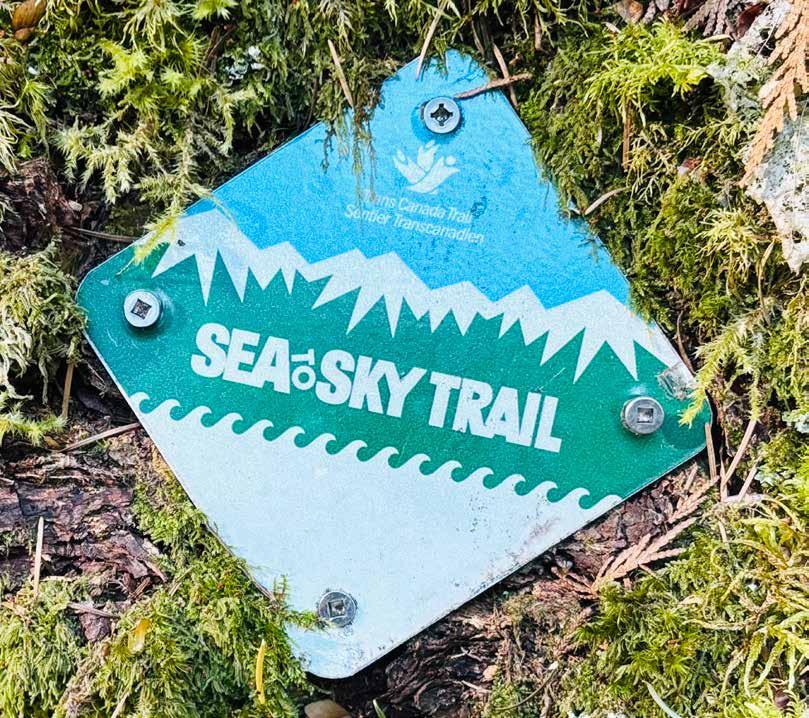
… i’d seen the signs (!) pop up in all sorts of places. from paved street corners to spurs off of forest service roads; from lakeshores to loamy paths, pinned to trees, affixed to lampposts, attached to fences. from boulder fields to skirting stock car race lots … these markers were left like an enticing trail of breadcrumbs …the sea to sky trail.
i was intrigued … and, as a hiker, as a site-sensitive poet, and as a placebased writer who believes in finding-through-footfalls the stories, nooks and crannies that a place can/may hold—especially one i call “home”—i set out to learn more about the trail which appeared to connect the corridor …
and my searches soon fell somewhat short.
there exists no updated definitive maps, nor current resources beyond the odd, not-so-recent, newspaper clip, original conceptual renderings or vision statements …
“The Sea to Sky Trail is one of the crowning features of the Squamish-Lillooet Regional District (SLRD). Beginning at the Squamish waterfront and running north for 180 km through the Sea to Sky Corridor to D’Arcy, the trail links the Pacific Ocean in the south to the snowcapped Coast Mountains to the north.” (SLRD)
the trail has many collaborating agencies/parties* and the process of trying to draw together pieces of information about the non-motorized track is very much analogous to the route itself: a piecemealed amalgamation of bits and snippets …
ground truthing—just start walking—would be the only way to try to weave together the disparate tidbits …
i chose to walk from pemberton to the paradise valley— the portion which offered the most “trail” opportunities, and the least amount of pavement-pounding.
i soon nicknamed it the “power pole path,” taking three days to cover approximately 88 kilometres with 2,043 metres of elevation gain, and 2,137 m of descent …
i traveled over gravel, stepped over roots, crossed double-yellow highway lines; hugged shoulders, admired streamside spring blooms; navigated crumbling bridges, hopped over concrete barriers; stepped aside for mountain bikers and sauntering tourists.
i sat on rocks and stared at columns of basalt. i stopped at multilingual trail signs (ucwalmícwts accompanying the english, with sḵwx̱wú7mesh sníchim joining the posted wayfinding posts as i wandered south). i meandered past dams— human- and beaver-made. i hugged old-growth and waited at traffic lights; i wove through lichen, car-ditched litter and two kinds of culturally modified trees (those associated with traditional practices, and those engraved and etched with lovers’ initials).
i collected water from rivers and examined the freshness of scat: mainly cat. i crossed the train tracks—many times. i rose above lake, dropped into canyon; and i walked towards mountains… always mountains. i paralleled trestles and traversed watersheds …
include, but are not limited to: the Squamish-Lillooet Regional District; the Trail Canada Trail Association; the Village of Pemberton; Resort Municipality of Whistler; District of Squamish; BC Parks; Recreation Sites and Trails of BC; BC Hydro; and the Lil’wat, Squamish and N’Quatqua Nations.
words & photography :: Bronwyn Preece
the valley-channeling terrain was eclectic af. surprises around every turn. invitingly so.
the “trail,” however, is more of a connector … nothing wrong with that … perhaps it should, at this stage of ongoing development, be better termed a “route.” the portion from pemberton to d’arcy is principally road. so, too, is the section from paradise valley to squamish. at present, it is much more bike-, rather than foot-friendly.
but the vision is inspiring and beautiful, and it is an engaging way to literally side-step the more conventional way to travel the corridor and venture deeper into the beauty of my own backyard …
part 2: howe sound crest trail
… i had heard it was hard, if not utterly humbling … this from some of the strongest and respected hikers i knew … 29 km with 1,800 m of elevation gain along the ridge of mountains which parallel the southern start of the sea to sky highway … but, i tended to link (if not, admittedly, dismiss) these reactions more to the other factors mentioned: poor weather, wildfire smoke, a gangly group … i was someone who enjoyed the challenge of a trek … i mean, really, how hard could it be?!
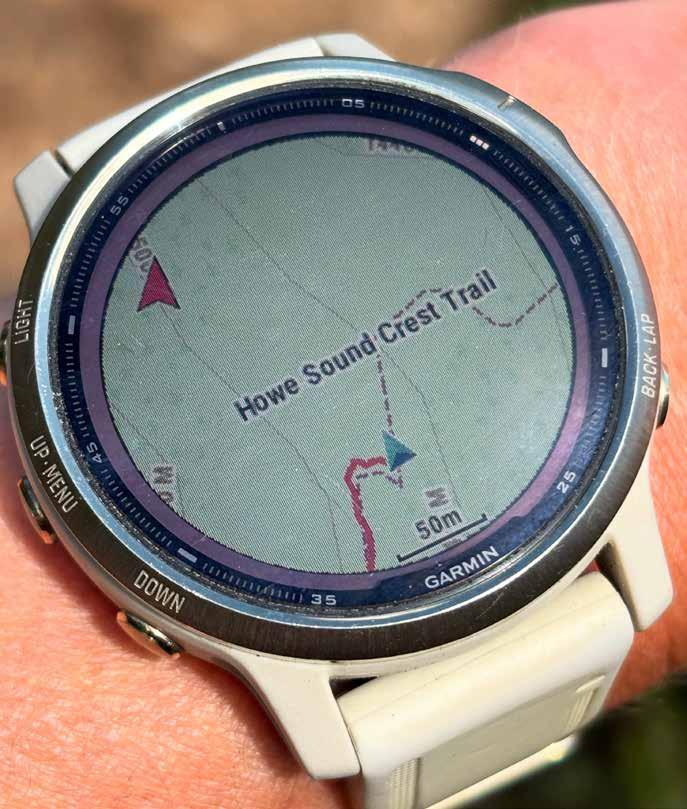
the howe sound crest trail (hsct) forms part of the atl’ka7tsem howe sound unesco biosphere reserve and is held almost entirely within cypress provincial park.** the narrow, 1,000-hectare mountainous strip was added to the park in 1982: traversing, rounding or topping a number of peaks, including st. mark’s summit, unnecessary mountain, the west lion, james peak, david peak, mt. harvey and brunswick mountain. i’d be crossing several cols, including enchantment pass; meandering through meadows, visiting waterfalls and three lakes (brunswick, hanover and deeks) that offered up 360 panorama vistas from sky to sea, sea to sky.
the hsct is generally traveled from south to north (less elevation gain in this direction), starting in cypress bowl (with the first 5 km forming part of the popular st. mark’s summit trail) and ending near porteau cove. the trail also offers up exposure—with a 6 km section of elevated challenge with roots, rocks, ropes and chains (and no water sources for the first 14 km). the trail is rated “expert” … and, as i slid down lingering snow fields, scrambled up flaking talus, searched for a next handhold, or talked myself through the churn of vertigo on a drop-off cliff edge… i would agree.
since i was two years old, bruce cockburn’s song wondering where the lions are has been my favourite. his left-leaning lyrics fostering a hopeful activist attitude and approach that i carry with me still. only a few years ago did someone tell me that the song is apparently referencing wondering where the peaks known as the north shore lions were—lost in coastal rainforest cloud …
well, i spent the first five hours of my hike also wondering—as fog and cumulus enshrouded—whether i would spend the entire time pondering the exact location of the same lions (or the two sisters, ch’ich’iyuv elxwíkn in sḵwx̱wú7mesh sníchim). but as i climbed up towards them … fortunately and gratefully, the skies cleared, the granite monuments revealed themselves … and in streaming sun, i walked up to and passed between them, then kept turning back as i wandered—and wondered—forward…
i traveled over slip of stone and snow, side-stepped over crumble of rocky outcrop, passed through avalanche avenues, scanned for cairns, clung to branch, cantilevered from pack-stuck-wedge-of-crack towards next grasp. i wound past wildflowers, blanket of heather, burst of lupine, rock-clinging penstemon. i stared, i gawked, i marvelled, i sweat, i swore. i took many deep breaths. i scraped my knees. i spoke with multi-pointed stags and swatted at swarms of mosquitos. i lofted over loam, stepped over bridge, walked through wade of turquoise lake. i chased a horizon made up of islands and ocean to one side, mountains, rivers, watersheds and a reappearing city to the other. i passed trees weathering their age in girth of rings, scar of bark. i spoke with ravens, danced to the tune of the elemental soundtrack: leaning into the lines of many ranges … and lineages of coastal mountain travel
i undertook the howe sound crest trail as an overnighter. i spent the night midway at magnesia meadows, staring out at a spectacular sunset, tent pitched next to the red-roofed emergency shelter—a reminder of the precarious balance between risk and reward that keeps drawing me to these heights …
hard, yes. worth it? absolutely.
hiking my home always is…
Bronwyn’s books—Sea to Sky Alphabet; knee deep in high water: riding the Muskwa-Kechika, expedition poems; and hiking beyond: poems from the trail—are all available at Armchair Books in Whistler.
**A history of land tenure issues (involving switching ownerships and mining claims) around a short section toward the northern end of the trail resulted in a new trail access corridor being built by the Friends of Cypress Provincial Park in 2019, facilitating access from the Porteau Road trailhead.
Our cider is made from Okanagan apples and fermented in small batches at the distillery. The brandy is
with toasted oak, creating a spirit with both Calvados-style apple character and whisky-like oak notes. Our gin is charcoal filtered, then distilled through a heavily loaded gin basket. No artificial flavours are
BC
Thomas Drasdauskis
Jonny Bierman Tyler Cave Tyler Cave
Jonny Bierman
Julie Elizabeth
Julie Elizabeth
PHOTO: JORGE ALVAREZ
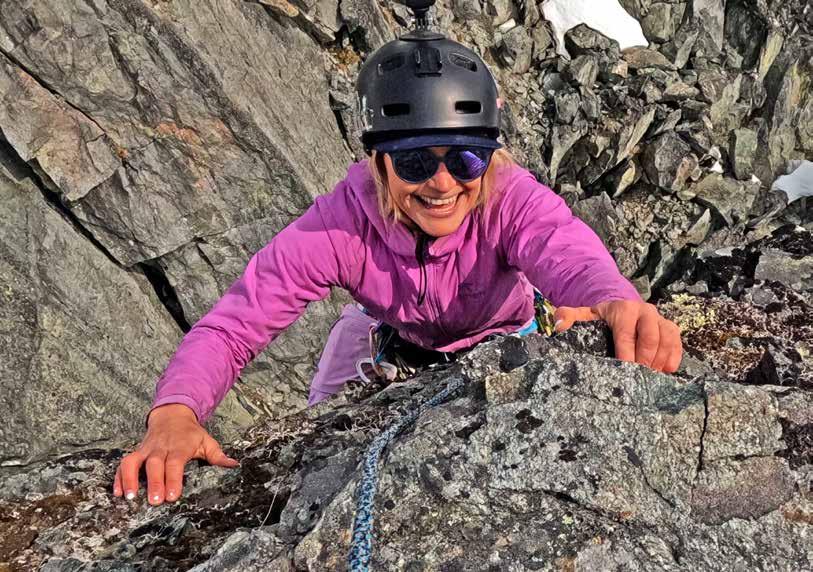
Beyond the Wall
The power and community of paraclimbers
words & photography :: Laura Szanto
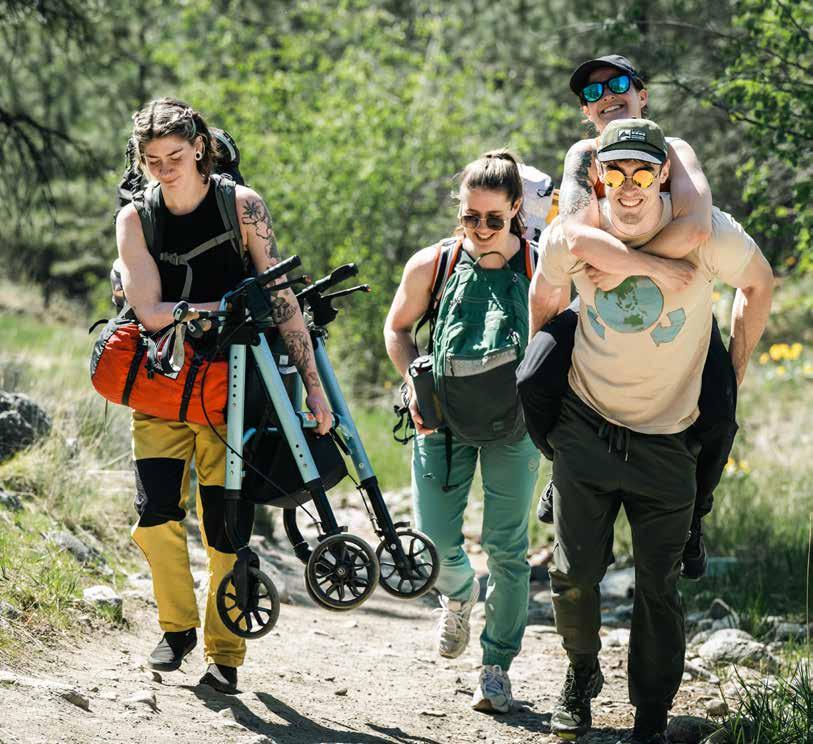
“I make a good koala, and you make a good tree,” Olivia jokes to her husband as she clings tightly to his back during our steadied approach to the crag. Around her, friends fall into an effortless rhythm of support: “I’ll grab your walker,” Carly says, already reaching for it. “And I’ll take your bag,” Emily adds, hoisting it around her shoulders.
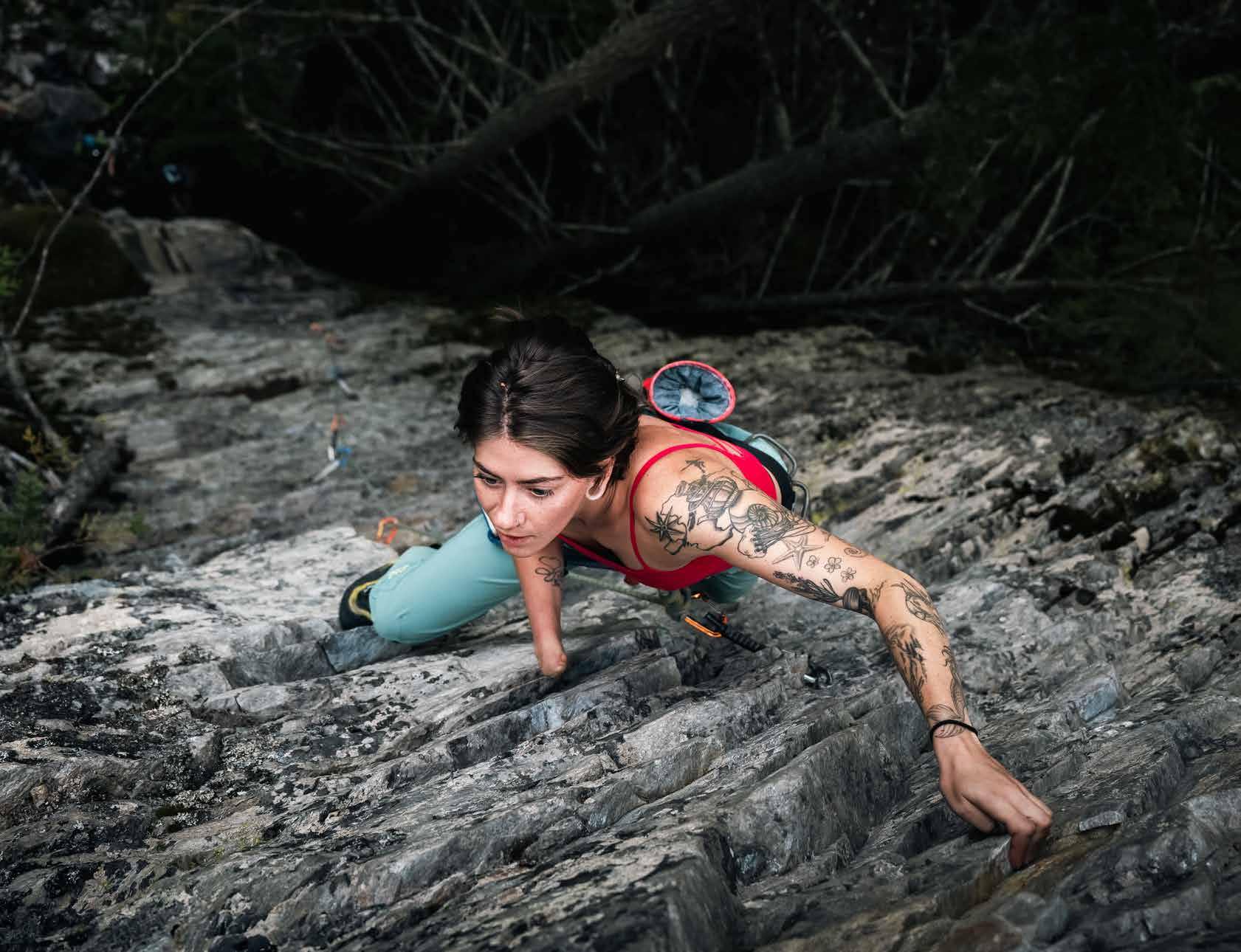
Scenes like this unfold quietly across North America’s paraclimbing community, where camaraderie is as essential as harnesses and chalk. Rock climbing challenges every athlete who ties in, but for these women the sport is layered with a series of logistical, physical and social hurdles that many climbers never have to navigate. And yet it’s in moments like this one—on the trail, before the cameras roll or the crowds appear— that the deeper story reveals itself: a story not of limitation but of adaptation, teamwork and a shared determination to reach the rock on their own terms.
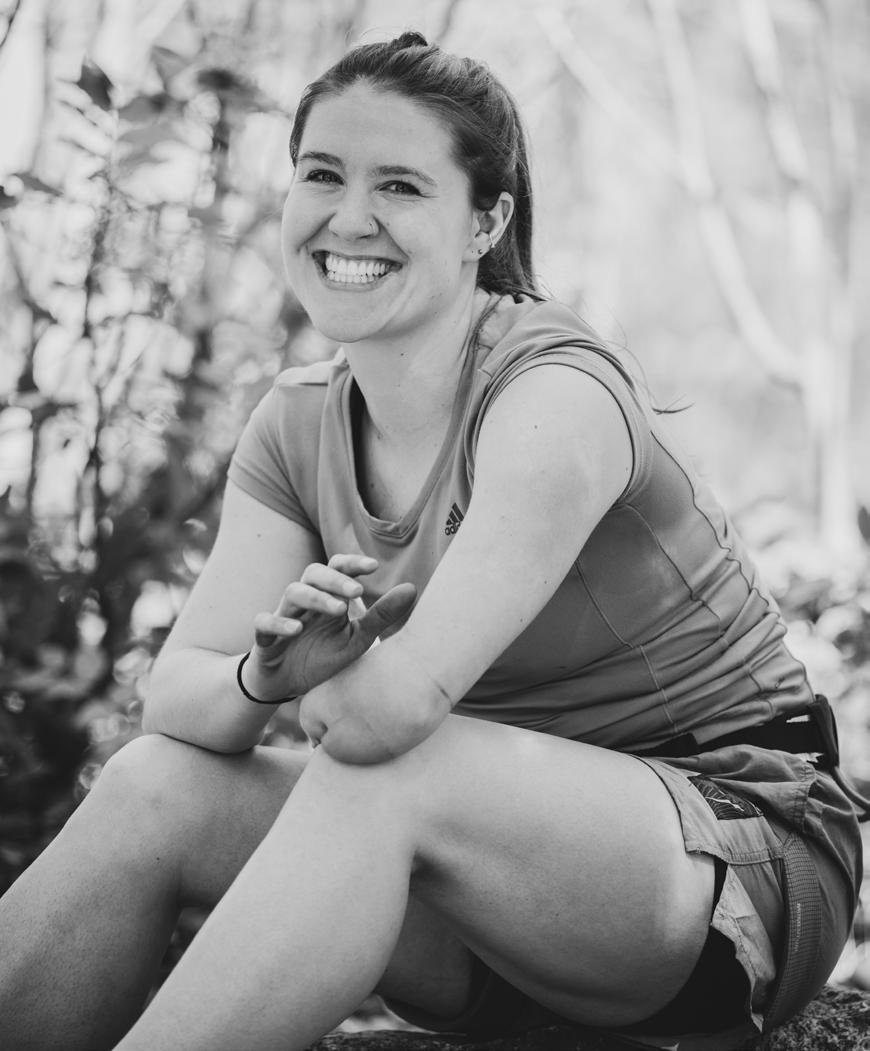
The athletes moving along this trail—Emily McDermott, Ellie Rubin, Seneida Biendarra, Carly Proppe, Morgan Loomis and Olivia Conforti—didn’t arrive in each other’s lives by chance. They first crossed paths in the competitive paraclimbing world, a small but growing community where shared challenges and victories became the foundation of the friendships unfolding here today.
Emily McDermott makes her way up a beautiful route in Echo Bay, Revelstoke.
Carly Proppe
A registered nurse based out of Kelowna for the last seven years, Carly is a lefthand congenital amputee who placed 5th at the 2024 IFSC Para Climbing World Cup in Salt Lake City, Utah.
Ellie Rubin
Raised in the Southeastern US and now based in San Francisco, Ellie is a seasoned competitive climber and fivetime World Cup medalist. A left-hand congenital amputee, she balances her career as an occupational therapist with rigorous training sessions and weekend escapes to new crags with friends.
The long way up
It's a hot sunny day in Squamish as we walk along the busy highway toward the crag. The air shifts as every passing car rushes by in a sharp, breathy whoosh. Suddenly, Morgan stiffens.
“I can feel the familiar fear,” she says. “The visceral memory of being struck and thrown through the air.” In November 2022 she was involved in a tragic motorcycle accident that led to the amputation of her lower right leg. “My life changed overnight in a way that was both physically and emotionally devastating.”
At the crag, Morgan sits alone, drawing deep breaths to steady the storm inside. The earlier trigger still grips her tightly for the moment but slowly releases its hold as she reflects on radical acceptance: “I’m here, and I’m doing my best.”
Once she slips into her harness and clips her first bolt, a different Morgan takes over. Cheers from below melt away with focus, and fear gives way to flow. With each steadied move, she reclaims her confidence, shifting everything back into a place of focus and stillness.
Morgan isn’t the only one being tested on the approach to the crag. Seneida, using a hiking pole to help guide her way, struggles over the winding path, slipping on slick rocks and tangled roots, even taking a tumble once. She chuckles at her slight misfortune, and the other women offer steady verbal guidance, helping her find her footing.
Seneida received the diagnosis of retinitis pigmentosa at age 17. She went from a world once wide and sharply defined to a narrowing tunnel of sight, one that has steadily constricted over the past few years. Her disability isn’t immediately visible, which leads to challenges in a variety of settings where people often assume she can see. When we arrive at the wall, I hold out the quickdraws. Unaware that she can’t see them from that angle, we both stand there, hands outstretched, hilariously missing the obvious.
Seneida Biendarra delicately navigates a route at Area 44 in Squamish, with the peaks of the Tantalus Range in the background.
A three-time US Paraclimbing B2 champion, Seneida is also a Black Diamond ambassador from Reno, Nevada, who works as tent and sleeping bag product developer for Cascade Designs. She’s been diagnosed with retinitis pigmentosa, a genetic condition that makes cells in the retina break down slowly over time, causing vision loss.
Morgan Loomis
The current US National Paraclimbing Champion in her category (and a Paralympic hopeful), Morgan has a degree in psychology and works with teens in mental health. She is a right-side below-knee amputee and says climbing has been a powerful outlet for healing, growth and community in her life.
Morgan’s life changed in an instant, but Seneida’s condition unfolds gradually, shadowed by uncertainty. “It’s impossible to predict how things will change in the coming years,” she says, “and that unpredictability can feel deeply destabilizing.”
Seneida deals with this pressure by getting out to climb as much as possible. In sharp contrast to the clumsy hike earlier, Seneida thrives on the wall, accelerating upward with impenetrable confidence—her grin flashing down to the group below as if to say: “This is where I’m meant to be.”
As we reach the base of the wall, Olivia shares her story. Much like Seneida, she lives with a degenerative condition—one that has reshaped her relationship to movement, both on and off the wall. Since her diagnosis of hereditary spastic paraplegia at age 11, she has felt the slow decline in her leg strength and mobility. On the approach to the crag, she rides piggyback on her husband, a mode of transportation that has now become her norm.
She visited a few climbing gyms as a young child, usually for birthday parties, but didn’t start climbing regularly until age 17. In the early years, she could still walk to the base of climbs. Then came the cane. Now it’s a walker. “Approaches to different crags outside have become increasingly more challenging,” Olivia reflects. “But I had this sense that I could coordinate my legs on the wall better than I could on the ground, and there’s something very freeing about that.”
When she climbs, Olivia moves very methodically, placing one leg at a time with deliberate precision. Her tenacity is unmistakable, and even in the slowness there is grace. What many don’t see is the scale of effort—a single route can take her up to an hour. Each ascent demands extraordinary patience, along with deep reserves of physical and mental strength.
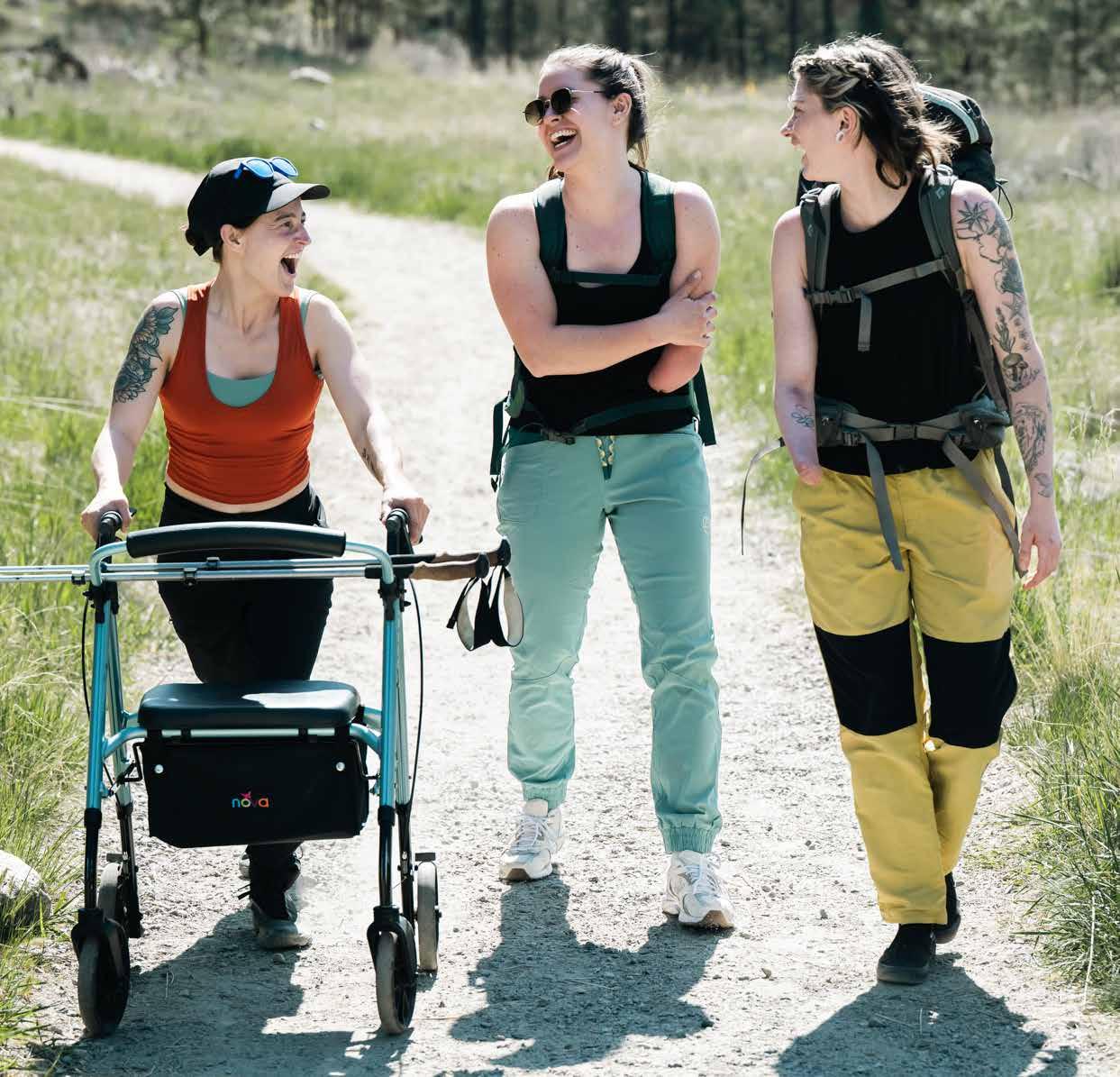
Olivia Conforti, Carly Proppe and Emily McDermott share a laugh while making their way to Skaha Bluffs, Penticton.
Seneida Biendarra
CRYSTAL HUT
Olivia Conforti
Originally from New Jersey, Olivia made the US National Team in 2023 and hopes to participate in future Paralympic events. She now calls Kelowna home and is pursuing her master’s degree in social work. Oliva lives with hereditary spastic paraplegia, a degenerative neurological condition.
Emily Mcdermott
Emily is a climber based in Revelstoke, BC. She is a right-hand congenital amputee and embraces competition and climbing as a way to access some of the most challenging and creative routes, pushing limits and refining techniques—all the while whispering to herself, “I do this for fun.”
Joining us at the crag are Emily, Carly and Ellie, who each have congenital upper limb differences. This term encompasses a wide spectrum of differences, but with these three climbers it means there has been a variation in how their hand or arm has formed while still in the uterus. Emily is missing her right arm below the elbow, while Carly and Ellie are missing their left arms below the elbow. Working with a single hand, each woman faces distinct challenges at the crag, constantly adapting their movement and discovering creative ways to clip quickdraws into bolts.
“Sometimes you find the right position, and other times you get shut down,” Emily says, “because the clipping position is simply not possible.”
Ellie adds that one of her biggest challenges is her height. “I’m 4-foot-11 and I’m missing a hand. So my reach can be really limited. I learned very early on, almost intuitively, that I needed to have good, precise, technical footwork, often in conjunction with high feet.”
Having to adapt to challenges highlights a broader issue Emily sees in climbing spaces: the assumption that certain things simply can’t be done. “At almost every new gym, I hear the same debate: ‘You can’t belay with one hand,’” she says. “But it actually opens the door to a bigger conversation—where those limits come from, and how gear and techniques can be adapted to work safely in ways they weren’t originally designed for.”
“I’m 4-foot-11 and I’m missing a hand. So my reach can be really limited. I learned very early on, almost intuitively, that I needed to have good, precise, technical footwork, often in conjunction with high feet.” – Ellie Rubin
Carly adds that, with gyms in particular, one of the biggest hurdles is the constant feeling of being underestimated in spaces that weren’t designed with her in mind. “Our society is inherently ableist,” she says, “and there are a lot of oversights when it comes to climbing and the disability community. It can feel discouraging when every place you go to climb isn’t set up for you.”
Ellie Rubin powers up the After Party wall above the rushing Cheakamus River, Squamish.
The
rise
of the adaptive competition scene and community
Despite their limitations, these climbers share a deep understanding of struggle and what it means to support one another. The people who cheer, belay and swap beta are not just climbing partners, they’re family.
The term “paraclimber” refers to athletes who compete, while “adaptive climbers” are any climber with a physical, sensory or cognitive disability. All paraclimbers are adaptive climbers, but not all adaptive climbers are paraclimbers.
The first international paraclimbing competition took place in Yekaterinburg, Russia, in 2006. In the two decades since, the once-small collection of adaptive climbers has blossomed into a vibrant, supportive international community accepted by World Climbing (formerly the International Federation of Sport Climbing), the official governing body for all climbing competition.
One striking example of recent progression is the Adaptive Climbers Festival at Kentucky’s Red River Gorge. Since its inception in 2018, the festival has expanded from 25 participants to more than 300 athletes and volunteers, offering dozens of clinics led by adaptive instructors and prioritizing access through scholarships and transportation support.
“I have been to the festival the last two years,” Carly says, “and each time it’s been a fostered environment of support, love and passion allowing space for climbers with disabilities to come together, learn and celebrate with one another.”
Ellie agrees and adds, “The para community makes me feel so seen and known in a way that’s very rare around disability.”
Looking ahead, paraclimbing will make its Paralympic debut in 2028. “It’s amazing,” Carly says. “I’m excited by how this sport is bringing people together all over the world.”
While paraclimbing is growing at an unbelievable rate, there’s still significant room for progress. Adaptive athletes are calling for added media coverage, financial support, more competitions and less disparity in prize money compared to able-bodied climbers. Emily laughs as she reflects on a past climbing competition where winners received, “a jar of honey, a chocolate bar and some flowers.”
There’s a nuance and complexity in balancing the demands of climbing while navigating life with a disability, but with traumas and setbacks these climbers dig deep to create a world where they successfully place on the podium, create deep connections with their community and continue to accelerate in their climbing ability. Theirs isn’t a story that asks for sympathy. It’s one that calls for recognition and celebration.
“My motorcycle accident led me to paraclimbing,” Morgan says. “Led me to purpose, and to a vibrant and supportive community. Failing hurts but failure teaches. Healing, too, follows no straight path. But I try to be gentle with myself, to honor where I’m at, and to keep doing the best I can. I can’t control what happens, but I can choose how I show up—on the wall, in life and for others.”
TOP Morgan Loomis demonstrates impressive flexibility and balance while navigating a route at Area 44 in Squamish.
ABOVE Carly Proppe, Emily McDermott and Shamus Boulianne assemble into position to give Olivia Conforti a more comfortable ride to Skaha Bluffs.
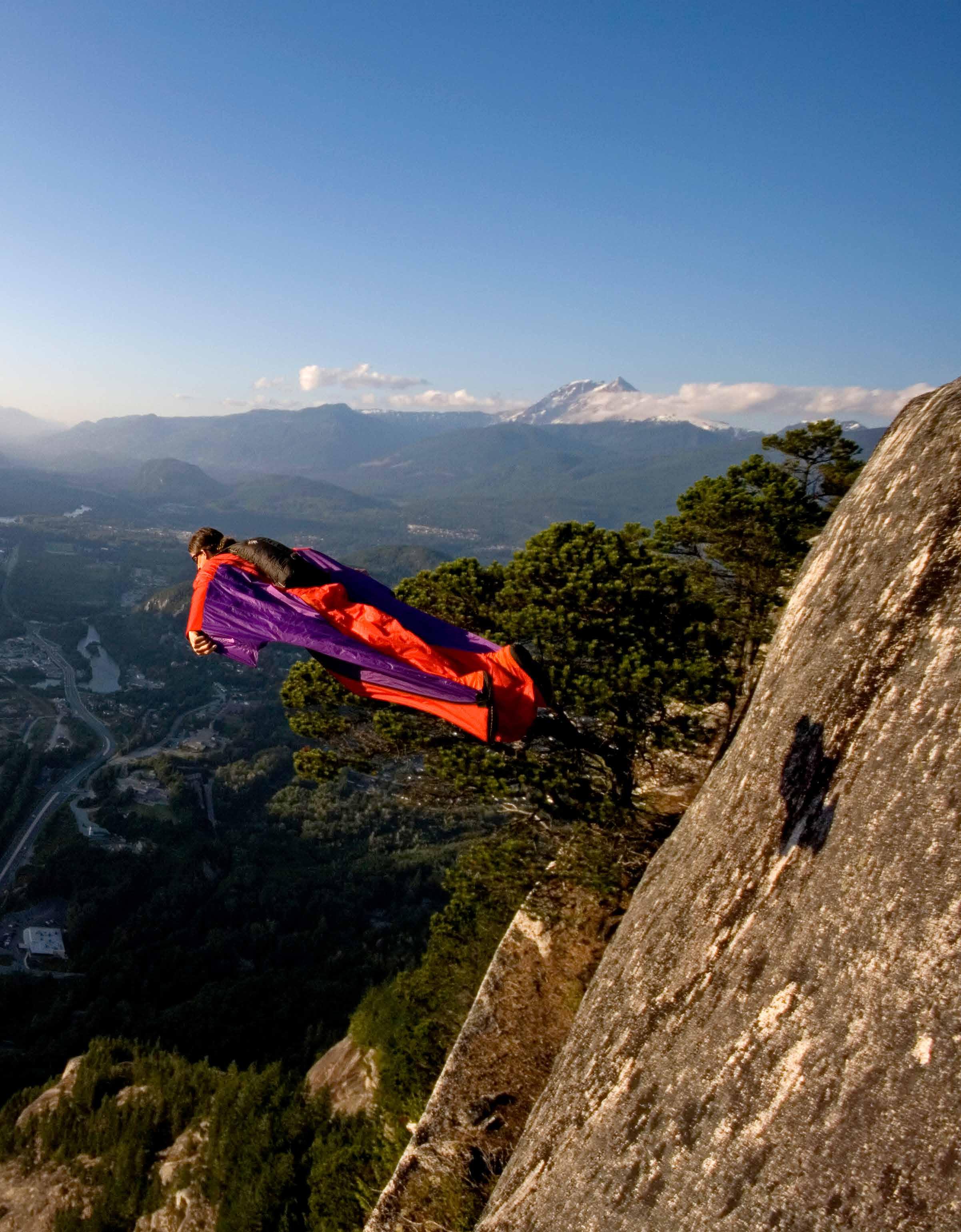
Ravens floating over mountaintops. Eagles soaring high amongst the clouds. Peregrine falcons diving at speeds of up to 320 kilometres per hour along ocean cliffs. Whether inspired by these incredible creations of nature or by daydreaming of cartoon superpowers, humans have always held an interest—and passion—in the quest for flight.
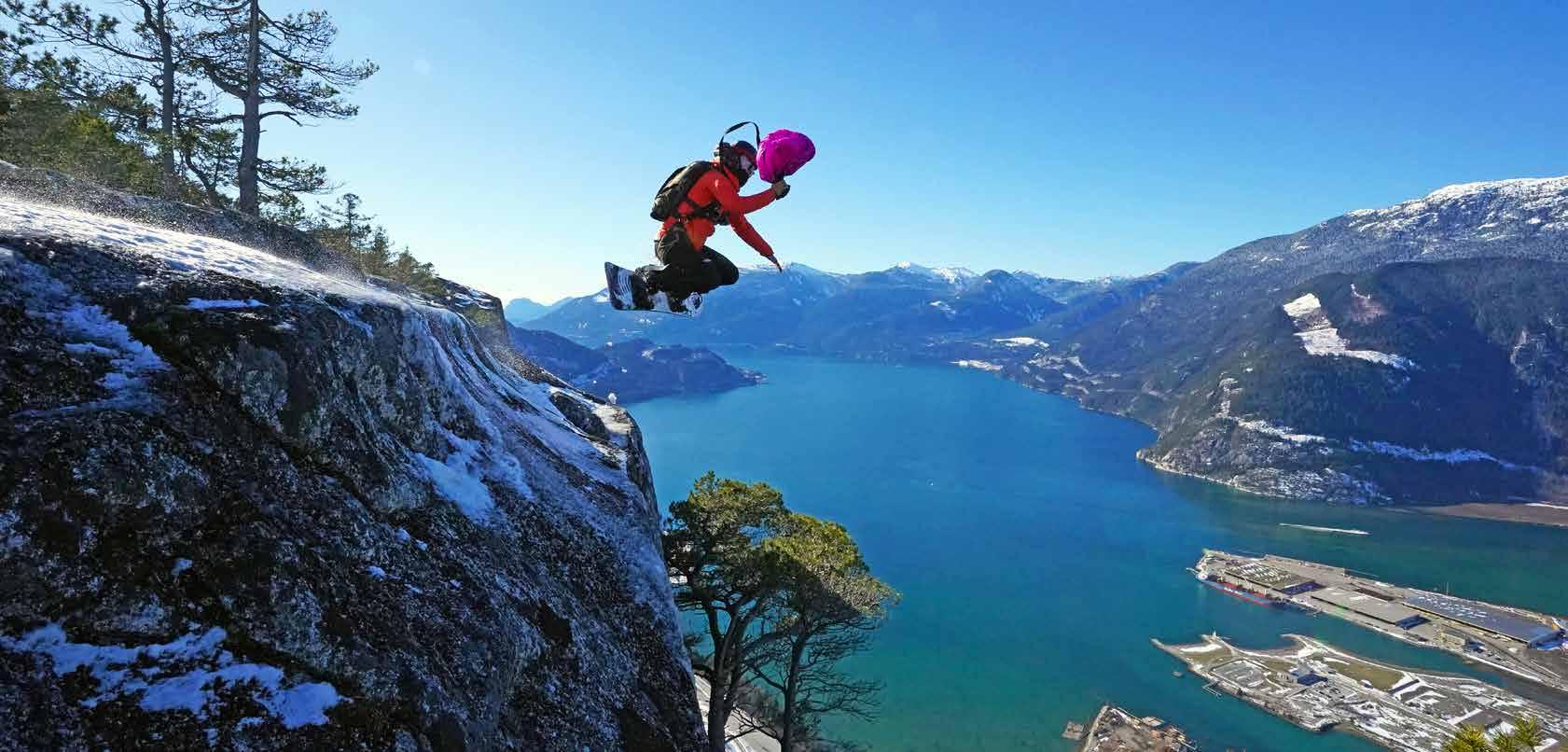
Over the past 25 years, I have had the privilege to spend time with and document a number of people who have turned that passion into action, stepped off the edge and soared. On human wings of fabric, I’ve seen them drop from massive walls and mountains, soar amongst the clouds, and thread a fine line of risk, commitment and desire.
Pushing limits and fate, each decides how far they want to take things and how close to the sun they want to soar. Watching and photographing these adventures has been a true emotional rollercoaster—listening to the sound of their breath and watching as they take that first step off the cliff: a single moment of transforming their drive and intensity into pure aerial velocity.
A close friend who is no longer with us named Sean Lawson once told me, “We take these risks not to escape life, but to prevent life from escaping us.” With those words in mind, and because most of us will never experience these feelings of flight, I rallied a few good friends living here in the Sea to Sky corridor— all very driven and inspiring individuals—to learn a bit more about their own personal quest for flight.
words & photography :: Jim Martinello
“Believe anything is possible” – Dean Potter
Dean Potter, an inspiration to all who feel the urge to fly. Squamish.
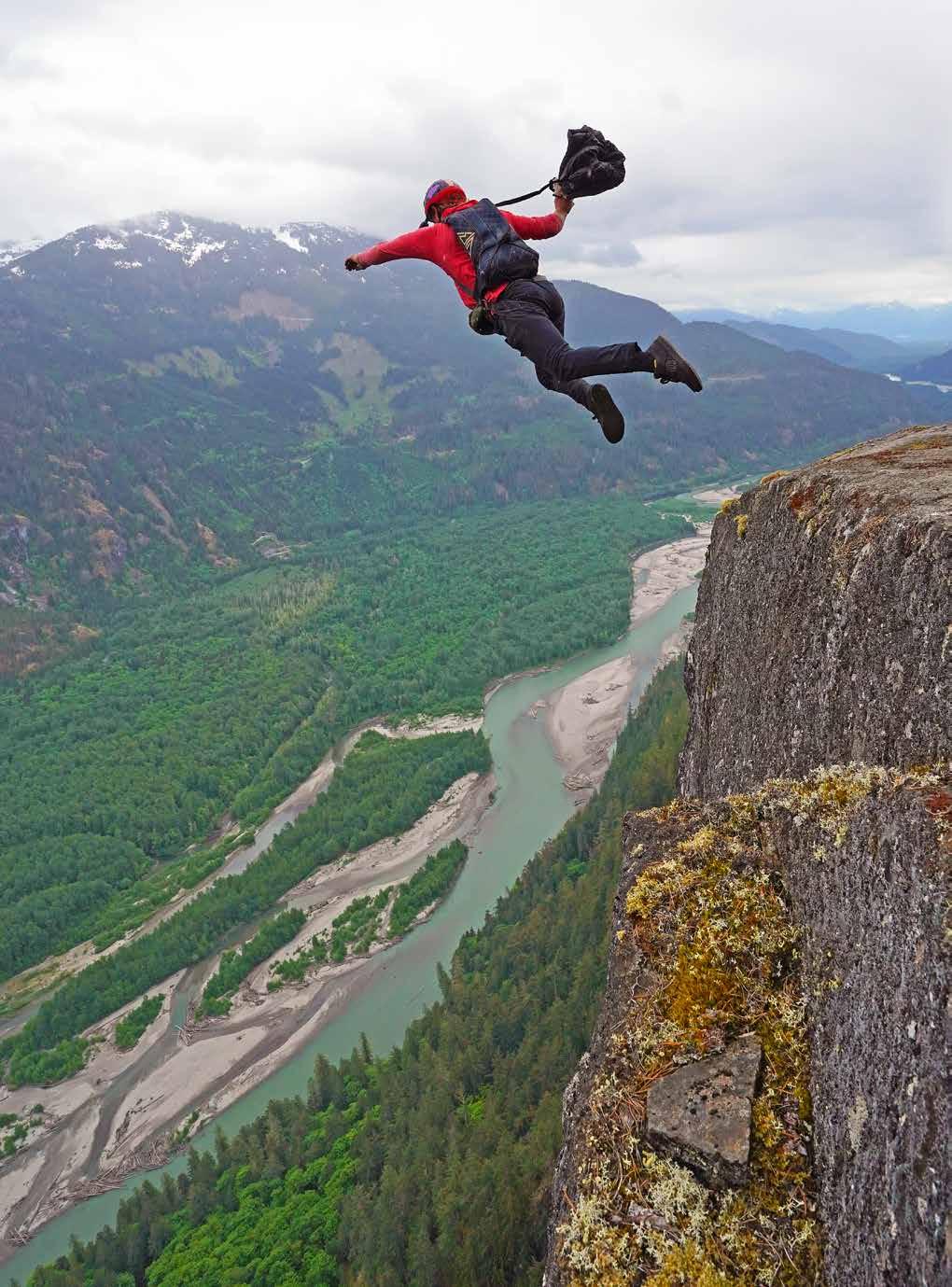
A childhood skateboarder and snowboarder turned rock climber and slackliner once he moved to BC from Peterborough, Ontario, Spencer Seabrooke set a world free solo highline record in 2015, walking a 64-metre line nearly a thousand feet off the ground.
“That led to a few years of traveling the world for highline events,” Spencer says. “But after knee and shoulder injuries made hauling heavy highline gear less appealing, I transitioned into sky diving and then BASE jumping.”
BASE jumping as much as possible since 2016 (it beats walking back down after a climb), Spencer adds that his favourite part of it all is finding and opening new exits (places to jump from safely). “From scouting the cliff from below to figuring out the approach and landing zone, that whole process still excites me more than anything else.”
Mountain Life: What goes through your mind before a jump?
Spencer Seabrooke: Before jumping I’m constantly focusing on the conditions and my gear. Visualizing what I’m going to do on the jump is key, but part of the equation is also visualizing it going wrong and what my reactions will be. By the time I take that last step and push off the cliff, it all feels like second nature.
ML: With 830 jumps behind you, including the odd tense moment (Spencer got hung up on the wall of Siyám Smánit/Stawamus Chief in 2023), you’ve started taking others under your wing. Who were some of your mentors when you got into BASE jumping?
Spencer: I was lucky to have Treehouse Mike give me my first couple jumps. When he passed away I went to Moab, Utah, with my own rig, and Jimmy Peterson and Sketchy Andy [Lewis] got me started with the essentials to come home and start learning. I’ve been fortunate to have had some OG local jumpers looking out for me at the start.
ML: What’s next? Any dream trips or spots on the checklist?
Spencer: The cliffs of Madagascar have been on my radar, but there’s also so much to explore and open up here in BC. I hope to keep finding and opening exits here for a long time.
Spencer, Squamish Valley.
Alenka Mali
A climber and professional snowboarder raised in the Slovenian Alps and spires of Patagonia, Alenka Mali moved to Squamish in 2015 at age 16, when she got her first taste of snowboarding in powder. She’s the founder of Lux Snow, an all-women backcountry and climbing organization established to help women thrive in the environments she knows and loves. Alenka began BASE jumping in 2022, and in the spring of 2024 she became the first documented woman to do a snowboard BASE, just south of Squamish. (The jump was featured in Alenka’s first film, The Beginning, and featured in the pages of Mountain Life.)
“Snowboard BASE is about combining two things I love to do,” Alenka said at the time. “It’s about time and solitude in the mountains. Go out there, have fun, survive and come home. That’s it.”
Mountain Life: What are some of your favourite or most memorable jumps?
Alenka: Some of my most memorable moments in BASE are connected to jumps I have done only once and probably won’t be repeating. I went with an awesome crew and ventured off into the fjords of coastal BC to jump a mega big jump, for example. Or I opened a few of the semi-legal exits in Patagonia that took days to get to and a lot of work. It’s something beautiful when a simple jump takes multiple days of planning, approaching, studying and executing. That makes it worth it even more. ML: You’ve done around 375 jumps now. What is your internal process like right before a jump?
Alenka: I run a checklist through my mind of every step I took to get there—checking conditions, the wind at the exit and at the LZ [landing zone]. I run through the [parachute] pack job, making sure it was done correctly. I also check in with myself— is my heart rate fast? Do I feel calm? Is my breathing deep and slow, or fast and shallow? If I don’t have a good feeling about something, it’s usually for a good reason. ML: And then, despite doing everything right and feeling good, sometimes shit happens. What’s it like when things don’t go as planned?
Alenka: I had a close call in January 2025, off the Chief. It was a combination of decisions that put me in that situation, including my pack job and the weather. When I leaped off a cliff, my parachute opened in 180, facing the wall. I hit the wall many times and was just waiting for the final impact that would end my life. All of a sudden I was dangling, suspended 200 m above ground. The second my parachute got caught on a tree I like to say I received a second chance in this beautiful life. I survived an accident by a miracle, and I’ll be forever grateful for it. As much as we try to avoid death, when it’s not our time to go, it’s not our time to go—as simple as that.
Alenka, snowboard BASE. Siyám Smánit, Squamish.
Yoho National Park
Kootenay National Park
Bugaboo Provincial Park
Graham Davey
A Sea-to-Sky-based wingsuit pilot and BASE jumper, Graham Davey has completed more than 1,200 jumps in the mountains over the past dozen years. A lifelong skier, he says one of his earliest memories of being inspired came from watching a film premier in Whistler, Seven Sunny Days—starring the late ski BASE legend Shane McConkey.
“Shane’s segment, wingsuit ski BASE jumping and learning to fly with the Norwegian crew, completely blew my mind,” Graham says. “Seeing people step off massive cliffs and actually fly like that… I remember thinking, I have to do that someday. It was the coolest thing I’d ever seen. Turns out it still is.”
ML: With more than a decade of experience, your BASE rig and wingsuit have probably taken you to some pretty cool places. But you say Squamish remains one of the most special—why is that?
Graham: I’ve been lucky to jump in some incredible places. For wingsuiting, Italy is hard to beat. They have amazing terrain, big mountains and, honestly, good food doesn’t hurt. For slider-down [lower height, faster canopy-opening] BASE, Moab is pretty special—classic desert jumps and endless options. But my local, the Stawamus Chief right here in Squamish, will always mean the most. Having a legal jump like that in your backyard is pretty rare. I can leave home, go wingsuit or go slider-down, and be door-to-door back in just over an hour. These days, as a dad, that kind of access is everything.
ML: That access! Exactly. Squamish bikers and climbers say the same thing. You and your partner both BASE jump. Has that changed since becoming parents?
Graham: We actually met through BASE jumping. But yes, a lot has changed since becoming parents. There’s less time for big trips, but we still make time where we can. For me, there’s a lot more on the line now. I definitely fly more conservatively, and I feel like I’ve reached a place where my jumping is sustainable long-term. Early on, when I was pushing harder, my mindset was more about progression: flying better lines, improving performance. These days, it’s shifted. It’s about executing cleanly and as safely as possible so I can keep doing this for a long time.
Graham Davey and Phil (below) sail over the Sea to Sky corridor.
Local expertise, limitless reach. Digital marketing that creates boundless opportunities.
Brooke dawson
A commercial heli pilot and record-holding freefly skydiver, Squamish-based Brooke Dawson grounds her flying and jumping in precision, presence and a deep connection to the landscape and mountains she calls home. In her first year of BASE jumping, Brook did more than 200 jumps—“Way more than I expected,” she admits, adding that it was a combination of flight, the beauty of the Stawamus Chief as an exit and the community of local BASE jumpers that drew her to the sport with such passion.
“I already loved flying,” Brooke says, “but BASE felt different. It’s more intentional. You’re not just exiting an aircraft, you’re choosing your exit, reading the terrain, understanding the conditions and fully committing to the line. That level of presence—the connection to the environment and to the mission—is what inspired me to start.
Mountain Life: A lot of people see BASE as a risky endeavor. What are your thoughts on risk and the learning curve of the sport?
Brooke: In this sport, you don’t need a major incident to learn something; small moments can teach you just as much. Even when they aren’t your own close calls, you’re constantly exposed to the experiences and mistakes of others and you learn through that as well. One of the biggest lessons I’ve learned is how important it is to listen to subtle signals, weather shifts, fatigue and, most importantly, my own intuition. BASE doesn’t reward ego or rushing; it rewards patience, awareness and respect. I’ve learned to walk away when something doesn’t feel right, even if everything looks good on paper. Those decisions are just as important as the jumps themselves. I keep a small jar filled with rocks, one for every time I’ve chosen to hike back down. It’s a quiet reminder that progression isn’t just measured in jumps, but in the discipline to listen, to pause and to choose longevity over impulse.
ML: When it does line up and feels right, what goes through your mind before a jump?
Brooke: It’s actually very quiet. By the time I’m at the edge, most of the thinking has already been done: gear checks, conditions, exit choice, everything. What’s left is a calm, controlled focus. There’s a moment where you acknowledge the risk, respect it and then let it go. After that, it’s silence. You can’t carry hesitation into a jump. It becomes about trust—trust in your preparation, your experience and your ability to execute. Then it’s simple: breathe, commit, jump.
ML: Tell me about the local BASE community here in Squamish.
Brooke: In BASE, knowledge is entrusted. It carries weight.
The mentors who have shaped me most are the ones who lead quietly, by example. They are skilled, patient, humble and intentional in everything they do. I’ve been incredibly fortunate. The people who take the time to guide others are shaping safer, more-aware jumpers. I carry a deep sense of gratitude for those who have invested their time, experience and trust in me. Their influence is present in every decision I make, long before I ever step to the edge. Then there are the moments shared with friends, the quiet energy of hiking in before sunrise, the banter along the trail, standing on an exit point laughing and connecting. Later, landing and realizing you just experienced something wild and meaningful together. Those are the moments that stay with you, the ones that make you feel truly alive.
Brooke takes the leap off the Showcase Spire.
“The Call”
Got the day off from work and family?
Why not climb the Stawamus Chief three times?
words :: Eric Carter
photography :: Evan Wong
Airy finger cracks 10 pitches off the deck. Eric Carter and Brian Burger on the Hyperspace Bypass.
Life is full of surprises, parenthood even more so. After waiting patiently for nine months, you don’t actually know when the child will arrive. It could be the due date. It could be a week, or two before. Or it could be after. With a toddler at home and another kid due imminently, I really wanted to get one last big climbing effort in before settling into an even more family-based routine. I just had to figure out a way to do it without being too far from the house, in case I got the call that our daughter had decided to arrive early.
Luckily, I can see my house from most lines on the Stawamus Chief, and I’ve always wondered about a linkup of the famous Squamish landmark’s three major buttresses. I’m not the first to think of linking up three routes, and my goal wasn’t a speed record or to do something new. Just climb a ton of pitches in an efficient style and have fun with a friend. Luckily my buddy Brian Burger is both always up for an adventure and quite susceptible to peer pressure.
Our biggest worry for the day was other parties slowing us down, so we opted for a 5 a.m. start from the Chief parking lot for a still-groggy jog up the forest service road (after choking down some tea and a bagel) and an already-too-humid-for-predawn hike up to base of Angel’s Crest (5.10b).
Hoping to be in shade for as many of the day’s climbs as possible, we hit the first few pitches of Angel’s Crest in a blur of headlamps, then linked the easier pitches in the middle of the route with the rising sun. My summer had been focused more
on family than rock and alpine time, and I felt slow and bumbly at first, but about two hours in—perched at Acrophobe towers and watching my wife pull out of the driveway far below to take our daughter to school—I began feeling comfortable with our systems. I love using my telescope to find climbers from my living room window, intently watching exhausted leaders struggling to top out on Angel’s Crest, so I expected a bit of karma here, but found the moves in the crux pitch easier than I was anticipating.
At the top, we connected with photographer Evan Wong for the first of a few meetings throughout the day. After cramming all the gear into our backpacks, we hustled down from the second peak, allowed a brief stop at our car/aid-station, and were
six or seven pitches but they are a little more alpine (or jungle) than most Squamish rock. More recently, Paul Cordy has added some variations called Hyperspace Bypass. I’d heard the topos are sparse and confusing but that it’s generally possible to figure out where to go.
The clock was ticking as we quested up, first on Hyperspace, then NNA, then back on Hyperspace. At the second-to-last pitch, however, we were wandering around lost. None of the descriptions matched the topo or what we were seeing. We started up one way, downclimbed, then looked up another. Several options looked tempting, but we didn’t want to dead end. I could see Evan at the top of the route but couldn’t figure out how to get to him. With time ticking by frustratingly quickly, I made a one-bar phone
About two hours in—perched at Acrophobe towers and watching my wife pull out of the driveway far below to take our daughter to school—I began feeling comfortable with our systems.
soon back running to the base of the North North Arete (5.9+). An older route that I’d climbed a few years ago, the North North Arete has a reputation for adventure. It’s only
call to Paul, who saved the day: Scramble up and left, then stop at the chimney with the tree that splits in two. Check! The final pitch of Hyperspace.
TOP LEFT Alpine start for the backyard climbing ultra. Eric Carter racking up in the wee hours of the morning. BELOW Brian Burger entering hyperspace on the final pitch of the aptly named Hyperspace Bypass.
This chimney pitch is one of the wildest I’ve climbed in Squamish: a perfect hand crack on one wall while pressing back on the other before transitioning onto a series of chockstones then popping out on the far side of the arete! Wild. Evan nabbed photos of us climbing a 10a finishing pitch, and after the day’s effort it was a welcome switch into running shoes to blast down the Third Peak trail. Two down, one to go.
At the aid station, we resupplied and swapped out our gear. For our final route, the Squamish Buttress (5.10c), we switched
from the traditional style of pitching it out to more of a speed-climbing style—we’d simulclimb as much as possible and slow down for the crux pitches.
One block got us to the top of The Rambles, another up Banana Peel to the top of Boomstick Crack, and then a third to the base of the 5.9 crux pitch on Butt Lite. Our toes were really burning at this point and all we could think about was getting out of our climbing shoes as fast as possible. Here we slowed down a touch for another party (the first we saw all day) who graciously let us pass at the next belay station before a nice solo up the top of Raven’s Castle and onto the summit of the First Peak.
High fives all around, then we jogged back down the First Peak trail. Thirteen and a half hours after starting, we dunked our heads in the fountain at the parking lot. Even better, I made it home in time for stories before bedtime.
What made this day special was the backyard-ultra vibes. We’d climbed 30-plus guidebook pitches, all within sight of my house, which was important because I’d been pretty nervous that my wife would go into labour and I’d get the call at any moment
throughout the day. Luckily, that call didn’t come (it did two days later, though) and we snuck in a big adventure close to home that I can tell my girls about as we peer through the telescope from our living room…Or share a day up on the rock itself!
TOP LEFT Stoked to be topping out, or just to rip the climbing shoes off? Eric Carter and Brian Burger gearing up for the final pitch of Angels Crest. RIGHT Eric Carter finds the wide on the last 5.10 pitch of Angels Crest BELOW Eric Carter and Brian Burger simul climbing on the wildly exposed Acrophobes Towers on Angels Crest.
Cleveland MEATS
“I’m Only Three, Save Some For Me.”
An adventure, a famous photo and a love of the outdoors passed through generations
words :: Ilanna Barkusky
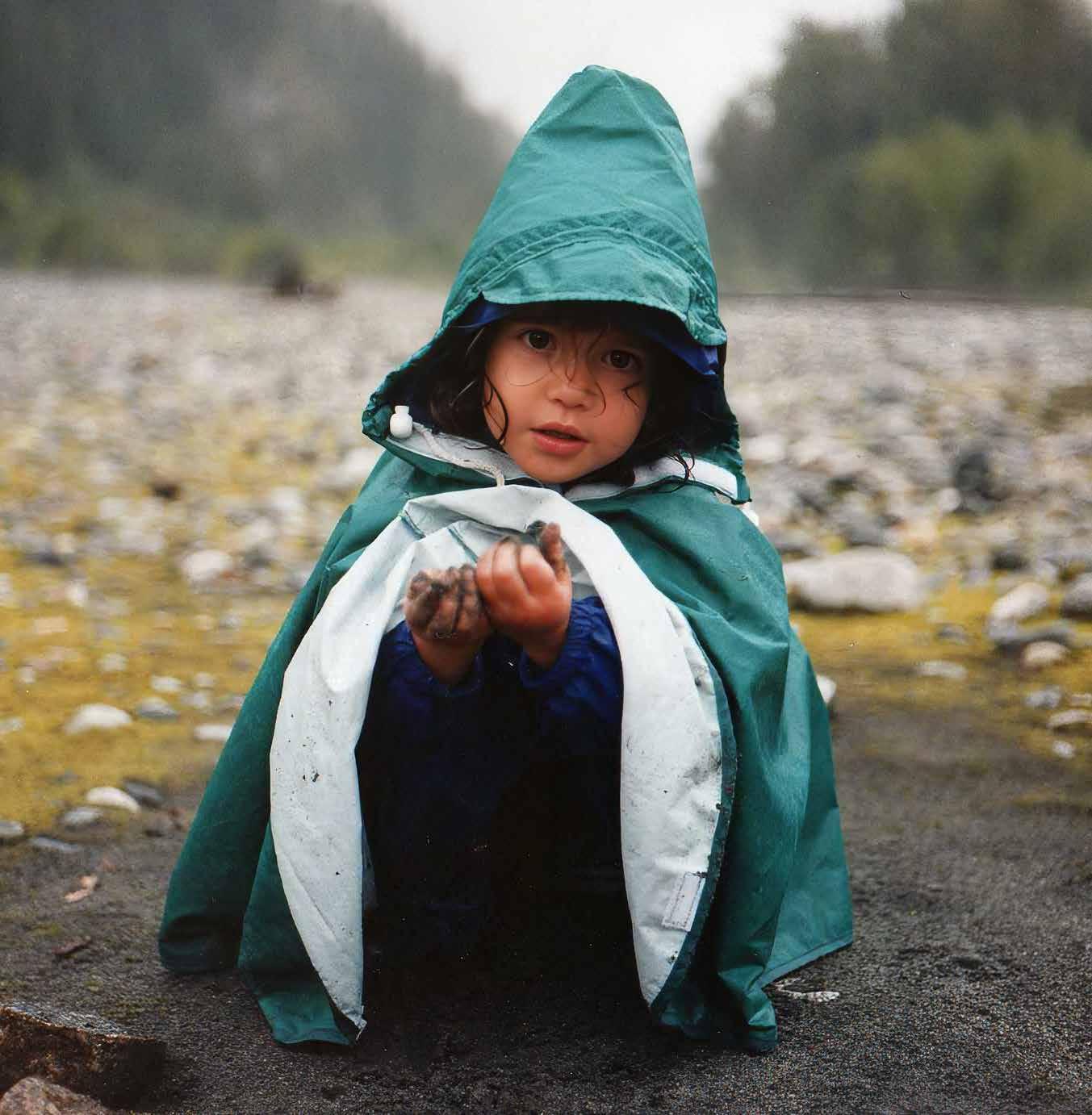
One of my favorite childhood photos takes me back to one of my first memories. At three years old, my first helicopter ride was an unplanned evacuation out of the Elaho Valley due to a washed-out road. It was a loud, scary and chaotic experience for a toddler. But not long before that, my mother had taken this photo of me playing on the sandbar. Just a kid in the rain in a beautiful spot, but as the photo circulated amongst the outdoor and conservation community my mom gave it a title: “I’m Only Three, Save Some for Me.”
Inclement weather could not stop us from returning to the Elaho for many years to participate in the Uts’am Witness Project, an initiative co-founded in 1997 by artist/photographer Nancy Bleck/Slanay Sp’ak’wus, world-renowned mountaineer John Clarke Xwexwsélken and Sḵwx̱wú7mesh/Squamish Nation Hereditary Chief találsamkin-t siyám Bill Williams.
At a time when this area of the Sḵwx̱wú7mesh territory was threatened with logging, those visionaries invited the public to participate in summer wilderness camping weekends at Sims Creek and a traditional Coast Salish Witness Ceremony. Spanning ten years and involving around ten thousand people, the Uts’am Witness Project ultimately succeeded at preserving the area from logging and bringing it under protection through the Squamish Nation X̱ay Temíxw/Sacred Use Plan, which was designed to manage the future of forests and wilderness in specific areas of Sḵwx̱wú7mesh territory.
As a child, I thought nothing special of an outdoor upbringing involving equal parts recreation and active environmental activism. My parents wanted me to realize these wild places where I played year-round needed our voice in advocating for their protection, and that it was not enough to merely enjoy my time in these beautiful parts of the Coast Mountains.
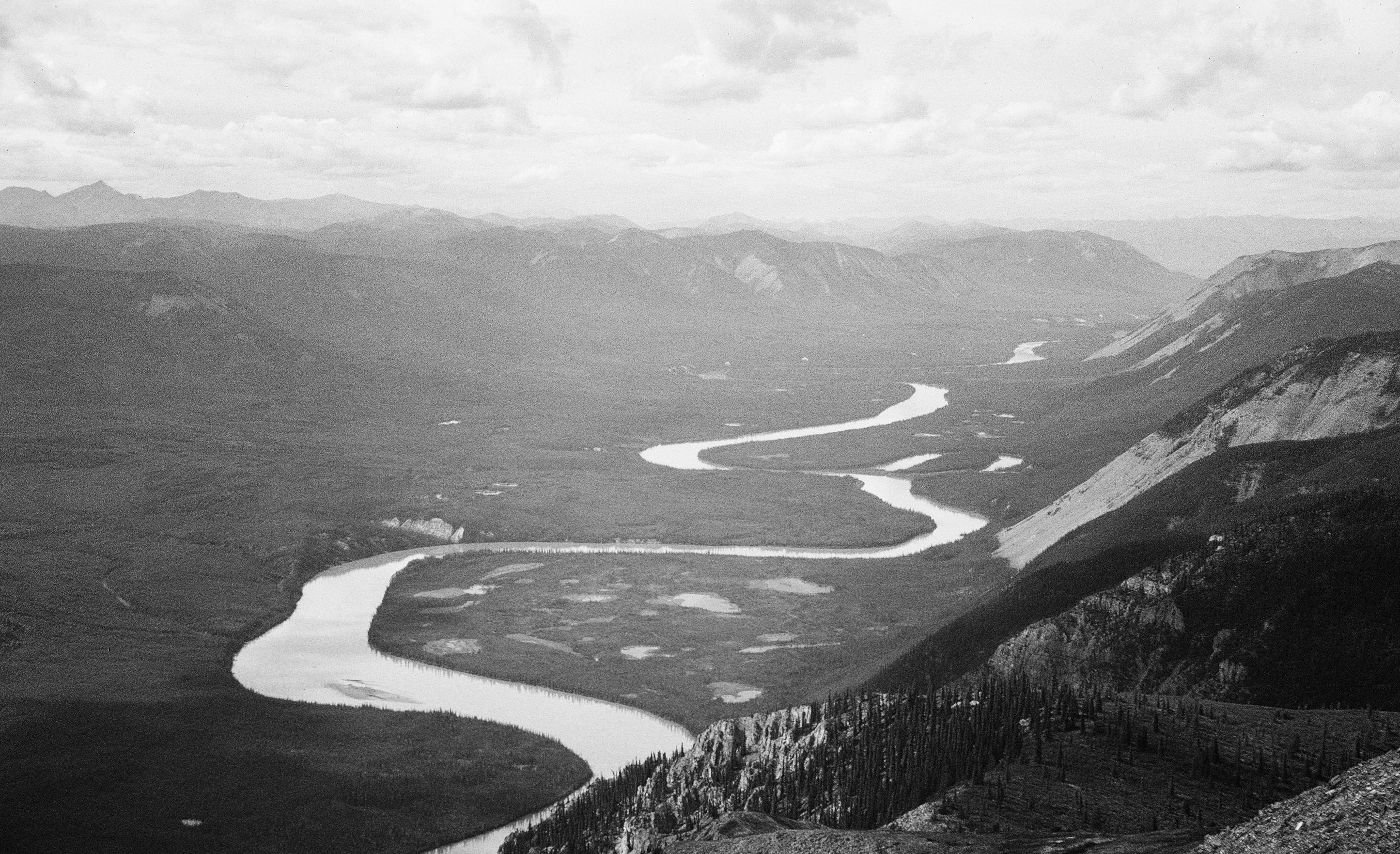
It wasn’t until much later that I truly experienced deep gratitude for those early lessons. In the summer of 2025, I journeyed to Nahanni National Park Reserve in the Northwest Territories to honour my late mother’s legacy and make a film based on an unpublished memoir chronicling her own Nahanni experience at 21 years old in 1974. I read about her concerns for future generations while traveling through a landscape essentially the same as she found it 50 years ago. And I breathed a sigh of relief knowing that I’d been able to experience Nahanni as she had hoped.
I’m Only Three, Save Some for Me first appeared as a physical print in a conservation-related art exhibition in 1997. As a sign of our digital times, it resurfaced in 2023 in an Instagram post from Pacific Wild in support of a campaign against old growth logging. The spirit of intergenerational responsibility expressed in this image taken in the Elaho Valley so early in my lifetime, lives on.
We each have our own special outdoor spaces that hold memories and moments with families and friends. And whether our experiences end with a smile or an unwanted helicopter evacuation, when we continue to share the outdoors with others, we ensure that these places will always have a voice in our ever-changing world.
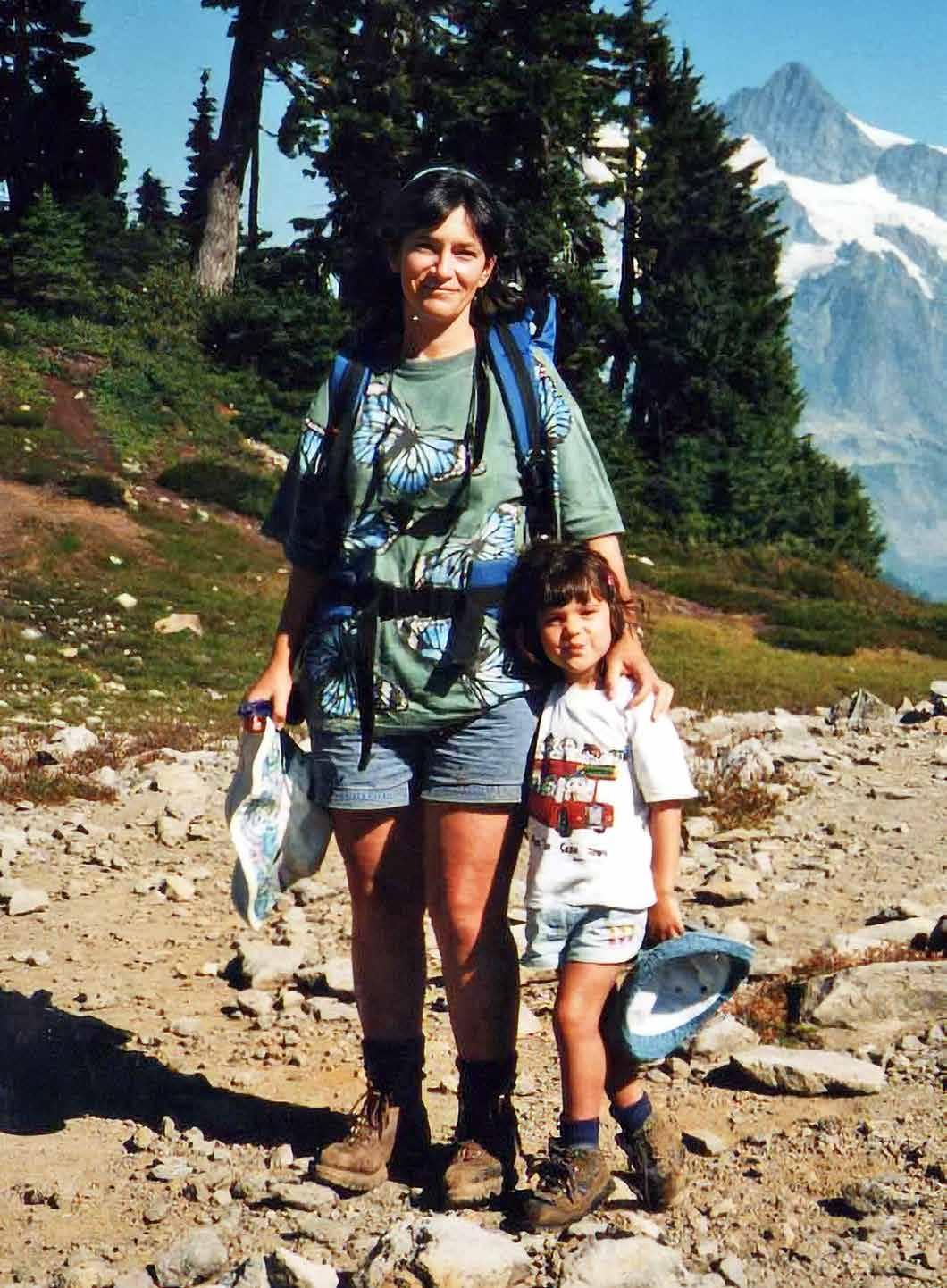
ABOVE Mother and daughter, Mt. Baker circa 1998. BELOW The unsullied wilderness of the Nahanni National Park Reserve. BRAUER ARCHIVE.
The Fairy Godmother
She giveth and she taketh away
words :: Jon Turk
illustrations :: Lani Imre
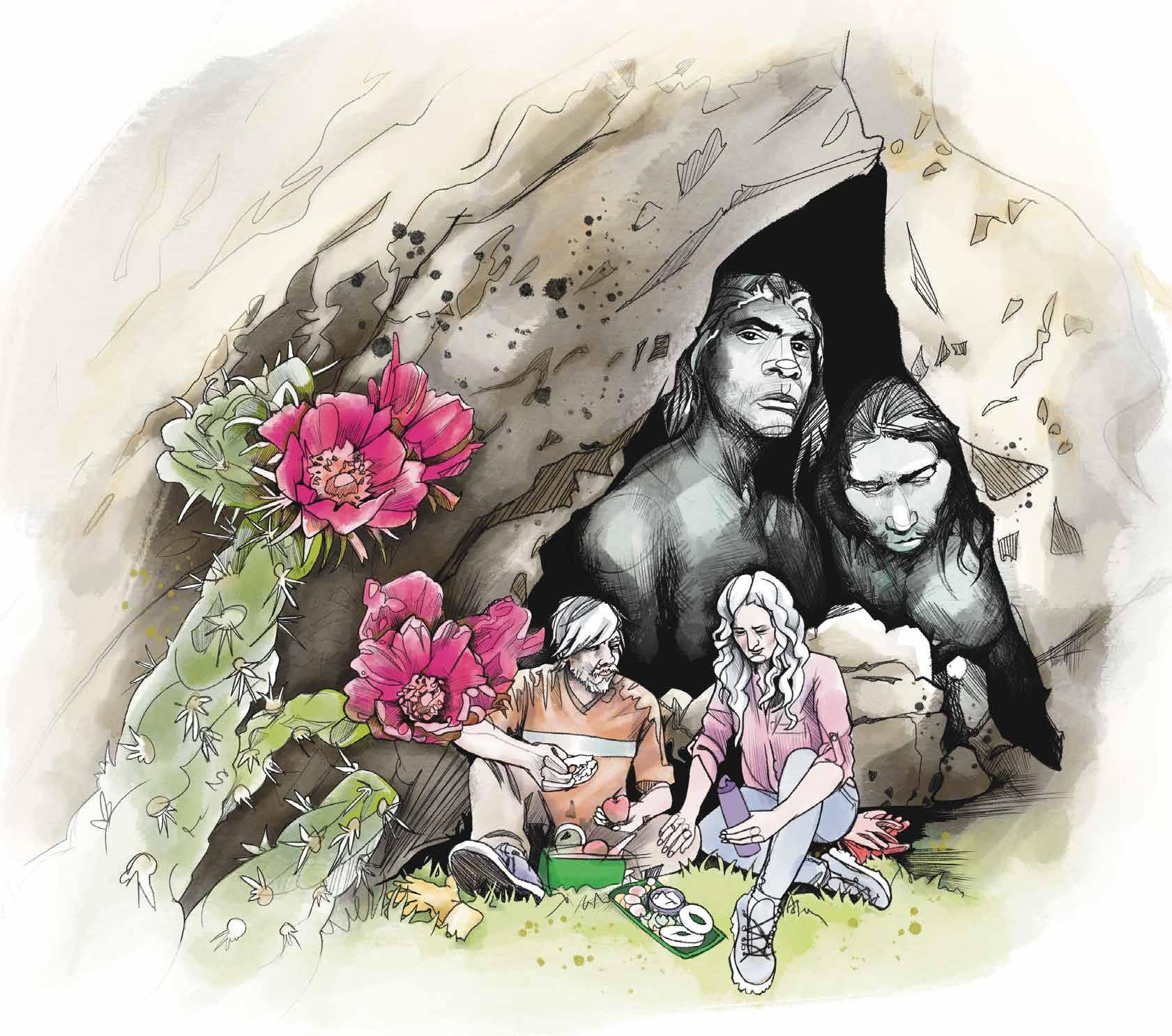
Nina and I were riding our mountain bikes on a chilly, cloudy, windy, snarky December day near Tucson, Arizona. The trail started in the lowlands, winding through a shoulder-high forest of teddy-bear cholla. These cholla are nasty if you touch one, but ethereal
when viewed from afar. Even in the subdued light of a cloudy day, muted sunbeams bounce around inside the closely spaced, translucent, fuzzy needles of the cholla and then reflect back out, as if the clusters are emitting their own glowing, ebullient light.
After passing through this enchanted forest, we pedaled up through rocky switchbacks to reach a low mountain pass
around lunchtime. I spied a small cave-like alcove in the granite rocks above the pass so we scrambled up, squeezed into the tiny space, laid our gloves down to form crude cushions against the sharp, crystalline rock, and snuggled up, hip pressed against hip, shoulder to shoulder. We were out of the wind, leaning against sun-warmed rock, contentedly munching on bagel-and-cheese
"Now that I think about it, this granite is sure hard against my tired old butt."
sandwiches, with a bird’s eye view of the desert below. Luxury. It doesn’t get any better than this. And what are the rich folks doing today?
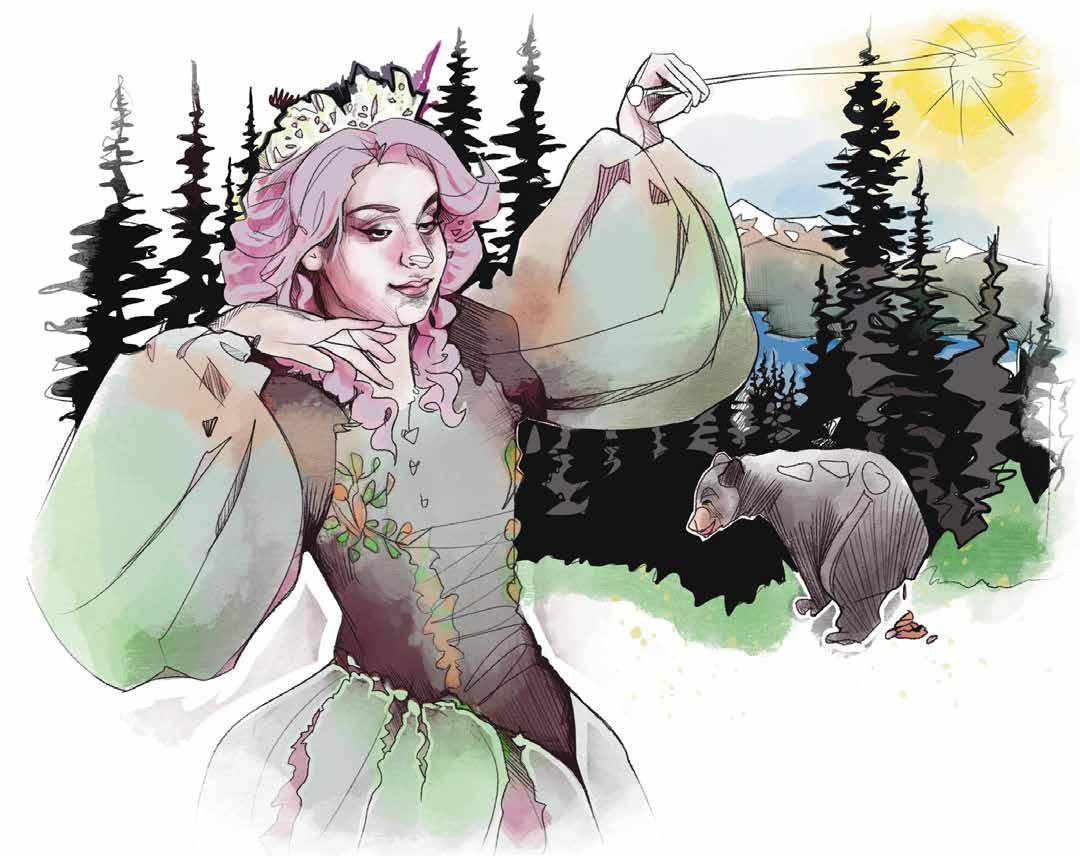
Now let’s imagine that the Fairy Godmother appeared out of the desert sky with her white flowing robes and magic wand.
“You two look pretty comfy in there,” she might say, “but wouldn’t you be even a little more comfy if I waved my magic wand and conjured up a couple of Ensolite pads to sit on? Those gloves aren’t much of a cushion.”
I would have said, “You betcha, Fairy Godmother. Thank you. Now that I think about it, this granite is sure hard against my tired old butt.”
“And now that I think about it,” responds the Fairy, “what about a thick cushion, rather than a flimsy backpacker’s pad?”
“Sure, thanks again.”
“With a backrest?”
“Does a bear shit in the woods? Of course I’d love a backrest.”
The Fairy Godmother smiles a deceptively serene but mischievous smile. “You know, I could wave my magic wand and—poof—create an entire warming hut with a sofa, a cheery fire and a cup of hot chocolate laced with a shot of Drambuie. Whaddya think, old man?”
This fable reflects the long history of human inventiveness and technology. Originally, our Paleolithic ancestors were
naked on the savanna. Presumably we took shelter in caves and alcoves when available, but most of the time we were exposed to the whims of the daily weather. And then we invented clothes, fire and stick huts. And we embraced these inventions because they made our lives more comfortable.
In his provocative book The Comfort Crisis, Michael Easter argues that in the modern world, our understandable desire to be more comfortable has gone too far and will turn around and bite us in the ass. That most of us comparatively wealthy North Americans would be better off refusing the latest and most opulent of the Fairy Godmother’s gifts. We will naturally accept the Ensolite pad, and even the soft cushion with a backrest, but we have to be selective because we forfeit the whole gestalt of the day when we step out of the desert—and into the warming hut.
Many of the most cherished and memorable moments of my life have been associated with discomfort, often severe discomfort. Solo kayaking a self-supported wilderness Class IV river in a blinding snowstorm. Being washed out into the North Bering Sea in a kayak-like WindRider for four days and nights in constant storm. Forced overnights high on rock ledges with no bivy gear, food or water. Beating the ice out of my wetsuit before dressing and launching
back out to sea off the north coast of wherever… These sorts of things.
Our hominid ancestors evolved on the African savanna, with predominately moderate temperatures, so humans today feel most comfortable with the temperature around 21 C (70 F). But at the same time, our direct ancestors and pre-hominid-preancestors, all the way back to the beginning, also evolved to survive in an ever-changing environment, where they would be buffeted by freezing wind one moment and baked by hot sun the next.
Multiple scientific experiments have shown that within our incomprehensibly sophisticated, Fairy Grandmother-coddled bodies, all our blood vessels, brown fat molecules, endorphins, dopamines and mitochondria have evolved not only to survive temperature adversity but to grow, strengthen and thrive when we become uncomfortable. Keep this science as a gentle hand on your shoulder the next time you are cold, or consciously choose to be cold. Take a moment to stop, breathe deeply and enjoy the raw sensation of that situation, the sensation of adventuring out-of-doors, the sensation of being alive. Don’t let the Fairy Godmother of contemporary trends to be warmer, lighter, less bulky and more comfortable ruin the fun. Get out with what you’ve got, you’ll be fine.
P: Chris Christie
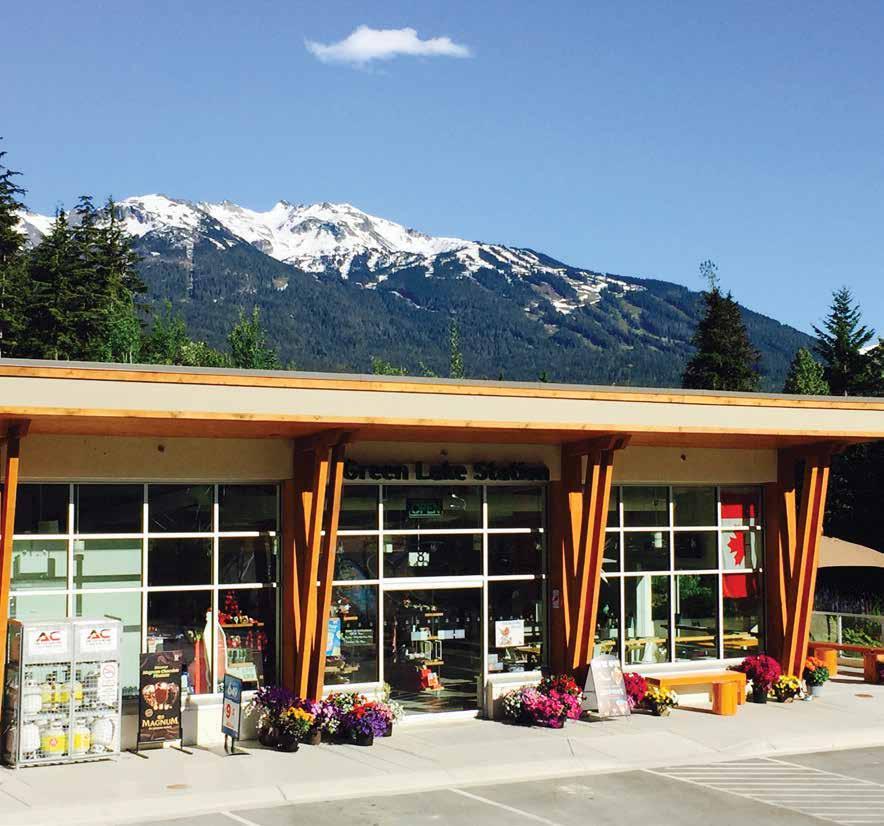
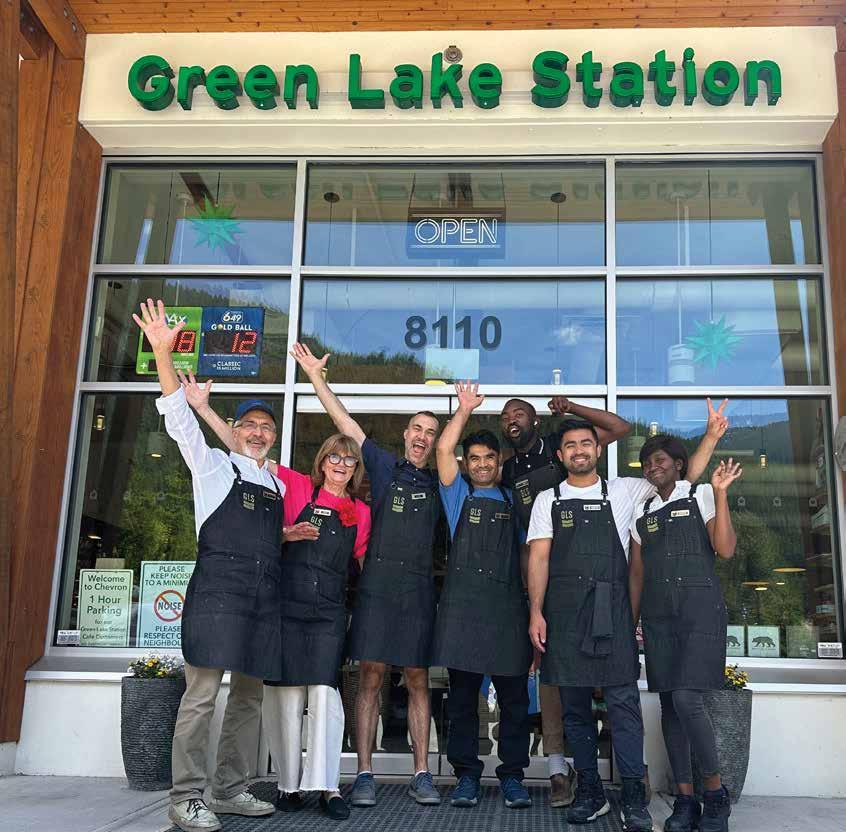
Green Lake Station
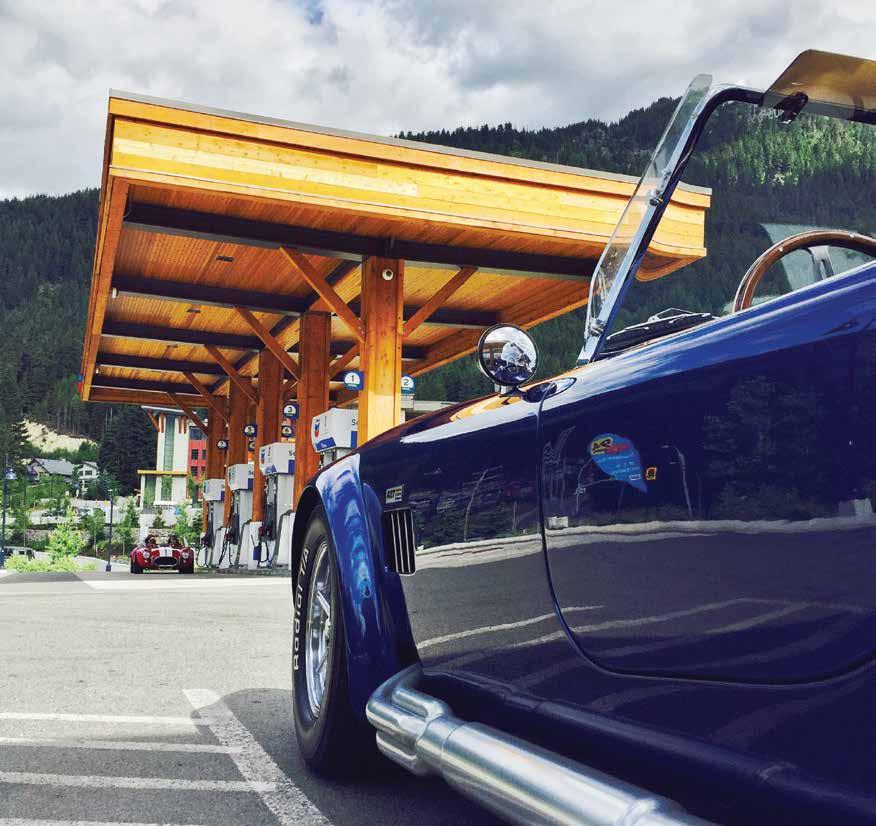
CELEBRATING 10 YEARS OF PROVIDING FOOD & FUEL FOR YOUR ADVENTURES
7 days/week l 8110 Crazy Canuck Dr, Whistler 604-962-2090 l @greenlakestation
Mountain Life TRAVEL
This
is the trip
you’ll talk about for the rest of your life.
Nepal is calling. October 2026. Only 10 spots.
“It
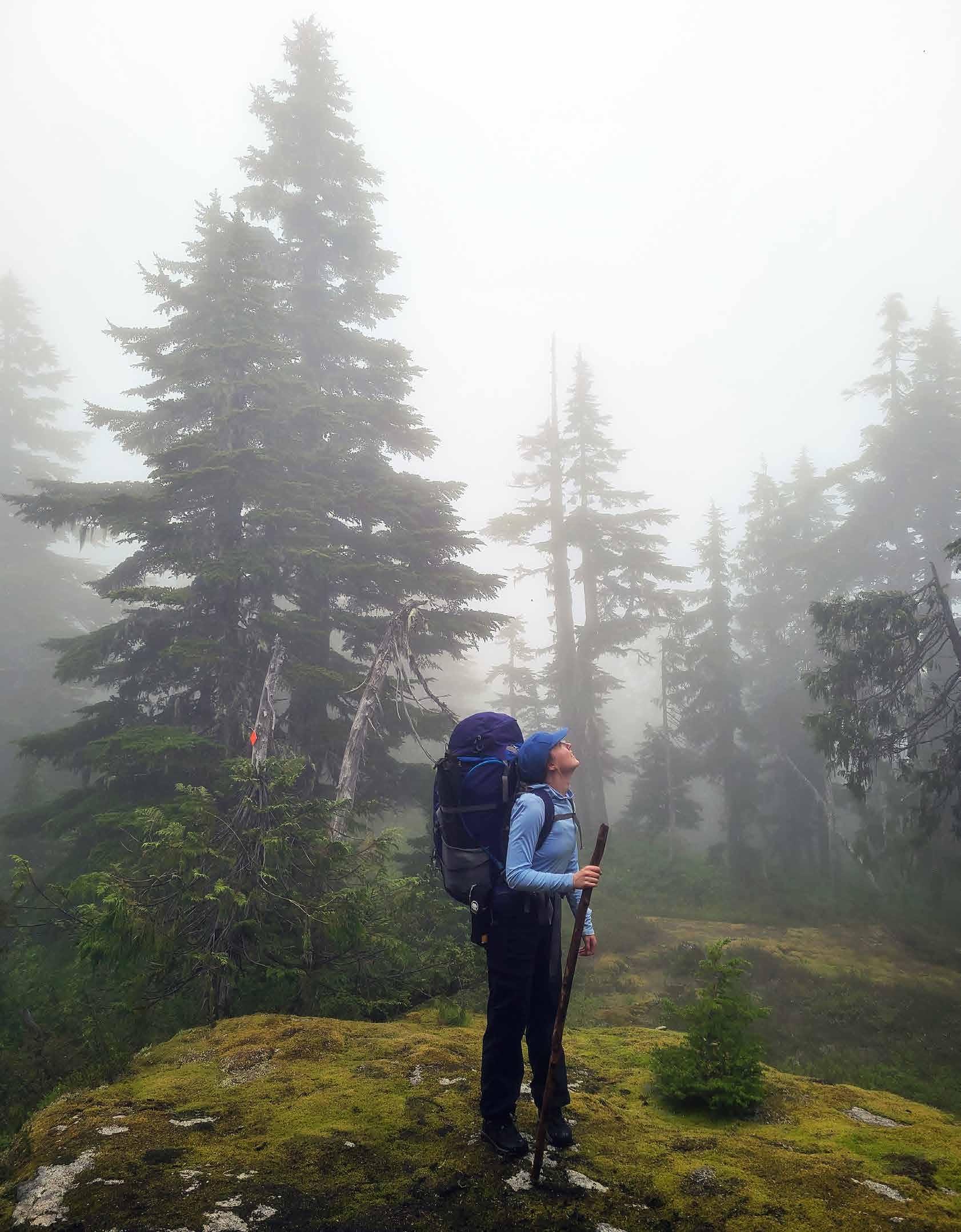
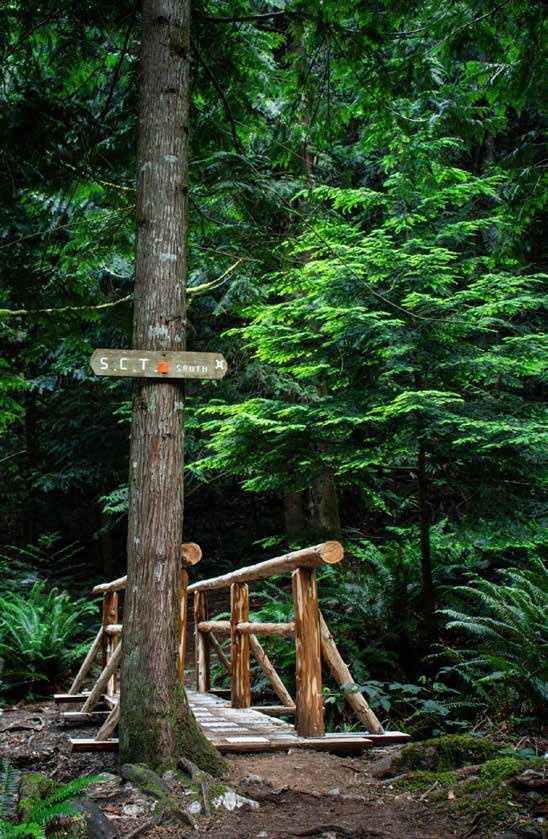
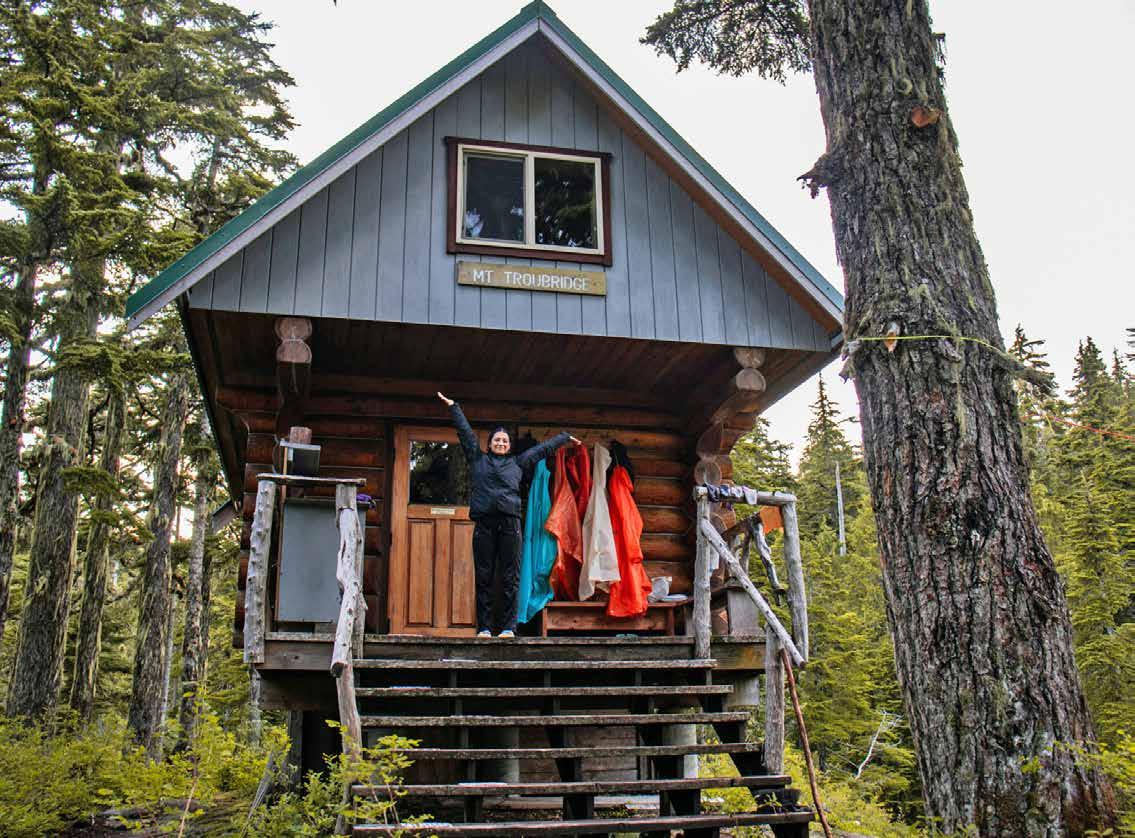
Lost in the Clouds
Battling nerves on the Sunshine Coast Trail
words & photography :: Paige Reimer
It took until our third day to find the sun on the Sunshine Coast. Mist filled the spaces between trees as Kianna and I made our way through the dense Sunshine Coast forest, losing sight of one another as we trudged through the eerie glow. And then the midday sun shone finally broke through, its rays piercing a haze that refused to fully lift.
I was nervous, scared even. We had no map. Kianna had never been backpacking before, and my previous short trips definitely did not make me an expert. But my goal for the year had been to try new things, and I remember my dad telling me that being afraid to try something means it’s probably something worth doing. I was here because I’d wanted an adventure more than I feared one.
BC’s most popular coastal trails were either closed that summer or too busy and complicated to book, so when we learned about the Sunshine Coast Trail (SCT)—with multiple starting points, publicaccess huts and no need for a reservation—it seemed a perfect option. Kianna and I, along with Zephyr, Kianna’s dog, would hike from Lang Bay to Saltery Bay, covering 45 kilometres in four days.
How hard could it be, right?
That question felt more like a threat as I lifted my giant pack onto my back in the parking lot and snapped a photo of the route map from the side of the Lang Bay General Store. Lesson one, remember a map! But we felt we had an idea of which direction to go.
After taking a wrong turn and backtracking, our grainy phonephoto map eventually led us to a gravel logging road winding deeper into the forest, which seemed like the right direction. We followed this empty road for what felt like miles, the trees dampening the sound of any cars passing on the main road.
I sensed the fear begin to close in, but we kept walking forward. It’s not about not being scared, I told myself as we pushed along the seemingly never-ending gravel road, it’s about doing it anyway, right?
Finally, after an hour of doubtingly convincing ourselves we’d gone the wrong way again, we turned a corner and found a small parking lot with an SCT trail sign. As we officially started the trail, I breathed a sigh of relief. We can do this.
Raised on the big skies of the Canadian prairies, I felt small surrounded now by real-life giants with inspiring names like Douglas fir, western red cedar and Sitka spruce that towered over us as we trekked through the forest.
These trees along the Sunshine Coast Trail have grown tall due to the efforts of the Powell River Parks and Wilderness Society (PRPAWS) who, in 1992, organized to protect the some of the region’s last stands of old growth forest by creating a hiking corridor and three separate protected parks and wilderness areas, with construction on the first public shelter kicking off in 2009. In 2023 PRPAWS officially
took the name qathet Parks & Wilderness Society, to incorporate the local Tla’amin Nation word meaning “working together.”
Today, the SCT is Canada’s longest hut-to-hut hiking trail, spanning 180 km across the Upper Sunshine Coast region with 16 public-use huts dotted along its length. Starting at Sarah Point, the trail follows the coast and then heads further inland, passing Powell and Lois Lake. It then snakes back to the coast, eventually ending at Saltery Bay. The two mountains along the trail, Tin Hat Mountain and Mount Troubridge, both offer summit huts with sweeping views of the coast below.
After a day spent hiking through rain and mist, Kianna and I arrived at one of the lower-elevation small wooden structures, sighing with relief. Open-air on the main floor with an enclosed loft for sleeping, the shelter was in good condition and fairly clean (all the huts were). Not that we were overly particular—that first night, I could have slept standing up.
As we unpacked, a group of four hikers showed up for the night: a mother and daughter, along with an aunt and her niece, who were hiking the same trail section we were. It was refreshing to see more people after a full day of solitude, but we said a quick goodnight and crawled into our sleeping bags at 8 p.m. Before sleep set in, my thoughts remained focused on the days ahead, my once-confident query of, How hard can it be? turning into something more like, How hard is it going to be?
The answer came the next day, on a stretch of trail known as the Troubridge Trudge—a 13 km stretch with 1,300 metres of elevation gain. This was where Kianna and I learned that hiking poles might have been helpful.
With some makeshift stick poles found in the forest, we started the daunting ascent. The rain and clouds continued to follow us throughout the day, and the constant elevation gain and heavy packs made our hiking slow.
“Do you ever wish we had picked up an easier hobby?” I asked Kianna as we continued our trudge up the mountain.
LEFT Follow the signs to good times. RIGHT New trail friend Nadine is pretty amped about the hut after a big slog up Mount Troubridge.
“Yes,” she muttered.
“Like knitting,” I suggested, in between gasps for air.
“Yeah, knitting sounds a lot better right now.”
We continued the hike in silence, passing the occasional frog or slug as we made our way up into thick clouds that had us scanning ahead for the tiny orange trailblazing squares that were our sole guides. It was slow, and not very scenic, but we finally made it to the top of the mountain, the Mount Troubridge hut peeking out from the dense fog. A swarm of mosquitoes greeted us, but thankfully this hut was enclosed.
That evening, hiding from the bugs with our cabinmates from the previous night, we ate our dehydrated meals together and chatted. They were experienced backpackers, even though the two younger girls were only in their early 20s. The group asked about our trip and our gear, wondering if we would ever come back to finish the trail. That night we crawled into bed excited for the next day, dreaming of future hikes, knitting far from our minds.
As if in response to our lifted spirits, the sun finally came out the following day. Inching out of the thick clouds and dense forest, Kianna and I caught the welcoming sight of the ocean below. Thanks to hard use and Zephyr constantly chewing on them, Kianna and I were down to just a single trusty hiking stick each, but they remained very useful as we hiked down the steep mountain we had just climbed the day before.
Despite our new friends and a couple days of experience, noticing fresh bear scat reignited my nerves and fears. We also missed some trail markers (were they even there in the first place?) and were beginning to think we’d gotten lost again when Zephyr barked behind us, attempting to chase something coming around the corner. My
surprised terror abated when it turned out to be two other hikers, who happily allowed us to join them for the next few kilometres.
Fairview Hut—a small, enclosed structure with giant windows just steps from the ocean—was home for our final night of the trip. Kianna suggested we take advantage of the oceanfront property and we jumped in, the frigid ocean water rinsing off the sweat, dirt and anxieties of the past few days. We ate our dinner outside and looked for crabs and starfish in the water below until the sun went down, trying to make our final night on the trail last as long as possible. Eventually the soft sounds of the water outside and the smell of ocean in our hair lulled us to sleep.
As we completed our first trek on the SCT, we reflected on the challenges and lessons, realizing we probably could have been more prepared. Maybe by remembering to bring a map, or hiking poles—or leaving a car at the end of the trail (we thought maybe there’d be a bus).
Thankfully, a Saltery Bay local saw us sitting on the side of the road—tired, hungry and in desperate need of a shower—and took pity, offering us a ride. The three of us squeezed into Rick’s tiny car with our packs, saying goodbye to the Sunshine Coast Trail as he made the quick drive to our starting point.
As we loaded gear into our car, I felt like I was missing something important. To anyone else, our now-worn hiking poles probably looked like a couple old sticks leaning against a picnic table, but to us they meant much more. A symbol of powering through and finding a way to achieve our goal, despite our fears and rookie mistakes.
We drove back and found them right where we left them. Maybe next time we’ll have real hiking poles, but these simple, strong sticks proved we didn’t need all the experience or special gear to go on an adventure; we just needed to be brave enough to do it.
A view worth climbing for. The Sunshine Coast Trail in clear skies. SHUTTERSTOCK
Nick Ayers on Slhanay, Squamish. EVAN WONG
BRIAN HOCKENSTEIN
Pete Devries, Vancouver Island. MARCUS PALADINO
1. Built for young riders pushing their limits, the CHROMAG JUICE performance kids’ dirt jump bike is designed for pump tracks, skateparks and backyard sessions. With durable 4130 chromoly construction, progressive geometry and premium Chromag components, it delivers confident handling and adult-level performance for the next generation of riders ready to shred. chromagbikes.com // 2. Great for keeping your belongings clean and dry on your outdoor adventures, HOOKÉ DRY BAGS are proudly Canadian, made of 100 per cent recycled polyester and available in 5,10 and 20-litre sizes that all come with removable straps for hands-free carrying. Available at Camp Lifestyle & Coffee Co. in Whistler. camplifestyle.ca //
3. HELLY HANSEN ODIN INFINITY MINIMALIST JACKET is built to handle sudden storms on your toughest adventures. Designed for high-output activities, this ultralight, 3.5-layer shell jacket features their waterproof, windproof and breathable Lifa Infinity bi-component membrane. Other essential backcountry features include a helmet-compatible hood, RECCO reflector and stash pocket. hellyhansen.com // 4. Editor’s Pick: Built for burly performance the LYNX OGT MICA HEADLAMP is milled from a solid block of billet aluminum for heavy-duty users, tradespeople and those who want bright (dual bulb and1800 lumens in high mode), waterproof, dustproof illumination. The USB-C rechargeable battery will last 4.75 hours on high, 11 on medium and 80 hours on low mode. And it’s still only 141 grams—and designed right here in BC. lynxogt.com // 5. On the water or in the alpine, SPY+ CYRUS SWITCH SUNGLASSES offer premium polarization and protection against harmful blue light rays while also blending bold design, peak performance and creative versatility. With a single, magnetically interchangeable lens, it adapts effortlessly, delivering multiple looks (two lenses included) in one frame while maintaining the enhanced colour, contrast, comfort and function that define SPY+. spyoptic.com // 6. The YETI SKALA HIKING PACK is engineered to improve summit pushes and alpine climbs. A lightweight AlumaLite Frame provides structural support, load lifters and an adjustable harness ensure a perfect fit, and a vented mesh back panel provides a cooling air channel. Weatherresistant lightweight guarded nylon keeps the elements out and an easy-access RipZip opening lets you get to your most needed items whether they’re at the top of your pack or somewhere in the middle. YETI.ca
7. THE NORTH FACE MEN’S VALLEY VIEW JACKET is built for the trail. Equipped with seam-sealed DryVent fabric and a water-repellent finish, this jacket keeps wet weather at bay. Adjustable cuffs, pit-zip venting and water-resistant zippers give this layer the functionality of a jacket born for the elements. Wherever the hike takes you, the Valley View has your back. thenorthface.com // 8. From camp kitchens to backyard grilling, the BENCHMADE STATION KNIFE is a minimalist workhorse built for open-fire cooking and everyday meal prep. The blade features proprietary technology for exceptional cutting performance, while the durable handle develops a unique patina over time. A molded sheath is included for safe storage and easy transport wherever the next meal happens. benchmade.com // 9. Publisher’s Pick: The OG elastic belt, the ARCADE ADVENTURE MAG BELT is made of durable performance stretch webbing and the new SwiftLock magnetic buckle apparently will not set off airport metal detectors, making this a handy belt for travelling to far-off lands, but the tension lock design ensures a secure connection so you’ll never get caught with your pants down when adventure strikes. Never restricting, lifetime guarantee, available in Aero (matching buckle/strap) or Polar (contrasting buckle). arcadebelts.com // 10. Dynamic, lightweight and precision-engineered for sport climbing, the ARC'TERYX LITHOS SL HARNESS feels almost weightless on the wall. Featuring the latest evolution of Warp Strength Technology, it delivers the ideal balance of support, comfort and durability. Its innovative sizing system allows climbers to customize the waist-to-leg-loop ratio for a precise, comfortable fit all day long. arcteryx.com // 11. Camp life gets easier with the RISE AIRNEST 3+ Inflatable Shelter System. Simply roll up to the spot, connect the inflator, and start enjoying the scenery while your tent does all the work itself. Roomy, and with an included zip-in inflatable mattress, this thing sleeps like a dream. riseoutdoor.ca
Photo: Blake Jorgenson
“Don't think of this summer as the hottest in the last 100 years, think of it as the coolest in the next hundred.”