
Elmira Love
Guthrie Home Health

The Right Care, In the Comfort of Your Home
Guthrie Home Health can often be the best treatment after hospitalization, illness or injury. Our providers will work with you to design a disease- or injury-specific care plan to optimize your recovery and help you regain your independence.
Guthrie Home Health offers a wide array of services including:
• Nursing
• Infusion services
• Rehabilitation services in the comfort of your home
• Physical therapy
• Occupational therapy
• Speech/language therapy
• Medical social work
For more information, call 570-265-3510 , visit Guthrie.org or scan the QR code on your smartphone.

By Karey Solomon
By David Higgins
Elmira Love
By Lilace Mellin Guignard
Kelly Stemcosky
Karey Solomon
By David Nowacoski
Karey Solomon
By Melissa Farenish
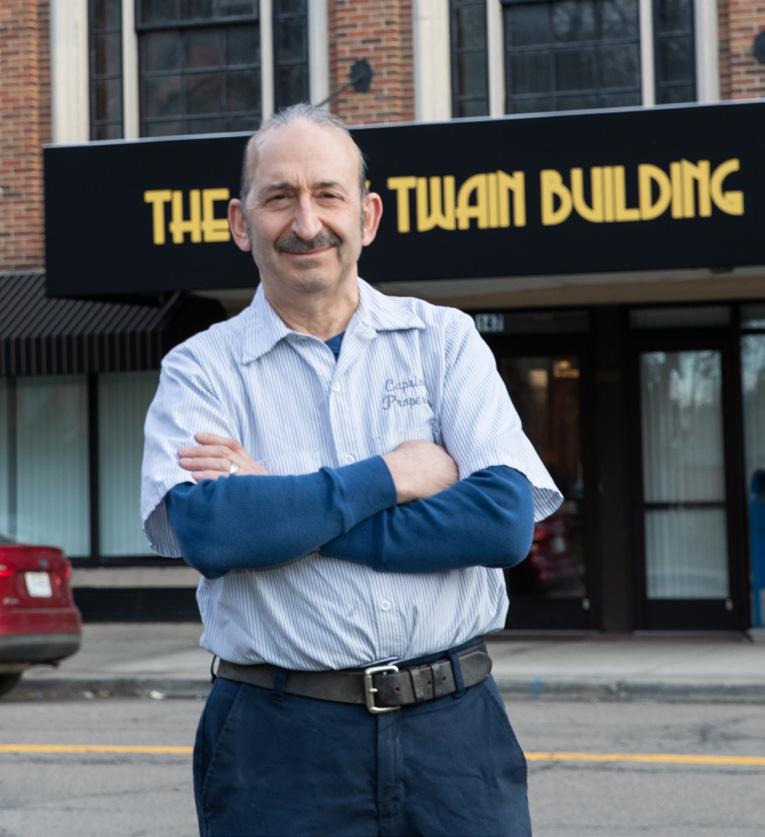
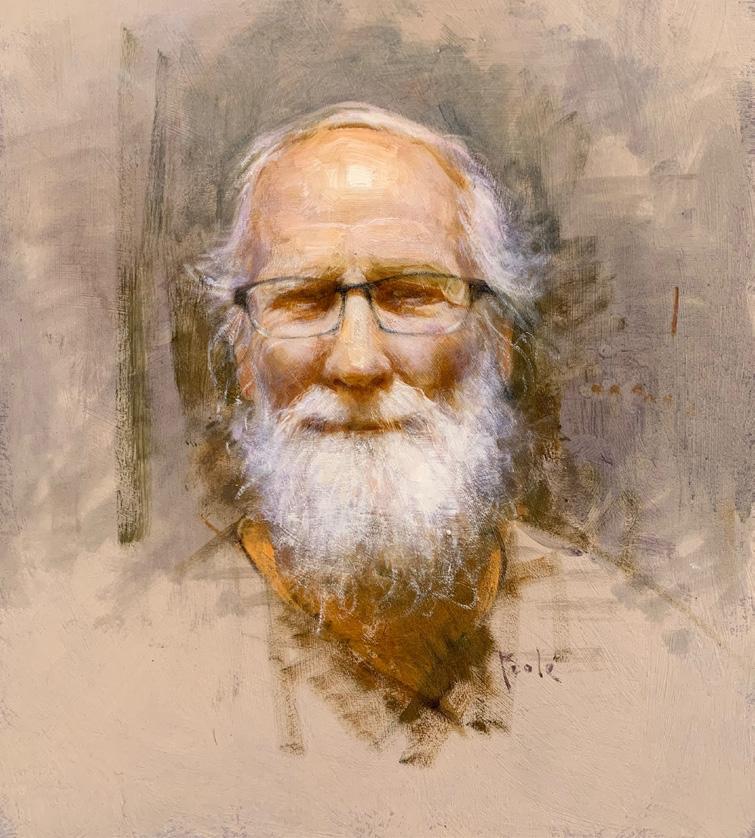
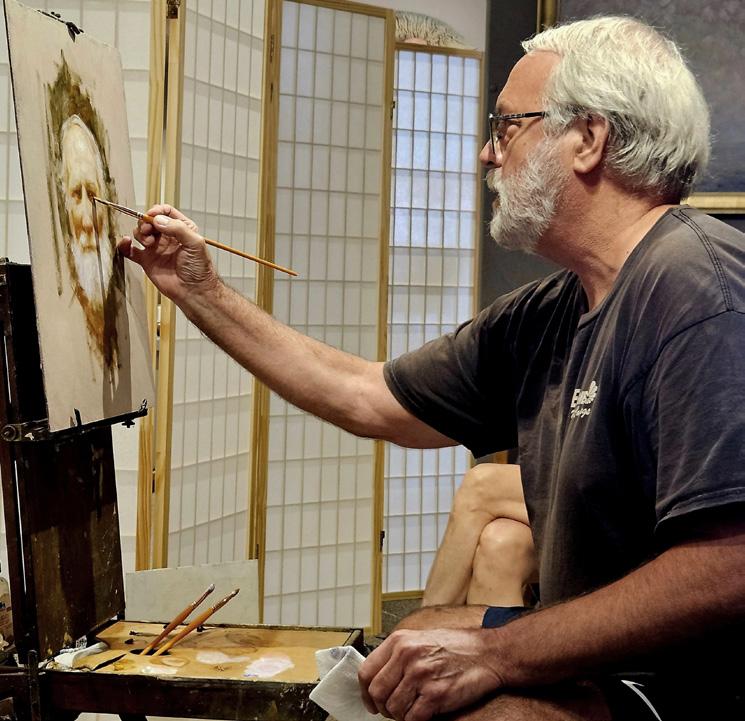
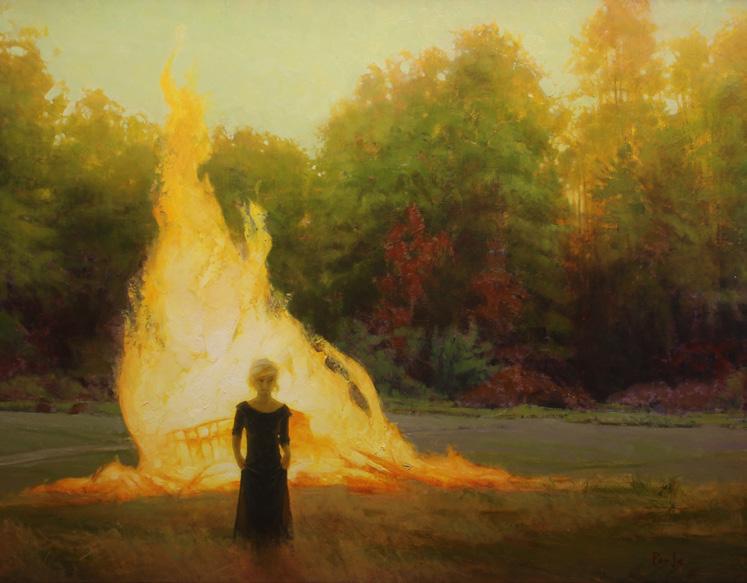
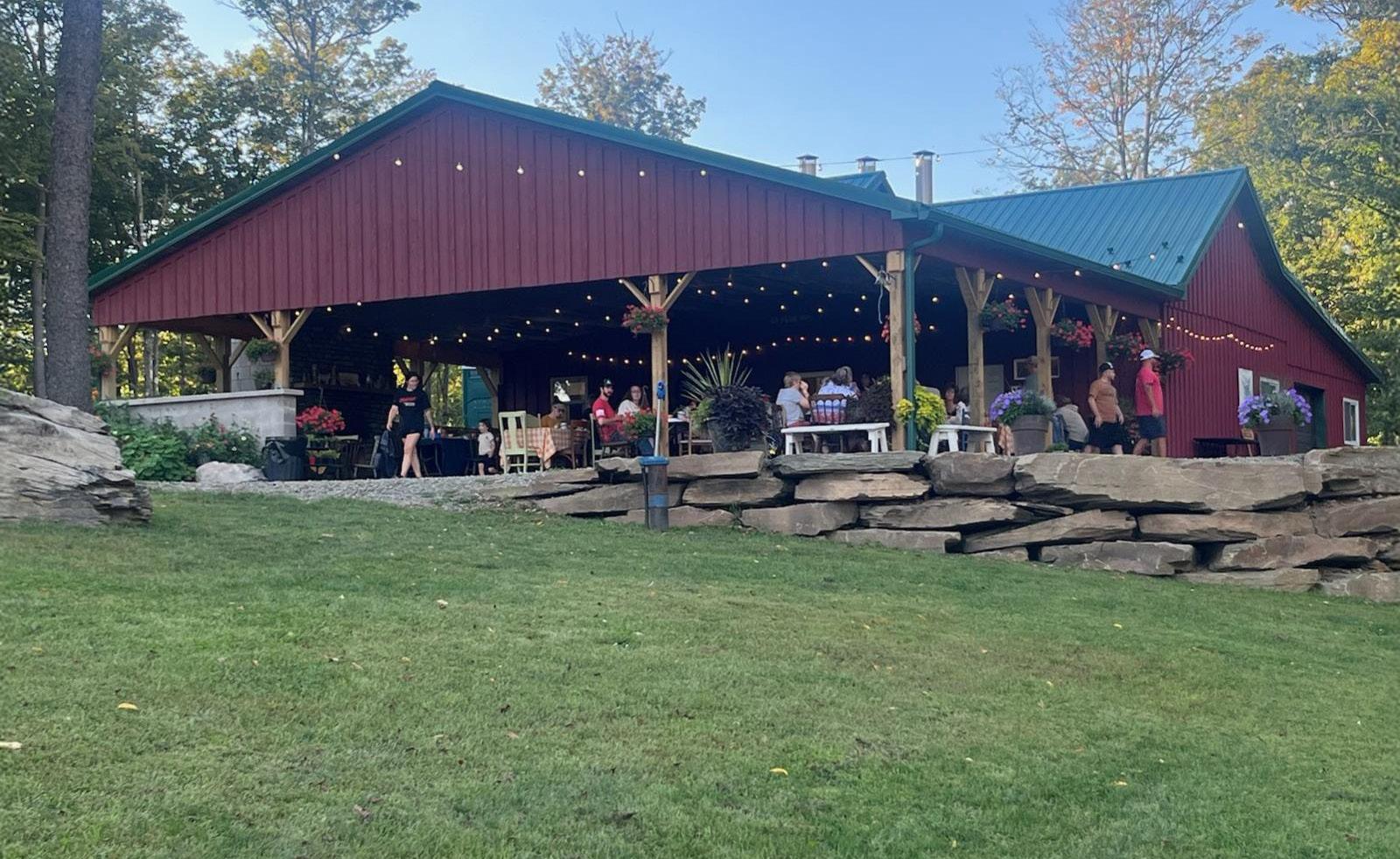
Cover photo by Wade Spencer. This page (top) Jim Capriotti by Wade Spencer; (middle) "Peter" by Marty Poole; (bottom) Aldo and Alivia Tagliaferri by Renee Fortin.
OPEN HOUSE

mountainhomemag.com
E ditors & P ublish E rs
Teresa Banik Capuzzo
Michael Capuzzo
A ssoci A t E E ditor & P ublish E r
Lilace Mellin Guignard
A ssoci A t E P ublish E r
George Bochetto, Esq.
A rt d ir E ctor
Wade Spencer
M A n A ging E ditor
Gayle Morrow
s A l E s r EP r E s E nt A tiv E
Shelley Shank
c ircul A tion d ir E ctor
Michael Banik
A ccounting
Amy Packard
c ov E r d E sign
Wade Spencer
c ontributing W rit E rs
Melissa Farenish, David Higgins, David Nowacoski, Karey Solomon, Matthew Stevens, Kelly Stemcosky
c ontributing P hotogr AP h E rs
Bob Dane, Renee Fortin, Chris Lee, Maria Nowacoski, Matthew Stevens, Sarah Wagaman, Christa Westbrook, Rachel White
d istribution t EAM
Dawn Litzelman, Grapevine Distribution, Shea Maier, Linda Roller
t h E b EA gl E Nano Cosmo (1996-2014) • Yogi (2004-2018)
ABOUT US: Mountain Home is the award-winning regional magazine of PA and NY with more than 100,000 readers. The magazine has been published monthly, since 2005, by Beagle Media, LLC, 39 Water Street, Wellsboro, Pennsylvania, 16901, online at mountainhomemag.com or at issuu.com/mountainhome. Copyright © 2026 Beagle Media, LLC. All rights reserved. E-mail story ideas to editorial@ mountainhomemag.com, or call (570) 724-3838.
TO ADVERTISE: E-mail info@mountainhomemag.com, or call us at (570) 724-3838.
AWARDS: Mountain Home has won over 100 international and statewide journalism awards from the International Regional Magazine Association and the Pennsylvania NewsMedia Association for excellence in writing, photography, and design.
DISTRIBUTION: Mountain Home is available “Free as the Wind” at hundreds of locations in Tioga, Potter, Bradford, Lycoming, Union, and Clinton counties in PA and Steuben, Chemung, Schuyler, Yates, Seneca, Tioga, and Ontario counties in NY.
SUBSCRIPTIONS: For a one-year subscription (12 issues), send $24.95, payable to Beagle Media LLC, 39 Water Street, Wellsboro, PA 16901 or visit mountainhomemag.com..



Have a nose for sales? COME WORK WITH US
Mountain Home is hiring account executives in New York & Pennsylvania to sell advertising, provide valuable content to our readers, and help our clients prosper.
This job has paid 60G-plus. Flexible hours. Family atmosphere. Professional training and support. Mileage. 401K.
Represent the Twin Tiers regional magazine, the premier media brand across our beautiful region, with a readership area larger than Vermont.
Mountain Home by the numbers:
100,000 monthly readers of the print magazine.
“Free as the Wind” at 350 locations in NY & PA.
Thousands of subscribers to mountainhome.substack.com substack@mountainhomemag.com (570) 724-3838
Locally, family owned by Beagle Media for 20 years.
200-plus journalism awards from the International Regional Magazine Association and the Pennsylvania NewsMedia Association.


Give us a call, Teresa & Mike

Nano, the reigning beagle of Beagle Media; photo by Wade Spencer
Elmira Love
The Story of the Capriottis and a City on the Rise
By LiL ace MeLLin GuiGnard
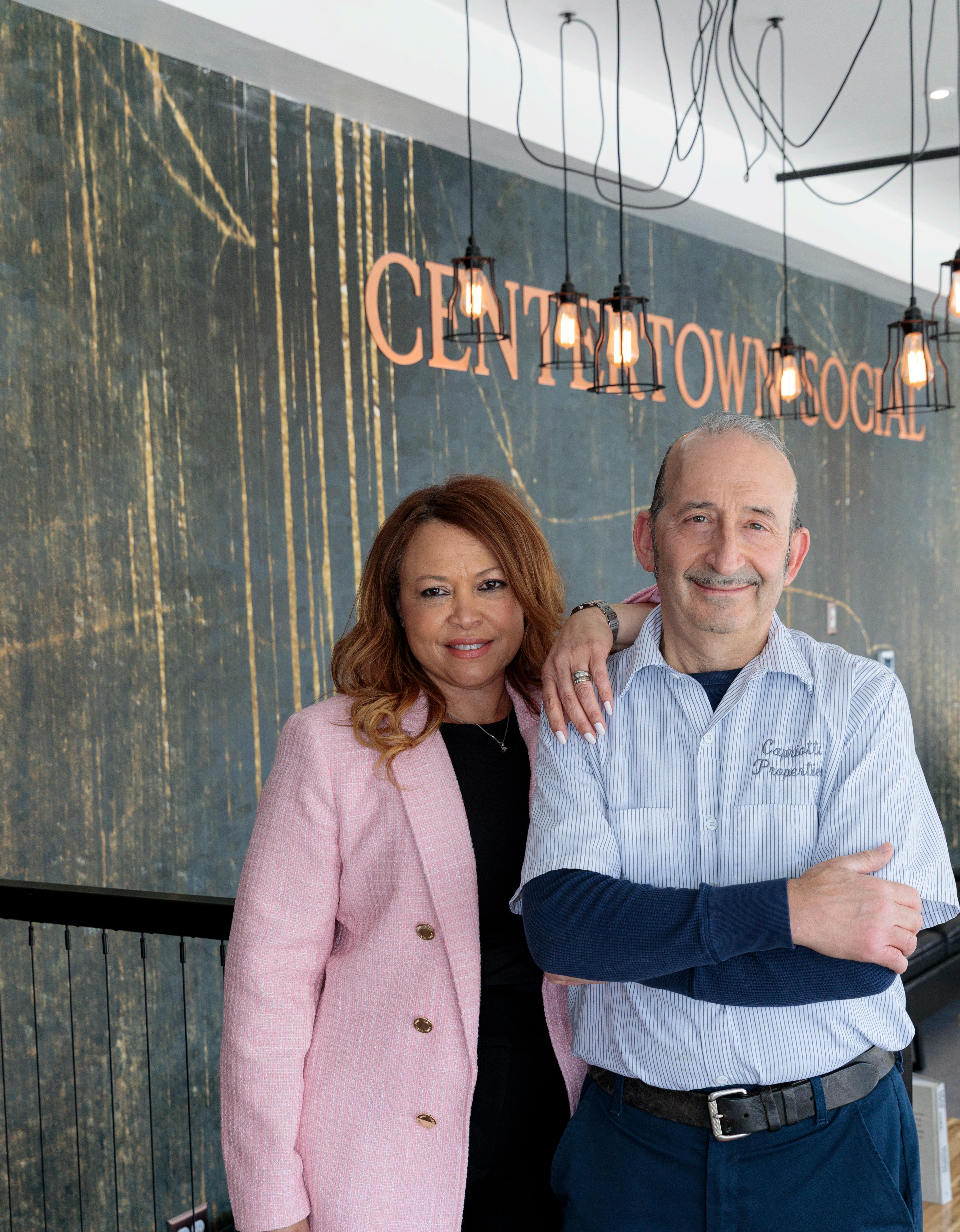
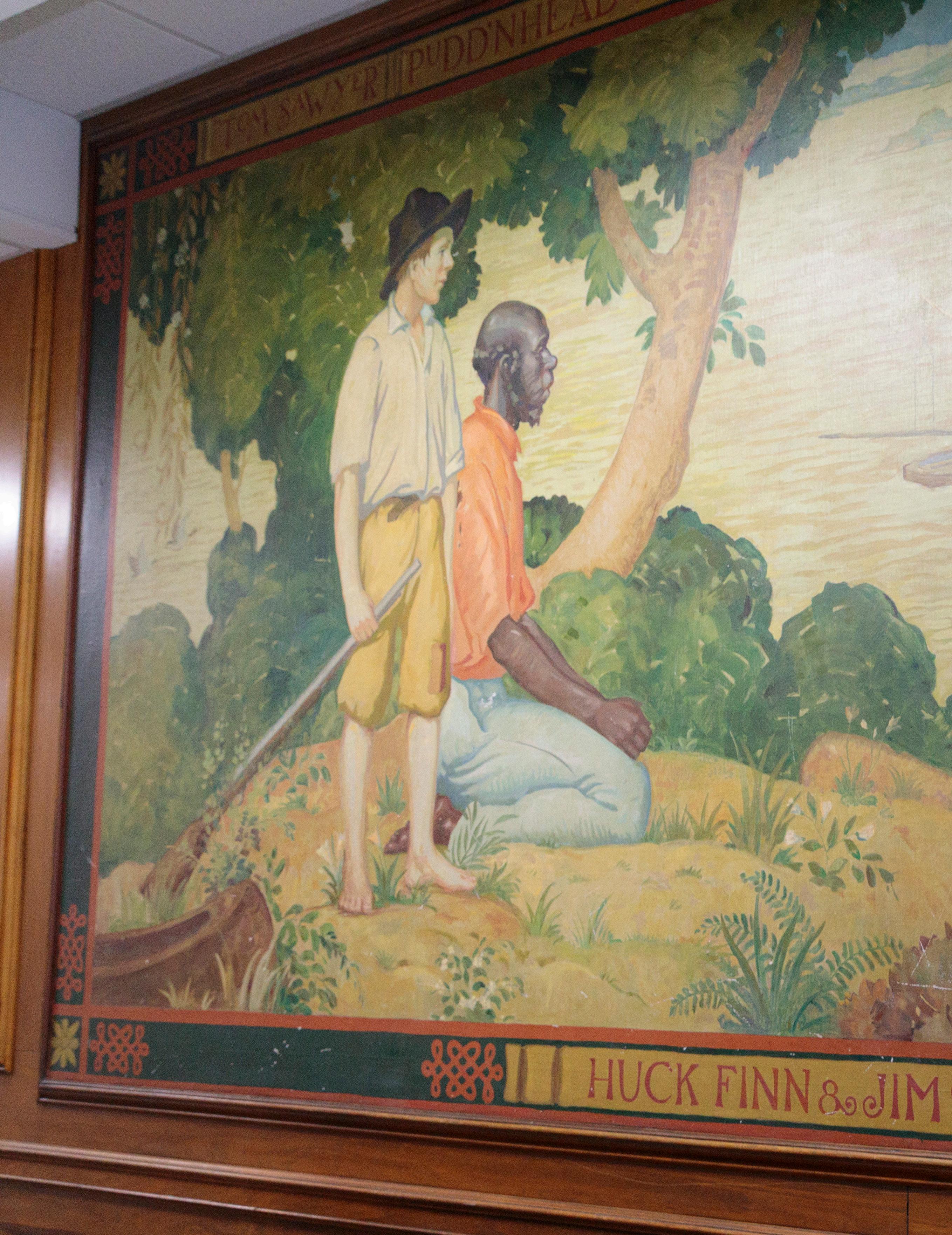
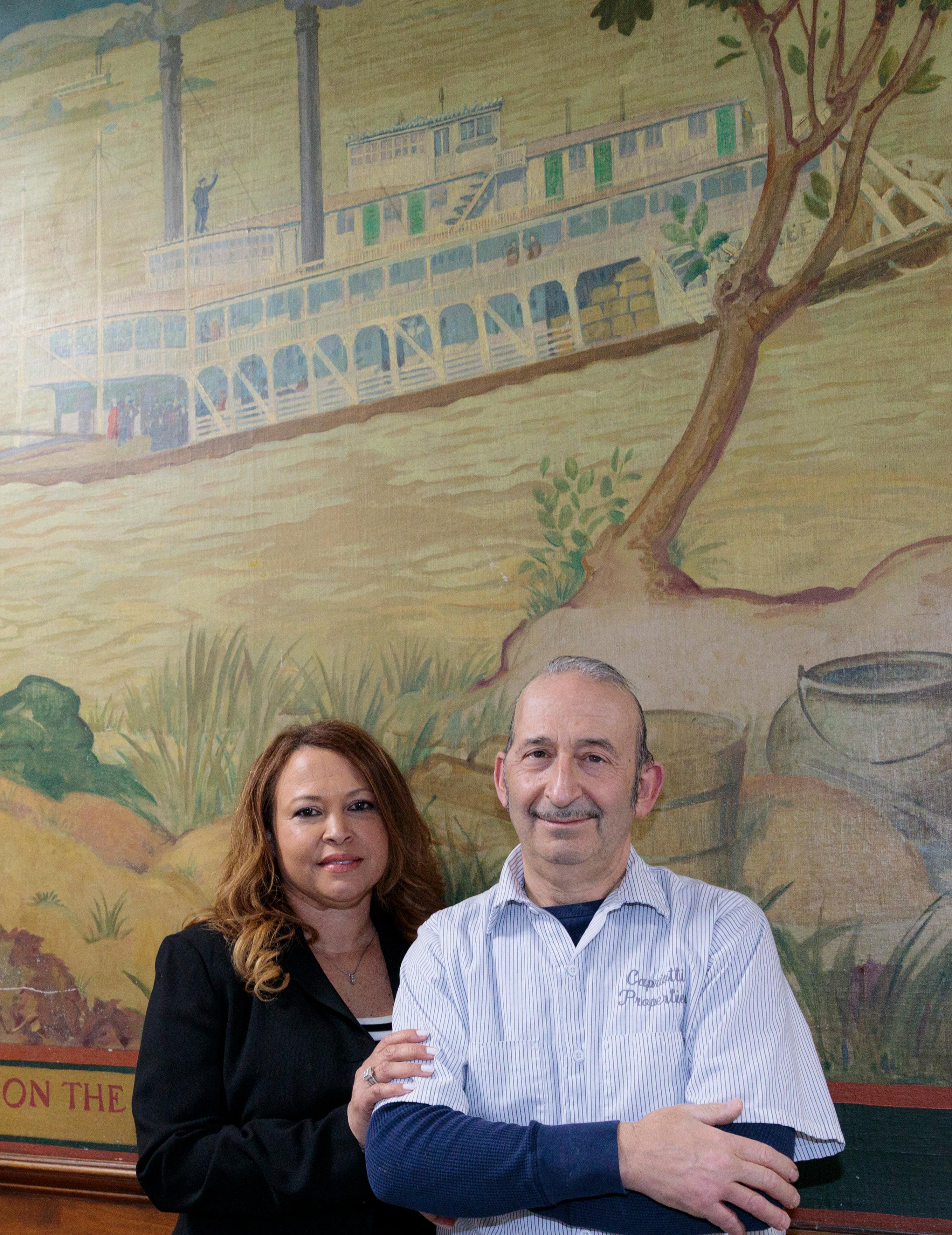
Miriam and Jim stand in front of the mural located off the elevator on the second floor of the Mark Twain Building, which was once the lobby’s rear wall and the only mural preserved in the 1970s renovation.
Scene and Unscene
Todd Yoggy remembers the Elmira of the eighties, when he’d come from Big Flats to hang out. “There was a lot to do here,” he says. “You could walk to People’s Place”—Tommy Hilfiger’s first store—“but [the energy] went away.” And so did Todd and many others. But when Todd and his friend, Elmira native Charlie Hunter, both returned to the area a little over five years ago for family reasons, they got a happy surprise.
“Now people are coming back,” says Todd.
What changed? A man from Hazelton, Pennsylvania, who had a dream to sell his pizza dough across the globe, came to town. One day in 2006, Jim Capriotti visited the Elmira Wegmans that stocked his product, saw the city’s Victorian architecture, and confesses, “I was smitten with it.”
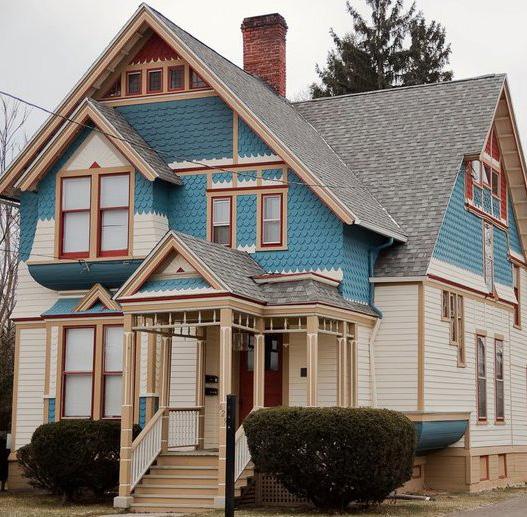
Since then, Jim and his wife, Miriam, have invested and developed with an eye to revitalizing Elmira’s downtown while saving the architecture left from the Golden Age of railroad tycoons (like Jervis Langdon, Mark Twain’s father-in-law) and manufacturing giants. They’ve built Capriotti Properties into a business owning fifty-three buildings that have been, or are being, meticulously renovated. And they aren’t slowing down yet.
See Capriotti’s on page 8
Todd, Charlie, and the Capriottis are neighbors in West Elmira and sometimes collaborate on projects. Todd, an interior designer (see the January 2026 Mountain Home) who got his start in Elmira, recently designed the Rye Bar and nearby Airbnbs that Charlie bought in the Davis Street neighborhood (see the September 2022 and May 2025 issues). Jim’s efforts were a big reason Todd and Charlie dove into the development scene. Todd says, “Seeing Jim do it and be successful at it made us feel like we could.” All three have been very involved with fundraising for the Arnot Art Museum, especially the Four Columns project (see January 2025 issue).
Though they have drinks together occasionally, Todd says he rarely catches the Capriottis at home. Jim is out the door at six in the morning. Miriam manages incoming tenants, applicant screenings, and apartment showings for Capriotti Properties. “Miriam is just so full of life, full of energy,” says Todd. Sebastian, their son still at home, was “a really nice kid,” says Todd. He watched as Sebastian, now studying business at Keuka College, grew up, and bikes in the driveway turned into skateboards turned into motorcycles turned into cars. Their oldest son, Alex, lives in Elmira, helps with the business, and has some property of his own.
From Pizza to Pizzazz
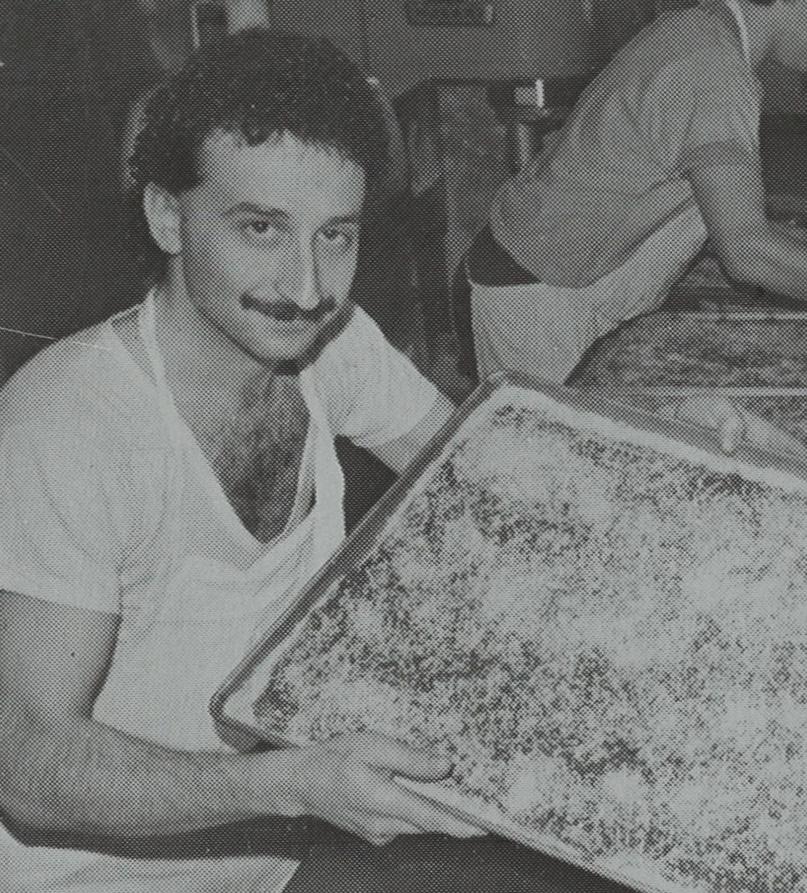
Jim Capriotti in 1988 working at his Hazelton bakery; Centertown Social bringing some bright lights to the Queen City; It’s all in the family for the Capriottis, including (l to r) sons Alex (who helps with the business) and Sebastian (studying business at Keuka College), here with Jim, Lourdes, Victoria, Alessandro, and Miriam.
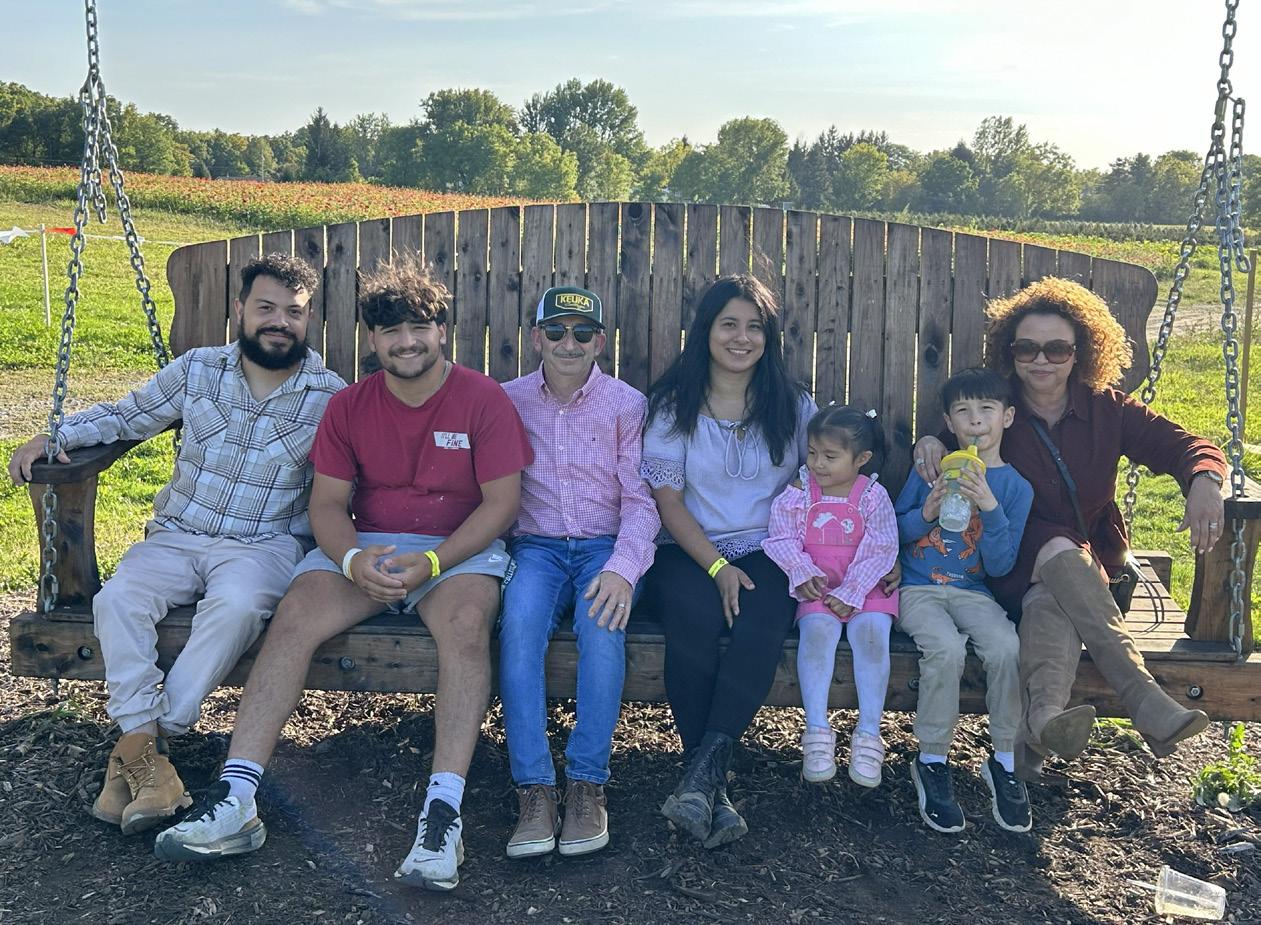
Todd remembers an evening in Charlie’s living room when he first heard Jim’s backstory.
A City Waiting for a Dreamer
Once upon a time, there was a boy of Italian descent who grew up in a big Victorian house in Hazelton with his mother, father, and younger sister. He graduated from high school in 1980. His family had a travel agency, limousine service to airports, and three apartment buildings. He loved history and working alongside his father. At an early age he was doing maintenance at the apartments. Even before he graduated from Wilkes College, where he’d majored in business, he’d taken over the businesses following his father’s death. Then he purchased an Italian bakery—“I bought my job,” he says—because it had a unique product, a type of pre-made pizza crust. “I had a dream of putting this pizza all over the world,” he laughs. In over twenty-five years he expanded into 2,000 grocery stores in six states.
Then, on that trip to the Elmira Wegmans with his food broker (“Wegmans was special, really growing and gracious enough to make me part of their offerings every time they opened a store,” Jim notes), he picked up a real estate magazine. He bought five duplexes in different parts of Elmira to test the market, and Capriotti Properties was born.
As he tells the story, “I really wanted to buy Victorians, but they weren’t in my budget.” Then, in 2008, the real estate market collapsed, and the next year he purchased some foreclosed historic houses. By 2026, his finished properties are operating at 99 percent occupancy. That’s just under 400 apartments and about forty commercial tenants. Most recently he’s putting the finishing touches on the Mark Twain Building at 147 West Gray Street (where his offices are), beginning demo work next door in the old Iszard’s Department Store, and has opened the Centertown Social in the Clemens Square (See and read about his properties at capriottiproperties.com.)
Jim is quick to say that Elmira’s burgeoning renaissance is due to a whole lot of people and businesses believing and investing here.
Capriotti’s continued from page 7
Courtesy Jim Capriotti
Lilace Mellin Guignard
Courtesy Jim Capriotti
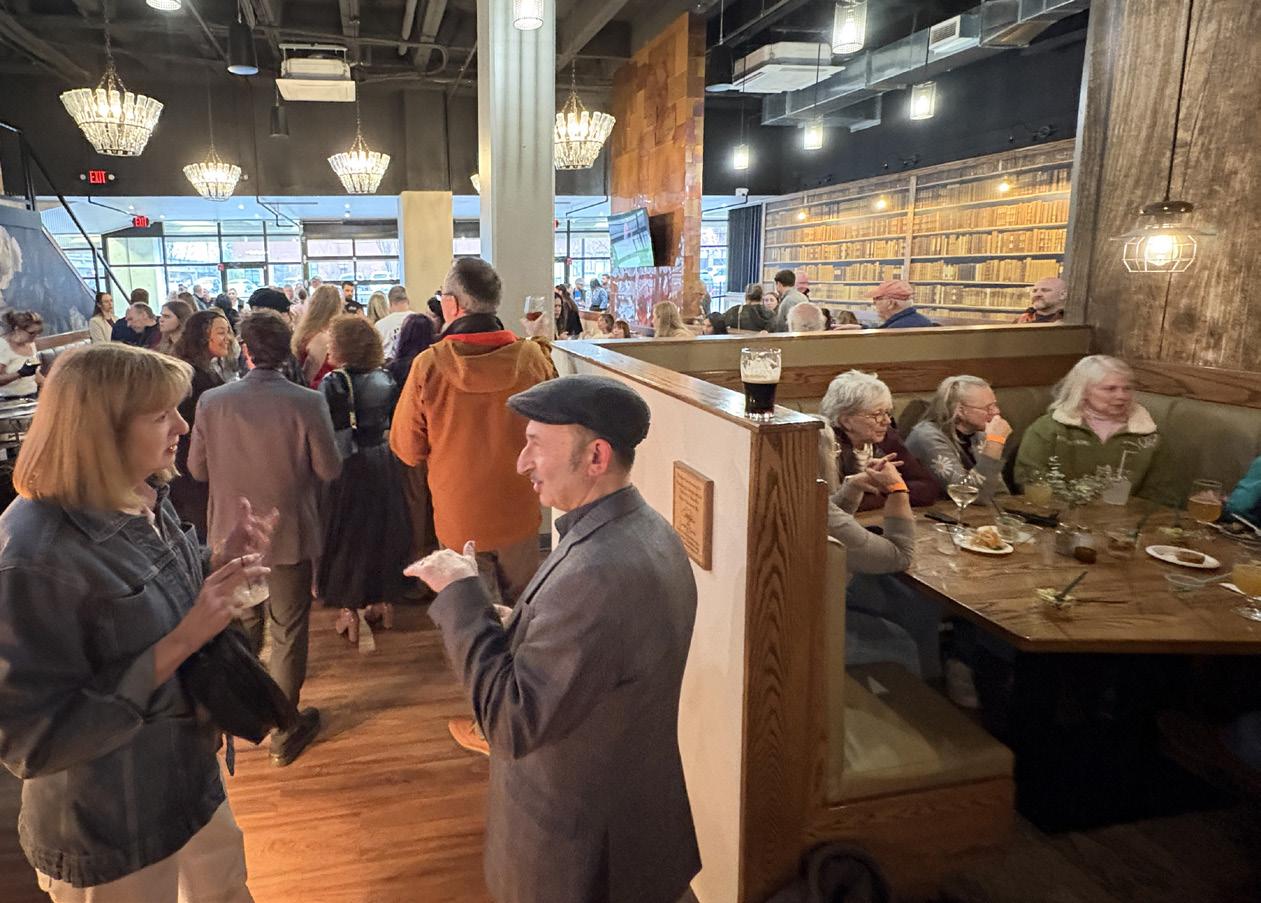
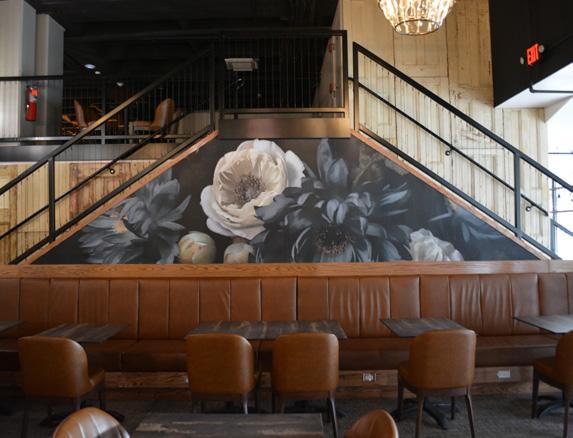
Still, many, including Todd, are quick to credit Jim for spearhead ing the growth. A fundraiser for Elmira Downtown Development’s Taste of Downtown and Steet Painting Festival was held April 1 in the newly renovated Centertown Social co-owned by Jim and Capri otti Properties Director of Development Mike Krusen. Near where local restaurants had stations handing out samples, Jim pointed out the tables and booths handcrafted by Lewis Cook, who does custom woodworking in addition to being superintendent of the Mark Twain Building. Capabilities Inc., a local nonprofit that provides training and employment to people with disabilities, did the booth upholstery. Kurt Bartenstein of Empower Credit Union, who was selling raffle tickets, said, “I don’t think a single businessperson has contributed more to the Elmira downtown area than Jim Capriotti.”
At first, Jim continued to work at his Hazelton bakery while run ning Capriotti Properties. In 2011 he sold the bakery, but worked there until 2016. In 2015, Jim moved here full-time with Miriam and their sons. Miriam is from the Dominican Republic and grew up in Queens before moving with her family to Hazelton. They met at a bank where she worked, he laughs, “because I’m always borrowing money.”
Jim was then invited to be on the steering committee to rewrite the city’s master plan. He’d been fighting zoning constantly. The huge, late-1800s houses were built in a time when families were large, heat was cheap, staff lived under the same roof, and there was no income tax, he explains. There also were no yards and kids played in the streets, only having to watch out for horses. As times changed, families shrunk in size, staff wages rose, and income tax was instituted, it be came harder to find buyers for these 8,000-square-foot homes. Many became boarding houses, not always with the best reputations and tenants. The buildings were expensive to maintain. So, they weren’t.
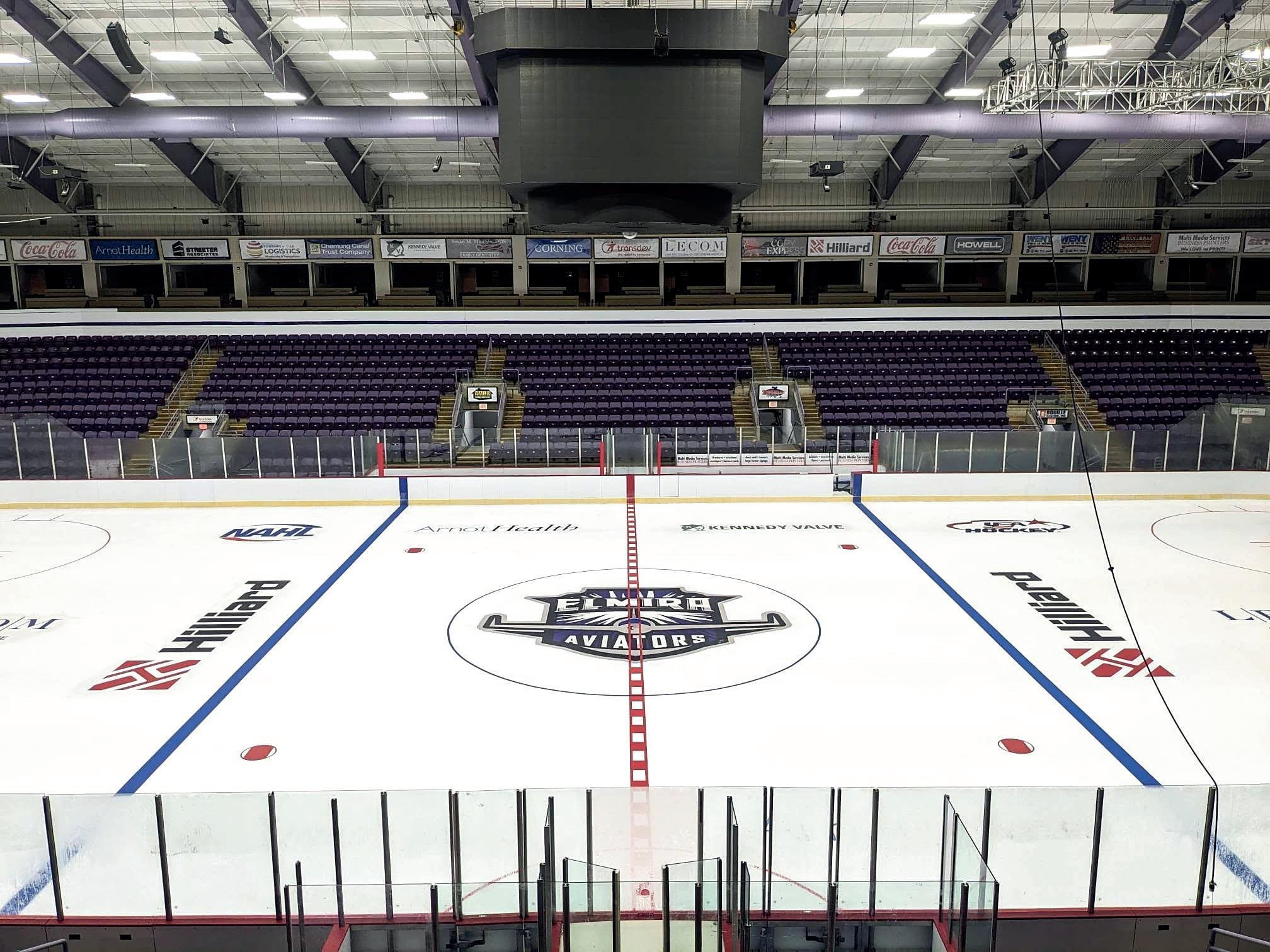

Located in the heart of downtown Elmira, the LECOM Event Center is your destination for unforgettable experiences. From hockey and turf sports to concerts and live entertainment, there’s always something happening.
According to Jim, the city’s response in the early 2000s had been to de-densify, wanting the properties to revert back to single family dwellings. “You can’t take an 8,000-square-foot home and make it single family housing. It won’t work anymore.” He advocated for redensifying appropriately in order to revitalize the city.
History in the Re-Making
In the nineteenth century, Elmira served as a transportation hub connecting Rochester and Buffalo with Albany and NYC via canals and railroads. What followed was a Golden Age. A boom fueled by manufacturing, transport, and banking resulted in the construction of many large and elegant homes, especially in the Near Westside. Elmira College, founded in 1855, was the first school to grant academic degrees to women on par with men. Samuel Clemens, a.k.a. Mark Twain, penned some of his best-known works while living at Quarry Farm. From 1891 to 1932, the Elmira architectural firm of (Joseph) Pierce & (Hiram) Bickford established a legion of what would become historic buildings in and around Elmira.
Another boom followed during the World War II industrial surge. Elmira peaked in population in 1950 at 50,000, but dropped due to a national decline in railroads and manufacturing, and a population shift to the suburbs. In 1972, Hurricane Agnes devastated the city built on the Chemung River flood plain. The New York State Urban Development Corporation carried out a “New Elmira Plan,” resulting in the removal of buildings along the river, which eliminated a lot of Elmira’s commercial space.
3,784-Seat Arena Concerts & Live Shows Ice + Turf Facilities Food, Drinks & Suites

A new anchor for the city came to be in 1977 when Keeney’s Theatre, opened in 1925 and once the biggest theatre between NYC and Buffalo, reopened as the Clemens Center.
“People came to Elmira because of the Clemens Center,” Jim says, and that meant he wasn’t starting from scratch. He explains that with any downtown development the first question is: Do businesses or apartments come first? His mentor, Charlie Jefferson, the biggest developer in Scranton, told him “people come first. When visitors see lights on and people walking, they are more inclined to visit and shop.”
So, Jim took the ten properties he bought in 2009 on Church, Water, and Gray streets, and, through a process Todd calls “adaptive preservation,” made them into multi-unit dwellings. “People thought I was nuts,” Jim laughs, “because Elmira had a bad rap, partly because the housing stock was so bad.” Re-
Back in the Day
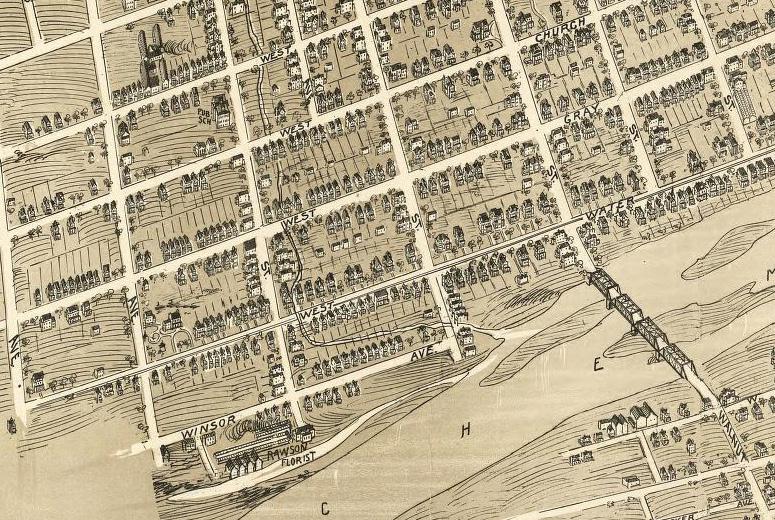
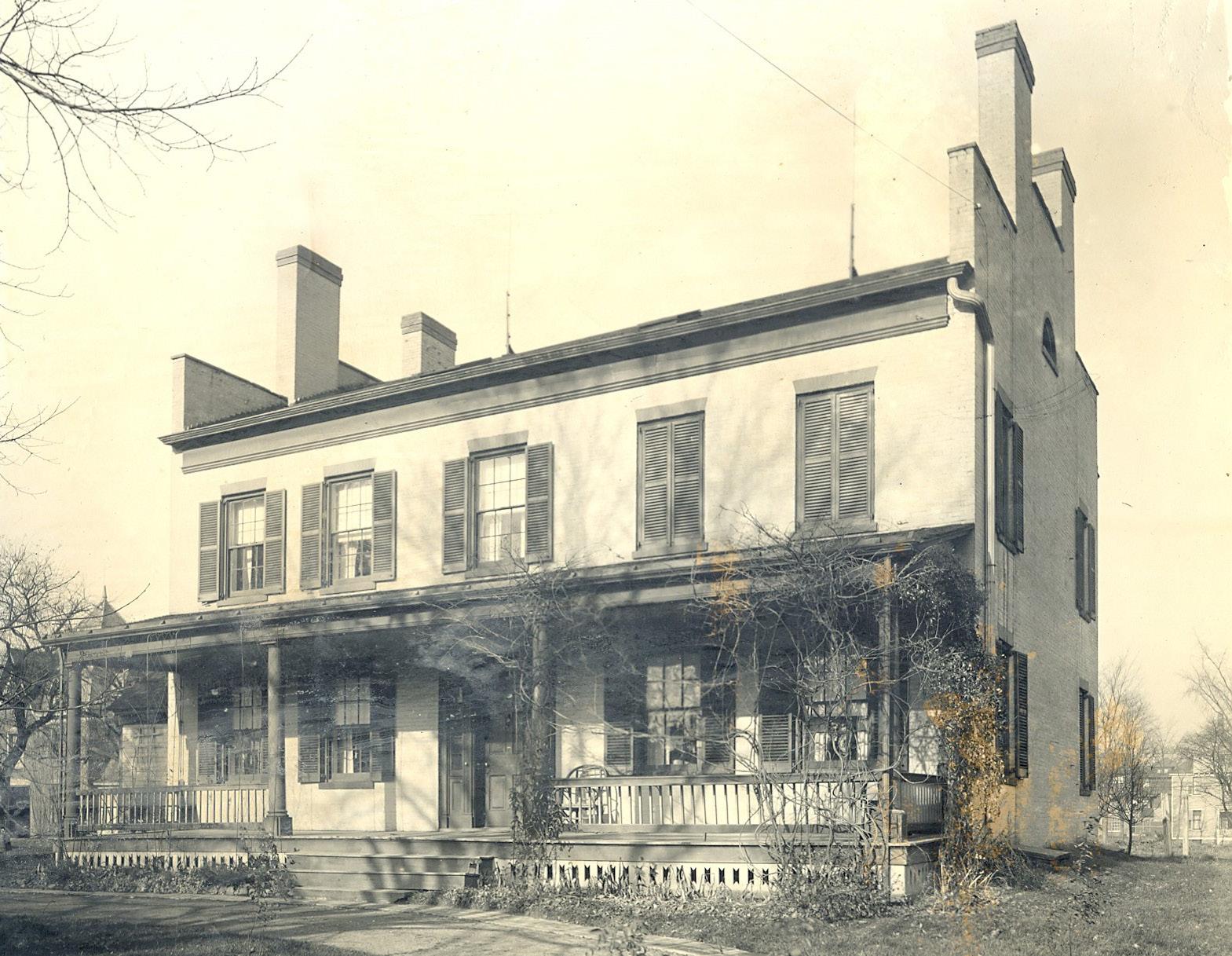
(Clockwise from top left)
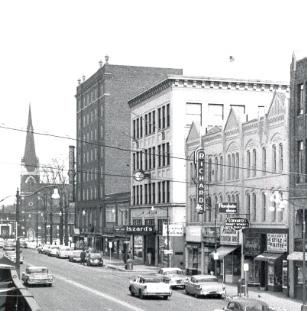
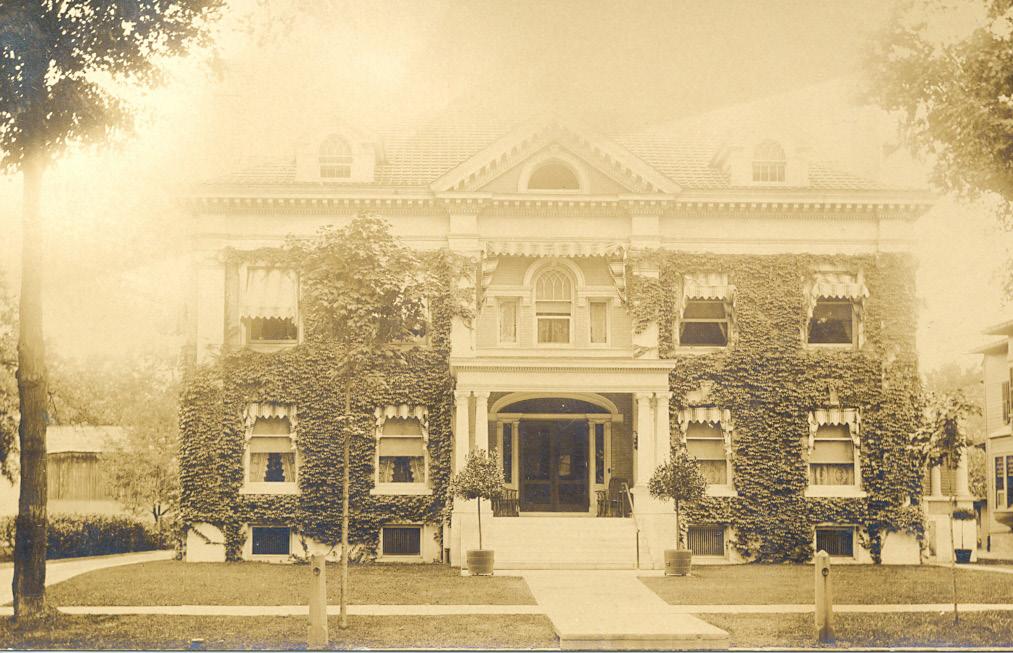
Detail of a 1901 Elmira map; looking north on North Main Street at Iszard’s Dept. Store and the Mark Twain Building; the Gillet Mansion at 378 Church Street c. 1900; the Foster House at 722 Water Street c. 1900.
taining the character of the buildings and being an attentive landlord attracted people who could pay a reasonable rent and then spent money locally. He bought twenty more properties over the next three years.
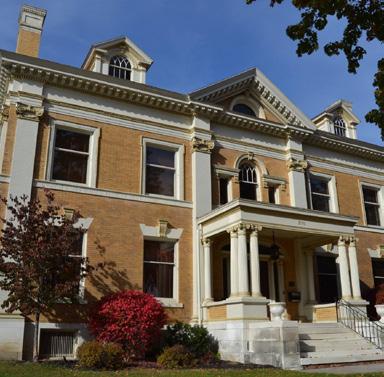
Two homes gave Jim unique windows into Elmira history. In 2013, he bought 378 West Church Street, built in 1898. “I didn’t know a lot about it ’til I found out about the Gillet family—some of the principal funders of building Elmira College,” Jim says. Mrs. Gillet had hired Pierce & Bickford to design this Victorian-influenced replica of the Wadsworth Longfellow House in Cambridge, Massachusetts. Jim thinks this is the only one left of the five that were made. He went to visit the original and discovered that it has clapboard siding, whereas the Elmira house is local brick, granite, and limestone. “It’s built better,” he grins. Without taking any walls down, he created four units and left the building 95 percent intact.
The Foster House at 722 West Water Street, built in 1831, is one of the oldest homes in Chemung County. Jim purchased it from Arnot Medical Services in 2017. The Foster family, the second owners, bought it in 1841. The government established a Union soldier training camp on a portion of the Foster’s land in 1861. It was then converted into a Confederate prison in 1864. There were rumors of an Underground Railroad tunnel from the basement to the river. Jim found a pit that the water and sewer lines run through that could have been for the tunnel, and when Water Street was redone Jim says they found more evidence.
For the renovation, they took down all the walls added for the maze of offices and exam rooms, tore down the drop ceiling, and created nine apartments, all with different floor plans so as to follow the original room layout.
Capriotti’s continued from page 9
(2)
Courtesy Capriotti Properties
Courtesy Elise Johnson-Schmidt
Courtesy Library of Congress, Geography and Map Division






Bridge


Work




Downtown, Where All the Lights Are Bright—Again
In 2020, Jim bought the Mark Twain Building, followed by Iszard’s Department Store and Clemens Square—the Centertown Parking Garage with ground-floor plaza and commercial space. He asked Elise Johnson-Schmidt, owner of Corning-based Johnson-Schmidt and Associates, Architects architectural firm and a longtime proponent of upper floor housing in downtowns, to develop a comprehensive concept for the block.

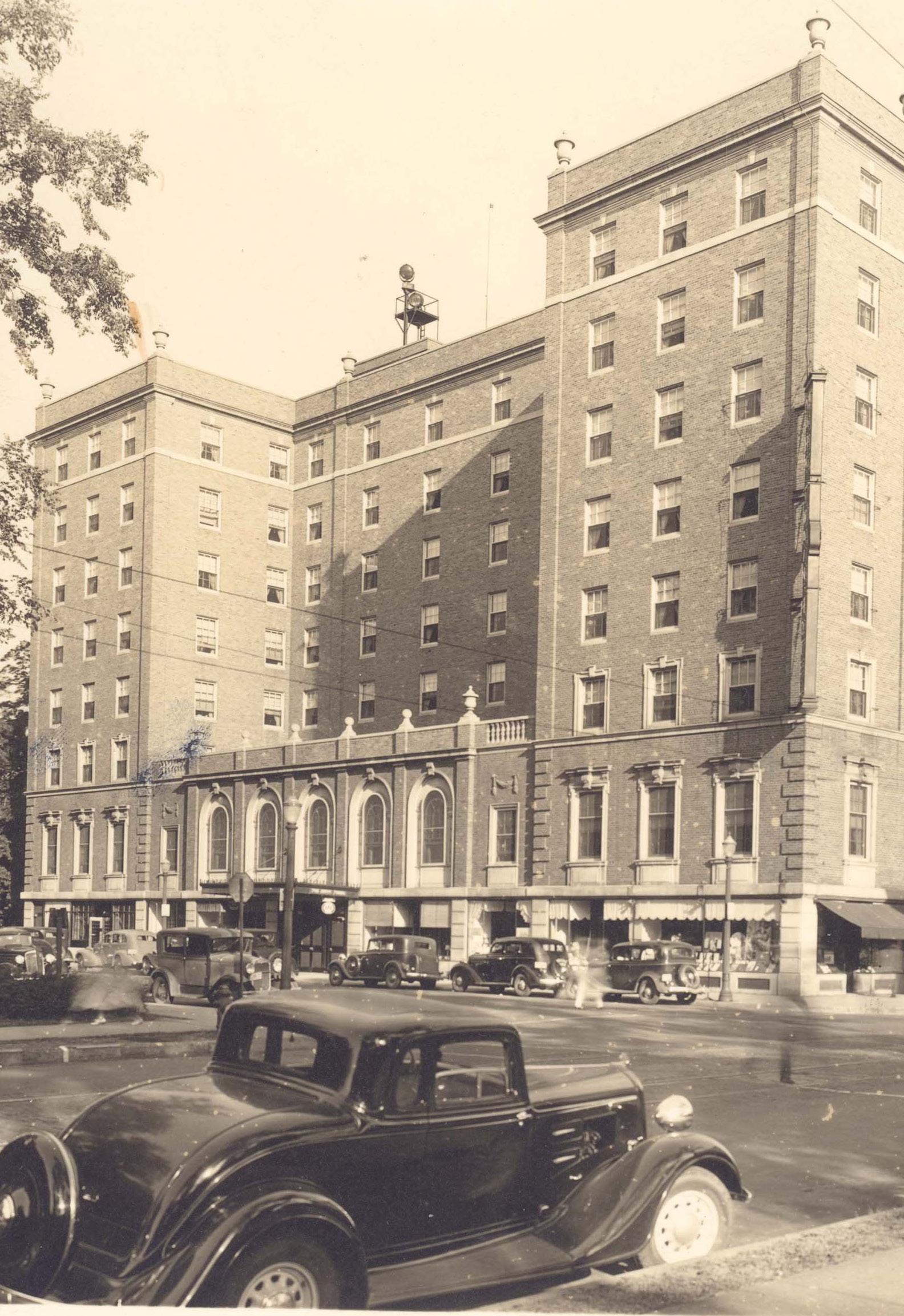
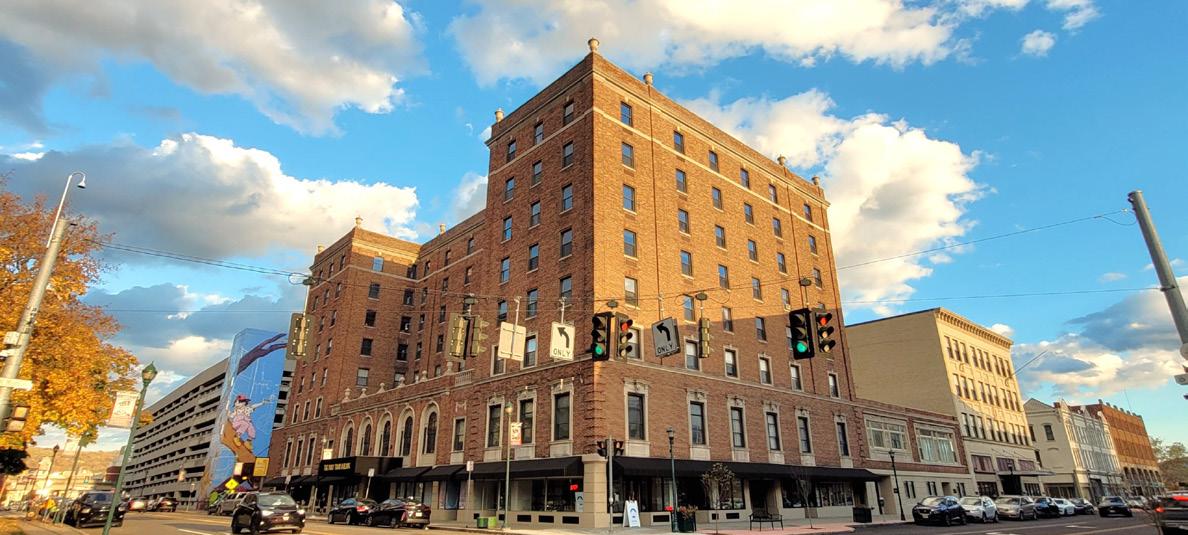
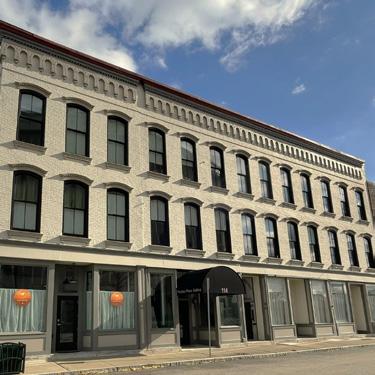
Still a focal point of downtown, the Mark Twain Building, built in 1929, was an eight-story hotel with a grand ballroom. The hotel closed its doors in 1973 after Agnes, but was saved from demolition via transformation into offices and apartments. Jim stayed true to the blend of English and Italian Renaissance style while turning floors two through eight into 129 apartments, one floor at a time, providing temporary housing for tenants displaced by renovations. The last phase was preparing first-floor commercial spaces, which are now occupied by businesses.
“He’s the right guy for the Mark Twain,” Todd says. “It took a special person.”
Jim credits Lake Erie College of Osteopathic Medicine, which expanded to Elmira and welcomed its first class in July 2020, with helping fuel Elmira’s transformation. Many of the LECOM faculty, staff, and students are tenants. Campus is close to downtown and its amenities. Tenants don’t need a car. Jim is finishing a business space for Holy
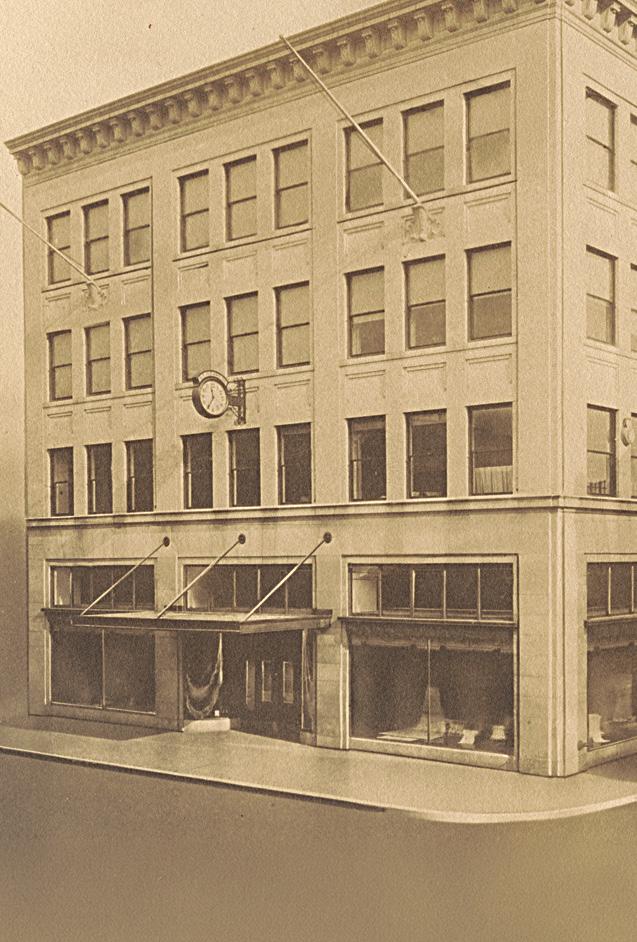
Photos of the Mark Twain Building circa 1940 (left) and Iszard’s Department Store show each in their prime, and why they are at the center of Elmira history and pride. Where the Twain and Iszard’s Meet
Grounds Coffee Shop to open another location in the Mark Twain. Next door at his 120 North Main, Tossed, a popular fresh food restaurant that lost its lease in Corning, does even more business after its transplant.
Jim has seen the attitude toward Elmira improve, which encourages more developers. When Marc and Tracey Stemerman, owners of the Elmira Aviators hockey team, bought First Arena in 2025 and renamed it the LECOM Event Center, Jim was thrilled.
“We are so fortunate,” Marc says, “to have such assets as Elmira College, LECOM [school], the Clemens Center, and the LECOM Event Center, and Capriotti Properties—all bringing a renaissance to downtown Elmira and the surrounding area,” noting he wouldn’t have made this investment if Jim wasn’t doing what he’s doing.
Jim’s properties on West Gray and North Main between LECOM Event Center and Clemens Center have easy access to concerts, plays, and sporting events. In 2022, Jim had purchased Clemens Square, built in 1978 in space where urban renewal had cleared flood-damaged buildings. In fall of 2025, Centertown Social opened on the ground floor of the parking garage where Chuck Clark’s had been—one of those happening places where Todd used to hang out with friends. Now sporting floor to ceiling glass windows, it’s a happening place once again. The fact that Jim hired the chef from the now-closed Sorges doesn’t hurt. Natural light brightens the bar area, which has a loft level, great for DJs and live music. A game room includes two high-end golf simulators. A four-lane duck pin bowling alley has just been added.

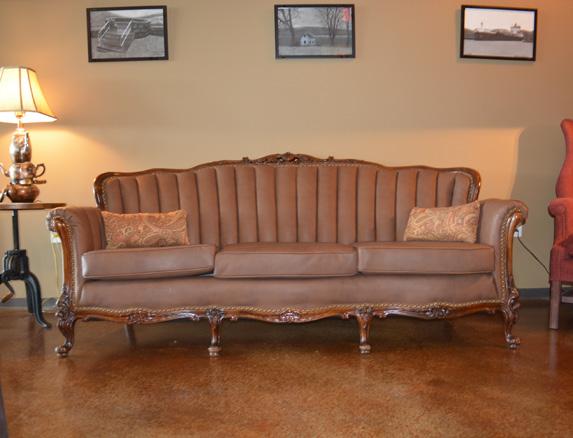
Since 1956, Capabilities Inc. has helped individuals with disabilities and other barriers achieve career and education goals through meaningful, hands‑on work.
Every piece we complete helps create opportunity for someone in our community.
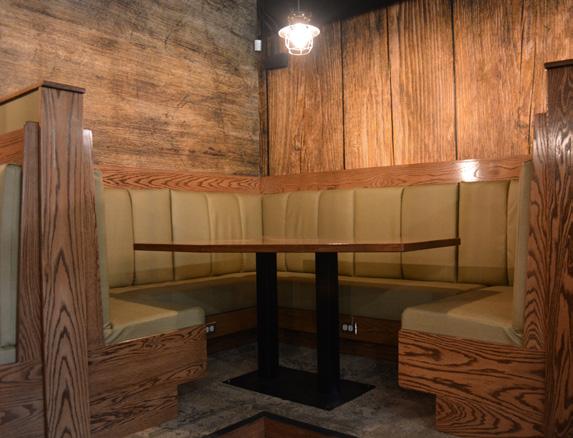
From expertly restored furniture to every cup poured at ETCH, the goal is the same: Real

Serving Up the Best
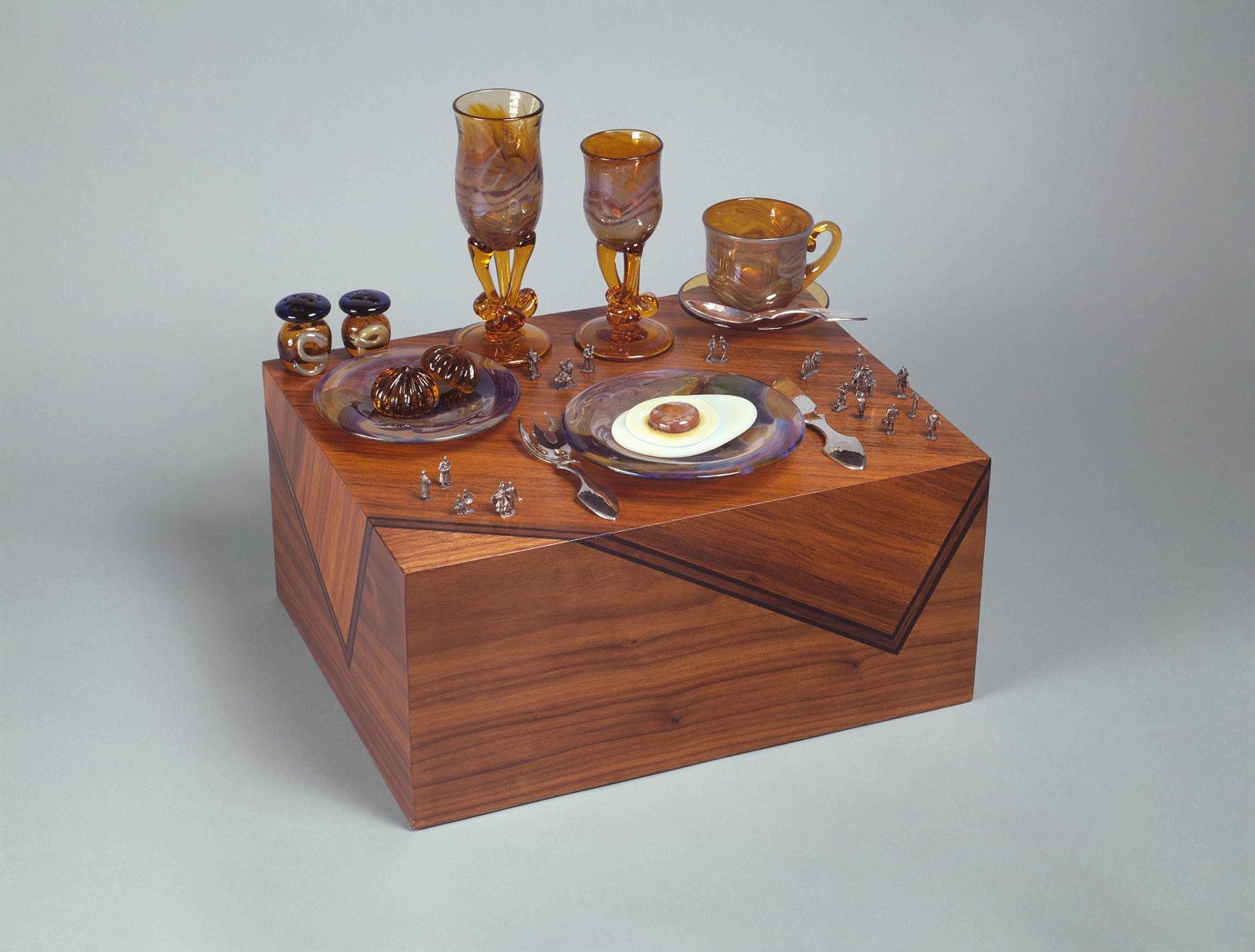
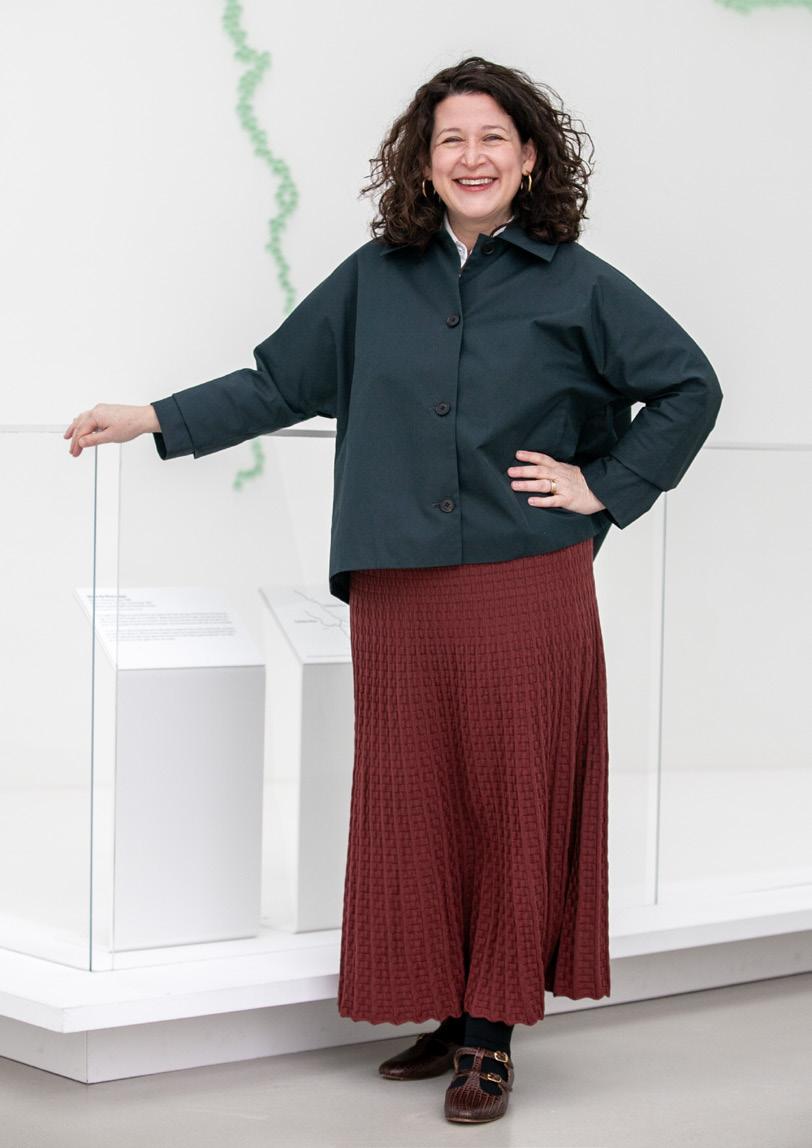
Dr. Jessica Levin Martinez, president and executive director of the Corning Museum of Glass, is proud to showcase women glass artists in their latest exhibit, which includes: Wedding Breakfast, Audrey Handler (b.1934), Maker: (wooden table) Ron Dekok, 1978, United States, WI, Madison, 82.4.1.
CMoG Gets Tough A
New Generation of Women Brings a Full Spectrum to Corning
By Karey Solomon
When lightning struck sand, or obsidian remained after a volcanic eruption, the amazing, magical result—glass—inspired humans some 4,000 years ago to recreate it from primitive materials. It was tough work then, and, though tools and innovations now allow better control of the process, it’s still tough work.
But we still do it, and it’s still magic.
The Corning Museum of Glass’s Tough Stuff, a celebration of women glassmakers, opens May 16, 2026 and runs through January 10, 2027. The works on display will be drawn from the museum’s archives and loans from artists and collectors.
At CMoG (1 Museum Way; cmog. org), visitors see the science, artistry, and history of this mystical substance in dozens of displays. This year, the museum celebrates its seventy-fifth year telling the story of glass through its collection of artifacts and live glass-making demonstrations. Since its opening in 1951, it has expanded to become a world-class destination for anyone interested in any aspect of glass.
“Glass is a material you can learn about endlessly,” says Dr. Jessica Levin Martinez, president and executive director of CMoG,
who took the helm February 1, 2026. As she delves into the museum and its workings, she says, “What I’m celebrating most is the wonderful complexity of the Studio, the library, the galleries—all joyful places that invite longtime friends and new friends to us. You can be a novice or an expert and you’ll have a new experience here. The world has changed for me!”
And, she adds, she’s looking forward to acquiring a personal understanding of glass when she and her family participate in a hands-on glass-blowing class at the Studio, a multi-classroom facility across the parking lot from the museum. Begun in 1996 as a 7,000-square-foot facility under Director Amy Schwartz, it’s now 60,000 square feet. The “Make Your Own Glass” experience, allowing the curious of all ages to create their own glass keepsakes, was added in 2001. The Studio now also houses the Rakow Research Library, formerly part of CMoG. The Studio recently expanded its possibilities with the addition of a massive casting center, and in 2025 began a two-year intensive certificate program in glassmaking. The freshman class, now in its second semester, had fifty-five applications from nine different countries for nine slots.
Already well-ensnared by the mystique of glass, I took part in one of the Studio’s first classes in May 1996, learning how to manipulate glass in the hot flame of a torch, experiencing first-hand the way glass can change form and structure with heat. We learned from our teacher and from each other, snuck into other instructors’ classes, and stayed late into the night to work on projects. One evening we were given a studio demonstration of glass made at the lathe by renowned scholar and glass artist Bill Gudenrath, who also happens to be Amy’s husband. There aren’t enough superlatives to describe this. It’s no surprise the demand for classes at the Studio has grown exponentially.
In the 1990s, as in the early 1960s, the studio glass movement (meaning art glass produced at small scale in a non-industrial workshop) was dominated by male artists and artisans. Setting up a small studio can be prohibitively expensive; forming glass with heat can be heavy, sometimes hazardous, labor as well as hot, sweaty work. Last year, when Tami Landis, CMoG’s curator of Post War and Contemporary Glass, was asked to work on a new exhibit of American












412 N. Franklin St. • Watkins Glen, NY 14891
studio glass, she asked, “Can I tell a new story? I want to invite a new way of thinking.” She’d identified an absence—the perspectives of so many groundbreaking women artists.
In a 1990s exhibit of studio glass, Tami notes, seventy-five artists were highlighted—only sixteen of them women. The ones who succeeded as glass artists had to overcome layers of barriers—from academic discouragement to difficult work and study conditions. Then, too, all glass artists also have to surmount financial hurdles. “Glass is a material of privilege,” Tami says.
Her research uncovered women whose thinking about glass differed from their male counterparts, women like Audrey Handler, who works in a repurposed cheese factory in Wisconsin. Some of her work re-creates foodstuffs like fruits, vegetables, and hot breakfasts—foods women traditionally work with but, in glass form, are “cooked” once only. Ruth Tamura, one of the first women to teach glass in a university setting, and who co-founded the Pilchuk Glass School in Stanwood, Washington, with Dale Chihuly, was the inspiration for the exhibit’s title. When Tami read her 1969 Master’s thesis, Ruth’s words resonated: “I feel that a lot of people have given glass a precious quality. I feel that it isn’t as precious as it is made to appear. It is rather tough stuff,” Ruth wrote.
412 N. Franklin St. • Watkins Glen, NY 14891
Open Mon-Sat 9am-8pm • Sun 10am-8pm
*Subject to change based on NYS regulations. www.famousbrandsoutlet.com 607-535-4952
Open Year ‘round www.famousbrandsoutlet.com 607-535-4952
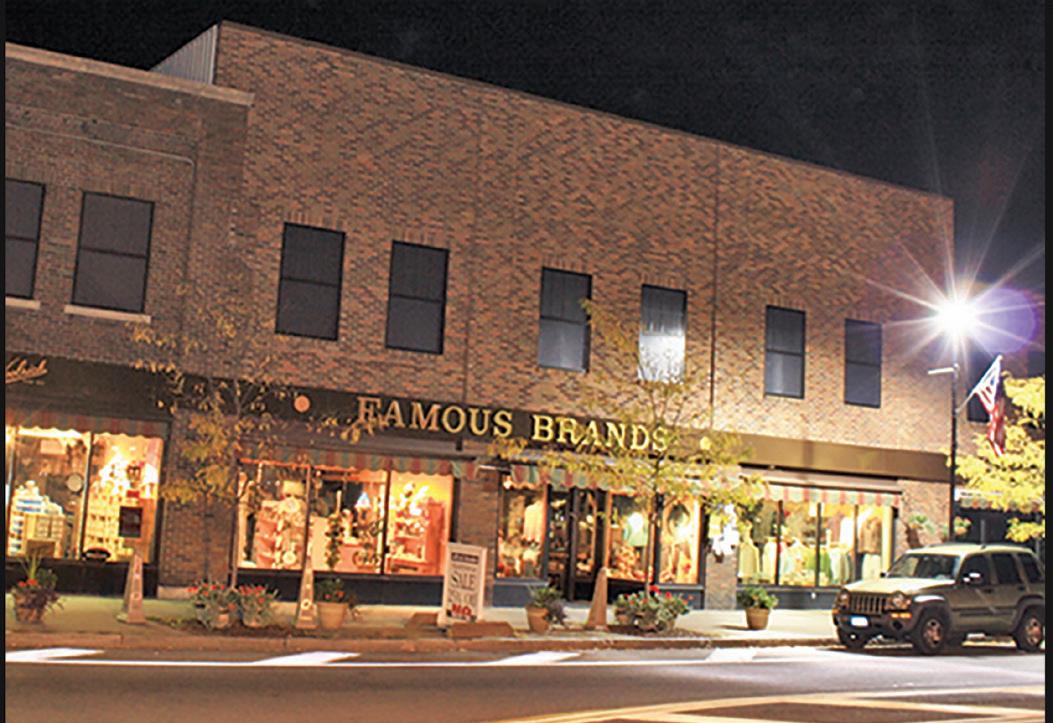
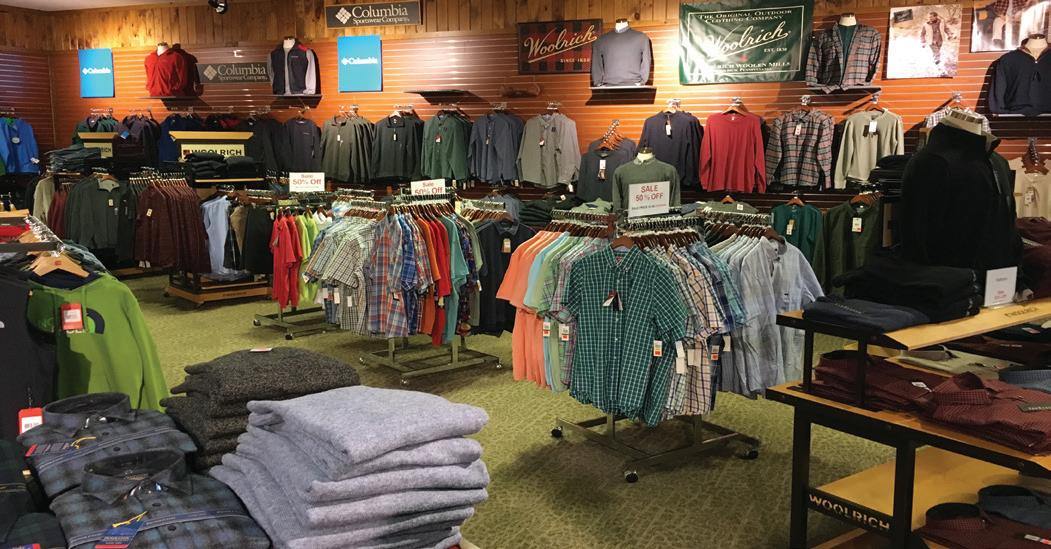
Famous Brands began in 1983, offering “famous brand” clothing and footwear at below retail prices. Since that humble beginning in a tiny storefront, we have grown to 30,000 sq. ft. covering 3 floors and half a city block, becoming a destination store for millions of visitors and locals alike.
Famous Brands began in 1983, offering “famous brand” clothing and footwear at below retail prices. Since that humble beginning in a tiny storefront, we have grown to 30,000 sq. ft. covering 3 floors and half a
“I thought it was a brilliant capture of the grit of these women along with the nature of the material,” Tami says.
Early studio artist Edith Franklin, who studied glass with Harvey Littleton at the Toledo Museum of Art workshops in 1962, heard about them but was not invited to attend—spaces were reserved for university professors, most of whom were ceramicists, like Edith. “But I invited myself,” she’s remembered for saying.
“Her pieces are the living archive of that moment,” Tami continues. “I’m really excited to tell that story.” Several are being loaned to this exhibit from the Toledo Museum of Art.
Other, less fortunate, women, like Monona Rossol, faced such discouraging discrimination they left glass for other work. But some of Monona’s work will be in the exhibit.
Included in the show will be some of the earliest compilations and experiments of women glass artists, including work that may be “unrefined, unfinished, or unresolved.”
“It’s not comprehensive, but the start of a conversation,” Tami continues. “This is a living initiative.”
So, it’s not surprising to hear Dr. Martinez, a few moments later, talk about how glass “radiates into all schools of thought.” Having fallen in love with glass as a graduate student, she says, “I can hardly think of a discipline that wouldn’t find itself expressed in glass.” During CMoG’s upcoming Summer of Wonder, and going forward, she says, “I’m looking at continuing the legacy, and making the Corning Museum of Glass a place of both rigor and delight.”

Karey Solomon is the author of a poetry chapbook, Voices Like the Sound of Water, a book on frugal living (now out of print), and more than thirty-six needlework books. Her work has also appeared in several fiction and nonfiction anthologies.







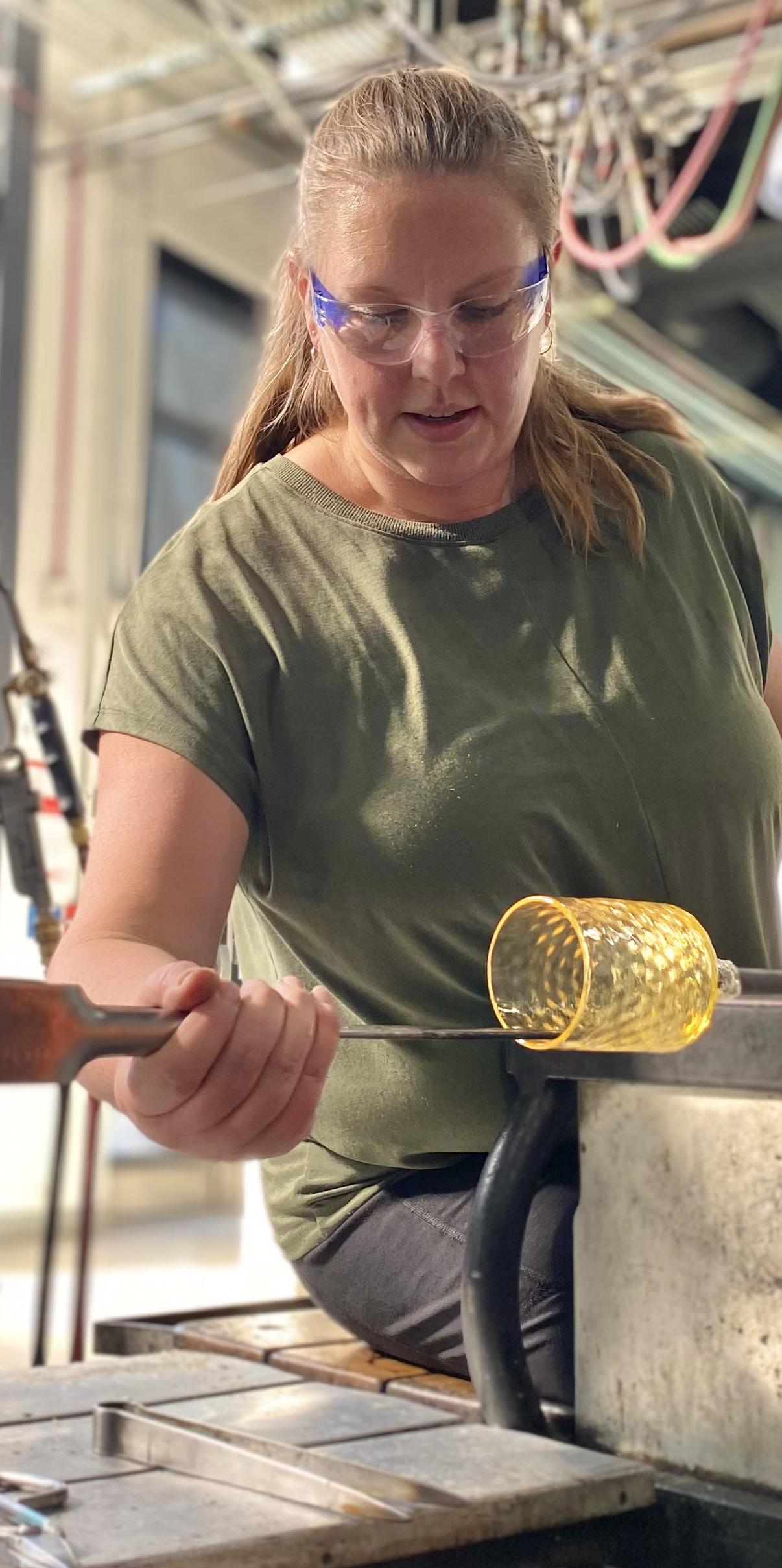
“In this photo I’m making a drinking glass,” says Janet Delecki. “I’m using the jacks to open and shape the interior walls of the drinking glass.”
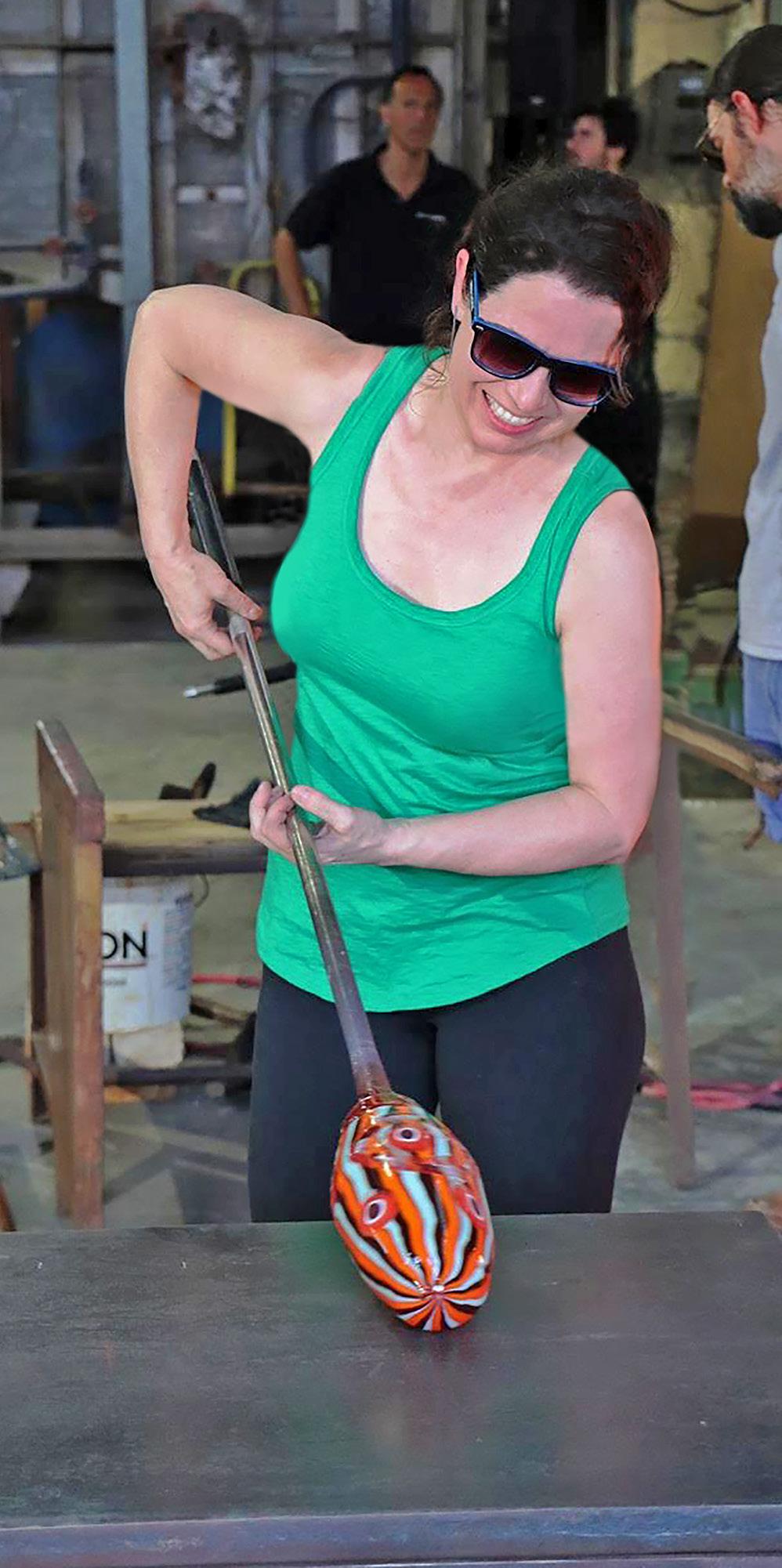
“This is an image from my demonstration at the Glass Art Society Conference in Venice, Italy,” Claire Kelly says. “In this photo I am shaping a bubble of multicolored glass."
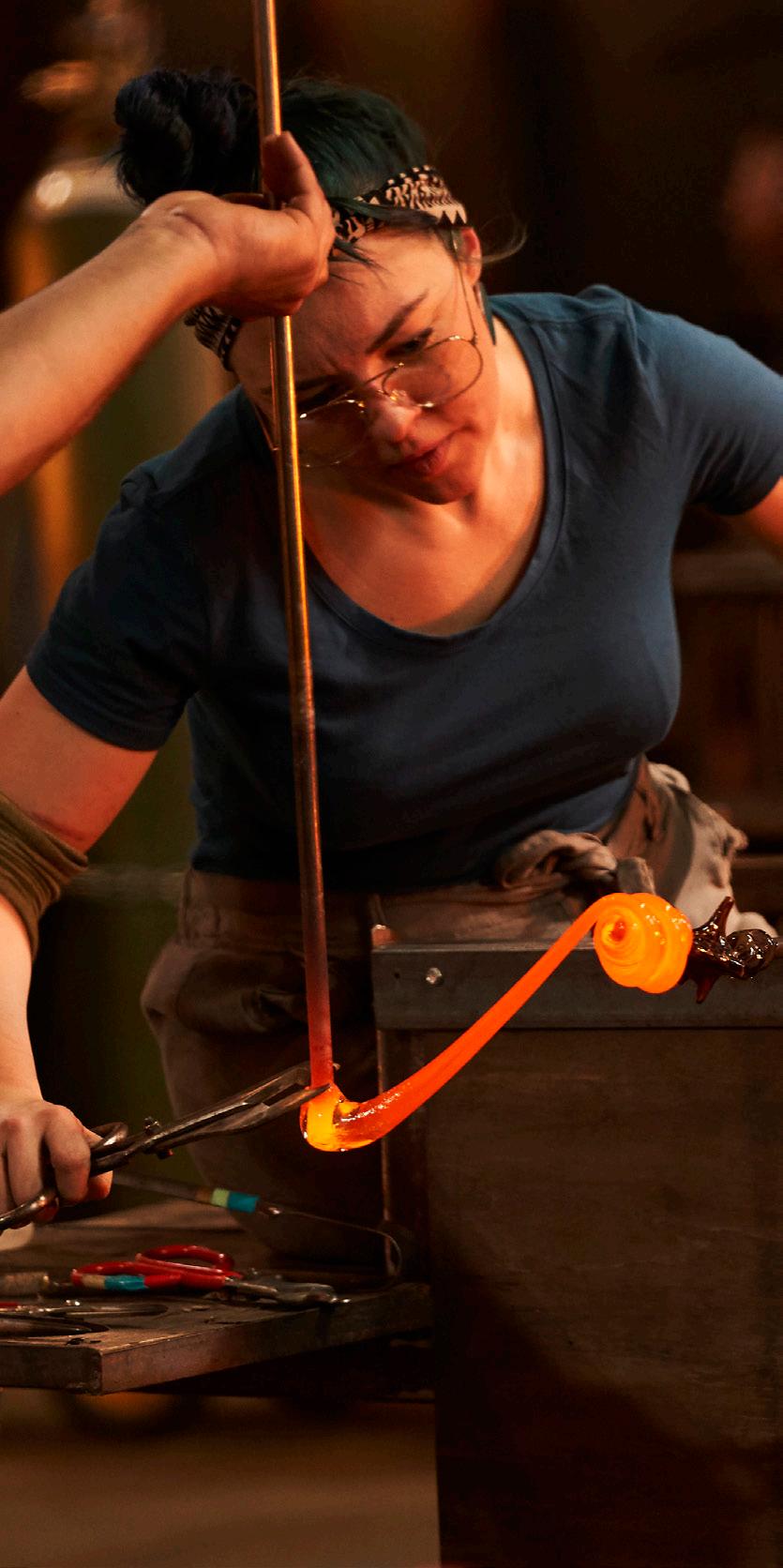
Cat Burns says, “In the photo we’re just adding a bit on [the Blown Away] set.”
The Studio Trifecta
Happy Hot Glass Birthday to Them
By David Higgins
Thirty years: that’s an entire generation. And that’s how long the Studio at the Corning Museum of Glass has been entertaining, educating, and inspiring the public. Which means…it’s time to party, and you’re invited!
In conjunction with the 75th anniversary of Corning Museum of Glass, the Studio is having its own celebration on Saturday, May 24, from 9 a.m. to 5 p.m. It features a video premiere, exclusive shopping, opportunities to make your own glass, and even a chance to get your picture taken with a lifesize cutout of glass master Bill Gudenrath (if you know Bill, you know!).
The Studio is more than just “that glass place”—it’s a community (for real). Members welcome creators of all ages and levels, from curious beginners to seasoned professionals. They’re united by a shared passion for all forms of glassmaking, and they freely
exchange ideas with everyone.
Let’s meet three mavens from The Studio team.
Janet Dalecki is originally from Long Island…way out on the real Long Island, where there still are farmers and fishermen. She studied upstate at Alfred University and relocated to Corning in 2004. She now has a home in Watkins Glen with her husband and two super-cute children.
Janet on her first trip to the museum: “It was 1995. I was on a trip that summer with my parents and siblings. I was completely amazed by the idea of molten glass. I remember watching a video about the process of making murrini [an intricate, patterned type of glass] in the theater, and that made me fall in love with the material. I also remember seeing slices of murrini sold in the gift shop, which made the process shown in the video so tangible. I
could hardly believe that what I had just seen could produce such symmetrical and colorful patterns.
“The Studio has been a special place to me for a long time. It feels like home to a uniquely vibrant community that shares my admiration and obsession for glass. Working with glass is filled with challenge, exhilaration, a bit of danger, and sometimes heartbreak...which circles back to challenge. Working at the Studio, where this all takes place on a daily basis, is intoxicating.”
Claire Kelly, originally from Ilion in the Mohawk Valley, also studied glass at Alfred. She visited Corning regularly to make work at the Studio, to teach, and to attend events, and moved to Corning permanently in late 2020.
“My first memory of the museum is attending a reception for [the famous glass artist] Dale Chihuly in 1995. I was in
Christa Westbrook Bob Dane
Courtesy Blown Away
school at Alfred at the time. I remember it being really exciting, especially because Dale was there and the whole place was just full of creative energy.”
Claire on falling in love with glass: “Though I grew up telling everyone that I was going to be an artist, I went into art school with very little idea of what I wanted to pursue. In sophomore year we were allowed to start taking classes in different studios, and I was gripped by the glass studio immediately. There was simply nothing else like it! The hotshop is noisy, uncomfortable, and all the tools are clumsy in your hands. But after that initial shock, the language of how to make glass simply took me over. I spent hours thinking through the glassblowing process, step by step. It was like my brain and body switched to glass as its chosen material, and I’ve never looked back.”
Claire on working at the Studio: “I have a special history with the Studio, because I was an intern there the first summer it opened [1996]. I understood it was a groundbreaking institution, but I was too young to realize how monumental it was to be there in the early days. The Studio shaped my future career, and it allowed me to approach different opportunities with confidence. You go there when you need the best in glassmaking, and, as my professional life grew, I returned to access the facilities there for a variety of projects. I now call Corning home, and while it was a long climb for a short slide to return here, in my heart I always knew that I would.”
welcome to NEW YORK

Cat Burns is a Jersey girl (she practically grew up at the Shore). She has been neurodivergent since childhood and uses bold, sarcastic humor to express her inner world. Her work is whimsical and colorful, and always reflects a wicked yet gentle sense of fun. Cat’s current artistic focus is her degrading eyesight and processing how blowing glass is exacerbating that. She’s currently okay, but is slowly losing her color vision. “Art is an amazing way to process my condition,” says Cat. Lemons into lemonade!
Cat’s career has been in overdrive since 2021 for the best of reasons: her spectacular success in the hit Netflix series Blown Away, a reality-style glassblowing competition. Cat was runner-up in the spring 2021 season, and won first prize in the subsequent Christmas episode. She’s become super busy between teaching and traveling, yet she’s at the Studio at least twice a week, usually with her friend and assistant Kayleigh Sweitzer (whom Cat dubs “the next generation of girly glass artists”), though Cat admits “we spend as much time gabbing as we do working.”

In her too-rare “down time,” Cat loves working with animals. She has an extensive four-legged family and devotes time to several animal rights causes; she has been working with rescue horses since she was ten. She’s an accomplished horsewoman, and loves nothing more than riding in the Atlantic surf. She also enjoys gardening with her elderly pittie mix, Oliver.
Janet, Claire, Cat, and the rest of the entire Studio family, welcome you to their celebration. See you there!
David Higgins is from the small town of Deposit, New York. He retired in 2021 from Corning Community College, where he taught art for thirty years.

Misty for Marty
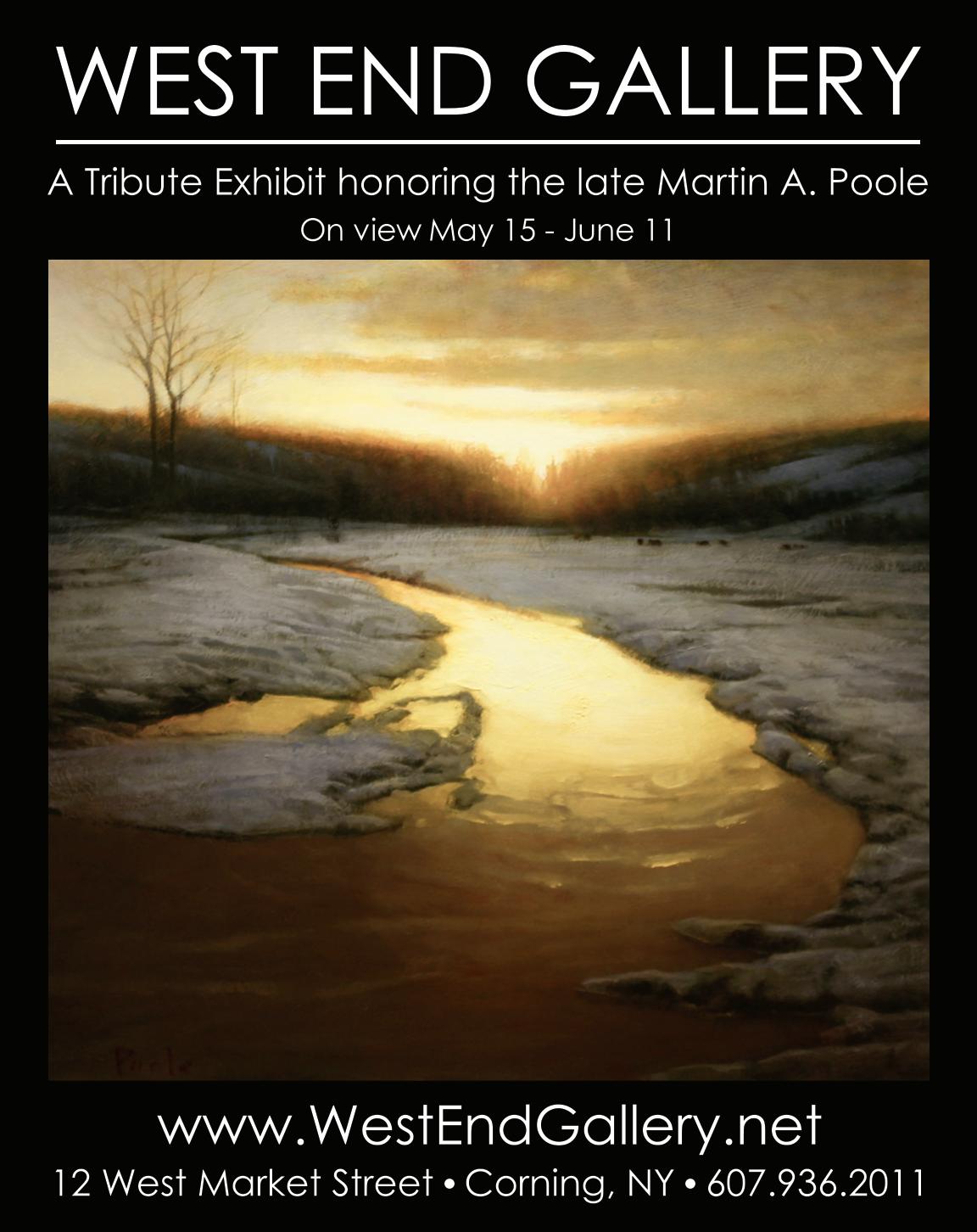
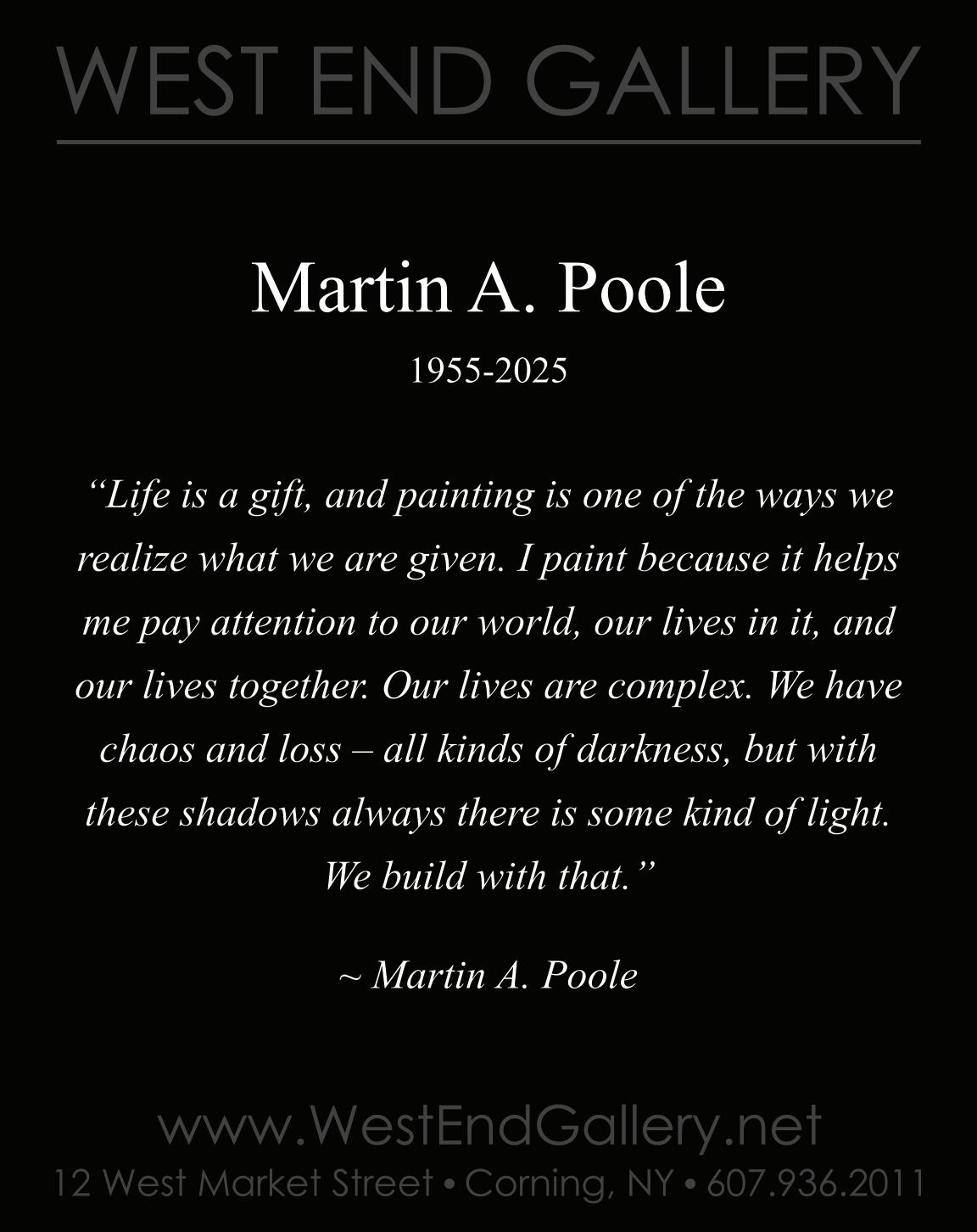
Jesse’s first painting purchase—Marty Poole’s “Misty Creek”; On July 19, 2025, a few months before he passed away, Marty gave his only painting demonstration at the gallery; (bottom right) “I Sure Do Hate That Sofa” circa 2018.
Luminous Art, Luminous Life
A Marty Poole Retrospective
By Karey Solomon
“It’s really hard to describe Marty in words,” says Jesse Gardner, owner and director of West End Gallery (12 West Market Street, Corning; westendgallery.net). “He was a person who transcends description.” Artist Martin “Marty” Poole died in September 2025 at age seventy, leaving behind grieving family, friends, and an exceptional body of work. A retrospective exhibit opens at West End Gallery May 15 and runs through June 11.
Jesse knew Marty her entire life. Fresh out of college with an arts degree in printmaking, he came to West End Gallery in 1979. At that time it was mostly a frame shop begun two years earlier by her parents, artist Tom Gardner and his wife, Lin, shortly before Jesse’s birth. Tom hired Marty to help him while Lin took maternity leave, partly, Tom recalls, because Marty’s mother emphatically urged him to offer her son the job.
Tom and Marty often talked about painting, and Tom, who painted with Tom Buechner, asked whether he could bring Marty along. “He was definitely talented
and we decided to keep him,” Tom Gardner says with affection. “So then there were three of us. Buechner was our mentor and taught us how to paint. That was the start of it all. We painted [together] until Tom Buechner died [in 2010], easily thirty-five or forty years.”
When Marty began painting full time, he’d often come to the West End Gallery to talk with Tom about art. One day he brought in an early oil painting, a landscape. He wanted Tom’s opinion on it. They left it downstairs leaning against the counter while they went upstairs to the framing studio to talk as Tom worked on framing jobs. When they came downstairs a few hours later, gallery staff had sold it. The West End has represented Marty’s work ever since.
Another painting of Marty’s was partly responsible for Jesse’s interest in running West End Gallery. As a young teen, she stopped at the business to check in with her parents after school, and found herself entranced by one of Marty’s paintings. She decided she wanted to buy it, though it cost far more than she could ever save from her
allowance. Instead, she began working at the gallery. It took her several years to earn it, and it remains one of her favorite possessions. And, she found her calling.
While he was serious about his art, Marty is remembered as a complex conversationalist with a somewhat zany streak. Not for nothing was the circle of artists around Buechner dubbed “The Hot Air Society,” though all the members of this informal circle had to be serious about art to join.
“I’d call it a sort of magic carpet ride,” Jesse says. “The conversation might start off normal, like what we were having for dinner, then it shot off into the stratosphere. I would sit back and watch the brilliant, amazing, hilarious show from what they were eating, to the meaning of life…and after an hour or two, he’d bounce back to the peas and carrots.”
His son, Jamie Poole, remembers long conversations with his dad, and a somewhat unconventional approach to the rules. “He’d say, ‘Hey, you can make your own pathway in the world,’” Jamie recalls. When faced with a school requirement to produce an ex-
hibit for the science fair, a resentful Jamie was asked by Marty what he really wanted to do. Jamie said he wanted to do a project on flatulence (not the word they used). Marty helped him turn it into a playful study of how sound travels. His takeaway on his father’s philosophy: “If you don’t like how something is, figure out how you can work within the structure and make it you.”
Jamie’s brother, Greg, also saw their father’s humor surfacing in somewhat surprising ways, including the small, funky portraits of trolls, goblins, and homunculi he sometimes painted for a sort of comic relief from the landscapes that were his bread and butter.
“He was always painting the hills of Western New York and Northern Pennsylvania,” Greg says. “Having grown up there I always thought it was a really boring landscape, but I look on his paintings and there’s so much richness and magic there, you can almost feel the wind blowing through the leaves. His visual art was perhaps a channel for something really liminal he was tapping into, something on the periphery of reality. There’s a real quality of luminosity about his work, rather fey and mystical.
“What really stuck with me was the way he thought about crafts and craftsmanship and the way he kept trying to find better and more beautiful ways of doing things.”
This aspirational approach to art inspired many of his students. When he taught beginner and advanced painting at Corning Community College, fellow artist, friend, and instructor David Higgins says, “He was a superb teacher whose classes filled instantly, and his confidential student evaluation forms repeatedly cited his good nature, his wizardry with a paintbrush, and his hilarious sense of humor. He was a great person and a great artist.”
Artist Martha Campbell, now a professor of art at Commonwealth University-Mansfield, calls Marty her main mentor as a student. Early on, in a Tom Buechner oil-painting class, she was scolded for blending the paints with her fingers. “Marty came up behind me, a gentle giant, and whispered, ‘I always touch my paints with my fingers,’” she recalls.
“Marty was so important to me on my journey…a lot of why I was drawn to his work was the colors he used, how he was bringing life into the canvas and especially the importance of the underpainting. [When] I was struggling with finding my own voice and my own palette…I talked to Marty and had a breakthrough. Marty was a walking encyclopedia; he’d be talking while he was sitting and playing his guitar, drinking a glass of wine, smoking a cigar…”
After Marty moved to North Carolina, he’d return for long visits with the Gardners, sitting up late on the porch with Tom. “I’m sitting on the porch and he used to sit on the chair in front of me,” Tom says. “Sometimes we would talk all night. He would ask me poignant metaphysical questions. We both realized we didn’t have the lucky breaks you have to have to achieve national notoriety, though we should’ve. He should’ve. But we did what we loved to do and made a living at it, brought up a family on it, sent kids to school.” What they wanted was “to do nothing but art,” and they did.
Karey Solomon is the author of a poetry chapbook, Voices Like the Sound of Water, a book on frugal living (now out of print), and more than thirty-six needlework books. Her work has also appeared in several fiction and nonfiction anthologies.

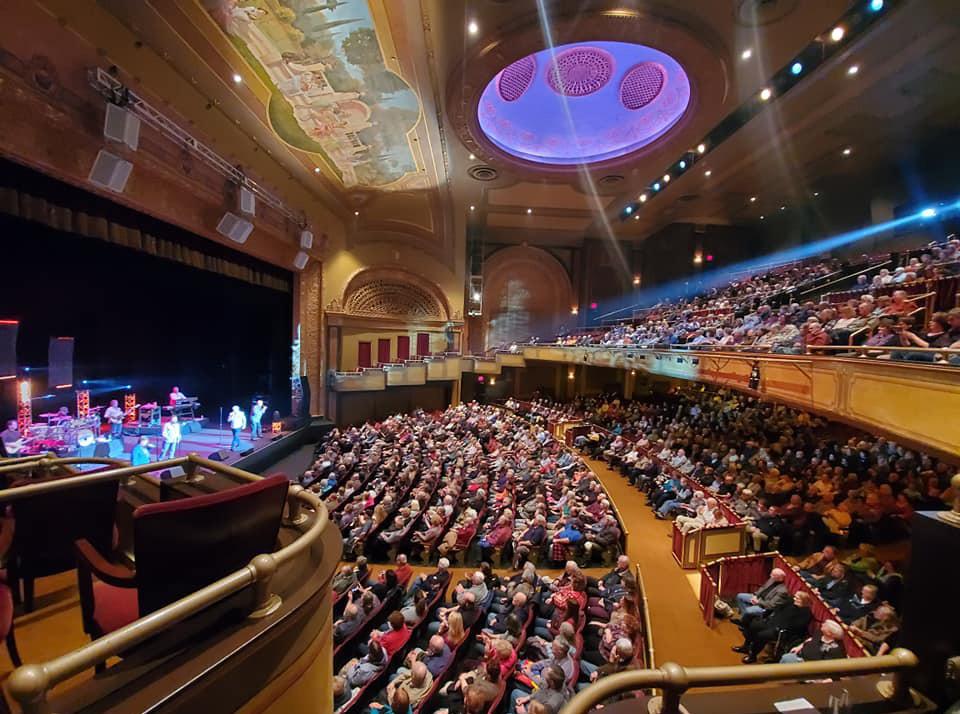
From blockbuster Broadway shows to feel-good family entertainment and educational youth programs, the Clemens Center excites and delights audiences of





The Clemens Center’s programs are made possible by the New York State Council on the Arts with the support of the Office of the Governor and the New York State Legislature. The Clemens Center, a 501(c)(3) organization, operates
The
BLOSSBURG STATE COAL FESTIVAL
May 22—May 23
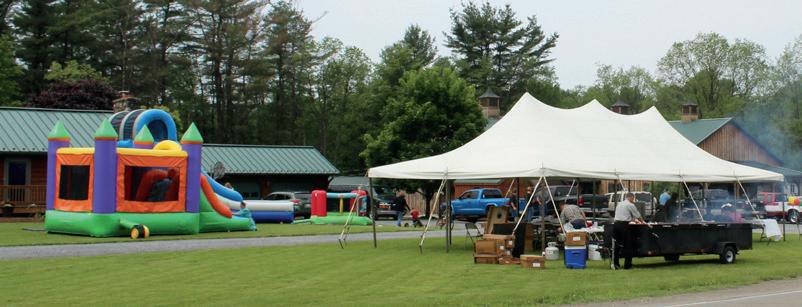
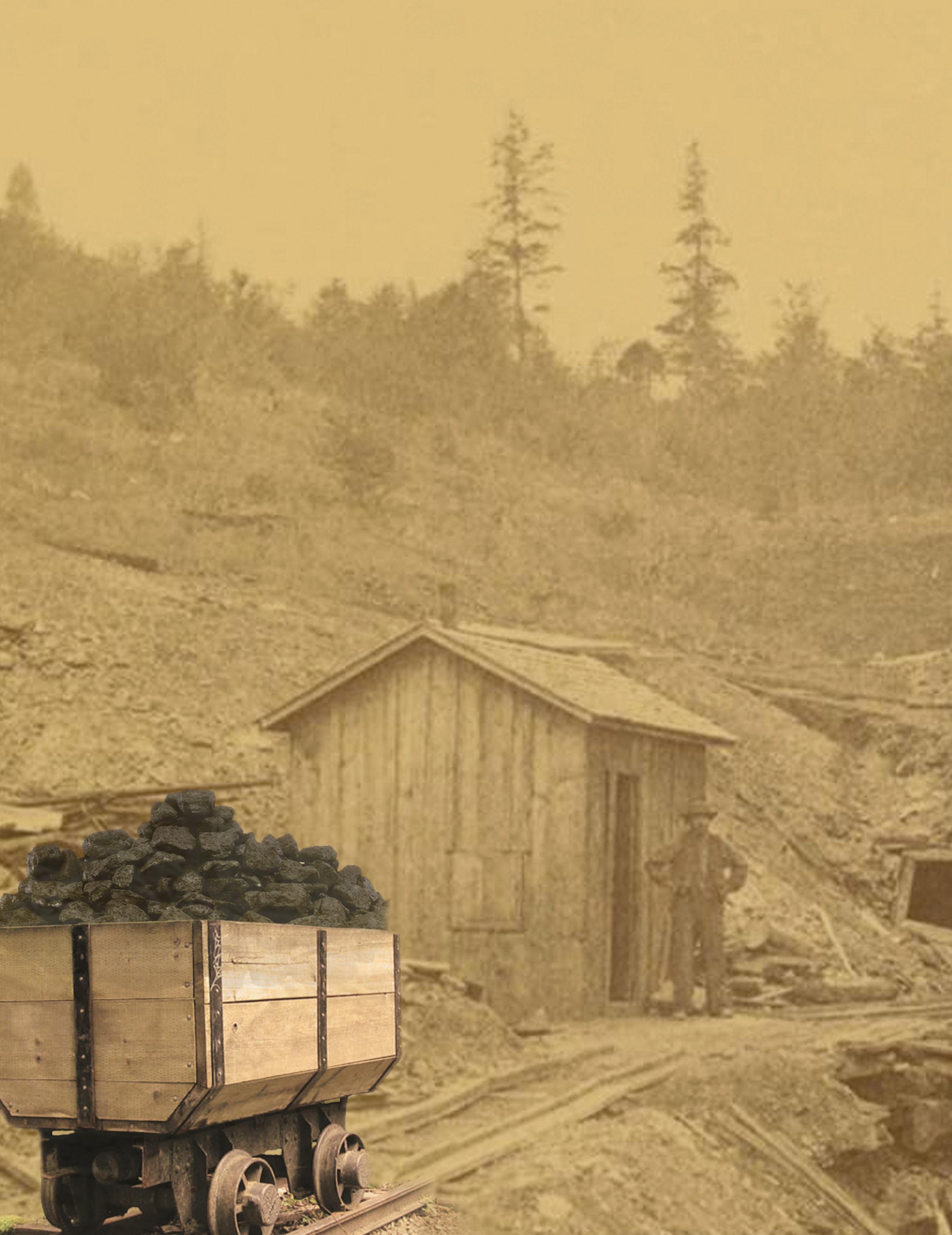
Celebrating the history and heritage of the mining industry in Blossburg and the surrounding communities.
In 1792 coal was discovered in the Blossburg area during the building of the Williamson Road.
Blossburg was home to William B. Wilson, the first US Secretary of Labor. After Wilson’s death in 1934 the family farm was sold to the American Legion Post No. 572 of Blossburg and is still located there today.
The first Coal Festival was held Memorial Day weekend in 1993, 201 years after coal was discovered in Blossburg.
We invite you, your family, and friends to help us celebrate.
**More activities will be added as details are confirmed.**
FRIDAY, MAY 22
5:00pm Vendors and Carnival Games Open
5:00pm Museum Opens
5:00pm Blues Brothers Revue by Mack Blues
6:00pm Music by Alexis Bradford Music
7:30pm Ghost stories with William Robertson
8:00pm Community Bonfire
SATURDAY, MAY 23
9:00am Car Show Registration Opens
9:00am Model Car Show Registration
10:00am Parade Lineup
11:00am Parade
12:00pm Chicken BBQ by Sleezy Construction and BBQ Co. (sold on the Island only)
12:00pm Vendors and Carnival Games Open
12:00pm Museum Opens
12:00pm Quilt Show
1:00pm Southern Tioga Jazz Ensemble Performance
1:30pm Bike Games
2:00pm Coal Festival Pageant
2:30pm Model Car Show Judging/Awards
3:00pm Car Show Judging/Awards
6:00pm Music by the Hills Creek Boys
9:00pm Fireworks
Pony rides, caricatures and face painting all day. FREE caricatures and face painting all day.
*Tentative schedule. All times and activities are subject to change.






Knitting
Basket
















Mother Earth
Tree Love
By Gayle Morrow
I“The oak tree and me, we’re made of the same stuff.”
~Carl Sagan
love climbing trees, but I admit it’s been a while since I actually clambered up in one. I do have a reasonably good excuse—there are lots of trees around my house, but none of them have branches low enough for me to reach. I can rest against a trunk and contemplate life, death, everything in between, and why I’m so late getting this story done...It’s a fine way to spend time, and I think the tree’s okay with it. (I have sometimes wondered if they mind being climbed.)
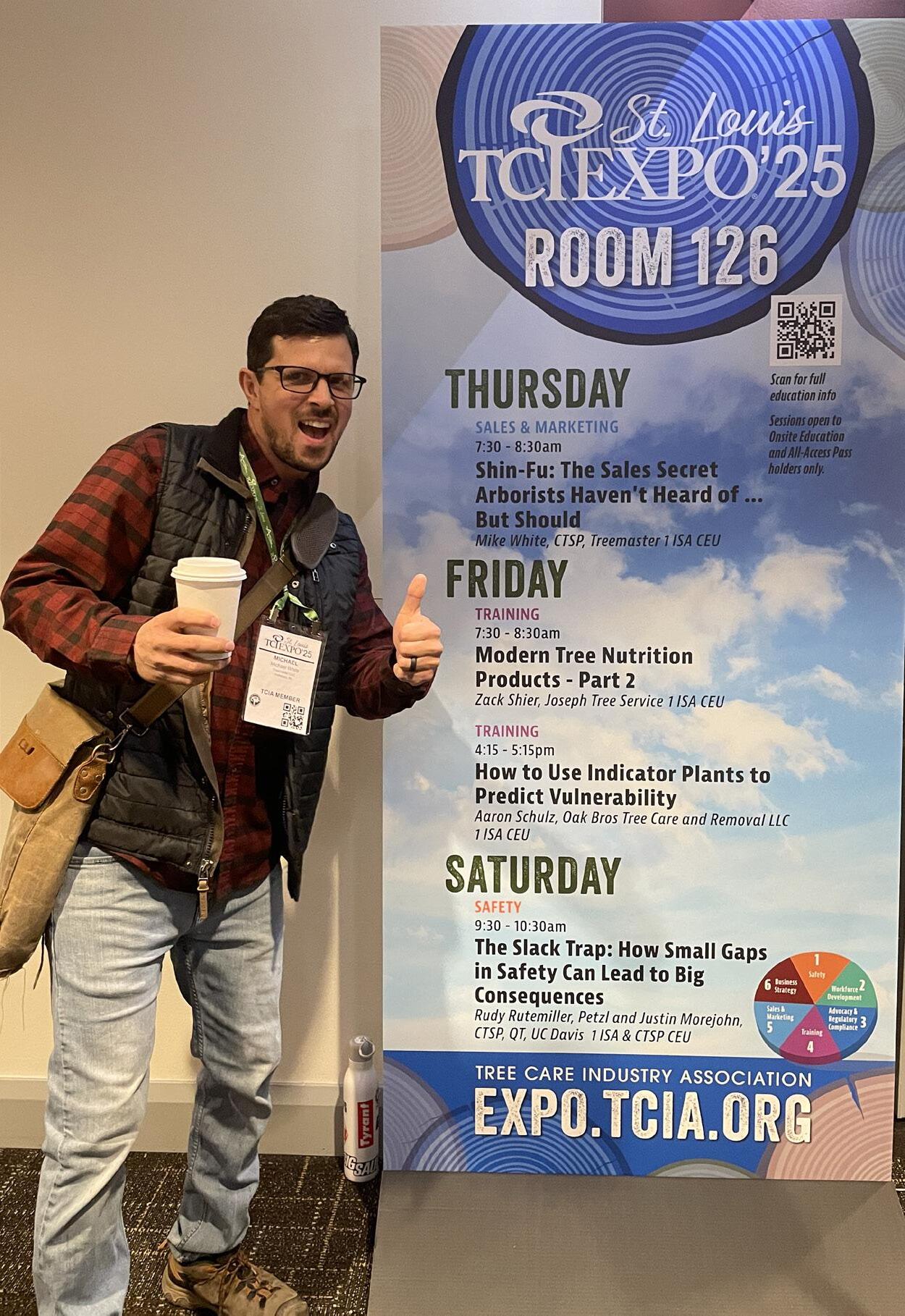
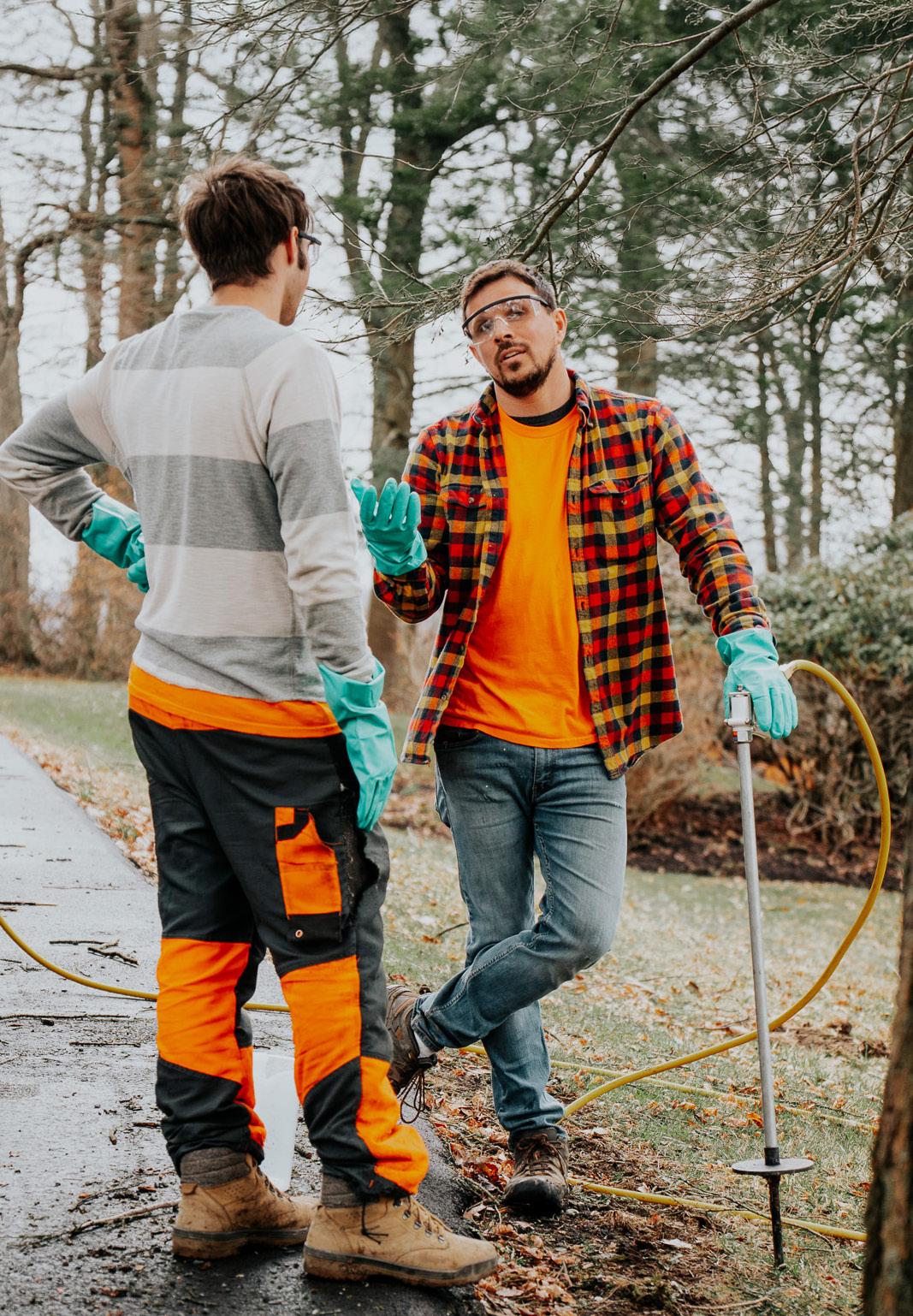
Anyway, I’m a tree lover from way back. Mike White is, too.
“I’ve always been a person who loves trees,” says Mike. Sometimes, though, as we all know, love just isn’t enough. Mike, for-
tunately, can tell us what we can do to help the trees in our life be healthy and happy— to turn love into action. It started, he relates, when he was about nineteen and saw a guy working in a tree, and then seeing a guy running a chipper. “I thought, ‘that is the coolest thing.’” That sentiment eventually morphed into a career.
Mike, who is a certified arborist with the International Society of Arborculture, owns and operates Treemaster LLC, based in Wellsboro—(570) 360-5237. Treemaster has another branch (just a little tree humor) in Corning—(607) 378-8252. (The Treemaster website is really fun. Check it out at treemasterllc.com.) He started out in Connecticut with a summer job at a tree company, then went to California. There he started White’s Tree Service, ran it for eight years, sold it, and came to Tioga County.
Why?
Christ Church. His connection, Mike explains, was that he had some friends in the church. He ended up serving for four years as the pastor there. Another example of love in action.
“But, I had to get back to trees,” he says.
So that’s what he’s done. What Treemaster does is try to help people help their trees—mitigate disease, help them manage risk (i.e. a tree falling on their house), save the trees that are of value to them, and, sigh, remove them when there aren’t any other viable options.
“I love oaks,” Mike admits. There are pests/diseases and other environmental factors damaging this species—things like spongy moth, late season frosts, oak wilt— “It gums up the pitch tubes of the tree,” he explains—“so it’s satisfying to help people
save their oaks.” A stressed tree may be exhausted, he says, but is not necessarily beyond help.
“Most tree problems have to do with what’s going on below the surface,” he continues. (And didn’t I have a lightbulb moment here—people problems are often going on below the surface, too! Shall I hang out my shingle?) “One problem is compaction in the yard.” Think about the beautiful big, old elm in the front yard of what used to be the jail on Main Street, next to the courthouse. Its official name is the Jailhouse Elm, but some do still call it the Hanging Elm, though there is no historical evidence that anyone was ever actually hung from it. Regardless, there has been a lot of time and money spent to keep it alive, healthy, and resistant to Dutch elm disease or other pathogens, and the rule is “YOU DON’T WALK NEAR THE ROOTS.” Ever. Tree roots need space so they can gather water, oxygen, and nutrients, so the area around the base of your trees should be off limits to activity that would be prone to soil compaction.
“Mulch is really helpful, but it needs to be applied correctly,” Mike says. “It reduces compaction and holds moisture. Mulch helps to mimic the amenities of the forest floor. There’s probably nothing more beneficial for a yard tree. But you don’t want a mulch volcano.” That means don’t pile the mulch up the trunk. A two-to-three-inchdeep circle around the base is what your tree appreciates. Don’t create a turf area around the tree, he says, and consider allowing “part of your yard to be wild.”
Old, organic wood chips make a good mulch, as do leaves. The tree has plenty of those, and conveniently drops them in the fall, often right around its base! Funny how that works.
Pruning can be helpful, but has to be done at the proper time. There are lots of different kinds of pruning, Mike notes. Sometimes pruning is necessary to mitigate risk, but, typically, spring is not when routine or cosmetic pruning should happen, as that’s when trees are working hard at pushing out new growth. Fruit trees, of course, need the same good soil biology and enough water that all trees do, but have unique pruning needs. Fruit buds need lots of light. For most fruit trees, a late winter pruning is appropriate. The trees are still dormant, and it’s easier to see the trees’ structure.
As for risk assessment, Mike and his crew can help tree owners manage risk and save the trees that are of value to them.
“People have different tolerances for risk,” he notes, and sometimes they’re motivated by fear (another lightbulb moment for me!). They want a tree removed because they’re afraid of what could happen. So, “we can talk about what we can do to reduce that risk.”
Modern commerce has resulted in diseases against which native trees have no immunity. Beech leaf disease, caused by a nematode known as litylenchus crenatae mccannii which originated in Japan and may be partially or completely responsible for the disease, is present in all sixty-seven counties in Pennsylvania.
“All the beeches in the state forest are dying, and beeches are very important to the ecosystem,” Mike says.
Ash trees? He just shakes his head.
The spongy moth caterpillars that destroyed a lot of oaks?
“They’re cyclical,” Mike says. “They’ll be back.”
Check out urbancanopyblog.com and planitgeo.com for a couple of different takes on the importance of trees, then do your part to support the tree love movement. You could start with a hug.
welcome to TIOGA COUNTY











Long May He Wave His Baton
Conductor Adam F. Brennan leads the Commonwealth University-Mansfield Concert Wind Ensemble and Alumni at Carnegie Hall in 2025. Those alums are in the Great Lakes Wind Symphony.
Music from the Heart to the Heroes
Great Lakes Wind Symphony Honors Veterans at Mansfield Concert
With every bright note of the flute, resonant sound of the trumpet, and smooth tone of the clarinet, the Great Lakes Wind Symphony combines a passion for music with a compassion for other people.
“Music is healing and unites us,” says Dr. Adam Brennan, conductor and artistic director of the Wellsboro-based symphony. “In a world that seems to be ever divided, come together and celebrate some of our country’s best music.”
That idea has been at the core of GLWS since its conception in 2014, revamp in 2025, and is promised for the symphony’s concert at Steadman Theatre in Mansfield on May 23. Dedicated to veterans, the Memorial Day weekend show is aptly dubbed “American Heroes.”
“It will be a tribute to the men and women who made the ultimate sacrifice in the service of our country,” says Adam, adding that the night will include works with military ties, such as “I Am the American
By Kelly Stemcosky
Sailor” by Chuck Yates. “This piece requires narration, and we have Vietnam veteran and GLWS Board Member Robert Scott to narrate. Bob had a long career as a radio DJ and not only has the perfect voice for the piece, but he has the credentials to bring service by all men and women of our armed forces to the fore.”
Making the night even more special, all veterans and active-duty military members can experience “American Heroes” free of charge. According to Adam, “This is just a small way we can say ‘thank you’ and to remember those who did not return.”
Tickets for children under eleven are also free, part of GLWS’s dedication to bringing the joy of music to kids, as well as to individuals with exceptionalities.
“As a parent of autistic adults, I know how hard it can be to find a welcoming place,” he says. “So, we want families to bring small children and individuals with exceptionalities to our concerts. There is no fear of children or people being ‘disrup-
tive.’ We welcome a bit of the noise, as this is the best place for our youngest and special friends to feel safe to enjoy this great music.”
To those who may find outbursts disruptive, Adam says that attending a concert should be thought of like going to church. “Can you imagine a church without the sounds of children? Without the presence of God’s special creations? A church without children quickly dies, and so does the concert hall.”
The symphony itself could be described as a fellowship, with each member having strong ties to Tioga County and a deep love of making and sharing classical music. Adam, a Wellsboro resident, says more than 90 percent are graduates of Commonwealth University-Mansfield (formerly Mansfield University) who he taught for over three decades as director of bands and professor of percussion studies. The symphony’s more than forty players, some












welcome to POTTER COUNTY

who no longer live in the immediate area, rotate for performances based on their availability. They commit to three rehearsals totaling five and half hours to perform a ninety-minute concert.
Along with that dedication, Adam adds, “What is special about the GLWS is that while the group shares some commonality with our friends in the professional orchestra, it’s modeled after the American wind ensemble—the American band tradition.”
Ryan Pritchard, GLWS CEO, associate conductor, and principal timpanist, concurs. “At a time when our country seems to be focused on things that divide us, the GLWS is created to unite us through our musical heritage,” he says.
Ryan studied under Adam and helped him co-found GLWS with a two-concert beta test in 2014. The venture was put on hold twice—first after the cancer diagnosis and subsequent passing of Adam’s first wife in 2015, and then again due to the covid-19 pandemic and Adam’s own cardiac bypass surgery. Adam says that by 2025, having since remarried and with his kids in their adult years, he was finally ready to retire after a storied thirty-seven-year teaching career.
“So now, the GLWS is my full-time job with our publishing and music products company and my composing endeavors,” says Adam, who is also a published composer himself.
One of his pieces, “For Love of Country,” will echo on May 23 through the halls where he used to shape young minds. The evening in honor of veterans will commence with the national anthem and an arrangement of the Pledge of Allegiance by composer Alfred Reed. “We invite the audience to sing along with both,” says Adam. “Then, enjoy some great music.”
Also featured will be Julie Giroux’s “Symphony No. 3 No Finer Calling,” serving as a tribute to Col. Arnold Gabriel, a combat infantryman in World War II who later led the US Air Force Band in Washington, DC. Rounding out the night is David Gillingham’s tribute to Vietnam veterans, “Heroes, Lost and Fallen” and Eric Ewazen’s “Hymn for the Lost and the Living.”
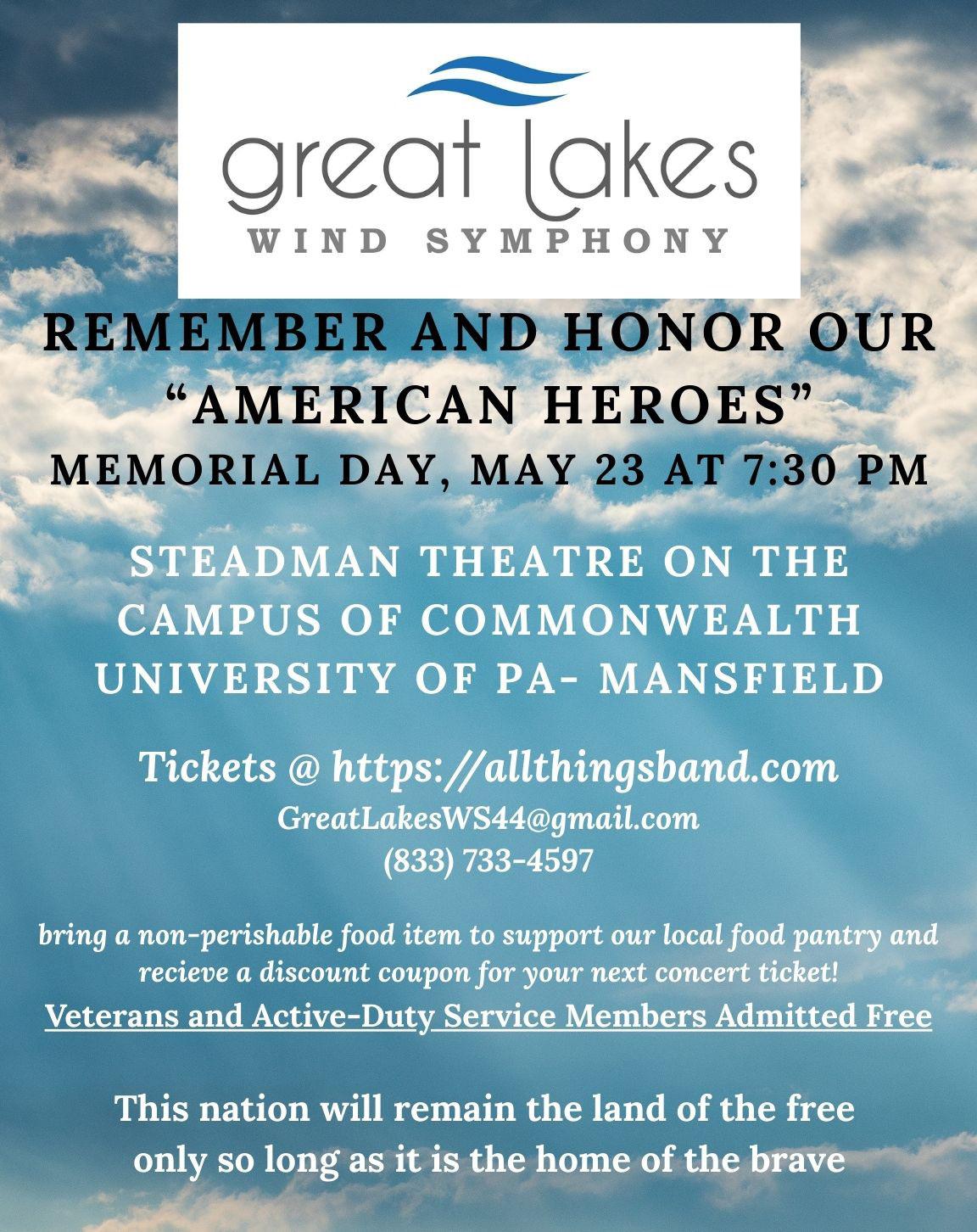
The concert starts at 7:30 p.m. on Saturday, May 23, at Steadman Theatre on the Commonwealth University-Mansfield campus. Tickets are $30 for adults, $20 for senior citizens, $15 for students, $10 for Mansfield students, and free for children under eleven, as well as for all veterans and active-duty military members. Tickets can be purchased at allthingsband.com. The theater is accessible to individuals with mobility issues and is compliant with the Americans with Disabilities Act, so it truly can be enjoyed by all. Learn more about GLWS at greatlakeswindsymphony.org.


“This group is different and eschews the traditional impression people have of classical music,” says Adam. “It is familyfriendly and welcomes everyone. It promotes a great, positive message, and it is incredible music created by American composers. Celebrate America with us. You will be blown away by the quality and experience!”
Stemcosky is an award-winning writer who works as a
per page editor/designer. A Tioga County native, she spends most of her free time volunteering for animal-related causes and hanging out with her family and cats.



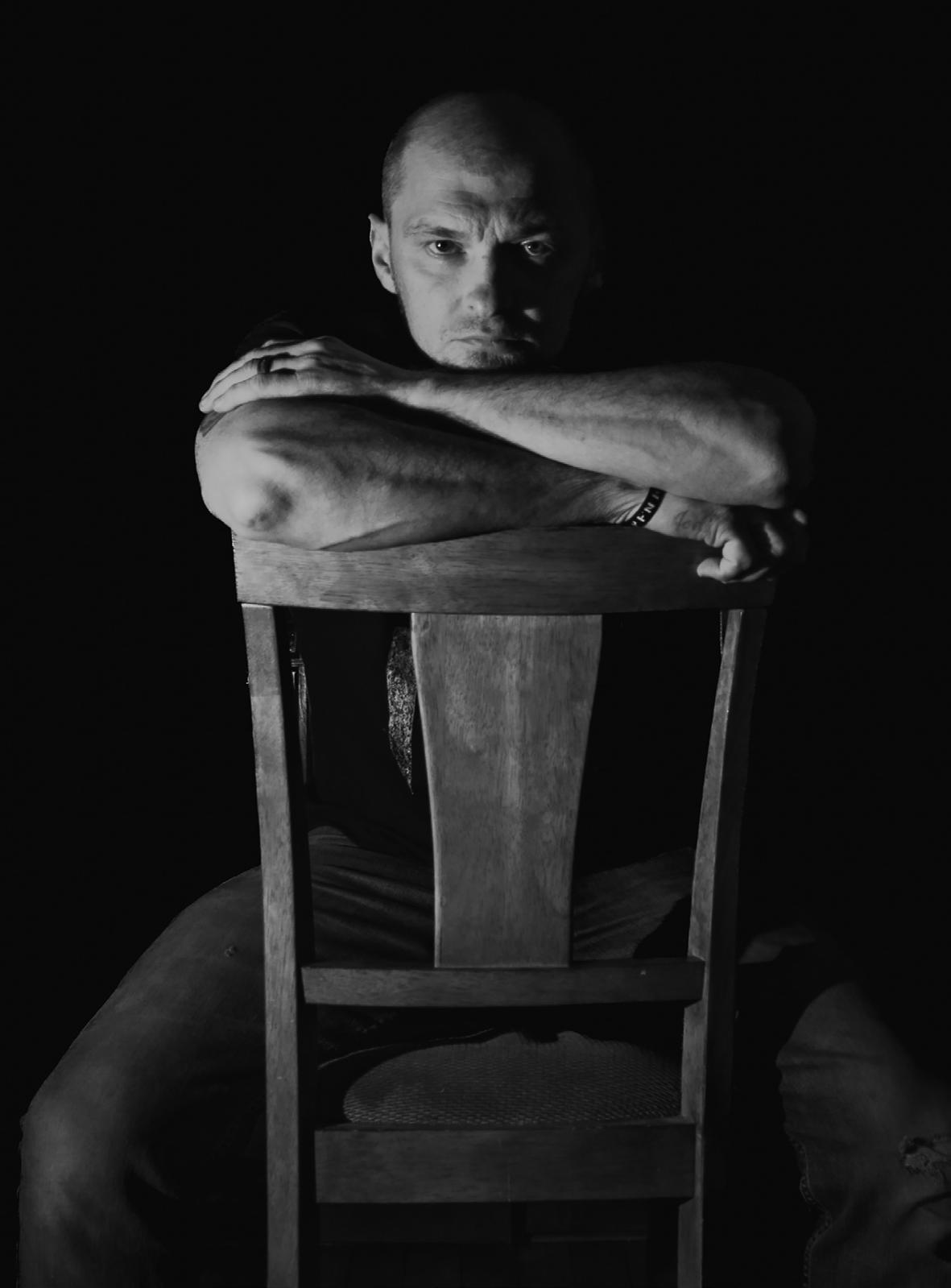
High on the Mountain
"Photography became that place for me. Not an escape but a confrontation. This is what it looks like when you stop running. When you sit with it. When you finally meet the man staring back at you and decide he’s worth understanding."
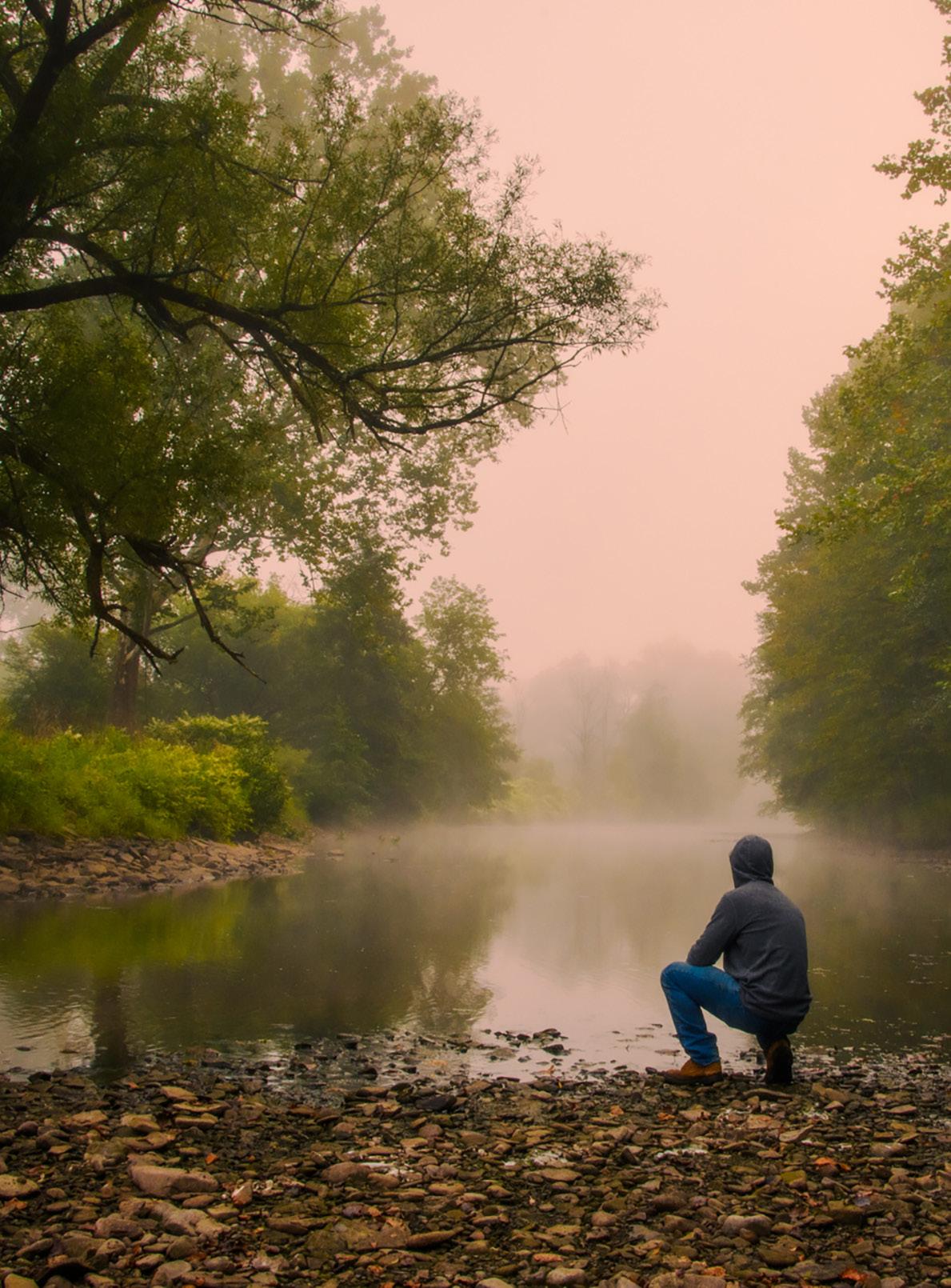
"There was a time I didn’t know how to slow down…how to sit still with my own thoughts. Photography forced me to. Out here, with nothing but the sound of water moving and the fog hanging low, I learned that healing doesn’t always come loud or fast. Sometimes it shows up quietly…in a moment like this, kneeling at the edge of something bigger than you, finally willing to listen."
Life Through the Lens
By Matthew Stevens
Ilive with a traumatic brain injury from Afghanistan.
Most days I don’t talk about it much. I just keep moving forward like most veterans do. But the reality is that a TBI doesn’t just go away when you come home. It becomes something you carry with you every single day. It messes with things people never see.
My emotions can swing in ways that don’t always make sense. One day I feel sharp, focused, and steady…the next day my brain feels like it’s moving through mud.
My memory isn’t what it used to be. I can forget small things easily, and navigating to places I’m not extremely familiar with can be surprisingly difficult. Directions that would be simple for most people sometimes feel like a maze inside my head.
There are also the physical reminders.
The small headaches that are almost always there in the background. Not always enough to stop me, but always enough to remind me. The tremors in my hands that
show up at random times and make simple tasks feel harder than they should be.
Living with a TBI can make each day feel very different from the last. Some mornings I wake up feeling like myself. Other days I wake up feeling like I’m trying to relearn how to be me again.
But somewhere along the way, I found something that helped me fight back.
Photography.
When I’m behind the camera, things quiet down. My mind focuses. The chaos slows. The headaches fade into the background, and the world becomes simple again—light, shadow, composition, and the moment in front of me.
Through the lens I can take something that feels broken inside my head and turn it into something beautiful.
That camera has become more than a tool for me.
It’s therapy.
It’s grounding.
It’s healing.
Every photo you see on this page is part of that process.
So, if you’ve ever supported my work, shared a photo, bought a print, or simply followed along on this journey…just know you’ve helped more than you probably realize.
For some of us, art isn’t just art.
Sometimes it’s how we keep moving forward.
Matthew Stevens, a thirty-six-year-old Marine Corps veteran and lifelong resident of the rugged mountains of northern Pennsylvania, is the owner and photographer of High on the Mountain Photography (highonthemountainphotos.com). With a passion for capturing the natural beauty and untold stories of his home region, he specializes in portrait, event, and nature photography while also volunteering his time to shoot local school sports and community events.























































La Famiglia è Tutto
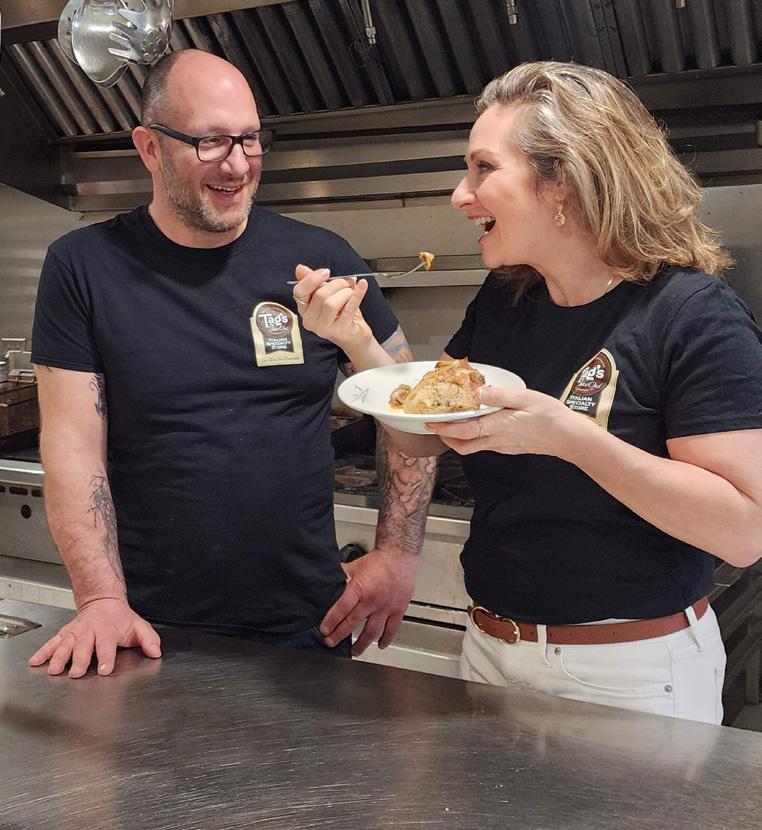
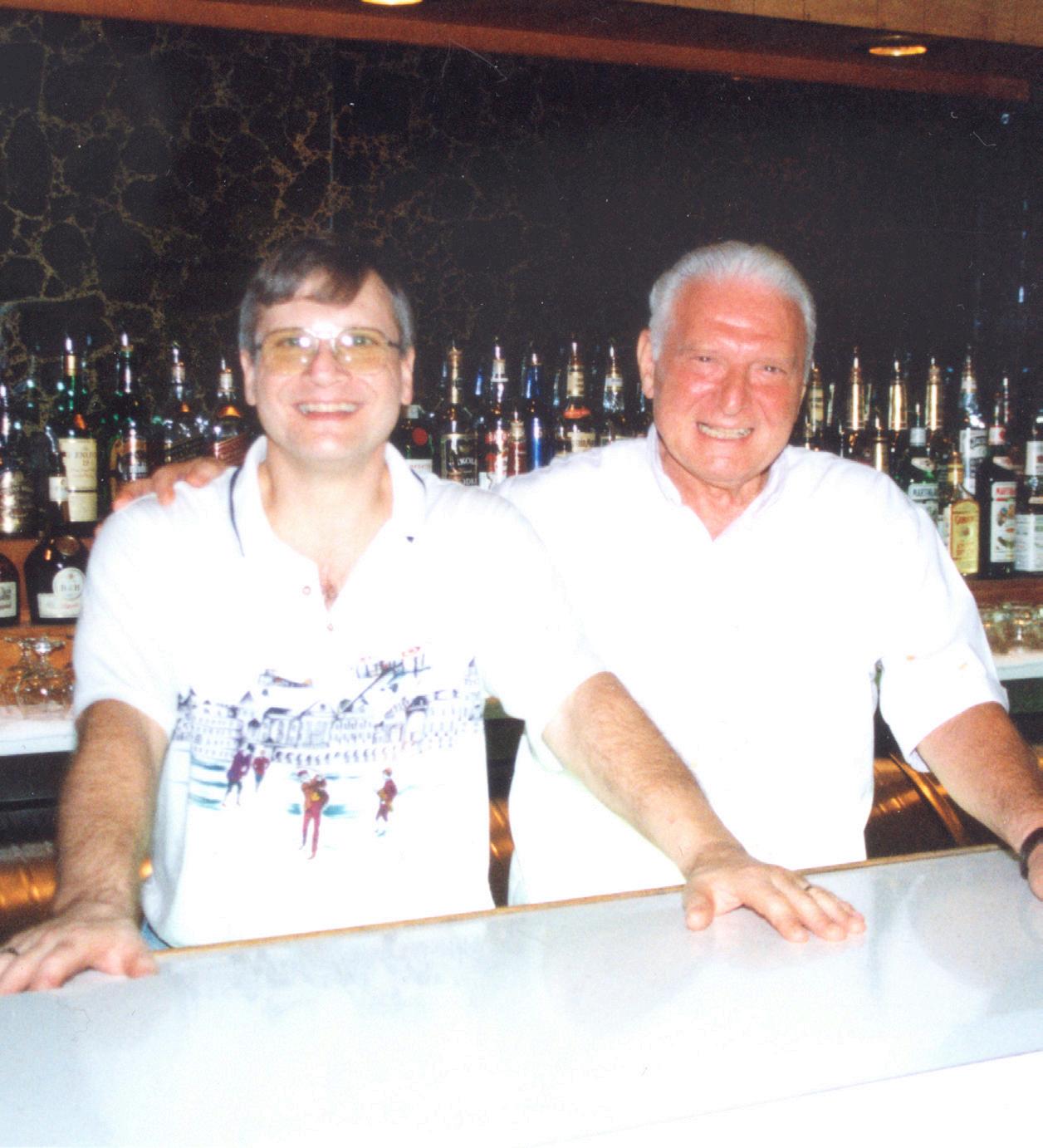
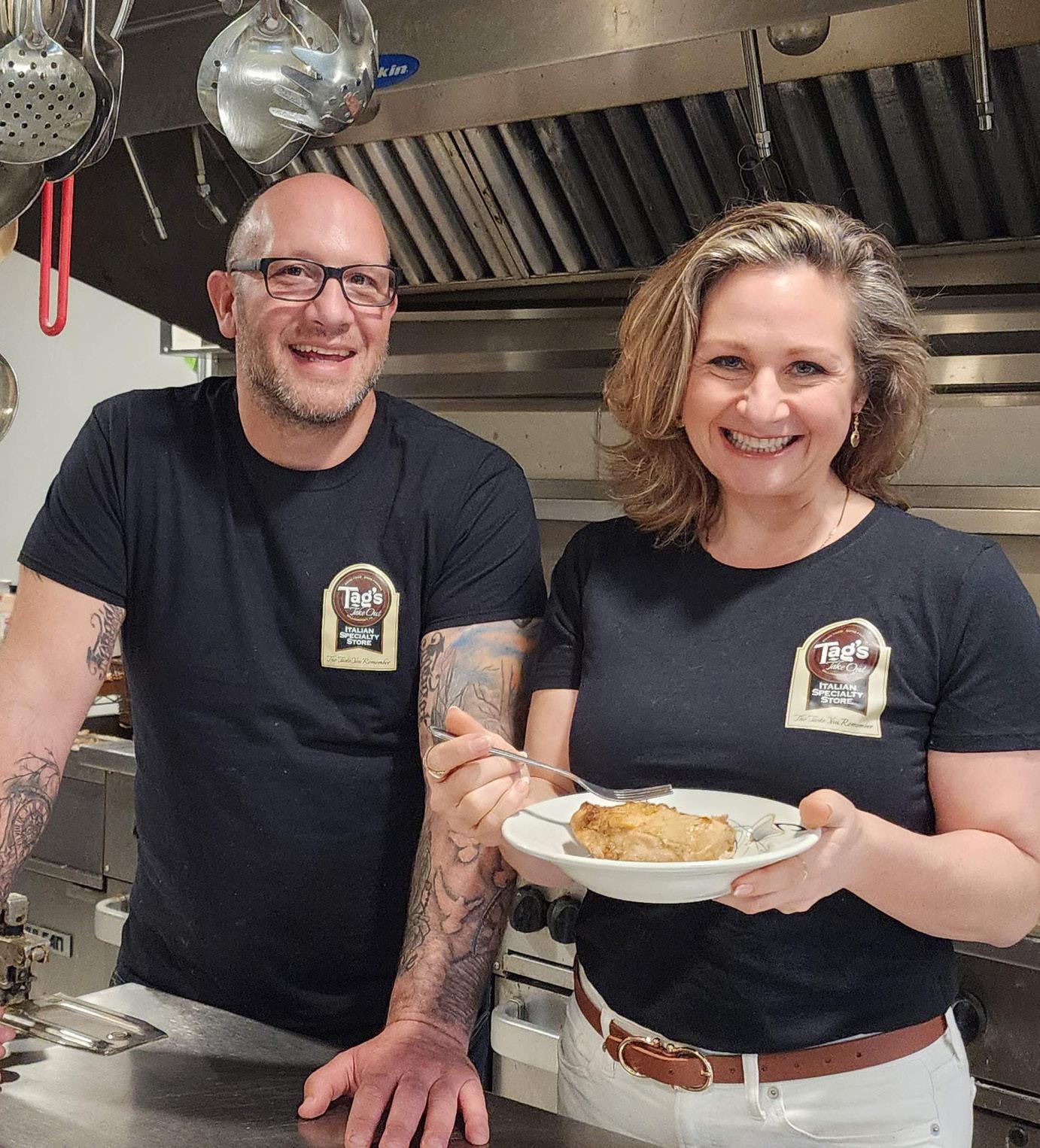
Anthony Tagliaferri with his father, Aldo, who opened Tag’s Bar and Grille with his wife in 1959; Anthony’s daughter Alivia partnered with her brother Aldo to re-open Tag’s in 2021 for takeout.
Tag’s—They’re It!
Williamsport’s Iconic Family Restaurant Changes and Stays the Same
By Melissa Farenish
Ataste you remember—it’s a fitting slogan for Tag’s Foods in Williamsport. Many area residents have fond memories of the scrumptious meatballs, hearty sauce, and homemade pasta that made the shop’s predecessor, Tag’s Bar and Grill, a staple in the community.
The sauces and pasta dishes sold at the shop today come from the decades-old family recipes served at the beloved former restaurant owned by the Tagliaferri family on Memorial Avenue. It closed in June 2005 due to the untimely passing of owner Anthony Tagliaferri from pancreatic cancer. The closure came as a shock to those customers who had become family.
“That wasn’t on the map for people,” says Alivia Tagliaferri, Anthony’s daughter.
People who walked through Tag’s doors during the forty-six years it was open were family, greeted with a smile, a hug, a kiss, or a handshake, she remembers.
“Especially that kiss on the hand—the ladies really liked. That was a signature of my grandfather and later adopted by my dad,” Alivia says. “My dad’s favorite expres-
sion was, ‘it will be a minute.’ And most people didn’t mind because that meant that they had more minutes with him at the bar, where he would tell stories or where the bartenders who had been with us for decades would serve up their favorite cocktail.”
For celebrating special occasions—engagements, prom dates, retirements, anniversaries—Tag’s was the spot. Alivia also recalls Tagliaferri family celebrations there as a child. It was a magical time, as Alivia recalls enacting movie scenes at the bar and pretending it was a saloon. “My grandmother would pour a whiskey shot glass full of RC Cola and send it spinning down the bar and say, ‘there’s your shot, now get your ass out of here,’ or something to that effect,” Alivia says.
The Tag’s legacy began with Alivia’s grandparents, Aldo Larue and Ilivia “Leah” Tagliaferri. The couple purchased a building on Memorial Avenue in 1959 and started Tag’s restaurant across the street from the Pajama Factory.
“It was just a drinking hole for the factory workers,” Alivia says. “And then one
day, my grandmother started making sauce and meatballs.” That was the catalyst that began the family’s food business. The menu expanded, and Aldo and Leah ran the restaurant together until Leah’s passing in March of 1999. Aldo transferred ownership to his son, Anthony, and his wife, Theresa; they were the face of Tag’s until Anthony’s death.
Their daughter, Alivia, who has directed and produced five musicals, lived in Washington, DC for several years. She returned to Williamsport in 2014, and, not long after, started holding monthly pop-up food events. They were a way for her to juggle her busy career in media and the arts while maintaining the legacy of her family business. “I joke that I make movies, meatballs, and musicals,” she says. She initially partnered with a friend who had a food truck. “If you can imagine, I lugged water in across the parking lot. You need water to make pasta.” Eventually, she found an ideal spot on Walnut Street called the Carriage House. That space, run by Chef Ann Hosch, had a kitchen Alivia could use. She
Courtesy Alivia Tagliaferri
Renee Fortin
began distributing pop-up meals once a month. And, “Boy, when covid hit that took off because everyone wanted takeout. I was covered in plastic, serving on those nights.”
In December 2021, Alivia partnered with her brother, Aldo, and opened the current takeout food store at 1116 Market Street, serving up Tag’s favorites using the same ingredients and products that her grandparents and parents did nearly fifty years ago. She calls it “the taste you remember.” Customer favorites included handmade pasta such as gnocchi and ravioli, meatballs, chicken parmesan, eggplant parmesan, lasagna, Tag’s peppers, and the famous Aldo salad. The demand for these home-cooked items was steady—she’s made and sold hundreds of meals since opening the storefront almost five years ago.
Earlier this year, she made the decision to pivot her business model, deciding to eliminate the retail shop’s regular hours and go back to doing pop-up meals once a month. “I had to look at sustainability of the business. I’m fifty years old now. I had to look for where I can grow,” she says.
For the past year, she’d been handling the shop’s operations mostly on her own. Her brother had to take a step back due to other commitments. She’d also been running her own media company, writing musicals, authoring books, and is the mother of a young son. Selling products such as Tag’s Original Sauce at local and regional businesses and eventually at larger chain stores makes business sense. She’s starting with a staggered approach to build the retail part of the business. Trying to do a takeout meal business five days per week while making enough food to sell at local stores would be too much, she acknowledges.
“A pop-up was a way to bring the food to the people and still have balance in my life,” Alivia says. “There will be a continuation of the legacy while I’m in transition, but I have to step back and take a look at how to sustain the future.”
She hopes to eventually sell Tag’s sauces and other homemade products at farmers markets and small retail outlets. “I would love to get into Weis and some other supermarkets as well. But that’s later.”
Planned pop-up events include selling meatball and chicken parmesan sandwiches at Williamsport Crosscutters games, and having a presence at Williamsport’s First Friday celebrations. Tag’s will still offer catering, but on a more limited basis.
Alivia says one of the best parts of bringing back the old family business has been interacting with the customers—old and new.
“It’s been steady here, and people have been supportive. Our customers are like family to us. They’re definitely like longtime friends, generational friends. We say it’s good food and good friends.”
Keep up with the latest Tag’s news by visiting tagstakeout. com, Facebook, or call (570) 865-TAGS.
Melissa Farenish lives in Montoursville with her husband, Sean, daughter, Nadia, and two cats. She’s been writing for publications since her college days at Penn State University, and has written for community newspapers in Williamsport and Sunbury. She enjoys music, traveling, and the outdoors.

Liberty book Shop

Slate Run Tackle Shop


Once Upon a Town
The World in a Bookshop
Elmira’s Second Editions Opens the Page to Adventure
By Karey Solomon
You won’t take more than a few steps inside Second Editions Bookshop at 112 South Main Street, Elmira (secondeditionsbookshop.com, (607) 7333512) before spotting a few books you’ll want, then a distant shelf requiring further exploration. Books everywhere! This secondhand bookstore, with a comfortable seating area to consider your prospective purchases and put you in sight of even more temptation, has over 20,000 well-organized treasures awaiting discovery.
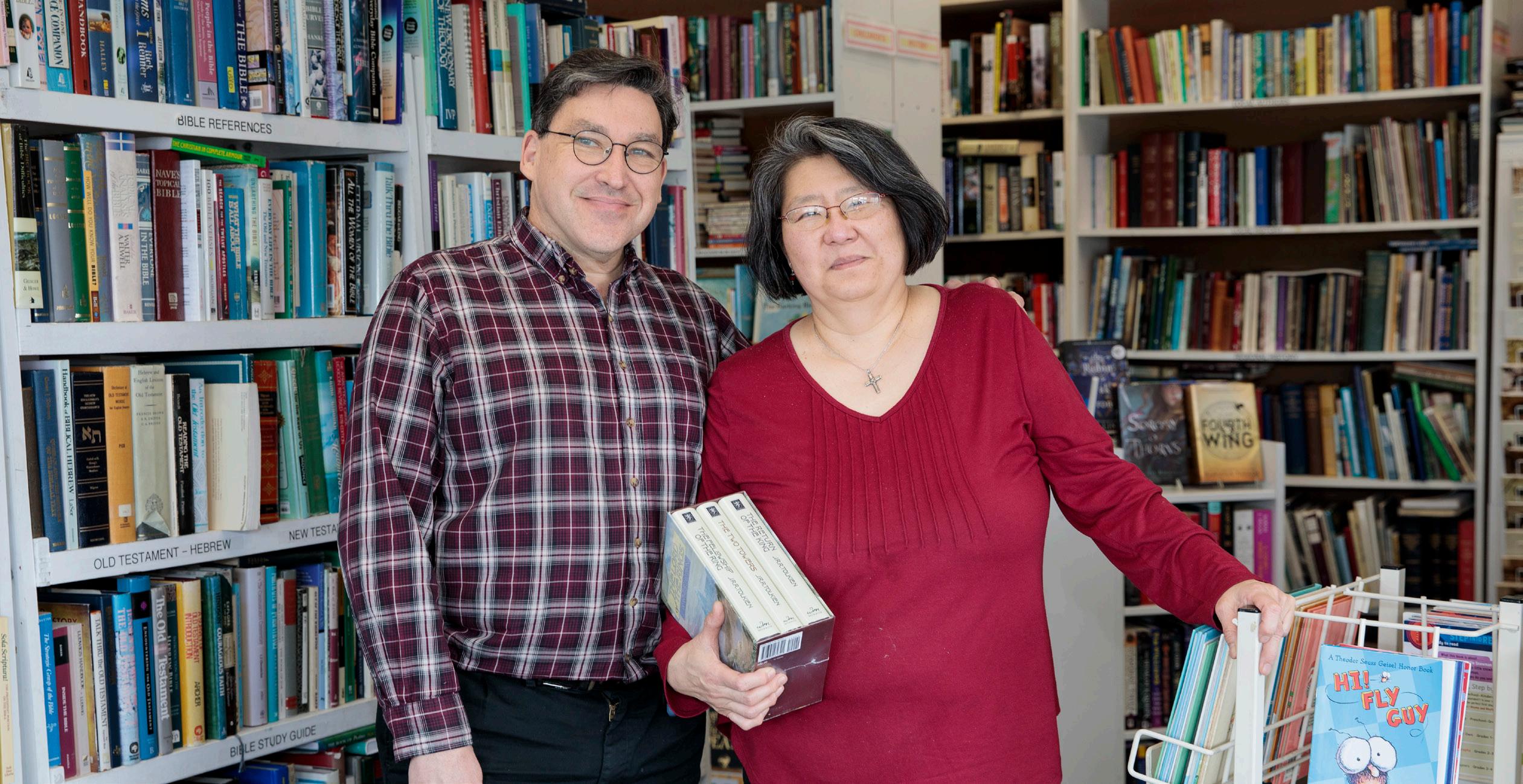
“It’s amazing how many books and how many writers there are,” says Todd Hartman, who, with his wife, Bo, owns Second Editions. Both serious readers and longtime booklovers, they’ve had to make a disciplined transition from being book collectors to book sellers.
Todd grew up in Elmira, Bo in Seoul, South Korea. After meeting at the University of Rochester where Todd studied public policy and philosophy and Bo majored in chemistry, Todd continued working toward a PhD in political philosophy while Bo became the health and safety supervisor at a hazardous waste treatment plant. When they returned to Elmira to raise their fam-
ily, they bought a house next door to the house where Todd grew up—and where his mother still lives. And they took a hard look at their work options.
“Elmira doesn’t have a lot of opportunities that allow you to stay within the community,” Todd says, but, at this point, the burgeoning internet did give them opportunities to sell things online. For a while they bought and sold glass. “But what we really enjoyed was books.”
The lightbulb moment came when a high school friend reminded Todd that visiting bookstores was always his favorite pastime. Sure, you can buy almost any specific title online, but the treasure hunt of browsing and discovery can only be experienced in person. A clean, comfortable space, as welcoming as a library, or a living room, makes the visit a pleasure.
From the beginning, Todd and Bo set boundaries. All the books they sell must be in good condition, and, in fact, most could easily pass for new. No porn. As Christians, they have a solid theology section including books for kids and an extensive variety of Bibles. “A lot of pastors send people here,” Bo says. When it comes to Bibles, people
want to choose among translations, type sizes, and page thickness, she adds, making choices that can only be determined with options in hand.
The breadth of possibilities applies to other categories as well—fiction and nonfiction alike. You might not know exactly what you’re looking for, though, unless you have the opportunity to look.
“The thing that’s lost is browsing,” Bo says of the internet. “If you’re looking for something specific you won’t know there are ten different titles on the same subject.”
From their beginning in a Victorian house on Church Street to their move a few years later to South Main almost twenty years ago, the Hartmans and their store keep collecting friends as well as customers. Their first customer, a Mennonite man, told them, “I’m going to make sure this business works!” He became a lifelong friend. Second Editions remains a favorite destination for many Mennonite and Amish customers.
To keep the shelves stocked, Todd and Bo travel to library and estate sales, trekking within a four-hour radius to any that sound promising. Of course, there are personal
See Bookshop on page 36
Todd and Bo Hartman opened a bookstore in order to stay in Elmira.
The Mark Twain Building
By CaPrIOTTI PrOPerties
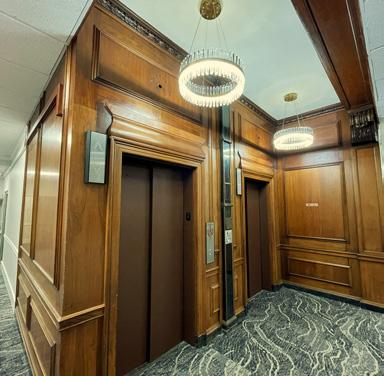


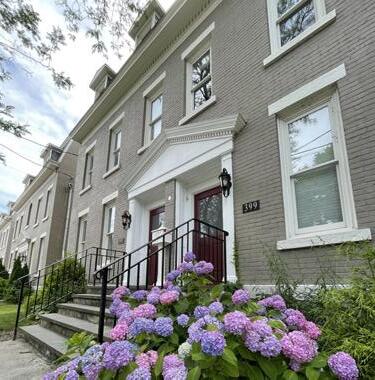
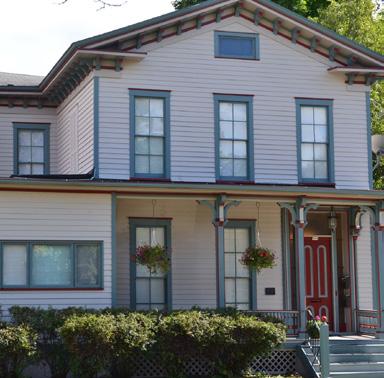
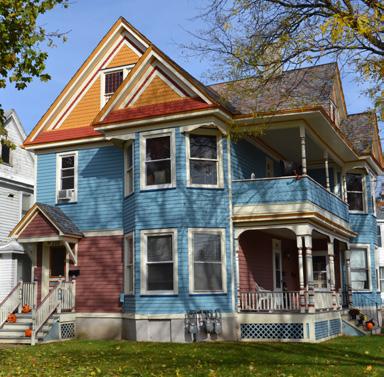
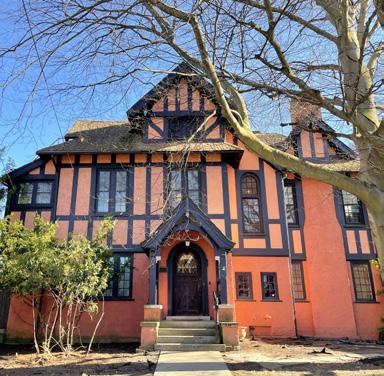
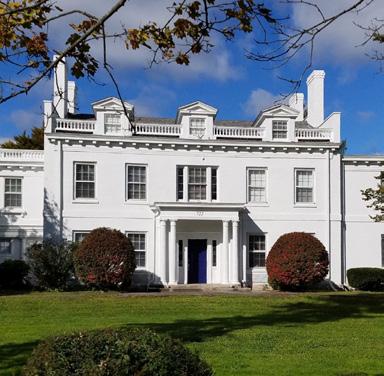


Mural Fest 2026!
Saturday May 30






hazards to those searches. Todd has yet to make the decision to sell the great philosophy, history, and theology books he’s acquired at sales, while Bo, a self-described “big Jane Austen fan,” couldn’t part with a nineteenth century edition she discovered for her own collection.
Knowing their customers’ tastes, they’ll look for history, mysteries, fantasy, and the newly-popular “romantasy.” Move over once-coveted Westerns, Amish fiction, and mid-century science fiction—you’ve been replaced by other interests. Their history and DIY sections are healthy, and dystopian novels are having a moment. When people get pessimistic, they look for stories that foretell doom, the couple agree.
But, always, the classics, because not only do people want to return to the stories they’ve forever loved but also, as Todd notes, the same beautifully-laid-out plot lines continually recur. J.R.R. Tolkien inspired many of today’s fantasy stories, and countless stories have spun off from Daniel Defoe’s Robinson Crusoe
They will order new books when customers request them, and occasionally they’ve found new books so compelling, they’ll order them in quantity because they know people will want them.
“You change with demand,” Bo says. While we talk, a customer asks to be directed to medical fiction, where he disappears for some time. Two young girls come in, find several new-ish novels, and leave, giggling. An elderly man comes in with a carton, announces “Old books!” and puts it down carefully. Donations are always welcome.
Every day brings something new, as well as a steady return of regulars. There are those who prefer the time-honored pleasure of turning pages rather than tapping a screen while they read. Homeschooling parents are frequent customers. And, another new trend among younger readers is to read a book online, decide you really like it, and then buy a hard copy as a sort of trophy, Bo says.
“I do that!” calls out Daisha Brombach, a Second Editions employee. Daisha likes fantasy fiction (“because magic is fun!”) and World War II memoirs, which opened a study of early twentieth century history for her, prompting visits to memorial sites in Europe. This also gave her more insight into the military members of her family. “I like the eclectic-ness of this,” Daisha says, gesturing around the bookshop.
The Hartmans love it too, working six days a week. Is it hard to work together all the time? They look at each other, surprised at the question, then shrug. “Maybe there are organizational differences,” Todd says, but clearly these are unimportant. Their kids grew up in here. Two sons are still in school, completing advanced degrees. One worked here during a gap year. Their daughter is currently a publicist for a publishing company.
When the door opens, they genuinely welcome whoever walks in. “It doesn’t matter who they are,” Todd says. “There’s a book here that will interest them.”
Karey Solomon is the author of a poetry chapbook, Voices Like the Sound of Water, a book on frugal living (now out of print), and more than thirty-six needlework books. Her work has also appeared in several fiction and nonfiction anthologies.





Field Notes

Don’t React
By David Nowacoski
My lovely wife and I like to enjoy an evening walk. So much so that, most evenings, year-round, you can find us putting one foot in front of the other somewhere.
When you slow down to the walking pace of a sixty-year-old with bad knees, you notice things that would otherwise be lost in the blur of everyday life.
Like this little guy.
He is safely tucked under a bush at the moment, but most of his time is spent eating crabapples from the tree a few feet to the right. The thing that you cannot tell from this picture is that he is right in the front lawn of a house. See the red and green coleus plant in the right corner? That is on the front porch.
Another thing that you cannot see is that behind that big maple tree is Route 90. I wouldn’t call it heavily traveled, but you do have to look both ways before crossing.
On this particular day, we were admiring him when someone pulled into the driveway next door. That is what the fawn is
looking at. At the same time, a FedEx truck pulled up on the other side and the driver stepped out with a package.
We were watching to see how this young fella would react.
He had spent the better part of the morning munching on apples and had retreated to his favorite spot under this bush. He seemed pretty content, but that was before all this commotion.
The driver stepped out of the car next door, now in plain sight of the fawn. At exactly that moment, the FedEx driver stepped onto the porch, right by that coleus, to deliver the package.
The fawn was surrounded. You could hear cars approaching on Route 90 and we suddenly became concerned that a wrong decision here could be fatal.
The driver slammed the car door at the neighbor’s property. The FedEx guy tossed the package onto the porch. All this fast movement—this was going to be it, decision time.
Nothing. The fawn did absolutely nothing. He watched everything happening around him, all this sudden chaos, and chose to NOT react to it.
The neighbor went into his house. The FedEx guy got back in his truck and left. And everything was quiet again.
Friends, there is a lesson there for all of us. Sometimes, the best decision is to not react to the chaos. I’m going to try to do more of that.
Raised on an East Smithfield farm, David Nowacoski still works to the familiar soundtrack of lowing cows. He and his high school sweetheart, Marla, raised their children with the same dirt-under-the-fingernails values—teaching them through long afternoons of picking garden rocks that a simple life is often the wisest one.
Maria Nowacoski















Capriotti’s continued from page 13
Jim asked Todd to create a visual concept for the Centertown Social, which Todd describes as, “very much like places you’d find in LA or Miami.” Centertown Social, Ill Eagle, Rye Bar, and others are bringing back the type of options Todd remembers from the eighties.


























Jim is now turning his attention to Iszard’s Department Store at 150 North Main, an iconic Elmira attraction until it closed in 1988. Designed by Pierce & Bickford and built in 1924, Jim bought it in 2021 after it had become offices. In 2023, Todd and Jim redid the second floor for a fundraiser party for the Arnot Art Museum in the theme of Studio 54. Jim remembers this party fondly because he’d always wanted to go to the legendary nightclub. He got close.
As a driver for his family’s limo business, young Jim had gone to NYC to chauffeur cast members of All My Children to malls where they did acts on the weekend. When returning them to the city, he’d often drop them off at clubs, and was once invited into Studio 54. Jim loved the music and wanted to go in, but it was midnight and he had a long drive home. The nightclub closed soon after.
Iszard’s in its heyday was known for elaborate seasonal displays and its tearoom. Charlie remembers it well. “It was the center of Christmas! Iszard’s always sponsored the local Christmas parade between there and the other shops on the block. Being downtown on a Christmas time evening, shopping, listening to music, and visiting with neighbors was a highlight of the season. I think we all remember the tearoom, and also the elevator with its own elevator operator.” When Charlie opened the Garage at Rye, he got the recipe for the famous brown bread—“a gift from Mrs. Iszard herself”—and serves it there.
Jim’s Vision
“The people here in Elmira remember the good ol’ days,” he says. “People everywhere do. In Hazelton it was the coal mines and dress factories. That all closed. Here, they remember the shopping mecca—it was the place to be in New York. When all that crumbled and the flood came, lots of good paying jobs left. It affected the psyche. Crime picked up.
“But as an outsider, you see things differently. I came here and saw not what was but what could be. I knew attitudes could change if people could be proud of it again. We can’t have department stores, but we can have boutiques. Maybe not office buildings, but we can have apartments.”
“It’s exciting to see someone turn visions into reality,” says Todd. “Elmira’s lucky to have Jim. I wish we had three or four more. There are so many houses that still need attention.”
Marc says, “It is getting better day by day. We thrive together or we wither apart. I choose to thrive, and Jim does, too.”
Mention to Jim that this sounds like a love story, and he responds emphatically, “It is! Elmira is a phenomenal place!” Then he turns somber. “I am a firm believer that God has allowed me to do this. And as long as I’m given the opportunity, I’m going to keep going.”





















BACK OF THE MOUNTAIN

Lake of Clouds
By Sarah Wagaman
Early mornings at the lake can be full of surprises ranging from the industrious osprey nest, busy beavers trying to elude me, and the eager fishermen docking their boats as I try not to disrupt their endeavors. This morning the wildlife was remarkably quiet, but the cloud formations were exceptional. It wasn’t the sky that captivated my attention, rather the reflections in the glass-like surface of Hills Creek Lake just outside Wellsboro. I could swear that these marshmallow clouds dotting the sky also left behind the residual scent of campfires.


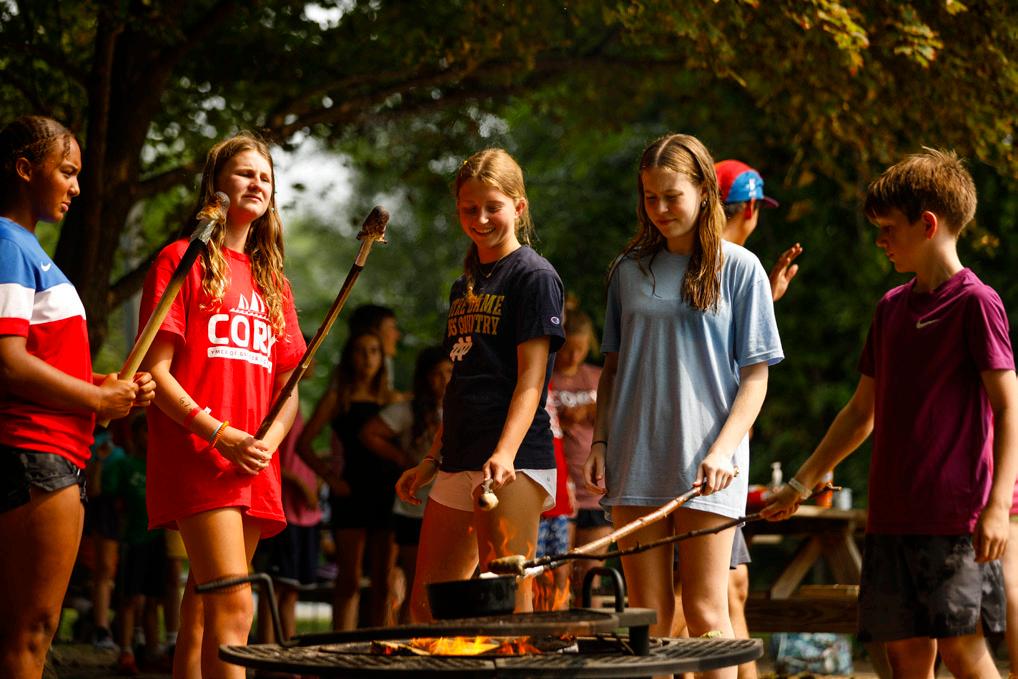

Traditional Overnight Camp
Camp sessions run from Sunday to Saturday, with a weekend holdover option for campers who wish to stay for multiple weeks.
Session 1 June 28-July 4
Session 2 July 5-11
Session 3 July 12-18
Session 4 July 19-25
Session 5 July 26-August 1
Session 6 August 2-8
Session 7 August 9-15
Session 8 August 16-22
Overnight Sailing Camp
Camp Cory offers one and two-week options for our sailing program. Campers can participate in competitive races, water drills, land classes, as well as recreational sail. Children in the sailing program may participate in all the other great camp activity areas. Sailing Camp is for campers age 11-15.
Session 1/2 June 28 -July 11
Session 3/4 July 12-25
Session 5/6 July 26-August 8
Session 7 August 9-15
Session 8 August 16-22

Family & Adult Programs
Camp Cory is more than just a camp. With several opportunities for adults and families to enjoy all the camp fun along Keuka Lake.
Memorial Day Family Camp May 22-24
Labor Day Family Camp Sept. 4-6
Women’s Wellness Weekend Sept. 11-13